KPIs, Work flow & 
evaluating performances
KPIs 
• Key Performance Indicators, also known as 
KPI or Key Success Indicators (KSI), help an 
organization define and measure progress 
toward organizational goals. 
• KPIs serve to reduce the complex nature of 
organizational performance to a small number 
of key indicators to make it more digestible for 
us.
Examples 
• When you go to your doctor he might measure 
blood pressure, cholesterol levels, heart rate and 
body mass index as key indicators of your health. 
• With KPIs we try to do the same in organization.
Must be Key To Organizational Success 
• Many things are measurable. 
• That does not make them key to the 
organization's success. 
• Note: 
• In selecting Key Performance Indicators, It is 
critical to limit them to those factors that are 
essential to the organization reaching its goals.
Number of KPIs 
• It is important to keep the number of Key 
Performance Indicators small. 
• It is to keep everyone’s attention focused on 
achieving the same KPIs.
Performance Management Tool 
• A Carrot 
• KPIs are used as performance Management 
tool. 
• KPIs gives everyone in the organization a clear 
picture of what is important, of what they need 
to make happen
KPI targets 
• Post the KPIs everywhere 
• In the lunch room 
• On the walls of every conference room 
• On Department’s web site 
• Show what the target for each KPI is and show the 
progress toward that target for each of them? 
• People will be motivated to reach those KPI 
targets.
Mail 
88 
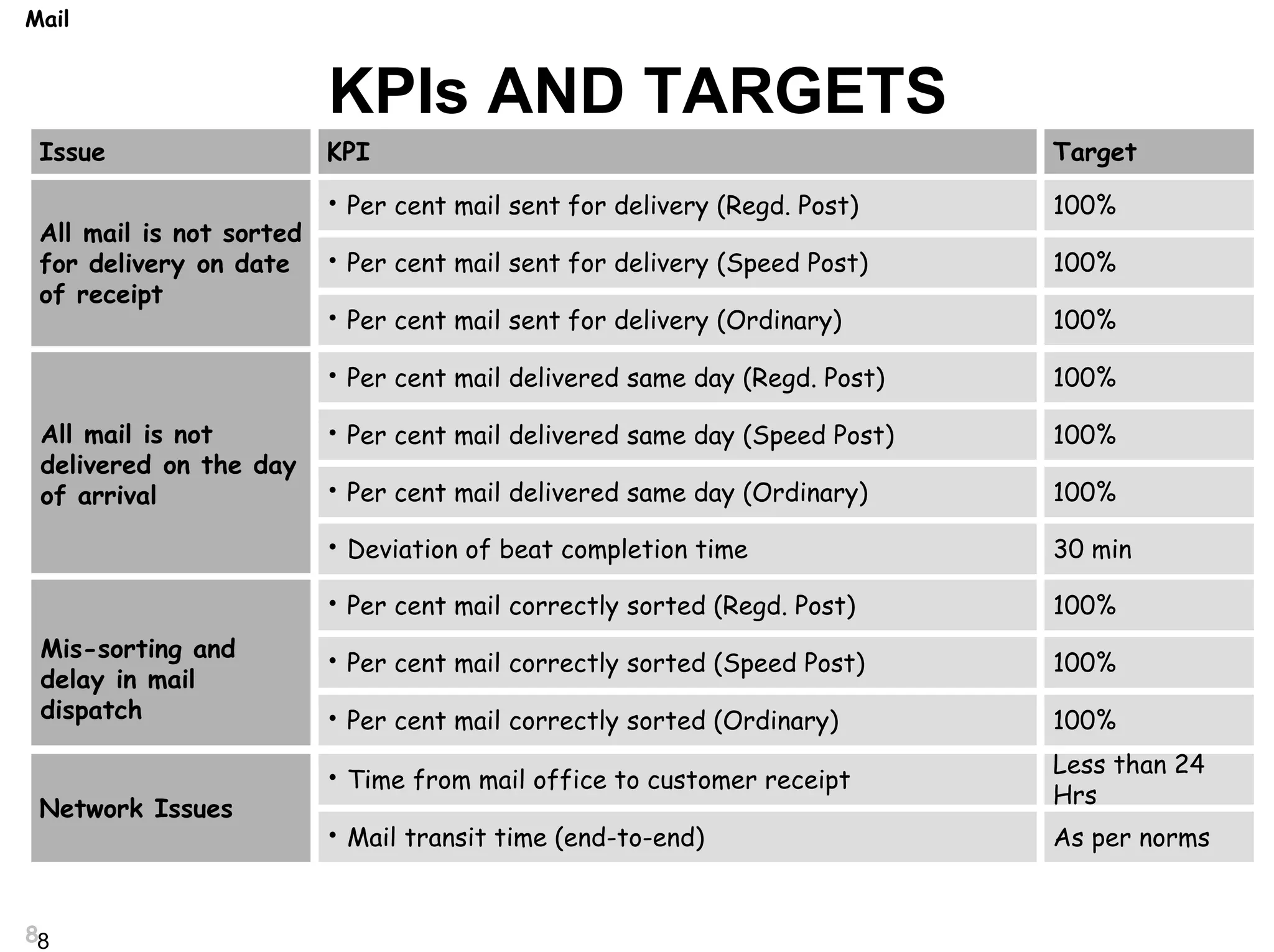
KPIs AND TARGETS 
Issue KPI Target 
All mail is not sorted 
for delivery on date 
of receipt 
• Per cent mail sent for delivery (Regd. Post) 100% 
• Per cent mail sent for delivery (Speed Post) 100% 
• Per cent mail sent for delivery (Ordinary) 100% 
• Per cent mail delivered same day (Regd. Post) 100% 
• Per cent mail delivered same day (Speed Post) 100% 
• Per cent mail delivered same day (Ordinary) 100% 
• Per cent mail correctly sorted (Regd. Post) 100% 
• Per cent mail correctly sorted (Speed Post) 100% 
• Per cent mail correctly sorted (Ordinary) 100% 
• Time from mail office to customer receipt 
Less than 24 
Hrs 
• Mail transit time (end-to-end) As per norms 
Network Issues 
• Deviation of beat completion time 30 min 
All mail is not 
delivered on the day 
of arrival 
Mis-sorting and 
delay in mail 
dispatch
Exercise 3.2.1 
•Identify the issues of RPLI branch 
of DO & Prepare the KPIs for one of 
the issues identified 
•One group to present before the 
class 
•Trainer to sum up the exercise
WORK FLOW PROCESS 
A workflow process is a series of 
tasks or events, the order in 
which they must be performed.
Work Flow Management 
• It is a system of overseeing the process of 
passing information, documents and tasks from 
one employee or machine within a business to 
another.
Advantage 
• Improved efficiency within the business 
• By automating processes and establishing a procedure, 
unnecessary steps are eliminated 
• Everybody is fully aware of his or her responsibilities. 
• To track employee and machine performance. 
• When a link in the chain is broken, it is simple to go 
back and determine where this occurred. 
• It standardize working methods. 
• Improves customer service by providing a consistent 
product or service 
• Improves business
A flow chart Tools 
• Circles, which signify the start or end of a process 
• Rectangles, show instructions and actions 
• Diamonds show decisions that must be made. 
• Symbols are connected one to the other by arrows, 
showing the flow of the process.
Need of Performance Management 
• In an organization that lacks an objective 
performance measurement system motivational 
workforce practices do not work. 
• Individuals felt a lack of clarity in their roles and 
eligibility criteria for career growth.
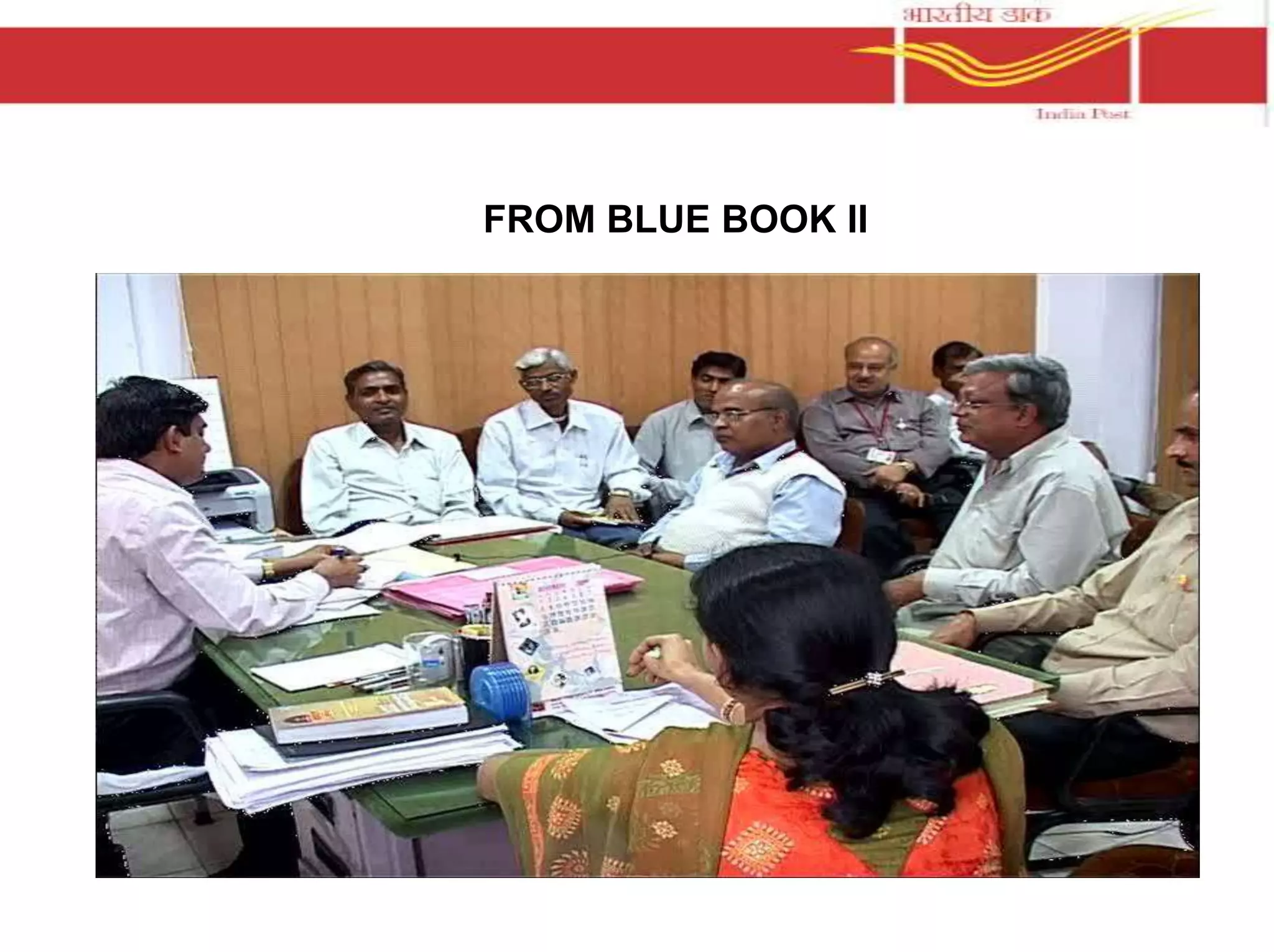
FROM BLUE BOOK II
What is Performance Management? 
Employee performance management includes – 
• Planning work and setting expectation 
• Developing the capacity to perform 
• Continuously monitoring performance Evaluating
Doing (Competency Development) 
• It involves evaluating employee development 
needs that will help them strengthen their job-related 
skills and competencies 
• Prioritizing and developing a plan of action to 
achieve the set targets 
• Develop tools to facilitate the employees plan 
their personal development goals.
Checking (Continuous Monitoring) 
• Checking means gap analysis. 
• It includes conducting ongoing reviews where 
employees’ performance is quantitatively measured 
against the set standards to see how well they are 
meeting the set goals. 
• Performance rating is done through the quantitative 
data before the time of actual performance appraisal. 
• For low performance, and immediate plan of action 
is taken. 
• A Process of regular feedback is facilitated
Acting (Performance Evaluation) 
• Acting includes evaluating job performance 
against the standards in the employee’s 
performance plan. 
• Assigning a rating to the employee based on 
work performed during the entire appraisal 
period.
•Recognize and reward outstanding 
performance 
“People have a tremendous capacity for 
outstanding achievement. There are 
also many extraordinary capacities that 
allow them to become high achievers.” 
Steve Brunkhors
ABILITY 
• Ability is the person's aptitude, as well as the 
training and resources supplied by the 
organization 
• Motivation is the product of desire and 
commitment
• 100% motivation and 75% ability 
• can often achieve above-average performance. 
• 100% motivation and 25% ability 
• won't be able to achieve the type of 
performance you expect, regardless of his or 
her level of motivation.
Diagnosing Poor Performance 
• First understand cause…………. 
• Then fix problem of poor performance!!!!!! 
• Does it come from lack of ability 
• Or low motivation?
How To Judge Low Ability? 
• Low ability may be associated with the 
following: 
• Over-difficult tasks. 
• Low individual aptitude, skill, and knowledge. 
• Evidence of strong effort, despite poor 
performance. 
• Lack of improvement over time.
People with low ability 
• May have been poorly matched with jobs in the 
first place. 
• They may have been promoted to a position 
that's too demanding for them. 
• Or may be they no longer have the support that 
previously helped them to perform well.
• Remember, the employee's performance is not 
intentionally poor – he or she simply lacked the 
skills for the position. 
• Your goal is to develop the employee, meet 
operational needs, and provide meaningful and 
rewarding work to everyone involved.
Exercise-3.2.2 
Trainer to give 20 minutes to trainee groups to think over 
the following:- 
• Need of performance monitoring-why? 
• How to monitor?-Tools. 
• How to deal & enhance the performance of low 
performers? 
• How to maximise the performance of high 
performers? 
• One group selected at random to present before 
the class.
Thank You

3.2 kp is & evaluation

  • 1.
    KPIs, Work flow& evaluating performances
  • 2.
    KPIs • KeyPerformance Indicators, also known as KPI or Key Success Indicators (KSI), help an organization define and measure progress toward organizational goals. • KPIs serve to reduce the complex nature of organizational performance to a small number of key indicators to make it more digestible for us.
  • 3.
    Examples • Whenyou go to your doctor he might measure blood pressure, cholesterol levels, heart rate and body mass index as key indicators of your health. • With KPIs we try to do the same in organization.
  • 4.
    Must be KeyTo Organizational Success • Many things are measurable. • That does not make them key to the organization's success. • Note: • In selecting Key Performance Indicators, It is critical to limit them to those factors that are essential to the organization reaching its goals.
  • 5.
    Number of KPIs • It is important to keep the number of Key Performance Indicators small. • It is to keep everyone’s attention focused on achieving the same KPIs.
  • 6.
    Performance Management Tool • A Carrot • KPIs are used as performance Management tool. • KPIs gives everyone in the organization a clear picture of what is important, of what they need to make happen
  • 7.
    KPI targets •Post the KPIs everywhere • In the lunch room • On the walls of every conference room • On Department’s web site • Show what the target for each KPI is and show the progress toward that target for each of them? • People will be motivated to reach those KPI targets.
  • 8.
    Mail 88 KPIsAND TARGETS Issue KPI Target All mail is not sorted for delivery on date of receipt • Per cent mail sent for delivery (Regd. Post) 100% • Per cent mail sent for delivery (Speed Post) 100% • Per cent mail sent for delivery (Ordinary) 100% • Per cent mail delivered same day (Regd. Post) 100% • Per cent mail delivered same day (Speed Post) 100% • Per cent mail delivered same day (Ordinary) 100% • Per cent mail correctly sorted (Regd. Post) 100% • Per cent mail correctly sorted (Speed Post) 100% • Per cent mail correctly sorted (Ordinary) 100% • Time from mail office to customer receipt Less than 24 Hrs • Mail transit time (end-to-end) As per norms Network Issues • Deviation of beat completion time 30 min All mail is not delivered on the day of arrival Mis-sorting and delay in mail dispatch
  • 9.
    Exercise 3.2.1 •Identifythe issues of RPLI branch of DO & Prepare the KPIs for one of the issues identified •One group to present before the class •Trainer to sum up the exercise
  • 10.
    WORK FLOW PROCESS A workflow process is a series of tasks or events, the order in which they must be performed.
  • 11.
    Work Flow Management • It is a system of overseeing the process of passing information, documents and tasks from one employee or machine within a business to another.
  • 12.
    Advantage • Improvedefficiency within the business • By automating processes and establishing a procedure, unnecessary steps are eliminated • Everybody is fully aware of his or her responsibilities. • To track employee and machine performance. • When a link in the chain is broken, it is simple to go back and determine where this occurred. • It standardize working methods. • Improves customer service by providing a consistent product or service • Improves business
  • 13.
    A flow chartTools • Circles, which signify the start or end of a process • Rectangles, show instructions and actions • Diamonds show decisions that must be made. • Symbols are connected one to the other by arrows, showing the flow of the process.
  • 14.
    Need of PerformanceManagement • In an organization that lacks an objective performance measurement system motivational workforce practices do not work. • Individuals felt a lack of clarity in their roles and eligibility criteria for career growth.
  • 15.
  • 16.
    What is PerformanceManagement? Employee performance management includes – • Planning work and setting expectation • Developing the capacity to perform • Continuously monitoring performance Evaluating
  • 17.
    Doing (Competency Development) • It involves evaluating employee development needs that will help them strengthen their job-related skills and competencies • Prioritizing and developing a plan of action to achieve the set targets • Develop tools to facilitate the employees plan their personal development goals.
  • 18.
    Checking (Continuous Monitoring) • Checking means gap analysis. • It includes conducting ongoing reviews where employees’ performance is quantitatively measured against the set standards to see how well they are meeting the set goals. • Performance rating is done through the quantitative data before the time of actual performance appraisal. • For low performance, and immediate plan of action is taken. • A Process of regular feedback is facilitated
  • 19.
    Acting (Performance Evaluation) • Acting includes evaluating job performance against the standards in the employee’s performance plan. • Assigning a rating to the employee based on work performed during the entire appraisal period.
  • 20.
    •Recognize and rewardoutstanding performance “People have a tremendous capacity for outstanding achievement. There are also many extraordinary capacities that allow them to become high achievers.” Steve Brunkhors
  • 21.
    ABILITY • Abilityis the person's aptitude, as well as the training and resources supplied by the organization • Motivation is the product of desire and commitment
  • 22.
    • 100% motivationand 75% ability • can often achieve above-average performance. • 100% motivation and 25% ability • won't be able to achieve the type of performance you expect, regardless of his or her level of motivation.
  • 23.
    Diagnosing Poor Performance • First understand cause…………. • Then fix problem of poor performance!!!!!! • Does it come from lack of ability • Or low motivation?
  • 24.
    How To JudgeLow Ability? • Low ability may be associated with the following: • Over-difficult tasks. • Low individual aptitude, skill, and knowledge. • Evidence of strong effort, despite poor performance. • Lack of improvement over time.
  • 25.
    People with lowability • May have been poorly matched with jobs in the first place. • They may have been promoted to a position that's too demanding for them. • Or may be they no longer have the support that previously helped them to perform well.
  • 26.
    • Remember, theemployee's performance is not intentionally poor – he or she simply lacked the skills for the position. • Your goal is to develop the employee, meet operational needs, and provide meaningful and rewarding work to everyone involved.
  • 27.
    Exercise-3.2.2 Trainer togive 20 minutes to trainee groups to think over the following:- • Need of performance monitoring-why? • How to monitor?-Tools. • How to deal & enhance the performance of low performers? • How to maximise the performance of high performers? • One group selected at random to present before the class.
  • 28.