Sibling Grief
                Recognizing and Serving
                   Children at Risk
                 Cathy R. Blanford,   I{Ed


    Statistics Regatding Sibling Death
.   Just under 2 millioo children age 18 and under
    living in the United States have experienced the
    dea& of a sibling.
.   26, 000 srillbirths in U.S. in a year

'   19,000 Newbom deaths
.   Miscarriages as high as 25oh of pregnancies
.   Cose to half of these families have other
    children.
Impact of Sibling Death
.   Sibliag death has a different impact on a child than the
    death of a prent or other significant adult.
.   The child's reaction will depend on many factors:
     - The age ofthe child
     - The age ofthe sibling
    -    The relationship between the child & sibling
    *    Whether it was   a   long illness or a sudden death
    -    Whether or not the child was included in the     prccs
    -    1he parents reaction, availability


.   Child's age and sibling's age
    -    Whethet they were the younger or the oldrx sibling
         and the years separating theit ages will have an
         impact ofl the grieving process.

    -    The relationship betwem the two was partially due
         to the age of each.


. Longillness or quick, unexpected death
   - A long ilLress may me,ur the child is more prepared
         for the death, but also means that attention has been
         devoted to sick sibling for a puiod of time

     -   An uflexpected death can be cspecially frightening,
         leaves child feeling rulnetable, family h deep state of
         shock, disbelicf


                                                                   2
.   Degree to which chjld was involved 6r excluded.
    -   A child who has bem involved ir the process of the
        sibling s illness and/or dyng wiil have a better
        opportunity to grier.e, elpress feelhgs, gain
        information
    -   A child who is excluded from the process feels left
        out, does not mderstand what is happening may
        feel less importart in family


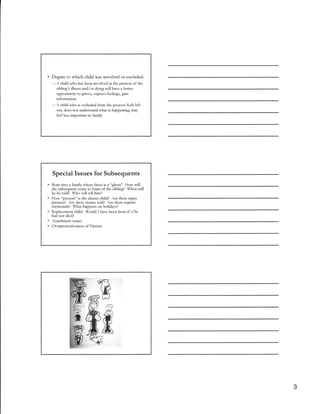
    Special Issues for Subsequents
.   Born into a family where there is a "ghosC' Horv rvill
    the subsequcnt come ro leam of rhc sibling? Wlren wrll
    hc bc told? Who rvrJl tell him?
.   How'?resend'is the absent child? Are there mv
    pictures? Are there stones told? Are there regular
    memorials? What happms on holidays?
.   Rqrlacemmt child: Would I have beer bom if s/he
    had not died?
.   Attachment issues
.   Overprotectiveness of Parents


                  ffi-11

                  ffiffin

                                                              3
Disenfranchised Grief

'       Child's own grief may be discounted due to the
        parents' ovetwhelming grief
.       Child may not be included in the family's
        grieving ptocess,


             Helping These Children in Grief
                               GrouPs
    .       Preferable for children with sibling loss to be
            with othet children who have also experienced
            the death of a sibiing.
    '       Mixed groups work but it is better if there is at
            least one other child whose sibling died'


                       Value of the Story
        .   The child will be able to obtain infoffnation they
            rnay not have had before.
        .   This will help to clear up misconceptions.
        .   The child's story will give the Paretrts zri
            opportunity to see how their child is thinking
             about what happened.


                                                                 4
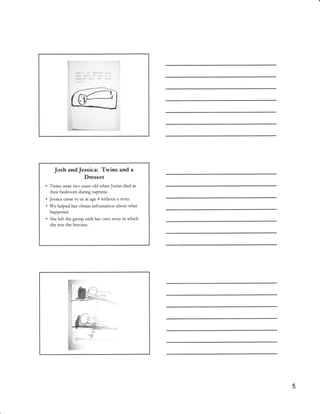
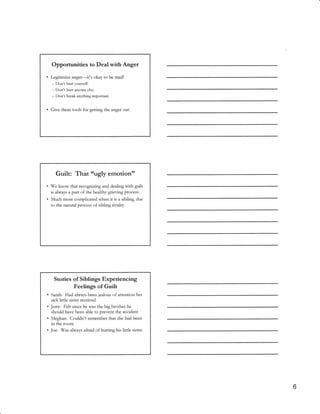
Josh andJessica: Twins and a
                Dtesset
.   Twins were two years old whenJustin died in
    their bedroom during naptime.
. Jessica came to us at age 4 without a story.
. We helped her obtain information about what
    happened.
.   She   left the goup with her own story in which
    she was the heroine.


                                                      5
Opportunities to Deal with Anger
.   Legrtimize anger-it's okay to be mad!
    - Don't hut yourself.
    *   Don't hurt anyone else.
    -   Don't break anlthing important.


.   Give them tools for getting the anger out.


        Guilt: That "rgly emotion"
.   I7e know that recognizing and dealing wid. g"ilt
    is always a part of the healthy grieving process.
.   lvluch more complicated when it is a sibling, due
    to the natural process of sibling rivalry.


        Stories of Siblings Expedencing
                Feelings of Guilt
.   Sarah: Had always been iealous of attention her
    sick little sister received
.   Jerry: Felt since he was the big brother he
    should have been able to prevent the accident
.   Meghan: Couldn't remember that she had been
    in the toom
.   Joe: Was always afiaid of huting his litde sister.
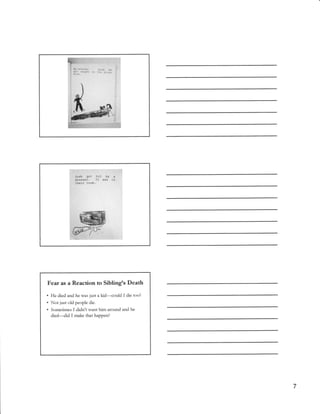
.   Jpsh gol hit by :r
                    dresser" It was in
                    lhair roon-


Fear as a Reaction to Sibling's Death

.   He died and he was iust a kid---<ould I die too?
.   Not just old people die.
.   Sometimes   I didn't want him around and he
    died--did I make that happen?


                                                       7
Stodes of Children Expetiencing
        Fear after Sibling's Death
.   Jack: Watching his baby brother's heart beating
.   Janet: "Then I died"


    Sense of an Ongoing Relationship
                with Sibling
. Ben: Wanted to die, savr his brother's   spirit
. Jack Singing to his baby brother


                                                      8
Remembering While Going On
.   It's okay to temember the whole person. Yorx
    sibling was not a saint
.   You are special too! (Closing circle, say each
    child's name three timesl)
.   Ok to go on living, be happy!


Helping Parents Help Their Kids
.   Deal with their own grief:    If they're   okay, their
    kids will be okay.

'   Keep pictures, stories, memorializingto a
    healthy minirnum.
.   Understand their children's reactions (books are
    helptul here)
.   Tendency to be overprotective can be harmfirl
.   Not the child'iob to care for the parent


              Children and their Patents'
                         Reactions
    ,   Bill's mom wories about him getting hurt.
    '   Sherry was iealous of attention mom gave her
        litde sister.
    .   Ray   worried about making mom feel better.
    .   Sarah   didn't get enough of mom's time.


                                                             I
Helping Patents Help their Chil&en
.   Separate group for parents to help them deal
    vrith their own feelings.
'   Tell parents what children are doing, how they
    can connect with their feelings.
.   Closing Ceremony: Teli your children
    something really special about themselves


You can make a difference
   in the lives of these
          children, ahfe long
               difference!


                                                     10

304 a blanford handout

  • 1.
    Sibling Grief Recognizing and Serving Children at Risk Cathy R. Blanford, I{Ed Statistics Regatding Sibling Death . Just under 2 millioo children age 18 and under living in the United States have experienced the dea& of a sibling. . 26, 000 srillbirths in U.S. in a year ' 19,000 Newbom deaths . Miscarriages as high as 25oh of pregnancies . Cose to half of these families have other children.
  • 2.
    Impact of SiblingDeath . Sibliag death has a different impact on a child than the death of a prent or other significant adult. . The child's reaction will depend on many factors: - The age ofthe child - The age ofthe sibling - The relationship between the child & sibling * Whether it was a long illness or a sudden death - Whether or not the child was included in the prccs - 1he parents reaction, availability . Child's age and sibling's age - Whethet they were the younger or the oldrx sibling and the years separating theit ages will have an impact ofl the grieving process. - The relationship betwem the two was partially due to the age of each. . Longillness or quick, unexpected death - A long ilLress may me,ur the child is more prepared for the death, but also means that attention has been devoted to sick sibling for a puiod of time - An uflexpected death can be cspecially frightening, leaves child feeling rulnetable, family h deep state of shock, disbelicf 2
  • 3.
    . Degree to which chjld was involved 6r excluded. - A child who has bem involved ir the process of the sibling s illness and/or dyng wiil have a better opportunity to grier.e, elpress feelhgs, gain information - A child who is excluded from the process feels left out, does not mderstand what is happening may feel less importart in family Special Issues for Subsequents . Born into a family where there is a "ghosC' Horv rvill the subsequcnt come ro leam of rhc sibling? Wlren wrll hc bc told? Who rvrJl tell him? . How'?resend'is the absent child? Are there mv pictures? Are there stones told? Are there regular memorials? What happms on holidays? . Rqrlacemmt child: Would I have beer bom if s/he had not died? . Attachment issues . Overprotectiveness of Parents ffi-11 ffiffin 3
  • 4.
    Disenfranchised Grief ' Child's own grief may be discounted due to the parents' ovetwhelming grief . Child may not be included in the family's grieving ptocess, Helping These Children in Grief GrouPs . Preferable for children with sibling loss to be with othet children who have also experienced the death of a sibiing. ' Mixed groups work but it is better if there is at least one other child whose sibling died' Value of the Story . The child will be able to obtain infoffnation they rnay not have had before. . This will help to clear up misconceptions. . The child's story will give the Paretrts zri opportunity to see how their child is thinking about what happened. 4
  • 5.
    Josh andJessica: Twinsand a Dtesset . Twins were two years old whenJustin died in their bedroom during naptime. . Jessica came to us at age 4 without a story. . We helped her obtain information about what happened. . She left the goup with her own story in which she was the heroine. 5
  • 6.
    Opportunities to Dealwith Anger . Legrtimize anger-it's okay to be mad! - Don't hut yourself. * Don't hurt anyone else. - Don't break anlthing important. . Give them tools for getting the anger out. Guilt: That "rgly emotion" . I7e know that recognizing and dealing wid. g"ilt is always a part of the healthy grieving process. . lvluch more complicated when it is a sibling, due to the natural process of sibling rivalry. Stories of Siblings Expedencing Feelings of Guilt . Sarah: Had always been iealous of attention her sick little sister received . Jerry: Felt since he was the big brother he should have been able to prevent the accident . Meghan: Couldn't remember that she had been in the toom . Joe: Was always afiaid of huting his litde sister.
  • 7.
    . Jpsh gol hit by :r dresser" It was in lhair roon- Fear as a Reaction to Sibling's Death . He died and he was iust a kid---<ould I die too? . Not just old people die. . Sometimes I didn't want him around and he died--did I make that happen? 7
  • 8.
    Stodes of ChildrenExpetiencing Fear after Sibling's Death . Jack: Watching his baby brother's heart beating . Janet: "Then I died" Sense of an Ongoing Relationship with Sibling . Ben: Wanted to die, savr his brother's spirit . Jack Singing to his baby brother 8
  • 9.
    Remembering While GoingOn . It's okay to temember the whole person. Yorx sibling was not a saint . You are special too! (Closing circle, say each child's name three timesl) . Ok to go on living, be happy! Helping Parents Help Their Kids . Deal with their own grief: If they're okay, their kids will be okay. ' Keep pictures, stories, memorializingto a healthy minirnum. . Understand their children's reactions (books are helptul here) . Tendency to be overprotective can be harmfirl . Not the child'iob to care for the parent Children and their Patents' Reactions , Bill's mom wories about him getting hurt. ' Sherry was iealous of attention mom gave her litde sister. . Ray worried about making mom feel better. . Sarah didn't get enough of mom's time. I
  • 10.
    Helping Patents Helptheir Chil&en . Separate group for parents to help them deal vrith their own feelings. ' Tell parents what children are doing, how they can connect with their feelings. . Closing Ceremony: Teli your children something really special about themselves You can make a difference in the lives of these children, ahfe long difference! 10