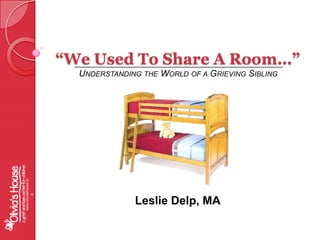
“We Used To Share A Room…” Understanding the World of a Grieving Siblingwww.oliviashouse.orgLeslie Delp, MA
Olivia’s HouseA Grief and Loss Center for Childrenwww.oliviashouse.org830 South George Street  York, PA17403717-699-1133
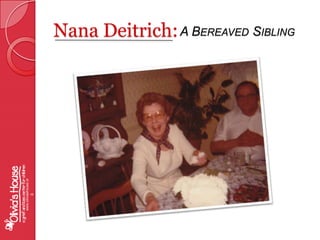
Nana Deitrich:A Bereaved Siblingwww.oliviashouse.org
Am I Still A Sister?   We are often shuttled off to friends and left out of our family.  I know you do this to protect us from painful feelings, but please…let us be a part of our family!     -Allie Simswww.oliviashouse.org
 Identifying and Dispelling: The Myths of Grieving Siblingswww.oliviashouse.org
MythWhen a sibling is dying, children have no problem sitting on the sidelines of the family circle.www.oliviashouse.org
Reality  Children become jealous of situations that keep their parents occupied, a dying sibling is no different.www.oliviashouse.org
MythParents have no problem determining where to put their energies when their child is terminally ill.www.oliviashouse.org
RealityMost parents are torn between the dying child and their surviving children.  This dilemma is one of the most difficult at the time of the illness.www.oliviashouse.org
MythChildren are lethargic and sad all the time when experiencing the illness and death of a sibling.www.oliviashouse.org
RealityChildren’s grief is often expressed through energy and activity;  It is called, a “grief burst”.www.oliviashouse.org
MythIt is typical for a child to be a “Super-Perfect Kid” during the illness of a sibling.www.oliviashouse.org
RealitySome children strive to be super heroes when the family is coming apart but most children act out negatively while expressing their grief.www.oliviashouse.org
MythChildren’s fears are often addressed during and after the death of their sibling.www.oliviashouse.org
RealitySurviving siblings can have irrational fears that they keep to themselves, as a way of protecting their grieving parents.www.oliviashouse.org
MythMost children “move on” soon after the death of their sibling since there is not a relationship anymore.www.oliviashouse.org
RealityChildren heal and process bereavement when encouraged to “redefine  the relationship” with their deceased sibling.www.oliviashouse.org
MythMost teens are oblivious to their parents and could care less if they see them smile.  They live in their own world during the teen years!www.oliviashouse.org
RealityTeens are very protective of their parents and tend to assume the role of a parent while the parent mourns their loss.  They feel most secure when the family returns to a routine and parents set boundaries again.www.oliviashouse.org
MythNew siblings born after the death create harmony in the family because they fill the empty void.www.oliviashouse.org
RealityNo child ever fills the void of a deceased child.  The sibling born after the death will create their own relationship with the deceased.www.oliviashouse.org
MythTeens have no desire to have a social life or be involved in outside activities because they feel the need to stay close to home during and after the death of a sibling.www.oliviashouse.org
RealityThe “Independence vs. Dependence” struggle is a very real part of the developmental work a teen must do as they process loss.  www.oliviashouse.org
MythChildren experience relief when their sibling finally passes and they feel very little guilt at all.www.oliviashouse.org
RealityAll children feel a sense of relief when the family is no longer observing a death vigil but it brings along an enormous amount of guilt.www.oliviashouse.org
Samantha:An Unconditional Listenerwww.oliviashouse.org
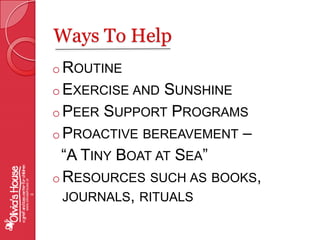
Ways To HelpRoutine
Exercise and Sunshine

104 a delp presentation

  • 1.
    “We Used ToShare A Room…” Understanding the World of a Grieving Siblingwww.oliviashouse.orgLeslie Delp, MA
  • 2.
    Olivia’s HouseA Griefand Loss Center for Childrenwww.oliviashouse.org830 South George Street  York, PA17403717-699-1133
  • 3.
    Nana Deitrich:A BereavedSiblingwww.oliviashouse.org
  • 4.
    Am I StillA Sister? We are often shuttled off to friends and left out of our family. I know you do this to protect us from painful feelings, but please…let us be a part of our family! -Allie Simswww.oliviashouse.org
  • 5.
    Identifying andDispelling: The Myths of Grieving Siblingswww.oliviashouse.org
  • 6.
    MythWhen a siblingis dying, children have no problem sitting on the sidelines of the family circle.www.oliviashouse.org
  • 7.
    Reality Childrenbecome jealous of situations that keep their parents occupied, a dying sibling is no different.www.oliviashouse.org
  • 8.
    MythParents have noproblem determining where to put their energies when their child is terminally ill.www.oliviashouse.org
  • 9.
    RealityMost parents aretorn between the dying child and their surviving children. This dilemma is one of the most difficult at the time of the illness.www.oliviashouse.org
  • 10.
    MythChildren are lethargicand sad all the time when experiencing the illness and death of a sibling.www.oliviashouse.org
  • 11.
    RealityChildren’s grief isoften expressed through energy and activity; It is called, a “grief burst”.www.oliviashouse.org
  • 12.
    MythIt is typicalfor a child to be a “Super-Perfect Kid” during the illness of a sibling.www.oliviashouse.org
  • 13.
    RealitySome children striveto be super heroes when the family is coming apart but most children act out negatively while expressing their grief.www.oliviashouse.org
  • 14.
    MythChildren’s fears areoften addressed during and after the death of their sibling.www.oliviashouse.org
  • 15.
    RealitySurviving siblings canhave irrational fears that they keep to themselves, as a way of protecting their grieving parents.www.oliviashouse.org
  • 16.
    MythMost children “moveon” soon after the death of their sibling since there is not a relationship anymore.www.oliviashouse.org
  • 17.
    RealityChildren heal andprocess bereavement when encouraged to “redefine the relationship” with their deceased sibling.www.oliviashouse.org
  • 18.
    MythMost teens areoblivious to their parents and could care less if they see them smile. They live in their own world during the teen years!www.oliviashouse.org
  • 19.
    RealityTeens are veryprotective of their parents and tend to assume the role of a parent while the parent mourns their loss. They feel most secure when the family returns to a routine and parents set boundaries again.www.oliviashouse.org
  • 20.
    MythNew siblings bornafter the death create harmony in the family because they fill the empty void.www.oliviashouse.org
  • 21.
    RealityNo child everfills the void of a deceased child. The sibling born after the death will create their own relationship with the deceased.www.oliviashouse.org
  • 22.
    MythTeens have nodesire to have a social life or be involved in outside activities because they feel the need to stay close to home during and after the death of a sibling.www.oliviashouse.org
  • 23.
    RealityThe “Independence vs.Dependence” struggle is a very real part of the developmental work a teen must do as they process loss. www.oliviashouse.org
  • 24.
    MythChildren experience reliefwhen their sibling finally passes and they feel very little guilt at all.www.oliviashouse.org
  • 25.
    RealityAll children feela sense of relief when the family is no longer observing a death vigil but it brings along an enormous amount of guilt.www.oliviashouse.org
  • 26.
  • 27.
  • 28.