






3 Strategies for
Prioritizing
A/B Tests
for the Highest Impact
Conversion optimization is one
of the key techniques to getting
the most out of your traffic.
Even a marginal improvement to
conversions can dramatically
affect your revenue.
The issues of what to test 
and when are critical to developing
a strategic approach to A/B testing
for Ecommerce marketers.
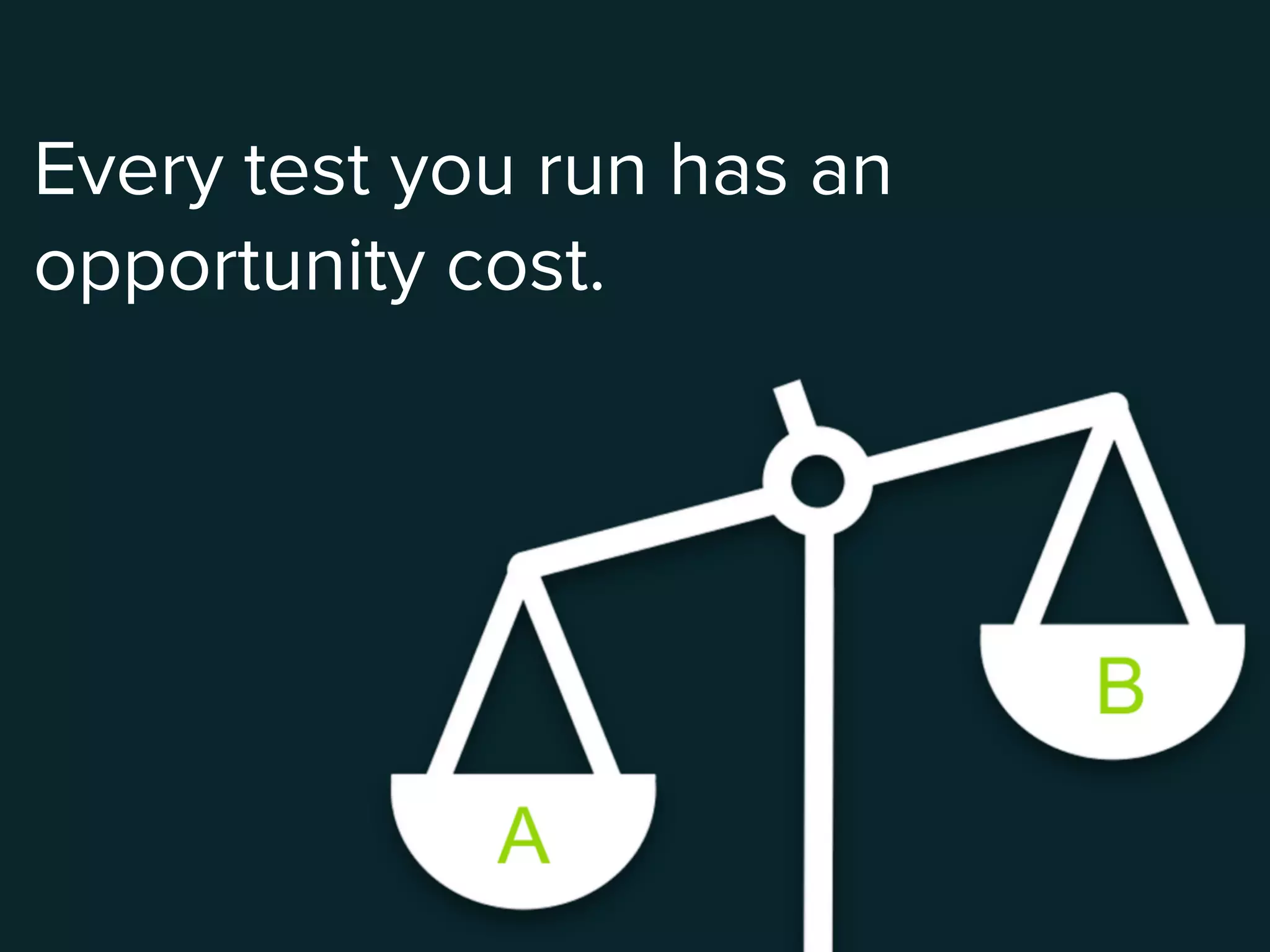
Every test you run has an
opportunity cost.
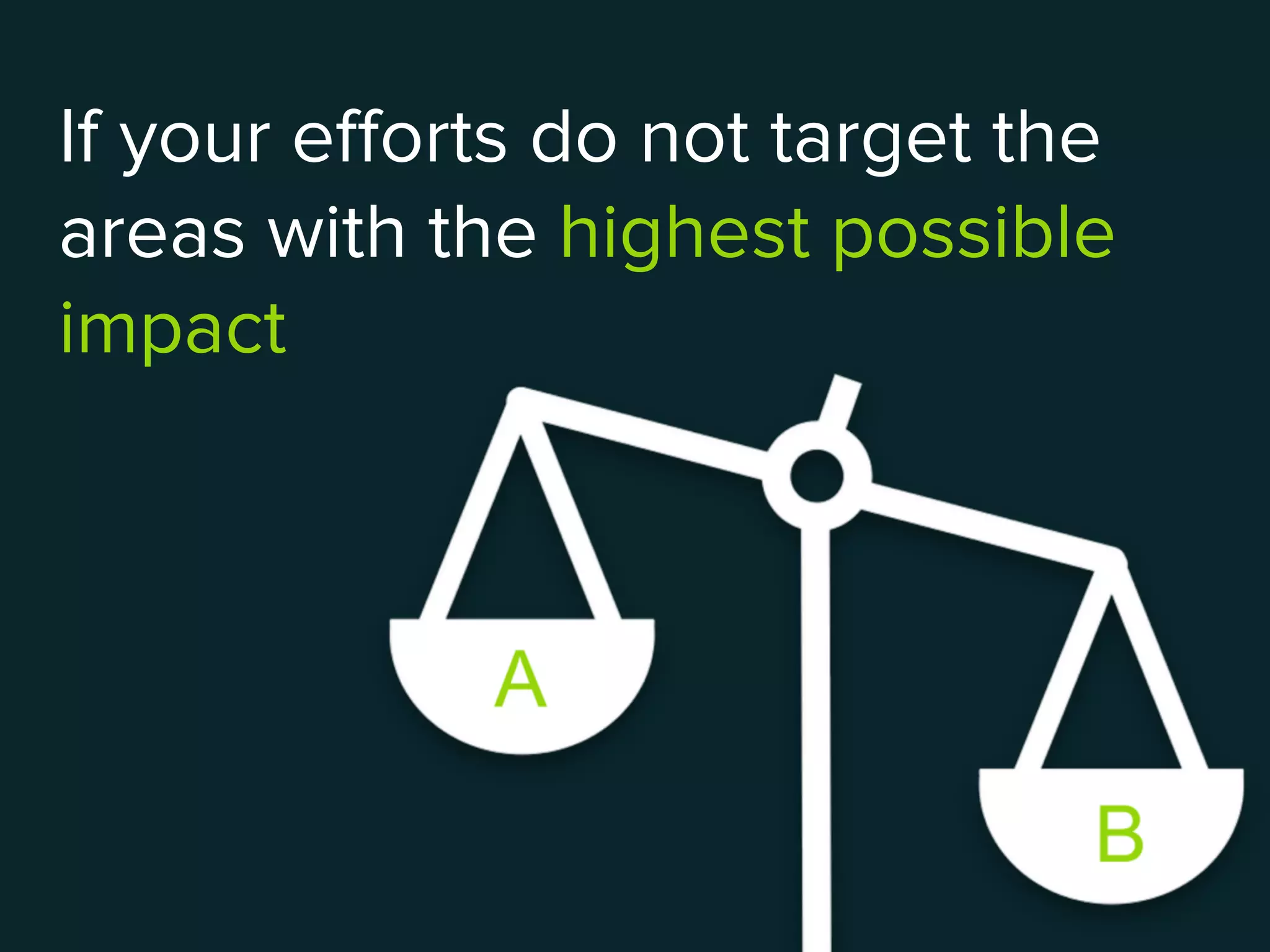
If your efforts do not target the
areas with the highest possible
impact
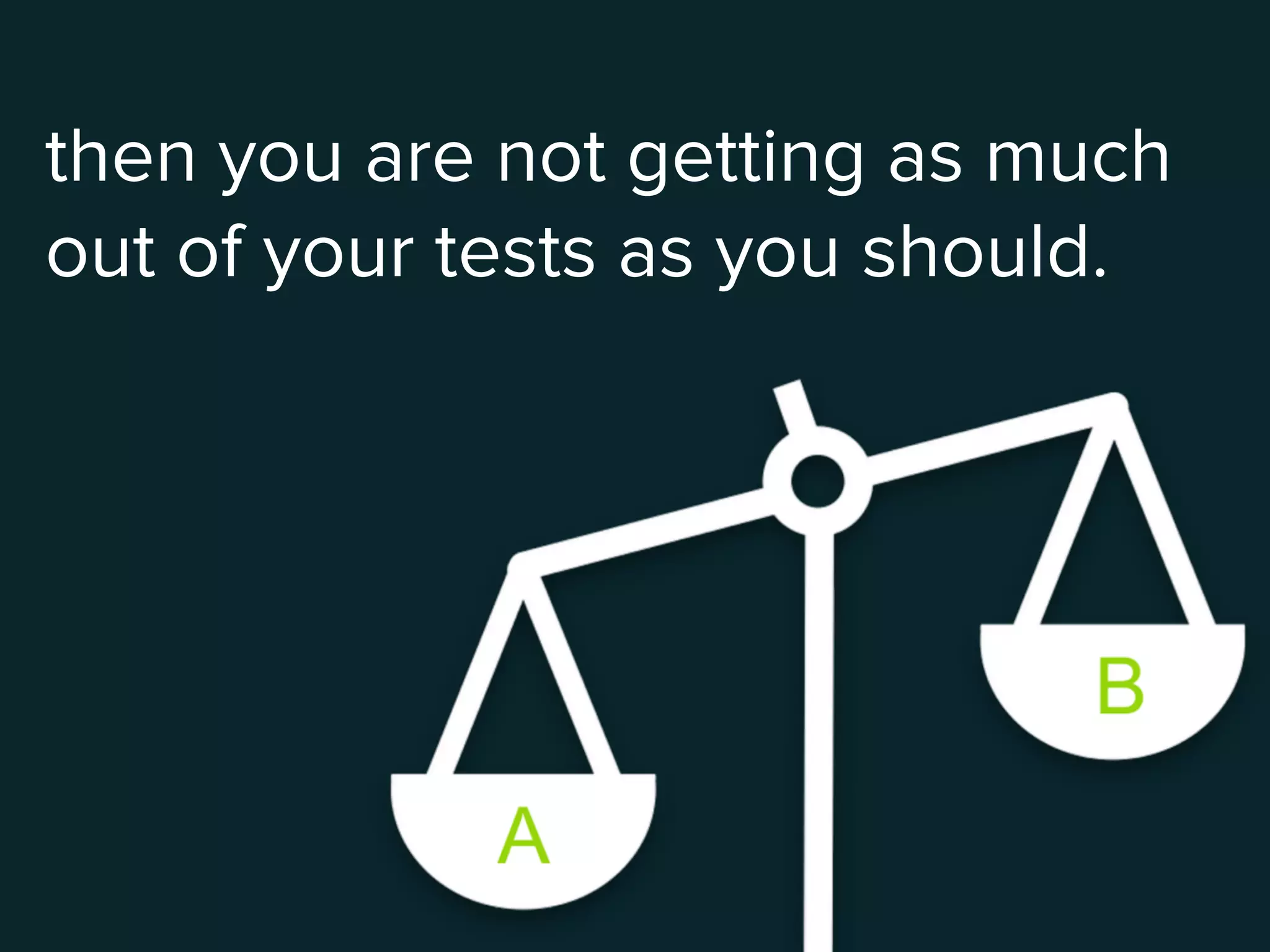
then you are not getting as much
out of your tests as you should.
So…
!
Where’s the
money?
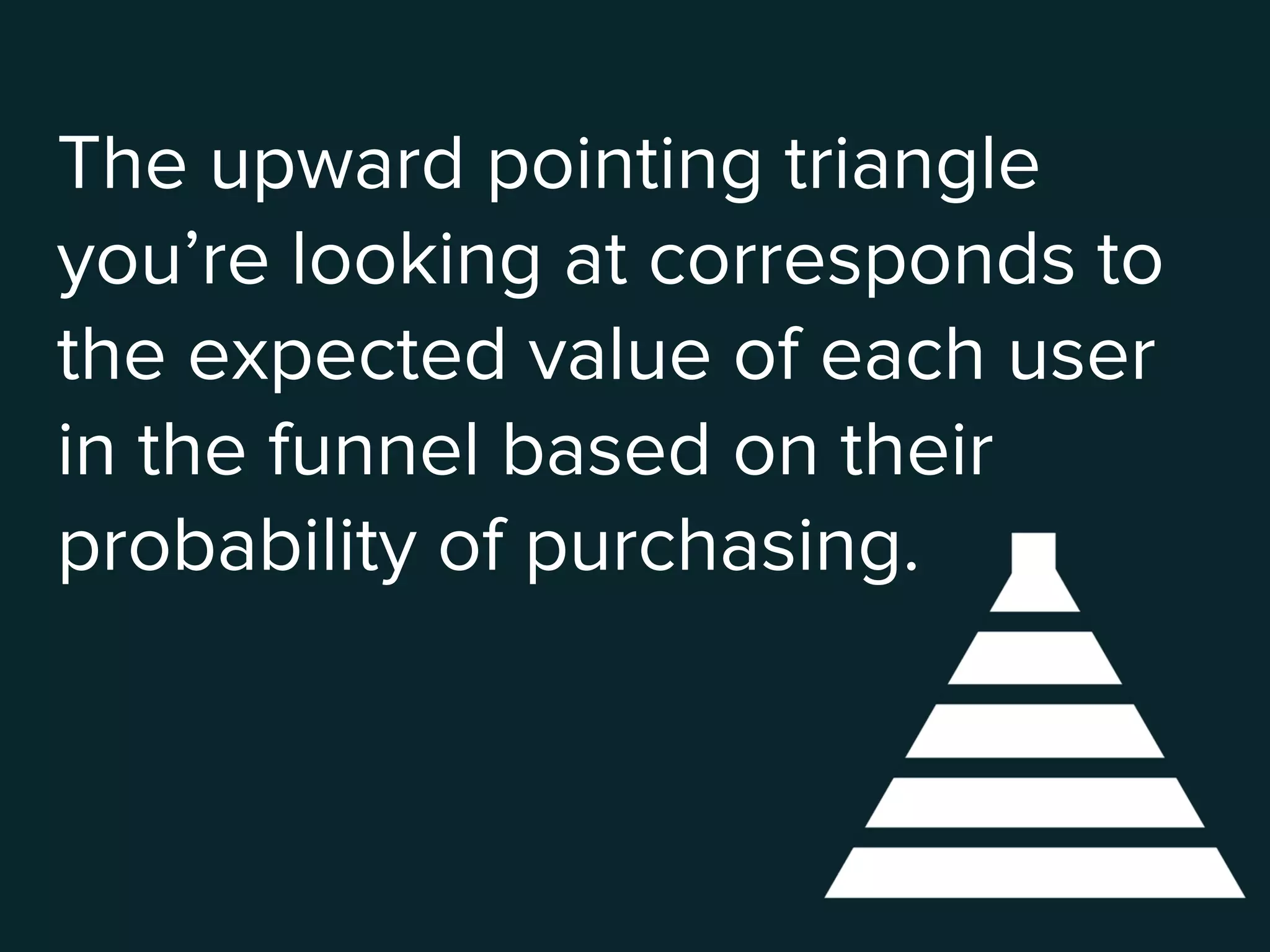
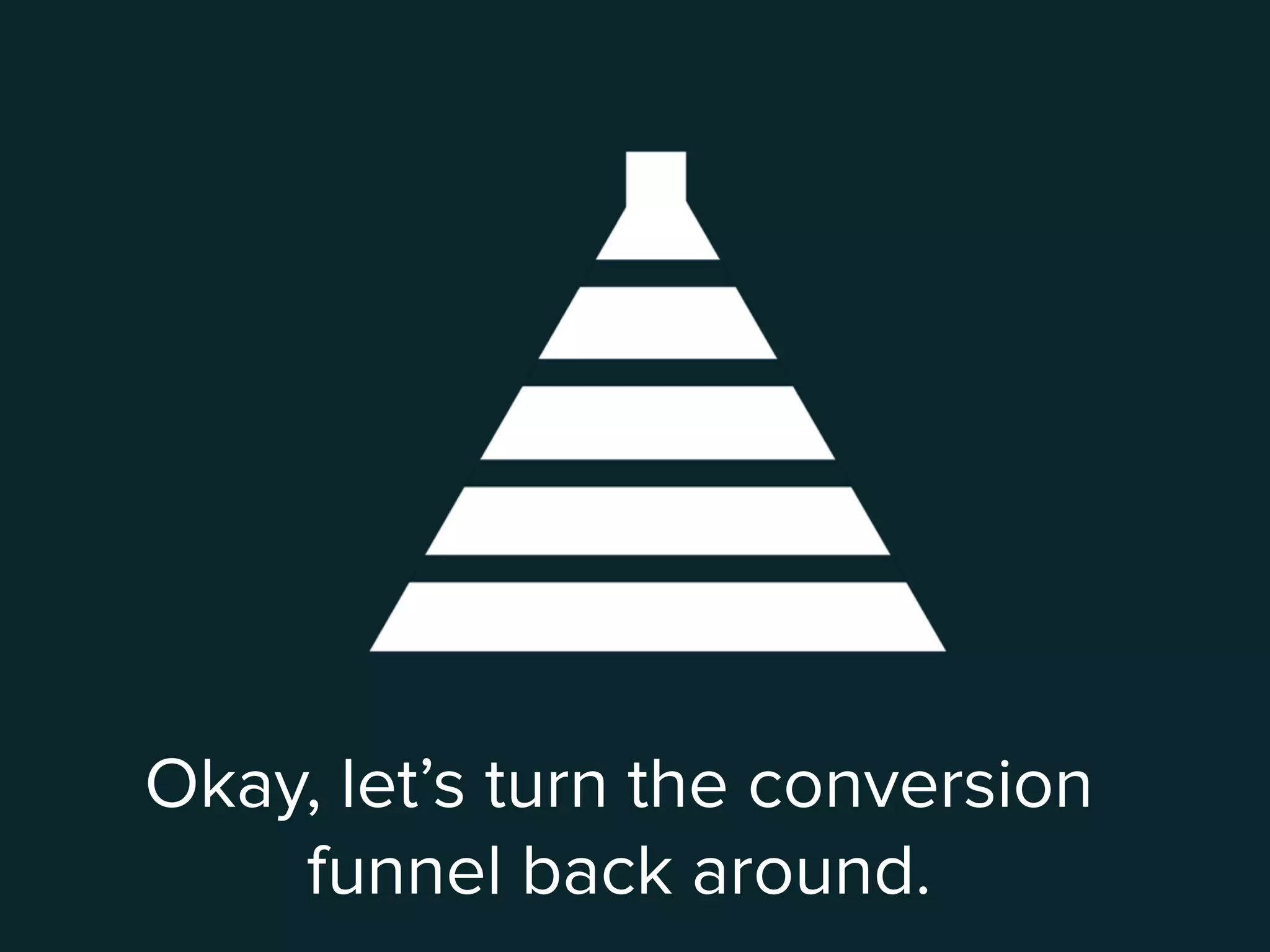
Take your conversion funnel
and turn it upside down.
The upward pointing triangle
you’re looking at corresponds to
the expected value of each user
in the funnel based on their
probability of purchasing.
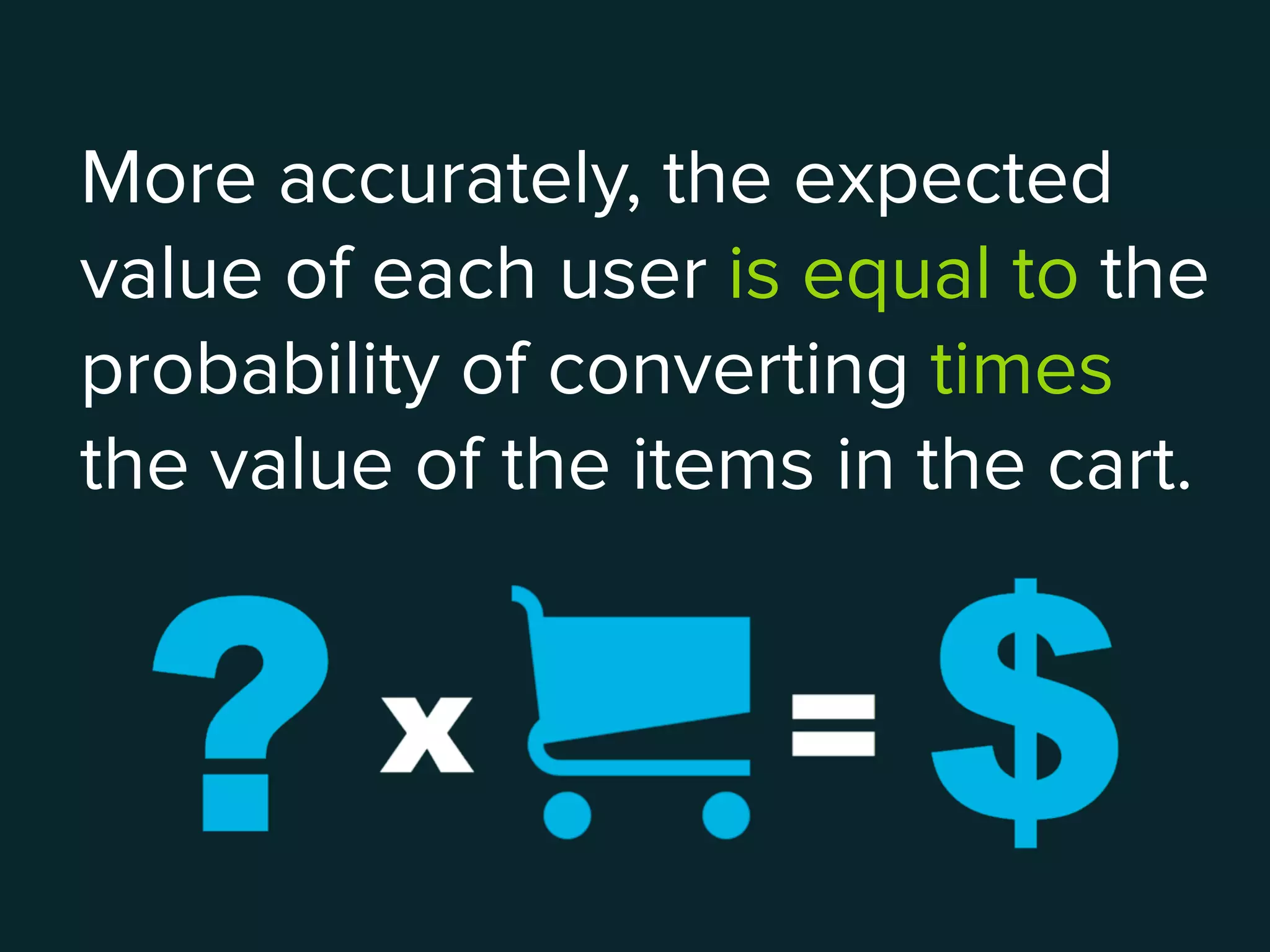
More accurately, the expected
value of each user is equal to the
probability of converting times
the value of the items in the cart.
As they move closer to
checkout, they signal
their intent to continue
with the purchase.
This method of visualization
demonstrates the value to
be gained by testing the
areas closest to the money.
Even a small improvement
to the checkout process
can make a significant
increase to your revenue.
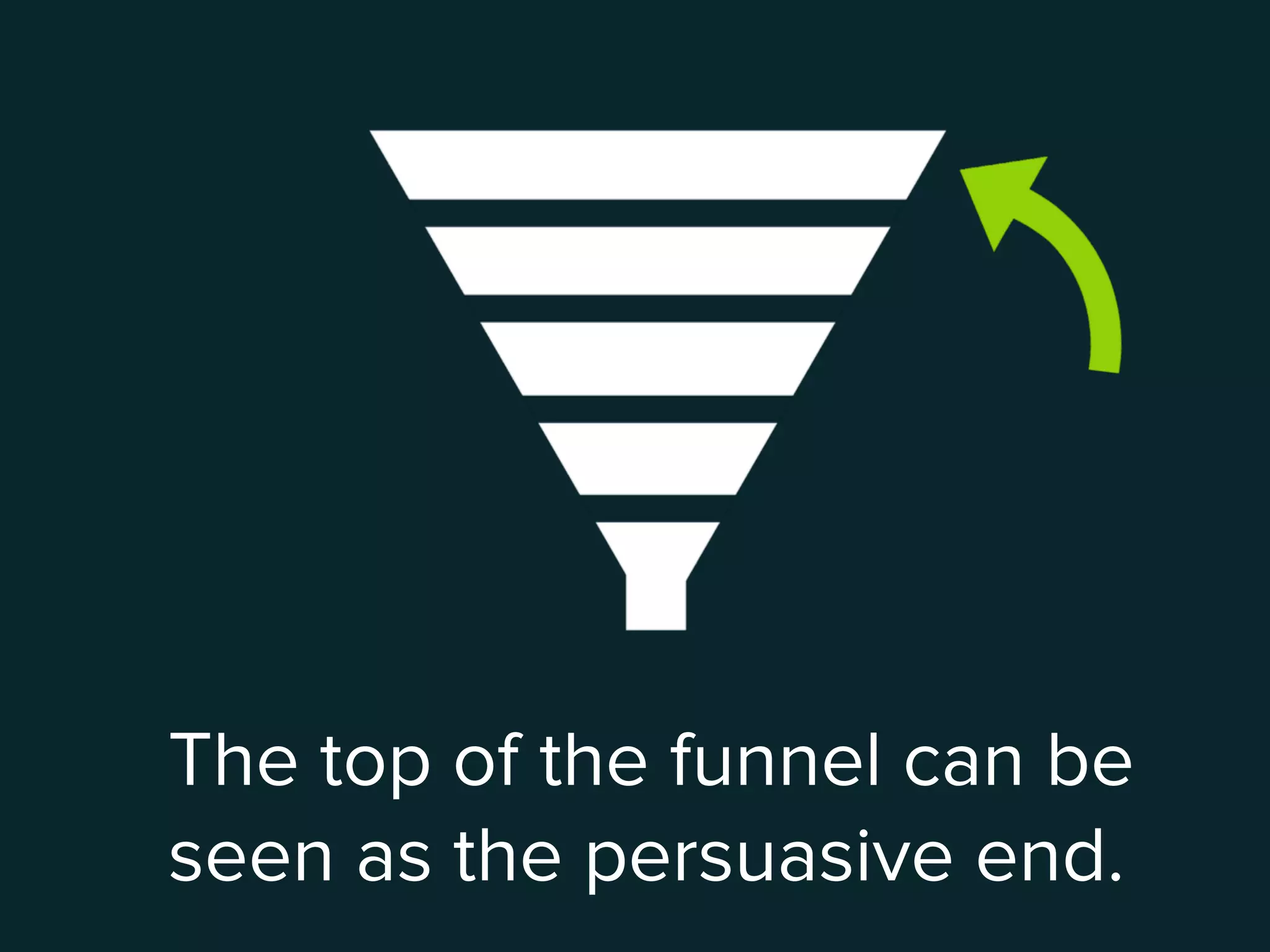
Okay, let’s turn the conversion
funnel back around.
Okay, let’s turn the conversion
funnel back around.
The top of the funnel can be
seen as the persuasive end.
Only the most deliberate of
shoppers will focus wholly
on purchasing what they
came to the site for.
Only the most deliberate of
shoppers will focus wholly
on purchasing what they
came to the site for.
Those who clicked your site
at a time when they weren’t
ready to begin shopping will
bounce.
Only the most deliberate of
shoppers will focus wholly
on purchasing what they
came to the site for.
Those who clicked your site
at a time when they weren’t
ready to begin shopping will
bounce.
The vast majority of users at
this point still need to be
persuaded to buy from you
and move forward with their
purchase.
You have their
attention, but now
you need their
interest and desire.
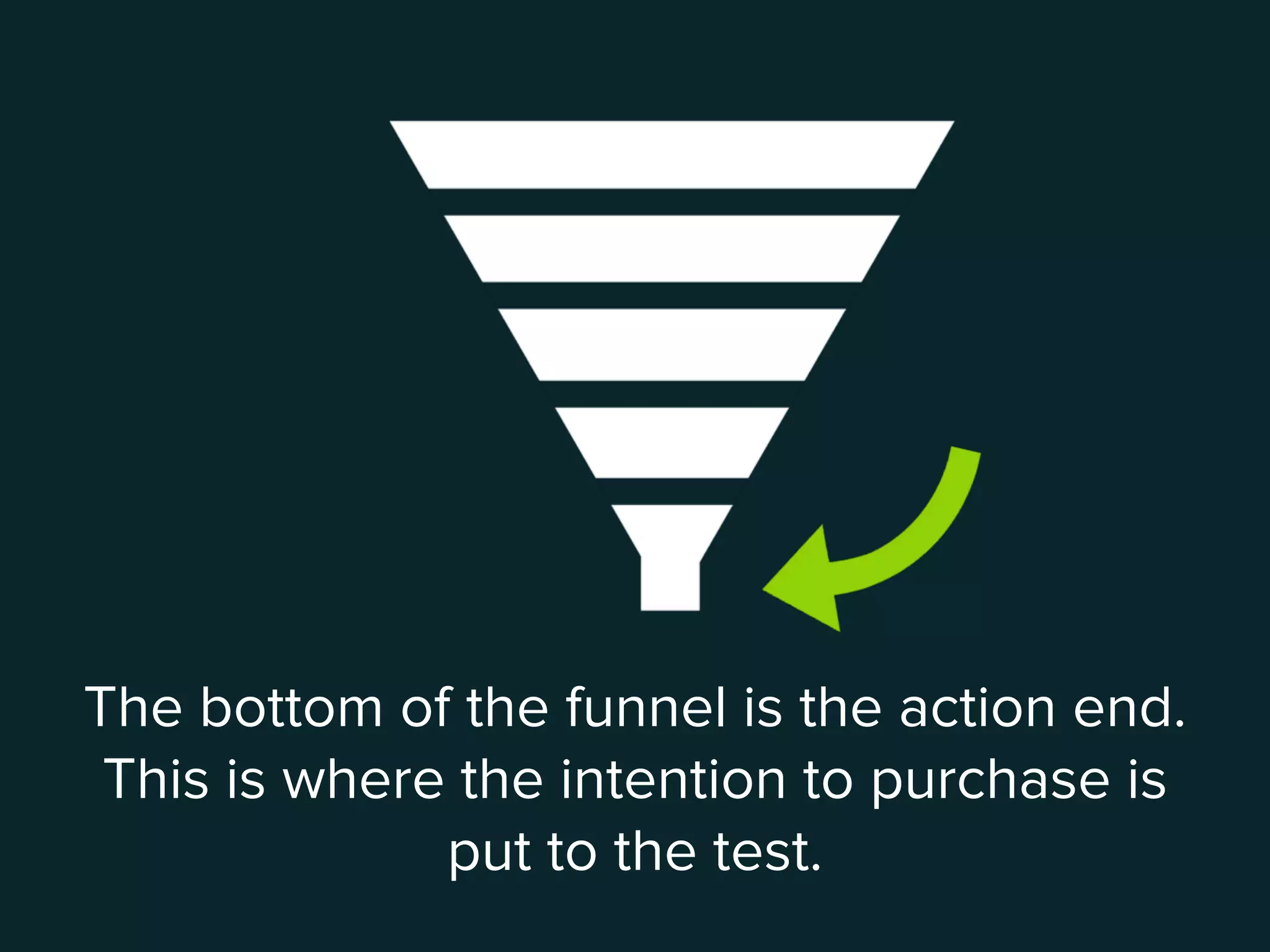
The bottom of the funnel is the action end.
This is where the intention to purchase is
put to the test.
The timeliness and fit of the
checkout experience with the
user’s context is the most
important factor here.
The timeliness and fit of the
checkout experience with the
user’s context is the most
important factor here.
Things that they are
concerned about will be
further deliberated at this
stage.
The timeliness and fit of the
checkout experience with the
user’s context is the most
important factor here.
Things that they are
concerned about will be
further deliberated at this
stage.
The users will keep mentally
weighing whether the purchase
is a good idea based on a
multitude of factors.
What methods are
most commonly used
for prioritizing A/B
tests?
Prioritizing
based on
perceived
opportunity
Prioritizing
based on
perceived
opportunity
Test based on the
expected impact of
the changes on
conversion rate and
other key metrics.
Prioritizing
based on
perceived
opportunity
Test based on the
expected impact of
the changes on
conversion rate and
other key metrics.
This includes
changes to template
pages that can have
a site-wide impact.
Prioritizing
based on
pain points
Prioritizing
based on
pain points
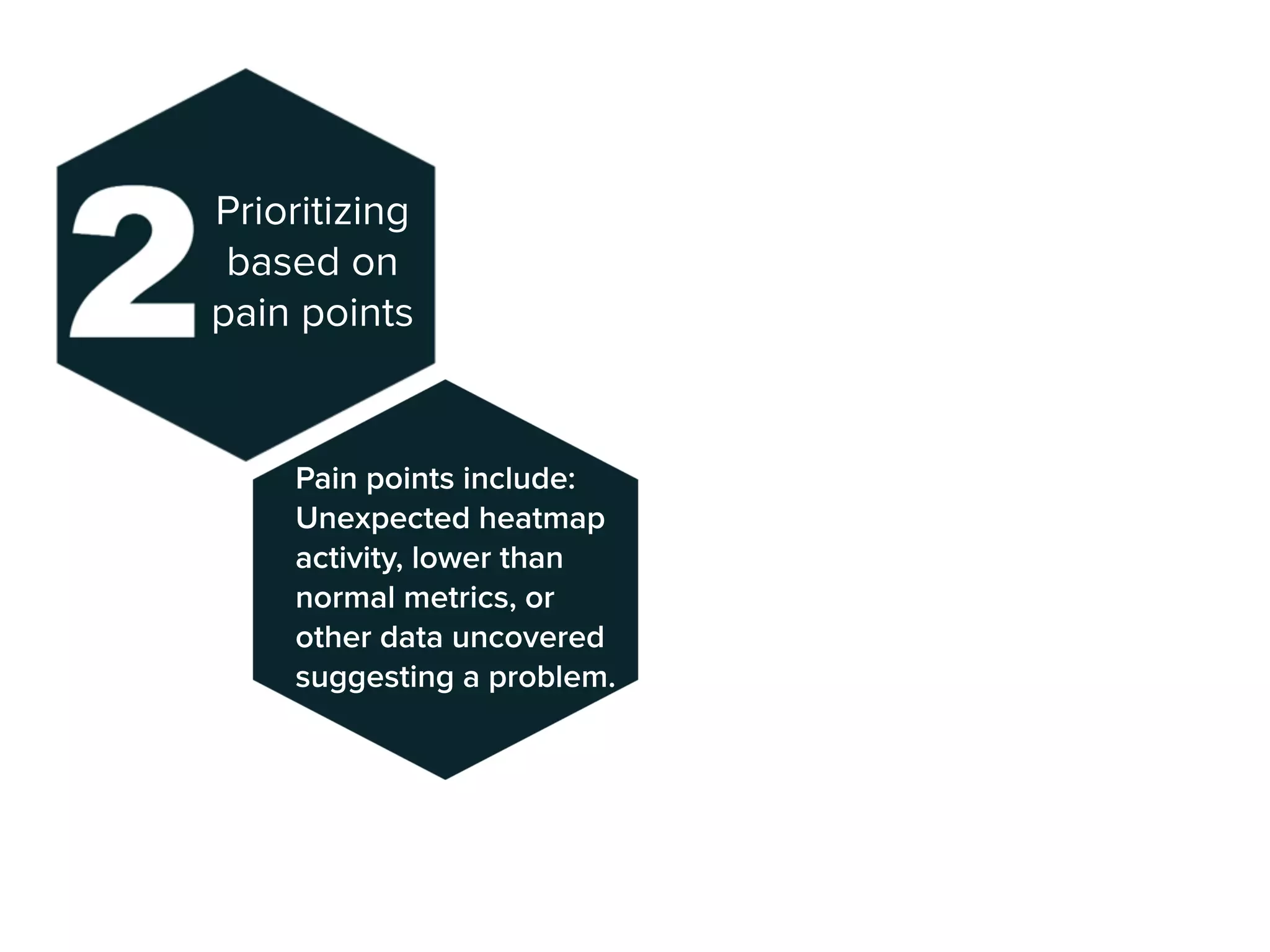
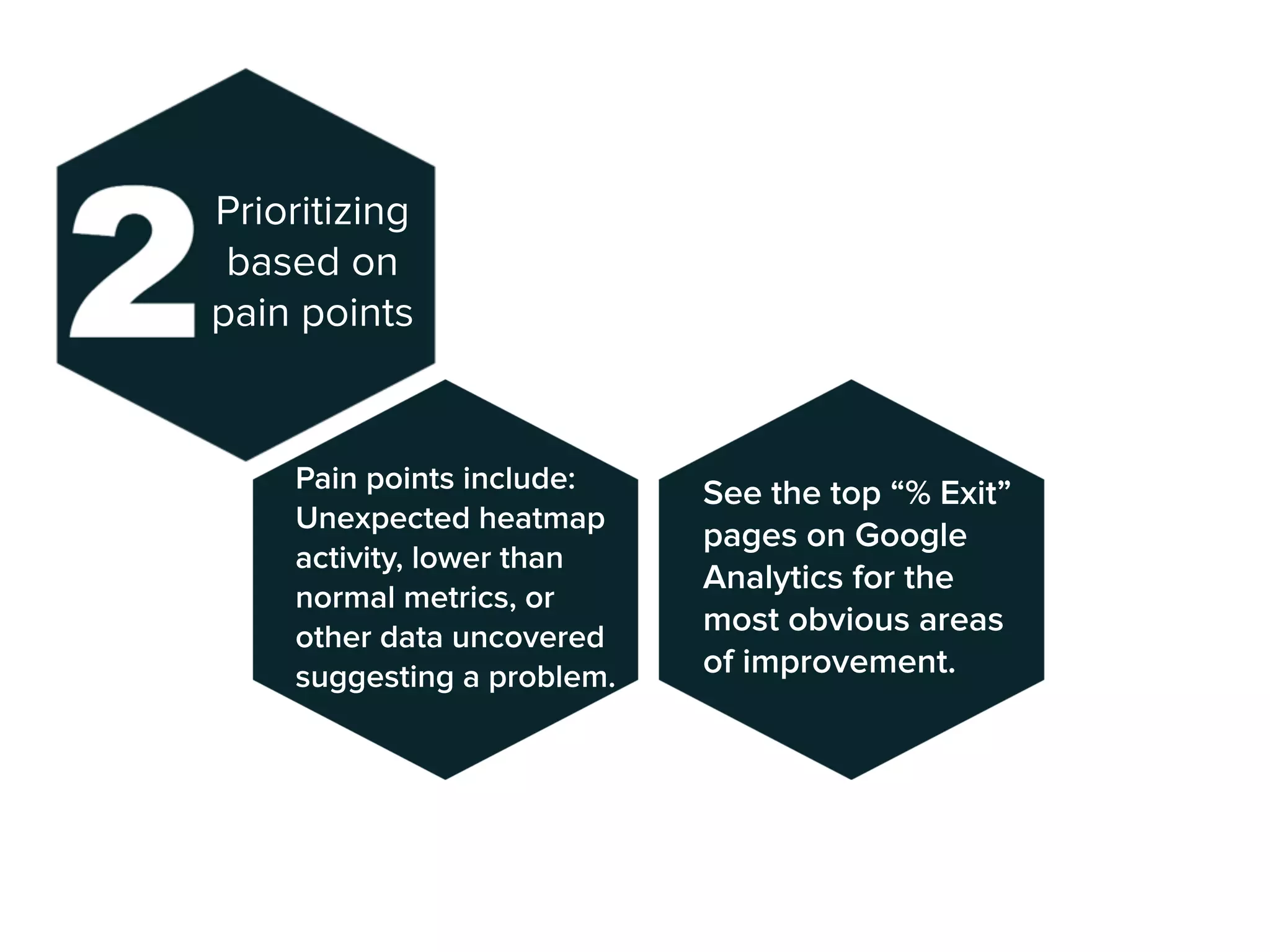
Pain points include:
Unexpected heatmap
activity, lower than
normal metrics, or
other data uncovered
suggesting a problem.
Prioritizing
based on
pain points
Pain points include:
Unexpected heatmap
activity, lower than
normal metrics, or
other data uncovered
suggesting a problem.
See the top “% Exit”
pages on Google
Analytics for the
most obvious areas
of improvement.
Prioritizing
based on
increases to
revenue per
customer
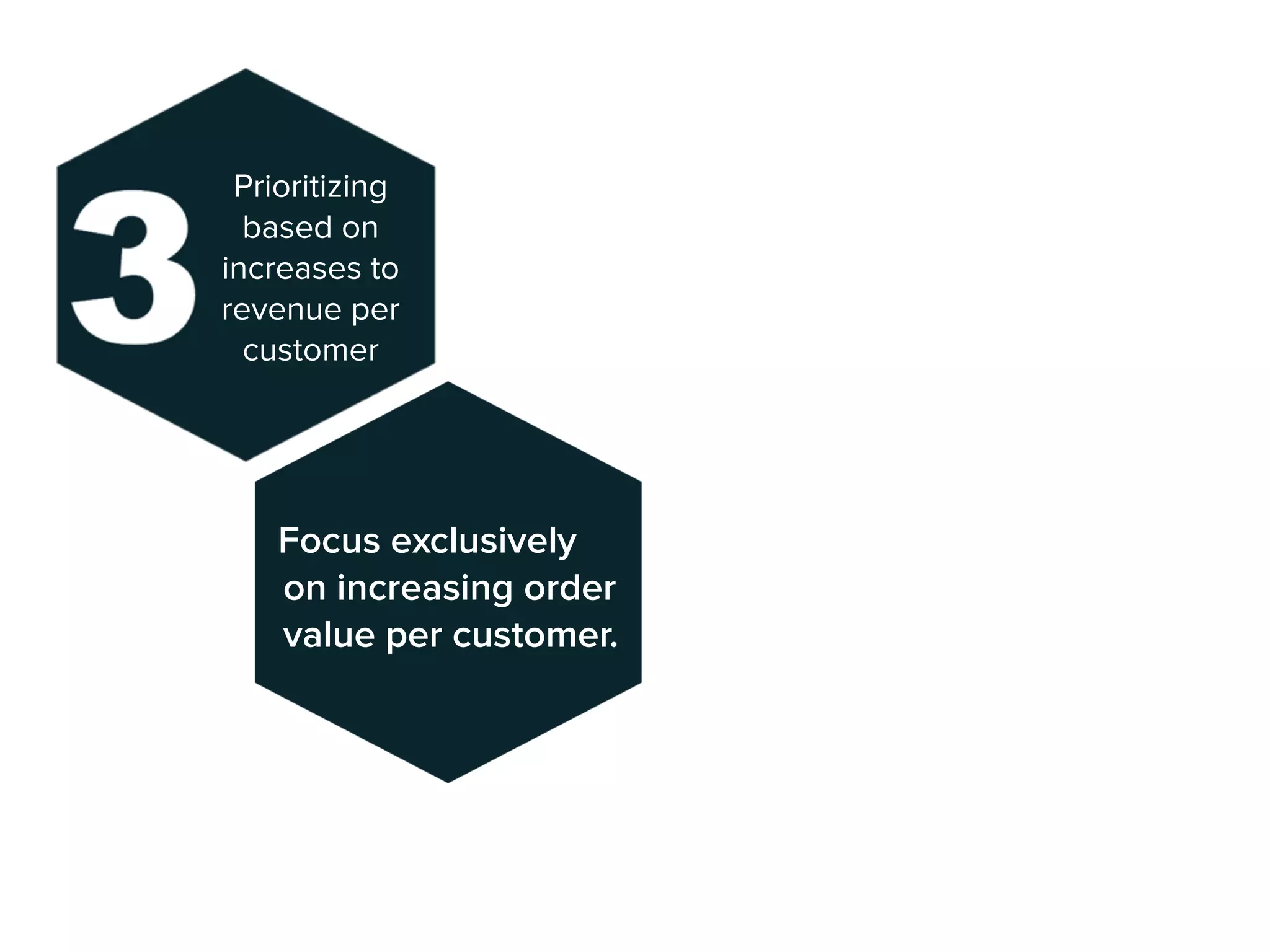
Focus exclusively
on increasing order
value per customer.
Prioritizing
based on
increases to
revenue per
customer
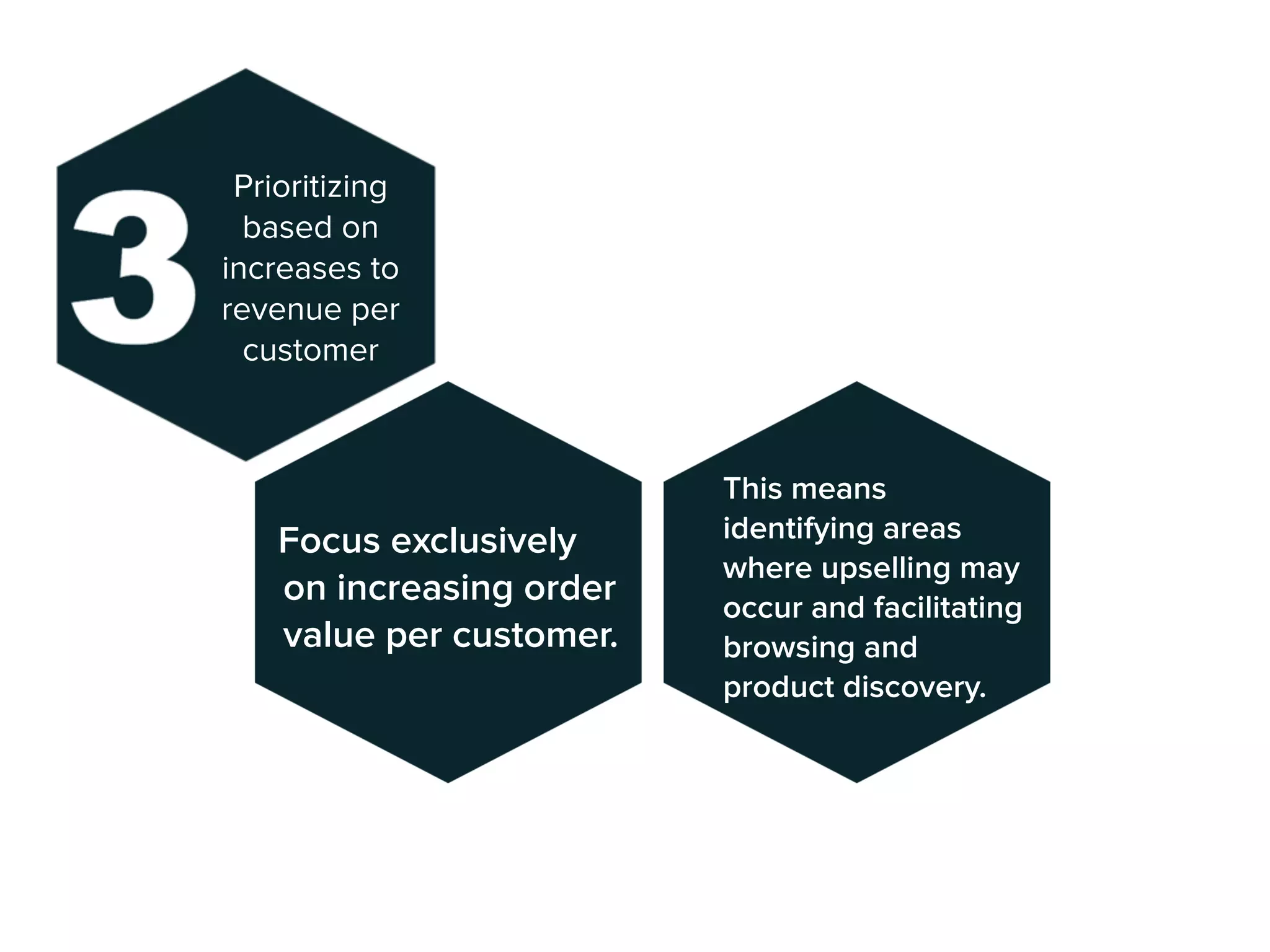
This means
identifying areas
where upselling may
occur and facilitating
browsing and
product discovery.
Prioritizing
based on
increases to
revenue per
customer
Focus exclusively
on increasing order
value per customer.
This means
identifying areas
where upselling may
occur and facilitating
browsing and
product discovery.
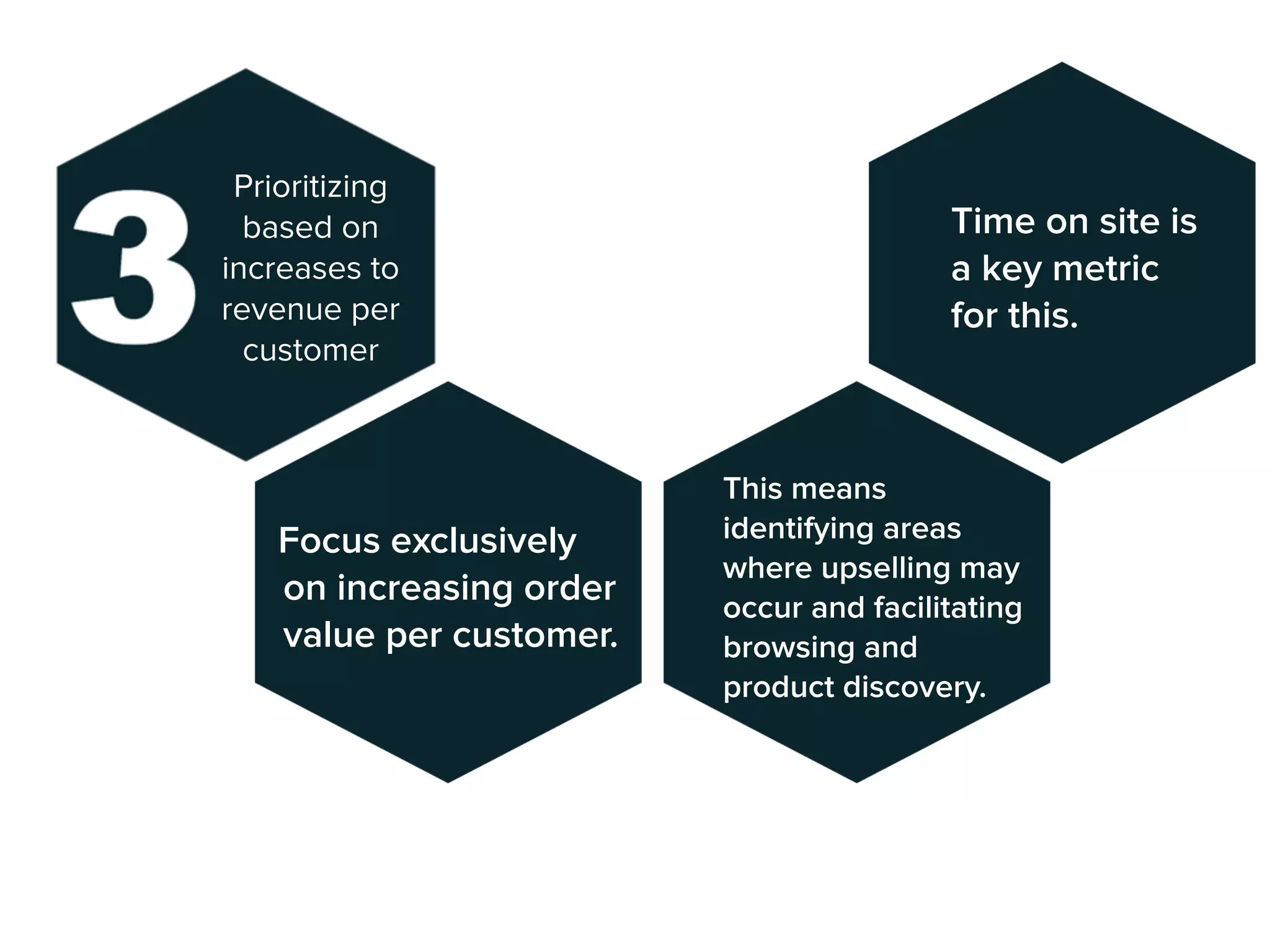
Time on site is
a key metric
for this.
Prioritizing
based on
increases to
revenue per
customer
Focus exclusively
on increasing order
value per customer.
What are the best
strategies for identifying
opportunity and pain
points in your store?
Funnel
bottlenecks
Funnel
bottlenecks
Map out your
conversion funnel and
find the bottlenecks (the
pages with the lowest
micro-conversions).
Funnel
bottlenecks
Map out your
conversion funnel and
find the bottlenecks (the
pages with the lowest
micro-conversions).
If you’re using a
common URL slug for
various page types,
you can figure this out
in Google Analytics.
Funnel
bottlenecks
Map out your
conversion funnel and
find the bottlenecks (the
pages with the lowest
micro-conversions).
If you’re using a
common URL slug for
various page types,
you can figure this out
in Google Analytics.
Otherwise, plot
the data in Excel
to figure it out
manually!
Rank pages
by traffic vs.
conversion
rate
Rank pages
by traffic vs.
conversion
rate
Sort your product
pages by the
highest traffic and
lowest converting
product pages.
Test closest
to the money
Test closest
to the money
Testing closest to
the money can
have the highest
impact on your
bottom line.
Test closest
to the money
Testing closest to
the money can
have the highest
impact on your
bottom line.
Start with your
checkout and move
backwards through
the process
Test closest
to the money
Testing closest to
the money can
have the highest
impact on your
bottom line.
Start with your
checkout and move
backwards through
the process
This will allow you
to see the most
direct improvement
in conversions and
revenue.
Although the above strategies will help increase your
conversion rates, find out why A/B testing is not
enough.
Download the Free Whitepaper!
Questions? Connect with us:
Visit our blog for
more Ecommerce strategies:

3 Strategies for Prioritizing A/B Tests for the Highest Impact

  • 1.
    3 Strategies for Prioritizing A/BTests for the Highest Impact
  • 2.
    Conversion optimization isone of the key techniques to getting the most out of your traffic.
  • 3.
    Even a marginalimprovement to conversions can dramatically affect your revenue.
  • 4.
    The issues of whatto test  and when are critical to developing a strategic approach to A/B testing for Ecommerce marketers.
  • 5.
    Every test yourun has an opportunity cost.
  • 6.
    If your effortsdo not target the areas with the highest possible impact
  • 7.
    then you arenot getting as much out of your tests as you should.
  • 8.
  • 9.
  • 10.
    and turn itupside down.
  • 11.
    The upward pointingtriangle you’re looking at corresponds to the expected value of each user in the funnel based on their probability of purchasing.
  • 12.
    More accurately, theexpected value of each user is equal to the probability of converting times the value of the items in the cart.
  • 13.
    As they movecloser to checkout, they signal their intent to continue with the purchase.
  • 14.
    This method ofvisualization demonstrates the value to be gained by testing the areas closest to the money.
  • 15.
    Even a smallimprovement to the checkout process can make a significant increase to your revenue.
  • 16.
    Okay, let’s turnthe conversion funnel back around.
  • 17.
    Okay, let’s turnthe conversion funnel back around.
  • 18.
    The top ofthe funnel can be seen as the persuasive end.
  • 19.
    Only the mostdeliberate of shoppers will focus wholly on purchasing what they came to the site for.
  • 20.
    Only the mostdeliberate of shoppers will focus wholly on purchasing what they came to the site for. Those who clicked your site at a time when they weren’t ready to begin shopping will bounce.
  • 21.
    Only the mostdeliberate of shoppers will focus wholly on purchasing what they came to the site for. Those who clicked your site at a time when they weren’t ready to begin shopping will bounce. The vast majority of users at this point still need to be persuaded to buy from you and move forward with their purchase.
  • 22.
    You have their attention,but now you need their interest and desire.
  • 23.
    The bottom ofthe funnel is the action end. This is where the intention to purchase is put to the test.
  • 24.
    The timeliness andfit of the checkout experience with the user’s context is the most important factor here.
  • 25.
    The timeliness andfit of the checkout experience with the user’s context is the most important factor here. Things that they are concerned about will be further deliberated at this stage.
  • 26.
    The timeliness andfit of the checkout experience with the user’s context is the most important factor here. Things that they are concerned about will be further deliberated at this stage. The users will keep mentally weighing whether the purchase is a good idea based on a multitude of factors.
  • 27.
    What methods are mostcommonly used for prioritizing A/B tests?
  • 28.
  • 29.
    Prioritizing based on perceived opportunity Test basedon the expected impact of the changes on conversion rate and other key metrics.
  • 30.
    Prioritizing based on perceived opportunity Test basedon the expected impact of the changes on conversion rate and other key metrics. This includes changes to template pages that can have a site-wide impact.
  • 31.
  • 32.
    Prioritizing based on pain points Painpoints include: Unexpected heatmap activity, lower than normal metrics, or other data uncovered suggesting a problem.
  • 33.
    Prioritizing based on pain points Painpoints include: Unexpected heatmap activity, lower than normal metrics, or other data uncovered suggesting a problem. See the top “% Exit” pages on Google Analytics for the most obvious areas of improvement.
  • 34.
  • 35.
    Focus exclusively on increasingorder value per customer. Prioritizing based on increases to revenue per customer
  • 36.
    This means identifying areas whereupselling may occur and facilitating browsing and product discovery. Prioritizing based on increases to revenue per customer Focus exclusively on increasing order value per customer.
  • 37.
    This means identifying areas whereupselling may occur and facilitating browsing and product discovery. Time on site is a key metric for this. Prioritizing based on increases to revenue per customer Focus exclusively on increasing order value per customer.
  • 38.
    What are thebest strategies for identifying opportunity and pain points in your store?
  • 39.
  • 40.
    Funnel bottlenecks Map out your conversionfunnel and find the bottlenecks (the pages with the lowest micro-conversions).
  • 41.
    Funnel bottlenecks Map out your conversionfunnel and find the bottlenecks (the pages with the lowest micro-conversions). If you’re using a common URL slug for various page types, you can figure this out in Google Analytics.
  • 42.
    Funnel bottlenecks Map out your conversionfunnel and find the bottlenecks (the pages with the lowest micro-conversions). If you’re using a common URL slug for various page types, you can figure this out in Google Analytics. Otherwise, plot the data in Excel to figure it out manually!
  • 43.
    Rank pages by trafficvs. conversion rate
  • 44.
    Rank pages by trafficvs. conversion rate Sort your product pages by the highest traffic and lowest converting product pages.
  • 45.
  • 46.
    Test closest to themoney Testing closest to the money can have the highest impact on your bottom line.
  • 47.
    Test closest to themoney Testing closest to the money can have the highest impact on your bottom line. Start with your checkout and move backwards through the process
  • 48.
    Test closest to themoney Testing closest to the money can have the highest impact on your bottom line. Start with your checkout and move backwards through the process This will allow you to see the most direct improvement in conversions and revenue.
  • 49.
    Although the abovestrategies will help increase your conversion rates, find out why A/B testing is not enough. Download the Free Whitepaper!
  • 50.
    Questions? Connect withus: Visit our blog for more Ecommerce strategies: