
Best Practice Case
Comprehensive Care for Hemophilia
CORD/RDI Conference
Toronto, May 11, 2019
David Page, National Director of Health Policy,
Canadian Hemophilia Society
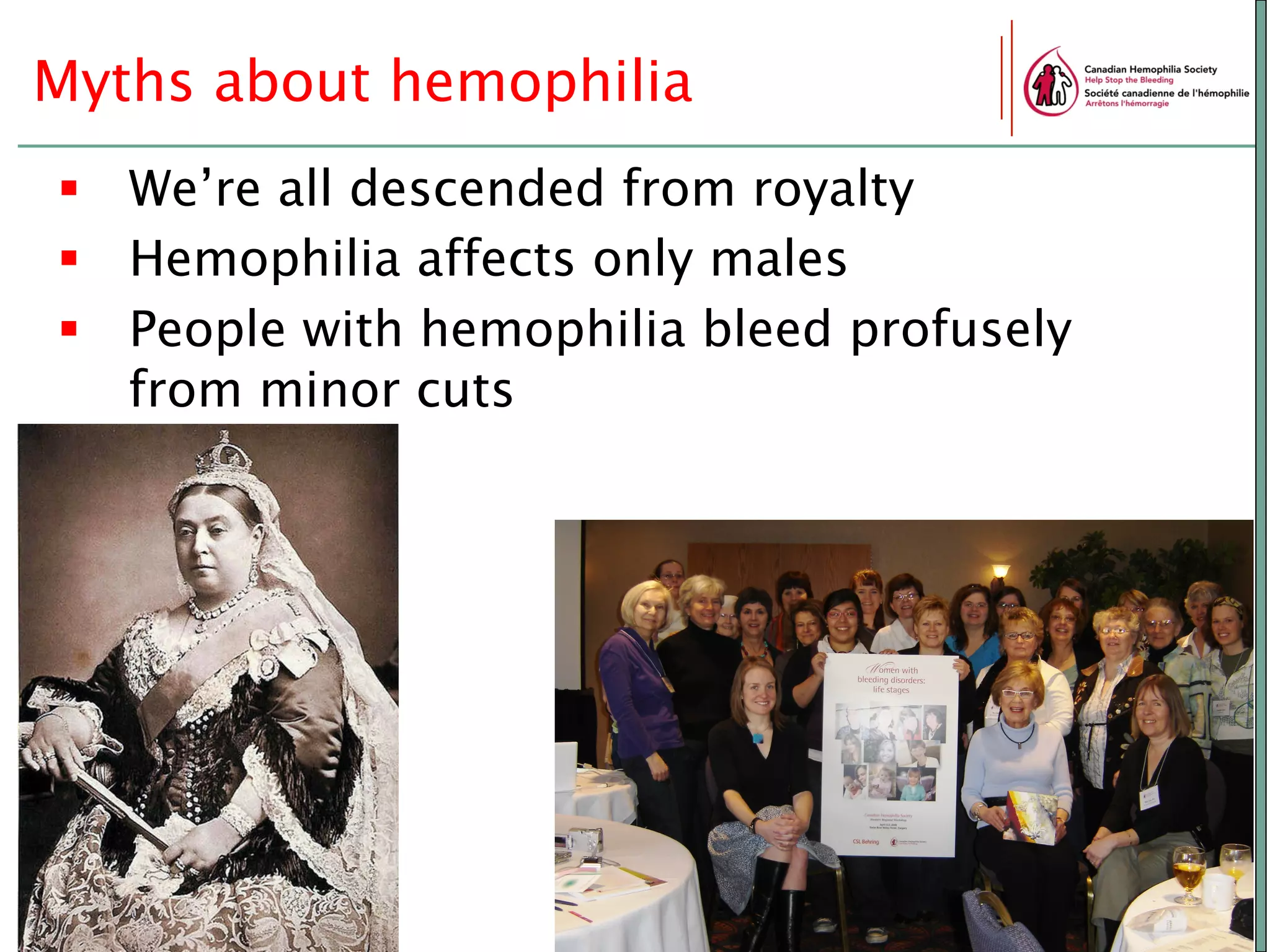
Myths about hemophilia
§  We’re all descended from royalty
§  Hemophilia affects only males
§  People with hemophilia bleed profusely
from minor cuts
What is hemophilia?
§  Inherited bleeding disorder
§  Caused by a deficiency in one of the proteins
(factor VIII or IX) needed for blood coagulation
§  Life-long, no cure (???)
§  Symptoms: Bleeding into joints, muscles, soft
tissues and, sometimes, vital organs
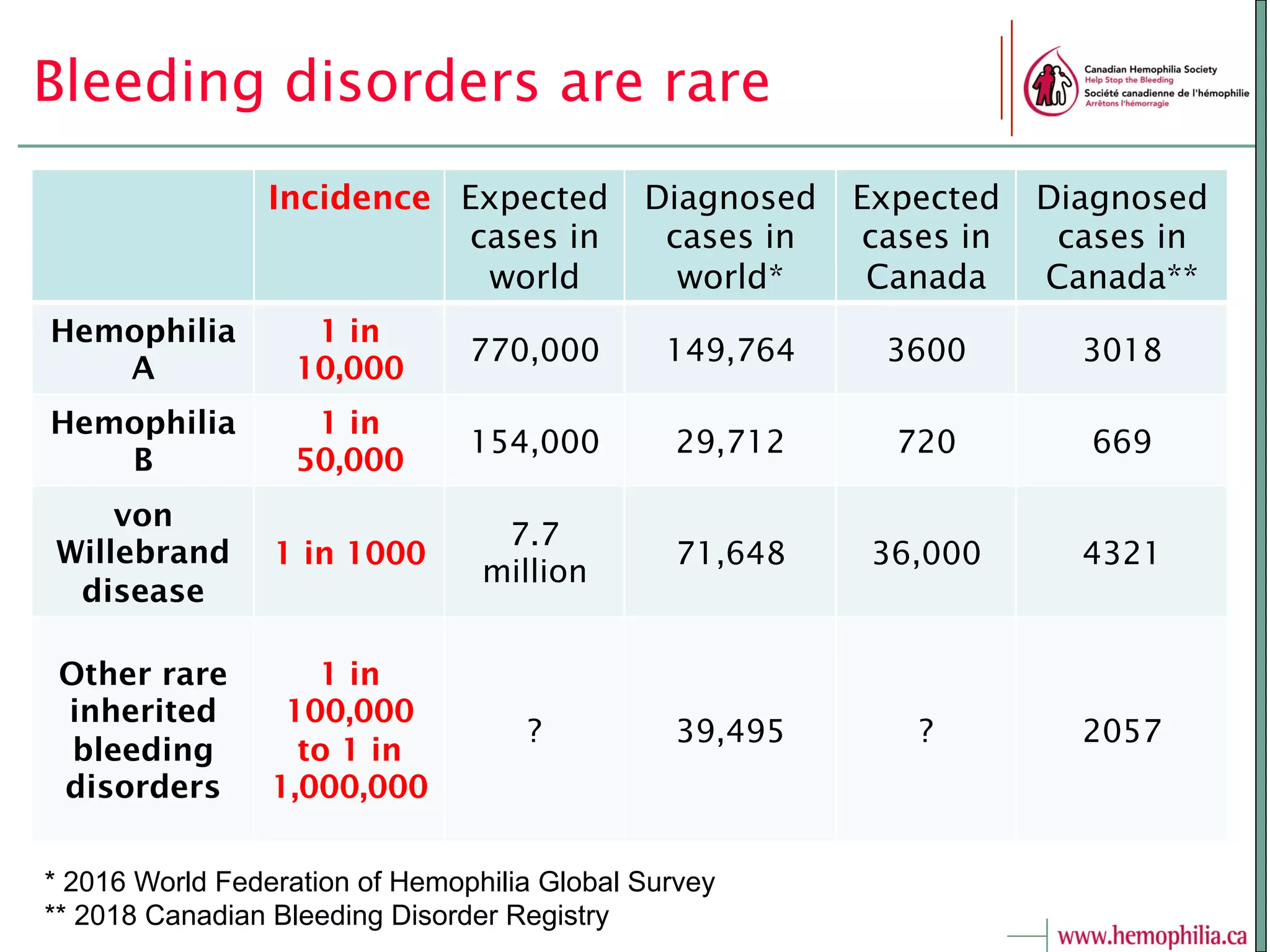
Bleeding disorders are rare
Incidence Expected
cases in
world
Diagnosed
cases in
world*
Expected
cases in
Canada
Diagnosed
cases in
Canada**
Hemophilia
A
1 in
10,000
770,000 149,764 3600 3018
Hemophilia
B
1 in
50,000
154,000 29,712 720 669
von
Willebrand
disease
1 in 1000
7.7
million
71,648 36,000 4321
Other rare
inherited
bleeding
disorders
1 in
100,000
to 1 in
1,000,000
? 39,495 ? 2057
* 2016 World Federation of Hemophilia Global Survey
** 2018 Canadian Bleeding Disorder Registry
Bleeding disorders are rare
Incidence Expected
cases in
world
Diagnosed
cases in
world*
Expected
cases in
Canada
Diagnosed
cases in
Canada**
Hemophilia
A
1 in
10,000
770,000 149,764 3600 3018
Hemophilia
B
1 in
50,000
154,000 29,712 720 669
von
Willebrand
disease
1 in 1000
7.7
million
71,648 36,000 4321
Other rare
inherited
bleeding
disorders
1 in
100,000
to 1 in
1,000,000
? 39,495 ? 2057
* 2016 World Federation of Hemophilia Global Survey
** 2018 Canadian Bleeding Disorder Registry
Bleeding disorders are rare
Incidence Expected
cases in
world
Diagnosed
cases in
world*
Expected
cases in
Canada
Diagnosed
cases in
Canada**
Hemophilia
A
1 in
10,000
770,000 149,764 3600 3018
Hemophilia
B
1 in
50,000
154,000 29,712 720 669
von
Willebrand
disease
1 in 1000
7.7
million
71,648 36,000 4321
Other rare
inherited
bleeding
disorders
1 in
100,000
to 1 in
1,000,000
? 39,495 ? 2057
* 2016 World Federation of Hemophilia Global Survey
** 2018 Canadian Bleeding Disorder Registry
Bleeding disorders are rare
Incidence Expected
cases in
world
Diagnosed
cases in
world*
Expected
cases in
Canada
Diagnosed
cases in
Canada**
Hemophilia
A
1 in
10,000
770,000 149,764 3600 3018
Hemophilia
B
1 in
50,000
154,000 29,712 720 669
von
Willebrand
disease
1 in 1000
7.7
million
71,648 37,000 4321
Other rare
inherited
bleeding
disorders
1 in
100,000
to 1 in
1,000,000
? 39,495 ? 2057
* 2016 World Federation of Hemophilia Global Survey
** 2018 Canadian Bleeding Disorder Registry
Current situation in the world
75% of people with hemophilia
receive little or no treatment
§  Life expectancy: 20 years
§  Those who survive suffer
terrible pain and become
physically disabled
Hemophilia in the 1950s: Before effective care
In 1953, a small group of
hemophiliacs, their families and
physicians founded the Canadian
Hemophilia Society in Montreal.
Their dream? To improve the
quality of life and to find a cure.
Success factor # 1: close
collaboration among patients,
health care providers and
researchers
Beginning of a network of centres
The best treatment was limited to
a few hospitals in major centres
like Montreal, Toronto and
Vancouver.
The Canadian Hemophilia Society
created a Medical and Scientific
Advisory Committee to begin to
build a national network.
National (and international) collaboration
Success factor #
2:
National (and
indeed
international)
collaboration
among health
care
professionals
and patient
organizations
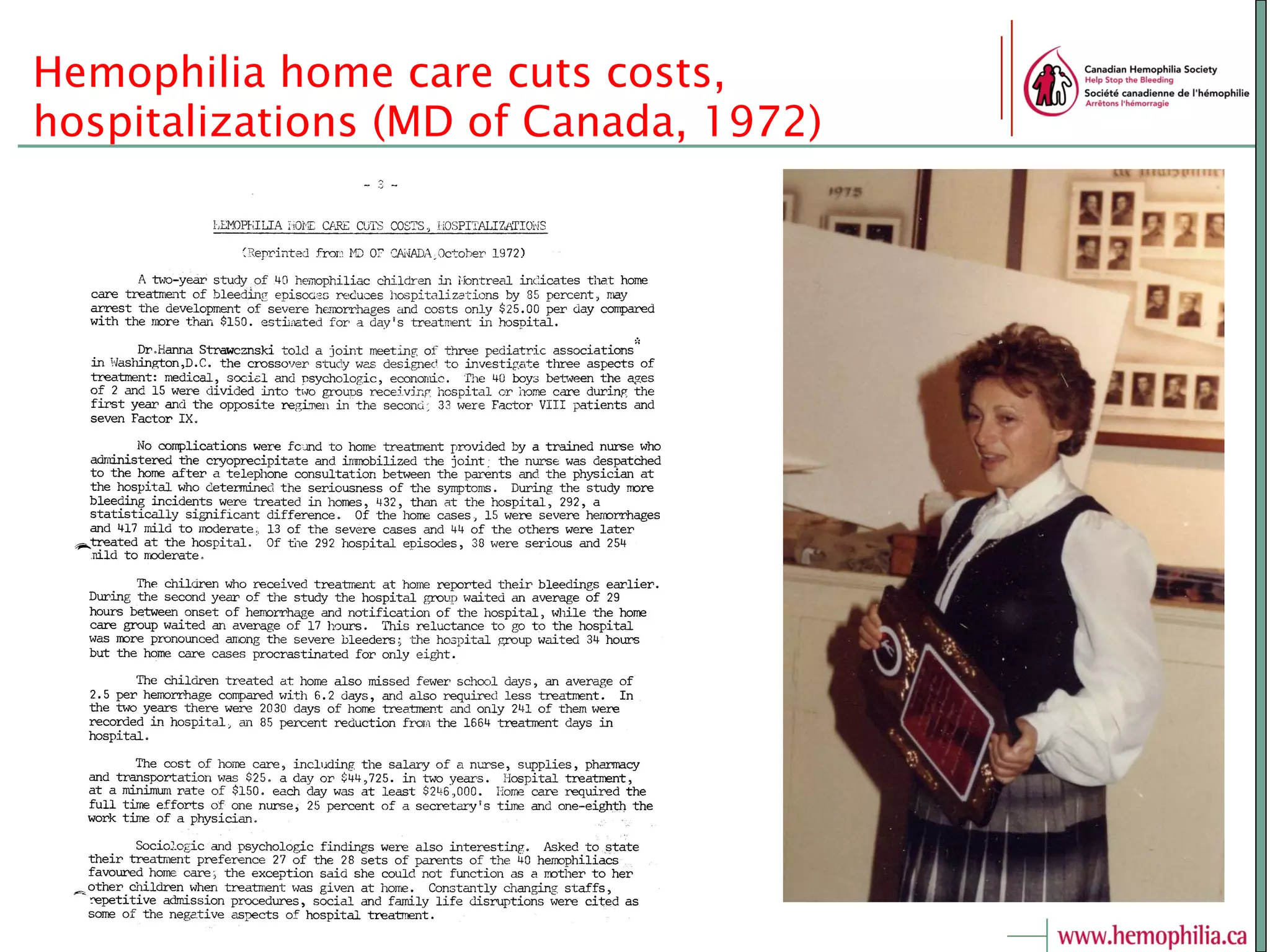
Hemophilia home care cuts costs,
hospitalizations (MD of Canada, 1972)
Data kicks!
1972: Prospective, randomized study comparing
home care vs. hospital care in 40 patients
§ 85% reduction in hospitalizations
§ 87% reduction in costs
§ 50% reduction in “time to treat”
§ 2.5 days lost from school per hemorrhage compared to
6.8 days
§ 97% of patients and families preferred home infusion
Success factor # 3: Self/family administration
of therapeutics
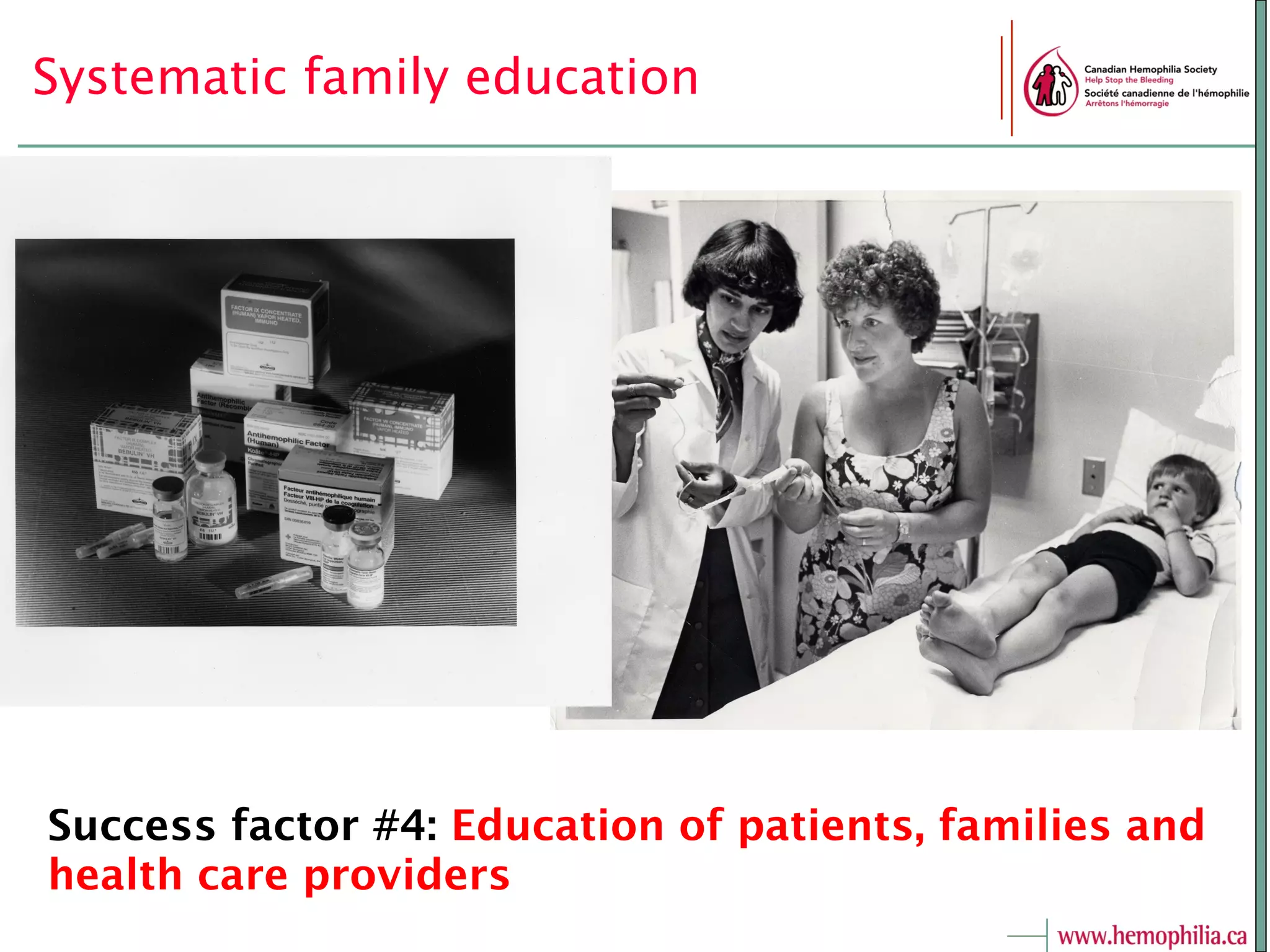
Systematic family education
Success factor #4: Education of patients, families and
health care providers
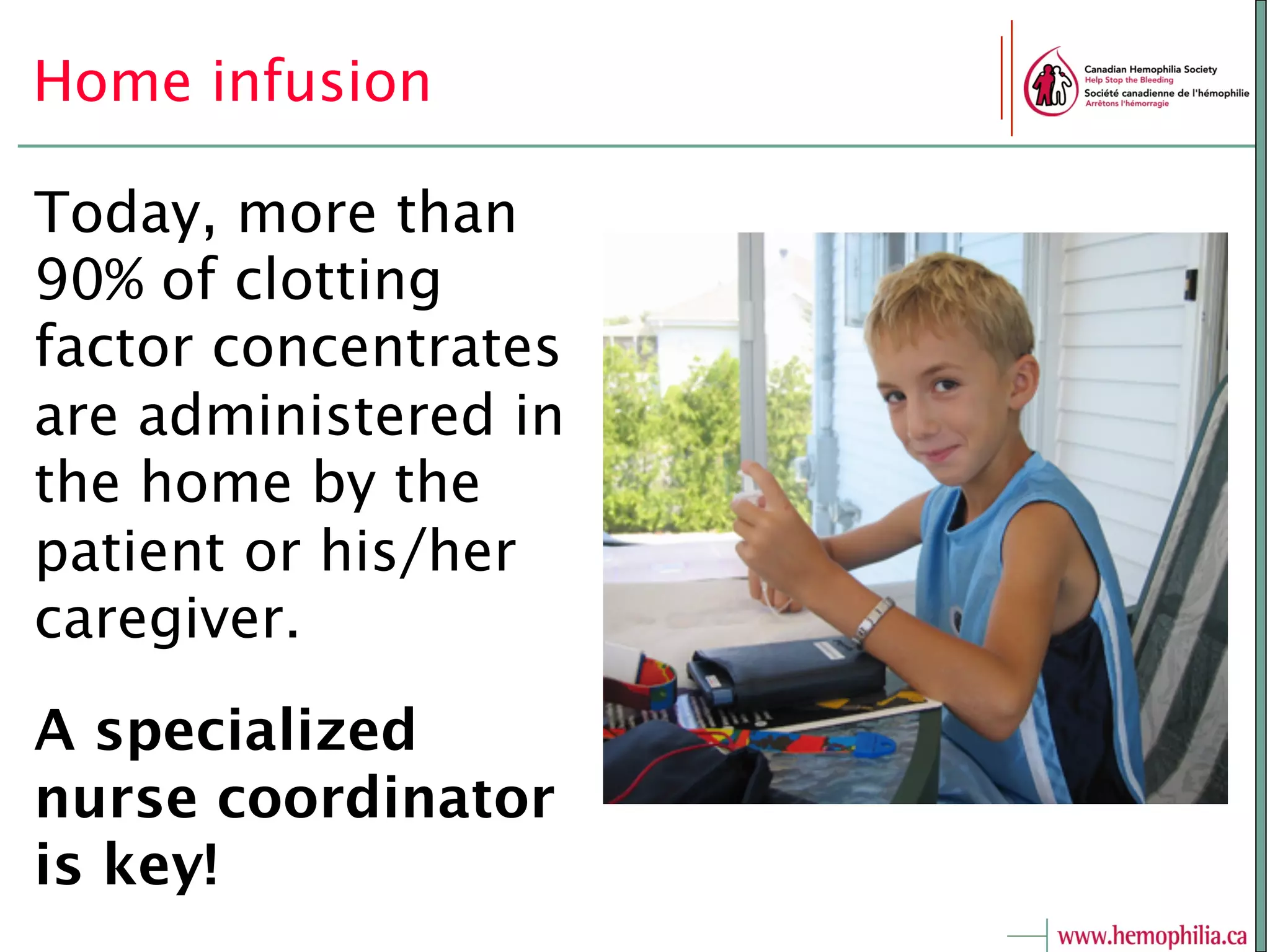
Home infusion
Today, more than
90% of clotting
factor concentrates
are administered in
the home by the
patient or his/her
caregiver.
A specialized
nurse coordinator
is key!
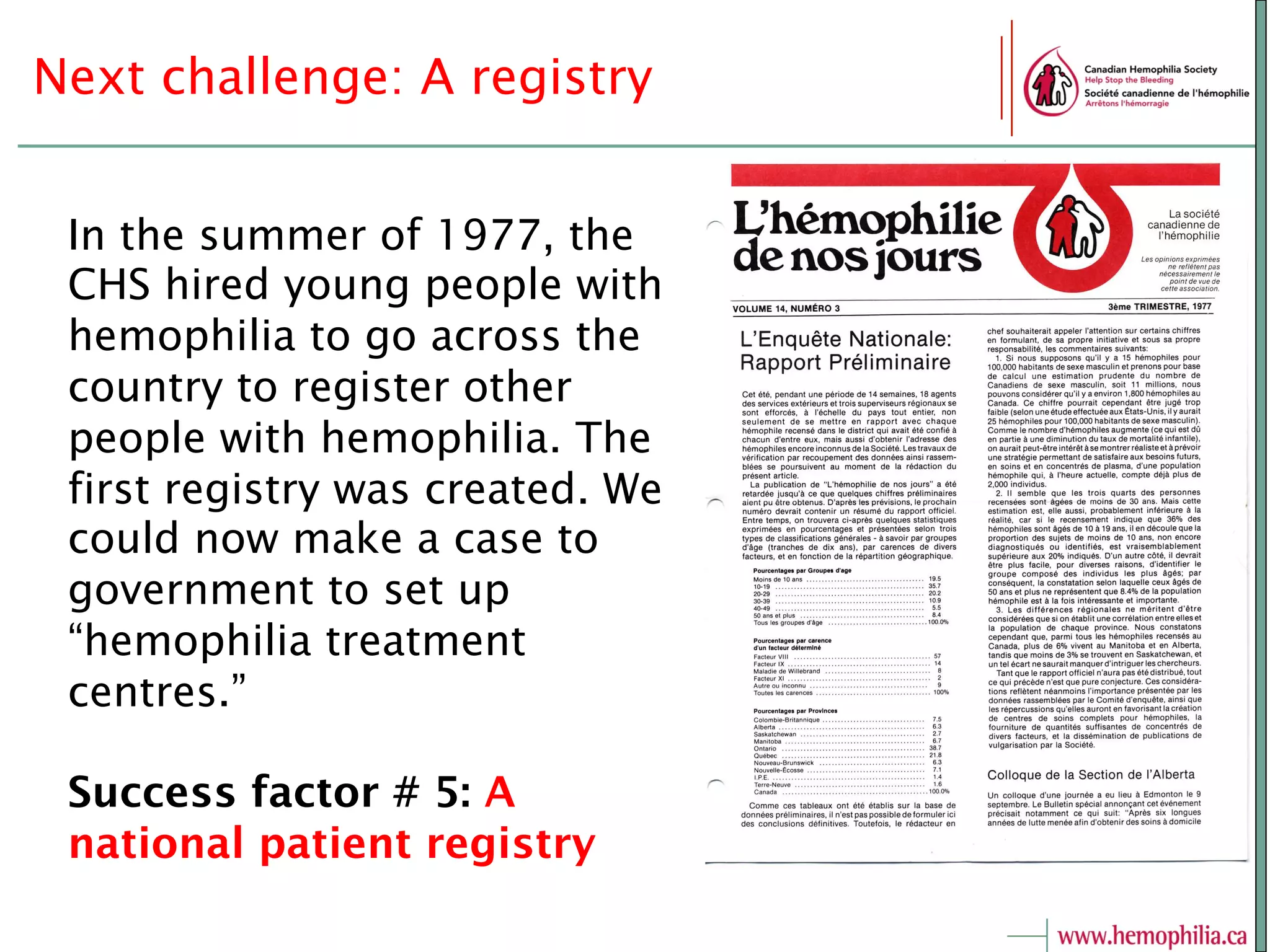
Next challenge: A registry
In the summer of 1977, the
CHS hired young people with
hemophilia to go across the
country to register other
people with hemophilia. The
first registry was created. We
could now make a case to
government to set up
“hemophilia treatment
centres.”
Success factor # 5: A
national patient registry
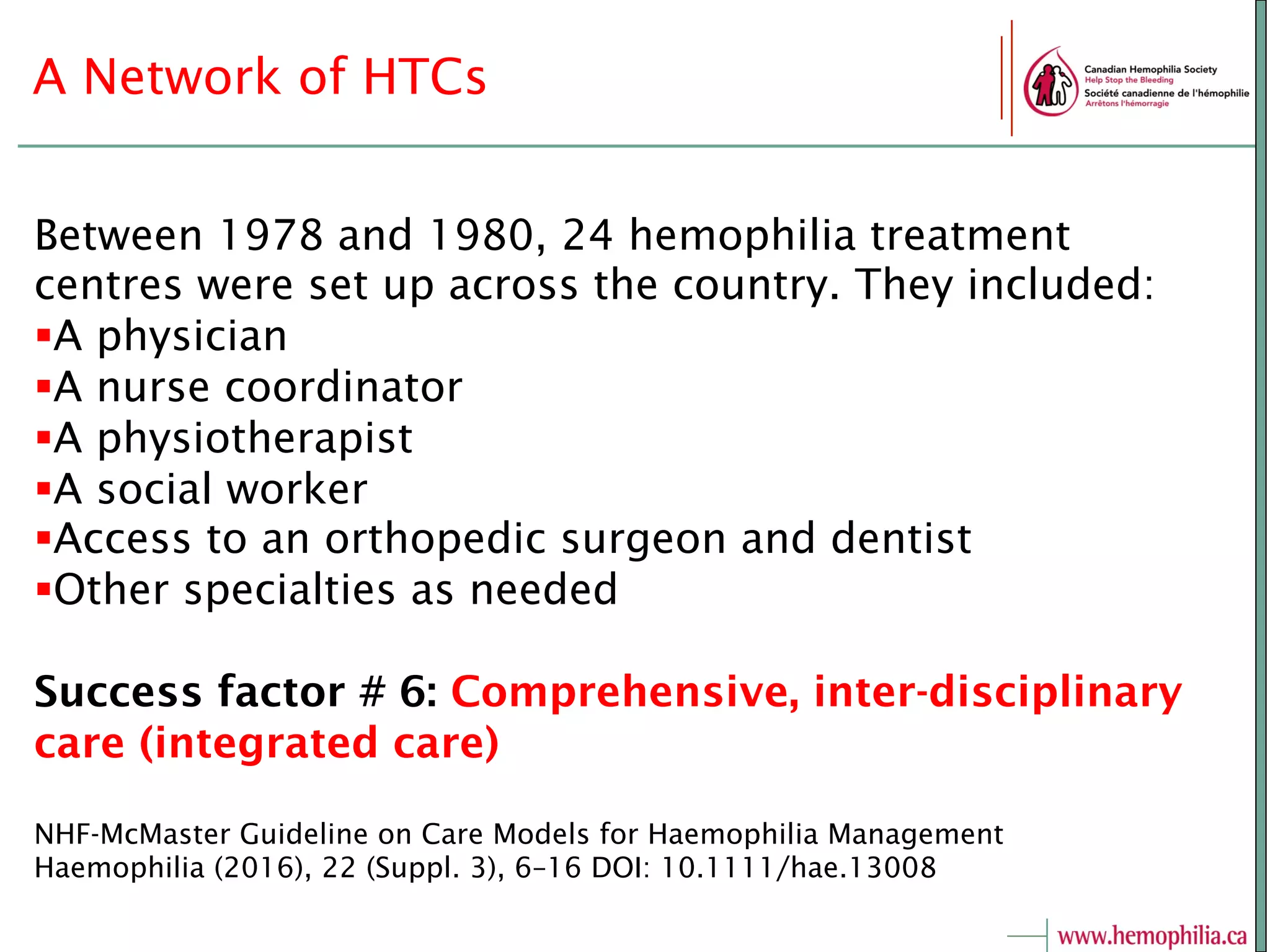
A Network of HTCs
Between 1978 and 1980, 24 hemophilia treatment
centres were set up across the country. They included:
§ A physician
§ A nurse coordinator
§ A physiotherapist
§ A social worker
§ Access to an orthopedic surgeon and dentist
§ Other specialties as needed
Success factor # 6: Comprehensive, inter-disciplinary
care (integrated care)
NHF-McMaster Guideline on Care Models for Haemophilia Management
Haemophilia (2016), 22 (Suppl. 3), 6–16 DOI: 10.1111/hae.13008
Other features of comprehensive care
Success factor # 7:
Provincial designation
Success factor # 8:
Decentralization through outreach
Success factor # 9:
Flexibility in organization
Too good to be true
Success factor # 10: collaborative research
Between 1990 and
2018, CHS invested
$8,000,000 in…
§ Fundamental
research
§ Clinical research
§ Fellowships and
studentships
Benefits of research agenda
§  New knowledge
§  Improved care
§  Increased interest
among clinicians/
researchers
§  Closer links between
patient organization
and physicians
§  Hope for community
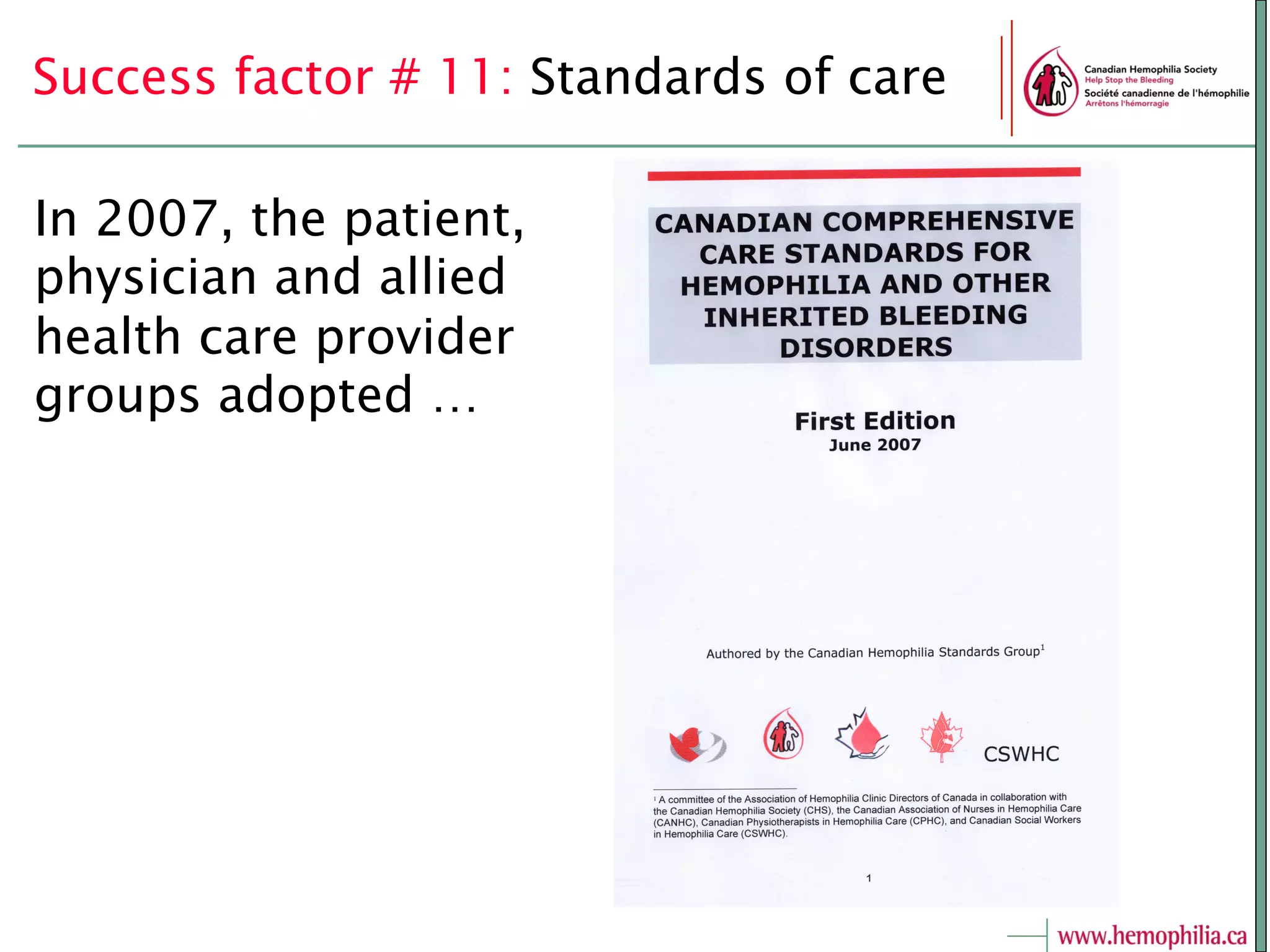
Success factor # 11: Standards of care
In 2007, the patient,
physician and allied
health care provider
groups adopted …
Standards of care
Standards include:
§  Diagnostic and therapeutic principles of
care
§  Populations served
§  Description of the care team
§  Services, responsibilities of a treatment
centre
§  Scope of care (& key indicators)
§  Quality measures (& key indicators)
§  Therapeutic services (& key indicators)
Program evaluation and accreditation
In 2014, the CHS evaluated 25 of the 26 HTCs
across the country, using…
§ Individual interviews with clinic staff
§ A patient satisfaction survey
Success factor # 12, program evaluation,
remains to be fully achieved
How far we’ve come
… but we’re not there yet
Innovative therapies
Factor VIII and IX therapies with 1.5 to
5 times the half-life
2016
Emicizumab (a monoclonal antibody
that mimics factor VIII)
Thursday (in
Quebec)
Fitusiran (a RNAi therapy that down
regulates anti-thrombin to re-balance
hemostasis), anti-TFPIs
2021?
Gene therapy using a AAV vector to
deliver the gene to make factor VIII and
IX
2021?
… but we’re not there yet
21st-century tools to better manage
care
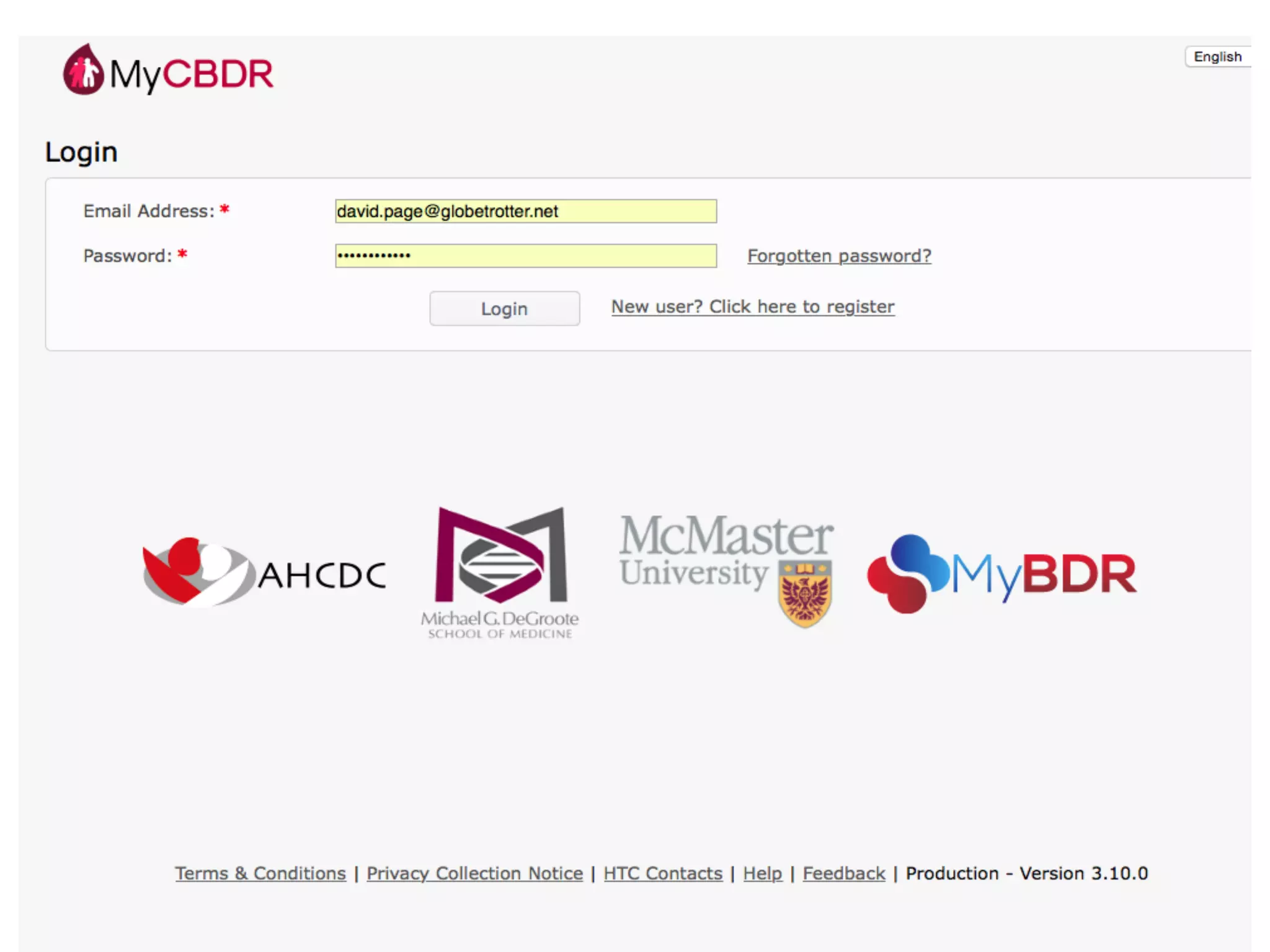
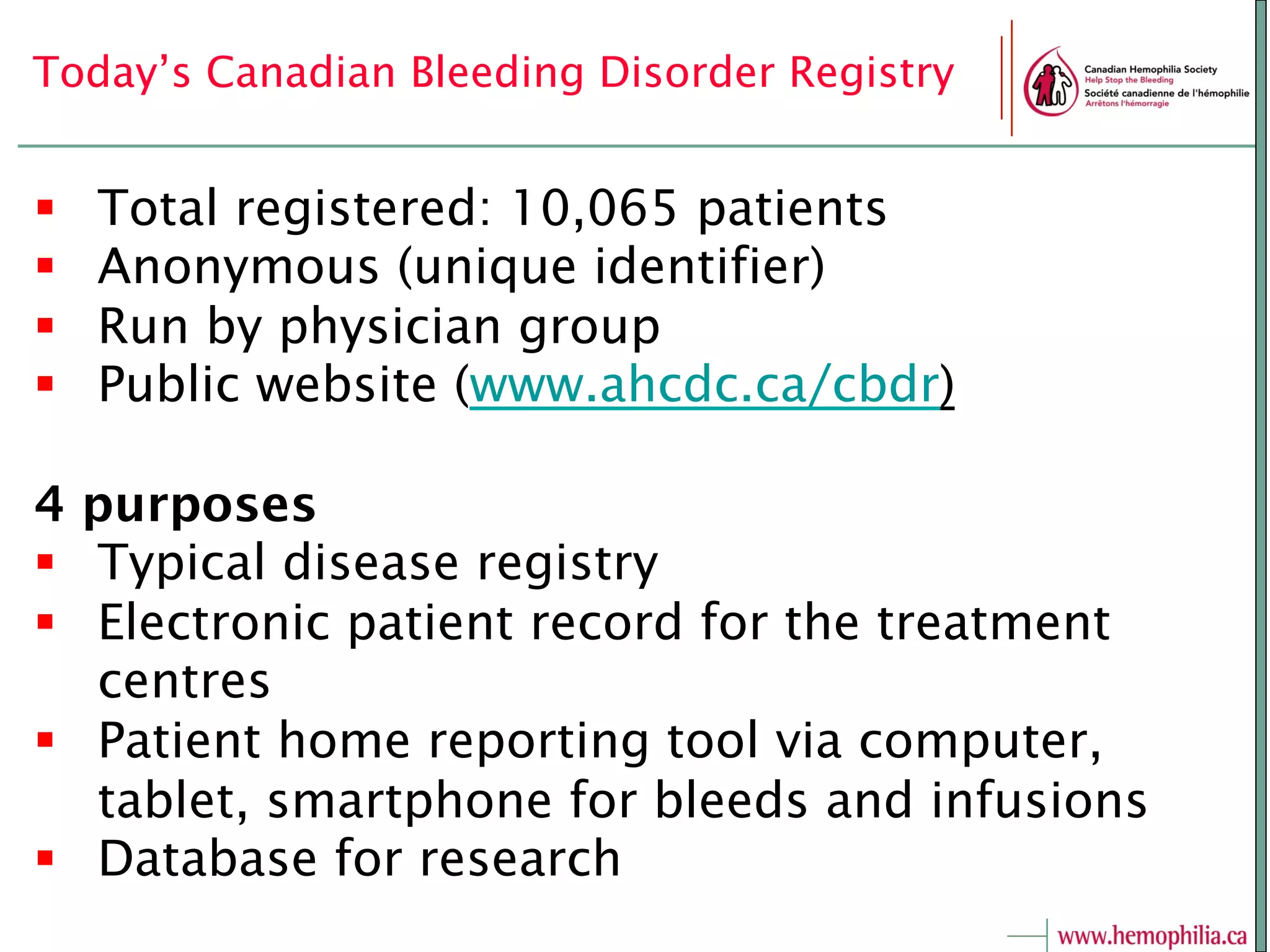
Today’s Canadian Bleeding Disorder Registry
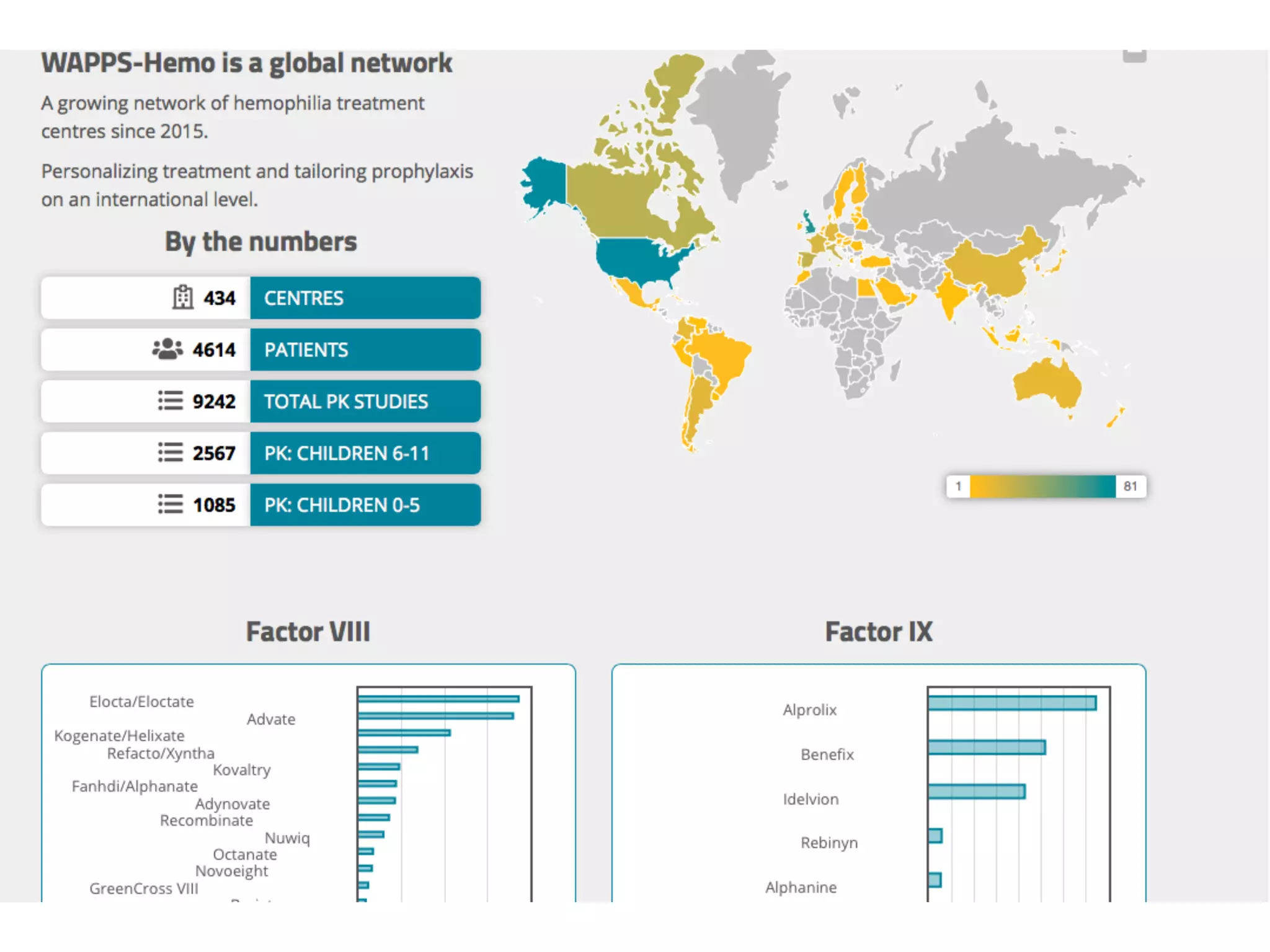
§  Total registered: 10,065 patients
§  Anonymous (unique identifier)
§  Run by physician group
§  Public website (www.ahcdc.ca/cbdr)
4 purposes
§  Typical disease registry
§  Electronic patient record for the treatment
centres
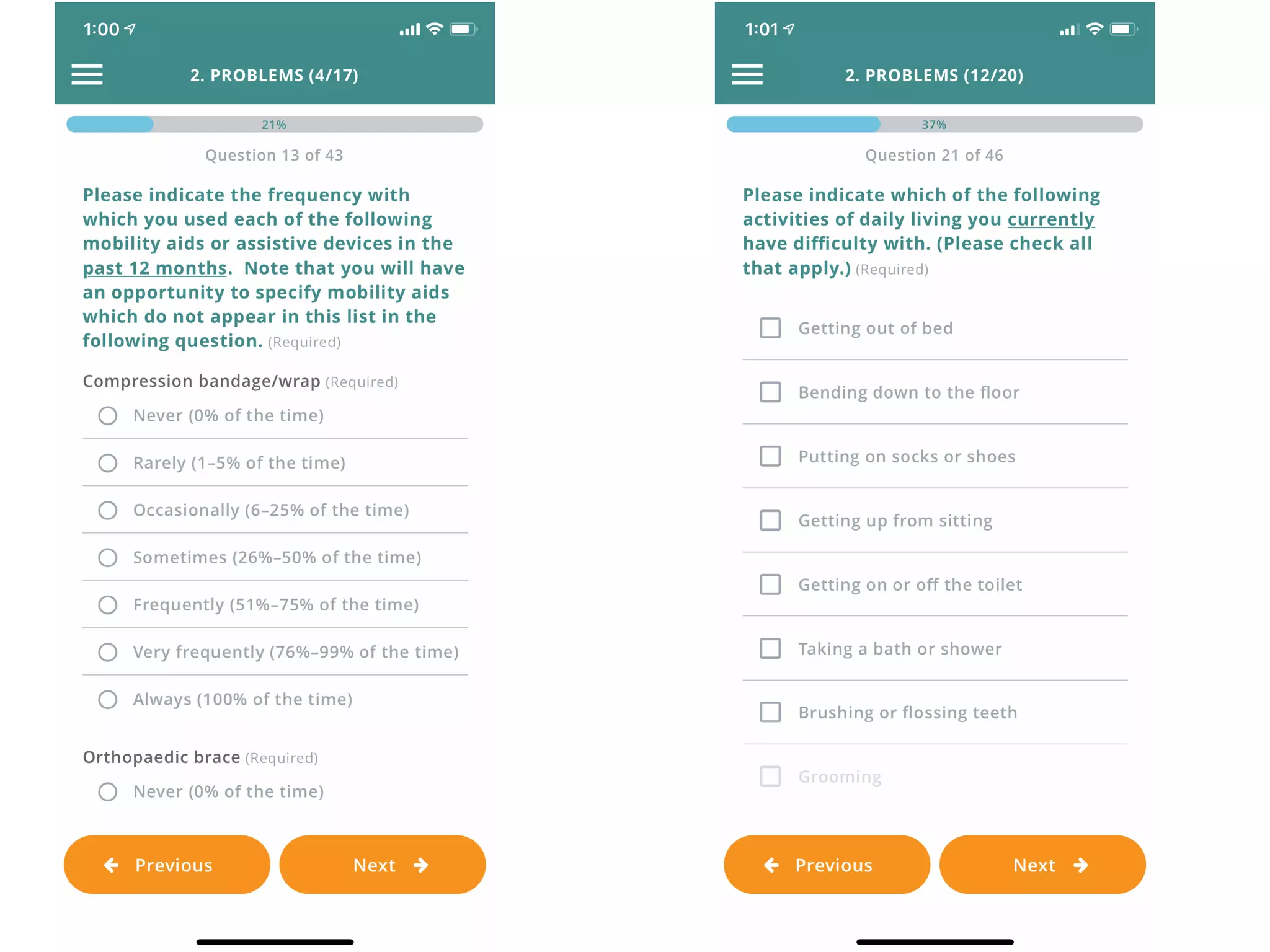
§  Patient home reporting tool via computer,
tablet, smartphone for bleeds and infusions
§  Database for research
STREAM ONE- David Page Best Practice Case: Hemophilia -

STREAM ONE- David Page Best Practice Case: Hemophilia -

  • 1.
    Best Practice Case ComprehensiveCare for Hemophilia CORD/RDI Conference Toronto, May 11, 2019 David Page, National Director of Health Policy, Canadian Hemophilia Society
  • 2.
    Myths about hemophilia § We’re all descended from royalty §  Hemophilia affects only males §  People with hemophilia bleed profusely from minor cuts
  • 3.
    What is hemophilia? § Inherited bleeding disorder §  Caused by a deficiency in one of the proteins (factor VIII or IX) needed for blood coagulation §  Life-long, no cure (???) §  Symptoms: Bleeding into joints, muscles, soft tissues and, sometimes, vital organs
  • 4.
    Bleeding disorders arerare Incidence Expected cases in world Diagnosed cases in world* Expected cases in Canada Diagnosed cases in Canada** Hemophilia A 1 in 10,000 770,000 149,764 3600 3018 Hemophilia B 1 in 50,000 154,000 29,712 720 669 von Willebrand disease 1 in 1000 7.7 million 71,648 36,000 4321 Other rare inherited bleeding disorders 1 in 100,000 to 1 in 1,000,000 ? 39,495 ? 2057 * 2016 World Federation of Hemophilia Global Survey ** 2018 Canadian Bleeding Disorder Registry
  • 5.
    Bleeding disorders arerare Incidence Expected cases in world Diagnosed cases in world* Expected cases in Canada Diagnosed cases in Canada** Hemophilia A 1 in 10,000 770,000 149,764 3600 3018 Hemophilia B 1 in 50,000 154,000 29,712 720 669 von Willebrand disease 1 in 1000 7.7 million 71,648 36,000 4321 Other rare inherited bleeding disorders 1 in 100,000 to 1 in 1,000,000 ? 39,495 ? 2057 * 2016 World Federation of Hemophilia Global Survey ** 2018 Canadian Bleeding Disorder Registry
  • 6.
    Bleeding disorders arerare Incidence Expected cases in world Diagnosed cases in world* Expected cases in Canada Diagnosed cases in Canada** Hemophilia A 1 in 10,000 770,000 149,764 3600 3018 Hemophilia B 1 in 50,000 154,000 29,712 720 669 von Willebrand disease 1 in 1000 7.7 million 71,648 36,000 4321 Other rare inherited bleeding disorders 1 in 100,000 to 1 in 1,000,000 ? 39,495 ? 2057 * 2016 World Federation of Hemophilia Global Survey ** 2018 Canadian Bleeding Disorder Registry
  • 7.
    Bleeding disorders arerare Incidence Expected cases in world Diagnosed cases in world* Expected cases in Canada Diagnosed cases in Canada** Hemophilia A 1 in 10,000 770,000 149,764 3600 3018 Hemophilia B 1 in 50,000 154,000 29,712 720 669 von Willebrand disease 1 in 1000 7.7 million 71,648 37,000 4321 Other rare inherited bleeding disorders 1 in 100,000 to 1 in 1,000,000 ? 39,495 ? 2057 * 2016 World Federation of Hemophilia Global Survey ** 2018 Canadian Bleeding Disorder Registry
  • 8.
    Current situation inthe world 75% of people with hemophilia receive little or no treatment §  Life expectancy: 20 years §  Those who survive suffer terrible pain and become physically disabled
  • 9.
    Hemophilia in the1950s: Before effective care In 1953, a small group of hemophiliacs, their families and physicians founded the Canadian Hemophilia Society in Montreal. Their dream? To improve the quality of life and to find a cure. Success factor # 1: close collaboration among patients, health care providers and researchers
  • 10.
    Beginning of anetwork of centres The best treatment was limited to a few hospitals in major centres like Montreal, Toronto and Vancouver. The Canadian Hemophilia Society created a Medical and Scientific Advisory Committee to begin to build a national network.
  • 11.
    National (and international)collaboration Success factor # 2: National (and indeed international) collaboration among health care professionals and patient organizations
  • 12.
    Hemophilia home carecuts costs, hospitalizations (MD of Canada, 1972)
  • 13.
    Data kicks! 1972: Prospective,randomized study comparing home care vs. hospital care in 40 patients § 85% reduction in hospitalizations § 87% reduction in costs § 50% reduction in “time to treat” § 2.5 days lost from school per hemorrhage compared to 6.8 days § 97% of patients and families preferred home infusion Success factor # 3: Self/family administration of therapeutics
  • 14.
    Systematic family education Successfactor #4: Education of patients, families and health care providers
  • 15.
    Home infusion Today, morethan 90% of clotting factor concentrates are administered in the home by the patient or his/her caregiver. A specialized nurse coordinator is key!
  • 16.
    Next challenge: Aregistry In the summer of 1977, the CHS hired young people with hemophilia to go across the country to register other people with hemophilia. The first registry was created. We could now make a case to government to set up “hemophilia treatment centres.” Success factor # 5: A national patient registry
  • 17.
    A Network ofHTCs Between 1978 and 1980, 24 hemophilia treatment centres were set up across the country. They included: § A physician § A nurse coordinator § A physiotherapist § A social worker § Access to an orthopedic surgeon and dentist § Other specialties as needed Success factor # 6: Comprehensive, inter-disciplinary care (integrated care) NHF-McMaster Guideline on Care Models for Haemophilia Management Haemophilia (2016), 22 (Suppl. 3), 6–16 DOI: 10.1111/hae.13008
  • 18.
    Other features ofcomprehensive care Success factor # 7: Provincial designation Success factor # 8: Decentralization through outreach Success factor # 9: Flexibility in organization
  • 19.
    Too good tobe true
  • 20.
    Success factor #10: collaborative research Between 1990 and 2018, CHS invested $8,000,000 in… § Fundamental research § Clinical research § Fellowships and studentships
  • 21.
    Benefits of researchagenda §  New knowledge §  Improved care §  Increased interest among clinicians/ researchers §  Closer links between patient organization and physicians §  Hope for community
  • 22.
    Success factor #11: Standards of care In 2007, the patient, physician and allied health care provider groups adopted …
  • 23.
    Standards of care Standardsinclude: §  Diagnostic and therapeutic principles of care §  Populations served §  Description of the care team §  Services, responsibilities of a treatment centre §  Scope of care (& key indicators) §  Quality measures (& key indicators) §  Therapeutic services (& key indicators)
  • 24.
    Program evaluation andaccreditation In 2014, the CHS evaluated 25 of the 26 HTCs across the country, using… § Individual interviews with clinic staff § A patient satisfaction survey Success factor # 12, program evaluation, remains to be fully achieved
  • 25.
  • 26.
    … but we’renot there yet Innovative therapies Factor VIII and IX therapies with 1.5 to 5 times the half-life 2016 Emicizumab (a monoclonal antibody that mimics factor VIII) Thursday (in Quebec) Fitusiran (a RNAi therapy that down regulates anti-thrombin to re-balance hemostasis), anti-TFPIs 2021? Gene therapy using a AAV vector to deliver the gene to make factor VIII and IX 2021?
  • 27.
    … but we’renot there yet 21st-century tools to better manage care
  • 29.
    Today’s Canadian BleedingDisorder Registry §  Total registered: 10,065 patients §  Anonymous (unique identifier) §  Run by physician group §  Public website (www.ahcdc.ca/cbdr) 4 purposes §  Typical disease registry §  Electronic patient record for the treatment centres §  Patient home reporting tool via computer, tablet, smartphone for bleeds and infusions §  Database for research