DISCOVER . LEARN . EMPOWER
INSTITUTE – University School of Business
DEPARTMENT – Management (M.B.A.)
Subject : Management Practices & Organizational Behavior
Subject Code : 22BAT603
Unit : III
Topic Name : Introduction to Motivation
Faculty Name : Dr. Bhaskarasrinivas
1
Course Objective
COB No. Title
COB1 To give an exposure to students of the individual behavior in organizations.
COB2
To enable students to combine relevant information and appraise options for the most optimal
solution so that they will be able to envisage and control human behaviour at work and improve
organizational effectiveness.
2
Leadership & Organizational
Behaviour
Course Outcome
Will be covered in
this lecture
CO
Number
Title Level
CO1 To understand the concepts of organizational
behavior and comprehend the behavior of
people in the organization.
Remember
CO2 To learn about leadership theories and
comprehend the process of transition of a
manager to a leader.
Understand
CO3 To discuss the applicability of distinct
organization behaviour and identify challenges
being faced by people in organization.
Understand
CO4 To judge people on the basis of their behaviour
in terms of their effectiveness to the situations.
Understand
3
Learning Objectives
• Comprehend the introduction of motivation.
• Understand the techniques of motivation
• Explore the importance of motivational techniques.
4
Content
• Introduction to motivation
• Key elements of employee motivation
• Process of Employee Motivation and Organizational Success
• Nature of motivation
• Types of employee motivation
• Techniques to increase Motivation
• Motivation process
• Importance of motivation
5
6
Meaning of Motivation
•
‘Motivation’ is a term derived from the word ‘motive’. We can
define motive as which makes person active in a particular way.
• It is an inner impulse causing man to action. A person works to
satisfy his needs.
• So, the human needs are the cause of action and motivation is a
process of causing the mean realized these needs.
7
"Motivation is the need or drive within an
individual that drives them towards goal-
oriented action.“
“The process which encourages and guides
behaviour”
MOTIVATION
8
Motivation
• Motivation
• Forces within a person
• Willful direction, intensity, and persistence
of the person’s efforts
• Achieving specific goals
9
Direction
Persistence
Intensity
What Is Motivation?
10
Key Elements:
 Intensity : is concerned with how hard a person tries. This is the element
most of us focus on when we talk about motivation.
 Persistence : It is a measure of how long a person can maintain his/her
effort.
 Direction : is the orientation that benefits the organisation which is
towards beneficial goal
Motivated employees are willing to exert a particular
level of effort (intensity) for a certain amount of time
(persistence) toward a particular goal (direction).
11
• To improve the overall performance in a business it becomes
essential to increase the efficiency of human beings.
• The performance of persons depends upon two factors, i.e.
• ability to do a work, and
• motivation.
“Motivation is an important factor which encourages
persons to give their best performance and help in reaching
enterprise goals.”
12
A Circular Process of Employee Motivation and
Organizational Success
Greater employee levels of
motivation and ability
Higher levels of employee
job satisfaction
Higher levels of
performance
Greater employee rewards
and recognition
Leads to Leads to
Leads to
Leads to
Nature of motivation
• Motivation is an act of managers
• Motivation is a continuous process
• Motivation can be positive or negative
• Motivation is goal oriented
• Motivation is complex in nature
• Motivation is an art
• Motivation is different from job satisfaction
13
Techniques to increase Motivation
Financial Motivators
• Wages
• Salaries
Non financial Motivators
• Recognition
• Participation
• Status
• Competition
• Job Enrichment
14
15
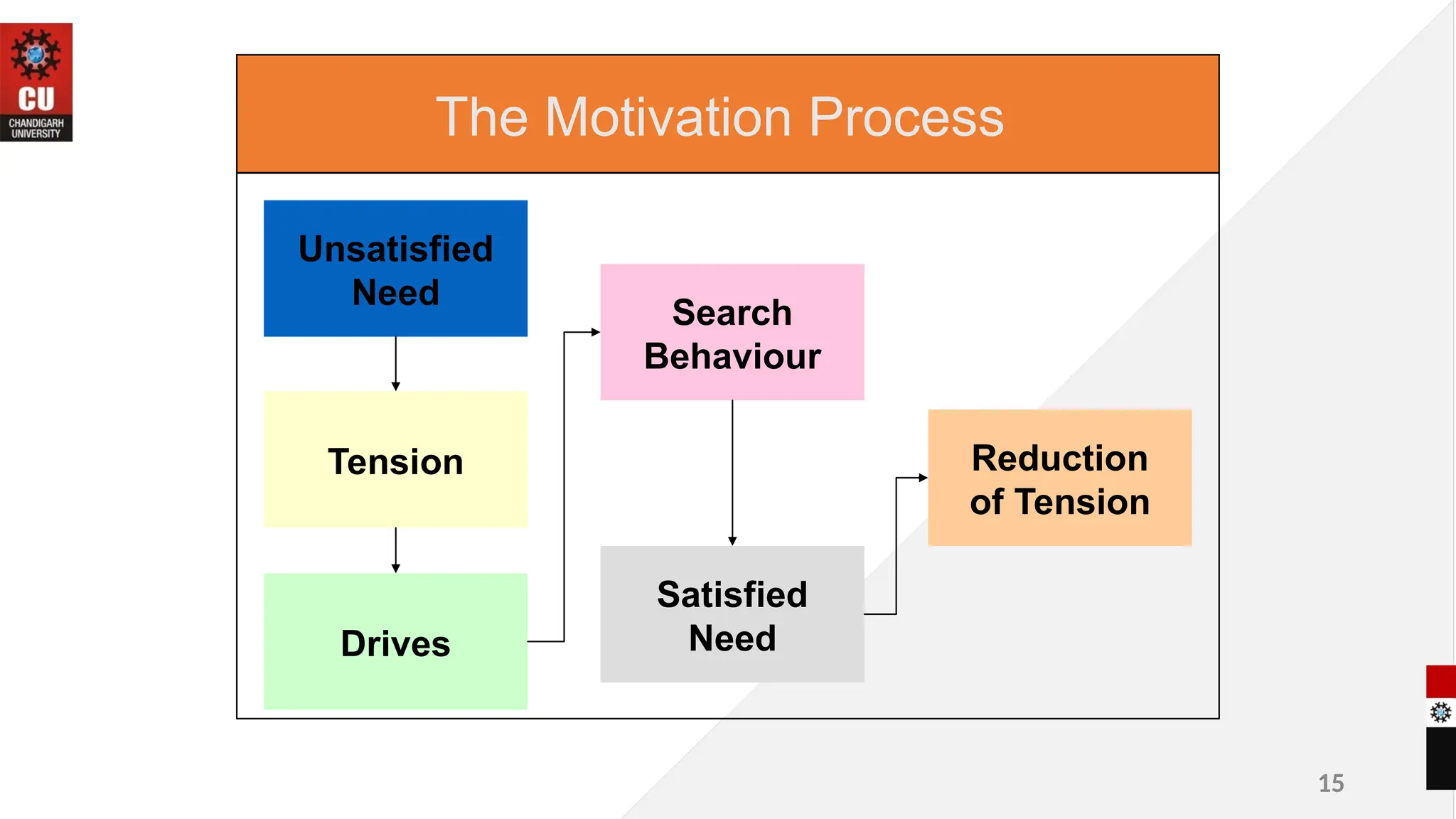
Drives
Search
Behaviour
Tension Reduction
of Tension
Satisfied
Need
The Motivation Process
Unsatisfied
Need
Types of Motivation(based on reward/fear)
• Positive motivation
• Negative motivation
16
17
Motivation can be of Two Types (based on
internal/external factors):
1. Intrinsic Motivation
2. Extrinsic Motivation
18
Intrinsic Motivation
Motivation is intrinsic (internal); it comes from
within based on personal interests, desires, and need
for fulfillment.
19
Extrinsic Motivation
Extrinsic (external) factors such as rewards,
praise, and promotions also influence
motivation.
Importance of Motivation
• Proper utilization of production factor
• Willingness and Interest creation
• High productivity
• Organisational goals
• Readiness for change
• Efficiency in work
20
The Carrot and Stick approach
• Use of rewards and penalties or incentives and disincentives to
promote desired behaviour find their reference in the carrot and stick
approach to motivation. This approach comes from a story that use
of carrot is made to make a donkey move and stick is used when he
does not move.
• The ‘carrot’ refers to rewards. Rewards may be financial or non-
financial.
• The ‘stick’ refers to penalties and punishments.
21
References
Books • Aswathappa, A. 2019. Organizational Behaviour – Text Cases and Games, 13th Edition,
Himalayan Publishing House, India. ISBN: 9789352990887.
• George, J. and Jones, G.R. 2009. Understanding and Managing Organization Behaviour. 5th
Edition, Pearson Education, India, ISBN:9788131724965.
• T1 Dalton, K. 2013. Leadership and Management Development: Developing Tomorrow’s
Managers, 1st Edition, Pearson Education, India, ISBN: 9789332511194
Websites http://managementconsultingcourses.com/
http://www.motivation.com/
Video Link • https://www.youtube.com/watch?v=BWOhi4BCGWY
• https://www.youtube.com/watch?v=8ZUubppYpgs
22
2
Summary and Implications
 Motivation is the crucial element in setting and
attaining one's objectives.
 As we are constantly responding to changes
in our environment, we need motivation to
take corrective action in the face of fluctuating
circumstances.
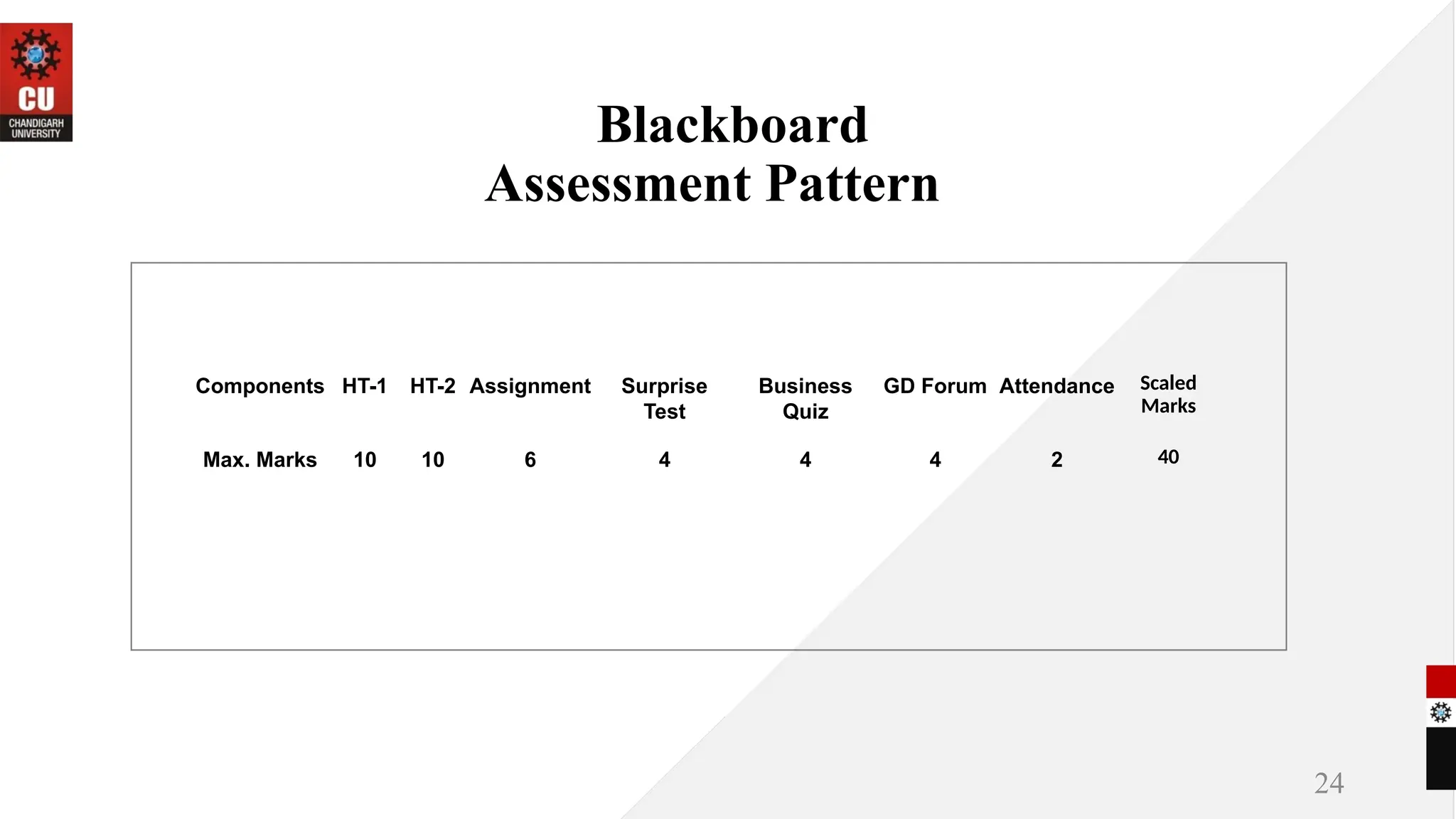
Blackboard
Assessment Pattern
24
Components HT-1 HT-2 Assignment Surprise
Test
Business
Quiz
GD Forum Attendance Scaled
Marks
Max. Marks 10 10 6 4 4 4 2 40
THANK YOU
For queries
Email: bhaskara.e11372@cumail.in
25

3.3.1-PPT_Introduction to Motivation.pptx

  • 1.
    DISCOVER . LEARN. EMPOWER INSTITUTE – University School of Business DEPARTMENT – Management (M.B.A.) Subject : Management Practices & Organizational Behavior Subject Code : 22BAT603 Unit : III Topic Name : Introduction to Motivation Faculty Name : Dr. Bhaskarasrinivas 1
  • 2.
    Course Objective COB No.Title COB1 To give an exposure to students of the individual behavior in organizations. COB2 To enable students to combine relevant information and appraise options for the most optimal solution so that they will be able to envisage and control human behaviour at work and improve organizational effectiveness. 2
  • 3.
    Leadership & Organizational Behaviour CourseOutcome Will be covered in this lecture CO Number Title Level CO1 To understand the concepts of organizational behavior and comprehend the behavior of people in the organization. Remember CO2 To learn about leadership theories and comprehend the process of transition of a manager to a leader. Understand CO3 To discuss the applicability of distinct organization behaviour and identify challenges being faced by people in organization. Understand CO4 To judge people on the basis of their behaviour in terms of their effectiveness to the situations. Understand 3
  • 4.
    Learning Objectives • Comprehendthe introduction of motivation. • Understand the techniques of motivation • Explore the importance of motivational techniques. 4
  • 5.
    Content • Introduction tomotivation • Key elements of employee motivation • Process of Employee Motivation and Organizational Success • Nature of motivation • Types of employee motivation • Techniques to increase Motivation • Motivation process • Importance of motivation 5
  • 6.
    6 Meaning of Motivation • ‘Motivation’is a term derived from the word ‘motive’. We can define motive as which makes person active in a particular way. • It is an inner impulse causing man to action. A person works to satisfy his needs. • So, the human needs are the cause of action and motivation is a process of causing the mean realized these needs.
  • 7.
    7 "Motivation is theneed or drive within an individual that drives them towards goal- oriented action.“ “The process which encourages and guides behaviour” MOTIVATION
  • 8.
    8 Motivation • Motivation • Forceswithin a person • Willful direction, intensity, and persistence of the person’s efforts • Achieving specific goals
  • 9.
  • 10.
    10 Key Elements:  Intensity: is concerned with how hard a person tries. This is the element most of us focus on when we talk about motivation.  Persistence : It is a measure of how long a person can maintain his/her effort.  Direction : is the orientation that benefits the organisation which is towards beneficial goal Motivated employees are willing to exert a particular level of effort (intensity) for a certain amount of time (persistence) toward a particular goal (direction).
  • 11.
    11 • To improvethe overall performance in a business it becomes essential to increase the efficiency of human beings. • The performance of persons depends upon two factors, i.e. • ability to do a work, and • motivation. “Motivation is an important factor which encourages persons to give their best performance and help in reaching enterprise goals.”
  • 12.
    12 A Circular Processof Employee Motivation and Organizational Success Greater employee levels of motivation and ability Higher levels of employee job satisfaction Higher levels of performance Greater employee rewards and recognition Leads to Leads to Leads to Leads to
  • 13.
    Nature of motivation •Motivation is an act of managers • Motivation is a continuous process • Motivation can be positive or negative • Motivation is goal oriented • Motivation is complex in nature • Motivation is an art • Motivation is different from job satisfaction 13
  • 14.
    Techniques to increaseMotivation Financial Motivators • Wages • Salaries Non financial Motivators • Recognition • Participation • Status • Competition • Job Enrichment 14
  • 15.
  • 16.
    Types of Motivation(basedon reward/fear) • Positive motivation • Negative motivation 16
  • 17.
    17 Motivation can beof Two Types (based on internal/external factors): 1. Intrinsic Motivation 2. Extrinsic Motivation
  • 18.
    18 Intrinsic Motivation Motivation isintrinsic (internal); it comes from within based on personal interests, desires, and need for fulfillment.
  • 19.
    19 Extrinsic Motivation Extrinsic (external)factors such as rewards, praise, and promotions also influence motivation.
  • 20.
    Importance of Motivation •Proper utilization of production factor • Willingness and Interest creation • High productivity • Organisational goals • Readiness for change • Efficiency in work 20
  • 21.
    The Carrot andStick approach • Use of rewards and penalties or incentives and disincentives to promote desired behaviour find their reference in the carrot and stick approach to motivation. This approach comes from a story that use of carrot is made to make a donkey move and stick is used when he does not move. • The ‘carrot’ refers to rewards. Rewards may be financial or non- financial. • The ‘stick’ refers to penalties and punishments. 21
  • 22.
    References Books • Aswathappa,A. 2019. Organizational Behaviour – Text Cases and Games, 13th Edition, Himalayan Publishing House, India. ISBN: 9789352990887. • George, J. and Jones, G.R. 2009. Understanding and Managing Organization Behaviour. 5th Edition, Pearson Education, India, ISBN:9788131724965. • T1 Dalton, K. 2013. Leadership and Management Development: Developing Tomorrow’s Managers, 1st Edition, Pearson Education, India, ISBN: 9789332511194 Websites http://managementconsultingcourses.com/ http://www.motivation.com/ Video Link • https://www.youtube.com/watch?v=BWOhi4BCGWY • https://www.youtube.com/watch?v=8ZUubppYpgs 22
  • 23.
    2 Summary and Implications Motivation is the crucial element in setting and attaining one's objectives.  As we are constantly responding to changes in our environment, we need motivation to take corrective action in the face of fluctuating circumstances.
  • 24.
    Blackboard Assessment Pattern 24 Components HT-1HT-2 Assignment Surprise Test Business Quiz GD Forum Attendance Scaled Marks Max. Marks 10 10 6 4 4 4 2 40
  • 25.
    THANK YOU For queries Email:bhaskara.e11372@cumail.in 25

Editor's Notes

  • #15 Many people view motivation incorrectly: thinking it is a personal trait that some have and some don’t. In reality, motivation results from the interaction between the individual and the situation. We’ll examine the overall process of motivation. An unsatisfied need creates tension; this tension drives a person to satisfy the need. A motivated employee works intensely and persistently. However, effort and persistence will not pay off unless they are channeled in a direction that benefits the organization.