Session Name: Search Engine
Optimization (Technical SEO
Basics)
Delivered By : Rohit Guleria
© Chandigarh University
Guidelines
Tips to be more interactive in Live Session
• Maintain discipline for smooth conductance of the
interactive live session.
• Type in your Name, UID and Program name on
chat to mark your attendance.
• Raise your questions only after completion of
session and do not intervene in between.
• Avoid posting irrelevant questions. Also, don’t start
any personal conversation.
• Interaction with faculty should be constructive,
and no disruptive comment is appreciated.
• For any issues, please contact our academic
support service @ 1800-1213-88800 or post your
queries on academic.support@cuidol.in.
© Chandigarh University
By the end of this session, you will be able to:
Learning Objectives
1. Students will learn about Technical Aspects of SEO basics
2. Understand the concept of HTML and URL optimization
3. Get to learn about Structured data markup.
© Chandigarh University
Technical SEO Basics
Technical SEO lays the foundation for a website's online visibility and
performance. By optimizing the technical elements of a website,
businesses can improve search engine rankings, user experience, and
overall digital presence.
© Chandigarh University
Why Technical SEO Matters
1 Crawlability
Ensure search engines can
easily and efficiently access
and index website content.
2 User Experience
Enhance website speed,
navigation, and mobile-
friendliness to keep visitors
engaged.
3 Visibility
Improve search engine rankings and organic traffic through
technical optimizations.
© Chandigarh University
Website Architecture and
Crawlability
1 Site Structure
Organize pages in a logical, hierarchical manner for easy
navigation and indexing.
2 Internal Linking
Create a web of contextual links between pages to guide
users and search engines.
3 Robots.txt and Sitemaps
Provide instructions and roadmaps for search engine
crawlers to efficiently explore the site.
© Chandigarh University
HTML and On-Page Optimization
Semantic Markup
Use proper HTML tags to structure
content and convey its meaning to
search engines.
Title Tags and Meta
Descriptions
Craft compelling and informative
page titles and meta descriptions to
attract clicks.
Image Optimization
Optimize image file size, alt text, and
filenames to improve visual search
results.
© Chandigarh University
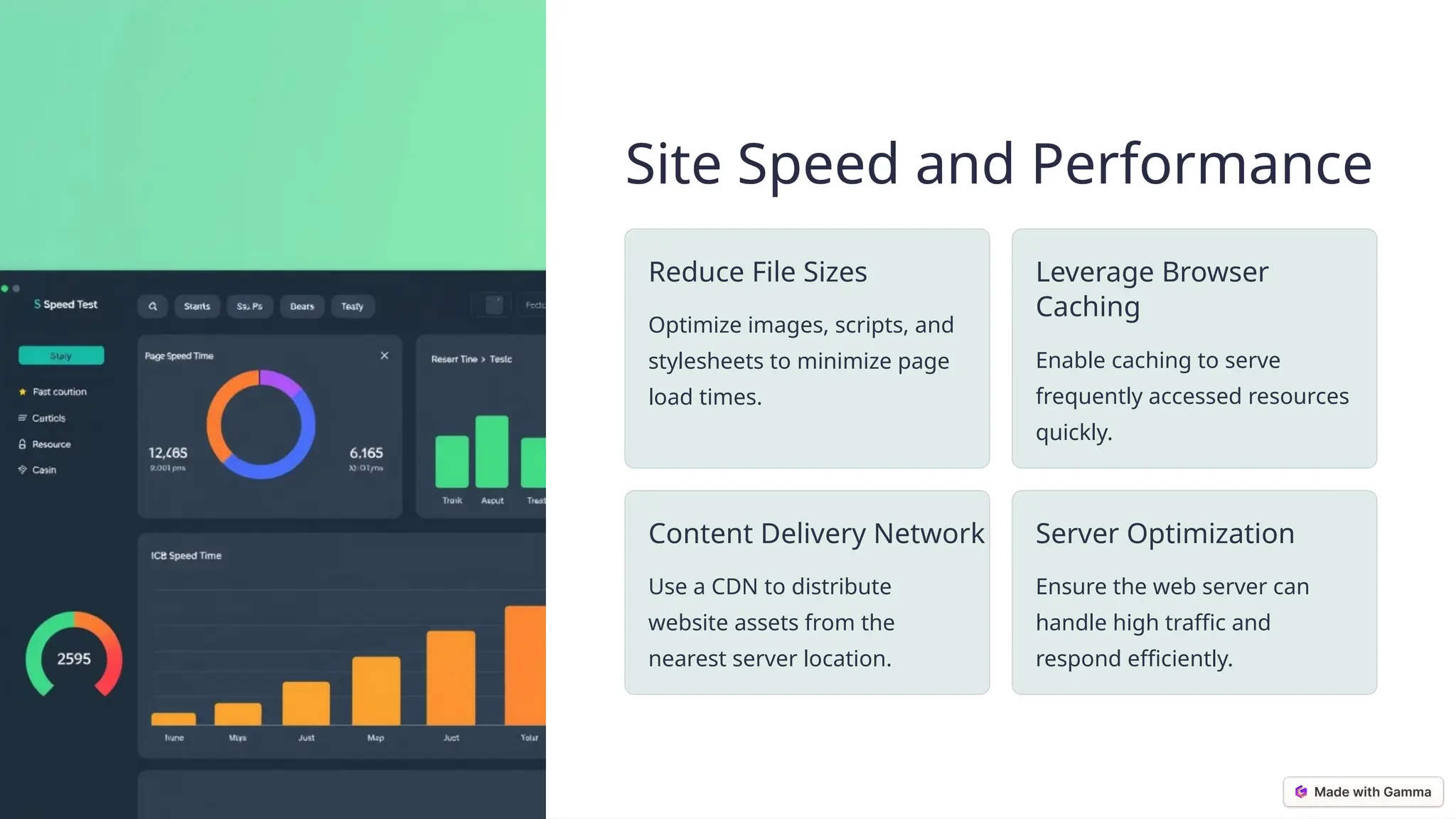
Site Speed and Performance
Reduce File Sizes
Optimize images, scripts, and
stylesheets to minimize page
load times.
Leverage Browser
Caching
Enable caching to serve
frequently accessed resources
quickly.
Content Delivery Network
Use a CDN to distribute
website assets from the
nearest server location.
Server Optimization
Ensure the web server can
handle high traffic and
respond efficiently.
© Chandigarh University
Mobile-Friendliness and Responsive Design
Mobile-First Approach
Design and optimize the website for
mobile users first, then scale up to
desktop.
Responsive Layout
Ensure the website automatically
adjusts and adapts to different screen
sizes.
Mobile Performance
Prioritize mobile-friendly page speed
and user experience for better search
rankings.
© Chandigarh University
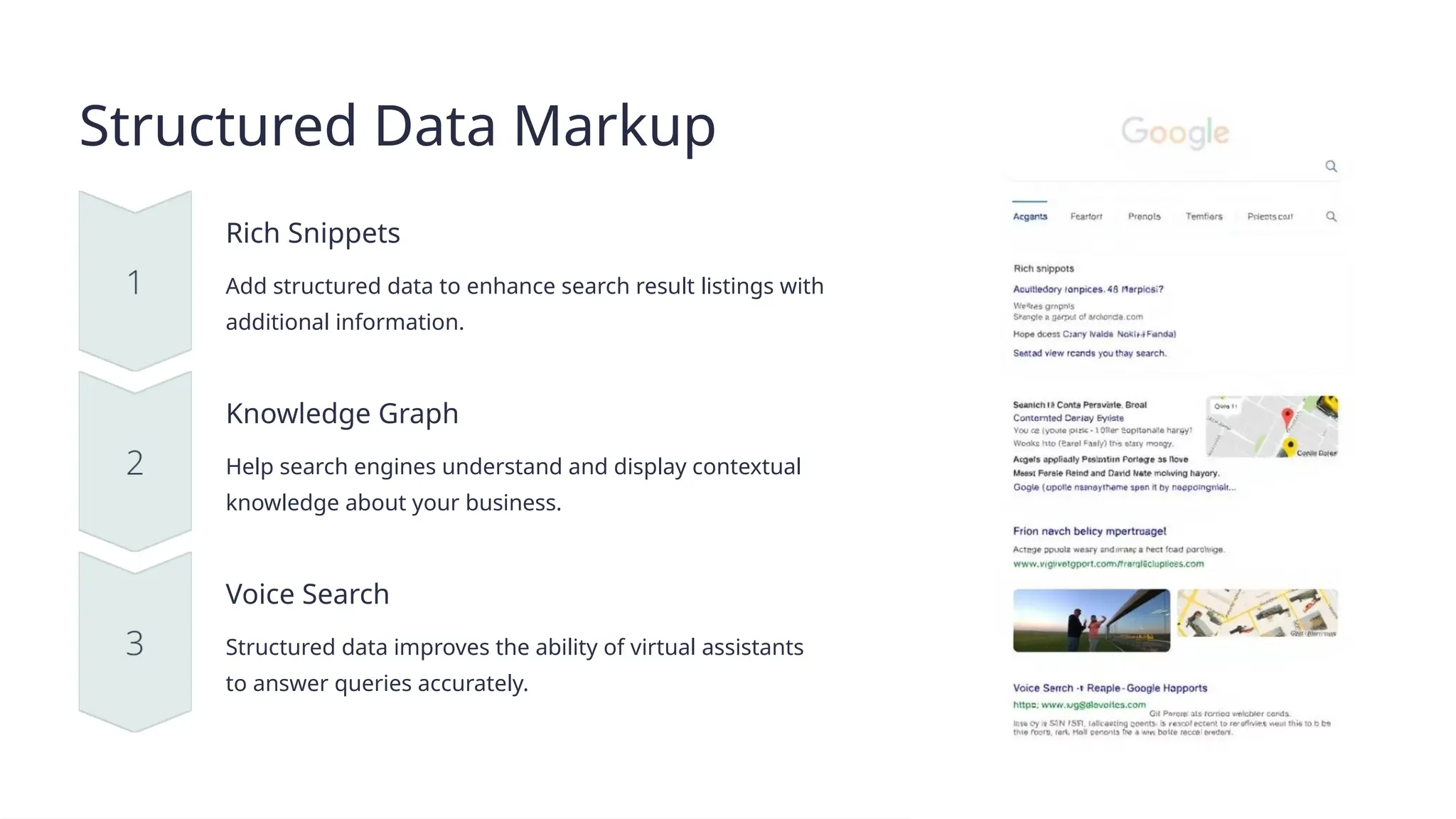
Structured Data Markup
Rich Snippets
Add structured data to enhance search result listings with
additional information.
Knowledge Graph
Help search engines understand and display contextual
knowledge about your business.
Voice Search
Structured data improves the ability of virtual assistants
to answer queries accurately.
© Chandigarh University
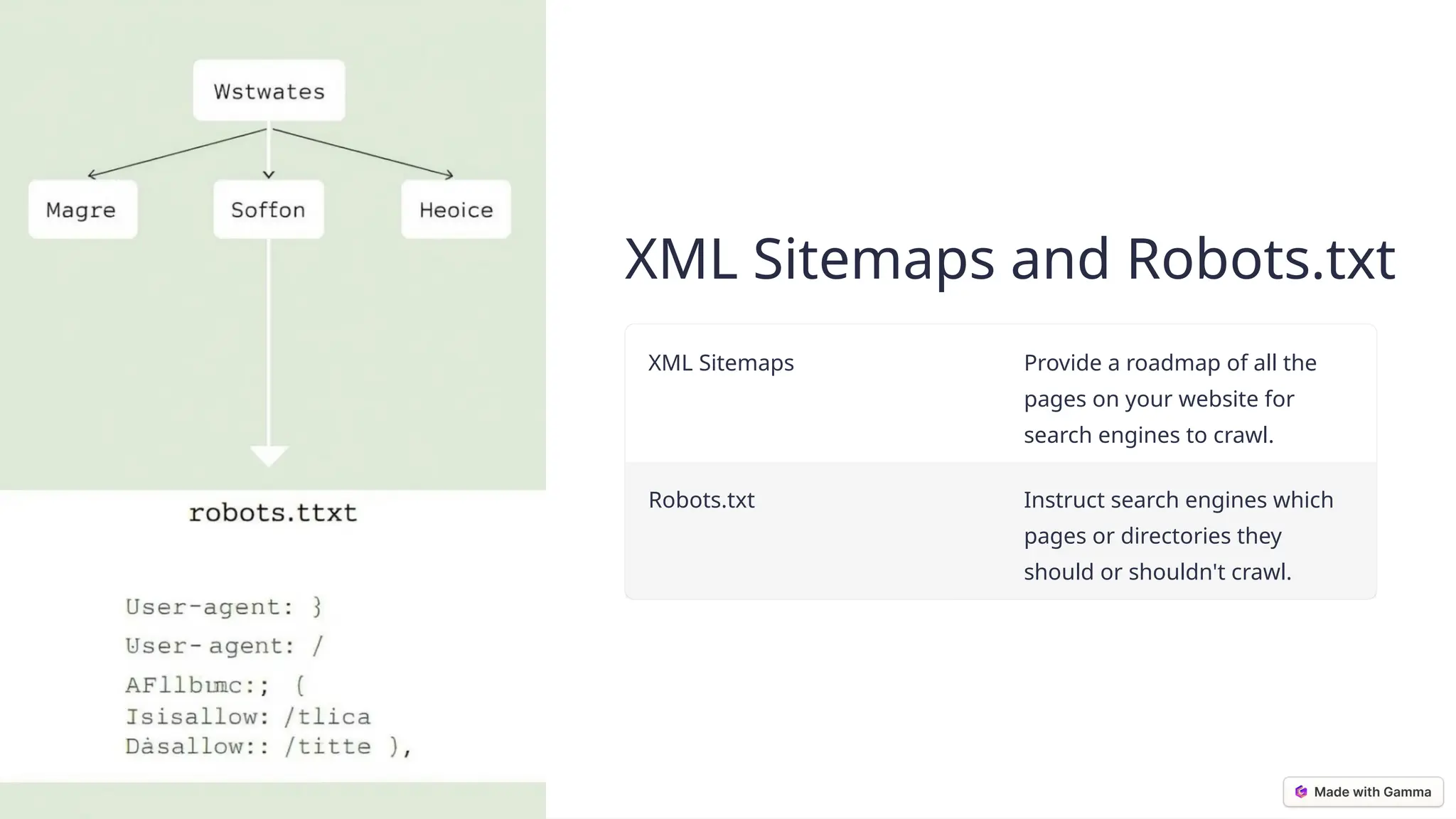
XML Sitemaps and Robots.txt
XML Sitemaps Provide a roadmap of all the
pages on your website for
search engines to crawl.
Robots.txt Instruct search engines which
pages or directories they
should or shouldn't crawl.
© Chandigarh University
Redirects and URL Optimization
Redirect Management
Implement proper 301 and 302
redirects to ensure users and search
engines are directed to the correct
pages.
URL Structure
Use clean, keyword-rich URLs that
accurately reflect the content and
hierarchy of your website.
URL Canonicalization
Consolidate multiple versions of a
URL to a single canonical version to
avoid duplicate content issues.
© Chandigarh University
Conclusions
• Technical SEO focuses on optimizing a website’s infrastructure to
improve its visibility and performance on search engines. It involves
optimizing elements like site speed, mobile-friendliness, crawlability,
and secure connections (HTTPS) to ensure that search engines can
access and index a website’s pages effectively. Technical SEO also
addresses aspects such as XML sitemaps, structured data, and
avoiding duplicate content, which contribute to better ranking
potential. By building a strong technical foundation, websites are
more likely to provide a seamless user experience and achieve higher
search rankings, ultimately driving more organic traffic and
engagement.
© Chandigarh University
Session Summary
Enhance crawlability, indexability, and site speed for better search engine access.
Ensure mobile-friendliness and use HTTPS for a secure user experience.
Use XML sitemaps and structured data to help search engines understand and index content
accurately.
In this session, we have discussed about:
© Chandigarh University
Happy Learning!

SEO Lecture no. 4.pptx FOR BUSINES MBA STUDENT

  • 1.
    Session Name: SearchEngine Optimization (Technical SEO Basics) Delivered By : Rohit Guleria
  • 2.
    © Chandigarh University Guidelines Tipsto be more interactive in Live Session • Maintain discipline for smooth conductance of the interactive live session. • Type in your Name, UID and Program name on chat to mark your attendance. • Raise your questions only after completion of session and do not intervene in between. • Avoid posting irrelevant questions. Also, don’t start any personal conversation. • Interaction with faculty should be constructive, and no disruptive comment is appreciated. • For any issues, please contact our academic support service @ 1800-1213-88800 or post your queries on academic.support@cuidol.in.
  • 3.
    © Chandigarh University Bythe end of this session, you will be able to: Learning Objectives 1. Students will learn about Technical Aspects of SEO basics 2. Understand the concept of HTML and URL optimization 3. Get to learn about Structured data markup.
  • 4.
    © Chandigarh University TechnicalSEO Basics Technical SEO lays the foundation for a website's online visibility and performance. By optimizing the technical elements of a website, businesses can improve search engine rankings, user experience, and overall digital presence.
  • 5.
    © Chandigarh University WhyTechnical SEO Matters 1 Crawlability Ensure search engines can easily and efficiently access and index website content. 2 User Experience Enhance website speed, navigation, and mobile- friendliness to keep visitors engaged. 3 Visibility Improve search engine rankings and organic traffic through technical optimizations.
  • 6.
    © Chandigarh University WebsiteArchitecture and Crawlability 1 Site Structure Organize pages in a logical, hierarchical manner for easy navigation and indexing. 2 Internal Linking Create a web of contextual links between pages to guide users and search engines. 3 Robots.txt and Sitemaps Provide instructions and roadmaps for search engine crawlers to efficiently explore the site.
  • 7.
    © Chandigarh University HTMLand On-Page Optimization Semantic Markup Use proper HTML tags to structure content and convey its meaning to search engines. Title Tags and Meta Descriptions Craft compelling and informative page titles and meta descriptions to attract clicks. Image Optimization Optimize image file size, alt text, and filenames to improve visual search results.
  • 8.
    © Chandigarh University SiteSpeed and Performance Reduce File Sizes Optimize images, scripts, and stylesheets to minimize page load times. Leverage Browser Caching Enable caching to serve frequently accessed resources quickly. Content Delivery Network Use a CDN to distribute website assets from the nearest server location. Server Optimization Ensure the web server can handle high traffic and respond efficiently.
  • 9.
    © Chandigarh University Mobile-Friendlinessand Responsive Design Mobile-First Approach Design and optimize the website for mobile users first, then scale up to desktop. Responsive Layout Ensure the website automatically adjusts and adapts to different screen sizes. Mobile Performance Prioritize mobile-friendly page speed and user experience for better search rankings.
  • 10.
    © Chandigarh University StructuredData Markup Rich Snippets Add structured data to enhance search result listings with additional information. Knowledge Graph Help search engines understand and display contextual knowledge about your business. Voice Search Structured data improves the ability of virtual assistants to answer queries accurately.
  • 11.
    © Chandigarh University XMLSitemaps and Robots.txt XML Sitemaps Provide a roadmap of all the pages on your website for search engines to crawl. Robots.txt Instruct search engines which pages or directories they should or shouldn't crawl.
  • 12.
    © Chandigarh University Redirectsand URL Optimization Redirect Management Implement proper 301 and 302 redirects to ensure users and search engines are directed to the correct pages. URL Structure Use clean, keyword-rich URLs that accurately reflect the content and hierarchy of your website. URL Canonicalization Consolidate multiple versions of a URL to a single canonical version to avoid duplicate content issues.
  • 13.
    © Chandigarh University Conclusions •Technical SEO focuses on optimizing a website’s infrastructure to improve its visibility and performance on search engines. It involves optimizing elements like site speed, mobile-friendliness, crawlability, and secure connections (HTTPS) to ensure that search engines can access and index a website’s pages effectively. Technical SEO also addresses aspects such as XML sitemaps, structured data, and avoiding duplicate content, which contribute to better ranking potential. By building a strong technical foundation, websites are more likely to provide a seamless user experience and achieve higher search rankings, ultimately driving more organic traffic and engagement.
  • 14.
    © Chandigarh University SessionSummary Enhance crawlability, indexability, and site speed for better search engine access. Ensure mobile-friendliness and use HTTPS for a secure user experience. Use XML sitemaps and structured data to help search engines understand and index content accurately. In this session, we have discussed about:
  • 15.