Everyday Life - Health


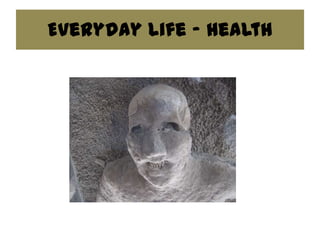
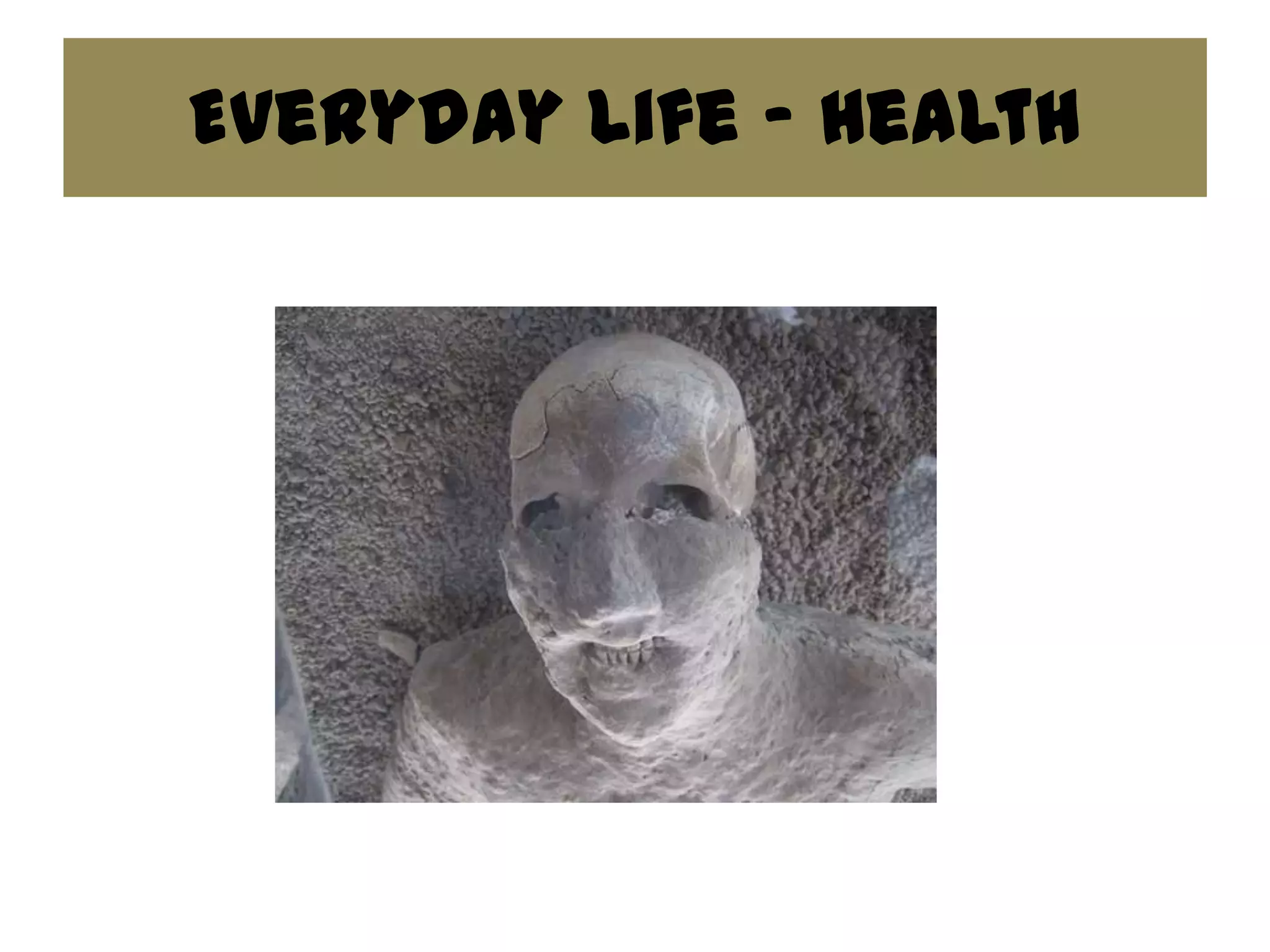
•   The main evidence for the health of the
    population comes from the investigations
    of skeletal remains
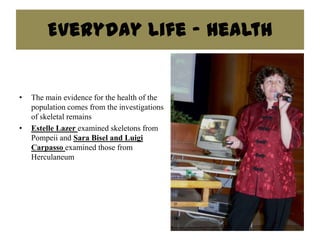
•   Estelle Lazer examined skeletons from
    Pompeii and Sara Bisel and Luigi
    Carpasso examined those from
    Herculaneum
Everyday Life - Health

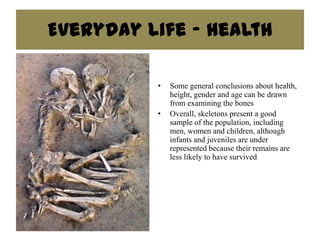
          •   Some general conclusions about health,
              height, gender and age can be drawn
              from examining the bones
          •   Overall, skeletons present a good
              sample of the population, including
              men, women and children, although
              infants and juveniles are under
              represented because their remains are
              less likely to have survived
Everyday Life - Health

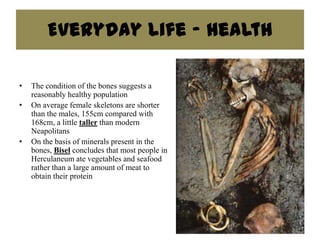
•   The condition of the bones suggests a
    reasonably healthy population
•   On average female skeletons are shorter
    than the males, 155cm compared with
    168cm, a little taller than modern
    Neapolitans
•   On the basis of minerals present in the
    bones, Bisel concludes that most people in
    Herculaneum ate vegetables and seafood
    rather than a large amount of meat to
    obtain their protein
Everyday Life - Health
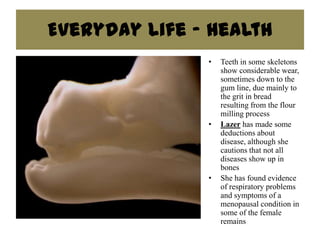
               •   Teeth in some skeletons
                   show considerable wear,
                   sometimes down to the
                   gum line, due mainly to
                   the grit in bread
                   resulting from the flour
                   milling process
               •   Lazer has made some
                   deductions about
                   disease, although she
                   cautions that not all
                   diseases show up in
                   bones
               •   She has found evidence
                   of respiratory problems
                   and symptoms of a
                   menopausal condition in
                   some of the female
                   remains
Everyday Life - Health


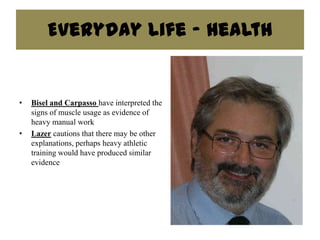
•   Bisel and Carpasso have interpreted the
    signs of muscle usage as evidence of
    heavy manual work
•   Lazer cautions that there may be other
    explanations, perhaps heavy athletic
    training would have produced similar
    evidence
Everyday Life - Health
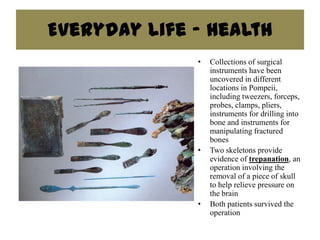
              •   Collections of surgical
                  instruments have been
                  uncovered in different
                  locations in Pompeii,
                  including tweezers, forceps,
                  probes, clamps, pliers,
                  instruments for drilling into
                  bone and instruments for
                  manipulating fractured
                  bones
              •   Two skeletons provide
                  evidence of trepanation, an
                  operation involving the
                  removal of a piece of skull
                  to help relieve pressure on
                  the brain
              •   Both patients survived the
                  operation

2c.5v everyday life - health

  • 1.
  • 2.
    Everyday Life -Health • The main evidence for the health of the population comes from the investigations of skeletal remains • Estelle Lazer examined skeletons from Pompeii and Sara Bisel and Luigi Carpasso examined those from Herculaneum
  • 3.
    Everyday Life -Health • Some general conclusions about health, height, gender and age can be drawn from examining the bones • Overall, skeletons present a good sample of the population, including men, women and children, although infants and juveniles are under represented because their remains are less likely to have survived
  • 4.
    Everyday Life -Health • The condition of the bones suggests a reasonably healthy population • On average female skeletons are shorter than the males, 155cm compared with 168cm, a little taller than modern Neapolitans • On the basis of minerals present in the bones, Bisel concludes that most people in Herculaneum ate vegetables and seafood rather than a large amount of meat to obtain their protein
  • 5.
    Everyday Life -Health • Teeth in some skeletons show considerable wear, sometimes down to the gum line, due mainly to the grit in bread resulting from the flour milling process • Lazer has made some deductions about disease, although she cautions that not all diseases show up in bones • She has found evidence of respiratory problems and symptoms of a menopausal condition in some of the female remains
  • 6.
    Everyday Life -Health • Bisel and Carpasso have interpreted the signs of muscle usage as evidence of heavy manual work • Lazer cautions that there may be other explanations, perhaps heavy athletic training would have produced similar evidence
  • 7.
    Everyday Life -Health • Collections of surgical instruments have been uncovered in different locations in Pompeii, including tweezers, forceps, probes, clamps, pliers, instruments for drilling into bone and instruments for manipulating fractured bones • Two skeletons provide evidence of trepanation, an operation involving the removal of a piece of skull to help relieve pressure on the brain • Both patients survived the operation