Everyday Life - Clothing
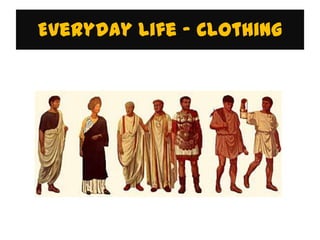
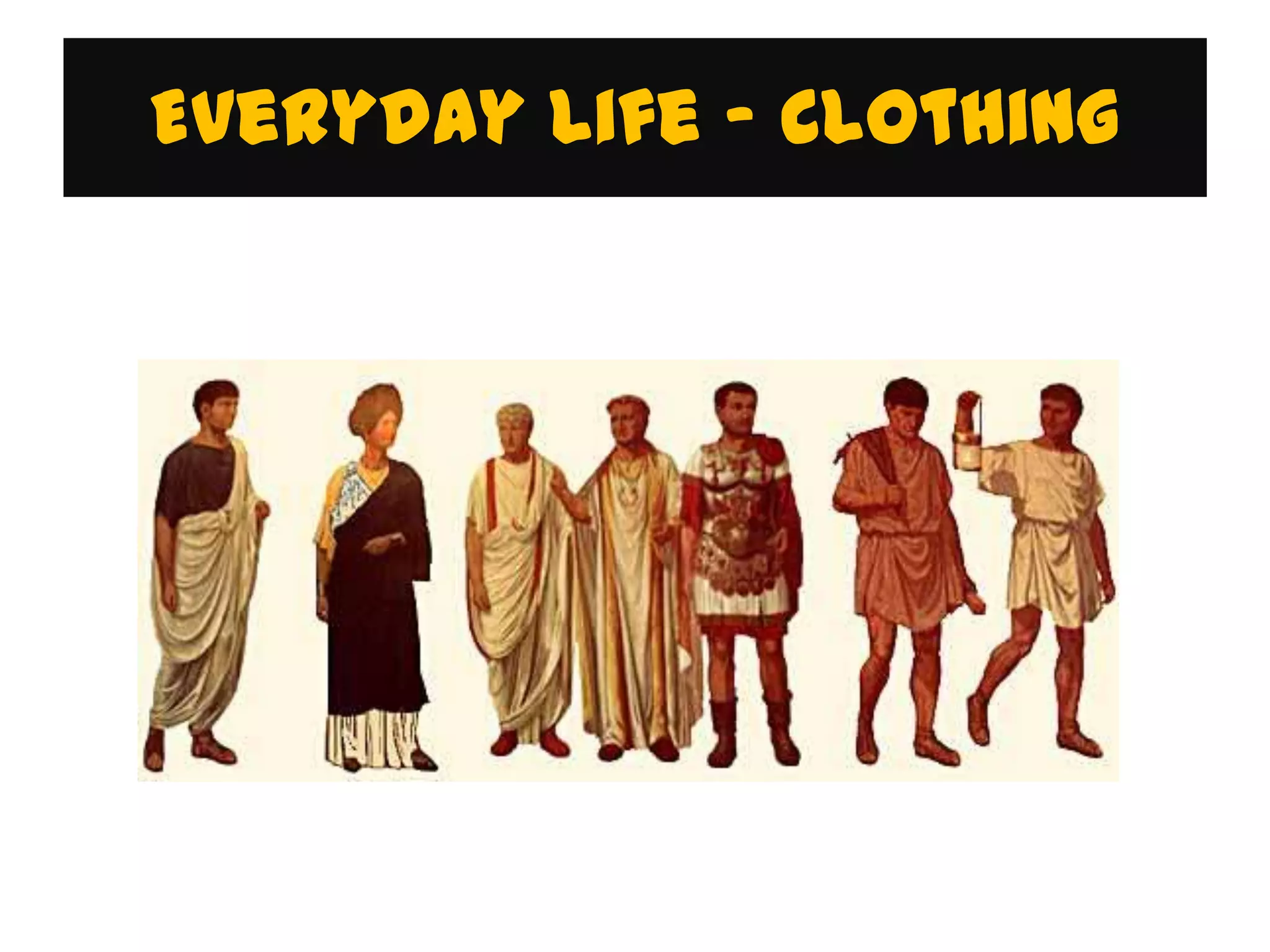
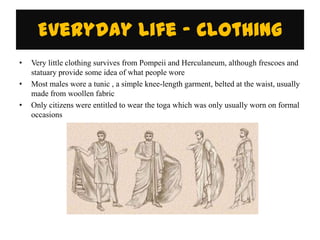
•   Very little clothing survives from Pompeii and Herculaneum, although frescoes and
    statuary provide some idea of what people wore
•   Most males wore a tunic , a simple knee-length garment, belted at the waist, usually
    made from woollen fabric
•   Only citizens were entitled to wear the toga which was only usually worn on formal
    occasions
Everyday Life - Clothing
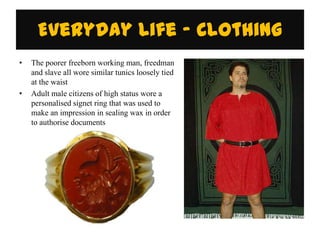
•   The poorer freeborn working man, freedman
    and slave all wore similar tunics loosely tied
    at the waist
•   Adult male citizens of high status wore a
    personalised signet ring that was used to
    make an impression in sealing wax in order
    to authorise documents
Everyday Life - Clothing

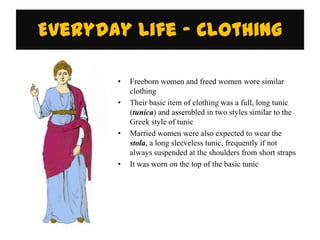
       •   Freeborn women and freed women wore similar
           clothing
       •   Their basic item of clothing was a full, long tunic
           (tunica) and assembled in two styles similar to the
           Greek style of tunic
       •   Married women were also expected to wear the
           stola, a long sleeveless tunic, frequently if not
           always suspended at the shoulders from short straps
       •   It was worn on the top of the basic tunic
Everyday Life - Clothing
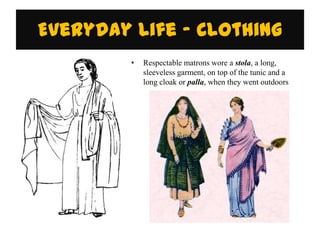
         •   Respectable matrons wore a stola, a long,
             sleeveless garment, on top of the tunic and a
             long cloak or palla, when they went outdoors
Everyday Life - Clothing
•   While women of all three classes wore similar styles of garments, the quality and
    colour of the fabrics may have varied
•   The clothing of poorer working women and slaves would have depended on the
    work they did
•   Not all slaves were poorly dressed
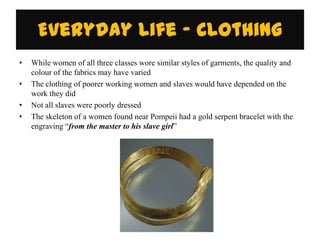
•   The skeleton of a women found near Pompeii had a gold serpent bracelet with the
    engraving “from the master to his slave girl”
Everyday Life - Clothing

•   Women took pride in their
    appearance
•   They wore jewellery, did their
    hair in various styles and
    many wore makeup
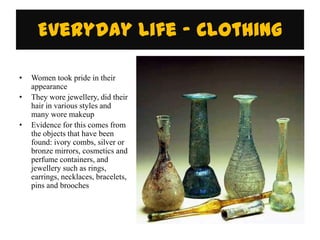
•   Evidence for this comes from
    the objects that have been
    found: ivory combs, silver or
    bronze mirrors, cosmetics and
    perfume containers, and
    jewellery such as rings,
    earrings, necklaces, bracelets,
    pins and brooches

2c.5iii everyday life - clothing

  • 1.
  • 2.
    Everyday Life -Clothing • Very little clothing survives from Pompeii and Herculaneum, although frescoes and statuary provide some idea of what people wore • Most males wore a tunic , a simple knee-length garment, belted at the waist, usually made from woollen fabric • Only citizens were entitled to wear the toga which was only usually worn on formal occasions
  • 3.
    Everyday Life -Clothing • The poorer freeborn working man, freedman and slave all wore similar tunics loosely tied at the waist • Adult male citizens of high status wore a personalised signet ring that was used to make an impression in sealing wax in order to authorise documents
  • 4.
    Everyday Life -Clothing • Freeborn women and freed women wore similar clothing • Their basic item of clothing was a full, long tunic (tunica) and assembled in two styles similar to the Greek style of tunic • Married women were also expected to wear the stola, a long sleeveless tunic, frequently if not always suspended at the shoulders from short straps • It was worn on the top of the basic tunic
  • 5.
    Everyday Life -Clothing • Respectable matrons wore a stola, a long, sleeveless garment, on top of the tunic and a long cloak or palla, when they went outdoors
  • 6.
    Everyday Life -Clothing • While women of all three classes wore similar styles of garments, the quality and colour of the fabrics may have varied • The clothing of poorer working women and slaves would have depended on the work they did • Not all slaves were poorly dressed • The skeleton of a women found near Pompeii had a gold serpent bracelet with the engraving “from the master to his slave girl”
  • 7.
    Everyday Life -Clothing • Women took pride in their appearance • They wore jewellery, did their hair in various styles and many wore makeup • Evidence for this comes from the objects that have been found: ivory combs, silver or bronze mirrors, cosmetics and perfume containers, and jewellery such as rings, earrings, necklaces, bracelets, pins and brooches