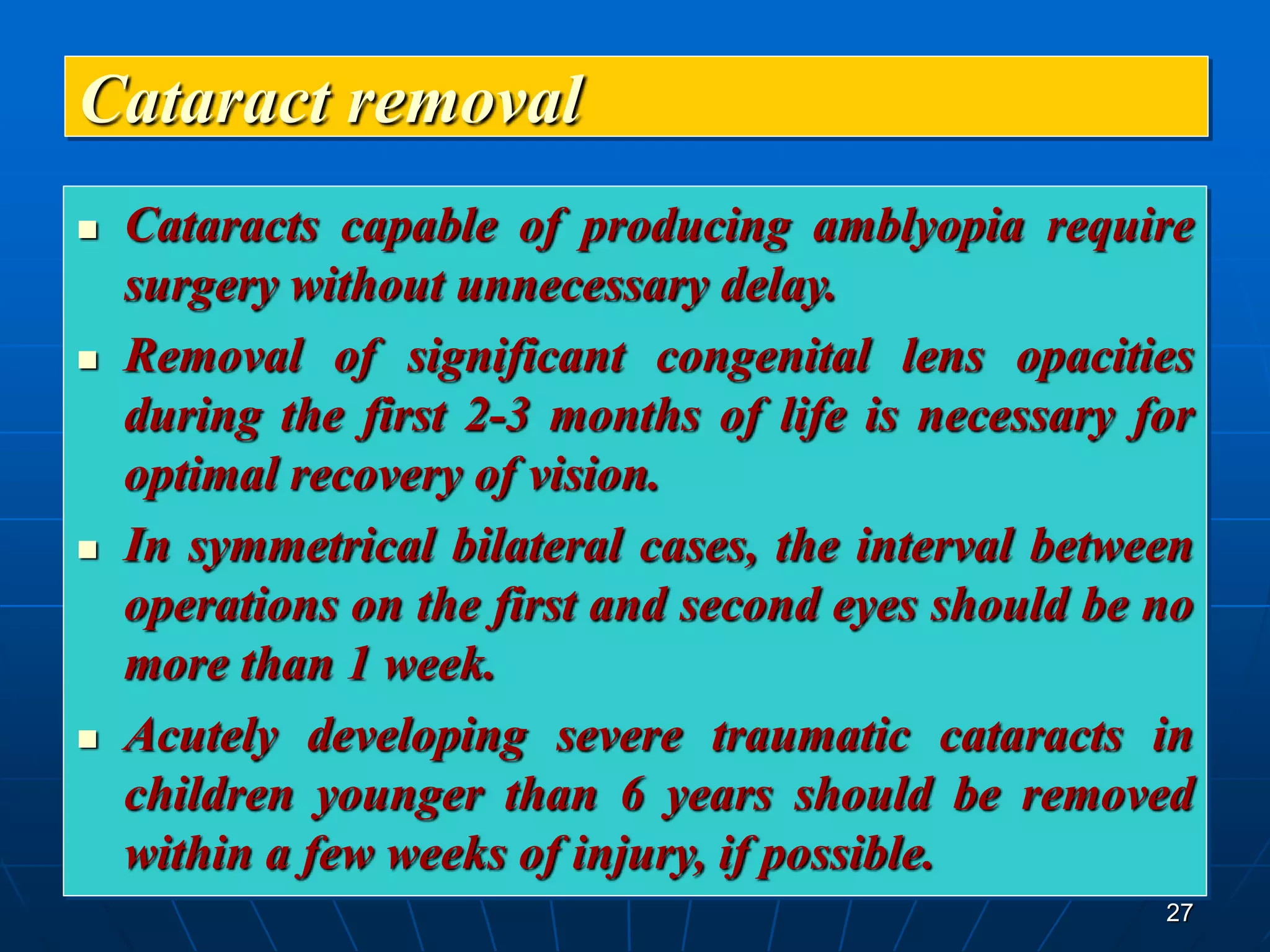
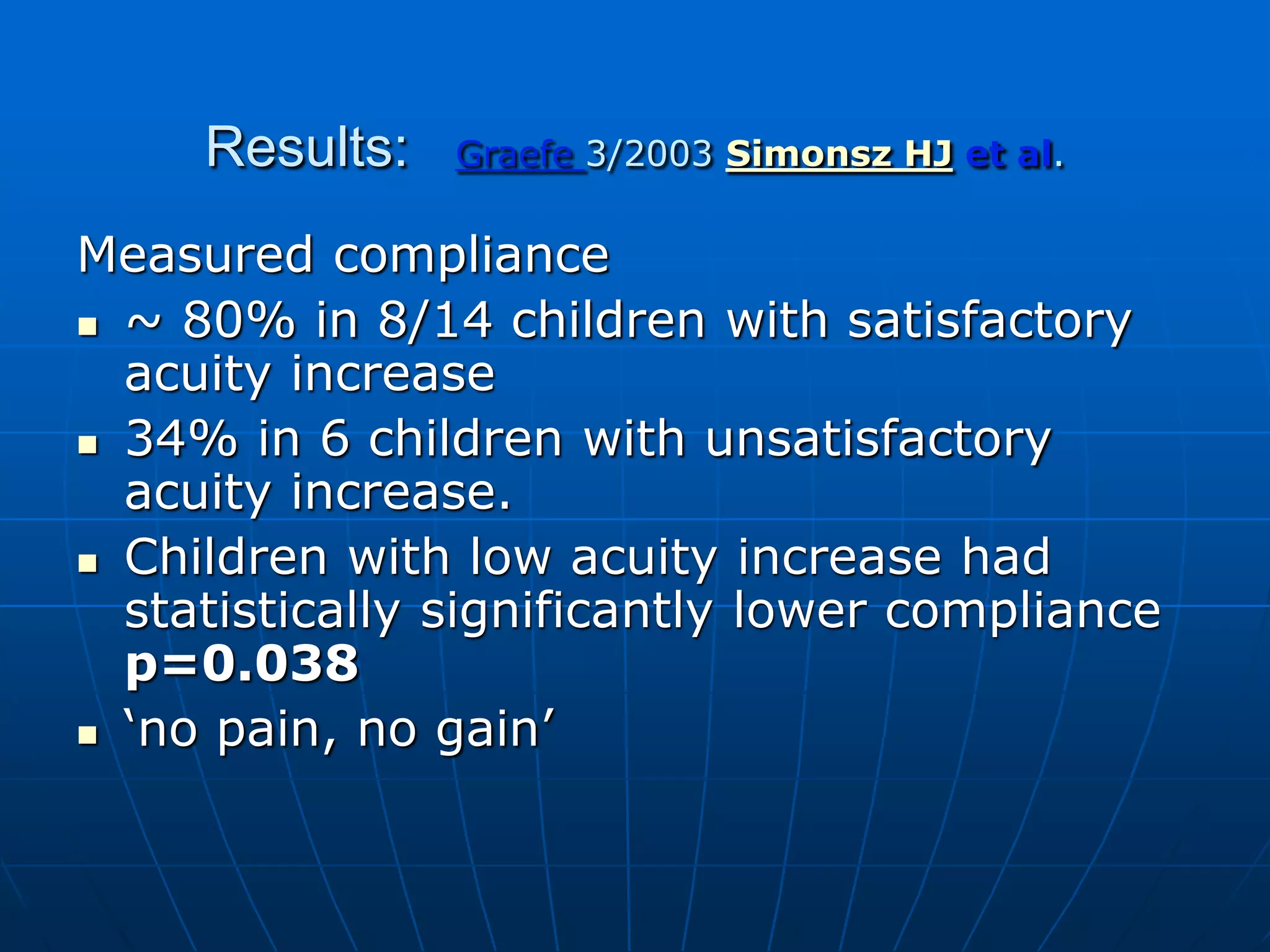
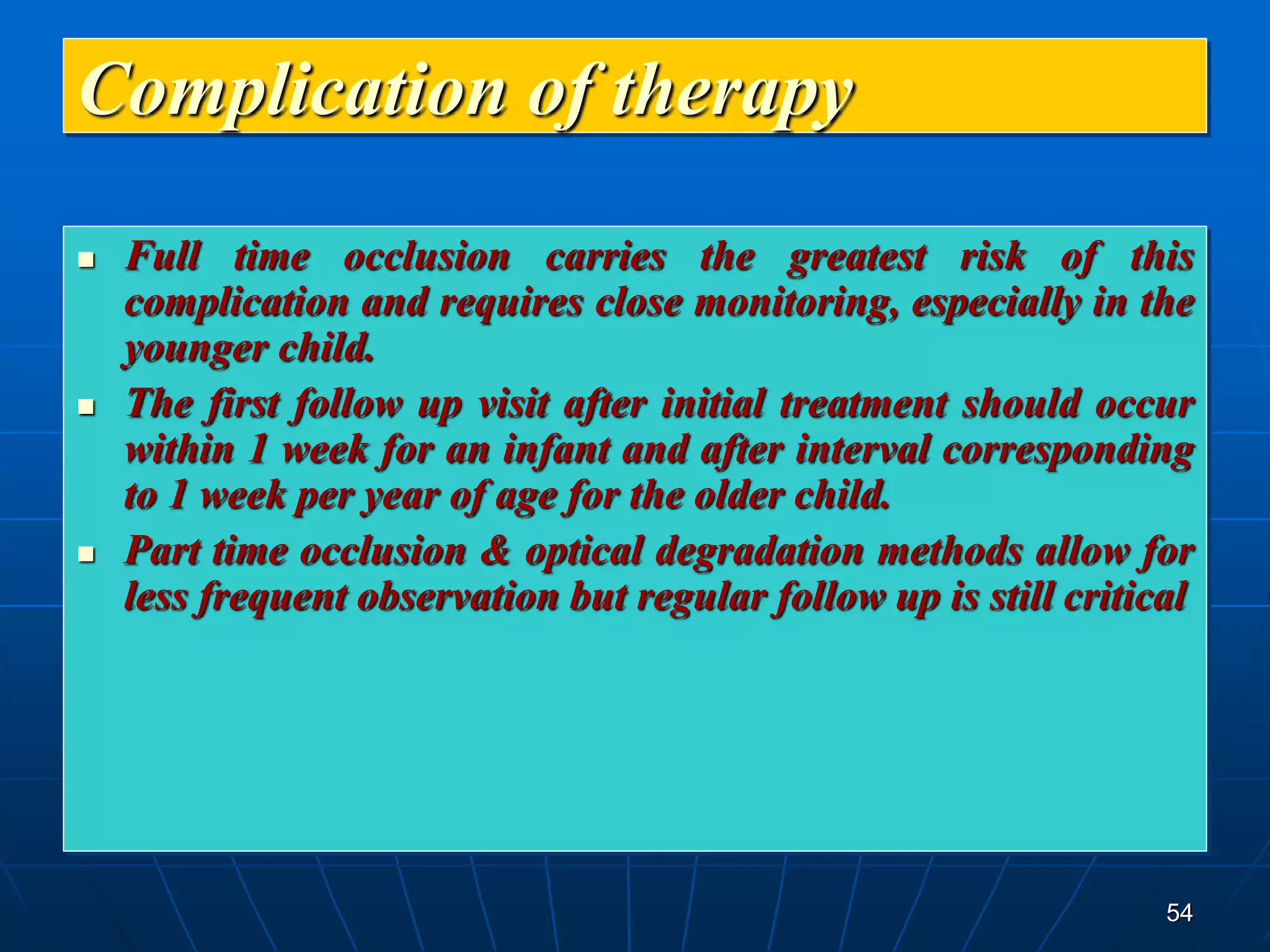
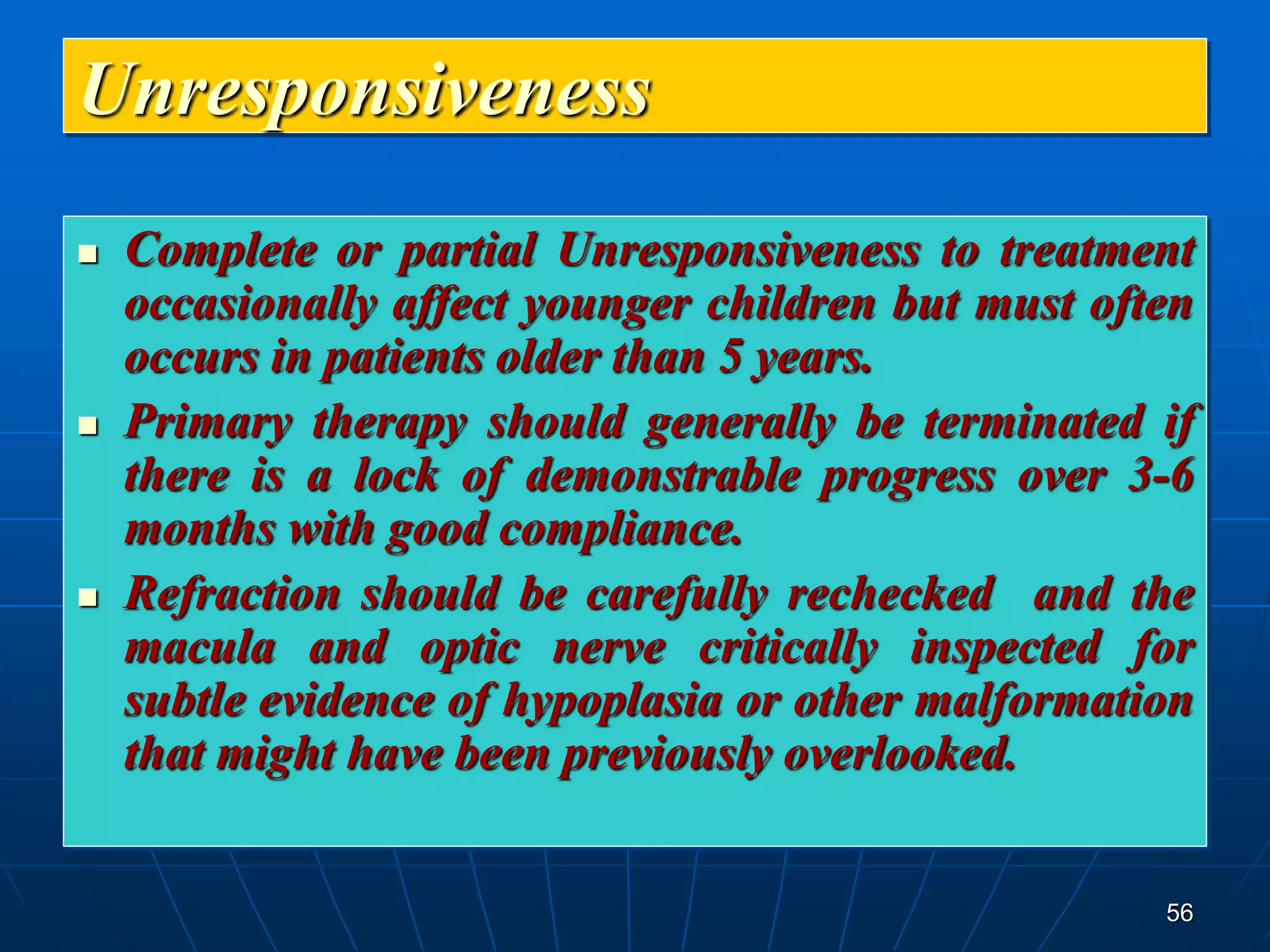
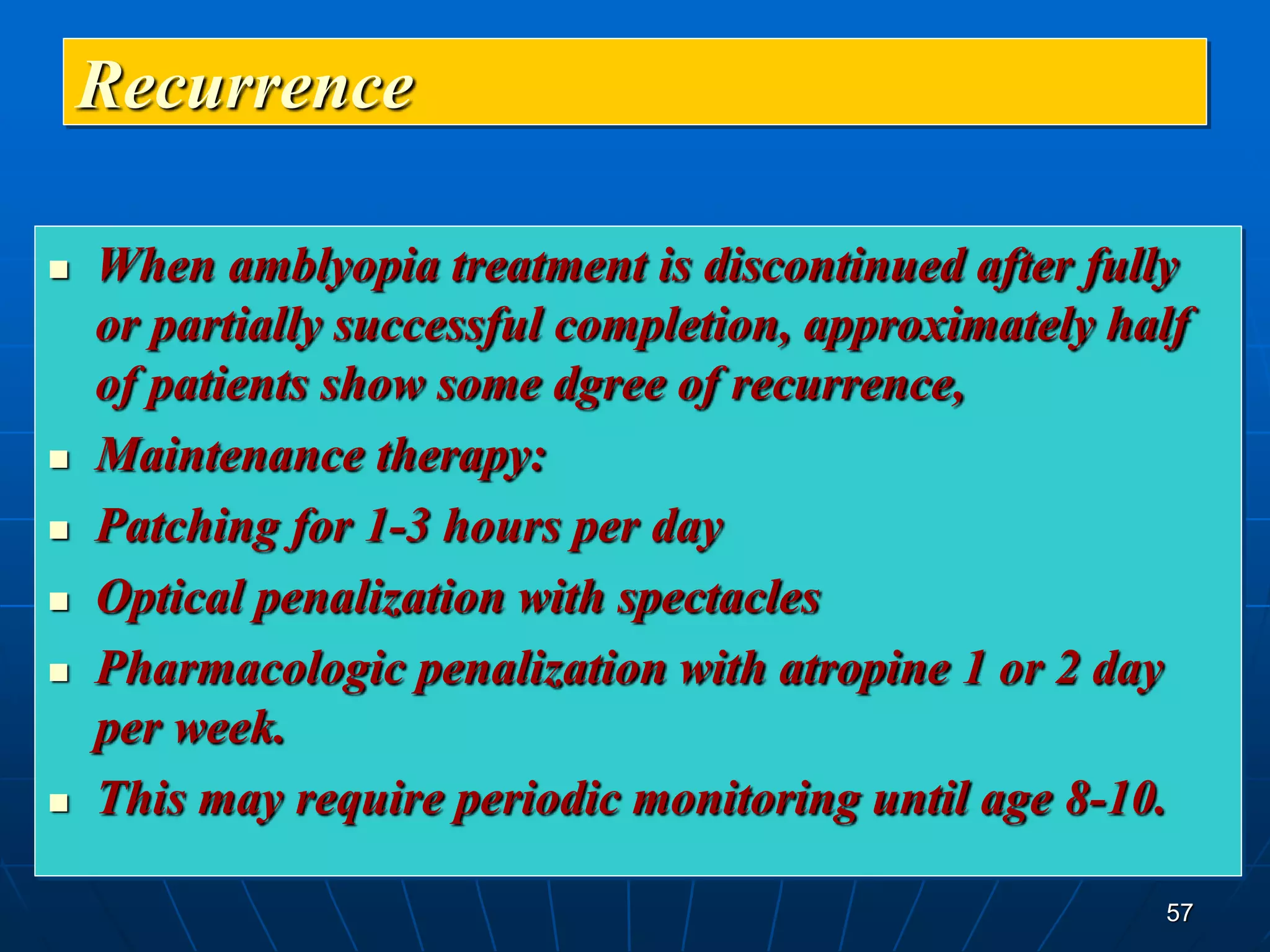
Amblyopia, or lazy eye, is a reduction in best corrected visual acuity that cannot be attributed to structural eye abnormalities. It is caused by strabismus, high refractive error differences between eyes (anisometropia), or visual deprivation. Treatment involves eliminating obstacles to vision, correcting refractive errors, and forcing use of the weaker eye through occlusion or atropine of the stronger eye. Studies show that part-time occlusion for 1-6 hours per day can be as effective as full-time occlusion, and that atropine penalization is also effective for mild-moderate amblyopia. The required treatment time depends on the amblyopia severity and type, as well as patient compliance and age.











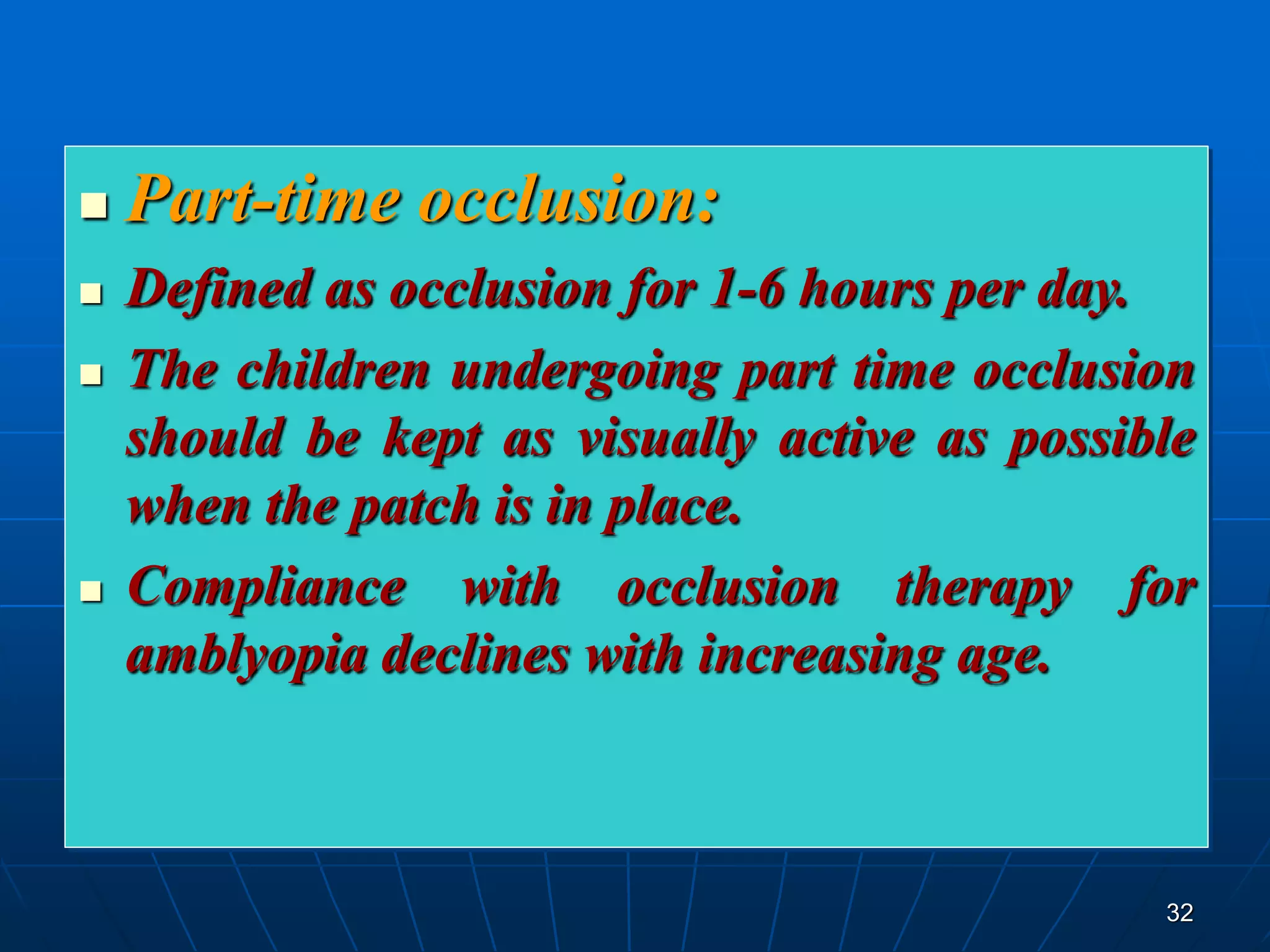

![E.B.M.
Evidence Based Medicine
Prospective, randomised
PEDIG, MOTAS & COCHRANE
Eminence Based
Medicine
Hopkins: weekend atropine
Scott [Iowa]: only full time](https://image.slidesharecdn.com/29-amblyopia-230624211155-b026c3bc/75/29-amblyopia-ppt-34-2048.jpg)

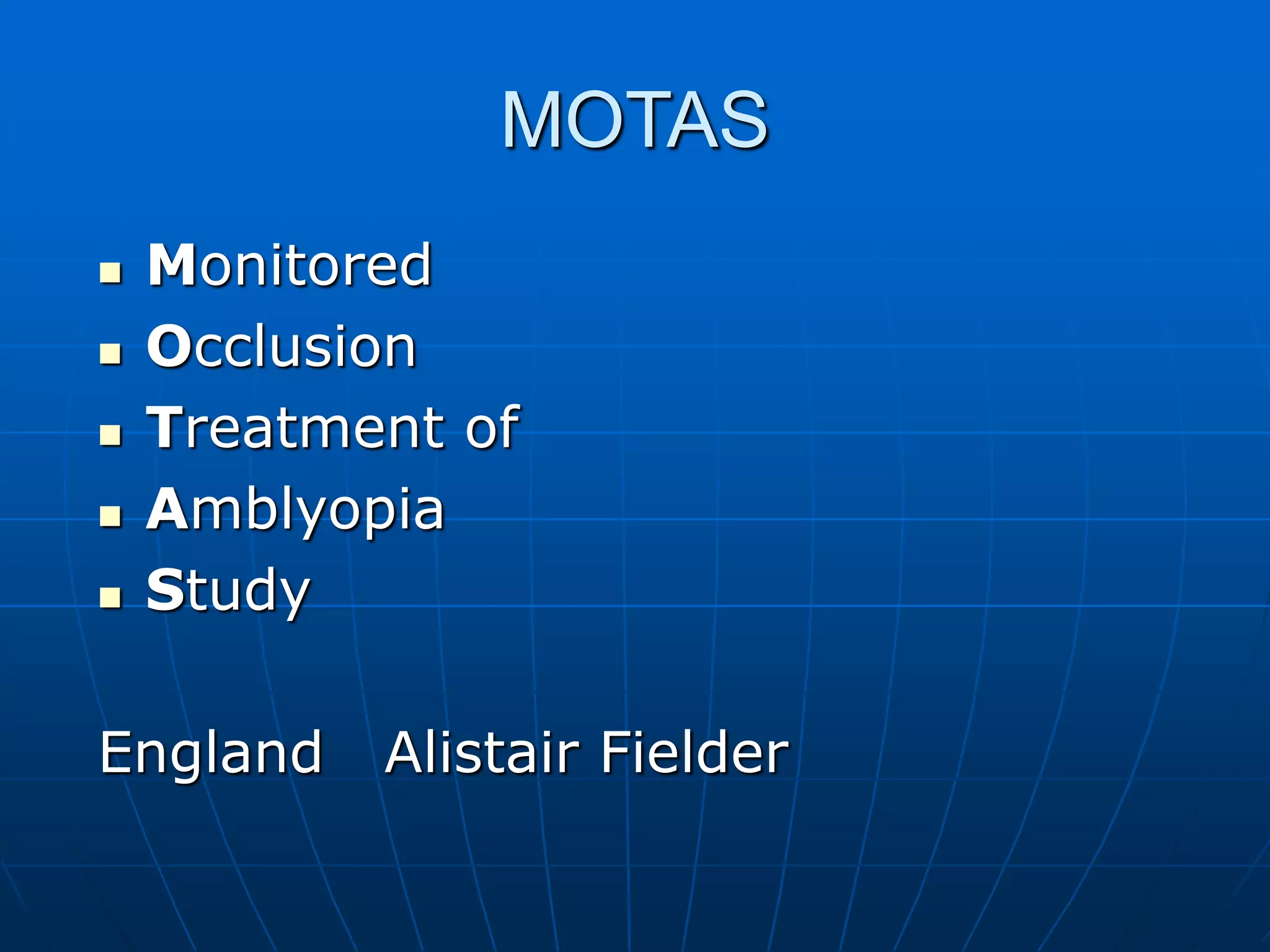
![PEDIG:
Amblyopia 6/30 - 6/120
6 h/d vs. all [or all -1] waking hours
Ages 3-7
Can do reliable HOTV
1h/d near activity
4mo: 4+ line improvement both groups
Age / severity of amblyopia NOT relevant to
outcome!](https://image.slidesharecdn.com/29-amblyopia-230624211155-b026c3bc/75/29-amblyopia-ppt-37-2048.jpg)


![MOTAS
REFRACTIVE ADAPTATION
FOLLOWED BY OCCLUSION
Prescribed dose 6h/d
Compliance <50% [2.8h].
Only 10% used it ≥ 5.5 h/d
0.1 [1 chart line] VA improvement per 120h
of occlusion
Total doses >200h:
residual amblyopia <0.2 log
>75% of deficit corrected
IOVS 2004](https://image.slidesharecdn.com/29-amblyopia-230624211155-b026c3bc/75/29-amblyopia-ppt-47-2048.jpg)

![MOTAS:
ELECTRONIC PATCH #1
18w of glasses, then patch
prescribed 6h , 12h/d
6h/d: received 4.2 [± 0.5]
h/d
12h/d: received 6.2 [± 1.1]
h/d
p=0.06
<3h/d: worse outcome](https://image.slidesharecdn.com/29-amblyopia-230624211155-b026c3bc/75/29-amblyopia-ppt-49-2048.jpg)






![contact lenses in children[1].pptx](https://cdn.slidesharecdn.com/ss_thumbnails/contactlensesinchildren1-230805101331-3467ad8b-thumbnail.jpg?width=640&height=640&fit=bounds)


