
Transition Management
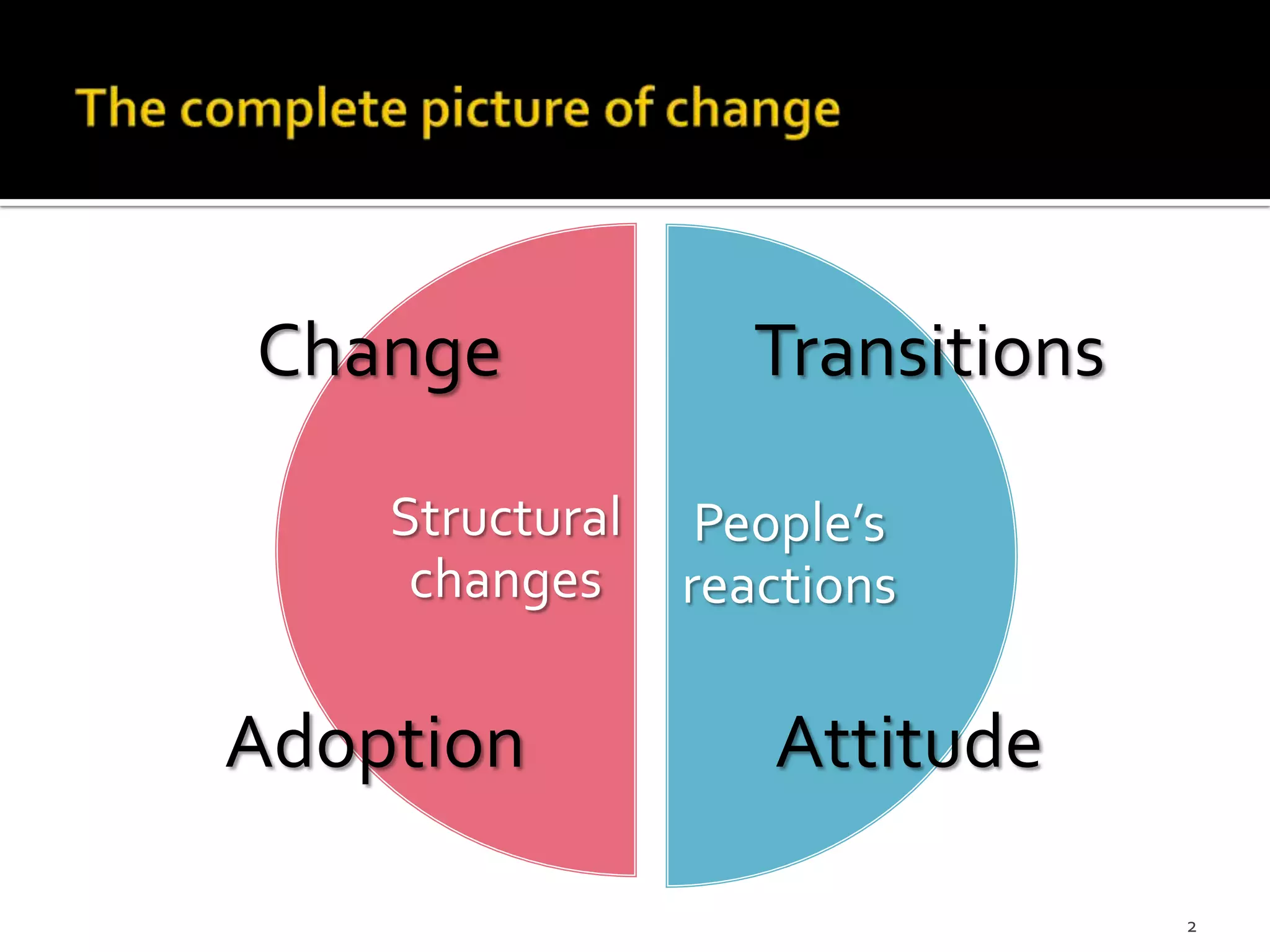
People’s
reactions
Structural
changes
Change Transitions
AttitudeAdoption
2
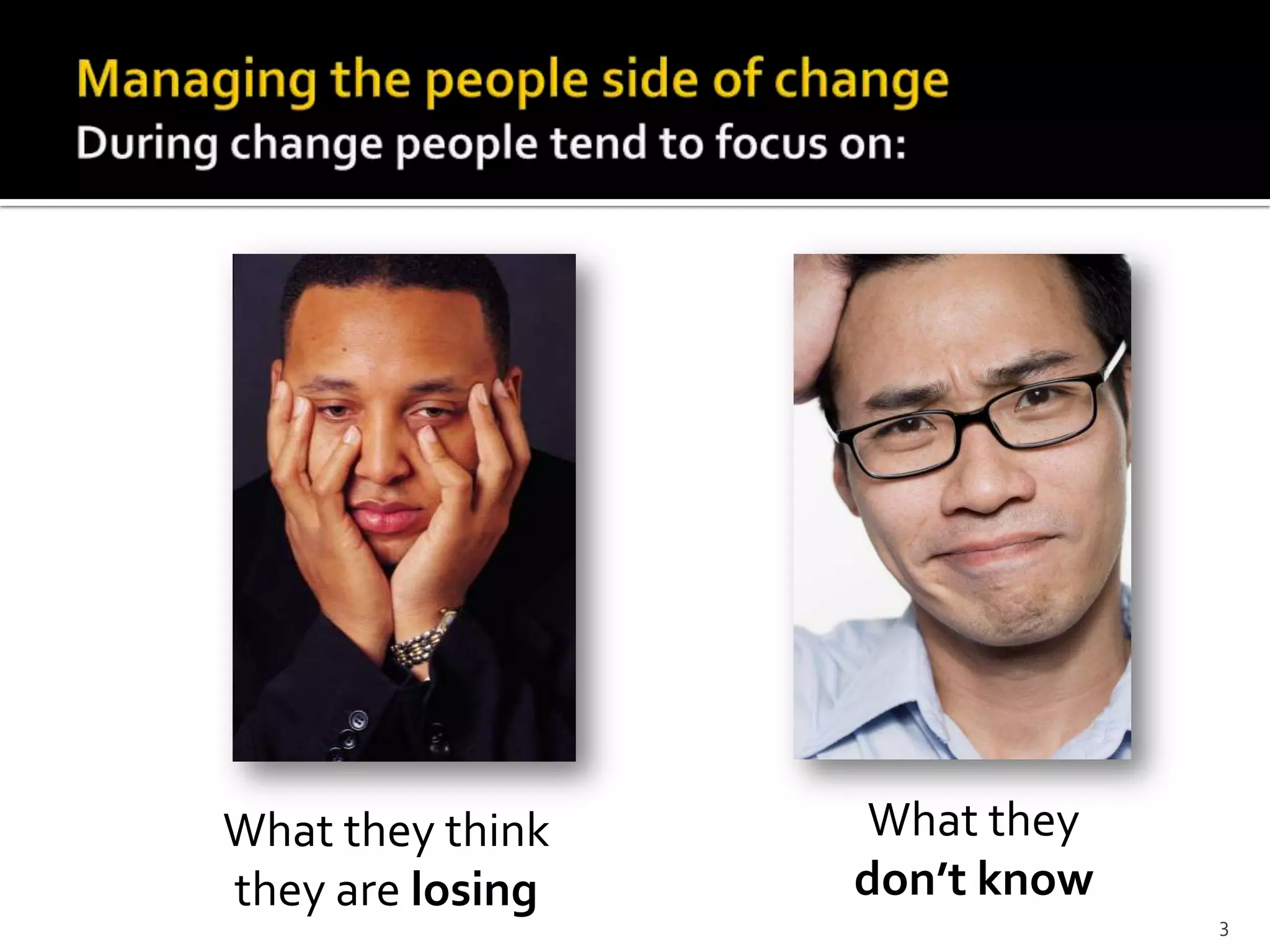
What they think
they are losing
What they
don’t know
3
4
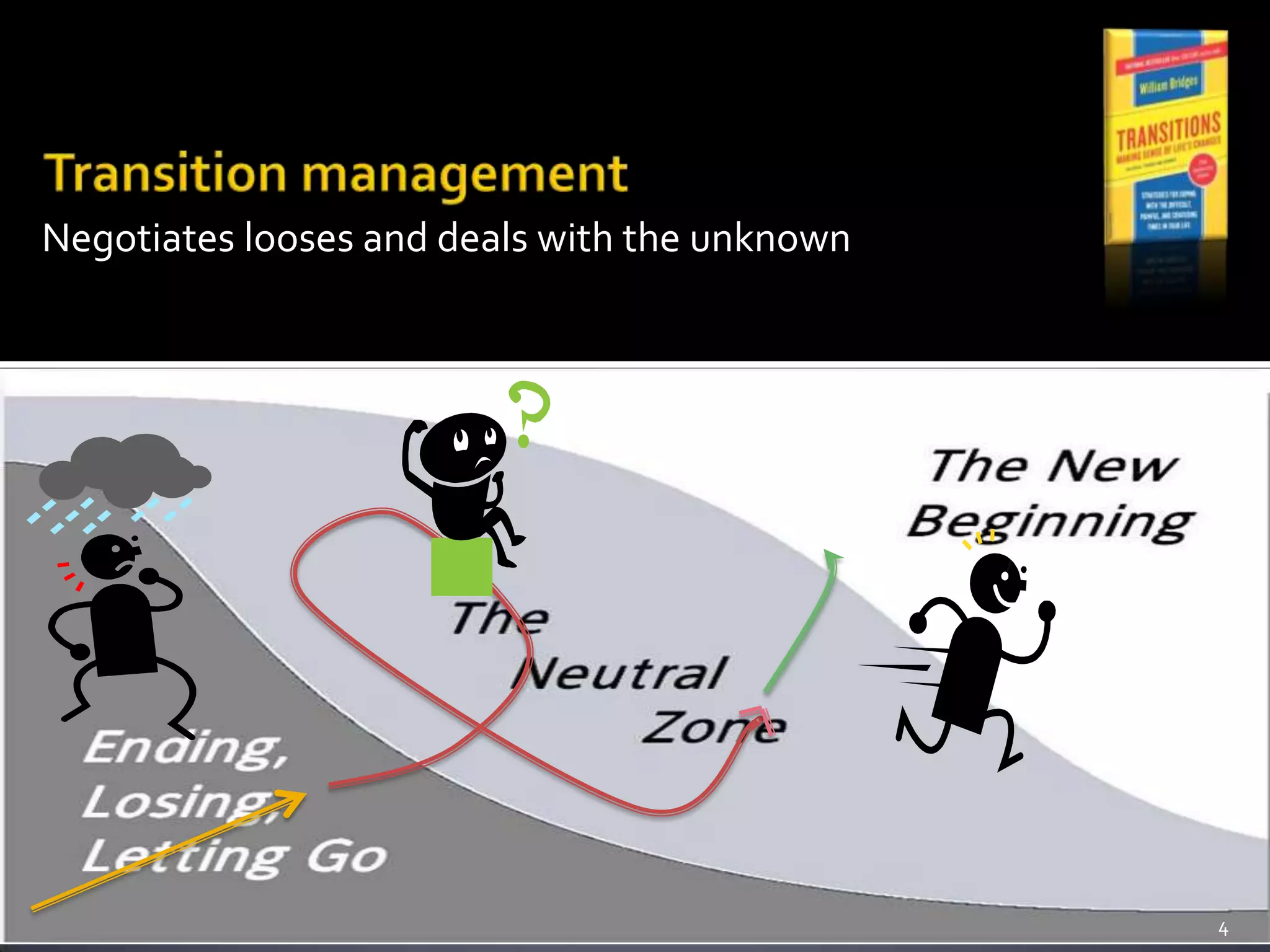
Negotiates looses and deals with the unknown
A transition management plan is not a change plan. It is
a PEOPLE plan.
It moves people forward, step by step, through the
process of:
1. Leaving the past behind
2. Getting through and profiting from chaos
3. Emerging with new attitudes and behaviors
5
6
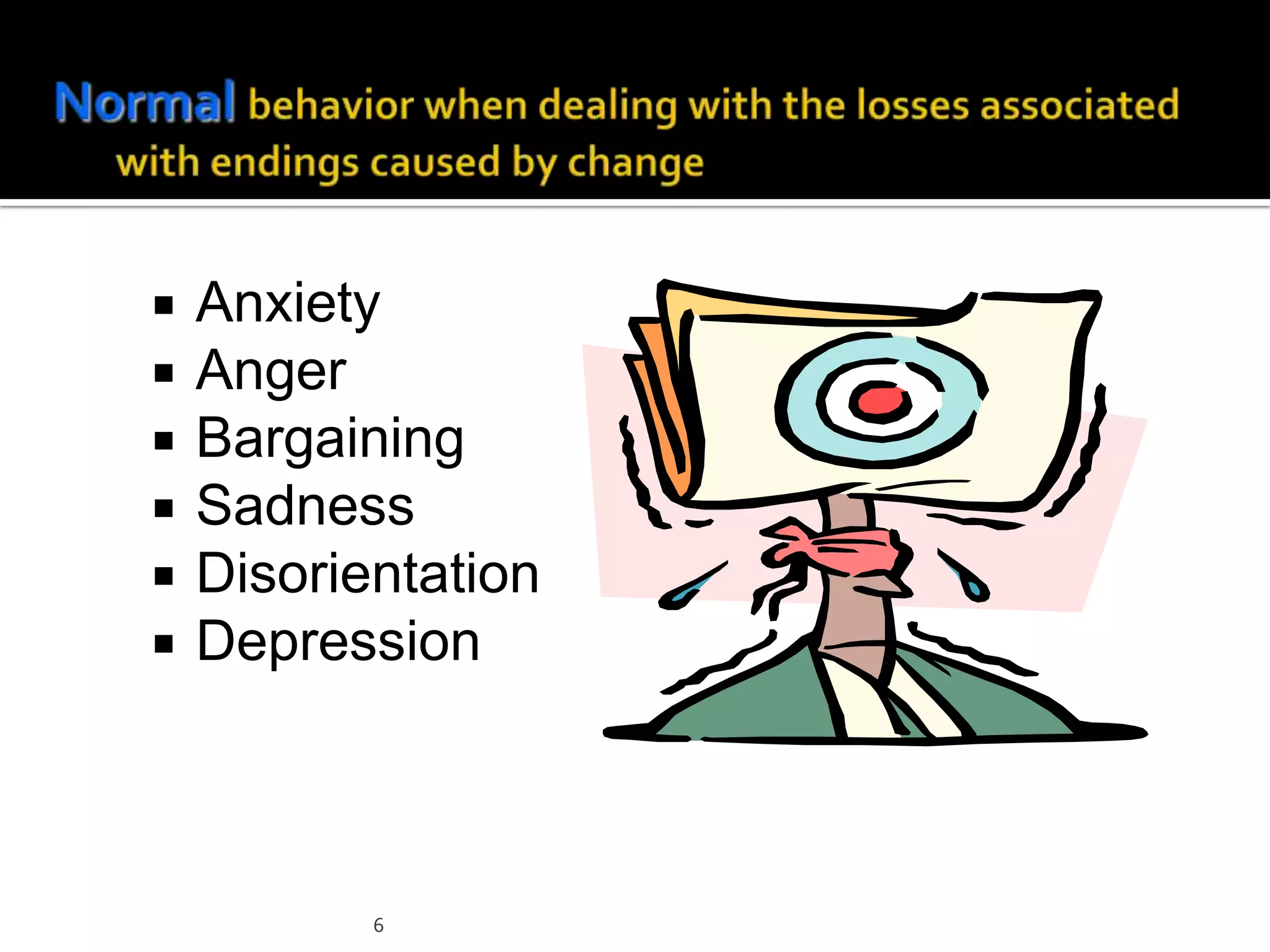
 Anxiety
 Anger
 Bargaining
 Sadness
 Disorientation
 Depression
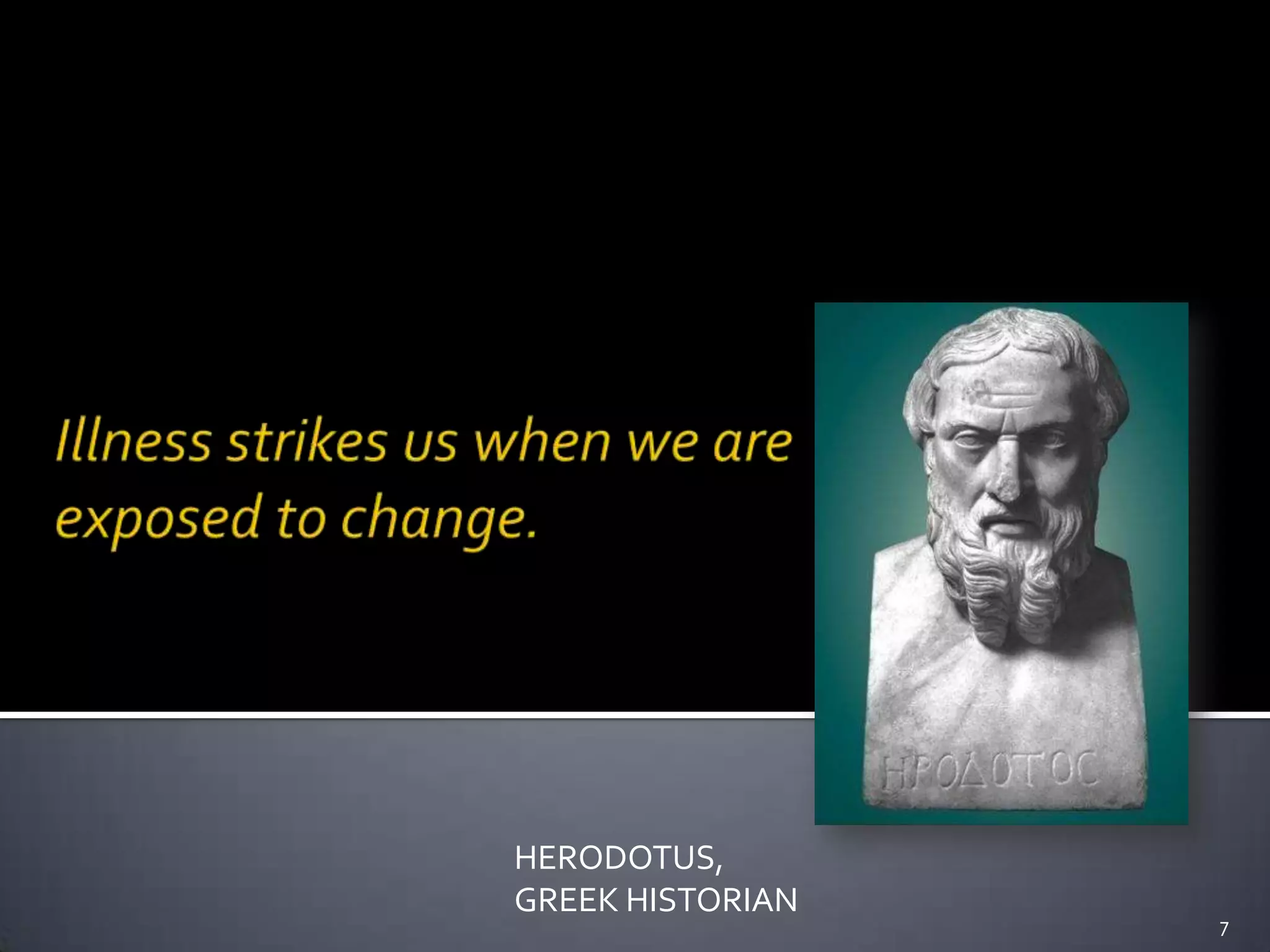
HERODOTUS,
GREEK HISTORIAN
7
8
A. Anxiety rises and motivation falls.
B. Disoriented and self-doubt.
C. Becoming resentful and self-protective.
D. People can become polarized
E. Energy is drained away into coping tactics.
F. More work is missed than at other times.
G. Systems and services can become less reliable
A transition management plan differs
from the change management plan.
A transition management plan is a PEOPLE plan.
It moves people forward, step by step, through the
process of:
▪ Leaving the past behind
▪ Getting through the wilderness and profiting from it
▪ Emerging with new attitudes, behaviors and identity
9
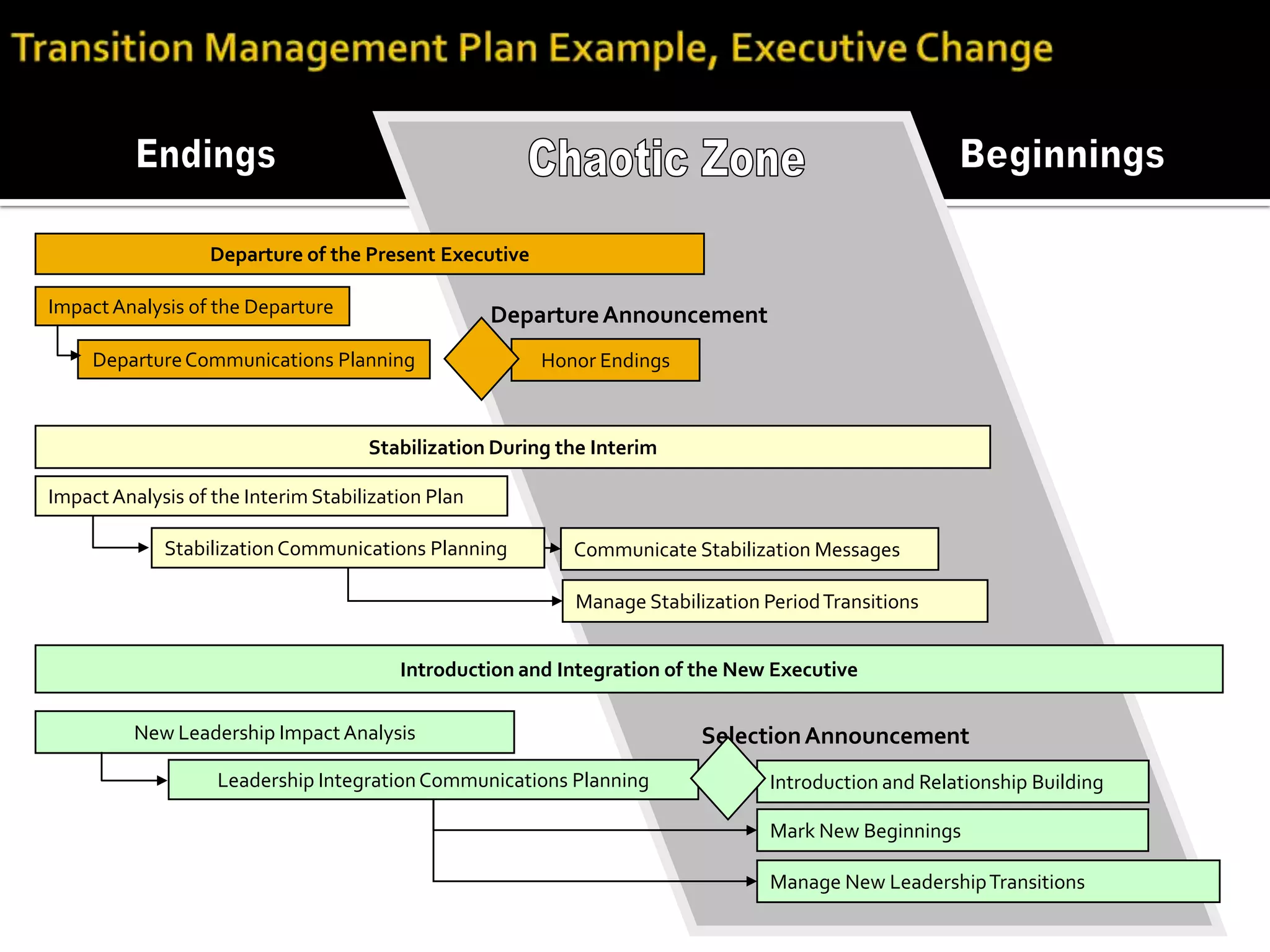
Honor Endings
StabilizationCommunications Planning
DepartureAnnouncement
Mark New Beginnings
Leadership IntegrationCommunications Planning
SelectionAnnouncement
Communicate Stabilization Messages
Manage New LeadershipTransitions
Introduction and Relationship Building
New Leadership Impact Analysis
ImpactAnalysis of the Interim Stabilization Plan
DepartureCommunications Planning
ImpactAnalysis of the Departure
Manage Stabilization PeriodTransitions
Departure of the Present Executive
Stabilization During the Interim
Introduction and Integration of the New Executive
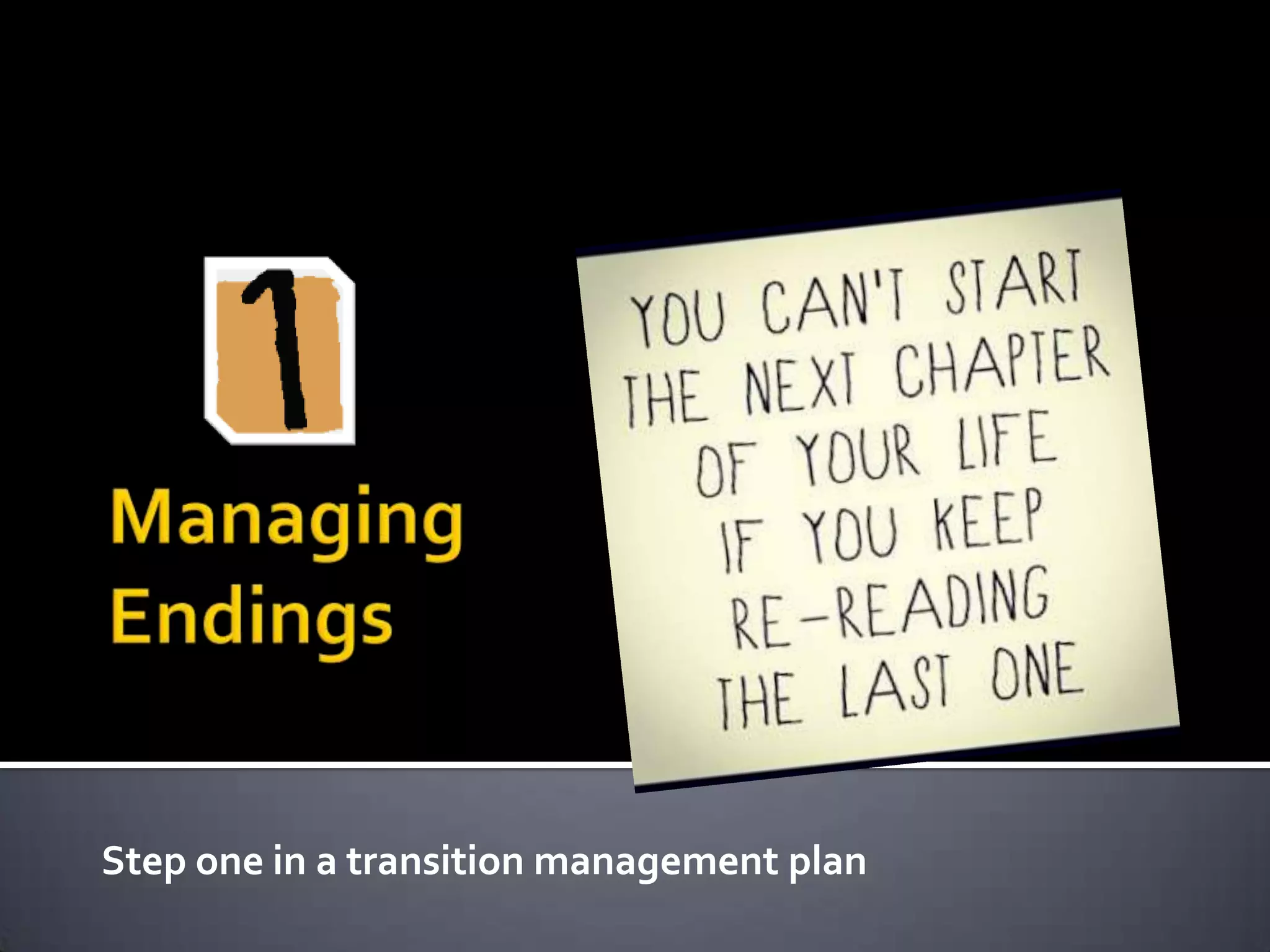
Step one in a transition management plan
It’s not the changes, it’s the
losses
12
Managing endings.
“All changes, even the most longed for,
have their melancholy;
for what we leave behind is part of ourselves…”
Antoine France
Writer
13
Managing endings.
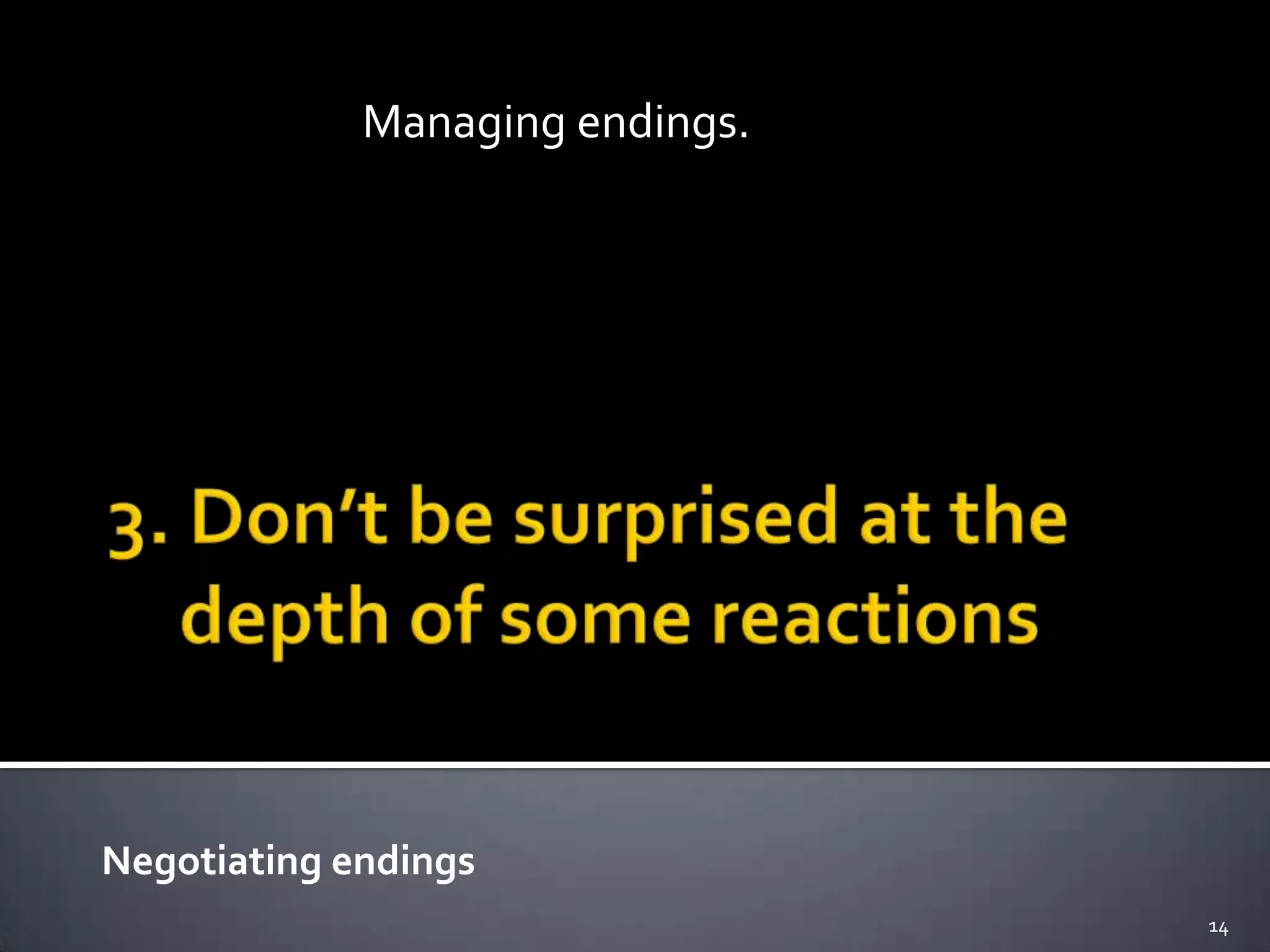
Negotiating endings
14
Managing endings.
Negotiating endings
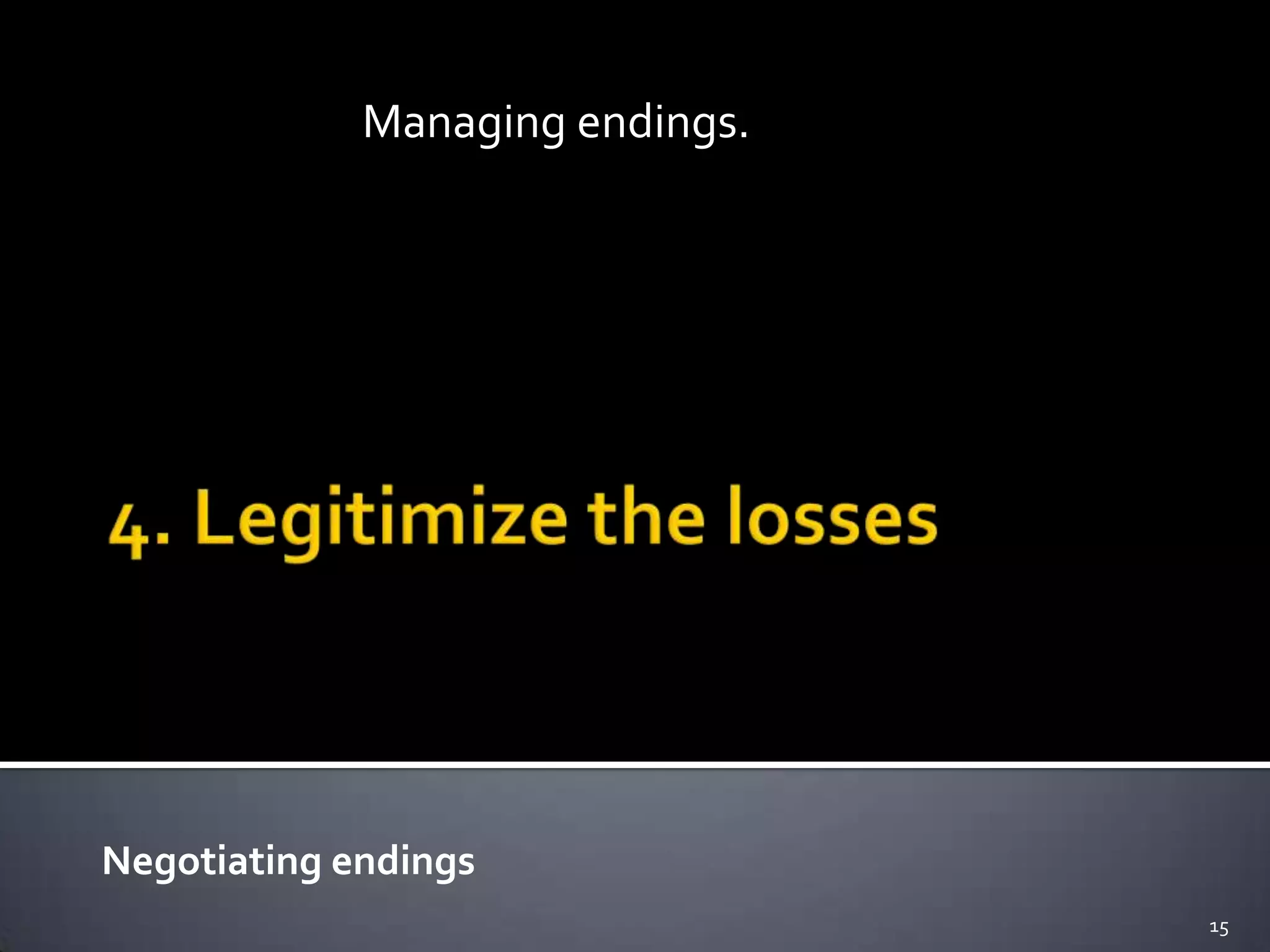
15
Managing endings.
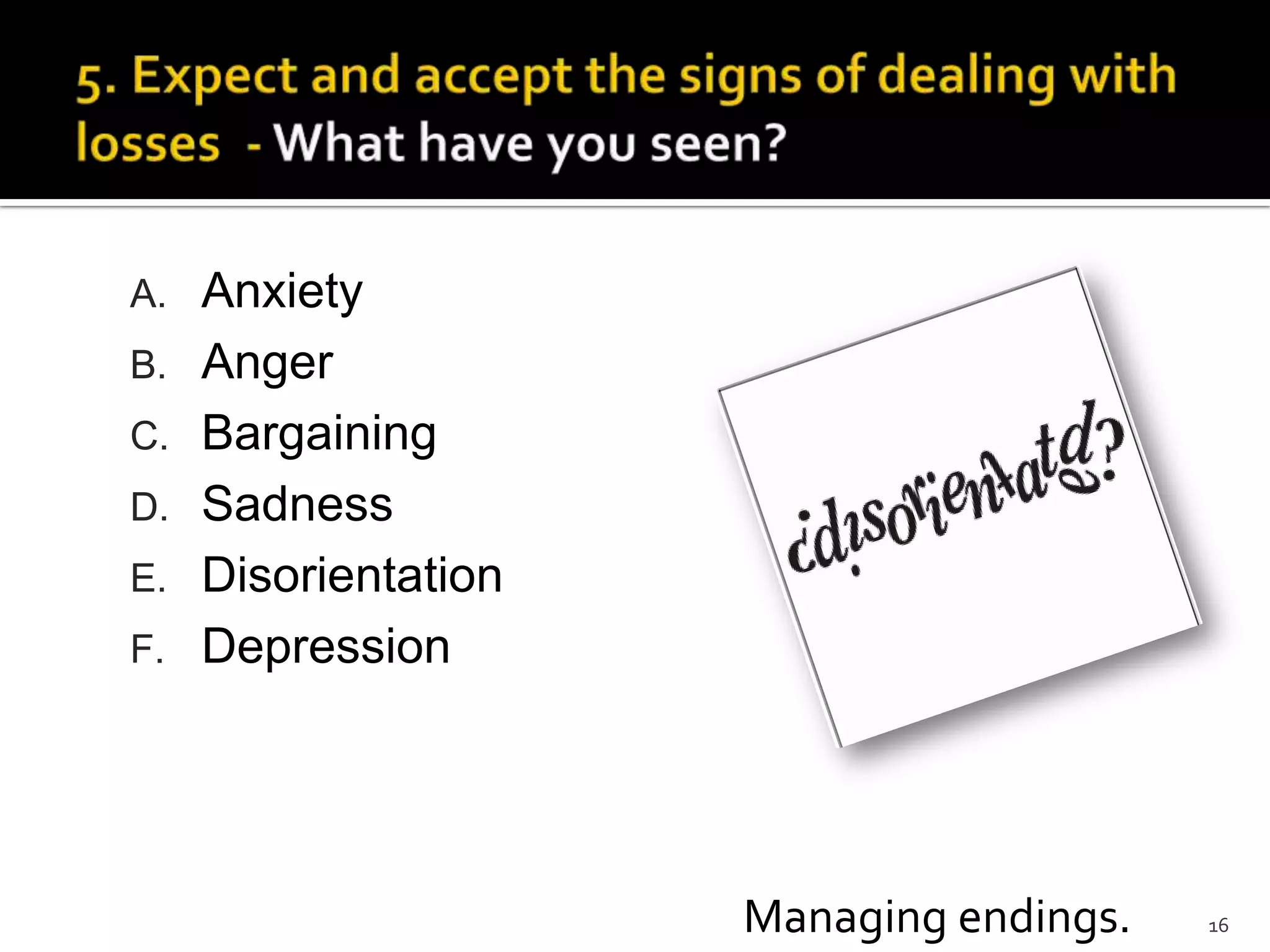
16Managing endings.
A. Anxiety
B. Anger
C. Bargaining
D. Sadness
E. Disorientation
F. Depression
Negotiating endings
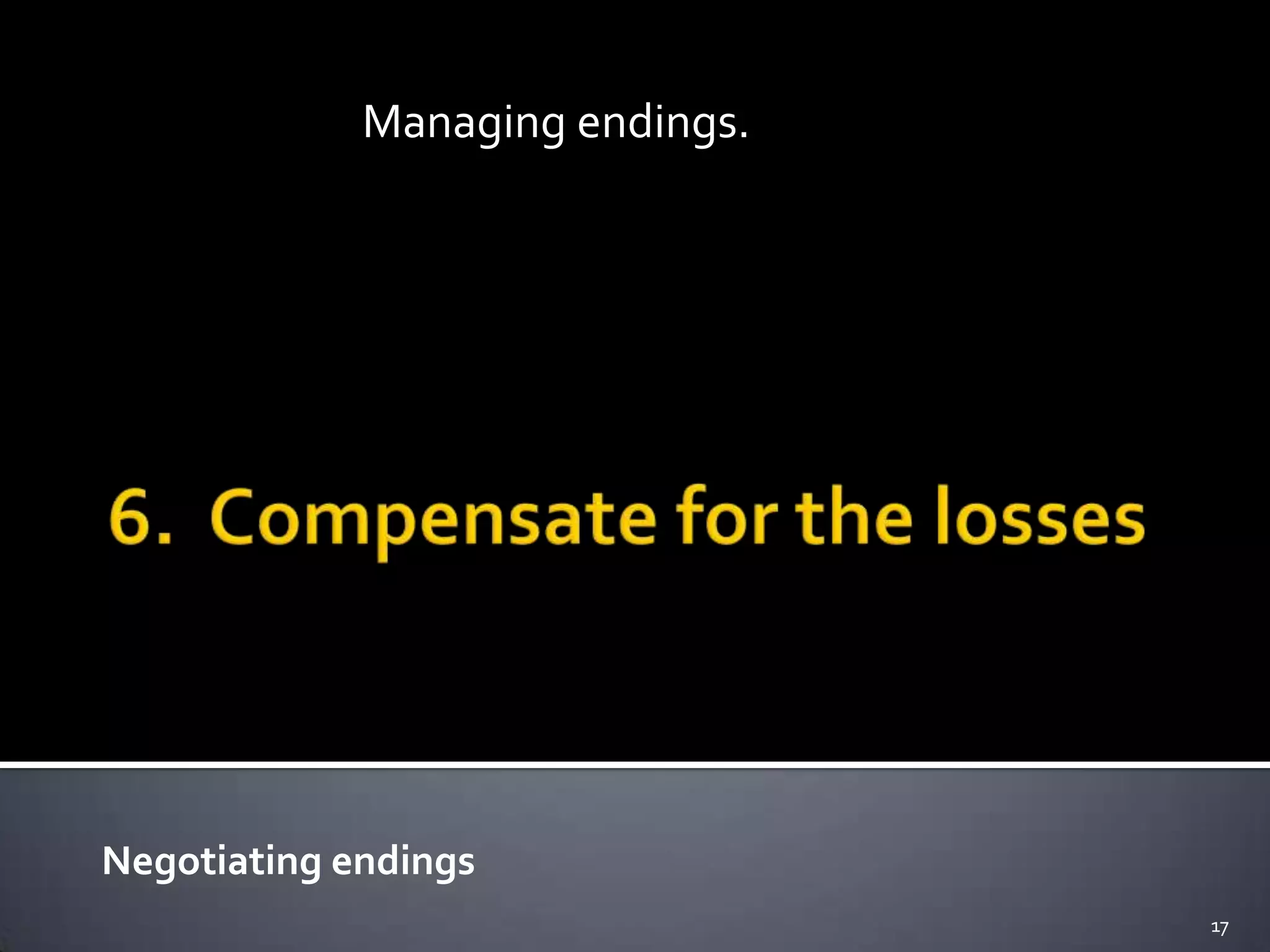
17
Managing endings.
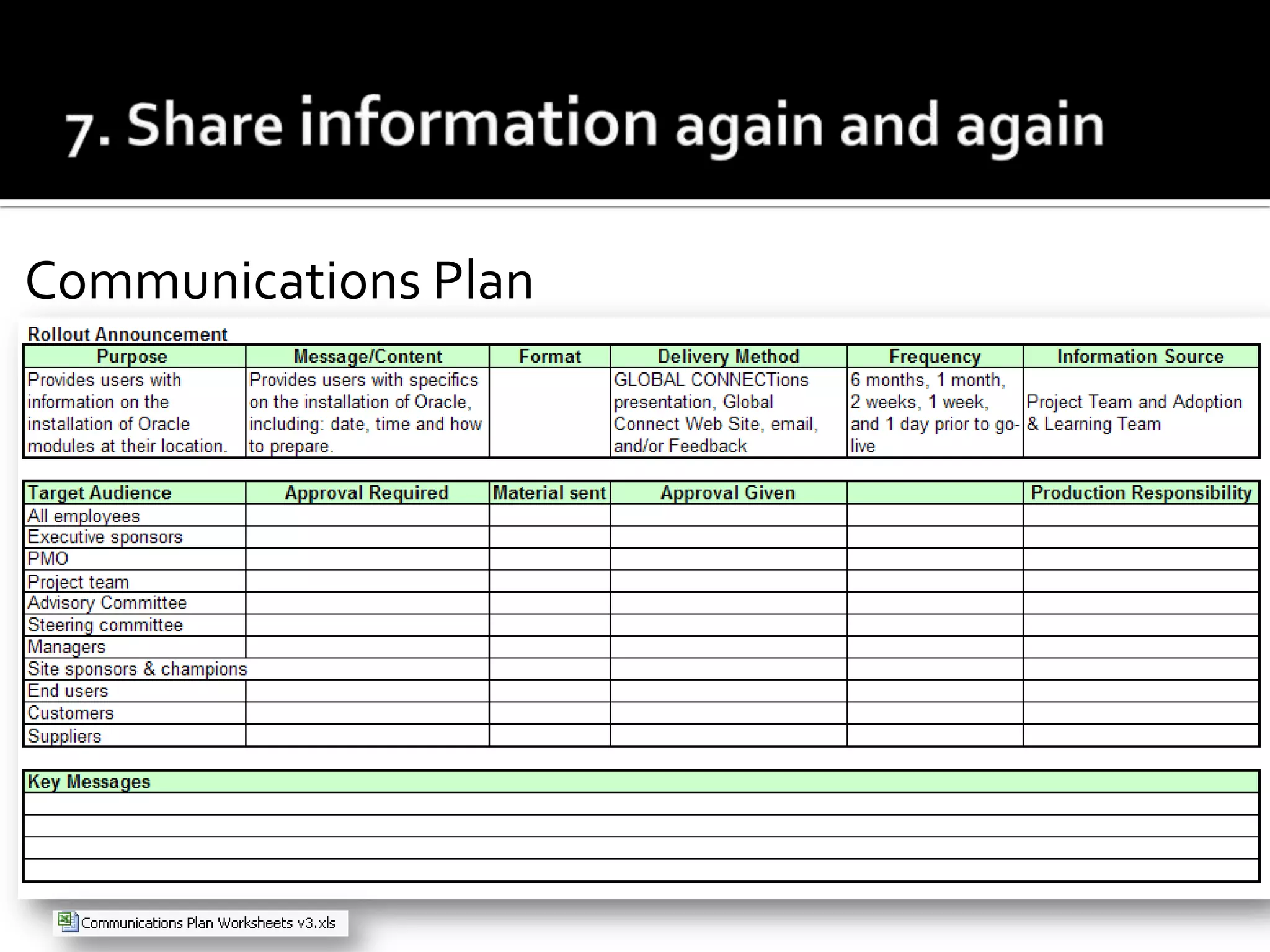
Communications Plan
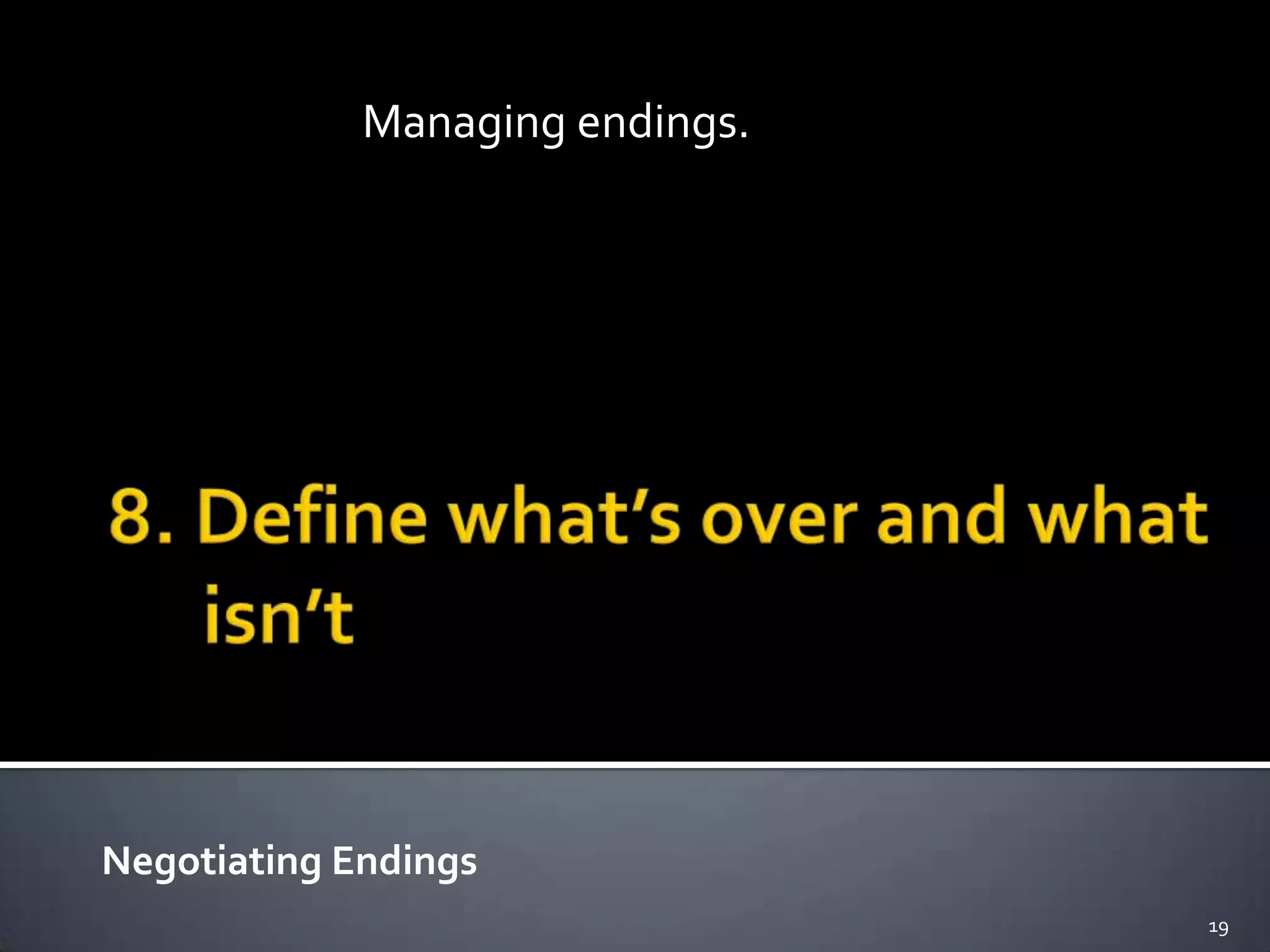
Negotiating Endings
19
Managing endings.
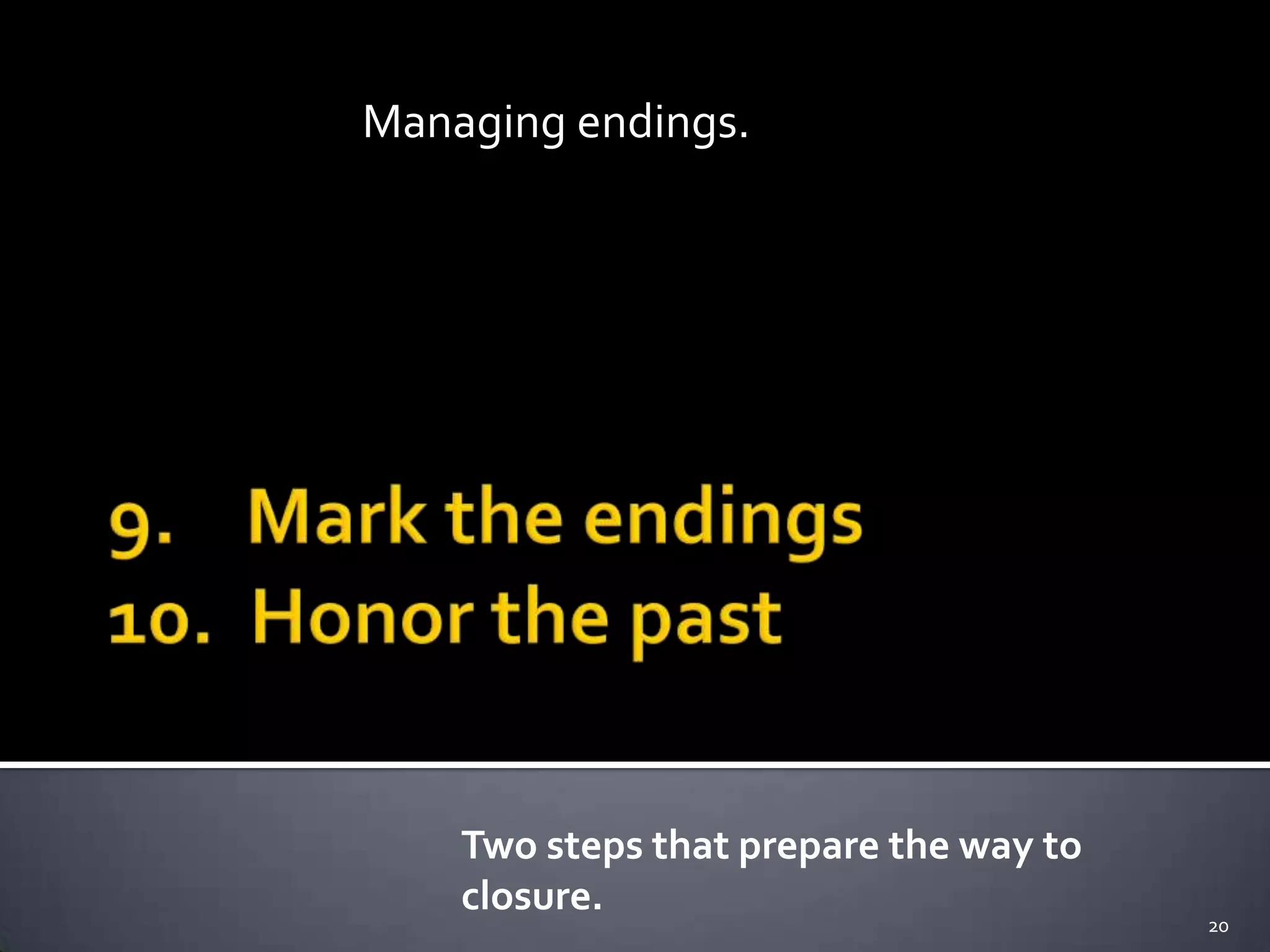
Two steps that prepare the way to
closure.
20
Managing endings.
21
Managing endings.
22
Managing endings.
Step two in a transition management plan
Between endings and new
beginnings
24
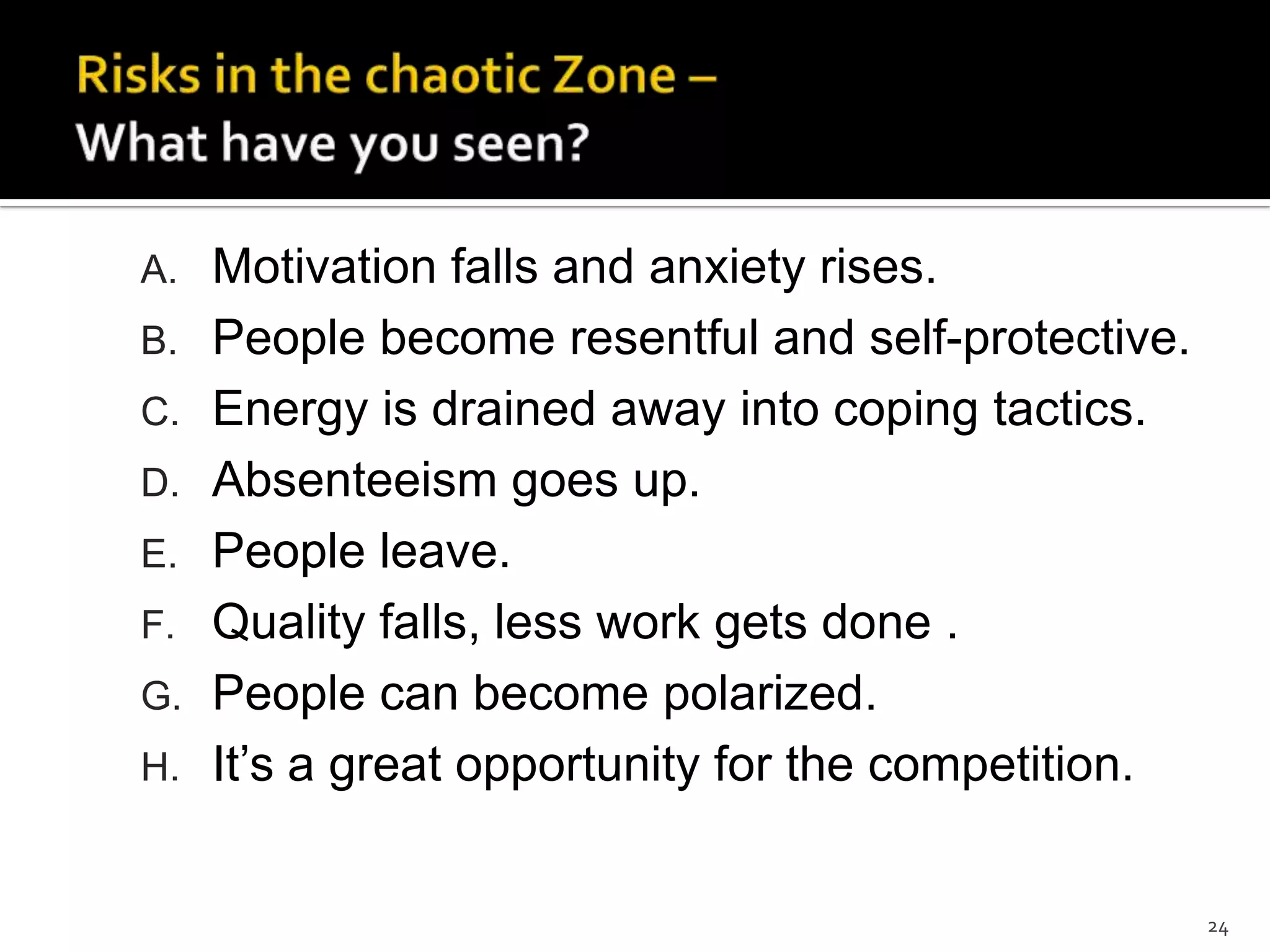
A. Motivation falls and anxiety rises.
B. People become resentful and self-protective.
C. Energy is drained away into coping tactics.
D. Absenteeism goes up.
E. People leave.
F. Quality falls, less work gets done .
G. People can become polarized.
H. It’s a great opportunity for the competition.
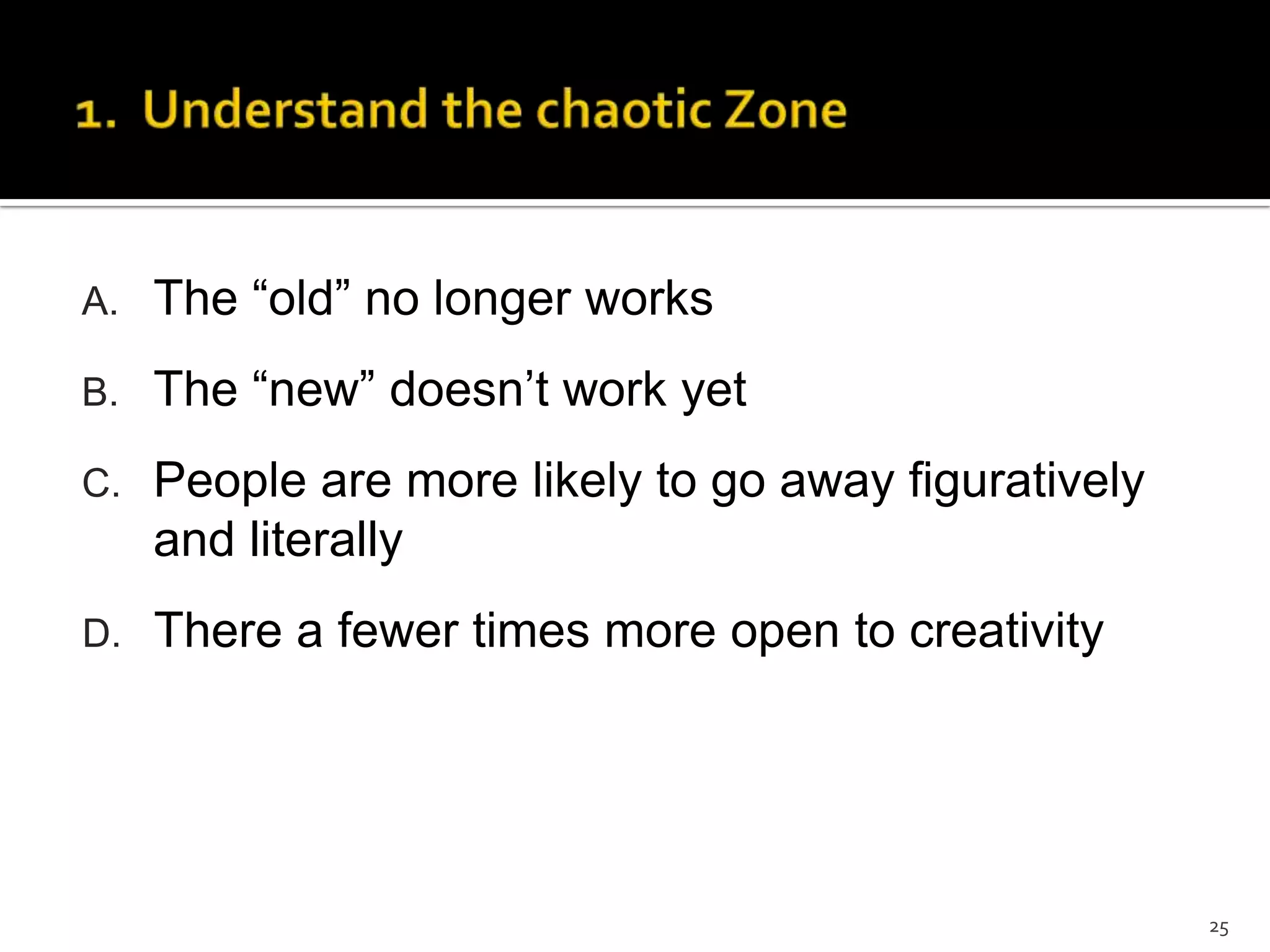
A. The “old” no longer works
B. The “new” doesn’t work yet
C. People are more likely to go away figuratively
and literally
D. There a fewer times more open to creativity
25
Create appropriate metaphors for the chaotic
zone.
26
1. Create temporary “scaffolding” structures where
necessary
 Temporary procedures and agreements
 Temporary roles, reporting relationships, or
configurations
2. Have appropriate outlets and support available
27
1. Talk, communicate, socialize
2. Quell rumors
3. Create a team-level charter
4. Strongly connect the team to the organization's mission
5. Clarify working agreements and milestones
6. Recognize and reward teamwork
28
29
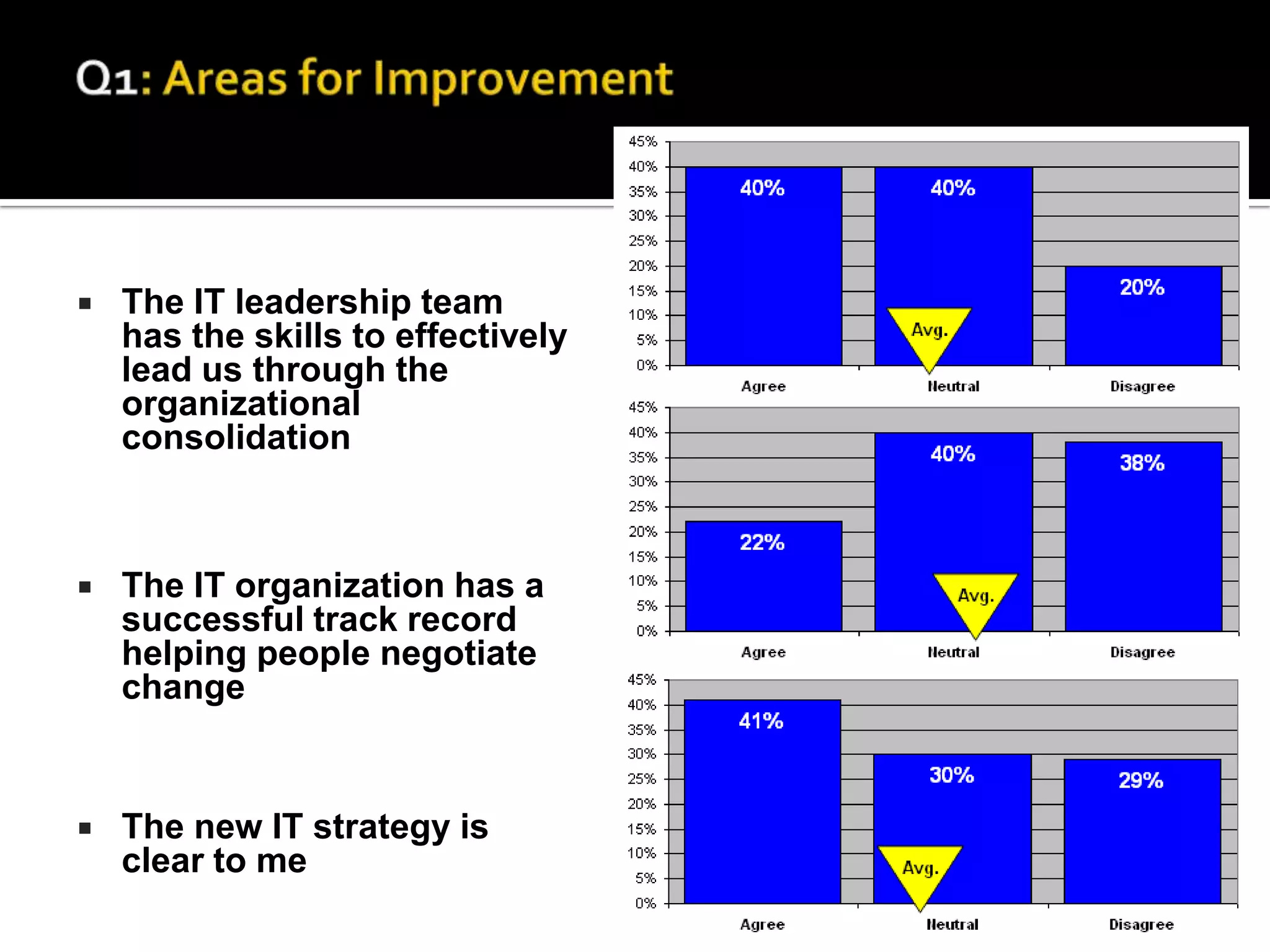
 The IT leadership team
has the skills to effectively
lead us through the
organizational
consolidation
 The IT organization has a
successful track record
helping people negotiate
change
 The new IT strategy is
clear to me
30
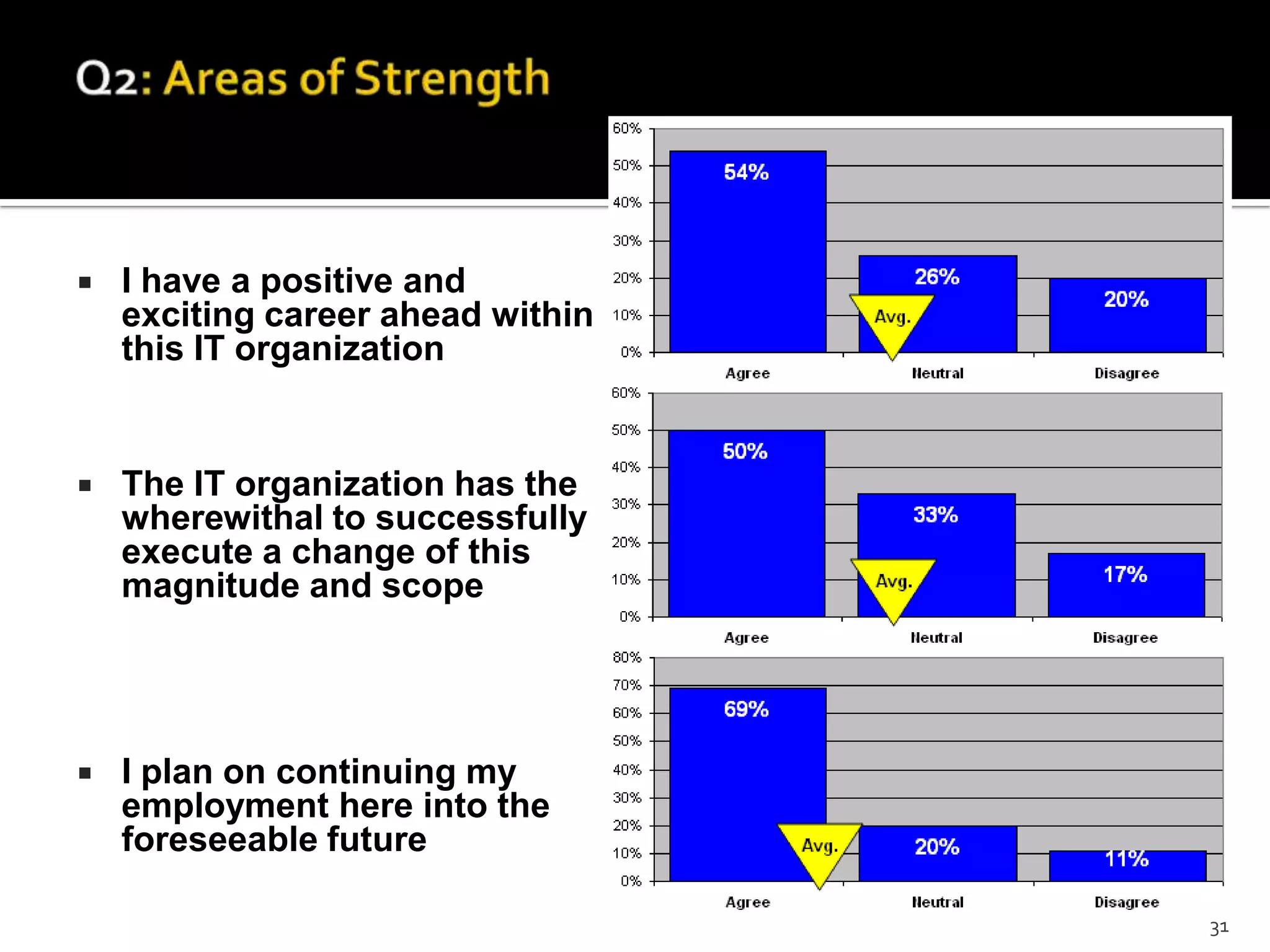
 I have a positive and
exciting career ahead within
this IT organization
 The IT organization has the
wherewithal to successfully
execute a change of this
magnitude and scope
 I plan on continuing my
employment here into the
foreseeable future
31
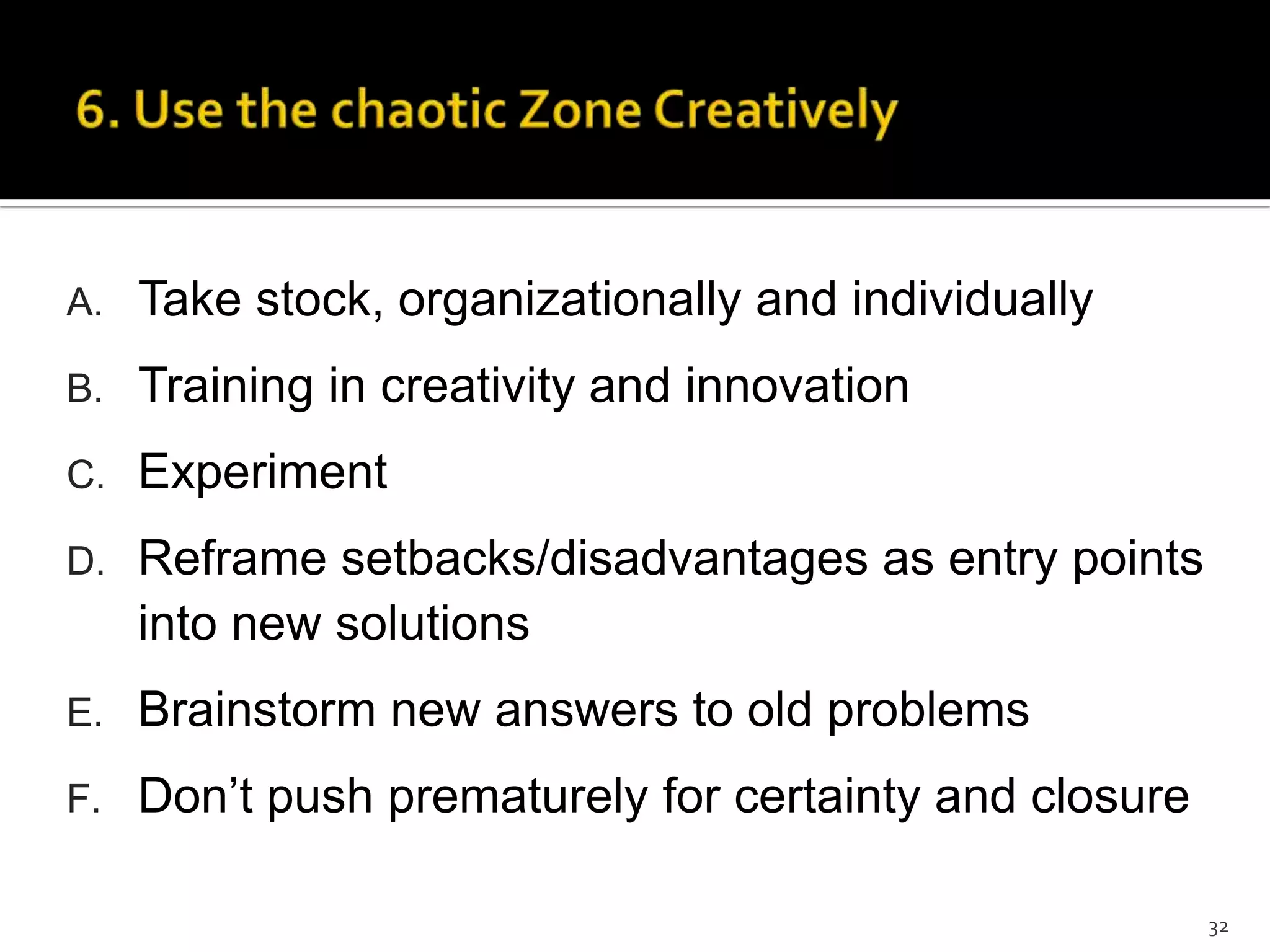
A. Take stock, organizationally and individually
B. Training in creativity and innovation
C. Experiment
D. Reframe setbacks/disadvantages as entry points
into new solutions
E. Brainstorm new answers to old problems
F. Don’t push prematurely for certainty and closure
32
33
Step three in a transition management plan
“The secret is to have more beginnings
than endings.”
DaveWeinbaum
35
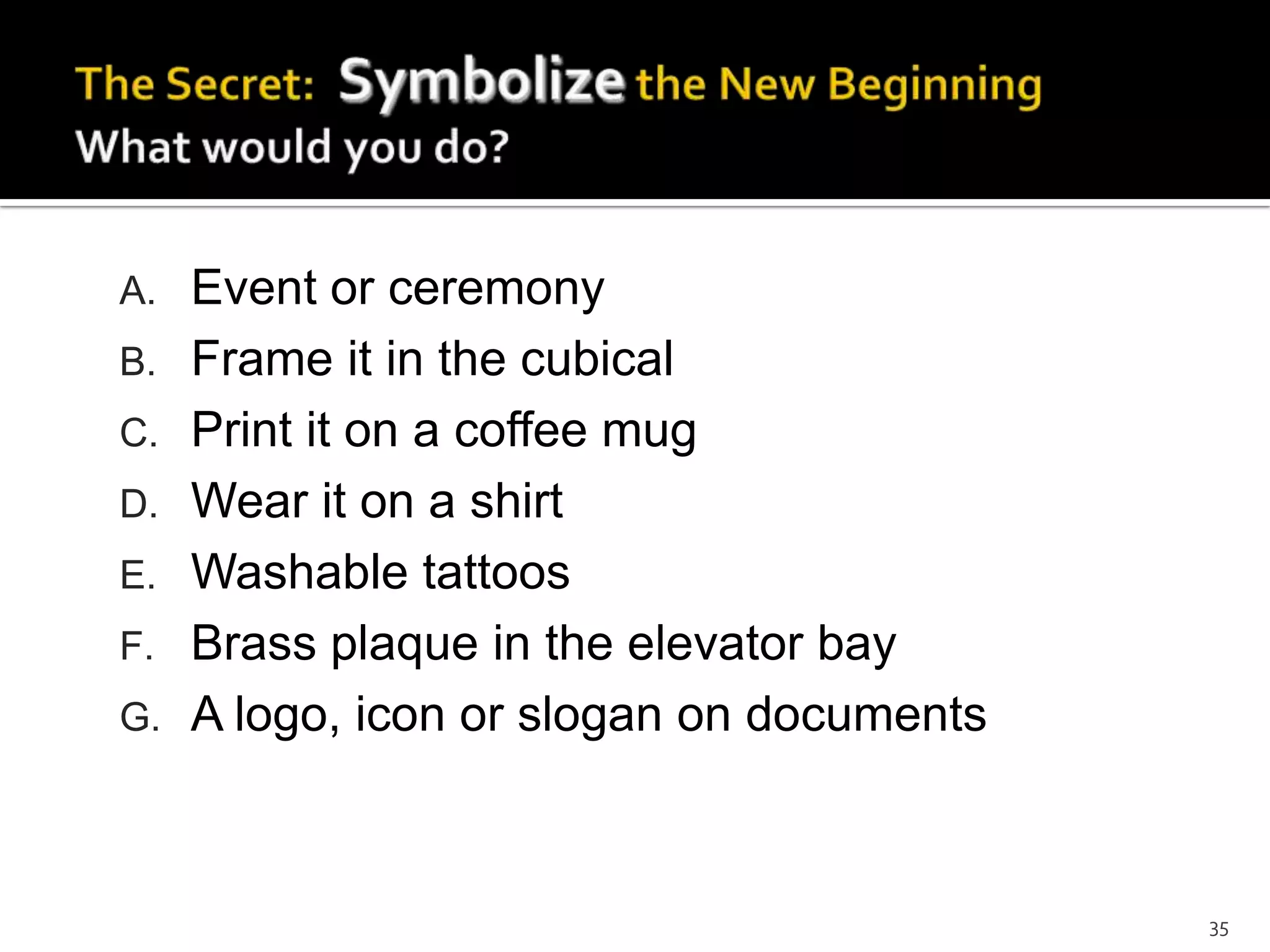
A. Event or ceremony
B. Frame it in the cubical
C. Print it on a coffee mug
D. Wear it on a shirt
E. Washable tattoos
F. Brass plaque in the elevator bay
G. A logo, icon or slogan on documents
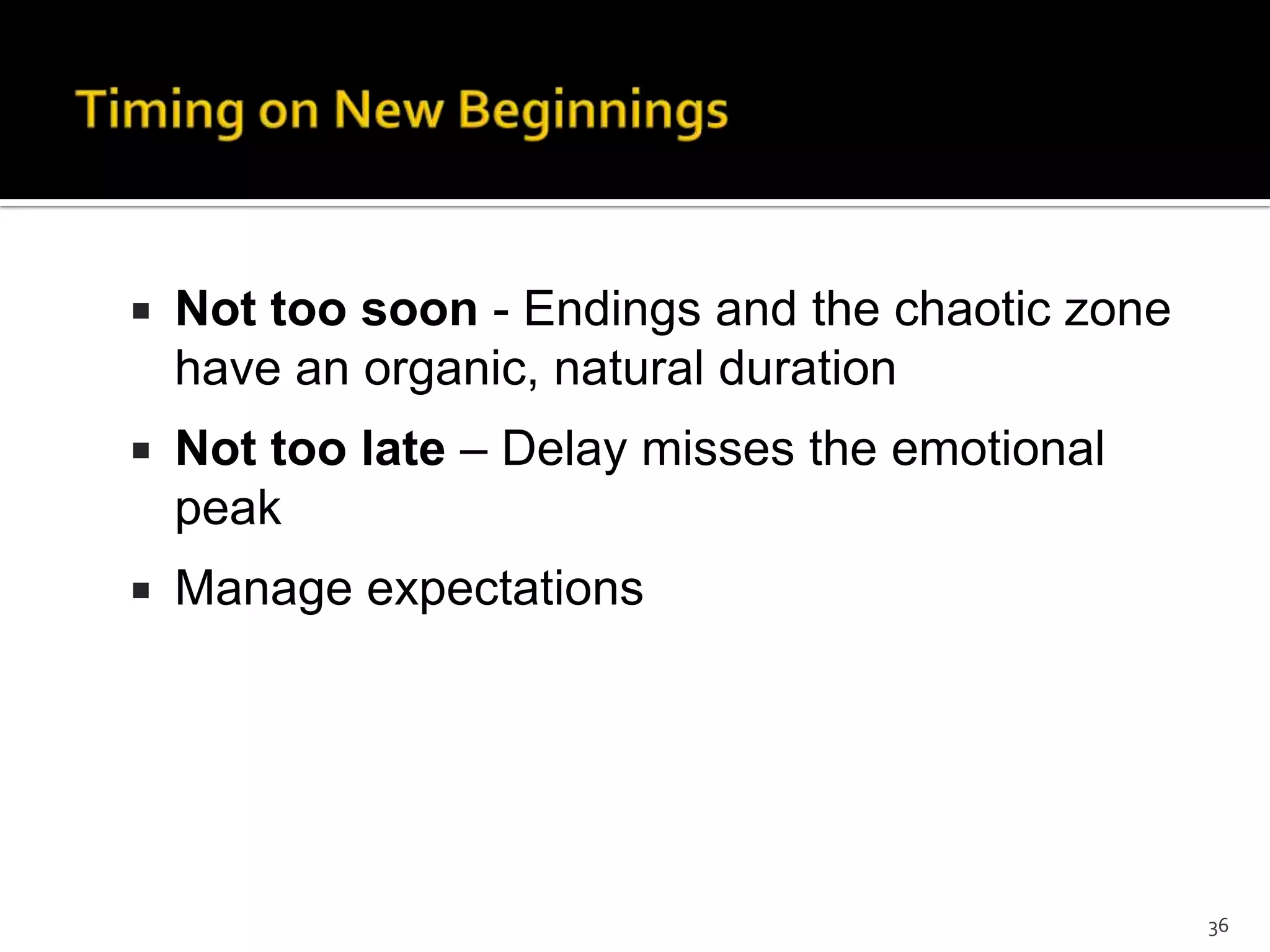
 Not too soon - Endings and the chaotic zone
have an organic, natural duration
 Not too late – Delay misses the emotional
peak
 Manage expectations
36
“The only joy in the world is to begin.”
Cesare Pavese
ItalianWriter
37
38
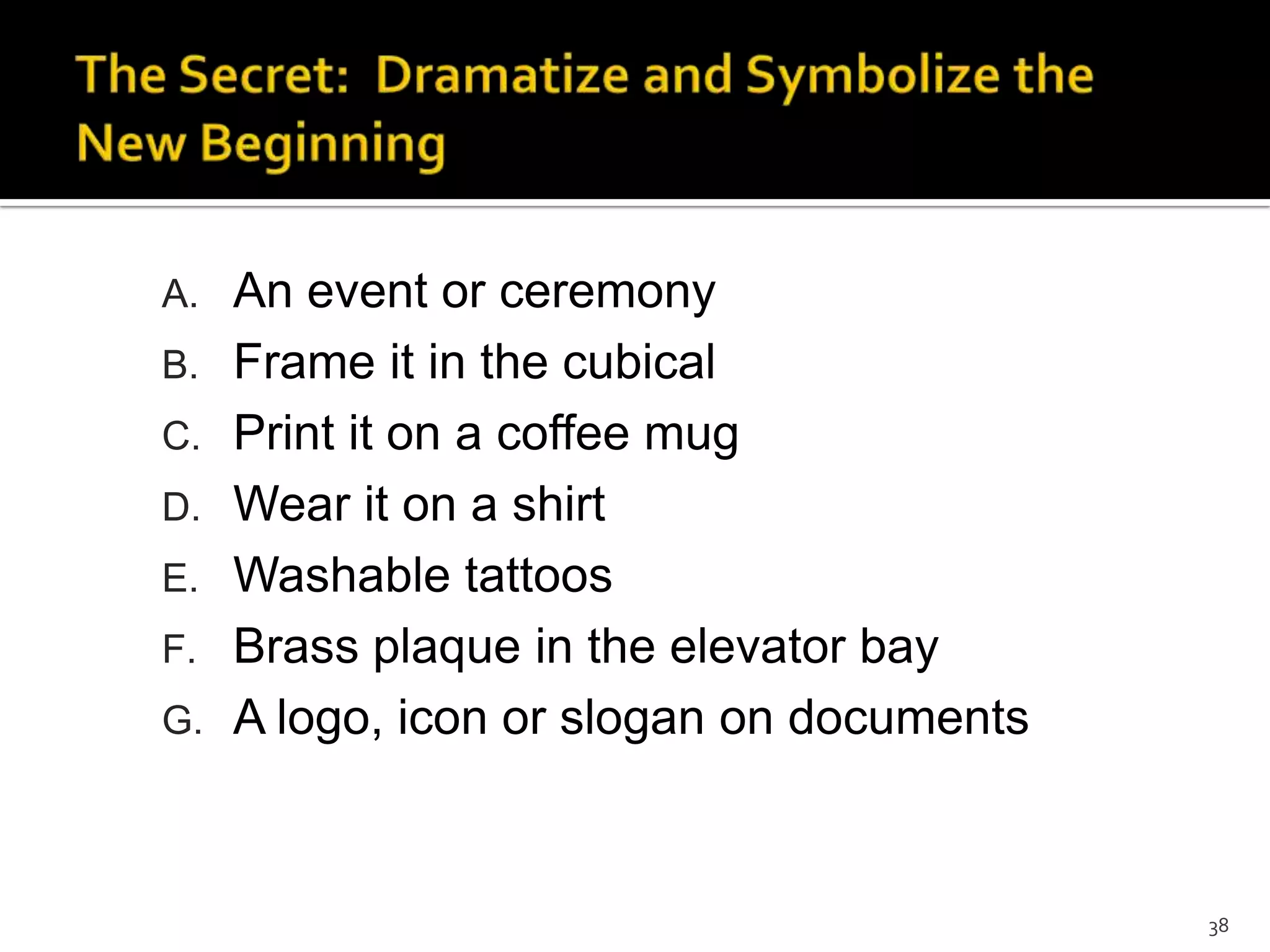
A. An event or ceremony
B. Frame it in the cubical
C. Print it on a coffee mug
D. Wear it on a shirt
E. Washable tattoos
F. Brass plaque in the elevator bay
G. A logo, icon or slogan on documents
 Not too soon
Endings and the chaotic zone have an
organic, natural duration
 Not too late
Delay misses the emotional peak
39
 You don’t have to have had a drastic change to tap into
the power of “new beginnings”
 Particularly important when people are entering new
territory
40
“The only joy in the world is to begin.”
Cesare Pavese
Italian Writer
 A new beginning “ seals” an ending
 Something new represents a gamble
 Some people just like the chaotic zone
41
42

27+transition+management+ +the+people+part+of+change (1)

  • 1.
  • 2.
  • 3.
    What they think theyare losing What they don’t know 3
  • 4.
    4 Negotiates looses anddeals with the unknown
  • 5.
    A transition managementplan is not a change plan. It is a PEOPLE plan. It moves people forward, step by step, through the process of: 1. Leaving the past behind 2. Getting through and profiting from chaos 3. Emerging with new attitudes and behaviors 5
  • 6.
    6  Anxiety  Anger Bargaining  Sadness  Disorientation  Depression
  • 7.
  • 8.
    8 A. Anxiety risesand motivation falls. B. Disoriented and self-doubt. C. Becoming resentful and self-protective. D. People can become polarized E. Energy is drained away into coping tactics. F. More work is missed than at other times. G. Systems and services can become less reliable
  • 9.
    A transition managementplan differs from the change management plan. A transition management plan is a PEOPLE plan. It moves people forward, step by step, through the process of: ▪ Leaving the past behind ▪ Getting through the wilderness and profiting from it ▪ Emerging with new attitudes, behaviors and identity 9
  • 10.
    Honor Endings StabilizationCommunications Planning DepartureAnnouncement MarkNew Beginnings Leadership IntegrationCommunications Planning SelectionAnnouncement Communicate Stabilization Messages Manage New LeadershipTransitions Introduction and Relationship Building New Leadership Impact Analysis ImpactAnalysis of the Interim Stabilization Plan DepartureCommunications Planning ImpactAnalysis of the Departure Manage Stabilization PeriodTransitions Departure of the Present Executive Stabilization During the Interim Introduction and Integration of the New Executive
  • 11.
    Step one ina transition management plan
  • 12.
    It’s not thechanges, it’s the losses 12 Managing endings.
  • 13.
    “All changes, eventhe most longed for, have their melancholy; for what we leave behind is part of ourselves…” Antoine France Writer 13 Managing endings.
  • 14.
  • 15.
  • 16.
    16Managing endings. A. Anxiety B.Anger C. Bargaining D. Sadness E. Disorientation F. Depression
  • 17.
  • 18.
  • 19.
  • 20.
    Two steps thatprepare the way to closure. 20 Managing endings.
  • 21.
  • 22.
  • 23.
    Step two ina transition management plan Between endings and new beginnings
  • 24.
    24 A. Motivation fallsand anxiety rises. B. People become resentful and self-protective. C. Energy is drained away into coping tactics. D. Absenteeism goes up. E. People leave. F. Quality falls, less work gets done . G. People can become polarized. H. It’s a great opportunity for the competition.
  • 25.
    A. The “old”no longer works B. The “new” doesn’t work yet C. People are more likely to go away figuratively and literally D. There a fewer times more open to creativity 25
  • 26.
    Create appropriate metaphorsfor the chaotic zone. 26
  • 27.
    1. Create temporary“scaffolding” structures where necessary  Temporary procedures and agreements  Temporary roles, reporting relationships, or configurations 2. Have appropriate outlets and support available 27
  • 28.
    1. Talk, communicate,socialize 2. Quell rumors 3. Create a team-level charter 4. Strongly connect the team to the organization's mission 5. Clarify working agreements and milestones 6. Recognize and reward teamwork 28
  • 29.
  • 30.
     The ITleadership team has the skills to effectively lead us through the organizational consolidation  The IT organization has a successful track record helping people negotiate change  The new IT strategy is clear to me 30
  • 31.
     I havea positive and exciting career ahead within this IT organization  The IT organization has the wherewithal to successfully execute a change of this magnitude and scope  I plan on continuing my employment here into the foreseeable future 31
  • 32.
    A. Take stock,organizationally and individually B. Training in creativity and innovation C. Experiment D. Reframe setbacks/disadvantages as entry points into new solutions E. Brainstorm new answers to old problems F. Don’t push prematurely for certainty and closure 32
  • 33.
  • 34.
    Step three ina transition management plan “The secret is to have more beginnings than endings.” DaveWeinbaum
  • 35.
    35 A. Event orceremony B. Frame it in the cubical C. Print it on a coffee mug D. Wear it on a shirt E. Washable tattoos F. Brass plaque in the elevator bay G. A logo, icon or slogan on documents
  • 36.
     Not toosoon - Endings and the chaotic zone have an organic, natural duration  Not too late – Delay misses the emotional peak  Manage expectations 36
  • 37.
    “The only joyin the world is to begin.” Cesare Pavese ItalianWriter 37
  • 38.
    38 A. An eventor ceremony B. Frame it in the cubical C. Print it on a coffee mug D. Wear it on a shirt E. Washable tattoos F. Brass plaque in the elevator bay G. A logo, icon or slogan on documents
  • 39.
     Not toosoon Endings and the chaotic zone have an organic, natural duration  Not too late Delay misses the emotional peak 39
  • 40.
     You don’thave to have had a drastic change to tap into the power of “new beginnings”  Particularly important when people are entering new territory 40 “The only joy in the world is to begin.” Cesare Pavese Italian Writer
  • 41.
     A newbeginning “ seals” an ending  Something new represents a gamble  Some people just like the chaotic zone 41
  • 42.

Editor's Notes

  • #11 The plan outlines the steps and schedule in which people will receive the information, training and support they need to make the transitionIt lays out the nature and timing of key events that mark the phases of the transitionA transition management plan differs from the change management plan in several ways. First it is much more detailed, addressing the change on the personal rather than the collective level.A transition management plans starts where people are and works forward, step by step, through the process of leaving the past behind, getting through the wilderness and profiting from it, and emerging with new attitudes, behaviors and identity.