Social media: interactive platforms 
via which individuals and 
communities create and share 
user-generated content 
Blending of technology and social 
interaction for the co-creation of 
value 
@jilltomlinson
some of the highest social media usage in the 
world 
highest in Facebook usage, with >9 million 
users spending almost 9 hours per month on 
the site 
Twitter averages ~40 million tweets per day. 
The number of social media users aged >65 
doubled throughout 2010; 25% of people 
>65 are now part of a social networking site. 
@jilltomlinson
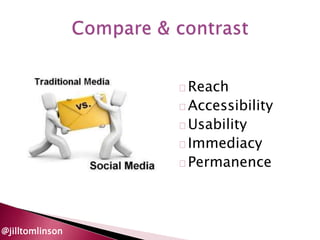
Reach 
Accessibility 
Usability 
Immediacy 
Permanence 
@jilltomlinson
Vital 
Cost effective 
Require technological savvy, 
planning, time and a thorough 
understanding of the different 
platforms
The Australian Federation of Medical 
Women (AFMW) has used social media since 
2008. 
This presentation details AFMW’s 
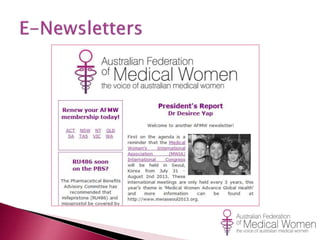
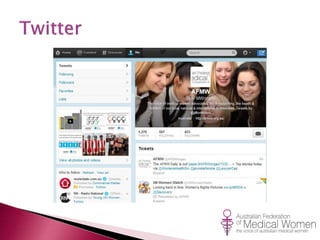
experiences with e-Newsletters, Twitter, 
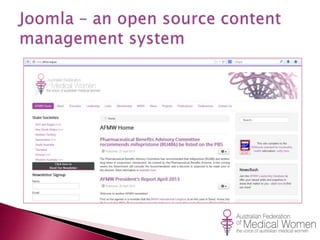
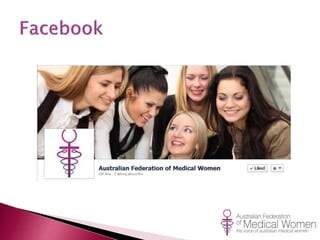
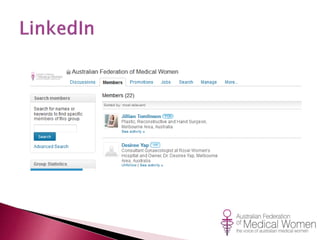
Facebook, LinkedIn and our open source 
content management system website. 
Each platform has been used differently, 
according to its specific communication 
attributes and audience.
@jilltomlinson
@jilltomlinson
Two of the most commonly used social media 
platforms. 
Facebook launched in 2004 
◦ as of May 2012 Facebook had 901 million users; 
◦ if it were a country it would be the world’s 3rd 
largest. 
Twitter was launched in 2006 
◦ tweets have been found to predict highly cited 
articles within the first three days of article 
publication 
◦ Growing at 85% annually (Websense, 2011) 
@jilltomlinson
Individual vs Organisation 
“Don’t lie, don’t cheat, 
don’t steal, don’t reveal.”
Common sense basics 
Networking 
Attribution
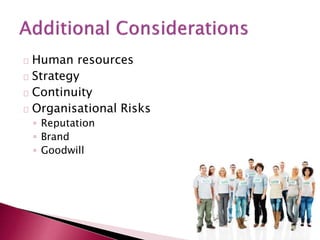
Human resources 
Strategy 
Continuity 
Organisational Risks 
◦ Reputation 
◦ Brand 
◦ Goodwill
Risk management 
Content guidelines 
Delegation 
Rogue accounts 
Defamation 
Escalation 
Intellectual property
Plan around specific objectives 
“Know where your audience is” vs “build it 
and they will come” 
Get advice on what platforms will work for 
your intended purpose 
Allocate the resources 
Recognise the risks

2.7.1 dr jill tomlinson

  • 2.
    Social media: interactiveplatforms via which individuals and communities create and share user-generated content Blending of technology and social interaction for the co-creation of value @jilltomlinson
  • 3.
    some of thehighest social media usage in the world highest in Facebook usage, with >9 million users spending almost 9 hours per month on the site Twitter averages ~40 million tweets per day. The number of social media users aged >65 doubled throughout 2010; 25% of people >65 are now part of a social networking site. @jilltomlinson
  • 4.
    Reach Accessibility Usability Immediacy Permanence @jilltomlinson
  • 5.
    Vital Cost effective Require technological savvy, planning, time and a thorough understanding of the different platforms
  • 6.
    The Australian Federationof Medical Women (AFMW) has used social media since 2008. This presentation details AFMW’s experiences with e-Newsletters, Twitter, Facebook, LinkedIn and our open source content management system website. Each platform has been used differently, according to its specific communication attributes and audience.
  • 7.
  • 8.
  • 11.
    Two of themost commonly used social media platforms. Facebook launched in 2004 ◦ as of May 2012 Facebook had 901 million users; ◦ if it were a country it would be the world’s 3rd largest. Twitter was launched in 2006 ◦ tweets have been found to predict highly cited articles within the first three days of article publication ◦ Growing at 85% annually (Websense, 2011) @jilltomlinson
  • 17.
    Individual vs Organisation “Don’t lie, don’t cheat, don’t steal, don’t reveal.”
  • 19.
    Common sense basics Networking Attribution
  • 21.
    Human resources Strategy Continuity Organisational Risks ◦ Reputation ◦ Brand ◦ Goodwill
  • 23.
    Risk management Contentguidelines Delegation Rogue accounts Defamation Escalation Intellectual property
  • 24.
    Plan around specificobjectives “Know where your audience is” vs “build it and they will come” Get advice on what platforms will work for your intended purpose Allocate the resources Recognise the risks

Editor's Notes

  • #6 Communicate with stakeholders, members and wider community
  • #9 Who do you want to target? Why do you want to target them? How are you going to target them?
  • #10 We compare and contrast the extent to which different Australian health organisations have adopted social media strategies. We describe the steps in creating a platform-specific social media communications plan for an organisation and ways to monitor the effectiveness and reach of a social media plan.
  • #12 Bottles K. Twitter: an essential tool for every physician leader. Physician Exec. 2011 May-Jun; 37(3):80-2. Eyesenbach, G. Can tweets predict citations? Metrics of social impact based on Twitter and correlation with traditional metrics of scientific impact. J Med Internet Res. 2011 Dec 19;13(4):e123
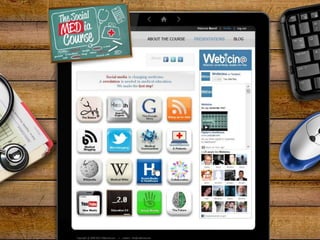
  • #16 Volunteer-based organisations face multiple challenges in establishing and integrating social media strategies and website technologies. We address social media policies, etiquette, privacy, security, staff training models, search engine optimization, governance and legal issues. Simple tools and resources that are available to assist organisations are discussed.
  • #19 Security
  • #20 Etiquette
  • #21 Courses & seminars Peer learning & teaching Self-directed Online vs offline
  • #22 within volunteer based organisations
  • #23 Especially relevant for website