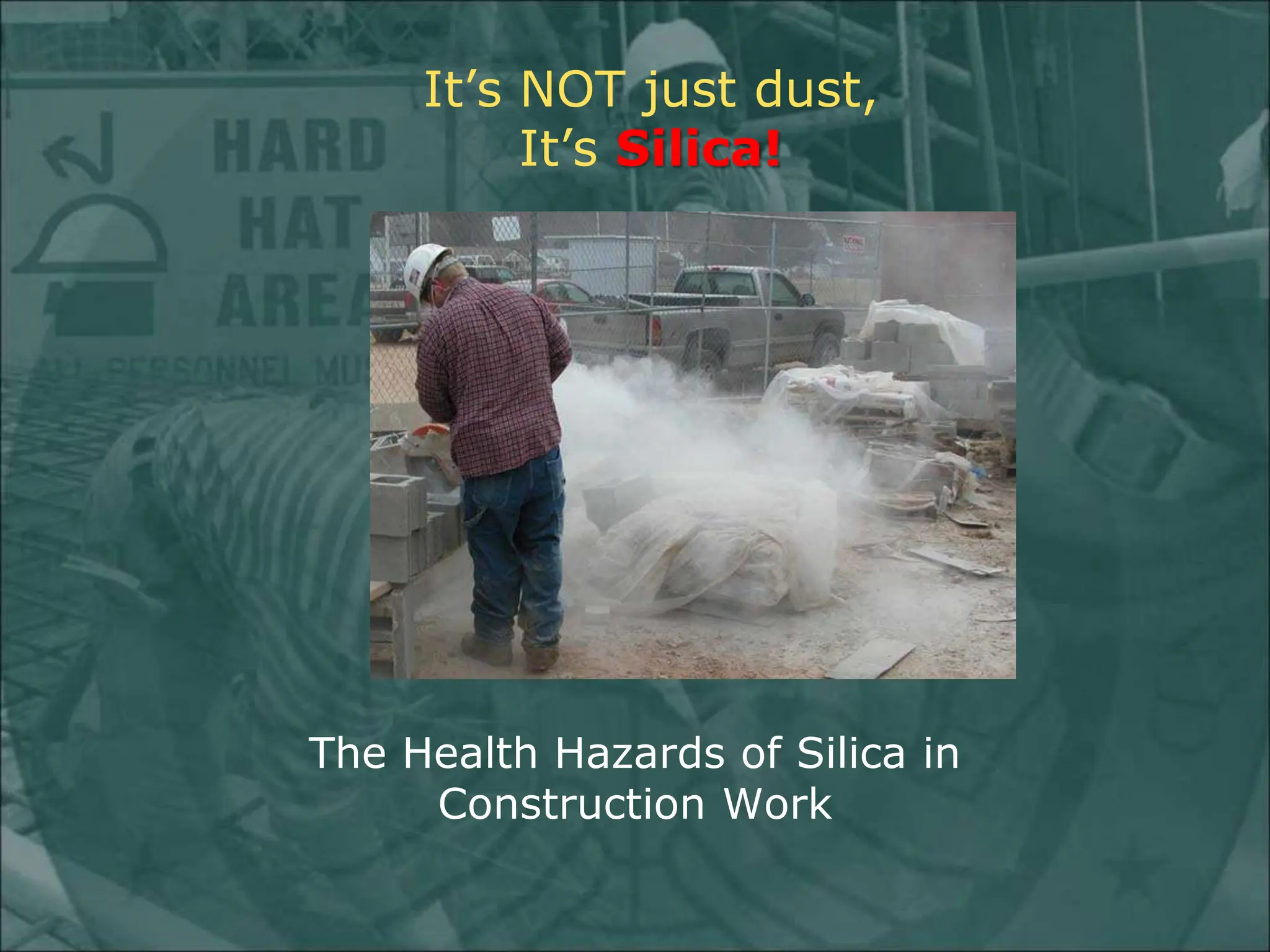
It’s NOT just dust,
It’s Silica!
The Health Hazards of Silica in
Construction Work
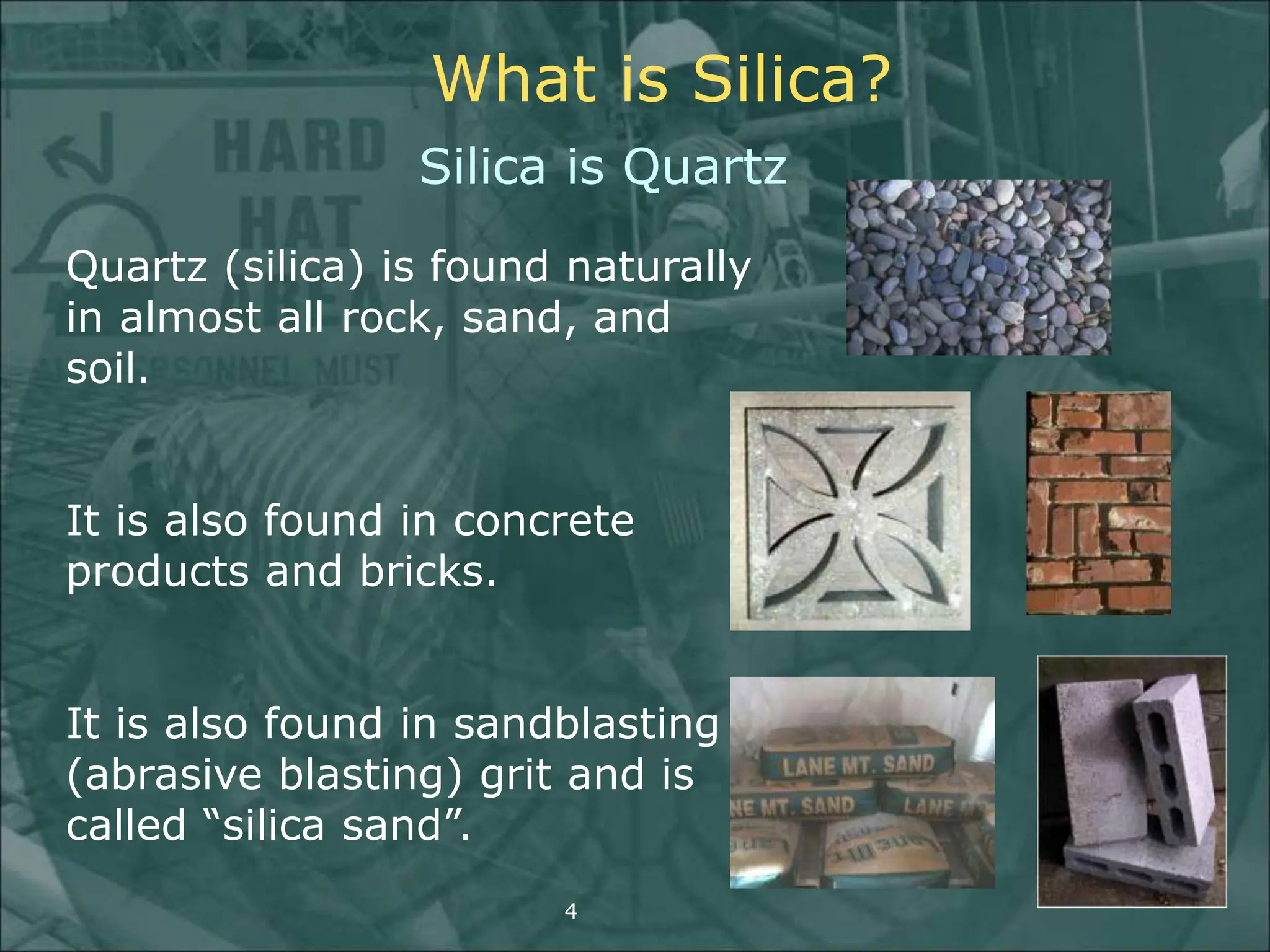
What is Silica?
Silica is Quartz
Quartz (silica) is found naturally
in almost all rock, sand, and
soil.
It is also found in concrete
products and bricks.
It is also found in sandblasting
(abrasive blasting) grit and is
called “silica sand”.
4
Silica Content of Minerals
 Limestone 1 - 20 %
 Granite 20 - 70 %
 Sandstone 50 - 100 %
 Shale 5 - 20 %
 Slate 15 - 40 %
 Coal 0 - 10 %
Silica Health Hazards
Inhaled silica dust scars the lungs
A lung disease called “silicosis” is
caused by breathing of dust
containing silica.
The dust causes “fibrosis” or scar
tissue formation in the lungs.
This reduces the lung’s ability to
extract oxygen from the air.
There is no cure.
5
Silica Health Hazards
What are the symptoms of silicosis?
Early stages go unnoticed.
Continued exposure results in
shortness of breath during
exercise.
Prolonged high exposure can
lead to extreme shortness of
breath, chest pain, respiratory
failure, and death.
6
Silica Health Hazards
Other Health Effects
 Susceptibility to other lung
diseases and infections such as
tuberculosis.
 Acute silicosis may develop after
very short periods of high
exposure.
 Chronic silicosis develops after
many years of lower levels of
exposure.
7
Types of Silicosis:
 Simple chronic silicosis -- results from long-term
exposure (more than 20 years) to low amounts of
silica dust. This disease may cause people to have
trouble breathing.
 Accelerated silicosis -- occurs after exposure to larger
amounts of silica over a shorter period of time (5 - 15
years).
 Acute silicosis -- results from short-term exposure to
very large amounts of silica. The lungs become very
inflamed and can fill with fluid, causing severe
shortness of breath and low blood oxygen levels.
Silica Exposure Limits
Is there a safe limit for silica?
PEL is determined by
using equation
PEL (respirable fraction) = 10 ÷
[% quartz + (% cristobalite × 2) +
(% tridymite × 2) + 2]
The safest amount of
silica in the air is zero.
Respirable dust is that fine
dust that is inhaled deep into
the lungs where it causes its
damage
The legal limit is called a
“permissible exposure
limit” or “PEL”.
Rule-of–thumb: if dust
containing silica is visible in
the air, it’s almost always
over the permissible limit.
8
Silica Exposure in Construction
Silica is found in many construction jobs
• Rock drilling
• Concrete & masonry building construction
• Earthwork and rock crushing
• Masonry or concrete building demolition
• Road construction and repair
• Abrasive blasting (sand blasting)
9
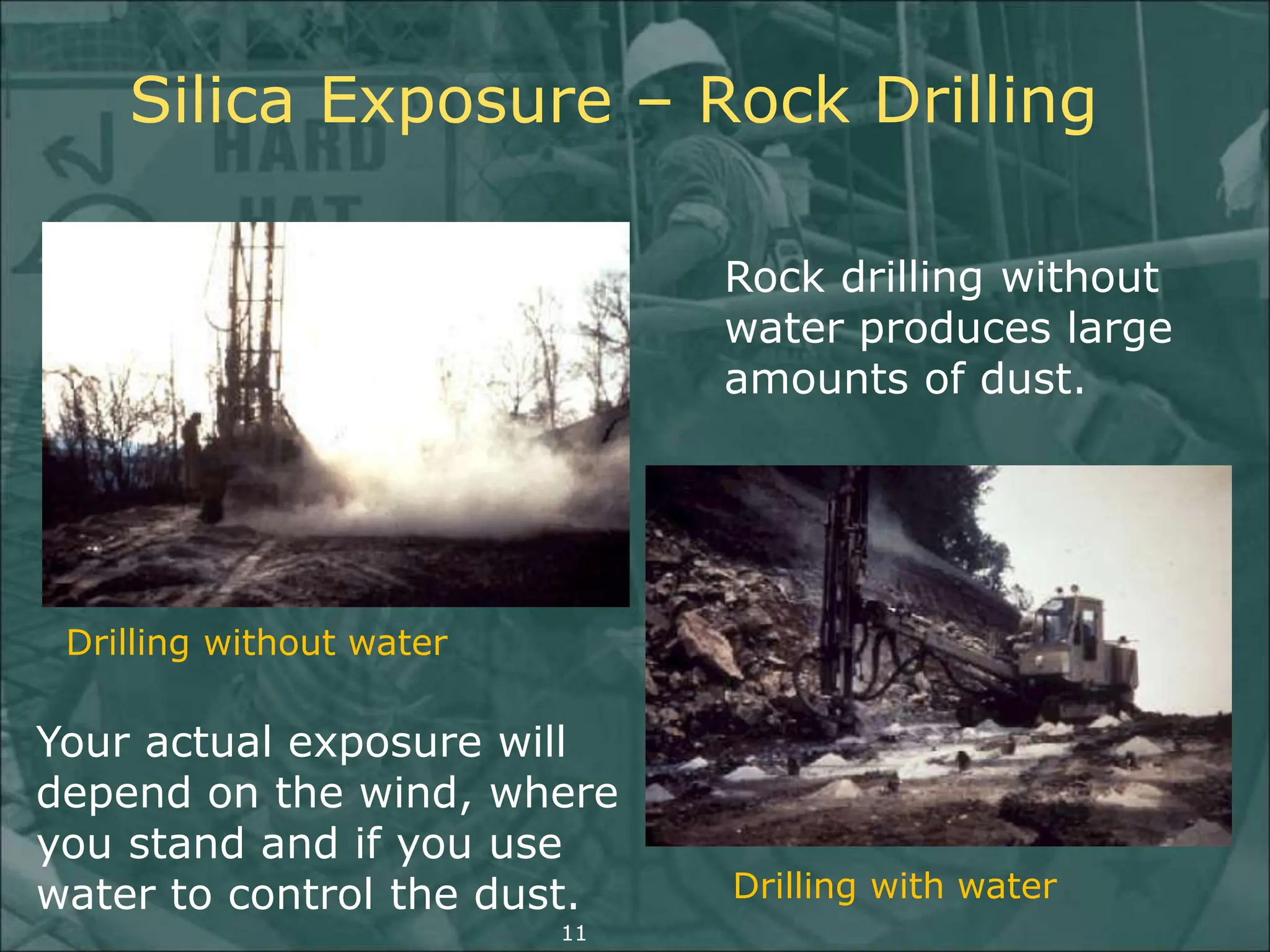
Silica Exposure – Rock Drilling
Rock drilling without
water produces large
amounts of dust.
Your actual exposure will
depend on the wind, where
you stand and if you use
water to control the dust.
11
Drilling without water
Drilling with water
Silica Exposure in Construction
Concrete Work
Generates moderate to
heavy amounts of dust Generates heavy
amounts of dust
Jack-hammering Power sanding
12
Silica Exposure –Concrete Highway work
Drilling concrete pavement dry
Generates moderate amounts of dust
13
Silica Exposure – concrete cutting
without water
Generates large amounts of dust
14
Silica Exposure – brick and cinder
block cutting
Generates moderate to heavy amounts of dust without water.
15
Without water
With water
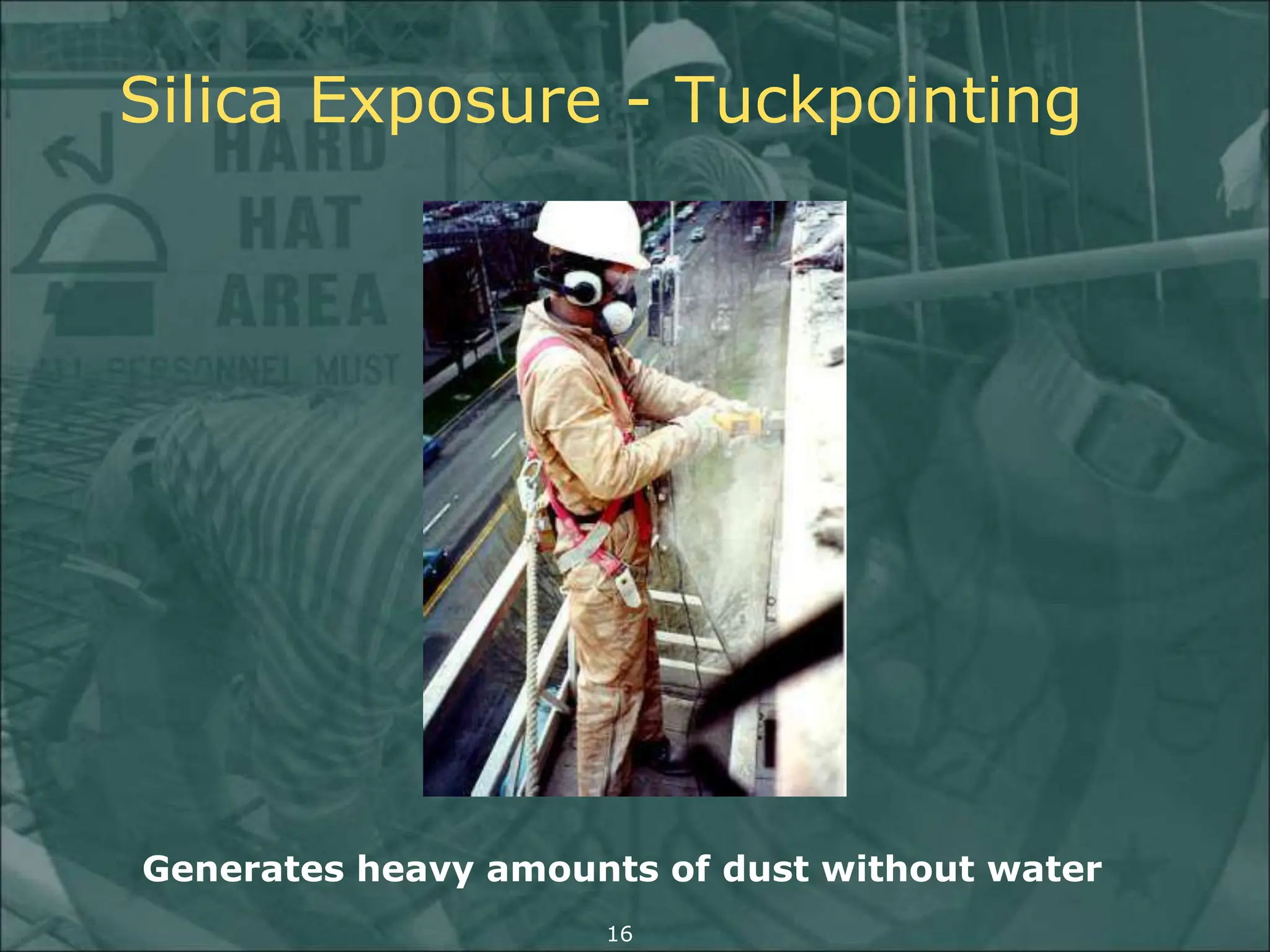
Silica Exposure - Tuckpointing
Generates heavy amounts of dust without water
16
Silica Exposure – cutting
concrete siding with power saws
On some new construction, a
lightweight concrete siding
(hardiplank) is being used.
Cutting this siding with a
power saw without water or
ventilation can result in
silica overexposure.
17
 When dust is controlled, exposures are
lower.
 When dust is uncontrolled, exposures are
high.
 Many exposures are for short time periods,
but at very high concentrations.
 Short, high exposure can still exceed
permissible limits and cause lung damage.
The Risk of Silica Exposure
19
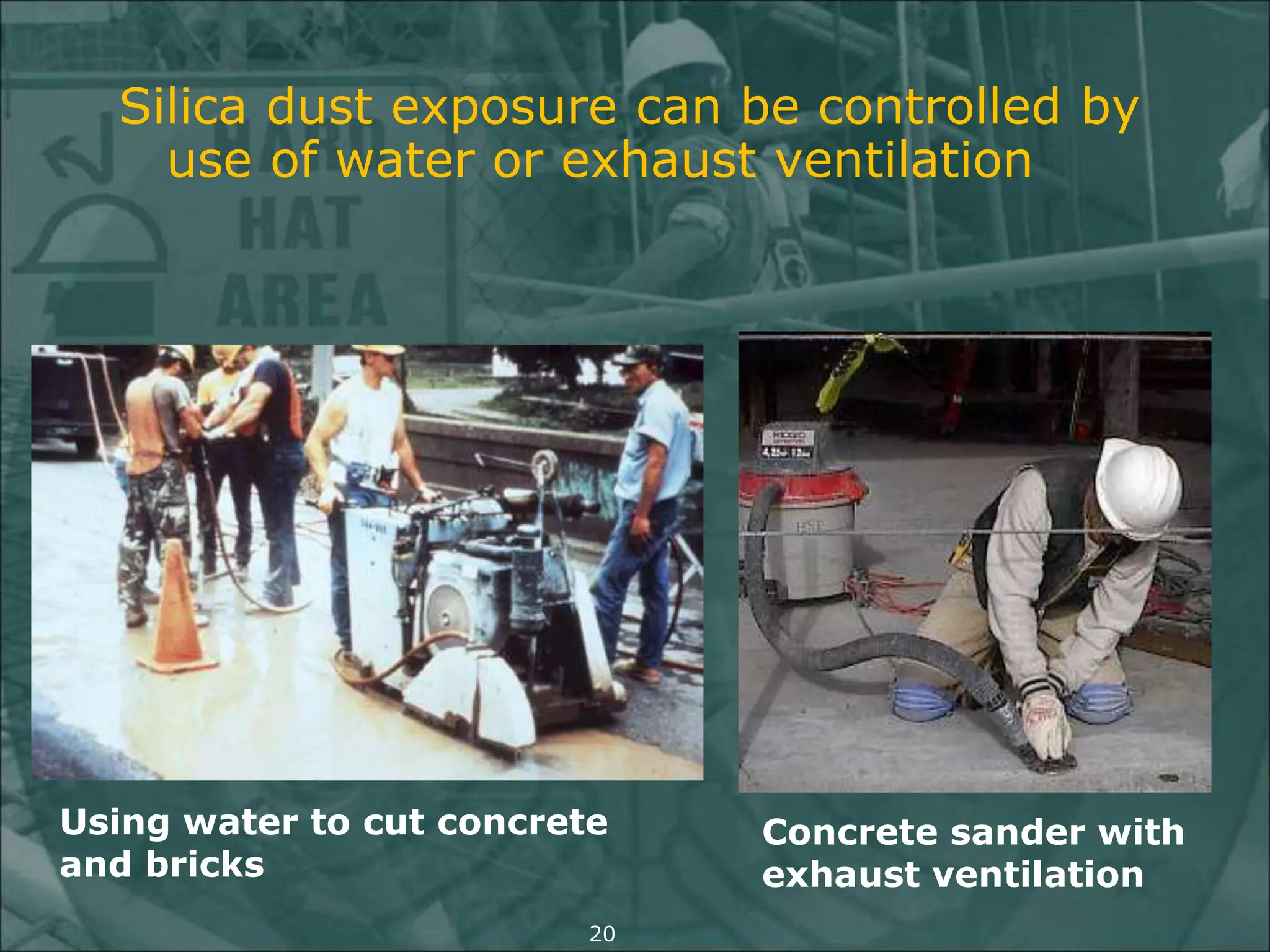
Silica dust exposure can be controlled by
use of water or exhaust ventilation
Using water to cut concrete
and bricks
Concrete sander with
exhaust ventilation
20
Silica Exposure Control
Avoid dry sweeping and use of compressed air
on concrete
Both these activities can stir up large amounts of dust.
Use a vacuum with high efficiency filters when possible.
22
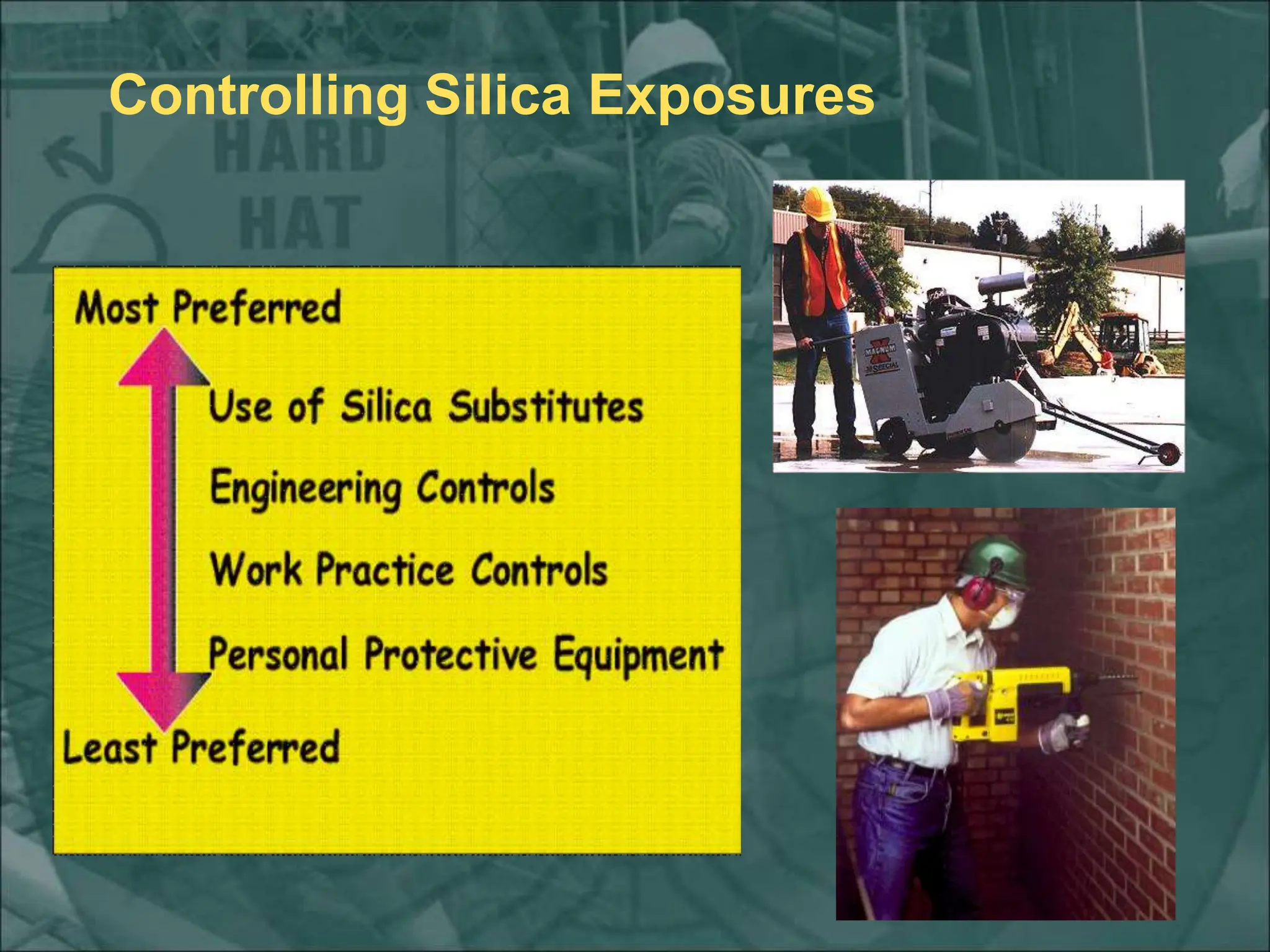
Controlling Silica Exposures
Silica and Use of Respirators
Respirators must be used if silica dust can’t be
controlled with water or ventilation
Air-purifying respirator
with dust cartridge
Supplied air respirator
or
either
24
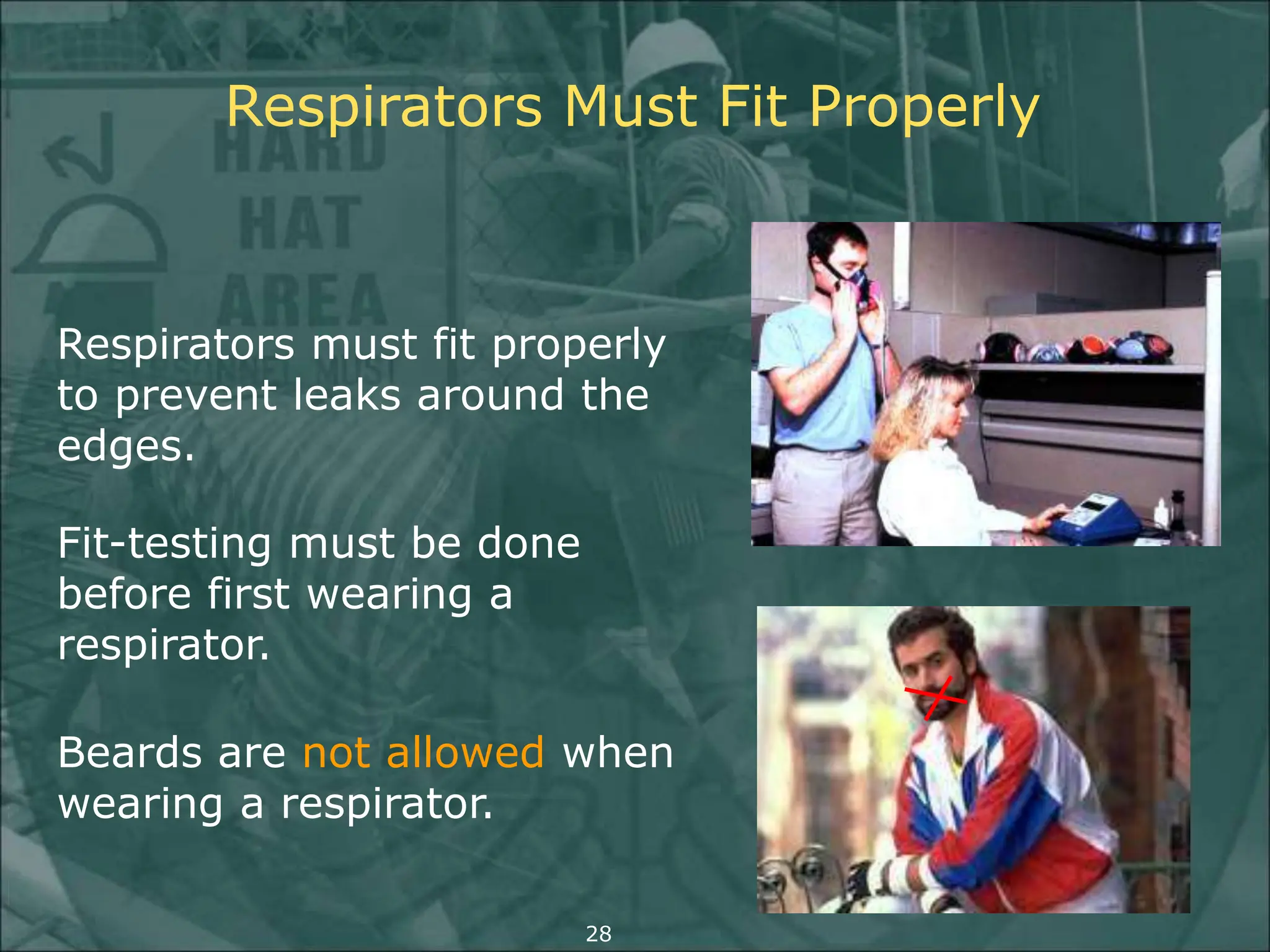
Respirators must fit properly
to prevent leaks around the
edges.
Fit-testing must be done
before first wearing a
respirator.
Beards are not allowed when
wearing a respirator.
Respirators Must Fit Properly
28
Employees using respirators must be trained
Training is required by
DOSH for anyone who
wears a respirator.
If you don’t know how to
use a respirator properly,
you may think your
respirator is providing
protection when it is not.
27

257996.ppt

  • 1.
    It’s NOT justdust, It’s Silica! The Health Hazards of Silica in Construction Work
  • 2.
    What is Silica? Silicais Quartz Quartz (silica) is found naturally in almost all rock, sand, and soil. It is also found in concrete products and bricks. It is also found in sandblasting (abrasive blasting) grit and is called “silica sand”. 4
  • 3.
    Silica Content ofMinerals  Limestone 1 - 20 %  Granite 20 - 70 %  Sandstone 50 - 100 %  Shale 5 - 20 %  Slate 15 - 40 %  Coal 0 - 10 %
  • 4.
    Silica Health Hazards Inhaledsilica dust scars the lungs A lung disease called “silicosis” is caused by breathing of dust containing silica. The dust causes “fibrosis” or scar tissue formation in the lungs. This reduces the lung’s ability to extract oxygen from the air. There is no cure. 5
  • 5.
    Silica Health Hazards Whatare the symptoms of silicosis? Early stages go unnoticed. Continued exposure results in shortness of breath during exercise. Prolonged high exposure can lead to extreme shortness of breath, chest pain, respiratory failure, and death. 6
  • 6.
    Silica Health Hazards OtherHealth Effects  Susceptibility to other lung diseases and infections such as tuberculosis.  Acute silicosis may develop after very short periods of high exposure.  Chronic silicosis develops after many years of lower levels of exposure. 7
  • 7.
    Types of Silicosis: Simple chronic silicosis -- results from long-term exposure (more than 20 years) to low amounts of silica dust. This disease may cause people to have trouble breathing.  Accelerated silicosis -- occurs after exposure to larger amounts of silica over a shorter period of time (5 - 15 years).  Acute silicosis -- results from short-term exposure to very large amounts of silica. The lungs become very inflamed and can fill with fluid, causing severe shortness of breath and low blood oxygen levels.
  • 8.
    Silica Exposure Limits Isthere a safe limit for silica? PEL is determined by using equation PEL (respirable fraction) = 10 ÷ [% quartz + (% cristobalite × 2) + (% tridymite × 2) + 2] The safest amount of silica in the air is zero. Respirable dust is that fine dust that is inhaled deep into the lungs where it causes its damage The legal limit is called a “permissible exposure limit” or “PEL”. Rule-of–thumb: if dust containing silica is visible in the air, it’s almost always over the permissible limit. 8
  • 9.
    Silica Exposure inConstruction Silica is found in many construction jobs • Rock drilling • Concrete & masonry building construction • Earthwork and rock crushing • Masonry or concrete building demolition • Road construction and repair • Abrasive blasting (sand blasting) 9
  • 10.
    Silica Exposure –Rock Drilling Rock drilling without water produces large amounts of dust. Your actual exposure will depend on the wind, where you stand and if you use water to control the dust. 11 Drilling without water Drilling with water
  • 11.
    Silica Exposure inConstruction Concrete Work Generates moderate to heavy amounts of dust Generates heavy amounts of dust Jack-hammering Power sanding 12
  • 12.
    Silica Exposure –ConcreteHighway work Drilling concrete pavement dry Generates moderate amounts of dust 13
  • 13.
    Silica Exposure –concrete cutting without water Generates large amounts of dust 14
  • 14.
    Silica Exposure –brick and cinder block cutting Generates moderate to heavy amounts of dust without water. 15 Without water With water
  • 15.
    Silica Exposure -Tuckpointing Generates heavy amounts of dust without water 16
  • 16.
    Silica Exposure –cutting concrete siding with power saws On some new construction, a lightweight concrete siding (hardiplank) is being used. Cutting this siding with a power saw without water or ventilation can result in silica overexposure. 17
  • 17.
     When dustis controlled, exposures are lower.  When dust is uncontrolled, exposures are high.  Many exposures are for short time periods, but at very high concentrations.  Short, high exposure can still exceed permissible limits and cause lung damage. The Risk of Silica Exposure 19
  • 18.
    Silica dust exposurecan be controlled by use of water or exhaust ventilation Using water to cut concrete and bricks Concrete sander with exhaust ventilation 20
  • 19.
    Silica Exposure Control Avoiddry sweeping and use of compressed air on concrete Both these activities can stir up large amounts of dust. Use a vacuum with high efficiency filters when possible. 22
  • 20.
  • 21.
    Silica and Useof Respirators Respirators must be used if silica dust can’t be controlled with water or ventilation Air-purifying respirator with dust cartridge Supplied air respirator or either 24
  • 22.
    Respirators must fitproperly to prevent leaks around the edges. Fit-testing must be done before first wearing a respirator. Beards are not allowed when wearing a respirator. Respirators Must Fit Properly 28
  • 23.
    Employees using respiratorsmust be trained Training is required by DOSH for anyone who wears a respirator. If you don’t know how to use a respirator properly, you may think your respirator is providing protection when it is not. 27