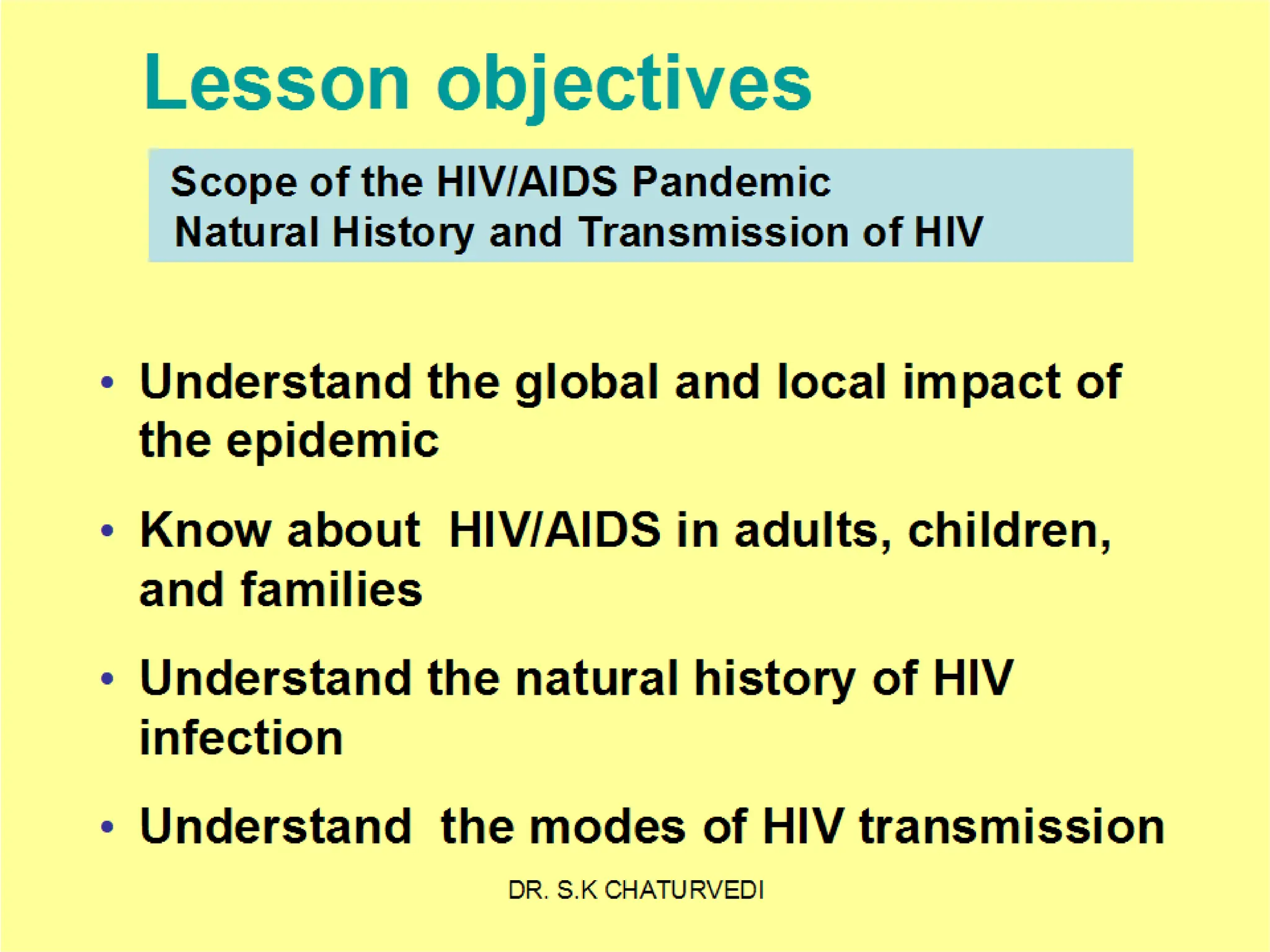
Lesson objectives
• Understandthe global and local impact of the epidemic
• Know about HIV/AIDS in adults, children, and families
• Understand the natural history of HIV infection
• Understand the modes of HIV transmission
omero
Scope of the HIV/AIDS Pandemic
Natural History and Transmission of HIV
3.
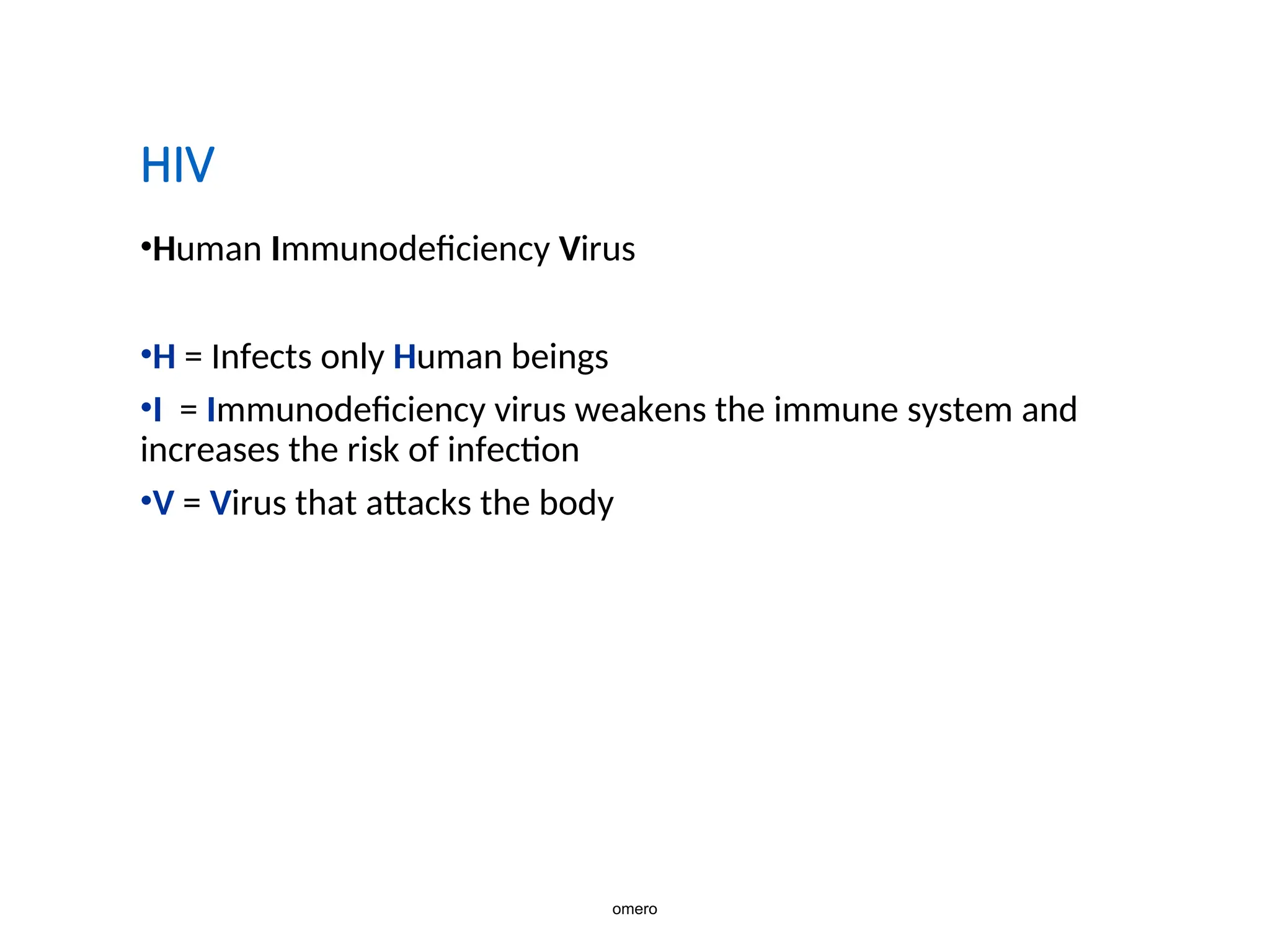
HIV
•Human Immunodeficiency Virus
•H= Infects only Human beings
•I = Immunodeficiency virus weakens the immune system and
increases the risk of infection
•V = Virus that attacks the body
omero
4.
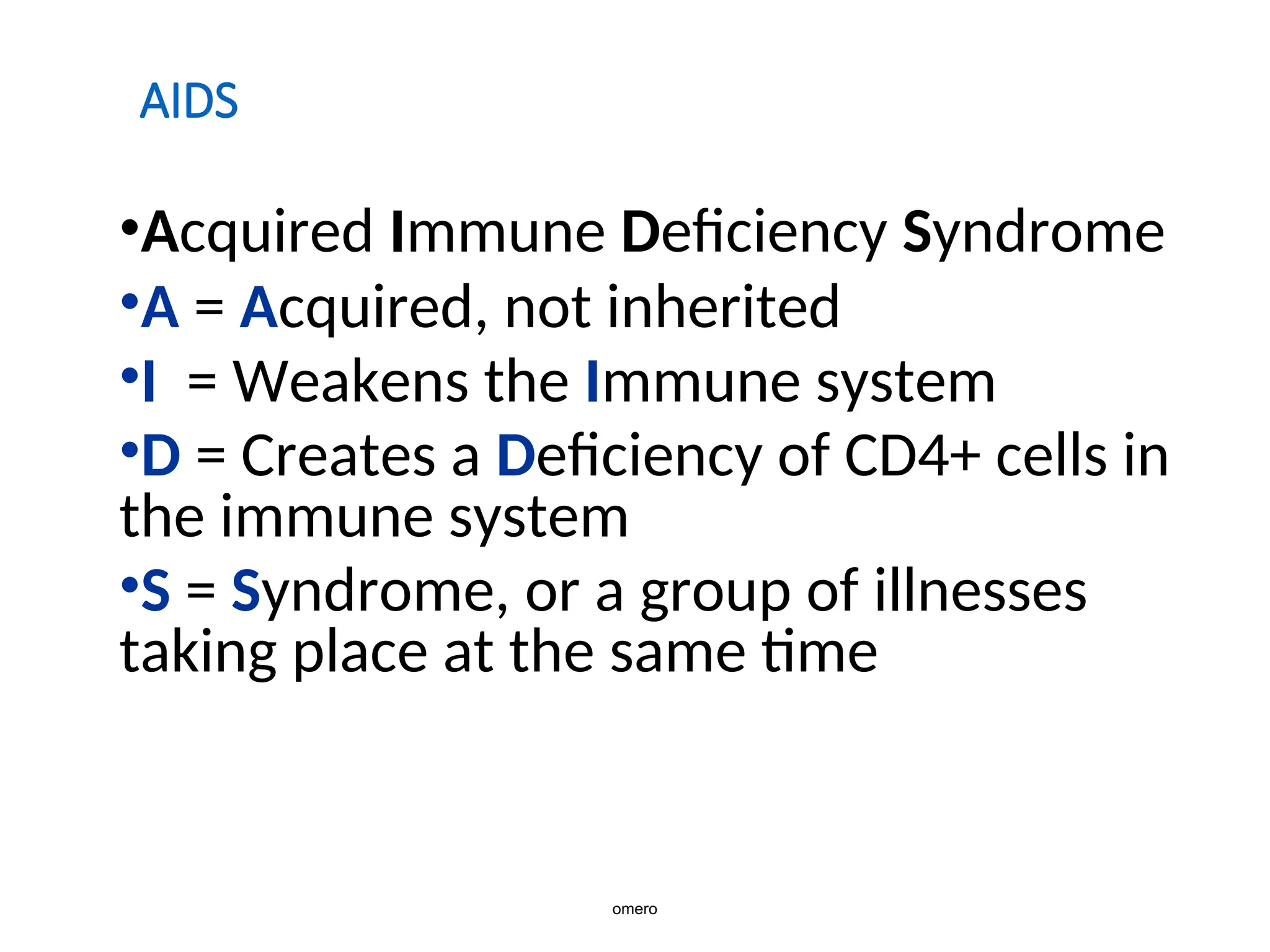
AIDS
•Acquired Immune DeficiencySyndrome
•A = Acquired, not inherited
•I = Weakens the Immune system
•D = Creates a Deficiency of CD4+ cells in
the immune system
•S = Syndrome, or a group of illnesses
taking place at the same time
omero
5.
HIV and AIDS
•When the immune system becomes
weakened by HIV, the illness
progresses to AIDS
• Some blood tests, symptoms or
certain infections indicate
progression of HIV to AIDS
omero
6.
HIV-1 and HIV-2
•• HIV-1 and HIV-2 are
• Transmitted through the same routes
• Associated with similar opportunistic infections
• HIV-1 is more common worldwide
• HIV-2 is found in West Africa, Mozambique, and
Angola
omero
7.
HIV-1 and HIV-2
•HIV-2 is less easily transmitted
• HIV-2 is less pathogenic
• Duration of HIV-2 infection is shorter
• MTCT is relatively rare with HIV-2
• MTCT of HIV-2 has not been reported from Malawi
omero
8.
Transmission of HIV
•HIVis transmitted by
• Direct contact with infected blood
• Sexual contact: oral, anal, or vaginal
• Direct contact with semen or vaginal and
cervical secretions
• HIV-infected mothers to infants during
pregnancy, delivery, or breastfeeding
omero
9.
Transmission of HIV
omero
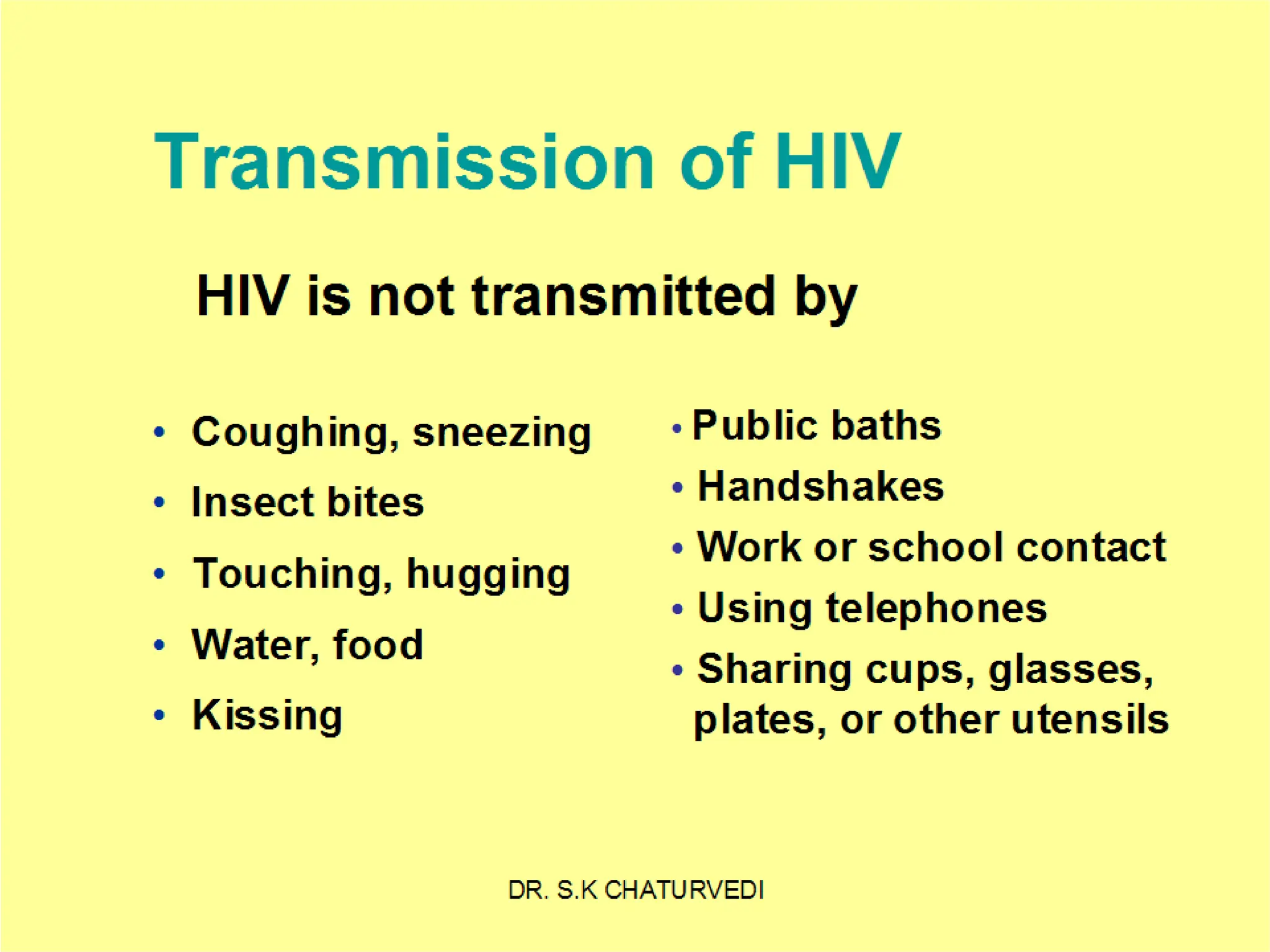
HIVis not transmitted by
• Public baths
• Handshakes
• Work or school contact
• Using telephones
• Sharing cups, glasses,
plates, or other utensils
• Coughing, sneezing
• Insect bites
• Touching, hugging
• Water, food
• Kissing
10.
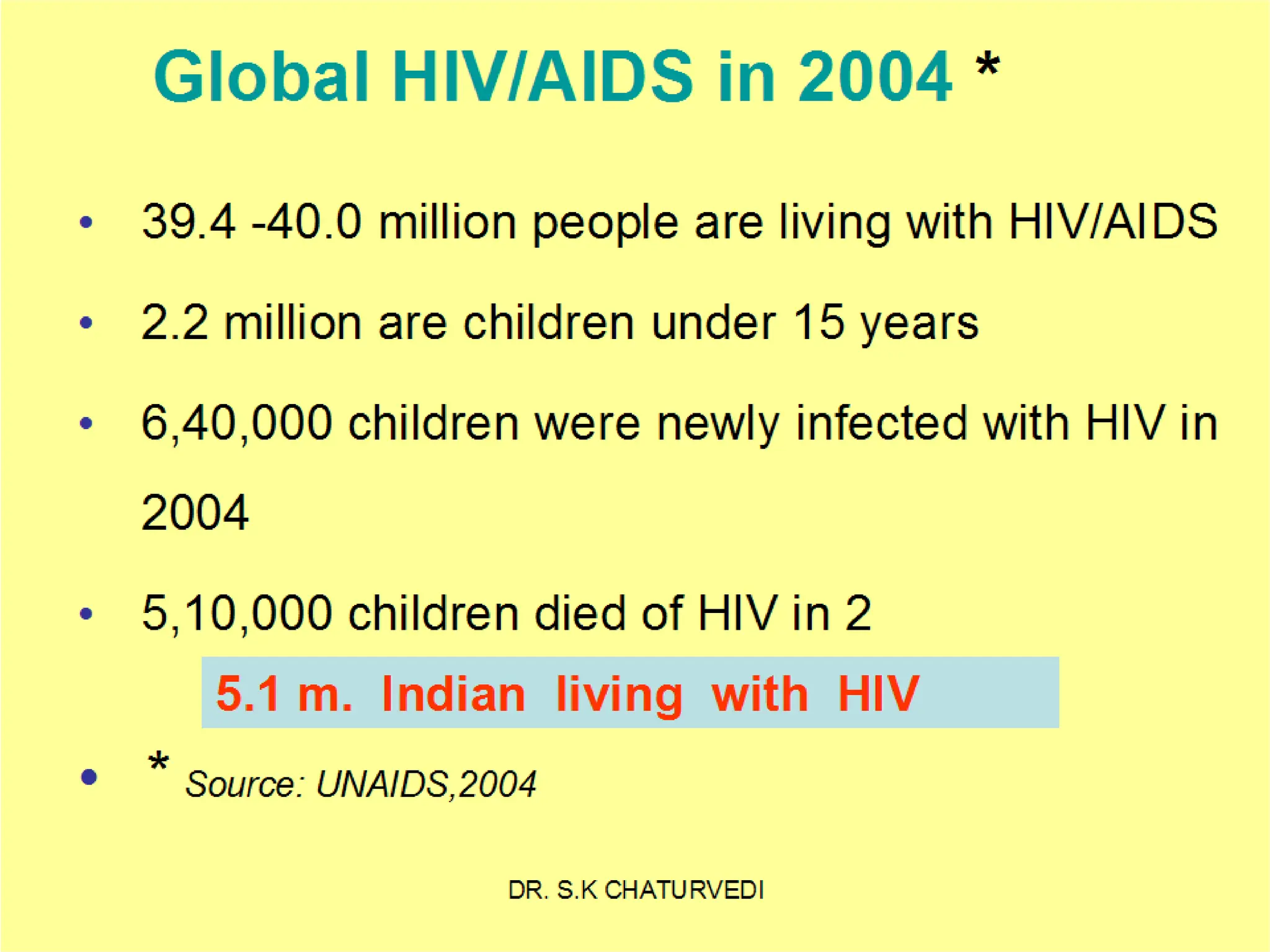
Global HIV/AIDS in2004 *
• 39.4 -40.0 million people are living with HIV/AIDS
• 2.2 million are children under 15 years
• 6,40,000 children were newly infected with HIV in 2004
• 5,10,000 children died of HIV in 2
• * Source: UNAIDS,2004
omero
5.1 m. Indian living with HIV
11.
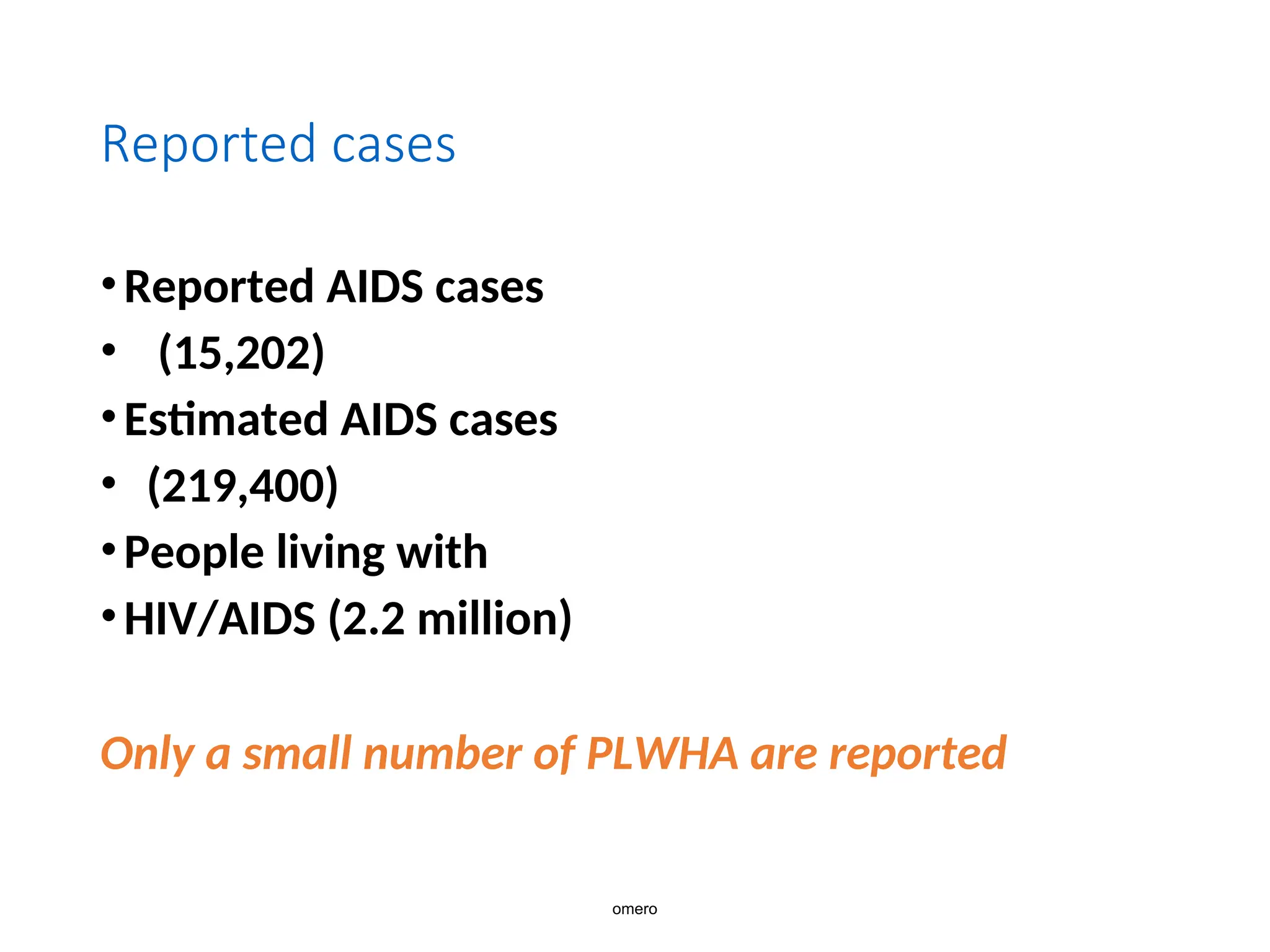
Reported cases
•Reported AIDScases
• (15,202)
•Estimated AIDS cases
• (219,400)
•People living with
•HIV/AIDS (2.2 million)
Only a small number of PLWHA are reported
omero
12.
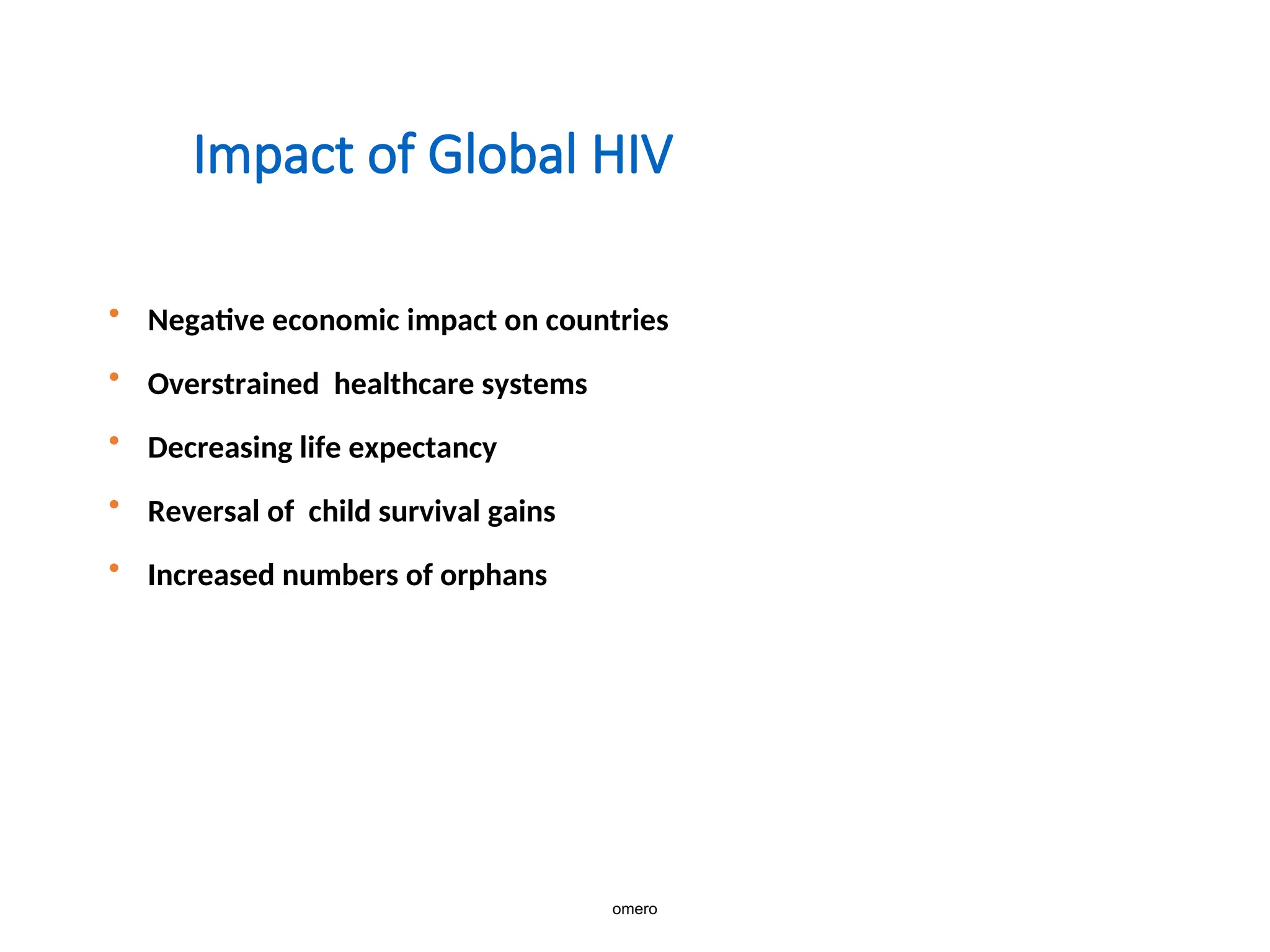
Impact of GlobalHIV
• Negative economic impact on countries
• Overstrained healthcare systems
• Decreasing life expectancy
• Reversal of child survival gains
• Increased numbers of orphans
omero
omero
0
10
20
30
40
50
60
70
80
90
100
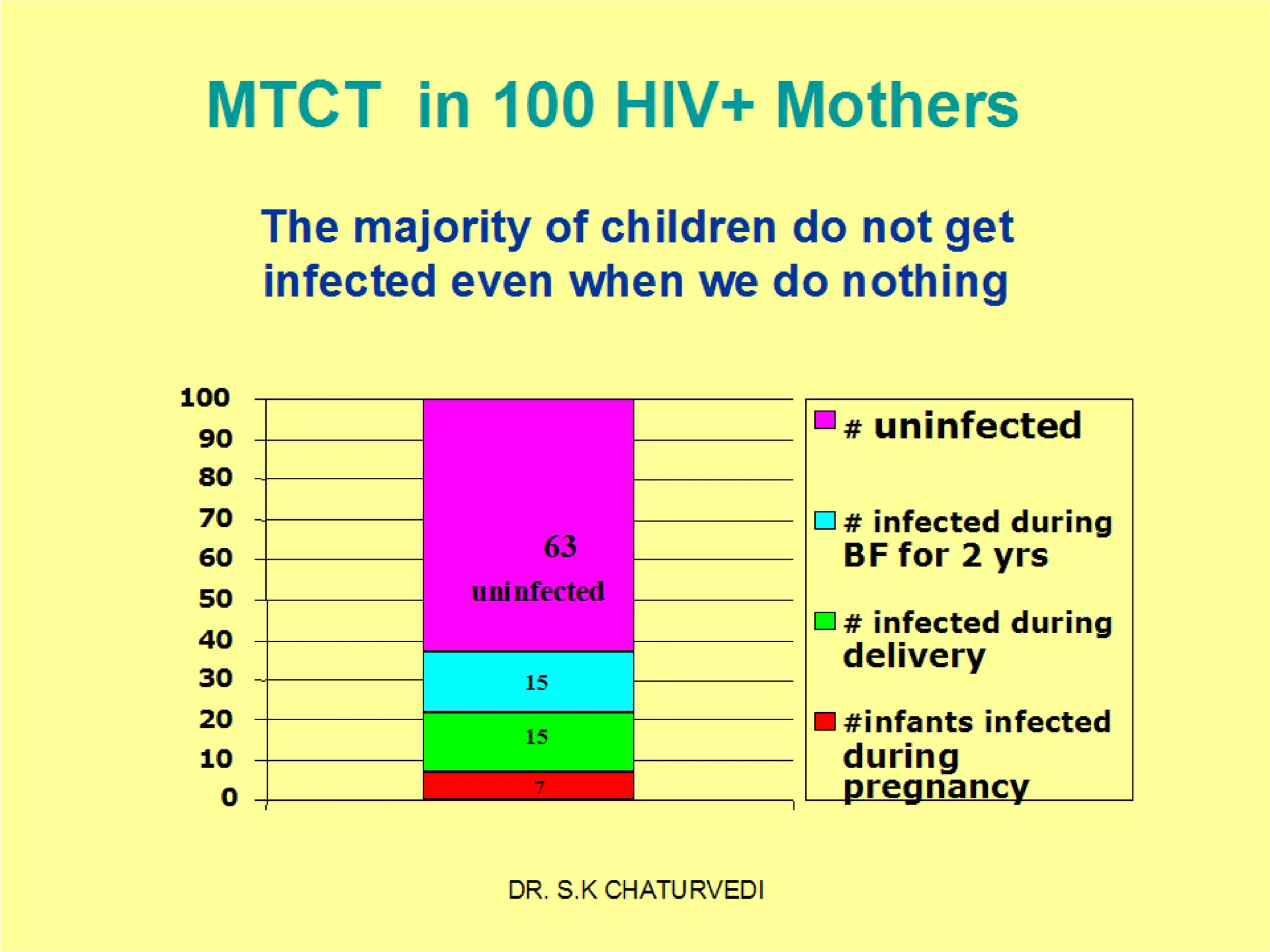
# uninfected
# infectedduring
BF for 2 yrs
# infected during
delivery
#infants infected
during
pregnancy
63
uninfected
15
15
7
MTCT in 100 HIV+ Mothers
The majority of children do not get
infected even when we do nothing
15.
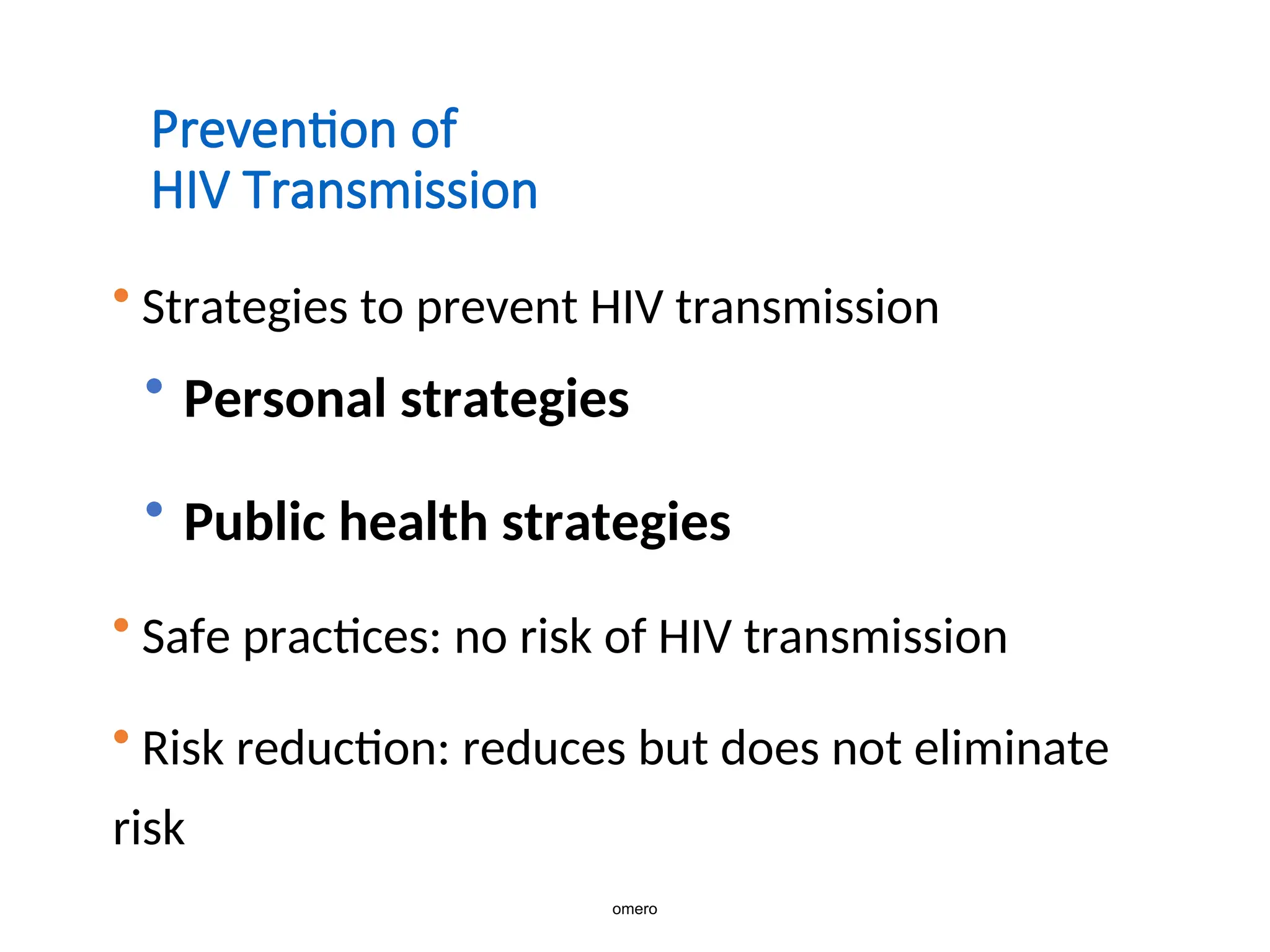
Prevention of
HIV Transmission
•Strategies to prevent HIV transmission
• Personal strategies
• Public health strategies
• Safe practices: no risk of HIV transmission
• Risk reduction: reduces but does not eliminate
risk
omero
16.
Prevention of
HIV Transmission
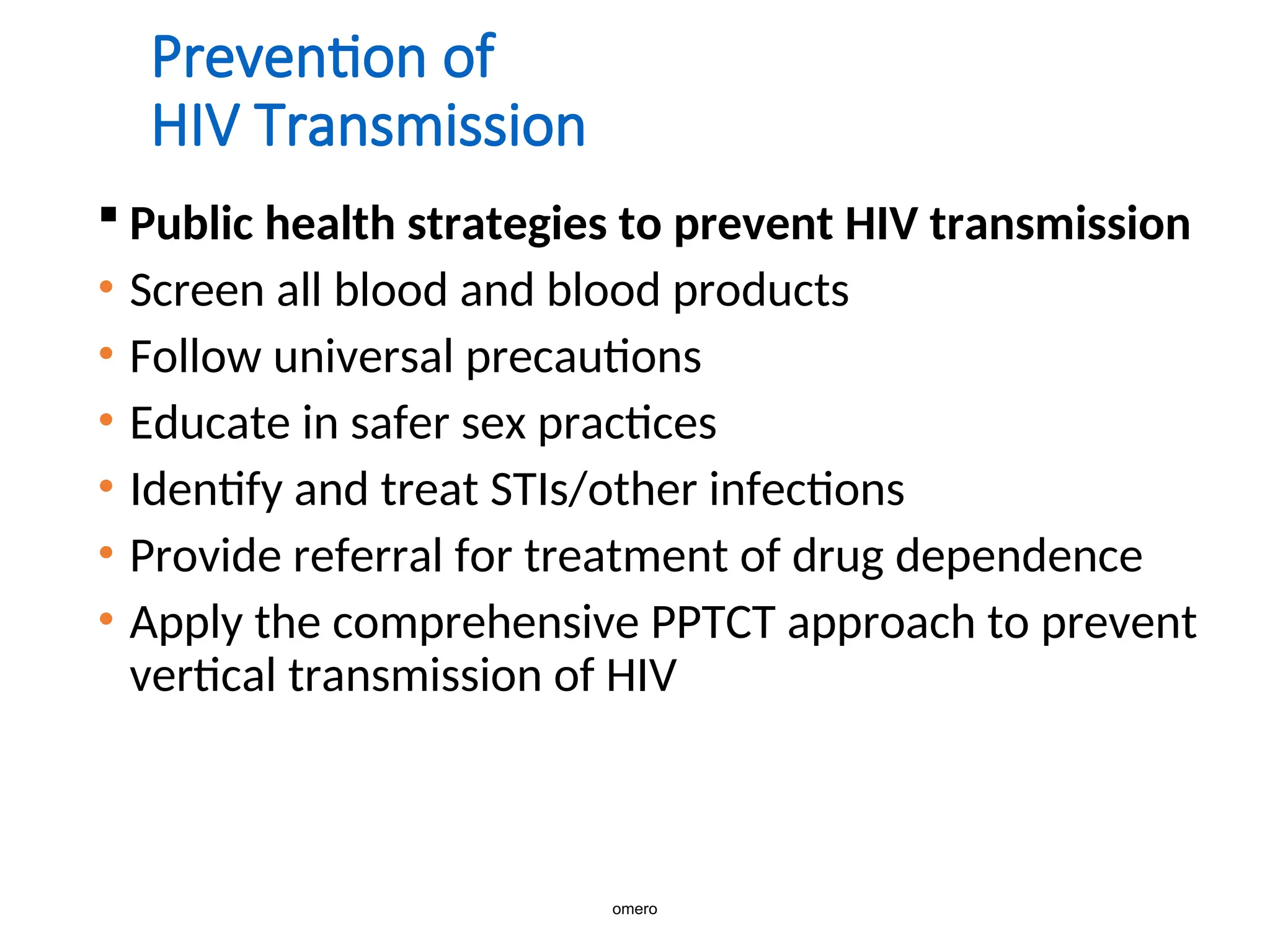
Public health strategies to prevent HIV transmission
• Screen all blood and blood products
• Follow universal precautions
• Educate in safer sex practices
• Identify and treat STIs/other infections
• Provide referral for treatment of drug dependence
• Apply the comprehensive PPTCT approach to prevent
vertical transmission of HIV
omero
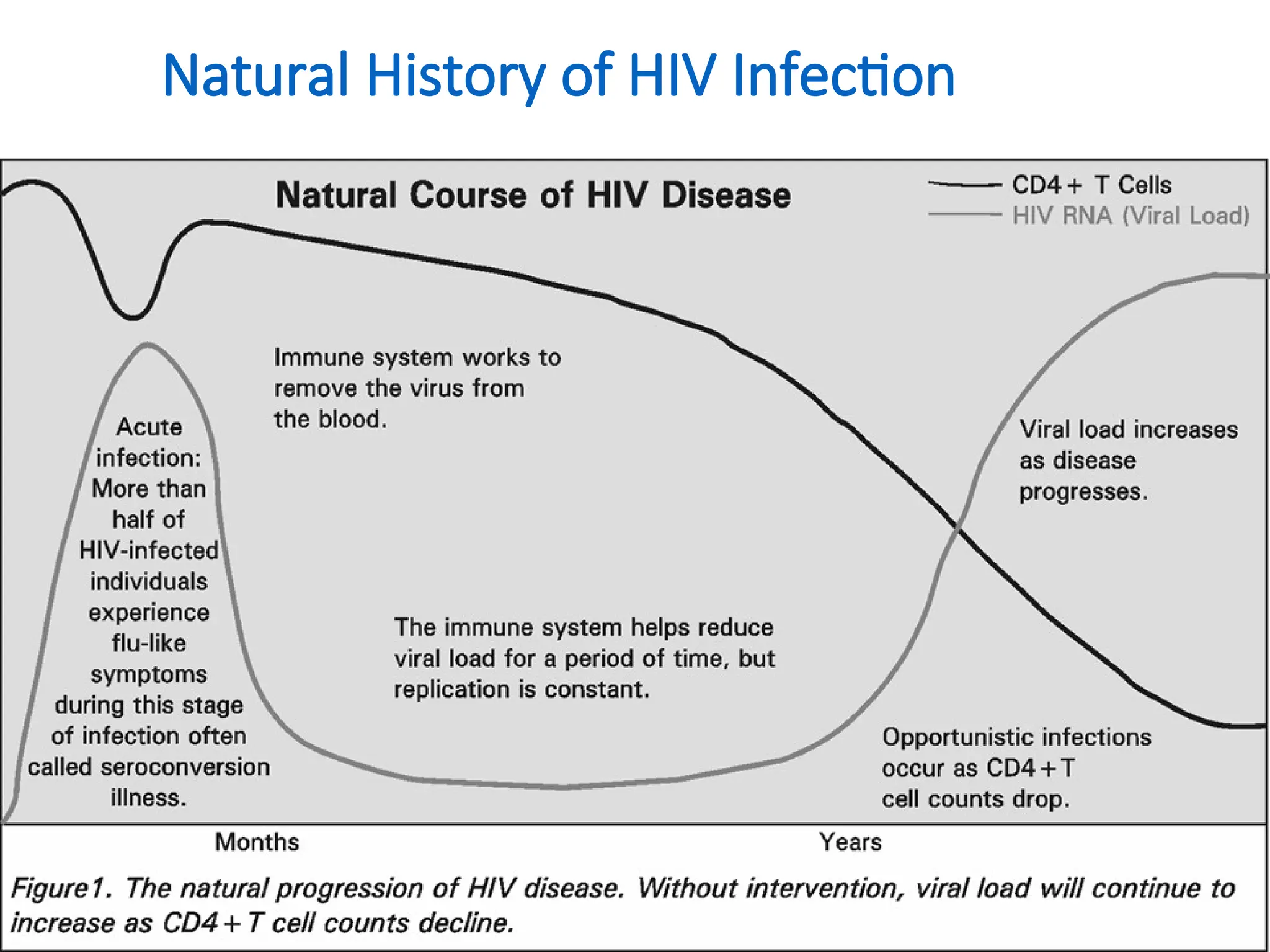
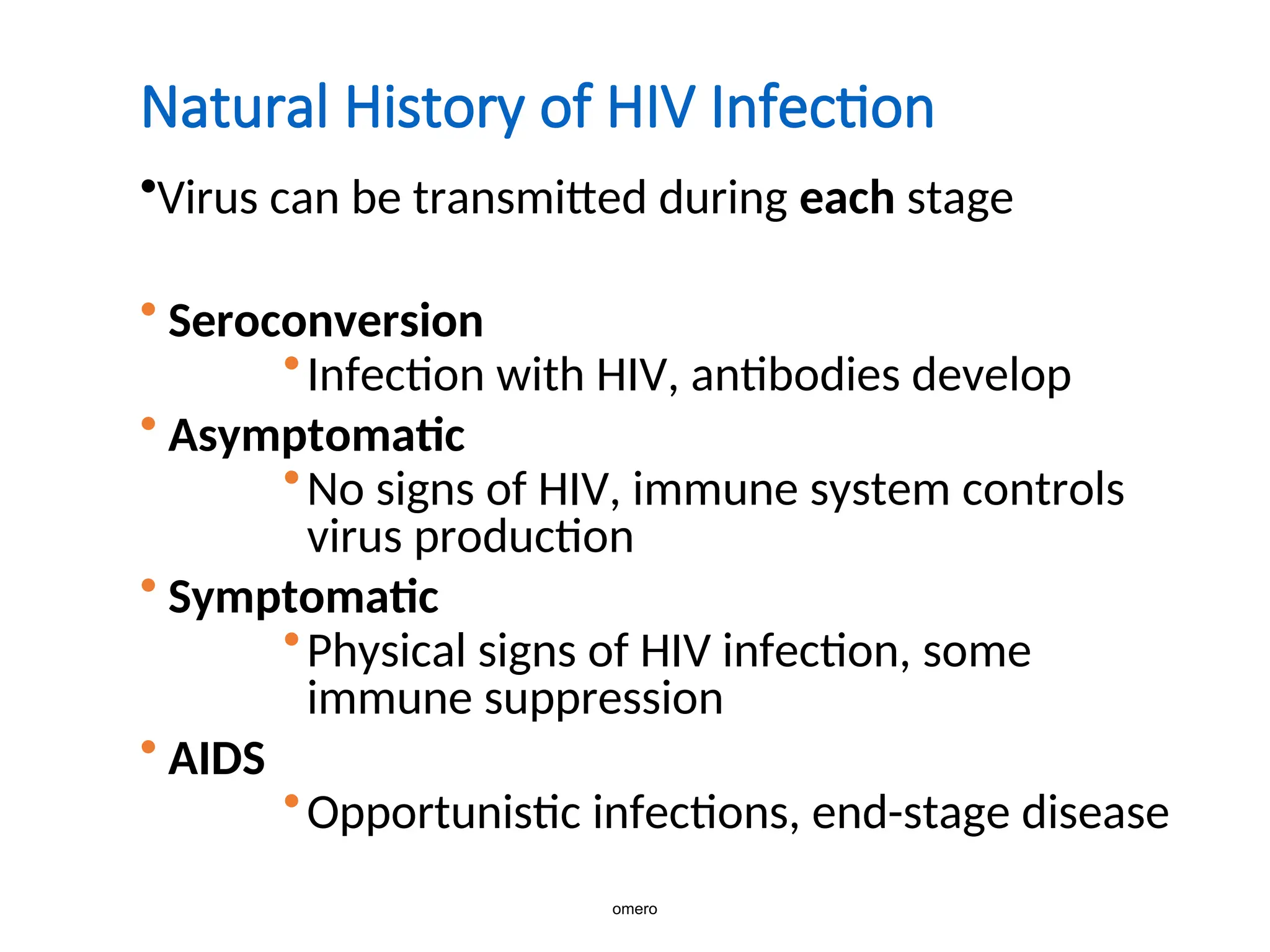
Natural History ofHIV Infection
•Virus can be transmitted during each stage
• Seroconversion
•Infection with HIV, antibodies develop
• Asymptomatic
•No signs of HIV, immune system controls
virus production
• Symptomatic
•Physical signs of HIV infection, some
immune suppression
• AIDS
•Opportunistic infections, end-stage disease
omero
19.
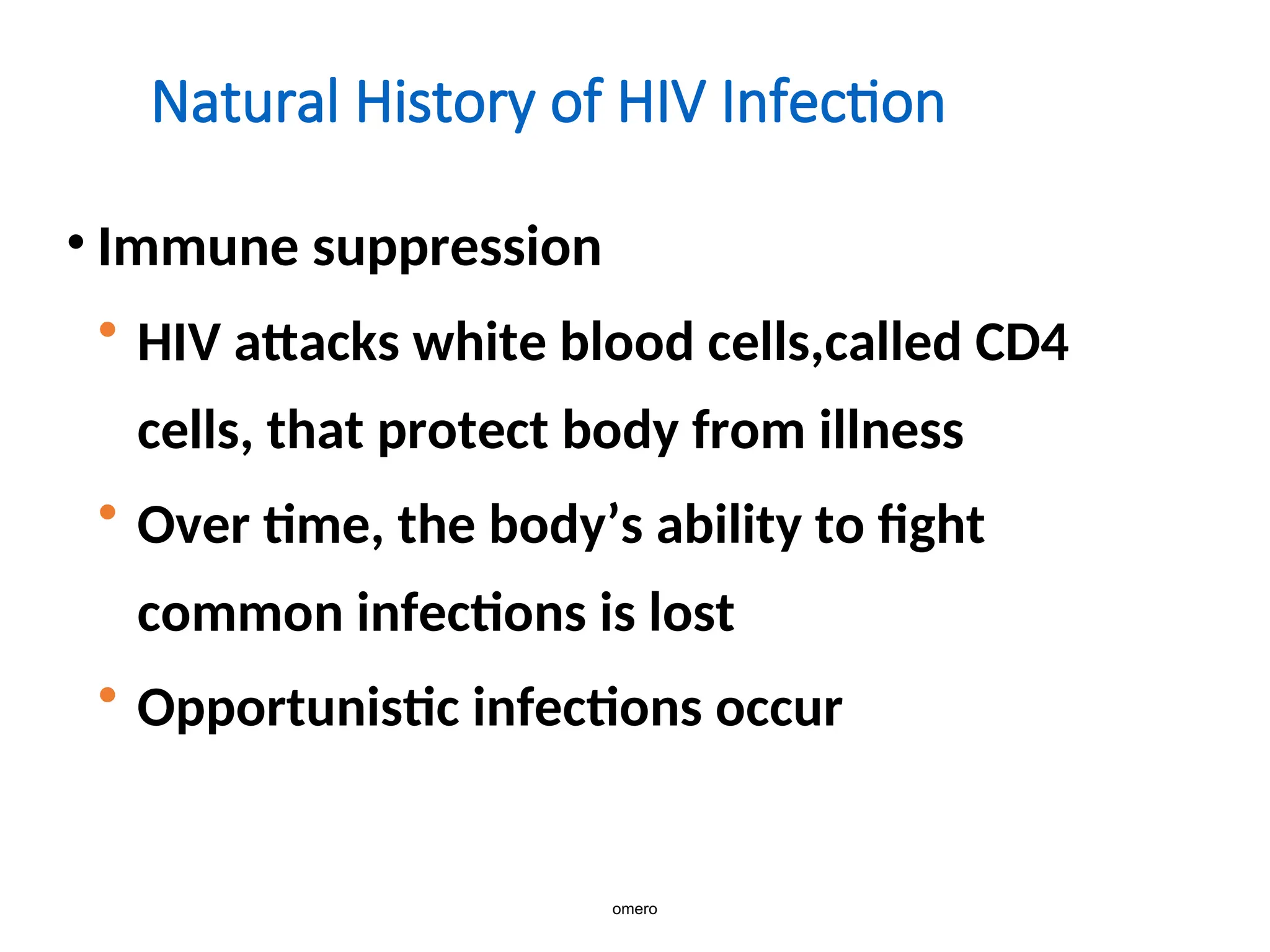
Natural History ofHIV Infection
• Immune suppression
• HIV attacks white blood cells,called CD4
cells, that protect body from illness
• Over time, the body’s ability to fight
common infections is lost
• Opportunistic infections occur
omero
20.
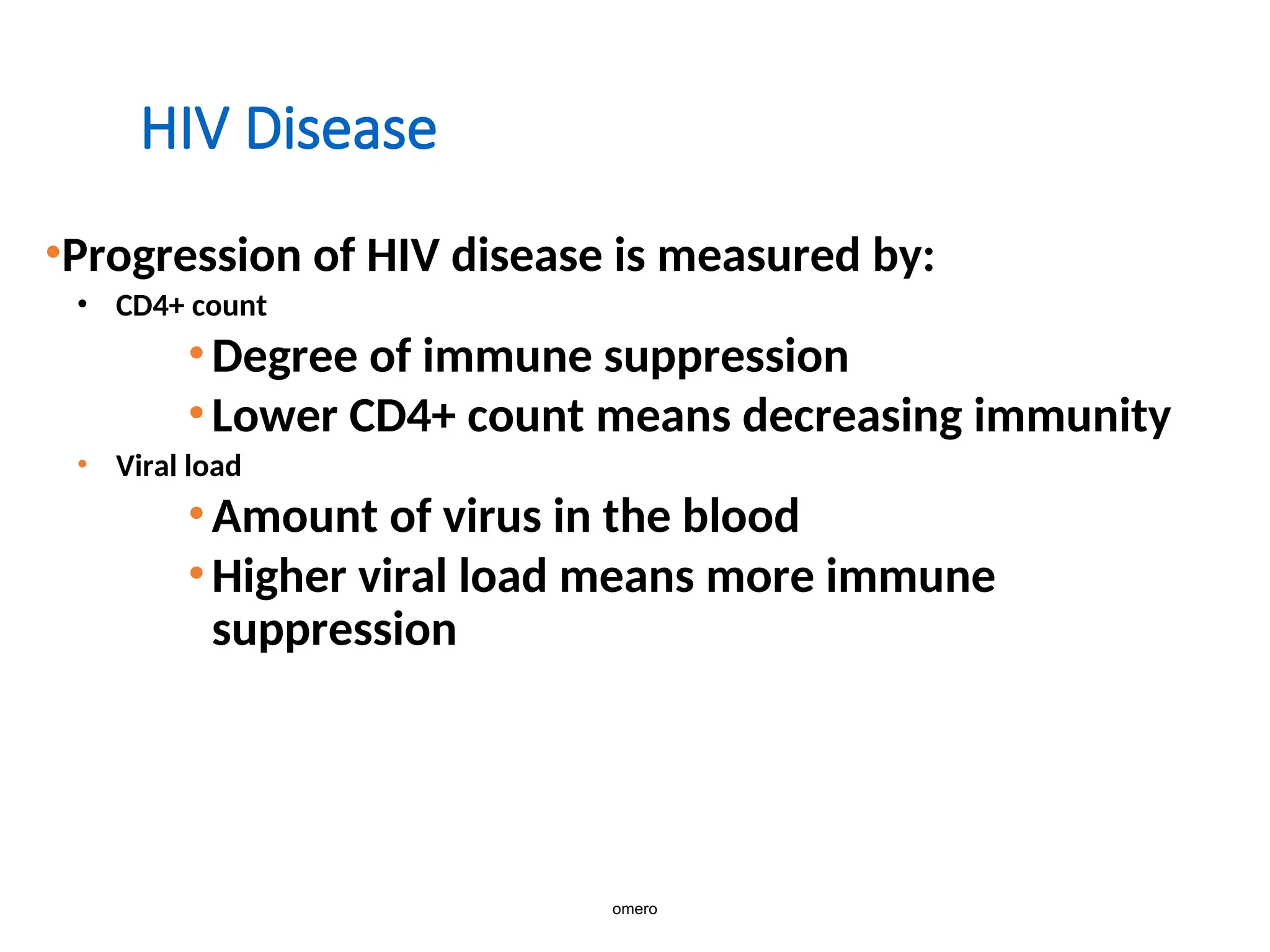
HIV Disease
•Progression ofHIV disease is measured by:
• CD4+ count
•Degree of immune suppression
•Lower CD4+ count means decreasing immunity
• Viral load
•Amount of virus in the blood
•Higher viral load means more immune
suppression
omero
21.
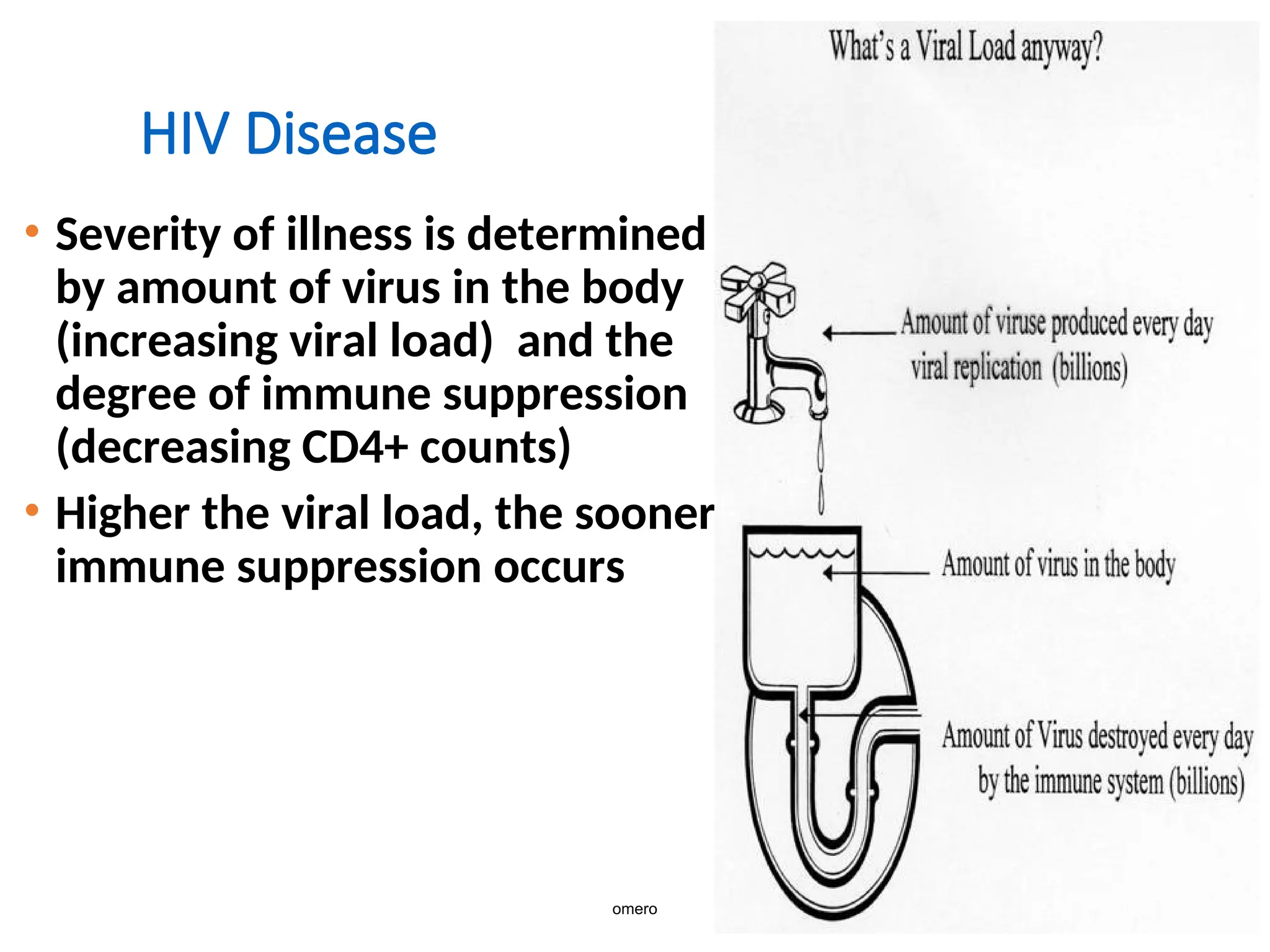
HIV Disease
• Severityof illness is determined
by amount of virus in the body
(increasing viral load) and the
degree of immune suppression
(decreasing CD4+ counts)
• Higher the viral load, the sooner
immune suppression occurs
omero
22.
Progression of HIVInfection
• HIGH viral load (number of copies of HIV
in the blood)
• LOW CD4 count (type of white blood
cell)
• Increasing clinical symptoms (such as
opportunistic infections)
omero
23.
HIV Disease
•Direct infectionof organ systems
• HIV can directly infect the:
• Brain (HIV dementia)
• Gut (wasting)
• Heart (cardiomyopathy)
omero
24.
HIV Disease: Summary
•HIV multiplies inside the CD4+ cells, destroying them
• As CD4+ cell count decreases and viral load increases, the immune defences are weakened
• HIV-infected people become vulnerable to opportunistic infections
• HIV is a chronic viral infection with no known cure
• Without ARV treatment, HIV progresses to symptomatic disease and AIDS
omero
25.
Key Points
• HIVis a global pandemic and the number of people living with HIV continues to
increase worldwide.
• HIV epidemic is especially severe in resource-constrained settings
• HIV is a virus that destroys the immune system, leading to opportunistic
infections.
• The progression from initial infection with HIV to end-stage AIDS varies from
person to person and can take more than 10 years.
omero
26.
Key Points (continued)
•The most common main route of transmission worldwide is
heterosexual transmission.
• Women of childbearing age are at particular risk for acquiring
HIV through unprotected sex
• HIV-positive women who are pregnant are at risk of passing
HIV infection to their newborn.
• Risk of HIV transmission from mother-to-child can be greatly
reduced through effective PMTCT programs
omero




![Acute Respiratory Infection Guidelines(ARI)__PRESENTATION[1].pptx](https://cdn.slidesharecdn.com/ss_thumbnails/aripresentation1-241114171345-63d1411f-thumbnail.jpg?width=640&height=640&fit=bounds)
![Acute Respiratory Infections(ARI)__PRESENTATION[1].pptx](https://cdn.slidesharecdn.com/ss_thumbnails/aripresentation1-241020112302-e350d353-thumbnail.jpg?width=640&height=640&fit=bounds)
![Pneumocystis_jirovecii_pneumonia[1].pptx](https://cdn.slidesharecdn.com/ss_thumbnails/malamulo-pneumocystisjiroveciipneumonia1-241127111242-957cc6eb-thumbnail.jpg?width=640&height=640&fit=bounds)
![Upper_resp_tract_edited_for_2024_cohort[1].pptx](https://cdn.slidesharecdn.com/ss_thumbnails/upperresptracteditedfor2024cohort1-250225134620-84a86c8f-thumbnail.jpg?width=640&height=640&fit=bounds)
![The Immune system edited for 2024 cohort[1].pptx](https://cdn.slidesharecdn.com/ss_thumbnails/theimmunesystemeditedfor2024cohort1-250224085036-4b3e6a28-thumbnail.jpg?width=640&height=640&fit=bounds)
![ASTHMA_IN_CHILDREN for NURSING STUDENT[1].pptx](https://cdn.slidesharecdn.com/ss_thumbnails/malamuloasthmainchildren1-241125202930-914bc525-thumbnail.jpg?width=640&height=640&fit=bounds)

![ECTOPIC_PREGNANCY_disorders of reproductive organs_1_(3)[1].ppt](https://cdn.slidesharecdn.com/ss_thumbnails/ectopicpregnancyupg131-241020092422-a0e8252f-thumbnail.jpg?width=640&height=640&fit=bounds)
![management of Chest_trauma for nursing [1].ppt](https://cdn.slidesharecdn.com/ss_thumbnails/malamulochesttrauma1-241127110255-71befbaa-thumbnail.jpg?width=640&height=640&fit=bounds)
![Chest_trauma types and management[1].ppt](https://cdn.slidesharecdn.com/ss_thumbnails/malamulochesttrauma1-241126062258-4b388e87-thumbnail.jpg?width=640&height=640&fit=bounds)

![BURNS assessment and management_GRP_1_PPT[1].pptx](https://cdn.slidesharecdn.com/ss_thumbnails/burnsgrp1ppt1-241020072724-5845af38-thumbnail.jpg?width=640&height=640&fit=bounds)

![MANAGEMNT OF JAUNDICE FOR NURSING STUDENTSt[1].ppt](https://cdn.slidesharecdn.com/ss_thumbnails/jaundiceeditedfor2024cohort1-250318173231-642cf8e8-thumbnail.jpg?width=640&height=640&fit=bounds)
![INTER-PERSONAL COMMUNICATION IN NURSING [1].pptx](https://cdn.slidesharecdn.com/ss_thumbnails/inter-communication1-250309103945-e946794c-thumbnail.jpg?width=640&height=640&fit=bounds)


![4. EDUCATIONAL PSYCHOLOGY EDITED[1].pptx](https://cdn.slidesharecdn.com/ss_thumbnails/4-250224085157-3c676047-thumbnail.jpg?width=640&height=640&fit=bounds)
![Simulation based learning _Rev[1].ppt JOAB.ppt](https://cdn.slidesharecdn.com/ss_thumbnails/emamatiyafinalrev1-250309104337-a8877e76-thumbnail.jpg?width=640&height=640&fit=bounds)
![Integrated Management -IMNCI_case_management_process[1].pptx](https://cdn.slidesharecdn.com/ss_thumbnails/imncicasemanagementprocess1-241018200546-4cf422ad-thumbnail.jpg?width=640&height=640&fit=bounds)


![Apporach to lung biopsy [Auto-saved].pptx latest](https://cdn.slidesharecdn.com/ss_thumbnails/apporachtolungbiopsyauto-saved-251211225655-93258539-thumbnail.jpg?width=640&height=640&fit=bounds)


