Taste
Pathway
HUMAN PHYSIOLOGY
TONGUE
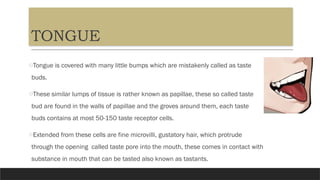
oTongue is covered with many little bumps which are mistakenly called as taste
buds.
oThese similar lumps of tissue is rather known as papillae, these so called taste
bud are found in the walls of papillae and the groves around them, each taste
buds contains at most 50-150 taste receptor cells.
oExtended from these cells are fine microvilli, gustatory hair, which protrude
through the opening called taste pore into the mouth, these comes in contact with
substance in mouth that can be tasted also known as tastants.
Taste cells
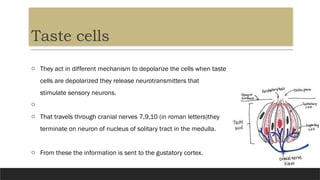
o They act in different mechanism to depolarize the cells when taste
cells are depolarized they release neurotransmitters that
stimulate sensory neurons.
o
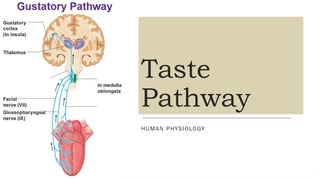
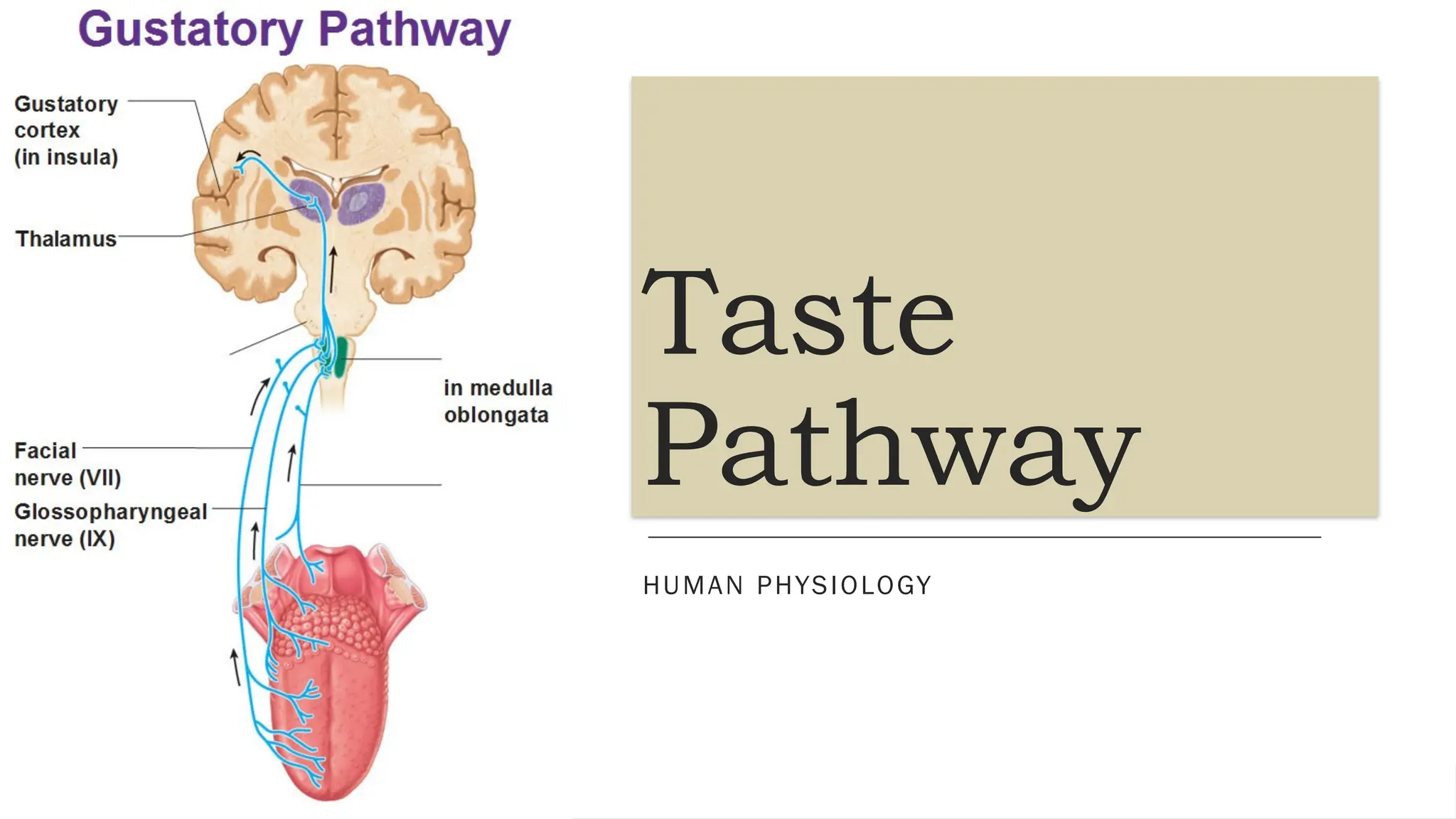
o That travels through cranial nerves 7,9,10 (in roman letters)they
terminate on neuron of nucleus of solitary tract in the medulla.
o From these the information is sent to the gustatory cortex.
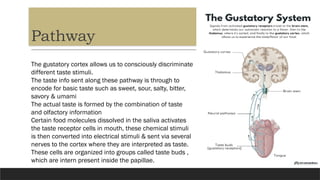
Pathway
The gustatory cortex allows us to consciously discriminate
different taste stimuli.
The taste info sent along these pathway is through to
encode for basic taste such as sweet, sour, salty, bitter,
savory & umami
The actual taste is formed by the combination of taste
and olfactory information
Certain food molecules dissolved in the saliva activates
the taste receptor cells in mouth, these chemical stimuli
is then converted into electrical stimuli & sent via several
nerves to the cortex where they are interpreted as taste.
These cells are organized into groups called taste buds ,
which are intern present inside the papillae.
Thank you
MIDHUN THIRUMANGALATH | ASSIST. PROFESSOR |@CIHS MYSURU

2024 - TASTE PATHWAY-HUMANPHYSIOLOGY.pptx

  • 1.
  • 2.
    TONGUE oTongue is coveredwith many little bumps which are mistakenly called as taste buds. oThese similar lumps of tissue is rather known as papillae, these so called taste bud are found in the walls of papillae and the groves around them, each taste buds contains at most 50-150 taste receptor cells. oExtended from these cells are fine microvilli, gustatory hair, which protrude through the opening called taste pore into the mouth, these comes in contact with substance in mouth that can be tasted also known as tastants.
  • 3.
    Taste cells o Theyact in different mechanism to depolarize the cells when taste cells are depolarized they release neurotransmitters that stimulate sensory neurons. o o That travels through cranial nerves 7,9,10 (in roman letters)they terminate on neuron of nucleus of solitary tract in the medulla. o From these the information is sent to the gustatory cortex.
  • 4.
    Pathway The gustatory cortexallows us to consciously discriminate different taste stimuli. The taste info sent along these pathway is through to encode for basic taste such as sweet, sour, salty, bitter, savory & umami The actual taste is formed by the combination of taste and olfactory information Certain food molecules dissolved in the saliva activates the taste receptor cells in mouth, these chemical stimuli is then converted into electrical stimuli & sent via several nerves to the cortex where they are interpreted as taste. These cells are organized into groups called taste buds , which are intern present inside the papillae.
  • 5.
    Thank you MIDHUN THIRUMANGALATH| ASSIST. PROFESSOR |@CIHS MYSURU