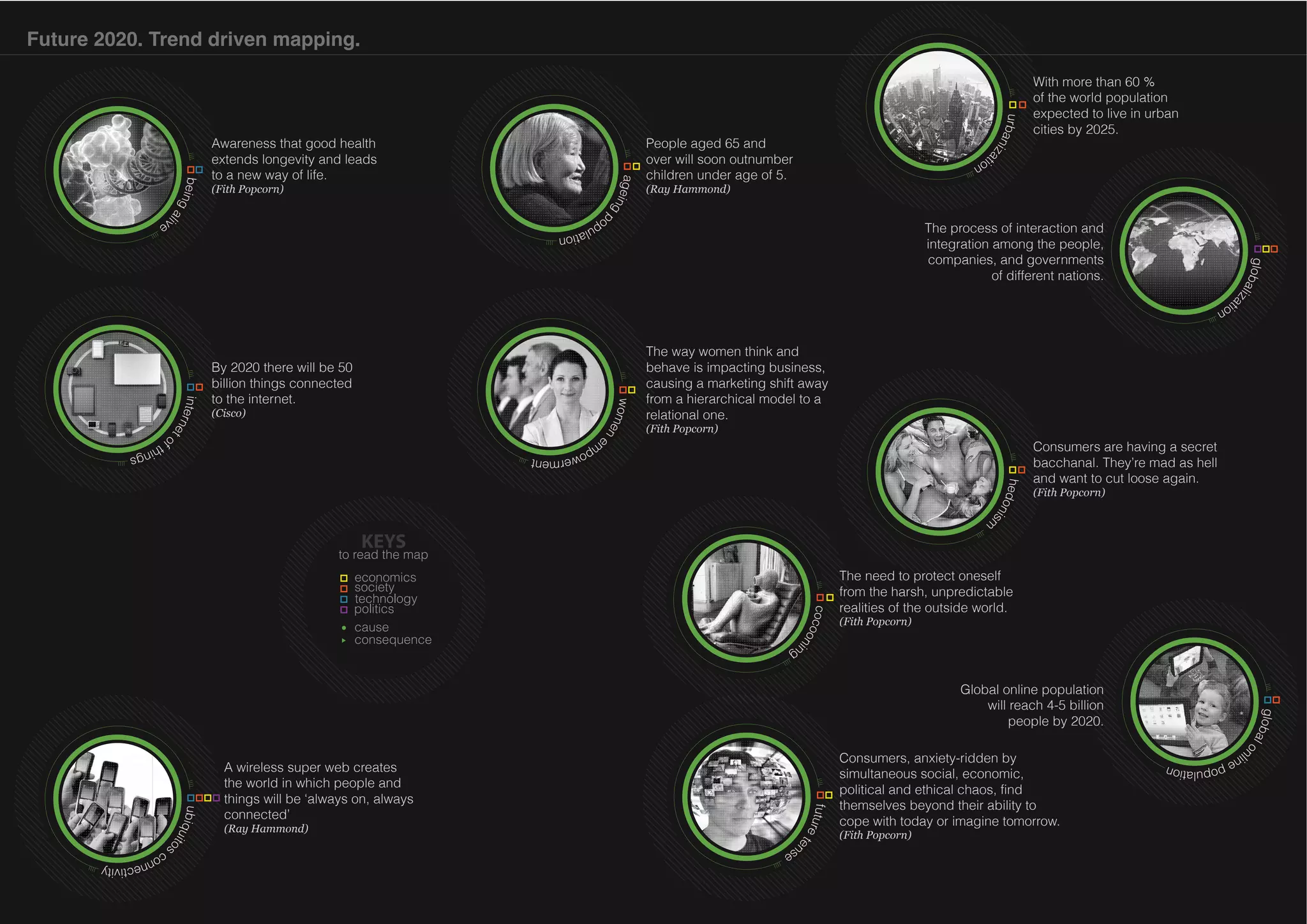
Future 2020. Trend driven mapping.

People aged 65 and
over will soon outnumber
children under age of 5.

urba
niz
a

n
tio

(Fith Popcorn)

a
gein
gp

tion
ula
op

bei
ng
ali

Awareness that good health
extends longevity and leads
to a new way of life.

With more than 60 %
of the world population
expected to live in urban
cities by 2025.

(Ray Hammond)

ve

n
tio
(Cisco)

w
ome
ne

werment
po
m

inte
rne
to

By 2020 there will be 50
billion things connected
to the internet.

glo
bal
iza

The process of interaction and
integration among the people,
companies, and governments
of different nations.

The way women think and
behave is impacting business,
causing a marketing shift away
from a hierarchical model to a
relational one.
(Fith Popcorn)

gs
hin
ft

hedo
nis

Consumers are having a secret
bacchanal. They’re mad as hell
and want to cut loose again.
(Fith Popcorn)

m

coco
on
in

The need to protect oneself
from the harsh, unpredictable
realities of the outside world.
(Fith Popcorn)

g

Consumers, anxiety-ridden by
simultaneous social, economic,
political and ethical chaos, find
themselves beyond their ability to
cope with today or imagine tomorrow.
(Fith Popcorn)

opulation
ep
lin

(Ray Hammond)

futu
re
ten

se

ubi
qui
tos

A wireless super web creates
the world in which people and
things will be ‘always on, always
connected’

glob
al
on

Global online population
will reach 4-5 billion
people by 2020.

ctivity
nne
co
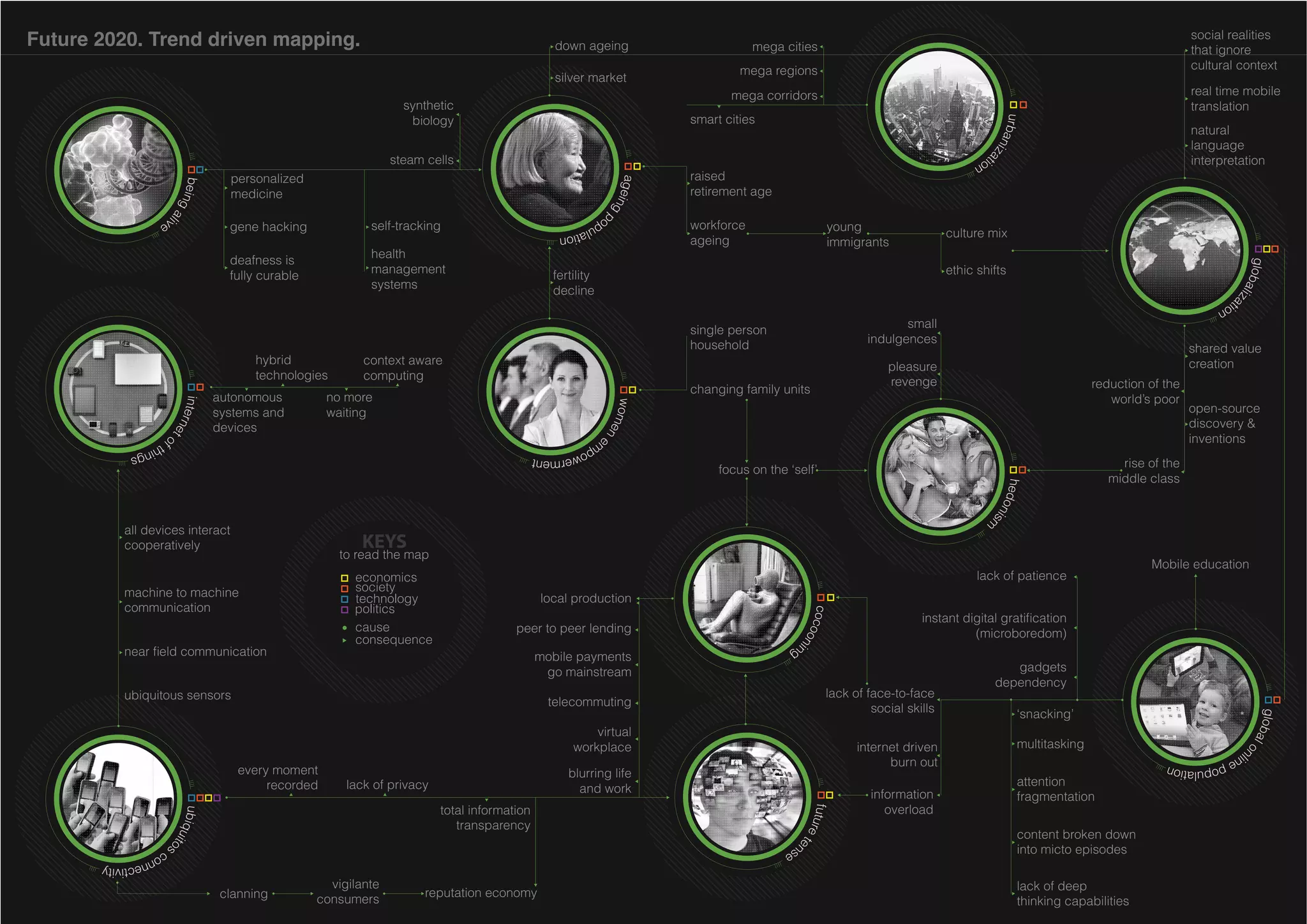
Future 2020. Trend driven mapping.

down ageing
silver market

tion
ula
op

culture mix
ethic shifts

fertility
decline
small
indulgences

single person
household

context aware
computing

no more
waiting

wo
me
ne

werment
po
m

shared value
creation

pleasure
revenge

changing family units

hedo
nis

focus on the ‘self’

reduction of the
world’s poor

open-source
discovery &
inventions

rise of the
middle class

m

inte
rne
to

autonomous
systems and
devices

young
immigrants

gs
hin
ft

all devices interact
cooperatively

lack of patience
local production
peer to peer lending
mobile payments
go mainstream

ubiquitous sensors

g

near field communication

c
oco
on
in

machine to machine
communication

internet driven
burn out

blurring life
and work

lack of privacy

se

clanning

vigilante
consumers

reputation economy

fu
ture
ten

ubiq
uit
os

total information
transparency

information
overload

gadgets
dependency
‘snacking’
multitasking
attention
fragmentation
content broken down
into micto episodes
lack of deep
thinking capabilities

g
loba
lo
n

virtual
workplace
every moment
recorded

instant digital gratification
(microboredom)

lack of face-to-face
social skills

telecommuting

Mobile education

opulation
ep
lin

ve

hybrid
technologies

workforce
ageing

n
tio

health
management
systems

n
tio

deafness is
fully curable

raised
retirement age

natural
language
interpretation

glo
bal
iza

self-tracking

ag
ein
gp

bein
ga
li

gene hacking

real time mobile
translation

mega corridors
smart cities

steam cells

personalized
medicine

mega regions

urba
niz
a

synthetic
biology

social realities
that ignore
cultural context

mega cities

ctivity
nne
co
Today we as designers already
understand how customers
interact with products. But as
need to consider every nuance
of our everyday activity and
understand human behaviour
every bit as well as novelists or
The internet of things. Trend based scenario.
Devices become autonomous. They update without
user input, they communicate among other devices,
they are smart as never before.

inte
rne
to

gs
hin
ft

to access invisible
digital interactions to
optimise our real-world
experiences.
In the coming era of ubiquitous sensors
and miniaturised mobile computing, our
digital interactions won’t take place simply
on screens. They will happen all around
us, constantly, as we go about our day. We
will be creating not products or interfaces
but experiences, a million invisible
transactions. Within the next five years we
will be surrounded by embedded devices
and services. Just as the rise of the screen
challenged designers to create software
interfaces, the rise of screenless digital
interactions will challenge them anew. It’s
one thing to invent a unique kind of digital
experience, in a way that feels both natural
and inevitable. This new discipline called
experience design, according to it we
need to focus not on products or devices
themselves, but on the impact they have
on people’s lives.

There is no need to turn the light on and off, now
it’s automatically controlled. Everything from light
to water temperrature is automatically adjusted to
the user preferences, biorythms or even the mood.
Here we may need a new ‘smartphones’ to let
systems recognize who’s using it.

Consider the phone syncing built into many cars.
After you link your phone, the vehicle boots up
its own voice-recognition technology so you can
make hands-free calls. When you leave the car,
you grab your phone and it blinks to life again. The
car and phone engage in a quiet dialogue geared
towards providing only the capabilities you actually
need. Moreover, car is warning you you are driving
inefficiently

You notice a minor feeling of sadness. Your display
activates a HappyMoments highlight reel of you
sitting during happier times; the images were taken
by coworkers’ FlagpinCams and cross-listed with
your Circadian Rings Neurolvleter.

You’re guided toward the nearest attractive person
whose NeuroMeter is reading “very lonely”. You
two can select from a menuof ]ealousMakingTM“
options—but you see that this stranger’s Circadian
Ring has more Other People Touches than yours,
and now your NeuroMeter announces that you’re
feeling inadequate.
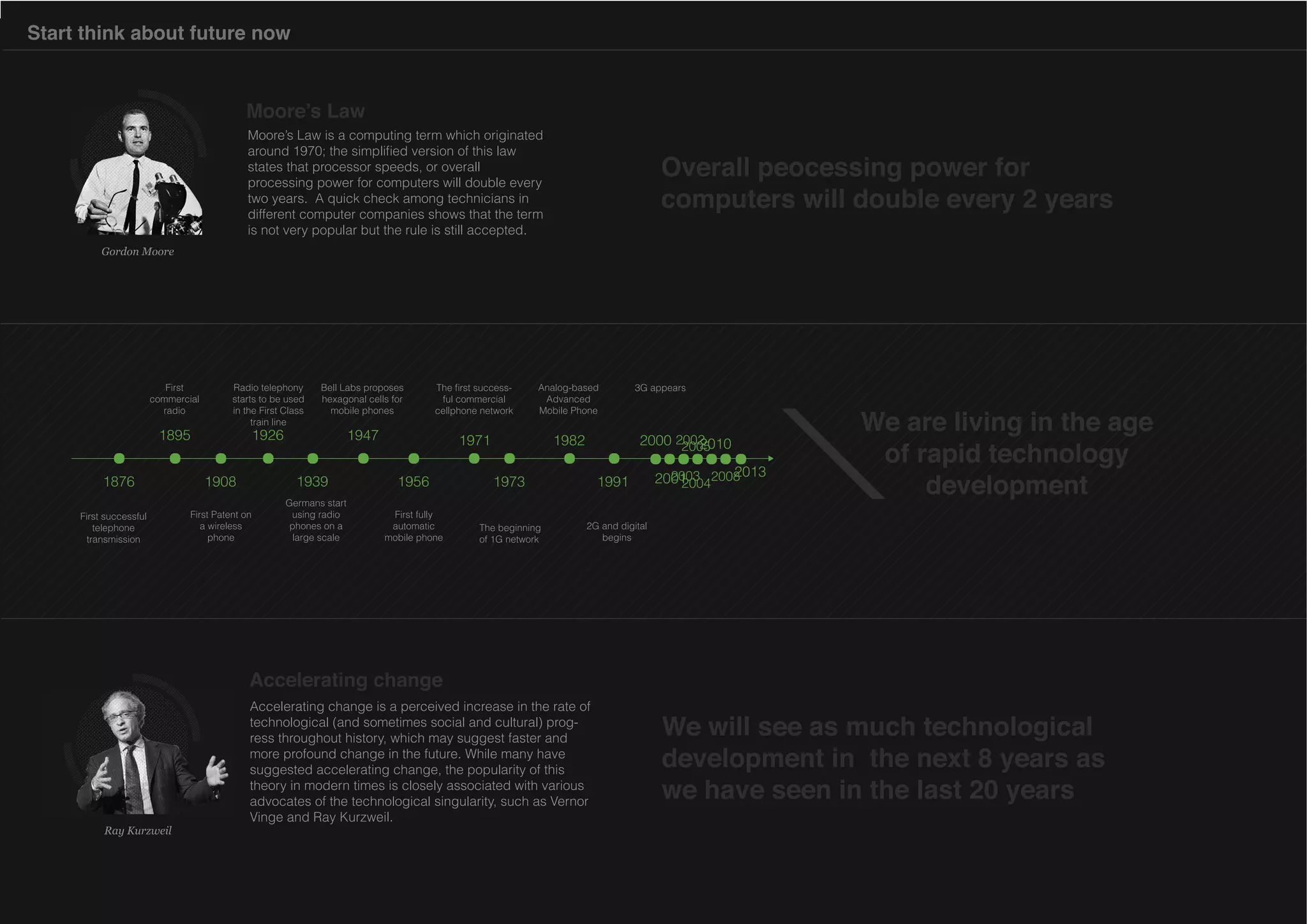
Start think about future now
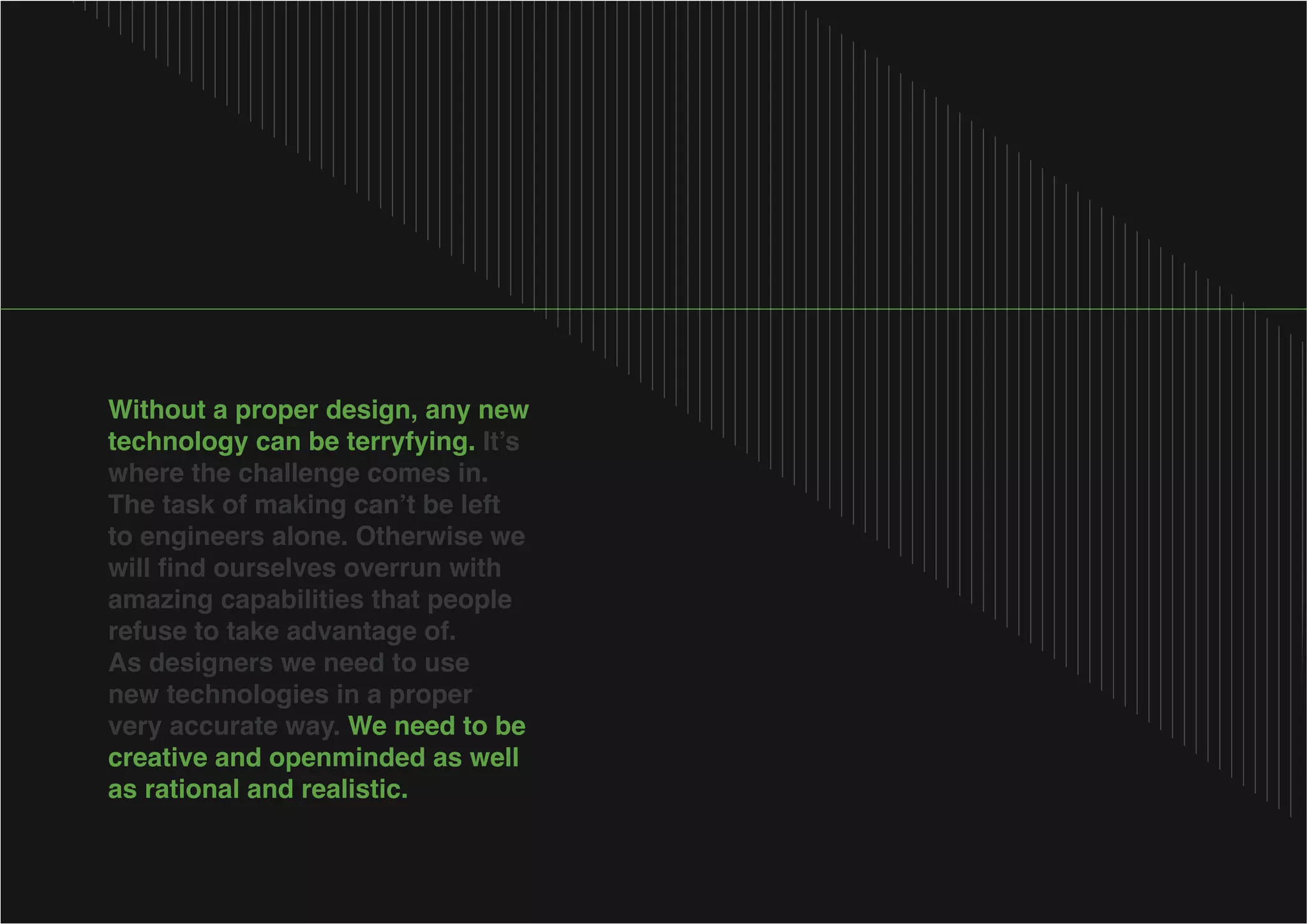
Without a proper design, any new
technology can be terryfying.
where the challenge comes in.
to engineers alone. Otherwise we
amazing capabilities that people
As designers we need to use
new technologies in a proper
very accurate way. We need to be
creative and openminded as well
as rational and realistic.
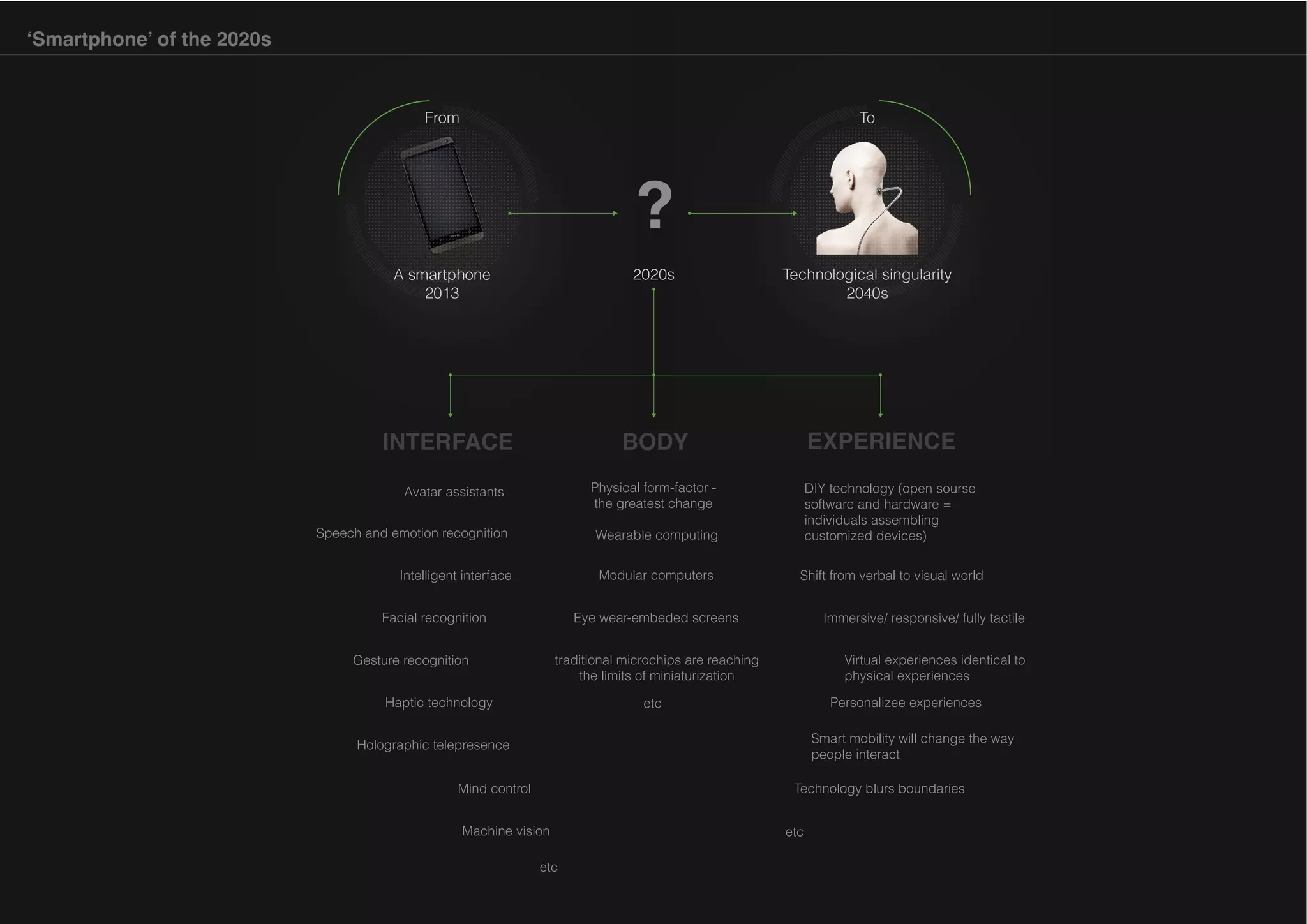
From

To

2020s

Technological singularity
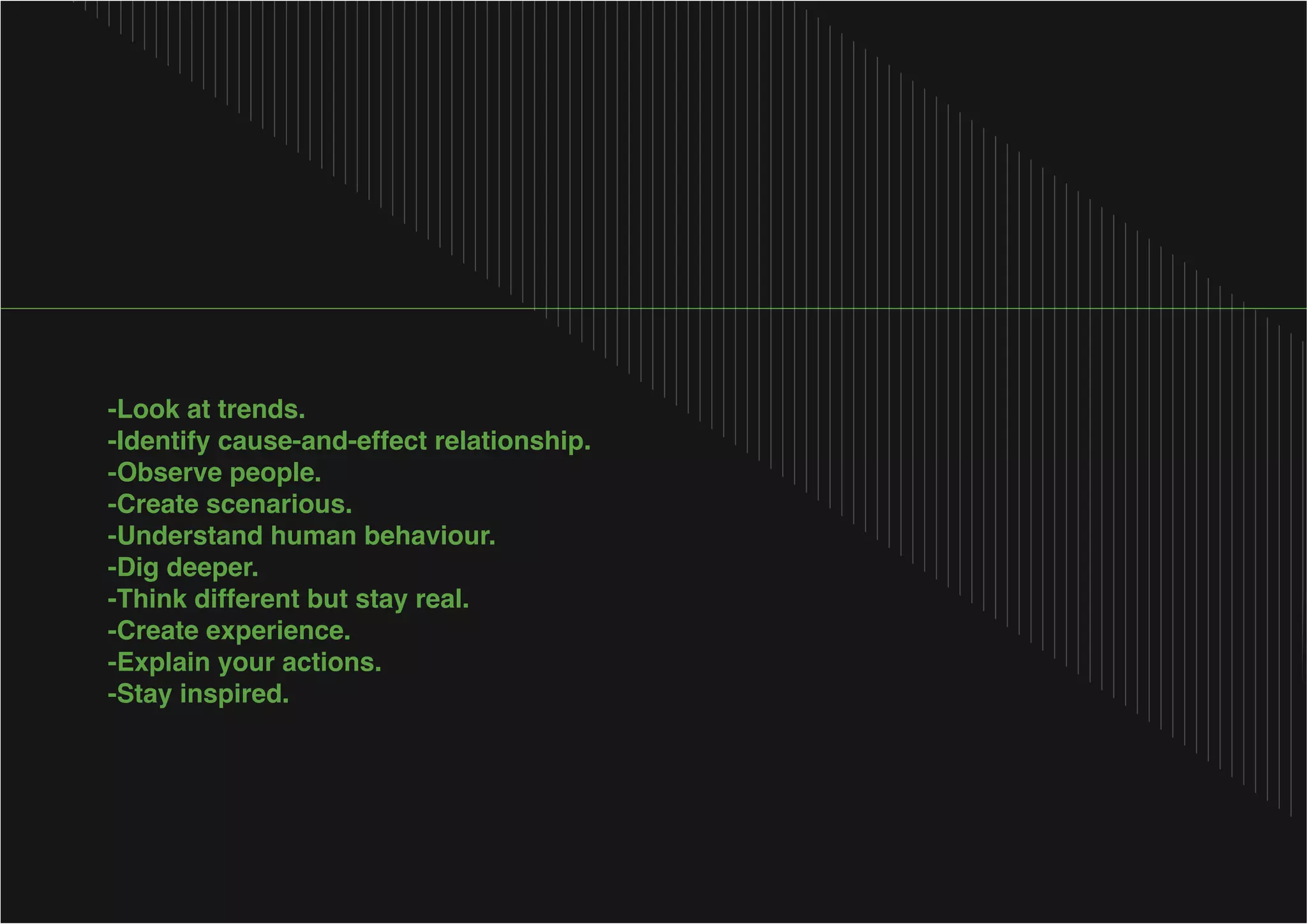
-Identify cause-and-effect relationship.
-Observe people.
-Create scenarious.
-Understand human behaviour.
-Dig deeper.
-Create experience.
-Explain your actions.

2020 future trends

  • 1.
    Future 2020. Trenddriven mapping. People aged 65 and over will soon outnumber children under age of 5. urba niz a n tio (Fith Popcorn) a gein gp tion ula op bei ng ali Awareness that good health extends longevity and leads to a new way of life. With more than 60 % of the world population expected to live in urban cities by 2025. (Ray Hammond) ve n tio (Cisco) w ome ne werment po m inte rne to By 2020 there will be 50 billion things connected to the internet. glo bal iza The process of interaction and integration among the people, companies, and governments of different nations. The way women think and behave is impacting business, causing a marketing shift away from a hierarchical model to a relational one. (Fith Popcorn) gs hin ft hedo nis Consumers are having a secret bacchanal. They’re mad as hell and want to cut loose again. (Fith Popcorn) m coco on in The need to protect oneself from the harsh, unpredictable realities of the outside world. (Fith Popcorn) g Consumers, anxiety-ridden by simultaneous social, economic, political and ethical chaos, find themselves beyond their ability to cope with today or imagine tomorrow. (Fith Popcorn) opulation ep lin (Ray Hammond) futu re ten se ubi qui tos A wireless super web creates the world in which people and things will be ‘always on, always connected’ glob al on Global online population will reach 4-5 billion people by 2020. ctivity nne co
  • 2.
    Future 2020. Trenddriven mapping. down ageing silver market tion ula op culture mix ethic shifts fertility decline small indulgences single person household context aware computing no more waiting wo me ne werment po m shared value creation pleasure revenge changing family units hedo nis focus on the ‘self’ reduction of the world’s poor open-source discovery & inventions rise of the middle class m inte rne to autonomous systems and devices young immigrants gs hin ft all devices interact cooperatively lack of patience local production peer to peer lending mobile payments go mainstream ubiquitous sensors g near field communication c oco on in machine to machine communication internet driven burn out blurring life and work lack of privacy se clanning vigilante consumers reputation economy fu ture ten ubiq uit os total information transparency information overload gadgets dependency ‘snacking’ multitasking attention fragmentation content broken down into micto episodes lack of deep thinking capabilities g loba lo n virtual workplace every moment recorded instant digital gratification (microboredom) lack of face-to-face social skills telecommuting Mobile education opulation ep lin ve hybrid technologies workforce ageing n tio health management systems n tio deafness is fully curable raised retirement age natural language interpretation glo bal iza self-tracking ag ein gp bein ga li gene hacking real time mobile translation mega corridors smart cities steam cells personalized medicine mega regions urba niz a synthetic biology social realities that ignore cultural context mega cities ctivity nne co
  • 3.
    Today we asdesigners already understand how customers interact with products. But as need to consider every nuance of our everyday activity and understand human behaviour every bit as well as novelists or
  • 4.
    The internet ofthings. Trend based scenario. Devices become autonomous. They update without user input, they communicate among other devices, they are smart as never before. inte rne to gs hin ft to access invisible digital interactions to optimise our real-world experiences. In the coming era of ubiquitous sensors and miniaturised mobile computing, our digital interactions won’t take place simply on screens. They will happen all around us, constantly, as we go about our day. We will be creating not products or interfaces but experiences, a million invisible transactions. Within the next five years we will be surrounded by embedded devices and services. Just as the rise of the screen challenged designers to create software interfaces, the rise of screenless digital interactions will challenge them anew. It’s one thing to invent a unique kind of digital experience, in a way that feels both natural and inevitable. This new discipline called experience design, according to it we need to focus not on products or devices themselves, but on the impact they have on people’s lives. There is no need to turn the light on and off, now it’s automatically controlled. Everything from light to water temperrature is automatically adjusted to the user preferences, biorythms or even the mood. Here we may need a new ‘smartphones’ to let systems recognize who’s using it. Consider the phone syncing built into many cars. After you link your phone, the vehicle boots up its own voice-recognition technology so you can make hands-free calls. When you leave the car, you grab your phone and it blinks to life again. The car and phone engage in a quiet dialogue geared towards providing only the capabilities you actually need. Moreover, car is warning you you are driving inefficiently You notice a minor feeling of sadness. Your display activates a HappyMoments highlight reel of you sitting during happier times; the images were taken by coworkers’ FlagpinCams and cross-listed with your Circadian Rings Neurolvleter. You’re guided toward the nearest attractive person whose NeuroMeter is reading “very lonely”. You two can select from a menuof ]ealousMakingTM“ options—but you see that this stranger’s Circadian Ring has more Other People Touches than yours, and now your NeuroMeter announces that you’re feeling inadequate.
  • 5.
  • 6.
    Without a properdesign, any new technology can be terryfying. where the challenge comes in. to engineers alone. Otherwise we amazing capabilities that people As designers we need to use new technologies in a proper very accurate way. We need to be creative and openminded as well as rational and realistic.
  • 7.
  • 8.
    -Identify cause-and-effect relationship. -Observepeople. -Create scenarious. -Understand human behaviour. -Dig deeper. -Create experience. -Explain your actions.