Linked Open Data in Agriculture
Workshop 27th/28th of September 2017 in
Berlin
Daniel Martini, Johannes Keizer
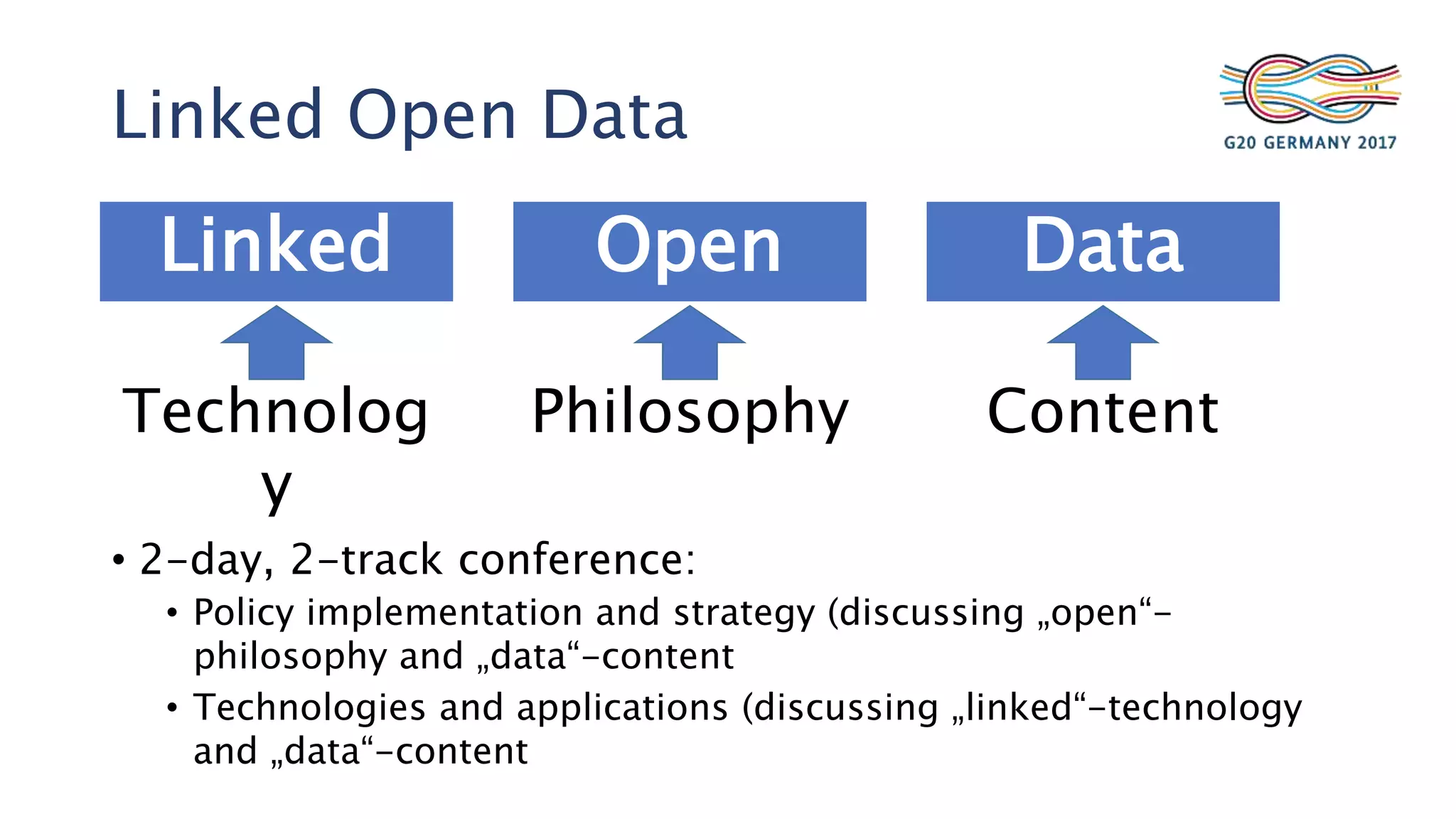
Linked Open Data
• 2-day, 2-track conference:
• Policy implementation and strategy (discussing „open“-
philosophy and „data“-content
• Technologies and applications (discussing „linked“-technology
and „data“-content
Linked Open Data
Technolog
y
Philosophy Content
Goals
• Capture current State-of-the-Art in Linked Open Data
• Determine data demand and supply
• Exchange failure and success stories
• Discuss on applications and usage (potential and realized)
• Develop options for further actions (political and
technical)
Topics adressed
• Research data sharing
• Availability and security
• Data models
• Open geodata
• Visualisation, navigation and search
• Vocabularies, classifications and thesauri
• Earth observation and remote sensing
• Applications in livestock farming
• Supply chain and traceability
• Monitoring and documentation
Further Information
• Announcement and Call:
https://www.ktbl.de/fileadmin/user_upload/Allgemeines/Download/LOD/LODA_
2017.pdf
• Workshop presentations:
https://www.ktbl.de/inhalte/themen/ueber-uns/projekte/macs-g20-
loda/lectures/
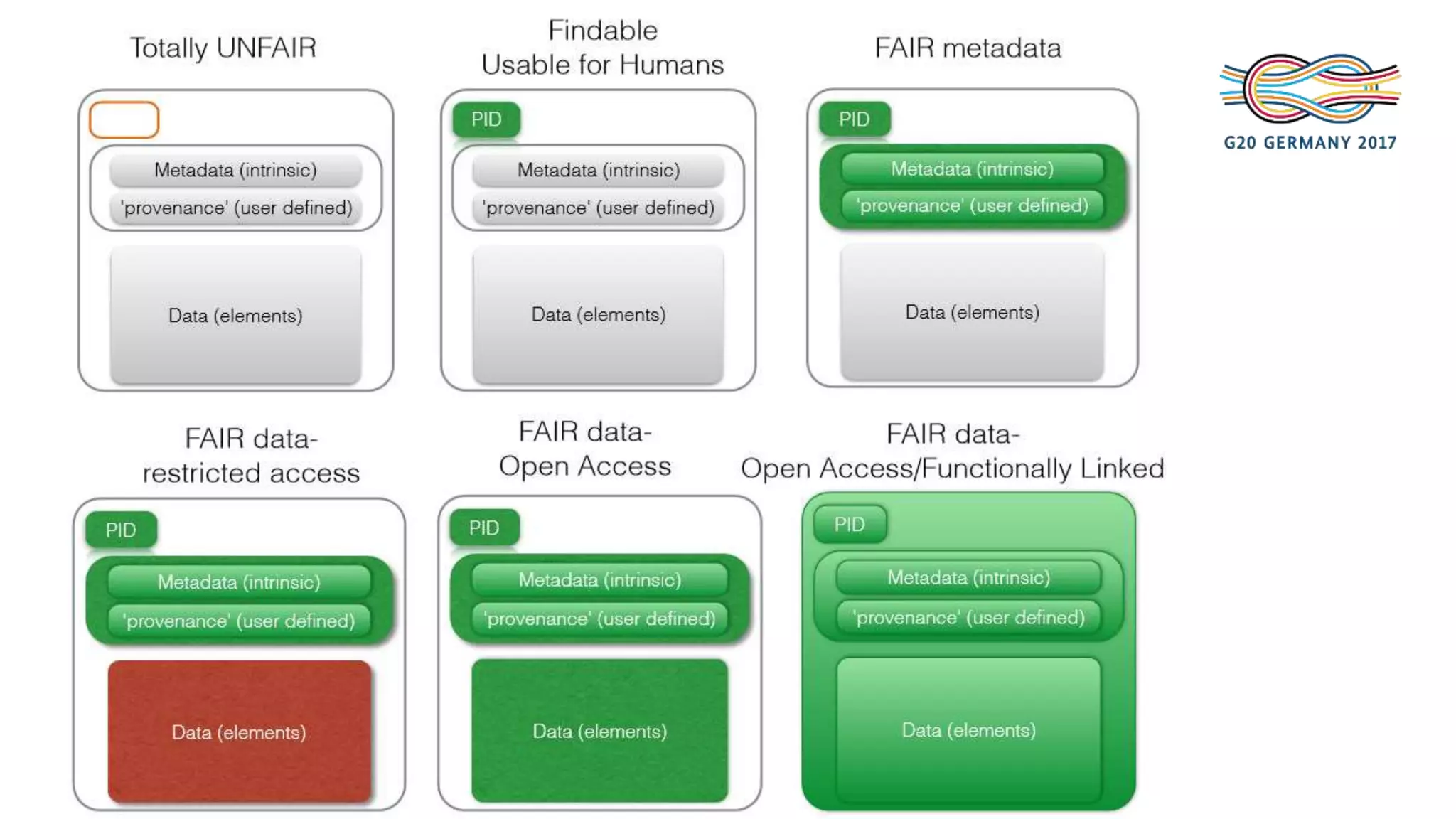
FAIR principles
•Findable
•Accessible
•Interoperable
•Reusable
= FAIR
ATS and GRCP
• Plenary session on 28th of September with a keynote from
CAAS
• Impression from the POV of an „external observer“:
• There is no agreed-upon view on ATS goals and functionalities yet
• Required architectural components on a high level are not yet clearly
worked out
• It is a large undertaking, as to the question where runs what therefore:
technical necessities and possibilities need to be considered:
„Scale or fail!“
• It should however be possible to find a balanced distribution of tasks
and responsibilities
• There are differing opinions on the meaning of the P in GRCP:
this should be clarified before discussing the relation of ATS and GRCP
Final plenary results
• Reuse what‘s there, look for synergies
• Requires healing the „not-invented-here“ syndrome
• Governments should support open data
• GODAN as a vehicle for networking and empowerment
• Enduser perspective as a principle
• Strengthen the process of collaboration
• No heavy, administrative frameworks, lightweight collaboration
• Enforce ongoing processes
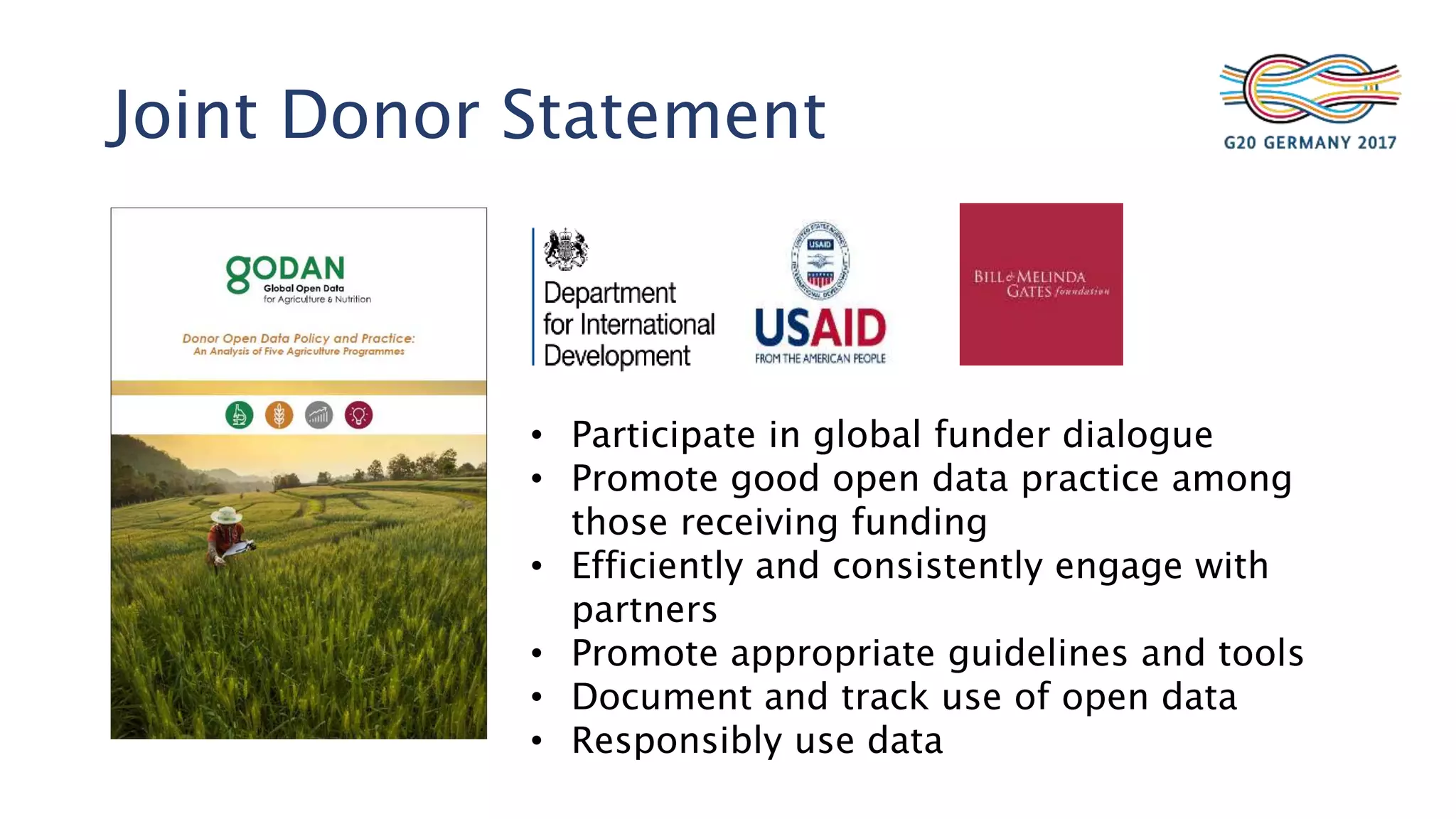
Joint Donor Statement
• Participate in global funder dialogue
• Promote good open data practice among
those receiving funding
• Efficiently and consistently engage with
partners
• Promote appropriate guidelines and tools
• Document and track use of open data
• Responsibly use data
Actions within the network:
• Microclusters of stakeholders that work on single things
that have an impact:
• Data providers
• Domain experts
• …
• Followup workshop:
• Let people state shortly what they‘re good at
• Start forming microcluster
• Think big, start small: a little bit of metadata often helps
already!
Conclusions
• Innovations and applications based on data provided
according to FAIR principles start gaining ground
• followup actions on Linked Open Data should focus on
collaboration and reuse
• MACS can foster developments by:
• Confirming the opinion that access to data is of importance for
agricultural innovation
• Endorsing FAIR principles
• Helping developing definitions of data rights and responsibilities
• Encouraging catalyzing work done by organisations like GODAN,
RDA etc.

2017 11-15 macs

  • 1.
    Linked Open Datain Agriculture Workshop 27th/28th of September 2017 in Berlin Daniel Martini, Johannes Keizer
  • 2.
    Linked Open Data •2-day, 2-track conference: • Policy implementation and strategy (discussing „open“- philosophy and „data“-content • Technologies and applications (discussing „linked“-technology and „data“-content Linked Open Data Technolog y Philosophy Content
  • 3.
    Goals • Capture currentState-of-the-Art in Linked Open Data • Determine data demand and supply • Exchange failure and success stories • Discuss on applications and usage (potential and realized) • Develop options for further actions (political and technical)
  • 4.
    Topics adressed • Researchdata sharing • Availability and security • Data models • Open geodata • Visualisation, navigation and search • Vocabularies, classifications and thesauri • Earth observation and remote sensing • Applications in livestock farming • Supply chain and traceability • Monitoring and documentation
  • 5.
    Further Information • Announcementand Call: https://www.ktbl.de/fileadmin/user_upload/Allgemeines/Download/LOD/LODA_ 2017.pdf • Workshop presentations: https://www.ktbl.de/inhalte/themen/ueber-uns/projekte/macs-g20- loda/lectures/
  • 6.
  • 8.
    ATS and GRCP •Plenary session on 28th of September with a keynote from CAAS • Impression from the POV of an „external observer“: • There is no agreed-upon view on ATS goals and functionalities yet • Required architectural components on a high level are not yet clearly worked out • It is a large undertaking, as to the question where runs what therefore: technical necessities and possibilities need to be considered: „Scale or fail!“ • It should however be possible to find a balanced distribution of tasks and responsibilities • There are differing opinions on the meaning of the P in GRCP: this should be clarified before discussing the relation of ATS and GRCP
  • 9.
    Final plenary results •Reuse what‘s there, look for synergies • Requires healing the „not-invented-here“ syndrome • Governments should support open data • GODAN as a vehicle for networking and empowerment • Enduser perspective as a principle • Strengthen the process of collaboration • No heavy, administrative frameworks, lightweight collaboration • Enforce ongoing processes
  • 10.
    Joint Donor Statement •Participate in global funder dialogue • Promote good open data practice among those receiving funding • Efficiently and consistently engage with partners • Promote appropriate guidelines and tools • Document and track use of open data • Responsibly use data
  • 11.
    Actions within thenetwork: • Microclusters of stakeholders that work on single things that have an impact: • Data providers • Domain experts • … • Followup workshop: • Let people state shortly what they‘re good at • Start forming microcluster • Think big, start small: a little bit of metadata often helps already!
  • 12.
    Conclusions • Innovations andapplications based on data provided according to FAIR principles start gaining ground • followup actions on Linked Open Data should focus on collaboration and reuse • MACS can foster developments by: • Confirming the opinion that access to data is of importance for agricultural innovation • Endorsing FAIR principles • Helping developing definitions of data rights and responsibilities • Encouraging catalyzing work done by organisations like GODAN, RDA etc.