Virtual Program on Open
Science and Research Data
Management
Organized by Columbus Association and
UNESCO
Thursday 24 May 2018
The Spanish Open Research Data Network.
Lessons learned
Remedios Melero
IATA-CSIC
Red Española sobre Datos
de Investigación en Abierto
2
Proyecto CSO2015-71867-REDT financiado por:
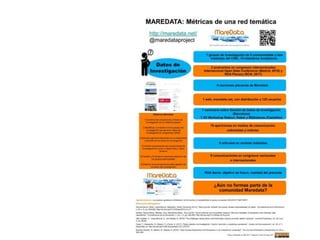
http://maredata.net/
What is Maredata?
• It is a network of research groups from different
Spanish universities and research centres that work
in subjects related to the management of research
data, among them:
• interoperability;
• access;
• preservation;
• metrics;
• open data policies;
• …
3
General objective
• Bring together and consolidate collaboration among
Spanish research teams working on research data
management, data curation, data handling
technologies…and establish links with any other
stakeholders involved in data sharing
4
Specific aims
1. Coordination of new actions among partners
2. Localization of research teams that have been funded
by the programme H2020.
3. To know who is who in handling and dissemiantion of
research data
4. Promotion of new lines of research
5. Support internationalization of groups
6. Creation of brief recommendations about research
data handling and management
5
Benefits of Open research data
• Collaboration among different research teams
• Avoid duplications, and allow validation of results
• Openess allow transparency
• Increase trust on scientists
6
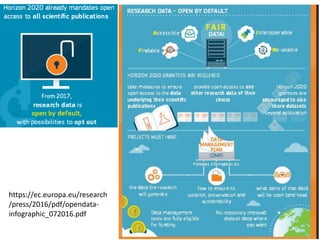
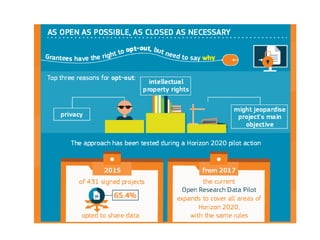
Open research data, why?
• “As open as possible, as closed and necessary”
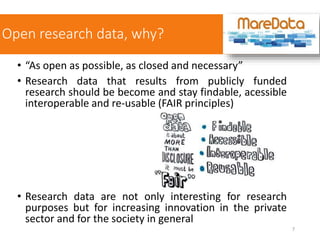
• Research data that results from publicly funded
research should be become and stay findable, acessible
interoperable and re-usable (FAIR principles)
• Research data are not only interesting for research
purposes but for increasing innovation in the private
sector and for the society in general
7
https://ec.europa.eu/research
/press/2016/pdf/opendata-
infographic_072016.pdf
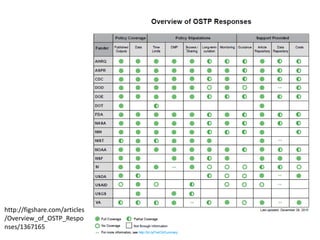
http://figshare.com/articles
/Overview_of_OSTP_Respo
nses/1367165
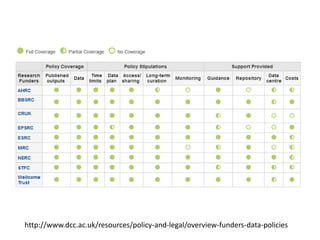
http://www.dcc.ac.uk/resources/policy-and-legal/overview-funders-data-policies
Dissemination/Promotion
• Workshops
• Seminars
• Participation in national and international events
(see http://maredata.net/index.php/eventos/ )
12
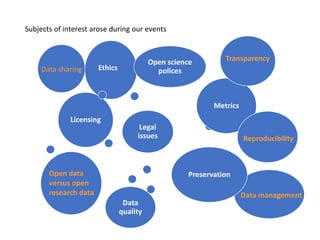
Subjects of interest arose during our events
Legal
issues
Licensing
Metrics
Preservation
Data
quality
Open science
polices
Open data
versus open
research data
Data sharing
Transparency
Reproducibility
Data management
Ethics
• Identify needs by disciplines in research data
management
• Discovery of Open data in health services
suceptible of being shared (mapping open data
from public hospitals)
• Protection of data and anonymization. Access and
Ethics
• Quality of data and metrics
• Blockchain technology applied to data sharing
Future lines of research
15
• What data are worth to share?
• How to share and preserve data?
• How to manage your data?
• How to anonymize your data?
• How to comply with your funder’s open science
policy?
• When and where are you to share your data?
Brief recommendations
“what, how, when and where”
16
Lessons learned from the
network…..
• It helps to create change
• It helps to analyze your own flaws
• It helps to analyze the context of your community and ascertain your
weakness, challenges and opportunities
• It contributes to create collaboration among groups that one does not
know/meet before (new collaborators)
• ……….
• “a sentir que no estás solo”
18
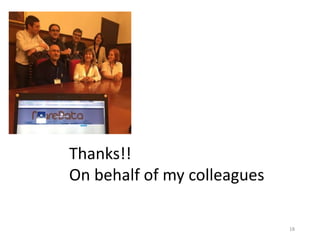
Thanks!!
On behalf of my colleagues

The Spanish Open Research Data Network. Lessons learned

  • 1.
    Virtual Program onOpen Science and Research Data Management Organized by Columbus Association and UNESCO Thursday 24 May 2018 The Spanish Open Research Data Network. Lessons learned Remedios Melero IATA-CSIC
  • 2.
    Red Española sobreDatos de Investigación en Abierto 2 Proyecto CSO2015-71867-REDT financiado por: http://maredata.net/
  • 3.
    What is Maredata? •It is a network of research groups from different Spanish universities and research centres that work in subjects related to the management of research data, among them: • interoperability; • access; • preservation; • metrics; • open data policies; • … 3
  • 4.
    General objective • Bringtogether and consolidate collaboration among Spanish research teams working on research data management, data curation, data handling technologies…and establish links with any other stakeholders involved in data sharing 4
  • 5.
    Specific aims 1. Coordinationof new actions among partners 2. Localization of research teams that have been funded by the programme H2020. 3. To know who is who in handling and dissemiantion of research data 4. Promotion of new lines of research 5. Support internationalization of groups 6. Creation of brief recommendations about research data handling and management 5
  • 6.
    Benefits of Openresearch data • Collaboration among different research teams • Avoid duplications, and allow validation of results • Openess allow transparency • Increase trust on scientists 6
  • 7.
    Open research data,why? • “As open as possible, as closed and necessary” • Research data that results from publicly funded research should be become and stay findable, acessible interoperable and re-usable (FAIR principles) • Research data are not only interesting for research purposes but for increasing innovation in the private sector and for the society in general 7
  • 8.
  • 10.
  • 11.
  • 12.
    Dissemination/Promotion • Workshops • Seminars •Participation in national and international events (see http://maredata.net/index.php/eventos/ ) 12
  • 14.
    Subjects of interestarose during our events Legal issues Licensing Metrics Preservation Data quality Open science polices Open data versus open research data Data sharing Transparency Reproducibility Data management Ethics
  • 15.
    • Identify needsby disciplines in research data management • Discovery of Open data in health services suceptible of being shared (mapping open data from public hospitals) • Protection of data and anonymization. Access and Ethics • Quality of data and metrics • Blockchain technology applied to data sharing Future lines of research 15
  • 16.
    • What dataare worth to share? • How to share and preserve data? • How to manage your data? • How to anonymize your data? • How to comply with your funder’s open science policy? • When and where are you to share your data? Brief recommendations “what, how, when and where” 16
  • 17.
    Lessons learned fromthe network….. • It helps to create change • It helps to analyze your own flaws • It helps to analyze the context of your community and ascertain your weakness, challenges and opportunities • It contributes to create collaboration among groups that one does not know/meet before (new collaborators) • ………. • “a sentir que no estás solo”
  • 18.