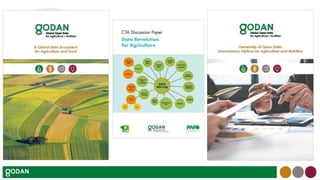
Agricultural technology sharing needs OPEN DATA
CAAS/GODAN workshop
Beijing, 2016-1110Johannes Keizer, GODAN Secretariat, FAO of the UN
• GODAN Secretariat
Partnerships Lead
• Team Leader at FAO for
open Access and open
Science
• Background: Pesticide
Chemistry
Johannes Keizer, PhDTHE PRESENTER
Johannes.keizer@godan.info
http://www.godan.info
GODAN advocates that
important datasets in
agriculture and nutrition
should be considered global
public goods and made be
available to everyone
●Doubling food production
for feeding 9 billion
●Knowledge Economy
●Data Intensive Science
●Open Access
●Key words !!
“… research suggests that seven sectors alone could
generate more than $3 trillion a year in additional value
as a result of open data, which is already giving rise to
hundreds of entrepreneurial businesses and helping
established companies to segment markets …”
Source: McKinsey Global Institute
"Making these data public will allow people to
make their own assessments of the progress of
our Good Growth Plan. It is also blurring the
traditional roles of business, government and
NGOs by highlighting our collective
responsibility to address acute global
challenges. Above all, the data will be of value
to farmers, enabling them to increase
productivity sustainably and to enhance their
livelihoods."
"Open data has the power to solve our most
challenging sustainability problems. … Agri-
tech businesses have a big role to play in
finding novel solutions to these problems. …
Syngenta is taking a step that puts them at
the forefront of the open data movement in
their sector. We look forward to working with
them to unlock benefits for farmers and
consumers worldwide."
Mike Mack, CEO of Syngenta
(2015, for 1st GGP data release)
Jeni Tennison, Deputy CEO and CTO of
the Open Data Institute
There is Hype
Internet usage:
40% of global population
– 2.26 billion
Developing countries:
from 0-30% in 16 years
On linear trend, 100% in
just 22 years. Goal of
UN to have 50% by
2015. Achieved 34%
Philippines ranked above
US in 2015
A game changer?
Daunting challenges - impressive opportunities:
• The life science revolution is changing
our understanding of the fundamental
biology of plants, animals and people. It
is transforming agriculture.
• Information revolution approaches are
critically transforming the retail end of
food value chains- radical transparency.
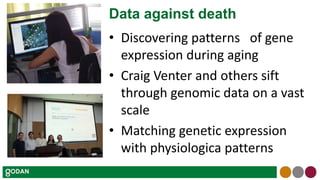
Data against death
• Discovering patterns of gene
expression during aging
• Craig Venter and others sift
through genomic data on a vast
scale
• Matching genetic expression
with physiologica patterns
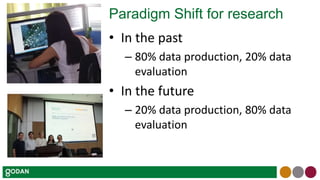
Paradigm Shift for research
• In the past
– 80% data production, 20% data
evaluation
• In the future
– 20% data production, 80% data
evaluation
If networked science is to reach its potential,
scientists will have to embrace and reward the open
sharing of all forms of scientific knowledge, not just
traditional journal publication.
Networked science must be open science.’
Michael Nielsen (OKI)
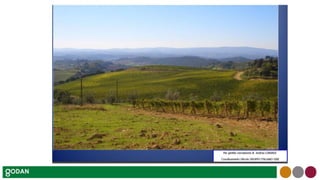
EXAMPLE
VITICULTURE
AGRICULTURAL Technology
Courtesy prof. Scienza, Universita’ di Milano
Taste
profiles
from two
different
soils
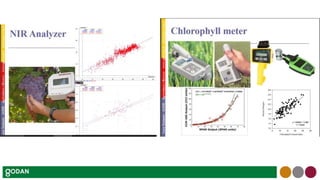
Development of Genetic Research
Relation between Phenotypes and
Physiology and Genetics through Data
Analysis
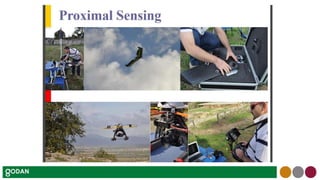
Monitoring in the field the results of
breed modifications
WHAT DOES OPEN
DATA MEAN?
The FAIR principle
Recently endorsed by the G20
Summit in Hangzhou
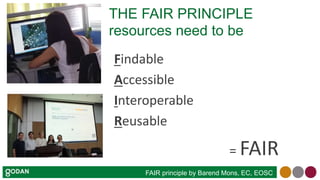
THE FAIR PRINCIPLE
resources need to be
Findable
Accessible
Interoperable
Reusable
= FAIR
FAIR principle by Barend Mons, EC, EOSC
Data Issues
http://www.nature.com/ng/journal/v43/n4/full/ng0411-281.html
Arguments Against
• “Open data are good only for the big
players”
• “Open data will create more data
monopolies”
• “Research data are only in a specific
context meaningful”
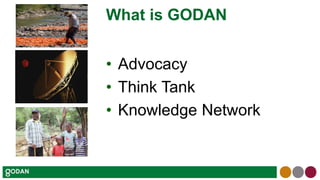
What is GODAN
• Advocacy
• Think Tank
• Knowledge Network
GODAN addresses Issues through
working groups
• i.e. data rights and responsibilities
• i.e. data infrastructure
• i.e. better technical, semantic and
legal interoperability
• i.e data gaps in nutrition
“I went through this Responsible Data in Agriculture brochure that’s
online and it strikes me how much it applies, in concrete terms, to
the data revolution that is part and parcel of the 2030 agenda for
sustainable development.” Thomas Gass, UN-DESA
396 partners
06. November
8 Donors in the GODAN steering group
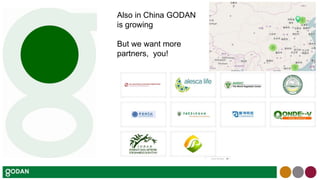
Also in China GODAN
is growing
But we want more
partners, you!
It is worthwhile to become GODAN
partner !!!!!
We have to be thousands to make enough
pressure on opening data!
(list to be revised)
● Participate to discuss and resolve open
questions
● Learn from successes (and failures of others)
● Bring your issues to the broader community
● Become a GODAN champion and influence the
community
● Use the GODAN context to find new Grants for
open data
Join GODAN!
● Sign up means you agree to our principles
in our Statement of Purpose
http://www.godan.info/about/statement-of-
purpose/
● Easy to complete forms online
http://www.godan.info/partners/become-a-
godan-partner/
● Talk to us about how you can get involved in
our events, publications and working groups
www.godan.info

2016 10 caas-ats

  • 1.
    Agricultural technology sharingneeds OPEN DATA CAAS/GODAN workshop Beijing, 2016-1110Johannes Keizer, GODAN Secretariat, FAO of the UN
  • 2.
    • GODAN Secretariat PartnershipsLead • Team Leader at FAO for open Access and open Science • Background: Pesticide Chemistry Johannes Keizer, PhDTHE PRESENTER Johannes.keizer@godan.info
  • 4.
    http://www.godan.info GODAN advocates that importantdatasets in agriculture and nutrition should be considered global public goods and made be available to everyone
  • 5.
    ●Doubling food production forfeeding 9 billion ●Knowledge Economy ●Data Intensive Science ●Open Access ●Key words !!
  • 6.
    “… research suggeststhat seven sectors alone could generate more than $3 trillion a year in additional value as a result of open data, which is already giving rise to hundreds of entrepreneurial businesses and helping established companies to segment markets …” Source: McKinsey Global Institute "Making these data public will allow people to make their own assessments of the progress of our Good Growth Plan. It is also blurring the traditional roles of business, government and NGOs by highlighting our collective responsibility to address acute global challenges. Above all, the data will be of value to farmers, enabling them to increase productivity sustainably and to enhance their livelihoods." "Open data has the power to solve our most challenging sustainability problems. … Agri- tech businesses have a big role to play in finding novel solutions to these problems. … Syngenta is taking a step that puts them at the forefront of the open data movement in their sector. We look forward to working with them to unlock benefits for farmers and consumers worldwide." Mike Mack, CEO of Syngenta (2015, for 1st GGP data release) Jeni Tennison, Deputy CEO and CTO of the Open Data Institute There is Hype
  • 7.
    Internet usage: 40% ofglobal population – 2.26 billion Developing countries: from 0-30% in 16 years On linear trend, 100% in just 22 years. Goal of UN to have 50% by 2015. Achieved 34% Philippines ranked above US in 2015 A game changer?
  • 9.
    Daunting challenges -impressive opportunities: • The life science revolution is changing our understanding of the fundamental biology of plants, animals and people. It is transforming agriculture. • Information revolution approaches are critically transforming the retail end of food value chains- radical transparency.
  • 11.
    Data against death •Discovering patterns of gene expression during aging • Craig Venter and others sift through genomic data on a vast scale • Matching genetic expression with physiologica patterns
  • 12.
    Paradigm Shift forresearch • In the past – 80% data production, 20% data evaluation • In the future – 20% data production, 80% data evaluation
  • 13.
    If networked scienceis to reach its potential, scientists will have to embrace and reward the open sharing of all forms of scientific knowledge, not just traditional journal publication. Networked science must be open science.’ Michael Nielsen (OKI)
  • 14.
  • 22.
  • 24.
    Development of GeneticResearch Relation between Phenotypes and Physiology and Genetics through Data Analysis Monitoring in the field the results of breed modifications
  • 26.
  • 28.
    The FAIR principle Recentlyendorsed by the G20 Summit in Hangzhou
  • 29.
    THE FAIR PRINCIPLE resourcesneed to be Findable Accessible Interoperable Reusable = FAIR FAIR principle by Barend Mons, EC, EOSC
  • 30.
  • 31.
    Arguments Against • “Opendata are good only for the big players” • “Open data will create more data monopolies” • “Research data are only in a specific context meaningful”
  • 32.
    What is GODAN •Advocacy • Think Tank • Knowledge Network
  • 33.
    GODAN addresses Issuesthrough working groups • i.e. data rights and responsibilities • i.e. data infrastructure • i.e. better technical, semantic and legal interoperability • i.e data gaps in nutrition
  • 34.
    “I went throughthis Responsible Data in Agriculture brochure that’s online and it strikes me how much it applies, in concrete terms, to the data revolution that is part and parcel of the 2030 agenda for sustainable development.” Thomas Gass, UN-DESA
  • 36.
    396 partners 06. November 8Donors in the GODAN steering group
  • 37.
    Also in ChinaGODAN is growing But we want more partners, you!
  • 38.
    It is worthwhileto become GODAN partner !!!!! We have to be thousands to make enough pressure on opening data! (list to be revised) ● Participate to discuss and resolve open questions ● Learn from successes (and failures of others) ● Bring your issues to the broader community ● Become a GODAN champion and influence the community ● Use the GODAN context to find new Grants for open data
  • 39.
    Join GODAN! ● Signup means you agree to our principles in our Statement of Purpose http://www.godan.info/about/statement-of- purpose/ ● Easy to complete forms online http://www.godan.info/partners/become-a- godan-partner/ ● Talk to us about how you can get involved in our events, publications and working groups
  • 40.