Free Education
for Open Learning:
Open educational policies,
strategies & access for all
@ Moscow International Education
Fair 2016 by Christian M. Stracke
Open University of the Netherlands
Open CC License for
sharing & re-using slides
This work is free to share under the creative commons licence:
"Attribution – Noncommercial – Share Alike 3.0"
You can copy, distribute and transmit the work under the following conditions:
1. Attribution –
2. Noncommercial –
3. Share Alike
Licence: Attribution-Noncommercial-Share Alike
Some rights reserved, see: http://creativecommons.org/licenses/by-nc-sa/3.0/
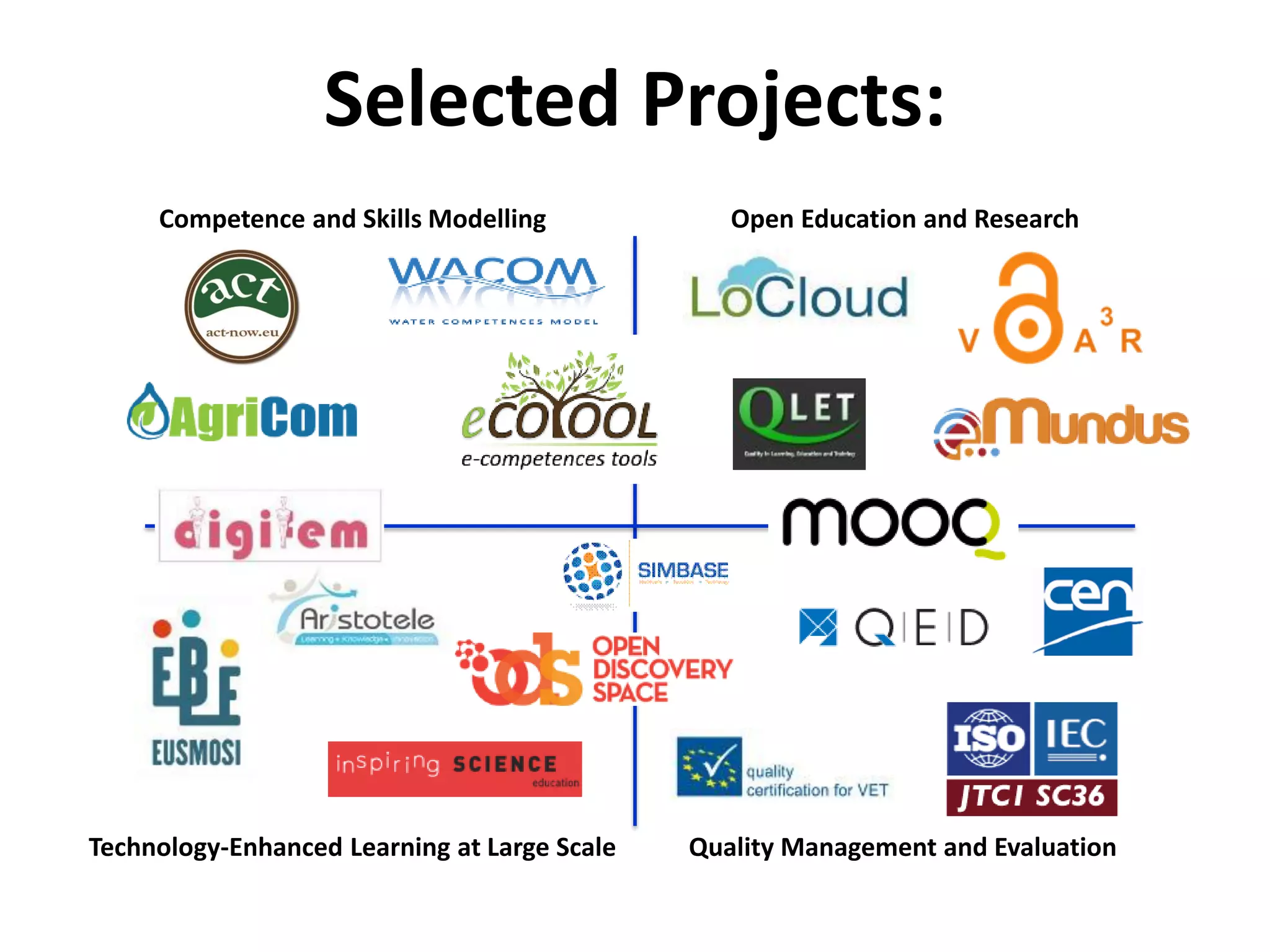
Selected Projects:
Quality Management and EvaluationTechnology-Enhanced Learning at Large Scale
Open Education and ResearchCompetence and Skills Modelling
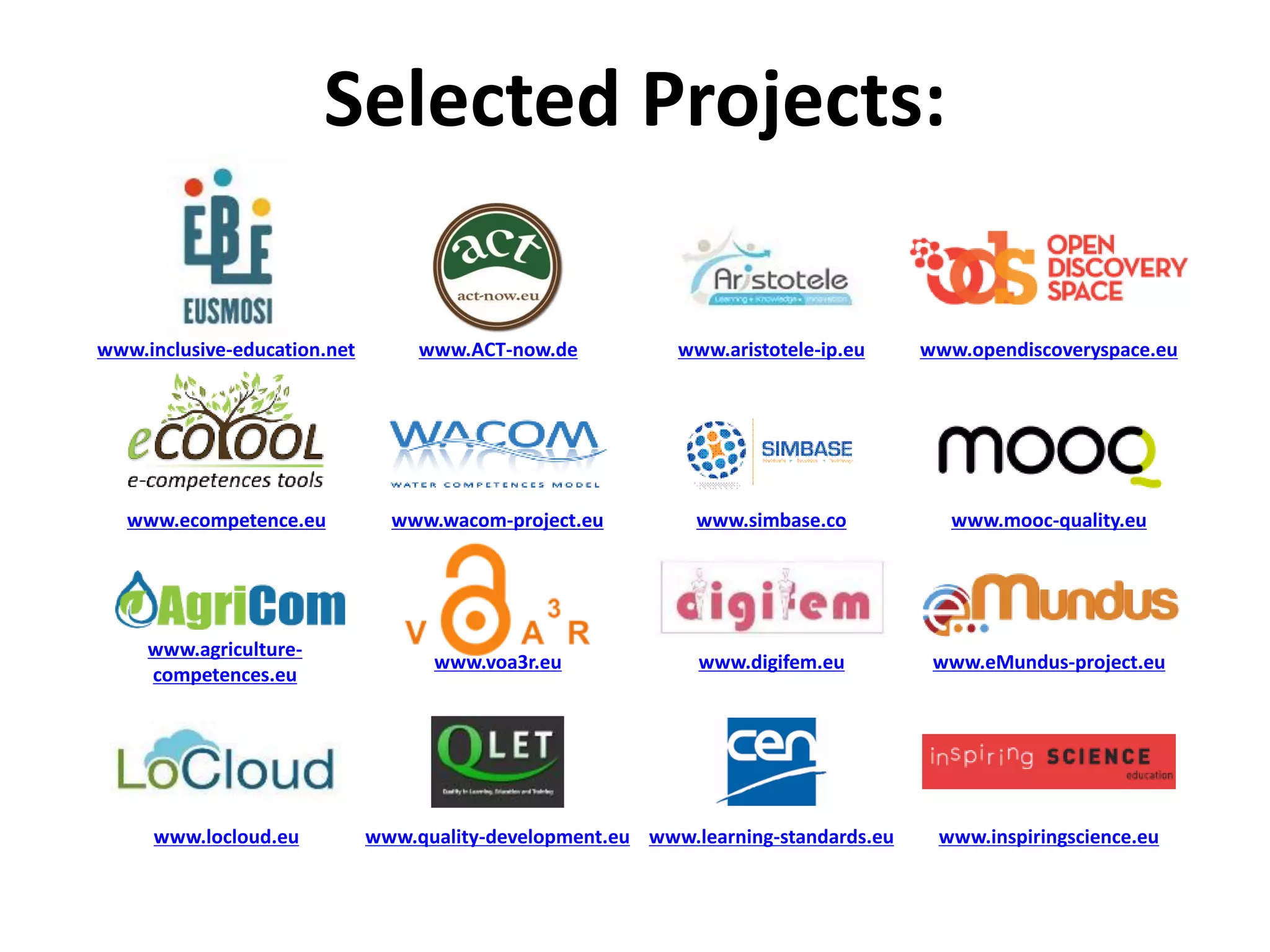
Selected Projects:
www.mooc-quality.euwww.simbase.cowww.wacom-project.euwww.ecompetence.eu
www.ACT-now.de www.aristotele-ip.eu www.opendiscoveryspace.euwww.inclusive-education.net
www.eMundus-project.euwww.digifem.euwww.voa3r.eu
www.agriculture-
competences.eu
www.inspiringscience.euwww.learning-standards.euwww.quality-development.euwww.locloud.eu
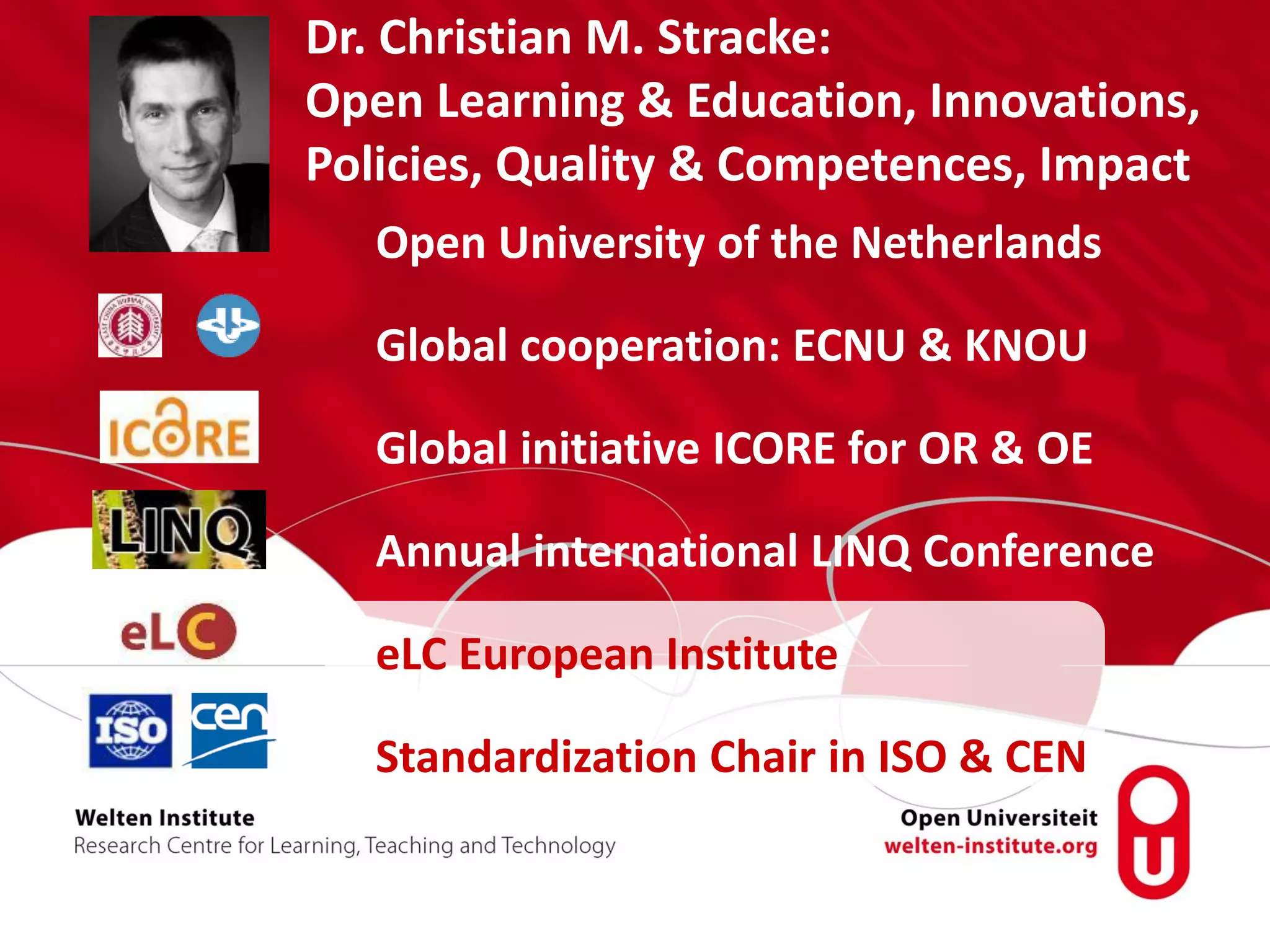
Open University of the Netherlands
Global cooperation: ECNU & KNOU
Global initiative ICORE for OR & OE
Annual international LINQ Conference
eLC European Institute
Standardization Chair in ISO & CEN
Dr. Christian M. Stracke:
Open Learning & Education, Innovations,
Policies, Quality & Competences, Impact
1. What is Open Education?
2. Why Change in Education?
3. What is Quality in Education?
4. How to Improve Quality?
5. How to Participate?
Keynote Overview:
1. What is Open Education?
2. Why Change in Education?
3. What is Quality in Education?
4. How to Improve Quality?
5. How to Participate?
Keynote Overview:
What is
Open Education?
What is
Open Education?
ATTENTION!!!
EXAMINATION!!!
Your answers:
What is
Open Education?
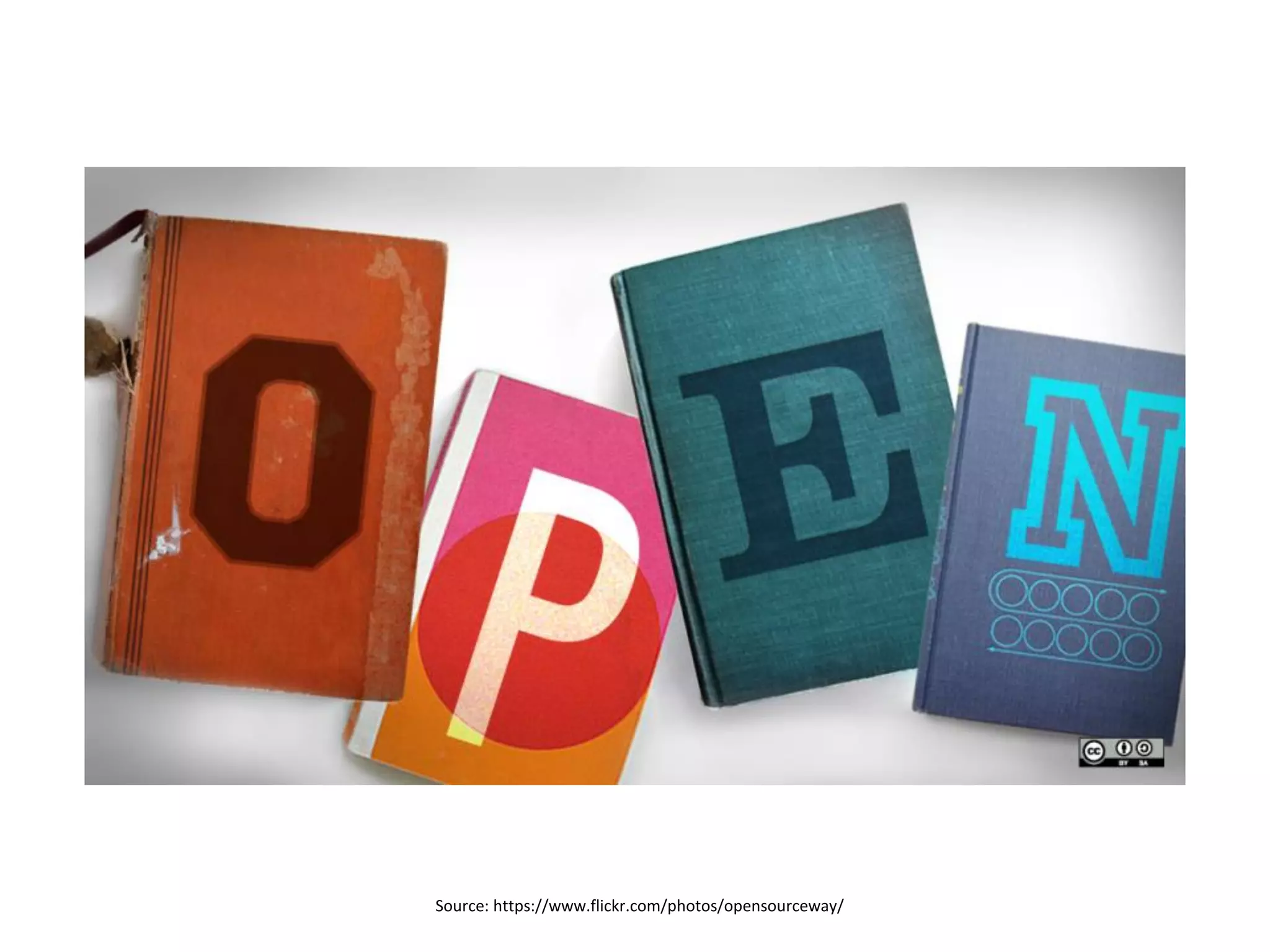
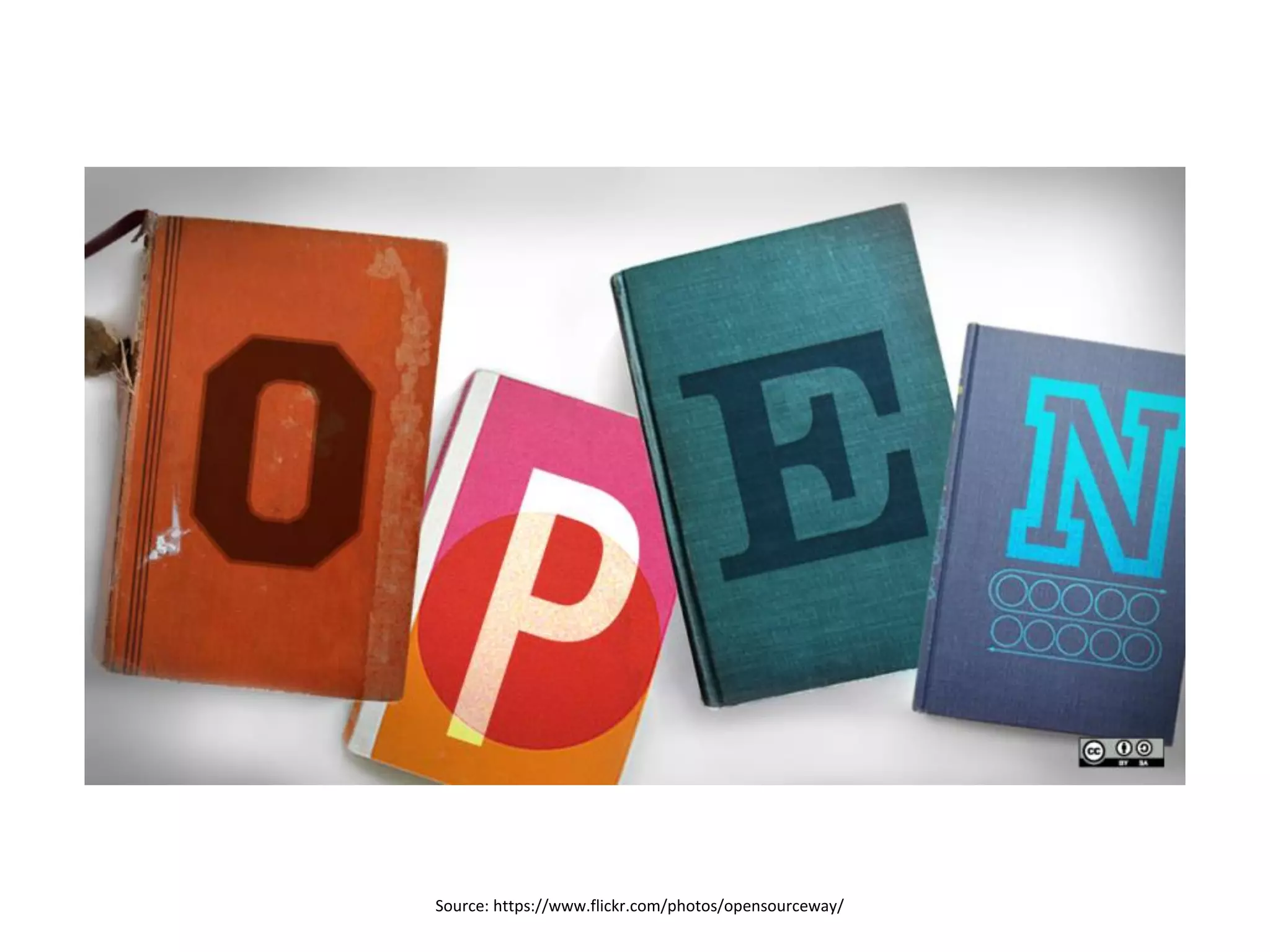
Source: https://www.flickr.com/photos/opensourceway/
Open Education (OE):
Innovations for changing
& opening up education
to improve the quality
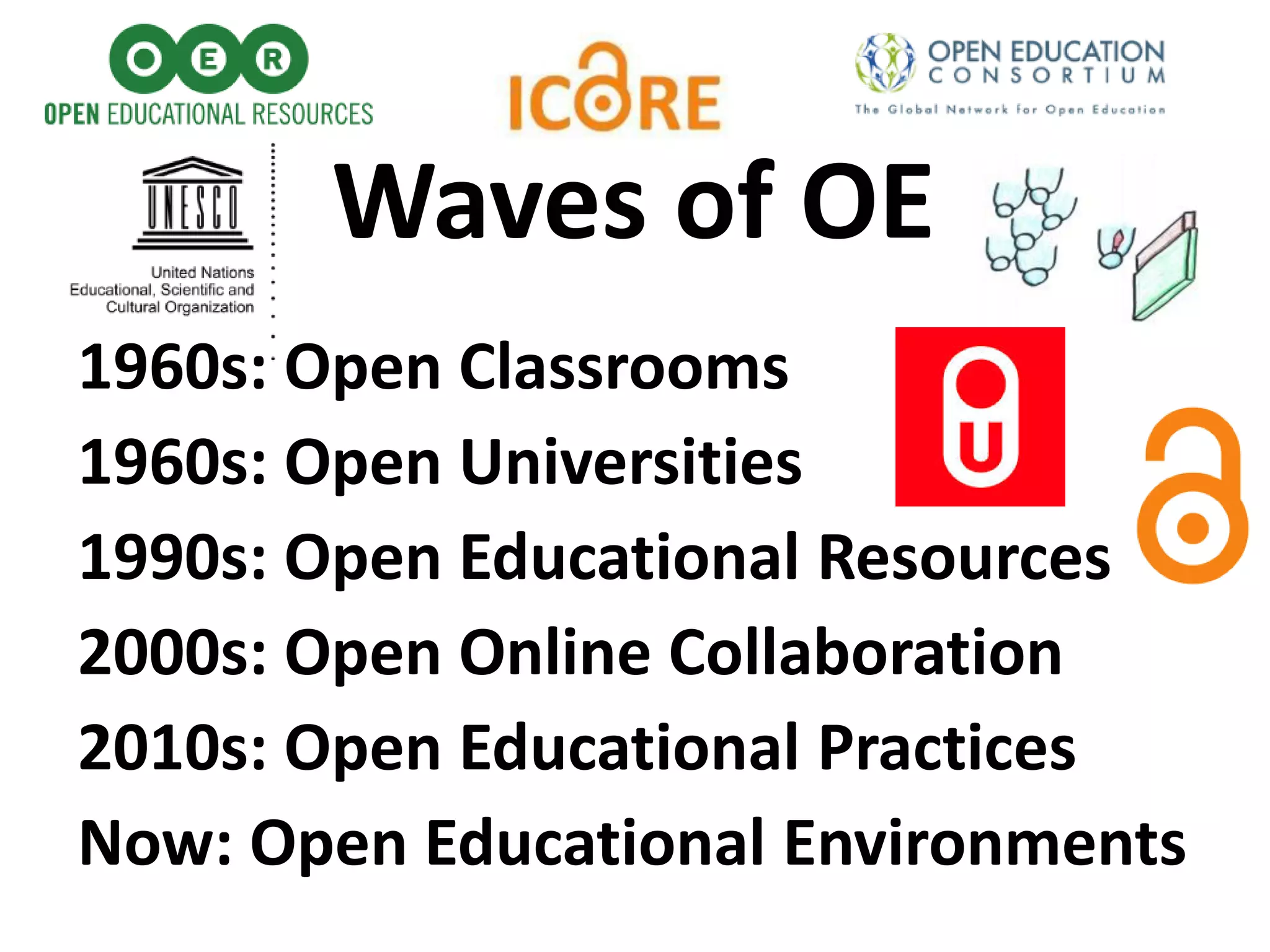
1960s: Open Classrooms
1960s: Open Universities
1990s: Open Educational Resources
2000s: Open Online Collaboration
2010s: Open Educational Practices
Now: Open Educational Environments
Waves of OE
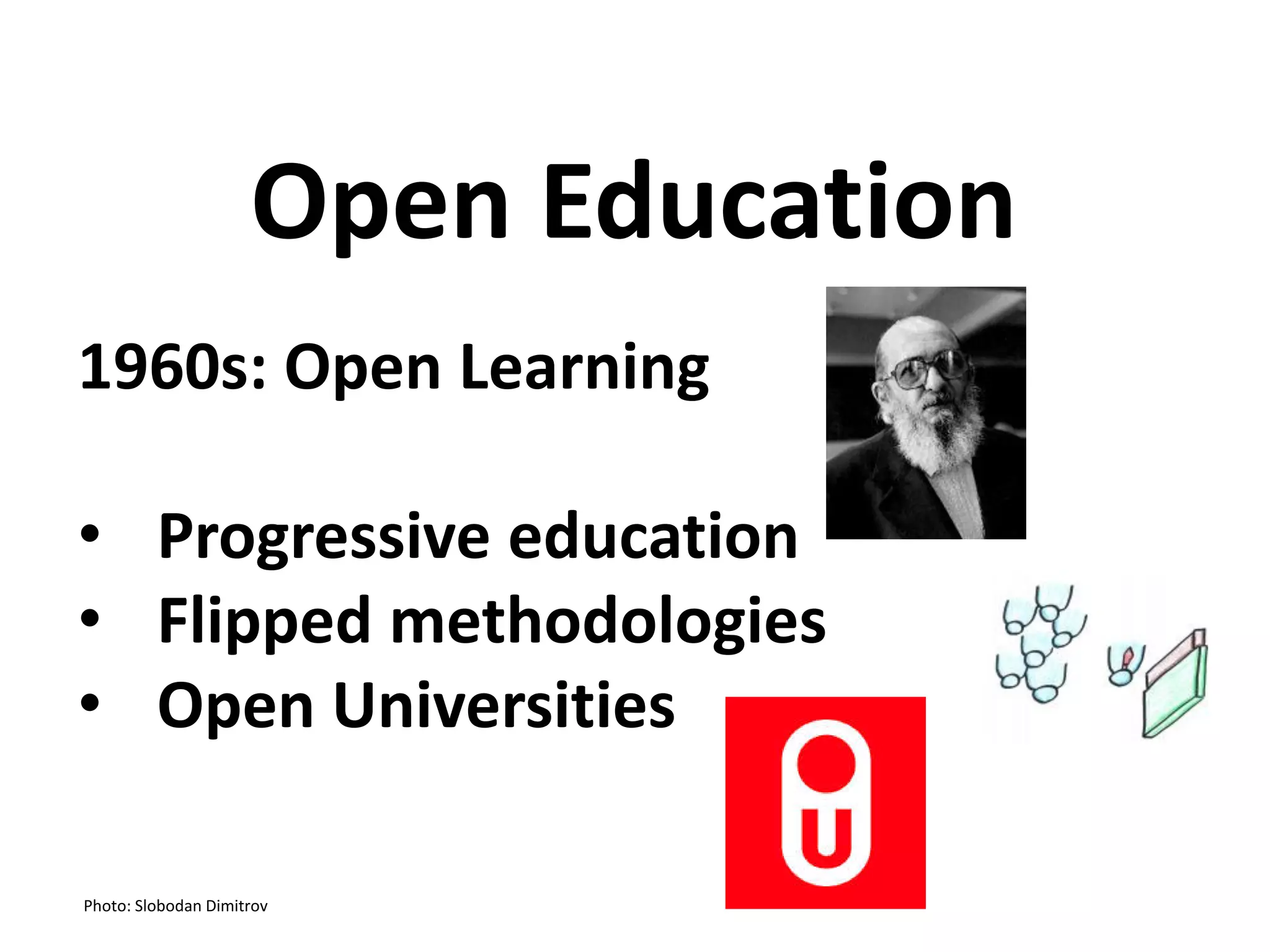
1960s: Open Learning
• Progressive education
• Flipped methodologies
• Open Universities
Open Education
Photo: Slobodan Dimitrov
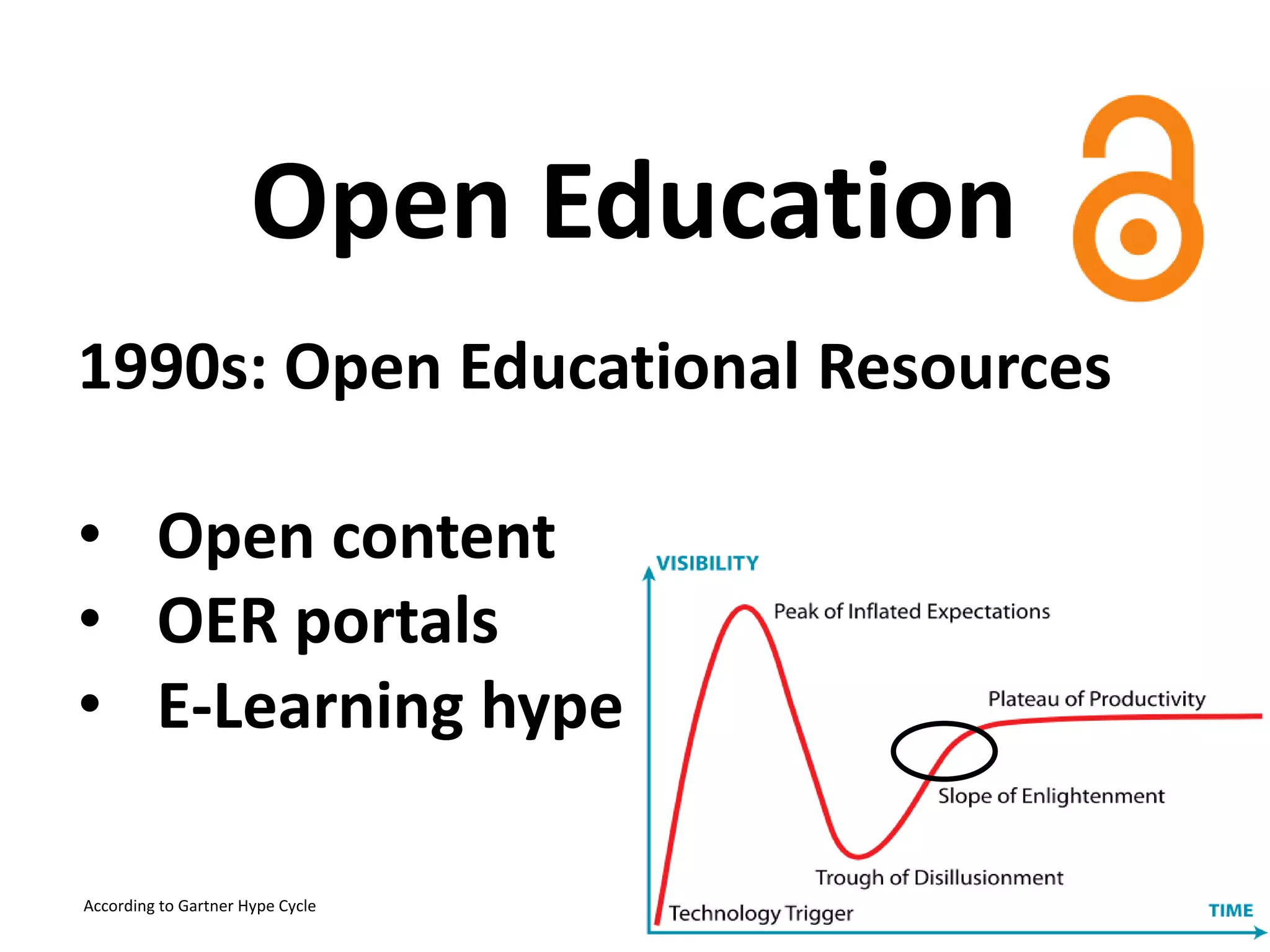
1990s: Open Educational Resources
• Open content
• OER portals
• E-Learning hype
Open Education
According to Gartner Hype Cycle
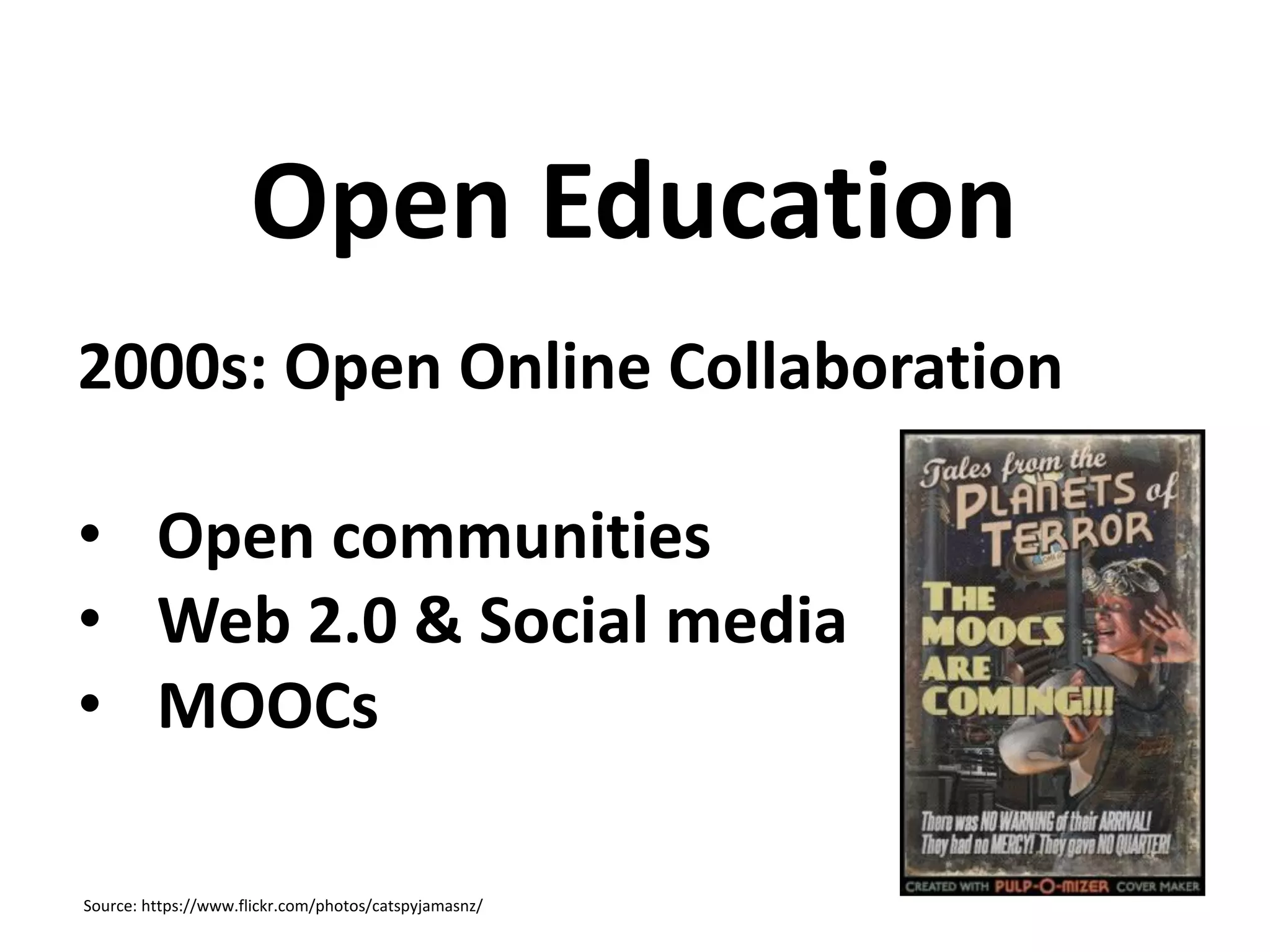
2000s: Open Online Collaboration
• Open communities
• Web 2.0 & Social media
• MOOCs
Open Education
Source: https://www.flickr.com/photos/catspyjamasnz/
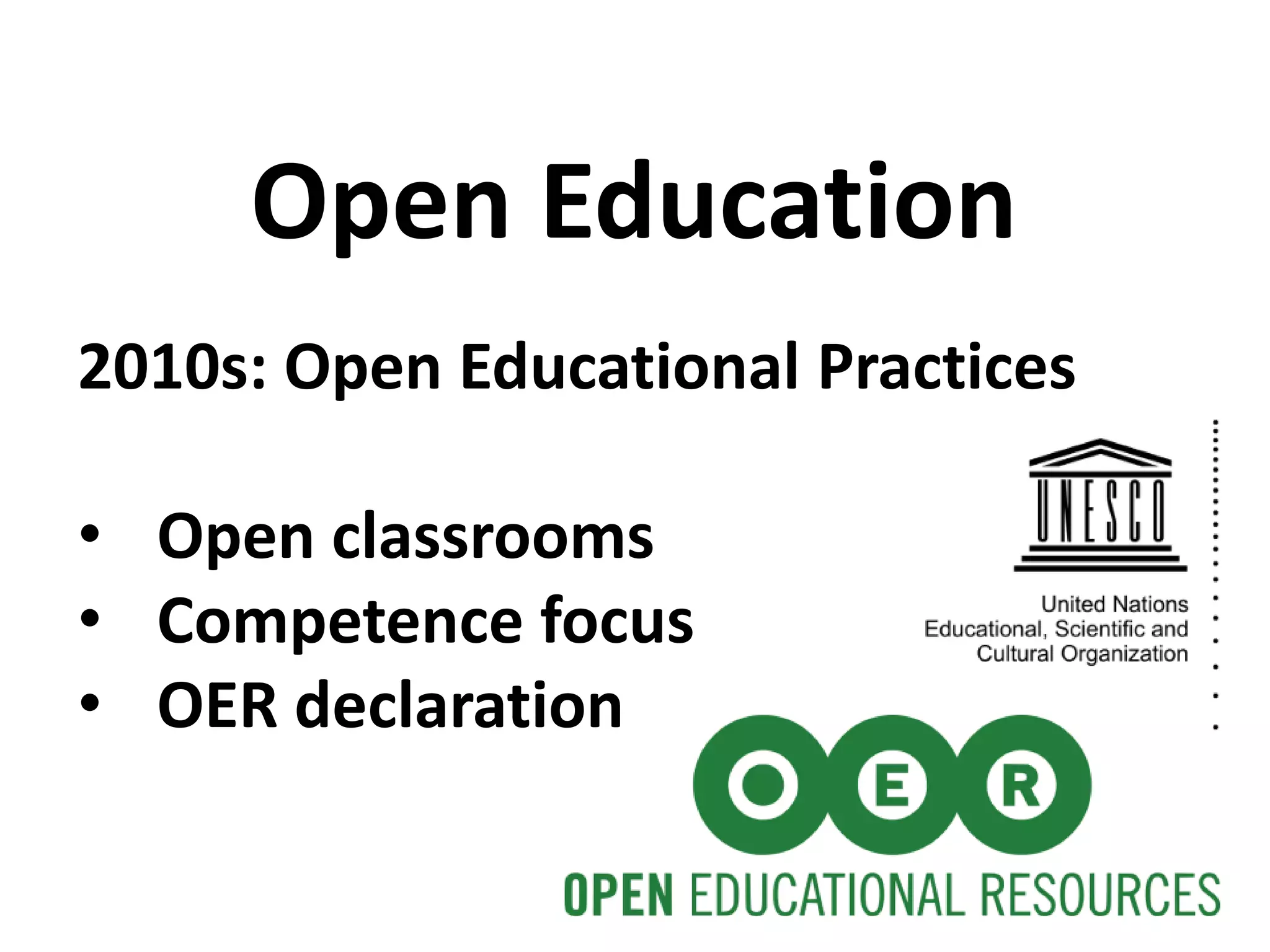
2010s: Open Educational Practices
• Open classrooms
• Competence focus
• OER declaration
Open Education
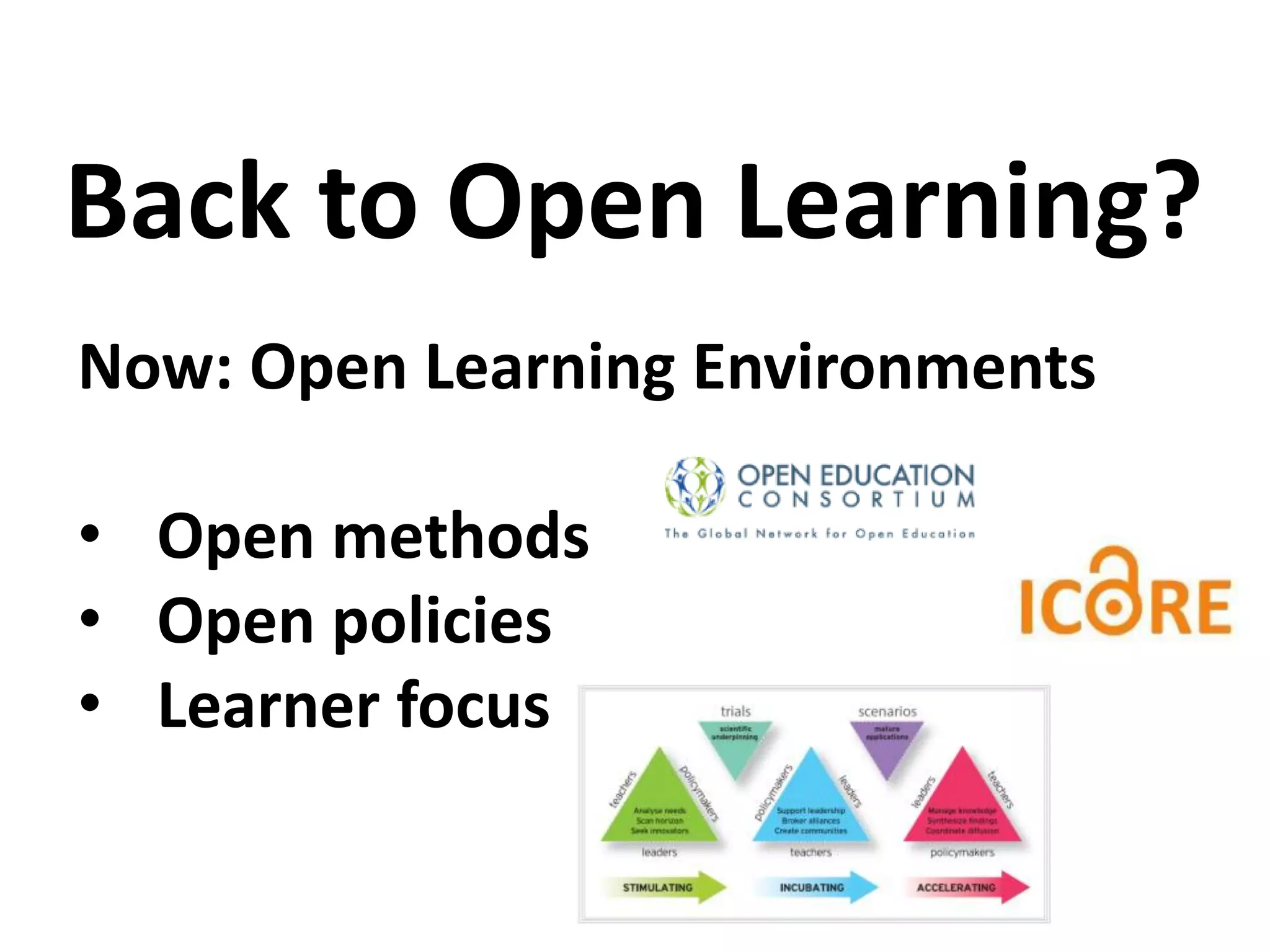
Now: Open Learning Environments
• Open methods
• Open policies
• Learner focus
Back to Open Learning?
Do not to forget the long-term history:
1000 BCE - : Open Educational Practices
• Open discourse (Confucius, Socrates)
1800 CE - : Open Learning
• Progressive theory (Pestalozzi, Humboldt)
• Competence building (Piaget, Vygotsky)
Open Education
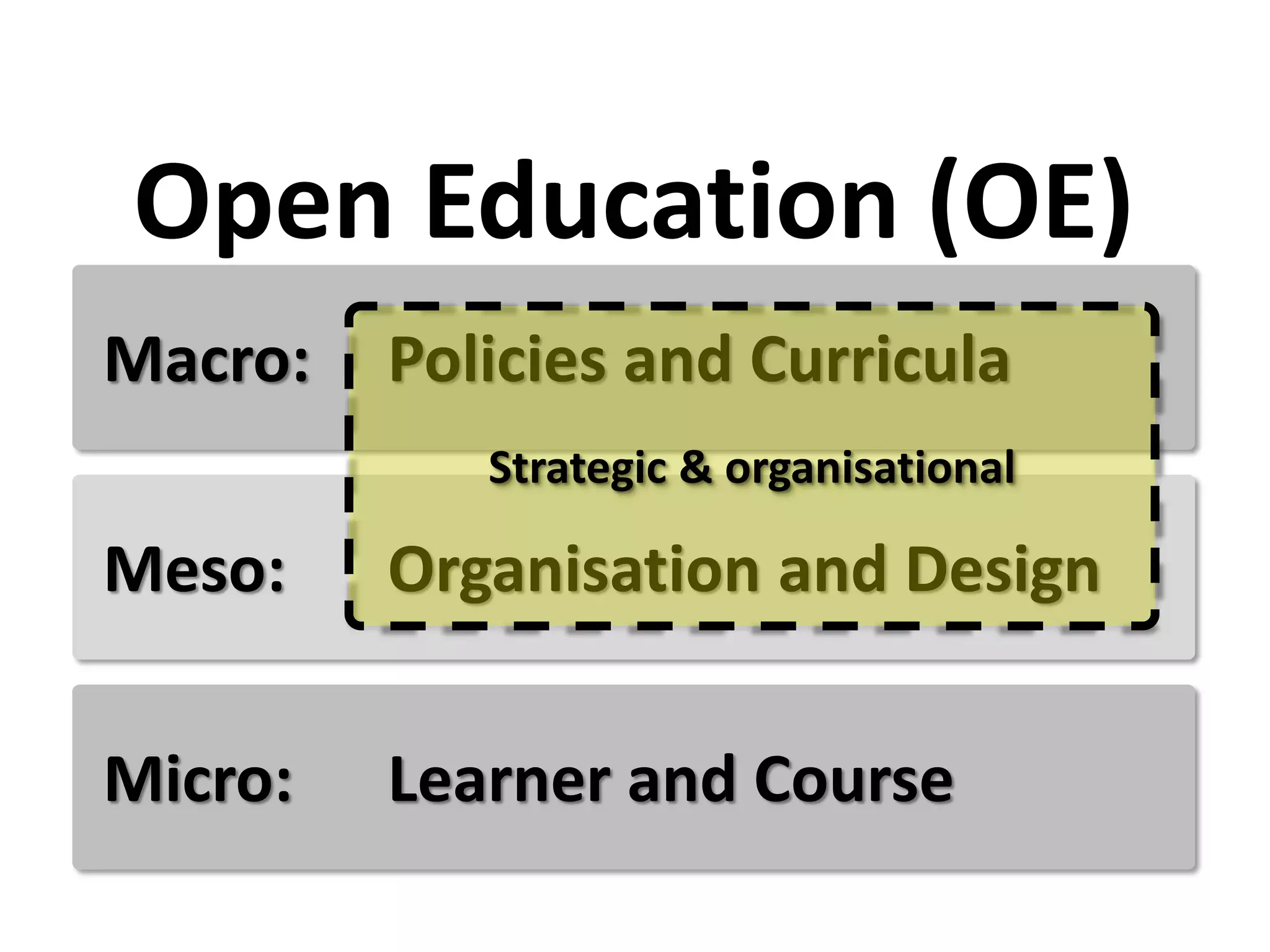
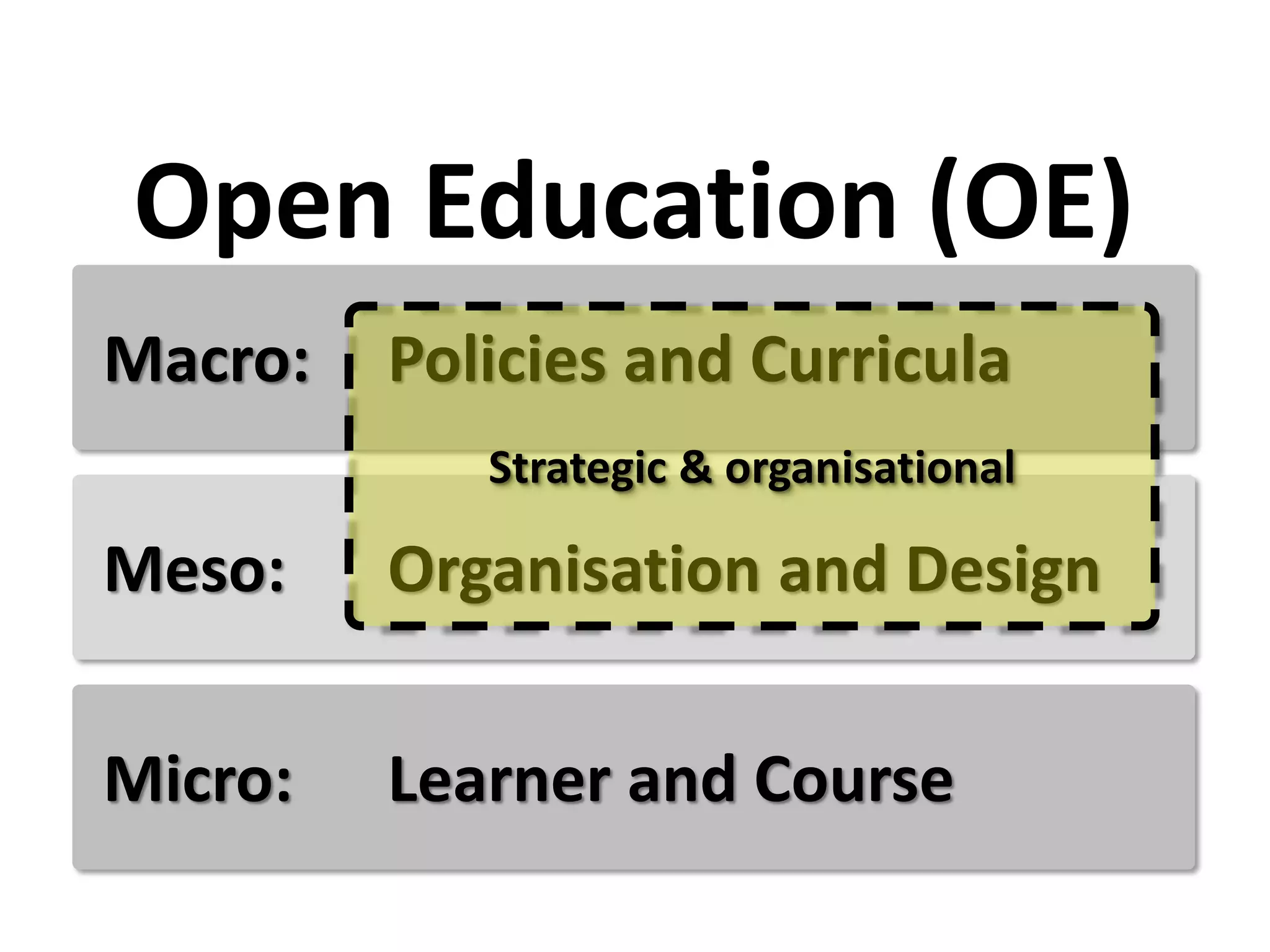
Meso: Organisation and Design
Micro: Learner and Course
Macro: Policies and Curricula
Open Education (OE)
Strategic & organisational
Open Education (OE):
Innovations for changing
& opening up education
to improve the quality
1. What is Open Education?
2. Why Change in Education?
3. What is Quality in Education?
4. How to Improve Quality?
5. How to Participate?
Keynote Overview:
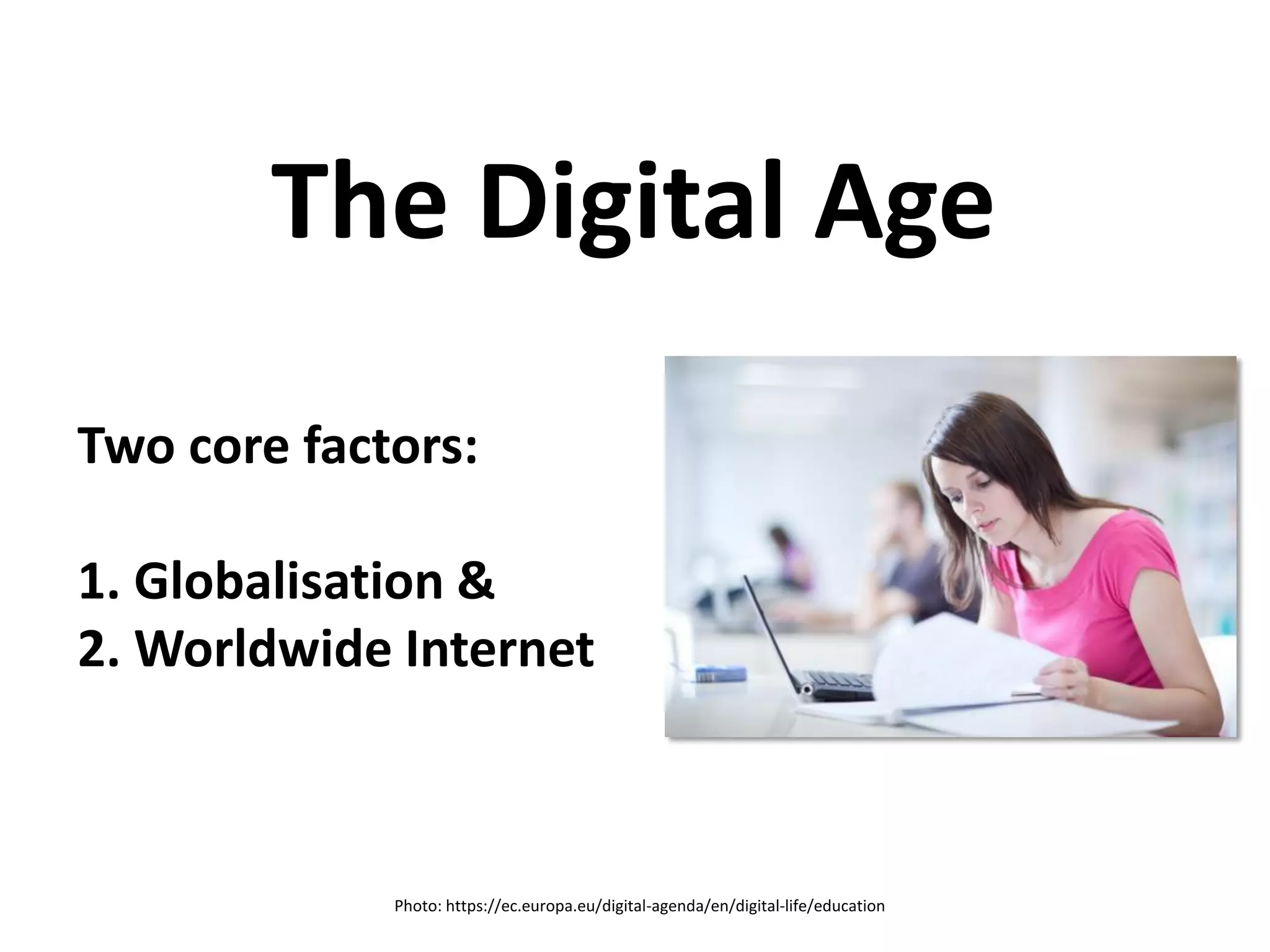
Two core factors:
1. Globalisation &
2. Worldwide Internet
The Digital Age
Photo: https://ec.europa.eu/digital-agenda/en/digital-life/education
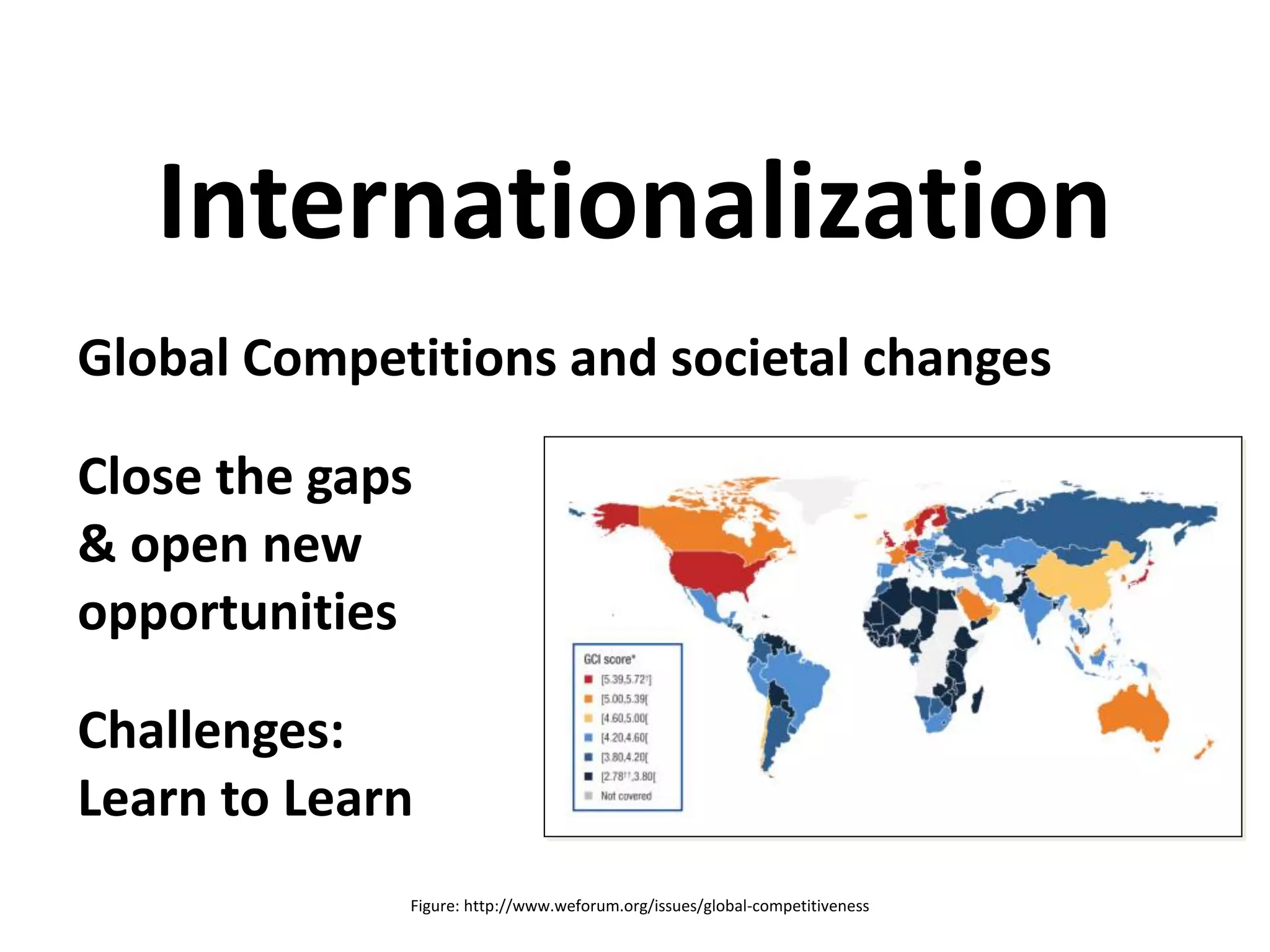
Global Competitions and societal changes
Close the gaps
& open new
opportunities
Challenges:
Learn to Learn
Internationalization
Figure: http://www.weforum.org/issues/global-competitiveness
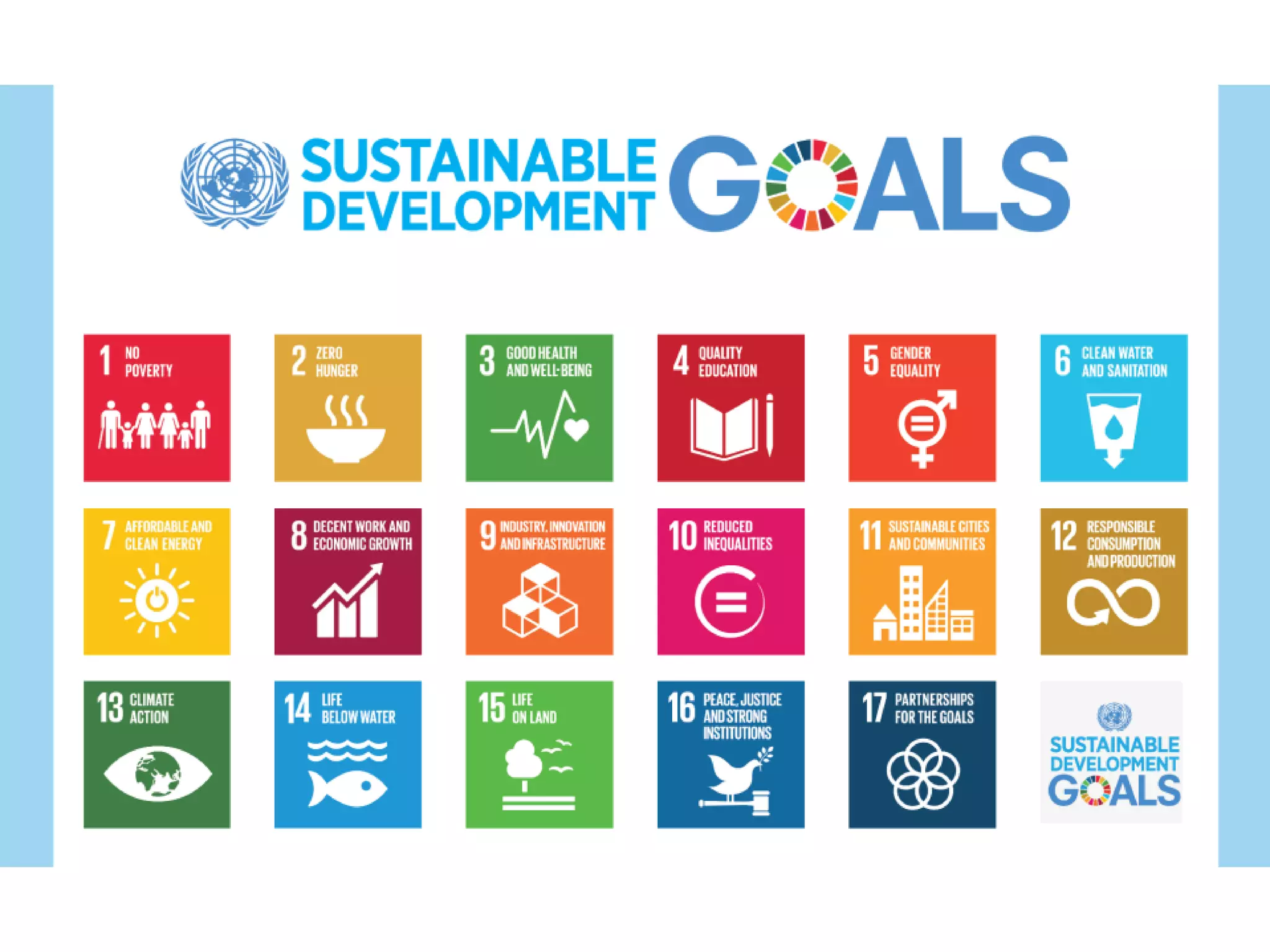
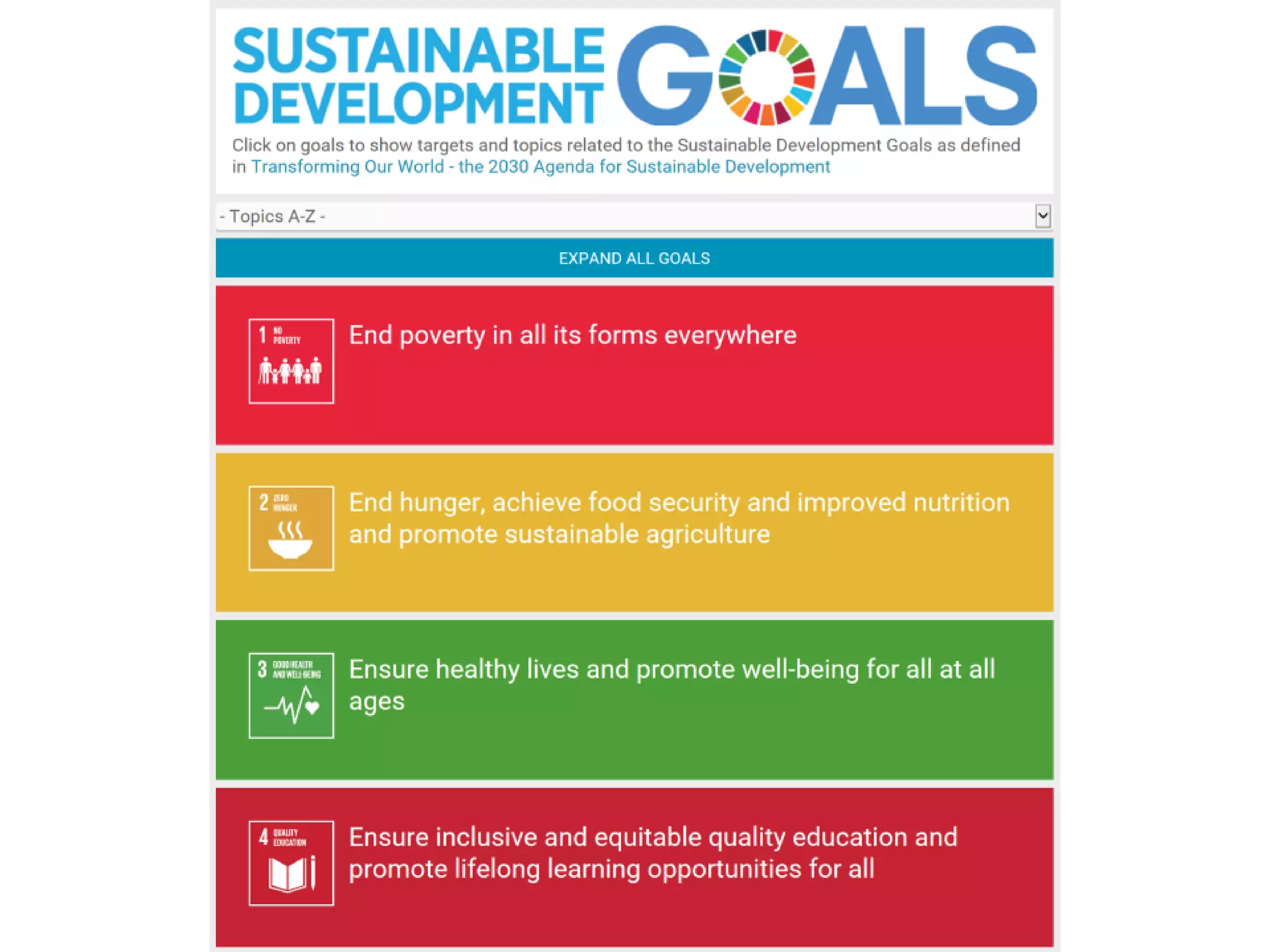
Goal 4:
Inclusive and quality education
Sustainable dev goals
Goal 4:
Inclusive and
quality education
Sustainable
dev goals
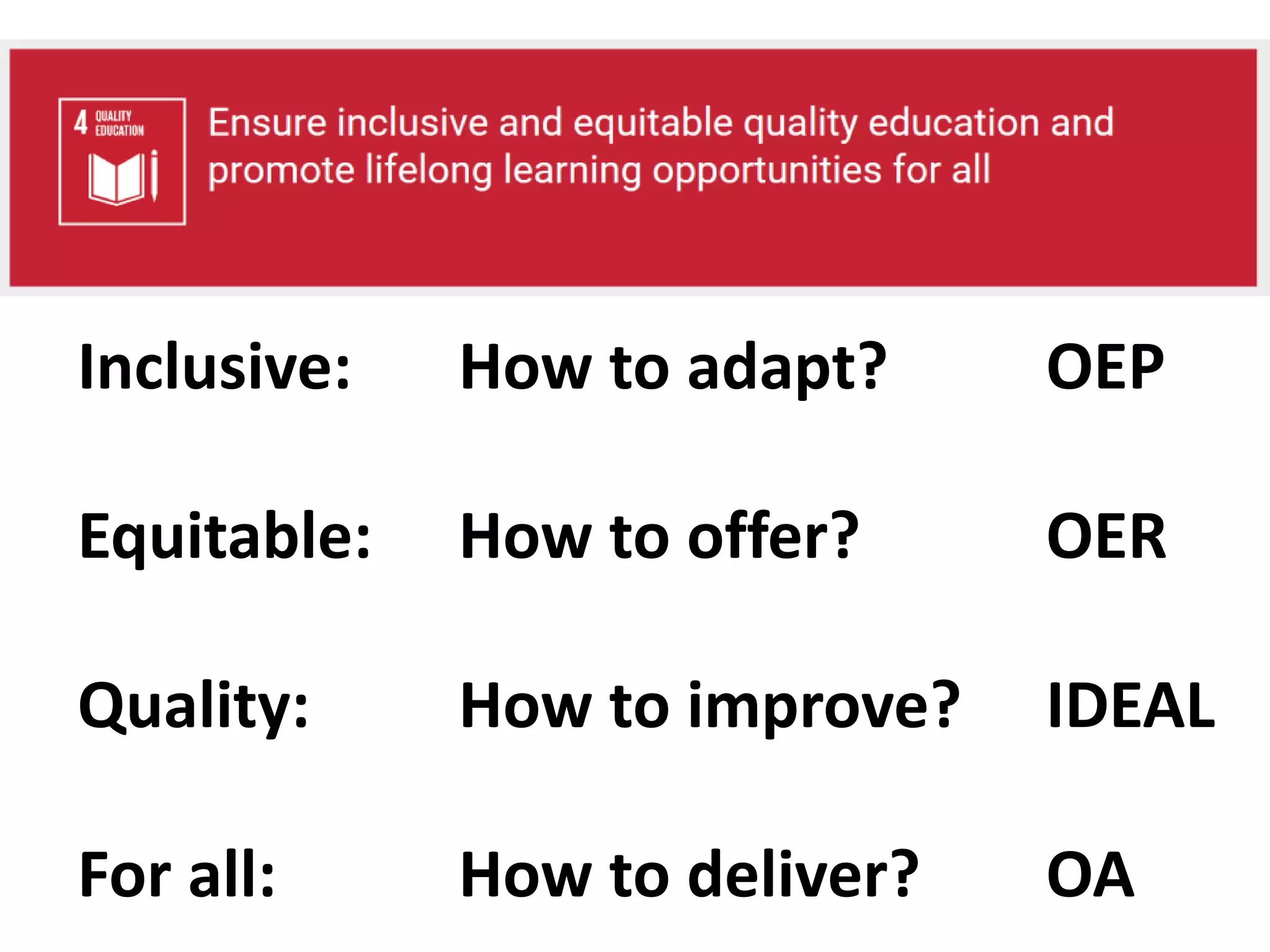
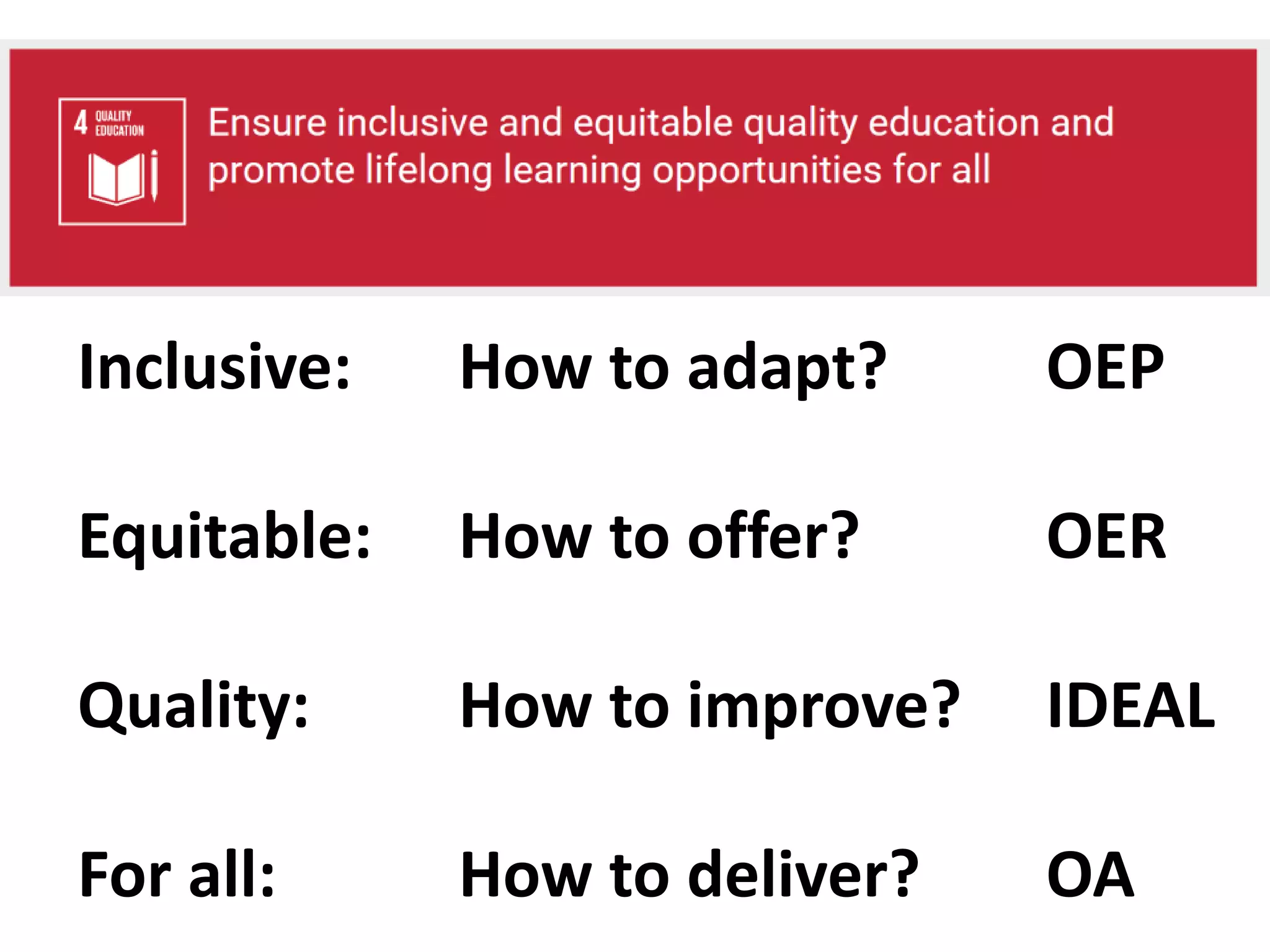
Inclusive: How to adapt? OEP
Equitable: How to offer? OER
Quality: How to improve? IDEAL
For all: How to deliver? OA
Sustainable dev goals
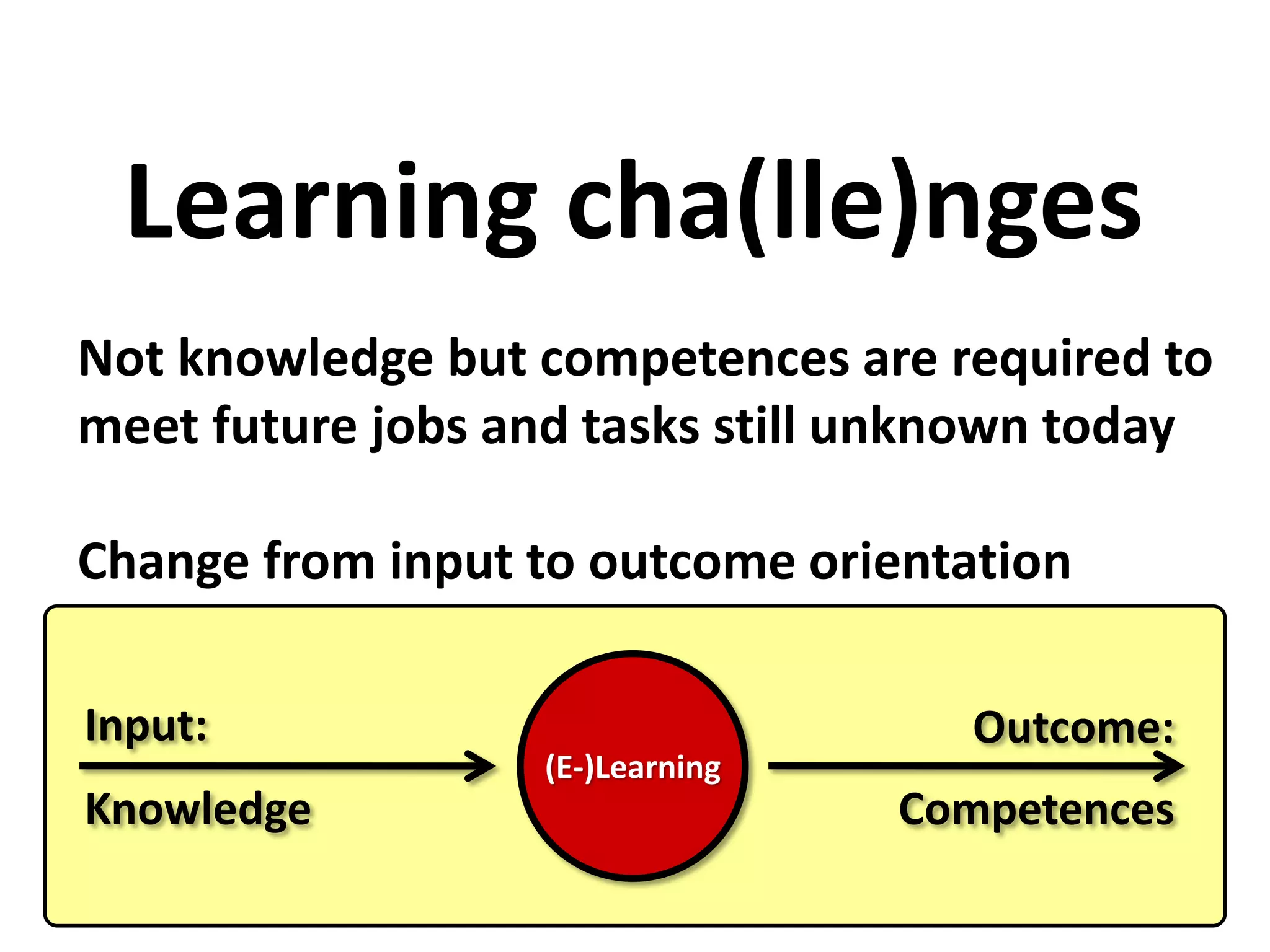
Not knowledge but competences are required to
meet future jobs and tasks still unknown today
Change from input to outcome orientation
Learning cha(lle)nges
(E-)Learning
Input: Outcome:
Knowledge Competences
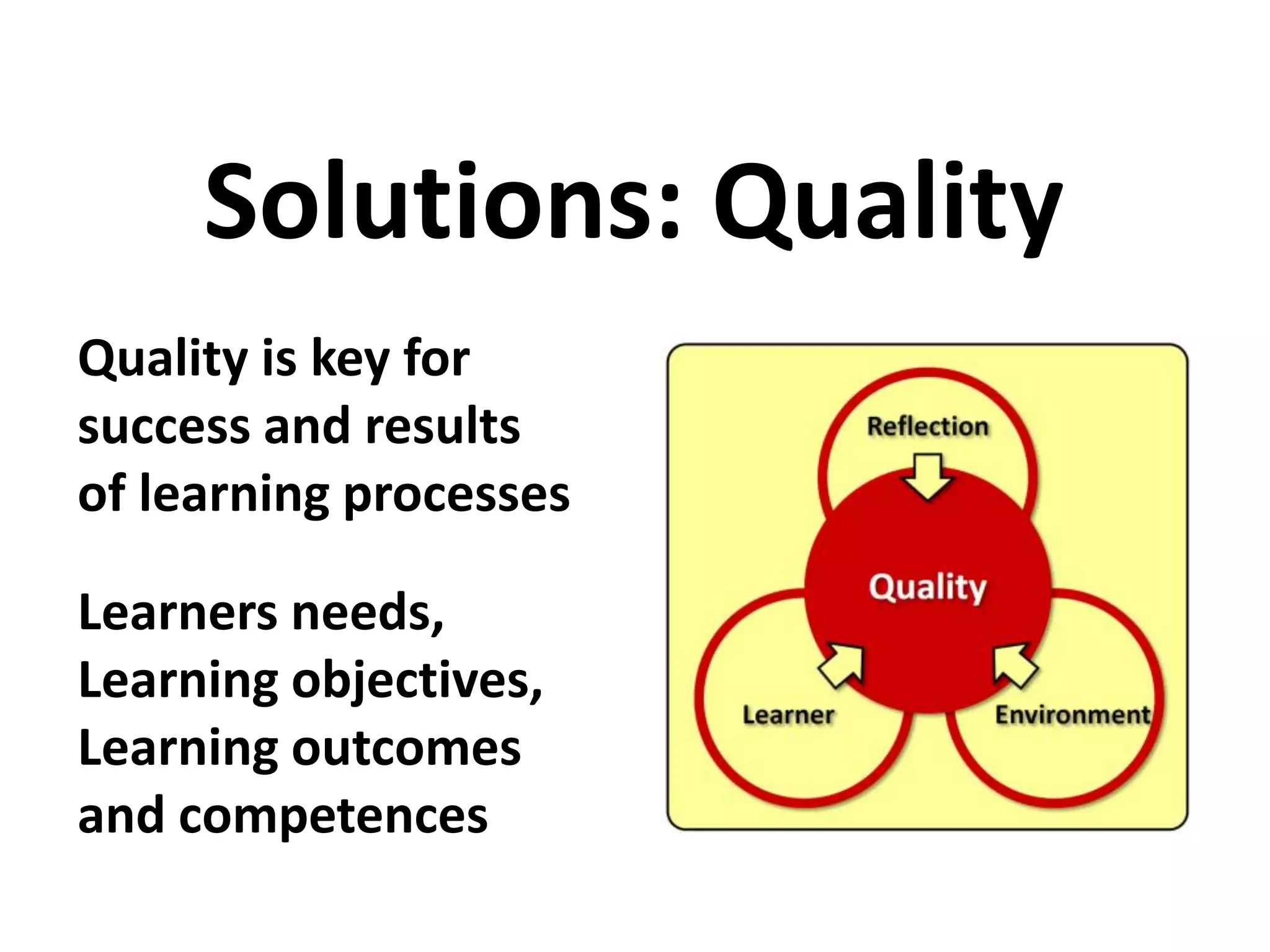
Quality is key for
success and results
of learning processes
Learners needs,
Learning objectives,
Learning outcomes
and competences
Solutions: Quality
Change
in Education!
To improve
Quality
in Education!
1. What is Open Education?
2. Why Change in Education?
3. What is Quality in Education?
4. How to Improve Quality?
5. How to Participate?
Keynote Overview:
What is
Quality in
Education?
What is
Quality?
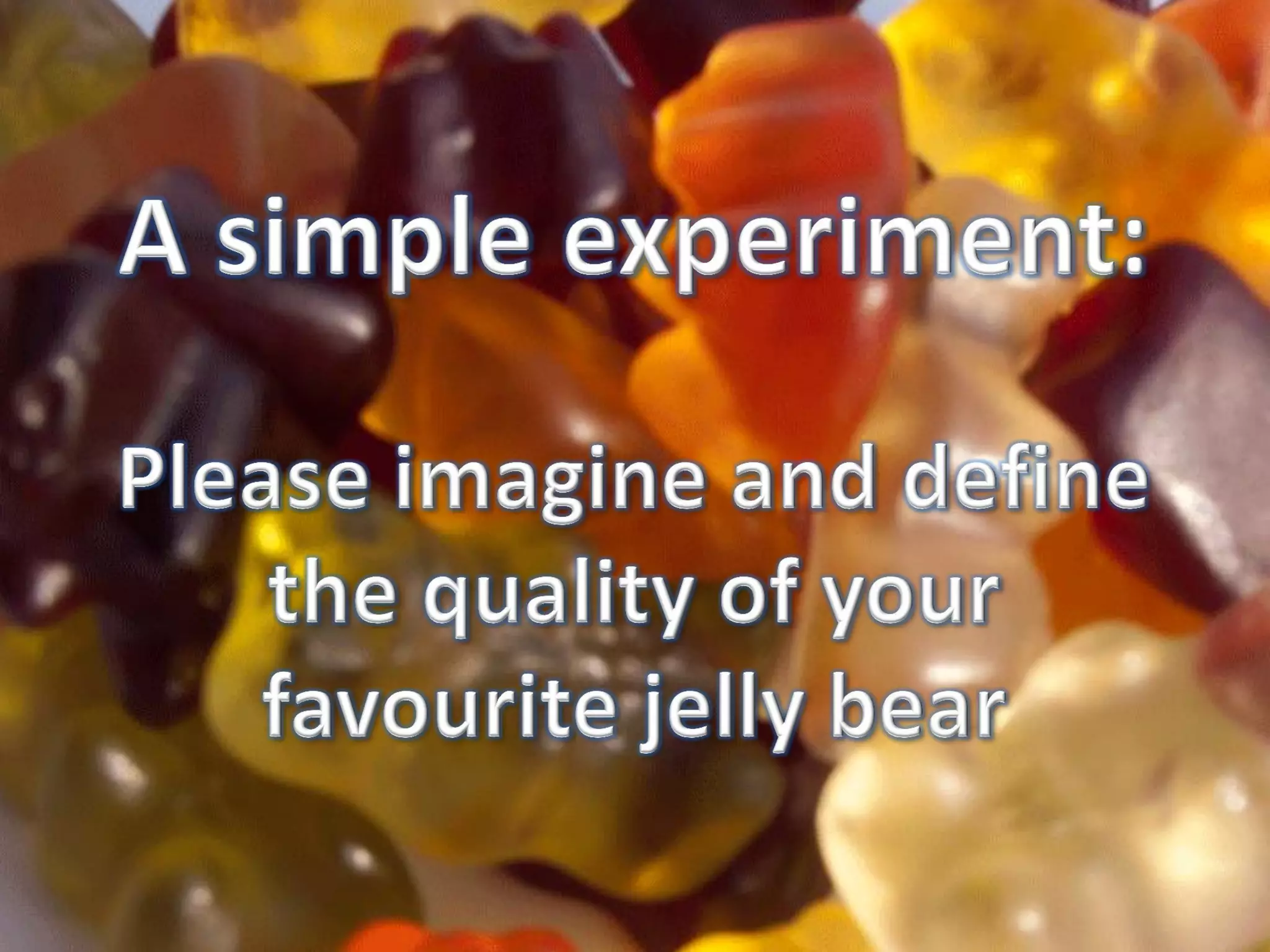
A simple
experiment ...
A simple
experiment ...
Quality
cannot be defined
... except through adaptation
to your situation and context!
What is
Quality?
Quality
most important
for Learning, Education
and Training!
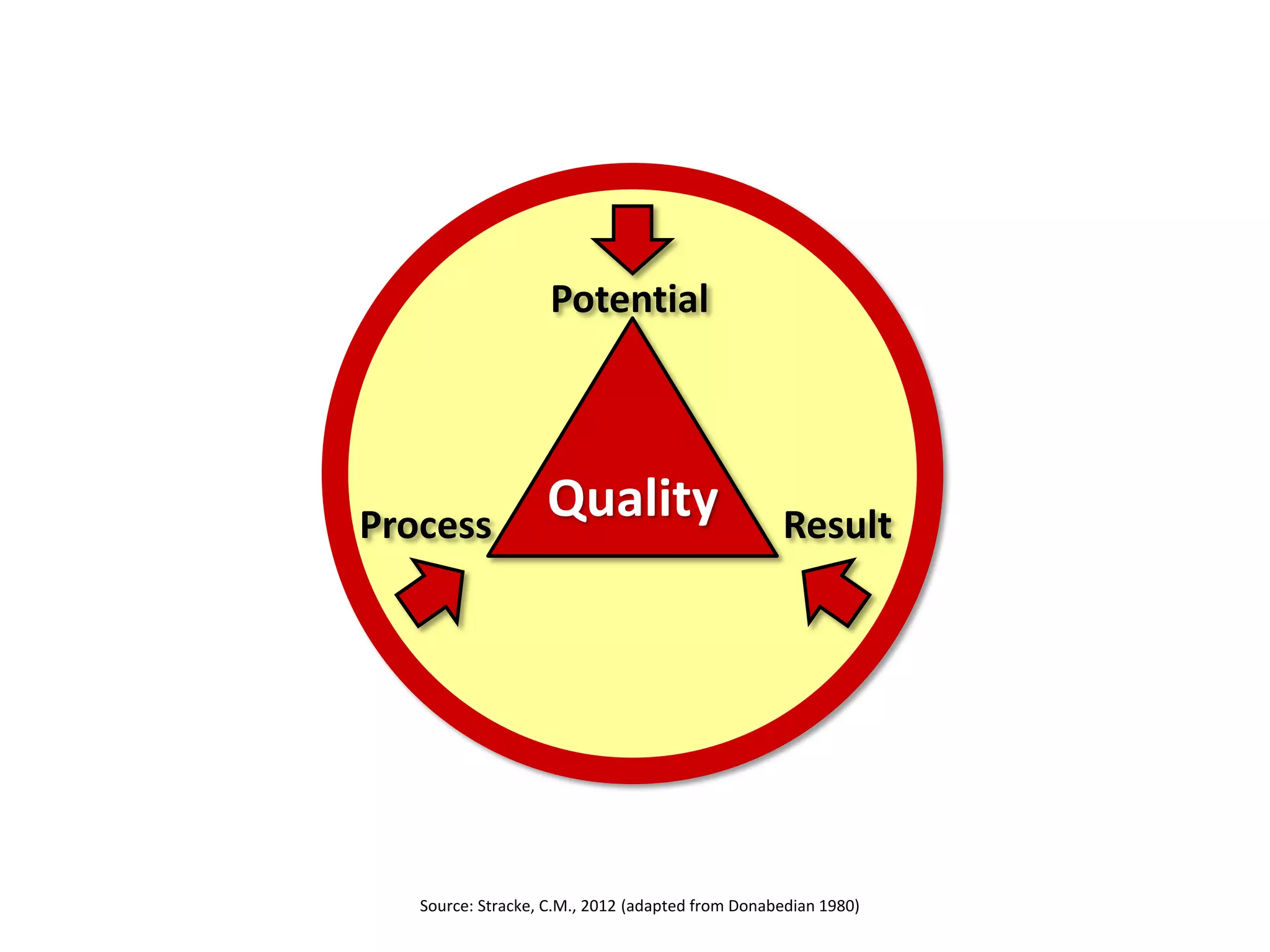
Quality
Potential
Process Result
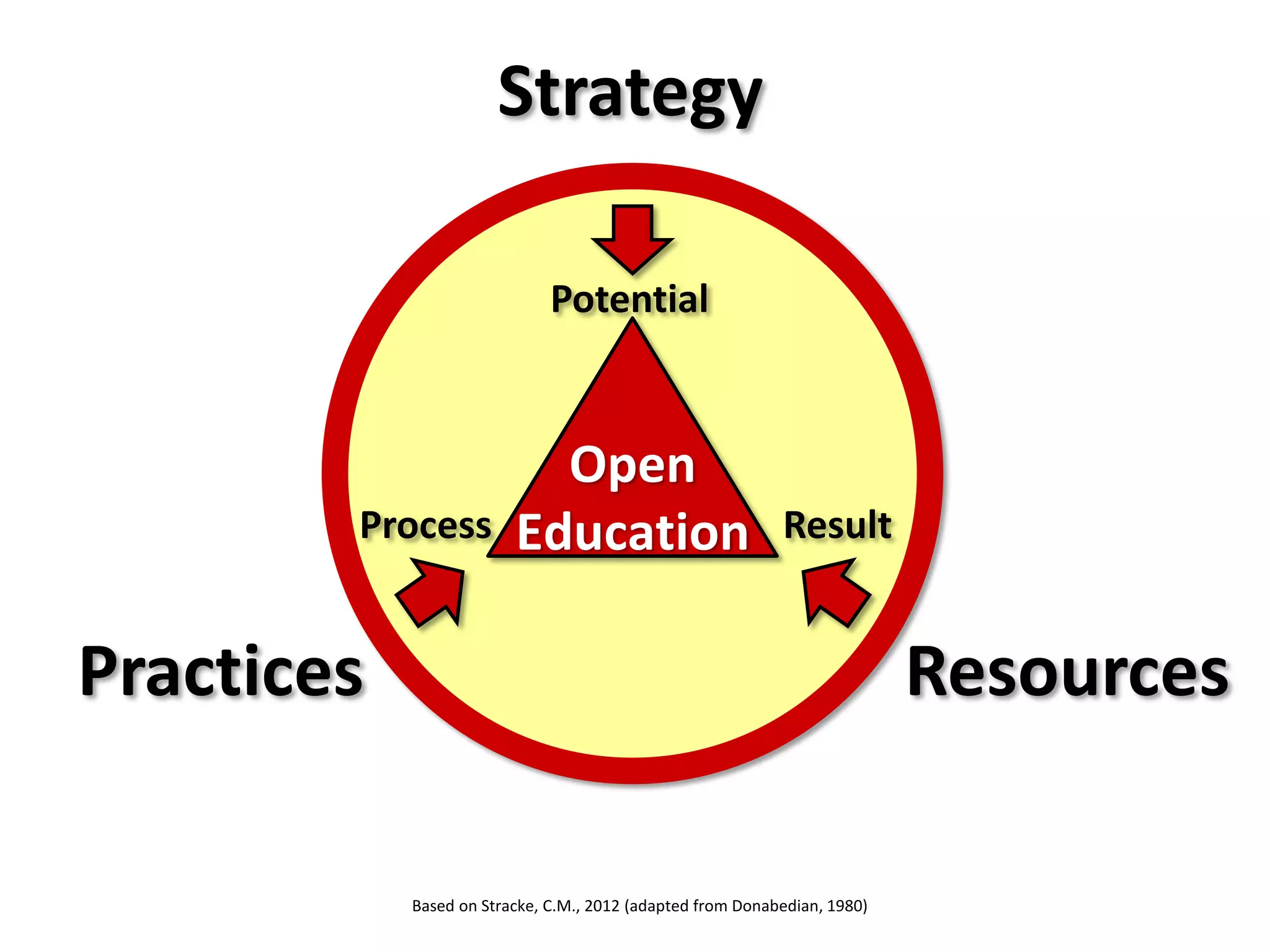
Source: Stracke, C.M., 2012 (adapted from Donabedian 1980)
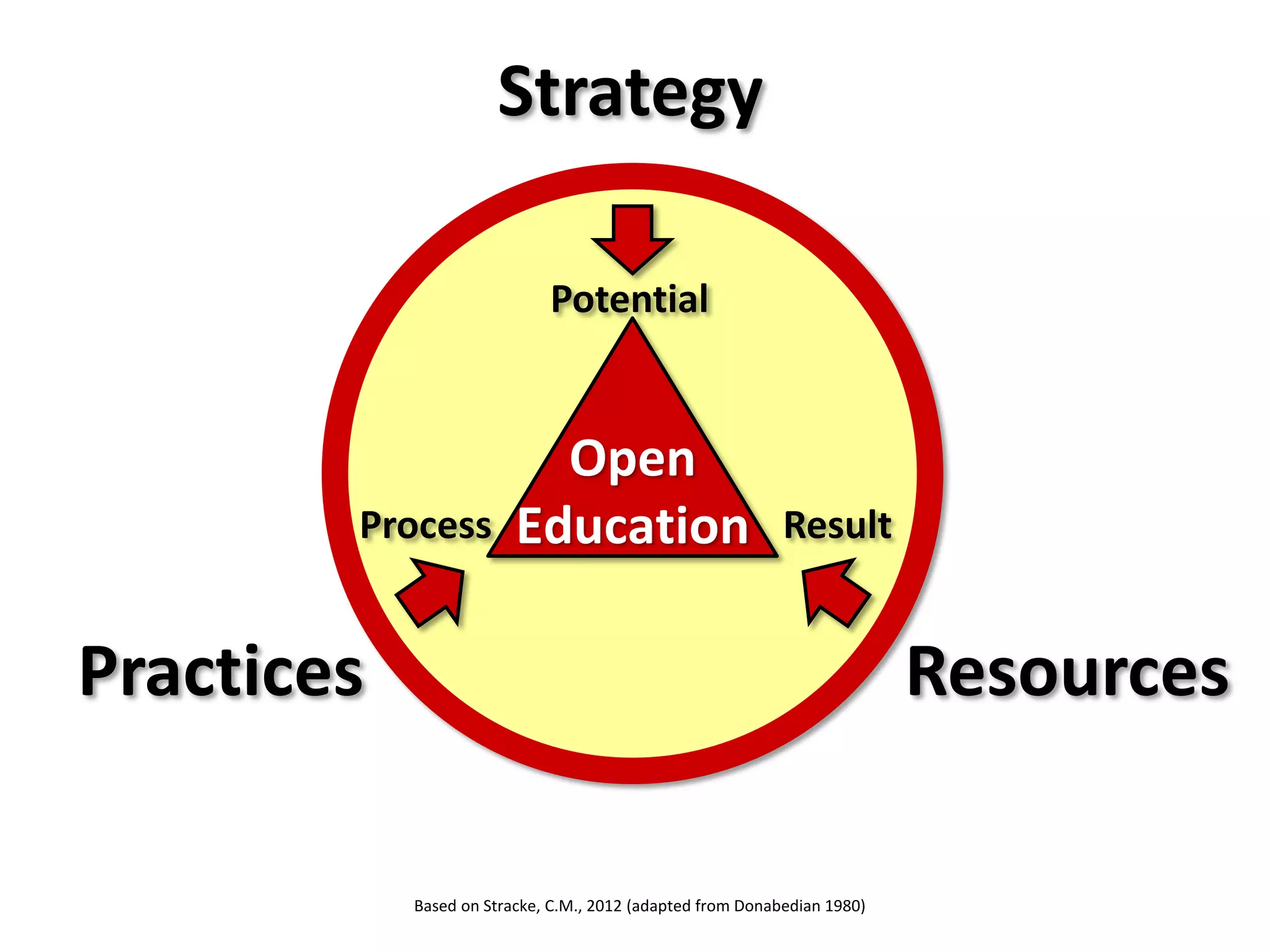
Open
Education
Potential
Process Result
Based on Stracke, C.M., 2012 (adapted from Donabedian 1980)
Strategy
ResourcesPractices
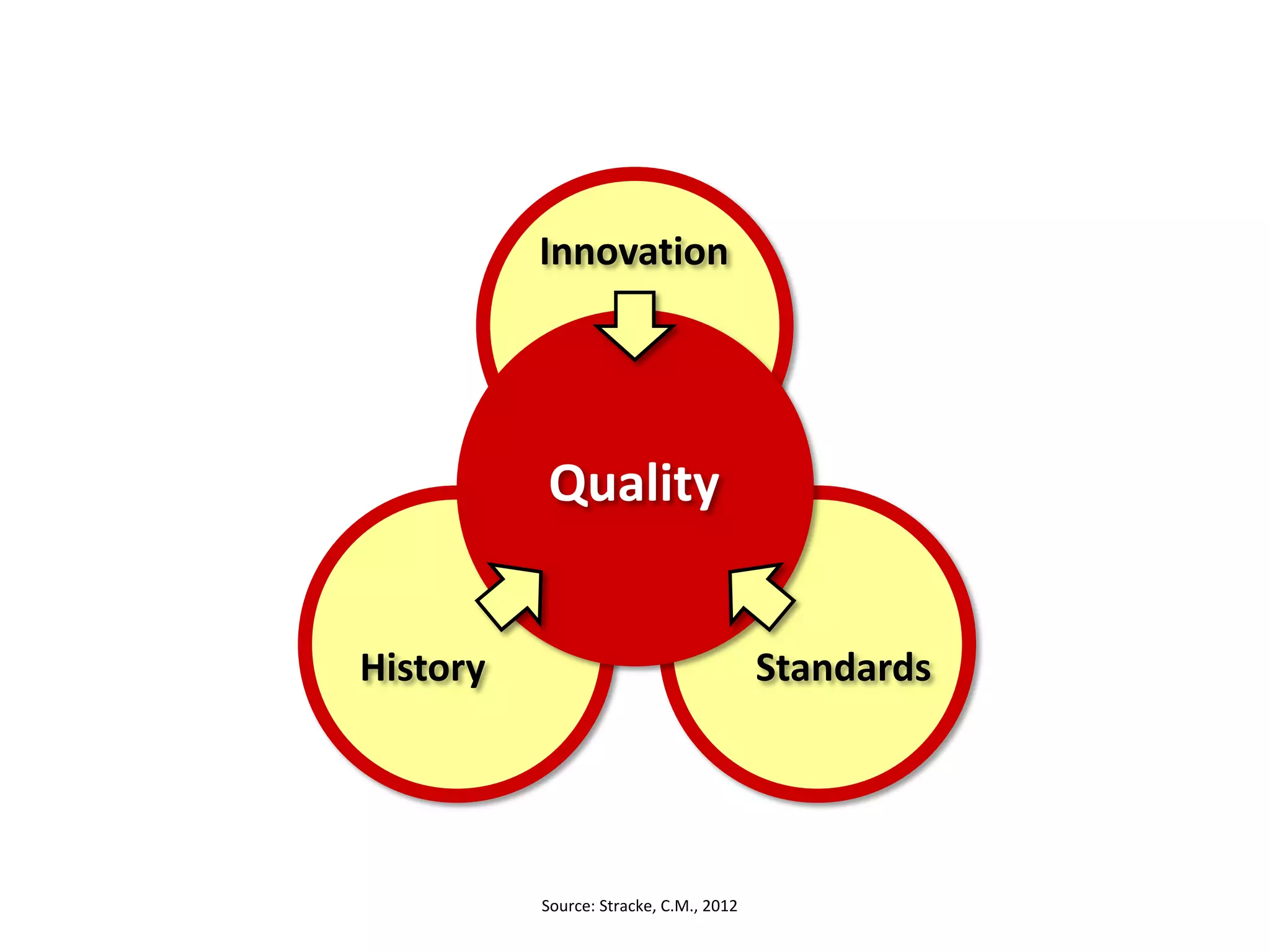
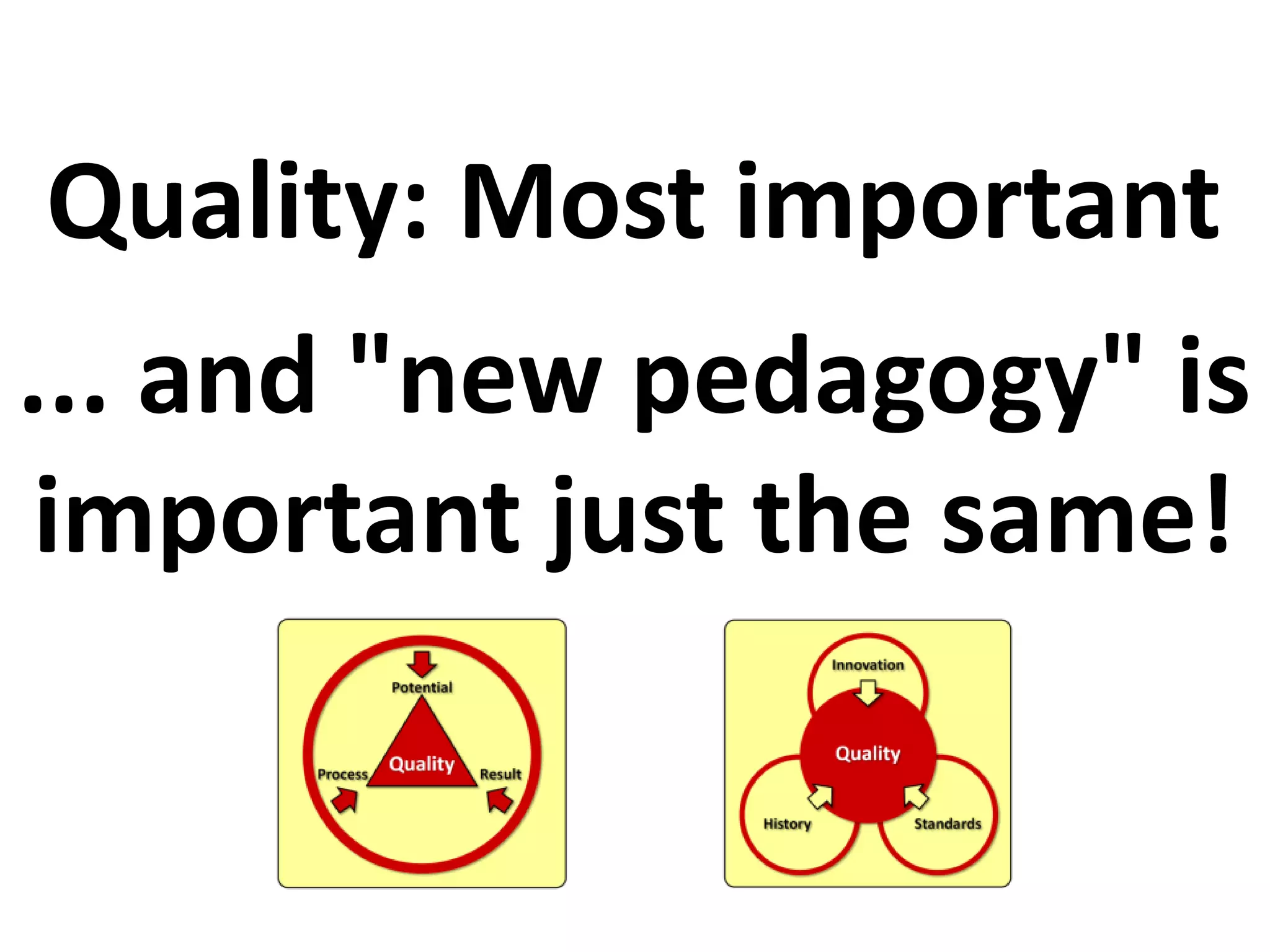
Innovation
History Standards
Quality
Source: Stracke, C.M., 2012
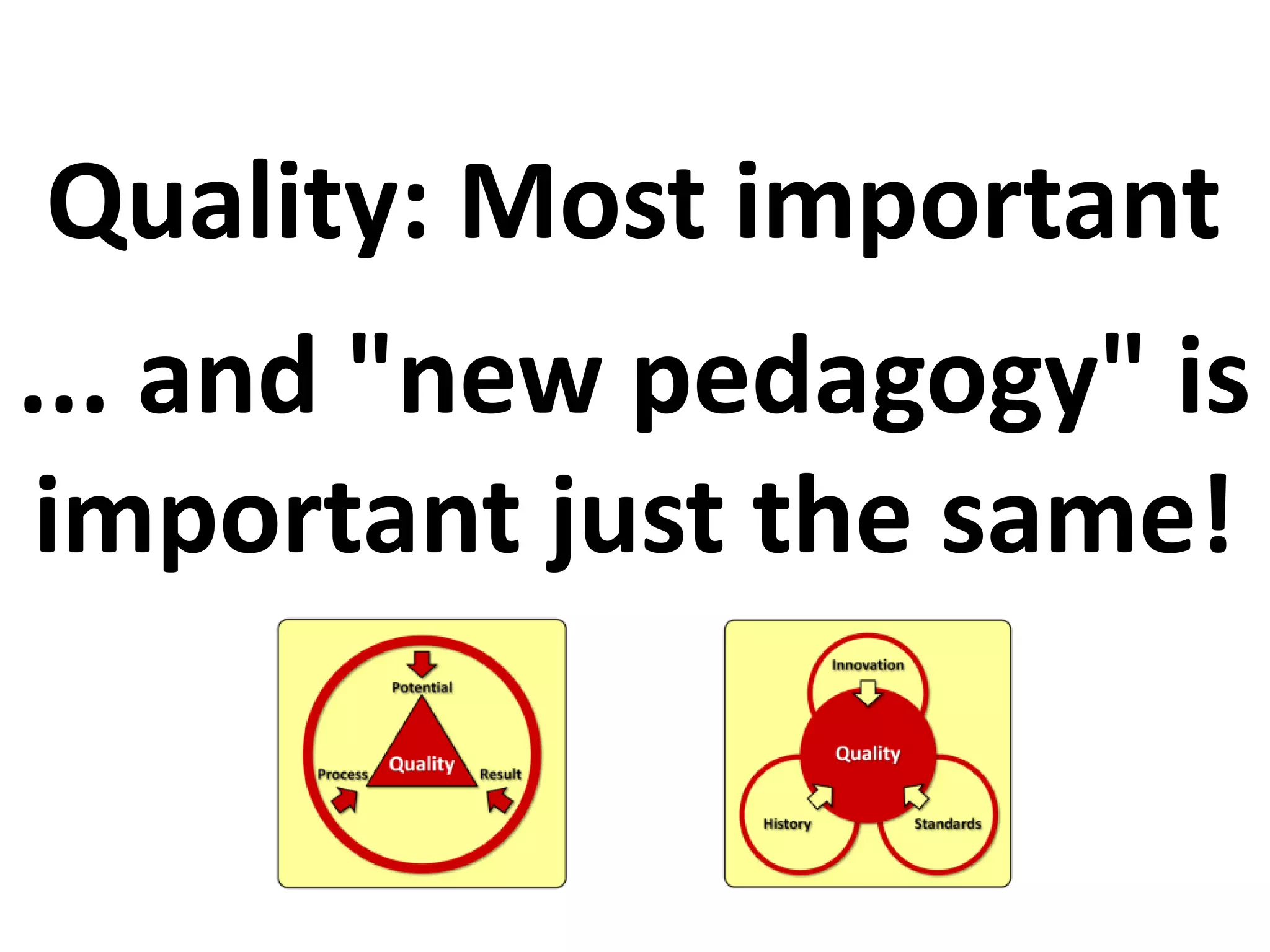
Quality: Most important
... and "new pedagogy" is
important just the same!
Quality
in Education!
Quality
in Education!
... with fun!
1. What is Open Education?
2. Why Change in Education?
3. What is Quality in Education?
4. How to Improve Quality?
5. How to Participate?
Keynote Overview:
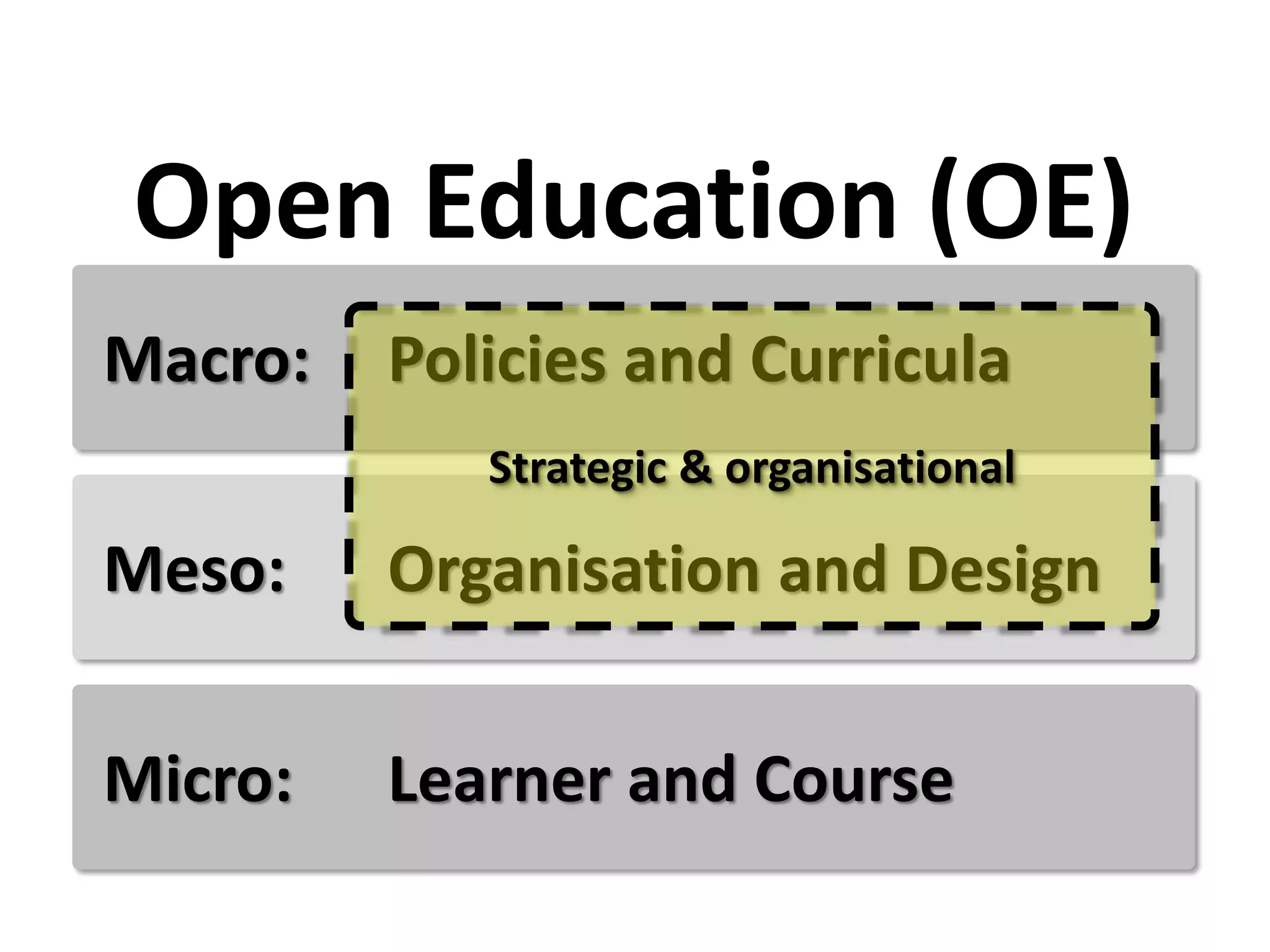
Meso: Organisation and Design
Micro: Learner and Course
Macro: Policies and Curricula
Open Education (OE)
Strategic & organisational
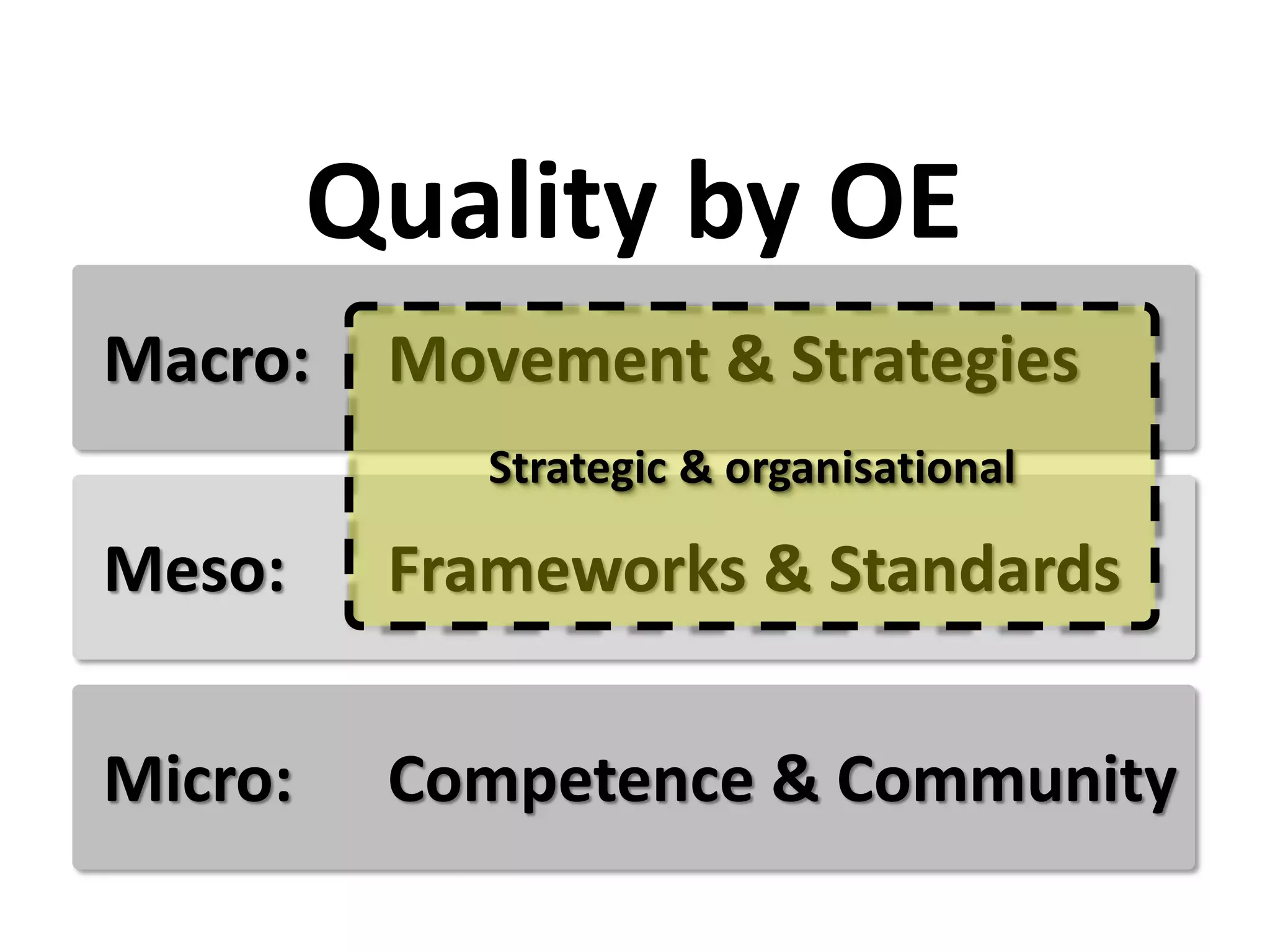
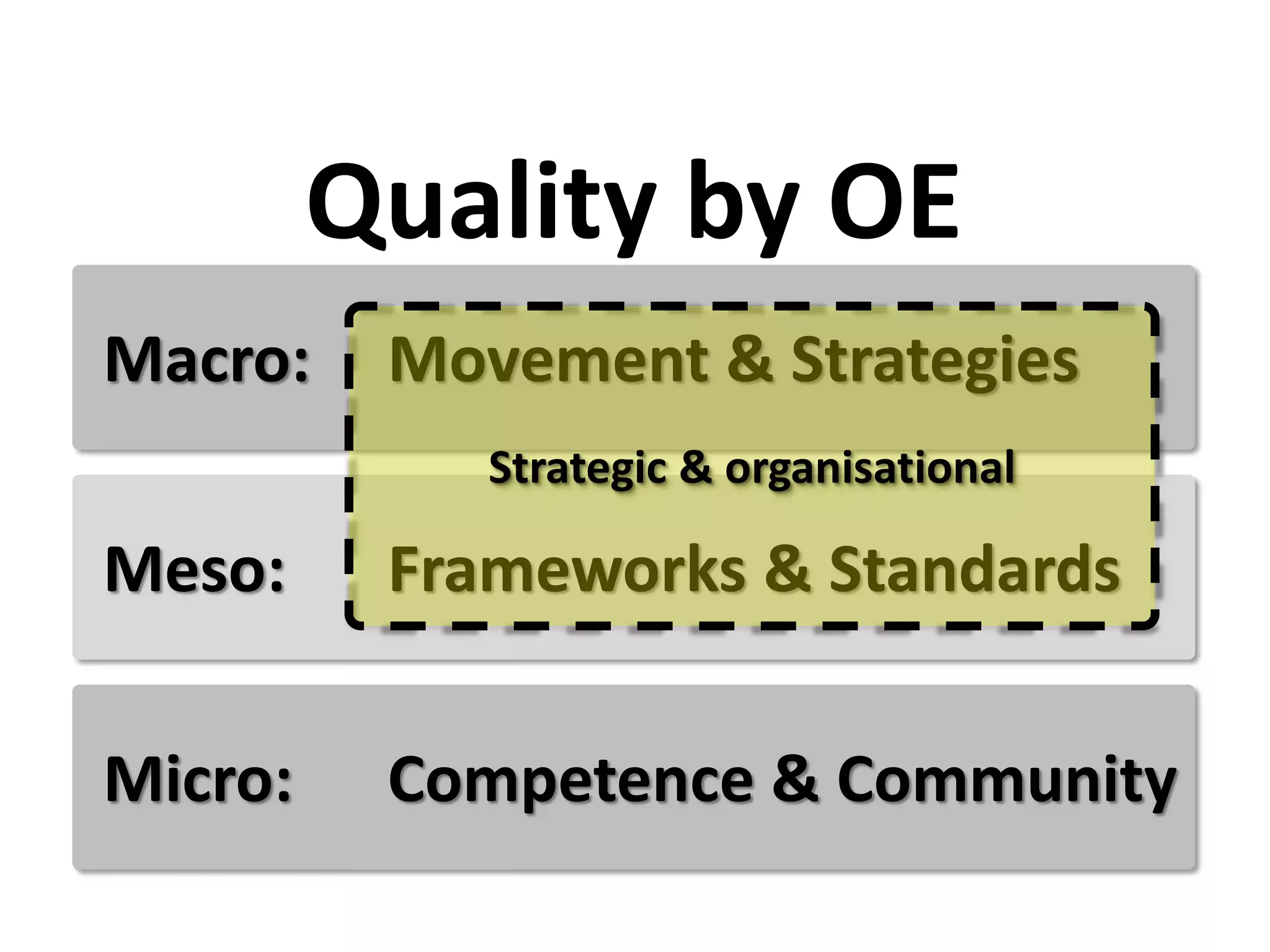
Meso: Frameworks & Standards
Micro: Competence & Community
Macro: Movement & Strategies
Quality by OE
Strategic & organisational
OUNL Video
Meso: Organisation and Design
Micro: Learner and Course
Macro: Policies and Curricula
Open Education (OE)
Strategic & organisational
Meso: Frameworks & Standards
Micro: Competence & Community
Macro: Movement & Strategies
Quality by OE
Strategic & organisational
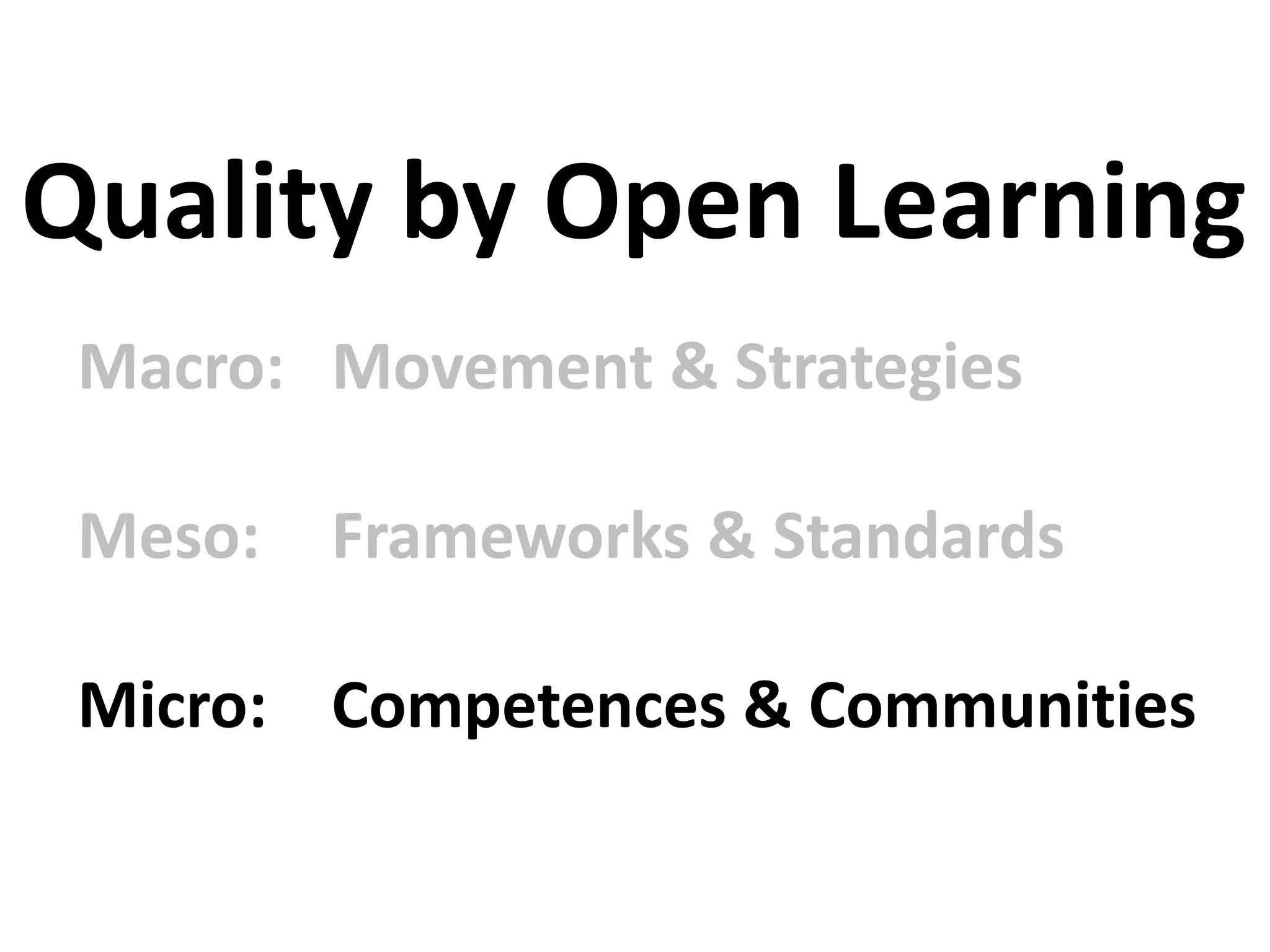
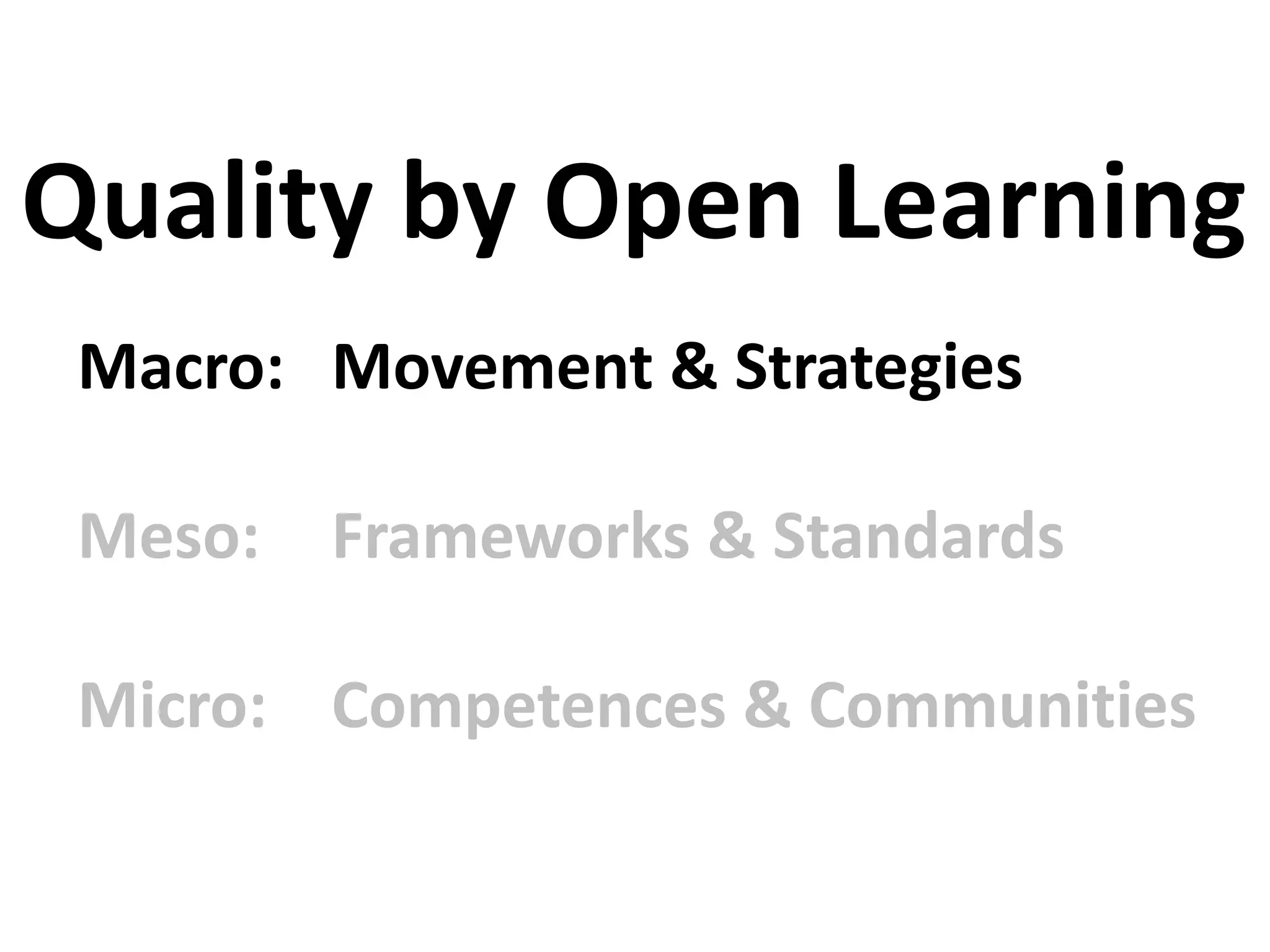
Macro: Movement & Strategies
Meso: Frameworks & Standards
Micro: Competences & Communities
Quality by Open Learning
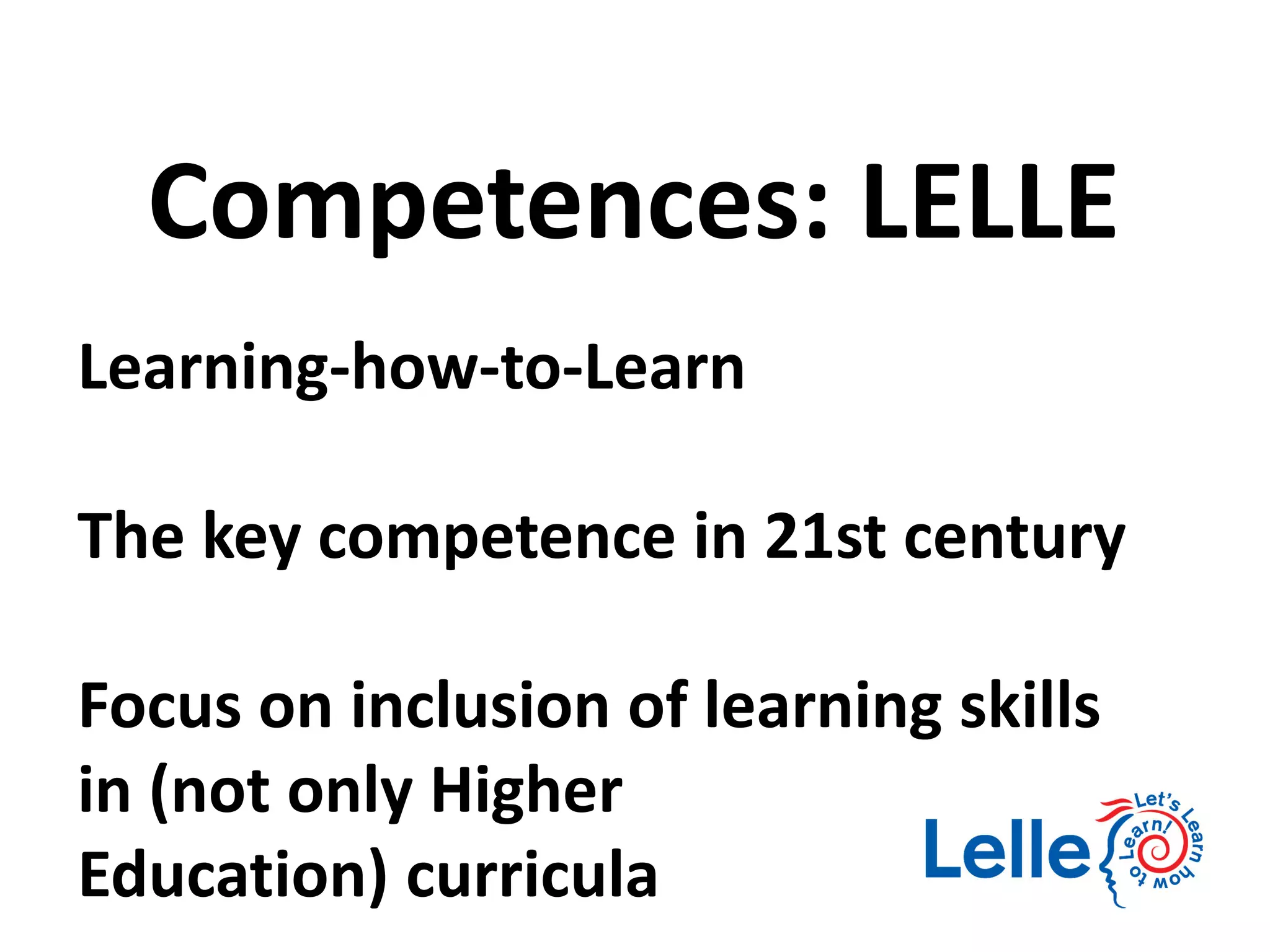
Learning-how-to-Learn
The key competence in 21st century
Focus on inclusion of learning skills
in (not only Higher
Education) curricula
Competences: LELLE
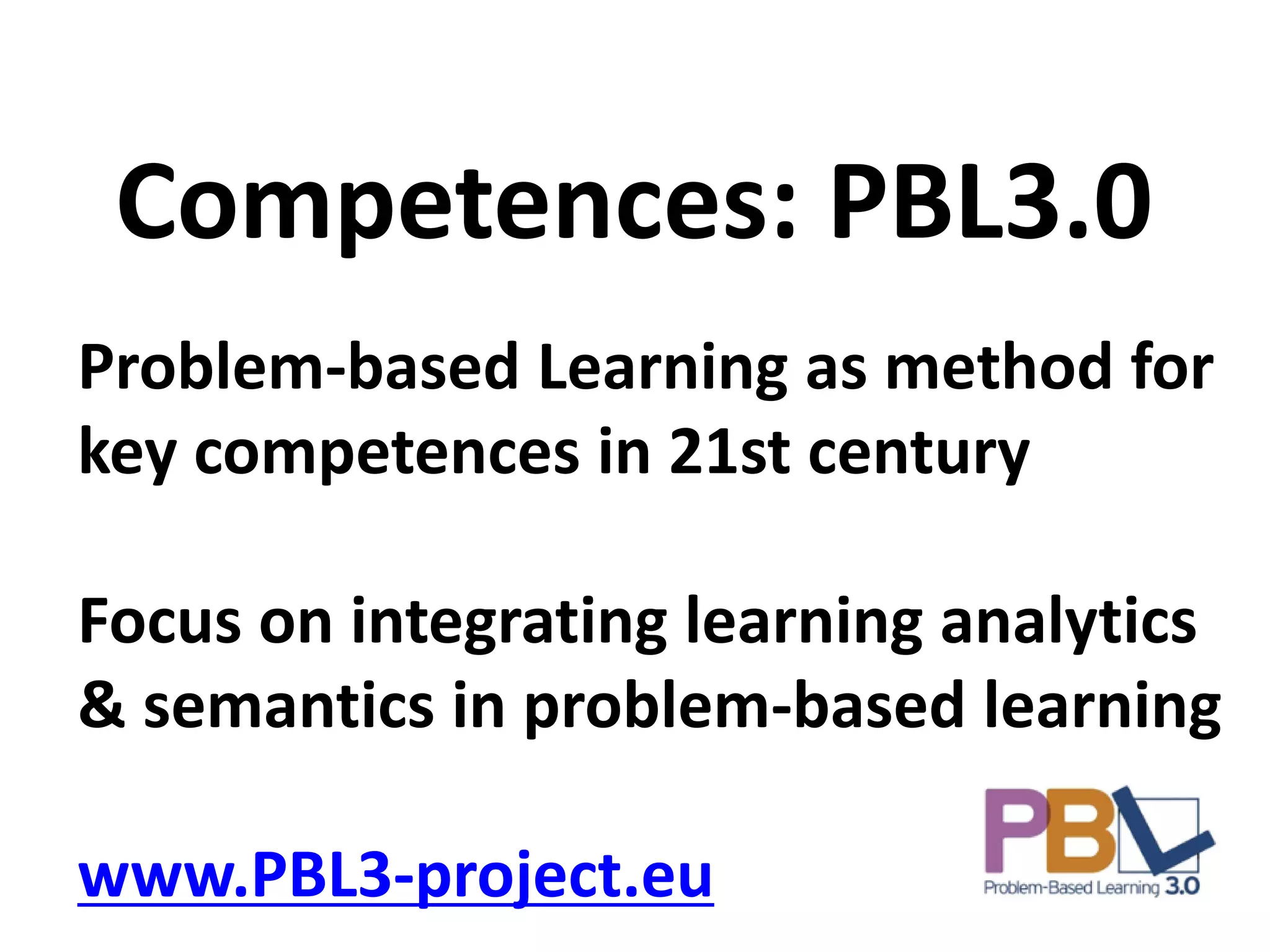
Problem-based Learning as method for
key competences in 21st century
Focus on integrating learning analytics
& semantics in problem-based learning
www.PBL3-project.eu
Competences: PBL3.0
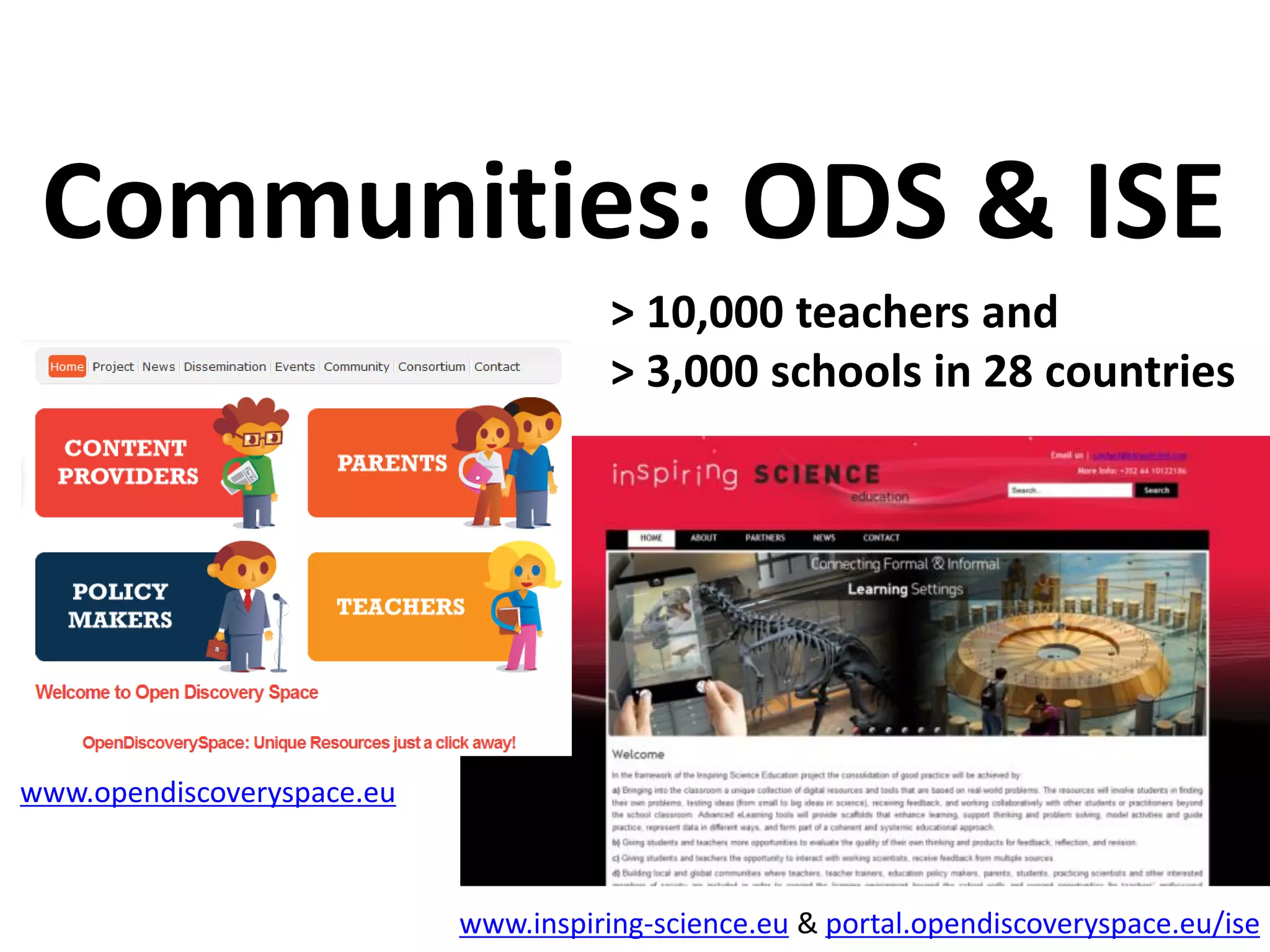
Communities: ODS & ISE
www.opendiscoveryspace.eu
www.inspiring-science.eu & portal.opendiscoveryspace.eu/ise
> 10,000 teachers and
> 3,000 schools in 28 countries
Macro: Movement & Strategies
Meso: Frameworks & Standards
Micro: Competences & Communities
Quality by Open Learning
MOOQ for the quality of MOOCs:
“We will make MOOCs better”
Quality Reference Framework with
indicators for design & comparison
www.MOOC-quality.eu
Frameworks: MOOQ
MOOQ for the quality of MOOCs:
“We will make MOOCs better”
Quality Reference Framework with
indicators for design & comparison
www.MOOC-quality.eu
Frameworks: MOOQ
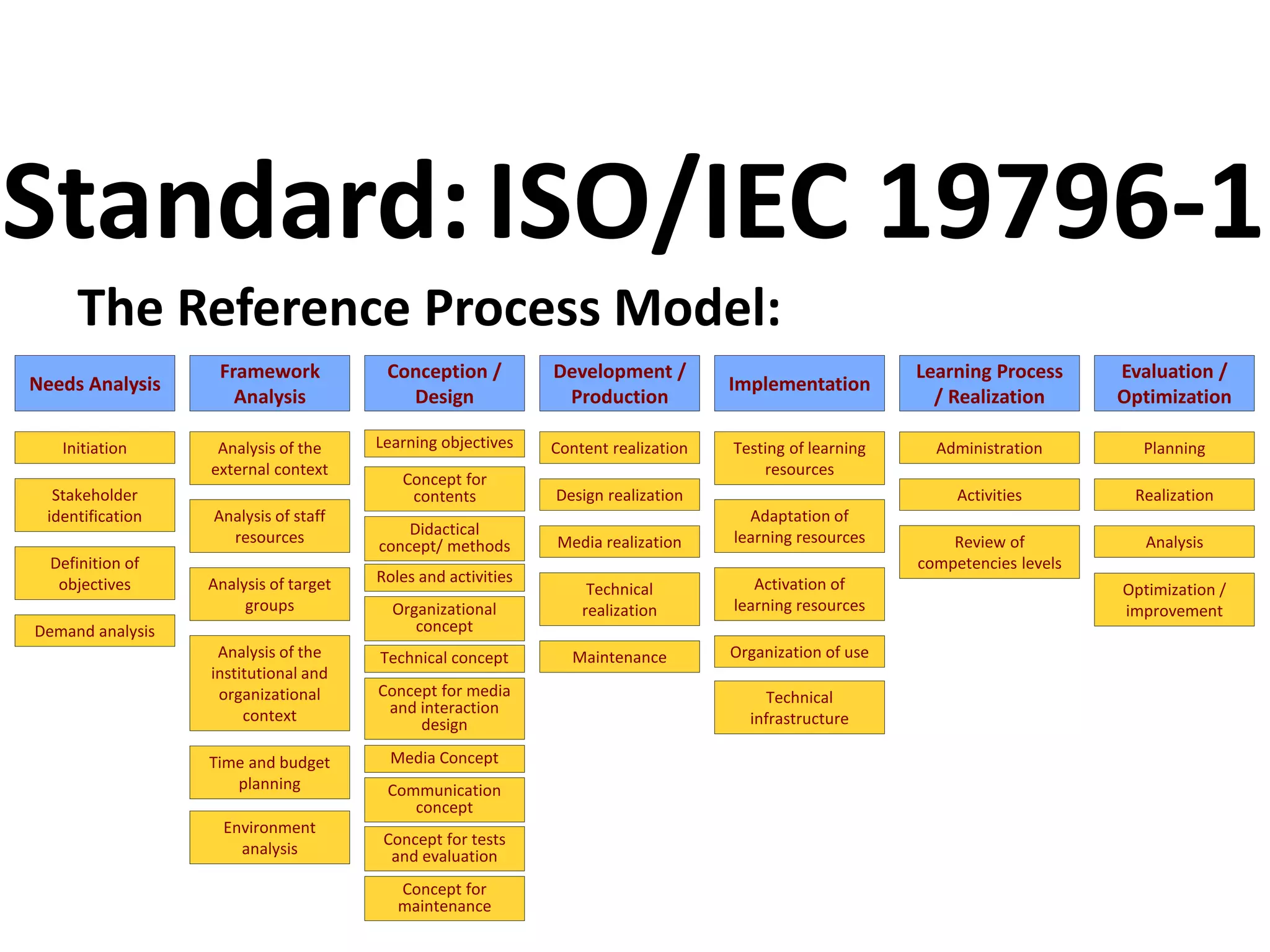
The Reference Process Model:
Standard:ISO/IEC 19796-1
Communication
concept
Needs Analysis
Conception /
Design
Development /
Production
Implementation
Framework
Analysis
Learning Process
/ Realization
Initiation
Media realization
Technical
realization
Design realization
Content realizationAnalysis of the
external context
Testing of learning
resources
Learning objectives
Stakeholder
identification
Concept for
contents
Definition of
objectives
Demand analysis
Time and budget
planning
Environment
analysis
Activities
Organization of use
Activation of
learning resources
Adaptation of
learning resourcesDidactical
concept/ methods
Organizational
concept
Roles and activities
Technical concept
Concept for media
and interaction
design
Media Concept
Technical
infrastructure
Review of
competencies levels
Concept for tests
and evaluation
Analysis of staff
resources
Evaluation /
Optimization
Planning
Realization
Analysis
Optimization /
improvement
Analysis of the
institutional and
organizational
context
Analysis of target
groups
Concept for
maintenance
Administration
Maintenance
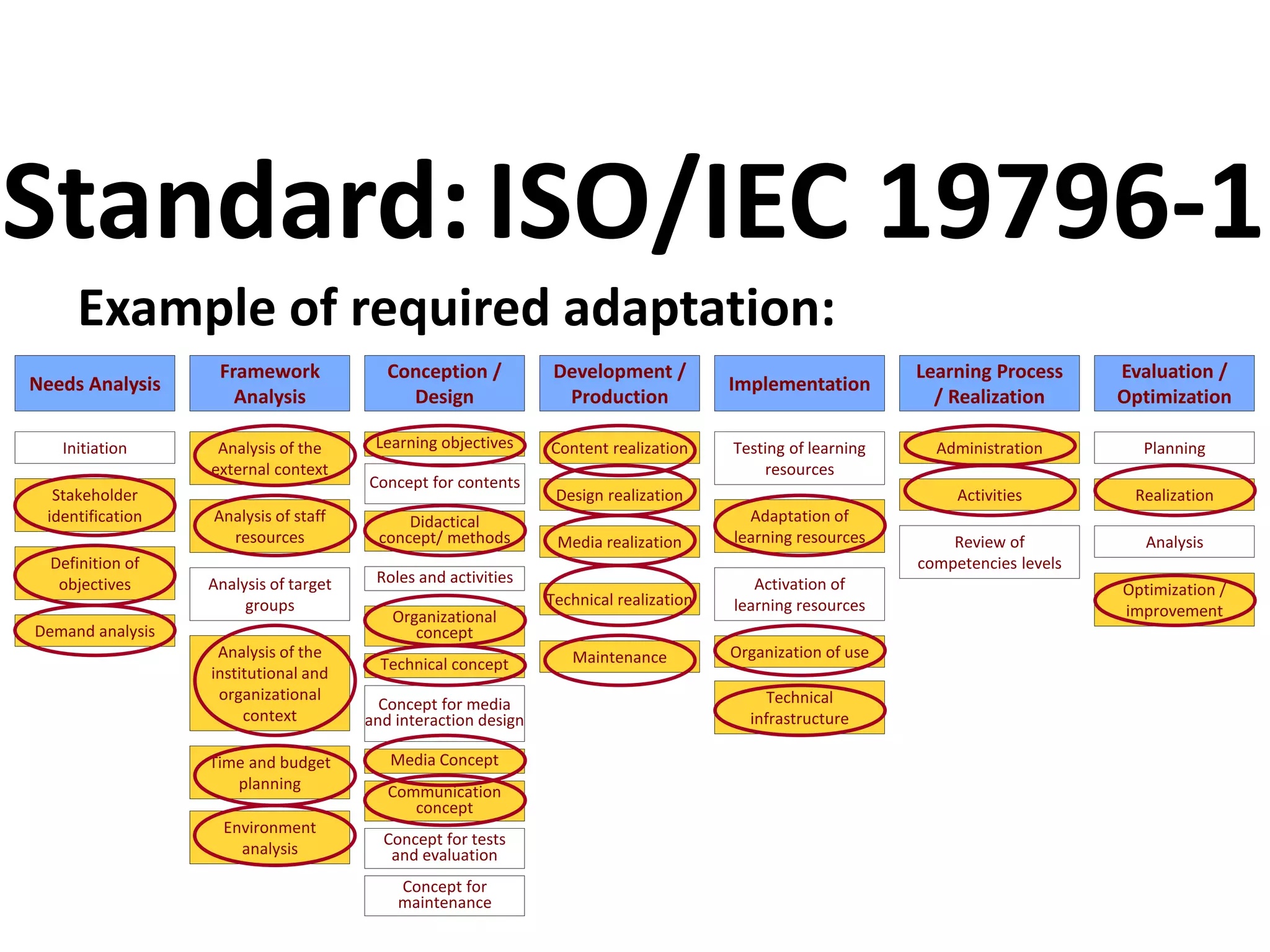
Example of required adaptation:
Standard:ISO/IEC 19796-1
Communication
concept
Needs Analysis
Conception /
Design
Development /
Production
Implementation
Framework
Analysis
Learning Process
/ Realization
Initiation
Media realization
Technical realization
Design realization
Content realizationAnalysis of the
external context
Testing of learning
resources
Learning objectives
Stakeholder
identification
Concept for contents
Definition of
objectives
Demand analysis
Time and budget
planning
Environment
analysis
Activities
Organization of use
Activation of
learning resources
Adaptation of
learning resources
Didactical
concept/ methods
Organizational
concept
Roles and activities
Technical concept
Concept for media
and interaction design
Media Concept
Technical
infrastructure
Review of
competencies levels
Concept for tests
and evaluation
Analysis of staff
resources
Evaluation /
Optimization
Planning
Realization
Analysis
Optimization /
improvement
Analysis of the
institutional and
organizational
context
Analysis of target
groups
Concept for
maintenance
Administration
Maintenance
Macro: Movement & Strategies
Meso: Frameworks & Standards
Micro: Competences & Communities
Quality by Open Learning
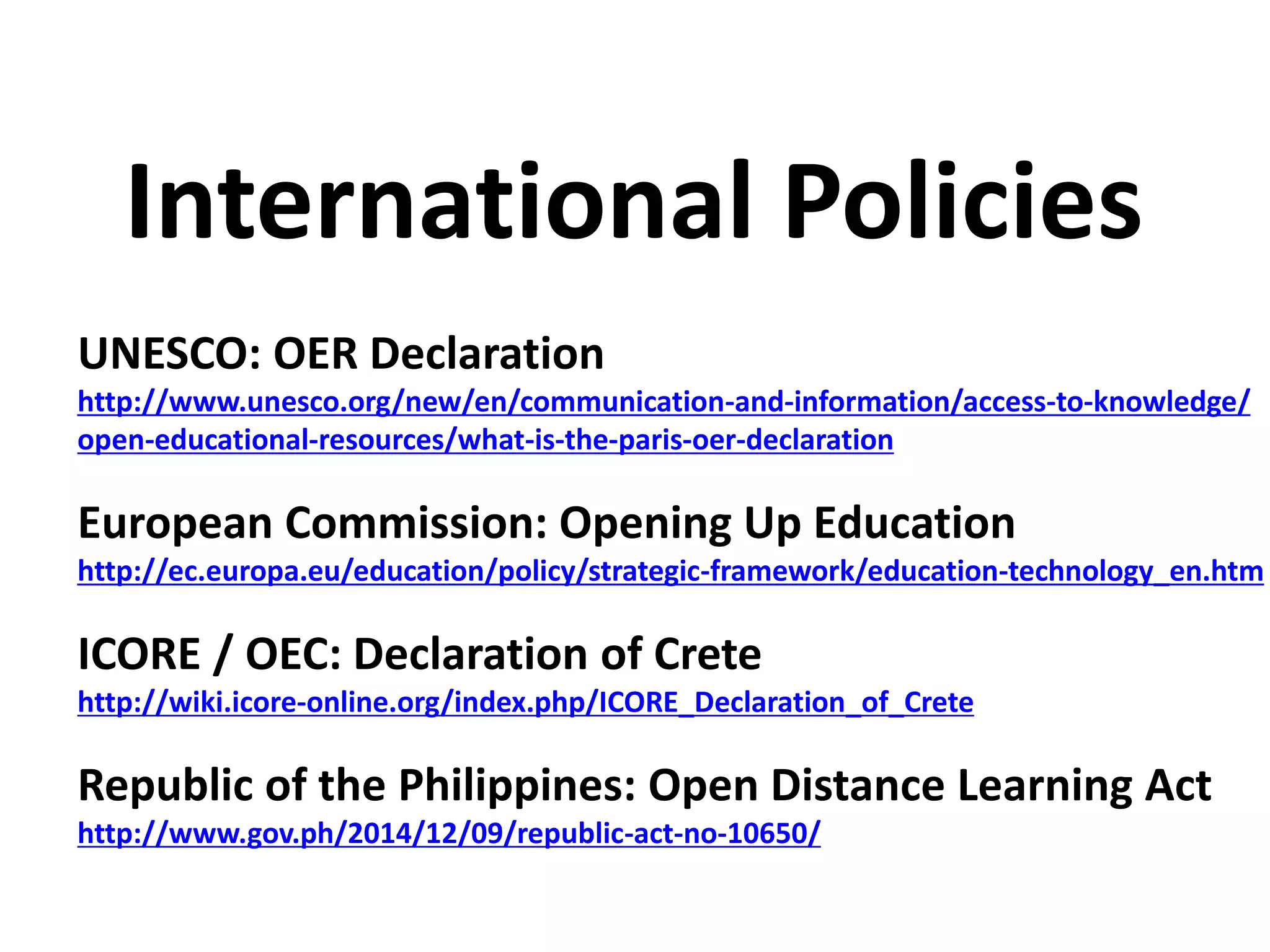
UNESCO: OER Declaration
http://www.unesco.org/new/en/communication-and-information/access-to-knowledge/
open-educational-resources/what-is-the-paris-oer-declaration
European Commission: Opening Up Education
http://ec.europa.eu/education/policy/strategic-framework/education-technology_en.htm
ICORE / OEC: Declaration of Crete
http://wiki.icore-online.org/index.php/ICORE_Declaration_of_Crete
Republic of the Philippines: Open Distance Learning Act
http://www.gov.ph/2014/12/09/republic-act-no-10650/
International Policies
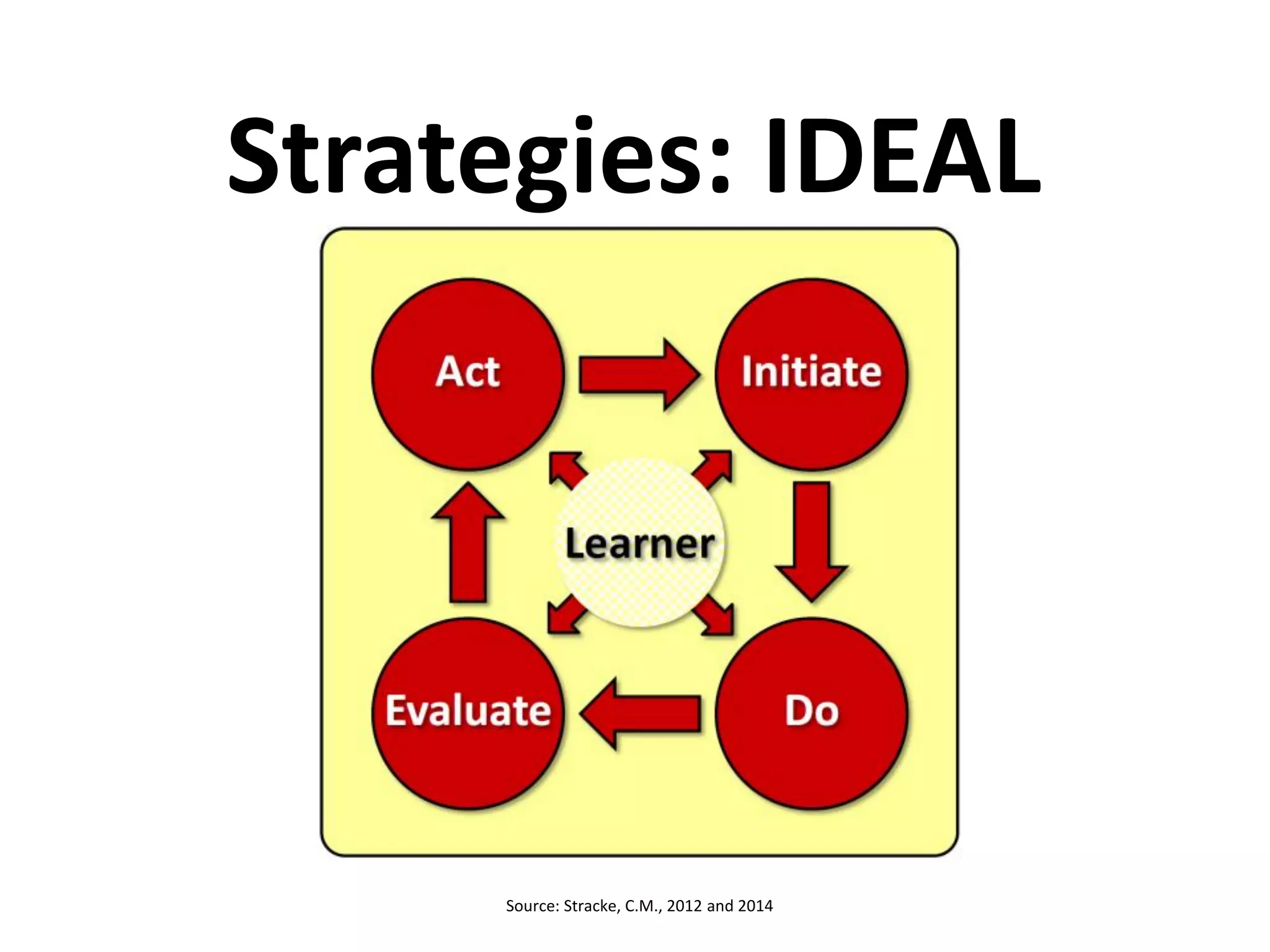
Strategies: IDEAL
Source: Stracke, C.M., 2012 and 2014
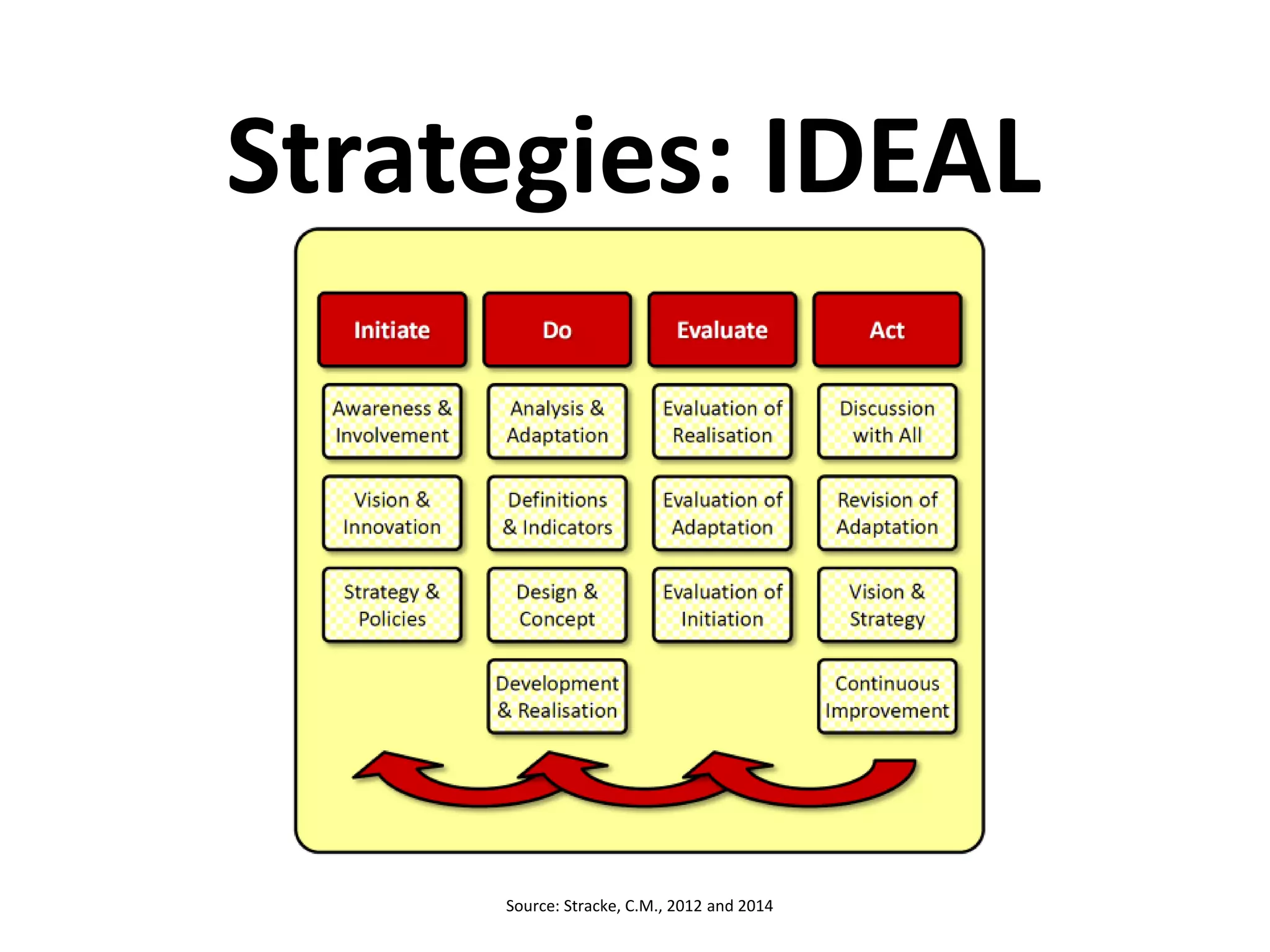
Strategies: IDEAL
Source: Stracke, C.M., 2012 and 2014
1. What is Open Education?
2. Why Change in Education?
3. What is Quality in Education?
4. How to Improve Quality?
5. How to Participate?
Keynote Overview:
The leading European and
international Conference on
Learning INnovations & Quality
www.learning-innovations.eu
LINQ
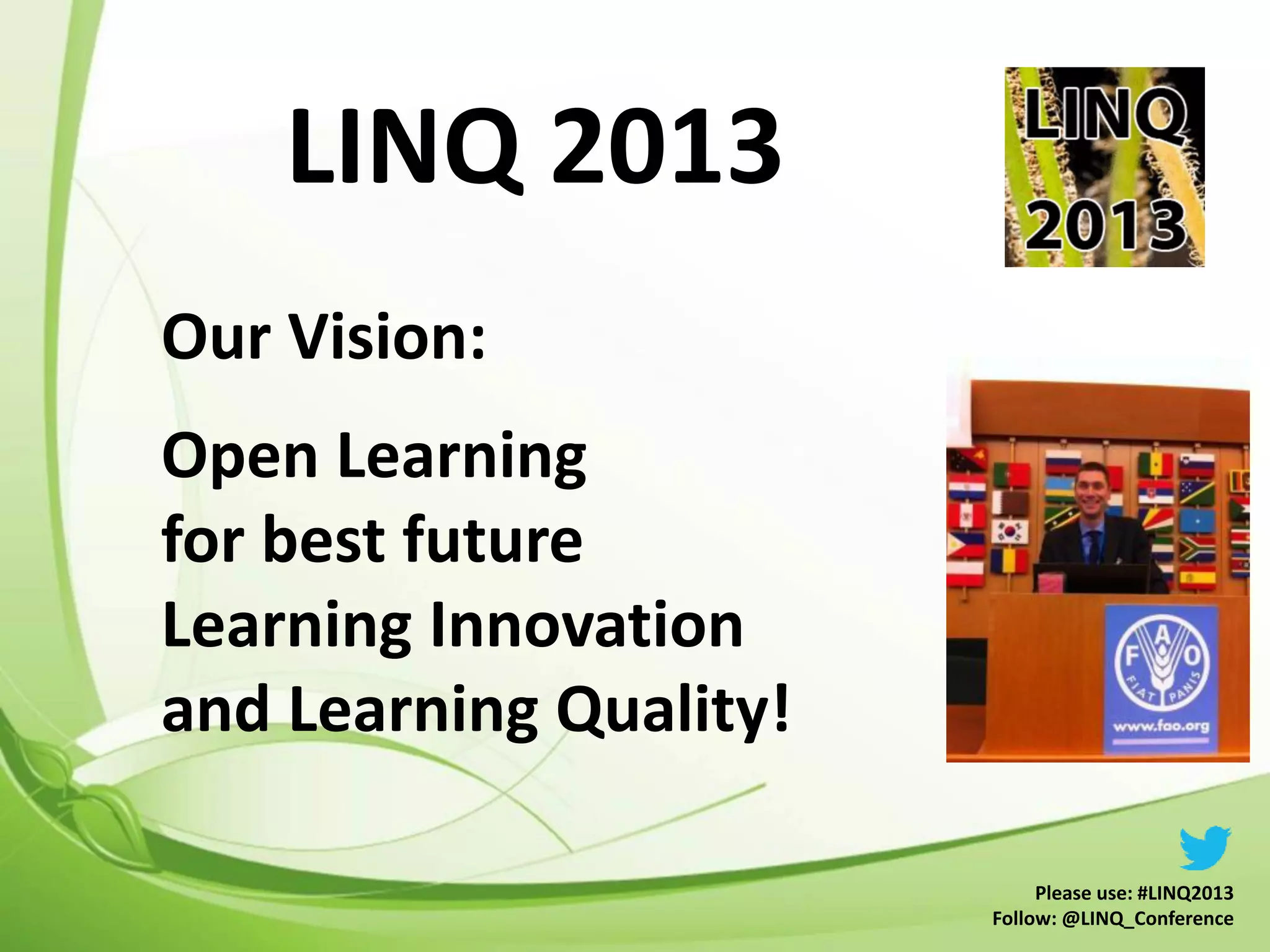
LINQ 2013
Please use: #LINQ2013
Follow: @LINQ_Conference
Our Vision:
Open Learning
for best future
Learning Innovation
and Learning Quality!
LINQ 2013
Please use: #LINQ2013
Follow: @LINQ_Conference
Our Vision:
Open Learning
for best future
Learning Innovation
and Learning Quality!
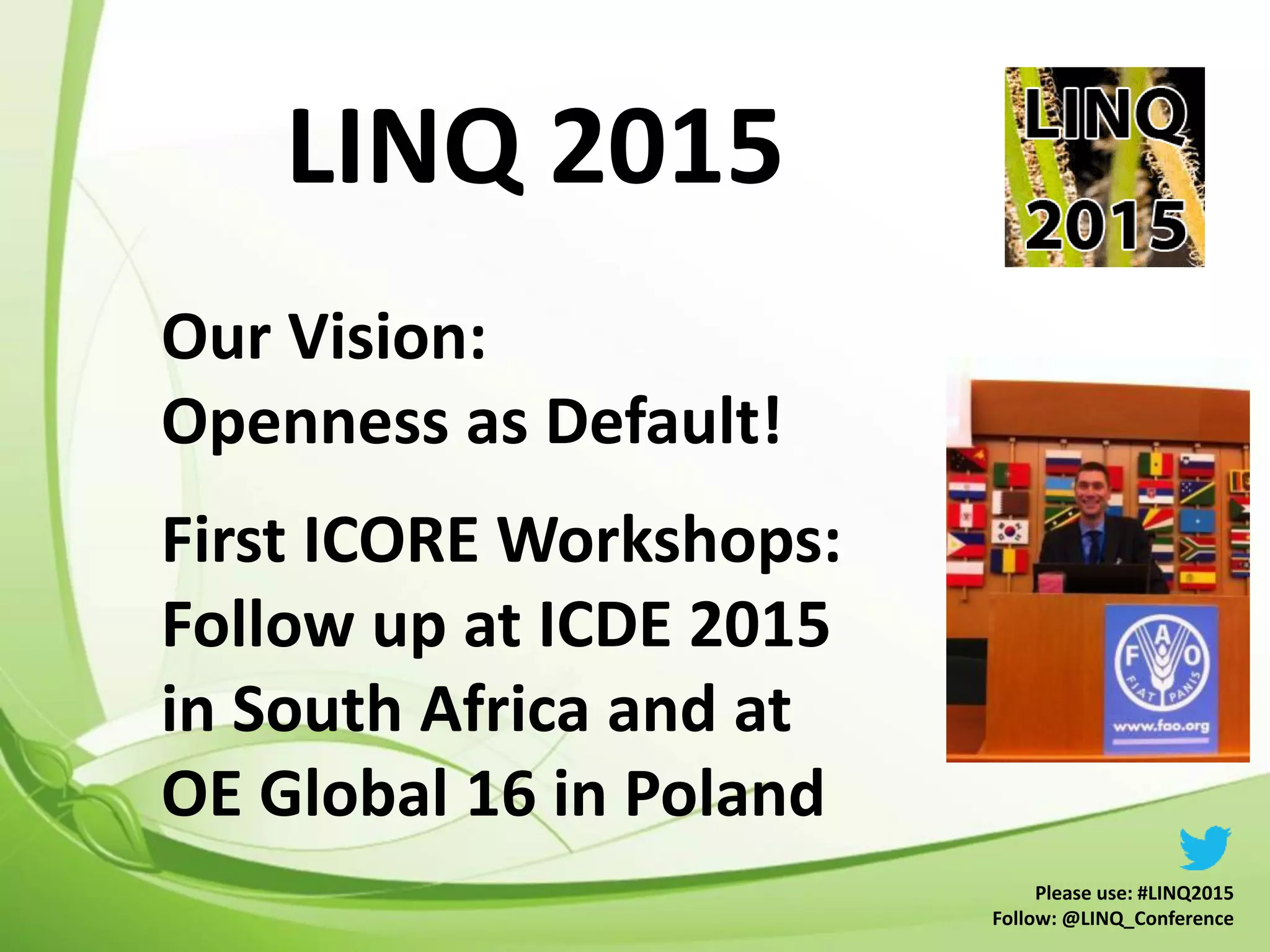
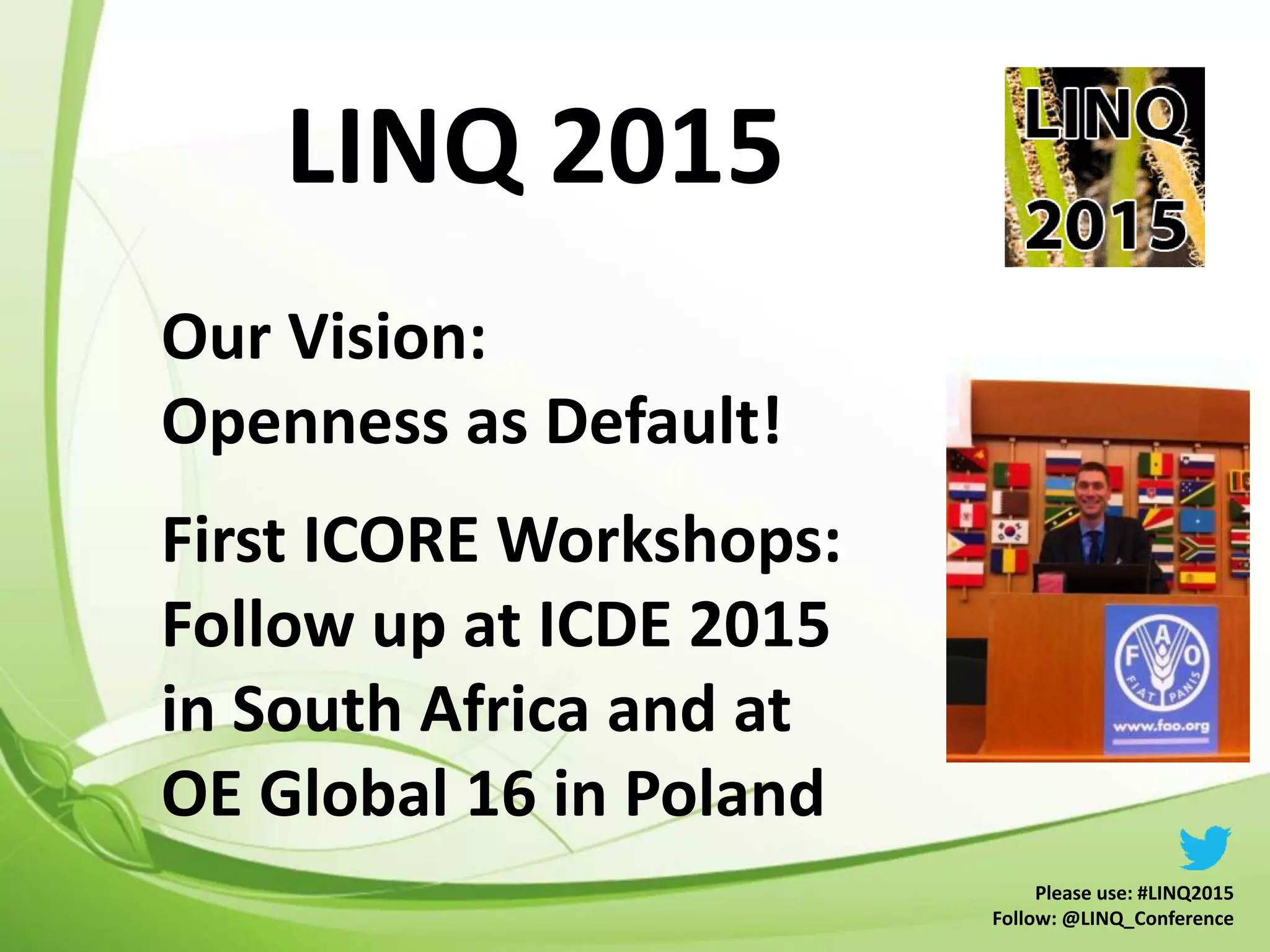
LINQ 2015
Please use: #LINQ2015
Follow: @LINQ_Conference
Our Vision:
Openness as Default!
First ICORE Workshops:
Follow up at ICDE 2015
in South Africa and at
OE Global 16 in Poland
ICORE: International Community for
Open Research and Open Education
Launched 15th May 2013 in Rome
Already more than 300 members within one year
First recognition by key stakeholders & EC:
Let us join forces and become ICORE member!
www.ICORE-online.org
ICORE
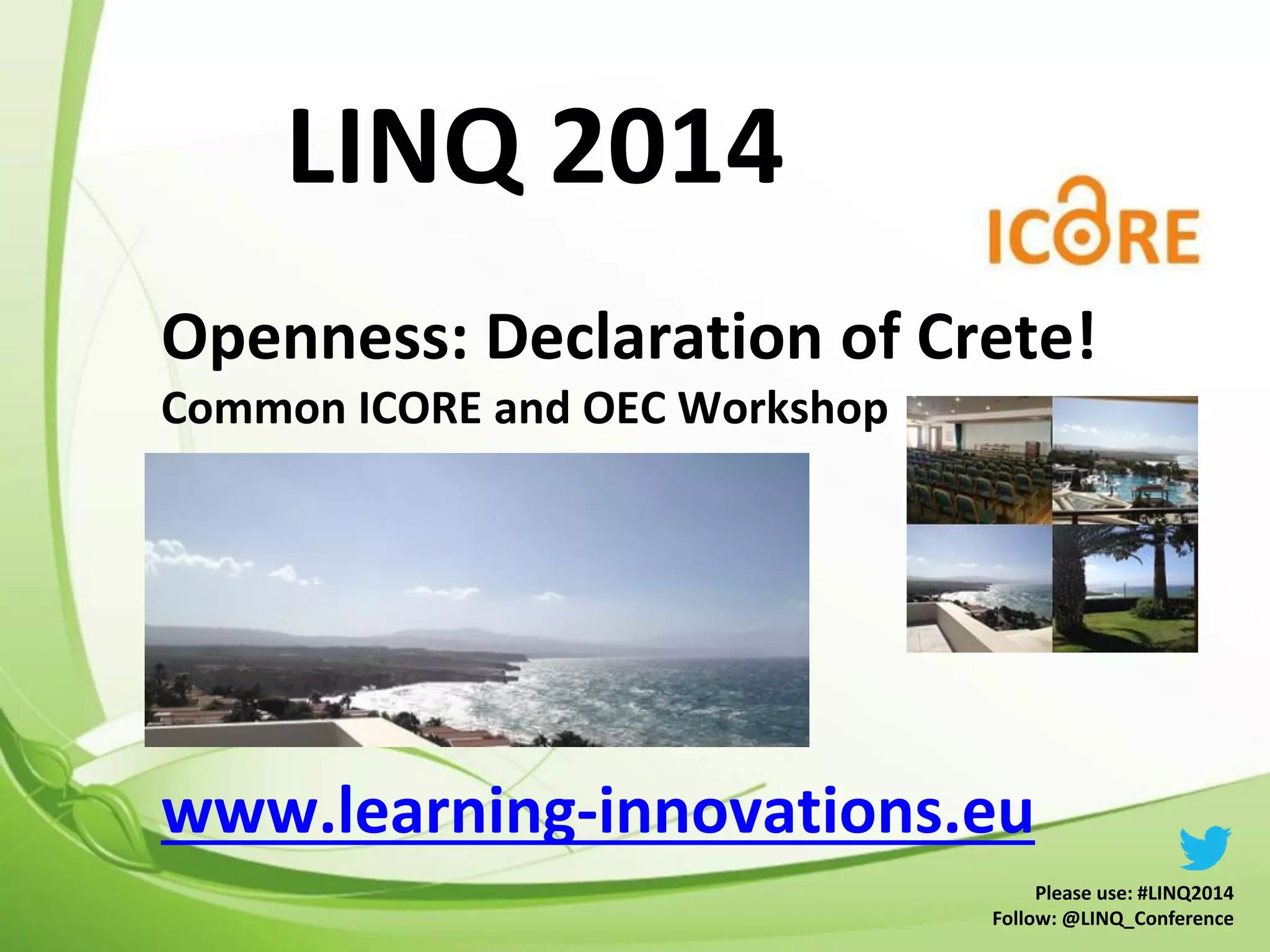
Openness: Declaration of Crete!
Common ICORE and OEC Workshop
www.learning-innovations.eu
LINQ 2014
Please use: #LINQ2014
Follow: @LINQ_Conference
Common ICORE & OEC Workshop:
Connecting Open Research & Education
Declaration of Crete
Re-establishment of Openness as Default!
Approved 9th May 2014 (ICORE & OCW together with CC)
http://wiki.icore-online.org/index.php/ICORE_Declaration_of_Crete
www.ICORE-online.org
ICORE & OEC
LINQ 2015
Please use: #LINQ2015
Follow: @LINQ_Conference
Our Vision:
Openness as Default!
First ICORE Workshops:
Follow up at ICDE 2015
in South Africa and at
OE Global 16 in Poland
ICORE: The need for cooperation!
Series of ICORE Workshops with key organisations
“How to re-establish Openness as default?"
First ICORE Workshops at ICDE Conference
in South Africa & at OE Global 2016 in Poland!
Towards a global joint initiative!
www.ICORE-online.org
ICORE
ATTENTION!!!
EXAMINATION!!!
What is CC?
ATTENTION!!!
EXAMINATION!!!
What is Open Content?
Publish and share your content!
Re-use existing content!
Connect to colleagues!
How can you participate?
Conclusions
Source: https://www.flickr.com/photos/opensourceway/
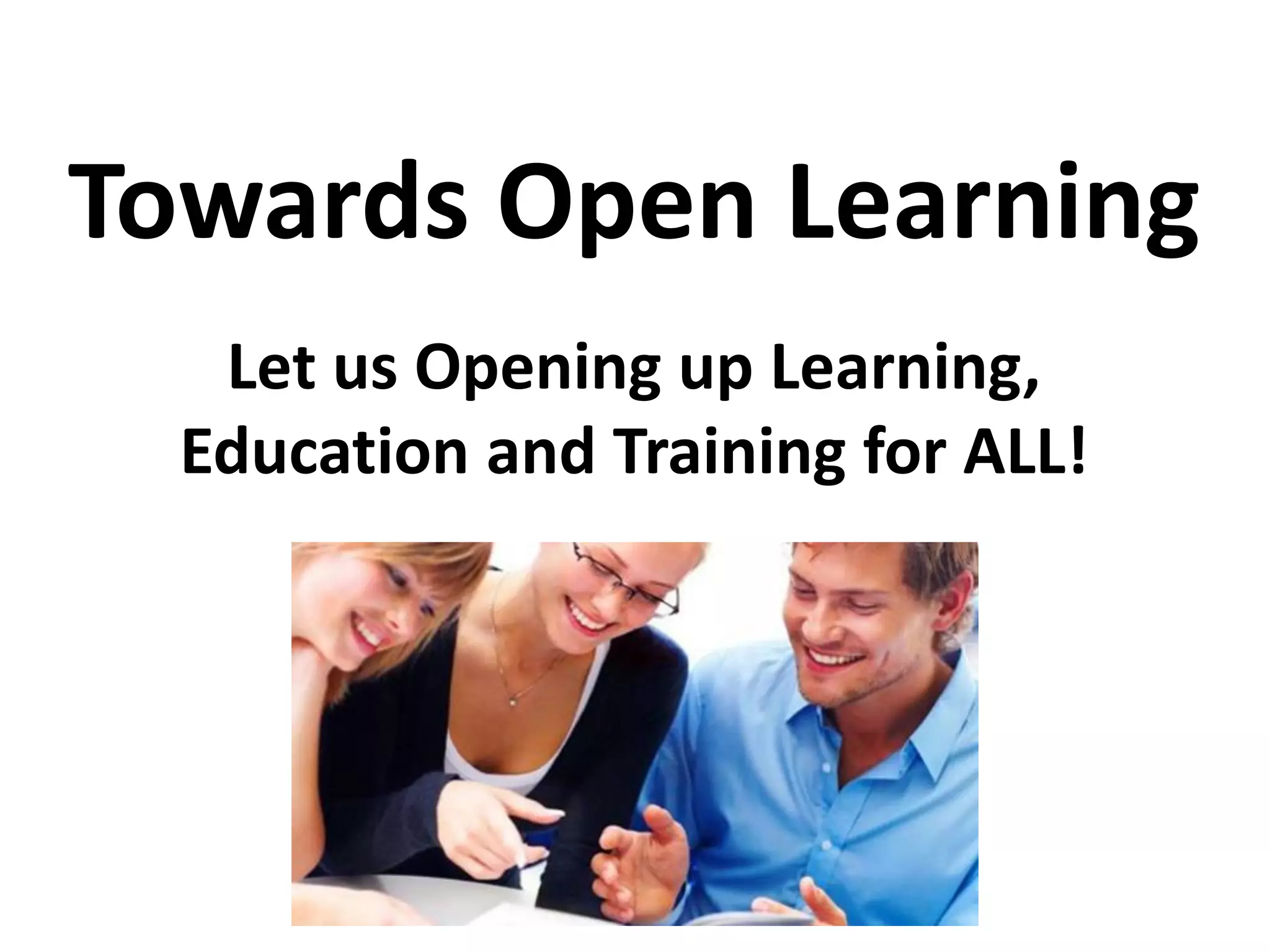
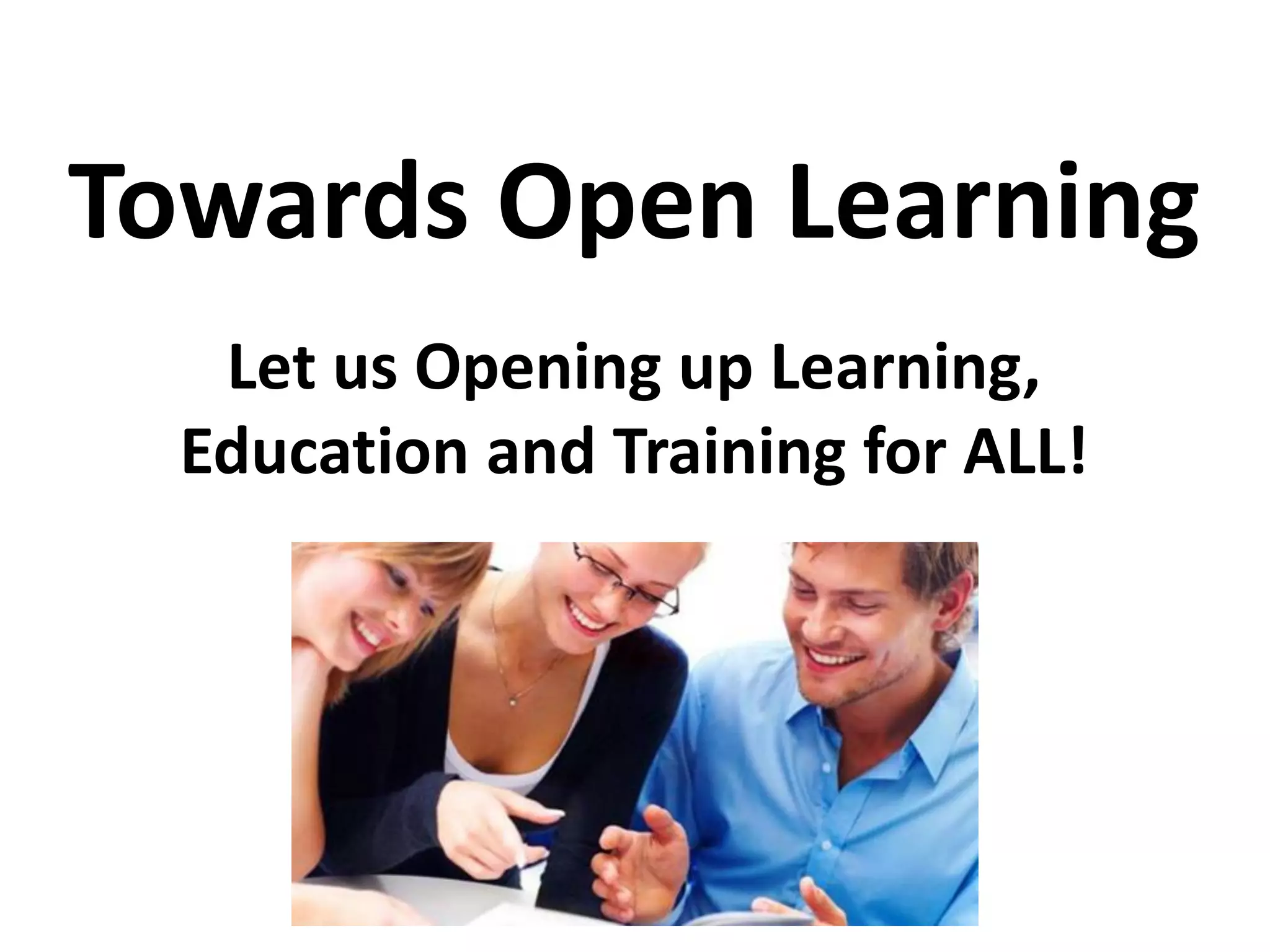
Let us Opening up Learning,
Education and Training for ALL!
Towards Open Learning
Open Education
for
inclusive & equitable
quality education
Inclusive: How to adapt? OEP
Equitable: How to offer? OER
Quality: How to improve? IDEAL
For all: How to deliver? OA
Sustainable dev goals
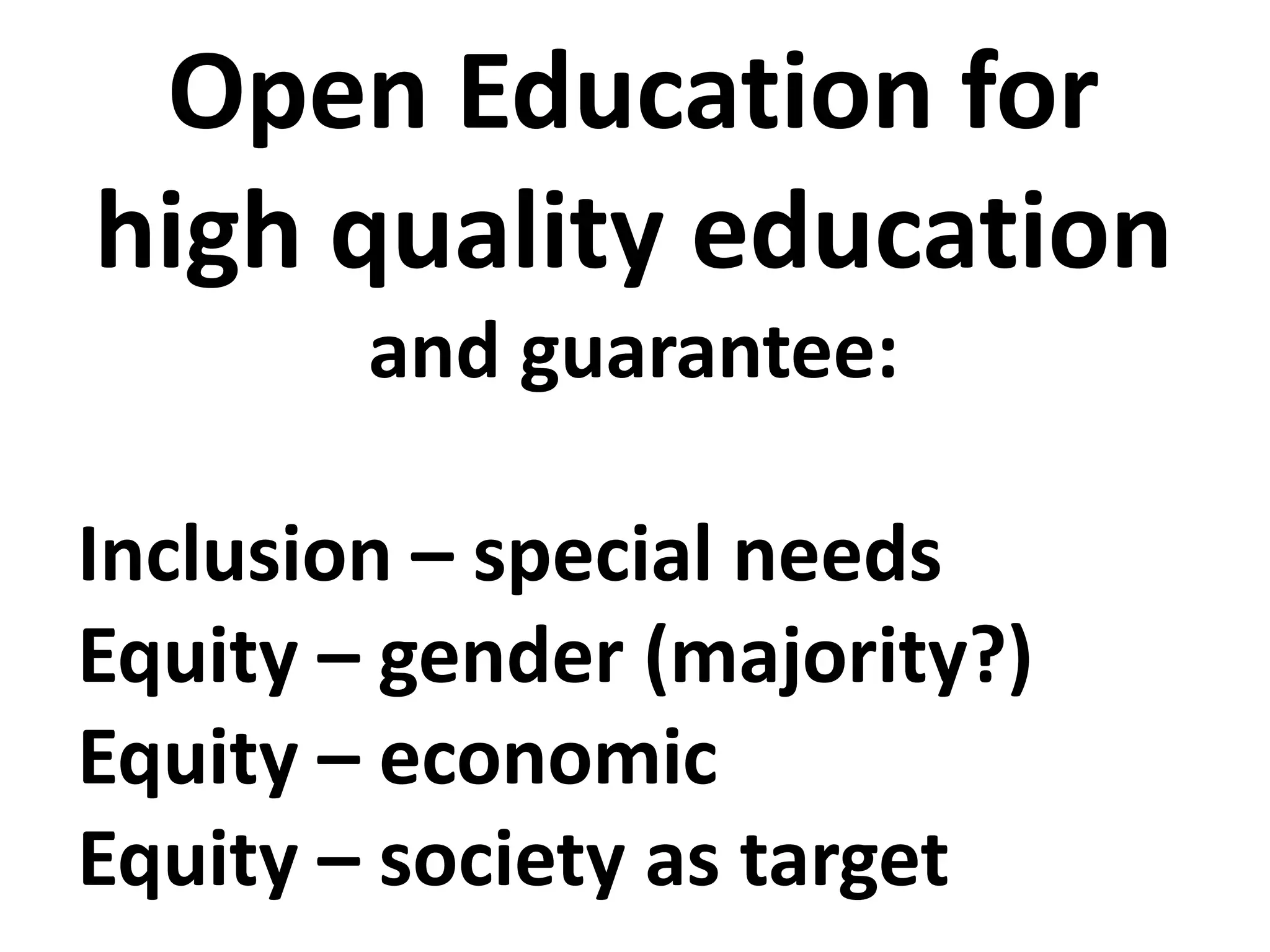
Open Education for
high quality education
and guarantee:
Inclusion – special needs
Equity – gender (majority?)
Equity – economic
Equity – society as target
Innovation
and E-Learning
can help ...
but are only means
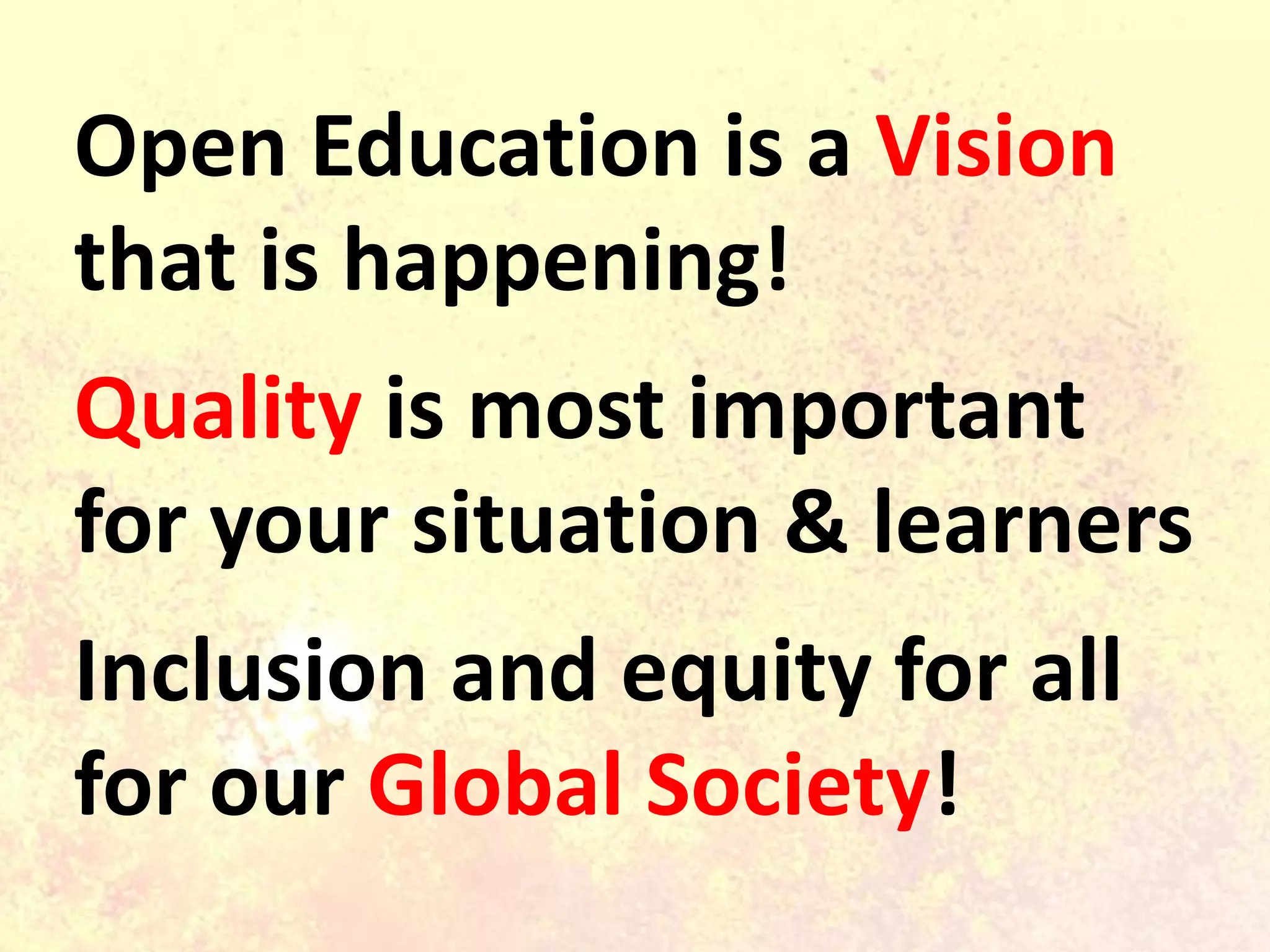
Open Education is a Vision
that is happening!
Quality is most important
for your situation & learners
Inclusion and equity for all
for our Global Society!
Change
in Education!
Quality
Quality
in Education!
... with fun!
Open
Education
Potential
Process Result
Based on Stracke, C.M., 2012 (adapted from Donabedian, 1980)
Strategy
ResourcesPractices
Quality: Most important
... and "new pedagogy" is
important just the same!
Let us Opening up Learning,
Education and Training for ALL!
Towards Open Learning
Stracke, Christian M. (2014): "How Innovations and Competence Development support
Quality in Lifelong Learning"; in: The International Journal for Quality and
Innovation (INNOQUAL), Vol. 2 (3). p. 35-44.
Stracke, Christian M. (2014): "Evaluation Framework EFI for Measuring the Impact of
Learning, Education and Training"; in: 华东师范大学学报(自然科学版)
Journal of East China Normal University. Vol. 2014 (2). Shanghai: ECNU. p. 1-12.
[DOI: 10.3969/j. ISSN 1000-5641. 2012.02.012]
Stracke, Christian M. (2014): "The Concept of Open Learning for Opening Up Education";
in: Stracke, Christian M. et al. (Ed.): Changing the Trajectory: Quality for
Opening up Education. Berlin: Logos. p. 15-24.
All also online available at: http://www.opening-up.education
Further References
Stracke, Christian M. (2013): "Open Learning: The Concept for Modernizing School
Education and Lifelong Learning through the Combination of Learning
Innovations and Quality"; in: Stracke, Christian M. (Ed.): Learning Innovations
and Quality: The Future of Digital Resources, Berlin: Logos. p. 15-28.
Stracke, Christian M. (2013): "The Evaluation Framework for Impact Assessment"; in:
Proceedings of 6th International Conference of Education, Research and
Innovations 2013 [= ICERI 2013]. Madrid: IATED. p. 4654-4663.
Stracke, Christian M. et al. (2013): "Open School Learning. A vision to improve European
schools towards 2030 – using the results of the Open Discovery Space project";
in: OPEN EDUCATION 2030. JRC-IPTS Call for Vision Papers. Part II: School
Education. Sevilla: JRC. p. 99-104.
All also online available at: http://www.opening-up.education
Further References
Stracke, Christian M. (2012): "Learning Innovations and Learning Quality: Relations,
Interdependences, and Future"; in: Stracke, Christian M. (ed.) (2012): The
Future of Learning Innovations and Learning Quality. How do they fit together?
Brussels: Gito. p. 13-25.
Stracke, Christian M. (2012): "Competences and skills for learning-outcome orientation:
Competence development, modelling, and standards for human resources
development, education and training"; in: 华东师范大学学报(自然科学版)
Journal of East China Normal University. Vol. 2012 (2). Shanghai: ECNU. p. 115-130.
Stracke, Christian M. (2011): "Competence and Skills Modelling for European HR and
Policies"; in: Stracke, Chr. M. (ed.): Competence Modelling for Human Resources
Development and European Policies. Bridging Business, Education and Training.
Brussels: Gito. p. 12-37.
All also online available at: http://www.opening-up.education
Further References
Stracke, Christian M. (2011): "Competences and Skills in the Digital Age: Competence
Development, Modelling, and Standards for Human Resources Development";
in: Proceedings of the International Conference on Metadata and Semantics
Research Conference (MTSR 2011), Berlin/ Heidelberg: Springer. p. 34-46.
Stracke, Christian M. (2011): "Competence Modelling for Innovations and Quality
Development in E-Learning: Towards learning outcome orientation by
competence models"; in: Proceedings of World Confe-rence on Educational
Multimedia, Hypermedia and Telecommunication 2011 [= ED-MEDIA 2011];
Chesapeake, VA: AACE. p. 1885-1894.
Stracke, Christian M. (2010): "Quality development and standards in learning, education,
and training: adaptation model and guidelines for implementations"; in:
Информатизация образования и науки [= Информике (Informika),
ISSN 2073-7572]; Vol. 7 (3), 2010. Moscow (Russian Federation), S.136-146.
All also online available at: http://www.opening-up.education
Further References
Stracke, Christian M. (2010): "The Benefits and Future of Standards: Metadata and beyond";
in: Proceedings of the International Conference on Metadata and Semantics
Research Conference (MTSR 2010). Berlin/ Heidelberg: Springer. p. 354-361.
Stracke, Christian M. (2010): "Quality and Standards in Learning, Education, and Training:
The Adaptation Model IDEA for the Introduction of Quality Development"; in:
Proceedings of the International Conference on the Past and Future of e-Learning
Standards. Tokyo (Japan). p. 26-36.
Stracke, Christian M. (2007): Quality Standards for Quality Development in e-Learning:
Adoption, Implementation and Adaptation of ISO/IEC 19796-1. Essen: eLC / Q.E.D.
Stracke, Christian M. (2006): "Process-oriented Quality Management", in: Ehlers, U.-D./
Pawlowski, J. M. (Eds.): Handbook on Quality and Standardisation in E-Learning.
Berlin: Springer. p. 79-96.
All also online available at: http://www.opening-up.education
Further References
Let us Opening up Learning,
Education and Training for ALL!
Towards Open Learning
christian.stracke@ou.nl
@ChrMStracke
www.opening-up.education
Let us cooperate!
www.opening-up.education
Let us connect!
© Sabine Dertinger
Thank you!
Questions?

20160415 MIEF Free Education Open Learning Christian M. Stracke

  • 1.
    Free Education for OpenLearning: Open educational policies, strategies & access for all @ Moscow International Education Fair 2016 by Christian M. Stracke Open University of the Netherlands
  • 2.
    Open CC Licensefor sharing & re-using slides This work is free to share under the creative commons licence: "Attribution – Noncommercial – Share Alike 3.0" You can copy, distribute and transmit the work under the following conditions: 1. Attribution – 2. Noncommercial – 3. Share Alike Licence: Attribution-Noncommercial-Share Alike Some rights reserved, see: http://creativecommons.org/licenses/by-nc-sa/3.0/
  • 3.
    Selected Projects: Quality Managementand EvaluationTechnology-Enhanced Learning at Large Scale Open Education and ResearchCompetence and Skills Modelling
  • 4.
    Selected Projects: www.mooc-quality.euwww.simbase.cowww.wacom-project.euwww.ecompetence.eu www.ACT-now.de www.aristotele-ip.euwww.opendiscoveryspace.euwww.inclusive-education.net www.eMundus-project.euwww.digifem.euwww.voa3r.eu www.agriculture- competences.eu www.inspiringscience.euwww.learning-standards.euwww.quality-development.euwww.locloud.eu
  • 5.
    Open University ofthe Netherlands Global cooperation: ECNU & KNOU Global initiative ICORE for OR & OE Annual international LINQ Conference eLC European Institute Standardization Chair in ISO & CEN Dr. Christian M. Stracke: Open Learning & Education, Innovations, Policies, Quality & Competences, Impact
  • 6.
    1. What isOpen Education? 2. Why Change in Education? 3. What is Quality in Education? 4. How to Improve Quality? 5. How to Participate? Keynote Overview:
  • 7.
    1. What isOpen Education? 2. Why Change in Education? 3. What is Quality in Education? 4. How to Improve Quality? 5. How to Participate? Keynote Overview:
  • 8.
  • 9.
  • 10.
  • 11.
  • 12.
    Open Education (OE): Innovationsfor changing & opening up education to improve the quality
  • 13.
    1960s: Open Classrooms 1960s:Open Universities 1990s: Open Educational Resources 2000s: Open Online Collaboration 2010s: Open Educational Practices Now: Open Educational Environments Waves of OE
  • 14.
    1960s: Open Learning •Progressive education • Flipped methodologies • Open Universities Open Education Photo: Slobodan Dimitrov
  • 15.
    1990s: Open EducationalResources • Open content • OER portals • E-Learning hype Open Education According to Gartner Hype Cycle
  • 16.
    2000s: Open OnlineCollaboration • Open communities • Web 2.0 & Social media • MOOCs Open Education Source: https://www.flickr.com/photos/catspyjamasnz/
  • 17.
    2010s: Open EducationalPractices • Open classrooms • Competence focus • OER declaration Open Education
  • 18.
    Now: Open LearningEnvironments • Open methods • Open policies • Learner focus Back to Open Learning?
  • 19.
    Do not toforget the long-term history: 1000 BCE - : Open Educational Practices • Open discourse (Confucius, Socrates) 1800 CE - : Open Learning • Progressive theory (Pestalozzi, Humboldt) • Competence building (Piaget, Vygotsky) Open Education
  • 20.
    Meso: Organisation andDesign Micro: Learner and Course Macro: Policies and Curricula Open Education (OE) Strategic & organisational
  • 21.
    Open Education (OE): Innovationsfor changing & opening up education to improve the quality
  • 22.
    1. What isOpen Education? 2. Why Change in Education? 3. What is Quality in Education? 4. How to Improve Quality? 5. How to Participate? Keynote Overview:
  • 23.
    Two core factors: 1.Globalisation & 2. Worldwide Internet The Digital Age Photo: https://ec.europa.eu/digital-agenda/en/digital-life/education
  • 24.
    Global Competitions andsocietal changes Close the gaps & open new opportunities Challenges: Learn to Learn Internationalization Figure: http://www.weforum.org/issues/global-competitiveness
  • 25.
    Goal 4: Inclusive andquality education Sustainable dev goals
  • 26.
    Goal 4: Inclusive and qualityeducation Sustainable dev goals
  • 27.
    Inclusive: How toadapt? OEP Equitable: How to offer? OER Quality: How to improve? IDEAL For all: How to deliver? OA Sustainable dev goals
  • 28.
    Not knowledge butcompetences are required to meet future jobs and tasks still unknown today Change from input to outcome orientation Learning cha(lle)nges (E-)Learning Input: Outcome: Knowledge Competences
  • 29.
    Quality is keyfor success and results of learning processes Learners needs, Learning objectives, Learning outcomes and competences Solutions: Quality
  • 30.
  • 31.
  • 32.
    1. What isOpen Education? 2. Why Change in Education? 3. What is Quality in Education? 4. How to Improve Quality? 5. How to Participate? Keynote Overview:
  • 33.
  • 34.
  • 35.
  • 36.
  • 37.
    Quality cannot be defined ...except through adaptation to your situation and context!
  • 38.
  • 39.
    Quality most important for Learning,Education and Training!
  • 40.
    Quality Potential Process Result Source: Stracke,C.M., 2012 (adapted from Donabedian 1980)
  • 41.
    Open Education Potential Process Result Based onStracke, C.M., 2012 (adapted from Donabedian 1980) Strategy ResourcesPractices
  • 42.
  • 43.
    Quality: Most important ...and "new pedagogy" is important just the same!
  • 44.
  • 45.
  • 46.
    1. What isOpen Education? 2. Why Change in Education? 3. What is Quality in Education? 4. How to Improve Quality? 5. How to Participate? Keynote Overview:
  • 47.
    Meso: Organisation andDesign Micro: Learner and Course Macro: Policies and Curricula Open Education (OE) Strategic & organisational
  • 48.
    Meso: Frameworks &Standards Micro: Competence & Community Macro: Movement & Strategies Quality by OE Strategic & organisational
  • 49.
  • 50.
    Meso: Organisation andDesign Micro: Learner and Course Macro: Policies and Curricula Open Education (OE) Strategic & organisational
  • 51.
    Meso: Frameworks &Standards Micro: Competence & Community Macro: Movement & Strategies Quality by OE Strategic & organisational
  • 52.
    Macro: Movement &Strategies Meso: Frameworks & Standards Micro: Competences & Communities Quality by Open Learning
  • 53.
    Learning-how-to-Learn The key competencein 21st century Focus on inclusion of learning skills in (not only Higher Education) curricula Competences: LELLE
  • 54.
    Problem-based Learning asmethod for key competences in 21st century Focus on integrating learning analytics & semantics in problem-based learning www.PBL3-project.eu Competences: PBL3.0
  • 55.
    Communities: ODS &ISE www.opendiscoveryspace.eu www.inspiring-science.eu & portal.opendiscoveryspace.eu/ise > 10,000 teachers and > 3,000 schools in 28 countries
  • 56.
    Macro: Movement &Strategies Meso: Frameworks & Standards Micro: Competences & Communities Quality by Open Learning
  • 57.
    MOOQ for thequality of MOOCs: “We will make MOOCs better” Quality Reference Framework with indicators for design & comparison www.MOOC-quality.eu Frameworks: MOOQ
  • 58.
    MOOQ for thequality of MOOCs: “We will make MOOCs better” Quality Reference Framework with indicators for design & comparison www.MOOC-quality.eu Frameworks: MOOQ
  • 59.
    The Reference ProcessModel: Standard:ISO/IEC 19796-1 Communication concept Needs Analysis Conception / Design Development / Production Implementation Framework Analysis Learning Process / Realization Initiation Media realization Technical realization Design realization Content realizationAnalysis of the external context Testing of learning resources Learning objectives Stakeholder identification Concept for contents Definition of objectives Demand analysis Time and budget planning Environment analysis Activities Organization of use Activation of learning resources Adaptation of learning resourcesDidactical concept/ methods Organizational concept Roles and activities Technical concept Concept for media and interaction design Media Concept Technical infrastructure Review of competencies levels Concept for tests and evaluation Analysis of staff resources Evaluation / Optimization Planning Realization Analysis Optimization / improvement Analysis of the institutional and organizational context Analysis of target groups Concept for maintenance Administration Maintenance
  • 60.
    Example of requiredadaptation: Standard:ISO/IEC 19796-1 Communication concept Needs Analysis Conception / Design Development / Production Implementation Framework Analysis Learning Process / Realization Initiation Media realization Technical realization Design realization Content realizationAnalysis of the external context Testing of learning resources Learning objectives Stakeholder identification Concept for contents Definition of objectives Demand analysis Time and budget planning Environment analysis Activities Organization of use Activation of learning resources Adaptation of learning resources Didactical concept/ methods Organizational concept Roles and activities Technical concept Concept for media and interaction design Media Concept Technical infrastructure Review of competencies levels Concept for tests and evaluation Analysis of staff resources Evaluation / Optimization Planning Realization Analysis Optimization / improvement Analysis of the institutional and organizational context Analysis of target groups Concept for maintenance Administration Maintenance
  • 61.
    Macro: Movement &Strategies Meso: Frameworks & Standards Micro: Competences & Communities Quality by Open Learning
  • 62.
    UNESCO: OER Declaration http://www.unesco.org/new/en/communication-and-information/access-to-knowledge/ open-educational-resources/what-is-the-paris-oer-declaration EuropeanCommission: Opening Up Education http://ec.europa.eu/education/policy/strategic-framework/education-technology_en.htm ICORE / OEC: Declaration of Crete http://wiki.icore-online.org/index.php/ICORE_Declaration_of_Crete Republic of the Philippines: Open Distance Learning Act http://www.gov.ph/2014/12/09/republic-act-no-10650/ International Policies
  • 63.
  • 64.
  • 65.
    1. What isOpen Education? 2. Why Change in Education? 3. What is Quality in Education? 4. How to Improve Quality? 5. How to Participate? Keynote Overview:
  • 66.
    The leading Europeanand international Conference on Learning INnovations & Quality www.learning-innovations.eu LINQ
  • 67.
    LINQ 2013 Please use:#LINQ2013 Follow: @LINQ_Conference Our Vision: Open Learning for best future Learning Innovation and Learning Quality!
  • 68.
    LINQ 2013 Please use:#LINQ2013 Follow: @LINQ_Conference Our Vision: Open Learning for best future Learning Innovation and Learning Quality!
  • 69.
    LINQ 2015 Please use:#LINQ2015 Follow: @LINQ_Conference Our Vision: Openness as Default! First ICORE Workshops: Follow up at ICDE 2015 in South Africa and at OE Global 16 in Poland
  • 70.
    ICORE: International Communityfor Open Research and Open Education Launched 15th May 2013 in Rome Already more than 300 members within one year First recognition by key stakeholders & EC: Let us join forces and become ICORE member! www.ICORE-online.org ICORE
  • 71.
    Openness: Declaration ofCrete! Common ICORE and OEC Workshop www.learning-innovations.eu LINQ 2014 Please use: #LINQ2014 Follow: @LINQ_Conference
  • 72.
    Common ICORE &OEC Workshop: Connecting Open Research & Education Declaration of Crete Re-establishment of Openness as Default! Approved 9th May 2014 (ICORE & OCW together with CC) http://wiki.icore-online.org/index.php/ICORE_Declaration_of_Crete www.ICORE-online.org ICORE & OEC
  • 73.
    LINQ 2015 Please use:#LINQ2015 Follow: @LINQ_Conference Our Vision: Openness as Default! First ICORE Workshops: Follow up at ICDE 2015 in South Africa and at OE Global 16 in Poland
  • 74.
    ICORE: The needfor cooperation! Series of ICORE Workshops with key organisations “How to re-establish Openness as default?" First ICORE Workshops at ICDE Conference in South Africa & at OE Global 2016 in Poland! Towards a global joint initiative! www.ICORE-online.org ICORE
  • 75.
  • 76.
  • 77.
    Publish and shareyour content! Re-use existing content! Connect to colleagues! How can you participate?
  • 78.
  • 79.
  • 80.
    Let us Openingup Learning, Education and Training for ALL! Towards Open Learning
  • 81.
    Open Education for inclusive &equitable quality education
  • 82.
    Inclusive: How toadapt? OEP Equitable: How to offer? OER Quality: How to improve? IDEAL For all: How to deliver? OA Sustainable dev goals
  • 83.
    Open Education for highquality education and guarantee: Inclusion – special needs Equity – gender (majority?) Equity – economic Equity – society as target
  • 84.
    Innovation and E-Learning can help... but are only means
  • 85.
    Open Education isa Vision that is happening! Quality is most important for your situation & learners Inclusion and equity for all for our Global Society!
  • 86.
  • 87.
  • 88.
  • 89.
    Open Education Potential Process Result Based onStracke, C.M., 2012 (adapted from Donabedian, 1980) Strategy ResourcesPractices
  • 90.
    Quality: Most important ...and "new pedagogy" is important just the same!
  • 91.
    Let us Openingup Learning, Education and Training for ALL! Towards Open Learning
  • 92.
    Stracke, Christian M.(2014): "How Innovations and Competence Development support Quality in Lifelong Learning"; in: The International Journal for Quality and Innovation (INNOQUAL), Vol. 2 (3). p. 35-44. Stracke, Christian M. (2014): "Evaluation Framework EFI for Measuring the Impact of Learning, Education and Training"; in: 华东师范大学学报(自然科学版) Journal of East China Normal University. Vol. 2014 (2). Shanghai: ECNU. p. 1-12. [DOI: 10.3969/j. ISSN 1000-5641. 2012.02.012] Stracke, Christian M. (2014): "The Concept of Open Learning for Opening Up Education"; in: Stracke, Christian M. et al. (Ed.): Changing the Trajectory: Quality for Opening up Education. Berlin: Logos. p. 15-24. All also online available at: http://www.opening-up.education Further References
  • 93.
    Stracke, Christian M.(2013): "Open Learning: The Concept for Modernizing School Education and Lifelong Learning through the Combination of Learning Innovations and Quality"; in: Stracke, Christian M. (Ed.): Learning Innovations and Quality: The Future of Digital Resources, Berlin: Logos. p. 15-28. Stracke, Christian M. (2013): "The Evaluation Framework for Impact Assessment"; in: Proceedings of 6th International Conference of Education, Research and Innovations 2013 [= ICERI 2013]. Madrid: IATED. p. 4654-4663. Stracke, Christian M. et al. (2013): "Open School Learning. A vision to improve European schools towards 2030 – using the results of the Open Discovery Space project"; in: OPEN EDUCATION 2030. JRC-IPTS Call for Vision Papers. Part II: School Education. Sevilla: JRC. p. 99-104. All also online available at: http://www.opening-up.education Further References
  • 94.
    Stracke, Christian M.(2012): "Learning Innovations and Learning Quality: Relations, Interdependences, and Future"; in: Stracke, Christian M. (ed.) (2012): The Future of Learning Innovations and Learning Quality. How do they fit together? Brussels: Gito. p. 13-25. Stracke, Christian M. (2012): "Competences and skills for learning-outcome orientation: Competence development, modelling, and standards for human resources development, education and training"; in: 华东师范大学学报(自然科学版) Journal of East China Normal University. Vol. 2012 (2). Shanghai: ECNU. p. 115-130. Stracke, Christian M. (2011): "Competence and Skills Modelling for European HR and Policies"; in: Stracke, Chr. M. (ed.): Competence Modelling for Human Resources Development and European Policies. Bridging Business, Education and Training. Brussels: Gito. p. 12-37. All also online available at: http://www.opening-up.education Further References
  • 95.
    Stracke, Christian M.(2011): "Competences and Skills in the Digital Age: Competence Development, Modelling, and Standards for Human Resources Development"; in: Proceedings of the International Conference on Metadata and Semantics Research Conference (MTSR 2011), Berlin/ Heidelberg: Springer. p. 34-46. Stracke, Christian M. (2011): "Competence Modelling for Innovations and Quality Development in E-Learning: Towards learning outcome orientation by competence models"; in: Proceedings of World Confe-rence on Educational Multimedia, Hypermedia and Telecommunication 2011 [= ED-MEDIA 2011]; Chesapeake, VA: AACE. p. 1885-1894. Stracke, Christian M. (2010): "Quality development and standards in learning, education, and training: adaptation model and guidelines for implementations"; in: Информатизация образования и науки [= Информике (Informika), ISSN 2073-7572]; Vol. 7 (3), 2010. Moscow (Russian Federation), S.136-146. All also online available at: http://www.opening-up.education Further References
  • 96.
    Stracke, Christian M.(2010): "The Benefits and Future of Standards: Metadata and beyond"; in: Proceedings of the International Conference on Metadata and Semantics Research Conference (MTSR 2010). Berlin/ Heidelberg: Springer. p. 354-361. Stracke, Christian M. (2010): "Quality and Standards in Learning, Education, and Training: The Adaptation Model IDEA for the Introduction of Quality Development"; in: Proceedings of the International Conference on the Past and Future of e-Learning Standards. Tokyo (Japan). p. 26-36. Stracke, Christian M. (2007): Quality Standards for Quality Development in e-Learning: Adoption, Implementation and Adaptation of ISO/IEC 19796-1. Essen: eLC / Q.E.D. Stracke, Christian M. (2006): "Process-oriented Quality Management", in: Ehlers, U.-D./ Pawlowski, J. M. (Eds.): Handbook on Quality and Standardisation in E-Learning. Berlin: Springer. p. 79-96. All also online available at: http://www.opening-up.education Further References
  • 97.
    Let us Openingup Learning, Education and Training for ALL! Towards Open Learning
  • 98.
  • 99.
  • 100.