Chapter 1:
Introduction
WHAT YOU WILL LEARN...
What geography means
Physical versus human geography
The four components of physical geography
The four components of human geography
The four geographical concepts
WHAT IS GEOGRAPHY?
It is a term of Greek origin, which means

‘geo’ = earth

‘graphy’ = to write or study

Therefore, ‘geography’ = to study about the earth

...and we seriously mean anything
and everything IN it and ON it,
which includes YOU!
WHAT DO GEOGRAPHERS STUDY?
Anything and everything on Earth is honestly A LOT of ‘things’, so
geographers classify these ‘things’ into 2 categories

PHYSICAL
GEOGRAPHY

HUMAN
GEOGRAPHY

...the natural environments that
make up the earth. Geographers
study
how
these
natural
environments (spheres) work and
interact with one another. They
also study how these affect and
are affected by humans.

...the issues and activities that
concern humans. Geographers
study how these issues and
activities interact with one
another, and how they affect and
are affected by the natural
environment.
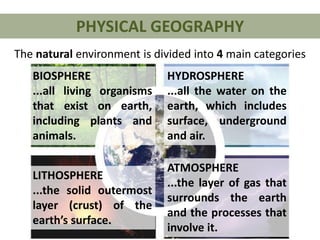
PHYSICAL GEOGRAPHY
The natural environment is divided into 4 main categories
BIOSPHERE
...all living organisms
that exist on earth,
including plants and
animals.

HYDROSPHERE
...all the water on the
earth, which includes
surface, underground
and air.

LITHOSPHERE
...the solid outermost
layer (crust) of the
earth’s surface.

ATMOSPHERE
...the layer of gas that
surrounds the earth
and the processes that
involve it.
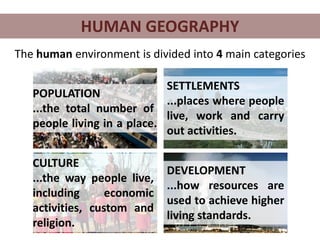
HUMAN GEOGRAPHY
The human environment is divided into 4 main categories
SETTLEMENTS
POPULATION
...places where people
...the total number of
live, work and carry
people living in a place.
out activities.
CULTURE
...the way people live,
including
economic
activities, custom and
religion.

DEVELOPMENT
...how resources are
used to achieve higher
living standards.
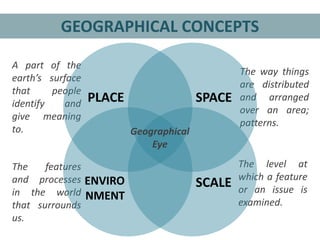
GEOGRAPHICAL CONCEPTS
A part of the
earth’s surface
that
people
identify
and
give meaning
to.

SPACE

PLACE

The
features
and processes ENVIRO
in the world NMENT
that surrounds
us.

The way things
are distributed
and arranged
over an area;
patterns.

SCALE

The level at
which a feature
or an issue is
examined.

Geographical
Eye
KEY TERMS
PHYSICAL GEOGRAPHY

HUMAN GEOGRAPHY

CONCEPTS

Biosphere
Hydrosphere
Atmosphere
Lithosphere

Population
Settlements
Development
Culture

Place
Space
Scale
Environment

In-class Assignment:
Complete WB Ex. 1.1 on pages 1 to 4.
Submit at the end of this lesson.

Take-home Task:
Read TB pages 6 to 14 to revise what each key term means.
Complete WB Ex. 1.2 on pages 5 and 6.
Read TB pages 20 to 35 to prepare for next lesson.

2014Jss s1 geo_-_introduction

  • 1.
  • 2.
    WHAT YOU WILLLEARN... What geography means Physical versus human geography The four components of physical geography The four components of human geography The four geographical concepts
  • 3.
    WHAT IS GEOGRAPHY? Itis a term of Greek origin, which means ‘geo’ = earth ‘graphy’ = to write or study Therefore, ‘geography’ = to study about the earth ...and we seriously mean anything and everything IN it and ON it, which includes YOU!
  • 4.
    WHAT DO GEOGRAPHERSSTUDY? Anything and everything on Earth is honestly A LOT of ‘things’, so geographers classify these ‘things’ into 2 categories PHYSICAL GEOGRAPHY HUMAN GEOGRAPHY ...the natural environments that make up the earth. Geographers study how these natural environments (spheres) work and interact with one another. They also study how these affect and are affected by humans. ...the issues and activities that concern humans. Geographers study how these issues and activities interact with one another, and how they affect and are affected by the natural environment.
  • 5.
    PHYSICAL GEOGRAPHY The naturalenvironment is divided into 4 main categories BIOSPHERE ...all living organisms that exist on earth, including plants and animals. HYDROSPHERE ...all the water on the earth, which includes surface, underground and air. LITHOSPHERE ...the solid outermost layer (crust) of the earth’s surface. ATMOSPHERE ...the layer of gas that surrounds the earth and the processes that involve it.
  • 6.
    HUMAN GEOGRAPHY The humanenvironment is divided into 4 main categories SETTLEMENTS POPULATION ...places where people ...the total number of live, work and carry people living in a place. out activities. CULTURE ...the way people live, including economic activities, custom and religion. DEVELOPMENT ...how resources are used to achieve higher living standards.
  • 7.
    GEOGRAPHICAL CONCEPTS A partof the earth’s surface that people identify and give meaning to. SPACE PLACE The features and processes ENVIRO in the world NMENT that surrounds us. The way things are distributed and arranged over an area; patterns. SCALE The level at which a feature or an issue is examined. Geographical Eye
  • 8.
    KEY TERMS PHYSICAL GEOGRAPHY HUMANGEOGRAPHY CONCEPTS Biosphere Hydrosphere Atmosphere Lithosphere Population Settlements Development Culture Place Space Scale Environment In-class Assignment: Complete WB Ex. 1.1 on pages 1 to 4. Submit at the end of this lesson. Take-home Task: Read TB pages 6 to 14 to revise what each key term means. Complete WB Ex. 1.2 on pages 5 and 6. Read TB pages 20 to 35 to prepare for next lesson.