Download to read offline


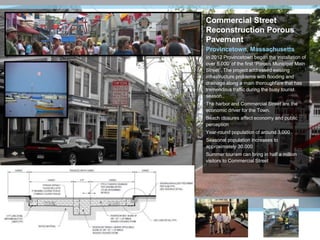
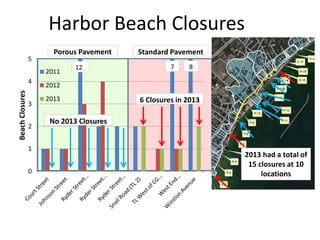

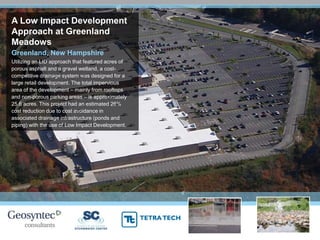
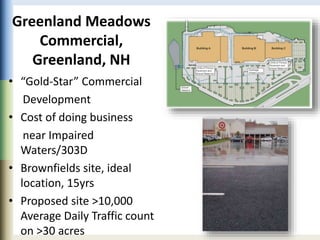
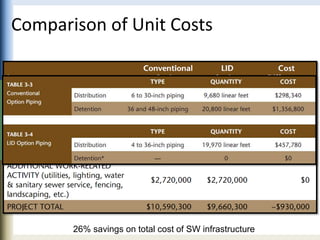
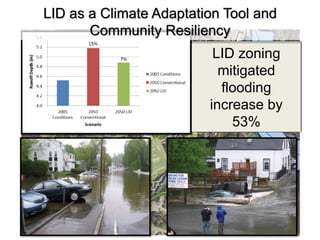

The document summarizes several case studies that demonstrate the real-world implementation of sustainable development and low impact development (LID) approaches. It discusses a porous pavement project in Provincetown, MA that addressed flooding issues. It also discusses studies in Berry Brook, NH that showed LID retrofits separated hydrographs and shifted hydrology towards pre-development conditions. Additionally, it presents a case study of a large retail development in Greenland, NH that utilized porous pavement and wetlands, reducing drainage costs by 26% compared to conventional approaches. Finally, it discusses how LID zoning can increase resilience to climate change by mitigating increased flooding risks.


