The Lean Startup#leanstartup“Innovation through experimentation”Eric Ries (@ericries)http://StartupLessonsLearned.com
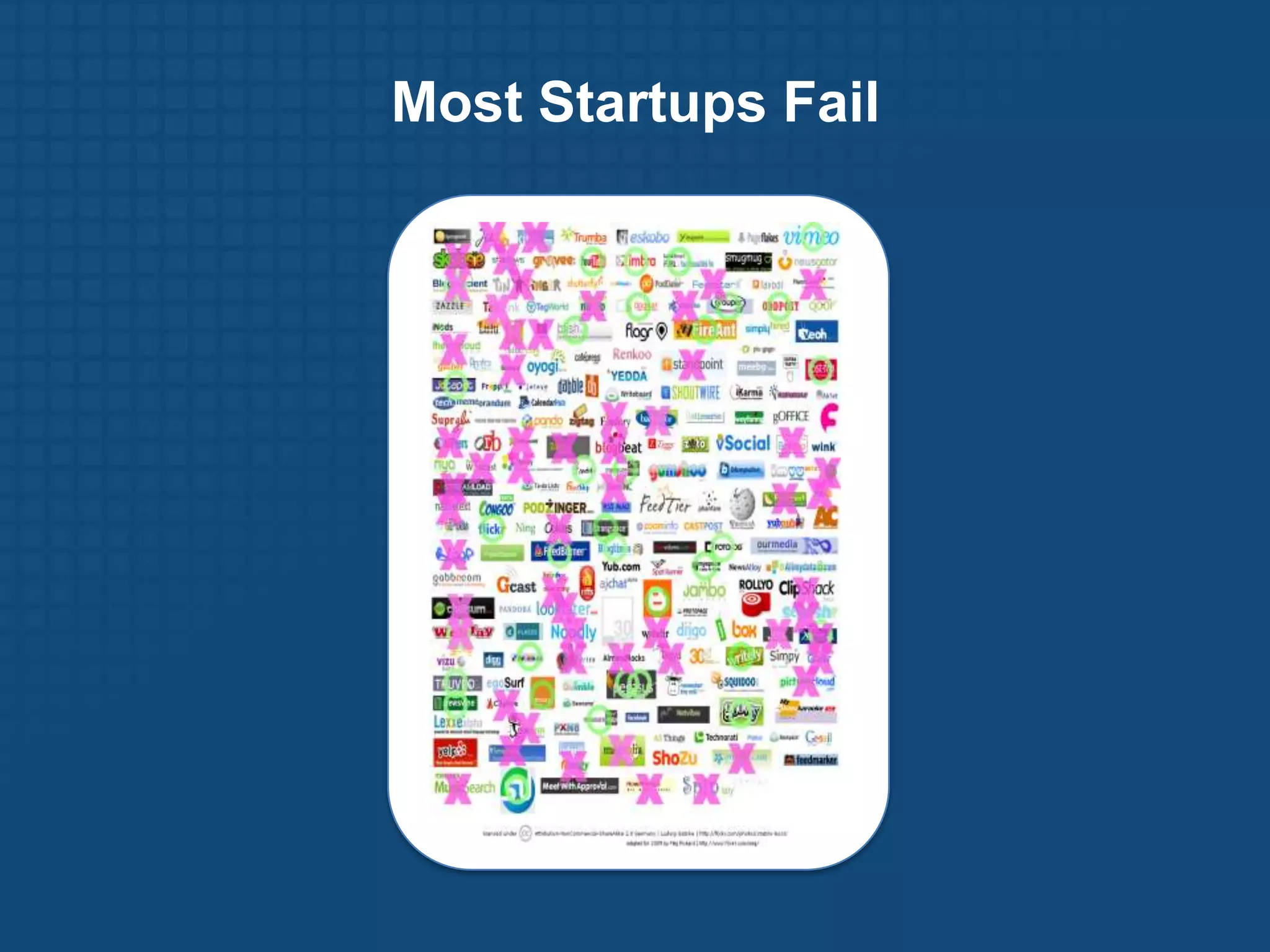
Most Startups Fail
Most Startups Fail
Most Startups Fail
What is a startup?A startup is a human institution designed to deliver a new product or service under conditions of extreme uncertainty.
Nothing to do with size of company, sector of the economy, or industryThe Pivot
I’
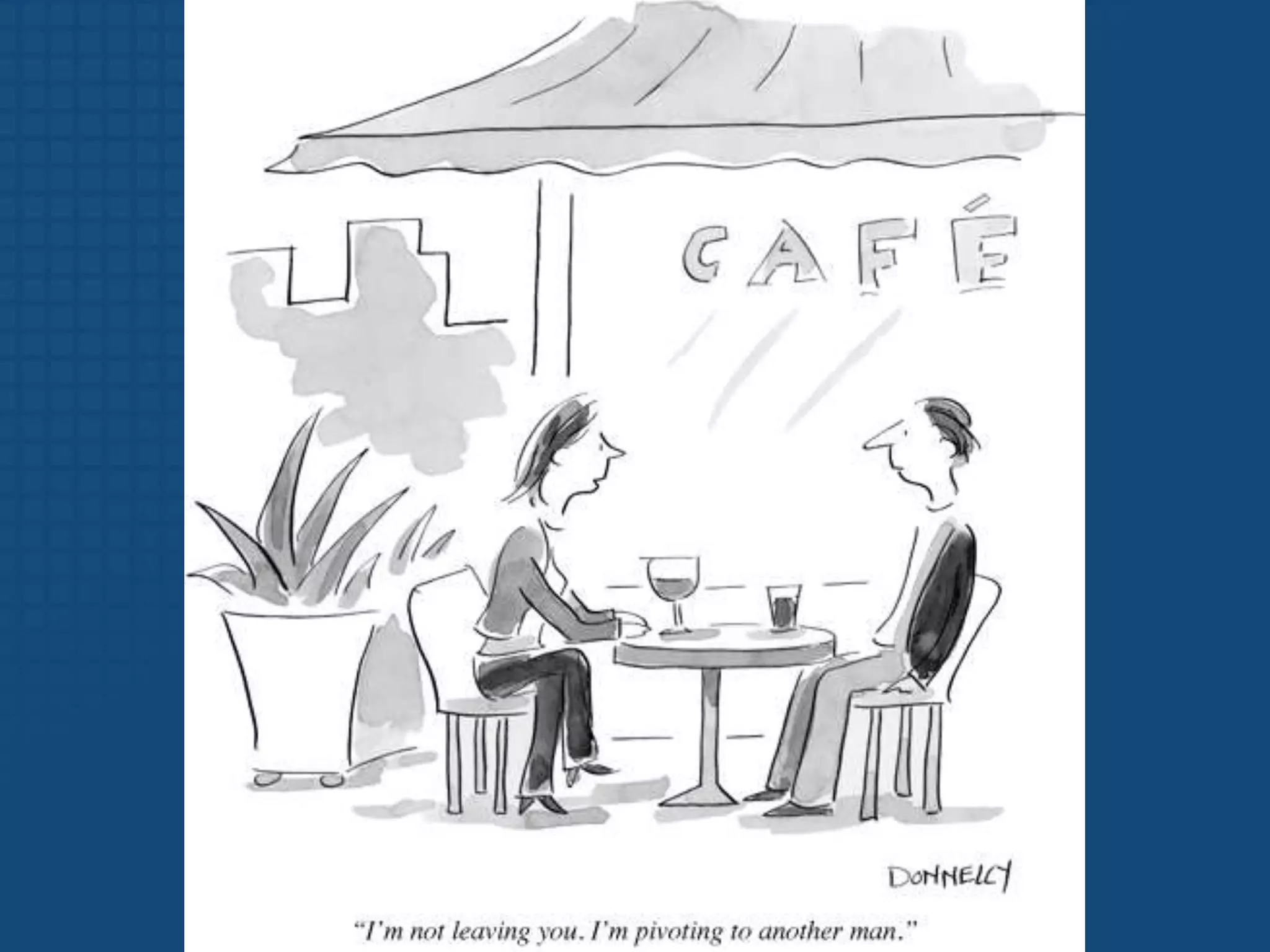
The PivotWhat do successful startups have in common?
They started out as digital cash for PDAs, but evolved into online payments for eBay.
They started building BASIC interpreters, but evolved into the world's largest operating systems monopoly.
They were shocked to discover their online games company was actually a photo-sharing site.
Pivot: change directions but stay grounded in what we’ve learned. Speed WinsIf we can reduce the time between pivotsWe can increase our odds of successBefore we run out of money
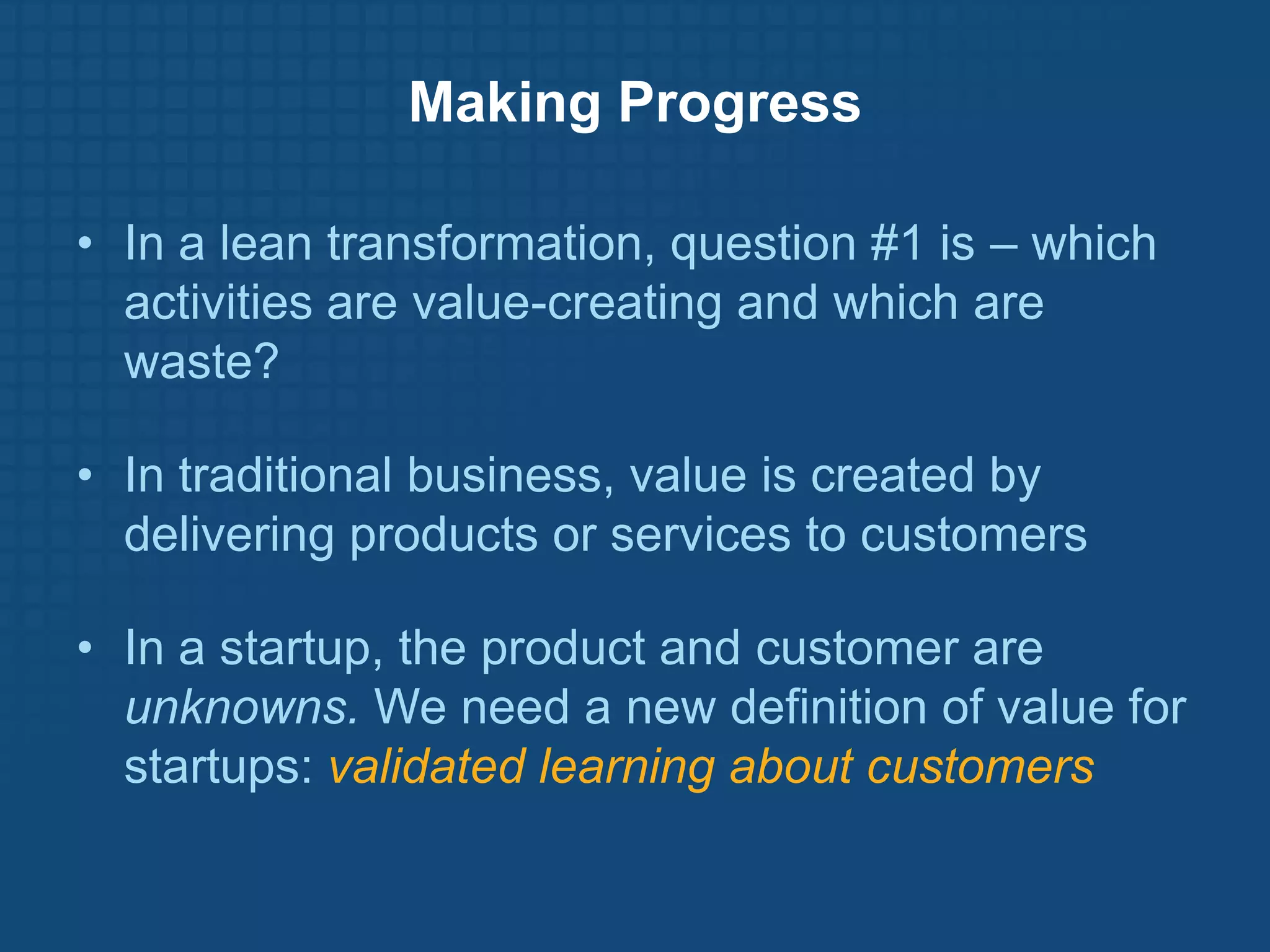
Making ProgressIn a lean transformation, question #1 is – which activities are value-creating and which are waste?
In traditional business, value is created by delivering products or services to customers
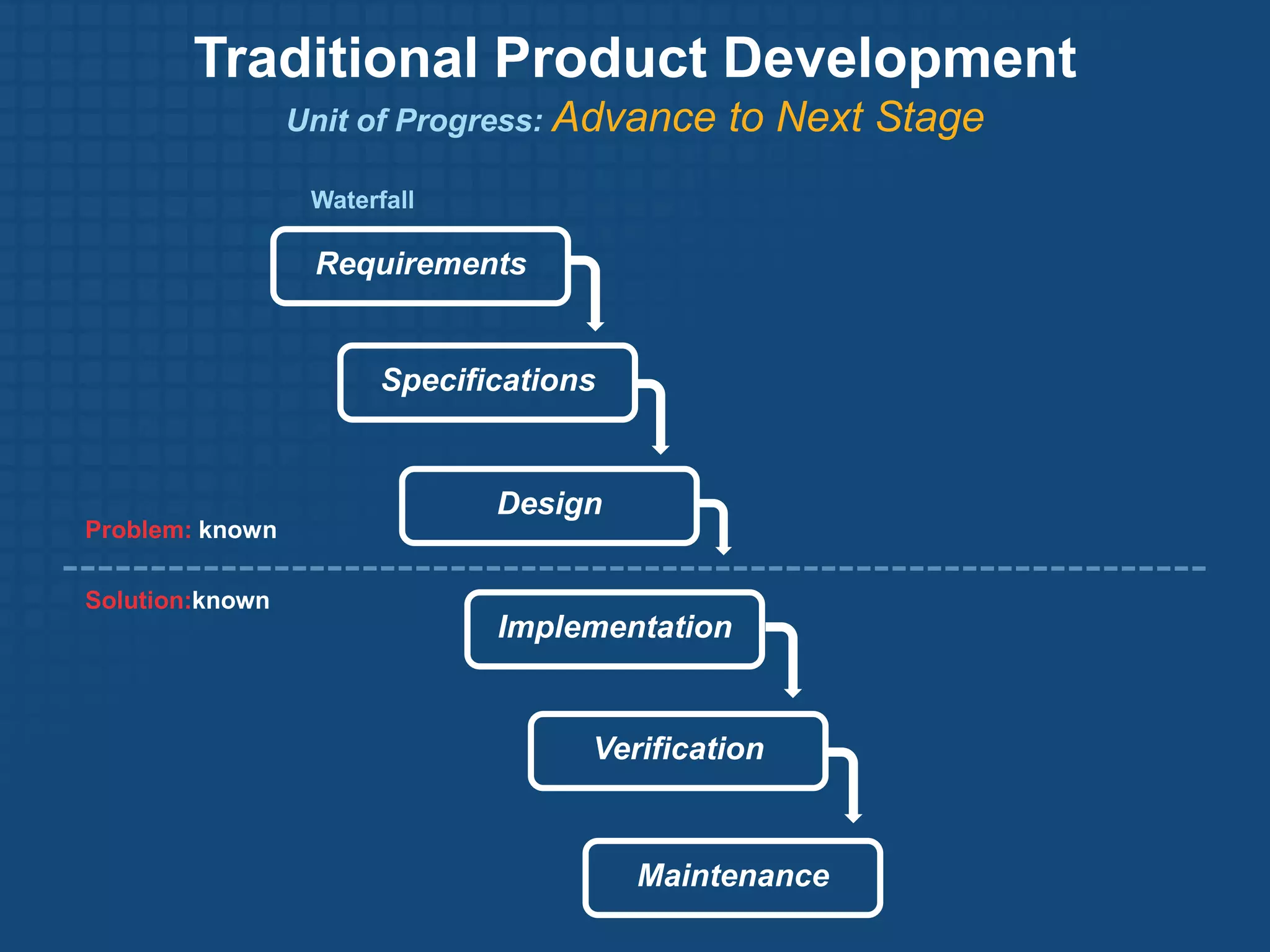
In a startup, the product and customer are unknowns. We need a new definition of value for startups: validated learning about customersTraditional Product DevelopmentUnit of Progress: Advance to Next StageWaterfallRequirementsSpecificationsDesignProblem: knownSolution:knownImplementationVerificationMaintenance
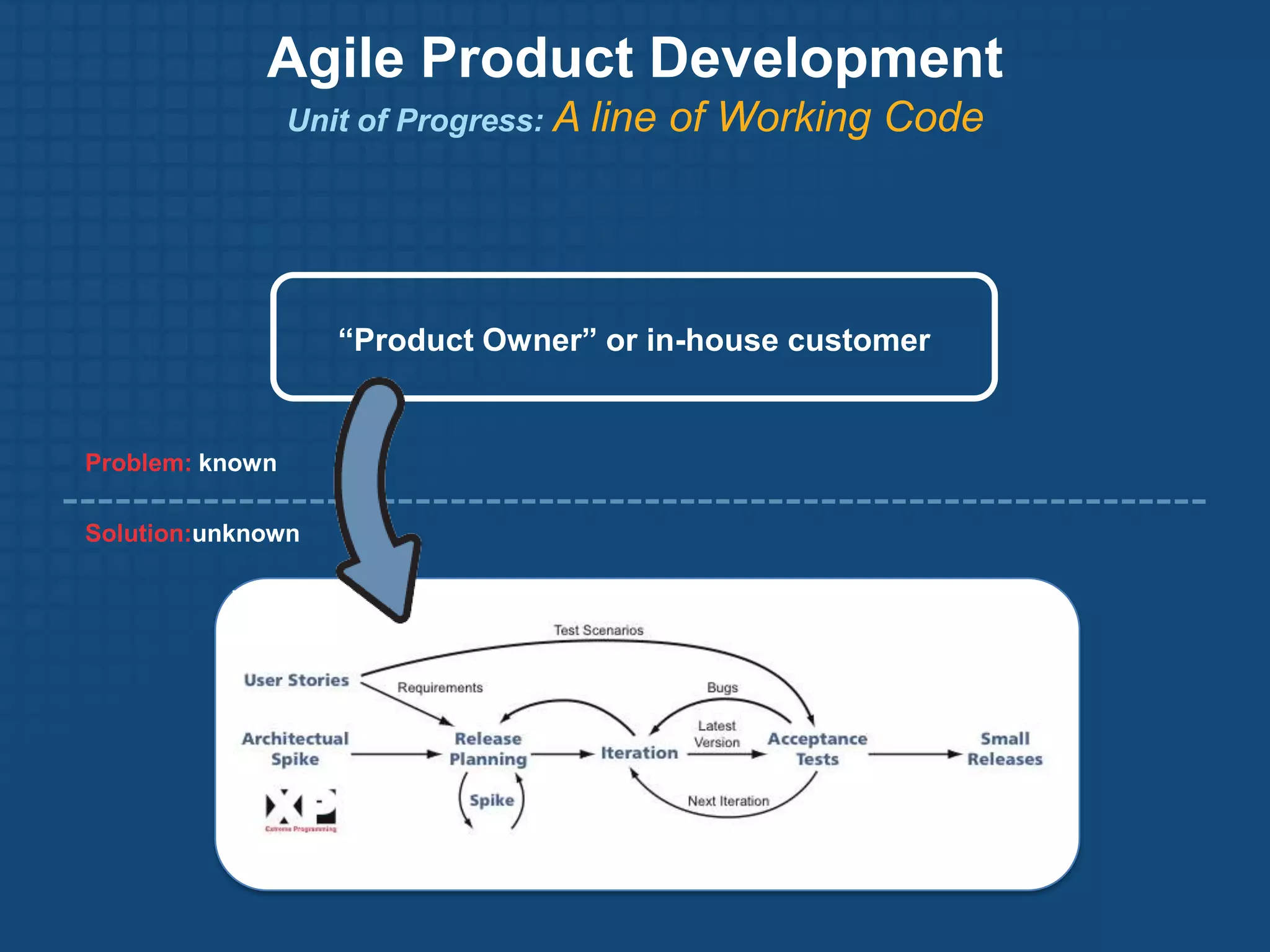
Agile Product DevelopmentUnit of Progress: A line of Working Code“Product Owner” or in-house customerProblem: knownSolution:unknown
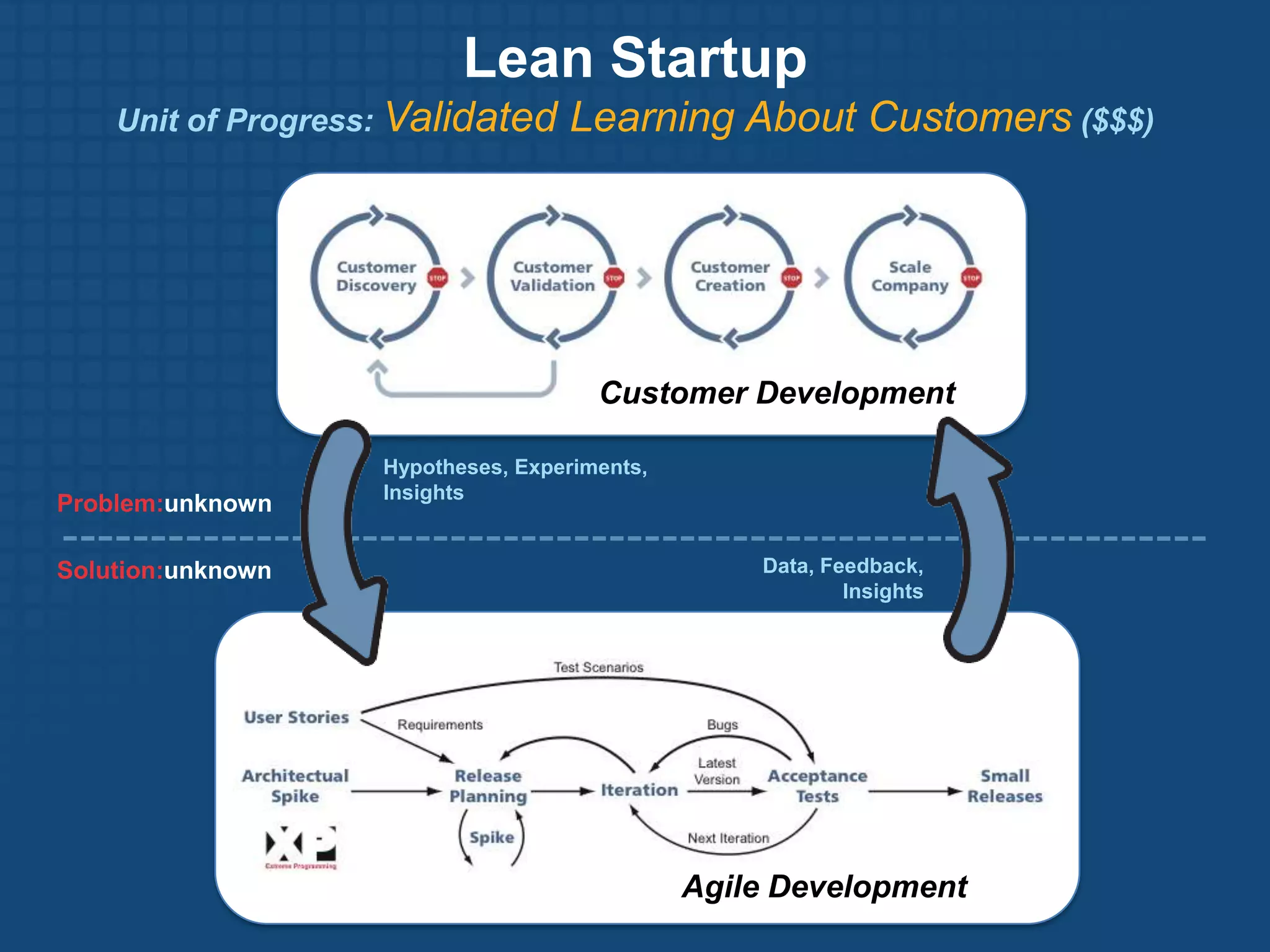
Lean StartupUnit of Progress: Validated Learning About Customers ($$$)Customer DevelopmentHypotheses, Experiments,InsightsProblem:unknownData, Feedback,InsightsSolution:unknownAgile Development
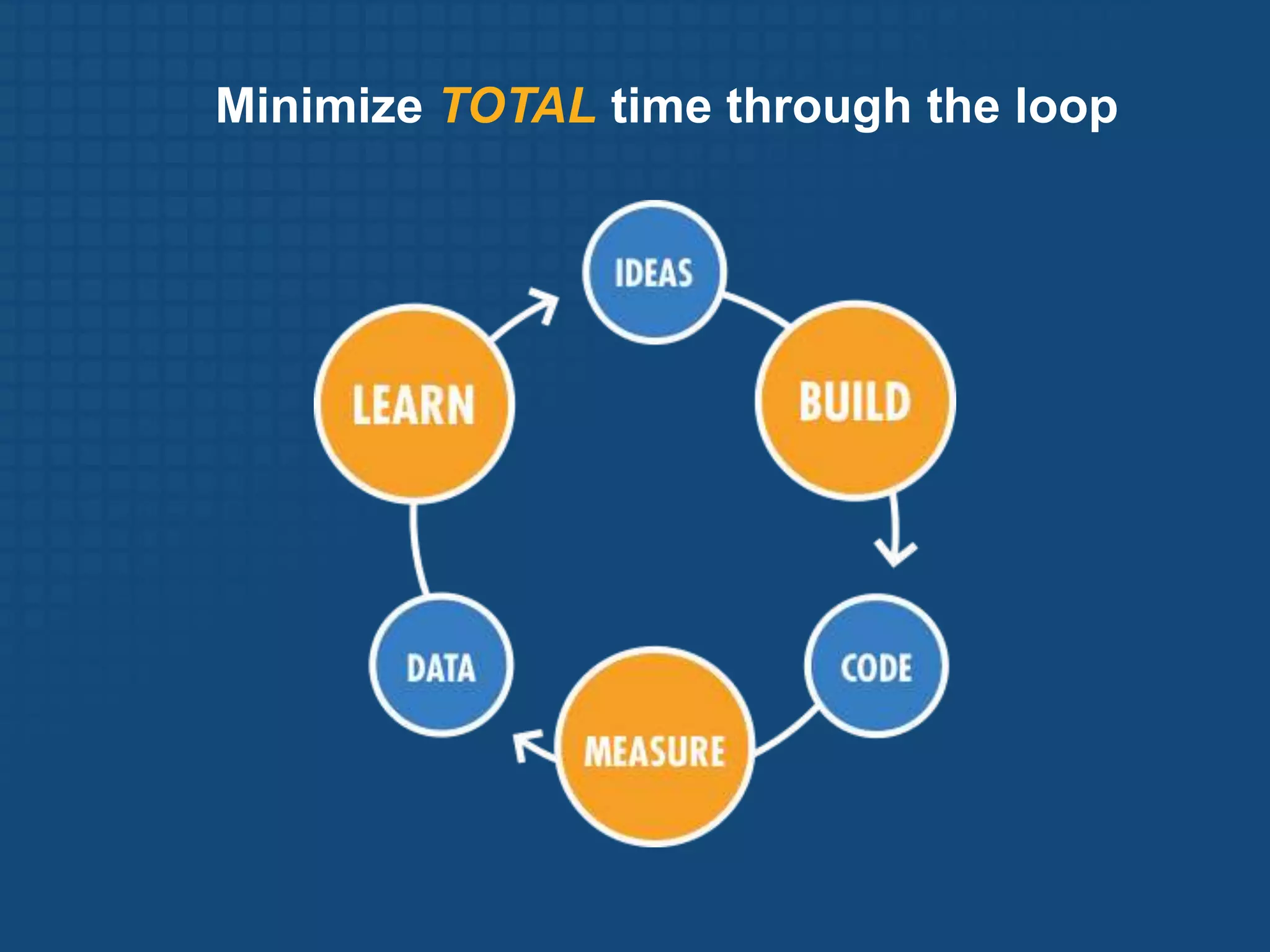
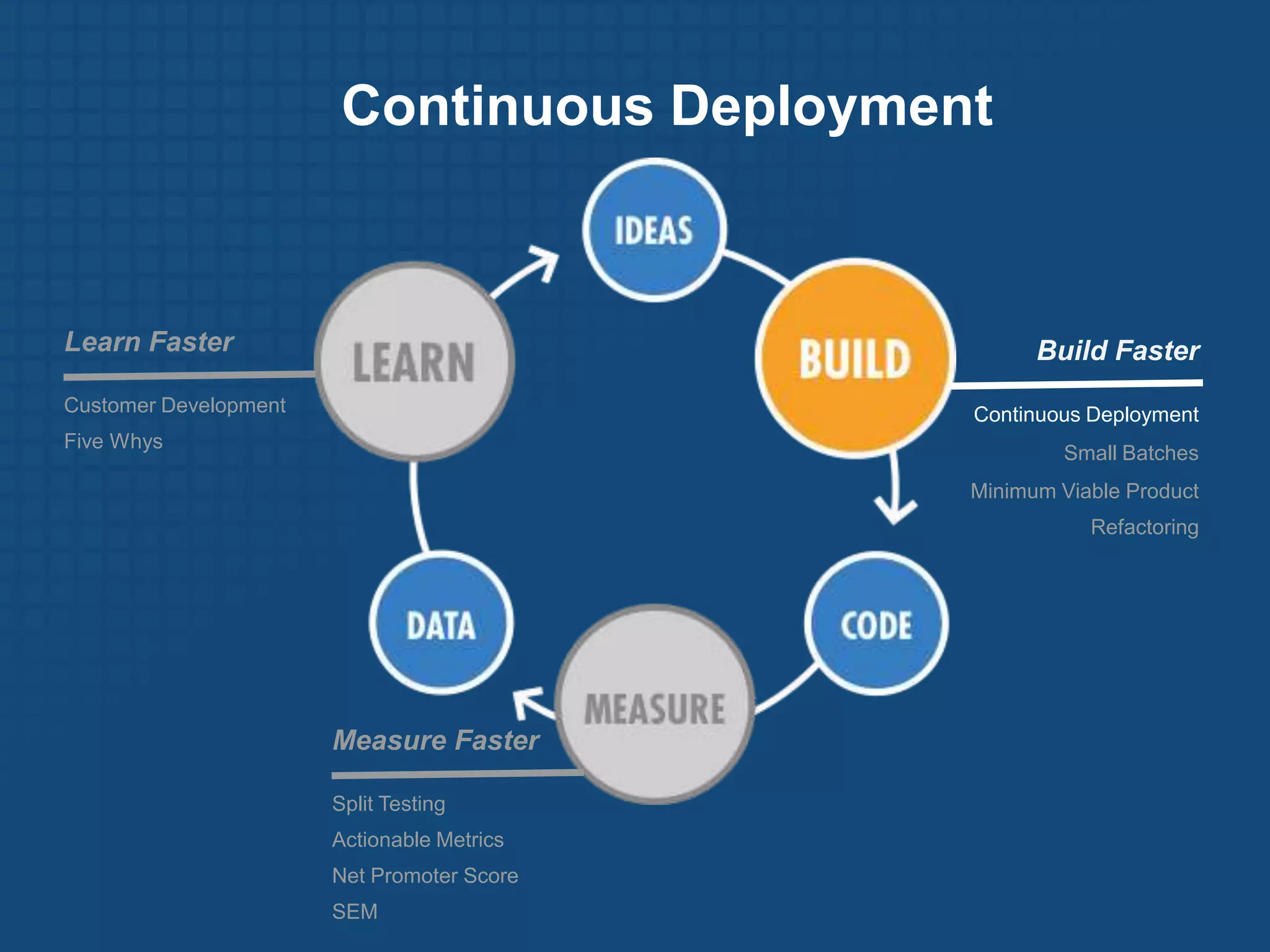
Minimize TOTAL time through the loop
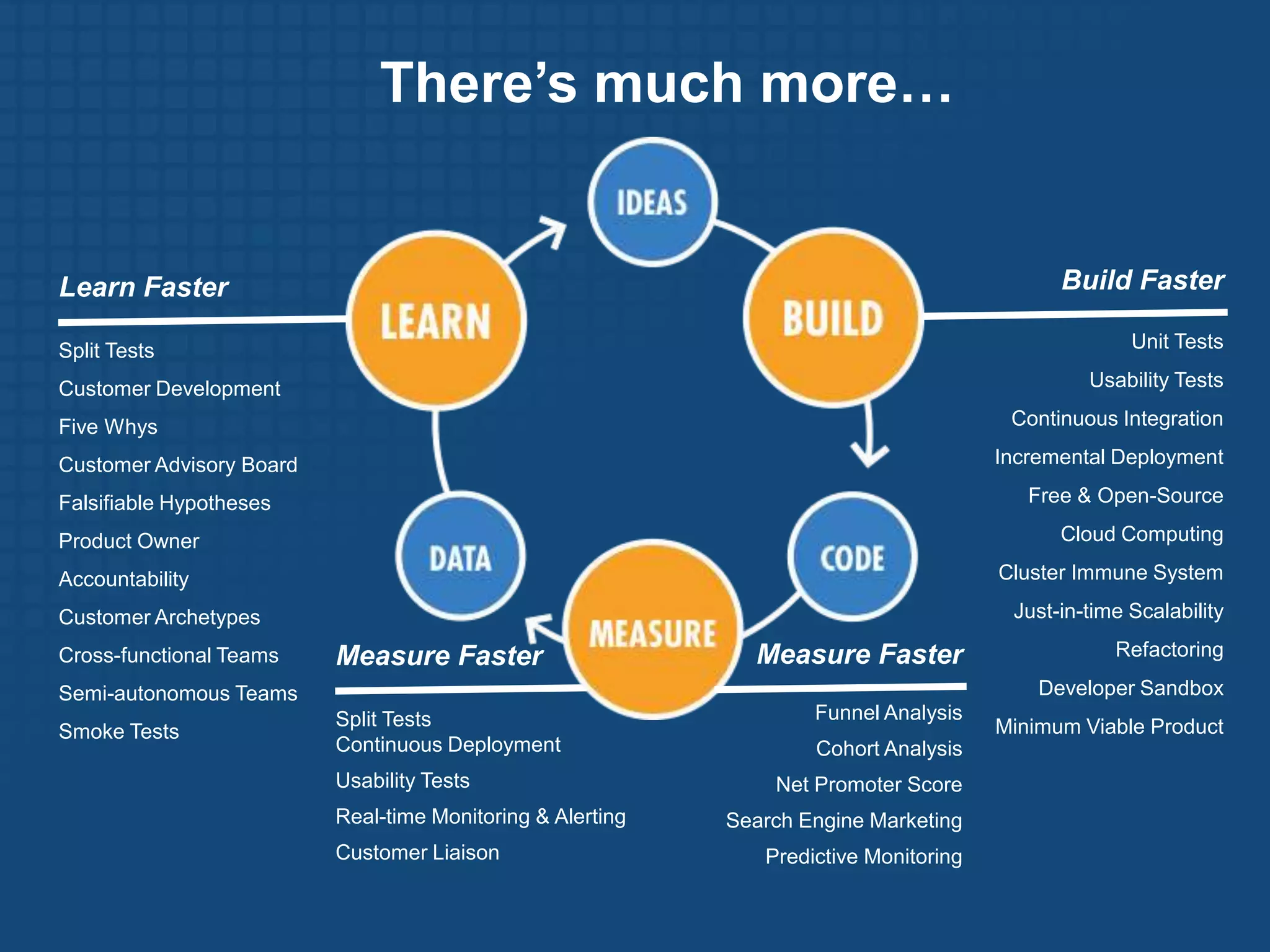
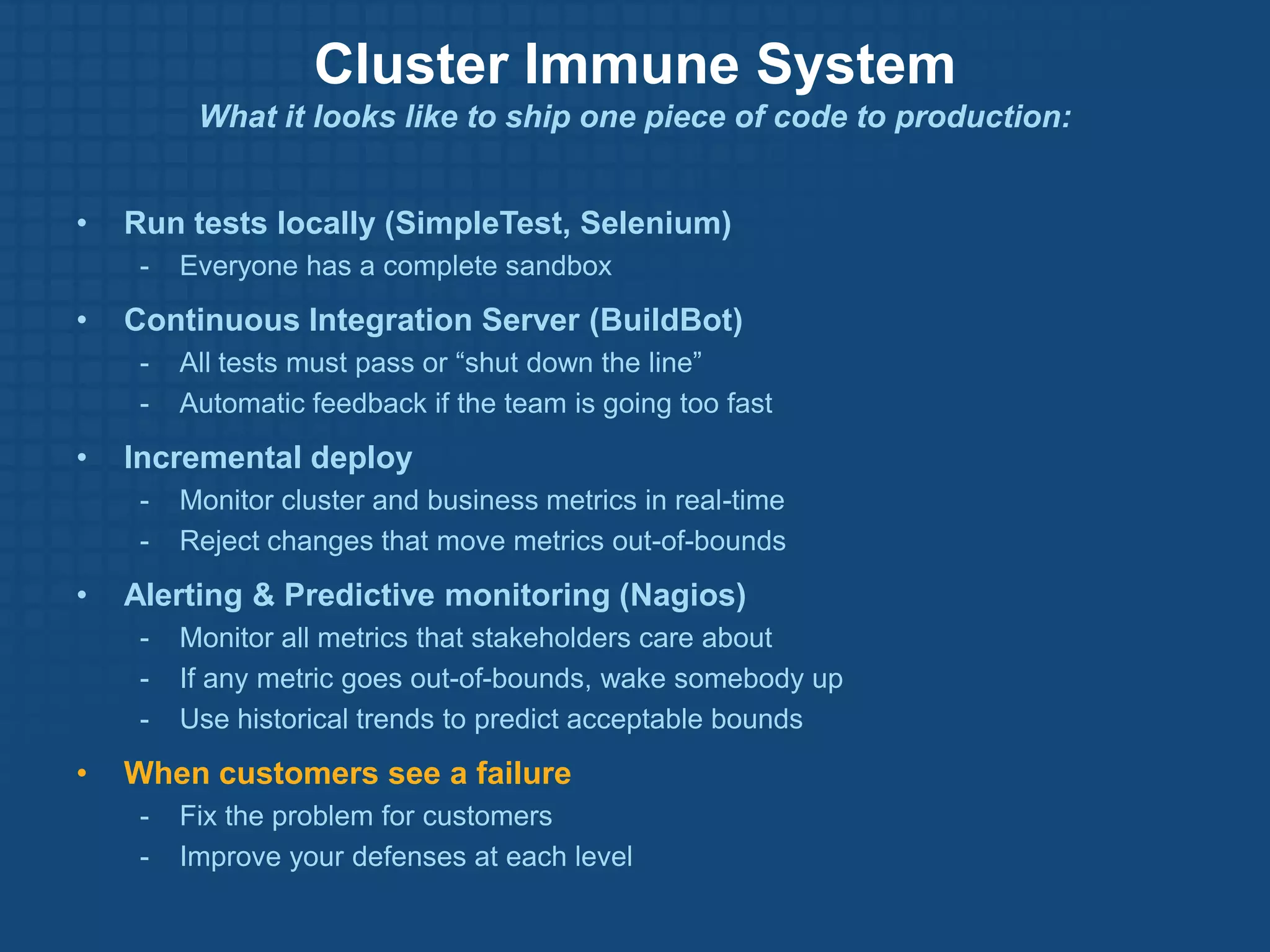
There’s much more…Build FasterUnit TestsUsability TestsContinuous IntegrationIncremental DeploymentFree & Open-SourceCloud ComputingCluster Immune SystemJust-in-time ScalabilityRefactoringDeveloper SandboxMinimum Viable ProductLearn FasterSplit TestsCustomer DevelopmentFive WhysCustomer Advisory BoardFalsifiable HypothesesProduct OwnerAccountabilityCustomer ArchetypesCross-functional TeamsSemi-autonomous TeamsSmoke TestsMeasure FasterFunnel AnalysisCohort AnalysisNet Promoter ScoreSearch Engine MarketingPredictive MonitoringMeasure FasterSplit TestsContinuous DeploymentUsability TestsReal-time Monitoring & AlertingCustomer Liaison
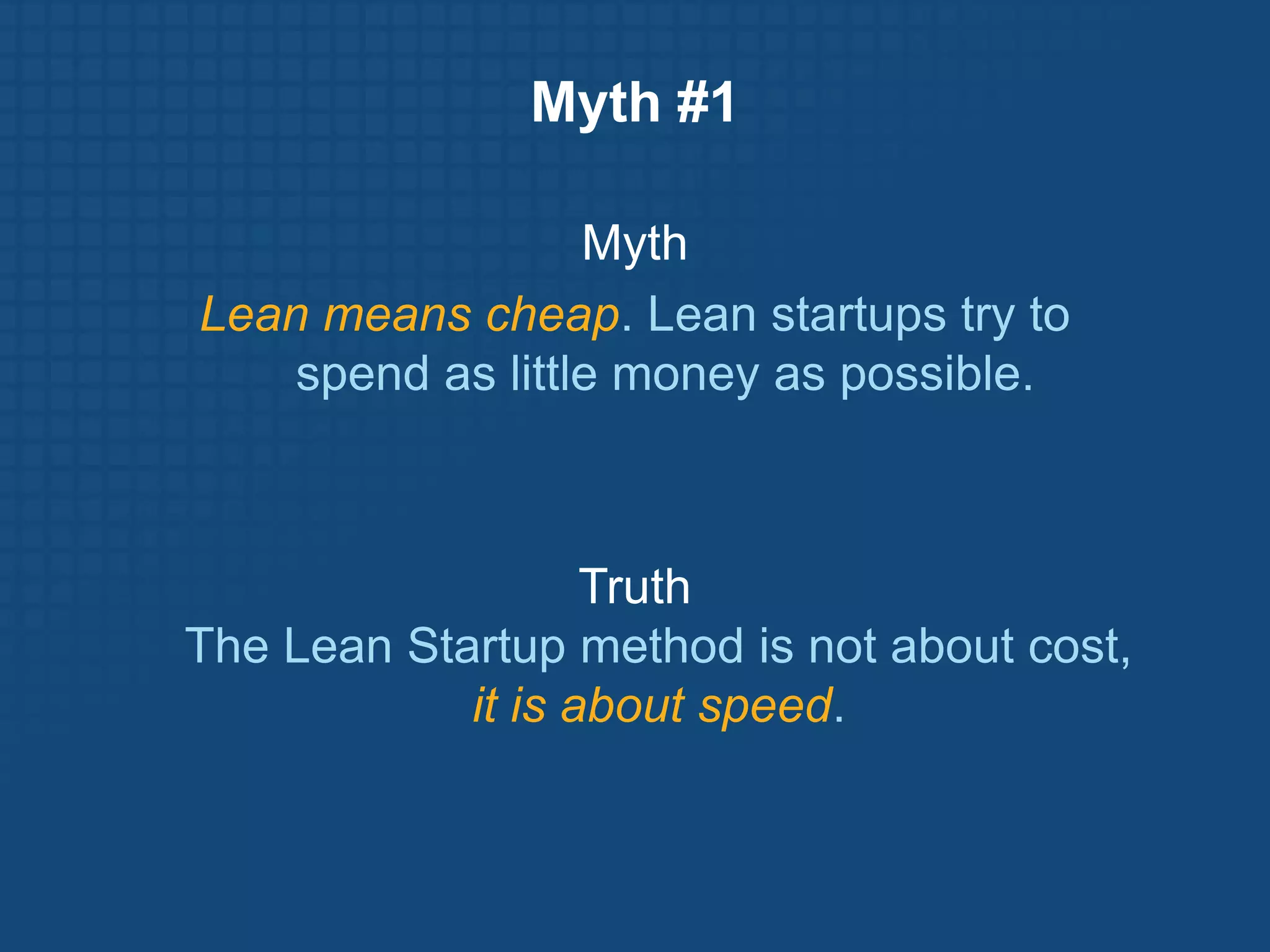
Myth #1MythLean means cheap. Lean startups try to spend as little money as possible.Truth The Lean Startup method is not about cost, it is about speed.
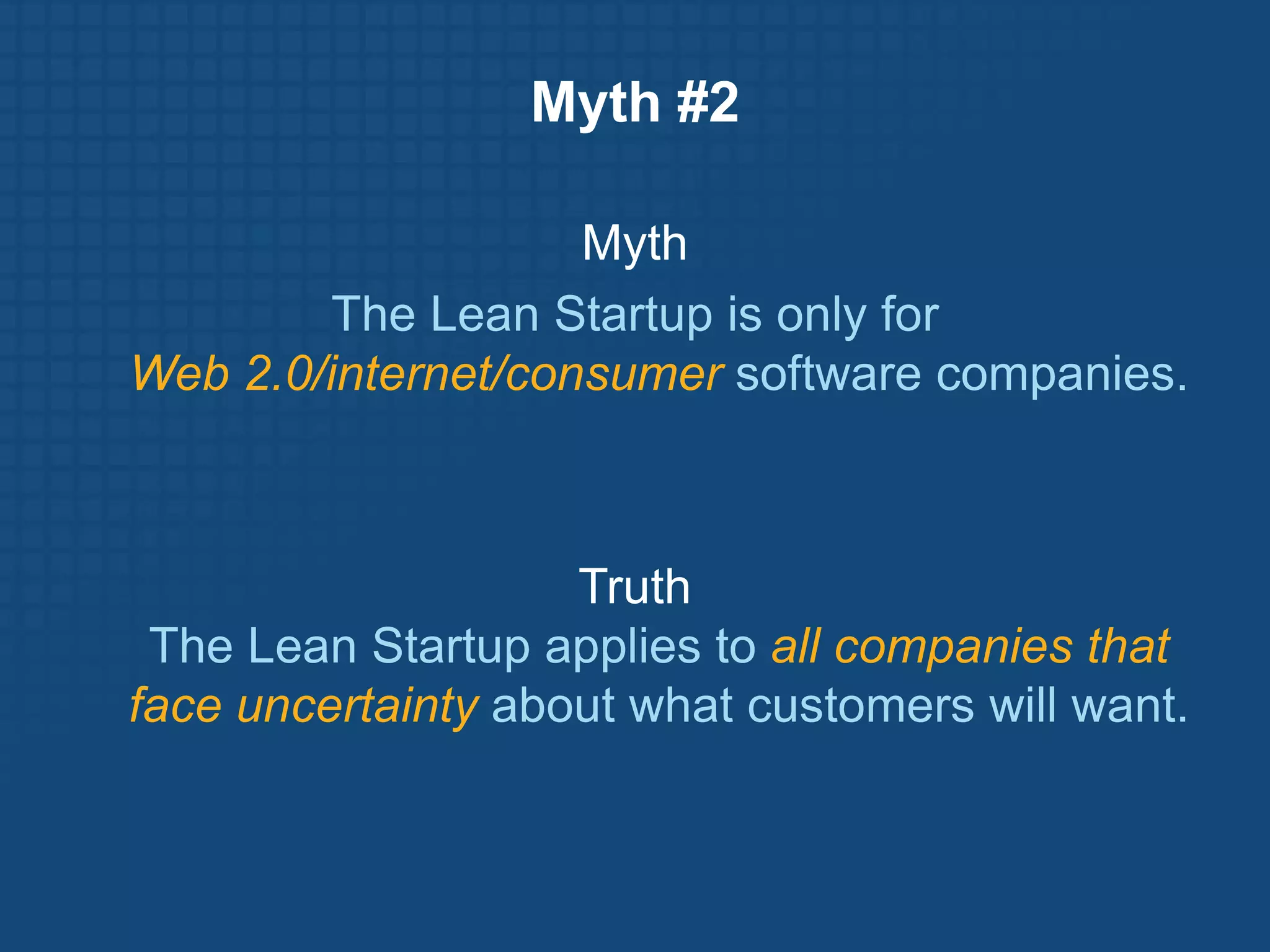
Myth #2MythThe Lean Startup is only for Web 2.0/internet/consumer software companies.Truth The Lean Startup applies to all companies that face uncertainty about what customers will want.
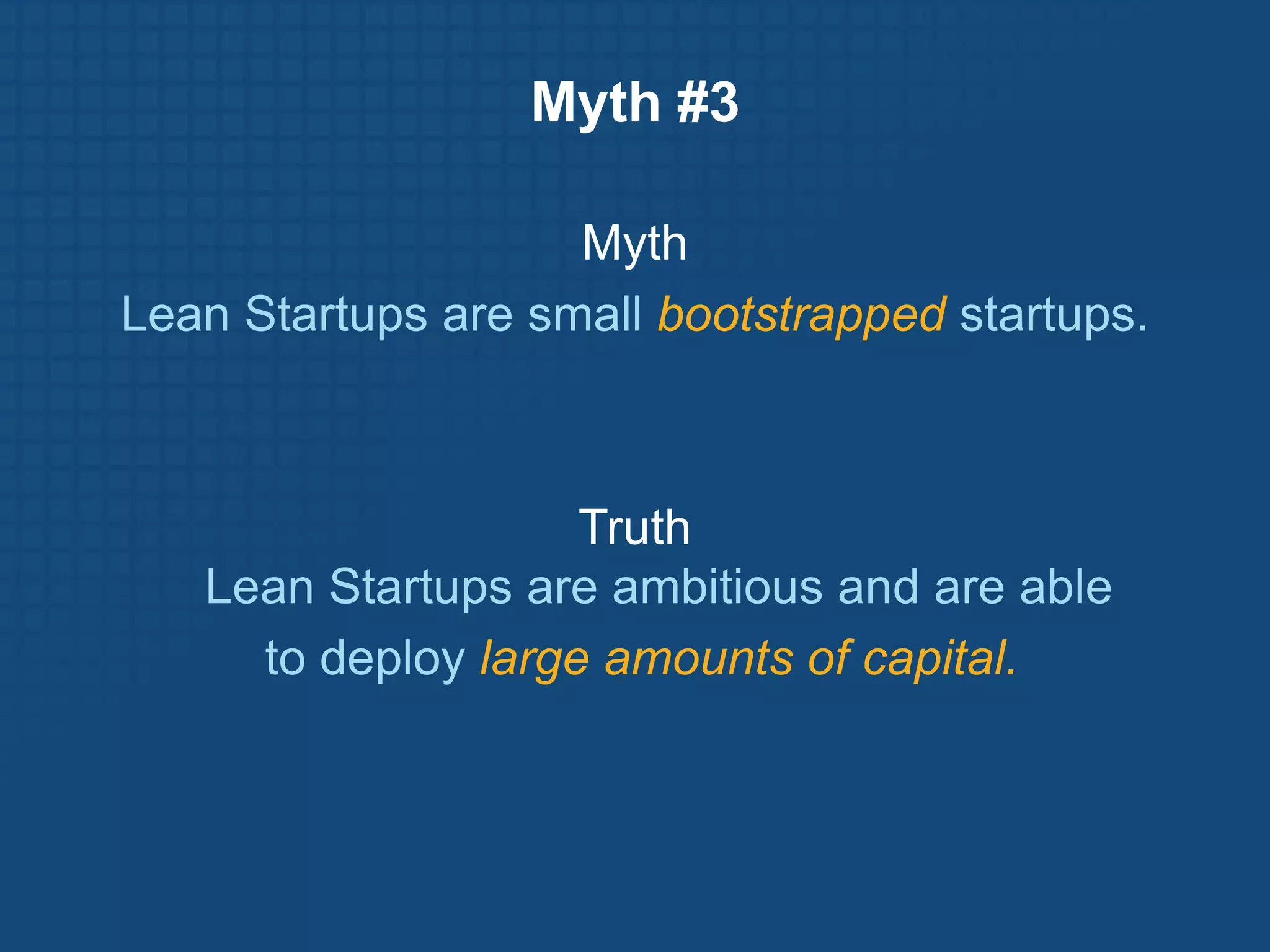
Myth #3MythLean Startups are small bootstrapped startups.Truth Lean Startups are ambitious and are able to deploy large amounts of capital.
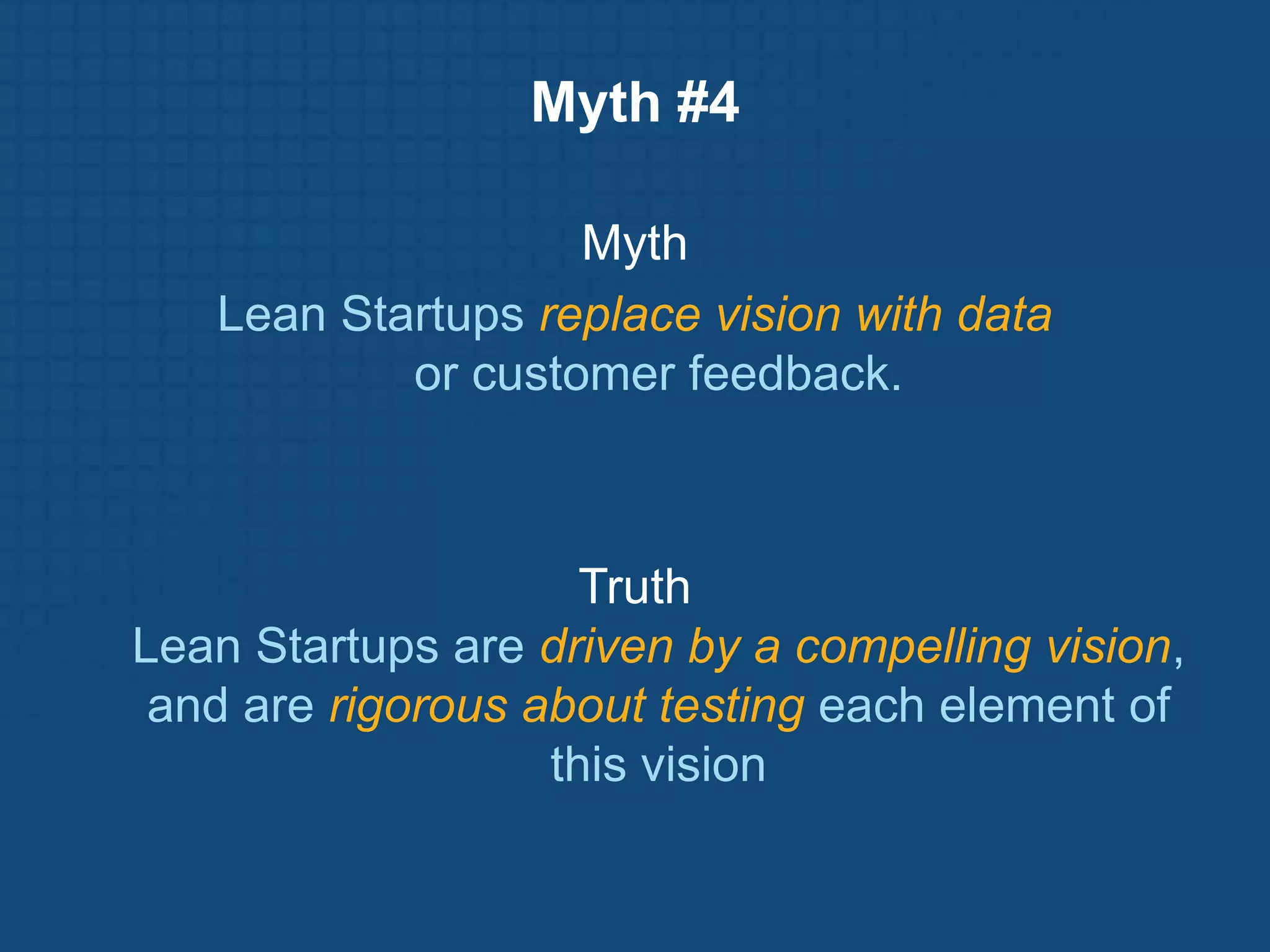
Myth #4MythLean Startups replace vision with dataor customer feedback.Truth Lean Startups are driven by a compelling vision, and are rigorous about testing each element of this vision

The Lean Startup at Code for America fellows