1. The presentation discusses unconscious or implicit bias and how it can influence behavior and decision-making.
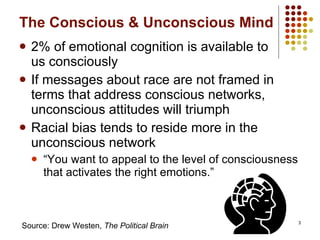
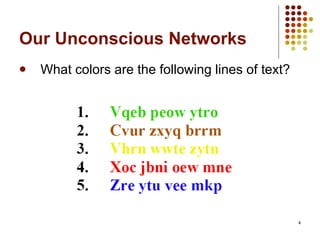
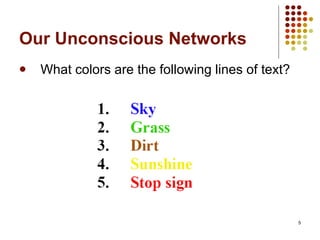
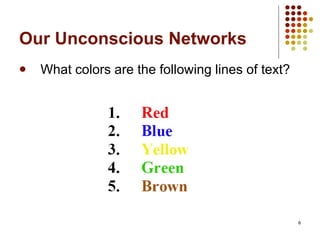
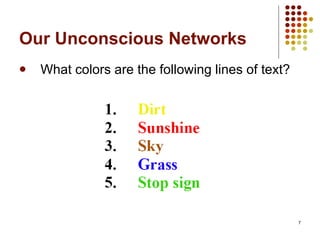
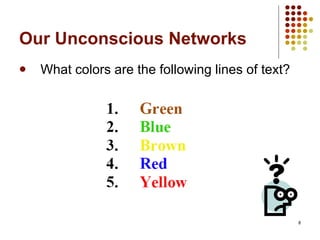
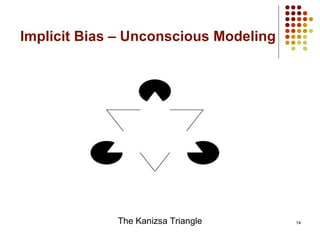
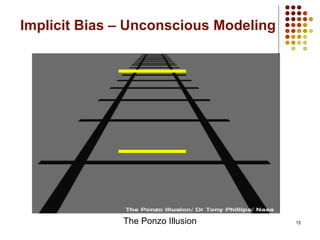
2. Only 2% of cognition is consciously accessible, while unconscious networks and schemas process information quickly and automatically based on stereotypes and biases developed through culture and experience.
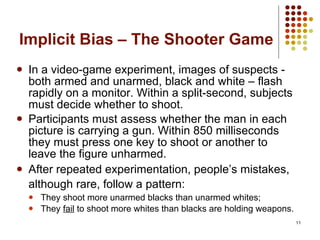
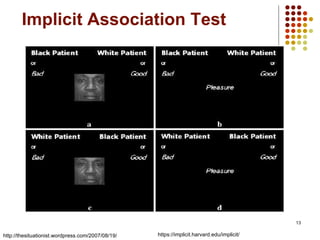
3. Tests of implicit association and priming experiments reveal that people often have implicit biases that do not align with their explicit beliefs and values.
4. These unconscious biases can be activated and influenced by environmental cues and situational factors, demonstrating that pursuing race-neutral policies may not be effective in addressing the effects of implicit bias.