Project 
Trans e-facilitator 
The 2-tier approach 
2014 - September 24th
The 2-tier approach 
Aim of ‘Trans e-Facilitator’ is: 
• provide training material to raise the quality of training for e-facilitators in order 
to improve their skills and work. 
How: 
• With a curriculum by module(s) which qualify e-facilitators to use and implement 
learning opportunities with regard to key and transversal competences. 
For whom: 
• The main target groups are people who works in a telecentres (spaces accessible 
for the public, that provide ICT equipment and facilitate adult learning especially 
for those target groups at risk of exclusion from the labour market and the 
community as a whole)
The 2-tier approach 
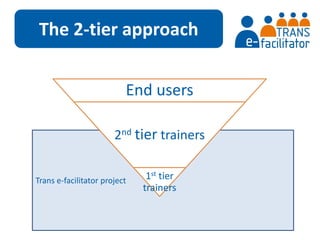
End users 
2nd tier trainers 
Trans e-facilitator project 
1st tier 
trainers
The 2-tier approach 
1st Tier Trainer 
Aim: 
• Prepare 15 trainers (5 per country) to train new e-facilitators, based on a set of learning 
modules which are adapted to specific national needs. 
Profile: 
• Previous experience to train and facilitate other trainers/teachers; 
• Capacity to develop and comment training methodologies ; 
• Experience in delivering e-learning; 
• Knowledge of English and 
• Online learning environment.
The 2-tier approach 
1st Tier Trainer 
Background and types of organisations for e-Inclusion:
The 2-tier approach 
2nd Tier Trainer 
Aim: 
• Prepare at least 45 trainers (15 per country) in order to ensure the piloting and 
continuity of the project. 
Selection: 
• The 1st tier trainer select the second tier trainers out of their network (the learners 
might already know each other or must have something in common that would 
bond them and let them work together in an efficient and more open way) 
• Online application and best candidates were selected.
The 2-tier approach 
2nd Tier Trainer 
8 ICT practitioners; 7 from NGO’s; 2 from Libraries; 2 from Public 
Sector and 8 from several areas. 
TOTAL: 20 
17 from Libraries; 9 teachers, 8 from NGOs, 2 from learning 
centres, 1 from telecentre and 1 from administrative office work 
TOTAL: 38 
10 from ICT practitioners, 10 academic students, 5 librarians, 2 civil 
servants and 2 from NGOs. 
TOTAL: 24
The 2-tier approach 
Portuguese experience 
Points to pay attention: 
• Blended learning can be valuable; 
• Engagement (certification; tuition-free); 
• Management of expectations (It’s necessary to be crystal clear about what the 
trainees can expect and to provide information about the courses’ content); 
• Awareness raising (motivation: sometimes the trainees don’t understand the 
benefits of this model)
The 2-tier approach 
Portuguese experience 
Reasons to like the curriculum: 
• Flexibility (trainees can choose which of the modules matches their needs, how 
many, schedule, etc.); 
• Broad scope (it included a different public from the one initially foreseen, e.g. social 
education students) 
• Effectiveness: short-time modules with high impact
The 2-tier approach 
Multiplication factor
Project 
Trans e-facilitator 
Thank you 
2014 - September 24th

Trans efacilitator: the 2-tier approach

  • 1.
    Project Trans e-facilitator The 2-tier approach 2014 - September 24th
  • 2.
    The 2-tier approach Aim of ‘Trans e-Facilitator’ is: • provide training material to raise the quality of training for e-facilitators in order to improve their skills and work. How: • With a curriculum by module(s) which qualify e-facilitators to use and implement learning opportunities with regard to key and transversal competences. For whom: • The main target groups are people who works in a telecentres (spaces accessible for the public, that provide ICT equipment and facilitate adult learning especially for those target groups at risk of exclusion from the labour market and the community as a whole)
  • 3.
    The 2-tier approach End users 2nd tier trainers Trans e-facilitator project 1st tier trainers
  • 4.
    The 2-tier approach 1st Tier Trainer Aim: • Prepare 15 trainers (5 per country) to train new e-facilitators, based on a set of learning modules which are adapted to specific national needs. Profile: • Previous experience to train and facilitate other trainers/teachers; • Capacity to develop and comment training methodologies ; • Experience in delivering e-learning; • Knowledge of English and • Online learning environment.
  • 5.
    The 2-tier approach 1st Tier Trainer Background and types of organisations for e-Inclusion:
  • 6.
    The 2-tier approach 2nd Tier Trainer Aim: • Prepare at least 45 trainers (15 per country) in order to ensure the piloting and continuity of the project. Selection: • The 1st tier trainer select the second tier trainers out of their network (the learners might already know each other or must have something in common that would bond them and let them work together in an efficient and more open way) • Online application and best candidates were selected.
  • 7.
    The 2-tier approach 2nd Tier Trainer 8 ICT practitioners; 7 from NGO’s; 2 from Libraries; 2 from Public Sector and 8 from several areas. TOTAL: 20 17 from Libraries; 9 teachers, 8 from NGOs, 2 from learning centres, 1 from telecentre and 1 from administrative office work TOTAL: 38 10 from ICT practitioners, 10 academic students, 5 librarians, 2 civil servants and 2 from NGOs. TOTAL: 24
  • 8.
    The 2-tier approach Portuguese experience Points to pay attention: • Blended learning can be valuable; • Engagement (certification; tuition-free); • Management of expectations (It’s necessary to be crystal clear about what the trainees can expect and to provide information about the courses’ content); • Awareness raising (motivation: sometimes the trainees don’t understand the benefits of this model)
  • 9.
    The 2-tier approach Portuguese experience Reasons to like the curriculum: • Flexibility (trainees can choose which of the modules matches their needs, how many, schedule, etc.); • Broad scope (it included a different public from the one initially foreseen, e.g. social education students) • Effectiveness: short-time modules with high impact
  • 10.
    The 2-tier approach Multiplication factor
  • 11.
    Project Trans e-facilitator Thank you 2014 - September 24th