Delivering your 
presentation 
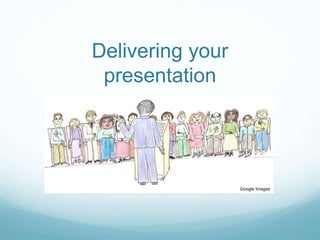
Google Images
Delivering your presentation 
Learning Intention 
 To know the skills and 
strategies for delivering an 
engaging presentation. 
Success Criteria 
 I can list three 
skills/strategies that will 
assist me to delivery my 
information in an engaging 
manner 
Google Images
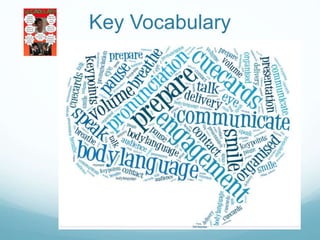
Key Vocabulary
GKR/Hook 
What does 
the title tell 
me? 
What do I 
predict the 
text will be 
about? 
What do I 
already know 
about this 
topic? 
What can 
the pictures 
tell me? 
What 
words do 
I expect 
to see? 
What 
images come 
to mind? 
What will I 
do as I 
read?
DELIVERING YOUR 
PRESENTATION 
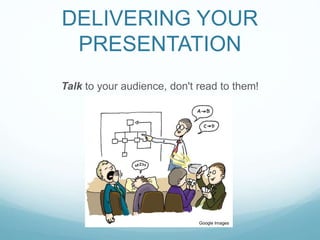
Talk to your audience, don't read to them! 
Google Images
DELIVERING YOUR 
PRESENTATION 
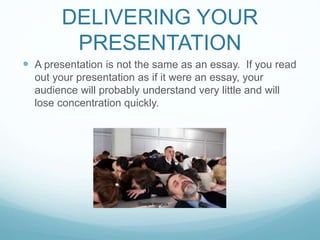
 A presentation is not the same as an essay. If you read 
out your presentation as if it were an essay, your 
audience will probably understand very little and will 
lose concentration quickly. 
Google Images
DELIVERING YOUR 
PRESENTATION 
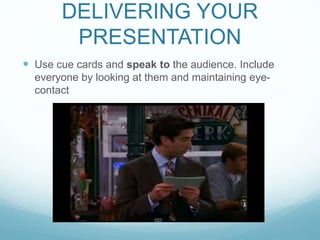
 Use cue cards and speak to the audience. Include 
everyone by looking at them and maintaining eye-contact
DELIVERING YOUR 
PRESENTATION … 
 Keep it simple. The aim is to communicate. 
 Emphasise the key points. 
 Check the pronunciation of difficult, unusual, or 
foreign words beforehand 
 Use your voice to communicate clearly.
DELIVERING YOUR 
PRESENTATION … 
 Speak loudly enough for everyone in the room to hear 
you. 
 Speak slowly and clearly. Don’t rush! Speaking fast 
doesn’t make you seem smarter, it will only make it 
harder for other people to understand you. 
 Key words are important. Emphasis them.
DELIVERING YOUR 
PRESENTATION … 
 Vary your voice quality. If you always use the same 
volume and pitch (for example, all loud, or all soft, or 
in a monotone) your audience will switch off. 
 Slow down for key points. 
 Use pauses—don't be afraid of short periods of 
silence. (They give you a chance to gather your 
thoughts, and your audience a chance to think.) 
 Use your body to communicate, too!
DELIVERING YOUR 
PRESENTATION …
DELIVERING YOUR 
PRESENTATION … 
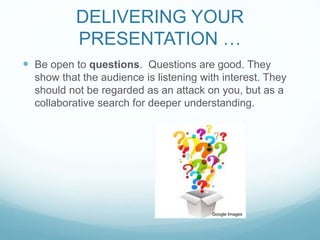
 Be open to questions. Questions are good. They 
show that the audience is listening with interest. They 
should not be regarded as an attack on you, but as a 
collaborative search for deeper understanding. 
Google Images
DEALING WITH 
NERVOUSNESS 
The first few times you make a presentation, you will be 
nervous. Here are some things to consider: 
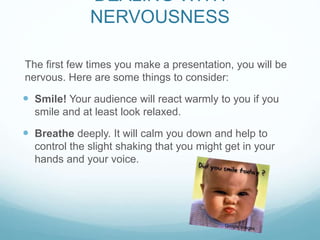
 Smile! Your audience will react warmly to you if you 
smile and at least look relaxed. 
 Breathe deeply. It will calm you down and help to 
control the slight shaking that you might get in your 
hands and your voice.
DEALING WITH 
NERVOUSNESS 
 Be well-prepared. Practice giving your talk. 
 Be organised. If you are well organised, your task will 
be easier. 
 Slow down! When people are nervous, they tend to 
get confused easily. So your mind may start to race, 
and you may feel panicky. Make use of pauses: force 
yourself to stop at the end of a sentence, take a breath, 
and think before you continue.
DEALING WITH 
NERVOUSNESS 
 Giving an oral presentation is a performance—you 
have to be like an actor. If you act the part of someone 
enjoying themselves and feeling confident, you will not 
only communicate these positive feelings to the 
audience, you will feel much better, too. 
Google Images
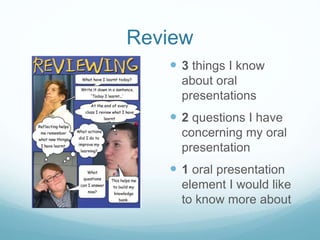
Review 
 3 things I know 
about oral 
presentations 
 2 questions I have 
concerning my oral 
presentation 
 1 oral presentation 
element I would like 
to know more about

2 Presenting

  • 1.
  • 2.
    Delivering your presentation Learning Intention  To know the skills and strategies for delivering an engaging presentation. Success Criteria  I can list three skills/strategies that will assist me to delivery my information in an engaging manner Google Images
  • 3.
  • 4.
    GKR/Hook What does the title tell me? What do I predict the text will be about? What do I already know about this topic? What can the pictures tell me? What words do I expect to see? What images come to mind? What will I do as I read?
  • 5.
    DELIVERING YOUR PRESENTATION Talk to your audience, don't read to them! Google Images
  • 6.
    DELIVERING YOUR PRESENTATION  A presentation is not the same as an essay. If you read out your presentation as if it were an essay, your audience will probably understand very little and will lose concentration quickly. Google Images
  • 7.
    DELIVERING YOUR PRESENTATION  Use cue cards and speak to the audience. Include everyone by looking at them and maintaining eye-contact
  • 8.
    DELIVERING YOUR PRESENTATION…  Keep it simple. The aim is to communicate.  Emphasise the key points.  Check the pronunciation of difficult, unusual, or foreign words beforehand  Use your voice to communicate clearly.
  • 9.
    DELIVERING YOUR PRESENTATION…  Speak loudly enough for everyone in the room to hear you.  Speak slowly and clearly. Don’t rush! Speaking fast doesn’t make you seem smarter, it will only make it harder for other people to understand you.  Key words are important. Emphasis them.
  • 10.
    DELIVERING YOUR PRESENTATION…  Vary your voice quality. If you always use the same volume and pitch (for example, all loud, or all soft, or in a monotone) your audience will switch off.  Slow down for key points.  Use pauses—don't be afraid of short periods of silence. (They give you a chance to gather your thoughts, and your audience a chance to think.)  Use your body to communicate, too!
  • 11.
  • 12.
    DELIVERING YOUR PRESENTATION…  Be open to questions. Questions are good. They show that the audience is listening with interest. They should not be regarded as an attack on you, but as a collaborative search for deeper understanding. Google Images
  • 13.
    DEALING WITH NERVOUSNESS The first few times you make a presentation, you will be nervous. Here are some things to consider:  Smile! Your audience will react warmly to you if you smile and at least look relaxed.  Breathe deeply. It will calm you down and help to control the slight shaking that you might get in your hands and your voice.
  • 14.
    DEALING WITH NERVOUSNESS  Be well-prepared. Practice giving your talk.  Be organised. If you are well organised, your task will be easier.  Slow down! When people are nervous, they tend to get confused easily. So your mind may start to race, and you may feel panicky. Make use of pauses: force yourself to stop at the end of a sentence, take a breath, and think before you continue.
  • 15.
    DEALING WITH NERVOUSNESS  Giving an oral presentation is a performance—you have to be like an actor. If you act the part of someone enjoying themselves and feeling confident, you will not only communicate these positive feelings to the audience, you will feel much better, too. Google Images
  • 16.
    Review  3things I know about oral presentations  2 questions I have concerning my oral presentation  1 oral presentation element I would like to know more about