PROFESSIONAL
PORTFOLIOS
Jo-Anne McShane
What is a Professional
Portfolio?
a structured collection of
different types of evidence that
show the individual’s professional
goals, competencies, career
achievements and continuing
professional development
activities and experiences
Why should
you have a
Professional
Portfolio?
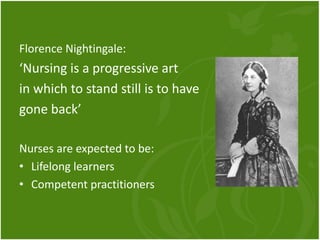
Florence Nightingale:
‘Nursing is a progressive art
in which to stand still is to have
gone back’
Nurses are expected to be:
• Lifelong learners
• Competent practitioners
• Provides evidence to demonstrate your
ongoing competence to practice
• Demonstrates to potential employers your
knowledge and skills (novice to expert)
• Take control of your professional development
• Meet registration standards (CPD, Learning
Plan and Evaluation)
• Visual evidence of your abilities, achievements
and interests
More than just a resume!
• Resume- education, work history,
other background info
• Portfolio- evidence of
competencies and expertise
Identify the purpose of the portfolio
Will you use it for an interview, activity for a degree, to initiate a
career change, use it for a promotion?
Identify the audience
Who are they, what do they do and what are they likely to learn
about you?
Identify relevant characteristics
What are your strengths and weaknesses, which of your
strengths and skills do you want to showcase and what are
the best ways to highlight your skills?
Gauge how much time
and effort you are
willing to put in.
Professional
Portfolio
Feedback
CPD
Reflection
Professional
Records
Professional
Resources
Community
Activities
Employment
History
(Resume)
Evaluation of
Practice
Resume
Current Nursing and /or Midwifery
Licence
Professional Memberships
Certificates
Current role description
Employment work contracts
Employment records
Certificates of service
Previous role descriptions
Competency Standards
Assessment tools
Code of Ethics
Code of Conduct
Self evaluation
Peer evaluation
Client evaluation
Supervisor evaluation
Commendations/Awards
Professional affiliations
Involvement in community activities
Volunteer work relevant to nursing
Letters of recommendation
Supervisory meetings
Reflections
Learning plans
Evaluation of learning
Evidence of learning
Links theory to practice
Leads to improvement in practice
Don’t be to harsh on yourself, but be realistic
Will help identify learning needs
Further study – include certificates
Conferences – attended or presented
In-service education - attended or presented
Academic papers or publications
Journal club attendance
Involvement in projects
Committee involvement
Personal educational reading
Types of Portfolios
Assessment- i.e. courses, University
requirements
Presentation- organised, labelled and prepared
for review
Learning – monitor progress in meeting
professional learning goals
Types of Portfolios
Learning portfolios:
• Working document that provides ongoing
evidence of competency/competencies
• Can select materials to include in a best-work
portfolio
Layout can be based on:
• Competency standards
• Performance appraisal standards
• Selection criteria for a position
Layout
Compilation or
shopping trolley/shoebox:
• Collection of artefacts
over time
• Commonly presented at job interviews
Layout
Process Orientated or Cake Mix:
• Reflective components
• Provides direction for future learning- activities
designed to address learning needs
Product Orientated or Spinal Column:
• Evidence demonstrates each standard
• More holistic- links reflection to justify the evidence
Layout
Toast Rack or Standards Based:
Evidence in slotted into categories
i.e. ANMC categories, skills log, employment
records
No reflection
• K.I.S.S
• Limit to around 10 artefacts for best work
portfolios (i.e. for job interviews)
•Scanable in 10min or less
•Self-guided and self-contained
•Shows your best work
•Customise to a specific job

2 portfolios