First-person Narratives
Intermediate 1 Writing
(Notes from Succesful Writing by
Virginia Evans)
Type of writing
• First-person narratives are written in the first person (I / we)
about a series of events, real or imaginary, which happened to
us.
• You should normally use past tenses, as well as a variety of
adjectives or adverbs to make your story more attractive to the
reader.
• Narratives can be found in articles, letters, novels, etc.
• To attract the reader’s attention, give interesting and catchy
titles to your stories.
Structure
• Introduction Paragraph 1: set the scene (who –
where – when) in an interesting way.
• Main body Paragraphs 2-3: where you develop your
story presenting the events in the order they
happened.
• Conclusion Final Paragraph: it includes what
happened in the end of the story, people’s feelings,
final comments or reactions.
• Linkers to show the sequence of events : as soon as,
while, before, first, next, then, etc
Techniques to begin/end your story
To begin your story:
a) using your senses to set the scene ad describe the weather, atmosphere,
surroundings or people’s actions to create mystery or suspense. eg. I
could hear the wind howling around me. It was quite dark that night and
it felt strange to be out in the wilderness all alone.
b) using direct speech. eg. “Always look on the bright side of life, kids”, Mr
Frisbain used to tell us.
c) asking a rhetorical question. eg. Have you ever travelled by train on a
warm summer night?
d) referring to your feelings or mood. eg. I was exhausted because I had
been painting walls all day.
e) addressing the reader directly. eg. I am sure you all know what a
bargain is.
To end your story
To end your story:
a) using direct speech. eg. “Thank you, sir,” the boy
said to me.
b) asking a rhetorical question. eg. “Why did this
happened to me?”
c) describing people’s reactions to /feelings.
eg. My brother had become the hero of the day and I was
extremely proud.
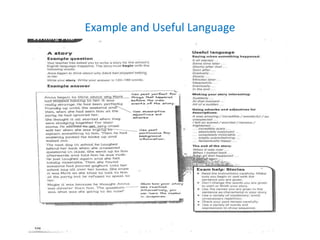
Example and Useful Language

1st Person Narrative

  • 1.
    First-person Narratives Intermediate 1Writing (Notes from Succesful Writing by Virginia Evans)
  • 2.
    Type of writing •First-person narratives are written in the first person (I / we) about a series of events, real or imaginary, which happened to us. • You should normally use past tenses, as well as a variety of adjectives or adverbs to make your story more attractive to the reader. • Narratives can be found in articles, letters, novels, etc. • To attract the reader’s attention, give interesting and catchy titles to your stories.
  • 3.
    Structure • Introduction Paragraph1: set the scene (who – where – when) in an interesting way. • Main body Paragraphs 2-3: where you develop your story presenting the events in the order they happened. • Conclusion Final Paragraph: it includes what happened in the end of the story, people’s feelings, final comments or reactions. • Linkers to show the sequence of events : as soon as, while, before, first, next, then, etc
  • 4.
    Techniques to begin/endyour story To begin your story: a) using your senses to set the scene ad describe the weather, atmosphere, surroundings or people’s actions to create mystery or suspense. eg. I could hear the wind howling around me. It was quite dark that night and it felt strange to be out in the wilderness all alone. b) using direct speech. eg. “Always look on the bright side of life, kids”, Mr Frisbain used to tell us. c) asking a rhetorical question. eg. Have you ever travelled by train on a warm summer night? d) referring to your feelings or mood. eg. I was exhausted because I had been painting walls all day. e) addressing the reader directly. eg. I am sure you all know what a bargain is.
  • 5.
    To end yourstory To end your story: a) using direct speech. eg. “Thank you, sir,” the boy said to me. b) asking a rhetorical question. eg. “Why did this happened to me?” c) describing people’s reactions to /feelings. eg. My brother had become the hero of the day and I was extremely proud.
  • 6.