Philadelphia: Then and Now
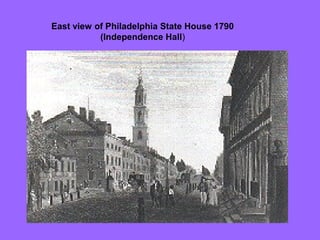
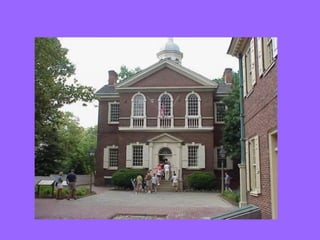
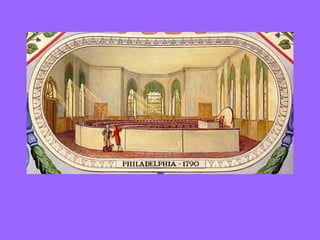
East view of Philadelphia State House 1790
(Independence Hall)
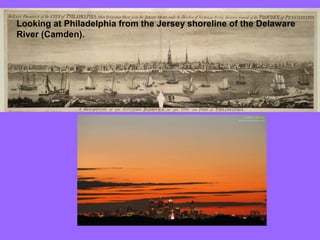
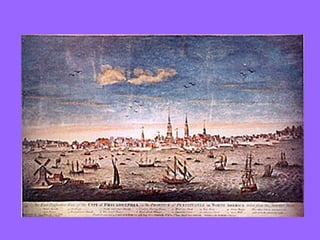
Looking at Philadelphia from the Jersey shoreline of the Delaware
River (Camden).
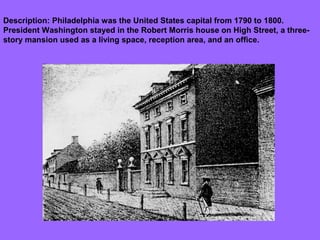
Description: Philadelphia was the United States capital from 1790 to 1800.
President Washington stayed in the Robert Morris house on High Street, a threestory mansion used as a living space, reception area, and an office.
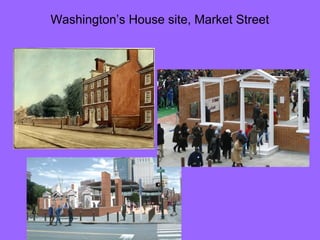
Washington’s House site, Market Street
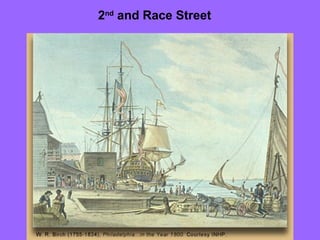
2nd and Race Street
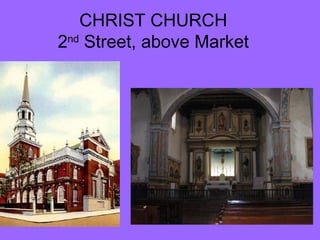
CHRIST CHURCH
2nd Street, above Market
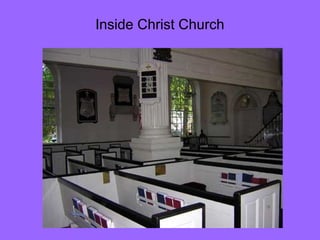
Inside Christ Church
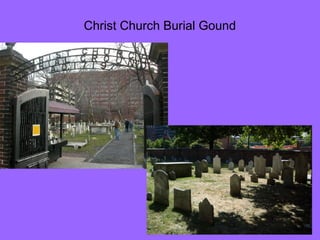
Christ Church Burial Gound
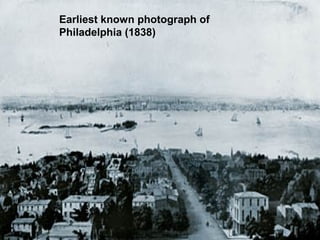
Earliest known photograph of
Philadelphia (1838)
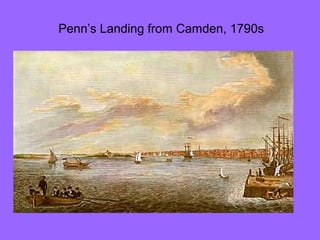
Penn’s Landing from Camden, 1790s
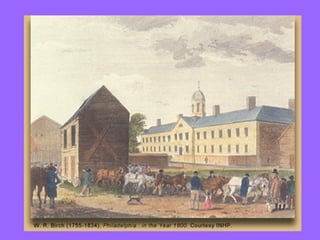
Shipbuilding in Philadelphia, 1790s
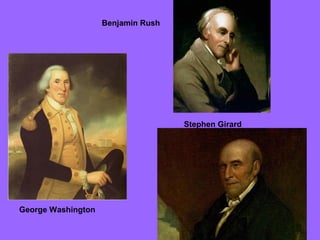
Benjamin Rush

Stephen Girard

George Washington
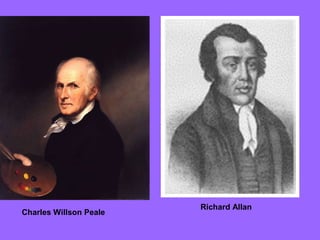
Charles Willson Peale

Richard Allan
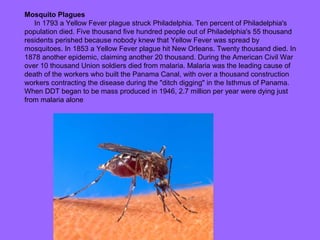
Mosquito Plagues
In 1793 a Yellow Fever plague struck Philadelphia. Ten percent of Philadelphia's
population died. Five thousand five hundred people out of Philadelphia's 55 thousand
residents perished because nobody knew that Yellow Fever was spread by
mosquitoes. In 1853 a Yellow Fever plague hit New Orleans. Twenty thousand died. In
1878 another epidemic, claiming another 20 thousand. During the American Civil War
over 10 thousand Union soldiers died from malaria. Malaria was the leading cause of
death of the workers who built the Panama Canal, with over a thousand construction
workers contracting the disease during the "ditch digging" in the Isthmus of Panama.
When DDT began to be mass produced in 1946, 2.7 million per year were dying just
from malaria alone
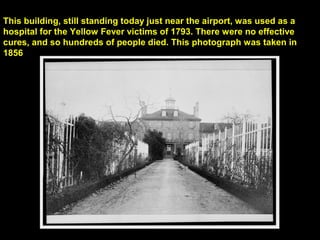
This building, still standing today just near the airport, was used as a
hospital for the Yellow Fever victims of 1793. There were no effective
cures, and so hundreds of people died. This photograph was taken in
1856.
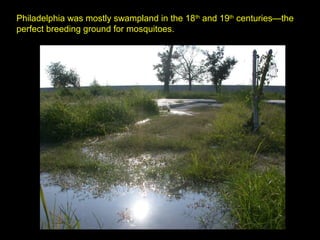
Philadelphia was mostly swampland in the 18th and 19th centuries—the
perfect breeding ground for mosquitoes.
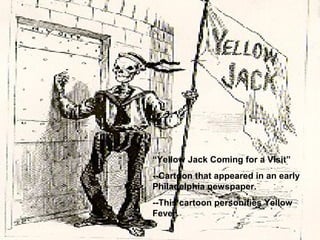
“Yellow Jack Coming for a Visit”
--Cartoon that appeared in an early
Philadelphia newspaper.
--This cartoon personifies Yellow
Fever.
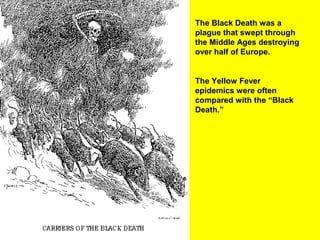
The Black Death was a
plague that swept through
the Middle Ages destroying
over half of Europe.

The Yellow Fever
epidemics were often
compared with the “Black
Death.”

1790s philadelphia

  • 1.
  • 2.
    East view ofPhiladelphia State House 1790 (Independence Hall)
  • 4.
    Looking at Philadelphiafrom the Jersey shoreline of the Delaware River (Camden).
  • 10.
    Description: Philadelphia wasthe United States capital from 1790 to 1800. President Washington stayed in the Robert Morris house on High Street, a threestory mansion used as a living space, reception area, and an office.
  • 11.
  • 12.
  • 13.
  • 14.
  • 15.
  • 16.
    Earliest known photographof Philadelphia (1838)
  • 17.
    Penn’s Landing fromCamden, 1790s
  • 18.
  • 19.
  • 20.
  • 21.
    Mosquito Plagues In 1793a Yellow Fever plague struck Philadelphia. Ten percent of Philadelphia's population died. Five thousand five hundred people out of Philadelphia's 55 thousand residents perished because nobody knew that Yellow Fever was spread by mosquitoes. In 1853 a Yellow Fever plague hit New Orleans. Twenty thousand died. In 1878 another epidemic, claiming another 20 thousand. During the American Civil War over 10 thousand Union soldiers died from malaria. Malaria was the leading cause of death of the workers who built the Panama Canal, with over a thousand construction workers contracting the disease during the "ditch digging" in the Isthmus of Panama. When DDT began to be mass produced in 1946, 2.7 million per year were dying just from malaria alone
  • 23.
    This building, stillstanding today just near the airport, was used as a hospital for the Yellow Fever victims of 1793. There were no effective cures, and so hundreds of people died. This photograph was taken in 1856.
  • 24.
    Philadelphia was mostlyswampland in the 18th and 19th centuries—the perfect breeding ground for mosquitoes.
  • 27.
    “Yellow Jack Comingfor a Visit” --Cartoon that appeared in an early Philadelphia newspaper. --This cartoon personifies Yellow Fever.
  • 28.
    The Black Deathwas a plague that swept through the Middle Ages destroying over half of Europe. The Yellow Fever epidemics were often compared with the “Black Death.”