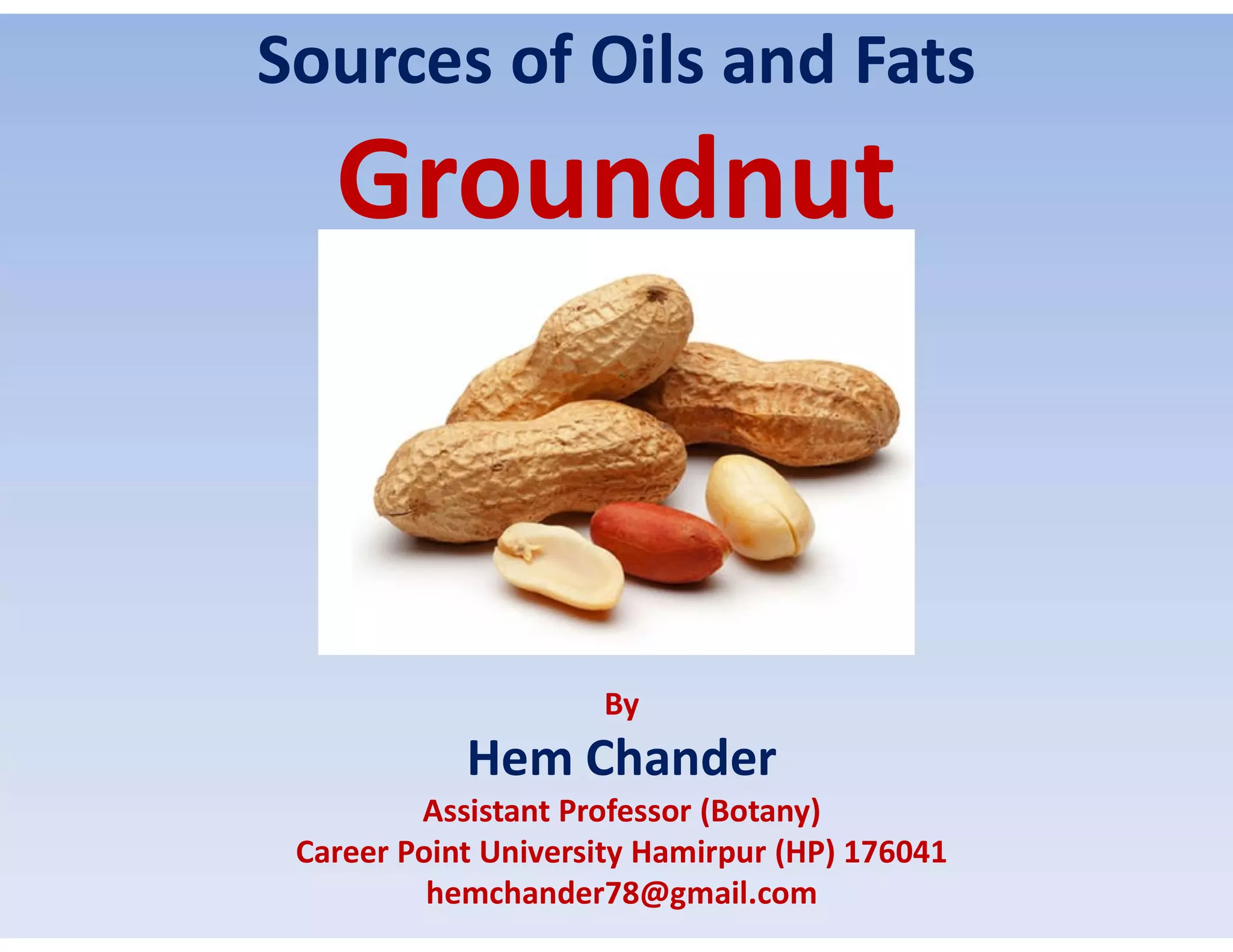
Sources of Oils and Fats
By
Hem Chander
Assistant Professor (Botany)
Career Point University Hamirpur (HP) 176041
hemchander78@gmail.com
Botanical Name: Arachis hypogaea
Family: Fabaceae
Subfamily: Papilionaceae
Common names: Groundnut, Peanut, Monkey-nut, Mungphali
• Groundnuts are the second largest source of vegetable oils, the
largest being the soyabean.
• The botanical name Arachis hypogaea is derived from Greek
words, "Arachis" meaning a legume and "hypogaea" meaning
below ground referring to ripening their fruits underground
(geocarpic).
(geocarpic).
• A native of Brazil it became widely distributed throughout South
America at an early date and in the sixteenth century
Portuguese brought it to West Africa. Later it was introduced to
China, Japan, India, Malaysia and Malagasy Republic.
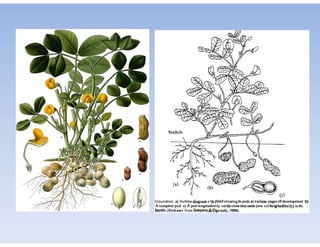
• The peg, after entering the soil, develops into a pod. The fruit
is a one-loculed pod.
• The shell of the pod consists of outer spongy layer, a middle
fibrous and woody layer and an internal layer which lines the
pod and becomes more or less papery.
Structure of Pod
• Each seed is composed of two cotyledons and is covered by
thin papery seed coat. The cotyledons are creamy-white in
colour.
• The number of kernels in the groundnut pod varies from one
to five.
• Shelled nuts contain about 26 per cent protein ,and 45 percent
oil.
• The kernels are also rich sources of phosphorous, thiamine,
riboflavin and niacin.
• Cold-pressed groundnut oil is golden yellow in colour and has
Chemical & Nutritional Composition
• Cold-pressed groundnut oil is golden yellow in colour and has
a faint agreeable odour, while the hot-pressed oil has a
reddish yellow tinge.
• The principal fatty acids are: oleic acid (56 percent); linolenic
acid (25 percent); palmitic acid (6-12 percent) and small
quantities of stearic, arachidic and higher saturated acids.
•Prior to extraction of oil, the seeds are shelled and
cleaned.
•The seeds contain 40-45 percent oil.
Extraction of Oil
The seeds contain 40-45 percent oil.
•The oil is extracted by expellers or hydraulic press.
•India is the highest producer of groundnut oil.
• The refined oil is a popular cooking medium and is used for making margarine,
and peanut butter.
• Peanut oil is often used in the manufacture of “Vanaspati ghee" by
hydrogenation process.
• The oil is also used for cooking sardines before packing them in olive oil.
Uses of Grondnut Oil
• The inferior grades of the oil are used for soap making, lubricants and as a
rubber substitute.
• The residual cake meal is rich in nitrogen (7-9%) and is an important cattle-
feed.
• The cake is used as a manure.
• Medicinally, the oil is used as a laxative and emollient.
17. Groundnut.pdf

17. Groundnut.pdf

  • 1.
    Sources of Oilsand Fats By Hem Chander Assistant Professor (Botany) Career Point University Hamirpur (HP) 176041 hemchander78@gmail.com
  • 2.
    Botanical Name: Arachishypogaea Family: Fabaceae Subfamily: Papilionaceae Common names: Groundnut, Peanut, Monkey-nut, Mungphali
  • 3.
    • Groundnuts arethe second largest source of vegetable oils, the largest being the soyabean. • The botanical name Arachis hypogaea is derived from Greek words, "Arachis" meaning a legume and "hypogaea" meaning below ground referring to ripening their fruits underground (geocarpic). (geocarpic). • A native of Brazil it became widely distributed throughout South America at an early date and in the sixteenth century Portuguese brought it to West Africa. Later it was introduced to China, Japan, India, Malaysia and Malagasy Republic.
  • 4.
    • The peg,after entering the soil, develops into a pod. The fruit is a one-loculed pod. • The shell of the pod consists of outer spongy layer, a middle fibrous and woody layer and an internal layer which lines the pod and becomes more or less papery. Structure of Pod • Each seed is composed of two cotyledons and is covered by thin papery seed coat. The cotyledons are creamy-white in colour. • The number of kernels in the groundnut pod varies from one to five.
  • 6.
    • Shelled nutscontain about 26 per cent protein ,and 45 percent oil. • The kernels are also rich sources of phosphorous, thiamine, riboflavin and niacin. • Cold-pressed groundnut oil is golden yellow in colour and has Chemical & Nutritional Composition • Cold-pressed groundnut oil is golden yellow in colour and has a faint agreeable odour, while the hot-pressed oil has a reddish yellow tinge. • The principal fatty acids are: oleic acid (56 percent); linolenic acid (25 percent); palmitic acid (6-12 percent) and small quantities of stearic, arachidic and higher saturated acids.
  • 7.
    •Prior to extractionof oil, the seeds are shelled and cleaned. •The seeds contain 40-45 percent oil. Extraction of Oil The seeds contain 40-45 percent oil. •The oil is extracted by expellers or hydraulic press. •India is the highest producer of groundnut oil.
  • 8.
    • The refinedoil is a popular cooking medium and is used for making margarine, and peanut butter. • Peanut oil is often used in the manufacture of “Vanaspati ghee" by hydrogenation process. • The oil is also used for cooking sardines before packing them in olive oil. Uses of Grondnut Oil • The inferior grades of the oil are used for soap making, lubricants and as a rubber substitute. • The residual cake meal is rich in nitrogen (7-9%) and is an important cattle- feed. • The cake is used as a manure. • Medicinally, the oil is used as a laxative and emollient.