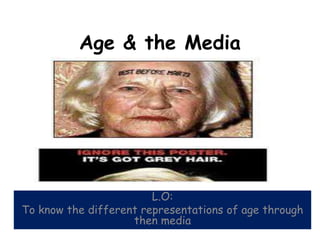
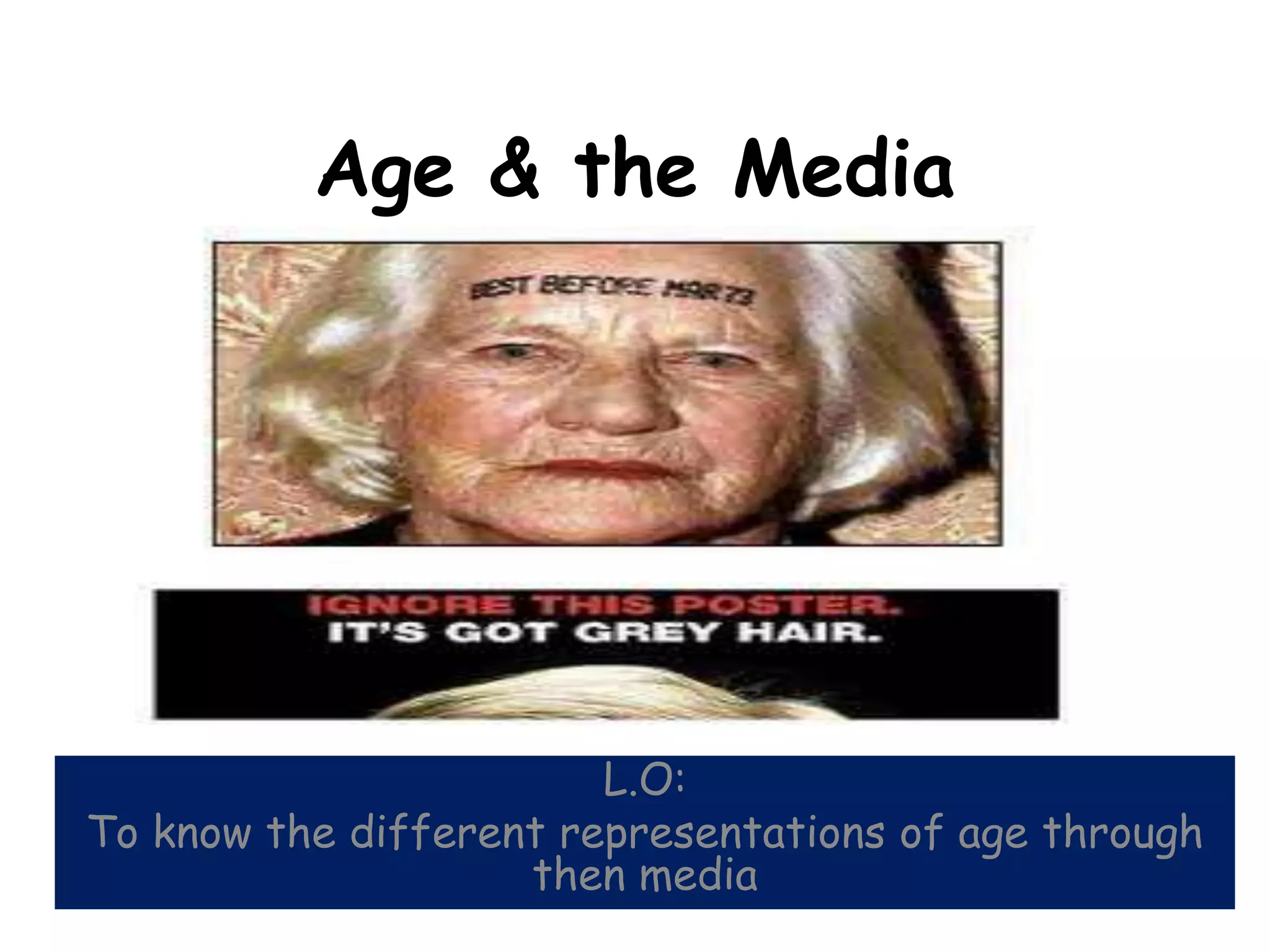
Age & the Media


                        L.O:
To know the different representations of age through
                    then media
ONCE UPON A
    TIME!
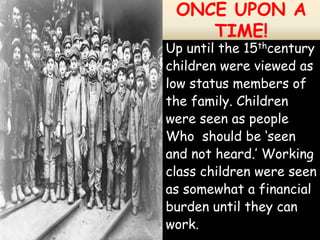
Up until the 15thcentury
children were viewed as
low status members of
the family. Children
were seen as people
Who should be ‘seen
and not heard.’ Working
class children were seen
as somewhat a financial
burden until they can
work.
TODAY!

 In today’s society the
role of the child is more
  dominant within the
 household. It tends to
    be the child that
   makes the family.
 Family life tends to be
  centred around the
        children.
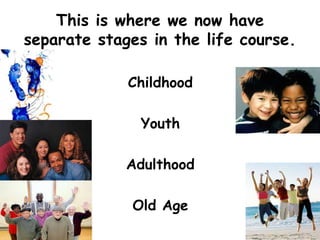
This is where we now have
separate stages in the life course.

             Childhood

               Youth

             Adulthood

             Old Age
Media Representation of
                  Age
• McQueen (1998)
• The status of different age groups is
  determined by economic circumstances
  in Western society.
• Those in the middle (adults) have the
  most status

• Any ideas as to why you think that is?
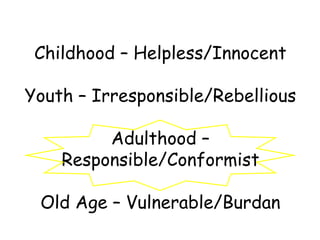
Childhood – Helpless/Innocent

Youth – Irresponsible/Rebellious

         Adulthood –
    Responsible/Conformist

 Old Age – Vulnerable/Burdan
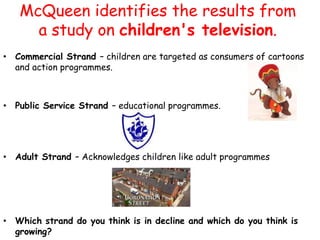
McQueen identifies the results from
     a study on children's television.
• Commercial Strand – children are targeted as consumers of cartoons
  and action programmes.


• Public Service Strand – educational programmes.


• Adult Strand – Acknowledges children like adult programmes


• Which strand do you think is in decline and which do you think is
  growing?
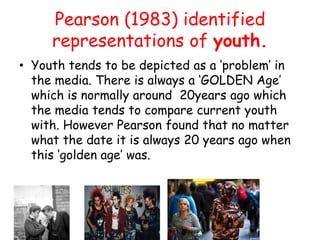
Pearson (1983) identified
         representations of youth.
• Youth tends to be depicted as a ‘problem’ in
  the media. There is always a ‘GOLDEN Age’
  which is normally around 20years ago which
  the media tends to compare current youth
  with. However Pearson found that no matter
  what the date it is always 20 years ago when
  this ‘golden age’ was.

1950’s
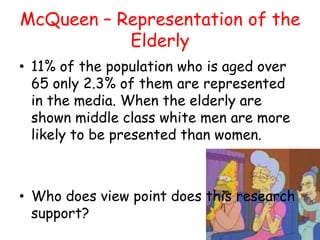
McQueen – Representation of the
           Elderly
• 11% of the population who is aged over
  65 only 2.3% of them are represented
  in the media. When the elderly are
  shown middle class white men are more
  likely to be presented than women.


• Who does view point does this research
  support?
Do you agree with these
  depictions of age?


       Discuss
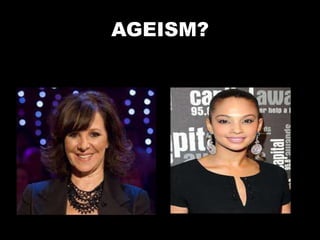
AGEISM?
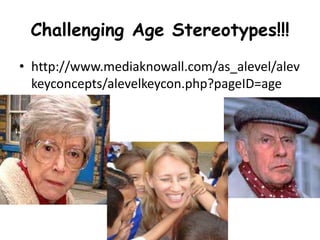
Challenging Age Stereotypes!!!
• http://www.mediaknowall.com/as_alevel/alev
  keyconcepts/alevelkeycon.php?pageID=age

15966397651314544862

  • 1.
    Age & theMedia L.O: To know the different representations of age through then media
  • 2.
    ONCE UPON A TIME! Up until the 15thcentury children were viewed as low status members of the family. Children were seen as people Who should be ‘seen and not heard.’ Working class children were seen as somewhat a financial burden until they can work.
  • 3.
    TODAY! In today’ssociety the role of the child is more dominant within the household. It tends to be the child that makes the family. Family life tends to be centred around the children.
  • 4.
    This is wherewe now have separate stages in the life course. Childhood Youth Adulthood Old Age
  • 5.
    Media Representation of Age • McQueen (1998) • The status of different age groups is determined by economic circumstances in Western society. • Those in the middle (adults) have the most status • Any ideas as to why you think that is?
  • 6.
    Childhood – Helpless/Innocent Youth– Irresponsible/Rebellious Adulthood – Responsible/Conformist Old Age – Vulnerable/Burdan
  • 7.
    McQueen identifies theresults from a study on children's television. • Commercial Strand – children are targeted as consumers of cartoons and action programmes. • Public Service Strand – educational programmes. • Adult Strand – Acknowledges children like adult programmes • Which strand do you think is in decline and which do you think is growing?
  • 8.
    Pearson (1983) identified representations of youth. • Youth tends to be depicted as a ‘problem’ in the media. There is always a ‘GOLDEN Age’ which is normally around 20years ago which the media tends to compare current youth with. However Pearson found that no matter what the date it is always 20 years ago when this ‘golden age’ was. 1950’s
  • 9.
    McQueen – Representationof the Elderly • 11% of the population who is aged over 65 only 2.3% of them are represented in the media. When the elderly are shown middle class white men are more likely to be presented than women. • Who does view point does this research support?
  • 10.
    Do you agreewith these depictions of age? Discuss
  • 11.
  • 12.
    Challenging Age Stereotypes!!! •http://www.mediaknowall.com/as_alevel/alev keyconcepts/alevelkeycon.php?pageID=age