Real World Internet,Smart City and Linked DataMirko Presser Alexandra InstitutePayam BarnaghiUniversity of Surrey16/12-2010
	A few dimensions…urbanisation: recently we have reached the threshold of more than 50% of the population living in urban areas and the trend is continuingdemographics: the population is aging and living longerclimate change: green house gas emission (GHG) targets have been set, but it is apparent that reaching these targets will be a major challenge for growing citiescompetitiveness: cities are in competition, culture, tourism as well as attracting businesses are major factors for cities’ success criteria, e.g. creation of jobs. 	Tackling these dimensions with increasingly severe budget cuts and more demanding citizens will not be possible if the focus stays on only improving the cities’ hard-infrastructures silos (transport networks, buildings, electricity networks, etc). Smart City – why
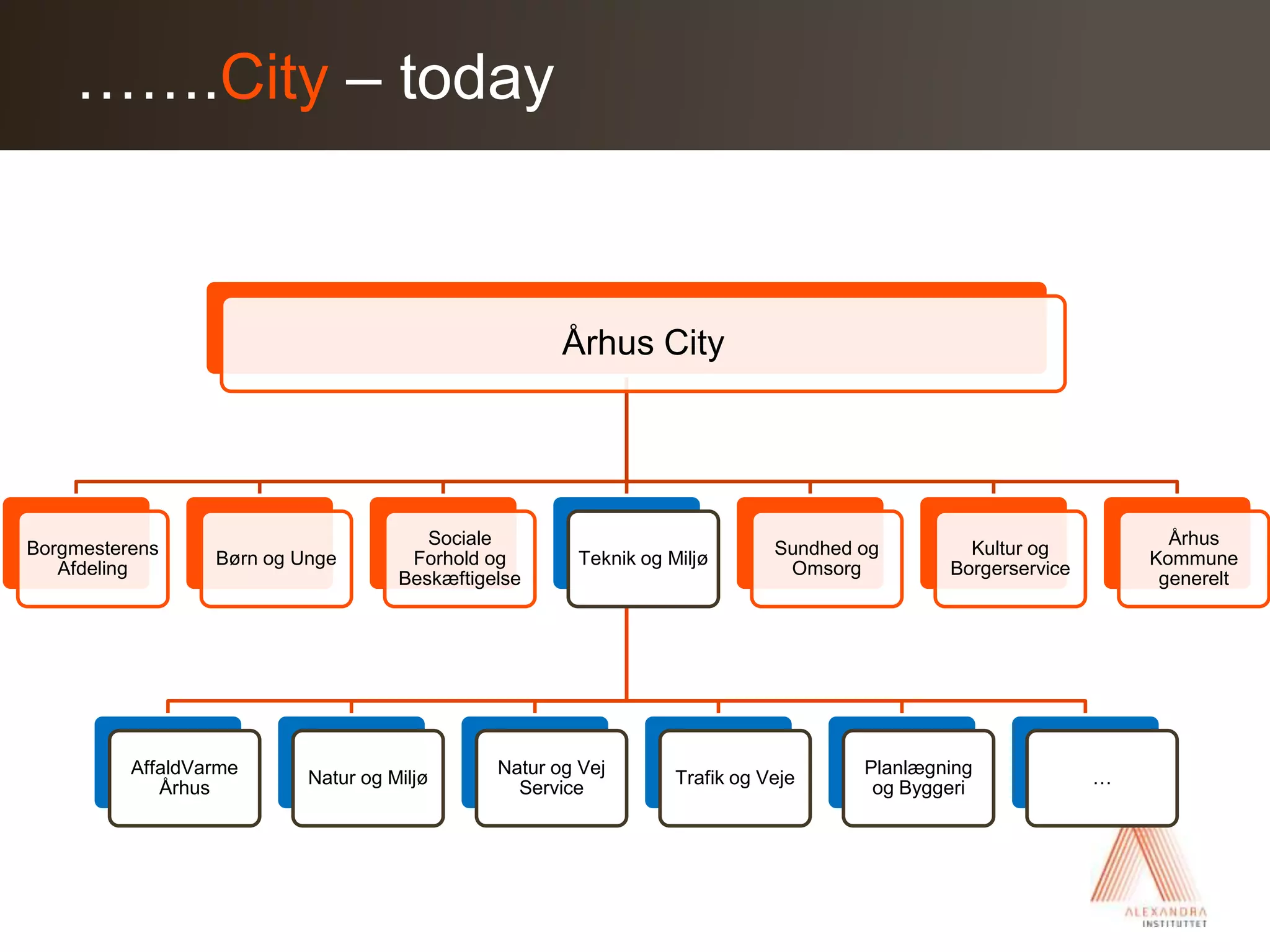
…….City– today
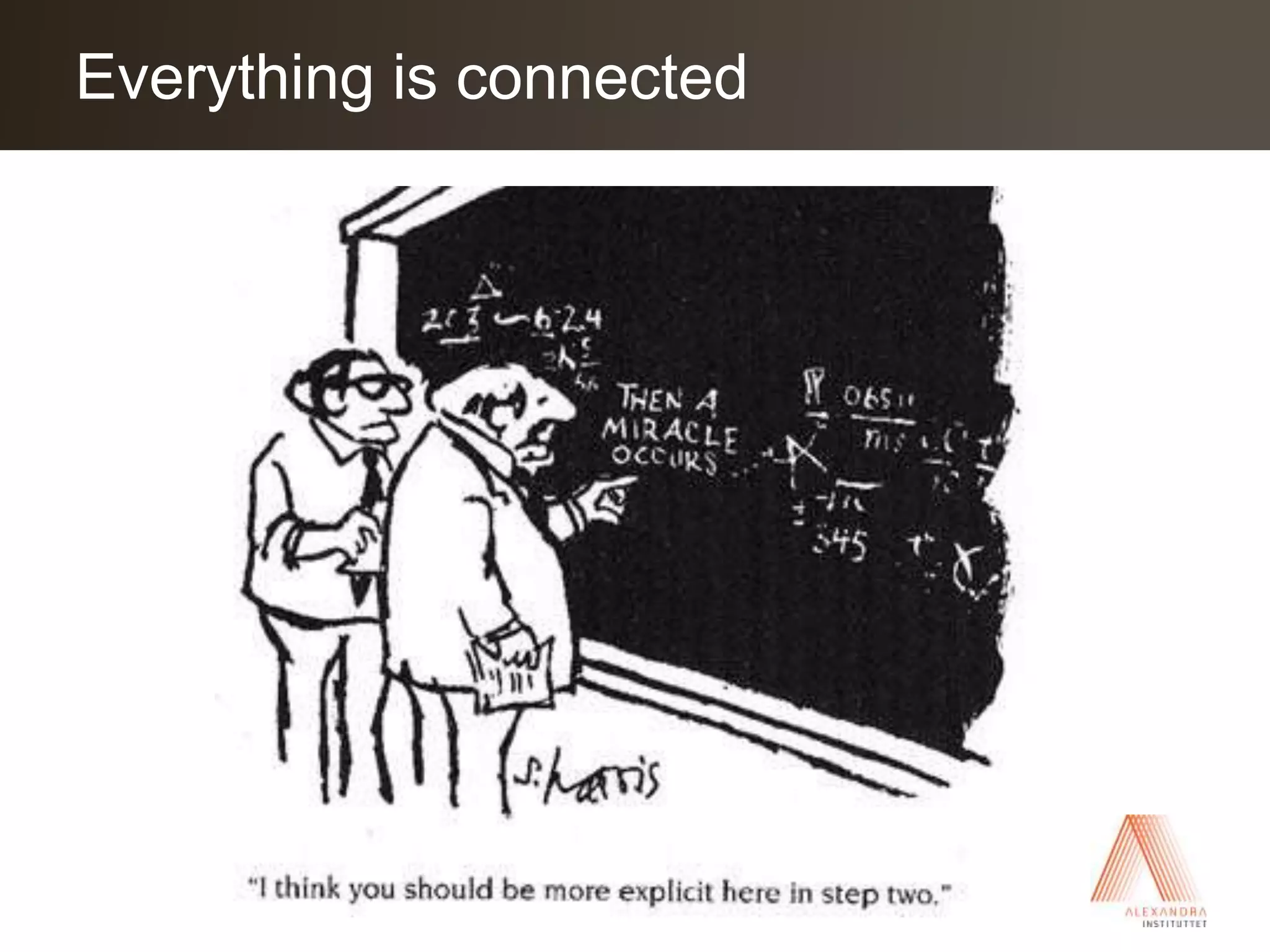
Everything is connected
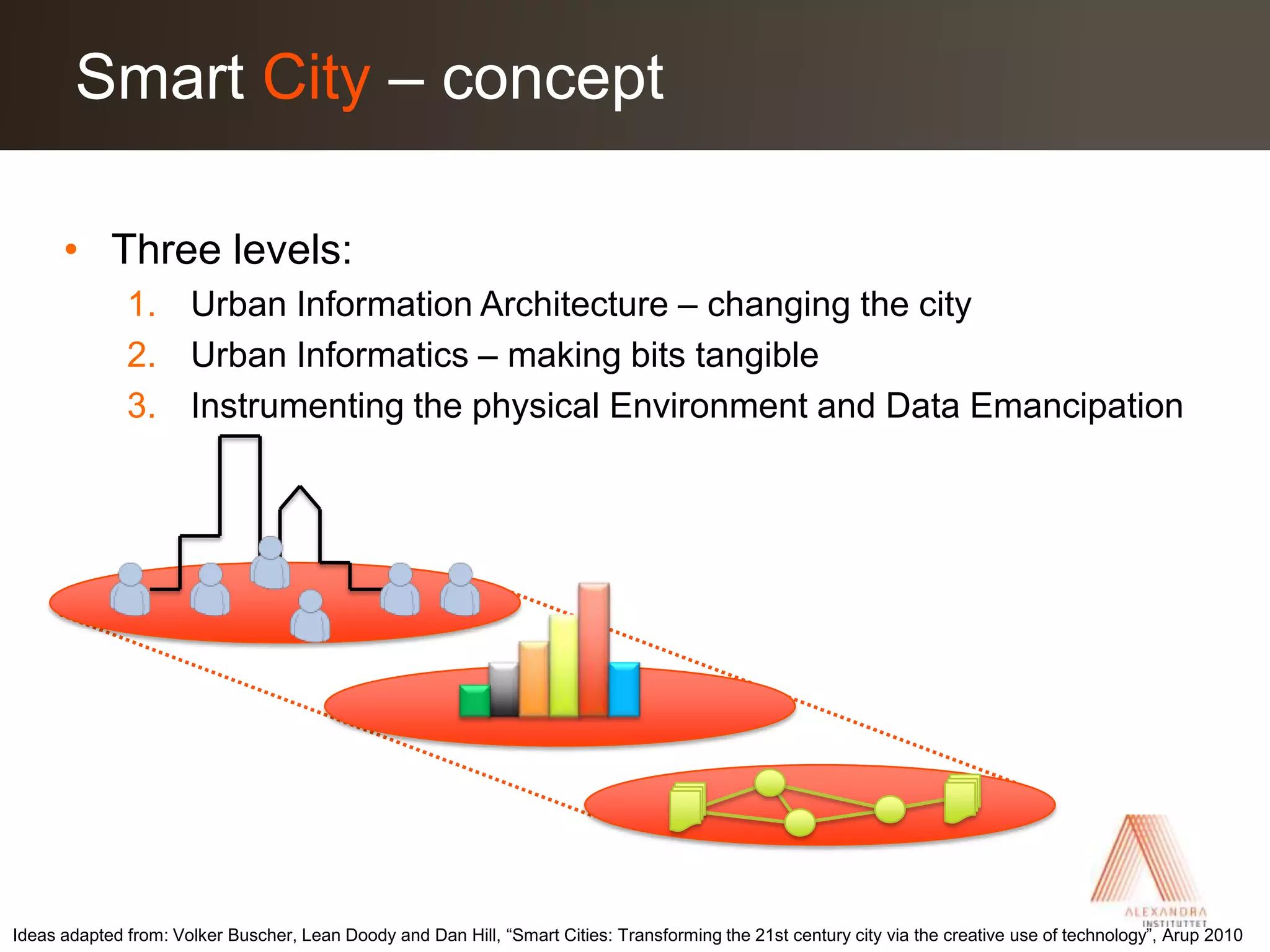
Three levels:Urban Information Architecture – changing the cityUrban Informatics – making bits tangibleInstrumenting the physical Environment and Data EmancipationSmart City – concept Ideas adapted from: Volker Buscher, Lean Doody and Dan Hill, “Smart Cities: Transforming the 21st century city via the creative use of technology”, Arup 2010
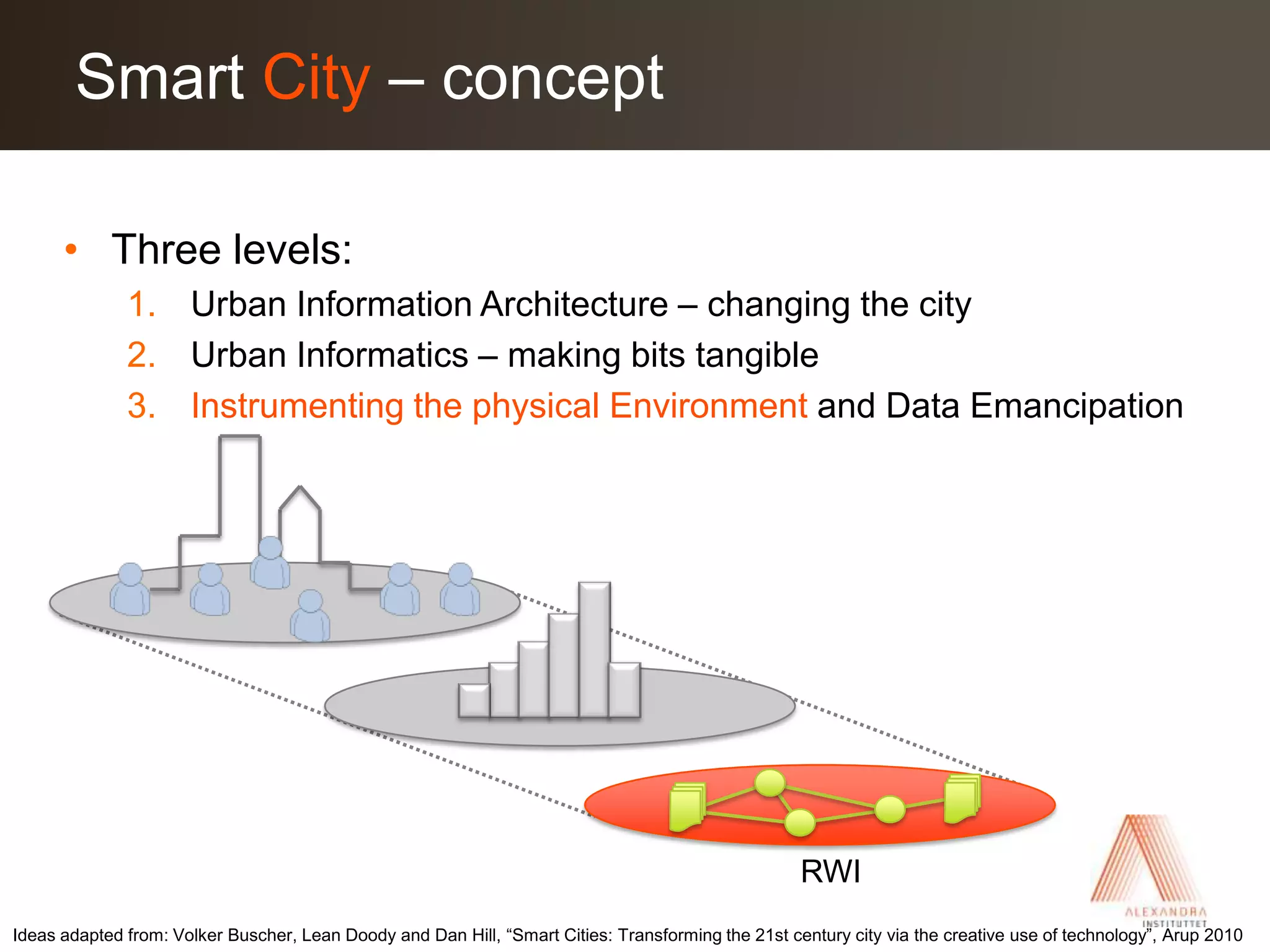
Three levels:Urban Information Architecture – changing the cityUrban Informatics – making bits tangibleInstrumenting the physical Environment and Data EmancipationSmart City – concept RWIIdeas adapted from: Volker Buscher, Lean Doody and Dan Hill, “Smart Cities: Transforming the 21st century city via the creative use of technology”, Arup 2010
“The Internet is extending its reach to the real world through innovations collectively termed the Internet of Things (IoT)”.The Real World Internet is a realisation and integration of the Physical World into the Digital World.Enabling technologies : Radio Frequency Identification (RFID) or wireless sensor and actuator networks (WSAN) – or in general Networked Embedded Devices (NED’s), and software and service technologies that enable high-level access and utilisation of the real world data and resources.The Real World Internet (RWI)
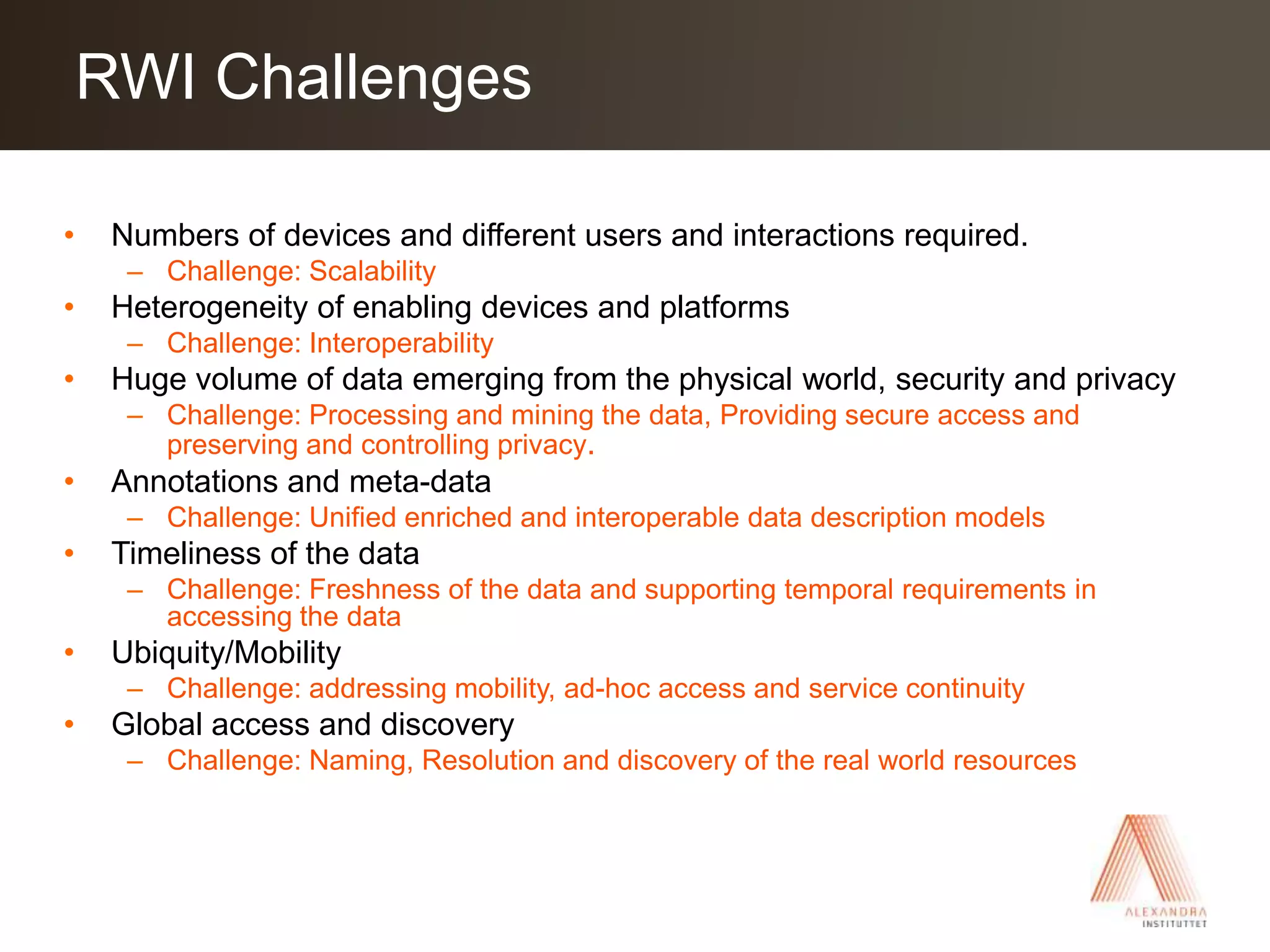
Numbers of devices and different users and interactions required.Challenge: ScalabilityHeterogeneity of enabling devices and platformsChallenge: InteroperabilityHuge volume of data emerging from the physical world, security and privacyChallenge: Processing and mining the data, Providing secure access and preserving and controlling privacy. Annotations and meta-dataChallenge: Unified enriched and interoperable data description modelsTimeliness of the dataChallenge: Freshness of the data and supporting temporal requirements in accessing the dataUbiquity/Mobility Challenge: addressing mobility, ad-hoc access and service continuityGlobal access and discoveryChallenge: Naming, Resolution and discovery of the real world resources  RWI Challenges
The core technological building blocks are now in place and (widely) available: ontology languages, flexible storage and querying facilities, reasoning engines, etc.There are existing standards such as those provided by OGC and W3C’s SSN Ontology. However, often there is no direct association to the domain knowledge What a sensor measures, where it is, etc.Association of an observation and/or measurement data to a feature of interest.Using semantically enriched data
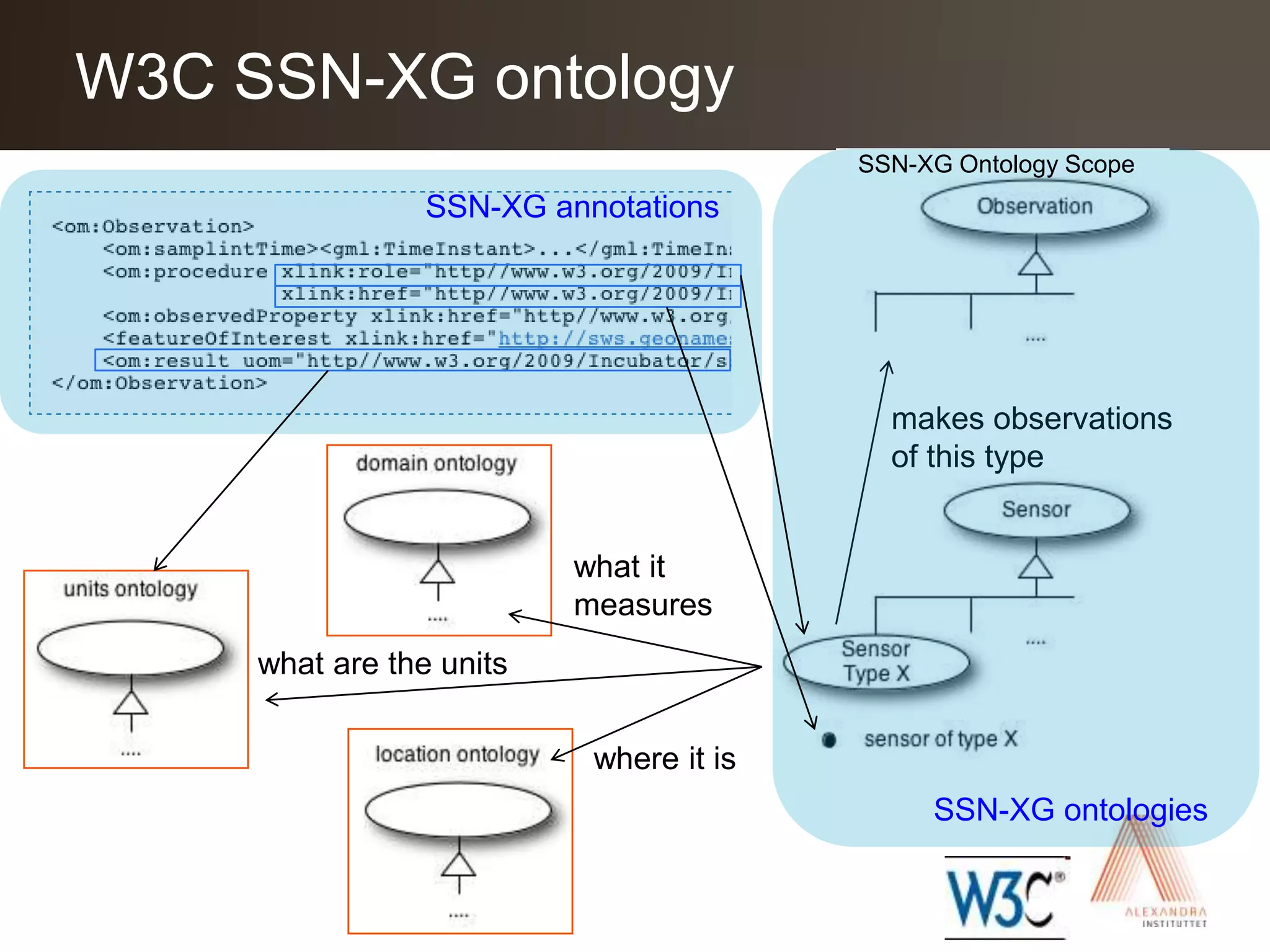
W3C SSN-XG ontologySSN-XG Ontology ScopeSSN-XG annotationsmakes observations of this typewhat it measureswhat are the unitswhere it isSSN-XG ontologies
URI’s as names for things;URI’s for RWI resources and data;HTTP URI’s to enable people to look up those names;Web-level access to low level sensor data and real world resource descriptions;Provide useful RDF information related to URI’s that are looked up by machines or people;Publish enriched resource descriptions, observation and measurement data in the form of linked RDF data;RDF statements that link to other URI’s to enable discovery of other related things of the web of data;Link and associate real world data to the existing data on the Web of Data;Linked Data principles and RWI
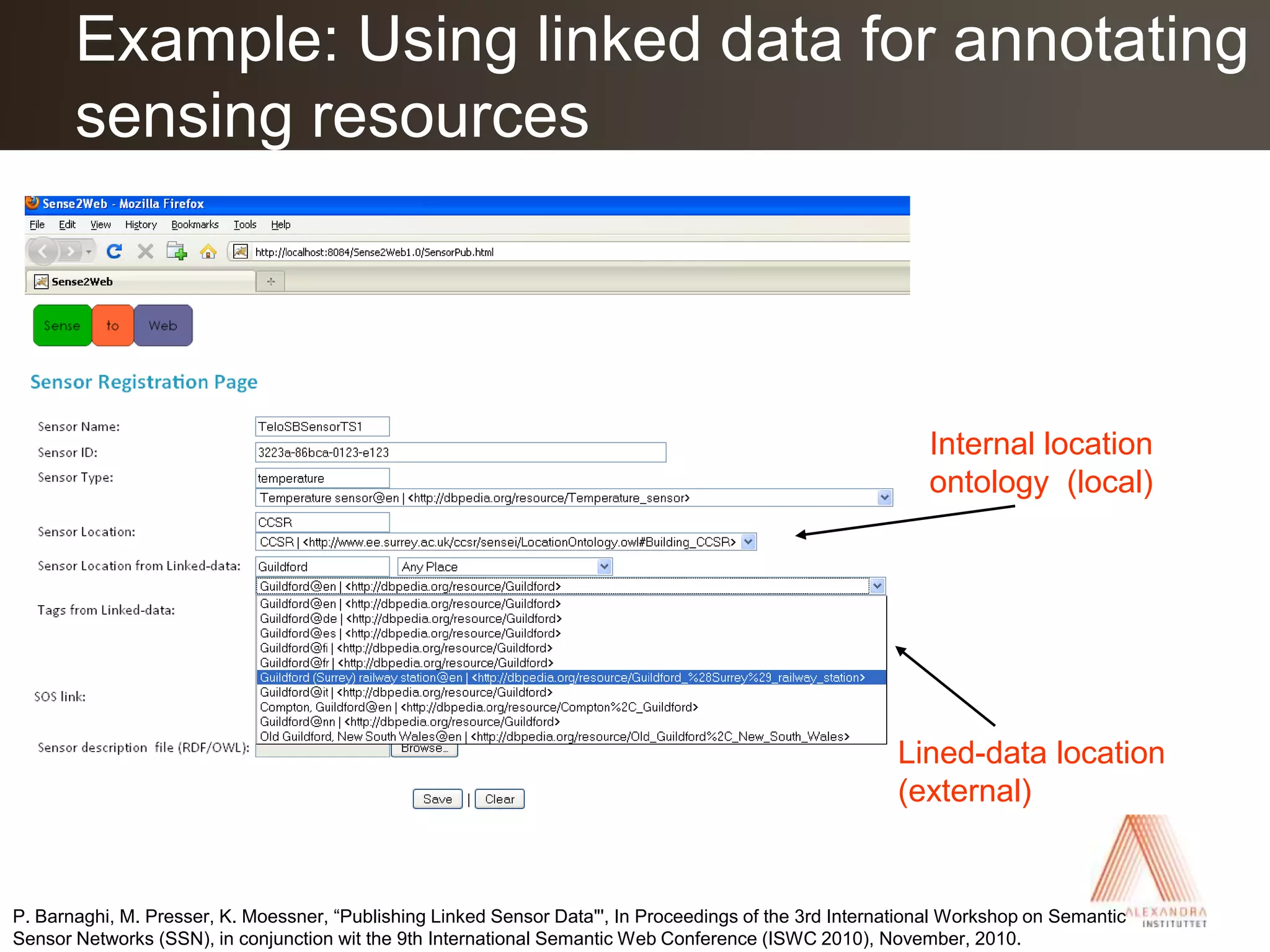
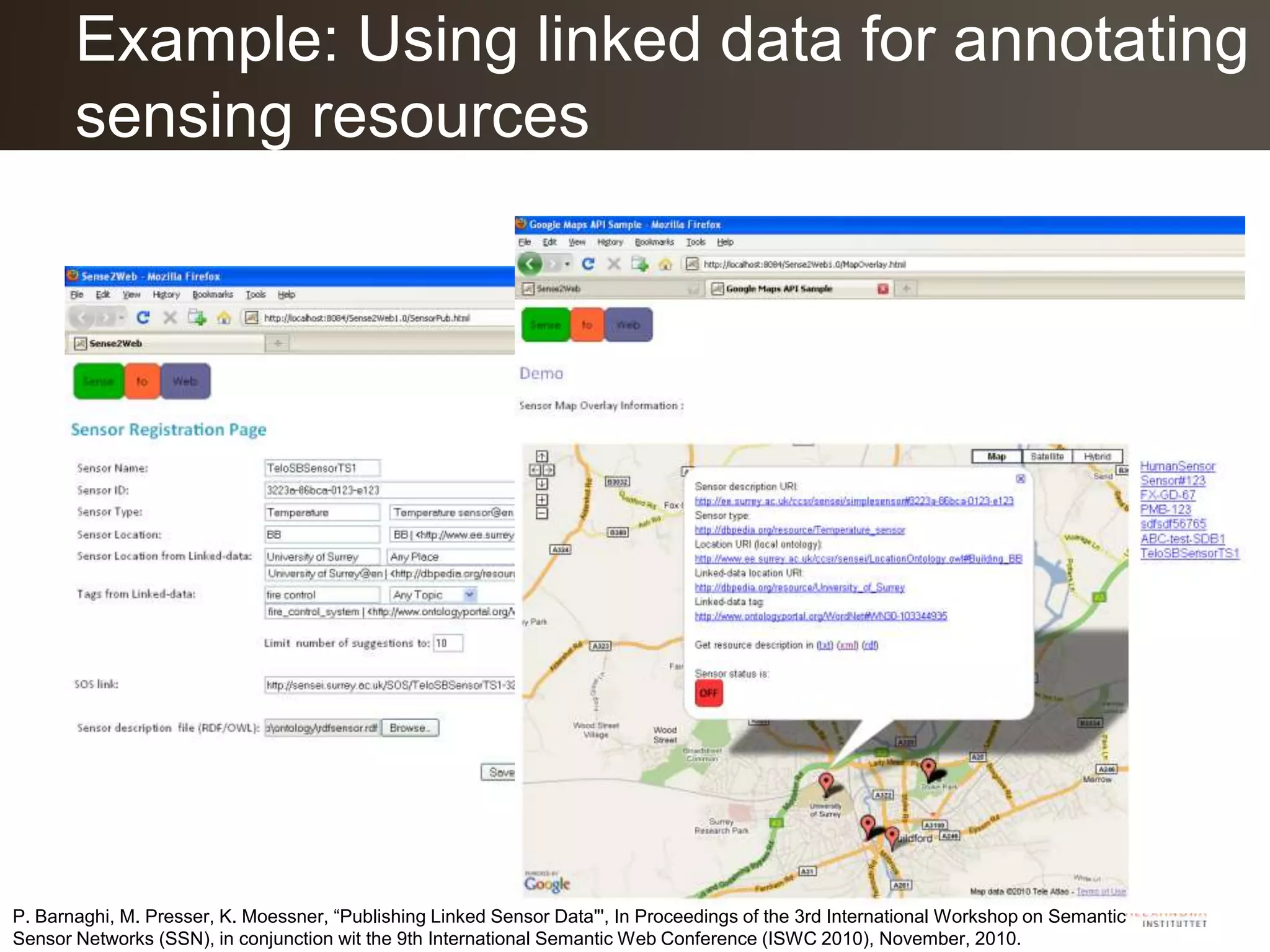
Example: Using linked data for annotating sensing resourcesInternal location ontology  (local)Lined-data location(external)P. Barnaghi, M. Presser, K. Moessner, “Publishing Linked Sensor Data"', In Proceedings of the 3rd International Workshop on Semantic Sensor Networks (SSN), in conjunction wit the 9th International Semantic Web Conference (ISWC 2010), November, 2010.
Example: Using linked data for annotating sensing resourcesP. Barnaghi, M. Presser, K. Moessner, “Publishing Linked Sensor Data"', In Proceedings of the 3rd International Workshop on Semantic Sensor Networks (SSN), in conjunction wit the 9th International Semantic Web Conference (ISWC 2010), November, 2010.
We can use existing linked data (Web of data) resources to annotate the Real World resource and dataAssociating real world data and resources to the domain knowledgee.g. GeoName entities to describe location, DBPedia entities to describe themePublishing the resource descriptions and observation and measurement data as linked-datai.e. Publishing RDF data and making it accessible via HTTPProviding standard interfaces to access and query the real world datae.g. SPARQL-end points and reasoning mechanismsLinked data and RWI
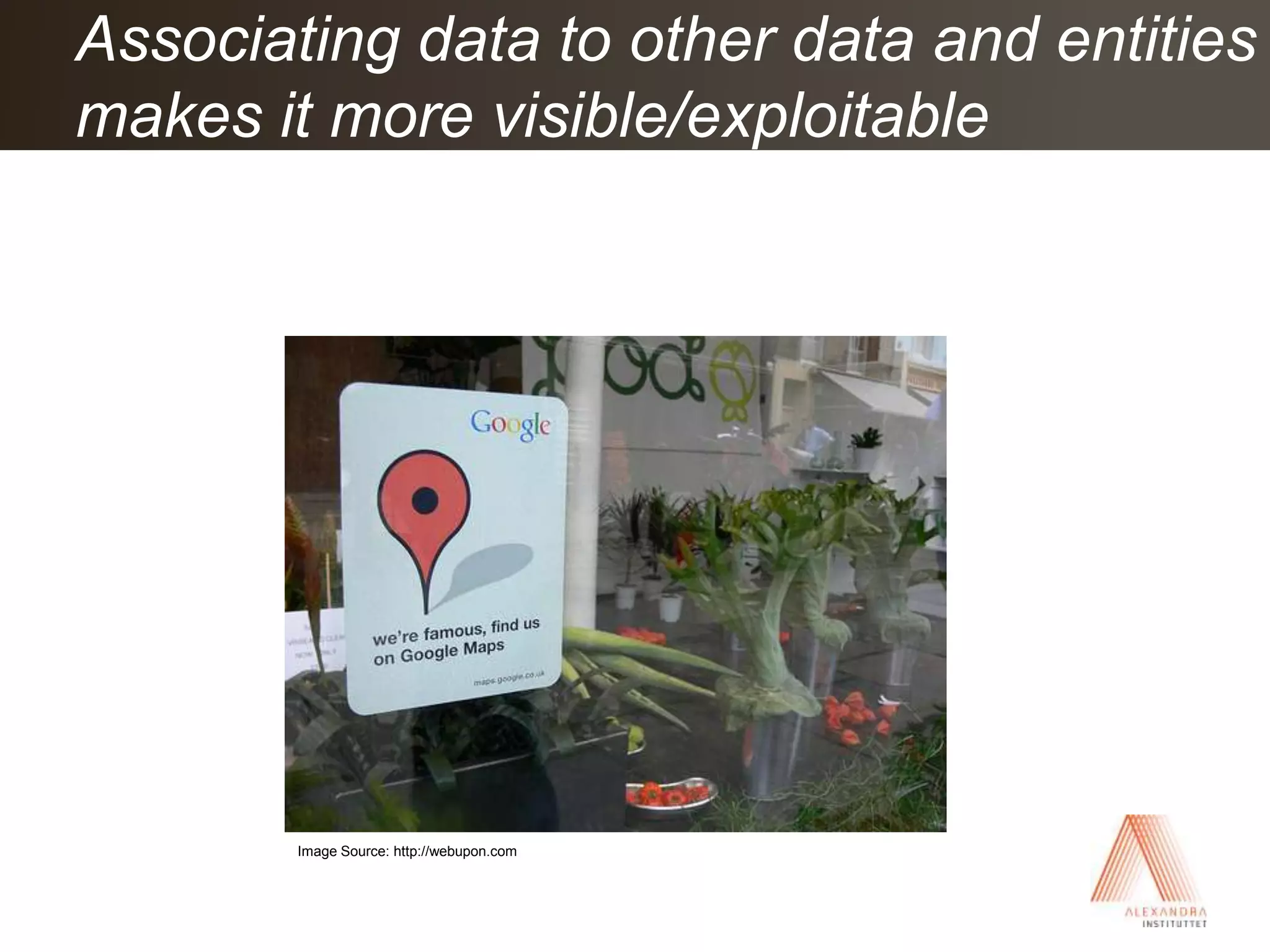
Associating data to other data and entities makes it more visible/exploitableImage Source: http://webupon.com
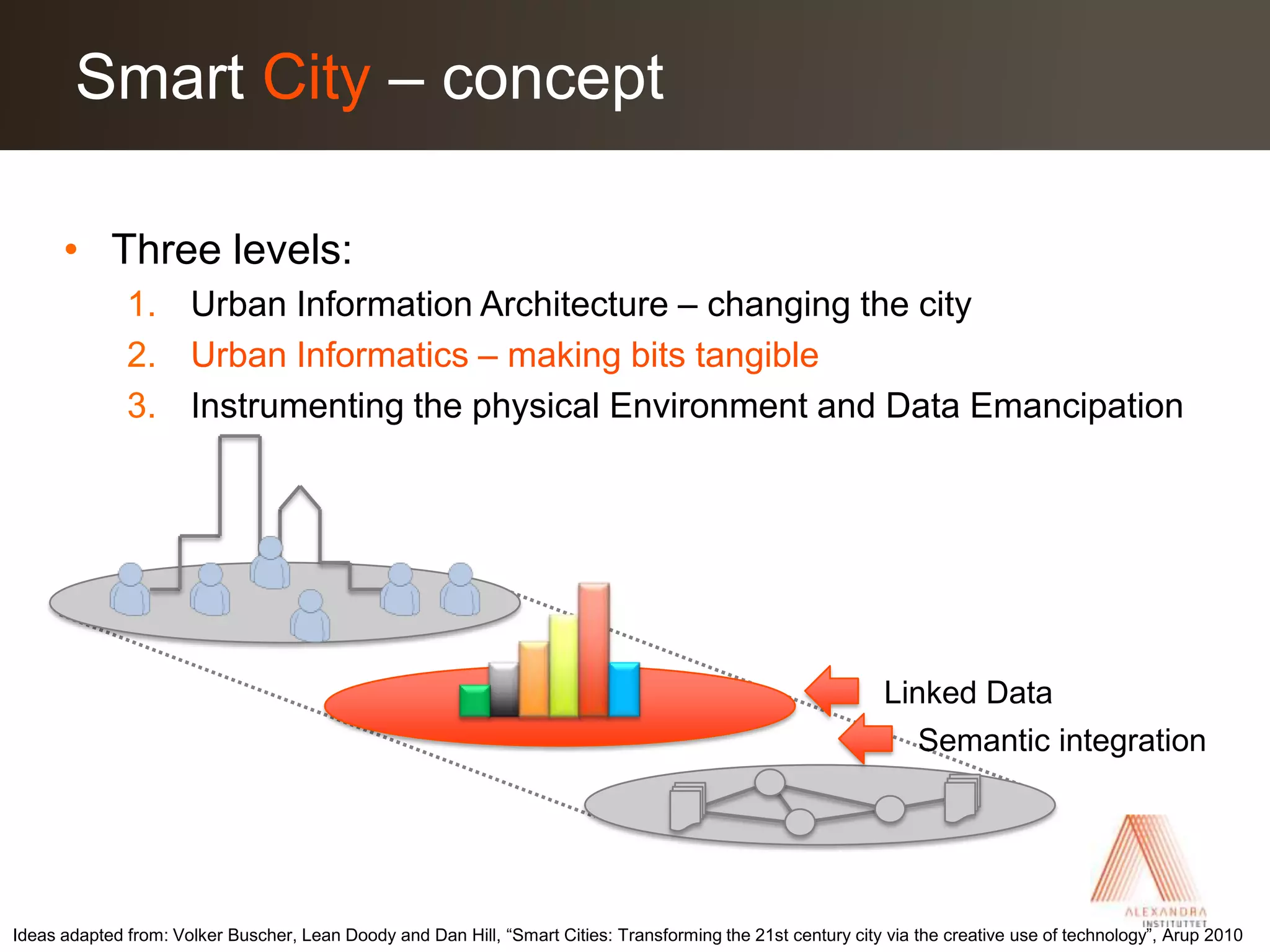
Three levels:Urban Information Architecture – changing the cityUrban Informatics – making bits tangibleInstrumenting the physical Environment and Data EmancipationSmart City – concept Linked DataSemantic integrationIdeas adapted from: Volker Buscher, Lean Doody and Dan Hill, “Smart Cities: Transforming the 21st century city via the creative use of technology”, Arup 2010
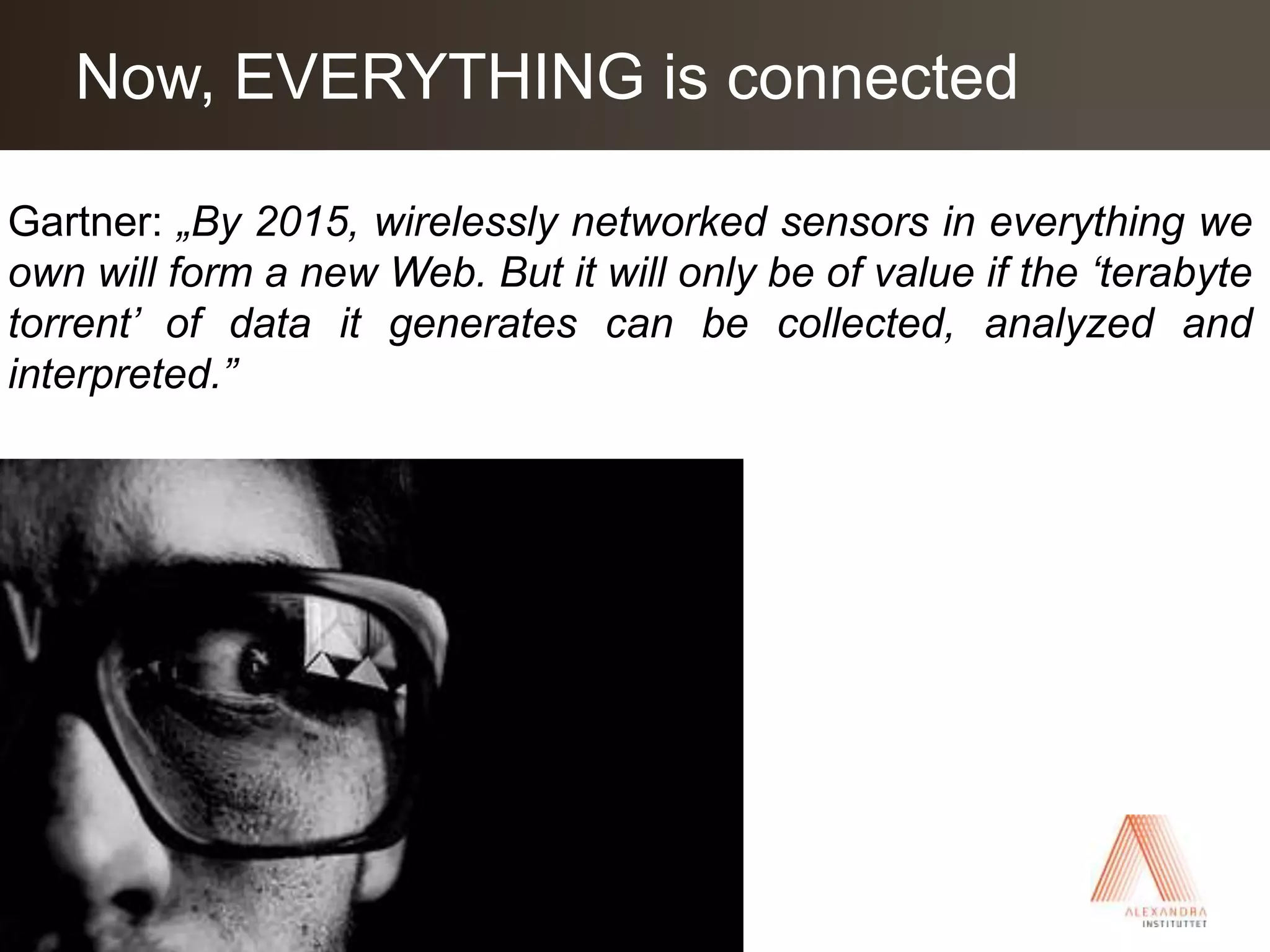
Now, EVERYTHING is connectedGartner: „By 2015, wirelessly networked sensors in everything we own will form a new Web. But it will only be of value if the ‘terabyte torrent’ of data it generates can be collected, analyzed and interpreted.”
Cities are becoming like “AMAZON” – showing and reacting in real-time to citizens, events and incidents.Planning is performed not on snapshots but on accurate historic data from multiple dynamic resources with measurable effects (KPIs).Patterns can be identified and real reasons why and what is happening can be identified, leading to better knowledge.What does that mean for Cities?COST SAVINGSSAFETYQUALITY OF LIVENEW BUSINESS OPPORTUNITIESSUSTAINABLEIdeas adapted from: Volker Buscher, Lean Doody and Dan Hill, “Smart Cities: Transforming the 21st century city via the creative use of technology”, Arup 2010
Real time dynamic data streams (many low data rate), transmitted, annotated, accessible and stored:… lots of them! Capillary Networks to Terabit Pipes.… not very accurate! Trust.… not always there! Discovery. Robustness.… very sensitive! Privacy. Security.… fragmented and sector specific! Standards.and… no real incentives! Business Models.What do we need (enablers in the FI)?
Mirko Presser and Payam Barnaghi mirko.presser@alexandra.dkAlexandra Instituttetweb dk: www.alexandra.dkweb en: www.alexandra.dk/ukÅbogade 34, AarhusDenmarkwww.iseeteaineverything.com
Real World Internet,Smart City and Linked DataMirko Presser Alexandra InstitutePayam BarnaghiUniversity of Surrey16/12-2010

Real World Internet, Smart Cities and Linked Data: Mirko Presser (Alexandrea Institute, Denmark)

  • 1.
    Real World Internet,SmartCity and Linked DataMirko Presser Alexandra InstitutePayam BarnaghiUniversity of Surrey16/12-2010
  • 2.
    A few dimensions…urbanisation:recently we have reached the threshold of more than 50% of the population living in urban areas and the trend is continuingdemographics: the population is aging and living longerclimate change: green house gas emission (GHG) targets have been set, but it is apparent that reaching these targets will be a major challenge for growing citiescompetitiveness: cities are in competition, culture, tourism as well as attracting businesses are major factors for cities’ success criteria, e.g. creation of jobs. Tackling these dimensions with increasingly severe budget cuts and more demanding citizens will not be possible if the focus stays on only improving the cities’ hard-infrastructures silos (transport networks, buildings, electricity networks, etc). Smart City – why
  • 3.
  • 4.
  • 5.
    Three levels:Urban InformationArchitecture – changing the cityUrban Informatics – making bits tangibleInstrumenting the physical Environment and Data EmancipationSmart City – concept Ideas adapted from: Volker Buscher, Lean Doody and Dan Hill, “Smart Cities: Transforming the 21st century city via the creative use of technology”, Arup 2010
  • 6.
    Three levels:Urban InformationArchitecture – changing the cityUrban Informatics – making bits tangibleInstrumenting the physical Environment and Data EmancipationSmart City – concept RWIIdeas adapted from: Volker Buscher, Lean Doody and Dan Hill, “Smart Cities: Transforming the 21st century city via the creative use of technology”, Arup 2010
  • 7.
    “The Internet isextending its reach to the real world through innovations collectively termed the Internet of Things (IoT)”.The Real World Internet is a realisation and integration of the Physical World into the Digital World.Enabling technologies : Radio Frequency Identification (RFID) or wireless sensor and actuator networks (WSAN) – or in general Networked Embedded Devices (NED’s), and software and service technologies that enable high-level access and utilisation of the real world data and resources.The Real World Internet (RWI)
  • 8.
    Numbers of devicesand different users and interactions required.Challenge: ScalabilityHeterogeneity of enabling devices and platformsChallenge: InteroperabilityHuge volume of data emerging from the physical world, security and privacyChallenge: Processing and mining the data, Providing secure access and preserving and controlling privacy. Annotations and meta-dataChallenge: Unified enriched and interoperable data description modelsTimeliness of the dataChallenge: Freshness of the data and supporting temporal requirements in accessing the dataUbiquity/Mobility Challenge: addressing mobility, ad-hoc access and service continuityGlobal access and discoveryChallenge: Naming, Resolution and discovery of the real world resources RWI Challenges
  • 9.
    The core technologicalbuilding blocks are now in place and (widely) available: ontology languages, flexible storage and querying facilities, reasoning engines, etc.There are existing standards such as those provided by OGC and W3C’s SSN Ontology. However, often there is no direct association to the domain knowledge What a sensor measures, where it is, etc.Association of an observation and/or measurement data to a feature of interest.Using semantically enriched data
  • 10.
    W3C SSN-XG ontologySSN-XGOntology ScopeSSN-XG annotationsmakes observations of this typewhat it measureswhat are the unitswhere it isSSN-XG ontologies
  • 11.
    URI’s as namesfor things;URI’s for RWI resources and data;HTTP URI’s to enable people to look up those names;Web-level access to low level sensor data and real world resource descriptions;Provide useful RDF information related to URI’s that are looked up by machines or people;Publish enriched resource descriptions, observation and measurement data in the form of linked RDF data;RDF statements that link to other URI’s to enable discovery of other related things of the web of data;Link and associate real world data to the existing data on the Web of Data;Linked Data principles and RWI
  • 12.
    Example: Using linkeddata for annotating sensing resourcesInternal location ontology (local)Lined-data location(external)P. Barnaghi, M. Presser, K. Moessner, “Publishing Linked Sensor Data"', In Proceedings of the 3rd International Workshop on Semantic Sensor Networks (SSN), in conjunction wit the 9th International Semantic Web Conference (ISWC 2010), November, 2010.
  • 13.
    Example: Using linkeddata for annotating sensing resourcesP. Barnaghi, M. Presser, K. Moessner, “Publishing Linked Sensor Data"', In Proceedings of the 3rd International Workshop on Semantic Sensor Networks (SSN), in conjunction wit the 9th International Semantic Web Conference (ISWC 2010), November, 2010.
  • 14.
    We can useexisting linked data (Web of data) resources to annotate the Real World resource and dataAssociating real world data and resources to the domain knowledgee.g. GeoName entities to describe location, DBPedia entities to describe themePublishing the resource descriptions and observation and measurement data as linked-datai.e. Publishing RDF data and making it accessible via HTTPProviding standard interfaces to access and query the real world datae.g. SPARQL-end points and reasoning mechanismsLinked data and RWI
  • 15.
    Associating data toother data and entities makes it more visible/exploitableImage Source: http://webupon.com
  • 16.
    Three levels:Urban InformationArchitecture – changing the cityUrban Informatics – making bits tangibleInstrumenting the physical Environment and Data EmancipationSmart City – concept Linked DataSemantic integrationIdeas adapted from: Volker Buscher, Lean Doody and Dan Hill, “Smart Cities: Transforming the 21st century city via the creative use of technology”, Arup 2010
  • 17.
    Now, EVERYTHING isconnectedGartner: „By 2015, wirelessly networked sensors in everything we own will form a new Web. But it will only be of value if the ‘terabyte torrent’ of data it generates can be collected, analyzed and interpreted.”
  • 18.
    Cities are becominglike “AMAZON” – showing and reacting in real-time to citizens, events and incidents.Planning is performed not on snapshots but on accurate historic data from multiple dynamic resources with measurable effects (KPIs).Patterns can be identified and real reasons why and what is happening can be identified, leading to better knowledge.What does that mean for Cities?COST SAVINGSSAFETYQUALITY OF LIVENEW BUSINESS OPPORTUNITIESSUSTAINABLEIdeas adapted from: Volker Buscher, Lean Doody and Dan Hill, “Smart Cities: Transforming the 21st century city via the creative use of technology”, Arup 2010
  • 19.
    Real time dynamicdata streams (many low data rate), transmitted, annotated, accessible and stored:… lots of them! Capillary Networks to Terabit Pipes.… not very accurate! Trust.… not always there! Discovery. Robustness.… very sensitive! Privacy. Security.… fragmented and sector specific! Standards.and… no real incentives! Business Models.What do we need (enablers in the FI)?
  • 20.
    Mirko Presser andPayam Barnaghi mirko.presser@alexandra.dkAlexandra Instituttetweb dk: www.alexandra.dkweb en: www.alexandra.dk/ukÅbogade 34, AarhusDenmarkwww.iseeteaineverything.com
  • 21.
    Real World Internet,SmartCity and Linked DataMirko Presser Alexandra InstitutePayam BarnaghiUniversity of Surrey16/12-2010