KNOWLEDGE
EXCHANGE ON
BLENDED FINANCE
Scene Setting
Tuesday, January 15, 2019, 09:00-09:30
At the Private Finance for Sustainable Development
(PF4SD) Conference
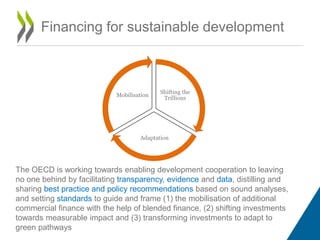
Financing for sustainable development
Shifting the
Trillions
Adaptation
Mobilisation
The OECD is working towards enabling development cooperation to leaving
no one behind by facilitating transparency, evidence and data, distilling and
sharing best practice and policy recommendations based on sound analyses,
and setting standards to guide and frame (1) the mobilisation of additional
commercial finance with the help of blended finance, (2) shifting investments
towards measurable impact and (3) transforming investments to adapt to
green pathways
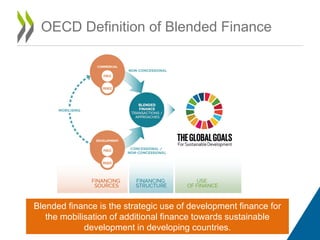
OECD Definition of Blended Finance
Blended finance is the strategic use of development finance for
the mobilisation of additional finance towards sustainable
development in developing countries.
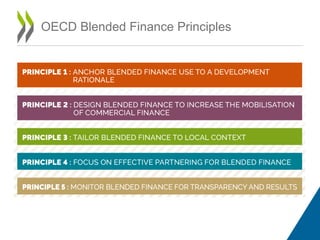
OECD Blended Finance Principles
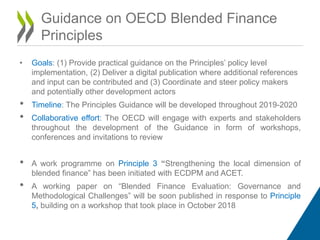
• Goals: (1) Provide practical guidance on the Principles’ policy level
implementation, (2) Deliver a digital publication where additional references
and input can be contributed and (3) Coordinate and steer policy makers
and potentially other development actors
• Timeline: The Principles Guidance will be developed throughout 2019-2020
• Collaborative effort: The OECD will engage with experts and stakeholders
throughout the development of the Guidance in form of workshops,
conferences and invitations to review
• A work programme on Principle 3 “Strengthening the local dimension of
blended finance” has been initiated with ECDPM and ACET.
• A working paper on “Blended Finance Evaluation: Governance and
Methodological Challenges” will be soon published in response to Principle
5, building on a workshop that took place in October 2018
Guidance on OECD Blended Finance
Principles
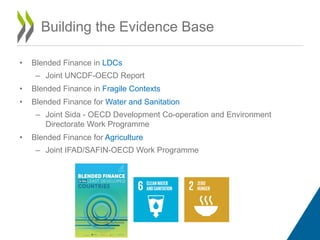
• Blended Finance in LDCs
– Joint UNCDF-OECD Report
• Blended Finance in Fragile Contexts
• Blended Finance for Water and Sanitation
– Joint Sida - OECD Development Co-operation and Environment
Directorate Work Programme
• Blended Finance for Agriculture
– Joint IFAD/SAFIN-OECD Work Programme
Building the Evidence Base
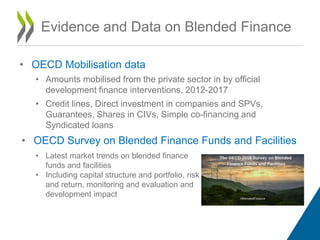
• OECD Mobilisation data
• Amounts mobilised from the private sector in by official
development finance interventions, 2012-2017
• Credit lines, Direct investment in companies and SPVs,
Guarantees, Shares in CIVs, Simple co-financing and
Syndicated loans
• OECD Survey on Blended Finance Funds and Facilities
Evidence and Data on Blended Finance
• Latest market trends on blended finance
funds and facilities
• Including capital structure and portfolio, risk
and return, monitoring and evaluation and
development impact
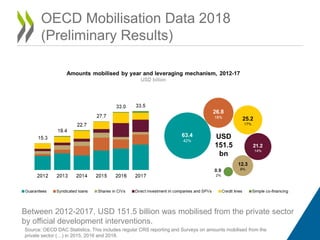
OECD Mobilisation Data 2018
(Preliminary Results)
Between 2012-2017, USD 151.5 billion was mobilised from the private sector
by official development interventions.
Source: OECD DAC Statistics. This includes regular CRS reporting and Surveys on amounts mobilised from the
private sector (…) in 2015, 2016 and 2018.
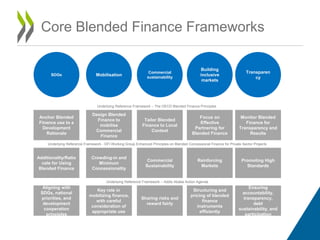
Anchor Blended
Finance use to a
Development
Rationale
Additionality/Ratio
nale for Using
Blended Finance
SDGs
Design Blended
Finance to
mobilise
Commercial
Finance
Crowding-in and
Minimum
Concessionality
Mobilisation
Tailor Blended
Finance to Local
Context
Commercial
Sustainability
Commercial
sustainability
Focus on
Effective
Partnering for
Blended Finance
Reinforcing
Markets
Building
inclusive
markets
Monitor Blended
Finance for
Transparency and
Results
Promoting High
Standards
Transparen
cy
Underlying Reference Framework - DFI Working Group Enhanced Principles on Blended Concessional Finance for Private Sector Projects
Underlying Reference Framework – The OECD Blended Finance Principles
Aligning with
SDGs, national
priorities, and
development
cooperation
principles
Key role in
mobilizing finance,
with careful
consideration of
appropriate use
Sharing risks and
reward fairly
Structuring and
pricing of blended
finance
instruments
efficiently
Ensuring
accountability,
transparency,
debt
sustainability, and
participation
Underlying Reference Framework – Addis Ababa Action Agenda
Core Blended Finance Frameworks
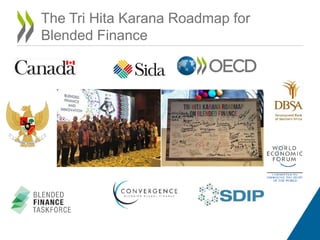
The Tri Hita Karana Roadmap for
Blended Finance
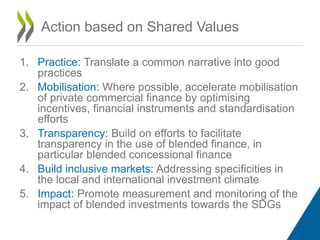
1. Practice: Translate a common narrative into good
practices
2. Mobilisation: Where possible, accelerate mobilisation
of private commercial finance by optimising
incentives, financial instruments and standardisation
efforts
3. Transparency: Build on efforts to facilitate
transparency in the use of blended finance, in
particular blended concessional finance
4. Build inclusive markets: Addressing specificities in
the local and international investment climate
5. Impact: Promote measurement and monitoring of the
impact of blended investments towards the SDGs
Action based on Shared Values
PRIVATE FINANCE FOR SUSTAINABLE DEVELOPMENT WEEK
15 – 18 January 2019 | #PF4SDG | https://oe.cd/pf4sdg
Thank you

15 jan oecd_knowledge_exchange

  • 1.
    KNOWLEDGE EXCHANGE ON BLENDED FINANCE SceneSetting Tuesday, January 15, 2019, 09:00-09:30 At the Private Finance for Sustainable Development (PF4SD) Conference
  • 2.
    Financing for sustainabledevelopment Shifting the Trillions Adaptation Mobilisation The OECD is working towards enabling development cooperation to leaving no one behind by facilitating transparency, evidence and data, distilling and sharing best practice and policy recommendations based on sound analyses, and setting standards to guide and frame (1) the mobilisation of additional commercial finance with the help of blended finance, (2) shifting investments towards measurable impact and (3) transforming investments to adapt to green pathways
  • 3.
    OECD Definition ofBlended Finance Blended finance is the strategic use of development finance for the mobilisation of additional finance towards sustainable development in developing countries.
  • 4.
  • 5.
    • Goals: (1)Provide practical guidance on the Principles’ policy level implementation, (2) Deliver a digital publication where additional references and input can be contributed and (3) Coordinate and steer policy makers and potentially other development actors • Timeline: The Principles Guidance will be developed throughout 2019-2020 • Collaborative effort: The OECD will engage with experts and stakeholders throughout the development of the Guidance in form of workshops, conferences and invitations to review • A work programme on Principle 3 “Strengthening the local dimension of blended finance” has been initiated with ECDPM and ACET. • A working paper on “Blended Finance Evaluation: Governance and Methodological Challenges” will be soon published in response to Principle 5, building on a workshop that took place in October 2018 Guidance on OECD Blended Finance Principles
  • 6.
    • Blended Financein LDCs – Joint UNCDF-OECD Report • Blended Finance in Fragile Contexts • Blended Finance for Water and Sanitation – Joint Sida - OECD Development Co-operation and Environment Directorate Work Programme • Blended Finance for Agriculture – Joint IFAD/SAFIN-OECD Work Programme Building the Evidence Base
  • 7.
    • OECD Mobilisationdata • Amounts mobilised from the private sector in by official development finance interventions, 2012-2017 • Credit lines, Direct investment in companies and SPVs, Guarantees, Shares in CIVs, Simple co-financing and Syndicated loans • OECD Survey on Blended Finance Funds and Facilities Evidence and Data on Blended Finance • Latest market trends on blended finance funds and facilities • Including capital structure and portfolio, risk and return, monitoring and evaluation and development impact
  • 8.
    OECD Mobilisation Data2018 (Preliminary Results) Between 2012-2017, USD 151.5 billion was mobilised from the private sector by official development interventions. Source: OECD DAC Statistics. This includes regular CRS reporting and Surveys on amounts mobilised from the private sector (…) in 2015, 2016 and 2018.
  • 9.
    Anchor Blended Finance useto a Development Rationale Additionality/Ratio nale for Using Blended Finance SDGs Design Blended Finance to mobilise Commercial Finance Crowding-in and Minimum Concessionality Mobilisation Tailor Blended Finance to Local Context Commercial Sustainability Commercial sustainability Focus on Effective Partnering for Blended Finance Reinforcing Markets Building inclusive markets Monitor Blended Finance for Transparency and Results Promoting High Standards Transparen cy Underlying Reference Framework - DFI Working Group Enhanced Principles on Blended Concessional Finance for Private Sector Projects Underlying Reference Framework – The OECD Blended Finance Principles Aligning with SDGs, national priorities, and development cooperation principles Key role in mobilizing finance, with careful consideration of appropriate use Sharing risks and reward fairly Structuring and pricing of blended finance instruments efficiently Ensuring accountability, transparency, debt sustainability, and participation Underlying Reference Framework – Addis Ababa Action Agenda Core Blended Finance Frameworks
  • 10.
    The Tri HitaKarana Roadmap for Blended Finance
  • 11.
    1. Practice: Translatea common narrative into good practices 2. Mobilisation: Where possible, accelerate mobilisation of private commercial finance by optimising incentives, financial instruments and standardisation efforts 3. Transparency: Build on efforts to facilitate transparency in the use of blended finance, in particular blended concessional finance 4. Build inclusive markets: Addressing specificities in the local and international investment climate 5. Impact: Promote measurement and monitoring of the impact of blended investments towards the SDGs Action based on Shared Values
  • 12.
    PRIVATE FINANCE FORSUSTAINABLE DEVELOPMENT WEEK 15 – 18 January 2019 | #PF4SDG | https://oe.cd/pf4sdg Thank you