This document provides an overview of UNHCR (United Nations High Commissioner for Refugees) including:
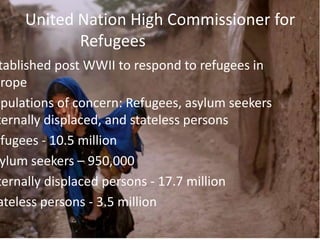
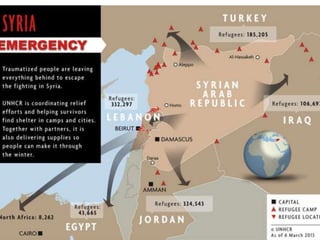
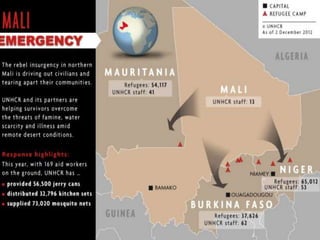
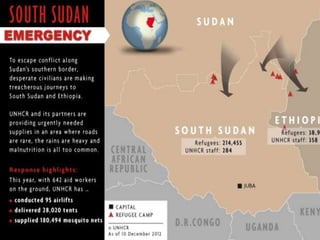
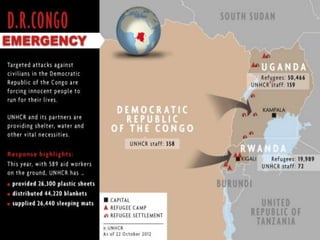
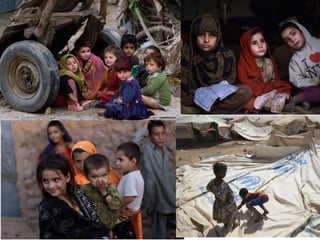
- UNHCR was established after WWII to respond to refugees in Europe. It currently assists refugees, asylum seekers, internally displaced persons, and stateless people.
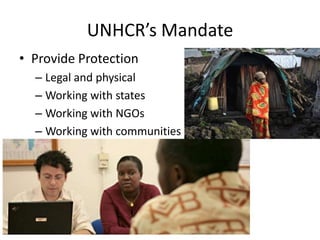
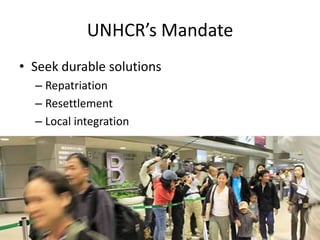
- UNHCR's mandate is to provide protection and seek durable solutions such as repatriation, resettlement, and local integration.
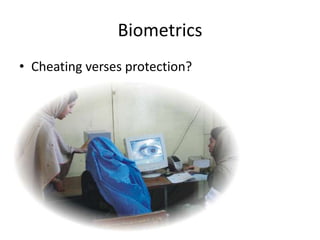
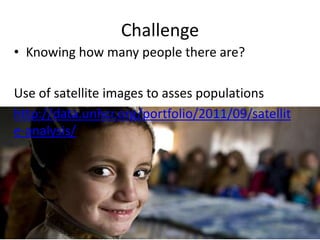
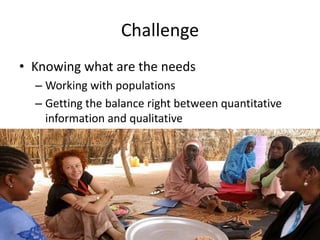
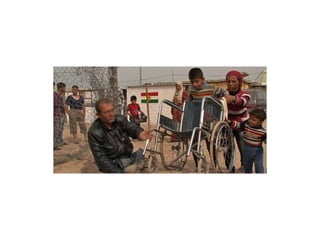
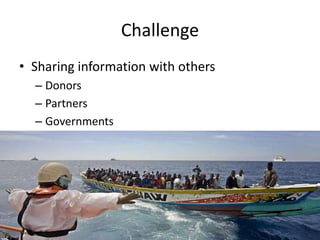
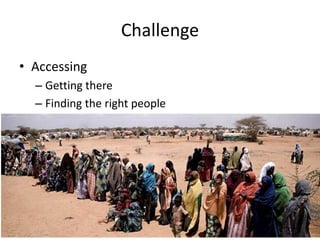
- UNHCR faces challenges in accurately knowing refugee populations, assessing refugee needs, and sharing information with partners. Technology can help address these challenges.






![Introduction-to-Migration-Refuges-and-Human-Rights7[1].pptx](https://cdn.slidesharecdn.com/ss_thumbnails/introduction-to-migration-refuges-and-human-rights71-240604172306-46637736-thumbnail.jpg?width=640&height=640&fit=bounds)


