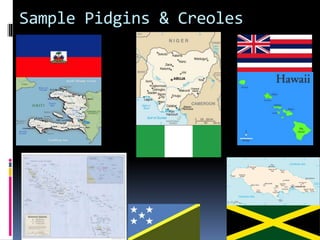
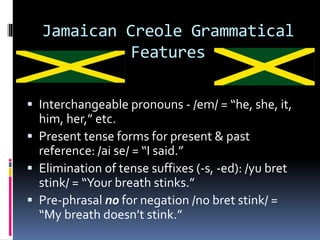
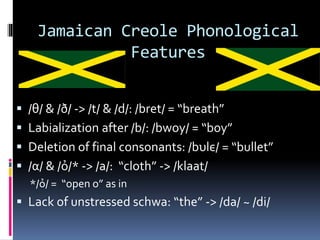
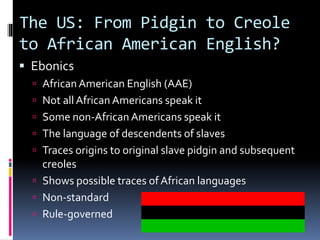
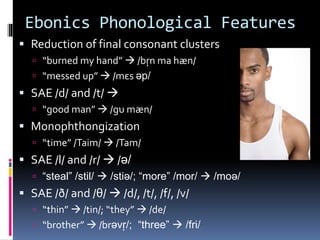
This document discusses the characteristics and origins of pidgins and creoles. It begins by defining pidgins as contact languages with no native speakers that develop for limited functions like trade. When pidgins expand and become the native language of children in multilingual communities, they evolve into creoles. The document then examines specific examples of English-based pidgins and creoles and compares their vocabulary, pronunciation, grammar and social functions to illustrate how pidgins simplify over time while creoles become fully-fledged languages.









![Creole dialectology explained in [1].pptx](https://cdn.slidesharecdn.com/ss_thumbnails/creole1-250401153702-2e548a4d-thumbnail.jpg?width=640&height=640&fit=bounds)


