ULTRALIGHT SOLAR POWERED HYBRID RESEARCH DRONE
Cs. Singer, German Aerospace Center (DLR), Institute of Solar Research, Pfaffenwaldring 38-40, 70569 Stuttgart
csaba.singer@dlr.de
Introduction: This proposal concerns an ultralight
solar powered research drone, which is VTOL capable
and which absolves its cruise flight in an efficient axis
symmetric configuration. It is ideal for the over ground
exploration of Mars, as it can carry divers sensor sys-
tems, while the structural mass is minimized due to a
lighter than CO2 (LTCO2, on earth lighter than air)
concept, combined with a lightweight construction.
The buoyant LTCO2 gas can be among others air, N2,
O2, He or H2. The structure stability of the ultra light-
weight drone will be achieved with a circular filigree
fiber composite ring and a slightly pressurized gas cell
made from ultra dense foil. Synergetic advantages
comprise the facts, that every technical component,
which is necessary for a rotation symmetric VTOL,
also can be used for a mirror symmetric cruise, whilst
during take-off, cruise-flight and landing the de-
manded lift will be generated in a hybrid way using
dynamic lift and static buoyancy. The power supply
consists of a combination of batteries and photovoltaic
cells and optional regenerative fuel cells. The lenticu-
lar shell is optimally designed to accommodate a
maximized photovoltaic surface at maximal LTCO2
gas volume and at minimized structural mass.
Functionality: For the explanation of the function-
ality Fig.1 to Fig.3 and an imaginary flight from a lo-
cation A to a location B is used.
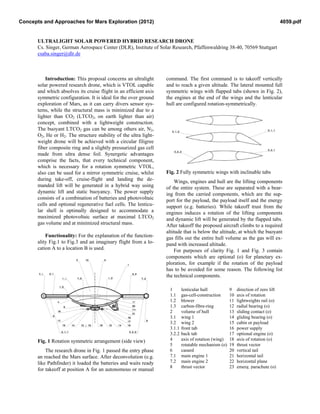
Fig. 1 Rotation symmetric arrangement (side view)
The research drone in Fig. 1 passed the entry phase
an reached the Mars surface. After deconvolution (e.g.
like Pathfinder) it loaded the batteries and waits ready
for takeoff at position A for an autonomous or manual
command. The first command is to takeoff vertically
and to reach a given altitude. The lateral mounted full
symmetric wings with flapped tabs (shown in Fig. 2),
the engines at the end of the wings and the lenticular
hull are configured rotation-symmetrically.
Fig. 2 Fully symmetric wings with inclinable tabs
Wings, engines and hull are the lifting components
of the entire system. These are separated with a bear-
ing from the carried components, which are the sup-
port for the payload, the payload itself and the energy
support (e.g. batteries). While takeoff trust from the
engines induces a rotation of the lifting components
and dynamic lift will be generated by the flapped tabs.
After takeoff the proposed aircraft climbs to a required
altitude that is below the altitude, at which the buoyant
gas fills out the entire hull volume as the gas will ex-
pand with increased altitude.
For purposes of clarity Fig. 1 and Fig. 3 contain
components which are optional (o) for planetary ex-
ploration, for example if the rotation of the payload
has to be avoided for some reason. The following list
the technical components.
1 lenticular hull 9 direction of zero lift
1.1 gas-cell-construction 10 axis of rotation
1.2 blower 11 lightweights rail (o)
1.3 carbon-fibre-ring 12 radial bearing (o)
2 volume of hull 13 sliding contact (o)
3.1 wing 1 14 gliding bearing (o)
3.2 wing 2 15 cabin or payload
3.1.1 front tab 16 power supply
3.2.2 back tab 17 optional engine (o)
4 axis of rotation (wing) 18 axis of rotation (o)
5 rotatable mechanism (o) 19 thrust vector
6 canard 20 vertical tail
7.1 main engine 1 21 horizontal tail
7.2 main engine 2 22 horizontal plane
8 thrust vector 23 emerg. parachute (o)
4059.pdfConcepts and Approaches for Mars Exploration (2012)
If a new command was given to fly from A to B
the engines stop and the rotation dies out. The research
drone loses altitude slowly, while the tabs are moved
into the neutral position by the on board control. When
the rotation died out the on board control moves the
tabs in a way that he whole drone is configured mirror
symmetrically. By giving parallel thrust on both sides
and moving the tabs for a dynamic lift, the proposed
aircraft flies forward in the mirror symmetrical con-
figuration as shown in Fig. 3. Induced dynamic lift and
additional buoyancy are sufficient to keep the required
altitude. While cruse flight the payload can be moved
along its support into the required position to reach
dynamic stability. The controlled horizontal tail and
canard care for the equilibrium while cruse flight,
whereas the approach angle of the hull is hold around
zero. Finally the thrust of the engines can be de-
creased, when point B is near. The configuration will
be changed again to be rotationally symmetrical, when
the speed is reduced and a precision vertical landing
should be carried out. While flight but also on ground
the sensor equipment on board collects significant data
related to the discovery of our neighbor planet.
Fig. 3 Mirror symmetric arrangement (side view)
Innovative Aspects: The proposed research drone
combines three approved main concepts of human
flight. It needs no infrastructure for takeoff and land-
ing and is able to reach a higher cruising speed com-
pared to airships and helicopter. It is built out of light-
weight high-tech materials like fiber composites, sail-
cloth and high dense foils, while only a low amount of
metal is applied to the structure. It uses solar energy as
a regenerative energy source, whose conversion is
accomplished by solar cells mounted at the upper sur-
face of the hull and batteries and/or regenerative fuel
cells. It allows autonomous non-stop flight if required.
In the case of emergency the construction behaves like
a parachute, which competes with the security strategy
of all conventional flying concepts.
Development: After the idea was applied for a pat-
ent (DE102006028885A1) the feasibility study was
carried out with a simplified experimental approach,
which showed that it is possible to carry out the basic
abilities, VTOL, mirror symmetric cruse flight and
parachute characteristic with one and the same equip-
ment like proposed. After this a basic modeling and
design tool was programmed, which helps to estimate
the dimensions, power supply and the reachable per-
formance. No validation of this tool took place yet.
Additional Information: Lighter than air con-
structions with lenticular hulls that reached the devel-
opment stage of prototyping were the models XEM-1
to XEM-4 from LTAS/CAMBOT LLC, remotely pi-
loted lenticular airships, which were built from 1974
until 1981 as a demonstrator and for filming, video
observation and telecommunications work and their
three full scaled rigid airship variants: SPATIAL-
MLA-24, MLA-32-A and MLA-32-B [1,2]. Also
ALA-600 Thermoplane, an airship filled with both
helium and hot gas, which was designed to operate
with heavy loads, without a base or mooring mast was
finalised in 1989, whereas ALA-40-01 ground tests
started in 1992 [2]. Actual efforts to realize airships
with lenticular hulls are the Alizé concept, AirFerry
and AeroRaft [3,4,5]. Also SLTA is assessing un-
manned lenticular airship configurations for cargo ap-
plications [6]. LTA references can be found in [7].
References:
[1] JANE's, “All the World's Aircraft” Coulsdon, Sur-
rey UK; Alexandria VA: Jane's Information Group.
Annual
[2] NAYLER, A., “Airship development world wide -
A 2001 Review”, Airship Association Ltd. Lon-
don, 2001
[3] BALASKOVIC, P., “Presentation d’un Aeronef de
conception entierement nouvelle: L’Alizé”, LTA
Corporation Trust Center, 2007
[4] KÜNKLER, H., “A Hybrid Aircraft for Low-
Infrastructure General Transport”, Intellect. Prop-
erty, 2007
[5] LUFFMAN, C.R., “AeroRaft™ - A Brief Insight”,
LTA Solutions, 2005
[6] BOCK, J.K., “Autonomous Cargo Airships Opera-
tions System”, SLTA, 2008
[7] KHOURY G.A., GILLET J.D., „Airship Technol-
ogy“, Cambridge University Press, ISBN-13:
9780521607537, 1999
4059.pdfConcepts and Approaches for Mars Exploration (2012)

1304.5098

  • 1.
    ULTRALIGHT SOLAR POWEREDHYBRID RESEARCH DRONE Cs. Singer, German Aerospace Center (DLR), Institute of Solar Research, Pfaffenwaldring 38-40, 70569 Stuttgart csaba.singer@dlr.de Introduction: This proposal concerns an ultralight solar powered research drone, which is VTOL capable and which absolves its cruise flight in an efficient axis symmetric configuration. It is ideal for the over ground exploration of Mars, as it can carry divers sensor sys- tems, while the structural mass is minimized due to a lighter than CO2 (LTCO2, on earth lighter than air) concept, combined with a lightweight construction. The buoyant LTCO2 gas can be among others air, N2, O2, He or H2. The structure stability of the ultra light- weight drone will be achieved with a circular filigree fiber composite ring and a slightly pressurized gas cell made from ultra dense foil. Synergetic advantages comprise the facts, that every technical component, which is necessary for a rotation symmetric VTOL, also can be used for a mirror symmetric cruise, whilst during take-off, cruise-flight and landing the de- manded lift will be generated in a hybrid way using dynamic lift and static buoyancy. The power supply consists of a combination of batteries and photovoltaic cells and optional regenerative fuel cells. The lenticu- lar shell is optimally designed to accommodate a maximized photovoltaic surface at maximal LTCO2 gas volume and at minimized structural mass. Functionality: For the explanation of the function- ality Fig.1 to Fig.3 and an imaginary flight from a lo- cation A to a location B is used. Fig. 1 Rotation symmetric arrangement (side view) The research drone in Fig. 1 passed the entry phase an reached the Mars surface. After deconvolution (e.g. like Pathfinder) it loaded the batteries and waits ready for takeoff at position A for an autonomous or manual command. The first command is to takeoff vertically and to reach a given altitude. The lateral mounted full symmetric wings with flapped tabs (shown in Fig. 2), the engines at the end of the wings and the lenticular hull are configured rotation-symmetrically. Fig. 2 Fully symmetric wings with inclinable tabs Wings, engines and hull are the lifting components of the entire system. These are separated with a bear- ing from the carried components, which are the sup- port for the payload, the payload itself and the energy support (e.g. batteries). While takeoff trust from the engines induces a rotation of the lifting components and dynamic lift will be generated by the flapped tabs. After takeoff the proposed aircraft climbs to a required altitude that is below the altitude, at which the buoyant gas fills out the entire hull volume as the gas will ex- pand with increased altitude. For purposes of clarity Fig. 1 and Fig. 3 contain components which are optional (o) for planetary ex- ploration, for example if the rotation of the payload has to be avoided for some reason. The following list the technical components. 1 lenticular hull 9 direction of zero lift 1.1 gas-cell-construction 10 axis of rotation 1.2 blower 11 lightweights rail (o) 1.3 carbon-fibre-ring 12 radial bearing (o) 2 volume of hull 13 sliding contact (o) 3.1 wing 1 14 gliding bearing (o) 3.2 wing 2 15 cabin or payload 3.1.1 front tab 16 power supply 3.2.2 back tab 17 optional engine (o) 4 axis of rotation (wing) 18 axis of rotation (o) 5 rotatable mechanism (o) 19 thrust vector 6 canard 20 vertical tail 7.1 main engine 1 21 horizontal tail 7.2 main engine 2 22 horizontal plane 8 thrust vector 23 emerg. parachute (o) 4059.pdfConcepts and Approaches for Mars Exploration (2012)
  • 2.
    If a newcommand was given to fly from A to B the engines stop and the rotation dies out. The research drone loses altitude slowly, while the tabs are moved into the neutral position by the on board control. When the rotation died out the on board control moves the tabs in a way that he whole drone is configured mirror symmetrically. By giving parallel thrust on both sides and moving the tabs for a dynamic lift, the proposed aircraft flies forward in the mirror symmetrical con- figuration as shown in Fig. 3. Induced dynamic lift and additional buoyancy are sufficient to keep the required altitude. While cruse flight the payload can be moved along its support into the required position to reach dynamic stability. The controlled horizontal tail and canard care for the equilibrium while cruse flight, whereas the approach angle of the hull is hold around zero. Finally the thrust of the engines can be de- creased, when point B is near. The configuration will be changed again to be rotationally symmetrical, when the speed is reduced and a precision vertical landing should be carried out. While flight but also on ground the sensor equipment on board collects significant data related to the discovery of our neighbor planet. Fig. 3 Mirror symmetric arrangement (side view) Innovative Aspects: The proposed research drone combines three approved main concepts of human flight. It needs no infrastructure for takeoff and land- ing and is able to reach a higher cruising speed com- pared to airships and helicopter. It is built out of light- weight high-tech materials like fiber composites, sail- cloth and high dense foils, while only a low amount of metal is applied to the structure. It uses solar energy as a regenerative energy source, whose conversion is accomplished by solar cells mounted at the upper sur- face of the hull and batteries and/or regenerative fuel cells. It allows autonomous non-stop flight if required. In the case of emergency the construction behaves like a parachute, which competes with the security strategy of all conventional flying concepts. Development: After the idea was applied for a pat- ent (DE102006028885A1) the feasibility study was carried out with a simplified experimental approach, which showed that it is possible to carry out the basic abilities, VTOL, mirror symmetric cruse flight and parachute characteristic with one and the same equip- ment like proposed. After this a basic modeling and design tool was programmed, which helps to estimate the dimensions, power supply and the reachable per- formance. No validation of this tool took place yet. Additional Information: Lighter than air con- structions with lenticular hulls that reached the devel- opment stage of prototyping were the models XEM-1 to XEM-4 from LTAS/CAMBOT LLC, remotely pi- loted lenticular airships, which were built from 1974 until 1981 as a demonstrator and for filming, video observation and telecommunications work and their three full scaled rigid airship variants: SPATIAL- MLA-24, MLA-32-A and MLA-32-B [1,2]. Also ALA-600 Thermoplane, an airship filled with both helium and hot gas, which was designed to operate with heavy loads, without a base or mooring mast was finalised in 1989, whereas ALA-40-01 ground tests started in 1992 [2]. Actual efforts to realize airships with lenticular hulls are the Alizé concept, AirFerry and AeroRaft [3,4,5]. Also SLTA is assessing un- manned lenticular airship configurations for cargo ap- plications [6]. LTA references can be found in [7]. References: [1] JANE's, “All the World's Aircraft” Coulsdon, Sur- rey UK; Alexandria VA: Jane's Information Group. Annual [2] NAYLER, A., “Airship development world wide - A 2001 Review”, Airship Association Ltd. Lon- don, 2001 [3] BALASKOVIC, P., “Presentation d’un Aeronef de conception entierement nouvelle: L’Alizé”, LTA Corporation Trust Center, 2007 [4] KÜNKLER, H., “A Hybrid Aircraft for Low- Infrastructure General Transport”, Intellect. Prop- erty, 2007 [5] LUFFMAN, C.R., “AeroRaft™ - A Brief Insight”, LTA Solutions, 2005 [6] BOCK, J.K., “Autonomous Cargo Airships Opera- tions System”, SLTA, 2008 [7] KHOURY G.A., GILLET J.D., „Airship Technol- ogy“, Cambridge University Press, ISBN-13: 9780521607537, 1999 4059.pdfConcepts and Approaches for Mars Exploration (2012)