Download to read offline

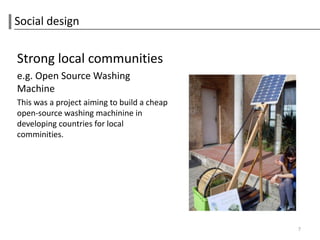
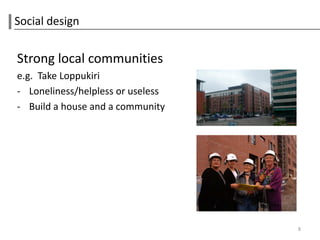
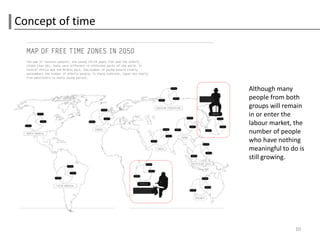


It argues that open design, by pooling knowledge and resources, facilitating user participation, and re-evaluating concepts of time, can make strong contributions to sustainability and building stronger communities. The author believes open design is a tool to solve problems arising from systemic moral failures. Examples discussed include open-source washing machines and a project to build homes and community for the lonely or useless.


