12 Best Practice Blogging Principles for Better Search & Social Results A  step-by-step guide  for optimizing & promoting your posts for more website traffic, better rankings, higher readership, & more time spent on site.
Before You Blog:  Get your Own Domain  Own content verses renting  Builds authority for your domain not Blogger or Wordpress.org Has trickle down, and/or up effect when tied into your main company site Perceived as more professional  Avoid deletion (Geocities, Yahoo! 360, AOL Homepage) Sellable ( you can’t sell another’s network) More traffic & tracking opportunities Flexible designs & functionality  (Free WordPress themes, plugins, Drupal designs & modules) Where? Godaddy.com, Networksolutions.com
What a Blog is Not Good for: Press releases >>Put in Company News Section Discount offerings & pure advertorial pitches >>Put in Newsletter (only 10% of the content) Company-only Success stories >>Put in Case Studies Section
What a Blog IS Good for:  Exhibiting expert status >Think of yourself as a publisher for a trade magazine in YOUR industry.  Getting PR – Interviews, quotes Attracting backlinks >Offering highly valuable resources, and compelling information for customers, industry people, and “Linkerati.” New blog posts are a  reason  reach out to those on your social networks: Twitter,  Facebook and filter back to website.
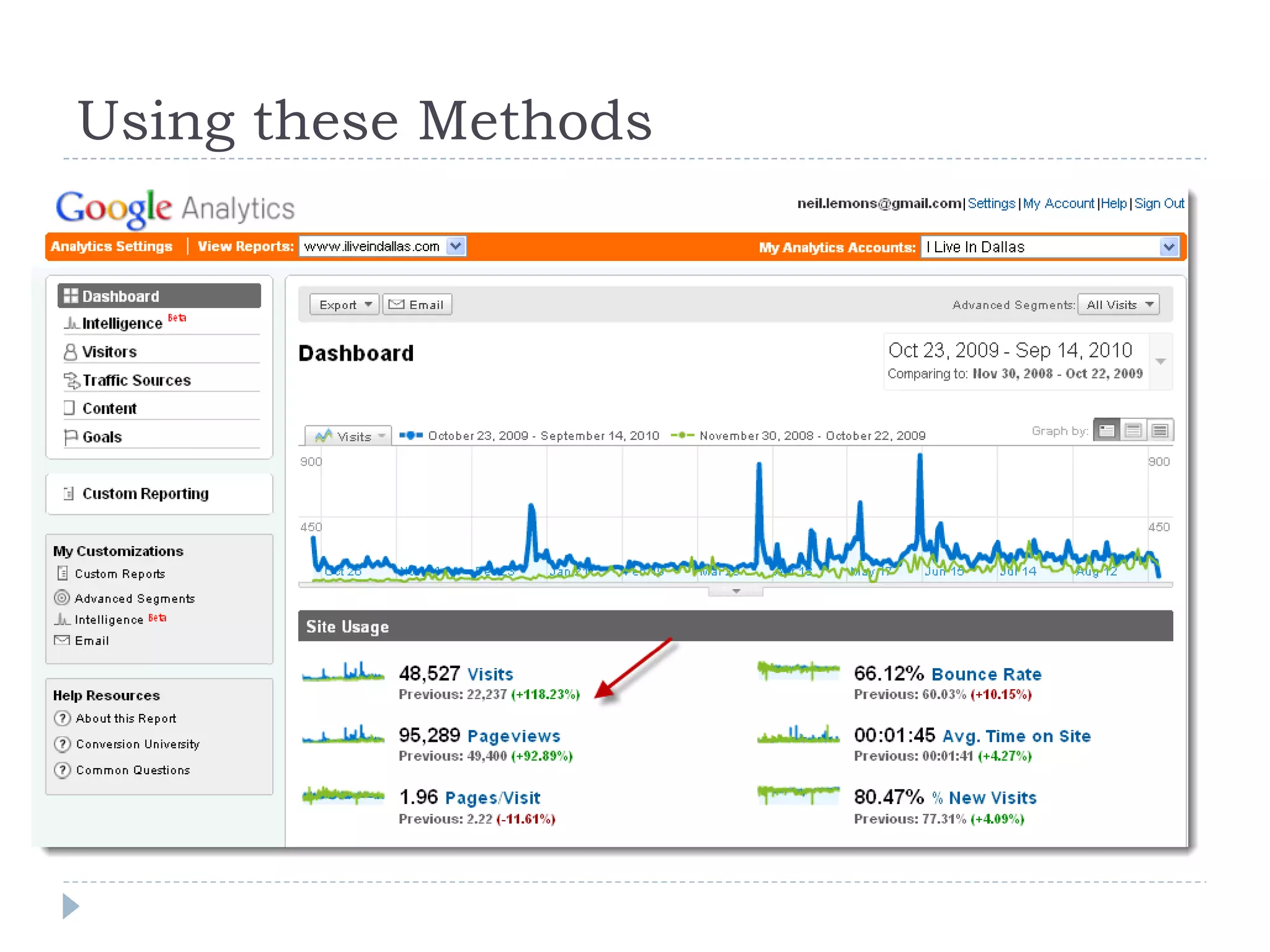
Using these Methods
1) Benchmark Where You Start On Day One Set up Traffic & Keyword Tracking:  Install Google Analytics http://www.google.com/analytics.com   Set up RSS Feed Subscription Tracking: Sign up for Feedburner http://www.feedburner.com On Day 30 after ten posts Using rank measuring software  http://www.sheerseo.com   Twitter & Facebook badges
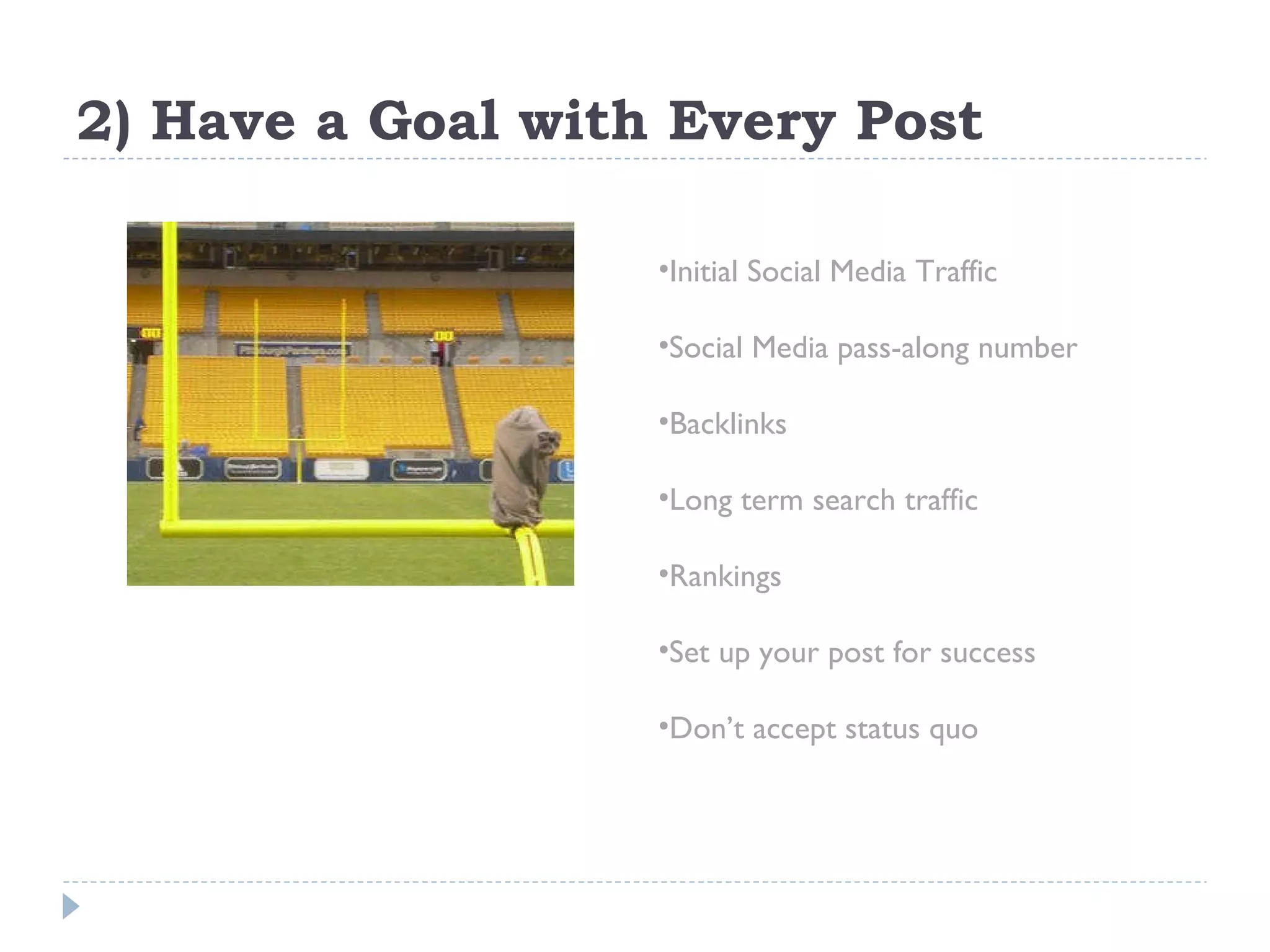
2) Have a Goal with Every Post Initial Social Media Traffic Social Media pass-along number Backlinks Long term search traffic Rankings Set up your post for success Don’t accept status quo
3) Blog About What’s In Demand Find what’ s “hot” all the time –  Evergreen Topics  Example:  eHow.com Use keyword research tools Wordtracker Google AdWords keyword tool “Exact match” ONLY Be very specific  Popular,  but not too popular Blog about timely events only AFTER you have a large following
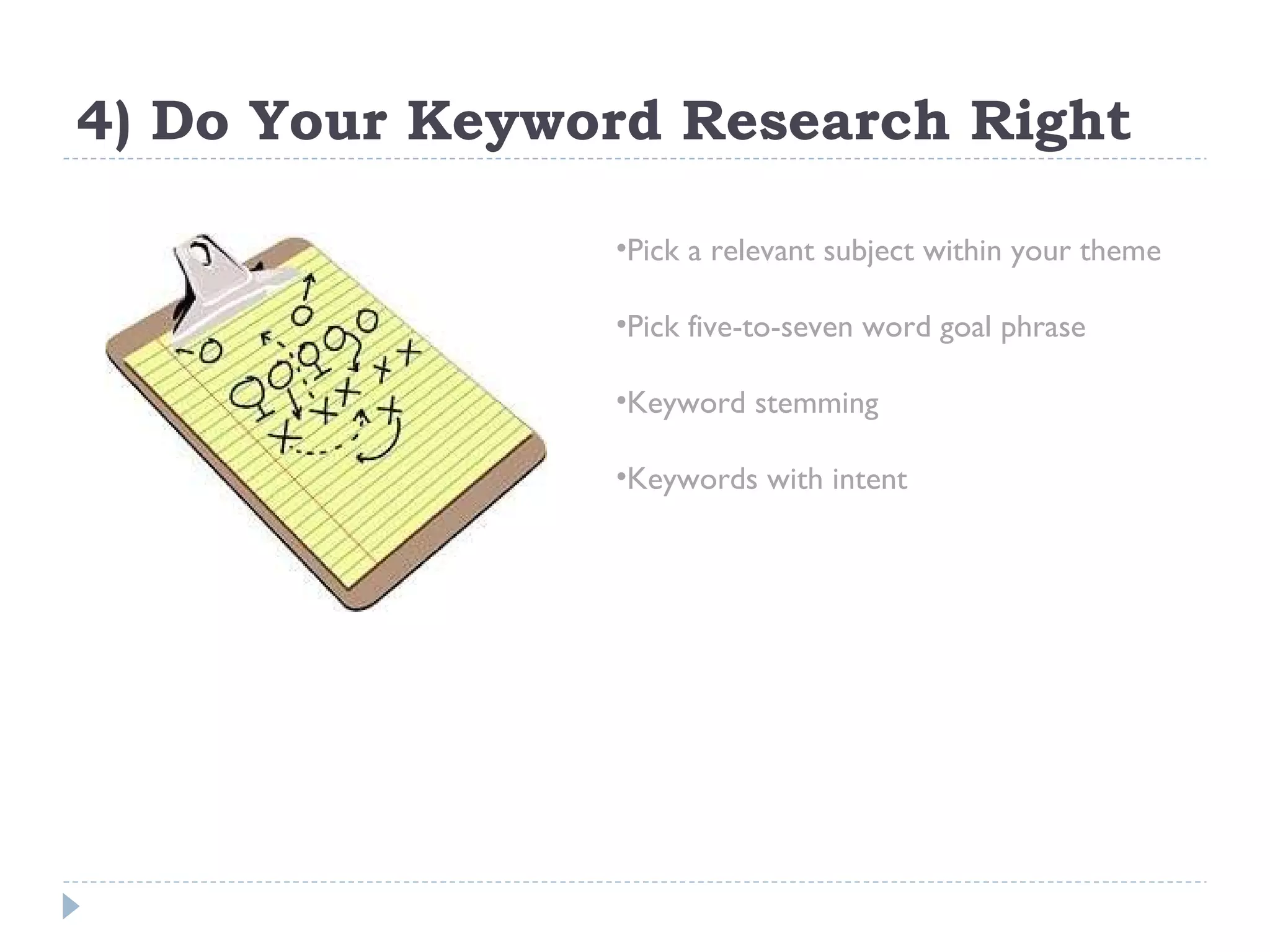
4) Do Your Keyword Research Right Pick a relevant subject within your theme Pick five-to-seven word goal phrase Keyword stemming Keywords with intent
5) Go Long, Deep & Narrow with Topics Longtail traffic Be an expert in one niche not jack of all trades (search engines like that) Pick five-to-seven word goal phrase Keyword stemming Keywords with intent
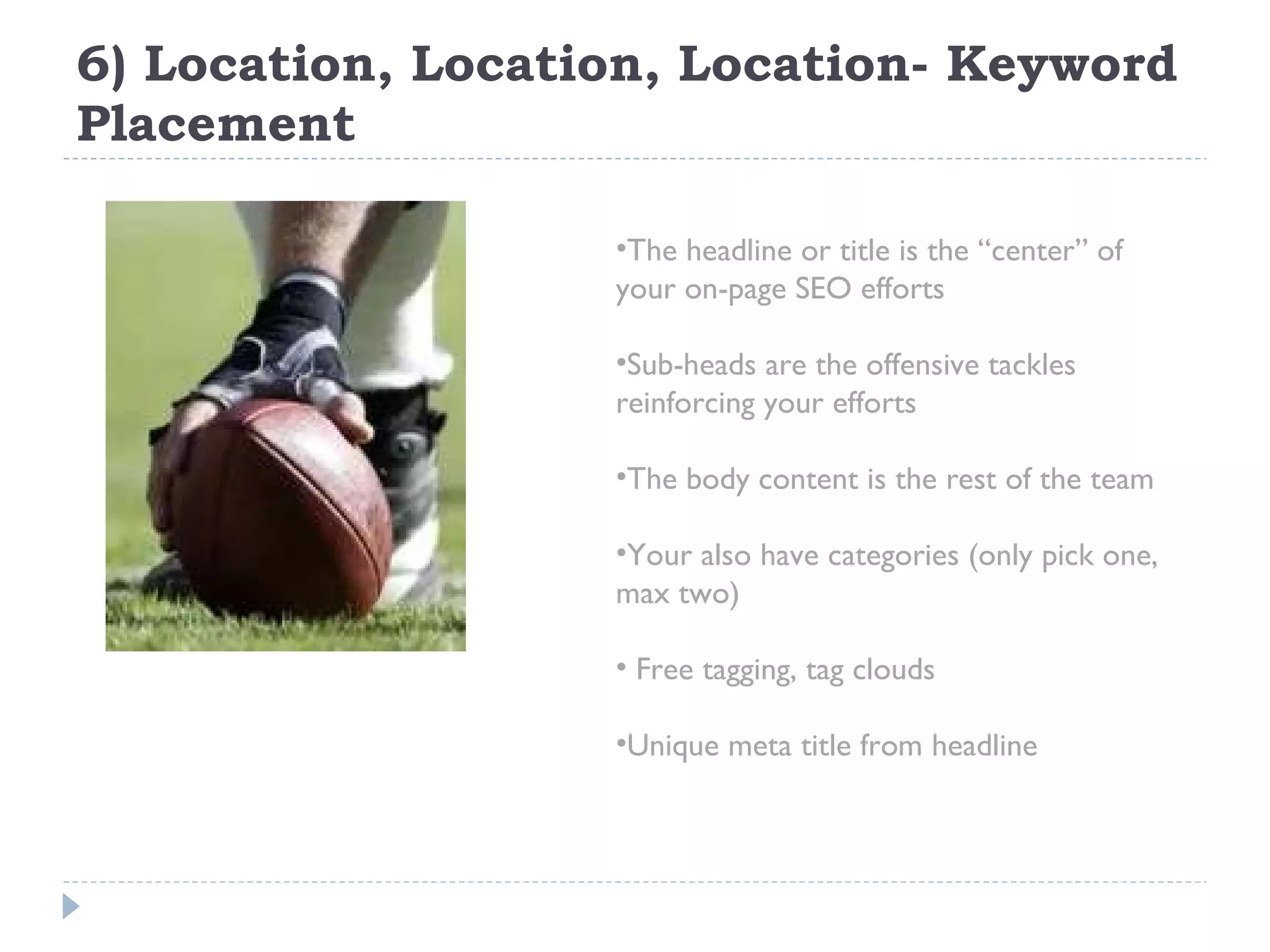
6) Location, Location, Location- Keyword Placement The headline or title is the “center” of your on-page SEO efforts Sub-heads are the offensive tackles reinforcing your efforts The body content is the rest of the team Your also have categories (only pick one, max two) Free tagging, tag clouds Unique meta title from headline
7) Write with Authority BE the authority by providing more info than any other listing 750 – 2000 words Always cite credible sources,  according to… Start with a lead for stories – 5 Ws State your points clearly & w/confidence  No waffling or emotional affect ranting Make your post  deserve  top 10 placement
8) Plan Your Posts Ahead of Time Keep an entire playbook of well-researched headlines/blog topics Think of holiday, event-based, and seasonal topics which happen every year,  you can pre-write now.  Post –date entries for automate posting.

12 Best Practice Blogging Principles

  • 1.
    12 Best PracticeBlogging Principles for Better Search & Social Results A step-by-step guide for optimizing & promoting your posts for more website traffic, better rankings, higher readership, & more time spent on site.
  • 2.
    Before You Blog: Get your Own Domain Own content verses renting Builds authority for your domain not Blogger or Wordpress.org Has trickle down, and/or up effect when tied into your main company site Perceived as more professional Avoid deletion (Geocities, Yahoo! 360, AOL Homepage) Sellable ( you can’t sell another’s network) More traffic & tracking opportunities Flexible designs & functionality (Free WordPress themes, plugins, Drupal designs & modules) Where? Godaddy.com, Networksolutions.com
  • 3.
    What a Blogis Not Good for: Press releases >>Put in Company News Section Discount offerings & pure advertorial pitches >>Put in Newsletter (only 10% of the content) Company-only Success stories >>Put in Case Studies Section
  • 4.
    What a BlogIS Good for: Exhibiting expert status >Think of yourself as a publisher for a trade magazine in YOUR industry. Getting PR – Interviews, quotes Attracting backlinks >Offering highly valuable resources, and compelling information for customers, industry people, and “Linkerati.” New blog posts are a reason reach out to those on your social networks: Twitter, Facebook and filter back to website.
  • 5.
  • 6.
    1) Benchmark WhereYou Start On Day One Set up Traffic & Keyword Tracking: Install Google Analytics http://www.google.com/analytics.com Set up RSS Feed Subscription Tracking: Sign up for Feedburner http://www.feedburner.com On Day 30 after ten posts Using rank measuring software http://www.sheerseo.com Twitter & Facebook badges
  • 7.
    2) Have aGoal with Every Post Initial Social Media Traffic Social Media pass-along number Backlinks Long term search traffic Rankings Set up your post for success Don’t accept status quo
  • 8.
    3) Blog AboutWhat’s In Demand Find what’ s “hot” all the time – Evergreen Topics Example: eHow.com Use keyword research tools Wordtracker Google AdWords keyword tool “Exact match” ONLY Be very specific Popular, but not too popular Blog about timely events only AFTER you have a large following
  • 9.
    4) Do YourKeyword Research Right Pick a relevant subject within your theme Pick five-to-seven word goal phrase Keyword stemming Keywords with intent
  • 10.
    5) Go Long,Deep & Narrow with Topics Longtail traffic Be an expert in one niche not jack of all trades (search engines like that) Pick five-to-seven word goal phrase Keyword stemming Keywords with intent
  • 11.
    6) Location, Location,Location- Keyword Placement The headline or title is the “center” of your on-page SEO efforts Sub-heads are the offensive tackles reinforcing your efforts The body content is the rest of the team Your also have categories (only pick one, max two) Free tagging, tag clouds Unique meta title from headline
  • 12.
    7) Write withAuthority BE the authority by providing more info than any other listing 750 – 2000 words Always cite credible sources, according to… Start with a lead for stories – 5 Ws State your points clearly & w/confidence No waffling or emotional affect ranting Make your post deserve top 10 placement
  • 13.
    8) Plan YourPosts Ahead of Time Keep an entire playbook of well-researched headlines/blog topics Think of holiday, event-based, and seasonal topics which happen every year, you can pre-write now. Post –date entries for automate posting.