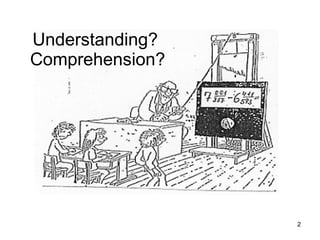
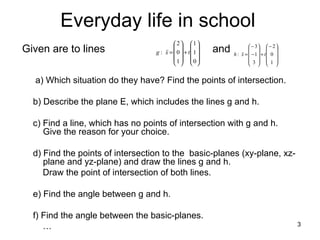
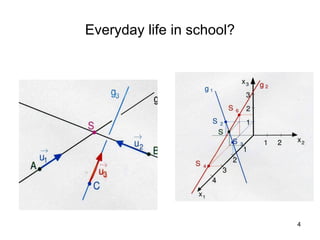
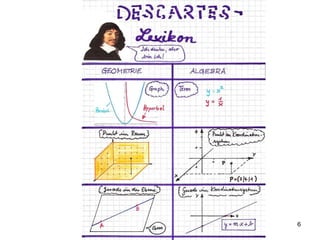
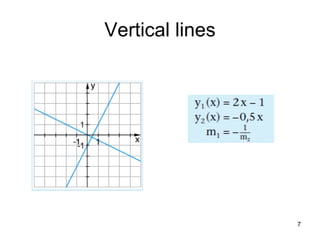
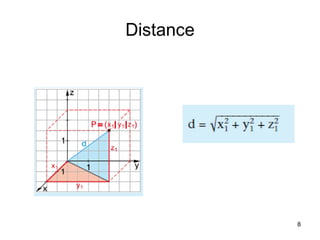
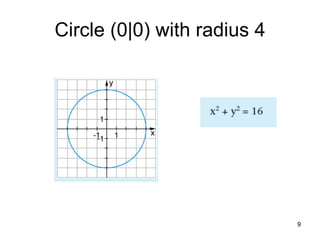
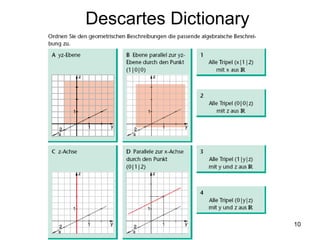
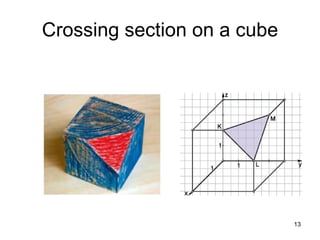
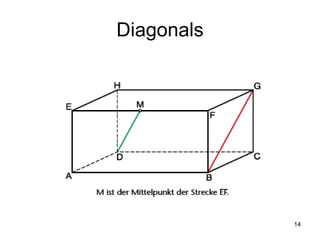
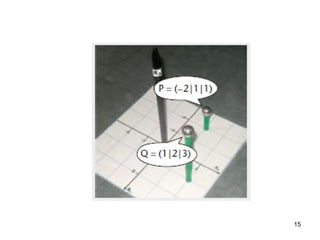
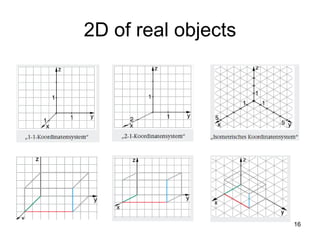
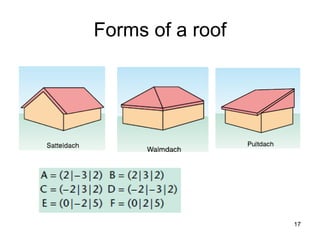
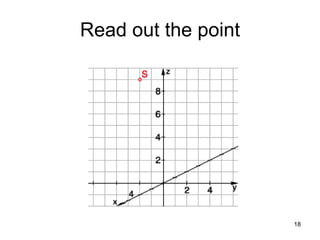
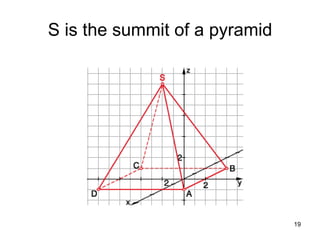
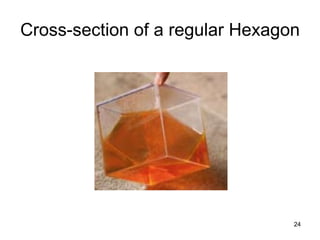
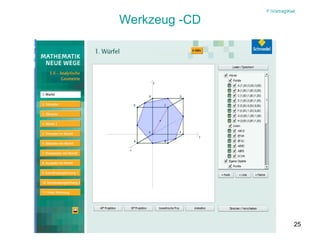
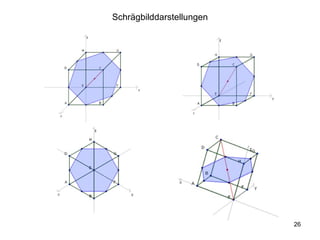
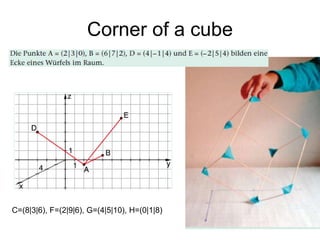
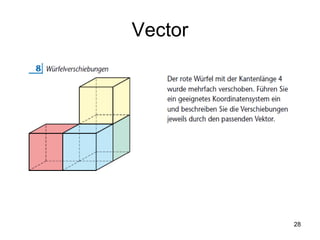
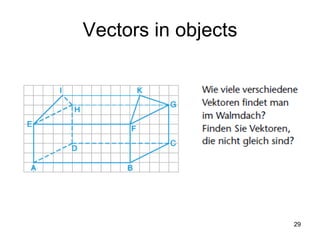
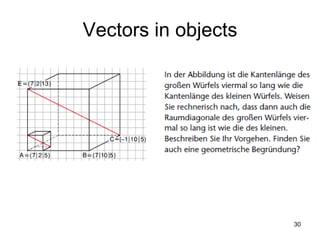
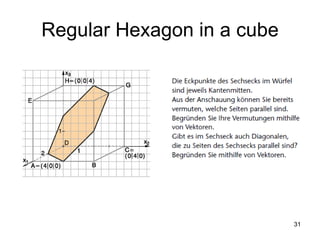
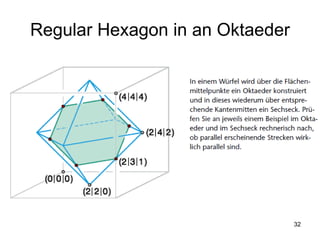
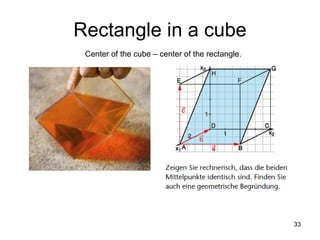
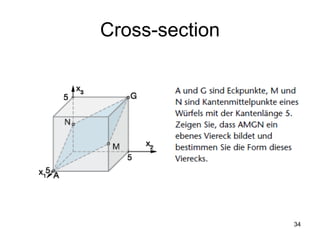
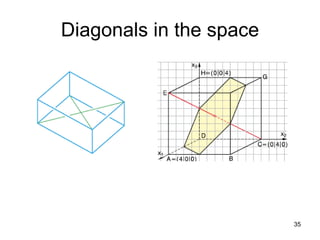
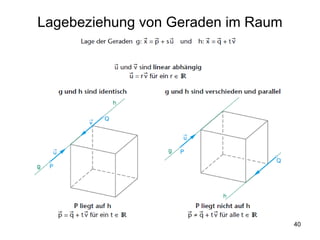
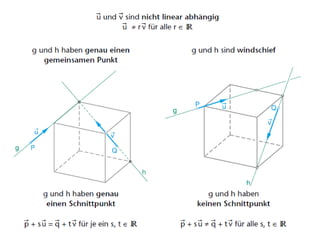
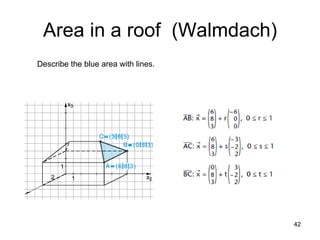
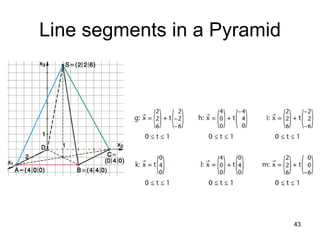
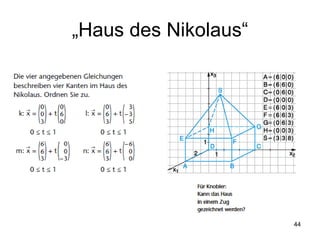
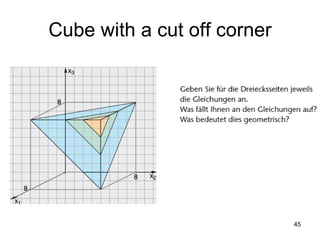
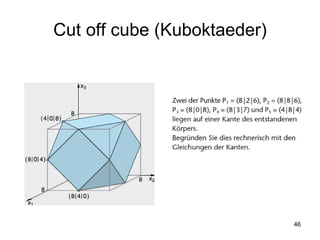
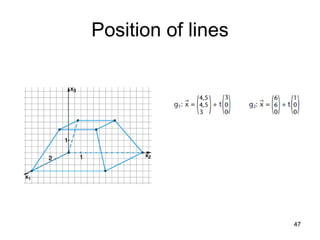
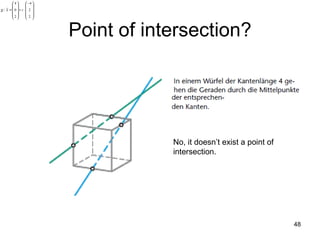
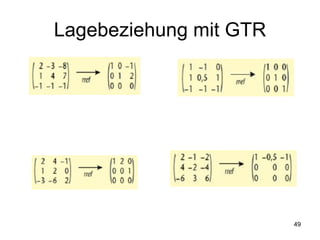
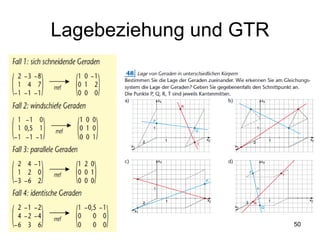
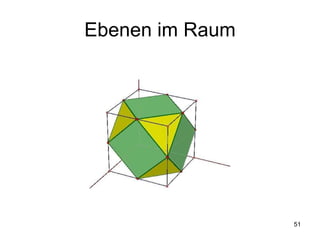
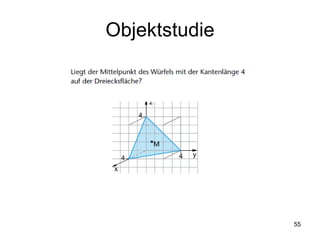
The document discusses the importance of understanding geometric concepts through real-world objects and examples, rather than just focusing on procedures and calculations. It provides several examples of using lines, planes, and shapes within objects to help students visualize and comprehend geometric relationships over just using equations and finding points of intersection. The examples include discussing lines and planes within cubes, pyramids, roofs and other objects. The goal is to help students progress from visualizing real situations, to drawing representations, to then expressing things analytically to build conceptual understanding.


![012 euclidean geometry[1]](https://cdn.slidesharecdn.com/ss_thumbnails/012euclideangeometry1-181201153749-thumbnail.jpg?width=640&height=640&fit=bounds)


