BWALYA K
 Upper respiratory tract infections are caused
by viruses and bacteria.
 Most infections – coryza (common cold),
pharyngo-conjuctival feveer, acute laryngits
and acute laryngobronchitis are caused by
viruses.
 However superinfection with bacteria may
occur especially Streptococcus pyogenes and
Staphylococcus pyogenes
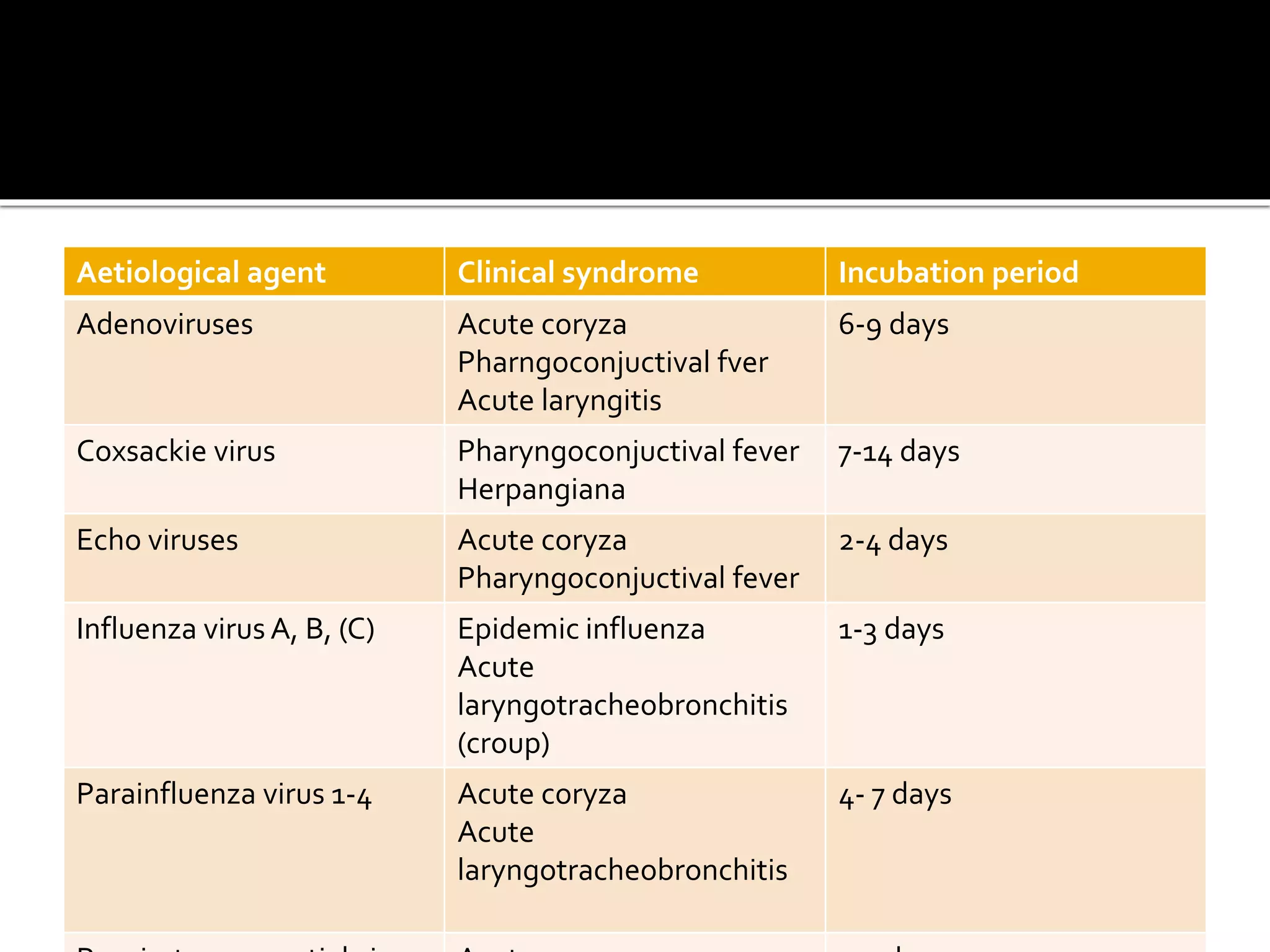
Aetiological agent Clinical syndrome Incubation period
Adenoviruses Acute coryza
Pharngoconjuctival fver
Acute laryngitis
6-9 days
Coxsackie virus Pharyngoconjuctival fever
Herpangiana
7-14 days
Echo viruses Acute coryza
Pharyngoconjuctival fever
2-4 days
Influenza virus A, B, (C) Epidemic influenza
Acute
laryngotracheobronchitis
(croup)
1-3 days
Parainfluenza virus 1-4 Acute coryza
Acute
laryngotracheobronchitis
4- 7 days
 Acute laryngotracheal Bronchitis
 Acute Epiglottitis
 BacterialTracheitis
 This infections result in upper airway
obstruction at the supraglottic, glottic and
subglottic levels
 Thus stridor is a major clinical feature
 Hypoxia
 Acute upper airway obstruction
 Feeding problems
 Increasing tachycardia, tachypnoea,
restlessness or apathy indicates the need for
urgent intervention to maintain the airway
 Is the commonest cause of stridor in children
 Causes include parainfluenza, adenoviruses,
RSV, influenza viruses, measles
 History
 Onset - gradual
 LTB also called croup is the most common
form of acute upper airway obstruction
 Primary findings are inflammatory oedema,
destruction of ciliated epithelium and
exudates
 Most patients have an upper respiratory tract
infection for several days before cough
becomes apparent
 Initially there is only a mild brassy cough with
intermittent stridor
 As obstruction increases, stridor becomes
continuous and is associated with worsening
cough, nasal flaring and suprasternal,
infrasternal and intercostal recessions.
 As inflammation extends to the bronchi and
bronchioles, respiratory difficulty increases
 Stridor becomes continuous, cough worsens,
expiratory phase of respiration also becomes
labored and prolonged
 Temperature may only be slightly raised.
Rare to reach 39-40 centigrade
 Agitation and crying worsens the symptoms
and signs
 Child prefers to sit up in bed or be held
upright
 On examination:
 There may be bilaterally diminished breath
sounds, ronchi and scattered crackles
together with stridor
 AS airway obstruction worsens, air hunger
and restlessness occurs
 The patient then develops severe hypoxemia,
hypercapnia and weakness accompanied by
decrease air exchange and stridor,
tachycardia and eventually death
 In the hypoxemic chid who may be cyanotic
or pale, any manipulation of the pharynx may
result in sudden cardio respiratory arrest.This
examination therefore is deferred until the
patient is in a hospital where there is optimal
 Airway management and expertise for
possibly doing tracheostomy by ENT
surgeon.
 Intubation are usually done in the presence of
an anaesthetist and ENT surgeon
 Stridor should be treated as a medical emergency.
 All attempts should be made to abort it as quickly as
possible
 Patient must be nursed in propped up position
 Intravenous Steroids e.g. dexamethasone 0.3mg/kg
given 8 hourly until stridor is comfortably aborted and
breathing is normal. Normally 48-36 hours. ( Some
schools of thought believe and one dose only, but
chances of recurrence of stridor high). If
dexamethasone is not available, hydrocortisone may
be used except is not as potent.
 Inhaled steroids (budesonide – not yet available)
 Nebulised racemic epinephrine – (2.25% diluted
1:8 with water or normal saline or 1:1000 diluted
with normal saline 1:9 in doses of 2-4mls for 15
minutes gives temporary but almost immediate
relief. May have to be repeated
 Humified oxygen or steam often helps to
terminate attack
 Oxygen
 This is swelling of the epiglottis and
aryepiglottic folds causing a rapid onset of
symptoms
 Causes:
 H. Influenza
 Streptococci
 Viral
 History
 Age 3-7 years usually
 Onset rapid
 Respiratory distress marked
 Dysphagia moderate
 Dyspnoea severe
 Sorethroat marked
 Sound muffled
 Secretions drooling saliva
 Position sitting or leaning forward
 Fever >38
 Facies anxious
 Avoid throat examination
 Expert anaesthetic and ENT should be sought
immediately
 And laryngoscopy and intubation should be
performed
 Iv antibiotics: crystalline penicillin and
chloramphenicol
 Prophylaxis for household contact
 Affects all ages
 Causative organisms;
 Staphylococcal aureus
 H. Influenza
 Alpha H. streptococci
 Gradual onset of symptoms
 Respiratory disease is moderate to marked
 Signs:
 Dysphagia may or may not be
present
 Dyspnoea usually present moderate
 Sore throat may or not be present
 Sounds barking cough, and stridor
 Secretions normal for age
 Position sitting or leaning forward
 Fever > 38
 Facies anxious
1.1 UPPER RESPIRATORY TRACT DISEASES.pptx

1.1 UPPER RESPIRATORY TRACT DISEASES.pptx

  • 1.
  • 2.
     Upper respiratorytract infections are caused by viruses and bacteria.  Most infections – coryza (common cold), pharyngo-conjuctival feveer, acute laryngits and acute laryngobronchitis are caused by viruses.  However superinfection with bacteria may occur especially Streptococcus pyogenes and Staphylococcus pyogenes
  • 3.
    Aetiological agent Clinicalsyndrome Incubation period Adenoviruses Acute coryza Pharngoconjuctival fver Acute laryngitis 6-9 days Coxsackie virus Pharyngoconjuctival fever Herpangiana 7-14 days Echo viruses Acute coryza Pharyngoconjuctival fever 2-4 days Influenza virus A, B, (C) Epidemic influenza Acute laryngotracheobronchitis (croup) 1-3 days Parainfluenza virus 1-4 Acute coryza Acute laryngotracheobronchitis 4- 7 days
  • 4.
     Acute laryngotrachealBronchitis  Acute Epiglottitis  BacterialTracheitis  This infections result in upper airway obstruction at the supraglottic, glottic and subglottic levels  Thus stridor is a major clinical feature
  • 6.
     Hypoxia  Acuteupper airway obstruction  Feeding problems  Increasing tachycardia, tachypnoea, restlessness or apathy indicates the need for urgent intervention to maintain the airway
  • 7.
     Is thecommonest cause of stridor in children  Causes include parainfluenza, adenoviruses, RSV, influenza viruses, measles  History  Onset - gradual
  • 8.
     LTB alsocalled croup is the most common form of acute upper airway obstruction  Primary findings are inflammatory oedema, destruction of ciliated epithelium and exudates  Most patients have an upper respiratory tract infection for several days before cough becomes apparent
  • 9.
     Initially thereis only a mild brassy cough with intermittent stridor  As obstruction increases, stridor becomes continuous and is associated with worsening cough, nasal flaring and suprasternal, infrasternal and intercostal recessions.  As inflammation extends to the bronchi and bronchioles, respiratory difficulty increases  Stridor becomes continuous, cough worsens, expiratory phase of respiration also becomes labored and prolonged
  • 10.
     Temperature mayonly be slightly raised. Rare to reach 39-40 centigrade  Agitation and crying worsens the symptoms and signs  Child prefers to sit up in bed or be held upright
  • 11.
     On examination: There may be bilaterally diminished breath sounds, ronchi and scattered crackles together with stridor  AS airway obstruction worsens, air hunger and restlessness occurs  The patient then develops severe hypoxemia, hypercapnia and weakness accompanied by decrease air exchange and stridor, tachycardia and eventually death
  • 12.
     In thehypoxemic chid who may be cyanotic or pale, any manipulation of the pharynx may result in sudden cardio respiratory arrest.This examination therefore is deferred until the patient is in a hospital where there is optimal  Airway management and expertise for possibly doing tracheostomy by ENT surgeon.  Intubation are usually done in the presence of an anaesthetist and ENT surgeon
  • 13.
     Stridor shouldbe treated as a medical emergency.  All attempts should be made to abort it as quickly as possible  Patient must be nursed in propped up position  Intravenous Steroids e.g. dexamethasone 0.3mg/kg given 8 hourly until stridor is comfortably aborted and breathing is normal. Normally 48-36 hours. ( Some schools of thought believe and one dose only, but chances of recurrence of stridor high). If dexamethasone is not available, hydrocortisone may be used except is not as potent.
  • 14.
     Inhaled steroids(budesonide – not yet available)  Nebulised racemic epinephrine – (2.25% diluted 1:8 with water or normal saline or 1:1000 diluted with normal saline 1:9 in doses of 2-4mls for 15 minutes gives temporary but almost immediate relief. May have to be repeated  Humified oxygen or steam often helps to terminate attack  Oxygen
  • 15.
     This isswelling of the epiglottis and aryepiglottic folds causing a rapid onset of symptoms  Causes:  H. Influenza  Streptococci  Viral
  • 16.
     History  Age3-7 years usually  Onset rapid  Respiratory distress marked
  • 17.
     Dysphagia moderate Dyspnoea severe  Sorethroat marked
  • 18.
     Sound muffled Secretions drooling saliva  Position sitting or leaning forward  Fever >38  Facies anxious
  • 19.
     Avoid throatexamination  Expert anaesthetic and ENT should be sought immediately  And laryngoscopy and intubation should be performed  Iv antibiotics: crystalline penicillin and chloramphenicol  Prophylaxis for household contact
  • 20.
     Affects allages  Causative organisms;  Staphylococcal aureus  H. Influenza  Alpha H. streptococci
  • 21.
     Gradual onsetof symptoms  Respiratory disease is moderate to marked  Signs:  Dysphagia may or may not be present  Dyspnoea usually present moderate
  • 22.
     Sore throatmay or not be present  Sounds barking cough, and stridor  Secretions normal for age  Position sitting or leaning forward  Fever > 38  Facies anxious