carlo vezzoli politecnico di milano  .  INDACO dpt.  .   DIS  .  faculty of design  .   Italy Learning Network on Sustainability course   System Design for Sustainability subject  1.   Sustainable development and design: the reference framework learning resource 1.1 Sustainable development
CONTENTS . main definitions of sustainable development . the sustainability dimensions . environmental sustainability . socio-ethical sustainability . economic/legislative sustainability . the required change to reach sustainability: system innovations
DEFINITION OF DESIGN [ICSID, 2005:  OFFICIAL/AUTHORITATIVE] “ design is a creative activity whose aim is to establish the multi-faceted qualities of objects, processes, services and their  SYSTEMS   in whole  LIFE-CYCLES ”
2005-2014:   UNITED NATION DECADE ON EDUCATION FOR SUSTAINABLE DEVELOPMENT+ integrate the principles, values, and practices of sustainable development into all aspects of education and learning.   it should be a must even for any design university to establish courses on design for sustainability
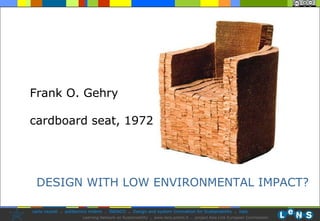
DESIGN WITH LOW ENVIRONMENTAL IMPACT? Frank O. Gehry cardboard seat, 1972
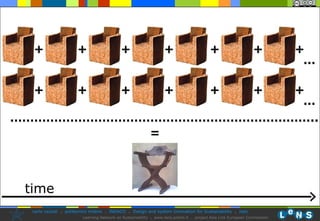
Savonarola  seat walnut-wood, so far 500 years life span MADE WITHOUT ANY CONCERN FOR THE ENVIRONMENT, BUT …
+ + + + + + + … = time + + + + + + + … ………………………………………………………………… ..
Chadwick , Stumpf  Aeron,   Herman Miller seat steeel and plastics, 12 years warranty even in use commodatum DESIGNED TODAY WITH A RIGHT  CONCERN FOR THE ENVIRONMENT
WHAT DO WE KNOW AND MEAN TODAY FOR DESIGN FOR SUSTAINABILITY?
DESIGN FOR SUSTAINABILITY: IS A DESIGN PRACTICE, EDUCATION AND RESEARCH THAT, IN ONE WAY OR AN OTHER, CONTRIBUTES TO SUSTAINABLE DEVELOPMENT
THE SUSTAINABLE DEVELOPMENT: A SOCIAL AND PRODUCTIVE DEVELOPMENT that takes place within the limits set by the “nature” and meets the needs of the present without compromising those of the future generation within a world-wide equitable distribution of resources   1987, UN “our common future”; 1992 UN conf. Rio; 2002 UN conf. Johannesburg; 2006 UE Sustainable Development Strategy
ENVIRONMENTAL: CHEMICAL AND PHYSICAL - not exceed the biosphere and geosphere “resilience ” SOCIO-ETHICAL - same resources ( satisfaction ) level for future generations  - equity in the distribution of resources ( satisfaction ) ECONOMIC (AND LEGISLATIVE) - economically practicable solutions THE SUSTAINABILITY DIMENSIONS
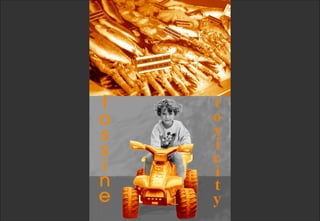
THE ENVIRONMENTAL SUSTAINABILITY [THE UNDERSTANDING OF THE ENVIRONMENTAL ISSUE] THE HARMFULNESS/IRREVERSIBILITY OF THE ENVIRONMENTAL IMPACTS/EFFECTS
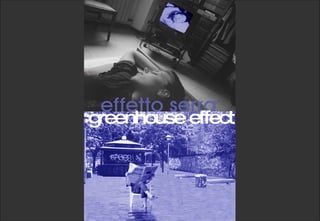
serra greenhouse effect
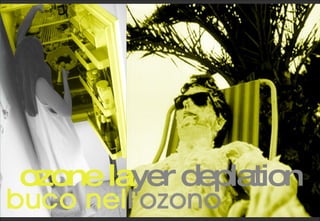
ozono ozone la yer deplation
eutrhophication
acidification
toxici ty
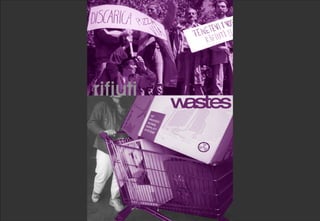
rifiuti wastes
ACTIONS  FOR ENVIRONMENTAL SUSTAINABILITY PRESERVE THE RESOURCES PREVENT THE POLLUTION
SCENARIOS  FOR ENVIRONMENTAL SUSTAINAB. BIO-COMPATIBILITY   resources  flows   compatible with the natural system  NON-INTERFERENCE   “self-financing” of the artificial system’s resource  flows  DEMATERIALIZATION   reduction of the resources  flows to satisfy a particular social demand of needs and desires
EQUITY PRINCIPLE   [UN,  Johannesburg,  2002]   “every person, in a fair distribution of resources, has a right to the same environmental space, i.e. to the same availability of global natural resources”   (or better, to the same level of “satisfaction” that can be achieved from these resources in different ways) SOCIAL EQUITY AND COHESION   [EU, SDS, 2006]  “promotion of a democratic, socially inclusive, cohesive, healthy, safe and just society with respect for fundamental rights and cultural diversity that creates equal opportunities and combats discrimination in all its forms” SOCIO-ETHICAL SUSTAINABILITY
ERADICATING POVERTY . 20% of world population uses 80% of natural resources . 1,1 billion people live on less than 1 US dollar a day . 2,7 billion people (half the world) live on less than 2 US dollar a day . 1 billion children (1 in 2 children in the world) live in poverty . 11 million children die every year before fifth birthday . 18 million people a year (1/3 of deaths) are due to poverty . 400 million have no access to safe water . 800 million people go to bed hungry every day [the world bank, 2001-2006; UNFPA, 2001-2006] THE SOCIO-ETHICAL DIMENSION: ACTIONS
[.  eradicating   poverty] . promotion of principles and rules of democracy . promotion of human rights and freedom . achievement of peace and security . access to information, training, employment . respect for cultural diversity, regional identity THE SOCIO-ETHICAL DIM. : ( OTHER)   ACTIONS
PROPER ATTRIBUTION OF THE COSTS TO RESOURCES environmental resources’ costs “internalisation” ORIENTING (MAIN) ONGOING TRANSITIONS interconnection, glocalization, information, services, etc. ENHANCING PROMISING (OF NICHE) ECONOMIC MODELS distributed economies, i.e. local-based network-structured enterprises/initiatives ECONOMIC/LEGISLATIVE SUSTAINABILITY
THE REQUIRED CHANGE TO REACH SUSTAINABILITY:  SYSTEM INNOVATIONS
IN 50 YEARS A  WORLD-WIDE EQUITABLE SYSTEMS OF PRODUCTION AND CONSU M PTION SHOULD USE   ~ 90% LESS RESOURCES  THAN THE INDUSTRIALISED CONTEXTS ARE DOING TODAY SUSTAINABILITY: THE  DIMENSION  OF CHANGE
THE  QUALITY  OF CHANGE PROMOTE (EVEN) SYSTEM INNOVATIONS RADICAL CHANGE (“DISCONTINUITY”) DIFFUSED INNOVATION PROMOTE PLAUSIBLE AND ARTICULATED (system innovations)
SYSTEM DISCONTINUITY: F ROM PROCESS AND PRODUCT INNOVATION TO SYSTEM INNOVATION
SYSTEM INNOVATIONS broader than product innovation,  not only technological, but even socio-cultural and organisational innovations from  process  and  product  innovation to  system  innovation: integrated innovation of the mix of product and services that are together able to satisfy a particular demand  [UNEP, 2002]

1.1 Sustainable Development Vezzoli 07 08 (28.10.08)

  • 1.
    carlo vezzoli politecnicodi milano . INDACO dpt. . DIS . faculty of design . Italy Learning Network on Sustainability course System Design for Sustainability subject 1. Sustainable development and design: the reference framework learning resource 1.1 Sustainable development
  • 2.
    CONTENTS . maindefinitions of sustainable development . the sustainability dimensions . environmental sustainability . socio-ethical sustainability . economic/legislative sustainability . the required change to reach sustainability: system innovations
  • 3.
    DEFINITION OF DESIGN[ICSID, 2005: OFFICIAL/AUTHORITATIVE] “ design is a creative activity whose aim is to establish the multi-faceted qualities of objects, processes, services and their SYSTEMS in whole LIFE-CYCLES ”
  • 4.
    2005-2014: UNITED NATION DECADE ON EDUCATION FOR SUSTAINABLE DEVELOPMENT+ integrate the principles, values, and practices of sustainable development into all aspects of education and learning. it should be a must even for any design university to establish courses on design for sustainability
  • 5.
    DESIGN WITH LOWENVIRONMENTAL IMPACT? Frank O. Gehry cardboard seat, 1972
  • 6.
    Savonarola seatwalnut-wood, so far 500 years life span MADE WITHOUT ANY CONCERN FOR THE ENVIRONMENT, BUT …
  • 7.
    + + ++ + + + … = time + + + + + + + … ………………………………………………………………… ..
  • 8.
    Chadwick , Stumpf Aeron, Herman Miller seat steeel and plastics, 12 years warranty even in use commodatum DESIGNED TODAY WITH A RIGHT CONCERN FOR THE ENVIRONMENT
  • 9.
    WHAT DO WEKNOW AND MEAN TODAY FOR DESIGN FOR SUSTAINABILITY?
  • 10.
    DESIGN FOR SUSTAINABILITY:IS A DESIGN PRACTICE, EDUCATION AND RESEARCH THAT, IN ONE WAY OR AN OTHER, CONTRIBUTES TO SUSTAINABLE DEVELOPMENT
  • 11.
    THE SUSTAINABLE DEVELOPMENT:A SOCIAL AND PRODUCTIVE DEVELOPMENT that takes place within the limits set by the “nature” and meets the needs of the present without compromising those of the future generation within a world-wide equitable distribution of resources 1987, UN “our common future”; 1992 UN conf. Rio; 2002 UN conf. Johannesburg; 2006 UE Sustainable Development Strategy
  • 12.
    ENVIRONMENTAL: CHEMICAL ANDPHYSICAL - not exceed the biosphere and geosphere “resilience ” SOCIO-ETHICAL - same resources ( satisfaction ) level for future generations - equity in the distribution of resources ( satisfaction ) ECONOMIC (AND LEGISLATIVE) - economically practicable solutions THE SUSTAINABILITY DIMENSIONS
  • 13.
    THE ENVIRONMENTAL SUSTAINABILITY[THE UNDERSTANDING OF THE ENVIRONMENTAL ISSUE] THE HARMFULNESS/IRREVERSIBILITY OF THE ENVIRONMENTAL IMPACTS/EFFECTS
  • 14.
  • 15.
    ozono ozone layer deplation
  • 16.
  • 17.
  • 18.
  • 19.
  • 20.
    ACTIONS FORENVIRONMENTAL SUSTAINABILITY PRESERVE THE RESOURCES PREVENT THE POLLUTION
  • 21.
    SCENARIOS FORENVIRONMENTAL SUSTAINAB. BIO-COMPATIBILITY resources flows compatible with the natural system NON-INTERFERENCE “self-financing” of the artificial system’s resource flows DEMATERIALIZATION reduction of the resources flows to satisfy a particular social demand of needs and desires
  • 22.
    EQUITY PRINCIPLE [UN, Johannesburg, 2002] “every person, in a fair distribution of resources, has a right to the same environmental space, i.e. to the same availability of global natural resources” (or better, to the same level of “satisfaction” that can be achieved from these resources in different ways) SOCIAL EQUITY AND COHESION [EU, SDS, 2006] “promotion of a democratic, socially inclusive, cohesive, healthy, safe and just society with respect for fundamental rights and cultural diversity that creates equal opportunities and combats discrimination in all its forms” SOCIO-ETHICAL SUSTAINABILITY
  • 23.
    ERADICATING POVERTY .20% of world population uses 80% of natural resources . 1,1 billion people live on less than 1 US dollar a day . 2,7 billion people (half the world) live on less than 2 US dollar a day . 1 billion children (1 in 2 children in the world) live in poverty . 11 million children die every year before fifth birthday . 18 million people a year (1/3 of deaths) are due to poverty . 400 million have no access to safe water . 800 million people go to bed hungry every day [the world bank, 2001-2006; UNFPA, 2001-2006] THE SOCIO-ETHICAL DIMENSION: ACTIONS
  • 24.
    [. eradicating poverty] . promotion of principles and rules of democracy . promotion of human rights and freedom . achievement of peace and security . access to information, training, employment . respect for cultural diversity, regional identity THE SOCIO-ETHICAL DIM. : ( OTHER) ACTIONS
  • 25.
    PROPER ATTRIBUTION OFTHE COSTS TO RESOURCES environmental resources’ costs “internalisation” ORIENTING (MAIN) ONGOING TRANSITIONS interconnection, glocalization, information, services, etc. ENHANCING PROMISING (OF NICHE) ECONOMIC MODELS distributed economies, i.e. local-based network-structured enterprises/initiatives ECONOMIC/LEGISLATIVE SUSTAINABILITY
  • 26.
    THE REQUIRED CHANGETO REACH SUSTAINABILITY: SYSTEM INNOVATIONS
  • 27.
    IN 50 YEARSA WORLD-WIDE EQUITABLE SYSTEMS OF PRODUCTION AND CONSU M PTION SHOULD USE ~ 90% LESS RESOURCES THAN THE INDUSTRIALISED CONTEXTS ARE DOING TODAY SUSTAINABILITY: THE DIMENSION OF CHANGE
  • 28.
    THE QUALITY OF CHANGE PROMOTE (EVEN) SYSTEM INNOVATIONS RADICAL CHANGE (“DISCONTINUITY”) DIFFUSED INNOVATION PROMOTE PLAUSIBLE AND ARTICULATED (system innovations)
  • 29.
    SYSTEM DISCONTINUITY: FROM PROCESS AND PRODUCT INNOVATION TO SYSTEM INNOVATION
  • 30.
    SYSTEM INNOVATIONS broaderthan product innovation, not only technological, but even socio-cultural and organisational innovations from process and product innovation to system innovation: integrated innovation of the mix of product and services that are together able to satisfy a particular demand [UNEP, 2002]