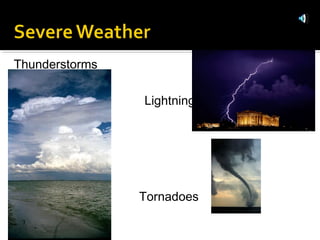
Thunderstorms
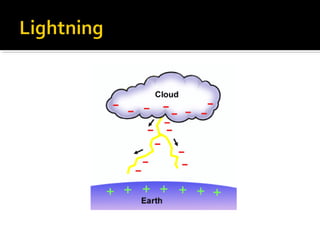
Lightning
Tornadoes
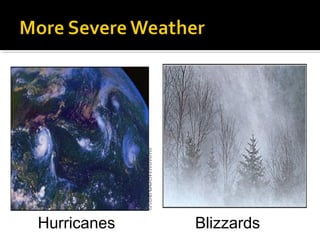
Hurricanes Blizzards
 Weather is the state of the atmosphere in a
specific place and time
 There are many components that affect the
weather
 1. Temperature-How hot or cold the air is
 2. Humidity-The amount of water that is in the
atmosphere
 3. Air Pressure-The amount of force pressing down
on earth’s surface from the gases in the atmosphere
 4. Wind-Air moving in a specific direction
 An air mass is a large body of air that has
similar properties to the part of Earth’s
surface over which it develops
 What type of air mass would develop over Africa?
 What type of air mass would develop over
Antarctica?
 A boundary between two air masses of
different moisture or temperature is a front.
 Weather that may cause property damage or
loss of life
 Types of severe weather are:
 Thunderstorms
 Tornadoes
 Hurricanes
 Blizzards
 Floods
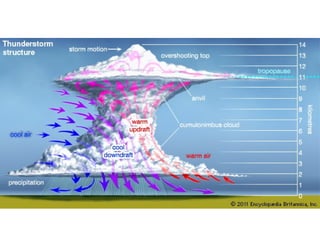
 A heavy storm that is accompanied by
rain, thunder, lightning and strong winds.
 To create a thunderstorm you need
 Moisture: cloud formation & rain
 Unstable air: relatively warm air rises
rapidly
 Lifting: from sea breezes and mountain
interaction
Thunderstorms are measured based on
their wind speeds.
 A Severe Thunderstorm Watch can be issued
by the National Weather Service station
 This type of storm has winds of at least 58 mph or
hail at least ¾ inch in diameter
 A Severe Thunderstorm Warning is issued
when a severe thunderstorm has actually
been observed
 Go inside and stay away from windows,
doors, and porches
 Stay away from trees and out of boats
 Avoid plumbing fixtures and contact with
electrical fixtures
 Stay off the phone!
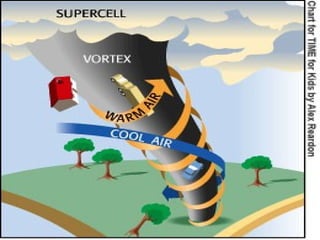
 A destructive rotating column of air with very
high winds and a funnel shaped cloud in contact
with the surface of the earth
 Tornadoes form when a thunderstorm meets
horizontal winds which cause it to rotate.
 Tornadoes can come one at a time or in clusters
 They can also vary in size, length, width,
direction of travel, and speed
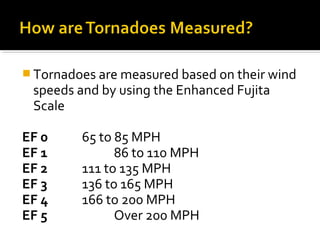
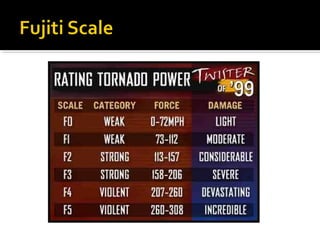
 Tornadoes are measured based on their wind
speeds and by using the Enhanced Fujita
Scale
EF 0 65 to 85 MPH
EF 1 86 to 110 MPH
EF 2 111 to 135 MPH
EF 3 136 to 165 MPH
EF 4 166 to 200 MPH
EF 5 Over 200 MPH
 Tornado Watch: weather conditions are
likely for tornadoes to form in our area
 Tornado Warning: A tornado has been
sighted in our area
 Tornadoes can occur in any state and any time of
year
 They typically occur from March to August
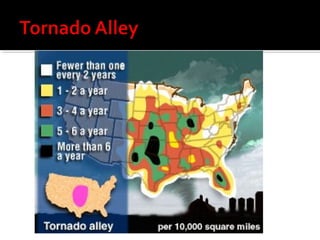
 The most common tornadoes are in “Tornado
Alley”
 “Tornado Alley” - Arkansas, Iowa, Kansas,
Louisiana, Minnesota, North Dakota, Ohio,
Oklahoma, South Dakota, and Texas
 Seek shelter immediately when a tornado
warning is issued
 Underground shelter is best
 If not available, find an inside room, hallway, or
closet on the lowest floor and away from windows
 Listen to the radio or watch TV for updates
on the storm
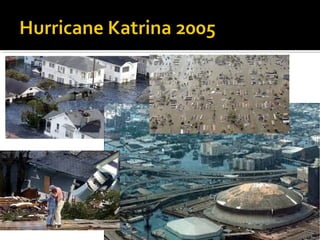
 A severe storm that develops over tropical
oceans and whose winds are stronger that 120
km/hr that spiral in to an intense low pressure
center
 Hurricanes begin when warm moist air over the
ocean rises rapidly
 When moisture in this rising air condenses a
large amount of heat is released
 The released heat increases the force of the
rising air
 They form when they gather heat and energy
through contact with warm ocean waters
 Water evaporates from the water and the
moisture produces a storm
 They can also form when a wind pattern
occurs near the surface of the ocean and
spirals inward
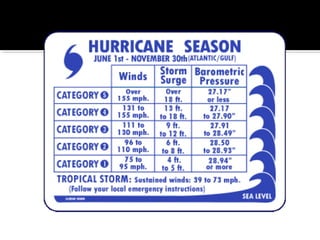
 Measured using the Safir-Simpson Scale
 3 factors are considered
 Wind Speed
 Central Pressure
 Storm Surge
 Hurricanes can occur during any time of the
year
 Hurricane season is from June 1st
to
November 30th
 They can form in the Atlantic Ocean,
Caribbean Sea, Gulf of Mexico, and in the
eastern Pacific Ocean
 Know if the location you are in is a safe zone
or whether evacuation may be needed
 Protect windows and glass with plywood
 Turn off utilities
 Have a supply kit including first aid, water,
canned goods, battery powered radio,
blankets, etc.
 After evacuation, do not return until it has
been declared safe
 A Hurricane Watch occurs when a hurricane is
possible within 36 hours
 The storm is being tracked to predict where it may
hit
 A Hurricane Warning is issued when it the
storm is expected to hit within 24 hours
 Evacuation may be needed
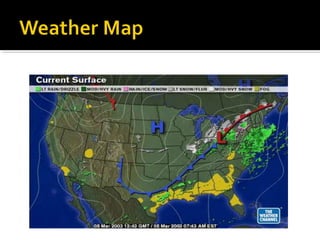
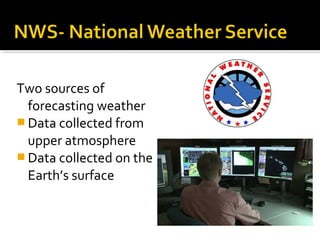
Two sources of
forecasting weather
 Data collected from
upper atmosphere
 Data collected on the
Earth’s surface

10-pptnotes-severeweather-160606191540.pdf

  • 2.
  • 3.
  • 4.
     Weather isthe state of the atmosphere in a specific place and time  There are many components that affect the weather  1. Temperature-How hot or cold the air is  2. Humidity-The amount of water that is in the atmosphere  3. Air Pressure-The amount of force pressing down on earth’s surface from the gases in the atmosphere  4. Wind-Air moving in a specific direction
  • 5.
     An airmass is a large body of air that has similar properties to the part of Earth’s surface over which it develops  What type of air mass would develop over Africa?  What type of air mass would develop over Antarctica?  A boundary between two air masses of different moisture or temperature is a front.
  • 6.
     Weather thatmay cause property damage or loss of life  Types of severe weather are:  Thunderstorms  Tornadoes  Hurricanes  Blizzards  Floods
  • 7.
     A heavystorm that is accompanied by rain, thunder, lightning and strong winds.  To create a thunderstorm you need  Moisture: cloud formation & rain  Unstable air: relatively warm air rises rapidly  Lifting: from sea breezes and mountain interaction Thunderstorms are measured based on their wind speeds.
  • 8.
     A SevereThunderstorm Watch can be issued by the National Weather Service station  This type of storm has winds of at least 58 mph or hail at least ¾ inch in diameter  A Severe Thunderstorm Warning is issued when a severe thunderstorm has actually been observed
  • 11.
     Go insideand stay away from windows, doors, and porches  Stay away from trees and out of boats  Avoid plumbing fixtures and contact with electrical fixtures  Stay off the phone!
  • 13.
     A destructiverotating column of air with very high winds and a funnel shaped cloud in contact with the surface of the earth  Tornadoes form when a thunderstorm meets horizontal winds which cause it to rotate.  Tornadoes can come one at a time or in clusters  They can also vary in size, length, width, direction of travel, and speed
  • 14.
     Tornadoes aremeasured based on their wind speeds and by using the Enhanced Fujita Scale EF 0 65 to 85 MPH EF 1 86 to 110 MPH EF 2 111 to 135 MPH EF 3 136 to 165 MPH EF 4 166 to 200 MPH EF 5 Over 200 MPH
  • 18.
     Tornado Watch:weather conditions are likely for tornadoes to form in our area  Tornado Warning: A tornado has been sighted in our area
  • 20.
     Tornadoes canoccur in any state and any time of year  They typically occur from March to August  The most common tornadoes are in “Tornado Alley”  “Tornado Alley” - Arkansas, Iowa, Kansas, Louisiana, Minnesota, North Dakota, Ohio, Oklahoma, South Dakota, and Texas
  • 21.
     Seek shelterimmediately when a tornado warning is issued  Underground shelter is best  If not available, find an inside room, hallway, or closet on the lowest floor and away from windows  Listen to the radio or watch TV for updates on the storm
  • 23.
     A severestorm that develops over tropical oceans and whose winds are stronger that 120 km/hr that spiral in to an intense low pressure center  Hurricanes begin when warm moist air over the ocean rises rapidly  When moisture in this rising air condenses a large amount of heat is released  The released heat increases the force of the rising air
  • 24.
     They formwhen they gather heat and energy through contact with warm ocean waters  Water evaporates from the water and the moisture produces a storm  They can also form when a wind pattern occurs near the surface of the ocean and spirals inward
  • 25.
     Measured usingthe Safir-Simpson Scale  3 factors are considered  Wind Speed  Central Pressure  Storm Surge
  • 26.
     Hurricanes canoccur during any time of the year  Hurricane season is from June 1st to November 30th  They can form in the Atlantic Ocean, Caribbean Sea, Gulf of Mexico, and in the eastern Pacific Ocean
  • 30.
     Know ifthe location you are in is a safe zone or whether evacuation may be needed  Protect windows and glass with plywood  Turn off utilities  Have a supply kit including first aid, water, canned goods, battery powered radio, blankets, etc.  After evacuation, do not return until it has been declared safe
  • 31.
     A HurricaneWatch occurs when a hurricane is possible within 36 hours  The storm is being tracked to predict where it may hit  A Hurricane Warning is issued when it the storm is expected to hit within 24 hours  Evacuation may be needed
  • 32.
    Two sources of forecastingweather  Data collected from upper atmosphere  Data collected on the Earth’s surface