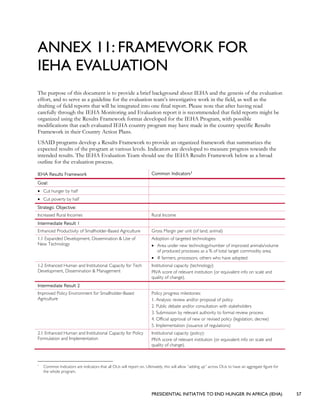
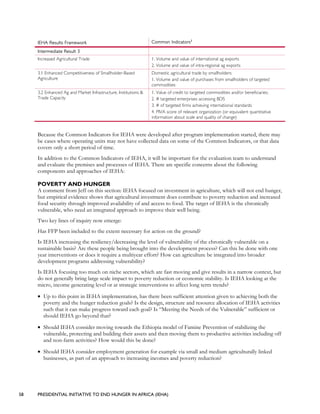
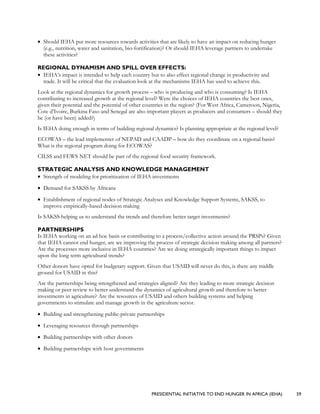
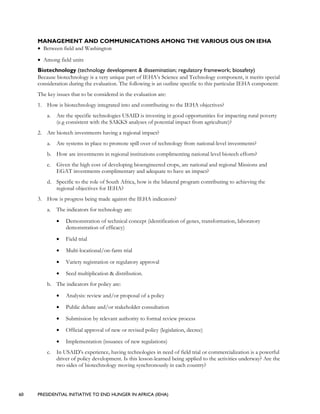
PRESIDENTIAL INITIATIVE
TO END HUNGER IN
AFRICA (IEHA)
EVALUATION REPORT –VOLUME 1I
ANNEXES 1 TO 6
November 2006
This publication was produced for review by the United States Agency for International Development. It was prepared by
LTL Strategies.
PRESIDENTIAL INITIATIVE
TO END HUNGER IN
AFRICA (IEHA)
EVALUATION REPORT –VOLUME 1I
ANNEXES 1 TO 6
LTL Strategies
4222 46th Street, NW
Washington, D.C. 20016
202-362-6800 Fax 202-237-6590
www.ltlstrategies.com
DISCLAIMER
The author’s views expressed in this publication do not necessarily reflect the views of the United States Agency for
International Development or the United States Government.
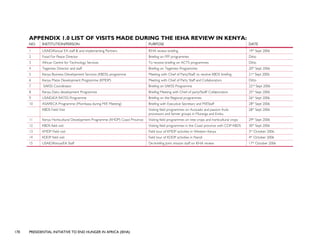
PRESIDENTIAL INITIATIVE TO END HUNGER IN AFRICA (IEHA) i
CONTENTS
Annex 1: Evaluation Report on Mali, Ghana, and West Africa Regional
Program................................................................................................................... 1
Annex 2: Evaluation Report on Mozambique and Southern Africa Regional
IEHA Programs..................................................................................................... 36
Annex 3: Report on Kenya, East and Southern Africa Regional IEHA
Programs ............................................................................................................... 97
Annex 4: Evaluation Report on IEHA Biotechnology Programs...................172
Annex 5: Report on IFPRI and Abt Associates IEHA Activities....................179
Annex 6: EGAT Programs in Africa.................................................................183
PRESIDENTIAL INITIATIVE TO END HUNGER IN AFRICA (IEHA) 1
ANNEX 1: EVALUATION REPORT
ON MALI, GHANA,AND WEST
AFRICA REGIONAL PROGRAM
EXECUTIVE SUMMARY
This report presents the findings of the West Africa portion of the Mid Term Review (MTR) of the
President’s Initiative to End Hunger in Africa (IEHA) implemented by the United States Agency for
International Development (USAID.) The West Africa review covers the bilateral programs in Mali and
Ghana and in the regional USAID/West Africa mission. The evaluation team began in Ghana and visited
USAID partners and projects over a two-week period from September 4 to September 17, 2006. In Mali, the
evaluation took place from September 25 through October 6, including seven days of field work outside of
the capital, Bamako.
SUMMARY OF MAIN FINDINGS
The goals and objectives of IEHA are being met in both countries to varying degrees in the following ways:
• In Mali, the three SO9 projects are contributing to increased food availability and to improved financial
access to food for their target beneficiaries, with spillover effects throughout the value chains affected,
while PROMISAM is working with communities to identify problems impeding better food security; and
• In Ghana, the TIPCEE project’s promotion of high value horticultural products for export, has increased
employment in the large commercial farms and created opportunities for smallholders to market their
produce with the larger exporters, which has increased revenues; through support to Title II partners
carrying out community level agricultural production activities, nutrition education and sanitation
measures.
The IEHA program is working with poor and vulnerable populations across both country programs, but
these are not necessarily the most vulnerable members of the community. IEHA-funded activities are
contributing to poverty reduction, but much more needs to be done in terms of reaching the chronically
vulnerable.
In Mali, the progress being made under IEHA toward reducing hunger and increasing resiliency among the
rural population will soon end, mainly due to the unexpected decrease in funds available to the SO6. While
this presents an opportunity for the mission to re-center activities and to plan for the design of a newer and
perhaps more streamlined project approach, the early termination of the current three contracts will mean
that overall impact will also be less extensive than previously anticipated by the project teams and
participants.
In Ghana, The TIPCEE project is very impressive. It has made great strides in just 20 months of
implementation and is poised to address the food crop production in the three northern regions of Ghana,
where vulnerability to food insecurity is highest.
SUMMARY OF RECOMMENDATIONS
In Mali:
• Consolidate project achievements and focus on sustainability.
2 PRESIDENTIAL INITIATIVE TO END HUNGER IN AFRICA (IEHA)
• Encourage the use of newly developed skills to diversify and improve economic activities within groups
and for individuals.
• Facilitate greater collaboration between producer groups and consumer groups.
• Insist on good manufacturing practices for any type of processing or value added activity.
• Increase monitoring missions by Bamako-based staff - USAID and contractors.
• Improve targeting of vulnerable populations in the next phase (FY 2008 +).
In Ghana:
• Explore expanding work with Technoserve.
• Seek collaboration with the West Africa Mission for regional maize market information and analysis of
market trends.
• Collaborate with WFP on corn soy blend manufacturing.
• Without the passing of the appropriate legislation, consider stopping support to the Project for Bio-Safety.
• Disseminate the information from the extensive research carried out by the ISSER and the University of
Ghana which is now completed.
• SAKSS should simplify the presentation and improve the dissemination of their research findings.
For the West Africa mission:
• Reduce and restructure activities to achieve greater impact.
• Continue to support regional institutions and work to improve donor coordination, especially for great
food security across the region.
• Support regional institutions in policy development.
• Monitor and provide regional market trend information to the bilateral missions.
For USAID Washington:
• Maintain, or if possible, increase funding levels.
• Simplify and harmonize indicators for IEHA and the projects. The timing of reports also needs better
coordination with the timing of other reporting requirements.
1. INTRODUCTION
This report presents the findings of the West Africa portion of the Mid Term Review (MTR) of the
President’s Initiative to End Hunger in Africa (IEHA) implemented by the United States Agency for
International Development (USAID.) The West Africa review covers the bilateral programs in Mali and
Ghana and in the regional USAID/West Africa mission. The evaluation team began in Ghana and visited
USAID, partners and projects over a two-week period from September 4 to September 17, 2006. In Mali, the
evaluation took place from September 25 through October 6, including seven days of field work outside of
the capital, Bamako.1
The MTR team worked closely with USAID in selecting partners and projects to visit and the team was
accompanied in each country by either contractor project staff or Strategic Objective (SO) team members,
1
Susan Gannon and Cheick Koité conducted this evaluation for LTL Strategies, Washington, DC.
PRESIDENTIAL INITIATIVE TO END HUNGER IN AFRICA (IEHA) 3
with a few exceptions. This participatory approach provided the opportunity for bothcontractor and USAID
staff to visit project sites together and to clarify questions by either the MTR team or project participants.
In Mali, the team visited project sites in the regions of Sikasso, Mopti and Koulikoro, while in Ghana the
team visited the Volta, Eastern and Greater Accra Regions. In the field, the MTR team visited farmers’ fields
and held focus group discussions on the IEHA interventions, with a view to improving ongoing activities and
to achieving even greater impact. The team also met with government officials to hear their points of view on
the program and ask for recommendations.
While the field visits and meetings were generally well organized by the USAID missions, the MTR team
nonetheless faced constraints in carrying out the review. For example, the timing of the review in September
meant that some USAID staff in the Ghana and the West Africa missions were in transition, either just
arriving at their posts or on their way elsewhere, which meant that they did not have the requisite time or
knowledge to contribute to the review. Furthermore, none of the missions had received the evaluation
framework, which served as the basis for the lines of inquiry the MTR team pursued. The result was slight
confusion on the part of these missions as to why the team was asking certain questions, and a lack of
preparation on their part for the type of information the team was seeking.
IEHA IN WEST AFRICA
GOALS, OBJECTIVES AND FUNDING
MALI
Mali was selected as one of the first priority countries for IEHA funding in FY 2003, along with Mozambique
and Uganda. The Mali mission’s Strategic Objective 9 provided a very close fit for the IEHA funding due to
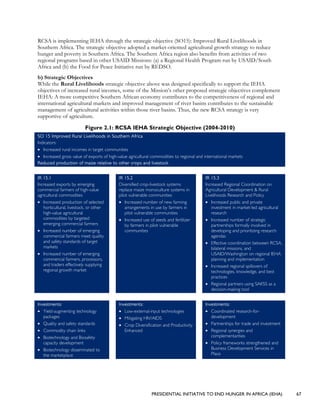
the complementarities of objectives. The strategic objective of SO 9 is to increase productivity and incomes in selected
agricultural subsectors and it focuses on three intermediate results (IRs):
• IR1: increased sustainable production of selected agricultural products in targeted areas
• IR2: increased trade of selected agricultural products
• IR3: increased access to finance
While the goals and objectives of IEHA and SO 9 are well matched, the strategy to achieve those objectives
was not always consistent. For example, SO 9 was designed to increase economic growth through a focus on
the export of relatively high value crops, such as potatoes, rice, red meat (this was eventually dropped),
cashews and mangoes. The assumption was that focusing on a few selected crops for export will drive
agricultural growth and raise revenues of rural populations. While this is positive and contributes to the
IEHA objectives, this strategy did not seek to reach the most vulnerable members of the community, but
rather those who had sufficient resources to invest in new varieties of crops or who had access to irrigation.
This highlights a fundamental disconnect between what the Mali mission considered appropriate for IEHA
funding and which was always approved by Washington, and the current focus of IEHA, which emphasizes
resolving the needs of the chronically vulnerable, who are not necessarily the direct or even indirect
beneficiaries of the SO 9 interventions.
IEHA funded activities were originally allocated $3.5 million in FY 2003 and the mission was told it could
plan on a funding level of $6.5 million for FY 2004 – 2007.2
However, the funding levels never reached the
amount envisioned and hovered at close to $5 million for FY 04, 05 and 06. In FY 07, the funding was cut by
more than half, to $2.3 million and this amount is also projected for FY 08. Other funding available for SO 9
activities has also been reduced. For example, for FY 04, 05 and 06, the total funding available to SO9 was
2
United States Agency for International Development Mali Mission, Initiative to End Hunger in Africa, Action Plan (FY 03-FY08), April 27, 2003
and email communication between Jeff Hill and Dennis McCarthy, April 2, 2003.
4 PRESIDENTIAL INITIATIVE TO END HUNGER IN AFRICA (IEHA)
$14 million, $12 million and $7 million, respectively, with IEHA contributing 35%, 41% and 70%,
respectively. The total SO 9 budget figure for FY 07 was not available at the time of this evaluation to
estimate the percentage designated as IEHA.
GHANA
Ghana became an IEHA country in 2004 with funding channeled through the Economic Growth Strategic
Objective (SO6), with full operations beginning in FY 2005. Similar to the case of Mali, IEHA funding came
to Ghana well after SO 6 was designed in 2003 to focus on increasing trade and investment to drive
economic growth. Here, the SO had to be redesigned to accommodate the IEHA objectives, which was a
time consuming exercise for the SO 6 team. However, the team was successful in their efforts to fit IEHA
into SO 6, as reflected in the USAID/Ghana Strategy Statement:
“IEHA funding expands USAID/Ghana’s ability to enhance export competitiveness in the agricultural
sector by:
(a) helping farmers and exporters understand and adopt international standards for fresh and processed
commodities;
(b) integrating smallholder farmers into export supply chains;
(c) promoting the adoption of biotechnology innovations within the context of sound biosafety
regulations;
(d) broadening access to finance; and,
(e) improving the enabling environment for trade and investment.”
Currently, SO 6 has a budget of US$7.3 million per year, with just over half of that funding designated as
IEHA and these funding levels have been steady over the past three years. Of the 13 activities in the SO6
portfolio, five are funded by IEHA.
WEST AFRICA
The West Africa Program, previously known as the West Africa Regional Program (WARP), was designed to
support regional initiatives that contribute to an alignment of priorities across countries. West Africa revised
its strategic framework in early 2004 to reflect an increased focus on agriculture. IEHA activities are
implemented under two strategic objectives: (1) food security/natural resource management (SO-6), Food
Security and ENV/NRM Policies and Programs Strengthened and Implemented in West Africa, and (2) economic
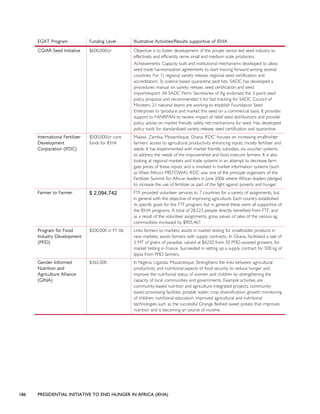
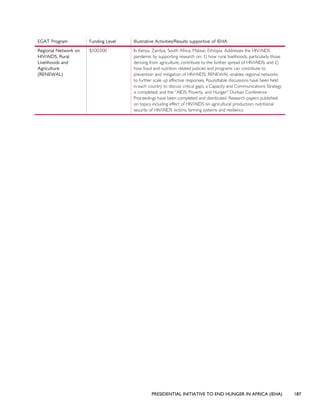
integration (SO-4), Regional Economic Integration Strengthened, under which markets and trade fall.
In September 2005, USAID/WA committed to align with and support the implementation of the African
Union New Partnership for Africa’s Development (AU/NEPAD) Comprehensive African Agricultural
Development Programme (CAADP), whose objective is to achieve a 6 percent annual growth rate in
agriculture, and sustain this over time.3
To support ECOWAS in this endeavor, the West Africa mission has
placed agriculture and trade advisors in ECOWAS.
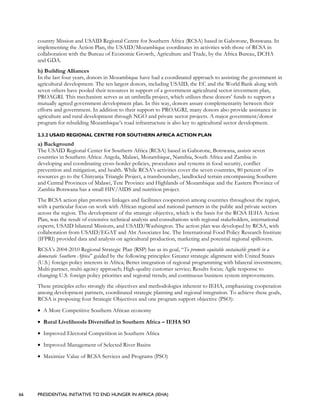
THE IEHA ACTION PLANS
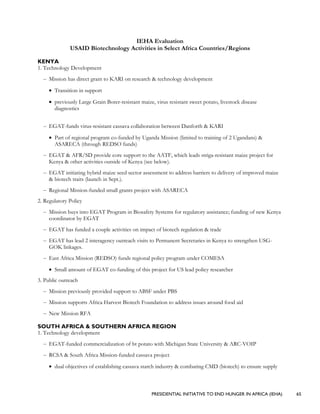
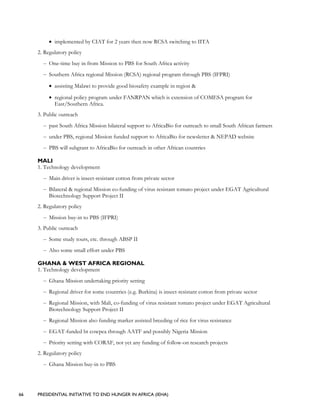
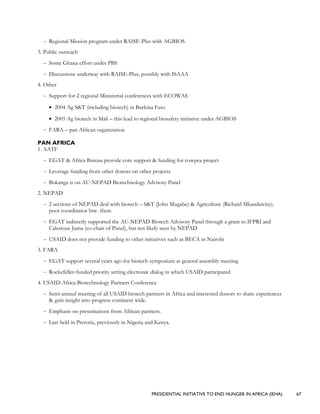
MALI
The Mali IEHA Action Plan was designed to contribute to the IEHA objectives by both increasing food
availability through increased production capability and increasing agricultural incomes for greater financial
access to food for rural households.
3
DRAFT MEMORANDUM To: Regional Missions and Washington Operating Units Working on IEHA, From: Jeff Hill, IEHA Manager, Subject:
Alignment of IEHA and CAADP Regional Programs and Processes, February 2006.
PRESIDENTIAL INITIATIVE TO END HUNGER IN AFRICA (IEHA) 5
According to the Action Plan prepared by the Mali mission in April, 20034
:
The Action Plan focuses on the six core themes of IEHA:
• Advancing scientific and technological applications and support services that harness the power of new
technology (e.g., information technology and biotechnology) and global markets to raise agricultural
productivity, create agriculture-based enterprises and support sustainable land use management.
• Improving the efficiency of, and participation in, agricultural trade and market systems for major African
products in local, subregional and international markets and the integration of African countries into global
markets for agricultural goods and services.
• Promoting and strengthening community-based producer organizations to help link business and farmers
to create new opportunities that add value, raise incomes, deliver services and increase the participation of
the rural majority in decision making processes.
• Building the human and institutional capacity to shape and lead the policy and research, as well as provide
agricultural education.
• Integrating vulnerable groups and countries in transition into sustainable development processes.
• Strengthening environmental management to: a) conserve and foster the production of environmental
goods and services that contribute to economic growth; and b) make agricultural production and water
management environmentally sustainable.
The first two core areas described above will receive the most emphasis for several reasons: first, because of
their intrinsic importance as drivers of agricultural growth, second, because they have been designated as key
areas under the President’s Initiative to End Hunger in Africa, and third, because some of the initial funding
for IEHA comes from earmarked or otherwise restricted sources that relate to those two areas.
The choice of these two areas was based on the work of the USAID funded Agricultural sector assessment
completed in March 2002, which recommended targeted interventions in:
• irrigation
• improved multiplication, dissemination and demonstration of seed
• cost-sharing and/or equity funds to promote investment in the agricultural sector
• animal feeding
• policy analysis to achieve Malian and USAID objectives.
More tentatively, it recommended interventions in:
• rice and cotton
• horticultural crops
• oilseeds
This study also informed the choice of IEHA pillars to select for specific intervention, which resulted in the
mission choosing three of the six IEHA core themes under which to start activities:
• Science and Technology;
4
United States Agency for International Development Mali Mission, Initiative to End Hunger in Africa, Action Plan (FY 03-FY08), April 27, 2003.
6 PRESIDENTIAL INITIATIVE TO END HUNGER IN AFRICA (IEHA)
• Agricultural Trade and Market Systems; and,
• Promoting and Strengthening Community-Based Producer Organizations.
GHANA
Similar to Mali, the Ghana mission concluded that SO 6, which seeks to alleviate poverty and increase
household incomes through private sector growth and macro-level economic reform, would be the primary
vehicle for implementing the IEHA Action Plan. The introduction of IEHA resources would then allow the
SO 6 to intensify its efforts to integrate rural issues into its policy and institutional strengthening agenda for
the enabling environment, to integrate the small farmer into the supply chain for exports and agro-processing,
and to expand its emphasis on business service delivery in rural areas. Although IEHA was imposed on SO6,
they did their best to alter their program and design a compatible set of activities.
The IEHA Action Plan was designed to support the government’s efforts to reduce poverty and cut hunger
through economic and trade liberalization. The Action Plan was developed by USAID/Ghana, with
collaboration from USAID/EGAT and Abt Associates Inc. The International Food Policy Research Institute
(IFPRI) provided data and analysis on agricultural production, marketing and potential regional spillovers.
WEST AFRICA
The West Africa Action Plan is based on the principle that IEHA regional investments must:
• emerge from a rigorous analysis of investment opportunities across West Africa that considers the entire
value-added chain, leading from production to storage to transformation, to marketing and trade;
• have a significant and sustainable impact on smallholder incomes; and
• create a regional platform for growth that builds linkages between other USG, USAID, donor, regional,
and national efforts.
The West Africa mission developed their activities according to the six themes of IEHA as follows:
• Advancing Science and Technology: In West Africa, research networks implemented by National
Agricultural Research Services (NARS) but coordinated by subregional organizations and international
agricultural research centers have developed improved, high-yielding varieties of crops and constitute a
source for the dissemination of technologies. Biotechnology holds enormous long-term potential to
address impediments to increased agricultural productivity by addressing product quality problems created
by pests, diseases, and drought, product shelf-life, nutrient deficiency, phosphorus and micronutrient
deficiency, and salinity. USAID will therefore look for innovative ways of collaborating with these and new
partners.
• Developing Efficient Agricultural and Trade Market Systems: Markets and trade contribute to
agricultural growth in West Africa by raising farmers’ competitiveness in domestic and export markets,
connecting them to consumers, and integrating them into global markets through the delivery of high-
quality and safe products. The West Africa mission will continue to work with and strengthen the
Economic Community of West African States (ECOWAS) and other relevant institutions by helping
remove current impediments to the unhindered movement of goods and services in the region.
• Strengthening Community-based Producer Organizations: These organizations contribute to
agricultural growth in two ways: first, by providing a range of business, training, and leadership
development services to their members and second, by lobbying decision-makers, traders, and business
enterprises on important policy and economic interests affecting farmers. The West Africa Mission will
work with relevant organizations including the West African Businesswomen’s Network (WABNET) and
the Reseau des Organisations Paysannes et de Producteurs de l’Afrique de l’Ouest (ROPPA), and other
farmer and trader organizations in strengthening their effectiveness.
PRESIDENTIAL INITIATIVE TO END HUNGER IN AFRICA (IEHA) 7
• Human and Institutional Capacity Building: Although many West African countries have made
significant policy reforms, there needs to be corresponding upgrading in the level of competence in human
capacity and institutional reforms commensurate with liberalized market economies.
• Sustainable Environmental Management: Small-scale farmers in West Africa have to grapple with both
a fragile agro-ecology as well as with increased population and encroachment of urban areas onto arable
lands that are forcing them to grow crops on steep slopes and highly degraded soils. These are policy and
research and development challenges that will require USAID/WA and its partners to (1) strengthen
regulatory controls, (2) undertake participatory farmer training for integrated pest management, and (3)
build capacity for monitoring environmental and health impacts by the relevant regional and international
institutions.
• Ensuring that Vulnerable Groups and Countries in Transition are Inclusive: Because substantial
amounts of resources are used in responding to crises, the opportunities for making longer-term
improvements are often greatly diminished or lost. The result is significant economic and social costs in the
long run. USAID/WA plans to work with the Food for Peace unit and its Bureau of Economic Growth,
Agriculture, and Trade and relevant implementing institutions to ensure that, as disasters and conflicts are
brought under control, activities to promote peace, generate income, and minimize vulnerability are
initiated to ensure a smooth transition from relief to development.
IEHA’S PROGRESS TO DATE
SYNOPSIS OF IEHA ACTIVITIES
MALI
In order to achieve the three IRs described above, the Mali mission designed three main intervention areas,
agricultural production, trade and finance, and developed Requests for Proposals to solicit the most
appropriate responses. Based on lessons learned through the implementation of previous projects, the
mission decided against one integrated project and believed that greater impact could be made through three
distinct projects. Today, the Mali portfolio consists of three main projects that were designed to complement
each other, with contractors requested to work closely together in the field. There is a fourth project that
focuses on food security planning, while the theme of biotechnology is addressed through various
interventions.
The three main projects were designed to be implemented for a three-year period with two optional years to
be funded based on performance and availability of funding. In FY 2006, the third year of the projects, the
Mali mission’s IEHA funding was cut by more than half, and they were forced to reduce funding to the
projects and to end the contracts at the end of FY 2007.
The three projects are:
Mali Finance (FY 2003– FY 2007) - a three-year activity, with two option years, implemented by
Chemonics International, in partnership with the Malian private sector and various government
ministries and departments.
Mali Finance’s objective is to increase the access of agricultural producers, processors, traders, and input
suppliers to financial services. The project works along the commodity value chain in conjunction with
TradeMali and PRODEPAM, to strengthen the financial services sector working to achieve three sub-
intermediate results (IRs):
• Increased provision of business development services (IR 3.1)
• Increased investment opportunities (IR 3.2)
• Increased access to financial services for all populations (IR 3.3)
8 PRESIDENTIAL INITIATIVE TO END HUNGER IN AFRICA (IEHA)
Mali Finance technical components design and carry out activities to improve access to finance for SMEs by
providing business development services, creating better conditions for investments through policy and legal
reforms, and supporting the availability of microfinance services to entrepreneurs throughout the country.
Mali Finance trains entrepreneurs, credit agents and bankers in opportunity analysis, portfolio development
and management. They also provide extensive support to groups and individuals in business plan
development which then facilitates the access of those groups to formal credit through agencies such as Kafo
Jiginew or Nyesigiso.
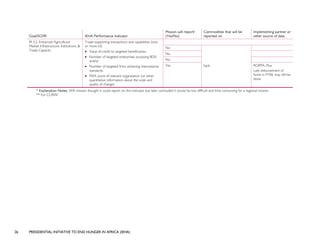
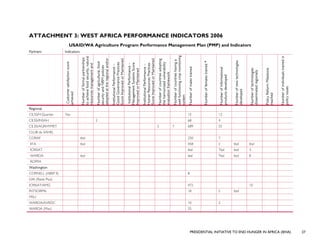
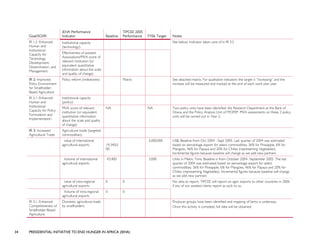
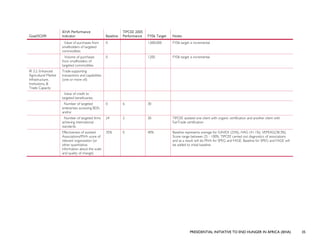
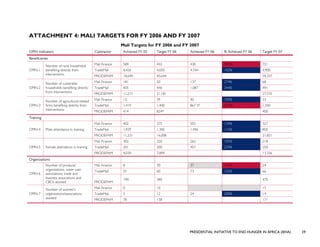
Annex 4 presents a summary of Mali Finance’s results to date and shows how the project is exceeding many
targets.
TradeMali (FY 2003–FY 2007) - a three-year activity, with two option years, implemented by
Chemonics
The objectives of TradeMali are to:
• Support the commercial, institutional and political enabling trade environment;
• Identify new market opportunities; and
• Strengthen competitiveness of agro-entrepreneurs.
The main activities consist of developing a market information system for the promotion of agricultural
products and increasing opportunities for agro-entrepreneurs to market produce and products. TradeMali
also strives to help producers stagger their marketing in order to take advantage of higher prices later in the
post harvest period. They are seeking to formalize marketing norms and standards (quality, handling,
packaging, etc.) and strengthen partnerships for marketed products.
TradeMali has been very successful in the marketing of potatoes, which increased from 2,072 tons for the
2004-2005 season to 3,841 for 2005-2006.
The Programme de développement de la production agricole au Mali (PRODEPAM) late FY 2004 – FY
2007 - a three-year activity, with two option years, implemented by CLUSA.
PRODEPAM’s overall objective is to increase producers’ revenue and contribute to a viable economic
growth in an environmentally healthy way. More specifically, PRODEPAM aims to:
• Increase production and net income in the selected value chains (rice, horticulture and livestock) in order
to give Mali a comparative advantage in domestic and external markets;
• Create opportunities for private investment in the agricultural sector that responds to the producers’ needs;
• Facilitate access to land through the development and/or rehabilitation of agricultural infrastructure; and,
• Improve community natural resource management and reinforce the adoption of “best practices.”
PRODEPAM got off to a relatively late start, compared to both Mali Finance and Trade Mali, which
contributed to delays in working with those projects. Now, however, the collaboration is very good, and
PRODEPAM-assisted groups are often helped with marketing through Trade Mali and access to credit
through Mali Finance.
PRODEPAM is undertaking irrigation rehabilitation activities in the regions of Sikasso, Mopti Gao and
Tombouctou, benefiting 13 sites across the four regions. The MTR team visited sites in both Sikasso and
Mopti, which were very much appreciated by the project participants and were clearly contributing to better
yields through better water management. The project has also developed a formula for a rent/purchase
scheme to help rice producers acquire motorized pumps with the payments going into a fund to help other
groups obtain pumps. To date, 15 groups have participated in this scheme.
PRESIDENTIAL INITIATIVE TO END HUNGER IN AFRICA (IEHA) 9
In addition, PRODEPAM has introduced four new rice varieties through on-farm trials and seven new
potato varieties. The project has also worked with farmers to develop trials of various soil enhancement
techniques in the irrigated perimeters and these activities have been very successful. PRODEPAM also works
in the mango sector. In the North, they are working with water management and fertilizer use for the
cumin/anis value chain and are also working to improve camel cheese marketing.
The community NRM component consists of a participatory planning and management process aimed at
better run-off water control through upland rock contour bunds and reforestation with local species. By
September 2006, some 20 NRM plans had been developed and 27 NRM conventions have been facilitated.
PROMISAM: the project to mobilize food security initiatives in Mali is implemented by Michigan
State University.
In 2002, the Government of Mali declared food security a priority and established a delegated minister to
focus on this issue. Eventually, the government decided to create the Food Security Commission in the
Office of the President , and they requested technical assistance from USAID. In 2004, USAID brought in
Michigan State University to work with the commission and to establish PROMISAM. The goal is to help
support Mali in the implementation of its national food security strategy through collaboration with the. They
have conducted food security training to government and representatives of community groups on the causes
and consequences of food security in two pilot regions – Sikasso and Tombuctou – and developed food
security action plans at the commune, cercle and regional levels throughout those regions. In addition, they
have held training sessions in the remaining regions and are working on developing plans. Ideally, these plans
will consist of actions that contribute to increasing food security at the local level, without the need for
external resources, except for large infrastructure works.
Biotechnology
Biotechnology occupies a very important place in the Mali portfolio with activities under the PRODEPAM
project and also through direct support to the Ministry of Agriculture’s Institute of Rural Economy, or the
National Agricultural Research Institute of Mali (IER). This is discussed below, under section 3.3.
Biotechnology.
GHANA
The SO6 portfolio contains 13 activities and two Washington, DC based activities that are managed by the
SO6 team. SO6 has an annual budget of US $7.3 million, with just over half of that money coming through
IEHA as follows:
• Trade and Investment Program for a Competitive Export Economy (TIPCEE), a five-year US$30 million
project implemented by Chemonics (50% IEHA funding, and 70% of the SO 6 budget);
• Ghana Strategic Support Program (GSSP), a five-year US$3.9 million project implemented by IFPRI;
• Program for Biosafety Systems (PBS) a three-year US$750,000, led by IFPRI;
• Land Policy Sector Reform in Ghana, a US$750,466 three-year project implemented by the Institute for
SSER; and
• USAID Initiative for Long-Term Training and Capacity Building, with funding from the EGAT Office of
Agriculture.
Approximately 70 percent of the SO6 budget is allocated to TIPCEE, which began in January, 2005. This
project aims to achieve exponential growth in sales of nontraditional exports over the five-year life of the
project by increasing competitiveness of Ghana’s private sector in world markets. The project carries out
activities through two main components: Export Business Development (EBD), which works with three
categories of participants – smallholder farmers, nucleus firms and industry-wide initiatives; and the Enabling
Environment (EE) component which works with the government and private sector trade associations, and
endeavors to improve the policy environment for trade, finance and agricultural growth. TIPCEE supports
10 PRESIDENTIAL INITIATIVE TO END HUNGER IN AFRICA (IEHA)
the government’s priorities as developed in the Trade Sector Support Program, the Financial Sector Strategic
Plan and the Private Sector Development Strategy.
According to the USAID Ghana Annual Report for 2005, results on nontraditional exports (NTEs) are
estimated to have increased by 45 percent in 2005, and nontraditional agricultural exports (NTAEs) were up
23 percent as compared to the 2003 base year. Ghana has fared well on the two World Economic Forum
indices for Growth Competitiveness and Macroeconomic Policy. These illustrate progress in implementing
significant improvements to Ghana’s business climate, some reforms of which, especially in macroeconomic
and financial sector arenas, are partially due to USAID/Ghana policy reform programs.
The number of Ghanian horticultural exporters meeting EurepGAP and other destination country import
standards increased by 9 percent during 2005, while the number of dues-paying members of business
associations and smallholders assisted by USAID increased by 20 percent. All FY 2005 performance targets
were met except for NTAEs and the number of firms meeting standards for export. In collaboration with
this sector, the PL-480 Title II program supported nearly 16,000 rural producers to increase production and
reduce post harvest losses of some major agricultural produce, and also enhance the productivity and
marketing linkages of fruit tree crops such as mangoes and citrus for the export market. Annual yields of
these major crops increased by 100 percent in targeted communities.
In FY 2005, the first year of implementation, the TIPCEE project contributed to the IEHA objectives as
follows:
• integrating 1,785 smallholder farmers into export supply chains;
• providing technical assistance to 47 exporting firms to understand and adopt international standards for
fresh and processed commodities and helping two additional firms to meet requirements for EurepGAP
certification;
• promoting the adoption of biotechnology innovations within the context of sound safety regulations; and
• improving the enabling environment for trade and investment through support for a firm monetary policy,
implementation of key financial sector reforms, research and national-level dialogue on land tenure reform,
and improved trade data and agricultural information systems.
TIPCEE staff also provided technical assistance to the Ministry of Energy (MoE) and other relevant agencies
and stakeholders in the preparation of a ‘Roadmap’ for the development of a secondary market for natural
gas, and brought a variety of stakeholders in this process. The MoE has identified the actions needed over the
next year to ensure that a regulatory framework for the secondary gas market is in place by the time gas starts
flowing to Ghana through the West African Gas Pipeline.
WEST AFRICA
The largest program in the West Africa portfolio is the Regional Market Information Systems and Traders’
Organizations in West Africa (MISTOWA). This project is implemented by the International Center for Soil
Fertility and Agricultural Development (IFDC) and was designed to cover the period of 2004 to 2008, for a
total of US$14.4 million. However, all programs in the West Africa regional office will end in 2007. The
decision to end programs early is based on a combination of decreased funding availability and changes in the
regional mission that call for a review of USAID’s investments towards a more appropriate alignment of
programs with the African Unions New Partnership for Africa’s Development (AU-NEPAD)
Comprehensive Africa Agriculture Development Program (CAADP). At the time of this evaluation in
September 2006, the West Africa mission was waiting for the results of an IFPRI/IITA – SAKSS study on
where and how USAID should invest regional resources of the next several years. The preliminary results of
this study were to be available by the end of September 2006 but was moved to October 2006 and will inform
on the type of program that the mission designs from 2007 onwards.
The MISTOWA project focuses on the following three intermediate results:
PRESIDENTIAL INITIATIVE TO END HUNGER IN AFRICA (IEHA) 11
• Improved market information generation and dissemination;
• Improved trader and producer skills; and
• Improved West African trade environment.
By December 2005, the West Africa program had collaborated with 142 institutions and partners, 255
agricultural associations benefiting from its support, contributed to the training of 384 women and 1,598
men, improving the capacity of 251 organizations and formed 13 public and private partnerships. Finally, the
program disseminated information regionally through 24 different types of publications and media.(1))
The main partners for the implementation of the USAID/West Africa mission are:
• World Vegetable Center, (AVRDC)
• Institut du Sahel (INSAH),
• Africa Rice Center (WARDA),
• AGRHYMET,
• Permanent Inter-State Committee for Drought Control in Sahel (CILSS)
• Economic Community of West African States (ECOWAS)
• International Crops Research Institute for Semi-Arid Tropics (ICRISAT)
• International Institute of Tropical Agriculture (IITA)
• CORAF/West & Central African Council for Agricultural Research and Development
(CORAF/WECARD)
• International Sorghum and Millet Collaborative Research Support Program (INSTORMIL CRSP)
• International Fertilizer Development Center (IFDC),
• Network of Farmers Organizations & Agricultural Producers of West Africa (ROPPA)
Technical areas covered by projects are sufficiently diversified: commodity research networks, biotechnology,
establishment of an information system, development of drip irrigation systems, research and development
on vegetables, the processing and marketing of crops, development of virus-resistant tomatoes, and the
promotion of alliances. In addition, the West Africa program provides institutional support to CILSS,
ECOWAS, CORAF and INSAH.
One very positive activity that MISTOWA has conducted is organizing trader fairs for producers and traders,
which are sometimes held in collaboration with the INSTORMIL. This type of exchange is very good for
contact and deal making, although difficult to follow up on and accurately measure the impact. However, a
Malian trader is reported to have made over $1 million from selling various commodities after participating in
a trade fair.
The CAADP aims at promoting agriculture through African countries committing 10 percent of their
national budgets to supporting CAADP to achieve a sustainable agriculture annual growth rate of 6 percent in
order to alleviate poverty and reduce hunger. The overall goal is to reduce food insecurity.
(1)
Workshop Summary for Marketing-Processing Project : Hotel Jardin Savana, Saly, Sénégal; December 14-15, 2005, Botorou Ouendeba and John
H.Sanders, May 3, 2006
12 PRESIDENTIAL INITIATIVE TO END HUNGER IN AFRICA (IEHA)
The CAADP has four major investment pillars as follows:
• Increasing agricultural productivity through science and technology,
• Improving infrastructure and trade,
• Improvement of feeding and alleviation of the chronic food insecurity,
• Management of water and land.
USAID is keen to support the CAADP process and has pledged funding for five years from 2006 to 2010,
although the exact amount is not specified in any of the literature. CAADP should enable AU/NEPAD to
build a global multidonor partnership that will align with African leadership to create the conditions needed
to achieve a 6 percent agricultural growth rate per annum5
.
BIOTECHNOLOGY
This section covers only Mali, since Ghana and the West Africa programs are covered under a separate report
focusing exclusively on the IEHA biotechnology activities.
In Mali, the biotechnology program uses a two-pronged approach: policy level discussions to promote bio-
safety legislation and GMO research, and varietal research for disease resistance. Through IER, the Mali
mission has assisted the Malian Ministry of Agriculture in defining a “Ministerial Decree” of policies and
procedures necessary for the production of agricultural biotechnology related studies and evaluations. In
collaboration with USAID and the United Nations Development Programme’s Global Environment Facility,
the IER has developed a biosafety legal framework for Mali, which was debated and validated during a
national workshop in April 2005. The framework is currently before the National Assembly for adoption into
law.
At the field level, the biotechnology activities are focused on overcoming three main problems: the tomato
yellow leaf curl Mali virus, the tomato curl Mali virus, and the Pepper yellow vein Mali virus, which are
devastating profitable farms of tomatoes and peppers. The viruses were identified by researchers from the
University of California at Davis and Cornell University, who are working closely with the Institut de Economie
Rural, or the main agricultural research department within the Ministry of Agriculture. The biotechnology
program works closely with the International Food Policy Research Institute (IFPRI) and also carries out
activities under the CLUSA managed PRODEPAM.
This research and development is very much appreciated by the partners in Mali, who believe it is absolutely
essential for agricultural growth. One researcher who has been an active participant in this research is about
to become the first recipient of a PhD from the University of Bamako. He has worked closely with advisors
at UC Davis and is expected to receive his degree in February 2007.
The biotechnology component also supports the “Promotion of Superior Vegetable Cultivars in West Africa”
which is implemented on the bilateral and regional levels. This program conducts multilocation variety trials
with tomato, hot pepper, okra, onion and cabbage, which are considered economically important horticultural
crops. They also conduct in-country training on how to conduct variety trials and multiply vegetable seeds,
which are very important skills needed to improve horticultural production in Mali.
FOOD SECURITY AND NUTRITION IMPROVEMENT
In both countries, IEHA is contributing to increased food security through increased availability of food
through better production techniques and improved financial access as farmers’ incomes are raised through
better marketing of produce. In Ghana, IEHA is addressing nutrition through at least one Title II partner,
ADRA, who conducts nutrition training at the community level. The PROMISAM project described above is
5
DRAFT MEMORANDUM To: Regional Missions and Washington Operating Units Working on IEHA, From: Jeff Hill, IEHA Manager, Subject:
Alignment of IEHA and CAADP Regional Programs and Processes, February 2006
PRESIDENTIAL INITIATIVE TO END HUNGER IN AFRICA (IEHA) 13
designed to contribute to food security through better understanding of the dimensions, or pillars of food
security – availability, access, utilization and also risk assessment. Food security plans have been developed
throughout the country, beginning in the pilot districts of Sikasso and Tomboctou.
There are no IEHA-funded nutrition education activities in Mali, and this is a weakness in the program
design, which is discussed below in greater detail under Lessons Learned.
POLICY ANALYSIS FOR DEVELOPMENT
In Mali and Ghana there is an ongoing analysis of policies affecting the achievement of IEHA objectives
across the areas of agricultural production, marketing, cross border trader, biosafety, etc. Great effort is being
allocated to facilitate the drafting of new legislation that will improve the overall development environment
through improved access to finance and reduced barriers to trade. While both Mali and Ghana are focusing
on the policy related to agricultural promotion, spillover effects will aid other sectors.
COMMODITY PROGRAMS: VALUE CHAIN DEVELOPMENT
Productivity
Productivity is being enhanced through the introduction of new seed varieties, soil enhancing techniques,
irrigation, water management, new planting materials (Ghana) and improved cultural practices. Improvements
in productivity are well appreciated by producers.
Market development (inputs and outputs)
TradeMali, TIPCEE and MISTOWA are all working to improve marketing linkages at different levels.
Initially, the focus was on the European markets, especially for fresh fruit, such as pineapples, papaya
(Ghana) and mangoes. In both countries, USAID contractors have helped smallholders gain EurepGap
certification Option 2 to permit export of fresh fruit (mangoes and pineapple) to European supermarkets. All
three projects are also looking at regional marketing opportunities as well as those at the national level.
Agribusiness and value addition
Agribusiness development is promoted by the contractors in both Mali and Ghana, and is a core activity.
However, there is limited value addition in either country. Ghana is working with juice manufacturers for
citrus and pineapple and will begin to explore other processing activities to add value to other commodities
grown, such as maize. In Mali, there is very little processing promoted except through the Mali Finance
component, which has helped women milk, rice, and cereals processors gain access to loans for business
expansion.
CROSS CUTTING ACTIVITIES
Capacity Building
Capacity building is a cross cutting activity in all IEHA programs and all activities contribute to increased
capacity of staff, partners and project participants. Considerable progress is being achieved in this area in each
of the countries visited and at the regional level. Capacity building is perhaps IEHA’s greatest achievement
which will contribute to the long term sustainability of across the projects and activities that IEHA has
funded.
Partnerships and Donor Collaboration
In Mali, the projects are promoting partnerships on many levels: between community groups and financial
institutions, between communities and government services and among other donors and USAID. In Ghana,
the donor community established a Multi-Donor Budget Support working group, and the Comprehensive
Development Framework working group on trade policy, private sector strengthening, agricultural
development and other related policy areas to better coordinate activities. Agriculture set in the broader
context of rural development is a priority for many donors in Ghana, e.g., the World Bank, AfDB, CIDA,
German Development Agency, JBIC, DfID, FAO, IFAD, and the EC. Since other donors primarily work on
domestic agricultural production and markets, the Private Sector Competitiveness SO fills a needed gap in
14 PRESIDENTIAL INITIATIVE TO END HUNGER IN AFRICA (IEHA)
donor assistance to agricultural exports. Specifically, the USAID program complements the programs of
other donors by facilitating dialogue and consensus among government, private sector and civil society
organizations on macro, financial, labor and other policy reforms, which are critical to agricultural growth and
trade.
In just 20 months of implementation, the TIPCEE project has worked with 20 associations and farmer based
organizations, six government institutions, 12 local business development service providers and 45 nucleus or
independent farms.
Infrastructure
Infrastructure development is a relatively small part of each country’s IEHA program. Through
PRODEPAM, irrigation infrastructure has been rehabilitated and Mali Finance has helped groups access
credit to buy much needed equipment. In the West Africa and Ghana programs, the African Market Garden
and TIPCEE are also facilitating the provision of irrigation equipment. TIPCEE has provided support to one
juice factory so that it could increase its productive capacity. MISTOWA also provides ITC equipment to
producers and traders organizations to assist them transact economic activities more effectively.
Vulnerable groups (including HIV/AIDS, malaria, food insecure, etc.)
Vulnerability is a relative term and as such, all people in each country could be considered vulnerable in one
way or another. However, according to USAID Washington, IEHA’s target group is the chronically
vulnerable 6
, which are defined as chronically food insecure.7
As mentioned above, the targeting of the
chronically food insecure was not part of either the Mali or Ghana IEHA programs from the beginning.
While this would seem like a weakness in both country programs, the programs were consistently approved
by USAID Washington, implying that their targeting was appropriate.
In Ghana, the Adventist Relief and Development Agency (ADRA), Technoserve and OIC are the main Title
II partners focusing on working with the more vulnerable groups. Larger scale programs such as TIPCEE are
focused on smallholders, but these smallholders are not necessarily the most vulnerable. In Mali, where the
level of vulnerability to food insecurity is higher than in Ghana, the program is certainly reaching vulnerable
(and less vulnerable) groups, but they are not the specific focus of interventions.
In both countries, the project implementing teams explained that they target smallholders and in some cases
women, but this does not necessarily mean that these groups are chronically food insecure. In fact, the
evaluation team met with relatively successful women entrepreneurs and smallholder producers who were
benefiting from the USAID interventions.
The Millennium Challenge Account (MCA)
Both USAID missions have made tremendous contributions to the background analysis and development of
the MCA proposals. In Mali, there has been very good collaboration with the MCC team, and MCC is sharing
the same office building as USAID.
In Ghana, where the MCA proposal resembles a large integrated rural development project, SO6 and
TIPCEE staff contributed support for selected analyses and technical assistance to examine issues involving:
(a) access to financial services; (b) infrastructure constraints in the horticultural industry; (c) international
market prospects for selected horticultural commodities, and (d) supply chain profiles involving smallholders
and exporting firms in selected geographic regions of the country. In addition, USAID/Ghana has provided
assistance to the Millennium Challenge Corporation (MCC) team to undertake baseline surveys and land
policy research. As co-chair for the Private Sector Donor group, USAID also facilitated opportunities for the
MCC team to present various drafts of the Compact proposal to the donors for comments and to promote
coordination between the MCC and other donors. The MCC team thanked the Ghana mission by saying:
6
Personal communication with Susan Gannon, September 4, 2006, Accra, Ghana,
7
Email communication between Jeff Hill and Dennis McCarthy, April 2, 2003.
PRESIDENTIAL INITIATIVE TO END HUNGER IN AFRICA (IEHA) 15
“…I don’t think we would be at this point in time with Ghana if you and your colleagues at AID had not
supported us so well and professionally.”8
Unfortunately, it is still not clear in either country how much collaboration there will be in the future.
TIPCEE is overlapping with the MCA in at least 17 districts, so perhaps there will be some level of
cooperation or complementarities in those districts. In Mali, it is less clear as to how the MCA and the Mali
mission will collaborate.
LESSONS LEARNED
LESSONS ABOUT MEETING IEHA GOALS AND OBJECTIVES
In order to meet the goals and objectives, a more participatory process is needed. The Missions must feel that
they are part of the design and decision making process and that ideas and directives from Washington are
not imposed upon them. Otherwise, there is a fundamental disconnect between what Washington and the
Missions perceive as important, i.e., vulnerable, chronically food insecure people versus smallholders.
STRUCTURE OF IEHA (BILATERAL, REGIONAL, WASHINGTON)
The structure of IEHA, certainly in terms of the decision making and information flows, needs improvement.
In West Africa, the regional program needs to work much more closely with IEHA bilateral programs in Mali
and Ghana to ensure complementarity and foster regional dynamics, rather than have a stand-alone program.
FUNDING AND DISBURSEMENT MECHANISMS
The uncertainty of funding in Mali makes planning difficult and lowers morale among staff and partners.
Also, the way in which this funding is disbursed needs careful examination to ensure that it is the best value
for money and considers that there is an increasing cadre of well trained and competent Malians to mobilize
for technical assistance, which would be less costly than U.S. based consultants or project staff.
As Title II phases out of Ghana, there is a void left where those partners once worked. TIPCEE will begin to
reach a larger number of vulnerable people through more organized marketing of traditional crops (including
medicinal plants) but the current structure of that program should not be altered to accommodate a focus on
vulnerable groups. Rather, it could collaborate with another project that did focus on working with more
vulnerable groups and bringing them to a level whereby they could take advantage of the ongoing TIPCEE
marketing activities. A new project would need to understand the dynamics of these groups and the
constraints they face in achieving sustainable food security. Market access could be only one problem among
many that a new project would need to assess, prioritize and address.
COSTS AND IMPACT OF EXISTING AND POTENTIAL ACTIVITIES
The costs associated with the contractor-managed projects in Mali and Ghana are relatively high, and this
becomes a problem when funding is cut yet expectations have been raised at the field level among project
participants and partners. In Mali, this has led the mission to end the contracts earlier than planned and
without achieving all that they set out to do. This is a very difficult problem to reconcile, but one that needs
careful thought.
STRATEGIC ANALYSIS AND KNOWLEDGE SUPPORT SYSTEM (SAKSS)
In Ghana, SAKSS/GSSP has provided valuable analysis on the spatial dimensions of constraints and
opportunities for investments to reduce poverty, especially through agriculture. GSSP findings on the
importance of food crops to increased agricultural growth led USAID Washington to recommend that
TIPCEE add food crops to their commodity mix. For the West Africa regional mission, SAKSS is helping to
inform the mission’s choices on future agricultural investments.
8
Email communication from Kristin R. Penn (pennkr@mcc.gov) to Ron Stryker, IEHA advisor, USAID Ghana, Tuesday, September 5, 2006, 1:52
pm.
16 PRESIDENTIAL INITIATIVE TO END HUNGER IN AFRICA (IEHA)
As mentioned above, the Mali SAKSS work has never actually started, except for a trip by a team of five
Malians from the Food Security Commission to Nigeria to learn about the SAKSS program. There has been
no further follow up.
ASSESSMENT OF OUTCOMES AND RETURNS TO USAID INVESTMENT
The costs of the existing contracts are relatively high compared to the activities conducted and impact in the
field. Direct budget support to governments is an option at the lower cost end of the spectrum, but this
approach is full of risks and will not necessarily lead to greater impact either. Therefore, future IEHA
programs should examine ways to increase money spent in the field on activities by providing more
development assistance directly through government institutions, such as for research or agricultural
extension as well as draw upon more local and regional expertise for technical assistance through the
established regional institutions.
CONCLUSIONS
The goals and objectives of IEHA are being met in both countries to varying degrees in the following ways:
• In Mali, the three SO9 projects are contributing to increased food availability and to improved financial
access to food for their target beneficiaries, with spillover effects throughout the value chains affected,
while PROMISAM is working with communities to identify problems impeding better food security; and
• In Ghana, the TIPCEE project’s promotion of high value horticultural products for export, has increased
employment in the large commercial farms and created opportunities for smallholders to market their
produce with the larger exporters, which has increased revenues – through support to Title II partners
carrying out community level agricultural production activities, nutrition education and sanitation
measures.
Given the many small projects of the West Africa Mission, it is difficult to determine the overall impact and
regional implications of the Mission’s programs. While the Mission has collaborated with hundreds of
institutions and provided assistance to hundreds of agriculture-related firms, including seed companies and
other input suppliers, it is difficult to assess such a plethora of activities in terms of IEHA’s objectives.
On the other hand, the MISTOWA project has been successful in facilitating networking among producers
and traders organizations in the region. The trade fairs it has organized have been instrumental in beginning
to quantify the level of formal intra-regional trade as part of the enormous total trade potential in West
Africa. Approximately $169 million was recorded in FY06 alone from the 13 trade associations MISTOWA
tracks. This figure does not include the periodic trade deals reported by traders approximated at $25 million.
In 2005, MISTOWA tracked the value of intra-regional export of its nine targeted commodities amounting to
about $380M, with $26M in exports and $354M in imports. The direct beneficiary associations of MISTOWA
accounted for between 25–75 percent of the informal trade in rice, maize, cattle, shea nuts, fertilizer, onions,
and cassava in the region. Over 9,400 producers and traders have also benefited from training in
organizational management, ICT, business management, and advocacy. Finally, MISTOWA is establishing
some 128 Agribusiness Information Points in ten countries.
The certification of CORAF by the West Africa mission will lead to more credibility of CORAF with other
donors in its role of leading the implementation of the CAADP Pillar IV on science and technology.
The IEHA program is working with poor and vulnerable populations across both country programs, but
these are not necessarily the most vulnerable members of the community. IEHA- funded activities are
contributing to poverty reduction but much more needs to be done in terms of reaching the chronically
vulnerable.
The TIPCEE project is very impressive. It has made great strides in just 20 months of implementation and is
poised to address the food crop production in the three northern regions of Ghana, where vulnerability to
food insecurity is highest.
PRESIDENTIAL INITIATIVE TO END HUNGER IN AFRICA (IEHA) 17
In Mali, the progress being made under IEHA toward reducing hunger and increasing resiliency among the
rural population will soon end, mainly due to the unexpected decrease in funds available to the SO 6. While
this presents an opportunity for the mission to re-center activities and to plan for the design of a newer and
perhaps more streamlined project approach, the early termination of the current three contracts will mean
that overall impact will also be less extensive than previously anticipated by the project teams and
participants.
The instability of funding in Mali also creates unnecessary management stress and leads to low morale and
project output. Furthermore, the government and donors alike questioned the logic of reducing funding to
such a key sector as economic growth, especially since it is based on agricultural growth, which is crucial to
poverty reduction and increased food security in Mali.
The West Africa evaluation team believes that IEHA programs should endeavor to reach the more vulnerable
levels of communities through extended outreach and activities designed to help these populations. Much
more could be done even in the context of the current programs to reach poorer members of the community
and to bring them into the project activities. In Ghana, this could be realized to a greater extent as TIPCEE
moves to crops such as maize and possibly groundnuts. In Mali, given the funding shortfalls, it will not be
possible to do this, since there would be cost implications.
The West Africa Mission needs to be restructured and to focus on a few key areas rather than its current
strategy of providing grants to a large number of organizations. The MISTOWA project endeavors to reduce
barriers to trade, cross-border and national, through advocacy workshops, but it is not doing enough to stem
the road harassment problems at the policy level. Well informed truckers and traders are a good start, but
governments must have policies and an enforcement system in place that sanction customs and police
officers who abuse their power on the road.
RECOMMENDATIONS
APPROACHES TO REDUCING HUNGER AND POVERTY
MALI
The following recommendations for Mali take into account that there are decreasing resources available and
require only minimal resource requirements.
Consolidate project achievements and focus on sustainability
The current projects should consolidate their programs and their achievements, and focus on how to make
activities more sustainable.
Encourage the use of newly developed skills to diversify and improve economic activities within
groups and for individuals
Projects are using a value chain approach and tending to focus on only one commodity with individuals and
groups who are producers of many commodities. The projects should help the project participants to think
about how they can apply the knowledge and skills they have gained for one commodity to other their other
agricultural and economic activities.
Facilitate greater collaboration between producer groups and consumer groups
In order to achieve greater impact and sustainability, the projects should endeavor to create linkages between
the producer groups they are working with and the potential buyers of those products. For example,
PRODEPAM works with rice and bean producers outside of Mopti, while Mali Finance works with an
enriched flour manufacturer just 30 km away, who is constantly seeking a reliable source of rice and beans.
The project is well placed to examine the potential market linkages among the many participants and facilitate
the contacts, which could lead to greater and more sustainable impact.
18 PRESIDENTIAL INITIATIVE TO END HUNGER IN AFRICA (IEHA)
Insist on good manufacturing practices for any type of processing or value added activity
Although the project is not directly involved in the technical aspects of value added processing, the project
should ensure that good practices are being followed before promoting the financing of such entrepreneurs,
and should seek the technical assistance of the appropriate agency or institution to ensure that manufacturing
norms and standards are followed.
Increase monitoring missions by Bamako-based staff - USAID and contractors
Even in the face of resource constraints, it is imperative that USAID and the COPs undertake more
monitoring of activities at the field level in order to improve project performance, impact and the chances for
sustainability.
Improve targeting of vulnerable populations in the next phase (FY 2008 +)
For the next phase of projects in Mali, greater emphasis should be placed on reaching the poorer members of
the community and to helping these groups take advantage of the development activities surrounding them.
While it is not realistic to focus an entire project on the “poorest of the poor,” greater effort is needed to help
members of this social group participate in economic activities that will help them advance. There are many
data available in Mali to help with targeting, such as the recent Comprehensive Food Security and
Vulnerability Assessment9
by WFP, which provides excellent information on where vulnerable populations
are found and posits reasons for their vulnerability.
Working with more vulnerable populations does not necessarily require a complete departure from the
current value chain approach, but it could mean identifying which commodities or activities are carried out by
the poorer members of the community and setting out to improve processes in those value chains that could
lead to increased revenue. Future approaches could include primary and secondary products in order to
increase impact across a wider segment of the population.
More flexibility could be required for credit and asset acquisition, since these groups have few, if any assets to
use as collateral.
GHANA
Explore expanding work with Technoserve
TIPCEE should explore a larger role for Technoserve in maize production and should consider adding
groundnuts, sorghum and soy to their food crop value chains based on the potential in Ghana and the sub
region.
Seek collaboration with the West Africa mission for regional maize market information and analysis
of market trends
In an effort to diversify market options, TIPCEE should work with the West Africa mission and the
MISTOWA project to discuss information requirements and means of collecting it through MISTOWA or
regional partners.
Collaborate with WFP on corn soy blend manufacturing
TIPCEE should seek ways to collaborate with WFP to support enhanced capacity for production of fortified
commodities (“baby flour,” Corn Soy Blend) that will be purchased by WFP, and the government for
supplementary feeding programs and also make these products available on the local market to improve
nutrition among vulnerable groups.
Without the passing of the appropriate legislation, consider stopping support to the Project for Bio-
Safety
If the Ghana government does not pass the required biosafety legislation that would allow for another phase
of activity, the mission should consider ending this activity.
9
Analyse de la Sécurité alimentaire et de la Vulnérabilité, the World Food Programme and UNICEF, Bamako, Mali, October, 2006.
PRESIDENTIAL INITIATIVE TO END HUNGER IN AFRICA (IEHA) 19
Disseminate the information from the extensive research carried out by the ISSER and the
University of Ghana which is now completed.
The land use studies are now complete and should be made available to the public. There does not seem to
by any reason to continue with this type of activity, given that the MCA has a land component that could
possibly procure the services of the ISSER and University of Ghana, if necessary.
SAKSS should simplify the presentation and improve the dissemination of their research findings
As mentioned earlier, the SAKSS analysis is very useful but the presentation needs to be simplified and made
more accessible.
WEST AFRICA
Reduce and restructure activities to achieve greater impact
Following the recommendations of IFPRI on agricultural investments for the region, which are due to be out
by the end of October 2006, the mission should focus its resources on the best possible investments to
achieve greater impact.
Continue to support regional institutions and work to improve donor coordination, especially for
great food security across the region
Donor coordination is crucial for effective actions and this does not seem to be well coordinated at the
regional level, which the West Africa Mission could promote through traditional partners like CILSS, FEWS
NET, WFP, OECD, all of whom are active in food security and market research and policy
recommendations.
Support regional institutions in policy development
Since USAID has committed to the CAADP, the regional program should play an important role in
supporting ECOWAS to bring the CAADP to a more operational level at the regional and certainly the
country level.
Monitor and provide regional market trend information to the bilateral missions
Given that the West Africa mission’s MISTOWA project is already collecting certain market information,
they should analyze the trends for various commodities and make this information available to partners and
the bilateral missions and projects.
SPECIFIC AREAS AND ACTIVITIES
PRODUCTIVITY
There is still much more work to be done in terms of increasing agricultural productivity and all three
missions should support or contribute to supporting:
• more on-farm trials and demonstrations of new and promising varieties and technologies;
• alliances for seed availability across the subregion;
• access to loans for improved equipment; and
• post harvest processing technologies.
CAPACITY BUILDING (ALL LEVELS)
This is the main contribution of IEHA in both countries and the regional program. Tens of thousands of
people are benefiting from IEHA funded training across the region. Capacity building activities should be
increased to ensure that IEHA-funded activities will be sustainable.
20 PRESIDENTIAL INITIATIVE TO END HUNGER IN AFRICA (IEHA)
REGIONAL COOPERATION
Increase the level of collaboration between the regional mission and the bilateral missions through meetings
and participation in each other’s events, where possible. Share contacts and project information among
project participants in order to increase their awareness of activities or events that are happening regionally.
FUNDING LEVELS AND DISBURSEMENTS
Seek implementation mechanisms that provide for the most efficiency in getting resources to field level
activities to increase value for money.
STRATEGIC ANALYSIS AND KNOWLEDGE SUPPORT SYSTEM (SAKSS)
• In Mali, SAKSS should begin activities already agreed with the Mission.
• In Ghana, the SAKSS program should continue their efforts to map poverty and production systems but
should coordinate this research and findings with other mapping exercises ongoing in the country. They
should then present a consolidated form of the information in a simpler, more user friendly form than the
current information is presented.
MONITORING AND EVALUATION
Simplify and harmonize indicators for IEHA and the projects. The timing of reports also needs better
coordination with the timing of other reporting requirements.
GENDER
Projects are training more men than women on an average of about two to one. Projects could do more to
achieve gender equity by being more flexible in training schedules and looking for opportunities to provide
women with the same training programs as for the men, but perhaps packaged slightly differently, or broken
up into more sessions so as to accommodate the women’s domestic work loads. This does have resource
implications for the projects, since more time is often needed to reach women and to design specific activities
that can accommodate them, but would certainly be money well spent.
This same approach of looking for entry points or opportunities can be applied to working with the poorer
members of communities. Often, just trying to feed one’s family for the day precludes allocating any time to
attend training sessions or other activities. Here too, it takes a more creative and flexible approach to reach
out to those in more difficult situations.
REFERENCES
An overview of the Adventist Development and Relief Agency, Ghana, DAP 2002-2006
Analyse de la Sécurité alimentaire et de la Vulnérabilité, the World Food Programme and UNICEF, Bamako,
Mali, October, 2006
Chamberlin, Jordan, Draft Spatial Perspectives on Development Opportunities in Ghana, Ghana Strategy
Support Program, Development Strategy and Governance Division, IFPRI, December, 2005
Diao, Dr. Xinshen Draft Analyzing Growth Options and Poverty Reduction in Ghana, Preliminary Results of
an Economy-Wide Multi-Market Model of Ghana, 1999-2015, August, 2005
The Millennium Challenge Compact between the United States of America acting through the Millennium
Challenge Corporation and the Government of the Republic of Ghana, 2006.
Republic of Mali, Ministry of Agriculture, Overview of the Institut d’Economie Rurale (IER): the National
Agricultural Research Institute of Mali, September, 2006
USAID: Ending Hunger in Africa, Global Partnerships in Agriculture
USAID/Ghana, Annual Report, FY 2006, December 15, 2005
PRESIDENTIAL INITIATIVE TO END HUNGER IN AFRICA (IEHA) 21
USAID/Ghana, Initiative To End Hunger In Africa, Action Plan Summary, DRAFT, June 29, 2004
USAID/Ghana, Trade and Investment Program for a Competitive Economy (TIPCEE), Second Year Work
Plan for Partners, September 2005
USAID/Ghana, Trade and Investment Program for a Competitive Economy (TIPCEE), Semi-Annual
Progress Report, October 2005 – September 2006, April, 2006
USAID/Ghana, Trade and Investment Program for a Competitive Economy (TIPCEE),
Third Year Work Plan, October 2006-September 2007, Draft, September, 2006
USAID/Mali, Mali Finance, 2005 – 2006 Annual Report, October 4, 2006
USAID/Mali, Initiative to End Hunger in Africa, Revised Action Plan, (FY 03 – FY 08), April 27, 2003
USAID/Mali, Project to Mobilize Food Security Initiatives in Mali (PROMISAM), Quarterly Activity Report,
April-June 2006, July, 2006
USAID/Mali, Consolidated Accelerated Economic Growth Program
USAID/Mali, Présentation de Resultats sur les OPINs de PRODEPAM, September 2006
USAID/Mali, Présentation sur les Intervention de l’USAID à Sikasso, Mission d’évaluation IEHA,
PRODEPAM, Trade Mali, Mali Finance, Septembre, 2006
USAID, Summary Notes on the Second West Arica IEHA Workshop on Status of the Initiative’s
Implementation USAID Internal Meeting, Accra, Ghana, June 16-17, 2004
USAID, West Africa Regional Program, Initiative to End Hunger in Africa, Action Plan Supplement,
WARP’s Strategy for the Initiative to End Hunger in Africa (IEHA), April 2004
USAID/West Africa, FY 07 Work Plan, October 2006-September 2007, Strengthened Networks of Regional
Market Information Systems and Trader Organizations in West Africa (MISTOWA), August 21,
2006
Workshop Summary for Marketing-Processing Project : Hotel Jardin Savana, Saly, Sénégal; Décember 14-15,
2005, Botorou Ouendeba and John H.Sanders, May 3, 2006
22 PRESIDENTIAL INITIATIVE TO END HUNGER IN AFRICA (IEHA)
ATTACHMENT 1: LIST OF KEY CONTACTS
Name Contact
1. Jeff Hill IEHA Coordinator, USAID, Washington, jehill@usaid.gov
2. Jean Harman IEHA Advisor, USAID Mali, jharman@usaid.gov
3. Gaoussou Traore Agricultural Specialist, USAID, Mali, gtraore@usaid.gov
4. Amadou Camara Food Security Specialist, USAID Mali, acamara@usaid.gov
5. Mamadou Augustin
Dembele
Mission Environment Officer, USAID, Mali, mdembele@usaid.gov
6. Raghuram Shetty Agricultural Development Specialist, USAID, Mali, rshetty@usaid.gov
7. Ben Lentz COP, PRODEPAM, blentz@predepan.org.ml
8. Susan van Keulen-Cantella COP, Trade Mali, scantella@trademali.com
9. Jean Francois Guay COP Mali Finance, jguay@malifinance.com
9. H. Frederick Rattunde Principal Scientist, ICRISAT, Bamako, Mali, F.Rattudne@cgiar.org
10. Issoufou Kollo
Abdourahamane
Plant Pathologist, AVRDC, Bamako, Mali, i.abdourahamane@icrisat.org
11. Benoit Clerget Sorghum Ecophysiologist, ICRISAT, Bamako, Mali, b.clerget@icrisat.org
12. Jaco Mebius First Secretary, The Dutch Embassy, Bamako, Mali, mebius@minbuza.nl
13. Mohamed Ndiaye Biotechnology Specialist, IER, Bamako, Mali
14. Bourema Dembele Biotechnology Specialist, IER, Bamako, Mali
15. Siaka Dembele Biotechnology Specialist, IER, Bamako, Mali
16. Hubert Rauch Finance Project Director, GTZ, Bamako, Mali
17. Alice Martin-Daihrou Country Director, World Food Programme, Bamako, Mali
18. Arouna Kone Food Security Commission, Sikasso, Mali
19. Ibrahima Keita Head of Agency, Kafo Jiginew, Sikasso, Mali
20. Madam Kone Director, Aicha Nono Enterprise, Koutiala, Mali
21. Aissata Diallo Traore Director, Les Fourmis Enterprise, Sevare, Mali
22. Salikou Sanogo Director, Babenguineda research station, Babenguineda, Mali
23. M. Dia Secretary General of the Ministry of Investment, Promotion and SME Development, Bamako, Mali
24. Mr. Mariko Secretary General, Ministry of Agriculture, Bamako, Mali
25. Madam Lansire Commissioner for Food Security, Bamako, Mali
26. Niama Nango Dembele PROMISAM, Bamako, Mali, dembele@msu.edu
27. Adama Traore PROMISAM, Bamako, Mali, traore_abdramane@yahoo.fr
GHANA
1. J. K. Chema Regional Director, USAID West Africa, Accra, Ghana, jcheema@usaid.gov
2. Ron Stryker IEHA Advisor, USAID, Accra, Ghana, rstryker@usaid.gov
3. Jeremy Strauss Trade and Investment Advisor, USAID, Accra, Ghana, jstrauss@usaid.gov
4. Eline Okudzeto Economist, USAID, Accra, Ghana, eokudzeto@usaid.gov
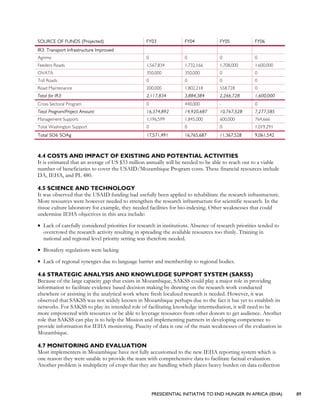
5. Patrick Fosu-Siaw M/E Specialist, USAID, Accra, Ghana, pfosu-siaw@usaid.gov
6. Kwabena Appenteng Private Sector Officer, USAID, Accra, Ghana, kappenteng@usaid.gov
7. Alfred Osei Food Aid Specialist, USAID, Accra, Ghana, aosei@usaid.gov
8. Richard Ody COP, TIPCEE, Accra, Ghana, rody@tipceeghana.org
9. Jean Michel Voisard Export Business Development Director, TIPCEE, Accra, Ghana, jvoisard@tipceeghana.org
10. Susan Hester Enabling Environment Director, TIPCEE, Accra, Ghana, shester@tipceeghana.org
11.Marjatta Eilitta Senior Soil Fertility Specialist, IFDC, Accra, Ghana, meilitta@ifdc.org
PRESIDENTIAL INITIATIVE TO END HUNGER IN AFRICA (IEHA) 23
Name Contact
12. Patrice Annequin Deputy COP, MISTOWA, Accra, Ghana, pannequin@ifdc.org
13. Claudia LaLumia Business and Trade Advisor, MISTOWA, Accra, Ghana, clalumia@ifdc.org
14. Walter Alhassan Coordinator, PBS, Accra, Ghana, walhassan@fara-africa.org
15. Catherine Martin Private Sector Development Advisor, DFID, Accra, Ghana, c-martin@dfid.gov.uk
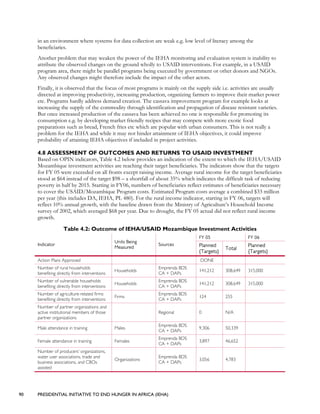
16. Trudy Bower Country Director, World Food Programme, Accra, Ghana, trudy.bower@wfp.org
17. Gayatri Acharya Senior Economist, World Bank, Accra, Ghana, gacharya@worldbank.org
18. Lothar Diehl Programme Advisor, GTZ, Accra, Ghana, Lother.Diehl@gtz.org
19. Anja Kuhn Technical Advisor, GTZ, Accra, Ghana, akuhn@gtz.org
20. Jim Pietryk Senior Policy Advisor, Canadian High Commission, Accra, Ghana, jim.pietryk@cidapsu.org
21. Victoria Daaku Program Director, Title II Food Security, ADRA, Accra, Ghana, vicdaaku@yahoo.com.
22. Abigail Abandoh-Sam M/E Coordinator, ADRA, Accra, Ghana, abigailasam@yahoo.com
23. Romeo Adomah-Darteh Programme Coordinator, Technoserve, Accra, Ghana, romeo.adomah-darteh@tnsgh.org
24. Anthony Botchway CEO, Bomarts Farmsltd, Nswam, Ghana, abotchway@bomarts.net
25. Stephen Mintah General Manager, Sea Freight Pineapple Exporters of Ghana, Accra, Ghana, speg@ighmail.com
24 PRESIDENTIAL INITIATIVE TO END HUNGER IN AFRICA (IEHA)
ATTACHMENT 2: IEHA INDICATORS FOR THE WEST AFRICA PROGRAM, JULY 2005 - 2006
IEHA focus country or subregion: West Africa_____________________
Goal/SO/IR IEHA Performance Indicator
Mission will report?
(Yes/No)
Commodities that will be
reported on
Implementing partner or
other source of data
Goal:
Cut Hunger and Poverty in Half
(MDG indicators)
No, IFPRI/SAKSS will
report N/A
No, IFPRI/SAKSS will
report
N/A
Strategic Objective:
Increased Rural Income
Rural income Baseline year of full
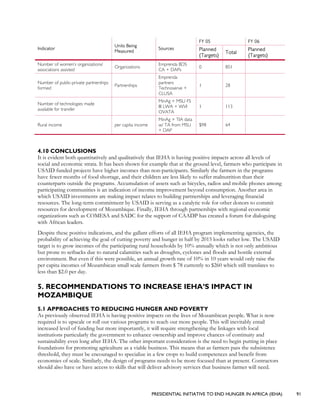
household survey:
_________
Next year of full household
survey:_________
Next between-surveys
year for proxy/estimate:
__________
IR 1: Enhanced Productivity of
Smallholder-Based Agriculture
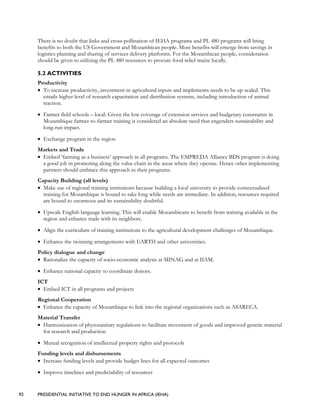
Gross margin per unit (of land, animal)
IR 1.1: Expanded Development,
Dissemination, and Use of New
Technology
Adoption of targeted technologies:*
(Number of developed targeted tech/Targeted tech
made available in 2 plus countries)
• Area under new technology/number of improved
animals/volume of produce processed as a
percent of total target commodity area (etc.); and
• Number of farmers, processors, and others who
have adopted.
No N/A
N/A See notes at end of
Table
IR 1.2: Enhanced Human and
Institutional Capacity for
Technology Development,
Dissemination, and Management
Institutional capacity (technology):
PIVA score of relevant institution (or equivalent
quantitative information about the scale and quality
of change)
Yes 1.Adequacy of ICT system*
2. Existence of ICT procedures. *
3. Integration of M&E*
4. Financial autonomy*
5. Networking*
CILSS & CORAF
Baseline PIVA scores
established in FY05
PRESIDENTIAL INITIATIVE TO END HUNGER IN AFRICA (IEHA) 25
Goal/SO/IR IEHA Performance Indicator
Mission will report?
(Yes/No)
Commodities that will be
reported on
Implementing partner or
other source of data
IR 2: Improved Policy Environment
for Smallholder-Based Agriculture
Policy reform (milestones) Yes
(Ag policy and
biosafety)
Policy 1: Ag policy of the West
African Economic Community
(ECOWAP) – FY05 – achieved
passage; country
implementation in FY06
Policy 2: Framework
convention for common
biosafety regulation for
prevention of biotech risks in
CILSS countries – FY05
achieved dialogue; FY06
proposal approved
Policy 3: Framework
convention for common
regulation on seeds in CILSS
countries – FY05 achieved
dialogue; FY06 proposal
approved
CILSS & ECOWAS
IR 2.1: Enhanced Human and
Institutional Capacity for Policy
Formulation and Implementation
Institutional capacity (policy):
PIVA score of relevant institution (or equivalent
quantitative information about the scale and quality
of change)
Yes Data collected on CILSS to
analyzed
CILSS & ECOWAS
IR 3: Increased Agricultural Trade Agricultural trade (targeted commodities):
• Volume and value of international agricultural
exports
• Volume and value of intra-regional agricultural
exports
Yes Maize, rice, cassava, onions,
tomatoes, shea, cattle, and
fertilizer
Selected trader
associations in the
ROESAO network in
Benin, B. Faso, Ghana,
Mali, Nigeria, & Senegal
IR 3.1: Enhanced Competitiveness
of Smallholder-Based Agriculture
Domestic agricultural trade by smallholders:
Volume and value of purchases from smallholders of
targeted commodities
26 PRESIDENTIAL INITIATIVE TO END HUNGER IN AFRICA (IEHA)
Goal/SO/IR IEHA Performance Indicator
Mission will report?
(Yes/No)
Commodities that will be
reported on
Implementing partner or
other source of data
No
No
No
IR 3.2: Enhanced Agricultural
Market Infrastructure, Institutions, &
Trade Capacity
Trade-supporting transactions and capabilities (one
or more of):
• Value of credit to targeted beneficiaries;
• Number of targeted enterprises accessing BDS;
and/or
• Number of targeted firms achieving international
standards.
• PIVA score of relevant organization (or other
quantitative information about the scale and
quality of change)
Yes N/A ROPPA, Plus
Late disbursement of
funds in FY06; may still be
done
* Explanation Notes: WA mission thought it could report on this indicator but later concluded it would be too difficult and time consuming for a regional mission
** For CORAF
PRESIDENTIAL INITIATIVE TO END HUNGER IN AFRICA (IEHA) 27
ATTACHMENT 3: WEST AFRICA PERFORMANCE INDICATORS 2006
USAID/WA Agriculture Program Performance Management Plan (PMP) and Indicators
Partners Indicators
Customersatisfactionscore
achieved
Numberofformalpartnerships
toachievefoodsecurity,natural
resourcesmanagementand
Numberofagricultural,food
securityandNRMpolicies
adoptedattheregionaland/or
InstitutionalPerformance–
GoodGovernancePractices
ScoreImprovedorMaintained
InstitutionalPerformance–
ManagementSystemsScore
ImprovedorMaintained
InstitutionalPerformance–
HumanResourcesPractices
ScoreImprovedorMaintained
Numberofcountriesadopting
theharmonizedvulnerability
evaluationframework
Numberofcountrieshavinga
wellfunctioningcropmonitoring
system
Numberofmalestrained
Numberoffemalestrained*
Numberofinformational
productsdeveloped
Numberofnewtechnologies
developed
Numberoftechnologies
disseminatedregionally
PolicyReformMilestone
reached
Numberofindividualstrainedin
policyissues
Regional
CILSS/H.Quarter Yes 15 12
CILSS/INSAH 2 68 4
CILSS/AGRHYMET 3 7 689 55
CLUB du SAHEL
CORAF tbd 250 7
IITA tbd 458 2 tbd tbd
ICRISAT tbd Tbd tbd 3
WARDA tbd tbd Tbd tbd 8
ROPPA
Washington
CORNELL (ABSP II) 8
DAI (Raise Plus)
ICRISAT/AMG 472 10
INTSORMIL 18 5 tbd
MSU
WARDA/AVRDC 10 2
WARDA (Mas) 25
28 PRESIDENTIAL INITIATIVE TO END HUNGER IN AFRICA (IEHA)
Partners Indicators
Customersatisfactionscore
achieved
Numberofformalpartnerships
toachievefoodsecurity,natural
resourcesmanagementand
Numberofagricultural,food
securityandNRMpolicies
adoptedattheregionaland/or
InstitutionalPerformance–
GoodGovernancePractices
ScoreImprovedorMaintained
InstitutionalPerformance–
ManagementSystemsScore
ImprovedorMaintained
InstitutionalPerformance–
HumanResourcesPractices
ScoreImprovedorMaintained
Numberofcountriesadopting
theharmonizedvulnerability
evaluationframework
Numberofcountrieshavinga
wellfunctioningcropmonitoring
system
Numberofmalestrained
Numberoffemalestrained*
Numberofinformational
productsdeveloped
Numberofnewtechnologies
developed
Numberoftechnologies
disseminatedregionally
PolicyReformMilestone
reached
Numberofindividualstrainedin
policyissues
USGS
Targets 6 9 990 250 131 20
Achieved 3 7 1685 328 87 21
* To be desegregated
PRESIDENTIAL INITIATIVE TO END HUNGER IN AFRICA (IEHA) 29
ATTACHMENT 4: MALI TARGETS FOR FY 2006 AND FY 2007
Mali Targets for FY 2006 and FY 2007
OPIN Indicators Contractor Achieved FY 05 Target FY 06 Achieved FY 06 % Achieved FY 06 Target FY 07
Beneficiaries
Mali Finance 589 432 430 99.5% 721
TradeMali 4,426 4,650 4,744 102% 4,900OPIN-1
Number of rural households
benefiting directly from
interventions PRODEPAM 18,649 45,644 59,337
Mali Finance 181 50 137 274% 68
TradeMali 405 446 1,087 244% 491OPIN-2
Number of vulnerable
households benefiting directly
from interventions PRODEPAM 11,215 21,181 27,535
Mali Finance 12 39 40 103% 33
TradeMali 1,419 1,400 867 ??? 62.0% 1,500OPIN-3
Number of agricultural-related
firms benefiting directly from
interventions PRODEPAM 414 824* 400
Training
Mali Finance 402 375 502 134% 327
TradeMali 1,929 1,300 1,496 115% 850OPIN-4 Male attendance in training
PRODEPAM 11,231 16,008 21,821
Mali Finance 302 250 262 105% 218
TradeMali 201 200 457 229% 250OPIN-5 Female attendance in training
PRODEPAM 4,039 7,899 13,336
Organizations
Mali Finance 8 30 37 123% 24
TradeMali 55 60 73 122% 66
OPIN-6
Number of producer
organizations, water user
associations, trade and
business associations and
CBOs assisted PRODEPAM
190 380 470
Mali Finance 0 10 15
TradeMali 5 12 24 200% 14OPIN-7
Number of women’s
organizations/associations
assisted PRODEPAM 78 138 171
30 PRESIDENTIAL INITIATIVE TO END HUNGER IN AFRICA (IEHA)
OPIN Indicators Contractor Achieved FY 05 Target FY 06 Achieved FY 06 % Achieved FY 06 Target FY 07
Partnerships
Mali Finance 6 3 7 233% 2
TradeMali 14 15 ?? Not yet Available 15OPIN-8
Number of public-private
partnerships formed
PRODEPAM 322 420 433
Technologies
Mali Finance 3 1 1 100% 1
TradeMali 6 10 10 100% 10
OPIN-9 Number of technologies
made available for transfer
PRODEPAM 55 55 72
PRESIDENTIAL INITIATIVE TO END HUNGER IN AFRICA (IEHA) 31
ATTACHMENT 5: SUMMARY OF MALI FINANCE PERFORMANCE INDICATORS FOR 2006
Indicator Description
2004
Result
2005
Result
2006
Achievement
Cumulative
Achievement
2006
Target
(cum)
%
Achieved Observations
Ind. 3a - Number of loans
provided to agro
entrepreneurs through banks
8 6 38 52 51 102%
Due to the efforts of our BDS partners ACOD, Nyeta
Conseil, and SABA, we achieved our 2006 target.
Partnership with those intermediaries is key to reducing
perceived risks for bankers.
Ind. 3b - Number of
investment projects realized 1 2 2 5 5 100%
Two investment projects received bank loans. Projects
like these took an average of one to two years to get
finance.
Ind. 3c - Number of loans
provided to entrepreneurs
accessing credit through MFIs
203 589 430 1,019 926 110%
Results include income-generating activities medium-
term credit (Ind. 3.3.c). These results reflect a good use
of our training by the credit field agent of our MF
partners.
Ind. 3.1.a - Number of
business development
services purchased through
partner BDS providers
58 55 119 232 220 105%
Much effort was made with the new project approach
for BDS (working through NGOs) to achieve these
results. 24% of the results were due to our pool of
consultants.
Ind. 3.1.b - Number of
individuals trained in business
development services
240 704 764 1,708 1,530 112%
Indirect training activities provided through BDS partners
paid off. They represented 50% of the achievement.
100%Ind. 3.2.a - Capacity of the
GRM to promote investment
opportunities
(new
indicator)
Milestone
1 at 75%
Milestone 1
at 100%
Milestone 2
at 45%
100%
45%
Milestone 1
at 100%
Milestone 2
at 100%
45%
The 65% of activities not achieved were supposed to be
implemented by our partners, the Ministry of
Investment, and SME and the Source Growth World
Bank project. Hiring the CEO for the IPA is still in
process after more than seven months, as the start-up of
the Investment Promotion Agency is a highly political
process.
Ind. 3.2.b - Number of
investment opportunities
developed
2 5 3 10 10 100%
Without subsidizing market studies and business plans,
as our previous strategy, we focused on a few, but
serious, businesses that could affect the exportation of
red meat, fruit, and vegetables.
Ind. 3.2.c - Number of
assisted regulatory and legal
reforms implemented
Reform A
- 70%
Reform B
- 0%
Reform A
– 25%
Reform B
– 25%
Reform A –
5%
Reform B –
100%
Reform A -
100%
Reform B -
100%
Reform A -
100%
Reform B -
100%
100%
Policy development processes are slow, but milestone-
related activities help us track the progress made with
our assistance.
32 PRESIDENTIAL INITIATIVE TO END HUNGER IN AFRICA (IEHA)
Indicator Description
2004
Result
2005
Result
2006
Achievement
Cumulative
Achievement
2006
Target
(cum)
%
Achieved Observations
Ind. 3.3.a - Amount of
savings at MFI partner
networks 14% 40% 44% 44% 18% 121%
This result is mainly from increases at Kafo last year and
should be considered exceptional (due to the high price
for cotton,) as the decrease of 7% for this year showed.
Overall, the sector performed well and sustainability is
improving.
Ind. 3.3.b - Number of clients
registered with partner MFIs 9% 16% 27% 27% 18% 107%
Good progression of clients is a measure of the
possibility of institutional development of our
microfinance partners.
Ind. 3.3.c - Number of long-
and medium-term loans
provided through targeted
MFI
85 80 75 240 437 55%
Very slow start for Nyesigiso, but promising with its new
business financial center. Kafo is starting slowly, with 37
loans this year, which is a good start.
Note: Ind. 3.c, 3.3.a, b, and c cover July 1, 2005 through June 30, 2006, all other indicators cover September 1, 2005 through August 30, 2006.
PRESIDENTIAL INITIATIVE TO END HUNGER IN AFRICA (IEHA) 33
ATTACHMENT 5: SUMMARY OF TIPCEE PERFORMANCE INDICATORS 2005
Goal/SO/IR
IEHA Performance
Indicator Baseline
TIPCEE 2005
Performance FY06 Target Notes
Goal:
Cut Hunger and
Poverty in Half (MDG indicators)
Strategic
Objective:
Increased Rural
Income Rural income
IR 1: Enhanced
Productivity of
Smallholder-Based
Agriculture
Gross margin per unit (of
land, animal)
NA 0 ▲
Pineapple NA 0 ▲
Mango NA 0 ▲
Papaya NA 0 ▲
Vegetables NA 0 ▲
Cashew NA 0 ▲
Sentinel Site Selection and collection of data in progress.
Baseline and targets will be set before end of the year.
IR 1.1: Expanded
Development,
Dissemination, and
Use of New
Technology
Adoption of targeted
technologies:
Area under new
technology/number of
improved animals/volume
of produce processed as a
percent of total target
commodity area (etc.); and
0 0 10%
Number of smallholder
farmers, processors, and
others who have adopted.
0 0 2,520
TIPCEE has started introducing a # of technologies and training farmers
to adopt them. Skill acquisition (new harvesting and post harvest methods)
from training are yet to be practiced.
Adoption figures will be reported in next semi-annual report
34 PRESIDENTIAL INITIATIVE TO END HUNGER IN AFRICA (IEHA)
Goal/SO/IR
IEHA Performance
Indicator Baseline
TIPCEE 2005
Performance FY06 Target Notes
Institutional capacity
(technology):
IR 1.2: Enhanced
Human and
Institutional
Capacity for
Technology
Development,
Dissemination, and
Management
Effectiveness of assisted
Associations/PIVA score of
relevant institution (or
equivalent quantitative
information about the scale
and quality of change)
See below: Indicator taken care of in IR 3.2
IR 2: Improved
Policy Environment
for Smallholder-
Based Agriculture
Policy reform (milestones) Matrix See attached matrix. For qualitative indicators the target is “increasing” and the
increase will be measured and tracked at the end of each work plan year.
Institutional capacity
(policy):
IR 2.1: Enhanced
Human and
Institutional
Capacity for Policy
Formulation and
Implementation
PIVA score of relevant
institution (or equivalent
quantitative information
about the scale and quality
of change)
NA NA Two policy units have been identified: the Research Department at the Bank of
Ghana and the Policy Analysis Unit of MOFEP. PIVA assessments on these 2 policy
units will be carried out in Year 2.
IR 3: Increased
Agricultural Trade
Agricultural trade (targeted
commodities):
Value of international
agricultural exports 19,340,0
00
5,000,000 US$. Baseline from Oct 2004 - Sept 2005. Last quarter of 2004 was estimated
based on percentage export for select commodities; 36% for Pineapple, 6% for
Mangoes, 46% for Papaya and 20% for Chilies (representing Vegetables).
Incremental figures because baseline will change as we add new partners
Volume of international
agricultural exports
43,400 3,000 Units in Metric Tons. Baseline is from October 2004- September 2005. The last
quarter of 2004 was estimated based on percentage export for select
commodities; 36% for Pineapple, 6% for Mangoes, 46% for Papaya and 20% for
Chilies (representing Vegetables). Incremental figures because baseline will change
as we add new partners
Value of intra-regional
agricultural exports
0 0
Volume of intra-regional
agricultural exports
0 0
No data to report. TIPCEE will report on agric exports to other countries in 2006
if any of our assisted clients report as such to us.
IR 3.1: Enhanced
Competitiveness of
Smallholder-Based
Agriculture
Domestic agricultural trade
by smallholders:
Producer groups have been identified and mapping of farms is underway.
Once this activity is complete, full data will be obtained.
PRESIDENTIAL INITIATIVE TO END HUNGER IN AFRICA (IEHA) 35
Goal/SO/IR
IEHA Performance
Indicator Baseline
TIPCEE 2005
Performance FY06 Target Notes
Value of purchases from
smallholders of targeted
commodities
0 1,000,000 FY06 target is incremental
Volume of purchases
from smallholders of
targeted commodities
0 1200 FY06 target is incremental
IR 3.2: Enhanced
Agricultural Market
Infrastructure,
Institutions, &
Trade Capacity
Trade-supporting
transactions and capabilities
(one or more of):
Value of credit to
targeted beneficiaries;
Number of targeted
enterprises accessing BDS;
and/or
0 6 30
Number of targeted firms
achieving international
standards.
24 2 30 TIPCEE assisted one client with organic certification and another client with
FairTrade certification
Effectiveness of assisted
Associations/PIVA score of
relevant organization (or
other quantitative
information about the scale
and quality of change)
35% 0 40% Baseline represents average for GAVEX (25%), HAG (41.1%), VEPEAG(38.3%).
Score range between 25 - 100%. TIPCEE carried out diagnostics of associations
and as a result will do PIVA for SPEG and FAGE. Baseline for SPEG and FAGE will
be added to initial baseline
36 PRESIDENTIAL INITIATIVE TO END HUNGER IN AFRICA (IEHA)
ANNEX 2: EVALUATION REPORT
ON MOZAMBIQUE AND
SOUTHERN AFRICA REGIONAL
IEHA PROGRAMS
PRESIDENTIAL INITIATIVE TO END HUNGER IN AFRICA (IEHA) 37
LIST OF ACRONYMS
AAI African American Institute
ABSP Agricultural Biotechnology Support Program (USAID)
ACDI/VOCA Agricultural Cooperative Development International/Volunteers Overseas Cooperative
Association
ACMV The African Cassava Mosaic Virus
AFR-SD Africa Bureau/Office of Sustainable Development (USAID)
AGOA African Growth and Opportunities Act
APHIS Animal Plant and Health Inspectorate Service
ASARECA Association for Strengthening Agricultural Research in Eastern and Central Africa
BDS Business Development Services
CAADP Comprehensive Africa Agriculture Development Program
CARE Cooperative for Assistance and Relief Everywhere
CBO Community Based Organization
CBSD Cassava Brown Streak Disease
CGIAR Consultative Group on International Agricultural Research
CIP International Potato Center
CLUSA Cooperative League of the United States of America
COMESA Common Market for Eastern and Southern Africa
CRSP Collaborative Research Support Program
CSP Country Strategic Plan
CTA Technical Centre for Agricultural and Rural Cooperation (ACP-EU)
DCHA Democracy, Conflict and Humanitarian Assistance Services (USAID)
DMC Drought Monitoring Center (UN)
EAC East Africa Community
EGAT Economic Growth, Agriculture, and Trade Bureau (USAID)
EIA Environmental Impact Assessment
EMPREDA Empowering Private Enterprise in the Development of Agriculture
FANRPAN Food, Agriculture and Natural Resources Policy Analysis Network
FEWSNET Famine Early Warning Systems Network (USAID)
GECAFS Global Environmental Change and Food Systems
GDA Global Development Alliance (USAID)
HDI Human Development Index
IARC International Agricultural Research Centers
ICRISAT Institute for Crop Research in the Semi-Arid Tropics
ICT Information and Communications Technologies
38 PRESIDENTIAL INITIATIVE TO END HUNGER IN AFRICA (IEHA)
IEHA Initiative to end Hunger in Africa
IFPRI International Food Policy Research Institute
IGO Inter-governmental Organization
IIAM Institute of Agricultural Research
IITA International Institute for Tropical Agriculture
INIA National Agricultural Research Institute
IR Intermediate Result
MADER Ministry of Agriculture and Rural Development
MINAG Ministry of Agriculture
MIND Integrated Information Network for Decision-Making
MSU Michigan State University
NARO National Agricultural Research Organization
NEPAD New Partnership for Africa’s Development
NGO Non-Governmental Organization
PBS Program in Biosafety Systems (USAID)
PROAGRI Program for Expenditure in Agriculture
RCSA Regional Center for Southern Africa (USAID)
RCSA Regional Centre for Southern Africa
REDSO Regional Economic Development Services Office for East and Southern Africa (USAID)
SACU Southern African Customs Union
SADC Southern African Development Community
SAKSS Strategic Analysis and Knowledge Support System
SARB Southern Africa Regional Biosafety Program
SARRNET Southern Africa Root Crop Research Network
SETSAN Secretariat for Food Security and Nutrition
SO Strategic Objective
SPS Sanitary and Phytosanitary Standards
TRADE Trade for African Development and Enterprise through regional Hubs for Global
Competitiveness (USAID)
USAID United States Agency for International Development
WTO World Trade Organization
PRESIDENTIAL INITIATIVE TO END HUNGER IN AFRICA (IEHA) 39
EXECUTIVE SUMMARY
The United States Presidential Initiative to End Hunger in Africa (IEHA) was launched at the World Summit
on Sustainable Development in August 2002. The goal of the Initiative is to reduce hunger and poverty in
Africa by half by 2015, in line with United Nations Millennium Development Goal #1. Its main objective is
to raise rural incomes through country- and region-based agricultural development. IEHA is designed to
achieve its goal through enhanced productivity of smallholder-based agriculture, improved policy
environment for smallholder-based agriculture, and increased agricultural trade. These results are supported
by other intermediate results in institutional and trade capacity building, as well as in competitiveness.
IEHA focuses on the African smallholder, but recognizes that efforts must be made to integrate vulnerable
population groups and countries in transition into sustainable development processes. The Initiative also
recognizes that the problems of hunger and poverty will not be solved by agriculture alone, and that solutions
will require complementary advances in health, education, infrastructure, environment and public policy
management. IEHA is building alliances and constituencies with those national and international stakeholders
from the public and private sectors committed to eradicating hunger in order to leverage the resources and
reach its objectives.
Mozambique was one of the first three countries selected to implement IEHA10, and was selected due to its
regional significance, economic vulnerability, and positive economic, social and political reforms that it had
undertaken. Because of its low economic base, any investment in the country was bound to have substantial
social and economic impact on the lives of the local people, with spillovers in the region. Since 2003,
Mozambique has been implementing IEHA. The Initiative is being implemented through
USAID/Mozambique bilateral Mission and USAID Regional Centre for Southern Africa (RCSA) based in
Gaborone, Botswana. In implementing the Action Plan the USAID/Mozambique coordinates its activities
with those of RCSA in collaboration with several USAID/Washington offices including the Bureau of
Economic Growth, Agriculture and Trade (EGAT),Africa Bureau (AFR), Democracy, Conflict and
Humanitarian Assistance (DCHA) and Global Development Alliance (GDA).
This evaluation of Mozambique’s IEHA program was undertaken in October 2006 with the purpose of
establishing whether the strategies and action plans of both the USAID Country and Regional Missions were
geared to realization of goals and objectives of IEHA. The report is based on information obtained from
relevant program document, discussions with USAID Mission staff, interviews with implementing partners,
and field visits to projects.
OVERVIEW OF MOZAMBIQUE
Mozambique has an area of 801,590 sq kms making it the eleventh largest country in Sub-Sahara Africa. With
a population of 19.6 million people, Mozambique is one of the most land abundant countries in Africa. Its
population currently growing at about 2.4% per annum is largely young with those below 14 years
constituting 42.7%. The country is endowed with vast natural wealth which includes forestry resources,
titanium, and natural gas. The climate is generally warm which allows for agricultural production throughout
the year. Two of the largest rivers in Africa – Zambezi and Limpopo transverse the country providing
enormous amounts of water and potential for irrigation and power generation. In addition, Mozambique has
a long coastline of 2470 kms providing enormous potential for fishing, tourism and other maritime activities.
Despite the enormous economic potential, Mozambique is one of the poorest countries in the world. The
average per capita income was estimated at $154 in 2000. About 78 percent of the population lives on less
than $2.00 a day. This high level of poverty is reflected in large number of children who are malnourished,
stunted and/or wasted estimated at 48.5 percent in 2006. In addition, more than half of the population
consumes less than the minimum number of calories required to maintain a healthy body. According to
UNDP Human Development Report 2005, Mozambique ranked 168 out of 177 countries monitored. Life
10
The other first round IEHA countries were Mali and Uganda.
40 PRESIDENTIAL INITIATIVE TO END HUNGER IN AFRICA (IEHA)
expectancy at birth is low at 39.8 years due to high infant mortality estimated at 129.4 per 1000 life births,
malaria and HIV/AIDS. Incidence of HIV/AIDS has risen from 12.2 percent in 2002 to about 16.2% in
2004. Current estimates by World Bank indicate that the country was losing the equivalent of 1.0 percentage
point in GDP growth rate due to loss of productivity related to HIV/AIDS.
Despite the poor prognosis, Mozambique has recorded some of the highest sustained economic growth rates
in Africa. GDP growth rates of 10 percent have been recorded in some of the recent years although this has
been offset to some extent by natural calamities mainly floods and droughts. Inflation was reduced from over
60 percent in the early 1990s to about 7.3 percent currently. Fiscal reforms have improved the government’s
revenue collection abilities. Mozambique however remains highly dependent on foreign assistance for much
of its annual budget. Foreign financing of the budget stands at about 90 percent.
The main sectors of the economy are agriculture which contributes 26.2 percent to GDP while industry and
services sectors account for 34.8 percent and 39.0 percent respectively. Although agriculture contributes
about a quarter of GDP, it provides livelihood to over 80 percent of the population. From the mid-1990s, the
agricultural sector grew rapidly to reach 7.0 percent annually, but these easy sources of agricultural growth will
soon wear off as population pressure in some areas and soil infertility build up. Agricultural production is
mainly for subsistence, with only about one-third of the farmers selling surpluses to the market.
IEHA IMPLEMENTATION IN MOZAMBIQUE
(i) USAID/Mozambique
The preparation of USAID/Mozambique Action Plan was based on the Country Strategic Plan 2004-10, and
served as the basis for selecting the first IEHA initiatives to be funded in FY03. In the last four years
development partners in Mozambique have followed a coordinated approach in assisting the government to
develop the agricultural sector. The ten largest donors, including USAID, DFID and World Bank have
pooled their resources in support of a government agricultural sector investment plan, PROAGRI. In this
way, donors assure complementarity between their efforts and government. This is the background under
which the USAID/Mozambique Action Plan was developed and is being implemented. The choice of
investments is based on three major criteria:
• Ability of the investment to contribute to rapid and sustainable growth agriculture and rural incomes. The
impacts of the expected growth must be large and sustainable to reduce hunger.
• Each investment will be evaluated for its distributional impact on population groups.
• The degree of risk associated with each investment on the physical, technical and policy environment.
The context of USAID/Mozambique programs is well synchronized with IEHA themes as shown below:
Science and Technology: USAID/Mozambique’s program supports and builds the capacity of PROAGRI.
Since the initiation of PROAGRI, the Mozambique government has consolidated what were four
independent research and extension organizations into a single research entity, the Mozambique Agricultural
Research Institute (IIAM). There has been a marked improvement of capacity at the central ministry level
together with a decentralization of funding that has resulted in 60 percent of Ministry resources being
allocated to the provincial level. There are better linkages with extension, farmers and NGOs, CGIAR
centers, NGOs and EMBRAPA, the Brazilian agricultural research institute.
Extension, too, has historically been weak and underfunded. Under PROAGRI reforms, a National
Extension Master Plan is being developed, linkages with NGOs and the private sector extension providers
are improving and government is experimenting with long-term outsourcing of extension services.
Agricultural Markets and Trade: A major effort under USAID’s Rural Incomes Growth Sustained Objective
(SO6) supports development of private sector trade and processing in agricultural products. Smallholder-
oriented trade and processing was neglected during colonial times. What little there was disappeared with
PRESIDENTIAL INITIATIVE TO END HUNGER IN AFRICA (IEHA) 41
departure of the Portuguese at independence and the following years of civil war and centralized economic
planning. Rural trade has grown in recent years, but the absence of market experience, traders and
entrepreneurs, along with remnants of restrictive economic policies, have limited that growth.
USAID is a lead donor in promoting greater engagement of Mozambique in regional and international trade
networks. Increased integration into global markets is a central mission priority under the CSP’s SO7 for
Increased Exports.
Community-Based Producer Organizations: One of USAID/Mozambique’s major success stories has been
support for the formation of farmer associations. Given the isolation of most smallholders in Mozambique
and the weakness of both the commercial sector and government, there is a strong case for continuing and
extending this work with associations. Associations help not only in obtaining the best prices for crops and
inputs, but also as an entry point for improved technologies on the production side. Associations make
extension efforts more efficient through their ability to reach more farmers and also form the nucleus for
accessing credit.
Vulnerable Groups and Transitional Economies: Principal sources of vulnerability in Mozambique arise
from weather (droughts, floods and cyclones), disease (HIV/AIDS, malaria and orphans of AIDS victims)
and poverty (food security and nutrition). Mozambique, with USAID assistance, is strengthening its capacity
for predicting, preparing for and responding to weather related natural disasters. This involves principally
activities with the National Institute for Disaster Management and MADER. Mozambique’s HIV infection
rate places it among the 10 most impacted countries in the world. Areas with the highest rates of infection
coincide with the areas which have the best transport, and thus market links to South Africa, Zimbabwe and
Malawi. Food insecurity and poor nutrition are principally problems of income and of access. There is limited
access to markets and to new technologies that can raise productivity and household nutrition. USAID is
addressing food security and nutrition through the PROAGRI program and through its Title II program.
Human and Institutional Capacity and Infrastructure: Both human and institutional capacity for research
and extension are very weak in Mozambique. PROAGRI has as its core a program of human and institutional
capacity building to enable MADER to efficiently deliver effective agricultural services.
USAID/Mozambique is actively involved in physical infrastructure. Road rehabilitation is a high cost activity,
but one in which long term benefits justify the expense. This is true of secondary and tertiary roads in farm
areas as well as trunk roads for interregional trade and linkage to external markets. USAID is also involved
building institutional capacity and government commitment to perform road maintenance.
Environmental Sustainability: Soil fertility is higher in Mozambique than in many countries in the region
owing in part to years of under-utilization during the war. Nevertheless, natural fertility is not high to begin
with and after re-establishment of agricultural production after the war, issues of soil and water conservation
cannot be ignored. NGOs and government, through PROAGRI, have been promoting fertility and
conservation messages, but research is needed to develop appropriate recommendations on fertilizer
application, crop rotation, and other agronomic techniques. Forests also continue to be of major importance.
New policies and regulations are in place to control tropical hardwood logging at an environmentally
unsustainable pace, but effective implementation is lacking.
(ii) USAID/RCSA
The USAID RCSA assists seven countries in Southern Africa: Angola, Malawi, Mozambique, Namibia, South
Africa and Zambia in developing and coordinating cross-border policies, procedures and systems in food
security, conflict prevention and mitigation, and health. While RCSA’s activities cover the seven countries, 80
percent of its resources go to the Chinyanja Triangle Project, a transboundary, landlocked terrain
encompassing Southern and Central Provinces of Malawi, Tete Province and Highlands of Mozambique and
the Eastern Province of Zambia. Botswana has a small HIV/AIDS and nutrition project. The RCSA Action
Plan promotes linkages and facilitates cooperation among countries throughout the region, with a particular
focus on work with African regional and national partners in the public and private sectors across the region.
42 PRESIDENTIAL INITIATIVE TO END HUNGER IN AFRICA (IEHA)
RCSA’s 2004-2010 Regional Strategic Plan (RSP) has as its goal, “To promote equitable sustainable growth in a
democratic Southern Africa. The principles inherent in the RCSA Action Plan emphasize cooperation among
development partners, coordinated strategic planning and regional integration. The Action Plan has four
Strategic Objectives: A More Competitive Southern African economy; Rural Livelihoods Diversified in
Southern Africa; Improved Electoral Competition in Southern Africa; and Improved Management of
Selected River Basins. The SO15: Improved Rural Livelihoods in Southern Africa is RCSA’s main vehicle for
implementing IEHA. The strategic objective adopted a market-oriented agricultural growth strategy to reduce
hunger and poverty in Southern Africa. While the Rural Livelihoods strategic objective was designed
specifically to support the IEHA objectives of increased rural incomes, other Mission strategic objectives
complement IEHA. For example, a more competitive Southern African economy contributes to the
competitiveness of regional and international agricultural markets.
To implement its Action Plan, RECSA follows two approaches: to build strategic alliances and to
complement bilateral mission and regional organizations activities to add value. In essence, SO 15 does not
therefore have stand-alone projects. The Mission implements the Action Plan through mechanisms that bring
together consortia of partners coordinated by strong, credible lead institutions. These partnerships include
organizations capable of identifying and addressing biological and policy constraints to agricultural
development, with the experience and methods for mobilizing producer organizations, disseminating
technological innovations and building the practical links to the business community essential for getting
markets working. In implementing the Action Plan, RCSA relies on public-private sector partnerships that
draw upon the knowledge of the International Agricultural Research Centers (IARC) and their regional
networks, the organizational experience of Nongovernmental Organizations (NGO) and faith-based
institutions, and the dynamism of the private sector.
MAIN FINDINGS AND LESSONS LEARNED
Community Based Organizations – Although one of the major successes of IEHA projects is in building
farmers associations, it is estimated that only 5 percent of the small-scale farmers are currently members. By
continuing support and coverage of the farmer associations, USAID will make significant progress towards
attaining the goals and objectives of IEHA.
Conflict Between Program Goals and Expected Outcomes - There appeared to be two main conflicts
between Mission programs business development objectives and IEHA vulnerable groups’ expected
outcomes. First, business models which the projects were implementing were not suited to the affirmative
action approach that IEHA vulnerable groups’ approach seemed to demand. For example, promotion of
farming as a business in an environment where land assets were largely owned and controlled by men made it
difficult to achieve gender balance in formation of associations. Second, project implementers were being
asked to report and support vulnerable groups activities for which budget lines had not been provided at the
design of projects, particularly those projects that were of ‘commodity values chain’ in design. Project
managers appeared to be struggling with both the principle and identifying activities that would seamlessly fit
into their project. This is one area, therefore, where the IEHA objectives may not be achieved unless there
was some review of the approach.
Weak Linkages with Government Field Staff – While it is acknowledged that the Mozambican government
extension service was under-staffed, there appeared to be little effort to synergize with them. Collaboration
with government officers, however weak, is vital for achievement of IEHA objectives– at least to ensure that
there is no opposition or administrative frustration of project activities and enhance probability of
sustainability after IEHA.
Implementation Approach
a) Overall, it was observed that implementing partners had done a commendable job in raising production,
improving food security and nutrition, and developing market linkages along the value chain. The
approach adopted by the Mission of concessioning areas to a single or a consortium of implementers
based on administrative/agro-economic zones had worked well particularly taking into consideration the
PRESIDENTIAL INITIATIVE TO END HUNGER IN AFRICA (IEHA) 43
vast distances and poor communications that tended to isolate farmers. Single implementers are assisting
farmers to grow a wide range of crops and providing farmers with services ranging from technical
advisories, marketing and credit. Where consortiums are involved they bring on the table varying
competencies that the farmers need. Looking into the future, it would appear that to attain IEHA goals
and objectives, this model of program implementation will need to be modified because as the farmer
graduates from subsistence production to commercial production, he will need to specialize in one or a
few activities and he will also need specialized extension services. The model where a single contractor
provides all advisory services is therefore unlikely to be optimal.
(b) Another area in which the approach appears weak is low level local participation in the implementation
of programs. Virtually, all programs are run and managed by U.S. based NGOs. Although the
implementing partners are very active in helping small-scale farmers form associations, there is still a
significant risk that when these NGOs leave the scene or the program comes to an end there will be very
little capacity left to carry on the development process.
(c) Both USAID/Mozambique and USAID/RCSA have comprehensive programs which appear to overlap
at farmer level. Processes for the Missions consultations in the implementation of the overlapping areas
were not apparent. This mars monitoring indicators and makes it difficult to attribute gains or lack of
progress to any USAID Unit.
Predictability and Stability of Support – Projects normally take a long time to achieve their objectives. For
example it was reported that it takes 4-5 years before farmers can fully internalize training and business
principles. If a project ends too quickly, it is therefore unlikely to achieve its objectives as farmers will quickly
revert to their previous known ways of doing things. It is therefore appreciated that IEHA has taken a long-
term view of development as this will make funding of projects predictable. What is now required is to find a
mechanism for ensuring smooth disbursement to accelerate implementation.
Forum for Implementers Lacking- Although implementers were doing a commendable job on their own,
there appeared to be no forum where they could exchange information and their experiences. Formation of
such a forum would serve to disseminate undocumented knowledge that would help to avoid mistakes and
help adoption of practices that work on the ground – in essence helping to achieve IEHA goals and
objectives.
Weak Regional Synergies – RCSA has a comprehensive credible regional action plan. However Mozambique
did not appear to be drawing much on the regional programs. The language barrier prevents Mozambique
from benefiting from training and competences available in the neighboring countries.
Inadequate Communication Systems/ICT - One of the most noticeable features of the project sites is poor
communications systems. This undermines IEHA objectives in two ways. First, it discourages recruitment
and retention of high caliber personnel. Secondly, it makes consultations and dissemination of information
between actors in various parts of the country difficult – delaying decision-making and implementation.
RCSA’s Action Plan has identified this as a key investment area.
Inputs Systems - Mozambique has one of the least developed agricultural inputs systems in Africa. The main
problem of inputs systems revolves around two main issues: a) lack of affordability due to high cost of inputs
and the low level of incomes of the population; and b) poor access due to poor communications systems.
These twin problems are accentuated by lack of credit for farm inputs for small-scale producers.
Donor Conflicts – It is also observed that while IEHA has largely promoted a business approach to
development, there are other donors and NGOs whose philosophy, objectives and activities on the ground
contradict the approach of IEHA. A case in point is distribution of free inputs by other actors.
Structure of IEHA - It is noted that while the overall goal and objectives of USAID/Mozambique closely
align to the IEHA, its results framework is slightly different. The objective of promoting income growth
through commercialization of economic activities including agriculture, as indicated in SO6 and SO7 do not
44 PRESIDENTIAL INITIATIVE TO END HUNGER IN AFRICA (IEHA)
closely coincide with social objectives of caring for the vulnerable groups and environmental protection. The
implication is that for IEHA to achieve its objectives for protection and mainstreaming of vulnerable groups
and environment management, additional resources or separate programs will be required.
There is an underlying assumption in the IEHA approach that people in the vulnerable groups have assets
such as land and labor that can be developed or utilized. However, it may be observed that some people in
the vulnerable groups do not have assets that can be developed. These groups include women, who may not
have free access to land assets, may not be allowed to be employed in on- and off-farm activities or may need
some education and training before they can be employed elsewhere. The other group that does not fit into
the IEHA category net is the weak and sick including the HIV/AIDS orphans. This group will continue to
need support through food aid programs.
Science and Technology - It was observed that the USAID funding had usefully been applied to rehabilitate
the research infrastructure. More resources were however needed to strengthen the research infrastructure for
scientific research. In the tissue culture laboratory for example, they needed facilities for bio-indexing. Other
weaknesses that could undermine IEHA objectives in this area include: Lack of carefully considered priorities
for research in institutions. Absence of research priorities tended to overcrowd the research activity resulting
in spreading the available resources too thinly; lack of biosafety regulations; and weak regional synergies due
to language barrier and membership to regional bodies.
Strategic Analysis and Knowledge Support System (SAKSS) - It was observed that SAKSS was not widely
known in Mozambique perhaps due to the fact it has yet to establish its networks. For SAKSS to play its
intended role of facilitating knowledge intermediation, it will need to be more empowered with resources or
be able to leverage resources from other donors to reach audiences. Another role that SAKSS can play is to
help the Mission and implementing partners in developing competence to provide information for IEHA
monitoring. Paucity of data is one of the main weaknesses of the evaluation in Mozambique.
Monitoring and Evaluation - Most implementers in Mozambique have not fully accustomed to the new
IEHA reporting system. Another problem is the large number of crops that they are handling which places a
heavy burden on data collection in an environment where systems for data collection are weak, e.g., low level
of literacy among the beneficiaries.
Another problem that may weaken the power of the IEHA monitoring and evaluation system is an inability
to attribute the observed changes on the ground wholly to USAID interventions. For example, in a USAID
program area, there might be parallel programs being executed by government or other donors and NGOs.
Any observed changes might therefore include the impact of the other actors.
Conclusions and Recommendations
IEHA is having positive impacts on the lives of Mozambican people which include fewer months of food
shortage, reduced number of children likely to suffer malnutrition and improved household incomes and
concomitant accumulation of assets such as bicycles, radios and mobile phones. In addition, the long-term
commitment by USAID through IEHA is providing a catalytic role for other donors to commit resources for
development of Mozambique. Finally, IEHA through partnerships with regional economic organizations
such as COMESA and SADC for the support of CAADP, has created a forum for dialoguing with African
leaders.
Despite these positive indications, and the gallant efforts of all IEHA program implementing agencies, the
probability of achieving the goal of cutting poverty and hunger in half by 2015 looks rather low. The USAID
target to grow incomes of the participating rural households by 10 percent annually is not only ambitious but
prone to setbacks due to natural calamities such as droughts, cyclones and floods and hostile external
environment. But even if this were possible, an annual growth rate of 10 percent in 10 years would only raise
the per capita incomes of Mozambican small scale farmers from $78 currently to $260, which still translates
to less than $2.00 per day.
PRESIDENTIAL INITIATIVE TO END HUNGER IN AFRICA (IEHA) 45
The current positive impact IEHA is having now needs to be enhanced by scaling up and rolling out the
various programs to reach more people. This will require increased funding but more importantly, it will
require strengthening the linkages with local institutions particularly, the government, to enhance ownership
and improve chances of continuity and sustainability after IEHA. There is a need to build foundations for
promoting agriculture as a viable business. As farmers move from the subsistence threshold, they must be
encouraged to specialize to build competences and to benefit from economies of scale. Programs need to be
more focused than at present and need to take a business development services approach to building capacity
of service providers rather than relying on external programs to provide the services that business oriented
farmers will need.
There is no doubt that links and cross-pollination of IEHA programs and PL 480 programs will bring
benefits to the Mozambican people. Most benefits will emerge from savings in logistics planning and sharing
of services delivery platforms. Consideration should be given to utilizing the PL 480 resources to procure
food relief maize locally. Other recommendations to enhance IEHA impacts include:
i) Productivity
– Upscale investment in agricultural inputs and implements. This entails a higher level of research
capacitation and distribution systems, including introduction of animal traction.
– Introduce farmer field schools locally: Given the low coverage of extension services and budgetary
constraints in Mozambique, farmer-to-farmer training is considered an absolute need that engenders
sustainability and long-run impact.
– Encourage exchange programs in the region.
ii) Markets and Trade
– Embed ‘farming as a business’ approach in all programs. The EMPREDA Alliance BDS program is
doing a good job in promoting the concept along the value chain in the areas where they operate. Hence
other implementing partners should embrace this approach in their programs.
iii) Capacity Building (all levels)
– Make use of regional training institutions because building a local university to provide contextualized
training for Mozambique is bound to take a long time, while needs are immediate. In addition, resources
required are bound to be enormous and its sustainability doubtful.
– Upscale English language learning. This will enable Mozambicans to benefit from training available in
the region and enhance trade with its neighbors.
– Align the curriculum of training institutions to the agricultural development challenges of Mozambique.
– Enhance the twinning arrangements with EARTH and other universities.
iv) Policy dialogue and change
– Rationalize the capacity of socio-economic analysis at MINAG and at IIAM.
– Enhance national capacity to coordinate donors.
v) ICT
– Embed ICT in all programs and projects.
vi) Regional Cooperation
– Enhance the capacity of Mozambique to link into the regional organizations such as ASARECA.
vii) Material Transfer
– Harmonization of phytosanitary regulations to facilitate movement of goods and improved genetic
material for research and production.
46 PRESIDENTIAL INITIATIVE TO END HUNGER IN AFRICA (IEHA)
– Mutual recognition of intellectual property rights and protocols.
viii) Funding levels and disbursements
– Increase funding levels and provide budget lines for all expected outcomes.
– Improve timelines and predictability of resources.
– Improve clarity of reporting formats.
ix) Improving IEHA Visibility and Leveraging Ability
– Rationalize the identity of U.S. funded programs.
– Take advantage of various forums such as EAC, IGAAD, COMESA, etc., to dialogue with African
leaders.
x) Strategic Analysis and Knowledge Support System (SAKSS)
– Redefine roll-out strategy and financially empower it to engage partners.
xi) Biotechnology
– Promote biotech as part of science and technology for development. This will reduce resistance and
suspicion associated with GMOs.
– Facilitate finalization of biosafety regulations.
xii) Minimize overlaps and duplication in the areas of operation between USAID/Mozambique and
RCSA. There will be more gains from RCSA’s focus on higher level transboundary issues while the
country mission deals with host country agricultural issues.
PRESIDENTIAL INITIATIVE TO END HUNGER IN AFRICA (IEHA) 47
1. INTRODUCTION
Mozambique with an area of 801,590 sq kms is the eleventh largest country in Sub-Sahara Africa. With a
population of 19.6 million people, Mozambique is one of the most land abundant countries in Africa. Its
population is currently growing at about 2.4 percent per annum and is largely young with those below 14
years constituting 42.7 percent. The country is endowed with vast natural wealth. Some of the natural and
mineral wealth being exploited includes forestry resources, titanium, and natural gas. Plans to mine coal at
Tete Province are at an advanced stage. The climate is generally warm which allows for agricultural
production throughout the year. The terrain is generally flat coastal lowland. Two of the largest rivers in
Africa – Zambezi and Limpopo transverse the country providing enormous amount of water and potential
for irrigation and power generation. In addition, Mozambique has a long coastline of 2470 kms providing
enormous potential for fishing, tourism and other maritime activities.
Despite the enormous economic potential, Mozambique is one of the poorest countries in the world. Socialist
mismanagement and a brutal civil war from 1977-92 prevented the country from making any meaningful
economic progress after independence in 1975. The average per capita income was estimated at $154 in 2000.
About 78% of the population lives on less than $2.00 a day. This high level of poverty is reflected in the large
number of children who are malnourished, stunted and/or wasted estimated at 48.5 percent in 200611. In
addition, more than half of the population consumes less than the minimum number of calories required to
maintain a healthy body. According to UNDP Human Development Report 2005, Mozambique with an HDI
0.360 was ranked 168 out of 177 countries monitored. Life expectancy at birth is low at 39.8 years due to high
infant mortality estimated at 129.4 per 1000 life births, malaria and HIV/AIDS. Incidence of HIV/AIDS has
risen 12.2 percent in 2002 to about 16.2 percent in 2004. Although the AIDS incidence is surprisingly lower
than the average for the region which is estimated at 20 percent, it nevertheless exacts a significant toll on
population and workforce. Current estimates by World Bank indicate that the country was losing the
equivalent 1.0 percentage point in GDP growth rate due to loss of productivity related to HIV/AIDS. One of
the constraining factors to technology absorption and hence economic growth is the low level of adult
literacy which stands at 47.8 percent.
Despite the poor prognosis, Mozambique has recorded some of the highest sustained economic growth in
Africa with rates of 10 percent recorded in some of the recent years although this has been offset to some
extent by disastrous natural calamities including floods and droughts. In 1987, the government embarked on a
series of macroeconomic reforms designed to stabilize the economy. Economic reform has been paralleled by
political reform with the former armed opposition, RENAMO, now converted into a full participant in
multiparty elections at all levels of government. These steps, combined with donor assistance and with
political stability since the multi-party elections in 1994, have led to dramatic improvements in the country’s
growth rate. Inflation was reduced from over 60 percent in the early 1990s to below 10 percent during the
late 1990s although it returned to double digits in 2000-03. Currently inflation stands at about 7.3 percent.
Fiscal reforms, including the introduction of a value-added tax and reform of the customs service, have
improved the government’s revenue collection abilities. In spite of these gains, Mozambique remains
dependent upon foreign assistance for much of its annual budget. Foreign financing of the budget stands at
about 90 percent.
The main sectors of the economy are agriculture which contributes 26.2 percent to GDP while industry and
services sectors account for 34.8 percent and 39.0 percent respectively. Although agriculture contributes
about a quarter of GDP, it provides livelihood to over 80 percent of the population - a clear indication of the
low level of productivity. From the mid-1990s, the agricultural sector grew rapidly to reach 7.0 percent
annually reflecting the reopening of some roads and peace dividend as people and land returned to
production after the civil war. These easy sources of agricultural growth will soon wear off as population
pressure in some areas and soil infertility build up. In the years ahead, productivity issues in agriculture must
therefore take centre stage for sustained growth of the country and reduction of poverty and hunger
11
Survey by CARE
48 PRESIDENTIAL INITIATIVE TO END HUNGER IN AFRICA (IEHA)
particularly in the rural areas where average annual incomes stand at less than $70. Agricultural production is
mainly for subsistence. Only about one-third of the farmers sell any surpluses to the market. Maize and
cassava are the main food crops accounting for 49 and 40 percent respectively for food in Mozambique.
Other food crops include rice, potatoes, and bananas. The main cash crops are cotton, tobacco, groundnuts
and cashews. Other cash crops are sugarcane, tea, coconut, sisal, sesame, sunflower and tropical fruits such as
mangoes and litchi.
The transport system is poor and expensive. Because the country is long and narrow, distances between the
Capital City Maputo and the major towns of the Central and Northern Regions are long and difficult to
traverse except by air. There are two main private airlines operating in the country. Three railway systems of
3123 kms link the coast to the hinterland but are not interconnected. The road system of about 36,400 kms
(of which only 5685kms is paved) follows the same pattern as the railways. There are three main ports –
Nacala, Beira and Maputo, which also serve the neighboring countries. Although the transport system is poor,
Mozambique has a fairly vibrant telecommunication system with two mobile telephone companies and
internet facilities. Subscriptions for mobile companies are estimated at about 1,000,000.
The performance of Mozambique’s export has been strong, growing at 22 percent annually (in US dollar
terms) between 1996 and 2003, mainly due to exports from natural gas and aluminum from the Mozal
aluminum smelter, the country’s largest foreign investment project to date. This expansion is substantially
faster than that of world exports of about 6 percent. As a result, Mozambique is one of the rare countries in
Africa whose share in world exports has risen. However, the traditional agricultural export base is still weak
and poorly diversified having grown at only 2.3 percent in the same period. Despite the increased export
earnings from the mega-projects, a substantial trade imbalance persists.
During the 1990s, Mozambique became an attractive location for foreign investment particularly from South
Africa, which became Mozambique’s biggest trade partner, accounting for 40 percent of Mozambique’s
imports and 20 percent of its exports. South Africa is the largest investment partner of Mozambique. South
African investment represents 35 percent of foreign direct investment (FDI) inflows to Mozambique. In late
2005, and after years of negotiations, the government signed an agreement to gain Portugal’s majority share
of the Cabora Bassa Hydroelectricity (HCB) Company, a dam that was not transferred to Mozambique at
independence because of the ensuing civil war and unpaid debts. More power is needed for additional
investment projects in titanium extraction and processing and garment manufacturing that could further close
the import/export gap. Mozambique’s once substantial foreign debt has been reduced through forgiveness
and rescheduling under the IMF’s Heavily Indebted Poor Countries (HIPC) and Enhanced HIPC initiatives,
and is now at a manageable level.
1.1 SCOPE AND METHOD OF THE EVALUATION
The evaluation team based this report on information obtained from four main sources: First, the team
reviewed documents availed by USAID staff on programs in Mozambique. The team also obtained additional
documents on USAID activities in Mozambique from the internet; second, discussions the team held
discussions with USAID Mission staff; third, interviews with USAID program partners; and fourth, field
visits to projects. The purpose of the field visits was to validate the information obtained from documents
and discussions with implementing partners. During the field visits, the evaluation team tried to obtain factual
data and held focused group discussions with beneficiaries. Wherever a language barrier was encountered, the
team relied on local interpreters to obtain information on how the projects were impacting the lives of the
beneficiaries. Wherever possible, efforts were made to seek the views of women separately. In addition to
factual data, the team made visual observations on dressing, quality of housing, general health of children and
asset accumulation by communities which are common indicators of family incomes, food security and
nutrition. The full list of persons met, institutions and associations visited are detailed in Chapter 6.
PRESIDENTIAL INITIATIVE TO END HUNGER IN AFRICA (IEHA) 49
2. BACKGROUND ON IEHA
2.1 GOALS AND OBJECTIVES
The Initiative to End Hunger in Africa (IEHA) launched at the World Summit on Sustainable Development
in August 2002 aims at improving the livelihoods of current and future generations of sub-Saharan Africans
by reducing the incidence of poverty, especially in rural areas. The goal of the Initiative is to reduce hunger
and poverty in Africa by half by 2015, in line with United Nations Millennium Development Goal #1. Its
main objective is to raise rural incomes through country- and region-based agricultural development. The
intermediate results it plans to achieve are enhanced productivity of smallholder-based agriculture, an
improved policy environment for smallholder-based agriculture, and increased agricultural trade. These results
are supported by other intermediate results in institutional and trade capacity building, as well as in
competitiveness.
Within the agricultural sector, IEHA investments support scientific and technological advances, the
development of efficient agricultural trade and market systems, the strengthening of community-based
producer organizations, human and institutional capacity building, and strong environmental management.
The focus of the IEHA is the African smallholder, with recognition that efforts must be made to integrate
vulnerable population groups and countries in transition into sustainable development processes. The
Initiative also recognizes that the problems of hunger and poverty will not be solved by agriculture alone, and
that solutions will require complementary advances in health, education, infrastructure, environment and
public policy management. To achieve the focus, coordination and level of resources required, IEHA is
building alliances and constituencies with those national and international stakeholders from the public and
private sectors committed to eradicating hunger.
IEHA originated in the global recognition that hunger in Africa is one of the most significant development
challenges facing the world today. The primary goal of IEHA is to rapidly and sustainably increase agricultural
growth and rural incomes in sub-Saharan Africa. The agricultural sector is especially important because
agriculture is the primary source of employment for an estimated 70 percent of the African population and
low per capita incomes are closely correlated with both poverty and hunger. Within agriculture, to reduce
hunger over the near to medium term, the initiative focuses on growth opportunities in the smallholder
sector.
The initiative recognizes that success requires sustained investments in agricultural-based policies, strategies,
and programs, in conjunction with improvements in health, education, infrastructure, environment and public
policy. Since significant domestic and foreign investment from the private sector is also necessary, the
conditions to attract and support private investment need to be established and maintained.
2.2 DEVELOPMENT OF IEHA ACTION PLANS
2.2.1 BACKGROUND
Preparation of the USAID/Mozambique Action Plan represented the first step in implementing IEHA in
Mozambique, and served as the basis for selecting the first IEHA initiatives to be funded in FY03. It also
mapped out the USAID/Mozambique’s strategy and plan for the first six years of IEHA. In conformity with
IEHA objectives and principles, the Action Plans was designed to:
• Create a coordinated sub-regional (multi-country) momentum and dynamic to induce and encourage
agricultural growth.
• Support the efforts of and partner with countries and leaders committed to agricultural growth as a critical
development pathway.
• Identify and target development options and opportunities to accelerate rural smallholder-based
agricultural growth, leading to more efficient use of resources.
50 PRESIDENTIAL INITIATIVE TO END HUNGER IN AFRICA (IEHA)
• Build effective linkages with other sectors and initiatives, including education, health (HIV/AIDS, diarrhea,
and malaria prevention), macroeconomic reform, and infrastructure to achieve economic and social
development objectives common to everyone.
• Build alliances and a broad-based political and financial commitment among development partners, public
and private, in Africa and internationally, to cut hunger in half—and stay the course to achieve this by
2015.
The Action Plan focuses on the six core themes of IEHA:
• Advancing scientific and technological applications and support services that harness the power of new
technology (e.g., information technology and biotechnology) and global markets to raise agricultural
productivity, create agriculture-based enterprises and support sustainable land use management.
• Improving the efficiency of, and participation in, agricultural trade and market systems for major African
products in local, sub-regional and international markets and the integration of African countries into
global markets for agricultural goods and services.
• Promoting and strengthening community-based producer organizations to help link business and farmers
to create new opportunities that add value, raise incomes, deliver services and increase the participation of
the rural majority in decision making processes.
• Building the human and institutional capacity to shape and lead the policy and research, as well as provide
agricultural education.
• Integrating vulnerable groups and countries in transition into sustainable development processes.
• Strengthening environmental management to a) conserve and foster the production of environmental
goods and services that contribute to economic growth and b) make agricultural production and water
management environmentally sustainable.
The first two core areas will receive the most emphasis for several reasons: first, because of their intrinsic
importance as drivers of agricultural growth; second, because they have been designated as key areas under
the IEHA; and third, because some of the initial funding for IEHA came from earmarked or otherwise
restricted sources that relate to those two areas.
In the last four years development partners in Mozambique have followed a coordinated approach in assisting
the government to develop the agricultural sector. The ten largest donors, including USAID, DFID and
World Bank have pooled their resources in support of a government agricultural sector investment plan,
PROAGRI. This mechanism serves as an umbrella project, which utilizes these donors’ funds to support a
mutually agreed government development plan. In this way, donors assure complementarity between their
efforts and government. This is the background under which USAID/Mozambique Action Plan was
developed and is being implemented. The choice of investments is based on three major criteria:
• Ability of the investment to contribute rapidly and sustainably to increase agricultural growth and rural
incomes. The impacts of the expected growth must be large and sustainable to reduce hunger. Thus each
investment will be evaluated in terms of level and variability of its returns.
• Each investment will be evaluated for its distributional impact on population groups.
• The degree of risk associated with each investment will be evaluated in terms of influences of the physical,
technical and policy environment.
PRESIDENTIAL INITIATIVE TO END HUNGER IN AFRICA (IEHA) 51
2.2.2 USAID MOZAMBIQUE CURRENT PROGRAMS
a) The IEHA Context
The context of USAID/Mozambique programs is well synchronized with IEHA themes as shown below:
Science and Technology: The previous four research institutes under the Ministry of Agriculture and Rural
Development (MADER), constituted the core network of agricultural research in Mozambique. These
institutes catered for agronomy, animal production, veterinary research and forestry. All of them had their
headquarters in Maputo and research stations and substations at the provincial level. For several decades
research suffered from insufficient funding and lacked both adequate equipment and adequately trained
personnel. Funds that were received often arrived erratically making it difficult to pursue time-sensitive
research projects and have an effective presence in the field. Work was concentrated at the headquarters in
Maputo and nearby research stations and not in the areas of highest agricultural potential in the center and
north of the country.
Since the initiation of PROAGRI, there have been significant changes in the management and financing of
agricultural research and extension in Mozambique. The four research institutes were merged into a single
research entity, the Mozambique Agricultural Research Institute (IIAM), with a Technical Council for
Agricultural Research for setting priorities and overseeing reforms. More researchers are being hired for, or
reassigned to, the provincial zonal centers so that closer linkages with extension, farmers and NGOs can be
established. And links are being strengthened with partners like CGIAR centers, NGOs and EMBRAPA, the
Brazilian agricultural research institute.
Extension, too, has historically been weak and under-funded. The National Extension Service has only been
in existence for only 15 years and has 700-800 workers nationwide, far fewer on a per capita basis than
extension systems in other countries. Under PROAGRI reforms, a National Extension Master Plan is being
developed, linkages with NGOs and the private sector extension providers are improving and government is
experimenting with long-term outsourcing of extension services.
Agricultural Markets and Trade: A major effort under USAID’s Rural Incomes Growth Sustained Objective
(SO6) is to support development of private sector trade and processing in agricultural products. Smallholder-
oriented trade and processing was neglected during colonial times. What little there was disappeared with the
departure of the Portuguese at independence and the following years of civil war and centralized economic
planning. Rural trade has grown in recent years, but the absence of market experience, traders and
entrepreneurs, along with remnants of restrictive economic policies, have limited that growth.
USAID is a lead donor in promoting greater engagement of Mozambique in regional and international trade
networks. Increased integration into global markets will continue to be a central mission priority under the
CSP’s Increased Exports SO7, which has three IRs covering trade capacity building; improving the business
environment; and interventions in key sectors with high export potential.
Interregional trade within Mozambique and international trade both within the Southern African region and
globally, have been limited to a few products (notably cashew and cotton for international markets; maize and
more recently tobacco for regional markets). With the exception of cashew and cotton, there is little in terms
of information, experience and production for trade, although this is changing. Infrastructure for trade is
wholly inadequate in much of the country. Roads and bridges in rural areas, access to railways and ports and
the management of railways and ports all represent serious impediments to trade.
Community-Based Producer Organizations: One of USAID/Mozambique’s major success stories has been
support for the formation of farmer associations. Given the isolation of most smallholders in Mozambique
and the weakness of both the commercial sector and government, there is a strong case for continuing and
extending this work with associations. Associations help not only in obtaining the best prices for crops and
inputs, but also as an entry point for improved technologies on the production side. Associations can make
extension efforts more efficient through their ability to reach more farmers and can also form the nucleus for
accessing credit. Another important point regarding associations is that support to associations is not an
52 PRESIDENTIAL INITIATIVE TO END HUNGER IN AFRICA (IEHA)
activity in which government should play a significant role. Farmer associations, to be effective, must be fully
member owned and motivated and seen to be so by their members.
Vulnerable Groups and Transitional Economies: Principal sources of vulnerability in Mozambique arise
from weather (droughts, floods and cyclones), disease (HIV/AIDS, malaria and orphans of AIDS victims)
and poverty (food security and nutrition). Mozambique, with USAID assistance, is strengthening its capacity
for predicting, preparing for and responding to weather related natural disasters. This involves principally
activities with the National Institute for Disaster Management and MADER. Mozambique’s HIV infection
rate places it among the 10 most impacted countries in the world. Areas with the highest rates of infection
coincide with the areas which have the best transport, and thus market links to South Africa, Zimbabwe and
Malawi. The National AIDS Council and a number of NGOs in the country with support from USAID and
other donors are attempting to contain HIV/AIDS transmission and address problems of those infected and
AIDS orphans. Food security and nutrition problems in Mozambique are principally problems of income and
of access. Access is limited to markets and to new technologies that can raise productivity and household
nutrition. USAID is addressing food security and nutrition through the PROAGRI program and through
DAPs with six PVOs. Numerous government, NGO and donor activities are also focused on food security
and nutrition.
Human and Institutional Capacity and Infrastructure: Weak human and institutional capacity is an
important focal area for IEHA. As noted above, both human and institutional capacity for research and
extension are very weak in Mozambique. PROAGRI, the sectoral agriculture program, is at its core a program
of human and institutional capacity building to enable MADER to efficiently deliver effective agricultural
services.
Physical infrastructure, also as noted above, is weak too. Road rehabilitation is a high cost activity, but one in
which long term benefits justify the expense. This is true of secondary and tertiary roads in farm areas as well
as trunk roads for interregional trade and linkage to external markets. Institutional capacity and government
commitment to perform road maintenance is also important.
Environmental Sustainability: Soil fertility is higher in Mozambique than in many countries in the region
owing in part to years of under-utilization during the war. Nevertheless, natural fertility is not high to begin
with and after re-establishment of agricultural production after the war, issues of soil and water conservation
cannot be ignored. NGOs and government, through PROAGRI, have been promoting fertility and
conservation messages, but research needed to back up recommendations about fertilizer application, crop
rotation, and other agronomic techniques is woefully deficient. Forests also continue to be of major
importance. New policies and regulations are in place to control tropical hardwood logging at an
environmentally unsustainable pace, but effective implementation is lacking.
b) Investment Climate and Gaps
The general investment climate in Mozambique has markedly improved over the situation ten years ago, and
the government is willing to go to great lengths to promote investments needed to achieve the goal of
combating hunger. Indeed, the government has adopted an investor-friendly legal code and encourages
foreign investment in agriculture and commerce. This stance has been proven by government promotion and
approval of several large investment projects in recent years. However, there is still some way to go to give
smaller investors the same ability to act without encumbrances from onerous bureaucratic regulations, red
tape, etc.
Willingness to make the needed investments and changes in the public sector is evidenced by the adoption
and implementation of the PROAGRI program. Key among the accomplishments of PROAGRI is the
marked improvement of capacity at the central ministry level together with a decentralization of funding that
has resulted in 60 percent of Ministry resources allocated to the provincial level in the past year. Two key
interrelated gaps are: gains at the central and provincial level need to be translated into field level results; and
funding levels for research and extension, while rising, remain low relative to needs.
PRESIDENTIAL INITIATIVE TO END HUNGER IN AFRICA (IEHA) 53
c) Strategic Objectives
The choice of Mozambique as IEHA’s first focus country in the Southern Africa region was extremely
fortuitous: first, because the country’s economic base is very low. Hence any investment in the country has
the potential to make substantial social and economic improvement in the lives of the local people; second,
there is significant direct and implied relationship between the objectives of USAID/Mozambique’s seven
year (2004-2010) Country Strategic Plan (CSP) and IEHA’s pillars. The Mission’s CSP has two “economic
growth” SOs, both of which complement and support IEHA’s objectives: The SO6 – Rural Incomes Growth
Sustained and SO7 – Labor Intensive Exports Increased.
The SO6 is centered on improving smallholder agriculture incomes and output through increased research
and extension coupled with increased sales to the market. This involves interventions both at the farm level
and also support to private sector value-added processing activities that are indispensable elements of the
down-stream supply chain. Funding for SO6 comes from both DA resources (Economic Growth,
Agriculture and Environment) and PL480. Development Assistance Programs to improve household food
security and nutrition are funded with monetized PL480 resources.
The Rural Incomes Growth Sustained Strategic Objective together with its associated Intermediate Results
and sub-Intermediate Results are explained below including their alignment with IEHA pillars:
IR6.1 – Smallholder sales of agricultural production increased – The overall goal of increasing marketed
production is directly in line with the first two IEHA themes in that production and greater sales of marketed
surplus by smallholders will require technological advances together with increased participation in both
domestic and international markets.
IR6.1.1A – Selected policies that increase sustainable production improved – This sub-IR refers to
agricultural sector policies related to production and sale of smallholder and other crops. In particular,
implementation of land policies, continued support for liberalization of markets, streamlining of policies for
registering producer associations and policies to support development of marketing are all elements of this
sub IR. These efforts relate primarily to the first two IEHA themes, which relate to advancing scientific and
technological applications and improving the participation in, and functioning of, rural markets and trade. In
the area of producer associations, IEHA theme 3 is also involved as village based producer organizations are
an important element of USAID’s strategy.
IR6.1.2 – Provision of public and private sector support services increased – This sub-IR pertains directly to
the first IEHA theme in that the principal goal of the next phase of PROAGRI together with private sector
support is to increase development and dissemination of technological change to smallholders. The fourth
IEHA theme is also related to this sub-IR since training and education of agricultural researchers is
envisioned to be important to the implementation of this part of the strategy as is support of MADER’s
ongoing reorganization and reform of the management of its research institutes. This sub IR also is related to
the fifth theme in that smallholders are among the most vulnerable groups in Mozambique, particularly in
light of the recent history of droughts and floods. Use of monetized PL480 resources is important for
addressing this sub-IR.
IR6.1.3 – Environmental management incorporated into production systems – This sub-IR focuses on
IEHA theme 6 and is a key need in Mozambique, given low natural fertility in many areas and intensifying
land use in areas where population pressure is starting to be felt. There is also a relationship with IEHA
theme 1 in that this sub-IR seeks to support and promote sustainable land use management. A key part of
IR6.1.3 is addressing vulnerability which arises from food insecurity and from droughts and floods and so
relates directly to IEHA theme 5 on vulnerable groups.
IR6.2 – Rural enterprises expanded – This IR is related primarily to IEHA theme 2 in that Mozambique
needs development of market institutions in the private sector in order to better integrate into the domestic
and international markets for agricultural goods. Smallholders need market outlets to sell their increasing
surpluses, but the network rural marketing and trading enterprises is very poor.
54 PRESIDENTIAL INITIATIVE TO END HUNGER IN AFRICA (IEHA)
IR6.2.1 – Rural trade expanded - This sub-IR is directly related to IEHA theme 2 in that expansion of rural
trade is a direct result of improving the efficiency of, and participation in, agricultural trade and market
systems. This will be accomplished both by supporting the development of private sector processing and
marketing activities and by continuing to support the development of smallholder producer associations
which can interface between individual small farmers and the market. Accordingly, IEHA theme 3 is also
related to this sub-IR in an important way. Promotion of competition among rural traders will help ensure the
best possible prices for smallholders while at the same time creating continuous incentives for efficiency
improvements.
IR6.2.2 – Rural industry expanded – This sub-IR is also directly related to IEHA theme 2 since an increase
in processing and value added activities in rural areas is a key element of the plan to promote smallholder
sales to the market. Processing activities are necessary in order for raw agricultural outputs to be transformed
into a form that is suitable for retail sale in towns, cities, and abroad.
IR6.2.3 – Rural financial services expanded – A key constraint to the marketing system, processing activities,
and also to farmer integration into input and output markets is the very low level of development of rural
financial markets. USAID plans to assist in the exploitation of profit-making opportunities by targeted
support for credit and loan – guarantee activities that can promote rural trade. Support for innovative micro-
finance interventions will also be pursued. All of these will support the goals primarily of IEHA theme 2 but
also themes 3 and 5 insofar as producer organizations and vulnerable groups (particularly women) benefit
from these interventions.
IR6.3 – Transport infrastructure serving strategic areas of high market potential improved – This IR
is fundamental to the overall goal of improving smallholder production and linking this increased output to
the market in urban areas and abroad. As noted in the strategy, it would be difficult to over-emphasize the
importance of improving the physical links between farm to market. Without them no amount of
improvement at the farm level can hope to be translated into increased food sales or higher incomes for the
farmers themselves. Likewise, road improvements decrease costs and improve efficiency of all marketing
activities. Accordingly, this IR is directly related to IEHA theme 2 and is also a critical support to IEHA
theme 1.
IR6.3.1- Selected market links rehabilitated – In accord with the geographically concentrated supply-chain
focus of USAID’s strategy, several particularly important farm-to-market links will be rehabilitated. As in the
other elements of this IR, this will promote the goals of IEHA theme 2.
IR6.3.2 – Capacity for local contractors improved – In line with the goals of supporting rural enterprises (in
this case contractors for road rehabilitation and maintenance) USAID will continue to support development
and training of local contractors who can take over from NGO’s and others who have previously provided
these services. This is in line with IEHA theme 2.
IR6.3.3 – Capacity for road operation and maintenance improved - Road rehabilitation has been proceeding
since peace arrived in 1992. However, maintenance activities must grow side by side with rehabilitation if the
improved roads are not to sink back into disrepair. This is a key element in making the progress achieved
under IEHA theme 2 sustainable beyond the end of the initiative. It is planned to support the development
of an ongoing capacity for road maintenance.
In addition to the Intermediate Results summarized above, Capacity Building is an SO level “cross cutting
theme” for the Rural Incomes objective. Training and institutional strengthening are key strategic elements
within each IR, and they will be represented in IR level activities. The relationship between the USAID
Mission’s CSP and IEHA are presented in Table 2.1 below.
PRESIDENTIAL INITIATIVE TO END HUNGER IN AFRICA (IEHA) 55
Table 2.1: Correspondence of Mission Intermediate Results with IEHA Themes
IEHA Themes
Sub IR’s
Science&
Technology
Agricultural
Markets&
Trade
Community
Producer
Organizations
Human&Inst.
Capacity&
Infrastructure
Vulnerable
Groups&
Transition
Economies
Environmental
Sustainability
Policies for Increased Production 1 1 1 2 2
Support Services Increased 1 2 2 2 1
Environmental Management 1 2 1 1
Rural Trade Expanded 1 1 2
Rural Industry Expanded 2 1 2
Rural Financial Services 1 1 2 1
Road Operations & Maint. Improved 1 2
Local Contractor Capacity 2 1
Selected Market Links Rehabilitated 1
Note: “1” indicates a primary emphasis and “2” indicates a secondary emphasis.
The other economic strategic objective SO7 is centered on mainstreaming trade policy into Mozambique’s
development strategy, on removing constraints to competitiveness in regional and international markets, and
on promoting exports in a few sectors with high potential, including agricultural exports. Funding for SO7
comes from DA Economic Growth and Trade Initiative resources. The SO contributes to increased
productivity (though not exclusively in agriculture) by promoting trade liberalization and by increasing
competitiveness both in general and in specific sectors. Greater openness combined with the promotion of
labor intensive sectors should increase economic growth, exports and employment; and thus directly promote
IEHA’s overall objectives.
In the Action Plan, USAID has included as an investment option a description of trade policy and capacity
building Intermediate Result under SO7, even though this component is funded from non-IEHA sources at
current request levels. The reason for including it here is that trade policy (and specifically trade openness) is a
critical ingredient of the environment needed to make a success of the other interventions proposed under
IEHA.
d) Opportunities and Constraints
The opportunities presented by the current situation in Mozambican agriculture are huge.
• Yields are low compared to neighboring countries growing similar crops. Increased yields from basic
efforts at crop improvement and management present the single largest untapped investment opportunity
for the country today. The demand for increased output is already present both in terms of substituting for
imports and in terms of increasing exports.
• The relatively low level of rural market development integrating newly resettled smallholders presents a
major opportunity. Integrating these producers with the market provides a way to sustain the impressive
rates of income growth that have happened over the past few years.
• The Mission’s focus on clustering its interventions both in terms of regional concentration on the highest
potential areas and in terms of focusing on all parts of the supply chain for a given commodity presents an
opportunity to maximize the returns for the overall portfolio of projects.
56 PRESIDENTIAL INITIATIVE TO END HUNGER IN AFRICA (IEHA)
In spite of these opportunities, there are nevertheless several constraints that will be important over the next
few years.
• There is a lack of trained personnel particularly in agricultural research, which is why the proposed
program invests heavily in this area. This is also a problem in extension and marketing.
• There is a distinct lack of entrepreneurial and business experience in Mozambique.
• Poor rural infrastructure reduces access to input and output markets. This is being addressed by multi-
donor efforts in road rehabilitation, but this must be recognized as a long-term project.
• Rural financial markets are weak or non-existent in much of Mozambique. This problem is beginning to be
addressed with a joint USAID/government program of using local currency resources to fund pilot
activities in rural finance.
• Capital equipment and funding of research efforts both at the central and provincial level is insufficient.
• Export links to most neighboring countries are weak. This is due to weak transport linkages, mentioned
above, poor institutional development and inadequate marketing capacity.
• Parts of the proposed program do not have national level coverage. Rather, they focus on the provinces
and districts with the highest potential for agricultural growth. It is to be expected that any gains achieved
there will be spill over into other geographical areas, but this will take time.
• In terms of IEHA themes, the proposed program focuses heavily on the first two initially because of
guidance received from USAID/Washington.
One significant analytic gap in the context of the IEHA Action Plan, is the need for market analysis of a
number of agricultural commodities. Indications are that markets exist - whether domestic, regional or global
- for major expansions of selected commodities, including rice and cashews. This should be confirmed before
major investments in expanding production begin.
A second gap is the need for good knowledge of tsetse-free regions in the north and center of the country.
There are substantial disease free zones, but it is not known with any degree of certainty what the boundaries
of these zones are. Knowledge of these boundaries would permit livestock development efforts in these
areas.
e) Investment Options
The following are the investment choices made by USAID Mozambique based on the above criteria:-
Investment Option 1: Institutional Strengthening and Support to IIAM
This investment option falls directly in IR6.1 on increasing smallholder agricultural production. It addresses
the first and fourth themes of IEHA: science and technology, and human institutional capacity and
infrastructure. Strengthening Mozambique’s agricultural research is USAID/Mozambique’s priority
investment for allocation of IEHA funds. Rates of return to investments made in agricultural research and
extension as shown in Table 2.2 are higher than those obtainable by any other investment either nationally, or
indeed regionally. Incremental yield gains in Mozambique can be obtained more easily and cheaply than
elsewhere given the combination of low initial yields and generally favorable agro-climatic conditions in the
center and north of the country.
Estimates of the returns to research exceed $0.25 billion per year based on conservative assumptions of the
yield increases that could be achieved. More than two thirds of this benefit can come from improvements in
maize and cassava alone even if yields can be increased only 21 percent and 28 percent respectively.
Mozambican yields are well below the averages attained both in Africa generally and neighboring countries
and such yield increases are entirely feasible if given a concerted effort.
PRESIDENTIAL INITIATIVE TO END HUNGER IN AFRICA (IEHA) 57
Numerous studies over the years, including a Research Master Plan, an extension system evaluation in 2002
by Prof. Karl Eicher, and a Rockefeller study on the gaps and opportunities in the agricultural sector, have
identified gaps and opportunities for interventions that will make research and extension more effective in
achieving results in the field. These studies indicate that research organizations need to do several interrelated
things:
• Adopt a vision of the mission of research which includes the entire commodity chain from production to
consumer. By analyzing the entire chain, research will not be viewed solely as a farm based exercise in
increasing outputs at the farm gate. Other factors, such as nutritional impact on household members,
increasing production for local and regional markets, will be used to establish the research agenda.
• Broaden the concept of the national research institution to include not only the ministry’s institutions, but
also universities, extension, NGOs, private sector, farmers’ associations and regional organizations. Each
has a role to play in the research-extension process.
• Establish research priorities for the different agro-ecological zones in a participatory manner which will
result in both station-based and on-farm research that responds to the needs of farmers. As part of this
process, ex-ante analyses of potential research themes should be conducted using criteria such as greatest
potential benefit at lowest cost, risk reduction, impact on nutritional status and the effects HIV/AIDS.
Reforms to strengthen research and extension are already being implemented under PROAGRI. Providing
additional funding is an important requirement for improved research. But the research system could benefit
substantially from partnerships with established universities and/or agricultural research institutes overseas
capable of outreach and training in both research and extension functions. Such partnerships have proven
extremely effective in other countries. Important elements of such an arrangement would include:
• Institutional strengthening of INIA to support the proposed reforms.
• Training of Mozambican staff through collaborative research programs using innovative models for degree
training and with field research based in the country.
• Mechanisms for exchange of researchers between institutions.
• Facilitate the development of zonal research centers and research programs.
MADER has signed an agreement for research collaboration with EMBRAPA, the national agricultural
research organization in Brazil. This is a positive development for a variety of reasons:
• EMBRAPA is a national institution with near autonomous zonal and crop centers that has practical
experience which will be useful to IIAM.
• EMBRAPA has a cadre of quality researchers and has itself struggled in the past with precisely the same
issues now confronting Mozambique.
• Brazil presents no linguistic barriers to Mozambicans, and has other cultural similarities that can facilitate
cooperation.
• Brazil is similar to Mozambique in agro-climatic conditions, is the botanical origin of some of the major
Mozambican smallholder crops, like peanuts, cashew, and cassava, and has ongoing programs in these
areas.
An efficient and cost effective way to support the EMBRAPA/Mozambican cooperation is to bring
university, CRSP, CGIAR and NGO partnership as well. A number of potential partners in the U.S., Europe
and South Africa have a strong history of agricultural research, extension and international assistance of this
58 PRESIDENTIAL INITIATIVE TO END HUNGER IN AFRICA (IEHA)
type. Some institutions from all three regions (U.S., Europe, South Africa) already have strong ties with the
Brazilian agricultural research establishment and with the international agricultural research centers.
To ensure that such arrangements relate fully to Mozambican issues and to ensure that Mozambique gains
maximum benefit from the partnerships, the following steps should be taken:
• Every effort should be made to identify promising training candidates, not only among current research
personnel but also at the undergraduate level so that the best students can be recruited to a defined and
promising career path.
• Models of “twinning” and of “sandwiching” degree programs should be developed in order to make
maximum use of domestic training institutions, as well as to support capacity building in these institutions.
• When degree programs are pursued abroad, field research should be conducted in Mozambique. Research
should be supervised by periodic visits of professors from foreign institutions in conjunction with local
senior staff and faculty.
• Funding needs in the national research institutes are great and a correspondingly greater share of donor
resources should be programmed (via PROAGRI) to this end.
• The establishment of an initial zonal research center in the north of the country (e.g., Nampula) should be
prioritized and funded at a level which makes it a well-equipped, appealing place to work.
• Links to research organizations in the region should be strengthened, both to benefit from research results
from those organizations and to share results from Mozambique.
Investment Option 2: Markets for Exports Expanded
This investment relates directly to IEHA themes 2 and 4, agricultural trade and capacity building. The activity
addresses questions of market access, including negotiating markets, ensuring that requirements for access to
particular markets are met (e.g. visa systems under SADC, AGOA and EBA), and providing necessary
government technical support for standards (SPS, APHIS, etc.). This option also assists the government to
reduce its dependence on trade taxes, establish sensible overall customs legislation that is compliant with
WTO requirements, open the economy further, and ensure good coordination of trade policy across
ministries. The option is currently included under USAID’s increased exports SO7 strategy. The main
activities contemplated under this option are:
• Creation of a Mozambican trade coordinating body to effectively integrate the wide range of government
activities that directly impinge on trade policy and its implementation;
• Institutional capacity building, including long-term training, to ensure and certify that export market
standards are understood and met;
• Mozambican economy further opened to trade through lower tariffs and fewer, less onerous non-tariff
barriers (NTBs); and
• Establishment of a trade database that provides the basis for better analysis and decision-making.
Investment Option 3: Formation of Farmer Associations
This investment option relates to IR6.1 and IR6.2 of the CSP and to IEHA themes 2 and 3. Village level
smallholder associations are a key element in linking newly self-sufficient smallholders to the off-farm market
so that they can obtain inputs and market outputs more effectively. Farmer associations are also valuable
conduits for introducing new production technologies. Further, these associations are the nuclei of future
marketing companies, able not only to market output to larger towns and cities, but also able to provide
smallholders with a lower cost alternative for purchase of needed inputs. Associations are important in
providing small farmers with a degree of “countervailing” market power vis-à-vis traders and marketing
PRESIDENTIAL INITIATIVE TO END HUNGER IN AFRICA (IEHA) 59
companies. The associations also serve as entry points for disseminating food security, health and nutrition
messages.
USAID has supported formation of farmer associations in Zambezia and Nampula provinces via several
NGOs and these have proven to be an important step forward for smallholders. Although building the
necessary human capacity and links to the market takes time, these associations have provided a market outlet
for farmers that they previously did not have. Though USAID has been active in Nampula and Zambezia,
not all districts within these provinces have been covered by these activities. Even within districts that have
seen activity, not all smallholders have been able to benefit from an association. Therefore, there are two
main goals of this activity. The first is to extend the benefits of farmer associations to smallholders who have
so far not had any way to benefit from them. The second is to achieve a more complete coverage of
particularly high potential areas, especially those which are the focus of USAID efforts at other parts of the
supply chain.
Through farmer associations, USAID’s investments are complementing each other and raising the returns
more than the previously listed investment options can achieve individually. In addition, there is clear
evidence that geographical concentration of marketed production is spurring competition among traders,
which can provide further benefits to smallholders. The target is to reach 500,000 small-scale farmers.
Investment Option 4: Cassava Varietal Development and Dissemination
The investment falls directly in SO6, IR6.2: Provision of public and private sector support services increased
and IEHA themes for science and technology, and human institutional capacity and infrastructure. Cassava is
the most important staple food crop in northern Mozambique and is the main source of calories for the rural
population.
Though cassava eaten alone does not provide adequate nutrition, cassava is generally eaten with other foods,
and lack of calories is the major source of malnutrition for many of Mozambique’s poor. As the incidence of
HIV/AIDS increases in Mozambique, it will become even more important because it can be planted and
harvested over time, and it requires a lower level of management than cereal crops. Varietal development in
cassava will significantly increase yields in the small holder sector. The African Cassava Mosaic Virus
(ACMV) and brown streak are two diseases which are responsible for substantial yield loses and are a top
research priority in the cassava program.
Cassava varietal evaluation, using germplasm introduced from IITA, has been conducted by INIA and several
NGOs throughout Mozambique. The regional root and tuber network, SARRNET, which has a country
office in Mozambique, has facilitated expanded partnerships for cassava transformation and regional
germplasm evaluation. The varietal evaluation program at INIA has identified high yielding varieties with
some level of tolerance to ACMV but the level of acceptance by local populations has been limited in some
regions. In these areas, the INIA breeders have entered the improved materials into the breeding blocks to
attempt to incorporate resistance/tolerance from the improved lines into local germplasm which can be
intercropped. This activity has begun but needs to be reinforced. Through the use of simple biotechnology
techniques (molecular markers) the amount of time for varietal development can be reduced from seven years
to three years.
There are several options in this investment option that are being or could be pursued perhaps
simultaneously:
• Support a traditional cassava breeding and dissemination program in-country using the existing network
for dissemination of improved varieties. The program would engage research personnel from INIA
(cassava breeding and crop management); NGOs and government extension workers in the field; regional
programs such as SARRNET and foreign breeding expertise from international centers (IITA, CIAT-
Colombia), universities, and other research institutions (EMBRAPA).
60 PRESIDENTIAL INITIATIVE TO END HUNGER IN AFRICA (IEHA)
• Support the establishment of tissue culture lab at the Nampula Zonal Research Center and the
rehabilitation of the INIA-Maputo tissue culture lab including purchase of equipment and training of
laboratory personnel in order to multiply clean plant materials for distribution nationally.
• Support a program of research collaboration and training for research personnel with CIAT-Colombia and
IITA-Nigeria to incorporate the marker for ACMV, which is already available, into the cassava breeding
program and to ensure participation of Mozambican researchers into the project to identify the molecular
marker for the Brown Streak Disease which is in progress.
Investment Option 5: Cashew Nuts
The investment option covers both IR6.1 and IR6.2. Research and extension in cashew production fall clearly
under IR6.1 as well as the first theme of IEHA. Assistance to processing and marketing falls under IR2 as
well as IEHA’s second theme. Cashew production, processing and marketing has the potential to have
enormous impact on the incomes of Mozambican smallholders for a number of reasons:
• Cashew is the most important smallholder cash crop particularly in the high potential agricultural areas
where USAID has focused.
• Cashew cultivation is well known and understood by the millions of smallholders who constitute USAID’s
target population. This knowledge accumulated over time constitutes important human capital. Other cash
crops starting “from scratch” require sustained effort at familiarization and extension which cashew does
not.
• There is potential for significant yield increases through technological improvements and replanting. Any
small improvement in cashew technology will, if spread over several million growers, provide a large
impact. No other crop apart from staple foods and legumes can equal this impact
• The world market for cashews has been growing at a rate of about 10 percent per year for a sustained
period. Projections are that this trend is likely to continue.
Any effort to increase cashew production must intervene at several points along the commodity value chain.
Given the fact that the needs are well known, a relatively straightforward application of resources can be
expected to yield returns within a reasonable amount of time. To increase production, the main goal of a
varietal improvement component would be to unite three main characteristics in one clone that is adapted to
local conditions: resistance to the important diseases afflicting cashew in Mozambique (principally oidium),
higher yield, and larger nuts. In conjunction with this, improved management practices (IPM, orchard renewal
techniques) must be evaluated. Tanzania, another major cashew producing country in the region, is also
conducting research in cashew so strengthening regional links could be valuable.
Cashew processing is the second point of intervention in the commodity chain. Small scale processing has
been tested in pilot areas by TechnoServe. There is a need for rolling out this activity in a geographically
coordinated manner.
The interventions in this option include:
• Support for a cashew research program in INIA (IIAM). The cashew research program has been moved
from INCAJU to INIA. The breeder is now based in Nampula. This intervention would provide training
in cashew breeding and management techniques for INIA personnel. This could be done in collaboration
with cashew programs at EMBRAPA, in Australia or in Tanzania.
• Support additional entrepreneurial assistance through TechnoServe or similar companies, which have
experience in the creation of technologically efficient cashew processing plants.
• Support a loan guarantee fund such as that already run by INCAJU. In this approach, a guarantee fund is
used to back loans for small scale processing plants. Interest proceeds from the capital amount in the fund
PRESIDENTIAL INITIATIVE TO END HUNGER IN AFRICA (IEHA) 61
are used to subsidize the loan rates to the entrepreneurs. Initial loans under this scheme have already been
repaid but the capital fund is too small to allow rapid or extensive replication of these successes.
Investment Option 6: Rice in Zambezia and Sofala
This investment option spans both IR6.1 and IR6.2 in SO6. Research and extension in rice-producing areas
falls clearly under IR6.1 as well as under the first theme of IEHA. Assistance to processing and marketing fall
under IR6.2 as well as IEHA’s second theme. Among the specific commodity investments in this Action Plan
is a focus on rice production in the Zambezi Valley region of Mozambique, where rice culture has been well
established for centuries. While rice research is included under Investment Option 1, it is being treated
separately because rice production is geographically concentrated in Zambezia and Sofala.
The current rice yields attained by small farmers in these regions varies from 900 kg to 1.2 tons/hectare, well
below even modest targets for Mozambique. A doubling of yields to 2-2.5 tons/hectare is entirely feasible in
the near future, and would make a significant impact. As noted above, the primary rice growing area in
Zambezia is relatively compact, with much of it lying within a 100km radius of the provincial capital of
Quelimane, which would facilitate both extension and marketing efforts. Rice has been grown in this area for
centuries and is the basis of agriculture and society there. This means that smallholders know and understand
the crop and will more easily adapt to improved varieties, marketing opportunities, etc. Rice has also been
exported regionally in the past and such export markets can be re-established.
In the past, rice research has not been a high priority within INIA. Much of the germplasm evaluation and
rice breeding was conducted within SEMOC with linkages to INIA. A breeder from SEMOC, with support
from the Japanese fund for training African scientists, participated in an IRRI course on breeding for stress
tolerance in rain-fed lowland rice. World Vision, in collaboration with INIA, has done on-farm testing of rice
varieties and improved management practices in Zambezia and Sofala during the previous Development
Assistance Project supported by USAID. INIA has received germplasm from INGER-Africa for evaluation
and testing. More recently, Mozambique will be collaborating with a Portugal-IRRI Biotechnology Project
which has some funds for training and technical assistance.
The FAO has initiated a rice intensification project in the Zambezia, primarily focused on extension, which
would provide important complementary support to a more generalized effort in rice improvement.
Clustering of activities will increase the returns to each.
Several important possibilities stand out as candidates for assistance in order to promote rice production and
marketing:
• Support the establishment of a rice breeding program in order to develop germplasm appropriate for the
various rice-growing ecosystems.
• Support the post harvest supply chain in order to maintain incentives for increased production. This would
involve two main components: assistance to rice mills (e.g., through TechnoServe or other similar
organizations) so that they can adequately process and package output and increase downstream demand
through adequate quality control.
• Provide loan guarantees for rice processors and traders to expand capacity as necessary to complete the
downstream requirements for marketing rice to demand centers in urban areas. Given that TechnoServe is
already active in Quelimane, this would not require establishment of new institutions, but rather could be
based on an expansion of the existing organization.
Investment Option 7: Enhancing Biotechnology Applications to Agricultural Research in Mozambique
This investment option pertains to IR6.1 policy, services and environment. Within IEHA, it pertains
principally to the themes of science and technology and human and institutional capacity building and
secondarily to the themes of agricultural markets and trade and of environmental sustainability. Although
biotechnology has been identified as an important element of research development in Mozambique, there is
little technical experience in this area. A fisheries biotechnology laboratory working on prawns has been
62 PRESIDENTIAL INITIATIVE TO END HUNGER IN AFRICA (IEHA)
established with support from Japan. In the field of agriculture, INIA had a tissue culture laboratory, at
Umbelúzi Research Station in the 80’s and 90’s that was destroyed during the floods of 2000. In 2002, the
Faculties of Agronomy, Medicine, Biology, and Veterinary Medicine at the Eduardo Mondlane University
established a joint Center for Molecular Biology, with Italian support, pooling equipment and technical
personnel.
In addition, the government has formed a Biosafety Working Group. This is a multisectoral group under the
coordination of INIA including representatives from the Ministries of Health, Commerce, Fisheries,
Agriculture, Environment, Higher Education, as well as NGOs and disaster management institutes. Its
objectives are to develop guidelines for legislation and regulations relating to the importation, handling, and
research on materials from biotechnology research including relief food and seeds. The Biosafety Working
Group has just submitted to the government proposed guidelines for regulating the importation of food aid
that contains GMOs. This Working Group will be critical to future applications of biotechnology in
agricultural research.
The most immediate and useful applications of biotechnology in Mozambique would be for
micropropagation of disease-free planting materials using tissue culture; insertion of molecular markers
identifying genes for disease resistance into breeding materials in order to reduce the time needed for
germplasm evaluation and testing. Given the current status of research and the lack of biosafety guidelines, in
the short term, most GMOs might be too costly and not appropriate. In order to develop capacity in the area
of molecular biology and biotechnology, some basic activities at IIAM should be supported and their
completion could be used as indicators for the success of investing in this area:
• Train technical staff for IIAM personnel who will work in biotechnology laboratories in Maputo and in the
zonal research centers.
• Enhance laboratory renovation, construction and equipping.
• Strengthen the capacity of government to develop training materials and to communicate biotechnology
concepts effectively to the non-scientific sectors of society, be they teachers, politicians, or decision-
makers.
• Strengthen the capacity of government to develop effective guidelines and regulations that are consistent
with regional and international norms.
• Collaborate with regional institutions and companies for obtaining information, receiving training and
conducting joint activities.
Investment Option 8: Post-harvest Research and Food Technology
This investment option falls within both IR6.1 and IR6.2 of the CSP and IEHA themes of science and
technology and markets and trade. It also touches on the IEHA capacity building theme. Recently NGOs
have been trying to identify and test post-harvest technologies that will improve labor productivity and
decrease production losses at the farm level. To do this, they have been working closely with the private
sector to adapt the prototypes they have brought into Mozambique. Examples of this include the extensive
work done by CARE on oil seed processing. This intervention has led to increased production of sunflower
in the project areas and increased oil consumption in the diet of rural Mozambicans. More recently, NGOs
have been exploring the possibility of using and storing vitamin A enhanced sweet potato; fruit drying, and
vegetable production.
Despite the lack of personnel in the area of post-harvest research and food technology at INIA, collaborative
research with researchers and breeders from INIA, agricultural and chemical engineers at UEM, NGOs and
private sector, would provide a critical mass of researchers in the short term to expand on work initiated by
NGOs in this area. The work would contribute significantly to the improvement of nutritional levels of
women and children in the rural areas. In the long-term there is need to strengthen post-harvest research and
PRESIDENTIAL INITIATIVE TO END HUNGER IN AFRICA (IEHA) 63
food technology within INIA which would focus on storage, small-scale food processing, food quality and
packaging, and new product development of traditional and non-traditional crops.
Interventions under this investment option include:
• Support the establishment of an inter-institutional working group, in the short-term, to conduct research in
storage techniques and in small scale processing of local agricultural products. This may include work on
fruits and vegetables, particularly those for which there are also crop and management research activities.
These should be linked to education and nutrition programs for women and children.
• Support short term and long term training for technical personnel in post-harvest and food technology
with the ultimate goal being the strengthening of INIA’s post-harvest and food technology work in
important food crops.
• Strengthen links to regional research organizations and private companies to share post-harvest technology
information.
Investment Option 9: Enhancing local seed production systems
This investment deals mostly with IR6.1 of the CSP, increasing sales of agricultural production and touches
on IR6.2 of expanding rural industries as well. For IEHA, it falls principally in the science and technology
theme and secondarily in the themes on markets and trade and on capacity building. A series of factors have
contributed to the decline in seed production by the private sector in Mozambique. More than 90 percent of
farmers are smallholders who prefer to use self-pollinated and open-pollinated crops that allow for the
conservation of seed from one season to the other. Because of almost continuous emergency relief activities
involving both the public sector and NGOs, which distribute free seed in affected areas, many farmers are
not willing to pay for high quality seed.
Only two seed companies are active in Mozambique – SEMOC and PANNAR. These companies face serious
problems in the marketing of quality seed, and consider self-pollinated crops and open-pollinated varieties to
be of lower commercial value, as farmers are not obliged to purchase seed every year. The seed companies
prefer to produce hybrids which have a limited market. As a result, seed production of self-pollinated crops is
very low.
In order to fill the gap left by the seed companies, MADER has made the establishment and support to local
seed production systems a high priority. NGOs and local farmer associations are already active in seed
production. Seed fairs have been conducted as an alternative to the traditional seed distribution systems both
under normal and in emergency relief conditions. One of the advantages of such a network linking breeders
to farmers is the increased facility to test and disseminate new improved varieties having higher yield
potential, resistance to pests and diseases, tolerance to drought and other biotic stresses. Unfortunately, the
research institutions that own the self- and open-pollinated varieties that are being developed have little
capacity to annually produce and maintain pre-basic (breeders) seed in quantities sufficient to supply them
and the commercial seed companies.
This investment option would address these issues. Interventions might include:
• Establishing pre-basic seed production units at the three zonal centers in the short- to medium-term, one
in each one of the major agro-ecological regions (North – Nampula, Center-Manica, and South). Ideally,
seed production operations at the centers would be contracted out to the private sector but would be
closely supervised by an IIAM plant breeder. This would include an initial investment in farm machinery,
irrigation equipment, storage facilities, seed processing and conditioning equipment.
• Training personnel in seed production technology.
• Establishing a national seed network (public sector, private sector, NGOs, farmers’ associations) supported
technically by the research system (breeders) to maintain a steady flow of basic, certified and guaranteed
64 PRESIDENTIAL INITIATIVE TO END HUNGER IN AFRICA (IEHA)
seed; to discuss issues related to intellectual property rights, certification regulations, etc.; and to advise
policy makers in these areas.
• Strengthening links to regional research organizations and seed companies to share information and
develop regional seed markets.
f) Investment Selection
There are many criteria by which potential investments can be evaluated for consistency with the objectives
and design of IEHA. Since the objective of IEHA is to rapidly and sustainably increase agricultural growth
and rural incomes, all investments should contribute to agricultural growth. For that growth to decrease
hunger, those impacts must be large and sustainable. Thus each investment decision must be based on level
and variability of its returns. Secondly, each investment will be evaluated for the distributions of its impact on
population groups. Thirdly, the degree of risk associated with each investment will be evaluated in terms of
influences of the physical, technical and policy environment. On the basis of those criteria, Table 2.2 below
provides a summary of how each investment option was ranked in terms satisfying those criteria. The table
shows that strengthening the capacity of IIAM and expanding markets for exports have the highest scope
raising agricultural growth and rural incomes in a sustainable manner.
Table 2.2 Ranking of Investment Options for Return, Distribution Impact and Risk
Investment Option
Return
High = 3; Low = 1
Distribution
Wide = 3; Narrow = 1
Risk
Low = 3; High = 1 Average
#1 Strengthening IIAM 3.00 3.00 2.00 2.67
#2 Markets for Exports Expanded 3.00 3.00 2.00 2.67
#3 Farmer Associations 2.00 2.00 3.00 2.33
#4 Cassava improvement 2.00 2.00 3.00 2.33
#5 Cashews 2.00 2.00 2.00 2.00
#6 Rice 2.00 1.00 3.00 2.00
#7 Biotechnology 2.00 2.00 1.00 1.67
#8 Post Harvest Technology 1.00 2.00 2.00 1.67
#9 Seed Production Systems 1.00 1.00 2.00 1.33
As noted in the conceptual framework for both IEHA and USAID/Mozambique’s strategy, raising
productivity will require investing in science and technology, markets and trade, community-based
organizations, human and institutional capacity with attention to vulnerable groups and environmental
management. Table 2.3 provides a summary of how the investment options scored in terms of their
consistency with IEHA themes. Again the table shows that the investment options scored highly in terms of
the first two IEHA themes, but much more poorly for vulnerable groups and environmental sustainability.
Table 2.3: Correspondence of Investment Options with IEHA Themes
IEHA Themes
Investment Options
Science&
Technology
Agricultural
Markets&
Trade
Community
ProducerOrgan.
Human&Inst.
Capacity&
Infrastructure
Vulnerable
Groups&
Transition
Economies
Environmental
Sustainability
#1 Strengthening IIAM 1 2 1 2 2
#2 Markets for Exports 2 1 2 1 2
#3 Farmer Associations 2 1 1 2 2
PRESIDENTIAL INITIATIVE TO END HUNGER IN AFRICA (IEHA) 65
IEHA Themes
Investment Options
Science&
Technology
Agricultural
Markets&
Trade
Community
ProducerOrgan.
Human&Inst.
Capacity&
Infrastructure
Vulnerable
Groups&
Transition
Economies
Environmental
Sustainability
#4 Cassava 1 1 2 2 1
#5 Cashews 1 1 2 2
#6 Rice 1 1 2 2
#7 Biotechnology 1 2 1 2 2
#8 Post-harvest Technology 1 1 2 2
#9 Seed Production Systems 1 2 2
Note: “1” indicates a primary emphasis and “2” indicates a secondary emphasis.
In addition to the criteria indicated above, there were other considerations that influenced the choice of
investments for USAID/Mozambique. These considerations included: conformity with Government of
Mozambique priorities, linkages with private sector, impact on gender, HIV/AIDS, regional synergies, and
experience from any piloted activity. As can be seen from Table 2.4 Strengthening IIAM, Export Markets,
Farmer Associations and Cassava were the most closely aligned with these other investment selection
considerations. It is also to be noted that all investments have linkages to the private sector. The IIAM,
Farmers Association and Cassava improvement options have the greatest impact on gender and HIV/AIDS
while IIAM, Export and Biotechnology options have the strongest potential for regional linkages. The main
message from the table is that USAID investments are not only supporting government’s priorities, but also
development of private sector in a tested and proven manner.
Table 2.4: Correspondence of Investment Options with Other Selection Criteria
Other Selection Criteria
Investment Options
USAID/Moz
Strategy
Government
Priorities
PrivateSector
Linkage
Gender
Impact
HIV/AIDS
Impact
Regional
Linkages
Piloted
Activity
#1 Strengthening IIAM 1 1 2 1 1 1 1
#2 Markets for Exports 1 1 1 1 1
#3 Farmer Associations 1 1 1 1 2 1
#4 Cassava 1 1 2 1 1 2 1
#5 Cashews 2 1 1 1
#6 Rice 2 2 1 2
#7 Biotechnology 1 2 2 1
#8 Post-harvest Technology 2 2 1 2 2
#9 Seed Production Systems 2 2 1 2
Note: “1” indicates a primary emphasis and “2” indicates a secondary emphasis.
g) Coordination with other U.S. Government Agencies
The IEHA strategy is aimed at bringing focus on African small scale agriculture. It is being implemented by a
number of U.S. Government bilateral and regional missions in the southern, eastern and western regions of
sub-Saharan Africa. In Mozambique the Initiative is being implemented through USAID/Mozambique
66 PRESIDENTIAL INITIATIVE TO END HUNGER IN AFRICA (IEHA)
country Mission and USAID Regional Centre for Southern Africa (RCSA) based in Gaborone, Botswana. In
implementing the Action Plan, the USAID/Mozambique coordinates its activities with those of RCSA in
collaboration with the Bureau of Economic Growth, Agriculture and Trade, by the Africa Bureau, DCHA
and GDA.
h) Building Alliances
In the last four years, donors in Mozambique have had a coordinated approach to assisting the government in
agricultural development. The ten largest donors, including USAID, the EC and the World Bank along with
seven others have pooled their resources in support of a government agricultural sector investment plan,
PROAGRI. This mechanism serves as an umbrella project, which utilizes these donors’ funds to support a
mutually agreed government development plan. In this way, donors assure complementarity between their
efforts and government. In addition to their support to PROAGRI, many donors also provide assistance in
agriculture and rural development through NGO and private sector projects. A major government/donor
program for rebuilding Mozambique’s road infrastructure is also key to agricultural sector development.
2.3.2 USAID REGIONAL CENTRE FOR SOUTHERN AFRICA ACTION PLAN
a) Background
The USAID Regional Center for Southern Africa (RCSA) based in Gaborone, Botswana, assists seven
countries in Southern Africa: Angola, Malawi, Mozambique, Namibia, South Africa and Zambia in
developing and coordinating cross-border policies, procedures and systems in food security, conflict
prevention and mitigation, and health. While RCSA’s activities cover the seven countries, 80 percent of its
resources go to the Chinyanja Triangle Project, a transboundary, landlocked terrain encompassing Southern
and Central Provinces of Malawi, Tete Province and Highlands of Mozambique and the Eastern Province of
Zambia Botswana has a small HIV/AIDS and nutrition project.
The RCSA action plan promotes linkages and facilitates cooperation among countries throughout the region,
with a particular focus on work with African regional and national partners in the public and private sectors
across the region. The development of the strategic objective, which is the basis for the RCSA IEHA Action
Plan, was the result of extensive technical analysis and consultations with regional stakeholders, international
experts, USAID bilateral Missions, and USAID/Washington. The action plan was developed by RCSA, with
collaboration from USAID/EGAT and Abt Associates Inc. The International Food Policy Research Institute
(IFPRI) provided data and analysis on agricultural production, marketing and potential regional spillovers.
RCSA’s 2004-2010 Regional Strategic Plan (RSP) has as its goal, “To promote equitable sustainable growth in a
democratic Southern Africa” guided by the following principles: Greater strategic alignment with United States
(U.S.) foreign policy interests in Africa; Better integration of regional programming with bilateral investments;
Multi-partner, multi-agency approach; High-quality customer service; Results focus; Agile response to
changing U.S. foreign policy priorities and regional trends; and continuous business system improvements.
These principles echo strongly the objectives and methodologies inherent to IEHA, emphasizing cooperation
among development partners, coordinated strategic planning and regional integration. To achieve these goals,
RCSA is proposing four Strategic Objectives and one program support objective (PSO):
• A More Competitive Southern African economy
• Rural Livelihoods Diversified in Southern Africa – IEHA SO
• Improved Electoral Competition in Southern Africa
• Improved Management of Selected River Basins
• Maximize Value of RCSA Services and Programs (PSO)
PRESIDENTIAL INITIATIVE TO END HUNGER IN AFRICA (IEHA) 67
RCSA is implementing IEHA through the strategic objective (SO15): Improved Rural Livelihoods in
Southern Africa. The strategic objective adopted a market-oriented agricultural growth strategy to reduce
hunger and poverty in Southern Africa. The Southern Africa region also benefits from activities of two
regional programs based in other USAID Missions: (a) a Regional Health Program run by USAID/South
Africa and (b) the Food for Peace Initiative run by REDSO.
b) Strategic Objectives
While the Rural Livelihoods strategic objective above was designed specifically to support the IEHA
objectives of increased rural incomes, some of the Mission’s other proposed strategic objectives complement
IEHA: A more competitive Southern African economy contributes to the competitiveness of regional and
international agricultural markets and improved management of river basins contributes to the sustainable
management of agricultural activities within those river basins. Thus, the new RCSA strategy is very
supportive of agriculture.
Figure 2.1: RCSA IEHA Strategic Objective (2004-2010)
SO 15 Improved Rural Livelihoods in Southern Africa
Indicators:
• Increased rural incomes in target communities
• Increased gross value of exports of high-value agricultural commodities to regional and international markets
Reduced production of maize relative to other crops and livestock
IR 15.1
Increased exports by emerging
commercial farmers of high-value
agricultural commodities
• Increased production of selected
horticultural, livestock, or other
high-value agricultural
commodities by targeted
emerging commercial farmers
• Increased number of emerging
commercial farmers meet quality
and safety standards of target
markets
• Increased number of emerging
commercial farmers, processors,
and traders effectively supplying
regional growth market
IR 15.2
Diversified crop-livestock systems
replace maize monoculture systems in
pilot vulnerable communities
• Increased number of new farming
arrangements in use by farmers in
pilot vulnerable communities
• Increased use of seeds and fertilizer
by farmers in pilot vulnerable
communities
IR 15.3
Increased Regional Coordination on
Agricultural Development & Rural
Livelihoods Research and Policy
• Increased public and private
investment in market-led agricultural
research
• Increased number of strategic
partnerships formally involved in
developing and prioritizing research
agendas
• Effective coordination between RCSA,
bilateral missions, and
USAID/Washington on regional IEHA
planning and implementation
• Increased regional spillovers of
technologies, knowledge, and best
practices
• Regional partners using SAKSS as a
decision-making tool
Investments:
• Yield-augmenting technology
packages
• Quality and safety standards
• Commodity chain links
• Biotechnology and Biosafety
capacity development
• Biotechnology disseminated to
the marketplace
Investments:
• Low-external-input technologies
• Mitigating HIV/AIDS
• Crop Diversification and Productivity
Enhanced
Investments:
• Coordinated research-for-
development
• Partnerships for trade and investment
• Regional synergies and
complementarities
• Policy frameworks strengthened and
Business Development Services in
Place
68 PRESIDENTIAL INITIATIVE TO END HUNGER IN AFRICA (IEHA)
The mission will implement these strategic objectives in recognition of the importance of certain cross cutting
themes such as mitigating the impact of HIV/AIDS. RCSA understands that the HIV/AIDS pandemic poses
severe challenges to achieving development results in Southern Africa. Each SO working group analyzed the
possible impacts of the epidemic on the proposed strategic framework and highlighted possible mitigating
actions. For the new strategy, all solicitation instruments will require bidders to propose explicit approaches
with cost estimates for mitigating HIV/AIDS in their proposals. The Performance Monitoring Plan (PMP)
will include sub-Intermediate Result (IR) indicators to track progress in mitigating impacts. RCSA will
coordinate closely with the Regional HIV/AIDS Program (RHAP) in South Africa and with the Regional
Economic Development Services Office for East and Southern Africa (REDSO/ESA) to provide regional
services and support related to HIV/AIDS mitigation.
A number of other important cross cutting themes will also be mainstreamed into the overall program: (a)
gender, (b) anti-corruption, (c) conflict mitigation, (d) information and communications technologies (ICTs),
and (e) environment. Activity design documents and PMPs will explicitly address each of these cross cutting
issues. The improved electoral competition strategic objective will provide leadership on cross cutting anti-
corruption, conflict mitigation, and gender activities through technical advisors and participation in the Anti-
Corruption Initiative, the Women’s Legal Rights Initiative, and the Conflict and Peacebuilding Fund.
RECSA will follow two approaches to implement the Action Plan: build strategic alliances; and complement
bilateral mission and regional organizations activities to add value. In essence, SO 15 will not have stand-
alone projects. The Mission will implement the Action Plan through mechanisms that bring together
consortia of partners coordinated by strong, credible lead institutions. These partnerships will include
organizations capable of identifying and addressing biological and policy constraints to agricultural
development, with the experience and methods for mobilizing producer organizations, disseminating
technological innovations and building the practical links to the business community essential for getting
markets working. In implementing the Action Plan, RCSA will look to public-private sector partnerships that
draw upon the knowledge of the International Agricultural Research Centers (IARC) and their regional
networks, the organizational experience of Non-Governmental Organizations (NGO) and faith-based
institutions, and the dynamism of the private sector.
c) RCSA Planned IEHA Investments
The relationship between RCSA Investments and IEHA Pillars are summarized in Table 2.5 below.
Table 2.5: Relationship Between RCSA Investments and IEHA Pillars
IEHA PILLARS
RCSA IEHA ACTION PLAN INVESTMENTS
Science&Technology
AgriculturalTrade&Market
Systems
Community-BasedProducer
Organizations
HumanCapital,Institutions,
andInfrastructure
VulnerableGroups&
TransitionCountries
SustainableEnvironmental
Management
A. Yield-augmenting technology packages in use by smallholder
farmers (e.g., fertilizer, seeds)
X X
B. Smallholder producers meet quality & safety standards for selected
high-value agricultural commodities
X X
C. Commodity chains link smallholder agricultural producers,
processors and traders with growth markets
X X
PRESIDENTIAL INITIATIVE TO END HUNGER IN AFRICA (IEHA) 69
IEHA PILLARS
RCSA IEHA ACTION PLAN INVESTMENTS
Science&Technology
AgriculturalTrade&Market
Systems
Community-BasedProducer
Organizations
HumanCapital,Institutions,
andInfrastructure
VulnerableGroups&
TransitionCountries
SustainableEnvironmental
Management
D. Low-external-input technologies/farming methods in use by
smallholder farmers in pilot vulnerable communities
X X X X X
E. Rural livelihoods strategies that mitigate HIV/AIDS impacts and
address needs of other vulnerable groups adopted in pilot
communities
X X
F. Coordinated research-for-development agenda that addresses
competitiveness, productivity, and diversification of regional
agricultural and rural livelihoods
X X
G. Partnerships between public and private sector effectively
advocating for adoption of trade and investment policies and
reforms supportive of market-led agricultural growth
X X
H. Regional synergies and complementarities from effective
coordination and monitoring of IEHA programs in Southern Africa
X
RCSA investments are designed to incorporate the six areas of IEHA. In the area of agricultural research and
development, regional collaboration will facilitate the sharing of improved technologies and best practices,
and will foster the spillover of benefits to a much larger number of potential beneficiaries in southern Africa.
In the area of trade, linking farmers to expanding regional markets -- by harmonizing policies, regulations and
standards and providing reliable and timely information – will catalyze private and public investments in
improved transport, quality control, and value added through processing. The expanding scale and scope of
an integrated regional market can then provide the effective demand needed to catalyze agricultural growth.
Cooperation also helps countries obtain access to global markets, through joint negotiation with markets in
individual countries through mechanisms like the African Growth and Opportunities Act (AGOA), and at
multilateral forums including the World Trade Organization (WTO). The capacity of regional African
partners - intergovernmental, nongovernmental or private sector – to identify and address food security and
hunger issues in the region will be significantly improved through IEHA. Associations within the region will
take an active role in setting this agenda. In preparation for the new RCSA strategic framework the Mission
has put together twelve investments. Each corresponds to one of the Intermediate Results of the new IEHA
strategic framework shown in Figure 1 above. The investments and their activities in 2003-2004 are described
here below in the context of the IEHA thematic areas.
(i) Science and Technology
Scientific and technological applications that harness new technologies and enhance global markets contribute
to agricultural growth in two ways: by raising the productivity of food and export products and by increasing
the stability and volume of supplies. Agricultural technology needs to improve product quality, relieve
pressure on natural resources, reduce post-harvest losses, help producers respond to markets, help
entrepreneurs develop profitable enterprises, raise farm incomes and lower the price of food to consumers to
be considered fully successful. Research and development organizations working on the generation and
testing of technologies will work more closely with NGOs and Community-based organizations (CBOs) in
the field, to rapidly scale up the dissemination of successful inputs and practices. Thus the Mission’s vision of
agricultural development through science and technology combines the need to develop methodologies to
70 PRESIDENTIAL INITIATIVE TO END HUNGER IN AFRICA (IEHA)
coordinate the setting of regional research priorities in collaboration with private and public sector
stakeholders and the need to develop and disseminate environmentally sustainable, yield-augmenting
agricultural technologies. The following investments form the Mission’s IEHA Science and Technology
theme portfolio:
Increasing the use of yield-augmenting technology packages by smallholder farmers. Primary
activities are anticipated to focus on:
• Developing regional public-private sector consortia to link large private sector firms to local input supply
such as seeds and fertilizers.
• Developing regional Information and Communication Technology (ICT) applications to train emerging
commercial farmers in seed production, pest reduction, crop rotation, and other practices to augment
yields.
• Identifying and disseminating profitable yield-enhancing agricultural technologies (e.g., fertilizer, seeds) for
selected high-value crops and livestock to emerging commercial farmers.
Effective regional partnering around a coordinated research-for-development agenda. This agenda
will address issues of competitiveness, productivity, and the diversification of income sources of rural
households in the region. Activities will concentrate on enhancing information documentation and exchange
using ICT applications and identifying viable commercial options for delivery of information services
regionally. In addition, activities will support strategic partnerships involving CGIAR centers, major
international NGOs, government researchers, extension workers, private sector operators, cooperative
development agencies, local community organizations, farmer and producer associations, and public sector
leaders towards the aim of:
• Influencing agenda develop innovative methodologies for market-led research for development;
• Undertaking market-led research for development activities; and
• Leveraging resources for research on producing, processing, or marketing of high-value exportable
agricultural commodities.
Biotechnology and Biosafety capacity development. Biosafety regulatory systems impact both access to
productivity-enhancing technology and agricultural trade. The objective of this program is to engage SADC
countries in analysis and discussion of the implications of such policies for biotechnology and trade.
Implemented under USAID’s Program on Biosafety Systems (PBS) in cooperation with AfricaBio and IITA,
this program will strengthen capacity of countries within the region to implement biosafety through
innovative system design. The program will implement the following component activities:
• Increase access to informational resources related to the evaluation of risks such as those generated by the
OECD, WHO, FAO, US and European institutions.
• Undertake regional policy analyses that address the impact of regulatory policies on food security and
agriculture-led economic growth so as to facilitate regional policy discussion with potential partners such as
IITA, the SADC Biosafety Advisory Committee, COMESA, and/or FANRPAN.
• Increase the partnership between public and private institutions in advocating for balanced regulatory
policy. This may include research institutions, seed companies, commodity organizations, and key farmer
organizations.
• Review of biosafety policies in key countries such as Zambia, Mozambique, Malawi and any other country
deemed necessary in the region.
PRESIDENTIAL INITIATIVE TO END HUNGER IN AFRICA (IEHA) 71
• Conduct biotechnology training and build awareness among scientists, policy makers and consumers
(AfricaBio).
Transferring biotechnology products from the laboratory to the marketplace. Coordinated research,
partnerships and regional synergies will be developed with a host of biotech entities such as the
USAID/Washington’s The Agricultural Biotechnology Support Program (ASBP) II and PBS program,
various U.S. Universities, Monsanto, biotech labs in the region, NARS staff, ARC in South Africa,
ASARECA in East Africa and others. Implemented by IITA, the activity will develop technology linkages and
working protocols between the advanced laboratories and SADC partners. One or two GM crops will be
advanced to on-station field-testing or to farmer fields in SADC locations where biosafety guidelines are
operating.
(ii) Agricultural Trade and Marketing Systems
Improving the efficiency of agricultural trade and market systems contributes to agricultural growth by raising
competitiveness in export and domestic markets, connecting African farmers to consumers, and integrating
countries into global markets. More effective market systems will add value to products and processes, deliver
high-quality, safe products, and reduce costs for consumers. Furthermore, they will create a climate and
infrastructure that attract private and foreign investment to Africa agricultural businesses.
African smallholders often retreat to subsistence agriculture because inputs are expensive and there are few
outlets for their products. Agricultural trade within Southern Africa is limited, though cross-border, largely
informal trade has been documented between countries such as Mozambique and Malawi. Most of the
agricultural exports from Southern African countries, particularly higher-value commodities such as tobacco,
cashew nuts, and beef are shipped to European, Asian, and American markets. There is a consensus that
intra-regional trade in agricultural products could expand with streamlining of customs, trade and SPS
requirements. Long delays, burdensome paperwork requirements, and vexing informal marketing costs need
to be reduced or eliminated at major border crossings, as they serve as barriers to trade. Therefore,
developing export opportunities to other farmers in the region requires developing effective supply chains
down to the level of smallholder farmers, enabling them to meet expectations such as a quality, consistency,
and safety. The rapid expansion of supermarket chains is also changing marketing patterns and quality
standards for both fresh and packaged foods. Under IEHA, RCSA will work with regional partners such as
the SADC Food, Agriculture and Natural Resources Policy Analysis Network (FANRPAN), to improve
policy and regulatory environments and to encourage investments by private entrepreneurs. During the first
year of IEHA, the Mission will develop investments for:
Improving the quality and safety standards of smallholder produce. This activity will prioritize selected
high-value agricultural commodities and will develop activities to:
• Introduce post-harvest handling, storage, processing, preservation, marketing, and distribution
technologies to improve the safety and quality of processed products for regional and international
markets;
• Build the capacity of emerging commercial farmers, industry associations, packers, processors, packaging
manufacturers, and others in the agribusiness marketing chain to meet food safety, food quality, or
phytosanitary standards for selected high-value agricultural exports;
• Address technical, institutional, and policy constraints to meeting sanitary and phytosanitary standards for
selected high-value agricultural commodities, including pest-risk assessments.
• Assist countries to certify their production systems in accordance with internationally recognized standards
of quality assurance and process control; and
• Facilitate the activities of the Southern Africa Regional Biosafety Program (SARB)
72 PRESIDENTIAL INITIATIVE TO END HUNGER IN AFRICA (IEHA)
Developing commodity chain links between smallholders and markets. This activity will concentrate
on private sector linkages between smallholder farmers, processors, traders and regional and international
growth markets for key commodities. Primary activities will include helping emerging commercial farmers
identify and access markets by involving them in outgrower schemes and linking them to processor and
traders. RCSA will work to strengthen regional market and trade information services as well as regional
producer and agricultural trade associations. To help traders gain access to growth markets, the Mission will
build strategic alliances (e.g., with US trade associations), and facilitate information and technology transfer to
high potential businesses.
Crop Diversification and Productivity Enhanced in Target Communities in Target Countries.
Implemented by IITA, the project will enhance productivity and high value market activities in roots and
tubers (cassava and sweet potato); banana and plantain; and legumes. Rapid and selected dissemination of the
highest yielding, disease resistant, on-shelf varieties from a number of research institutions worldwide, and
within the region, will be the hallmark of this program.
(iii) Human and Institutional Capacity
Human capital, infrastructure and institutions provide the fundamental building blocks needed to support
agricultural growth. In terms of human capital, Southern Africa is facing a significant loss of qualified
professionals in the fields of agricultural sciences, economics, and policy due to traditional factors such as
“brain drain” more recently compounded by HIV/AIDS. RCSA is facing that challenge in a generalized
manner through its own programs in HIV/AIDS and education, in concert with other organizations better
placed to provide the training necessary to reverse this decline. The Mission is working through the Southern
Africa Competitiveness Hub, part of the TRADE Initiative, to speed the movement of goods along the
regions existing regional transport corridors by helping governments understand trade issues and
requirements of the WTO. RCSA does see itself well situated to support the institutional infrastructure of the
region. Recognizing the effect of administrative decentralization and economic liberalization on agricultural
research, dissemination and marketing institutions, the RCSA program focuses on:
Developing partnerships for trade and investment policy advocacy. Public-private partnerships have
proven remarkably effective at advocating for reforms supportive of market-led agricultural growth. Under
IEHA, RCSA will identify activities to bring a wide array of public and private partners together to analyze
current constraints to regional agricultural development and trade and work with those partners to advocate
for policy reforms. The Mission also intends to engage with the Southern African Development Community
(SADC), the Southern African Customs Union (SACU), and the Common Market for Eastern and Southern
Africa (COMESA) to facilitate regional harmonization of major agricultural trade policies and build links
between these groups and the Southern Africa Global Competitiveness Hub.
Policy frameworks strengthened and Business Development Services in Place. This investment will
contribute to promoting market integration, creating a competitive private sector, and facilitating new public
and private partnerships. Activities will specifically prioritize key constraints to productivity and commercial
potential of major commodities. Implemented by IITA, the project proposes to partner with IFPRI,
FANRPAN, FEWSNET, MSU and Purdue, all organizations involved with the formulation of agricultural
policy strategies in SADC. The partnership would address the major constraints to increasing market
integration and agricultural productivity and establish a well-organized policy dialogue schedule with
governmental policy decision makers.
(iv) Community-Based and Producer Organizations
Strengthening private sector associations and non-governmental organizations is crucial for IEHA’s success.
Community- and producer-based organizations contribute to agricultural growth by providing a wide variety
of business, training and leadership development services and by giving a political voice to the economic
interests of farmers, who are normally too poor and too scattered to be heard. Such organizations can also
create basic linkages between small-scale farmers and businesses or research groups, creating opportunities,
adding value to producer efforts and offering businesses an efficient means of reaching producers. In
Southern Africa, the development of producer organizations and trade associations has lagged other regions
PRESIDENTIAL INITIATIVE TO END HUNGER IN AFRICA (IEHA) 73
of the continent due to the domination of state-run agricultural marketing and trade parastatals. Regional
networks are even more sparse. RCSA’s role as a regional mission is to partner with regional groups which
can in turn support trade, research and producer organizations at the national and community levels.
RCSA has identified strong, regional associations with which to work as part of IEHA, including: (a) SADC,
(b) the Southern African Regional Poverty Network (SARPN), (c) the Southern Africa Roots and Tubers
Research Network (SARRNET), (d) the Forum on Agricultural Research in Africa (FARA), (e) the Southern
African Enterprise Network (SAEN) and (f) the Global Forum on Agricultural Research (GFAR). Working
through these bodies, RCSA will use IEHA resources to build community-based organizations by drawing
them into research partnerships, working with industry associations to develop product standards, and
building the advocacy capacity of community-based organizations.
(v) Vulnerable Groups and Countries in Transition
The Southern Africa region is prone to persistent problems of food insecurity, with recurring food
emergencies over substantial areas. The main response has been to import commercial food and, to a much
lesser extent, donor food aid. RCSA’s regional strategic plan recognizes the necessity to mitigate humanitarian
emergencies while pursuing the long-term goal of increasing agricultural incomes. Using IEHA resources, the
Mission plans to develop national and regional plans to better integrate food aid and development programs.
The following two elements of the RCSA IEHA strategy are aimed at integrating vulnerable groups into
agricultural development strategies:
Disseminating low-external-input technologies and farming methods to smallholder farmers. This
investment will disseminate selected technologies to pilot vulnerable communities and conduct in-depth
impact analyses based on these pilot programs in anticipation of wider dissemination. Primary activities will
include:
• Establishing low-external-input technologies/methods of farming, using organic material and different
farming arrangements (e.g., rotational cropping; mixed farming, using livestock, trees, and crops; and
planting nitrogen-fixing legumes) for regional dissemination;
• Facilitating collaboration between farmer associations, NGOs, and for-profit firms to reduce marketing,
extension, and credit costs;
• Adapting best practices from NGO-implemented projects on natural resources management, community-
based seed and tool credit programs.
Mitigating HIV/AIDS. The consequences of HIV/AIDS on agriculture and economic activity need to be
clearly identified and addressed in the design of new programs. In production agriculture, the number of rural
households with no adults, or at least one dead, dying or incapacitated adult, has expanded many-fold during
the past decade. Treating the ill comes as a huge burden to rural populations already trying to cope with
drought, floods and civil unrest. Going forward, donors will need to try to anticipate the impact of
HIV/AIDS on implementation of projects and programs, designing interventions that have a good chance of
successful implementation despite the loss in manpower and the high social cost to rural households, which
face asset dis-investment in many countries to pay for medical care and funerals.
RCSA will work with its partners to develop and pilot approaches for mitigating the impacts of HIV/AIDS
on affected communities. Particular focus will be on helping affected communities (including child- and
elderly-headed households) access labor-saving agricultural technologies as well as information about
production techniques, plant health, markets, nutrition, and how to prevent or live positively with
HIV/AIDS.
(vi) Environmental Management
The agricultural sector cannot generate sustained income growth without careful attention to the
environmental impacts. Proper environmental management contributes to agricultural and rural sector
growth through the conservation and production of environmental goods and services that generate public
74 PRESIDENTIAL INITIATIVE TO END HUNGER IN AFRICA (IEHA)
and private economic benefits. It can also reduce the impact of inappropriate farming practices, overgrazing
and poor forest management. RCSA is mandated to incorporate environmental quality and management
considerations into all relevant elements of its strategy. The Mission seeks to integrate environmental
compliance support services to bilateral Missions with regional program implementation. Two of RCSA’s
strategic investments incorporate elements encouraging environmental sustainability in technologies and
farming methods systems appropriate for vulnerable populations: (a) Dissemination of low-external-input
technologies and farming methods to smallholder farmers; and (b) Development of strategies to mitigate
HIV/AIDS and other impacts.
d) Building Alliances, Linkages and Synergies
i) Strategic Analysis. In collaboration with other USAID missions, RCSA is also working with the
International Food Policy Research Institute to develop a “Strategic Analytical and Knowledge Support
System” (SAKSS) to both identify IEHA’s regional investment priorities as well as monitor and evaluate
investment outcomes within a rigorous analytical framework. SAKSS is intended to bring together an array of
tools and spatially-based data systems to help assess the “best-bet” investment options available within
specific geographic areas, taking into account not only production possibilities but also marketing and trade
opportunities. Finally, SAKSS will provide a rigorous framework for monitoring and evaluating agriculture-
related investments in rural development, and for learning how future investments can be made more
effective.
ii) Coordination with other U.S. Government Activities. IEHA is designed to help focus activities related to
African agriculture, trade, hunger, nutrition, and related topics within a coordinated framework. Much of this
design will take place in close collaboration with the central USAID bureaus: AFR/SD, EGAT, GDA and the
bureau of Democracy, Conflict and Humanitarian Assistance Services (DCHA), and the United States
Department of Agriculture (USDA) and other U.S. Government agencies. As a regional mission, RCSA
facilitates this process by incorporating IEHA and other related administration initiatives (food aid,
HIV/AIDS, trade and corruption) into its portfolio.
Optimizing the regional mix of IEHA investments requires additional coordination among the bilateral
USAID Missions operating in Southern African as well as with the REDSO regional mission, which also
maintains relations with some Southern African regional organizations. It will be important to ensure that the
analytical work supported by the initiative produces maps and other outputs that clearly show where
spillovers and trade links are likely to have impact throughout the region. Semi-annual IEHA planning and
review sessions, held at the regional level, will help promote strategic coherence of country, regional and
global efforts.
iii) Building a Regional Platform. As a regionally-focused organization, nearly all of RCSA’s activities are
designed to create linkages and spillovers between countries in the region. In addition, the Mission’s
investment: “Regional synergies and complementarities from effective coordination and monitoring of IEHA programs in
Southern Africa” was created specifically to enhance and encourage these spillovers. Activities will include:
• Assisting bilateral Missions with multi-country activities and partnerships and provide them with technical
and analytical support services;
• Supporting development and implementation of SAKSS;
• Serving as the regional IEHA clearinghouse, providing regional context on trends, analyses, and results;
• Building capacity of key Southern African partners to effectively utilize SAKSS as a decision-making tool;
• Coordinating with New Partnership for Africa’s Development (NEPAD) Secretariat and its partners to
ensure complementarities between IEHA and the NEPAD – CAADP; and
• Building alliances and broad-based political and financial commitment among public and private
development partners, both in Africa and internationally, to cut hunger in half by 2015.
PRESIDENTIAL INITIATIVE TO END HUNGER IN AFRICA (IEHA) 75
As part of this process, a Southern Africa IEHA Regional Workshop in Pretoria, South Africa, January 2003,
brought together representatives from USAID/Washington, seven bilateral Missions, the Partnership to Cut
Hunger, IFPRI, Abt Associates, Michigan State University, Purdue University, FANRPAN. In March 2003, a
Regional Dialogue on Agricultural Recovery, Trade and Long-term Food Security was organized by
FANRPAN with support from the Technical Centre for Agricultural and Rural Cooperation (CTA), IFPRI
and USAID/RCSA. The conference brought together more than a hundred participants, comprised of
leading policy economists, senior policy advisors, researchers, private sector leaders and non-governmental
organizations, to articulate the key constraints to agricultural recovery, trade, and food security in Southern
Africa. These consultations work towards creating a regional growth dynamic, which will produce the kinds
of partnerships essential to the success of the initiative.
iv) Alliances. A key aspect of the initiative is engaging with the international development community and
African governments to build commitment for an increased level of effort in agriculture in Africa. At the
country level, USAID support for agricultural programs will be relevant and important to the Poverty
Reduction Strategies. Mission action plans for the agricultural initiative should be closely coordinated with the
country’s Poverty Reduction Strategy Paper process and plans. As a regional mission, RCSA will be asked to
play a key role in establishing and promoting a regional (multi-country) framework and mechanisms for
donors to coordinate their agricultural strategies and programs. Collaborative partnerships between the local,
national and international communities are the cornerstones of this vision of a hunger-free African continent.
RCSA is laying the foundation for a new partner-rich implementation strategy based on Global Development
Alliance (GDA) principles and the White House and Agency Faith-Based and Community Initiatives. By
forging strategic alliances with a diverse array of partners, RCSA will leverage financial, technical, and other
resources to enhance development results. During the strategic planning process, RCSA systematically
explored opportunities for developing new partnerships and alliances at the SO level. The PSO will establish
an Alliance Support Unit as a full-service, one-stop shop to assist RCSA staff, bilateral USAID missions, and
US Embassies in non-presence countries to develop and nurture strategic alliances. Forging public-private
partnerships will be an integral approach in each SO.
The World Bank, with relatively limited grant financing in this region, plans to release its SADC Regional
Integration Assistance Strategy upon completion of the SADC RISDP. RCSA has been coordinating with the
World Bank on possible areas of collaboration.
RCSA has played a lead role in coordinating an integrated donor response to the recent Southern African
drought and famine. On a sector level, RCSA will join DFID and the EU on a regional advisory committee
for coordinating donor efforts in trade promotion. These and similar initiatives will improve donor
coordination, thus enriching development results for Southern Africa.
RCSA has participated in several joint consultative meetings with thirty-five representatives of the EU and its
country diplomatic missions in Southern Africa to collaborate on support to SADC’s restructuring process
and the development of the RISDP.
The World Bank, with relatively limited grant financing in this region, plans to release its SADC Regional
Integration Assistance Strategy upon completion of the SADC RISDP. RCSA has been coordinating with the
World Bank on possible areas of collaboration.
RCSA has played a lead role in coordinating an integrated donor response to the recent Southern African
drought and famine. On a sector level, RCSA will join DFID and the EU on a regional advisory committee
for coordinating donor efforts in trade promotion. These and similar initiatives will improve donor
coordination, thus enriching development results for Southern Africa.
76 PRESIDENTIAL INITIATIVE TO END HUNGER IN AFRICA (IEHA)
3. IEHA’S PROGRESS TO DATE
3.1 SYNOPSIS OF IEHA ACTIVITIES
USAID/Mozambique has been supporting the Ministry of Agriculture to streamline agricultural research. As
part of the IEHA Action Plan, USAID provides direct assistance to IIAM to strengthen their ability to
identify, conduct, and disseminate adaptive agricultural research. Michigan State University (MSU) is the
USAID partner in providing IIAM with technical assistance and training to establish a socio-economic
research unit.
Mozambican farmers’ access to technologies developed by the Consultative Group for International
Agricultural Research (CGIAR) has continued to improve their productivity and food security and nutrition.
USAID plans to promote further increases in agricultural productivity by making awards to CGIAR centers
or by incorporating technical expertise from CGIAR centers into existing project activities. ICRISAT will link
more sources of improved cereal and legume seeds with rural merchants and associations; while the Southern
Africa Root Crop Research Network (SARRNET) and the International Potato Center (CIP) will continue to
provide expertise on vitamin A rich sweet potatoes and drought resistant cassava. A recent study by the new
IIAM socio-economic unit, in collaboration with one of the USAID Title II partners, showed that the return
on investment for the cassava variety that is resistant to Cassava Brown Streak disease was significant. Over
the past three years, farmers in Nacala province produced approximately $1 million more worth of cassava
than they would have without the resistant variety.
Mozambique is highly prone to tropical cyclones, floods and droughts. Food security therefore entails not
only increased production, but also disaster management and early warning systems. In 2000 and 2001,
Mozambique was struck by floods which led the U.S. Congress to vote $140 million for flood reconstruction
and disaster mitigation. USAID created the Mozambique Integrated Information Network for Decision-
Making (MIND) in March 2001, under the umbrella of the FEWS NET IQC. The contract is currently co-
funded by USAID/Mozambique and OFDA after expiration of the Congressional Flood Supplemental on
September 30, 2004. The FEWS NET MIND has made tangible and lasting progress in meeting its main
objective: improving the weak disaster early warning systems in Mozambique and providing decision-makers
with timely, accurate and integrated data and analysis, so they can better respond to natural hazards.
Significant progress has been made on the underlying objective of MIND – to develop Mozambican capacity
at all levels of disaster preparedness and mitigation.
Through FEWSNET-MIND’s support, Mozambique now has an operational Cyclone Early Warning System.
Flood early warning has been significantly improved in several important river basins, through the provision
of equipment and training on sophisticated river modeling programs. Early warning of threats to food
security, due to drought or other factors, is now coordinated by the Technical Secretariat for Food Security
and Nutrition (SETSAN), of which MIND was a founding member. One of the outputs of the project is
“Atlas for Disaster Preparedness and Response in the Limpopo Basin,” which also marked a major
achievement in building Mozambican capacity. In collaboration with the Mozambican Red Cross and the
media, several thousand self-powered radios have been distributed to villages vulnerable to floods and
cyclones, and dozens of educational radio programs on disaster topics have been broadcast in local languages.
Implementation of USAID/Mozambique’s CSP means that the FEWSNET- MIND activity is now funded
under SO6. This means MIND will more directly support the development and risk reduction focus of SO6.
Looking into the future FEWSNET/MIND aims at supporting SETSAN capacity to produce required
information briefs, upgrade the monitoring systems and complete a baseline study of food and nutrition in
Mozambique
Mozambique is also poised to benefit from several initiatives undertaken in the Southern African region
directly by USAID/RCSA or jointly with other donors in the areas of institutional capacity building, inputs
market development, agricultural markets and trade and expanded development and dissemination and use of
technologies. The main collaborating partners for RCSA’s initiatives in the region include FANRPAN,
ICRISAT, IFDC, SADC SSSN, University of Zambia ASNAPP, Stellenbosch University, and Rutgers
PRESIDENTIAL INITIATIVE TO END HUNGER IN AFRICA (IEHA) 77
University. Cornell University and Iowa State University have provided the main technical input in the
development of seed market and harmonization of a regional seed market regulatory framework.
Supplementary technical support was provided by the International Crops Research Institute for the Semi-
Arid Tropics (ICRISAT) and the International Maize and Wheat Improvement Center (CIMMYT).
Partnership funding was provided by the Swiss Agency for Development Cooperation.
3.2 SCIENCE AND TECHNOLOGY
In the area of science and technology, USAID resources have been used to rehabilitate and expand the tissue
culture laboratory at IIAM. The laboratory is partially functional and is producing clean planting material for
orange fresh sweet potato and hybrid bananas. Orders for clean seedlings have commenced with CARE
having placed an order for 55,000 sweet potato seedlings. The laboratory plans to undertake rapid
multiplication of disease resistant cassava clones identified in the field. Two disease resistant cassava varieties
have already been identified. USAID funds have also been applied at installing a water pump Umbeluzi
research station and rehabilitation of Susundenga Research Centre where field trials on Cassava, Jatropha, and
Castor among other crops are in progress.
3.3 FOOD SECURITY AND NUTRITION IMPROVEMENT
Food security and nutrition remains a major challenge in Mozambique as implied by the low level of Human
Development Index (0.360 in 2003). It is evident however that the activities funded by IEHA resources had
resulted in improved incomes for households, reduced months of hunger and lowered levels of child
malnutrition and stunting. The main activities in this area are focused on research and multiplication of
disease resistant cassava, orange fresh sweet potato and seed production. In the coastal zone of Nampula for
example, traditional cassava varieties were wiped out by Cassava Brown Streak Disease (CBSD) and Cassava
Mosaic Disease. Efforts by “Save the Children” funded by IEHA to multiply and encourage adoption of
disease resistant Nikwaha cassava variety has resulted in more ‘months of food security’ among participating
households than in non-participating households as shown in Figure 3.1. A similar trend was observed by
CARE in upper Nampula where the ‘months of food’ insecurity among participating households declined by
32% from 2.5 to 1.69.
Figure3.1: Months of Food Security.
7.9
8.8
9
9.4
7.9
8.7
8.8
7
7.5
8
8.5
9
9.5
10
2002 2003 2005 2005
NumberofMonths
Beneficiary HHs
Non-Beneficiary HHs
On the issue of nutrition the team observed that children present at various sites visited appeared generally
healthy. This observation is supported although not in a definitive way by results from a survey conducted by
78 PRESIDENTIAL INITIATIVE TO END HUNGER IN AFRICA (IEHA)
CARE which indicate that malnutrition and stunting for vulnerable children had declined from 59.2 percent
in 2002 to 48.5 percent in 2006 resulting from child nutrition program propagated by volunteer workers
(animators). It is also indicated that during the same period, food variety index had increased by 17 percent
from 4.00 to 4.64. Among the participating households in the project, food dietary index had risen to 7.0.
While these results may not represent the situation in the whole of Mozambique, there is reasonable
probability that they reflect the true situation in the IEHA supported program areas.
3.4 POLICY ANALYSIS FOR DEVELOPMENT
USAID supports the private sector’s ability to help create and sustain a policy and regulatory environment
that actively promotes private investment and trade, particularly in agriculture and other sectors with
significant poverty-reduction implications. This is primarily achieved through direct engagement and dialogue
with the Government of Mozambique. In past years, USAID provided the Ministry of Agriculture with
Program Assistance (sectoral budget support) to cover a large portion of the operational costs for conducting
income survey work. This work yielded valuable data on rural household livelihoods. Efforts such as the
Mozambique Trade Mainstreaming Project also contributed significantly to improvements in the policy
environment through the integration of trade into the Mozambican Poverty Reduction Strategy. Since 1991,
MSU has worked with the Ministry of Agriculture (MINAG) in Mozambique to increase MINAG’s capacity
to formulate and implement facilitative agricultural sector policies, strategies, and institutional reforms. Since
2004, assistance has also been provided to the National Agricultural Research Institute (IIAM). The twin
goals of the current project are to expand the availability of appropriate crop, livestock and natural-resource
management technologies for smallholder farmers, and to accelerate the uptake of those technologies by
strengthening policy institutions and market information services. The project seeks to achieve this goal
through formal and on-the-job training in the identification of priority policy issues, collection and timely
analysis of relevant information, and prompt dissemination of actionable results to managers and policy
makers. Through the cooperative arrangement with MSU, the Socio Economic Unit has developed a system
of prioritizing research and technologies. In the policy arena however, the unit has not been as successful due
to lack of demand for policy analysis and it requires personal initiative of the officers involved.
One of the main achievements to the credit of IEHA is in the policy area where through the support of
RCSA, the 14 SADC countries endorsed on 19 September 2006 three major regional agreements for the
harmonization of seed regulations in southern Africa. USAID funding, under the Rural Livelihoods
Diversified Program of RCSA brought these agreements to fruition after 15 years of discussions by
stakeholders. The three agreements cover:
(i) A Regional Variety Release System making Southern Africa to be the first African region to establish such a
system. This will enable the development of a regional seed market by allowing any non-GMO plant
variety released in at least two SADC countries to be sold in any other country in the region. Seed
companies no longer have to pursue the time and budget consuming process of separate variety releases
in each of the 14 SADC countries. This agreement will speed access of farmers to the best new varieties
in southern Africa. And the agreement will help seed companies pursue scale economies in their regional
breeding and marketing programs.
(ii) A common Seed Certification and Quality Assurance System. This defines common field and laboratory seed
standards for the 13 most traded seed crops in southern Africa. In order to facilitate the implementation
of this agreement, accreditation schemes have been created for each SADC member state based on
detailed procedures manuals. Accreditation allows seed companies to conduct their own field inspections,
sampling and testing, thus reducing the costs of regulatory inspections.
(iii) A common Seed Quarantine and Phytosanitary System. This creates a new set of regional quarantine lists
governing seed trade within the SADC region, and between SADC and countries outside the region. In
the process, the number of quarantinable pests and diseases has been significantly reduced. This program
has also helped each of the fourteen SADC countries develop their own seed import and export
procedures manuals – based on common procedural standards. Again, this will contribute to reducing the
PRESIDENTIAL INITIATIVE TO END HUNGER IN AFRICA (IEHA) 79
costs of seed trade, while minimizing the risks of trans-border movement of seed transmitted crop
diseases.
Another policy issue that received concurrence concern establishing a common legislation governing Plant
Breeder’s Rights in all SADC countries. The legislation would promote greater investment in crop breeding
and speed the development and trade of better varieties. A draft of the proposed regional agreement for the
Protection of New Varieties of Plants in the SADC Region, was presented to agriculture Permanent Secretaries of
the SADC countries as a basis for each country’s national legislation. A complementary USAID project, the
Sustainable Commercialization of Seeds in Africa (SCOSA) program is facilitating the establishment of similar
harmonization agreements across the three regions of sub-Saharan Africa (West, Eastern and Southern).
3.5 COMMODITY PROGRAMS: VALUE CHAIN DEVELOPMENT
The approach of USAID Mozambique in implementing CSP has largely followed concessioning of areas to a
single partner or a group of partners led by a Chief of Party. The designation of areas has been on basis of
geographical-cum-administrative zones. This means that the implementing partner(s) takes charge of entire
value chain of the crops being promoted in his area of concession irrespective of technical competence.
Under the OPIN results reporting system, there are as many as 14 commodities excluding dairy and meat.
Under the investment options however there are three commodity programs in Mozambique for cassava, rice
and cashew. Despite this lack of specialization there have been impressive gains all along the value chain for
most commodities in nearly all concession areas. While this may be due to the fact that the production base
on which project activities are operated is very low, it is also true that the program activities are contributing
positively to increase in production. Without the program activities, production of all commodities in
Mozambique would surely be much less than at present.
a) Productivity
Under IEHA in FY 2005, USAID provided approximately $900,000 to support the agricultural productivity
components of six P.L. 480 Title II food security programs. Several new productivity-enhancing technologies
were introduced to farmers through these programs. For example, USAID partners introduced a variety of
pigeon pea, ICEAP 00040, developed by the Institute for Crop Research in the Semi-Arid Tropics
(ICRISAT). ICEAP 00040 is the early maturing, higher yielding white variety preferred by the Indian market.
A company in Zambezia Province installed a factory to process the pigeon peas into dhal and also to export
unprocessed pigeon peas to Indian processing plants between harvests in India. The new variety, coupled
with the new market opportunity, resulted in a surge in pigeon pea production. Smallholders within a 100-
mile radius of the dhal factory increased their production from 94 metric tons in FY 2004 to 868 metric tons
in FY 2005, in spite of the persistent drought conditions in many parts of the country. This increase in
production resulted in income gains for both producers and processors over what would have been expected
in a drought-year.
b) Technology Adoption
One factor that is hindering rapid growth of production is lack of appropriate technology to expand
production. Most agriculture is rain-fed, yet Mozambique has a lot of land that can be irrigated. Tilling the
land is also dependent on family labor which makes it difficult to till more than 2 hectares at any one time.
The fact that there are is hardly any livestock activity in Mozambique, means that animal traction for tilling
the land or transporting produce is to market will require a long time to develop. But there are other on-farm
technologies that considerably improve production such as intercropping, crop rotation, integrated pest
management, compost manure and simple irrigation. Experience by Save the Children has shown that
Mozambican people if facilitated can quickly adopt productivity enhancing technologies.
80 PRESIDENTIAL INITIATIVE TO END HUNGER IN AFRICA (IEHA)
Figure 3.2: Adoption of On-Farm Production Enhancing Technologies in Nampula
0
10
20
30
40
50
60
70
80
90
Cereal/Legume
Intercropping
Crop Rotation Compost Incorporate
Organic Matter
No Burning Controlled
Burning
PercentageofHHs
Baseline
Midterm
c) Market development for inputs and outputs
Outputs - Cashew is one of the most successful commodities. EMPREDA comprising the consortium of
Technoserve, ACDI/VOCA and CLUSA helped to develop the cashew value chain by training farmers on
appropriate agronomic practices and sampling and testing for quality, establishing farmers associations,
linking farmers associations with processors. The farmers training has raised outturn of sellable kernels to 42-
46 kgs per 80 kgs bag compared to Kenya, Nigeria and Madagascar that report 40-46 kgs. 9 processors have
been brought together to form an association IIIA under the Mozambican cashew exported under the brand
name Cambique. Based on their efforts processors are now purchasing from 11,500 rural farmers about
10,700 tons of cashew. In the Nacala corridor alone processors employed 3140 workers and exported
cashews worth $4.3 million.
Other commodities in which significant market development has taken place include fair trade and organic
market segments for groundnuts, sesame. In 2005 about 1,903 farmers under the CARE project were
certified for the second year as organic growers. They produced 351 tons of peanuts and sesame worth
$229,640. Farmers receive 15% premium if sold as organic products. Africa Other crops for which markets
are being developed include pigeon peas, Soybean, and fruits. Mozambican mangoes in particular are likely to
find good markets in South Africa and Middle East due climatic conditions which enable them to ripen about
a month before South Africa
RCSA’s activities in expanding agricultural markets and trade have focused firstly in the sanitary-phytosanitary
(SPS) area to assist countries initiate procedures for complying with Animal Plant Health Inspection Service
(APHIS) requirements in support of expanded agricultural exports to the U.S. under AGOA. Secondly,
RCSA’s activities have focused on seed (maize) trade, high value non traditional crops (paprika, lemongrass,
rooibos, honeybush, manketi), staple crops (cassava, sweet potato, pigeon pea) livestock provides
AID/Southern Africa’s greatest agriculture portfolio return on investment. In FY 06 approximately $1.7m
was spent on market and trade development. Return on investment is estimated at - cassava $8.2m,
indigenous teas $702,000, and seed sales $15.9m.
Inputs - One of the reasons for low productivity in Mozambique is low application of quality seeds and
inputs due to weak distribution networks, ignorance and high price particularly imported seeds and fertilizer.
Farm gate prices of fertilizer at Nampula are estimated at $35/bag usually sourced from Malawi. Low demand
and poor communications makes stocking of inputs an unattractive business. Low application of quality
inputs leads to low returns which further make inputs unaffordable. Breaking this vicious cycle of access and
PRESIDENTIAL INITIATIVE TO END HUNGER IN AFRICA (IEHA) 81
affordability is the focus of some of the USAID implementing partners such as Africare which are entering
into partnerships with merchants to stock basic inputs and implements at strategic points with a view to
improving access to inputs. To make the inputs affordable, the Partners are also encouraging packaging in
small packs. The results are encouraging with some farmers making their own field trials.
In Chinyanja CNFA is helping to recruit and train agro dealers to supply agro- inputs, improve the livelihoods
of farmers, and help reduce poverty through its Rural Agricultural Input Supply Expansion (RAISE)
program. CNFA has been successful in promoting successful agro dealers to sell the products in a more
practical size and at a more affordable price to farmers, many of whom have small plots of land needing
smaller amounts of inputs. An exploratory fertilizer project by TSBF-CIAT and CNFA will build on existing
soil management research and rural stockist to increase access and use of fertilizers to improve household
food and nutrition security in farm households in the Chinyanja Triangle.
Agribusiness and value addition
Agribusiness is not much developed for Africa as a whole but in Mozambique, the situation is considerably
much worse. There is hardly any value-addition to products destined to both domestic and external markets.
However some rudimentary value-addition activities have began to emerge as a result of rising urbanization
among other factors. Some of these activities include grain milling, oil pressing and cassava chips making.
Trade (domestic, within Africa, ex-Africa)
USAID’s Rural Incomes and Increased Exports programs support the development of private sector trade
and processing in agricultural products. The programs also promote greater engagement of Mozambique in
regional and international trade networks. In FY 2005, USAID invested approximately $2 million in IEHA
funds into a new Business Development Services (BDS) activity with the Technoserve-led Emprenda
Alliance. This activity targets new and established agribusinesses, including farmer-run enterprises, helping
them grow their businesses in three broad commodity chains: confectionary nuts, horticultural products and
tropical fruit; and animal feed. Assisted-enterprises under this activity earned over $8.9 million in revenues
between January 2005 and September 2005, which was an increase of nearly $800,000 over the full-year
revenues generated in FY 2004.
Table 3.1: Revenue Generated Through EMPREDA Assistance
Year 1 Target $ Quarter 3 Actual $ % Completion
Beira Corridor
Association Sales 600,000 874,000 146
Enterprise Sales 1,200,000 1,439,000 120
Finance Mobilized 600,000 365,000 61
Nacala Corridor
Association Sales 1,100,000 738,000 67
Enterprise Sales 1,800,000 7,521,000 418
Finance Mobilized 600,000 979,000 140
Total EMPREDA
Association Sales 1,700,000 1,613,000 95
Enterprise Sales 3,000,000 8,960,000 299
Finance Mobilized 1,300,000 1,344,000 103
Cassava Improvement Program
The Nikwaha cassava is tolerant to the devastating CBSD. The disease affected 57% of the roots sampled
over 4 years in project villages from 14 of the most common farmer/local varieties. The increased
productivity reported here is the result of over four years of effort to disseminate this variety after it proved
tolerant to CBSD in field trials. The bulk of the work was financed through P.L. 480 Title II DAP with Save
82 PRESIDENTIAL INITIATIVE TO END HUNGER IN AFRICA (IEHA)
the Children - US. Mission DA was also invested in the effort. Since the FFP Food Security Policy Paper in
1995, P.L. 480 development programs have focused on two objectives: increasing agricultural productivity
and reducing malnutrition. Both of these objectives are consistent with the Mozambique USAID strategy,
especially Strategic Objective 6 Rural Income Growth.
About 1.2 million rural households in Mozambique cite cassava as their main staple food and 43% of these
families live in Nampula Province. In the six coastal districts of this province where the project focused the
distribution program, the average household size is 4.95 persons and twenty-two percent (22%) of the
households in these districts are headed by women. A soon to be published economic impact adoption study
by Save the Children-US and Michigan State University quantifies the economic benefit of this tolerant
variety to be about $70 per hectare based on a net benefit of 1.8 to 2.9 US cents per plant when the Nikwaha
replace the susceptible variety. The Nikwaha variety tolerance was first identified in research trials of potential
tolerant varieties that were conducted by the National Agricultural Research Institute (INIA) on the Nampula
coast in 1999. The USAID-funded SARRNET program took the lead in these trials and provided the initial
Nikwaha planting materials to Save the Children.
Table 3.2: Productivity Gains from Cassava Improvement Program
IEHA IR 1: Enhanced Productivity of Smallholder-Based Agriculture
FY 05 FY 06
Indicator/ Data Element Unit Target Actual Target Actual
Male-headed households
Area Hectares 975 572
Purchased input USD 0
Gross margin per unit USD/ha $70
Female-headed households
Area Hectares 275 161
Purchased input USD 0
Gross margin per unit USD/ha $70
A study conducted by Save the Children and MSU in 2005 indicated adoption rate of the CBSD tolerant
Nikwaha variety at 13% of all cassava growing area in the six target districts of SCF program. The study
projects that 15% of the cassava growing area will be planted with Nikwaha in 2006, 20% in 2007 and 49% by
2015. The total cassava growing area in the six target districts is reported at 75,000 hectares.
Table 3.3: Adoption Rates for the CBSD Tolerant Nkwaha Cassava Variety
IEHA IR 1.1: Expanded Development, Dissemination and Use of New Technology
FY 05 FY 06
Indicator/ Data Element Unit Target Actual Target Actual
Male-headed households and female-headed households together
Area under new technology Hectares 9,750 11,250
Total commodity area targeted Hectares 75,000
Adoption rate Percent 13 15
Number of farmers who have adopted n.a n.a n.a n.a
Cassava is mainly for home consumption. Consequently, all domestic/sub-region trade data aggregated from
among sales by farmer associations as reported by World Vision, Save the Children, ADRA, FHI, CARE,
Africare, and EMPRENDA (TNS, CLUSA and ACDI/VOCA is small.
PRESIDENTIAL INITIATIVE TO END HUNGER IN AFRICA (IEHA) 83
Table 3.4: Volume and Value of Traded Cassava
IEHA IR3.1: Enhanced Competitiveness of Smallholder-Based Agriculture
FY 05 FY 06
Indicator/ Data Element Unit Target Actual Target Actual
Volume of purchases from smallholders (TCs) metric tons - 52
Value of purchases from smallholders (TCs) USD - $6,591
Cashew nut program
Mozambique used to be one of the largest producers of cashew before the civil war. Neglect of the crop
during the war and age of the trees has reduced productivity. The current program focuses on productivity
enhancing technology along the value chain. This is an integrated cashew management package that includes
improved varieties, grafting, field sanitation, legume (mucuna) between rows, pruning old trees and canopy
shaping, biological control of pests - helopeltis species - using red ants, and spraying for powdery mildew -
including the new low dose frequent spray routine that is much cheaper and more effective. According to
ADRA data, a total of 198,508 grafted seedling were produced in the community nurseries, and planted on
4,500 ha. These trees are estimated to have produced in FY 05 an average of 4.1 kg per tree. The value of
sales using an average price for unprocessed cashews @ $0.32/kg at that time about 7000 metacais was
814,000kg x $0.32 = $260,480. The price for spraying fungicide with the INCAJU program is 18,000 metacais
per tree or about $0.75 per tree. If we count all 198,508 producing trees as being sprayed that is input cost of
198,508 x $0.75 = $148,881. The gross margin per hectare is the ($260,480 - $148,881)/4500 = $24.80
Over the past 3 years farmers in the World Vision Program planted 60,720 dwarf and semi-dwarf varieties.
Apart from occupying less space, the dwarf variety is rated to have some resistance to powdery mildew
disease. The first dwarf cashew trees should start producing in FY 06 at which point their yields can be
aggregated with ADRA data.
Table 3.5: Productivity Gains from Cashew Improvement Program
IEHA IR 1.1: Enhanced Productivity of Smallholder-Based Agriculture
Male-headed households and female-headed households together
FY 05 FY 06
Indicators Units Target Actual Target Actual
Area Hectares 4,500
Production Tons 814
Quantity sold Tons 814
Value of sales USD $260,480
Purchased input cost USD $148,881
Gross margin per unit USD/ha $24.80
Female-headed households-NOT APPLICABLE
Production of cashew and all other crops was adversely affected by the severe drought in the 2004/2005
growing season. Table 8(b) shows all domestic/sub-region trade data aggregated from among sales by farmer
associations under the programs of World Vision, Save the Children, ADRA, FHI, CARE, Africare, and
EMPRENDA (TNS, CLUSA and ACDI/VOCA).
84 PRESIDENTIAL INITIATIVE TO END HUNGER IN AFRICA (IEHA)
Table 3.6: Volume and Value of Traded Cashew from Small Scale Producers
IEHA IR3.1: Enhanced Competitiveness of Smallholder-Based Agriculture
FY 05 FY 06
Indicator UNIT Target Actual Target Actual
Volume of purchases from smallholders (TCs) metric tons - 895 - -
Value of purchases from smallholders (TCs) USD - 284,709 - -
3.6 CAPACITY BUILDING PROGRAMS
USAID/Mozambique partnership arrangement with MSU and African American Institute (AAI) is assisting
to fill critical gaps in human resource capacity prevailing in Mozambique. For example it is estimated that in
Mozambique, there are about 700 extension workers to serve 15 million small scale farmers. The arrangement
with AAI entails identifying innovative education and training locally, regionally and overseas and providing
scholarships and institutional building. Under the program, 13 students of which 2 in agriculture and the rest
in agribusiness, trade and investments have initially benefited. 7-Masters’ and 3 Ph. Ds students were
expected to return at the end of 2006. In the area of institutional building, AAI has organized twinning
arrangements where through a USAID endowment 2 students being trained in agribusiness at Earth
University in Costa Rica have completed their 3rd year course. An additional six scholarships for study in
South Africa are to be awarded in FY 2006 of 2 in agriculture and 1 in mining. About 20 more scholarships
are expected in FY 2007. Intentions are to upscale locally available training. Despite these sterling efforts the
area of agriculture appeared to be marginalized despite the sector having the greatest prospect for reducing
poverty and hunger. The reasons offered were: collapse of vocational training in the local polytechnics after
the collapse of the Soviet Union; Lack of suitable curriculum in the local university; and budgetary constraints
to send students overseas. The total SO6 budget for capacity building at $ 1.7 million was too low when
viewed against a cost of $100,000 to put a student through a 4 years B Sc degree overseas. In addition,
language barrier had impaired ability of Mozambique to benefit from training institutions in the region.
Some of the achievement of the cooperative arrangement with MSU, since 2004 include:
• Decentralization of IIAM into regional research centers
• Held stakeholder workshop for prioritization of agricultural research on commodities.
• On-job training of scientists for research centers - 2 for Nampula and 2 for Manica
• Training of 2 Masters and 8 Diploma students
• the Socio Economic Unit has a policy
• Profiled the rural household
• Set a culture for publishing and documentation. In addition, MSU continues to track market prices.
In FY 2005, USAID provided approximately $1.3 million in IEHA funds that enabled IIAM to recruit and
train nine socio-economists. These socio-economists were critical to the completion of a series of IIAM-
managed diagnostic studies, which are providing critical information on the productivity-enhancing
technologies needed in different sectors and regions. This, in turn, will increase the rate at which IIAM is able
to identify agricultural technologies for further analysis and adaptation.
In FY 2005, eight of the ten IIAM scientists who completed Master of Science degrees under the USAID
Collaborative Research Support Program (CRSP) returned to Mozambique and to positions in IIAM. In FY
2006, USAID is developing a research grant fund which will award competitive research grants to
Mozambican scientists undertaking adaptive agricultural research. USAID will provide initial IEHA funding
PRESIDENTIAL INITIATIVE TO END HUNGER IN AFRICA (IEHA) 85
of approximately $3,500,000 (FY 2004 and FY 2005 funds) for this activity. Some of the research proposals
expected to be considered for funding: bean-rust resistant varieties of green and dry beans; legume varieties
with capacity to produce well in low fertility soils; adapted varieties of sorghum for farmers in Mozambique’s
semi-arid areas; and new methods for managing pest problems in bananas, maize, sorghum and cassava.
3.7 CROSS CUTTING ACTIVITIES
a) Building Partnerships – One area in which USAID Missions programs have been most successful is in
establishing associations at all levels linking research to production and production to markets. At the
production level it was observed that program implementing partners had made significant progress in
establishing farmers associations which were being used as vehicles for farmer education, technology
diffusion and market linkages. Farmers associations had served well in linking farmers with processors and
supermarket chains.
At the institutional level the most significant partnerships supported by USAID/Mozambique Mission were
linkages with universities and international institutions mainly for capacity building and research. The
partnership between MSU and IIAM was not only providing education opportunities for Mozambicans, but
also policy analysis support to the government. This existing arrangement with MSU will further be
complemented by new linkages that are being established via African American Institute such as the twinning
arrangement with Earth University based in Costa Rica. Other partnerships are with CGIAR institutions
ICRISAT, IITA, CIAT, CIP and their networks.
USAID/RCSA funding has also been instrumental in strengthening the capacity of FANRPAN to undertake
policy analysis. Consequently, FANRPAN has been able in the last three years to enter into research and
partnership agreements with other organizations which include GECAFS, COMESA, AU/NEPAD/CAADP
and coordinating agriculture policy dialogue with SADC. Several other alliances and partnerships have also
been built through RCSA’s support linking producers with markets and developing relationships for research.
b) Infrastructure – USAID Mozambique is funding construction and rehabilitation of roads in
Mozambique. It was noted during the field visit that wherever a new road was constructed or an a dilapidated
one repaired, people settled near the road and new market centers began to emerge creating opportunities for
trade and social services provision. Although infrastructure is not one of IEHA performance indicators, it is
producing positive impacts in facilitating trade and movement of people and goods. The length of road
network constructed using USAID funds was not available.
c) Vulnerable groups (including HIV/AIDS, malaria, food insecure, etc.) – It was noted during the
field visit that although there was no specific program targeting the vulnerable groups nearly all implementing
partners had to varying degrees incorporated activities for vulnerable groups on all sites that their projects
were being implemented. Vulnerable groups were interpreted as women and children. The vulnerable groups’
activities covered mainly training on child feeding and nutrition and HIV prevention methods. Training was
mainly conducted by volunteers (popularly referred to as animadoras). Volunteers received a wide range of
nutrition and health information from the implementing partners. Each woman volunteer was usually
selected by her community to participate in the training provided by the implementer. She then returned to
teach 30-40 more women what she’s learned. In addition to learning about nutrition, SC Animadora training
gave women a chance to visit other districts and share their experiences with women in other communities.
Other activities undertaken by women sub-groups in associations included “table banking’ a form of group
savings and credit scheme. Some implementers such the EMPREDA alliance had also introduced adult
literacy classes which had become very popular.
4. FINDINGS AND LESSONS LEARNED
4.1 LESSONS ABOUT MEETING IEHA GOALS AND OBJECTIVES
Community based organizations - One of USAID/Mozambique’s main successes is in the support for the
formation of farmer associations. Due to the isolation of most smallholders in Mozambique and the
86 PRESIDENTIAL INITIATIVE TO END HUNGER IN AFRICA (IEHA)
weakness of both the commercial sector and government support services, there is a strong case for
continuing and extending this work with associations. Associations help not only in obtaining the best prices
for crops and inputs, but also as an entry point for improved technologies on the production side.
Associations can make extension efforts more efficient through their ability to reach more farmers and can
also form the nucleus for accessing credit. It is estimated that only 5% of the small scale farmers are currently
members of farmer associations. By continuing support and coverage of the farmer associations USAID will
make significant progress towards attaining the goals and objectives of IEHA.
Conflict between program goals and expected outcomes - There are appeared to be two main conflicts
between Mission programs business development objectives and IEHA vulnerable groups expected
outcomes. First, business models which the projects were implementing were not suited to the affirmative
action approach that IEHA vulnerable groups approach seemed to demand. For example, promotion of
farming as a business in an environment where land assets were largely owned and controlled by men, made it
difficult to achieve gender balance in formation of associations Secondly, project implementers were being to
report and support vulnerable groups activities for which budget lines had not been provided at the design of
projects particularly those projects that were of ‘commodity values chain in design. Project managers
appeared to be struggling with both the principle and finding activities that would seamlessly fit into their
project. This is one area therefore the IEHA objectives may not be achieved unless there was some review of
the approach.
Weak linkages with government field staff – While it is acknowledged that the Mozambican government
extension service was under-staffed, there appeared to be little effort to synergize with them. Collaboration
with government officers however weak is vital for achievement of IEHA objectives– at least to ensure that
there is no opposition or administrative frustration of project activities and enhance probability of
sustainability after IEHA.
IMPLEMENTATION APPROACH
a) Overall it was observed that implementing partners had done a commendable job in raising production,
improving food security and nutrition, and developing market linkages along the value chain. The
approach adopted by the Mission of concessioning areas to a single or a consortium of implementers
based on administrative/agro-economic zones had worked well particularly bearing in mind the vast
distances and poor communications that tended to isolate farmers. Single implementers are assisting
farmers to grow a wide range of crops and providing farmers with services ranging from technical
advisories, marketing and credit. Where consortiums are involved they bring on the table varying
competencies that the farmer need. Looking into the future, it would appear that to attain IEHA goals
and objectives this model of program implementation will need to be modified because as the farmer
graduates from subsistence production to commercial production, he will need to specialize in one or a
few activities and he will also need specialized extension service. The model where a single contractor
provides all advisory services is therefore unlikely to be optimal. Data from Mozambique is unavailable,
but experience elsewhere (USAID-Kenya TAMPA Household Survey, 2004) indicates farmers incomes
were generally higher in the more specialized commodity programs than in those which handled a wide
range of products.
b) Another area in which the approach appears weak is low level of local participation in the
implementation of programs. Virtually, all programs are run and managed by US based NGOs. Although
the implementing partners are very active in helping small scale farmers to form associations, there is still
a significant risk that when these NGOs leave the scene or the program comes to an end there will be
very little capacity left to carry on the development process. To be fair to IEHA
Predictability and stability of support – Projects normally take a long time to achieve their objectives. For
example it was reported that it takes 4-5 years before farmers can fully internalize training and business
principles. If a project ends too quickly, it is therefore unlikely to achieve its objectives as farmers will quickly
revert to their previous known ways of doing things. It is therefore appreciated that IEHA has taken long-
PRESIDENTIAL INITIATIVE TO END HUNGER IN AFRICA (IEHA) 87
term view of development as this will make funding of projects predictable. What is now required is to find
mechanism for ensuring smooth disbursement to accelerate implementation.
No forum for implementers - Although implementers were doing commendable job on their own, there
appeared to be no forum where they could exchange information and their experiences. Formation of such a
forum would serve to disseminate undocumented knowledge that would help to avoid mistakes and help
adoption of practices that work on the ground – in essence helping to achieve IEHA goal and objectives.
Emerging social/family stresses – One observation noted that could undermine attainment of IEHA
objectives is emerging family stresses. It was noted that as women became more empowered family tensions
had began to crop-up. This may require further investigation, as it may not be necessarily be due to program
activities.
Regional synergies lacking – RCSA has a credible regional action plan. However Mozambique did not
appear to be drawing much on the regional programs. The language barrier prevents Mozambique from
benefiting from training and competences available in the neighboring countries
Lack of adequate systems for communication/ICT - One of the most noticeable features of the project
sites is poor communications systems. This undermines IEHA objectives in two ways. First, it discourages
recruitment and retention of high caliber personnel. Secondly, it makes consultations and dissemination of
information between actors in various parts of the country difficult – delaying decision-making and
implementation. RCSA’s Action Plan has identified this as key investment area.
Inputs Systems - Mozambique has one of the least developed agricultural inputs systems in Africa. The
main problem of inputs system revolves around two main issues: a) lack of affordability due to high cost of
inputs and the low level of incomes of the population; and b) poor access due to poor communications
system. These twin problems are accentuated by lack of credit for farm inputs for small scale producers.
Donor conflicts – It is also observed that while IEHA has largely promoted a business approach to
development, there are other donors and NGOs whose objectives and activities on the ground contradict the
approach of IEHA. A case in point is distribution of free inputs by other actors.
4.2 STRUCTURE OF IEHA
It is to be noted that while the overall goal and objectives of USAID/Mozambique closely align to the IEHA,
its results framework is slightly different. This may be due to the fact that the IEHA framework was
developed after Mozambique had already developed its own CSP. While the investments under the CSP can
be assigned to most of the IEHA themes, it can be seen from Table 2.2 – 2.4 that the vulnerable groups and
natural resources management themes have the least fit. The processes for promoting income growth
through commercialization of economic activities including agriculture, as indicated in USAID/Mozambique
SO6 and SO7 may not closely coincide with social objectives of caring for the vulnerable groups and
environmental protection. The implication is that for IEHA to achieve its objectives for protection and
mainstreaming of vulnerable groups and environment management, additional resources or separate
programs will be required.
The IEHA approach to incorporate the vulnerable groups into mainstream economy is fair. However the
underlying assumption is that people in these vulnerable groups have assets such as land and labor that can be
developed. A few observations can be made on this approach:
• Some vulnerable groups will be missed by IEHA net because they do not have assets that can be
developed. These groups include women who due to social structures may not have free access to land
assets or may not be allowed to be employed in on- and off-farm activities. Furthermore they may need
some education and training before they can employable elsewhere.
• The other group that does not fit into the IEHA category net is the weak and sick including the
HIV/AIDS orphans. This group will continue to need support through food aid programs.
88 PRESIDENTIAL INITIATIVE TO END HUNGER IN AFRICA (IEHA)
• The vulnerable groups can also be assisted through promoting activities of the non-vulnerable person’s on-
and off-farm as they would provide employment to the vulnerable persons.
4.3 FUNDING AND DISBURSEMENT MECHANISMS
USAID/Mozambique has indicated that there will be no change in its contracting mechanisms or waivers
since its CSP and IEHA activities are closely aligned. This implies that it will continue to use the same
procedures and contactors in implementing its activities. In discussions, with the implementing partners, they
all indicated that they could do more work but were constrained by the budget. For them, it did not matter
whether the funds originated from PL 480 Title II or directly from Washington. Their main concern for
attainment of IEHA objectives was predictability and stability of funding. Table 4.1 below shows sources of
funding for IEHA and mapping of the resources for the IEHA activities for FY 03 – FY06.
Table 4.1: Sources and Uses of Funds for USAID/Mozambique Action Plan
SOURCE OF FUNDS (Projected) FY03 FY04 FY05 FY06
Economic Growth (EG) - Trade & Invest. 2,907,141 500,000 600,000 0
Agriculture 6,810,130 9,300,000 3,287,528 2,168,200
IEHA 3,900,000 6,000,000 6,900,000 6,200,000
Environment 1,954,220 100,000 500,000 452,557
Global Climate Change 2,000,000 0 0 0
OFDA 0 185,000 80,000 0
GDA 0 800,000 0 0
AI Supplemental 256,000
Total Estimated Funding: 17,571,491 16,765,687 11,367,528 9,061,542
USE OF FUNDS FY03 FY04 FY05 FY06
IR1: Increased Smallholder sales of agricultural production
PROAGRI - Program Assistance (PA) 5,000,000 - - -
PROAGRI - Technical Assistance 704,082 150,000 - 0
DAPs 3,594,630 1,900,000 1,478,000 2,140,785
SARRNET: CIP and IITA 50,000 372,000 0
Food Security (FS-III) 0 1,350,000 1,879,200 920,800
Intsormil CRSP 0 - - -
Risk Management 111,780 410,543 750,800 278,000
Ag Research Grant 2,000,000 0 0
Immediate support to mitigate AI threat 0 200,000 256,000
Total for IR1: 9,410,492 5,860,543 4,680,000 3,595,585
IR2: Rural Enterprises Expanded
Rural Finance Advisor 585,703 200,000 0 182,000
Input Market Development 511,389 300,000 826,463 0
Business Development Services 3,641,110 2,769,760 1,523,537 1,400,000
GDA to POTC – CLUSA 0 966,000 0 0
GDAs in Rural Finance 550,000 0
DCAs with commercial banks 180,800
Scholarships SO6 107,182 100,000 340,000 100,000
Scholarships SO7 1,182 400,000 400,000 400,000
Total for IR2: 4,846,566 4,735,760 3,820,800 2,082,000
PRESIDENTIAL INITIATIVE TO END HUNGER IN AFRICA (IEHA) 89
SOURCE OF FUNDS (Projected) FY03 FY04 FY05 FY06
IR3: Transport Infrastructure Improved
Agrimo 0 0 0 0
Feeders Roads 1,567,834 1,732,166 1,708,000 1,600,000
OVATA 350,000 350,000 0 0
Toll Roads 0 0 0 0
Road Maintenance 200,000 1,802,218 558,728 0
Total for IR3: 2,117,834 3,884,384 2,266,728 1,600,000
Cross Sectoral Program 0 440,000 - 0
Total Program/Project Amount: 16,374,892 14,920,687 10,767,528 7,277,585
Management Support: 1,196,599 1,845,000 600,000 764,666
Total Washington Support 0 0 0 1,019,291
Total SO6 SOAg 17,571,491 16,765,687 11,367,528 9,061,542
4.4 COSTS AND IMPACT OF EXISTING AND POTENTIAL ACTIVITIES
It is estimated that an average of US $33 million annually will be needed to be able to reach out to a viable
number of beneficiaries to cover the USAID/Mozambique Program costs. These financial resources include
DA, IEHA, and PL 480.
4.5 SCIENCE AND TECHNOLOGY
It was observed that the USAID funding had usefully been applied to rehabilitate the research infrastructure.
More resources were however needed to strengthen the research infrastructure for scientific research. In the
tissue culture laboratory for example, they needed facilities for bio-indexing. Other weaknesses that could
undermine IEHA objectives in this area include:
• Lack of carefully considered priorities for research in institutions. Absence of research priorities tended to
overcrowd the research activity resulting in spreading the available resources too thinly. Training in
national and regional level priority setting was therefore needed.
• Biosafety regulations were lacking
• Lack of regional synergies due to language barrier and membership to regional bodies.
4.6 STRATEGIC ANALYSIS AND KNOWLEDGE SUPPORT SYSTEM (SAKSS)
Because of the large capacity gap that exists in Mozambique, SAKSS could play a major role in providing
information to facilitate evidence based decision making by drawing on the research work conducted
elsewhere or assisting in the analytical work where fresh localized research is needed. However, it was
observed that SAKSS was not widely known in Mozambique perhaps due to the fact it has yet to establish its
networks. For SAKSS to play its intended role of facilitating knowledge intermediation, it will need to be
more empowered with resources or be able to leverage resources from other donors to get audience. Another
role that SAKSS can play is to help the Mission and implementing partners in developing competence to
provide information for IEHA monitoring. Paucity of data is one of the main weaknesses of the evaluation in
Mozambique.
4.7 MONITORING AND EVALUATION
Most implementers in Mozambique have not fully accustomed to the new IEHA reporting system which is
one reason they were unable to provide the team with comprehensive data to facilitate factual evaluation.
Another problem is multiplicity of crops that they are handling which places heavy burden on data collection
90 PRESIDENTIAL INITIATIVE TO END HUNGER IN AFRICA (IEHA)
in an environment where systems for data collection are weak e.g. low level of literacy among the
beneficiaries.
Another problem that may weaken the power of the IEHA monitoring and evaluation system is inability to
attribute the observed changes on the ground wholly to USAID interventions. For example, in a USAID
program area, there might be parallel programs being executed by government or other donors and NGOs.
Any observed changes might therefore include the impact of the other actors.
Finally, it is observed that the focus of most programs is mainly on the supply side i.e. activities are usually
directed at improving productivity, increasing production, organizing farmers to improve their market power
etc. Programs hardly address demand creation. The cassava improvement program for example looks at
increasing the supply of the commodity through identification and propagation of disease resistant varieties.
But once increased production of the cassava has been achieved no one is responsible for promoting its
consumption e.g. by developing market friendly recipes that may compete with more exotic food
preparations such as bread, French fries etc which are popular with urban consumers. This is not really a
problem for the IEHA and while it may not hinder attainment of IEHA objectives, it could improve
probability of attaining IEHA objectives if included in project activities.
4.8 ASSESSMENT OF OUTCOMES AND RETURNS TO USAID INVESTMENT
Based on OPIN indicators, Table 4.2 below provides an indication of the extent to which the IEHA/USAID
Mozambique investment activities are reaching their target beneficiaries. The indicators show that the targets
for FY 05 were exceeded on all fronts except raising income. Average rural income for the target beneficiaries
stood at $64 instead of the target $98 – a shortfall of about 35% which indicates the difficult task of reducing
poverty in half by 2015. Starting in FY06, numbers of beneficiaries reflect estimates of beneficiaries necessary
to cover the USAID/Mozambique Program costs. Estimated Program costs average a combined $33 million
per year (this includes DA, IEHA, PL 480). For the rural income indicator, starting in FY 06, targets will
reflect 10% annual growth, with the baseline drawn from the Ministry of Agriculture’s Household Income
survey of 2002, which averaged $68 per year. Due to drought, the FY 05 actual did not reflect rural income
growth.
Table 4.2: Outcome of IEHA/USAID Mozambique Investment Activities
FY 05 FY 06
Indicator
Units Being
Measured
Sources Planned
{Targets}
Total
Planned
{Targets}
Action Plans Approved DONE
Number of rural households
benefiting directly from interventions
Households
Emprenda BDS
CA + DAPs
141,212 308,649 315,000
Number of vulnerable households
benefiting directly from interventions
Households
Emprenda BDS
CA + DAPs
141,212 308,649 315,000
Number of agriculture-related firms
benefiting directly from interventions
Firms
Emprenda BDS
CA + DAPs
124 255
Number of partner organizations and
active institutional members of those
partner organizations
Regional 0 N/A
Male attendance in training Males
Emprenda BDS
CA + DAPs
9,306 50,339
Female attendance in training Females
Emprenda BDS
CA + DAPs
3,897 46,652
Number of producers’ organizations,
water user associations, trade and
business associations, and CBOs
assisted
Organizations
Emprenda BDS
CA + DAPs
3,056 4,783
PRESIDENTIAL INITIATIVE TO END HUNGER IN AFRICA (IEHA) 91
FY 05 FY 06
Indicator
Units Being
Measured
Sources Planned
{Targets}
Total
Planned
{Targets}
Number of women’s organizations/
associations assisted
Organizations
Emprenda BDS
CA + DAPs
0 851
Number of public-private partnerships
formed
Partnerships
Emprenda
partners
Technoserve +
CLUSA
1 28
Number of technologies made
available for transfer
MinAg + MSU FS
III LWA + WVI
OVATA
1 113
Rural income per capita income
MinAg + TIA data
w/ TA from MSU
+ DAP
$98 64
4.10 CONCLUSIONS
It is evident both quantitatively and qualitatively that IEHA is having positive impacts across all levels of
social and economic strata. It has been shown for example that at the ground level, farmers who participate in
USAID funded projects have higher incomes than non-participants. Similarly the farmers in the programs
have fewer months of food shortage, and their children are less likely to suffer malnutrition than their
counterparts outside the programs. Accumulation of assets such as bicycles, radios and mobile phones among
participating communities is an indication of income improvement beyond consumption. Another area in
which USAID investments are making impact relates to building partnerships and leveraging financial
resources. The long-term commitment by USAID is serving as a catalytic role for other donors to commit
resources for development of Mozambique. Finally, IEHA through partnerships with regional economic
organizations such as COMESA and SADC for the support of CAADP has created a forum for dialoguing
with African leaders.
Despite these positive indications, and the gallant efforts of all IEHA program implementing agencies, the
probability of achieving the goal of cutting poverty and hunger in half by 2015 looks rather low. The USAID
target is to grow incomes of the participating rural households by 10% annually which is not only ambitious
but prone to setbacks due to natural calamities such as droughts, cyclones and floods and hostile external
environment. But even if this were possible, an annual growth rate of 10% in 10 years would only raise the
per capita incomes of Mozambican small scale farmers from $ 78 currently to $260 which still translates to
less than $2.0 per day.
5. RECOMMENDATIONS TO INCREASE IEHA’S IMPACT IN
MOZAMBIQUE
5.1 APPROACHES TO REDUCING HUNGER AND POVERTY
As previously observed IEHA is having positive impacts on the lives of Mozambican people. What is now
required is to upscale or roll out various programs to reach out more people. This will inevitably entail
increased level of funding but more importantly, it will require strengthening the linkages with local
institutions particularly the government to enhance ownership and improve chances of continuity and
sustainability even long after IEHA. The other important consideration is the need to begin putting in place
foundations for promoting agriculture as a viable business. This means that as farmers pass the subsistence
threshold, they must be encouraged to specialize in a few crops to build competences and benefit from
economies of scale. Similarly, the design of programs needs to be more focused than at present. Contractors
should also have or have access to skills that will deliver advisory services that business farmer will need.
92 PRESIDENTIAL INITIATIVE TO END HUNGER IN AFRICA (IEHA)
There is no doubt that links and cross-pollination of IEHA programs and PL 480 programs will bring
benefits to both the US Government and Mozambican people. Most benefits will emerge from savings in
logistics planning and sharing of services delivery platforms. For the Mozambican people, consideration
should be given to utilizing the PL 480 resources to procure food relief maize locally.
5.2 ACTIVITIES
Productivity
• To increase productivity, investment in agricultural inputs and implements needs to be up scaled. This
entails higher level of research capacitation and distribution systems, including introduction of animal
traction.
• Farmer field schools – local: Given the low coverage of extension services and budgetary constraints in
Mozambique farmer-to-farmer training is considered an absolute need that engenders sustainability and
long-run impact.
• Exchange program in the region
Markets and Trade
• Embed ‘farming as a business’ approach in all programs. The EMPREDA Alliance BDS program is doing
a good job in promoting along the value chain in the areas where they operate. Hence other implementing
partners should embrace this approach in their programs.
Capacity Building (all levels)
• Make use of regional training institutions because building a local university to provide contextualized
training for Mozambique is bound to take long while needs are immediate. In addition, resources required
are bound to enormous and its sustainability doubtful.
• Upscale English language learning. This will enable Mozambicans to benefit from training available in the
region and enhance trade with its neighbors.
• Align the curriculum of training institutions to the agricultural development challenges of Mozambique.
• Enhance the twinning arrangements with EARTH and other universities.
Policy dialogue and change
• Rationalize the capacity of socio-economic analysis at MINAG and at IIAM.
• Enhance national capacity to coordinate donors.
ICT
• Embed ICT in all programs and projects
Regional Cooperation
• Enhance the capacity of Mozambique to link into the regional organizations such as ASARECA.
Material Transfer
• Harmonization of phytosanitary regulations to facilitate movement of goods and improved genetic material
for research and production
• Mutual recognition of intellectual property rights and protocols
Funding levels and disbursements
• Increase funding levels and provide budget lines for all expected outcomes
• Improve timelines and predictability of resources
PRESIDENTIAL INITIATIVE TO END HUNGER IN AFRICA (IEHA) 93
• Improve clarity of reporting formats
Improving IEHA Visibility and Leveraging Ability
• Rationalize the identity of US funded programs
• Take advantage of various forums such as EAC, IGAAD, COMESA etc to dialogue with African leaders
Define the areas of focus of RCSA more finely to reduce overlap and duplication with
USAID/Mozambique. To the extent possible RCSA should focus on issues of transboundary in nature or
those with spillovers across countries.
5.3 STRATEGIC ANALYSIS AND KNOWLEDGE SUPPORT SYSTEM (SAKSS)
• Redefine roll-out strategy and financially empower it to engage partners
5.4 BIOTECHNOLOGY
• Promote biotech as part of science and technology for development. This will reduce resistance and
suspicion associated with GMOs.
• Facilitate finalization of biosafety regulations
5.5 TECHNICAL ASSISTANCE
• Focused mandates for TA to improve delivery of services and facilitate monitoring of their performance
5.6 MONITORING AND EVALUATION
• Allocate resources for all expected outputs
94 PRESIDENTIAL INITIATIVE TO END HUNGER IN AFRICA (IEHA)
APPENDIX I: PERSONS INTERVIEWED
No. Name of Person Organization
1 Jay Knott, Director USAID/Mozambique
2 Kevin Armstrong, Deputy Director USAID/Mozambique
3 Christine De Voest USAID/Mozambique
4 Andrew Levin USAID/Mozambique
5 Elsa Mapilele USAID/Mozambique
6 John Kingman Walter, Director EMPREDA/Technoserve
7 Juma Juma EMPREDA /Technoserve
8 Alex Serrano, Regional Director EMPREDA/CLUSA
9 Olanda Bata FEWSNET
10 Maria Isabelle Andrade IITA
11 Eng. Carla IIAM
12 Sofrimento IIAM
13 Callisto Bias IIAM
14 Maria Andrade IITA
15 Thomas Walker, Country Director MSU, Food Security III Project
16 Gilead Mlay MSU
17 Isabel Sitoe MSU
18 Eng. Feliciano Mazuze MSU
19 Celia Diniz, Chief of Party AAI
20 Rita Mapsanganhe AAI
21 Mendoza, Student Earth University
22 Manuel Ginga Goncalves, Agricultural Coordinator Africare
23 Morais Africare
24 Tim Rusell CARE
25 Brian Hilton, Agriculture Program Coordinator World Vision
26 Martin Mason, Senior Production Advisor EMREDA/CLUSA
27 J Richard Dixon, Food Security Manager Save the Children
28 Cremildo Mutombene, Branch Manager Novo Banco
30 Fernando Cttitio, Director IIAM, Sussundenga
31 Ramesh , Manager Condor Cashewnut, Factory
32 Bob Pierce ACDI/VOCA
33 Amadeu Silva ACDI/VOCA
PRESIDENTIAL INITIATIVE TO END HUNGER IN AFRICA (IEHA) 95
APPENDIX II: GROUPS AND ASSOCIATIONS VISITED
Name of Group Commodity/Technology Location Implementer
Number
Member
1 Nelson Mandela Mangoes, Litchi Chimoio, Manica ACDI/VOCA 16
2 16 de Junhe Coop.,
Namanyembe
Vegetables Chimoio, Manica ACDI/VOCA 17
3 Africare Office, Barue N A Barue, Manica Africare
4 Makomborero Seed Maize Ruengo, Manica Africare 9
5 Kuchinga Necubatana Nutrition Group Nhamatema,Manica Africare 20
6 Ponto De Recolha Vegetables, Irrigation Macora Africare,
ACDI/VOCA
32
7 Alberto Muchenguete Onion, Garlic, Potatot
trials
Gurue World Vision NA
8 Celeiro Mutequleze Maize, Potatoes, Onions,
Sesame, Sunflower
Gurue, Zambezia World Vision 21
9 Mario Mussiricano Fertilizer trials on onions
and vegetables
Nauhoro World Vision NA
10 Natxeia Onions World Vision 19
11 Monlina M’Palina Fertilizer trials, Pigon pea,
Soy
Gurue World Vision NA
12 Maxtui Fertiliser, Shadoof and
pedestal pumps irrigation
on Onions
Regone, Namuroi World Vision NA
13 Cagona Marketing Cagona World Vision 38
14 SOS Ilha, Cassava Nursery Cassava Multiplication Ilha, Nampula Save the Children NA
15 Thipane Cassava Nampula Save the Child
16 Nairope Cassava Nampula 24
17 Josina Machel Women Organic farming Nampula CARE 16
18 Ophavela Nutrition Nampula CARE
19 Txu Txu Ro Vegetables, Cassava Nampula CARE 14
96 PRESIDENTIAL INITIATIVE TO END HUNGER IN AFRICA (IEHA)
APPENDIX III: REFERENCES
Annual Report 2005, Presidential Initiative to End Hunger in Africa
USAID Mozambique Mission Action Plan, March 2003
A Comprehensive Monitoring and Evaluation Framework for the Presidential Initiative to End Hunger in
Africa
Food and Nutrition Security Progress and Challenges in Mozambique 2005
Building Capacity for Disaster Preparedness, USAID/Mozambique, September 2005
Cassava and Sweet Potato Production, Processing and Marketing in Mozambique, INIA, March 2003
Investment Plan 2007 – 2011, Ministry of Agriculture, IIAM
Mozambique Country Economic Memorandum, World Bank September 2005, Report No. 32615-MZ
Mozambique IEHA Progress Report, October 2004
Study into Alternative Input Supply Systems to Smallholder Farmers in the
Central and Northern Regions of Mozambique, PAMA 2005.
Mozambique IEHA Progress Report, October 2004
Mozambique IEHA Progress Report, October 2005
Economic Impact of Varietal Tolerance to Cassava Brown Streak Disease in Coastal Mozambique, S.
McSween, T. Walker, V. Salegua, and R. Pitoro 2005
Design of a Competitive Grants System for Agricultural Research for Mozambique, Arvin Bunker, Kenneth
Buhr, Peter Gregory, Jose Fafetine, May 4, 2006
Strengthening Mozambican Capacity for Agricultural Productivity Growth, Policy Analysis, and Poverty
Reduction: Quarterly Project Narrative Report - April 1 – June 30, 2006
Regional Center for Southern Africa, Action Plan, June 2003
Progress Report for Fiscal Years 2002 – 2003, Regional Center for Southern Africa
Results Oriented Brief Description Southern Africa Activities, July 2004
690-013: Expanded Commercial Markets for Agricultural Technologies and Commodities in the SADC
Region
Achieving Regional Growth Dynamics in African Agriculture, Discussion Paper No.17, IFPRI, January 2005
PRESIDENTIAL INITIATIVE TO END HUNGER IN AFRICA (IEHA) 97
ANNEX 3: REPORT ON KENYA,
EAST AND SOUTHERN AFRICA
REGIONAL IEHA PROGRAMS
98 PRESIDENTIAL INITIATIVE TO END HUNGER IN AFRICA (IEHA)
LIST OF ACRONYMS
AARI American Advanced Research Institutes
ABSP Agricultural Biotechnology Support Program (USAID)
ABS/TCM African Breeders Service/Total Cow Management
ACDI/VOCA Agricultural Cooperative Development International/Volunteers Overseas Cooperative
Association
ACMV African Cassava Mosaic Virus
ACTS African Centre for Technology Studies
AFR-SD Africa Bureau/Office of Sustainable Development (USAID)
AGOA African Growth and Opportunities Act
AMFI Association of Microfinance Institutions
APHIS American Plant Health Inspectorate service
ASARECA Association for Strengthening Agricultural Research in Eastern and Central Africa
ASCU Agricultural Sector Co-ordination Unit
AU/IBAR African Union/IntraAfrica Bureau of Animal Diseases
BDS Business Development Services
CAADP Comprehensive Africa Agriculture Development Programme
CARE Cooperative for Assistance and Relief Everywhere
CBO Community-Based Organization
CBSD Cassava Brown Streak Disease
CGIAR Consultative Group on International Agricultural Research
CIAT International Centre for Tropical Agriculture
CIP International Potato Center
COMESA Common Market for Eastern and Southern Africa
CRSP Collaborative Research Support Program
CSP Country Strategic Plan
CTA Technical Centre for Agricultural and Rural Cooperation
DCHA Democracy, Conflict and Humanitarian Assistance Services
DFID Department for International development (UK)
DMC Drought Monitoring Center (UN)
EAC East Africa Community
EARRNET East African Root crops Research Network
PRESIDENTIAL INITIATIVE TO END HUNGER IN AFRICA (IEHA) 99
EASCOM East African seed Committee
ECA East and Central Africa
ECABIO East and Central Africa Biotechnology
ECABREN East and Central Africa Bean research network
ECAPAPA East and Central Africa Programme for Policy analysis
EGAT Economic Growth, Agriculture, and Trade Bureau (USAID)
EIA Environmental Impact Assessment
EU European Union
EMPREDA Empowering Private Enterprise in the Development of Agriculture
FANRPAN SADC Food, Agriculture and Natural Resources Policy Analysis Network
FAO Food and agricultural Organization
FEWSNET Famine Early Warning Systems Network (USAID)
FFP Food for Peace
FoodNet Food Network
GDA Global Development Alliance (USAID)
GDP Gross Domestic Product
GMOs Genetically Modified Organisms
GOK Government of Kenya
HBC Home based Care
HDI Human Development Index
IARC International Agricultural Research Centers
ICRISAT Institute for Crop Research in the Semi-Arid Tropics
ICT Information and Communications Technologies
IEHA Initiative to end Hunger in Africa
IFAD International Fund for Agricultural Development
IFDC International Fertilizer Development Corporation
IFPRI International Food Policy Research Institute
IGO Inter-governmental Organization
IIAM Institute of Agricultural Research
IITA International Institute for Tropical Agriculture
ILRI International Livestock Research Institute
IPPM Integrated Pest and Production Management
100 PRESIDENTIAL INITIATIVE TO END HUNGER IN AFRICA (IEHA)
IR Intermediate Result
ISP Integrated Strategic Plan
KARI Kenya Agricultural Research Institute
KBDS Kenya Business Development Service
KDDP Kenya Dairy Development Programme
KEMCAP Kenya Microfinance Capacity Building Programme
KEPSA Kenya Private Sector Association
KHDP Kenya Horticultural Development Programme
KMDP Kenya Maize Development Programme
KRDS Kenya Rural Development Strategy
MDG Millennium Development Goals
MFI Micro-Finance Institutions
MINAG Ministry of Agriculture
MIND Integrated Information Network for Decision-Making
MSE Micro and Small Enterprises
MSU Michigan State University
NARO National Agricultural Research Organization
NARS National Agricultural Research Systems
NCPB National Cereals and produce Board
NEPAD New Partnership for Africa’s Development
NGO Non-Governmental Organization
OPIN Online Presidential Initiatives
PBS Program in Biosafety Systems (USAID)
PMP Project Monitoring Plan
PIVA Partner Institutional Viability Assessments
PRAPACE Regional Potato and Sweet Potato Improvement Programme in Eastern and Central Africa
PROAGRI Program for Expenditure in Agriculture
PRSP/ERS Poverty Reduction Strategy Paper/Economic Recovery Strategy
RABESA Regional Approach to Biotechnology and Biosafety Policy in Eastern and South Africa
RATES Regional Agricultural Trade Expansion Support
RATIN Regional Agricultural and Trade Intelligence network
RCSA Regional Centre for Southern Africa
PRESIDENTIAL INITIATIVE TO END HUNGER IN AFRICA (IEHA) 101
REDSO Regional Economic Development Services Office for East and Southern Africa
SAKSS Strategic Analysis and Knowledge Support System
SARB Southern Africa Regional Biosafety Program
SARRNET Southern Africa Root Crop Research Network
SETSAN Secretariat for Food Security and Nutrition
SO Strategic Objective
SPS Sanitary and Phytosanitary Standards
SRA Strategy for Revitalizing Agriculture
TAMPA Tegemeo Agricultural monitoring and Policy Analysis
TRADE Trade for African Development and Enterprise (through regional Hubs for Global
Competitiveness USAID)
USAID United States Agency for International Development
WB World Bank
WFP World Food Programme
WTO World Trade Organization
WWS World Wide Sires
102 PRESIDENTIAL INITIATIVE TO END HUNGER IN AFRICA (IEHA)
EXECUTIVE SUMMARY
GOALS AND OBJECTIVE
The Presidential Initiative to End Hunger in Africa (IEHA) was launched in 2002 as a multi-year effort
designed to help increase agricultural income and fulfill the United Nations’ Millennium Development Goal
of cutting the number of hungry people in Africa in half by 2015. This initiative focuses on promoting
agricultural growth and building an African-led partnership to cut hunger and poverty by investing in
agriculture which is oriented towards the small-scale farmers.
The IEHA objectives are founded upon the first Millennium Development Goal (MDG) to “Eradicate
Extreme Hunger and Poverty.” This MDG represents a commitment of the world’s leaders to: 1) reduce by half
the proportion of people living on less than a dollar a day and 2) reduce by half the proportion of people who
suffer from hunger and malnutrition. IEHA is designed to contribute to the accomplishment of this MDG by
increasing rural incomes in sub-Saharan Africa (SSA). It aims to increase rural incomes by increasing the
productivity of small farmers, improving the policy environment they face, and supporting initiatives that will
increase agricultural trade both domestically and internationally. IEHA focus is on small-scale farmers as the
impacts from increased incomes must be broadly felt if we are to witness a real reduction in poverty and an
increase in food security. In sub-Saharan Africa 96 percent of farmers cultivate less than 5 hectares of land.
Small scale producers account for over 90 percent of agricultural production in SSA. Production is generally
plagued by weak linkages to markets, low productivity, poor infrastructure, and under-developed supporting
markets.
IEHA is being implemented by USAID country and regional field operating units (OUs) with assistance from
USAID/Washington. Each OU was required to develop an IEHA Action Plan (AP). Nine APs have been
completed to date i.e. Ghana, Kenya, Mali, Mozambique, the Regional Center for Southern Africa (RCSA),
the Regional Economic Services Office for East and Southern Africa (REDSO) and now renamed
(USAID/EA), South Africa, the West Africa Regional Program (WARP) and Zambia.
THE KENYAN SITUATION
Kenya has a total land area of 58.3 million hectares out of which only 12million hectares or approximately
20% receive medium to high rainfall, which can support rain-fed agricultural enterprises and out of which
seven million hectares is under some sort of agricultural production. The agricultural sector is the backbone
of the national economy, contributing 25% of GDP and 60% of export earnings. Agriculture provides
support to manufacturing industry thereby contributing indirectly to a further 27% of the country’s GDP.
Overall therefore agriculture contributes to well over 50% of GDP as well as supporting most Kenyan
livelihoods. About 80% of the country’s population lives in the rural areas from where they derive
employment, food and basic needs, further the majority of the urban poor eke out a living from agricultural
related activities. In a 2004 household survey, Ghamba and Mghenyi of Tegemeo Institute of Agricultural
policy and Development observed that rural poverty dynamics are heavily impacted upon by crop
productivity. They went on to conclude that the transitory poor who exited poverty attained much higher
cropland productivity against their counterparts who entered poverty bracket in 20001. Clearly agriculture is
critical to the country’s economic and social contribution.
The US Government through the IEHA/USAID recognizes that agriculture is the dominant activity in the
livelihoods of rural Kenyans and its performance provides the key for improving household incomes, whose
effect may have a broad based impact on the national economic performance.
Increased agricultural productivity is often the result of intensification of land use in the areas with adequate
rainfall as well sustainable use of the arid and semi-arid lands (ASALs). This can only be achieved through the
application of good agricultural practices (GAP) and adoption of appropriate technologies including high
quality seeds and agricultural inputs. The overall production level of food commodities in Kenya has
remained stagnant partly because of poor farming practices and partly because of poor income returns from
PRESIDENTIAL INITIATIVE TO END HUNGER IN AFRICA (IEHA) 103
small-scale farming as well as policy constraints. Even where improved seeds are used it still appears that the
support package is inadequate and the result is that Kenya’s production of, say, maize has remained at
approximately 1.2 tonnes per hectare while the national potential is way beyond 4.0 tonnes per hectare.
This situation, if not addressed, will cause a severe strain on the food chain considering that maize is the
foundation staple in the Kenyan diet, with a per capita annual consumption of 98 kilograms. The price of
maize in Kenya is among the highest in Eastern and Southern Africa, and the lowest income quartile of the
Kenyan population spends 28% of its income on maize12. The inefficient maize production-marketing system
as well as other major agricultural commodities, has contributed to increased food insecurity to consumers
especially the urban poor, economic stagnation and worsening levels of poverty in Kenya.
In the years prior to the IEHA the USAID had partnered with Kenya Government since independence in
1963. In the area of agricultural development the USAID programmes contributed greatly to human resource
development as well as building institutional capacity for agricultural support. Nevertheless agricultural
development has not faired well in the past two decades, with this realization the Kenyan Government
instituted a Strategy for Revitalizing Agriculture (SRA)13 through which it aims at improving the standards of
living for Kenyans by increasing the agricultural productivity and thereby increasing household incomes while
at the same reducing the hunger and malnutrition. At least in the shorter term the partial institutionalization
of the SRA seems to have paid off since for the first time after a long time agricultural growth recorded
approximately 6% growth which positively impacted on the overall GDP growth.
With the incoming of the Millennium Development Goals (MDGs) profiles, the US Government made a
commitment to support the MDG goal of cutting hunger by half in Africa by 2015. Kenya was among the
first nine countries chosen as pilot countries for the implementation of the Presidential Initiative to End
Hunger in Africa. The IEHA/USAID made the realization that overall the agricultural productivity has
declined and that the number of poor people has increased dramatically. While it is true that the poor people
are to be found in both rural and urban areas, over 75% of the poor live in the rural areas. With this
information IEHA/USAID/Kenya decided to focus its poverty alleviation derive in the rural areas with the
aim of raising productivity of selected key commodities which if successful would translate into better
household food security, nutrition, increased income and positive spill-over effect on the both the urban poor
as well the national economy.
AREAS OF IEHA FOCUS IN KENYA
I. USAID/KENYA MISSION PROGRAMMES
Fortunately for Kenya the IEHA design dovetailed not only with the GOK’s agricultural sector Strategy for
Revitalizing Agriculture (SRA) but also with the activities of the earlier USAID projects, and the efforts of
other US supported initiatives which were also meant to enhance the improvement of livelihoods and food
security in various countries and the region as a whole. These projects included the Greater Horn of Africa
Initiative (GHAI), the Africa Growth Opportunity Act (AGOA) of 2000 and the Title II initiatives. The
mission believed that it could provide a platform for the co-operation of various key players by “supporting
policy reforms, technology development and transfer, product diversification, increased private sector
participation, increased availability of quality commercial inputs such as seeds, fertilizer and animal genetics,
and most of all trade and markets support in the targeted sub-sectors.”
The emphasis on private sector consortium approach was based on the desire of the mission in garnering the
efficiencies of private enterprise agribusiness, though public sector support was not ignored. Support to
organizations like the Kenya Agricultural Research Institute (KARI), Kenya Plant Health Inspectorate Service
(KEPHIS) Tegemeo Institute and Michigan State University among others, were seen as key contributors to
the success of the IEHA targets of increasing rural household incomes through the enhancement of
12
Facts and figures cited throughout this section are from Tegemeo Institute research.
13
Strategy for revitalizing Agriculture in Kenya , Ministry of Agriculture , 2004
104 PRESIDENTIAL INITIATIVE TO END HUNGER IN AFRICA (IEHA)
agricultural productivity and improved market options. The NGO’s and International Agricultural Research
Centres (IARCs) were also included in this novel paradigm of raising productivity. The primary contracted
private sector commodity support consortia included:
1.0 The ACDI-VOCA - handling the Maize Development Program, in collaboration with Farm Inputs
Promotion Services (FIPS-Africa), Kenya Agricultural Commodity Exchange (KACE) Cereal Grain
Association (CGA) and KARI among others
2.0 The Fintrac is responsible for Horticultural Development Program Implementation
3.0 The Land O’Lakes became responsible for the Dairy Development Program and has been working in
partnership with, World Wide Sires, African Breeders Services/Total Cow Management, the
International Livestock research Institute, (ILRI) the Kenya Agricultural Research Institute (KARI),
amongst others
4.0 Emerging Markets Group implements the fourth component of business development as an effort to
make farmers internalize handling farming as a business (FaaB) and build capacity of service
providers and of producers to markets
The specific commodities were selected based on a set of criteria that included predominance of smallholder
producers, availability of yield increasing technologies, past experience of USAID in the sub-sectors and likely
impact on rural incomes. These commodity-based programs were complemented by USAID support to key
GOK agencies as mentioned above (KARI, KEPHIS, Ministry of Agriculture, Livestock, and Cooperatives)
for technical support
Other contracts were designed for several of the cross-cutting issues in the value chain. DAI was selected to
implement the Kenya Microfinance Capacity Building program for increased outreach of microfinance
services. Tegemeo Institute received funding to continue the work on agricultural policy research and
outreach.
Added later on in the process was a series of partnerships with KARI, IFPRI and several Kenyan NGOs to
implement the IEHA-funded biotechnology program, which is evaluated separately from this Kenya IEHA
evaluation report.
In the end an aggregation of a comprehensive partnership forum was identified for the sole purpose of
supporting the small-scale farmer with the hope that rural Kenyans would be able to increase their
productivity and to market surpluses within the sectors selected for support. Consensus was arrived on
several key issues:
• That increasing rural incomes is an appropriate objective for the IEHA model to pursue in the first five-
year period, given the desire within GoK/US Government in reducing poverty in Kenya.
• That agriculture is critical for economic growth in Kenya being the largest sector of the economy
• That agricultural productivity has been lagging due to several reasons including poor technology diffusion,
poor governance, and policies including reduced access to markets.
The USAID/Kenya in line with the IEHA goals believed that with the right measures taken, productivity and
consequent incomes could be increased in project areas by 10 per cent for maize, 20 per cent for horticulture
and 20 per cent for dairy within the five year duration. The overall agricultural productivity could be increased
by 10-15% over the five-year period of implementing the IEHA programme, while the value in agricultural
trade could be boosted by a 10-20% margin. These assumptions were based on results of survey work done
by Tegemeo Institute at household level. The projected incremental growth for agriculture was almost double
the estimates given by the Interim PRSP developed by the GoK at about the same time. Nevertheless the
USAID was confident that the targets were achievable through capacity harnessing and consolidation of team
effort.
PRESIDENTIAL INITIATIVE TO END HUNGER IN AFRICA (IEHA) 105
II. THE REGIONAL PROGRAMMES:
The IEHA model is engineered to reduce the hunger levels and increase incomes to all poor people in Africa;
consequently the programme takes the view that the lessons learnt in one country should whenever possible
be shared across boarders, in order to reduce waste through repetitiveness of experimentation. Further,
IEHA is convinced that this regional approach can spur growth in trade which will make economic outturns
meaningful if Africa harnesses both its regional and continental competitiveness. Indeed this is a welcome
move to the region since the countries of East and Central Africa had already realized this dimension and had
on their own volition formed the Association for Strengthening Research in East and Central Africa
(ASARECA) well over a decade ago. ASARECA was initially formed as a platform for enhancing Integrated
Agriculture Research for Development (IAR4D) amongst its ten members. With the continued support of
the ASARECA, IEHA has contributed greatly to the administrative maturity of the organization as well as the
situational analytical capacity. ASARECA is now a trusted source of regional agricultural development
priorities and has played a critical role in building Agricultural Research capacity in the East and Central
Africa (ECA) region.
The continued support of the IEHA to the Regional Agricultural Trade Expansion Support (RATES)
programme has made inroads into the understanding of the impediments to trade within the Common
Markets of East and Southern Africa (COMESA) countries. Amongst many other achievements the RATES
programme has helped in the evolution of a reliable and resourceful Regional Agricultural Trade Intelligence
Network (RATIN).
The IEHA efforts in Kenya have been going on for over four years now and the US Government felt it was
necessary to have a review on progress made so far and if necessary use the review findings to re-adjust the
way forward. This evaluation of Kenya’s IEHA program was undertaken in October 2006 with the purpose
of establishing whether the strategies and action plans of both the USAID Country and Regional Missions
were geared to realization of goals and objectives of IEHA. The report is based on information obtained
from relevant program document, discussions with USAID Mission staff, interviews with implementing
partners, and field visits to projects.
MAIN FINDINGS AND LESSONS LEARNED
The IEHA programmes have been in operation for well over four years now, literally covering the first five
year slice of the 15 year commitment. On the Kenyan scene none of the programmes is new as such but they
all have been subsumed under the banner of IEHA having had their roots in the SO7. Over its 15-year life
span, IEHA hopes to play a major role in the theatre of a multiplicity of actors whose single aim and purpose
is to reduce the pervasive hunger in Africa by at least half as gauged by a moving average of the absolute
numbers. That being the case it is important to establish the relationship between the progress of the last five
years and the likelihood of success in the IEHA commitment to ending hunger in Africa. The interim
indications within the ongoing programmes are that there has been a fair degree of progress in most areas
being tracked. It can then be concluded but guardedly that the IEHA investment has had a positive
contribution in enhancing both food security and incomes in the areas of its implementation.
These preliminary conclusions are based on work lasting a mere four years of project implementation. It is
clear that with additional time to consolidate the programs, particularly the capacity building and partnership
aspects, and sufficient resources that IEHA is envisaged to avail, it most probably be possible to make
significant inroads to decreasing poverty amongst the rural poor.
There are however several issues of concern. Firstly the initial programmes were of a slightly different design
and therefore the indicators were not wholly congruent, for example vulnerable groups were not specifically
targeted in the SO7 genesis. Even in the approved Kenyan IEHA Action Plan, there was no specific
acknowledgement of putting more emphasis on “poorest of the poor”. The rationale was that the goal of
IEHA was to “rapidly increase agricultural productivity and hence incomes” and that the most vulnerable
often did not have access to the minimal set of assets to be able to quickly move up the technology ladder.
The most vulnerable are often destitute, landless, single parent or child-headed households without access to
106 PRESIDENTIAL INITIATIVE TO END HUNGER IN AFRICA (IEHA)
sufficient food to sustain normal activities. Thus there appears to be a dis-connect between IEHA’s goal of
rapid agricultural productivity and targeting the vulnerable populations. To address the concerns of IEHA, it
will be necessary to adjust the framework and the approaches of IEHA, modify the main pillars to include
health, education and nutrition and provide significant sources of funding (perhaps requiring co-funding from
USAID’s health and education programs). The areas of concern that require adjustments cut through the
various structures, programmes and activities of IEHA as detailed below:
(i) Structure of IEHA (Bilateral, Regional, and Washington) and its ability to achieve its goals and
objectives
Admittedly for Kenya the SO7 targets were so close to IEHA targets that the change-over was not difficult.
During the SO7 phase, the USAID mission was the sole implementing agency for these programmes and it
was easy for the mission to fully interact with the national programmes, as the mission also brought in
external capacity for purposes of implementation. With the institutionalization of IEHA as the key sponsor of
development programmes there is need to ensure that the role of the mission is clearly spelt out, vis a vis
Washington’s role, just to ensure that there is ownership at all levels.
It is critical that the as the IEHA framework takes hold, the mission should be retained as a major partner
since it is the one that knows the local partnerships, the politics, the needs and is often involved in sessions
where priority setting fora are held by local institutions or Government of Kenya. IEHA also needs to
consider congruence with the national and emerging intra-African development organs which are more likely
to feel sidelined if consultations at the regional level or at continental level are not transparent. The NEPAD
sponsored CAADP is a case in point and the IEHA policy dialogue pathways need to capture more
articulately the insights from the African side. After all, the sustainability of the African development depends
on how well African structures will be built to take the responsibility for future development. IEHA by its
own pronouncement recognizes the value of partnership and that is an important prerequisite for success, but
partnerships mean collaboration amongst contributors at all levels of planning and/or implementation
regardless of what each partner brings to the table. In the end IEHA must work itself out the job of feeding
Africa and that can only be happen if the partnerships built in the IEHA era are strong enough to continue
with the responsibilities either identified during the IEHA support phase or emerging as time moves on.
(ii) Funding and disbursement mechanisms
One message that has come clearly from the IEHA programme implementers is that they recognize that
IEHA has somewhat cushioned the programmes from budget oscillations and that they welcome. However,
there is still year to year uncertainty on funding levels, and the current levels (in good years, approximately
$6.5 million) are below the levels approved under SO 7 ($7.4 million), despite the fact that IEHA was to be
supplemental to and not replace SO 7. Only in the case of biotechnology are IEHA funds truly additive. With
such funding levels, it is difficult to imagine how vulnerable groups could have been fully incorporated into
the IEHA program, given that IEHA was “put into” an existing set of agricultural productivity and marketing
programs that could not be easily halted and re-programmed. On the plus side, USAID/Kenya had a
relatively well-funded Title II program that was carrying out agriculture, health and nutrition, sanitation and
HIV/AIDS nutrition programs in the most vulnerable areas of Kenya
The IEHA programmes also expressed their concerns of the budget inadequacies as compared to the
challenges. Of equal concern is the timeliness of release of funds to the contracts and agreements, particularly
since most of these programmes are tied to the agricultural seasonality. Missing a season means missing a year
of results. Implementers were also concerned about the predictability of funding of the programmes.
Currently there is background apprehension in regard to the transition from USAID framework to the IEHA
framework and the sooner IEHA profile is raised, clarified and entrenched the better.
Most partners expressed frustration with regard to the IEHA reporting framework which was developed after
the SO7 Performance Monitoring Plan (PMP). The reporting framework, which has two different reporting
systems and sets of indicators, is not quite the same as the SO-7 PMP, and the programmes have to do
double work to satisfy the mission and the IEHA. It was observed that the reporting format has not been
well thought through and this is evidenced by the almost impossible task of comparing performance results
PRESIDENTIAL INITIATIVE TO END HUNGER IN AFRICA (IEHA) 107
across programmes. Some programmes report on gains made in their physical areas of performance, while
others report on national data bases as their basis of impact! There is an urgent need to clarify these grey
areas.
(iii) Costs and impact of existing and potential activities
Looking back on the targets of the IEHA as of 2002/3 and the achievements made by 2005/6 one can trace
the trend of the return on investment for these programmes from which some lessons can be drawn. It
would appear that at this point in time perhaps the easiest way of measuring progress comparatively is to look
at cross cutting targets that were agreed upon at the beginning and tease out the progress made over the
period under consideration.
In nearly all programmes the major lesson emerging is that while productivity is key, it can only happen and
be sustained if other important and complementary objectives are addressed and these primarily include
linkages to and expansion of markets/trade. Without doubt each of the programmes herein reviewed has
shown remarkable success against the set milestones.
(iv) Science and Technology
The Kenyan agricultural research institutions have been major beneficiaries of support from USAID/Kenya
and now IEHA. Much as they have received support the institutions still need more shoring to ensure that
they remain able to apply cutting edge science for agricultural development. Most of all the institutions need
support to enable them to maintain linkages with the international pace setters to ensure that they remain well
connected to global trends. S&T is a fast moving field and lack of say ICT capacity, understanding of
international protocols like trade tariffs, the workings of WTO and other important platforms that have a
bearing on science policy, can make a brilliant biologist or economist irrelevant in terms of development goals
and opportunities. So it is important that IEHA continues with the efforts to build and sharpen technical
capacity as core support services that are so critical in good S&T institutions. One way of achieving this is to
ensure that whenever possible American Advanced Research Institutes (AARI) work in collaboration with
local institutions like KARI, KEPHIS and Tegemeo and that there are strong platforms of material and
people exchange. Such collaboration may increase the social science focus on desired challenges and research
resources and that may in turn help reduce possible staff attrition through horizontal and vertical movements
to other institutions.
(v) Strategic Analysis and Knowledge Support System (SAKSS)
Strategic Analysis and Knowledge Support System (SAKSS) is a new information and knowledge
management initiative to support agriculture and rural development strategies in Africa. The main goal of
SAKSS is to empower policy makers, researchers, development practitioners and beneficiary communities
with information and knowledge to support the design, implementation, monitoring and evaluation, and
impact assessment of agriculture and rural development strategies. SAKSS intends to achieve this overall goal
by creating an open platform that allows individuals and organizations to share data, information, knowledge
and analytical tools using modern information and communication technologies. In addition, SAKSS intends
to work with and strengthen the research and analytical capacity of existing institutions, both at national and
regional levels. This programme will benefit immensely if incubated more closely in the USAID/EA, which
already has well established regional networks like ASARECA.
In Kenya, SAKSS is domiciled at ILRI from where it is supposed to make links with a multiplicity of
programmes in order to make contributions to the analytical profiles. Unfortunately this proposed
programme seems to be an unknown entity and it appears that it was set up without much consultation. For
example, although the lead person visited the Ministry of Agriculture, the Ministry staff was left unsure as to
what gains SAKSS would bring as compared to say what Tegemeo, KIPRA, IPAR, IDS of the University of
Nairobi already provide. If SAKSS is to be taken seriously as a regional contributor more needs to be done
firstly by clarifying the agenda of SAKSS vis-a-vis existing institutions and the links to the IEHA network,
and secondly showing the value added by its incorporation into the analytical mechanisms.
108 PRESIDENTIAL INITIATIVE TO END HUNGER IN AFRICA (IEHA)
Similarly at the regional level, SAKSS has to bring on board more value than is obtainable from the
ECAPAPA programme of the ASARECA. Otherwise there is a risk that it will be seen as an appendage that
is not only siphoning resources but also adding non-valuable transaction costs.
(vi) Monitoring and Evaluation
This is an important perspective for development programmes and it requires even more strengthening. The
USAID/Kenya programme perspective took M&E seriously and supported the institutions that carry this
role with enthusiasm. The Tegemeo-MSU axis has been very active in providing both programme M&E
profiles but even more importantly these institutions have been providing the impact assessment expertise at
national level. It is no exaggeration to say that the local institutions like KARI need continuous support in the
field of M&E, but equally critical is the support to such other policy oriented bodies like the ASARECA and
ACTS. These latter two are critical in monitoring the new issues of say GMO’s and the policy perspectives of
biosafety in the region.
Left to themselves national biological programmes can slide into business as usual and they always need a
watch-dog arm like the national M&E/ Impact Assessment. If this is strengthened it will have a spill-over
benefit of providing extra-project level M&E services to the IEHA programmes thereby helping to forge
partnerships at the operational level. A strong M&E is also important for encouraging programme
adjustments especially when the demand side is given articulate attention.
At the IEHA programme level this is an extremely important activity and is generally embraced by all
programmes as a tracking mechanism. There is however an important dichotomy in that the current IEHA
reporting framework is different from the original report format. Consequently programmes have had to get
familiar with the new one adding to their transaction time. Further, some of the IEHA items like vulnerable
groups was not specifically requested for in the older format something that needs to be synchronized.
(vii) Assessment of outcomes and returns to USAID investment
Clearly the IEHA programme in Kenya has been successful to the extent that it has led to increases in
productivity and income generation. Every one of the programmes reviewed has shown remarkable success.
The results show impressive performance by the IEHA programmes resulting in improved livelihoods.
Anyway you look at the IEHA investment the results are encouraging. But one issue remains to be resolved
how do you scale the work up and out so that there can be Kenya-wide impact? IEHA has positioned itself to
resolve hunger in Africa and therefore, where there are strands of success they should be quickly picked out
and replicated in multi-locational sites sooner than later at national level, regional level and then continent
wide. A point of caution if the lessons coming from the IEHA programmes are not applied soonest, chances
are they will be forgotten and the very valuable resources wasted.
CONCLUSIONS RECOMMENDATIONS TO INCREASE IEHA’S IMPACT
The launch and implementation of IEHA has generally sent positive signals to African Governments and
they feel that the US Government is making a commitment from the very top. Coming at a time when Africa
is looking for ways and means of revitalizing its agricultural and overall social development, this is a good
thing but also a challenge. The IEHA commitment provides the US with a leveraging tool towards other
donors and it will help it to act as catalyst for other donors to pledge and act, hopefully in a concerted effort.
But even more importantly is that the IEHA creates a platform for the US to negotiate development
commitments with African Governments particularly in regard to resolving food insecurity and general
poverty. In order to enable IEHA to move the development agenda this review made several
recommendations:
(i) Approaches to reducing hunger and poverty
After showing that the IEHA programmes in Kenya are contributing to the major goals of increasing
productivity gains as well as income gains it is imperative that the lessons learnt be scaled up and out. This
will require increases in the level of funding and an assurance that the IEHA programme will stay for the long
haul. It is equally important to stress the importance of linkages with GOK at all stages of implementation.
Noticeably there is little formal connectivity with GOK structures like extension. This needs to be addressed
PRESIDENTIAL INITIATIVE TO END HUNGER IN AFRICA (IEHA) 109
to avoid the possibility of disinterest at GOK extension level. As observed earlier, links with such
programmes as the PL 480 is critical to make sure that all players are reading from the same script, and that
they are all leading towards the empowerment of the African rural farmer to feed themselves and sustain their
livelihoods.
(ii) Activities
In order to ensure that the IEHA programme achieves its goals there are several parameters that must be
fulfilled:
1. Productivity support through improved technology should be supported for long enough to take hold
2. Market and trade models must be the way forward
3. Microfinance models should be enhanced and encouraged so that farmers can access credit for timely
farming operations
4. Capacity should be built to internalize the IEHA goals and raise the visibility of IEHA
5. Policy dialogue and adjustment platforms must be on the forefront of development agenda.
6. Intra-regional and inter-regional communication systems should be strengthened through better ICT
platforms
7. Harmonization of material transfer and exchange is critical for the movement of improved research
based materials
(iii) Strategic Analysis and Knowledge Support System (SAKSS)
At the moment SAKSS is seen as a top down organ it is therefore critical that the SAKSS programme be
reviewed and explained to partners so that they can see the value added. As a central IEHA information
processing organ it is important that the SAKSS is able to interact with in-country teams to access data that
would be relevant to tracking and monitoring IEHA related activities. SAKSS being domiciled at a CGIAR
centre may not the optimum operating locale and maybe better to consider locating the nodes in African
institutions like COMESA. This will also build database capacity at the hosting African institutions
(iv) Biotechnology
Much as biotechnology is important it should not be promoted as a stand alone but as an embedded service
of the S&T value chain in resolving the productivity bottlenecks. Having said that, it is important that the
issues of biosafety be clearly articulated both nationally and regionally.
(v) Technical Assistance
The TA support is critical to the success of the projects but the mandate guidelines must be clear, to avoid
the possibilities of tangential mistakes. Further the TA groups across programmes should be encouraged to
share capacities and lessons in design and approach and whenever possible sourcing local TA should be
encouraged.
(vi) Monitoring and Evaluation
This is a critical perspective for all projects and it should be provided with adequate resources. The M&E
though must be expanded to cover not just project performance indicators but also the contribution to the
national and regional reduction in poverty and the pro-rata increase in incomes. Additionally for the IEHA
programmes, the M&E tracking of vulnerable groups and environmental management should be
mainstreamed.
1. INTRODUCTION
Kenya has a total land area of 58.3 million hectares out of which only 12million hectares or approximately
20% receive medium to high rainfall, which can support rain-fed agricultural enterprises and out of which
seven million hectares is under some sort of agricultural production. The agricultural sector is the backbone
110 PRESIDENTIAL INITIATIVE TO END HUNGER IN AFRICA (IEHA)
of the national economy, contributing 25% of GDP and 60% of export earnings. Agriculture provides
support to manufacturing industry thereby contributing indirectly to a further 27% of the country’s GDP.
Overall therefore agriculture contributes to well over 50% of GDP as well as supporting most Kenyan
livelihoods. About 80% of the country’s population lives in the rural areas from where they derive
employment, food and basic needs, further the majority of the urban poor eke out a living from agricultural
related activities. In a 2004 household survey, Ghamba and Mghenyi of Tegemeo Institute of Agricultural
policy and Development observed that rural poverty dynamics are heavily impacted upon by crop
productivity. They went on to conclude that the transitory poor who exited poverty attained much higher
cropland productivity against their counterparts who entered poverty bracket in 20001. Clearly agriculture is
critical to the country’s economic and social contribution.
The US Government through the IEHA/USAID recognizes that agriculture is the dominant activity in the
livelihoods of rural Kenyans and its performance provides the key for improving household incomes, whose
effect may have a broad based impact on the national economic performance.
Increased agricultural productivity is often the result of intensification of land use in the areas with adequate
rainfall as well sustainable use of the arid and semi-arid lands (ASALs). This can only be achieved through the
application of good agricultural practices (GAP) and adoption of appropriate technologies including high
quality seeds and agricultural inputs. The overall production level of food commodities in Kenya has
remained stagnant partly because of poor farming practices and partly because of poor income returns from
small-scale farming as well as policy constraints. Even where improved seeds are used it still appears that the
support package is inadequate and the result is that Kenya’s production of, say, maize has remained at
approximately 1.2 tonnes per hectare while the national potential is way beyond 4.0 tonnes per hectare. This
situation, if not addressed, will cause a severe strain on the food chain considering that maize is the
foundation staple in the Kenyan diet, with a per capita annual consumption of 98 kilograms. The price of
maize in Kenya is among the highest in Eastern and Southern Africa, and the lowest income quartile of the
Kenyan population spends 28% of its income on maize14. The inefficient maize production-marketing system
as well as other major agricultural commodities, has contributed to increased food insecurity to consumers
especially the urban poor, economic stagnation and worsening levels of poverty in Kenya.
In the years prior to the IEHA the USAID had partnered with Kenya Government since independence in
1963. In the area of agricultural development the USAID programmes contributed greatly to human resource
development as well as building institutional capacity for agricultural support. Nevertheless agricultural
development has not faired well in the past two decades, with this realization the Kenyan Government
instituted a Strategy for Revitalizing Agriculture (SRA) through which it aims at improving the standards of
living for Kenyans by increasing the agricultural productivity and thereby increasing household incomes while
at the same reducing the hunger and malnutrition. At least in the shorter term the partial institutionalization
of the SRA seems to have paid off since for the first time after a long time agricultural growth recorded
approximately 6% growth which positively impacted on the overall GDP growth.
With the incoming of the Millennium Development Goals (MDGs) profiles, the US Government made a
commitment to support the MDG goal of cutting hunger by half in Africa by 2015. Kenya was among the
first nine countries chosen as pilot countries for the implementation of the Presidential Initiative to End
Hunger in Africa. The IEHA/USAID made the realization that overall the agricultural productivity has
declined and that the number of poor people has increased dramatically. While it is true that the poor people
are to be found in both rural and urban areas, over 75% of the poor live in the rural areas. With this
information IEHA/USAID/Kenya decided to focus its poverty alleviation derive in the rural areas with the
aim of raising productivity of selected key commodities which if successful would translate into better
household food security, nutrition, increased income and positive spill-over effect on the both the urban poor
as well the national economy.
14
Facts and figures cited throughout this section are from Tegemeo Institute research.
PRESIDENTIAL INITIATIVE TO END HUNGER IN AFRICA (IEHA) 111
Fortunately for Kenya the IEHA design dovetailed not only with the GOK’s agricultural sector strategy
(SRA) but also with the activities of the earlier USAID projects, and the efforts of other US supported
initiatives which were also meant to enhance the improvement of livelihoods and food security in various
countries and the region as a whole. These projects included the Greater Horn of Africa Initiative (GHAI),
the Africa Growth Opportunity Act (AGOA) of 2000 and the Title II initiatives. The mission believed that it
could provide a platform for the co-operation of various key players by “supporting policy reforms,
technology development and transfer, product diversification, increased private sector participation, increased
availability of quality commercial inputs such as seeds, fertilizer and animal genetics, and most of all trade and
markets support in the targeted sub-sectors.” The emphasis on private sector consortium approach was based
on the desire of the mission in garnering the efficiencies of private enterprise agribusiness, though public
sector support was not ignored. Support to organizations like the Kenya Agricultural Research Institute
(KARI), Kenya Plant Health Inspectorate Service (KEPHIS) Tegemeo Institute and Michigan State
University among others, were seen as key contributors to the success of the IEHA targets of increasing rural
household incomes through the enhancement of agricultural productivity and improved market options. The
NGO’s and International Agricultural Research Centres (IARCs) were also included in this novel paradigm of
raising productivity. The primary contracted private sector commodity support consortia included:
• The ACDI-VOCA - handling the Maize Development Program, in collaboration with Farm Inputs
Promotion Services (FIPS-Africa), Kenya Agricultural Commodity Exchange (KACE) Cereal Grain
Association (CGA) and KARI among others
• The Fintrac is responsible for Horticultural Development Program Implementation
• The Land O’Lakes became responsible for the . Development Program and has been working in
partnership with, World Wide Sires, African Breeders Services/Total Cow Management, the International
Livestock research Institute, (ILRI) the Kenya Agricultural Research Institute (KARI), amongst others
• Emerging Markets Group implements the fourth component of business development as an effort to
make farmers internalize handling farming as a business (FaaB) and build capacity of service providers and
of producers to markets
The specific commodities were selected based on a set of criteria that included predominance of smallholder
producers, availability of yield increasing technologies, past experience of USAID in the sub-sectors and likely
impact on rural incomes. These commodity-based programs were complemented by USAID support to key
GOK agencies as mentioned above (KARI, KEPHIS, Ministry of Agriculture, Livestock, and Cooperatives)
for technical support.
Other contracts were let for several of the cross-cutting issues in the value chain. DAI was selected to
implement the Kenya Microfinance Capacity Building program for increased outreach of microfinance
services. Tegemeo Institute received funding to continue their work on agricultural policy research and
outreach.
Added later on in the process was a series of partnerships with KARI, IFPRI and several Kenyan NGOs to
implement the IEHA-funded biotechnology program, which is evaluated separately from this evaluation
report.
In the end a comprehensive partnership forum was identified for the sole purpose of supporting the small-
scale farmer with the hope that rural Kenyans would be able to increase their productivity and to market
surpluses within the sectors selected for support. Consensus was arrived on several key issues:
• That increasing rural incomes is an appropriate objective for the IEHA model to pursue in the first five-
year period, given the desire within GoK/US Government in reducing poverty in Kenya.
• That agriculture is critical for economic growth in Kenya being the largest sector of the economy
112 PRESIDENTIAL INITIATIVE TO END HUNGER IN AFRICA (IEHA)
• That agricultural productivity has been lagging due to several reasons including poor technology diffusion,
poor governance, and policies including reduced access to markets.
The USAID/Kenya in line with the IEHA goals believed that with the right measures taken, productivity and
consequent incomes could be increased by 10 per cent for maize, 20 per cent for horticulture and 20 per cent
for dairy within the five year duration. The overall agricultural productivity could be increased by 10-15%
over the five-year period of implementing the IEHA programme, while the value in agricultural trade could
be boosted by a 10-20% margin. These assumptions were based on results of survey work done by Tegemeo
Institute at household level. The projected incremental growth for agriculture was almost double the
estimates given by the Interim PRSP developed by the GoK at about the same time. Nevertheless the USAID
was confident that the targets were achievable through capacity harnessing and consolidation of team effort.
THE REGIONAL PROGRAMMES:
The IEHA model is engineered to reduce the hunger levels and increase incomes to all poor people in Africa;
consequently the programme takes the view that the lessons learnt in one country should whenever possible
be shared across boarders, in order to reduce waste through repetitiveness of experimentation. Further,
IEHA is convinced that this regional approach can spur growth in trade which will make economic outturns
meaningful if Africa harnesses both its regional and continental competitiveness. Indeed this is a welcome
move to the region since the countries of East and Central Africa had already realized this dimension and had
on their own volition formed the Association for Strengthening Research in East and Central Africa
(ASARECA) well over a decade ago. ASARECA was initially formed as a platform for enhancing Integrated
Agriculture Research for Development (IAR4D) amongst its ten members. With the continued support of
the ASARECA, IEHA has contributed greatly to the administrative maturity of the organization as well as the
situational analytical capacity. ASARECA is now a trusted source of regional agricultural development
priorities and has played a critical role in building Agricultural Research capacity in the East and Central
Africa (ECA) region.
The continued support of the IEHA to the Regional Agricultural Trade Expansion Support (RATES)
programme has made inroads into the understanding of the impediments to trade within the Common
Markets of East and Southern Africa (COMESA) countries. Amongst many other achievements the RATES
programme has helped in the evolution of a reliable and resourceful Regional Agricultural Trade Intelligence
Network (RATIN). More information on the regional programmes will be detailed in latter sections of this
report.
2. SCOPE AND METHOD OF THE EVALUATION
The evaluation team based its report on information obtained from four main sources: Firstly, the team
reviewed documents availed by USAID staff on programs in Kenya and the COMESA region in general. The
team also obtained additional documents on USAID activities in Kenya and the region from the internet;
secondly, through discussions held with the USAID Mission staff both at the Headquarters and with
individuals, including a personal visit to Nairobi by a COMESA staffer, Chris Muyunda; thirdly, interviews
with USAID program partners; and fourthly field visits to projects. The purpose of the field visits was to
validate the information obtained from documents and discussions with implementing partners. During the
field visits, the evaluation team tried to obtain factual data and held focused group discussions with
beneficiaries. Wherever, possible efforts were made to seek the views of women separately. In addition, to
factual data, the team made visual observations on social profiles including, levels of education, dressing,
quality of housing, general health of children and assets accumulation by communities which are common
proxy indicators of family incomes, food security and nutrition.
3. GOALS AND OBJECTIVES
Launched in 2002, the Presidential Initiative to End Hunger in Africa (IEHA) is a multi-year effort designed
to help increase agricultural income and fulfill the United Nations’ Millennium Development Goal of cutting
the number of hungry people in Africa in half by 2015. This initiative focuses on promoting agricultural
PRESIDENTIAL INITIATIVE TO END HUNGER IN AFRICA (IEHA) 113
growth and building an African-led partnership to cut hunger and poverty by investing in agriculture which is
oriented towards the small-scale farmers.
The IEHA results framework is founded upon the first Millennium Development Goal (MDG) to “Eradicate
Extreme Hunger and Poverty.” This MDG represents a commitment of the world’s leaders to: 1) reduce by half
the proportion of people living on less than a dollar a day and 2) reduce by half the proportion of people who
suffer from hunger and malnutrition. IEHA is designed to contribute to the accomplishment of this MDG by
increasing rural incomes in sub-Saharan Africa (SSA). It aims to increase rural incomes by increasing the
productivity of small farmers, improving the policy environment they face, and supporting initiatives that will
increase agricultural trade both domestically and internationally. IEHA focus is on small-scale farmers as the
impacts from increased incomes must be broadly felt if we are to witness a real reduction in poverty and an
increase in food security. In sub-Saharan Africa 96 percent of farmers cultivate less than 5 hectares of land.
Small scale producers account for over 90 percent of agricultural production in SSA. Production is generally
plagued by weak linkages to markets, low productivity, poor infrastructure, and under-developed supporting
markets.
IEHA is being implemented by USAID country and regional field operating units (OUs) with assistance from
USAID/Washington. Each OU was required to develop an IEHA Action Plan (AP). Nine APs have been
completed to date i.e. Ghana, Kenya, Mali, Mozambique, the Regional Center for Southern Africa (RCSA),
the Regional Economic Services Office for East and Southern Africa (REDSO) and now renamed
(USAID/EA), South Africa, the West Africa Regional Program (WARP) and Zambia. The preparation of
these Action Plans was catalyzed by the announcement of the IEHA by President Bush of the USA in March
2002. However it was clear to the missions that the IEHA activity pillars were to a large measure synchronous
with pre-IEHA USAID supported developmental activities in Africa. It therefore became necessary to find
ways and means of inter-phasing the transition in order to ensure that the pronounced IEHA goals could be
met.
2.1 DEVELOPMENT OF IEHA ACTION PLANS FOR USAID IEHA OPERATING UNITS
The development of the Action Plans for both the USAID/Kenya (2004) and USAID/EA (2003)
programmes were informed by the six general investment themes of IEHA and these include:
• Science and technology;
• Agricultural trade and market systems;
• Community-based producer organizations;
• Human and institutional capacity building and infrastructure;
• Vulnerable population groups and countries in transition; and
• Strong environmental management.
A balanced portfolio of IEHA activities is intended to address development issues across all the six themes.
USAID/KENYA ACTION PLAN:
The analytical foundation of the IEHA investment plan for Kenya is the work that went into the Kenya
Integrated Strategic Plan, ISP 2001-2005 and the follow up to it. Input from AFR/SD staff, IFPRI and local
researchers as well as consultations with a wide array of public and private sector stakeholders guided
development of the strategic framework, choices made among subsectors and the investments that were
designed and approved to implement the ISP.
As part of the IEHA Action Plan process, USAID/Kenya reviewed seven of its principal agricultural
activities, four of which are major investments that have been under implementation for more than a year.
Three of them are focused on horticulture, maize and dairy. The fourth is an investment that focuses on three
114 PRESIDENTIAL INITIATIVE TO END HUNGER IN AFRICA (IEHA)
commodity subsectors in selected districts; two subsectors have been selected to date--fruits (avocado, mango
and passion fruit) and fish (Nile perch, tilapia and dagaa). The fifth which is an Economic Support Funds
(ESF) commodity-oriented activity to strengthen livestock marketing in the North Eastern Province of Kenya
implementation was initiated in the third quarter of 2004. USAID/Kenya also reviewed four activities that
address the IEHA objective by function, namely two activities in micro-enterprise (one of which is funded
out of the ESF account) and one each in biotechnology and agricultural policy research.
The PL 480 Title II Program which straddles the commodity subsector and which has a cross-cutting
approach, is an ongoing (but being phased out) important element of the Kenya SO 7 and now the IEHA
programs. It targets food insecure groups with the objective of enhancing sustainable improvement in food
security and increasing rural household incomes particularly in the ASAL areas of Kenya where populations
are highly vulnerable and food insecurity is greatest. It supports activities such as agriculture/livestock
production; produce marketing; development of rural infrastructure; potable water provision; and health and
nutrition services. The activities are implemented by U.S. private voluntary organizations.
All nine of the USAID/Kenya activities are IEHA-consistent, including the Title II program. In the following
section USAID/Kenya’s IEHA activities are described in terms of their impact on each of the six thematic
areas.
1 Science and Technology
Scientific and technological applications that harness the power of new technology (e.g., information
technology and biotechnology) and global markets contribute to agricultural growth by raising the
productivity, stability and volume of food and export products. Agricultural technology also works to
improve product quality, relieve pressure on natural resources, reduce post-harvest losses, help producers
respond to markets, help entrepreneurs develop profitable enterprises, raise farm incomes and lower food
prices to consumers if they are to be considered fully successful. With these multiple imperatives in mind,
USAID/Kenya IEHA activities in Science and Technology currently include:
Kenya Agricultural Biotechnology Support Program (KABSP, since 2002) The purposes are to: (a)
apply biotechnology to develop improved varieties of crops and improve animal production (disease
detection and prevention); (b) build capacity in biotechnology in Kenya; (c) increase public knowledge and
awareness in biotechnology; and (d) build a functional National Biosafety Framework. The inputs to the
program include provision of technical assistance, training, and commodities to support research in
biotechnology, development of biosafety regulatory framework and increased public awareness and outreach.
Tegemeo Agricultural Monitoring and Policy Analysis (TAMPA) Project (Since 2001)
The TAMPA activity is a joint project between Egerton University’s Tegemeo Institute of Agricultural Policy
and Development and Michigan State University. The main objective is to provide empirical research and
analysis of agricultural policy that revolves around the widely accepted goals of productivity and income
growth, poverty reduction, enhanced food security, and environmental sustainability. This is particularly
important when agricultural systems have over time been exposed to dramatic changes such as structural
adjustments, market liberalization, and the introduction of new technologies.
The TAMPA activity is a critical component of the USAID/Kenya IEHA program. It provides necessary
data and analysis on policies to decision makers on issues that shape the enabling environment in which
smallholders and related business along the value chain operate. Tegemeo Institute provides helpful analytical
insights on issues relevant to the core sub-sectors and plays a vital role in monitoring the outcomes of the
program, including tracking rural household incomes on a regular basis.
2 Agricultural Trade and Marketing Systems
Improving the efficiency of agricultural trade and market systems contributes to agricultural growth by raising
competitiveness in export and domestic markets, connecting African farmers to consumers, and integrating
countries into global markets. More effective market systems add value to products and processes, deliver
PRESIDENTIAL INITIATIVE TO END HUNGER IN AFRICA (IEHA) 115
high-quality, safe products, and reduce costs for consumers. Furthermore, they help create a climate and
infrastructure that attracts private and foreign investment to Africa agricultural businesses.
Kenya Horticulture Development Project (KHDP, since Sept 2003): The export of horticultural
products, comprising of cut flowers, vegetables and fruits, has grown dramatically over the past decade.
Horticulture has replaced coffee as the second largest earner of foreign exchange. A major change in the
structure of the industry has been the rising dominance of large commercial farms. Initially most of the
export product came from smallholders via outgrower schemes run by exporters. While figures vary, it is
estimated that between 20 to 60% of horticultural exports come from smallholders, but it is generally agreed
that whatever the share, smallholders’ ability to remain in the production of export crops is threatened.
USAID/Kenya’s ISP, 2001-2005 and IEHA strategy is a shift away from the previous one that focused
exclusively on horticultural exports. The new strategy focuses on raising incomes of smallholders who earn
their livelihood in horticulture. USAID/Kenya has identified opportunities for smallholder horticulture in
domestic as well as export markets. The objective is to assist smallholders to enter markets, domestic or
export, where the opportunity for increased incomes is greatest.
The KHDP seeks to increase incomes of 35,000 participating smallholders. The intent is to increase incomes
in horticulture through crop and product diversification, technological improvements and new market
linkages. Core teams of Kenyan agronomists are working out of mobile offices in four locations to provide
technical support to smallholders to diversify products and improve yields and quality. The program also
provides business development services to smallholders for purposes such as training for EurepGAP and
Maximum Residue Levels (MRLs) compliance, trials and demonstration and domestic, regional and
international market buyer linkages.
Kenya Maize Development Program (KMDP, since Sept 2002) Maize is the basic staple in
the Kenyan diet, with annual per capita consumption of 98 kilograms. The price of maize in Kenya is among
the highest in eastern and southern Africa; the lowest income quartile of the Kenyan population spends 28%
of its income on maize. The inefficient maize production-marketing system has contributed to economic
stagnation and worsening levels of poverty in Kenya, through consumer exploitation. Increased productivity,
more efficient markets and rationalization of government policies could dramatically alter the economic
contribution of the maize subsector, namely from being a drag on the economy to becoming a key element in
accelerated growth and poverty reduction.
The KMDP aims to increase rural household incomes by increasing productivity and decreasing cost of maize
in target areas, increasing access to agricultural markets, business support services and improving the
effectiveness of smallholder organizations.
The program aims to increase productivity of maize through activities such as (a) soil fertility and soil
amendment research and demonstration protocols disseminated to farmers; (b) collaboration with private
seed companies, research institutions and stockists to make improved varieties of maize seeds more widely
available to rural producers; (c) increased access to improved inputs of certified qualities; (d) and improved
technology drawn from the Maize Handbook and delivery of extension services.
Kenya Development Program (KDDP, since Sept 2002). Dairy is a major subsector of the Kenyan
economy; it accounts for about 15% of agricultural GDP. Smallholders own about 83% of dairy cattle and
have on average about 2.5 cattle per household. Smallholder dairy producers supply 70% of all milk with
approximately 80% being sold by small-scale hawkers (informal sector) and 20% to processors. Dairy cattle
are extremely important to the rural economy as a source of nutrition, income, store of savings and form of
insurance during emergencies.
The goal of the KDDP is to increase milk demand that will provide sustainable incentives for increased
productivity and improve efficiencies and benefits to participants in the value chain through a market driven
production system. Interventions aim to improve the efficiency and benefits along the four key stages of the
value chain: production, processing, marketing/trade and consumption.
116 PRESIDENTIAL INITIATIVE TO END HUNGER IN AFRICA (IEHA)
3 Human and Institutional Capacity
Human capital, infrastructure and institutions provide the fundamental building blocks needed to support
agricultural growth. Over the past decade there has been significant policy reform, but limited institutional
reform. USAID/Kenya recognizes the effects of administrative decentralization and economic liberalization
on agricultural research, dissemination and marketing institutions. To counteract these effects, the Mission
supports the following human and institutional capacity-building programs:
The Kenya Business Development Services Program (KBDS, since Sept 2002). This program increases
access to commercial business development services for rural enterprises in high growth potential subsectors.
It identifies market inefficiencies along the supply chain in the selected subsectors, removes the identified
constraints and facilitates the delivery of appropriate business development services to rural micro and small
enterprises (MSEs), including farmers, on a commercial basis. The program results in increased market
transactions, enhanced skills, greater information, and more competitive MSEs contributing to the formal
economy in Kenya.
The first subsector selected for assistance by KBDS is “Tree Fruits Subsector”, focusing on avocado, passion,
and mango fruits. The program activities include: (a) product assembly and grading services (supply contracts,
forward and backward linkages, broker schemes); (b) quality assurance services (production issues related to
crop husbandry skills such as extension services, post-harvest handling, certification, maximum residue levels
(MRLs) and traceability; (c) access to material inputs (agro-chemicals and seed varieties); (d) business skills
(farming as a business); (e) appropriate technology (irrigation and processing); (f) establishment of a Kenyan
label (domestic and export); (g) research and development on local adapted varieties, processing, and
consumer preference for new products; and (h) financial brokering at the processing and smallholder levels.
Kenya Microfinance Capacity Building Program (KEMCAP, started in 2004). The microfinance
program has undergone a metamorphosis in recent years. With KEMCAP, USAID has shifted its sights from
assisting individual microfinance institutions to gain traction in the market place to focusing on developing
the sector as a whole. The initial program had an outstanding success in working with K-Rep’s large
microfinance credit program over more than a decade and in the later years assisting K-Rep to transform
itself into a self-sustaining commercial bank.
The challenge now, given that commercial viability of microfinance has been demonstrated, is to scale up to
meet the vast unmet demand for microfinance, especially in rural areas. Microfinance has traditionally
flourished in urban environments and to a lesser degree in peri-urban areas. Microfinance institutions (MFIs)
in Kenya have failed to reach the largest segment of potential clients, namely persons engaged in rural-based
farm and non-farm economic activities.
To achieve this goal the KEMCAP will address four major growth constraints all manifested in a lack of (a)
an industry level enabling environment that promotes MFI growth and product diversity, (b) access to growth
capital, (c) client-appropriate products, services and delivery systems, and (d) advanced training and
consulting services that elevate human capacities to meet changing business needs.
4 Community-Based and Producer Organizations
Strengthening private sector associations and non-governmental organizations is crucial for IEHA’s success.
Community- and producer-based organizations contribute to agricultural growth by providing a wide variety
of business, training and leadership development services and by giving a political voice to the economic
interests of farmers, who are normally too poorly informed and too scattered to be heard. Such organizations
can also create basic linkages between small-scale farmers and businesses or research groups, creating
opportunities, adding value to producer efforts and offering businesses an efficient means of reaching
producers. USAID/Kenya recognizes the importance of these contributions and supports them directly
through KMDP, KHDP and KDDP which all have dedicated resources to strengthening producer
organizations; and indirectly through programs such as KEMCAP and KBDS outlined above.
PRESIDENTIAL INITIATIVE TO END HUNGER IN AFRICA (IEHA) 117
5 Vulnerable Groups and Countries in Transition
The HIV/AIDS epidemic is as an extremely serious problem in Kenya. An estimated 1.4 million Kenyans
have died of AIDS since 1984. In 2000 alone 300,000 died of AIDS. Death from AIDS-related afflictions
now account for about 40% of total Kenyan mortality (WB 2003).
The economic impact of HIV/AIDS will be felt for years to come in many ways. Estimates are that about
90% of the HIV-positive adults in Kenya are between ages 15 and 49--the same group that constitutes the
majority of the “vigorous” labor force.
Given that women constitute 75% of the agricultural labor for small-scale farms, the direct and indirect
impacts of HIV/AIDS on them has placed large burdens on smallholder families. Already studies have found
that AIDS related deaths lead to a decrease in land productivity and loss of income (Sam Mwale 2000). It is
clear that growth of smallholder agriculture will be affected. It is also clear that simultaneous with the IEHA
efforts to increase smallholder productivity, progress must be made in prevention and treatment of
HIV/AIDS.
Several of the commodity programs are working with HIV/AIDS support groups, notably KMDP, KHDP,
KBDS and KDDP. Women’s groups are receiving assistance in growing nutritional foods for HIV/AIDS
affected families in the areas where the IEHA programs are active. There is also a special program funded by
USAID/Kenya’s SO 3 (Health) but implemented by an IEHA microfinance partner to provide loans to
women in areas of high incidence of HIV/AIDS. In addition, several Title II partners receive special Title II
allocations under the LIFE program to provide supplemental feeding to HIV/AIDS-affected families. LIFE
works in cooperation with the SO 3 (Health) program to ensure consistency in approaches for HIV/AIDS in
communities. The Kenya BDS program is working in the region with the highest incidence of HIV/AIDS –
around Lake Victoria. Fishermen specifically requested KBDS to provide savings services so that earnings
from each night’s fishing could be deposited in a bank rather than spent on “entertainment”. The
communities are convinced that this will help them begin to reduce the spread of HIV/AIDS.
6 Environmental Management
The agricultural sector cannot generate sustained income growth without careful attention to the
environmental impacts. Proper environmental management contributes to agricultural and rural sector
growth through the conservation and production of environmental goods and services that generate public
and private economic benefits. It can also reduce the impact of inappropriate farming practices, overgrazing
and poor forest management. USAID/Kenya mainstreamed sustainable environmental components into all
the SO 7 programs, thus each of the IEHA programs contains an environment component.
Each IEHA funded program has conducted a thorough environmental analysis (Pesticide Evaluation Reports
and Safe Use Plan) to deal with agro-chemicals that would be used. Each program developed an Integrated
Pest Management approach for implementation. Extensive trainings are held with farmers, often done by
agro-chemical companies in collaboration with NGOs and GOK officials.
In horticulture, in particular for exports to the European Union, Good Agricultural Practices are required.
IEHA programs have provided training in GAP, but have also facilitated the certification of agencies to
certify for the European standards, including the GAP. In addition, both the maize and dairy programs have
sustainable agricultural practices built into their training modules for small-scale farmers. In the maize field
demonstrations there are plots to show the difference in crop performance with the addition of organic
matter to supplement inorganic fertilizer.
USAID/EA ACTION PLAN (REGIONAL ECONOMIC DEVELOPMENT SERVICES
OFFICE FOR EAST AND SOUTHERN AFRICA)
Based in Nairobi, Kenya, USAID/EA’s mission is geared towards assisting the 23-country East, Southern
and Central Africa region (see map), in developing and coordinating cross-border policies, procedures and
systems in food security, conflict prevention and mitigation, as well as health.
118 PRESIDENTIAL INITIATIVE TO END HUNGER IN AFRICA (IEHA)
A pragmatic division of labor has been worked out with RCSA, the regional office based in Gaborone,
Botswana, which is supporting activities in the SADC countries. USAID/EA:
• Manages a portfolio of regional programs, in partnership with regional African
institutions and/or implemented by contractors.
• Provides technical and support services to 23 bilateral USAID Missions where a
particular mission may be short of specialized expertise.
• Manages emergency and development activities in countries lacking a formal USAID
mission.
• Serves as coordinator, counterpart or executor for certain USAID/Washington, global or regional
programs and initiatives in East and Southern Africa.
USAID/EA’s 2001-2005 strategic plan, entitled, “Strengthening Partnerships and Capacity”, has three Strategic
Objectives:
• Enhanced African Capacity to Achieve Regional Food Security
• Regional Conflict Mitigation and Response
• Regional Health Systems Improvements
Agricultural activities fall under strategic objective No. 5, Enhanced African Capacity to Achieve Regional Food
Security. In 2003, USAID/EA re-examined its strategic plan in light of the recent launch of two new, USAID-
wide initiatives, IEHA and the Trade for African Development and Enterprise (TRADE), one of the regional
Hubs for the Global Competitiveness program. As both of these initiatives complement USAID/EA’s
existing agricultural program, the USAID/EA strategic plan has been extended to 2008, making it consistent
with the IEHA planning cycle. The IEHA program has been incorporated into USAID/EA’s agricultural
strategy by explicitly targeting smallholders and more actively building the alliances necessary to increase
private and public sector investments in the agricultural sector. In keeping with the IEHA strategy, issues
related to gender, the environment and HIV/AIDS were “mainstreamed” or integrated into all development
activities not already incorporating these components.
Under IEHA, there are six investment themes: 1) science and technology; 2) agricultural trade and market
systems; 3) community-based producer organizations; 4) human and institutional capacity building and
infrastructure; 5) vulnerable population groups and countries in transition; and 6) strong environmental
management. In the area of agricultural research and development, regional collaboration will facilitate the
sharing of improved technologies and best practices, and will foster the spillover of benefits to a much larger
number of potential beneficiaries in eastern and southern Africa. In the area of trade, linking farmers to
expanding regional markets -- by harmonizing policies, regulations and standards and providing reliable and
timely information – will catalyze private and public investments in improved transport, quality control, and
value added through processing.
The expanding scale and scope of integrated regional markets can then provide the effective demand needed
to catalyze agricultural growth. Cooperation also helps countries obtain access to global markets, through
joint negotiation with markets in individual countries through mechanisms like the African Growth and
Opportunities Act (AGOA), and at multilateral fora including the WTO. The capacity of regional African
partners - inter-governmental, non-governmental or private sector – to identify and address food security and
hunger issues in the region has significantly improved through IEHA. Associations within the region have
taken an active role in setting this agenda.
Though USAID/EA has invested its IEHA resources in a portfolio of activities designed to incorporate
elements of all six themes USAID/EA recognizes that several of its proposed activities cut across multiple
PRESIDENTIAL INITIATIVE TO END HUNGER IN AFRICA (IEHA) 119
themes. USAID/EA’s multi-faceted support for the Association for Strengthening Agricultural Research in
Eastern and Central Africa (ASARECA) and the Common Market for Eastern and Southern Africa
(COMESA) and the Regional Agricultural Trade Expansion Support (RATES) program have a wide range of
activities and partnerships with significant impacts on multiple pillars. The section below gives brief
descriptions of USAID/EA’s IEHA activities in the context of the six IEHA themes.
Science and Technology
Under the IEHA Science and Technology theme, USAID/EA works primarily in collaboration with its
longstanding partner, ASARECA. In addition to core support, USAID/EA supports a number of key
activities in partnership with ASARECA as well as COMESA. USAID/EA is supporting ASARECA and
COMESA to strengthen their capacity in biotechnology and biosafety, in collaboration with
USAID/Washington and a set of global partners.
• Strengthening of ASARECA Capacity. USAID/EA has increased investments in the capacity of
ASARECA, which works through national research institutions and their partners in member countries to
generate and disseminate agricultural technologies. Funds are used to implement Secretariat-based
programs, strengthen core Secretariat functions, and support seven of ASARECA’s 19 networks. All funds
are channeled through ASARECA, and all of the Association’s regional networks, programs, and projects
are planned and implemented under the same consolidated conceptual framework and follow the same
procedures, irrespective of funding from USAID, the European Union, and other donors.
• Technology Transfer. ASARECA networks explore innovative ways to scale-up the transfer and
dissemination of available technologies so that farmers in the region realize measurable benefits. To ensure
that improved seed can rapidly be transferred within the region, ASARECA’s ECAPAPA network has
pulled together an expert working group to develop a concrete plan to harmonize the rules and regulations
that restrict seed trade, and partners with the East African Community (EAC) and COMESA to implement
effective reforms in as many countries as possible.
• Market-oriented research in ASARECA networks. USAID/EA catalyzes explicit links between IEHA-
related activities in Uganda, Kenya, and Tanzania, the Secretariat, and the networks to foster systematic
technology exchange and the spillover of benefits among all of the ASARECA countries, several of which
are considered as countries in transition (Burundi, DR Congo, Rwanda, and Sudan). Special emphasis is
given to activities that link farmers to expanded markets by building the competitiveness of selected market
clusters.
• Policy development and capacity strengthening for agricultural biotechnology. USAID/EA is
supporting the development and implementation of a regionally coordinated Biotechnology Program in
ASARECA that will strengthen key national partners. It works closely with two programs managed by
USAID/Washington: The Agricultural Biotechnology Support Program II (ABSP II) and the Program in
Biosafety Systems (PBS), both of which have a focus on Eastern Africa..
Agricultural Trade and Marketing Systems
Improving the efficiency of agricultural trade and market systems contributes to agricultural growth by raising
competitiveness in export and domestic markets, connecting African farmers to consumers, and integrating
countries into global markets. More effective market systems will add value to products and processes, deliver
high-quality, safe products, and reduce costs for consumers. Furthermore, they will create a climate and
infrastructure that attract private and foreign investment to Africa agricultural businesses.
USAID/EA’s trade portfolio has two areas of emphasis with some overlap: trade integration and trade
facilitation. The trade integration area, with an on-going portfolio of activities with COMESA and the
USAID Global Competitiveness Hub, support regional and global trade integration efforts and are supported
using TRADE Initiative funds. USAID/EA’s trade facilitation portfolio lies entirely under the auspices of the
RATES program, which was expanded with IEHA funding.
120 PRESIDENTIAL INITIATIVE TO END HUNGER IN AFRICA (IEHA)
Regional Agricultural Trade Expansion Support: RATES, which began in October 2002, was designed to
pull together key private and public partners to nurture the expansion of trade opportunities for selected
commodities and commodity groups. The program had four commodities in 2003: coffee, livestock, maize
and pulses, and cotton. The objective is to increase marketed output of each commodity in national, intra-
regional and international markets by 35 percent. The program is decentralized with a hub (center) based in
Nairobi and satellites for each of the commodities located elsewhere in the region.
The hub provides analytical support, engages in provision of market information in collaboration with
FEWSNET and ASARECA’s FoodNet, and works closely with private sector associations, IGOs and NGOs
to influence policies and regulations that affect trade. Activities include: (a) a systematic mapping of the maize
sub-sector, (b) an AGOA-oriented cotton market sub-sector assessment, and (c) aggregation of information
on prices, markets, trade, climate, and transport conditions into a comprehensive Regional Agricultural Trade
Information Network (RATIN), operated as a partnership of FEWSNET, the Drought Monitoring Center
and FoodNet.
Human and Institutional Capacity
Human capital, infrastructure and institutions provide the fundamental building blocks needed to support
agricultural growth. Over the past decade there has been significant policy reforms, but limited institutional
reform. The need to develop Africa’s infrastructure—in transportation, energy, water, sanitation and
telecommunications—is increasingly urgent. Recognizing the effect of administrative decentralization and
economic liberalization on agricultural research, dissemination and marketing institutions, USAID/EA
prioritizes the strengthening of institutional capacity. Under IEHA USAID/EA is working to build human
capacity in three ways:
• Strengthening strategic partners. USAID/EA is working together with other donors, particularly the
European Union, to conduct Partner Institutional Viability Assessments (PIVA), to determine and
implement requirements for strengthening the institutional capacity of COMESA and ASARECA. With
IEHA support these institutions will develop agricultural research and trade integration systems and play a
leadership role in identifying and setting regional development agendas.
• Academic Training. USAID/EA plays an active role in strengthening linkages between U.S. universities,
foundation-led academic training programs, African universities and IEHA-supported institutions and
programs.
• Developing human capacities. All of USAID/EA’s programs provide short-term training and hands-on
practical experience in technical management and leadership, financial management, human resources,
external relations and advocacy.
Community-Based and Producer Organizations
Strengthening private sector associations and non-governmental organizations is crucial for IEHA’s success.
Community- and producer-based organizations contribute to agricultural growth by providing a wide variety
of business, training and leadership development services and by giving a political voice to the economic
interests of farmers, who are normally too poor and too scattered to be heard. Such organizations can also
create basic linkages between small-scale farmers and businesses or research groups, creating opportunities,
adding value to producer efforts and offering businesses an efficient means of reaching producers.
USAID/EA uses an evidence-based partnership approach, PIVA, to jointly identify deficiencies and
opportunities for improved institutional viability, providing technical, financial management and
administrative support to qualifying institutions. In addition, USAID/EA has identified strong, regional
associations with which to work with as part of IEHA, including: (a) private sector transporter groups, (b)
national seed trade associations, (c) a regional seed working group, (d) livestock producers and traders who
want to form associations, (e) the Association for Women in Agribusiness Network, (f) and the UN
Economic Commission for Africa’s Regional Initiative for the Advancement of Women.
PRESIDENTIAL INITIATIVE TO END HUNGER IN AFRICA (IEHA) 121
Vulnerable Groups and Countries in Transition
Another essential element in Africa’s agricultural growth must be integrating vulnerable groups and countries
in transition into sustainable development processes. This effort recognizes that hunger and poverty are not
immutable issues, but are often human-made problems to which human-made solutions, in many cases,
already exist. Specific objectives include: (a) helping the chronically poor and hungry in rural Africa find
viable paths out of poverty by accumulating assets, (b) reducing the vulnerability of poor people to climatic,
market-related and conflict-based uncertainties, and (c) enhancing the capacity of countries to manage shocks
that have regional and national impacts.
Towards the aim of integrating vulnerable groups into agricultural development strategies, USAID/EA is
supporting the following activities:
• Integration of Disaster Monitoring into Development Planning. Systems developed by FEWSNET,
and the DMC to develop technologies, collect data, and disseminate food production and availability
information can be integrated into development planning and implementation to better serve development
objectives. USAID/EA encourages these organizations to expand the scope of their data collection and
dissemination activities to allow them to play a more diversified role in development activities.
• Strategic Planning in Vulnerable Areas. USAID/EA gives technical support to USAID bilateral
missions throughout the region as they develop new strategies and programs. Experience and knowledge
from the IEHA pilot countries, as well as links with ASARECA, COMESA, and other regional partners,
helps these countries to benefit from spill-overs and synergies.
• National and regional policy. ASARECA, AU/IBAR and COMESA facilitate continued dialogue with
national governments in an attempt to encourage review of regional policy reforms that operate as
disincentives to increased production and trade, particularly among vulnerable groups.
Environmental Management
USAID/EA is mandated to incorporate environmental quality and management considerations into all
relevant elements of its strategy. To the extent possible, USAID/EA seeks to integrate environmental
compliance support services to bilateral Missions with regional program implementation. USAID/EA’s
IEHA program includes support for the following activities:
• Development of analytical and programmatic agenda to address regional livestock and rangeland resource
management issues, veterinary services to pastoralists, and environment linkages in East and Southern
Africa.
• Through collaboration with COMESA and the RATES and TRADE programs, USAID/EA works at
advocating regional corporate environmental and social responsibility and quality environmental
management standards on the part of the private and public sectors.
• The RATES and TRADE programs is assisting improvement of auditing and accreditation capacities and
standard-setting bodies in support of Quality Environmental Management Systems, which can help tie
environmental issues to trade competitiveness. USAID/EA will help build this knowledge into project
portfolios that will help identify and mitigate environmental problems.
• ASARECA supports engagement in issues of environmental management and sustainability affecting
intensification of production: soil fertility management, integrated pest and production management
(IPPM), water management and agroecological management of on-farm biodiversity.
• USAID/EA’s Environmental Assessment and Management Capacity Building Program has built capacity
to promote the mainstreaming of environmental quality considerations into sectoral programs
implemented by bilateral USAID Missions and their partners.
122 PRESIDENTIAL INITIATIVE TO END HUNGER IN AFRICA (IEHA)
• USAID/EA supports the African Centre of Technology Studies (ACTS), based in Kenya, which
undertakes regional policy research and capacity cooperation in the management of shared ecosystems.
CROSS CUTTING THEMES IN THE ACTION PLANS OF BOTH USAID/KENYA AND USAID/EA:
Building Alliances, Linkages and Synergies
Strategic Analysis Both USAID/Kenya mission and USAID/EA are collaborating with the International
Food Policy Research Institute to develop a “Strategic Analytical and Knowledge Support System” (SAKSS)
to both identify IEHA investment priorities as well as monitor and evaluate investment outcomes within a
rigorous analytical framework at the country, regional and SSA wide level. Designed as an international public
good to which other partners can contribute, SAKSS is aimed at facilitating information and knowledge
exchange among technical, implementing and stakeholder partners in each of the three sub-regions of Africa.
Coordination with other US Government Activities: IEHA is designed to help focus activities related to
African agriculture, trade, hunger, nutrition, and related topics within a coordinated framework. Much of this
design will take place in close collaboration with the central USAID bureaus: AFR/SD, EGAT, GDA and the
bureau of Democracy, Conflict and Humanitarian Assistance Services (DCHA), the United States
Department of Agriculture (USDA) and other US Government agencies. As a regional mission, USAID/EA
is playing an important role in facilitating this process by designing its portfolio of programs to support
IEHA and other administration initiatives related to famine such as food aid, HIV/AIDS, trade and
corruption.
Analysis of the best regional mix of IEHA investments required consideration of methods of strengthening
and expanding synergies among bilateral missions, other missions in the ESA who stand to benefit from
spillovers and the RCSA regional mission, whose mandate overlaps considerably with USAID/EA’s. This
requires attention and a range of special efforts, including ensuring that the analytical work supported by the
initiative produces Geographic Information Systems maps and other outputs that clearly show where
spillovers and trade links are likely to have impact throughout the region. Annual regional IEHA planning
and review sessions help promote strategic coherence of country, regional and global efforts.
Building a Regional Platform Regional collaboration facilitates the sharing of improved technologies and
best practices, link farmers to expanding regional markets and catalyze private and public investments in
improved transport, quality control, and value added through processing. USAID and other donors that
support work at the Kenya Agriculture Research Institute (KARI) are helping to create a center of excellence
for the region. In addition, both USAID/EA and USAID/Kenya now have highly complementary programs
in biotechnology, and under the RATES Trade program, both missions work closely together on regional
issues of maize, pastoral livestock, dairy and seed trade policy harmonization. Should additional funding
become available, RATES will also focus on horticulture, further building regional dynamism in this
commodity sector. USAID/Kenya’s efforts to mobilize support combined with outreach from Washington
should give a boost to the IEHA in the region.
Alliances Many donors are active in agriculture and more are coming back into the sector. Active agricultural
donors in Kenya include the EU, WB, DANIDA, SIDA, USAID, JICA, DFID, FAO, GTZ and IFAD. The
donors in Kenya have formed an Agricultural Donors group that meets once each month for information
exchange, coordination and discussion of the directions, policies and activities of one another and to
coordinate donor interactions with the GOK ministries involved in agriculture (primarily Agriculture,
Livestock and Cooperatives).
As a regional mission, USAID/EA plays a key role in establishing and promoting a regional, multi-country
framework and mechanisms for donors to coordinate their agricultural strategies and programs. For example,
USAID/EA was instrumental in facilitating the joint ASARECA-COMESA regional agricultural research
priority setting exercise now completed. Collaborative partnerships between the local, national and
international communities are the cornerstones of this vision of a hunger-free African continent.
PRESIDENTIAL INITIATIVE TO END HUNGER IN AFRICA (IEHA) 123
4. IEHA’S PROGRESS TO DATE
In Kenya, mainstreaming IEHA was particularly fortuitous, since the design of the Strategic Objective 7
programmes almost dovetailed the major design elements of the IEHA. To recap briefly: The intention of the
USAID/Kenya SO7 program was to resolve the severe and pervasive poverty and food insecurity in the rural
households, through an effort of increasing the generation of rural incomes through improving agricultural
productivity and market efficiencies for smallholder farmers.. During its baseline studies the mission observed
that about 80% of the country’s population live in the rural areas from where they drive employment, food
and basic needs from agriculture and agricultural related enterprises on their small-scale farms. The
information availed by the Government of Kenya (GoK) economic survey of the year 2000, indicated that
nearly 60% of this rural population lives in absolute poverty and that in fact the incidence of rural poverty
was on the increase. The conclusion was that although urban poverty was also observed to be on the increase
as well, it was obvious that the majority of the poor people in Kenya are to be found in the rural areas, where
they use a combination of on-farm and off-farm employment as a means of self preservation.
USAID/Kenya settled on a number of priority activities through which, the mission believed could be
important in resolving rural poverty. These included support to maize, dairy, and horticulture with a particular
emphasis on potentially productive geographies, which are also consistent with the high population densities
and high levels of poverty. The mission was fully aware that the technical innovations could only be uploaded
through the support of several other facets, like conducive policies, good governance and fair business
practices in the trade and market arena, alongside the availability of pertinent market information.
Thus in its design the SO7 incorporated all these important factors making sure that the business
development model was proactively encouraged. To ensure the successful engraving of the Business
Development approach, the mission supported the Kenya Business Development Services Project (KBDS)
whose primary role was to ensure that there was adequate analysis of business opportunities and that a logical
business link between the rural small-scale farmers and the market would be actively pursued. Notably this
was an innovative approach to rural development but the results obtained within a relatively short period
indicate that this approach was logical and provides a major lesson for the future.
THE CONGRUENCE OF THE SO7 PROJECTS DESIGN IN RELATION TO THE IEHA
MODEL:
In June 2004, the Initiative to End Hunger in Africa (IEHA) action plan was approved in Washington and it
was then purposefully integrated into the Kenyan SO7 projects. To the credit of the USAID/Kenya mission,
the SO7 plan for Kenya appears to have anticipated the key elements of the IEHA strategy consequently the
resource base available in IEHA was complimentary to that of SO7, so much so that the Kenya mission was
able to access some residual funds that extended the lifespan of SO7 but leaning more towards the banner of
IEHA.
This being the scenario it is important to recap the extent to which there was convergence not only of
principles but the plan of action between the SO7 and the IEHA. At the principle level IEHA based its
justification of support on the same country data that SO7 used earlier and they both arrived at their core
mission as “Increased Productivity of smallholders in target agricultural sub-sectors.”
The analytical data for informing the IEHA investment in Kenya was based on Integrated Strategic Plan (ISP)
2001-2005 and the discussions that ensued with GoK and partners. It would appear that the ISP’s foundation
data was not substantially different from the process that informed the SO7 design and it is therefore not
surprising that there are commonalities on the design.
Table 3.0 compares IEHA and SO 7 objectives, intermediate results targets and sub-
intermediate results targets.
Cross-Cutting Objectives – IEHA Indicators & Complementing SO 7 Indicators
IEHA Indicators SO 7 Indicators
124 PRESIDENTIAL INITIATIVE TO END HUNGER IN AFRICA (IEHA)
Cross-Cutting Objectives – IEHA Indicators & Complementing SO 7 Indicators
IEHA Indicators SO 7 Indicators
Objective: Increase Rural Income Objective: Increase Rural Household Income
IR1: Enhance Productivity of Smallholder-Based Agriculture IR 7.1 Increase productivity of smallholder in target agricultural
sectors
IR 1.1: Expand Development, Dissemination and the Use of
New Technology
IR 7.1.2 Increased use of Technology
IR 1.2 Enhance Human and Institutional Capacity for
Technology Development, Dissemination & Management
IR 7.1.1 Policy environment and capacity building for policy reform
promotes investment in agriculture and efficient use of resources
IR 2: Improved Policy Environment for Smallholder-Based
Agriculture
IR 7.4.1 Policy environment and capacity building for policy reform
promote groups’ ability to organize and pursue business interests
IR 2.1: Enhanced Human & Institutional Capacity for Policy
Formulation & Implementation
IR 7.1.1 Policy environment and capacity building for policy reform
promotes investment in agriculture and efficient use of resources
IR 3: Increased Agricultural Trade IR 7.2 Increased agricultural trade in domestic, regional and
international markets
IR 3.1 Enhanced Competitiveness of Smallholder Based
Agriculture
IR 7.4 Increased effectiveness of smallholders organization to
provide business services to the members
IR 7.4.2 Ability of smallholder organizations members to manage
organization business activities strengthened
IR 3.2: Enhanced Agricultural Market Infrastructure,
Institutions & Trade Capacity
IR 7.3.1 Policy environment and capacity building for reform
promotes trade and completion
IR: 7.2.2 Improved performance of agricultural markets
IR: IR 7.2.3 Services for agricultural trade improved
Source: Summarized from, USAID/Kenya, Kenya IEHA Plan FY 2004-2008
The commodity list identified for support was similar in both programmes with the top ones being Maize,
Dairy and Horticulture. The IEHA support to the Fruit-trees is complimentary to the Horticultural and BDS
support effort of SO7.
A comparison of program support to agricultural productivity related issues between the SO7 and the IEHA
(Table 3.1 below) shows a closeness of purpose:
Table 3.1 Comparison of Subsector support between SO7 & IEHA
Targeted sub-sector support SO7 IEHA
Maize + +
Dairy + +
Livestock marketing +/- +
Fish + +
Horticulture + +
Fruit Trees + +
Agricultural trade + +
Policy support + +
Capacity building + +
Smallholder groups + +
Financial markets + +
+ Explicit support +/- Implied support
In essence then it would seem that the IEHA initiative provided almost a seamless continuum from the SO7
activities, being focused on continental support the IEHA design has more emphasis on regional outreach
format; the activities of SO7 though have substantially contributed to the regional goals of IEHA. For
PRESIDENTIAL INITIATIVE TO END HUNGER IN AFRICA (IEHA) 125
example the Kenya high altitude maize program did not only provide a seed base for Kenya but the materials
emanating from this program have clearly impacted the farming practices of the ASARECA countries. The
dairy animal genetics base in Kenya is providing breeding stock to other countries with a particular impact on
the Rwanda livestock rehabilitation program. The support to seed trade harmonization efforts in Kenya have
resulted in increased seed trade across several African countries.
In its review of the economies of scale through regional co-operation, ASARECA (2004) observed, “Given
the size and diversity of the eastern and central African region, the diverse agro-ecological zones, and the
large number of commodities and factors of production (there are 101 such commodities/factors), and the
small size of most NARS in the subregion, it is unlikely that any of the countries can individually set up and
sustainably finance a NARS with critical mass of scientists and facilities to adequately cover all the
commodities/factors of production”.
BOX 3.1 ADVANTAGES OF REGIONAL NETWORKING FOR EAST AND CENTRAL AFRICA
• Exchange of information and combination of the collective experience.
• Minimization of duplication of efforts
• Capture of agricultural innovation spillover and spillover effects, e.g. newly introduced crops like macadamia, vanilla
etc.
• enabling countries to share in innovations and technical capacities that may not necessarily exist in some countries,
for example, biotechnology, and information communication technologies
• Harmonization of cross-boarder regulations e.g. phytosanitary and seed regulations, animal movement regulations,
trade/immigration regulations
• Exploitation of a larger market for agricultural products through regional co-operation (e.g. hybrid seeds, improved
animal genetics)
Regional co-operation has also helped the Kenyan farmer to access the improved germplasm from other
national programs e.g. the International Potato Centre (CIP) work on cleaning the Solanum germplasm has
made it possible for the beleaguered Kenyan potato research program to access clean base material. Clearly
then it would be advantageous to make sure that lessons learnt on the national programs are mainstreamed
into regional activities.
4.1 SYNOPSIS OF IEHA USAID/KENYA ACTIVITIES
In the Kenyan programme three of the four major programmes, i.e. the Kenya Maize programme (KMDP),
the Kenya Dairy programme (KDDP) and the Kenya Horticultural Development Programme (KHDP) all
have a commodity orientation and the fourth one, The Kenya Business Development Services Programme
(KBDS) has a business orientation approach pulling production. All the programmes take a value chain
approach to include production, marketing, research,/extension, financial services, producer organizations, ,
environment responsibilities and to a varying degree they also address the more vulnerable groups in the
society where they work, but all the same the IEHA reporting format is uniform for all the programmes and
their responsiveness to the pillars of IEHA allows for comparative performance derivatives to be
extrapolated.
Table 3.2 Retrofitting the activities of the Kenyan programmes against the Six Key Pillars
of IEHA (Levels of compliance indicated as 1- primary, 2- secondary, - Not applicable)
Science &
Technology
Strengthening
Producer
Organizations
Human &
Institutional
Capacity
Agricultural
Trade & Market
Systems
Vulnerable
Groups
Sustainable
Environmental
Management
KMDP 1 1 1 1 2 1
126 PRESIDENTIAL INITIATIVE TO END HUNGER IN AFRICA (IEHA)
Science &
Technology
Strengthening
Producer
Organizations
Human &
Institutional
Capacity
Agricultural
Trade & Market
Systems
Vulnerable
Groups
Sustainable
Environmental
Management
KDDP 1 1 1 1 2 2
KHDP 1 2 1 1 2 1
KBDS 2 1 1 1 1 2
KEMCAP 2 2 1 2 2 2
TEGEMEO 2 1 1 1 2 2
NARIs 1 - 1 - 2 1
Private Sector 1 2 2 1 2 2
THE IEHA INVESTMENT PORTFOLIO:
The overall investment plan in Kenya through the IEHA support was generally arrived at through the
considerations arrived at after analysis of the PRSP/ERS profiles that were developed by the Kenya
Government. As alluded to earlier the programmes chosen basically answered to the IEHA concerns as
identified through the USAID- Washington with limited consultations with the missions. There was however
some major differences since for example the SO7 programmes did not give major emphasis on vulnerable
groups as defined by the IEHA plan of action. Activities and budgets to support these groups have been
hampered somewhat in the pre-IEHA programmes due to limitations on budgetary considerations.
Nevertheless the overall IEHA portfolio has made significant contributions to the support for the rural poor.
More importantly major lessons have emerged that could be used in formatting the future programmes for
IEHA support in Kenya. It should also be realized that the investment through the USAID/Kenya is
complimented by the investments through the USAID/EA, particularly in the area of developing the cross-
boarder trade mechanisms. The table 3.2 below indicates the direct investment contributing to IEHA
objectives. The figures indicated roughly a direct support amounting to $30 million over the first five years of
IEHA, there is however a complimentary support budget of $20M to such other areas like the economic
support fund, economic growth education, and water. The regional programmes of USAID/EA provided
additional IEHA investments totaling $21M while the FFP provided further injection of $200M in the first 4-
5 years of IEHA. According to most of the programmes though, the funding was inadequate and did not
allow for adequate scaling out the programme lessons. It is critical therefore that the next round of IEHA
design, budgetary process, including programme selection criteria and disbursements be discussed more
exhaustively with the country missions. Currently the programmes anticipate that funding levels of the next
IEHA phase should not be below what was available in phase one but it seemed rather difficult to obtain
future budgets.
Table 3.3 Budgetary estimates of the USAID/Kenya/EA IEHA activities 2002-200615
FY Contribution to IEHA objectives ($M)
IEHA
Core
AGR.
Core
IEHA
BIOTEC
Dairy
Dev
Support
to Other
Prgms
USAID
(Kenya)
Total
USAID
(EA)
Total
FFP
Kenya
Total
IEHA
Grand
Total
Projected next
5 Years
- - - - - - - - -
2006 3.000 1.770 0.450 2.704 6.214 14.138 5.417 96.512 116.067
2005 3.000 3.087 0.500 0.250 0.893 7.729 6.400 45.054 58.183
2004 1.973 2.090 0.750 - 3.333 7.077 6.300 41.338 54.715
2003 - 4.325 0.500 0.359 7.310 12.495 2.820 34.792 50.107
15
The figures in this table include support funds to other development programmes in Kenya not necessarily through the traditional USAID
portfolio
PRESIDENTIAL INITIATIVE TO END HUNGER IN AFRICA (IEHA) 127
FY Contribution to IEHA objectives ($M)
IEHA
Core
AGR.
Core
IEHA
BIOTEC
Dairy
Dev
Support
to Other
Prgms
USAID
(Kenya)
Total
USAID
(EA)
Total
FFP
Kenya
Total
IEHA
Grand
Total
2002 - 6.030 1.500 - 1.800 9.330 - -
TOTAL 7.975 15.421 2.700 3.313 20.361 50.771 20,937 217.696 279.072
3.1.1 THE KENYA MAIZE DEVELOPMENT PROGRAMME (KMDP) OVERVIEW.
The Kenya Maize Development Programme (KMDP) is part of the USAID/Kenya Strategic Objective 7
(SO7)/IEHA which is aimed at increasing the level of Rural Household incomes through facilitating
increased efficiencies in the maize value chain. The ACDIVOCA is the contractor for the KMDP, with the
main partners being Cereal Growers Association (CGA), Farm Input Promotional Services (FIPS) Africa, and
Kenya Agricultural Commodity Exchange (KACE).
The Cereal Growers Association (CGA) brings the maize and wheat farmers together to form a strong
stakeholders group that undertakes cereal farming as a business and lobbies for conducive policies that
favours the sub sector. CGA’s main focus is to mobilize farmer groups and associations and link them with
other players in the maize sub sector value chain.
The Farm Inputs Promotions Africa (FIPS Africa) has been working within the KMDP to improve the
livelihood and food security of small and medium scale farmers in Kenya through promoting the use and easy
access to appropriate inputs. FIPS Africa has promoted adoption, use and access of improved seeds, fertilizer
and other farm inputs.
The Kenya Agricultural Commodity Exchange (KACE) was mandated with the mission of establishing an
agricultural commodity exchange platform locally and internationally based on an open free system. KACE’s
role in the project is to facilitate the availability of market intelligence and market linkages along the maize sub
sector value chain.
In addition ACDI VOCA works with other associate partner organizations namely, Ministry of Agriculture,
Kenya Agricultural Research Institute (KARI), Monsanto, Tegemeo Institute, Unga Limited, a large private
milling outfit and other millers, to help facilitate the programme activities and achieve business development
through private sector service providers.
Kenya Maize Development Programme Principles and Approach
The Kenya Maize Development Programme works with a wide range of individuals, entities and institutions
throughout the maize value chain – from individual farmers and farmers’ organizations to millers and other
bulk users – to increase rural household incomes through improved productivity, reduced costs of
production, and the establishment of more transparent and efficient marketing systems. While activities
directed at improving the policy environment per se are not a major component of the project, they are
crucial to achieving the objectives under all four IRs of SO7. Egerton University’s Tegemeo Institute has
greatly contributed to the understanding of many issues within the maize sub-sector
(production/productivity, government policies, markets and trade). Together with the MOARD, Tegemeo
adds the public sector perspective to ongoing dialogues, with special contributions towards policy dialogue.
The programme principles and approach takes the following into consideration:
• Value chain approach: to identify and bring on board all the key players in the maize value chain.
• Business Development Services: to identify key business services in the maize value chain and develop
efficiency in their delivery.
• Producer Organizations – Working with organized groups of small holder organizations.
128 PRESIDENTIAL INITIATIVE TO END HUNGER IN AFRICA (IEHA)
• Other cross cutting issues addressed include environmental and natural resource management, Gender
issues and HIV/AIDS.
During implementation, additional talent and resources from other players throughout the maize sub-sector,
including other donors, multilateral institutions, researchers, NGOs and private enterprises have been drawn
upon. Working with these complementary and synergistic teams, the KMDP consortium collaborates to
develop a competitive market foundation, and to build institutional capacities and systems that engage in the
following activities to increase household incomes and help implement USAID’s strategy under SO7’s four
intermediate results:
IR 7.1 To increase productivity and production of maize in the target areas:
• Soil fertility and soil amendment research/demonstration protocols have been developed and disseminated
to farmers and other program clients to foster sustainable resource use;
• Through collaboration with seed companies and research institutions, and increased participation of the
private sector, improved varieties of maize seeds have become available to more rural producers;
• Producers have access to improved inputs of certified qualities, quantities and the technical understanding
to apply them to greatest effect through the Maize Handbook and improved delivery of extension services;
• Producers are increasingly employing sustainable-use technologies to increase productivity and conserve
the natural resource base; and
• Producers and other market participants are increasingly able to employ and pay the full costs of profit-
enhancing private sector services.
IR 7.2 Increased Agricultural Markets and Trade by ensuring that:
• Farmers and other market participants have timely access to price discovery information and market
mechanisms (trade opportunities) to act on that information to secure higher unit margins;
• Qualified producer organizations have access to a range of services including safe and secure storage, and
access to loans secured by those stored commodities, to benefit from off-season price differentials; and
• Facilitation of the formation of business oriented small scale millers associations so as to benefit from
economies of scale and increase their profitability
IR 7.3 Increased Access to Business Support Services
• Millers’ and farmers’ organizations and middle-market players constitute a growing demand for private
sector BDS service providers;
• The number of private sector service providers has increased and the diversity of their technical capacities
has expanded in response to these market demands;
• New products and services have been launched in response to smallholder demand; and
• Financial services such as inventory credit, crop and miller financing have become more available.
Consideration of other output market innovations like warehouse receipts are emerging.
IR 7.4 Increased Effectiveness of Small Holder Organizations
• Farmer clients have learnt to make choices between alternative farming practices based on their heightened
understanding of the comparative advantages/disadvantages and their tolerances for risks, and have access
to technologies, and the information required to profit from the improved technologies;
• Farmers have learnt new approaches to collective actions aimed at reducing costs and increasing operating
efficiencies and profits;
PRESIDENTIAL INITIATIVE TO END HUNGER IN AFRICA (IEHA) 129
• Members of well managed producer organizations, by virtue of the organizations’ creditworthiness, have
increased access to a wider range of financial services products;
• Female membership and the number of women managers of smallholder organizations has increased,
resulting in more equitable resource and profit sharing; and
• Smallholder organizations have enhanced skills in the conservation of their natural resources base.
KMDP Business Development Services:
The BDS paradigm is another key component of the programme in which KMDP focuses on in the maize
value chain. This is a break away from the traditional way of donor funds going directly to the Government
agency donor programme or NGO who then provide the services directly to small enterprises; without
involving the private – sector providers. The shift is now for the USAID/Kenya/IEHA funds to facilitate
commercial providers deliver services to the small enterprises. In this case, the NGO or government agency
plays the role of the facilitator. ACDI/VOCA-KENYA seeks to facilitate private sector companies who will
in turn provide business services to other small enterprises in the milling industry as well as other services like
contracted ploughing and weed control.
Through a series of Performance Monitoring Plan (PMP) Workshops, KMDP in conjunction with the other
programmes developed a number of indicators to evaluate performance, which includes:
1. Percentage change in maize production per unit (acre). KMDP’s target was to increase maize production
per unit (acre) by 10% year on year.
2. Expected percentage change in cost of production of maize per unit of output: KMDP’s target was to
reduce the cost of production 5% annually
3. Number of farmers using improved technology (at least 3 new technologies) KMDP’s target was to
empower 4,000 farmers to use improved technology annually
4. Increase the number of farmers using NRM practices for sustainable Agricultural production by 4,000
farmers annually
The Kenya Maize Development Programme has been working in Trans Nzoia and Uasin Gishu districts (Rift
Valley Province), and Bungoma district (Western Province) since the programme begun in 2002. In the
second year of the programme KMDP added on to its coverage Nakuru district (Rift Valley Province), Kisii
and Nyamira districts (Nyanza Province), Bomet district (Rift Valley Province) and Lugari district (Western
Province) the expansion to other areas being limited by the availability of funds. KMDP indicates its desire to
expand to other high density high potential areas of western Kenya, and even Eastern Kenya where the
emphasis on the latter will be on productivity enhancing technologies as well as post harvest technologies.
Indeed KMDP is of the opinion that the lessons learnt in Kenya should be scaled out regionally.
Farm yield per acre is a chief determinant of the viability of the farming business to a farmer. High yields
mean greater returns to the farmer and a profitable farming business. Increase in yields could therefore lead
to increased income to the farmer if the cost of farming remains constant is reduced through better
technologies.
A baseline study commissioned by KMDP16 indicated that the overall maize yield in bags per acre in the
target districts was up to 14.1 bags by end of season 2005, from a low base of 8 bags at the beginning of the
project. Indications of ongoing harvest season, 2006, is that maize yields will average nearly 30 bags per acre
in some of the target districts, compared with the 2002 baseline of 8 bags per acre. In 2005 Bomet district
recorded the highest yield of maize in bags per acre (21.5) followed by Uasin Gishu (15.5). Nakuru district
16
IEHA KMDP baseline survey 2005, prepared by FIT resources
130 PRESIDENTIAL INITIATIVE TO END HUNGER IN AFRICA (IEHA)
had the lowest yield (6 bags per acre, due to severe drought in the season). Chart 3.1.1 below gives the
average yield per acre in the target districts in the 2004/2005 season.
Chart 3.1.1: Overall Maize yield in target districts per acre in 2005
21.5
15.5
12
11
9.3
6
0
5
10
15
20
25
Bomet Uasin
Gishu
Bungoma Trans-
Nzoia
Nyamira Nakuru
District
Yieldinbags/acre
These overall increases in production per unit across the target districts are testimony to the fact that KMDP
is having an impact not only to its contact farmers but the entire targeted population, resulting in nearly 70%
of the families in the target districts achieving food security, which is the overarching goal of IEHA.
Nevertheless it should be noted that the farmers directly working with the KMDP are on a higher plane of
productivity achieving well over twice the average production per acre (30 bags per acre).
Through training on record keeping and planning, farmers are starting to conceptualize the importance of
adopting cost saving practices to achieve high yields on a per unit basis. They have also adopted Farming as a
Family Business which enables them to view farming more seriously and not just as a last resort occupation.
In the last two quarters many farmers have been reached with training and linkages that have seen 1142 males
and 867 females benefiting from the trainings. The number of rural household benefiting directly from the
interventions has also been steadily increasing.
The programme has encouraged the consolidation of the farmers produce so as to sell jointly and reduce high
costs related to marketing individually and also to give the group a bargaining capacity for better prices and
terms. The same approach has been adopted for the acquisition of farm inputs to enable the farmers to
negotiate for bulk discounts and transport rebate and delivery to their own stores from where the individual
farmers obtain their stocks.
Through joint marketing the individual farmers are able to save on time and cost of traveling to and from the
urban centres looking for the inputs and market. Kitale Highway Brokers, Small Millers Association of
Nairobi, Nafaka Posho Millers and Nakuru Grain Care are among the producer, trade and business
associations that have benefited from the programme over the last six months. Training on Management of
Small Holder Associations, Strategic Planning and Leadership Development are some of the core areas of
focus that have been handled effectively.
Other trainings have covered subjects like post harvest handling, moisture management, storage management
and quality specifications to achieve quality mill-ready maize for the large buyers such as the National Cereals
and Produce Board and the millers. The leaders of the Associations have had their capacity strengthened
enabling them to understand the roles they play and improve on their efficiency in delivery of services.
Indeed many of the farmers indicate that their source of maize farming information has been coming from
the KMDP as shown on chart 3.1.2 below.
PRESIDENTIAL INITIATIVE TO END HUNGER IN AFRICA (IEHA) 131
Chart 3.1.2 Agency/person providing agricultural extension services
86.8 85.6 84.4 83.9
67.2
54.4
78.1
34.2
37.1
53.3
10.7
24.6
44.1
35.9
2.6 5.2 3.3 3.6 1.6
5.9 3.81.3 0.0 1.1 1.8
4.9
0.0 1.3
0.0
10.0
20.0
30.0
40.0
50.0
60.0
70.0
80.0
90.0
100.0
Trans Nzoia Uasin
Gishu
Bungoma Nyamira Bomet Nakuru Total
%
KMDP Government Private extension officers Others
Other accomplishments of the programme include notable increase in the number of approximately 30 public -
private partnerships formed. Among those realized were partnerships with agricultural related firms, producer
organizations, water use and business organizations, women’s groups as well as amongst the government
ministries. For the KMDP the overall picture of the programme performance is given by the FY4 results in the
table 3.1.1 below which shows clearly the gains and the major returns on IEHA investment dollars.
Table 3.1.1 Incremental Gains in Financial Benefits to Members of KMDP-Supported
Groups by End of August 2006 (FY4)
Item Amount
Number of members registered in associations supported by KMDP 249,910
Average yield per acre from KMDP supported farmers (90-kg bags) 32
Baseline yield per acre within project area (90-kg bags) 8
Average price per bag sold (Kshs) 1,350.00
Baseline price per bag sold (Kshs) 880.16
Average number of acres of maize grown per household 7.0
Average number of bags produced per farm within project area 224
Baseline number of bags produced per farm within project area 56
Estimated number of sacks sold per household (70 percent of production) 156.8
Baseline number if sacks sold per household (70 percent of production) 39.2
Estimated total earnings of farmers within associations supported by KMDP (Kshs 000) (Assume 22% gross margin) 11,638,209
Estimated baseline earnings of farmers within associations supported by KMDP (Kshs 000) (Assume 22% gross margin) 1,897,028
Increase in earnings of farmers within associations supported by KMDP (Kshs 000) 9,741,181
Equivalent amount in US $ $133,440,832
Incremental amount per farmer – US $ $533.96
Total project cost for 4 years (US $) $5,370,749
Incremental benefits gained per unit dollar of project costs 24.85
The potential negative environmental impacts that may arise from this program have been pre-identified in an
initial environmental assessment and closely monitored by program staff. There is ongoing extensive training
in environmental friendly practices like zero tillage technologies. Protocols for safe use, and proper handling
of pesticides, as well as Integrated Pest Management strategies for maize have been developed and
disseminated to the farmers.
132 PRESIDENTIAL INITIATIVE TO END HUNGER IN AFRICA (IEHA)
As an output of the training, the KMDP linked women embarked on a tree nursery programme, where each
woman now has a tree nursery at her home. They have also since established kitchen gardens where they
grow crops with high nutritional value, especially for those living with HIV/AIDS and other vulnerable
groups. In the near future, they plan to start income generating activities to support the Home Based Care
giving (HBC) programme that they are launching. This has since served as a model to the other groups within
the KMDP.
Also worth noting is the increase in the number of women attending training (35.6%) and the number of
women in leadership (30%). This is a major breakthrough as 80% of the work on the farm is carried out by
women and they have improved their farming as well as their business practices as a result of the programme.
3.1.2 THE KENYA DAIRY DEVELOPMENT PROGRAM:
The Kenya Dairy Project is one of the commodity-based projects in the USAID/Kenya’s IEHA Program.
The project was initiated in the last quarter of 2002 and the first phase has just come to an end this last
September, although the programme has been given a six month at no additional cost extension. The KDDP
was aimed at assisting the small-scale rural farmers to increase their income through the enhancement of
good management practices and marketing preparedness. Dairy in rural Kenya has been and still remains an
important enterprise in terms of providing food security and contribution to economic growth, but the
livestock sector including dairy has had a chequered history.
The KDDP consortium consisted of four institutions led by Land O’Lakes working in conjunction with
African Breeders Service/Total Cow Management (ABS/TCM), World Wide Sires (WWS), and International
Livestock Research Institute (ILRI). The consortium brings together members who represent an impressive
industry network of input suppliers, individual farmers, farmer groups, co-operatives, small-medium-large
processors, informal marketers, service providers, dairy industry groups, government offices, and donors.
In accordance with the IEHA objectives the KDDP was addressing itself to the enhancement of income to
the rural household through increasing productivity, strengthening producer associations, linking producers
with service providers for inputs, marketing and capacity building. Realizing that it was not possible to cover
all dairy producing areas in the rather short span of four years; the KDDP working with the ILRI, decided to
zero in on the medium and high potential areas of Kenya mainly in Central, Rift Valley, Eastern and Western
provinces of Kenya.
The program goal was to significantly increase the economic benefits to stakeholders in the dairy value chain
and to improve rural household incomes. The approach was to improve milk and dairy product demand,
industry efficiencies and farm-level productivity throughout the dairy system. The consortium’s objectives
were fourfold:
• Increase demand for quality dairy products through an aggressive promotional campaign to expand
domestic and export market;
• Improve processors’ and informal marketers’ ability to deliver high quality, safe, affordable products to the
marketplace;
• Enhancement of productivity at the farm-level of smallholder dairy households through delivery of
effective services;
• Create sustainable local capacity of businesses, co-operatives and enterprise to provide services demanded
for improvements in market expansion, cost competitiveness and productivity.
Cross cutting goals during implementation of these objectives was to encourage greater participation by
women in all aspects of business through the dairy value chain and critical awareness of protecting the
environment while developing the industry. All along the value chain, the consortium was to try and
encourage the participation of women in developing skills, attaining jobs and starting businesses. Women
have demonstrated their ability to participate in all aspects of the industry and the consortium has made a
PRESIDENTIAL INITIATIVE TO END HUNGER IN AFRICA (IEHA) 133
commitment to strive to build on this with focused training, technical assistance and income generating
opportunities.
The consortium also supports environmentally sound practices through the promotion of intensive
husbandry technologies that decrease land expansion pressures and mitigates environmental degradation
(zero grazing, semi-zero grazing, and use of manure to increase soil fertility). The potential negative
environmental impacts that may arise from this program have been pre-identified in an initial environmental
assessment and closely monitored by program staff.
Although the present industry structure embodies many system inefficiencies, it also affords clear
opportunities to improve wealth creation especially among Kenya’s smallholder dairy producers. It is
estimated that 80 percent of milk produced comes from some 650,000 small-scale farmers in various parts of
the country. Increasing demand for locally produced dairy products and assisting dairy farmers improve
productivity will therefore have a tremendous impact on thousands of relatively low-income, rural
households. Recent research conducted by Tegemeo and ILRI indicates that when farmers are linked to
reliable markets in a mutually beneficial manner, dairy farming is indeed a profitable rural enterprise as the
table 3.1.2 below indicates clearly.
Table 3.1.2: Financial Impacts of KDDP by Target Group
Type of client Number of clients Impact on clients
Producers-farmers
in cooperatives
100,200 Increase in productivity of 1.76 litres from an average of 3 cows = 1.76*3*16
(price of one litre)*360 days in year=21,600, this is multiplied by number of
farmers (100,200) = Kshs 3,047,362,560 which is equivalent to KShs 30,412.8
per year per farmer.
Dairy farmers-
Increased
technology use
Through genetics Potential increase by double production among the 59,647 farmers using the
technology.
An average farmer in the cooperative gets 8 litres / cow when all is well, with
three cows he will get 24 ltrs. And with the potential doubling due to A.I use
(56,647 farmers), this would be equivalent in3-4 yrs time of to 29,823 farmers
(assuming a 50:50 of getting a heifer)*24*16 (current price of milk)*360 days
=KShs. 4,122,731,520 (US $ 5,586,526)
Trade
Milk handlers 564 trained so far 60% increase in their production equivalent to 150 litres. Amount earned per
annum = 150*10 (price)*360 days*564 traders = KShs. 304,560,000 (US $
4,200,828) translating to about KShs. 540,000 per trader per year
Cooperatives Typical cooperative like
Island in Nyeri
In 2001, it grossed 191,810 litres worth about KShs 1,726,290.
The estimated milk intake for 2006 is 541,917.5 litres worth KShs 9,212,597.
The difference is 7,486,307.5 * there are 10 such cooperatives that KDDP is
working with which is Ksh 74,863,075.00
Overall increase in
trade
The amount going to
processors has increased
to 1,000,000 litres per
day from 300,000 lts in
the project period.
Increase in trade=700,000 litres per day equivalent to 10,080,000,000 (10
billion Kenya Shillings annually) assuming a price of Ksh 40 of processed milk.
In addition to generating broad-based economic benefits, this program has enabled the industry to deliver to
consumers a competitively priced and more affordable nutritious product that can improve the nutritional
status of a growing number of Kenyans battling with malnutrition and ailments associated with an immuno-
compromized system due to such infections as malaria and HIV/AIDS. Milk and dairy products are a
wholesome food that contains fat, protein, minerals and carbohydrates. When fortified, milk and dairy
products can meet essential vitamin and mineral needs commonly found deficient in poorly nourished
children and adults and this is especially true for people living with HIV/Aids.
134 PRESIDENTIAL INITIATIVE TO END HUNGER IN AFRICA (IEHA)
3.1.3 THE KENYA HORTICULTURAL DEVELOPMENT PROGRAMME (KHDP)
The KHDP started operations in October 2003 making it the latest commodity candidate to enter into the
SO7 programs and is expected to run until September 2007. This program like the ones covered above, the
KMDP and the KDDP is a commodity-based program designed to promote the development of horticultural
crops on small-scale farms thereby increasing the rural households’ food security and enhancement of
nutrition.
The KHDP thrust is aimed at helping to upgrade the performance of the small-scale horticultural farmer by
raising the awareness on product quality and also giving the farmers a panel of choice with full disclosure on
commercial possibilities. The project came in at an opportune time when the Kenyan horticultural sector as
whole was faced with a monumental challenge of responding to the EurepGAP, an issue seen by many in the
industry as just one more non-tariff barrier. While the bigger horticultural firms could source private support
to meet the compliance requirements there was no institutional support available to the small-scale farmers
and an atmosphere of desperation hang in the air. The KHDP therefore took this as an emerging major
challenge and incorporated the same as one of the key issues to be tackled. The KHDP project work- plan
was quickly reorganized to help combat this challenge among others and the project ended up identifying
three major pillars which were:
EUREPGAP: training and registration being the first “pillar” of implementation strategy. It was necessary to
achieve the immediate and urgent objective of keeping current growers of fresh produce in export in business
New product development: was the second pillar and referred to the technical and commercial
development of crops and products which have more commercial potential than currently realized, as well as
the introduction of new products.
Domestic market interventions: describes the third pillar meant to ensure that growth in domestic demand
for fresh and processed products is encouraged and supplied, as far as possible, by Kenyan small-scale rural
farmers
Unlike other SO7 programs the KHDP handles a multiplicity of commodities, well over 20 and across the
whole country where private sector operators have not found opportune economic incentives to invest. The
KHDP plan of reaching the 50,000+ farmers who needed basic information for them to not only enter but
also remain in the produce market was monumentous and KHDP has had to apply its resources in a rather
intensive fashion. Many training sessions were organized and carried through while at the same time the
project was busy working on the front of identifying the new or neglected crops which the small scale farmers
could be assisted to invest in for purposes of supplying the domestic market as well export markets through
innovations in product development.
Over the last three years of operation the KHDP programme has demonstrated tremendous increase in
productivity gains for its contact farmers in high and medium potential areas averaging well over 70%, while
household incomes have shown an increase averaging 42%. The critical observation though is that the general
baseline levels for the KHDP clients were somewhat low in some areas like the coast province and therefore
the absolute gains maybe mild to medium especially in these particular zones. One very important facet of the
KHDP work is the increase in food security and fortification of the nutrition at household level. Granted that
the KHDP programme works in some of the poorest rural areas, its work is having a tremendous impact on
the women and children in regard to food quality and quantity gains. Technology adoption has climbed
precipitously and this is reflected in the increased number of small scale commercial horticultural growers
being able to achieve EurepGAP compliance, now standing at nearly 80%. The KHDP programme approach
needs to carefully cast a glance back and see whether the current approach of supporting very minute
enterprises with rather small groups are sustainable in the longer run or whether greater effort in group mode
consolidation and strengthening is more cost effective.
The case of the cashewnuts improvement by the same KHDP tends to confirm the observation that where
farmer groups are larger the permeation of improved technology in this case, tree management, takes root
PRESIDENTIAL INITIATIVE TO END HUNGER IN AFRICA (IEHA) 135
faster leading to better product for the market. Concentrated tree husbandry and group marketing support
has led to a doubling of the cash inflow in the cashew growing group from 6,221 USD to 11,436 USD within
the three year period.
3.1.4 THE KENYA BUSINESS DEVELOPMENT SERVICE:
The focus of Kenya BDS is to increase economic opportunity and micro-enterprise growth through more
effective markets for business services. This is directly supportive of Strategic Objective 7 Increased Rural
Household Incomes, and specifically IR 7.3, increased access to business support services for micro and small
enterprises. Business development services alone do not necessarily result in increased enterprise growth and
alleviation of poverty. However, when grounded within specific sub-sectors of high growth potential, BDS
can assist MSEs to more effectively produce and compete. As the capacity of private sector service providers
is developed to more appropriately design and deliver cost-effective services, MSEs will realize the benefits
and value of BDS. This will result in increased market transactions, enhanced skills, greater information, and
ultimately more competitive MSEs contributing to the formal economy in Kenya. The Kenya BDS aims at
achieving this by conducting sufficient analysis of a chosen sub-sector to understand the necessary market
dynamics, as well as the principal constraints to growth. It combines sub-sector analysis with BDS service
identification, and maximizes resources use by tackling both efforts concurrently.
At the early stages of the program design the KBDS program commenced with a Subsector analysis to
identify service opportunities and constraints. The KBDS used a combination of several different approaches
towards this exercise.
• Simulation approach – Gathering of key information, statistics, and market information data.
• Participatory Approach - bringing together key informants and sub-sector representatives through
workshops and focus group discussions.
• Incremental Approach - rapid start-up of sub-sector analysis activities, to initiate support to the target
groups
The sub-sector Selection Criteria Rationale included several considerations amongst which were but not
exclusively the:
• Potential for increase in rural household incomes
• Potential to significantly increase revenues stream or sales
• Existence of critical mass of active or “latent” MSEs
• Sector-based MSEs representing significant numbers of women
• Existence of unmet demand from buyers within the market
• Potential for employment generation
• Significant opportunity for job creation from micro-enterprises
• Potential for stimulating development opportunities in other industries
• Potential for natural resources base enhancement
Unlike the other programs the KBDS was not assigned any specific commodities and was given the
opportunity to scout and decide where BDS interventions would make a difference at rural households’ level.
Using the above criterion the KBDS found that there were ample business opportunities in the area of fruit
marketing especially for avocado, mango and passion fruit in Muranga, Embu, Meru, Machakos, Makueni and
Malindi. Exporters were in dire need of obtaining grade one fruits, the processors could not get adequate
136 PRESIDENTIAL INITIATIVE TO END HUNGER IN AFRICA (IEHA)
volumes for their needs and the farmers were desperate to get their produce, approximately 200,000 MT of
fruit, to the market at a reasonable price and without having to go through the brokers. KBDS seized the
opportunity of matching the farmers to the industry. The case of fish at Lake Victoria was not different, the
fisher-folk were losing money at the brokerage level and even what got into there hands was often
squandered since the community did not have an organized savings scheme.
Looking back to when the project started and using the presented and analyzed indicators the volume and
quality of production has increased tremendously, market links have been established both for local and
export outlets and the participating producer groups have benefited through the acquisition of more
disposable incomes. In general the value added on the fruit produce have all increased more than ten fold and
on the fish the increase is over 30 fold of the cash earned before the BDS intervention..
The progress and advancement of the business model is however facing challenges. Under all Kenya BDS
market linkages programs, participating farmers are expected to source planting materials (seedlings) from
certified commercial nurseries using their own funds. Due to extreme shortages of quality grafted seedlings,
the passion fruit market linkages program has also included a component of building seedling nurseries at
individual farmer, group, or even private commercial levels. Farmers then source planting materials from
these nurseries on a commercial basis. This business orientation has resulted in the establishment of 31 group
and 259 individual nurseries, each of which is operating on a full commercial basis.
Recently, Kenya BDS was contacted by an Irish international NGO working in about six countries (including
Kenya) in Eastern/Central/Southern Africa called Self Help International. The NGO was looking to
purchase tens of thousands of passion fruit and mango seedlings from the nurseries established under the
BDS program, and distribute them free to farmers in Western Kenya. Such action is likely to send a negative
message among participating farmers. First, it discourages farmers from costing the purchase of seedlings as a
normal input expense. Secondly, it reorients the nursery operators towards donors as a more lucrative market.
Finally, it adversely affects the competitiveness of farmers who have purchased their planting materials in
comparison with those that have received free seedlings.
3.1.5 THE KENYA MICROFINANCE CAPACITY BUILDING PROGRAMME-KEMCAP
The Kenya Microfinance Capacity Building Program at US $1.8 million is probably the smallest of the
USAID Mission programs in Kenya. The program started in 2004 will end in May 2007. Prior to KEMCAP,
USAID assistance to the microfinance sector entailed direct engagement in capacity building for micro-
finance institutions to enable them to provide financial services to the economic segments that are neglected
by mainstream financial institutions i.e. SMEs, and women and vulnerable groups. The main beneficiaries of
the program are KREP Bank, Faulu Kenya, Kenya Women Finance Trust, SMEP, KADET and KDA. The
KEMCAP represents a major shift in USAID/Kenya’s approach to the relatively mature MFI sector in
Kenya, and the current KEMCPA program changed from direct support to institutions to building
microfinance industry capacity and addressing sector wide constraints and consolidation. The main activities
under the KEMCAP include:
• Building the capacity of Central Bank of Kenya to develop a framework for regulating MFIs. The MFIs
industry grew rapidly to fill the gap left by withdrawal of mainstream banks from rural areas. The growth
has however been haphazard and unregulated leading to entry of unscrupulous businesses in the industry
and loss of people’s savings. Microfinance institutions source their funding from commercial banks,
owners contributions and in some cases from donors. They are not legally allowed to collect deposits from
the public. As result their lending is expensive and limited in outreach. The aim of the USAID assistance is
therefore aimed at developing a policy and legal framework that would enable Central Bank of Kenya to
license the well managed MFIs to source deposits directly from the public to reduce their cost of funding.
The legal framework would also provide for Central Bank of Kenya to inspect these MFIs to ensure safety
of public deposits. The main output of this intervention is that the Microfinance Bill has been forwarded to
Parliament for enactment after a long consultative process. The other area in which Central Bank of Kenya
PRESIDENTIAL INITIATIVE TO END HUNGER IN AFRICA (IEHA) 137
is being supported is to develop regulations which will be in licensing and inspections. The aim is to bring
experience and best practices for the sector.
• The capacity of Central Bank of Kenya to regulate and inspect all MFIs in Kenya is limited. Only a few
MFIs will qualify to be allowed to collect deposits directly from the public. The aim of USAID
intervention is therefore to assist Association of Microfinance Institutions (AMFI) to develop a framework
for self regulation for second tier microfinance institutions. AMFI is an umbrella body for MFIs in Kenya,
but only about 40 institutions are currently active members.
• USAID Kenya recognizes that working capital is a major constraint to development of SMEs in Kenya due
to security requirements by banks. The program aims at easing this burden by working with some
commercial banks to develop a system of extending credit particularly to SMEs based on cashflow of
projects rather than collateral that is common practice in Kenya. The system entails enterprises securing
50% of the credit facility and the risk for the remaining balance is shared equally between the bank and
USAID. Overall the micro enterprise component aims at increasing micro and small enterprises’ (MSEs)
access to financial and non-financial business support services by tackling problems that hamper their
growth in Kenya. Key problems addressed and mitigation interventions include:
i.) Access to financial services – strengthen the microfinance sector by facilitating formulation of
appropriate policy; establishing regulatory and supervision framework; building industry
infrastructure, like a credit reference bureau, a performance standards and reporting system, a
training and certification program; supporting leverage of commercial sources of funding and private
investment for MFIs; and developing new products and delivery systems especially for the
underserved rural-based MSEs.
ii.) Access to business development services – strengthen service providers to sustainably provide
technical and business management skills, improved technology, market intelligence and linkages, and
create awareness of the value and existence of business development service among MSEs.
iii.) Policy and regulatory environment - assist the government to operationalize recommended policy
changes, strengthen the capacity of government officers responsible for policy implementation
through training, and strengthen the ability of micro enterprise associations and pressure groups to
negotiate with policy makers.
4.2 USAID/EA REGIONAL PROGRAMMES:
USAID/EA’s program for IEHA was aligned with the Mission’s Strategic Objective No. 5, to support
African institutions to increase agricultural productivity and to facilitate regional trade to achieve regional
economic growth and food security. The programs and outputs of regional organizations add value to
bilateral support for agricultural development in various ways. They provide a framework for coordinated
action by scientists and institutions in different countries to meet common objectives. They make broadly
applicable technologies and best practices available more quickly and efficiently. They improve the common
policy environment and reduce barriers to trade, opening up wider markets and encouraging private
investments. USAID/EA’s African regional partners are working together with NEPAD to implement the
CAADP, the Comprehensive African Agricultural Development Programme, supported by African
governments and other G8 donors.
The IEHA pillar on science and technology is supported primarily through ASARECA. The pillar on trade and
market systems is supported under the umbrella of COMESA and the RATES project. Along with ACTS, these
partners are building the capacity of private sector, traders’, and other kinds of organizations at the regional and
national levels. Support for the sustainable management of the environment is a crosscutting theme, implemented
by working with partners to improve the planning and monitoring of the environmental impacts of their
activities. In close collaboration with the Food for Peace Office, stronger links are being built between the
regional sources of improved technologies and best practices and the large network of international and
138 PRESIDENTIAL INITIATIVE TO END HUNGER IN AFRICA (IEHA)
national NGOs and other organization who are working with vulnerable populations to reduce the region’s
chronic dependence on food aid and other forms of emergency assistance.
A major achievement of ASARECA over the past several years has been to complete a strategic planning and
priority-setting process. A multi-market economic analysis of all ten member countries showed that if current
low growth trends continue, growth in the agricultural sector and in GDP to 2015 in almost all countries will
be far below what will be needed to reach the Millennium Development Goals. The model indicates that
NEPAD’s target of 6 percent growth in the agricultural sector can be achieved, if targeted investments in
agricultural productivity are combined with improvements in access to national and regional markets and
investments in infrastructure and in key non-farm sectors.
Figure 3.2: Ranking of simulated gains in regional GDP in ASARECA countries to 2015,
using standard simulated growth in the productivity of each of 15 selected commodity sub-
sectors (Millions of U.S. Dollars)
0 100 200 300 400 500 600
Sugar
Poultry
Beans_Peas
Wheat_Barley
Rice
Potatoes_Sweetpotatoes
Coffee_Tea
Bananas
Maize
Beef
Vegetable_Fruits
Sorghum_Millet
Cassava
Oilseeds
Milk
Source: International Food Policy Research Institute (IFPRI), 2005. Strategic priorities for agricultural development and agricultural
research in Eastern and Central Africa. A report prepared for the ASARECA Strategic Plan.
The study concluded that the largest gains will most likely come from increased productivity and better
market systems for the widely grown and consumed staple foods: maize, sorghum, cassava, and bananas, as
well as beef and dairy. Over-reliance on traditional export crops or high-value niche exports will be unlikely to
enable improvement of the incomes of enough rural people to catalyze the necessary growth. There are
significant gains to be made from regional collaboration among groups of countries to work on technologies
targeted at shared “development domains” - areas of similar agricultural potential, population density, and
market access. The mapping of these domains has provided a useful tool to partners from the member
countries to plan where regionally planned and implemented research is likely to have the largest impact on
growth in the region and in particular countries.
In 2005, the “Maize without Borders” program of RATES was fully integrated into the COMESA/EAC
trade policy framework. Recorded formal regional maize trade, led by Zambia and Tanzania, increased from
$31.2 to $47.5 million from 2003 to 2004, or by over 50%. It is estimated that informal, unregistered trade
contributed at least an additional $44 million. The Regional Agricultural Trade Intelligence Network (RATIN)
attracted over 1,400 subscribers to the monthly newsletter. A trade promotion web site (www.tradeafrica.biz)
posted offers to sell totaling over 700,000 tons of maize.
The value of specialty coffee traded saw a 15% increase over previous year’s value and a 101% increase over
the 2001 base year. A number of American companies including Starbucks, Peets Coffees, Green Mountain
and others have forged partnerships with local producers and traders. The second annual “World’s Wildest
Coffee Exhibition and Conference held in Livingston, Zambia attracted over 400 coffee buyers and sellers
PRESIDENTIAL INITIATIVE TO END HUNGER IN AFRICA (IEHA) 139
from over 40 countries and netted the East African Fine Coffees Association over $150,000 in revenues and
sponsorships. Over 250 African cuppers, millers and roasters were trained during the year and volunteers
provided over 500 hours of time with an estimated in-kind value of $200,000 as part of a GDA with the
Specialty Coffee Association of America.
RATES supported regional cotton, textile and apparel industry executives to form the Africa Cotton and
Textile Industries Federation to serve as a unified voice in regional trade affairs. Through this network, a
web-based trading site (www.cottonafrica.com) continues to be a success story; it has enabled an increased
volume of business of 133% during the past year, from $73 million to $170 million, in offers to buy and sell
cotton/textile products.
Support to the Regional Dairy Summit held in Nairobi led to the formation of the East and Southern Africa
Dairy Processors Association to promote interregional trade. As a result, exports of dairy products posted an
impressive gain of 27% over last year’s values. Gains in interregional trade (mainly to conflict zones such as
Sudan, the DRC and Burundi) have more than doubled from the baseline year of 2001 from about $3 million
to over $7.2 million. RATES support to COMESA and the East African Community, enabling them to
resolve dairy trade disputes between Uganda and Kenya and Zambia and Kenya.
In July 2005, RATES undertook to complete construction and assist the Government of Djibouti to open up
a Regional Livestock Export Facility, the concept for which was developed in collaboration with AU/IBAR.
The facility will allow livestock exports from Djibouti, Somalia, and neighboring countries to Saudi Arabia
and the Gulf states by ensuring that the exported animal’s health and hygiene meet required standards.
All of these regional trade facilitation activities were closely linked with those of the ECA Competitiveness
Hub, supported by the TRADE initiative, which is being reorganized and expanded as the African Global
Competitiveness Initiative. Both RATES and the Hub have professional staff based in the COMESA
Secretariat in Zambia. There are many complementarities between the capacity building needed to expand
regional trade and what is needed to reach global markets, including access to U.S. markets facilitated by
AGOA. To give some examples, the Hub supports customs harmonization and transport efficiency along the
northern corridor from the port of Mombasa to Uganda and the Great Lakes countries, which benefits
regional trade. It has and has brought in experts from APHIS to work with national regulatory institutions
carry out Pest Risk Assessments on potential export crops, improving capacity to meet quality standards in
the US and other markets.
4.3 SCIENCE AND TECHNOLOGY
One of the key factors of improving agricultural performance is the application of science and technology.
This in reality incorporates a large array of techniques amongst which is biotechnology and which in this
report was handled as a separate item. This section will therefore touch on other technologies other than
biotechnology narrowly defined.
All the IEHA programmes are applying science and technology as a means of enhancing productivity profiles,
The KMDP,KHDP and KBDS are on the frontline of applied technologies including the use of new and
improved seeds, appropriate fertilizers as well as the utilization of the most efficient agronomic practices at all
stages of the production chain. On the KDDP side the introduction of new breeding lines has contributed a
lot the improvement of the dairy stock.
The four programmes have created a strong partnership with the local NARS, KARI and Universities as well
as the private sector and the NGOs. In this way the commodity programmes are able to respond to the
production-oriented challenges, which include biotic and abiotic stresses, environmental and human health
concerns and the cost effectiveness. The mode of accessing the science and technology in these IEHA
programmes is unique since in nearly all cases it is based on the service provider arrangement such that the
farmers understand the link between the full production chain costs and the returns on their investment. This
is an important perspective in order to ensure that all costs are captured as gross margin calculations are
140 PRESIDENTIAL INITIATIVE TO END HUNGER IN AFRICA (IEHA)
made. In any case Government subsidized services are largely absent and the little subsidies from NGOs are
inadequate, sometimes inappropriate and largely unsustainable.
The most encouraging observation is the level of technology uptake by the farmers especially when the
farmers relate the technologies to the returns. None of the project has reported failures in technology uptake
inspite of the fact that farmers have to pay for the same. The Kenya BDS provides an example of technology
diffusion in various commodities of its programmes
Table 3.3: The Kenya BDS -Dissemination and Use of New Technology
Technology type Technology
Number of MSEs (farmers/
fisher-folk using
technology
Number of
trees/volume
of produce
Mist blowers (motorized spray pumps) for avocado
and mango farmers
3,500 28,663 trees
Top-working and pruning equipment/ tools – power
saws; pruning saws; etc
4,670 37,181 trees
Omena rack drying technology for improved quality 519
92 tonnes
grade 1 Omena
Appropriate (legal) fishing gear 2,144 13,580
Avocado oil processing (3 processors) 10,285 61,710 trees
Catfish fingerling storage and distribution tanks 750 4,800 fingerlings
1. Mechanical/ physical
Small-scale fish farm production of aquaculture
fingerling for long-line fishing technology
30 -
2. Biological
Grafted passion fruit seedlings
Top-working of old/indigenous/ low-yielding mango
and avocado trees to improved varieties
2,046
3,112
250,111 vines
5,716
Agrochemical spraying of avocado and mango trees in
Maragua and Lamu Districts
3,475 54,313
Use of EurepGAP approved chemical by farmers in
passion and mango farming in Eastern and Central
Provinces
5,870
176,000 –
mango
250,111 –
passion vines
3. Chemical
Agrochemical loan product introduced to smallholder
farmers via Equity Bank
3,500 -
Savings products for fisher-folk 2,750 -
Market day loans for fish traders 1,500 -
Agrochemical loans for avocado farmers 3,500 -
Micro-leasing arrangements for appropriate fishing gear 2,210 -
Money transfer services for payment of farm produce
for smallholder farmers – avocado/ mango/ passion
7,913 -
4. Agronomic
(management &
cultural practices)
Access to market price information for smallholder
farmers via KACE SMS information technology
825 -
At the regional level the enhancement and use of science and technology is the remit of ASARECA.
USAID/EA’s IEHA portfolio provides significant levels of support to five of the 19 networks and programs
through which ASARECA implements its regional agenda: the regional policy program (ECAPAPA), the
regional biotechnology and biosafety program (ECABIO), and three commodity networks on beans
(ECABREN), cassava (EARRNET), and potatoes and sweetpotatoes (PRAPACE). Solid progress has been
made in pooling expertise from several countries to make 11 new technologies available in multiple countries.
PRESIDENTIAL INITIATIVE TO END HUNGER IN AFRICA (IEHA) 141
Within the two years of 2004/5, five bean varieties selected to meet demand in identified regional and
international markets were multiplied in Kenya and made available to seed companies for regional
distribution. This is building on a solid record of achievement for regional varietal testing and distribution
that the bean network is documenting in a series of detailed impact studies17. Over the past 15-20 years, the
national research programs have been linked with each other and with CIAT, an international research center.
Scores of new varieties have been added to traditional varieties in the complex mixtures grown by small
farmers, both for home consumption and for marketing on small scale. The major advantages of the new
varieties are higher yield, drought tolerance, shorter cooking time (conserving scarce fuel wood), and
acceptability in specific markets. In northern Tanzania, 85% of farmers growing beans in pure stands (as a
commercial crop) and 70% of those growing beans in intercrops plant at least some improved varieties.
In Rwanda, over 85% of bean farmers in the highlands have adopted new varieties of climbing beans, while
about 43% of bean farmers at lower elevations have adopted new varieties of bush beans. In North and
South Kivu provinces in the Democratic Republic of Congo, adoption rates vary between 35% and 70% of
farmers, in a country without a functioning extension system, and for a crop which is hardly handled by
private seed companies. Throughout the region, small quantities of seed of new varieties moving through
markets and through farmer-to-farmer exchanges have added up to significant impact. As most households
are net buyers of beans, the benefits are seen primarily as improved food security, particularly as more even
seasonal availability. Beans are produced mostly by women, so small amounts of income from local sales are
largely invested in social benefits for the household.
Disease-resistant potato varieties and proven, documented integrated disease management practices for
potato farmers are being made available to NGOs and front-line extension organizations. Hundreds of
partnerships have been developed with the private sector, NGOs, and national institutions to move these
technologies to final users. Medium-term targets are also being addressed. Regional studies have
demonstrated that there is a significant potential market for dried cassava as an ingredient in feeds for poultry
and other livestock. A pilot venture with a private feed producer in Uganda is testing how to put this into
practice, including working with farmers’ groups to ensure a reliable supply of raw material that meets quality
standards.
4.4 FOOD SECURITY AND NUTRITION IMPROVEMENT
The core concern of the MDGs/IEHA is one of resolving hunger and consequently the enhancement of
food security and fortification of nutrition cannot be separated. All the programmes herein reviewed have
responded in some measure to this goal though at various levels. The three commodity programmes being
farm level activities have a direct effect on the availability of food at farm level, since the usual assumption is
that surplus produce is what is marketed. But that is only partially true since farmers often do not store food
much longer after harvest choosing to sell the same for other immediate needs. However increases in
productivity and better post-harvest and sanitation techniques will more often than not enable farmers to
access to food long after harvest. In times of biotic or physical challenges like drought small scale farmers are
severely exposed to the likelihood of hunger and it is at such times that other programmes like emergency
food aid maybe required. But even at such times some of the programmes have indicated that good
management of such commodities as the perennial fruit trees can be of major advantage in sustaining farm
families. Apart from the traditional theory of farm-based production for food security an important lesson
emerged from one Kenya IEHA programmes. Perhaps one of the unusual examples during the review comes
from the KBDS portfolio where it was observed that good fruit tree management can contribute significantly
to food security as detailed below:
17
See P. Xavery, R. Kalyebara, S. Kasambala, and F. Ngulu (2005), The Impact of improved bean varieties in northern and western Tanzania. R.J. Mugabo
and R. Kalyebara (2005) Impact assessment of improved bean varieties in Rwanda. P.N. Mumbeya, M. Tshitebwa, and R. Kalyebara (2005)
Assessment of the impact of improved bean R&D technologies in the eastern D.R. Congo.
142 PRESIDENTIAL INITIATIVE TO END HUNGER IN AFRICA (IEHA)
MANGO PRODUCTION IN EASTERN KENYA –MITIGATING FAMINE DURING THE 2005-2006
DROUGHT
The pervasive drought during the November – December period of 2005 had devastating impact on the arid
and semi-arid regions of Kenya. In areas such as Makueni and Machakos, lack of rains resulted in increased
disease among livestock, the drying up of bean crops, and wilting of maize. Famine had even reached the
area, where acute shortages of food and water led to incidences of people dying of starvation.
Although many crops failed, mango trees in this area not only bore fruit, but provided a successful harvesting
season for smallholder farmers. (Mango trees require a minimum annual rainfall of only 500 mm. Once
established, a mango tree requires very little water, and is largely drought resistant.)
Under the Kenya BDS Program, 1,490 mango farmers in this area entered into supply contracts with 11
mango exporters. Under the supply contracts, prices ranged from 7/- to 10/- per Apple and Ngowe Mango.
For farmers outside of the program, it is important to note that the signing of the contracts also triggered an
increase in prices as well by brokers due to the increased competition.
While other crops failed during the intense drought, farmers harvested a total of 421, 622 cartons (4,216,220
pieces) of grade 1 mangoes, earning farmers an income of Ksh 24.5 million. It is important to note these
achievements were realized simultaneously as drought relief efforts struggled to deliver much needed
assistance. The breakdown of sales in the respective production clusters are detailed as follows:
• Mavindini Ksh 2.17 million
• Matiliku Ksh 6.02 million
• Wote Ksh 11.48 million
• Makuyu Ksh 2.45 million
• Mwala Ksh 2.40 million
In addition to the sales that were realized, Kenya BDS continued efforts to develop sustainable business
services for smallholder farmers. Five market linkage service providers specializing in group formation, crop
husbandry, production forecasting, and supply contract negotiations were commercialized through a %-based
levy applied on each piece of grade 1 fruit sold. Various spraying and agrochemical services were availed to
farmers by agrochemical stockists and spray companies, including Twiga, Osho and Farmchem, paid for fully
by the input suppliers.
To address financing constraints, farmers in Mavindini production cluster were linked to the Mavindini
Farmers Cooperative where they accessed credit at favorable rates. SCODIP provided chemicals to farmers
on credit, while K-Rep community bank extended credit of up to KShs.8, 000 per farmer with shares to buy
farm inputs and pay for labour in their orchards. Keitt Ltd extended credit for agrochemicals to farmers in
Matiliku cluster where they are currently deducted after selling their produce. As a result, an increase of 75%
in grade 1 production was noted in the midst of the drought season.
Through this income derived from mangoes, farmers were able to offset the loss from their other crops
affected by drought and overcome a potential famine crisis. This example illustrates the importance of a
business model even for the general commodity programmes. It is clear that if farmers have cash they can be
able to be food secure even if the items are not produced on farm.
The assumption though is that the market supplies will be available at the time of need, and this is where the
rationale advanced by USAID/EA RATES programme makes so much sense. The programme of maize
without boarders is one such effort clearly illustrating why it is critical to have access to regional markets.
This can only happen if trade and phytosanitary regulations are harmonized across the region. The RATES
programme has helped to prepare the maize trade standards handbook and this will contribute significantly
PRESIDENTIAL INITIATIVE TO END HUNGER IN AFRICA (IEHA) 143
towards the free movement of maize, an important staple for the COMESA region (Map 3.4 below). The
USAID/Kenya KMDP also provides extensive training of farmers on maize storage to increase awareness of
the serious health problems of aflatoxicosis due to poor grain storage.
Map 3.4: Showing the Net Movement of Maize in the COMESA region:
(Source: USAID/EA database)
But maize alone does not guarantee full nutritional complement. The question of qualitative status of food is
critical. That is why programmes incorporating vitamin/mineral rich ingredients like vegetables and fruits are
so important particularly for breast feeding mothers children and those challenged by diseases e.g. malaria and
HIV/AIDS.
It is also important to incorporate in the community/commodity programmes the understanding of complete
food and diet value including the preparation of these foods in order to make a complete diet.
It was noticed that very few programmes have these nutritional primary perspectives, although KMDP works
with women’s groups to produce a wide range of vegetables that are then distributed to HIV/AIDS families.
The KMDP programme has borrowed heavily from the IEHA supported nutrition and nutribusiness work
performed under KARI’s leadership with several partners in Kenya. The Nutribusiness project aims to
increase the economic status of poor rural women farmers while improving infant nutrition. Infant weaning
porridge flour products are formulated using natural nutritious locally available vegetables and cereals grown
by women; the products are then sold to rural and urban markets at a profit.
The Nutribusiness project was first initiated in 1992 by nutritionists from the Universities of Nairobi, Penn
State and Tuskegee, under USAID/EGAT’s University Development Linkages Programme (UDLP) grant,
with funds amounting to US$2.0M. The three Universities combined their expertise in community
development, nutrition, women in development, and entrepreneurship to address problems of childhood
144 PRESIDENTIAL INITIATIVE TO END HUNGER IN AFRICA (IEHA)
malnutrition and economic deprivation of rural Kenyan women. The project mobilized registered women
groups in Bomet and Murang’a districts into nutrition cooperatives, collected local weaning recipes from the
women and jointly formulated advanced weaning porridge flour from local nutrient-rich cereals and
vegetables. The product formulae underwent laboratory nutritional analysis and were later approved by the
Kenya Bureau of Standards (KBS) under the brand names BASCOT in Muranga and Tupcho in Bomet.
Functional processing plants were constructed in both districts and have since 1999 been solely operated and
managed by the women groups. In 1999, USAID/Kenya provided more funds to the University of Nairobi
to facilitate development of business plans and commercialization of the Bomet and Muranga products.
Following the encouraging experience in Murang’a and Bomet districts, USAID/Kenya provided additional
funds to the University of Nairobi and the Kenya Agricultural Research Institute (KARI) in year 2000, to
replicate the nutribusiness model to semi-arid Makueni and Mbeere districts. As a result, two more women
cooperatives were established and two natural nutritious dryland products were formulated viz., Nimix at
Makueni and Mamix at Mbeere, with fully equipped processing plants. These products have also received the
Kenya Bureau of Standards certification.
Under the Title II program, several NGOs implement the LIFE program that provides supplemental feeding
to HIV/AIDS-affected families in collaboration with USAID’s home-based care programs.
4.5 POLICY ANALYSIS FOR DEVELOPMENT:
Policy instruments are pivotal for the successful adoption of technologies which have a bearing on market
interactions. Therefore all the IEHA programmes have components of policy dialogue perspective, even if
indirect, in order to ensure they have a proper operating climate. Tegemeo though has a more complete
policy agenda that is used by others including KDDP. As early as 1990s, Tegemeo had a food security agenda
and did work to show that high maize prices hurt the majority of Kenya’s smallholder maize farmers while
other institutions like STAK have also been very successful with harmonizing legistlation and trade of seed
through the support of KMDP as detailed in section 3.5.2 below. The three Kenya IEHA programmes
(KDDP, KMDP, and Tegemeo) best illustrate how IEHA has influenced policy reforms in Kenya
4.5.1 KDDP CONTRIBUTION TO POLICY CHANGE
General objectives of KDDP policy advocacy work were designed to:
1. Contribute to the policy development in the dairy industry with specific focus on the dairy industry act,
the breeding policy and regulations affecting the informal milk marketing sector
2. Track, monitor and assess the changes in formal policy processes, attitudes and behavior of different
actors in the dairy industry and how these changes are reflected at the national level
The Kenya Dairy Development Project’s primary implementing partner is Land O’Lakes. The Project
lifecycle was September 2002 – September 2006. The four year total budget for LOL and its partners is 5.9
million USD.
Chart 3.5.1 KDDP Total Budget by Activity
KDDP/ Land O'Lakes Total Budget by Activity Area
Policy
8%
Indirect Cost
17%
Other
7%
Small Holder
Development
10%
Marketing &
Trade
15%
Dairy
Productivity
43%
PRESIDENTIAL INITIATIVE TO END HUNGER IN AFRICA (IEHA) 145
As can be noted in Chart 3.5.1 above, KDDP policy
activities account for about 8% of total budget. This
represents approximately 0.5 million USD in funds
available for policy advocacy and reform. The
intended use of the funds is regulatory and policy
areas. Some of the more important work to date has
been the organization of a stakeholder workshop, to
discuss reform of the Dairy Industry Act. The new Act
was developed by the MOA and KDDP provided
input through their dairy workshop, as well as through
direct consultation with MOA officials and through
implementing partner (the International Livestock
Research Institute). Additionally, KDDP has provided
the GOK with analysis and recommendations for
certification and monitoring of the informal milk
traders, a report on the impact of policy changes for
AI, and provided input leading to the reform of the Veterinary Surgeons Act. The regulatory changes
associated with this Act were made to help insure that the private sector could deliver veterinary service
throughout Kenya based on market demand and commercial forces rather than government central planning.
4.5.2 KMDP CONTRIBUTION TO POLICY REFORM
The Project reports that its advocacy work has involved educating stakeholders on input and grain market
regulatory issues. CGA has participated in regional stakeholder workshops with EAC members and
COMESA, as well as developing and distributing informational bulletins, held farm field days and meeting
which were attended by policy makers. In its industry advocacy role, CGA dialogues with stakeholder on
many of the key regulatory issues that are shared by KEPHIS*, STAK and the Tegemeo Institute. These
include setting and enforcement of standards in the fertilizer industry, fertilizer package size, the liberalization
of the seed industry and the reduction of taxes in farm inputs. The public awareness meetings which CGA
organize and manage cover a wide range of topics relevant to farmers. CGA uses these public awareness
meetings as an opportunity to educate farmers on policy and regulatory matters. The subjects discussed at
these meeting range from marketing policy (duty rates on imported maize), setting fertilizer standards and
imposing fines for persons who sell fertilizer which fall below standards and access to seeds.
KDMP played an active role in pushing through regulatory reforms in the seed sector relating to the dropping
of tariffs for seed traded between OECD members. As the change in tariff did not require Parliament action,
the process occurred relatively quickly. Chart 3.5.2 examines the process of regulatory change and KMDP’s
input.
BOX 3.5.1: POLICY & REGULATORY REFORMS
RELATED TO KDDP ACTIVITIES
The Land O’Lakes Project can point to a number of
important reforms that it has directly helped
establish, including:
• Assisted in lifting of GOK semen import ban &
conforming import permits to international
standards
• Harmonized certification curriculum for AI
technicians
• Licensing of small milk traders by the Kenya Dairy
Board (about 170 traders licensed, out of 520
trained), this work is continuing.
146 PRESIDENTIAL INITIATIVE TO END HUNGER IN AFRICA (IEHA)
Chart 3.5.2 The Regulatory Change Process for Seed Sector and KMDP’s Role
1. Dialogue with Farmers
2. KMDP hosts agricultural sector
stakeholder workshop
November 2003 & April 2004
3. CGA appointed Secretariat for
Steering Committee on Cereals
4. CGA joins Seed sub committee,
STAK writes seed policy
recommendations document
5. MOA PS reviews Seed
Committee Recommendations
6. East African Community
Governments negotiate regulatory
changes
7. Common external tariff adopted
by East African Community
Governments. Result, no tariff on
seed imports and seed imports
allowed only from OECD member
countries
KMDP/CGA provided inputs to
start the seed sector reform
process:
Step1, KMDP undertakes dialogue
with farmers & other stakeholders
Step 2, KMDP hosts national
workshop which forms working
committees
Step 3, KMDP leads Cereal
subcommittee
Step 4, KMDP works with
stakeholders on Seed Sub-
Committee to develop sector
policy/ regulatory reforms
document then submits document
to GOK
4.5.3 TEGEMEO INSTITUTE CONTRIBUTION TO POLICY REFORM
Tegemeo is a leading economic analysis and policy
strategy think-tank in Kenya. The Institute was founded
in 1988 and to date has provided the GOK and donor
community with 17 years of continues high quality
service. Tegemeo has five primary objectives. These
objectives focus on long-term monitoring of the social-
economic environment in rural Kenya and building
capacity within and outside of the GOK. These five
objectives include:
• Collection of empirical social-economic data
• Monitoring and analysis of smallholder income
• Assisting to build a transparent government
• Building local capacity for policy analysis
• Providing research and analysis on topical issues with
importance to Kenya’s economy
Collection & Analysis of Empirical Data:
Tegemeo has contributed to SO 7 by developing or contributing to a number of empirical data based research
reports, commodity sector report, and providing comment and analysis on GOK legislation and policy
decisions.
BOX 3.5.3: POLICY & REGULATORY REFORMS
RELATED TO TEGEMEO’S ACTIVITIES
The Institute’s key contribution to policy reform over the
2001-2005 period has been as lead contributor of the
Strategy for Revitalizing Agricultural (SRA). This document
has been adopted by the current government as the
roadmap to policy reform and is currently in the early
stages of implementation.
Tegemeo also was a major contributor to the Economy
Recover Strategy for Wealth & Employment Creation
document (ERS). This document has played a key role in
guiding the GOK toward a more liberalized path to growth
and economic sector reform.
Another key contribution provided by Tegemeo is the raw
empirical data and analysis on which good policy is formed.
To this end, Tegemeo has undertaken its biannual Rural
Household Survey work and has partnered with projects in
the dairy, grain and horticultural sectors in an effort to
move the reform process forward.
PRESIDENTIAL INITIATIVE TO END HUNGER IN AFRICA (IEHA) 147
One of the most important contributions made by Tegemeo to SO 7 is their rural household survey. The
survey is carried out once every two years (2000, 2002, and 2004) and measures a wide number of factors
within rural households and relates them to USAID’s SO 7 activities. For example, Tegemeo’s 2004 rural
household incomes report examined the change in household income for farmers benefiting from USAID
assistance in the horticultural sub-sector relative to farmers working in horticulture that did not have
interaction with a USAID funded activity. This type of targeted analysis is useful to USAID in terms of the
M&E needs, as well for the Projects themselves, as a management tool.
One of Tegemeo’s key focus areas over the last 24 months has been to push the SRA agenda through
Parliament, simplifying the byzantine legislative structure which governs the country’s agricultural sector.
Figure 3.5.3 below demonstrates the complex web of laws governing agriculture and agribusiness in Kenya.
Figure 3.5.3 distribution of 117 Acts over 9 broad
Acts That Regulate The Agricultural and
Agribusiness Sector By % of Acts Per Catogory
0 5 10 15 20 25 30
Cooperatives
Fisheries, National Parks & Wide Game
Forestry, Water, Mining & Minerals
Public Health & Environment
Local Gov. & Devl. Authorities & Instit.
Livestock & Veterinary Services
Commercial, Trade & Communication
Land
Agricultural
Percent of Acts
(Source: SRA Ministry of Agriculture, 2004)
Assisting to Build a Transparent Government:
An important part of the Institute’s role has been their input in the legislative process. Examples of this have
been their stakeholder dialogue on the Cooperative Sessional Paper and the subsequent bills and Act in
Parliament. Tegemeo also supported STAK and KEPHIS in their efforts to reform Kenya seed sector
regulations. The Institution regularly dialogues with Parliamentary Committees and other key GOK staff to
provide an independent view of issues facing Kenya agricultural production and agribusiness sectors.
Another key part of the Institute’s efforts to improve transparency is its participation in national and
international forums and workshops. Through their participation in the forums, Tegemeo provides
stakeholders with a frank and impartial analysis of issues and strategies.
Building Local Capacity for Policy Analysis:
Tegemeo uses several different approaches to build local policy analysis capacity. With USAID support, the
Institute currently has 4 PhD level graduate students and 3 Master’s level graduate students at Michigan State
University. Additionally, senior Tegemeo staff collaborates with GOK officials in the MOA, Parliament,
KARI and other bodies to analyze policies and regulations. The Institute provides strategic options on policy
direction to government and other stakeholders. Key examples of Tegemeo’s recent inputs in the
collaborative process of capacity building have been their contributions into the Economic Recovery Strategy
for Wealth and Employment Creation (ERS) and the Strategy Revitalizing Agriculture (SRA). Tegemeo also
assisted in the start-up of the Kenya Private Sector Alliance which is now a respected private lobbying
organization.
Analysis of Topical Issues:
Tegemeo’s work in Kenya’s commodity sector (coffee, tea, sugar, cotton and dairy) has contributed to the
process of liberalization in many of these sectors. It needs to be said, that the reform of these sectors is an
148 PRESIDENTIAL INITIATIVE TO END HUNGER IN AFRICA (IEHA)
on-going process and more work needs to be done and Tegemeo will continue to be a part of this process by
being a source of impartial analysis and strategy development.
4.5.4 REGIONAL LEVEL POLICY SUPPORT:
ECAPAPA is the ASARECA’s policy programme and has been working with multiple partners for the past five
years on a project to harmonize and rationalize what have been separate national seed policies and regulations. The
goal is to open up a regional seed market large and efficient enough to encourage private investment and make
improved varieties widely available at prices that farmers can afford. An evaluation of the project in this past year
documented notable progress.18 The project has brought together private seed companies, national research and
regulatory institutions, policy-makers, and other partners in a series of meetings and consultations that have led to
the formation of a standing East Africa Seed Committee (EASCOM).
Negotiations and reforms have focused in five areas: variety release and registration, seed certification,
phytosanitary regulations, seed trade regulations, and plant variety protection. In some cases, changes in
regulations and development of common standards could be implemented fairly quickly, by mutual decision.
In other instances, agreed modifications have had to wait for changes in the relevant laws. A pragmatic,
iterative approach to policy analysis and change has led to real progress, notably in the three East African
countries Kenya, Uganda, and Tanzania.
The project has developed strong linkages with the East African Community and COMESA, which are in a
position to implement the proposed changes. Nevertheless, there are significant weak points in the capacity
of the agencies involved to implement the agreed reforms. These issues will become even more important as
the project expands to include the seven additional ASARECA countries, most of which have weaker private
seed systems and regulatory agencies. Clearly focused follow-up actions and better monitoring of seed trade
and seed costs will be necessary, so that improved varieties can become available to large numbers of farmers
through private channels. ECAPAPA is following a similar participatory model in a project to reform regional
policies affecting fertilizers and other inputs (in collaboration with IFDC), regional diary standards and
policies (with RATES), and to set up regionally harmonized biosafety standards (with COMESA and ACTS).
ECAPAPA, the Program on Biosafety Systems (PBS), and ACTS called RABESA (Regional Approach to
Biotechnology Policy in Eastern and Southern Africa) is assisting COMESA to develop consensus on
biosafety regulation. A regional approach will harmonize uncoordinated national systems for regulating
genetically modified crops, which will help prevent the creation of new trade barriers, assist in the targeting of
technologies, and resolve issues related to the acceptability of GMOs in Food Aid. This year RABESA
completed stakeholder and economic analysis and held national workshops in the six focus countries in
preparation for a regional workshop to be held later in 2006.
4.6 COMMODITY PROGRAMS: VALUE CHAIN DEVELOPMENT:
4.6.1 PRODUCTIVITY PROFILES
The KMDP – The Kenya Maize Development Programme
Maize baseline survey data:
An initial primary baseline survey was conducted amongst members of co-operating farmer groups in the
target areas to obtain data against which performance could be assessed over time. The KMDP strategy was
aimed at focusing on small-scale farmers who own between 0.1 to 20 acres of land in Trans Nzoia, Uasin
Gishu, and Bungoma districts and a few other districts surrounding the three. In all the districts KMDP
started working with nine farmer groups. By March 2005 the project activities had picked up momentum and
as a result the number of participating farmer groups had increased to 33 groups working directly with
KMDP and another 13 affiliate groups closely associated to the KMDP activities.
18
Robert Tripp (2005) Evaluation of the ASARECA-ECAPAPA project on “Rationalization and harmonization of seed policies and regulations in
eastern Africa.” London, Overseas Development Institute (ODI).
PRESIDENTIAL INITIATIVE TO END HUNGER IN AFRICA (IEHA) 149
The seeds and input demonstrations:
The project baseline work revealed that in general the information on the seed suitable for the highlands of
Kenya was based on decades old recommendation from Kenya Agricultural Research Institute (KARI) and
the only seed grower and distributor, the Kenya Seed Company (KSC). Through intensive lobbying by the
USAID supported Tegemeo programme the seed sector was liberalized in 1995 and more varieties became
available to farmers. Much as the small-scale farmers would have benefited the most from adoption of the
new varieties coming into the market, lack of information on the new varieties kept them from quitting
tradition, and they continued with the hybrid 614. The entry of KMDP was therefore opportune coming in at
a time when there was a choice but not enough information to the rural farmers. KMDP has fully exploited
the choices on seed and they have worked with farmer groups on the demonstration sites using the available
seed options with H614 as the check.
To compliment the seed technology the KMDP, working in collaboration with Farm Input Promotion Services
(FIPS-Africa) has made admirable steps in trying to address the soil fertility issues. FIPS made rapid appraisal on
the soil conditions mainly in Trans Nzoia. The conclusion of the FIPS observations was that the most limiting
elements in Western Kenya soils are nitrogen and phosphorous made worse by the severe acidity in these soils
perhaps because of years of using DAP as a blanket fertilizer and the burning of stover over the years.
The tests done by Fips indicate that the soil pH was below 5.0 in most places where maize is grown! And that the
soils were also highly deficient in sulfur. With this background the Fips/Athi River Mines, recommendation of
mavuno fertilizer composition are nothing short of revolutionary. Once again their test plots are done with the
farmers using DAP as the check for each permutation of seed and fertilizer. The Fips has also pioneered the mini-
packs for both seed and fertilizer. KMDP/FIPS has put a lot of effort in convincing both seed and fertilizer
companies to donate test mini-packs and they have really co-operated. The private sector has gone further and
made smaller packs for sale to farmers who cannot afford the bigger packs and who have no land in which to use
the bigger fertilizer bags or large seed packs. This has gone well with the farmers.
Four seasons down the road the farmers seem to have reached some conclusions on what to use where and
the yields for maize are quite impressive. Some of the results of baseline year 2002/3 and the last complete
season 2004/5 are summarized in the table format below:
Table 3.6.1.1(i) Kenya Maize Development Program (KMDP), Indicator Performance
Tracking Table (IPTT)
FY1 (2002-2003) FY3 (2004-2005)
Indicator Baseline T A T A
Impact Indicator: Change in aggregated rural household incomes
Yield per acre in 90 kg bags
8 10 12 25 30
Average production cost per each 90 kg bag in Ksh.
880.16 860.00 850.00 630.00 617.50
Number of farmers using improved technology
• Improved Seed 330 500 1,687 14,100 108,323
• Fertilizer 337 500 1,588 14,268 102,382
• Organic farming
(Manure/EM)
317 250 516 6,042 34,943
Number of farmers adopting NRM practices for sustainable agricultural production
• Intercropping 1409 400 1,508 5,400 52,400
• Conservation tillage 397 150 595 4,200 11,648
• Composting - 200 199 2,700 23,295
150 PRESIDENTIAL INITIATIVE TO END HUNGER IN AFRICA (IEHA)
The productivity results give a fantastic story of the gains made through KMDP, the number of farmers using
improved seeds rose from 330 to 108,323 and those applying fertilizer have gone from 337 to 102,382, a close
co-relation with the farmers using improved seeds. Other technological innovations like the composting
technique incorporating effective micro-organisms (EM), conservation tillage have also shown a tremendous
uptake. It is not surprising therefore that the increases in productivity are of such a great magnitude.
The baseline yields before the project was a paltry 8 (90 kg.) bags. In the first season demonstrations the
project anticipated to reach 10 bags, the farmers pushed the envelope to 12 and by the third season they went
beyond the projected average of 25 bags to an average of 30 bags per HA. Notably the cost of producing one
90Kg bag of maize has dropped from the baseline high of Ksh 880.16 to the third season low of Ksh 617.50.
Other advantages include increased access to pertinent market information, better organization of groups and
their governance, as well as improvement of services through the incoming of more and efficient service
providers. Although there are still challenges in credit access the farmers groups have benefited substantially
from bulk purchases and there is some sort of input advances through the groups. Farmers are practicing
better grain storage and consequently reducing the post harvest losses. The quality of stored grain has also
improved and the farmers are able to get better prices for their produce. Trade in maize has increased and the
household incomes have risen from the initial Ksh 33,069.12 (49,288.96 calculated as 56 90 Kg bags x Ksh.
880.16) per season to the last season’s Ksh. 185,220.00 (198,720 calculated as 147.2 90kg bags x Kshs.1350).
Technology adoption is indicated by the numbers of farmers using better seed, in conjunction with fertilizer
application and incorporation of conservation tillage. The farmers have selected the best performing maize
varieties for various eco-zones. The best for Trans Nzoia were H6210, Pan 691, WH699, and to some extent
FS650. In Nyamira H90401 outperformed the other varieties while in Nakuru H5243 and FS 650were the
best. A summary of the achievements by KMDP is captured by the OPIN report Table 3.6.1.1(ii). Many of
the achievements by KMDP were made possible by working in partnership with private and public
organizations, enhancing the capacity of farmer groups and particularly women’s groups to adopt the
pertinent technologies. This seemed to have worked well as can be seen by the robustness of the return on
investment in the table below.
PRESIDENTIAL INITIATIVE TO END HUNGER IN AFRICA (IEHA) 151
Table 3.6.1.1(ii) The KMDP IEHA OPIN report summarizing the project activities up to September 2006
YEAR 05 (Oct -Dec 2004 and Jan
- March 2005)
YEAR 05 (Apr -Jun 2005 and July
- Sept 2005)
YEAR 06 (Oct-Dec 2005 and Jan
- March 2006)
YEAR 06 (Apr -Jun 2006 and July
- Sept 2006)
KMDP ENHANCED
ACTIVITIES
Planned
{Targets}
ActualQ1
+Q2
ActualQ3
+Q4
Total
Planned
{Targets}
ActualQ1
+Q2
ActualQ3
+Q4
Total
Planned
{Targets}
ActualQ1
+Q2
ActualQ3
+Q4
Total
Planned
{Targets}
ActualQ1
+Q2*
ActualQ3
+Q4
Total
Organizations 0 4 4 8 3 8 6 10 4 10 2 12 6 12 1 13
Women’s groups 0 2 1 3 1 3 1 4 2 4 1 5 3 5 1 6
Public-private
partnerships formed
3 3 2 5 4 5 2 7 6 7 2 9 8 9 1 10
Technologies made
available for transfer
1 2 9 11 1 11 0 11 3 11 1 12 5 12 0 12
Growth in rural income
as return on investment
6 9.56 N/A 9.56 8 9.56 N/A 14.1 10 14.1 N/A 14.1 12 24.85 N/A 24.85
152 PRESIDENTIAL INITIATIVE TO END HUNGER IN AFRICA (IEHA)
3.6.1.2 The KDDP productivity related activities:
From October 2002 the KDDP has had four years of intensive fieldwork activities related to improving the
dairy production system. These activities focus on enhancement of productivity at the farm level for dairy
producers. The interventions include delivery of AI systems, development of dairy market information
systems, support for farmer field schools, support to Breeders associations, farm management interventions,
dissemination of materials on feeding technologies, and policy reform related activities.
Artificial Insemination (AI) Delivery System in the Context of Breeding Services;
An assessment of the use of AI services has largely been concluded and the availability of semen has been to
a large extent been streamlined. The factors considered included the, Assessment of farmers’ demand for
breeding services, differentiating use of bulls (own, neighbors, bulls’ scheme) and AI (private, government,
cooperative and Project).
• Assessment of factors that influence choice of breeds and breeding services.
• Assessment of the different sources of breeding services (supply). In light of the ongoing privatization of
AI, a range of supply options available across Kenya.
• Assessment of the level of inbreeding in smallholders’ farms.
Farmer Field Schools (FFS);
KDDP initiated the formation of 11 farmer field schools (FFS). The project has also been working with
previously existing FFSs to deliver demonstrations on forage production and conservation.
Support to Animal Breeder Associations;
The Association of U.S. Genetic Importers, dominated by two KDDP partners, worked in collaboration with
the USDA Agriculture Attaché Nairobi office to host a seminar/reception interaction for the Kenya
Livestock Breeders. KDDP also participated at the Kenya Livestock Breeders show planning and exhibited to
over 10,000 farmers attending the show.
Through these and other indirect activities the KDDP has helped raise the productivity in the dairy field of Kenya
as evidenced by the data collected and analyzed as presented in tabular form below. The KDDP/PMP indicators
did not incorporate the manure by-product. Considering that most dairy farmers also do crops or they also grow
fodder, which requires soil nutrient re-capitalization, one cannot ignore the manure because the farmer would
otherwise have to procure the fertilizer. Preliminary data indicates that a farmer with two cows will generate 4
tonnes of manure per year and at a cost of Ksh.2000.00 per tonne the farmer will accumulate Ksh. 8000.00. The
eighty thousand KDDP farmers will accumulate an additional Ksh.640.000.000.00 (USD.8, 000,000.00) over the
milk gains per year! The KDDP has also increasingly promoted the utilization of biogas from manure bringing
another major development perspective in the rural landscape. It is estimated that over 90 farm families have
adopted the biogas digesters, once again a major parameter that was not in the primary indicator milestones.
Nevertheless the traditional tracking of say milk volume increases and the house hold incomes have grown beyond
what was targeted. In the case of yields the cumulative increases were already 70% above baseline against a target
expectation of 20%. Dairy linked household incomes have nearly doubled and all other parameters are looking up.
However the monitoring system did not track vulnerability and its trends most likely because this was not inbuilt
during the SO7 design phase and resources for the same were not allocated.
The figures presented in the table 3.5.1.2 are cumulative. *KDDP has been promoting a number of technologies and
activities. KDDP had availed up to 15 technologies to the farmers by the end of third quarter. The specific
technologies are Vapour Shippers, Liquid Nitrogen Refrigerators, Artificial Insemination Breeding Service, Liquid
Nitrogen Soaking and Monitoring Devices, Computerized Mating System, Porta SCC Milk Test Kits, Valiant teat
dips, Silage making, Preservation of post-harvest crop residues, Mineral block Supplement for Dairy Cattle,
Leguminous Fodder Production as a feed supplement as well for improving soil fertility, Multiple Ovulation and
Embryo Transfer (MOET), Biogas Plants, Milk Cooling and Processing Plants and ICT-Based Dairy Feed
Formulation.
PRESIDENTIAL INITIATIVE TO END HUNGER IN AFRICA (IEHA) 153
Table 3.6.1.2 SUMMARY OF RESULTS OF THE PERFORMANCE OF KDDP USING IEHA INDICATORS
Kenya UNITS Being Measured Actuals FY03 Targets Yr 04 Actuals Yr 04
Number of rural households benefiting directly from
interventions
Number of farmers 35,559 24,000 100,200
Number of vulnerable households benefiting directly from
interventions
NA N/A N/A NA
Number of agriculture-related firms benefiting directly from
interventions
Numbers of BDS operatives 1,232 800 1,512
Number of male individuals who have received training Number 23,825 N/A 67,134
Number of female individuals who have received training Number 11,734 N/A 33,066
Number of producers’ organizations, water user associations,
trade and business associations, and CBO’s assisted
Number 35 89
Number of women’s organizations/ associations assisted Number 5 5
Technologies: Number of technologies made available for
transfer
Number of technologies - 15*
Growth in rural income (dairy income) per month Kenya Shillings 5,700 N/A 9,436
Number of farm households taking up Natural Resource
Management practices like improved fodder production
Number of farmers 277 200 301
Number of biogas digesters installed by farmers Number of farmers installing biogas
plants
- 91
Number of farmers using improved KDDPs technologies Number of farmers using US bovine
genetics
33,034 32,664 59,647
Change in volume of milk traded in targeted cooperatives % change in volume of milk traded in
targeted cooperatives
66% 20% 70%
154 PRESIDENTIAL INITIATIVE TO END HUNGER IN AFRICA (IEHA)
KDDP: Challenges Faced and Lessons Learnt through the project period
• The dairy cooperative societies by their very nature are highly political. Decision making is also slow as
meetings are only on certain occasions. Actions meant to benefit the cooperative may be disregarded and it
is only after the meetings that feedback/go ahead on a deliberation can be given.
• KDDP activities have been greatly affected by budget cuts. This has resulted in abandonment of key
undertakings such as management courses for targeted dairy cooperatives committee members and generic
market campaigns that would have contributed immensely to improved performance in the industry. Key
functions such as M&E, vulnerable groups and marketing were not properly factored in the budget. There
have been delays in the implementation of activities towards the achievement of program objectives.
• The program has also experienced difficulty with technical competence of dairy equipment and service
providers. There is need for capacity building for public service providers to improve their understanding
of key concepts such as recessive genes and in-breeding and therefore need to continually monitor cow
registration with the stud book.
• Policy advocacy: Initial challenges stemmed from an outdated and constricting policy environment, which
included policies that banned importation of semen and limited training of inseminators – this scenario is
now slowly changing. Continuing challenges include the need to design efficient systems for the delivery of
appropriate breeding services in a liberalized environment and the need for continual provision of technical
support to the development of sound breeding policies. Greater attention will need to be paid to the
heterogeneous needs of farmers in different resource categories – particularly the resource poor and the
need to consider where different breeds are most appropriate.
• The government has not fully appreciated the Programs market-led approach to improving service delivery
in the industry especially with respect to A.I services. There is tendency for government
sponsored/subsidized service providers to compete with private sector providers who offer market-driven
services. The government needs to harmonize standards and activities to avoid the conflict and distortion
and stimulate private sector participation.
• There still exists a ‘bad culture’ among the beneficiaries particularly regarding donor funded projects.
Further gaps exist in information flow between producers (farmer) and consumers (market). These
stakeholders need to be educated to appreciate the value of information and market oriented production
and not free items.
• There is need for multidisciplinary approach to revitalizing and sustaining efficiency in the dairy sector.
Particularly, KDDP has encountered problems with lack of specialized finance packages to support dairy
technologies and investments promoted by the program. There is need for sufficient access to other
services such as credit to enhance productivity.
• Gender: SO7 from which KDDP is derived does not have clear overall policies on gender. On the ground,
KDDP operates mostly in the areas where socio-cultural issues are deeply entrenched. Effecting changes in
these socio–cultural practices would require a fully fledged gender mainstreaming project. Mid-term
evaluation of the project recommended that the institutions put in place institution gender policies and
strategies, build necessary capacity and develop effective monitoring system to effect these changes.
USAID Kenya needs to develop overall gender policies and disseminate this to the implementing agencies.
For KDDP, putting in place such a policy can only be feasible with financial and technical assistance.
The KHDP Productivity profiles:
The Kenya horticultural development programme has continued to catalyze production of the small scale
horticultural produce. The example of the cashewnuts production system shown below illustrates the positive
trend in productivity this particular commodity. The reason behind this is a strong market pull coupled with
improved tree management practices particularly in the aspects of improving the canopy architecture,
PRESIDENTIAL INITIATIVE TO END HUNGER IN AFRICA (IEHA) 155
controlling diseases like the mildew and also providing better nutrition through fertilization. It is clear that the
farmers are responding to market forces which are proof of concept that the BDS approach is pivotal as
catalyst for productivity. The KHDP realizes that the current stands of cashewnuts trees are rather old and
that they need renewal. The programme is helping in novel cut-back methodologies and top-working new
materials on the coppice stamp. This will allow the farmers to regenerate the cashewnuts trees faster. The
programme is also introducing new seedlings as a way of increasing crop density and more vigorous yields.
In terms of other crops the KHDP has performed well in aggregate terms but percentages can musk absolute
gains, especially if the very small poorer growers are lumped with the big ones. Suffice it to say that the
KHDP is certainly contributing greatly to food security, better nutrition as well as household incomes. The
main crops being handled by this programme include the vegetables, onions, kale, chili, tomato and passion
fruit. In the gross calculations cashewnuts and chili are included and this may have skewed the overall gains
curve when you consider the value of other more minor crops especially when grown in small volumes and
have hardly reached marketable surplus yet.
Fig 3.6.1.3 Income summary of the cashewnuts between 2004 and 2006
Income Summary of Cashew Nuts
0
1,200
2,400
3,600
4,800
6,000
7,200
8,400
9,600
10,800
12,000
13,200
2004 2005 2006
US$
Kenya Business Development Programme- KBDS:
The Kenya BDS programme has done an exemplary job in raising productivity profiles with very high quality
products reaching the market. This programme continues to provide excellent data and information. Field
visits with BDS is delightful where one can feel the throbbing vibrancy of enthusiastic farmers who have been
catalyzed by BDS support through market linkages primarily and provision of production supporting
technologies. The technology uptake is phenomenal as discussed earlier and this has lead to major
productivity gains.
The KBDS does not primarily report on productivity per se since it is not a commodity programme,
nevertheless business is still based on the commodity value chain and the financial dynamism among
producers is an indication that the interaction at the market place is active. The number of farmers who have
accessed finance has nearly doubled between year 3 and 4 rising from 39,135 to 58,913. The number of
service providers has been increasing as well, rising from 731 to 1005 in the span of the last two years.
Notably the number of large scale companies which interact with the BDS supported clients has also risen
from 26 to 40, all of these showing the spill-over effects of a good business community interaction. These
various activities can be linked with the catalytic role played by BDS and the actual results from the
commodities can tell the story.
156 PRESIDENTIAL INITIATIVE TO END HUNGER IN AFRICA (IEHA)
Table 3.6.1.4 (a) Enhanced Productivity of Smallholder-based Agriculture
Commodity
Outreach (# of
farmers/fisherfolk)
Number of trees
(Fishing gear/racks in fish)
Volume of produce
(M.Tonnes)
Year 2 Year 3 Year 4 Year 2 Year 3 Year 4 Year 2 Year 3 Year 4
Avocados 405 4,925 6,838 10,964 51,242 67,593 1,371 8,107 7,604
Mangos 1,920 3,318 4,335 23,040 49,770 82,400 921 2,986 4,944
Passion fruit 457 2,046 2,520 41,577 210,776 250,111 130 877 1,561
Fish 52 720 3,413 260 3,600 18,576 338 3,381 12,860
Total 2,834 11,009 17,106 - - - - - -
Commodity
Value of produce
(in Kshs)
Annual Productivity per tree/vine
(in Kshs) : Gross Margin
Year 2 Year 3 Year 4 Year 2 Year 3 Year 4
Avocados 3,220,674 40,093,311 44,688,240 293.70 782.40 661
Mangos 8,064,000 44,793,000 86,520,000 350 900.00 1,050
Passion fruit 2,270,104 32,881,056 58,537,500 54.60 156.00 234
Fish 20,000,000 202,800,000 770,284,500 - - -
Total 33,554,778 320,567,367 960,030,240 - - -
Notes:
1. Avocados: In year 2, Kenya BDS had only one export program for avocados (with EAGA). During year 3, two additional
exporters came into the program (KHE and Indu-Farm) and the existing program with EAGA was expanded to bring a total of
2,116 farmers with a total of 27,242 trees. A program for linking farmers to three newly established avocado oil processing
plants was also initiated bringing in an additional 2,809 farmers with a combined total of 24,000 trees. In year 4, Kenya BDS
continued working with the three exporters of year 3 (EAGA, KHE and InduFarm) with a scale up on operations and also
started working with an additional exporter – Kakuzi Limited. Kenya BDS also continued working with the three privately
owned avocado processing plants established during year 3. Part of the expansion for the export programs however came
from inclusion of farmers who were under the processing program during year 3. The effect of this was therefore a reduced
number of farmers exclusively in the processing program. It is important to note however that the processing (grade II market)
program targets groups both under the export programs as well as those exclusively formed for processing. During year 4,
Kenya BDS also expanded the grafting and pruning intervention initiated during year 3 for accessing avocado (and mango)
farmers with top-working, pruning and grafting services all geared at improving quality and productivity of their orchards. The
Table below (Table 3.5.1.4 (b)) shows a breakdown of the outreach under each of these programs under the export
strengthening programs, farmers receive agronomy advisory services as well as productivity and quality improvement services –
agrochemical spraying; pruning; orchard cleaning; and manure/fertilizer application. Through these services, noticeable changes
in quality and productivity have continued to take place. During year 3, it was reported that that there was an increased
production of fruits from an estimated 500 pieces per tree in year 2 to 750 fruits in year 3.
2. During year 4, weather condition (the severe prolonged draught of 2005/early 2006) led to heavy flower abortion that
resulted to reduced production of fruits estimated at 450 per tree. The quality of fruits in year 3 increased from an estimated 5
– 15% grade 1 during year 2 to an estimated 25 – 30% grade 1 during year 3. In year 4, it is estimated that 50% of fruits were
grade 1 for all the export programs. The price of grade 1 fruits in years 2 and 3 remained at an average of Kshs 2.50 per piece.
During year 4, prices for grade 1 increased to Kshs 3.50 for Fuerte variety that comprises 90% of production and Kshs 4.50 for
the Hass variety accounting for 10% of production. Grade 2 prices significantly went up during year 3 following the
establishment of three oil processing plants (no processing plant was in operation during year 2). During year 2 grade 2 fruits
were bought in gunny bags of up to 600 fruits each at an average price of Ksh 150, on average 4 avocados are the equivalent
of 1 kg and therefore one can argue that the cost per fruit was approximately Ksh 0.25. Under the market linkages program for
processors initiated by Kenya BDS during year 3, farm gate prices went up to an average of Kshs 4.00 per kg. or Ksh 1.00 per
fruit. Value estimates are based on production and not on the actual marketed fruits. Gross margins (value per unit) are
computed farm-gate per tree/vine. One acre can take up to 132 trees of either mangos or avocados or 1,000 passion fruit
vines. This conversion does however not change the productivity estimates made in Table 3.5.1.4 (a) above.
Table 3.6.1.4 (b) Outreach of Kenya BDS Avocado Programs in Year 4
Program Farmers Trees
PRESIDENTIAL INITIATIVE TO END HUNGER IN AFRICA (IEHA) 157
EAGA 1,430 16,174
KHE 559 5,553
InduFarm 1,043 7,500
Kakuzi 571 6,011
Processing 1,575* 15,750
Grafting 1,660 16,605
Total 6,838 67,593
Notes:
1. Mangos. Production estimates for mangos are based on an average of 100 fruits per tree during year two, 150 fruits per
tree during year 3 and 185 fruits per tree during year 4. Through adoption of good agricultural practices as well as further
maturity of the trees, that farmers have planted, most are young and every year they double production from the previous
year, production has been going up even during the severe draught of 2005/early 2006. Through direct market linkages, farm-
gate prices for mango fruits have gone up from an average of Ksh 3.50 per fruit in year 2 to average of Ksh 6 in year 3 and Kshs
7 in year 4.
2. Passion fruit: During year 2 when Kenya BDS was just initiating the passion fruit program and no direct market linkages
had been created, farmers were selling their fruit through brokers (middlemen) in one single grade (un-graded) at an average
price of Ksh 25 per kg. In year 3 direct market linkages were created with a leading exporter, EAGA for a minimum guaranteed
price of Kshs 50 per kg of grade 1 fruit. Grade 2 fruits continued being sold in the local market through brokers at an average
price of Ksh 25 per kg. In year 4, Kenya BDS has continued working with EAGA (buying farmers’ produce at Kshs 50 per kg)
and added another exporter (KHE) buying grade 1 fruits at a minimum guaranteed price of Kshs 65. The supply base for KHE is
however still small (less than 10% of produce) and therefore we have used a conservative average price of Kshs 50 in our
computations. Generally the proportion of grade 1 and 2s varies from time to time (e.g. during dry months, the proportion
increases due to small-size fruits) but, on average it is estimated at 50:50. This is the assumption used in the computations.
3. Fish: In year 3 Kenya BDS had two savings mobilization programs and one fishing gear program in the Lake Victoria Fish
sub-sector. The savings mobilization programs are largely geared at increasing household incomes through encouraging fisher-
folk to save and direct their daily earnings to areas of consumption or investment that have a direct bearing on their household
wellbeing instead of spending on “good reception”, alcohol and other consumptive areas that do not increase their household
welfare. Kenya BDS has information that from the increased savings estimated at over Kshs 47 million and loans standing at
Kshs 55 million by year 4, fisher-folk have invested in improved fishing gear that enables them to improve productivity. Kenya
BDS has however not been tracking these areas of investment and therefore has not attempted to capture increased
production and productivity related to the savings mobilization programs.
What KBDS has used is the computations therefore relate to the fishing gear program started in year 2 and continued through
to year 4; Omena (dagaa fish) market linkages program started in the late part of year 3; and a catfish fingerlings program
geared at accessing the availability of life bait (catfish) among fisherfolk. For the fishing gear program, estimates are built around
an assumption of the fishing nets (and other accessories) purchased by fisher-folk under the program for Nile Perch fishing. An
assumption is also made on an average catch of one fish (weighing up to 4 kgs) per net sold at the beach level at an average
price of Kshs 60. For the Omena market linkages, production figures are actual tonnage sold to the processing firm to date.
The catfish fingerlings program is in its very early stages and only one batch of fingerlings (life bait) estimated at 4,800 have
been sold. Production figures are built around an assumption of one fish (avg 4 kgs) caught from each bait.
Table 3.6.1.4 (c) Outreach of fish programs
Outreach Fishing gear/drying racks Volumes (M.Tonnes)Program
Year 2 Year 3 Year 4 Yr 2 Yr3 Yr4 Year 2 Year 3 Year 4
Fishing Gear 52 720 2,144 260 3,600 13,580 338 3,380 12,750
Omena market
linkages
- - 519 - - 196 - 1.3 92.1
Catfish fingerlings - - 750 - - 4,800 - - 19
Total 52 720 3,413 260 3,600 18,576 338 3,381.3 12,860
The catfish fingerlings program is in 5 beaches each with an estimated 150 boats for Nile Perch.
158 PRESIDENTIAL INITIATIVE TO END HUNGER IN AFRICA (IEHA)
4.6.2 MARKET DEVELOPMENT (INPUTS AND OUTPUTS), AGRIBUSINESS AND VALUE ADDITION
TRADE (DOMESTIC, WITHIN AFRICA, EX-AFRICA):
The single most important factor for the success of these IEHA programmes can be traced to the rigorous
business approach adopted as an operating principle of the SO7. The commodity programmes have taken the
view that farmers must be encouraged to handle farming as a business. With no exception the implementers
of the projects stressed a value chain approach to the projects, ensuring that farmers were gaining
competence in at least assessing the returns on investment. At the same all the programmes including BDS
ensured that they encouraged a market pull as much as possible. The result is a phenomenal increase in local
trading volumes generally and a progressive increase in export quality products like the avocadoes, fish,
passion fruit and mangoes. Clearly the programmes have allowed the growth of agribusiness in a very
competitive climate and have allowed the small scale producer to once again enter the market arena as
demonstrated by the data below:
PRESIDENTIAL INITIATIVE TO END HUNGER IN AFRICA (IEHA) 159
Table 3.6.2 (a) Increased Agricultural Trade: Export
Number of farmers Volume of exports (M.Tonnes) Value of exports (Kshs)
Increase (in %)
Commodity Yr 2 Yr 3 Yr 4 Yr 2 Yr 3 Yr 4 Year 2 Year 3 Year 4 Yr 3 Yr 4
1. Avocados 405 2,116 3,603 205 1,532 1,982 2,055,750 15,323,625 22,199,940 645% 44.9%
2. Mangos 1,920 3,318 4,335 921 2,986 4,944 8,064,000 44,793,000 74,160,000 455.5% 93.2%
3. Passion Fruit 457 2,046 2,520 0 438 780 0 21,920,704 39,000,000 - 77.9%
Total 2,792 7,480 10,458 - - - 10,119,750 82,037,329 135,359,940 710.7% 65.0%
Notes:
1. Avocados: Exports captured under this Table are for fruit and not processed oil from the three processing plants. The export market linkages program began in year 2 with
a pilot project with one exporter (EAGA). In year 3, export market linkages had been created with 2 additional exporters, besides increased coverage also by EAGA. In year 4,
Kenya BDS was working with 4 exporters (see Table 3.5.1.4 (b)) above. Increased volume and value of export trade has therefore resulted from both an increase in outreach,
coverage of more farmers/trees/hectarege, as well as increased productivity arising from adoption of good agricultural practices promoted under the program. Prices remained
fixed during year 2 and 3 and increased during year 4.
2. Mangos: Increase in exports has arisen from increased outreach, higher production of trees, from further maturity of trees and better agronomic practices, as well as
continued improvement in prices during year 3 and 4 from direct market linkages between farmers and exporters.
3. Passion fruit: During year 2, no passion fruit was going to the export market. This was largely because of low volume of production, lack of direct linkages with exporters
and poor quality particularly from application of chemicals not acceptable in the export (European) market. Years 3 and 4 have seen increased outreach and production of fruit
from expansion of orchards and adoption of good agricultural practices. Direct market linkages created with exporters providing a minimum guaranteed price of Ksh 50 per kg
have led to increase in the value.
160 PRESIDENTIAL INITIATIVE TO END HUNGER IN AFRICA (IEHA)
Table 3.6.2 (b) Enhanced Competitiveness of Smallholder Based Agriculture: Domestic agricultural trade
Number of farmers Volume of domestic trade (M.Tonnes) Value of domestic trade (Kshs)
Increase (in %)
Commodity Year 2 Year 3 Year 4 Year 2 Year 3 Year 4 Year 2 Year 3 Year 4 Yr 3 Yr 4
Avocados 405 4,925 6,838 1,165 6,575 5,622 1,164,924 26,302,050 22,488,000 2,157% -14.5%
Mangos 1,920 3,318 4,335 384 581 1,373 3,456,000 5,229,000 14,416,500 51.3% 175.7%
Passion Fruit 457 2,046 2,520 129 438 780 3,243,006 10,960,352 19,537,500 238% 78.2%
Total 2,792 10,289 13,693 - - - 7,863,930 42,491,402 56,442,000 440.3% 32.8%
Notes:
1. Avocados: The increase in domestic trade in year 3 largely arose from establishment of 3 avocado oil processing plants that started operations in May/June 2005. The
increase arose from increased number of farmers (and trees) and a significant increase in prices. During year 2, grade 2 fruits were either sold in the domestic market as fresh fruit
in gunny bags of up to 600 pieces for Kshs 150 or would go to waste. Following the establishment of the 3 processing plants, prices offered farm-gate averaged Kshs 4 per kg (4
fruits on average). In year 4, reduced domestic trade resulted from reduced production following the prolonged drought of 2005/early 2006 that reduced production per tree to
around 450 compared to 750 the previous year. Improvements in quality under the export programs also resulted in reduced proportion of grade 2 fruits. All 3 processors
export the avocado oil to South Africa where it is further refined and re-exported to the international cosmetic industry.
2. Mangos: The fairly small increase in domestic trade during year 3 was generally due to increased proportion of fruits going for the higher value export market than domestic
market due to improvements in quality and the direct market linkages established during the year. During year 4, drought conditions of year 2005/06 resulted in increased
proportion of small-size fruits (grade 2) which are consumed in the domestic market. This combined with the continued expansion of the program to increase the volume of
domestic trade reported.
3. Passion Fruit: In year 2, all passion fruit produced was marketed domestically through brokers at an average price of Kshs 25 per kg (un-graded). Following establishment of
direct market linkages with an exporter during year 3, all grade 1 fruit estimated at 50% of production started going to the export market with the balance (50%) marketed
domestically at the same price prevailing the previous year of Ksh 25 per kg. This scenario continued in year 4 and the increase in volume in trade generally reflects the continued
expansion of the program in terms of farmers as well as orchard size. However it must be noted that in terms of value addition, there has been limited success, except for the
dairy products and the avocado oil referred to above and which has been processed to oil for sale to south Africa.
PRESIDENTIAL INITIATIVE TO END HUNGER IN AFRICA (IEHA) 161
4.7 CAPACITY BUILDING PROGRAMMES
The IEHA projects have contributed heavily to building human capital development, especially through
training and demonstrations. Once again the capacity for farmers to apply a business model has produced
tangible results. Further many service providers have emerged from this process most of them being trained
by the projects, e.g. the tree trainers, sprayers, prunners and grafters. The fish programme has trained the
fisher folk new methods of fish handling thereby increasing the quality and returns. Among the fisherfolk
KBDS has invested time to encourage the savings and credit establishment which has resulted in a transaction
portfolio of over 100 million shillings consisting of Ksh 47 million in savings and Ksh 55 million in credits
and loans to fisherfolk.
At community level a lot of training has been conducted for stockists in agrovets and other general suppliers
as a means of ensuring that the farmers get quality inputs. Farmers have also received training in record
keeping, and other ancillary areas as savings and investment profiles. All programmes reported having spent a
substantial amount of resources for the enhancement of training.
• In terms of institutional capacitation, this has mainly benefited the formal public sector greatly, e.g. KARI
which has received support in building new biotechnology facility as well high level training of its staff.
KEPHIS has also been a beneficially in training especially for the inspectorate field staff and the support to
purchase equipment for the analytical laboratories, KEPHIS also benefited from the policy support by
Tegemeo which is itself supported by IEHA.
• Tegemeo institute has been a major beneficiary of the IEHA support through the TAMPA project and
even private set-ups like the K-Rep bank are amongst the many beneficiaries of IEHA. The support to K-
Rep was particularly important as it helped this MFI to translate into a full-fledged bank still offering
services to MSEs, many of which are involved in agricultural related activities. IEHA/USAID/Kenya
recognizes that working capital is a major constraint to development of SMEs in Kenya due to security
requirements by banks. The program aims at easing this burden by working with some commercial banks
to develop a system of extending credit particularly to SMEs based on cashflow of projects rather than
collateral that is common practice in Kenya. The system entails enterprises securing 50% of the credit
facility and the risk for the remaining balance is shared equally between the bank and USAID. The system
is currently under trial. A lot of effort is being put in by the KBDS. Once again an example from the
KBDS programme provides an insight on some of the capacity building effort.
Table 3.7 KBDS Year Four Performance Monitoring Plan As of Quarter 4 (July 1 –
September 30, 2006)
SO7 PMP Indicators Activities
Yr 3
Results Qtr 1 Qtr 2 Qtr 3 Qtr 4
Life of Project
Targets
IR 7.3 Increased Access to Business Support Services for MSEs
Total number of MSEs accessing
commercial business services
- 39,135 44,929 47,903 54,355 58,913 65,235 MSEs
IR 7.3.3 Non Financial Services Delivered Cost-Effectively Increased
Total number of Business Service
Providers participating in the
BDS Program target areas
Strengthening BDS
provider capacity and
supply
731 801 855 971 1,006 1,070 BSPs
Total number of MSEs aware of
program assisted business
services
Awareness creation
among MSEs for
business services
164,865 170,371 178,433 190,757 211,450 263,000 MSEs
Total number of MSE producers
linked with the commercial
market
Creation of
commercial backward
and forward linkages
11,272 12,284 12,971 14,844 15,442 22,250 MSEs
162 PRESIDENTIAL INITIATIVE TO END HUNGER IN AFRICA (IEHA)
SO7 Process Indicators Activities
Yr 3
Results Qtr 1 Qtr 2 Qtr 3 Qtr 4
Life of Project
Targets
Approved subsector
selection presentations and
reports
Identification and selection of
subsectors for BDS market
development assistance
2 2 2 2 2 N/A
Approved presentation and
report on selected business
services
Conduct initial analysis in each
sub-sector to identify constraints
and appropriate BDS
15 15 15 15 15 N/A
Approved intervention
concept papers
Conduct initial BDS market
assessment of identified business
services and design
corresponding interventions
26 26 28 36 40
42 intervention
concept papers
Market interventions
awarded and approved
Award market facilitation
interventions
23 27 28 36 37
28 tenders
awarded
IEHA OPIN Performance Indicators Yr 3 Results Qtr 1 Qtr 2 Qtr 3 Qtr 4 Yr 4 Targets
# of rural households directly benefiting from interventions 28,548 35,943 38,322 43,484 47,120 None identified
# of agricultural firms directly benefiting from interventions 32 33 34 35 40 None identified
# of male individuals who have received training 21,411 26,957 28,742 32,613 35,340 None identified
# of female individuals who have received training 7,137 8,986 9,581 10,871 11,780 None identified
# of producers’ organizations, water user, trade, business
associations, or CBO’s assisted
404 418 460 561 568 None identified
# of women’s organizations/associations worked with 56 61 61 61 68 None identified
# of public/private partnerships formed 19 20 21 22 23 None identified
# of technologies made available for transfer 5 6 6 7 18 None identified
Note: All figures are presented as cumulative
4.8 CROSS CUTTING ACTIVITIES:
Building Partnerships:
During the process of implementing the IEHA programme many valuable partnerships have emerged, the farmers
understand that without the service provider, the credit sources and market linkages nothing would move forward.
They appreciate the role played by the lead implementers and the lessons they have learnt. There is also a fair
degree of local partnerships emerging as farmers work together in groups and also link up with local business
people, whom they have always treated with suspicion. The main worry amongst all players and particularly the
farmers is the sustenance of the knowledge systems if and when the projects come to an end.
At institution level, many partnerships between collaborators have blossomed. A case in point is the emerging
triangulate relationship between KARI’s socioeconomic department, the Michigan State University and the
Tegemeo Institute. This particular partnership is critical for Kenyan agricultural development as it will help embed
policy considerations and dialogue amongst all partners as they strive to contribute to the betterment of Kenya’s
economic growth through improved agriculture. Through the IEHA support regional co-operation in the ECA
countries and beyond has been enhanced by the support provided by USAID/EA to ASARECA and COMESA.
Many of the agricultural networks working in the region are supported by IEHA through the ASARECA and
already major gains are emerging as discussed earlier regarding the diffusion of new materials like the improved
beans throughout the region courtesy of the ECABREN network of the ASARECA working together through
CIAT a CGIAR centre also receiving support from IEHA. The IEHA funds have also been used to support the
Forum for Agricultural Research in Africa (FARA) and therefore IEHA has continued to support African
agricultural development agenda at all levels and has helped the scientists to link up all the way from NARS to
Regional and even at Continental level, a very major role that needs to be maintained.
PRESIDENTIAL INITIATIVE TO END HUNGER IN AFRICA (IEHA) 163
Infrastructure
The IEHA programmes have resulted in improved information infrastructure, farmers can access market data
on radio, TV, Internet, mobile phones or at their local focal points. The IEHA project has also resulted in
easier access to improved genetics e.g. seeds or semen as well as other inputs. This has come about as a result
of the development of a relatively efficient distributor system. The support IEHA has given to the inputs
distribution network has been instrumental to giving farmers easier and better access to inputs.
Vulnerable groups, (including HIV/AIDS, malaria, food insecure, etc.)
The IEHA approach clearly and deliberatively targeted the vulnerable groups. This is with the realization that
they are often disadvantaged and need special attention. The pre-IEHA programmes have readjusted
themselves to provide nutritional and home based care for people living with HIV/AIDS. The Kenyan IEHA
programmes have limited resources for this work since it was not originally catered for in the budgets. By
their very design the IEHA programmes provide food support either directly or indirectly and clearly they
have not only provided quantity but quality foods as well, e.g. fruits, milk, vegetables and fish. However it is
clear that if better services are to be afforded to the vulnerable groups a more structured approach in the next
phase design of IEHA programmes is essential. This may mean that the work of such other programmes like
the Title II supported programmes e.g. Food for Peace (FFP) and even the World Food Programme may
have to renegotiate terms of collaboration as they all work for the same goals but with diametrical separation
in approaches.
5. FINDINGS AND LESSONS LEARNED
5.1 LESSONS ABOUT MEETING IEHA GOALS AND OBJECTIVES
The IEHA programmes have been in operation for well over four years now, literally covering the first five
year slice of the 15 year commitment. On the Kenyan scene none of the programmes is new as such but they
all have been subsumed under the banner of IEHA having had their roots in the SO7. As was discussed in
the opening chapters the IEHA and SO7 objectives had a striking similarity within the initial four to five year
period that was the life of the SO7 and the first phase of IEHA. Over its 15-year life span, IEHA hopes to
play a major role in the theatre of a multiplicity of actors whose single aim and purpose is to reduce the
pervasive hunger in Africa by at least half as gauged by a moving average of the absolute numbers. That being
the case it is important to establish the relationship between the progress of the last five years and the
likelihood of success in the IEHA commitment to ending hunger in Africa. The interim indications within the
ongoing programmes are that there has been a fair degree of progress in most areas being tracked. This being
the case then, leads one to guardedly conclude that the IEHA investment has had a positive contribution to
enhancing both food security and incomes in the areas of its implementation.
These preliminary conclusions are based on work lasting a mere four years of project implementation. It is
clear that with additional time to consolidate the programs, particularly the capacity building and partnership
aspects, and sufficient resources that IEHA is envisaged to avail it will then be possible to make significant
inroads to decreasing poverty amongst the rural poor.
There are however several issues of concern. Firstly the initial programmes were of a slightly different design
and therefore the indicators were not wholly congruent, for example vulnerable groups were not specifically
targeted in the SO7 genesis. Even in the approved Kenyan IEHA Action Plan, there was no specific
acknowledgement of putting more emphasis on “poorest of the poor”. The rationale was that the goal of
IEHA was to “rapidly increase agricultural productivity and hence incomes” and that the most vulnerable
often did not have access to the minimal set of assets to be able to quickly move up the technology ladder.
The most vulnerable are often destitute, landless, single parent or child-headed households without access to
sufficient food to sustain normal activities. Thus there appears to be a dis-connect between IEHA’s goal of
rapid agricultural productivity and targeting the vulnerable populations. To address the concerns of IEHA, it
will be necessary to adjust the framework and the approaches of IEHA, modify the main pillars to include
164 PRESIDENTIAL INITIATIVE TO END HUNGER IN AFRICA (IEHA)
health, education and nutrition and provide significant sources of funding (perhaps requiring co-funding from
USAID’s health and education programs)
5.2 STRUCTURE OF IEHA (BILATERAL, REGIONAL, AND WASHINGTON) AND ITS
ABILITY TO ACHIEVE ITS GOALS AND OBJECTIVES
Admittedly for Kenya the SO7 targets were so close to IEHA targets that the change-over was not difficult.
During the SO7 phase, the USAID mission was the sole implementing agency for these programmes and it
was easy for the mission to fully interact with the national programmes, as the mission also brought in
external capacity for purposes of implementation. With the institutionalization of IEHA as the key sponsor of
development programmes there is need to ensure that the role of the mission is clearly spelt out, vis a vis
Washington’s role, just to ensure that there is ownership at all levels.
It is critical that the as the IEHA framework takes hold, the mission should be retained as a major partner
since it is the one that knows the local partnerships, the politics, the needs and is often involved in sessions
where priority setting fora are held by local institutions or Government of Kenya. IEHA also needs to
consider congruence with the national and emerging intra-African development organs which are more likely
to feel sidelined if consultations at the regional level or at continental level are not transparent. The NEPAD
sponsored CAADP is a case in point and the IEHA policy dialogue pathways need to capture more
articulately the insights from the African side. After all, the sustainability of the African development depends
on how well African structures will be built to take the responsibility for future development. IEHA by its
own pronouncement recognizes the value of partnership and that is an important prerequisite for success, but
partnerships mean collaboration amongst contributors at all levels of planning and/or implementation
regardless of what each partner brings to the table. In the end IEHA must work itself out the job of feeding
Africa and that can only be happen if the partnerships built in the IEHA era are strong enough to continue
with the responsibilities either identified during the IEHA support phase or emerging as time moves on.
5.3 FUNDING AND DISBURSEMENT MECHANISMS
One message that has come clearly from the IEHA programme implementers is that they recognize that
IEHA has somewhat cushioned the programmes from budget oscillations and that they welcome. However,
there is still year to year uncertainty on funding levels, and the current levels (in good years, approximately
$6.5 million) are below the levels approved under SO 7 ($7.4 million), despite the fact that IEHA was to be
supplemental to and not replace SO 7. Only in the case of biotechnology are IEHA funds truly additive. With
such funding levels, it is difficult to imagine how vulnerable groups could have been fully incorporated into
the IEHA program, given that IEHA was “put into” an existing set of agricultural productivity and marketing
programs that could not be easily halted and re-programmed. On the plus side, USAID/Kenya had a
relatively well-funded Title II program that was carrying out agriculture, health and nutrition, sanitation and
HIV/AIDS nutrition programs in the most vulnerable areas of Kenya
The IEHA programmes also expressed their concerns of the budget inadequacies as compared to the
challenges. Of equal concern is the timeliness of release of funds to the contracts and agreements, particularly
since most of these programmes are tied to the agricultural seasonality. Missing a season means missing a year
of results. Implementers were also concerned about the predictability of funding of the programmes.
Currently there is background apprehension in regard to the transition from USAID framework to the IEHA
framework and the sooner IEHA profile is raised clarified and entrenched the better.
Most partners expressed frustration with regard to the IEHA reporting framework which was developed after
the SO7 Performance Monitoring Plan (PMP). The reporting framework, which has two different reporting
systems and sets of indicators, is not quite the same as SO 7 PMP, and the programmes have to do a double
work to satisfy the mission and the IEHA. It was observed that the reporting format has not been well
thought through and this is evidenced by the almost impossible task of comparing performance results across
programmes. Some programmes report on gains made in their physical areas of performance, while others
report on national data bases as their basis of impact! There is an urgent need to clarify these grey areas.
PRESIDENTIAL INITIATIVE TO END HUNGER IN AFRICA (IEHA) 165
5.4 COSTS AND IMPACT OF EXISTING AND POTENTIAL ACTIVITIES
Looking back on the targets of the IEHA as of 2002/3 and the achievements made by 2005/6 one can trace
the trend of the return on investment for these programmes from which some lessons can be drawn. It
would appear that at this point in time perhaps the easiest way of measuring progress comparatively is to look
at cross cutting targets that were agreed upon at the beginning and tease out the progress made over the
period under consideration. This has largely been captured in Chapter 3.0 which attempts to assess the
progress of IEHA to date. In nearly all programmes the major lesson emerging is that while productivity is
key, it can only happen and be sustained if other important and complementary objectives are addressed and
these primarily include linkages to and expansion of markets/trade. Without doubt each of the programmes
herein reviewed has shown remarkable success against the set milestones. Take the case of KBDS the value
of produce amongst the BDS contacts currently stands at an aggregate value of Ksh. 960,030,240 rising from
a paltry Ksh 33,554,778 within a short three year period! The maize programme has given an indicative IRR
value of 1:24 meaning that the investment of $5.9 million has given a phenomenon return of over $140
million, while the Dairy investment indicates similar if not better trend. The small–scale Horticultural
programmes also shows an upward trend though at a lower level in the more deprived zones of operation.
Granted this performance is impressive and the programmes have changed lives at the “micro-cosmic” areas
of operation, the implementers can genuinely be given “a pat on the back”.
But even in the project catchment areas not all needy people were included in the project docket, for various
reasons. Some, by there own volition took the wait and see stance while others could not be included in the
outreach simply because there were inadequate resources to do so. There is however a significant spill-over
effect amongst non-project farmers. It will be necessary to perform another round of household survey rather
urgently amongst the project support areas in order to update the 2004 household data prepared for USAID.
Using this data (Table 4.4) indicates that the total net household income was generally more than 20% higher
in the areas where the IEHA projects support was available except for the KHDP poorer areas, which is to
be expected due to the fact that KHDP had one year less of implementation. Equivalently it was also noticed
that although the KBDS returns have improved tremendously in the lake region, the household gains were
still on the lower end probably because of the noted fact that cash gained from the sales was more often than
not deviated to non-household applications. But the big plus is that the IEHA programmes overall seem to
be making inroads in improving household incomes and consequently reducing poverty which often goes
hand in hand with hunger and malnutrition.
166 PRESIDENTIAL INITIATIVE TO END HUNGER IN AFRICA (IEHA)
Table 4.4 Showing Mean and Median Incomes Components in Areas supported by IEHA
Programmes
Mean and Median Incomes components by NGO
151,352.85 42,232.11 37,428.43 28,178.04 43,514.27
92,955.16 22,578.58 2,872.50 2,700.00 .00
162 162 162 162 162
203,875.13 82,423.39 22,796.75 34,856.94 63,798.05
130,528.98 43,817.75 10,460.00 5,000.00 14,400.00
229 229 229 229 229
224,346.83 73,807.58 40,334.62 68,668.37 41,536.26
149,187.61 52,326.15 23,855.00 9,975.00 1,000.00
124 124 124 124 124
253,767.72 99,378.42 68,562.45 34,310.78 51,516.07
180,322.78 63,669.73 56,131.00 .00 3,000.00
122 122 122 122 122
371,412.56 112,182.19 64,830.11 76,092.60 118,307.66
273,506.37 54,729.27 57,860.00 .00 24,000.00
77 77 77 77 77
274,378.09 131,709.05 23,274.84 27,830.00 91,564.20
201,360.55 100,252.16 31,131.50 2,210.00 26,400.00
40 40 40 40 40
418,616.26 199,178.48 78,504.58 37,943.42 102,989.78
343,879.07 115,485.62 52,068.75 12,300.00 13,000.00
18 18 18 18 18
163,542.80 57,168.44 28,855.24 34,211.70 43,307.40
104,040.53 29,217.75 14,190.00 2,250.00 2,920.00
1,459 1,459 1,459 1,459 1,459
186,330.41 66,290.11 33,207.43 37,121.50 49,711.39
116,244.26 34,987.40 15,720.00 2,200.00 3,200.00
2,231 2,231 2,231 2,231 2,231
Mean
Median
Count
1 Horticultural Development
Corporation(HDC)
Mean
Median
Count
2 Kenya Business Development
Services(KBDS)
Mean
Median
Count
3 Kenya Maize Development
Program(KMDP/ACDI/VOCA)
Mean
Median
Count
4 Land O lakes
Mean
Median
Count
5 American Breeder
Sevices(ABS/TCM)
Mean
Median
Count
6 ABS/LoL
Mean
Median
Count
7 LoL/KMDP
Mean
Median
Count
9 Tegemeo households
NGO
Mean
Median
Count
.00Table Total
total net hh
income, 2004
net value crop
prodn, 2004
net value
livestock
income, 2004
informal income,
2004
salaries,
remittances,
pensiond, 2004
5.5 SCIENCE AND TECHNOLOGY
As suggested earlier rather than handle biotechnology per se which has a complete set of SOW on its own it is
suggested to rename this section Science and technology. That being so it is then possible to discuss the level
of S&T in the country and the region and what needs to be done to enhance the same for supporting
agricultural development.
The Kenyan agricultural research institutions have been major beneficiaries of support from USAID/Kenya
and now IEHA. Much as they have received support the institutions still need more shoring to ensure that
they remain able to apply cutting edge science for agricultural development. Most of all the institutions need
support in keeping in touch with the international pace setters to ensure that they remain well connected to
global trends. S&T is a fast moving field and lack of say ICT capacity, understanding of international
protocols like trade tariffs, the workings of WTO and other important platforms that have a bearing on
science policy can make a brilliant biologist irrelevant in terms of development goals and opportunities. So it
is important that IEHA continues with the efforts to build and sharpen technical capacity as core support
services that are so critical in good S&T institutions. One way of achieving this is to ensure that whenever
possible American Advanced Research Institutes (AARI) work in collaboration with local institutions like
KARI, KEPHIS and Tegemeo and that there are strong platforms of material and people exchange.
At the regional level the support to such organizations like ASARECA and COMESA are critical since these
are the agents of change in the region. There is much that the USAID/IEHA has done in furtherance of
building capacity for these bodies, nevertheless as dynamics of regional co-operation shift the greater the need
for more informed and active S&T regional caucus becomes. These kind of instruments are pivotal in the
critical areas for national and regional priority setting, informing policy and enhancing S&T based co-
operation e.g. exchange of germplasm through standardized protocols.
PRESIDENTIAL INITIATIVE TO END HUNGER IN AFRICA (IEHA) 167
5.6 STRATEGIC ANALYSIS AND KNOWLEDGE SUPPORT SYSTEM (SAKSS)
Strategic Analysis and Knowledge Support System (SAKSS) is a new information and knowledge
management initiative to support agriculture and rural development strategies in Africa. The main goal of
SAKSS is to empower policy makers, researchers, development practitioners and beneficiary communities
with information and knowledge to support the design, implementation, monitoring and evaluation, and
impact assessment of agriculture and rural development strategies. SAKSS intends to achieve this overall goal
by creating an open platform that allows individuals and organizations to share data, information, knowledge
and analytical tools using modern information and communication technologies. In addition, SAKSS intends
to work with and strengthen the research and analytical capacity of existing institutions, both at national and
regional levels.
In Kenya, SAKSS is domiciled at ILRI from where it is supposed to make links with a multiplicity of
programmes in order to make contributions to the analytical profiles. Unfortunately this proposed
programme seems to be an unknown entity and it was set up without much consultation. For example,
although the lead person visited the Ministry of Agriculture, the Ministry staff was left unsure as to what gains
SAKSS would bring as compared to say what Tegemeo, KIPRA, IPAR, IDS of the University of Nairobi
already provide. If SAKSS is to be taken seriously as a regional contributor more needs to be done firstly by
clarifying the agenda of SAKSS vis-a-vis existing institutions and the links to the IEHA network, and
secondly showing the value added by its incorporation into the analytical mechanisms.
Similarly at the regional level, SAKSS has to bring on board more value than is obtainable from the
ECAPAPA programme of the ASARECA. Otherwise there is a risk that it will be seen as an appendage that
is not only siphoning resources but also adding non-valuable transaction costs.
5.7 MONITORING AND EVALUATION
This is an important perspective for development programmes and it requires even more strengthening. The
USAID/Kenya programme perspective took M&E seriously and supported the institutions that carry this
role with enthusiasm. Tegemeo-MSU axis has been very active in providing both programme M&E profiles
but even more importantly these institutions have been providing the impact assessment expertise at national
level. It is no exaggeration to say that the local institutions like KARI need continuous support in the field of
M&E, but equally critical is the support to such other policy oriented bodies like the ASARECA and ACTS.
These latter two are critical in monitoring the new issues of say GMOs and the policy perspectives of
biosafety in the region.
Left to themselves national biological programmes can slide into business as usual and they always need a
watch-dog arm like the national M&E/ Impact Assessment. If this is strengthened it will have a spill-over
benefit of providing extra-project level M&E services to the IEHA programmes thereby helping to forge
partnerships at the operational level. A strong M&E is also important for encouraging programme
adjustments especially when the demand side is given articulate attention.
At the IEHA programme level this is an extremely important activity and is generally embraced by all
programmes as a tracking mechanism. There is however an important dichotomy in that the current IEHA
reporting framework is different from the original report format. Consequently programmes have had to get
familiar with the new one adding to their transaction time. Further, some of the IEHA items like vulnerable
groups was not specifically requested for in the older format something that needs to be synchronized.
5.8 ASSESSMENT OF OUTCOMES AND RETURNS TO USAID INVESTMENT
Clearly the IEHA programmes in Kenya have been successful to the extent that it has led to increases in
productivity and income generation as detailed in chapter 3.0 and section 4.1. Every one of the programmes
reviewed has shown remarkable success. The case of KBDS provides a good insight where the value of
produce amongst the BDS contacts currently stands at an aggregate value of Ksh. 960,030,240 rising from a
paltry Ksh 33,554,778 within a short three year period! The maize programme gave an indicative IRR value of
1:15 by FY3 This IRR has in fact risen to 1:24 in FY4, while the dairy investment indicates a similar trend.
168 PRESIDENTIAL INITIATIVE TO END HUNGER IN AFRICA (IEHA)
The small–scale horticultural programme also shows an upward trend. The results show impressive
performance by the IEHA the programmes resulting in changed lives at the “micro-cosmic” areas of
operation. Anyway you look at the IEHA investment the results are encouraging. But one issue remains to be
resolved how do you scale the work up and out so that there can be Kenya-wide impact? IEHA has
positioned itself to resolve hunger in Africa and therefore, where there are strands of success they should be
quickly picked out and replicated in multi-locational sites sooner than later at national level, regional level and
then continent wide. A point of caution if the lessons coming from the IEHA programmes are not applied
soonest, chances are they will be forgotten and the very valuable resources wasted.
CONCLUSIONS:
The launch and implementation of IEHA has generally sent positive signals to African Governments and
they feel that the US is making a commitment from the very top. Coming at a time when Africa is looking for
ways and means of revitalizing its agricultural development this is a good thing but also a challenge. The
IEHA commitment provides the US with a leveraging tool towards other donors and it will act as catalyst for
other donors to pledge and act, hopefully in a concerted effort. But even more importantly is that the IEHA
creates a platform for the US to negotiate development commitments with African Governments particularly
in regard to resolving food insecurity and general poverty.
6. RECOMMENDATIONS TO INCREASE IEHA’S IMPACT
6.1 APPROACHES TO REDUCING HUNGER AND POVERTY
After showing that the IEHA programmes in Kenya are contributing to the major goals of increasing
productivity gains as well as income gains it is imperative that the lessons learnt be scaled up and out. This
will require increases in the level of funding and an assurance that the IEHA programme will stay for the long
haul. It is equally important to stress the importance of linkages with GOK at all stages of implementation.
Noticeably there is little formal connectivity with GOK structures like extension. This needs to be addressed
to avoid the possibility of disinterest at GOK extension level. As observed earlier, links with such
programmes as the PL 480 is critical to make sure that all players are reading from the same script, and that
they are all leading towards the empowerment of the African rural farmer to feed themselves and sustain their
livelihoods.
6.2 ACTIVITIES
In order to ensure that the IEHA programme achieves its goals there are several parameters that must be
fulfilled:
• Productivity support through improved technology should be supported for long enough to take hold
• Market and trade models must be the way forward
• Microfinance models should be enhanced and encouraged so that farmers can access credit for timely
farming operations
• Capacity should be built to internalize the IEHA goals and raise the visibility of IEHA
• Policy dialogue and adjustment platforms must be on the forefront of development agenda.
• Intraregional and interregional communication systems should be strengthened through better ICT
platforms
• Harmonization of material transfer and exchange is critical for the movement of improved research based
materials
PRESIDENTIAL INITIATIVE TO END HUNGER IN AFRICA (IEHA) 169
6.3 STRATEGIC ANALYSIS AND KNOWLEDGE SUPPORT SYSTEM (SAKSS)
At the moment SAKSS is seen as a top down organ it is therefore critical that the SAKSS programme be
reviewed and explained to partners so that they can see the value added. As a central IEHA information
processing organ it is important that the SAKSS is able to interact with in-country teams to access data that
would be relevant to tracking and monitoring IEHA related activities. SAKSS being domiciled at a CGIAR
centre may not the optimum operating locale and maybe better to consider locating the nodes in African
institutions like COMESA. This will also build database capacity at the hosting African institutions
6.4 BIOTECHNOLOGY
Much as biotechnology is important it should not be promoted as a stand alone but as an embedded service
of the S&T value chain in resolving the productivity bottlenecks. Having said that, it is important that the
issues of biosafety be clearly articulated both nationally and regionally.
6.5 TECHNICAL ASSISTANCE
The TA support is critical to the success of the projects but the mandate guidelines must be clear, to avoid
the possibilities of tangential mistakes. Further the TA groups across programmes should be encouraged to
share capacities and lessons in design and approach and whenever possible sourcing local TA should be
encouraged.
6.6 MONITORING AND EVALUATION
This is a critical perspective for all projects and it should be provided with adequate resources. The M&E
though must be expanded to cover not just project performance indicators but also the contribution to the
national and regional reduction in poverty and the pro-rata increase in incomes. Additionally for the IEHA
programmes, the M&E tracking of vulnerable groups and environmental management should be
mainstreamed.
170 PRESIDENTIAL INITIATIVE TO END HUNGER IN AFRICA (IEHA)
APPENDIX 1.0 LIST OF VISITS MADE DURING THE IEHA REVIEW IN KENYA:
NO. INSTITUTION/PERSON PURPOSE DATE
1 USAID/Kenya/ EA staff & and implementing Partners IEHA review briefing 19th
Sept 2006
2 Food For Peace Director Briefing on FFP programmes Ditto
3 African Centre for Technology Services To receive briefing on ACTS programmes Ditto
4 Tegemeo Director and staff Briefing on Tegemeo Programmes 20th
Sept 2006
5 Kenya Business Development Services (KBDS) programme Meeting with Chief of Party/Staff, to receive KBDS briefing 21st
Sept 2006
6 Kenya Maize Development Programme (KMDP) Meeting with Chief of Party Staff and Collaborators Ditto
7 SAKSS Coordinator Briefing on SAKSS Programme 22nd
Sept 2006
8 Kenya Dairy development Programme Briefing Meeting with Chief of party/Staff/ Collaborators 25th
Sept 2006
9 USAID/EA RATES Programme Briefing on the Regional programmes 26th
Sept 2006
10 ASARECA Programme (Mombasa during M/E Meeting) Briefing with Executive Secretary and M/EStaff 28th
Sept 2006
KBDS Field Visit Visiting field programmes on Avocado and passion fruits
processors and farmer groups in Muranga and Embu
28th
Sept 2006
11 Kenya Horticultural Development Programme (KHDP) Coast Province Visiting field programmes on tree crops and horticultural crops 29th
Sept 2006
12 KBDS field visit Visiting field programmes in the Coast province with COP KBDS 30th
Sept 2006
13 KMDP Field visit Field tour of KMDP activities in Western Kenya 3rd
October 2006
14 KDDP field visit Field tour of KDDP activities in Nandi 4th
October 2006
15 USAID/Kenya/EA Staff De-briefing Joint mission staff on IEHA review 17th
October 2006
PRESIDENTIAL INITIATIVE TO END HUNGER IN AFRICA (IEHA) 171
APPENDIX 2.0 REFERENCE MATERIALS:
Electronic materials availed by LTL through the share-point
Electronic format documents provided by the USAID/Kenya/East Africa programmes
Electronic materials provided by the Various IEHA programmes/Collabotors visited
Strategic priorities for Agricultural development & Agricultural research for development in Eastern and
Central Africa. ASARECA/IFPRI
Commercial export risks for approval of genetically modified crops in the COMESA/ASARECA region, R.
Paarlberg et al.
Asareca Strategic Plan 2005-2015 – ASARECASecretariat
172 PRESIDENTIAL INITIATIVE TO END HUNGER IN AFRICA (IEHA)
ANNEX 4: EVALUATION REPORT
ON IEHA BIOTECHNOLOGY
PROGRAMS
PROGRESS TO DATE:
Biotechnology forms an important component in the IEHA program under the theme of ‘scientific and
technological applications that harness the power of new technologies to support small-holder agriculture and
stimulate employment and investment in the agricultural sector’.
USAID’s biotechnology strategy has supported various joint programs and partnerships between U.S.
universities, international researchers, and African researchers aimed at promoting agricultural research,
building institutional and human capacity, improving productivity, reducing poverty and hunger; and
addressing the policy and regulatory issues for using biotechnology for research, food security and trade in
Africa.
It is widely believed that strategic applications of biotechnology will help enhance African agricultural
productivity and also to improve the food quality, decrease the ecological ‘foot print’ of agriculture by
reduced impact on natural resources. In addition, biotechnology as one of many agricultural technologies can
increase the stability of production; cut down post-harvest losses; help growers respond to markets; promote
profitable economic enterprises; stimulate competitiveness; boost farm incomes; and foster increased
consumer access to food through affordable prices.
USAID is the leading donor supporting investments in agricultural biotechnology in Africa and perhaps
among the very few national donors doing so. Many African leaders and scientists believe that while the
‘Green Revolution’ silently bypassed their continent, it is imperative that Africa should not miss out on the
benefits of biotechnology to address the food and agricultural problems facing Africa.
The agency has supported a range of projects in biotechnology in Africa under the IEHA program including
the improvement of crops (such as cassava, sweet potato, maize, cowpea, tomato, and rice), livestock disease
diagnostics, biosafety development, building African capacity and facilitating stakeholder communication. The
technology development projects have encompassed a wide variety of biotechnology tools such as plant tissue
culture, marker-assisted breeding, recombinant DNA vaccines and bioengineering of crops. Two major
programs in biotechnology funded under the IEHA include the consortia Program for Biosafety Systems
(PBS) and Agricultural Biotechnology Support Project (ABSP II).
Overall, the investments in biotech programs have brought significant returns through improved building of
institutional and human capacity, development of products, facilitation of biosafety policies, and better
understanding and acceptance of bioengineered food.
Development of National and Regional Biosafety Systems. The Program for Biosafety Systems (PBS),
implemented by IFPRI, has been assisting partner countries to move towards science-based biosafety
decision making while strengthening capacity to implement biosafety. PBS has partners in Kenya, Uganda,
Nigeria, Mali, Ghana, South Africa and Malawi.
PBS has undertaken an impressive range of activities including risk assessment research through competitive
grants. It has assisted policy development and implementation in many partner countries by analyzing the
implications of country and regional regulatory approaches for bioengineered products; developed new
PRESIDENTIAL INITIATIVE TO END HUNGER IN AFRICA (IEHA) 173
decision models to assist regulatory agencies including evaluation of biosafety policies; regulatory approval
strategies through consultative guidance (providing technical assistance to public sector R&D institutions and
regulatory agencies for gaining approval of specific technologies) and has conducted many tailored
workshops. PBS also has a strong component of education/training in biosafety, food safety, communication
strategies and outreach efforts.
In the IEHA target countries, PBS has made recognizable impact in helping the regulatory regimes move
forward in developing science-based biosafety frameworks. Notable example includes Kenya and Ghana
where such legislation has recently been vetted by the cabinet and will soon be taken up for voting in the
parliament. PBS has also assisted in the preparation of regulatory dossiers for conducting confined field trials
of bioengineered crops in Kenya and Uganda.
A significant measurable impact of PBS has been the development of human and institutional capacity for
biosafety implementation in the target countries. Many scientists, regulators, policy makers, media and other
stakeholders have participated in workshops, round table discussion, training programs and field visits which
have cumulatively enhanced the knowledgebase and awareness of the critical issues related to biosafety. These
efforts have fostered greater understanding of the technical issues related to risk assessment, risk
management, and food safety/environmental impact of the bioengineered products but also on related larger
issues such as intellectual property, trade and food aid. PBS has also provided direct technical assistance in
developing biosafety dossiers for field testing of bioengineered cassava and banana.
TECHNOLOGY AND PRODUCT DEVELOPMENT
Potato tuber moth (PTM) is a destructive pest of potato in many sub-tropic and tropical countries including
those in Africa. The larvae attacks tubers in the soil and persists through storage. In South Africa alone it
causes up to $6 million in losses. Smallholder farmers suffer most losses from this pest as they often do not
practice insect control.
A potato variety with resistance to PTM was developed earlier by Michigan State University (MSU) under the
ABSP I program initially for introduction into Egypt and South Africa. However, because of the termination
of the project by Egypt and its reluctance to move forward with the research (possibly because of trade
concerns with Europe), USAID subsequently focused on the commercialization of this product solely in
South Africa and in partnership with the International Potato Center (CIP).
A codon-modified Bacillus thuringiensis (Bt) CryIIaI gene obtained from Syngenta was introduced into the
potato variety Spunta. Two transgenic lines were further identified, tested initially at MSU both in lab and
field, and have been continuously field-tested in South Africa since 2001 at several locations. Extensive
molecular and safety analysis of these Bt potato lines show very encouraging results. There is also ongoing
discussion and negotiation with Syngenta on the royalty-free licensing of the Bt gene for use by small-holder
farmers in Africa and with Monsanto on the use of their certain core technologies in the Bt potato. Efforts
are underway to transfer this gene also to other popular varieties of potato preferred by small-holder farmers
in South Africa. Discussions are also underway with commercial potato seed companies to market the Bt
potato in South Africa. A study on the socio-economic benefits of Bt potato has been conducted and shows
that benefits of PTM resistance can be substantial, and the returns on the investment significant. There is also
good communications effort in place to provide factual information to all stakeholders and facilitate two-way
information exchange.
The African Cassava Mosaic Virus (ACMV) destroys nearly 30% of the cassava harvest in Africa. The Donald
Danforth Plant Science Center has been spearheading the development of transgenic cassava with resistance
to ACMV for more than a decade, and USAID has recently funded efforts to further develop this technology
in Kenya, Uganda, Tanzania, Malawi and South Africa. These transgenic plants initially showed high
resistance to the virus in studies at Danforth Center and were subsequently tested under screenhouse in
Kenya with partnership of KARI. An extensive regulatory dossier was prepared for shipment and field testing
in Kenya, and local scientists trained in technology development and biosafety testing. Similar efforts were
then subsequently pursued with partners in Uganda, Mali and South Africa.
174 PRESIDENTIAL INITIATIVE TO END HUNGER IN AFRICA (IEHA)
However, earlier this year the Danforth scientists concluded that the transgenic cassava had suddenly lost its
resistance to the virus. A subsequent investigation revealed that this may have been due to the DNA
methylation of the gene. Danforth scientists are now developing new genetic constructs and an improved
system for the delivery of such genes into cassava.
Cassava work in Southern Africa illustrates a case where biotechnology investment under the IEHA program
is serving the agribusiness interests and mission objectives in the area as ACMV is a leading constraint on the
starch industry which is now a leading partner in the USAID project in South Africa.
Cassava with enhanced starch quality is also being developed at the ARC Institute for Industrial Crops in
South Africa. An amylose-free starch has been developed at the University of Wageningen in the Netherlands
by silencing the synthase gene. ARC is currently awaiting approval from the South African authorities on the
importation and testing of these plants.
East African Highland banana (also known as matooke) is an important food and cash crop in Uganda where
it is the staple for more than half the population. The ABSP II consortium is developing banana resistant to
the devastating disease black sigatoka using radish and rice antifungal genes and against nematodes with
cystatin genes. Transgenic banana with chitinase genes have been developed and tested in Belgium already
and will soon be shipped to Uganda for field trial for which official approval has just been given. A biosafety
greenhouse has been built at Uganda and local scientists have been trained in banana transformation and
testing. Efforts are also underway to develop gene delivery technology for elite East African banana cultivars.
ABSPII is also developing of bioengineered tomato with multiple virus resistance for West Africa. An
extensive survey of tomato viruses has been conducted in the region. To help in the screening of tomato
germplasm, UC-Davis has developed infectious clones of West African tomato leaf curl virus while Cornell
has already developed transgenic tomato for resistance to potyvirus using a gene from pepper (pvr1).
Engineered tomato shows excellent resistance to virus in lab studies, and field studies are planned soon in
Ithaca. Transgenic plants with confirmed resistance will be shipped to Mali for further testing, once the
biosafety framework for such testing is adopted in Mali. The ABSPII has also provided training for its
African partners and will soon be completing an ex-ante socio-economic impact analysis of the virus resistant
tomato in West Africa.
There are many viruses that affect sweet potato causing yield losses from 20 to 80%. USAID along with
Monsanto funded an initiative to develop virus-resistant sweet potato for Kenya using biotechnology in 1991.
Kenyan varieties of sweet potato engineered with a gene against the Sweet potato Feathery Mottle Virus
(SPFMV) were developed initially in the US and tests showed them being resistant to the SPFMV isolates.
There was considerable visibility to this project as it attracted substantial media attention worldwide.
Transgenic sweet potato plants were subsequently shipped to Kenya.
When tested under field conditions at many locations, transgenic sweet potato showed little or no resistance
to the virus when compared to the control. This disappointing result may have been due to the presence of
many different viral strains of SPFMV in Kenya while the original gene for resistance may have been only
active against a narrow range of viral strains. Further, sweet potato virus infections in Africa are the result of
several viruses and thus may require a broader-spectrum resistance to be effective under field conditions.
KARI nevertheless is moving ahead in developing newer gene constructs against a broader range of viral
strains and also in developing methods to transform local cultivars.
Breeding for resistance to rice yellow mottle virus (RYMV) is being pursued at Africa Rice Center (WARDA)
using molecular marker-assisted selection techniques as part of a project funded by USAID- WARP. The
RYMV is a scourge of lowland and irrigated rice and is unique to Africa, where it can sometimes lead to total
crop failure, contributing to famine in areas where rice is an important food staple. The program is assisting
four West African countries --Burkina Faso, Guinea, Mali, and Gambia in setting up biotechnology
laboratories to transfer RYMV-resistant genes to elite rice varieties using traditional breeding.
PRESIDENTIAL INITIATIVE TO END HUNGER IN AFRICA (IEHA) 175
USAID has provided core support to Nairobi-based African Agricultural Technology Foundation (AATF), a
unique organization that aims to access proven farm technologies through royalty-free licensing and deliver
them to small farmers in Africa. A flagship program of AATF is aimed at reducing the damage in maize fields
from Striga, a parasitic weed that infests nearly 40 million hectares and causing up to $1b losses in Africa. The
strategy involves the use of natural herbicide-tolerant maize variety whose seeds are coated with a low-dose
herbicide. So far 10,000 farmers have tested the technology with impressive yield increases on average from
1.5 to 3 tons per hectare. An extra $4 cost results in average increased returns of $52 per hectare. The striga-
tolerant maize technology does not involve the use of bioengineering and can be readily commercialized to
farmers without any regulatory approval, which is targeted for 2007.
The AATF has also initiated a project to develop cowpea with resistance to pod borer. It has identified and
negotiated access to the Bt gene from Monsanto, and has identified many partner institutions to develop and
commercialize the product.
KARI (Kenya) has an ongoing research aimed at developing DNA vaccines and diagnostic procedures for
animal diseases. Its scientists have developed a recombinant vaccine against Rift Valley Fever Virus (RVFV)
and it is being evaluated in sheep, cattle and goats. KARI is also developing vaccines against Contagious
Bovine Pleuropneumonia (CBPP), Contagious Caprine Pleuropneumonia (CCPP), and Heartwater livestock
diseases. Diagnostic kits for CBPP, CCPP, RVFV, Lumpy Skin Disease (LSD) and Newcastle Disease Virus
(NCDV) have been developed for field use, and are being evaluated for effectiveness. Diagnostic kit for LSD
is also available for marketing.
COMMUNICATION AND OUTREACH EFFORTS IN BIOTECHNOLOGY
A greater understanding of the potential of biotechnology such as its benefits and safety can help accelerate
its adoption in Africa. Thus communication and outreach efforts are critical in creating a receptive
environment for the development and safe introduction of such products. To help address the concerns of
policy makers, farmers, regulators, scientists, media, civil societies and other stakeholders about bioengineered
crops, a variety of activities including development of resource materials, media workshops, field visits and
one-on-one discussions have been pursued by IEHA partners such as PBS, ABSP II, Tuskegee University,
Africa Harvest, ABSF and AfricaBio. These efforts cumulatively have made substantial impact in helping key
decision makers and opinion leaders understand the potential benefits and limitations of agricultural
biotechnology and have helped in dispelling many myths and misunderstandings surrounding this technology
in Africa.
A notable impact of the IEHA’s investment in biotechnology in Africa has been in the area of food aid
acceptance. As U.S. is the leading contributor to the World Food Programme’s food aid, there has been
apprehension in some of the recipient countries regarding the presence of bioengineered grains in food
shipments. Thus, biotech in Africa quickly becomes a food security issue during times of emergency food
imports from the US, or for Africans to source from within Africa (for maize, S Africa is often the cheapest
source). Efforts by IEHA projects to promote greater understanding of the safety of such food among policy
makers, media, civil society and the general public in many of these countries especially in East and Southern
Africa has been very helpful. Biosafety outreach and education has helped increase awareness and science-
based facts about bioengineered food for human and animal consumption.
Most of these countries have been receptive to food aid while a few such as Zambia and Angola have rejected
the grains from U. S.
POLICY DEVELOPMENT; SOCIO-ECONOMIC STUDIES
USAID has contributed towards activities by several regional and pan African organizations to develop
biotechnology policy documents with commendable results – ECOWAS action plan on biotechnology and
biosafety in Western Africa, ASARECA’s ECABIO strategic plan for East and Central Africa, FARPAP’s
efforts in Southern Africa and Africa-wide initiatives through Africa Union-NEPAD Biotechnology policy
draft, and for FARA’s initiatives on biotechnology research across Africa.
176 PRESIDENTIAL INITIATIVE TO END HUNGER IN AFRICA (IEHA)
There has been considerable need for information in African countries on the specific potential costs or
benefits of embracing biotechnology versus opting to remain “GM-free” especially because of the perceived
concerns that adopting biotechnology may hinder their overseas trade of agricultural products. Studies
sponsored under the IEHA program at the African Center for Technology Studies (Nairobi) under the
RABESA (Regional Approach to Biotechnology and Biosafety in Eastern and Southern Africa) has produced
impressive results that help address these issues.
If for instance a “GM-sensitive” countries in Europe were to shun all imports from Ethiopia, Kenya and
Uganda (if they embrace biotechnology) that might be possibly “GM-tainted”, the exports would decline in
these countries by less than one-tenth of one percent. However commercialization of two crops (Bt maize
and Bt cotton) alone would increase an annual farm income between $3M to $7M in these countries. South
Africa is a good example here as despite its extensive commercialization of bioengineered crops, there has not
been any negative impact of its trade either regionally or globally.
FINDINGS AND LESSONS LEARNED
The progress in biotechnology research and policy development supported by IEHA has been gradual
considering the constraints of bringing a cutting-edge technology and enabling policy into countries with
innumerable challenges such as lack of resources, minimal infrastructure, poor support for scientific research
and ambivalent policies of the governments. National partners in many instances are weak and with limited
expertise. There are no adequate mechanisms for the dissemination of the technology and end users are not
well informed about technological solutions. There are also issues related to the ‘ownership’ of the
technology. Thus IEHA efforts in biotechnology have been focused more on capacity building rather than
product development.
Most African countries have made minimal progress in the development and implementation of national
biosafety systems. Only South Africa has so far commercialized bioengineered crops while only three —
Zimbabwe, Mauritius and Malawi - have enacted biosafety legislation. A few others such as Namibia,
Botswana, Mozambique, Kenya, and Ghana have draft policies at various stages of development. PBS has
made notable progress in helping local partners advance the biosafety legislation in countries such as Ghana,
Kenya and Uganda while also providing technical assistance to efforts at Botswana, Mozambique, and
Tanzania. Two countries – Zambia and Angola – currently have a moratorium on the importation of
bioengineered products.
A major challenge for the IEHA efforts in bringing the benefits of biotechnology to Africa is the lack of
political support including the absence of coherent biotech and biosafety policies in most countries, poor
communication and coordination between various ministries and the lack of regional cooperation. While
agricultural ministries in most countries are supportive of biotechnology, the ministry of environment–which
often is responsible for the administration of biosafety laws – in many countries, has conflicting agendas. For
instance, in South Africa, the ministry of environment is attempting to change the existing laws on biosafety
(‘the GMO Act’) to take a more precautionary approach to biosafety regulation. Even with current biosafety
regulations, regulators make onerous demands on product developers by insisting on superfluous studies that
are often “n ice-to-know” than “need-to-know” types. Regulations that are not science-based and are
unrelated to safety issues are especially cost prohibitive for the public sector to commercialize bioengineered
products aimed at small-holder farmers and unnecessarily adds to the delay in the introduction of new crop
varieties.
The private seed sector is weak in much of Africa and if enhanced, can be a strong ‘driver’ to push for
enabling biotech policies and pragmatic biosafety legislations.
The Bt potato in South Africa may possibly the first bioengineered crop variety funded by USAID to reach
the small-holder farmers in Africa. It is farthest in the product development pipeline compared to others, and
is expected to be commercially deployed in 2007. The success so far of this project provides some valuable
lessons: development and commercialization of bioengineered crop in the public sector in developing
countries involves a lengthy process of technology identification, negotiation, product development and
PRESIDENTIAL INITIATIVE TO END HUNGER IN AFRICA (IEHA) 177
testing, and requires good mix of highly competent scientists and professionals from institutions with
substantial expertise both in US and Africa, and an enabling environment in the host country (South Africa)
with a regulatory framework allowing the testing and deployment of GM crops. The process nevertheless
entailed considerable effort and resources towards the preparation of regulatory dossiers for the field trials,
conducting risk assessment and socio-economic studies, and extensive communication efforts that were
crucial beyond the usual technical challenges in the product development.
The success of Bt potato project was due to the sustained USAID support of a focused program involving a
network of competent partners with a clear goal on a popular crop with a high-profile problem, invoking a
proven solution targeted at a region receptive to technology. This project involved the use of Bt gene system
that has been in commercial use for nearly ten years in more than a dozen countries and thus has extensive
track record of safety. In other instances especially with newer and unproven traits such as those to improve
the nutrition involving metabolic engineering, the regulatory requirements are going to be far more
challenging.
While the loss of virus-resistance in the bioengineered cassava is disappointing, such hurdles are not unusual
in product development. The earlier plants were ‘prototypes’ produced using the gene gun and contained
multiple copies and inverted insertions that may have triggered subsequent methylation in the promoter
region, causing a loss in resistance. Two years ago Danforth scientists began creating a new set of plants using
Agrobacterium vector (instead of the gun) to get cleaner and single copy inserts. They have produced over
400 new plants and have been screening them here in the greenhouse for gene copy number, backbone,
efficacy, and methylation. A few lines appear promising but need to be retested before advancing to field trial.
The observed lack of resistance in sweet potato against viruses in Kenya also offers some lessons - sufficient
background studies were not conducted prior to the development of transgenic sweet potatoes and there was
not much scientifically-validated justification for the choice of SPFMV strains used. The project targeted one
single virus when the problem in the field is due to a virus complex involving multiple strains. Further, KARI
scientists have not demonstrated much competence in the project and have not involved expert outside
collaborators with proficiency. While the global publicity surrounding this project accentuates the
disappointment with the field trial results, nevertheless this project helped bring awareness of biotechnology
to Kenya, initiate the biosafety legislation process and build capacity among local scientists.
Cassava Starch Improvement Project in South Africa - A potential problem with this is the use of luciferase
gene from firefly as a marker in the cassava plants which may increase the regulatory scrutiny and also
provoke increased attention from members of civil society opposed to biotechnology.
Animal Vaccine and Diagnostics (KARI, Kenya) - The diagnostic kits developed against animal diseases by
KARI is a good success story as they are now close to commercialization. However, lack of public-private
partnerships may hinder its release into market soon.
The recent announcement that Monsanto Fund would provide $15 million for cassava improvement in Africa
through Danforth Center is an excellent example of other donors leveraging on the USAID’s success which
paved the way for such an initiative through its program on cassava virus resistance research and capacity
building. Recent initiatives by Bill and Melinda Gates Foundation in improving African agriculture also
leverages and builds on the earlier investment by USAID.
RECOMMENDATIONS TO INCREASE IEHA’S IMPACT
• USAID must continue to push for regional and sub regional approach to biosafety where in all countries
adopt a common regulation thus helping wider access to technology and provides a unified mechanisms
for the evaluation of bioengineered products. Such harmonized biosafety policies while strengthening
national capacities enables pooling together of resources and skills to better coordinate the risk assessment
and sharing of regulatory data. This will reduce the cost of commercialization of bioengineered products
and help in their rapid deployment. As most African countries have porous borders involving trans-
boundary movements, such an approach will also help in the effective management of the technology.
178 PRESIDENTIAL INITIATIVE TO END HUNGER IN AFRICA (IEHA)
• USAID must continue and even expand its assistance of development of science-based biosafety systems
across Africa. Initiatives from other donors such as Germany with its commitment to provide $16M to AU
for SADC countries and the West African Economic and Monetary Union (UEMOA) that is providing
$5M to francophone countries for their biosafety efforts is a welcome move. But this also increases the
likelihood of these countries embracing a more restrictive approach to such regulation.
• Coordinate with other donors supporting similar activities to avoid duplication of efforts in the biosafety
policy development.
• While a strategic objective of USAID is to increase the private sector competitiveness of the African
agriculture especially in the global market, biotechnology target crops have often been food crops which do
not fit very well into this objective especially in those countries with higher food security. USAID may
consider expanding its emphasis t beyond staple food crops to include horticultural and industrial crops
along with forestry to promote rural incomes through regional trade (as is already the case with funding for
tomato in Mali, and cassava in South Africa)
• While much of IEHA’s biotech activities is anchored by PBS and ABSP II programs, there are numerous
small ad-hoc projects. It may be more efficient to focus on fewer activities perhaps with a few short term
sure bets (to create success stories) along with a few which require long-term sustained support for a
greater impact. A comprehensive scientific and economic analysis of priority constraints facing agriculture
in Africa will also be useful.
• A regulatory audit and consultation with biosafety experts right at the beginning of the biotech product
development project may help in reducing the regulatory burden and time lag later. For instance, with
improved starch cassava in South Africa, the use of a proven selectable marker such as kanamycin
resistance gene may have been a better choice rather than the luciferase gene from an insect which has not
been used in commercial bioengineered crops anywhere and thus would impose higher regulatory burden.
• There was a frequent and oft heard suggestion from in-country partners that USAID must be less
demanding in the frequency of financial reports, and streamline its fund disbursement mechanism to
reduce delays and to improve the efficiency of activities.
• USAID must make more effort to include African universities as partners in IEHA and help build capacity
for biotechnology in these institutions by supporting centers of excellence in agricultural biotechnology.
Efforts to get more U.S. universities involved would also be helpful as only a handful of such institutions
are now partners in the IEHA biotech efforts while many more possess expertise in addressing problems
in Africa.
• USAID must continue to foster private sector development and promote increased linkage of public-
private partnerships especially aimed at the transfer of technology. Perhaps a consultant can be hired to
help in devising a strategy for the commercialization of the diagnostic kits and vaccines developed by
KARI.
• Must continue or even expand support for communication efforts by funding organizations with a proven
track record such as AfricaBio. For instance, AfricaBio has provided nearly 1000 smallholder farmers with
free seeds of bioengineered white maize for the past three years in a pilot program. Most farmers have seen
significant increases in yield and accrued greater income by adopting the improved variety. Most of them
are now convinced on the benefits of the technology and have become strong advocates impacting local
and national policies. Field visits to these farms by decision makers, media and civil society have further
helped to spread the awareness of the benefits of biotechnology.
• Empirical studies aimed at identifying the tangible benefits of biotechnology and quantifying the likely risks
from the technology would clearly foster accelerated development of technology in Africa and allay the
perceived fears among decision-makers.
PRESIDENTIAL INITIATIVE TO END HUNGER IN AFRICA (IEHA) 179
ANNEX 5: REPORT ON IFPRI AND
ABT ASSOCIATES IEHA ACTIVITIES
Centrally-Funded Support Agreement for Monitoring and Evaluation and Strategic Analysis
and Knowledge Support System (SAKSS)
Since the launching of the IEHA in 2002, IFPRI has been supporting this USAID effort through a
Cooperative Agreement to provide analytical support to help guide the process of identifying strategic
investment options under IEHA. In 2002 and 2003, IFPRI provided strategic planning and management
support, organized studies, and the IEHA M&E system. Funding for this two-year period was $1.7 million.
During the initial phase of IEHA implementation, USAID turned to the consultancy firm Abt, through an
existing IQC, to carry out some required technical studies and country-level action plans.
As IFPRI and USAID began developing the M&E system for IEHA, they realized that IFPRI was not an
adequate institution to carry out the monitoring system for “manageable level” (project level) single-donor
activities, but rather should focus on monitoring for “telling the story” level (national level) multi-donor
activities. Hence, Abt was brought into the USAID/IFPRI agreement to design, and provide technical
support to, an M&E system for IEHA.
Funding levels for Abt under this agreement have averaged approximately $400,000 per year.
Review of documentation and conversations with members of USAID, Abt, and IFPRI suggest that the
comprehensive monitoring system for IEHA is well designed and should be fully operational beginning with
2006 data inputs and, if maintained with an appropriate level of technical support, provide the data inputs
required by USAID and its partners to carry out an effective agriculture sector development strategy in
Africa. There is really no “E” (evaluation) component, in the classical sense. So reference to an “M&E”
system would not be accurate. To the extent that USAID requires topical analyses or reports, it turns on a
case-by-case basis to IFPRI and Abt, utilizing the IFPRI Cooperative agreement.
The monitoring system was designed after the first two years of IEHA with considerable involvement of
contractor personnel in the field, in workshops with USAID and IEHA implementing partners in the field.
This high level of consultation in the field and collaborative development of reporting systems of progress
and impact indicators suggests that the M&E system, as set up, is quite “user friendly” to field personnel who
must provide the input to the process. The contractor recalls that USAID mission staff provided highly
constructive input to the process, and for the most part took (and still take) the reporting function very
seriously. Of course the field staff was strongly insistent that the reporting burden for IEHA not result in
additional reporting requirements. As a result of this give and take with the field mission staff, the contractor
largely chose performance indicators from among those indicators that individual USAID missions were
already using to report on their programs. As such, the contractor believes the chosen indicators are tested
indicators that mission contractors are able (and willing) to report on. The result is that there is a general
feeling that the reporting burden for IEHA is acceptable. The contractor reports that soon after the system
was designed, field missions were visited to introduce the indicators and the feedback from mission staff was
mostly positive.
A parallel reporting system for Presidential Initiatives (OPIN) requires reporting on mostly outputs and
activities, twice a year, in addition to the normal yearly monitoring report. When combined, the two do begin
to appear burdensome to field officers doing the reporting. The results of the annual performance monitoring
system will help USAID make en route operational adjustments to its activities, and allocate resources to
180 PRESIDENTIAL INITIATIVE TO END HUNGER IN AFRICA (IEHA)
more successful programs and interventions. The OPIN reporting, however, is very helpful to “telling the
story” of USAID’s investments in terms the general public and legislators are especially interested in (e.g.,
number of people trained, field trials initiated).
The monitoring system as established goes well beyond most program-level monitoring by USAID in its
ability to add up, across participating country programs, the common indicators and produce an aggregate
quantitative value for productivity, trade, institutional development (capacity building) and policy.
Contractor staff believes that in those rare cases where USAID mission staff are less than aggressive about
reporting, this can be corrected by ensuring that an officer operationally connected to a particular project be
assigned reporting responsibilities for that project. Contractors in the field are especially interested in fully
reporting their progress to their client, and therefore are usually very helpful in providing data. The same
holds for mission staff. The best reporting comes from someone involved with the project being reported.
The key to ensuring that this very well-established monitoring system continues to thrive and provide the
necessary data to USAID decision-makers at all levels is to make the necessary adjustments over time so that
the data are complete and consistent. Inevitably, there are gaps in the overall performance indicator data
matrix, and other gaps will continue to occur, so it is important to carry out the necessary level of field visits
to the missions to review the data requirements in detail. Field visits to support the M&E function appear to
have dropped off recently. This aspect of field support should be strengthened, specifically to provide
continual monitoring orientation and training for new field staff, ensure consistency of data collection and
reporting, and to troubleshoot specific problems that always arise in the field. Field visitation must also be
accompanied by continual encouragement from IEHA leadership in USAID/W for full reporting by the field
staff.
The close coupling of the monitoring function with the USAID-IFPRI relationship provides the means and
methods to analyze, report on, and influence strategic decision-making regarding agriculture’s contribution to
poverty alleviation and the elimination of hunger in Africa. USAID and IFPRI are joined via IEHA along
common objectives, the desire to contribute to strategic decisions for more appropriate investments affecting
agriculture sector development. IFPRI has a global mandate that fits well with the overall USAID IEHA, so
one important “economy of scale” benefit to USAID from this relationship allows USAID to take advantage
of IFPRI’s existing knowledge base and existing institutional relationships throughout the world. IFPRI
personnel involved in supporting the IEHA suggest that the relationship with USAID is greatly enhanced by
the high level of technical competency, openness to new ideas, and the commitment to thinking strategically
about development of the USAID technical staff leading IEHA in USAID/W. As a result of this institutional
coincidence of objectives, IFPRI can provide USAID access to a higher level of important debate in
international and regional fora, on issues like the role of agriculture in poverty reduction. If we are to see
significant increases in funding for agriculture, we must reverse the negative trend that has prevailed over the
past decade characterized by a decrease in donor funding for agriculture. (e.g., USAID funding for agriculture
dropped from 10% of the budget to 2% in a ten-year period). Convincing, results-based analysis and
reporting such as that which IFPRI produces can, over time, slowly and productively reverse this trend.
An important objective of the USAID-IFPRI relationship is for African regional and local organizations to
adopt the Strategic Analysis and Knowledge Support system for Rural Development Strategies in Sub-
Saharan Africa (SAKSS). However, IFPRI officers insist that this is not going to happen in the short term.
Serious capacity issues require an interim period during which the application of SAKSS depends heavily
upon the Africa-based CG Centers (regional Hubs). During the interim period, the Hubs will identify and
strengthen networks of regional and national institutions for application of SAKSS at the national level, with
overall intellectual leadership provided by IFPRI. The ideal regional institution to eventually provide a
“home” for SAKSS and coordinate the regional network is a think tank type institution not too closely tied to
the regional political bodies, but not simply a consulting firm. This is a key issue: that the regional SAKSS
coordination not be housed where it will be eventually captured by political imperatives, if it is going to be
accessible to all its intended users.
PRESIDENTIAL INITIATIVE TO END HUNGER IN AFRICA (IEHA) 181
IFPRI officers believe that SAKSS in now readying itself to scale up its activities, especially via the regional
Nodes which have been weaker relative to IFPRI (mostly due to limited resources and personnel). Initial
skepticism at the CGIAR Centers (Nodes) has been overcome, and the hiring of a national specialist from a
country in each region as Regional Coordinator helps show and provide regional ownership. IFPRI staff also
feel that USAID’s tabling at the G-8 meeting of a specific reference to the use of SAKSS, as well as linkage
with NEPAD and CAADP agriculture development plan were very helpful to legitimization of SAKSS.
The recently announced additional funding from DFID and SIDA has graduated SAKSS to a multi-donor
effort, with almost $3.7 million to be spent in this fiscal year. IFPRI sees this as a three year effort to build up
sufficient databases and capacities within local bodies. They believe it will probably take another 2-3 years to
complete the transfer. IFPRI reports that for this process to be successful there will need to be an awareness-
building component to strengthen the perspective of decision makers about the usefulness of evidenced-
based decision making. Success will depend on the capacity of policy makers to value research and data.
IFPRI officers agree that what needs to be done more in the next three years of this project is to build
stronger collaborative SAKSS analysis and dissemination of results, working closer with local partners. They
want to build closer links with local universities and policy analysis units or think tanks, to strengthen their
capacities and skills and in time drive the analytical work. In the process, capacity strengthening should
include improving the ability of policy makers to understand the relevancy of research and analysis in their
decision making processes. This is very challenging and costly institutional development yet will go a long way
in promoting evidence-based decision making in Africa. The question is whether or not donors, like USAID,
will have the sustained commitment over time to provide adequate levels of resources for this long-term
institutional development.
Since the SAKSS nodes have been weak, there has been little progress using IFPRI models in other countries
through collaborative partners. The sooner the regional nodes are functional, the sooner IFPRI will be able to
transfer some of the modeling and analysis skills and approaches. Strengthening the nodes and using them to
establish solid networks with countries must be accomplished over the next 3 years. IFPRI seems to be aware
of this, but it is a very difficult institution building task that will take time and more resources. The 3-year
IFPRI-led SAKSS implementation project has tentatively assigned approximately $900,000 annually, to each
Node for SAKSS regional network development. Half of this is coming from IEHA resources. The next and
possibly greater challenge is to strengthen local institutions in each country, through training and institutional
capacity-building, to apply SAKSS analyses and positively influence agriculture sector development
investments.
When asked if they have evidence that USAID and other important decision-makers are more inclined to use
IFPRI-developed modeling to guide agriculture sector investments, IFPRI officers working closely with
IEHA and USAID responded as follows:
“We believe USAID has been willing to adopt IFPRI’s model developed under IEHA, but mostly out of
Washington and a few country missions. Most field missions continue to focus their attention on high value
non-traditional exports and show little signs of wanting to change from that, however. Here we need to
distinguish between the empirical results generated from the model and the model itself. The model is a tool
that can be used by international, regional, and national institutions, and even donors. The model serves as an
international public good and IFPRI is helping many stakeholders in building their capacities to use the
model. But whether the model will generate the same or similar results like those obtained from Ethiopia,
Ghana, Uganda, Zambia and Rwanda depends on the context of the countries. Reliable and consistent data
input will determine directly the quality and usefulness of the model. In addition, the finding that growth in
staple crops is more pro-poor (when compared to growth in other crops) does not necessarily mean that
investment in staple crops will generate the largest returns in terms of poverty reduction or overall growth on
a basis of per unit investment. More important analysis may lie in efforts to prioritize investments among
different types of investment (as opposed to prioritization “across crops”) to support agriculture and rural
development for the largest poverty reduction effects, for example among irrigation, agricultural R&D, rural
182 PRESIDENTIAL INITIATIVE TO END HUNGER IN AFRICA (IEHA)
infrastructure and education. Public sector, donors, and the like should focus on improving enabling
environment and let the farmer decide what they grow.”
There is increasing evidence that donors are taking a serious look at IFPRI’s findings. Not only has the
SAKSS analysis enabled further dialogue on agriculture, it has moved the debate to issues surrounding the
basis for getting growth with equity, to meet the MDGS.
At a recent workshop seminar in Mozambique, IFPRI officers, at the invitation of SIDA, were invited to
discuss how the SAKSS type analysis can help enrich the debate in on what investments are needed in
agriculture in Mozambique. SIDA’s interest reportedly was based on the recent work done for ASARECA.
IFPRI expects a high level of impact on the ongoing policy debates for CAADP implementation in each
region, based on the work IFPRI is now doing in West Africa, and possibly next year in southern Africa.
Further evidence that the debates and conclusions resulting from SAKSS-type analysis are making a
difference in Africa is provided by IFPRI in the following quote:
“Country decision makers have embraced the issues SAKSS is grappling with, especially in
those countries IFPRI has set up a country support program (Ethiopia, Ghana, Uganda, and
Nigeria). There is a real demand and hunger for evidence regarding future priorities for
policy reforms and investments. This is a very healthy environment to deliver on such
evidence, not only from IFPRI, but from many other local and international policy analysts
and researchers. The SAKSS nodes are being set up to also strengthen the ability of these
groups to respond in a timely fashion to the urgent needs for such services, by setting up a
network that involves their inputs and work, and helping to ensure its also available and
shared to increase the knowledge base on a key topical are regarding future strategy.”
OVERALL CONCLUSION:
The objectives of the leadership of IHEA to establish a Performance Monitoring system for IEHA and a
Strategic Analysis and Knowledge Support system to help guide USAID and African country decision-makers
towards more effective and efficient investments in agriculture have both been met at a satisfactory level.
The trial year of 2005 for the Monitoring system was encouraging although coverage was partial. There are
good reasons to believe that the 2006 reporting cycle will be at the desired level of quality and timeliness of
data, and cover all participating IEHA countries. Continued oversight, staff training, and quality control will
be required.
The close working relationship established between IEHA leadership and IFPRI technical staff responsible
for SAKSS is producing positive impact on the important discussion in international fora where agricultural
development in Africa is considered. IFPRI analyses and studies are showing (and convincing donors) that
investments in small holder agriculture and the R&D institutions, markets, and infrastructure in which they
operate, if directed strategically and based upon scientific analysis and data, can decrease hunger and poverty
such that USAID’s goals in that regards can be met. This is bound to be a long, slow process. After all, this
effort must reverse the thinking, decisions, and budgets of donor and African countries that resulted over the
past ten years in a significant decrease in investment in agricultural development in Africa. The trend seems to
be reversing, so the recommendation here is that USAID continue to work closely with IFPRI along the lines
and at approximately the same resource levels as over the past 3 years.
PRESIDENTIAL INITIATIVE TO END HUNGER IN AFRICA (IEHA) 183
ANNEX 6: EGAT PROGRAMS IN
AFRICA
Table 1. IARCs and their contributions to IEHA objectives
IARC IEHA Strategic Focus Regional Base/Activity Centers
CIMMYT tech. transfer, food security, nutrition. regional
markets, seed systems
Zimbabwe, Zambia, Malawi, Mozambique, Kenya, Uganda, Ethiopia,
Tanzania, Ghana
IITA Value added, food security, agricultural
rehabilitation, cassava, cowpea. banana
Mozambique, Malawi, Zambia, Angola, Uganda, Tanzania, Ghana,
Benin, Nigeria, Mali, Zimbabwe, Kenya, Guinea, Cameroon
ICRISAT Value added, seed systems, food security Zimbabwe, Zambia, Malawi, Mozambique, Niger, Mali, Burkina Faso,
Tanzania, Kenya, Ethiopia
ICRAF Environmental management, markets/trade,
non-traditional ag exports.
Zambia, Malawi, Mozambique, Zimbabwe, Kenya, Uganda, Ethiopia,
Mali, Ghana, Guinea, Cameroon
IWMI Sustainable use of water resources, river
basins, water rights
S. Africa, Zimbabwe, Mozambique, Ghana, Burkina Faso, Ethiopia
IFPRI Markets, trade,, food security S. Africa, Uganda, Ethiopia
CIP Nutrition, food security Mozambique, Malawi, Tanzania, Cameroon, Kenya, Mali
IFDC Fertilizer, inputs markets, trade Malawi, Zambia, Mozambique, Ghana
AVRDC Seed systems, markets, trade, non-traditional
ag exports
Tanzania, Mozambique, Zambia, Ghana, Mali
CIAT Value added, nutrition Malawi, Zambia, Rwanda, Uganda, Kenya
IPGRI Non-traditional exports, bananas Mozambique, Kenya, Mali, Niger
CIFOR Non-traditional forestry products, CB-NRM Zimbabwe, Guinea, Cameroon
ILRI Livestock, animal diseases Kenya, Ethiopia, Nigeria, Niger.
Source: Rob Bertram, USAID/EGAT/AG. December 2006
184 PRESIDENTIAL INITIATIVE TO END HUNGER IN AFRICA (IEHA)
Table 2. Summary of Selected EGAT-funded Programs Contributing to IEHA Objectives
EGAT Program Funding Level Illustrative Activities/Results supportive of IEHA
CGIAR 11.8 million in FY 06 Ag research and dissemination, support to commodity networks, seed systems,
trade and markets strategies, biotechnology strategies, strategic planning with
NARS and partnering with private sector, NGOs and other IARCs. Research
areas include food security, nutrition, agricultural rehabilitation, value addition,
environmental and water resources management, markets, trade, non-traditional
ag exports, agricultural inputs, non-traditional forest products and livestock.
Aquaculture CRSP $170,000 Objective is to stimulate aquaculture entrepreneurship through research,
training and extension at the small scale level. Collaborating with Moi Univ and
Kenya Fisheries Dept, the CRSP is developing methods to increase survival rate
of catfish used for stocking out ponds and for bait for Lake Victoria fisherman. 6
hatchery operators, 36 farmers and 33 extension agents have been trained; 4
undergraduates and 4 MS students got support from CRSP. Collaborating with
universities in Kenya, Tanzania and Ghana, the CRSP is evaluating the cost-
benefit of aquaculture. 122 farmers from the 3 countries received training in
small scale fish farming, record keeping, cost-benefit analysis. In Kenya, CRSP is
conducting land and water use assessments, water quality analyses and
hydrologic studies to improve watershed management.
Impact: In Kenya, many of the CRSP-trained extensionists are working in large
scale private sector firms; others started their own fish farms or work for the
Fisheries Dept. Additional resources would be required in order to ensure the
sustainability of these investments, and to address the demand side of the
fisheries sector, and build up market links for producers.
Global Livestock CRSP $824,761 for 4
countries
Focus is on pastoral sector, looking at risk, market development and linkages,
policy issues, community level interventions, early warning systems and market
information, livestock-wildlife interfaces. Developed Train the Trainer course for
Avian Flu School Assessment for prevention, detection and response. 13,000
people received professional, non-degree training; 90 students completed
degree training. Nutrition study found that small amounts of meat protein in
children’s diet leads to significant improvement of cognitive learning, physical
activity, positive behaviors, classroom attention, physical growth and biochemical
micronutrient status. For $.09/day, a child can be provided with necessary
amount of meat to improve micronutrient status. The LINKS (Livestock
Information Network and Knowledge System) has developed a livestock market
information system (LMIS) has become the base of Kenya’s LMIS.
Soils CRSP $300,000 for 2
countries
Mali: Progress on ridge tillage techniques for sandy soils which are quite
prevalent in West Africa. Data on the deep drainage impact of the technology is
being used to work with policy makers.
Ghana: New cultural technologies have been developed for increasing organic
matter in soil, and improved understanding of soil carbon content that could be
important for possible future carbon trading. Also, improved organic matter will
improve yields for small farmers helping them move into commercial agriculture
production levels.
PRESIDENTIAL INITIATIVE TO END HUNGER IN AFRICA (IEHA) 185
EGAT Program Funding Level Illustrative Activities/Results supportive of IEHA
INTSORMIL CRSP $2.9 mil in FY 06 W. Africa: Transfer of new sorghum technologies linked to market development
for feed processors and poultry producers in 4 Sahelian countries. Price
stabilization strategies. Doubled yields with improved varieties., decreased cost
of production, lower food prices (sorghum and poultry products) for
consumers. New sorghum varieties developed for instant porridges, whose
flours have long term storage properties. Collaboration with NGOs for
developing new markets for products.
Zambia: INTSORMIL collaborates with an NGO to identify and facilitate market
links for producers (to South African Breweries), assisted an NGO with an seed
production program for small farmers for a wide variety of seed.
IPM CRSP $2.297 mil in FY 06 Objective is to promote economic growth and enhance food security through
improved pest management. There are 4 programs receiving FY 06 funds. In
Mali, the IPM CRSP identified 3 new viral diseases (2 in tomatoes, 1 in pepper)
that cause serious production losses. The virus resistant varieties that were
found also have yields 3 times higher than the former varieties, leading to
increased incomes for growers. In Uganda, the CRSP works on a bacterial wilt
disease by using wilt resistant grafts that resulted in total resistance to the
disease, and increased productive life of plants by 2 months. IPM also developed
a biological control program for Parthenium (invasive weed detrimental to
animals and humans) . The IPM control program suppresses the weed and will
arrest further spread in Africa, thus avoiding production losses and risks to
animal and human health.
Food Security III $1.73 mil from
EGAT; $1.3 from
AFR/SD; $225,000
from DCHA/FFP
Michigan State University FS III works in Kenya, Zambia, Mozambique, Mali,
Rwanda, Sahel region. Project focuses on 1) Improving food systems performance.
(strengthening agricultural productivity, commodity value chains, input/output
market performance and trade); 2) Understanding household income/livelihood
dynamics. (level and distribution of rural assets, social and infrastructure
investments, and responding to rising prime-age mortality); and 3) Understanding
food security/natural resource management interactions. Capacity-building activities
support the project’s research and outreach objectives. MSU partners with
African organizations and builds capacity through degree training and short-
course/in-service training in research/outreach skills.
Support to Regional
Organizations (SRO)
$400,000/yr. USAID funds support, sub-regional organizations (SROs) that include FARA,
CORAF, ASARECA, and NEPAD with the objective of increasing coordination
and collaboration with a wide variety of agricultural research entities. Activities
include capacity building, resource mobilization to support technology
development and an enabling policy environment,
Impact: Several high yielding, stress resistant varieties and improved post harvest
technologies have been released by the commodity networks. CORAF: has
made its integrated data base on improved technologies available to users and
contributors.1200 members have joined the sub-regional electronic platform
and are using its tools. West Africa: have identified the research priorities
necessary to achieve NEPAD’s goal of 6% annual growth.
186 PRESIDENTIAL INITIATIVE TO END HUNGER IN AFRICA (IEHA)
EGAT Program Funding Level Illustrative Activities/Results supportive of IEHA
CGIAR Seed Initiative $600,000/yr Objective is to foster development of the private sector-led seed industry to
effectively and efficiently serve small and medium scale producers.
Achievements: Capacity built and institutional mechanisms developed to allow
seed trade harmonization agreements to start moving forward among several
countries. For 1) regional variety release; regional seed certification and
accreditation; 3) science based quarantine pest lists. SADC has developed a
procedures manual on variety release, seed certification and seed
import/export. All SADC Perm. Secretaries of Ag endorsed the 3-point seed
policy proposal and recommended it for fast tracking for SADC Council of
Ministers. 21 national teams are working to establish Foundation Seed
Enterprises to produce and market this seed on a commercial basis. It provides
support to FANRPAN to review impact of relief seed distributions and provide
policy advise on market friendly safety net mechanisms for seed. Has developed
policy tools for standardized variety release, seed certification and quarantine.
International Fertilizer
Development
Corporation (IFDC)
$500,000/yr core
funds for IEHA
Malawi, Zambia, Mozambique, Ghana. IFDC’ focuses on increasing smallholder
farmers’ access to agricultural productivity enhancing inputs, mostly fertilizer and
seeds. It has experimented with market friendly subsidies, via voucher systems,
to address the needs of the impoverished and food insecure farmers. It is also
looking at regional markets and trade systems in an attempt to decrease farm
gate prices of these inputs, and is involved in market information systems (such
as West Africa’s MISTOWA). IFDC was one of the principle organizers of the
Fertilizer Summit for African leaders in June 2006 where African leaders pledged
to increase the use of fertilizer as part of the fight against poverty and hunger.
Farmer to Farmer $ 2,094,742 FTF provided volunteer services to 7 countries for a variety of assignments, but
in general with the objective of improving agriculture. Each country established
its specific goals for the FTF program, but in general these were all supportive of
the IEHA programs. A total of 28,523 people directly benefited from FTF, and
as a result of the volunteer assignments, gross values of sales of the various ag
commodities increased by $905,467.
Program for Food
Industry Development
(PFID)
$500,000 in FY 06 Links farmers to markets; assists in market testing for smallholder products in
new markets; assists farmers with supply contracts;. In Ghana, facilitated a sale of
3 MT of grains of paradise, valued at $6250 from 50 PFID-assisted growers, for
market testing in France. Succeeded in setting up a supply contract for 500 kg of
lippia from PFID farmers.
Gender Informed
Nutrition and
Agriculture Alliance
(GINA)
$365,000 In Nigeria, Uganda, Mozambique. Strengthens the links between agricultural
productivity and nutritional aspects of food security to reduce hunger and
improve the nutritional status of women and children by strengthening the
capacity of local communities and governments. Example activities are
community-based nutrition and agriculture integrated projects; community-
based processing facilities; potable water; crop diversification; growth monitoring
of children; nutritional education; improved agricultural and nutritional
technologies such as the successful Orange fleshed sweet potato that improves
nutrition and is becoming an source of income.
PRESIDENTIAL INITIATIVE TO END HUNGER IN AFRICA (IEHA) 187
EGAT Program Funding Level Illustrative Activities/Results supportive of IEHA
Regional Network on
HIV/AIDS, Rural
Livelihoods and
Agriculture
(RENEWAL)
$100,000 In Kenya, Zambia, South Africa, Malawi, Ethiopia. Addresses the HIV/AIDS
pandemic by supporting research on: 1) how rural livelihoods, particularly those
deriving from agriculture, contribute to the further spread of HIV/AIDS; and 2)
how food and nutrition related policies and programs can contribute to
prevention and mitigation of HIV/AIDS; RENEWAL enables regional networks
to further scale up effective responses. Roundtable discussions have been held
in each country to discuss critical gaps; a Capacity and Communications Strategy
is completed; and the “AIDS, Poverty, and Hunger” Durban Conference
Proceedings have been completed and distributed. Research papers published
on topics including effect of HIV/AIDS on agricultural production; nutritional
security of HIV/AIDS victims; farming systems and resiliency.
PRESIDENTIAL INITIATIVE
TO END HUNGER IN
AFRICA (IEHA)
EVALUATION REPORT –VOLUME III
ANNEXES 7 TO 11
November 2006
This publication was produced for review by the United States Agency for International Development. It was prepared by
LTL Strategies.
PRESIDENTIAL INITIATIVE
TO END HUNGER IN
AFRICA (IEHA)
EVALUATION REPORT –VOLUME III
ANNEXES 7 TO 11
LTL Strategies
4222 46th Street, NW
Washington, D.C. 20016
202-362-6800 Fax 202-237-6590
www.ltlstrategies.com
DISCLAIMER
The author’s views expressed in this publication do not necessarily reflect the views of the United States Agency for
International Development or the United States Government.
PRESIDENTIAL INITIATIVE TO END HUNGER IN AFRICA (IEHA) i
CONTENTS
Annex 7: Section 3 – IEHA’s Progress to Date ................................................... 1
Annex 8: Section 4 – Findings and Lessons Learned ........................................ 21
Annex 9: Section 5 – Recommendations to Increase IEHA’s Impact............. 36
Annex 10: Scope of Work IEHA Evaluation...................................................... 46
Annex 11: Framework for IEHA Evaluation...................................................... 57
PRESIDENTIAL INITIATIVE TO END HUNGER IN AFRICA (IEHA) 1
ANNEX 7: SECTION 3 – IEHA’S
PROGRESS TO DATE
SYNOPSIS OF IEHA ACTIVITIES
Of the six field programs reviewed, most of the bilateral programs contain activities that support most of the
six IEHA themes. The regional programs focus on the specific mandate to develop regional platforms and
promote synergies and spill-overs within their particular regions. Some missions’ programs explicitly
incorporated Title II programs into the IEHA program to target more vulnerable populations.
Table 5. Mission Programs vs IEHA Themes
Ghana Mali Kenya Mozambique East Africa West Africa Southern Africa
Science & Tech X X X X X X X
Trade & Markets X X X X X X X
Comm. Based Prod. Orgs. X X X X X X
Capacity Building X X X X X X X
Vulnerable Grps X X X
Environ. Mgt. X X X X X X
The IEHA Results Framework provided the general framework for participating missions to use to develop
their specific frameworks for their Action Plans. Below is the generalized IEHA RF.
In general, IEHA programs in the field seem to have most of the components of the IEHA general RF
incorporated into their own programs. Table 6 below summarizes the comparison of the mission RFs and the
IEHA RF down to the sub-IR level.
Table 6. Mission Results Frameworks vs IEHA General Results Framework
Ghana Mali Kenya Mozambique
East
Africa
West
Africa
Southern
Africa
SO: Increase Rural Income No? Yes Yes Yes No No ?
IR 1: Productivity Yes Yes Yes Yes Yes Yes Yes
1.1 Expanded Devel., Dissem., and Use of
New Technology
Yes Yes Yes Yes No Yes
1.2 Exp. Capacity for Technology Devel,
Dissem. & Mgt.
Yes No No Yes Yes Yes ?
IR 2: Improved Policy Env. Yes Yes Yes Yes Yes Yes No
2.1 Exp. Capacity for Policy Formulation &
Implementation
Yes Yes No Yes Yes
IR 3: Increased Ag Trade Yes Yes Yes Yes Yes Yes Yes
3.1 Enhanced Competitiveness of
Smallholder-Based
Yes Yes Yes Yes No Yes Yes
3.2 Enhanced Ag. Market Infrastructure,
Institutions & Trade
Yes Yes Yes Yes Yes Yes Yes
2 PRESIDENTIAL INITIATIVE TO END HUNGER IN AFRICA (IEHA)
While there is significant convergence of USAID missions on their IEHA programs at this broad level, there
are differences in terms of commodities selected, target populations, and level of emphasis in each program.
This is to be expected since 1) IEHA programs were usually developed and designed after the missions had
approved and ongoing agricultural strategy and programs; and 2) the diversity of the needs and opportunities
over this immense continent.
PROGRAM AREAS
Most IEHA programs focus on increasing agricultural productivity at the smallholder level, and aim to
achieve this through technology development, transfer and dissemination. Most programs are not investing
heavily in basic research with the exception of IEHA’s special biotechnology sub-program. The focus is
smallholder farmers, and in general, programs work with them via organized groups (cooperatives,
associations, etc.) to improve the efficiency of dissemination of information as well as accessing services. In
general, programs are taking a value chain approach to identify the most important bottlenecks where they
can effectively target resources and achieve results in a short time. There are also activities that support
increased trade; some missions are focused heavily on export trade (Ghana) while others have also included
support to trade in domestic and African markets (Mali, Kenya, Mozambique). Commodity choices are mixes,
and many missions have selected a combination of high value products (including livestock products) and
staple crops. All three regional programs have invested in market information systems that aim to enhance
trade by making information more widely available.
Mali: The Mali portfolio consists of three main projects that were designed to complement each other and
contractors were requested to work closely together in the field.
• Mali Finance. The objective is to increase the access of agricultural producers, processors, traders, and
input suppliers to financial services. The project works along the commodity value chain in conjunction
with TradeMali and PRODEPAM.
• TradeMali. The main activities consist of developing a market information system to promote agricultural
products and increase opportunities for agro-entrepreneurs to market produce and products. TradeMali
also strives to help producers to stagger their marketing in order to take advantage of higher prices later in
the post harvest period.
• Programme de développement de la production agricole au Mali (PRODEPAM). Its objective is to increase
producers’ revenue and contribute to a viable economic growth in an environmentally sustainable way.
Activities include irrigation rehabilitation, on-farm rice trials, soil enhancement trials, varietal trials for
potatoes, work on cumin, anis and camel cheese, and soil and water conservation technologies.
• PROMISAM: Provides support to Mali to implement its national food security strategy. Capacity building
for communities and government officials on the causes and consequences of food insecurity. Assistance
in developing food security plans at various levels from the community up.
Ghana: In Ghana, IEHA falls under the SO 6, “Competitiveness of Ghanaian Private Sector in World
Markets Increased”, with some 13 different activities contributing to the objective. The bulk of the funding
goes to a relatively new program, Trade and Investment Program for a Competitive Export Economy
(TIPCEE) that started in January 2005. TIPCEE, along with programs in Strategic Support, biotechnology
biosafety, land policy reform and capacity building are contributing to IEHA. Activities integrate smallholder
farmers into export supply chains, build capacity of export firms to meet international standards, including
EurepGAP; develop biotechnology within a Biosafety framework; improve the macroeconomic policy
environment and land tenure policies; improve trade data and agricultural market information systems; and
build capacity through long term and other training.
The PL-480 Title II program works with some 16,000 farmers to increase production and reduce post harvest
losses of some major agricultural produce, and also enhances the productivity and marketing linkages of
selected fruit trees.
PRESIDENTIAL INITIATIVE TO END HUNGER IN AFRICA (IEHA) 3
Of note in the Ghana IEHA program is the RF that explicitly incorporates the MCC and other donor
contributions for infrastructure, and USAID/WA’s regional programs. In its strategy, Ghana has indicated
that its other SOs (health/family planning, education, democracy and governance) and the Title II program
will also be contributing to IEHA since each provides an important aspect for poverty reduction.
West Africa: The MISTOWA market information activity is the largest program in USAID/West Africa’s
portfolio. In addition, the West Africa program has conducted training for many institutions and partners,
assisted agricultural and private associations and promoted information sharing. Technical areas covered by
projects are diverse and include: biotechnology, information systems, drip irrigation, research and
development on vegetables, cereal production development systems, the processing and marketing of crops
and the promotion of alliances. The West Africa program provides support to secretariats such as CILSS,
ECOWAS, CORAF and INSAH. In addition, it coordinates with the West African Trade Hub (WATH) to
increase AGOA-based trade from countries in the region.
Other programs funded by West Africa include building capacity and coordination on biosafety in the region,
support to CORAF for improved coordination of agricultural research in the region; support to famine early
warning and to selected commodity networks that work regionally.
The West Africa mission also supports the New Partnership for the Development of Africa (NEPAD)’s
detailed program for the development of agriculture in Africa, called the Comprehensive African Agriculture
Development Program (CAADP). This program aims at promoting agriculture as an essential tool to address
hunger, alleviate poverty and food insecurity, increase trade and promote welfare. The goal is to assist the
agricultural sector achieve a sustainable annual growth rate of 6%.
The mission is planning on terminating all programs and is hoping to use SAKSS as a mechanism to identify
promising investment areas for a West African regional program for IEHA funding.
The CAADP aims to focus investments in five areas:
• Institutional capacity building,
• Agricultural productivity,
• Increase agricultural trading
• Improvement of feeding and alleviation of the chronic food insecurity,
• Management of water and lands
USAID Washington and West Africa are keen to support the CAADP process since IEHA aligns very well
with its goals and objectives. Funding has been pledged by USAID although the exact amount is not specified
in any of the literature.
Kenya: The IEHA program in Kenya supports several commodity lines that were selected based on the
predominance of smallholders in the sub-sector, available technologies, likelihood of increasing rural incomes,
other donors’ interventions and USAID’s competence. Thus the program is a mix of high value commodities
(dairy, horticulture, fish, tree crops) and staple crops (maize, home garden crops). The program uses a value
chain approach, addressing problems in input markets, technology, agricultural trade and markets, business
services including microfinance and smallholder organizations. Public-private partnerships were explicitly
designed into each program. Policy change, gender and environment are cross-cutting all the all the
commodity programs. Rural incomes are measured at the household level. IEHA also funds biotechnology
development that focuses on biosafety and regulatory frameworks, research, capacity building and public
outreach. While the PL-480 Title II program was not explicitly included in IEHA, the mission has a large,
mature program that targets vulnerable groups with programs of agricultural productivity, health, sanitation,
environmental protection and HIV/AIDS supplemental feeding for affected families. This complements the
4 PRESIDENTIAL INITIATIVE TO END HUNGER IN AFRICA (IEHA)
rest of the IEHA program. There is also a microfinance program that in collaboration with the Health Office,
works with communities with high incidence of HIV/AIDS to access financial services and business training
to improve their income earning capabilities.
East Africa: The IEHA program has been incorporated into USAID/EA’s agricultural strategy under SO 5,
by explicitly targeting smallholders and building the alliances necessary to increase private and public sector
investments in the agricultural sector. Gender, the environment and HIV/AIDS were “mainstreamed” into
all development activities not already incorporating these components.
USAID/EA support to the Association for Strengthening Agricultural Research in Eastern and Central
Africa (ASARECA) Secretariat builds the organization’s capacity to support regional agricultural commodity-
based networks; promotes technology dissemination and transfer throughout the region; works on policy
bottlenecks to improve flows of information, goods and services; fosters market-oriented research with spill-
over effects for the region; and a special emphasis on biotechnology policy and harmonization.
The mission promotes trade integration and facilitation at the regional level through support to the Regional
Agricultural Trade Expansion Support (RATES) program and to the Common Market for Eastern and
Southern Africa (COMESA). RATES works through key private and public partners to nurture the expansion
of trade opportunities for selected commodities (coffee, livestock, maize and pulses, and cotton). The
objective is to increase marketed output of each commodity in national, intra-regional and international
markets by 35%. RATES provides analytical support, engages in provision of market information in
collaboration with FEWSNET and ASARECA’s FoodNet, and works closely with private sector associations,
IGOs and NGOs to influence policies and regulations that affect trade in the region and between countries in
the region. USAID/EA funds several activities to increase the capacity of key partners and institutions,
including ASARECA, COMESA and regional organizations such as seed trade associations, African business
women, and livestock traders and producers. The mission also hosts the East and Central Africa Trade Hub,
whose activities are highly complementary to the regional and bilateral IEHA programs. It covers the
transport sector, customs streamlining, increasing exports using the AGOA facility, etc.
USAID/EA aims to assist vulnerable groups through its programs on disaster monitoring and into
development planning, strategic planning in vulnerable areas via technical support to bilateral missions; and
national and regional policy reform and dialogue to facilitate increased production and trade, particularly
among vulnerable groups. Through collaboration with COMESA and the RATES and TRADE programs,
USAID/EA advocates regional corporate environmental and social responsibility and quality environmental
management standards on the part of the private and public sectors.
Mozambique: Two of the mission’s SOs contribute to IEHA objectives. The rural income program focuses
on improving smallholder agriculture incomes and output through increased research and extension coupled
with increased sales to markets. This involves interventions at the farm level and support to private sector
value-added processing activities. Farmers are being linked to technologies developed by IARCs. The
program has a policy component as well as activities to provide both private and public sector services,
supported by PL-480 resources. Trade activities include capacity building of smallholder organizations to
access and link to markets, support to industries for processing, and provision of microfinance services. The
third program improves farm to market infrastructure including roads. The program has capacity building as a
common theme throughout, and one element of this is developing Mozambican capacity at all levels for
disaster preparedness and mitigation that decreases risk and vulnerability.
The other economic strategic objective, SO7, mainstreams trade policy into Mozambique’s development
strategy; removes constraints to competitiveness in regional and international markets, and promotes exports
in selected high potential sectors, including agricultural exports. Greater openness combined with the
promotion of labor intensive sectors is expected to increase economic growth, exports and employment. This
SO does not receive IEHA funding but nonetheless contributes to IEHA’s objectives.
PRESIDENTIAL INITIATIVE TO END HUNGER IN AFRICA (IEHA) 5
USAID/SA: Under the mission’s new IEHA SO: Improved Rural Livelihoods in Southern Africa, a large number
and wide range of commodities was selected, and include staple crops, high value export crops, and several
species of livestock. The program focuses on yield-enhancing technologies for smallholder farmers, linking
them to input markets via public-private partnerships, and developing information systems for improved
management practices and technology dissemination. There is also a specific activity with IITA to identify
high yielding, disease resistant varieties of root, tuber, banana, cassava and legume crops. IEHA also supports
a biotechnology program, focusing on building capacity for product development and biosafety; and on
transferring technologies to the marketplace.
USAID/SA’s IEHA program assists farmers to meet quality and safety standards for high-value export crops,
improve product quality and post harvest handling, and improve quality up the value chain (processors,
packers, etc). Policy, technical and other constraints to meeting sanitary and phytosanitary standards and
other standards are identified for project support. To facilitate smallholder participation in exporting
products, IEHA will build links throughout the value chain and help farmers enter out-grower schemes.
Regional trade and market information systems, and producer and trade associations will be strengthened to
enhance market efficiencies along the value chain.
Core to IEHA’s work with farmers is the formation and strengthening of farmer associations to give
smallholders increased access to good and services, and provide a venue to have a voice in the policy arena.
There is clear targeting of vulnerable groups on a pilot basis, and recognition that this group requires a
different set of technologies. Thus the program supports a low-external input strategy for these pilot groups.
HIV/AIDS is also highlighted, with support to rural livelihood strategies that mitigate its impact and
addresses the special needs. IEHA supports the coordination of a research for development agenda for the
region that addresses competitiveness, productivity and diversification of agriculture and rural livelihoods. It
also promotes public-private partnerships to push for policy changes to enhance trade and investment for
agricultural growth. Due to its regional mandate, USAID/SA supports regional synergies and
complementarities that will result in more effective coordination and use of resources by the IEHA programs
in Southern Africa.
As a regional USAID mission, USAID/SA has additional mandates under IEHA, and the program supports
the development and implementation of SAKSS for decision makers in the region, and building their capacity
to effectively use SAKSS. The mission through IEHA also coordinates with New Partnership for Africa’s
Development (NEPAD) Secretariat and its partners to ensure complementarities between IEHA and the
NEPAD – CAADP. Part of the mission’s core business is the building of effective partnerships with other
donors, private sector, international organizations, universities and other regional organizations such as
SADC.
EGAT Bureau: There are several programs funded by various EGAT Offices that support IEHA. Since
IEHA came into existence, many of EGAT’s core support programs have been directed to use a certain
percentage of USAID funds to support and contribute to IEHA’s objectives. For example, the IFDC is
directed to use 25% of their core funds for IEHA. The following provides a summary of the various
programs.
Consultative Group on International Agricultural Research (CGIAR). In FY 06, USAID/EGAT
provided over $11 million in core funding to 15 International Agricultural Research Centers (IARCs) for
work in Sub-Saharan Africa. These centers work with the National Agricultural Research Systems (NARS).
USAID offices and missions have facilitated partnerships with IARCs, NGOs, private sector and NARS for
technology transfer and dissemination activities aiming to increase incomes of smallholder farmers. CGIARs
are strongly linked into commodity research networks supported by USAID bilateral and regional missions.
The IARCs have been an important partner in USAID’s support for strategic planning for agricultural
research in order to more effectively address the pressing issues of food security and poverty. AFR/SD and
regional programs have assisted this process through analytical and policy activities of SAKSS, ECAPAPA
and FRANRPAN. In addition, DCHA, AFR and EGAT are spearheading efforts with the IARCs to address
6 PRESIDENTIAL INITIATIVE TO END HUNGER IN AFRICA (IEHA)
seed systems in relief and development efforts to build market-based approaches for seed systems. This will
support IEHA’s efforts to make productivity technologies more available even to the chronically food
insecure through market friendly mechanisms. One of the important impacts IEHA has had on the CGIAR is
increased planning and research based on market opportunities. (See Annex 6 for IARCs and activities in
Africa).
The CGIAR Seed Initiative (SOCSA). This is implemented in all countries in Africa, including IEHA
countries. Its objective is to build a private sector-led seed industry that effectively and efficiently serves
small- and medium-scale producers in Africa. Commercial seed industries have not flourished in most of
Africa due to small domestic markets, barriers such as SPS standards that inhibit trade between counties; and
lack of harmonized specifications and procedures for things such as variety release, plant variety protection
laws; and lack of testing procedures are some of the principle constraints that the Seed Imitative is designed
to address. ICRISAT is implementing the program, and has initially concentrated in southern Africa region.
So far SOCSA has made good progress towards seed trade harmonization agreements in areas of (1) Regional
variety release, (2) Regional seed certification (and accreditation in SADC) and (3) Science-based quarantine
pest lists (except in West Africa); SADC region successfully developed procedures manuals on variety release,
seed certification/accreditation and seed import/export.; 21 national teams are being supported to develop
business plans for the establishment of independent foundation seed enterprises (FSEs) to produce and
market foundation seed; technical support to the Food and Natural Resources Policy Analysis Network
(FANRPAN) country nodes in Malawi and Mozambique to review the impact of relief seed distributions in
these countries and to provide policy advice to SADC governments on market friendly safety nets related to
seed.
Impact – The ICRISAT Seed Initiative has had strong participation of private sector seed companies and
associations and is making progress towards developing and sustaining a commercialized seed system. One
interesting observation is that many of the crops where impact was at first slow are becoming more
commercialized and profitable for farmers to grow for the market. These include roots and tubers, coarse
grains, banana/plantain as well as continued progress in maize. IEHA has also had a positive impact on
CGIARs, CAADP and NEPAD by providing a framework of conceptual integration of bilateral efforts into
regional programs, establishing a wide range of partnerships, building the case for cooperation rather than
competition among research organizations. IEHA is having an important influence on formulation of the
CGIAR’s near term vision which is also being adopted by CAADP that emphasizes linking agricultural
productivity and technology development to market opportunities.
Collaborative Research Support Programs (CRSPs). There are several CRSPs that have activities in the
IEHA countries. The Global Livestock CRSP, through a series of projects run by various US universities,
conducts research on pastoral risks, markets and trade, livestock early warning systems, market information
systems, the interface between livestock and wildlife, and the importance of animal protein in human
cognitive learning. To date, the GL CRSP has developed and piloted an Avian Flu School (AFS) Assessment
to address the global avian influenza emergency. The international “train-the trainer” course covers the
essential skills for prevention and detection of and response to an HPAI outbreak. This CRSP has trained
over 13,000 people through professional seminars, in-field courses, workshops and other non-degree training
mechanisms. Some 90 students have completed degree training programs. A major nutrition study done by
the CRSP showed that a small amount of animal source foods added to the diet leads to a statistically
significant improvement in cognitive function, physical activity, positive behaviors, classroom attention,
physical growth and biochemical micronutrient status. It also found that for as little as 9 cents a day, a child
can be provided the meat necessary to improve their micronutrient status. The Livestock Information
Network and Knowledge System (LINKS) project has developed a livestock marketing information system
based on information technologies that has now been adopted as the basis for a national livestock marketing
information system (NLMIS) for Kenya.
The Aquaculture CRSP research is focusing on developing and evaluating methods to increase the survival
of hatchery catfish for stocking Lake Victoria and for bait for fisherman. Africans have been trained in the
PRESIDENTIAL INITIATIVE TO END HUNGER IN AFRICA (IEHA) 7
relevant technologies as part of this effort. The CRSP is analyzing the potential cost-benefit and economic
impact of aquaculture on the costs and benefits of fish culture, and training Africans in small-scale fish farm
management including farm record keeping and simple cost-benefit analysis methods. The program has had a
significant impact in sensitizing farmers on aquaculture as a business, capacity-development of some technical
experts, and the emergence of small-scale fish farms in a few scattered areas. Replication and sustainability of
the investments made by the CRSP are jeopardized by the high incidence of HIV/AIDS, and several
beneficiaries have passed away leaving their fish operations in the hands untrained family members. In
addition, the program focused mostly on the supply side of the fishing industry and did little to identify
markets and trade opportunities for producers. In Kenya, some of this is being picked up by another USAID
program on business development services.
The Soils CRSP has made progress in Mali in developing a ridge tillage technique for sandy soils and in
measuring the deep drainage produced by the technology.
While substantial progress has been achieved in developing and extending water conservation technology on
hardpan soils in West Africa, much less had been done for lighter soils which cover much of the arid region.
Given the large area with sandy soils, the ridge tillage technique is an important breakthrough. Being able to
quantify the impacts of the technology is also important as policy makers are more likely to respond to
numbers than anecdotes. This research is likely one of the first to obtain actual data on deep drainage, and
thus the real impact of the technology.
In Ghana, substantial progress has been achieved with comparing seven cultural practices for their ability to
build up soil organic matter.
The research has clearly improved knowledge about improving soil carbon content. If carbon trading
becomes a reality, this knowledge would help large numbers of African farmers become engaged in and gain
income from the global carbon market. However, even more important is that in West Africa soil
productivity and soil organic matter content are highly correlated. Even without the carbon credits, this
research is relevant, particularly for those producers who wish to intensify and move beyond subsistence
agriculture.
The Integrated Pest Management (IPM) CRSP has worked with Malian counterparts to identify three
new virus diseases in Mali cause serious yield losses. Screening several tomato varieties for resistance to these
diseases resulted in identifying tolerant varieties. These varieties yield three times more than local varieties
under pressure from these diseases. Increase in yield of tomatoes has contributed to the nutritional and
economic wellbeing of the farmers.
One of the most important challenges for Ugandan tomato farmers is a bacterial wilt. This soil borne disease
causes 100% mortality of the tomato plants when planted in an infested area. Studies revealed that, by
grafting tomato plants on the rootstock of an indigenous plant resulted in total resistance to bacterial wilt
disease and an increase in the useful life of the plants in the field for additional two months. This grafting
technique has increased the area of tomato cultivation and production.
Ethiopia, Uganda, Kenya, Botswana, Swaziland and South Africa: Parthenium, a native of Mexico, is an
invasive weed that has become established in Africa. Prolific seed production, adaptability to a wide range of
habitats, drought tolerance, allelopathic properties and high growth rate, make it an ideal invader. It
suppresses the yield of most crops, competes with pasture species, and when consumed by domestic animals,
taints their milk and meat, thus reducing their value. It also causes dermatitis and respiratory problems in
humans through its pollen. A biological control program for this weed has been started in eastern and
southern Africa by the IPM CRSP to not only suppress this weed, but most importantly, to prevent its further
spread to rest of Africa. Suppression of this weed will result in reduction in public health problems, improved
environment resiliency, and increase in yield of annual crops and pastures
The INTSORMIL CRSP concentrates on sorghum and millet technologies. To specifically support the
IEHA objectives, INTSORMIL has worked with the marketing issues of sorghum and millet. Traditionally
8 PRESIDENTIAL INITIATIVE TO END HUNGER IN AFRICA (IEHA)
there is not a large international market for these crops, and price fluctuations can be extreme depending on
how good or poor a growing season is. During good years, harvests increased, markets are flooded, prices
plummet and farmers’ incomes may also fall because there are no alternate markets to absorb surpluses. In
scarce years, prices rise and many consumers are unable to purchase their staple food, and resort to food aid.
INTSORMIL has developed several improved varieties of sorghum, and is now working with poultry farmers
and animal feed industries, developing market linkages to absorb surplus production. With a new market for
sorghum farmers have incentives to adopt improved varieties, use inputs and produce a surplus, leading to
generally lower consumer prices and more stable prices. This has also resulted in reduced poultry prices
making this a more affordable food for the consumer. INTSORMIL has also worked on a sorghum variety
that can be milled and stored for lengthy periods, and is used for porridges, and others that can be used in the
brewing industry. This has created additional markets for sorghum and helps stabilize the prices.
USAID/Mozambique also had an add-on grant to INTSORMIL to provide degree training. This was very
cost effective, with students taking an average of just over 3 years to complete their degrees, and costing an
average of $36,750/student/year.
Food Security III: Michigan State University supports various IEHA countries under FS III, focusing on 1)
Improving food systems performance. Sub themes include strengthening agricultural productivity, specific
commodity value chains and input/output market performance and trade; 2) Understanding household
income/livelihood dynamics. Topics include the level and distribution of rural assets, collective actions for
financing social and infrastructure investments, and responding to rising prime-age mortality; and 3)
Understanding food security/natural resource management interactions — towards a greener and safer food security.
Capacity-building activities support the project’s research and outreach objectives. MSU partners with African
organizations to implement degree training and short-course/in-service training in research/outreach skills.
The core of FS III deals with productivity, marketing and trade (for access) and determinants of poverty.
MSU has identified policy bottlenecks that impede smallholder access to technologies (fertilizer, seed,
information) and markets (market inefficiencies, transactions costs, price and other market information). Due
to MSU’s work for example, 250,000 cotton farmers in Mozambique have benefited from the changes in
cotton policy; government planning is being improved with input from policy research on increasing
productivity. There are also spill over effects due to policy recommendations on cross border trade for
example in southern Africa’s ;maize trade, that has improved trade flows from surplus to deficit areas.
Program for Food Industry Development (PFID): The project supports field operations to strengthen
food industries in USAID host countries, including fruits/vegetables, meat/seafood and poultry; and natural
products. USAID missions may buy into this mechanism to obtain specific support for their country
programs. PFID partners with universities, private sector industry players and NGOs. The emphasis is on
market linkages for smallholders, meeting market requirements and timing, identifying new markets and new
products.
In Ghana, PFID developed a logistical chain to obtain products of specified consistency, quality and safety;
built skills of all participants in the horticulture supply chain; established a Ghanaian NGO capable of leading
the horticultural industry in sustainable and profitable development; developed and marketed commercially
viable nutritional products for children and pregnant women and other natural products. In Southern Africa,
in addition to horticultural sector development and linkages to market, PFID also supports food security
activities by tracking surplus agricultural production and processing these foods into fortified products for
infants, school feeding programs and home–based care centers for HIV/AIDS patients. It also collects
informal market data on food products crossing borders to improve knowledge of regional markets and food
situations.
Support to Regional Organizations: IEHA funds support sub regional organizations (SROs) in Africa
(CORAF, FARA, ASARECA, and NEPAD). The SROs enable their members (national agricultural research
institutions, universities, the private sector and non-governmental organizations) to work collaboratively to
ensure the rapid, efficient and effective generation and deployment of improved agricultural technologies and
the creation of enabling policy environment to stimulate national, regional and international trade in
PRESIDENTIAL INITIATIVE TO END HUNGER IN AFRICA (IEHA) 9
agricultural products. They are also involved in institutional capacity strengthening and resource mobilization
to support the technology generation, deployment, and the creation of enabling policy environment.
Commodity research networks created and coordinated by the SROs have developed and disseminated
several improved agricultural technologies including high yielding and stress resistant crop varieties and
improved post harvest technologies (storage and processing) CORAF developed:
• an integrated data base of improved agricultural technologies and has made it available both to users and
contributors through its upgraded and interactive website
• a sub-regional electronic platform and web portals for the 21 member countries (including all IEHA
countries in the region). Already, more than 1200 members of agricultural R & D communities in the
region have joined (registered) the platform, and are using the various tools and services that the platform
offers.
• In East and West Africa, strategic agricultural research priority domains capable of effecting the NEPAD-
set 6% annual growth needed to cut hunger and poverty in Africa by half by 2015 have been identified.
And appropriate regional and continental institutional arrangements needed to design and implement
growth focused research activities/investment options are being developed.
Farmer to Farmer (FTF): FTF provides American expertise in the form of volunteers, to assist USAID
countries in specific areas according to the priority of USAID programs and the host country. FTF objectives
and support activities to achieve the objectives are very much aligned with IEHA objectives of focusing on
smallholders, increased productivity, technology transfer and markets and trade. Specific assignments are
tightly tied to the USAID mission’s agricultural strategic objective. Over the last three years, the program has
worked with 28,523 direct beneficiaries in seven countries, and achieved $905,647 of increased sales due to
volunteer assignments. This program is quite cost effective through the use of volunteers who provide their
technical assistance for free.
FTF has been quite effective and has achieved very good results due to aligning its assignments very closely
with both the IEHA and each USAID mission’s priorities. The assignments are for very specific tasks, thus
being very amenable to a one-time, short term effort.
Regional Network on HIV/AIDS, Rural Livelihoods and Agriculture (RENEWAL). EGAT is
addressing the HIV/AIDS pandemic by supporting research: 1) in understanding how rural livelihoods,
particularly those deriving from agriculture, contribute to the further spread of HIV/AIDS; 2) in
understanding how food and nutrition related policies and programs can contribute to prevention and
mitigation of HIV/AIDS; and 3) enables regional networks to further scale up effective responses.
Achievements include holding a series of roundtable discussions in each country to discuss the critical gaps; a
Capacity and Communications Strategy has been completed; and the “AIDS, Poverty, and Hunger” Durban
Conference Proceedings have been completed and distributed.. Several papers have be written on topics such
as AIDS and Nutritional Security, effects of AIDS on agricultural production systems, and promoting
agricultural innovations in HIV/AIDS households.
Gender Informed Nutrition and Agriculture Alliance (GINA). The objective of GINA is to strengthen
the links between agricultural productivity and nutritional aspects of food security, which has been the
“missing link” in the bulk of IEHA’s activities. GINA aims to link the two sectors in an effort to reduce
hunger and improve the nutritional status of women and children by strengthening the capacity of local
communities and governments to:
• develop and implement community-based nutrition and agriculture integrated projects to improve the
nutritional status of infants and young children;
• improve the availability of nutrient-rich crops for consumption
10 PRESIDENTIAL INITIATIVE TO END HUNGER IN AFRICA (IEHA)
• develop and deliver a package of educational materials focusing on complementary feeding, micronutrient
rich foods, the importance of hygiene and sanitation, intra-household food distribution, and positive
behaviors such as growth monitoring and promotion.
In Nigeria, GINA has set up processing facilities for many of the staple crops; has increased access to potable
water in 9 communities; and produced a manual on agricultural production. It is expected that the activities
will decrease women’s workload, increase agricultural production and improve nutrition and health in the
targeted communities. In Uganda 62 male farmers and 333 females were trained in growth monitoring,
essential nutrition actions, and enhanced nutrition and agricultural technologies aimed at improving the
nutritional outcomes of children under five; 2) households in 3 Ugandan districts have been trained in value
addition technologies developed for orange fleshed sweet potatoes (OFSP); and 3) 42 community radio
programs have been developed on good nutrition practices and their importance in improving health and
socio-economic outcomes. The programs target western Uganda, which experiences the highest levels of
malnutrition in the country. In Mozambique, 42 production groups have been established and trained on
integrating agriculture and nutrition interventions to increase productivity, raise income and improve
nutritional status of smallholders.
International Fertilizer Development Corporation, IFDC. EGAT has directed IFDC, like other EGAT
funded programs, to ensure that 25% of IFDC’s core funds from USAID be used to support IEHA
objectives. IFDC’s work has mostly concentrated on increasing smallholder farmers’ access to agricultural
productivity enhancing inputs, mostly fertilizer and seeds. It has experimented with market friendly subsidies,
via voucher systems, to address the needs of the impoverished and food insecure farmers. It is also looking at
regional markets and trade systems in an attempt to decrease farm gate prices of these inputs, and is involved
in market information systems (such as West Africa’s MISTOWA). IFDC was one of the principle organizers
of the Fertilizer Summit for African leaders in June 2006 where African leaders pledged to increase the use of
fertilizer as part of the fight against poverty and hunger.
IEHA PILLARS
TECHNOLOGY
Technology development and dissemination are highly prominent in most IEHA programs. While there is
little investment in basic research under IEHA, other USAID funding goes to CGIARs for that purpose.
There have been significant successes in technology dissemination through IEHA activities, with new
varieties of staple crops (maize, cassava) and high value crops, particularly horticultural crops. In the livestock
arena, increasing numbers of Kenyan dairy farmers are using artificial insemination to upgrade their herd
genetics and future production. Improved management practices, combined with new formulations of
fertilizer and improved maize varieties have resulted in a tripling of maize yields in Kenya. Over the past three
years, farmers in Nacala province in Mozambique produced approximately $1 million more worth of disease
resistant cassava than they would have without the resistant variety. Adoption of a new variety of pigeon pea
increased Mozambican farmers’ production from 94 metric tons in 2004 to 868 metric tons in 2005, in spite
of persistent drought. USAID/EA provides strong support to ASARECA to enhance capacity and improve
efficiencies by building on regional approaches and priority setting. It supports five of the 16 networks and
programs through which ASARECA implements its regional agenda: the regional policy program
(ECAPAPA), the regional biotechnology and biosafety program (ECABIO), and three commodity networks
on beans (ECABREN), cassava (EARRNET), and potatoes and sweet potatoes (PRAPACE). Solid progress
was made this year in pooling expertise from several countries to make 11 new technologies available in
multiple countries.
BIOTECHNOLOGY
Strategic applications of biotechnology can help enhance African agricultural productivity, improve food
quality and decrease the ecological ‘foot print’ of agriculture by reduced impact on natural resources.
Biotechnology, as one of many agricultural technologies, can increase the stability of production; decrease
PRESIDENTIAL INITIATIVE TO END HUNGER IN AFRICA (IEHA) 11
post-harvest losses; help growers respond to markets; promote profitable economic enterprises; stimulate
competitiveness; boost farm incomes; and foster increased consumer access to food through affordable
prices.
USAID supports a range of projects in biotechnology in Africa under the IEHA program, generally within
three broad areas: technology development; biosafety and regulatory framework development; and public
outreach. The first two areas often have capacity building components to assist African countries to more
effectively deal with the new technologies. IEHA has funded a range of activities including the improvement
of crops (such as cassava, sweet potato, maize, cowpea, tomato, and rice), livestock disease diagnostics,
biosafety development, building African capacity and facilitating stakeholder communication. The technology
development projects have encompassed a wide variety of biotechnology tools such as plant tissue culture,
marker-assisted breeding, recombinant DNA vaccines and bioengineering of crops. Two major programs in
biotechnology funded under the IEHA include the consortia Program for Biosafety Systems (PBS) and
Agricultural Biotechnology Support Project (ABSP II). Countries that have received IEHA funding include
Kenya, Uganda, Nigeria, Mali, Ghana, South Africa and Mozambique.
FOOD SECURITY AND NUTRITION IMPROVEMENT
In the reviewed countries, IEHA is contributing to increased food security by increasing availability of food
through better production techniques and improved financial access as farmers’ incomes are raised through
better marketing of produce. Many of the crops targeted in IEHA programs are staple crops, and in Kenya,
the horticultural program in Coast province assists women’s groups with production of home garden
vegetables for their own consumption. This is aimed to improve the household nutrition in this high poverty
area. In several countries, nutrition is also being addressed through the PL-480 Title II programs, including
one program with a specific focus on providing HIV/AIDS-affected families with supplemental feeding. Title
II also provides community-based mother and child health and nutrition education and clean water programs.
Both Mali and Kenya have policy programs designed to contribute to food security through better
understanding of the dimensions, or pillars of food security – availability, access, utilization and also risk
assessment.
Mali has developed food security plans throughout the country. There are no IEHA-funded nutrition
education activities in Mali, and there may be scope to consider this under the next phase of IEHA.
In Ghana, Kenya and Mozambique, the Title II Program addresses food security issues by increasing
agricultural production and income for poor farmers; increasing access to safe water and improved sanitation
facilities; improving health and nutrition of children under-five years old; and improving access to food for
the highly vulnerable; In Ghana, the program also improves quality of primary education in the northern
regions, and increasing educational opportunities for Ghanaian children, especially girls. However, the Title II
program is being phased out in most countries in the near future.
Mozambique’s support to agricultural research is intended to alleviate hunger and malnutrition by introducing
disease resistant varieties of cassava and orange-fleshed sweet potato in vulnerable communities. Efforts to
increase adoption of disease resistant cassava have resulted in more ‘months of food security’ among
participating households than in non-participating households. According to one NGO’s survey, an IEHA-
funded nutrition program reduced malnutrition and stunting in vulnerable children from 59.2% in 2002 to
48.5% in 2006. The food variety and food dietary indices have also increased. (See additional details in Annex
3 for full report on Mozambique).
Kenya’s commodity-based programs have aspects leading to improved food security through increased
productivity, improved post harvest handling (to decrease aflatoxicosis), and production of home garden
vegetables for own consumption and sale. The maize program works with women’s groups to produce
vegetable for distribution to vulnerable groups in their communities. The dairy program has an important
component (eventually dropped due to budget cuts) to promote milk consumption. Even the tree fruits
12 PRESIDENTIAL INITIATIVE TO END HUNGER IN AFRICA (IEHA)
program assists families in improving incomes and nutrition, and can be an excellent cushion during times of
drought (see Annex 2 report on Kenya for case study).
The East Africa program is highly focused on regional food security, although not specifically on nutrition.
The RATES program has its “Maize Without Borders” activity that smoothes maize trade around Africa
through facilitating maize market movements from surplus to deficit areas throughout the region. It also
supports research networks that cover many of the staple crops in the region that are key to food security.
Southern Africa includes a nutrition component in their activities targeting vulnerable groups, especially
HIV/AIDS affected persons.
POLICY ANALYSIS FOR DEVELOPMENT
In Mali and Ghana there is an on-going analysis of policies affecting the achievement of IEHA objectives
across the areas of agricultural production, marketing, cross border trader, bio-safety, etc. Great effort is
being allocated to facilitating the draft of new legislation that will reduce barriers to greater development.
One of the objectives of Mozambique’s IEHA program with the National Agricultural Research Institute
(IIAM) is to accelerate the uptake of identified technologies by strengthening policy institutions and market
information services. Michigan State University works with the IIAM’s Socio Economic Unit to develop a
system of prioritizing research and technologies. In the policy arena however, the unit has not been as
successful due to lack of demand for policy analysis and it requires personal initiative of the officers involved.
In the Kenyan IEHA program, policy dialogue and change cuts across all elements of the strategy. The
program builds on USAID’s long term investment in Tegemeo Institute to conduct agricultural policy
research and dissemination. Tegemeo conducts surveys and analyses on issues affecting productivity,
marketing and food security of the rural (farming) population. The research is disseminated to government,
donors, private sector, farmers and other stakeholders. Major progress has been made in policies affecting the
dairy sector (recognition and acceptance of the large informal sector, and legalization of private sector
artificial inseminators) and the seed sector, giving more incentives and roles to the private sector. There is
also movement on passage of a biosafety framework.
USAID/EA’s support to ASARECA’s policy arm, ECAPAPA and the East and Central Africa Trade Hub
focus on various harmonization efforts. These deal mainly with trade within Africa, transport and customs
clearance streamlining, and harmonized policies and regulations for biotechnology and seed trade. For the
latter, the goal is to open up a regional seed market large and efficient enough to encourage private
investment and make improved varieties widely available at prices that farmers can afford. A pragmatic,
iterative approach to policy analysis and change has led to real progress, notably in the three East African
countries Kenya, Uganda, and Tanzania. The mission also supports COMESA, which often becomes
involved in implementation of many of the agreed changes due to their link with African trade. A consortium
of organizations has been formed to work on harmonization across countries of biosafety regulations. A
regional approach will harmonize uncoordinated national systems for regulating genetically modified crops,
which will help prevent new trade barriers, assist in the targeting of technologies and resolve issues related to
the acceptability of GMOs in food aid.
The Food Security III program, implemented by Michigan State University, has worked in several African
countries, including several IEHA countries.
COMMODITY PROGRAMS: VALUE CHAIN DEVELOPMENT
PRODUCTIVITY
West Africa, Ghana and Mali: Productivity is being enhanced through the introduction of new seed varieties,
soil enhancing techniques, irrigation, water management, new planting materials (Ghana) and improved
cultural practices. Improvements in productivity are well appreciated by producers. In the West Africa
PRESIDENTIAL INITIATIVE TO END HUNGER IN AFRICA (IEHA) 13
program, the commodity networks have released significant numbers of improved varieties although
accessing them by farmers and industry on a sustainable basis is still a constraint. Partly as a result of this
constraint, 611 tons of maize and sorghum seed were multiplied under the commodity networks and
provided to national programs to respond to seed demand. The mission is also developing a regional seed
industry alliance to address the longer-term seed constraints. In Guinea where the President is however
committed to increasing rice production, about 70,000 ha are grown in the new rice for Africa, code named
NERICA. New sorghum and millet yield enhancing technologies were also introduced in 600 ha and 150 ha
respectively in Mali, Niger, and Senegal.
The Mozambique mission concessioned out selected geographic/administrative areas to individual or
consortium of implementing partner(s). Each partner or consortium takes charge of the entire value chain of
each of the crops being promoted in its area of concession irrespective of the partner’s technical competence.
Despite this lack of specialization, there have been impressive gains for most commodities in most
concession areas. While the baselines for production were very low at the start, it is clear that IEHA program
activities are contributing positively to increases in production.
IEHA supports several productivity enhancing technologies (inter-cropping, rotations, controlled burning,
organic matter, etc). There has been a noticeable increase in adoption rates, ranging from just over 10% of
household (composting) to over 80% of households (controlled burning). There are still serious constraints to
adoption (lack of animal traction and irrigation facilities as well as poor access to inputs).
Kenya: Kenya’s IEHA program supports productivity activities along commodity sub-sectors (dairy, maize,
horticulture, fish) by enhancing access to and adoption of proven technologies. These are usually
demonstrated with farmers in their fields. The maize program has over 100,000 farmer demonstration plots in
maize growing areas. Experience shows that after 2 years, adoptions rates increase dramatically as farmers see
the benefits of technology and begin to understand how to use it. Like Mozambique, small packs are key to
technology access and adoption, along with strong extension services. Emphasis of all the programs is on
improving management practices, and linking increased production via smallholder organizations to market
opportunities. To date, maize yields have quadrupled from baseline in the four years of the project. Initially
330 farmers were using fertilizer and 337, improved seed. By the fourth year of the project, 212,424 farmers
were using fertilizer (over six-fold increase) and 224,919 (over six-fold increase) were using improved seed.
MARKET DEVELOPMENT (INPUTS AND OUTPUTS)
Mali, Ghana and West Africa: TradeMali, TIPCEE and MISTOWA are all working to improve marketing
linkages at different levels. Initially, the focus was on the European markets, especially for fresh fruit, such as
mangoes. Now, all three projects are looking at regional marketing opportunities as well as those at the
national level.
Mozambique is aiming to improve market development for the cashew sector. IEHA helped to develop the
cashew value chain by training farmers on appropriate agronomic practices and sampling and testing for
quality, establishing farmers associations, linking farmers associations with processors. Processors are now
purchasing 10,700 tons of cashews from 11,500 farmers. In the Nacala corridor alone processors employed
3140 workers and exported cashews worth $4.3 million. Fairtrade and organic market segments present
opportunities for groundnuts and sesame. The programs also linked producers with supermarkets chains for
supply of vegetables. With project support, there was increased production in response to new market
opportunities, increased farmer sales, increased revenues, increased employment by processors and increased
exports (and export earnings). Over 1,900 farmers under the CARE project were certified for the second year
as organic growers. They produced 351 tons of peanuts and sesame worth $229,640. For the inputs markets,
the mission addressed the high prices, poor understanding of how, when and where to use inputs that leads
to low usage rates and low yields, which in turn results in low returns and high cost of production. Efforts to
work with stockists to stock inputs closer to farmers, smaller package size, trials/demos on farmer fields have
helped increase adoption of yield enhancing technologies among the targeted smallholder farmers.
14 PRESIDENTIAL INITIATIVE TO END HUNGER IN AFRICA (IEHA)
In Kenya, IEHA worked with and through private sector service providers in all commodity programs. Links
were built between farmer organizations and input suppliers and purchasers. Under the dairy program, milk
processors bought milk from farmer organizations, and also supplied feed and veterinary drugs, deducting
costs from the milk check. For maize, IEHA trained farmer groups in grades and standards so they could
access large scale buyers and negotiate fair prices. Market information systems were set up under IEHA to
provide publicly available (at small cost) to ensure fair pricing. The BDS project assists farmer groups to enter
into contracts with major exporting firms, who also provide embedded services to the farmers to ensure that
products meet export standards and quality. The Kenya BDS project worked with a microfinance institution
that agreed to establish savings and credit branches at fishing beach villages; this has resulted in a transaction
portfolio of over 100 million shillings consisting of Ksh 47 million in savings and Ksh 55 million in credits
and loans to fisherfolk in two years.
AGRIBUSINESS AND VALUE ADDITION
Agribusiness development is promoted by the contractors in both Mali and Ghana. There is limited value
addition in either country. Ghana is working with juice manufacturers for citrus and pineapple and will begin
to explore other processing activities to add value to commodities grown. In Mali, there is very little
processing promoted except through the Mali Finance component, which has helped women milk, rice and
cereals processors gain access to loans for business expansion.
Agribusiness and value addition is very under-developed in Mozambique, although there are increasing
numbers of maize milling, cassava chips making, oil pressing and so on.
Kenya is much better endowed in the agribusiness and processing/value adding industry. IEHA has catalyzed
linking farmer organizations to processors in several of the commodities such as mango, cashew, chili,
avocado, passion fruit, dairy and maize. Again, this is achieved through contracts, with IEHA implementing
partners providing substantial “hand holding” and playing the fair broker in these new business relationships
until both parties gain sufficient understanding and trust. There has been significant increase in local trading
volumes generally and a progressive increase in export quality products like the avocadoes, fish, passion fruit
and mangoes. Clearly the programs have resulted in the growth of agribusiness in a very competitive climate
and have allowed the small scale producer to even make choices on profitable commodities for the market.
TRADE (DOMESTIC, WITHIN AFRICA, EX-AFRICA)
Ghana, Mali and West Africa: TradeMali, TIPCEE and MISTOWA are all working to improve marketing
linkages at different levels. Initially, the focus was on the European markets, especially for fresh fruit, such as
mangoes. Now, all three projects are looking at regional marketing opportunities as well as those at the
national level. USAID/Ghana and the USAID/WARP collaborate closely on a number of interventions that
promote regional trade, and with the West African Trade Hub to help Ghanaian exporters supported by
USAID/Ghana interventions take full advantage of Ghana’s African Growth Opportunity Act (AGOA)
certification to increase trade with the US.
The IEHA program in Mozambique works with new and established agribusinesses, including farmer-run
enterprises, helping them grow their businesses in three broad commodity chains: confectionary nuts,
horticultural products and tropical fruit; and animal feed. Assisted-enterprises under this activity earned over
$8.9 million in revenues between January 2005 and September 2005, which was an increase of nearly $800,000
over the full-year revenues generated in FY 2004.
In Kenya, there has been significant increase in domestic trading volumes of all targeted commodities and a
progressive increase in export quality and quantity of horticultural products and fish, produced by
smallholders, despite the very competitive climate. One of the outstanding successes is IEHA’s work to bring
smallholder horticultural producers into compliance with the European Union’s Eurep-GAP standards,
consisting of some 210 different aspects. To date some 1000 farmers have been certified and can export to
this important market. To also increase trade, IEHA is introducing new crops to Kenyan farmers (vanilla,
chili) or new products (milk-based puddings, mango juice) that have good market potential. Very significant
PRESIDENTIAL INITIATIVE TO END HUNGER IN AFRICA (IEHA) 15
increases in value and volumes of traded commodities were achieved for smallholder producers with values
increasing by 25 fold for passion fruit, almost 14 fold for avocados and by over 38 fold for fish. Over 4 years
there was a 70% increase in milk traded from targeted farmer cooperatives.
CAPACITY BUILDING PROGRAMS
Ghana, Mali and West Africa: USAID/Ghana is partnering with the University of Ghana and Harvard
University to produce nine Ph.D. economists to strengthen Ghana’s capacity for policy analysis and advocacy.
Capacity building is at the core of both the bilateral and regional programs, as described above, under the
IEHA activities.
The Mozambique program funded long term degree programs via a partnership with MSU and AAI for
innovative arrangements for training 13 Mozambicans in agriculture (3) and agribusiness/trade (10) for
Masters and PhD programs overseas. Such training programs are always very costly (budget is $1.7 mil).
Other capacity building focused on IIAM and on its Socio-Economic Department to enable it to prioritize
research and conduct diagnostic studies to provide information on productivity-enhancing technologies
needed in different sectors and regions. With such information, IIAM will be able to more quickly identify
agricultural technologies for further analysis and adaptation.
The Kenya mission received $500,000 for human capacity building and used this to do long term training of 3
MSc and 1 PhD in the U.S. The candidates were selected from the Ministry of Agriculture (1), Kenya
Agriculture Research Institute (1) and Tegemeo Institute (2). There was also a small amount of funds made
available for short term training that was used to develop a curriculum and conduct one round of Training of
Trainers in Farming as a Business. The trainers were from the Ministry of Agriculture. With the
biotechnology funding, degree training has been provided to scientists in KARI and Kenyan universities up
to MSc level. Short term training is provided to the members of the regulatory system to improve
biotechnology application reviews procedures, risk assessment and policy issues. Sessions have also been held
for parliamentarians on the legislative framework and draft bill on biotechnology.
The bulk of capacity building under IEHA is at the farmer organization level and service providers. Farmer
organizations receive training in Farming as a Family Business, Organization Development, Value Chain and
Positive Attitude Change, all with the aim of strengthening farmer organizations so they can better access
goods and services, have a voice in policy decisions and operate as self-sustaining, business-oriented entities.
They also have extensive training via demonstration plots on technologies and best management practices.
Service providers, including input dealers, trader associations, private sector financial institutions, tree
grafters, sprayers, and others, receive specific training in relation to their role and business. Stockists receive
training in product lines and in pesticide safe handling for example. Under the Kenya Microfinance Capacity
Building program, IEHA is working with commercial banks to assist them to go “down market”. This
involves training staff in new methods of risk management and portfolio review and evaluation using a cash
flow basis rather than physical collateral.
CROSS CUTTING ACTIVITIES
BUILDING PARTNERSHIPS
Ghana, Mali, West Africa: In Mali, the projects are promoting partnerships on many levels: between
community groups and financial institutions, between communities and government services and among
other donors and USAID. These same types of relationships are also being facilitated in Ghana. Additionally
in Ghana, the donor community has established a Multi-Donor Budget Support working group, and in
conjunction with the GOG, have established Comprehensive Development Framework working groups on
trade policy, private sector strengthening, agricultural development and other related policy areas to better
coordinate activities. Agriculture set in the broader context of rural development is a priority for many donors
in Ghana. Since other donors primarily work on domestic agricultural production and markets, the Private
Sector Competitiveness SO fills a needed gap in donor assistance to agricultural exports. Specifically, the
16 PRESIDENTIAL INITIATIVE TO END HUNGER IN AFRICA (IEHA)
USAID program complements the programs of other donors by facilitating dialogue and consensus among
government, private sector and civil society organizations on macro, financial, labor and other policy reforms,
which are critical to agricultural growth and trade. Strategic partnerships between Ghanaian businesses and
buyers in the U.S., European Union and other countries is a core component of the Economic Growth
Strategic Objective. One successful alliance was recently established when the Economic Growth program
helped a Ghanaian fruit juice exporter implement technical and business production innovations and
facilitated discussions with the Coca Cola Company which resulted in a partnership to launch a new drink in
the Nigerian market.
Mozambique has been successful in establishing farmers associations that are used as vehicles for farmer
education, technology diffusion and market linkages. Farmers associations had served well in linking farmers
with processors and supermarket chains. At the institutional level, IEHA partners with US universities such
as MSU and the consortium under the Collaborative Support Research Projects for building human and
institutional capacity described above.
Kenya: The IEHA program is built on partnerships. Local partnerships are emerging as farmers work together
in groups and also link up with local business people, whom they have always treated with suspicion. The
main worry amongst all players and particularly the farmers is the sustenance of the knowledge systems if and
when the projects come to an end. There are also critical partnerships with input suppliers, processors,
exporters, and in several commodity sectors, these have come together in formal settings to identify
bottlenecks in the industry and make recommendations to government decision makers. The dairy sector is
particularly active in this respect, with the formation of the Dairy Task Force.
INFRASTRUCTURE
Ghana, Mali, West Africa: Infrastructure development is a relatively small part of each country’s IEHA
program. Through PRODEPAM, irrigation infrastructure has been rehabilitated and Mali Finance has helped
groups access credit to buy much needed equipment. In Ghana, TIPCEE is also facilitating the provision of
irrigation equipment and has provided support to one juice factory so that it could increase its productive
capacity.
Unlike most missions, Mozambique allocates funds to construct and rehabilitate rural linkage roads resulting in
positive impacts on production and facilitating trade and movement of people and goods. Funding is also
directed to support early warning infrastructure to decrease risk and vulnerability to floods and drought.
The most important infrastructure supported by IEHA in Kenya is in market information systems. A
successful cell phone-based MIS has been established through partnership with one of the Kenyan service
providers. It uses short message service (SMS) through a partnership with one of the companies. For a small
fee, anyone can get today’s prices of any of over 40 commodities in several markets in Kenya. This has
enabled farmers to bargain from a stronger, more knowledgeable base when selling their produce.
Only minor investments in physical infrastructure have been made in Kenya’s IEHA program due to limited
funds. The biggest investment was in the rehabilitation of the biotechnology laboratory at the Kenya
Agriculture Research Institute. A much smaller project was the rehabilitation of a regional training center for
Ministry of Agriculture, and under the dairy program, partnerships and finance was facilitated for
cooperatives to purchase bulk coolers.
VULNERABLE GROUPS
Ghana, Mali and West Africa: Targeting the chronically food insecure was not part of either the Mali or Ghana
IEHA programs from the beginning. While this would seem like a weakness in both country programs, the
programs were consistently approved by USAID Washington, implying that their targeting was appropriate.
In Ghana, the main Title II partners are working with the more vulnerable groups. Larger scale programs
such as TIPCEE are focused on smallholders, but these smallholders are not necessarily the most vulnerable.
In Mali, where the level of vulnerability to food insecurity is higher than in Ghana, the program is certainly
reaching vulnerable (and less vulnerable) groups, but they are not the specific focus of interventions.
PRESIDENTIAL INITIATIVE TO END HUNGER IN AFRICA (IEHA) 17
Mozambique: Most implementing partners have to varying degrees incorporated activities for vulnerable
groups in their project areas. Vulnerable groups were interpreted as women and children. Most of the
activities were training child feeding and nutrition and HIV prevention methods, conducted by women
volunteers from the community.
Kenya’s program approach clearly and deliberatively targeted the vulnerable groups under the SO 7 program.
This is with the realization that they are often disadvantaged and need special attention. However, IEHA
resources are limited (Kenya program appears to receive almost the least amount of IEHA funding) and the
pre-existing programs did not have programmatic mandates nor budget allocations to support activities for
the most vulnerable populations. The PL-480 program does target food insecure communities, and this
program falls under the SO 7, just as IEHA does. It has a specific program to provide supplementary feeding
within home-based care programs to HIV/AIDS affected families. Clearly, the IEHA programs provide food
support either directly or indirectly and they have not only provided quantity but quality foods as well, e.g.
fruits, milk, vegetables and fish. However, if more focused and specific interventions are to be afforded to the
most vulnerable groups, new approaches and modalities will need to be used, and additional financial
resources availed in a subsequent phase of IEHA. This may mean that the work of such other programs like
the Title II may have to renegotiate terms of collaboration as they all work for the same goals but with
diametrical separation in approaches.
MILLENNIUM CHALLENGE ACCOUNT:
Of the IEHA countries, only Ghana and Mali have signed an MCA compact, while Kenya, Uganda and
Zambia are threshold countries.
Both USAID/Mali and Ghana missions have made tremendous contributions to the background analysis and
development of the MCA proposals. In Mali, there has been very good collaboration with the MCC team,
and MCC is sharing the same office building as USAID.
In Ghana, where the MCA proposal resembles a large integrated rural development project, SO6 and
TIPCEE staff contributed support for selected analyses and technical assistance to examine issues involving:
(a) access to financial services; (b) infrastructure constraints in the horticultural industry; (c) international
market prospects for selected horticultural commodities, and (d) supply chain profiles involving smallholders
and exporting firms in selected geographic regions of the country. In addition, USAID/Ghana has provided
assistance to the Millennium Challenge Corporation (MCC) team to undertake baseline surveys and land
policy research. As co-chair for the Private Sector Donor group, USAID also facilitated opportunities for the
MCC team to present various drafts of the Compact proposal to the donors for comments and to promote
coordination between the MCC and other donors. The MCC team thanked the Ghana mission by saying:
“…I don’t think we would be at this point in time with Ghana if you and your colleagues at AID had not
supported us so well and professionally.”
Ghana’s MCA proposal aims to modernize agriculture and increase Ghana’s non-traditional exports. The
program will support infrastructure development (roads, bridges, ports and irrigation); financial and business
services to farmers and exporters, and policy reform, particularly land policy that will spur private sector
investment in agri-business. The focus of the compact is closely aligned with the agribusiness export
development and policy reform components of USAID/Ghana’s Economic Growth SO and IEHA. The
combined impacts of the MCA and USAID programs will accelerate growth through increased agricultural
production and export and assist Ghana in achieving its millennium development goals. To avoid duplication
and build on synergies in the two programs, USAID/Ghana provides administrative, procurement and
technical support to the Millennium Challenge Corporation (MCC).
The MCA in Mali proposes to build up irrigation infrastructure to expand agricultural production, thus
addressing the poverty issues that the government has made its priority. A second component is the
upgrading of the airport infrastructure to meet international standards and increase the volume of passengers
and freight it can handle.
18 PRESIDENTIAL INITIATIVE TO END HUNGER IN AFRICA (IEHA)
Unfortunately, it is still not clear in either country how much collaboration there will be in the future.
Ghana’s TIPCEE program is overlapping with the MCA in at least 17 districts, so there may be some level of
cooperation or complementarities in those districts. In Mali, it is less clear how the MCA and the Mali
mission will collaborate.
The MCC process differs significantly from USAID’s IEHA program in that it is country-driven, thus there is
strong ownership by host governments. It is argued that MCC is poverty focused while IEHA is looking to
achieve income growth, resulting in very different approaches and activities.
SAKSS
An important objective of the IFPRI cooperative agreement for IEHA is to develop and implement a
Strategic Analysis and Knowledge Support System (SAKSS) for Rural Development Strategies in Sub-Saharan
Africa (SAKSS). The intended users would be African institutions, governments, private sector, and would be
housed in local and regional African institutions. IFPRI recognizes that this is a long term effort, requiring
substantial capacity building of host institutions and end users in government. While host institutions are
identified and built, SAKSS is being housed in Africa-based CG Centers (regional Hubs). The Hubs are
identifying and will strengthen networks of regional and national institutions for application of SAKSS at the
national level, with overall intellectual leadership provided by IFPRI. The ideal regional institution to
eventually provide a “home” for SAKSS and coordinate the regional network is a think tank type institution
not too closely tied to the regional political bodies. One key issue is that the regional SAKSS coordination not
be housed where it will be eventually captured by political imperatives, if it is going to be accessible to all its
intended users.
SAKSS in now readying itself to scale up its activities, especially via the regional Nodes which have been
weaker relative to IFPRI (mostly due to limited resources and personnel). Initial skepticism at the CGIAR
Centers (Nodes) has been overcome, and the hiring of a national specialist from a country in each region as
Regional Coordinator helps show and provide regional ownership. IFPRI staff also feel that USAID’s tabling
at the G-8 meeting of a specific reference to the use of SAKSS, as well as linkage with NEPAD and CAADP
agriculture development plan were very helpful to legitimization of SAKSS.
The recently announced additional funding from DFID and SIDA has graduated SAKSS to a multi-donor
effort, with almost $3.7 million to be spent in this fiscal year. IFPRI sees this as a three year effort to build up
sufficient databases and capacities within local bodies. They believe it will probably take another 2-3 years to
complete the transfer. IFPRI reports that for this process to be successful there will need to be an awareness-
building component to strengthen the perspective of decision makers about the usefulness of evidenced-
based decision making. Success will depend on the capacity of policy makers to value research and data.
Over the next three years, IFPRI intends to build stronger collaborative SAKSS analysis and dissemination of
results, working closer with local partners. It will link with local universities and policy analysis institutions to
strengthen their capacities so that they eventually drive the analytical work. To build the demand side, IFPRI
will need to strengthen the ability of policy makers to understand the relevancy of research and analysis in
their decision making processes. This is very challenging and costly institutional development yet will go a
long way in promoting evidence-based decision making in Africa. The question is whether or not donors,
including USAID, will have the sustained commitment over time to provide adequate levels of resources for
this long-term institutional development.
IFPRI has also been developing models to assist international, regional, and national institutions, and donors
in making decisions on agriculture sector investments. IFPRI is building capacity to use the model in several
countries including some IEHA countries. Initial results from using data from these countries have shown
that investments in staple crops will have a higher impact on poverty than high value export crops for
example. That growth in staple crops is more pro-poor (when compared to growth in other crops) does not
necessarily mean that investment in staple crops will generate the largest returns in terms of poverty reduction
or overall growth on a basis of per unit investment. More important analysis may lie in efforts to prioritize
PRESIDENTIAL INITIATIVE TO END HUNGER IN AFRICA (IEHA) 19
investments among different types of investment (as opposed to prioritization “across crops”) to support
agriculture and rural development for the largest poverty reduction effects, for example among irrigation,
agricultural research, rural infrastructure and education.
BUDGET
The initial funding levels foreseen for IEHA at the time of approval was to very quickly build up to $200
million per year. To date, levels have failed to reach even 50% of that requested level. Funding levels allocated
to IEHA started in FY 2003, with $26.5 million earmarked for IEHA (with $6.5 Biotech), including funding
to 3 bilateral missions and the 3 regional USAIDs (East, West and Southern Africa). In FY 2004, the amount
jumped to a total of $66.81 million, of which $42.55 million went to missions (almost 64% of total), and the
number of missions receiving IEHA funding included an additional 3 bilateral missions (Ghana, Kenya and
Zambia) for a full IEHA program, plus South Africa and Nigeria for biotechnology only. In FY 2005, $66.88
was allocated for IEHA, including biotechnology; $42,387,710 went to missions (61%) with the remaining
allocated to Washington.
The Science and Technology IEHA pillar received the most funding, followed by Capacity Building tied with
Markets and Trade, Environmental Management, Producer Organizations, and finally Vulnerable Groups tied
with Management (M&E, Coordination).
Table 7. IEHA Funds Expenditure Distribution by Pillars
Mission Level – FY 05 Total IEHA FY 04 Total IEHA FY 05
IEHA Pillars % Rank % Rank % Rank
S&T 28 1st
32 1st
39 1st
Trade and Markets 20 3rd
16 2nd
14 3rd
Producer Organizations 13 4th
9.3 6th
9 4th
Capacity Building 21 2nd
14.4 4th
15 2nd
Environmental Mgt. 7 6th
16 2nd
9 4th
Vulnerable Groups 11 5th
10 5th
7 6th
Management (M&E, Coord.) - - 3.8 7th
7 6th
S&T has always received top funding priority and this is likely due to the special biotechnology earmark that
since FY 03 has provided $26.19 million to 11 missions in Africa (including the regional missions). It is clear
that Capacity Building is considered very important, and indicates that for the other pillars to work there is a
broad need for building up African capacity. It also reflects the high cost of the formal degree training that
several missions have undertaken. Producer organizations received a surprisingly low ranking, but this is
probably because many of the activities with these organizations is training, and captured under Capacity
Building. Vulnerable Groups received a low ranking reflecting the initial premise of IEHA as an agricultural
programs whose goal was to achieve increased incomes through rapid increases in productivity and trade. The
increase in funds for Management at Washington level is modest and is justified given the size, complexity
and visibility of this Presidential Initiative and the low staffing levels in AFR/SD.
Although the team was unable to attain all mission budget allocations for all years, some of the data show a
gradual decreasing level of IEHA funds per mission over time. IEHA total funding levels increased sharply
after the FY 03, but have essentially leveled off since then. However the number of missions has increased, so
with straight-lined budgets, there is little actual increase to each mission.
There are significant differences in allocation levels among missions. USAID/EA receives a much larger
budget ($5.5 mil in FY 05) compared to WARP ($4.4 mil) and RCSA ($3.5 mil). Mozambique and Uganda
received in the range of $6 million in FY 05 while Zambia ($2.9 mil) and Kenya ($3.5 mil) received much less.
It is unclear what criteria are used in making these allocations and if the process is transparent to all. It would
20 PRESIDENTIAL INITIATIVE TO END HUNGER IN AFRICA (IEHA)
be wise to ensure that everyone knows the “rules of the game” to the extent that criteria exist, and to alleviate
some of the uncertainty surrounding annual budget levels. However, most missions appreciate that IEHA is a
somewhat protected funding source and that without IEHA they would be much worse off in terms of
funding for agricultural and trade activities.
There are some differences in how missions view IEHA funds and other Agriculture funds. Some mission
co-mingle all sources of DA funds for their agricultural SO, while others separate the sources, using IEHA
funds for specific activities and other DA funds for others. According to AFR/SD, the intention is that all
funds should be used for the entire portfolio that is consistent with achieving IEHA objectives.
MONITORING AND EVALUATION
A system for monitoring IEHA progress and impact was designed after the first two years of implementation,
and was done with involvement of field missions and their implementing partners. While IFPRI initiated the
process, the prime responsibility was shifted to Abt Associates which had more capability. Several workshops
and individual mission visits were done to ensure that the systems (IEHA and OPIN) by using to the extent
possible the missions’ existing Performance Monitoring Plan and indicators. The challenge was to maximize
overlap of individual PMPs while at the same time developing Common Indicators across all IEHA missions.
The resulting indicators that Abt developed as IEHA Common Indicators through this iterative process with
the field are thus largely based on mission’s existing indicators. However, the reporting burden due to the
addition of IEHA to mission programs is still relatively high due to IEHA having two sets of reporting
requirements, OPIN and IEHA, and the missions’ own PMP that usually has additional indicators not
included in either IEHA or OPIN. In addition, the OPIN system requires bi-annual reports rather than the
standard USAID annual cycle.
The OPIN reporting system is relatively simple, and is mostly a set of low level process indicators that do not
necessarily provide information about impact on poverty or hunger. It is used to provide current
implementation information to non-technical audiences such as legislators and the general public, and appears
to address those needs.
The IEHA performance monitoring system is more rigorous and results oriented, and by using Common
Indicators, USAID will be able to “add up” across missions to understand impact at a continent-wide level
across each of the IEHA pillars, and at the objective and goal levels. The primary challenge is capturing and
reporting results at the object and goal levels of the program: rural income, hunger and poverty.
It is not clear how the gathered information is currently being used, vis-à-vis funding allocations for example
(see Section 3.10). Missions are for the most part genuinely interested in tracking progress and using this to
adjust programs and directions. However, there is often a perception that with IEHA being a centrally driven
program, there is less flexibility in making adjustments. There is still the overall issue of earmarks and
directives from Washington that decrease mission flexibility. This is particularly the case with Title II
programs, where Food for Peace makes all final decisions, and missions only provide recommendations.
PRESIDENTIAL INITIATIVE TO END HUNGER IN AFRICA (IEHA) 21
ANNEX 8: SECTION 4 – FINDINGS
AND LESSONS LEARNED
LESSONS ABOUT MEETING IEHA GOALS AND OBJECTIVES
IEHA programs are for the most part reaching or surpassing their targets as set out in the M&E plans, and
having an important impact on the lives of the targeted groups. The following discussion focuses on elements
of the IEHA Framework, cross cutting issues and approaches used by IEHA.
IEHA GOAL
Hunger: There is much less IEHA investment in programs that directly address hunger than that for poverty
and income. A case can be made that productivity increases contribute to hunger alleviation both through
increased incomes of the producers and through lowering food prices due to increased supplies. Some
programs are generating employment in large commercial farms. Most is via the PL-480 program, which in
several countries is being phased out. EGAT’s Gender Informed Nutrition and Agriculture Alliance (GINA)
aims to develop community-based nutrition and agriculture integrated projects to improve the nutritional
status of infants and young children, increase availability of nutrient-rich crops, and develop educational
materials concerning nutrition, sanitation and positive behaviors for improving health. It has to date done
potable water, food processing, developed an agricultural production manual for vulnerable populations in
Nigeria. In Uganda, GINA has trained women in growth monitoring, nutrition and agricultural technologies;
trained in value added processing. The orange fleshed sweet potato has been introduced in both Nigeria and
Mozambique to improve nutrition.
IEHA OBJECTIVES
Inconsistency between multiple objectives of IEHA. IEHA’s primary stated goal is rapid and sustainable
increases in agricultural productivity on small farms. Action Plans were approved that have agricultural productivity
as the central focus, working with poor, but not the most vulnerable producers. Budgets were allocated,
implementation agreements signed, and project activities planned that would logically lead to increased
incomes for this target group. Yet there was an additional mandate, sometimes poorly articulated, that the
vulnerable populations be targeted within the IEHA structure. This has caused confusion at the field level,
and results for vulnerable populations are not as forthcoming as for small farm productivity and incomes.
Needs of the most vulnerable are likely to be significantly different, requiring a different approach and
sequencing of programs compared to farmers who are less vulnerable. It is clear that these groups will have a
higher need for assistance in health, family planning and education, activities that were not foreseen to be
under the IEHA program. Research shows that human capital (education) and skills are highly correlated with
decreasing chronic poverty, while solutions to transitory poverty may require a different set of interventions.
Research in Kenya shows that “productivity is a major determinant for exiting or entering poverty, or
remaining chronically poor,” (Gamba and Mghenyi, 2004), and they conclude that increasing “agricultural
productivity is likely to reduce chronic poverty and influence the movement out of poverty”. Other factors
that were found to be associated with chronic poverty included distance to roads, female head of household
and amount of land cultivated. The Ethiopian Safety Net Program (SNP), Title II experience and other
initiatives may present some possible models that IEHA could consider using to reach down to lower levels
of vulnerability.
Rural Incomes: The missions that were visited by field teams were for the most part confident that the
increases in productivity and marketing that have been achieved under IEHA are resulting in increased
22 PRESIDENTIAL INITIATIVE TO END HUNGER IN AFRICA (IEHA)
incomes of their targeted groups. In Kenya, the latest round of household surveys (2004) showed that total
net household income was generally more than 20% higher in the areas where the IEHA projects support
was available compared to areas where IEHA was not present.
INTERMEDIATE RESULTS
1 PRODUCTIVITY
Improved technologies. In the FY 05 OPIN report, IEHA programs made 502 technologies available for
transfer; this was substantially below the target of 969 due to major shortfalls in Mali. IEHA has introduced
many technologies that are increasing smallholders productivity, reducing costs of production and in some
cases (INTSORMIL in West Africa) decreasing the cost of a food staple crop to consumers. In Mozambique,
ICRISAT’s new pigeon pea variety has taken off, and with an identified market in India, a company installed a
processing facility to accommodate the increased production for export.
Smallholder organizations are key to increasing rural incomes. If not organized, smallholders have
difficulty in being pro-active participants throughout the value chain and become dis-empowered price takers.
IEHA programs assisted some 10, 450 producer, water user, trade, business and community based
organizations in FY 05, more than 5,400 over the target, and Mozambique accounting for over 4,000 of the
total.
Small packs of technologies increase knowledge and understanding, decrease risk and lead to significant
adoption. Private sector input suppliers have a key role to play in providing inputs but are often reluctant to
re-pack to smaller sizes. In a short period of time however, they see that this allows them to access a very
large market of smallholder farmers and a market advantage over competitors.
Stockists play two key roles for smallholder producers. They stock seed, fertilizer, pesticide and other
technologies close to the small farmer users. They also become “front line” extension service providers to
their clients, providing information on choice of technologies and how to use them. IEHA funds training of
stockists in several countries to improve these two key services.
Gross margins have increased in many commodities. Kenya’s BDS program resulted in an increase from
$4.14/tree to $9.44/tree for avocados; $5/tree to $15/tree for mangos. In Mozambique, the use of improved
cashew varieties increased farmers’ gross margin to $24.8.
Cots of Production have decreased due to increased yields and more effective uses of inputs. In Kenya,
costs decreased from $12.88/bag to $8.16/bag. Farmers can realize higher profits and consumers can access
cheaper food.
IR 2. POLICY ENVIRONMENT FOR SMALLHOLDERS
Policy change is a relatively slow process, and one over which external actors such as IEHA have little
control. In general, IEHA programs have supported research (household level surveys, topical studies in
Kenya and Mozambique) and capacity building (Food Security III on market information systems and market
analyses) that identify areas in need of reform. The process is a step wise approach of gathering information
from research, stakeholder consultations, garnering support of stakeholders and using this as advocacy
pressure with decision makers. There have been some successes, and progress is being made in many areas.
Harmonization efforts in seed trade, variety testing and certification have led to more streamlined
requirements (East Africa); government role in marketing and trade is changing to become less directly
involved in marketing activities (Kenya maize); facilitation of draft legislation to improve access to
finance and reduce barriers to trade (West Africa).; developing consensus on biosafety frameworks
(East Africa).
PRESIDENTIAL INITIATIVE TO END HUNGER IN AFRICA (IEHA) 23
3. AGRICULTURAL TRADE
Market linkages. While productivity is key, it can only happen and be sustained if there are efforts to
increase smallholders’ linkages to markets and expanding markets and trade opportunities. Markets provide
the incentives for investment in agricultural productivity. In Kenya’s BDS program, by year three, over 15,000
producers had been linked to commercial markets.
Market information. Most IEHA programs have a market information system (MIS), using cell phones,
black boards, internet, radio, telephone based systems and printed reports. MISs have resulted in farmers
being in stronger bargaining positions. They have also shown farmers the importance of market demand,
quality of products and timing of sales. The regional MISs have greatly improved information and trade flows
across countries. Some IEHA programs, such as Mozambique, have taken more advantage of ICT than
others. Under the Global Livestock CRSP, work has been done to use a forage-based system for early
warning purposes, and now market information has been added to that system. Sustainability of the MIS’s in
place is a major challenge, whether these systems are private or public.
Trade: In almost all IEHA programs, there has been an increase in value and volumes of trade due to
IEHA’s work on targeted commodities (Kenya, for avocado, passion fruit, mangos, . It is clear that within-
Africa trade is and will continue to be a major source of trade. The harmonization efforts of IEHA, in
regional missions, bilateral missions as well as the ICRISAT Seed program are having significant results in
increasing trade, and for the seed initiative, in increasing potential for productivity increases across the region.
The RATES project’s innovative “maize without borders” has potential to have major impact on the sub-
region’s food security situations by encouraging trade flows of maize from surplus to deficit countries.
IEHA ELEMENTS
1. PARTNERSHIPS
Regional and Bilateral IEHA programs. In East Africa, there is substantial synergy between EA and
Kenya mission IEHA programs. Being housed together facilitates frequent collaboration, which is particularly
evident in maize, dairy, biotechnology and seed trade. A clear example of this is the recently formed East
African Grain Council that was “co-founded” by EA’s RATES project and Kenya’s Maize project. In the
West Africa program, there appears to be less contact or collaboration with the bilateral missions, and in the
Southern Africa program, Mozambique has perhaps a unique problem due to isolation resulting from reduced
role of SADC, a language barrier and distance from the regional mission. Therefore, special efforts need to be
made on both sides to promote and ensure the benefits of collaboration are realized.
Collaboration with government and donor partners. IEHA programs were usually incorporated into
existing agricultural programs, and in most missions there was some degree of consultation with the
government during design of the base program. IEHA appears to be consistent with governmental priorities
for poverty alleviation, but the degree to which governments are adopting or learning from IEHA varies
among the programs. USAID missions in Mozambique and Ghana have effectively coordinated with other
donors around an agreed upon program with the host governments, but not all countries had this sector wide
approach mechanism in place. There is varying amount of active collaboration in IEHA implementation, and
this increases the risk of IEHA being viewed simply as a USAID agriculture project rather than a different
way of doing business. Nonetheless, IEHA is influencing government thinking, at least at the rhetorical level,
and some governments are actively espousing public private partnerships, market-led smallholder farming,
and farming as a business in their strategy documents and day to day operations.
IEHA has also influenced the donor community where many of the approaches such as value chain, business
development services and farming as a business are being picked up by different organizations. The SAKSS is
just recently gaining the attention of several donors. But in many countries, there is still little actual
coordination and collaboration at the implementation stage that would allow true leveraging of IEHA’s
approaches and funding. As mentioned above, Mozambique agricultural donors have undertaken a sector
wide approach and coordinate their activities around the government’s strategy for the agricultural sector. In
24 PRESIDENTIAL INITIATIVE TO END HUNGER IN AFRICA (IEHA)
other countries, donor coordination appears to be more of information sharing than program level
collaboration or a sector wide approach that pools resources to tackle large scale issue and for more effective
impact.
IEHA PUBLIC PRIVATE PARTNERSHIPS
Partnerships and leveraging have stretched the USAID dollar farther, but there is still room to leverage more
from other donor programs. Not all USAID missions will have the headliner GDA multi-million dollar
partnerships, but more effort should be put into building partnerships with other donors, the local private
sector and service providers where these exist.
IEHA programs have excelled in establishing and using public private partnerships (PPPs) in program
implementation. In the FY 05 OPIN report, IEHA programs formed 687 PPPs against a target of 321. These
partnerships have in many cases provided financial, human resources or products to contribute to and further
IEHA’s objectives. The ICRISAT seed program, SCOSA, works with private sector seed companies, national
agricultural research systems and government to build up commercialized seed industries and address the
policy constraints to seed trade in the region. The FARA was founded on the principle of stakeholders from
public and private sectors to promote agriculture in Africa, and IEHA’s support to FARA and other such
regional programs is now having an impact on the CAADP process. In Kenya, private sector companies gave
$89,000 in fertilizers, seeds and chemicals to IEHA maize demonstration plots to train farmers and many
offered technical experts as trainers/extension agents.
Collaboration with African initiatives: IEHA is beginning to engage in the NEPAD CAADP process, and
via its support to IFPRI and to the regional organizations (FARA, CORAF, ASARECA), COMESA), IEHA
is helping guide CAADP and build capacity for decision making in the agricultural sector. SAKSS will be an
important complementary part of the process by providing analytical tools to Africans to guide their
investment decisions and to also build capacity. IEHA however needs to ensure that this remains an African
driven process, and not to be seen as donor directed. IEHA also needs to be clear about how its resources are
to be used since there are some expectations that IEHA will simply increase its funding of activities. The
African commitment to CAADP presents an excellent vehicle for IEHA to use to greatly expand its impact
and build up sustainable approaches across the continent.
2. CAPACITY BUILDING
An enormous amount of capacity building is taking place at all levels and with many different approaches. It
is clear that missions believe that building farmer organizations is one of the most important elements of their
IEHA program. But there is also significant capacity building of institutions (Mozambique with IIAM, East
Africa with ASARECA and COMESA and the Food Security III program, particularly in Mali. Several
different models are being tested to decrease the cost of the degree training, which is greatly needed in
African institutions. Michigan State and Ohio State are experimenting with sandwich programs where
students spend one year in a US university, with support to do thesis research at their home university.
Students have also been sent to non-US universities, usually in Africa that are less costly. Quality of these
programs and the university’s ability to support foreign students needs to be assessed and assured however.
Both the Food Security III and the CRSPs long term training is more cost effective than the regular USAID
training programs because they build in funds in the project’s research agenda. Thus students are working on
university research activities, and the universities accord them in-state tuition rates plus health insurance that
is cheaper than other training programs. The research projects also select students from the African
institutions with which they work. These candidates and their abilities are well known to the universities
resulting in fewer disappointments and mis-matches. The training topics also are consistent with USAID
project host country objectives. Students are more closely supervised and supported since they are within a
specific project with pre-determined university staff. Upon return home, students are more likely to have a
job that requires the skills he/she have just acquired.
PRESIDENTIAL INITIATIVE TO END HUNGER IN AFRICA (IEHA) 25
There will continue to be a need for significant capacity building: long term, short term as well as on the job.
Training is needed particularly now that many of the formerly USAID trained professionals are beginning to
retire, and, due to (USAID and host country) budget constraints, are not being replaced by equally well-
trained subordinates. In addition, with CAADP goals for improving agriculture, there will be a large need for
building up capacity for managing agricultural development across many African countries.
RECOMMENDATION – training needs to continue and even expand. The resources currently made
available for training are still quite small compared to the needs and the objectives of IEHA. Continue
exploring sandwich programs.
CROSS CUTTING THEMES
1. GENDER
There were varied attempts at dealing with gender in IEHA programs. During the design of the IEHA Action
Plan, USAID/Mozambique used gender as one of the criteria for selecting their investment options, and thus
selected a cassava program, assistance to farmer groups and strengthening the IIAM as having a large impact
on gender. Other missions mentioned that gender would be mainstreamed into programs, but it is unclear
how that was done in some cases. For example, in Kenya’s dairy program, there is no clear policy or approach
to gender beyond counting number of male and female participants in training sessions. But also in Kenya,
the maize program has totally revised it’s core training manual on Farming as a Business to become Farming
as a Family Business to be able to train all members of a household and take into account each one’s role in
farm operations. It has also developed several other trainings with the aim of building personal confidence
and changing attitudes. In Mozambique it was noted that IEHA’s imperatives of agricultural productivity
growth and targeting the vulnerable populations conflict. In the case of gender, for example, taking the
business-based, market oriented commercial agricultural approach discriminates against the vulnerable
populations, especially women since it is usually the men who own or control assets required for commercial
agriculture. Balancing is required to ensure that gender is indeed mainstreamed into IEHA activities. Missions
are tracking some gender data, mostly at the level of participants in training functions. However, it does not
appear for the most part that programs have mainstreamed gender into the activities.
2. HIV/AIDS:
In general, IEHA programs recognize the importance of dealing with HIV/AIDS and its victims. The Title II
program has in many cases been the “front line” for supportive activities, in particular the LIFE initiative.
There are some very innovative activities going on, including some efforts in USAID/EA’s Trade Hub in its
Transportation activity. The IEHA program in Kenya is working with families affected by HIV/AIDS by
working with women’s groups to grow nutritious vegetables and other foods in project areas; providing
business training and financial services to villages with high prevalence rates (in collaboration with USAID
health programs); and the Title II LIFE initiative which provides supplemental feeding to home based care
programs. The Kenya BDS program is working a high incidence area around Lake Victoria to respond to
fishermen’s request to provide savings services so that earnings from each night’s fishing could be deposited
in a bank rather than spent on “entertainment”. The communities are convinced that this will help them
begin to reduce the spread of HIV/AIDS. Mozambique’s cassava program will also help HIV/AIDS victims
because it is a crop that can be planted and harvested over long periods of time, and is less labor intensive
that cereal crops. EGAT’s RENEWAL project supports activities to increase the understanding of how rural
agricultural households contribute to the spread of HIV/AIDS and the role of food and nutrition in
prevention and mitigation. RENEWAL supports regional networks in these efforts and has resulted in several
publications.
IEHA has made valiant but small efforts to address issues of HIV/AIDS, both at Mission level and from
EGAT. More work, particularly on the nexus between agriculture, nutrition and food security is warranted
not only for the HIV/AIDS problem but the even broader issue of hunger. USAID lacks the expertise,
priority and resources for nutrition work related to development. USAID has supported a biofortification
26 PRESIDENTIAL INITIATIVE TO END HUNGER IN AFRICA (IEHA)
program for various micronutrients, and under GINA (see Hunger above) has contributed to making the
links between agriculture and nutrition particularly in Nigeria and Mozambique with the orange fleshed sweet
potato for higher vitamin A.
In the IEHA countries visited, it did not appear that the IEHA programs were coordinating with USAID
health/family planning and HIV/AIDS programs to any significant degree, losing an excellent opportunity to
have a broader impact overall. USAID’s overall lack of priority for nutrition programs will hopefully be
reversed given its importance to the HIIV/AIDS pandemic.
IEHA APPROACHES
Vulnerable vs Commercial Agriculture: The evaluation team found that in almost all missions there is
confusion about the dual nature of IEHA’s objectives. This has created problems in terms of “correct”
targeting of beneficiaries, program approaches and results. Bilateral missions in particular have for the most
part developed programs that are making relatively quick impact on increasing yields and increasing trade of
agricultural products by focusing on farmers who have potential to become commercial operators or are
currently as some low level of commercialization. In general these are not the most vulnerable. The
commercialization of agriculture does ultimately benefit the vulnerable through decreasing food prices (as
noted by the INTSORMIL project in West Africa and the maize and dairy projects all of which have
decreased the costs of production, making these food crops more affordable to poor people.
Value chain approach. Using the value chain approach gives a full picture of key constraints and allows
scarce resources to be allocated to identify bottlenecks. If projects are contracted out by individual pieces of
the chain, a very high level of coordination is required among the various contractors in order to effectively
address constraints along the chain.
Private sector can make major human and financial contributions for smallholder agriculture if they have an
entry point for example through organized smallholder groups that function and understand business.
Business Development Services. Some program contractors and PVOs continue to provide (subsidized)
business services directly to target clients. This approach is short-sighted, as it creates a dependency on donor
support, crowds out the development of local private sector providers, and distorts market signals. By
building the markets for BDS, the chances for sustainable service provision increases. Where there are few
service providers and weak markets, BDS approaches need to be carefully modified so as to not introduce
direct subsidies. In Kenya, taking the BDS approach has resulted in substantial leveraging of private sector
resources and helped stretch the IEHA dollar.
Predictability and Stability of IEHA funds. While IEHA funds may be more stable and protected than
non-IEHA agricultural funds, there is nonetheless a large measure of unpredictability in levels, and an
unfortunate predictability that they will always be late in arriving at the missions. In a few more severe cases,
missions have had to resort to decreasing programmatic scope and postponing some project activities during
years of budget cuts. This all contributes to inefficient use of scarce resources, high levels of uncertainty and
poor morale among partners in a program that strives for and thrives on partnerships. Release of funds does
not always correspond with periods of need e.g. seeds after the rains.
Conflict in approaches. Several missions have had problems with non-IEHA USAID programs and/or
with other donor programs whose approaches conflict with IEHA’s. The most common examples are the
sale of seeds versus giving free seeds to farmers, and microfinance interest rates. Free hand outs and lower
than market interest rates undercut IEHA principles of sustainable and market-led agricultural development.
This is particularly disturbing when the conflict is with other USAID-funded programs.
COMMUNICATIONS
A second level of communications issues is within the IEHA program itself. IEHA operates with significant
top-down direction, yet coordinating activities and information sharing from the top is sporadic. While there
are annual meetings for IEHA in Washington, there is not enough information sharing, experience exchanges
PRESIDENTIAL INITIATIVE TO END HUNGER IN AFRICA (IEHA) 27
between the field and Washington, nor among field missions. There needs to be more clear, timely and
accurate guidance from the top whenever there are programmatic, budgetary, or policy changes, and more
interaction between and among regional and bilateral USAID programs and staff. Fora for information
exchange among IEHA partners. In some programs there was little interaction among the various IEHA
program partners, while in others (Kenya), several workshops were convened to allow presentations to each
other, discuss issues and exchange ideas.
Mission-wide buy in into IEHA. While many IEHA missions are supportive of IEHA, the program could
benefit from more buy in from many of the other SOs – in particular Health/family planning programs – to
further leverage expertise, take advantage of the natural synergies and perhaps jointly fund specific activities.
This is done in some cases, but is not pervasive in IEHA, and would strengthen IEHA’s ability to address the
hunger objective. This will only happen with the proactive support of Mission Directors and
USAID/Washington (AFR/SD, EGAT, DCHA and Global Health).
Title II has been useful in addressing the needs of the vulnerable in many countries, but it was not always
mainstreamed into agricultural programs. There needs to be more convergence between Title II and “regular”
programs. If Title II is to be a contributor to achieving IEHA results, there must be more authorities
delegated to the field to ensure sensible programming according to the specific needs in country.
Implementing partners need to be accountable to the USAID Mission not just FFP in Washington.
Financial services, including credit, are still a major problem for smallholder producers for two reasons.
First, in most African countries financial infrastructure is relatively undeveloped and services are accessible
only in major urban centres. Second, due to uncertainties associated with rainfed agriculture, financial
institutions tend to shy away from primary agricultural production. Under IEHA, promising work is being
done linking producers to the market as a guarantor of credit and developing financial infrastructure suited to
the needs of small producers. For example, dairy processors provide cattle feed to farmers, and deduct the
cost of the feed from the monthly milk check. In Mozambique Banco Nuovo with assistance USAID/M is
developing supportive financial services for SMEs and smallscale producers. In Kenya, the BDS program is
promoting development of beach banks for fisherfolk, and the KDA program is assists women living with
HIV/AIDS to access credit facilities and business skills training.
CRITERIA AND SELECTION OF IEHA COUNTRIES
The 2002 paper on IEHA (AICHA at the time) provides the analytical basis for country selection, and uses a
logical set of criteria for the selection process. To its credit, IEHA was quite transparent in its selection of
countries, compared to other central programs. Nonetheless, selection was a top down decision. Many
missions felt imposed upon, while others questioned why they were not included.
USAID/Washington did extensive analyses to as objectively as possible identify the most appropriate
countries for IEHA. Three tiers of countries were created, with Tier 1 countries the ones to participate in the
initial phase of IEHA. Criteria for Tier 1, with the percentage weighted, included:
• Agricultural and economic indicators (going in the right direction) – 10%
• Enabling Environment (policy, institutions, infrastructure, financial ability to sustain future investments) –
25%
• Regional importance (politically, trade) – 45%
• Sustainable agricultural potential – 10%
• USAID capacity (Mission in country, ability to effectively manage additional resources and obtain results) –
10%
Using these criteria and the weights, all eligible African countries were ranked, and the top three in each
region identified as Tier 1 for the initial phase of IEHA.
28 PRESIDENTIAL INITIATIVE TO END HUNGER IN AFRICA (IEHA)
Tier 3 countries are those with high levels of vulnerability and high numbers of rural populations vis-à-vis
their sub-region. In these countries it was envisioned that IEHA would “coordinate its efforts with ongoing
humanitarian and food assistance programs primarily through regional programs to facilitate transfer of
technology systems in food staples.” (USAID, Annex “Identifying Priority Countries to Implement the
Agriculture Initiative to Cut Hunger in Africa” revised March 2002).
Tier 2 countries are countries that have a USAID mission but do not meet the criteria for either Tier 1 or Tier 3.
STRUCTURE OF IEHA AND ABILITY TO ACHIEVE ITS GOALS AND OBJECTIVES
The structure at the Washington level is complex due to the involvement of several bureaus: Africa, EGAT
and DCHA. The role of Africa Bureau’s Office of Sustainable Development (AFR/SD) in IEHA, shared
with EGAT, is to raise awareness and build support for IEHA, conduct analyses to prioritize, backstop the
program and ensure the M&E baselines were established. Additionally, these offices were to address the
staffing needs of this large initiative, assist missions with Action Plan development and with developing
indicators and monitoring plans. EGAT has provided programmatic support to the thinly staffed AFR/SD
office, and ensures that EGAT’s centrally funded programs fit into and are consistent with IEHA. DCHA’s
FFP is instrumental in the food security and vulnerable populations aspects of IEHA and has pledged
substantial amount of resources ($100 million/year) in the future.
FUNDING AND DISBURSEMENT MECHANISMS
IEHA is not much different from the rest of USAID’s DA funding allocation process. It is not totally
transparent, predictable or timely. Decisions on levels are made every year, and although the IEHA funds are
“protected” from other uses, they have been used to partly fund the TRADE Initiative, thus decreasing the
pure IEHA funding levels. In FY 2004, there were severe budget cuts across the board, and many IEHA
missions’ funds for IEHA and other programs were reduced. Missions differ in how they view IEHA funds.
Some “co-mingle” IEHA with other DA funds, while others seem to have distinct projects that are IEHA
funded. This seems to be an unnecessary bureaucratic separation.
Obtaining budget level information is difficult. There are numerous spreadsheets for each Fiscal Year, due to
the complex and iterative USAID budget process of allocations, cuts, reallocations, and adjustments for
earmarks.
In Mozambique’s case, the total Agriculture budget (SO 6) has been on a downward trend every year since
FY 03. Within that total budget, IEHA has provided an increasing percentage of the decreasing total, from
22% in FY 03, to 69% in FY 06. Mali is expected to take significant cuts in future years, while the West Africa
program has been fairly stable. In many missions, there is significant fluctuation in budget amounts of IEHA
from year to year, and each year. Globally, the amount of funding for each IEHA IR has decreased because
the IEHA funds simply cannot make up for the budget cuts in DA funding for agriculture.
With the phase out of Title II, which many missions used to reach vulnerable groups, there is also concern
about where funding will come from to continue working with the vulnerable. FFP has pledged $100 million
annually, but it is not clear when this will start.
Overall, IEHA Missions believe the budget allocations are not sufficient to overcome the deep challenges of
halving poverty and hunger in Africa. There has been some effort to leverage funds through GDA-type
alliances, but to date it does not appear that these leverages have raised large sums. There is a need for IEHA
to work with host country governments, particularly now with African government’s having committed to
NEPAD’s 10% budgetary allocation for agriculture, to leverage government and donor commitments
aligning with CAADP and IEHA.
COSTS AND IMPACT OF EXISTING AND POTENTIAL ACTIVITIES
IFPRI presented work they have done in 2005 on the cost of cutting hunger and poverty. They base their
work on the assumption that agricultural growth is a necessary ingredient for economic growth and poverty
reduction. They conclude that it is extremely difficult to estimate due to lack of data, analytical tools and
PRESIDENTIAL INITIATIVE TO END HUNGER IN AFRICA (IEHA) 29
technical parameters. IFPRI developed a rough methodology that estimates that an average of $8.8 billion/yr
from 2002 to 2015 will be necessary. This is close to Stryker’s figure of $9 billion. If the African countries
reach their goal of 10% of national budgets will go to agriculture, IFPRI estimates that this would general
$4.6 billion, more than half of the estimated need. Actual spending on agriculture is significantly below this
level. IEHA funds are very limited, but the power of IEHA is to generate interest and articulate common
goals with other partners.
At a country level, USAID/Mozambique estimates that $33 million/year that would be required for IEHA to
reach out to a viable number of beneficiaries. This amount would likely have to come from several sources
including DA, IEHA, and PL 480.
IEHA can also look for internal efficiencies. Given the funding limitations of IEHA, there is a need to make
an effort to be more efficient and cost effective. The Kenya program for example has very limited numbers
of long term expatriates in their program and uses local talent even on contracts with US firms and PVOs.
BIOTECHNOLOGY
Progress has been significant but understandably slow. Numerous constraints inhibit the rapid
deployment of biotechnology in Africa, including lack of capacity and expertise, poor understanding and mis-
information regarding the technology, lack of enabling policies and regulatory framework, low level of
resources, minimal infrastructure, poor support for scientific research and ambivalent or inconsistent
government policies on biotechnology. Nevertheless, significant strides have been made in advancing
biotechnology in many IEHA countries. IEHA efforts in biotechnology have been (correctly) focused on
capacity building in addition to product development.
Biosafety policy implementation faces much challenge in Africa. Only South Africa has so far
commercialized bioengineered crops, and only three countries —Zimbabwe, Mauritius and Malawi - have
enacted biosafety legislation. A few others such as Namibia, Botswana, Mozambique, Kenya, and Ghana have
draft policies at various stages of development. The PBS has made notable progress in helping local partners
advance the biosafety legislation in countries such as Ghana, Kenya and Uganda while also providing
technical assistance to efforts at Botswana, Mozambique, and Tanzania.
Multi-faceted approach is appropriate. A 3-pronged approach (technology development, biosafety and
regulatory framework development and public outreach/communications) is appropriate and required. As
mentioned above, capacity building is needed for each focal area.
Conflict within government. There is a lack of coherent policy within many governments concerning the
role of biotechnology in the development of the country. In many cases, the agricultural ministry may support
biotechnology while the regulatory ministry may be against biotechnology. The lack of political support,
including the absence of coherent biotech and biosafety policies in most countries, poor communication and
coordination and the lack of regional cooperation delay progress.
Non-science based regulations. Regulations that are not science-based and are unrelated to safety issues
are especially cost prohibitive for the public sector to commercialize bioengineered products aimed at small-
holder farmers and unnecessarily adds to the delay in the introduction of new crop varieties.
Role of private sector is important. The private seed sector is weak in much of Africa and if enhanced, can
be a strong ‘driver’ to push for enabling biotech policies and pragmatic biosafety legislations.
Elements for successful commercialization of bioengineered products. Development and
commercialization of bioengineered crops in the public sector in developing countries involves a lengthy
process of technology identification, negotiation, product development and testing. It requires:
• highly competent scientists and professionals from institutions with substantial expertise both in US and
Africa,
30 PRESIDENTIAL INITIATIVE TO END HUNGER IN AFRICA (IEHA)
• an enabling environment in the host country with a regulatory framework allowing the testing and
deployment of GM crops.
• considerable effort and resources for the preparation of regulatory dossiers for the field trials, conducting
risk assessment and socio-economic studies, and
• extensive communication efforts are crucial and go beyond the usual technical challenges for non-
bioengineered product development.
Sustained and focused USAID assistance is needed for release of biotech products. The success of Bt
potato project was due to the sustained USAID support of a focused program involving a network of
competent partners with a clear goal on a popular crop with a high-profile problem, invoking a proven
solution targeted at a region receptive to technology. With newer and unproven traits such as those to
improve the nutrition involving metabolic engineering, the regulatory requirements are going to be far more
challenging.
Insufficient background studies can lead to failure. The observed lack of resistance in sweet potato
against viruses in Kenya also offers some lessons - sufficient background studies were not conducted prior to
the development of transgenic sweet potatoes and there was not much scientifically-validated justification for
the choice of SPFMV strains used. The project targeted one single virus when the problem in the field is due
to a virus complex involving multiple strains.
Consultation with external experts may be helpful. Most African countries have at best a very thin
biotechnology capacity, yet there is reluctance to source outside expertise. Valuable time and resources are
thus not effectively used. Capacity building needs to be expanded and collaborative partnerships initiated and
strengthened. In those instances where IEHA biotech projects have been successful, there has been a good
mix of local and outside experts.
Commercialization: There is a tendency for research institutes to concentrate efforts on developing
biotechnologies with little early planning for commercialization. As most of them do not have the necessary
expertise or resources for commercialization, there is a need to involve private sector early on in the process
of developing products to facilitate their release. There are as yet no good estimates on the costs of
commercialization for bioengineered products in most of Africa.
SAKSS
The fundamental question about SAKSS is its core role(s). At this early stage of SAKSS, key roles need to be
identified and suitable partners selected to carry out the various roles. Critical questions regarding possible
roles include: who will manage the knowledge systems; what will be the roles of the various suppliers of
knowledge; role of users; how will the knowledge systems be supported, and what kinds of knowledge will be
involved?
For strategic analysis, the question is whether it will be demand driven or supply led? If the former, the
process would involve identifying the users and stakeholders, jointly assess their needs and develop a plan to
strengthen their capacity to do their jobs (in planning, policy making, budgeting and management). In most
cases, it would also involve hardware support so the beneficiaries could actually use their new capacity and
skills. Under the IFPRI project, IFPRI researchers are developing a range of tools, and while there is some
outreach, stakeholder analysis or needs assessments have not been done to identify products for end users.
Knowledge management is another role of the SAKSS entity. Management of knowledge entails identification
and maintenance of data sets, in SAKSS’ case, for agricultural decision making. While undoubtedly IFPRI has
many data sets, it is unlikely that it or other CGIARs really has the capacity, perhaps not even the mandate or
desire, to do knowledge management services for the African continent. This part of SAKSS might be best
handled if IFPRI looks for appropriate partners who have the capacity, and the ability to build capacity of
potential users in Africa.
PRESIDENTIAL INITIATIVE TO END HUNGER IN AFRICA (IEHA) 31
Current SAKSS nodes reside in CGIAR centers, but are these centers able to provide this kind of service to
host governments? There are also questions about who will manage the knowledge, the second part/role of
SAKSS.
SAKSS could play a major role in providing information to facilitate evidence based decision making.
However, it is not well understood by many potential clients. In addition, it is not clear how welcome, or how
feasible, this approach is given how little is known about each country’s decision making process and
participants. In most African countries, analyses are not at the core of decision making, and there is much
skepticism about the real demand for this kind of institution and this type of analysis.
SAKSS will need more human and financial resources and should be able to leverage resources from other
donors to get greater audience. Steps are now underway to identify the permanent “homes” in African
institutions for each regional SAKSS, and this should help build ownership and user friendliness which are
now lacking.
In East Africa, SAKSS must be able to add value to the work that ECAPAPA does under ASARECA.
Otherwise there is a risk that it will be seen as an appendage that is not only siphoning resources but also
adding non-valuable transaction costs.
In Ghana, SAKSS/GSSP has provided valuable analysis on the spatial dimensions of constraints and
opportunities for investments to reduce poverty, especially through agriculture. GSSP findings on the
importance of food crops to increased agricultural growth led USAID Washington to recommend that
TIPCEE add food crops to their commodity mix. However, the outcome of other research conducted to date
is not in a very accessible form. The spatial dimensions study resembles production zone and poverty
mapping, which is useful but not new to Ghana.
IFPRI’s work on models to assist in decision making and investment choices for the agricultural sector is
intended to help make comparisons of single and multiple choices for investments (by donors, institutions,
governments, farmers). In reality, the world is more complex than, for example, a simple comparison between
high value export crops or staple crops. However, IFPRI is striving to shift the focus of donor investments to
those that affect the market forces that farmers (and other rural actors) face, in ways that are more apt to
result in increases in income and decreases in poverty. At this point, IFPRI has developed several analytical
tools to help make some choices about best bet investments, but there is as yet not enough work on the
costs, risks and returns to those investment choices, nor does it address the capacity of the country to actually
carry out the investment (such as agriculture research, or rural education). The in-country application of
IFPRI tools and models would require country specific modifications to make the more adapted/responsive
to the particular characteristics of the country. Caution is needed in relying solely on models to provide the all
the answers, particularly where there data are poor, often the case in African countries. Thus the need for
long term commitment towards building the SAKSS network is necessary.
The looming question regarding SAKSS, models and evidence based analysis is whether there is widespread
demand for all this; whether there is adequate capacity among the potential users to utilize SAKSS; and
finally, whether there is political will among decision makers to use analyses rather than politics in their
development planning processes. IFPRI contends that African decision makers are no longer satisfied with
“one-sided” policy briefs, and now are asking for assistance in issue analysis and priority setting skills. Several
key informants believe that at this time, perhaps only three to four African countries are ready to use and
benefit from SAKSS. In countries where IFPRI has a solid presence and has invested in capacity building,
there is increasing demand for such analyses.
Overall, IFPRI analyses and studies can be used to convince donors and governments, including the US, that
investments in African smallholder agriculture, if directed strategically and based upon scientific analysis and
data, can decrease hunger and poverty. This is inevitably a long, slow process, as it must reverse the thinking,
32 PRESIDENTIAL INITIATIVE TO END HUNGER IN AFRICA (IEHA)
decisions, and budgets of donor and African countries that resulted over the past ten years in a significant
decrease in investment in agricultural development in Africa.
MONITORING AND EVALUATION
Common Indicators. At the USAID management level, the establishment of Common Indicators for all
missions to report on was imposed, but necessary given the objective at a continental level. This was done in
a participatory fashion, and there was well intended efforts to decrease as much as possible the burden of
reporting. However, most missions have several (2 to 3) different formats and sets of indicators for IEHA
and the SO under which IEHA falls. The annual reports issued by USAID/Washington are more oriented to
process level progress and does not “add up” the results of the individual efforts in the field – despite having
Common Indicators that are intended to do just that. The Annual Reports on IEHA prepared by Washington
do not always go into sufficient depth to give the whole, added up picture of what IEHA is doing. Instead,
the reports are more of a snapshot in time without addressing higher level impact.
Mission level M&E. At the program level, some missions have taken the M&E function seriously for
reporting to USAID/W, but in many missions, the team had difficulty in accessing the M&E reports and
gathering quantitative impact information. There are data gaps that are not well explained, and results from
PMP monitoring were not readily available. It is extremely difficult to determine if IEHA is on track without
knowing where it is and where it hopes to go. OPIN reports were more frequently available than the reports
on IEHA RF indicators. OPIN reports however are not the best management tool since the indicators are
primarily low level process ones.
M&E capacity in African research institutions. Left to themselves, national biological programs can slide
into business as usual. Having a strong M&E/Impact arm in these organizations will have a spill-over benefit
of providing extra-project level M&E services to the IEHA program thereby helping to forge partnerships at
the operational level. A strong M&E is also important for encouraging program adjustments especially when
the demand side is given articulate attention. Many missions have capacity building programs for African
institutions, such as Mozambique’s efforts with IIAM and Kenya’s program with Tegemeo for agricultural
policy.
Multiplicity of reporting requirements. Most missions report on an SO with its accompanying Results
Framework, which in most cases existed before IEHA became part of the mission’s portfolio. There are
standard formats and requirements for reporting on SO achievements. IEHA requires two other reports:
OPIN and IEHA SO reporting. While there is often overlap between the SO and the IEHA indicators, there
is still additional burden being placed on missions. In addition, OPIN requires semi-annual reporting rather
than the standard annual end of year reports.
Who takes care of reporting on poverty and hunger? Many mission RFs that were reviewed indicate that
IFPRI is expected to report on changes in poverty (income) and hunger (nutrition), but it is unclear how and
when this will occur. Some but not all, missions have indicators of months of food available. This also relates
to the confusion on whether missions must have a specific component for vulnerable groups and food
security. Not all missions seem to be able to report at the IEHA SO level, Increased Rural Incomes.
IFPRI has started work on developing new models for measuring incomes for a few countries, but lack of
quality data is hampering progress. There is some thought to looking at the model being used in Kenya and
Mozambique that are based on household surveys. Proxy indicators are then developed from the surveys and
are tested for how well they track actual data. The proxy indicator model has the advantage of costing less
than full surveys and can be done more quickly.
USAID/Washington reporting. The annual report that is written on IEHA, while informative, does not
give a full picture of how all the separate missions’ programs add up. The reports tend to pull out useful
examples to illustrate progress on the various pillars of IEHA, but they need to synthesize the various parts
of the program, of missions’ progress or lack thereof, and provide some analytical thinking about the
PRESIDENTIAL INITIATIVE TO END HUNGER IN AFRICA (IEHA) 33
program as a whole. The draft reports should, if they are not already, be given to the field missions concerned
for input, corrections and validation.
ASSESSMENT OF OUTCOMES AND RETURNS TO USAID INVESTMENT
The most recent OPIN report shows that missions in general exceeded their targets (often by quite a margin)
for almost all the categories reported on. A total of 1.165 million rural households have benefited from IEHA
in FY 05 (January 2006 OPIN cumulative report).
Categories where performance fell short of targets included “number of agriculture-related firms benefiting
directly” where USAID/W fell very short, and “number of technologies made available for transfer” where
both field and Washington fell very short of targets.
There was no consolidated report on level of achievements against the IEHA Results Framework indicators
and targets, so it is difficult to state the direction or degree of impact on incomes, productivity, marketing and
policy activities.
In Kenya, there has been some attempt by implementing partners to track a rough return to USAID
investment on a yearly basis, and while this is a rough estimate, the results are very encouraging. The projects
calculate the return to investment by tracking value of sales from increased productivity and dividing by direct
USAID program costs. Table 8 below shows the returns for several IEHA-supported commodities. For
dairy, returns were almost $30 for every USAID dollar in 2005 and increased to $37.55 in 2006. But one issue
remains to be resolved is how to scale the work up and out.
Table 8. Returns to USAID investment of Selected Kenyan Commodities (in $US)
Commodity Year 2 (2004) Year 3 (2005) Year 4 (2006)
Avocado $1.11 $2.83 $1.85
Mango $0.90 $3.56 $8.74
Passion Fruit $0.26 $6.41 $10.58
Combined Horticulture n/a n/a $11.08
Fish $6.87 $16.19 $62.51
Maize $9.56 $14.10 $24.85
Dairy $29.46 $37.55
Source: KBDS, KMDP, KDDP and KHDP projects in Kenya
SCALING UP AND REGIONAL SPILL-OVERS
CAADP presents opportunities for scaling up IEHA. If the CAADP process takes off, it will provide a
platform for substantive donor coordination and pooling of resources. IEHA was never intended to carry the
entire burden of funding to achieve MDG 1, and the weak point so far is the low level of leveraging funding
from other sources.
Most of the country IEHA programs are using similar approaches for increasing agricultural productivity
among small, poor farmers. The approaches all use smallholder organizations and their service providers
throughout the value chain, from inputs supply to marketing and processing of outputs, to achieve the overall
objective of increasing rural incomes. The IEHA approach is setting in place the building blocks for
agricultural transformation that will be the basis of country level and regional level economic growth. The
question remains how to scale these program level successes up to those levels in a cost effective manner.
There is little integration of most IEHA programs into Sector Wide Approaches or other mechanisms for
donor collaboration or joint funding. Neither does it appear that host governments have taken IEHA on
board, which would broaden impact and help governments to internalize IEHA’s approaches. Mozambique is
the clear exception to this, with IEHA’s integration into the government’s PROAGRI program that all
donors support.
34 PRESIDENTIAL INITIATIVE TO END HUNGER IN AFRICA (IEHA)
Regional spill-overs are apparent, particularly in the East Africa program. The synergies between Kenya
Mission IEHA and EA IEHA are evident in multiple sectors, with the clearest example in the maize sector.
The bilateral program has worked to increase the efficiency, profitability and productivity of the smallholder
maize sector that has resulted in a four-fold increase in average yields. Looking to the regional program on
maize trade, the two programs jointly fostered the establishment of the East African Grain Council. Similar
collaboration exists in the dairy sector. Private sector, multi-country trade associations will be able to lobby
for harmonization, and improve and increase trade flows in the region.
CONCLUSIONS
Vulnerable Groups. The IEHA program is working with poor and vulnerable populations in most
countries, but these are not necessarily the most vulnerable members of the community. There are no criteria
to define and delineate poverty, vulnerable groups or chronically vulnerable groups. No indicators have been
developed under IEHA to measure changes in vulnerability. IEHA- funded activities are contributing to
poverty reduction but much more needs to be done in terms of reaching the chronically vulnerable. The
question is whether IEHA is the right vehicle to address issues of all chronically vulnerable populations. The
interventions required to achieve impact with these groups may be beyond IEHA’s agricultural productivity
scope, although focusing on commodities suitable for vulnerable groups can be one strategy to reach some of
these groups. Title II plays an important role in dealing with the more vulnerable populations and there are
indications that the targeted groups are able to produce more months of food, thus increasing their resiliency
to shocks. However, IEHA should not be the only vehicle the US government uses to meet its MDG 1
obligations. If it is, it is severely under-funded and under-powered to do so alone.
Niche sector focus? Many field programs have focused on a range of commodities, both export oriented
and food security/staple crops. Both serve the purpose of IEHA in that both can generate incomes for rural
poor. An export orientation is often a reflection of the broader host country priorities that IEHA must also
take into consideration. While specific export-oriented commodities may not all have long term poverty
alleviation impact, the same could be said about some staple crops going into domestic markets.
Consumption patterns in Kenya are changing, with increasing demand for rice and wheat and maize losing
market shares for example. Producing for any market has elements of risk, and the objective is to develop
farmers’ risk mitigation skills. Some very poor farmers do not have sufficient land size to profitably produce
staple crops, and for them, cash or export crops is their ticket to raising incomes. For long term poverty
alleviation, IFPRI’s work indicates that IEHA should invest in agricultural research and dissemination, low
cost rural roads and rural education. IEHA is only focused on the first, but should begin to invest in the other
two sectors for long term, wide-spread poverty alleviation.
Short term vs long term impact. IEHA has laid much ground work for long term impact with its
investments in capacity building – at farmer, firm, government and inter-governmental levels. Support to
ASARECA is having impact on priority setting for agricultural research in the region. The Central Bank of
Kenya and a microfinance NGO are working through partnerships with private sector banks to develop
legislation to open up the formal financial sector to include MFIs who meet established criteria. The same
group is working to bring formal banks “down market” to provide services to the rural sector. Partnerships
facilitated by IEHA between multinationals, universities and African research organizations are building
capacity and leveraging resources for shared objectives. More could be done, but much has already started
under IEHA auspices.
Regional programs are key to enhancing the desired spill-over effects and this is particularly obvious in
trade. The West Africa program appears to be the least well focused of the regional programs, and the
evaluation team feels that they are moving in the right direction by turning to SAKSS for analyses to help
focus down to a core set of investments. It will be important for IFPRI to focus on the issue of capturing and
tracking IEHA’s spill-over effects in the regions. The East and Southern Africa programs have made progress
on harmonization of movement protocols that facilitates trade of commodities like maize, dairy products and
seed.
PRESIDENTIAL INITIATIVE TO END HUNGER IN AFRICA (IEHA) 35
Monitoring and evaluation will be critical if IEHA is to leverage additional resources from other donors
and international organizations, yet IFPRI’s work on monitoring changes in income and nutrition appear to
be lagging. Many missions’ monitoring systems are not complete and therefore it is difficult to evaluate
progress on achieving IEHA objectives. The lack of good monitoring systems also constrains the ability to
make management adjustments to ensure that activities are achieving the desired results. Continued assistance
from Abt Associates could help address some of the gaps and assist IEHA missions and their implementing
partners in methodologies for data collection in the field.
Based on information gathered from field visits, targeted beneficiaries are achieving increased productivity
and access to markets, key objectives of IEHA. The next level of challenge is to institutionalize the successes
so that with or without IEHA funds, the trends can continue. Thus it will be important to continue to
emphasize and support capacity building and policy change. It is also clear that consolidation of results and
impact at the farmer level will take several years. The Kenya and Mozambique experiences show that a
minimum of three years of strong support to farmer groups is necessary before these groups are ready to
continue on their own with only minimal support and guidance.
Perhaps one of the most outstanding achievements to date is that IEHA has put agriculture and
infrastructure back on the development agenda. USAID’s investment in IEHA has spurred other donors to
come back to these sectors (after USAID led the charge out of the sectors!). IEHA’s presence at the G-8 has
influenced that important grouping of developed nations. NEPAD and its CAADP program are poised to
make agriculture the centerpiece of African development, and IEHA has taken advantage of this opportunity
to contribute to and strengthen this African-led process.
36 PRESIDENTIAL INITIATIVE TO END HUNGER IN AFRICA (IEHA)
ANNEX 9: SECTION 5 –
RECOMMENDATIONS TO
INCREASE IEHA’S IMPACT
Observations of project implementation indicate that IEHA is achieving its productivity, marketing and
policy objectives. Anecdotal evidence points to likely positive impact on rural incomes of the targeted groups.
The next challenges include scaling up various programs to reach more beneficiaries, and improve on M&E
to be able to more effectively tell the IEHA story. IEHA will require more human and financial resources and
needs to highlight its impact and visibility to garner support from a broader base. IEHA needs to strengthen
its linkages with and support from local institutions particularly the host country governments, regional
organizations, private sector (local and international) and other donors to be able to achieve continent-wide
impact and sustainability. Decision makers in USAID will need to consider how much responsibility IEHA
should take for reducing hunger, and should think about the roles of other USAID programs in family
planning, health, nutrition, education, infrastructure and off-farm employment generation in reducing hunger
and poverty in Africa.
APPROACHES TO REDUCING HUNGER AND POVERTY
THREE COMPONENT APPROACH
The term “rural poor” includes a wide range of poverty levels. It is recommended that USAID develop a
broader strategy than agricultural productivity to address the needs of the various poverty levels in this group.
A three part strategy (See Figure 5.1 below) is recommended to address the MDG 1 of reducing hunger and
poverty. For this to be effective, buy-in will be necessary from many USAID offices and, ideally, other
donors. The strategy must have a long term vision due to the nature of severe and chronic poverty. At a
country level, this strategy must become part of the host countries strategy and elicit full support at high
levels. The three elements of the strategy are Stabilization, Productive Employment and Commercial
Agriculture. This allows for the destitute to be stabilized, followed by programs to support these stabilized
populations to begin accessing income opportunities either on or off-farm. To drive economic growth
however, there needs to be the third element of commercial/surplus agriculture.
The Ethiopian Safety Net Program, SNP, offers some new ideas for dealing with highly vulnerable
populations. It was created in response to a major humanitarian crisis, but it offers some lessons for IEHA.
The structure of SNP has provided a common framework for donors, international agencies and the
Ethiopian government to work and learn together. The process was by no means easy, and USAID was able
to be a major catalyst due to its presence in country and a strong USAID team from Washington and East
Africa, and its ability to mobilize significant resources. Having a mission in country allowed USAID to gain
trust of other donors and particularly the Ethiopian government to come together around this innovative
program.
While IEHA has a prominent role in alleviating poverty of some vulnerable groups, it will not likely be
sufficient to overcome chronic poverty by productivity alone.
Stabilization Component: A safety net program based on the Ethiopian model would provide the necessary
stabilization of the most vulnerable and destitute households. This would be funded by PL 480 and DA
funds. Activities would focus on ensuring adequate nutrition and family planning services, and would also
have education for children to begin the process of ensuring an employable future generation. Once
PRESIDENTIAL INITIATIVE TO END HUNGER IN AFRICA (IEHA) 37
stabilized, those households with some degree of agricultural assets could move into agricultural production
as an income source (via an agricultural inputs Voucher for Work program). Those with few or no
agricultural assets would move into off-farm employment through a skills building program (vocational
education, microfinance and micro enterprise development). Such programs could be carried out by a range
of NGOs with expertise in humanitarian assistance programs that often include feeding, health, sanitation,
nutrition and education. There would likely need to be an HIV/AIDS component in this program as well,
requiring the specialized set of activities of prevention, treatment, counseling and education.
Off-Farm Incomes Component: This program would support training for beneficiaries for whom
agriculture is not an option. It would build skills for off-farm employment opportunities, including micro
enterprises, agro-processing and service industries. An important part of this program would focus on rural
town development to provide employment. Investment in infrastructure (rural electrification, rural roads)
would greatly boost employment opportunities. Many of USAID’s microenterprise, economic growth and
some Title II programs provide models to consider for skills development and rural roads.
On Farm Incomes - Voucher for Work: The Voucher for Work program would be added to the current
IEHA program and would assist households emerging from stabilization with some agricultural assets to
improve their production and their household food security. Nutrition should be one of the considerations,
along with culture and agronomics, when selecting the crops and livestock. The program would use market-
friendly subsidies through a system of vouchers redeemable at local stockists, to increase these vulnerable
households’ access to agricultural inputs. To avoid developing the dependency syndrome of such subsidized
schemes, beneficiaries would be expected to “pay back” for the agricultural inputs received, and recipients
would agree to participate in community infrastructural programs such as road rehabilitation, or contribute a
percentage of harvest towards school feeding programs in their community. With the pay back scheme, the
voucher program would be somewhat self-targeting. Pay back rates could be subsidized on a sliding scale,
with perhaps 10% value paid back in Year 1, 40% in Year 2, and 75% in Year 3. By Year 4, the households
would no longer access vouchers and would move to full priced inputs.
For the livestock version of Voucher for Work, a system often used by Heifer Project of “passing on the gift”
could be used. The first round of beneficiaries receive a pregnant female (goat, sheep, etc) and pays back by
passing on 2 female offspring to the second round of recipients.
Targeted beneficiaries receive training from agronomists (government, NGOs) to learn improved practices.
IEHA would also provide training programs, similar to those in the current programs with higher potential
farmers, to form and strengthen farmer groups so that eventually they can work towards surplus production
and marketing. It is recommended that FFP funding be used for the subsidies and for all the support for
developing and overseeing the Voucher for Work program.
Similar voucher programs have been implemented by IFDC in several countries. The Voucher for Work
approach would be very similar to Food or Cash for Work schemes commonly used in the Title II programs.
38 PRESIDENTIAL INITIATIVE TO END HUNGER IN AFRICA (IEHA)
Figure 4. Three Component Approach to Different Levels of Vulnerability
Stabilization
– SNP
Off Farm
On Farm
Subsistence
Commercial
Ag &
Marketing
Voucher for Work
Some Ag
Assets
No Ag
Assets
Health
Nutrition
Education
Cash/Food transfers
Skills training
Education
Microenterprise Infrastructure
On Farm Incomes – Commercialize agriculture. IEHA will support smallholder farmers who have a
more favourable asset base and have adopted some technologies under the “original” IEHA package with its
strong focus on technology transfer and dissemination, increasing market access and building up farmer
organizations. The BDS model of developing service providers and demand for their services should become
adopted as a best practice through out the program. The objective of this component is to produce a surplus,
gain increased market access, improved trade terms and increase farmers’ incomes that will result in broad
based economic development for the country and region.
Role of IEHA in the three part strategy: IEHA would explicitly expand its target group to include the
poorer farmers who have potential to adopt and benefit from new technologies. It will also continue working
with farmers who are at or close to commercialization. IEHA could also, given adequate funding, increase its
focus on the agro-processing level of the value chain to obtain value addition and to generate more
employment by increasing efficiencies, finding new markets, etc. It is recommended that a separate, but
related program be designed to undertake the Stabilization Component. The Title II program could have a
role to play in this component, and could also be involved with the Voucher for Work in partnership with
other IEHA programs to ensure consistency in approaches.
Beyond USAID. The proposed strategy will be most effective if host country governments and other
partners (donors, international organizations like the UN agencies) can agree to use this model to unify
efforts towards the shared goals. The success so far on the Ethiopian SNP is due to strong collaboration and
trust among the various partners. It will be imperative that all implementing partners will need to
communicate across the components to ensure correct targeting and desired results at the various stages.
USAID does not necessarily have the expertise , particularly at each field mission, to undertake such an
extensive program, thus other agencies and donors would be able to complement USAID’s contributions to
the effort.
Recommendations by Results Framework
Goal: Decrease Poverty and Hunger: IEHA is, by itself, unable to achieve its high level goal, particularly for
halving hunger.
1. To address the hunger goal, USAID should ensure that its programs in family planning, health, education
and infrastructure are brought to bear in IEHA countries. If/when USAID resources are not adequate,
USAID should make concerted efforts at all levels (Washington and field) to establish partnerships with
PRESIDENTIAL INITIATIVE TO END HUNGER IN AFRICA (IEHA) 39
other agencies, donors and host governments, to leverage the necessary resources in these sectors.
USAID missions should also make efforts to ensure that health/family planning, education, trade,
economic growth and Title II programs contribute to the MDG 1 and to the extent possible work
together with the IEHA programs in their missions.
2. IEHA should remain focused on increasing rural incomes, and make investments that strengthen the
smallholder farming sector’s contribution to agriculturally-derived incomes, thus decreasing poverty.
Through increasing the local and regional availability of food, decreasing its cost and improving its
quality, IEHA will contribute to the elimination of hunger. Title II should remain an important part of
IEHA due to its ability to implement health, nutrition, sanitation and water, and education activities,
3. IFPRI needs to complete the work on developing models and indicators for tracking IEHA impacts,
particularly on hunger, but also on poverty.
Strategic Objective: Increase Rural Incomes
1. IEHA’s focus should be expanded to include some emphasis on strengthening agro-processing
businesses that can become sources of employment for those leaving the agricultural sector, rural
infrastructure and rural town development, the latter only if there is a very significant increase in funding.
2. IEHA currently focuses on smallholder farmers with some agricultural assets. In some IEHA missions, it
also focuses on some vulnerable groups via the Title II program IEHA should continue with these target
groups, and Title II should remain an important program for IEHA goals and objectives.
3. Title II is an important contributor to IEHA objectives. To enhance the synergies and complementarities
of IEHA and Title II programs, differences in approaches need to be reconciled so that the two
programs do not work at cross purposes. This is particularly problematic in areas such as free seed and
subsidized credit programs. Title II should collaborate with and work under the IEHA umbrella. There
needs to be more joint planning and accountability of Title II and its partners to mission level IEHA
programs. There is often conflict due to Title II partners reporting directly to Washington, with less
responsibility to the mission. The new FFP strategy paper will partially alleviate this constraint through
the new requirement for country specific strategies.
4. Geographic focus and target populations of IEHA and Title II need to be agreed upon through joint
strategy elaboration and implementation planning. Both programs need to develop their strategic
objectives to be complementary, if there are separate SOs, or jointly if there is only one SO.
Operationally, Title II partners could be invited by the IEHA program to bid on activities linked to
IEHA, to ensure the best quality and most responsive programs.
5. In the proposed Three Component strategy, Title II would focus on food security for vulnerable groups
to complement IEHA’s agricultural productivity focus. However there needs to be more convergence
between IEHA and Title II in vision, strategy, program implementation approaches, M&E and reporting.
6. Currently only a few missions track changes in rural incomes. USAID needs to invest in all missions to
develop a methodology and to gather the data on a regular basis so that all IEHA missions will be able to
report on IEHA’s impact on rural incomes.
IR1: Enhanced Productivity of Smallholder-based Agriculture
1. IEHA should continue supporting on-farm demonstrations and trials with farmers to evaluate new
varieties and practices; alliances for seed availability; access to loans for improved equipment; and post
harvest processing technologies. All are having a positive impact.
2. In order to address the poverty issue, IEHA programs should select commodities from which the poor
will benefit the most.
3. IFPRI work on development domains needs to continue and to expand to other IEHA focus countries
to enable more informed choices on commodities and/or complementary investments in agriculture.
40 PRESIDENTIAL INITIATIVE TO END HUNGER IN AFRICA (IEHA)
IFPRI should also refine their models and find more effective and user friendly ways of communicating
their work and results to stakeholders.
4. A sub-sector or commodity based approach should be continued as this have proven very effective and
efficient in identifying bottlenecks in the value chain as they arise. However, the value chain approach
focuses on one particular commodity with client farmers who normally work with several commodities.
The projects should help the project participants to think about how they can apply the knowledge and
skills they have gained for one commodity to other their other agricultural and economic activities.
IR 2: Improved Policy Environment for Smallholders
1. Since USAID has committed to the CAADP, IEHA regional programs should play an important role in
supporting Regional organizations such as ECOWAS, COMESA and SADC to bring the CAADP to a
more operational level at the regional and certainly the country level.
IR 3: Increased Agricultural Trade
1. There has been impressive success in linking smallscale farmers to domestic, regional and international
markets, and this should be continued. IEHA programs should continue to develop market linkages at
the national and sub regional levels as well as between producers and consumers. Where WFP is
procuring locally, IEHA should take advantage of this market potential.
2. Many IEHA programs have developed and are using market information systems. An assessment of the
various approaches to MISs should be undertaken to determine best practices and evaluate their potential
for sustainability.
CURRENT IEHA ACTIVITIES
GENERAL
1. The evaluation team found that for the most part, the mix of activities that most missions have
undertaken to achieve IEHA objectives is excellent. Use of the value chain approach should be
continued, as this ensures that bottlenecks at any point can be addressed.
2. Most programs have taken a commodity based approach, and the evaluation team believes that in most
cases, this is successful and a best practice. Where this can break down is when the value chain pieces of
one commodity are divided among several implementing agencies. This can lead to breakdown of the
concept of a contiguous chain, and with high potential for disjointed timing if contracting procedures are
not tightly synchronized so that all partners come on board together
3. Some program contractors and PVOs continue to provide (subsidized) business services directly to target
clients. This approach is short-sighted, as it creates a dependency on donor support, crowds out the
development of local private sector providers, and distorts market signals.
4. It is recommended that IEHA facilitate the development of sustainable business service markets where
possible to maximize impact, outreach, and sustainability. This may entail a number of supply- and
demand-side interventions by IEHA in response to specific market constraints. In weaker to non-existent
business service markets, IEHA may play a more direct role in demonstrating to end users the value of a
business service, while laying the foundations for eventual commercial delivery. Whatever the approach,
IEHA must operate from the beginning with a clear exit strategy, where business services may eventually
be delivered and paid for through the local private sector. This is referred to as market development.
5. There has been impressive success in linking smallscale farmers to domestic, regional and international
markets, and this should be continued. IEHA programs should continue to develop market linkages at
the national and sub regional levels as well as between rural producers and urban consumers. Where
WFP is procuring locally, IEHA should take advantage of this market potential.
PRESIDENTIAL INITIATIVE TO END HUNGER IN AFRICA (IEHA) 41
6. Capacity building should remain high priority, but should always be tied to specific desired (long or short
term) results. Long term training is costly and may not be cost effective if it is not strategically planned to
filled needed gaps with appropriate skills. Capacity building needs to be associated with strategic planning
to avoid waste.
7. Most missions have given high priority to training of farmer groups. It is recommended that such training
be institutionalized and costs eventually covered by either the government or farmer groups themselves
to ensure sustainability and relevance.
8. Rural credit is problematic, particularly in rainfed agriculture and commodities with weak market linkages.
There are some creative solutions being tried under IEHA and lessons learned need to be shared and
evaluated.
POLICY DIALOGUE AND CHANGE
Capacity building should be continued and linked to SAKSS where possible so that there is an increasing
cadre of analysts who understand and will use SAKSS tools.
INFORMATION AND COMMUNICATIONS TECHNOLOGY
ICT has improved connectivity and access to information in even some remote areas of Africa. Again, a
survey of what different missions and programs are doing would benefit all by sharing information and
establishing best practices.
REGIONAL COOPERATION
Regional cooperation is key to IEHA’s future for agricultural productivity and marketing. The East Africa
regional program is the strongest of the three programs, while the other two have less interaction and do not
appear to take advantage of synergies. Knowledge exchange and harmonization of policies and structures are
major challenges that will take time to achieve. It is recommended that there be regular meetings at a regional
level, perhaps even including non-IEHA countries who are nonetheless important players in the region.
Regular meetings will help the communication between bilaterals and regional USAIDs, and should improve
relations and program collaboration. Input during design and evaluations, and regular meetings on
implementation among the bilaterals and the region would improve potential for spill-overs. Programs must
be designed to have intrinsic complementarity – and there should be clear and logic connection between
within-border and over the border activities. Implementing partners should be required to collaborate on
overlapping activities. This also pertains to the three Trade Hubs.
MATERIAL TRANSFER
Harmonization of SPS and other trade requirements should be continued to enhance material transfer and
exchange. There should be more emphasis and capacity building on intellectual property rights to facilitate
technology flows across borders.
FUNDING LEVELS AND DISBURSEMENTS
IEHA was never intended to be the sole source of funding for achieving the MDG 1 in Africa, and it was
foreseen that partnerships with other organizations and host country governments would provide funding.
This has not been the case. Missions have developed large numbers of partnerships and alliances, and while
the finances generated by these have been important, the levels are not sufficient to reach the “tipping point”.
USAID is not an easy partner, with its burdensome budgetary and bureaucratic processes, many co-financiers
shy away.
USAID/Washington may be in a better position than missions to leverage support from other institutions
and donors. However, missions must also work towards a much improved donor collaboration, beyond
information sharing, to achieve a shared vision to which IEHA and others can contribute. This must be done
within the context of the host government institutions, strategies, priorities and capacities.
42 PRESIDENTIAL INITIATIVE TO END HUNGER IN AFRICA (IEHA)
It is recommended that Mission Directors take on more responsibility for promoting IEHA at higher levels in
country, with the donor and international organization community and with the host country government.
USAID IEHA officers often do not have regular contact with Ministries of Finance, Planning and Treasury,
where actual budget allocations take place. Also, Mission Directors deal with programs in non-agricultural
sectors that should also be included as contributors to IEHA’s efforts to impact vulnerable groups.
While the IEHA funds are relatively protected, there is still a degree of fluctuation year to year. It is also clear
that if USAID adds additional IEHA Tier 3 countries, funding must be substantially increased.
It is recommended that the process and criteria used to establish levels provided to different missions be
more transparent. There is wide discrepancy among bilaterals and also among regional programs, and it is not
clear if this is based on performance or other factors.
Title II resources, where they continue to exist, should be used to achieve IEHA’s objectives. Approaches
must be harmonized in some cases (seed distribution, rural credit interest rates, other subsidies). Title II
programs should come under the responsibility and the authority of missions, and should be responsive to
the missions’ strategies, within the context of the Food for Peace overall strategy.
In countries where Title II is being phased out, USAID must negotiate for additional funds to be used to
address the needs of the more vulnerable populations, as current DA funds for IEHA are too limited to fill
the gap left by Title II programs.
There was a frequent suggestion from in-country partners that USAID must be less demanding in the
frequency of financial reports, and streamline its fund disbursement mechanism to reduce delays and to
improve the efficiency of activities
IMPROVING IEHA VISIBILITY AND LEVERAGING ABILITY
Mission Directors should also be encouraged to have other offices and programs identify synergies and
potential co-funding arrangements. With sufficient time, health/family planning projects and IEHA could
potentially work together to cover both agricultural development as well as improve health practices. This is
strongly recommended in the case of Title II programs working with IEHA.
IEHA needs to put more effort into meaningful partnerships with host country governments and donors to
foster a sector wide approach (SWAP) around reducing poverty. This will increase the level of coordination,
leveraging of resources and efficiency of donor investments.
ADDITIONAL COUNTRIES UNDER IEHA?
IEHA should be used as a model for agricultural development in other countries in Africa. If the level of
resources can be increased, USAID should consider increasing the number of participating countries in the
initiative. Realistically speaking, that is unlikely to happen. Therefore, USAID missions in Africa that have
agricultural programs should be encouraged to adopt the concepts and methodologies that have so far proven
successful in IEHA.
The evaluation team was requested to discuss adding Niger and Malawi to the IEHA program. Both are
highly food insecure and would enter IEHA as Tier 3 countries, thus with a focus on highly vulnerable
populations. Without substantial investment in infrastructure, Niger’s agricultural sector will not greatly
expand, and perhaps will not be able to provide substantial increases in rural incomes for an expanding
population. Therefore, alternative sources of income, such as services and tourism, must also be considered
and developed. There is no USAID presence on the ground making it more difficult to get the necessary
analyses done and to establish good dialogue with potential partners and government. While there is potential
for cross border trade due to proximity with Nigeria, Niger is not a major regional player and will have little
impact on a regional basis.
Malawi has higher potential in agriculture and the USAID mission has achieved some excellent results. It is
unclear what USAID/Washington’s expectations are for IEHA in Malawi. The program may support
PRESIDENTIAL INITIATIVE TO END HUNGER IN AFRICA (IEHA) 43
agricultural productivity and markets for a target group of the less vulnerable producers, and have a separate
stabilization and alternative income development for the highly vulnerable. IEHA will need to include policy
work as part of the program to ensure there are correct incentives and signals.
SAKSS
Although there is still much skepticism about SAKSS and the demand for analyses to assist in decision
making, there appears to be growing interest among donors and selected African governments. USAID
should continue to fund IFPRI, but should consider the following:
There needs to be some guidance from USAID in terms of what the desired approach is (supply led or
demand driven) for achieving improved strategic analyses in Africa. Beneficiaries, or categories of
beneficiaries need to be clearly identified and needs assessments conducted. IFPRI may not have all the
necessary skills to undertake a demand driven approach, and should consider partnering with an appropriately
skilled organization.
Similarly, IFPRI should consider other partners for knowledge management since this entails significant
management of many data sets, and capacity building of potential users in Africa.
Where local institutions with appropriate expertise exists (Tegemeo, ECAPAPA as examples), these should
be candidates to host SAKSS rather than inventing new arrangements. Significant capacity building of the
SAKSS nodes will be necessary.
Equally important, end users particularly key decision makers in government (ministries, parliament, NAROs,
etc) will need capacity building in how to use IFPRI developed tools. An informational campaign could also
increase awareness and understanding of SAKSS.
Products need to be user friendly, and SAKSS will need to prove its utility, added value and positive results to
build demand.
There is a need to build in factors of costs, risks, capacity to implement decisions into IFPRI decision making
tools to reflect more real world situations.
In Mali, the SAKSS program should continue efforts to map poverty and production systems but should
coordinate this research and findings with other mapping exercises on-going in the country to ensure it is
adding value and not duplicative. They should then present a consolidated form of the information in a
simpler, more user friendly form than the current information is presented.
If not already done, mutually agreed upon benchmarks should be developed in the agreement with USAID to
ensure timely implementation and progress towards goals.
IEHA field missions should have some input into possible topics for special studies, to ensure relevance to
field issues and interests and increase utility of the outputs. The outputs should be user friendly to
development experts.
Continued efforts should be made to increase buy in, intellectual as well as financial, contributions from other
donors and organizations.
BIOTECHNOLOGY
USAID must continue to push for regional and sub regional approaches to biosafety to develop and adopt
common regulations thus broadening access to technology and providing a unified mechanism for evaluation
of bioengineered products. This pools resources and skills to better coordinate the risk assessment and
sharing of regulatory data, will reduce the cost of commercialization of bioengineered products and help in
their rapid deployment.
44 PRESIDENTIAL INITIATIVE TO END HUNGER IN AFRICA (IEHA)
USAID must continue and even expand its assistance of development of science-based biosafety systems
across Africa. Other donors are funding biosafety efforts is a welcome move, but this also increases the
likelihood of African countries embracing a more restrictive approaches to such regulation.
Coordinate with other donors supporting similar activities to avoid duplication of efforts in area of biosafety
policy development.
While a strategic objective of USAID is to increase the private sector competitiveness of the African
agriculture especially in the global market, biotechnology target crops have often been food crops. USAID
must consider supporting targets beyond staple food crops to include horticultural and industrial crops along
with forestry to promote increased rural income through regional trade especially in those countries with
relatively higher food security (as it has already done with tomato in Mali and cassava in S. Africa).
While many of IEHA’s biotech activities are anchored by PBS and ABSP II programs, there are numerous
small ad-hoc projects. It may be more efficient to focus on fewer activities perhaps with a few short term sure
bets (to create success stories) along with a few which require long-term sustained support for a greater
impact. A comprehensive scientific and economic analysis of priority constraints facing agriculture in Africa
will also be useful.
A regulatory audit and consultation with biosafety experts at the beginning of the biotech product
development project may help in reducing the regulatory burden and time lag later. For instance, with
improved starch cassava in South Africa, the use of a proven selectable marker such as kanamycin resistance
gene may have been a better choice rather than the luciferase gene from an insect which has not been used in
commercial bioengineered crops anywhere and thus would impose higher regulatory burden.
USAID must make more effort to include African universities as partners in IEHA and help build capacity
for biotechnology in these institutions by supporting centers of excellence in agricultural biotechnology.
Efforts to get more U.S. universities involved would also be helpful as only a handful of such institutions are
now partners in the IEHA biotech efforts while many more possess expertise in addressing problems in
Africa.
USAID must continue to foster private sector development and promote increased linkage of public-private
partnerships especially aimed at the transfer of technology. It would be useful to hire a consultant to devise a
strategy for the commercialization of the diagnostic kits and vaccines developed by KARI.
Commercialization could be a major issue in getting GMO technologies to users. USAID should consider
putting more effort to assist countries with developing commercialization strategies and identifying the most
cost effective technologies to proceed with.
Funding proven organizations such as AfricaBio to carry out communication and outreach efforts must
continue or even expand. For instance, AfricaBio has provided nearly 1000 smallholder farmers with free
seeds of bioengineered white maize for the past three years in a pilot program. Most farmers have seen
significant increases in yield and accrued greater income by adopting the improved variety. Most of them are
now convinced of the benefits of the technology and have become strong advocates impacting local and
national policies. Field visits to these farms by decision makers, media and civil society have further helped to
spread the awareness of the benefits of biotechnology.
Empirical studies aimed at identifying the tangible benefits of biotechnology and quantifying the likely risks
from the technology would clearly foster accelerated development of technology in Africa and allay the
perceived fears among decision-makers.
ENVIRONMENTAL MANAGEMENT
Some IEHA programs have gone beyond the Reg 216 requirements for environmental soundness. Activities
include integrated pest management, minimum tillage and soil and water conservation technologies,
PRESIDENTIAL INITIATIVE TO END HUNGER IN AFRICA (IEHA) 45
community tree nurseries and composing. All missions should continue to promote adoption of activities that
will increase the sustainability of agricultural production.
GENDER
The SO teams and project staff in Mali and Ghana understand gender mainstreaming yet on average, two
men are trained for every woman trained. Cultural norms are part of the problem. However, the programs
could do more to reach women through more flexible training schedules and providing women with the same
training programs as for the men, but perhaps packaged slightly differently, or broken up into more sessions
so as to accommodate the women’s domestic work loads. This does have resource implications for the
projects, since more time is often needed to reach women and to design specific activities that can
accommodate them, but it would certainly be money well spent.
TECHNICAL ASSISTANCE
Whenever feasible, local talent and expertise should be accessed for IEHA programs, to build this talent base
and be more cost effective.
Implementing partners (contractors, grantees) should hold regular (annual perhaps) meetings to exchange
information, identify synergies, harmonize approaches and discuss future activities and collaboration. Where
feasible, inclusion of regional partners in these meetings would further the regional objectives of IEHA.
MONITORING AND EVALUATION
The team recommends that USAID make investments in developing a uniform system for monitoring
changes in rural incomes, similar to those used in Kenya and Mozambique. The anecdotal evidence and
observations picked up during the evaluation imply that IEHA’s interventions are improving peoples’ lives,
even after only 3 to 4 years of implementation. However, a more rigorous approach is needed, particularly
since IEHA is supposed to partner with other donors and governments, and leverage external resources.
Therefore, IFPRI’s work on modeling for poverty and income tracking needs to be finalized to further
substantiate IEHA’s impact and understand the changes that may be occurring before USAID can truly claim
impact. The program should maintain its basic development model to continue achieving increased rural
incomes.
Since there is so little funding going into nutrition and health programs, there seems little utility in monitoring
at this point. The exception is with Title II programs that have been implementing nutrition education, water
and sanitation, and supplementary feeding activities. The problem however could be the lack of common
indicators for the “adding up” process needed for IEHA. Where Title II is considered a partner or
contributor to IEHA objectives, be they income or nutrition, they should be required to use the common
indicators appropriate for the activities.
M&E needs to be improved in most of the missions visited. The evaluation teams had difficulty in obtaining
information about IEHA progress towards achieving the objectives outlined in the IEHA Objectives. There
is little monitoring or evaluation at the goal level of IEHA. IFPRI needs to complete its work on modeling
and methodologies for measuring changes in rural incomes/poverty and nutrition/hunger for IEHA to
maintain credibility. Abt Associates should provide additional assistance to missions in weak areas such as
setting targets, standardized data collection methodologies among implementing partners and in using the
PIVA methodology for monitoring capacity.
For long term impact, missions should be given the resources to develop M&E capabilities within host
country governments, universities or credible research institutions so that countries can begin to monitor
poverty and hunger levels, and begin to build an appreciation for empirically-based decision making. This
would complement the PRSP and CAADP processes.
Missions should report on all activities that are included in the IEHA program, whether or not the activities
receive IEHA funds. IEHA funds do not need to be segregated out from other DA funds provided to the
IEHA program for monitoring and reporting purposes.
46 PRESIDENTIAL INITIATIVE TO END HUNGER IN AFRICA (IEHA)
ANNEX 10: SCOPE OF WORK IEHA
EVALUATION
PART I - THE SCHEDULE
SECTION B - SUPPLIES OR SERVICES AND PRICE/COSTS
B.1 PURPOSE
The purpose of this contract is:
to conduct an evaluation of USAID’s on-going activities designed to achieve the goals of the Initiative to End
Hunger in Africa (IEHA), announced by President Bush in August 2002.
SECTION C - DESCRIPTION/SPECIFICATIONS/STATEMENT OF WORK
C.1 TITLE
Evaluation of Implementation of the Presidential Initiative to End Hunger in Africa
C.2. SCOPE OF WORK
C.2.a. PURPOSE
The USAID Bureau for Africa is soliciting the services of a Contractor to conduct an evaluation of USAID’s
on-going activities designed to achieve the goals of the Initiative to End Hunger in Africa (IEHA),
announced by President Bush in August 2002. IEHA represents a U.S. commitment to halve the number of
undernourished Africans by 2015, in keeping with the UN Development Goals of the Millennium
Declaration. The task of the contractor is to:
1) Analyze and present the impact of IEHA activities from inception to the present time.
2) Review the current structure of USAID IEHA projects and programs in light of a number of possible
approaches to increasing rural incomes and food security in Africa.
3) Consider whether changes in the current set of activities might enhance the impacts of IEHA-funded
activities.
4) Present practical recommendations for improving IEHA performance and generating increased results.
C.2.b BACKGROUND
The IEHA results framework is founded upon the first Millennium Development Goal (MDG) to “Eradicate
Extreme Hunger and Poverty.” This MDG represents a commitment of the world’s leaders to: 1) reduce by half
the proportion of people living on less than a dollar a day and 2) reduce by half the proportion of people who
suffer from hunger. IEHA is designed to contribute to the accomplishment of this MDG by increasing rural
incomes in sub-Saharan Africa (SSA). It aims to increase rural incomes by increasing the productivity of small
farmers, improving the policy environment they face, and supporting initiatives that will increase agricultural
trade both domestically and internationally. IEHA focus is on small-scale farmers as the impacts from
increased incomes must be broadly felt if we are to witness a real reduction in poverty and an increase in food
security. In sub-Saharan Africa 96 percent of farmers are cultivating less than 5 hectares of land. Small scale
producers account for over 90 percent of agricultural production in SSA. Production is generally plagued by
weak linkages to markets, low productivity, poor infrastructure, and under-developed supporting markets.
PRESIDENTIAL INITIATIVE TO END HUNGER IN AFRICA (IEHA) 47
IEHA is being implemented by USAID country and regional field operating units (OUs) with assistance from
USAID/Washington. Each OU is required to develop an IEHA Action Plan (AP). Nine have been
completed to date: Ghana, Kenya, Mali, Mozambique, the Regional Center for Southern Africa (RCSA), the
Regional Economic Services Office for East and Southern Africa (REDSO), South Africa, the West Africa
Regional Program (WARP) and Zambia.
In developing each AP, the OU’s Strategic Plan was examined for consistency with the IEHA approach and
modified if necessary. The resulting strategies:
• Are drawn from the Mission agricultural strategy;
• Describe the ability of that strategy to delivery on the IEHA objective of rural income growth; and
• Make reference to the IEHA results framework and core principles.
The AP also contains an OU investment plan.
IEHA is implemented in close coordination with other USAID-sponsored programs such as the
Comprehensive African Agricultural Development Program (CAADP) and the African Global
Competitiveness Initiative (AGCI).
C.3 STATEMENT OF WORK
C.3.a. Overall
The Contractor will conduct an evaluation of USAID’s on-going activities to achieve the goals laid out in the
Initiative to End Hunger in Africa (IEHA), announced by President Bush in August 2002. The task of the
contractor is to:
1) Analyze and present the impact of IEHA activities from inception to the present time.
2) Review the current structure of USAID IEHA projects and programs in light of a number of possible
approaches to increasing rural incomes and food security in Africa.
3) Consider whether changes in the current set of activities might enhance the impacts of IEHA-funded
activities.
4) Present practical recommendations for improving IEHA performance and generating increased results.
C.3.b. Analyze and present the impact of IEHA activities.
The Contractor shall:
• examine the goals and objectives of IEHA;
• present, in brief form, a synopsis of on-going IEHA activities;
Millennium Development Goal:
Cut Hunger and Poverty in Half
Strategic Objective:
Increased Rural Incomes
Enhanced Productivity of
Smallholder-based Agriculture
Improved Policy Environment
for Smalholders
Increased Agricultural
Trade
48 PRESIDENTIAL INITIATIVE TO END HUNGER IN AFRICA (IEHA)
• present the impacts of IEHA activities to date, with a focus on progress made towards the goals of
increasing rural incomes and food security; and
• discuss external factors that may have impacted overall results
C.3.c. Review current structure of IEHA programs.
The Contractor shall:
• briefly present lessons learned from programs that have successfully increased rural incomes and food
security both in Africa and globally; and
• outline a range of possible activities and their predicted impact based on this body of experience.
C.3.d. Consider whether increased impacts can be achieved.
The Contractor shall:
• consider the costs and impacts of a number of potential and existing activities; and
• assess whether IEHA programs are producing optimal outcomes for existing USAID investment levels.
C.3.e. Make recommendations for improving performance.
The Contractor shall:
• make practical recommendations for how IEHA activities can best be structured to achieve the maximum
impact possible on rural incomes
C.3.e. The contractor shall:
• Evaluate if current biotechnology and biosafety activities are aligned with and supportive of IEHA
objectives.
• Evaluate if biotechnology and biosafety activities are making timely progress toward IEHA objectives.
• Evaluate the role and complementarity of bilateral, regional and EGAT investments for biotechnology.
C.4. METHODOLOGY
The Contractor should expect to spend one week in the U.S. reviewing secondary research materials, four
weeks conducting field research in at least four of the countries receiving IEHA assistance, and one week
finalizing the evaluation and recommendations.
The Contractor should work with the Cognizant Technical Officer (CTO) to come up with a final design for
the evaluation. However, it is likely that the Contractor will complete the evaluation using a combination of
quantitative and qualitative analytical tools. Evaluation methodology should include a review and analysis of
available data and documentation related to IEHA and increasing rural incomes and food security in Africa.
The Contractor should interview USAID staff, USAID implementing partners, select individuals from the
recipient population, and should think about organizing focus group discussions as a tool to solicit further
input. If focus groups are used, the contractor should be careful to interview marginalized populations and
woman in separate focus groups as they may not feel comfortable speaking out in larger forums.
The Contractor should be sure to review IEHA-related documents on the International Food Policy Research
Institute (IFPRI) website, IEHA regional and country action plans, and the IEHA annual reports, and the
October 2005 Coordination Meeting Report.
Tasks
1. Work with CTO to draft and finalize a work plan for the evaluation. The final work plan should be
completed and approved by the CTO within two days from the project award date.
PRESIDENTIAL INITIATIVE TO END HUNGER IN AFRICA (IEHA) 49
2. Collect and review documents related to IEHA and lessons learned about raising rural incomes and
increasing food security in Africa. It is expected that the Contractor will be an expert in this area and will
not need to do extensive research. The primary emphasis should be on achieving familiarity with USAID
programs and assessing their impact in light of existing best practices in the field. Review should be
completed within three weeks of the start date of this project.
3. Interview key personnel involved in implementing IEHA programs in Africa. The Contractor should
work closely with the CTO in determining the content of the interviews and the list of personnel to be
interviewed. Interviews to be completed within five weeks of the start of the project.
4. Complete field research. The Contractor should work closely with the CTO in selecting the sites and
establishing a schedule for the visits. Field research to be completed within five weeks of the start of the project.
C.5. KEY PERSONNEL
The evaluation team will include three specialists.
1. Senior Agriculture Policy analyst: This person will fill the position of Team Leader in addition to
his/her other roles. He/she will be responsible for overseeing and finalizing the analysis of the
development model and presenting recommendations for improvement. Qualifications should include:
– A Master’s Degree in agricultural economics and at least twenty years of experience implementing
agricultural development programs.
– Ten or more years of experience with analysis and evaluation of both USAID and non-USAID
development projects.
– Extensive experience in design and structural adjustment of agriculture programs.
– Experience with macroeconomic development and design, management.
2. Senior Agriculture and Rural Development Expert. Qualifications should include:
– A Master’s Degree in agricultural economics or a related field.
– At least ten years experience in Africa developing, managing and/or evaluating agriculture and rural
development programs.
– Twenty years experience in developing countries including work on decentralization, rural development,
food security, and market integration.
– Previous USAID experience and knowledge of the IEHA program is preferred.
3. Mid-level economic development specialist:
– A Master’s in Business Administration.
– Over 15 years experience in development of the business sector in agriculture and processing.
– Experience with linking market development and demand to agriculture production, agribusiness
development and value chain analysis.
4. Senior Researcher or Research Manager
– A Master’s Degree.
– With at least ten years experience in research involving biotechnology and its applications
50 PRESIDENTIAL INITIATIVE TO END HUNGER IN AFRICA (IEHA)
SECTION F - DELIVERIES OR PERFORMANCE
F.1 DELIVERY SCHEDULE
Deliverables
1. Submit draft report to CTO. To be completed within five weeks of the start of the project. The CTO
shall have one week to review and comments.
2. Final deliverables will include five copies of an evaluation that will not to exceed 30 pages in length. The
document should include a two page executive summary that lays out the major findings and primary
recommendations. The final document should also be copied onto a CD and delivered in electronic form
to the CTO. The final evaluation will be completed no later than seven weeks after the project start date.
The document will not be considered final until it has received the approval of the CTO.
F.2 PERIOD OF PERFORMANCE
The period of performance for this contract is July 14, 2006 to October 15, 2006.
F.3 PERFORMANCE STANDARDS
Evaluation of the Contractor’s overall performance in accordance with the performance standards set forth in
Section C, Tangible Results and Deliverables, will be conducted jointly by the CTO and the Contracting
Officer, and shall form the basis of the Contractor’s permanent performance record with regard to this
contract.
F.4 KEY PERSONNEL
A. The key personnel whom the Contractor shall furnish for the performance of this contract are as follows:
Name Title
Susan Gannon Senior Agricultural Policy Analyst
Wilson Kinyua Senior Agriculture and Rural Development Expert
B. The personnel specified above are considered to be essential to the work being performed hereunder. Prior
to replacing any of the specified individuals, the Contractor shall immediately notify both the Contracting
Officer and USAID Cognizant Technical Officer reasonably in advance and shall submit written justification
(including proposed substitutions) in sufficient detail to permit evaluation of the impact on the program. No
replacement of personnel shall be made by the Contractor without the written consent of the Contracting
Officer.
F.5 SUBMISSION OF DEVELOPMENT EXPERIENCE DOCUMENTATION TO PPC/CDIE/DI
In accordance with AIDAR Clause 752.7005 “Submission Requirements for Development Experience
Documents (OCT 1997)” (the full text of which is included in Section H), USAID contractors are to submit
one electronic and/or one hard copy of development experience documentation (electronic copies are
preferred) to the Development Experience Clearinghouse at the following address (rather than the outdated
address in the cited clause):
Development Experience Clearinghouse
8403 Colesville Road, Suite 210
Silver Spring, MD 20910
Telephone Number (301)562-0641
Fax Number (301)588-7787
E-mail: docsubmit@dec.cdie.org
http://www.dec.org
PRESIDENTIAL INITIATIVE TO END HUNGER IN AFRICA (IEHA) 51
Evaluation of Biotechnology Activities under IEHA
The key issues that to be considered in the evaluation are:
• How is biotechnology integrated into and contributing to the IEHA objectives?
– Are the specific technologies USAID is investing in good opportunities for impacting rural poverty (e.g
consistent with the SAKKS analyses of potential impact from agriculture)?
• Are biotech investments having a regional impact?
– Are systems in place to promote spill over of technology from national-level investments?
– How are investments in regional institutions complimenting national level biotech efforts?
– Given the high cost of developing bioengineered crops, are national and regional Missions and EGAT
investments complimentary and adequate to have an impact?
– Specific to the role of South Africa, how is the bilateral program contributing to achieving the regional
objectives for IEHA?
• How is progress being made against the IEHA indicators?
– The indicators for technology are:
• Demonstration of technical concept (identification of genes, transformation, laboratory
demonstration of efficacy)
• Field trial
• Multi-locational/on-farm trial
• Variety registration or regulatory approval
• Seed multiplication & distribution.
– The indicators for policy are:
• Analysis: review and/or proposal of a policy
• Public debate and/or stakeholder consultation
• Submission by relevant authority to formal review process
• Official approval of new or revised policy (legislation, decree)
• Implementation (issuance of new regulations)
– In USAID’s experience, having technologies in need of field trial or commercialization is a powerful
driver of policy development. Is this lesson-learned being applied to the activities underway? Are the two
sides of biotechnology moving synchronously in each country?
• Is USAID influencing biotechnology decision-making in Africa?
– What is the impact on institutions we directly support?
– What is the impact on leading African organizations such as FARA and NEPAD?
52 PRESIDENTIAL INITIATIVE TO END HUNGER IN AFRICA (IEHA)
Biotechnology Contacts
Kenya
USAID bilateral Mission
– Robert Buzzard
– Allen Fleming
– Silas Obukosia
USAID REDSO – both regional & bilateral program
– Mike Hall
Gabrielle Persely, ILRI and coordinator for Program in Biosafety Systems
Kinyua M’Mbijjew, Monsanto – general view of biotech in Kenya
Joe DeVries, Rockefeller Foundation
KARI – Mission grantee & EGAT partner on cassava
– Simon Gichuki, Director of Biotechnology, stgichuki@swiftkenya.com
– Ephraim Mukisira, Director of KARI
Ministry of Agriculture – general view of biotech
– Romano Kiome, Permanent Secretary
Ministry of Science & Technology – general view
– Harrison Macharia, Secretary of National Biosafety Committee, NCST Permanent Secretary?
Kenya Plant Heath Inspection Service – chief regulatory agency
– Chagema Kedera, Director
Florence Wambugu, African Harvest Biotechnology Foundation – general view of biotech & grantee of
Mission on outreach
Mpoko Bokanga, African Agricultural Technology Foundation,
– m.bokanga@aatf-africa.org, 254-20-422-3700 – EGAT- funded cowpea program for West Africa,
general view on Kenya; view on USAID influence on NEPAD biotech process
South Africa
USAID bilateral mission
– Kim Lucas
USAID regional mission (Gaborone, Botswana)
– Jerry Brown
Agricultural Research Council (ARC)
– Graham Thompson (ARC Rustenberg) – Southern Africa (RCSA-funded) cassava project
Research and Technology Manager
ARC Institute for Industrial Crops
PRESIDENTIAL INITIATIVE TO END HUNGER IN AFRICA (IEHA) 53
P. Bag X82075, Rustenburg 0300
Tel. (Int) 27-14-536-4716
Fax: (Int) 27-14-536-3113
GThompson@arc.agric.za
– Research Manager of VOPI: Dr Sonja Venter
Tel: Business +2712 841 9861
Mobile: +27 82 5663872
e-mail: sventer@arc.agric.za or ajoubert@arc.agric.za
– Bt Potato Project PI in South Africa: Dr Kobie de Ronde
Tel: Business +2712 841 9775
Mobile: +27824700997
e-mail: kderonde@arc.agric.za
– Chris Rey
School of Molecular and Cell Biology
University of the Witwatersrand
Tel: +27 11 717 6324
Fax: +27 11 717 6351
Email: chrissie@gecko.biol.wits.ac.za
– Jim Casey
C.S.Manufacturing/Casquip
Tel: +27 (11) 880 3886
Fax: +27 (11) 442 9071
caseyjm@mweb.co.za
AfricaBio
– Jocelyn Webster
Program for Biosafety Systems
– Ida Sithole-Niang (Harare, Zimbabwe) – coordinator for regional program
NEPAD
– Aggrey Ambali – Southern Africa coordinator, S&T
– John Mugabe – S&T director
Mali
USAID bilateral Mission
– Jean Harman
– Ram Shetty
Institut d’Economie Rurale (IER)
– Siaka DEMBELE (Siaka.Dembele@ier.ml)
Comité National de la Recherche Agricole
– Adama TRAORE (adama.traore@cnra-mali.org)
AVRDC –tomato project
54 PRESIDENTIAL INITIATIVE TO END HUNGER IN AFRICA (IEHA)
– Virginie Levasseur (V.Levasseur@icrisatmladama.traore@cnra-mali.org)
Ghana & West Africa Regional
USAID bilateral Mission
– Adeline Ofori-Bah
USAID regional Mission
– Harry Bottenberg
Walter Alhassan (WAlhassan@fara-africa.org) – PBS coordinator
Ministry for Environment & Science
– Alex Owusu-Biney (bineya@hotmail.com, bineya@idngh.com)
FARA – pan African organization
– Monty Jones , mjones@fara-africa.org, (223) 21675000
North America
Agricultural Biotechnology Support Project II (Cornell, Ithaca, NY)
– Frank Shotkosky
Phone (607) 255-6357 or X1550
Email: fas23@cornell.edu
Program in Biosafety Systems (IFPRI, Washington, DC)
– Willy deGreef
Phone 202-862-8128
w.degreef@cgiar.org
AGBIOS (Canada)
– Donald MacKenzie
Phone 613-269-7966
djmackenzie@agbios.com
Danforth Plant Sciences Center
– Lawrence Kent
Director of International Programs
Donald Danforth Plant Science Center
975 North Warson Road
St-Louis, MO 63132 USA
Tel: (314) 587-1894
mobile: (314) 761-3851
fax: (314) 587-1794 or (314) 587-1989
email: Lkent@danforthcenter.org
http://www.danforthcenter.org
Monsanto Company
– Rob Horsch (314) 694-1790; robert.b.horsch@monsanto.com
– Natalie DiNicola (314) 694-3195; natalie.l.dinicola@monsanto.com
PRESIDENTIAL INITIATIVE TO END HUNGER IN AFRICA (IEHA) 55
Michigan State University
– Johan Brink
Director, Agricultural Biotechnology Support Unit
Institute of International Agriculture
319 Agriculture Hall
Michigan State University
East Lansing, MI 48824
Phone 517-432-1641
Email: brinkj@msu.edu
CIAT (Colombia)
– Joe Tohme
CIAT
Tel : +1 (650) 833-6625
Email :j.tohme@cgiar.org
PRESIDENTIAL INITIATIVE TO END HUNGER IN AFRICA (IEHA) 57
ANNEX 11: FRAMEWORK FOR
IEHA EVALUATION
The purpose of this document is to provide a brief background about IEHA and the genesis of the evaluation
effort, and to serve as a guideline for the evaluation team’s investigative work in the field, as well as the
drafting of field reports that will be integrated into one final report. Please note that after having read
carefully through the IEHA Monitoring and Evaluation report it is recommended that field reports might be
organized using the Results Framework format developed for the IEHA Program, with possible
modifications that each evaluated IEHA country program may have made in the country specific Results
Framework in their Country Action Plans.
USAID programs develop a Results Framework to provide an organized framework that summarizes the
expected results of the program at various levels. Indicators are developed to measure progress towards the
intended results. The IEHA Evaluation Team should use the IEHA Results Framework below as a broad
outline for the evaluation process.
IEHA Results Framework Common Indicators1
Goal:
• Cut hunger by half
• Cut poverty by half
Strategic Objective:
Increased Rural Incomes Rural Income
Intermediate Result 1
Enhanced Productivity of Smallholder-Based Agriculture Gross Margin per unit (of land, animal)
1.1 Expanded Development, Dissemination & Use of
New Technology
Adoption of targeted technologies:
• Area under new technology/number of improved animals/volume
of produced processes as a % of total target commodity area;
• # farmers, processors, others who have adopted
1.2 Enhanced Human and Institutional Capacity for Tech
Development, Dissemination & Management
Institutional capacity (technology):
PIVA score of relevant institution (or equivalent info on scale and
quality of change).
Intermediate Result 2
Improved Policy Environment for Smallholder-Based
Agriculture
Policy progress milestones:
1. Analysis: review and/or proposal of policy
2. Public debate and/or consultation with stakeholders
3. Submission by relevant authority to formal review process
4. Official approval of new or revised policy (legislation, decree)
5. Implementation (issuance of regulations)
2.1 Enhanced Human and Institutional Capacity for Policy
Formulation and Implementation
Institutional capacity (policy):
PIVA score of relevant institution (or equivalent info on scale and
quality of change).
1
Common Indicators are indicators that all OUs will report on. Ultimately, this will allow “adding up” across OUs to have an aggregate figure for
the whole program.
58 PRESIDENTIAL INITIATIVE TO END HUNGER IN AFRICA (IEHA)
IEHA Results Framework Common Indicators1
Intermediate Result 3
Increased Agricultural Trade 1. Volume and value of international ag exports
2. Volume and value of intra-regional ag exports
3.1 Enhanced Competitiveness of Smallholder-Based
Agriculture
Domestic agricultural trade by smallholders:
1. Volume and value of purchases from smallholders of targeted
commodities
3.2 Enhanced Ag and Market Infrastructure, Institutions &
Trade Capacity
1. Value of credit to targeted commodities and/or beneficiaries;
2. # targeted enterprises accessing BDS
3. # of targeted firms achieving international standards
4. PIVA score of relevant organization (or equivalent quantitative
information about scale and quality of change)
Because the Common Indicators for IEHA were developed after program implementation started, there may
be cases where operating units may not have collected data on some of the Common Indicators, or that data
covers only a short period of time.
In addition to the Common Indicators of IEHA, it will be important for the evaluation team to understand
and evaluate the premises and processes of IEHA. There are specific concerns about the following
components and approaches of IEHA:
POVERTY AND HUNGER
A comment from Jeff on this section: IEHA focused on investment in agriculture, which will not end hunger,
but empirical evidence shows that agricultural investment does contribute to poverty reduction and increased
food security through improved availability of and access to food. The target of IEHA is the chronically
vulnerable, who need an integrated approach to improve their well being.
Two key lines of inquiry now emerge:
Has FFP been included to the extent necessary for action on the ground?
Is IEHA increasing the resiliency/decreasing the level of vulnerability of the chronically vulnerable on a
sustainable basis? Are these people being brought into the development process? Can this be done with one
year interventions or does it require a multiyear effort? How can agriculture be integrated into broader
development programs addressing vulnerability?
Is IEHA focusing too much on niche sectors, which are fast moving and give results in a narrow context, but
do not generally bring large scale impact to poverty reduction or economic stability. Is IEHA looking at the
micro, income generating level or at strategic interventions to affect long term trends?
• Up to this point in IEHA implementation, has there been sufficient attention given to achieving both the
poverty and the hunger reduction goals? Is the design, structure and resource allocation of IEHA activities
such that it can make progress toward each goal? Is “Meeting the Needs of the Vulnerable” sufficient or
should IEHA go beyond that?
• Should IEHA consider moving towards the Ethiopia model of Famine Prevention of stabilizing the
vulnerable, protecting and building their assets and then moving them to productive activities including off
and non-farm activities? How would this be done?
• Should IEHA consider employment generation for example via small and medium agriculturally linked
businesses, as part of an approach to increasing incomes and poverty reduction?
PRESIDENTIAL INITIATIVE TO END HUNGER IN AFRICA (IEHA) 59
• Should IEHA put more resources towards activities that are likely to have an impact on reducing hunger
(e.g., nutrition, water and sanitation, bio-fortification)? Or should IEHA leverage partners to undertake
these activities?
REGIONAL DYNAMISM AND SPILL OVER EFFECTS:
• IEHA’s impact is intended to help each country but to also effect regional change in productivity and
trade. It will be critical that the evaluation look at the mechanisms IEHA has used to achieve this.
Look at the regional dynamics for growth process – who is producing and who is consuming? Is IEHA
contributing to increased growth at the regional level? Were the choices of IEHA countries the best ones,
given their potential and the potential of other countries in the region? (For West Africa, Cameroon, Nigeria,
Cote d’Ivoire, Burkina Faso and Senegal are also important players as producers and consumers – should they
be (or have been) added?)
Is IEHA doing enough in terms of building regional dynamics? Is planning appropriate at the regional level?
ECOWAS – the lead implementer of NEPAD and CAADP – how do they coordinate on a regional basis?
What is the regional program doing for ECOWAS?
CILSS and FEWS NET should be part of the regional food security framework.
STRATEGIC ANALYSIS AND KNOWLEDGE MANAGEMENT
• Strength of modeling for prioritization of IEHA investments
• Demand for SAKSS by Africans
• Establishment of regional nodes of Strategic Analyses and Knowledge Support Systems, SAKSS, to
improve empirically-based decision making
Is SAKSS helping us to understand the trends and therefore better target investments?
PARTNERSHIPS
Is IEHA working on an ad hoc basis or contributing to a process/collective action around the PRSPs? Given
that IEHA cannot end hunger, are we improving the process of strategic decision making among all partners?
Are the processes more inclusive in IEHA countries? Are we doing strategically important things to impact
upon the long term agricultural trends?
Other donors have opted for budgetary support. Given that USAID will never do this, is there any middle
ground for USAID in this?
Are the partnerships being strengthened and strategies aligned? Are they leading to more strategic decision
making or peer review to better understand the dynamics of agricultural growth and therefore to better
investments in agriculture? Are the resources of USAID and others building systems and helping
governments to stimulate and manage growth in the agriculture sector.
• Building and strengthening public-private partnerships
• Leveraging resources through partnerships
• Building partnerships with other donors
• Building partnerships with host governments
60 PRESIDENTIAL INITIATIVE TO END HUNGER IN AFRICA (IEHA)
MANAGEMENT AND COMMUNICATIONS AMONG THE VARIOUS OUS ON IEHA
• Between field and Washington
• Among field units
Biotechnology (technology development & dissemination; regulatory framework; biosafety)
Because biotechnology is a very unique part of IEHA’s Science and Technology component, it merits special
consideration during the evaluation. The following is an outline specific to this particular IEHA component:
The key issues that to be considered in the evaluation are:
1. How is biotechnology integrated into and contributing to the IEHA objectives?
a. Are the specific technologies USAID is investing in good opportunities for impacting rural poverty
(e.g consistent with the SAKKS analyses of potential impact from agriculture)?
2. Are biotech investments having a regional impact?
a. Are systems in place to promote spill over of technology from national-level investments?
b. How are investments in regional institutions complimenting national level biotech efforts?
c. Given the high cost of developing bioengineered crops, are national and regional Missions and
EGAT investments complimentary and adequate to have an impact?
d. Specific to the role of South Africa, how is the bilateral program contributing to achieving the
regional objectives for IEHA?
3. How is progress being made against the IEHA indicators?
a. The indicators for technology are:
• Demonstration of technical concept (identification of genes, transformation, laboratory
demonstration of efficacy)
• Field trial
• Multi-locational/on-farm trial
• Variety registration or regulatory approval
• Seed multiplication & distribution.
b. The indicators for policy are:
• Analysis: review and/or proposal of a policy
• Public debate and/or stakeholder consultation
• Submission by relevant authority to formal review process
• Official approval of new or revised policy (legislation, decree)
• Implementation (issuance of new regulations)
c. In USAID’s experience, having technologies in need of field trial or commercialization is a powerful
driver of policy development. Is this lesson-learned being applied to the activities underway? Are the
two sides of biotechnology moving synchronously in each country?
PRESIDENTIAL INITIATIVE TO END HUNGER IN AFRICA (IEHA) 61
4. Is USAID influencing biotechnology decision-making in Africa?
a. What is the impact on institutions we directly support?
b. What is the impact on leading African organizations such as FARA and NEPAD?
The format above is the way in which most USAID missions are reporting on IEHA, and may help you to
organize your strategic questioning approach. The 7 sections contained below and on the next five pages
reflect the results of hours of meetings and consultations here in Washington, as well as reading through
some of the documentation that has been provided. Among the many documents placed on the Share Point
access web site, David recommends the following documents as ‘required reading’ in preparation for the field
missions:
1. IEHA Annual Report 2005
2. Ending Hunger in Africa; Global Partnerships in Agriculture
3. A Comprehensive Monitoring and Evaluation Framework for IEHA (Ender and Hill)
4. Breaking the Cycle of Food Crises: Famine Prevention in Ethiopia
5. All of the IEHA country Action Plans, as one of our most important tasks is to determine the extent to
which cross-regional efforts are ongoing and needed to obtain a broader impact of IEHA country-level
activities.
I. BACKGROUND
The IEHA results framework is founded upon the first Millennium Development Goal to “Eradicate Extreme
Hunger and Poverty”. This MDG represents a commitment of the world’s leaders to: 1) reduce by half the
proportion of people living on less than a dollar a day, and 2) reduce by half the proportion of people who
suffer from hunger by 2015.
IEHA is designed to contribute to the accomplishment of this MDG by increasing rural incomes in
Sub-Saharan Africa (SSA). It aims to increase rural incomes by increasing the productivity of small
farmers, improving the policy environment they face, and supporting initiatives that will increase
agricultural trade both domestically and internationally. IEHA is focused on small-scale farmers as the
impacts from increased incomes must be broadly felt if we are to witness a real reduction in poverty and an
increase in food security. In Sub-Saharan Africa (SSA), 96 percent of farmers are cultivating less than 5
hectares of land. Small scale producers account for over 90 percent of agricultural production in Sub-Saharan
Africa (SSA). Production is generally plagued by weak linkages to markets, low productivity, poor
infrastructure, and under-developed supporting markets.
IEHA is being implemented by USAID country and regional field operating units (OUs) with assistance from
USAID/Washington. Each OU is required to develop an IEHA Action Plan (AP). Nine have been
completed to date: Ghana, Kenya, Mali, Mozambique, USAID/Southern Africa (ex-RCSA), USAID/East
Africa (ex-REDSO), South Africa, USAID/West Africa (ex-WARP) and Zambia.
In developing each AP, the OU’s Strategic Plan was examined for consistency with the IEHA approach and
modified if necessary. The resulting strategies:
• are drawn from the Mission agricultural strategy;
• describe the ability of that strategy to delivery on the IEHA objective of rural income growth; and
• make reference to the IEHA results framework and core principles.
62 PRESIDENTIAL INITIATIVE TO END HUNGER IN AFRICA (IEHA)
The AP also contains an OU investment plan. IEHA is implemented in close coordination with other
USAID-sponsored programs such as the Comprehensive African Agricultural Development Program
(CAADP) and the African Global Competitiveness Initiative (AGCI).
II. GENERAL QUESTIONS/THEMES TO KEEP IN MIND
This evaluation is supposed to be a general look at IEHA in its mid-term phase, and provide analysis and
recommendations that are ‘actionable;’ essentially, this evaluation must provide evidence-based answers to the
following questions for each of IEHA’s major components (IRs and Sub-IRs):
• How effective has IEHA investments been to date? (Where does it stand?)
• Where is it going? What are the projected impacts if IEHA continues on as currently planned?
• What factors have shaped (positively and negatively) the level of impact to date?
• What interventions work?
• What activities should IEHA curtail or expand?
• What—if any—are more cost-effective ways of achieving IEHA results?
• At the mid-term implementation mark, what can be said about the IEHA model and its effectiveness?
• What considerations should be made in implementing IEHA in fragile, transformational development, and
strategic African states? Any differences? Similarities? Does the program’s relevance, approach and impact
vary according to the type of African state?
• Does the political tendency to focus on bilateral relations and bilateral programming have implications for
the scope of IEHA and its potential for regional impact?
• Did the focus on smallholder farmers and income/employment generation result in too much “stove-
piping” or provide the opportunity for more programmatic impact?
III. EVALUATION SCOPE
USAID/Washington expects the evaluation report to:
• Analyze and present the impact of IEHA activities;
• Review current structure of IEHA programs;
• Consider whether increased impacts can be achieved; and
• Make recommendations for improving performance.
IV. ANALYZE AND PRESENT IMPACT OF IEHA ACTIVITIES
Measuring Impact
• Examine goals and objectives of IEHA (halving African hunger and halving poverty by 2015 in line with
MDG, income generation and employment creation among rural farmers, and food security). Relevant to
regional or country realities?
• Present in brief form, a synopsis of ongoing IEHA activities (review relevant sections of 05 report, and
update sections for your countries); Review country strategies, country Annual Reports, any evaluations
done by the OUs, other documents relevant to your country, visit the country, and comment/take a
PRESIDENTIAL INITIATIVE TO END HUNGER IN AFRICA (IEHA) 63
position on the relevance of the activities to date as laid out in the plans, covered in reports and
evaluations, confirmed by what you see in country, and relate it to IEHA’s overall goals and objectives;
• Present the impacts of the IEHA activities as they relate to the goals and objectives.
• Discuss external factors and their impact on overall results in each country and region as reported or
discovered (possibly anecdotally) in the field.
• Prepare recommendations for adjustments, changes, and justifications for “staying the course”
V. CURRENT PROGRAM STRUCTURE
• Lessons learned
• Outline possible other approaches and activities and their predicted impact (what might IEHA consider
doing in the future, based on team’s general and specific knowledge)
VI. HOW CAN IEHA BE RESTRUCTURED TO MAXIMIZE IMPACT
IN THE FUTURE?
BACKGROUND
For consideration (from Jeff Hill and Tom Hobgood): Why a Presidential Initiative? Because time,
bureaucracy, and resources limit the President’s ability to move through regular administration channels.
RESOURCES QUESTION
We have been asked specifically by Jeff Hill to consider the questions of resources as it relates to IEHA
implementation to date. USAID would like the LTL Evaluation Team to consider the following specific
questions:
• What are the financial requirements in order for IEHA to meet the MDG of halving hunger and halving
poverty by 2015?
• What should be the US government’s financial contribution levels and role, in order to be a credible
partner?
• How does the IEHA program function overall, and how are activities implemented under the current
budgetary framework? What, if any changes would you recommend to the IEHA budget that might
increase the program’s impact?
• Partnerships: what role do they play in the resources question? How does IEHA define partnerships? How
are they implemented?
• Consider the contextual development paradigm for IEHA, including the wider context of US and other
donors’ anti-hunger efforts, as well as specific country action plans. What was different about IEHA?
• Have USAID/headquarters and field missions successfully linked IEHA to other donor investments
(WFP, MCC, etc)?
• Is it possible to include a brief case study about discussion/actions taken/results regarding trying to align
WFP programs and resources more closely with IEHA?
• What, if anything, is different about the way IEHA’s resources and programming are focused?
64 PRESIDENTIAL INITIATIVE TO END HUNGER IN AFRICA (IEHA)
RESOURCES: HOW DOES IEHA BOLSTER CAADP AND OTHER AFRICAN AG
DEVELOPMENT OBJECTIVES?
• Are the African governments in the IEHA countries taking concrete steps to honor Comprehensive
African Agricultural Development Program (CAADP) MDG commitments made at Maputo in 2003?
Where are they in the commitment honoring process in 2006?
• African leaders have committed (at least politically) to spending 10% of their budgets on agriculture by
2008. This would mean they would spend—collectively—US$8 billion by 2008, or three times current
agricultural investment levels.
• Even with these numbers, estimates state that there is likely to be a US$3 billion shortfall. Can this shortfall
be addressed by the international development community in general? By IEHA specifically (at least
partially)?
• How much private sector money is needed from the US to address what is estimated to be the US$7 billion
private sector shortfall in agricultural support funds (includes: industry, infrastructure, transport)?
RESOURCES: USAID’S PERSPECTIVE
Consider: USAID remains committed to solid partnerships with other USG agencies and with the private
sector to meet the challenge of achieving investment levels (Jeff Hill and Tom Hobgood)
• Are missions trying to partner to leverage a larger resource pool? (See IEHA OPIN Report)
• Are USAID/headquarters’ funds to maintain field-based IEHA advisors at some missions useful and
sufficient?
• Are funds spent on the SAKSS (Strategic Analysis and Knowledge Support Systems) enough to support
regional hubs’ reporting information on evidence-based program planning and monitoring?
• Are USAID/headquarters’ funds to support monitoring and evaluation by outside contractors providing
enough technical support to field missions? Are these funds helping the field missions to more effectively
operationalize their reporting systems?
• Are PL480 and FFP resources sufficiently aligned with the IEHA framework?
VII. LOOKING TO THE FUTURE: CONSIDER CONSTRAINTS TO
OPPONENTS OF IEHA
• Examine the question of IEHA/MCC complementarity;
• Consider the school of thought that posits natural resource management and conservation—and not
market-based economic growth-- as the basis for food security. How can these two approaches be better
aligned?
• Consider CGIAR’s position that food security is a question of food supply. Has IEHA implementation
served to alter this view at all? How does IEHA’s systemic approach disprove or support this view?
• How does IEHA define productivity (consider the Jerry Brown memo)?
• How will IEHA stimulate real, sustainable change, and meet the MDG?
• What future investments are likely to have the biggest impact on income, market access, and poverty
reduction?
PRESIDENTIAL INITIATIVE TO END HUNGER IN AFRICA (IEHA) 65
IEHA Evaluation
USAID Biotechnology Activities in Select Africa Countries/Regions
KENYA
1. Technology Development
– Mission has direct grant to KARI on research & technology development
• Transition in support
• previously Large Grain Borer-resistant maize, virus resistant sweet potato, livestock disease
diagnostics
– EGAT-funds virus-resistant cassava collaboration between Danforth & KARI
• Part of regional program co-funded by Uganda Mission (limited to training of 2 Ugandans) &
ASARECA (through REDSO funds)
– EGAT & AFR/SD provide core support to the AATF, which leads striga-resistant maize project for
Kenya & other activities outside of Kenya (see below).
– EGAT initiating hybrid maize seed sector assessment to address barriers to delivery of improved maize
& biotech traits (launch in Sept.).
– Regional Mission-funded small grants project with ASARECA
2. Regulatory Policy
– Mission buys into EGAT Program in Biosafety Systems for regulatory assistance; funding of new Kenya
coordinator by EGAT
– EGAT has funded a couple activities on impact of biotech regulation & trade
– EGAT has lead 2 interagency outreach visits to Permanent Secretaries in Kenya to strengthen USG-
GOK linkages.
– East Africa Mission (REDSO) funds regional policy program under COMESA
• Small amount of EGAT co-funding of this project for US lead policy researcher
3. Public outreach
– Mission previously provided support to ABSF under PBS
– Mission supports Africa Harvest Biotech Foundation to address issues around food aid
– New Mission RFA
SOUTH AFRICA & SOUTHERN AFRICA REGION
1. Technology development
– EGAT-funded commercialization of bt potato with Michigan State University & ARC-VOIP
– RCSA & South Africa Mission-funded cassava project
• dual objectives of establishing cassava starch industry & combating CMD (biotech) to ensure supply
66 PRESIDENTIAL INITIATIVE TO END HUNGER IN AFRICA (IEHA)
• implemented by CIAT for 2 years then now RCSA switching to IITA
2. Regulatory policy
– One-time buy in from Mission to PBS for South Africa activity
– Southern Africa regional Mission (RCSA) regional program through PBS (IFPRI)
• assisting Malawi to provide good biosafety example in region &
• regional policy program under FANRPAN which is extension of COMESA program for
East/Southern Africa.
3. Public outreach
– past South Africa Mission bilateral support to AfricaBio for outreach to small South African farmers
– under PBS, regional Mission funded support to AfricaBio for newsletter & NEPAD website
– PBS will subgrant to AfricaBio for outreach in other African countries
MALI
1. Technology development
– Main driver is insect-resistant cotton from private sector
– Bilateral & regional Mission co-funding of virus resistant tomato project under EGAT Agricultural
Biotechnology Support Project II
2. Regulatory policy
– Mission buy-in to PBS (IFPRI)
3. Public outreach
– Some study tours, etc. through ABSP II
– Also some small effort under PBS
GHANA & WEST AFRICA REGIONAL
1. Technology development
– Ghana Mission undertaking priority setting
– Regional driver for some countries (e.g. Burkina) is insect-resistant cotton from private sector
– Regional Mission, with Mali, co-funding of virus resistant tomato project under EGAT Agricultural
Biotechnology Support Project II
– Regional Mission also funding marker assisted breeding of rice for virus resistance
– EGAT-funded bt cowpea through AATF and possibly Nigeria Mission
– Priority setting with CORAF, not yet any funding of follow-on research projects
2. Regulatory policy
– Ghana Mission buy-in to PBS
PRESIDENTIAL INITIATIVE TO END HUNGER IN AFRICA (IEHA) 67
– Regional Mission program under RAISE-Plus with AGBIOS
3. Public outreach
– Some Ghana effort under PBS
– Discussions underway with RAISE-Plus, possibly with ISAAA
4. Other
– Support for 2 regional Ministerial conferences with ECOWAS
• 2004 Ag S&T (including biotech) in Burkina Faso
• 2005 Ag biotech in Mali – this lead to regional biosafety initiative under AGBIOS
– FARA – pan African organization
PAN AFRICA
1. AATF
– EGAT & Africa Bureau provide core support & funding for cowpea project
– Leverage funding from other donors on other projects
– Bokanga is on AU-NEPAD Biotechnology Advisory Panel
2. NEPAD
– 2 sections of NEPAD deal with biotech – S&T (John Mugabe) & Agriculture (Richard Mkandawire);
poor coordinator btw. them
– EGAT indirectly supported the AU-NEPAD Biotech Advisory Panel through a grant to IFPRI and
Calestous Juma (co-chair of Panel), but not likely seen by NEPAD
– USAID does not provide funding to other initiatives such as BECA in Nairobi
3. FARA
– EGAT support several years ago for biotech symposium at general assembly meeting
– Rockefeller-funded priority setting electronic dialog in which USAID participated
4. USAID-Africa Biotechnology Partners Conference
– Semi-annual meeting of all USAID biotech partners in Africa and interested donors to share experiences
& gain insight into progress continent wide.
– Emphasis on presentations from African partners.
– Last held in Pretoria, previously in Nigeria and Kenya.

10 hunger africa-nov2006

  • 1.
    PRESIDENTIAL INITIATIVE TO ENDHUNGER IN AFRICA (IEHA) EVALUATION REPORT –VOLUME 1I ANNEXES 1 TO 6 November 2006 This publication was produced for review by the United States Agency for International Development. It was prepared by LTL Strategies.
  • 3.
    PRESIDENTIAL INITIATIVE TO ENDHUNGER IN AFRICA (IEHA) EVALUATION REPORT –VOLUME 1I ANNEXES 1 TO 6 LTL Strategies 4222 46th Street, NW Washington, D.C. 20016 202-362-6800 Fax 202-237-6590 www.ltlstrategies.com DISCLAIMER The author’s views expressed in this publication do not necessarily reflect the views of the United States Agency for International Development or the United States Government.
  • 5.
    PRESIDENTIAL INITIATIVE TOEND HUNGER IN AFRICA (IEHA) i CONTENTS Annex 1: Evaluation Report on Mali, Ghana, and West Africa Regional Program................................................................................................................... 1 Annex 2: Evaluation Report on Mozambique and Southern Africa Regional IEHA Programs..................................................................................................... 36 Annex 3: Report on Kenya, East and Southern Africa Regional IEHA Programs ............................................................................................................... 97 Annex 4: Evaluation Report on IEHA Biotechnology Programs...................172 Annex 5: Report on IFPRI and Abt Associates IEHA Activities....................179 Annex 6: EGAT Programs in Africa.................................................................183
  • 7.
    PRESIDENTIAL INITIATIVE TOEND HUNGER IN AFRICA (IEHA) 1 ANNEX 1: EVALUATION REPORT ON MALI, GHANA,AND WEST AFRICA REGIONAL PROGRAM EXECUTIVE SUMMARY This report presents the findings of the West Africa portion of the Mid Term Review (MTR) of the President’s Initiative to End Hunger in Africa (IEHA) implemented by the United States Agency for International Development (USAID.) The West Africa review covers the bilateral programs in Mali and Ghana and in the regional USAID/West Africa mission. The evaluation team began in Ghana and visited USAID partners and projects over a two-week period from September 4 to September 17, 2006. In Mali, the evaluation took place from September 25 through October 6, including seven days of field work outside of the capital, Bamako. SUMMARY OF MAIN FINDINGS The goals and objectives of IEHA are being met in both countries to varying degrees in the following ways: • In Mali, the three SO9 projects are contributing to increased food availability and to improved financial access to food for their target beneficiaries, with spillover effects throughout the value chains affected, while PROMISAM is working with communities to identify problems impeding better food security; and • In Ghana, the TIPCEE project’s promotion of high value horticultural products for export, has increased employment in the large commercial farms and created opportunities for smallholders to market their produce with the larger exporters, which has increased revenues; through support to Title II partners carrying out community level agricultural production activities, nutrition education and sanitation measures. The IEHA program is working with poor and vulnerable populations across both country programs, but these are not necessarily the most vulnerable members of the community. IEHA-funded activities are contributing to poverty reduction, but much more needs to be done in terms of reaching the chronically vulnerable. In Mali, the progress being made under IEHA toward reducing hunger and increasing resiliency among the rural population will soon end, mainly due to the unexpected decrease in funds available to the SO6. While this presents an opportunity for the mission to re-center activities and to plan for the design of a newer and perhaps more streamlined project approach, the early termination of the current three contracts will mean that overall impact will also be less extensive than previously anticipated by the project teams and participants. In Ghana, The TIPCEE project is very impressive. It has made great strides in just 20 months of implementation and is poised to address the food crop production in the three northern regions of Ghana, where vulnerability to food insecurity is highest. SUMMARY OF RECOMMENDATIONS In Mali: • Consolidate project achievements and focus on sustainability.
  • 8.
    2 PRESIDENTIAL INITIATIVETO END HUNGER IN AFRICA (IEHA) • Encourage the use of newly developed skills to diversify and improve economic activities within groups and for individuals. • Facilitate greater collaboration between producer groups and consumer groups. • Insist on good manufacturing practices for any type of processing or value added activity. • Increase monitoring missions by Bamako-based staff - USAID and contractors. • Improve targeting of vulnerable populations in the next phase (FY 2008 +). In Ghana: • Explore expanding work with Technoserve. • Seek collaboration with the West Africa Mission for regional maize market information and analysis of market trends. • Collaborate with WFP on corn soy blend manufacturing. • Without the passing of the appropriate legislation, consider stopping support to the Project for Bio-Safety. • Disseminate the information from the extensive research carried out by the ISSER and the University of Ghana which is now completed. • SAKSS should simplify the presentation and improve the dissemination of their research findings. For the West Africa mission: • Reduce and restructure activities to achieve greater impact. • Continue to support regional institutions and work to improve donor coordination, especially for great food security across the region. • Support regional institutions in policy development. • Monitor and provide regional market trend information to the bilateral missions. For USAID Washington: • Maintain, or if possible, increase funding levels. • Simplify and harmonize indicators for IEHA and the projects. The timing of reports also needs better coordination with the timing of other reporting requirements. 1. INTRODUCTION This report presents the findings of the West Africa portion of the Mid Term Review (MTR) of the President’s Initiative to End Hunger in Africa (IEHA) implemented by the United States Agency for International Development (USAID.) The West Africa review covers the bilateral programs in Mali and Ghana and in the regional USAID/West Africa mission. The evaluation team began in Ghana and visited USAID, partners and projects over a two-week period from September 4 to September 17, 2006. In Mali, the evaluation took place from September 25 through October 6, including seven days of field work outside of the capital, Bamako.1 The MTR team worked closely with USAID in selecting partners and projects to visit and the team was accompanied in each country by either contractor project staff or Strategic Objective (SO) team members, 1 Susan Gannon and Cheick Koité conducted this evaluation for LTL Strategies, Washington, DC.
  • 9.
    PRESIDENTIAL INITIATIVE TOEND HUNGER IN AFRICA (IEHA) 3 with a few exceptions. This participatory approach provided the opportunity for bothcontractor and USAID staff to visit project sites together and to clarify questions by either the MTR team or project participants. In Mali, the team visited project sites in the regions of Sikasso, Mopti and Koulikoro, while in Ghana the team visited the Volta, Eastern and Greater Accra Regions. In the field, the MTR team visited farmers’ fields and held focus group discussions on the IEHA interventions, with a view to improving ongoing activities and to achieving even greater impact. The team also met with government officials to hear their points of view on the program and ask for recommendations. While the field visits and meetings were generally well organized by the USAID missions, the MTR team nonetheless faced constraints in carrying out the review. For example, the timing of the review in September meant that some USAID staff in the Ghana and the West Africa missions were in transition, either just arriving at their posts or on their way elsewhere, which meant that they did not have the requisite time or knowledge to contribute to the review. Furthermore, none of the missions had received the evaluation framework, which served as the basis for the lines of inquiry the MTR team pursued. The result was slight confusion on the part of these missions as to why the team was asking certain questions, and a lack of preparation on their part for the type of information the team was seeking. IEHA IN WEST AFRICA GOALS, OBJECTIVES AND FUNDING MALI Mali was selected as one of the first priority countries for IEHA funding in FY 2003, along with Mozambique and Uganda. The Mali mission’s Strategic Objective 9 provided a very close fit for the IEHA funding due to the complementarities of objectives. The strategic objective of SO 9 is to increase productivity and incomes in selected agricultural subsectors and it focuses on three intermediate results (IRs): • IR1: increased sustainable production of selected agricultural products in targeted areas • IR2: increased trade of selected agricultural products • IR3: increased access to finance While the goals and objectives of IEHA and SO 9 are well matched, the strategy to achieve those objectives was not always consistent. For example, SO 9 was designed to increase economic growth through a focus on the export of relatively high value crops, such as potatoes, rice, red meat (this was eventually dropped), cashews and mangoes. The assumption was that focusing on a few selected crops for export will drive agricultural growth and raise revenues of rural populations. While this is positive and contributes to the IEHA objectives, this strategy did not seek to reach the most vulnerable members of the community, but rather those who had sufficient resources to invest in new varieties of crops or who had access to irrigation. This highlights a fundamental disconnect between what the Mali mission considered appropriate for IEHA funding and which was always approved by Washington, and the current focus of IEHA, which emphasizes resolving the needs of the chronically vulnerable, who are not necessarily the direct or even indirect beneficiaries of the SO 9 interventions. IEHA funded activities were originally allocated $3.5 million in FY 2003 and the mission was told it could plan on a funding level of $6.5 million for FY 2004 – 2007.2 However, the funding levels never reached the amount envisioned and hovered at close to $5 million for FY 04, 05 and 06. In FY 07, the funding was cut by more than half, to $2.3 million and this amount is also projected for FY 08. Other funding available for SO 9 activities has also been reduced. For example, for FY 04, 05 and 06, the total funding available to SO9 was 2 United States Agency for International Development Mali Mission, Initiative to End Hunger in Africa, Action Plan (FY 03-FY08), April 27, 2003 and email communication between Jeff Hill and Dennis McCarthy, April 2, 2003.
  • 10.
    4 PRESIDENTIAL INITIATIVETO END HUNGER IN AFRICA (IEHA) $14 million, $12 million and $7 million, respectively, with IEHA contributing 35%, 41% and 70%, respectively. The total SO 9 budget figure for FY 07 was not available at the time of this evaluation to estimate the percentage designated as IEHA. GHANA Ghana became an IEHA country in 2004 with funding channeled through the Economic Growth Strategic Objective (SO6), with full operations beginning in FY 2005. Similar to the case of Mali, IEHA funding came to Ghana well after SO 6 was designed in 2003 to focus on increasing trade and investment to drive economic growth. Here, the SO had to be redesigned to accommodate the IEHA objectives, which was a time consuming exercise for the SO 6 team. However, the team was successful in their efforts to fit IEHA into SO 6, as reflected in the USAID/Ghana Strategy Statement: “IEHA funding expands USAID/Ghana’s ability to enhance export competitiveness in the agricultural sector by: (a) helping farmers and exporters understand and adopt international standards for fresh and processed commodities; (b) integrating smallholder farmers into export supply chains; (c) promoting the adoption of biotechnology innovations within the context of sound biosafety regulations; (d) broadening access to finance; and, (e) improving the enabling environment for trade and investment.” Currently, SO 6 has a budget of US$7.3 million per year, with just over half of that funding designated as IEHA and these funding levels have been steady over the past three years. Of the 13 activities in the SO6 portfolio, five are funded by IEHA. WEST AFRICA The West Africa Program, previously known as the West Africa Regional Program (WARP), was designed to support regional initiatives that contribute to an alignment of priorities across countries. West Africa revised its strategic framework in early 2004 to reflect an increased focus on agriculture. IEHA activities are implemented under two strategic objectives: (1) food security/natural resource management (SO-6), Food Security and ENV/NRM Policies and Programs Strengthened and Implemented in West Africa, and (2) economic integration (SO-4), Regional Economic Integration Strengthened, under which markets and trade fall. In September 2005, USAID/WA committed to align with and support the implementation of the African Union New Partnership for Africa’s Development (AU/NEPAD) Comprehensive African Agricultural Development Programme (CAADP), whose objective is to achieve a 6 percent annual growth rate in agriculture, and sustain this over time.3 To support ECOWAS in this endeavor, the West Africa mission has placed agriculture and trade advisors in ECOWAS. THE IEHA ACTION PLANS MALI The Mali IEHA Action Plan was designed to contribute to the IEHA objectives by both increasing food availability through increased production capability and increasing agricultural incomes for greater financial access to food for rural households. 3 DRAFT MEMORANDUM To: Regional Missions and Washington Operating Units Working on IEHA, From: Jeff Hill, IEHA Manager, Subject: Alignment of IEHA and CAADP Regional Programs and Processes, February 2006.
  • 11.
    PRESIDENTIAL INITIATIVE TOEND HUNGER IN AFRICA (IEHA) 5 According to the Action Plan prepared by the Mali mission in April, 20034 : The Action Plan focuses on the six core themes of IEHA: • Advancing scientific and technological applications and support services that harness the power of new technology (e.g., information technology and biotechnology) and global markets to raise agricultural productivity, create agriculture-based enterprises and support sustainable land use management. • Improving the efficiency of, and participation in, agricultural trade and market systems for major African products in local, subregional and international markets and the integration of African countries into global markets for agricultural goods and services. • Promoting and strengthening community-based producer organizations to help link business and farmers to create new opportunities that add value, raise incomes, deliver services and increase the participation of the rural majority in decision making processes. • Building the human and institutional capacity to shape and lead the policy and research, as well as provide agricultural education. • Integrating vulnerable groups and countries in transition into sustainable development processes. • Strengthening environmental management to: a) conserve and foster the production of environmental goods and services that contribute to economic growth; and b) make agricultural production and water management environmentally sustainable. The first two core areas described above will receive the most emphasis for several reasons: first, because of their intrinsic importance as drivers of agricultural growth, second, because they have been designated as key areas under the President’s Initiative to End Hunger in Africa, and third, because some of the initial funding for IEHA comes from earmarked or otherwise restricted sources that relate to those two areas. The choice of these two areas was based on the work of the USAID funded Agricultural sector assessment completed in March 2002, which recommended targeted interventions in: • irrigation • improved multiplication, dissemination and demonstration of seed • cost-sharing and/or equity funds to promote investment in the agricultural sector • animal feeding • policy analysis to achieve Malian and USAID objectives. More tentatively, it recommended interventions in: • rice and cotton • horticultural crops • oilseeds This study also informed the choice of IEHA pillars to select for specific intervention, which resulted in the mission choosing three of the six IEHA core themes under which to start activities: • Science and Technology; 4 United States Agency for International Development Mali Mission, Initiative to End Hunger in Africa, Action Plan (FY 03-FY08), April 27, 2003.
  • 12.
    6 PRESIDENTIAL INITIATIVETO END HUNGER IN AFRICA (IEHA) • Agricultural Trade and Market Systems; and, • Promoting and Strengthening Community-Based Producer Organizations. GHANA Similar to Mali, the Ghana mission concluded that SO 6, which seeks to alleviate poverty and increase household incomes through private sector growth and macro-level economic reform, would be the primary vehicle for implementing the IEHA Action Plan. The introduction of IEHA resources would then allow the SO 6 to intensify its efforts to integrate rural issues into its policy and institutional strengthening agenda for the enabling environment, to integrate the small farmer into the supply chain for exports and agro-processing, and to expand its emphasis on business service delivery in rural areas. Although IEHA was imposed on SO6, they did their best to alter their program and design a compatible set of activities. The IEHA Action Plan was designed to support the government’s efforts to reduce poverty and cut hunger through economic and trade liberalization. The Action Plan was developed by USAID/Ghana, with collaboration from USAID/EGAT and Abt Associates Inc. The International Food Policy Research Institute (IFPRI) provided data and analysis on agricultural production, marketing and potential regional spillovers. WEST AFRICA The West Africa Action Plan is based on the principle that IEHA regional investments must: • emerge from a rigorous analysis of investment opportunities across West Africa that considers the entire value-added chain, leading from production to storage to transformation, to marketing and trade; • have a significant and sustainable impact on smallholder incomes; and • create a regional platform for growth that builds linkages between other USG, USAID, donor, regional, and national efforts. The West Africa mission developed their activities according to the six themes of IEHA as follows: • Advancing Science and Technology: In West Africa, research networks implemented by National Agricultural Research Services (NARS) but coordinated by subregional organizations and international agricultural research centers have developed improved, high-yielding varieties of crops and constitute a source for the dissemination of technologies. Biotechnology holds enormous long-term potential to address impediments to increased agricultural productivity by addressing product quality problems created by pests, diseases, and drought, product shelf-life, nutrient deficiency, phosphorus and micronutrient deficiency, and salinity. USAID will therefore look for innovative ways of collaborating with these and new partners. • Developing Efficient Agricultural and Trade Market Systems: Markets and trade contribute to agricultural growth in West Africa by raising farmers’ competitiveness in domestic and export markets, connecting them to consumers, and integrating them into global markets through the delivery of high- quality and safe products. The West Africa mission will continue to work with and strengthen the Economic Community of West African States (ECOWAS) and other relevant institutions by helping remove current impediments to the unhindered movement of goods and services in the region. • Strengthening Community-based Producer Organizations: These organizations contribute to agricultural growth in two ways: first, by providing a range of business, training, and leadership development services to their members and second, by lobbying decision-makers, traders, and business enterprises on important policy and economic interests affecting farmers. The West Africa Mission will work with relevant organizations including the West African Businesswomen’s Network (WABNET) and the Reseau des Organisations Paysannes et de Producteurs de l’Afrique de l’Ouest (ROPPA), and other farmer and trader organizations in strengthening their effectiveness.
  • 13.
    PRESIDENTIAL INITIATIVE TOEND HUNGER IN AFRICA (IEHA) 7 • Human and Institutional Capacity Building: Although many West African countries have made significant policy reforms, there needs to be corresponding upgrading in the level of competence in human capacity and institutional reforms commensurate with liberalized market economies. • Sustainable Environmental Management: Small-scale farmers in West Africa have to grapple with both a fragile agro-ecology as well as with increased population and encroachment of urban areas onto arable lands that are forcing them to grow crops on steep slopes and highly degraded soils. These are policy and research and development challenges that will require USAID/WA and its partners to (1) strengthen regulatory controls, (2) undertake participatory farmer training for integrated pest management, and (3) build capacity for monitoring environmental and health impacts by the relevant regional and international institutions. • Ensuring that Vulnerable Groups and Countries in Transition are Inclusive: Because substantial amounts of resources are used in responding to crises, the opportunities for making longer-term improvements are often greatly diminished or lost. The result is significant economic and social costs in the long run. USAID/WA plans to work with the Food for Peace unit and its Bureau of Economic Growth, Agriculture, and Trade and relevant implementing institutions to ensure that, as disasters and conflicts are brought under control, activities to promote peace, generate income, and minimize vulnerability are initiated to ensure a smooth transition from relief to development. IEHA’S PROGRESS TO DATE SYNOPSIS OF IEHA ACTIVITIES MALI In order to achieve the three IRs described above, the Mali mission designed three main intervention areas, agricultural production, trade and finance, and developed Requests for Proposals to solicit the most appropriate responses. Based on lessons learned through the implementation of previous projects, the mission decided against one integrated project and believed that greater impact could be made through three distinct projects. Today, the Mali portfolio consists of three main projects that were designed to complement each other, with contractors requested to work closely together in the field. There is a fourth project that focuses on food security planning, while the theme of biotechnology is addressed through various interventions. The three main projects were designed to be implemented for a three-year period with two optional years to be funded based on performance and availability of funding. In FY 2006, the third year of the projects, the Mali mission’s IEHA funding was cut by more than half, and they were forced to reduce funding to the projects and to end the contracts at the end of FY 2007. The three projects are: Mali Finance (FY 2003– FY 2007) - a three-year activity, with two option years, implemented by Chemonics International, in partnership with the Malian private sector and various government ministries and departments. Mali Finance’s objective is to increase the access of agricultural producers, processors, traders, and input suppliers to financial services. The project works along the commodity value chain in conjunction with TradeMali and PRODEPAM, to strengthen the financial services sector working to achieve three sub- intermediate results (IRs): • Increased provision of business development services (IR 3.1) • Increased investment opportunities (IR 3.2) • Increased access to financial services for all populations (IR 3.3)
  • 14.
    8 PRESIDENTIAL INITIATIVETO END HUNGER IN AFRICA (IEHA) Mali Finance technical components design and carry out activities to improve access to finance for SMEs by providing business development services, creating better conditions for investments through policy and legal reforms, and supporting the availability of microfinance services to entrepreneurs throughout the country. Mali Finance trains entrepreneurs, credit agents and bankers in opportunity analysis, portfolio development and management. They also provide extensive support to groups and individuals in business plan development which then facilitates the access of those groups to formal credit through agencies such as Kafo Jiginew or Nyesigiso. Annex 4 presents a summary of Mali Finance’s results to date and shows how the project is exceeding many targets. TradeMali (FY 2003–FY 2007) - a three-year activity, with two option years, implemented by Chemonics The objectives of TradeMali are to: • Support the commercial, institutional and political enabling trade environment; • Identify new market opportunities; and • Strengthen competitiveness of agro-entrepreneurs. The main activities consist of developing a market information system for the promotion of agricultural products and increasing opportunities for agro-entrepreneurs to market produce and products. TradeMali also strives to help producers stagger their marketing in order to take advantage of higher prices later in the post harvest period. They are seeking to formalize marketing norms and standards (quality, handling, packaging, etc.) and strengthen partnerships for marketed products. TradeMali has been very successful in the marketing of potatoes, which increased from 2,072 tons for the 2004-2005 season to 3,841 for 2005-2006. The Programme de développement de la production agricole au Mali (PRODEPAM) late FY 2004 – FY 2007 - a three-year activity, with two option years, implemented by CLUSA. PRODEPAM’s overall objective is to increase producers’ revenue and contribute to a viable economic growth in an environmentally healthy way. More specifically, PRODEPAM aims to: • Increase production and net income in the selected value chains (rice, horticulture and livestock) in order to give Mali a comparative advantage in domestic and external markets; • Create opportunities for private investment in the agricultural sector that responds to the producers’ needs; • Facilitate access to land through the development and/or rehabilitation of agricultural infrastructure; and, • Improve community natural resource management and reinforce the adoption of “best practices.” PRODEPAM got off to a relatively late start, compared to both Mali Finance and Trade Mali, which contributed to delays in working with those projects. Now, however, the collaboration is very good, and PRODEPAM-assisted groups are often helped with marketing through Trade Mali and access to credit through Mali Finance. PRODEPAM is undertaking irrigation rehabilitation activities in the regions of Sikasso, Mopti Gao and Tombouctou, benefiting 13 sites across the four regions. The MTR team visited sites in both Sikasso and Mopti, which were very much appreciated by the project participants and were clearly contributing to better yields through better water management. The project has also developed a formula for a rent/purchase scheme to help rice producers acquire motorized pumps with the payments going into a fund to help other groups obtain pumps. To date, 15 groups have participated in this scheme.
  • 15.
    PRESIDENTIAL INITIATIVE TOEND HUNGER IN AFRICA (IEHA) 9 In addition, PRODEPAM has introduced four new rice varieties through on-farm trials and seven new potato varieties. The project has also worked with farmers to develop trials of various soil enhancement techniques in the irrigated perimeters and these activities have been very successful. PRODEPAM also works in the mango sector. In the North, they are working with water management and fertilizer use for the cumin/anis value chain and are also working to improve camel cheese marketing. The community NRM component consists of a participatory planning and management process aimed at better run-off water control through upland rock contour bunds and reforestation with local species. By September 2006, some 20 NRM plans had been developed and 27 NRM conventions have been facilitated. PROMISAM: the project to mobilize food security initiatives in Mali is implemented by Michigan State University. In 2002, the Government of Mali declared food security a priority and established a delegated minister to focus on this issue. Eventually, the government decided to create the Food Security Commission in the Office of the President , and they requested technical assistance from USAID. In 2004, USAID brought in Michigan State University to work with the commission and to establish PROMISAM. The goal is to help support Mali in the implementation of its national food security strategy through collaboration with the. They have conducted food security training to government and representatives of community groups on the causes and consequences of food security in two pilot regions – Sikasso and Tombuctou – and developed food security action plans at the commune, cercle and regional levels throughout those regions. In addition, they have held training sessions in the remaining regions and are working on developing plans. Ideally, these plans will consist of actions that contribute to increasing food security at the local level, without the need for external resources, except for large infrastructure works. Biotechnology Biotechnology occupies a very important place in the Mali portfolio with activities under the PRODEPAM project and also through direct support to the Ministry of Agriculture’s Institute of Rural Economy, or the National Agricultural Research Institute of Mali (IER). This is discussed below, under section 3.3. Biotechnology. GHANA The SO6 portfolio contains 13 activities and two Washington, DC based activities that are managed by the SO6 team. SO6 has an annual budget of US $7.3 million, with just over half of that money coming through IEHA as follows: • Trade and Investment Program for a Competitive Export Economy (TIPCEE), a five-year US$30 million project implemented by Chemonics (50% IEHA funding, and 70% of the SO 6 budget); • Ghana Strategic Support Program (GSSP), a five-year US$3.9 million project implemented by IFPRI; • Program for Biosafety Systems (PBS) a three-year US$750,000, led by IFPRI; • Land Policy Sector Reform in Ghana, a US$750,466 three-year project implemented by the Institute for SSER; and • USAID Initiative for Long-Term Training and Capacity Building, with funding from the EGAT Office of Agriculture. Approximately 70 percent of the SO6 budget is allocated to TIPCEE, which began in January, 2005. This project aims to achieve exponential growth in sales of nontraditional exports over the five-year life of the project by increasing competitiveness of Ghana’s private sector in world markets. The project carries out activities through two main components: Export Business Development (EBD), which works with three categories of participants – smallholder farmers, nucleus firms and industry-wide initiatives; and the Enabling Environment (EE) component which works with the government and private sector trade associations, and endeavors to improve the policy environment for trade, finance and agricultural growth. TIPCEE supports
  • 16.
    10 PRESIDENTIAL INITIATIVETO END HUNGER IN AFRICA (IEHA) the government’s priorities as developed in the Trade Sector Support Program, the Financial Sector Strategic Plan and the Private Sector Development Strategy. According to the USAID Ghana Annual Report for 2005, results on nontraditional exports (NTEs) are estimated to have increased by 45 percent in 2005, and nontraditional agricultural exports (NTAEs) were up 23 percent as compared to the 2003 base year. Ghana has fared well on the two World Economic Forum indices for Growth Competitiveness and Macroeconomic Policy. These illustrate progress in implementing significant improvements to Ghana’s business climate, some reforms of which, especially in macroeconomic and financial sector arenas, are partially due to USAID/Ghana policy reform programs. The number of Ghanian horticultural exporters meeting EurepGAP and other destination country import standards increased by 9 percent during 2005, while the number of dues-paying members of business associations and smallholders assisted by USAID increased by 20 percent. All FY 2005 performance targets were met except for NTAEs and the number of firms meeting standards for export. In collaboration with this sector, the PL-480 Title II program supported nearly 16,000 rural producers to increase production and reduce post harvest losses of some major agricultural produce, and also enhance the productivity and marketing linkages of fruit tree crops such as mangoes and citrus for the export market. Annual yields of these major crops increased by 100 percent in targeted communities. In FY 2005, the first year of implementation, the TIPCEE project contributed to the IEHA objectives as follows: • integrating 1,785 smallholder farmers into export supply chains; • providing technical assistance to 47 exporting firms to understand and adopt international standards for fresh and processed commodities and helping two additional firms to meet requirements for EurepGAP certification; • promoting the adoption of biotechnology innovations within the context of sound safety regulations; and • improving the enabling environment for trade and investment through support for a firm monetary policy, implementation of key financial sector reforms, research and national-level dialogue on land tenure reform, and improved trade data and agricultural information systems. TIPCEE staff also provided technical assistance to the Ministry of Energy (MoE) and other relevant agencies and stakeholders in the preparation of a ‘Roadmap’ for the development of a secondary market for natural gas, and brought a variety of stakeholders in this process. The MoE has identified the actions needed over the next year to ensure that a regulatory framework for the secondary gas market is in place by the time gas starts flowing to Ghana through the West African Gas Pipeline. WEST AFRICA The largest program in the West Africa portfolio is the Regional Market Information Systems and Traders’ Organizations in West Africa (MISTOWA). This project is implemented by the International Center for Soil Fertility and Agricultural Development (IFDC) and was designed to cover the period of 2004 to 2008, for a total of US$14.4 million. However, all programs in the West Africa regional office will end in 2007. The decision to end programs early is based on a combination of decreased funding availability and changes in the regional mission that call for a review of USAID’s investments towards a more appropriate alignment of programs with the African Unions New Partnership for Africa’s Development (AU-NEPAD) Comprehensive Africa Agriculture Development Program (CAADP). At the time of this evaluation in September 2006, the West Africa mission was waiting for the results of an IFPRI/IITA – SAKSS study on where and how USAID should invest regional resources of the next several years. The preliminary results of this study were to be available by the end of September 2006 but was moved to October 2006 and will inform on the type of program that the mission designs from 2007 onwards. The MISTOWA project focuses on the following three intermediate results:
  • 17.
    PRESIDENTIAL INITIATIVE TOEND HUNGER IN AFRICA (IEHA) 11 • Improved market information generation and dissemination; • Improved trader and producer skills; and • Improved West African trade environment. By December 2005, the West Africa program had collaborated with 142 institutions and partners, 255 agricultural associations benefiting from its support, contributed to the training of 384 women and 1,598 men, improving the capacity of 251 organizations and formed 13 public and private partnerships. Finally, the program disseminated information regionally through 24 different types of publications and media.(1)) The main partners for the implementation of the USAID/West Africa mission are: • World Vegetable Center, (AVRDC) • Institut du Sahel (INSAH), • Africa Rice Center (WARDA), • AGRHYMET, • Permanent Inter-State Committee for Drought Control in Sahel (CILSS) • Economic Community of West African States (ECOWAS) • International Crops Research Institute for Semi-Arid Tropics (ICRISAT) • International Institute of Tropical Agriculture (IITA) • CORAF/West & Central African Council for Agricultural Research and Development (CORAF/WECARD) • International Sorghum and Millet Collaborative Research Support Program (INSTORMIL CRSP) • International Fertilizer Development Center (IFDC), • Network of Farmers Organizations & Agricultural Producers of West Africa (ROPPA) Technical areas covered by projects are sufficiently diversified: commodity research networks, biotechnology, establishment of an information system, development of drip irrigation systems, research and development on vegetables, the processing and marketing of crops, development of virus-resistant tomatoes, and the promotion of alliances. In addition, the West Africa program provides institutional support to CILSS, ECOWAS, CORAF and INSAH. One very positive activity that MISTOWA has conducted is organizing trader fairs for producers and traders, which are sometimes held in collaboration with the INSTORMIL. This type of exchange is very good for contact and deal making, although difficult to follow up on and accurately measure the impact. However, a Malian trader is reported to have made over $1 million from selling various commodities after participating in a trade fair. The CAADP aims at promoting agriculture through African countries committing 10 percent of their national budgets to supporting CAADP to achieve a sustainable agriculture annual growth rate of 6 percent in order to alleviate poverty and reduce hunger. The overall goal is to reduce food insecurity. (1) Workshop Summary for Marketing-Processing Project : Hotel Jardin Savana, Saly, Sénégal; December 14-15, 2005, Botorou Ouendeba and John H.Sanders, May 3, 2006
  • 18.
    12 PRESIDENTIAL INITIATIVETO END HUNGER IN AFRICA (IEHA) The CAADP has four major investment pillars as follows: • Increasing agricultural productivity through science and technology, • Improving infrastructure and trade, • Improvement of feeding and alleviation of the chronic food insecurity, • Management of water and land. USAID is keen to support the CAADP process and has pledged funding for five years from 2006 to 2010, although the exact amount is not specified in any of the literature. CAADP should enable AU/NEPAD to build a global multidonor partnership that will align with African leadership to create the conditions needed to achieve a 6 percent agricultural growth rate per annum5 . BIOTECHNOLOGY This section covers only Mali, since Ghana and the West Africa programs are covered under a separate report focusing exclusively on the IEHA biotechnology activities. In Mali, the biotechnology program uses a two-pronged approach: policy level discussions to promote bio- safety legislation and GMO research, and varietal research for disease resistance. Through IER, the Mali mission has assisted the Malian Ministry of Agriculture in defining a “Ministerial Decree” of policies and procedures necessary for the production of agricultural biotechnology related studies and evaluations. In collaboration with USAID and the United Nations Development Programme’s Global Environment Facility, the IER has developed a biosafety legal framework for Mali, which was debated and validated during a national workshop in April 2005. The framework is currently before the National Assembly for adoption into law. At the field level, the biotechnology activities are focused on overcoming three main problems: the tomato yellow leaf curl Mali virus, the tomato curl Mali virus, and the Pepper yellow vein Mali virus, which are devastating profitable farms of tomatoes and peppers. The viruses were identified by researchers from the University of California at Davis and Cornell University, who are working closely with the Institut de Economie Rural, or the main agricultural research department within the Ministry of Agriculture. The biotechnology program works closely with the International Food Policy Research Institute (IFPRI) and also carries out activities under the CLUSA managed PRODEPAM. This research and development is very much appreciated by the partners in Mali, who believe it is absolutely essential for agricultural growth. One researcher who has been an active participant in this research is about to become the first recipient of a PhD from the University of Bamako. He has worked closely with advisors at UC Davis and is expected to receive his degree in February 2007. The biotechnology component also supports the “Promotion of Superior Vegetable Cultivars in West Africa” which is implemented on the bilateral and regional levels. This program conducts multilocation variety trials with tomato, hot pepper, okra, onion and cabbage, which are considered economically important horticultural crops. They also conduct in-country training on how to conduct variety trials and multiply vegetable seeds, which are very important skills needed to improve horticultural production in Mali. FOOD SECURITY AND NUTRITION IMPROVEMENT In both countries, IEHA is contributing to increased food security through increased availability of food through better production techniques and improved financial access as farmers’ incomes are raised through better marketing of produce. In Ghana, IEHA is addressing nutrition through at least one Title II partner, ADRA, who conducts nutrition training at the community level. The PROMISAM project described above is 5 DRAFT MEMORANDUM To: Regional Missions and Washington Operating Units Working on IEHA, From: Jeff Hill, IEHA Manager, Subject: Alignment of IEHA and CAADP Regional Programs and Processes, February 2006
  • 19.
    PRESIDENTIAL INITIATIVE TOEND HUNGER IN AFRICA (IEHA) 13 designed to contribute to food security through better understanding of the dimensions, or pillars of food security – availability, access, utilization and also risk assessment. Food security plans have been developed throughout the country, beginning in the pilot districts of Sikasso and Tomboctou. There are no IEHA-funded nutrition education activities in Mali, and this is a weakness in the program design, which is discussed below in greater detail under Lessons Learned. POLICY ANALYSIS FOR DEVELOPMENT In Mali and Ghana there is an ongoing analysis of policies affecting the achievement of IEHA objectives across the areas of agricultural production, marketing, cross border trader, biosafety, etc. Great effort is being allocated to facilitate the drafting of new legislation that will improve the overall development environment through improved access to finance and reduced barriers to trade. While both Mali and Ghana are focusing on the policy related to agricultural promotion, spillover effects will aid other sectors. COMMODITY PROGRAMS: VALUE CHAIN DEVELOPMENT Productivity Productivity is being enhanced through the introduction of new seed varieties, soil enhancing techniques, irrigation, water management, new planting materials (Ghana) and improved cultural practices. Improvements in productivity are well appreciated by producers. Market development (inputs and outputs) TradeMali, TIPCEE and MISTOWA are all working to improve marketing linkages at different levels. Initially, the focus was on the European markets, especially for fresh fruit, such as pineapples, papaya (Ghana) and mangoes. In both countries, USAID contractors have helped smallholders gain EurepGap certification Option 2 to permit export of fresh fruit (mangoes and pineapple) to European supermarkets. All three projects are also looking at regional marketing opportunities as well as those at the national level. Agribusiness and value addition Agribusiness development is promoted by the contractors in both Mali and Ghana, and is a core activity. However, there is limited value addition in either country. Ghana is working with juice manufacturers for citrus and pineapple and will begin to explore other processing activities to add value to other commodities grown, such as maize. In Mali, there is very little processing promoted except through the Mali Finance component, which has helped women milk, rice, and cereals processors gain access to loans for business expansion. CROSS CUTTING ACTIVITIES Capacity Building Capacity building is a cross cutting activity in all IEHA programs and all activities contribute to increased capacity of staff, partners and project participants. Considerable progress is being achieved in this area in each of the countries visited and at the regional level. Capacity building is perhaps IEHA’s greatest achievement which will contribute to the long term sustainability of across the projects and activities that IEHA has funded. Partnerships and Donor Collaboration In Mali, the projects are promoting partnerships on many levels: between community groups and financial institutions, between communities and government services and among other donors and USAID. In Ghana, the donor community established a Multi-Donor Budget Support working group, and the Comprehensive Development Framework working group on trade policy, private sector strengthening, agricultural development and other related policy areas to better coordinate activities. Agriculture set in the broader context of rural development is a priority for many donors in Ghana, e.g., the World Bank, AfDB, CIDA, German Development Agency, JBIC, DfID, FAO, IFAD, and the EC. Since other donors primarily work on domestic agricultural production and markets, the Private Sector Competitiveness SO fills a needed gap in
  • 20.
    14 PRESIDENTIAL INITIATIVETO END HUNGER IN AFRICA (IEHA) donor assistance to agricultural exports. Specifically, the USAID program complements the programs of other donors by facilitating dialogue and consensus among government, private sector and civil society organizations on macro, financial, labor and other policy reforms, which are critical to agricultural growth and trade. In just 20 months of implementation, the TIPCEE project has worked with 20 associations and farmer based organizations, six government institutions, 12 local business development service providers and 45 nucleus or independent farms. Infrastructure Infrastructure development is a relatively small part of each country’s IEHA program. Through PRODEPAM, irrigation infrastructure has been rehabilitated and Mali Finance has helped groups access credit to buy much needed equipment. In the West Africa and Ghana programs, the African Market Garden and TIPCEE are also facilitating the provision of irrigation equipment. TIPCEE has provided support to one juice factory so that it could increase its productive capacity. MISTOWA also provides ITC equipment to producers and traders organizations to assist them transact economic activities more effectively. Vulnerable groups (including HIV/AIDS, malaria, food insecure, etc.) Vulnerability is a relative term and as such, all people in each country could be considered vulnerable in one way or another. However, according to USAID Washington, IEHA’s target group is the chronically vulnerable 6 , which are defined as chronically food insecure.7 As mentioned above, the targeting of the chronically food insecure was not part of either the Mali or Ghana IEHA programs from the beginning. While this would seem like a weakness in both country programs, the programs were consistently approved by USAID Washington, implying that their targeting was appropriate. In Ghana, the Adventist Relief and Development Agency (ADRA), Technoserve and OIC are the main Title II partners focusing on working with the more vulnerable groups. Larger scale programs such as TIPCEE are focused on smallholders, but these smallholders are not necessarily the most vulnerable. In Mali, where the level of vulnerability to food insecurity is higher than in Ghana, the program is certainly reaching vulnerable (and less vulnerable) groups, but they are not the specific focus of interventions. In both countries, the project implementing teams explained that they target smallholders and in some cases women, but this does not necessarily mean that these groups are chronically food insecure. In fact, the evaluation team met with relatively successful women entrepreneurs and smallholder producers who were benefiting from the USAID interventions. The Millennium Challenge Account (MCA) Both USAID missions have made tremendous contributions to the background analysis and development of the MCA proposals. In Mali, there has been very good collaboration with the MCC team, and MCC is sharing the same office building as USAID. In Ghana, where the MCA proposal resembles a large integrated rural development project, SO6 and TIPCEE staff contributed support for selected analyses and technical assistance to examine issues involving: (a) access to financial services; (b) infrastructure constraints in the horticultural industry; (c) international market prospects for selected horticultural commodities, and (d) supply chain profiles involving smallholders and exporting firms in selected geographic regions of the country. In addition, USAID/Ghana has provided assistance to the Millennium Challenge Corporation (MCC) team to undertake baseline surveys and land policy research. As co-chair for the Private Sector Donor group, USAID also facilitated opportunities for the MCC team to present various drafts of the Compact proposal to the donors for comments and to promote coordination between the MCC and other donors. The MCC team thanked the Ghana mission by saying: 6 Personal communication with Susan Gannon, September 4, 2006, Accra, Ghana, 7 Email communication between Jeff Hill and Dennis McCarthy, April 2, 2003.
  • 21.
    PRESIDENTIAL INITIATIVE TOEND HUNGER IN AFRICA (IEHA) 15 “…I don’t think we would be at this point in time with Ghana if you and your colleagues at AID had not supported us so well and professionally.”8 Unfortunately, it is still not clear in either country how much collaboration there will be in the future. TIPCEE is overlapping with the MCA in at least 17 districts, so perhaps there will be some level of cooperation or complementarities in those districts. In Mali, it is less clear as to how the MCA and the Mali mission will collaborate. LESSONS LEARNED LESSONS ABOUT MEETING IEHA GOALS AND OBJECTIVES In order to meet the goals and objectives, a more participatory process is needed. The Missions must feel that they are part of the design and decision making process and that ideas and directives from Washington are not imposed upon them. Otherwise, there is a fundamental disconnect between what Washington and the Missions perceive as important, i.e., vulnerable, chronically food insecure people versus smallholders. STRUCTURE OF IEHA (BILATERAL, REGIONAL, WASHINGTON) The structure of IEHA, certainly in terms of the decision making and information flows, needs improvement. In West Africa, the regional program needs to work much more closely with IEHA bilateral programs in Mali and Ghana to ensure complementarity and foster regional dynamics, rather than have a stand-alone program. FUNDING AND DISBURSEMENT MECHANISMS The uncertainty of funding in Mali makes planning difficult and lowers morale among staff and partners. Also, the way in which this funding is disbursed needs careful examination to ensure that it is the best value for money and considers that there is an increasing cadre of well trained and competent Malians to mobilize for technical assistance, which would be less costly than U.S. based consultants or project staff. As Title II phases out of Ghana, there is a void left where those partners once worked. TIPCEE will begin to reach a larger number of vulnerable people through more organized marketing of traditional crops (including medicinal plants) but the current structure of that program should not be altered to accommodate a focus on vulnerable groups. Rather, it could collaborate with another project that did focus on working with more vulnerable groups and bringing them to a level whereby they could take advantage of the ongoing TIPCEE marketing activities. A new project would need to understand the dynamics of these groups and the constraints they face in achieving sustainable food security. Market access could be only one problem among many that a new project would need to assess, prioritize and address. COSTS AND IMPACT OF EXISTING AND POTENTIAL ACTIVITIES The costs associated with the contractor-managed projects in Mali and Ghana are relatively high, and this becomes a problem when funding is cut yet expectations have been raised at the field level among project participants and partners. In Mali, this has led the mission to end the contracts earlier than planned and without achieving all that they set out to do. This is a very difficult problem to reconcile, but one that needs careful thought. STRATEGIC ANALYSIS AND KNOWLEDGE SUPPORT SYSTEM (SAKSS) In Ghana, SAKSS/GSSP has provided valuable analysis on the spatial dimensions of constraints and opportunities for investments to reduce poverty, especially through agriculture. GSSP findings on the importance of food crops to increased agricultural growth led USAID Washington to recommend that TIPCEE add food crops to their commodity mix. For the West Africa regional mission, SAKSS is helping to inform the mission’s choices on future agricultural investments. 8 Email communication from Kristin R. Penn (pennkr@mcc.gov) to Ron Stryker, IEHA advisor, USAID Ghana, Tuesday, September 5, 2006, 1:52 pm.
  • 22.
    16 PRESIDENTIAL INITIATIVETO END HUNGER IN AFRICA (IEHA) As mentioned above, the Mali SAKSS work has never actually started, except for a trip by a team of five Malians from the Food Security Commission to Nigeria to learn about the SAKSS program. There has been no further follow up. ASSESSMENT OF OUTCOMES AND RETURNS TO USAID INVESTMENT The costs of the existing contracts are relatively high compared to the activities conducted and impact in the field. Direct budget support to governments is an option at the lower cost end of the spectrum, but this approach is full of risks and will not necessarily lead to greater impact either. Therefore, future IEHA programs should examine ways to increase money spent in the field on activities by providing more development assistance directly through government institutions, such as for research or agricultural extension as well as draw upon more local and regional expertise for technical assistance through the established regional institutions. CONCLUSIONS The goals and objectives of IEHA are being met in both countries to varying degrees in the following ways: • In Mali, the three SO9 projects are contributing to increased food availability and to improved financial access to food for their target beneficiaries, with spillover effects throughout the value chains affected, while PROMISAM is working with communities to identify problems impeding better food security; and • In Ghana, the TIPCEE project’s promotion of high value horticultural products for export, has increased employment in the large commercial farms and created opportunities for smallholders to market their produce with the larger exporters, which has increased revenues – through support to Title II partners carrying out community level agricultural production activities, nutrition education and sanitation measures. Given the many small projects of the West Africa Mission, it is difficult to determine the overall impact and regional implications of the Mission’s programs. While the Mission has collaborated with hundreds of institutions and provided assistance to hundreds of agriculture-related firms, including seed companies and other input suppliers, it is difficult to assess such a plethora of activities in terms of IEHA’s objectives. On the other hand, the MISTOWA project has been successful in facilitating networking among producers and traders organizations in the region. The trade fairs it has organized have been instrumental in beginning to quantify the level of formal intra-regional trade as part of the enormous total trade potential in West Africa. Approximately $169 million was recorded in FY06 alone from the 13 trade associations MISTOWA tracks. This figure does not include the periodic trade deals reported by traders approximated at $25 million. In 2005, MISTOWA tracked the value of intra-regional export of its nine targeted commodities amounting to about $380M, with $26M in exports and $354M in imports. The direct beneficiary associations of MISTOWA accounted for between 25–75 percent of the informal trade in rice, maize, cattle, shea nuts, fertilizer, onions, and cassava in the region. Over 9,400 producers and traders have also benefited from training in organizational management, ICT, business management, and advocacy. Finally, MISTOWA is establishing some 128 Agribusiness Information Points in ten countries. The certification of CORAF by the West Africa mission will lead to more credibility of CORAF with other donors in its role of leading the implementation of the CAADP Pillar IV on science and technology. The IEHA program is working with poor and vulnerable populations across both country programs, but these are not necessarily the most vulnerable members of the community. IEHA- funded activities are contributing to poverty reduction but much more needs to be done in terms of reaching the chronically vulnerable. The TIPCEE project is very impressive. It has made great strides in just 20 months of implementation and is poised to address the food crop production in the three northern regions of Ghana, where vulnerability to food insecurity is highest.
  • 23.
    PRESIDENTIAL INITIATIVE TOEND HUNGER IN AFRICA (IEHA) 17 In Mali, the progress being made under IEHA toward reducing hunger and increasing resiliency among the rural population will soon end, mainly due to the unexpected decrease in funds available to the SO 6. While this presents an opportunity for the mission to re-center activities and to plan for the design of a newer and perhaps more streamlined project approach, the early termination of the current three contracts will mean that overall impact will also be less extensive than previously anticipated by the project teams and participants. The instability of funding in Mali also creates unnecessary management stress and leads to low morale and project output. Furthermore, the government and donors alike questioned the logic of reducing funding to such a key sector as economic growth, especially since it is based on agricultural growth, which is crucial to poverty reduction and increased food security in Mali. The West Africa evaluation team believes that IEHA programs should endeavor to reach the more vulnerable levels of communities through extended outreach and activities designed to help these populations. Much more could be done even in the context of the current programs to reach poorer members of the community and to bring them into the project activities. In Ghana, this could be realized to a greater extent as TIPCEE moves to crops such as maize and possibly groundnuts. In Mali, given the funding shortfalls, it will not be possible to do this, since there would be cost implications. The West Africa Mission needs to be restructured and to focus on a few key areas rather than its current strategy of providing grants to a large number of organizations. The MISTOWA project endeavors to reduce barriers to trade, cross-border and national, through advocacy workshops, but it is not doing enough to stem the road harassment problems at the policy level. Well informed truckers and traders are a good start, but governments must have policies and an enforcement system in place that sanction customs and police officers who abuse their power on the road. RECOMMENDATIONS APPROACHES TO REDUCING HUNGER AND POVERTY MALI The following recommendations for Mali take into account that there are decreasing resources available and require only minimal resource requirements. Consolidate project achievements and focus on sustainability The current projects should consolidate their programs and their achievements, and focus on how to make activities more sustainable. Encourage the use of newly developed skills to diversify and improve economic activities within groups and for individuals Projects are using a value chain approach and tending to focus on only one commodity with individuals and groups who are producers of many commodities. The projects should help the project participants to think about how they can apply the knowledge and skills they have gained for one commodity to other their other agricultural and economic activities. Facilitate greater collaboration between producer groups and consumer groups In order to achieve greater impact and sustainability, the projects should endeavor to create linkages between the producer groups they are working with and the potential buyers of those products. For example, PRODEPAM works with rice and bean producers outside of Mopti, while Mali Finance works with an enriched flour manufacturer just 30 km away, who is constantly seeking a reliable source of rice and beans. The project is well placed to examine the potential market linkages among the many participants and facilitate the contacts, which could lead to greater and more sustainable impact.
  • 24.
    18 PRESIDENTIAL INITIATIVETO END HUNGER IN AFRICA (IEHA) Insist on good manufacturing practices for any type of processing or value added activity Although the project is not directly involved in the technical aspects of value added processing, the project should ensure that good practices are being followed before promoting the financing of such entrepreneurs, and should seek the technical assistance of the appropriate agency or institution to ensure that manufacturing norms and standards are followed. Increase monitoring missions by Bamako-based staff - USAID and contractors Even in the face of resource constraints, it is imperative that USAID and the COPs undertake more monitoring of activities at the field level in order to improve project performance, impact and the chances for sustainability. Improve targeting of vulnerable populations in the next phase (FY 2008 +) For the next phase of projects in Mali, greater emphasis should be placed on reaching the poorer members of the community and to helping these groups take advantage of the development activities surrounding them. While it is not realistic to focus an entire project on the “poorest of the poor,” greater effort is needed to help members of this social group participate in economic activities that will help them advance. There are many data available in Mali to help with targeting, such as the recent Comprehensive Food Security and Vulnerability Assessment9 by WFP, which provides excellent information on where vulnerable populations are found and posits reasons for their vulnerability. Working with more vulnerable populations does not necessarily require a complete departure from the current value chain approach, but it could mean identifying which commodities or activities are carried out by the poorer members of the community and setting out to improve processes in those value chains that could lead to increased revenue. Future approaches could include primary and secondary products in order to increase impact across a wider segment of the population. More flexibility could be required for credit and asset acquisition, since these groups have few, if any assets to use as collateral. GHANA Explore expanding work with Technoserve TIPCEE should explore a larger role for Technoserve in maize production and should consider adding groundnuts, sorghum and soy to their food crop value chains based on the potential in Ghana and the sub region. Seek collaboration with the West Africa mission for regional maize market information and analysis of market trends In an effort to diversify market options, TIPCEE should work with the West Africa mission and the MISTOWA project to discuss information requirements and means of collecting it through MISTOWA or regional partners. Collaborate with WFP on corn soy blend manufacturing TIPCEE should seek ways to collaborate with WFP to support enhanced capacity for production of fortified commodities (“baby flour,” Corn Soy Blend) that will be purchased by WFP, and the government for supplementary feeding programs and also make these products available on the local market to improve nutrition among vulnerable groups. Without the passing of the appropriate legislation, consider stopping support to the Project for Bio- Safety If the Ghana government does not pass the required biosafety legislation that would allow for another phase of activity, the mission should consider ending this activity. 9 Analyse de la Sécurité alimentaire et de la Vulnérabilité, the World Food Programme and UNICEF, Bamako, Mali, October, 2006.
  • 25.
    PRESIDENTIAL INITIATIVE TOEND HUNGER IN AFRICA (IEHA) 19 Disseminate the information from the extensive research carried out by the ISSER and the University of Ghana which is now completed. The land use studies are now complete and should be made available to the public. There does not seem to by any reason to continue with this type of activity, given that the MCA has a land component that could possibly procure the services of the ISSER and University of Ghana, if necessary. SAKSS should simplify the presentation and improve the dissemination of their research findings As mentioned earlier, the SAKSS analysis is very useful but the presentation needs to be simplified and made more accessible. WEST AFRICA Reduce and restructure activities to achieve greater impact Following the recommendations of IFPRI on agricultural investments for the region, which are due to be out by the end of October 2006, the mission should focus its resources on the best possible investments to achieve greater impact. Continue to support regional institutions and work to improve donor coordination, especially for great food security across the region Donor coordination is crucial for effective actions and this does not seem to be well coordinated at the regional level, which the West Africa Mission could promote through traditional partners like CILSS, FEWS NET, WFP, OECD, all of whom are active in food security and market research and policy recommendations. Support regional institutions in policy development Since USAID has committed to the CAADP, the regional program should play an important role in supporting ECOWAS to bring the CAADP to a more operational level at the regional and certainly the country level. Monitor and provide regional market trend information to the bilateral missions Given that the West Africa mission’s MISTOWA project is already collecting certain market information, they should analyze the trends for various commodities and make this information available to partners and the bilateral missions and projects. SPECIFIC AREAS AND ACTIVITIES PRODUCTIVITY There is still much more work to be done in terms of increasing agricultural productivity and all three missions should support or contribute to supporting: • more on-farm trials and demonstrations of new and promising varieties and technologies; • alliances for seed availability across the subregion; • access to loans for improved equipment; and • post harvest processing technologies. CAPACITY BUILDING (ALL LEVELS) This is the main contribution of IEHA in both countries and the regional program. Tens of thousands of people are benefiting from IEHA funded training across the region. Capacity building activities should be increased to ensure that IEHA-funded activities will be sustainable.
  • 26.
    20 PRESIDENTIAL INITIATIVETO END HUNGER IN AFRICA (IEHA) REGIONAL COOPERATION Increase the level of collaboration between the regional mission and the bilateral missions through meetings and participation in each other’s events, where possible. Share contacts and project information among project participants in order to increase their awareness of activities or events that are happening regionally. FUNDING LEVELS AND DISBURSEMENTS Seek implementation mechanisms that provide for the most efficiency in getting resources to field level activities to increase value for money. STRATEGIC ANALYSIS AND KNOWLEDGE SUPPORT SYSTEM (SAKSS) • In Mali, SAKSS should begin activities already agreed with the Mission. • In Ghana, the SAKSS program should continue their efforts to map poverty and production systems but should coordinate this research and findings with other mapping exercises ongoing in the country. They should then present a consolidated form of the information in a simpler, more user friendly form than the current information is presented. MONITORING AND EVALUATION Simplify and harmonize indicators for IEHA and the projects. The timing of reports also needs better coordination with the timing of other reporting requirements. GENDER Projects are training more men than women on an average of about two to one. Projects could do more to achieve gender equity by being more flexible in training schedules and looking for opportunities to provide women with the same training programs as for the men, but perhaps packaged slightly differently, or broken up into more sessions so as to accommodate the women’s domestic work loads. This does have resource implications for the projects, since more time is often needed to reach women and to design specific activities that can accommodate them, but would certainly be money well spent. This same approach of looking for entry points or opportunities can be applied to working with the poorer members of communities. Often, just trying to feed one’s family for the day precludes allocating any time to attend training sessions or other activities. Here too, it takes a more creative and flexible approach to reach out to those in more difficult situations. REFERENCES An overview of the Adventist Development and Relief Agency, Ghana, DAP 2002-2006 Analyse de la Sécurité alimentaire et de la Vulnérabilité, the World Food Programme and UNICEF, Bamako, Mali, October, 2006 Chamberlin, Jordan, Draft Spatial Perspectives on Development Opportunities in Ghana, Ghana Strategy Support Program, Development Strategy and Governance Division, IFPRI, December, 2005 Diao, Dr. Xinshen Draft Analyzing Growth Options and Poverty Reduction in Ghana, Preliminary Results of an Economy-Wide Multi-Market Model of Ghana, 1999-2015, August, 2005 The Millennium Challenge Compact between the United States of America acting through the Millennium Challenge Corporation and the Government of the Republic of Ghana, 2006. Republic of Mali, Ministry of Agriculture, Overview of the Institut d’Economie Rurale (IER): the National Agricultural Research Institute of Mali, September, 2006 USAID: Ending Hunger in Africa, Global Partnerships in Agriculture USAID/Ghana, Annual Report, FY 2006, December 15, 2005
  • 27.
    PRESIDENTIAL INITIATIVE TOEND HUNGER IN AFRICA (IEHA) 21 USAID/Ghana, Initiative To End Hunger In Africa, Action Plan Summary, DRAFT, June 29, 2004 USAID/Ghana, Trade and Investment Program for a Competitive Economy (TIPCEE), Second Year Work Plan for Partners, September 2005 USAID/Ghana, Trade and Investment Program for a Competitive Economy (TIPCEE), Semi-Annual Progress Report, October 2005 – September 2006, April, 2006 USAID/Ghana, Trade and Investment Program for a Competitive Economy (TIPCEE), Third Year Work Plan, October 2006-September 2007, Draft, September, 2006 USAID/Mali, Mali Finance, 2005 – 2006 Annual Report, October 4, 2006 USAID/Mali, Initiative to End Hunger in Africa, Revised Action Plan, (FY 03 – FY 08), April 27, 2003 USAID/Mali, Project to Mobilize Food Security Initiatives in Mali (PROMISAM), Quarterly Activity Report, April-June 2006, July, 2006 USAID/Mali, Consolidated Accelerated Economic Growth Program USAID/Mali, Présentation de Resultats sur les OPINs de PRODEPAM, September 2006 USAID/Mali, Présentation sur les Intervention de l’USAID à Sikasso, Mission d’évaluation IEHA, PRODEPAM, Trade Mali, Mali Finance, Septembre, 2006 USAID, Summary Notes on the Second West Arica IEHA Workshop on Status of the Initiative’s Implementation USAID Internal Meeting, Accra, Ghana, June 16-17, 2004 USAID, West Africa Regional Program, Initiative to End Hunger in Africa, Action Plan Supplement, WARP’s Strategy for the Initiative to End Hunger in Africa (IEHA), April 2004 USAID/West Africa, FY 07 Work Plan, October 2006-September 2007, Strengthened Networks of Regional Market Information Systems and Trader Organizations in West Africa (MISTOWA), August 21, 2006 Workshop Summary for Marketing-Processing Project : Hotel Jardin Savana, Saly, Sénégal; Décember 14-15, 2005, Botorou Ouendeba and John H.Sanders, May 3, 2006
  • 28.
    22 PRESIDENTIAL INITIATIVETO END HUNGER IN AFRICA (IEHA) ATTACHMENT 1: LIST OF KEY CONTACTS Name Contact 1. Jeff Hill IEHA Coordinator, USAID, Washington, jehill@usaid.gov 2. Jean Harman IEHA Advisor, USAID Mali, jharman@usaid.gov 3. Gaoussou Traore Agricultural Specialist, USAID, Mali, gtraore@usaid.gov 4. Amadou Camara Food Security Specialist, USAID Mali, acamara@usaid.gov 5. Mamadou Augustin Dembele Mission Environment Officer, USAID, Mali, mdembele@usaid.gov 6. Raghuram Shetty Agricultural Development Specialist, USAID, Mali, rshetty@usaid.gov 7. Ben Lentz COP, PRODEPAM, blentz@predepan.org.ml 8. Susan van Keulen-Cantella COP, Trade Mali, scantella@trademali.com 9. Jean Francois Guay COP Mali Finance, jguay@malifinance.com 9. H. Frederick Rattunde Principal Scientist, ICRISAT, Bamako, Mali, F.Rattudne@cgiar.org 10. Issoufou Kollo Abdourahamane Plant Pathologist, AVRDC, Bamako, Mali, i.abdourahamane@icrisat.org 11. Benoit Clerget Sorghum Ecophysiologist, ICRISAT, Bamako, Mali, b.clerget@icrisat.org 12. Jaco Mebius First Secretary, The Dutch Embassy, Bamako, Mali, mebius@minbuza.nl 13. Mohamed Ndiaye Biotechnology Specialist, IER, Bamako, Mali 14. Bourema Dembele Biotechnology Specialist, IER, Bamako, Mali 15. Siaka Dembele Biotechnology Specialist, IER, Bamako, Mali 16. Hubert Rauch Finance Project Director, GTZ, Bamako, Mali 17. Alice Martin-Daihrou Country Director, World Food Programme, Bamako, Mali 18. Arouna Kone Food Security Commission, Sikasso, Mali 19. Ibrahima Keita Head of Agency, Kafo Jiginew, Sikasso, Mali 20. Madam Kone Director, Aicha Nono Enterprise, Koutiala, Mali 21. Aissata Diallo Traore Director, Les Fourmis Enterprise, Sevare, Mali 22. Salikou Sanogo Director, Babenguineda research station, Babenguineda, Mali 23. M. Dia Secretary General of the Ministry of Investment, Promotion and SME Development, Bamako, Mali 24. Mr. Mariko Secretary General, Ministry of Agriculture, Bamako, Mali 25. Madam Lansire Commissioner for Food Security, Bamako, Mali 26. Niama Nango Dembele PROMISAM, Bamako, Mali, dembele@msu.edu 27. Adama Traore PROMISAM, Bamako, Mali, traore_abdramane@yahoo.fr GHANA 1. J. K. Chema Regional Director, USAID West Africa, Accra, Ghana, jcheema@usaid.gov 2. Ron Stryker IEHA Advisor, USAID, Accra, Ghana, rstryker@usaid.gov 3. Jeremy Strauss Trade and Investment Advisor, USAID, Accra, Ghana, jstrauss@usaid.gov 4. Eline Okudzeto Economist, USAID, Accra, Ghana, eokudzeto@usaid.gov 5. Patrick Fosu-Siaw M/E Specialist, USAID, Accra, Ghana, pfosu-siaw@usaid.gov 6. Kwabena Appenteng Private Sector Officer, USAID, Accra, Ghana, kappenteng@usaid.gov 7. Alfred Osei Food Aid Specialist, USAID, Accra, Ghana, aosei@usaid.gov 8. Richard Ody COP, TIPCEE, Accra, Ghana, rody@tipceeghana.org 9. Jean Michel Voisard Export Business Development Director, TIPCEE, Accra, Ghana, jvoisard@tipceeghana.org 10. Susan Hester Enabling Environment Director, TIPCEE, Accra, Ghana, shester@tipceeghana.org 11.Marjatta Eilitta Senior Soil Fertility Specialist, IFDC, Accra, Ghana, meilitta@ifdc.org
  • 29.
    PRESIDENTIAL INITIATIVE TOEND HUNGER IN AFRICA (IEHA) 23 Name Contact 12. Patrice Annequin Deputy COP, MISTOWA, Accra, Ghana, pannequin@ifdc.org 13. Claudia LaLumia Business and Trade Advisor, MISTOWA, Accra, Ghana, clalumia@ifdc.org 14. Walter Alhassan Coordinator, PBS, Accra, Ghana, walhassan@fara-africa.org 15. Catherine Martin Private Sector Development Advisor, DFID, Accra, Ghana, c-martin@dfid.gov.uk 16. Trudy Bower Country Director, World Food Programme, Accra, Ghana, trudy.bower@wfp.org 17. Gayatri Acharya Senior Economist, World Bank, Accra, Ghana, gacharya@worldbank.org 18. Lothar Diehl Programme Advisor, GTZ, Accra, Ghana, Lother.Diehl@gtz.org 19. Anja Kuhn Technical Advisor, GTZ, Accra, Ghana, akuhn@gtz.org 20. Jim Pietryk Senior Policy Advisor, Canadian High Commission, Accra, Ghana, jim.pietryk@cidapsu.org 21. Victoria Daaku Program Director, Title II Food Security, ADRA, Accra, Ghana, vicdaaku@yahoo.com. 22. Abigail Abandoh-Sam M/E Coordinator, ADRA, Accra, Ghana, abigailasam@yahoo.com 23. Romeo Adomah-Darteh Programme Coordinator, Technoserve, Accra, Ghana, romeo.adomah-darteh@tnsgh.org 24. Anthony Botchway CEO, Bomarts Farmsltd, Nswam, Ghana, abotchway@bomarts.net 25. Stephen Mintah General Manager, Sea Freight Pineapple Exporters of Ghana, Accra, Ghana, speg@ighmail.com
  • 30.
    24 PRESIDENTIAL INITIATIVETO END HUNGER IN AFRICA (IEHA) ATTACHMENT 2: IEHA INDICATORS FOR THE WEST AFRICA PROGRAM, JULY 2005 - 2006 IEHA focus country or subregion: West Africa_____________________ Goal/SO/IR IEHA Performance Indicator Mission will report? (Yes/No) Commodities that will be reported on Implementing partner or other source of data Goal: Cut Hunger and Poverty in Half (MDG indicators) No, IFPRI/SAKSS will report N/A No, IFPRI/SAKSS will report N/A Strategic Objective: Increased Rural Income Rural income Baseline year of full household survey: _________ Next year of full household survey:_________ Next between-surveys year for proxy/estimate: __________ IR 1: Enhanced Productivity of Smallholder-Based Agriculture Gross margin per unit (of land, animal) IR 1.1: Expanded Development, Dissemination, and Use of New Technology Adoption of targeted technologies:* (Number of developed targeted tech/Targeted tech made available in 2 plus countries) • Area under new technology/number of improved animals/volume of produce processed as a percent of total target commodity area (etc.); and • Number of farmers, processors, and others who have adopted. No N/A N/A See notes at end of Table IR 1.2: Enhanced Human and Institutional Capacity for Technology Development, Dissemination, and Management Institutional capacity (technology): PIVA score of relevant institution (or equivalent quantitative information about the scale and quality of change) Yes 1.Adequacy of ICT system* 2. Existence of ICT procedures. * 3. Integration of M&E* 4. Financial autonomy* 5. Networking* CILSS & CORAF Baseline PIVA scores established in FY05
  • 31.
    PRESIDENTIAL INITIATIVE TOEND HUNGER IN AFRICA (IEHA) 25 Goal/SO/IR IEHA Performance Indicator Mission will report? (Yes/No) Commodities that will be reported on Implementing partner or other source of data IR 2: Improved Policy Environment for Smallholder-Based Agriculture Policy reform (milestones) Yes (Ag policy and biosafety) Policy 1: Ag policy of the West African Economic Community (ECOWAP) – FY05 – achieved passage; country implementation in FY06 Policy 2: Framework convention for common biosafety regulation for prevention of biotech risks in CILSS countries – FY05 achieved dialogue; FY06 proposal approved Policy 3: Framework convention for common regulation on seeds in CILSS countries – FY05 achieved dialogue; FY06 proposal approved CILSS & ECOWAS IR 2.1: Enhanced Human and Institutional Capacity for Policy Formulation and Implementation Institutional capacity (policy): PIVA score of relevant institution (or equivalent quantitative information about the scale and quality of change) Yes Data collected on CILSS to analyzed CILSS & ECOWAS IR 3: Increased Agricultural Trade Agricultural trade (targeted commodities): • Volume and value of international agricultural exports • Volume and value of intra-regional agricultural exports Yes Maize, rice, cassava, onions, tomatoes, shea, cattle, and fertilizer Selected trader associations in the ROESAO network in Benin, B. Faso, Ghana, Mali, Nigeria, & Senegal IR 3.1: Enhanced Competitiveness of Smallholder-Based Agriculture Domestic agricultural trade by smallholders: Volume and value of purchases from smallholders of targeted commodities
  • 32.
    26 PRESIDENTIAL INITIATIVETO END HUNGER IN AFRICA (IEHA) Goal/SO/IR IEHA Performance Indicator Mission will report? (Yes/No) Commodities that will be reported on Implementing partner or other source of data No No No IR 3.2: Enhanced Agricultural Market Infrastructure, Institutions, & Trade Capacity Trade-supporting transactions and capabilities (one or more of): • Value of credit to targeted beneficiaries; • Number of targeted enterprises accessing BDS; and/or • Number of targeted firms achieving international standards. • PIVA score of relevant organization (or other quantitative information about the scale and quality of change) Yes N/A ROPPA, Plus Late disbursement of funds in FY06; may still be done * Explanation Notes: WA mission thought it could report on this indicator but later concluded it would be too difficult and time consuming for a regional mission ** For CORAF
  • 33.
    PRESIDENTIAL INITIATIVE TOEND HUNGER IN AFRICA (IEHA) 27 ATTACHMENT 3: WEST AFRICA PERFORMANCE INDICATORS 2006 USAID/WA Agriculture Program Performance Management Plan (PMP) and Indicators Partners Indicators Customersatisfactionscore achieved Numberofformalpartnerships toachievefoodsecurity,natural resourcesmanagementand Numberofagricultural,food securityandNRMpolicies adoptedattheregionaland/or InstitutionalPerformance– GoodGovernancePractices ScoreImprovedorMaintained InstitutionalPerformance– ManagementSystemsScore ImprovedorMaintained InstitutionalPerformance– HumanResourcesPractices ScoreImprovedorMaintained Numberofcountriesadopting theharmonizedvulnerability evaluationframework Numberofcountrieshavinga wellfunctioningcropmonitoring system Numberofmalestrained Numberoffemalestrained* Numberofinformational productsdeveloped Numberofnewtechnologies developed Numberoftechnologies disseminatedregionally PolicyReformMilestone reached Numberofindividualstrainedin policyissues Regional CILSS/H.Quarter Yes 15 12 CILSS/INSAH 2 68 4 CILSS/AGRHYMET 3 7 689 55 CLUB du SAHEL CORAF tbd 250 7 IITA tbd 458 2 tbd tbd ICRISAT tbd Tbd tbd 3 WARDA tbd tbd Tbd tbd 8 ROPPA Washington CORNELL (ABSP II) 8 DAI (Raise Plus) ICRISAT/AMG 472 10 INTSORMIL 18 5 tbd MSU WARDA/AVRDC 10 2 WARDA (Mas) 25
  • 34.
    28 PRESIDENTIAL INITIATIVETO END HUNGER IN AFRICA (IEHA) Partners Indicators Customersatisfactionscore achieved Numberofformalpartnerships toachievefoodsecurity,natural resourcesmanagementand Numberofagricultural,food securityandNRMpolicies adoptedattheregionaland/or InstitutionalPerformance– GoodGovernancePractices ScoreImprovedorMaintained InstitutionalPerformance– ManagementSystemsScore ImprovedorMaintained InstitutionalPerformance– HumanResourcesPractices ScoreImprovedorMaintained Numberofcountriesadopting theharmonizedvulnerability evaluationframework Numberofcountrieshavinga wellfunctioningcropmonitoring system Numberofmalestrained Numberoffemalestrained* Numberofinformational productsdeveloped Numberofnewtechnologies developed Numberoftechnologies disseminatedregionally PolicyReformMilestone reached Numberofindividualstrainedin policyissues USGS Targets 6 9 990 250 131 20 Achieved 3 7 1685 328 87 21 * To be desegregated
  • 35.
    PRESIDENTIAL INITIATIVE TOEND HUNGER IN AFRICA (IEHA) 29 ATTACHMENT 4: MALI TARGETS FOR FY 2006 AND FY 2007 Mali Targets for FY 2006 and FY 2007 OPIN Indicators Contractor Achieved FY 05 Target FY 06 Achieved FY 06 % Achieved FY 06 Target FY 07 Beneficiaries Mali Finance 589 432 430 99.5% 721 TradeMali 4,426 4,650 4,744 102% 4,900OPIN-1 Number of rural households benefiting directly from interventions PRODEPAM 18,649 45,644 59,337 Mali Finance 181 50 137 274% 68 TradeMali 405 446 1,087 244% 491OPIN-2 Number of vulnerable households benefiting directly from interventions PRODEPAM 11,215 21,181 27,535 Mali Finance 12 39 40 103% 33 TradeMali 1,419 1,400 867 ??? 62.0% 1,500OPIN-3 Number of agricultural-related firms benefiting directly from interventions PRODEPAM 414 824* 400 Training Mali Finance 402 375 502 134% 327 TradeMali 1,929 1,300 1,496 115% 850OPIN-4 Male attendance in training PRODEPAM 11,231 16,008 21,821 Mali Finance 302 250 262 105% 218 TradeMali 201 200 457 229% 250OPIN-5 Female attendance in training PRODEPAM 4,039 7,899 13,336 Organizations Mali Finance 8 30 37 123% 24 TradeMali 55 60 73 122% 66 OPIN-6 Number of producer organizations, water user associations, trade and business associations and CBOs assisted PRODEPAM 190 380 470 Mali Finance 0 10 15 TradeMali 5 12 24 200% 14OPIN-7 Number of women’s organizations/associations assisted PRODEPAM 78 138 171
  • 36.
    30 PRESIDENTIAL INITIATIVETO END HUNGER IN AFRICA (IEHA) OPIN Indicators Contractor Achieved FY 05 Target FY 06 Achieved FY 06 % Achieved FY 06 Target FY 07 Partnerships Mali Finance 6 3 7 233% 2 TradeMali 14 15 ?? Not yet Available 15OPIN-8 Number of public-private partnerships formed PRODEPAM 322 420 433 Technologies Mali Finance 3 1 1 100% 1 TradeMali 6 10 10 100% 10 OPIN-9 Number of technologies made available for transfer PRODEPAM 55 55 72
  • 37.
    PRESIDENTIAL INITIATIVE TOEND HUNGER IN AFRICA (IEHA) 31 ATTACHMENT 5: SUMMARY OF MALI FINANCE PERFORMANCE INDICATORS FOR 2006 Indicator Description 2004 Result 2005 Result 2006 Achievement Cumulative Achievement 2006 Target (cum) % Achieved Observations Ind. 3a - Number of loans provided to agro entrepreneurs through banks 8 6 38 52 51 102% Due to the efforts of our BDS partners ACOD, Nyeta Conseil, and SABA, we achieved our 2006 target. Partnership with those intermediaries is key to reducing perceived risks for bankers. Ind. 3b - Number of investment projects realized 1 2 2 5 5 100% Two investment projects received bank loans. Projects like these took an average of one to two years to get finance. Ind. 3c - Number of loans provided to entrepreneurs accessing credit through MFIs 203 589 430 1,019 926 110% Results include income-generating activities medium- term credit (Ind. 3.3.c). These results reflect a good use of our training by the credit field agent of our MF partners. Ind. 3.1.a - Number of business development services purchased through partner BDS providers 58 55 119 232 220 105% Much effort was made with the new project approach for BDS (working through NGOs) to achieve these results. 24% of the results were due to our pool of consultants. Ind. 3.1.b - Number of individuals trained in business development services 240 704 764 1,708 1,530 112% Indirect training activities provided through BDS partners paid off. They represented 50% of the achievement. 100%Ind. 3.2.a - Capacity of the GRM to promote investment opportunities (new indicator) Milestone 1 at 75% Milestone 1 at 100% Milestone 2 at 45% 100% 45% Milestone 1 at 100% Milestone 2 at 100% 45% The 65% of activities not achieved were supposed to be implemented by our partners, the Ministry of Investment, and SME and the Source Growth World Bank project. Hiring the CEO for the IPA is still in process after more than seven months, as the start-up of the Investment Promotion Agency is a highly political process. Ind. 3.2.b - Number of investment opportunities developed 2 5 3 10 10 100% Without subsidizing market studies and business plans, as our previous strategy, we focused on a few, but serious, businesses that could affect the exportation of red meat, fruit, and vegetables. Ind. 3.2.c - Number of assisted regulatory and legal reforms implemented Reform A - 70% Reform B - 0% Reform A – 25% Reform B – 25% Reform A – 5% Reform B – 100% Reform A - 100% Reform B - 100% Reform A - 100% Reform B - 100% 100% Policy development processes are slow, but milestone- related activities help us track the progress made with our assistance.
  • 38.
    32 PRESIDENTIAL INITIATIVETO END HUNGER IN AFRICA (IEHA) Indicator Description 2004 Result 2005 Result 2006 Achievement Cumulative Achievement 2006 Target (cum) % Achieved Observations Ind. 3.3.a - Amount of savings at MFI partner networks 14% 40% 44% 44% 18% 121% This result is mainly from increases at Kafo last year and should be considered exceptional (due to the high price for cotton,) as the decrease of 7% for this year showed. Overall, the sector performed well and sustainability is improving. Ind. 3.3.b - Number of clients registered with partner MFIs 9% 16% 27% 27% 18% 107% Good progression of clients is a measure of the possibility of institutional development of our microfinance partners. Ind. 3.3.c - Number of long- and medium-term loans provided through targeted MFI 85 80 75 240 437 55% Very slow start for Nyesigiso, but promising with its new business financial center. Kafo is starting slowly, with 37 loans this year, which is a good start. Note: Ind. 3.c, 3.3.a, b, and c cover July 1, 2005 through June 30, 2006, all other indicators cover September 1, 2005 through August 30, 2006.
  • 39.
    PRESIDENTIAL INITIATIVE TOEND HUNGER IN AFRICA (IEHA) 33 ATTACHMENT 5: SUMMARY OF TIPCEE PERFORMANCE INDICATORS 2005 Goal/SO/IR IEHA Performance Indicator Baseline TIPCEE 2005 Performance FY06 Target Notes Goal: Cut Hunger and Poverty in Half (MDG indicators) Strategic Objective: Increased Rural Income Rural income IR 1: Enhanced Productivity of Smallholder-Based Agriculture Gross margin per unit (of land, animal) NA 0 ▲ Pineapple NA 0 ▲ Mango NA 0 ▲ Papaya NA 0 ▲ Vegetables NA 0 ▲ Cashew NA 0 ▲ Sentinel Site Selection and collection of data in progress. Baseline and targets will be set before end of the year. IR 1.1: Expanded Development, Dissemination, and Use of New Technology Adoption of targeted technologies: Area under new technology/number of improved animals/volume of produce processed as a percent of total target commodity area (etc.); and 0 0 10% Number of smallholder farmers, processors, and others who have adopted. 0 0 2,520 TIPCEE has started introducing a # of technologies and training farmers to adopt them. Skill acquisition (new harvesting and post harvest methods) from training are yet to be practiced. Adoption figures will be reported in next semi-annual report
  • 40.
    34 PRESIDENTIAL INITIATIVETO END HUNGER IN AFRICA (IEHA) Goal/SO/IR IEHA Performance Indicator Baseline TIPCEE 2005 Performance FY06 Target Notes Institutional capacity (technology): IR 1.2: Enhanced Human and Institutional Capacity for Technology Development, Dissemination, and Management Effectiveness of assisted Associations/PIVA score of relevant institution (or equivalent quantitative information about the scale and quality of change) See below: Indicator taken care of in IR 3.2 IR 2: Improved Policy Environment for Smallholder- Based Agriculture Policy reform (milestones) Matrix See attached matrix. For qualitative indicators the target is “increasing” and the increase will be measured and tracked at the end of each work plan year. Institutional capacity (policy): IR 2.1: Enhanced Human and Institutional Capacity for Policy Formulation and Implementation PIVA score of relevant institution (or equivalent quantitative information about the scale and quality of change) NA NA Two policy units have been identified: the Research Department at the Bank of Ghana and the Policy Analysis Unit of MOFEP. PIVA assessments on these 2 policy units will be carried out in Year 2. IR 3: Increased Agricultural Trade Agricultural trade (targeted commodities): Value of international agricultural exports 19,340,0 00 5,000,000 US$. Baseline from Oct 2004 - Sept 2005. Last quarter of 2004 was estimated based on percentage export for select commodities; 36% for Pineapple, 6% for Mangoes, 46% for Papaya and 20% for Chilies (representing Vegetables). Incremental figures because baseline will change as we add new partners Volume of international agricultural exports 43,400 3,000 Units in Metric Tons. Baseline is from October 2004- September 2005. The last quarter of 2004 was estimated based on percentage export for select commodities; 36% for Pineapple, 6% for Mangoes, 46% for Papaya and 20% for Chilies (representing Vegetables). Incremental figures because baseline will change as we add new partners Value of intra-regional agricultural exports 0 0 Volume of intra-regional agricultural exports 0 0 No data to report. TIPCEE will report on agric exports to other countries in 2006 if any of our assisted clients report as such to us. IR 3.1: Enhanced Competitiveness of Smallholder-Based Agriculture Domestic agricultural trade by smallholders: Producer groups have been identified and mapping of farms is underway. Once this activity is complete, full data will be obtained.
  • 41.
    PRESIDENTIAL INITIATIVE TOEND HUNGER IN AFRICA (IEHA) 35 Goal/SO/IR IEHA Performance Indicator Baseline TIPCEE 2005 Performance FY06 Target Notes Value of purchases from smallholders of targeted commodities 0 1,000,000 FY06 target is incremental Volume of purchases from smallholders of targeted commodities 0 1200 FY06 target is incremental IR 3.2: Enhanced Agricultural Market Infrastructure, Institutions, & Trade Capacity Trade-supporting transactions and capabilities (one or more of): Value of credit to targeted beneficiaries; Number of targeted enterprises accessing BDS; and/or 0 6 30 Number of targeted firms achieving international standards. 24 2 30 TIPCEE assisted one client with organic certification and another client with FairTrade certification Effectiveness of assisted Associations/PIVA score of relevant organization (or other quantitative information about the scale and quality of change) 35% 0 40% Baseline represents average for GAVEX (25%), HAG (41.1%), VEPEAG(38.3%). Score range between 25 - 100%. TIPCEE carried out diagnostics of associations and as a result will do PIVA for SPEG and FAGE. Baseline for SPEG and FAGE will be added to initial baseline
  • 42.
    36 PRESIDENTIAL INITIATIVETO END HUNGER IN AFRICA (IEHA) ANNEX 2: EVALUATION REPORT ON MOZAMBIQUE AND SOUTHERN AFRICA REGIONAL IEHA PROGRAMS
  • 43.
    PRESIDENTIAL INITIATIVE TOEND HUNGER IN AFRICA (IEHA) 37 LIST OF ACRONYMS AAI African American Institute ABSP Agricultural Biotechnology Support Program (USAID) ACDI/VOCA Agricultural Cooperative Development International/Volunteers Overseas Cooperative Association ACMV The African Cassava Mosaic Virus AFR-SD Africa Bureau/Office of Sustainable Development (USAID) AGOA African Growth and Opportunities Act APHIS Animal Plant and Health Inspectorate Service ASARECA Association for Strengthening Agricultural Research in Eastern and Central Africa BDS Business Development Services CAADP Comprehensive Africa Agriculture Development Program CARE Cooperative for Assistance and Relief Everywhere CBO Community Based Organization CBSD Cassava Brown Streak Disease CGIAR Consultative Group on International Agricultural Research CIP International Potato Center CLUSA Cooperative League of the United States of America COMESA Common Market for Eastern and Southern Africa CRSP Collaborative Research Support Program CSP Country Strategic Plan CTA Technical Centre for Agricultural and Rural Cooperation (ACP-EU) DCHA Democracy, Conflict and Humanitarian Assistance Services (USAID) DMC Drought Monitoring Center (UN) EAC East Africa Community EGAT Economic Growth, Agriculture, and Trade Bureau (USAID) EIA Environmental Impact Assessment EMPREDA Empowering Private Enterprise in the Development of Agriculture FANRPAN Food, Agriculture and Natural Resources Policy Analysis Network FEWSNET Famine Early Warning Systems Network (USAID) GECAFS Global Environmental Change and Food Systems GDA Global Development Alliance (USAID) HDI Human Development Index IARC International Agricultural Research Centers ICRISAT Institute for Crop Research in the Semi-Arid Tropics ICT Information and Communications Technologies
  • 44.
    38 PRESIDENTIAL INITIATIVETO END HUNGER IN AFRICA (IEHA) IEHA Initiative to end Hunger in Africa IFPRI International Food Policy Research Institute IGO Inter-governmental Organization IIAM Institute of Agricultural Research IITA International Institute for Tropical Agriculture INIA National Agricultural Research Institute IR Intermediate Result MADER Ministry of Agriculture and Rural Development MINAG Ministry of Agriculture MIND Integrated Information Network for Decision-Making MSU Michigan State University NARO National Agricultural Research Organization NEPAD New Partnership for Africa’s Development NGO Non-Governmental Organization PBS Program in Biosafety Systems (USAID) PROAGRI Program for Expenditure in Agriculture RCSA Regional Center for Southern Africa (USAID) RCSA Regional Centre for Southern Africa REDSO Regional Economic Development Services Office for East and Southern Africa (USAID) SACU Southern African Customs Union SADC Southern African Development Community SAKSS Strategic Analysis and Knowledge Support System SARB Southern Africa Regional Biosafety Program SARRNET Southern Africa Root Crop Research Network SETSAN Secretariat for Food Security and Nutrition SO Strategic Objective SPS Sanitary and Phytosanitary Standards TRADE Trade for African Development and Enterprise through regional Hubs for Global Competitiveness (USAID) USAID United States Agency for International Development WTO World Trade Organization
  • 45.
    PRESIDENTIAL INITIATIVE TOEND HUNGER IN AFRICA (IEHA) 39 EXECUTIVE SUMMARY The United States Presidential Initiative to End Hunger in Africa (IEHA) was launched at the World Summit on Sustainable Development in August 2002. The goal of the Initiative is to reduce hunger and poverty in Africa by half by 2015, in line with United Nations Millennium Development Goal #1. Its main objective is to raise rural incomes through country- and region-based agricultural development. IEHA is designed to achieve its goal through enhanced productivity of smallholder-based agriculture, improved policy environment for smallholder-based agriculture, and increased agricultural trade. These results are supported by other intermediate results in institutional and trade capacity building, as well as in competitiveness. IEHA focuses on the African smallholder, but recognizes that efforts must be made to integrate vulnerable population groups and countries in transition into sustainable development processes. The Initiative also recognizes that the problems of hunger and poverty will not be solved by agriculture alone, and that solutions will require complementary advances in health, education, infrastructure, environment and public policy management. IEHA is building alliances and constituencies with those national and international stakeholders from the public and private sectors committed to eradicating hunger in order to leverage the resources and reach its objectives. Mozambique was one of the first three countries selected to implement IEHA10, and was selected due to its regional significance, economic vulnerability, and positive economic, social and political reforms that it had undertaken. Because of its low economic base, any investment in the country was bound to have substantial social and economic impact on the lives of the local people, with spillovers in the region. Since 2003, Mozambique has been implementing IEHA. The Initiative is being implemented through USAID/Mozambique bilateral Mission and USAID Regional Centre for Southern Africa (RCSA) based in Gaborone, Botswana. In implementing the Action Plan the USAID/Mozambique coordinates its activities with those of RCSA in collaboration with several USAID/Washington offices including the Bureau of Economic Growth, Agriculture and Trade (EGAT),Africa Bureau (AFR), Democracy, Conflict and Humanitarian Assistance (DCHA) and Global Development Alliance (GDA). This evaluation of Mozambique’s IEHA program was undertaken in October 2006 with the purpose of establishing whether the strategies and action plans of both the USAID Country and Regional Missions were geared to realization of goals and objectives of IEHA. The report is based on information obtained from relevant program document, discussions with USAID Mission staff, interviews with implementing partners, and field visits to projects. OVERVIEW OF MOZAMBIQUE Mozambique has an area of 801,590 sq kms making it the eleventh largest country in Sub-Sahara Africa. With a population of 19.6 million people, Mozambique is one of the most land abundant countries in Africa. Its population currently growing at about 2.4% per annum is largely young with those below 14 years constituting 42.7%. The country is endowed with vast natural wealth which includes forestry resources, titanium, and natural gas. The climate is generally warm which allows for agricultural production throughout the year. Two of the largest rivers in Africa – Zambezi and Limpopo transverse the country providing enormous amounts of water and potential for irrigation and power generation. In addition, Mozambique has a long coastline of 2470 kms providing enormous potential for fishing, tourism and other maritime activities. Despite the enormous economic potential, Mozambique is one of the poorest countries in the world. The average per capita income was estimated at $154 in 2000. About 78 percent of the population lives on less than $2.00 a day. This high level of poverty is reflected in large number of children who are malnourished, stunted and/or wasted estimated at 48.5 percent in 2006. In addition, more than half of the population consumes less than the minimum number of calories required to maintain a healthy body. According to UNDP Human Development Report 2005, Mozambique ranked 168 out of 177 countries monitored. Life 10 The other first round IEHA countries were Mali and Uganda.
  • 46.
    40 PRESIDENTIAL INITIATIVETO END HUNGER IN AFRICA (IEHA) expectancy at birth is low at 39.8 years due to high infant mortality estimated at 129.4 per 1000 life births, malaria and HIV/AIDS. Incidence of HIV/AIDS has risen from 12.2 percent in 2002 to about 16.2% in 2004. Current estimates by World Bank indicate that the country was losing the equivalent of 1.0 percentage point in GDP growth rate due to loss of productivity related to HIV/AIDS. Despite the poor prognosis, Mozambique has recorded some of the highest sustained economic growth rates in Africa. GDP growth rates of 10 percent have been recorded in some of the recent years although this has been offset to some extent by natural calamities mainly floods and droughts. Inflation was reduced from over 60 percent in the early 1990s to about 7.3 percent currently. Fiscal reforms have improved the government’s revenue collection abilities. Mozambique however remains highly dependent on foreign assistance for much of its annual budget. Foreign financing of the budget stands at about 90 percent. The main sectors of the economy are agriculture which contributes 26.2 percent to GDP while industry and services sectors account for 34.8 percent and 39.0 percent respectively. Although agriculture contributes about a quarter of GDP, it provides livelihood to over 80 percent of the population. From the mid-1990s, the agricultural sector grew rapidly to reach 7.0 percent annually, but these easy sources of agricultural growth will soon wear off as population pressure in some areas and soil infertility build up. Agricultural production is mainly for subsistence, with only about one-third of the farmers selling surpluses to the market. IEHA IMPLEMENTATION IN MOZAMBIQUE (i) USAID/Mozambique The preparation of USAID/Mozambique Action Plan was based on the Country Strategic Plan 2004-10, and served as the basis for selecting the first IEHA initiatives to be funded in FY03. In the last four years development partners in Mozambique have followed a coordinated approach in assisting the government to develop the agricultural sector. The ten largest donors, including USAID, DFID and World Bank have pooled their resources in support of a government agricultural sector investment plan, PROAGRI. In this way, donors assure complementarity between their efforts and government. This is the background under which the USAID/Mozambique Action Plan was developed and is being implemented. The choice of investments is based on three major criteria: • Ability of the investment to contribute to rapid and sustainable growth agriculture and rural incomes. The impacts of the expected growth must be large and sustainable to reduce hunger. • Each investment will be evaluated for its distributional impact on population groups. • The degree of risk associated with each investment on the physical, technical and policy environment. The context of USAID/Mozambique programs is well synchronized with IEHA themes as shown below: Science and Technology: USAID/Mozambique’s program supports and builds the capacity of PROAGRI. Since the initiation of PROAGRI, the Mozambique government has consolidated what were four independent research and extension organizations into a single research entity, the Mozambique Agricultural Research Institute (IIAM). There has been a marked improvement of capacity at the central ministry level together with a decentralization of funding that has resulted in 60 percent of Ministry resources being allocated to the provincial level. There are better linkages with extension, farmers and NGOs, CGIAR centers, NGOs and EMBRAPA, the Brazilian agricultural research institute. Extension, too, has historically been weak and underfunded. Under PROAGRI reforms, a National Extension Master Plan is being developed, linkages with NGOs and the private sector extension providers are improving and government is experimenting with long-term outsourcing of extension services. Agricultural Markets and Trade: A major effort under USAID’s Rural Incomes Growth Sustained Objective (SO6) supports development of private sector trade and processing in agricultural products. Smallholder- oriented trade and processing was neglected during colonial times. What little there was disappeared with
  • 47.
    PRESIDENTIAL INITIATIVE TOEND HUNGER IN AFRICA (IEHA) 41 departure of the Portuguese at independence and the following years of civil war and centralized economic planning. Rural trade has grown in recent years, but the absence of market experience, traders and entrepreneurs, along with remnants of restrictive economic policies, have limited that growth. USAID is a lead donor in promoting greater engagement of Mozambique in regional and international trade networks. Increased integration into global markets is a central mission priority under the CSP’s SO7 for Increased Exports. Community-Based Producer Organizations: One of USAID/Mozambique’s major success stories has been support for the formation of farmer associations. Given the isolation of most smallholders in Mozambique and the weakness of both the commercial sector and government, there is a strong case for continuing and extending this work with associations. Associations help not only in obtaining the best prices for crops and inputs, but also as an entry point for improved technologies on the production side. Associations make extension efforts more efficient through their ability to reach more farmers and also form the nucleus for accessing credit. Vulnerable Groups and Transitional Economies: Principal sources of vulnerability in Mozambique arise from weather (droughts, floods and cyclones), disease (HIV/AIDS, malaria and orphans of AIDS victims) and poverty (food security and nutrition). Mozambique, with USAID assistance, is strengthening its capacity for predicting, preparing for and responding to weather related natural disasters. This involves principally activities with the National Institute for Disaster Management and MADER. Mozambique’s HIV infection rate places it among the 10 most impacted countries in the world. Areas with the highest rates of infection coincide with the areas which have the best transport, and thus market links to South Africa, Zimbabwe and Malawi. Food insecurity and poor nutrition are principally problems of income and of access. There is limited access to markets and to new technologies that can raise productivity and household nutrition. USAID is addressing food security and nutrition through the PROAGRI program and through its Title II program. Human and Institutional Capacity and Infrastructure: Both human and institutional capacity for research and extension are very weak in Mozambique. PROAGRI has as its core a program of human and institutional capacity building to enable MADER to efficiently deliver effective agricultural services. USAID/Mozambique is actively involved in physical infrastructure. Road rehabilitation is a high cost activity, but one in which long term benefits justify the expense. This is true of secondary and tertiary roads in farm areas as well as trunk roads for interregional trade and linkage to external markets. USAID is also involved building institutional capacity and government commitment to perform road maintenance. Environmental Sustainability: Soil fertility is higher in Mozambique than in many countries in the region owing in part to years of under-utilization during the war. Nevertheless, natural fertility is not high to begin with and after re-establishment of agricultural production after the war, issues of soil and water conservation cannot be ignored. NGOs and government, through PROAGRI, have been promoting fertility and conservation messages, but research is needed to develop appropriate recommendations on fertilizer application, crop rotation, and other agronomic techniques. Forests also continue to be of major importance. New policies and regulations are in place to control tropical hardwood logging at an environmentally unsustainable pace, but effective implementation is lacking. (ii) USAID/RCSA The USAID RCSA assists seven countries in Southern Africa: Angola, Malawi, Mozambique, Namibia, South Africa and Zambia in developing and coordinating cross-border policies, procedures and systems in food security, conflict prevention and mitigation, and health. While RCSA’s activities cover the seven countries, 80 percent of its resources go to the Chinyanja Triangle Project, a transboundary, landlocked terrain encompassing Southern and Central Provinces of Malawi, Tete Province and Highlands of Mozambique and the Eastern Province of Zambia. Botswana has a small HIV/AIDS and nutrition project. The RCSA Action Plan promotes linkages and facilitates cooperation among countries throughout the region, with a particular focus on work with African regional and national partners in the public and private sectors across the region.
  • 48.
    42 PRESIDENTIAL INITIATIVETO END HUNGER IN AFRICA (IEHA) RCSA’s 2004-2010 Regional Strategic Plan (RSP) has as its goal, “To promote equitable sustainable growth in a democratic Southern Africa. The principles inherent in the RCSA Action Plan emphasize cooperation among development partners, coordinated strategic planning and regional integration. The Action Plan has four Strategic Objectives: A More Competitive Southern African economy; Rural Livelihoods Diversified in Southern Africa; Improved Electoral Competition in Southern Africa; and Improved Management of Selected River Basins. The SO15: Improved Rural Livelihoods in Southern Africa is RCSA’s main vehicle for implementing IEHA. The strategic objective adopted a market-oriented agricultural growth strategy to reduce hunger and poverty in Southern Africa. While the Rural Livelihoods strategic objective was designed specifically to support the IEHA objectives of increased rural incomes, other Mission strategic objectives complement IEHA. For example, a more competitive Southern African economy contributes to the competitiveness of regional and international agricultural markets. To implement its Action Plan, RECSA follows two approaches: to build strategic alliances and to complement bilateral mission and regional organizations activities to add value. In essence, SO 15 does not therefore have stand-alone projects. The Mission implements the Action Plan through mechanisms that bring together consortia of partners coordinated by strong, credible lead institutions. These partnerships include organizations capable of identifying and addressing biological and policy constraints to agricultural development, with the experience and methods for mobilizing producer organizations, disseminating technological innovations and building the practical links to the business community essential for getting markets working. In implementing the Action Plan, RCSA relies on public-private sector partnerships that draw upon the knowledge of the International Agricultural Research Centers (IARC) and their regional networks, the organizational experience of Nongovernmental Organizations (NGO) and faith-based institutions, and the dynamism of the private sector. MAIN FINDINGS AND LESSONS LEARNED Community Based Organizations – Although one of the major successes of IEHA projects is in building farmers associations, it is estimated that only 5 percent of the small-scale farmers are currently members. By continuing support and coverage of the farmer associations, USAID will make significant progress towards attaining the goals and objectives of IEHA. Conflict Between Program Goals and Expected Outcomes - There appeared to be two main conflicts between Mission programs business development objectives and IEHA vulnerable groups’ expected outcomes. First, business models which the projects were implementing were not suited to the affirmative action approach that IEHA vulnerable groups’ approach seemed to demand. For example, promotion of farming as a business in an environment where land assets were largely owned and controlled by men made it difficult to achieve gender balance in formation of associations. Second, project implementers were being asked to report and support vulnerable groups activities for which budget lines had not been provided at the design of projects, particularly those projects that were of ‘commodity values chain’ in design. Project managers appeared to be struggling with both the principle and identifying activities that would seamlessly fit into their project. This is one area, therefore, where the IEHA objectives may not be achieved unless there was some review of the approach. Weak Linkages with Government Field Staff – While it is acknowledged that the Mozambican government extension service was under-staffed, there appeared to be little effort to synergize with them. Collaboration with government officers, however weak, is vital for achievement of IEHA objectives– at least to ensure that there is no opposition or administrative frustration of project activities and enhance probability of sustainability after IEHA. Implementation Approach a) Overall, it was observed that implementing partners had done a commendable job in raising production, improving food security and nutrition, and developing market linkages along the value chain. The approach adopted by the Mission of concessioning areas to a single or a consortium of implementers based on administrative/agro-economic zones had worked well particularly taking into consideration the
  • 49.
    PRESIDENTIAL INITIATIVE TOEND HUNGER IN AFRICA (IEHA) 43 vast distances and poor communications that tended to isolate farmers. Single implementers are assisting farmers to grow a wide range of crops and providing farmers with services ranging from technical advisories, marketing and credit. Where consortiums are involved they bring on the table varying competencies that the farmers need. Looking into the future, it would appear that to attain IEHA goals and objectives, this model of program implementation will need to be modified because as the farmer graduates from subsistence production to commercial production, he will need to specialize in one or a few activities and he will also need specialized extension services. The model where a single contractor provides all advisory services is therefore unlikely to be optimal. (b) Another area in which the approach appears weak is low level local participation in the implementation of programs. Virtually, all programs are run and managed by U.S. based NGOs. Although the implementing partners are very active in helping small-scale farmers form associations, there is still a significant risk that when these NGOs leave the scene or the program comes to an end there will be very little capacity left to carry on the development process. (c) Both USAID/Mozambique and USAID/RCSA have comprehensive programs which appear to overlap at farmer level. Processes for the Missions consultations in the implementation of the overlapping areas were not apparent. This mars monitoring indicators and makes it difficult to attribute gains or lack of progress to any USAID Unit. Predictability and Stability of Support – Projects normally take a long time to achieve their objectives. For example it was reported that it takes 4-5 years before farmers can fully internalize training and business principles. If a project ends too quickly, it is therefore unlikely to achieve its objectives as farmers will quickly revert to their previous known ways of doing things. It is therefore appreciated that IEHA has taken a long- term view of development as this will make funding of projects predictable. What is now required is to find a mechanism for ensuring smooth disbursement to accelerate implementation. Forum for Implementers Lacking- Although implementers were doing a commendable job on their own, there appeared to be no forum where they could exchange information and their experiences. Formation of such a forum would serve to disseminate undocumented knowledge that would help to avoid mistakes and help adoption of practices that work on the ground – in essence helping to achieve IEHA goals and objectives. Weak Regional Synergies – RCSA has a comprehensive credible regional action plan. However Mozambique did not appear to be drawing much on the regional programs. The language barrier prevents Mozambique from benefiting from training and competences available in the neighboring countries. Inadequate Communication Systems/ICT - One of the most noticeable features of the project sites is poor communications systems. This undermines IEHA objectives in two ways. First, it discourages recruitment and retention of high caliber personnel. Secondly, it makes consultations and dissemination of information between actors in various parts of the country difficult – delaying decision-making and implementation. RCSA’s Action Plan has identified this as a key investment area. Inputs Systems - Mozambique has one of the least developed agricultural inputs systems in Africa. The main problem of inputs systems revolves around two main issues: a) lack of affordability due to high cost of inputs and the low level of incomes of the population; and b) poor access due to poor communications systems. These twin problems are accentuated by lack of credit for farm inputs for small-scale producers. Donor Conflicts – It is also observed that while IEHA has largely promoted a business approach to development, there are other donors and NGOs whose philosophy, objectives and activities on the ground contradict the approach of IEHA. A case in point is distribution of free inputs by other actors. Structure of IEHA - It is noted that while the overall goal and objectives of USAID/Mozambique closely align to the IEHA, its results framework is slightly different. The objective of promoting income growth through commercialization of economic activities including agriculture, as indicated in SO6 and SO7 do not
  • 50.
    44 PRESIDENTIAL INITIATIVETO END HUNGER IN AFRICA (IEHA) closely coincide with social objectives of caring for the vulnerable groups and environmental protection. The implication is that for IEHA to achieve its objectives for protection and mainstreaming of vulnerable groups and environment management, additional resources or separate programs will be required. There is an underlying assumption in the IEHA approach that people in the vulnerable groups have assets such as land and labor that can be developed or utilized. However, it may be observed that some people in the vulnerable groups do not have assets that can be developed. These groups include women, who may not have free access to land assets, may not be allowed to be employed in on- and off-farm activities or may need some education and training before they can be employed elsewhere. The other group that does not fit into the IEHA category net is the weak and sick including the HIV/AIDS orphans. This group will continue to need support through food aid programs. Science and Technology - It was observed that the USAID funding had usefully been applied to rehabilitate the research infrastructure. More resources were however needed to strengthen the research infrastructure for scientific research. In the tissue culture laboratory for example, they needed facilities for bio-indexing. Other weaknesses that could undermine IEHA objectives in this area include: Lack of carefully considered priorities for research in institutions. Absence of research priorities tended to overcrowd the research activity resulting in spreading the available resources too thinly; lack of biosafety regulations; and weak regional synergies due to language barrier and membership to regional bodies. Strategic Analysis and Knowledge Support System (SAKSS) - It was observed that SAKSS was not widely known in Mozambique perhaps due to the fact it has yet to establish its networks. For SAKSS to play its intended role of facilitating knowledge intermediation, it will need to be more empowered with resources or be able to leverage resources from other donors to reach audiences. Another role that SAKSS can play is to help the Mission and implementing partners in developing competence to provide information for IEHA monitoring. Paucity of data is one of the main weaknesses of the evaluation in Mozambique. Monitoring and Evaluation - Most implementers in Mozambique have not fully accustomed to the new IEHA reporting system. Another problem is the large number of crops that they are handling which places a heavy burden on data collection in an environment where systems for data collection are weak, e.g., low level of literacy among the beneficiaries. Another problem that may weaken the power of the IEHA monitoring and evaluation system is an inability to attribute the observed changes on the ground wholly to USAID interventions. For example, in a USAID program area, there might be parallel programs being executed by government or other donors and NGOs. Any observed changes might therefore include the impact of the other actors. Conclusions and Recommendations IEHA is having positive impacts on the lives of Mozambican people which include fewer months of food shortage, reduced number of children likely to suffer malnutrition and improved household incomes and concomitant accumulation of assets such as bicycles, radios and mobile phones. In addition, the long-term commitment by USAID through IEHA is providing a catalytic role for other donors to commit resources for development of Mozambique. Finally, IEHA through partnerships with regional economic organizations such as COMESA and SADC for the support of CAADP, has created a forum for dialoguing with African leaders. Despite these positive indications, and the gallant efforts of all IEHA program implementing agencies, the probability of achieving the goal of cutting poverty and hunger in half by 2015 looks rather low. The USAID target to grow incomes of the participating rural households by 10 percent annually is not only ambitious but prone to setbacks due to natural calamities such as droughts, cyclones and floods and hostile external environment. But even if this were possible, an annual growth rate of 10 percent in 10 years would only raise the per capita incomes of Mozambican small scale farmers from $78 currently to $260, which still translates to less than $2.00 per day.
  • 51.
    PRESIDENTIAL INITIATIVE TOEND HUNGER IN AFRICA (IEHA) 45 The current positive impact IEHA is having now needs to be enhanced by scaling up and rolling out the various programs to reach more people. This will require increased funding but more importantly, it will require strengthening the linkages with local institutions particularly, the government, to enhance ownership and improve chances of continuity and sustainability after IEHA. There is a need to build foundations for promoting agriculture as a viable business. As farmers move from the subsistence threshold, they must be encouraged to specialize to build competences and to benefit from economies of scale. Programs need to be more focused than at present and need to take a business development services approach to building capacity of service providers rather than relying on external programs to provide the services that business oriented farmers will need. There is no doubt that links and cross-pollination of IEHA programs and PL 480 programs will bring benefits to the Mozambican people. Most benefits will emerge from savings in logistics planning and sharing of services delivery platforms. Consideration should be given to utilizing the PL 480 resources to procure food relief maize locally. Other recommendations to enhance IEHA impacts include: i) Productivity – Upscale investment in agricultural inputs and implements. This entails a higher level of research capacitation and distribution systems, including introduction of animal traction. – Introduce farmer field schools locally: Given the low coverage of extension services and budgetary constraints in Mozambique, farmer-to-farmer training is considered an absolute need that engenders sustainability and long-run impact. – Encourage exchange programs in the region. ii) Markets and Trade – Embed ‘farming as a business’ approach in all programs. The EMPREDA Alliance BDS program is doing a good job in promoting the concept along the value chain in the areas where they operate. Hence other implementing partners should embrace this approach in their programs. iii) Capacity Building (all levels) – Make use of regional training institutions because building a local university to provide contextualized training for Mozambique is bound to take a long time, while needs are immediate. In addition, resources required are bound to be enormous and its sustainability doubtful. – Upscale English language learning. This will enable Mozambicans to benefit from training available in the region and enhance trade with its neighbors. – Align the curriculum of training institutions to the agricultural development challenges of Mozambique. – Enhance the twinning arrangements with EARTH and other universities. iv) Policy dialogue and change – Rationalize the capacity of socio-economic analysis at MINAG and at IIAM. – Enhance national capacity to coordinate donors. v) ICT – Embed ICT in all programs and projects. vi) Regional Cooperation – Enhance the capacity of Mozambique to link into the regional organizations such as ASARECA. vii) Material Transfer – Harmonization of phytosanitary regulations to facilitate movement of goods and improved genetic material for research and production.
  • 52.
    46 PRESIDENTIAL INITIATIVETO END HUNGER IN AFRICA (IEHA) – Mutual recognition of intellectual property rights and protocols. viii) Funding levels and disbursements – Increase funding levels and provide budget lines for all expected outcomes. – Improve timelines and predictability of resources. – Improve clarity of reporting formats. ix) Improving IEHA Visibility and Leveraging Ability – Rationalize the identity of U.S. funded programs. – Take advantage of various forums such as EAC, IGAAD, COMESA, etc., to dialogue with African leaders. x) Strategic Analysis and Knowledge Support System (SAKSS) – Redefine roll-out strategy and financially empower it to engage partners. xi) Biotechnology – Promote biotech as part of science and technology for development. This will reduce resistance and suspicion associated with GMOs. – Facilitate finalization of biosafety regulations. xii) Minimize overlaps and duplication in the areas of operation between USAID/Mozambique and RCSA. There will be more gains from RCSA’s focus on higher level transboundary issues while the country mission deals with host country agricultural issues.
  • 53.
    PRESIDENTIAL INITIATIVE TOEND HUNGER IN AFRICA (IEHA) 47 1. INTRODUCTION Mozambique with an area of 801,590 sq kms is the eleventh largest country in Sub-Sahara Africa. With a population of 19.6 million people, Mozambique is one of the most land abundant countries in Africa. Its population is currently growing at about 2.4 percent per annum and is largely young with those below 14 years constituting 42.7 percent. The country is endowed with vast natural wealth. Some of the natural and mineral wealth being exploited includes forestry resources, titanium, and natural gas. Plans to mine coal at Tete Province are at an advanced stage. The climate is generally warm which allows for agricultural production throughout the year. The terrain is generally flat coastal lowland. Two of the largest rivers in Africa – Zambezi and Limpopo transverse the country providing enormous amount of water and potential for irrigation and power generation. In addition, Mozambique has a long coastline of 2470 kms providing enormous potential for fishing, tourism and other maritime activities. Despite the enormous economic potential, Mozambique is one of the poorest countries in the world. Socialist mismanagement and a brutal civil war from 1977-92 prevented the country from making any meaningful economic progress after independence in 1975. The average per capita income was estimated at $154 in 2000. About 78% of the population lives on less than $2.00 a day. This high level of poverty is reflected in the large number of children who are malnourished, stunted and/or wasted estimated at 48.5 percent in 200611. In addition, more than half of the population consumes less than the minimum number of calories required to maintain a healthy body. According to UNDP Human Development Report 2005, Mozambique with an HDI 0.360 was ranked 168 out of 177 countries monitored. Life expectancy at birth is low at 39.8 years due to high infant mortality estimated at 129.4 per 1000 life births, malaria and HIV/AIDS. Incidence of HIV/AIDS has risen 12.2 percent in 2002 to about 16.2 percent in 2004. Although the AIDS incidence is surprisingly lower than the average for the region which is estimated at 20 percent, it nevertheless exacts a significant toll on population and workforce. Current estimates by World Bank indicate that the country was losing the equivalent 1.0 percentage point in GDP growth rate due to loss of productivity related to HIV/AIDS. One of the constraining factors to technology absorption and hence economic growth is the low level of adult literacy which stands at 47.8 percent. Despite the poor prognosis, Mozambique has recorded some of the highest sustained economic growth in Africa with rates of 10 percent recorded in some of the recent years although this has been offset to some extent by disastrous natural calamities including floods and droughts. In 1987, the government embarked on a series of macroeconomic reforms designed to stabilize the economy. Economic reform has been paralleled by political reform with the former armed opposition, RENAMO, now converted into a full participant in multiparty elections at all levels of government. These steps, combined with donor assistance and with political stability since the multi-party elections in 1994, have led to dramatic improvements in the country’s growth rate. Inflation was reduced from over 60 percent in the early 1990s to below 10 percent during the late 1990s although it returned to double digits in 2000-03. Currently inflation stands at about 7.3 percent. Fiscal reforms, including the introduction of a value-added tax and reform of the customs service, have improved the government’s revenue collection abilities. In spite of these gains, Mozambique remains dependent upon foreign assistance for much of its annual budget. Foreign financing of the budget stands at about 90 percent. The main sectors of the economy are agriculture which contributes 26.2 percent to GDP while industry and services sectors account for 34.8 percent and 39.0 percent respectively. Although agriculture contributes about a quarter of GDP, it provides livelihood to over 80 percent of the population - a clear indication of the low level of productivity. From the mid-1990s, the agricultural sector grew rapidly to reach 7.0 percent annually reflecting the reopening of some roads and peace dividend as people and land returned to production after the civil war. These easy sources of agricultural growth will soon wear off as population pressure in some areas and soil infertility build up. In the years ahead, productivity issues in agriculture must therefore take centre stage for sustained growth of the country and reduction of poverty and hunger 11 Survey by CARE
  • 54.
    48 PRESIDENTIAL INITIATIVETO END HUNGER IN AFRICA (IEHA) particularly in the rural areas where average annual incomes stand at less than $70. Agricultural production is mainly for subsistence. Only about one-third of the farmers sell any surpluses to the market. Maize and cassava are the main food crops accounting for 49 and 40 percent respectively for food in Mozambique. Other food crops include rice, potatoes, and bananas. The main cash crops are cotton, tobacco, groundnuts and cashews. Other cash crops are sugarcane, tea, coconut, sisal, sesame, sunflower and tropical fruits such as mangoes and litchi. The transport system is poor and expensive. Because the country is long and narrow, distances between the Capital City Maputo and the major towns of the Central and Northern Regions are long and difficult to traverse except by air. There are two main private airlines operating in the country. Three railway systems of 3123 kms link the coast to the hinterland but are not interconnected. The road system of about 36,400 kms (of which only 5685kms is paved) follows the same pattern as the railways. There are three main ports – Nacala, Beira and Maputo, which also serve the neighboring countries. Although the transport system is poor, Mozambique has a fairly vibrant telecommunication system with two mobile telephone companies and internet facilities. Subscriptions for mobile companies are estimated at about 1,000,000. The performance of Mozambique’s export has been strong, growing at 22 percent annually (in US dollar terms) between 1996 and 2003, mainly due to exports from natural gas and aluminum from the Mozal aluminum smelter, the country’s largest foreign investment project to date. This expansion is substantially faster than that of world exports of about 6 percent. As a result, Mozambique is one of the rare countries in Africa whose share in world exports has risen. However, the traditional agricultural export base is still weak and poorly diversified having grown at only 2.3 percent in the same period. Despite the increased export earnings from the mega-projects, a substantial trade imbalance persists. During the 1990s, Mozambique became an attractive location for foreign investment particularly from South Africa, which became Mozambique’s biggest trade partner, accounting for 40 percent of Mozambique’s imports and 20 percent of its exports. South Africa is the largest investment partner of Mozambique. South African investment represents 35 percent of foreign direct investment (FDI) inflows to Mozambique. In late 2005, and after years of negotiations, the government signed an agreement to gain Portugal’s majority share of the Cabora Bassa Hydroelectricity (HCB) Company, a dam that was not transferred to Mozambique at independence because of the ensuing civil war and unpaid debts. More power is needed for additional investment projects in titanium extraction and processing and garment manufacturing that could further close the import/export gap. Mozambique’s once substantial foreign debt has been reduced through forgiveness and rescheduling under the IMF’s Heavily Indebted Poor Countries (HIPC) and Enhanced HIPC initiatives, and is now at a manageable level. 1.1 SCOPE AND METHOD OF THE EVALUATION The evaluation team based this report on information obtained from four main sources: First, the team reviewed documents availed by USAID staff on programs in Mozambique. The team also obtained additional documents on USAID activities in Mozambique from the internet; second, discussions the team held discussions with USAID Mission staff; third, interviews with USAID program partners; and fourth, field visits to projects. The purpose of the field visits was to validate the information obtained from documents and discussions with implementing partners. During the field visits, the evaluation team tried to obtain factual data and held focused group discussions with beneficiaries. Wherever a language barrier was encountered, the team relied on local interpreters to obtain information on how the projects were impacting the lives of the beneficiaries. Wherever possible, efforts were made to seek the views of women separately. In addition to factual data, the team made visual observations on dressing, quality of housing, general health of children and asset accumulation by communities which are common indicators of family incomes, food security and nutrition. The full list of persons met, institutions and associations visited are detailed in Chapter 6.
  • 55.
    PRESIDENTIAL INITIATIVE TOEND HUNGER IN AFRICA (IEHA) 49 2. BACKGROUND ON IEHA 2.1 GOALS AND OBJECTIVES The Initiative to End Hunger in Africa (IEHA) launched at the World Summit on Sustainable Development in August 2002 aims at improving the livelihoods of current and future generations of sub-Saharan Africans by reducing the incidence of poverty, especially in rural areas. The goal of the Initiative is to reduce hunger and poverty in Africa by half by 2015, in line with United Nations Millennium Development Goal #1. Its main objective is to raise rural incomes through country- and region-based agricultural development. The intermediate results it plans to achieve are enhanced productivity of smallholder-based agriculture, an improved policy environment for smallholder-based agriculture, and increased agricultural trade. These results are supported by other intermediate results in institutional and trade capacity building, as well as in competitiveness. Within the agricultural sector, IEHA investments support scientific and technological advances, the development of efficient agricultural trade and market systems, the strengthening of community-based producer organizations, human and institutional capacity building, and strong environmental management. The focus of the IEHA is the African smallholder, with recognition that efforts must be made to integrate vulnerable population groups and countries in transition into sustainable development processes. The Initiative also recognizes that the problems of hunger and poverty will not be solved by agriculture alone, and that solutions will require complementary advances in health, education, infrastructure, environment and public policy management. To achieve the focus, coordination and level of resources required, IEHA is building alliances and constituencies with those national and international stakeholders from the public and private sectors committed to eradicating hunger. IEHA originated in the global recognition that hunger in Africa is one of the most significant development challenges facing the world today. The primary goal of IEHA is to rapidly and sustainably increase agricultural growth and rural incomes in sub-Saharan Africa. The agricultural sector is especially important because agriculture is the primary source of employment for an estimated 70 percent of the African population and low per capita incomes are closely correlated with both poverty and hunger. Within agriculture, to reduce hunger over the near to medium term, the initiative focuses on growth opportunities in the smallholder sector. The initiative recognizes that success requires sustained investments in agricultural-based policies, strategies, and programs, in conjunction with improvements in health, education, infrastructure, environment and public policy. Since significant domestic and foreign investment from the private sector is also necessary, the conditions to attract and support private investment need to be established and maintained. 2.2 DEVELOPMENT OF IEHA ACTION PLANS 2.2.1 BACKGROUND Preparation of the USAID/Mozambique Action Plan represented the first step in implementing IEHA in Mozambique, and served as the basis for selecting the first IEHA initiatives to be funded in FY03. It also mapped out the USAID/Mozambique’s strategy and plan for the first six years of IEHA. In conformity with IEHA objectives and principles, the Action Plans was designed to: • Create a coordinated sub-regional (multi-country) momentum and dynamic to induce and encourage agricultural growth. • Support the efforts of and partner with countries and leaders committed to agricultural growth as a critical development pathway. • Identify and target development options and opportunities to accelerate rural smallholder-based agricultural growth, leading to more efficient use of resources.
  • 56.
    50 PRESIDENTIAL INITIATIVETO END HUNGER IN AFRICA (IEHA) • Build effective linkages with other sectors and initiatives, including education, health (HIV/AIDS, diarrhea, and malaria prevention), macroeconomic reform, and infrastructure to achieve economic and social development objectives common to everyone. • Build alliances and a broad-based political and financial commitment among development partners, public and private, in Africa and internationally, to cut hunger in half—and stay the course to achieve this by 2015. The Action Plan focuses on the six core themes of IEHA: • Advancing scientific and technological applications and support services that harness the power of new technology (e.g., information technology and biotechnology) and global markets to raise agricultural productivity, create agriculture-based enterprises and support sustainable land use management. • Improving the efficiency of, and participation in, agricultural trade and market systems for major African products in local, sub-regional and international markets and the integration of African countries into global markets for agricultural goods and services. • Promoting and strengthening community-based producer organizations to help link business and farmers to create new opportunities that add value, raise incomes, deliver services and increase the participation of the rural majority in decision making processes. • Building the human and institutional capacity to shape and lead the policy and research, as well as provide agricultural education. • Integrating vulnerable groups and countries in transition into sustainable development processes. • Strengthening environmental management to a) conserve and foster the production of environmental goods and services that contribute to economic growth and b) make agricultural production and water management environmentally sustainable. The first two core areas will receive the most emphasis for several reasons: first, because of their intrinsic importance as drivers of agricultural growth; second, because they have been designated as key areas under the IEHA; and third, because some of the initial funding for IEHA came from earmarked or otherwise restricted sources that relate to those two areas. In the last four years development partners in Mozambique have followed a coordinated approach in assisting the government to develop the agricultural sector. The ten largest donors, including USAID, DFID and World Bank have pooled their resources in support of a government agricultural sector investment plan, PROAGRI. This mechanism serves as an umbrella project, which utilizes these donors’ funds to support a mutually agreed government development plan. In this way, donors assure complementarity between their efforts and government. This is the background under which USAID/Mozambique Action Plan was developed and is being implemented. The choice of investments is based on three major criteria: • Ability of the investment to contribute rapidly and sustainably to increase agricultural growth and rural incomes. The impacts of the expected growth must be large and sustainable to reduce hunger. Thus each investment will be evaluated in terms of level and variability of its returns. • Each investment will be evaluated for its distributional impact on population groups. • The degree of risk associated with each investment will be evaluated in terms of influences of the physical, technical and policy environment.
  • 57.
    PRESIDENTIAL INITIATIVE TOEND HUNGER IN AFRICA (IEHA) 51 2.2.2 USAID MOZAMBIQUE CURRENT PROGRAMS a) The IEHA Context The context of USAID/Mozambique programs is well synchronized with IEHA themes as shown below: Science and Technology: The previous four research institutes under the Ministry of Agriculture and Rural Development (MADER), constituted the core network of agricultural research in Mozambique. These institutes catered for agronomy, animal production, veterinary research and forestry. All of them had their headquarters in Maputo and research stations and substations at the provincial level. For several decades research suffered from insufficient funding and lacked both adequate equipment and adequately trained personnel. Funds that were received often arrived erratically making it difficult to pursue time-sensitive research projects and have an effective presence in the field. Work was concentrated at the headquarters in Maputo and nearby research stations and not in the areas of highest agricultural potential in the center and north of the country. Since the initiation of PROAGRI, there have been significant changes in the management and financing of agricultural research and extension in Mozambique. The four research institutes were merged into a single research entity, the Mozambique Agricultural Research Institute (IIAM), with a Technical Council for Agricultural Research for setting priorities and overseeing reforms. More researchers are being hired for, or reassigned to, the provincial zonal centers so that closer linkages with extension, farmers and NGOs can be established. And links are being strengthened with partners like CGIAR centers, NGOs and EMBRAPA, the Brazilian agricultural research institute. Extension, too, has historically been weak and under-funded. The National Extension Service has only been in existence for only 15 years and has 700-800 workers nationwide, far fewer on a per capita basis than extension systems in other countries. Under PROAGRI reforms, a National Extension Master Plan is being developed, linkages with NGOs and the private sector extension providers are improving and government is experimenting with long-term outsourcing of extension services. Agricultural Markets and Trade: A major effort under USAID’s Rural Incomes Growth Sustained Objective (SO6) is to support development of private sector trade and processing in agricultural products. Smallholder- oriented trade and processing was neglected during colonial times. What little there was disappeared with the departure of the Portuguese at independence and the following years of civil war and centralized economic planning. Rural trade has grown in recent years, but the absence of market experience, traders and entrepreneurs, along with remnants of restrictive economic policies, have limited that growth. USAID is a lead donor in promoting greater engagement of Mozambique in regional and international trade networks. Increased integration into global markets will continue to be a central mission priority under the CSP’s Increased Exports SO7, which has three IRs covering trade capacity building; improving the business environment; and interventions in key sectors with high export potential. Interregional trade within Mozambique and international trade both within the Southern African region and globally, have been limited to a few products (notably cashew and cotton for international markets; maize and more recently tobacco for regional markets). With the exception of cashew and cotton, there is little in terms of information, experience and production for trade, although this is changing. Infrastructure for trade is wholly inadequate in much of the country. Roads and bridges in rural areas, access to railways and ports and the management of railways and ports all represent serious impediments to trade. Community-Based Producer Organizations: One of USAID/Mozambique’s major success stories has been support for the formation of farmer associations. Given the isolation of most smallholders in Mozambique and the weakness of both the commercial sector and government, there is a strong case for continuing and extending this work with associations. Associations help not only in obtaining the best prices for crops and inputs, but also as an entry point for improved technologies on the production side. Associations can make extension efforts more efficient through their ability to reach more farmers and can also form the nucleus for accessing credit. Another important point regarding associations is that support to associations is not an
  • 58.
    52 PRESIDENTIAL INITIATIVETO END HUNGER IN AFRICA (IEHA) activity in which government should play a significant role. Farmer associations, to be effective, must be fully member owned and motivated and seen to be so by their members. Vulnerable Groups and Transitional Economies: Principal sources of vulnerability in Mozambique arise from weather (droughts, floods and cyclones), disease (HIV/AIDS, malaria and orphans of AIDS victims) and poverty (food security and nutrition). Mozambique, with USAID assistance, is strengthening its capacity for predicting, preparing for and responding to weather related natural disasters. This involves principally activities with the National Institute for Disaster Management and MADER. Mozambique’s HIV infection rate places it among the 10 most impacted countries in the world. Areas with the highest rates of infection coincide with the areas which have the best transport, and thus market links to South Africa, Zimbabwe and Malawi. The National AIDS Council and a number of NGOs in the country with support from USAID and other donors are attempting to contain HIV/AIDS transmission and address problems of those infected and AIDS orphans. Food security and nutrition problems in Mozambique are principally problems of income and of access. Access is limited to markets and to new technologies that can raise productivity and household nutrition. USAID is addressing food security and nutrition through the PROAGRI program and through DAPs with six PVOs. Numerous government, NGO and donor activities are also focused on food security and nutrition. Human and Institutional Capacity and Infrastructure: Weak human and institutional capacity is an important focal area for IEHA. As noted above, both human and institutional capacity for research and extension are very weak in Mozambique. PROAGRI, the sectoral agriculture program, is at its core a program of human and institutional capacity building to enable MADER to efficiently deliver effective agricultural services. Physical infrastructure, also as noted above, is weak too. Road rehabilitation is a high cost activity, but one in which long term benefits justify the expense. This is true of secondary and tertiary roads in farm areas as well as trunk roads for interregional trade and linkage to external markets. Institutional capacity and government commitment to perform road maintenance is also important. Environmental Sustainability: Soil fertility is higher in Mozambique than in many countries in the region owing in part to years of under-utilization during the war. Nevertheless, natural fertility is not high to begin with and after re-establishment of agricultural production after the war, issues of soil and water conservation cannot be ignored. NGOs and government, through PROAGRI, have been promoting fertility and conservation messages, but research needed to back up recommendations about fertilizer application, crop rotation, and other agronomic techniques is woefully deficient. Forests also continue to be of major importance. New policies and regulations are in place to control tropical hardwood logging at an environmentally unsustainable pace, but effective implementation is lacking. b) Investment Climate and Gaps The general investment climate in Mozambique has markedly improved over the situation ten years ago, and the government is willing to go to great lengths to promote investments needed to achieve the goal of combating hunger. Indeed, the government has adopted an investor-friendly legal code and encourages foreign investment in agriculture and commerce. This stance has been proven by government promotion and approval of several large investment projects in recent years. However, there is still some way to go to give smaller investors the same ability to act without encumbrances from onerous bureaucratic regulations, red tape, etc. Willingness to make the needed investments and changes in the public sector is evidenced by the adoption and implementation of the PROAGRI program. Key among the accomplishments of PROAGRI is the marked improvement of capacity at the central ministry level together with a decentralization of funding that has resulted in 60 percent of Ministry resources allocated to the provincial level in the past year. Two key interrelated gaps are: gains at the central and provincial level need to be translated into field level results; and funding levels for research and extension, while rising, remain low relative to needs.
  • 59.
    PRESIDENTIAL INITIATIVE TOEND HUNGER IN AFRICA (IEHA) 53 c) Strategic Objectives The choice of Mozambique as IEHA’s first focus country in the Southern Africa region was extremely fortuitous: first, because the country’s economic base is very low. Hence any investment in the country has the potential to make substantial social and economic improvement in the lives of the local people; second, there is significant direct and implied relationship between the objectives of USAID/Mozambique’s seven year (2004-2010) Country Strategic Plan (CSP) and IEHA’s pillars. The Mission’s CSP has two “economic growth” SOs, both of which complement and support IEHA’s objectives: The SO6 – Rural Incomes Growth Sustained and SO7 – Labor Intensive Exports Increased. The SO6 is centered on improving smallholder agriculture incomes and output through increased research and extension coupled with increased sales to the market. This involves interventions both at the farm level and also support to private sector value-added processing activities that are indispensable elements of the down-stream supply chain. Funding for SO6 comes from both DA resources (Economic Growth, Agriculture and Environment) and PL480. Development Assistance Programs to improve household food security and nutrition are funded with monetized PL480 resources. The Rural Incomes Growth Sustained Strategic Objective together with its associated Intermediate Results and sub-Intermediate Results are explained below including their alignment with IEHA pillars: IR6.1 – Smallholder sales of agricultural production increased – The overall goal of increasing marketed production is directly in line with the first two IEHA themes in that production and greater sales of marketed surplus by smallholders will require technological advances together with increased participation in both domestic and international markets. IR6.1.1A – Selected policies that increase sustainable production improved – This sub-IR refers to agricultural sector policies related to production and sale of smallholder and other crops. In particular, implementation of land policies, continued support for liberalization of markets, streamlining of policies for registering producer associations and policies to support development of marketing are all elements of this sub IR. These efforts relate primarily to the first two IEHA themes, which relate to advancing scientific and technological applications and improving the participation in, and functioning of, rural markets and trade. In the area of producer associations, IEHA theme 3 is also involved as village based producer organizations are an important element of USAID’s strategy. IR6.1.2 – Provision of public and private sector support services increased – This sub-IR pertains directly to the first IEHA theme in that the principal goal of the next phase of PROAGRI together with private sector support is to increase development and dissemination of technological change to smallholders. The fourth IEHA theme is also related to this sub-IR since training and education of agricultural researchers is envisioned to be important to the implementation of this part of the strategy as is support of MADER’s ongoing reorganization and reform of the management of its research institutes. This sub IR also is related to the fifth theme in that smallholders are among the most vulnerable groups in Mozambique, particularly in light of the recent history of droughts and floods. Use of monetized PL480 resources is important for addressing this sub-IR. IR6.1.3 – Environmental management incorporated into production systems – This sub-IR focuses on IEHA theme 6 and is a key need in Mozambique, given low natural fertility in many areas and intensifying land use in areas where population pressure is starting to be felt. There is also a relationship with IEHA theme 1 in that this sub-IR seeks to support and promote sustainable land use management. A key part of IR6.1.3 is addressing vulnerability which arises from food insecurity and from droughts and floods and so relates directly to IEHA theme 5 on vulnerable groups. IR6.2 – Rural enterprises expanded – This IR is related primarily to IEHA theme 2 in that Mozambique needs development of market institutions in the private sector in order to better integrate into the domestic and international markets for agricultural goods. Smallholders need market outlets to sell their increasing surpluses, but the network rural marketing and trading enterprises is very poor.
  • 60.
    54 PRESIDENTIAL INITIATIVETO END HUNGER IN AFRICA (IEHA) IR6.2.1 – Rural trade expanded - This sub-IR is directly related to IEHA theme 2 in that expansion of rural trade is a direct result of improving the efficiency of, and participation in, agricultural trade and market systems. This will be accomplished both by supporting the development of private sector processing and marketing activities and by continuing to support the development of smallholder producer associations which can interface between individual small farmers and the market. Accordingly, IEHA theme 3 is also related to this sub-IR in an important way. Promotion of competition among rural traders will help ensure the best possible prices for smallholders while at the same time creating continuous incentives for efficiency improvements. IR6.2.2 – Rural industry expanded – This sub-IR is also directly related to IEHA theme 2 since an increase in processing and value added activities in rural areas is a key element of the plan to promote smallholder sales to the market. Processing activities are necessary in order for raw agricultural outputs to be transformed into a form that is suitable for retail sale in towns, cities, and abroad. IR6.2.3 – Rural financial services expanded – A key constraint to the marketing system, processing activities, and also to farmer integration into input and output markets is the very low level of development of rural financial markets. USAID plans to assist in the exploitation of profit-making opportunities by targeted support for credit and loan – guarantee activities that can promote rural trade. Support for innovative micro- finance interventions will also be pursued. All of these will support the goals primarily of IEHA theme 2 but also themes 3 and 5 insofar as producer organizations and vulnerable groups (particularly women) benefit from these interventions. IR6.3 – Transport infrastructure serving strategic areas of high market potential improved – This IR is fundamental to the overall goal of improving smallholder production and linking this increased output to the market in urban areas and abroad. As noted in the strategy, it would be difficult to over-emphasize the importance of improving the physical links between farm to market. Without them no amount of improvement at the farm level can hope to be translated into increased food sales or higher incomes for the farmers themselves. Likewise, road improvements decrease costs and improve efficiency of all marketing activities. Accordingly, this IR is directly related to IEHA theme 2 and is also a critical support to IEHA theme 1. IR6.3.1- Selected market links rehabilitated – In accord with the geographically concentrated supply-chain focus of USAID’s strategy, several particularly important farm-to-market links will be rehabilitated. As in the other elements of this IR, this will promote the goals of IEHA theme 2. IR6.3.2 – Capacity for local contractors improved – In line with the goals of supporting rural enterprises (in this case contractors for road rehabilitation and maintenance) USAID will continue to support development and training of local contractors who can take over from NGO’s and others who have previously provided these services. This is in line with IEHA theme 2. IR6.3.3 – Capacity for road operation and maintenance improved - Road rehabilitation has been proceeding since peace arrived in 1992. However, maintenance activities must grow side by side with rehabilitation if the improved roads are not to sink back into disrepair. This is a key element in making the progress achieved under IEHA theme 2 sustainable beyond the end of the initiative. It is planned to support the development of an ongoing capacity for road maintenance. In addition to the Intermediate Results summarized above, Capacity Building is an SO level “cross cutting theme” for the Rural Incomes objective. Training and institutional strengthening are key strategic elements within each IR, and they will be represented in IR level activities. The relationship between the USAID Mission’s CSP and IEHA are presented in Table 2.1 below.
  • 61.
    PRESIDENTIAL INITIATIVE TOEND HUNGER IN AFRICA (IEHA) 55 Table 2.1: Correspondence of Mission Intermediate Results with IEHA Themes IEHA Themes Sub IR’s Science& Technology Agricultural Markets& Trade Community Producer Organizations Human&Inst. Capacity& Infrastructure Vulnerable Groups& Transition Economies Environmental Sustainability Policies for Increased Production 1 1 1 2 2 Support Services Increased 1 2 2 2 1 Environmental Management 1 2 1 1 Rural Trade Expanded 1 1 2 Rural Industry Expanded 2 1 2 Rural Financial Services 1 1 2 1 Road Operations & Maint. Improved 1 2 Local Contractor Capacity 2 1 Selected Market Links Rehabilitated 1 Note: “1” indicates a primary emphasis and “2” indicates a secondary emphasis. The other economic strategic objective SO7 is centered on mainstreaming trade policy into Mozambique’s development strategy, on removing constraints to competitiveness in regional and international markets, and on promoting exports in a few sectors with high potential, including agricultural exports. Funding for SO7 comes from DA Economic Growth and Trade Initiative resources. The SO contributes to increased productivity (though not exclusively in agriculture) by promoting trade liberalization and by increasing competitiveness both in general and in specific sectors. Greater openness combined with the promotion of labor intensive sectors should increase economic growth, exports and employment; and thus directly promote IEHA’s overall objectives. In the Action Plan, USAID has included as an investment option a description of trade policy and capacity building Intermediate Result under SO7, even though this component is funded from non-IEHA sources at current request levels. The reason for including it here is that trade policy (and specifically trade openness) is a critical ingredient of the environment needed to make a success of the other interventions proposed under IEHA. d) Opportunities and Constraints The opportunities presented by the current situation in Mozambican agriculture are huge. • Yields are low compared to neighboring countries growing similar crops. Increased yields from basic efforts at crop improvement and management present the single largest untapped investment opportunity for the country today. The demand for increased output is already present both in terms of substituting for imports and in terms of increasing exports. • The relatively low level of rural market development integrating newly resettled smallholders presents a major opportunity. Integrating these producers with the market provides a way to sustain the impressive rates of income growth that have happened over the past few years. • The Mission’s focus on clustering its interventions both in terms of regional concentration on the highest potential areas and in terms of focusing on all parts of the supply chain for a given commodity presents an opportunity to maximize the returns for the overall portfolio of projects.
  • 62.
    56 PRESIDENTIAL INITIATIVETO END HUNGER IN AFRICA (IEHA) In spite of these opportunities, there are nevertheless several constraints that will be important over the next few years. • There is a lack of trained personnel particularly in agricultural research, which is why the proposed program invests heavily in this area. This is also a problem in extension and marketing. • There is a distinct lack of entrepreneurial and business experience in Mozambique. • Poor rural infrastructure reduces access to input and output markets. This is being addressed by multi- donor efforts in road rehabilitation, but this must be recognized as a long-term project. • Rural financial markets are weak or non-existent in much of Mozambique. This problem is beginning to be addressed with a joint USAID/government program of using local currency resources to fund pilot activities in rural finance. • Capital equipment and funding of research efforts both at the central and provincial level is insufficient. • Export links to most neighboring countries are weak. This is due to weak transport linkages, mentioned above, poor institutional development and inadequate marketing capacity. • Parts of the proposed program do not have national level coverage. Rather, they focus on the provinces and districts with the highest potential for agricultural growth. It is to be expected that any gains achieved there will be spill over into other geographical areas, but this will take time. • In terms of IEHA themes, the proposed program focuses heavily on the first two initially because of guidance received from USAID/Washington. One significant analytic gap in the context of the IEHA Action Plan, is the need for market analysis of a number of agricultural commodities. Indications are that markets exist - whether domestic, regional or global - for major expansions of selected commodities, including rice and cashews. This should be confirmed before major investments in expanding production begin. A second gap is the need for good knowledge of tsetse-free regions in the north and center of the country. There are substantial disease free zones, but it is not known with any degree of certainty what the boundaries of these zones are. Knowledge of these boundaries would permit livestock development efforts in these areas. e) Investment Options The following are the investment choices made by USAID Mozambique based on the above criteria:- Investment Option 1: Institutional Strengthening and Support to IIAM This investment option falls directly in IR6.1 on increasing smallholder agricultural production. It addresses the first and fourth themes of IEHA: science and technology, and human institutional capacity and infrastructure. Strengthening Mozambique’s agricultural research is USAID/Mozambique’s priority investment for allocation of IEHA funds. Rates of return to investments made in agricultural research and extension as shown in Table 2.2 are higher than those obtainable by any other investment either nationally, or indeed regionally. Incremental yield gains in Mozambique can be obtained more easily and cheaply than elsewhere given the combination of low initial yields and generally favorable agro-climatic conditions in the center and north of the country. Estimates of the returns to research exceed $0.25 billion per year based on conservative assumptions of the yield increases that could be achieved. More than two thirds of this benefit can come from improvements in maize and cassava alone even if yields can be increased only 21 percent and 28 percent respectively. Mozambican yields are well below the averages attained both in Africa generally and neighboring countries and such yield increases are entirely feasible if given a concerted effort.
  • 63.
    PRESIDENTIAL INITIATIVE TOEND HUNGER IN AFRICA (IEHA) 57 Numerous studies over the years, including a Research Master Plan, an extension system evaluation in 2002 by Prof. Karl Eicher, and a Rockefeller study on the gaps and opportunities in the agricultural sector, have identified gaps and opportunities for interventions that will make research and extension more effective in achieving results in the field. These studies indicate that research organizations need to do several interrelated things: • Adopt a vision of the mission of research which includes the entire commodity chain from production to consumer. By analyzing the entire chain, research will not be viewed solely as a farm based exercise in increasing outputs at the farm gate. Other factors, such as nutritional impact on household members, increasing production for local and regional markets, will be used to establish the research agenda. • Broaden the concept of the national research institution to include not only the ministry’s institutions, but also universities, extension, NGOs, private sector, farmers’ associations and regional organizations. Each has a role to play in the research-extension process. • Establish research priorities for the different agro-ecological zones in a participatory manner which will result in both station-based and on-farm research that responds to the needs of farmers. As part of this process, ex-ante analyses of potential research themes should be conducted using criteria such as greatest potential benefit at lowest cost, risk reduction, impact on nutritional status and the effects HIV/AIDS. Reforms to strengthen research and extension are already being implemented under PROAGRI. Providing additional funding is an important requirement for improved research. But the research system could benefit substantially from partnerships with established universities and/or agricultural research institutes overseas capable of outreach and training in both research and extension functions. Such partnerships have proven extremely effective in other countries. Important elements of such an arrangement would include: • Institutional strengthening of INIA to support the proposed reforms. • Training of Mozambican staff through collaborative research programs using innovative models for degree training and with field research based in the country. • Mechanisms for exchange of researchers between institutions. • Facilitate the development of zonal research centers and research programs. MADER has signed an agreement for research collaboration with EMBRAPA, the national agricultural research organization in Brazil. This is a positive development for a variety of reasons: • EMBRAPA is a national institution with near autonomous zonal and crop centers that has practical experience which will be useful to IIAM. • EMBRAPA has a cadre of quality researchers and has itself struggled in the past with precisely the same issues now confronting Mozambique. • Brazil presents no linguistic barriers to Mozambicans, and has other cultural similarities that can facilitate cooperation. • Brazil is similar to Mozambique in agro-climatic conditions, is the botanical origin of some of the major Mozambican smallholder crops, like peanuts, cashew, and cassava, and has ongoing programs in these areas. An efficient and cost effective way to support the EMBRAPA/Mozambican cooperation is to bring university, CRSP, CGIAR and NGO partnership as well. A number of potential partners in the U.S., Europe and South Africa have a strong history of agricultural research, extension and international assistance of this
  • 64.
    58 PRESIDENTIAL INITIATIVETO END HUNGER IN AFRICA (IEHA) type. Some institutions from all three regions (U.S., Europe, South Africa) already have strong ties with the Brazilian agricultural research establishment and with the international agricultural research centers. To ensure that such arrangements relate fully to Mozambican issues and to ensure that Mozambique gains maximum benefit from the partnerships, the following steps should be taken: • Every effort should be made to identify promising training candidates, not only among current research personnel but also at the undergraduate level so that the best students can be recruited to a defined and promising career path. • Models of “twinning” and of “sandwiching” degree programs should be developed in order to make maximum use of domestic training institutions, as well as to support capacity building in these institutions. • When degree programs are pursued abroad, field research should be conducted in Mozambique. Research should be supervised by periodic visits of professors from foreign institutions in conjunction with local senior staff and faculty. • Funding needs in the national research institutes are great and a correspondingly greater share of donor resources should be programmed (via PROAGRI) to this end. • The establishment of an initial zonal research center in the north of the country (e.g., Nampula) should be prioritized and funded at a level which makes it a well-equipped, appealing place to work. • Links to research organizations in the region should be strengthened, both to benefit from research results from those organizations and to share results from Mozambique. Investment Option 2: Markets for Exports Expanded This investment relates directly to IEHA themes 2 and 4, agricultural trade and capacity building. The activity addresses questions of market access, including negotiating markets, ensuring that requirements for access to particular markets are met (e.g. visa systems under SADC, AGOA and EBA), and providing necessary government technical support for standards (SPS, APHIS, etc.). This option also assists the government to reduce its dependence on trade taxes, establish sensible overall customs legislation that is compliant with WTO requirements, open the economy further, and ensure good coordination of trade policy across ministries. The option is currently included under USAID’s increased exports SO7 strategy. The main activities contemplated under this option are: • Creation of a Mozambican trade coordinating body to effectively integrate the wide range of government activities that directly impinge on trade policy and its implementation; • Institutional capacity building, including long-term training, to ensure and certify that export market standards are understood and met; • Mozambican economy further opened to trade through lower tariffs and fewer, less onerous non-tariff barriers (NTBs); and • Establishment of a trade database that provides the basis for better analysis and decision-making. Investment Option 3: Formation of Farmer Associations This investment option relates to IR6.1 and IR6.2 of the CSP and to IEHA themes 2 and 3. Village level smallholder associations are a key element in linking newly self-sufficient smallholders to the off-farm market so that they can obtain inputs and market outputs more effectively. Farmer associations are also valuable conduits for introducing new production technologies. Further, these associations are the nuclei of future marketing companies, able not only to market output to larger towns and cities, but also able to provide smallholders with a lower cost alternative for purchase of needed inputs. Associations are important in providing small farmers with a degree of “countervailing” market power vis-à-vis traders and marketing
  • 65.
    PRESIDENTIAL INITIATIVE TOEND HUNGER IN AFRICA (IEHA) 59 companies. The associations also serve as entry points for disseminating food security, health and nutrition messages. USAID has supported formation of farmer associations in Zambezia and Nampula provinces via several NGOs and these have proven to be an important step forward for smallholders. Although building the necessary human capacity and links to the market takes time, these associations have provided a market outlet for farmers that they previously did not have. Though USAID has been active in Nampula and Zambezia, not all districts within these provinces have been covered by these activities. Even within districts that have seen activity, not all smallholders have been able to benefit from an association. Therefore, there are two main goals of this activity. The first is to extend the benefits of farmer associations to smallholders who have so far not had any way to benefit from them. The second is to achieve a more complete coverage of particularly high potential areas, especially those which are the focus of USAID efforts at other parts of the supply chain. Through farmer associations, USAID’s investments are complementing each other and raising the returns more than the previously listed investment options can achieve individually. In addition, there is clear evidence that geographical concentration of marketed production is spurring competition among traders, which can provide further benefits to smallholders. The target is to reach 500,000 small-scale farmers. Investment Option 4: Cassava Varietal Development and Dissemination The investment falls directly in SO6, IR6.2: Provision of public and private sector support services increased and IEHA themes for science and technology, and human institutional capacity and infrastructure. Cassava is the most important staple food crop in northern Mozambique and is the main source of calories for the rural population. Though cassava eaten alone does not provide adequate nutrition, cassava is generally eaten with other foods, and lack of calories is the major source of malnutrition for many of Mozambique’s poor. As the incidence of HIV/AIDS increases in Mozambique, it will become even more important because it can be planted and harvested over time, and it requires a lower level of management than cereal crops. Varietal development in cassava will significantly increase yields in the small holder sector. The African Cassava Mosaic Virus (ACMV) and brown streak are two diseases which are responsible for substantial yield loses and are a top research priority in the cassava program. Cassava varietal evaluation, using germplasm introduced from IITA, has been conducted by INIA and several NGOs throughout Mozambique. The regional root and tuber network, SARRNET, which has a country office in Mozambique, has facilitated expanded partnerships for cassava transformation and regional germplasm evaluation. The varietal evaluation program at INIA has identified high yielding varieties with some level of tolerance to ACMV but the level of acceptance by local populations has been limited in some regions. In these areas, the INIA breeders have entered the improved materials into the breeding blocks to attempt to incorporate resistance/tolerance from the improved lines into local germplasm which can be intercropped. This activity has begun but needs to be reinforced. Through the use of simple biotechnology techniques (molecular markers) the amount of time for varietal development can be reduced from seven years to three years. There are several options in this investment option that are being or could be pursued perhaps simultaneously: • Support a traditional cassava breeding and dissemination program in-country using the existing network for dissemination of improved varieties. The program would engage research personnel from INIA (cassava breeding and crop management); NGOs and government extension workers in the field; regional programs such as SARRNET and foreign breeding expertise from international centers (IITA, CIAT- Colombia), universities, and other research institutions (EMBRAPA).
  • 66.
    60 PRESIDENTIAL INITIATIVETO END HUNGER IN AFRICA (IEHA) • Support the establishment of tissue culture lab at the Nampula Zonal Research Center and the rehabilitation of the INIA-Maputo tissue culture lab including purchase of equipment and training of laboratory personnel in order to multiply clean plant materials for distribution nationally. • Support a program of research collaboration and training for research personnel with CIAT-Colombia and IITA-Nigeria to incorporate the marker for ACMV, which is already available, into the cassava breeding program and to ensure participation of Mozambican researchers into the project to identify the molecular marker for the Brown Streak Disease which is in progress. Investment Option 5: Cashew Nuts The investment option covers both IR6.1 and IR6.2. Research and extension in cashew production fall clearly under IR6.1 as well as the first theme of IEHA. Assistance to processing and marketing falls under IR2 as well as IEHA’s second theme. Cashew production, processing and marketing has the potential to have enormous impact on the incomes of Mozambican smallholders for a number of reasons: • Cashew is the most important smallholder cash crop particularly in the high potential agricultural areas where USAID has focused. • Cashew cultivation is well known and understood by the millions of smallholders who constitute USAID’s target population. This knowledge accumulated over time constitutes important human capital. Other cash crops starting “from scratch” require sustained effort at familiarization and extension which cashew does not. • There is potential for significant yield increases through technological improvements and replanting. Any small improvement in cashew technology will, if spread over several million growers, provide a large impact. No other crop apart from staple foods and legumes can equal this impact • The world market for cashews has been growing at a rate of about 10 percent per year for a sustained period. Projections are that this trend is likely to continue. Any effort to increase cashew production must intervene at several points along the commodity value chain. Given the fact that the needs are well known, a relatively straightforward application of resources can be expected to yield returns within a reasonable amount of time. To increase production, the main goal of a varietal improvement component would be to unite three main characteristics in one clone that is adapted to local conditions: resistance to the important diseases afflicting cashew in Mozambique (principally oidium), higher yield, and larger nuts. In conjunction with this, improved management practices (IPM, orchard renewal techniques) must be evaluated. Tanzania, another major cashew producing country in the region, is also conducting research in cashew so strengthening regional links could be valuable. Cashew processing is the second point of intervention in the commodity chain. Small scale processing has been tested in pilot areas by TechnoServe. There is a need for rolling out this activity in a geographically coordinated manner. The interventions in this option include: • Support for a cashew research program in INIA (IIAM). The cashew research program has been moved from INCAJU to INIA. The breeder is now based in Nampula. This intervention would provide training in cashew breeding and management techniques for INIA personnel. This could be done in collaboration with cashew programs at EMBRAPA, in Australia or in Tanzania. • Support additional entrepreneurial assistance through TechnoServe or similar companies, which have experience in the creation of technologically efficient cashew processing plants. • Support a loan guarantee fund such as that already run by INCAJU. In this approach, a guarantee fund is used to back loans for small scale processing plants. Interest proceeds from the capital amount in the fund
  • 67.
    PRESIDENTIAL INITIATIVE TOEND HUNGER IN AFRICA (IEHA) 61 are used to subsidize the loan rates to the entrepreneurs. Initial loans under this scheme have already been repaid but the capital fund is too small to allow rapid or extensive replication of these successes. Investment Option 6: Rice in Zambezia and Sofala This investment option spans both IR6.1 and IR6.2 in SO6. Research and extension in rice-producing areas falls clearly under IR6.1 as well as under the first theme of IEHA. Assistance to processing and marketing fall under IR6.2 as well as IEHA’s second theme. Among the specific commodity investments in this Action Plan is a focus on rice production in the Zambezi Valley region of Mozambique, where rice culture has been well established for centuries. While rice research is included under Investment Option 1, it is being treated separately because rice production is geographically concentrated in Zambezia and Sofala. The current rice yields attained by small farmers in these regions varies from 900 kg to 1.2 tons/hectare, well below even modest targets for Mozambique. A doubling of yields to 2-2.5 tons/hectare is entirely feasible in the near future, and would make a significant impact. As noted above, the primary rice growing area in Zambezia is relatively compact, with much of it lying within a 100km radius of the provincial capital of Quelimane, which would facilitate both extension and marketing efforts. Rice has been grown in this area for centuries and is the basis of agriculture and society there. This means that smallholders know and understand the crop and will more easily adapt to improved varieties, marketing opportunities, etc. Rice has also been exported regionally in the past and such export markets can be re-established. In the past, rice research has not been a high priority within INIA. Much of the germplasm evaluation and rice breeding was conducted within SEMOC with linkages to INIA. A breeder from SEMOC, with support from the Japanese fund for training African scientists, participated in an IRRI course on breeding for stress tolerance in rain-fed lowland rice. World Vision, in collaboration with INIA, has done on-farm testing of rice varieties and improved management practices in Zambezia and Sofala during the previous Development Assistance Project supported by USAID. INIA has received germplasm from INGER-Africa for evaluation and testing. More recently, Mozambique will be collaborating with a Portugal-IRRI Biotechnology Project which has some funds for training and technical assistance. The FAO has initiated a rice intensification project in the Zambezia, primarily focused on extension, which would provide important complementary support to a more generalized effort in rice improvement. Clustering of activities will increase the returns to each. Several important possibilities stand out as candidates for assistance in order to promote rice production and marketing: • Support the establishment of a rice breeding program in order to develop germplasm appropriate for the various rice-growing ecosystems. • Support the post harvest supply chain in order to maintain incentives for increased production. This would involve two main components: assistance to rice mills (e.g., through TechnoServe or other similar organizations) so that they can adequately process and package output and increase downstream demand through adequate quality control. • Provide loan guarantees for rice processors and traders to expand capacity as necessary to complete the downstream requirements for marketing rice to demand centers in urban areas. Given that TechnoServe is already active in Quelimane, this would not require establishment of new institutions, but rather could be based on an expansion of the existing organization. Investment Option 7: Enhancing Biotechnology Applications to Agricultural Research in Mozambique This investment option pertains to IR6.1 policy, services and environment. Within IEHA, it pertains principally to the themes of science and technology and human and institutional capacity building and secondarily to the themes of agricultural markets and trade and of environmental sustainability. Although biotechnology has been identified as an important element of research development in Mozambique, there is little technical experience in this area. A fisheries biotechnology laboratory working on prawns has been
  • 68.
    62 PRESIDENTIAL INITIATIVETO END HUNGER IN AFRICA (IEHA) established with support from Japan. In the field of agriculture, INIA had a tissue culture laboratory, at Umbelúzi Research Station in the 80’s and 90’s that was destroyed during the floods of 2000. In 2002, the Faculties of Agronomy, Medicine, Biology, and Veterinary Medicine at the Eduardo Mondlane University established a joint Center for Molecular Biology, with Italian support, pooling equipment and technical personnel. In addition, the government has formed a Biosafety Working Group. This is a multisectoral group under the coordination of INIA including representatives from the Ministries of Health, Commerce, Fisheries, Agriculture, Environment, Higher Education, as well as NGOs and disaster management institutes. Its objectives are to develop guidelines for legislation and regulations relating to the importation, handling, and research on materials from biotechnology research including relief food and seeds. The Biosafety Working Group has just submitted to the government proposed guidelines for regulating the importation of food aid that contains GMOs. This Working Group will be critical to future applications of biotechnology in agricultural research. The most immediate and useful applications of biotechnology in Mozambique would be for micropropagation of disease-free planting materials using tissue culture; insertion of molecular markers identifying genes for disease resistance into breeding materials in order to reduce the time needed for germplasm evaluation and testing. Given the current status of research and the lack of biosafety guidelines, in the short term, most GMOs might be too costly and not appropriate. In order to develop capacity in the area of molecular biology and biotechnology, some basic activities at IIAM should be supported and their completion could be used as indicators for the success of investing in this area: • Train technical staff for IIAM personnel who will work in biotechnology laboratories in Maputo and in the zonal research centers. • Enhance laboratory renovation, construction and equipping. • Strengthen the capacity of government to develop training materials and to communicate biotechnology concepts effectively to the non-scientific sectors of society, be they teachers, politicians, or decision- makers. • Strengthen the capacity of government to develop effective guidelines and regulations that are consistent with regional and international norms. • Collaborate with regional institutions and companies for obtaining information, receiving training and conducting joint activities. Investment Option 8: Post-harvest Research and Food Technology This investment option falls within both IR6.1 and IR6.2 of the CSP and IEHA themes of science and technology and markets and trade. It also touches on the IEHA capacity building theme. Recently NGOs have been trying to identify and test post-harvest technologies that will improve labor productivity and decrease production losses at the farm level. To do this, they have been working closely with the private sector to adapt the prototypes they have brought into Mozambique. Examples of this include the extensive work done by CARE on oil seed processing. This intervention has led to increased production of sunflower in the project areas and increased oil consumption in the diet of rural Mozambicans. More recently, NGOs have been exploring the possibility of using and storing vitamin A enhanced sweet potato; fruit drying, and vegetable production. Despite the lack of personnel in the area of post-harvest research and food technology at INIA, collaborative research with researchers and breeders from INIA, agricultural and chemical engineers at UEM, NGOs and private sector, would provide a critical mass of researchers in the short term to expand on work initiated by NGOs in this area. The work would contribute significantly to the improvement of nutritional levels of women and children in the rural areas. In the long-term there is need to strengthen post-harvest research and
  • 69.
    PRESIDENTIAL INITIATIVE TOEND HUNGER IN AFRICA (IEHA) 63 food technology within INIA which would focus on storage, small-scale food processing, food quality and packaging, and new product development of traditional and non-traditional crops. Interventions under this investment option include: • Support the establishment of an inter-institutional working group, in the short-term, to conduct research in storage techniques and in small scale processing of local agricultural products. This may include work on fruits and vegetables, particularly those for which there are also crop and management research activities. These should be linked to education and nutrition programs for women and children. • Support short term and long term training for technical personnel in post-harvest and food technology with the ultimate goal being the strengthening of INIA’s post-harvest and food technology work in important food crops. • Strengthen links to regional research organizations and private companies to share post-harvest technology information. Investment Option 9: Enhancing local seed production systems This investment deals mostly with IR6.1 of the CSP, increasing sales of agricultural production and touches on IR6.2 of expanding rural industries as well. For IEHA, it falls principally in the science and technology theme and secondarily in the themes on markets and trade and on capacity building. A series of factors have contributed to the decline in seed production by the private sector in Mozambique. More than 90 percent of farmers are smallholders who prefer to use self-pollinated and open-pollinated crops that allow for the conservation of seed from one season to the other. Because of almost continuous emergency relief activities involving both the public sector and NGOs, which distribute free seed in affected areas, many farmers are not willing to pay for high quality seed. Only two seed companies are active in Mozambique – SEMOC and PANNAR. These companies face serious problems in the marketing of quality seed, and consider self-pollinated crops and open-pollinated varieties to be of lower commercial value, as farmers are not obliged to purchase seed every year. The seed companies prefer to produce hybrids which have a limited market. As a result, seed production of self-pollinated crops is very low. In order to fill the gap left by the seed companies, MADER has made the establishment and support to local seed production systems a high priority. NGOs and local farmer associations are already active in seed production. Seed fairs have been conducted as an alternative to the traditional seed distribution systems both under normal and in emergency relief conditions. One of the advantages of such a network linking breeders to farmers is the increased facility to test and disseminate new improved varieties having higher yield potential, resistance to pests and diseases, tolerance to drought and other biotic stresses. Unfortunately, the research institutions that own the self- and open-pollinated varieties that are being developed have little capacity to annually produce and maintain pre-basic (breeders) seed in quantities sufficient to supply them and the commercial seed companies. This investment option would address these issues. Interventions might include: • Establishing pre-basic seed production units at the three zonal centers in the short- to medium-term, one in each one of the major agro-ecological regions (North – Nampula, Center-Manica, and South). Ideally, seed production operations at the centers would be contracted out to the private sector but would be closely supervised by an IIAM plant breeder. This would include an initial investment in farm machinery, irrigation equipment, storage facilities, seed processing and conditioning equipment. • Training personnel in seed production technology. • Establishing a national seed network (public sector, private sector, NGOs, farmers’ associations) supported technically by the research system (breeders) to maintain a steady flow of basic, certified and guaranteed
  • 70.
    64 PRESIDENTIAL INITIATIVETO END HUNGER IN AFRICA (IEHA) seed; to discuss issues related to intellectual property rights, certification regulations, etc.; and to advise policy makers in these areas. • Strengthening links to regional research organizations and seed companies to share information and develop regional seed markets. f) Investment Selection There are many criteria by which potential investments can be evaluated for consistency with the objectives and design of IEHA. Since the objective of IEHA is to rapidly and sustainably increase agricultural growth and rural incomes, all investments should contribute to agricultural growth. For that growth to decrease hunger, those impacts must be large and sustainable. Thus each investment decision must be based on level and variability of its returns. Secondly, each investment will be evaluated for the distributions of its impact on population groups. Thirdly, the degree of risk associated with each investment will be evaluated in terms of influences of the physical, technical and policy environment. On the basis of those criteria, Table 2.2 below provides a summary of how each investment option was ranked in terms satisfying those criteria. The table shows that strengthening the capacity of IIAM and expanding markets for exports have the highest scope raising agricultural growth and rural incomes in a sustainable manner. Table 2.2 Ranking of Investment Options for Return, Distribution Impact and Risk Investment Option Return High = 3; Low = 1 Distribution Wide = 3; Narrow = 1 Risk Low = 3; High = 1 Average #1 Strengthening IIAM 3.00 3.00 2.00 2.67 #2 Markets for Exports Expanded 3.00 3.00 2.00 2.67 #3 Farmer Associations 2.00 2.00 3.00 2.33 #4 Cassava improvement 2.00 2.00 3.00 2.33 #5 Cashews 2.00 2.00 2.00 2.00 #6 Rice 2.00 1.00 3.00 2.00 #7 Biotechnology 2.00 2.00 1.00 1.67 #8 Post Harvest Technology 1.00 2.00 2.00 1.67 #9 Seed Production Systems 1.00 1.00 2.00 1.33 As noted in the conceptual framework for both IEHA and USAID/Mozambique’s strategy, raising productivity will require investing in science and technology, markets and trade, community-based organizations, human and institutional capacity with attention to vulnerable groups and environmental management. Table 2.3 provides a summary of how the investment options scored in terms of their consistency with IEHA themes. Again the table shows that the investment options scored highly in terms of the first two IEHA themes, but much more poorly for vulnerable groups and environmental sustainability. Table 2.3: Correspondence of Investment Options with IEHA Themes IEHA Themes Investment Options Science& Technology Agricultural Markets& Trade Community ProducerOrgan. Human&Inst. Capacity& Infrastructure Vulnerable Groups& Transition Economies Environmental Sustainability #1 Strengthening IIAM 1 2 1 2 2 #2 Markets for Exports 2 1 2 1 2 #3 Farmer Associations 2 1 1 2 2
  • 71.
    PRESIDENTIAL INITIATIVE TOEND HUNGER IN AFRICA (IEHA) 65 IEHA Themes Investment Options Science& Technology Agricultural Markets& Trade Community ProducerOrgan. Human&Inst. Capacity& Infrastructure Vulnerable Groups& Transition Economies Environmental Sustainability #4 Cassava 1 1 2 2 1 #5 Cashews 1 1 2 2 #6 Rice 1 1 2 2 #7 Biotechnology 1 2 1 2 2 #8 Post-harvest Technology 1 1 2 2 #9 Seed Production Systems 1 2 2 Note: “1” indicates a primary emphasis and “2” indicates a secondary emphasis. In addition to the criteria indicated above, there were other considerations that influenced the choice of investments for USAID/Mozambique. These considerations included: conformity with Government of Mozambique priorities, linkages with private sector, impact on gender, HIV/AIDS, regional synergies, and experience from any piloted activity. As can be seen from Table 2.4 Strengthening IIAM, Export Markets, Farmer Associations and Cassava were the most closely aligned with these other investment selection considerations. It is also to be noted that all investments have linkages to the private sector. The IIAM, Farmers Association and Cassava improvement options have the greatest impact on gender and HIV/AIDS while IIAM, Export and Biotechnology options have the strongest potential for regional linkages. The main message from the table is that USAID investments are not only supporting government’s priorities, but also development of private sector in a tested and proven manner. Table 2.4: Correspondence of Investment Options with Other Selection Criteria Other Selection Criteria Investment Options USAID/Moz Strategy Government Priorities PrivateSector Linkage Gender Impact HIV/AIDS Impact Regional Linkages Piloted Activity #1 Strengthening IIAM 1 1 2 1 1 1 1 #2 Markets for Exports 1 1 1 1 1 #3 Farmer Associations 1 1 1 1 2 1 #4 Cassava 1 1 2 1 1 2 1 #5 Cashews 2 1 1 1 #6 Rice 2 2 1 2 #7 Biotechnology 1 2 2 1 #8 Post-harvest Technology 2 2 1 2 2 #9 Seed Production Systems 2 2 1 2 Note: “1” indicates a primary emphasis and “2” indicates a secondary emphasis. g) Coordination with other U.S. Government Agencies The IEHA strategy is aimed at bringing focus on African small scale agriculture. It is being implemented by a number of U.S. Government bilateral and regional missions in the southern, eastern and western regions of sub-Saharan Africa. In Mozambique the Initiative is being implemented through USAID/Mozambique
  • 72.
    66 PRESIDENTIAL INITIATIVETO END HUNGER IN AFRICA (IEHA) country Mission and USAID Regional Centre for Southern Africa (RCSA) based in Gaborone, Botswana. In implementing the Action Plan, the USAID/Mozambique coordinates its activities with those of RCSA in collaboration with the Bureau of Economic Growth, Agriculture and Trade, by the Africa Bureau, DCHA and GDA. h) Building Alliances In the last four years, donors in Mozambique have had a coordinated approach to assisting the government in agricultural development. The ten largest donors, including USAID, the EC and the World Bank along with seven others have pooled their resources in support of a government agricultural sector investment plan, PROAGRI. This mechanism serves as an umbrella project, which utilizes these donors’ funds to support a mutually agreed government development plan. In this way, donors assure complementarity between their efforts and government. In addition to their support to PROAGRI, many donors also provide assistance in agriculture and rural development through NGO and private sector projects. A major government/donor program for rebuilding Mozambique’s road infrastructure is also key to agricultural sector development. 2.3.2 USAID REGIONAL CENTRE FOR SOUTHERN AFRICA ACTION PLAN a) Background The USAID Regional Center for Southern Africa (RCSA) based in Gaborone, Botswana, assists seven countries in Southern Africa: Angola, Malawi, Mozambique, Namibia, South Africa and Zambia in developing and coordinating cross-border policies, procedures and systems in food security, conflict prevention and mitigation, and health. While RCSA’s activities cover the seven countries, 80 percent of its resources go to the Chinyanja Triangle Project, a transboundary, landlocked terrain encompassing Southern and Central Provinces of Malawi, Tete Province and Highlands of Mozambique and the Eastern Province of Zambia Botswana has a small HIV/AIDS and nutrition project. The RCSA action plan promotes linkages and facilitates cooperation among countries throughout the region, with a particular focus on work with African regional and national partners in the public and private sectors across the region. The development of the strategic objective, which is the basis for the RCSA IEHA Action Plan, was the result of extensive technical analysis and consultations with regional stakeholders, international experts, USAID bilateral Missions, and USAID/Washington. The action plan was developed by RCSA, with collaboration from USAID/EGAT and Abt Associates Inc. The International Food Policy Research Institute (IFPRI) provided data and analysis on agricultural production, marketing and potential regional spillovers. RCSA’s 2004-2010 Regional Strategic Plan (RSP) has as its goal, “To promote equitable sustainable growth in a democratic Southern Africa” guided by the following principles: Greater strategic alignment with United States (U.S.) foreign policy interests in Africa; Better integration of regional programming with bilateral investments; Multi-partner, multi-agency approach; High-quality customer service; Results focus; Agile response to changing U.S. foreign policy priorities and regional trends; and continuous business system improvements. These principles echo strongly the objectives and methodologies inherent to IEHA, emphasizing cooperation among development partners, coordinated strategic planning and regional integration. To achieve these goals, RCSA is proposing four Strategic Objectives and one program support objective (PSO): • A More Competitive Southern African economy • Rural Livelihoods Diversified in Southern Africa – IEHA SO • Improved Electoral Competition in Southern Africa • Improved Management of Selected River Basins • Maximize Value of RCSA Services and Programs (PSO)
  • 73.
    PRESIDENTIAL INITIATIVE TOEND HUNGER IN AFRICA (IEHA) 67 RCSA is implementing IEHA through the strategic objective (SO15): Improved Rural Livelihoods in Southern Africa. The strategic objective adopted a market-oriented agricultural growth strategy to reduce hunger and poverty in Southern Africa. The Southern Africa region also benefits from activities of two regional programs based in other USAID Missions: (a) a Regional Health Program run by USAID/South Africa and (b) the Food for Peace Initiative run by REDSO. b) Strategic Objectives While the Rural Livelihoods strategic objective above was designed specifically to support the IEHA objectives of increased rural incomes, some of the Mission’s other proposed strategic objectives complement IEHA: A more competitive Southern African economy contributes to the competitiveness of regional and international agricultural markets and improved management of river basins contributes to the sustainable management of agricultural activities within those river basins. Thus, the new RCSA strategy is very supportive of agriculture. Figure 2.1: RCSA IEHA Strategic Objective (2004-2010) SO 15 Improved Rural Livelihoods in Southern Africa Indicators: • Increased rural incomes in target communities • Increased gross value of exports of high-value agricultural commodities to regional and international markets Reduced production of maize relative to other crops and livestock IR 15.1 Increased exports by emerging commercial farmers of high-value agricultural commodities • Increased production of selected horticultural, livestock, or other high-value agricultural commodities by targeted emerging commercial farmers • Increased number of emerging commercial farmers meet quality and safety standards of target markets • Increased number of emerging commercial farmers, processors, and traders effectively supplying regional growth market IR 15.2 Diversified crop-livestock systems replace maize monoculture systems in pilot vulnerable communities • Increased number of new farming arrangements in use by farmers in pilot vulnerable communities • Increased use of seeds and fertilizer by farmers in pilot vulnerable communities IR 15.3 Increased Regional Coordination on Agricultural Development & Rural Livelihoods Research and Policy • Increased public and private investment in market-led agricultural research • Increased number of strategic partnerships formally involved in developing and prioritizing research agendas • Effective coordination between RCSA, bilateral missions, and USAID/Washington on regional IEHA planning and implementation • Increased regional spillovers of technologies, knowledge, and best practices • Regional partners using SAKSS as a decision-making tool Investments: • Yield-augmenting technology packages • Quality and safety standards • Commodity chain links • Biotechnology and Biosafety capacity development • Biotechnology disseminated to the marketplace Investments: • Low-external-input technologies • Mitigating HIV/AIDS • Crop Diversification and Productivity Enhanced Investments: • Coordinated research-for- development • Partnerships for trade and investment • Regional synergies and complementarities • Policy frameworks strengthened and Business Development Services in Place
  • 74.
    68 PRESIDENTIAL INITIATIVETO END HUNGER IN AFRICA (IEHA) The mission will implement these strategic objectives in recognition of the importance of certain cross cutting themes such as mitigating the impact of HIV/AIDS. RCSA understands that the HIV/AIDS pandemic poses severe challenges to achieving development results in Southern Africa. Each SO working group analyzed the possible impacts of the epidemic on the proposed strategic framework and highlighted possible mitigating actions. For the new strategy, all solicitation instruments will require bidders to propose explicit approaches with cost estimates for mitigating HIV/AIDS in their proposals. The Performance Monitoring Plan (PMP) will include sub-Intermediate Result (IR) indicators to track progress in mitigating impacts. RCSA will coordinate closely with the Regional HIV/AIDS Program (RHAP) in South Africa and with the Regional Economic Development Services Office for East and Southern Africa (REDSO/ESA) to provide regional services and support related to HIV/AIDS mitigation. A number of other important cross cutting themes will also be mainstreamed into the overall program: (a) gender, (b) anti-corruption, (c) conflict mitigation, (d) information and communications technologies (ICTs), and (e) environment. Activity design documents and PMPs will explicitly address each of these cross cutting issues. The improved electoral competition strategic objective will provide leadership on cross cutting anti- corruption, conflict mitigation, and gender activities through technical advisors and participation in the Anti- Corruption Initiative, the Women’s Legal Rights Initiative, and the Conflict and Peacebuilding Fund. RECSA will follow two approaches to implement the Action Plan: build strategic alliances; and complement bilateral mission and regional organizations activities to add value. In essence, SO 15 will not have stand- alone projects. The Mission will implement the Action Plan through mechanisms that bring together consortia of partners coordinated by strong, credible lead institutions. These partnerships will include organizations capable of identifying and addressing biological and policy constraints to agricultural development, with the experience and methods for mobilizing producer organizations, disseminating technological innovations and building the practical links to the business community essential for getting markets working. In implementing the Action Plan, RCSA will look to public-private sector partnerships that draw upon the knowledge of the International Agricultural Research Centers (IARC) and their regional networks, the organizational experience of Non-Governmental Organizations (NGO) and faith-based institutions, and the dynamism of the private sector. c) RCSA Planned IEHA Investments The relationship between RCSA Investments and IEHA Pillars are summarized in Table 2.5 below. Table 2.5: Relationship Between RCSA Investments and IEHA Pillars IEHA PILLARS RCSA IEHA ACTION PLAN INVESTMENTS Science&Technology AgriculturalTrade&Market Systems Community-BasedProducer Organizations HumanCapital,Institutions, andInfrastructure VulnerableGroups& TransitionCountries SustainableEnvironmental Management A. Yield-augmenting technology packages in use by smallholder farmers (e.g., fertilizer, seeds) X X B. Smallholder producers meet quality & safety standards for selected high-value agricultural commodities X X C. Commodity chains link smallholder agricultural producers, processors and traders with growth markets X X
  • 75.
    PRESIDENTIAL INITIATIVE TOEND HUNGER IN AFRICA (IEHA) 69 IEHA PILLARS RCSA IEHA ACTION PLAN INVESTMENTS Science&Technology AgriculturalTrade&Market Systems Community-BasedProducer Organizations HumanCapital,Institutions, andInfrastructure VulnerableGroups& TransitionCountries SustainableEnvironmental Management D. Low-external-input technologies/farming methods in use by smallholder farmers in pilot vulnerable communities X X X X X E. Rural livelihoods strategies that mitigate HIV/AIDS impacts and address needs of other vulnerable groups adopted in pilot communities X X F. Coordinated research-for-development agenda that addresses competitiveness, productivity, and diversification of regional agricultural and rural livelihoods X X G. Partnerships between public and private sector effectively advocating for adoption of trade and investment policies and reforms supportive of market-led agricultural growth X X H. Regional synergies and complementarities from effective coordination and monitoring of IEHA programs in Southern Africa X RCSA investments are designed to incorporate the six areas of IEHA. In the area of agricultural research and development, regional collaboration will facilitate the sharing of improved technologies and best practices, and will foster the spillover of benefits to a much larger number of potential beneficiaries in southern Africa. In the area of trade, linking farmers to expanding regional markets -- by harmonizing policies, regulations and standards and providing reliable and timely information – will catalyze private and public investments in improved transport, quality control, and value added through processing. The expanding scale and scope of an integrated regional market can then provide the effective demand needed to catalyze agricultural growth. Cooperation also helps countries obtain access to global markets, through joint negotiation with markets in individual countries through mechanisms like the African Growth and Opportunities Act (AGOA), and at multilateral forums including the World Trade Organization (WTO). The capacity of regional African partners - intergovernmental, nongovernmental or private sector – to identify and address food security and hunger issues in the region will be significantly improved through IEHA. Associations within the region will take an active role in setting this agenda. In preparation for the new RCSA strategic framework the Mission has put together twelve investments. Each corresponds to one of the Intermediate Results of the new IEHA strategic framework shown in Figure 1 above. The investments and their activities in 2003-2004 are described here below in the context of the IEHA thematic areas. (i) Science and Technology Scientific and technological applications that harness new technologies and enhance global markets contribute to agricultural growth in two ways: by raising the productivity of food and export products and by increasing the stability and volume of supplies. Agricultural technology needs to improve product quality, relieve pressure on natural resources, reduce post-harvest losses, help producers respond to markets, help entrepreneurs develop profitable enterprises, raise farm incomes and lower the price of food to consumers to be considered fully successful. Research and development organizations working on the generation and testing of technologies will work more closely with NGOs and Community-based organizations (CBOs) in the field, to rapidly scale up the dissemination of successful inputs and practices. Thus the Mission’s vision of agricultural development through science and technology combines the need to develop methodologies to
  • 76.
    70 PRESIDENTIAL INITIATIVETO END HUNGER IN AFRICA (IEHA) coordinate the setting of regional research priorities in collaboration with private and public sector stakeholders and the need to develop and disseminate environmentally sustainable, yield-augmenting agricultural technologies. The following investments form the Mission’s IEHA Science and Technology theme portfolio: Increasing the use of yield-augmenting technology packages by smallholder farmers. Primary activities are anticipated to focus on: • Developing regional public-private sector consortia to link large private sector firms to local input supply such as seeds and fertilizers. • Developing regional Information and Communication Technology (ICT) applications to train emerging commercial farmers in seed production, pest reduction, crop rotation, and other practices to augment yields. • Identifying and disseminating profitable yield-enhancing agricultural technologies (e.g., fertilizer, seeds) for selected high-value crops and livestock to emerging commercial farmers. Effective regional partnering around a coordinated research-for-development agenda. This agenda will address issues of competitiveness, productivity, and the diversification of income sources of rural households in the region. Activities will concentrate on enhancing information documentation and exchange using ICT applications and identifying viable commercial options for delivery of information services regionally. In addition, activities will support strategic partnerships involving CGIAR centers, major international NGOs, government researchers, extension workers, private sector operators, cooperative development agencies, local community organizations, farmer and producer associations, and public sector leaders towards the aim of: • Influencing agenda develop innovative methodologies for market-led research for development; • Undertaking market-led research for development activities; and • Leveraging resources for research on producing, processing, or marketing of high-value exportable agricultural commodities. Biotechnology and Biosafety capacity development. Biosafety regulatory systems impact both access to productivity-enhancing technology and agricultural trade. The objective of this program is to engage SADC countries in analysis and discussion of the implications of such policies for biotechnology and trade. Implemented under USAID’s Program on Biosafety Systems (PBS) in cooperation with AfricaBio and IITA, this program will strengthen capacity of countries within the region to implement biosafety through innovative system design. The program will implement the following component activities: • Increase access to informational resources related to the evaluation of risks such as those generated by the OECD, WHO, FAO, US and European institutions. • Undertake regional policy analyses that address the impact of regulatory policies on food security and agriculture-led economic growth so as to facilitate regional policy discussion with potential partners such as IITA, the SADC Biosafety Advisory Committee, COMESA, and/or FANRPAN. • Increase the partnership between public and private institutions in advocating for balanced regulatory policy. This may include research institutions, seed companies, commodity organizations, and key farmer organizations. • Review of biosafety policies in key countries such as Zambia, Mozambique, Malawi and any other country deemed necessary in the region.
  • 77.
    PRESIDENTIAL INITIATIVE TOEND HUNGER IN AFRICA (IEHA) 71 • Conduct biotechnology training and build awareness among scientists, policy makers and consumers (AfricaBio). Transferring biotechnology products from the laboratory to the marketplace. Coordinated research, partnerships and regional synergies will be developed with a host of biotech entities such as the USAID/Washington’s The Agricultural Biotechnology Support Program (ASBP) II and PBS program, various U.S. Universities, Monsanto, biotech labs in the region, NARS staff, ARC in South Africa, ASARECA in East Africa and others. Implemented by IITA, the activity will develop technology linkages and working protocols between the advanced laboratories and SADC partners. One or two GM crops will be advanced to on-station field-testing or to farmer fields in SADC locations where biosafety guidelines are operating. (ii) Agricultural Trade and Marketing Systems Improving the efficiency of agricultural trade and market systems contributes to agricultural growth by raising competitiveness in export and domestic markets, connecting African farmers to consumers, and integrating countries into global markets. More effective market systems will add value to products and processes, deliver high-quality, safe products, and reduce costs for consumers. Furthermore, they will create a climate and infrastructure that attract private and foreign investment to Africa agricultural businesses. African smallholders often retreat to subsistence agriculture because inputs are expensive and there are few outlets for their products. Agricultural trade within Southern Africa is limited, though cross-border, largely informal trade has been documented between countries such as Mozambique and Malawi. Most of the agricultural exports from Southern African countries, particularly higher-value commodities such as tobacco, cashew nuts, and beef are shipped to European, Asian, and American markets. There is a consensus that intra-regional trade in agricultural products could expand with streamlining of customs, trade and SPS requirements. Long delays, burdensome paperwork requirements, and vexing informal marketing costs need to be reduced or eliminated at major border crossings, as they serve as barriers to trade. Therefore, developing export opportunities to other farmers in the region requires developing effective supply chains down to the level of smallholder farmers, enabling them to meet expectations such as a quality, consistency, and safety. The rapid expansion of supermarket chains is also changing marketing patterns and quality standards for both fresh and packaged foods. Under IEHA, RCSA will work with regional partners such as the SADC Food, Agriculture and Natural Resources Policy Analysis Network (FANRPAN), to improve policy and regulatory environments and to encourage investments by private entrepreneurs. During the first year of IEHA, the Mission will develop investments for: Improving the quality and safety standards of smallholder produce. This activity will prioritize selected high-value agricultural commodities and will develop activities to: • Introduce post-harvest handling, storage, processing, preservation, marketing, and distribution technologies to improve the safety and quality of processed products for regional and international markets; • Build the capacity of emerging commercial farmers, industry associations, packers, processors, packaging manufacturers, and others in the agribusiness marketing chain to meet food safety, food quality, or phytosanitary standards for selected high-value agricultural exports; • Address technical, institutional, and policy constraints to meeting sanitary and phytosanitary standards for selected high-value agricultural commodities, including pest-risk assessments. • Assist countries to certify their production systems in accordance with internationally recognized standards of quality assurance and process control; and • Facilitate the activities of the Southern Africa Regional Biosafety Program (SARB)
  • 78.
    72 PRESIDENTIAL INITIATIVETO END HUNGER IN AFRICA (IEHA) Developing commodity chain links between smallholders and markets. This activity will concentrate on private sector linkages between smallholder farmers, processors, traders and regional and international growth markets for key commodities. Primary activities will include helping emerging commercial farmers identify and access markets by involving them in outgrower schemes and linking them to processor and traders. RCSA will work to strengthen regional market and trade information services as well as regional producer and agricultural trade associations. To help traders gain access to growth markets, the Mission will build strategic alliances (e.g., with US trade associations), and facilitate information and technology transfer to high potential businesses. Crop Diversification and Productivity Enhanced in Target Communities in Target Countries. Implemented by IITA, the project will enhance productivity and high value market activities in roots and tubers (cassava and sweet potato); banana and plantain; and legumes. Rapid and selected dissemination of the highest yielding, disease resistant, on-shelf varieties from a number of research institutions worldwide, and within the region, will be the hallmark of this program. (iii) Human and Institutional Capacity Human capital, infrastructure and institutions provide the fundamental building blocks needed to support agricultural growth. In terms of human capital, Southern Africa is facing a significant loss of qualified professionals in the fields of agricultural sciences, economics, and policy due to traditional factors such as “brain drain” more recently compounded by HIV/AIDS. RCSA is facing that challenge in a generalized manner through its own programs in HIV/AIDS and education, in concert with other organizations better placed to provide the training necessary to reverse this decline. The Mission is working through the Southern Africa Competitiveness Hub, part of the TRADE Initiative, to speed the movement of goods along the regions existing regional transport corridors by helping governments understand trade issues and requirements of the WTO. RCSA does see itself well situated to support the institutional infrastructure of the region. Recognizing the effect of administrative decentralization and economic liberalization on agricultural research, dissemination and marketing institutions, the RCSA program focuses on: Developing partnerships for trade and investment policy advocacy. Public-private partnerships have proven remarkably effective at advocating for reforms supportive of market-led agricultural growth. Under IEHA, RCSA will identify activities to bring a wide array of public and private partners together to analyze current constraints to regional agricultural development and trade and work with those partners to advocate for policy reforms. The Mission also intends to engage with the Southern African Development Community (SADC), the Southern African Customs Union (SACU), and the Common Market for Eastern and Southern Africa (COMESA) to facilitate regional harmonization of major agricultural trade policies and build links between these groups and the Southern Africa Global Competitiveness Hub. Policy frameworks strengthened and Business Development Services in Place. This investment will contribute to promoting market integration, creating a competitive private sector, and facilitating new public and private partnerships. Activities will specifically prioritize key constraints to productivity and commercial potential of major commodities. Implemented by IITA, the project proposes to partner with IFPRI, FANRPAN, FEWSNET, MSU and Purdue, all organizations involved with the formulation of agricultural policy strategies in SADC. The partnership would address the major constraints to increasing market integration and agricultural productivity and establish a well-organized policy dialogue schedule with governmental policy decision makers. (iv) Community-Based and Producer Organizations Strengthening private sector associations and non-governmental organizations is crucial for IEHA’s success. Community- and producer-based organizations contribute to agricultural growth by providing a wide variety of business, training and leadership development services and by giving a political voice to the economic interests of farmers, who are normally too poor and too scattered to be heard. Such organizations can also create basic linkages between small-scale farmers and businesses or research groups, creating opportunities, adding value to producer efforts and offering businesses an efficient means of reaching producers. In Southern Africa, the development of producer organizations and trade associations has lagged other regions
  • 79.
    PRESIDENTIAL INITIATIVE TOEND HUNGER IN AFRICA (IEHA) 73 of the continent due to the domination of state-run agricultural marketing and trade parastatals. Regional networks are even more sparse. RCSA’s role as a regional mission is to partner with regional groups which can in turn support trade, research and producer organizations at the national and community levels. RCSA has identified strong, regional associations with which to work as part of IEHA, including: (a) SADC, (b) the Southern African Regional Poverty Network (SARPN), (c) the Southern Africa Roots and Tubers Research Network (SARRNET), (d) the Forum on Agricultural Research in Africa (FARA), (e) the Southern African Enterprise Network (SAEN) and (f) the Global Forum on Agricultural Research (GFAR). Working through these bodies, RCSA will use IEHA resources to build community-based organizations by drawing them into research partnerships, working with industry associations to develop product standards, and building the advocacy capacity of community-based organizations. (v) Vulnerable Groups and Countries in Transition The Southern Africa region is prone to persistent problems of food insecurity, with recurring food emergencies over substantial areas. The main response has been to import commercial food and, to a much lesser extent, donor food aid. RCSA’s regional strategic plan recognizes the necessity to mitigate humanitarian emergencies while pursuing the long-term goal of increasing agricultural incomes. Using IEHA resources, the Mission plans to develop national and regional plans to better integrate food aid and development programs. The following two elements of the RCSA IEHA strategy are aimed at integrating vulnerable groups into agricultural development strategies: Disseminating low-external-input technologies and farming methods to smallholder farmers. This investment will disseminate selected technologies to pilot vulnerable communities and conduct in-depth impact analyses based on these pilot programs in anticipation of wider dissemination. Primary activities will include: • Establishing low-external-input technologies/methods of farming, using organic material and different farming arrangements (e.g., rotational cropping; mixed farming, using livestock, trees, and crops; and planting nitrogen-fixing legumes) for regional dissemination; • Facilitating collaboration between farmer associations, NGOs, and for-profit firms to reduce marketing, extension, and credit costs; • Adapting best practices from NGO-implemented projects on natural resources management, community- based seed and tool credit programs. Mitigating HIV/AIDS. The consequences of HIV/AIDS on agriculture and economic activity need to be clearly identified and addressed in the design of new programs. In production agriculture, the number of rural households with no adults, or at least one dead, dying or incapacitated adult, has expanded many-fold during the past decade. Treating the ill comes as a huge burden to rural populations already trying to cope with drought, floods and civil unrest. Going forward, donors will need to try to anticipate the impact of HIV/AIDS on implementation of projects and programs, designing interventions that have a good chance of successful implementation despite the loss in manpower and the high social cost to rural households, which face asset dis-investment in many countries to pay for medical care and funerals. RCSA will work with its partners to develop and pilot approaches for mitigating the impacts of HIV/AIDS on affected communities. Particular focus will be on helping affected communities (including child- and elderly-headed households) access labor-saving agricultural technologies as well as information about production techniques, plant health, markets, nutrition, and how to prevent or live positively with HIV/AIDS. (vi) Environmental Management The agricultural sector cannot generate sustained income growth without careful attention to the environmental impacts. Proper environmental management contributes to agricultural and rural sector growth through the conservation and production of environmental goods and services that generate public
  • 80.
    74 PRESIDENTIAL INITIATIVETO END HUNGER IN AFRICA (IEHA) and private economic benefits. It can also reduce the impact of inappropriate farming practices, overgrazing and poor forest management. RCSA is mandated to incorporate environmental quality and management considerations into all relevant elements of its strategy. The Mission seeks to integrate environmental compliance support services to bilateral Missions with regional program implementation. Two of RCSA’s strategic investments incorporate elements encouraging environmental sustainability in technologies and farming methods systems appropriate for vulnerable populations: (a) Dissemination of low-external-input technologies and farming methods to smallholder farmers; and (b) Development of strategies to mitigate HIV/AIDS and other impacts. d) Building Alliances, Linkages and Synergies i) Strategic Analysis. In collaboration with other USAID missions, RCSA is also working with the International Food Policy Research Institute to develop a “Strategic Analytical and Knowledge Support System” (SAKSS) to both identify IEHA’s regional investment priorities as well as monitor and evaluate investment outcomes within a rigorous analytical framework. SAKSS is intended to bring together an array of tools and spatially-based data systems to help assess the “best-bet” investment options available within specific geographic areas, taking into account not only production possibilities but also marketing and trade opportunities. Finally, SAKSS will provide a rigorous framework for monitoring and evaluating agriculture- related investments in rural development, and for learning how future investments can be made more effective. ii) Coordination with other U.S. Government Activities. IEHA is designed to help focus activities related to African agriculture, trade, hunger, nutrition, and related topics within a coordinated framework. Much of this design will take place in close collaboration with the central USAID bureaus: AFR/SD, EGAT, GDA and the bureau of Democracy, Conflict and Humanitarian Assistance Services (DCHA), and the United States Department of Agriculture (USDA) and other U.S. Government agencies. As a regional mission, RCSA facilitates this process by incorporating IEHA and other related administration initiatives (food aid, HIV/AIDS, trade and corruption) into its portfolio. Optimizing the regional mix of IEHA investments requires additional coordination among the bilateral USAID Missions operating in Southern African as well as with the REDSO regional mission, which also maintains relations with some Southern African regional organizations. It will be important to ensure that the analytical work supported by the initiative produces maps and other outputs that clearly show where spillovers and trade links are likely to have impact throughout the region. Semi-annual IEHA planning and review sessions, held at the regional level, will help promote strategic coherence of country, regional and global efforts. iii) Building a Regional Platform. As a regionally-focused organization, nearly all of RCSA’s activities are designed to create linkages and spillovers between countries in the region. In addition, the Mission’s investment: “Regional synergies and complementarities from effective coordination and monitoring of IEHA programs in Southern Africa” was created specifically to enhance and encourage these spillovers. Activities will include: • Assisting bilateral Missions with multi-country activities and partnerships and provide them with technical and analytical support services; • Supporting development and implementation of SAKSS; • Serving as the regional IEHA clearinghouse, providing regional context on trends, analyses, and results; • Building capacity of key Southern African partners to effectively utilize SAKSS as a decision-making tool; • Coordinating with New Partnership for Africa’s Development (NEPAD) Secretariat and its partners to ensure complementarities between IEHA and the NEPAD – CAADP; and • Building alliances and broad-based political and financial commitment among public and private development partners, both in Africa and internationally, to cut hunger in half by 2015.
  • 81.
    PRESIDENTIAL INITIATIVE TOEND HUNGER IN AFRICA (IEHA) 75 As part of this process, a Southern Africa IEHA Regional Workshop in Pretoria, South Africa, January 2003, brought together representatives from USAID/Washington, seven bilateral Missions, the Partnership to Cut Hunger, IFPRI, Abt Associates, Michigan State University, Purdue University, FANRPAN. In March 2003, a Regional Dialogue on Agricultural Recovery, Trade and Long-term Food Security was organized by FANRPAN with support from the Technical Centre for Agricultural and Rural Cooperation (CTA), IFPRI and USAID/RCSA. The conference brought together more than a hundred participants, comprised of leading policy economists, senior policy advisors, researchers, private sector leaders and non-governmental organizations, to articulate the key constraints to agricultural recovery, trade, and food security in Southern Africa. These consultations work towards creating a regional growth dynamic, which will produce the kinds of partnerships essential to the success of the initiative. iv) Alliances. A key aspect of the initiative is engaging with the international development community and African governments to build commitment for an increased level of effort in agriculture in Africa. At the country level, USAID support for agricultural programs will be relevant and important to the Poverty Reduction Strategies. Mission action plans for the agricultural initiative should be closely coordinated with the country’s Poverty Reduction Strategy Paper process and plans. As a regional mission, RCSA will be asked to play a key role in establishing and promoting a regional (multi-country) framework and mechanisms for donors to coordinate their agricultural strategies and programs. Collaborative partnerships between the local, national and international communities are the cornerstones of this vision of a hunger-free African continent. RCSA is laying the foundation for a new partner-rich implementation strategy based on Global Development Alliance (GDA) principles and the White House and Agency Faith-Based and Community Initiatives. By forging strategic alliances with a diverse array of partners, RCSA will leverage financial, technical, and other resources to enhance development results. During the strategic planning process, RCSA systematically explored opportunities for developing new partnerships and alliances at the SO level. The PSO will establish an Alliance Support Unit as a full-service, one-stop shop to assist RCSA staff, bilateral USAID missions, and US Embassies in non-presence countries to develop and nurture strategic alliances. Forging public-private partnerships will be an integral approach in each SO. The World Bank, with relatively limited grant financing in this region, plans to release its SADC Regional Integration Assistance Strategy upon completion of the SADC RISDP. RCSA has been coordinating with the World Bank on possible areas of collaboration. RCSA has played a lead role in coordinating an integrated donor response to the recent Southern African drought and famine. On a sector level, RCSA will join DFID and the EU on a regional advisory committee for coordinating donor efforts in trade promotion. These and similar initiatives will improve donor coordination, thus enriching development results for Southern Africa. RCSA has participated in several joint consultative meetings with thirty-five representatives of the EU and its country diplomatic missions in Southern Africa to collaborate on support to SADC’s restructuring process and the development of the RISDP. The World Bank, with relatively limited grant financing in this region, plans to release its SADC Regional Integration Assistance Strategy upon completion of the SADC RISDP. RCSA has been coordinating with the World Bank on possible areas of collaboration. RCSA has played a lead role in coordinating an integrated donor response to the recent Southern African drought and famine. On a sector level, RCSA will join DFID and the EU on a regional advisory committee for coordinating donor efforts in trade promotion. These and similar initiatives will improve donor coordination, thus enriching development results for Southern Africa.
  • 82.
    76 PRESIDENTIAL INITIATIVETO END HUNGER IN AFRICA (IEHA) 3. IEHA’S PROGRESS TO DATE 3.1 SYNOPSIS OF IEHA ACTIVITIES USAID/Mozambique has been supporting the Ministry of Agriculture to streamline agricultural research. As part of the IEHA Action Plan, USAID provides direct assistance to IIAM to strengthen their ability to identify, conduct, and disseminate adaptive agricultural research. Michigan State University (MSU) is the USAID partner in providing IIAM with technical assistance and training to establish a socio-economic research unit. Mozambican farmers’ access to technologies developed by the Consultative Group for International Agricultural Research (CGIAR) has continued to improve their productivity and food security and nutrition. USAID plans to promote further increases in agricultural productivity by making awards to CGIAR centers or by incorporating technical expertise from CGIAR centers into existing project activities. ICRISAT will link more sources of improved cereal and legume seeds with rural merchants and associations; while the Southern Africa Root Crop Research Network (SARRNET) and the International Potato Center (CIP) will continue to provide expertise on vitamin A rich sweet potatoes and drought resistant cassava. A recent study by the new IIAM socio-economic unit, in collaboration with one of the USAID Title II partners, showed that the return on investment for the cassava variety that is resistant to Cassava Brown Streak disease was significant. Over the past three years, farmers in Nacala province produced approximately $1 million more worth of cassava than they would have without the resistant variety. Mozambique is highly prone to tropical cyclones, floods and droughts. Food security therefore entails not only increased production, but also disaster management and early warning systems. In 2000 and 2001, Mozambique was struck by floods which led the U.S. Congress to vote $140 million for flood reconstruction and disaster mitigation. USAID created the Mozambique Integrated Information Network for Decision- Making (MIND) in March 2001, under the umbrella of the FEWS NET IQC. The contract is currently co- funded by USAID/Mozambique and OFDA after expiration of the Congressional Flood Supplemental on September 30, 2004. The FEWS NET MIND has made tangible and lasting progress in meeting its main objective: improving the weak disaster early warning systems in Mozambique and providing decision-makers with timely, accurate and integrated data and analysis, so they can better respond to natural hazards. Significant progress has been made on the underlying objective of MIND – to develop Mozambican capacity at all levels of disaster preparedness and mitigation. Through FEWSNET-MIND’s support, Mozambique now has an operational Cyclone Early Warning System. Flood early warning has been significantly improved in several important river basins, through the provision of equipment and training on sophisticated river modeling programs. Early warning of threats to food security, due to drought or other factors, is now coordinated by the Technical Secretariat for Food Security and Nutrition (SETSAN), of which MIND was a founding member. One of the outputs of the project is “Atlas for Disaster Preparedness and Response in the Limpopo Basin,” which also marked a major achievement in building Mozambican capacity. In collaboration with the Mozambican Red Cross and the media, several thousand self-powered radios have been distributed to villages vulnerable to floods and cyclones, and dozens of educational radio programs on disaster topics have been broadcast in local languages. Implementation of USAID/Mozambique’s CSP means that the FEWSNET- MIND activity is now funded under SO6. This means MIND will more directly support the development and risk reduction focus of SO6. Looking into the future FEWSNET/MIND aims at supporting SETSAN capacity to produce required information briefs, upgrade the monitoring systems and complete a baseline study of food and nutrition in Mozambique Mozambique is also poised to benefit from several initiatives undertaken in the Southern African region directly by USAID/RCSA or jointly with other donors in the areas of institutional capacity building, inputs market development, agricultural markets and trade and expanded development and dissemination and use of technologies. The main collaborating partners for RCSA’s initiatives in the region include FANRPAN, ICRISAT, IFDC, SADC SSSN, University of Zambia ASNAPP, Stellenbosch University, and Rutgers
  • 83.
    PRESIDENTIAL INITIATIVE TOEND HUNGER IN AFRICA (IEHA) 77 University. Cornell University and Iowa State University have provided the main technical input in the development of seed market and harmonization of a regional seed market regulatory framework. Supplementary technical support was provided by the International Crops Research Institute for the Semi- Arid Tropics (ICRISAT) and the International Maize and Wheat Improvement Center (CIMMYT). Partnership funding was provided by the Swiss Agency for Development Cooperation. 3.2 SCIENCE AND TECHNOLOGY In the area of science and technology, USAID resources have been used to rehabilitate and expand the tissue culture laboratory at IIAM. The laboratory is partially functional and is producing clean planting material for orange fresh sweet potato and hybrid bananas. Orders for clean seedlings have commenced with CARE having placed an order for 55,000 sweet potato seedlings. The laboratory plans to undertake rapid multiplication of disease resistant cassava clones identified in the field. Two disease resistant cassava varieties have already been identified. USAID funds have also been applied at installing a water pump Umbeluzi research station and rehabilitation of Susundenga Research Centre where field trials on Cassava, Jatropha, and Castor among other crops are in progress. 3.3 FOOD SECURITY AND NUTRITION IMPROVEMENT Food security and nutrition remains a major challenge in Mozambique as implied by the low level of Human Development Index (0.360 in 2003). It is evident however that the activities funded by IEHA resources had resulted in improved incomes for households, reduced months of hunger and lowered levels of child malnutrition and stunting. The main activities in this area are focused on research and multiplication of disease resistant cassava, orange fresh sweet potato and seed production. In the coastal zone of Nampula for example, traditional cassava varieties were wiped out by Cassava Brown Streak Disease (CBSD) and Cassava Mosaic Disease. Efforts by “Save the Children” funded by IEHA to multiply and encourage adoption of disease resistant Nikwaha cassava variety has resulted in more ‘months of food security’ among participating households than in non-participating households as shown in Figure 3.1. A similar trend was observed by CARE in upper Nampula where the ‘months of food’ insecurity among participating households declined by 32% from 2.5 to 1.69. Figure3.1: Months of Food Security. 7.9 8.8 9 9.4 7.9 8.7 8.8 7 7.5 8 8.5 9 9.5 10 2002 2003 2005 2005 NumberofMonths Beneficiary HHs Non-Beneficiary HHs On the issue of nutrition the team observed that children present at various sites visited appeared generally healthy. This observation is supported although not in a definitive way by results from a survey conducted by
  • 84.
    78 PRESIDENTIAL INITIATIVETO END HUNGER IN AFRICA (IEHA) CARE which indicate that malnutrition and stunting for vulnerable children had declined from 59.2 percent in 2002 to 48.5 percent in 2006 resulting from child nutrition program propagated by volunteer workers (animators). It is also indicated that during the same period, food variety index had increased by 17 percent from 4.00 to 4.64. Among the participating households in the project, food dietary index had risen to 7.0. While these results may not represent the situation in the whole of Mozambique, there is reasonable probability that they reflect the true situation in the IEHA supported program areas. 3.4 POLICY ANALYSIS FOR DEVELOPMENT USAID supports the private sector’s ability to help create and sustain a policy and regulatory environment that actively promotes private investment and trade, particularly in agriculture and other sectors with significant poverty-reduction implications. This is primarily achieved through direct engagement and dialogue with the Government of Mozambique. In past years, USAID provided the Ministry of Agriculture with Program Assistance (sectoral budget support) to cover a large portion of the operational costs for conducting income survey work. This work yielded valuable data on rural household livelihoods. Efforts such as the Mozambique Trade Mainstreaming Project also contributed significantly to improvements in the policy environment through the integration of trade into the Mozambican Poverty Reduction Strategy. Since 1991, MSU has worked with the Ministry of Agriculture (MINAG) in Mozambique to increase MINAG’s capacity to formulate and implement facilitative agricultural sector policies, strategies, and institutional reforms. Since 2004, assistance has also been provided to the National Agricultural Research Institute (IIAM). The twin goals of the current project are to expand the availability of appropriate crop, livestock and natural-resource management technologies for smallholder farmers, and to accelerate the uptake of those technologies by strengthening policy institutions and market information services. The project seeks to achieve this goal through formal and on-the-job training in the identification of priority policy issues, collection and timely analysis of relevant information, and prompt dissemination of actionable results to managers and policy makers. Through the cooperative arrangement with MSU, the Socio Economic Unit has developed a system of prioritizing research and technologies. In the policy arena however, the unit has not been as successful due to lack of demand for policy analysis and it requires personal initiative of the officers involved. One of the main achievements to the credit of IEHA is in the policy area where through the support of RCSA, the 14 SADC countries endorsed on 19 September 2006 three major regional agreements for the harmonization of seed regulations in southern Africa. USAID funding, under the Rural Livelihoods Diversified Program of RCSA brought these agreements to fruition after 15 years of discussions by stakeholders. The three agreements cover: (i) A Regional Variety Release System making Southern Africa to be the first African region to establish such a system. This will enable the development of a regional seed market by allowing any non-GMO plant variety released in at least two SADC countries to be sold in any other country in the region. Seed companies no longer have to pursue the time and budget consuming process of separate variety releases in each of the 14 SADC countries. This agreement will speed access of farmers to the best new varieties in southern Africa. And the agreement will help seed companies pursue scale economies in their regional breeding and marketing programs. (ii) A common Seed Certification and Quality Assurance System. This defines common field and laboratory seed standards for the 13 most traded seed crops in southern Africa. In order to facilitate the implementation of this agreement, accreditation schemes have been created for each SADC member state based on detailed procedures manuals. Accreditation allows seed companies to conduct their own field inspections, sampling and testing, thus reducing the costs of regulatory inspections. (iii) A common Seed Quarantine and Phytosanitary System. This creates a new set of regional quarantine lists governing seed trade within the SADC region, and between SADC and countries outside the region. In the process, the number of quarantinable pests and diseases has been significantly reduced. This program has also helped each of the fourteen SADC countries develop their own seed import and export procedures manuals – based on common procedural standards. Again, this will contribute to reducing the
  • 85.
    PRESIDENTIAL INITIATIVE TOEND HUNGER IN AFRICA (IEHA) 79 costs of seed trade, while minimizing the risks of trans-border movement of seed transmitted crop diseases. Another policy issue that received concurrence concern establishing a common legislation governing Plant Breeder’s Rights in all SADC countries. The legislation would promote greater investment in crop breeding and speed the development and trade of better varieties. A draft of the proposed regional agreement for the Protection of New Varieties of Plants in the SADC Region, was presented to agriculture Permanent Secretaries of the SADC countries as a basis for each country’s national legislation. A complementary USAID project, the Sustainable Commercialization of Seeds in Africa (SCOSA) program is facilitating the establishment of similar harmonization agreements across the three regions of sub-Saharan Africa (West, Eastern and Southern). 3.5 COMMODITY PROGRAMS: VALUE CHAIN DEVELOPMENT The approach of USAID Mozambique in implementing CSP has largely followed concessioning of areas to a single partner or a group of partners led by a Chief of Party. The designation of areas has been on basis of geographical-cum-administrative zones. This means that the implementing partner(s) takes charge of entire value chain of the crops being promoted in his area of concession irrespective of technical competence. Under the OPIN results reporting system, there are as many as 14 commodities excluding dairy and meat. Under the investment options however there are three commodity programs in Mozambique for cassava, rice and cashew. Despite this lack of specialization there have been impressive gains all along the value chain for most commodities in nearly all concession areas. While this may be due to the fact that the production base on which project activities are operated is very low, it is also true that the program activities are contributing positively to increase in production. Without the program activities, production of all commodities in Mozambique would surely be much less than at present. a) Productivity Under IEHA in FY 2005, USAID provided approximately $900,000 to support the agricultural productivity components of six P.L. 480 Title II food security programs. Several new productivity-enhancing technologies were introduced to farmers through these programs. For example, USAID partners introduced a variety of pigeon pea, ICEAP 00040, developed by the Institute for Crop Research in the Semi-Arid Tropics (ICRISAT). ICEAP 00040 is the early maturing, higher yielding white variety preferred by the Indian market. A company in Zambezia Province installed a factory to process the pigeon peas into dhal and also to export unprocessed pigeon peas to Indian processing plants between harvests in India. The new variety, coupled with the new market opportunity, resulted in a surge in pigeon pea production. Smallholders within a 100- mile radius of the dhal factory increased their production from 94 metric tons in FY 2004 to 868 metric tons in FY 2005, in spite of the persistent drought conditions in many parts of the country. This increase in production resulted in income gains for both producers and processors over what would have been expected in a drought-year. b) Technology Adoption One factor that is hindering rapid growth of production is lack of appropriate technology to expand production. Most agriculture is rain-fed, yet Mozambique has a lot of land that can be irrigated. Tilling the land is also dependent on family labor which makes it difficult to till more than 2 hectares at any one time. The fact that there are is hardly any livestock activity in Mozambique, means that animal traction for tilling the land or transporting produce is to market will require a long time to develop. But there are other on-farm technologies that considerably improve production such as intercropping, crop rotation, integrated pest management, compost manure and simple irrigation. Experience by Save the Children has shown that Mozambican people if facilitated can quickly adopt productivity enhancing technologies.
  • 86.
    80 PRESIDENTIAL INITIATIVETO END HUNGER IN AFRICA (IEHA) Figure 3.2: Adoption of On-Farm Production Enhancing Technologies in Nampula 0 10 20 30 40 50 60 70 80 90 Cereal/Legume Intercropping Crop Rotation Compost Incorporate Organic Matter No Burning Controlled Burning PercentageofHHs Baseline Midterm c) Market development for inputs and outputs Outputs - Cashew is one of the most successful commodities. EMPREDA comprising the consortium of Technoserve, ACDI/VOCA and CLUSA helped to develop the cashew value chain by training farmers on appropriate agronomic practices and sampling and testing for quality, establishing farmers associations, linking farmers associations with processors. The farmers training has raised outturn of sellable kernels to 42- 46 kgs per 80 kgs bag compared to Kenya, Nigeria and Madagascar that report 40-46 kgs. 9 processors have been brought together to form an association IIIA under the Mozambican cashew exported under the brand name Cambique. Based on their efforts processors are now purchasing from 11,500 rural farmers about 10,700 tons of cashew. In the Nacala corridor alone processors employed 3140 workers and exported cashews worth $4.3 million. Other commodities in which significant market development has taken place include fair trade and organic market segments for groundnuts, sesame. In 2005 about 1,903 farmers under the CARE project were certified for the second year as organic growers. They produced 351 tons of peanuts and sesame worth $229,640. Farmers receive 15% premium if sold as organic products. Africa Other crops for which markets are being developed include pigeon peas, Soybean, and fruits. Mozambican mangoes in particular are likely to find good markets in South Africa and Middle East due climatic conditions which enable them to ripen about a month before South Africa RCSA’s activities in expanding agricultural markets and trade have focused firstly in the sanitary-phytosanitary (SPS) area to assist countries initiate procedures for complying with Animal Plant Health Inspection Service (APHIS) requirements in support of expanded agricultural exports to the U.S. under AGOA. Secondly, RCSA’s activities have focused on seed (maize) trade, high value non traditional crops (paprika, lemongrass, rooibos, honeybush, manketi), staple crops (cassava, sweet potato, pigeon pea) livestock provides AID/Southern Africa’s greatest agriculture portfolio return on investment. In FY 06 approximately $1.7m was spent on market and trade development. Return on investment is estimated at - cassava $8.2m, indigenous teas $702,000, and seed sales $15.9m. Inputs - One of the reasons for low productivity in Mozambique is low application of quality seeds and inputs due to weak distribution networks, ignorance and high price particularly imported seeds and fertilizer. Farm gate prices of fertilizer at Nampula are estimated at $35/bag usually sourced from Malawi. Low demand and poor communications makes stocking of inputs an unattractive business. Low application of quality inputs leads to low returns which further make inputs unaffordable. Breaking this vicious cycle of access and
  • 87.
    PRESIDENTIAL INITIATIVE TOEND HUNGER IN AFRICA (IEHA) 81 affordability is the focus of some of the USAID implementing partners such as Africare which are entering into partnerships with merchants to stock basic inputs and implements at strategic points with a view to improving access to inputs. To make the inputs affordable, the Partners are also encouraging packaging in small packs. The results are encouraging with some farmers making their own field trials. In Chinyanja CNFA is helping to recruit and train agro dealers to supply agro- inputs, improve the livelihoods of farmers, and help reduce poverty through its Rural Agricultural Input Supply Expansion (RAISE) program. CNFA has been successful in promoting successful agro dealers to sell the products in a more practical size and at a more affordable price to farmers, many of whom have small plots of land needing smaller amounts of inputs. An exploratory fertilizer project by TSBF-CIAT and CNFA will build on existing soil management research and rural stockist to increase access and use of fertilizers to improve household food and nutrition security in farm households in the Chinyanja Triangle. Agribusiness and value addition Agribusiness is not much developed for Africa as a whole but in Mozambique, the situation is considerably much worse. There is hardly any value-addition to products destined to both domestic and external markets. However some rudimentary value-addition activities have began to emerge as a result of rising urbanization among other factors. Some of these activities include grain milling, oil pressing and cassava chips making. Trade (domestic, within Africa, ex-Africa) USAID’s Rural Incomes and Increased Exports programs support the development of private sector trade and processing in agricultural products. The programs also promote greater engagement of Mozambique in regional and international trade networks. In FY 2005, USAID invested approximately $2 million in IEHA funds into a new Business Development Services (BDS) activity with the Technoserve-led Emprenda Alliance. This activity targets new and established agribusinesses, including farmer-run enterprises, helping them grow their businesses in three broad commodity chains: confectionary nuts, horticultural products and tropical fruit; and animal feed. Assisted-enterprises under this activity earned over $8.9 million in revenues between January 2005 and September 2005, which was an increase of nearly $800,000 over the full-year revenues generated in FY 2004. Table 3.1: Revenue Generated Through EMPREDA Assistance Year 1 Target $ Quarter 3 Actual $ % Completion Beira Corridor Association Sales 600,000 874,000 146 Enterprise Sales 1,200,000 1,439,000 120 Finance Mobilized 600,000 365,000 61 Nacala Corridor Association Sales 1,100,000 738,000 67 Enterprise Sales 1,800,000 7,521,000 418 Finance Mobilized 600,000 979,000 140 Total EMPREDA Association Sales 1,700,000 1,613,000 95 Enterprise Sales 3,000,000 8,960,000 299 Finance Mobilized 1,300,000 1,344,000 103 Cassava Improvement Program The Nikwaha cassava is tolerant to the devastating CBSD. The disease affected 57% of the roots sampled over 4 years in project villages from 14 of the most common farmer/local varieties. The increased productivity reported here is the result of over four years of effort to disseminate this variety after it proved tolerant to CBSD in field trials. The bulk of the work was financed through P.L. 480 Title II DAP with Save
  • 88.
    82 PRESIDENTIAL INITIATIVETO END HUNGER IN AFRICA (IEHA) the Children - US. Mission DA was also invested in the effort. Since the FFP Food Security Policy Paper in 1995, P.L. 480 development programs have focused on two objectives: increasing agricultural productivity and reducing malnutrition. Both of these objectives are consistent with the Mozambique USAID strategy, especially Strategic Objective 6 Rural Income Growth. About 1.2 million rural households in Mozambique cite cassava as their main staple food and 43% of these families live in Nampula Province. In the six coastal districts of this province where the project focused the distribution program, the average household size is 4.95 persons and twenty-two percent (22%) of the households in these districts are headed by women. A soon to be published economic impact adoption study by Save the Children-US and Michigan State University quantifies the economic benefit of this tolerant variety to be about $70 per hectare based on a net benefit of 1.8 to 2.9 US cents per plant when the Nikwaha replace the susceptible variety. The Nikwaha variety tolerance was first identified in research trials of potential tolerant varieties that were conducted by the National Agricultural Research Institute (INIA) on the Nampula coast in 1999. The USAID-funded SARRNET program took the lead in these trials and provided the initial Nikwaha planting materials to Save the Children. Table 3.2: Productivity Gains from Cassava Improvement Program IEHA IR 1: Enhanced Productivity of Smallholder-Based Agriculture FY 05 FY 06 Indicator/ Data Element Unit Target Actual Target Actual Male-headed households Area Hectares 975 572 Purchased input USD 0 Gross margin per unit USD/ha $70 Female-headed households Area Hectares 275 161 Purchased input USD 0 Gross margin per unit USD/ha $70 A study conducted by Save the Children and MSU in 2005 indicated adoption rate of the CBSD tolerant Nikwaha variety at 13% of all cassava growing area in the six target districts of SCF program. The study projects that 15% of the cassava growing area will be planted with Nikwaha in 2006, 20% in 2007 and 49% by 2015. The total cassava growing area in the six target districts is reported at 75,000 hectares. Table 3.3: Adoption Rates for the CBSD Tolerant Nkwaha Cassava Variety IEHA IR 1.1: Expanded Development, Dissemination and Use of New Technology FY 05 FY 06 Indicator/ Data Element Unit Target Actual Target Actual Male-headed households and female-headed households together Area under new technology Hectares 9,750 11,250 Total commodity area targeted Hectares 75,000 Adoption rate Percent 13 15 Number of farmers who have adopted n.a n.a n.a n.a Cassava is mainly for home consumption. Consequently, all domestic/sub-region trade data aggregated from among sales by farmer associations as reported by World Vision, Save the Children, ADRA, FHI, CARE, Africare, and EMPRENDA (TNS, CLUSA and ACDI/VOCA is small.
  • 89.
    PRESIDENTIAL INITIATIVE TOEND HUNGER IN AFRICA (IEHA) 83 Table 3.4: Volume and Value of Traded Cassava IEHA IR3.1: Enhanced Competitiveness of Smallholder-Based Agriculture FY 05 FY 06 Indicator/ Data Element Unit Target Actual Target Actual Volume of purchases from smallholders (TCs) metric tons - 52 Value of purchases from smallholders (TCs) USD - $6,591 Cashew nut program Mozambique used to be one of the largest producers of cashew before the civil war. Neglect of the crop during the war and age of the trees has reduced productivity. The current program focuses on productivity enhancing technology along the value chain. This is an integrated cashew management package that includes improved varieties, grafting, field sanitation, legume (mucuna) between rows, pruning old trees and canopy shaping, biological control of pests - helopeltis species - using red ants, and spraying for powdery mildew - including the new low dose frequent spray routine that is much cheaper and more effective. According to ADRA data, a total of 198,508 grafted seedling were produced in the community nurseries, and planted on 4,500 ha. These trees are estimated to have produced in FY 05 an average of 4.1 kg per tree. The value of sales using an average price for unprocessed cashews @ $0.32/kg at that time about 7000 metacais was 814,000kg x $0.32 = $260,480. The price for spraying fungicide with the INCAJU program is 18,000 metacais per tree or about $0.75 per tree. If we count all 198,508 producing trees as being sprayed that is input cost of 198,508 x $0.75 = $148,881. The gross margin per hectare is the ($260,480 - $148,881)/4500 = $24.80 Over the past 3 years farmers in the World Vision Program planted 60,720 dwarf and semi-dwarf varieties. Apart from occupying less space, the dwarf variety is rated to have some resistance to powdery mildew disease. The first dwarf cashew trees should start producing in FY 06 at which point their yields can be aggregated with ADRA data. Table 3.5: Productivity Gains from Cashew Improvement Program IEHA IR 1.1: Enhanced Productivity of Smallholder-Based Agriculture Male-headed households and female-headed households together FY 05 FY 06 Indicators Units Target Actual Target Actual Area Hectares 4,500 Production Tons 814 Quantity sold Tons 814 Value of sales USD $260,480 Purchased input cost USD $148,881 Gross margin per unit USD/ha $24.80 Female-headed households-NOT APPLICABLE Production of cashew and all other crops was adversely affected by the severe drought in the 2004/2005 growing season. Table 8(b) shows all domestic/sub-region trade data aggregated from among sales by farmer associations under the programs of World Vision, Save the Children, ADRA, FHI, CARE, Africare, and EMPRENDA (TNS, CLUSA and ACDI/VOCA).
  • 90.
    84 PRESIDENTIAL INITIATIVETO END HUNGER IN AFRICA (IEHA) Table 3.6: Volume and Value of Traded Cashew from Small Scale Producers IEHA IR3.1: Enhanced Competitiveness of Smallholder-Based Agriculture FY 05 FY 06 Indicator UNIT Target Actual Target Actual Volume of purchases from smallholders (TCs) metric tons - 895 - - Value of purchases from smallholders (TCs) USD - 284,709 - - 3.6 CAPACITY BUILDING PROGRAMS USAID/Mozambique partnership arrangement with MSU and African American Institute (AAI) is assisting to fill critical gaps in human resource capacity prevailing in Mozambique. For example it is estimated that in Mozambique, there are about 700 extension workers to serve 15 million small scale farmers. The arrangement with AAI entails identifying innovative education and training locally, regionally and overseas and providing scholarships and institutional building. Under the program, 13 students of which 2 in agriculture and the rest in agribusiness, trade and investments have initially benefited. 7-Masters’ and 3 Ph. Ds students were expected to return at the end of 2006. In the area of institutional building, AAI has organized twinning arrangements where through a USAID endowment 2 students being trained in agribusiness at Earth University in Costa Rica have completed their 3rd year course. An additional six scholarships for study in South Africa are to be awarded in FY 2006 of 2 in agriculture and 1 in mining. About 20 more scholarships are expected in FY 2007. Intentions are to upscale locally available training. Despite these sterling efforts the area of agriculture appeared to be marginalized despite the sector having the greatest prospect for reducing poverty and hunger. The reasons offered were: collapse of vocational training in the local polytechnics after the collapse of the Soviet Union; Lack of suitable curriculum in the local university; and budgetary constraints to send students overseas. The total SO6 budget for capacity building at $ 1.7 million was too low when viewed against a cost of $100,000 to put a student through a 4 years B Sc degree overseas. In addition, language barrier had impaired ability of Mozambique to benefit from training institutions in the region. Some of the achievement of the cooperative arrangement with MSU, since 2004 include: • Decentralization of IIAM into regional research centers • Held stakeholder workshop for prioritization of agricultural research on commodities. • On-job training of scientists for research centers - 2 for Nampula and 2 for Manica • Training of 2 Masters and 8 Diploma students • the Socio Economic Unit has a policy • Profiled the rural household • Set a culture for publishing and documentation. In addition, MSU continues to track market prices. In FY 2005, USAID provided approximately $1.3 million in IEHA funds that enabled IIAM to recruit and train nine socio-economists. These socio-economists were critical to the completion of a series of IIAM- managed diagnostic studies, which are providing critical information on the productivity-enhancing technologies needed in different sectors and regions. This, in turn, will increase the rate at which IIAM is able to identify agricultural technologies for further analysis and adaptation. In FY 2005, eight of the ten IIAM scientists who completed Master of Science degrees under the USAID Collaborative Research Support Program (CRSP) returned to Mozambique and to positions in IIAM. In FY 2006, USAID is developing a research grant fund which will award competitive research grants to Mozambican scientists undertaking adaptive agricultural research. USAID will provide initial IEHA funding
  • 91.
    PRESIDENTIAL INITIATIVE TOEND HUNGER IN AFRICA (IEHA) 85 of approximately $3,500,000 (FY 2004 and FY 2005 funds) for this activity. Some of the research proposals expected to be considered for funding: bean-rust resistant varieties of green and dry beans; legume varieties with capacity to produce well in low fertility soils; adapted varieties of sorghum for farmers in Mozambique’s semi-arid areas; and new methods for managing pest problems in bananas, maize, sorghum and cassava. 3.7 CROSS CUTTING ACTIVITIES a) Building Partnerships – One area in which USAID Missions programs have been most successful is in establishing associations at all levels linking research to production and production to markets. At the production level it was observed that program implementing partners had made significant progress in establishing farmers associations which were being used as vehicles for farmer education, technology diffusion and market linkages. Farmers associations had served well in linking farmers with processors and supermarket chains. At the institutional level the most significant partnerships supported by USAID/Mozambique Mission were linkages with universities and international institutions mainly for capacity building and research. The partnership between MSU and IIAM was not only providing education opportunities for Mozambicans, but also policy analysis support to the government. This existing arrangement with MSU will further be complemented by new linkages that are being established via African American Institute such as the twinning arrangement with Earth University based in Costa Rica. Other partnerships are with CGIAR institutions ICRISAT, IITA, CIAT, CIP and their networks. USAID/RCSA funding has also been instrumental in strengthening the capacity of FANRPAN to undertake policy analysis. Consequently, FANRPAN has been able in the last three years to enter into research and partnership agreements with other organizations which include GECAFS, COMESA, AU/NEPAD/CAADP and coordinating agriculture policy dialogue with SADC. Several other alliances and partnerships have also been built through RCSA’s support linking producers with markets and developing relationships for research. b) Infrastructure – USAID Mozambique is funding construction and rehabilitation of roads in Mozambique. It was noted during the field visit that wherever a new road was constructed or an a dilapidated one repaired, people settled near the road and new market centers began to emerge creating opportunities for trade and social services provision. Although infrastructure is not one of IEHA performance indicators, it is producing positive impacts in facilitating trade and movement of people and goods. The length of road network constructed using USAID funds was not available. c) Vulnerable groups (including HIV/AIDS, malaria, food insecure, etc.) – It was noted during the field visit that although there was no specific program targeting the vulnerable groups nearly all implementing partners had to varying degrees incorporated activities for vulnerable groups on all sites that their projects were being implemented. Vulnerable groups were interpreted as women and children. The vulnerable groups’ activities covered mainly training on child feeding and nutrition and HIV prevention methods. Training was mainly conducted by volunteers (popularly referred to as animadoras). Volunteers received a wide range of nutrition and health information from the implementing partners. Each woman volunteer was usually selected by her community to participate in the training provided by the implementer. She then returned to teach 30-40 more women what she’s learned. In addition to learning about nutrition, SC Animadora training gave women a chance to visit other districts and share their experiences with women in other communities. Other activities undertaken by women sub-groups in associations included “table banking’ a form of group savings and credit scheme. Some implementers such the EMPREDA alliance had also introduced adult literacy classes which had become very popular. 4. FINDINGS AND LESSONS LEARNED 4.1 LESSONS ABOUT MEETING IEHA GOALS AND OBJECTIVES Community based organizations - One of USAID/Mozambique’s main successes is in the support for the formation of farmer associations. Due to the isolation of most smallholders in Mozambique and the
  • 92.
    86 PRESIDENTIAL INITIATIVETO END HUNGER IN AFRICA (IEHA) weakness of both the commercial sector and government support services, there is a strong case for continuing and extending this work with associations. Associations help not only in obtaining the best prices for crops and inputs, but also as an entry point for improved technologies on the production side. Associations can make extension efforts more efficient through their ability to reach more farmers and can also form the nucleus for accessing credit. It is estimated that only 5% of the small scale farmers are currently members of farmer associations. By continuing support and coverage of the farmer associations USAID will make significant progress towards attaining the goals and objectives of IEHA. Conflict between program goals and expected outcomes - There are appeared to be two main conflicts between Mission programs business development objectives and IEHA vulnerable groups expected outcomes. First, business models which the projects were implementing were not suited to the affirmative action approach that IEHA vulnerable groups approach seemed to demand. For example, promotion of farming as a business in an environment where land assets were largely owned and controlled by men, made it difficult to achieve gender balance in formation of associations Secondly, project implementers were being to report and support vulnerable groups activities for which budget lines had not been provided at the design of projects particularly those projects that were of ‘commodity values chain in design. Project managers appeared to be struggling with both the principle and finding activities that would seamlessly fit into their project. This is one area therefore the IEHA objectives may not be achieved unless there was some review of the approach. Weak linkages with government field staff – While it is acknowledged that the Mozambican government extension service was under-staffed, there appeared to be little effort to synergize with them. Collaboration with government officers however weak is vital for achievement of IEHA objectives– at least to ensure that there is no opposition or administrative frustration of project activities and enhance probability of sustainability after IEHA. IMPLEMENTATION APPROACH a) Overall it was observed that implementing partners had done a commendable job in raising production, improving food security and nutrition, and developing market linkages along the value chain. The approach adopted by the Mission of concessioning areas to a single or a consortium of implementers based on administrative/agro-economic zones had worked well particularly bearing in mind the vast distances and poor communications that tended to isolate farmers. Single implementers are assisting farmers to grow a wide range of crops and providing farmers with services ranging from technical advisories, marketing and credit. Where consortiums are involved they bring on the table varying competencies that the farmer need. Looking into the future, it would appear that to attain IEHA goals and objectives this model of program implementation will need to be modified because as the farmer graduates from subsistence production to commercial production, he will need to specialize in one or a few activities and he will also need specialized extension service. The model where a single contractor provides all advisory services is therefore unlikely to be optimal. Data from Mozambique is unavailable, but experience elsewhere (USAID-Kenya TAMPA Household Survey, 2004) indicates farmers incomes were generally higher in the more specialized commodity programs than in those which handled a wide range of products. b) Another area in which the approach appears weak is low level of local participation in the implementation of programs. Virtually, all programs are run and managed by US based NGOs. Although the implementing partners are very active in helping small scale farmers to form associations, there is still a significant risk that when these NGOs leave the scene or the program comes to an end there will be very little capacity left to carry on the development process. To be fair to IEHA Predictability and stability of support – Projects normally take a long time to achieve their objectives. For example it was reported that it takes 4-5 years before farmers can fully internalize training and business principles. If a project ends too quickly, it is therefore unlikely to achieve its objectives as farmers will quickly revert to their previous known ways of doing things. It is therefore appreciated that IEHA has taken long-
  • 93.
    PRESIDENTIAL INITIATIVE TOEND HUNGER IN AFRICA (IEHA) 87 term view of development as this will make funding of projects predictable. What is now required is to find mechanism for ensuring smooth disbursement to accelerate implementation. No forum for implementers - Although implementers were doing commendable job on their own, there appeared to be no forum where they could exchange information and their experiences. Formation of such a forum would serve to disseminate undocumented knowledge that would help to avoid mistakes and help adoption of practices that work on the ground – in essence helping to achieve IEHA goal and objectives. Emerging social/family stresses – One observation noted that could undermine attainment of IEHA objectives is emerging family stresses. It was noted that as women became more empowered family tensions had began to crop-up. This may require further investigation, as it may not be necessarily be due to program activities. Regional synergies lacking – RCSA has a credible regional action plan. However Mozambique did not appear to be drawing much on the regional programs. The language barrier prevents Mozambique from benefiting from training and competences available in the neighboring countries Lack of adequate systems for communication/ICT - One of the most noticeable features of the project sites is poor communications systems. This undermines IEHA objectives in two ways. First, it discourages recruitment and retention of high caliber personnel. Secondly, it makes consultations and dissemination of information between actors in various parts of the country difficult – delaying decision-making and implementation. RCSA’s Action Plan has identified this as key investment area. Inputs Systems - Mozambique has one of the least developed agricultural inputs systems in Africa. The main problem of inputs system revolves around two main issues: a) lack of affordability due to high cost of inputs and the low level of incomes of the population; and b) poor access due to poor communications system. These twin problems are accentuated by lack of credit for farm inputs for small scale producers. Donor conflicts – It is also observed that while IEHA has largely promoted a business approach to development, there are other donors and NGOs whose objectives and activities on the ground contradict the approach of IEHA. A case in point is distribution of free inputs by other actors. 4.2 STRUCTURE OF IEHA It is to be noted that while the overall goal and objectives of USAID/Mozambique closely align to the IEHA, its results framework is slightly different. This may be due to the fact that the IEHA framework was developed after Mozambique had already developed its own CSP. While the investments under the CSP can be assigned to most of the IEHA themes, it can be seen from Table 2.2 – 2.4 that the vulnerable groups and natural resources management themes have the least fit. The processes for promoting income growth through commercialization of economic activities including agriculture, as indicated in USAID/Mozambique SO6 and SO7 may not closely coincide with social objectives of caring for the vulnerable groups and environmental protection. The implication is that for IEHA to achieve its objectives for protection and mainstreaming of vulnerable groups and environment management, additional resources or separate programs will be required. The IEHA approach to incorporate the vulnerable groups into mainstream economy is fair. However the underlying assumption is that people in these vulnerable groups have assets such as land and labor that can be developed. A few observations can be made on this approach: • Some vulnerable groups will be missed by IEHA net because they do not have assets that can be developed. These groups include women who due to social structures may not have free access to land assets or may not be allowed to be employed in on- and off-farm activities. Furthermore they may need some education and training before they can employable elsewhere. • The other group that does not fit into the IEHA category net is the weak and sick including the HIV/AIDS orphans. This group will continue to need support through food aid programs.
  • 94.
    88 PRESIDENTIAL INITIATIVETO END HUNGER IN AFRICA (IEHA) • The vulnerable groups can also be assisted through promoting activities of the non-vulnerable person’s on- and off-farm as they would provide employment to the vulnerable persons. 4.3 FUNDING AND DISBURSEMENT MECHANISMS USAID/Mozambique has indicated that there will be no change in its contracting mechanisms or waivers since its CSP and IEHA activities are closely aligned. This implies that it will continue to use the same procedures and contactors in implementing its activities. In discussions, with the implementing partners, they all indicated that they could do more work but were constrained by the budget. For them, it did not matter whether the funds originated from PL 480 Title II or directly from Washington. Their main concern for attainment of IEHA objectives was predictability and stability of funding. Table 4.1 below shows sources of funding for IEHA and mapping of the resources for the IEHA activities for FY 03 – FY06. Table 4.1: Sources and Uses of Funds for USAID/Mozambique Action Plan SOURCE OF FUNDS (Projected) FY03 FY04 FY05 FY06 Economic Growth (EG) - Trade & Invest. 2,907,141 500,000 600,000 0 Agriculture 6,810,130 9,300,000 3,287,528 2,168,200 IEHA 3,900,000 6,000,000 6,900,000 6,200,000 Environment 1,954,220 100,000 500,000 452,557 Global Climate Change 2,000,000 0 0 0 OFDA 0 185,000 80,000 0 GDA 0 800,000 0 0 AI Supplemental 256,000 Total Estimated Funding: 17,571,491 16,765,687 11,367,528 9,061,542 USE OF FUNDS FY03 FY04 FY05 FY06 IR1: Increased Smallholder sales of agricultural production PROAGRI - Program Assistance (PA) 5,000,000 - - - PROAGRI - Technical Assistance 704,082 150,000 - 0 DAPs 3,594,630 1,900,000 1,478,000 2,140,785 SARRNET: CIP and IITA 50,000 372,000 0 Food Security (FS-III) 0 1,350,000 1,879,200 920,800 Intsormil CRSP 0 - - - Risk Management 111,780 410,543 750,800 278,000 Ag Research Grant 2,000,000 0 0 Immediate support to mitigate AI threat 0 200,000 256,000 Total for IR1: 9,410,492 5,860,543 4,680,000 3,595,585 IR2: Rural Enterprises Expanded Rural Finance Advisor 585,703 200,000 0 182,000 Input Market Development 511,389 300,000 826,463 0 Business Development Services 3,641,110 2,769,760 1,523,537 1,400,000 GDA to POTC – CLUSA 0 966,000 0 0 GDAs in Rural Finance 550,000 0 DCAs with commercial banks 180,800 Scholarships SO6 107,182 100,000 340,000 100,000 Scholarships SO7 1,182 400,000 400,000 400,000 Total for IR2: 4,846,566 4,735,760 3,820,800 2,082,000
  • 95.
    PRESIDENTIAL INITIATIVE TOEND HUNGER IN AFRICA (IEHA) 89 SOURCE OF FUNDS (Projected) FY03 FY04 FY05 FY06 IR3: Transport Infrastructure Improved Agrimo 0 0 0 0 Feeders Roads 1,567,834 1,732,166 1,708,000 1,600,000 OVATA 350,000 350,000 0 0 Toll Roads 0 0 0 0 Road Maintenance 200,000 1,802,218 558,728 0 Total for IR3: 2,117,834 3,884,384 2,266,728 1,600,000 Cross Sectoral Program 0 440,000 - 0 Total Program/Project Amount: 16,374,892 14,920,687 10,767,528 7,277,585 Management Support: 1,196,599 1,845,000 600,000 764,666 Total Washington Support 0 0 0 1,019,291 Total SO6 SOAg 17,571,491 16,765,687 11,367,528 9,061,542 4.4 COSTS AND IMPACT OF EXISTING AND POTENTIAL ACTIVITIES It is estimated that an average of US $33 million annually will be needed to be able to reach out to a viable number of beneficiaries to cover the USAID/Mozambique Program costs. These financial resources include DA, IEHA, and PL 480. 4.5 SCIENCE AND TECHNOLOGY It was observed that the USAID funding had usefully been applied to rehabilitate the research infrastructure. More resources were however needed to strengthen the research infrastructure for scientific research. In the tissue culture laboratory for example, they needed facilities for bio-indexing. Other weaknesses that could undermine IEHA objectives in this area include: • Lack of carefully considered priorities for research in institutions. Absence of research priorities tended to overcrowd the research activity resulting in spreading the available resources too thinly. Training in national and regional level priority setting was therefore needed. • Biosafety regulations were lacking • Lack of regional synergies due to language barrier and membership to regional bodies. 4.6 STRATEGIC ANALYSIS AND KNOWLEDGE SUPPORT SYSTEM (SAKSS) Because of the large capacity gap that exists in Mozambique, SAKSS could play a major role in providing information to facilitate evidence based decision making by drawing on the research work conducted elsewhere or assisting in the analytical work where fresh localized research is needed. However, it was observed that SAKSS was not widely known in Mozambique perhaps due to the fact it has yet to establish its networks. For SAKSS to play its intended role of facilitating knowledge intermediation, it will need to be more empowered with resources or be able to leverage resources from other donors to get audience. Another role that SAKSS can play is to help the Mission and implementing partners in developing competence to provide information for IEHA monitoring. Paucity of data is one of the main weaknesses of the evaluation in Mozambique. 4.7 MONITORING AND EVALUATION Most implementers in Mozambique have not fully accustomed to the new IEHA reporting system which is one reason they were unable to provide the team with comprehensive data to facilitate factual evaluation. Another problem is multiplicity of crops that they are handling which places heavy burden on data collection
  • 96.
    90 PRESIDENTIAL INITIATIVETO END HUNGER IN AFRICA (IEHA) in an environment where systems for data collection are weak e.g. low level of literacy among the beneficiaries. Another problem that may weaken the power of the IEHA monitoring and evaluation system is inability to attribute the observed changes on the ground wholly to USAID interventions. For example, in a USAID program area, there might be parallel programs being executed by government or other donors and NGOs. Any observed changes might therefore include the impact of the other actors. Finally, it is observed that the focus of most programs is mainly on the supply side i.e. activities are usually directed at improving productivity, increasing production, organizing farmers to improve their market power etc. Programs hardly address demand creation. The cassava improvement program for example looks at increasing the supply of the commodity through identification and propagation of disease resistant varieties. But once increased production of the cassava has been achieved no one is responsible for promoting its consumption e.g. by developing market friendly recipes that may compete with more exotic food preparations such as bread, French fries etc which are popular with urban consumers. This is not really a problem for the IEHA and while it may not hinder attainment of IEHA objectives, it could improve probability of attaining IEHA objectives if included in project activities. 4.8 ASSESSMENT OF OUTCOMES AND RETURNS TO USAID INVESTMENT Based on OPIN indicators, Table 4.2 below provides an indication of the extent to which the IEHA/USAID Mozambique investment activities are reaching their target beneficiaries. The indicators show that the targets for FY 05 were exceeded on all fronts except raising income. Average rural income for the target beneficiaries stood at $64 instead of the target $98 – a shortfall of about 35% which indicates the difficult task of reducing poverty in half by 2015. Starting in FY06, numbers of beneficiaries reflect estimates of beneficiaries necessary to cover the USAID/Mozambique Program costs. Estimated Program costs average a combined $33 million per year (this includes DA, IEHA, PL 480). For the rural income indicator, starting in FY 06, targets will reflect 10% annual growth, with the baseline drawn from the Ministry of Agriculture’s Household Income survey of 2002, which averaged $68 per year. Due to drought, the FY 05 actual did not reflect rural income growth. Table 4.2: Outcome of IEHA/USAID Mozambique Investment Activities FY 05 FY 06 Indicator Units Being Measured Sources Planned {Targets} Total Planned {Targets} Action Plans Approved DONE Number of rural households benefiting directly from interventions Households Emprenda BDS CA + DAPs 141,212 308,649 315,000 Number of vulnerable households benefiting directly from interventions Households Emprenda BDS CA + DAPs 141,212 308,649 315,000 Number of agriculture-related firms benefiting directly from interventions Firms Emprenda BDS CA + DAPs 124 255 Number of partner organizations and active institutional members of those partner organizations Regional 0 N/A Male attendance in training Males Emprenda BDS CA + DAPs 9,306 50,339 Female attendance in training Females Emprenda BDS CA + DAPs 3,897 46,652 Number of producers’ organizations, water user associations, trade and business associations, and CBOs assisted Organizations Emprenda BDS CA + DAPs 3,056 4,783
  • 97.
    PRESIDENTIAL INITIATIVE TOEND HUNGER IN AFRICA (IEHA) 91 FY 05 FY 06 Indicator Units Being Measured Sources Planned {Targets} Total Planned {Targets} Number of women’s organizations/ associations assisted Organizations Emprenda BDS CA + DAPs 0 851 Number of public-private partnerships formed Partnerships Emprenda partners Technoserve + CLUSA 1 28 Number of technologies made available for transfer MinAg + MSU FS III LWA + WVI OVATA 1 113 Rural income per capita income MinAg + TIA data w/ TA from MSU + DAP $98 64 4.10 CONCLUSIONS It is evident both quantitatively and qualitatively that IEHA is having positive impacts across all levels of social and economic strata. It has been shown for example that at the ground level, farmers who participate in USAID funded projects have higher incomes than non-participants. Similarly the farmers in the programs have fewer months of food shortage, and their children are less likely to suffer malnutrition than their counterparts outside the programs. Accumulation of assets such as bicycles, radios and mobile phones among participating communities is an indication of income improvement beyond consumption. Another area in which USAID investments are making impact relates to building partnerships and leveraging financial resources. The long-term commitment by USAID is serving as a catalytic role for other donors to commit resources for development of Mozambique. Finally, IEHA through partnerships with regional economic organizations such as COMESA and SADC for the support of CAADP has created a forum for dialoguing with African leaders. Despite these positive indications, and the gallant efforts of all IEHA program implementing agencies, the probability of achieving the goal of cutting poverty and hunger in half by 2015 looks rather low. The USAID target is to grow incomes of the participating rural households by 10% annually which is not only ambitious but prone to setbacks due to natural calamities such as droughts, cyclones and floods and hostile external environment. But even if this were possible, an annual growth rate of 10% in 10 years would only raise the per capita incomes of Mozambican small scale farmers from $ 78 currently to $260 which still translates to less than $2.0 per day. 5. RECOMMENDATIONS TO INCREASE IEHA’S IMPACT IN MOZAMBIQUE 5.1 APPROACHES TO REDUCING HUNGER AND POVERTY As previously observed IEHA is having positive impacts on the lives of Mozambican people. What is now required is to upscale or roll out various programs to reach out more people. This will inevitably entail increased level of funding but more importantly, it will require strengthening the linkages with local institutions particularly the government to enhance ownership and improve chances of continuity and sustainability even long after IEHA. The other important consideration is the need to begin putting in place foundations for promoting agriculture as a viable business. This means that as farmers pass the subsistence threshold, they must be encouraged to specialize in a few crops to build competences and benefit from economies of scale. Similarly, the design of programs needs to be more focused than at present. Contractors should also have or have access to skills that will deliver advisory services that business farmer will need.
  • 98.
    92 PRESIDENTIAL INITIATIVETO END HUNGER IN AFRICA (IEHA) There is no doubt that links and cross-pollination of IEHA programs and PL 480 programs will bring benefits to both the US Government and Mozambican people. Most benefits will emerge from savings in logistics planning and sharing of services delivery platforms. For the Mozambican people, consideration should be given to utilizing the PL 480 resources to procure food relief maize locally. 5.2 ACTIVITIES Productivity • To increase productivity, investment in agricultural inputs and implements needs to be up scaled. This entails higher level of research capacitation and distribution systems, including introduction of animal traction. • Farmer field schools – local: Given the low coverage of extension services and budgetary constraints in Mozambique farmer-to-farmer training is considered an absolute need that engenders sustainability and long-run impact. • Exchange program in the region Markets and Trade • Embed ‘farming as a business’ approach in all programs. The EMPREDA Alliance BDS program is doing a good job in promoting along the value chain in the areas where they operate. Hence other implementing partners should embrace this approach in their programs. Capacity Building (all levels) • Make use of regional training institutions because building a local university to provide contextualized training for Mozambique is bound to take long while needs are immediate. In addition, resources required are bound to enormous and its sustainability doubtful. • Upscale English language learning. This will enable Mozambicans to benefit from training available in the region and enhance trade with its neighbors. • Align the curriculum of training institutions to the agricultural development challenges of Mozambique. • Enhance the twinning arrangements with EARTH and other universities. Policy dialogue and change • Rationalize the capacity of socio-economic analysis at MINAG and at IIAM. • Enhance national capacity to coordinate donors. ICT • Embed ICT in all programs and projects Regional Cooperation • Enhance the capacity of Mozambique to link into the regional organizations such as ASARECA. Material Transfer • Harmonization of phytosanitary regulations to facilitate movement of goods and improved genetic material for research and production • Mutual recognition of intellectual property rights and protocols Funding levels and disbursements • Increase funding levels and provide budget lines for all expected outcomes • Improve timelines and predictability of resources
  • 99.
    PRESIDENTIAL INITIATIVE TOEND HUNGER IN AFRICA (IEHA) 93 • Improve clarity of reporting formats Improving IEHA Visibility and Leveraging Ability • Rationalize the identity of US funded programs • Take advantage of various forums such as EAC, IGAAD, COMESA etc to dialogue with African leaders Define the areas of focus of RCSA more finely to reduce overlap and duplication with USAID/Mozambique. To the extent possible RCSA should focus on issues of transboundary in nature or those with spillovers across countries. 5.3 STRATEGIC ANALYSIS AND KNOWLEDGE SUPPORT SYSTEM (SAKSS) • Redefine roll-out strategy and financially empower it to engage partners 5.4 BIOTECHNOLOGY • Promote biotech as part of science and technology for development. This will reduce resistance and suspicion associated with GMOs. • Facilitate finalization of biosafety regulations 5.5 TECHNICAL ASSISTANCE • Focused mandates for TA to improve delivery of services and facilitate monitoring of their performance 5.6 MONITORING AND EVALUATION • Allocate resources for all expected outputs
  • 100.
    94 PRESIDENTIAL INITIATIVETO END HUNGER IN AFRICA (IEHA) APPENDIX I: PERSONS INTERVIEWED No. Name of Person Organization 1 Jay Knott, Director USAID/Mozambique 2 Kevin Armstrong, Deputy Director USAID/Mozambique 3 Christine De Voest USAID/Mozambique 4 Andrew Levin USAID/Mozambique 5 Elsa Mapilele USAID/Mozambique 6 John Kingman Walter, Director EMPREDA/Technoserve 7 Juma Juma EMPREDA /Technoserve 8 Alex Serrano, Regional Director EMPREDA/CLUSA 9 Olanda Bata FEWSNET 10 Maria Isabelle Andrade IITA 11 Eng. Carla IIAM 12 Sofrimento IIAM 13 Callisto Bias IIAM 14 Maria Andrade IITA 15 Thomas Walker, Country Director MSU, Food Security III Project 16 Gilead Mlay MSU 17 Isabel Sitoe MSU 18 Eng. Feliciano Mazuze MSU 19 Celia Diniz, Chief of Party AAI 20 Rita Mapsanganhe AAI 21 Mendoza, Student Earth University 22 Manuel Ginga Goncalves, Agricultural Coordinator Africare 23 Morais Africare 24 Tim Rusell CARE 25 Brian Hilton, Agriculture Program Coordinator World Vision 26 Martin Mason, Senior Production Advisor EMREDA/CLUSA 27 J Richard Dixon, Food Security Manager Save the Children 28 Cremildo Mutombene, Branch Manager Novo Banco 30 Fernando Cttitio, Director IIAM, Sussundenga 31 Ramesh , Manager Condor Cashewnut, Factory 32 Bob Pierce ACDI/VOCA 33 Amadeu Silva ACDI/VOCA
  • 101.
    PRESIDENTIAL INITIATIVE TOEND HUNGER IN AFRICA (IEHA) 95 APPENDIX II: GROUPS AND ASSOCIATIONS VISITED Name of Group Commodity/Technology Location Implementer Number Member 1 Nelson Mandela Mangoes, Litchi Chimoio, Manica ACDI/VOCA 16 2 16 de Junhe Coop., Namanyembe Vegetables Chimoio, Manica ACDI/VOCA 17 3 Africare Office, Barue N A Barue, Manica Africare 4 Makomborero Seed Maize Ruengo, Manica Africare 9 5 Kuchinga Necubatana Nutrition Group Nhamatema,Manica Africare 20 6 Ponto De Recolha Vegetables, Irrigation Macora Africare, ACDI/VOCA 32 7 Alberto Muchenguete Onion, Garlic, Potatot trials Gurue World Vision NA 8 Celeiro Mutequleze Maize, Potatoes, Onions, Sesame, Sunflower Gurue, Zambezia World Vision 21 9 Mario Mussiricano Fertilizer trials on onions and vegetables Nauhoro World Vision NA 10 Natxeia Onions World Vision 19 11 Monlina M’Palina Fertilizer trials, Pigon pea, Soy Gurue World Vision NA 12 Maxtui Fertiliser, Shadoof and pedestal pumps irrigation on Onions Regone, Namuroi World Vision NA 13 Cagona Marketing Cagona World Vision 38 14 SOS Ilha, Cassava Nursery Cassava Multiplication Ilha, Nampula Save the Children NA 15 Thipane Cassava Nampula Save the Child 16 Nairope Cassava Nampula 24 17 Josina Machel Women Organic farming Nampula CARE 16 18 Ophavela Nutrition Nampula CARE 19 Txu Txu Ro Vegetables, Cassava Nampula CARE 14
  • 102.
    96 PRESIDENTIAL INITIATIVETO END HUNGER IN AFRICA (IEHA) APPENDIX III: REFERENCES Annual Report 2005, Presidential Initiative to End Hunger in Africa USAID Mozambique Mission Action Plan, March 2003 A Comprehensive Monitoring and Evaluation Framework for the Presidential Initiative to End Hunger in Africa Food and Nutrition Security Progress and Challenges in Mozambique 2005 Building Capacity for Disaster Preparedness, USAID/Mozambique, September 2005 Cassava and Sweet Potato Production, Processing and Marketing in Mozambique, INIA, March 2003 Investment Plan 2007 – 2011, Ministry of Agriculture, IIAM Mozambique Country Economic Memorandum, World Bank September 2005, Report No. 32615-MZ Mozambique IEHA Progress Report, October 2004 Study into Alternative Input Supply Systems to Smallholder Farmers in the Central and Northern Regions of Mozambique, PAMA 2005. Mozambique IEHA Progress Report, October 2004 Mozambique IEHA Progress Report, October 2005 Economic Impact of Varietal Tolerance to Cassava Brown Streak Disease in Coastal Mozambique, S. McSween, T. Walker, V. Salegua, and R. Pitoro 2005 Design of a Competitive Grants System for Agricultural Research for Mozambique, Arvin Bunker, Kenneth Buhr, Peter Gregory, Jose Fafetine, May 4, 2006 Strengthening Mozambican Capacity for Agricultural Productivity Growth, Policy Analysis, and Poverty Reduction: Quarterly Project Narrative Report - April 1 – June 30, 2006 Regional Center for Southern Africa, Action Plan, June 2003 Progress Report for Fiscal Years 2002 – 2003, Regional Center for Southern Africa Results Oriented Brief Description Southern Africa Activities, July 2004 690-013: Expanded Commercial Markets for Agricultural Technologies and Commodities in the SADC Region Achieving Regional Growth Dynamics in African Agriculture, Discussion Paper No.17, IFPRI, January 2005
  • 103.
    PRESIDENTIAL INITIATIVE TOEND HUNGER IN AFRICA (IEHA) 97 ANNEX 3: REPORT ON KENYA, EAST AND SOUTHERN AFRICA REGIONAL IEHA PROGRAMS
  • 104.
    98 PRESIDENTIAL INITIATIVETO END HUNGER IN AFRICA (IEHA) LIST OF ACRONYMS AARI American Advanced Research Institutes ABSP Agricultural Biotechnology Support Program (USAID) ABS/TCM African Breeders Service/Total Cow Management ACDI/VOCA Agricultural Cooperative Development International/Volunteers Overseas Cooperative Association ACMV African Cassava Mosaic Virus ACTS African Centre for Technology Studies AFR-SD Africa Bureau/Office of Sustainable Development (USAID) AGOA African Growth and Opportunities Act AMFI Association of Microfinance Institutions APHIS American Plant Health Inspectorate service ASARECA Association for Strengthening Agricultural Research in Eastern and Central Africa ASCU Agricultural Sector Co-ordination Unit AU/IBAR African Union/IntraAfrica Bureau of Animal Diseases BDS Business Development Services CAADP Comprehensive Africa Agriculture Development Programme CARE Cooperative for Assistance and Relief Everywhere CBO Community-Based Organization CBSD Cassava Brown Streak Disease CGIAR Consultative Group on International Agricultural Research CIAT International Centre for Tropical Agriculture CIP International Potato Center COMESA Common Market for Eastern and Southern Africa CRSP Collaborative Research Support Program CSP Country Strategic Plan CTA Technical Centre for Agricultural and Rural Cooperation DCHA Democracy, Conflict and Humanitarian Assistance Services DFID Department for International development (UK) DMC Drought Monitoring Center (UN) EAC East Africa Community EARRNET East African Root crops Research Network
  • 105.
    PRESIDENTIAL INITIATIVE TOEND HUNGER IN AFRICA (IEHA) 99 EASCOM East African seed Committee ECA East and Central Africa ECABIO East and Central Africa Biotechnology ECABREN East and Central Africa Bean research network ECAPAPA East and Central Africa Programme for Policy analysis EGAT Economic Growth, Agriculture, and Trade Bureau (USAID) EIA Environmental Impact Assessment EU European Union EMPREDA Empowering Private Enterprise in the Development of Agriculture FANRPAN SADC Food, Agriculture and Natural Resources Policy Analysis Network FAO Food and agricultural Organization FEWSNET Famine Early Warning Systems Network (USAID) FFP Food for Peace FoodNet Food Network GDA Global Development Alliance (USAID) GDP Gross Domestic Product GMOs Genetically Modified Organisms GOK Government of Kenya HBC Home based Care HDI Human Development Index IARC International Agricultural Research Centers ICRISAT Institute for Crop Research in the Semi-Arid Tropics ICT Information and Communications Technologies IEHA Initiative to end Hunger in Africa IFAD International Fund for Agricultural Development IFDC International Fertilizer Development Corporation IFPRI International Food Policy Research Institute IGO Inter-governmental Organization IIAM Institute of Agricultural Research IITA International Institute for Tropical Agriculture ILRI International Livestock Research Institute IPPM Integrated Pest and Production Management
  • 106.
    100 PRESIDENTIAL INITIATIVETO END HUNGER IN AFRICA (IEHA) IR Intermediate Result ISP Integrated Strategic Plan KARI Kenya Agricultural Research Institute KBDS Kenya Business Development Service KDDP Kenya Dairy Development Programme KEMCAP Kenya Microfinance Capacity Building Programme KEPSA Kenya Private Sector Association KHDP Kenya Horticultural Development Programme KMDP Kenya Maize Development Programme KRDS Kenya Rural Development Strategy MDG Millennium Development Goals MFI Micro-Finance Institutions MINAG Ministry of Agriculture MIND Integrated Information Network for Decision-Making MSE Micro and Small Enterprises MSU Michigan State University NARO National Agricultural Research Organization NARS National Agricultural Research Systems NCPB National Cereals and produce Board NEPAD New Partnership for Africa’s Development NGO Non-Governmental Organization OPIN Online Presidential Initiatives PBS Program in Biosafety Systems (USAID) PMP Project Monitoring Plan PIVA Partner Institutional Viability Assessments PRAPACE Regional Potato and Sweet Potato Improvement Programme in Eastern and Central Africa PROAGRI Program for Expenditure in Agriculture PRSP/ERS Poverty Reduction Strategy Paper/Economic Recovery Strategy RABESA Regional Approach to Biotechnology and Biosafety Policy in Eastern and South Africa RATES Regional Agricultural Trade Expansion Support RATIN Regional Agricultural and Trade Intelligence network RCSA Regional Centre for Southern Africa
  • 107.
    PRESIDENTIAL INITIATIVE TOEND HUNGER IN AFRICA (IEHA) 101 REDSO Regional Economic Development Services Office for East and Southern Africa SAKSS Strategic Analysis and Knowledge Support System SARB Southern Africa Regional Biosafety Program SARRNET Southern Africa Root Crop Research Network SETSAN Secretariat for Food Security and Nutrition SO Strategic Objective SPS Sanitary and Phytosanitary Standards SRA Strategy for Revitalizing Agriculture TAMPA Tegemeo Agricultural monitoring and Policy Analysis TRADE Trade for African Development and Enterprise (through regional Hubs for Global Competitiveness USAID) USAID United States Agency for International Development WB World Bank WFP World Food Programme WTO World Trade Organization WWS World Wide Sires
  • 108.
    102 PRESIDENTIAL INITIATIVETO END HUNGER IN AFRICA (IEHA) EXECUTIVE SUMMARY GOALS AND OBJECTIVE The Presidential Initiative to End Hunger in Africa (IEHA) was launched in 2002 as a multi-year effort designed to help increase agricultural income and fulfill the United Nations’ Millennium Development Goal of cutting the number of hungry people in Africa in half by 2015. This initiative focuses on promoting agricultural growth and building an African-led partnership to cut hunger and poverty by investing in agriculture which is oriented towards the small-scale farmers. The IEHA objectives are founded upon the first Millennium Development Goal (MDG) to “Eradicate Extreme Hunger and Poverty.” This MDG represents a commitment of the world’s leaders to: 1) reduce by half the proportion of people living on less than a dollar a day and 2) reduce by half the proportion of people who suffer from hunger and malnutrition. IEHA is designed to contribute to the accomplishment of this MDG by increasing rural incomes in sub-Saharan Africa (SSA). It aims to increase rural incomes by increasing the productivity of small farmers, improving the policy environment they face, and supporting initiatives that will increase agricultural trade both domestically and internationally. IEHA focus is on small-scale farmers as the impacts from increased incomes must be broadly felt if we are to witness a real reduction in poverty and an increase in food security. In sub-Saharan Africa 96 percent of farmers cultivate less than 5 hectares of land. Small scale producers account for over 90 percent of agricultural production in SSA. Production is generally plagued by weak linkages to markets, low productivity, poor infrastructure, and under-developed supporting markets. IEHA is being implemented by USAID country and regional field operating units (OUs) with assistance from USAID/Washington. Each OU was required to develop an IEHA Action Plan (AP). Nine APs have been completed to date i.e. Ghana, Kenya, Mali, Mozambique, the Regional Center for Southern Africa (RCSA), the Regional Economic Services Office for East and Southern Africa (REDSO) and now renamed (USAID/EA), South Africa, the West Africa Regional Program (WARP) and Zambia. THE KENYAN SITUATION Kenya has a total land area of 58.3 million hectares out of which only 12million hectares or approximately 20% receive medium to high rainfall, which can support rain-fed agricultural enterprises and out of which seven million hectares is under some sort of agricultural production. The agricultural sector is the backbone of the national economy, contributing 25% of GDP and 60% of export earnings. Agriculture provides support to manufacturing industry thereby contributing indirectly to a further 27% of the country’s GDP. Overall therefore agriculture contributes to well over 50% of GDP as well as supporting most Kenyan livelihoods. About 80% of the country’s population lives in the rural areas from where they derive employment, food and basic needs, further the majority of the urban poor eke out a living from agricultural related activities. In a 2004 household survey, Ghamba and Mghenyi of Tegemeo Institute of Agricultural policy and Development observed that rural poverty dynamics are heavily impacted upon by crop productivity. They went on to conclude that the transitory poor who exited poverty attained much higher cropland productivity against their counterparts who entered poverty bracket in 20001. Clearly agriculture is critical to the country’s economic and social contribution. The US Government through the IEHA/USAID recognizes that agriculture is the dominant activity in the livelihoods of rural Kenyans and its performance provides the key for improving household incomes, whose effect may have a broad based impact on the national economic performance. Increased agricultural productivity is often the result of intensification of land use in the areas with adequate rainfall as well sustainable use of the arid and semi-arid lands (ASALs). This can only be achieved through the application of good agricultural practices (GAP) and adoption of appropriate technologies including high quality seeds and agricultural inputs. The overall production level of food commodities in Kenya has remained stagnant partly because of poor farming practices and partly because of poor income returns from
  • 109.
    PRESIDENTIAL INITIATIVE TOEND HUNGER IN AFRICA (IEHA) 103 small-scale farming as well as policy constraints. Even where improved seeds are used it still appears that the support package is inadequate and the result is that Kenya’s production of, say, maize has remained at approximately 1.2 tonnes per hectare while the national potential is way beyond 4.0 tonnes per hectare. This situation, if not addressed, will cause a severe strain on the food chain considering that maize is the foundation staple in the Kenyan diet, with a per capita annual consumption of 98 kilograms. The price of maize in Kenya is among the highest in Eastern and Southern Africa, and the lowest income quartile of the Kenyan population spends 28% of its income on maize12. The inefficient maize production-marketing system as well as other major agricultural commodities, has contributed to increased food insecurity to consumers especially the urban poor, economic stagnation and worsening levels of poverty in Kenya. In the years prior to the IEHA the USAID had partnered with Kenya Government since independence in 1963. In the area of agricultural development the USAID programmes contributed greatly to human resource development as well as building institutional capacity for agricultural support. Nevertheless agricultural development has not faired well in the past two decades, with this realization the Kenyan Government instituted a Strategy for Revitalizing Agriculture (SRA)13 through which it aims at improving the standards of living for Kenyans by increasing the agricultural productivity and thereby increasing household incomes while at the same reducing the hunger and malnutrition. At least in the shorter term the partial institutionalization of the SRA seems to have paid off since for the first time after a long time agricultural growth recorded approximately 6% growth which positively impacted on the overall GDP growth. With the incoming of the Millennium Development Goals (MDGs) profiles, the US Government made a commitment to support the MDG goal of cutting hunger by half in Africa by 2015. Kenya was among the first nine countries chosen as pilot countries for the implementation of the Presidential Initiative to End Hunger in Africa. The IEHA/USAID made the realization that overall the agricultural productivity has declined and that the number of poor people has increased dramatically. While it is true that the poor people are to be found in both rural and urban areas, over 75% of the poor live in the rural areas. With this information IEHA/USAID/Kenya decided to focus its poverty alleviation derive in the rural areas with the aim of raising productivity of selected key commodities which if successful would translate into better household food security, nutrition, increased income and positive spill-over effect on the both the urban poor as well the national economy. AREAS OF IEHA FOCUS IN KENYA I. USAID/KENYA MISSION PROGRAMMES Fortunately for Kenya the IEHA design dovetailed not only with the GOK’s agricultural sector Strategy for Revitalizing Agriculture (SRA) but also with the activities of the earlier USAID projects, and the efforts of other US supported initiatives which were also meant to enhance the improvement of livelihoods and food security in various countries and the region as a whole. These projects included the Greater Horn of Africa Initiative (GHAI), the Africa Growth Opportunity Act (AGOA) of 2000 and the Title II initiatives. The mission believed that it could provide a platform for the co-operation of various key players by “supporting policy reforms, technology development and transfer, product diversification, increased private sector participation, increased availability of quality commercial inputs such as seeds, fertilizer and animal genetics, and most of all trade and markets support in the targeted sub-sectors.” The emphasis on private sector consortium approach was based on the desire of the mission in garnering the efficiencies of private enterprise agribusiness, though public sector support was not ignored. Support to organizations like the Kenya Agricultural Research Institute (KARI), Kenya Plant Health Inspectorate Service (KEPHIS) Tegemeo Institute and Michigan State University among others, were seen as key contributors to the success of the IEHA targets of increasing rural household incomes through the enhancement of 12 Facts and figures cited throughout this section are from Tegemeo Institute research. 13 Strategy for revitalizing Agriculture in Kenya , Ministry of Agriculture , 2004
  • 110.
    104 PRESIDENTIAL INITIATIVETO END HUNGER IN AFRICA (IEHA) agricultural productivity and improved market options. The NGO’s and International Agricultural Research Centres (IARCs) were also included in this novel paradigm of raising productivity. The primary contracted private sector commodity support consortia included: 1.0 The ACDI-VOCA - handling the Maize Development Program, in collaboration with Farm Inputs Promotion Services (FIPS-Africa), Kenya Agricultural Commodity Exchange (KACE) Cereal Grain Association (CGA) and KARI among others 2.0 The Fintrac is responsible for Horticultural Development Program Implementation 3.0 The Land O’Lakes became responsible for the Dairy Development Program and has been working in partnership with, World Wide Sires, African Breeders Services/Total Cow Management, the International Livestock research Institute, (ILRI) the Kenya Agricultural Research Institute (KARI), amongst others 4.0 Emerging Markets Group implements the fourth component of business development as an effort to make farmers internalize handling farming as a business (FaaB) and build capacity of service providers and of producers to markets The specific commodities were selected based on a set of criteria that included predominance of smallholder producers, availability of yield increasing technologies, past experience of USAID in the sub-sectors and likely impact on rural incomes. These commodity-based programs were complemented by USAID support to key GOK agencies as mentioned above (KARI, KEPHIS, Ministry of Agriculture, Livestock, and Cooperatives) for technical support Other contracts were designed for several of the cross-cutting issues in the value chain. DAI was selected to implement the Kenya Microfinance Capacity Building program for increased outreach of microfinance services. Tegemeo Institute received funding to continue the work on agricultural policy research and outreach. Added later on in the process was a series of partnerships with KARI, IFPRI and several Kenyan NGOs to implement the IEHA-funded biotechnology program, which is evaluated separately from this Kenya IEHA evaluation report. In the end an aggregation of a comprehensive partnership forum was identified for the sole purpose of supporting the small-scale farmer with the hope that rural Kenyans would be able to increase their productivity and to market surpluses within the sectors selected for support. Consensus was arrived on several key issues: • That increasing rural incomes is an appropriate objective for the IEHA model to pursue in the first five- year period, given the desire within GoK/US Government in reducing poverty in Kenya. • That agriculture is critical for economic growth in Kenya being the largest sector of the economy • That agricultural productivity has been lagging due to several reasons including poor technology diffusion, poor governance, and policies including reduced access to markets. The USAID/Kenya in line with the IEHA goals believed that with the right measures taken, productivity and consequent incomes could be increased in project areas by 10 per cent for maize, 20 per cent for horticulture and 20 per cent for dairy within the five year duration. The overall agricultural productivity could be increased by 10-15% over the five-year period of implementing the IEHA programme, while the value in agricultural trade could be boosted by a 10-20% margin. These assumptions were based on results of survey work done by Tegemeo Institute at household level. The projected incremental growth for agriculture was almost double the estimates given by the Interim PRSP developed by the GoK at about the same time. Nevertheless the USAID was confident that the targets were achievable through capacity harnessing and consolidation of team effort.
  • 111.
    PRESIDENTIAL INITIATIVE TOEND HUNGER IN AFRICA (IEHA) 105 II. THE REGIONAL PROGRAMMES: The IEHA model is engineered to reduce the hunger levels and increase incomes to all poor people in Africa; consequently the programme takes the view that the lessons learnt in one country should whenever possible be shared across boarders, in order to reduce waste through repetitiveness of experimentation. Further, IEHA is convinced that this regional approach can spur growth in trade which will make economic outturns meaningful if Africa harnesses both its regional and continental competitiveness. Indeed this is a welcome move to the region since the countries of East and Central Africa had already realized this dimension and had on their own volition formed the Association for Strengthening Research in East and Central Africa (ASARECA) well over a decade ago. ASARECA was initially formed as a platform for enhancing Integrated Agriculture Research for Development (IAR4D) amongst its ten members. With the continued support of the ASARECA, IEHA has contributed greatly to the administrative maturity of the organization as well as the situational analytical capacity. ASARECA is now a trusted source of regional agricultural development priorities and has played a critical role in building Agricultural Research capacity in the East and Central Africa (ECA) region. The continued support of the IEHA to the Regional Agricultural Trade Expansion Support (RATES) programme has made inroads into the understanding of the impediments to trade within the Common Markets of East and Southern Africa (COMESA) countries. Amongst many other achievements the RATES programme has helped in the evolution of a reliable and resourceful Regional Agricultural Trade Intelligence Network (RATIN). The IEHA efforts in Kenya have been going on for over four years now and the US Government felt it was necessary to have a review on progress made so far and if necessary use the review findings to re-adjust the way forward. This evaluation of Kenya’s IEHA program was undertaken in October 2006 with the purpose of establishing whether the strategies and action plans of both the USAID Country and Regional Missions were geared to realization of goals and objectives of IEHA. The report is based on information obtained from relevant program document, discussions with USAID Mission staff, interviews with implementing partners, and field visits to projects. MAIN FINDINGS AND LESSONS LEARNED The IEHA programmes have been in operation for well over four years now, literally covering the first five year slice of the 15 year commitment. On the Kenyan scene none of the programmes is new as such but they all have been subsumed under the banner of IEHA having had their roots in the SO7. Over its 15-year life span, IEHA hopes to play a major role in the theatre of a multiplicity of actors whose single aim and purpose is to reduce the pervasive hunger in Africa by at least half as gauged by a moving average of the absolute numbers. That being the case it is important to establish the relationship between the progress of the last five years and the likelihood of success in the IEHA commitment to ending hunger in Africa. The interim indications within the ongoing programmes are that there has been a fair degree of progress in most areas being tracked. It can then be concluded but guardedly that the IEHA investment has had a positive contribution in enhancing both food security and incomes in the areas of its implementation. These preliminary conclusions are based on work lasting a mere four years of project implementation. It is clear that with additional time to consolidate the programs, particularly the capacity building and partnership aspects, and sufficient resources that IEHA is envisaged to avail, it most probably be possible to make significant inroads to decreasing poverty amongst the rural poor. There are however several issues of concern. Firstly the initial programmes were of a slightly different design and therefore the indicators were not wholly congruent, for example vulnerable groups were not specifically targeted in the SO7 genesis. Even in the approved Kenyan IEHA Action Plan, there was no specific acknowledgement of putting more emphasis on “poorest of the poor”. The rationale was that the goal of IEHA was to “rapidly increase agricultural productivity and hence incomes” and that the most vulnerable often did not have access to the minimal set of assets to be able to quickly move up the technology ladder. The most vulnerable are often destitute, landless, single parent or child-headed households without access to
  • 112.
    106 PRESIDENTIAL INITIATIVETO END HUNGER IN AFRICA (IEHA) sufficient food to sustain normal activities. Thus there appears to be a dis-connect between IEHA’s goal of rapid agricultural productivity and targeting the vulnerable populations. To address the concerns of IEHA, it will be necessary to adjust the framework and the approaches of IEHA, modify the main pillars to include health, education and nutrition and provide significant sources of funding (perhaps requiring co-funding from USAID’s health and education programs). The areas of concern that require adjustments cut through the various structures, programmes and activities of IEHA as detailed below: (i) Structure of IEHA (Bilateral, Regional, and Washington) and its ability to achieve its goals and objectives Admittedly for Kenya the SO7 targets were so close to IEHA targets that the change-over was not difficult. During the SO7 phase, the USAID mission was the sole implementing agency for these programmes and it was easy for the mission to fully interact with the national programmes, as the mission also brought in external capacity for purposes of implementation. With the institutionalization of IEHA as the key sponsor of development programmes there is need to ensure that the role of the mission is clearly spelt out, vis a vis Washington’s role, just to ensure that there is ownership at all levels. It is critical that the as the IEHA framework takes hold, the mission should be retained as a major partner since it is the one that knows the local partnerships, the politics, the needs and is often involved in sessions where priority setting fora are held by local institutions or Government of Kenya. IEHA also needs to consider congruence with the national and emerging intra-African development organs which are more likely to feel sidelined if consultations at the regional level or at continental level are not transparent. The NEPAD sponsored CAADP is a case in point and the IEHA policy dialogue pathways need to capture more articulately the insights from the African side. After all, the sustainability of the African development depends on how well African structures will be built to take the responsibility for future development. IEHA by its own pronouncement recognizes the value of partnership and that is an important prerequisite for success, but partnerships mean collaboration amongst contributors at all levels of planning and/or implementation regardless of what each partner brings to the table. In the end IEHA must work itself out the job of feeding Africa and that can only be happen if the partnerships built in the IEHA era are strong enough to continue with the responsibilities either identified during the IEHA support phase or emerging as time moves on. (ii) Funding and disbursement mechanisms One message that has come clearly from the IEHA programme implementers is that they recognize that IEHA has somewhat cushioned the programmes from budget oscillations and that they welcome. However, there is still year to year uncertainty on funding levels, and the current levels (in good years, approximately $6.5 million) are below the levels approved under SO 7 ($7.4 million), despite the fact that IEHA was to be supplemental to and not replace SO 7. Only in the case of biotechnology are IEHA funds truly additive. With such funding levels, it is difficult to imagine how vulnerable groups could have been fully incorporated into the IEHA program, given that IEHA was “put into” an existing set of agricultural productivity and marketing programs that could not be easily halted and re-programmed. On the plus side, USAID/Kenya had a relatively well-funded Title II program that was carrying out agriculture, health and nutrition, sanitation and HIV/AIDS nutrition programs in the most vulnerable areas of Kenya The IEHA programmes also expressed their concerns of the budget inadequacies as compared to the challenges. Of equal concern is the timeliness of release of funds to the contracts and agreements, particularly since most of these programmes are tied to the agricultural seasonality. Missing a season means missing a year of results. Implementers were also concerned about the predictability of funding of the programmes. Currently there is background apprehension in regard to the transition from USAID framework to the IEHA framework and the sooner IEHA profile is raised, clarified and entrenched the better. Most partners expressed frustration with regard to the IEHA reporting framework which was developed after the SO7 Performance Monitoring Plan (PMP). The reporting framework, which has two different reporting systems and sets of indicators, is not quite the same as the SO-7 PMP, and the programmes have to do double work to satisfy the mission and the IEHA. It was observed that the reporting format has not been well thought through and this is evidenced by the almost impossible task of comparing performance results
  • 113.
    PRESIDENTIAL INITIATIVE TOEND HUNGER IN AFRICA (IEHA) 107 across programmes. Some programmes report on gains made in their physical areas of performance, while others report on national data bases as their basis of impact! There is an urgent need to clarify these grey areas. (iii) Costs and impact of existing and potential activities Looking back on the targets of the IEHA as of 2002/3 and the achievements made by 2005/6 one can trace the trend of the return on investment for these programmes from which some lessons can be drawn. It would appear that at this point in time perhaps the easiest way of measuring progress comparatively is to look at cross cutting targets that were agreed upon at the beginning and tease out the progress made over the period under consideration. In nearly all programmes the major lesson emerging is that while productivity is key, it can only happen and be sustained if other important and complementary objectives are addressed and these primarily include linkages to and expansion of markets/trade. Without doubt each of the programmes herein reviewed has shown remarkable success against the set milestones. (iv) Science and Technology The Kenyan agricultural research institutions have been major beneficiaries of support from USAID/Kenya and now IEHA. Much as they have received support the institutions still need more shoring to ensure that they remain able to apply cutting edge science for agricultural development. Most of all the institutions need support to enable them to maintain linkages with the international pace setters to ensure that they remain well connected to global trends. S&T is a fast moving field and lack of say ICT capacity, understanding of international protocols like trade tariffs, the workings of WTO and other important platforms that have a bearing on science policy, can make a brilliant biologist or economist irrelevant in terms of development goals and opportunities. So it is important that IEHA continues with the efforts to build and sharpen technical capacity as core support services that are so critical in good S&T institutions. One way of achieving this is to ensure that whenever possible American Advanced Research Institutes (AARI) work in collaboration with local institutions like KARI, KEPHIS and Tegemeo and that there are strong platforms of material and people exchange. Such collaboration may increase the social science focus on desired challenges and research resources and that may in turn help reduce possible staff attrition through horizontal and vertical movements to other institutions. (v) Strategic Analysis and Knowledge Support System (SAKSS) Strategic Analysis and Knowledge Support System (SAKSS) is a new information and knowledge management initiative to support agriculture and rural development strategies in Africa. The main goal of SAKSS is to empower policy makers, researchers, development practitioners and beneficiary communities with information and knowledge to support the design, implementation, monitoring and evaluation, and impact assessment of agriculture and rural development strategies. SAKSS intends to achieve this overall goal by creating an open platform that allows individuals and organizations to share data, information, knowledge and analytical tools using modern information and communication technologies. In addition, SAKSS intends to work with and strengthen the research and analytical capacity of existing institutions, both at national and regional levels. This programme will benefit immensely if incubated more closely in the USAID/EA, which already has well established regional networks like ASARECA. In Kenya, SAKSS is domiciled at ILRI from where it is supposed to make links with a multiplicity of programmes in order to make contributions to the analytical profiles. Unfortunately this proposed programme seems to be an unknown entity and it appears that it was set up without much consultation. For example, although the lead person visited the Ministry of Agriculture, the Ministry staff was left unsure as to what gains SAKSS would bring as compared to say what Tegemeo, KIPRA, IPAR, IDS of the University of Nairobi already provide. If SAKSS is to be taken seriously as a regional contributor more needs to be done firstly by clarifying the agenda of SAKSS vis-a-vis existing institutions and the links to the IEHA network, and secondly showing the value added by its incorporation into the analytical mechanisms.
  • 114.
    108 PRESIDENTIAL INITIATIVETO END HUNGER IN AFRICA (IEHA) Similarly at the regional level, SAKSS has to bring on board more value than is obtainable from the ECAPAPA programme of the ASARECA. Otherwise there is a risk that it will be seen as an appendage that is not only siphoning resources but also adding non-valuable transaction costs. (vi) Monitoring and Evaluation This is an important perspective for development programmes and it requires even more strengthening. The USAID/Kenya programme perspective took M&E seriously and supported the institutions that carry this role with enthusiasm. The Tegemeo-MSU axis has been very active in providing both programme M&E profiles but even more importantly these institutions have been providing the impact assessment expertise at national level. It is no exaggeration to say that the local institutions like KARI need continuous support in the field of M&E, but equally critical is the support to such other policy oriented bodies like the ASARECA and ACTS. These latter two are critical in monitoring the new issues of say GMO’s and the policy perspectives of biosafety in the region. Left to themselves national biological programmes can slide into business as usual and they always need a watch-dog arm like the national M&E/ Impact Assessment. If this is strengthened it will have a spill-over benefit of providing extra-project level M&E services to the IEHA programmes thereby helping to forge partnerships at the operational level. A strong M&E is also important for encouraging programme adjustments especially when the demand side is given articulate attention. At the IEHA programme level this is an extremely important activity and is generally embraced by all programmes as a tracking mechanism. There is however an important dichotomy in that the current IEHA reporting framework is different from the original report format. Consequently programmes have had to get familiar with the new one adding to their transaction time. Further, some of the IEHA items like vulnerable groups was not specifically requested for in the older format something that needs to be synchronized. (vii) Assessment of outcomes and returns to USAID investment Clearly the IEHA programme in Kenya has been successful to the extent that it has led to increases in productivity and income generation. Every one of the programmes reviewed has shown remarkable success. The results show impressive performance by the IEHA programmes resulting in improved livelihoods. Anyway you look at the IEHA investment the results are encouraging. But one issue remains to be resolved how do you scale the work up and out so that there can be Kenya-wide impact? IEHA has positioned itself to resolve hunger in Africa and therefore, where there are strands of success they should be quickly picked out and replicated in multi-locational sites sooner than later at national level, regional level and then continent wide. A point of caution if the lessons coming from the IEHA programmes are not applied soonest, chances are they will be forgotten and the very valuable resources wasted. CONCLUSIONS RECOMMENDATIONS TO INCREASE IEHA’S IMPACT The launch and implementation of IEHA has generally sent positive signals to African Governments and they feel that the US Government is making a commitment from the very top. Coming at a time when Africa is looking for ways and means of revitalizing its agricultural and overall social development, this is a good thing but also a challenge. The IEHA commitment provides the US with a leveraging tool towards other donors and it will help it to act as catalyst for other donors to pledge and act, hopefully in a concerted effort. But even more importantly is that the IEHA creates a platform for the US to negotiate development commitments with African Governments particularly in regard to resolving food insecurity and general poverty. In order to enable IEHA to move the development agenda this review made several recommendations: (i) Approaches to reducing hunger and poverty After showing that the IEHA programmes in Kenya are contributing to the major goals of increasing productivity gains as well as income gains it is imperative that the lessons learnt be scaled up and out. This will require increases in the level of funding and an assurance that the IEHA programme will stay for the long haul. It is equally important to stress the importance of linkages with GOK at all stages of implementation. Noticeably there is little formal connectivity with GOK structures like extension. This needs to be addressed
  • 115.
    PRESIDENTIAL INITIATIVE TOEND HUNGER IN AFRICA (IEHA) 109 to avoid the possibility of disinterest at GOK extension level. As observed earlier, links with such programmes as the PL 480 is critical to make sure that all players are reading from the same script, and that they are all leading towards the empowerment of the African rural farmer to feed themselves and sustain their livelihoods. (ii) Activities In order to ensure that the IEHA programme achieves its goals there are several parameters that must be fulfilled: 1. Productivity support through improved technology should be supported for long enough to take hold 2. Market and trade models must be the way forward 3. Microfinance models should be enhanced and encouraged so that farmers can access credit for timely farming operations 4. Capacity should be built to internalize the IEHA goals and raise the visibility of IEHA 5. Policy dialogue and adjustment platforms must be on the forefront of development agenda. 6. Intra-regional and inter-regional communication systems should be strengthened through better ICT platforms 7. Harmonization of material transfer and exchange is critical for the movement of improved research based materials (iii) Strategic Analysis and Knowledge Support System (SAKSS) At the moment SAKSS is seen as a top down organ it is therefore critical that the SAKSS programme be reviewed and explained to partners so that they can see the value added. As a central IEHA information processing organ it is important that the SAKSS is able to interact with in-country teams to access data that would be relevant to tracking and monitoring IEHA related activities. SAKSS being domiciled at a CGIAR centre may not the optimum operating locale and maybe better to consider locating the nodes in African institutions like COMESA. This will also build database capacity at the hosting African institutions (iv) Biotechnology Much as biotechnology is important it should not be promoted as a stand alone but as an embedded service of the S&T value chain in resolving the productivity bottlenecks. Having said that, it is important that the issues of biosafety be clearly articulated both nationally and regionally. (v) Technical Assistance The TA support is critical to the success of the projects but the mandate guidelines must be clear, to avoid the possibilities of tangential mistakes. Further the TA groups across programmes should be encouraged to share capacities and lessons in design and approach and whenever possible sourcing local TA should be encouraged. (vi) Monitoring and Evaluation This is a critical perspective for all projects and it should be provided with adequate resources. The M&E though must be expanded to cover not just project performance indicators but also the contribution to the national and regional reduction in poverty and the pro-rata increase in incomes. Additionally for the IEHA programmes, the M&E tracking of vulnerable groups and environmental management should be mainstreamed. 1. INTRODUCTION Kenya has a total land area of 58.3 million hectares out of which only 12million hectares or approximately 20% receive medium to high rainfall, which can support rain-fed agricultural enterprises and out of which seven million hectares is under some sort of agricultural production. The agricultural sector is the backbone
  • 116.
    110 PRESIDENTIAL INITIATIVETO END HUNGER IN AFRICA (IEHA) of the national economy, contributing 25% of GDP and 60% of export earnings. Agriculture provides support to manufacturing industry thereby contributing indirectly to a further 27% of the country’s GDP. Overall therefore agriculture contributes to well over 50% of GDP as well as supporting most Kenyan livelihoods. About 80% of the country’s population lives in the rural areas from where they derive employment, food and basic needs, further the majority of the urban poor eke out a living from agricultural related activities. In a 2004 household survey, Ghamba and Mghenyi of Tegemeo Institute of Agricultural policy and Development observed that rural poverty dynamics are heavily impacted upon by crop productivity. They went on to conclude that the transitory poor who exited poverty attained much higher cropland productivity against their counterparts who entered poverty bracket in 20001. Clearly agriculture is critical to the country’s economic and social contribution. The US Government through the IEHA/USAID recognizes that agriculture is the dominant activity in the livelihoods of rural Kenyans and its performance provides the key for improving household incomes, whose effect may have a broad based impact on the national economic performance. Increased agricultural productivity is often the result of intensification of land use in the areas with adequate rainfall as well sustainable use of the arid and semi-arid lands (ASALs). This can only be achieved through the application of good agricultural practices (GAP) and adoption of appropriate technologies including high quality seeds and agricultural inputs. The overall production level of food commodities in Kenya has remained stagnant partly because of poor farming practices and partly because of poor income returns from small-scale farming as well as policy constraints. Even where improved seeds are used it still appears that the support package is inadequate and the result is that Kenya’s production of, say, maize has remained at approximately 1.2 tonnes per hectare while the national potential is way beyond 4.0 tonnes per hectare. This situation, if not addressed, will cause a severe strain on the food chain considering that maize is the foundation staple in the Kenyan diet, with a per capita annual consumption of 98 kilograms. The price of maize in Kenya is among the highest in Eastern and Southern Africa, and the lowest income quartile of the Kenyan population spends 28% of its income on maize14. The inefficient maize production-marketing system as well as other major agricultural commodities, has contributed to increased food insecurity to consumers especially the urban poor, economic stagnation and worsening levels of poverty in Kenya. In the years prior to the IEHA the USAID had partnered with Kenya Government since independence in 1963. In the area of agricultural development the USAID programmes contributed greatly to human resource development as well as building institutional capacity for agricultural support. Nevertheless agricultural development has not faired well in the past two decades, with this realization the Kenyan Government instituted a Strategy for Revitalizing Agriculture (SRA) through which it aims at improving the standards of living for Kenyans by increasing the agricultural productivity and thereby increasing household incomes while at the same reducing the hunger and malnutrition. At least in the shorter term the partial institutionalization of the SRA seems to have paid off since for the first time after a long time agricultural growth recorded approximately 6% growth which positively impacted on the overall GDP growth. With the incoming of the Millennium Development Goals (MDGs) profiles, the US Government made a commitment to support the MDG goal of cutting hunger by half in Africa by 2015. Kenya was among the first nine countries chosen as pilot countries for the implementation of the Presidential Initiative to End Hunger in Africa. The IEHA/USAID made the realization that overall the agricultural productivity has declined and that the number of poor people has increased dramatically. While it is true that the poor people are to be found in both rural and urban areas, over 75% of the poor live in the rural areas. With this information IEHA/USAID/Kenya decided to focus its poverty alleviation derive in the rural areas with the aim of raising productivity of selected key commodities which if successful would translate into better household food security, nutrition, increased income and positive spill-over effect on the both the urban poor as well the national economy. 14 Facts and figures cited throughout this section are from Tegemeo Institute research.
  • 117.
    PRESIDENTIAL INITIATIVE TOEND HUNGER IN AFRICA (IEHA) 111 Fortunately for Kenya the IEHA design dovetailed not only with the GOK’s agricultural sector strategy (SRA) but also with the activities of the earlier USAID projects, and the efforts of other US supported initiatives which were also meant to enhance the improvement of livelihoods and food security in various countries and the region as a whole. These projects included the Greater Horn of Africa Initiative (GHAI), the Africa Growth Opportunity Act (AGOA) of 2000 and the Title II initiatives. The mission believed that it could provide a platform for the co-operation of various key players by “supporting policy reforms, technology development and transfer, product diversification, increased private sector participation, increased availability of quality commercial inputs such as seeds, fertilizer and animal genetics, and most of all trade and markets support in the targeted sub-sectors.” The emphasis on private sector consortium approach was based on the desire of the mission in garnering the efficiencies of private enterprise agribusiness, though public sector support was not ignored. Support to organizations like the Kenya Agricultural Research Institute (KARI), Kenya Plant Health Inspectorate Service (KEPHIS) Tegemeo Institute and Michigan State University among others, were seen as key contributors to the success of the IEHA targets of increasing rural household incomes through the enhancement of agricultural productivity and improved market options. The NGO’s and International Agricultural Research Centres (IARCs) were also included in this novel paradigm of raising productivity. The primary contracted private sector commodity support consortia included: • The ACDI-VOCA - handling the Maize Development Program, in collaboration with Farm Inputs Promotion Services (FIPS-Africa), Kenya Agricultural Commodity Exchange (KACE) Cereal Grain Association (CGA) and KARI among others • The Fintrac is responsible for Horticultural Development Program Implementation • The Land O’Lakes became responsible for the . Development Program and has been working in partnership with, World Wide Sires, African Breeders Services/Total Cow Management, the International Livestock research Institute, (ILRI) the Kenya Agricultural Research Institute (KARI), amongst others • Emerging Markets Group implements the fourth component of business development as an effort to make farmers internalize handling farming as a business (FaaB) and build capacity of service providers and of producers to markets The specific commodities were selected based on a set of criteria that included predominance of smallholder producers, availability of yield increasing technologies, past experience of USAID in the sub-sectors and likely impact on rural incomes. These commodity-based programs were complemented by USAID support to key GOK agencies as mentioned above (KARI, KEPHIS, Ministry of Agriculture, Livestock, and Cooperatives) for technical support. Other contracts were let for several of the cross-cutting issues in the value chain. DAI was selected to implement the Kenya Microfinance Capacity Building program for increased outreach of microfinance services. Tegemeo Institute received funding to continue their work on agricultural policy research and outreach. Added later on in the process was a series of partnerships with KARI, IFPRI and several Kenyan NGOs to implement the IEHA-funded biotechnology program, which is evaluated separately from this evaluation report. In the end a comprehensive partnership forum was identified for the sole purpose of supporting the small- scale farmer with the hope that rural Kenyans would be able to increase their productivity and to market surpluses within the sectors selected for support. Consensus was arrived on several key issues: • That increasing rural incomes is an appropriate objective for the IEHA model to pursue in the first five- year period, given the desire within GoK/US Government in reducing poverty in Kenya. • That agriculture is critical for economic growth in Kenya being the largest sector of the economy
  • 118.
    112 PRESIDENTIAL INITIATIVETO END HUNGER IN AFRICA (IEHA) • That agricultural productivity has been lagging due to several reasons including poor technology diffusion, poor governance, and policies including reduced access to markets. The USAID/Kenya in line with the IEHA goals believed that with the right measures taken, productivity and consequent incomes could be increased by 10 per cent for maize, 20 per cent for horticulture and 20 per cent for dairy within the five year duration. The overall agricultural productivity could be increased by 10-15% over the five-year period of implementing the IEHA programme, while the value in agricultural trade could be boosted by a 10-20% margin. These assumptions were based on results of survey work done by Tegemeo Institute at household level. The projected incremental growth for agriculture was almost double the estimates given by the Interim PRSP developed by the GoK at about the same time. Nevertheless the USAID was confident that the targets were achievable through capacity harnessing and consolidation of team effort. THE REGIONAL PROGRAMMES: The IEHA model is engineered to reduce the hunger levels and increase incomes to all poor people in Africa; consequently the programme takes the view that the lessons learnt in one country should whenever possible be shared across boarders, in order to reduce waste through repetitiveness of experimentation. Further, IEHA is convinced that this regional approach can spur growth in trade which will make economic outturns meaningful if Africa harnesses both its regional and continental competitiveness. Indeed this is a welcome move to the region since the countries of East and Central Africa had already realized this dimension and had on their own volition formed the Association for Strengthening Research in East and Central Africa (ASARECA) well over a decade ago. ASARECA was initially formed as a platform for enhancing Integrated Agriculture Research for Development (IAR4D) amongst its ten members. With the continued support of the ASARECA, IEHA has contributed greatly to the administrative maturity of the organization as well as the situational analytical capacity. ASARECA is now a trusted source of regional agricultural development priorities and has played a critical role in building Agricultural Research capacity in the East and Central Africa (ECA) region. The continued support of the IEHA to the Regional Agricultural Trade Expansion Support (RATES) programme has made inroads into the understanding of the impediments to trade within the Common Markets of East and Southern Africa (COMESA) countries. Amongst many other achievements the RATES programme has helped in the evolution of a reliable and resourceful Regional Agricultural Trade Intelligence Network (RATIN). More information on the regional programmes will be detailed in latter sections of this report. 2. SCOPE AND METHOD OF THE EVALUATION The evaluation team based its report on information obtained from four main sources: Firstly, the team reviewed documents availed by USAID staff on programs in Kenya and the COMESA region in general. The team also obtained additional documents on USAID activities in Kenya and the region from the internet; secondly, through discussions held with the USAID Mission staff both at the Headquarters and with individuals, including a personal visit to Nairobi by a COMESA staffer, Chris Muyunda; thirdly, interviews with USAID program partners; and fourthly field visits to projects. The purpose of the field visits was to validate the information obtained from documents and discussions with implementing partners. During the field visits, the evaluation team tried to obtain factual data and held focused group discussions with beneficiaries. Wherever, possible efforts were made to seek the views of women separately. In addition, to factual data, the team made visual observations on social profiles including, levels of education, dressing, quality of housing, general health of children and assets accumulation by communities which are common proxy indicators of family incomes, food security and nutrition. 3. GOALS AND OBJECTIVES Launched in 2002, the Presidential Initiative to End Hunger in Africa (IEHA) is a multi-year effort designed to help increase agricultural income and fulfill the United Nations’ Millennium Development Goal of cutting the number of hungry people in Africa in half by 2015. This initiative focuses on promoting agricultural
  • 119.
    PRESIDENTIAL INITIATIVE TOEND HUNGER IN AFRICA (IEHA) 113 growth and building an African-led partnership to cut hunger and poverty by investing in agriculture which is oriented towards the small-scale farmers. The IEHA results framework is founded upon the first Millennium Development Goal (MDG) to “Eradicate Extreme Hunger and Poverty.” This MDG represents a commitment of the world’s leaders to: 1) reduce by half the proportion of people living on less than a dollar a day and 2) reduce by half the proportion of people who suffer from hunger and malnutrition. IEHA is designed to contribute to the accomplishment of this MDG by increasing rural incomes in sub-Saharan Africa (SSA). It aims to increase rural incomes by increasing the productivity of small farmers, improving the policy environment they face, and supporting initiatives that will increase agricultural trade both domestically and internationally. IEHA focus is on small-scale farmers as the impacts from increased incomes must be broadly felt if we are to witness a real reduction in poverty and an increase in food security. In sub-Saharan Africa 96 percent of farmers cultivate less than 5 hectares of land. Small scale producers account for over 90 percent of agricultural production in SSA. Production is generally plagued by weak linkages to markets, low productivity, poor infrastructure, and under-developed supporting markets. IEHA is being implemented by USAID country and regional field operating units (OUs) with assistance from USAID/Washington. Each OU was required to develop an IEHA Action Plan (AP). Nine APs have been completed to date i.e. Ghana, Kenya, Mali, Mozambique, the Regional Center for Southern Africa (RCSA), the Regional Economic Services Office for East and Southern Africa (REDSO) and now renamed (USAID/EA), South Africa, the West Africa Regional Program (WARP) and Zambia. The preparation of these Action Plans was catalyzed by the announcement of the IEHA by President Bush of the USA in March 2002. However it was clear to the missions that the IEHA activity pillars were to a large measure synchronous with pre-IEHA USAID supported developmental activities in Africa. It therefore became necessary to find ways and means of inter-phasing the transition in order to ensure that the pronounced IEHA goals could be met. 2.1 DEVELOPMENT OF IEHA ACTION PLANS FOR USAID IEHA OPERATING UNITS The development of the Action Plans for both the USAID/Kenya (2004) and USAID/EA (2003) programmes were informed by the six general investment themes of IEHA and these include: • Science and technology; • Agricultural trade and market systems; • Community-based producer organizations; • Human and institutional capacity building and infrastructure; • Vulnerable population groups and countries in transition; and • Strong environmental management. A balanced portfolio of IEHA activities is intended to address development issues across all the six themes. USAID/KENYA ACTION PLAN: The analytical foundation of the IEHA investment plan for Kenya is the work that went into the Kenya Integrated Strategic Plan, ISP 2001-2005 and the follow up to it. Input from AFR/SD staff, IFPRI and local researchers as well as consultations with a wide array of public and private sector stakeholders guided development of the strategic framework, choices made among subsectors and the investments that were designed and approved to implement the ISP. As part of the IEHA Action Plan process, USAID/Kenya reviewed seven of its principal agricultural activities, four of which are major investments that have been under implementation for more than a year. Three of them are focused on horticulture, maize and dairy. The fourth is an investment that focuses on three
  • 120.
    114 PRESIDENTIAL INITIATIVETO END HUNGER IN AFRICA (IEHA) commodity subsectors in selected districts; two subsectors have been selected to date--fruits (avocado, mango and passion fruit) and fish (Nile perch, tilapia and dagaa). The fifth which is an Economic Support Funds (ESF) commodity-oriented activity to strengthen livestock marketing in the North Eastern Province of Kenya implementation was initiated in the third quarter of 2004. USAID/Kenya also reviewed four activities that address the IEHA objective by function, namely two activities in micro-enterprise (one of which is funded out of the ESF account) and one each in biotechnology and agricultural policy research. The PL 480 Title II Program which straddles the commodity subsector and which has a cross-cutting approach, is an ongoing (but being phased out) important element of the Kenya SO 7 and now the IEHA programs. It targets food insecure groups with the objective of enhancing sustainable improvement in food security and increasing rural household incomes particularly in the ASAL areas of Kenya where populations are highly vulnerable and food insecurity is greatest. It supports activities such as agriculture/livestock production; produce marketing; development of rural infrastructure; potable water provision; and health and nutrition services. The activities are implemented by U.S. private voluntary organizations. All nine of the USAID/Kenya activities are IEHA-consistent, including the Title II program. In the following section USAID/Kenya’s IEHA activities are described in terms of their impact on each of the six thematic areas. 1 Science and Technology Scientific and technological applications that harness the power of new technology (e.g., information technology and biotechnology) and global markets contribute to agricultural growth by raising the productivity, stability and volume of food and export products. Agricultural technology also works to improve product quality, relieve pressure on natural resources, reduce post-harvest losses, help producers respond to markets, help entrepreneurs develop profitable enterprises, raise farm incomes and lower food prices to consumers if they are to be considered fully successful. With these multiple imperatives in mind, USAID/Kenya IEHA activities in Science and Technology currently include: Kenya Agricultural Biotechnology Support Program (KABSP, since 2002) The purposes are to: (a) apply biotechnology to develop improved varieties of crops and improve animal production (disease detection and prevention); (b) build capacity in biotechnology in Kenya; (c) increase public knowledge and awareness in biotechnology; and (d) build a functional National Biosafety Framework. The inputs to the program include provision of technical assistance, training, and commodities to support research in biotechnology, development of biosafety regulatory framework and increased public awareness and outreach. Tegemeo Agricultural Monitoring and Policy Analysis (TAMPA) Project (Since 2001) The TAMPA activity is a joint project between Egerton University’s Tegemeo Institute of Agricultural Policy and Development and Michigan State University. The main objective is to provide empirical research and analysis of agricultural policy that revolves around the widely accepted goals of productivity and income growth, poverty reduction, enhanced food security, and environmental sustainability. This is particularly important when agricultural systems have over time been exposed to dramatic changes such as structural adjustments, market liberalization, and the introduction of new technologies. The TAMPA activity is a critical component of the USAID/Kenya IEHA program. It provides necessary data and analysis on policies to decision makers on issues that shape the enabling environment in which smallholders and related business along the value chain operate. Tegemeo Institute provides helpful analytical insights on issues relevant to the core sub-sectors and plays a vital role in monitoring the outcomes of the program, including tracking rural household incomes on a regular basis. 2 Agricultural Trade and Marketing Systems Improving the efficiency of agricultural trade and market systems contributes to agricultural growth by raising competitiveness in export and domestic markets, connecting African farmers to consumers, and integrating countries into global markets. More effective market systems add value to products and processes, deliver
  • 121.
    PRESIDENTIAL INITIATIVE TOEND HUNGER IN AFRICA (IEHA) 115 high-quality, safe products, and reduce costs for consumers. Furthermore, they help create a climate and infrastructure that attracts private and foreign investment to Africa agricultural businesses. Kenya Horticulture Development Project (KHDP, since Sept 2003): The export of horticultural products, comprising of cut flowers, vegetables and fruits, has grown dramatically over the past decade. Horticulture has replaced coffee as the second largest earner of foreign exchange. A major change in the structure of the industry has been the rising dominance of large commercial farms. Initially most of the export product came from smallholders via outgrower schemes run by exporters. While figures vary, it is estimated that between 20 to 60% of horticultural exports come from smallholders, but it is generally agreed that whatever the share, smallholders’ ability to remain in the production of export crops is threatened. USAID/Kenya’s ISP, 2001-2005 and IEHA strategy is a shift away from the previous one that focused exclusively on horticultural exports. The new strategy focuses on raising incomes of smallholders who earn their livelihood in horticulture. USAID/Kenya has identified opportunities for smallholder horticulture in domestic as well as export markets. The objective is to assist smallholders to enter markets, domestic or export, where the opportunity for increased incomes is greatest. The KHDP seeks to increase incomes of 35,000 participating smallholders. The intent is to increase incomes in horticulture through crop and product diversification, technological improvements and new market linkages. Core teams of Kenyan agronomists are working out of mobile offices in four locations to provide technical support to smallholders to diversify products and improve yields and quality. The program also provides business development services to smallholders for purposes such as training for EurepGAP and Maximum Residue Levels (MRLs) compliance, trials and demonstration and domestic, regional and international market buyer linkages. Kenya Maize Development Program (KMDP, since Sept 2002) Maize is the basic staple in the Kenyan diet, with annual per capita consumption of 98 kilograms. The price of maize in Kenya is among the highest in eastern and southern Africa; the lowest income quartile of the Kenyan population spends 28% of its income on maize. The inefficient maize production-marketing system has contributed to economic stagnation and worsening levels of poverty in Kenya, through consumer exploitation. Increased productivity, more efficient markets and rationalization of government policies could dramatically alter the economic contribution of the maize subsector, namely from being a drag on the economy to becoming a key element in accelerated growth and poverty reduction. The KMDP aims to increase rural household incomes by increasing productivity and decreasing cost of maize in target areas, increasing access to agricultural markets, business support services and improving the effectiveness of smallholder organizations. The program aims to increase productivity of maize through activities such as (a) soil fertility and soil amendment research and demonstration protocols disseminated to farmers; (b) collaboration with private seed companies, research institutions and stockists to make improved varieties of maize seeds more widely available to rural producers; (c) increased access to improved inputs of certified qualities; (d) and improved technology drawn from the Maize Handbook and delivery of extension services. Kenya Development Program (KDDP, since Sept 2002). Dairy is a major subsector of the Kenyan economy; it accounts for about 15% of agricultural GDP. Smallholders own about 83% of dairy cattle and have on average about 2.5 cattle per household. Smallholder dairy producers supply 70% of all milk with approximately 80% being sold by small-scale hawkers (informal sector) and 20% to processors. Dairy cattle are extremely important to the rural economy as a source of nutrition, income, store of savings and form of insurance during emergencies. The goal of the KDDP is to increase milk demand that will provide sustainable incentives for increased productivity and improve efficiencies and benefits to participants in the value chain through a market driven production system. Interventions aim to improve the efficiency and benefits along the four key stages of the value chain: production, processing, marketing/trade and consumption.
  • 122.
    116 PRESIDENTIAL INITIATIVETO END HUNGER IN AFRICA (IEHA) 3 Human and Institutional Capacity Human capital, infrastructure and institutions provide the fundamental building blocks needed to support agricultural growth. Over the past decade there has been significant policy reform, but limited institutional reform. USAID/Kenya recognizes the effects of administrative decentralization and economic liberalization on agricultural research, dissemination and marketing institutions. To counteract these effects, the Mission supports the following human and institutional capacity-building programs: The Kenya Business Development Services Program (KBDS, since Sept 2002). This program increases access to commercial business development services for rural enterprises in high growth potential subsectors. It identifies market inefficiencies along the supply chain in the selected subsectors, removes the identified constraints and facilitates the delivery of appropriate business development services to rural micro and small enterprises (MSEs), including farmers, on a commercial basis. The program results in increased market transactions, enhanced skills, greater information, and more competitive MSEs contributing to the formal economy in Kenya. The first subsector selected for assistance by KBDS is “Tree Fruits Subsector”, focusing on avocado, passion, and mango fruits. The program activities include: (a) product assembly and grading services (supply contracts, forward and backward linkages, broker schemes); (b) quality assurance services (production issues related to crop husbandry skills such as extension services, post-harvest handling, certification, maximum residue levels (MRLs) and traceability; (c) access to material inputs (agro-chemicals and seed varieties); (d) business skills (farming as a business); (e) appropriate technology (irrigation and processing); (f) establishment of a Kenyan label (domestic and export); (g) research and development on local adapted varieties, processing, and consumer preference for new products; and (h) financial brokering at the processing and smallholder levels. Kenya Microfinance Capacity Building Program (KEMCAP, started in 2004). The microfinance program has undergone a metamorphosis in recent years. With KEMCAP, USAID has shifted its sights from assisting individual microfinance institutions to gain traction in the market place to focusing on developing the sector as a whole. The initial program had an outstanding success in working with K-Rep’s large microfinance credit program over more than a decade and in the later years assisting K-Rep to transform itself into a self-sustaining commercial bank. The challenge now, given that commercial viability of microfinance has been demonstrated, is to scale up to meet the vast unmet demand for microfinance, especially in rural areas. Microfinance has traditionally flourished in urban environments and to a lesser degree in peri-urban areas. Microfinance institutions (MFIs) in Kenya have failed to reach the largest segment of potential clients, namely persons engaged in rural-based farm and non-farm economic activities. To achieve this goal the KEMCAP will address four major growth constraints all manifested in a lack of (a) an industry level enabling environment that promotes MFI growth and product diversity, (b) access to growth capital, (c) client-appropriate products, services and delivery systems, and (d) advanced training and consulting services that elevate human capacities to meet changing business needs. 4 Community-Based and Producer Organizations Strengthening private sector associations and non-governmental organizations is crucial for IEHA’s success. Community- and producer-based organizations contribute to agricultural growth by providing a wide variety of business, training and leadership development services and by giving a political voice to the economic interests of farmers, who are normally too poorly informed and too scattered to be heard. Such organizations can also create basic linkages between small-scale farmers and businesses or research groups, creating opportunities, adding value to producer efforts and offering businesses an efficient means of reaching producers. USAID/Kenya recognizes the importance of these contributions and supports them directly through KMDP, KHDP and KDDP which all have dedicated resources to strengthening producer organizations; and indirectly through programs such as KEMCAP and KBDS outlined above.
  • 123.
    PRESIDENTIAL INITIATIVE TOEND HUNGER IN AFRICA (IEHA) 117 5 Vulnerable Groups and Countries in Transition The HIV/AIDS epidemic is as an extremely serious problem in Kenya. An estimated 1.4 million Kenyans have died of AIDS since 1984. In 2000 alone 300,000 died of AIDS. Death from AIDS-related afflictions now account for about 40% of total Kenyan mortality (WB 2003). The economic impact of HIV/AIDS will be felt for years to come in many ways. Estimates are that about 90% of the HIV-positive adults in Kenya are between ages 15 and 49--the same group that constitutes the majority of the “vigorous” labor force. Given that women constitute 75% of the agricultural labor for small-scale farms, the direct and indirect impacts of HIV/AIDS on them has placed large burdens on smallholder families. Already studies have found that AIDS related deaths lead to a decrease in land productivity and loss of income (Sam Mwale 2000). It is clear that growth of smallholder agriculture will be affected. It is also clear that simultaneous with the IEHA efforts to increase smallholder productivity, progress must be made in prevention and treatment of HIV/AIDS. Several of the commodity programs are working with HIV/AIDS support groups, notably KMDP, KHDP, KBDS and KDDP. Women’s groups are receiving assistance in growing nutritional foods for HIV/AIDS affected families in the areas where the IEHA programs are active. There is also a special program funded by USAID/Kenya’s SO 3 (Health) but implemented by an IEHA microfinance partner to provide loans to women in areas of high incidence of HIV/AIDS. In addition, several Title II partners receive special Title II allocations under the LIFE program to provide supplemental feeding to HIV/AIDS-affected families. LIFE works in cooperation with the SO 3 (Health) program to ensure consistency in approaches for HIV/AIDS in communities. The Kenya BDS program is working in the region with the highest incidence of HIV/AIDS – around Lake Victoria. Fishermen specifically requested KBDS to provide savings services so that earnings from each night’s fishing could be deposited in a bank rather than spent on “entertainment”. The communities are convinced that this will help them begin to reduce the spread of HIV/AIDS. 6 Environmental Management The agricultural sector cannot generate sustained income growth without careful attention to the environmental impacts. Proper environmental management contributes to agricultural and rural sector growth through the conservation and production of environmental goods and services that generate public and private economic benefits. It can also reduce the impact of inappropriate farming practices, overgrazing and poor forest management. USAID/Kenya mainstreamed sustainable environmental components into all the SO 7 programs, thus each of the IEHA programs contains an environment component. Each IEHA funded program has conducted a thorough environmental analysis (Pesticide Evaluation Reports and Safe Use Plan) to deal with agro-chemicals that would be used. Each program developed an Integrated Pest Management approach for implementation. Extensive trainings are held with farmers, often done by agro-chemical companies in collaboration with NGOs and GOK officials. In horticulture, in particular for exports to the European Union, Good Agricultural Practices are required. IEHA programs have provided training in GAP, but have also facilitated the certification of agencies to certify for the European standards, including the GAP. In addition, both the maize and dairy programs have sustainable agricultural practices built into their training modules for small-scale farmers. In the maize field demonstrations there are plots to show the difference in crop performance with the addition of organic matter to supplement inorganic fertilizer. USAID/EA ACTION PLAN (REGIONAL ECONOMIC DEVELOPMENT SERVICES OFFICE FOR EAST AND SOUTHERN AFRICA) Based in Nairobi, Kenya, USAID/EA’s mission is geared towards assisting the 23-country East, Southern and Central Africa region (see map), in developing and coordinating cross-border policies, procedures and systems in food security, conflict prevention and mitigation, as well as health.
  • 124.
    118 PRESIDENTIAL INITIATIVETO END HUNGER IN AFRICA (IEHA) A pragmatic division of labor has been worked out with RCSA, the regional office based in Gaborone, Botswana, which is supporting activities in the SADC countries. USAID/EA: • Manages a portfolio of regional programs, in partnership with regional African institutions and/or implemented by contractors. • Provides technical and support services to 23 bilateral USAID Missions where a particular mission may be short of specialized expertise. • Manages emergency and development activities in countries lacking a formal USAID mission. • Serves as coordinator, counterpart or executor for certain USAID/Washington, global or regional programs and initiatives in East and Southern Africa. USAID/EA’s 2001-2005 strategic plan, entitled, “Strengthening Partnerships and Capacity”, has three Strategic Objectives: • Enhanced African Capacity to Achieve Regional Food Security • Regional Conflict Mitigation and Response • Regional Health Systems Improvements Agricultural activities fall under strategic objective No. 5, Enhanced African Capacity to Achieve Regional Food Security. In 2003, USAID/EA re-examined its strategic plan in light of the recent launch of two new, USAID- wide initiatives, IEHA and the Trade for African Development and Enterprise (TRADE), one of the regional Hubs for the Global Competitiveness program. As both of these initiatives complement USAID/EA’s existing agricultural program, the USAID/EA strategic plan has been extended to 2008, making it consistent with the IEHA planning cycle. The IEHA program has been incorporated into USAID/EA’s agricultural strategy by explicitly targeting smallholders and more actively building the alliances necessary to increase private and public sector investments in the agricultural sector. In keeping with the IEHA strategy, issues related to gender, the environment and HIV/AIDS were “mainstreamed” or integrated into all development activities not already incorporating these components. Under IEHA, there are six investment themes: 1) science and technology; 2) agricultural trade and market systems; 3) community-based producer organizations; 4) human and institutional capacity building and infrastructure; 5) vulnerable population groups and countries in transition; and 6) strong environmental management. In the area of agricultural research and development, regional collaboration will facilitate the sharing of improved technologies and best practices, and will foster the spillover of benefits to a much larger number of potential beneficiaries in eastern and southern Africa. In the area of trade, linking farmers to expanding regional markets -- by harmonizing policies, regulations and standards and providing reliable and timely information – will catalyze private and public investments in improved transport, quality control, and value added through processing. The expanding scale and scope of integrated regional markets can then provide the effective demand needed to catalyze agricultural growth. Cooperation also helps countries obtain access to global markets, through joint negotiation with markets in individual countries through mechanisms like the African Growth and Opportunities Act (AGOA), and at multilateral fora including the WTO. The capacity of regional African partners - inter-governmental, non-governmental or private sector – to identify and address food security and hunger issues in the region has significantly improved through IEHA. Associations within the region have taken an active role in setting this agenda. Though USAID/EA has invested its IEHA resources in a portfolio of activities designed to incorporate elements of all six themes USAID/EA recognizes that several of its proposed activities cut across multiple
  • 125.
    PRESIDENTIAL INITIATIVE TOEND HUNGER IN AFRICA (IEHA) 119 themes. USAID/EA’s multi-faceted support for the Association for Strengthening Agricultural Research in Eastern and Central Africa (ASARECA) and the Common Market for Eastern and Southern Africa (COMESA) and the Regional Agricultural Trade Expansion Support (RATES) program have a wide range of activities and partnerships with significant impacts on multiple pillars. The section below gives brief descriptions of USAID/EA’s IEHA activities in the context of the six IEHA themes. Science and Technology Under the IEHA Science and Technology theme, USAID/EA works primarily in collaboration with its longstanding partner, ASARECA. In addition to core support, USAID/EA supports a number of key activities in partnership with ASARECA as well as COMESA. USAID/EA is supporting ASARECA and COMESA to strengthen their capacity in biotechnology and biosafety, in collaboration with USAID/Washington and a set of global partners. • Strengthening of ASARECA Capacity. USAID/EA has increased investments in the capacity of ASARECA, which works through national research institutions and their partners in member countries to generate and disseminate agricultural technologies. Funds are used to implement Secretariat-based programs, strengthen core Secretariat functions, and support seven of ASARECA’s 19 networks. All funds are channeled through ASARECA, and all of the Association’s regional networks, programs, and projects are planned and implemented under the same consolidated conceptual framework and follow the same procedures, irrespective of funding from USAID, the European Union, and other donors. • Technology Transfer. ASARECA networks explore innovative ways to scale-up the transfer and dissemination of available technologies so that farmers in the region realize measurable benefits. To ensure that improved seed can rapidly be transferred within the region, ASARECA’s ECAPAPA network has pulled together an expert working group to develop a concrete plan to harmonize the rules and regulations that restrict seed trade, and partners with the East African Community (EAC) and COMESA to implement effective reforms in as many countries as possible. • Market-oriented research in ASARECA networks. USAID/EA catalyzes explicit links between IEHA- related activities in Uganda, Kenya, and Tanzania, the Secretariat, and the networks to foster systematic technology exchange and the spillover of benefits among all of the ASARECA countries, several of which are considered as countries in transition (Burundi, DR Congo, Rwanda, and Sudan). Special emphasis is given to activities that link farmers to expanded markets by building the competitiveness of selected market clusters. • Policy development and capacity strengthening for agricultural biotechnology. USAID/EA is supporting the development and implementation of a regionally coordinated Biotechnology Program in ASARECA that will strengthen key national partners. It works closely with two programs managed by USAID/Washington: The Agricultural Biotechnology Support Program II (ABSP II) and the Program in Biosafety Systems (PBS), both of which have a focus on Eastern Africa.. Agricultural Trade and Marketing Systems Improving the efficiency of agricultural trade and market systems contributes to agricultural growth by raising competitiveness in export and domestic markets, connecting African farmers to consumers, and integrating countries into global markets. More effective market systems will add value to products and processes, deliver high-quality, safe products, and reduce costs for consumers. Furthermore, they will create a climate and infrastructure that attract private and foreign investment to Africa agricultural businesses. USAID/EA’s trade portfolio has two areas of emphasis with some overlap: trade integration and trade facilitation. The trade integration area, with an on-going portfolio of activities with COMESA and the USAID Global Competitiveness Hub, support regional and global trade integration efforts and are supported using TRADE Initiative funds. USAID/EA’s trade facilitation portfolio lies entirely under the auspices of the RATES program, which was expanded with IEHA funding.
  • 126.
    120 PRESIDENTIAL INITIATIVETO END HUNGER IN AFRICA (IEHA) Regional Agricultural Trade Expansion Support: RATES, which began in October 2002, was designed to pull together key private and public partners to nurture the expansion of trade opportunities for selected commodities and commodity groups. The program had four commodities in 2003: coffee, livestock, maize and pulses, and cotton. The objective is to increase marketed output of each commodity in national, intra- regional and international markets by 35 percent. The program is decentralized with a hub (center) based in Nairobi and satellites for each of the commodities located elsewhere in the region. The hub provides analytical support, engages in provision of market information in collaboration with FEWSNET and ASARECA’s FoodNet, and works closely with private sector associations, IGOs and NGOs to influence policies and regulations that affect trade. Activities include: (a) a systematic mapping of the maize sub-sector, (b) an AGOA-oriented cotton market sub-sector assessment, and (c) aggregation of information on prices, markets, trade, climate, and transport conditions into a comprehensive Regional Agricultural Trade Information Network (RATIN), operated as a partnership of FEWSNET, the Drought Monitoring Center and FoodNet. Human and Institutional Capacity Human capital, infrastructure and institutions provide the fundamental building blocks needed to support agricultural growth. Over the past decade there has been significant policy reforms, but limited institutional reform. The need to develop Africa’s infrastructure—in transportation, energy, water, sanitation and telecommunications—is increasingly urgent. Recognizing the effect of administrative decentralization and economic liberalization on agricultural research, dissemination and marketing institutions, USAID/EA prioritizes the strengthening of institutional capacity. Under IEHA USAID/EA is working to build human capacity in three ways: • Strengthening strategic partners. USAID/EA is working together with other donors, particularly the European Union, to conduct Partner Institutional Viability Assessments (PIVA), to determine and implement requirements for strengthening the institutional capacity of COMESA and ASARECA. With IEHA support these institutions will develop agricultural research and trade integration systems and play a leadership role in identifying and setting regional development agendas. • Academic Training. USAID/EA plays an active role in strengthening linkages between U.S. universities, foundation-led academic training programs, African universities and IEHA-supported institutions and programs. • Developing human capacities. All of USAID/EA’s programs provide short-term training and hands-on practical experience in technical management and leadership, financial management, human resources, external relations and advocacy. Community-Based and Producer Organizations Strengthening private sector associations and non-governmental organizations is crucial for IEHA’s success. Community- and producer-based organizations contribute to agricultural growth by providing a wide variety of business, training and leadership development services and by giving a political voice to the economic interests of farmers, who are normally too poor and too scattered to be heard. Such organizations can also create basic linkages between small-scale farmers and businesses or research groups, creating opportunities, adding value to producer efforts and offering businesses an efficient means of reaching producers. USAID/EA uses an evidence-based partnership approach, PIVA, to jointly identify deficiencies and opportunities for improved institutional viability, providing technical, financial management and administrative support to qualifying institutions. In addition, USAID/EA has identified strong, regional associations with which to work with as part of IEHA, including: (a) private sector transporter groups, (b) national seed trade associations, (c) a regional seed working group, (d) livestock producers and traders who want to form associations, (e) the Association for Women in Agribusiness Network, (f) and the UN Economic Commission for Africa’s Regional Initiative for the Advancement of Women.
  • 127.
    PRESIDENTIAL INITIATIVE TOEND HUNGER IN AFRICA (IEHA) 121 Vulnerable Groups and Countries in Transition Another essential element in Africa’s agricultural growth must be integrating vulnerable groups and countries in transition into sustainable development processes. This effort recognizes that hunger and poverty are not immutable issues, but are often human-made problems to which human-made solutions, in many cases, already exist. Specific objectives include: (a) helping the chronically poor and hungry in rural Africa find viable paths out of poverty by accumulating assets, (b) reducing the vulnerability of poor people to climatic, market-related and conflict-based uncertainties, and (c) enhancing the capacity of countries to manage shocks that have regional and national impacts. Towards the aim of integrating vulnerable groups into agricultural development strategies, USAID/EA is supporting the following activities: • Integration of Disaster Monitoring into Development Planning. Systems developed by FEWSNET, and the DMC to develop technologies, collect data, and disseminate food production and availability information can be integrated into development planning and implementation to better serve development objectives. USAID/EA encourages these organizations to expand the scope of their data collection and dissemination activities to allow them to play a more diversified role in development activities. • Strategic Planning in Vulnerable Areas. USAID/EA gives technical support to USAID bilateral missions throughout the region as they develop new strategies and programs. Experience and knowledge from the IEHA pilot countries, as well as links with ASARECA, COMESA, and other regional partners, helps these countries to benefit from spill-overs and synergies. • National and regional policy. ASARECA, AU/IBAR and COMESA facilitate continued dialogue with national governments in an attempt to encourage review of regional policy reforms that operate as disincentives to increased production and trade, particularly among vulnerable groups. Environmental Management USAID/EA is mandated to incorporate environmental quality and management considerations into all relevant elements of its strategy. To the extent possible, USAID/EA seeks to integrate environmental compliance support services to bilateral Missions with regional program implementation. USAID/EA’s IEHA program includes support for the following activities: • Development of analytical and programmatic agenda to address regional livestock and rangeland resource management issues, veterinary services to pastoralists, and environment linkages in East and Southern Africa. • Through collaboration with COMESA and the RATES and TRADE programs, USAID/EA works at advocating regional corporate environmental and social responsibility and quality environmental management standards on the part of the private and public sectors. • The RATES and TRADE programs is assisting improvement of auditing and accreditation capacities and standard-setting bodies in support of Quality Environmental Management Systems, which can help tie environmental issues to trade competitiveness. USAID/EA will help build this knowledge into project portfolios that will help identify and mitigate environmental problems. • ASARECA supports engagement in issues of environmental management and sustainability affecting intensification of production: soil fertility management, integrated pest and production management (IPPM), water management and agroecological management of on-farm biodiversity. • USAID/EA’s Environmental Assessment and Management Capacity Building Program has built capacity to promote the mainstreaming of environmental quality considerations into sectoral programs implemented by bilateral USAID Missions and their partners.
  • 128.
    122 PRESIDENTIAL INITIATIVETO END HUNGER IN AFRICA (IEHA) • USAID/EA supports the African Centre of Technology Studies (ACTS), based in Kenya, which undertakes regional policy research and capacity cooperation in the management of shared ecosystems. CROSS CUTTING THEMES IN THE ACTION PLANS OF BOTH USAID/KENYA AND USAID/EA: Building Alliances, Linkages and Synergies Strategic Analysis Both USAID/Kenya mission and USAID/EA are collaborating with the International Food Policy Research Institute to develop a “Strategic Analytical and Knowledge Support System” (SAKSS) to both identify IEHA investment priorities as well as monitor and evaluate investment outcomes within a rigorous analytical framework at the country, regional and SSA wide level. Designed as an international public good to which other partners can contribute, SAKSS is aimed at facilitating information and knowledge exchange among technical, implementing and stakeholder partners in each of the three sub-regions of Africa. Coordination with other US Government Activities: IEHA is designed to help focus activities related to African agriculture, trade, hunger, nutrition, and related topics within a coordinated framework. Much of this design will take place in close collaboration with the central USAID bureaus: AFR/SD, EGAT, GDA and the bureau of Democracy, Conflict and Humanitarian Assistance Services (DCHA), the United States Department of Agriculture (USDA) and other US Government agencies. As a regional mission, USAID/EA is playing an important role in facilitating this process by designing its portfolio of programs to support IEHA and other administration initiatives related to famine such as food aid, HIV/AIDS, trade and corruption. Analysis of the best regional mix of IEHA investments required consideration of methods of strengthening and expanding synergies among bilateral missions, other missions in the ESA who stand to benefit from spillovers and the RCSA regional mission, whose mandate overlaps considerably with USAID/EA’s. This requires attention and a range of special efforts, including ensuring that the analytical work supported by the initiative produces Geographic Information Systems maps and other outputs that clearly show where spillovers and trade links are likely to have impact throughout the region. Annual regional IEHA planning and review sessions help promote strategic coherence of country, regional and global efforts. Building a Regional Platform Regional collaboration facilitates the sharing of improved technologies and best practices, link farmers to expanding regional markets and catalyze private and public investments in improved transport, quality control, and value added through processing. USAID and other donors that support work at the Kenya Agriculture Research Institute (KARI) are helping to create a center of excellence for the region. In addition, both USAID/EA and USAID/Kenya now have highly complementary programs in biotechnology, and under the RATES Trade program, both missions work closely together on regional issues of maize, pastoral livestock, dairy and seed trade policy harmonization. Should additional funding become available, RATES will also focus on horticulture, further building regional dynamism in this commodity sector. USAID/Kenya’s efforts to mobilize support combined with outreach from Washington should give a boost to the IEHA in the region. Alliances Many donors are active in agriculture and more are coming back into the sector. Active agricultural donors in Kenya include the EU, WB, DANIDA, SIDA, USAID, JICA, DFID, FAO, GTZ and IFAD. The donors in Kenya have formed an Agricultural Donors group that meets once each month for information exchange, coordination and discussion of the directions, policies and activities of one another and to coordinate donor interactions with the GOK ministries involved in agriculture (primarily Agriculture, Livestock and Cooperatives). As a regional mission, USAID/EA plays a key role in establishing and promoting a regional, multi-country framework and mechanisms for donors to coordinate their agricultural strategies and programs. For example, USAID/EA was instrumental in facilitating the joint ASARECA-COMESA regional agricultural research priority setting exercise now completed. Collaborative partnerships between the local, national and international communities are the cornerstones of this vision of a hunger-free African continent.
  • 129.
    PRESIDENTIAL INITIATIVE TOEND HUNGER IN AFRICA (IEHA) 123 4. IEHA’S PROGRESS TO DATE In Kenya, mainstreaming IEHA was particularly fortuitous, since the design of the Strategic Objective 7 programmes almost dovetailed the major design elements of the IEHA. To recap briefly: The intention of the USAID/Kenya SO7 program was to resolve the severe and pervasive poverty and food insecurity in the rural households, through an effort of increasing the generation of rural incomes through improving agricultural productivity and market efficiencies for smallholder farmers.. During its baseline studies the mission observed that about 80% of the country’s population live in the rural areas from where they drive employment, food and basic needs from agriculture and agricultural related enterprises on their small-scale farms. The information availed by the Government of Kenya (GoK) economic survey of the year 2000, indicated that nearly 60% of this rural population lives in absolute poverty and that in fact the incidence of rural poverty was on the increase. The conclusion was that although urban poverty was also observed to be on the increase as well, it was obvious that the majority of the poor people in Kenya are to be found in the rural areas, where they use a combination of on-farm and off-farm employment as a means of self preservation. USAID/Kenya settled on a number of priority activities through which, the mission believed could be important in resolving rural poverty. These included support to maize, dairy, and horticulture with a particular emphasis on potentially productive geographies, which are also consistent with the high population densities and high levels of poverty. The mission was fully aware that the technical innovations could only be uploaded through the support of several other facets, like conducive policies, good governance and fair business practices in the trade and market arena, alongside the availability of pertinent market information. Thus in its design the SO7 incorporated all these important factors making sure that the business development model was proactively encouraged. To ensure the successful engraving of the Business Development approach, the mission supported the Kenya Business Development Services Project (KBDS) whose primary role was to ensure that there was adequate analysis of business opportunities and that a logical business link between the rural small-scale farmers and the market would be actively pursued. Notably this was an innovative approach to rural development but the results obtained within a relatively short period indicate that this approach was logical and provides a major lesson for the future. THE CONGRUENCE OF THE SO7 PROJECTS DESIGN IN RELATION TO THE IEHA MODEL: In June 2004, the Initiative to End Hunger in Africa (IEHA) action plan was approved in Washington and it was then purposefully integrated into the Kenyan SO7 projects. To the credit of the USAID/Kenya mission, the SO7 plan for Kenya appears to have anticipated the key elements of the IEHA strategy consequently the resource base available in IEHA was complimentary to that of SO7, so much so that the Kenya mission was able to access some residual funds that extended the lifespan of SO7 but leaning more towards the banner of IEHA. This being the scenario it is important to recap the extent to which there was convergence not only of principles but the plan of action between the SO7 and the IEHA. At the principle level IEHA based its justification of support on the same country data that SO7 used earlier and they both arrived at their core mission as “Increased Productivity of smallholders in target agricultural sub-sectors.” The analytical data for informing the IEHA investment in Kenya was based on Integrated Strategic Plan (ISP) 2001-2005 and the discussions that ensued with GoK and partners. It would appear that the ISP’s foundation data was not substantially different from the process that informed the SO7 design and it is therefore not surprising that there are commonalities on the design. Table 3.0 compares IEHA and SO 7 objectives, intermediate results targets and sub- intermediate results targets. Cross-Cutting Objectives – IEHA Indicators & Complementing SO 7 Indicators IEHA Indicators SO 7 Indicators
  • 130.
    124 PRESIDENTIAL INITIATIVETO END HUNGER IN AFRICA (IEHA) Cross-Cutting Objectives – IEHA Indicators & Complementing SO 7 Indicators IEHA Indicators SO 7 Indicators Objective: Increase Rural Income Objective: Increase Rural Household Income IR1: Enhance Productivity of Smallholder-Based Agriculture IR 7.1 Increase productivity of smallholder in target agricultural sectors IR 1.1: Expand Development, Dissemination and the Use of New Technology IR 7.1.2 Increased use of Technology IR 1.2 Enhance Human and Institutional Capacity for Technology Development, Dissemination & Management IR 7.1.1 Policy environment and capacity building for policy reform promotes investment in agriculture and efficient use of resources IR 2: Improved Policy Environment for Smallholder-Based Agriculture IR 7.4.1 Policy environment and capacity building for policy reform promote groups’ ability to organize and pursue business interests IR 2.1: Enhanced Human & Institutional Capacity for Policy Formulation & Implementation IR 7.1.1 Policy environment and capacity building for policy reform promotes investment in agriculture and efficient use of resources IR 3: Increased Agricultural Trade IR 7.2 Increased agricultural trade in domestic, regional and international markets IR 3.1 Enhanced Competitiveness of Smallholder Based Agriculture IR 7.4 Increased effectiveness of smallholders organization to provide business services to the members IR 7.4.2 Ability of smallholder organizations members to manage organization business activities strengthened IR 3.2: Enhanced Agricultural Market Infrastructure, Institutions & Trade Capacity IR 7.3.1 Policy environment and capacity building for reform promotes trade and completion IR: 7.2.2 Improved performance of agricultural markets IR: IR 7.2.3 Services for agricultural trade improved Source: Summarized from, USAID/Kenya, Kenya IEHA Plan FY 2004-2008 The commodity list identified for support was similar in both programmes with the top ones being Maize, Dairy and Horticulture. The IEHA support to the Fruit-trees is complimentary to the Horticultural and BDS support effort of SO7. A comparison of program support to agricultural productivity related issues between the SO7 and the IEHA (Table 3.1 below) shows a closeness of purpose: Table 3.1 Comparison of Subsector support between SO7 & IEHA Targeted sub-sector support SO7 IEHA Maize + + Dairy + + Livestock marketing +/- + Fish + + Horticulture + + Fruit Trees + + Agricultural trade + + Policy support + + Capacity building + + Smallholder groups + + Financial markets + + + Explicit support +/- Implied support In essence then it would seem that the IEHA initiative provided almost a seamless continuum from the SO7 activities, being focused on continental support the IEHA design has more emphasis on regional outreach format; the activities of SO7 though have substantially contributed to the regional goals of IEHA. For
  • 131.
    PRESIDENTIAL INITIATIVE TOEND HUNGER IN AFRICA (IEHA) 125 example the Kenya high altitude maize program did not only provide a seed base for Kenya but the materials emanating from this program have clearly impacted the farming practices of the ASARECA countries. The dairy animal genetics base in Kenya is providing breeding stock to other countries with a particular impact on the Rwanda livestock rehabilitation program. The support to seed trade harmonization efforts in Kenya have resulted in increased seed trade across several African countries. In its review of the economies of scale through regional co-operation, ASARECA (2004) observed, “Given the size and diversity of the eastern and central African region, the diverse agro-ecological zones, and the large number of commodities and factors of production (there are 101 such commodities/factors), and the small size of most NARS in the subregion, it is unlikely that any of the countries can individually set up and sustainably finance a NARS with critical mass of scientists and facilities to adequately cover all the commodities/factors of production”. BOX 3.1 ADVANTAGES OF REGIONAL NETWORKING FOR EAST AND CENTRAL AFRICA • Exchange of information and combination of the collective experience. • Minimization of duplication of efforts • Capture of agricultural innovation spillover and spillover effects, e.g. newly introduced crops like macadamia, vanilla etc. • enabling countries to share in innovations and technical capacities that may not necessarily exist in some countries, for example, biotechnology, and information communication technologies • Harmonization of cross-boarder regulations e.g. phytosanitary and seed regulations, animal movement regulations, trade/immigration regulations • Exploitation of a larger market for agricultural products through regional co-operation (e.g. hybrid seeds, improved animal genetics) Regional co-operation has also helped the Kenyan farmer to access the improved germplasm from other national programs e.g. the International Potato Centre (CIP) work on cleaning the Solanum germplasm has made it possible for the beleaguered Kenyan potato research program to access clean base material. Clearly then it would be advantageous to make sure that lessons learnt on the national programs are mainstreamed into regional activities. 4.1 SYNOPSIS OF IEHA USAID/KENYA ACTIVITIES In the Kenyan programme three of the four major programmes, i.e. the Kenya Maize programme (KMDP), the Kenya Dairy programme (KDDP) and the Kenya Horticultural Development Programme (KHDP) all have a commodity orientation and the fourth one, The Kenya Business Development Services Programme (KBDS) has a business orientation approach pulling production. All the programmes take a value chain approach to include production, marketing, research,/extension, financial services, producer organizations, , environment responsibilities and to a varying degree they also address the more vulnerable groups in the society where they work, but all the same the IEHA reporting format is uniform for all the programmes and their responsiveness to the pillars of IEHA allows for comparative performance derivatives to be extrapolated. Table 3.2 Retrofitting the activities of the Kenyan programmes against the Six Key Pillars of IEHA (Levels of compliance indicated as 1- primary, 2- secondary, - Not applicable) Science & Technology Strengthening Producer Organizations Human & Institutional Capacity Agricultural Trade & Market Systems Vulnerable Groups Sustainable Environmental Management KMDP 1 1 1 1 2 1
  • 132.
    126 PRESIDENTIAL INITIATIVETO END HUNGER IN AFRICA (IEHA) Science & Technology Strengthening Producer Organizations Human & Institutional Capacity Agricultural Trade & Market Systems Vulnerable Groups Sustainable Environmental Management KDDP 1 1 1 1 2 2 KHDP 1 2 1 1 2 1 KBDS 2 1 1 1 1 2 KEMCAP 2 2 1 2 2 2 TEGEMEO 2 1 1 1 2 2 NARIs 1 - 1 - 2 1 Private Sector 1 2 2 1 2 2 THE IEHA INVESTMENT PORTFOLIO: The overall investment plan in Kenya through the IEHA support was generally arrived at through the considerations arrived at after analysis of the PRSP/ERS profiles that were developed by the Kenya Government. As alluded to earlier the programmes chosen basically answered to the IEHA concerns as identified through the USAID- Washington with limited consultations with the missions. There was however some major differences since for example the SO7 programmes did not give major emphasis on vulnerable groups as defined by the IEHA plan of action. Activities and budgets to support these groups have been hampered somewhat in the pre-IEHA programmes due to limitations on budgetary considerations. Nevertheless the overall IEHA portfolio has made significant contributions to the support for the rural poor. More importantly major lessons have emerged that could be used in formatting the future programmes for IEHA support in Kenya. It should also be realized that the investment through the USAID/Kenya is complimented by the investments through the USAID/EA, particularly in the area of developing the cross- boarder trade mechanisms. The table 3.2 below indicates the direct investment contributing to IEHA objectives. The figures indicated roughly a direct support amounting to $30 million over the first five years of IEHA, there is however a complimentary support budget of $20M to such other areas like the economic support fund, economic growth education, and water. The regional programmes of USAID/EA provided additional IEHA investments totaling $21M while the FFP provided further injection of $200M in the first 4- 5 years of IEHA. According to most of the programmes though, the funding was inadequate and did not allow for adequate scaling out the programme lessons. It is critical therefore that the next round of IEHA design, budgetary process, including programme selection criteria and disbursements be discussed more exhaustively with the country missions. Currently the programmes anticipate that funding levels of the next IEHA phase should not be below what was available in phase one but it seemed rather difficult to obtain future budgets. Table 3.3 Budgetary estimates of the USAID/Kenya/EA IEHA activities 2002-200615 FY Contribution to IEHA objectives ($M) IEHA Core AGR. Core IEHA BIOTEC Dairy Dev Support to Other Prgms USAID (Kenya) Total USAID (EA) Total FFP Kenya Total IEHA Grand Total Projected next 5 Years - - - - - - - - - 2006 3.000 1.770 0.450 2.704 6.214 14.138 5.417 96.512 116.067 2005 3.000 3.087 0.500 0.250 0.893 7.729 6.400 45.054 58.183 2004 1.973 2.090 0.750 - 3.333 7.077 6.300 41.338 54.715 2003 - 4.325 0.500 0.359 7.310 12.495 2.820 34.792 50.107 15 The figures in this table include support funds to other development programmes in Kenya not necessarily through the traditional USAID portfolio
  • 133.
    PRESIDENTIAL INITIATIVE TOEND HUNGER IN AFRICA (IEHA) 127 FY Contribution to IEHA objectives ($M) IEHA Core AGR. Core IEHA BIOTEC Dairy Dev Support to Other Prgms USAID (Kenya) Total USAID (EA) Total FFP Kenya Total IEHA Grand Total 2002 - 6.030 1.500 - 1.800 9.330 - - TOTAL 7.975 15.421 2.700 3.313 20.361 50.771 20,937 217.696 279.072 3.1.1 THE KENYA MAIZE DEVELOPMENT PROGRAMME (KMDP) OVERVIEW. The Kenya Maize Development Programme (KMDP) is part of the USAID/Kenya Strategic Objective 7 (SO7)/IEHA which is aimed at increasing the level of Rural Household incomes through facilitating increased efficiencies in the maize value chain. The ACDIVOCA is the contractor for the KMDP, with the main partners being Cereal Growers Association (CGA), Farm Input Promotional Services (FIPS) Africa, and Kenya Agricultural Commodity Exchange (KACE). The Cereal Growers Association (CGA) brings the maize and wheat farmers together to form a strong stakeholders group that undertakes cereal farming as a business and lobbies for conducive policies that favours the sub sector. CGA’s main focus is to mobilize farmer groups and associations and link them with other players in the maize sub sector value chain. The Farm Inputs Promotions Africa (FIPS Africa) has been working within the KMDP to improve the livelihood and food security of small and medium scale farmers in Kenya through promoting the use and easy access to appropriate inputs. FIPS Africa has promoted adoption, use and access of improved seeds, fertilizer and other farm inputs. The Kenya Agricultural Commodity Exchange (KACE) was mandated with the mission of establishing an agricultural commodity exchange platform locally and internationally based on an open free system. KACE’s role in the project is to facilitate the availability of market intelligence and market linkages along the maize sub sector value chain. In addition ACDI VOCA works with other associate partner organizations namely, Ministry of Agriculture, Kenya Agricultural Research Institute (KARI), Monsanto, Tegemeo Institute, Unga Limited, a large private milling outfit and other millers, to help facilitate the programme activities and achieve business development through private sector service providers. Kenya Maize Development Programme Principles and Approach The Kenya Maize Development Programme works with a wide range of individuals, entities and institutions throughout the maize value chain – from individual farmers and farmers’ organizations to millers and other bulk users – to increase rural household incomes through improved productivity, reduced costs of production, and the establishment of more transparent and efficient marketing systems. While activities directed at improving the policy environment per se are not a major component of the project, they are crucial to achieving the objectives under all four IRs of SO7. Egerton University’s Tegemeo Institute has greatly contributed to the understanding of many issues within the maize sub-sector (production/productivity, government policies, markets and trade). Together with the MOARD, Tegemeo adds the public sector perspective to ongoing dialogues, with special contributions towards policy dialogue. The programme principles and approach takes the following into consideration: • Value chain approach: to identify and bring on board all the key players in the maize value chain. • Business Development Services: to identify key business services in the maize value chain and develop efficiency in their delivery. • Producer Organizations – Working with organized groups of small holder organizations.
  • 134.
    128 PRESIDENTIAL INITIATIVETO END HUNGER IN AFRICA (IEHA) • Other cross cutting issues addressed include environmental and natural resource management, Gender issues and HIV/AIDS. During implementation, additional talent and resources from other players throughout the maize sub-sector, including other donors, multilateral institutions, researchers, NGOs and private enterprises have been drawn upon. Working with these complementary and synergistic teams, the KMDP consortium collaborates to develop a competitive market foundation, and to build institutional capacities and systems that engage in the following activities to increase household incomes and help implement USAID’s strategy under SO7’s four intermediate results: IR 7.1 To increase productivity and production of maize in the target areas: • Soil fertility and soil amendment research/demonstration protocols have been developed and disseminated to farmers and other program clients to foster sustainable resource use; • Through collaboration with seed companies and research institutions, and increased participation of the private sector, improved varieties of maize seeds have become available to more rural producers; • Producers have access to improved inputs of certified qualities, quantities and the technical understanding to apply them to greatest effect through the Maize Handbook and improved delivery of extension services; • Producers are increasingly employing sustainable-use technologies to increase productivity and conserve the natural resource base; and • Producers and other market participants are increasingly able to employ and pay the full costs of profit- enhancing private sector services. IR 7.2 Increased Agricultural Markets and Trade by ensuring that: • Farmers and other market participants have timely access to price discovery information and market mechanisms (trade opportunities) to act on that information to secure higher unit margins; • Qualified producer organizations have access to a range of services including safe and secure storage, and access to loans secured by those stored commodities, to benefit from off-season price differentials; and • Facilitation of the formation of business oriented small scale millers associations so as to benefit from economies of scale and increase their profitability IR 7.3 Increased Access to Business Support Services • Millers’ and farmers’ organizations and middle-market players constitute a growing demand for private sector BDS service providers; • The number of private sector service providers has increased and the diversity of their technical capacities has expanded in response to these market demands; • New products and services have been launched in response to smallholder demand; and • Financial services such as inventory credit, crop and miller financing have become more available. Consideration of other output market innovations like warehouse receipts are emerging. IR 7.4 Increased Effectiveness of Small Holder Organizations • Farmer clients have learnt to make choices between alternative farming practices based on their heightened understanding of the comparative advantages/disadvantages and their tolerances for risks, and have access to technologies, and the information required to profit from the improved technologies; • Farmers have learnt new approaches to collective actions aimed at reducing costs and increasing operating efficiencies and profits;
  • 135.
    PRESIDENTIAL INITIATIVE TOEND HUNGER IN AFRICA (IEHA) 129 • Members of well managed producer organizations, by virtue of the organizations’ creditworthiness, have increased access to a wider range of financial services products; • Female membership and the number of women managers of smallholder organizations has increased, resulting in more equitable resource and profit sharing; and • Smallholder organizations have enhanced skills in the conservation of their natural resources base. KMDP Business Development Services: The BDS paradigm is another key component of the programme in which KMDP focuses on in the maize value chain. This is a break away from the traditional way of donor funds going directly to the Government agency donor programme or NGO who then provide the services directly to small enterprises; without involving the private – sector providers. The shift is now for the USAID/Kenya/IEHA funds to facilitate commercial providers deliver services to the small enterprises. In this case, the NGO or government agency plays the role of the facilitator. ACDI/VOCA-KENYA seeks to facilitate private sector companies who will in turn provide business services to other small enterprises in the milling industry as well as other services like contracted ploughing and weed control. Through a series of Performance Monitoring Plan (PMP) Workshops, KMDP in conjunction with the other programmes developed a number of indicators to evaluate performance, which includes: 1. Percentage change in maize production per unit (acre). KMDP’s target was to increase maize production per unit (acre) by 10% year on year. 2. Expected percentage change in cost of production of maize per unit of output: KMDP’s target was to reduce the cost of production 5% annually 3. Number of farmers using improved technology (at least 3 new technologies) KMDP’s target was to empower 4,000 farmers to use improved technology annually 4. Increase the number of farmers using NRM practices for sustainable Agricultural production by 4,000 farmers annually The Kenya Maize Development Programme has been working in Trans Nzoia and Uasin Gishu districts (Rift Valley Province), and Bungoma district (Western Province) since the programme begun in 2002. In the second year of the programme KMDP added on to its coverage Nakuru district (Rift Valley Province), Kisii and Nyamira districts (Nyanza Province), Bomet district (Rift Valley Province) and Lugari district (Western Province) the expansion to other areas being limited by the availability of funds. KMDP indicates its desire to expand to other high density high potential areas of western Kenya, and even Eastern Kenya where the emphasis on the latter will be on productivity enhancing technologies as well as post harvest technologies. Indeed KMDP is of the opinion that the lessons learnt in Kenya should be scaled out regionally. Farm yield per acre is a chief determinant of the viability of the farming business to a farmer. High yields mean greater returns to the farmer and a profitable farming business. Increase in yields could therefore lead to increased income to the farmer if the cost of farming remains constant is reduced through better technologies. A baseline study commissioned by KMDP16 indicated that the overall maize yield in bags per acre in the target districts was up to 14.1 bags by end of season 2005, from a low base of 8 bags at the beginning of the project. Indications of ongoing harvest season, 2006, is that maize yields will average nearly 30 bags per acre in some of the target districts, compared with the 2002 baseline of 8 bags per acre. In 2005 Bomet district recorded the highest yield of maize in bags per acre (21.5) followed by Uasin Gishu (15.5). Nakuru district 16 IEHA KMDP baseline survey 2005, prepared by FIT resources
  • 136.
    130 PRESIDENTIAL INITIATIVETO END HUNGER IN AFRICA (IEHA) had the lowest yield (6 bags per acre, due to severe drought in the season). Chart 3.1.1 below gives the average yield per acre in the target districts in the 2004/2005 season. Chart 3.1.1: Overall Maize yield in target districts per acre in 2005 21.5 15.5 12 11 9.3 6 0 5 10 15 20 25 Bomet Uasin Gishu Bungoma Trans- Nzoia Nyamira Nakuru District Yieldinbags/acre These overall increases in production per unit across the target districts are testimony to the fact that KMDP is having an impact not only to its contact farmers but the entire targeted population, resulting in nearly 70% of the families in the target districts achieving food security, which is the overarching goal of IEHA. Nevertheless it should be noted that the farmers directly working with the KMDP are on a higher plane of productivity achieving well over twice the average production per acre (30 bags per acre). Through training on record keeping and planning, farmers are starting to conceptualize the importance of adopting cost saving practices to achieve high yields on a per unit basis. They have also adopted Farming as a Family Business which enables them to view farming more seriously and not just as a last resort occupation. In the last two quarters many farmers have been reached with training and linkages that have seen 1142 males and 867 females benefiting from the trainings. The number of rural household benefiting directly from the interventions has also been steadily increasing. The programme has encouraged the consolidation of the farmers produce so as to sell jointly and reduce high costs related to marketing individually and also to give the group a bargaining capacity for better prices and terms. The same approach has been adopted for the acquisition of farm inputs to enable the farmers to negotiate for bulk discounts and transport rebate and delivery to their own stores from where the individual farmers obtain their stocks. Through joint marketing the individual farmers are able to save on time and cost of traveling to and from the urban centres looking for the inputs and market. Kitale Highway Brokers, Small Millers Association of Nairobi, Nafaka Posho Millers and Nakuru Grain Care are among the producer, trade and business associations that have benefited from the programme over the last six months. Training on Management of Small Holder Associations, Strategic Planning and Leadership Development are some of the core areas of focus that have been handled effectively. Other trainings have covered subjects like post harvest handling, moisture management, storage management and quality specifications to achieve quality mill-ready maize for the large buyers such as the National Cereals and Produce Board and the millers. The leaders of the Associations have had their capacity strengthened enabling them to understand the roles they play and improve on their efficiency in delivery of services. Indeed many of the farmers indicate that their source of maize farming information has been coming from the KMDP as shown on chart 3.1.2 below.
  • 137.
    PRESIDENTIAL INITIATIVE TOEND HUNGER IN AFRICA (IEHA) 131 Chart 3.1.2 Agency/person providing agricultural extension services 86.8 85.6 84.4 83.9 67.2 54.4 78.1 34.2 37.1 53.3 10.7 24.6 44.1 35.9 2.6 5.2 3.3 3.6 1.6 5.9 3.81.3 0.0 1.1 1.8 4.9 0.0 1.3 0.0 10.0 20.0 30.0 40.0 50.0 60.0 70.0 80.0 90.0 100.0 Trans Nzoia Uasin Gishu Bungoma Nyamira Bomet Nakuru Total % KMDP Government Private extension officers Others Other accomplishments of the programme include notable increase in the number of approximately 30 public - private partnerships formed. Among those realized were partnerships with agricultural related firms, producer organizations, water use and business organizations, women’s groups as well as amongst the government ministries. For the KMDP the overall picture of the programme performance is given by the FY4 results in the table 3.1.1 below which shows clearly the gains and the major returns on IEHA investment dollars. Table 3.1.1 Incremental Gains in Financial Benefits to Members of KMDP-Supported Groups by End of August 2006 (FY4) Item Amount Number of members registered in associations supported by KMDP 249,910 Average yield per acre from KMDP supported farmers (90-kg bags) 32 Baseline yield per acre within project area (90-kg bags) 8 Average price per bag sold (Kshs) 1,350.00 Baseline price per bag sold (Kshs) 880.16 Average number of acres of maize grown per household 7.0 Average number of bags produced per farm within project area 224 Baseline number of bags produced per farm within project area 56 Estimated number of sacks sold per household (70 percent of production) 156.8 Baseline number if sacks sold per household (70 percent of production) 39.2 Estimated total earnings of farmers within associations supported by KMDP (Kshs 000) (Assume 22% gross margin) 11,638,209 Estimated baseline earnings of farmers within associations supported by KMDP (Kshs 000) (Assume 22% gross margin) 1,897,028 Increase in earnings of farmers within associations supported by KMDP (Kshs 000) 9,741,181 Equivalent amount in US $ $133,440,832 Incremental amount per farmer – US $ $533.96 Total project cost for 4 years (US $) $5,370,749 Incremental benefits gained per unit dollar of project costs 24.85 The potential negative environmental impacts that may arise from this program have been pre-identified in an initial environmental assessment and closely monitored by program staff. There is ongoing extensive training in environmental friendly practices like zero tillage technologies. Protocols for safe use, and proper handling of pesticides, as well as Integrated Pest Management strategies for maize have been developed and disseminated to the farmers.
  • 138.
    132 PRESIDENTIAL INITIATIVETO END HUNGER IN AFRICA (IEHA) As an output of the training, the KMDP linked women embarked on a tree nursery programme, where each woman now has a tree nursery at her home. They have also since established kitchen gardens where they grow crops with high nutritional value, especially for those living with HIV/AIDS and other vulnerable groups. In the near future, they plan to start income generating activities to support the Home Based Care giving (HBC) programme that they are launching. This has since served as a model to the other groups within the KMDP. Also worth noting is the increase in the number of women attending training (35.6%) and the number of women in leadership (30%). This is a major breakthrough as 80% of the work on the farm is carried out by women and they have improved their farming as well as their business practices as a result of the programme. 3.1.2 THE KENYA DAIRY DEVELOPMENT PROGRAM: The Kenya Dairy Project is one of the commodity-based projects in the USAID/Kenya’s IEHA Program. The project was initiated in the last quarter of 2002 and the first phase has just come to an end this last September, although the programme has been given a six month at no additional cost extension. The KDDP was aimed at assisting the small-scale rural farmers to increase their income through the enhancement of good management practices and marketing preparedness. Dairy in rural Kenya has been and still remains an important enterprise in terms of providing food security and contribution to economic growth, but the livestock sector including dairy has had a chequered history. The KDDP consortium consisted of four institutions led by Land O’Lakes working in conjunction with African Breeders Service/Total Cow Management (ABS/TCM), World Wide Sires (WWS), and International Livestock Research Institute (ILRI). The consortium brings together members who represent an impressive industry network of input suppliers, individual farmers, farmer groups, co-operatives, small-medium-large processors, informal marketers, service providers, dairy industry groups, government offices, and donors. In accordance with the IEHA objectives the KDDP was addressing itself to the enhancement of income to the rural household through increasing productivity, strengthening producer associations, linking producers with service providers for inputs, marketing and capacity building. Realizing that it was not possible to cover all dairy producing areas in the rather short span of four years; the KDDP working with the ILRI, decided to zero in on the medium and high potential areas of Kenya mainly in Central, Rift Valley, Eastern and Western provinces of Kenya. The program goal was to significantly increase the economic benefits to stakeholders in the dairy value chain and to improve rural household incomes. The approach was to improve milk and dairy product demand, industry efficiencies and farm-level productivity throughout the dairy system. The consortium’s objectives were fourfold: • Increase demand for quality dairy products through an aggressive promotional campaign to expand domestic and export market; • Improve processors’ and informal marketers’ ability to deliver high quality, safe, affordable products to the marketplace; • Enhancement of productivity at the farm-level of smallholder dairy households through delivery of effective services; • Create sustainable local capacity of businesses, co-operatives and enterprise to provide services demanded for improvements in market expansion, cost competitiveness and productivity. Cross cutting goals during implementation of these objectives was to encourage greater participation by women in all aspects of business through the dairy value chain and critical awareness of protecting the environment while developing the industry. All along the value chain, the consortium was to try and encourage the participation of women in developing skills, attaining jobs and starting businesses. Women have demonstrated their ability to participate in all aspects of the industry and the consortium has made a
  • 139.
    PRESIDENTIAL INITIATIVE TOEND HUNGER IN AFRICA (IEHA) 133 commitment to strive to build on this with focused training, technical assistance and income generating opportunities. The consortium also supports environmentally sound practices through the promotion of intensive husbandry technologies that decrease land expansion pressures and mitigates environmental degradation (zero grazing, semi-zero grazing, and use of manure to increase soil fertility). The potential negative environmental impacts that may arise from this program have been pre-identified in an initial environmental assessment and closely monitored by program staff. Although the present industry structure embodies many system inefficiencies, it also affords clear opportunities to improve wealth creation especially among Kenya’s smallholder dairy producers. It is estimated that 80 percent of milk produced comes from some 650,000 small-scale farmers in various parts of the country. Increasing demand for locally produced dairy products and assisting dairy farmers improve productivity will therefore have a tremendous impact on thousands of relatively low-income, rural households. Recent research conducted by Tegemeo and ILRI indicates that when farmers are linked to reliable markets in a mutually beneficial manner, dairy farming is indeed a profitable rural enterprise as the table 3.1.2 below indicates clearly. Table 3.1.2: Financial Impacts of KDDP by Target Group Type of client Number of clients Impact on clients Producers-farmers in cooperatives 100,200 Increase in productivity of 1.76 litres from an average of 3 cows = 1.76*3*16 (price of one litre)*360 days in year=21,600, this is multiplied by number of farmers (100,200) = Kshs 3,047,362,560 which is equivalent to KShs 30,412.8 per year per farmer. Dairy farmers- Increased technology use Through genetics Potential increase by double production among the 59,647 farmers using the technology. An average farmer in the cooperative gets 8 litres / cow when all is well, with three cows he will get 24 ltrs. And with the potential doubling due to A.I use (56,647 farmers), this would be equivalent in3-4 yrs time of to 29,823 farmers (assuming a 50:50 of getting a heifer)*24*16 (current price of milk)*360 days =KShs. 4,122,731,520 (US $ 5,586,526) Trade Milk handlers 564 trained so far 60% increase in their production equivalent to 150 litres. Amount earned per annum = 150*10 (price)*360 days*564 traders = KShs. 304,560,000 (US $ 4,200,828) translating to about KShs. 540,000 per trader per year Cooperatives Typical cooperative like Island in Nyeri In 2001, it grossed 191,810 litres worth about KShs 1,726,290. The estimated milk intake for 2006 is 541,917.5 litres worth KShs 9,212,597. The difference is 7,486,307.5 * there are 10 such cooperatives that KDDP is working with which is Ksh 74,863,075.00 Overall increase in trade The amount going to processors has increased to 1,000,000 litres per day from 300,000 lts in the project period. Increase in trade=700,000 litres per day equivalent to 10,080,000,000 (10 billion Kenya Shillings annually) assuming a price of Ksh 40 of processed milk. In addition to generating broad-based economic benefits, this program has enabled the industry to deliver to consumers a competitively priced and more affordable nutritious product that can improve the nutritional status of a growing number of Kenyans battling with malnutrition and ailments associated with an immuno- compromized system due to such infections as malaria and HIV/AIDS. Milk and dairy products are a wholesome food that contains fat, protein, minerals and carbohydrates. When fortified, milk and dairy products can meet essential vitamin and mineral needs commonly found deficient in poorly nourished children and adults and this is especially true for people living with HIV/Aids.
  • 140.
    134 PRESIDENTIAL INITIATIVETO END HUNGER IN AFRICA (IEHA) 3.1.3 THE KENYA HORTICULTURAL DEVELOPMENT PROGRAMME (KHDP) The KHDP started operations in October 2003 making it the latest commodity candidate to enter into the SO7 programs and is expected to run until September 2007. This program like the ones covered above, the KMDP and the KDDP is a commodity-based program designed to promote the development of horticultural crops on small-scale farms thereby increasing the rural households’ food security and enhancement of nutrition. The KHDP thrust is aimed at helping to upgrade the performance of the small-scale horticultural farmer by raising the awareness on product quality and also giving the farmers a panel of choice with full disclosure on commercial possibilities. The project came in at an opportune time when the Kenyan horticultural sector as whole was faced with a monumental challenge of responding to the EurepGAP, an issue seen by many in the industry as just one more non-tariff barrier. While the bigger horticultural firms could source private support to meet the compliance requirements there was no institutional support available to the small-scale farmers and an atmosphere of desperation hang in the air. The KHDP therefore took this as an emerging major challenge and incorporated the same as one of the key issues to be tackled. The KHDP project work- plan was quickly reorganized to help combat this challenge among others and the project ended up identifying three major pillars which were: EUREPGAP: training and registration being the first “pillar” of implementation strategy. It was necessary to achieve the immediate and urgent objective of keeping current growers of fresh produce in export in business New product development: was the second pillar and referred to the technical and commercial development of crops and products which have more commercial potential than currently realized, as well as the introduction of new products. Domestic market interventions: describes the third pillar meant to ensure that growth in domestic demand for fresh and processed products is encouraged and supplied, as far as possible, by Kenyan small-scale rural farmers Unlike other SO7 programs the KHDP handles a multiplicity of commodities, well over 20 and across the whole country where private sector operators have not found opportune economic incentives to invest. The KHDP plan of reaching the 50,000+ farmers who needed basic information for them to not only enter but also remain in the produce market was monumentous and KHDP has had to apply its resources in a rather intensive fashion. Many training sessions were organized and carried through while at the same time the project was busy working on the front of identifying the new or neglected crops which the small scale farmers could be assisted to invest in for purposes of supplying the domestic market as well export markets through innovations in product development. Over the last three years of operation the KHDP programme has demonstrated tremendous increase in productivity gains for its contact farmers in high and medium potential areas averaging well over 70%, while household incomes have shown an increase averaging 42%. The critical observation though is that the general baseline levels for the KHDP clients were somewhat low in some areas like the coast province and therefore the absolute gains maybe mild to medium especially in these particular zones. One very important facet of the KHDP work is the increase in food security and fortification of the nutrition at household level. Granted that the KHDP programme works in some of the poorest rural areas, its work is having a tremendous impact on the women and children in regard to food quality and quantity gains. Technology adoption has climbed precipitously and this is reflected in the increased number of small scale commercial horticultural growers being able to achieve EurepGAP compliance, now standing at nearly 80%. The KHDP programme approach needs to carefully cast a glance back and see whether the current approach of supporting very minute enterprises with rather small groups are sustainable in the longer run or whether greater effort in group mode consolidation and strengthening is more cost effective. The case of the cashewnuts improvement by the same KHDP tends to confirm the observation that where farmer groups are larger the permeation of improved technology in this case, tree management, takes root
  • 141.
    PRESIDENTIAL INITIATIVE TOEND HUNGER IN AFRICA (IEHA) 135 faster leading to better product for the market. Concentrated tree husbandry and group marketing support has led to a doubling of the cash inflow in the cashew growing group from 6,221 USD to 11,436 USD within the three year period. 3.1.4 THE KENYA BUSINESS DEVELOPMENT SERVICE: The focus of Kenya BDS is to increase economic opportunity and micro-enterprise growth through more effective markets for business services. This is directly supportive of Strategic Objective 7 Increased Rural Household Incomes, and specifically IR 7.3, increased access to business support services for micro and small enterprises. Business development services alone do not necessarily result in increased enterprise growth and alleviation of poverty. However, when grounded within specific sub-sectors of high growth potential, BDS can assist MSEs to more effectively produce and compete. As the capacity of private sector service providers is developed to more appropriately design and deliver cost-effective services, MSEs will realize the benefits and value of BDS. This will result in increased market transactions, enhanced skills, greater information, and ultimately more competitive MSEs contributing to the formal economy in Kenya. The Kenya BDS aims at achieving this by conducting sufficient analysis of a chosen sub-sector to understand the necessary market dynamics, as well as the principal constraints to growth. It combines sub-sector analysis with BDS service identification, and maximizes resources use by tackling both efforts concurrently. At the early stages of the program design the KBDS program commenced with a Subsector analysis to identify service opportunities and constraints. The KBDS used a combination of several different approaches towards this exercise. • Simulation approach – Gathering of key information, statistics, and market information data. • Participatory Approach - bringing together key informants and sub-sector representatives through workshops and focus group discussions. • Incremental Approach - rapid start-up of sub-sector analysis activities, to initiate support to the target groups The sub-sector Selection Criteria Rationale included several considerations amongst which were but not exclusively the: • Potential for increase in rural household incomes • Potential to significantly increase revenues stream or sales • Existence of critical mass of active or “latent” MSEs • Sector-based MSEs representing significant numbers of women • Existence of unmet demand from buyers within the market • Potential for employment generation • Significant opportunity for job creation from micro-enterprises • Potential for stimulating development opportunities in other industries • Potential for natural resources base enhancement Unlike the other programs the KBDS was not assigned any specific commodities and was given the opportunity to scout and decide where BDS interventions would make a difference at rural households’ level. Using the above criterion the KBDS found that there were ample business opportunities in the area of fruit marketing especially for avocado, mango and passion fruit in Muranga, Embu, Meru, Machakos, Makueni and Malindi. Exporters were in dire need of obtaining grade one fruits, the processors could not get adequate
  • 142.
    136 PRESIDENTIAL INITIATIVETO END HUNGER IN AFRICA (IEHA) volumes for their needs and the farmers were desperate to get their produce, approximately 200,000 MT of fruit, to the market at a reasonable price and without having to go through the brokers. KBDS seized the opportunity of matching the farmers to the industry. The case of fish at Lake Victoria was not different, the fisher-folk were losing money at the brokerage level and even what got into there hands was often squandered since the community did not have an organized savings scheme. Looking back to when the project started and using the presented and analyzed indicators the volume and quality of production has increased tremendously, market links have been established both for local and export outlets and the participating producer groups have benefited through the acquisition of more disposable incomes. In general the value added on the fruit produce have all increased more than ten fold and on the fish the increase is over 30 fold of the cash earned before the BDS intervention.. The progress and advancement of the business model is however facing challenges. Under all Kenya BDS market linkages programs, participating farmers are expected to source planting materials (seedlings) from certified commercial nurseries using their own funds. Due to extreme shortages of quality grafted seedlings, the passion fruit market linkages program has also included a component of building seedling nurseries at individual farmer, group, or even private commercial levels. Farmers then source planting materials from these nurseries on a commercial basis. This business orientation has resulted in the establishment of 31 group and 259 individual nurseries, each of which is operating on a full commercial basis. Recently, Kenya BDS was contacted by an Irish international NGO working in about six countries (including Kenya) in Eastern/Central/Southern Africa called Self Help International. The NGO was looking to purchase tens of thousands of passion fruit and mango seedlings from the nurseries established under the BDS program, and distribute them free to farmers in Western Kenya. Such action is likely to send a negative message among participating farmers. First, it discourages farmers from costing the purchase of seedlings as a normal input expense. Secondly, it reorients the nursery operators towards donors as a more lucrative market. Finally, it adversely affects the competitiveness of farmers who have purchased their planting materials in comparison with those that have received free seedlings. 3.1.5 THE KENYA MICROFINANCE CAPACITY BUILDING PROGRAMME-KEMCAP The Kenya Microfinance Capacity Building Program at US $1.8 million is probably the smallest of the USAID Mission programs in Kenya. The program started in 2004 will end in May 2007. Prior to KEMCAP, USAID assistance to the microfinance sector entailed direct engagement in capacity building for micro- finance institutions to enable them to provide financial services to the economic segments that are neglected by mainstream financial institutions i.e. SMEs, and women and vulnerable groups. The main beneficiaries of the program are KREP Bank, Faulu Kenya, Kenya Women Finance Trust, SMEP, KADET and KDA. The KEMCAP represents a major shift in USAID/Kenya’s approach to the relatively mature MFI sector in Kenya, and the current KEMCPA program changed from direct support to institutions to building microfinance industry capacity and addressing sector wide constraints and consolidation. The main activities under the KEMCAP include: • Building the capacity of Central Bank of Kenya to develop a framework for regulating MFIs. The MFIs industry grew rapidly to fill the gap left by withdrawal of mainstream banks from rural areas. The growth has however been haphazard and unregulated leading to entry of unscrupulous businesses in the industry and loss of people’s savings. Microfinance institutions source their funding from commercial banks, owners contributions and in some cases from donors. They are not legally allowed to collect deposits from the public. As result their lending is expensive and limited in outreach. The aim of the USAID assistance is therefore aimed at developing a policy and legal framework that would enable Central Bank of Kenya to license the well managed MFIs to source deposits directly from the public to reduce their cost of funding. The legal framework would also provide for Central Bank of Kenya to inspect these MFIs to ensure safety of public deposits. The main output of this intervention is that the Microfinance Bill has been forwarded to Parliament for enactment after a long consultative process. The other area in which Central Bank of Kenya
  • 143.
    PRESIDENTIAL INITIATIVE TOEND HUNGER IN AFRICA (IEHA) 137 is being supported is to develop regulations which will be in licensing and inspections. The aim is to bring experience and best practices for the sector. • The capacity of Central Bank of Kenya to regulate and inspect all MFIs in Kenya is limited. Only a few MFIs will qualify to be allowed to collect deposits directly from the public. The aim of USAID intervention is therefore to assist Association of Microfinance Institutions (AMFI) to develop a framework for self regulation for second tier microfinance institutions. AMFI is an umbrella body for MFIs in Kenya, but only about 40 institutions are currently active members. • USAID Kenya recognizes that working capital is a major constraint to development of SMEs in Kenya due to security requirements by banks. The program aims at easing this burden by working with some commercial banks to develop a system of extending credit particularly to SMEs based on cashflow of projects rather than collateral that is common practice in Kenya. The system entails enterprises securing 50% of the credit facility and the risk for the remaining balance is shared equally between the bank and USAID. Overall the micro enterprise component aims at increasing micro and small enterprises’ (MSEs) access to financial and non-financial business support services by tackling problems that hamper their growth in Kenya. Key problems addressed and mitigation interventions include: i.) Access to financial services – strengthen the microfinance sector by facilitating formulation of appropriate policy; establishing regulatory and supervision framework; building industry infrastructure, like a credit reference bureau, a performance standards and reporting system, a training and certification program; supporting leverage of commercial sources of funding and private investment for MFIs; and developing new products and delivery systems especially for the underserved rural-based MSEs. ii.) Access to business development services – strengthen service providers to sustainably provide technical and business management skills, improved technology, market intelligence and linkages, and create awareness of the value and existence of business development service among MSEs. iii.) Policy and regulatory environment - assist the government to operationalize recommended policy changes, strengthen the capacity of government officers responsible for policy implementation through training, and strengthen the ability of micro enterprise associations and pressure groups to negotiate with policy makers. 4.2 USAID/EA REGIONAL PROGRAMMES: USAID/EA’s program for IEHA was aligned with the Mission’s Strategic Objective No. 5, to support African institutions to increase agricultural productivity and to facilitate regional trade to achieve regional economic growth and food security. The programs and outputs of regional organizations add value to bilateral support for agricultural development in various ways. They provide a framework for coordinated action by scientists and institutions in different countries to meet common objectives. They make broadly applicable technologies and best practices available more quickly and efficiently. They improve the common policy environment and reduce barriers to trade, opening up wider markets and encouraging private investments. USAID/EA’s African regional partners are working together with NEPAD to implement the CAADP, the Comprehensive African Agricultural Development Programme, supported by African governments and other G8 donors. The IEHA pillar on science and technology is supported primarily through ASARECA. The pillar on trade and market systems is supported under the umbrella of COMESA and the RATES project. Along with ACTS, these partners are building the capacity of private sector, traders’, and other kinds of organizations at the regional and national levels. Support for the sustainable management of the environment is a crosscutting theme, implemented by working with partners to improve the planning and monitoring of the environmental impacts of their activities. In close collaboration with the Food for Peace Office, stronger links are being built between the regional sources of improved technologies and best practices and the large network of international and
  • 144.
    138 PRESIDENTIAL INITIATIVETO END HUNGER IN AFRICA (IEHA) national NGOs and other organization who are working with vulnerable populations to reduce the region’s chronic dependence on food aid and other forms of emergency assistance. A major achievement of ASARECA over the past several years has been to complete a strategic planning and priority-setting process. A multi-market economic analysis of all ten member countries showed that if current low growth trends continue, growth in the agricultural sector and in GDP to 2015 in almost all countries will be far below what will be needed to reach the Millennium Development Goals. The model indicates that NEPAD’s target of 6 percent growth in the agricultural sector can be achieved, if targeted investments in agricultural productivity are combined with improvements in access to national and regional markets and investments in infrastructure and in key non-farm sectors. Figure 3.2: Ranking of simulated gains in regional GDP in ASARECA countries to 2015, using standard simulated growth in the productivity of each of 15 selected commodity sub- sectors (Millions of U.S. Dollars) 0 100 200 300 400 500 600 Sugar Poultry Beans_Peas Wheat_Barley Rice Potatoes_Sweetpotatoes Coffee_Tea Bananas Maize Beef Vegetable_Fruits Sorghum_Millet Cassava Oilseeds Milk Source: International Food Policy Research Institute (IFPRI), 2005. Strategic priorities for agricultural development and agricultural research in Eastern and Central Africa. A report prepared for the ASARECA Strategic Plan. The study concluded that the largest gains will most likely come from increased productivity and better market systems for the widely grown and consumed staple foods: maize, sorghum, cassava, and bananas, as well as beef and dairy. Over-reliance on traditional export crops or high-value niche exports will be unlikely to enable improvement of the incomes of enough rural people to catalyze the necessary growth. There are significant gains to be made from regional collaboration among groups of countries to work on technologies targeted at shared “development domains” - areas of similar agricultural potential, population density, and market access. The mapping of these domains has provided a useful tool to partners from the member countries to plan where regionally planned and implemented research is likely to have the largest impact on growth in the region and in particular countries. In 2005, the “Maize without Borders” program of RATES was fully integrated into the COMESA/EAC trade policy framework. Recorded formal regional maize trade, led by Zambia and Tanzania, increased from $31.2 to $47.5 million from 2003 to 2004, or by over 50%. It is estimated that informal, unregistered trade contributed at least an additional $44 million. The Regional Agricultural Trade Intelligence Network (RATIN) attracted over 1,400 subscribers to the monthly newsletter. A trade promotion web site (www.tradeafrica.biz) posted offers to sell totaling over 700,000 tons of maize. The value of specialty coffee traded saw a 15% increase over previous year’s value and a 101% increase over the 2001 base year. A number of American companies including Starbucks, Peets Coffees, Green Mountain and others have forged partnerships with local producers and traders. The second annual “World’s Wildest Coffee Exhibition and Conference held in Livingston, Zambia attracted over 400 coffee buyers and sellers
  • 145.
    PRESIDENTIAL INITIATIVE TOEND HUNGER IN AFRICA (IEHA) 139 from over 40 countries and netted the East African Fine Coffees Association over $150,000 in revenues and sponsorships. Over 250 African cuppers, millers and roasters were trained during the year and volunteers provided over 500 hours of time with an estimated in-kind value of $200,000 as part of a GDA with the Specialty Coffee Association of America. RATES supported regional cotton, textile and apparel industry executives to form the Africa Cotton and Textile Industries Federation to serve as a unified voice in regional trade affairs. Through this network, a web-based trading site (www.cottonafrica.com) continues to be a success story; it has enabled an increased volume of business of 133% during the past year, from $73 million to $170 million, in offers to buy and sell cotton/textile products. Support to the Regional Dairy Summit held in Nairobi led to the formation of the East and Southern Africa Dairy Processors Association to promote interregional trade. As a result, exports of dairy products posted an impressive gain of 27% over last year’s values. Gains in interregional trade (mainly to conflict zones such as Sudan, the DRC and Burundi) have more than doubled from the baseline year of 2001 from about $3 million to over $7.2 million. RATES support to COMESA and the East African Community, enabling them to resolve dairy trade disputes between Uganda and Kenya and Zambia and Kenya. In July 2005, RATES undertook to complete construction and assist the Government of Djibouti to open up a Regional Livestock Export Facility, the concept for which was developed in collaboration with AU/IBAR. The facility will allow livestock exports from Djibouti, Somalia, and neighboring countries to Saudi Arabia and the Gulf states by ensuring that the exported animal’s health and hygiene meet required standards. All of these regional trade facilitation activities were closely linked with those of the ECA Competitiveness Hub, supported by the TRADE initiative, which is being reorganized and expanded as the African Global Competitiveness Initiative. Both RATES and the Hub have professional staff based in the COMESA Secretariat in Zambia. There are many complementarities between the capacity building needed to expand regional trade and what is needed to reach global markets, including access to U.S. markets facilitated by AGOA. To give some examples, the Hub supports customs harmonization and transport efficiency along the northern corridor from the port of Mombasa to Uganda and the Great Lakes countries, which benefits regional trade. It has and has brought in experts from APHIS to work with national regulatory institutions carry out Pest Risk Assessments on potential export crops, improving capacity to meet quality standards in the US and other markets. 4.3 SCIENCE AND TECHNOLOGY One of the key factors of improving agricultural performance is the application of science and technology. This in reality incorporates a large array of techniques amongst which is biotechnology and which in this report was handled as a separate item. This section will therefore touch on other technologies other than biotechnology narrowly defined. All the IEHA programmes are applying science and technology as a means of enhancing productivity profiles, The KMDP,KHDP and KBDS are on the frontline of applied technologies including the use of new and improved seeds, appropriate fertilizers as well as the utilization of the most efficient agronomic practices at all stages of the production chain. On the KDDP side the introduction of new breeding lines has contributed a lot the improvement of the dairy stock. The four programmes have created a strong partnership with the local NARS, KARI and Universities as well as the private sector and the NGOs. In this way the commodity programmes are able to respond to the production-oriented challenges, which include biotic and abiotic stresses, environmental and human health concerns and the cost effectiveness. The mode of accessing the science and technology in these IEHA programmes is unique since in nearly all cases it is based on the service provider arrangement such that the farmers understand the link between the full production chain costs and the returns on their investment. This is an important perspective in order to ensure that all costs are captured as gross margin calculations are
  • 146.
    140 PRESIDENTIAL INITIATIVETO END HUNGER IN AFRICA (IEHA) made. In any case Government subsidized services are largely absent and the little subsidies from NGOs are inadequate, sometimes inappropriate and largely unsustainable. The most encouraging observation is the level of technology uptake by the farmers especially when the farmers relate the technologies to the returns. None of the project has reported failures in technology uptake inspite of the fact that farmers have to pay for the same. The Kenya BDS provides an example of technology diffusion in various commodities of its programmes Table 3.3: The Kenya BDS -Dissemination and Use of New Technology Technology type Technology Number of MSEs (farmers/ fisher-folk using technology Number of trees/volume of produce Mist blowers (motorized spray pumps) for avocado and mango farmers 3,500 28,663 trees Top-working and pruning equipment/ tools – power saws; pruning saws; etc 4,670 37,181 trees Omena rack drying technology for improved quality 519 92 tonnes grade 1 Omena Appropriate (legal) fishing gear 2,144 13,580 Avocado oil processing (3 processors) 10,285 61,710 trees Catfish fingerling storage and distribution tanks 750 4,800 fingerlings 1. Mechanical/ physical Small-scale fish farm production of aquaculture fingerling for long-line fishing technology 30 - 2. Biological Grafted passion fruit seedlings Top-working of old/indigenous/ low-yielding mango and avocado trees to improved varieties 2,046 3,112 250,111 vines 5,716 Agrochemical spraying of avocado and mango trees in Maragua and Lamu Districts 3,475 54,313 Use of EurepGAP approved chemical by farmers in passion and mango farming in Eastern and Central Provinces 5,870 176,000 – mango 250,111 – passion vines 3. Chemical Agrochemical loan product introduced to smallholder farmers via Equity Bank 3,500 - Savings products for fisher-folk 2,750 - Market day loans for fish traders 1,500 - Agrochemical loans for avocado farmers 3,500 - Micro-leasing arrangements for appropriate fishing gear 2,210 - Money transfer services for payment of farm produce for smallholder farmers – avocado/ mango/ passion 7,913 - 4. Agronomic (management & cultural practices) Access to market price information for smallholder farmers via KACE SMS information technology 825 - At the regional level the enhancement and use of science and technology is the remit of ASARECA. USAID/EA’s IEHA portfolio provides significant levels of support to five of the 19 networks and programs through which ASARECA implements its regional agenda: the regional policy program (ECAPAPA), the regional biotechnology and biosafety program (ECABIO), and three commodity networks on beans (ECABREN), cassava (EARRNET), and potatoes and sweetpotatoes (PRAPACE). Solid progress has been made in pooling expertise from several countries to make 11 new technologies available in multiple countries.
  • 147.
    PRESIDENTIAL INITIATIVE TOEND HUNGER IN AFRICA (IEHA) 141 Within the two years of 2004/5, five bean varieties selected to meet demand in identified regional and international markets were multiplied in Kenya and made available to seed companies for regional distribution. This is building on a solid record of achievement for regional varietal testing and distribution that the bean network is documenting in a series of detailed impact studies17. Over the past 15-20 years, the national research programs have been linked with each other and with CIAT, an international research center. Scores of new varieties have been added to traditional varieties in the complex mixtures grown by small farmers, both for home consumption and for marketing on small scale. The major advantages of the new varieties are higher yield, drought tolerance, shorter cooking time (conserving scarce fuel wood), and acceptability in specific markets. In northern Tanzania, 85% of farmers growing beans in pure stands (as a commercial crop) and 70% of those growing beans in intercrops plant at least some improved varieties. In Rwanda, over 85% of bean farmers in the highlands have adopted new varieties of climbing beans, while about 43% of bean farmers at lower elevations have adopted new varieties of bush beans. In North and South Kivu provinces in the Democratic Republic of Congo, adoption rates vary between 35% and 70% of farmers, in a country without a functioning extension system, and for a crop which is hardly handled by private seed companies. Throughout the region, small quantities of seed of new varieties moving through markets and through farmer-to-farmer exchanges have added up to significant impact. As most households are net buyers of beans, the benefits are seen primarily as improved food security, particularly as more even seasonal availability. Beans are produced mostly by women, so small amounts of income from local sales are largely invested in social benefits for the household. Disease-resistant potato varieties and proven, documented integrated disease management practices for potato farmers are being made available to NGOs and front-line extension organizations. Hundreds of partnerships have been developed with the private sector, NGOs, and national institutions to move these technologies to final users. Medium-term targets are also being addressed. Regional studies have demonstrated that there is a significant potential market for dried cassava as an ingredient in feeds for poultry and other livestock. A pilot venture with a private feed producer in Uganda is testing how to put this into practice, including working with farmers’ groups to ensure a reliable supply of raw material that meets quality standards. 4.4 FOOD SECURITY AND NUTRITION IMPROVEMENT The core concern of the MDGs/IEHA is one of resolving hunger and consequently the enhancement of food security and fortification of nutrition cannot be separated. All the programmes herein reviewed have responded in some measure to this goal though at various levels. The three commodity programmes being farm level activities have a direct effect on the availability of food at farm level, since the usual assumption is that surplus produce is what is marketed. But that is only partially true since farmers often do not store food much longer after harvest choosing to sell the same for other immediate needs. However increases in productivity and better post-harvest and sanitation techniques will more often than not enable farmers to access to food long after harvest. In times of biotic or physical challenges like drought small scale farmers are severely exposed to the likelihood of hunger and it is at such times that other programmes like emergency food aid maybe required. But even at such times some of the programmes have indicated that good management of such commodities as the perennial fruit trees can be of major advantage in sustaining farm families. Apart from the traditional theory of farm-based production for food security an important lesson emerged from one Kenya IEHA programmes. Perhaps one of the unusual examples during the review comes from the KBDS portfolio where it was observed that good fruit tree management can contribute significantly to food security as detailed below: 17 See P. Xavery, R. Kalyebara, S. Kasambala, and F. Ngulu (2005), The Impact of improved bean varieties in northern and western Tanzania. R.J. Mugabo and R. Kalyebara (2005) Impact assessment of improved bean varieties in Rwanda. P.N. Mumbeya, M. Tshitebwa, and R. Kalyebara (2005) Assessment of the impact of improved bean R&D technologies in the eastern D.R. Congo.
  • 148.
    142 PRESIDENTIAL INITIATIVETO END HUNGER IN AFRICA (IEHA) MANGO PRODUCTION IN EASTERN KENYA –MITIGATING FAMINE DURING THE 2005-2006 DROUGHT The pervasive drought during the November – December period of 2005 had devastating impact on the arid and semi-arid regions of Kenya. In areas such as Makueni and Machakos, lack of rains resulted in increased disease among livestock, the drying up of bean crops, and wilting of maize. Famine had even reached the area, where acute shortages of food and water led to incidences of people dying of starvation. Although many crops failed, mango trees in this area not only bore fruit, but provided a successful harvesting season for smallholder farmers. (Mango trees require a minimum annual rainfall of only 500 mm. Once established, a mango tree requires very little water, and is largely drought resistant.) Under the Kenya BDS Program, 1,490 mango farmers in this area entered into supply contracts with 11 mango exporters. Under the supply contracts, prices ranged from 7/- to 10/- per Apple and Ngowe Mango. For farmers outside of the program, it is important to note that the signing of the contracts also triggered an increase in prices as well by brokers due to the increased competition. While other crops failed during the intense drought, farmers harvested a total of 421, 622 cartons (4,216,220 pieces) of grade 1 mangoes, earning farmers an income of Ksh 24.5 million. It is important to note these achievements were realized simultaneously as drought relief efforts struggled to deliver much needed assistance. The breakdown of sales in the respective production clusters are detailed as follows: • Mavindini Ksh 2.17 million • Matiliku Ksh 6.02 million • Wote Ksh 11.48 million • Makuyu Ksh 2.45 million • Mwala Ksh 2.40 million In addition to the sales that were realized, Kenya BDS continued efforts to develop sustainable business services for smallholder farmers. Five market linkage service providers specializing in group formation, crop husbandry, production forecasting, and supply contract negotiations were commercialized through a %-based levy applied on each piece of grade 1 fruit sold. Various spraying and agrochemical services were availed to farmers by agrochemical stockists and spray companies, including Twiga, Osho and Farmchem, paid for fully by the input suppliers. To address financing constraints, farmers in Mavindini production cluster were linked to the Mavindini Farmers Cooperative where they accessed credit at favorable rates. SCODIP provided chemicals to farmers on credit, while K-Rep community bank extended credit of up to KShs.8, 000 per farmer with shares to buy farm inputs and pay for labour in their orchards. Keitt Ltd extended credit for agrochemicals to farmers in Matiliku cluster where they are currently deducted after selling their produce. As a result, an increase of 75% in grade 1 production was noted in the midst of the drought season. Through this income derived from mangoes, farmers were able to offset the loss from their other crops affected by drought and overcome a potential famine crisis. This example illustrates the importance of a business model even for the general commodity programmes. It is clear that if farmers have cash they can be able to be food secure even if the items are not produced on farm. The assumption though is that the market supplies will be available at the time of need, and this is where the rationale advanced by USAID/EA RATES programme makes so much sense. The programme of maize without boarders is one such effort clearly illustrating why it is critical to have access to regional markets. This can only happen if trade and phytosanitary regulations are harmonized across the region. The RATES programme has helped to prepare the maize trade standards handbook and this will contribute significantly
  • 149.
    PRESIDENTIAL INITIATIVE TOEND HUNGER IN AFRICA (IEHA) 143 towards the free movement of maize, an important staple for the COMESA region (Map 3.4 below). The USAID/Kenya KMDP also provides extensive training of farmers on maize storage to increase awareness of the serious health problems of aflatoxicosis due to poor grain storage. Map 3.4: Showing the Net Movement of Maize in the COMESA region: (Source: USAID/EA database) But maize alone does not guarantee full nutritional complement. The question of qualitative status of food is critical. That is why programmes incorporating vitamin/mineral rich ingredients like vegetables and fruits are so important particularly for breast feeding mothers children and those challenged by diseases e.g. malaria and HIV/AIDS. It is also important to incorporate in the community/commodity programmes the understanding of complete food and diet value including the preparation of these foods in order to make a complete diet. It was noticed that very few programmes have these nutritional primary perspectives, although KMDP works with women’s groups to produce a wide range of vegetables that are then distributed to HIV/AIDS families. The KMDP programme has borrowed heavily from the IEHA supported nutrition and nutribusiness work performed under KARI’s leadership with several partners in Kenya. The Nutribusiness project aims to increase the economic status of poor rural women farmers while improving infant nutrition. Infant weaning porridge flour products are formulated using natural nutritious locally available vegetables and cereals grown by women; the products are then sold to rural and urban markets at a profit. The Nutribusiness project was first initiated in 1992 by nutritionists from the Universities of Nairobi, Penn State and Tuskegee, under USAID/EGAT’s University Development Linkages Programme (UDLP) grant, with funds amounting to US$2.0M. The three Universities combined their expertise in community development, nutrition, women in development, and entrepreneurship to address problems of childhood
  • 150.
    144 PRESIDENTIAL INITIATIVETO END HUNGER IN AFRICA (IEHA) malnutrition and economic deprivation of rural Kenyan women. The project mobilized registered women groups in Bomet and Murang’a districts into nutrition cooperatives, collected local weaning recipes from the women and jointly formulated advanced weaning porridge flour from local nutrient-rich cereals and vegetables. The product formulae underwent laboratory nutritional analysis and were later approved by the Kenya Bureau of Standards (KBS) under the brand names BASCOT in Muranga and Tupcho in Bomet. Functional processing plants were constructed in both districts and have since 1999 been solely operated and managed by the women groups. In 1999, USAID/Kenya provided more funds to the University of Nairobi to facilitate development of business plans and commercialization of the Bomet and Muranga products. Following the encouraging experience in Murang’a and Bomet districts, USAID/Kenya provided additional funds to the University of Nairobi and the Kenya Agricultural Research Institute (KARI) in year 2000, to replicate the nutribusiness model to semi-arid Makueni and Mbeere districts. As a result, two more women cooperatives were established and two natural nutritious dryland products were formulated viz., Nimix at Makueni and Mamix at Mbeere, with fully equipped processing plants. These products have also received the Kenya Bureau of Standards certification. Under the Title II program, several NGOs implement the LIFE program that provides supplemental feeding to HIV/AIDS-affected families in collaboration with USAID’s home-based care programs. 4.5 POLICY ANALYSIS FOR DEVELOPMENT: Policy instruments are pivotal for the successful adoption of technologies which have a bearing on market interactions. Therefore all the IEHA programmes have components of policy dialogue perspective, even if indirect, in order to ensure they have a proper operating climate. Tegemeo though has a more complete policy agenda that is used by others including KDDP. As early as 1990s, Tegemeo had a food security agenda and did work to show that high maize prices hurt the majority of Kenya’s smallholder maize farmers while other institutions like STAK have also been very successful with harmonizing legistlation and trade of seed through the support of KMDP as detailed in section 3.5.2 below. The three Kenya IEHA programmes (KDDP, KMDP, and Tegemeo) best illustrate how IEHA has influenced policy reforms in Kenya 4.5.1 KDDP CONTRIBUTION TO POLICY CHANGE General objectives of KDDP policy advocacy work were designed to: 1. Contribute to the policy development in the dairy industry with specific focus on the dairy industry act, the breeding policy and regulations affecting the informal milk marketing sector 2. Track, monitor and assess the changes in formal policy processes, attitudes and behavior of different actors in the dairy industry and how these changes are reflected at the national level The Kenya Dairy Development Project’s primary implementing partner is Land O’Lakes. The Project lifecycle was September 2002 – September 2006. The four year total budget for LOL and its partners is 5.9 million USD. Chart 3.5.1 KDDP Total Budget by Activity KDDP/ Land O'Lakes Total Budget by Activity Area Policy 8% Indirect Cost 17% Other 7% Small Holder Development 10% Marketing & Trade 15% Dairy Productivity 43%
  • 151.
    PRESIDENTIAL INITIATIVE TOEND HUNGER IN AFRICA (IEHA) 145 As can be noted in Chart 3.5.1 above, KDDP policy activities account for about 8% of total budget. This represents approximately 0.5 million USD in funds available for policy advocacy and reform. The intended use of the funds is regulatory and policy areas. Some of the more important work to date has been the organization of a stakeholder workshop, to discuss reform of the Dairy Industry Act. The new Act was developed by the MOA and KDDP provided input through their dairy workshop, as well as through direct consultation with MOA officials and through implementing partner (the International Livestock Research Institute). Additionally, KDDP has provided the GOK with analysis and recommendations for certification and monitoring of the informal milk traders, a report on the impact of policy changes for AI, and provided input leading to the reform of the Veterinary Surgeons Act. The regulatory changes associated with this Act were made to help insure that the private sector could deliver veterinary service throughout Kenya based on market demand and commercial forces rather than government central planning. 4.5.2 KMDP CONTRIBUTION TO POLICY REFORM The Project reports that its advocacy work has involved educating stakeholders on input and grain market regulatory issues. CGA has participated in regional stakeholder workshops with EAC members and COMESA, as well as developing and distributing informational bulletins, held farm field days and meeting which were attended by policy makers. In its industry advocacy role, CGA dialogues with stakeholder on many of the key regulatory issues that are shared by KEPHIS*, STAK and the Tegemeo Institute. These include setting and enforcement of standards in the fertilizer industry, fertilizer package size, the liberalization of the seed industry and the reduction of taxes in farm inputs. The public awareness meetings which CGA organize and manage cover a wide range of topics relevant to farmers. CGA uses these public awareness meetings as an opportunity to educate farmers on policy and regulatory matters. The subjects discussed at these meeting range from marketing policy (duty rates on imported maize), setting fertilizer standards and imposing fines for persons who sell fertilizer which fall below standards and access to seeds. KDMP played an active role in pushing through regulatory reforms in the seed sector relating to the dropping of tariffs for seed traded between OECD members. As the change in tariff did not require Parliament action, the process occurred relatively quickly. Chart 3.5.2 examines the process of regulatory change and KMDP’s input. BOX 3.5.1: POLICY & REGULATORY REFORMS RELATED TO KDDP ACTIVITIES The Land O’Lakes Project can point to a number of important reforms that it has directly helped establish, including: • Assisted in lifting of GOK semen import ban & conforming import permits to international standards • Harmonized certification curriculum for AI technicians • Licensing of small milk traders by the Kenya Dairy Board (about 170 traders licensed, out of 520 trained), this work is continuing.
  • 152.
    146 PRESIDENTIAL INITIATIVETO END HUNGER IN AFRICA (IEHA) Chart 3.5.2 The Regulatory Change Process for Seed Sector and KMDP’s Role 1. Dialogue with Farmers 2. KMDP hosts agricultural sector stakeholder workshop November 2003 & April 2004 3. CGA appointed Secretariat for Steering Committee on Cereals 4. CGA joins Seed sub committee, STAK writes seed policy recommendations document 5. MOA PS reviews Seed Committee Recommendations 6. East African Community Governments negotiate regulatory changes 7. Common external tariff adopted by East African Community Governments. Result, no tariff on seed imports and seed imports allowed only from OECD member countries KMDP/CGA provided inputs to start the seed sector reform process: Step1, KMDP undertakes dialogue with farmers & other stakeholders Step 2, KMDP hosts national workshop which forms working committees Step 3, KMDP leads Cereal subcommittee Step 4, KMDP works with stakeholders on Seed Sub- Committee to develop sector policy/ regulatory reforms document then submits document to GOK 4.5.3 TEGEMEO INSTITUTE CONTRIBUTION TO POLICY REFORM Tegemeo is a leading economic analysis and policy strategy think-tank in Kenya. The Institute was founded in 1988 and to date has provided the GOK and donor community with 17 years of continues high quality service. Tegemeo has five primary objectives. These objectives focus on long-term monitoring of the social- economic environment in rural Kenya and building capacity within and outside of the GOK. These five objectives include: • Collection of empirical social-economic data • Monitoring and analysis of smallholder income • Assisting to build a transparent government • Building local capacity for policy analysis • Providing research and analysis on topical issues with importance to Kenya’s economy Collection & Analysis of Empirical Data: Tegemeo has contributed to SO 7 by developing or contributing to a number of empirical data based research reports, commodity sector report, and providing comment and analysis on GOK legislation and policy decisions. BOX 3.5.3: POLICY & REGULATORY REFORMS RELATED TO TEGEMEO’S ACTIVITIES The Institute’s key contribution to policy reform over the 2001-2005 period has been as lead contributor of the Strategy for Revitalizing Agricultural (SRA). This document has been adopted by the current government as the roadmap to policy reform and is currently in the early stages of implementation. Tegemeo also was a major contributor to the Economy Recover Strategy for Wealth & Employment Creation document (ERS). This document has played a key role in guiding the GOK toward a more liberalized path to growth and economic sector reform. Another key contribution provided by Tegemeo is the raw empirical data and analysis on which good policy is formed. To this end, Tegemeo has undertaken its biannual Rural Household Survey work and has partnered with projects in the dairy, grain and horticultural sectors in an effort to move the reform process forward.
  • 153.
    PRESIDENTIAL INITIATIVE TOEND HUNGER IN AFRICA (IEHA) 147 One of the most important contributions made by Tegemeo to SO 7 is their rural household survey. The survey is carried out once every two years (2000, 2002, and 2004) and measures a wide number of factors within rural households and relates them to USAID’s SO 7 activities. For example, Tegemeo’s 2004 rural household incomes report examined the change in household income for farmers benefiting from USAID assistance in the horticultural sub-sector relative to farmers working in horticulture that did not have interaction with a USAID funded activity. This type of targeted analysis is useful to USAID in terms of the M&E needs, as well for the Projects themselves, as a management tool. One of Tegemeo’s key focus areas over the last 24 months has been to push the SRA agenda through Parliament, simplifying the byzantine legislative structure which governs the country’s agricultural sector. Figure 3.5.3 below demonstrates the complex web of laws governing agriculture and agribusiness in Kenya. Figure 3.5.3 distribution of 117 Acts over 9 broad Acts That Regulate The Agricultural and Agribusiness Sector By % of Acts Per Catogory 0 5 10 15 20 25 30 Cooperatives Fisheries, National Parks & Wide Game Forestry, Water, Mining & Minerals Public Health & Environment Local Gov. & Devl. Authorities & Instit. Livestock & Veterinary Services Commercial, Trade & Communication Land Agricultural Percent of Acts (Source: SRA Ministry of Agriculture, 2004) Assisting to Build a Transparent Government: An important part of the Institute’s role has been their input in the legislative process. Examples of this have been their stakeholder dialogue on the Cooperative Sessional Paper and the subsequent bills and Act in Parliament. Tegemeo also supported STAK and KEPHIS in their efforts to reform Kenya seed sector regulations. The Institution regularly dialogues with Parliamentary Committees and other key GOK staff to provide an independent view of issues facing Kenya agricultural production and agribusiness sectors. Another key part of the Institute’s efforts to improve transparency is its participation in national and international forums and workshops. Through their participation in the forums, Tegemeo provides stakeholders with a frank and impartial analysis of issues and strategies. Building Local Capacity for Policy Analysis: Tegemeo uses several different approaches to build local policy analysis capacity. With USAID support, the Institute currently has 4 PhD level graduate students and 3 Master’s level graduate students at Michigan State University. Additionally, senior Tegemeo staff collaborates with GOK officials in the MOA, Parliament, KARI and other bodies to analyze policies and regulations. The Institute provides strategic options on policy direction to government and other stakeholders. Key examples of Tegemeo’s recent inputs in the collaborative process of capacity building have been their contributions into the Economic Recovery Strategy for Wealth and Employment Creation (ERS) and the Strategy Revitalizing Agriculture (SRA). Tegemeo also assisted in the start-up of the Kenya Private Sector Alliance which is now a respected private lobbying organization. Analysis of Topical Issues: Tegemeo’s work in Kenya’s commodity sector (coffee, tea, sugar, cotton and dairy) has contributed to the process of liberalization in many of these sectors. It needs to be said, that the reform of these sectors is an
  • 154.
    148 PRESIDENTIAL INITIATIVETO END HUNGER IN AFRICA (IEHA) on-going process and more work needs to be done and Tegemeo will continue to be a part of this process by being a source of impartial analysis and strategy development. 4.5.4 REGIONAL LEVEL POLICY SUPPORT: ECAPAPA is the ASARECA’s policy programme and has been working with multiple partners for the past five years on a project to harmonize and rationalize what have been separate national seed policies and regulations. The goal is to open up a regional seed market large and efficient enough to encourage private investment and make improved varieties widely available at prices that farmers can afford. An evaluation of the project in this past year documented notable progress.18 The project has brought together private seed companies, national research and regulatory institutions, policy-makers, and other partners in a series of meetings and consultations that have led to the formation of a standing East Africa Seed Committee (EASCOM). Negotiations and reforms have focused in five areas: variety release and registration, seed certification, phytosanitary regulations, seed trade regulations, and plant variety protection. In some cases, changes in regulations and development of common standards could be implemented fairly quickly, by mutual decision. In other instances, agreed modifications have had to wait for changes in the relevant laws. A pragmatic, iterative approach to policy analysis and change has led to real progress, notably in the three East African countries Kenya, Uganda, and Tanzania. The project has developed strong linkages with the East African Community and COMESA, which are in a position to implement the proposed changes. Nevertheless, there are significant weak points in the capacity of the agencies involved to implement the agreed reforms. These issues will become even more important as the project expands to include the seven additional ASARECA countries, most of which have weaker private seed systems and regulatory agencies. Clearly focused follow-up actions and better monitoring of seed trade and seed costs will be necessary, so that improved varieties can become available to large numbers of farmers through private channels. ECAPAPA is following a similar participatory model in a project to reform regional policies affecting fertilizers and other inputs (in collaboration with IFDC), regional diary standards and policies (with RATES), and to set up regionally harmonized biosafety standards (with COMESA and ACTS). ECAPAPA, the Program on Biosafety Systems (PBS), and ACTS called RABESA (Regional Approach to Biotechnology Policy in Eastern and Southern Africa) is assisting COMESA to develop consensus on biosafety regulation. A regional approach will harmonize uncoordinated national systems for regulating genetically modified crops, which will help prevent the creation of new trade barriers, assist in the targeting of technologies, and resolve issues related to the acceptability of GMOs in Food Aid. This year RABESA completed stakeholder and economic analysis and held national workshops in the six focus countries in preparation for a regional workshop to be held later in 2006. 4.6 COMMODITY PROGRAMS: VALUE CHAIN DEVELOPMENT: 4.6.1 PRODUCTIVITY PROFILES The KMDP – The Kenya Maize Development Programme Maize baseline survey data: An initial primary baseline survey was conducted amongst members of co-operating farmer groups in the target areas to obtain data against which performance could be assessed over time. The KMDP strategy was aimed at focusing on small-scale farmers who own between 0.1 to 20 acres of land in Trans Nzoia, Uasin Gishu, and Bungoma districts and a few other districts surrounding the three. In all the districts KMDP started working with nine farmer groups. By March 2005 the project activities had picked up momentum and as a result the number of participating farmer groups had increased to 33 groups working directly with KMDP and another 13 affiliate groups closely associated to the KMDP activities. 18 Robert Tripp (2005) Evaluation of the ASARECA-ECAPAPA project on “Rationalization and harmonization of seed policies and regulations in eastern Africa.” London, Overseas Development Institute (ODI).
  • 155.
    PRESIDENTIAL INITIATIVE TOEND HUNGER IN AFRICA (IEHA) 149 The seeds and input demonstrations: The project baseline work revealed that in general the information on the seed suitable for the highlands of Kenya was based on decades old recommendation from Kenya Agricultural Research Institute (KARI) and the only seed grower and distributor, the Kenya Seed Company (KSC). Through intensive lobbying by the USAID supported Tegemeo programme the seed sector was liberalized in 1995 and more varieties became available to farmers. Much as the small-scale farmers would have benefited the most from adoption of the new varieties coming into the market, lack of information on the new varieties kept them from quitting tradition, and they continued with the hybrid 614. The entry of KMDP was therefore opportune coming in at a time when there was a choice but not enough information to the rural farmers. KMDP has fully exploited the choices on seed and they have worked with farmer groups on the demonstration sites using the available seed options with H614 as the check. To compliment the seed technology the KMDP, working in collaboration with Farm Input Promotion Services (FIPS-Africa) has made admirable steps in trying to address the soil fertility issues. FIPS made rapid appraisal on the soil conditions mainly in Trans Nzoia. The conclusion of the FIPS observations was that the most limiting elements in Western Kenya soils are nitrogen and phosphorous made worse by the severe acidity in these soils perhaps because of years of using DAP as a blanket fertilizer and the burning of stover over the years. The tests done by Fips indicate that the soil pH was below 5.0 in most places where maize is grown! And that the soils were also highly deficient in sulfur. With this background the Fips/Athi River Mines, recommendation of mavuno fertilizer composition are nothing short of revolutionary. Once again their test plots are done with the farmers using DAP as the check for each permutation of seed and fertilizer. The Fips has also pioneered the mini- packs for both seed and fertilizer. KMDP/FIPS has put a lot of effort in convincing both seed and fertilizer companies to donate test mini-packs and they have really co-operated. The private sector has gone further and made smaller packs for sale to farmers who cannot afford the bigger packs and who have no land in which to use the bigger fertilizer bags or large seed packs. This has gone well with the farmers. Four seasons down the road the farmers seem to have reached some conclusions on what to use where and the yields for maize are quite impressive. Some of the results of baseline year 2002/3 and the last complete season 2004/5 are summarized in the table format below: Table 3.6.1.1(i) Kenya Maize Development Program (KMDP), Indicator Performance Tracking Table (IPTT) FY1 (2002-2003) FY3 (2004-2005) Indicator Baseline T A T A Impact Indicator: Change in aggregated rural household incomes Yield per acre in 90 kg bags 8 10 12 25 30 Average production cost per each 90 kg bag in Ksh. 880.16 860.00 850.00 630.00 617.50 Number of farmers using improved technology • Improved Seed 330 500 1,687 14,100 108,323 • Fertilizer 337 500 1,588 14,268 102,382 • Organic farming (Manure/EM) 317 250 516 6,042 34,943 Number of farmers adopting NRM practices for sustainable agricultural production • Intercropping 1409 400 1,508 5,400 52,400 • Conservation tillage 397 150 595 4,200 11,648 • Composting - 200 199 2,700 23,295
  • 156.
    150 PRESIDENTIAL INITIATIVETO END HUNGER IN AFRICA (IEHA) The productivity results give a fantastic story of the gains made through KMDP, the number of farmers using improved seeds rose from 330 to 108,323 and those applying fertilizer have gone from 337 to 102,382, a close co-relation with the farmers using improved seeds. Other technological innovations like the composting technique incorporating effective micro-organisms (EM), conservation tillage have also shown a tremendous uptake. It is not surprising therefore that the increases in productivity are of such a great magnitude. The baseline yields before the project was a paltry 8 (90 kg.) bags. In the first season demonstrations the project anticipated to reach 10 bags, the farmers pushed the envelope to 12 and by the third season they went beyond the projected average of 25 bags to an average of 30 bags per HA. Notably the cost of producing one 90Kg bag of maize has dropped from the baseline high of Ksh 880.16 to the third season low of Ksh 617.50. Other advantages include increased access to pertinent market information, better organization of groups and their governance, as well as improvement of services through the incoming of more and efficient service providers. Although there are still challenges in credit access the farmers groups have benefited substantially from bulk purchases and there is some sort of input advances through the groups. Farmers are practicing better grain storage and consequently reducing the post harvest losses. The quality of stored grain has also improved and the farmers are able to get better prices for their produce. Trade in maize has increased and the household incomes have risen from the initial Ksh 33,069.12 (49,288.96 calculated as 56 90 Kg bags x Ksh. 880.16) per season to the last season’s Ksh. 185,220.00 (198,720 calculated as 147.2 90kg bags x Kshs.1350). Technology adoption is indicated by the numbers of farmers using better seed, in conjunction with fertilizer application and incorporation of conservation tillage. The farmers have selected the best performing maize varieties for various eco-zones. The best for Trans Nzoia were H6210, Pan 691, WH699, and to some extent FS650. In Nyamira H90401 outperformed the other varieties while in Nakuru H5243 and FS 650were the best. A summary of the achievements by KMDP is captured by the OPIN report Table 3.6.1.1(ii). Many of the achievements by KMDP were made possible by working in partnership with private and public organizations, enhancing the capacity of farmer groups and particularly women’s groups to adopt the pertinent technologies. This seemed to have worked well as can be seen by the robustness of the return on investment in the table below.
  • 157.
    PRESIDENTIAL INITIATIVE TOEND HUNGER IN AFRICA (IEHA) 151 Table 3.6.1.1(ii) The KMDP IEHA OPIN report summarizing the project activities up to September 2006 YEAR 05 (Oct -Dec 2004 and Jan - March 2005) YEAR 05 (Apr -Jun 2005 and July - Sept 2005) YEAR 06 (Oct-Dec 2005 and Jan - March 2006) YEAR 06 (Apr -Jun 2006 and July - Sept 2006) KMDP ENHANCED ACTIVITIES Planned {Targets} ActualQ1 +Q2 ActualQ3 +Q4 Total Planned {Targets} ActualQ1 +Q2 ActualQ3 +Q4 Total Planned {Targets} ActualQ1 +Q2 ActualQ3 +Q4 Total Planned {Targets} ActualQ1 +Q2* ActualQ3 +Q4 Total Organizations 0 4 4 8 3 8 6 10 4 10 2 12 6 12 1 13 Women’s groups 0 2 1 3 1 3 1 4 2 4 1 5 3 5 1 6 Public-private partnerships formed 3 3 2 5 4 5 2 7 6 7 2 9 8 9 1 10 Technologies made available for transfer 1 2 9 11 1 11 0 11 3 11 1 12 5 12 0 12 Growth in rural income as return on investment 6 9.56 N/A 9.56 8 9.56 N/A 14.1 10 14.1 N/A 14.1 12 24.85 N/A 24.85
  • 158.
    152 PRESIDENTIAL INITIATIVETO END HUNGER IN AFRICA (IEHA) 3.6.1.2 The KDDP productivity related activities: From October 2002 the KDDP has had four years of intensive fieldwork activities related to improving the dairy production system. These activities focus on enhancement of productivity at the farm level for dairy producers. The interventions include delivery of AI systems, development of dairy market information systems, support for farmer field schools, support to Breeders associations, farm management interventions, dissemination of materials on feeding technologies, and policy reform related activities. Artificial Insemination (AI) Delivery System in the Context of Breeding Services; An assessment of the use of AI services has largely been concluded and the availability of semen has been to a large extent been streamlined. The factors considered included the, Assessment of farmers’ demand for breeding services, differentiating use of bulls (own, neighbors, bulls’ scheme) and AI (private, government, cooperative and Project). • Assessment of factors that influence choice of breeds and breeding services. • Assessment of the different sources of breeding services (supply). In light of the ongoing privatization of AI, a range of supply options available across Kenya. • Assessment of the level of inbreeding in smallholders’ farms. Farmer Field Schools (FFS); KDDP initiated the formation of 11 farmer field schools (FFS). The project has also been working with previously existing FFSs to deliver demonstrations on forage production and conservation. Support to Animal Breeder Associations; The Association of U.S. Genetic Importers, dominated by two KDDP partners, worked in collaboration with the USDA Agriculture Attaché Nairobi office to host a seminar/reception interaction for the Kenya Livestock Breeders. KDDP also participated at the Kenya Livestock Breeders show planning and exhibited to over 10,000 farmers attending the show. Through these and other indirect activities the KDDP has helped raise the productivity in the dairy field of Kenya as evidenced by the data collected and analyzed as presented in tabular form below. The KDDP/PMP indicators did not incorporate the manure by-product. Considering that most dairy farmers also do crops or they also grow fodder, which requires soil nutrient re-capitalization, one cannot ignore the manure because the farmer would otherwise have to procure the fertilizer. Preliminary data indicates that a farmer with two cows will generate 4 tonnes of manure per year and at a cost of Ksh.2000.00 per tonne the farmer will accumulate Ksh. 8000.00. The eighty thousand KDDP farmers will accumulate an additional Ksh.640.000.000.00 (USD.8, 000,000.00) over the milk gains per year! The KDDP has also increasingly promoted the utilization of biogas from manure bringing another major development perspective in the rural landscape. It is estimated that over 90 farm families have adopted the biogas digesters, once again a major parameter that was not in the primary indicator milestones. Nevertheless the traditional tracking of say milk volume increases and the house hold incomes have grown beyond what was targeted. In the case of yields the cumulative increases were already 70% above baseline against a target expectation of 20%. Dairy linked household incomes have nearly doubled and all other parameters are looking up. However the monitoring system did not track vulnerability and its trends most likely because this was not inbuilt during the SO7 design phase and resources for the same were not allocated. The figures presented in the table 3.5.1.2 are cumulative. *KDDP has been promoting a number of technologies and activities. KDDP had availed up to 15 technologies to the farmers by the end of third quarter. The specific technologies are Vapour Shippers, Liquid Nitrogen Refrigerators, Artificial Insemination Breeding Service, Liquid Nitrogen Soaking and Monitoring Devices, Computerized Mating System, Porta SCC Milk Test Kits, Valiant teat dips, Silage making, Preservation of post-harvest crop residues, Mineral block Supplement for Dairy Cattle, Leguminous Fodder Production as a feed supplement as well for improving soil fertility, Multiple Ovulation and Embryo Transfer (MOET), Biogas Plants, Milk Cooling and Processing Plants and ICT-Based Dairy Feed Formulation.
  • 159.
    PRESIDENTIAL INITIATIVE TOEND HUNGER IN AFRICA (IEHA) 153 Table 3.6.1.2 SUMMARY OF RESULTS OF THE PERFORMANCE OF KDDP USING IEHA INDICATORS Kenya UNITS Being Measured Actuals FY03 Targets Yr 04 Actuals Yr 04 Number of rural households benefiting directly from interventions Number of farmers 35,559 24,000 100,200 Number of vulnerable households benefiting directly from interventions NA N/A N/A NA Number of agriculture-related firms benefiting directly from interventions Numbers of BDS operatives 1,232 800 1,512 Number of male individuals who have received training Number 23,825 N/A 67,134 Number of female individuals who have received training Number 11,734 N/A 33,066 Number of producers’ organizations, water user associations, trade and business associations, and CBO’s assisted Number 35 89 Number of women’s organizations/ associations assisted Number 5 5 Technologies: Number of technologies made available for transfer Number of technologies - 15* Growth in rural income (dairy income) per month Kenya Shillings 5,700 N/A 9,436 Number of farm households taking up Natural Resource Management practices like improved fodder production Number of farmers 277 200 301 Number of biogas digesters installed by farmers Number of farmers installing biogas plants - 91 Number of farmers using improved KDDPs technologies Number of farmers using US bovine genetics 33,034 32,664 59,647 Change in volume of milk traded in targeted cooperatives % change in volume of milk traded in targeted cooperatives 66% 20% 70%
  • 160.
    154 PRESIDENTIAL INITIATIVETO END HUNGER IN AFRICA (IEHA) KDDP: Challenges Faced and Lessons Learnt through the project period • The dairy cooperative societies by their very nature are highly political. Decision making is also slow as meetings are only on certain occasions. Actions meant to benefit the cooperative may be disregarded and it is only after the meetings that feedback/go ahead on a deliberation can be given. • KDDP activities have been greatly affected by budget cuts. This has resulted in abandonment of key undertakings such as management courses for targeted dairy cooperatives committee members and generic market campaigns that would have contributed immensely to improved performance in the industry. Key functions such as M&E, vulnerable groups and marketing were not properly factored in the budget. There have been delays in the implementation of activities towards the achievement of program objectives. • The program has also experienced difficulty with technical competence of dairy equipment and service providers. There is need for capacity building for public service providers to improve their understanding of key concepts such as recessive genes and in-breeding and therefore need to continually monitor cow registration with the stud book. • Policy advocacy: Initial challenges stemmed from an outdated and constricting policy environment, which included policies that banned importation of semen and limited training of inseminators – this scenario is now slowly changing. Continuing challenges include the need to design efficient systems for the delivery of appropriate breeding services in a liberalized environment and the need for continual provision of technical support to the development of sound breeding policies. Greater attention will need to be paid to the heterogeneous needs of farmers in different resource categories – particularly the resource poor and the need to consider where different breeds are most appropriate. • The government has not fully appreciated the Programs market-led approach to improving service delivery in the industry especially with respect to A.I services. There is tendency for government sponsored/subsidized service providers to compete with private sector providers who offer market-driven services. The government needs to harmonize standards and activities to avoid the conflict and distortion and stimulate private sector participation. • There still exists a ‘bad culture’ among the beneficiaries particularly regarding donor funded projects. Further gaps exist in information flow between producers (farmer) and consumers (market). These stakeholders need to be educated to appreciate the value of information and market oriented production and not free items. • There is need for multidisciplinary approach to revitalizing and sustaining efficiency in the dairy sector. Particularly, KDDP has encountered problems with lack of specialized finance packages to support dairy technologies and investments promoted by the program. There is need for sufficient access to other services such as credit to enhance productivity. • Gender: SO7 from which KDDP is derived does not have clear overall policies on gender. On the ground, KDDP operates mostly in the areas where socio-cultural issues are deeply entrenched. Effecting changes in these socio–cultural practices would require a fully fledged gender mainstreaming project. Mid-term evaluation of the project recommended that the institutions put in place institution gender policies and strategies, build necessary capacity and develop effective monitoring system to effect these changes. USAID Kenya needs to develop overall gender policies and disseminate this to the implementing agencies. For KDDP, putting in place such a policy can only be feasible with financial and technical assistance. The KHDP Productivity profiles: The Kenya horticultural development programme has continued to catalyze production of the small scale horticultural produce. The example of the cashewnuts production system shown below illustrates the positive trend in productivity this particular commodity. The reason behind this is a strong market pull coupled with improved tree management practices particularly in the aspects of improving the canopy architecture,
  • 161.
    PRESIDENTIAL INITIATIVE TOEND HUNGER IN AFRICA (IEHA) 155 controlling diseases like the mildew and also providing better nutrition through fertilization. It is clear that the farmers are responding to market forces which are proof of concept that the BDS approach is pivotal as catalyst for productivity. The KHDP realizes that the current stands of cashewnuts trees are rather old and that they need renewal. The programme is helping in novel cut-back methodologies and top-working new materials on the coppice stamp. This will allow the farmers to regenerate the cashewnuts trees faster. The programme is also introducing new seedlings as a way of increasing crop density and more vigorous yields. In terms of other crops the KHDP has performed well in aggregate terms but percentages can musk absolute gains, especially if the very small poorer growers are lumped with the big ones. Suffice it to say that the KHDP is certainly contributing greatly to food security, better nutrition as well as household incomes. The main crops being handled by this programme include the vegetables, onions, kale, chili, tomato and passion fruit. In the gross calculations cashewnuts and chili are included and this may have skewed the overall gains curve when you consider the value of other more minor crops especially when grown in small volumes and have hardly reached marketable surplus yet. Fig 3.6.1.3 Income summary of the cashewnuts between 2004 and 2006 Income Summary of Cashew Nuts 0 1,200 2,400 3,600 4,800 6,000 7,200 8,400 9,600 10,800 12,000 13,200 2004 2005 2006 US$ Kenya Business Development Programme- KBDS: The Kenya BDS programme has done an exemplary job in raising productivity profiles with very high quality products reaching the market. This programme continues to provide excellent data and information. Field visits with BDS is delightful where one can feel the throbbing vibrancy of enthusiastic farmers who have been catalyzed by BDS support through market linkages primarily and provision of production supporting technologies. The technology uptake is phenomenal as discussed earlier and this has lead to major productivity gains. The KBDS does not primarily report on productivity per se since it is not a commodity programme, nevertheless business is still based on the commodity value chain and the financial dynamism among producers is an indication that the interaction at the market place is active. The number of farmers who have accessed finance has nearly doubled between year 3 and 4 rising from 39,135 to 58,913. The number of service providers has been increasing as well, rising from 731 to 1005 in the span of the last two years. Notably the number of large scale companies which interact with the BDS supported clients has also risen from 26 to 40, all of these showing the spill-over effects of a good business community interaction. These various activities can be linked with the catalytic role played by BDS and the actual results from the commodities can tell the story.
  • 162.
    156 PRESIDENTIAL INITIATIVETO END HUNGER IN AFRICA (IEHA) Table 3.6.1.4 (a) Enhanced Productivity of Smallholder-based Agriculture Commodity Outreach (# of farmers/fisherfolk) Number of trees (Fishing gear/racks in fish) Volume of produce (M.Tonnes) Year 2 Year 3 Year 4 Year 2 Year 3 Year 4 Year 2 Year 3 Year 4 Avocados 405 4,925 6,838 10,964 51,242 67,593 1,371 8,107 7,604 Mangos 1,920 3,318 4,335 23,040 49,770 82,400 921 2,986 4,944 Passion fruit 457 2,046 2,520 41,577 210,776 250,111 130 877 1,561 Fish 52 720 3,413 260 3,600 18,576 338 3,381 12,860 Total 2,834 11,009 17,106 - - - - - - Commodity Value of produce (in Kshs) Annual Productivity per tree/vine (in Kshs) : Gross Margin Year 2 Year 3 Year 4 Year 2 Year 3 Year 4 Avocados 3,220,674 40,093,311 44,688,240 293.70 782.40 661 Mangos 8,064,000 44,793,000 86,520,000 350 900.00 1,050 Passion fruit 2,270,104 32,881,056 58,537,500 54.60 156.00 234 Fish 20,000,000 202,800,000 770,284,500 - - - Total 33,554,778 320,567,367 960,030,240 - - - Notes: 1. Avocados: In year 2, Kenya BDS had only one export program for avocados (with EAGA). During year 3, two additional exporters came into the program (KHE and Indu-Farm) and the existing program with EAGA was expanded to bring a total of 2,116 farmers with a total of 27,242 trees. A program for linking farmers to three newly established avocado oil processing plants was also initiated bringing in an additional 2,809 farmers with a combined total of 24,000 trees. In year 4, Kenya BDS continued working with the three exporters of year 3 (EAGA, KHE and InduFarm) with a scale up on operations and also started working with an additional exporter – Kakuzi Limited. Kenya BDS also continued working with the three privately owned avocado processing plants established during year 3. Part of the expansion for the export programs however came from inclusion of farmers who were under the processing program during year 3. The effect of this was therefore a reduced number of farmers exclusively in the processing program. It is important to note however that the processing (grade II market) program targets groups both under the export programs as well as those exclusively formed for processing. During year 4, Kenya BDS also expanded the grafting and pruning intervention initiated during year 3 for accessing avocado (and mango) farmers with top-working, pruning and grafting services all geared at improving quality and productivity of their orchards. The Table below (Table 3.5.1.4 (b)) shows a breakdown of the outreach under each of these programs under the export strengthening programs, farmers receive agronomy advisory services as well as productivity and quality improvement services – agrochemical spraying; pruning; orchard cleaning; and manure/fertilizer application. Through these services, noticeable changes in quality and productivity have continued to take place. During year 3, it was reported that that there was an increased production of fruits from an estimated 500 pieces per tree in year 2 to 750 fruits in year 3. 2. During year 4, weather condition (the severe prolonged draught of 2005/early 2006) led to heavy flower abortion that resulted to reduced production of fruits estimated at 450 per tree. The quality of fruits in year 3 increased from an estimated 5 – 15% grade 1 during year 2 to an estimated 25 – 30% grade 1 during year 3. In year 4, it is estimated that 50% of fruits were grade 1 for all the export programs. The price of grade 1 fruits in years 2 and 3 remained at an average of Kshs 2.50 per piece. During year 4, prices for grade 1 increased to Kshs 3.50 for Fuerte variety that comprises 90% of production and Kshs 4.50 for the Hass variety accounting for 10% of production. Grade 2 prices significantly went up during year 3 following the establishment of three oil processing plants (no processing plant was in operation during year 2). During year 2 grade 2 fruits were bought in gunny bags of up to 600 fruits each at an average price of Ksh 150, on average 4 avocados are the equivalent of 1 kg and therefore one can argue that the cost per fruit was approximately Ksh 0.25. Under the market linkages program for processors initiated by Kenya BDS during year 3, farm gate prices went up to an average of Kshs 4.00 per kg. or Ksh 1.00 per fruit. Value estimates are based on production and not on the actual marketed fruits. Gross margins (value per unit) are computed farm-gate per tree/vine. One acre can take up to 132 trees of either mangos or avocados or 1,000 passion fruit vines. This conversion does however not change the productivity estimates made in Table 3.5.1.4 (a) above. Table 3.6.1.4 (b) Outreach of Kenya BDS Avocado Programs in Year 4 Program Farmers Trees
  • 163.
    PRESIDENTIAL INITIATIVE TOEND HUNGER IN AFRICA (IEHA) 157 EAGA 1,430 16,174 KHE 559 5,553 InduFarm 1,043 7,500 Kakuzi 571 6,011 Processing 1,575* 15,750 Grafting 1,660 16,605 Total 6,838 67,593 Notes: 1. Mangos. Production estimates for mangos are based on an average of 100 fruits per tree during year two, 150 fruits per tree during year 3 and 185 fruits per tree during year 4. Through adoption of good agricultural practices as well as further maturity of the trees, that farmers have planted, most are young and every year they double production from the previous year, production has been going up even during the severe draught of 2005/early 2006. Through direct market linkages, farm- gate prices for mango fruits have gone up from an average of Ksh 3.50 per fruit in year 2 to average of Ksh 6 in year 3 and Kshs 7 in year 4. 2. Passion fruit: During year 2 when Kenya BDS was just initiating the passion fruit program and no direct market linkages had been created, farmers were selling their fruit through brokers (middlemen) in one single grade (un-graded) at an average price of Ksh 25 per kg. In year 3 direct market linkages were created with a leading exporter, EAGA for a minimum guaranteed price of Kshs 50 per kg of grade 1 fruit. Grade 2 fruits continued being sold in the local market through brokers at an average price of Ksh 25 per kg. In year 4, Kenya BDS has continued working with EAGA (buying farmers’ produce at Kshs 50 per kg) and added another exporter (KHE) buying grade 1 fruits at a minimum guaranteed price of Kshs 65. The supply base for KHE is however still small (less than 10% of produce) and therefore we have used a conservative average price of Kshs 50 in our computations. Generally the proportion of grade 1 and 2s varies from time to time (e.g. during dry months, the proportion increases due to small-size fruits) but, on average it is estimated at 50:50. This is the assumption used in the computations. 3. Fish: In year 3 Kenya BDS had two savings mobilization programs and one fishing gear program in the Lake Victoria Fish sub-sector. The savings mobilization programs are largely geared at increasing household incomes through encouraging fisher- folk to save and direct their daily earnings to areas of consumption or investment that have a direct bearing on their household wellbeing instead of spending on “good reception”, alcohol and other consumptive areas that do not increase their household welfare. Kenya BDS has information that from the increased savings estimated at over Kshs 47 million and loans standing at Kshs 55 million by year 4, fisher-folk have invested in improved fishing gear that enables them to improve productivity. Kenya BDS has however not been tracking these areas of investment and therefore has not attempted to capture increased production and productivity related to the savings mobilization programs. What KBDS has used is the computations therefore relate to the fishing gear program started in year 2 and continued through to year 4; Omena (dagaa fish) market linkages program started in the late part of year 3; and a catfish fingerlings program geared at accessing the availability of life bait (catfish) among fisherfolk. For the fishing gear program, estimates are built around an assumption of the fishing nets (and other accessories) purchased by fisher-folk under the program for Nile Perch fishing. An assumption is also made on an average catch of one fish (weighing up to 4 kgs) per net sold at the beach level at an average price of Kshs 60. For the Omena market linkages, production figures are actual tonnage sold to the processing firm to date. The catfish fingerlings program is in its very early stages and only one batch of fingerlings (life bait) estimated at 4,800 have been sold. Production figures are built around an assumption of one fish (avg 4 kgs) caught from each bait. Table 3.6.1.4 (c) Outreach of fish programs Outreach Fishing gear/drying racks Volumes (M.Tonnes)Program Year 2 Year 3 Year 4 Yr 2 Yr3 Yr4 Year 2 Year 3 Year 4 Fishing Gear 52 720 2,144 260 3,600 13,580 338 3,380 12,750 Omena market linkages - - 519 - - 196 - 1.3 92.1 Catfish fingerlings - - 750 - - 4,800 - - 19 Total 52 720 3,413 260 3,600 18,576 338 3,381.3 12,860 The catfish fingerlings program is in 5 beaches each with an estimated 150 boats for Nile Perch.
  • 164.
    158 PRESIDENTIAL INITIATIVETO END HUNGER IN AFRICA (IEHA) 4.6.2 MARKET DEVELOPMENT (INPUTS AND OUTPUTS), AGRIBUSINESS AND VALUE ADDITION TRADE (DOMESTIC, WITHIN AFRICA, EX-AFRICA): The single most important factor for the success of these IEHA programmes can be traced to the rigorous business approach adopted as an operating principle of the SO7. The commodity programmes have taken the view that farmers must be encouraged to handle farming as a business. With no exception the implementers of the projects stressed a value chain approach to the projects, ensuring that farmers were gaining competence in at least assessing the returns on investment. At the same all the programmes including BDS ensured that they encouraged a market pull as much as possible. The result is a phenomenal increase in local trading volumes generally and a progressive increase in export quality products like the avocadoes, fish, passion fruit and mangoes. Clearly the programmes have allowed the growth of agribusiness in a very competitive climate and have allowed the small scale producer to once again enter the market arena as demonstrated by the data below:
  • 165.
    PRESIDENTIAL INITIATIVE TOEND HUNGER IN AFRICA (IEHA) 159 Table 3.6.2 (a) Increased Agricultural Trade: Export Number of farmers Volume of exports (M.Tonnes) Value of exports (Kshs) Increase (in %) Commodity Yr 2 Yr 3 Yr 4 Yr 2 Yr 3 Yr 4 Year 2 Year 3 Year 4 Yr 3 Yr 4 1. Avocados 405 2,116 3,603 205 1,532 1,982 2,055,750 15,323,625 22,199,940 645% 44.9% 2. Mangos 1,920 3,318 4,335 921 2,986 4,944 8,064,000 44,793,000 74,160,000 455.5% 93.2% 3. Passion Fruit 457 2,046 2,520 0 438 780 0 21,920,704 39,000,000 - 77.9% Total 2,792 7,480 10,458 - - - 10,119,750 82,037,329 135,359,940 710.7% 65.0% Notes: 1. Avocados: Exports captured under this Table are for fruit and not processed oil from the three processing plants. The export market linkages program began in year 2 with a pilot project with one exporter (EAGA). In year 3, export market linkages had been created with 2 additional exporters, besides increased coverage also by EAGA. In year 4, Kenya BDS was working with 4 exporters (see Table 3.5.1.4 (b)) above. Increased volume and value of export trade has therefore resulted from both an increase in outreach, coverage of more farmers/trees/hectarege, as well as increased productivity arising from adoption of good agricultural practices promoted under the program. Prices remained fixed during year 2 and 3 and increased during year 4. 2. Mangos: Increase in exports has arisen from increased outreach, higher production of trees, from further maturity of trees and better agronomic practices, as well as continued improvement in prices during year 3 and 4 from direct market linkages between farmers and exporters. 3. Passion fruit: During year 2, no passion fruit was going to the export market. This was largely because of low volume of production, lack of direct linkages with exporters and poor quality particularly from application of chemicals not acceptable in the export (European) market. Years 3 and 4 have seen increased outreach and production of fruit from expansion of orchards and adoption of good agricultural practices. Direct market linkages created with exporters providing a minimum guaranteed price of Ksh 50 per kg have led to increase in the value.
  • 166.
    160 PRESIDENTIAL INITIATIVETO END HUNGER IN AFRICA (IEHA) Table 3.6.2 (b) Enhanced Competitiveness of Smallholder Based Agriculture: Domestic agricultural trade Number of farmers Volume of domestic trade (M.Tonnes) Value of domestic trade (Kshs) Increase (in %) Commodity Year 2 Year 3 Year 4 Year 2 Year 3 Year 4 Year 2 Year 3 Year 4 Yr 3 Yr 4 Avocados 405 4,925 6,838 1,165 6,575 5,622 1,164,924 26,302,050 22,488,000 2,157% -14.5% Mangos 1,920 3,318 4,335 384 581 1,373 3,456,000 5,229,000 14,416,500 51.3% 175.7% Passion Fruit 457 2,046 2,520 129 438 780 3,243,006 10,960,352 19,537,500 238% 78.2% Total 2,792 10,289 13,693 - - - 7,863,930 42,491,402 56,442,000 440.3% 32.8% Notes: 1. Avocados: The increase in domestic trade in year 3 largely arose from establishment of 3 avocado oil processing plants that started operations in May/June 2005. The increase arose from increased number of farmers (and trees) and a significant increase in prices. During year 2, grade 2 fruits were either sold in the domestic market as fresh fruit in gunny bags of up to 600 pieces for Kshs 150 or would go to waste. Following the establishment of the 3 processing plants, prices offered farm-gate averaged Kshs 4 per kg (4 fruits on average). In year 4, reduced domestic trade resulted from reduced production following the prolonged drought of 2005/early 2006 that reduced production per tree to around 450 compared to 750 the previous year. Improvements in quality under the export programs also resulted in reduced proportion of grade 2 fruits. All 3 processors export the avocado oil to South Africa where it is further refined and re-exported to the international cosmetic industry. 2. Mangos: The fairly small increase in domestic trade during year 3 was generally due to increased proportion of fruits going for the higher value export market than domestic market due to improvements in quality and the direct market linkages established during the year. During year 4, drought conditions of year 2005/06 resulted in increased proportion of small-size fruits (grade 2) which are consumed in the domestic market. This combined with the continued expansion of the program to increase the volume of domestic trade reported. 3. Passion Fruit: In year 2, all passion fruit produced was marketed domestically through brokers at an average price of Kshs 25 per kg (un-graded). Following establishment of direct market linkages with an exporter during year 3, all grade 1 fruit estimated at 50% of production started going to the export market with the balance (50%) marketed domestically at the same price prevailing the previous year of Ksh 25 per kg. This scenario continued in year 4 and the increase in volume in trade generally reflects the continued expansion of the program in terms of farmers as well as orchard size. However it must be noted that in terms of value addition, there has been limited success, except for the dairy products and the avocado oil referred to above and which has been processed to oil for sale to south Africa.
  • 167.
    PRESIDENTIAL INITIATIVE TOEND HUNGER IN AFRICA (IEHA) 161 4.7 CAPACITY BUILDING PROGRAMMES The IEHA projects have contributed heavily to building human capital development, especially through training and demonstrations. Once again the capacity for farmers to apply a business model has produced tangible results. Further many service providers have emerged from this process most of them being trained by the projects, e.g. the tree trainers, sprayers, prunners and grafters. The fish programme has trained the fisher folk new methods of fish handling thereby increasing the quality and returns. Among the fisherfolk KBDS has invested time to encourage the savings and credit establishment which has resulted in a transaction portfolio of over 100 million shillings consisting of Ksh 47 million in savings and Ksh 55 million in credits and loans to fisherfolk. At community level a lot of training has been conducted for stockists in agrovets and other general suppliers as a means of ensuring that the farmers get quality inputs. Farmers have also received training in record keeping, and other ancillary areas as savings and investment profiles. All programmes reported having spent a substantial amount of resources for the enhancement of training. • In terms of institutional capacitation, this has mainly benefited the formal public sector greatly, e.g. KARI which has received support in building new biotechnology facility as well high level training of its staff. KEPHIS has also been a beneficially in training especially for the inspectorate field staff and the support to purchase equipment for the analytical laboratories, KEPHIS also benefited from the policy support by Tegemeo which is itself supported by IEHA. • Tegemeo institute has been a major beneficiary of the IEHA support through the TAMPA project and even private set-ups like the K-Rep bank are amongst the many beneficiaries of IEHA. The support to K- Rep was particularly important as it helped this MFI to translate into a full-fledged bank still offering services to MSEs, many of which are involved in agricultural related activities. IEHA/USAID/Kenya recognizes that working capital is a major constraint to development of SMEs in Kenya due to security requirements by banks. The program aims at easing this burden by working with some commercial banks to develop a system of extending credit particularly to SMEs based on cashflow of projects rather than collateral that is common practice in Kenya. The system entails enterprises securing 50% of the credit facility and the risk for the remaining balance is shared equally between the bank and USAID. The system is currently under trial. A lot of effort is being put in by the KBDS. Once again an example from the KBDS programme provides an insight on some of the capacity building effort. Table 3.7 KBDS Year Four Performance Monitoring Plan As of Quarter 4 (July 1 – September 30, 2006) SO7 PMP Indicators Activities Yr 3 Results Qtr 1 Qtr 2 Qtr 3 Qtr 4 Life of Project Targets IR 7.3 Increased Access to Business Support Services for MSEs Total number of MSEs accessing commercial business services - 39,135 44,929 47,903 54,355 58,913 65,235 MSEs IR 7.3.3 Non Financial Services Delivered Cost-Effectively Increased Total number of Business Service Providers participating in the BDS Program target areas Strengthening BDS provider capacity and supply 731 801 855 971 1,006 1,070 BSPs Total number of MSEs aware of program assisted business services Awareness creation among MSEs for business services 164,865 170,371 178,433 190,757 211,450 263,000 MSEs Total number of MSE producers linked with the commercial market Creation of commercial backward and forward linkages 11,272 12,284 12,971 14,844 15,442 22,250 MSEs
  • 168.
    162 PRESIDENTIAL INITIATIVETO END HUNGER IN AFRICA (IEHA) SO7 Process Indicators Activities Yr 3 Results Qtr 1 Qtr 2 Qtr 3 Qtr 4 Life of Project Targets Approved subsector selection presentations and reports Identification and selection of subsectors for BDS market development assistance 2 2 2 2 2 N/A Approved presentation and report on selected business services Conduct initial analysis in each sub-sector to identify constraints and appropriate BDS 15 15 15 15 15 N/A Approved intervention concept papers Conduct initial BDS market assessment of identified business services and design corresponding interventions 26 26 28 36 40 42 intervention concept papers Market interventions awarded and approved Award market facilitation interventions 23 27 28 36 37 28 tenders awarded IEHA OPIN Performance Indicators Yr 3 Results Qtr 1 Qtr 2 Qtr 3 Qtr 4 Yr 4 Targets # of rural households directly benefiting from interventions 28,548 35,943 38,322 43,484 47,120 None identified # of agricultural firms directly benefiting from interventions 32 33 34 35 40 None identified # of male individuals who have received training 21,411 26,957 28,742 32,613 35,340 None identified # of female individuals who have received training 7,137 8,986 9,581 10,871 11,780 None identified # of producers’ organizations, water user, trade, business associations, or CBO’s assisted 404 418 460 561 568 None identified # of women’s organizations/associations worked with 56 61 61 61 68 None identified # of public/private partnerships formed 19 20 21 22 23 None identified # of technologies made available for transfer 5 6 6 7 18 None identified Note: All figures are presented as cumulative 4.8 CROSS CUTTING ACTIVITIES: Building Partnerships: During the process of implementing the IEHA programme many valuable partnerships have emerged, the farmers understand that without the service provider, the credit sources and market linkages nothing would move forward. They appreciate the role played by the lead implementers and the lessons they have learnt. There is also a fair degree of local partnerships emerging as farmers work together in groups and also link up with local business people, whom they have always treated with suspicion. The main worry amongst all players and particularly the farmers is the sustenance of the knowledge systems if and when the projects come to an end. At institution level, many partnerships between collaborators have blossomed. A case in point is the emerging triangulate relationship between KARI’s socioeconomic department, the Michigan State University and the Tegemeo Institute. This particular partnership is critical for Kenyan agricultural development as it will help embed policy considerations and dialogue amongst all partners as they strive to contribute to the betterment of Kenya’s economic growth through improved agriculture. Through the IEHA support regional co-operation in the ECA countries and beyond has been enhanced by the support provided by USAID/EA to ASARECA and COMESA. Many of the agricultural networks working in the region are supported by IEHA through the ASARECA and already major gains are emerging as discussed earlier regarding the diffusion of new materials like the improved beans throughout the region courtesy of the ECABREN network of the ASARECA working together through CIAT a CGIAR centre also receiving support from IEHA. The IEHA funds have also been used to support the Forum for Agricultural Research in Africa (FARA) and therefore IEHA has continued to support African agricultural development agenda at all levels and has helped the scientists to link up all the way from NARS to Regional and even at Continental level, a very major role that needs to be maintained.
  • 169.
    PRESIDENTIAL INITIATIVE TOEND HUNGER IN AFRICA (IEHA) 163 Infrastructure The IEHA programmes have resulted in improved information infrastructure, farmers can access market data on radio, TV, Internet, mobile phones or at their local focal points. The IEHA project has also resulted in easier access to improved genetics e.g. seeds or semen as well as other inputs. This has come about as a result of the development of a relatively efficient distributor system. The support IEHA has given to the inputs distribution network has been instrumental to giving farmers easier and better access to inputs. Vulnerable groups, (including HIV/AIDS, malaria, food insecure, etc.) The IEHA approach clearly and deliberatively targeted the vulnerable groups. This is with the realization that they are often disadvantaged and need special attention. The pre-IEHA programmes have readjusted themselves to provide nutritional and home based care for people living with HIV/AIDS. The Kenyan IEHA programmes have limited resources for this work since it was not originally catered for in the budgets. By their very design the IEHA programmes provide food support either directly or indirectly and clearly they have not only provided quantity but quality foods as well, e.g. fruits, milk, vegetables and fish. However it is clear that if better services are to be afforded to the vulnerable groups a more structured approach in the next phase design of IEHA programmes is essential. This may mean that the work of such other programmes like the Title II supported programmes e.g. Food for Peace (FFP) and even the World Food Programme may have to renegotiate terms of collaboration as they all work for the same goals but with diametrical separation in approaches. 5. FINDINGS AND LESSONS LEARNED 5.1 LESSONS ABOUT MEETING IEHA GOALS AND OBJECTIVES The IEHA programmes have been in operation for well over four years now, literally covering the first five year slice of the 15 year commitment. On the Kenyan scene none of the programmes is new as such but they all have been subsumed under the banner of IEHA having had their roots in the SO7. As was discussed in the opening chapters the IEHA and SO7 objectives had a striking similarity within the initial four to five year period that was the life of the SO7 and the first phase of IEHA. Over its 15-year life span, IEHA hopes to play a major role in the theatre of a multiplicity of actors whose single aim and purpose is to reduce the pervasive hunger in Africa by at least half as gauged by a moving average of the absolute numbers. That being the case it is important to establish the relationship between the progress of the last five years and the likelihood of success in the IEHA commitment to ending hunger in Africa. The interim indications within the ongoing programmes are that there has been a fair degree of progress in most areas being tracked. This being the case then, leads one to guardedly conclude that the IEHA investment has had a positive contribution to enhancing both food security and incomes in the areas of its implementation. These preliminary conclusions are based on work lasting a mere four years of project implementation. It is clear that with additional time to consolidate the programs, particularly the capacity building and partnership aspects, and sufficient resources that IEHA is envisaged to avail it will then be possible to make significant inroads to decreasing poverty amongst the rural poor. There are however several issues of concern. Firstly the initial programmes were of a slightly different design and therefore the indicators were not wholly congruent, for example vulnerable groups were not specifically targeted in the SO7 genesis. Even in the approved Kenyan IEHA Action Plan, there was no specific acknowledgement of putting more emphasis on “poorest of the poor”. The rationale was that the goal of IEHA was to “rapidly increase agricultural productivity and hence incomes” and that the most vulnerable often did not have access to the minimal set of assets to be able to quickly move up the technology ladder. The most vulnerable are often destitute, landless, single parent or child-headed households without access to sufficient food to sustain normal activities. Thus there appears to be a dis-connect between IEHA’s goal of rapid agricultural productivity and targeting the vulnerable populations. To address the concerns of IEHA, it will be necessary to adjust the framework and the approaches of IEHA, modify the main pillars to include
  • 170.
    164 PRESIDENTIAL INITIATIVETO END HUNGER IN AFRICA (IEHA) health, education and nutrition and provide significant sources of funding (perhaps requiring co-funding from USAID’s health and education programs) 5.2 STRUCTURE OF IEHA (BILATERAL, REGIONAL, AND WASHINGTON) AND ITS ABILITY TO ACHIEVE ITS GOALS AND OBJECTIVES Admittedly for Kenya the SO7 targets were so close to IEHA targets that the change-over was not difficult. During the SO7 phase, the USAID mission was the sole implementing agency for these programmes and it was easy for the mission to fully interact with the national programmes, as the mission also brought in external capacity for purposes of implementation. With the institutionalization of IEHA as the key sponsor of development programmes there is need to ensure that the role of the mission is clearly spelt out, vis a vis Washington’s role, just to ensure that there is ownership at all levels. It is critical that the as the IEHA framework takes hold, the mission should be retained as a major partner since it is the one that knows the local partnerships, the politics, the needs and is often involved in sessions where priority setting fora are held by local institutions or Government of Kenya. IEHA also needs to consider congruence with the national and emerging intra-African development organs which are more likely to feel sidelined if consultations at the regional level or at continental level are not transparent. The NEPAD sponsored CAADP is a case in point and the IEHA policy dialogue pathways need to capture more articulately the insights from the African side. After all, the sustainability of the African development depends on how well African structures will be built to take the responsibility for future development. IEHA by its own pronouncement recognizes the value of partnership and that is an important prerequisite for success, but partnerships mean collaboration amongst contributors at all levels of planning and/or implementation regardless of what each partner brings to the table. In the end IEHA must work itself out the job of feeding Africa and that can only be happen if the partnerships built in the IEHA era are strong enough to continue with the responsibilities either identified during the IEHA support phase or emerging as time moves on. 5.3 FUNDING AND DISBURSEMENT MECHANISMS One message that has come clearly from the IEHA programme implementers is that they recognize that IEHA has somewhat cushioned the programmes from budget oscillations and that they welcome. However, there is still year to year uncertainty on funding levels, and the current levels (in good years, approximately $6.5 million) are below the levels approved under SO 7 ($7.4 million), despite the fact that IEHA was to be supplemental to and not replace SO 7. Only in the case of biotechnology are IEHA funds truly additive. With such funding levels, it is difficult to imagine how vulnerable groups could have been fully incorporated into the IEHA program, given that IEHA was “put into” an existing set of agricultural productivity and marketing programs that could not be easily halted and re-programmed. On the plus side, USAID/Kenya had a relatively well-funded Title II program that was carrying out agriculture, health and nutrition, sanitation and HIV/AIDS nutrition programs in the most vulnerable areas of Kenya The IEHA programmes also expressed their concerns of the budget inadequacies as compared to the challenges. Of equal concern is the timeliness of release of funds to the contracts and agreements, particularly since most of these programmes are tied to the agricultural seasonality. Missing a season means missing a year of results. Implementers were also concerned about the predictability of funding of the programmes. Currently there is background apprehension in regard to the transition from USAID framework to the IEHA framework and the sooner IEHA profile is raised clarified and entrenched the better. Most partners expressed frustration with regard to the IEHA reporting framework which was developed after the SO7 Performance Monitoring Plan (PMP). The reporting framework, which has two different reporting systems and sets of indicators, is not quite the same as SO 7 PMP, and the programmes have to do a double work to satisfy the mission and the IEHA. It was observed that the reporting format has not been well thought through and this is evidenced by the almost impossible task of comparing performance results across programmes. Some programmes report on gains made in their physical areas of performance, while others report on national data bases as their basis of impact! There is an urgent need to clarify these grey areas.
  • 171.
    PRESIDENTIAL INITIATIVE TOEND HUNGER IN AFRICA (IEHA) 165 5.4 COSTS AND IMPACT OF EXISTING AND POTENTIAL ACTIVITIES Looking back on the targets of the IEHA as of 2002/3 and the achievements made by 2005/6 one can trace the trend of the return on investment for these programmes from which some lessons can be drawn. It would appear that at this point in time perhaps the easiest way of measuring progress comparatively is to look at cross cutting targets that were agreed upon at the beginning and tease out the progress made over the period under consideration. This has largely been captured in Chapter 3.0 which attempts to assess the progress of IEHA to date. In nearly all programmes the major lesson emerging is that while productivity is key, it can only happen and be sustained if other important and complementary objectives are addressed and these primarily include linkages to and expansion of markets/trade. Without doubt each of the programmes herein reviewed has shown remarkable success against the set milestones. Take the case of KBDS the value of produce amongst the BDS contacts currently stands at an aggregate value of Ksh. 960,030,240 rising from a paltry Ksh 33,554,778 within a short three year period! The maize programme has given an indicative IRR value of 1:24 meaning that the investment of $5.9 million has given a phenomenon return of over $140 million, while the Dairy investment indicates similar if not better trend. The small–scale Horticultural programmes also shows an upward trend though at a lower level in the more deprived zones of operation. Granted this performance is impressive and the programmes have changed lives at the “micro-cosmic” areas of operation, the implementers can genuinely be given “a pat on the back”. But even in the project catchment areas not all needy people were included in the project docket, for various reasons. Some, by there own volition took the wait and see stance while others could not be included in the outreach simply because there were inadequate resources to do so. There is however a significant spill-over effect amongst non-project farmers. It will be necessary to perform another round of household survey rather urgently amongst the project support areas in order to update the 2004 household data prepared for USAID. Using this data (Table 4.4) indicates that the total net household income was generally more than 20% higher in the areas where the IEHA projects support was available except for the KHDP poorer areas, which is to be expected due to the fact that KHDP had one year less of implementation. Equivalently it was also noticed that although the KBDS returns have improved tremendously in the lake region, the household gains were still on the lower end probably because of the noted fact that cash gained from the sales was more often than not deviated to non-household applications. But the big plus is that the IEHA programmes overall seem to be making inroads in improving household incomes and consequently reducing poverty which often goes hand in hand with hunger and malnutrition.
  • 172.
    166 PRESIDENTIAL INITIATIVETO END HUNGER IN AFRICA (IEHA) Table 4.4 Showing Mean and Median Incomes Components in Areas supported by IEHA Programmes Mean and Median Incomes components by NGO 151,352.85 42,232.11 37,428.43 28,178.04 43,514.27 92,955.16 22,578.58 2,872.50 2,700.00 .00 162 162 162 162 162 203,875.13 82,423.39 22,796.75 34,856.94 63,798.05 130,528.98 43,817.75 10,460.00 5,000.00 14,400.00 229 229 229 229 229 224,346.83 73,807.58 40,334.62 68,668.37 41,536.26 149,187.61 52,326.15 23,855.00 9,975.00 1,000.00 124 124 124 124 124 253,767.72 99,378.42 68,562.45 34,310.78 51,516.07 180,322.78 63,669.73 56,131.00 .00 3,000.00 122 122 122 122 122 371,412.56 112,182.19 64,830.11 76,092.60 118,307.66 273,506.37 54,729.27 57,860.00 .00 24,000.00 77 77 77 77 77 274,378.09 131,709.05 23,274.84 27,830.00 91,564.20 201,360.55 100,252.16 31,131.50 2,210.00 26,400.00 40 40 40 40 40 418,616.26 199,178.48 78,504.58 37,943.42 102,989.78 343,879.07 115,485.62 52,068.75 12,300.00 13,000.00 18 18 18 18 18 163,542.80 57,168.44 28,855.24 34,211.70 43,307.40 104,040.53 29,217.75 14,190.00 2,250.00 2,920.00 1,459 1,459 1,459 1,459 1,459 186,330.41 66,290.11 33,207.43 37,121.50 49,711.39 116,244.26 34,987.40 15,720.00 2,200.00 3,200.00 2,231 2,231 2,231 2,231 2,231 Mean Median Count 1 Horticultural Development Corporation(HDC) Mean Median Count 2 Kenya Business Development Services(KBDS) Mean Median Count 3 Kenya Maize Development Program(KMDP/ACDI/VOCA) Mean Median Count 4 Land O lakes Mean Median Count 5 American Breeder Sevices(ABS/TCM) Mean Median Count 6 ABS/LoL Mean Median Count 7 LoL/KMDP Mean Median Count 9 Tegemeo households NGO Mean Median Count .00Table Total total net hh income, 2004 net value crop prodn, 2004 net value livestock income, 2004 informal income, 2004 salaries, remittances, pensiond, 2004 5.5 SCIENCE AND TECHNOLOGY As suggested earlier rather than handle biotechnology per se which has a complete set of SOW on its own it is suggested to rename this section Science and technology. That being so it is then possible to discuss the level of S&T in the country and the region and what needs to be done to enhance the same for supporting agricultural development. The Kenyan agricultural research institutions have been major beneficiaries of support from USAID/Kenya and now IEHA. Much as they have received support the institutions still need more shoring to ensure that they remain able to apply cutting edge science for agricultural development. Most of all the institutions need support in keeping in touch with the international pace setters to ensure that they remain well connected to global trends. S&T is a fast moving field and lack of say ICT capacity, understanding of international protocols like trade tariffs, the workings of WTO and other important platforms that have a bearing on science policy can make a brilliant biologist irrelevant in terms of development goals and opportunities. So it is important that IEHA continues with the efforts to build and sharpen technical capacity as core support services that are so critical in good S&T institutions. One way of achieving this is to ensure that whenever possible American Advanced Research Institutes (AARI) work in collaboration with local institutions like KARI, KEPHIS and Tegemeo and that there are strong platforms of material and people exchange. At the regional level the support to such organizations like ASARECA and COMESA are critical since these are the agents of change in the region. There is much that the USAID/IEHA has done in furtherance of building capacity for these bodies, nevertheless as dynamics of regional co-operation shift the greater the need for more informed and active S&T regional caucus becomes. These kind of instruments are pivotal in the critical areas for national and regional priority setting, informing policy and enhancing S&T based co- operation e.g. exchange of germplasm through standardized protocols.
  • 173.
    PRESIDENTIAL INITIATIVE TOEND HUNGER IN AFRICA (IEHA) 167 5.6 STRATEGIC ANALYSIS AND KNOWLEDGE SUPPORT SYSTEM (SAKSS) Strategic Analysis and Knowledge Support System (SAKSS) is a new information and knowledge management initiative to support agriculture and rural development strategies in Africa. The main goal of SAKSS is to empower policy makers, researchers, development practitioners and beneficiary communities with information and knowledge to support the design, implementation, monitoring and evaluation, and impact assessment of agriculture and rural development strategies. SAKSS intends to achieve this overall goal by creating an open platform that allows individuals and organizations to share data, information, knowledge and analytical tools using modern information and communication technologies. In addition, SAKSS intends to work with and strengthen the research and analytical capacity of existing institutions, both at national and regional levels. In Kenya, SAKSS is domiciled at ILRI from where it is supposed to make links with a multiplicity of programmes in order to make contributions to the analytical profiles. Unfortunately this proposed programme seems to be an unknown entity and it was set up without much consultation. For example, although the lead person visited the Ministry of Agriculture, the Ministry staff was left unsure as to what gains SAKSS would bring as compared to say what Tegemeo, KIPRA, IPAR, IDS of the University of Nairobi already provide. If SAKSS is to be taken seriously as a regional contributor more needs to be done firstly by clarifying the agenda of SAKSS vis-a-vis existing institutions and the links to the IEHA network, and secondly showing the value added by its incorporation into the analytical mechanisms. Similarly at the regional level, SAKSS has to bring on board more value than is obtainable from the ECAPAPA programme of the ASARECA. Otherwise there is a risk that it will be seen as an appendage that is not only siphoning resources but also adding non-valuable transaction costs. 5.7 MONITORING AND EVALUATION This is an important perspective for development programmes and it requires even more strengthening. The USAID/Kenya programme perspective took M&E seriously and supported the institutions that carry this role with enthusiasm. Tegemeo-MSU axis has been very active in providing both programme M&E profiles but even more importantly these institutions have been providing the impact assessment expertise at national level. It is no exaggeration to say that the local institutions like KARI need continuous support in the field of M&E, but equally critical is the support to such other policy oriented bodies like the ASARECA and ACTS. These latter two are critical in monitoring the new issues of say GMOs and the policy perspectives of biosafety in the region. Left to themselves national biological programmes can slide into business as usual and they always need a watch-dog arm like the national M&E/ Impact Assessment. If this is strengthened it will have a spill-over benefit of providing extra-project level M&E services to the IEHA programmes thereby helping to forge partnerships at the operational level. A strong M&E is also important for encouraging programme adjustments especially when the demand side is given articulate attention. At the IEHA programme level this is an extremely important activity and is generally embraced by all programmes as a tracking mechanism. There is however an important dichotomy in that the current IEHA reporting framework is different from the original report format. Consequently programmes have had to get familiar with the new one adding to their transaction time. Further, some of the IEHA items like vulnerable groups was not specifically requested for in the older format something that needs to be synchronized. 5.8 ASSESSMENT OF OUTCOMES AND RETURNS TO USAID INVESTMENT Clearly the IEHA programmes in Kenya have been successful to the extent that it has led to increases in productivity and income generation as detailed in chapter 3.0 and section 4.1. Every one of the programmes reviewed has shown remarkable success. The case of KBDS provides a good insight where the value of produce amongst the BDS contacts currently stands at an aggregate value of Ksh. 960,030,240 rising from a paltry Ksh 33,554,778 within a short three year period! The maize programme gave an indicative IRR value of 1:15 by FY3 This IRR has in fact risen to 1:24 in FY4, while the dairy investment indicates a similar trend.
  • 174.
    168 PRESIDENTIAL INITIATIVETO END HUNGER IN AFRICA (IEHA) The small–scale horticultural programme also shows an upward trend. The results show impressive performance by the IEHA the programmes resulting in changed lives at the “micro-cosmic” areas of operation. Anyway you look at the IEHA investment the results are encouraging. But one issue remains to be resolved how do you scale the work up and out so that there can be Kenya-wide impact? IEHA has positioned itself to resolve hunger in Africa and therefore, where there are strands of success they should be quickly picked out and replicated in multi-locational sites sooner than later at national level, regional level and then continent wide. A point of caution if the lessons coming from the IEHA programmes are not applied soonest, chances are they will be forgotten and the very valuable resources wasted. CONCLUSIONS: The launch and implementation of IEHA has generally sent positive signals to African Governments and they feel that the US is making a commitment from the very top. Coming at a time when Africa is looking for ways and means of revitalizing its agricultural development this is a good thing but also a challenge. The IEHA commitment provides the US with a leveraging tool towards other donors and it will act as catalyst for other donors to pledge and act, hopefully in a concerted effort. But even more importantly is that the IEHA creates a platform for the US to negotiate development commitments with African Governments particularly in regard to resolving food insecurity and general poverty. 6. RECOMMENDATIONS TO INCREASE IEHA’S IMPACT 6.1 APPROACHES TO REDUCING HUNGER AND POVERTY After showing that the IEHA programmes in Kenya are contributing to the major goals of increasing productivity gains as well as income gains it is imperative that the lessons learnt be scaled up and out. This will require increases in the level of funding and an assurance that the IEHA programme will stay for the long haul. It is equally important to stress the importance of linkages with GOK at all stages of implementation. Noticeably there is little formal connectivity with GOK structures like extension. This needs to be addressed to avoid the possibility of disinterest at GOK extension level. As observed earlier, links with such programmes as the PL 480 is critical to make sure that all players are reading from the same script, and that they are all leading towards the empowerment of the African rural farmer to feed themselves and sustain their livelihoods. 6.2 ACTIVITIES In order to ensure that the IEHA programme achieves its goals there are several parameters that must be fulfilled: • Productivity support through improved technology should be supported for long enough to take hold • Market and trade models must be the way forward • Microfinance models should be enhanced and encouraged so that farmers can access credit for timely farming operations • Capacity should be built to internalize the IEHA goals and raise the visibility of IEHA • Policy dialogue and adjustment platforms must be on the forefront of development agenda. • Intraregional and interregional communication systems should be strengthened through better ICT platforms • Harmonization of material transfer and exchange is critical for the movement of improved research based materials
  • 175.
    PRESIDENTIAL INITIATIVE TOEND HUNGER IN AFRICA (IEHA) 169 6.3 STRATEGIC ANALYSIS AND KNOWLEDGE SUPPORT SYSTEM (SAKSS) At the moment SAKSS is seen as a top down organ it is therefore critical that the SAKSS programme be reviewed and explained to partners so that they can see the value added. As a central IEHA information processing organ it is important that the SAKSS is able to interact with in-country teams to access data that would be relevant to tracking and monitoring IEHA related activities. SAKSS being domiciled at a CGIAR centre may not the optimum operating locale and maybe better to consider locating the nodes in African institutions like COMESA. This will also build database capacity at the hosting African institutions 6.4 BIOTECHNOLOGY Much as biotechnology is important it should not be promoted as a stand alone but as an embedded service of the S&T value chain in resolving the productivity bottlenecks. Having said that, it is important that the issues of biosafety be clearly articulated both nationally and regionally. 6.5 TECHNICAL ASSISTANCE The TA support is critical to the success of the projects but the mandate guidelines must be clear, to avoid the possibilities of tangential mistakes. Further the TA groups across programmes should be encouraged to share capacities and lessons in design and approach and whenever possible sourcing local TA should be encouraged. 6.6 MONITORING AND EVALUATION This is a critical perspective for all projects and it should be provided with adequate resources. The M&E though must be expanded to cover not just project performance indicators but also the contribution to the national and regional reduction in poverty and the pro-rata increase in incomes. Additionally for the IEHA programmes, the M&E tracking of vulnerable groups and environmental management should be mainstreamed.
  • 176.
    170 PRESIDENTIAL INITIATIVETO END HUNGER IN AFRICA (IEHA) APPENDIX 1.0 LIST OF VISITS MADE DURING THE IEHA REVIEW IN KENYA: NO. INSTITUTION/PERSON PURPOSE DATE 1 USAID/Kenya/ EA staff & and implementing Partners IEHA review briefing 19th Sept 2006 2 Food For Peace Director Briefing on FFP programmes Ditto 3 African Centre for Technology Services To receive briefing on ACTS programmes Ditto 4 Tegemeo Director and staff Briefing on Tegemeo Programmes 20th Sept 2006 5 Kenya Business Development Services (KBDS) programme Meeting with Chief of Party/Staff, to receive KBDS briefing 21st Sept 2006 6 Kenya Maize Development Programme (KMDP) Meeting with Chief of Party Staff and Collaborators Ditto 7 SAKSS Coordinator Briefing on SAKSS Programme 22nd Sept 2006 8 Kenya Dairy development Programme Briefing Meeting with Chief of party/Staff/ Collaborators 25th Sept 2006 9 USAID/EA RATES Programme Briefing on the Regional programmes 26th Sept 2006 10 ASARECA Programme (Mombasa during M/E Meeting) Briefing with Executive Secretary and M/EStaff 28th Sept 2006 KBDS Field Visit Visiting field programmes on Avocado and passion fruits processors and farmer groups in Muranga and Embu 28th Sept 2006 11 Kenya Horticultural Development Programme (KHDP) Coast Province Visiting field programmes on tree crops and horticultural crops 29th Sept 2006 12 KBDS field visit Visiting field programmes in the Coast province with COP KBDS 30th Sept 2006 13 KMDP Field visit Field tour of KMDP activities in Western Kenya 3rd October 2006 14 KDDP field visit Field tour of KDDP activities in Nandi 4th October 2006 15 USAID/Kenya/EA Staff De-briefing Joint mission staff on IEHA review 17th October 2006
  • 177.
    PRESIDENTIAL INITIATIVE TOEND HUNGER IN AFRICA (IEHA) 171 APPENDIX 2.0 REFERENCE MATERIALS: Electronic materials availed by LTL through the share-point Electronic format documents provided by the USAID/Kenya/East Africa programmes Electronic materials provided by the Various IEHA programmes/Collabotors visited Strategic priorities for Agricultural development & Agricultural research for development in Eastern and Central Africa. ASARECA/IFPRI Commercial export risks for approval of genetically modified crops in the COMESA/ASARECA region, R. Paarlberg et al. Asareca Strategic Plan 2005-2015 – ASARECASecretariat
  • 178.
    172 PRESIDENTIAL INITIATIVETO END HUNGER IN AFRICA (IEHA) ANNEX 4: EVALUATION REPORT ON IEHA BIOTECHNOLOGY PROGRAMS PROGRESS TO DATE: Biotechnology forms an important component in the IEHA program under the theme of ‘scientific and technological applications that harness the power of new technologies to support small-holder agriculture and stimulate employment and investment in the agricultural sector’. USAID’s biotechnology strategy has supported various joint programs and partnerships between U.S. universities, international researchers, and African researchers aimed at promoting agricultural research, building institutional and human capacity, improving productivity, reducing poverty and hunger; and addressing the policy and regulatory issues for using biotechnology for research, food security and trade in Africa. It is widely believed that strategic applications of biotechnology will help enhance African agricultural productivity and also to improve the food quality, decrease the ecological ‘foot print’ of agriculture by reduced impact on natural resources. In addition, biotechnology as one of many agricultural technologies can increase the stability of production; cut down post-harvest losses; help growers respond to markets; promote profitable economic enterprises; stimulate competitiveness; boost farm incomes; and foster increased consumer access to food through affordable prices. USAID is the leading donor supporting investments in agricultural biotechnology in Africa and perhaps among the very few national donors doing so. Many African leaders and scientists believe that while the ‘Green Revolution’ silently bypassed their continent, it is imperative that Africa should not miss out on the benefits of biotechnology to address the food and agricultural problems facing Africa. The agency has supported a range of projects in biotechnology in Africa under the IEHA program including the improvement of crops (such as cassava, sweet potato, maize, cowpea, tomato, and rice), livestock disease diagnostics, biosafety development, building African capacity and facilitating stakeholder communication. The technology development projects have encompassed a wide variety of biotechnology tools such as plant tissue culture, marker-assisted breeding, recombinant DNA vaccines and bioengineering of crops. Two major programs in biotechnology funded under the IEHA include the consortia Program for Biosafety Systems (PBS) and Agricultural Biotechnology Support Project (ABSP II). Overall, the investments in biotech programs have brought significant returns through improved building of institutional and human capacity, development of products, facilitation of biosafety policies, and better understanding and acceptance of bioengineered food. Development of National and Regional Biosafety Systems. The Program for Biosafety Systems (PBS), implemented by IFPRI, has been assisting partner countries to move towards science-based biosafety decision making while strengthening capacity to implement biosafety. PBS has partners in Kenya, Uganda, Nigeria, Mali, Ghana, South Africa and Malawi. PBS has undertaken an impressive range of activities including risk assessment research through competitive grants. It has assisted policy development and implementation in many partner countries by analyzing the implications of country and regional regulatory approaches for bioengineered products; developed new
  • 179.
    PRESIDENTIAL INITIATIVE TOEND HUNGER IN AFRICA (IEHA) 173 decision models to assist regulatory agencies including evaluation of biosafety policies; regulatory approval strategies through consultative guidance (providing technical assistance to public sector R&D institutions and regulatory agencies for gaining approval of specific technologies) and has conducted many tailored workshops. PBS also has a strong component of education/training in biosafety, food safety, communication strategies and outreach efforts. In the IEHA target countries, PBS has made recognizable impact in helping the regulatory regimes move forward in developing science-based biosafety frameworks. Notable example includes Kenya and Ghana where such legislation has recently been vetted by the cabinet and will soon be taken up for voting in the parliament. PBS has also assisted in the preparation of regulatory dossiers for conducting confined field trials of bioengineered crops in Kenya and Uganda. A significant measurable impact of PBS has been the development of human and institutional capacity for biosafety implementation in the target countries. Many scientists, regulators, policy makers, media and other stakeholders have participated in workshops, round table discussion, training programs and field visits which have cumulatively enhanced the knowledgebase and awareness of the critical issues related to biosafety. These efforts have fostered greater understanding of the technical issues related to risk assessment, risk management, and food safety/environmental impact of the bioengineered products but also on related larger issues such as intellectual property, trade and food aid. PBS has also provided direct technical assistance in developing biosafety dossiers for field testing of bioengineered cassava and banana. TECHNOLOGY AND PRODUCT DEVELOPMENT Potato tuber moth (PTM) is a destructive pest of potato in many sub-tropic and tropical countries including those in Africa. The larvae attacks tubers in the soil and persists through storage. In South Africa alone it causes up to $6 million in losses. Smallholder farmers suffer most losses from this pest as they often do not practice insect control. A potato variety with resistance to PTM was developed earlier by Michigan State University (MSU) under the ABSP I program initially for introduction into Egypt and South Africa. However, because of the termination of the project by Egypt and its reluctance to move forward with the research (possibly because of trade concerns with Europe), USAID subsequently focused on the commercialization of this product solely in South Africa and in partnership with the International Potato Center (CIP). A codon-modified Bacillus thuringiensis (Bt) CryIIaI gene obtained from Syngenta was introduced into the potato variety Spunta. Two transgenic lines were further identified, tested initially at MSU both in lab and field, and have been continuously field-tested in South Africa since 2001 at several locations. Extensive molecular and safety analysis of these Bt potato lines show very encouraging results. There is also ongoing discussion and negotiation with Syngenta on the royalty-free licensing of the Bt gene for use by small-holder farmers in Africa and with Monsanto on the use of their certain core technologies in the Bt potato. Efforts are underway to transfer this gene also to other popular varieties of potato preferred by small-holder farmers in South Africa. Discussions are also underway with commercial potato seed companies to market the Bt potato in South Africa. A study on the socio-economic benefits of Bt potato has been conducted and shows that benefits of PTM resistance can be substantial, and the returns on the investment significant. There is also good communications effort in place to provide factual information to all stakeholders and facilitate two-way information exchange. The African Cassava Mosaic Virus (ACMV) destroys nearly 30% of the cassava harvest in Africa. The Donald Danforth Plant Science Center has been spearheading the development of transgenic cassava with resistance to ACMV for more than a decade, and USAID has recently funded efforts to further develop this technology in Kenya, Uganda, Tanzania, Malawi and South Africa. These transgenic plants initially showed high resistance to the virus in studies at Danforth Center and were subsequently tested under screenhouse in Kenya with partnership of KARI. An extensive regulatory dossier was prepared for shipment and field testing in Kenya, and local scientists trained in technology development and biosafety testing. Similar efforts were then subsequently pursued with partners in Uganda, Mali and South Africa.
  • 180.
    174 PRESIDENTIAL INITIATIVETO END HUNGER IN AFRICA (IEHA) However, earlier this year the Danforth scientists concluded that the transgenic cassava had suddenly lost its resistance to the virus. A subsequent investigation revealed that this may have been due to the DNA methylation of the gene. Danforth scientists are now developing new genetic constructs and an improved system for the delivery of such genes into cassava. Cassava work in Southern Africa illustrates a case where biotechnology investment under the IEHA program is serving the agribusiness interests and mission objectives in the area as ACMV is a leading constraint on the starch industry which is now a leading partner in the USAID project in South Africa. Cassava with enhanced starch quality is also being developed at the ARC Institute for Industrial Crops in South Africa. An amylose-free starch has been developed at the University of Wageningen in the Netherlands by silencing the synthase gene. ARC is currently awaiting approval from the South African authorities on the importation and testing of these plants. East African Highland banana (also known as matooke) is an important food and cash crop in Uganda where it is the staple for more than half the population. The ABSP II consortium is developing banana resistant to the devastating disease black sigatoka using radish and rice antifungal genes and against nematodes with cystatin genes. Transgenic banana with chitinase genes have been developed and tested in Belgium already and will soon be shipped to Uganda for field trial for which official approval has just been given. A biosafety greenhouse has been built at Uganda and local scientists have been trained in banana transformation and testing. Efforts are also underway to develop gene delivery technology for elite East African banana cultivars. ABSPII is also developing of bioengineered tomato with multiple virus resistance for West Africa. An extensive survey of tomato viruses has been conducted in the region. To help in the screening of tomato germplasm, UC-Davis has developed infectious clones of West African tomato leaf curl virus while Cornell has already developed transgenic tomato for resistance to potyvirus using a gene from pepper (pvr1). Engineered tomato shows excellent resistance to virus in lab studies, and field studies are planned soon in Ithaca. Transgenic plants with confirmed resistance will be shipped to Mali for further testing, once the biosafety framework for such testing is adopted in Mali. The ABSPII has also provided training for its African partners and will soon be completing an ex-ante socio-economic impact analysis of the virus resistant tomato in West Africa. There are many viruses that affect sweet potato causing yield losses from 20 to 80%. USAID along with Monsanto funded an initiative to develop virus-resistant sweet potato for Kenya using biotechnology in 1991. Kenyan varieties of sweet potato engineered with a gene against the Sweet potato Feathery Mottle Virus (SPFMV) were developed initially in the US and tests showed them being resistant to the SPFMV isolates. There was considerable visibility to this project as it attracted substantial media attention worldwide. Transgenic sweet potato plants were subsequently shipped to Kenya. When tested under field conditions at many locations, transgenic sweet potato showed little or no resistance to the virus when compared to the control. This disappointing result may have been due to the presence of many different viral strains of SPFMV in Kenya while the original gene for resistance may have been only active against a narrow range of viral strains. Further, sweet potato virus infections in Africa are the result of several viruses and thus may require a broader-spectrum resistance to be effective under field conditions. KARI nevertheless is moving ahead in developing newer gene constructs against a broader range of viral strains and also in developing methods to transform local cultivars. Breeding for resistance to rice yellow mottle virus (RYMV) is being pursued at Africa Rice Center (WARDA) using molecular marker-assisted selection techniques as part of a project funded by USAID- WARP. The RYMV is a scourge of lowland and irrigated rice and is unique to Africa, where it can sometimes lead to total crop failure, contributing to famine in areas where rice is an important food staple. The program is assisting four West African countries --Burkina Faso, Guinea, Mali, and Gambia in setting up biotechnology laboratories to transfer RYMV-resistant genes to elite rice varieties using traditional breeding.
  • 181.
    PRESIDENTIAL INITIATIVE TOEND HUNGER IN AFRICA (IEHA) 175 USAID has provided core support to Nairobi-based African Agricultural Technology Foundation (AATF), a unique organization that aims to access proven farm technologies through royalty-free licensing and deliver them to small farmers in Africa. A flagship program of AATF is aimed at reducing the damage in maize fields from Striga, a parasitic weed that infests nearly 40 million hectares and causing up to $1b losses in Africa. The strategy involves the use of natural herbicide-tolerant maize variety whose seeds are coated with a low-dose herbicide. So far 10,000 farmers have tested the technology with impressive yield increases on average from 1.5 to 3 tons per hectare. An extra $4 cost results in average increased returns of $52 per hectare. The striga- tolerant maize technology does not involve the use of bioengineering and can be readily commercialized to farmers without any regulatory approval, which is targeted for 2007. The AATF has also initiated a project to develop cowpea with resistance to pod borer. It has identified and negotiated access to the Bt gene from Monsanto, and has identified many partner institutions to develop and commercialize the product. KARI (Kenya) has an ongoing research aimed at developing DNA vaccines and diagnostic procedures for animal diseases. Its scientists have developed a recombinant vaccine against Rift Valley Fever Virus (RVFV) and it is being evaluated in sheep, cattle and goats. KARI is also developing vaccines against Contagious Bovine Pleuropneumonia (CBPP), Contagious Caprine Pleuropneumonia (CCPP), and Heartwater livestock diseases. Diagnostic kits for CBPP, CCPP, RVFV, Lumpy Skin Disease (LSD) and Newcastle Disease Virus (NCDV) have been developed for field use, and are being evaluated for effectiveness. Diagnostic kit for LSD is also available for marketing. COMMUNICATION AND OUTREACH EFFORTS IN BIOTECHNOLOGY A greater understanding of the potential of biotechnology such as its benefits and safety can help accelerate its adoption in Africa. Thus communication and outreach efforts are critical in creating a receptive environment for the development and safe introduction of such products. To help address the concerns of policy makers, farmers, regulators, scientists, media, civil societies and other stakeholders about bioengineered crops, a variety of activities including development of resource materials, media workshops, field visits and one-on-one discussions have been pursued by IEHA partners such as PBS, ABSP II, Tuskegee University, Africa Harvest, ABSF and AfricaBio. These efforts cumulatively have made substantial impact in helping key decision makers and opinion leaders understand the potential benefits and limitations of agricultural biotechnology and have helped in dispelling many myths and misunderstandings surrounding this technology in Africa. A notable impact of the IEHA’s investment in biotechnology in Africa has been in the area of food aid acceptance. As U.S. is the leading contributor to the World Food Programme’s food aid, there has been apprehension in some of the recipient countries regarding the presence of bioengineered grains in food shipments. Thus, biotech in Africa quickly becomes a food security issue during times of emergency food imports from the US, or for Africans to source from within Africa (for maize, S Africa is often the cheapest source). Efforts by IEHA projects to promote greater understanding of the safety of such food among policy makers, media, civil society and the general public in many of these countries especially in East and Southern Africa has been very helpful. Biosafety outreach and education has helped increase awareness and science- based facts about bioengineered food for human and animal consumption. Most of these countries have been receptive to food aid while a few such as Zambia and Angola have rejected the grains from U. S. POLICY DEVELOPMENT; SOCIO-ECONOMIC STUDIES USAID has contributed towards activities by several regional and pan African organizations to develop biotechnology policy documents with commendable results – ECOWAS action plan on biotechnology and biosafety in Western Africa, ASARECA’s ECABIO strategic plan for East and Central Africa, FARPAP’s efforts in Southern Africa and Africa-wide initiatives through Africa Union-NEPAD Biotechnology policy draft, and for FARA’s initiatives on biotechnology research across Africa.
  • 182.
    176 PRESIDENTIAL INITIATIVETO END HUNGER IN AFRICA (IEHA) There has been considerable need for information in African countries on the specific potential costs or benefits of embracing biotechnology versus opting to remain “GM-free” especially because of the perceived concerns that adopting biotechnology may hinder their overseas trade of agricultural products. Studies sponsored under the IEHA program at the African Center for Technology Studies (Nairobi) under the RABESA (Regional Approach to Biotechnology and Biosafety in Eastern and Southern Africa) has produced impressive results that help address these issues. If for instance a “GM-sensitive” countries in Europe were to shun all imports from Ethiopia, Kenya and Uganda (if they embrace biotechnology) that might be possibly “GM-tainted”, the exports would decline in these countries by less than one-tenth of one percent. However commercialization of two crops (Bt maize and Bt cotton) alone would increase an annual farm income between $3M to $7M in these countries. South Africa is a good example here as despite its extensive commercialization of bioengineered crops, there has not been any negative impact of its trade either regionally or globally. FINDINGS AND LESSONS LEARNED The progress in biotechnology research and policy development supported by IEHA has been gradual considering the constraints of bringing a cutting-edge technology and enabling policy into countries with innumerable challenges such as lack of resources, minimal infrastructure, poor support for scientific research and ambivalent policies of the governments. National partners in many instances are weak and with limited expertise. There are no adequate mechanisms for the dissemination of the technology and end users are not well informed about technological solutions. There are also issues related to the ‘ownership’ of the technology. Thus IEHA efforts in biotechnology have been focused more on capacity building rather than product development. Most African countries have made minimal progress in the development and implementation of national biosafety systems. Only South Africa has so far commercialized bioengineered crops while only three — Zimbabwe, Mauritius and Malawi - have enacted biosafety legislation. A few others such as Namibia, Botswana, Mozambique, Kenya, and Ghana have draft policies at various stages of development. PBS has made notable progress in helping local partners advance the biosafety legislation in countries such as Ghana, Kenya and Uganda while also providing technical assistance to efforts at Botswana, Mozambique, and Tanzania. Two countries – Zambia and Angola – currently have a moratorium on the importation of bioengineered products. A major challenge for the IEHA efforts in bringing the benefits of biotechnology to Africa is the lack of political support including the absence of coherent biotech and biosafety policies in most countries, poor communication and coordination between various ministries and the lack of regional cooperation. While agricultural ministries in most countries are supportive of biotechnology, the ministry of environment–which often is responsible for the administration of biosafety laws – in many countries, has conflicting agendas. For instance, in South Africa, the ministry of environment is attempting to change the existing laws on biosafety (‘the GMO Act’) to take a more precautionary approach to biosafety regulation. Even with current biosafety regulations, regulators make onerous demands on product developers by insisting on superfluous studies that are often “n ice-to-know” than “need-to-know” types. Regulations that are not science-based and are unrelated to safety issues are especially cost prohibitive for the public sector to commercialize bioengineered products aimed at small-holder farmers and unnecessarily adds to the delay in the introduction of new crop varieties. The private seed sector is weak in much of Africa and if enhanced, can be a strong ‘driver’ to push for enabling biotech policies and pragmatic biosafety legislations. The Bt potato in South Africa may possibly the first bioengineered crop variety funded by USAID to reach the small-holder farmers in Africa. It is farthest in the product development pipeline compared to others, and is expected to be commercially deployed in 2007. The success so far of this project provides some valuable lessons: development and commercialization of bioengineered crop in the public sector in developing countries involves a lengthy process of technology identification, negotiation, product development and
  • 183.
    PRESIDENTIAL INITIATIVE TOEND HUNGER IN AFRICA (IEHA) 177 testing, and requires good mix of highly competent scientists and professionals from institutions with substantial expertise both in US and Africa, and an enabling environment in the host country (South Africa) with a regulatory framework allowing the testing and deployment of GM crops. The process nevertheless entailed considerable effort and resources towards the preparation of regulatory dossiers for the field trials, conducting risk assessment and socio-economic studies, and extensive communication efforts that were crucial beyond the usual technical challenges in the product development. The success of Bt potato project was due to the sustained USAID support of a focused program involving a network of competent partners with a clear goal on a popular crop with a high-profile problem, invoking a proven solution targeted at a region receptive to technology. This project involved the use of Bt gene system that has been in commercial use for nearly ten years in more than a dozen countries and thus has extensive track record of safety. In other instances especially with newer and unproven traits such as those to improve the nutrition involving metabolic engineering, the regulatory requirements are going to be far more challenging. While the loss of virus-resistance in the bioengineered cassava is disappointing, such hurdles are not unusual in product development. The earlier plants were ‘prototypes’ produced using the gene gun and contained multiple copies and inverted insertions that may have triggered subsequent methylation in the promoter region, causing a loss in resistance. Two years ago Danforth scientists began creating a new set of plants using Agrobacterium vector (instead of the gun) to get cleaner and single copy inserts. They have produced over 400 new plants and have been screening them here in the greenhouse for gene copy number, backbone, efficacy, and methylation. A few lines appear promising but need to be retested before advancing to field trial. The observed lack of resistance in sweet potato against viruses in Kenya also offers some lessons - sufficient background studies were not conducted prior to the development of transgenic sweet potatoes and there was not much scientifically-validated justification for the choice of SPFMV strains used. The project targeted one single virus when the problem in the field is due to a virus complex involving multiple strains. Further, KARI scientists have not demonstrated much competence in the project and have not involved expert outside collaborators with proficiency. While the global publicity surrounding this project accentuates the disappointment with the field trial results, nevertheless this project helped bring awareness of biotechnology to Kenya, initiate the biosafety legislation process and build capacity among local scientists. Cassava Starch Improvement Project in South Africa - A potential problem with this is the use of luciferase gene from firefly as a marker in the cassava plants which may increase the regulatory scrutiny and also provoke increased attention from members of civil society opposed to biotechnology. Animal Vaccine and Diagnostics (KARI, Kenya) - The diagnostic kits developed against animal diseases by KARI is a good success story as they are now close to commercialization. However, lack of public-private partnerships may hinder its release into market soon. The recent announcement that Monsanto Fund would provide $15 million for cassava improvement in Africa through Danforth Center is an excellent example of other donors leveraging on the USAID’s success which paved the way for such an initiative through its program on cassava virus resistance research and capacity building. Recent initiatives by Bill and Melinda Gates Foundation in improving African agriculture also leverages and builds on the earlier investment by USAID. RECOMMENDATIONS TO INCREASE IEHA’S IMPACT • USAID must continue to push for regional and sub regional approach to biosafety where in all countries adopt a common regulation thus helping wider access to technology and provides a unified mechanisms for the evaluation of bioengineered products. Such harmonized biosafety policies while strengthening national capacities enables pooling together of resources and skills to better coordinate the risk assessment and sharing of regulatory data. This will reduce the cost of commercialization of bioengineered products and help in their rapid deployment. As most African countries have porous borders involving trans- boundary movements, such an approach will also help in the effective management of the technology.
  • 184.
    178 PRESIDENTIAL INITIATIVETO END HUNGER IN AFRICA (IEHA) • USAID must continue and even expand its assistance of development of science-based biosafety systems across Africa. Initiatives from other donors such as Germany with its commitment to provide $16M to AU for SADC countries and the West African Economic and Monetary Union (UEMOA) that is providing $5M to francophone countries for their biosafety efforts is a welcome move. But this also increases the likelihood of these countries embracing a more restrictive approach to such regulation. • Coordinate with other donors supporting similar activities to avoid duplication of efforts in the biosafety policy development. • While a strategic objective of USAID is to increase the private sector competitiveness of the African agriculture especially in the global market, biotechnology target crops have often been food crops which do not fit very well into this objective especially in those countries with higher food security. USAID may consider expanding its emphasis t beyond staple food crops to include horticultural and industrial crops along with forestry to promote rural incomes through regional trade (as is already the case with funding for tomato in Mali, and cassava in South Africa) • While much of IEHA’s biotech activities is anchored by PBS and ABSP II programs, there are numerous small ad-hoc projects. It may be more efficient to focus on fewer activities perhaps with a few short term sure bets (to create success stories) along with a few which require long-term sustained support for a greater impact. A comprehensive scientific and economic analysis of priority constraints facing agriculture in Africa will also be useful. • A regulatory audit and consultation with biosafety experts right at the beginning of the biotech product development project may help in reducing the regulatory burden and time lag later. For instance, with improved starch cassava in South Africa, the use of a proven selectable marker such as kanamycin resistance gene may have been a better choice rather than the luciferase gene from an insect which has not been used in commercial bioengineered crops anywhere and thus would impose higher regulatory burden. • There was a frequent and oft heard suggestion from in-country partners that USAID must be less demanding in the frequency of financial reports, and streamline its fund disbursement mechanism to reduce delays and to improve the efficiency of activities. • USAID must make more effort to include African universities as partners in IEHA and help build capacity for biotechnology in these institutions by supporting centers of excellence in agricultural biotechnology. Efforts to get more U.S. universities involved would also be helpful as only a handful of such institutions are now partners in the IEHA biotech efforts while many more possess expertise in addressing problems in Africa. • USAID must continue to foster private sector development and promote increased linkage of public- private partnerships especially aimed at the transfer of technology. Perhaps a consultant can be hired to help in devising a strategy for the commercialization of the diagnostic kits and vaccines developed by KARI. • Must continue or even expand support for communication efforts by funding organizations with a proven track record such as AfricaBio. For instance, AfricaBio has provided nearly 1000 smallholder farmers with free seeds of bioengineered white maize for the past three years in a pilot program. Most farmers have seen significant increases in yield and accrued greater income by adopting the improved variety. Most of them are now convinced on the benefits of the technology and have become strong advocates impacting local and national policies. Field visits to these farms by decision makers, media and civil society have further helped to spread the awareness of the benefits of biotechnology. • Empirical studies aimed at identifying the tangible benefits of biotechnology and quantifying the likely risks from the technology would clearly foster accelerated development of technology in Africa and allay the perceived fears among decision-makers.
  • 185.
    PRESIDENTIAL INITIATIVE TOEND HUNGER IN AFRICA (IEHA) 179 ANNEX 5: REPORT ON IFPRI AND ABT ASSOCIATES IEHA ACTIVITIES Centrally-Funded Support Agreement for Monitoring and Evaluation and Strategic Analysis and Knowledge Support System (SAKSS) Since the launching of the IEHA in 2002, IFPRI has been supporting this USAID effort through a Cooperative Agreement to provide analytical support to help guide the process of identifying strategic investment options under IEHA. In 2002 and 2003, IFPRI provided strategic planning and management support, organized studies, and the IEHA M&E system. Funding for this two-year period was $1.7 million. During the initial phase of IEHA implementation, USAID turned to the consultancy firm Abt, through an existing IQC, to carry out some required technical studies and country-level action plans. As IFPRI and USAID began developing the M&E system for IEHA, they realized that IFPRI was not an adequate institution to carry out the monitoring system for “manageable level” (project level) single-donor activities, but rather should focus on monitoring for “telling the story” level (national level) multi-donor activities. Hence, Abt was brought into the USAID/IFPRI agreement to design, and provide technical support to, an M&E system for IEHA. Funding levels for Abt under this agreement have averaged approximately $400,000 per year. Review of documentation and conversations with members of USAID, Abt, and IFPRI suggest that the comprehensive monitoring system for IEHA is well designed and should be fully operational beginning with 2006 data inputs and, if maintained with an appropriate level of technical support, provide the data inputs required by USAID and its partners to carry out an effective agriculture sector development strategy in Africa. There is really no “E” (evaluation) component, in the classical sense. So reference to an “M&E” system would not be accurate. To the extent that USAID requires topical analyses or reports, it turns on a case-by-case basis to IFPRI and Abt, utilizing the IFPRI Cooperative agreement. The monitoring system was designed after the first two years of IEHA with considerable involvement of contractor personnel in the field, in workshops with USAID and IEHA implementing partners in the field. This high level of consultation in the field and collaborative development of reporting systems of progress and impact indicators suggests that the M&E system, as set up, is quite “user friendly” to field personnel who must provide the input to the process. The contractor recalls that USAID mission staff provided highly constructive input to the process, and for the most part took (and still take) the reporting function very seriously. Of course the field staff was strongly insistent that the reporting burden for IEHA not result in additional reporting requirements. As a result of this give and take with the field mission staff, the contractor largely chose performance indicators from among those indicators that individual USAID missions were already using to report on their programs. As such, the contractor believes the chosen indicators are tested indicators that mission contractors are able (and willing) to report on. The result is that there is a general feeling that the reporting burden for IEHA is acceptable. The contractor reports that soon after the system was designed, field missions were visited to introduce the indicators and the feedback from mission staff was mostly positive. A parallel reporting system for Presidential Initiatives (OPIN) requires reporting on mostly outputs and activities, twice a year, in addition to the normal yearly monitoring report. When combined, the two do begin to appear burdensome to field officers doing the reporting. The results of the annual performance monitoring system will help USAID make en route operational adjustments to its activities, and allocate resources to
  • 186.
    180 PRESIDENTIAL INITIATIVETO END HUNGER IN AFRICA (IEHA) more successful programs and interventions. The OPIN reporting, however, is very helpful to “telling the story” of USAID’s investments in terms the general public and legislators are especially interested in (e.g., number of people trained, field trials initiated). The monitoring system as established goes well beyond most program-level monitoring by USAID in its ability to add up, across participating country programs, the common indicators and produce an aggregate quantitative value for productivity, trade, institutional development (capacity building) and policy. Contractor staff believes that in those rare cases where USAID mission staff are less than aggressive about reporting, this can be corrected by ensuring that an officer operationally connected to a particular project be assigned reporting responsibilities for that project. Contractors in the field are especially interested in fully reporting their progress to their client, and therefore are usually very helpful in providing data. The same holds for mission staff. The best reporting comes from someone involved with the project being reported. The key to ensuring that this very well-established monitoring system continues to thrive and provide the necessary data to USAID decision-makers at all levels is to make the necessary adjustments over time so that the data are complete and consistent. Inevitably, there are gaps in the overall performance indicator data matrix, and other gaps will continue to occur, so it is important to carry out the necessary level of field visits to the missions to review the data requirements in detail. Field visits to support the M&E function appear to have dropped off recently. This aspect of field support should be strengthened, specifically to provide continual monitoring orientation and training for new field staff, ensure consistency of data collection and reporting, and to troubleshoot specific problems that always arise in the field. Field visitation must also be accompanied by continual encouragement from IEHA leadership in USAID/W for full reporting by the field staff. The close coupling of the monitoring function with the USAID-IFPRI relationship provides the means and methods to analyze, report on, and influence strategic decision-making regarding agriculture’s contribution to poverty alleviation and the elimination of hunger in Africa. USAID and IFPRI are joined via IEHA along common objectives, the desire to contribute to strategic decisions for more appropriate investments affecting agriculture sector development. IFPRI has a global mandate that fits well with the overall USAID IEHA, so one important “economy of scale” benefit to USAID from this relationship allows USAID to take advantage of IFPRI’s existing knowledge base and existing institutional relationships throughout the world. IFPRI personnel involved in supporting the IEHA suggest that the relationship with USAID is greatly enhanced by the high level of technical competency, openness to new ideas, and the commitment to thinking strategically about development of the USAID technical staff leading IEHA in USAID/W. As a result of this institutional coincidence of objectives, IFPRI can provide USAID access to a higher level of important debate in international and regional fora, on issues like the role of agriculture in poverty reduction. If we are to see significant increases in funding for agriculture, we must reverse the negative trend that has prevailed over the past decade characterized by a decrease in donor funding for agriculture. (e.g., USAID funding for agriculture dropped from 10% of the budget to 2% in a ten-year period). Convincing, results-based analysis and reporting such as that which IFPRI produces can, over time, slowly and productively reverse this trend. An important objective of the USAID-IFPRI relationship is for African regional and local organizations to adopt the Strategic Analysis and Knowledge Support system for Rural Development Strategies in Sub- Saharan Africa (SAKSS). However, IFPRI officers insist that this is not going to happen in the short term. Serious capacity issues require an interim period during which the application of SAKSS depends heavily upon the Africa-based CG Centers (regional Hubs). During the interim period, the Hubs will identify and strengthen networks of regional and national institutions for application of SAKSS at the national level, with overall intellectual leadership provided by IFPRI. The ideal regional institution to eventually provide a “home” for SAKSS and coordinate the regional network is a think tank type institution not too closely tied to the regional political bodies, but not simply a consulting firm. This is a key issue: that the regional SAKSS coordination not be housed where it will be eventually captured by political imperatives, if it is going to be accessible to all its intended users.
  • 187.
    PRESIDENTIAL INITIATIVE TOEND HUNGER IN AFRICA (IEHA) 181 IFPRI officers believe that SAKSS in now readying itself to scale up its activities, especially via the regional Nodes which have been weaker relative to IFPRI (mostly due to limited resources and personnel). Initial skepticism at the CGIAR Centers (Nodes) has been overcome, and the hiring of a national specialist from a country in each region as Regional Coordinator helps show and provide regional ownership. IFPRI staff also feel that USAID’s tabling at the G-8 meeting of a specific reference to the use of SAKSS, as well as linkage with NEPAD and CAADP agriculture development plan were very helpful to legitimization of SAKSS. The recently announced additional funding from DFID and SIDA has graduated SAKSS to a multi-donor effort, with almost $3.7 million to be spent in this fiscal year. IFPRI sees this as a three year effort to build up sufficient databases and capacities within local bodies. They believe it will probably take another 2-3 years to complete the transfer. IFPRI reports that for this process to be successful there will need to be an awareness- building component to strengthen the perspective of decision makers about the usefulness of evidenced- based decision making. Success will depend on the capacity of policy makers to value research and data. IFPRI officers agree that what needs to be done more in the next three years of this project is to build stronger collaborative SAKSS analysis and dissemination of results, working closer with local partners. They want to build closer links with local universities and policy analysis units or think tanks, to strengthen their capacities and skills and in time drive the analytical work. In the process, capacity strengthening should include improving the ability of policy makers to understand the relevancy of research and analysis in their decision making processes. This is very challenging and costly institutional development yet will go a long way in promoting evidence-based decision making in Africa. The question is whether or not donors, like USAID, will have the sustained commitment over time to provide adequate levels of resources for this long-term institutional development. Since the SAKSS nodes have been weak, there has been little progress using IFPRI models in other countries through collaborative partners. The sooner the regional nodes are functional, the sooner IFPRI will be able to transfer some of the modeling and analysis skills and approaches. Strengthening the nodes and using them to establish solid networks with countries must be accomplished over the next 3 years. IFPRI seems to be aware of this, but it is a very difficult institution building task that will take time and more resources. The 3-year IFPRI-led SAKSS implementation project has tentatively assigned approximately $900,000 annually, to each Node for SAKSS regional network development. Half of this is coming from IEHA resources. The next and possibly greater challenge is to strengthen local institutions in each country, through training and institutional capacity-building, to apply SAKSS analyses and positively influence agriculture sector development investments. When asked if they have evidence that USAID and other important decision-makers are more inclined to use IFPRI-developed modeling to guide agriculture sector investments, IFPRI officers working closely with IEHA and USAID responded as follows: “We believe USAID has been willing to adopt IFPRI’s model developed under IEHA, but mostly out of Washington and a few country missions. Most field missions continue to focus their attention on high value non-traditional exports and show little signs of wanting to change from that, however. Here we need to distinguish between the empirical results generated from the model and the model itself. The model is a tool that can be used by international, regional, and national institutions, and even donors. The model serves as an international public good and IFPRI is helping many stakeholders in building their capacities to use the model. But whether the model will generate the same or similar results like those obtained from Ethiopia, Ghana, Uganda, Zambia and Rwanda depends on the context of the countries. Reliable and consistent data input will determine directly the quality and usefulness of the model. In addition, the finding that growth in staple crops is more pro-poor (when compared to growth in other crops) does not necessarily mean that investment in staple crops will generate the largest returns in terms of poverty reduction or overall growth on a basis of per unit investment. More important analysis may lie in efforts to prioritize investments among different types of investment (as opposed to prioritization “across crops”) to support agriculture and rural development for the largest poverty reduction effects, for example among irrigation, agricultural R&D, rural
  • 188.
    182 PRESIDENTIAL INITIATIVETO END HUNGER IN AFRICA (IEHA) infrastructure and education. Public sector, donors, and the like should focus on improving enabling environment and let the farmer decide what they grow.” There is increasing evidence that donors are taking a serious look at IFPRI’s findings. Not only has the SAKSS analysis enabled further dialogue on agriculture, it has moved the debate to issues surrounding the basis for getting growth with equity, to meet the MDGS. At a recent workshop seminar in Mozambique, IFPRI officers, at the invitation of SIDA, were invited to discuss how the SAKSS type analysis can help enrich the debate in on what investments are needed in agriculture in Mozambique. SIDA’s interest reportedly was based on the recent work done for ASARECA. IFPRI expects a high level of impact on the ongoing policy debates for CAADP implementation in each region, based on the work IFPRI is now doing in West Africa, and possibly next year in southern Africa. Further evidence that the debates and conclusions resulting from SAKSS-type analysis are making a difference in Africa is provided by IFPRI in the following quote: “Country decision makers have embraced the issues SAKSS is grappling with, especially in those countries IFPRI has set up a country support program (Ethiopia, Ghana, Uganda, and Nigeria). There is a real demand and hunger for evidence regarding future priorities for policy reforms and investments. This is a very healthy environment to deliver on such evidence, not only from IFPRI, but from many other local and international policy analysts and researchers. The SAKSS nodes are being set up to also strengthen the ability of these groups to respond in a timely fashion to the urgent needs for such services, by setting up a network that involves their inputs and work, and helping to ensure its also available and shared to increase the knowledge base on a key topical are regarding future strategy.” OVERALL CONCLUSION: The objectives of the leadership of IHEA to establish a Performance Monitoring system for IEHA and a Strategic Analysis and Knowledge Support system to help guide USAID and African country decision-makers towards more effective and efficient investments in agriculture have both been met at a satisfactory level. The trial year of 2005 for the Monitoring system was encouraging although coverage was partial. There are good reasons to believe that the 2006 reporting cycle will be at the desired level of quality and timeliness of data, and cover all participating IEHA countries. Continued oversight, staff training, and quality control will be required. The close working relationship established between IEHA leadership and IFPRI technical staff responsible for SAKSS is producing positive impact on the important discussion in international fora where agricultural development in Africa is considered. IFPRI analyses and studies are showing (and convincing donors) that investments in small holder agriculture and the R&D institutions, markets, and infrastructure in which they operate, if directed strategically and based upon scientific analysis and data, can decrease hunger and poverty such that USAID’s goals in that regards can be met. This is bound to be a long, slow process. After all, this effort must reverse the thinking, decisions, and budgets of donor and African countries that resulted over the past ten years in a significant decrease in investment in agricultural development in Africa. The trend seems to be reversing, so the recommendation here is that USAID continue to work closely with IFPRI along the lines and at approximately the same resource levels as over the past 3 years.
  • 189.
    PRESIDENTIAL INITIATIVE TOEND HUNGER IN AFRICA (IEHA) 183 ANNEX 6: EGAT PROGRAMS IN AFRICA Table 1. IARCs and their contributions to IEHA objectives IARC IEHA Strategic Focus Regional Base/Activity Centers CIMMYT tech. transfer, food security, nutrition. regional markets, seed systems Zimbabwe, Zambia, Malawi, Mozambique, Kenya, Uganda, Ethiopia, Tanzania, Ghana IITA Value added, food security, agricultural rehabilitation, cassava, cowpea. banana Mozambique, Malawi, Zambia, Angola, Uganda, Tanzania, Ghana, Benin, Nigeria, Mali, Zimbabwe, Kenya, Guinea, Cameroon ICRISAT Value added, seed systems, food security Zimbabwe, Zambia, Malawi, Mozambique, Niger, Mali, Burkina Faso, Tanzania, Kenya, Ethiopia ICRAF Environmental management, markets/trade, non-traditional ag exports. Zambia, Malawi, Mozambique, Zimbabwe, Kenya, Uganda, Ethiopia, Mali, Ghana, Guinea, Cameroon IWMI Sustainable use of water resources, river basins, water rights S. Africa, Zimbabwe, Mozambique, Ghana, Burkina Faso, Ethiopia IFPRI Markets, trade,, food security S. Africa, Uganda, Ethiopia CIP Nutrition, food security Mozambique, Malawi, Tanzania, Cameroon, Kenya, Mali IFDC Fertilizer, inputs markets, trade Malawi, Zambia, Mozambique, Ghana AVRDC Seed systems, markets, trade, non-traditional ag exports Tanzania, Mozambique, Zambia, Ghana, Mali CIAT Value added, nutrition Malawi, Zambia, Rwanda, Uganda, Kenya IPGRI Non-traditional exports, bananas Mozambique, Kenya, Mali, Niger CIFOR Non-traditional forestry products, CB-NRM Zimbabwe, Guinea, Cameroon ILRI Livestock, animal diseases Kenya, Ethiopia, Nigeria, Niger. Source: Rob Bertram, USAID/EGAT/AG. December 2006
  • 190.
    184 PRESIDENTIAL INITIATIVETO END HUNGER IN AFRICA (IEHA) Table 2. Summary of Selected EGAT-funded Programs Contributing to IEHA Objectives EGAT Program Funding Level Illustrative Activities/Results supportive of IEHA CGIAR 11.8 million in FY 06 Ag research and dissemination, support to commodity networks, seed systems, trade and markets strategies, biotechnology strategies, strategic planning with NARS and partnering with private sector, NGOs and other IARCs. Research areas include food security, nutrition, agricultural rehabilitation, value addition, environmental and water resources management, markets, trade, non-traditional ag exports, agricultural inputs, non-traditional forest products and livestock. Aquaculture CRSP $170,000 Objective is to stimulate aquaculture entrepreneurship through research, training and extension at the small scale level. Collaborating with Moi Univ and Kenya Fisheries Dept, the CRSP is developing methods to increase survival rate of catfish used for stocking out ponds and for bait for Lake Victoria fisherman. 6 hatchery operators, 36 farmers and 33 extension agents have been trained; 4 undergraduates and 4 MS students got support from CRSP. Collaborating with universities in Kenya, Tanzania and Ghana, the CRSP is evaluating the cost- benefit of aquaculture. 122 farmers from the 3 countries received training in small scale fish farming, record keeping, cost-benefit analysis. In Kenya, CRSP is conducting land and water use assessments, water quality analyses and hydrologic studies to improve watershed management. Impact: In Kenya, many of the CRSP-trained extensionists are working in large scale private sector firms; others started their own fish farms or work for the Fisheries Dept. Additional resources would be required in order to ensure the sustainability of these investments, and to address the demand side of the fisheries sector, and build up market links for producers. Global Livestock CRSP $824,761 for 4 countries Focus is on pastoral sector, looking at risk, market development and linkages, policy issues, community level interventions, early warning systems and market information, livestock-wildlife interfaces. Developed Train the Trainer course for Avian Flu School Assessment for prevention, detection and response. 13,000 people received professional, non-degree training; 90 students completed degree training. Nutrition study found that small amounts of meat protein in children’s diet leads to significant improvement of cognitive learning, physical activity, positive behaviors, classroom attention, physical growth and biochemical micronutrient status. For $.09/day, a child can be provided with necessary amount of meat to improve micronutrient status. The LINKS (Livestock Information Network and Knowledge System) has developed a livestock market information system (LMIS) has become the base of Kenya’s LMIS. Soils CRSP $300,000 for 2 countries Mali: Progress on ridge tillage techniques for sandy soils which are quite prevalent in West Africa. Data on the deep drainage impact of the technology is being used to work with policy makers. Ghana: New cultural technologies have been developed for increasing organic matter in soil, and improved understanding of soil carbon content that could be important for possible future carbon trading. Also, improved organic matter will improve yields for small farmers helping them move into commercial agriculture production levels.
  • 191.
    PRESIDENTIAL INITIATIVE TOEND HUNGER IN AFRICA (IEHA) 185 EGAT Program Funding Level Illustrative Activities/Results supportive of IEHA INTSORMIL CRSP $2.9 mil in FY 06 W. Africa: Transfer of new sorghum technologies linked to market development for feed processors and poultry producers in 4 Sahelian countries. Price stabilization strategies. Doubled yields with improved varieties., decreased cost of production, lower food prices (sorghum and poultry products) for consumers. New sorghum varieties developed for instant porridges, whose flours have long term storage properties. Collaboration with NGOs for developing new markets for products. Zambia: INTSORMIL collaborates with an NGO to identify and facilitate market links for producers (to South African Breweries), assisted an NGO with an seed production program for small farmers for a wide variety of seed. IPM CRSP $2.297 mil in FY 06 Objective is to promote economic growth and enhance food security through improved pest management. There are 4 programs receiving FY 06 funds. In Mali, the IPM CRSP identified 3 new viral diseases (2 in tomatoes, 1 in pepper) that cause serious production losses. The virus resistant varieties that were found also have yields 3 times higher than the former varieties, leading to increased incomes for growers. In Uganda, the CRSP works on a bacterial wilt disease by using wilt resistant grafts that resulted in total resistance to the disease, and increased productive life of plants by 2 months. IPM also developed a biological control program for Parthenium (invasive weed detrimental to animals and humans) . The IPM control program suppresses the weed and will arrest further spread in Africa, thus avoiding production losses and risks to animal and human health. Food Security III $1.73 mil from EGAT; $1.3 from AFR/SD; $225,000 from DCHA/FFP Michigan State University FS III works in Kenya, Zambia, Mozambique, Mali, Rwanda, Sahel region. Project focuses on 1) Improving food systems performance. (strengthening agricultural productivity, commodity value chains, input/output market performance and trade); 2) Understanding household income/livelihood dynamics. (level and distribution of rural assets, social and infrastructure investments, and responding to rising prime-age mortality); and 3) Understanding food security/natural resource management interactions. Capacity-building activities support the project’s research and outreach objectives. MSU partners with African organizations and builds capacity through degree training and short- course/in-service training in research/outreach skills. Support to Regional Organizations (SRO) $400,000/yr. USAID funds support, sub-regional organizations (SROs) that include FARA, CORAF, ASARECA, and NEPAD with the objective of increasing coordination and collaboration with a wide variety of agricultural research entities. Activities include capacity building, resource mobilization to support technology development and an enabling policy environment, Impact: Several high yielding, stress resistant varieties and improved post harvest technologies have been released by the commodity networks. CORAF: has made its integrated data base on improved technologies available to users and contributors.1200 members have joined the sub-regional electronic platform and are using its tools. West Africa: have identified the research priorities necessary to achieve NEPAD’s goal of 6% annual growth.
  • 192.
    186 PRESIDENTIAL INITIATIVETO END HUNGER IN AFRICA (IEHA) EGAT Program Funding Level Illustrative Activities/Results supportive of IEHA CGIAR Seed Initiative $600,000/yr Objective is to foster development of the private sector-led seed industry to effectively and efficiently serve small and medium scale producers. Achievements: Capacity built and institutional mechanisms developed to allow seed trade harmonization agreements to start moving forward among several countries. For 1) regional variety release; regional seed certification and accreditation; 3) science based quarantine pest lists. SADC has developed a procedures manual on variety release, seed certification and seed import/export. All SADC Perm. Secretaries of Ag endorsed the 3-point seed policy proposal and recommended it for fast tracking for SADC Council of Ministers. 21 national teams are working to establish Foundation Seed Enterprises to produce and market this seed on a commercial basis. It provides support to FANRPAN to review impact of relief seed distributions and provide policy advise on market friendly safety net mechanisms for seed. Has developed policy tools for standardized variety release, seed certification and quarantine. International Fertilizer Development Corporation (IFDC) $500,000/yr core funds for IEHA Malawi, Zambia, Mozambique, Ghana. IFDC’ focuses on increasing smallholder farmers’ access to agricultural productivity enhancing inputs, mostly fertilizer and seeds. It has experimented with market friendly subsidies, via voucher systems, to address the needs of the impoverished and food insecure farmers. It is also looking at regional markets and trade systems in an attempt to decrease farm gate prices of these inputs, and is involved in market information systems (such as West Africa’s MISTOWA). IFDC was one of the principle organizers of the Fertilizer Summit for African leaders in June 2006 where African leaders pledged to increase the use of fertilizer as part of the fight against poverty and hunger. Farmer to Farmer $ 2,094,742 FTF provided volunteer services to 7 countries for a variety of assignments, but in general with the objective of improving agriculture. Each country established its specific goals for the FTF program, but in general these were all supportive of the IEHA programs. A total of 28,523 people directly benefited from FTF, and as a result of the volunteer assignments, gross values of sales of the various ag commodities increased by $905,467. Program for Food Industry Development (PFID) $500,000 in FY 06 Links farmers to markets; assists in market testing for smallholder products in new markets; assists farmers with supply contracts;. In Ghana, facilitated a sale of 3 MT of grains of paradise, valued at $6250 from 50 PFID-assisted growers, for market testing in France. Succeeded in setting up a supply contract for 500 kg of lippia from PFID farmers. Gender Informed Nutrition and Agriculture Alliance (GINA) $365,000 In Nigeria, Uganda, Mozambique. Strengthens the links between agricultural productivity and nutritional aspects of food security to reduce hunger and improve the nutritional status of women and children by strengthening the capacity of local communities and governments. Example activities are community-based nutrition and agriculture integrated projects; community- based processing facilities; potable water; crop diversification; growth monitoring of children; nutritional education; improved agricultural and nutritional technologies such as the successful Orange fleshed sweet potato that improves nutrition and is becoming an source of income.
  • 193.
    PRESIDENTIAL INITIATIVE TOEND HUNGER IN AFRICA (IEHA) 187 EGAT Program Funding Level Illustrative Activities/Results supportive of IEHA Regional Network on HIV/AIDS, Rural Livelihoods and Agriculture (RENEWAL) $100,000 In Kenya, Zambia, South Africa, Malawi, Ethiopia. Addresses the HIV/AIDS pandemic by supporting research on: 1) how rural livelihoods, particularly those deriving from agriculture, contribute to the further spread of HIV/AIDS; and 2) how food and nutrition related policies and programs can contribute to prevention and mitigation of HIV/AIDS; RENEWAL enables regional networks to further scale up effective responses. Roundtable discussions have been held in each country to discuss critical gaps; a Capacity and Communications Strategy is completed; and the “AIDS, Poverty, and Hunger” Durban Conference Proceedings have been completed and distributed. Research papers published on topics including effect of HIV/AIDS on agricultural production; nutritional security of HIV/AIDS victims; farming systems and resiliency.
  • 194.
    PRESIDENTIAL INITIATIVE TO ENDHUNGER IN AFRICA (IEHA) EVALUATION REPORT –VOLUME III ANNEXES 7 TO 11 November 2006 This publication was produced for review by the United States Agency for International Development. It was prepared by LTL Strategies.
  • 196.
    PRESIDENTIAL INITIATIVE TO ENDHUNGER IN AFRICA (IEHA) EVALUATION REPORT –VOLUME III ANNEXES 7 TO 11 LTL Strategies 4222 46th Street, NW Washington, D.C. 20016 202-362-6800 Fax 202-237-6590 www.ltlstrategies.com DISCLAIMER The author’s views expressed in this publication do not necessarily reflect the views of the United States Agency for International Development or the United States Government.
  • 198.
    PRESIDENTIAL INITIATIVE TOEND HUNGER IN AFRICA (IEHA) i CONTENTS Annex 7: Section 3 – IEHA’s Progress to Date ................................................... 1 Annex 8: Section 4 – Findings and Lessons Learned ........................................ 21 Annex 9: Section 5 – Recommendations to Increase IEHA’s Impact............. 36 Annex 10: Scope of Work IEHA Evaluation...................................................... 46 Annex 11: Framework for IEHA Evaluation...................................................... 57
  • 200.
    PRESIDENTIAL INITIATIVE TOEND HUNGER IN AFRICA (IEHA) 1 ANNEX 7: SECTION 3 – IEHA’S PROGRESS TO DATE SYNOPSIS OF IEHA ACTIVITIES Of the six field programs reviewed, most of the bilateral programs contain activities that support most of the six IEHA themes. The regional programs focus on the specific mandate to develop regional platforms and promote synergies and spill-overs within their particular regions. Some missions’ programs explicitly incorporated Title II programs into the IEHA program to target more vulnerable populations. Table 5. Mission Programs vs IEHA Themes Ghana Mali Kenya Mozambique East Africa West Africa Southern Africa Science & Tech X X X X X X X Trade & Markets X X X X X X X Comm. Based Prod. Orgs. X X X X X X Capacity Building X X X X X X X Vulnerable Grps X X X Environ. Mgt. X X X X X X The IEHA Results Framework provided the general framework for participating missions to use to develop their specific frameworks for their Action Plans. Below is the generalized IEHA RF. In general, IEHA programs in the field seem to have most of the components of the IEHA general RF incorporated into their own programs. Table 6 below summarizes the comparison of the mission RFs and the IEHA RF down to the sub-IR level. Table 6. Mission Results Frameworks vs IEHA General Results Framework Ghana Mali Kenya Mozambique East Africa West Africa Southern Africa SO: Increase Rural Income No? Yes Yes Yes No No ? IR 1: Productivity Yes Yes Yes Yes Yes Yes Yes 1.1 Expanded Devel., Dissem., and Use of New Technology Yes Yes Yes Yes No Yes 1.2 Exp. Capacity for Technology Devel, Dissem. & Mgt. Yes No No Yes Yes Yes ? IR 2: Improved Policy Env. Yes Yes Yes Yes Yes Yes No 2.1 Exp. Capacity for Policy Formulation & Implementation Yes Yes No Yes Yes IR 3: Increased Ag Trade Yes Yes Yes Yes Yes Yes Yes 3.1 Enhanced Competitiveness of Smallholder-Based Yes Yes Yes Yes No Yes Yes 3.2 Enhanced Ag. Market Infrastructure, Institutions & Trade Yes Yes Yes Yes Yes Yes Yes
  • 201.
    2 PRESIDENTIAL INITIATIVETO END HUNGER IN AFRICA (IEHA) While there is significant convergence of USAID missions on their IEHA programs at this broad level, there are differences in terms of commodities selected, target populations, and level of emphasis in each program. This is to be expected since 1) IEHA programs were usually developed and designed after the missions had approved and ongoing agricultural strategy and programs; and 2) the diversity of the needs and opportunities over this immense continent. PROGRAM AREAS Most IEHA programs focus on increasing agricultural productivity at the smallholder level, and aim to achieve this through technology development, transfer and dissemination. Most programs are not investing heavily in basic research with the exception of IEHA’s special biotechnology sub-program. The focus is smallholder farmers, and in general, programs work with them via organized groups (cooperatives, associations, etc.) to improve the efficiency of dissemination of information as well as accessing services. In general, programs are taking a value chain approach to identify the most important bottlenecks where they can effectively target resources and achieve results in a short time. There are also activities that support increased trade; some missions are focused heavily on export trade (Ghana) while others have also included support to trade in domestic and African markets (Mali, Kenya, Mozambique). Commodity choices are mixes, and many missions have selected a combination of high value products (including livestock products) and staple crops. All three regional programs have invested in market information systems that aim to enhance trade by making information more widely available. Mali: The Mali portfolio consists of three main projects that were designed to complement each other and contractors were requested to work closely together in the field. • Mali Finance. The objective is to increase the access of agricultural producers, processors, traders, and input suppliers to financial services. The project works along the commodity value chain in conjunction with TradeMali and PRODEPAM. • TradeMali. The main activities consist of developing a market information system to promote agricultural products and increase opportunities for agro-entrepreneurs to market produce and products. TradeMali also strives to help producers to stagger their marketing in order to take advantage of higher prices later in the post harvest period. • Programme de développement de la production agricole au Mali (PRODEPAM). Its objective is to increase producers’ revenue and contribute to a viable economic growth in an environmentally sustainable way. Activities include irrigation rehabilitation, on-farm rice trials, soil enhancement trials, varietal trials for potatoes, work on cumin, anis and camel cheese, and soil and water conservation technologies. • PROMISAM: Provides support to Mali to implement its national food security strategy. Capacity building for communities and government officials on the causes and consequences of food insecurity. Assistance in developing food security plans at various levels from the community up. Ghana: In Ghana, IEHA falls under the SO 6, “Competitiveness of Ghanaian Private Sector in World Markets Increased”, with some 13 different activities contributing to the objective. The bulk of the funding goes to a relatively new program, Trade and Investment Program for a Competitive Export Economy (TIPCEE) that started in January 2005. TIPCEE, along with programs in Strategic Support, biotechnology biosafety, land policy reform and capacity building are contributing to IEHA. Activities integrate smallholder farmers into export supply chains, build capacity of export firms to meet international standards, including EurepGAP; develop biotechnology within a Biosafety framework; improve the macroeconomic policy environment and land tenure policies; improve trade data and agricultural market information systems; and build capacity through long term and other training. The PL-480 Title II program works with some 16,000 farmers to increase production and reduce post harvest losses of some major agricultural produce, and also enhances the productivity and marketing linkages of selected fruit trees.
  • 202.
    PRESIDENTIAL INITIATIVE TOEND HUNGER IN AFRICA (IEHA) 3 Of note in the Ghana IEHA program is the RF that explicitly incorporates the MCC and other donor contributions for infrastructure, and USAID/WA’s regional programs. In its strategy, Ghana has indicated that its other SOs (health/family planning, education, democracy and governance) and the Title II program will also be contributing to IEHA since each provides an important aspect for poverty reduction. West Africa: The MISTOWA market information activity is the largest program in USAID/West Africa’s portfolio. In addition, the West Africa program has conducted training for many institutions and partners, assisted agricultural and private associations and promoted information sharing. Technical areas covered by projects are diverse and include: biotechnology, information systems, drip irrigation, research and development on vegetables, cereal production development systems, the processing and marketing of crops and the promotion of alliances. The West Africa program provides support to secretariats such as CILSS, ECOWAS, CORAF and INSAH. In addition, it coordinates with the West African Trade Hub (WATH) to increase AGOA-based trade from countries in the region. Other programs funded by West Africa include building capacity and coordination on biosafety in the region, support to CORAF for improved coordination of agricultural research in the region; support to famine early warning and to selected commodity networks that work regionally. The West Africa mission also supports the New Partnership for the Development of Africa (NEPAD)’s detailed program for the development of agriculture in Africa, called the Comprehensive African Agriculture Development Program (CAADP). This program aims at promoting agriculture as an essential tool to address hunger, alleviate poverty and food insecurity, increase trade and promote welfare. The goal is to assist the agricultural sector achieve a sustainable annual growth rate of 6%. The mission is planning on terminating all programs and is hoping to use SAKSS as a mechanism to identify promising investment areas for a West African regional program for IEHA funding. The CAADP aims to focus investments in five areas: • Institutional capacity building, • Agricultural productivity, • Increase agricultural trading • Improvement of feeding and alleviation of the chronic food insecurity, • Management of water and lands USAID Washington and West Africa are keen to support the CAADP process since IEHA aligns very well with its goals and objectives. Funding has been pledged by USAID although the exact amount is not specified in any of the literature. Kenya: The IEHA program in Kenya supports several commodity lines that were selected based on the predominance of smallholders in the sub-sector, available technologies, likelihood of increasing rural incomes, other donors’ interventions and USAID’s competence. Thus the program is a mix of high value commodities (dairy, horticulture, fish, tree crops) and staple crops (maize, home garden crops). The program uses a value chain approach, addressing problems in input markets, technology, agricultural trade and markets, business services including microfinance and smallholder organizations. Public-private partnerships were explicitly designed into each program. Policy change, gender and environment are cross-cutting all the all the commodity programs. Rural incomes are measured at the household level. IEHA also funds biotechnology development that focuses on biosafety and regulatory frameworks, research, capacity building and public outreach. While the PL-480 Title II program was not explicitly included in IEHA, the mission has a large, mature program that targets vulnerable groups with programs of agricultural productivity, health, sanitation, environmental protection and HIV/AIDS supplemental feeding for affected families. This complements the
  • 203.
    4 PRESIDENTIAL INITIATIVETO END HUNGER IN AFRICA (IEHA) rest of the IEHA program. There is also a microfinance program that in collaboration with the Health Office, works with communities with high incidence of HIV/AIDS to access financial services and business training to improve their income earning capabilities. East Africa: The IEHA program has been incorporated into USAID/EA’s agricultural strategy under SO 5, by explicitly targeting smallholders and building the alliances necessary to increase private and public sector investments in the agricultural sector. Gender, the environment and HIV/AIDS were “mainstreamed” into all development activities not already incorporating these components. USAID/EA support to the Association for Strengthening Agricultural Research in Eastern and Central Africa (ASARECA) Secretariat builds the organization’s capacity to support regional agricultural commodity- based networks; promotes technology dissemination and transfer throughout the region; works on policy bottlenecks to improve flows of information, goods and services; fosters market-oriented research with spill- over effects for the region; and a special emphasis on biotechnology policy and harmonization. The mission promotes trade integration and facilitation at the regional level through support to the Regional Agricultural Trade Expansion Support (RATES) program and to the Common Market for Eastern and Southern Africa (COMESA). RATES works through key private and public partners to nurture the expansion of trade opportunities for selected commodities (coffee, livestock, maize and pulses, and cotton). The objective is to increase marketed output of each commodity in national, intra-regional and international markets by 35%. RATES provides analytical support, engages in provision of market information in collaboration with FEWSNET and ASARECA’s FoodNet, and works closely with private sector associations, IGOs and NGOs to influence policies and regulations that affect trade in the region and between countries in the region. USAID/EA funds several activities to increase the capacity of key partners and institutions, including ASARECA, COMESA and regional organizations such as seed trade associations, African business women, and livestock traders and producers. The mission also hosts the East and Central Africa Trade Hub, whose activities are highly complementary to the regional and bilateral IEHA programs. It covers the transport sector, customs streamlining, increasing exports using the AGOA facility, etc. USAID/EA aims to assist vulnerable groups through its programs on disaster monitoring and into development planning, strategic planning in vulnerable areas via technical support to bilateral missions; and national and regional policy reform and dialogue to facilitate increased production and trade, particularly among vulnerable groups. Through collaboration with COMESA and the RATES and TRADE programs, USAID/EA advocates regional corporate environmental and social responsibility and quality environmental management standards on the part of the private and public sectors. Mozambique: Two of the mission’s SOs contribute to IEHA objectives. The rural income program focuses on improving smallholder agriculture incomes and output through increased research and extension coupled with increased sales to markets. This involves interventions at the farm level and support to private sector value-added processing activities. Farmers are being linked to technologies developed by IARCs. The program has a policy component as well as activities to provide both private and public sector services, supported by PL-480 resources. Trade activities include capacity building of smallholder organizations to access and link to markets, support to industries for processing, and provision of microfinance services. The third program improves farm to market infrastructure including roads. The program has capacity building as a common theme throughout, and one element of this is developing Mozambican capacity at all levels for disaster preparedness and mitigation that decreases risk and vulnerability. The other economic strategic objective, SO7, mainstreams trade policy into Mozambique’s development strategy; removes constraints to competitiveness in regional and international markets, and promotes exports in selected high potential sectors, including agricultural exports. Greater openness combined with the promotion of labor intensive sectors is expected to increase economic growth, exports and employment. This SO does not receive IEHA funding but nonetheless contributes to IEHA’s objectives.
  • 204.
    PRESIDENTIAL INITIATIVE TOEND HUNGER IN AFRICA (IEHA) 5 USAID/SA: Under the mission’s new IEHA SO: Improved Rural Livelihoods in Southern Africa, a large number and wide range of commodities was selected, and include staple crops, high value export crops, and several species of livestock. The program focuses on yield-enhancing technologies for smallholder farmers, linking them to input markets via public-private partnerships, and developing information systems for improved management practices and technology dissemination. There is also a specific activity with IITA to identify high yielding, disease resistant varieties of root, tuber, banana, cassava and legume crops. IEHA also supports a biotechnology program, focusing on building capacity for product development and biosafety; and on transferring technologies to the marketplace. USAID/SA’s IEHA program assists farmers to meet quality and safety standards for high-value export crops, improve product quality and post harvest handling, and improve quality up the value chain (processors, packers, etc). Policy, technical and other constraints to meeting sanitary and phytosanitary standards and other standards are identified for project support. To facilitate smallholder participation in exporting products, IEHA will build links throughout the value chain and help farmers enter out-grower schemes. Regional trade and market information systems, and producer and trade associations will be strengthened to enhance market efficiencies along the value chain. Core to IEHA’s work with farmers is the formation and strengthening of farmer associations to give smallholders increased access to good and services, and provide a venue to have a voice in the policy arena. There is clear targeting of vulnerable groups on a pilot basis, and recognition that this group requires a different set of technologies. Thus the program supports a low-external input strategy for these pilot groups. HIV/AIDS is also highlighted, with support to rural livelihood strategies that mitigate its impact and addresses the special needs. IEHA supports the coordination of a research for development agenda for the region that addresses competitiveness, productivity and diversification of agriculture and rural livelihoods. It also promotes public-private partnerships to push for policy changes to enhance trade and investment for agricultural growth. Due to its regional mandate, USAID/SA supports regional synergies and complementarities that will result in more effective coordination and use of resources by the IEHA programs in Southern Africa. As a regional USAID mission, USAID/SA has additional mandates under IEHA, and the program supports the development and implementation of SAKSS for decision makers in the region, and building their capacity to effectively use SAKSS. The mission through IEHA also coordinates with New Partnership for Africa’s Development (NEPAD) Secretariat and its partners to ensure complementarities between IEHA and the NEPAD – CAADP. Part of the mission’s core business is the building of effective partnerships with other donors, private sector, international organizations, universities and other regional organizations such as SADC. EGAT Bureau: There are several programs funded by various EGAT Offices that support IEHA. Since IEHA came into existence, many of EGAT’s core support programs have been directed to use a certain percentage of USAID funds to support and contribute to IEHA’s objectives. For example, the IFDC is directed to use 25% of their core funds for IEHA. The following provides a summary of the various programs. Consultative Group on International Agricultural Research (CGIAR). In FY 06, USAID/EGAT provided over $11 million in core funding to 15 International Agricultural Research Centers (IARCs) for work in Sub-Saharan Africa. These centers work with the National Agricultural Research Systems (NARS). USAID offices and missions have facilitated partnerships with IARCs, NGOs, private sector and NARS for technology transfer and dissemination activities aiming to increase incomes of smallholder farmers. CGIARs are strongly linked into commodity research networks supported by USAID bilateral and regional missions. The IARCs have been an important partner in USAID’s support for strategic planning for agricultural research in order to more effectively address the pressing issues of food security and poverty. AFR/SD and regional programs have assisted this process through analytical and policy activities of SAKSS, ECAPAPA and FRANRPAN. In addition, DCHA, AFR and EGAT are spearheading efforts with the IARCs to address
  • 205.
    6 PRESIDENTIAL INITIATIVETO END HUNGER IN AFRICA (IEHA) seed systems in relief and development efforts to build market-based approaches for seed systems. This will support IEHA’s efforts to make productivity technologies more available even to the chronically food insecure through market friendly mechanisms. One of the important impacts IEHA has had on the CGIAR is increased planning and research based on market opportunities. (See Annex 6 for IARCs and activities in Africa). The CGIAR Seed Initiative (SOCSA). This is implemented in all countries in Africa, including IEHA countries. Its objective is to build a private sector-led seed industry that effectively and efficiently serves small- and medium-scale producers in Africa. Commercial seed industries have not flourished in most of Africa due to small domestic markets, barriers such as SPS standards that inhibit trade between counties; and lack of harmonized specifications and procedures for things such as variety release, plant variety protection laws; and lack of testing procedures are some of the principle constraints that the Seed Imitative is designed to address. ICRISAT is implementing the program, and has initially concentrated in southern Africa region. So far SOCSA has made good progress towards seed trade harmonization agreements in areas of (1) Regional variety release, (2) Regional seed certification (and accreditation in SADC) and (3) Science-based quarantine pest lists (except in West Africa); SADC region successfully developed procedures manuals on variety release, seed certification/accreditation and seed import/export.; 21 national teams are being supported to develop business plans for the establishment of independent foundation seed enterprises (FSEs) to produce and market foundation seed; technical support to the Food and Natural Resources Policy Analysis Network (FANRPAN) country nodes in Malawi and Mozambique to review the impact of relief seed distributions in these countries and to provide policy advice to SADC governments on market friendly safety nets related to seed. Impact – The ICRISAT Seed Initiative has had strong participation of private sector seed companies and associations and is making progress towards developing and sustaining a commercialized seed system. One interesting observation is that many of the crops where impact was at first slow are becoming more commercialized and profitable for farmers to grow for the market. These include roots and tubers, coarse grains, banana/plantain as well as continued progress in maize. IEHA has also had a positive impact on CGIARs, CAADP and NEPAD by providing a framework of conceptual integration of bilateral efforts into regional programs, establishing a wide range of partnerships, building the case for cooperation rather than competition among research organizations. IEHA is having an important influence on formulation of the CGIAR’s near term vision which is also being adopted by CAADP that emphasizes linking agricultural productivity and technology development to market opportunities. Collaborative Research Support Programs (CRSPs). There are several CRSPs that have activities in the IEHA countries. The Global Livestock CRSP, through a series of projects run by various US universities, conducts research on pastoral risks, markets and trade, livestock early warning systems, market information systems, the interface between livestock and wildlife, and the importance of animal protein in human cognitive learning. To date, the GL CRSP has developed and piloted an Avian Flu School (AFS) Assessment to address the global avian influenza emergency. The international “train-the trainer” course covers the essential skills for prevention and detection of and response to an HPAI outbreak. This CRSP has trained over 13,000 people through professional seminars, in-field courses, workshops and other non-degree training mechanisms. Some 90 students have completed degree training programs. A major nutrition study done by the CRSP showed that a small amount of animal source foods added to the diet leads to a statistically significant improvement in cognitive function, physical activity, positive behaviors, classroom attention, physical growth and biochemical micronutrient status. It also found that for as little as 9 cents a day, a child can be provided the meat necessary to improve their micronutrient status. The Livestock Information Network and Knowledge System (LINKS) project has developed a livestock marketing information system based on information technologies that has now been adopted as the basis for a national livestock marketing information system (NLMIS) for Kenya. The Aquaculture CRSP research is focusing on developing and evaluating methods to increase the survival of hatchery catfish for stocking Lake Victoria and for bait for fisherman. Africans have been trained in the
  • 206.
    PRESIDENTIAL INITIATIVE TOEND HUNGER IN AFRICA (IEHA) 7 relevant technologies as part of this effort. The CRSP is analyzing the potential cost-benefit and economic impact of aquaculture on the costs and benefits of fish culture, and training Africans in small-scale fish farm management including farm record keeping and simple cost-benefit analysis methods. The program has had a significant impact in sensitizing farmers on aquaculture as a business, capacity-development of some technical experts, and the emergence of small-scale fish farms in a few scattered areas. Replication and sustainability of the investments made by the CRSP are jeopardized by the high incidence of HIV/AIDS, and several beneficiaries have passed away leaving their fish operations in the hands untrained family members. In addition, the program focused mostly on the supply side of the fishing industry and did little to identify markets and trade opportunities for producers. In Kenya, some of this is being picked up by another USAID program on business development services. The Soils CRSP has made progress in Mali in developing a ridge tillage technique for sandy soils and in measuring the deep drainage produced by the technology. While substantial progress has been achieved in developing and extending water conservation technology on hardpan soils in West Africa, much less had been done for lighter soils which cover much of the arid region. Given the large area with sandy soils, the ridge tillage technique is an important breakthrough. Being able to quantify the impacts of the technology is also important as policy makers are more likely to respond to numbers than anecdotes. This research is likely one of the first to obtain actual data on deep drainage, and thus the real impact of the technology. In Ghana, substantial progress has been achieved with comparing seven cultural practices for their ability to build up soil organic matter. The research has clearly improved knowledge about improving soil carbon content. If carbon trading becomes a reality, this knowledge would help large numbers of African farmers become engaged in and gain income from the global carbon market. However, even more important is that in West Africa soil productivity and soil organic matter content are highly correlated. Even without the carbon credits, this research is relevant, particularly for those producers who wish to intensify and move beyond subsistence agriculture. The Integrated Pest Management (IPM) CRSP has worked with Malian counterparts to identify three new virus diseases in Mali cause serious yield losses. Screening several tomato varieties for resistance to these diseases resulted in identifying tolerant varieties. These varieties yield three times more than local varieties under pressure from these diseases. Increase in yield of tomatoes has contributed to the nutritional and economic wellbeing of the farmers. One of the most important challenges for Ugandan tomato farmers is a bacterial wilt. This soil borne disease causes 100% mortality of the tomato plants when planted in an infested area. Studies revealed that, by grafting tomato plants on the rootstock of an indigenous plant resulted in total resistance to bacterial wilt disease and an increase in the useful life of the plants in the field for additional two months. This grafting technique has increased the area of tomato cultivation and production. Ethiopia, Uganda, Kenya, Botswana, Swaziland and South Africa: Parthenium, a native of Mexico, is an invasive weed that has become established in Africa. Prolific seed production, adaptability to a wide range of habitats, drought tolerance, allelopathic properties and high growth rate, make it an ideal invader. It suppresses the yield of most crops, competes with pasture species, and when consumed by domestic animals, taints their milk and meat, thus reducing their value. It also causes dermatitis and respiratory problems in humans through its pollen. A biological control program for this weed has been started in eastern and southern Africa by the IPM CRSP to not only suppress this weed, but most importantly, to prevent its further spread to rest of Africa. Suppression of this weed will result in reduction in public health problems, improved environment resiliency, and increase in yield of annual crops and pastures The INTSORMIL CRSP concentrates on sorghum and millet technologies. To specifically support the IEHA objectives, INTSORMIL has worked with the marketing issues of sorghum and millet. Traditionally
  • 207.
    8 PRESIDENTIAL INITIATIVETO END HUNGER IN AFRICA (IEHA) there is not a large international market for these crops, and price fluctuations can be extreme depending on how good or poor a growing season is. During good years, harvests increased, markets are flooded, prices plummet and farmers’ incomes may also fall because there are no alternate markets to absorb surpluses. In scarce years, prices rise and many consumers are unable to purchase their staple food, and resort to food aid. INTSORMIL has developed several improved varieties of sorghum, and is now working with poultry farmers and animal feed industries, developing market linkages to absorb surplus production. With a new market for sorghum farmers have incentives to adopt improved varieties, use inputs and produce a surplus, leading to generally lower consumer prices and more stable prices. This has also resulted in reduced poultry prices making this a more affordable food for the consumer. INTSORMIL has also worked on a sorghum variety that can be milled and stored for lengthy periods, and is used for porridges, and others that can be used in the brewing industry. This has created additional markets for sorghum and helps stabilize the prices. USAID/Mozambique also had an add-on grant to INTSORMIL to provide degree training. This was very cost effective, with students taking an average of just over 3 years to complete their degrees, and costing an average of $36,750/student/year. Food Security III: Michigan State University supports various IEHA countries under FS III, focusing on 1) Improving food systems performance. Sub themes include strengthening agricultural productivity, specific commodity value chains and input/output market performance and trade; 2) Understanding household income/livelihood dynamics. Topics include the level and distribution of rural assets, collective actions for financing social and infrastructure investments, and responding to rising prime-age mortality; and 3) Understanding food security/natural resource management interactions — towards a greener and safer food security. Capacity-building activities support the project’s research and outreach objectives. MSU partners with African organizations to implement degree training and short-course/in-service training in research/outreach skills. The core of FS III deals with productivity, marketing and trade (for access) and determinants of poverty. MSU has identified policy bottlenecks that impede smallholder access to technologies (fertilizer, seed, information) and markets (market inefficiencies, transactions costs, price and other market information). Due to MSU’s work for example, 250,000 cotton farmers in Mozambique have benefited from the changes in cotton policy; government planning is being improved with input from policy research on increasing productivity. There are also spill over effects due to policy recommendations on cross border trade for example in southern Africa’s ;maize trade, that has improved trade flows from surplus to deficit areas. Program for Food Industry Development (PFID): The project supports field operations to strengthen food industries in USAID host countries, including fruits/vegetables, meat/seafood and poultry; and natural products. USAID missions may buy into this mechanism to obtain specific support for their country programs. PFID partners with universities, private sector industry players and NGOs. The emphasis is on market linkages for smallholders, meeting market requirements and timing, identifying new markets and new products. In Ghana, PFID developed a logistical chain to obtain products of specified consistency, quality and safety; built skills of all participants in the horticulture supply chain; established a Ghanaian NGO capable of leading the horticultural industry in sustainable and profitable development; developed and marketed commercially viable nutritional products for children and pregnant women and other natural products. In Southern Africa, in addition to horticultural sector development and linkages to market, PFID also supports food security activities by tracking surplus agricultural production and processing these foods into fortified products for infants, school feeding programs and home–based care centers for HIV/AIDS patients. It also collects informal market data on food products crossing borders to improve knowledge of regional markets and food situations. Support to Regional Organizations: IEHA funds support sub regional organizations (SROs) in Africa (CORAF, FARA, ASARECA, and NEPAD). The SROs enable their members (national agricultural research institutions, universities, the private sector and non-governmental organizations) to work collaboratively to ensure the rapid, efficient and effective generation and deployment of improved agricultural technologies and the creation of enabling policy environment to stimulate national, regional and international trade in
  • 208.
    PRESIDENTIAL INITIATIVE TOEND HUNGER IN AFRICA (IEHA) 9 agricultural products. They are also involved in institutional capacity strengthening and resource mobilization to support the technology generation, deployment, and the creation of enabling policy environment. Commodity research networks created and coordinated by the SROs have developed and disseminated several improved agricultural technologies including high yielding and stress resistant crop varieties and improved post harvest technologies (storage and processing) CORAF developed: • an integrated data base of improved agricultural technologies and has made it available both to users and contributors through its upgraded and interactive website • a sub-regional electronic platform and web portals for the 21 member countries (including all IEHA countries in the region). Already, more than 1200 members of agricultural R & D communities in the region have joined (registered) the platform, and are using the various tools and services that the platform offers. • In East and West Africa, strategic agricultural research priority domains capable of effecting the NEPAD- set 6% annual growth needed to cut hunger and poverty in Africa by half by 2015 have been identified. And appropriate regional and continental institutional arrangements needed to design and implement growth focused research activities/investment options are being developed. Farmer to Farmer (FTF): FTF provides American expertise in the form of volunteers, to assist USAID countries in specific areas according to the priority of USAID programs and the host country. FTF objectives and support activities to achieve the objectives are very much aligned with IEHA objectives of focusing on smallholders, increased productivity, technology transfer and markets and trade. Specific assignments are tightly tied to the USAID mission’s agricultural strategic objective. Over the last three years, the program has worked with 28,523 direct beneficiaries in seven countries, and achieved $905,647 of increased sales due to volunteer assignments. This program is quite cost effective through the use of volunteers who provide their technical assistance for free. FTF has been quite effective and has achieved very good results due to aligning its assignments very closely with both the IEHA and each USAID mission’s priorities. The assignments are for very specific tasks, thus being very amenable to a one-time, short term effort. Regional Network on HIV/AIDS, Rural Livelihoods and Agriculture (RENEWAL). EGAT is addressing the HIV/AIDS pandemic by supporting research: 1) in understanding how rural livelihoods, particularly those deriving from agriculture, contribute to the further spread of HIV/AIDS; 2) in understanding how food and nutrition related policies and programs can contribute to prevention and mitigation of HIV/AIDS; and 3) enables regional networks to further scale up effective responses. Achievements include holding a series of roundtable discussions in each country to discuss the critical gaps; a Capacity and Communications Strategy has been completed; and the “AIDS, Poverty, and Hunger” Durban Conference Proceedings have been completed and distributed.. Several papers have be written on topics such as AIDS and Nutritional Security, effects of AIDS on agricultural production systems, and promoting agricultural innovations in HIV/AIDS households. Gender Informed Nutrition and Agriculture Alliance (GINA). The objective of GINA is to strengthen the links between agricultural productivity and nutritional aspects of food security, which has been the “missing link” in the bulk of IEHA’s activities. GINA aims to link the two sectors in an effort to reduce hunger and improve the nutritional status of women and children by strengthening the capacity of local communities and governments to: • develop and implement community-based nutrition and agriculture integrated projects to improve the nutritional status of infants and young children; • improve the availability of nutrient-rich crops for consumption
  • 209.
    10 PRESIDENTIAL INITIATIVETO END HUNGER IN AFRICA (IEHA) • develop and deliver a package of educational materials focusing on complementary feeding, micronutrient rich foods, the importance of hygiene and sanitation, intra-household food distribution, and positive behaviors such as growth monitoring and promotion. In Nigeria, GINA has set up processing facilities for many of the staple crops; has increased access to potable water in 9 communities; and produced a manual on agricultural production. It is expected that the activities will decrease women’s workload, increase agricultural production and improve nutrition and health in the targeted communities. In Uganda 62 male farmers and 333 females were trained in growth monitoring, essential nutrition actions, and enhanced nutrition and agricultural technologies aimed at improving the nutritional outcomes of children under five; 2) households in 3 Ugandan districts have been trained in value addition technologies developed for orange fleshed sweet potatoes (OFSP); and 3) 42 community radio programs have been developed on good nutrition practices and their importance in improving health and socio-economic outcomes. The programs target western Uganda, which experiences the highest levels of malnutrition in the country. In Mozambique, 42 production groups have been established and trained on integrating agriculture and nutrition interventions to increase productivity, raise income and improve nutritional status of smallholders. International Fertilizer Development Corporation, IFDC. EGAT has directed IFDC, like other EGAT funded programs, to ensure that 25% of IFDC’s core funds from USAID be used to support IEHA objectives. IFDC’s work has mostly concentrated on increasing smallholder farmers’ access to agricultural productivity enhancing inputs, mostly fertilizer and seeds. It has experimented with market friendly subsidies, via voucher systems, to address the needs of the impoverished and food insecure farmers. It is also looking at regional markets and trade systems in an attempt to decrease farm gate prices of these inputs, and is involved in market information systems (such as West Africa’s MISTOWA). IFDC was one of the principle organizers of the Fertilizer Summit for African leaders in June 2006 where African leaders pledged to increase the use of fertilizer as part of the fight against poverty and hunger. IEHA PILLARS TECHNOLOGY Technology development and dissemination are highly prominent in most IEHA programs. While there is little investment in basic research under IEHA, other USAID funding goes to CGIARs for that purpose. There have been significant successes in technology dissemination through IEHA activities, with new varieties of staple crops (maize, cassava) and high value crops, particularly horticultural crops. In the livestock arena, increasing numbers of Kenyan dairy farmers are using artificial insemination to upgrade their herd genetics and future production. Improved management practices, combined with new formulations of fertilizer and improved maize varieties have resulted in a tripling of maize yields in Kenya. Over the past three years, farmers in Nacala province in Mozambique produced approximately $1 million more worth of disease resistant cassava than they would have without the resistant variety. Adoption of a new variety of pigeon pea increased Mozambican farmers’ production from 94 metric tons in 2004 to 868 metric tons in 2005, in spite of persistent drought. USAID/EA provides strong support to ASARECA to enhance capacity and improve efficiencies by building on regional approaches and priority setting. It supports five of the 16 networks and programs through which ASARECA implements its regional agenda: the regional policy program (ECAPAPA), the regional biotechnology and biosafety program (ECABIO), and three commodity networks on beans (ECABREN), cassava (EARRNET), and potatoes and sweet potatoes (PRAPACE). Solid progress was made this year in pooling expertise from several countries to make 11 new technologies available in multiple countries. BIOTECHNOLOGY Strategic applications of biotechnology can help enhance African agricultural productivity, improve food quality and decrease the ecological ‘foot print’ of agriculture by reduced impact on natural resources. Biotechnology, as one of many agricultural technologies, can increase the stability of production; decrease
  • 210.
    PRESIDENTIAL INITIATIVE TOEND HUNGER IN AFRICA (IEHA) 11 post-harvest losses; help growers respond to markets; promote profitable economic enterprises; stimulate competitiveness; boost farm incomes; and foster increased consumer access to food through affordable prices. USAID supports a range of projects in biotechnology in Africa under the IEHA program, generally within three broad areas: technology development; biosafety and regulatory framework development; and public outreach. The first two areas often have capacity building components to assist African countries to more effectively deal with the new technologies. IEHA has funded a range of activities including the improvement of crops (such as cassava, sweet potato, maize, cowpea, tomato, and rice), livestock disease diagnostics, biosafety development, building African capacity and facilitating stakeholder communication. The technology development projects have encompassed a wide variety of biotechnology tools such as plant tissue culture, marker-assisted breeding, recombinant DNA vaccines and bioengineering of crops. Two major programs in biotechnology funded under the IEHA include the consortia Program for Biosafety Systems (PBS) and Agricultural Biotechnology Support Project (ABSP II). Countries that have received IEHA funding include Kenya, Uganda, Nigeria, Mali, Ghana, South Africa and Mozambique. FOOD SECURITY AND NUTRITION IMPROVEMENT In the reviewed countries, IEHA is contributing to increased food security by increasing availability of food through better production techniques and improved financial access as farmers’ incomes are raised through better marketing of produce. Many of the crops targeted in IEHA programs are staple crops, and in Kenya, the horticultural program in Coast province assists women’s groups with production of home garden vegetables for their own consumption. This is aimed to improve the household nutrition in this high poverty area. In several countries, nutrition is also being addressed through the PL-480 Title II programs, including one program with a specific focus on providing HIV/AIDS-affected families with supplemental feeding. Title II also provides community-based mother and child health and nutrition education and clean water programs. Both Mali and Kenya have policy programs designed to contribute to food security through better understanding of the dimensions, or pillars of food security – availability, access, utilization and also risk assessment. Mali has developed food security plans throughout the country. There are no IEHA-funded nutrition education activities in Mali, and there may be scope to consider this under the next phase of IEHA. In Ghana, Kenya and Mozambique, the Title II Program addresses food security issues by increasing agricultural production and income for poor farmers; increasing access to safe water and improved sanitation facilities; improving health and nutrition of children under-five years old; and improving access to food for the highly vulnerable; In Ghana, the program also improves quality of primary education in the northern regions, and increasing educational opportunities for Ghanaian children, especially girls. However, the Title II program is being phased out in most countries in the near future. Mozambique’s support to agricultural research is intended to alleviate hunger and malnutrition by introducing disease resistant varieties of cassava and orange-fleshed sweet potato in vulnerable communities. Efforts to increase adoption of disease resistant cassava have resulted in more ‘months of food security’ among participating households than in non-participating households. According to one NGO’s survey, an IEHA- funded nutrition program reduced malnutrition and stunting in vulnerable children from 59.2% in 2002 to 48.5% in 2006. The food variety and food dietary indices have also increased. (See additional details in Annex 3 for full report on Mozambique). Kenya’s commodity-based programs have aspects leading to improved food security through increased productivity, improved post harvest handling (to decrease aflatoxicosis), and production of home garden vegetables for own consumption and sale. The maize program works with women’s groups to produce vegetable for distribution to vulnerable groups in their communities. The dairy program has an important component (eventually dropped due to budget cuts) to promote milk consumption. Even the tree fruits
  • 211.
    12 PRESIDENTIAL INITIATIVETO END HUNGER IN AFRICA (IEHA) program assists families in improving incomes and nutrition, and can be an excellent cushion during times of drought (see Annex 2 report on Kenya for case study). The East Africa program is highly focused on regional food security, although not specifically on nutrition. The RATES program has its “Maize Without Borders” activity that smoothes maize trade around Africa through facilitating maize market movements from surplus to deficit areas throughout the region. It also supports research networks that cover many of the staple crops in the region that are key to food security. Southern Africa includes a nutrition component in their activities targeting vulnerable groups, especially HIV/AIDS affected persons. POLICY ANALYSIS FOR DEVELOPMENT In Mali and Ghana there is an on-going analysis of policies affecting the achievement of IEHA objectives across the areas of agricultural production, marketing, cross border trader, bio-safety, etc. Great effort is being allocated to facilitating the draft of new legislation that will reduce barriers to greater development. One of the objectives of Mozambique’s IEHA program with the National Agricultural Research Institute (IIAM) is to accelerate the uptake of identified technologies by strengthening policy institutions and market information services. Michigan State University works with the IIAM’s Socio Economic Unit to develop a system of prioritizing research and technologies. In the policy arena however, the unit has not been as successful due to lack of demand for policy analysis and it requires personal initiative of the officers involved. In the Kenyan IEHA program, policy dialogue and change cuts across all elements of the strategy. The program builds on USAID’s long term investment in Tegemeo Institute to conduct agricultural policy research and dissemination. Tegemeo conducts surveys and analyses on issues affecting productivity, marketing and food security of the rural (farming) population. The research is disseminated to government, donors, private sector, farmers and other stakeholders. Major progress has been made in policies affecting the dairy sector (recognition and acceptance of the large informal sector, and legalization of private sector artificial inseminators) and the seed sector, giving more incentives and roles to the private sector. There is also movement on passage of a biosafety framework. USAID/EA’s support to ASARECA’s policy arm, ECAPAPA and the East and Central Africa Trade Hub focus on various harmonization efforts. These deal mainly with trade within Africa, transport and customs clearance streamlining, and harmonized policies and regulations for biotechnology and seed trade. For the latter, the goal is to open up a regional seed market large and efficient enough to encourage private investment and make improved varieties widely available at prices that farmers can afford. A pragmatic, iterative approach to policy analysis and change has led to real progress, notably in the three East African countries Kenya, Uganda, and Tanzania. The mission also supports COMESA, which often becomes involved in implementation of many of the agreed changes due to their link with African trade. A consortium of organizations has been formed to work on harmonization across countries of biosafety regulations. A regional approach will harmonize uncoordinated national systems for regulating genetically modified crops, which will help prevent new trade barriers, assist in the targeting of technologies and resolve issues related to the acceptability of GMOs in food aid. The Food Security III program, implemented by Michigan State University, has worked in several African countries, including several IEHA countries. COMMODITY PROGRAMS: VALUE CHAIN DEVELOPMENT PRODUCTIVITY West Africa, Ghana and Mali: Productivity is being enhanced through the introduction of new seed varieties, soil enhancing techniques, irrigation, water management, new planting materials (Ghana) and improved cultural practices. Improvements in productivity are well appreciated by producers. In the West Africa
  • 212.
    PRESIDENTIAL INITIATIVE TOEND HUNGER IN AFRICA (IEHA) 13 program, the commodity networks have released significant numbers of improved varieties although accessing them by farmers and industry on a sustainable basis is still a constraint. Partly as a result of this constraint, 611 tons of maize and sorghum seed were multiplied under the commodity networks and provided to national programs to respond to seed demand. The mission is also developing a regional seed industry alliance to address the longer-term seed constraints. In Guinea where the President is however committed to increasing rice production, about 70,000 ha are grown in the new rice for Africa, code named NERICA. New sorghum and millet yield enhancing technologies were also introduced in 600 ha and 150 ha respectively in Mali, Niger, and Senegal. The Mozambique mission concessioned out selected geographic/administrative areas to individual or consortium of implementing partner(s). Each partner or consortium takes charge of the entire value chain of each of the crops being promoted in its area of concession irrespective of the partner’s technical competence. Despite this lack of specialization, there have been impressive gains for most commodities in most concession areas. While the baselines for production were very low at the start, it is clear that IEHA program activities are contributing positively to increases in production. IEHA supports several productivity enhancing technologies (inter-cropping, rotations, controlled burning, organic matter, etc). There has been a noticeable increase in adoption rates, ranging from just over 10% of household (composting) to over 80% of households (controlled burning). There are still serious constraints to adoption (lack of animal traction and irrigation facilities as well as poor access to inputs). Kenya: Kenya’s IEHA program supports productivity activities along commodity sub-sectors (dairy, maize, horticulture, fish) by enhancing access to and adoption of proven technologies. These are usually demonstrated with farmers in their fields. The maize program has over 100,000 farmer demonstration plots in maize growing areas. Experience shows that after 2 years, adoptions rates increase dramatically as farmers see the benefits of technology and begin to understand how to use it. Like Mozambique, small packs are key to technology access and adoption, along with strong extension services. Emphasis of all the programs is on improving management practices, and linking increased production via smallholder organizations to market opportunities. To date, maize yields have quadrupled from baseline in the four years of the project. Initially 330 farmers were using fertilizer and 337, improved seed. By the fourth year of the project, 212,424 farmers were using fertilizer (over six-fold increase) and 224,919 (over six-fold increase) were using improved seed. MARKET DEVELOPMENT (INPUTS AND OUTPUTS) Mali, Ghana and West Africa: TradeMali, TIPCEE and MISTOWA are all working to improve marketing linkages at different levels. Initially, the focus was on the European markets, especially for fresh fruit, such as mangoes. Now, all three projects are looking at regional marketing opportunities as well as those at the national level. Mozambique is aiming to improve market development for the cashew sector. IEHA helped to develop the cashew value chain by training farmers on appropriate agronomic practices and sampling and testing for quality, establishing farmers associations, linking farmers associations with processors. Processors are now purchasing 10,700 tons of cashews from 11,500 farmers. In the Nacala corridor alone processors employed 3140 workers and exported cashews worth $4.3 million. Fairtrade and organic market segments present opportunities for groundnuts and sesame. The programs also linked producers with supermarkets chains for supply of vegetables. With project support, there was increased production in response to new market opportunities, increased farmer sales, increased revenues, increased employment by processors and increased exports (and export earnings). Over 1,900 farmers under the CARE project were certified for the second year as organic growers. They produced 351 tons of peanuts and sesame worth $229,640. For the inputs markets, the mission addressed the high prices, poor understanding of how, when and where to use inputs that leads to low usage rates and low yields, which in turn results in low returns and high cost of production. Efforts to work with stockists to stock inputs closer to farmers, smaller package size, trials/demos on farmer fields have helped increase adoption of yield enhancing technologies among the targeted smallholder farmers.
  • 213.
    14 PRESIDENTIAL INITIATIVETO END HUNGER IN AFRICA (IEHA) In Kenya, IEHA worked with and through private sector service providers in all commodity programs. Links were built between farmer organizations and input suppliers and purchasers. Under the dairy program, milk processors bought milk from farmer organizations, and also supplied feed and veterinary drugs, deducting costs from the milk check. For maize, IEHA trained farmer groups in grades and standards so they could access large scale buyers and negotiate fair prices. Market information systems were set up under IEHA to provide publicly available (at small cost) to ensure fair pricing. The BDS project assists farmer groups to enter into contracts with major exporting firms, who also provide embedded services to the farmers to ensure that products meet export standards and quality. The Kenya BDS project worked with a microfinance institution that agreed to establish savings and credit branches at fishing beach villages; this has resulted in a transaction portfolio of over 100 million shillings consisting of Ksh 47 million in savings and Ksh 55 million in credits and loans to fisherfolk in two years. AGRIBUSINESS AND VALUE ADDITION Agribusiness development is promoted by the contractors in both Mali and Ghana. There is limited value addition in either country. Ghana is working with juice manufacturers for citrus and pineapple and will begin to explore other processing activities to add value to commodities grown. In Mali, there is very little processing promoted except through the Mali Finance component, which has helped women milk, rice and cereals processors gain access to loans for business expansion. Agribusiness and value addition is very under-developed in Mozambique, although there are increasing numbers of maize milling, cassava chips making, oil pressing and so on. Kenya is much better endowed in the agribusiness and processing/value adding industry. IEHA has catalyzed linking farmer organizations to processors in several of the commodities such as mango, cashew, chili, avocado, passion fruit, dairy and maize. Again, this is achieved through contracts, with IEHA implementing partners providing substantial “hand holding” and playing the fair broker in these new business relationships until both parties gain sufficient understanding and trust. There has been significant increase in local trading volumes generally and a progressive increase in export quality products like the avocadoes, fish, passion fruit and mangoes. Clearly the programs have resulted in the growth of agribusiness in a very competitive climate and have allowed the small scale producer to even make choices on profitable commodities for the market. TRADE (DOMESTIC, WITHIN AFRICA, EX-AFRICA) Ghana, Mali and West Africa: TradeMali, TIPCEE and MISTOWA are all working to improve marketing linkages at different levels. Initially, the focus was on the European markets, especially for fresh fruit, such as mangoes. Now, all three projects are looking at regional marketing opportunities as well as those at the national level. USAID/Ghana and the USAID/WARP collaborate closely on a number of interventions that promote regional trade, and with the West African Trade Hub to help Ghanaian exporters supported by USAID/Ghana interventions take full advantage of Ghana’s African Growth Opportunity Act (AGOA) certification to increase trade with the US. The IEHA program in Mozambique works with new and established agribusinesses, including farmer-run enterprises, helping them grow their businesses in three broad commodity chains: confectionary nuts, horticultural products and tropical fruit; and animal feed. Assisted-enterprises under this activity earned over $8.9 million in revenues between January 2005 and September 2005, which was an increase of nearly $800,000 over the full-year revenues generated in FY 2004. In Kenya, there has been significant increase in domestic trading volumes of all targeted commodities and a progressive increase in export quality and quantity of horticultural products and fish, produced by smallholders, despite the very competitive climate. One of the outstanding successes is IEHA’s work to bring smallholder horticultural producers into compliance with the European Union’s Eurep-GAP standards, consisting of some 210 different aspects. To date some 1000 farmers have been certified and can export to this important market. To also increase trade, IEHA is introducing new crops to Kenyan farmers (vanilla, chili) or new products (milk-based puddings, mango juice) that have good market potential. Very significant
  • 214.
    PRESIDENTIAL INITIATIVE TOEND HUNGER IN AFRICA (IEHA) 15 increases in value and volumes of traded commodities were achieved for smallholder producers with values increasing by 25 fold for passion fruit, almost 14 fold for avocados and by over 38 fold for fish. Over 4 years there was a 70% increase in milk traded from targeted farmer cooperatives. CAPACITY BUILDING PROGRAMS Ghana, Mali and West Africa: USAID/Ghana is partnering with the University of Ghana and Harvard University to produce nine Ph.D. economists to strengthen Ghana’s capacity for policy analysis and advocacy. Capacity building is at the core of both the bilateral and regional programs, as described above, under the IEHA activities. The Mozambique program funded long term degree programs via a partnership with MSU and AAI for innovative arrangements for training 13 Mozambicans in agriculture (3) and agribusiness/trade (10) for Masters and PhD programs overseas. Such training programs are always very costly (budget is $1.7 mil). Other capacity building focused on IIAM and on its Socio-Economic Department to enable it to prioritize research and conduct diagnostic studies to provide information on productivity-enhancing technologies needed in different sectors and regions. With such information, IIAM will be able to more quickly identify agricultural technologies for further analysis and adaptation. The Kenya mission received $500,000 for human capacity building and used this to do long term training of 3 MSc and 1 PhD in the U.S. The candidates were selected from the Ministry of Agriculture (1), Kenya Agriculture Research Institute (1) and Tegemeo Institute (2). There was also a small amount of funds made available for short term training that was used to develop a curriculum and conduct one round of Training of Trainers in Farming as a Business. The trainers were from the Ministry of Agriculture. With the biotechnology funding, degree training has been provided to scientists in KARI and Kenyan universities up to MSc level. Short term training is provided to the members of the regulatory system to improve biotechnology application reviews procedures, risk assessment and policy issues. Sessions have also been held for parliamentarians on the legislative framework and draft bill on biotechnology. The bulk of capacity building under IEHA is at the farmer organization level and service providers. Farmer organizations receive training in Farming as a Family Business, Organization Development, Value Chain and Positive Attitude Change, all with the aim of strengthening farmer organizations so they can better access goods and services, have a voice in policy decisions and operate as self-sustaining, business-oriented entities. They also have extensive training via demonstration plots on technologies and best management practices. Service providers, including input dealers, trader associations, private sector financial institutions, tree grafters, sprayers, and others, receive specific training in relation to their role and business. Stockists receive training in product lines and in pesticide safe handling for example. Under the Kenya Microfinance Capacity Building program, IEHA is working with commercial banks to assist them to go “down market”. This involves training staff in new methods of risk management and portfolio review and evaluation using a cash flow basis rather than physical collateral. CROSS CUTTING ACTIVITIES BUILDING PARTNERSHIPS Ghana, Mali, West Africa: In Mali, the projects are promoting partnerships on many levels: between community groups and financial institutions, between communities and government services and among other donors and USAID. These same types of relationships are also being facilitated in Ghana. Additionally in Ghana, the donor community has established a Multi-Donor Budget Support working group, and in conjunction with the GOG, have established Comprehensive Development Framework working groups on trade policy, private sector strengthening, agricultural development and other related policy areas to better coordinate activities. Agriculture set in the broader context of rural development is a priority for many donors in Ghana. Since other donors primarily work on domestic agricultural production and markets, the Private Sector Competitiveness SO fills a needed gap in donor assistance to agricultural exports. Specifically, the
  • 215.
    16 PRESIDENTIAL INITIATIVETO END HUNGER IN AFRICA (IEHA) USAID program complements the programs of other donors by facilitating dialogue and consensus among government, private sector and civil society organizations on macro, financial, labor and other policy reforms, which are critical to agricultural growth and trade. Strategic partnerships between Ghanaian businesses and buyers in the U.S., European Union and other countries is a core component of the Economic Growth Strategic Objective. One successful alliance was recently established when the Economic Growth program helped a Ghanaian fruit juice exporter implement technical and business production innovations and facilitated discussions with the Coca Cola Company which resulted in a partnership to launch a new drink in the Nigerian market. Mozambique has been successful in establishing farmers associations that are used as vehicles for farmer education, technology diffusion and market linkages. Farmers associations had served well in linking farmers with processors and supermarket chains. At the institutional level, IEHA partners with US universities such as MSU and the consortium under the Collaborative Support Research Projects for building human and institutional capacity described above. Kenya: The IEHA program is built on partnerships. Local partnerships are emerging as farmers work together in groups and also link up with local business people, whom they have always treated with suspicion. The main worry amongst all players and particularly the farmers is the sustenance of the knowledge systems if and when the projects come to an end. There are also critical partnerships with input suppliers, processors, exporters, and in several commodity sectors, these have come together in formal settings to identify bottlenecks in the industry and make recommendations to government decision makers. The dairy sector is particularly active in this respect, with the formation of the Dairy Task Force. INFRASTRUCTURE Ghana, Mali, West Africa: Infrastructure development is a relatively small part of each country’s IEHA program. Through PRODEPAM, irrigation infrastructure has been rehabilitated and Mali Finance has helped groups access credit to buy much needed equipment. In Ghana, TIPCEE is also facilitating the provision of irrigation equipment and has provided support to one juice factory so that it could increase its productive capacity. Unlike most missions, Mozambique allocates funds to construct and rehabilitate rural linkage roads resulting in positive impacts on production and facilitating trade and movement of people and goods. Funding is also directed to support early warning infrastructure to decrease risk and vulnerability to floods and drought. The most important infrastructure supported by IEHA in Kenya is in market information systems. A successful cell phone-based MIS has been established through partnership with one of the Kenyan service providers. It uses short message service (SMS) through a partnership with one of the companies. For a small fee, anyone can get today’s prices of any of over 40 commodities in several markets in Kenya. This has enabled farmers to bargain from a stronger, more knowledgeable base when selling their produce. Only minor investments in physical infrastructure have been made in Kenya’s IEHA program due to limited funds. The biggest investment was in the rehabilitation of the biotechnology laboratory at the Kenya Agriculture Research Institute. A much smaller project was the rehabilitation of a regional training center for Ministry of Agriculture, and under the dairy program, partnerships and finance was facilitated for cooperatives to purchase bulk coolers. VULNERABLE GROUPS Ghana, Mali and West Africa: Targeting the chronically food insecure was not part of either the Mali or Ghana IEHA programs from the beginning. While this would seem like a weakness in both country programs, the programs were consistently approved by USAID Washington, implying that their targeting was appropriate. In Ghana, the main Title II partners are working with the more vulnerable groups. Larger scale programs such as TIPCEE are focused on smallholders, but these smallholders are not necessarily the most vulnerable. In Mali, where the level of vulnerability to food insecurity is higher than in Ghana, the program is certainly reaching vulnerable (and less vulnerable) groups, but they are not the specific focus of interventions.
  • 216.
    PRESIDENTIAL INITIATIVE TOEND HUNGER IN AFRICA (IEHA) 17 Mozambique: Most implementing partners have to varying degrees incorporated activities for vulnerable groups in their project areas. Vulnerable groups were interpreted as women and children. Most of the activities were training child feeding and nutrition and HIV prevention methods, conducted by women volunteers from the community. Kenya’s program approach clearly and deliberatively targeted the vulnerable groups under the SO 7 program. This is with the realization that they are often disadvantaged and need special attention. However, IEHA resources are limited (Kenya program appears to receive almost the least amount of IEHA funding) and the pre-existing programs did not have programmatic mandates nor budget allocations to support activities for the most vulnerable populations. The PL-480 program does target food insecure communities, and this program falls under the SO 7, just as IEHA does. It has a specific program to provide supplementary feeding within home-based care programs to HIV/AIDS affected families. Clearly, the IEHA programs provide food support either directly or indirectly and they have not only provided quantity but quality foods as well, e.g. fruits, milk, vegetables and fish. However, if more focused and specific interventions are to be afforded to the most vulnerable groups, new approaches and modalities will need to be used, and additional financial resources availed in a subsequent phase of IEHA. This may mean that the work of such other programs like the Title II may have to renegotiate terms of collaboration as they all work for the same goals but with diametrical separation in approaches. MILLENNIUM CHALLENGE ACCOUNT: Of the IEHA countries, only Ghana and Mali have signed an MCA compact, while Kenya, Uganda and Zambia are threshold countries. Both USAID/Mali and Ghana missions have made tremendous contributions to the background analysis and development of the MCA proposals. In Mali, there has been very good collaboration with the MCC team, and MCC is sharing the same office building as USAID. In Ghana, where the MCA proposal resembles a large integrated rural development project, SO6 and TIPCEE staff contributed support for selected analyses and technical assistance to examine issues involving: (a) access to financial services; (b) infrastructure constraints in the horticultural industry; (c) international market prospects for selected horticultural commodities, and (d) supply chain profiles involving smallholders and exporting firms in selected geographic regions of the country. In addition, USAID/Ghana has provided assistance to the Millennium Challenge Corporation (MCC) team to undertake baseline surveys and land policy research. As co-chair for the Private Sector Donor group, USAID also facilitated opportunities for the MCC team to present various drafts of the Compact proposal to the donors for comments and to promote coordination between the MCC and other donors. The MCC team thanked the Ghana mission by saying: “…I don’t think we would be at this point in time with Ghana if you and your colleagues at AID had not supported us so well and professionally.” Ghana’s MCA proposal aims to modernize agriculture and increase Ghana’s non-traditional exports. The program will support infrastructure development (roads, bridges, ports and irrigation); financial and business services to farmers and exporters, and policy reform, particularly land policy that will spur private sector investment in agri-business. The focus of the compact is closely aligned with the agribusiness export development and policy reform components of USAID/Ghana’s Economic Growth SO and IEHA. The combined impacts of the MCA and USAID programs will accelerate growth through increased agricultural production and export and assist Ghana in achieving its millennium development goals. To avoid duplication and build on synergies in the two programs, USAID/Ghana provides administrative, procurement and technical support to the Millennium Challenge Corporation (MCC). The MCA in Mali proposes to build up irrigation infrastructure to expand agricultural production, thus addressing the poverty issues that the government has made its priority. A second component is the upgrading of the airport infrastructure to meet international standards and increase the volume of passengers and freight it can handle.
  • 217.
    18 PRESIDENTIAL INITIATIVETO END HUNGER IN AFRICA (IEHA) Unfortunately, it is still not clear in either country how much collaboration there will be in the future. Ghana’s TIPCEE program is overlapping with the MCA in at least 17 districts, so there may be some level of cooperation or complementarities in those districts. In Mali, it is less clear how the MCA and the Mali mission will collaborate. The MCC process differs significantly from USAID’s IEHA program in that it is country-driven, thus there is strong ownership by host governments. It is argued that MCC is poverty focused while IEHA is looking to achieve income growth, resulting in very different approaches and activities. SAKSS An important objective of the IFPRI cooperative agreement for IEHA is to develop and implement a Strategic Analysis and Knowledge Support System (SAKSS) for Rural Development Strategies in Sub-Saharan Africa (SAKSS). The intended users would be African institutions, governments, private sector, and would be housed in local and regional African institutions. IFPRI recognizes that this is a long term effort, requiring substantial capacity building of host institutions and end users in government. While host institutions are identified and built, SAKSS is being housed in Africa-based CG Centers (regional Hubs). The Hubs are identifying and will strengthen networks of regional and national institutions for application of SAKSS at the national level, with overall intellectual leadership provided by IFPRI. The ideal regional institution to eventually provide a “home” for SAKSS and coordinate the regional network is a think tank type institution not too closely tied to the regional political bodies. One key issue is that the regional SAKSS coordination not be housed where it will be eventually captured by political imperatives, if it is going to be accessible to all its intended users. SAKSS in now readying itself to scale up its activities, especially via the regional Nodes which have been weaker relative to IFPRI (mostly due to limited resources and personnel). Initial skepticism at the CGIAR Centers (Nodes) has been overcome, and the hiring of a national specialist from a country in each region as Regional Coordinator helps show and provide regional ownership. IFPRI staff also feel that USAID’s tabling at the G-8 meeting of a specific reference to the use of SAKSS, as well as linkage with NEPAD and CAADP agriculture development plan were very helpful to legitimization of SAKSS. The recently announced additional funding from DFID and SIDA has graduated SAKSS to a multi-donor effort, with almost $3.7 million to be spent in this fiscal year. IFPRI sees this as a three year effort to build up sufficient databases and capacities within local bodies. They believe it will probably take another 2-3 years to complete the transfer. IFPRI reports that for this process to be successful there will need to be an awareness- building component to strengthen the perspective of decision makers about the usefulness of evidenced- based decision making. Success will depend on the capacity of policy makers to value research and data. Over the next three years, IFPRI intends to build stronger collaborative SAKSS analysis and dissemination of results, working closer with local partners. It will link with local universities and policy analysis institutions to strengthen their capacities so that they eventually drive the analytical work. To build the demand side, IFPRI will need to strengthen the ability of policy makers to understand the relevancy of research and analysis in their decision making processes. This is very challenging and costly institutional development yet will go a long way in promoting evidence-based decision making in Africa. The question is whether or not donors, including USAID, will have the sustained commitment over time to provide adequate levels of resources for this long-term institutional development. IFPRI has also been developing models to assist international, regional, and national institutions, and donors in making decisions on agriculture sector investments. IFPRI is building capacity to use the model in several countries including some IEHA countries. Initial results from using data from these countries have shown that investments in staple crops will have a higher impact on poverty than high value export crops for example. That growth in staple crops is more pro-poor (when compared to growth in other crops) does not necessarily mean that investment in staple crops will generate the largest returns in terms of poverty reduction or overall growth on a basis of per unit investment. More important analysis may lie in efforts to prioritize
  • 218.
    PRESIDENTIAL INITIATIVE TOEND HUNGER IN AFRICA (IEHA) 19 investments among different types of investment (as opposed to prioritization “across crops”) to support agriculture and rural development for the largest poverty reduction effects, for example among irrigation, agricultural research, rural infrastructure and education. BUDGET The initial funding levels foreseen for IEHA at the time of approval was to very quickly build up to $200 million per year. To date, levels have failed to reach even 50% of that requested level. Funding levels allocated to IEHA started in FY 2003, with $26.5 million earmarked for IEHA (with $6.5 Biotech), including funding to 3 bilateral missions and the 3 regional USAIDs (East, West and Southern Africa). In FY 2004, the amount jumped to a total of $66.81 million, of which $42.55 million went to missions (almost 64% of total), and the number of missions receiving IEHA funding included an additional 3 bilateral missions (Ghana, Kenya and Zambia) for a full IEHA program, plus South Africa and Nigeria for biotechnology only. In FY 2005, $66.88 was allocated for IEHA, including biotechnology; $42,387,710 went to missions (61%) with the remaining allocated to Washington. The Science and Technology IEHA pillar received the most funding, followed by Capacity Building tied with Markets and Trade, Environmental Management, Producer Organizations, and finally Vulnerable Groups tied with Management (M&E, Coordination). Table 7. IEHA Funds Expenditure Distribution by Pillars Mission Level – FY 05 Total IEHA FY 04 Total IEHA FY 05 IEHA Pillars % Rank % Rank % Rank S&T 28 1st 32 1st 39 1st Trade and Markets 20 3rd 16 2nd 14 3rd Producer Organizations 13 4th 9.3 6th 9 4th Capacity Building 21 2nd 14.4 4th 15 2nd Environmental Mgt. 7 6th 16 2nd 9 4th Vulnerable Groups 11 5th 10 5th 7 6th Management (M&E, Coord.) - - 3.8 7th 7 6th S&T has always received top funding priority and this is likely due to the special biotechnology earmark that since FY 03 has provided $26.19 million to 11 missions in Africa (including the regional missions). It is clear that Capacity Building is considered very important, and indicates that for the other pillars to work there is a broad need for building up African capacity. It also reflects the high cost of the formal degree training that several missions have undertaken. Producer organizations received a surprisingly low ranking, but this is probably because many of the activities with these organizations is training, and captured under Capacity Building. Vulnerable Groups received a low ranking reflecting the initial premise of IEHA as an agricultural programs whose goal was to achieve increased incomes through rapid increases in productivity and trade. The increase in funds for Management at Washington level is modest and is justified given the size, complexity and visibility of this Presidential Initiative and the low staffing levels in AFR/SD. Although the team was unable to attain all mission budget allocations for all years, some of the data show a gradual decreasing level of IEHA funds per mission over time. IEHA total funding levels increased sharply after the FY 03, but have essentially leveled off since then. However the number of missions has increased, so with straight-lined budgets, there is little actual increase to each mission. There are significant differences in allocation levels among missions. USAID/EA receives a much larger budget ($5.5 mil in FY 05) compared to WARP ($4.4 mil) and RCSA ($3.5 mil). Mozambique and Uganda received in the range of $6 million in FY 05 while Zambia ($2.9 mil) and Kenya ($3.5 mil) received much less. It is unclear what criteria are used in making these allocations and if the process is transparent to all. It would
  • 219.
    20 PRESIDENTIAL INITIATIVETO END HUNGER IN AFRICA (IEHA) be wise to ensure that everyone knows the “rules of the game” to the extent that criteria exist, and to alleviate some of the uncertainty surrounding annual budget levels. However, most missions appreciate that IEHA is a somewhat protected funding source and that without IEHA they would be much worse off in terms of funding for agricultural and trade activities. There are some differences in how missions view IEHA funds and other Agriculture funds. Some mission co-mingle all sources of DA funds for their agricultural SO, while others separate the sources, using IEHA funds for specific activities and other DA funds for others. According to AFR/SD, the intention is that all funds should be used for the entire portfolio that is consistent with achieving IEHA objectives. MONITORING AND EVALUATION A system for monitoring IEHA progress and impact was designed after the first two years of implementation, and was done with involvement of field missions and their implementing partners. While IFPRI initiated the process, the prime responsibility was shifted to Abt Associates which had more capability. Several workshops and individual mission visits were done to ensure that the systems (IEHA and OPIN) by using to the extent possible the missions’ existing Performance Monitoring Plan and indicators. The challenge was to maximize overlap of individual PMPs while at the same time developing Common Indicators across all IEHA missions. The resulting indicators that Abt developed as IEHA Common Indicators through this iterative process with the field are thus largely based on mission’s existing indicators. However, the reporting burden due to the addition of IEHA to mission programs is still relatively high due to IEHA having two sets of reporting requirements, OPIN and IEHA, and the missions’ own PMP that usually has additional indicators not included in either IEHA or OPIN. In addition, the OPIN system requires bi-annual reports rather than the standard USAID annual cycle. The OPIN reporting system is relatively simple, and is mostly a set of low level process indicators that do not necessarily provide information about impact on poverty or hunger. It is used to provide current implementation information to non-technical audiences such as legislators and the general public, and appears to address those needs. The IEHA performance monitoring system is more rigorous and results oriented, and by using Common Indicators, USAID will be able to “add up” across missions to understand impact at a continent-wide level across each of the IEHA pillars, and at the objective and goal levels. The primary challenge is capturing and reporting results at the object and goal levels of the program: rural income, hunger and poverty. It is not clear how the gathered information is currently being used, vis-à-vis funding allocations for example (see Section 3.10). Missions are for the most part genuinely interested in tracking progress and using this to adjust programs and directions. However, there is often a perception that with IEHA being a centrally driven program, there is less flexibility in making adjustments. There is still the overall issue of earmarks and directives from Washington that decrease mission flexibility. This is particularly the case with Title II programs, where Food for Peace makes all final decisions, and missions only provide recommendations.
  • 220.
    PRESIDENTIAL INITIATIVE TOEND HUNGER IN AFRICA (IEHA) 21 ANNEX 8: SECTION 4 – FINDINGS AND LESSONS LEARNED LESSONS ABOUT MEETING IEHA GOALS AND OBJECTIVES IEHA programs are for the most part reaching or surpassing their targets as set out in the M&E plans, and having an important impact on the lives of the targeted groups. The following discussion focuses on elements of the IEHA Framework, cross cutting issues and approaches used by IEHA. IEHA GOAL Hunger: There is much less IEHA investment in programs that directly address hunger than that for poverty and income. A case can be made that productivity increases contribute to hunger alleviation both through increased incomes of the producers and through lowering food prices due to increased supplies. Some programs are generating employment in large commercial farms. Most is via the PL-480 program, which in several countries is being phased out. EGAT’s Gender Informed Nutrition and Agriculture Alliance (GINA) aims to develop community-based nutrition and agriculture integrated projects to improve the nutritional status of infants and young children, increase availability of nutrient-rich crops, and develop educational materials concerning nutrition, sanitation and positive behaviors for improving health. It has to date done potable water, food processing, developed an agricultural production manual for vulnerable populations in Nigeria. In Uganda, GINA has trained women in growth monitoring, nutrition and agricultural technologies; trained in value added processing. The orange fleshed sweet potato has been introduced in both Nigeria and Mozambique to improve nutrition. IEHA OBJECTIVES Inconsistency between multiple objectives of IEHA. IEHA’s primary stated goal is rapid and sustainable increases in agricultural productivity on small farms. Action Plans were approved that have agricultural productivity as the central focus, working with poor, but not the most vulnerable producers. Budgets were allocated, implementation agreements signed, and project activities planned that would logically lead to increased incomes for this target group. Yet there was an additional mandate, sometimes poorly articulated, that the vulnerable populations be targeted within the IEHA structure. This has caused confusion at the field level, and results for vulnerable populations are not as forthcoming as for small farm productivity and incomes. Needs of the most vulnerable are likely to be significantly different, requiring a different approach and sequencing of programs compared to farmers who are less vulnerable. It is clear that these groups will have a higher need for assistance in health, family planning and education, activities that were not foreseen to be under the IEHA program. Research shows that human capital (education) and skills are highly correlated with decreasing chronic poverty, while solutions to transitory poverty may require a different set of interventions. Research in Kenya shows that “productivity is a major determinant for exiting or entering poverty, or remaining chronically poor,” (Gamba and Mghenyi, 2004), and they conclude that increasing “agricultural productivity is likely to reduce chronic poverty and influence the movement out of poverty”. Other factors that were found to be associated with chronic poverty included distance to roads, female head of household and amount of land cultivated. The Ethiopian Safety Net Program (SNP), Title II experience and other initiatives may present some possible models that IEHA could consider using to reach down to lower levels of vulnerability. Rural Incomes: The missions that were visited by field teams were for the most part confident that the increases in productivity and marketing that have been achieved under IEHA are resulting in increased
  • 221.
    22 PRESIDENTIAL INITIATIVETO END HUNGER IN AFRICA (IEHA) incomes of their targeted groups. In Kenya, the latest round of household surveys (2004) showed that total net household income was generally more than 20% higher in the areas where the IEHA projects support was available compared to areas where IEHA was not present. INTERMEDIATE RESULTS 1 PRODUCTIVITY Improved technologies. In the FY 05 OPIN report, IEHA programs made 502 technologies available for transfer; this was substantially below the target of 969 due to major shortfalls in Mali. IEHA has introduced many technologies that are increasing smallholders productivity, reducing costs of production and in some cases (INTSORMIL in West Africa) decreasing the cost of a food staple crop to consumers. In Mozambique, ICRISAT’s new pigeon pea variety has taken off, and with an identified market in India, a company installed a processing facility to accommodate the increased production for export. Smallholder organizations are key to increasing rural incomes. If not organized, smallholders have difficulty in being pro-active participants throughout the value chain and become dis-empowered price takers. IEHA programs assisted some 10, 450 producer, water user, trade, business and community based organizations in FY 05, more than 5,400 over the target, and Mozambique accounting for over 4,000 of the total. Small packs of technologies increase knowledge and understanding, decrease risk and lead to significant adoption. Private sector input suppliers have a key role to play in providing inputs but are often reluctant to re-pack to smaller sizes. In a short period of time however, they see that this allows them to access a very large market of smallholder farmers and a market advantage over competitors. Stockists play two key roles for smallholder producers. They stock seed, fertilizer, pesticide and other technologies close to the small farmer users. They also become “front line” extension service providers to their clients, providing information on choice of technologies and how to use them. IEHA funds training of stockists in several countries to improve these two key services. Gross margins have increased in many commodities. Kenya’s BDS program resulted in an increase from $4.14/tree to $9.44/tree for avocados; $5/tree to $15/tree for mangos. In Mozambique, the use of improved cashew varieties increased farmers’ gross margin to $24.8. Cots of Production have decreased due to increased yields and more effective uses of inputs. In Kenya, costs decreased from $12.88/bag to $8.16/bag. Farmers can realize higher profits and consumers can access cheaper food. IR 2. POLICY ENVIRONMENT FOR SMALLHOLDERS Policy change is a relatively slow process, and one over which external actors such as IEHA have little control. In general, IEHA programs have supported research (household level surveys, topical studies in Kenya and Mozambique) and capacity building (Food Security III on market information systems and market analyses) that identify areas in need of reform. The process is a step wise approach of gathering information from research, stakeholder consultations, garnering support of stakeholders and using this as advocacy pressure with decision makers. There have been some successes, and progress is being made in many areas. Harmonization efforts in seed trade, variety testing and certification have led to more streamlined requirements (East Africa); government role in marketing and trade is changing to become less directly involved in marketing activities (Kenya maize); facilitation of draft legislation to improve access to finance and reduce barriers to trade (West Africa).; developing consensus on biosafety frameworks (East Africa).
  • 222.
    PRESIDENTIAL INITIATIVE TOEND HUNGER IN AFRICA (IEHA) 23 3. AGRICULTURAL TRADE Market linkages. While productivity is key, it can only happen and be sustained if there are efforts to increase smallholders’ linkages to markets and expanding markets and trade opportunities. Markets provide the incentives for investment in agricultural productivity. In Kenya’s BDS program, by year three, over 15,000 producers had been linked to commercial markets. Market information. Most IEHA programs have a market information system (MIS), using cell phones, black boards, internet, radio, telephone based systems and printed reports. MISs have resulted in farmers being in stronger bargaining positions. They have also shown farmers the importance of market demand, quality of products and timing of sales. The regional MISs have greatly improved information and trade flows across countries. Some IEHA programs, such as Mozambique, have taken more advantage of ICT than others. Under the Global Livestock CRSP, work has been done to use a forage-based system for early warning purposes, and now market information has been added to that system. Sustainability of the MIS’s in place is a major challenge, whether these systems are private or public. Trade: In almost all IEHA programs, there has been an increase in value and volumes of trade due to IEHA’s work on targeted commodities (Kenya, for avocado, passion fruit, mangos, . It is clear that within- Africa trade is and will continue to be a major source of trade. The harmonization efforts of IEHA, in regional missions, bilateral missions as well as the ICRISAT Seed program are having significant results in increasing trade, and for the seed initiative, in increasing potential for productivity increases across the region. The RATES project’s innovative “maize without borders” has potential to have major impact on the sub- region’s food security situations by encouraging trade flows of maize from surplus to deficit countries. IEHA ELEMENTS 1. PARTNERSHIPS Regional and Bilateral IEHA programs. In East Africa, there is substantial synergy between EA and Kenya mission IEHA programs. Being housed together facilitates frequent collaboration, which is particularly evident in maize, dairy, biotechnology and seed trade. A clear example of this is the recently formed East African Grain Council that was “co-founded” by EA’s RATES project and Kenya’s Maize project. In the West Africa program, there appears to be less contact or collaboration with the bilateral missions, and in the Southern Africa program, Mozambique has perhaps a unique problem due to isolation resulting from reduced role of SADC, a language barrier and distance from the regional mission. Therefore, special efforts need to be made on both sides to promote and ensure the benefits of collaboration are realized. Collaboration with government and donor partners. IEHA programs were usually incorporated into existing agricultural programs, and in most missions there was some degree of consultation with the government during design of the base program. IEHA appears to be consistent with governmental priorities for poverty alleviation, but the degree to which governments are adopting or learning from IEHA varies among the programs. USAID missions in Mozambique and Ghana have effectively coordinated with other donors around an agreed upon program with the host governments, but not all countries had this sector wide approach mechanism in place. There is varying amount of active collaboration in IEHA implementation, and this increases the risk of IEHA being viewed simply as a USAID agriculture project rather than a different way of doing business. Nonetheless, IEHA is influencing government thinking, at least at the rhetorical level, and some governments are actively espousing public private partnerships, market-led smallholder farming, and farming as a business in their strategy documents and day to day operations. IEHA has also influenced the donor community where many of the approaches such as value chain, business development services and farming as a business are being picked up by different organizations. The SAKSS is just recently gaining the attention of several donors. But in many countries, there is still little actual coordination and collaboration at the implementation stage that would allow true leveraging of IEHA’s approaches and funding. As mentioned above, Mozambique agricultural donors have undertaken a sector wide approach and coordinate their activities around the government’s strategy for the agricultural sector. In
  • 223.
    24 PRESIDENTIAL INITIATIVETO END HUNGER IN AFRICA (IEHA) other countries, donor coordination appears to be more of information sharing than program level collaboration or a sector wide approach that pools resources to tackle large scale issue and for more effective impact. IEHA PUBLIC PRIVATE PARTNERSHIPS Partnerships and leveraging have stretched the USAID dollar farther, but there is still room to leverage more from other donor programs. Not all USAID missions will have the headliner GDA multi-million dollar partnerships, but more effort should be put into building partnerships with other donors, the local private sector and service providers where these exist. IEHA programs have excelled in establishing and using public private partnerships (PPPs) in program implementation. In the FY 05 OPIN report, IEHA programs formed 687 PPPs against a target of 321. These partnerships have in many cases provided financial, human resources or products to contribute to and further IEHA’s objectives. The ICRISAT seed program, SCOSA, works with private sector seed companies, national agricultural research systems and government to build up commercialized seed industries and address the policy constraints to seed trade in the region. The FARA was founded on the principle of stakeholders from public and private sectors to promote agriculture in Africa, and IEHA’s support to FARA and other such regional programs is now having an impact on the CAADP process. In Kenya, private sector companies gave $89,000 in fertilizers, seeds and chemicals to IEHA maize demonstration plots to train farmers and many offered technical experts as trainers/extension agents. Collaboration with African initiatives: IEHA is beginning to engage in the NEPAD CAADP process, and via its support to IFPRI and to the regional organizations (FARA, CORAF, ASARECA), COMESA), IEHA is helping guide CAADP and build capacity for decision making in the agricultural sector. SAKSS will be an important complementary part of the process by providing analytical tools to Africans to guide their investment decisions and to also build capacity. IEHA however needs to ensure that this remains an African driven process, and not to be seen as donor directed. IEHA also needs to be clear about how its resources are to be used since there are some expectations that IEHA will simply increase its funding of activities. The African commitment to CAADP presents an excellent vehicle for IEHA to use to greatly expand its impact and build up sustainable approaches across the continent. 2. CAPACITY BUILDING An enormous amount of capacity building is taking place at all levels and with many different approaches. It is clear that missions believe that building farmer organizations is one of the most important elements of their IEHA program. But there is also significant capacity building of institutions (Mozambique with IIAM, East Africa with ASARECA and COMESA and the Food Security III program, particularly in Mali. Several different models are being tested to decrease the cost of the degree training, which is greatly needed in African institutions. Michigan State and Ohio State are experimenting with sandwich programs where students spend one year in a US university, with support to do thesis research at their home university. Students have also been sent to non-US universities, usually in Africa that are less costly. Quality of these programs and the university’s ability to support foreign students needs to be assessed and assured however. Both the Food Security III and the CRSPs long term training is more cost effective than the regular USAID training programs because they build in funds in the project’s research agenda. Thus students are working on university research activities, and the universities accord them in-state tuition rates plus health insurance that is cheaper than other training programs. The research projects also select students from the African institutions with which they work. These candidates and their abilities are well known to the universities resulting in fewer disappointments and mis-matches. The training topics also are consistent with USAID project host country objectives. Students are more closely supervised and supported since they are within a specific project with pre-determined university staff. Upon return home, students are more likely to have a job that requires the skills he/she have just acquired.
  • 224.
    PRESIDENTIAL INITIATIVE TOEND HUNGER IN AFRICA (IEHA) 25 There will continue to be a need for significant capacity building: long term, short term as well as on the job. Training is needed particularly now that many of the formerly USAID trained professionals are beginning to retire, and, due to (USAID and host country) budget constraints, are not being replaced by equally well- trained subordinates. In addition, with CAADP goals for improving agriculture, there will be a large need for building up capacity for managing agricultural development across many African countries. RECOMMENDATION – training needs to continue and even expand. The resources currently made available for training are still quite small compared to the needs and the objectives of IEHA. Continue exploring sandwich programs. CROSS CUTTING THEMES 1. GENDER There were varied attempts at dealing with gender in IEHA programs. During the design of the IEHA Action Plan, USAID/Mozambique used gender as one of the criteria for selecting their investment options, and thus selected a cassava program, assistance to farmer groups and strengthening the IIAM as having a large impact on gender. Other missions mentioned that gender would be mainstreamed into programs, but it is unclear how that was done in some cases. For example, in Kenya’s dairy program, there is no clear policy or approach to gender beyond counting number of male and female participants in training sessions. But also in Kenya, the maize program has totally revised it’s core training manual on Farming as a Business to become Farming as a Family Business to be able to train all members of a household and take into account each one’s role in farm operations. It has also developed several other trainings with the aim of building personal confidence and changing attitudes. In Mozambique it was noted that IEHA’s imperatives of agricultural productivity growth and targeting the vulnerable populations conflict. In the case of gender, for example, taking the business-based, market oriented commercial agricultural approach discriminates against the vulnerable populations, especially women since it is usually the men who own or control assets required for commercial agriculture. Balancing is required to ensure that gender is indeed mainstreamed into IEHA activities. Missions are tracking some gender data, mostly at the level of participants in training functions. However, it does not appear for the most part that programs have mainstreamed gender into the activities. 2. HIV/AIDS: In general, IEHA programs recognize the importance of dealing with HIV/AIDS and its victims. The Title II program has in many cases been the “front line” for supportive activities, in particular the LIFE initiative. There are some very innovative activities going on, including some efforts in USAID/EA’s Trade Hub in its Transportation activity. The IEHA program in Kenya is working with families affected by HIV/AIDS by working with women’s groups to grow nutritious vegetables and other foods in project areas; providing business training and financial services to villages with high prevalence rates (in collaboration with USAID health programs); and the Title II LIFE initiative which provides supplemental feeding to home based care programs. The Kenya BDS program is working a high incidence area around Lake Victoria to respond to fishermen’s request to provide savings services so that earnings from each night’s fishing could be deposited in a bank rather than spent on “entertainment”. The communities are convinced that this will help them begin to reduce the spread of HIV/AIDS. Mozambique’s cassava program will also help HIV/AIDS victims because it is a crop that can be planted and harvested over long periods of time, and is less labor intensive that cereal crops. EGAT’s RENEWAL project supports activities to increase the understanding of how rural agricultural households contribute to the spread of HIV/AIDS and the role of food and nutrition in prevention and mitigation. RENEWAL supports regional networks in these efforts and has resulted in several publications. IEHA has made valiant but small efforts to address issues of HIV/AIDS, both at Mission level and from EGAT. More work, particularly on the nexus between agriculture, nutrition and food security is warranted not only for the HIV/AIDS problem but the even broader issue of hunger. USAID lacks the expertise, priority and resources for nutrition work related to development. USAID has supported a biofortification
  • 225.
    26 PRESIDENTIAL INITIATIVETO END HUNGER IN AFRICA (IEHA) program for various micronutrients, and under GINA (see Hunger above) has contributed to making the links between agriculture and nutrition particularly in Nigeria and Mozambique with the orange fleshed sweet potato for higher vitamin A. In the IEHA countries visited, it did not appear that the IEHA programs were coordinating with USAID health/family planning and HIV/AIDS programs to any significant degree, losing an excellent opportunity to have a broader impact overall. USAID’s overall lack of priority for nutrition programs will hopefully be reversed given its importance to the HIIV/AIDS pandemic. IEHA APPROACHES Vulnerable vs Commercial Agriculture: The evaluation team found that in almost all missions there is confusion about the dual nature of IEHA’s objectives. This has created problems in terms of “correct” targeting of beneficiaries, program approaches and results. Bilateral missions in particular have for the most part developed programs that are making relatively quick impact on increasing yields and increasing trade of agricultural products by focusing on farmers who have potential to become commercial operators or are currently as some low level of commercialization. In general these are not the most vulnerable. The commercialization of agriculture does ultimately benefit the vulnerable through decreasing food prices (as noted by the INTSORMIL project in West Africa and the maize and dairy projects all of which have decreased the costs of production, making these food crops more affordable to poor people. Value chain approach. Using the value chain approach gives a full picture of key constraints and allows scarce resources to be allocated to identify bottlenecks. If projects are contracted out by individual pieces of the chain, a very high level of coordination is required among the various contractors in order to effectively address constraints along the chain. Private sector can make major human and financial contributions for smallholder agriculture if they have an entry point for example through organized smallholder groups that function and understand business. Business Development Services. Some program contractors and PVOs continue to provide (subsidized) business services directly to target clients. This approach is short-sighted, as it creates a dependency on donor support, crowds out the development of local private sector providers, and distorts market signals. By building the markets for BDS, the chances for sustainable service provision increases. Where there are few service providers and weak markets, BDS approaches need to be carefully modified so as to not introduce direct subsidies. In Kenya, taking the BDS approach has resulted in substantial leveraging of private sector resources and helped stretch the IEHA dollar. Predictability and Stability of IEHA funds. While IEHA funds may be more stable and protected than non-IEHA agricultural funds, there is nonetheless a large measure of unpredictability in levels, and an unfortunate predictability that they will always be late in arriving at the missions. In a few more severe cases, missions have had to resort to decreasing programmatic scope and postponing some project activities during years of budget cuts. This all contributes to inefficient use of scarce resources, high levels of uncertainty and poor morale among partners in a program that strives for and thrives on partnerships. Release of funds does not always correspond with periods of need e.g. seeds after the rains. Conflict in approaches. Several missions have had problems with non-IEHA USAID programs and/or with other donor programs whose approaches conflict with IEHA’s. The most common examples are the sale of seeds versus giving free seeds to farmers, and microfinance interest rates. Free hand outs and lower than market interest rates undercut IEHA principles of sustainable and market-led agricultural development. This is particularly disturbing when the conflict is with other USAID-funded programs. COMMUNICATIONS A second level of communications issues is within the IEHA program itself. IEHA operates with significant top-down direction, yet coordinating activities and information sharing from the top is sporadic. While there are annual meetings for IEHA in Washington, there is not enough information sharing, experience exchanges
  • 226.
    PRESIDENTIAL INITIATIVE TOEND HUNGER IN AFRICA (IEHA) 27 between the field and Washington, nor among field missions. There needs to be more clear, timely and accurate guidance from the top whenever there are programmatic, budgetary, or policy changes, and more interaction between and among regional and bilateral USAID programs and staff. Fora for information exchange among IEHA partners. In some programs there was little interaction among the various IEHA program partners, while in others (Kenya), several workshops were convened to allow presentations to each other, discuss issues and exchange ideas. Mission-wide buy in into IEHA. While many IEHA missions are supportive of IEHA, the program could benefit from more buy in from many of the other SOs – in particular Health/family planning programs – to further leverage expertise, take advantage of the natural synergies and perhaps jointly fund specific activities. This is done in some cases, but is not pervasive in IEHA, and would strengthen IEHA’s ability to address the hunger objective. This will only happen with the proactive support of Mission Directors and USAID/Washington (AFR/SD, EGAT, DCHA and Global Health). Title II has been useful in addressing the needs of the vulnerable in many countries, but it was not always mainstreamed into agricultural programs. There needs to be more convergence between Title II and “regular” programs. If Title II is to be a contributor to achieving IEHA results, there must be more authorities delegated to the field to ensure sensible programming according to the specific needs in country. Implementing partners need to be accountable to the USAID Mission not just FFP in Washington. Financial services, including credit, are still a major problem for smallholder producers for two reasons. First, in most African countries financial infrastructure is relatively undeveloped and services are accessible only in major urban centres. Second, due to uncertainties associated with rainfed agriculture, financial institutions tend to shy away from primary agricultural production. Under IEHA, promising work is being done linking producers to the market as a guarantor of credit and developing financial infrastructure suited to the needs of small producers. For example, dairy processors provide cattle feed to farmers, and deduct the cost of the feed from the monthly milk check. In Mozambique Banco Nuovo with assistance USAID/M is developing supportive financial services for SMEs and smallscale producers. In Kenya, the BDS program is promoting development of beach banks for fisherfolk, and the KDA program is assists women living with HIV/AIDS to access credit facilities and business skills training. CRITERIA AND SELECTION OF IEHA COUNTRIES The 2002 paper on IEHA (AICHA at the time) provides the analytical basis for country selection, and uses a logical set of criteria for the selection process. To its credit, IEHA was quite transparent in its selection of countries, compared to other central programs. Nonetheless, selection was a top down decision. Many missions felt imposed upon, while others questioned why they were not included. USAID/Washington did extensive analyses to as objectively as possible identify the most appropriate countries for IEHA. Three tiers of countries were created, with Tier 1 countries the ones to participate in the initial phase of IEHA. Criteria for Tier 1, with the percentage weighted, included: • Agricultural and economic indicators (going in the right direction) – 10% • Enabling Environment (policy, institutions, infrastructure, financial ability to sustain future investments) – 25% • Regional importance (politically, trade) – 45% • Sustainable agricultural potential – 10% • USAID capacity (Mission in country, ability to effectively manage additional resources and obtain results) – 10% Using these criteria and the weights, all eligible African countries were ranked, and the top three in each region identified as Tier 1 for the initial phase of IEHA.
  • 227.
    28 PRESIDENTIAL INITIATIVETO END HUNGER IN AFRICA (IEHA) Tier 3 countries are those with high levels of vulnerability and high numbers of rural populations vis-à-vis their sub-region. In these countries it was envisioned that IEHA would “coordinate its efforts with ongoing humanitarian and food assistance programs primarily through regional programs to facilitate transfer of technology systems in food staples.” (USAID, Annex “Identifying Priority Countries to Implement the Agriculture Initiative to Cut Hunger in Africa” revised March 2002). Tier 2 countries are countries that have a USAID mission but do not meet the criteria for either Tier 1 or Tier 3. STRUCTURE OF IEHA AND ABILITY TO ACHIEVE ITS GOALS AND OBJECTIVES The structure at the Washington level is complex due to the involvement of several bureaus: Africa, EGAT and DCHA. The role of Africa Bureau’s Office of Sustainable Development (AFR/SD) in IEHA, shared with EGAT, is to raise awareness and build support for IEHA, conduct analyses to prioritize, backstop the program and ensure the M&E baselines were established. Additionally, these offices were to address the staffing needs of this large initiative, assist missions with Action Plan development and with developing indicators and monitoring plans. EGAT has provided programmatic support to the thinly staffed AFR/SD office, and ensures that EGAT’s centrally funded programs fit into and are consistent with IEHA. DCHA’s FFP is instrumental in the food security and vulnerable populations aspects of IEHA and has pledged substantial amount of resources ($100 million/year) in the future. FUNDING AND DISBURSEMENT MECHANISMS IEHA is not much different from the rest of USAID’s DA funding allocation process. It is not totally transparent, predictable or timely. Decisions on levels are made every year, and although the IEHA funds are “protected” from other uses, they have been used to partly fund the TRADE Initiative, thus decreasing the pure IEHA funding levels. In FY 2004, there were severe budget cuts across the board, and many IEHA missions’ funds for IEHA and other programs were reduced. Missions differ in how they view IEHA funds. Some “co-mingle” IEHA with other DA funds, while others seem to have distinct projects that are IEHA funded. This seems to be an unnecessary bureaucratic separation. Obtaining budget level information is difficult. There are numerous spreadsheets for each Fiscal Year, due to the complex and iterative USAID budget process of allocations, cuts, reallocations, and adjustments for earmarks. In Mozambique’s case, the total Agriculture budget (SO 6) has been on a downward trend every year since FY 03. Within that total budget, IEHA has provided an increasing percentage of the decreasing total, from 22% in FY 03, to 69% in FY 06. Mali is expected to take significant cuts in future years, while the West Africa program has been fairly stable. In many missions, there is significant fluctuation in budget amounts of IEHA from year to year, and each year. Globally, the amount of funding for each IEHA IR has decreased because the IEHA funds simply cannot make up for the budget cuts in DA funding for agriculture. With the phase out of Title II, which many missions used to reach vulnerable groups, there is also concern about where funding will come from to continue working with the vulnerable. FFP has pledged $100 million annually, but it is not clear when this will start. Overall, IEHA Missions believe the budget allocations are not sufficient to overcome the deep challenges of halving poverty and hunger in Africa. There has been some effort to leverage funds through GDA-type alliances, but to date it does not appear that these leverages have raised large sums. There is a need for IEHA to work with host country governments, particularly now with African government’s having committed to NEPAD’s 10% budgetary allocation for agriculture, to leverage government and donor commitments aligning with CAADP and IEHA. COSTS AND IMPACT OF EXISTING AND POTENTIAL ACTIVITIES IFPRI presented work they have done in 2005 on the cost of cutting hunger and poverty. They base their work on the assumption that agricultural growth is a necessary ingredient for economic growth and poverty reduction. They conclude that it is extremely difficult to estimate due to lack of data, analytical tools and
  • 228.
    PRESIDENTIAL INITIATIVE TOEND HUNGER IN AFRICA (IEHA) 29 technical parameters. IFPRI developed a rough methodology that estimates that an average of $8.8 billion/yr from 2002 to 2015 will be necessary. This is close to Stryker’s figure of $9 billion. If the African countries reach their goal of 10% of national budgets will go to agriculture, IFPRI estimates that this would general $4.6 billion, more than half of the estimated need. Actual spending on agriculture is significantly below this level. IEHA funds are very limited, but the power of IEHA is to generate interest and articulate common goals with other partners. At a country level, USAID/Mozambique estimates that $33 million/year that would be required for IEHA to reach out to a viable number of beneficiaries. This amount would likely have to come from several sources including DA, IEHA, and PL 480. IEHA can also look for internal efficiencies. Given the funding limitations of IEHA, there is a need to make an effort to be more efficient and cost effective. The Kenya program for example has very limited numbers of long term expatriates in their program and uses local talent even on contracts with US firms and PVOs. BIOTECHNOLOGY Progress has been significant but understandably slow. Numerous constraints inhibit the rapid deployment of biotechnology in Africa, including lack of capacity and expertise, poor understanding and mis- information regarding the technology, lack of enabling policies and regulatory framework, low level of resources, minimal infrastructure, poor support for scientific research and ambivalent or inconsistent government policies on biotechnology. Nevertheless, significant strides have been made in advancing biotechnology in many IEHA countries. IEHA efforts in biotechnology have been (correctly) focused on capacity building in addition to product development. Biosafety policy implementation faces much challenge in Africa. Only South Africa has so far commercialized bioengineered crops, and only three countries —Zimbabwe, Mauritius and Malawi - have enacted biosafety legislation. A few others such as Namibia, Botswana, Mozambique, Kenya, and Ghana have draft policies at various stages of development. The PBS has made notable progress in helping local partners advance the biosafety legislation in countries such as Ghana, Kenya and Uganda while also providing technical assistance to efforts at Botswana, Mozambique, and Tanzania. Multi-faceted approach is appropriate. A 3-pronged approach (technology development, biosafety and regulatory framework development and public outreach/communications) is appropriate and required. As mentioned above, capacity building is needed for each focal area. Conflict within government. There is a lack of coherent policy within many governments concerning the role of biotechnology in the development of the country. In many cases, the agricultural ministry may support biotechnology while the regulatory ministry may be against biotechnology. The lack of political support, including the absence of coherent biotech and biosafety policies in most countries, poor communication and coordination and the lack of regional cooperation delay progress. Non-science based regulations. Regulations that are not science-based and are unrelated to safety issues are especially cost prohibitive for the public sector to commercialize bioengineered products aimed at small- holder farmers and unnecessarily adds to the delay in the introduction of new crop varieties. Role of private sector is important. The private seed sector is weak in much of Africa and if enhanced, can be a strong ‘driver’ to push for enabling biotech policies and pragmatic biosafety legislations. Elements for successful commercialization of bioengineered products. Development and commercialization of bioengineered crops in the public sector in developing countries involves a lengthy process of technology identification, negotiation, product development and testing. It requires: • highly competent scientists and professionals from institutions with substantial expertise both in US and Africa,
  • 229.
    30 PRESIDENTIAL INITIATIVETO END HUNGER IN AFRICA (IEHA) • an enabling environment in the host country with a regulatory framework allowing the testing and deployment of GM crops. • considerable effort and resources for the preparation of regulatory dossiers for the field trials, conducting risk assessment and socio-economic studies, and • extensive communication efforts are crucial and go beyond the usual technical challenges for non- bioengineered product development. Sustained and focused USAID assistance is needed for release of biotech products. The success of Bt potato project was due to the sustained USAID support of a focused program involving a network of competent partners with a clear goal on a popular crop with a high-profile problem, invoking a proven solution targeted at a region receptive to technology. With newer and unproven traits such as those to improve the nutrition involving metabolic engineering, the regulatory requirements are going to be far more challenging. Insufficient background studies can lead to failure. The observed lack of resistance in sweet potato against viruses in Kenya also offers some lessons - sufficient background studies were not conducted prior to the development of transgenic sweet potatoes and there was not much scientifically-validated justification for the choice of SPFMV strains used. The project targeted one single virus when the problem in the field is due to a virus complex involving multiple strains. Consultation with external experts may be helpful. Most African countries have at best a very thin biotechnology capacity, yet there is reluctance to source outside expertise. Valuable time and resources are thus not effectively used. Capacity building needs to be expanded and collaborative partnerships initiated and strengthened. In those instances where IEHA biotech projects have been successful, there has been a good mix of local and outside experts. Commercialization: There is a tendency for research institutes to concentrate efforts on developing biotechnologies with little early planning for commercialization. As most of them do not have the necessary expertise or resources for commercialization, there is a need to involve private sector early on in the process of developing products to facilitate their release. There are as yet no good estimates on the costs of commercialization for bioengineered products in most of Africa. SAKSS The fundamental question about SAKSS is its core role(s). At this early stage of SAKSS, key roles need to be identified and suitable partners selected to carry out the various roles. Critical questions regarding possible roles include: who will manage the knowledge systems; what will be the roles of the various suppliers of knowledge; role of users; how will the knowledge systems be supported, and what kinds of knowledge will be involved? For strategic analysis, the question is whether it will be demand driven or supply led? If the former, the process would involve identifying the users and stakeholders, jointly assess their needs and develop a plan to strengthen their capacity to do their jobs (in planning, policy making, budgeting and management). In most cases, it would also involve hardware support so the beneficiaries could actually use their new capacity and skills. Under the IFPRI project, IFPRI researchers are developing a range of tools, and while there is some outreach, stakeholder analysis or needs assessments have not been done to identify products for end users. Knowledge management is another role of the SAKSS entity. Management of knowledge entails identification and maintenance of data sets, in SAKSS’ case, for agricultural decision making. While undoubtedly IFPRI has many data sets, it is unlikely that it or other CGIARs really has the capacity, perhaps not even the mandate or desire, to do knowledge management services for the African continent. This part of SAKSS might be best handled if IFPRI looks for appropriate partners who have the capacity, and the ability to build capacity of potential users in Africa.
  • 230.
    PRESIDENTIAL INITIATIVE TOEND HUNGER IN AFRICA (IEHA) 31 Current SAKSS nodes reside in CGIAR centers, but are these centers able to provide this kind of service to host governments? There are also questions about who will manage the knowledge, the second part/role of SAKSS. SAKSS could play a major role in providing information to facilitate evidence based decision making. However, it is not well understood by many potential clients. In addition, it is not clear how welcome, or how feasible, this approach is given how little is known about each country’s decision making process and participants. In most African countries, analyses are not at the core of decision making, and there is much skepticism about the real demand for this kind of institution and this type of analysis. SAKSS will need more human and financial resources and should be able to leverage resources from other donors to get greater audience. Steps are now underway to identify the permanent “homes” in African institutions for each regional SAKSS, and this should help build ownership and user friendliness which are now lacking. In East Africa, SAKSS must be able to add value to the work that ECAPAPA does under ASARECA. Otherwise there is a risk that it will be seen as an appendage that is not only siphoning resources but also adding non-valuable transaction costs. In Ghana, SAKSS/GSSP has provided valuable analysis on the spatial dimensions of constraints and opportunities for investments to reduce poverty, especially through agriculture. GSSP findings on the importance of food crops to increased agricultural growth led USAID Washington to recommend that TIPCEE add food crops to their commodity mix. However, the outcome of other research conducted to date is not in a very accessible form. The spatial dimensions study resembles production zone and poverty mapping, which is useful but not new to Ghana. IFPRI’s work on models to assist in decision making and investment choices for the agricultural sector is intended to help make comparisons of single and multiple choices for investments (by donors, institutions, governments, farmers). In reality, the world is more complex than, for example, a simple comparison between high value export crops or staple crops. However, IFPRI is striving to shift the focus of donor investments to those that affect the market forces that farmers (and other rural actors) face, in ways that are more apt to result in increases in income and decreases in poverty. At this point, IFPRI has developed several analytical tools to help make some choices about best bet investments, but there is as yet not enough work on the costs, risks and returns to those investment choices, nor does it address the capacity of the country to actually carry out the investment (such as agriculture research, or rural education). The in-country application of IFPRI tools and models would require country specific modifications to make the more adapted/responsive to the particular characteristics of the country. Caution is needed in relying solely on models to provide the all the answers, particularly where there data are poor, often the case in African countries. Thus the need for long term commitment towards building the SAKSS network is necessary. The looming question regarding SAKSS, models and evidence based analysis is whether there is widespread demand for all this; whether there is adequate capacity among the potential users to utilize SAKSS; and finally, whether there is political will among decision makers to use analyses rather than politics in their development planning processes. IFPRI contends that African decision makers are no longer satisfied with “one-sided” policy briefs, and now are asking for assistance in issue analysis and priority setting skills. Several key informants believe that at this time, perhaps only three to four African countries are ready to use and benefit from SAKSS. In countries where IFPRI has a solid presence and has invested in capacity building, there is increasing demand for such analyses. Overall, IFPRI analyses and studies can be used to convince donors and governments, including the US, that investments in African smallholder agriculture, if directed strategically and based upon scientific analysis and data, can decrease hunger and poverty. This is inevitably a long, slow process, as it must reverse the thinking,
  • 231.
    32 PRESIDENTIAL INITIATIVETO END HUNGER IN AFRICA (IEHA) decisions, and budgets of donor and African countries that resulted over the past ten years in a significant decrease in investment in agricultural development in Africa. MONITORING AND EVALUATION Common Indicators. At the USAID management level, the establishment of Common Indicators for all missions to report on was imposed, but necessary given the objective at a continental level. This was done in a participatory fashion, and there was well intended efforts to decrease as much as possible the burden of reporting. However, most missions have several (2 to 3) different formats and sets of indicators for IEHA and the SO under which IEHA falls. The annual reports issued by USAID/Washington are more oriented to process level progress and does not “add up” the results of the individual efforts in the field – despite having Common Indicators that are intended to do just that. The Annual Reports on IEHA prepared by Washington do not always go into sufficient depth to give the whole, added up picture of what IEHA is doing. Instead, the reports are more of a snapshot in time without addressing higher level impact. Mission level M&E. At the program level, some missions have taken the M&E function seriously for reporting to USAID/W, but in many missions, the team had difficulty in accessing the M&E reports and gathering quantitative impact information. There are data gaps that are not well explained, and results from PMP monitoring were not readily available. It is extremely difficult to determine if IEHA is on track without knowing where it is and where it hopes to go. OPIN reports were more frequently available than the reports on IEHA RF indicators. OPIN reports however are not the best management tool since the indicators are primarily low level process ones. M&E capacity in African research institutions. Left to themselves, national biological programs can slide into business as usual. Having a strong M&E/Impact arm in these organizations will have a spill-over benefit of providing extra-project level M&E services to the IEHA program thereby helping to forge partnerships at the operational level. A strong M&E is also important for encouraging program adjustments especially when the demand side is given articulate attention. Many missions have capacity building programs for African institutions, such as Mozambique’s efforts with IIAM and Kenya’s program with Tegemeo for agricultural policy. Multiplicity of reporting requirements. Most missions report on an SO with its accompanying Results Framework, which in most cases existed before IEHA became part of the mission’s portfolio. There are standard formats and requirements for reporting on SO achievements. IEHA requires two other reports: OPIN and IEHA SO reporting. While there is often overlap between the SO and the IEHA indicators, there is still additional burden being placed on missions. In addition, OPIN requires semi-annual reporting rather than the standard annual end of year reports. Who takes care of reporting on poverty and hunger? Many mission RFs that were reviewed indicate that IFPRI is expected to report on changes in poverty (income) and hunger (nutrition), but it is unclear how and when this will occur. Some but not all, missions have indicators of months of food available. This also relates to the confusion on whether missions must have a specific component for vulnerable groups and food security. Not all missions seem to be able to report at the IEHA SO level, Increased Rural Incomes. IFPRI has started work on developing new models for measuring incomes for a few countries, but lack of quality data is hampering progress. There is some thought to looking at the model being used in Kenya and Mozambique that are based on household surveys. Proxy indicators are then developed from the surveys and are tested for how well they track actual data. The proxy indicator model has the advantage of costing less than full surveys and can be done more quickly. USAID/Washington reporting. The annual report that is written on IEHA, while informative, does not give a full picture of how all the separate missions’ programs add up. The reports tend to pull out useful examples to illustrate progress on the various pillars of IEHA, but they need to synthesize the various parts of the program, of missions’ progress or lack thereof, and provide some analytical thinking about the
  • 232.
    PRESIDENTIAL INITIATIVE TOEND HUNGER IN AFRICA (IEHA) 33 program as a whole. The draft reports should, if they are not already, be given to the field missions concerned for input, corrections and validation. ASSESSMENT OF OUTCOMES AND RETURNS TO USAID INVESTMENT The most recent OPIN report shows that missions in general exceeded their targets (often by quite a margin) for almost all the categories reported on. A total of 1.165 million rural households have benefited from IEHA in FY 05 (January 2006 OPIN cumulative report). Categories where performance fell short of targets included “number of agriculture-related firms benefiting directly” where USAID/W fell very short, and “number of technologies made available for transfer” where both field and Washington fell very short of targets. There was no consolidated report on level of achievements against the IEHA Results Framework indicators and targets, so it is difficult to state the direction or degree of impact on incomes, productivity, marketing and policy activities. In Kenya, there has been some attempt by implementing partners to track a rough return to USAID investment on a yearly basis, and while this is a rough estimate, the results are very encouraging. The projects calculate the return to investment by tracking value of sales from increased productivity and dividing by direct USAID program costs. Table 8 below shows the returns for several IEHA-supported commodities. For dairy, returns were almost $30 for every USAID dollar in 2005 and increased to $37.55 in 2006. But one issue remains to be resolved is how to scale the work up and out. Table 8. Returns to USAID investment of Selected Kenyan Commodities (in $US) Commodity Year 2 (2004) Year 3 (2005) Year 4 (2006) Avocado $1.11 $2.83 $1.85 Mango $0.90 $3.56 $8.74 Passion Fruit $0.26 $6.41 $10.58 Combined Horticulture n/a n/a $11.08 Fish $6.87 $16.19 $62.51 Maize $9.56 $14.10 $24.85 Dairy $29.46 $37.55 Source: KBDS, KMDP, KDDP and KHDP projects in Kenya SCALING UP AND REGIONAL SPILL-OVERS CAADP presents opportunities for scaling up IEHA. If the CAADP process takes off, it will provide a platform for substantive donor coordination and pooling of resources. IEHA was never intended to carry the entire burden of funding to achieve MDG 1, and the weak point so far is the low level of leveraging funding from other sources. Most of the country IEHA programs are using similar approaches for increasing agricultural productivity among small, poor farmers. The approaches all use smallholder organizations and their service providers throughout the value chain, from inputs supply to marketing and processing of outputs, to achieve the overall objective of increasing rural incomes. The IEHA approach is setting in place the building blocks for agricultural transformation that will be the basis of country level and regional level economic growth. The question remains how to scale these program level successes up to those levels in a cost effective manner. There is little integration of most IEHA programs into Sector Wide Approaches or other mechanisms for donor collaboration or joint funding. Neither does it appear that host governments have taken IEHA on board, which would broaden impact and help governments to internalize IEHA’s approaches. Mozambique is the clear exception to this, with IEHA’s integration into the government’s PROAGRI program that all donors support.
  • 233.
    34 PRESIDENTIAL INITIATIVETO END HUNGER IN AFRICA (IEHA) Regional spill-overs are apparent, particularly in the East Africa program. The synergies between Kenya Mission IEHA and EA IEHA are evident in multiple sectors, with the clearest example in the maize sector. The bilateral program has worked to increase the efficiency, profitability and productivity of the smallholder maize sector that has resulted in a four-fold increase in average yields. Looking to the regional program on maize trade, the two programs jointly fostered the establishment of the East African Grain Council. Similar collaboration exists in the dairy sector. Private sector, multi-country trade associations will be able to lobby for harmonization, and improve and increase trade flows in the region. CONCLUSIONS Vulnerable Groups. The IEHA program is working with poor and vulnerable populations in most countries, but these are not necessarily the most vulnerable members of the community. There are no criteria to define and delineate poverty, vulnerable groups or chronically vulnerable groups. No indicators have been developed under IEHA to measure changes in vulnerability. IEHA- funded activities are contributing to poverty reduction but much more needs to be done in terms of reaching the chronically vulnerable. The question is whether IEHA is the right vehicle to address issues of all chronically vulnerable populations. The interventions required to achieve impact with these groups may be beyond IEHA’s agricultural productivity scope, although focusing on commodities suitable for vulnerable groups can be one strategy to reach some of these groups. Title II plays an important role in dealing with the more vulnerable populations and there are indications that the targeted groups are able to produce more months of food, thus increasing their resiliency to shocks. However, IEHA should not be the only vehicle the US government uses to meet its MDG 1 obligations. If it is, it is severely under-funded and under-powered to do so alone. Niche sector focus? Many field programs have focused on a range of commodities, both export oriented and food security/staple crops. Both serve the purpose of IEHA in that both can generate incomes for rural poor. An export orientation is often a reflection of the broader host country priorities that IEHA must also take into consideration. While specific export-oriented commodities may not all have long term poverty alleviation impact, the same could be said about some staple crops going into domestic markets. Consumption patterns in Kenya are changing, with increasing demand for rice and wheat and maize losing market shares for example. Producing for any market has elements of risk, and the objective is to develop farmers’ risk mitigation skills. Some very poor farmers do not have sufficient land size to profitably produce staple crops, and for them, cash or export crops is their ticket to raising incomes. For long term poverty alleviation, IFPRI’s work indicates that IEHA should invest in agricultural research and dissemination, low cost rural roads and rural education. IEHA is only focused on the first, but should begin to invest in the other two sectors for long term, wide-spread poverty alleviation. Short term vs long term impact. IEHA has laid much ground work for long term impact with its investments in capacity building – at farmer, firm, government and inter-governmental levels. Support to ASARECA is having impact on priority setting for agricultural research in the region. The Central Bank of Kenya and a microfinance NGO are working through partnerships with private sector banks to develop legislation to open up the formal financial sector to include MFIs who meet established criteria. The same group is working to bring formal banks “down market” to provide services to the rural sector. Partnerships facilitated by IEHA between multinationals, universities and African research organizations are building capacity and leveraging resources for shared objectives. More could be done, but much has already started under IEHA auspices. Regional programs are key to enhancing the desired spill-over effects and this is particularly obvious in trade. The West Africa program appears to be the least well focused of the regional programs, and the evaluation team feels that they are moving in the right direction by turning to SAKSS for analyses to help focus down to a core set of investments. It will be important for IFPRI to focus on the issue of capturing and tracking IEHA’s spill-over effects in the regions. The East and Southern Africa programs have made progress on harmonization of movement protocols that facilitates trade of commodities like maize, dairy products and seed.
  • 234.
    PRESIDENTIAL INITIATIVE TOEND HUNGER IN AFRICA (IEHA) 35 Monitoring and evaluation will be critical if IEHA is to leverage additional resources from other donors and international organizations, yet IFPRI’s work on monitoring changes in income and nutrition appear to be lagging. Many missions’ monitoring systems are not complete and therefore it is difficult to evaluate progress on achieving IEHA objectives. The lack of good monitoring systems also constrains the ability to make management adjustments to ensure that activities are achieving the desired results. Continued assistance from Abt Associates could help address some of the gaps and assist IEHA missions and their implementing partners in methodologies for data collection in the field. Based on information gathered from field visits, targeted beneficiaries are achieving increased productivity and access to markets, key objectives of IEHA. The next level of challenge is to institutionalize the successes so that with or without IEHA funds, the trends can continue. Thus it will be important to continue to emphasize and support capacity building and policy change. It is also clear that consolidation of results and impact at the farmer level will take several years. The Kenya and Mozambique experiences show that a minimum of three years of strong support to farmer groups is necessary before these groups are ready to continue on their own with only minimal support and guidance. Perhaps one of the most outstanding achievements to date is that IEHA has put agriculture and infrastructure back on the development agenda. USAID’s investment in IEHA has spurred other donors to come back to these sectors (after USAID led the charge out of the sectors!). IEHA’s presence at the G-8 has influenced that important grouping of developed nations. NEPAD and its CAADP program are poised to make agriculture the centerpiece of African development, and IEHA has taken advantage of this opportunity to contribute to and strengthen this African-led process.
  • 235.
    36 PRESIDENTIAL INITIATIVETO END HUNGER IN AFRICA (IEHA) ANNEX 9: SECTION 5 – RECOMMENDATIONS TO INCREASE IEHA’S IMPACT Observations of project implementation indicate that IEHA is achieving its productivity, marketing and policy objectives. Anecdotal evidence points to likely positive impact on rural incomes of the targeted groups. The next challenges include scaling up various programs to reach more beneficiaries, and improve on M&E to be able to more effectively tell the IEHA story. IEHA will require more human and financial resources and needs to highlight its impact and visibility to garner support from a broader base. IEHA needs to strengthen its linkages with and support from local institutions particularly the host country governments, regional organizations, private sector (local and international) and other donors to be able to achieve continent-wide impact and sustainability. Decision makers in USAID will need to consider how much responsibility IEHA should take for reducing hunger, and should think about the roles of other USAID programs in family planning, health, nutrition, education, infrastructure and off-farm employment generation in reducing hunger and poverty in Africa. APPROACHES TO REDUCING HUNGER AND POVERTY THREE COMPONENT APPROACH The term “rural poor” includes a wide range of poverty levels. It is recommended that USAID develop a broader strategy than agricultural productivity to address the needs of the various poverty levels in this group. A three part strategy (See Figure 5.1 below) is recommended to address the MDG 1 of reducing hunger and poverty. For this to be effective, buy-in will be necessary from many USAID offices and, ideally, other donors. The strategy must have a long term vision due to the nature of severe and chronic poverty. At a country level, this strategy must become part of the host countries strategy and elicit full support at high levels. The three elements of the strategy are Stabilization, Productive Employment and Commercial Agriculture. This allows for the destitute to be stabilized, followed by programs to support these stabilized populations to begin accessing income opportunities either on or off-farm. To drive economic growth however, there needs to be the third element of commercial/surplus agriculture. The Ethiopian Safety Net Program, SNP, offers some new ideas for dealing with highly vulnerable populations. It was created in response to a major humanitarian crisis, but it offers some lessons for IEHA. The structure of SNP has provided a common framework for donors, international agencies and the Ethiopian government to work and learn together. The process was by no means easy, and USAID was able to be a major catalyst due to its presence in country and a strong USAID team from Washington and East Africa, and its ability to mobilize significant resources. Having a mission in country allowed USAID to gain trust of other donors and particularly the Ethiopian government to come together around this innovative program. While IEHA has a prominent role in alleviating poverty of some vulnerable groups, it will not likely be sufficient to overcome chronic poverty by productivity alone. Stabilization Component: A safety net program based on the Ethiopian model would provide the necessary stabilization of the most vulnerable and destitute households. This would be funded by PL 480 and DA funds. Activities would focus on ensuring adequate nutrition and family planning services, and would also have education for children to begin the process of ensuring an employable future generation. Once
  • 236.
    PRESIDENTIAL INITIATIVE TOEND HUNGER IN AFRICA (IEHA) 37 stabilized, those households with some degree of agricultural assets could move into agricultural production as an income source (via an agricultural inputs Voucher for Work program). Those with few or no agricultural assets would move into off-farm employment through a skills building program (vocational education, microfinance and micro enterprise development). Such programs could be carried out by a range of NGOs with expertise in humanitarian assistance programs that often include feeding, health, sanitation, nutrition and education. There would likely need to be an HIV/AIDS component in this program as well, requiring the specialized set of activities of prevention, treatment, counseling and education. Off-Farm Incomes Component: This program would support training for beneficiaries for whom agriculture is not an option. It would build skills for off-farm employment opportunities, including micro enterprises, agro-processing and service industries. An important part of this program would focus on rural town development to provide employment. Investment in infrastructure (rural electrification, rural roads) would greatly boost employment opportunities. Many of USAID’s microenterprise, economic growth and some Title II programs provide models to consider for skills development and rural roads. On Farm Incomes - Voucher for Work: The Voucher for Work program would be added to the current IEHA program and would assist households emerging from stabilization with some agricultural assets to improve their production and their household food security. Nutrition should be one of the considerations, along with culture and agronomics, when selecting the crops and livestock. The program would use market- friendly subsidies through a system of vouchers redeemable at local stockists, to increase these vulnerable households’ access to agricultural inputs. To avoid developing the dependency syndrome of such subsidized schemes, beneficiaries would be expected to “pay back” for the agricultural inputs received, and recipients would agree to participate in community infrastructural programs such as road rehabilitation, or contribute a percentage of harvest towards school feeding programs in their community. With the pay back scheme, the voucher program would be somewhat self-targeting. Pay back rates could be subsidized on a sliding scale, with perhaps 10% value paid back in Year 1, 40% in Year 2, and 75% in Year 3. By Year 4, the households would no longer access vouchers and would move to full priced inputs. For the livestock version of Voucher for Work, a system often used by Heifer Project of “passing on the gift” could be used. The first round of beneficiaries receive a pregnant female (goat, sheep, etc) and pays back by passing on 2 female offspring to the second round of recipients. Targeted beneficiaries receive training from agronomists (government, NGOs) to learn improved practices. IEHA would also provide training programs, similar to those in the current programs with higher potential farmers, to form and strengthen farmer groups so that eventually they can work towards surplus production and marketing. It is recommended that FFP funding be used for the subsidies and for all the support for developing and overseeing the Voucher for Work program. Similar voucher programs have been implemented by IFDC in several countries. The Voucher for Work approach would be very similar to Food or Cash for Work schemes commonly used in the Title II programs.
  • 237.
    38 PRESIDENTIAL INITIATIVETO END HUNGER IN AFRICA (IEHA) Figure 4. Three Component Approach to Different Levels of Vulnerability Stabilization – SNP Off Farm On Farm Subsistence Commercial Ag & Marketing Voucher for Work Some Ag Assets No Ag Assets Health Nutrition Education Cash/Food transfers Skills training Education Microenterprise Infrastructure On Farm Incomes – Commercialize agriculture. IEHA will support smallholder farmers who have a more favourable asset base and have adopted some technologies under the “original” IEHA package with its strong focus on technology transfer and dissemination, increasing market access and building up farmer organizations. The BDS model of developing service providers and demand for their services should become adopted as a best practice through out the program. The objective of this component is to produce a surplus, gain increased market access, improved trade terms and increase farmers’ incomes that will result in broad based economic development for the country and region. Role of IEHA in the three part strategy: IEHA would explicitly expand its target group to include the poorer farmers who have potential to adopt and benefit from new technologies. It will also continue working with farmers who are at or close to commercialization. IEHA could also, given adequate funding, increase its focus on the agro-processing level of the value chain to obtain value addition and to generate more employment by increasing efficiencies, finding new markets, etc. It is recommended that a separate, but related program be designed to undertake the Stabilization Component. The Title II program could have a role to play in this component, and could also be involved with the Voucher for Work in partnership with other IEHA programs to ensure consistency in approaches. Beyond USAID. The proposed strategy will be most effective if host country governments and other partners (donors, international organizations like the UN agencies) can agree to use this model to unify efforts towards the shared goals. The success so far on the Ethiopian SNP is due to strong collaboration and trust among the various partners. It will be imperative that all implementing partners will need to communicate across the components to ensure correct targeting and desired results at the various stages. USAID does not necessarily have the expertise , particularly at each field mission, to undertake such an extensive program, thus other agencies and donors would be able to complement USAID’s contributions to the effort. Recommendations by Results Framework Goal: Decrease Poverty and Hunger: IEHA is, by itself, unable to achieve its high level goal, particularly for halving hunger. 1. To address the hunger goal, USAID should ensure that its programs in family planning, health, education and infrastructure are brought to bear in IEHA countries. If/when USAID resources are not adequate, USAID should make concerted efforts at all levels (Washington and field) to establish partnerships with
  • 238.
    PRESIDENTIAL INITIATIVE TOEND HUNGER IN AFRICA (IEHA) 39 other agencies, donors and host governments, to leverage the necessary resources in these sectors. USAID missions should also make efforts to ensure that health/family planning, education, trade, economic growth and Title II programs contribute to the MDG 1 and to the extent possible work together with the IEHA programs in their missions. 2. IEHA should remain focused on increasing rural incomes, and make investments that strengthen the smallholder farming sector’s contribution to agriculturally-derived incomes, thus decreasing poverty. Through increasing the local and regional availability of food, decreasing its cost and improving its quality, IEHA will contribute to the elimination of hunger. Title II should remain an important part of IEHA due to its ability to implement health, nutrition, sanitation and water, and education activities, 3. IFPRI needs to complete the work on developing models and indicators for tracking IEHA impacts, particularly on hunger, but also on poverty. Strategic Objective: Increase Rural Incomes 1. IEHA’s focus should be expanded to include some emphasis on strengthening agro-processing businesses that can become sources of employment for those leaving the agricultural sector, rural infrastructure and rural town development, the latter only if there is a very significant increase in funding. 2. IEHA currently focuses on smallholder farmers with some agricultural assets. In some IEHA missions, it also focuses on some vulnerable groups via the Title II program IEHA should continue with these target groups, and Title II should remain an important program for IEHA goals and objectives. 3. Title II is an important contributor to IEHA objectives. To enhance the synergies and complementarities of IEHA and Title II programs, differences in approaches need to be reconciled so that the two programs do not work at cross purposes. This is particularly problematic in areas such as free seed and subsidized credit programs. Title II should collaborate with and work under the IEHA umbrella. There needs to be more joint planning and accountability of Title II and its partners to mission level IEHA programs. There is often conflict due to Title II partners reporting directly to Washington, with less responsibility to the mission. The new FFP strategy paper will partially alleviate this constraint through the new requirement for country specific strategies. 4. Geographic focus and target populations of IEHA and Title II need to be agreed upon through joint strategy elaboration and implementation planning. Both programs need to develop their strategic objectives to be complementary, if there are separate SOs, or jointly if there is only one SO. Operationally, Title II partners could be invited by the IEHA program to bid on activities linked to IEHA, to ensure the best quality and most responsive programs. 5. In the proposed Three Component strategy, Title II would focus on food security for vulnerable groups to complement IEHA’s agricultural productivity focus. However there needs to be more convergence between IEHA and Title II in vision, strategy, program implementation approaches, M&E and reporting. 6. Currently only a few missions track changes in rural incomes. USAID needs to invest in all missions to develop a methodology and to gather the data on a regular basis so that all IEHA missions will be able to report on IEHA’s impact on rural incomes. IR1: Enhanced Productivity of Smallholder-based Agriculture 1. IEHA should continue supporting on-farm demonstrations and trials with farmers to evaluate new varieties and practices; alliances for seed availability; access to loans for improved equipment; and post harvest processing technologies. All are having a positive impact. 2. In order to address the poverty issue, IEHA programs should select commodities from which the poor will benefit the most. 3. IFPRI work on development domains needs to continue and to expand to other IEHA focus countries to enable more informed choices on commodities and/or complementary investments in agriculture.
  • 239.
    40 PRESIDENTIAL INITIATIVETO END HUNGER IN AFRICA (IEHA) IFPRI should also refine their models and find more effective and user friendly ways of communicating their work and results to stakeholders. 4. A sub-sector or commodity based approach should be continued as this have proven very effective and efficient in identifying bottlenecks in the value chain as they arise. However, the value chain approach focuses on one particular commodity with client farmers who normally work with several commodities. The projects should help the project participants to think about how they can apply the knowledge and skills they have gained for one commodity to other their other agricultural and economic activities. IR 2: Improved Policy Environment for Smallholders 1. Since USAID has committed to the CAADP, IEHA regional programs should play an important role in supporting Regional organizations such as ECOWAS, COMESA and SADC to bring the CAADP to a more operational level at the regional and certainly the country level. IR 3: Increased Agricultural Trade 1. There has been impressive success in linking smallscale farmers to domestic, regional and international markets, and this should be continued. IEHA programs should continue to develop market linkages at the national and sub regional levels as well as between producers and consumers. Where WFP is procuring locally, IEHA should take advantage of this market potential. 2. Many IEHA programs have developed and are using market information systems. An assessment of the various approaches to MISs should be undertaken to determine best practices and evaluate their potential for sustainability. CURRENT IEHA ACTIVITIES GENERAL 1. The evaluation team found that for the most part, the mix of activities that most missions have undertaken to achieve IEHA objectives is excellent. Use of the value chain approach should be continued, as this ensures that bottlenecks at any point can be addressed. 2. Most programs have taken a commodity based approach, and the evaluation team believes that in most cases, this is successful and a best practice. Where this can break down is when the value chain pieces of one commodity are divided among several implementing agencies. This can lead to breakdown of the concept of a contiguous chain, and with high potential for disjointed timing if contracting procedures are not tightly synchronized so that all partners come on board together 3. Some program contractors and PVOs continue to provide (subsidized) business services directly to target clients. This approach is short-sighted, as it creates a dependency on donor support, crowds out the development of local private sector providers, and distorts market signals. 4. It is recommended that IEHA facilitate the development of sustainable business service markets where possible to maximize impact, outreach, and sustainability. This may entail a number of supply- and demand-side interventions by IEHA in response to specific market constraints. In weaker to non-existent business service markets, IEHA may play a more direct role in demonstrating to end users the value of a business service, while laying the foundations for eventual commercial delivery. Whatever the approach, IEHA must operate from the beginning with a clear exit strategy, where business services may eventually be delivered and paid for through the local private sector. This is referred to as market development. 5. There has been impressive success in linking smallscale farmers to domestic, regional and international markets, and this should be continued. IEHA programs should continue to develop market linkages at the national and sub regional levels as well as between rural producers and urban consumers. Where WFP is procuring locally, IEHA should take advantage of this market potential.
  • 240.
    PRESIDENTIAL INITIATIVE TOEND HUNGER IN AFRICA (IEHA) 41 6. Capacity building should remain high priority, but should always be tied to specific desired (long or short term) results. Long term training is costly and may not be cost effective if it is not strategically planned to filled needed gaps with appropriate skills. Capacity building needs to be associated with strategic planning to avoid waste. 7. Most missions have given high priority to training of farmer groups. It is recommended that such training be institutionalized and costs eventually covered by either the government or farmer groups themselves to ensure sustainability and relevance. 8. Rural credit is problematic, particularly in rainfed agriculture and commodities with weak market linkages. There are some creative solutions being tried under IEHA and lessons learned need to be shared and evaluated. POLICY DIALOGUE AND CHANGE Capacity building should be continued and linked to SAKSS where possible so that there is an increasing cadre of analysts who understand and will use SAKSS tools. INFORMATION AND COMMUNICATIONS TECHNOLOGY ICT has improved connectivity and access to information in even some remote areas of Africa. Again, a survey of what different missions and programs are doing would benefit all by sharing information and establishing best practices. REGIONAL COOPERATION Regional cooperation is key to IEHA’s future for agricultural productivity and marketing. The East Africa regional program is the strongest of the three programs, while the other two have less interaction and do not appear to take advantage of synergies. Knowledge exchange and harmonization of policies and structures are major challenges that will take time to achieve. It is recommended that there be regular meetings at a regional level, perhaps even including non-IEHA countries who are nonetheless important players in the region. Regular meetings will help the communication between bilaterals and regional USAIDs, and should improve relations and program collaboration. Input during design and evaluations, and regular meetings on implementation among the bilaterals and the region would improve potential for spill-overs. Programs must be designed to have intrinsic complementarity – and there should be clear and logic connection between within-border and over the border activities. Implementing partners should be required to collaborate on overlapping activities. This also pertains to the three Trade Hubs. MATERIAL TRANSFER Harmonization of SPS and other trade requirements should be continued to enhance material transfer and exchange. There should be more emphasis and capacity building on intellectual property rights to facilitate technology flows across borders. FUNDING LEVELS AND DISBURSEMENTS IEHA was never intended to be the sole source of funding for achieving the MDG 1 in Africa, and it was foreseen that partnerships with other organizations and host country governments would provide funding. This has not been the case. Missions have developed large numbers of partnerships and alliances, and while the finances generated by these have been important, the levels are not sufficient to reach the “tipping point”. USAID is not an easy partner, with its burdensome budgetary and bureaucratic processes, many co-financiers shy away. USAID/Washington may be in a better position than missions to leverage support from other institutions and donors. However, missions must also work towards a much improved donor collaboration, beyond information sharing, to achieve a shared vision to which IEHA and others can contribute. This must be done within the context of the host government institutions, strategies, priorities and capacities.
  • 241.
    42 PRESIDENTIAL INITIATIVETO END HUNGER IN AFRICA (IEHA) It is recommended that Mission Directors take on more responsibility for promoting IEHA at higher levels in country, with the donor and international organization community and with the host country government. USAID IEHA officers often do not have regular contact with Ministries of Finance, Planning and Treasury, where actual budget allocations take place. Also, Mission Directors deal with programs in non-agricultural sectors that should also be included as contributors to IEHA’s efforts to impact vulnerable groups. While the IEHA funds are relatively protected, there is still a degree of fluctuation year to year. It is also clear that if USAID adds additional IEHA Tier 3 countries, funding must be substantially increased. It is recommended that the process and criteria used to establish levels provided to different missions be more transparent. There is wide discrepancy among bilaterals and also among regional programs, and it is not clear if this is based on performance or other factors. Title II resources, where they continue to exist, should be used to achieve IEHA’s objectives. Approaches must be harmonized in some cases (seed distribution, rural credit interest rates, other subsidies). Title II programs should come under the responsibility and the authority of missions, and should be responsive to the missions’ strategies, within the context of the Food for Peace overall strategy. In countries where Title II is being phased out, USAID must negotiate for additional funds to be used to address the needs of the more vulnerable populations, as current DA funds for IEHA are too limited to fill the gap left by Title II programs. There was a frequent suggestion from in-country partners that USAID must be less demanding in the frequency of financial reports, and streamline its fund disbursement mechanism to reduce delays and to improve the efficiency of activities IMPROVING IEHA VISIBILITY AND LEVERAGING ABILITY Mission Directors should also be encouraged to have other offices and programs identify synergies and potential co-funding arrangements. With sufficient time, health/family planning projects and IEHA could potentially work together to cover both agricultural development as well as improve health practices. This is strongly recommended in the case of Title II programs working with IEHA. IEHA needs to put more effort into meaningful partnerships with host country governments and donors to foster a sector wide approach (SWAP) around reducing poverty. This will increase the level of coordination, leveraging of resources and efficiency of donor investments. ADDITIONAL COUNTRIES UNDER IEHA? IEHA should be used as a model for agricultural development in other countries in Africa. If the level of resources can be increased, USAID should consider increasing the number of participating countries in the initiative. Realistically speaking, that is unlikely to happen. Therefore, USAID missions in Africa that have agricultural programs should be encouraged to adopt the concepts and methodologies that have so far proven successful in IEHA. The evaluation team was requested to discuss adding Niger and Malawi to the IEHA program. Both are highly food insecure and would enter IEHA as Tier 3 countries, thus with a focus on highly vulnerable populations. Without substantial investment in infrastructure, Niger’s agricultural sector will not greatly expand, and perhaps will not be able to provide substantial increases in rural incomes for an expanding population. Therefore, alternative sources of income, such as services and tourism, must also be considered and developed. There is no USAID presence on the ground making it more difficult to get the necessary analyses done and to establish good dialogue with potential partners and government. While there is potential for cross border trade due to proximity with Nigeria, Niger is not a major regional player and will have little impact on a regional basis. Malawi has higher potential in agriculture and the USAID mission has achieved some excellent results. It is unclear what USAID/Washington’s expectations are for IEHA in Malawi. The program may support
  • 242.
    PRESIDENTIAL INITIATIVE TOEND HUNGER IN AFRICA (IEHA) 43 agricultural productivity and markets for a target group of the less vulnerable producers, and have a separate stabilization and alternative income development for the highly vulnerable. IEHA will need to include policy work as part of the program to ensure there are correct incentives and signals. SAKSS Although there is still much skepticism about SAKSS and the demand for analyses to assist in decision making, there appears to be growing interest among donors and selected African governments. USAID should continue to fund IFPRI, but should consider the following: There needs to be some guidance from USAID in terms of what the desired approach is (supply led or demand driven) for achieving improved strategic analyses in Africa. Beneficiaries, or categories of beneficiaries need to be clearly identified and needs assessments conducted. IFPRI may not have all the necessary skills to undertake a demand driven approach, and should consider partnering with an appropriately skilled organization. Similarly, IFPRI should consider other partners for knowledge management since this entails significant management of many data sets, and capacity building of potential users in Africa. Where local institutions with appropriate expertise exists (Tegemeo, ECAPAPA as examples), these should be candidates to host SAKSS rather than inventing new arrangements. Significant capacity building of the SAKSS nodes will be necessary. Equally important, end users particularly key decision makers in government (ministries, parliament, NAROs, etc) will need capacity building in how to use IFPRI developed tools. An informational campaign could also increase awareness and understanding of SAKSS. Products need to be user friendly, and SAKSS will need to prove its utility, added value and positive results to build demand. There is a need to build in factors of costs, risks, capacity to implement decisions into IFPRI decision making tools to reflect more real world situations. In Mali, the SAKSS program should continue efforts to map poverty and production systems but should coordinate this research and findings with other mapping exercises on-going in the country to ensure it is adding value and not duplicative. They should then present a consolidated form of the information in a simpler, more user friendly form than the current information is presented. If not already done, mutually agreed upon benchmarks should be developed in the agreement with USAID to ensure timely implementation and progress towards goals. IEHA field missions should have some input into possible topics for special studies, to ensure relevance to field issues and interests and increase utility of the outputs. The outputs should be user friendly to development experts. Continued efforts should be made to increase buy in, intellectual as well as financial, contributions from other donors and organizations. BIOTECHNOLOGY USAID must continue to push for regional and sub regional approaches to biosafety to develop and adopt common regulations thus broadening access to technology and providing a unified mechanism for evaluation of bioengineered products. This pools resources and skills to better coordinate the risk assessment and sharing of regulatory data, will reduce the cost of commercialization of bioengineered products and help in their rapid deployment.
  • 243.
    44 PRESIDENTIAL INITIATIVETO END HUNGER IN AFRICA (IEHA) USAID must continue and even expand its assistance of development of science-based biosafety systems across Africa. Other donors are funding biosafety efforts is a welcome move, but this also increases the likelihood of African countries embracing a more restrictive approaches to such regulation. Coordinate with other donors supporting similar activities to avoid duplication of efforts in area of biosafety policy development. While a strategic objective of USAID is to increase the private sector competitiveness of the African agriculture especially in the global market, biotechnology target crops have often been food crops. USAID must consider supporting targets beyond staple food crops to include horticultural and industrial crops along with forestry to promote increased rural income through regional trade especially in those countries with relatively higher food security (as it has already done with tomato in Mali and cassava in S. Africa). While many of IEHA’s biotech activities are anchored by PBS and ABSP II programs, there are numerous small ad-hoc projects. It may be more efficient to focus on fewer activities perhaps with a few short term sure bets (to create success stories) along with a few which require long-term sustained support for a greater impact. A comprehensive scientific and economic analysis of priority constraints facing agriculture in Africa will also be useful. A regulatory audit and consultation with biosafety experts at the beginning of the biotech product development project may help in reducing the regulatory burden and time lag later. For instance, with improved starch cassava in South Africa, the use of a proven selectable marker such as kanamycin resistance gene may have been a better choice rather than the luciferase gene from an insect which has not been used in commercial bioengineered crops anywhere and thus would impose higher regulatory burden. USAID must make more effort to include African universities as partners in IEHA and help build capacity for biotechnology in these institutions by supporting centers of excellence in agricultural biotechnology. Efforts to get more U.S. universities involved would also be helpful as only a handful of such institutions are now partners in the IEHA biotech efforts while many more possess expertise in addressing problems in Africa. USAID must continue to foster private sector development and promote increased linkage of public-private partnerships especially aimed at the transfer of technology. It would be useful to hire a consultant to devise a strategy for the commercialization of the diagnostic kits and vaccines developed by KARI. Commercialization could be a major issue in getting GMO technologies to users. USAID should consider putting more effort to assist countries with developing commercialization strategies and identifying the most cost effective technologies to proceed with. Funding proven organizations such as AfricaBio to carry out communication and outreach efforts must continue or even expand. For instance, AfricaBio has provided nearly 1000 smallholder farmers with free seeds of bioengineered white maize for the past three years in a pilot program. Most farmers have seen significant increases in yield and accrued greater income by adopting the improved variety. Most of them are now convinced of the benefits of the technology and have become strong advocates impacting local and national policies. Field visits to these farms by decision makers, media and civil society have further helped to spread the awareness of the benefits of biotechnology. Empirical studies aimed at identifying the tangible benefits of biotechnology and quantifying the likely risks from the technology would clearly foster accelerated development of technology in Africa and allay the perceived fears among decision-makers. ENVIRONMENTAL MANAGEMENT Some IEHA programs have gone beyond the Reg 216 requirements for environmental soundness. Activities include integrated pest management, minimum tillage and soil and water conservation technologies,
  • 244.
    PRESIDENTIAL INITIATIVE TOEND HUNGER IN AFRICA (IEHA) 45 community tree nurseries and composing. All missions should continue to promote adoption of activities that will increase the sustainability of agricultural production. GENDER The SO teams and project staff in Mali and Ghana understand gender mainstreaming yet on average, two men are trained for every woman trained. Cultural norms are part of the problem. However, the programs could do more to reach women through more flexible training schedules and providing women with the same training programs as for the men, but perhaps packaged slightly differently, or broken up into more sessions so as to accommodate the women’s domestic work loads. This does have resource implications for the projects, since more time is often needed to reach women and to design specific activities that can accommodate them, but it would certainly be money well spent. TECHNICAL ASSISTANCE Whenever feasible, local talent and expertise should be accessed for IEHA programs, to build this talent base and be more cost effective. Implementing partners (contractors, grantees) should hold regular (annual perhaps) meetings to exchange information, identify synergies, harmonize approaches and discuss future activities and collaboration. Where feasible, inclusion of regional partners in these meetings would further the regional objectives of IEHA. MONITORING AND EVALUATION The team recommends that USAID make investments in developing a uniform system for monitoring changes in rural incomes, similar to those used in Kenya and Mozambique. The anecdotal evidence and observations picked up during the evaluation imply that IEHA’s interventions are improving peoples’ lives, even after only 3 to 4 years of implementation. However, a more rigorous approach is needed, particularly since IEHA is supposed to partner with other donors and governments, and leverage external resources. Therefore, IFPRI’s work on modeling for poverty and income tracking needs to be finalized to further substantiate IEHA’s impact and understand the changes that may be occurring before USAID can truly claim impact. The program should maintain its basic development model to continue achieving increased rural incomes. Since there is so little funding going into nutrition and health programs, there seems little utility in monitoring at this point. The exception is with Title II programs that have been implementing nutrition education, water and sanitation, and supplementary feeding activities. The problem however could be the lack of common indicators for the “adding up” process needed for IEHA. Where Title II is considered a partner or contributor to IEHA objectives, be they income or nutrition, they should be required to use the common indicators appropriate for the activities. M&E needs to be improved in most of the missions visited. The evaluation teams had difficulty in obtaining information about IEHA progress towards achieving the objectives outlined in the IEHA Objectives. There is little monitoring or evaluation at the goal level of IEHA. IFPRI needs to complete its work on modeling and methodologies for measuring changes in rural incomes/poverty and nutrition/hunger for IEHA to maintain credibility. Abt Associates should provide additional assistance to missions in weak areas such as setting targets, standardized data collection methodologies among implementing partners and in using the PIVA methodology for monitoring capacity. For long term impact, missions should be given the resources to develop M&E capabilities within host country governments, universities or credible research institutions so that countries can begin to monitor poverty and hunger levels, and begin to build an appreciation for empirically-based decision making. This would complement the PRSP and CAADP processes. Missions should report on all activities that are included in the IEHA program, whether or not the activities receive IEHA funds. IEHA funds do not need to be segregated out from other DA funds provided to the IEHA program for monitoring and reporting purposes.
  • 245.
    46 PRESIDENTIAL INITIATIVETO END HUNGER IN AFRICA (IEHA) ANNEX 10: SCOPE OF WORK IEHA EVALUATION PART I - THE SCHEDULE SECTION B - SUPPLIES OR SERVICES AND PRICE/COSTS B.1 PURPOSE The purpose of this contract is: to conduct an evaluation of USAID’s on-going activities designed to achieve the goals of the Initiative to End Hunger in Africa (IEHA), announced by President Bush in August 2002. SECTION C - DESCRIPTION/SPECIFICATIONS/STATEMENT OF WORK C.1 TITLE Evaluation of Implementation of the Presidential Initiative to End Hunger in Africa C.2. SCOPE OF WORK C.2.a. PURPOSE The USAID Bureau for Africa is soliciting the services of a Contractor to conduct an evaluation of USAID’s on-going activities designed to achieve the goals of the Initiative to End Hunger in Africa (IEHA), announced by President Bush in August 2002. IEHA represents a U.S. commitment to halve the number of undernourished Africans by 2015, in keeping with the UN Development Goals of the Millennium Declaration. The task of the contractor is to: 1) Analyze and present the impact of IEHA activities from inception to the present time. 2) Review the current structure of USAID IEHA projects and programs in light of a number of possible approaches to increasing rural incomes and food security in Africa. 3) Consider whether changes in the current set of activities might enhance the impacts of IEHA-funded activities. 4) Present practical recommendations for improving IEHA performance and generating increased results. C.2.b BACKGROUND The IEHA results framework is founded upon the first Millennium Development Goal (MDG) to “Eradicate Extreme Hunger and Poverty.” This MDG represents a commitment of the world’s leaders to: 1) reduce by half the proportion of people living on less than a dollar a day and 2) reduce by half the proportion of people who suffer from hunger. IEHA is designed to contribute to the accomplishment of this MDG by increasing rural incomes in sub-Saharan Africa (SSA). It aims to increase rural incomes by increasing the productivity of small farmers, improving the policy environment they face, and supporting initiatives that will increase agricultural trade both domestically and internationally. IEHA focus is on small-scale farmers as the impacts from increased incomes must be broadly felt if we are to witness a real reduction in poverty and an increase in food security. In sub-Saharan Africa 96 percent of farmers are cultivating less than 5 hectares of land. Small scale producers account for over 90 percent of agricultural production in SSA. Production is generally plagued by weak linkages to markets, low productivity, poor infrastructure, and under-developed supporting markets.
  • 246.
    PRESIDENTIAL INITIATIVE TOEND HUNGER IN AFRICA (IEHA) 47 IEHA is being implemented by USAID country and regional field operating units (OUs) with assistance from USAID/Washington. Each OU is required to develop an IEHA Action Plan (AP). Nine have been completed to date: Ghana, Kenya, Mali, Mozambique, the Regional Center for Southern Africa (RCSA), the Regional Economic Services Office for East and Southern Africa (REDSO), South Africa, the West Africa Regional Program (WARP) and Zambia. In developing each AP, the OU’s Strategic Plan was examined for consistency with the IEHA approach and modified if necessary. The resulting strategies: • Are drawn from the Mission agricultural strategy; • Describe the ability of that strategy to delivery on the IEHA objective of rural income growth; and • Make reference to the IEHA results framework and core principles. The AP also contains an OU investment plan. IEHA is implemented in close coordination with other USAID-sponsored programs such as the Comprehensive African Agricultural Development Program (CAADP) and the African Global Competitiveness Initiative (AGCI). C.3 STATEMENT OF WORK C.3.a. Overall The Contractor will conduct an evaluation of USAID’s on-going activities to achieve the goals laid out in the Initiative to End Hunger in Africa (IEHA), announced by President Bush in August 2002. The task of the contractor is to: 1) Analyze and present the impact of IEHA activities from inception to the present time. 2) Review the current structure of USAID IEHA projects and programs in light of a number of possible approaches to increasing rural incomes and food security in Africa. 3) Consider whether changes in the current set of activities might enhance the impacts of IEHA-funded activities. 4) Present practical recommendations for improving IEHA performance and generating increased results. C.3.b. Analyze and present the impact of IEHA activities. The Contractor shall: • examine the goals and objectives of IEHA; • present, in brief form, a synopsis of on-going IEHA activities; Millennium Development Goal: Cut Hunger and Poverty in Half Strategic Objective: Increased Rural Incomes Enhanced Productivity of Smallholder-based Agriculture Improved Policy Environment for Smalholders Increased Agricultural Trade
  • 247.
    48 PRESIDENTIAL INITIATIVETO END HUNGER IN AFRICA (IEHA) • present the impacts of IEHA activities to date, with a focus on progress made towards the goals of increasing rural incomes and food security; and • discuss external factors that may have impacted overall results C.3.c. Review current structure of IEHA programs. The Contractor shall: • briefly present lessons learned from programs that have successfully increased rural incomes and food security both in Africa and globally; and • outline a range of possible activities and their predicted impact based on this body of experience. C.3.d. Consider whether increased impacts can be achieved. The Contractor shall: • consider the costs and impacts of a number of potential and existing activities; and • assess whether IEHA programs are producing optimal outcomes for existing USAID investment levels. C.3.e. Make recommendations for improving performance. The Contractor shall: • make practical recommendations for how IEHA activities can best be structured to achieve the maximum impact possible on rural incomes C.3.e. The contractor shall: • Evaluate if current biotechnology and biosafety activities are aligned with and supportive of IEHA objectives. • Evaluate if biotechnology and biosafety activities are making timely progress toward IEHA objectives. • Evaluate the role and complementarity of bilateral, regional and EGAT investments for biotechnology. C.4. METHODOLOGY The Contractor should expect to spend one week in the U.S. reviewing secondary research materials, four weeks conducting field research in at least four of the countries receiving IEHA assistance, and one week finalizing the evaluation and recommendations. The Contractor should work with the Cognizant Technical Officer (CTO) to come up with a final design for the evaluation. However, it is likely that the Contractor will complete the evaluation using a combination of quantitative and qualitative analytical tools. Evaluation methodology should include a review and analysis of available data and documentation related to IEHA and increasing rural incomes and food security in Africa. The Contractor should interview USAID staff, USAID implementing partners, select individuals from the recipient population, and should think about organizing focus group discussions as a tool to solicit further input. If focus groups are used, the contractor should be careful to interview marginalized populations and woman in separate focus groups as they may not feel comfortable speaking out in larger forums. The Contractor should be sure to review IEHA-related documents on the International Food Policy Research Institute (IFPRI) website, IEHA regional and country action plans, and the IEHA annual reports, and the October 2005 Coordination Meeting Report. Tasks 1. Work with CTO to draft and finalize a work plan for the evaluation. The final work plan should be completed and approved by the CTO within two days from the project award date.
  • 248.
    PRESIDENTIAL INITIATIVE TOEND HUNGER IN AFRICA (IEHA) 49 2. Collect and review documents related to IEHA and lessons learned about raising rural incomes and increasing food security in Africa. It is expected that the Contractor will be an expert in this area and will not need to do extensive research. The primary emphasis should be on achieving familiarity with USAID programs and assessing their impact in light of existing best practices in the field. Review should be completed within three weeks of the start date of this project. 3. Interview key personnel involved in implementing IEHA programs in Africa. The Contractor should work closely with the CTO in determining the content of the interviews and the list of personnel to be interviewed. Interviews to be completed within five weeks of the start of the project. 4. Complete field research. The Contractor should work closely with the CTO in selecting the sites and establishing a schedule for the visits. Field research to be completed within five weeks of the start of the project. C.5. KEY PERSONNEL The evaluation team will include three specialists. 1. Senior Agriculture Policy analyst: This person will fill the position of Team Leader in addition to his/her other roles. He/she will be responsible for overseeing and finalizing the analysis of the development model and presenting recommendations for improvement. Qualifications should include: – A Master’s Degree in agricultural economics and at least twenty years of experience implementing agricultural development programs. – Ten or more years of experience with analysis and evaluation of both USAID and non-USAID development projects. – Extensive experience in design and structural adjustment of agriculture programs. – Experience with macroeconomic development and design, management. 2. Senior Agriculture and Rural Development Expert. Qualifications should include: – A Master’s Degree in agricultural economics or a related field. – At least ten years experience in Africa developing, managing and/or evaluating agriculture and rural development programs. – Twenty years experience in developing countries including work on decentralization, rural development, food security, and market integration. – Previous USAID experience and knowledge of the IEHA program is preferred. 3. Mid-level economic development specialist: – A Master’s in Business Administration. – Over 15 years experience in development of the business sector in agriculture and processing. – Experience with linking market development and demand to agriculture production, agribusiness development and value chain analysis. 4. Senior Researcher or Research Manager – A Master’s Degree. – With at least ten years experience in research involving biotechnology and its applications
  • 249.
    50 PRESIDENTIAL INITIATIVETO END HUNGER IN AFRICA (IEHA) SECTION F - DELIVERIES OR PERFORMANCE F.1 DELIVERY SCHEDULE Deliverables 1. Submit draft report to CTO. To be completed within five weeks of the start of the project. The CTO shall have one week to review and comments. 2. Final deliverables will include five copies of an evaluation that will not to exceed 30 pages in length. The document should include a two page executive summary that lays out the major findings and primary recommendations. The final document should also be copied onto a CD and delivered in electronic form to the CTO. The final evaluation will be completed no later than seven weeks after the project start date. The document will not be considered final until it has received the approval of the CTO. F.2 PERIOD OF PERFORMANCE The period of performance for this contract is July 14, 2006 to October 15, 2006. F.3 PERFORMANCE STANDARDS Evaluation of the Contractor’s overall performance in accordance with the performance standards set forth in Section C, Tangible Results and Deliverables, will be conducted jointly by the CTO and the Contracting Officer, and shall form the basis of the Contractor’s permanent performance record with regard to this contract. F.4 KEY PERSONNEL A. The key personnel whom the Contractor shall furnish for the performance of this contract are as follows: Name Title Susan Gannon Senior Agricultural Policy Analyst Wilson Kinyua Senior Agriculture and Rural Development Expert B. The personnel specified above are considered to be essential to the work being performed hereunder. Prior to replacing any of the specified individuals, the Contractor shall immediately notify both the Contracting Officer and USAID Cognizant Technical Officer reasonably in advance and shall submit written justification (including proposed substitutions) in sufficient detail to permit evaluation of the impact on the program. No replacement of personnel shall be made by the Contractor without the written consent of the Contracting Officer. F.5 SUBMISSION OF DEVELOPMENT EXPERIENCE DOCUMENTATION TO PPC/CDIE/DI In accordance with AIDAR Clause 752.7005 “Submission Requirements for Development Experience Documents (OCT 1997)” (the full text of which is included in Section H), USAID contractors are to submit one electronic and/or one hard copy of development experience documentation (electronic copies are preferred) to the Development Experience Clearinghouse at the following address (rather than the outdated address in the cited clause): Development Experience Clearinghouse 8403 Colesville Road, Suite 210 Silver Spring, MD 20910 Telephone Number (301)562-0641 Fax Number (301)588-7787 E-mail: docsubmit@dec.cdie.org http://www.dec.org
  • 250.
    PRESIDENTIAL INITIATIVE TOEND HUNGER IN AFRICA (IEHA) 51 Evaluation of Biotechnology Activities under IEHA The key issues that to be considered in the evaluation are: • How is biotechnology integrated into and contributing to the IEHA objectives? – Are the specific technologies USAID is investing in good opportunities for impacting rural poverty (e.g consistent with the SAKKS analyses of potential impact from agriculture)? • Are biotech investments having a regional impact? – Are systems in place to promote spill over of technology from national-level investments? – How are investments in regional institutions complimenting national level biotech efforts? – Given the high cost of developing bioengineered crops, are national and regional Missions and EGAT investments complimentary and adequate to have an impact? – Specific to the role of South Africa, how is the bilateral program contributing to achieving the regional objectives for IEHA? • How is progress being made against the IEHA indicators? – The indicators for technology are: • Demonstration of technical concept (identification of genes, transformation, laboratory demonstration of efficacy) • Field trial • Multi-locational/on-farm trial • Variety registration or regulatory approval • Seed multiplication & distribution. – The indicators for policy are: • Analysis: review and/or proposal of a policy • Public debate and/or stakeholder consultation • Submission by relevant authority to formal review process • Official approval of new or revised policy (legislation, decree) • Implementation (issuance of new regulations) – In USAID’s experience, having technologies in need of field trial or commercialization is a powerful driver of policy development. Is this lesson-learned being applied to the activities underway? Are the two sides of biotechnology moving synchronously in each country? • Is USAID influencing biotechnology decision-making in Africa? – What is the impact on institutions we directly support? – What is the impact on leading African organizations such as FARA and NEPAD?
  • 251.
    52 PRESIDENTIAL INITIATIVETO END HUNGER IN AFRICA (IEHA) Biotechnology Contacts Kenya USAID bilateral Mission – Robert Buzzard – Allen Fleming – Silas Obukosia USAID REDSO – both regional & bilateral program – Mike Hall Gabrielle Persely, ILRI and coordinator for Program in Biosafety Systems Kinyua M’Mbijjew, Monsanto – general view of biotech in Kenya Joe DeVries, Rockefeller Foundation KARI – Mission grantee & EGAT partner on cassava – Simon Gichuki, Director of Biotechnology, stgichuki@swiftkenya.com – Ephraim Mukisira, Director of KARI Ministry of Agriculture – general view of biotech – Romano Kiome, Permanent Secretary Ministry of Science & Technology – general view – Harrison Macharia, Secretary of National Biosafety Committee, NCST Permanent Secretary? Kenya Plant Heath Inspection Service – chief regulatory agency – Chagema Kedera, Director Florence Wambugu, African Harvest Biotechnology Foundation – general view of biotech & grantee of Mission on outreach Mpoko Bokanga, African Agricultural Technology Foundation, – m.bokanga@aatf-africa.org, 254-20-422-3700 – EGAT- funded cowpea program for West Africa, general view on Kenya; view on USAID influence on NEPAD biotech process South Africa USAID bilateral mission – Kim Lucas USAID regional mission (Gaborone, Botswana) – Jerry Brown Agricultural Research Council (ARC) – Graham Thompson (ARC Rustenberg) – Southern Africa (RCSA-funded) cassava project Research and Technology Manager ARC Institute for Industrial Crops
  • 252.
    PRESIDENTIAL INITIATIVE TOEND HUNGER IN AFRICA (IEHA) 53 P. Bag X82075, Rustenburg 0300 Tel. (Int) 27-14-536-4716 Fax: (Int) 27-14-536-3113 GThompson@arc.agric.za – Research Manager of VOPI: Dr Sonja Venter Tel: Business +2712 841 9861 Mobile: +27 82 5663872 e-mail: sventer@arc.agric.za or ajoubert@arc.agric.za – Bt Potato Project PI in South Africa: Dr Kobie de Ronde Tel: Business +2712 841 9775 Mobile: +27824700997 e-mail: kderonde@arc.agric.za – Chris Rey School of Molecular and Cell Biology University of the Witwatersrand Tel: +27 11 717 6324 Fax: +27 11 717 6351 Email: chrissie@gecko.biol.wits.ac.za – Jim Casey C.S.Manufacturing/Casquip Tel: +27 (11) 880 3886 Fax: +27 (11) 442 9071 caseyjm@mweb.co.za AfricaBio – Jocelyn Webster Program for Biosafety Systems – Ida Sithole-Niang (Harare, Zimbabwe) – coordinator for regional program NEPAD – Aggrey Ambali – Southern Africa coordinator, S&T – John Mugabe – S&T director Mali USAID bilateral Mission – Jean Harman – Ram Shetty Institut d’Economie Rurale (IER) – Siaka DEMBELE (Siaka.Dembele@ier.ml) Comité National de la Recherche Agricole – Adama TRAORE (adama.traore@cnra-mali.org) AVRDC –tomato project
  • 253.
    54 PRESIDENTIAL INITIATIVETO END HUNGER IN AFRICA (IEHA) – Virginie Levasseur (V.Levasseur@icrisatmladama.traore@cnra-mali.org) Ghana & West Africa Regional USAID bilateral Mission – Adeline Ofori-Bah USAID regional Mission – Harry Bottenberg Walter Alhassan (WAlhassan@fara-africa.org) – PBS coordinator Ministry for Environment & Science – Alex Owusu-Biney (bineya@hotmail.com, bineya@idngh.com) FARA – pan African organization – Monty Jones , mjones@fara-africa.org, (223) 21675000 North America Agricultural Biotechnology Support Project II (Cornell, Ithaca, NY) – Frank Shotkosky Phone (607) 255-6357 or X1550 Email: fas23@cornell.edu Program in Biosafety Systems (IFPRI, Washington, DC) – Willy deGreef Phone 202-862-8128 w.degreef@cgiar.org AGBIOS (Canada) – Donald MacKenzie Phone 613-269-7966 djmackenzie@agbios.com Danforth Plant Sciences Center – Lawrence Kent Director of International Programs Donald Danforth Plant Science Center 975 North Warson Road St-Louis, MO 63132 USA Tel: (314) 587-1894 mobile: (314) 761-3851 fax: (314) 587-1794 or (314) 587-1989 email: Lkent@danforthcenter.org http://www.danforthcenter.org Monsanto Company – Rob Horsch (314) 694-1790; robert.b.horsch@monsanto.com – Natalie DiNicola (314) 694-3195; natalie.l.dinicola@monsanto.com
  • 254.
    PRESIDENTIAL INITIATIVE TOEND HUNGER IN AFRICA (IEHA) 55 Michigan State University – Johan Brink Director, Agricultural Biotechnology Support Unit Institute of International Agriculture 319 Agriculture Hall Michigan State University East Lansing, MI 48824 Phone 517-432-1641 Email: brinkj@msu.edu CIAT (Colombia) – Joe Tohme CIAT Tel : +1 (650) 833-6625 Email :j.tohme@cgiar.org
  • 256.
    PRESIDENTIAL INITIATIVE TOEND HUNGER IN AFRICA (IEHA) 57 ANNEX 11: FRAMEWORK FOR IEHA EVALUATION The purpose of this document is to provide a brief background about IEHA and the genesis of the evaluation effort, and to serve as a guideline for the evaluation team’s investigative work in the field, as well as the drafting of field reports that will be integrated into one final report. Please note that after having read carefully through the IEHA Monitoring and Evaluation report it is recommended that field reports might be organized using the Results Framework format developed for the IEHA Program, with possible modifications that each evaluated IEHA country program may have made in the country specific Results Framework in their Country Action Plans. USAID programs develop a Results Framework to provide an organized framework that summarizes the expected results of the program at various levels. Indicators are developed to measure progress towards the intended results. The IEHA Evaluation Team should use the IEHA Results Framework below as a broad outline for the evaluation process. IEHA Results Framework Common Indicators1 Goal: • Cut hunger by half • Cut poverty by half Strategic Objective: Increased Rural Incomes Rural Income Intermediate Result 1 Enhanced Productivity of Smallholder-Based Agriculture Gross Margin per unit (of land, animal) 1.1 Expanded Development, Dissemination & Use of New Technology Adoption of targeted technologies: • Area under new technology/number of improved animals/volume of produced processes as a % of total target commodity area; • # farmers, processors, others who have adopted 1.2 Enhanced Human and Institutional Capacity for Tech Development, Dissemination & Management Institutional capacity (technology): PIVA score of relevant institution (or equivalent info on scale and quality of change). Intermediate Result 2 Improved Policy Environment for Smallholder-Based Agriculture Policy progress milestones: 1. Analysis: review and/or proposal of policy 2. Public debate and/or consultation with stakeholders 3. Submission by relevant authority to formal review process 4. Official approval of new or revised policy (legislation, decree) 5. Implementation (issuance of regulations) 2.1 Enhanced Human and Institutional Capacity for Policy Formulation and Implementation Institutional capacity (policy): PIVA score of relevant institution (or equivalent info on scale and quality of change). 1 Common Indicators are indicators that all OUs will report on. Ultimately, this will allow “adding up” across OUs to have an aggregate figure for the whole program.
  • 257.
    58 PRESIDENTIAL INITIATIVETO END HUNGER IN AFRICA (IEHA) IEHA Results Framework Common Indicators1 Intermediate Result 3 Increased Agricultural Trade 1. Volume and value of international ag exports 2. Volume and value of intra-regional ag exports 3.1 Enhanced Competitiveness of Smallholder-Based Agriculture Domestic agricultural trade by smallholders: 1. Volume and value of purchases from smallholders of targeted commodities 3.2 Enhanced Ag and Market Infrastructure, Institutions & Trade Capacity 1. Value of credit to targeted commodities and/or beneficiaries; 2. # targeted enterprises accessing BDS 3. # of targeted firms achieving international standards 4. PIVA score of relevant organization (or equivalent quantitative information about scale and quality of change) Because the Common Indicators for IEHA were developed after program implementation started, there may be cases where operating units may not have collected data on some of the Common Indicators, or that data covers only a short period of time. In addition to the Common Indicators of IEHA, it will be important for the evaluation team to understand and evaluate the premises and processes of IEHA. There are specific concerns about the following components and approaches of IEHA: POVERTY AND HUNGER A comment from Jeff on this section: IEHA focused on investment in agriculture, which will not end hunger, but empirical evidence shows that agricultural investment does contribute to poverty reduction and increased food security through improved availability of and access to food. The target of IEHA is the chronically vulnerable, who need an integrated approach to improve their well being. Two key lines of inquiry now emerge: Has FFP been included to the extent necessary for action on the ground? Is IEHA increasing the resiliency/decreasing the level of vulnerability of the chronically vulnerable on a sustainable basis? Are these people being brought into the development process? Can this be done with one year interventions or does it require a multiyear effort? How can agriculture be integrated into broader development programs addressing vulnerability? Is IEHA focusing too much on niche sectors, which are fast moving and give results in a narrow context, but do not generally bring large scale impact to poverty reduction or economic stability. Is IEHA looking at the micro, income generating level or at strategic interventions to affect long term trends? • Up to this point in IEHA implementation, has there been sufficient attention given to achieving both the poverty and the hunger reduction goals? Is the design, structure and resource allocation of IEHA activities such that it can make progress toward each goal? Is “Meeting the Needs of the Vulnerable” sufficient or should IEHA go beyond that? • Should IEHA consider moving towards the Ethiopia model of Famine Prevention of stabilizing the vulnerable, protecting and building their assets and then moving them to productive activities including off and non-farm activities? How would this be done? • Should IEHA consider employment generation for example via small and medium agriculturally linked businesses, as part of an approach to increasing incomes and poverty reduction?
  • 258.
    PRESIDENTIAL INITIATIVE TOEND HUNGER IN AFRICA (IEHA) 59 • Should IEHA put more resources towards activities that are likely to have an impact on reducing hunger (e.g., nutrition, water and sanitation, bio-fortification)? Or should IEHA leverage partners to undertake these activities? REGIONAL DYNAMISM AND SPILL OVER EFFECTS: • IEHA’s impact is intended to help each country but to also effect regional change in productivity and trade. It will be critical that the evaluation look at the mechanisms IEHA has used to achieve this. Look at the regional dynamics for growth process – who is producing and who is consuming? Is IEHA contributing to increased growth at the regional level? Were the choices of IEHA countries the best ones, given their potential and the potential of other countries in the region? (For West Africa, Cameroon, Nigeria, Cote d’Ivoire, Burkina Faso and Senegal are also important players as producers and consumers – should they be (or have been) added?) Is IEHA doing enough in terms of building regional dynamics? Is planning appropriate at the regional level? ECOWAS – the lead implementer of NEPAD and CAADP – how do they coordinate on a regional basis? What is the regional program doing for ECOWAS? CILSS and FEWS NET should be part of the regional food security framework. STRATEGIC ANALYSIS AND KNOWLEDGE MANAGEMENT • Strength of modeling for prioritization of IEHA investments • Demand for SAKSS by Africans • Establishment of regional nodes of Strategic Analyses and Knowledge Support Systems, SAKSS, to improve empirically-based decision making Is SAKSS helping us to understand the trends and therefore better target investments? PARTNERSHIPS Is IEHA working on an ad hoc basis or contributing to a process/collective action around the PRSPs? Given that IEHA cannot end hunger, are we improving the process of strategic decision making among all partners? Are the processes more inclusive in IEHA countries? Are we doing strategically important things to impact upon the long term agricultural trends? Other donors have opted for budgetary support. Given that USAID will never do this, is there any middle ground for USAID in this? Are the partnerships being strengthened and strategies aligned? Are they leading to more strategic decision making or peer review to better understand the dynamics of agricultural growth and therefore to better investments in agriculture? Are the resources of USAID and others building systems and helping governments to stimulate and manage growth in the agriculture sector. • Building and strengthening public-private partnerships • Leveraging resources through partnerships • Building partnerships with other donors • Building partnerships with host governments
  • 259.
    60 PRESIDENTIAL INITIATIVETO END HUNGER IN AFRICA (IEHA) MANAGEMENT AND COMMUNICATIONS AMONG THE VARIOUS OUS ON IEHA • Between field and Washington • Among field units Biotechnology (technology development & dissemination; regulatory framework; biosafety) Because biotechnology is a very unique part of IEHA’s Science and Technology component, it merits special consideration during the evaluation. The following is an outline specific to this particular IEHA component: The key issues that to be considered in the evaluation are: 1. How is biotechnology integrated into and contributing to the IEHA objectives? a. Are the specific technologies USAID is investing in good opportunities for impacting rural poverty (e.g consistent with the SAKKS analyses of potential impact from agriculture)? 2. Are biotech investments having a regional impact? a. Are systems in place to promote spill over of technology from national-level investments? b. How are investments in regional institutions complimenting national level biotech efforts? c. Given the high cost of developing bioengineered crops, are national and regional Missions and EGAT investments complimentary and adequate to have an impact? d. Specific to the role of South Africa, how is the bilateral program contributing to achieving the regional objectives for IEHA? 3. How is progress being made against the IEHA indicators? a. The indicators for technology are: • Demonstration of technical concept (identification of genes, transformation, laboratory demonstration of efficacy) • Field trial • Multi-locational/on-farm trial • Variety registration or regulatory approval • Seed multiplication & distribution. b. The indicators for policy are: • Analysis: review and/or proposal of a policy • Public debate and/or stakeholder consultation • Submission by relevant authority to formal review process • Official approval of new or revised policy (legislation, decree) • Implementation (issuance of new regulations) c. In USAID’s experience, having technologies in need of field trial or commercialization is a powerful driver of policy development. Is this lesson-learned being applied to the activities underway? Are the two sides of biotechnology moving synchronously in each country?
  • 260.
    PRESIDENTIAL INITIATIVE TOEND HUNGER IN AFRICA (IEHA) 61 4. Is USAID influencing biotechnology decision-making in Africa? a. What is the impact on institutions we directly support? b. What is the impact on leading African organizations such as FARA and NEPAD? The format above is the way in which most USAID missions are reporting on IEHA, and may help you to organize your strategic questioning approach. The 7 sections contained below and on the next five pages reflect the results of hours of meetings and consultations here in Washington, as well as reading through some of the documentation that has been provided. Among the many documents placed on the Share Point access web site, David recommends the following documents as ‘required reading’ in preparation for the field missions: 1. IEHA Annual Report 2005 2. Ending Hunger in Africa; Global Partnerships in Agriculture 3. A Comprehensive Monitoring and Evaluation Framework for IEHA (Ender and Hill) 4. Breaking the Cycle of Food Crises: Famine Prevention in Ethiopia 5. All of the IEHA country Action Plans, as one of our most important tasks is to determine the extent to which cross-regional efforts are ongoing and needed to obtain a broader impact of IEHA country-level activities. I. BACKGROUND The IEHA results framework is founded upon the first Millennium Development Goal to “Eradicate Extreme Hunger and Poverty”. This MDG represents a commitment of the world’s leaders to: 1) reduce by half the proportion of people living on less than a dollar a day, and 2) reduce by half the proportion of people who suffer from hunger by 2015. IEHA is designed to contribute to the accomplishment of this MDG by increasing rural incomes in Sub-Saharan Africa (SSA). It aims to increase rural incomes by increasing the productivity of small farmers, improving the policy environment they face, and supporting initiatives that will increase agricultural trade both domestically and internationally. IEHA is focused on small-scale farmers as the impacts from increased incomes must be broadly felt if we are to witness a real reduction in poverty and an increase in food security. In Sub-Saharan Africa (SSA), 96 percent of farmers are cultivating less than 5 hectares of land. Small scale producers account for over 90 percent of agricultural production in Sub-Saharan Africa (SSA). Production is generally plagued by weak linkages to markets, low productivity, poor infrastructure, and under-developed supporting markets. IEHA is being implemented by USAID country and regional field operating units (OUs) with assistance from USAID/Washington. Each OU is required to develop an IEHA Action Plan (AP). Nine have been completed to date: Ghana, Kenya, Mali, Mozambique, USAID/Southern Africa (ex-RCSA), USAID/East Africa (ex-REDSO), South Africa, USAID/West Africa (ex-WARP) and Zambia. In developing each AP, the OU’s Strategic Plan was examined for consistency with the IEHA approach and modified if necessary. The resulting strategies: • are drawn from the Mission agricultural strategy; • describe the ability of that strategy to delivery on the IEHA objective of rural income growth; and • make reference to the IEHA results framework and core principles.
  • 261.
    62 PRESIDENTIAL INITIATIVETO END HUNGER IN AFRICA (IEHA) The AP also contains an OU investment plan. IEHA is implemented in close coordination with other USAID-sponsored programs such as the Comprehensive African Agricultural Development Program (CAADP) and the African Global Competitiveness Initiative (AGCI). II. GENERAL QUESTIONS/THEMES TO KEEP IN MIND This evaluation is supposed to be a general look at IEHA in its mid-term phase, and provide analysis and recommendations that are ‘actionable;’ essentially, this evaluation must provide evidence-based answers to the following questions for each of IEHA’s major components (IRs and Sub-IRs): • How effective has IEHA investments been to date? (Where does it stand?) • Where is it going? What are the projected impacts if IEHA continues on as currently planned? • What factors have shaped (positively and negatively) the level of impact to date? • What interventions work? • What activities should IEHA curtail or expand? • What—if any—are more cost-effective ways of achieving IEHA results? • At the mid-term implementation mark, what can be said about the IEHA model and its effectiveness? • What considerations should be made in implementing IEHA in fragile, transformational development, and strategic African states? Any differences? Similarities? Does the program’s relevance, approach and impact vary according to the type of African state? • Does the political tendency to focus on bilateral relations and bilateral programming have implications for the scope of IEHA and its potential for regional impact? • Did the focus on smallholder farmers and income/employment generation result in too much “stove- piping” or provide the opportunity for more programmatic impact? III. EVALUATION SCOPE USAID/Washington expects the evaluation report to: • Analyze and present the impact of IEHA activities; • Review current structure of IEHA programs; • Consider whether increased impacts can be achieved; and • Make recommendations for improving performance. IV. ANALYZE AND PRESENT IMPACT OF IEHA ACTIVITIES Measuring Impact • Examine goals and objectives of IEHA (halving African hunger and halving poverty by 2015 in line with MDG, income generation and employment creation among rural farmers, and food security). Relevant to regional or country realities? • Present in brief form, a synopsis of ongoing IEHA activities (review relevant sections of 05 report, and update sections for your countries); Review country strategies, country Annual Reports, any evaluations done by the OUs, other documents relevant to your country, visit the country, and comment/take a
  • 262.
    PRESIDENTIAL INITIATIVE TOEND HUNGER IN AFRICA (IEHA) 63 position on the relevance of the activities to date as laid out in the plans, covered in reports and evaluations, confirmed by what you see in country, and relate it to IEHA’s overall goals and objectives; • Present the impacts of the IEHA activities as they relate to the goals and objectives. • Discuss external factors and their impact on overall results in each country and region as reported or discovered (possibly anecdotally) in the field. • Prepare recommendations for adjustments, changes, and justifications for “staying the course” V. CURRENT PROGRAM STRUCTURE • Lessons learned • Outline possible other approaches and activities and their predicted impact (what might IEHA consider doing in the future, based on team’s general and specific knowledge) VI. HOW CAN IEHA BE RESTRUCTURED TO MAXIMIZE IMPACT IN THE FUTURE? BACKGROUND For consideration (from Jeff Hill and Tom Hobgood): Why a Presidential Initiative? Because time, bureaucracy, and resources limit the President’s ability to move through regular administration channels. RESOURCES QUESTION We have been asked specifically by Jeff Hill to consider the questions of resources as it relates to IEHA implementation to date. USAID would like the LTL Evaluation Team to consider the following specific questions: • What are the financial requirements in order for IEHA to meet the MDG of halving hunger and halving poverty by 2015? • What should be the US government’s financial contribution levels and role, in order to be a credible partner? • How does the IEHA program function overall, and how are activities implemented under the current budgetary framework? What, if any changes would you recommend to the IEHA budget that might increase the program’s impact? • Partnerships: what role do they play in the resources question? How does IEHA define partnerships? How are they implemented? • Consider the contextual development paradigm for IEHA, including the wider context of US and other donors’ anti-hunger efforts, as well as specific country action plans. What was different about IEHA? • Have USAID/headquarters and field missions successfully linked IEHA to other donor investments (WFP, MCC, etc)? • Is it possible to include a brief case study about discussion/actions taken/results regarding trying to align WFP programs and resources more closely with IEHA? • What, if anything, is different about the way IEHA’s resources and programming are focused?
  • 263.
    64 PRESIDENTIAL INITIATIVETO END HUNGER IN AFRICA (IEHA) RESOURCES: HOW DOES IEHA BOLSTER CAADP AND OTHER AFRICAN AG DEVELOPMENT OBJECTIVES? • Are the African governments in the IEHA countries taking concrete steps to honor Comprehensive African Agricultural Development Program (CAADP) MDG commitments made at Maputo in 2003? Where are they in the commitment honoring process in 2006? • African leaders have committed (at least politically) to spending 10% of their budgets on agriculture by 2008. This would mean they would spend—collectively—US$8 billion by 2008, or three times current agricultural investment levels. • Even with these numbers, estimates state that there is likely to be a US$3 billion shortfall. Can this shortfall be addressed by the international development community in general? By IEHA specifically (at least partially)? • How much private sector money is needed from the US to address what is estimated to be the US$7 billion private sector shortfall in agricultural support funds (includes: industry, infrastructure, transport)? RESOURCES: USAID’S PERSPECTIVE Consider: USAID remains committed to solid partnerships with other USG agencies and with the private sector to meet the challenge of achieving investment levels (Jeff Hill and Tom Hobgood) • Are missions trying to partner to leverage a larger resource pool? (See IEHA OPIN Report) • Are USAID/headquarters’ funds to maintain field-based IEHA advisors at some missions useful and sufficient? • Are funds spent on the SAKSS (Strategic Analysis and Knowledge Support Systems) enough to support regional hubs’ reporting information on evidence-based program planning and monitoring? • Are USAID/headquarters’ funds to support monitoring and evaluation by outside contractors providing enough technical support to field missions? Are these funds helping the field missions to more effectively operationalize their reporting systems? • Are PL480 and FFP resources sufficiently aligned with the IEHA framework? VII. LOOKING TO THE FUTURE: CONSIDER CONSTRAINTS TO OPPONENTS OF IEHA • Examine the question of IEHA/MCC complementarity; • Consider the school of thought that posits natural resource management and conservation—and not market-based economic growth-- as the basis for food security. How can these two approaches be better aligned? • Consider CGIAR’s position that food security is a question of food supply. Has IEHA implementation served to alter this view at all? How does IEHA’s systemic approach disprove or support this view? • How does IEHA define productivity (consider the Jerry Brown memo)? • How will IEHA stimulate real, sustainable change, and meet the MDG? • What future investments are likely to have the biggest impact on income, market access, and poverty reduction?
  • 264.
    PRESIDENTIAL INITIATIVE TOEND HUNGER IN AFRICA (IEHA) 65 IEHA Evaluation USAID Biotechnology Activities in Select Africa Countries/Regions KENYA 1. Technology Development – Mission has direct grant to KARI on research & technology development • Transition in support • previously Large Grain Borer-resistant maize, virus resistant sweet potato, livestock disease diagnostics – EGAT-funds virus-resistant cassava collaboration between Danforth & KARI • Part of regional program co-funded by Uganda Mission (limited to training of 2 Ugandans) & ASARECA (through REDSO funds) – EGAT & AFR/SD provide core support to the AATF, which leads striga-resistant maize project for Kenya & other activities outside of Kenya (see below). – EGAT initiating hybrid maize seed sector assessment to address barriers to delivery of improved maize & biotech traits (launch in Sept.). – Regional Mission-funded small grants project with ASARECA 2. Regulatory Policy – Mission buys into EGAT Program in Biosafety Systems for regulatory assistance; funding of new Kenya coordinator by EGAT – EGAT has funded a couple activities on impact of biotech regulation & trade – EGAT has lead 2 interagency outreach visits to Permanent Secretaries in Kenya to strengthen USG- GOK linkages. – East Africa Mission (REDSO) funds regional policy program under COMESA • Small amount of EGAT co-funding of this project for US lead policy researcher 3. Public outreach – Mission previously provided support to ABSF under PBS – Mission supports Africa Harvest Biotech Foundation to address issues around food aid – New Mission RFA SOUTH AFRICA & SOUTHERN AFRICA REGION 1. Technology development – EGAT-funded commercialization of bt potato with Michigan State University & ARC-VOIP – RCSA & South Africa Mission-funded cassava project • dual objectives of establishing cassava starch industry & combating CMD (biotech) to ensure supply
  • 265.
    66 PRESIDENTIAL INITIATIVETO END HUNGER IN AFRICA (IEHA) • implemented by CIAT for 2 years then now RCSA switching to IITA 2. Regulatory policy – One-time buy in from Mission to PBS for South Africa activity – Southern Africa regional Mission (RCSA) regional program through PBS (IFPRI) • assisting Malawi to provide good biosafety example in region & • regional policy program under FANRPAN which is extension of COMESA program for East/Southern Africa. 3. Public outreach – past South Africa Mission bilateral support to AfricaBio for outreach to small South African farmers – under PBS, regional Mission funded support to AfricaBio for newsletter & NEPAD website – PBS will subgrant to AfricaBio for outreach in other African countries MALI 1. Technology development – Main driver is insect-resistant cotton from private sector – Bilateral & regional Mission co-funding of virus resistant tomato project under EGAT Agricultural Biotechnology Support Project II 2. Regulatory policy – Mission buy-in to PBS (IFPRI) 3. Public outreach – Some study tours, etc. through ABSP II – Also some small effort under PBS GHANA & WEST AFRICA REGIONAL 1. Technology development – Ghana Mission undertaking priority setting – Regional driver for some countries (e.g. Burkina) is insect-resistant cotton from private sector – Regional Mission, with Mali, co-funding of virus resistant tomato project under EGAT Agricultural Biotechnology Support Project II – Regional Mission also funding marker assisted breeding of rice for virus resistance – EGAT-funded bt cowpea through AATF and possibly Nigeria Mission – Priority setting with CORAF, not yet any funding of follow-on research projects 2. Regulatory policy – Ghana Mission buy-in to PBS
  • 266.
    PRESIDENTIAL INITIATIVE TOEND HUNGER IN AFRICA (IEHA) 67 – Regional Mission program under RAISE-Plus with AGBIOS 3. Public outreach – Some Ghana effort under PBS – Discussions underway with RAISE-Plus, possibly with ISAAA 4. Other – Support for 2 regional Ministerial conferences with ECOWAS • 2004 Ag S&T (including biotech) in Burkina Faso • 2005 Ag biotech in Mali – this lead to regional biosafety initiative under AGBIOS – FARA – pan African organization PAN AFRICA 1. AATF – EGAT & Africa Bureau provide core support & funding for cowpea project – Leverage funding from other donors on other projects – Bokanga is on AU-NEPAD Biotechnology Advisory Panel 2. NEPAD – 2 sections of NEPAD deal with biotech – S&T (John Mugabe) & Agriculture (Richard Mkandawire); poor coordinator btw. them – EGAT indirectly supported the AU-NEPAD Biotech Advisory Panel through a grant to IFPRI and Calestous Juma (co-chair of Panel), but not likely seen by NEPAD – USAID does not provide funding to other initiatives such as BECA in Nairobi 3. FARA – EGAT support several years ago for biotech symposium at general assembly meeting – Rockefeller-funded priority setting electronic dialog in which USAID participated 4. USAID-Africa Biotechnology Partners Conference – Semi-annual meeting of all USAID biotech partners in Africa and interested donors to share experiences & gain insight into progress continent wide. – Emphasis on presentations from African partners. – Last held in Pretoria, previously in Nigeria and Kenya.