
ACF - INTERNATIONAL NET WORK


The subsistence fishfarming
in Africa: Technical Manual


       Yves FERMON


                     In collaboration with:


                     Aımara
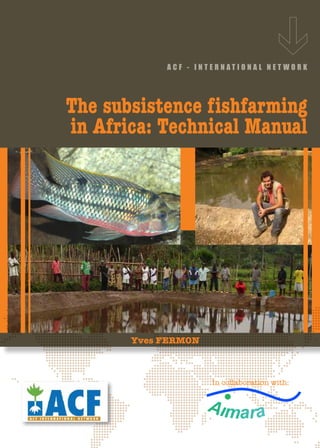
Cover photos:
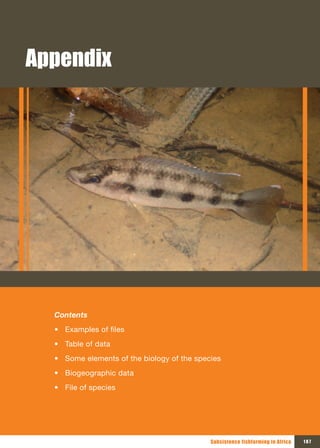
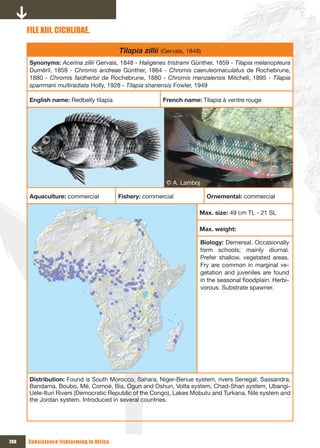
Ö Top right: Tilapia zillii - © Anton Lamboj
Ö Top left: Pond built by ACF in DRC, 2008 - © François Charrier
Ö Bottom: Beneficiaries in front of the pond they have done, Liberia, ASUR, 2006 - © Yves Fermon


ii    Subsistence fishfarming in Africa
OBJECTIVES OF THE MANUAL
 Ö The objective of the handbook is to bring to the essential elements for the installa-
 tion of production of animal proteins “fish” to lower costs in relation to the existing
 natural resources and with a minimum of external contributions. This in a context of
 subsistence.

 Ö In this case, it is a question above all of proposing an information system strategic
 plan of a system making it possible to produce consumable fish in the shortest pos-
 sible time, and with lower costs to mitigate the lack of animal proteins. This does not
 prevent the installation of structures having a certain durability. The unit must be
 adapted to the environmental context.
  In this work, it is a question of providing a guide:
¾ To program managers and their technical teams,
¾ To managers at headquarters to monitor the success of programs.

    This manual covers:
Ö The various stages of setting up a «fishfarming» program,
     As of the arrival on the ground, it is a question of evaluating the renewable resources present, the
needs for the populations and the already existing supply in fish. Then, a whole process is connected
involving the technical sides of the installation of fish ponds, follow-ups of the biological aspects
of the ponds. Finally, it is a question of managing and of carrying out a follow-up of the ponds and
production of fish.
Ö The constraints that must be taken into account by the field actors.
      Various constraints will influence the choice for the development of fish production or not and
what kind of techniques for a good fit with human needs and the environment. They are environmen-
tal, in conjunction with the available resources, geomorphology, climate and hydrology of the area of
intervention. But they are also a social and cultural development, with the beliefs and taboos, land
issues and laws. The fact that, according the region of intervention, the ethnic and social groups and
countries, modes of intervention will be different.


WHY ANOTHER HANDBOOK?
    Several organizations have published manuals for the establishment of fish farms in Africa.
    The first books calling systems in place at the time of the colonial system, but as a fish produc-
tion for food self-sufficiency. However, after many trials, the majority of them has proved unsustai-
nable in the longer term, for various reasons.
    The studies undertaken by different agencies of national or international research as the World-
Fish Center (formerly ICLARM), CIRAD, IRD (ex ORSTOM), Universities of Louvain and Liège ... have
provided evidence concerning the failures and have provided solutions and contributions to knowle-
dge in both technical, social or biological species used.
    However, looking at all the works, one can put forward four points:
    9 Most handbooks are intended for production systems of fish for sale, involving:
         ¾ A temporal investment which can become important and which leads to a professio-
    nalisation. This requires a technology with the appropriate training of technicians on aspects of
    reproduction, nutrition or health of fish, either for the establishment of systems to produce food
    to feed all the fish... Application requires external inputs whose supply may become a barrier for
    small producers.
       ¾ Financial investment for, sometimes, land, establishment of ponds, the use of workers,
    qualified technicians…


                                                                        Subsistence fishfarming in Africa   III
9 The handbooks do not take account of the local biodiversity. Indeed, many introductions and
     movements of species were made with the intention to set up farms and caused significant disrup-
     tion to the balance of ecological systems.
          9 Whereas these documents present solutions which appear universal, the great variation of
     the geomorphology, hydrology and the climate in Africa will make that there exist conditions very
     different according to the zones from interventions.
          9 Few works also reflect the socio-ethnological aspects. Educational levels, beliefs and
     cultures of different peoples and the appropriation of this type of project by the people is often put
     forward, despite real progress in recent years.
          9 Most of these books are made for aspects related to development and therefore with a po-
     tentiality of longer temporal installation.


     LIMITS OF THIS HANDBOOK
          This handbook is primarily a guide to give to the actors the stages and procedures to be
     followed. However, it will be necessary to adapt these stages and procedures according to the
     context in which the actions will be undertaken:
          9 From a social, cultural and political point of view
               ¾ Culture and belief
          Food taboos exist, to varying degrees in all cultures. It is obvious that food, the basic element
     for the subsistence of man, is a field where the distinction between allowed and forbidden, the pure
     and impure, is fundamental for health reasons, moral or symbolic systems.
               ¾ Local law
          Each country is governed by laws concerning wildlife protection and movement of species from
     one region to another. These laws can be enacted at the regional level and at all administrative levels,
     to the village itself. They may be linked to land issues.
          9 From an environmental point of view:
               ¾ Biodiversity and available resources
          The fauna of African fish includes over 3200 described species belonging to 94 families, but all
     are not exploitable. The distribution is not uniform across the continent and some species are known
     only of well delimited zones. For example, the African Great Lakes have a fauna whose majority of
     the species are endemic there. This means to act with a good knowledge of the fauna compared to
     the potentially exploitable species and the ecological risks of damages that could be related to the
     establishment of a fishfarming.
               ¾ Geomorphology, climate and hydrology
          If wildlife is so diverse across the continent, it is the result of historical and geological events
     that led Africa over millions of years. This has caused major hydrological changes. On a smaller time
     scale, climate variations are crucial for the viability of a fish. The availability of water, with its different
     uses (drinking, domestic, agriculture ...) is a limiting factor and a source of conflict. The type of terrain
     and the nature of the soils of the region will lead to technical problems for the achievement of the
     pond it will be solved.


     THE STEPS
         The first handbook is intended for internal use to Action Against Hunger network, therefore,
     with restricted diffusion. If possible and requests, a handbook with corrections and revisions will be
     proposed later. Then, an external diffusion to ACF could be considered.


iv   Subsistence fishfarming in Africa
ACRONYMS


ACF/AAH: Action Contre la Faim / Action Against Hunger

AIMARA: Association de spécialistes oeuvrant pour le développement et
        l’application des connaissances sur les poissons et les rela-
        tions Homme-Nature

APDRA-F: Association Pisciculture et Développement Rural

ASUR:     Association d’Agronomie et Sciences Utiles à la Réhabilitation
          des populations vulnérables

CIRAD:    Centre de coopération Internationale en recherche Agrono-
          mique pour le Développement

CNRS:	    Centre	national	de	la	recherche	scientifique

FAO:      Food and Agriculture Organization of the United Nations

IRD:      Institut de Recherche pour le Développement

MNHN:     Muséum national d’Histoire naturelle

UNO:      United Nation Organisation


NGO:      Non Governemental Organisation

GIS:      Geographic Informatic System

BDC:      Biological Diversity Convention

IBI:      Integrity Biological Indice


DRC:      Democratic Republic of Congo (ex-Zaïre)


                                                  Subsistence fishfarming in Africa   V
Aımara
                     Association of specialists working for the development and the
                     application of knowledge on fish and Man-Nature relationships


          The aquatic environments and the management of water represent one of the major stakes for the
      decades to come.
          The fish are a source of proteins of good quality for the human consumption, but also a source of
      income considerable for the developing as developed countries.
          However, demography, the urban development, the installation of the rivers, industrialization, the
      climate changes, deforestation… have irreversible consequences on the water courses and the biodi-
      versity and thus on the men who live of these resources.


      Ö Goals
      Research
          9 To acquire new ichthyologic knowledge - systematic, biology, ecology, ethology… - on
      the fresh water, brackish and marine species;
          9 To highlight knowledge and practices relating to fishing and management of the biodi-
      versity and their modes of transmission.
      Diffusion of knowledge
          9 To disseminate the results to the local populations, the general public and the scientific
      community by publications, exhibitions, contacts with the media and Internet.
      Sustainable management of environment and resources
          9 To sensitive by using the social, cultural, food, economic and patrimonial values of the
      species with the aim of the conservation, of the management and of the preservationof the
      biodiversity;
          9 To collaborate with the local actors in the durable management of the aquatic resources.


      Ö Scope of activities
      •     Studies of the characteristics of environments and impacts;
      •     Studies of the biology, biogeography, ecology and behavior of species;
      •     Anthropological and socio-economic relations man - Nature studies;
      •     Ecosystem modeling, statistical analysis:
      •     Development of databases;
      •     Expertise and faunistic inventories.                Association AÏMARA
                                                                50 avenue de La Dhuys
                                                                93170 Bagnolet - FRANCE
                                                                association.aimara@gmail.com


vi   Subsistence fishfarming in Africa
ACKNOWLEDGEMENTS


Ö   ACF
          Devrig VELLY - Senior Food Security advisor, AAH

          Cédric BERNARD - Food Security advisor in DRC, AAH

          François CHARRIER - Food Security advisor in DRC, AAH, Rereader
Ö   Aimara
          François MEUNIER - Emeritas Professor at MNHN, President of AIMA-
          RA, Rereader

          Patrice PRUVOST - Secretary of AIMARA

          Hélène PAGÉZY - Researcher, CNRS
Ö   Other collaborators
          Roland BILLARD - Emeritas Professor at MNHN, Rereader

          Didier PAUGY - Research Director at IRD

          Thierry OBERDORFF - Research Director at IRD

          Jérome LAZARD - Research Director at IRD

          Alain BARBET - Agronomist

          Anton LAMBOJ - Researcher, University of Vienna, Austria.

          Mickael NEGRINI - Fishfarming technician

          Kirk WINNEMILLER - Researcher, University of Texas, USA

          Étienne BEZAULT - Researcher, EAWAG, Switzerland

          Fabien NANEIX - Teacher


                                                      Subsistence fishfarming in Africa   VII
CONTENTS

       Part I - INTRODUCTION AND THEORICAL ASPECTS              1
       Chapter 01 - FISHFARMING: AIM AND ISSUES                 3
       I.   WHY?                                                3
       II. PRESSURE ON THE RESOURCES                            6
            II.1.	Modifications	of	the	habitat	                 6
            II.2. Water pollution                               8
            II.3. Fisheries impact                              9
            II.4. Introductions                                 9
       III. INTERNATIONAL ASPECTS                              12
       IV. OBJECTIVE OF FISHFARMING                            13

       Chapter 02 - TYPE OF FISHFARMING                        15
       I.   VARIOUS TYPES OF FISHFARMING                       15
       II. SOME HISTORY…                                       17
       III. A FISHFARMING OF SUBSISTENCE: GOAL AND PRINCIPLE   17
       IV. POLYCULTURE VS MONOCULTURE                          18

       Chapter 03 - BIOGEOGRAPHY AND FISH SPECIES              21
       I.   GEOGRAPHY                                          21
       II. THE SPECIES                                         21
           II.1. The Cichlidae                                 22
           II.2.	The	Siluriformes	or	catfishes	                23
           II.3. The Cyprinidae                                23
           II.4. Other families and species                    24

       SUMMARY - PART 01                                       25

       Part II - PRACTICAL ASPECTS                             27
       Chapter 04 - THE INITIAL PRE-PROJECT ASSESSMENT         33
       I.   THE ECOSYSTEM                                      33
       II. THE ASSESSMENT                                      36
       III. PRINCIPLE                                          37
       IV. BIOLOGICAL AND ECOLOGICAL ASSESSMENT                38
       V. SOCIO-ETHNOLOGY                                      40
            V.1. Socio-economic and cultural characteristics   40


viii    Subsistence fishfarming in Africa
V.2. The relations man-resources                                                40
     V.3. The relations man-man                                                      41

Chapter 05 - VILLAGES AND SITES SELECTIONS                                          43
I. THE VILLAGES SELECTION                                                            43
II. THE SITES SELECTION                                                             45
    II.1. The water                                                                 45
    II.2. The soil                                                                  50
    II.3. The topography                                                            53
    II.4. The other parameters                                                      56
Chapter 06 - CHARACTERISTICS OF THE PONDS                                           59
I.   DESCRIPTION                                                                    59
II. TYPES OF PONDS                                                                  59
    II.1. Barrage ponds                                                             62
    II.2. Diversion ponds                                                           62
    II.3. Comparison                                                                62
III. CHARACTERISTICS                                                                63
     III.1. General criteria                                                        63
     III.2. Pond shape                                                              66
     III.3. According the slope                                                     67
     III.4. Layout of ponds                                                         67
     III.5. Size and depth of the ponds                                             68
     III.6. Differences in levels                                                   69
IV. SUMMARY                                                                          71
Chapter 07 - THE CONSTRUCTION OF POND                                                73
I.   THE DESIGN PLAN                                                                 73
II. THE CLEANING OF THE SITE                                                         75
III. WATER SUPPLY: WATER INTAKE AND CHANNEL                                          77
IV. DRAINAGE: CHANNEL OF DRAINING AND DRAINAGE                                       81
V. THE PICKETING OF THE POND                                                         82
VI. THE CONSTRUCTION OF THE DIKES                                                   83
VII. THE DEVELOPMENT OF THE PLATE (BOTTOM)                                          89
VIII. THE CONSTRUCTION OF THE POND INLET AND OUTLET                                 90
     VIII.1. Pond inlet structures                                                  90
     VIII.2. Pond outlet structures                                                 94
     VIII.3. Sedimentation tank                                                    105
Ix. ADDITIONAL INSTALLATIONS                                                       106
    Ix.1. The anti-erosive protection                                              106
    Ix.2. The	anti-erosive	fight	                                                  107
    Ix.3. Biological plastic                                                       108


                                                      Subsistence fishfarming in Africa   Ix
Ix.4. The fence                                   108
         Ix.5. The	filling	of	the	pond	and	tests	          109
    x. NECESSARY RESOURCES                                 109
       x.1. Materials                                      109
       x.2. Human Resources and necessary time             110
    xI. SUMMARY                                            112

    Chapter 08 - BIOLOGICAL APPROACH                       113
    I.   THE LIFE IN A POND                                113
         I.1. Primary producers                            115
         I.2. The invertebrates                            116
         I.3. The vertebrates                              118
    II. THE FERTILIZATION                                  118
        II.1. The fertilizers or manure                    118
        II.2. The compost                                  121
    III. SUMMARY                                           126

    Chapter 09 - THE HANDLING OF THE FISH                  127
    I.   CATCH METHODS                                     127
         I.1. Seine nets                                   129
         I.2. Gill nets                                    132
         I.3. Cast nets                                    133
         I.4. Dip or hand nets                             134
         I.5. Traps                                        135
         I.6. Handline and hooks                           136
    II. THE TRANSPORT OF LIVE FISH                         136
    III. THE PRODUCTION OF FINGERLINGS OF TILAPIA          139
         III.1. The recognition of the sex                 139
         III.2. The nursery ponds                          139
         III.3. Hapas and cages                            142
         III.4. The other structures                       145
    IV. THE STOCKING OF THE PONDS                          146
    V. THE FOLLOW-UP OF FISH                               149
    VI. DRAINING AND HARVEST                               150
        VI.1.Intermediate	fishings	                        150
        VI.2. Complete draining                            151
    VII. SUMMARY                                           152

    Chapter 10 - MAINTENANCE AND MANAGEMENT OF THE PONDS   153
    I.   THE MAINTENANCE OF THE PONDS                      153
         I.1. The	diseases	of	fish	                        153
         I.2. The	feeding	of	the	fish	                     158
         I.3. Daily activities of follow-up                162
         I.4. Maintenance work after draining              163


x    Subsistence fishfarming in Africa
I.5. Fight against predators                                                        164
     I.6. Summary                                                                        164
II. THE TECHNIQUES OF CONSERVATION AND OF TRANSFORMATION                                 165
III. THE MANAGEMENT OF PONDS                                                             167
     III.1. Fish Stocks and useful indices for monitoring                                167
     III.2. The expected yields                                                          168
     III.3. The management of harvests                                                   168
     III.4. Several kinds of production costs                                            170
     III.5. Record keeping and accounting                                                170
     III.6. The formation                                                                 171
IV. PONDS AND HEALTH                                                                      171
GENERAL SUMMARY                                                                          173
REFERENCES                                                                               177
GLOSSARY                                                                                 179
APPENDIx                                                                                 187
Appendix 01 - ExAMPLES OF FILES                                                          189
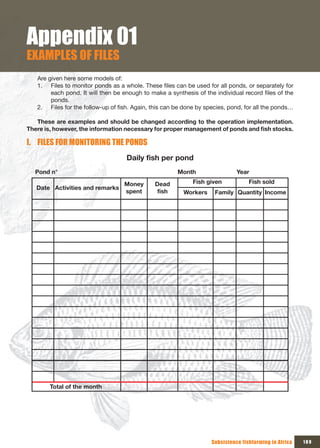
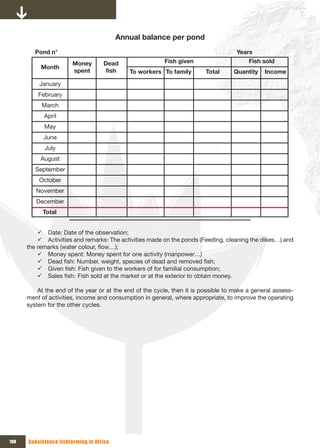
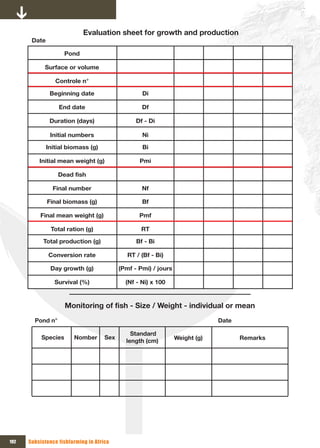
I.   FILES FOR MONITORING THE PONDS                                                      189
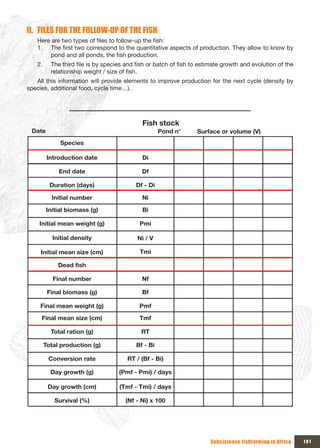
II. FILES FOR THE FOLLOW-UP OF THE FISH                                                   191

Appendix 02 - TABLE OF DATA                                                              193
Appendix 03 - SOME ELEMENTS OF THE BIOLOGY OF THE SPECIES                                207
I.   THE MORPHOLOGY AND THE SYSTEMATIC                                                   207
II. THE BIOLOGY OF CICHLIDAE                                                             216
    II.1. The taxonomy                                                                   216
    II.2. The feeding habits                                                             217
    II.3. The reproduction and parental care                                             218
III. THE BIOLOGY OF SILURIFORMES OR CATFISH                                              226
     III.1. The Clariidae                                                                226
     III.2. The Claroteidae and Auchenoglanididae                                        231
     III.3. The Schilbeidae                                                              233
     III.4. The Mochokidae                                                               233
IV. THE OTHER FAMILIES                                                                   234
    IV.1. The Cyprinidae                                                                 234
    IV.2. The Citharinidae                                                               234
    IV.3. The Distichodontidae                                                           236
    IV.4. The Channidae                                                                  236
    IV.5. The Latidae                                                                    237
    IV.6. The Arapaimidae                                                                237
Appendix 04 - BIOGEOGRAPHIC DATA                                                         239
Appendix 05 - FILE OF SPECIES                                                            255

                                                            Subsistence fishfarming in Africa   xI
LIST OF FIGURES
      Part I - INTRODUCTION AND THEORICAL ASPECTS                                                                         1
      Figure 1.    World capture and aquaculture production (FAO, 2007).                                             3
      Figure 2.    Inland capture fisheries by continent in 2004 (FAO, 2007).                                        5
      Figure 3.    Aquaculture production by regional grouping in 2004 (FAO, 2007).                                  5
      Figure 4.    Relative contribution of aquaculture and capture fisheries to food fish consumption (FAO, 2007). 6
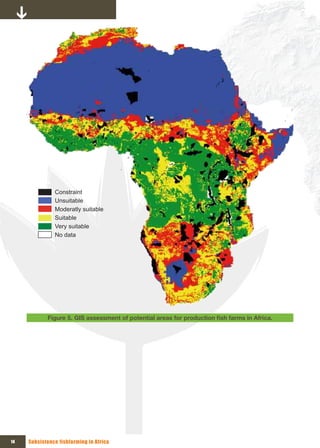
      Figure 5.    GIS assessment of potential areas for production fish farms in Africa.                           14
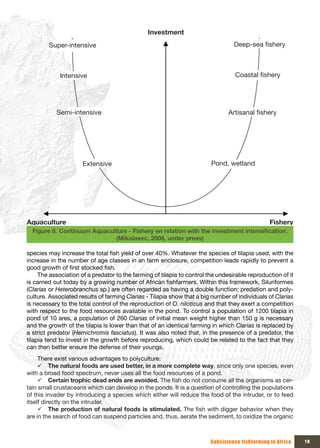
      Figure 6.    Continuum Aquaculture - Fishery en relation with the investment intensification.                 19
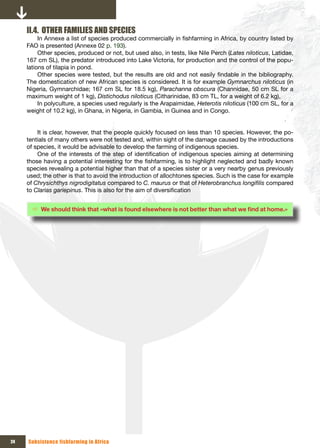
      Figure 7.    The ichthyoregions and the countries.                                                            22

      Part II - PRACTICAL ASPECTS                                                                                        27
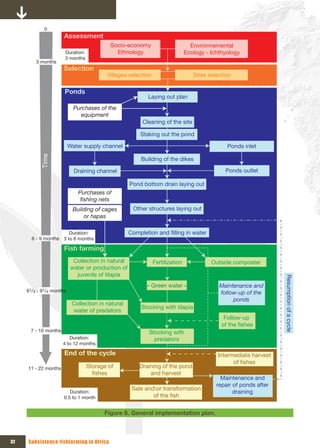
      Figure 8.    General implementation plan.                                                                          32
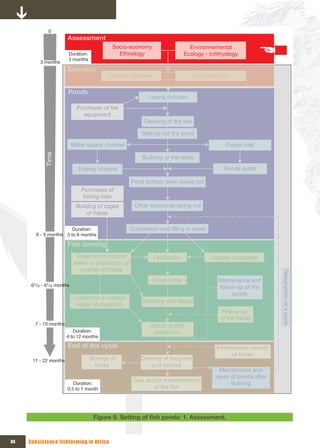
      Figure 9.    Setting of fish ponds: 1. Assessment.                                                                 34
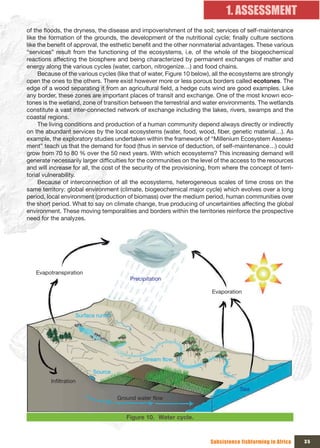
      Figure 10.   Water cycle.                                                                                          35
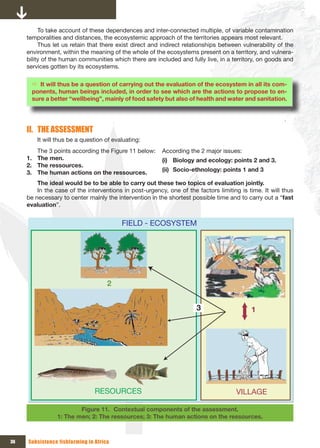
      Figure 11.   Contextual components of the assessment.                                                              36
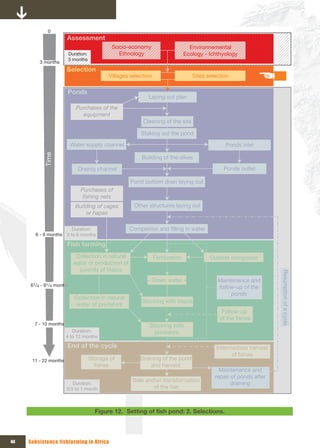
      Figure 12.   Setting of fish pond: 2. Selections.                                                                  44
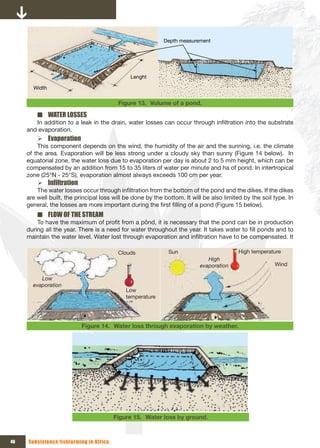
      Figure 13.   Volume of a pond.                                                                                     46
      Figure 14.   Water loss through evaporation by weather.                                                            46
      Figure 15.   Water loss by ground.                                                                                 46
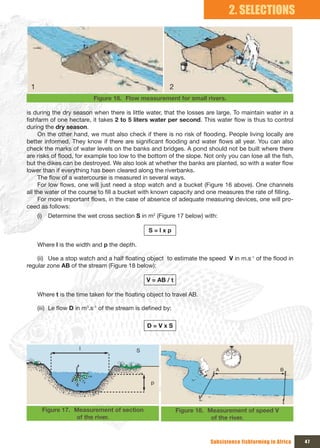
      Figure 16.   Flow measurement for small rivers.                                                                    47
      Figure 17.   Measurement of section of the river.                                                                  47
      Figure 18.   Measurement of speed V of the river.                                                                  47
      Figure 19.   Examples of factors that may affect water quality.                                                    48
      Figure 20.   Secchi disk.                                                                                          49
      Figure 21.   Impermeability of clay and sandy soils.                                                               50
      Figure 22.   Test of the ball (1).                                                                                 51
      Figure 23.   Test of the ball (2).                                                                                 51
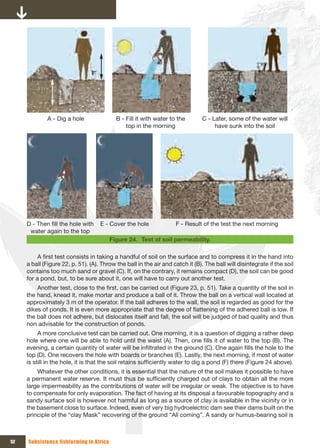
      Figure 24.   Test of soil permeability.                                                                            52
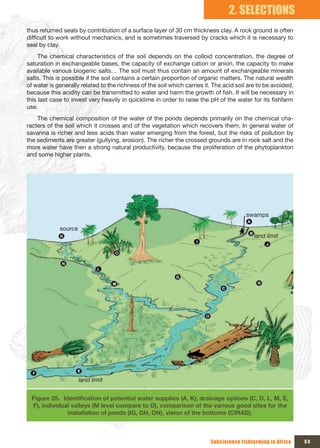
      Figure 25.   Identification of potential water supplies, drainage options, individual valleys, comparison of the
                   various good sites for the installation of ponds, vision of the bottoms (CIRAD).                      53
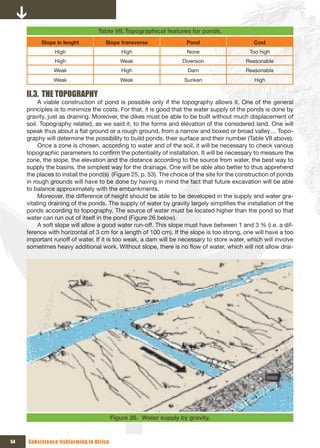
      Figure 26.   Water supply by gravity.                                                                              54
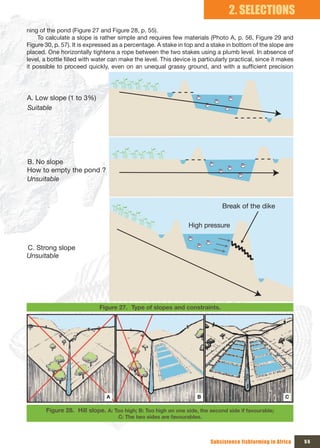
      Figure 27.   Type of slopes and constraints.                                                                       55
      Figure 28.   Hill slope.                                                                                           55
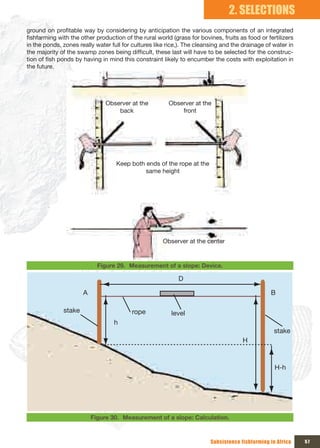
      Figure 29.   Measurement of a slope: Device.                                                                       57
      Figure 30.   Measurement of a slope: Calculation.                                                                  57
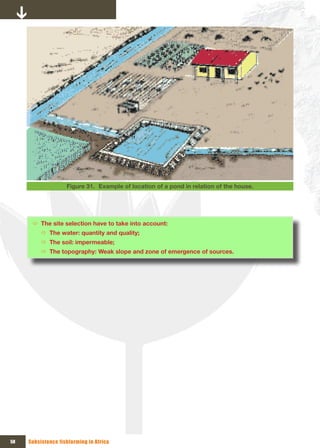
      Figure 31.   Example of location of a pond in relation of the house.                                               58
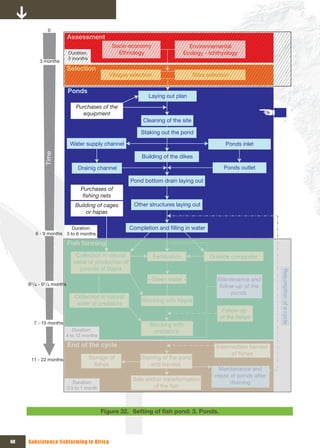
      Figure 32.   Setting of fish pond: 3. Ponds.                                                                       60
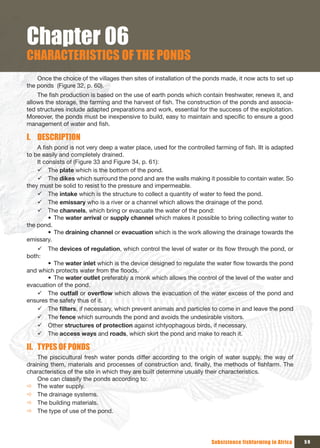
      Figure 33.   Main components of a pond.                                                                            61
      Figure 34.   Cross section of a ponds.                                                                             61
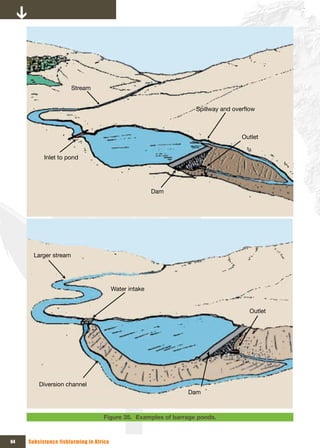
      Figure 35.   Examples of barrage ponds.                                                                            64
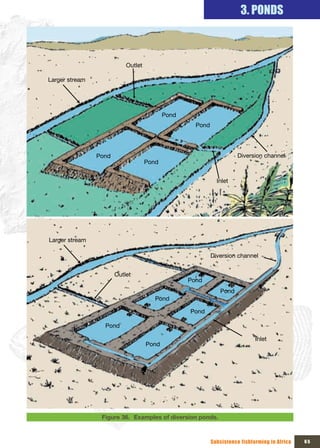
      Figure 36.   Examples of diversion ponds.                                                                          65
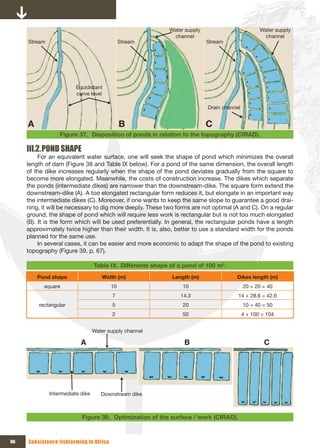
      Figure 37.   Disposition of ponds in relation to the topography (CIRAD).                                           66
      Figure 38.   Optimization of the surface / work (CIRAD).                                                           66
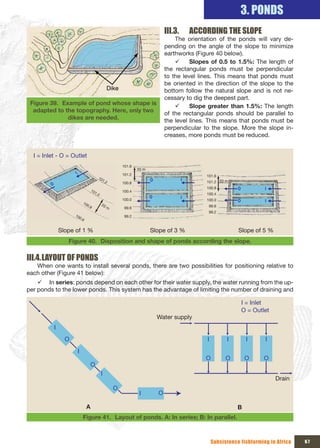
      Figure 39.   Example of pond whose shape is adapted to the topography.                                             67
      Figure 40.   Disposition and shape of ponds according the slope.                                                   67
      Figure 41.   Layout of ponds. In series; In parallel.                                                              67
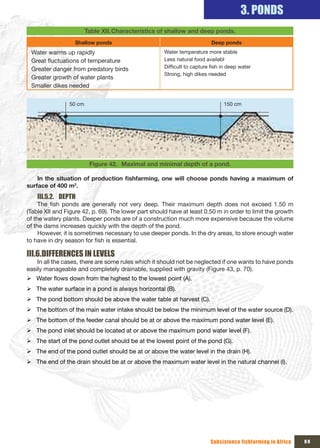
      Figure 42.   Maximal and minimal depth of a pond.                                                                  69
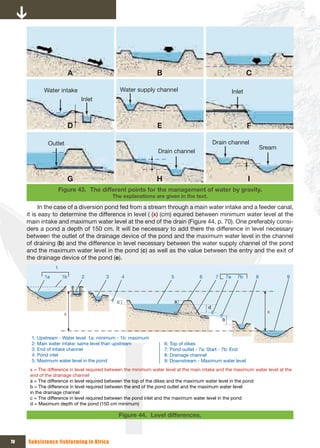
      Figure 43.   The different points for the management of water by gravity.                                          70
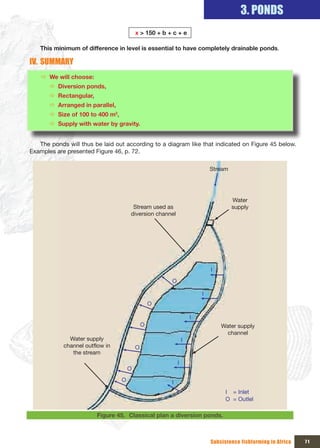
      Figure 44.   Level differences.                                                                                    70
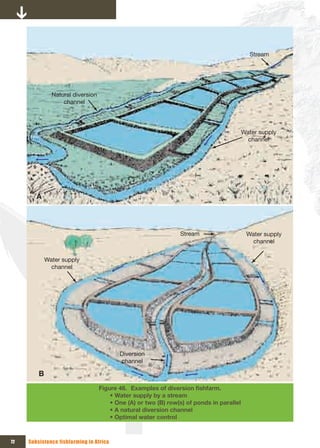
      Figure 45.   Classical plan a diversion ponds.                                                                     71
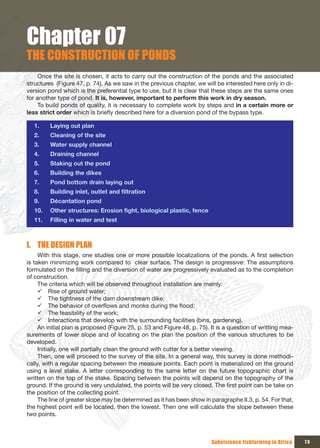
      Figure 46.   Examples of diversion fishfarm.                                                                       72


xii   Subsistence fishfarming in Africa
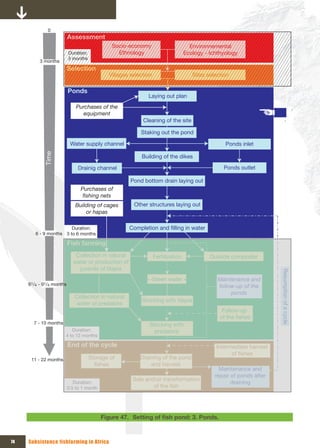
Figure 47.   Setting of fish pond: 3. Ponds.                                                                      74
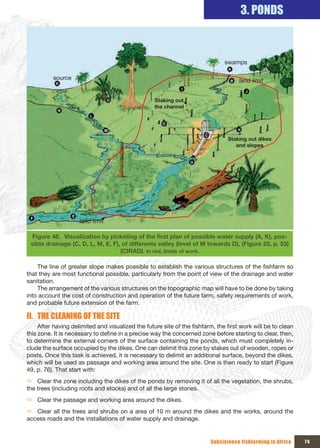
Figure 48.   Visualization by picketing of the first plan of possible water supply, possible drainage, of diffe-
             rents valley (CIRAD).                                                                                75
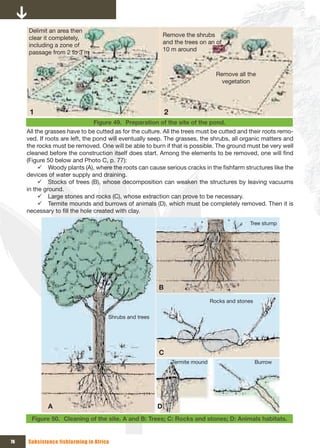
Figure 49.   Preparation of the site of the pond.                                                                 76
Figure 50.   Cleaning of the site.                                                                                76
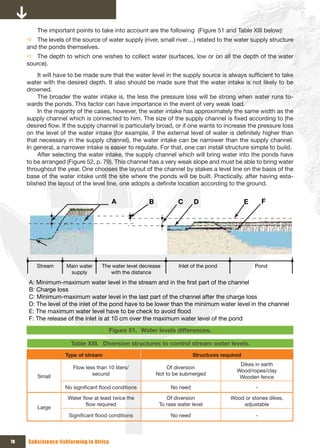
Figure 51.   Water levels differences.                                                                            78
Figure 52.   Setting of the water supply channel.                                                                 79
Figure 53.   Transverse profile of the channel. Measure and slope of sides.                                       79
Figure 54.   Channel digging.                                                                                     80
Figure 55.   Setting of draining channel.                                                                         81
Figure 56.   Level of draining channel.                                                                           81
Figure 57.   Picketing of the pond and the dikes.                                                                 82
Figure 58.   Cleaning of the zones where the dikes will be build.                                                 83
Figure 59.   Definition of the different types of dikes.                                                          83
Figure 60.   Description and proportion of a dike (of 1 m high).                                                  83
Figure 61.   Pressure difference on a dike.                                                                       84
Figure 62.   Dikes. Good high; Dikes too small.                                                                   84
Figure 63.   Digging of the cut-off trench for clay core.                                                         85
Figure 64.   Clay core and saturation of the dikes.                                                               85
Figure 65.   High of a dike. Depth; Freeboard; Settlement.                                                        85
Figure 66.   High of the structure.                                                                               85
Figure 67.   Dimension of a dike.                                                                                 86
Figure 68.   Calculation of the slope of the dikes.                                                               87
Figure 69.   Construction of the dikes (I). Traditionnal - By blocks.                                             88
Figure 70.   Construction the dikes (II).                                                                         88
Figure 71.   Preparation of the bottom.                                                                           88
Figure 72.   The bottom or plate. Direction of the slope and drain setting: In ray; As «fish bones».              89
Figure 73.   Bottom drain.                                                                                        90
Figure 74.   Cross cut of a pond at the bottom drain.                                                             90
Figure 75.   Cross cut of the inlet of a pond.                                                                    91
Figure 76.   Pipe inlet.                                                                                          91
Figure 77.   End of bamboo pipe.                                                                                  91
Figure 78.   Gutter inlet.                                                                                        92
Figure 79.   Different types of gutter.                                                                           92
Figure 80.   Canal inlet.                                                                                         92
Figure 81.   Diagram of an example of sand filter.                                                                93
Figure 82.   Turn-down pipe inside pond outlet.                                                                   95
Figure 83.   Composition of a monk.                                                                               96
Figure 84.   Position of the monk in the pond.                                                                    97
Figure 85.   Position of the monk according the downstream dike.                                                  97
Figure 86.   Wooden monk. Small and medium size.                                                                  98
Figure 87.   Wooden pipe.                                                                                         99
Figure 88.   Mould of a monk. Front view; Upper view.                                                            100
Figure 89.   Monk. Upper view and example of size.                                                               101
Figure 90.   Functioning of a monk.                                                                              102
Figure 91.   Concrete pipe. Croos cut; Mould; Final pipe.                                                        103
Figure 92.   Setting of a pipe overflow.                                                                         104
Figure 93.   Type of setting basin. Natural; In concrete.                                                        105
Figure 94.   Setting basin. Normal; Improved.                                                                    106
Figure 95.   Setting of a vegetable cover on the dikes.                                                          106
Figure 96.   Dikes with plants. Vegetable garden; Small animals; Trees.                                          107
Figure 97.   Type of erosion and soil conservation. Streaming; Infiltration; Protection channel.                 107
Figure 98.   Fences. In scrubs; In wood or bamboo.                                                               108
Figure 99.   Schematic life cycle of a pond.                                                                     113


                                                                               Subsistence fishfarming in Africa       xIII
Figure 100.   Setting of fish pond: 4. Fishfarming.                                                              114
      Figure 101.   Trophic pyramids.                                                                                  115
      Figure 102.   Differents algae.                                                                                  115
      Figure 103.   Aquatic plants.                                                                                    116
      Figure 104.   Rotifers.                                                                                          116
      Figure 105.   Crustaceans.                                                                                       116
      Figure 106.   Insects.                                                                                           117
      Figure 107.   Molluscs.                                                                                          117
      Figure 108.   Vertebrates other than fish.                                                                       118
      Figure 109.   Beneficial effects of organic fertilizers.                                                         119
      Figure 110.   Preparation of dry compost.                                                                        123
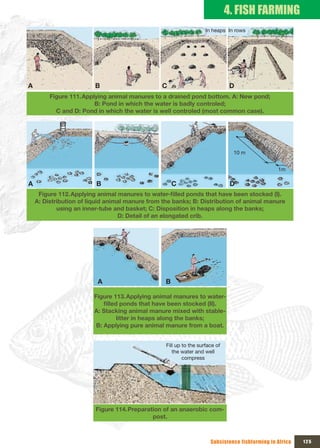
      Figure 111.   Applying animal manures to a drained pond bottom.                                                  125
      Figure 112.   Applying animal manures to water-filled ponds that have been stocked (I).                          125
      Figure 113.   Applying animal manures to water-filled ponds that have been stocked (II).                         125
      Figure 114.   Preparation of an anaerobic compost.                                                               125
      Figure 115.   Compost heap in crib in a pond.                                                                    126
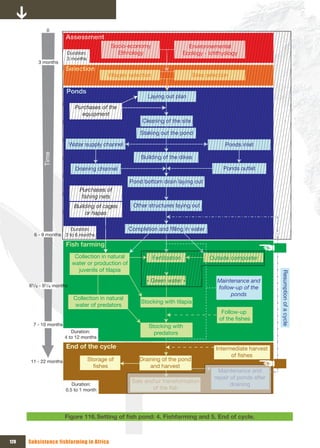
      Figure 116.   Setting of fish pond: 4. Fishfarming and 5. End of cycle.                                          128
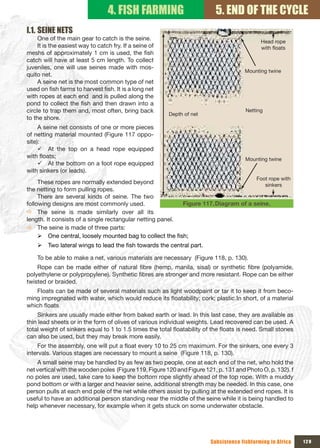
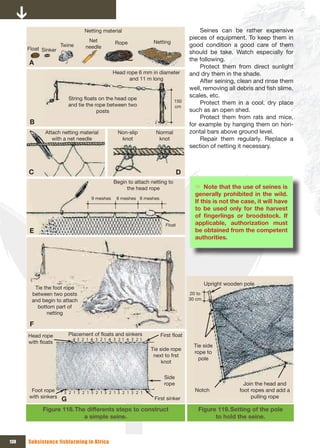
      Figure 117.   Diagram of a seine.                                                                                129
      Figure 118.   The differents steps to construct a simple seine.                                                  130
      Figure 119.   Setting of the pole to hold the seine.                                                             130
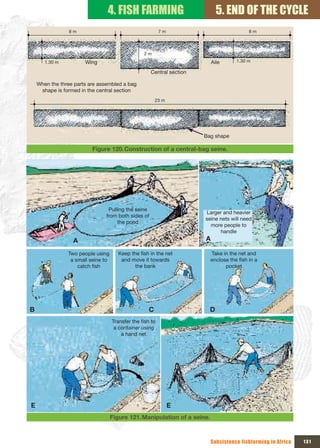
      Figure 120.   Construction of a central-bag seine.                                                               131
      Figure 121.   Manipulation of a seine.                                                                           131
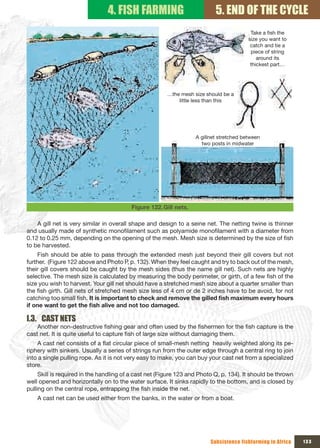
      Figure 122.   Gill nets.                                                                                         133
      Figure 123.   Use of a cast net.                                                                                 134
      Figure 124.   Different types of dip nets.                                                                       135
      Figure 125.   Differents types of local traps.                                                                   135
      Figure 126.   Fish packing in plastic bags.                                                                      138
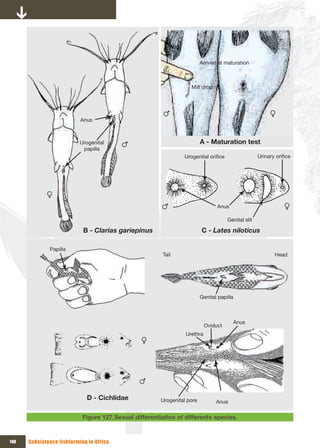
      Figure 127.   Sexual differentiation of differents species.                                                      140
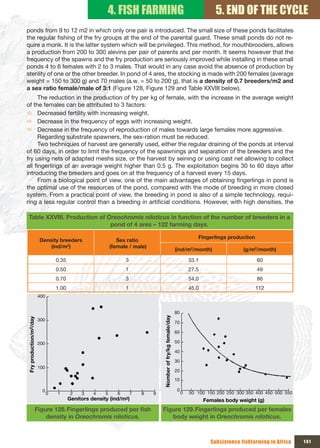
      Figure 128.   Fingerlings produced per fish density in Oreochromis niloticus.                                    141
      Figure 129.   Fingerlings produced per females body weight in Oreochromis niloticus.                             141
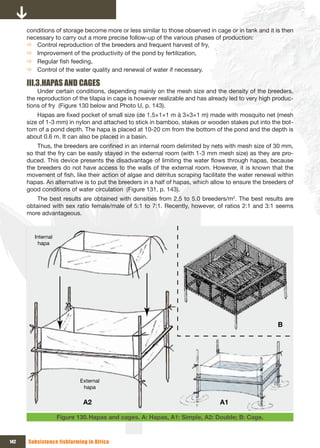
      Figure 130.   Hapas and cages.                                                                                   142
      Figure 131.   Differents systems of reproduction of tilapia in hapas and cages.                                  143
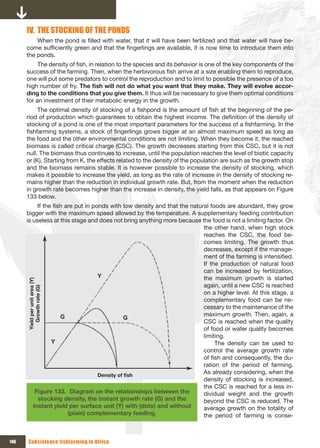
      Figure 132.   Live fish storage in hapas or nets.                                                                144
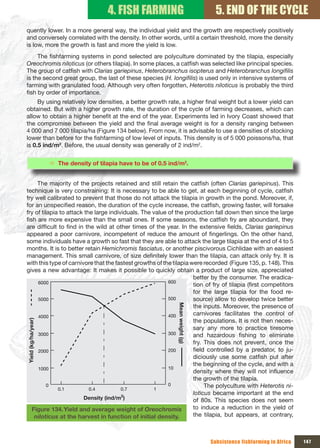
      Figure 133.   Diagram on the relationships between the stocking density, the instant growth rate (G) and the
                    instant yield per surface unit (Y) with and without complementary feeding.                         146
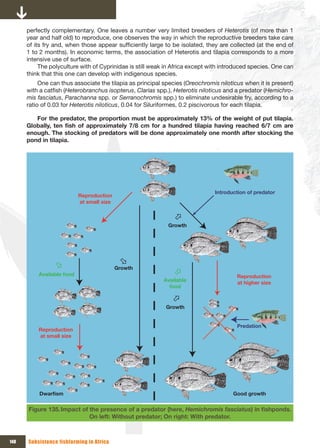
      Figure 134.   Yield and average weight of Oreochromis niloticus at the harvest in function of initial density.   147
      Figure 135.   Impact of the presence of a predator (here, Hemichromis fasciatus) in fishponds.                   148
      Figure 136.   Measurement gears.                                                                                 149
      Figure 137.   Length - Weight relationships.                                                                     150
      Figure 138.   Harvest of the fish.                                                                               151
      Figure 139.   Examples of way to collect the fish outside of the pond.                                           152
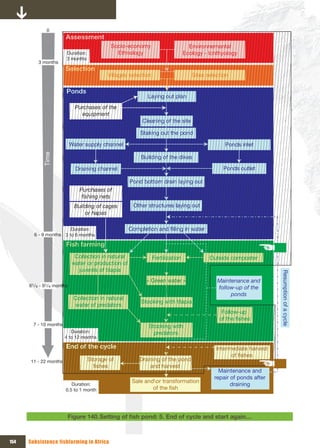
      Figure 140.   Setting of fish pond: 5. End of cycle and start again…                                             154
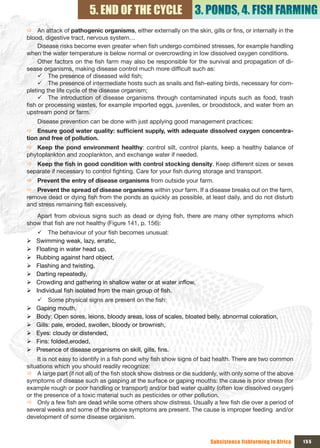
      Figure 141.   Fish piping on surface; Dead fish floating on surface.                                             156
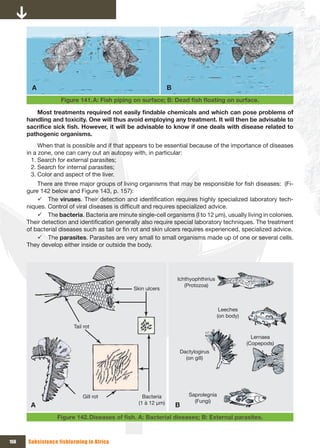
      Figure 142.   Diseases of fish. Bacterial diseases; External parasites.                                          156
      Figure 143.   Example of life cycles of fish disease factors.                                                    157
      Figure 144.   Structures to facilitate the feeding.                                                              161
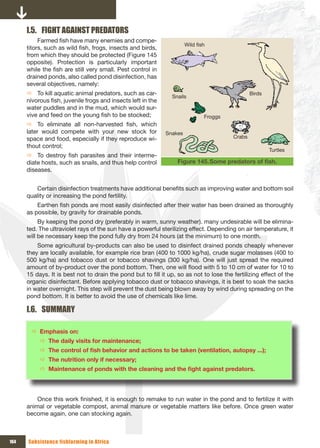
      Figure 145.   Some predators of fish.                                                                            164
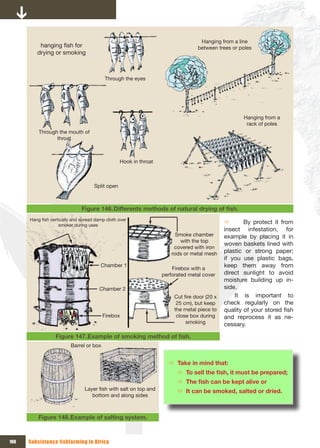
      Figure 146.   Differents methods of natural drying of fish.                                                      166
      Figure 147.   Example of smoking method of fish.                                                                 166
      Figure 148.   Example of salting system.                                                                         166
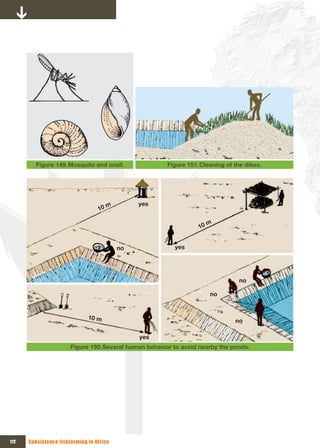
      Figure 149.   Mosquito and snail.                                                                                172
      Figure 150.   Several human behavior to avoid nearby the ponds.                                                  172
      Figure 151.   Cleaning of the dikes.                                                                             172


xiv   Subsistence fishfarming in Africa
APPENDIx                                                                                                          187
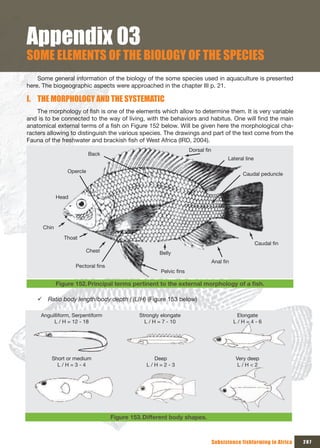
Figure 152.   Principal terms pertinent to the external morphology of a fish.                                     207
Figure 153.   Different body shapes.                                                                              207
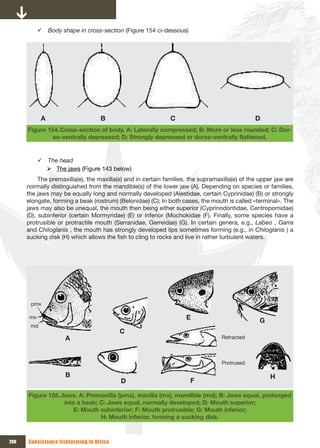
Figure 154.   Cross-section of body.                                                                              208
Figure 155.   Jaws.                                                                                               208
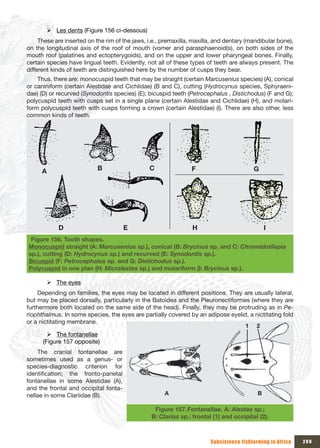
Figure 156.   Tooth shapes.                                                                                       209
Figure 157.   Fontanellae.                                                                                        209
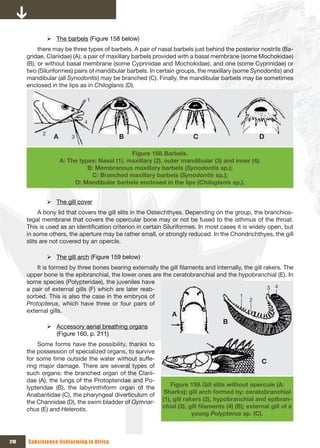
Figure 158.   Barbels.                                                                                            210
Figure 159.   Gill slits without opercule; gill arch formed by ceratobranchial, gill rakers, hypobranchial and
              epibranchial, gill filaments; external gill.                                                        210
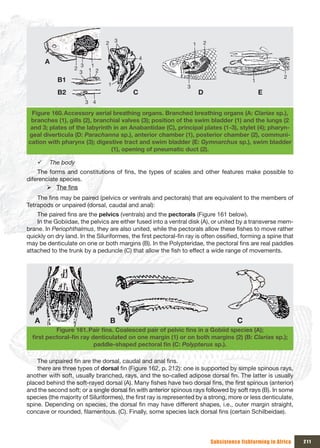
Figure 160.   Accessory aerial breathing organs.                                                                  211
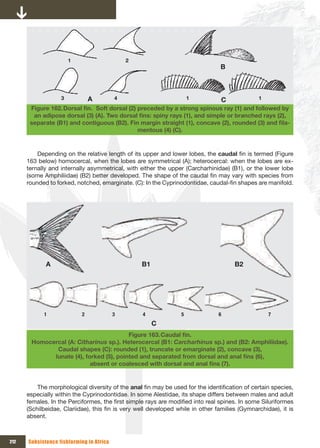
Figure 161.   Pair fins.                                                                                          211
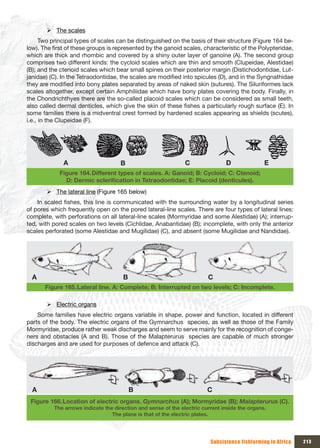
Figure 162.   Dorsal fin.                                                                                         212
Figure 163.   Caudal fin.                                                                                         212
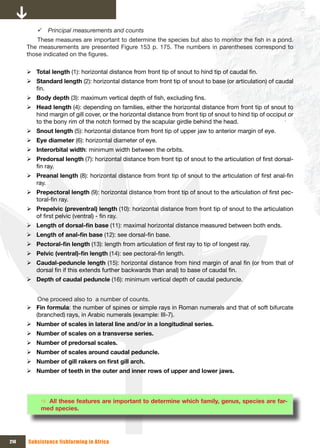
Figure 164.   Different types of scales.                                                                          213
Figure 165.   Lateral line.                                                                                       213
Figure 166.   Location of electric organs.                                                                        213
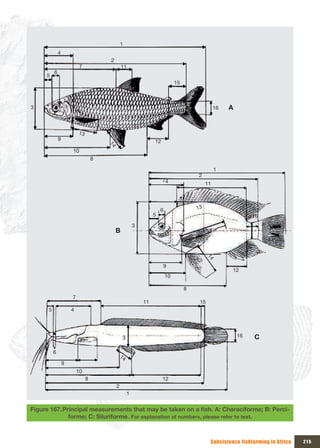
Figure 167.   Principal measurements that may be taken on a fish.                                                 215
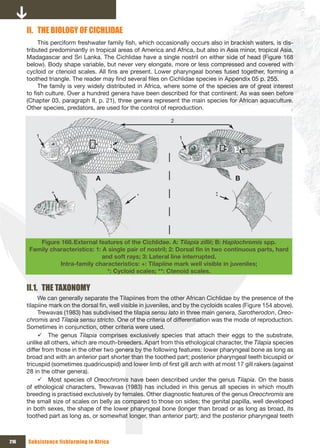
Figure 168.   External features of the Cichlidae.                                                                 216
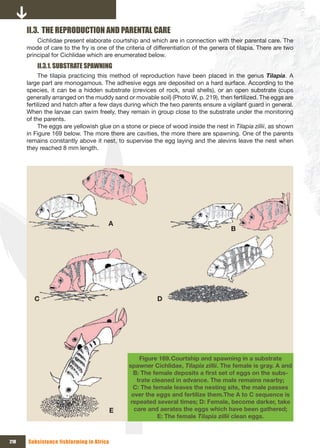
Figure 169.   Courtship and spawning in a substrate spawner Cichlidae, Tilapia zillii.                            218
Figure 170.   Nest of Oreochromis niloticus; Oreochromis macrochir.                                               219
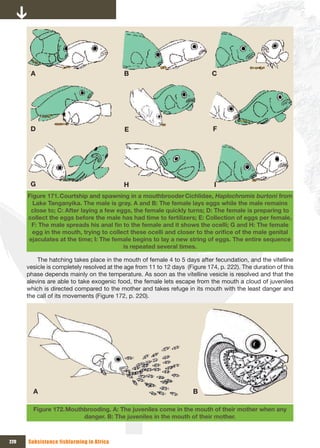
Figure 171.   Courtship and spawning in a mouthbrooder Cichlidae, Haplochromis burtoni from Lake Tanga-
              nyika.                                                                                              220
Figure 172.   Mouthbrooding.                                                                                      220
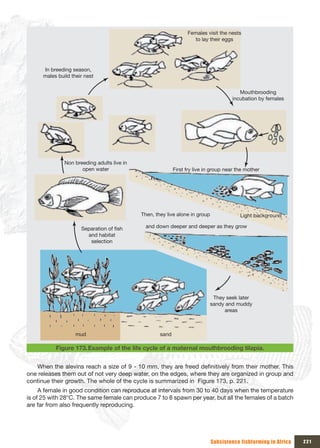
Figure 173.   Example of the life cycle of a maternal mouthbrooding tilapia.                                      221
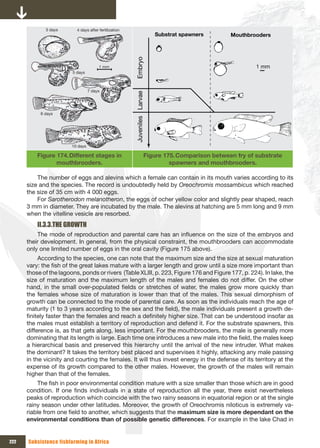
Figure 174.   Different stages in mouthbrooders.                                                                  222
Figure 175.   Comparison between fry of substrate spawners and mouthbrooders.                                     222
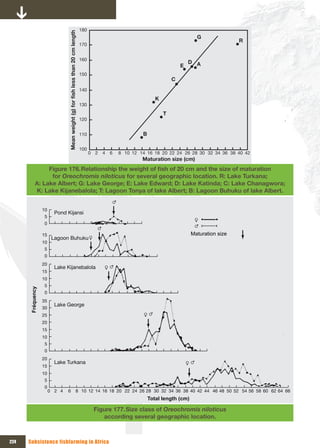
Figure 176.   Relationship the weight of fish of 20 cm and the size of maturation for Oreochromis niloticus for
              several geographic location.                                                                        224
Figure 177.   Size class of Oreochromis niloticus according several geographic location.                          224
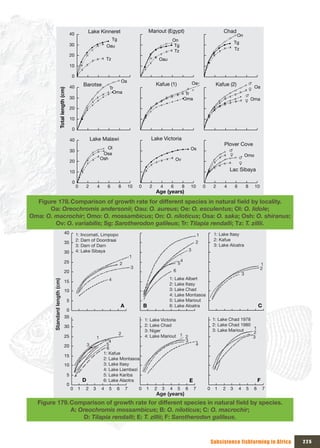
Figure 178.   Comparison of growth rate for different species in natural field by locality.                       225
Figure 179.   Comparison of growth rate for different species in natural field by species.                        225
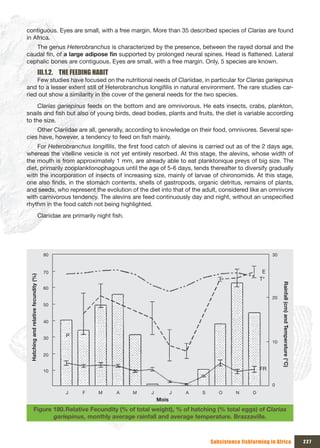
Figure 180.   Relative Fecundity (% of total weight), % of hatching (% total eggs) of Clarias gariepinus,
              monthly average rainfall and average temperature. Brazzaville.                                      227
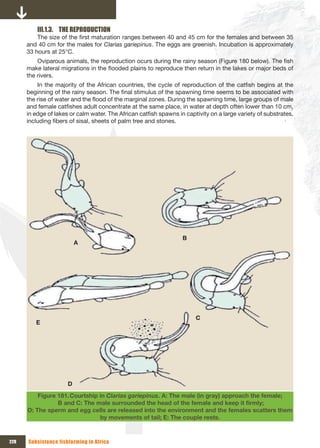
Figure 181.   Courtship in Clarias gariepinus.                                                                    228
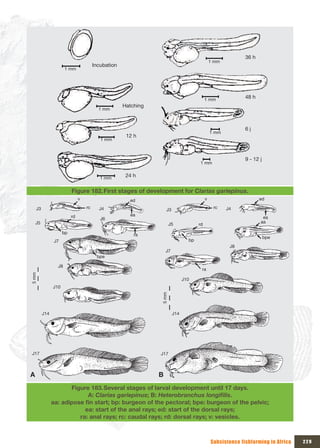
Figure 182.   First stages of development for Clarias gariepinus.                                                 229
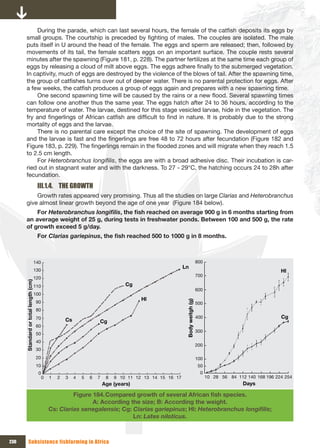
Figure 183.   Several stages of larval development until 17 days. Clarias gariepinus; Heterobranchus longifi-
              lis.                                                                                                229
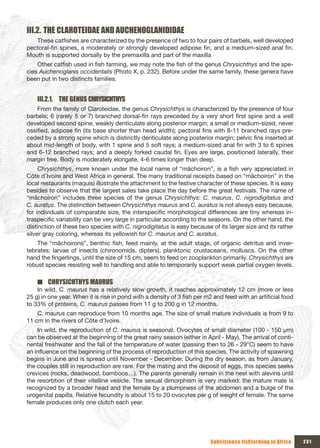
Figure 184.   Compared growth of several African fish species.                                                    230
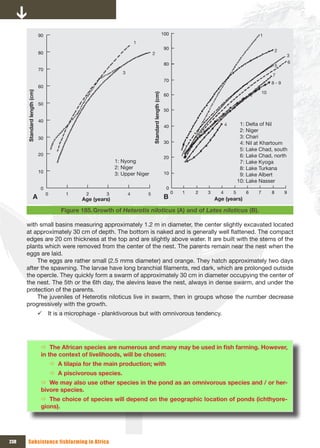
Figure 185.   Growth of Heterotis niloticus and of Lates niloticus.                                               238
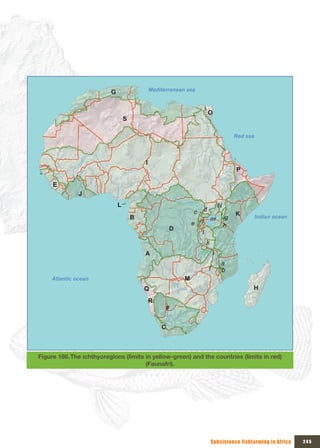
Figure 186.   The ichthyoregions and the countries.                                                               245


                                                                                Subsistence fishfarming in Africa       xV
LIST OF TABLES
      Part I - INTRODUCTION AND THEORICAL ASPECTS                                                                       1
      Table I.        World fisheries and aquaculture production and utilization, excluding China (FAO, 2007).          4
      Table II.       Origin and number of fish species introductions in Africa.                                       10
      Table III.      Introduced species with a negative ecological effect recorded.                                   11
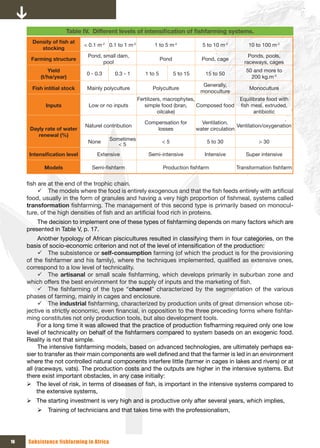
      Table IV.       Different levels of intensification of fishfarming systems                                       16
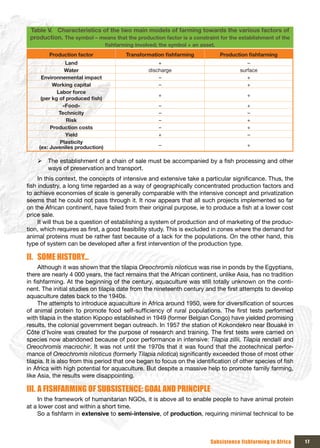
      Table V.        Characteristics of the two main models of farming towards the various factors of production.     17


      Part II - PRACTICAL ASPECTS                                                                                     27
      Table VI.       Color of the soil and drainage conditions of the soil.                                           50
      Table VII.      Topographical features for ponds.                                                                54
      Table VIII.     Advantages and disadvantages of the barrage and diversion ponds.                                 63
      Table IX.       Differents shape of a pond of 100 m2.                                                            66
      Table X.        Size of fattening ponds.                                                                         68
      Table XI.       Resource availability and pond size.                                                             68
      Table XII.      Characteristics of shallow and deep ponds.                                                       69
      Table XIII.     Diversion structures to control stream water levels.                                             78
      Table XIV.      Channel dimensions.                                                                              80
      Table XV.       Examples fo dimension of dikes.                                                                  86
      Table XVI.      Expression of values of slope according the chosen unit.                                         87
      Table XVII.     Informations on the dimensions of the monk according the size of the pond.                      100
      Table XVIII.    Estimation of the discharge and draining duration of the pond according the diameter of the
                      outlet.                                                                                         101
      Table XIX.      Inside dimensions of the monk according the diameter of the pipe.                               101
      Table XX.       Examples of necessary time for building of ponds (man/day).                                     110
      Table XXI.      Approximate output on the works of excavation made by hand.                                     110
      Table XXII.     Example of calendar of works to do for the construction of a pond (workers of 400 men per
                      day).                                                                                           111
      Table XXIII.    Example of calendar according the seasons (15 ponds) in Cameroon.                               111
      Table XXIV.     Maximum amount of fresh solid manure per day in 100 m2 pond.                                    120
      Table XXV.      Quantity to spread per type of manure.                                                          120
      Table XXVI.     Organic fertilizers commonly used in small-scale fish farming.                                  121
      Table XXVII.    Particular characteristics of composting methods.                                               122
      Table XXVIII.   Production of Oreochromis niloticus in function of the number of breeders in a pond of 4 ares
                      – 122 farming days.                                                                             141
      Table XXIX.     Levels of various nutrients in different species of fish.                                       158
      Table XXX.      Relative value of major feedstuffs as supplementary feed for fish.                              159
      Table XXXI.     Example of formula for tilapia and catfish farming.                                             160
      Table XXXII.    Example of quantity of food to give according time per m2 of pond.                              160
      Table XXXIII.   Feeding rate for tilapia in pond related to the size (table of Marek).                          160
      Table XXXIV.    Examples of stop feeding per species in function of the temperature                             161
      Table XXXV.     Monitoring. x: following; xx: fuller check or major repair; V: In drained pond only.            162
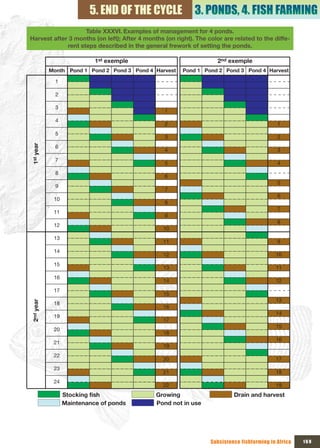
      Table XXXVI.    Examples of management for 4 ponds. Harvest after 3 months; After 4 months.                     169
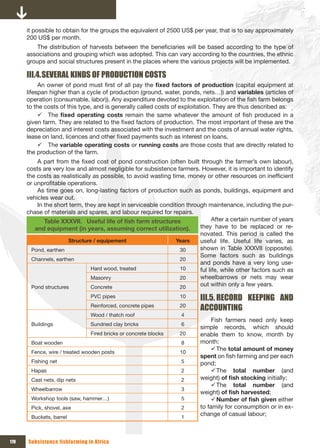
      Table XXXVII.   Useful life of fish farm structures and equipment (in years, assuming correct utilization)      170


xvi   Subsistence fishfarming in Africa
APPENDIx                                                                                                  187
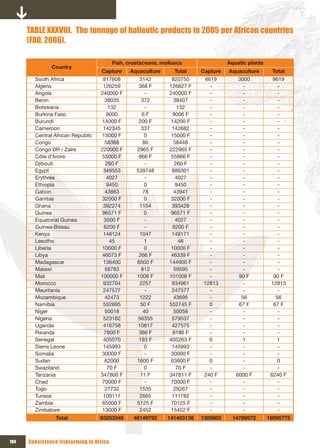
Table XXXVIII. The tonnage of halieutic products in 2005 per African countries (FAO, 2006).               194
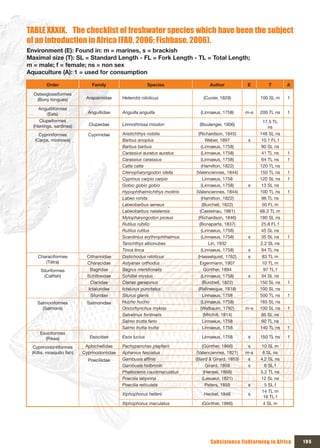
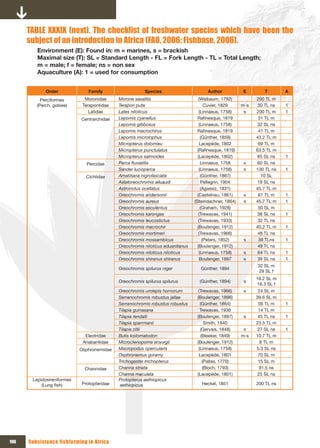
Table XXXIX. The checklist of freshwater species which have been the subject of an introduction in Africa
               (FAO, 2006; Fishbase, 2006).                                                               195
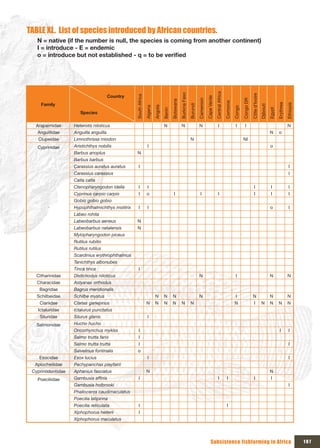
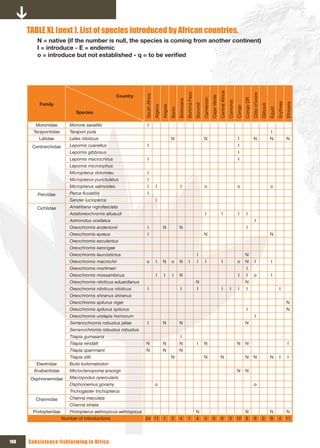
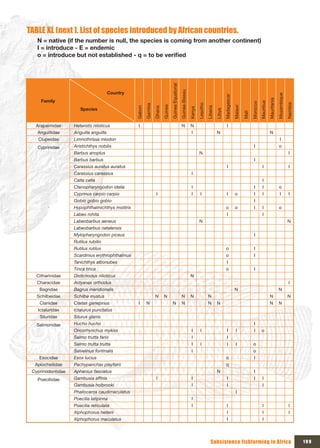
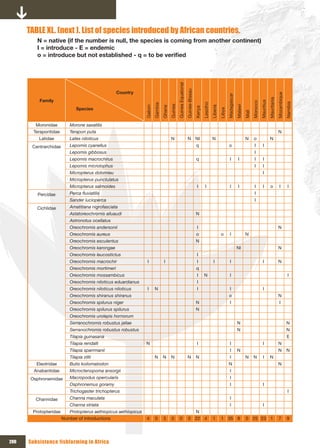
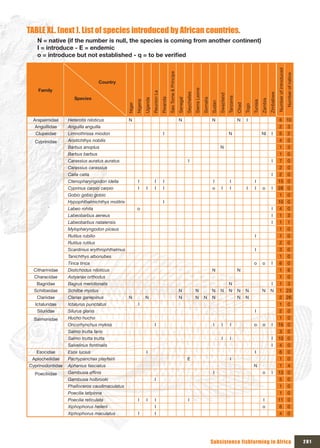
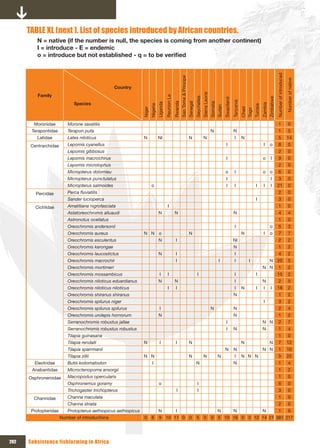
Table XL.      List of species introduced by African countries.                                           197
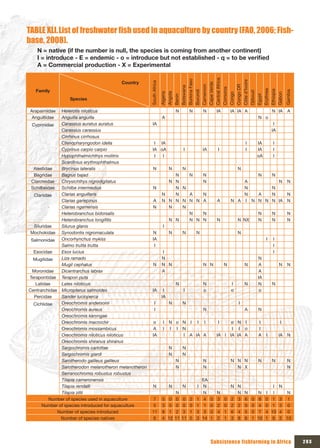
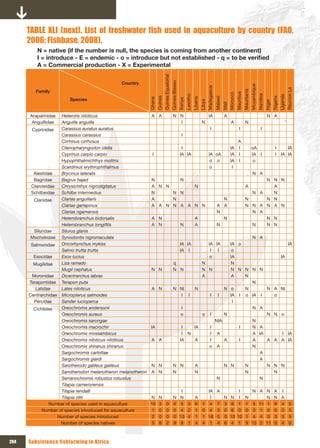
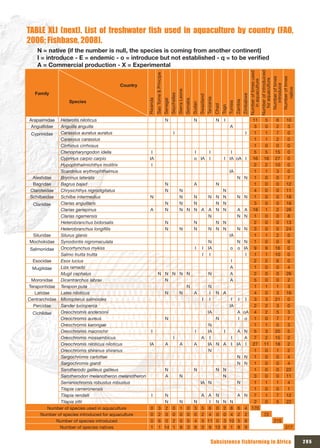
Table XLI.     List of freshwater fish used in aquaculture by country (FAO, 2006; Fishbase, 2008).        203
Table XLII.    Diet of several species of tilapia in natural waters.                                      217
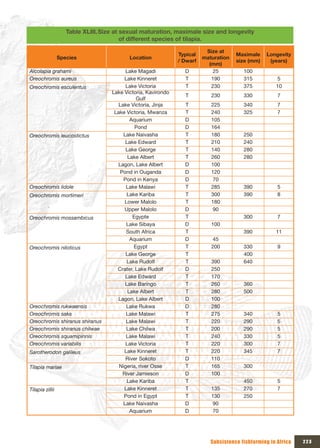
Table XLIII.   Size at sexual maturation, maximale size and longevity of different species of tilapia.    223
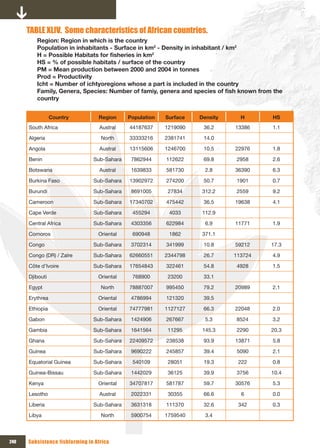
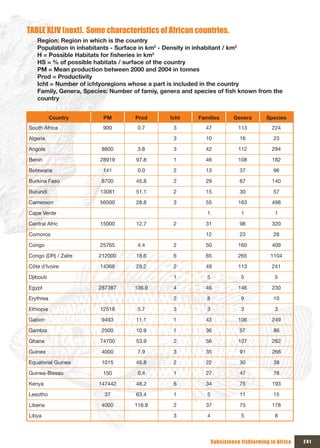
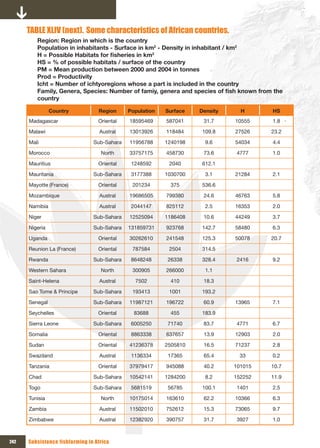
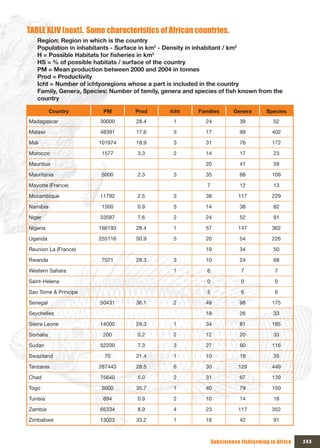
Table XLIV.    Some characteristics of African countries.                                                 240
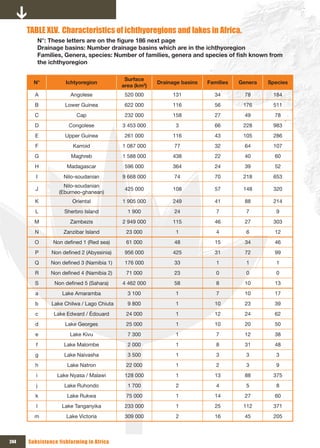
Table XLV.     Characteristics of ichthyoregions and lakes in Africa.                                     244
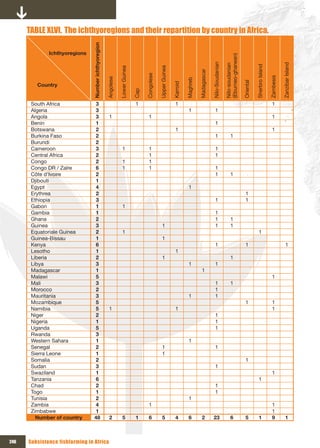
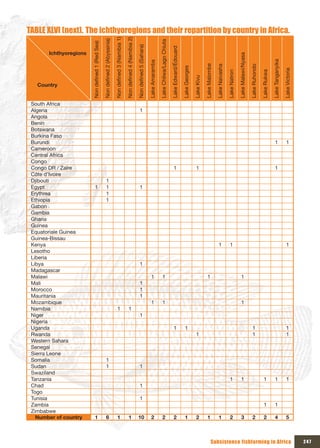
Table XLVI.    The ichthyoregions and their repartition by country in Africa.                             246
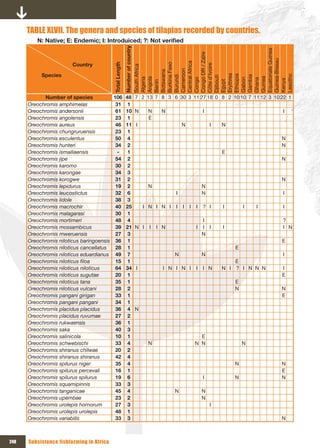
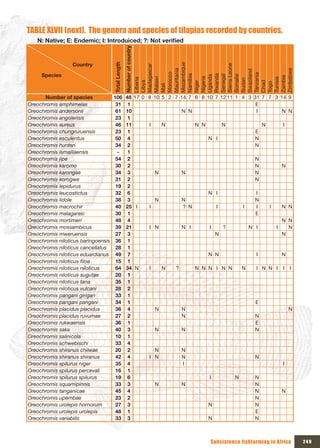
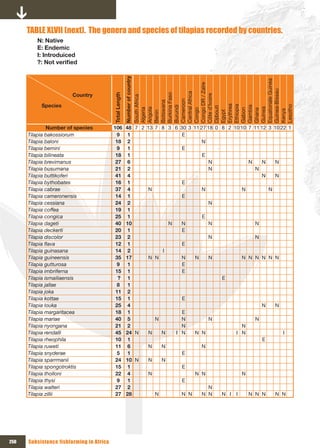
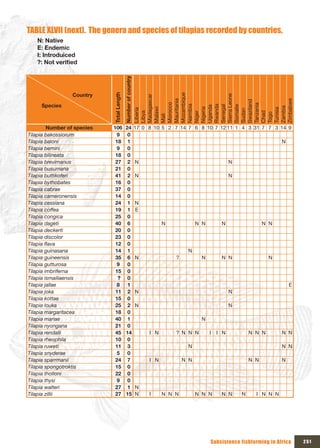
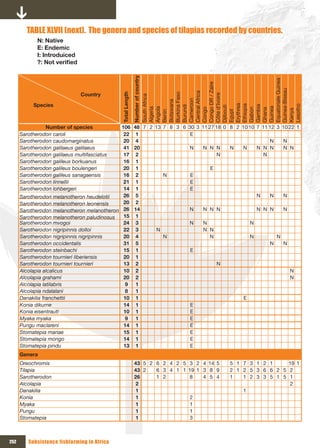
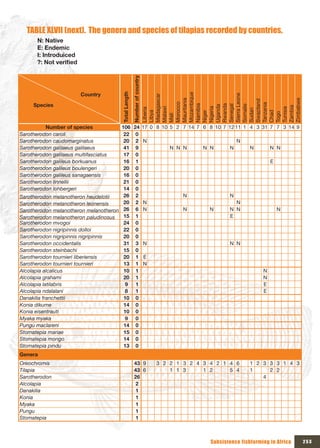
Table XLVII. The genera and species of tilapias recorded by countries.                                    248


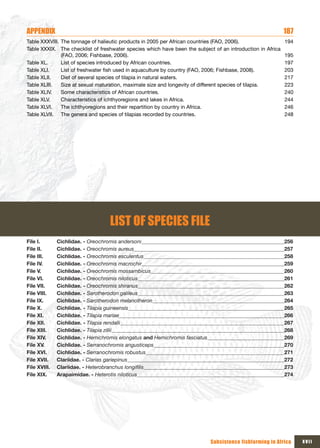
                                   LIST OF SPECIES FILE
File I.       Cichlidae. - Oreochromis andersoni                                                           256
File II.      Cichlidae. - Oreochromis aureus                                                              257
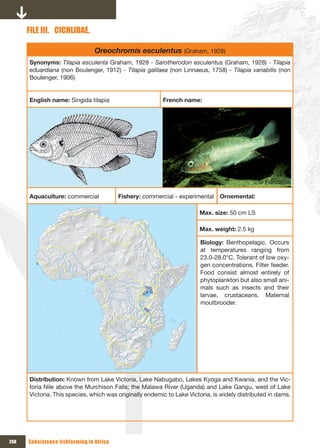
File III.     Cichlidae. - Oreochromis esculentus                                                          258
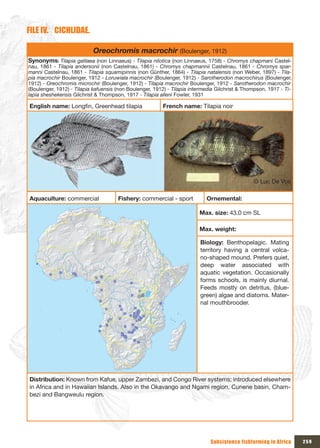
File IV.      Cichlidae. - Oreochromis macrochir                                                           259
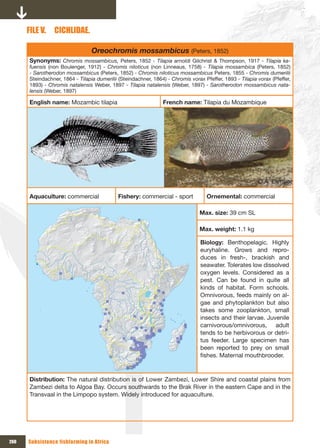
File V.       Cichlidae. - Oreochromis mossambicus                                                         260
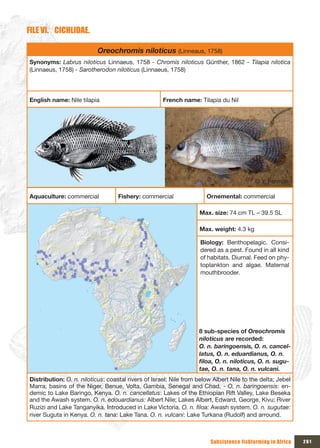
File VI.      Cichlidae. - Oreochromis niloticus                                                           261
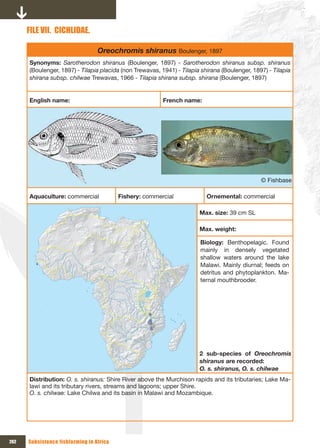
File VII.     Cichlidae. - Oreochromis shiranus                                                            262
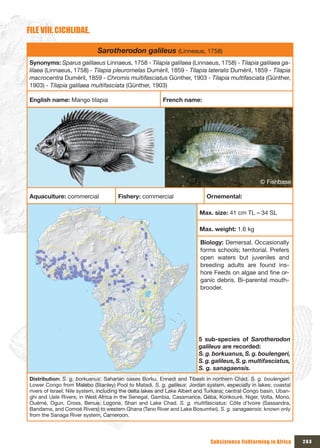
File VIII.    Cichlidae. - Sarotherodon galileus                                                           263
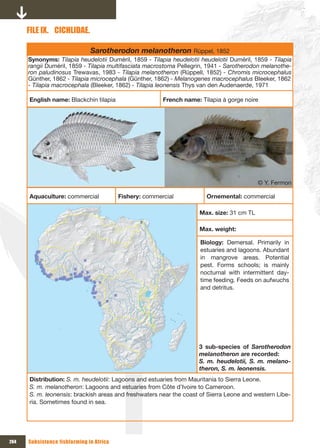
File IX.      Cichlidae. - Sarotherodon melanotheron                                                       264
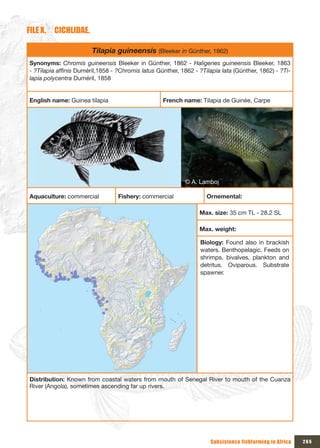
File X.       Cichlidae. - Tilapia guineensis                                                              265
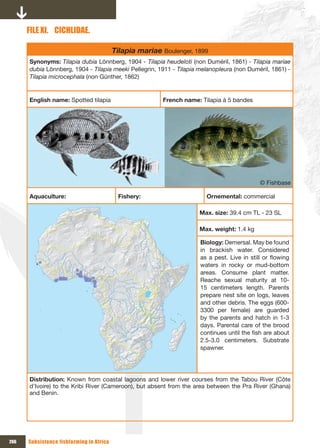
File XI.      Cichlidae. - Tilapia mariae                                                                  266
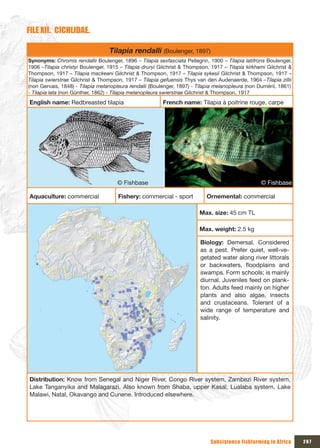
File XII.     Cichlidae. - Tilapia rendalli                                                                267
File XIII.    Cichlidae. - Tilapia zillii                                                                  268
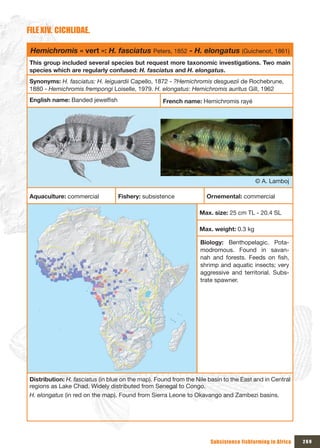
File XIV.     Cichlidae. - Hemichromis elongatus and Hemichromis fasciatus                                 269
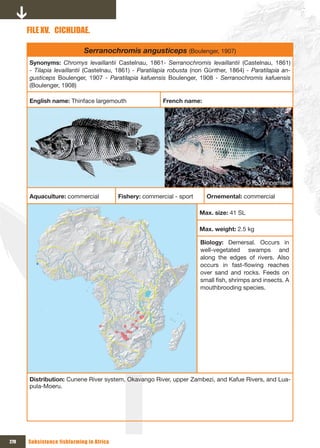
File XV.      Cichlidae. - Serranochromis angusticeps                                                      270
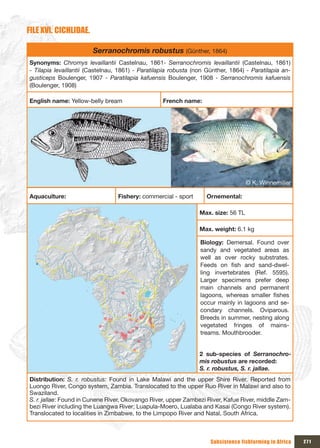
File XVI.     Cichlidae. - Serranochromis robustus                                                         271
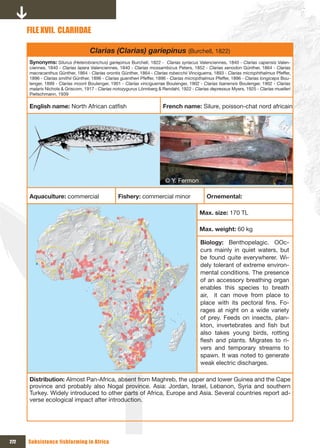
File XVII.    Clariidae. - Clarias gariepinus                                                              272
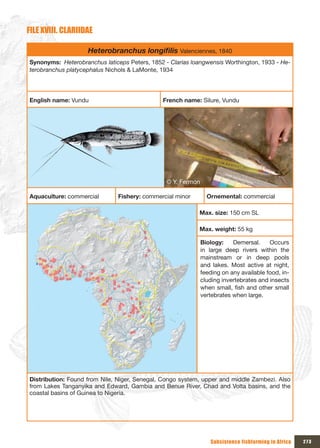
File XVIII.   Clariidae. - Heterobranchus longifilis                                                       273
File XIX.     Arapaimidae. - Heterotis niloticus                                                           274


                                                                             Subsistence fishfarming in Africa   xVII
LIST OF PHOTOS
        Part I - INTRODUCTION AND THEORICAL ASPECTS                                                                      1

        Part II - PRACTICAL ASPECTS                                                                                    27
        Photo A. Measurement of a slope (DRC) [© Y. Fermon].                                                            56
        Photo B. Example of rectangular ponds in construction laying in parallel (Liberia) [© Y. Fermon].               68
        Photo C. Cleaning of the site. Tree remaining nearby a pond {To avoid}(DRC); Sites before cleaning (Liberia)
                 [© Y. Fermon].                                                                                         77
        Photo D. Channel during the digging (Liberia) [© Y. Fermon].                                                    80
        Photo E. Stakes during the building of the dikes (Liberia) [© Y. Fermon].                                       82
        Photo F. Dikes. Slope badly made, destroed by erosion (DRC)[© Y. Fermon]; Construction (Ivory Coast)
                 [© APDRA-F](CIRAD).                                                                                    89
        Photo G. Example of non efficient screen at the inlet of a pond (Liberia) [© Y. Fermon].                        93
        Photo H. Example of filters set at the inlet of a pond in Liberia [© Y. Fermon].                                93
        Photo I. Mould and monks (Guinea). The first floor and the mould; Setting of the secund floor [© APDRA-F]
                 (CIRAD).                                                                                              100
        Photo J. First floor of the monk associated with the pipe (Guinea) [© APDRA-F](CIRAD).                         102
        Photo K. Top of a monk (DRC)[© Y. Fermon].                                                                     102
        Photo L. Building of a pipe(Guinea) [© APDRA-F](CIRAD).                                                        103
        Photo M. Setting of a fences with branches (Liberia) [© Y. Fermon].                                            108
        Photo N. Compost heap. [Liberia © Y. Fermon], [© APDRA-F](CIRAD).                                              126
        Photo O. Use of small beach seine (Liberia, Guinea, DRC) [© Y. Fermon].                                        132
        Photo P. Mounting, repair and use of gill nets (Kenya, Tanzania) [© Y. Fermon].                                132
        Photo Q. Cast net throwing (Kenya, Ghana) [© F. Naneix, © Y. Fermon].                                          134
        Photo R. Dip net (Guinea) [© Y. Fermon].                                                                       135
        Photo S. Traps. Traditionnal trap (Liberia); Grid trap full of tilapia (Ehiopia) [© Y. Fermon].                136
        Photo T. Fish packing in plastic bags (Guinea, (Ehiopia) [© Y. Fermon, © É. Bezault].                          138
        Photo U. Hapas in ponds (Ghana) [© É. Bezault].                                                                143
        Photo V. Concrete basins and aquariums (Ghana) [© Y. Fermon].                                                  145

        APPENDIx                                                                                                       187
        Photo W. Nests of Tilapia zillii (Liberia) [© Y. Fermon].                                                      219
        Photo X. Claroteidae. Chrysichthys nigrodigitatus [© Planet Catfish]; C. maurus [© Teigler - Fishbase];
                  Auchenoglanididae. Auchenoglanis occidentalis [© Planet Catfish].                                    232
        Photo Y. Schilbeidae. Schilbe intermedius [© Luc De Vos].                                                      233
        Photo Z. Mochokidae. Synodontis batensoda [© Mody - Fishbase]; Synodontis schall [© Payne - Fishbase].         234
        Photo AA. Cyprinidae. Barbus altianalis; Labeo victorianus [© Luc De Vos, © FAO (drawings)].                   235
        Photo AB. Citharinidae. Citharinus gibbosus; C. citharus [© Luc De Vos].                                       235
        Photo AC. Distichodontidae. Distichodus rostratus; D. sexfasciatus [© Fishbase].                               236
        Photo AD. Channidae. Parachanna obscura (DRC) [© Y. Fermon].                                                   236
        Photo AE. Latidae. Lates niloticus [© Luc De Vos].                                                             237


xviii   Subsistence fishfarming in Africa
Part I
INTRODUCTION AND THEORICAL ASPECTS


    Contents
    • Fishfarming: Aim and issues
    • Type of fishfarming
    • Biogeography and fish species
    • Summary


                                      Subsistence fishfarming in Africa   1
CONTENTS - PART I


     Chapter 01 - FISHFARMING: AIM AND ISSUES                                                3
     I.     WHY?                                                                              3
     II. PRESSURE ON THE RESOURCES                                                            6
     	      II.1.	 Modifications	of	the	habitat	                                              6
            II.2. Water pollution                                                             8
            II.3. Fisheries impact                                                            9
            II.4. Introductions                                                               9
     III. INTERNATIONAL ASPECTS                                                              12
     IV. OBJECTIVE OF FISHFARMING                                                            13

     Chapter 02 - TYPE OF FISHFARMING                                                        15
     I.     VARIOUS TYPES OF FISHFARMING                                                     15
     II. SOME HISTORY…                                                                       17
     III. A FISHFARMING OF SUBSISTENCE: GOAL AND PRINCIPLE                                   17
     IV. POLYCULTURE VS MONOCULTURE                                                          18

     Chapter 03 - BIOGEOGRAPHY AND FISH SPECIES                                              21
     I.     GEOGRAPHY                                                                        21
     II. THE SPECIES                                                                         21
            I.1. The Cichlidae                                                               22
            II.2.	The	Siluriformes	or	catfishes	                                             23
            II.3. The Cyprinidae                                                             23
            II.4. Other families and species                                                 24

     SUMMARY                                                                                 25


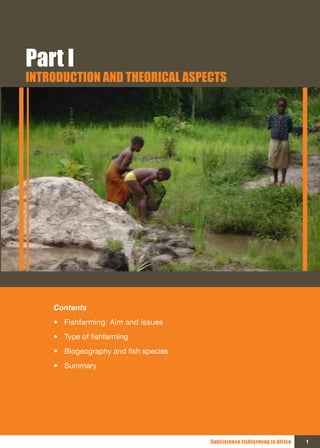
Cover photo:
Ö Children fishing fingerlings in river for the ponds, Liberia, ASUR, 2006 - © Yves Fermon


2        Subsistence fishfarming in Africa
Chapter 01
FISHFARMING: AIM AND ISSUES
I. WHY?
  Fisheries and aquaculture contribute to the food security primarily in three ways:
Ö To increase the food availabilities,
Ö To provide highly nutritive animal proteins and important trace elements,
Ö To offer employment and incomes which people use to buy of other food products.

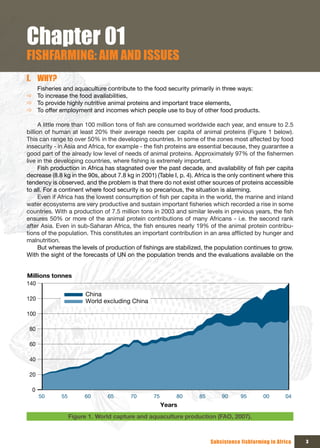
      A little more than 100 million tons of fish are consumed worldwide each year, and ensure to 2.5
billion of human at least 20% their average needs per capita of animal proteins (Figure 1 below).
This can range to over 50% in the developing countries. In some of the zones most affected by food
insecurity - in Asia and Africa, for example - the fish proteins are essential because, they guarantee a
good part of the already low level of needs of animal proteins. Approximately 97% of the fishermen
live in the developing countries, where fishing is extremely important.
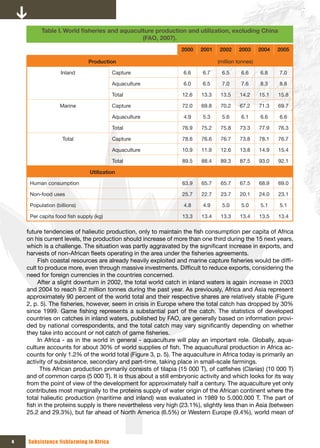
      Fish production in Africa has stagnated over the past decade, and availability of fish per capita
decrease (8.8 kg in the 90s, about 7.8 kg in 2001) (Table I, p. 4). Africa is the only continent where this
tendency is observed, and the problem is that there do not exist other sources of proteins accessible
to all. For a continent where food security is so precarious, the situation is alarming.
      Even if Africa has the lowest consumption of fish per capita in the world, the marine and inland
water ecosystems are very productive and sustain important fisheries which recorded a rise in some
countries. With a production of 7.5 million tons in 2003 and similar levels in previous years, the fish
ensures 50% or more of the animal protein contributions of many Africans - i.e. the second rank
after Asia. Even in sub-Saharan Africa, the fish ensures nearly 19% of the animal protein contribu-
tions of the population. This constitutes an important contribution in an area afflicted by hunger and
malnutrition.
      But whereas the levels of production of fishings are stabilized, the population continues to grow.
With the sight of the forecasts of UN on the population trends and the evaluations available on the


Millions tonnes
140
                       China
120                    World excluding China

100

 80

 60

 40

 20

  0
      50     55        60       65       70       75        80       85       90      95       00       04
                                                       Years
                  Figure 1. World capture and aquaculture production (FAO, 2007).


                                                                          Subsistence fishfarming in Africa   3
Table I. World	fisheries	and	aquaculture	production	and	utilization,	excluding	China	
                                              (FAO, 2007).
                                                                2000    2001    2002    2003      2004   2005

                              Production                                       (million tonnes)

                   Inland               Capture                  6.6     6.7    6.5      6.6      6.8    7.0

                                        Aquaculture              6.0     6.5     7.0     7.6      8.3    8.8

                                        Total                    12.6   13.3    13.5     14.2     15.1   15.8

                  Marine                Capture                  72.0   69.8    70.2     67.2     71.3   69.7

                                        Aquaculture              4.9     5.3     5.6     6.1      6.6    6.6

                                        Total                    76.9   75.2    75.8     73.3     77.9   76.3

                   Total                Capture                  78.6   76.6    76.7     73.8     78.1   76.7

                                        Aquaculture              10.9   11.9    12.6     13.8     14.9   15.4

                                        Total                    89.5   88.4    89.3     87.5     93.0   92.1

                               Utilization

     Human consumption                                           63.9   65.7    65.7     67.5     68.9   69.0

     Non-food uses                                               25.7   22.7    23.7     20.1     24.0   23.1

     Population (billions)                                       4.8     4.9     5.0     5.0      5.1    5.1

     Per capita food fish supply (kg)                            13.3   13.4    13.3     13.4     13.5   13.4
    future tendencies of halieutic production, only to maintain the fish consumption per capita of Africa
    on his current levels, the production should increase of more than one third during the 15 next years,
    which is a challenge. The situation was partly aggravated by the significant increase in exports, and
    harvests of non-African fleets operating in the area under the fisheries agreements.
         Fish coastal resources are already heavily exploited and marine capture fisheries would be diffi-
    cult to produce more, even through massive investments. Difficult to reduce exports, considering the
    need for foreign currencies in the countries concerned.
         After a slight downturn in 2002, the total world catch in inland waters is again increase in 2003
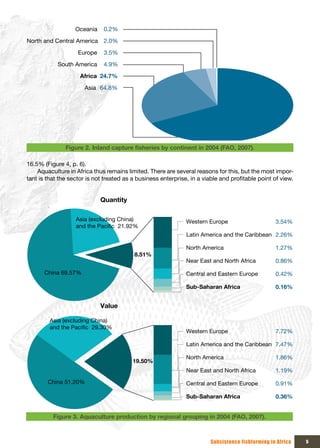
    and 2004 to reach 9.2 million tonnes during the past year. As previously, Africa and Asia represent
    approximately 90 percent of the world total and their respective shares are relatively stable (Figure
    2, p. 5). The fisheries, however, seem in crisis in Europe where the total catch has dropped by 30%
    since 1999. Game fishing represents a substantial part of the catch. The statistics of developed
    countries on catches in inland waters, published by FAO, are generally based on information provi-
    ded by national correspondents, and the total catch may vary significantly depending on whether
    they take into account or not catch of game fisheries.
         In Africa - as in the world in general - aquaculture will play an important role. Globally, aqua-
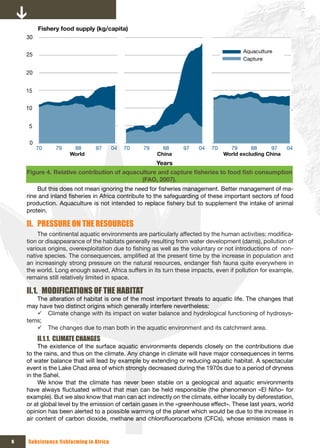
    culture accounts for about 30% of world supplies of fish. The aquacultural production in Africa ac-
    counts for only 1.2% of the world total (Figure 3, p. 5). The aquaculture in Africa today is primarily an
    activity of subsistence, secondary and part-time, taking place in small-scale farmings.
          This African production primarily consists of tilapia (15 000 T), of catfishes (Clarias) (10 000 T)
    and of common carps (5 000 T). It is thus about a still embryonic activity and which looks for its way
    from the point of view of the development for approximately half a century. The aquaculture yet only
    contributes most marginally to the proteins supply of water origin of the African continent where the
    total halieutic production (maritime and inland) was evaluated in 1989 to 5.000.000 T. The part of
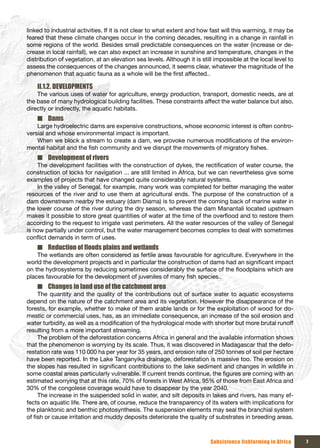
    fish in the proteins supply is there nevertheless very high (23.1%), slightly less than in Asia (between
    25.2 and 29.3%), but far ahead of North America (6.5%) or Western Europe (9.4%), world mean of


4   Subsistence fishfarming in Africa
Oceania    0.2%
North and Central America     2.0%

                    Europe    3.5%
            South America     4.9%

                     Africa 24.7%
                       Asia 64.8%


               Figure 2. Inland	capture	fisheries	by	continent	in	2004	(FAO,	2007).

16.5% (Figure 4, p. 6).
    Aquaculture in Africa thus remains limited. There are several reasons for this, but the most impor-
tant is that the sector is not treated as a business enterprise, in a viable and profitable point of view.


                             Quantity

                   Asia (excluding China)                      Western Europe                      3.54%
                   and the Pacific  21.92%
                                                               Latin America and the Caribbean 2.26%

                                                               North America                       1.27%
                                          8.51%
                                                               Near East and North Africa          0.86%

       China 69.57%                                            Central and Eastern Europe          0.42%

                                                               Sub-Saharan Africa                  0.16%


                             Value

         Asia (excluding China) 
         and the Pacific  29.30%
                                                               Western Europe                      7.72%

                                                               Latin America and the Caribbean 7.47%

                                                               North America                       1.86%
                                          19.50%
                                                               Near East and North Africa          1.19%

        China 51.20%                                           Central and Eastern Europe          0.91%

                                                               Sub-Saharan Africa                  0.36%


          Figure 3. Aquaculture production by regional grouping in 2004 (FAO, 2007).


                                                                         Subsistence fishfarming in Africa   5
Fishery food supply (kg/capita)
    30

                                                                                       Aquaculture
    25
                                                                                       Capture

    20


    15


    10


     5

     0
         70    79    88        97       04   70   79     88     97    04   70     79      88      97    04
                    World                              China                    World excluding China
                                                       Years
    Figure 4. Relative	contribution	of	aquaculture	and	capture	fisheries	to	food	fish	consumption	
                                             (FAO, 2007).
        But this does not mean ignoring the need for fisheries management. Better management of ma-
    rine and inland fisheries in Africa contribute to the safeguarding of these important sectors of food
    production. Aquaculture is not intended to replace fishery but to supplement the intake of animal
    protein.

    II. PRESSURE ON THE RESOURCES
        The continental aquatic environments are particularly affected by the human activities: modifica-
    tion or disappearance of the habitats generally resulting from water development (dams), pollution of
    various origins, overexploitation due to fishing as well as the voluntary or not introductions of non-
    native species. The consequences, amplified at the present time by the increase in population and
    an increasingly strong pressure on the natural resources, endanger fish fauna quite everywhere in
    the world. Long enough saved, Africa suffers in its turn these impacts, even if pollution for example,
    remains still relatively limited in space.

    II.1. MODIFICATIONS OF THE HABITAT
       The alteration of habitat is one of the most important threats to aquatic life. The changes that
    may have two distinct origins which generally interfere nevertheless:
       9 Climate change with its impact on water balance and hydrological functioning of hydrosys-
    tems;
       9 The changes due to man both in the aquatic environment and its catchment area.
         II.1.1. CLIMATE CHANGES
         The existence of the surface aquatic environments depends closely on the contributions due
    to the rains, and thus on the climate. Any change in climate will have major consequences in terms
    of water balance that will lead by example by extending or reducing aquatic habitat. A spectacular
    event is the Lake Chad area of which strongly decreased during the 1970s due to a period of dryness
    in the Sahel.
         We know that the climate has never been stable on a geological and aquatic environments
    have always fluctuated without that man can be held responsible (the phenomenon «El Niño» for
    example). But we also know that man can act indirectly on the climate, either locally by deforestation,
    or at global level by the emission of certain gases in the «greenhouse effect». These last years, world
    opinion has been alerted to a possible warming of the planet which would be due to the increase in
    air content of carbon dioxide, methane and chlorofluorocarbons (CFCs), whose emission mass is


6   Subsistence fishfarming in Africa
linked to industrial activities. If it is not clear to what extent and how fast will this warming, it may be
feared that these climate changes occur in the coming decades, resulting in a change in rainfall in
some regions of the world. Besides small predictable consequences on the water (increase or de-
crease in local rainfall), we can also expect an increase in sunshine and temperature, changes in the
distribution of vegetation, at an elevation sea levels. Although it is still impossible at the local level to
assess the consequences of the changes announced, it seems clear, whatever the magnitude of the
phenomenon that aquatic fauna as a whole will be the first affected..

    II.1.2. DEVELOPMENTS
    The various uses of water for agriculture, energy production, transport, domestic needs, are at
the base of many hydrological building facilities. These constraints affect the water balance but also,
directly or indirectly, the aquatic habitats.
    ■ Dams
    Large hydroelectric dams are expensive constructions, whose economic interest is often contro-
versial and whose environmental impact is important.
    When we block a stream to create a dam, we provoke numerous modifications of the environ-
mental habitat and the fish community and we disrupt the movements of migratory fishes.
    ■ Development of rivers
    The development facilities with the construction of dykes, the rectification of water course, the
construction of locks for navigation ... are still limited in Africa, but we can nevertheless give some
examples of projects that have changed quite considerably natural systems.
    In the valley of Senegal, for example, many work was completed for better managing the water
resources of the river and to use them at agricultural ends. The purpose of the construction of a
dam downstream nearby the estuary (dam Diama) is to prevent the coming back of marine water in
the lower course of the river during the dry season, whereas the dam Manantali located upstream
makes it possible to store great quantities of water at the time of the overflood and to restore them
according to the request to irrigate vast perimeters. All the water resources of the valley of Senegal
is now partially under control, but the water management becomes complex to deal with sometimes
conflict demands in term of uses.
    ■ Reduction	of	floods	plains	and	wetlands
    The wetlands are often considered as fertile areas favourable for agriculture. Everywhere in the
world the development projects and in particular the construction of dams had an significant impact
on the hydrosystems by reducing sometimes considerably the surface of the floodplains which are
places favourable for the development of juveniles of many fish species..
    ■ Changes in land use of the catchment area
     The quantity and the quality of the contributions out of surface water to aquatic ecosystems
depend on the nature of the catchment area and its vegetation. However the disappearance of the
forests, for example, whether to make of them arable lands or for the exploitation of wood for do-
mestic or commercial uses, has, as an immediate consequence, an increase of the soil erosion and
water turbidity, as well as a modification of the hydrological mode with shorter but more brutal runoff
resulting from a more important streaming.
     The problem of the deforestation concerns Africa in general and the available information shows
that the phenomenon is worrying by its scale. Thus, it was discovered in Madagascar that the defo-
restation rate was 110 000 ha per year for 35 years, and erosion rate of 250 tonnes of soil per hectare
have been reported. In the Lake Tanganyika drainage, deforestation is massive too. The erosion on
the slopes has resulted in significant contributions to the lake sediment and changes in wildlife in
some coastal areas particularly vulnerable. If current trends continue, the figures are coming with an
estimated worrying that at this rate, 70% of forests in West Africa, 95% of those from East Africa and
30% of the congolese coverage would have to disappear by the year 2040.
     The increase in the suspended solid in water, and silt deposits in lakes and rivers, has many ef-
fects on aquatic life. There are, of course, reduce the transparency of its waters with implications for
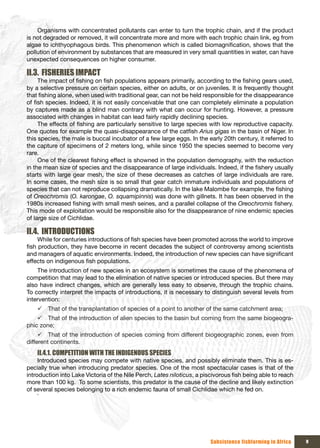
the planktonic and benthic photosynthesis. The suspension elements may seal the branchial system
of fish or cause irritation and muddy deposits deteriorate the quality of substrates in breeding areas.


                                                                           Subsistence fishfarming in Africa    7
II.2. WATER POLLUTION
        If water pollution has long appeared as a somewhat secondary phenomenon in Africa, it is clear
    that it is increasingly apparent in recent years. In general, however, lack of data and more detailed
    information on the extent of water pollution in Africa.
        II.2.1. EUTROPHICATION OF WATER
         The nutritive elements (phosphates, nitrates) are in general present in limited quantities in the
    aquatic environments, and constitute what one calls limiting factors. Any additional contribution of
    these elements is quickly assimilated and stimulates the primary production. When the natural cycle
    is disturbed by the human activities, in particular by the contributions in manure, detergents, waste
    water in general, excesses of phosphates (and to a lesser extent of nitrates) is responsible for the
    phenomenon of eutrophication. This phenomenon results in an excessive proliferation of algae and/
    or macrophytes, and a reduction in the water transparency. The decomposition of this abundant
    organic matter consumes much oxygen and generally leads to massive mortalities of animal species
    per asphyxiation. Eutrophication also has as a result to involve strong variations of the dissolved
    oxygen concentration and pH during the day. In the lakes, the phenomenon of “bloom” (the “fleur
    d’eau” of the French speaking) is one of the manifestations of eutrophication.
         Eutrophication of Lake Victoria during the last 25 years is fairly well documented. Increased
    intakes of nutrients to the lake is the result of increasing human activities in the catchment area of
    the lake: increased urbanization, use of fertilizers and pesticides for the crops, use of pesticides for
    control of tsetse flies ...
        II.2.2. PESTICIDES
         In the second half of the twentieth century the use of chemical pesticides has become wides-
    pread in Africa, as elsewhere in the world to fight against both the vectors of major diseases and
    pests of crops. The range of products used is very large and, if some have a low toxicity towards
    aquatic organisms, many are xenobiotics, ie substances that have toxic properties, even if they
    are present in the environment at very low concentrations. This is particularly true for pyrethroids
    (permethrin, deltamethrin) but especially for organochlorines (DDT, dieldrin, endrin, endosulfan, ma-

    lathion, lindane), which, in addition to their toxicities have important time remanence, this which
    accentuates their accumulation and thus their concentration in food webs.
        II.2.3. HEAVY METALS
         Under the term of “heavy metals”, one generally includes several families of substances:
         9 Heavy metals in the strict sense, with high atomic mass and high toxicity, whose presence in
    small amounts is not necessary to life: cadmium, mercury, lead…
         9 Metals lower atomic mass, essential for life (trace elements), but quickly become toxic when
    their concentration increases: copper, zinc, molybdenum, manganese, cobalt…
         Heavy metals usually occur at very low concentrations in natural ecosystems but human activi-
    ties are a major source of pollution. Heavy metals come from the agricultural land and water systems
    by intentional inputs of trace elements and pesticides, discharge from refineries or factories treating
    non-ferrous metals (nickel, copper, zinc, lead, chromium, cadmium ...), discharges from tanneries
    (cadmium, chromium) or paper pulp (mercury). It must be added the impact of atmospheric pollution
    related to human activities (including industrial), and domestic and urban effluents (zinc, copper,
    lead). Mercury pollution may have originated in industrial uses (paper industry), the exploitation of
    gold deposits, the use of organomercury fungicides. The problems associated with heavy metal
    contamination resulting from the fact that they accumulate in the organisms where they may reach
    toxic levels.
        II.2.4. BIO-ACCUMULATION
       An alarming phenomenon with certain contaminants, including heavy metals or pesticides, is the
    problem of bioaccumulation which leads to the accumulation of a toxic substance in an organism,
    sometimes in concentrations much higher than those observed in the natural environment. This
    concerns various contaminants.


8   Subsistence fishfarming in Africa
Organisms with concentrated pollutants can enter to turn the trophic chain, and if the product
is not degraded or removed, it will concentrate more and more with each trophic chain link, eg from
algae to ichthyophagous birds. This phenomenon which is called biomagnification, shows that the
pollution of environment by substances that are measured in very small quantities in water, can have
unexpected consequences on higher consumer.

II.3. FISHERIES IMPACT
     The impact of fishing on fish populations appears primarily, according to the fishing gears used,
by a selective pressure on certain species, either on adults, or on juveniles. It is frequently thought
that fishing alone, when used with traditional gear, can not be held responsible for the disappearance
of fish species. Indeed, it is not easily conceivable that one can completely eliminate a population
by captures made as a blind man contrary with what can occur for hunting. However, a pressure
associated with changes in habitat can lead fairly rapidly declining species.
     The effects of fishing are particularly sensitive to large species with low reproductive capacity.
One quotes for example the quasi-disappearance of the catfish Arius gigas in the basin of Niger. In
this species, the male is buccal incubator of a few large eggs. In the early 20th century, it referred to
the capture of specimens of 2 meters long, while since 1950 the species seemed to become very
rare.
     One of the clearest fishing effect is showned in the population demography, with the reduction
in the mean size of species and the disappearance of large individuals. Indeed, if the fishery usually
starts with large gear mesh, the size of these decreases as catches of large individuals are rare.
In some cases, the mesh size is so small that gear catch immature individuals and populations of
species that can not reproduce collapsing dramatically. In the lake Malombe for example, the fishing
of Oreochromis (O. karongae, O. squamipinnis) was done with gillnets. It has been observed in the
1980s increased fishing with small mesh seines, and a parallel collapse of the Oreochromis fishery.
This mode of exploitation would be responsible also for the disappearance of nine endemic species
of large size of Cichlidae.

II.4. INTRODUCTIONS
     While for centuries introductions of fish species have been promoted across the world to improve
fish production, they have become in recent decades the subject of controversy among scientists
and managers of aquatic environments. Indeed, the introduction of new species can have significant
effects on indigenous fish populations.
    The introduction of new species in an ecosystem is sometimes the cause of the phenomena of
competition that may lead to the elimination of native species or introduced species. But there may
also have indirect changes, which are generally less easy to observe, through the trophic chains.
To correctly interpret the impacts of introductions, it is necessary to distinguish several levels from
intervention:
    9 That of the transplantation of species of a point to another of the same catchment area;
    9 That of the introduction of alien species to the basin but coming from the same biogeogra-
phic zone;
     9 That of the introduction of species coming from different biogeographic zones, even from
different continents.
    II.4.1. COMPETITION WITH THE INDIGENOUS SPECIES
     Introduced species may compete with native species, and possibly eliminate them. This is es-
pecially true when introducing predator species. One of the most spectacular cases is that of the
introduction into Lake Victoria of the Nile Perch, Lates niloticus, a piscivorous fish being able to reach
more than 100 kg. To some scientists, this predator is the cause of the decline and likely extinction
of several species belonging to a rich endemic fauna of small Cichlidae which he fed on.
     `


                                                                         Subsistence fishfarming in Africa   9
II.4.2. EFFECT ON AQUATIC ECOSYSTEM
         The introduction of a predator in an aquatic ecosystem can affect the biological functioning of
     the system through the trophic chains. Using the example of Lake Victoria, the Nile perch would be
     responsible for the virtual disappearance in the 80s of the group of detritivores / phytoplanctivore of
     haplochromine (Cichlidae endemic), and the group zooplanctivores which were respectively 40 and
     16% of the biomass of demersal fish. Detritivorous have been replaced by indigenous shrimp Cari-
     dina nilotica, and by the zooplanctivores Cyprinidae pelagic Rastrineobola argentea, these latter two
     species have become the mean food of the Nile perch after the disappearance of the haplochromine.
         II.4.3. HYBRIDIZATIONS
          The introduction into the same water body of related species that do not normally live together
     may result in hybridization. Species of tilapia, in particular, are known to hybridize, which can cause
     genetic changes for the species surviving. For example, in Lake Naivasha, Oreochromis spilurus in-
     troduced in 1925 was abundant in the years 1950 and 1960, and then hybridize with O. leucostictus
     introduced in 1956. This resulted in the disappearance of O. spilurus and hybrids. The disappea-
     rance of the species O. esculentus and O. variabilis, endemic to Lakes Victoria and Kyoga, could
     be due to hybridization and/or competition with introduced species (O. niloticus, T. zillii). Hybrids
     O. niloticus x O. variabilis were found in Lake Victoria.
          If we consider the introductions and movements of fish in Africa, everything and anything has
     been done (Annexe 02, p. 197, Table II, p. 10 and Table III, p. 11). First by the colonialists who introduced
     the species they used as trout or carp. Then many species have been transplanted from country to
     country in Africa to test for fishfarming, as many tilapia. This up to nonsense as to bring strains of
     Nile Tilapia (Oreochromis niloticus niloticus) or Mossambic Tilapia (O. mossambicus) in areas where
     there were native strains. For example, the famous strain of “Bouaké” in Ivory Coast which would
     be, in fact, a mixt of several broodstocks, was introduced into several countries in which the species
     O. niloticus is native. Same thing on the strain of Butaré, in Rwanda, where it would seem that it is
     a stock brought back the first time to the United States by a research institute and brought back
     afterwards to Rwanda!! (Lazard, pers. com.).
          Elements are given on the distribution of the species in Appendix 05, p. 255.


      Ö In	this	case,	it	is	to	pay	attention	to	the	provenance	of	the	fish	to	use	and	watershed	
      where	action	is	taken,	more	so,	because	of	the	risks	incurred	by	the	introduction	of	fish	and	
      national and international legislative aspects concerning biodiversity..
      Ö This is not because a species has already been introduced in the intervention area, that
      it is necessary to use it.


                    Table II. Origin	and	number	of	fish	species	introductions	in	Africa.
                         Coming from                                              Number
                             Africa                                                 206
                         North America                                               41
                         South America                                               3
                              Asia                                                   58
                            Europe                                                   92
                           Unknown                                                  128
                             Total                                                  528


10   Subsistence fishfarming in Africa
Table III. Introduced species with a negative ecological effect recorded.
                   ENE= Number of country which have recorded an Ecological Negative Effect.
                                                                           French common          English common ENE
      Order               Family                Species (n = 39)                name                    name
                                                                          Sardine du Tanga-       Lake Tanganyika
  Clupeiformes           Clupeidae     Limnothrissa miodon                                                            3
                                                                                nyika                 sardine
                                                                           Amour marbré, à
  Cypriniformes         Cyrpinidae     Aristichthys nobilis                                        Bighead carp       3
                                                                             grosse tête
                                       Carassius auratus auratus            Poisson rouge             Goldfish        9
                                       Carassius gibelio                   Carpe de Prusse         Prussian carp      4
                                       Ctenopharyngodon idella             Carpe herbivore           Grass carp       5
                                       Cyprinus carpio carpio              Carpe commune           Common carp        22
                                       Hemiculter leucisculus                   Vairon               Sharpbelly       3
                                       Hypophthalmichthys molitrix          Carpe argentée           Silver carp      9
                                       Pimephales promelas                  Tête de boule         Fathead minnow      3
                                       Pseudorasbora parva                  Pseudorasbora          Stone moroko       12
   Siluriformes         Ictaluridae    Ameiurus melas                        Poisson chat          Black bullhead     8
                                       Ameiurus nebulosus                    Poisson chat         Brown bullhead      3
                                                                          Poisson chat mar-
                         Clariidae     Clarias batrachus                                           Walking catfish    5
                                                                                cheur

                                       Clarias gariepinus                 Poisson chat nord        North African      6
                                                                               africain               catfish
                                                                                                    Vermiculated
                        Loricariidae   Pterygoplichthys disjunctivus             Pléco                                3
                                                                                                    sailfin catfish
   Esociformes           Esocidae      Esox lucius                             Brochet             Northern pike      5
  Salmoniformes         Salmonidae     Oncorhynchus mykiss                 Truite arc-en-ciel      Rainbow trout      21
                                       Salmo trutta trutta                   Truite de mer            Sea trout       12
                                       Salvelinus fontinalis             Saumon de fontaine          Brook trout      5
  Atheriniformes      Atherinopsidae Odontesthes bonariensis             Athérine d’Argentine         Pejerrey        4
Cyprinodontiformes      Poeciliidae    Gambusia affinis                       Gambusie              Mosquitofish      9
                                       Poecilia latipinna                        Molly              Sailfin molly     3
                                       Poecilia reticulata                      Guppy                  Guppy          8
                                       Xiphophorus hellerii                 Porte-épée vert       Green swordtail     4
                                                                           Grémille, Goujon-
   Perciformes           Percidae      Gymnocephalus cernuus                                            Ruffe         3
                                                                               perche
                                       Perca fluviatilis                   Perche commune         European perch      3
                       Centrarchidae   Lepomis gibbosus                      Perche soleil         Pumpkinseed        9
                                       Lepomis macrochirus                  Crapet arlequin            Bluegill       6
                                                                          Black-bass à petite
                                       Micropterus dolomieu                                       Smallmouth bass     3
                                                                               bouche
                                                                         Black-bass à grande
                                       Micropterus salmoides                                      Largemouth bass     13
                                                                               bouche
                         Gobiidae      Neogobius melanostomus            Gobie à taches noires      Round goby        6
                      Odontobutidae Perccottus glenii                      Dromeur chinois        Chinese sleeper     4
                          Latidae      Lates niloticus                       Perche du Nil           Nile perch       4
                                                                          Tilapia du Mozam-         Mozambique
                         Cichlidae     Oreochromis mossambicus                                                        21
                                                                                 bique                tilapia
                                       Oreochromis niloticus niloticus       Tilapia du Nil          Nile tilapia     16
                                       Parachromis managuensis           Cichlidé de Managua       Guapote tigre      3
                                       Sarotherodon melanotheron         Tilapia à gorge noire    Blackchin tilapia   3
                                       melanotheron
                                       Tilapia rendalli                  Tilapia à ventre rouge   Redbreast tilapia   3
                                       Tilapia zillii                    Tilapia à ventre rouge   Redbelly tilapia    3


                                                                                  Subsistence fishfarming in Africa        11
III. INTERNATIONAL ASPECTS
         The Convention on Biological Diversity (CBD), known informally as the Biodiversity Convention,
     is an international treaty that was adopted at the Earth Summit in Rio de Janeiro in June 1992. The
     Convention has three main goals:
         1. Conservation of biological diversity (or biodiversity);
         2. Sustainable use of its components;
         3.	Fair	and	equitable	sharing	of	benefits	arising	from	genetic	resources.

           In other words, its objective is to develop national strategies for the conservation and sustai-
     nable use of biological diversity. It is often seen as the key document regarding sustainable deve-
     lopment.The Convention was opened for signature on 5 June 1992 and entered into force on 29
     December 1993. It has been signed in December 1993 by 168 countries. Somalia is the only of the
     53 African countries which have not signed.
          The convention recognized for the first time in international law that the conservation of bio-
     logical diversity is «a common concern of humankind» and is an integral part of the development
     process. The agreement covers all ecosystems, species, and genetic resources. It links traditional
     conservation efforts to the economic goal of using biological resources sustainably.
          At the meeting in Buenos Aires in 1996, the focus was on the local knowledge. Key actors, such
     as local communities and indigenous peoples, must be taken into account by the States, which
     retain their sovereignty over the biodiversity of their territories they must protect. It establishes the
     principles for the fair and equitable sharing of benefits arising from the use of genetic resources,
     including those intended for commercial use. It also covers the area of biotechnology through its
     Cartagena Protocol on Biosafety in 2001, addressing issues of technological development, benefit-
     sharing and biosafety.
          The convention reminds decision-makers that natural resources are not infinite and sets out a
     philosophy of sustainable use. While past conservation efforts were aimed at protecting particular
     species and habitats, the Convention recognizes that ecosystems, species and genes must be used
     for the benefit of humans. However, this should be done in a way and at a rate that does not lead to
     the long-term decline of biological diversity.


      Ö Above all, the Convention is legally compulsory, the member states are forced to im-
      plement its mesures.
      Ö This	means	to	respect	these	mesures	in	the	projects	on	the	field	while	avoiding	up	to	
      have an effect on the environment that may affect biodiversity. If so, this could turn against
      the organism responsible for the project despite the intentions and the tacit agreement of
      local and regional authorities.


12   Subsistence fishfarming in Africa
IV. OBJECTIVE OF FISHFARMING
     It is not necessary that pisciculture is made at the expense of the natural environments. A fishfar-
ming causing of the organic matter rejections or being implied in the introduction of an alien species,
can involve an important ecological change and, therefore, to have serious effects on the animal
protein contribution. Indeed, there exists a big risk of reduction of the captures of fishings whereas
fishfarming	is	made	for	an	additional	contribution,	not	for	a	replacement	of	the	available	re-
source, in the case, of course, where this one is present.
     As shown in the Figure 5, p. 14, in addition to the strictly desert zones, where, for lack of water,
fishfarming can be difficult, it is possible to produce fish almost everywhere in Africa.


  Ö The	objective	of	the	fishfarming	is	not	to	replace	fisheries	but	to	supplement	its	contri-
  butions	 in	 maintaining	 the	 current	 level	 of	 fish	 consumption,	 regarding	 the	 increase	 of	
  world population. However, this goal must be pursued in respect of environmental, consu-
  mer health and bioethics.


                                                                        Subsistence fishfarming in Africa   13
Constraint
               Unsuitable
               Moderatly suitable
               Suitable
               Very suitable
               No data


            Figure 5. GIS	assessment	of	potential	areas	for	production	fish	farms	in	Africa.


14   Subsistence fishfarming in Africa
Chapter 02
TYPE OF FISHFARMING
    According to FAO (1997), aquaculture is defined as:
    « The culture of aquatic organisms including fish, molluscs, crustaceans and aquatic plants. The
term culture implies some form of intervention in the rearing process to enhance production, such
as restocking at regular intervals, food, protection against predators ... This culture also implies indi-
vidual or legal ownership of the breeding stock. From the viewpoint of statistics, aquatic organisms
harvested by an individual or legal person who had owned throughout their breeding period are
products of aquaculture. On the other hand, publicly aquatic organisms used as a common property
resource, with or without appropriate licenses are to be considered as fishery products »
    In this case, we are interested in the culture of fishes or fishfarming.

I. VARIOUS TYPES OF FISHFARMING
     The types of fishfarming depend mainly on the investment, the quantity of fish produced per unit
of area and on the destination of the products. They are generally characterized by their degree of
intensification, itself definite according to the feeding practices; the external food supply represents
indeed in general more than 50% of the total costs of production in the intensive systems. However
the intensification involves many other factors of production, like water, land, capital and labor.
     The various types of systems of fish production are presented in Table IV, p. 16 according to their
degree of intensification. A first classification can be established in the following way:
     9 Extensive fishfarming systems, based on the natural productivity of the pond or on the
structure of farming, without or with very few inputs. Generally, there are farming installed in basins
or medium or large ponds. Food is quite simply provided by the natural productivity of the water,
which is very little or slightly favourably increase. The external contributions are limited, the costs
remain weak, the funded capital is reduced, the quantities of fish produced per unit of area are low.
In short, the control of the factors of production remains on a low level. The systems of integration of
rice and fishfarming belong to this extensive category, since the fish profits from the inputs brought
for the culture of rice.
     9 Semi-intensive fishfarming systems are based on the use of a fertilization or the use of a
complementary food, knowing that a large part of the food of fish is provided in situ by natural food.
The farming associated with poultry-fish or pig-fish belong typically to this type of fishfarming.
     9 Superintensive and intensive systems and, in which all the nutritional needs for fish are
satisfied by the inputs, with small or very few nutritional contributions resulting from the natural
productivity from the basin or the water in which the fish is produce (lake, river). The food used in
these systems of farming is generally rich in proteins (25 to 40 %); it is consequently expensive.
The intensive fishfarming means that the quantities of fish produced per unit of area are high. To
intensify the farming and to improve the conditions, the factors of production (food, water quality,
quality of fingerlings) must be controlled. The cycle of production requires a permanent follow-up.
The principal infrastructures of this type of fishfarming the enclosures or the cages, with very high
renewal rates of water.
     The evolution of an extensive system to an intensive system which are the two extremes, is lin-
ked to the evolving global investment from low to important.
     Another typology of fish production systems can be proposed, based on a differentiation
between:
     9 The models where the food is coming essentially (or only) from the ecosystem (case of the
ecosystem pond), systems called production fishfarming. The management of this type involves the
fertilization or the complementary food, with the implementation of the polyculture. There is a strong
interaction between the density of fish, the final individual weight of fish (growth rate) and the perfor-
mance which must be managed carefully. It is thus a question of recreating an ecosystem where the


                                                                         Subsistence fishfarming in Africa   15
Table IV. Different	levels	of	intensification	of	fishfarming	systems.
       Density	of	fish	at	
                              < 0.1 m-2 0.1 to 1 m-2          1 to 5 m-2              5 to 10 m-2         10 to 100 m-2
          stocking
                               Pond, small dam,                                                           Ponds, pools,
      Farming structure                                            Pond               Pond, cage
                                     pool                                                               raceways, cages
             Yield                                                                                       50 and more to
                               0 - 0.3     0.3 - 1        1 to 5          5 to 15       15 to 50
          (t/ha/year)                                                                                      200 kg.m-3
                                                                                      Generally,
       Fish intitial stock     Mainly polyculture            Polyculture                                  Monoculture
                                                                                     monoculture
                                                       Fertilizers, macrophytes,                      Equilibrate food with
             Inputs            Low or no inputs           simple food (bran,     Composed food        fish meal, extruded,
                                                                 oilcake)                                   antibiotic

                                                          Compensation for            Ventilation,
                              Naturel contribution                                                    Ventilation/oxygenation
      Dayly rate of water                                     losses                water circulation
         renewal (%)
                                         Sometimes
                               None                                <5                   5 to 30                > 30
                                            <5
      Intensification	level        Extensive               Semi-intensive              Intensive         Super intensive

            Models               Semi-fishfarm                      Production fishfarm              Transformation fishfarm


     fish are at the end of the trophic chain.
          9 The models where the food is entirely exogenous and that the fish feeds entirely with artificial
     food, usually in the form of granules and having a very high proportion of fishmeal, systems called
     transformation fishfarming. The management of this second type is primarily based on monocul-
     ture, of the high densities of fish and an artificial food rich in proteins.
         The decision to implement one of these types of fishfarming depends on many factors which are
     presented in Table V, p. 17.
           Another typology of African piscicultures resulted in classifying them in four categories, on the
     basis of socio-economic criterion and not of the level of intensification of the production:
           9 The subsistence or self-consumption farming (of which the product is for the provisioning
     of the fishfarmer and his family), where the techniques implemented, qualified as extensive ones,
     correspond to a low level of technicality.
           9 The artisanal or small scale fishfarming, which develops primarily in suburban zone and
     which offers the best environment for the supply of inputs and the marketing of fish.
           9 The fishfarming of the type “channel” characterized by the segmentation of the various
     phases of farming, mainly in cages and enclosure.
           9 The industrial fishfarming, characterized by production units of great dimension whose ob-
     jective is strictly economic, even financial, in opposition to the three preceding forms where fishfar-
     ming constitutes not only production tools, but also development tools.
           For a long time it was allowed that the practice of production fisfharming required only one low
     level of technicality on behalf of the fishfarmers compared to system baseds on an exogenic food.
     Reality is not that simple.
           The intensive fishfarming models, based on advanced technologies, are ultimately perhaps ea-
     sier to transfer as their main components are well defined and that the farmer is led in an environment
     where the not controlled natural components interfere little (farmer in cages in lakes and rivers) or at
     all (raceways, vats). The production costs and the outputs are higher in the intensive systems. But
     there exist important obstacles, in any case initially:
     ¾ The level of risk, in terms of diseases of fish, is important in the intensive systems compared to
          the extensive systems,
     ¾ The starting investment is very high and is productive only after several years, which implies,
         ¾ Training of technicians and that takes time with the professionalism,


16   Subsistence fishfarming in Africa
Table V. Characteristics of the two main models of farming towards the various factors of
 production. The symbol – means that the production factor is a constraint for the establishment of the
                                  fishfarming	involved;	the	symbol	+	an	asset.
         Production factor                Transformation	fishfarming             Production	fishfarming
                Land                                   +                                   –
                Water                              discharge                            surface
      Environnemental impact                           –                                   +
           Working capital                             –                                   +
             Labor force
                                                       +                                   +
      (per	kg	of	produced	fish)
               «Food»                                  –                                   +
              Technicity                               –                                   –
                 Risk                                  –                                   +
          Production costs                             –                                   +
                Yield                                  +                                   –
              Plasticity
     (ex: Juveniles production)                        –                                   +


    ¾ The establishment of a chain of sale must be accompanied by a fish processing and other
      ways of preservation and transport.
     In this context, the concepts of intensive and extensive take a particular significance. Thus, the
fish industry, a long time regarded as a way of geographically concentrated production factors and
to achieve economies of scale is generally comparable with the intensive concept and privatization
seems that he could not pass through it. It now appears that all such projects implemented so far
on the African continent, have failed from their original purpose, ie to produce a fish at a lower cost
price sale.
     It will thus be a question of establishing a system of production and of marketing of the produc-
tion, which requires as first, a good feasibility study. This is excluded in zones where the demand for
animal proteins must be rather fast because of a lack for the populations. On the other hand, this
type of system can be developed after a first intervention of the production type.

II. SOME HISTORY…
     Although it was shown that the tilapia Oreochromis niloticus was rise in ponds by the Egyptians,
there are nearly 4 000 years, the fact remains that the African continent, unlike Asia, has no tradition
in fishfarming. At the beginning of the century, aquaculture was still totally unknown on the conti-
nent. The initial studies on tilapia date from the nineteenth century and the first attempts to develop
aquaculture dates back to the 1940s.
     The attempts to introduce aquaculture in Africa around 1950, were for diversification of sources
of animal protein to promote food self-sufficiency of rural populations. The first tests performed
with tilapia in the station Kipopo established in 1949 (former Belgian Congo) have yielded promising
results, the colonial government began outreach. In 1957 the station of Kokondekro near Bouaké in
Côte d’Ivoire was created for the purpose of research and training. The first tests were carried on
species now abandoned because of poor performance in intensive: Tilapia zillii, Tilapia rendalli and
Oreochromis macrochir. It was not until the 1970s that it was found that the zootechnical perfor-
mance of Oreochromis niloticus (formerly Tilapia nilotica) significantly exceeded those of most other
tilapia. It is also from this period that one began to focus on the identification of other species of fish
in Africa with high potential for aquaculture. But despite a massive help to promote family farming,
like Asia, the results were disappointing.

III. A FISHFARMING OF SUBSISTENCE: GOAL AND PRINCIPLE
    In the framework of humanitarian NGOs, it is above all to enable people to have animal protein
at a lower cost and within a short time.
    So a fishfarm in extensive to semi-intensive, of production, requiring minimal technical to be


                                                                            Subsistence fishfarming in Africa   17
easily reproducible will be preferable. This, while producing in a rather short time a quantity of fish
     of consumable size. In many countries, fish from 80 to 100 g are consumed. It will thus not be a
     question of producing fish of 300 g or more, which takes a more important time. It is a fishfarming of
     self-consumption but artisanal.
          Important points:
          9 Minimum of technique for a good appropriation by the beneficiaries,
          9 Reduced impact on the environmental context: local species,
          9 Fast production with lower costs,
          9 Minimum of intervention on the ponds by the beneficiaries who have other major activities,
          9 Minimum of inputs: alive or material.
          9 Potentialities of Incomes Generating Activities (IGA): according to the size of the fishfarming
     and the number of ponds, one can arrive at a system allowing a IGA with use of people for the current
     maintenance and care on the ponds, while keeping an extensive system of production, because of
     technicality requested.
          The extensive fishfarming suggests a minimal action of man, with a prevalent contribution of the
     natural environment which one will seek to develop as well as possible. This practice is common in
     rural areas of the poor countries, where the level of average richness of the small producers does not
     allow them to acquire external inputs to the system.
          The meaning of the “extensive” character of the aquiculture is perceived paradoxically only com-
     pared to its degree of intensification, i.e. on the level growing of the intervention of the producer in
     the life cycle of the water orgaisms (Table IV, p. 16). It results from this an increase in investments and
     production costs while evolving of extensive to the intensive (Figure 6, p. 19). Collection of animal
     material (larvae, juveniles or subadults) into the wild, and its farming in captivity until a marketable
     size by using the techniques of farming constitutes the fishfarming based on fishery. These kinds of
     semi-fishfarm practices include the fishfarming on low level of inputs, practiced by the majority of
     the small fishfarmers of sub-Saharan Africa. It is based on the valorization of space by the fishfarm
     installation of the shallows in forest zone. The social aspects take more importance here, especially
     in the community management of the amplified fisheries. The fishfarming, in this case, makes it pos-
     sible to bring a protein complement “fish”, that cannot only be provide by fishery. The association of
     the two systems, when they are present, also reduced pressure on the fishing resources.
          In terms of land needs, for a level of given production, the ponds require more land surface (or
     surfaces of water) that more intensive systems which, them, require high renewal rates of water. The
     fish ponds in general have a weak negative impact on the environment, except in the case of use
     of exotic species whose escape in natural environment can appear catastrophic. The ponds can be
     used to recycle various types of waste like the effluents (domestic or of livestocks), in environments
     directly or indirectly via stocked watershed stabilization and maturation (pond) where fish is the
     ultimate link.
          It is thus this approach which will be privileged within the framework of this handbook.

     IV. POLYCULTURE VS MONOCULTURE
          Monoculture is the principle of using only one species in production in the fishfarm structures.
          The logic of polyculture is similar to the logic of crops. The association of fish with different diets
     increase the net yield and value of production. Polyculture allow an intensification of production per
     unit area, for against, it often leads to a decrease in the value of work. The principle used in a subsis-
     tence pond is to recreate a semi-natural ecosystem turning on itself. This is an intermediate situation
     between monoculture, where the flow of energy is concentrated on one species and a natural ba-
     lance in which the beneficiaries of the flow are very diverse in terms of species. The target species
     are generally species at the bottom of the trophic chain, with a tendency to reproduce at small sizes.
     It is therefore to put other species, as predators, to control the population and ensure that fish are
     investing more in growth than in reproduction.
           In Africa, fish farms combine tilapia (often of the Nile, Oreochromis niloticus) as a main species
     with a Siluriformes (Heterobranchus isopterus, Clarias spp.), a Arapaimidae (Heterotis niloticus) and
     the predator Hemichromis fasciatus (to remove the unwanted fry) . In these conditions the secondary


18   Subsistence fishfarming in Africa
Investment
        Super-intensive                                                           Deep-sea fishery


             Intensive                                                             Coastal fishery


           Semi-intensive                                                       Artisanal fishery


                      Extensive                                          Pond, wetland


Aquaculture                                                                                      Fishery
  Figure 6. Continuum	Aquaculture	-	Fishery	en	relation	with	the	investment	intensification.	
                             (Mikolasec, 2008, under press)

species may increase the total fish yield of over 40%. Whatever the species of tilapia used, with the
increase in the number of age classes in an farm enclosure, competition leads rapidly to prevent a
good growth of first stocked fish.
     The association of a predator to the farming of tilapia to control the undesirable reproduction of it
is carried out today by a growing number of African fishfarmers. Within this framework, Siluriformes
(Clarias or Heterobranchus sp.) are often regarded as having a double function: predation and poly-
culture. Associated results of farming Clarias - Tilapia show that a big number of individuals of Clarias
is necessary to the total control of the reproduction of O. niloticus and that they exert a competition
with respect to the food resources available in the pond. To control a population of 1200 tilapia in
pond of 10 ares, a population of 260 Clarias of initial mean weight higher than 150 g is necessary
and the growth of the tilapia is lower than that of an identical farming in which Clarias is replaced by
a strict predator (Hemichromis fasciatus). It was also noted that, in the presence of a predator, the
tilapia tend to invest in the growth before reproducing, which could be related to the fact that they
can then better ensure the defense of their youngs.
     There exist various advantages to polyculture:
     9 The natural foods are used better, in a more complete way, since only one species, even
with a broad food spectrum, never uses all the food resources of a pond.
     9 Certain trophic dead ends are avoided. The fish do not consume all the organisms as cer-
tain small crustaceans which can develop in the ponds. It is a question of controlling the populations
of this invader by introducing a species which either will reduce the food of the intruder, or to feed
itself directly on the intruder.
     9 The production of natural foods is stimulated. The fish with digger behavior when they
are in the search of food can suspend particles and, thus, aerate the sediment, to oxidize the organic


                                                                         Subsistence fishfarming in Africa   19
matter and to improve recycling of the nutritive elements which stimulate the production of natural
     foods.
          9 There can be a double fertilization. The dejections of herbivorous fish are so much “rich”
     that they have a fertilizing impact which can be compared with that of an associated terrestrial
     farming. This effect is sometimes named “double fertilization” because a chemical fertilization is
     much more effective when these fish are present in the mixed-farming. For example, this double
     fertilization can increase the carp yield from 14 to 35% compared to a normal fertilization obtained
     in pond of monoculture.
          9 Water quality is improved. In pond, the presence of tilapia makes it possible to improve
     oxygenation of water. The tilapia improve also oxygenation by consuming the organic matter of the
     bottom which, if not, would have been mineralized by the bacteria consuming oxygen.
          9 The organisms are better controlled. . The control of molluscs is possible in ponds while
     using Heterotis niloticus, whereas the proliferations of small wild fish or shrimps can beings control-
     led by using carnivorous fish.

          There exist also disadvantages with the polyculture which occur especially when an imbalance
     appears following a competition between the species. Moreover, when the fish density is very high,
     the role of the natural productivity of the pond in the diet of fish decreases, since the natural trophic
     resources must be allocated among all the individuals. The profit obtained by the practice of the
     polyculture is relatively limited, whereas the work caused by the sorting of the various species at the
     time of harvest becomes a real constraint.
          Monoculture is thus the only method of farming used in the intensive systems where the contri-
     bution of natural foods is very limited. In pond, high densities of fish are not current, because the
     oxygenation and the accumulation of toxic substances (ammonium, nitrites…) quickly become a
     limiting factor.


       Ö We	 therefore	 choose	 a	 fishfarming	 system	 of	 production,	 semi-intensive,	 of	 self-
       consumption to artisanal, using polyculture rather than monoculture that request external
       food input and a more important follow-up if we want an interesting production.


20   Subsistence fishfarming in Africa
Chapter 03
BIOGEOGRAPHY AND FISH SPECIES
I. GEOGRAPHY
    The fish faunas were established and have evolved according to the history of aquatic systems
they occupy. They are far from being homogeneous for the whole of Africa.
    The existence and survival of aquatic habitats depend on two main factors: their morphology,
which can be modified on the long term by erosion or tectonic; hydrological balance which depends
on precipitation, evaporation, and infiltration, and for which small changes can lead to short or me-
dium term to the drying or to the expansion of the aquatic environment considered, according to the
shape of the basin. Communications can then be created between different basins. At various time
scales, some basins have been colonized from other basins, and those colonizations have some-
times been followed by selective extinctions resulting from climatic and / or geological events. Si-
multaneously, some species were able to evolve to other species, and these speciation phenomena
explain often the presence of areas of endemism.
    The African continent can be separate in several great ichthyologic regions or ichthyoregions
(Figure 7, p. 22). They were defined according to affinities between fish faunas. Each region includes
several catchment areas of different size. For example, the soudano-nilotic region includes several
large basins like the Nile, Niger, Senegal.
    The political divison of the countries does not correspond little or not to the ichthyoregions. A
country either is included completely in only one ichtyoregion, or with overlap on several. One will
find in Annex 04, the Table XLVI, p. 246 which indicates for each African country the ichthyoregions
of which its area forms part and in the Table XLIV, p. 240 of geographical information for each African
country.

  Ö It will be necessary to check in which country the intervention must take place and see
  the corresponding ichthyoregion. Then one can refer in the Annex, on the various tables
  for the species which may probably be used in aquaculture, particularly tilapia.


II. THE SPECIES
     Among the 292 farmed species listed by the statistics of FAO (1995) and for which data are
available, the first 22 species represent 80 % of the total production. Among these 22 species, prac-
tically all the species are filterers, herbivorous, or omnivorous. Only one species, the Atlantic salmon,
is carnivorous and it is clearly about a minor species in terms of volume of production. The most
important group is that of fresh water fish: 12,7 million tons, in comparison with 1,4 million tons for
amphihalins fish and 0,6 million tons for marine fish.
     The fresh water fish are dominated by Cyprinidae (carps) and Cichlidae (tilapia). Cyprinidae pre-
sent a certain number of comparative advantages: they can use food with proteins and fish meal
contents limited; they can beings raised in polyculture, allowing an optimal valorization of the natural
productivity of the ponds and water pools in which they are stored; they also correspond to growth
markets in the Asian countries, because of the traditions and the relatively low prices.
     For Africa, the aquacultural production remains mainly on two groups of indigenous species: the
tilapia (12 000 tons annual) and the catfishes (7 000 tons), and of the introduced species of which
the carps (2 000 tons). Historically in fact the tilapia were the subject of the first work of aquacultural
experimentation in Africa, mainly in DRC (ex-Zaire) and in Congo, in particular because of their easy
reproduction in captivity. Thereafter, various species were tested in order to determine their fishfar-
ming potentialities. Thus, at the beginning of the year 1970, in Central African Republic, the high
potential of the catfish Clarias gariepinus on which important research tasks were undertaken, have
been put forward. Then in the years 1980, other species of fishfarming interest were identified, in


                                                                         Subsistence fishfarming in Africa    21
Mediterranean Sea


                                                                                       Red Sea


                                                                                                   Indian
                                                                                                   Ocean


              Atlantic Ocean


           Figure 7. The ichthyoregions (limits in yellow-green) and the countries (limits in red)
                                                 (Faunafri).
     particular in Ivory Coast, on the basis of their appreciation by the zootechnical consumers and their
     performances. The biological cycle of some of them is now completely controlled, which allowed the
     starter of their fishfarming production.

     II.1. THE CICHLIDAE
          In Africa, the species mainly used in fishfarming are fish of the family of Cichlidae, group of Tila-
     piines. They are commonly called tilapia and are mainly herbivorous / microphagous. They practice
     parental care. Called “water chickens”, tilapia have biological characteristics particularly interesting
     for fishfarming:
          9 They have a good growth rate even with a food containing few proteins;I
          9 They tolerate a broad range of environmental conditions (oxygenation, salinity of water…);
          9 They reproduce easily in captivity and are not very sensitive to handling;
          9 They are very resistant to the parasitic diseases and infections;


22   Subsistence fishfarming in Africa
9 They are appreciated by consumers.
     We know more than a hundred species of «tilapia» described. More than 20 species have been
recorded in some countries (Annexe 04 p. 239). Some are endemic of lakes or very circumscribed
zones. The maximum size observed is very variable and does not reach more than 5 cm until more
than 60 cm Total Length (TL). The species of Tilapiines are separate in various genera whose the 3
principal ones are Oreochromis, Sarotherodon and Tilapia. This separation in genera is mainly related
to the mode of reproduction of these species. Oreochromis are maternal mouthbreeders, i.e. the fe-
males keep the eggs and juveniles in their mouth to protect them. The fish of the genus Sarotherodon
are also mouthbreeders, but biparental, the two parents can incubate. The fish of the genus Tilapia
are substrate spawners. The maximum growth obtained is of 3 grams per day.
     Oreochromis niloticus was one of the first to being cultivated, and remains the most common
species. But many other species were also used: O. aureus, O. macrochir, O. mossambicus, Tilapia
rendalli, T. guineensis, Sarotherodon melanotheron. This last, frequent in the estuariens and lagu-
naires western African ecosystems, appears more particularly adapted to a brackish water farming.
Many of these species are now widespread in the whole world, either that they were introduced
into natural environments to improve fishing, or which they are used as a basis for the fishfarming
production.
     Between 1984 and 1995, the contribution of the tilapia of fishfarming to the total production of
tilapia passed from 38 % (198 000 t) to 57 % (659 000 t). Four species or groups of species domina-
ted the production between 1984 and 1995, where they contributed for 99.5 % to the production of
all Cichlidae. The Nile tilapia represented 72 % of the total production of tilapia; the annual growth
rate of its production between 1984 and 1995 was of 19 %. In 1995, the principal producers of tilapia
were China (315 000 t), Philippines (81 000 t), Indonesia (78 000 t) and Thailand (76 000 t)!
     Other Cichlidae were used in order to control the populations of tilapia in the ponds. They are
predatory species of the kinds Serranochromis and Hemichromis.

II.2. THE SILURIFORMES OR CATFISHES
     Siluriformes are, in fact, the catfishes. They are separate in several families.
     The interest in fishfarming of African species is recent. Some species of Siluriformes are very
interesting for fishfarming because of their robustness and their rapid growth. Three species are
currently well studied for domestication: Clarias gariepinus, Heterobranchus longifilis and Chrysich-
thys nigrodigitatus. For example, Heterobranchus longifilis is present in most of the river basins of
intertropical Africa, and has biological characteristics which are particularly favorable to fishfarming:
capacity to support hypoxic conditions because of air breathing apparatus, omnivorous diet, high
fecundity and quasi-continuous reproduction, remarkable growth potential (10 g per day). The repro-
duction of these species in captivity is controlled, but the larval growing remains the most constrai-
ning phase of the farming. The fishfarming potential of other catfishes, such as Clarias isheriensis,
Bathyclarias loweae, Heterobranchus isopterus or H. bidorsalis, also was the subject of an evalua-
tion. Tests on Auchenoglanis occidentalis were carried out in Ivory Coast.
     Some species of Siluriformes are strictly piscivorous and were tested for the control of the po-
pulations of tilapia in the case of polyculture. In addition to Heterobranchus longifilis, Schilbeidae,
like Schilbe mandibularis, S. mystus and S. intermedius and Bagridae, Bagrus docmak, B. bajad…
can be used.

II.3. THE CYPRINIDAE
     Despite the abundance and diversity of Cyprinidae in African inland waters, with more than 500
described species, no species has actually been domesticated so far. Yet some species exceed
50 cm TL like Labeobarbus capensis (99 cm TL), and Barbus altianalis (90 cm TL). There was some
attempts to introduce Asian Cyprinidae as common carp (Cyprinus carpio), silver carp (Hypophthal-
michthys molitrix), mottled carp (Hypophthalmichthys nobilis) and grass carp (Ctenopharyngodon
idella). The common carp was first introduced to Madagascar and then scattered in a dozen other
countries including Kenya, Cameroon, Malawi, Ivory Coast and Nigeria. Tests were made with Labeo
victorianus (41 cm TL) and Labeo coubie (42 cm TL). However, these are often species of running
water and this can be a problem on their farm in pond where water is almost stagnant.


                                                                        Subsistence fishfarming in Africa   23
II.4. OTHER FAMILIES AND SPECIES
          In Annexe a list of species produced commercially in fishfarming in Africa, by country listed by
     FAO is presented (Annexe 02 p. 193).
          Other species, produced or not, but used also, in tests, like Nile Perch (Lates niloticus, Latidae,
     167 cm SL), the predator introduced into Lake Victoria, for production and the control of the popu-
     lations of tilapia in pond.
          Other species were tested, but the results are old and not easily findable in the bibliography.
     The domestication of new African species is considered. It is for example Gymnarchus niloticus (in
     Nigeria, Gymnarchidae; 167 cm SL for 18.5 kg), Parachanna obscura (Channidae, 50 cm SL for a
     maximum weight of 1 kg), Distichodus niloticus (Citharinidae, 83 cm TL, for a weight of 6.2 kg),
          In polyculture, a species used regularly is the Arapaimidae, Heterotis niloticus (100 cm SL, for a
     weight of 10.2 kg), in Ghana, in Nigeria, in Gambia, in Guinea and in Congo.


         It is clear, however, that the people quickly focused on less than 10 species. However, the po-
     tentials of many others were not tested and, within sight of the damage caused by the introductions
     of species, it would be advisable to develop the farming of indigenous species.
         One of the interests of the step of identification of indigenous species aiming at determining
     those having a potential interesting for the fishfarming, is to highlight neglected and badly known
     species revealing a potential higher than that of a species sister or a very nearby genus previously
     used; the other is that to avoid the introduction of allochtones species. Such is the case for example
     of Chrysichthys nigrodigitatus compared to C. maurus or that of Heterobranchus longifilis compared
     to Clarias gariepinus. This is also for the aim of diversification


       Ö We	should	think	that	«what	is	found	elsewhere	is	not	better	than	what	we	find	at	home.»	


24   Subsistence fishfarming in Africa
Summary
FISHFARMING: AIM AND ISSUES
   WHY?
  Fisheries and aquaculture contribute to the food security primarily in three ways:
Ö To increase the food availabilities,
Ö To provide highly nutritive animal proteins and important trace elements,
Ö To offer employment and incomes which people use to buy of other food products.

    PRESSURE ON THE RESOURCES
    The continental aquatic ecosystems are particularly affected by the human activities by:
    9 Modifications of the habitat,
    9 Water pollution,
    9 Fsheries impact,
    9 Introductions.

    INTERNATIONAL ASPECTS
    The Convention on Biological Diversity (CBD), known informally as the Biodiversity Convention,
is an international treaty that was adopted at the Earth Summit in Rio de Janeiro in June 1992. The
Convention has three main goals:
    1. Conservation of biological diversity (or biodiversity);
    2. Sustainable use of its components;
    3. Fair and equitable sharing of benefits arising from genetic resources.

  Ö Above all, the Convention is legally compulsory, the member states are forced to im-
  plement its mesures.
  Ö This	means	to	respect	these	mesures	in	the	projects	on	the	field	while	avoiding	up	to	
  have an effect on the environment that may affect biodiversity. If so, this could turn against
  the organism responsible for the project despite the intentions and the tacit agreement of
  local and regional authorities.


    OBJECTIVE OF FISHFARMING
  Ö The	objective	of	the	fishfarming	is	not	to	replace	fisheries	but	to	supplement	its	contri-
  butions	 in	 maintaining	 the	 current	 level	 of	 fish	 consumption,	 regarding	 the	 increase	 of	
  world population. However, this goal must be pursued in respect of environmental, consu-
  mer health and bioethics.


TYPE OF FISHFARMING
   VARIOUS TYPES OF FISHFARMING
    The types of fishfarming depend mainly on the investment, the quantity of fish produced per unit
of area and on the destination of the products. They are generally characterized by their degree of
intensification.


                                                                       Subsistence fishfarming in Africa   25
A FISHFARMING OF SUBSISTENCE: GOAL AND PRINCIPLE
         So a fishfarm in extensive to semi-intensive, of production, requiring minimal technical to be
     easily reproducible will be preferable. This, while producing in a rather short time a quantity of fish of
     consumable size. It is a fishfarming of self-consumption but artisanal.
         Important points:
         9 Minimum of technique for a good appropriation by the beneficiaries,
         9 Reduced impact on the environmental context: local species,
         9 Fast production with lower costs,
         9 Minimum of intervention on the ponds by the beneficiaries who have other major activities,
         9 Minimum of inputs: alive or material.
         9 Potentialities of Incomes Generating Activities (IGA): according to the size of the fishfarming
     and the number of ponds, one can arrive at a system allowing a IGA with use of people for the current
     maintenance and care on the ponds, while keeping an extensive system of production, because of
     technicality requested.

         POLYCULTURE VS MONOCULTURE
         Monoculture is the principle of using only one species in production in the fishfarm structures.
     Polyculture is the association of fish with different diets which increase the net yield and value of
     production.

       Ö One	 therefore	 choose	 a	 fishfarming	 system	 of	 production,	 semi-intensive,	 of	 self-
       consumption to artisanal, using polyculture rather than monoculture that request external
       food input and a more important follow-up if one want an interesting production.


     BIOGEOGRAPHY AND FISH SPECIES
        GEOGRAPHY
         The fish faunas were established and have evolved according to the history of aquatic systems
     they occupy. They are far from being homogeneous for the whole of Africa.
         The African continent can be separate in several great ichthyologic regions or ichthyoregions.
     They were defined according to affinities between fish faunas.

       Ö It will be necessary to check in which country the intervention must take place and see
       the corresponding ichthyoregion.


         THE SPECIES
          Aquaculture production is based primarily on two groups of species: the Cichlidae with tilapia
     and Siluriformes or catfish.
          Individually, the species of tilapia and catfish are not necessarily distributed over the whole of
     Africa. But both groups are everywhere.

       Ö It	will	thus	be	a	question	of	paying	attention	to	the	source	of	fish	to	be	used	and	the	
       drainage basin where the action is undertaken, this, because of the risks incurred by the
       introduction	of	fish	and	the	national	and	international	legislative	aspects	concerning	the	
       biodiversity
       Ö It is not either because a species was already introduced into the zone of intervention,
       that it should necessarily be used.
       Ö We	should	think	that	«what	is	found	elsewhere	is	not	better	than	what	we	find	at	home.»	


26   Subsistence fishfarming in Africa
Part II
PRACTICAL ASPECTS


 Contents
• The initial pre-project assessment   Implementation plan
• Villages selection
• Sites selection
• Characteristics of ponds
• The construction of ponds
• Biological approach
• The handling of the fish
• Maintenance and management of
  the ponds

                                                   Subsistence fishfarming in Africa   27
CONTENTS - PART II


     Chapter 04 - THE INITIAL PRE-PROJECT ASSESSMENT                   33
     I.   THE ECOSYSTEM                                                33
     II. THE ASSESSMENT                                                36
     III. PRINCIPLE                                                    37
     IV. BIOLOGICAL AND ECOLOGICAL ASSESSMENT                          38
     V. SOCIO-ETHNOLOGY                                                40
          V.1. Socio-economic and cultural characteristics             40
          V.2. The relations man-resources                             40
          V.3. The relations man-man                                   41

     Chapter 05 - VILLAGES AND SITES SELECTIONS                        43
     I.   THE VILLAGES SELECTION                                       43
     II. THE SITES SELECTION                                           45
          II.1. The water                                              45
          II.2. The soil                                               50
          II.3. The topography                                         53
          II.4. The other parameters                                   56

     Chapter 06 - CHARACTERISTICS OF THE PONDS                         59
     I.   DESCRIPTION                                                  59
     II. TYPES OF PONDS                                                59
          II.1. Barrage ponds                                          62
          II.2. Diversion ponds                                        62
          II.3. Comparison                                             62
     III. CHARACTERISTICS                                              63
          III.1. General criteria                                      63
          III.2. Pond shape                                            66
          III.3. According the slope                                   67


Cover photo:
Ö Villagers working on the pond, Liberia, ASUR, 2006 - © Yves Fermon


28    Subsistence fishfarming in Africa
III.4. Layout of ponds                                                          67
     III.5. Size and depth of the ponds                                             68
     III.6. Differences in levels                                                   69
IV. SUMMARY                                                                          71

Chapter 07 - THE CONSTRUCTION OF POND                                                73
I.   THE DESIGN PLAN                                                                 73
II. THE CLEANING OF THE SITE                                                         75
III. WATER SUPPLY: WATER INTAKE AND CHANNEL                                          77
IV. DRAINAGE: CHANNEL OF DRAINING AND DRAINAGE                                       81
V. THE PICKETING OF THE POND                                                         82
VI. THE CONSTRUCTION OF THE DIKES                                                   83
VII. THE DEVELOPMENT OF THE PLATE (BOTTOM)                                          89
VIII. THE CONSTRUCTION OF THE POND INLET AND OUTLET                                 90
     VIII.1. Pond inlet structures                                                  90
     VIII.2. Pond outlet structures                                                  94
     VIII.3. Sedimentation tank                                                    105
Ix. ADDITIONAL INSTALLATIONS                                                       106
     Ix.1. The anti-erosive protection                                             106
     Ix.2. The	anti-erosive	fight	                                                  107
     Ix.3. Biological plastic                                                      108
     Ix.4. The fence                                                               108
     Ix.5. The	filling	of	the	pond	and	tests	                                      109
x. NECESSARY RESOURCES                                                             109
     x.1. Materials                                                                109
     x.2. Human Resources and necessary time                                        110
xI. SUMMARY                                                                         112

Chapter 08 - BIOLOGICAL APPROACH                                                   113
I.   THE LIFE IN A POND                                                             113
     I.1. Primary producers                                                         115
     I.2. The invertebrates                                                         116
     I.3. The vertebrates                                                           118


                                                      Subsistence fishfarming in Africa   29
II. THE FERTILIZATION                                  118
          II.1. The fertilizers or manure                   118
          II.2. The compost                                 121
     III. SUMMARY                                           126

     Chapter 09 - THE HANDLING OF THE FISH                  127
     I.   CATCH METHODS                                     127
          I.1. Seine nets                                   129
          I.2. Gill nets                                    132
          I.3. Cast nets                                    133
          I.4. Dip or hand nets                             134
          I.5. Traps                                        135
          I.6. Handline and hooks                           136
     II. THE TRANSPORT OF LIVE FISH                         136
     III. THE PRODUCTION OF FINGERLINGS OF TILAPIA          139
          III.1. The recognition of the sex                 139
          III.2. The nursery ponds                          139
          III.3. Hapas and cages                            142
          III.4. The other structures                       145
     IV. THE STOCKING OF THE PONDS                          146
     V. THE FOLLOW-UP OF FISH                               149
     VI. DRAINING AND HARVEST                               150
          VI.1.	 Intermediate	fishings	                     150
          VI.2. Complete draining                           151
     VII. SUMMARY                                           152

     Chapter 10 - MAINTENANCE AND MANAGEMENT OF THE PONDS   153
     I.   THE MAINTENANCE OF THE PONDS                      153
          I.1. The	diseases	of	fish	                        153
          I.2. The	feeding	of	the	fish	                     158
          I.3. Daily activities of follow-up                162
          I.4. Maintenance work after draining              163
          I.5. Fight against predators                      164


30    Subsistence fishfarming in Africa
I.6. Summary                                                                         164
II. THE TECHNIQUES OF CONSERVATION AND OF TRANSFORMATION                                165
III. THE MANAGEMENT OF PONDS                                                             167
   III.1. Fish Stocks and useful indices for monitoring                                  167
   III.2. The expected yields                                                           168
   III.3. The management of harvests                                                    168
   III.4. Several kinds of production costs                                              170
   III.5. Record keeping and accounting                                                  170
   III.6. The formation                                                                  171

IV. PONDS AND HEALTH                                                                     171


   On	the	next	page,	the	reader	may	find	the	overall	implementation	plan	
for the establishment of ponds.
   The chapters follow the plan. As the progress of the manual, it will be
mentioned at the beginning of each chapter showing step processed.


                                                           Subsistence fishfarming in Africa   31
0
                      Assessment
                                           Socio-economy                         Environnemental
                      Duration:              Ethnology                         Ecology - Ichthyology
                      3 months
         3 months
                      Selection
                                          Villages selection                      Sites selection

                      Ponds
                                                           Laying out plan
                            Purchases of the 
                              equipment
                                                         Cleaning of the site

                                                         Staking out the pond

                          Water supply channel                                                 Ponds inlet
           Time


                                                         Building of the dikes

                            Draining channel                                                  Ponds outlet

                                                     Pond bottom drain laying out
                              Purchases of 
                               fishing nets
                           Building of cages          Other structures laying out
                               or hapas

                       Duration:                    Completion and filling in water
       6 - 9 months 3 to 6 months

                      Fish farming
                            Collection in natural              Fertilization             Outside composter
                           water or production of 
                             juvenils of tilapia
                                                           « Green water »                  Maintenance and         Resumption of a cycle
     61/4 - 91/4 months                                                                     follow-up of the 
                                                                                                 ponds
                           Collection in natural 
                                                         Stocking with tilapia
                           water of predators
                                                                                              Follow-up 
                                                                                             of the fishes
      7 - 10 months                                         Stocking with 
                         Duration:                            predators
                      4 to 12 months

                      End of the cycle                                                     Intermediate harvest 
                                                                                                 of fishes
     11 - 22 months               Storage of            Draining of the pond 
                                    fishes                  and harvest
                                                                                             Maintenance and 
                                                                                           repair of ponds after 
                                                     Sale andor transformation 
                         Duration:                                                                draining
                      0.5 to 1 month                         of the fish


                                         Figure 8. General implementation plan.


32   Subsistence fishfarming in Africa
Chapter 04
THE INITIAL PRE-PROJECT ASSESSMENT
     Initially, the phases of evaluation intervene o determine the utility and the relevance for the popu-
lations of the implementation of any project. This would take into account:
     9 Requests of populations,
     9 Available resources and environment.
    As a first step, we will describe the environment and ecosystems. Then we discuss the various
aspects of evaluation. This step has a duration of at least 3 months, which may increase depending
on the importance of the program and the geographical area to assess (Figure 9, p. 34).

I. THE ECOSYSTEM
     An ecosystem is a dynamic complex composed of plants, animals and micro-organisms and
inert nature, which is subject to complex interactions as a functional entity. Ecosystems vary greatly
in size, lifetime and operating. A temporary pond in a hole of a tree and an ocean basin are both
examples of ecosystems.
     The communities of plants, animals and micro-organisms form a biocoenosis. This one is cha-
racterized by a food chain (or trophic), from the primary producer (the plant build the organic
matter starting from light energy, CO2 of the air and the mineral ions of the ground), to the various
consumers (from the herbivorous to the super predator), while passing through the various decom-
posers in charge of ensuring the return of organic matter in mineral form in the soil. Inert nature is
also known as the biotope. It includes all geographical and physicochemical ecosystem charac-
ters (climate, soil, topography, water…) To analyze and describe a given ecosystem, one uses the
concept of factor ecological. Is known as ecological factor, any element of the external environment
which may affect the development of the living beings. For this reason, one distinguishes several
types of ecological factors:
     9 Biotic factors, related to the biological components (biocénose), interactions of alive on
alive, intraspecific (within the same species) and interspecific one (between two different species or
more);
     9 Abiotic factors, related to the physicochemical conditions of the environment (biotope).
     An ecological factor acts as a limiting factor when it determines the potential success of an or-
ganism in its attempts to colonize an environment. This factor can be limiting as well by its absence
as by its excess. With respect to the ecological factors, each living being thus presents tolerances
limits between which is located the zone of tolerance and the ecological optimum. Thus the ecolo-
gical valence of a species represents its capacity to support the more or less large variations of an
ecological factor.
    The ecological factors can thus act in various ways on the biocénose. They in particular will
intervene on:
    9 The biogeographic distribution area of the species;
    9 The density of the populations;;
    9 The occurrence of adaptive modifications (behavior, metabolism).
    Thus when the presence of such or such species informs us about the characteristics of its en-
vironment, this one is called biological indicator. The particular characteristics (a biotope implying
such type of biocoenosis and conversely) of each ecosystem allow a zoning. Consequently for each
type of ecosystem, it is possible to associate with this zoning: an operating process, goods and
services produced, known risks and threats…
    The human beings, as an integral part of the ecosystems, draw benefit from the “goods and
services” produces by the functioning of the ecosystems. The services provided by the ecosystems
include the services of deduction such as food and water; services of regulation like the regulation


                                                                         Subsistence fishfarming in Africa   33
0
                       Assessment
                                            Socio-economy                         Environnemental
                       Duration:              Ethnology                         Ecology - Ichthyology
                       3 months
          3 months
                       Selection
                                           Villages selection                      Sites selection

                       Ponds
                                                            Laying out plan
                             Purchases of the 
                               equipment
                                                          Cleaning of the site

                                                          Staking out the pond

                           Water supply channel                                                 Ponds inlet
            Time


                                                          Building of the dikes

                             Drainig channel                                                   Ponds outlet

                                                      Pond bottom drain laying out
                               Purchases of 
                                fishing nets
                            Building of cages          Other structures laying out
                                or hapas

                        Duration:                    Completion and filling in water
        6 - 9 months 3 to 6 months

                       Fish farming
                             Collection in natural              Fertilization             Outside composter
                            water or production of 
                              juvenils of tilapia

      61/4 - 91/4 months
                                                            « Green water »                  Maintenance and         Resumption of a cycle
                                                                                             follow-up of the 
                                                                                                  ponds
                            Collection in natural 
                                                          Stocking with tilapia
                            water of predators
                                                                                               Follow-up 
                                                                                              of the fishes
       7 - 10 months                                         Stocking with 
                          Duration:                            predators
                       4 to 12 months

                       End of the cycle                                                     Intermediate harvest 
                                                                                                  of fishes
      11 - 22 months               Storage of            Draining of the pond 
                                     fishes                  and harvest
                                                                                              Maintenance and 
                                                                                            repair of ponds after 
                                                      Sale andor transformation 
                          Duration:                                                                draining
                       0.5 to 1 month                         of the fish


                                    Figure 9. Setting	of	fish	ponds:	1.	Assessment.


34   Subsistence fishfarming in Africa
1. ASSESSMENT
of the floods, the dryness, the disease and impoverishment of the soil; services of self-maintenance
like the formation of the grounds, the development of the nutritional cycle; finally culture sections
like the benefit of approval, the esthetic benefit and the other nonmaterial advantages. These various
“services” result from the functioning of the ecosystems, i.e. of the whole of the biogeochemical
reactions affecting the biosphere and being characterized by permanent exchanges of matter and
energy along the various cycles (water, carbon, nitrogenize…) and food chains.
     Because of the various cycles (like that of water, Figure 10 below), all the ecosystems are strongly
open the ones to the others. There exist however more or less porous borders called ecotones. The
edge of a wood separating it from an agricultural field, a hedge cuts wind are good examples. Like
any border, these zones are important places of transit and exchange. One of the most known eco-
tones is the wetland, zone of transition between the terrestrial and water environments. The wetlands
constitute a vast inter-connected network of exchange including the lakes, rivers, swamps and the
coastal regions.
     The living conditions and production of a human community depend always directly or indirectly
on the abundant services by the local ecosystems (water, food, wood, fiber, genetic material…). As
example, the exploratory studies undertaken within the framework of “Millenium Ecosystem Assess-
ment” teach us that the demand for food (thus in service of deduction, of self-maintenance…) could
grow from 70 to 80 % over the 50 next years. With which ecosystems? This increasing demand will
generate necessarily larger difficulties for the communities on the level of the access to the resources
and will increase for all, the cost of the security of the provisioning, from where the concept of terri-
torial vulnerability.
     Because of interconnection of all the ecosystems, heterogeneous scales of time cross on the
same territory: global environment (climate, biogeochemical major cycle) which evolves over a long
period, local environment (production of biomass) over the medium period, human communities over
the short period. What to say on climate change, true producing of uncertainties affecting the global
environment. These moving temporalities and borders within the territories reinforce the prospective
need for the analyzes.


   Evapotranspiration
                                         Precipitation

                                                                        Evaporation


                    Surface runoff


                                              Stream flow

                          Source
         Infiltration
                                                                                    Sea
                                     Ground water flow


                                        Figure 10. Water cycle.


                                                                        Subsistence fishfarming in Africa   35
To take account of these dependences and inter-connected multiple, of variable contamination
     temporalities and distances, the ecosystemic approach of the territories appears most relevant.
          Thus let us retain that there exist direct and indirect relationships between vulnerability of the
     environment, within the meaning of the whole of the ecosystems present on a territory, and vulnera-
     bility of the human communities which there are included and fully live, in a territory, on goods and
     services gotten by its ecosystems.

       Ö It will thus be a question of carrying out the evaluation of the ecosystem in all its com-
       ponents, human beings included, in order to see which are the actions to propose to en-
       sure a better “wellbeing”, mainly of food safety but also of health and water and sanitation.


     II. THE ASSESSMENT
         It will thus be a question of evaluating:
        The 3 points according the Figure 11 below:      According the 2 major issues:
     1. The men.                                         (i) Biology and ecology: points 2 and 3.
     2. The ressources.
     3. The human actions on the ressources.             (ii) Socio-ethnology: points 1 and 3

         The ideal would be to be able to carry out these two topics of evaluation jointly.
         In the case of the interventions in post-urgency, one of the factors limiting is time. It will thus
     be necessary to center mainly the intervention in the shortest possible time and to carry out a “fast
     evaluation”.


                                          FIELD - ECOSYSTEM


                                     2


                                                                      3                    1


                                RESOURCES                                            VILLAGE

                        Figure 11. Contextual components of the assessment.
                1: The men; 2: The ressources; 3: The human actions on the ressources.


36   Subsistence fishfarming in Africa
1. ASSESSMENT
III. PRINCIPLE
    The fast evaluation can be defined like:
    “A synoptic evaluation often undertaken in urgency, within the shortest possible time possible, in
order to produce results reliable and applicable to the definite goal”.
     Whatever the fast evaluation that one prepares, it is necessary to take into account of the nine
following points:
    1. The fast type of evaluation. The fast evaluation can go from a theoretical study to a field study,
through meetings of groups of expert and workshops. It can include/understand compilation of
existing knowledge and specialized data, including traditional knowledge and data, and methods of
study in the field.
    2. The evaluations can be done in three stages: design/preparation, application and esta-
blishment of the reports. The fast evaluations provide the necessary results within the practical
shortest times, even if the preparatory period and the work of planning which precede the study
are consumers of time. In some circumstances (when one takes account of seasonal factors, for
example) it can run out of time between the decision to undertake the evaluation and its realization.
In other cases (in the event of disturbance and of catastrophe, for example), the evaluation will be
undertaken in urgency and the preparation time must remain minimal.
    3. Inventory, evaluation and follow-up. When one conceives exercises of data acquisition the
type of necessary information is different in each case and it is important to distinguish the inventory,
the evaluation and the follow-up. The inventory of reference of the wetlands is used as a basis for
the development of a suitable evaluation and a follow-up. The inventories of the wetlands, repeated
with certain intervals, do not constitute necessarily a “follow-up”.
   4. The cost increases, in particular, during the evaluation of isolated zones, in the case of vast
space scales, of a topographic high-resolution and/or a great number of the types of characteristics.
The cost of an evaluation undertaken quickly will be higher, for example, because it is necessary to
have large teams in the field simultaneously and to support them.
    5. Space scale. The fast evaluations can be undertaken on various space scales. In general, a
fast evaluation with large scales consists in applying a standardized method to a great number of
localities or stations of sampling. It is clear that the more the zone is extended, the more time reques-
ted can be long, depend on the number of implied people, and thus the higher cost.
     6. Compilation of the existing data/access to the data. Before deciding to carry out a new
evaluation on the field, the first big step consists to compile and evaluate the highest possible num-
ber of data and information existing and available. This part of the evaluation should determine the
data and the information which exist like their accessibility. The data sources can include the geo-
graphical information systems (GIS) and the teledetection, the data published and not published
and traditional knowledge and data obtained by the contribution of local populations and indige-
nous. This compilation must be used as lack analysis making it possible to determine if the goal
of the evaluation can be reached with existing information or if it is necessary to lead a new study
in th field. A good cartography is essential to the good way of the evaluation and the future
decisions concerning the projects to be proposed.
      7. For all new data and information collected during a later fast evaluation in the field, it is essen-
tial to create a traceability of the data.
    8. Reliability of the data of fast evaluation. In all the cases of fast evaluation, it is particularly
important that all the results and products contain information on the confidence limits of the conclu-
sions. If possible, it is advisable to evaluate the propagation of error by the data and information
analysis to provide a comprehensive assessment of the confidence limits of the final results of the
evaluation.
     9. Diffusion of the results. An important element of any fast evaluation is the fast, clear and
open diffusion of the results near a range of actors, decision makers and local communities. It is
essential to present this information to each group in the form and with the level of precision which
is the best appropriate.


                                                                           Subsistence fishfarming in Africa    37
In this case, two aspects are to be treated and, preferably, jointly, in relation to the wetlands and
     its resources:
     Ö The biological aspect and resources;
     Ö The socio-ethnological aspect and the man.

       Ö Preferably, two specialists will be necessary with priority for the biological aspects.


     IV. BIOLOGICAL AND ECOLOGICAL ASSESSMENT
         The methods available for a fast evaluation of the biodiversity of the wetlands are dependant on
     the goal and the results of specific projects. The factor of the available resources and the limitations
     is quite as important, in particular because it influences the range of the evaluation. Time, the money
     and the expertise are limitations of resources which determine the methods available for a particular
     project of evaluation. Moreover, they define the project from the point of view of its range in the fol-
     lowing fields: systematics, geography, choice of the site, analyzes, data and sampling procedures.
     They are important components of an evaluation of the biodiversity of a wetland and the range or the
     capacity of each one varies according to the needs for the project and its limits in resources.
         One of the points important is to establish the statement of the area.


       Ö The hydrographic network of a country is its “blood system”. Any damage in a point will
       be found downstream from this point, wether it is chemical, urban, related to erosion…
       Water, it is the life. Current and well-known sentence but in the health, water and sanitary
       and	food	security	(agriculture,	fish),	it	is	the	main	common	factor.	As	for	the	human	body	
       where one looks at the blood system to establish a diagnosis, one can study the rivers
       to evaluate the health of an area and to thus know the points where it is necessary to
       intervene.


          One of the best indicators to evaluate water quality is its biological components e.g invertebrate
     (crustaceans, molluscs, insects…), vertebrate (fish). An evaluation of the indicators supposes that
     biological diversity, from the point of view of the diversity of the species and the communities, can
     give informations on water quality, the hydrology and the health in general of particular ecosystems.
     The “biomonitoring” is a monitoring often associated with this type of evaluation. Traditionally, that
     relates to the use of biological indicators to follow-up of the levels of toxicity and the chemical
     contents, but recently, this type of approach was more largely applied to the follow-up of the total
     health of a system rather than of its physical and chemical parameters only. The presence or the ab-
     sence of some chemical or biological indicators can reflect the environmental conditions. The taxo-
     nomic groups, the individual species, the groups of species or the whole communities can be used
     as indicators. Usually, the benthic macro-invertebrates, the fish and the algae are used as organic
     indicators. It is thus possible to use the presence or the absence of species, and in certain cases the
     abundance and the characteristics of the habitat, to evaluate the state of ecosystems of wetlands.
     The use of biological criteria to follow the quality of the courses of the rivers in temperate countries is
     common. It is less the case for the tropical countries. The biological index of integrity (IBI) has been
     used for more than 10 years in Europe and North America. It allows an estimate of the health of a
     river by the analysis of its fish settlement. The maintenance of water quality is a major concern for
     human society which must provide for increasingly important requirements of water, and this, as well
     from the quantitative point of view as qualitative.
          The evaluation of the resources has the aim of determining the durable potential of use of the
     living resources in a given zone or a given aquaic system. The data deal with the presence, the state


38   Subsistence fishfarming in Africa
1. ASSESSMENT
and the conditions of economic species, of species on which depend the means of existence and
of species which have a potential commercial value. In good logic, it would be good that an eva-
luation of the resources facilitates the ecologically durable development rather than or not durable
destroying activities. The importance of the choice of fish as indicator is its importance also as an
animal protein contribution. It is a question of surveying which are the resources available in the
rivers close to the targeted villages.
     It is supposed that any fast evaluation must be done with the end objectives of conservation
and rational use. The methods used are supposed to increase knowledge and understanding for the
purpose of establishing a reference, the evaluation of the changes in the ecosystems or their state
and the support to the durable use of the resource. In this context, there are five precise reasons to
undertake a fast evaluation of the wetlands which cover the extent of the possible reasons:
     1. To collect general data on the biodiversity in order to inventory and to treat on a hierarchical
basis the species, the communities and the ecosystems of the wetlands. To obtain reference infor-
mation on the biodiversity for a given zone.
     2. To gather information on the status of a target species (such as a threatened species). To
gather relative data with the conservation of particular species.
     3. To obtain information on the effects of the natural or induced disturbances (changes) by the
man on a zone or a particular species.
     4. To obtain indicating information of the general health of an ecosystem or of the statement of a
particular ecosystem of wetland.
     5. To determine the possibility of using in a durable way the living resources in an ecosystem of
a particular wetland.
     Many fast evaluations do not allow to entirely evaluate the threats or the pressures on biological
diversity. Nevertheless, it can be useful, in order to determine it on what should carry a future evalua-
tion, to make a provisional evaluation of the categories of threats.
     It is important to note that the methods of fast evaluation of the wetlands are generally not made
to take into account the variations in time, like the seasonal character, in the ecosystems. However,
some methods of fast evaluation can be (and are) used in iterative studies as elements of a program
of integrated follow-up, in order to take account of this variation in time. The techniques of fast eva-
luation are appropriate particularly at the specific level of biological diversity and the present orienta-
tions are interested in the evaluations on this level. The evaluations on the genetic level of biological
diversity generally are not related to “fast” approaches.
     Nature complexes and the variability of the ecosystems of the wetlands make that there does
not exist universal evaluation fast method, applicable to all the range of the types of wetlands and to
the diversity of the goals for which the evaluations are undertaken. Moreover, which it is possible to
make, in a particular case, depends on the resources and the capacities available.
     In a general way, the goal is to gather as much information than possible on an ecosystem of
wetland by sampling wide and as complete as possible of the biological elements and associated
characteristics. The lists of species and habitats will be probably the most important form of data, but
of other relevant data could include: species richness, abundance, relative size of the populations,
distribution and the surface of distribution, cultural importance in addition to the importance for the
biodiversity and other relevant biological information which is due to water quality, the hydrology and
the health of the ecosystem. The data on the geography, geology, the climate and the habitat are
also important. For the majority of the studies, it would be good to measure a diversity of variables
of water quality. Those can include the temperature, electric conductivity (EC, a measurement of
dissolved total salts), the pH (measurement of the acidity or alkalinity of water), chlorophyl A, total
phosphorus, total nitrogen, oxygen dissolves and the transparency of water (with the disc of Secchi).
These variables can be measured with individual instruments or a combination of instruments inclu-
ding several types of probes. One can seek the macrophytes visually. The fish can be sampled with a
great diversity of methods, while taking into account the applicable legislation. To work with the local
fishermen and to examine their catches can be also an invaluable source of information.
     In order to ensure this part properly it is essential that a specialist can intervene. A generalist
will be limited by his knowledge concerning the aquatic organisms and the functioning of the eco-
systems.


                                                                         Subsistence fishfarming in Africa    39
The data essential and minimal to collect are:
     Ö The number of species,
     Ö Quantity of individuals by species for a given time of sampling,
     Ö The presence/absence of pilot species,
     Ö The physicochemical quality of water (rate of nitrates/phosphates, pH, Oxygen, conductivity,
     turbidity).
          In the collected species, one will be able to thus see which are available for fishfarming.
          The local communities can be an important source of information on the richness of the species
     in a given habitat. One can, for example, by studies of the communities and consumption, to gather
     information in very short time. From where, the importance of a joint analysis with an socio-ethno-
     logical approach.

     V. SOCIO-ETHNOLOGY
     V.1. SOCIO-ECONOMIC AND CULTURAL CHARACTERISTICS
          It is also important to gather information on the socio-economic and cultural characteristics
     of biological diversity although a complete economic evaluation is, generally, out of reach in fast
     evaluation. Nevertheless, within the framework of a fast evaluation of inventory or an evaluation of
     the risks, it can be useful to obtain a first indication of the socio-economic and cultural characteris-
     tics which have an importance for the study of the site. That provides an indication of the probable
     changes in the base of natural resources and can be used to determine the characteristics which
     should be the subject of a more detailed evaluation of follow-up.
         It is advisable to take into account in particular:
         1. Paleontological and archaeological registers;
         2. Historical buildings and artefacts;
         3. Cultural landscapes;
         4. Traditional systems of production and agro-ecosystems, for example exploited rice planta-
            tions, saltworks, estuaries;
         5. Practices of collective management of water and lands;
         6. Practices of self-management, including the usual property rights;
         7. Traditional techniques of exploitation of the resources of the wetlands;
         8. Oral tradition;
         9. Traditional knowledge;
         10. Religious aspects, beliefs and mythology;
         11. “Arts” - music, song, dance, painting, literature and cinema.
           In addition to the traditional evaluation of the nutritional and medical state of the local population,
     It is advisable to raise several questions when one arrives in an inhabited area.

     V.2. THE RELATIONS MAN-RESOURCES
     ¾ Do there exist taboos? beliefs? It will be a question of evaluating the relations man/fish/river
          (belief).
           Food taboos exist, to differing degree, in all the cultures. It is obvious that food, basic element
     with the subsistence of the man (like other living beings), is a field where distinction between allowed
     and forbidden, the pure one and the impure one, is fundamental, for medical reasons, morals or
     symbolic systems. The taboos can have several justifications: nuns, medical, morals, psychological
     and emotional. These various justifications may be mixed. There other habits relate to fish and assign
     still the women and the children. It may be that it is about a true taboo, although often people who
     are not accustomed to eat fish do not like it for the simple reason that “smell bad” or “resembles
     a snake”. In some communities, the range of the taboos for the pregnant mothers was formerly so


40   Subsistence fishfarming in Africa
1. ASSESSMENT
wide that it was almost impossible for them to have a balance diet. For example, part of the Bahaya
people which live close to Lake Victoria was accustomed to prohibiting the egg and milk, fish, meat
consumption to the pregnant women. Do there exist fish known as “patrimonial” i.e. having an im-
portance to the level of the symbolic system?
    In other cases, there is the prohibited fishing in some areas throughout a village. Some of these
prohibitions were put in place just to avoid an excessive level of predation in an area rich in fish and
thus the management of fish resources.
¾ How is fishing perceived?
   In a certain number of ethnos groups, the practice of fishing is regarded as an activity for the
lower castes. To be fishing and live fishing then are very discredited.
¾ Which are the resources used?
     By looking at the women preparing the meals and what they prepare, while carrying out of the
visits at the market, one will be able to realize on behalf of fish in the food day laborer. In Ethiopia,
for example, the fish is consumed mainly at the time of the Lent. If the fish is present in the food, it
will then be a question of making sure of its source and its availability. For example, in Liberia, the
villages near the rivers did not have any problem of supply fish in spite of an interest for fishfarm,
whereas 10 km further, another village had supply problems.
¾ Which are the produced resources?
    A visit of the fields and a census of the cattle and animals present make it possible to realize of
the diversity of the food products available. It will be necessary, however, to separate well the cattle
which would be of “prestige” with the animals used for the human consumption.
¾ What are the water supplies?
   An important aspect is the supply of water for people. It will therefore seek the water points
where people will be provided (well, pump, river…) and assess their condition.

V.3. THE RELATIONS MAN-MAN
¾ Who does what? Which is the role of the women and of the men? Uses and tasks.
     There is a division of labor between the men and the women. Among fishing people, most of the
time, they are the men who go to fishing but the women deal with collecting fish, to transform it and
sell it. At others, fishing is practiced by the women and becomes a corporate measure. In Liberia, the
women with the children go away the afternoon to the river to capture with large scoops nets. They
take the opportunity to exchange the latest news from the village.
¾ Which is the social structure?
    The way in which the village is structured is particularly important to know on which scale and
which are the key and notable people. The groupings, their operation…, are a key of the success of
programs in the field.
¾ Which is the system of division of the lands?
     The type of division of the lands, their membership, the land rights are as many variables which
are important to know insofar as fishfarms will be established on some privileged zones. Water and
its management are also an important parameter.
    Most of the time, this information can be collected in the form of investigations for which huma-
nitarian NGOs like ACF have good experience in the past. It is, however, important not to be satisfied
to discuss with the villagers, as that is sometimes the case.

     In some cases, one will have to deal with communities which have already experience of fish-
farming, often with failures. The system especially developed in countries having an old fishfarming
tradition and where ancestral know-how, although empirical, plays a crucial role. The many attempts
at transfer of these fishfarming models towards countries where there was no fishfarming tradition
failed.


                                                                        Subsistence fishfarming in Africa   41
Many explanations were put forward to analyze the difficulties encountered in the development
     of fishfarming in Africa:
     Ö Of	social	order,	rural	populations	not	having	traditions	and	thus	knowledge	in	this	field;
     Ö Of	technical	order,	on	recent	time,	the	techniques	of	fishfarming	were	not	controlled	yet	
     perfectly, which had as a consequence a poor production in quality and quantity;
     Ö Of	economic	order,	the	fishfarming	developed	in	the	context	of	an	activity	of	subsistence	
     in	family	matter,	generally	without	profitability.
         We must therefore ascertain the presence of former ponds for fish production. If so, the chal-
     lenge will be to unlearn first to allow relearning.


       Ö The whole of collected information will allow:
          Ö To know the statement of the zone where the intervention must take place;
          Ö To know the available resources usable and their current use;
          Ö To know the communities and social structures.
       Ö The goal being to have the elements to propose a solution allowing a good appropria-
       tion	of	the	project	by	the	populations,	if	the	various	components	make	it	possible	to	affirm	
       that	fishfarming	is	a	solution	for	the	zone	considered.


42   Subsistence fishfarming in Africa
Chapter 05
VILLAGES AND SITES SELECTIONS
     If the initial assessmenst justify an intervention, the first stage will be thus to choose villages of
establishment, by making sure that those have adequate sites in the vicinity (Figure 12, p. 44). This
choice can be already more or less defined according to the preliminary assessment and of the visits
of field which took place during this evaluation.

I. THE VILLAGES SELECTION
    As in all the actions undertaken under development and post-urgency, the choice of the villages
and communities, then that of the beneficiaries is particularly delicate. In the majority of the cases,
the target goes on the populations considered as most vulnerable.

    Various points will decide the approach of villages:
    9 The first aspect inherent in the way of operating of ONG will be the presence of populations
said vulnerable.
     9 Proposed projects are usually fairly short. The number of villages targeted should therefore
be chosen depending on the duration and logistics that will be available. However, it is unrealistic
to propose a fishfarming project for less than 12 months. Indeed, the establishment of a pond of
200 m2 overall request 20 days to 20 people. If it is the beneficiaries who lead the workforce, it must
take into account the fact that for most, their main activity is agriculture and they thus will devote only
a time restricted to the construction of the pond.
     9 One will not be able to also choose villages too distant because of times from transport
and inherent logistics. Often, the technicians are used as catalysts for the beneficiaries and their
presence is essential for the motivation and the follow-up. In the same way, the roads are often da-
maged and not very practicable. For that, a good cartography is essential and can be implemented
during the evaluation.
     9 No sources of fish in quantity near. Indeed, the presence of close sources of fish in conside-
rable quantity will be a brake for the development of fish ponds. Unfortunately, many times, there will
be the certainty which the villagers are motivated whereas in fact, their interest is located especially
to obtain something on behalf of international NGOs operating in the zone. It will often be a total
fiasco as the village investment in building ponds. It will thus be a question of seeing well whether the
proteins fish are essential and missing in the zone. This means to see if the fish proteins are essential
and missing in the area. This will be particularly important if the request comes from the villagers, this
will bring more weight to their request.
    9 Presence of sources or rivers near the village
    It is one of the crucial points of the choice of the villages and which will be taken again more
in detail in the following paragraph (paragraphe II, p. 45). It is essential that the village has enough
running water nearby.
     9 The motivation of the villagers.
     It is one of the delicate aspects. It is very difficult to judge at first the general motivation. Gene-
rally, this vision of the motivation will come with the beginning of the work. However, the ethnogra-
phic preliminary study will provide information on the first aspects of this motivation but also of the
elements allowing a good appropriation of the project by the beneficiaries. It is necessary that the
beneficiaries	understand	that	constructions	carried	out	will	belong	to	them	and	that	this	work	
will not belong at all to the NGO which supports the project, as it will not be used to establish
this type of project if the villagers don’t want it. It is not, certainly, question of imposing any-
thing… If possible, he is advisable to choose family groups people, which will avoids interfamilies
problems for the management and distribution of harvests. If perennial associations would exist, it


                                                                          Subsistence fishfarming in Africa    43
0
                       Assessment
                                            Socio-economy                         Environnemental
                       Duration:              Ethnology                         Ecology - Ichthyology
                       3 months
         3 months
                       Selection
                                           Villages selection                      Sites selection

                       Ponds
                                                           Laying out plan
                            Purchases of the 
                              equipment
                                                         Cleaning of the site

                                                         Staking out the pond

                          Water supply channel                                                  Ponds inlet
           Time


                                                         Building of the dikes

                            Drainig channel                                                    Ponds outlet

                                                     Pond bottom drain laying out
                              Purchases of 
                               fishing nets
                           Building of cages          Other structures laying out
                               or hapas

                       Duration:                    Completion and filling in water
       6 - 9 months 3 to 6 months

                       Fish farming
                            Collection in natural               Fertilization             Outside composter
                           water or production of 
                             juvenils of tilapia
                                                           « Green water »                   Maintenance and         Resumption of a cycle
     61/4 - 91/4 months                                                                      follow-up of the 
                                                                                                  ponds
                           Collection in natural 
                                                         Stocking with tilapia
                           water of predators
                                                                                               Follow-up 
                                                                                              of the fishes
       7 - 10 months                                        Stocking with 
                          Duration:                           predators
                       4 to 12 months

                       End of the cycle                                                     Intermediate harvest 
                                                                                                  of fishes
      11 - 22 months               Storage of           Draining of the pond 
                                     fishes                 and harvest
                                                                                              Maintenance and 
                                                                                            repair of ponds after 
                                                     Sale andor transformation 
                          Duration:                                                                draining
                       0.5 to 1 month                        of the fish


                                     Figure 12. Setting	of	fish	pond:	2.	Selections.


44   Subsistence fishfarming in Africa
2. SELECTIONS
will be also possible to work with them according to their motivation and of their social cohesion.
     Once this choice will be carried out, it will be a question of passing to the second phase, i.e. the
presence of favorable sites in the selected village.


  Ö The choice of the village must take into account:
     Ö Vulnerability of the population,
     Ö Logistics,
     Ö Water resources,
     Ö Motivation of the villagers.


II. THE SITES SELECTION
     Ö This	is	the	most	important	step	for	a	fish	pond.


      The design and the realization of the ponds must allow the most perfect possible control of wa-
ter. Moreover, the quality of the fishfarming works determines also the facility with which the follow-
up, harvest and the sorting can be done. In other words, they determine the feasibility of a fishfarm.
It is advisable to evaluate each potential site by a series of fast feasibility studies to check that the
principal requirements are respected.
      In this chapter and the following, the major part of the drawings and texts are classic and often
comes from various booklets, mainly those of FAO.

II.1. THE WATER
    II.1.1. AVAILABILITY OF WATER
     It will be necessary to take into account of the temporal variations of the inland waters, in par-
ticular the variations in the modes of flow of various types of inland water ecosystems which can
include:
     9 Perennial systems which know flows of surface all the year and are not drained during the
drynesses.
    9 Seasonal systems which know expected flows during the annual rainy season, but which
can be dry during several months of the year.
    9 Episodical systems (periodic or intermittent) which knows flows during one prolonged pe-
riod, but which are neither predictable, nor seasonal. These systems are generally supply as well by
rainwater as by subterranean water. Sometimes, flows of surface can only occur in some parts and
become underground in the others.
    9 Transitory systems (with short life) which know briefly and seldom flows and which, between
two, return under dry conditions. Their flow generally comes from precipitations.
    A running water present continuously throughout the year (dry and rainy season) facilitates the
management of ponds. One thus will seek the perennial systems.
    This allows for a possible renewal of the water of the pond, however slight, and thus have
a good oxygenation and mitigating water loss.
    The amount of water needed will depend on the size of ponds, soil and climate prevailing in the
locality.
    ■ WATER FOR THE BASINS
    It is easy to calculate the quantity of water of a basin. It is a simple calculation of volume:
                                    volume = lenght x width x depth
    as shown in the Figure 13, p. 46.


                                                                        Subsistence fishfarming in Africa   45
Depth measurement


                                              Lenght

       Width

                                          Figure 13. Volume of a pond.

         ■ WATER LOSSES
        In addition to a leak in the drain, water losses can occur through infiltration into the substrate
     and evaporation.
         ¾ Evaporation
         This component depends on the wind, the humidity of the air and the sunning, i.e. the climate
     of the area. Evaporation will be less strong under a cloudy sky than sunny (Figure 14 below). In
     equatorial zone, the water loss due to evaporation per day is about 2 to 5 mm height, which can be
     compensated by an addition from 15 to 35 liters of water per minute and ha of pond. In intertropical
     zone (25°N - 25°S), evaporation almost always exceeds 100 cm per year.
         ¾ Infiltration
         The water losses occur through infiltration from the bottom of the pond and the dikes. If the dikes
     are well built, the principal loss will be done by the bottom. It will be also limited by the soil type. In
     general, the losses are more important during the first filling of a pond (Figure 15 below).
         ■ FLOW OF THE STREAM
         To have the maximum of profit from a pônd, it is necessary that the pond can be in production
     during all the year. There is a need for water throughout the year. It takes water to fill ponds and to
     maintain the water level. Water lost through evaporation and infiltration have to be compensated. It

                                          Clouds             Sun                         High temperature
                                                                             High
                                                                          evaporation                   Wind

          Low
       evaporation
                                             Low
                                             temperature


                           Figure 14. Water loss through evaporation by weather.


                                         Figure 15. Water loss by ground.


46   Subsistence fishfarming in Africa
2. SELECTIONS


 1                                                        2
                            Figure 16. Flow measurement for small rivers.

is during the dry season when there is little water, that the losses are large. To maintain water in a
fishfarm of one hectare, it takes 2 to 5 liters water per second. This water flow is thus to control
during the dry season.
     On the other hand, we must also check if there is no risk of flooding. People living locally are
better informed. They know if there are significant flooding and water flows all year. You can also
check the marks of water levels on the banks and bridges. A pond should not be built where there
are risks of flood, for example too low to the bottom of the slope. Not only you can lose all the fish,
but the dikes can be destroyed. We also look at whether the banks are planted, so with a water flow
lower than if everything has been cleared along the riverbanks.
     The flow of a watercourse is measured in several ways.
     For low flows, one will just need a stop watch and a bucket (Figure 16 above). One channels
all the water of the course to fill a bucket with known capacity and one measures the rate of filling.
     For more important flows, in the case of absence of adequate measuring devices, one will pro-
ceed as follows:
     (i)    Determine the wet cross section S in m2 (Figure 17 below) with:

                                                 S=lxp

     Where l is the width and p the depth.

    (ii) Use a stop watch and a half floating object to estimate the speed V in m.s-1 of the flood in
regular zone AB of the stream (Figure 18 below):

                                                V = AB / t

     Where t is the time taken for the floating object to travel AB.

     (iii) Le flow D in m3.s-1 of the stream is defined by:

                                                 D=VxS


                       l                    S


                                                                           A                         B

                                                  p


           Figure 17. Measurement of section                  Figure 18. Measurement of speed V
                      of the river.                                       of the river.


                                                                         Subsistence fishfarming in Africa   47
II.1.2. WATER QUALITY
          One can have more water in quantity than necessary, but if its physico- chemical characteristics
     are not suitable with the fishfarming, fishfarm could not be established. An analysis of water is thus
     a prerequisite condition of the choice of the site. More simply, the observation of fish in a river in a
     natural state, during a rather long time, can constitute an indicator of good quality of water for fish-
     farming (Figure 19 below).
          Water is characterized both by the physical parameters (temperature, density, viscosity, co-
     lor, turbidity, transparency), and by chemical parameters (pH, conductivity, alkalinity, hardness, dis-
     solved oxygen, phosphorus, nitrogen ammonia, nitrites, nitrates, carbon dioxide…).
          In a general, the chemical analysis of water must be done preferably in dry season. The strong
     evaporation of water in this season allows the concentration of the various components present,
     which makes it possible to detect certain extremes.
          Quickly, some observations can be made without instruments. Water should not have a bad
     smell, neither bad taste, nor an unpleasant color; it should not be too muddy. Avoid the use of very
     turbid waters or heavily loaded with suspended particles (muddy water). Often, the water turbidity is
     caused by a too fast speed watercourse on a highly erodible land. However, one will be able to use
     water charged by implementing a settling tank upstream of the pond.
          It will be necessary moreover to take into account of the proximity of factories, because some
     industrial wastes can contaminate a water beforehand good quality and make it unusable for fish-
     farming. It is thus effluents:
          9 Metallurgy factories, which reject lead,
          9 Factories of electrolysis (manufacture of batteries for example) which rejects mercury,
          9 Refineries which contain phénolés compounds,
          9 Agro-alimentary factories as the breweries which can reject fertilizing substances, and
     which, to the extreme, can make water eutrophic and not very favourable with fishfarming.
          These effluents can kill fish or accumulate in their flesh, which presents a possible hazard for
     the consumers.


                                                                                  Ploughing can increase erosion 
                                                                                  and cause silt to enter stream            Crops

                                                     Exhaust gases may 
                                                     affect local rainwater

      Avoid wind drift of 
                                                                    Factories
                             A curtain of trees can                                        New crops or new methods of planting 
      spayed pesticides      prevent these pesticides                                      or harvesting may affect the quality of 
                             from reaching ponds                                           runoff water from these field

                                                         Discharged waste materials may 
                                                         contaminate water supplies


       Pesticides                                                                 Roads or bridges may increase the 
                                                                                  amount of silt or gravel in the stream
         Use interception ditches 
         to avoid pesticide runoff                                                                                  Construction


                                                                   Quarrying                                     Curting concrete 
                                                Gravel from quarry work                                          near a stream may 
                                                may block or alter the                                           affect water quality
                                                course of the stream


                             Figure 19. Examples of factors that may affect water quality.


48   Subsistence fishfarming in Africa
2. SELECTIONS
                                                                            A


                                         A                                  B               C
         Disc 25 cm in 
           diameter


         Weight


            Strong string                                                                            Z
                            10 cm


                            10 cm


                            10 cm
 Finished disc and line


              Knot          10 cm

  Disc

  Weight
               Knot

      Figure 20. Secchi disk. On left: Composition. On right: Transparency measurement:
  A = point at which the disk disappears at the decent; B = point at which the disk disappears at the lift;
                            C = mid-point between A and B, and Z = distance.
  The usually measured parameters are the following:
Ö For the physical characteristics: color, transparency and temperature;
Ö For the chemical characteristics: pH, rate of dissolved oxygen, total and carbonated hardness,
and very often, total phosphorus, nitrates and nitrites.
     Several types of devices are used for the measurement of these parameters.
     The transparency reflects the richness of water in natural foods or suspended particles. It is mea-
sured using the Secchi disc (Figure 20 above). If one does not have this material, it can be arranged
by using a pole, a piece of paper of white polyethylene and a meter. The piece of white paper is fixed
at the lower end of the pole that is vertically immersed in water. One measures the depth where the
white paper disappears from the sight. One continues to immerse it. Then, one goes up and one
again notes the depth to which one sees reappearing paper. The depth is evaluated by the average
of the two readings.
     Total hardness translates the quantity of water soluble salts, particularly the ions calcium (Ca2+)
and magnesium (Mg2+) important for the growth of the phytoplankton. A water is hard if its salt
concentration is high, or soft. A water is regarded as good for fishfarming if it has a hardness ran-
ging between 100 and 300 of calcium carbonate Mg (CaCO3). The water hardness translates in fact
its capacity to be able to make precipitate some ions of alkaline salts, of which the ion sodium (Na+)
of the soda (NaOH), used in the manufacture of the soap. Thus, if one does not have materials of
performing the test, one washes the hands with soap by using a sample of water to be tested. It will
be described as soft if it foams immediately and abundantly; it is hard if foam is difficult to come,
possible foam disappearing little time after its appearance. Moreover, the dissolved salt traces re-
main visible on the edges of a stream of hard waters at the low water level when the usual level of
water dropped much.
   The pH represents the concentration of water into hydrogen ions (H+), or more simply gives a
measurement of acidity or alkalinity of water. Thus, water is neutral with pH = 7, acid if the pH is


                                                                           Subsistence fishfarming in Africa   49
lower than 7 and basic if it is higher than 7. The majority of fish grow rather well in the range of pH
     from 6.5 to 9.0.
          All these parameters affect directly the development of natural foods. A water is for fish what the
     soil is for the plant. If it is of good quality or improvable, it is favourable for fihforming.

     II.2. THE SOIL
          The soil is a composition of living organisms, organic matters and minerals, water and air. Accor-
     ding to their texture, structure and consistency, there exist various types of soils with more or less
     air and water.
          The physics soil characteristics determine its impermeability just as its capacity to ensure the
     stability of the dikes of the ponds, and its chemical characteristics influence the richness of wa-
     ter. They include texture (grain-size distribution), the structure (arrangement of the particles of the
     nondisturbed soil), the specific weight (concentration of the particles), porosity (proportion of the
     vacuums or interparticle spaces of the soil), the permeability (relative resistance of the soil to the
     passage of a water flow), compressibility (capacity to become deformed while decreasing by volume
     under the effect of the pressure), the shear strength (relative opposition of the soil to the shift), the
     color… The clay soils are often the best, taking into account their capacity to retain water and their
     high shear strength. A good soil for the construction of brick is in theory good for the construction of
     the ponds. The zone of the soil argilo-sandy, limono-silto-argillaceous, limono-argillaceous, limono-
     sablo-argillaceous and argilo-silty is most desirable. The very sandy soils do not retain water, while
     the purely argillaceous soils are difficult to embank, and especially form not very stable dikes. A soil
     which contains too much sand or gravel will not retain water (Figure 21 below).
          The color of the soil gives an indication on the drainage of the soil and its composition. However,
     the marblings can appear for other reasons (Table VI below). If the marblings are brilliant colors, it is
     not a problem of drainage. If the marblings are mattes, usually gray, it is a sign of problem of drainage
     for a good part of the year. An abundant yellow clearly characterizes a sulphatic soil with an acid pH.
          Texture indicates the relative contents of different particles of size as sand, mud or clay. It allows
     to estimate the facility of work to be carried out, the permeability…
          For the construction of the ponds, the interesting soils are the argilo-sandy soils because they
     retain water easily. Pure clay, the laterite, the black humus and the peat are not good soils for the
     construction of the dikes. The black humus, the sandy peat and grounds are too porous except if
     one places a clay core to avoid the escapes. Pure clay, once dries, can be cracked. The laterite iosls
     are too hard.
          There exist simple tests to know quickly the soil texture.

                        Table VI. Color of the soil and drainage conditions of the soil.
                      Soil colour/mottling                                  Drainage conditions
            Warm colours, browns, reds and oranges                             Good drainage
       Pale yellowish, pale and dark greys with rusty orange   Drainage seasonally poor. Water-table at 25- to
                        and/or grey mottling                                  120-cm depth
       Pale, dark and bluish greys, or pale brownish yellows
                                                               Seasonally swampy soil. Water-table at less than
        with rusty orange, brown or grey mottling within the
                                                                              25-cm depth
                              topsoil


                          Clay soil                                               Sandy soil

                              Figure 21. Impermeability of clay and sandy soils.


50   Subsistence fishfarming in Africa
2. SELECTIONS


                                                   If the ball is falling apart, 
                                                  the soil contains too much 
                                                               sand


A - Make a ball
                                                      If the ball remains com-
                                                       pact, the soil contains 
                                                             enough clay
                      B - Throw the ball and 
                           catch up with                        C
                  Figure 22. Test of the ball (I).


                    Coarse texture


                    Moderately coarse texture


                    Medium texture


                    Moderately fine texture


                    Fine texture

                                   3 m
                  Figure 23. Test of the ball (II).


                                                        Subsistence fishfarming in Africa   51
A - Dig a hole                B - Fill it with water to the        C - Later, some of the water will 
                                               top in the morning                    have sunk into the soil


     D - Then fill the hole with  E - Cover the hole          F - Result of the test the next morning
      water again to the top
                                      Figure 24. Test of soil permeability.

          A first test consists in taking a handful of soil on the surface and to compress it in the hand into
     a ball (Figure 22, p. 51). (A). Throw the ball in the air and catch it (B). The ball will disintegrate if the soil
     contains too much sand or gravel (C). If, on the contrary, it remains compact (D), the soil can be good
     for a pond, but, to be sure about it, one will have to carry out another test.
         Another test, close to the first, can be carried out (Figure 23, p. 51). Take a quantity of the soil in
     the hand, knead it, make mortar and produce a ball of it. Throw the ball on a vertical wall located at
     approximately 3 m of the operator. If the ball adheres to the wall, the soil is regarded as good for the
     dikes of ponds. It is even more appropriate that the degree of flattening of the adhered ball is low. If
     the ball does not adhere, but dislocates itself and fall, the soil will be judged of bad quality and thus
     non advisable for the construction of ponds.
          A more conclusive test can be carried out. One morning, it is a question of digging a rather deep
     hole where one will be able to hold until the waist (A). Then, one fills it of water to the top (B). The
     evening, a certain quantity of water will be infiltrated in the ground (C). One again fills the hole to the
     top (D). One recovers the hole with boards or branches (E). Lastly, the next morning, if most of water
     is still in the hole, it is that the soil retains sufficiently water to dig a pond (F) there (Figure 24 above).
         Whatever the other conditions, it is essential that the nature of the soil makes it possible to have
     a permanent water reserve. It must thus be sufficiently charged out of clays to obtain all the more
     large impermeability as the contributions of water will be irregular or weak. The objective is to have
     to compensate for only evaporation. The fact of having at its disposal a favourable topography and a
     sandy surface soil is however not harmful as long as a source of clay is available in the vicinity or in
     the basement close to surface. Indeed, even of very big hydroelectric dam see their dams built on the
     principle of the “clay Mask” recovering of the ground “All coming”. A sandy or humus-bearing soil is


52   Subsistence fishfarming in Africa
2. SELECTIONS
thus returned seals by contribution of a surface layer of 30 cm thickness clay. A rock ground is often
difficult to work without mechanics, and is sometimes traversed by cracks which it is necessary to
seal by clay.
     The chemical characteristics of the soil depends on the colloid concentration, the degree of
saturation in exchangeable bases, the capacity of exchange cation or anion, the capacity to make
available various biogenic salts… The soil must thus contain an amount of exchangeable minerals
salts. This is possible if the soil contains a certain proportion of organic matters. The natural wealth
of water is generally related to the richness of the soil which carries it. The acid soil are to be avoided,
because this acidity can be transmitted to water and harm the growth of fish. It will be necessary in
this last case to invest very heavily in quicklime in order to raise the pH of the water for its fishfarm
use.
    The chemical composition of the water of the ponds depends primarily on the chemical cha-
racters of the soil which it crosses and of the vegetation which recovers them. In general water of
savanna is richer and less acids than water emerging from the forest, but the risks of pollution by
the sediments are greater (gullying, erosion). The richer the crossed grounds are in rock salt and the
more water have then a strong natural productivity, because the proliferation of the phytoplankton
and some higher plants.


                                                                                        swamps

             source
                                                                                            land limit


                      land limit


  Figure 25. Identification	of	potential	water	supplies	(A,	K),	drainage	options	(C,	D,	L,	M,	E,	
  F), individual valleys (M level compare to D), comparison of the various good sites for the
               installation of ponds (IG, GH, ON), vision of the bottoms (CIRAD).


                                                                          Subsistence fishfarming in Africa    53
Table VII. Topographical features for ponds.
          Slope in lenght           Slope transverse                Pond                       Cost
                High                        High                    None                     Too high
                High                        Weak                  Diversion                 Reasonable
               Weak                         High                     Dam                    Reasonable
               Weak                         Weak                   Sunken                      High

     II.3. THE TOPOGRAPHY
          A viable construction of pond is possible only if the topography allows it. One of the general
     principles is to minimize the costs. For that, it is good that the water supply of the ponds is done by
     gravity, just as draining. Moreover, the dikes must be able to be built without much displacement of
     soil. Topography related, as we said it, to the forms and élévation of the considered land. One will
     speak thus about a flat ground or a rough ground, from a narrow and boxed or broad valley… Topo-
     graphy will determine the possibility to build ponds, their surface and their number (Table VII above).
          Once a zone is chosen, according to water and of the soil, it will be necessary to check various
     topographic parameters to confirm the potentiality of installation. It will be necessary to measure the
     zone, the slope, the elevation and the distance according to the source from water, the best way to
     supply the basins, the simplest way for the drainage. One will be able also better to thus apprehend
     the places to install the pond(s) (Figure 25, p. 53). The choice of the site for the construction of ponds
     in rough grounds will have to be done by having in mind the fact that future excavation will be able
     to balance approximately with the embankments.
          Moreover, the difference of height should be able to be developed in the supply and water gra-
     vitating draining of the ponds. The supply of water by gravity largely simplifies the installation of the
     ponds according to topography. The source of water must be located higher than the pond so that
     water can run out of itself in the pond (Figure 26 below).
          A soft slope will allow a good water run-off. This slope must have between 1 and 3 % (i.e. a dif-
     ference with horizontal of 3 cm for a length of 100 cm). If the slope is too strong, one will have a too
     important runoff of water. If it is too weak, a dam will be necessary to store water, which will involve
     sometimes heavy additional work. Without slope, there is no flow of water, which will not allow drai-


                                         Figure 26. Water supply by gravity.


54   Subsistence fishfarming in Africa
2. SELECTIONS
ning of the pond (Figure 27 and Figure 28, p. 55).
    To calculate a slope is rather simple and requires few materials (Photo A, p. 56, Figure 29 and
Figure 30, p. 57). It is expressed as a percentage. A stake in top and a stake in bottom of the slope are
placed. One horizontally tightens a rope between the two stakes using a plumb level. In absence of
level, a bottle filled with water can make the level. This device is particularly practical, since it makes
it possible to proceed quickly, even on an unequal grassy ground, and with a sufficient precision


A. Low slope (1 to 3%)
Suitable


B. No slope
How to empty the pond ?
Unsuitable


                                                                              Break of the dike

                                                                High pressure


C. Strong slope
Unsuitable


                             Figure 27. Type of slopes and constraints.


                                A                                   B                                  C

       Figure 28. Hill slope. A: Too high; B: Too high on one side, the second side if favourable;
                                    C: The two sides are favourables.


                                                                         Subsistence fishfarming in Africa    55
(the maximum error is lower than 6 cm by 20 m of distance). It requires a team of three people. An
     observer installs a stake with the starting point A whose site is marked and maintains the rope on
     the graduation corresponding to h. The observer in B also maintains the rope against the same
     graduation, then upwards moves the cord on the second stake or to the bottom of the slope, until
     the person placed at the center indicates that the plumb level is with horizontal with the well tended
     rope. If one does not have a mason level, a water bottle can be enough. There H is known. It is then
     possible to measure the H-h difference. The slope P in % will be then:

                                                 P = (H-h) x 100 / D

         With D = distance between has and B.

     II.4. THE OTHER PARAMETERS
         II.4.1. THE ACCESSIBILITY OF THE SITE
         A good fishfarmer will daily control the pond. At least, he comes each day to survey the pond,
     he gives to eat per day to his fish if necessary. Each week, he reloads the composts, he cuts grasses
     on the dikes… It is necessary thus that the pond is not too far from the house of the fishfarmer and
     that there are no barriers between the pond and the house (river in rainy season, for example). It is
     advised to live more close as possible to its pond to supervise it against the thieves (Figure 31, p. 58).
         II.4.2. THE POSSIBILITY OF BUILDING WITH LOWER COSTS
        It was already seen that one will not build a pond where the slope is very strong because the
     downstream dike should be very large and thus expensive for a pond of reduced surface. For each
     work, one compares the required effort with the benefit which one can draw.
        If there are the choice, one thus will prefer an open site at a site full with tree trunks which are ne-
     cessary to be remove with all the roots. One also will choose a ground without rocks or large stones.
         II.4.3. THE PROPERTY LAND
          It is a question of knowing the owner of the site on which will be established the future series of
     ponds. One will have to make prospection. One
     of the solutions is to require to the villagers to see
     by themselves which are the sites of proximity.
     Then, to evaluate the various sites according to
     the criteria above.
          In margin of the ponds, the maintenance or
     the plantation of the trees and other plant spe-
     cies will make it possible in very broken ground
     not only to protect the grounds against ero-
     sion, but also to consider the exploitation of the


                           Photo A. Measurement of a slope (DRC) [© Y. Fermon].


56   Subsistence fishfarming in Africa
2. SELECTIONS
ground on profitable way by considering by anticipation the various components of an integrated
fishfarming with the other production of the rural world (grass for bovines, fruits as food or fertilizers
in the ponds, zones really water full for cultures like rice,). The cleansing and the drainage of water in
the majority of the swamp zones being difficult, these last will have to be selected for the construc-
tion of fish ponds by having in mind this constraint likely to encumber the costs with exploitation in
the future.


                               Observer at the          Observer at the 
                                   back                     front


                                   Keep both ends of the rope at the 
                                             same height


                                                      Observer at the center


                            Figure 29. Measurement of a slope: Device.

                                                            D

                      A                                                                          B

              stake                      rope            level
                                  h
                                                                                                   stake
                                                                                      H


                                                                                                   H-h


                          Figure 30. Measurement of a slope: Calculation.


                                                                         Subsistence fishfarming in Africa   57
Figure 31. Example of location of a pond in relation of the house.


      Ö The site selection have to take into account:
          Ö The water: quantity and quality;
          Ö The soil: impermeable;
          Ö The topography: Weak slope and zone of emergence of sources.


58   Subsistence fishfarming in Africa
Chapter 06
CHARACTERISTICS OF THE PONDS
    Once the choice of the villages then sites of installation of the ponds made, it now acts to set up
the ponds (Figure 32, p. 60).
    The fish production is based on the use of earth ponds which contain freshwater, renews it, and
allows the storage, the farming and the harvest of fish. The construction of the ponds and associa-
ted structures include adapted preparations and work, essential for the success of the exploitation.
Moreover, the ponds must be inexpensive to build, easy to maintain and specific to ensure a good
management of water and fish.

I. DESCRIPTION
    A fish pond is not very deep a water place, used for the controlled farming of fish. IIt is adapted
to be easily and completely drained.
    It consists of (Figure 33 and Figure 34, p. 61):
    9 The plate which is the bottom of the pond.
    9 The dikes which surround the pond and are the walls making it possible to contain water. So
they must be solid to resist to the pressure and impermeable.
    9 The intake which is the structure to collect a quantity of water to feed the pond.
    9 The emissary who is a river or a channel which allows the drainage of the pond.
    9 The channels, which bring or evacuate the water of the pond:
         • The water arrival or supply channel which makes it possible to bring collecting water to
the pond.
         • The draining channel or evacuation which is the work allowing the drainage towards the
emissary.
    9 The devices of regulation, which control the level of water or its flow through the pond, or
both:
       • The water inlet which is the device designed to regulate the water flow towards the pond
and which protects water from the floods.
       • The water outlet preferably a monk which allows the control of the level of the water and
evacuation of the pond.
    9 The outfall or overflow which allows the evacuation of the water excess of the pond and
ensures the safety thus of it.
    9 The filters, if necessary, which prevent animals and particles to come in and leave the pond
    9 The fence which surrounds the pond and avoids the undesirable visitors.
    9 Other structures of protection against ichtyophagous birds, if necessary.
    9 The access ways and roads, which skirt the pond and make to reach it.

II. TYPES OF PONDS
    The piscicultural fresh water ponds differ according to the origin of water supply, the way of
draining them, materials and processes of construction and, finally, the methods of fishfarm. The
characteristics of the site in which they are built determine usually their characteristics.
    One can classify the ponds according to:
Ö The water supply.
Ö The drainage systems.
Ö The building materials.
Ö The type of use of the pond.


                                                                       Subsistence fishfarming in Africa   59
0
                          Assessment
                                               Socio-economy                         Environnemental
                          Duration:              Ethnology                         Ecology - Ichthyology
                          3 months
          3 months
                          Selection
                                              Villages selection                      Sites selection

                          Ponds
                                                              Laying out plan
                              Purchases of the 
                                equipment
                                                            Cleaning of the site

                                                           Staking out the pond

                           Water supply channel                                                    Ponds inlet
            Time


                                                           Building of the dikes

                               Drainig channel                                                    Ponds outlet

                                                       Pond bottom drain laying out
                                Purchases of 
                                 fishing nets
                             Building of cages          Other structures laying out
                                 or hapas

                        Duration:                     Completion and filling in water
        6 - 9 months 3 to 6 months

                          Fish farming
                             Collection in natural                 Fertilization             Outside composter
                            water or production of 
                              juvenils of tilapia

     61/4 - 91/4 months
                                                              « Green water »                   Maintenance and         Resumption of a cycle
                                                                                                follow-up of the 
                                                                                                     ponds
                             Collection in natural 
                                                           Stocking with tilapia
                             water of predators
                                                                                                  Follow-up 
                                                                                                 of the fishes
       7 - 10 months                                           Stocking with 
                          Duration:                              predators
                       4 to 12 months

                          End of the cycle                                                     Intermediate harvest 
                                                                                                     of fishes
      11 - 22 months                  Storage of           Draining of the pond 
                                        fishes                 and harvest
                                                                                                 Maintenance and 
                                                                                               repair of ponds after 
                                                        Sale andor transformation 
                             Duration:                                                                draining
                          0.5 to 1 month                        of the fish


                                           Figure 32. Setting	of	fish	pond:	3.	Ponds.


60   Subsistence fishfarming in Africa
3. PONDS
   Regarding the use of the pond, it is certain that the same pond can be used for various uses
according to the moments and the evolution of the structure installation.
   One will find:
    9 Spawning ponds for the production of eggs and small fry;
    9 Nursery ponds for the production of larger juveniles;
    9 Brood ponds for broodstock rearing;
    9 Storage ponds for holding fish temporarily, often prior to marketing;
    9 Fattening ponds, for the production of food fish;
   9 Integrated ponds which have crops, animals or other fish ponds around them to supply
waste materials to the pond as feed or fertilizer;

    In this case, only the ponds usable for the subsistence fishfarming and which are the most viable
ponds, will be considered. The principal characteristic will be that they are entirely drainable with
running water available all the year. We will not take into account, ponds collinaires supplied with
streaming or rainwater and the ponds of resurgence supplied with water of the ground water.
    We will focus the work on two types of ponds fed by a river:
    9 Barrages ponds.
    9 Diversion ponds.


               Outside slope                                            Pond
                  of dike


            Outlet                              Inside slope 
                                                   of dike                    Inlet
                                            Monk
                                                                                               Water 
                                                                                               supply
                                                       Pond
                                Crest
            Diker


                            Figure 33. Main components of a pond.

              Outside slope      Crest     Inside slope              Water                      Water 
                                                                                       Inlet
                 of dike                      of dike                level                      supply
                                                     Monk
              Outlet
                                 Dike                         Pond


                                Figure 34. Cross section of a ponds.


                                                                      Subsistence fishfarming in Africa   61
II.1. BARRAGE PONDS
           The barrage ponds are ponds through which pass all the water coming from the source (Figure
     35, p. 64).
           On a small river, one can block itt so that the water mass retained by the dam made a pond. In
     front of the dam, one installs a monk to drain the pond. One or more outfalls are expected to drain
     the excess of water in case of raw or strong rains. The outfalls must be able to evacuate even the
     strongest flooding, if not all the dam may be carrried. The most important point before beginning the
     construction of a barage pond is to know the maximum level and the maximum discharge of the river
     during the rainy season after a strong rain. On the great rivers which grow extremely in rainy season,
     it is preferable to make diversion ponds rather than barrage ponds. In addition to this lack of control
     on the water flow which enters the pond, one cannot either prevent the fish which live upstream of
     the river to enter in the pond. One cannot either put nets on the outfalls to prevent fish escape when
     the outfall work. Net may be blocked with sheets, branches and mud in suspension in water. Water
     will go up and can break the dike.
           One cannot correctly control the amount of water which crosses the pond: there are thus many
     risks of flood (food and fertilizer, fish loss when the flow of the river is important).

     II.2. DIVERSION PONDS
         Contrary to the barrage ponds, which retain all the water of the stream, the diversion pond use
     only part of water (Figure 36, p. 65). These are ponds through which passes a portion of water from
     the source and not all. The entry and exit of water in the pond are controlled.
         One thus will deviate part of the stream in a supply channel which will bring water to the ponds.
     The intake on the stream is usually built in front of a small dam of deviation. This dam ensures a
     constant water level in the supply channel. All the surplus of water which is not need passes by the
     outfall of the dam. The ponds supplied with a diversion channel can be built in parallel or series.
         The diversion ponds in derivation of the bypass type are built on the slopes of a valley and are
     primarily made up by three dams. These ponds are in general inexpensive, without risk of flood and
     well drainable.

     II.3. COMPARISON
         It is important to remember the following points:
     Ö Better control of the water supply means easier management of the pond, e.g. when fertilizing
     the water and feeding the fish.
     Ö Better drainage also means easier management of the pond, e.g. when completely harvesting
     the farmed fish and when preparing and drying the pond bottom.
     Ö A regular shape and the correct size makes a pond easier to manage and more adaptable for
     particular purposes.
     Ö The choice of a particular type of pond will largely depend on the kind of water supply available
     and on the existing topography of the site selected.
          Practically, in spite of a higher cost, the increasingly intensive integrated management of the
     production of fish, will be better with diversion ponds (Table VIII, p. 63). Moreover, it will not be possible
     to extend the number of ponds with a barrage pond. This is important because that avoids blocking
     water of rivers which is also used by the villages located downstream. That can make it possible to
     avoid conflicts sometimes violent one.


          Ö Diversion ponds supplied with water by gravity are the most adequate approach
          proposed here.


62   Subsistence fishfarming in Africa
3. PONDS
         Table VIII. Advantages and disadvantages of the barrage and diversion ponds.

     Type                              Advantages                                             Disadvantages

                                                                             • Dikes need to be carefully anchored be-
                                                                             cause the risk of break down in case of floo-
                                                                             ding.
                                                                             • Need for a spillway and its drainage which
                                                                             be costly.
                    • Simple to design for small stream.                     • No control of incoming water supply (quan-
                    • Construction costs relatively low unless               tity, quality, wild fish).
   Barrage                                                                   • Cannot be completely drained except when
                    there are flood defence problems.
    pond*                                                                    incoming water supply dries out.
                    • Natural productivity can be high, according
                    to quality of water supply.                              • Pond management difficult (fertilization, fee-
                                                                             ding) as water supply is variable.
                                                                             • Irregular shape and size.
                                                                             • Sociological problems due to possible
                                                                             water retention towards the people living
                                                                             downstream.

                    • Easy control of water supply.                          • Construction costs higher than barrage
                                                                             ponds.
                    •Good pond management possible.
   Diversion                                                                 • Natural productivity lower, especially if built
                    • Construction costs higher on flat ground.
    pond**                                                                   in infertile soil.
                    • Can be completely drained.
                                                                             • Construction requires good topographical
                    • Regular pond shape and size possible.                  surveys and detailed staking out.

* If the barrage pond is built with a diversion channel, some of the disadvantages may be eliminated (controlled water supply, no
spillway, complete drainage, easier pond management), but construction costs can greatly increase if the diversion of a large water
flow has to be planned.
** Relative advantages will vary according to the arrangement of the ponds, either in series (pond management is more difficult) or
in parallel (both water supply and drainage are independent, which simplifies management).


III. CHARACTERISTICS
III.1. GENERAL CRITERIA
     According to the needs, it will be possible to build a series of ponds with a management in
shifted with shifted sowing, which allows monthly harvests, that is regular harvests during the year.
     Always with an aim of limiting the amount of work and the costs on the one hand, and of optimi-
zing the availability out of water on the other hand, it will be necessary to lay out the basins according
to topography. The development of a suitable site is consequently a complex exercise.
     A positioning in terraces makes it possible to arrange a surface much more important of ponds
and to better keep water (Figure 37, p. 66). While seeking to position the downstream-dikes across the
flow of water in the basement, it increases the availability of storage water of the site.
     A overall design of a site is essential to use surface as well as possible, the drop between the
intake and draining and the availabilities of water. A provision of the ponds to the current does not
maximize suitable surface (B): Surface in green is not used. This flow is carried out parallel to the
water course. On the other hand, in the diagram (C), water is blocked in its flow perpendicular to
the water course since all the ponds are on the same level. More water will then be stored in the
basement above the plans of ponds. It will be available to fill the ponds again or to limit the losses
during the dry season.


                                                                                          Subsistence fishfarming in Africa           63
Stream


                                                                 Spillway and overflow


                                                                                 Outlet


           Inlet to pond


                                                        Dam


       Larger stream


                                         Water intake


                                                                                    Outlet


         Diversion channel
                                                              Dam


                                   Figure 35. Examples of barrage ponds.


64   Subsistence fishfarming in Africa
3. PONDS


                           Outlet

Larger stream


                                           Pond
                                                    Pond


                Pond                                                  Diversion channel
                                    Pond


                                                             Inlet


Larger stream

                                                           Diversion channel


                       Outlet
                                                  Pond
                                                              Pond
                                       Pond

                                                  Pond

                  Pond

                                                                             Inlet
                                    Pond


                 Figure 36. Examples of diversion ponds.


                                                           Subsistence fishfarming in Africa   65
Water supply                           Water supply 
                                                              channel                                channel
     Stream                                   Stream                        Stream


                         Equidistant 
                         curve level

                                                                            Drain channel


     A                                        B                             C
                  Figure 37. Disposition of ponds in relation to the topography (CIRAD).

     III.2. POND SHAPE
          For an equivalent water surface, one will seek the shape of pond which minimizes the overall
     length of dam (Figure 38 and Table IX below). For a pond of the same dimension, the overall length
     of the dike increases regularly when the shape of the pond deviates gradually from the square to
     become more elongated. Meanwhile, the costs of construction increase. The dikes which separate
     the ponds (intermediate dikes) are narrower than the downstream-dike. The square form extend the
     downstream-dike (A). A too elongated rectangular form reduces it, but elongate in an important way
     the intermediate dikes (C). Moreover, if one wants to keep the same slope to guarantee a good drai-
     ning, it will be necessary to dig more deeply. These two forms are not optimal (A and C). On a regular
     ground, the shape of pond which will require less work is rectangular but is not too much elongated
     (B). It is the form which will be used preferentially. In general, the rectangular ponds have a length
     approximately twice higher than their width. It is, also, better to use a standard width for the ponds
     planned for the same use.
          In several cases, it can be easier and more economic to adapt the shape of the pond to existing
     topography (Figure 39, p. 67).

                                  Table IX. Differents shape of a pond of 100 m2.
         Pond shape                  Width (m)               Length (m)                Dikes length (m)
           square                        10                      10                         20 + 20 = 40
                                          7                     14.3                    14 + 28.6 = 42.6
         rectangular                      5                      20                         10 + 40 = 50
                                          2                      50                         4 + 100 = 104


                                  Water supply channel

                           A                                      B                                  C


              Intermediate dike      Downstream dike


                           Figure 38. Optimization of the surface / work (CIRAD).


66   Subsistence fishfarming in Africa
3. PONDS
                                                                                 III.3.       ACCORDING THE SLOPE
                                                                                     The orientation of the ponds will vary de-
                                                                                 pending on the angle of the slope to minimize
                                                                                 earthworks (Figure 40 below).
                                                                                     9     Slopes of 0.5 to 1.5%: The length of
                                                                                 the rectangular ponds must be perpendicular
                                                                                 to the level lines. This means that ponds must
                                                                                 be oriented in the direction of the slope to the
                                                   Dike                          bottom follow the natural slope and is not ne-
                                                                                 cessary to dig the deepest part.
 Figure 39. Example of pond whose shape is                                           9     Slope greater than 1.5%: The length
  adapted to the topography. Here, only two                                      of the rectangular ponds should be parallel to
              dikes are needed.                                                  the level lines. This means that ponds must be
                                                                                 perpendicular to the slope. More the slope in-
                                                                                 creases, more ponds must be reduced.


  I = Inlet - O = Outlet
                                                          101.6
                                                                  20 m
                       I                                  101.2
                                          10                                                      101.6
                                             1.2                         O                I       101.2 20 m
         O                                                100.8
                                     10
                                                                                                  100.8          O           I
                                       1.0                100.4
                                                                                                  100.4
                                                                         O                I
                                                          100.0                                   100.0          O           I
                               10            20
                                 0.8              m                                                99.6
                                                           99.6
                                                                                                   99.2
                       10                                  99.2
                           0.6


                 Slope of 1 %                                            Slope of 3 %                            Slope of 5 %
                    Figure 40. Disposition and shape of ponds according the slope.

III.4. LAYOUT OF PONDS
   When one wants to install several ponds, there are two possibilities for positioning relative to
each other (Figure 41 below):
    9 In series: ponds depend on each other for their water supply, the water running from the up-
per ponds to the lower ponds. This system has the advantage of limiting the number of draining and

                                                                                                                     I = Inlet
                                                                                                                     O = Outlet
                                                                             Water supply
             I
                   O                                                                              I         I         I      I
                           I
                                                                                                  O         O         O      O
                                     O
                                             I
                                                                                                                                  Drain
                                                      O
                                                                   I         O

                                 A                                                                               B
                               Figure 41. Layout of ponds. A: In series; B: In parallel.


                                                                                                      Subsistence fishfarming in Africa   67
supply channels of the ponds. However, the fact
                                                              that it is the same water which passes in all the
                                                              ponds can bring problems as for the propagation
                                                              of diseases. Indeed, if a pond is contaminated,
                                                              the risk of contamination of the others and to lose
                                                              all its production is important. There will be also
                                                              problems during drainings of the ponds. The re-
                                                              quired slope is also more important in total.
                                                                   9 In parallèle (Photo B, p. 68): The ponds are
                                                              independent from each other, each one being
                                                              supply directly from the supply channel. Wa-
                                                              ter is not re-used after having crossed a pond.
                                                              At contrario of ponds in series, it is possible to
                                                              isolate without problems each ponds, and thus
       Photo B. Example of rectangular ponds in               to limit the risks of contamination. Drainings are
        construction laying in parallel (Liberia)             done independently and the slope is the same for
                   [© Y. Fermon].                             all the ponds.

     III.5. SIZE AND DEPTH OF THE PONDS
           The ponds are characterized by their size, their form and their depth. We saw in au paragraphe
     II.1, p. 45 the calculation of the surface and the volume of a pond.
        III.5.1. THE SIZE
          The individual size of sunken ponds and diversion ponds can be decided upon by the farmer,
     considering the following factors (Table X and Table XI below):
          9 Use: A spawning pond is smaller than a nursery pond, which is in turn smaller than a fatte-
     ning pond.
          9 Quantity	of	fish	to	be	produced:	A subsistence pond is smaller than a small-scale commer-
     cial pond, which is in turn smaller than a large-scale commercial pond.
          9 Level of management: An intensive pond is smaller than a semi-intensive pond, which is in
     turn smaller than an extensive pond.
          9 Availability of resources: There is no point in making large ponds if there are not enough
     resources such as water, seed fish, fertilizers and/or feed to supply them.
          9 Size of the harvests and local market demand: Large ponds, even if only partially harves-
     ted, may supply too much fish for local market demands.


                                           Table X. Size of fattening ponds.
                          Type	of	fishfarming                                     Area (m2)
                             Subsistence                                          100 - 400
                      Small-scale commercial                                      400 - 1000
                      Large-scale commercial                                     1000 - 5000

                                    Table XI. Resource availability and pond size.
                                                       Small pond                         Large pond
                                                      Small quantity                     Large quantity
      Water
                                                   Rapid filling/draining             Slow filling/draining
      Fish seed                                       Small number                       Large number
      Fertilizer / feed                               Small amount                       Large amount
                                                      Small harvest                      Large harvest
      Fish marketing
                                                      Local markets                      Town markets


68   Subsistence fishfarming in Africa
3. PONDS
                        Table XII. Characteristics of shallow and deep ponds.
                   Shallow ponds                                           Deep ponds
 Water warms up rapidly                               Water temperature more stable
 Great fluctuations of temperature                    Less natural food availabl
 Greater danger from predatory birds                  Difficult to capture fish in deep water
                                                      Strong, high dikes needed
 Greater growth of water plants
 Smaller dikes needed


                50 cm                                                           150 cm


                         Figure 42. Maximal and minimal depth of a pond.

    In	 the	 situation	 of	 production	 fishfarming,	 one	 will	 choose	 ponds	 having	 a	 maximum	 of	
surface of 400 m2.
    III.5.2. DEPTH
     The fish ponds are generally not very deep. Their maximum depth does not exceed 1.50 m
(Table XII and Figure 42, p. 69). The lower part should have at least 0.50 m in order to limit the growth
of the watery plants. Deeper ponds are of a construction much more expensive because the volume
of the dams increases quickly with the depth of the pond.
     However, it is sometimes necessary to use deeper ponds. In the dry areas, to store enough water
to have in dry season for fish is essential.

III.6.DIFFERENCES IN LEVELS
    In all the cases, there are some rules which it should not be neglected if one wants to have ponds
easily manageable and completely drainable, supplied with gravity (Figure 43, p. 70).
¾ Water flows down from the highest to the lowest point (A).
¾ The water surface in a pond is always horizontal (B).
¾ The pond bottom should be above the water table at harvest (C).
¾ The bottom of the main water intake should be below the minimum level of the water source (D).
¾ The bottom of the feeder canal should be at or above the maximum pond water level (E).
¾ The pond inlet should be located at or above the maximum pond water level (F).
¾ The start of the pond outlet should be at the lowest point of the pond (G).
¾ The end of the pond outlet should be at or above the water level in the drain (H).
¾ The end of the drain should be at or above the maximum water level in the natural channel (I).


                                                                          Subsistence fishfarming in Africa   69
A                                     B                                                 C

            Water intake                          Water supply channel                                     Inlet
                               Inlet


                           D                                     E                                                 F

              Outlet                                                                         Drain channel
                                                                                                                           Sream
                                                                 Drain channel


                           G                                     H                                                 I
                     Figure 43. The different points for the management of water by gravity.
                                             The explanations are given in the text.

           In the case of a diversion pond fed from a stream through a main water intake and a feeder canal,
     it is easy to determine the difference in level ( (x) (cm) equired between minimum water level at the
     main intake and maximum water level at the end of the drain (Figure 44, p. 70). One preferably consi-
     ders a pond a depth of 150 cm. It will be necessary to add there the difference in level necessary
     between the outlet of the drainage device of the pond and the maximum water level in the channel
     of draining (b) and the difference in level necessary between the water supply channel of the pond
     and the maximum water level in the pond (c) as well as the value between the entry and the exit of
     the drainage device of the pond (e).
                 1
            1a        1b       2         3        4                     5            6        7       7a     7b        8           9


                                              c                             a
                                                                                         d
                       x                                                                                                     x
                                                                                                  b


      1: Upstream - Water level: 1a: minimum - 1b: maximum
      2: Main water intake: same level than upstream                 6: Top of dikes
      3: End of intake channel                                       7: Pond outlet - 7a: Start - 7b: End
      4: Pond inlet                                                  8: Drainage channel
      5: Maximum water level in the pond                             9: Downstream - Maximum water level
      x = The difference in level required between the minimum water level at the main intake and the maximum water level at the 
      end of the drainage channel
      a = The difference in level required between the top of the dikes and the maximum water level in the pond
      b = The difference in level required between the end of the pond outlet and the maximum water level 
      in the drainage channel
      c = The difference in level required between the pond inlet and the maximum water level in the pond
      d = Maximum depth of the pond (150 cm minimum)

                                               Figure 44. Level differences.


70   Subsistence fishfarming in Africa
3. PONDS
                                          x	>	150	+	b	+	c	+	e

   This minimum of difference in level is essential to have completely drainable ponds.

IV. SUMMARY
    Ö We will choose:
       Ö Diversion ponds,
       Ö Rectangular,
       Ö Arranged in parallel,
       Ö Size of 100 to 400 m2,
       Ö Supply with water by gravity.


   The ponds will thus be laid out according to a diagram like that indicated on Figure 45 below.
Examples are presented Figure 46, p. 72.

                                                                           Stream


                                                                                    Water 
                                       Stream used as                               supply
                                      diversion channel


                                                                           I
                                                       O

                                                                       I
                                                  O

                                                                   I
                                              O                                Water supply 
                                                                                 channel
              Water supply                                     I
            channel outflow in            O
               the stream
                                                           I
                                      O
                                  O                    I
                                                                                 I    = Inlet
                                                                                 O   = Outlel

                         Figure 45. Classical plan a diversion ponds.


                                                                           Subsistence fishfarming in Africa   71
Stream


               Natural diversion 
                   channel


                                                                                           Water supply 
                                                                                             channel


        A


                                                                 Stream                     Water supply 
                                                                                              channel


             Water supply 
               channel


                                           Diversion 
                                           channel

         B
                                    Figure 46. Examples	of	diversion	fishfarm.	
                                        •	Water	supply	by	a	stream
                                        •	One	(A)	or	two	(B)	row(s)	of	ponds	in	parallel
                                        •	A	natural	diversion	channel
                                        •	Optimal	water	control


72   Subsistence fishfarming in Africa
Chapter 07
THE CONSTRUCTION OF PONDS
     Once the site is chosen, it acts to carry out the construction of the ponds and the associated
structures (Figure 47, p. 74). As we saw in the previous chapter, we will be interested here only in di-
version pond which is the preferential type to use, but it is clear that these steps are the same ones
for another type of pond. It is, however, important to perform this work in dry season.
     To build ponds of quality, it is necessary to complete work by steps and in a certain more or
less strict order which is briefly described here for a diversion pond of the bypass type.

   1.    Laying out plan
   2.    Cleaning of the site
   3.    Water supply channel
   4.    Draining channel
   5.    Staking out the pond
   6.    Building the dikes
   7.    Pond bottom drain laying out
   8.    Building inlet, outlet and filtration
   9.    Décantation pond
   10.  Other structures: Erosion fight, biological plastic, fence
   11.  Filling in water and test


I. THE DESIGN PLAN
     With this stage, one studies one or more possible localizations of the ponds. A first selection
is taken minimizing work compared to clear surface. The design is progressive: The assumptions
formulated on the filling and the diversion of water are progressively evaluated as to the completion
of construction.
     The criteria which will be observed throughout installation are mainly:
     9 Rise of ground water;
     9 The tightness of the dam downstream dike;
     9 The behavior of overflows and monks during the flood;
     9 The feasibility of the work;
     9 Interactions that develop with the surrounding facilities (bins, gardening).
     An initial plan is proposed (Figure 25, p. 53 and Figure 48, p. 75). It is a question of writting mea-
surements of lower slope and of locating on the plan the position of the various structures to be
developed.
     Initially, one will partially clean the ground with cutter for a better viewing.
     Then, one will proceed to the survey of the site. In a general way, this survey is done methodi-
cally, with a regular spacing between the measure points. Each point is materialized on the ground
using a level stake. A letter corresponding to the same letter on the future topographic chart is
written on the top of the stake. Spacing between the points will depend on the topography of the
ground. If the ground is very undulated, the points will be very closed. The first point can be take on
the position of the collecting point.
     The line of greater slope may be determined as it has been show in paragraphe II.3, p. 54. For that,
the highest point will be located, then the lowest. Then one will calculate the slope between these
two points.


                                                                          Subsistence fishfarming in Africa   73
0
                          Assessment
                                               Socio-economy                         Environnemental
                          Duration:              Ethnology                         Ecology - Ichthyology
                          3 months
          3 months
                          Selection
                                              Villages selection                      Sites selection

                          Ponds
                                                              Laying out plan
                              Purchases of the 
                                equipment
                                                            Cleaning of the site

                                                           Staking out the pond

                           Water supply channel                                                    Ponds inlet
            Time


                                                           Building of the dikes

                               Drainig channel                                                    Ponds outlet

                                                       Pond bottom drain laying out
                                Purchases of 
                                 fishing nets
                             Building of cages          Other structures laying out
                                 or hapas

                        Duration:                     Completion and filling in water
        6 - 9 months 3 to 6 months

                          Fish farming
                             Collection in natural                 Fertilization             Outside composter
                            water or production of 
                              juvenils of tilapia

     61/4 - 91/4 months
                                                              « Green water »                   Maintenance and         Resumption of a cycle
                                                                                                follow-up of the 
                                                                                                     ponds
                             Collection in natural 
                                                           Stocking with tilapia
                             water of predators
                                                                                                  Follow-up 
                                                                                                 of the fishes
       7 - 10 months                                           Stocking with 
                          Duration:                              predators
                       4 to 12 months

                          End of the cycle                                                     Intermediate harvest 
                                                                                                     of fishes
      11 - 22 months                  Storage of           Draining of the pond 
                                        fishes                 and harvest
                                                                                                 Maintenance and 
                                                                                               repair of ponds after 
                                                        Sale andor transformation 
                             Duration:                                                                draining
                          0.5 to 1 month                        of the fish


                                           Figure 47. Setting	of	fish	pond:	3.	Ponds.


74   Subsistence fishfarming in Africa
3. PONDS


                                                                               swamps

          source                                                                     land limit


                                                   Staking out 
                                                   the channel


                                                                                Staking out dikes 
                                                                                   and slopes


                     land limit

 Figure 48. Visualization	by	picketing	of	the	first	plan	of	possible	water	supply	(A,	K),	pos-
 sible drainage (C, D, L, M, E, F), of differents valley (level of M towards D), (Figure 25, p. 53)
                                   (CIRAD). In red, limite of work.

    The line of greater slope makes possible to establish the various structures of the fishfarm so
that they are most functional possible, particularly from the point of view of the drainage and water
sanitation.
    The arrangement of the various structures on the topographic map will have to be done by taking
into account the cost of construction and operation of the future farm, safety requirements of work,
and probable future extension of the farm.

II. THE CLEANING OF THE SITE
     After having delimited and visualized the future site of the fishfarm, the first work will be to clean
this zone. It is necessary to define in a precise way the concerned zone before starting to clear, then,
to determine the external corners of the surface containing the ponds, which must completely in-
clude the surface occupied by the dikes. One can delimit this zone by stakes out of wooden, ropes or
posts. Once this task is achieved, it is necessary to delimit an additional surface, beyond the dikes,
which will be used as passage and working area around the site. One is then ready to start (Figure
49, p. 76). That start with:
Ö Clear the zone including the dikes of the ponds by removing it of all the vegetation, the shrubs,
the trees (including roots and stocks) and of all the large stones.
Ö Clear the passage and working area around the dikes.
Ö Clear all the trees and shrubs on a area of 10 m around the dikes and the works, around the
access roads and the installations of water supply and drainage.


                                                                         Subsistence fishfarming in Africa    75
Delimit an area then  
                                                            Remove the shrubs 
     clear it completely, 
                                                            and the trees on an of 
     including a zone of 
                                                            10 m around
     passage from 2 to 3 m


                                                                                  Remove all the 
                                                                                    vegetation


      1                                                     2
                                 Figure 49. Preparation of the site of the pond.
     All the grasses have to be cutted as for the culture. All the trees must be cutted and their roots remo-
     ved. If roots are left, the pond will eventually seep. The grasses, the shrubs, all organic matters and
     the rocks must be removed. One will be able to burn if that is possible. The ground must be very well
     cleaned before the construction itself does start. Among the elements to be removed, one will find
     (Figure 50 below and Photo C, p. 77):
          9 Woody plants (A), where the roots can cause serious cracks in the fishfarm structures like the
     devices of water supply and draining.
          9 Stocks of trees (B), whose decomposition can weaken the structures by leaving vacuums
     in the ground.
          9 Large stones and rocks (C), whose extraction can prove to be necessary.
          9 Termite mounds and burrows of animals (D), which must be completely removed. Then it is
     necessary to fill the hole created with clay.

                                                                                              Tree stump


                                                        B
                                                                                Rocks and stones

                                     Shrubs and trees


                                                        C
                                                                Termite mound                      Burrow


             A                                          D
      Figure 50. Cleaning of the site. A and B: Trees; C: Rocks and stones; D: Animals habitats.


76   Subsistence fishfarming in Africa
3. PONDS


     Photo C. Cleaning of the site. On left: Tree remaining nearby a pond {To avoid}(DRC);
                   On right: Sites before cleaning (Liberia) [© Y. Fermon].


III. WATER SUPPLY: WATER INTAKE AND CHANNEL
     The water supply includes water intake, the main channel and the small canals which bring water
from the main channel to the pond.
     The principal water intake are used to regulate overall and to derive the water supply from a pond
or a group of ponds. They have primarily the role to ensure a regular water supply, which may be
regulated according to the present conditions.
     The water inlets are settled, if possible, against the water current to prevent the transport of ma-
terial that the river carries, to the ponds. This canal fed in theory by a constant flow, but adjustable,
is made to bring water to the upper part of the ponds built so that their complete draining can be
made whatever the level of water in the bottom of the valley. This condition is very important and
must be strictly respected. In too often cases where it is not, the ponds are just simple diverticula
of rivers whose flood demolish the dike and where the fish enter and leave easily. One makes some
surveys to see whether it does not arise particular difficulties (presence of rocks in particular).
     The main elements of a water intake are:
Ö A diversion structure being used to regulate the level of the watercourse and to ensure that it is
sufficient to feed the water intake without drowning.
Ö A device of regulation of the level of entry (and flow) inside the structure itself, being used to
regulate the water supply of the ponds; such a device is generally connected to the transport of
water structure;
Ö A structure of protection of the entry, for example stilts to prevent any deterioration of the water
intake due to the debris.
    One will use an open or free level water intake in which the levels of supply are not controlled and
where the water catch functions under all the conditions of flow. This system is simple and relatively
cheap, but it generally requires a reliable water supply which does not vary too much.


                                                                        Subsistence fishfarming in Africa   77
The important points to take into account are the following (Figure 51 and Table XIII below):
     Ö The levels of the source of water supply (river, small river…) related to the water supply structure
     and the ponds themselves.
     Ö The depth to which one wishes to collect water (surfaces, low or on all the depth of the water
     source).
         It will have to be made sure that the water level in the supply source is always sufficient to take
     water with the desired depth. It also should be made sure that the water intake is not likely to be
     drowned.
         The broader the water intake is, the less the pressure loss will be strong when water runs to-
     wards the ponds. This factor can have importance in the event of very weak load.
         In the majority of the cases, however, the water intake has approximately the same width as the
     supply channel which is connected to him. The size of the supply channel is fixed according to the
     desired flow. If the supply channel is particularly broad, or if one wants to increase the pressure loss
     on the level of the water intake (for example, if the external level of water is definitely higher than
     that necessary in the supply channel), the water intake can be narrower than the supply channel.
     In general, a narrower intake is easier to regulate. For that, one can install structure simple to build.
         After selecting the water intake, the supply channel which will bring water into the ponds have
     to be arranged (Figure 52, p. 79). This channel has a very weak slope and must be able to bring water
     throughout the year. One chooses the layout of the channel by stakes a level line on the basis of the
     base of the water intake until the site where the ponds will be built. Practically, after having esta-
     blished the layout of the level line, one adopts a definite location according to the ground.


                                         A             B            C      D                     E       F


         Stream     Main water     The water level decrease         Inlet of the pond                Pond
                     supply           with the distance
     A: Minimum-maximum water level in the stream and in the first part of the channel
     B: Charge loss
     C: Minimum-maximum water level in the last part of the channel after the charge loss
     D: The level of the inlet of the pond have to be lower than the minimum water level in the channel
     E: The maximum water level have to be check to avoid flood
     F: The release of the inlet is at 10 cm over the maximum water level of the pond
                                         Figure 51. Water levels differences.

                      Table XIII. Diversion structures to control stream water levels.
                    Type of stream                                         Structures required
                                                                                             Dikes in earth
                       Flow less than 10 liters/                Of diversion
                                                                                            Wood/ropes/clay
         Small                 secund                      Not to be submerged
                                                                                             Wooden fence
                    No significant flood conditions              No need                             -

                     Water flow at least twice the             Of diversion              Wood or stones dikes,
                             flow required                  To rase water level              adjustable
         Large
                     Significant flood conditions                No need                             -


78   Subsistence fishfarming in Africa
3. PONDS


         Staking out


                        Final layout                                 Water supply channel


                             Figure 52. Setting of the water supply channel.

     It is always necessary to avoid giving a too strong slope to the channel and providing if neces-
sary, stones or concreted falls. Then, one carries out the digging and the sloping of the channel.
Remember that the channel should be dug dry. The method consisting in digging a channel as water
penetrates there, is to be avoided because it systematically results in giving a slope too much strong
to the bottom of the channel.
     The channels without sealing surface have most of the time a cross section of trapezoidal form,
defined by the following elements (Figure 53 below):
     9 The width (b) of its bottom (or ceiling) horizontal;
     9 The slope (z/l) of the side walls;
     9 The maximum depth of water (h);
     9 The revenge (f) allowing to avoid any overflow.
    The dimensions of the channel are indicated in Table XIV, p. 80.
    It is essential that the current speed in the channel does not involve the erosion of its walls.
The maximum speed of water varies with the nature of the ground: 0.15 m/s in the fine ground and
1.00 m/s in stones.
    If one cannot follow the level line for an unspecified reason and that one must reduce the level of
the channel, it is necessary to envisage an oblique fall or or a pipe, but one should not in no case give


                       Water level
                                                  Slope z/l (1.5/1 ou 1.5:1)
   f


   h                                                                                                   l
                                                                                                   (l = 1)

                                                                                           z
                                                                                       (z = 1.5)
                                                   b

           Figure 53. Transverse	profile	of	the	channel.	Measure	and	slope	of	sides.


                                                                        Subsistence fishfarming in Africa    79
Table XIV. Channel dimensions.
                                                     Small farm                                  Medium farm
                                                       A few l/s                                    20-50 l/s
               Bottom width                          20 to 30 cm                                     50 cm
               Water depth                           20 to 40 cm                                  60 to 80 cm
                Side slope                               1.5:1                                        1.5:1
                Top width                           60 to 100 cm                                 150 to 180 cm
               Bottom slope                                0                                  1 ‰ (1 cm per 10 m)

     to the channel a too strong slope. So, despite these precautions, the water of the channel is turbid,
     it should be provided on the water course of the mud tanks or conceived widenings in such way that
     the current velocity is enough low there, to allow the deposit of the suspended matter.
          After the last checks of the definite location, one can carry out the earthwork of the dry channel,
     while starting where one wants, according to the needs for the moment. This operation is done in
     three times (Figure 54 below):
       1. First, to dig the central part with distant vertical walls of a width equal to the width of the bottom,
     then one adjusts the slope longitudinally along the bottom, and one proceeds to the cut of the slopes
     (sloping).
      2. Be carefull to leave in place (in the axis or on the edges) the stakes whose tops must be used


           Cnttre line                               Centre line                               Cut out sides of channel

      Leave 10                                    Dig out 
     cm of earth                                 remaining 
        at the                                 10 cm of earth
       bottom        Bottom width                                Bottom width                       Bottom width

       Mark the                               Move the rope 
      line of the                             out to the slope 
        channel                                    stakes
     with centre,                                                                       Cut out sides of 
      slope and                                                                 Rope        channel
        bottom                   Leave 
         stakes                sections of                              Remove 
                                  earth                                sections of 
        Rope                                                              earth

                               Stretch a                                                                           Check 
                                                                   Remove centre                                cross-section 
                              rope along                            and bottom 
                              the bottom                                                                        with wooden 
                                                                      stakes                                       gauge
                                stakes


                                                                                             Masons level


                                                                                    Stakes                  Final channel 
                                                                                                               bottom

                                       Figure 54. Channel digging.
                         Photo D. Channel during the digging (Liberia) [© Y. Fermon].


80   Subsistence fishfarming in Africa
3. PONDS
as reference mark for the depth and to reject the excavated materials downwards in order to avoid
a possible overflow during floods.
 3. One adjusts the slope longitudinally to the bottom.
     When, in certain places of the course, the channels must be deepened, the same gauge is used
to check as the constant width of the ceiling and the regular slope of the banks was respected
strictly, in the major part of the channel.
     Conversely, when the channel must pass by some high points and hillside, the depth of the ear-
thwork will be lower and the installation of a bench on the side of the channel is necessary. This one
will be built out of perfectly compacted ground and the peak, of a sufficient width, will have to reach
everywhere the same level above the wetted cross section.
     The installation of the water falls intended to bring back the slope of the channel to the accep-
table maximum, must always be made before the first setting in water, in order to eliminate all the
risks from erosion. On the other hand, the installation of the overflows, the settling basins and the
ditches of guard for the drainage of rain, if they are necessary, is less urgent.
     To finish, it should be noted that the process which consists in digging a channel (backwards) by
small sections starting from the river until the sufficient depth so that water runs there, systematically
leads to give too much slope to the channel. This process is not dadvisable.

IV. DRAINAGE: CHANNEL OF DRAINING AND DRAINAGE
     The site and the layout of the channel of draining are in general easier to determine (Figure 55
below). The ponds must be able to be emptied throughout the year without remaining there any
water pool. For that, it is necessary that the bottom of the channel of draining is much lower than the
bottom of the pond (Figure 56 below). This channel is built, generally, once the pond finished. Howe-
ver, it is included here because the way of carrying it out is identical to that of the supply channel.
     To take the bed of the valley as channel of draining is risky. Indeed, if during the floods, the
water level in the valley is higher than the bottom of the pond, one will not be able to use the bed of
the valley like channel of draining. If, on the contrary, this water level is permanently lower than the
bottom of the pond, one will be able to use the bed of the valley like channel of draining. It is also
preferable to set up a channel of drainage around the zone of the ponds. Now, the following stage
will be to fix the site of the ponds on the area between the supply channel and the position of the
channel of draining.


         Water supply channel


           Location of the pond


                                                       A Lower level than that of the pond


                                       Drain channel


                                                       B Sometimes upper than that of the pond
    Figure 55. Setting of draining channel.                 Figure 56. Level of draining channel.


                                                                          Subsistence fishfarming in Africa   81
V. THE PICKETING OF THE POND
            On the area delimited by the draining and
     water supply channels, one can now delimit the
     ponds. This operation is called the picketing or
     staking. It must allow to represent the site of the
     dikes as well as dimensions and the heights of
     the dikes with stakes. It will thus be necessary
     to respect, thereafter, these dimensions during
     work (Figure 57 below and Photo E opposite).
            The staking is done using stakes which
     must have a sufficient height to allow spoil or
     fill later without risk to discover the buried ends
     or to cover the air ends. One will on the whole
     have 4 rows of pegs for the main dike and the 2
     side dikess and 3 for the upstream dike. These
     stakes will be spaced from each other of 2 m. A
     spacing between the rows of pegs will be func-         Photo E. Stakes during the building of the
     tion of dimensions of the dikes.                             dikes (Liberia) [© Y. Fermon].


              Water supply channel                               Water supply channel


                Location of the pond                               Location of the pond


                                            Drain channel                                   Drain channel


                                 Figure 57. Picketing of the pond and the dikes.


82   Subsistence fishfarming in Africa
3. PONDS
                                                                    Intermediate dikes 
                                                                between neighboring ponds


                                                                                                    Upstream


                                                      Downstream


                                                                                          Lateral

                                                                                Peripheral dikes

  Figure 58. Cleaning of the zones where the            Figure 59. Definition	of	the	different	types	
              dikes will be build.                                       of dikes.

VI. THE CONSTRUCTION OF THE DIKES
     It is not enough to dig a hole to have a pond: after having delimited the site of the pond, it is ne-
cessary to build carefully the quite tight dikes around. The dikes are the essential parts of the pond,
on them will depend solidity on the pond, its capacity to retain water…
     It should be remembered that it is necessary, initially, to remove the plate of the pond and the
site of the dikes of all the debris which could be there: roots, plants, stones… One also removes the
surface layer of the ground, (i.e. the layer of cultivated ground), where the dam must be built, to avoid
the water escapes through the base of the dike when the pond is underwater. Most of the time, one
forgets to strip the ground before the construction of the dikes. This almost always causes im-
portant water escapes and consequently, an increased requirement of water (Figure 58 above).
     For a diversion pond, one distinguishes (Figure 59 above):
     9 The upstream dike parallel to the supply channel,
     9 Lateral dikes, perpendicular to the upstream dike and the main dike and supporting on their
walls (berms), the pressure of water from two nearby ponds, and


                                                             Crest

                                                                          1 m


                                                               Height

                                                                   1 m
                                                                                       Extern

                                        Intern


                                       2 m                               1 m                    1 m


                                                            Side                   Base

                  Figure 60. Description and proportion of a dike (of 1 m high).


                                                                           Subsistence fishfarming in Africa   83
9 The main dike, that downstream, which supports of its slope upstream the greatest pres-
     sure of water of the pond. The latter must be thickest and highest.
          A dike comprises five principal parts (Figure 60 below):
          9 The foundation or bases,
          9 The body,
          9 The bench or top,
          9 The slopes,
          9 The height.

          Any dike must have the following properties:
     Ö It must be able to resist the water pressure created by the height of the water mass retained
     in the pond (Figure 61 below).
     Ö It must be sufficiently high to prevent water from flowing out, which would quickly cause to
     destroy it (Figure 62 below).
     Ö It must be impermeable, and the infiltrations through the dike must be reduced to the minimum.
          If the soil contains a lot of sand, it is advisable to trench in the center, throughout each dike, to
     the layer of impermeable ground, in order to replace the sandy and permeable ground by an imper-
     meable clay core which goes until the top of the dike. The dikes thus built are tight and more solids.
     This technique of anchoring of the dike wich not request too much work is advised for construction
     of ponds and whatever the type of soil used for construction (Figure 63, p. 85).
          It is generally useless to provide an intermediate dike, which separates two ponds, a solidity
     comparable with that of a peripheral dike, insofar as the water pressure is practically equal on both
     sides. However, if a pond should be emptied whereas the other remains full, the variations of pres-
     sure will be close to those observed on the peripheral dikes, and will have to be envisaged a more
     solid construction.
          The dimensions of the dikes depend on the surface of the pond. The foundation of the dike is
     function of the height of water in the pond. The slope of the embankment is function of the quality
     of the soil. It can thus vary from 1 per 3 (that is to say 33 %) for a soft ground to 2 per 3 (66%) for a

                        Unequal water pressure                                   Equal water pressure


                             Stronger dike                                        Dike may be less 
                                needed                                                 strong


                                     Figure 61. Pressure difference on a dike.
      Strong rainfall                                          Strong rainfall
                                                                                          Dikes break down
                                       High dikes
                                                           Water go inside the pond


                                                                                             Fish escape
      A                                                    B
                               Figure 62. Dikes. A: Good high; B: Dikes too small.


84   Subsistence fishfarming in Africa
3. PONDS
                                                            soil of better bearing pressure. The bench or top
                                                            of the dike must have a width higher than 1 m to
                                                            allow later handling of the seine during fishings.
                                                            An establishment of the dike starts with the es-
                                                            tablishment of the foundation.
                                                                 The downstream-dike which surround the
                                                            fishfarming site is the object of a pressure exer-
                                                            ted by the water of the ponds. Water saturates
                                                            the soil in bottom with the dike (Figure 64, p. 85).
                                                            The downstream-dike must be made conse-
                                                            quently to avoid any infiltration. On the sandy
                                                            soils, it must have a base broader than on the
                                                            argillaceous soils.
                                                                 When water, in its way, meets a ground wa-
                                                            ter located low, the water of the basement of the
  Figure 63. Digging of the cut-off trench for              pond is in balance with the expanse of water
                  clay core.                                since it lost its pressure. In this successful case,
                                                            there is no more infiltration once the water-log-
 Clay core lowers saturation line                           ged soil with water.
                                              Hydraulic          The calculation of the height of the dam to
       Water line                             gradients     be built should take into account (Figure 65 op-
                                     8:1                    posite):
                                               4:1
                                                     8:1        9 Desired depth of water in the pond.
                                                                9 Freeboard, i.e. upper part of the dike
                                                            which should never be immersed. It varies from
                                                            25 cm for the very small ponds in derivation to
                                                            100 cm (1 m) for the barrage ponds without di-
                             Clay core                      version canal.
                                                                9 The dike height that will be lost during
  Figure 64. Clay core and saturation of the
                                                            settlement, taking into account the compres-
                    dikes.
                                                            sion of the subsoil by the dike weight and the
                             Settlement (dike heigh lost)   settling of fresh soil material. This is the settle-
Freeboard (25 - 100 cm)
                                                            ment allowance which usually varies from 5 to
                                                            20 % of the construction height of the dike.
                                                                Accordingly, two types of dike height may be
                                                            defined (Figure 66 opposite):
                             Depth of water
                                                            Ö The design height DH, which is the height the
                                                            dike should have after settling down to safely
 Figure 65. High of a dike. Depth; Freeboard;               provide the necessary water depth in the pond.
                 Settlement.                                It is obtained by adding the water depth and the
                                                            freeboard.
                                                            Ö The construction height CH, which is the
           (15%)                                            height the dike should have when newly built
         SH                                                 and before any settlement takes place. It is equal
                   FB (30)                                  to the design height plus the settlement height.
                                                                The construction height (CH in cm or m) sim-
   CH
   {153} DH WD                                              ply from the design height (DH in cm or m) and
         (130) (100)                                        the settlement allowance (SA in %) as follows:


                                                                      CH = DH / [(100 - SA) / 100]
 Figure 66. High	of	the	structure	(definitions	
          and example in the texte).


                                                                              Subsistence fishfarming in Africa    85
If the maximum water depth in a diversion pond of medium size is 100 cm and the freeboard
     30 cm, the design height of the dike will be DH = 100 + 30 = 130 cm. If the settlement allowance is
     estimated to be 15%, the required construction height will be:
         CH = 130 / [(100 - 15) / 100] = 130 / 85 = 153 cm.
        A dike rests on its base. It should taper upward to the dike top, also called the crest or crown.
     The thickness of the dike thus depends on:
     Ö The width of the crest; and.
     Ö The slope of the two sides.
         The dike must make 4 m at the base for a minimum 1 m of height, globally. The slope of the
     dike at the bottom of the slope of the pond is more important to limit erosion and to allow an easier
     access to the bottom of the pond (Figure 60, p. 83, Figure 66 and Table XV below). The width of the
     top of the dike is related to the depth of water and the part which the dike must play for circulation
     and/or transport:
                                  Table XV. Examples fo dimension of dikes.

      Surface (m2)                                                    200                         400 - 600
      Quality of soil                                  Good                    Fair       Good             Fair
      Water depth (max m)                                             0.80                          1.00
      Freeboard (m)                                                   0.25                          0.30
      Height of dike (m)                                              1.05                          1.30
      Top width (m)                                        0.60                0.80       1.00
      Dry side, slope (SD) (outside)                       1.5:1                2:1       1.5:1
      Wet side, slope (SW) (inside)                        1.5:1                2:1       2:1
      Base width (m)                                       4.53                6.04       6.36             8.19
      Settlement allowance (%)                              20                  20         15                 15
      Construction height (m)                              1.31                1.31       1.53             1.53
      Cross-section area (m2)
                                                           3.36                4.48       5.63             7.26
      Volume per linear m (m2)

                                                           Crest
                                                                             (> 1.00 m)
      Crest width at least 
      equals water depth                                         (1.00)

                                                           (0.40)


                                                                                                        Dry side 
                                                                                                         slope
          Wet side slope                                                                                   {1.5:1}

                  {2:1}
         Water 
         depth


                                            Clayey soils


                                               Increase as sand increase


                                         Figure 67. Dimension of a dike.


86   Subsistence fishfarming in Africa
3. PONDS
 Table XVI. Expression of values of slope ac-               1 m    1 m   1 m   1 m   1 m   1 m   1 m   1 m        1 m
           cording the chosen unit.

                       Slope                                                                           1.5
                                                                                           1 m            :
      Ratio         Pourcentage        Degrees                                                                1

       1:1               45               100         3:1                                  1 m   1.50 m
                                                               1
      1.5:1              34                66         2:1 1.5:


                                                                     1
                                                                   1:
       2:1               27                50                                           Axe
      2.5:1              22                40                Figure 68. Calculation of the slope
       3:1               18                33                           of the dikes.
Ö It should be at least equal to the water depth, but not less than 0.60 m in clayey soil or 1 m in
somewhat sandy soil.
Ö It should be even wider as the amount of sand in the soil increases.
Ö It should be safe for the transport you plan to use over it.
    In individual ponds, dikes have two faces, the wet side inside the pond and the dry side or ex-
ternal side (Figure 67, p. 86). These two sides should taper from the base to the top at an angle that is
usually expressed as a ratio defining the change in horizontal distance (z in m) per metre of vertical
distance as, for example, 2:1 or 1.5:1. In a dike with side slope 2:1, for each 1 m of height, the base
width increases on each side by 2 x 1 m = 2 m.
    The side slopes of each dike should be determined bearing in mind that:
    9 The steeper the slope, the more easily it can be damaged;
    9 As the soil becomes more sandy, its strength decreases, and slopes should be more gentle;
    9 As the size of the pond increases, the size of the waves increases and erosion becomes
stronger;
    9 As the slope ratio increases, the volume of earthwork increases, and the overall land area
required for the ponds increases
    Usually side slopes of dikes vary from 1.5:1 à 3:1, which 18° to 45° (Figure 68 and Table XVI
above), depending on local conditions for ponds of 100 to 600 m2. The slope of the dry side can be
made steeper than the slope of the wet side.
      The care taken to the construction of the dikes is an essential component of the lifespan of the
ponds (Figure 69, Figure 70 and Figure 71, p. 88 and Photo F, p. 89).
      To build the dikes, one digs the ground of the major part of the pond: one removes the too sandy
ground (A). The good argillaceous soil is transported and compacted wet, by a compactor or while
rolling a barrel of 200 l filled with water on the site of the dikes.
      Each layer of good 10 cm thickness wet argillaceous soil (not containing vegetable nor large
stones) is vigorously rammed (B). If one rams a layer of too thick soil, the ground will not be well pac-
ked in-depth. The ground will be well compacted and dikes well seals if the dikes are built according
to this technique called “in staircase”. One uses a compactor, a barrel, or a roller for compacting
each stair well, one after the other. The majority of the water escapes are due to a bad compaction,
in particular above the outlet. Each stair, of decreasing width from the bottom to the top, is rammed
and compacted vigorously (C). After having assembled the dike, step by step, until the height of
desired water (0.6 to 1.2 m) according to the type of pond (laying, stocking with fish, parent) and
without forgetting the height of the freeboard of 0.25 m, it is enough to flatten the edges of the steps
with a wooden handle.
      In the very argillaceous soils, the soil is more difficult to work and some prefer to build the dikes
with blocks of ground which they cut in the ground. The sandy grounds are easier to work and are
crumbled in the hands: they are very permeable and are less appropriate for fishfarm (D). To build
dikes on clay soils, one proceeds in the same way, (method of the staircase) but one moves the
ground by cut mound, removed the vegetable top layer and the large vegetable debris (E). With a
little water, each argillaceous lump of earth is sticks to neighboring clumps and form a solid and im-
permeable paste, which strongly adheres to the clay soil on which the dike is built. One often forgets


                                                                               Subsistence fishfarming in Africa        87
A                                  B                                    C


      D                                                                  E                                   F
          Figure 69. Construction of the dikes (I). A, B and C: Traditionnal; D, E and F: By blocks.
              Water supply channel                                 Water supply channel


                                             Drain channel                                       Drain channel


           Figure 70. Construction the dikes (II).             Figure 71. Preparation of the bottom.
     to clean the lumps thus causing useless water escapes through the dikes. After having deposited
     side by side the lumps of earth all along the dike to be built, one sprinkles and one crushes each
     stair over all his length so that each argillaceous lump of earth is stick to its neighbors (F). Moreover,
     one will use a roller or a barrel of 200 liters filled with water or a compactor for compacting the dike
     well over all his length.
          If the dikes of the pond are well built with adapted soil, the pond will be able to last more than
     twenty years with little maintenance.
          Either during construction, one leaves space for the structures of inlet and outlet, or those are
     made at the same time. One will see later on how to build them.
          Once the dikes are built, one will be able to deal with the plate or bottom of the pond.


88   Subsistence fishfarming in Africa
3. PONDS


       Photo F. Dikes. On left: Slope badly made, destroed by erosion (DRC)[© Y. Fermon];
                   On right: Construction (Ivory Coast) [© APDRA-F](CIRAD).

VII.     THE DEVELOPMENT OF THE PLATE (BOTTOM)
     The pond having to be completely empty without remaining water puddle pools there, one ar-
ranges the bottom or the plate in soft slope towards the outlet (Figure 72 below).
     The construction of the bottom of the plate is done by clearing the bumps to remain slightly in
top of the projected dimensions. For the embankments, a particular care is given here to the com-
paction and the choice of the quality of the soil to be used, because one is in a case similar to that
of the supply channel which is permanently submerged.
     In the case of small ponds, the bottom must be with a soft slope (0.5 to 1.0%), since the water
inlet to the outlet, to ensure an easy and complete dry setting of the pond. One must always make
sure that the entry of the outlet is slightly below the lowest point of the bottom of the pond.
     For the ponds whose surface is rather important (more than 4 ares) the installation of ditches of
drainage towards the emptying device is very useful. It is preferable to ensure a complete dry setting
by a network of not very deep ditches of draining and having a slope of 0,2 %, rather than to seek to
create a slope on all the plate of the pond.
     When the bottom of the plate is entirely regularized, one will carry out the digging of the drains
converging of the edges towards the zone of draining. The drains are small channels built to facilitate

                                                                I = Inlet                       I
                                               I
                                                                O = Outlet

I


                                  O
A                                     B                O               C         O
                    Figure 72. The bottom or plate. Direction of the slope (A)
                        and	drain	setting:	In	ray	(B);	As	«fish	bones»	(C).


                                                                       Subsistence fishfarming in Africa   89
the total evacuation of water. All the various operations are carried out by respecting the data of the
     plan and the level stakes. One can lay out the drains (Figure 72, p. 89):
         9 In ray starting from the outlet, or
         9 In “fish-bones”.
        The ditches of draining must be all connected to a harvesting pit dug in the deepest part of the
     pond, usually in front of the outlet, where all the fish can be gathered for harvest (Figure 73 below).
        It is necessary not to forget to include the following differences in level (Figure 74 below):
        9 Between the end of the ditch of draining and the bottom of the harvesting pit (at least 20 cm).
        9 Between the bottom of the harvesting pit and the bottom of the outlet (at least 10 cm).

     VIII. THE CONSTRUCTION OF THE POND INLET AND OUTLET
         It is a question, here, of seeing which are the inlet and outlet of the water of the ponds, i.e. how
     to get water in the ponds and how to empty them completely, while managing these inflows and
     outflows of water.

     VIII.1.        POND INLET STRUCTURES
         Inlet structures are built to control the amount of water flowing into the pond at all times. There
     are three main types of inlet structures:
         9 Pipe inlets,
         9 Open gutter inlets,
         9 Canal inlets.
          When designing and constructing an inlet structure, one should pay particular attention to the
     following points: (Figure 75, p. 91):
                                                       Ö The inlet have to be placed at the shallow end
                                                       of the pond.
                         Harvesting pit                         Ö The bottom level has to be at the same level
                                          Monk
                                                                as the bottom of the water supply channel and
                                                                ideally at least 10 cm above the maximum level
                                                                of the water in the pond.
                                                                Ö The inlet structure have to be horizontal, with
                                                                a minimum to no slope.
                                                                Ö The structure have to be arranged so that
       Fish-bone                                                water splashes and mixes as much as possible
        pattern                                                 when entering the pond.
                                                                Ö The structure have to be made to avoid the
                   Figure 73. Bottom drain.                     entry in the undesirable aquatic animal or fish in
                                                                the pond.

                                                                               Crest of 
                 Normal water                                                   dike
                                                Monk with 
                    level
                                              screen in place


               Pond bottom                Harvesting pit 
                                          (pente 0.5 %)                                                Drainage 
               (± no slope)
                                                                                                       channel

                          20 cm
                                              10 cm
                   Bottom drain                                                   Sloping outlet 
                   (slope 0.2 %)                                                      pipe

                                 Figure 74. Cross cut of a pond at the bottom drain.


90   Subsistence fishfarming in Africa
3. PONDS
    Bottom of the water            Inlet              Bottom of inlet 10 cm above 
      supply channel                                     maximum water level
                                                                                          Shallow end of 
                                                                                            the pond


                       Bottom of the inlet at the 
                        same level as bottom of 
                       the water supply channel


                             Figure 75. Cross cut of the inlet of a pond.


    VIII.1.1. PIPE INLETS
     Pipe inlets can be made from various ma-
terials, depending on the water supply required
and the inside diameter of the pipe (Figure 76
opposite). Usually, pipe inlets extend for about
60 to 100 cm beyond the edge of the water sur-
face of the pond when it is full, and they should
be at least 10 cm above the final water level.
One will mainly use PVC pipe or plastic, which
are resistant and do not deteriorate easily. In the
cases where they are not available, bamboo can                      Figure 76. Pipe inlet.
be used.
     Bamboo pipesmake cheap and good inlets
whenever locally available (Figure 77 opposite).
They can be used in several ways for filling small
ponds, for example:
     9 Without modification, the water flow
                                                                                                        Oblique 
being regulated upstream;                               Flow
                                                                                                         cut
    9 With the inclusion of a mobile plate for
flow regulation;                                                        Metal plate to 
                                                                         open and 
   9 With modification for improving water                               close pipe
quality.
                                                                                                 Flow
    VIII.1.2. GUTER INLETS
    Gutter inlets usually extend for about 1 m
over the water surface when the pond is full (Fi-
gure 78, p. 92). They can be made simply from va-
rious materials such as (Figure 79, p. 92):
                                                                      Pipe blocked 
     9 Bamboo: by cutting a bamboo culm                                  at end
lengthwise in half and cleaning out the partition
walls. The diameter is usually limited to 10 cm                Figure 77. End of bamboo pipe.
or less;
    9 Wood: by assembling three boards to form a rectangular gutter. A flow-regulating gate can
easily be added;
   9 Metal: by bending lengthwise a galvanized iron sheet into a semi-circular gutter. The flow
should be regulated upstream.


                                                                         Subsistence fishfarming in Africa         91
Split bamboo gutter 


                                                                       Wooden gutter


                                                                                               Board water 
                                                                                                 control
                  Figure 78. Gutter inlet.
                                         About
                                          1m                               Corrugated 
                                                                           metal gutter 


                     Corrugated 
                     metal gutter 


           Figure 79. Different types of gutter.

         VIII.1.3. CANAL INLETS
          A small open canal can be built to connect
     the water supply channel to the pond (Figure 80
     opposite). There are several possibilities such as:
          9 Digging a small earthen canal, with a tra-
     pezoidal section;
          9 Building a small lined canal, with a rec-
     tangular section and using either wood, bricks or
     concrete blocks. Small parallel walls are built on
     a light foundation along the sides of the canal.                  Figure 80. Canal inlet.
     If necessary, two pairs of grooves are added to
     regulate the water flow with thin boards and to
     keep unwanted fish out with a sliding screen.
         VIII.1.4. SOME ADDITIONAL POINTS
         ■ THE OxYGENATION OF WATER
        One can rather simply increase oxygen in water at the inlet of a pond when water falls in the
     pond. The principle is to increase the surface of contact between the air and water. The mixture of
     atmospheric oxygen to water improves as:
        9 The drop height of water increases,
        9 The width of the water and the surface of contact with the air increases,
        9 The lapping and the fragmentation of water in fine droplets increase.
     If water feeds the pond through a pipe, one can improve oxygenation:
         9 By adding an elbow of 90º at the end of the pipe, opening upwards;
         9 While placing a vertical filter perforated on the reversed end of the pipe;
         9 By fixing a horizontal perforated screen so that it curves around the end of the pipe and
     exceeds it slightly.
         If the feed water falls vertically in the pond via a device in overhang, one will be able to improve
     oxygenation by putting under the jet a horizontal, plane or undulated panel, which will break the jet.
         ■ THE LIMITATION OF THE EROSION OF THE POND
          It is essential to position under the water arrival, blocks of stones which will avoid growing hollow
     in this place of the pond.


92   Subsistence fishfarming in Africa
3. PONDS
    VIII.1.5. THE FILTRATION
   At the inlet, filtering devices of water are usually used:
   9 To improve water quality by reducing turbidity and while allowing to eliminate certain organic
matters in suspension, such as vegetable debris.
    9 To limit the wild fish introduction, which can take food, transmit infections and diseases and
reduce the production of the ponds. The carnivorous species can destroy the fish stock, in particular
smaller ones.
    It is possible to make various types of more or less effective structures and more or less heavy
to implement. Initially, one can put a rather coarse stopping like a grid, on the level of the general
water supply channel or the pond to prevent the large debris to pass into the ponds. For the aquatic
animals, one will use finer structures. Often, simple net, sometimes mosquito net, were used on
the inlet (Photo G below). However, either these grids are filled very quickly and thus require a daily
                                                    cleaning, or they are destroyed because not solid
                                                    enough. One can indeed set up more elaborate
                                                    structures, but which often require higher over-
                                                    costs. However, it is possible to set up a system
                                                    simple, not too expensive and requiring a regular
                                                    but nonconstraining maintenance, may be only
                                                    one to twice a year, if water is rather clear. It is
                                                    a question of making pass the water by gravels,
                                                    then by sand filter (Figure 81 and Photo H, p. 93).
                                                         If the feed water is too turbide and char-
                                                     ged in sediment, it is possible to set up a filter
 Photo G. Example	of	non	efficient	screen	at	        decantation before its arrival in the pond,. The
  the inlet of a pond (Liberia) [© Y. Fermon].       principle is simple. It is enough to install a small


           Photo H. Example	of	filters	set	at	the	inlet	of	a	pond	in	Liberia	[©	Y.	Fermon].
                    To fill with                                       Filtering mass
               the filtering masses                                   Gravel      Sand
Wire netting

                                                     Debris

Concrete                                   Water supply 
                                             channel
                         Water
                                                                                             Pond
                                              Wild fishes


                                                                           Dikes


                           Figure 81. Diagram	of	an	example	of	sand	filter.


                                                                       Subsistence fishfarming in Africa    93
basin upstream and to make water pass there to low flow. The particles will settle to the bottom of
     the basin which will have to be emptied with saturation. The water which will arrive at the pond will
     be then clear. This will be later on explained.

     VIII.2.     POND OUTLET STRUCTURES
          A fishpond of built well must be able to be emptied completely through an outlet device adapted
     to the dimensions of the pond.
          Before starting the construction of the dikes themselves, it is necessary to envisage the instal-
     lation of an outlet device. Preferably, one will install the system of draining at the same time as the
     construction of the dikes, by leaving the necessary space, or before the dikes.
        Two main reasons justify the construction of outlet structures:
     Ö To keep the water surface in the pond at its optimum level, which usually coincides with the
     maximum water level designed for the pond;
     Ö To allow for the complete draining of the pond and harvesting of the fish whenever necessary.
         In addition to these major functions, a good outlet should also ensure as far as possible that:
     Ö   The amount of time necessary to drain the pond completely is reasonable;
     Ö   The flow	of	the	draining water is as uniform as possible to avoid disturbing the fish excessively;
     Ö   There is no	loss	of	fish, especially during the draining period;
     Ö   Water can be drained from the top, bottom or intermediate levels of the pond;
     Ö   Any reasonable excess of water is carried away;
     Ö   The outlet can be easily cleaned and serviced;
     Ö   The construction cost and maintenance are relatively low.
         In most cases, outlets have three main elements:
         9 A collecting area on the inside of the pond, from which the water drains and into which the
     stock is collected for harvest;
         9 The water control itself, including any drain plugs, valves, control boards, screens and
     gates;
         9 A means for getting the water to the outside of the pond such as a pipe or a cut through
     the wall, and/or an overflow structure. In both cases, a protected area on the outside of the wall must
     prevent the drain water from scouring the walls or drainage channel.
         Pond outlets can be built in various ways, using different materials such as bamboo, wood,
     bricks, cement blocks or concrete. There are four main types:
         9 Simple cuts through the dike;
         9 Simple pipelines and siphons;
         9 Sluices dikes;
         9 Monks.
          In several handbooks, one recommends that a simple pipe is enough: it can be in bamboo, PVC,
     wood, iron or concrete and of a diameter of at least 100 mm for the small ponds from 3 to 5 ares. The
     interior diameter of draining will determine the capacity of flow of the structure. However, in practice,
     it appears that above 100 m2 (or 1 are), the monk is most reliable and allows a good management
     of the water of the ponds. For the lower ponds (storage, stocking with fish), one will be able to use
     pipes. So only the two preferential methods of draining will be shown here.
         VIII.2.1. PIPE OUTLETS
         One will choose the size and the quality of the pipes which it is advisable to use according to the
     surface of the pond and the necessary diameters. Diameters from 5 to 10 cm is enough for ponds
     to size lower than 100 m2. The pipes can be in bamboo, galvanized metal or plastic (PVC). An outlet
     can be a straight of low diameter. It is important that the pipes used for this purpose are installed at
     the lowest point of the pond, before the dike is not built. The method with a pipe which is the best to
     control the height of water is that to use a turn-down stand-pipe.


94   Subsistence fishfarming in Africa
3. PONDS
    This pond outlet is made of three rigid plastic parts:
    9 A slightly sloping base pipeline, made for example of one or more PVC pipes running through
the dike,
    9 A vertical pipe, which reaches up to the maximum water level;
                                                              9A 90°-elbow, which connects these two
                                                         pipes. It can be glued to the vertical pipe with
                                                         plastic cement, but need not be unless the fit is
              Steel post                                 very loose. The connection to the base pipe is
                       Pipe with screen at               unglued, but can be greased with a suitable ma-
                           water level                   terial such as mineral grease, lard or palm soap.
                                                               This type of outlet can be set up either in-
                                                         side the pond, in front of the dike or outside the
                                                         pond, at the back of the dike, in which case you
                                                         need a screen at the inner end of the base pipe.
                                                         It is usually best to have the vertical pipe inside
                                                         the pond to reduce the risk of blocking the ho-
                                 Attach pipe to          rizontal pipe and to control leakage (Figure 82
                                   steel post            below).
                                                             If possible, design the opening of the ho-
 Wooden                                                  rizontal pipe to be at least 10 cm below the
  board                                                  lowest point in the pond. One can carefully fix
                                                         the vertical pipe at the steel stake located in
                                                         front with a rope or a chain, which avoid acci-
                                                         dental movements. One will place at the end of
10 cm                                                    the vertical pipe a narrowly adjusted netting.
                             Concrete anchor will              To regulate the water level in the pond, it is
                               hold pipe firm            just enough to set the pipe at the required angle
                                                         by turning it up or down. Then, one have just to
                     90° elbow                           fix it in the set position with the chain or rope.
                      Unglued


                           Maximum water level                                       Maximum water level


                                       Partially empty
                                                                                           Completely 
 Lower pipe to                                                                               empty
  empty pond


Water level
                                                           Drainage of the water
Protection 
of the pipe                 Downstream dike                                          Downstream dike


                       Drain pipe                                                  Drain pipe

                           Figure 82. Turn-down pipe inside pond outlet.


                                                                           Subsistence fishfarming in Africa    95
To drain the pond, one will turn the vertical pipe down progressively, following the water level as
     it drops. When it has reached the horizontal position, one will just remove the elbow pipe from the
     end of the horizontal pipe to end the draining of the pond and harvest the fish.
        It is possible to use this system for handling normal overflow water, because any surplus in the
     pond above the selected pipe level will automatically drain.

         VIII.2.2. THE MONK OUTLET
         The monk is one of the oldest and most common pond draining structures.
          The monk is a U-shaped pipe towards the interior of the pond, and prolonged at his base by a
     drain. Water is evacuated by this drain under the dike. The structure is built at the deepest point of
     the pond. The monk includes two side and a back. Two or three parallel grooves arranged vertically
     on each side can receive small boards of wood which, by juxtaposing each other, closes the monk
     on the open side towards the interior of the pond. Space between the first two lines of small boards
     is stuffed with clay, to make this part watertight. In the third possible pair of grooves, grids replaced
     small board and prevent the escape of fish during drainings. This third pair of grooves is very useful
     in practice especially at the end of the draining. Indeed, when one reaches the last water fringe at the
     bottom of the pond, the capture of fish accumulated in front of the opening of the monk always does
     not leave time as well as possible to manage the first two pairs of small boards, and the presence of
     the grids in the third consequently appears salutary.
          The pond water level is easily controlled and adjusted. It can function as an overflow. It simplifies
     the fish harvest. In addition, a monk is more easily to use, and it is more economical to build if the
     pond dike is large. However, it has the disadvantage of not being very simple to construct, particu-
     larly if it is built with bricks or concrete.
         The complete monk outlet consists of (Figure 83 below):
         9 A vertical three-sided tower (called the monk), usually as high as the outlet dike;
         9 A pipeline running through the dike, which is sealed to the back of the tower at its base;
         9 A foundation for the tower and the pipeline; and
         9 Grooves to fix the wooden boards and screens which form the fourth side of the monk.
          Similar to any other outlet, the monk is generally built on the side of the pond opposite the water
     inlet. It may be placed either in the middle of the dike or, when the water drains, for example, in a
     catch basin common to two adjacent ponds, in a corner of the dike (Figure 84, p. 97).
          The foundation of the monk is built by taking account of the later pressure of water on the
     structure, and especially of the levels to respect to ensure the gravitating draining of the pond. In
     any case, the base of the monk in front of the draining pipe will have to be slightly in lower part of
     the lowest point of the plate of the pond, and of course, higher than the maximum level of the bed
     of the river of drainage.

                                                               Wire netting              Clay
       Grooves                                   Pipeline
                                                                                         Drainage of the water

                                                                                                Wooden plates

        Verticale 
         tower


                                             Foundation


                                         Figure 83. Composition of a monk.


96   Subsistence fishfarming in Africa
3. PONDS
                                                               The monk can be built either into the
     Water supply channel                                dike or freestanding some distance into
                                                         the pond (Figure 85 below):
                                                         Ö If the monk is built into the dike, water
                                                         infiltration through the dike will be more
                                                         common and access to the outlet will be
                                                         easier for poachers. To prevent soil from
         Monk in                   Monk in a 
                                                         entering the monk, you will have to build
        the middle                  corner
                                                         an additional protective wing on both
                                                         sides, but servicing the monk will be ea-
                                                         sier;
                                                         Ö If the monk is built on the pond bottom
                                                         in front of the inside toe of the dike, you
                      Drainage channel                   will need a longer pipeline, but access to
                                                         the monk will be through a removable ca-
    Figure 84. Position of the monk in the pond.
                                                         twalk and tampering with it will be much
                                                         more difficult.


    Monks can be built in wood, bricks or concrete depending mainly on the availability of materials,
their cost, the local technical expertise and the size of the structure.
    The most difficult type of monk to build is the brick monk. It requires a very skilled mason to
make it so that it is leak-proof. If not done properly, the mortar surfacing will have to be redone
frequently, increasing maintenance costs. Generally, wooden and concrete monks are cheaper and
easier to build. The following are some points to remember when one build a monk:
Ö The pipeline should be laid down before building the dike and the monk tower.
Ö A solid foundation have to be built to avoid future problems.
Ö A particular attention have to be paid to the junction of the monk tower to its foundation; the
junction of the pipeline to the back of the monk tower; the finishing of the monk’s grooves.
Ö A reasonable slope to the pipeline have to be made, preferably 1.5 to 2 percent.
Ö If several monks have to be build on the fish farm, one have to try to standardize their type and
size as much as possible; and, for concrete monks, one need to prepare strong forms and re-use
them if possible.
Ö One have to provide a separate overflow wherever there is danger of uncontrolled entry of flood
water into the pond.


                         Top of the                                     Top of the 
                           dike                                           dike
        Monk                                                  Monk
                                           Outlet                                            Outlet
                            Dike                                                 Dike

A                                                   B


 Figure 85. Position of the monk according the downstream dike. A: Integrated in the dike;
                                    B: Inside the pond.


                                                                     Subsistence fishfarming in Africa   97
■ WOODEN MONK OUTLETS
         A simple monk outlet can be built entirely of wood. It is the easiest and cheapest type of monk to
     construct, although you need to be careful to ensure its watertightness and its durability. The height
     of a wooden monk should be limited to 2 m (Figure 86 below).


                                                                                     3 x 5 cm 
                                                                                  cross-support


                                5 x 5 cm posts                             5 x 5 cm posts


        Inside                                                 Inside 
      dimensions                                             dimensions 
     ≈ 20 x 22 cm                                           ≈ 28 x 46 cm
                                    100 à 120 cm


                                                                                              150 cm


                                                 Oblique 
                                                  brace
                                                                                                    Pipeline
                                             Pipeline

                                 27 cm                           50 cm                      50 cm
        30 cm
      A                                                      B
                         Figure 86. Wooden monk. Small (A) and medium (B) size.


98   Subsistence fishfarming in Africa
3. PONDS
                                                            To build a monk out of wooden, it is necessa-
                                                       ry to choose a heavy and durable wood, resistant
                                                       to water. The durability of wood can be improved
                                                       by application of a discarded engine oil or pre-
                                                       servative. One should not however forget to wash
                                                       wood before putting the fish in the pond.
                                                            It is necessary to use small planks without
                                                       knots, from 3 to 5 cm thickness. Thus, one will
                                                       need approximately 0.4 m3 of wood for a 2 m
                                                       height monk.
                                                            In the majority of the cases, it is not necessary
                                                       to envisage foundations as they are very light, al-
             Figure 87. Wooden pipe.                   though in the presence of less stable grounds it
                                                       can be indicated to envisage simple piles of woo-
den for foundation. Usually, it is sufficient to build them on light foundations, for example flagstones
of paving or simple wood piles or rather broad boards posed flat on the bottom of the pond.
     Both the small- and the medium-size monks are composed of boards nailed or screwed to-
gether, so that the face turned towards the pond is open. It is preferable to screw a post of anchoring
on each side of the column. It is necessary first of all to insert these two posts until a sufficient depth
in the bottom of the pond, then to screw them with the monk.
     If one wants to improve solidity of the work, it is possible to add an oblique brace to each side,
supporting the upper part of the column against the drain.
     Instead of using standard elements of concrete or plastic drain, one can entirely build a drain
in wood (Figure 87 above). It is enough for this purpose assembling by nails or screws four boards
assembled out of rectangular box. One carefully fixes the drain thus carried out on a well compacted
soil and one hides it under the dike.

    ■ SMALL BRICK, CONCRETE BLOCK AND CONCRETE MONK OUTLETS
    Monks of up to 1.5 m in height, fixed to pipelines up to 25 to 30 cm in diameter, can be built
using single- thickness brick and mortar. Although taller and wider monks can be built, they require
a double-width base and good bracing for stability and strength, and so become too heavy and
expensive for most purposes.
    The rules of construction to be observed for small monks are:
Ö The monks in bricks and breeze blocks must have interior surfaces carefully finished, covered of
a coating. This technique revealed three major problems:
    1. The breeze blocks are hollow and rough-casting is exhausted quickly. Escapes, not easily
reparable, appear on the growing old monks.
    2. The monk is often unnecessarily tall within sight of the flow which the pipe can evacuate (what
requires of the rather long and relatively expensive boards to close the monk).
    3. It is impossible to carry out two of the same width monks being able to use the same grids or
the same boards.
    On the other hand, this construction is not expensive.
Ö For concrete structures, it is necessary to request the services of a qualified mason. The quality
of execution must indeed be excellent to guarantee the durability of the work.
     At the beginning, the construction of the formwork was done on site. Construction on site of for-
mwork made it possible to make the concrete which took the shape of a monk to the release from the
mould. This technique presented a difficulty at the time of its implementation. The construction of the
mould on the spot proved to be delicate, the sometimes hazardous dismantling and the problematic
recovery of the boards. What increased much the cost of construction. The monks were generally of
different sizes but much more solid.
     Since one uses a better solution: the dismountable and reusable mould (Figure 88 and Photo I,
p. 100). The idea was to design a reusable dismountable mould. Moreover, this solution guarantees a
standard dimensioning. However, the first moulds were rather heavy to transport. When the fishfar-


                                                                           Subsistence fishfarming in Africa    99
Clamp


        A                                                   B
                          Figure 88. Mould of a monk. A: Front view; B: Upper view.

      mer invested itself in the research of sand and the gravel, these monks were finally less expensive
      than those which are carried out in breeze blocks. Then, this type of formwork undergoes major
      changes. As private individuals again, the mould is from now transportable by only one person with
      foot or bicycle. The shuttering timber coats oil internally (engines oil of vehicles for example) is thus
      carried out above the foundation in order to run the wings and the back of the monk.
          As an indication, the dimensions presented in Table XVII below can be adopted, according to the
      size of the pond. Thus, for a pond from 0.5 to 2 ha, the formwork to be run will be able to have: 2 m


                                                     Table XVII. Informations on the dimensions of the
                                                           monk according the size of the pond.

                                                        Surface of the
                                                                              S < 0.5 ha        S > 0.5 ha
                                                            pond
                                                      Height (m)                 1.50              2.0,
                                                      Bach width (mi)            0.54              0.70
                                                      Sides width (m)            0.44              0.54
                                                      Depth of concrete          0.12              0.15


                Photo I. Mould	and	monks	(Guinea).	On	left:	The	first	floor	and	the	mould;	
                        On	right:	Setting	of	the	secund	floor	[©	APDRA-F]	(CIRAD).


100   Subsistence fishfarming in Africa
3. PONDS
               Table XVIII. Estimation of the discharge and draining duration of the pond
                                  according the diameter of the outlet.
                                                                            Time for the drain of a pond of 4 ares
     Diameter (cm)       Discharge (l/s-1)           Discharge (m3/h-1)
                                                                                      (Mean depth: 1 m)
          10                        8                        28.8                              13 h 53
          15                     18                          64.8                              6 h 11
          20                     31                         111.6                              3 h 35
          30                     70                          252                               1 h 35
          40                     130                         468                               52 mn

from height, 0.7 m of width of the back, 0.54 m for the wings and 0.15 thickness. The mixture of the
concrete to be used will be of 1 volume of cement for 2 volumes of fine sand and 4 volumes of gravel,
for the monk described, 4 cement bags, 4 sand wheelbarrows and 8 crushed stone wheelbarrows.
     The capacity of flow of a monk is related to the internal diameter of the drain. The cross section
of the monk increases according to the diameter of the drain (Table XVIII above, Table XIX and Figure
89 below).
     The following points are important:
Ö The interior width of the column must be equal to the diameter of the drain increased from 5 to
10 cm on each side;
Ö There must be a space from at least 8 to 10 cm in front of the first groove;
Ö The two series of small boards must be separated by an interval from at least 8 to 10 cm;
Ö The distance between the last series of small boards and the back face of the column must be
all the more large as the capacity of flow is high, without however exceeding a maximum value from
35 to 40 cm
    To facilitate the operation of the small boards, it is preferable to limit the interior width of a monk
to a maximum value of 50 cm.

                     D                          Table XIX. Inside dimensions of the monk according the
                                                                  diameter of the pipe.
5 to 10 cm                 5 to 10 cm
                                                                                 Pipeline inside diameter (cm)


                                        3                                  10-15       15-20        20-25    25-30


 L                                          r   Internal width              30         33-35            40   48-50
                                        2
                                            r   In front of groove 1         8          10              10       10
                                        1
                                                Gap between grooves
                                                                             8          10              10       10
                    W                           1 and 2
      W = Width                                 Distance between
      D = Diametre of the pipe                                              16         16-20            26   34-37
                                                groove 2 to wall
      L = Lenght
      r = Grooves                               Width for two grooves        8           8               8       8
      W = D + 2x (5 to 10 cm)
      L = (1) + (2) + (3) + r + r               Internal length             40         44-48            54   62-65
      (1) = 8 to 10 cm
      (2) = 8 to 10 cm
      (3) = maximum 35 to 40 cm                                     Figure 89. Monk. Upper view
      r = 4 cm each                                                     and example of size.


                                                                                    Subsistence fishfarming in Africa   101
Photo J. First	floor	of	the	monk	associated	
                                                with the pipe (Guinea) [© APDRA-F](CIRAD).


                  Clay


                                                        Photo K. Top of a monk (DRC)
                                                               [© Y. Fermon].

                                                    The maintenance of the mould requires a
                                                minimum of attention. It is preferable to store it
                                                made so that it becomes not deformed and to
                                                coat it as soon as possible with engine oil. Used
                                                well, a mould can make more than 20 monks.
                                                    By leaving some iron stems in the still fresh
                                                concrete to make the junction with the following
                                                stage, it was completely possible to build by
                                                stage a monk of more than 2 m (Photo I, p. 100 and
                                                Photo J above).
                                                    The soil used between the small planks to
                                                block the monk must be rich in organic matter in
                                                order to keep its plasticity. Too pure clays often
                                                fissure side of the tube, which is not long in cau-
                                                sing escapes.
                                                    The height of water in the pond is thus regu-
                                                lated by the monk thanks to the small boards out
                                                of wooden between which one packs clay (Figure
                                                90 opposite). Water is retained in the pond by this
                                                impermeable layer up to the level of the highest
                                                small board.
                                                     Netting at the top of the last small board pre-
            Figure 90. Functioning of a monk.    vents fish from leaving the pond over the highest


102   Subsistence fishfarming in Africa
3. PONDS
  Build wooden 
   form using                     Top cover
  2 cm boards
            Chip a notch in the foundation 
                 to secure side walls


 A
                              Foundation


 B                                            C

        Figure 91. Concrete pipe. A: Croos cut;                   Photo L. Building of a pipe
                B: Mould; C: Final pipe.                        (Guinea) [© APDRA-F](CIRAD).

small board of the monk. One will always take care that the meshs of netting are smaller than fish
raised in the pond.
    When the pond is filled to the last small board, all the water which enters more in the pond,
crosses the grid above the impermeable layer and falls to the bottom of the monk. In this place, it
crosses the dike then leaves the pond while passing by the drain (Photo K, p. 102).
    The monk ended, it is essential to equip it with foundations called soles. The sole is also used as
plane surface and hard to catch last fish easily.
    The monks of this type are generally provided with drains. One can use a PVC drain or set up
concrete tubes. If one wants to obtain the best results, the drain must have a good foundation whose
construction must be done at the same time as that of the column of the monk (Figure 91 and Photo
L above). The seals of the drains must be carefully sealed to avoid the water escapes.
    In the wet environments, because of water abundance which compensates the risks of escape,
the concrete tubes constitute a good technique:
Ö They are cheap: two baggs of cements are enough for 10 m of tube for which it is necessary to
add a half bagg for the seals;
Ö Their section allows an higher capacity that of a pipe of 100 or 120 mms in diameter;
Ö The flat bottom of the tube makes it possible to accelerate the ends of draining, which is very
practical;
Ö It is easy to add a tube when the need is felt some.
   However the concrete tubes present also some disadvantages, in particular in the dry zones,
which are as many recommendations:
Ö The mould must be quite manufactured and correctly maintained so that the junctions are en-
casable and remain it;
Ö It is preferable to assemble the tubes before building the dike, it is thus easier to move the water.
One can then install them on a dry and hard soil instead of posing them on mud;


                                                                       Subsistence fishfarming in Africa   103
Ö It should be taken care that the tubes are well buried under the slope so that when the fishfarmer
      goes down to this place to visit his monk, it does not loosen the covers of the tubes;
      Ö Along the tubes (as along the pipes) a zone of weakness constitutes around which it is carefully
      necessary to ram, if not risks of infiltrations is important.
          VIII.2.3. ADDITIONNAL STRUCTURE OF OVERFLOW
           For safety reasons, one will have to always prevent that the water level in the pond exceeds the
      maximum level and that water flows over an unspecified dike. Any water in excess which penetrates
      in a pond already filled - water of flood or of streaming, for example - must be immediately and au-
      tomatically evacuated. Such an incident would cause the loss of most of the fish stock and would
      require also important repairs before starting again the exploitation of the pond.
           In the case of a diversion pond, of which most of overfow is diverted at the diversion structure, a
      draining device such as an open vertical pipe or a monk must evacuate any overflow automatically.
      It should however be taken care that all the grids are maintained in good state of cleanliness. A monk
      also provides the function of overflow. One can however add an additional pipe to mitigate the filling
      of the grid for lack of attention.
           During heavy rains, the amount of surface runoff may become excessive, particularly for barrage
      ponds or ponds built at the bottom of large sloping areas with little vegetation cover. The runoff water
      in such cases is also often heavily loaded with fine soil particles that make it very turbid. If the runoff
      passes across cultivated areas it might accumulate toxic substances such as pesticides. To avoid
      such water reaching your fish farm, you will have to protect it with one or more protection canals
           If the pond is deprived of emptying device to free flow or if this device is too small, and if the
      quantity of water in excess is always limited, it is possible to install a pipe of overflow which can be
      in bamboo, PVC or galvanized iron (Figure 92 below). It is best to use one-piece pipes, avoiding any
      joints. If the pipe sags, or extends too far out from the outer side of the dike, it may be useful to put
      up some simple pipe supports, using for example wood or bamboo.


                          Protecting                     Protecting outside of                         Supporting a 
                        outside of dike                       dike with a                               long pipe
                         with stones                       corrugated metal 
                                                                channel


                                                                                              Maximum water level


                                                                  Angle the pipe so that 
                                                                   inside opening is 15 
                                                                     to 20 cm below 
                                                                  maximum water level

                Place overfow at                                                              Maximum water level
                 corner of pond


                                                                    Remove deeper water 
                                                                    by curving down inside 
          Figure 92. Setting of a pipe                                   end of pipe
                   overflow.


104   Subsistence fishfarming in Africa
3. PONDS
VIII.3.      SEDIMENTATION TANK
    A sedimentation tank (or setting basin) is specifically designed to improve water quality by re-
moving the mineral soil particles, such as fine sand and silt, which can be present in great quantities
in certain waters with a high turbidity. This is achieved by reducing the water velocity sufficiently to
allow the particles to settle.
     There are different types of settling basins (Figure 93 below):
     9 A simple small pond, built at the beginning of the water supply channel;
    9 A rectangular basin built on the feeder canal with bricks, cement blocks or concrete (Figure
94, p. 106).
   If the settling basin is a simple rectangular basin, the size will be determine as follows:
¾ Its minimum horizontal area. For example, for a flow of 0.030 m3.s-1 and to settle a particle
  which has a diameter greater than or equal 0.1 mm, Therefore the minimum horizontal area of the
  settling basin will be of 5.6 m2. in these ideal conditions, 100 % of particles of 0.1 mm or larger
  should settle. A smaller proportion of smaller particles will also settle. The smaller the particles,
  the less the percentage settling.
¾ The minimum cross-section area . It will be of 0.3 m2, in the following example.
¾ The minimum width. In the following example, it will be of 1.2 m.
¾ The standard length. It will be of 4.6 m in the example.
¾ The depth, which is the sum of the water depth (0.25 m), the freeboard (0.20 m) and the setting
  depth (from 0.10 to 0.20 m). In the example, it should be of 0.60 m.
     The settling basin can be wider, with a larger cross-section. This will then allow the standard
length to be shorter. As long as the critical velocities are not exceeded, the basin can be shaped
to fit local space and to minimize construction costs. As a general guide, ratios of length: width are
typically between 2:1 and 5:1.
   The bottom of the settling basin is built lower than the bottom of the water feeder canal, to
concentrate the soil particles being removed from the incoming water.
     The above design can be improved in the following ways:
Ö At the entrance, make the water pass over a wide edge near the basin’s surface, similar to a weir,
to minimize disturbances.
Ö At the exit, similarly make the water spread over a wide edge near the basin’s surface.
Ö Avoid cross-wind exposure as this can often agitate the water and resuspend particles.
Ö Within the basin, add some baffles to slow down the water further and make it follow a longer
zig-zag path. With these baffles, you can reduce the basin’s length by one third.


                                  3 m - 10 m                                           1 m x 7 m


                                                                                  Sand and 
                 Sand and silt
                                                                                     silt


 A                                                     B

                    Figure 93. Type of setting basin. A: Natural; B: In concrete.


                                                                       Subsistence fishfarming in Africa   105
0      1 m                                                0      1 m
                              Section                                                 Section
       A                                                    B
                                                                                              2 %
                   Figure 94. Setting basin.
                   A: Normal; B: Improved.                                             Plan

      Ö Make sure water flows evenly and quietly through the settling basin. Avoid creating areas of
      turbulence or rapid flow.
      Ö Provide a sloping bottom (slope = 2 percent) from the downstream end to the entrance of the
      basin.
          The settling basin have to be regularly clean by removing the accumulated soil from its bottom
      after closing the water supply. This soil have to be removed more regularly using a simple pipe or
      siphon. Usually, the soil is very fertile, and can be use it in the garden and fields to make the crops
      grow better.

      Ix. ADDITIONAL INSTALLATIONS
      Ix.1. THE ANTI-EROSIVE PROTECTION
          Once the pond dug and the various works in place, the dikes must be protected from erosion,
      by sowing grasses crawling on the upper part, at the top, on the dry side and the wet side up to the
      normal level of water (freeboard) in the pond.
          For that, one can spread out a layer from 10 to 15 cm of topsoil over the zone to be turfed (Figure
      95 below). This ground is obtained either from the topsoil stock previously extracted with the site
      pond, or in the vicinity. One will plant the cuttings or the turfs with relatively brought closer intervals.
      Then, one will sprinkle immediately after having planted and, thereafter, with regular intervals. As
      soon as the grass is established, it should be cut short regularly to stimulate its extension to all
      surface.
         In the event of strong rains, one can use a temporary protective system, for example hay or other
      materials, as a long time as herbaceous cover is not complete.
          One can use the space of the dikes (Figure 96, p. 107). In certain areas, pot cultures or fodder
      plants can grow (A) there, but it is necessary to take care to choose species ensuring a good cover
      of the ground and of which the roots are not likely to weaken the dikes too deeply by penetrating
      the ground or by altering its structure. Only of small animals can graze or circulate above (B). One
      should not plant trees on the surface or near the dikes, because the roots would weaken them (C).


                    10 to 15 cm of steppe 
                          black soil                                    Plant grass    Seed


                             Figure 95. Setting of a vegetable cover on the dikes.


106   Subsistence fishfarming in Africa
3. PONDS


                    A                                   B                                C
              Figure 96. Dikes with plants. A: Vegetable garden; B: Small animals;
                                            C: Trees.

Ix.2. THE ANTI-EROSIVE FIGHT
     At the time of the installation of the ponds, it is particularly important to make sure of the risks
of erosion of the catchment area. The erosion of the ground has negative effects on water quality
and on the fishfarming installation itself. When water runs out on a slope, it involves with it particles
coming from the ground of surface. More the flow is important and fast, more there are carried par-
ticles. Erosion can involve:
Ö Serious degradations of the slope itself and properties of the ground, which reduces the fertility;
Ö An arrival of turbide water in bottom of the slope and problems of deposits of ground elsewhere.
    It will be necessary to try to control as much as possible the erosion of the grounds on the
slopes to prevent that turbide water does not go in the ponds (Figure 97 below). This practice, called
conservation of the grounds, can generate significant advantages:
Ö Richer soil on the slopes and a greater production of various products such as wood, fruits,
fodder or food;
Ö A better water quality in the ponds and a more important production of fish.
    The vegetation protects the ground against erosion. The roots contribute to stabilize the particles
of ground and to increase the permeability of the sub-bases. The organic matters which it brings in
the ground, like the humus, increase resistance to erosion and slow down the streaming. It can also
contribute to the deposit of the particles of ground.
    By arranging the natural vegetation on the slope grounds, it is possible to guarantee that the
ground acquires a greater resistance to erosion. In the zones covered with forests, it is necessary to
completely maintain the cover of the ground as possible by managing the exploitation of the trees
and by protecting the forest against the excessive pasture and fires. The forests having a good
low vegetation, well disseminated radicular systems and a good cover by the leaves offer the best
conditions. In the zones of savanna, one will control the use of fire for the regeneration of the grazing
grounds and will give the preference to early fires to guarantee sufficient new growths before the
beginning of the rains. It will be necessary to avoid the excessive pasture, in particular by the sheep
and the goats. As soon as possible, it is necessary to envisage rotations for the pastures.
    If one is not able to fight against erosion, one can have recourse to a channel of protection to
collect and divert water turbides or, if necessary, to improve water quality of food by using a setting
basin (paragraphe VIII.3, p. 105).


 Pond                     g         Pond                                Pond
                  Streamin
 A                                 B                   Infiltration    C             Protection channel

        Figure 97. Type	of	erosion	and	soil	conservation.	A:	Streaming;	B:	Infiltration;	
                                   C: Protection channel.


                                                                        Subsistence fishfarming in Africa   107
Ix.3. BIOLOGICAL PLASTIC
          If the ground used can let infiltrate water, it will be necessary to use the technique of “biological
      plastic”, to reinforce the sealing of the plate of the pond. This technique allows to reduce the water
      leaks and infiltrations by filling the plate and the dikes of a pond built on a ground not impermeable
      enough. The realization of the biological plastic is done in the following way:
          1.    After having regularized the structures well by removing vegetable debris and stones, one
                covers all the plate and the future water side of the dikes with waste of pigsty.
          2.    One recovers then this waste using leaves of banana tree, straw or other vegetable matters.
          3.    Then, one spreads out a layer of ground over the unit and one rams copiously.
          4.    Two to three weeks after, the pond can be fill with water.

      Ix.4. THE FENCE
           The fence prevents the entry of predatory of all species (snakes, frogs, otters…) in the enclosure
      of the pond (Figure 98 and Photo M below). It can be made of a netting, that one buries on at least
      a 10 cm depth and the higher end turned towards the pond. Metal stakes or of not very putrescible
      wood are thus established all the 50 - 90 cm to be used as support with the grid fixed using wire of
      fastener. For the bamboos, it will be necessary to think of their replacements after 18 months to the
      maximum in tropical zone. Other materials other than netting can be used.

                                                                     In all the cases, it is advisable to take care that
                                                                the fence does not have any hole on the whole of
                                                                its perimeter. The second role is also to limit the
                                                                poaching which is one of the important causes
                                                                of the abandonment of the ponds. The use of the
                                                                access doors in the enclosure of the ponds will
                                                                have to be, so controlled well.
                                                                     If necessary, if the piscivorous birds are too
                                                                numerous, one can have recourse to the installa-
                                                                tion of a coarse net on the ponds and to the use
                                                                of scarecrows.


       Photo M. Setting of a fences with branches
                (Liberia) [© Y. Fermon].


          Stream


                                           Pond
                                    Fishponds
               Fisherman
                                                  Door                                                              B
        Predators
                                          Dikes
                                 Thief                Channel

                                      Controle of water level                       A
                             Figure 98. Fences (A).
                      In scrubs (B); In wood or bamboo (C).                                                          C


108   Subsistence fishfarming in Africa
3. PONDS
Ix.5. THE FILLING OF THE POND AND TESTS
    As soon as possible and before the completion of the pond, it is advisable to put it under water:
Ö To check that all structures function properly such as the water intake, the canals, the pond inlet
and outlet;
Ö To check that the new dikes are strong and impervious enough;
Ö To accelerate the stabilization of these dikes.
    For maximum security and efficiency, one willproceed in the following way:
    1.   Fill the pond with water very slowly and up to a maximum depth of 0.40 m at the outlet.
    2.   Close the water supply and keep water in the pond for a few days. During this period, check
         the dikes carefully. Repair crevices and collapsed sections, compacting well.
    3.   Drain the water completely and leave the pond dry for a few days. Keep checking the dikes
         and repair them as necessary.
    4.   Fill the pond again very slowly and up to a maximum level about 0.40 m higher than the
         previous time.
    5.   Close the water supply. Check the dikes and repair them as necessary. After a few days,
         drain the pond completely.
    6.   Repeat this process of filling/drying until the water level in the pond reaches the designed
         maximum level.
    7.   Check and repair the dikes as necessary.

x. NECESSARY RESOURCES
x.1. MATERIALS
    The initial stage of prospection and the picketing of the site requires only few material. It is about:
    9 Stakes
    9 Tie up and ropes
    9 Decametre
    9 Machete
    9 Two-handed hammer
    9 Plumb level or if possible, a theodolite or automatic level
    9 Paper and pencils
     Then, it is necessary to make the list of the technical descriptions, while referring in the topogra-
phic plans and the drawings of detail available. These descriptions must separately treat earthworks
and works, as indicated hereafter:
     1.      Descriptions of the earthworks:
     (i)     Preparing the ground of the site, in particular clearing and uprooting complete, handling
and placement of the cleared vegetation;
     (ii) Removal of the layer of topsoil, with indication of its surface, its thickness and places of
storage;
     (iii) Construction of the dikes, with indication of the source and the quality of the ground as well
as its characteristics;
     (iv) Compaction of the dikes, with mention of the maximum thickness of the layers, the moisture
of the ground, the capacity and the type of equipment to be used
    2.     Descriptions of the structures, indexing the types and characteristic of materials to be
used in each case, such as:
    (i)    Reinforced concrete - type of proportioning, limits to be observed during the test of de-
pression, types of reinforcements, method of cure, formwork;
    (ii) Wood - detailed list of the species, treatment, relative humidity, conditions of storage;


                                                                         Subsistence fishfarming in Africa    109
(iii) Bricks or breeze blocks - quality, finished external, standard, weight, conditions of storage;
          (iv) Pipes - type, material, storage, handling, pose;
          (v) Mortars and coatings, additives, water…;
          (vi) Paintings - indication of the number of layers, the type of painting.
          For the building work carried out with the hand, simple tools are necessary:
          Hoe, shovel, machete, pickaxe, wheelbarrow and/or basket, matchet, buckets, axe, bar with
      mine, dig, roller of wire, plumb level, ram, hammer, two-handed hammers, decametre, saw, screw
      clamp;
          In materials used and consumable:
          9 Planks of wood,
          9 Pipe PVC or out of galvanized iron,
          9 Concrete,
          9 Sand,
          9 Gravel,
          9 Concrete-reinforcing steel
          9 Stakes,
          9 Sheets of banana tree,
          9 Oil of draining,
          9 Painting.
          In most of the cases, the needs for inputs will be only the pipe PVC and the concrete. It happens
      that the concrete is not easily available. One will be able to then choose to make local brick or wood
      structures improved in order to support the immersion. Time between two repairs is then likely to be
      reduced, the concrete monks which can last more than 20 years.

      x.2. HUMAN RESOURCES AND NECESSARY TIME
          Work can be made by the beneficairies and the members of their family, with the assistance of
      some friends if necessary. It is possible also, to accelerate the time of construction, to sign a contract
      with daily workers to dig the pond by hand for a fixed price based on the volume of the earthworks.
      Each pond generally does not have more than 400 m2 of surface. The volume of the earthworks
      makes it possible to estimate time that each pond will be needed and, if necessary, to build the price
      to envisage to sub-contract this task.

                      Table XX.Examples of necessary time for building of ponds (man/day).
                                       1 pond of 400 m2    2 ponds of 200 m2          4 of 400 m2 and 2 of 100 m2
        Main water supply                       130               266                               130
        Water supply channel                50 (200 m)        50 (200 m)                      70 (270 m)
        Excavation/construction
                                            600 (150 m3)     1600 (400 m3)                  3600 (950 m3)
        of the dikes
        Inlet/Oulet                              5                   4                              90
               Total Time                       785              1920                              3890

                 Table XXI. Approximate output on the works of excavation made by hand.
                                                                         Volume excavated (m3/j)
                  Nature of the soil                        With hoe                     With pickaxe / shovel
       Soft (deposits, sandy soil)                           2.5 – 3.0                             3.5 – 4.0
       Moderately hard (silt, light clay)                    1.5 – 2.0                             2.5 – 3.0
       Hard (heavier clay)                                     1.0                                 2.0 – 2.5
       Lateritic, moderately hard                              0.5                                 1.0 – 1.5
       Water saturated                                       0.8 – 1.5                             1.5 – 2.0


110   Subsistence fishfarming in Africa
3. PONDS
     The standards of work relating to the earthworks carried out with the hand will depend mainly
on the nature of the ground. The harder it is to work and the less high the outputs are. The presence
of water in excess results also in to reduce the outputs, in particular in the presence of clays heavy
and sticking
     One will see in Table XX, p. 110 examples of duration for each section of work. Times strongly vary
and are given only as an indication. For example, a pond of 200 m2 took 20 days full for 20 people,
that is to say a total of 400 men per day (8 work hours manpower per day) in Liberia. In Cameroun,
for a complete exploitation of 2 ha with 15 ponds of 400 m2 each one, a eclosery of 10 x 10 m2, an
office plus a store of 150 m2, 5 hen houses and 5 pigsties, time was of 226 men per day by pond.
This corresponds to a total of 3435 men per day for the whole of the exploitation.
     Standards of work applicable to the excavation work carried out with the hand are indicated to
Table XXI, p. 110. They are the average outputs to the excavation and the throw at a distance from 1 m
which one can discount of medium worker who carry out earthworks during eight hours per day: the
minimal values correspond to the use of the hoe and the maximum values with the use of the pickaxe
and the shovel under similar conditions. These outputs must be slightly reduced when the distance
from throw increases. For work of excavation and shaping of the channels, the output of a qualified
digger varies from 0.8 to 1.2 m3 day. One can estimate the duration of the work overall, but for each
case, one will have to recompute this calendar according to the means available (Table XXII below).
If the number of workers is sufficient, several stages can be done in same time.
     In time, it is desirable that the earthworks are done at the time when the costs of construction
will be weakest. The most favourable moment is thus the dry season, especially at the end of the
season for the earthwork. At this time, the bearing pressure of the ground is better and the swamps
are not saturated of water. For the programming of work, one thus designs a calendar in which the
programming of each task will appear (Table XXIII below).

          Table XXII. Example of calendar of works to do for the construction of a pond
                          (workers of 400 men per day). Activities in dark.
                                                        For 3 or 4 ponds                      For 1 or 2 ponds
            Activities/Week
                                            1     2        3    4    5     6   7   8      1       2     3        4
  Clear vegetation
  Remove topsoil
  Dig supply channel
  Build main water intake
  Build the main draining structure
  Build the outlet
  Build the inlet
  Build the dikes
  Finalising the pond


         Table XXIII.Example of calendar according the seasons (15 ponds) in Cameroon.
  Activity/Month     Sept     Oct     Nov   Dec   Jan     Feb March April      May     June    July   Aug   Sept
 Clean the site
 Topographic
 plan
 Design setting
 Water supply
 Excavation
 works
 Other


                                                                               Subsistence fishfarming in Africa     111
One will see in Table XXXVI, p. 169 of the examples of management for 4 ponds for a construction
      of approximately a month (400 men per day). Cleaning can take less time if the labor is sufficient to
      ensure several building sites at the same time.


      xI. SUMMARY


          Ö All	of	the	operations	being	carried	out	can	be	summarized	in	the	following	figure:


                   Ponds
                                                    Laying out plan
                       Purchases of the 
                         equipment
                                                  Cleaning of the site

                                                 Staking out the pond

                    Water supply channel                                            Ponds inlet
         Time


                                                 Building of the dikes

                       Draining channel                                            Ponds outlet

                                            Pond bottom drain laying out
                         Purchases of 
                          fishing nets
                      Building of cages       Other structures laying out
                          or hapas

                    Duration: 
                                            Completion and filling in water
                  3 to 6 months


          Ö Emphasis on:
                Ö The cleaning of the site that must be done well
                Ö The picketing which must be precise for the slopes
                Ö The control and management of the water by channels
                Ö The importance of dykes, their strength and their size and although compacted
                Ö The choice of a monk for draining ponds
                Ö The total isolation of the ponds from the outside for better control
                Ö The soil conservation upstream


112   Subsistence fishfarming in Africa
Chapter 08
BIOLOGICAL APPROACH
     The pond is now in water. So, the biological aspects can start (Figure 100, p. 114).
     A pond is an environment that will turn on itself. It will need to ensure the start and development
of the biological cycles.
     Following the construction of the pond, the following stages will be:
  12.  Fertilization
  13.  Waiting for a « green water »


I. THE LIFE IN A POND
     The pond is a small ecosystem with several trophic levels comprising the micro-organisms and
algae, the plankton, the insects and larvae of insects. Then, the fish which are the important compo-
nent that one wants to make grow in an optimal way (Figure 99 below).
     Plant photosynthetic organisms are the only living organisms able to transform mineral matter
into organic matter. The development of complex molecules requires energy which the plants col-
lect from solar energy. The organic matter is initially produced from minerals by the photosynthetic
plants. Thereafter, it can be assimilated and transformed by the animals. The animal organisms
consume organic matter to grow, they are unable to develop from minerals. The organic matter
(vegetable debris, dejections and dead animals), is decomposed and mineralized and turns by this
process to mineral matter. It is estimated that one needs 1 kg of phytoplankton to obtain 10 g of fish
like tilapia (Figure 101, p. 115). The population of each trophic level must indeed be definitely higher
than that of its predators to be able to renew itself.
                                                           Green: Producer               Photosynthesis
                                                           Black: Consumer               Assimilation
                          Sun light
                                                           Brown: Decomposer             Predation
                                                                                         Decomposition
         Hydrophytes 
         aquatic plants
                                                      Plankton
              Minerals NPK            Phytoplankton
               (Nitrogen, 
              Phosphorus...)
                                                       Zooplancton
                                      Algae

                                                                                              Nekton

                                                             Small 
                                                         invertebrates


                                                      Benthos
                                         Bacteria


                                Figure 99. Schematic life cycle of a pond.


                                                                         Subsistence fishfarming in Africa   113
0
                        Assessment
                                             Socio-economy                         Environnemental
                        Duration:              Ethnology                         Ecology - Ichthyology
                        3 months
          3 months
                        Selection
                                            Villages selection                      Sites selection

                        Ponds
                                                            Laying out plan
                             Purchases of the 
                               equipment
                                                          Cleaning of the site

                                                          Staking out the pond

                           Water supply channel                                                  Ponds inlet
            Time


                                                          Building of the dikes

                             Draining channel                                                   Ponds outlet

                                                      Pond bottom drain laying out
                               Purchases of 
                                fishing nets
                            Building of cages          Other structures laying out
                                or hapas

                        Duration:                    Completion and filling in water
        6 - 9 months 3 to 6 months

                        Fish farming
                             Collection in natural               Fertilization             Outside composter
                            water or production of 
                              juvenils of tilapia
                                                            « Green water »                   Maintenance and         Resumption of a cycle
      61/4 - 91/4 months                                                                      follow-up of the 
                                                                                                   ponds
                            Collection in natural 
                                                          Stocking with tilapia
                            water of predators
                                                                                                Follow-up 
                                                                                               of the fishes
        7 - 10 months                                        Stocking with 
                           Duration:                           predators
                        4 to 12 months

                        End of the cycle                                                     Intermediate harvest 
                                                                                                   of fishes
       11 - 22 months               Storage of           Draining of the pond 
                                      fishes                 and harvest
                                                                                               Maintenance and 
                                                                                             repair of ponds after 
                                                      Sale andor transformation 
                           Duration:                                                                draining
                        0.5 to 1 month                        of the fish


                                      Figure 100. Setting	of	fish	pond:	4.	Fishfarming.


114   Subsistence fishfarming in Africa
4. FISH FARMING

                          Tertiary consumers
                                                                 1 g
                           Super-carnivores


                 Secundary consumers
                                                                 10 g
                      Carnivores


         Primary consumers
                                                             100 g
             Herbivores

   Primary producers
                                                            1000 g
  Plants, phytoplankton


                                       Minerals                                     Organic
                                       Nutrients            Decomposers             debris

                                      Figure 101. Trophic pyramids.

I.1. PRIMARY PRODUCERS
    The most important group of vegetable organisms in a fish pond is the phytoplankton. It is
composed by a wide variety of aquatic algae which are free in water (without substrate). These
algae are made up either of a cell (unicellular) or several cells (pluricellular) (Figure 102 below). Their
presence in very great number gives blue green to maroon green color to the water of the pond. The
phytoplankton has two very important functions in a fish pond. Firstly, it is an oxygen producer and
secondly, it is the first link of the food chain in a fish pond.
    Algae are photosynthetic organisms that convert light energy into chemical energy, while consu-
ming carbon dioxide (CO2) at night, like any organism and producing oxygen (O2). This process oc-
curs only during the day with the presence of sunlight. The life of these organisms is relatively short
and phytoplankton biomass vary with the characteristics of the environment such as temperature,


                                                                           10 µm
                                                                               Filamentous algae


                                                                                      1 mm
                              10 µm     10 µm
          Unicellular algae                     Colonial algae                      Multicellular algae

                                      Figure 102. Differents algae.


                                                                         Subsistence fishfarming in Africa    115
presence of mineral elements, the illumination…
                  Emerged         Float        Submerged
                   plants         plants         plants    The filamentous algae in too great concentration
                                                           are to be removed in the ponds.
                                                                If the mass of the vegetable organisms (phy-
                                                           toplankton and aquatic plants) in the pond is too
                                                           important, it can consume oxygen at the expense
                                                           of fish growth. At dawn, one can observe fish co-
                                                           ming to seek oxygen at water surface and even
                                                           sometimes, a massive mortality by asphyxiation.
                   Figure 103. Aquatic plants                   The higher plants can become serious indi-
                      (To avoid in ponds).                 rect competitors of the fish production in pond,
                                                           either by breathing during the night, or by the
      consumption of minerals, or finally by the shelter which they offer to the predatory organisms. The
      immersed plants, the emerged plants and the floating plants are distinguished (Figure 103 above).
      They are generally not useful in the pond except for the farming of herbivorous fish. By the use of mi-
      nerals, these elements are not available any more for the phytoplankton, basic link of the food chain
      of the pond. In the same way, the cover formed by the higher plants decreases the penetration of
      the light in water, which reduces the capacities of photosynthesis of the phytoplankton and thus its
      development. The presence of some herbivorous fish can limit their proliferation. So in spite of these,
      the higher watery plants appear, it will have to be removed as quickly as possible.

      I.2. THE INVERTEBRATES
           The algae are used as food with the micros-
      copic herbivores: the zooplancton. Itself feeds
      the consumers of 2nd order: carnivores. They
      consume wastes, phytoplankton, bacteria and
      for largest, other zooplanctonic organisms.
           Many organisms live close to the bottom
      which one calls benthos.
          I.2.1. THE ROTIFERS
          Rotifers are small organisms measuring
      between 50 µm and 3 mm which often have the
      shape of trumpet, cylindrical or spherical. They
      have two crowns of lashes around their mouth
      as well as an organic system specialized with in
      particular a digestive tract. They neither are seg-
      mented nor metamerized. The body is covered
      laterally by a resistant cuticle which sometimes
      becomes a true shell.
          They live mainly in freshwater but some spe-
      cies occupy marine waters as well as wetlands.
      They feed mainly on micro-organisms in suspen-                         Figure 104. Rotifers.

                                                                                                Adults


                                                                                                Juveniles


                                           Small size                 Big size
               Pest                                     Cladocerans                          Copepods

                                             Figure 105. Crustaceans.


116   Subsistence fishfarming in Africa
4. FISH FARMING
sion in water. Some rotifers are parasites of crustaceans, molluscs and annelids. They compose
most of the zooplankton of freshwater and constitute a source of important food in the fresh water
ecosystems (Figure 104, p. 116).
    I.2.2. THE CRUSTACEANS
     Part of the organisms
composing the zooplan-                 Adult                                    Larvae
kton are small crusta-
ceans which are mainly
divided in two classes, in
ascending sizes. It dis-
tinguishes the cladocers
and the copepods (Figure
105, p. 116 ). The zooplan-
kton form an excellent          Dytiscus
food for many fish spe-
cies especially during the
larval stage. However, the                                                                  4 to 8 mm
largest copepods are pre-
dators of eggs, larvae and
even of fry. It is important
to know the dynamism
of development of the           Dragonfly
groups composing the
zooplankton. One will be
able to also find in water                                                                10 to 20 mm
some crustaceans which
are parasites of fish and
predators. Moreover, the
presence of crabs and
shrimps are not to exclude                             Figure 106. Insects.
if they pass the filter.
     After the setting in water of a well fertilized pond, one ob-
serves during the first days a good development of the popula-
tion of the class of smallest zooplankton, the rotifers. It is only
after one week that the population of the cladocers reaches its
optimum and the same, after ten days for the population of the
copepods.
    I.2.3. THE INSECTS
      A large part of the aquatic invertebrates are insects (Figure
106 above). Most of the time they are larvae such as mosquitos,
dragonflies, flies, ephemers, trichopters… which have a phase of
larval aquatic life and, after emergence, will spawn in water. By
this cycle, some are vectors of serious human diseases like mala-
ria (mosquito) either the onchocerciasis or river blindness (simu-
lis). Some also are predators of fry.
      Some insects have an aquatic life as adults like the water
beetles (Dytiscidae) and the water scorpions (Nepidae). They are
also, often the predators of fry.
    I.2.4. THE MOLLUSCS
    There are a number of aquatic molluscs (Figure 107 opposite).
You can find water snails and mussels Anodonta or freshwater.
Snails can be predators of fish eggs. They are also the vector of a
parasitic disease, schistosomiasis.                                      Figure 107. Molluscs.


                                                                      Subsistence fishfarming in Africa   117
I.2.5. OTHER INVERTEBRATES
          Other aquatic organisms can be found hydraires, parasitic worms (helminths, platyhelminths),
      leeches, sponges and even jellyfish. Some are predators of fish fry.

      I.3. THE VERTEBRATES
          Among the vertebrate ones, it is clear that the most represented are the fish with more than
      10 000 freshwater described species in the whole world. One will reconsider the biology of some
      useful species in fishfarming.
          One will find also, well represented, the amphibians as frogs and toads which have an aquatic
      larval phase (Figure 108 below). Many tadpoles are herbivorous, but there are some which are pre-
      dators and can feed on small fish.
          Among the reptiles, several snakes like the grass snakes and certain turtles are predators of fish.
          Finally, there exist several species of piscivorous birds like the kingfishers, the pelicans, the cor-
      morants, the eagles, the herons which are effective predators of juveniles and adults fish.
          Finally, a mammal, the otter, which is a large fish predator.


       Amphibians         Reptiles                      Birds                                Mammals
         (frogs)      (snakes, turtles)            (eagle, herons)                            (otter)

                                      Figure 108. Vertebrates	other	than	fish.

      II. THE FERTILIZATION
           A clear natural water does not contain a food for fish. The water of the pond is like the agricultural
      land: if the ground is fertile, the plant grows well. To make water fertile, it is necessary to bring there
      fertilizing elements of which phosphorus in priority. A water will answer much better to the fertiliza-
      tion when its initial physical and chemical characteristics (temperature, pH, dissolved oxygen…) are
      close to the optimal ranges of the selected species. The fertilization is to increase the production of
      natural food in a pond, which makes possible to the fish to find what to feed itself in larger quantity.
      The fertilization consists in providing food to the living organisms of the pond which will be used as
      food for fish.
           When one uses manures to increase the fish production of the ponds, one will try to establish
      and maintain a dense population of phytoplankton and zooplankton, which should give a beautiful
      green color to water

      II.1. THE FERTILIZERS OR MANURE
           The action of organic manures is a little more complex. One distinguishes at least three functions
      for this type of manures which are (Figure 109, p. 119):
      Ö To be used as fertilizing matter,
      Ö To be useful partly, of direct food for some fish species as tilapia, but also for part of fauna living
      in the pond,
      Ö To be used as support for a range of populations of microscopic organisms, part of fish natural
      foods.
           The fertilizing function of the organic manure is progressive because the minerals contained in
      this manure are made available to the phytoplankton only progressively of its decomposition until its
      complete mineralization.
           Several kinds of organic matters, most of the time of waste, can be used like organic manures.


118   Subsistence fishfarming in Africa
4. FISH FARMING
Most current are the following ones:
   9 Animal manures, mostly from the ani-
mals of the farm;
    9 Waste of slaughter-house;
    9 Fermentation of cassava;
    9 Natural vegetation;
    9 Compost, a mixture of various kinds of                                             CO2
organic matters.
    II.1.1. ANIMAL MANURE
                                                      CO
     They constitute an additional source of car-          2

bonic gas (CO2), which is very important for the                                            Zooplankton
effective use of the nutritive elements present
in water. They increase the abundance of bac-
teria in water, which accelerate the decomposi-
                                                                                  Bacteria
tion of the organic matters, and are also used
as food for the zooplankton, which in its turn
also increases in abundance. They have bene-
ficial effects not only on the structure of the soil
of the bottom of the pond but also on benthic
fauna like the larvae of chironomids. However,
the animal manures have some disadvantages,
most of the time related on their low content of                       Benthic fauna
primary nutrients, for their negative effects on               Figure 109. Beneficial	effects	of	
the dissolved oxygen content and to the reserve                       organic fertilizers.
of some fishfarmerss to use livestock wastes di-
rectly in the fishponds. The chemical composition of the organic manure varies considerably accor-
ding to the animal of which it comes - with knowing the species, the age, the sex, its type of food
- and according to the way in which the manure is treated, i.e. its relative freshness, the conditions
of storage and the dilution rate with water. Chicken droppings are very rich in nutritive elements.
The dejections of pig are usually richer than those of sheep or goat. The dung of cow and horse are
poorer in nutritive elements, in particular when the animals eat only grass. Their fiber contents are
relatively high. The excrement of buffalo is the poorest manure of all.
     The manure should be easy to collect. The animals under shelters or in enclosure produce a
manure more concentrated than those which are in freedom. One can design the shelters of animals
in order to improve the collection and the distribution of the manure towards the ponds.
     The sources of animal organic manure are rather numerous, but often in rather small quantities
(Table XXIV and Table XXV, p. 120). This includes:
     9 The chicken droppings and other birds are dispersed often too much in rural environment to
be exploitable in the large ponds.
     9 Manure of pig which is usable only by non Muslims. Association pigsty and fishfarming are
very interesting by the outputs and the facilities which it gets. One will let dry this manure during 2
weeks before using it.
     9 The manure of cow and other ruminants which is to be used with many precautions because
they are too rich in cellulose and risk to cause an important fermentation which will make fall brutally
the oxygen rate. It is preferable to use it in application on the bottom of the ponds, dry after draining.
A scarification of the plate makes it possible to mix the manure with the mud without turning over
the ground.
     9 Liquid manure is a liquid oozing of a heap of manures after a rain or a watering is only found
in the breedings where one collects the urines and the manure. It is excellent for the production of
zooplankton at a rate of 2.5 liters/are/week. In the event of ammoniacal odor, it is necessary to re-
duce the amounts by half.
     The amount of animal manure to apply in a given pond varies considerably according to factors


                                                                         Subsistence fishfarming in Africa   119
like the climate, the water quality and the soil, the characteristics of the manure and the type of
      regime (standard fish, density of fish, length of the period of farming). It is, however, impossible to
      recommend a treatment which is valid in all circumstances.
           Spreadings must beings uniform to avoid any annoying concentration. The choice of manures is
      fixed by the availability and the price, if possible no one. Each manure must be the subject of tests
      to check its productivity and its not-harmfulness. The spreading of droppings is carried out prefe-
      rentially in weight of droppings and expressed as a percentage of the fish biomass. Should not be
      exceeded the recommended maximum values. This to initially avoid an accumulation at the bottom
      of the pond and then a fast fall of the oxygen rate. The ideal frequency of the contributions follows
      the rule: as often as possible. Best is a daily application. As an indication, in the small rural ponds
      of 100 m2 to 300 m2, the distribution is done once, or preferably twice by week. If one does not use
      of the manure every day but only once per week, that does not want to say that it is necessary to
      spread of them seven times more in only once in the pond.
          II.1.2. OTHER ORGANIC MANURES
           Several organic manures others that the animal manure are usually used on the fishfarm of small
      size. These manures are usually waste which one can get for few expenses and locally. Organic
      manures most usually used are:
      Ö Waste of slaughter-house, such as contents of bovines rumen, blood, bone and enriched
      waste water.
      Ö Agro-industrial waste, such as seeds of cotton, molasses, oil cake oilseeds and residual palm
      oil mud (4 to 5 % of nitrogen). Waste like the rice balls, bagasses of sugar cane and the sawdust are
      rich in cellulose, which decomposes very slowly in the pond.
      Ö Retting of cassava. Cassava tubers of the bitter species that one can let soak in the ponds to
      remove the hydrocyanic acid from it before consumption, constitute an excellent way and at a cheap
      rate to fertilize the small ponds. The cassava then is recovered and consumed. The fertilization
      comes from the juice of steeping and is thus free. A minimum contribution of 10 kg tubers/are/day is
      recommended. The amount can reach 200 kg/are/week but no more.

                 Table XXIV. Maximum amount of fresh solid manure per day in 100 m2 pond.
                            Solid manure                                Maximum amount (kg fresh/100 m2 /d)
                                     Duck                                                   2.8
       Poultry
                                     Chicken                                                4.8
       Pigs                          Pig                                                    6.0
       Small ruminants               Sheep/Goat                                             3.4
                                     Buffalo                                                6.3
       Large ruminants               Cattlel                                                6.0
                                     Horse                                                  5.2

                              Table XXV. Quantity to spread per type of manure.
                                                            Quantity     For a pond of 400 m2       %	fish	
                         Source
                                                          (kg/100 m2)           (4 ares)           biomass
       Poultry            Poultry droppings                   4.5       ½ to 1 wheelbarrow/week     2à4
       Pigs               Pig dung                            6         ½ to 1 wheelbarrow/week     3à4
       Small ruminants    Sheep or goat dung                  3
                          Cattle or horse dung                5
                          Cattle or horse stable-litter       15
       Large ruminants
                          Manure of large ruminants                          1 tonne/year
                          Liquid manure                                        10 l/week


120   Subsistence fishfarming in Africa
4. FISH FARMING
Ö The vegetation which was cut in the pond itself, the channels or other water places. In some
areas, harmful floating plants like the water hyacinth (Eichornia crassipes), the water ferns (Salvinia
sp.) and water lettuces (Pistia sp.) can be used effectively.
Ö The compost produced apart from the ponds can be spread out over the bottom of the pond
drained before the filling, or be used regularly to fertilize water. The vegetation such as graminaceous
crossed, vegetation wastes and fruits in decomposition can be used to manufacture a simple com-
post in the pond itself.
    The average quantities of these organic manures to apply to the small ponds are indicated in
Table XXVI (below). They should be used regularly, while avoiding overloading the pond for several
weeks. It will be necessary to check water quality to adjust the quantities used.

II.2. THE COMPOST
    Composting is characterized by the intensive decomposition by organic matter micro-orga-
nisms, in general under controlled conditions. This process allows to use a whole range of waste,
residues and natural vegetation at a cheap rate for the production of a clean product, dry and rich in
primary organic matters and nutritive elements. This product is called compost.
      The manufacture of compost is carried out via various groups of micro-organisms as bacteria,
mushrooms and protozoa, which need mainly carbon (C) and nitrogen (NR) for their development.
It is to obtain these substances which they decompose the organic matters available. The compost
are composed of relatively tender plants like the leaves, grasses and aquatic plants, which one mixes
with feces (of birds, pigs, herbivores or human).
     The compost can be produced under anaerobic conditions (in the absence of oxygen) or aerobic
(in the presence of oxygen). Each type shows specific characteristics (Table XXVII, p. 122). In some
agricultural systems, one uses the two types of composting, for example the aerobic preparation in
the parts external of material and the anaerobic preparation in the interior zone where there is little
oxygen.
  In fishfarming, composting is usually practiced in two ways:
Ö Simple composting aerobic/anaerobic underwater, in heap.
Ö Dry composting aerobic, either in heap, or in pits.
      To prepare the compost on ground, it is easier to use the aerobic method (Figure 110, p. 123). It is
then important to ensure that there is always air in the heap of compost to maintain a fast and total
decomposition of organic matters. For this purpose, the stages will be of:
      1. To start to constitute a new heap of compost while placing a first layer of coarse vegetable
matters, for example of the rachis of leaves of banana tree, straw or stems of sugar cane, on a height
of at least 25 cm. This layer should allow the circulation of air while absorbing the liquids rich in nu-
tritive elements coming from the upper layers.
      2. To cut the matters used for the compost of small pieces from 3 to 7 cm.


          Table XXVI. Organic	fertilizers	commonly	used	in	small-scale	fish	farming.
      Organic fertilizer                     Average amount applied at regular intervals
 Animal manures                                 See Table XXIV and Table XXV, p. 120
 Slaughterhouse wastes                                    10 kg/100 m2/week
 Agro-industrial wastes                                    8 kg/100 m2/week
                                                          50 to 100 m3/week
 Cassava tubers
                                                        10 to 25 kg/100 m2/day
 Vegetation                                            20 to 25 kg/100 m2/week
                                                        20 to 25 kg/100 m2/week
 Compost
                                                       50 kg/100 m2 pond bottom


                                                                         Subsistence fishfarming in Africa   121
3. To pile up without packing all the matters, by leaving space between the layers. One never
      should compact the heap of compost. One should not make a too high heap to avoid a packed
      under its own weight.
          4. To maintain the heap moist but not wet. Too much water would prevent the air circulation. It will
      be necessary to protect the heap from the rain (too much wet) and the sun (too much dry).
          5. To turn over the heap of time to other to air it and avoid a production of too intense heat in the
      center. One introduces a piece of wood in the middle of the heap and one waits a few minutes before
      withdrawing it. If the heap is too hot, dry or too odorous, it is time to turn over it
          There are two ways of piling up materials:
      Ö In heap above the level of the ground, preferably during the seasons of strong rain. It will be then
      easier to turn over and maintain ventilated, but the carbon and nitrogen losses are high, or
      Ö In pits dug in the ground, a place raised to avoid the floods. They will have to be protected by
      trenches, if necessary. It is preferable under dry climates to retain moisture. The carbon and nitrogen
      losses are weaker.
          II.2.1. THE LIMING
          The earth ponds are conditioned by liming, i.e. by preparing the ponds and by treating them with
      various types of amendments limestones, chemical substances rich in calcium (Ca). Liming improves
      the structure of the ground of the pond, improves and stabilizes water quality and allows that ma-
      nures are more effective to increase natural food available. One of the most important effects, that
      one can measure and use to control liming, is that which modifies the total alkalinity of the water of
      the pond. The total alkalinity of water is the measurement of its total concentration out of carbonates
      and bicarbonates of substances like the calcium (Ca) and the magnesium (Mg) which are typically
      alkaline.
          The liming of the ponds is not always necessary. One can do it on a new pond or a pond already
      used. In certain cases, it can not only be one money wasting, but also prove to be harmful with fish.
      Before making a decision, the pond will have to be studied attentively as well as the particular cha-
      racteristics of its water and its ground. The following points will be checked:
          9 If the pH of the ground of the bottom of the pond is lower than 6,5, liming is justified.
          9 If the bottom of the pond is very muddy because it regularly was not emptied and was drai-
      ned, liming will improve the conditions of the ground.
          9 If there is risk which a contagious disease propagates or if it is necessary to fight against of
      the enemies of fish, liming can help, in particular in the drained ponds.
          9 If the quantity of organic matters is too high, either in the ground of the bottom, or in water,
      liming is advised.
          9 If the total alkalinity of water is lower than 25 mg/l CaCO3 liming can be justified.

                      Table XXVII. Particular characteristics of composting methods.
                 Characteristics                  Aerobic composting               Anaerobic composting
       Presence of oxygen                               Necessary                             No
       Losses of nitrogen                               Important                         Reduced
       Losses of carbon                                 Important                         Reduced
       Production of heat                               Important                         Very small
       Destruction of pathogens                             Yes                               No
                                                     To be controlled,
       Moisture content                                                                Not importante
                                                       best 40-60%
                                                In heap, above ground level      In heap. deeper under water
                                                                                In sealed heap, above ground
       Composting method                         In pit, below ground level
                                                                                            level
                                                 In heap, at water surface     In sealed pit, below ground level


122   Subsistence fishfarming in Africa
4. FISH FARMING


 Air should always be 
  present within the 
   composting pile

                                                                               keep moist 
Pile not too high                                                              but not wet


                                                                         Finely cut and loosely 
Protect from sun                                                               packed material
and rain
                                            AIR


                     25 cm                                                         First layer:
                                                                           very coars material


    Check composting process:                                           … if too hot or smelly, 
    drive stick in…                                                              turn pile over


   Pile up composting material…                                                    …or in pits


                         Figure 110. Preparation of dry compost.


                                                              Subsistence fishfarming in Africa    123
The effects on the ground of the bottom of the pond are:
      Ö An improvement of the structure;
      Ö An acceleration of the decomposition of the organic matters;
      Ö An increase in the pH.
           All these factors will involve a faster and more important exchange of minerals and nutritive
      elements between the ground of the bottom of the pond and water, at the same time a reduction in
      the demand for dissolved oxygen.
           Usually, the amendments limestones and manures are applied separately. It will thus be neces-
      sary to lime at least two weeks, and preferably a month, before any spreading of manure. Annual li-
      ming will thus be carried out at various times of the year according to the calendar of management of
      the pond. In tropical climates, it is preferable to lime the pond as soon as the fish was collected and
      at least two weeks before putting fish again. Manures are applied then, 15 to 30 days after liming.
           However, measurements of the pH and alkalinity, even if they are current, will not be inevitably
      accessible for the recipients, who will be able to then address themselves to local laboratories and
      institutes. For NGOs, kits of analyzes are easily available in the trade and not very expensive.
          II.2.2. THE SPREADING
          It is possible to spread manures either dry, or when the pond is fill of water.
          A certain number of methods concern the site and the distribution of the animal manure in va-
      rious situations (Figure 111, Figure 112 and Figure 113, p. 125). However, the illustrated examples are
      general and must be adapted to the local conditions (quality and quantity of manure available, water
      quality, weather conditions…).
            Except for waste of slaughter-house and tubers of cassava, organic manures are thus piled in
      one or more heap in water. One can also use an enclosure in a corner of the pond. Organic manure
      is piled up and compacted inside, in order to start a production of underwater compost. It had been
      already seen how to make compost in aerobic. One can have a compost in anaerobic (paragraphe
      II.2, p. 121).
            For that, in each pond, one arranges a composting heap in bamboo or wooden to retain manure.
      One will place it in an angle, in the major part of the pond (Figure 115 and Photo N, p. 126). The heap
      must be well packed underwater, for example by trampling each layer carefully (Figure 114, p. 125). But
      it will have to exceed water surface slightly, since its height will decrease slowly. Each week, it is
      necessary to add new layers of matters to reconstitute it. To obtain very good performances:
      Ö To use at least a heap of compost by 100 m2 of pond.
      Ö To take care that the total surface area of the surface of the enclosures with compost corres-
      ponds to 10 % of the surface of the pond.
      Ö To turn over the heaps all both or three days.
      Ö To place the sufficiently deep water heaps.
          II.2.3. THE «GREEN WATER»
           Once the ponds out of water and are fertilized, it thus should be waited until the natural cycle of
      the pond is set up. For that, one will wait several days during which, in the event of good fertilization,
      water will become green, i.e. rich in phytoplankton. To know if water is sufficiently green, one can use
      a disc of Secchi (paragraphe II.1.2, p. 48) or quite simply to plunge the arm in the pond to the elbow.
      If one distinguishes hardly the end from the fingers, it is that water is sufficiently green.
           The pond is now ready for receiving fish.


124   Subsistence fishfarming in Africa
4. FISH FARMING
                                                                    In heaps In rows


A                        B                      C                               D
         Figure 111. Applying animal manures to a drained pond bottom. A: New pond;
                         B: Pond in which the water is badly controled;
           C and D: Pond in which the water is well controled (most common case).


                                                                                10 m


                                                                                                 1m

A                        B                            C                         D
     Figure 112. Applying	animal	manures	to	water-filled	ponds	that	have	been	stocked	(I).	
    A: Distribution of liquid animal manure from the banks; B: Distribution of animal manure
            using an inner-tube and basket; C: Disposition in heaps along the banks;
                                  D: Detail of an elongated crib.


                          A                       B

                        Figure 113. Applying animal manures to water-
                            filled	ponds	that	have	been	stocked	(II).	
                        A: Stacking animal manure mixed with stable-
                                  litter in heaps along the banks;
                         B: Applying pure animal manure from a boat.


                                                  Fill up to the surface of 
                                                     the water and well 
                                                          compress


                         Figure 114. Preparation of an anaerobic com-
                                             post.


                                                                      Subsistence fishfarming in Africa   125
Installation of a crib in 
                                   each of the two shallow 
                                            corners  


                                                                    Photo N. Compost heap. [Up, Liberia
       Figure 115. Compost heap in crib in a pond.
                                                                 © Y. Fermon], [Down, © APDRA-F](CIRAD).


      III. SUMMARY

           Ö The two steps are:
              Ö The fertilization
              Ö The expectation of a « green water » which indicate that the pond is ready for
              ensemensement
           Ö Emphasis on:
              Ö The preparation of aerobic and anaerobic compost


126   Subsistence fishfarming in Africa
Chapter 09
THE HANDLING OF THE FISH
     Once the pond is ready, stocking may take place (Figure 116, p. 128).
     The reader will find in Appendix 04 p. 239 information on the species of fish used in fish farming in
Africa according to the basins and countries. Consider again the sequence of operations, activities
will be in the following order:

  14.  Collecting tilapia
         • In the field
         • By propagation
  15. Juveniles storage
  16. Transporting live fish
  17.  Stocking tilapia
  18. Following the fish
  19. Stocking with other species
  20. Draining and harvesting

     In a certain number of cases and areas, it is rather easy to get tilapia fingerlings in the wild.
Otherwise, one will choose to produce fry from broodstock collected in the wild. The assessment
previously carried out will indicate which are the species usable close to the selected sites:
Ö To limit the loss of fish;
Ö To limit the costs. A transport on long distance requires a logistics which can be costly. One will
try to limit the maximum displacements.
    Insofar	as	the	majority	of	the	fingerlings	producers	currently	in	Africa	do	it	without	real	
genetic management of the broodstock and, moreover, starting from introduced species, and
in	order	to	limit	the	costs,	one	will	avoid	most	of	the	time	providing	oneself	in	fingerlings	from	
local producers

I. CATCH METHODS
   On a fish farm, live fish have to be handled on many occasions, for example during routine
monitoring of their growth and health, transfer from one pond to another and final harvesting. This
handling usually involves the use of various nets and other small pieces of equipment.
   However, it is necessary to remember some points mentioned above.


  Ö If	they	are	beneficiaries	who	will	make	the	catch,	the	difficulty	will	be	to	make	them	
  understand	that	it	is	not	necessary	to	look	for	fish	elsewhere	than	at	home.
  Ö One of the main principles will be to use only non-destructive gear for the local wildlife.
  Ö Care	should	be	taken	to	respect	the	laws	relating	to	fishing.	Where	appropriate,	per-
  mits have to be requested from the local authorities.


     To get wild specimens, the help of local fishermen who can be, sometimes, also beneficiaries
can be requested. In general, they know well the places of possible capture of the various species.
If necessary, one will be able to manufacture small fishing gears.


                                                                         Subsistence fishfarming in Africa   127
0
                        Assessment
                                             Socio-economy                         Environnemental
                        Duration:              Ethnology                         Ecology - Ichthyology
                        3 months
          3 months
                        Selection
                                            Villages selection                      Sites selection

                        Ponds
                                                            Laying out plan
                             Purchases of the 
                               equipment
                                                          Cleaning of the site

                                                          Staking out the pond

                           Water supply channel                                                  Ponds inlet
            Time


                                                          Building of the dikes

                             Draining channel                                                   Ponds outlet

                                                      Pond bottom drain laying out
                               Purchases of 
                                fishing nets
                            Building of cages          Other structures laying out
                                or hapas

                        Duration:                    Completion and filling in water
        6 - 9 months 3 to 6 months

                        Fish farming
                             Collection in natural               Fertilization             Outside composter
                            water or production of 
                              juvenils of tilapia
                                                            « Green water »                   Maintenance and         Resumption of a cycle
      61/4 - 91/4 months                                                                      follow-up of the 
                                                                                                   ponds
                            Collection in natural 
                                                          Stocking with tilapia
                            water of predators
                                                                                                Follow-up 
                                                                                               of the fishes
        7 - 10 months                                        Stocking with 
                           Duration:                           predators
                        4 to 12 months

                        End of the cycle                                                     Intermediate harvest 
                                                                                                   of fishes
       11 - 22 months               Storage of           Draining of the pond 
                                      fishes                 and harvest
                                                                                               Maintenance and 
                                                                                             repair of ponds after 
                                                      Sale andor transformation 
                           Duration:                                                                draining
                        0.5 to 1 month                        of the fish


                        Figure 116. Setting	of	fish	pond:	4.	Fishfarming	and	5.	End	of	cycle.


128   Subsistence fishfarming in Africa
4. FISH FARMING                          5. END OF THE CYCLE
I.1. SEINE NETS
     One of the main gear to catch is the seine.                                             Head rope 
     It is the easiest way to catch fry. If a seine of                                       with floats
meshs of approximately 1 cm is used, the fish
catch will have at least 5 cm length. To collect
juveniles, one will use seines made with mos-
                                                                                       Mounting twine
quito net.
     A seine net is the most common type of net
used on fish farms to harvest fish. It is a long net
with ropes at each end and is pulled along the
pond to collect the fish and then drawn into a
circle to trap them and, most often, bring back                                        Netting
                                                         Depth of net
to the shore.
     A seine net consists of one or more pieces
of netting material mounted (Figure 117 oppo-
site):
     9 At the top on a head rope equipped
with floats;                                                                           Mounting twine
     9 At the bottom on a foot rope equipped
with sinkers (or leads).
                                                                                           Foot rope with 
     These ropes are normally extended beyond                                           sinkers
the netting to form pulling ropes.
     There are several kinds of seine. The two
following designs are most commonly used.                  Figure 117. Diagram of a seine.
Ö The seine is made similarly over all its
length. It consists of a single rectangular netting panel.
Ö The seine is made of three parts:
     ¾ One central, loosely mounted bag to collect the fish;
    ¾ Two lateral wings to lead the fish towards the central part.

    To be able to make a net, various materials are necessary (Figure 118, p. 130).
    Rope can be made either of natural fibre (hemp, manila, sisal) or synthetic fibre (polyamide,
polyethylene or polypropylene). Synthetic fibres are stronger and more resistant. Rope can be either
twisted or braided.
   Floats can be made of several materials such as light woodpaint or tar it to keep it from beco-
ming impregnated with water, which would reduce its floatability; cork; plastic.In short, of a material
which floats
    Sinkers are usually made either from baked earth or lead. In this last case, they are available as
thin lead sheets or in the form of olives of various individual weights. Lead recovered can be used. A
total weight of sinkers equal to 1 to 1.5 times the total floatability of the floats is need. Small stones
can also be used, but they may break more easily.
    For the assembly, one will put a float every 10 to 25 cm maximum. For the sinkers, one every 3
intervals. Various stages are necessary to mount a seine (Figure 118, p. 130).
    A small seine may be handled by as few as two people, one at each end of the net, who hold the
net vertical with the wooden poles (Figure 119, Figure 120 and Figure 121, p. 131 and Photo O, p. 132). f
no poles are used, take care to keep the bottom rope slightly ahead of the top rope. With a muddy
pond bottom or with a larger and heavier seine, additional strength may be needed. In this case, one
person pulls at each end pole of the net while others assist by pulling at the extended end ropes. It is
useful to have an additional person standing near the middle of the seine while it is being handled to
help whenever necessary, for example when it gets stuck on some underwater obstacle.


                                                                         Subsistence fishfarming in Africa   129
Netting material                                     Seines can be rather expensive
                                 Net 
                                                                                pieces of equipment. To keep them in
                                             Rope             Netting
                     Twine      needle                                          good condition a good care of them
      Float Sinker
                                                                                should be take. Watch especially for
                                                                                the following.
      A
                                                                                    Protect them from direct sunlight
                                             Head rope 6 mm in diameter         and dry them in the shade.
                                                   and 11 m long                    After seining, clean and rinse them
                                                                                well, removing all debris and fish slime,
                         String floats on the head ope 
                                                                                scales, etc.
                                                                        150         Protect them in a cool, dry place
                         and tie the rope between two                   cm
                                      posts                                     such as an open shed.
                                                                                    Protect them from rats and mice,
       B                                                                        for example by hanging them on hori-
             Attach netting material          Non-slip         Normal           zontal bars above ground level.
                with a net needle              knot             knot                Repair them regularly. Replace a
                                                                                section of netting it necessary.


      C                                                                     D
                                             Begin to attach netting to 
                                                  the head rope                    Ö Note that the use of seines is
                                                                                   generally prohibited in the wild.
                                  9 meshes    8 meshes 8 meshes
                                                                                   If this is not the case, it will have
                                                                                   to be used only for the harvest
                                                                                   of	 fingerlings	 or	 broodstock.	 If	
                                                                    Float          applicable, authorization must
      E                                                                            be obtained from the competent
                                                                                   authorities.


                                                                                         Upright wooden pole
        Tie the foot rope 
       between two posts                                                        20 to 
       and begin to attach                                                      30 cm
         bottom part of 
             netting

       F
      Head rope          Placement of floats and sinkers          First float
                          43 2 1 4 3 21 4 3 21 4 3 21
      with floats
                                                                                  Tie side 
                                                             Tie side rope 
                                                                                  rope to 
                                                              next to frst 
                                                                                    pole
                                                                  knot

                                                                   Side 
                                                                   rope                                 Join the head and 
       Foot rope      3 2 1 3 2 1 3 2 13 2 13 2 1 3 2 1                           Notch               foot ropes and add a 
      with sinkers                                                                                         pulling rope
                     G                                         First sinker

            Figure 118. The differents steps to construct                           Figure 119. Setting of the pole
                           a simple seine.                                                to hold the seine.


130   Subsistence fishfarming in Africa
4. FISH FARMING                                5. END OF THE CYCLE
                 8 m                                         7 m                            8 m


                                                    2 m
       1.30 m          Wing                                                  Aile     1.30 m

                                                       Central section

    When the three parts are assembled a bag 
     shape is formed in the central section
                                                          23 m


                                                                         Bag shape

                          Figure 120. Construction of a central-bag seine.


                                 Pulling the seine 
                                                                         Larger and heavier 
                                from both sides of 
                                                                         seine nets will need 
                                     the pond
                                                                           more people to 
                                                                               handle
                  A                                                      A

                Two people using        Keep the fish in the net           Take in the net and 
                 a small seine to        and move it towards               enclose the fish in a 
                    catch fish                the bank                           pocket


B                                                     C                    D
                                     Transfer the fish to 
                                      a container using 
                                         a hand net


E                                                                  E
                                 Figure 121. Manipulation of a seine.


                                                                           Subsistence fishfarming in Africa   131
Photo O. Use of small beach seine (Liberia, Guinea, DRC) [© Y. Fermon].


      I.2. GILL NETS
          One of the most widely used nets in fres-
      hwater capture fisheries is the gill net, which
      may also be useful on a farm for selective har-
      vesting of larger fish for marketing.


                      Photo P. Mounting, repair and use of gill nets (Kenya, Tanzania)
                                             [© Y. Fermon].


132   Subsistence fishfarming in Africa
4. FISH FARMING                            5. END OF THE CYCLE
                                                                                          Take a fish the 
                                                                                         size you want to 
                                                                                          catch and tie a 
                                                                                          piece of string 
                                                                                             around its 
                                                                                          thickest part…


                                                       …the mesh size should be a 
                                                           little less than this


                                                                   A gillnet stretched between 
                                                                     two posts in midwater


                                         Figure 122. Gill nets.

    A gill net is very similar in overall shape and design to a seine net. The netting twine is thinner
and usually made of synthetic monofilament such as polyamide monofilament with a diameter from
0.12 to 0.25 mm, depending on the opening of the mesh. Mesh size is determined by the size of fish
to be harvested.
    Fish should be able to pass through the extended mesh just beyond their gill covers but not
further. (Figure 122 above and Photo P, p. 132). When they feel caught and try to back out of the mesh,
their gill covers should be caught by the mesh sides (thus the name gill net). Such nets are highly
selective. The mesh size is calculated by measuring the body perimeter, or girth, of a few fish of the
size you wish to harvest. Your gill net should have a stretched mesh size about a quarter smaller than
the fish girth. Gill nets of stretched mesh size less of 4 cm or de 2 inches have to be avoid, for not
catching too small fish. It	is	important	to	check	and	remove	the	gilled	fish	maximum	every	hours	
if	one	want	to	get	the	fish	alive	and	not	too	damaged.

I.3. CAST NETS
    Another non-destructive fishing gear and often used by the fishermen for the fish capture is the
cast net. It is quite useful to capture fish of large size without damaging them.
    A cast net consists of a flat circular piece of small-mesh netting heavily weighted along its pe-
riphery with sinkers. Usually a series of strings run from the outer edge through a central ring to join
into a single pulling rope. As it is not very easy to make, you can buy your cast net from a specialized
store.
     Skill is required in the handling of a cast net (Figure 123 and Photo Q, p. 134). It should be thrown
well opened and horizontally on to the water surface. It sinks rapidly to the bottom, and is closed by
pulling on the central rope, entrapping the fish inside the net.
    A cast net can be used either from the banks, in the water or from a boat.


                                                                         Subsistence fishfarming in Africa   133
Open                              Closed 
         net                                net


                                          Use a castnet 
                                           in the water


                                                               Photo Q. Cast net throwing (Kenya, Ghana)
                                                                      [© F. Naneix, © Y. Fermon].

           Use a castnet 
            from a boat


                                                       In position                  Closed


                                            Figure 123. Use of a cast net.


      I.4. DIP OR HAND NETS
         Dip nets are commonly used on fish farms for handling and transferring small quantities of fish.
      They can be bought complete, assembled from ready-made parts or you can make the nets yourself.
         A dip net is made of three basic parts (Figure 124 and Photo R, p. 135):
           9 A bag, made of netting material suitable in size and mesh type for the size and quantity of
      fish to be handled;
          9 A frame from which the bag hangs, generally made from either strong galvanized wire or iron
      bar (usually circular, triangular or «D» shaped, with fixing attachments for the handle);


134   Subsistence fishfarming in Africa
4. FISH FARMING                         5. END OF THE CYCLE

                                                         Round


                                                                            Square or rectangular


                                                                    Half-round


                                                           Handle
                                                                         Frame


                                                                           Bag
   Photo R. Dip net (Guinea) [© Y. Fermon].

    9 A handle, made from metal or wood and
0.20 to 1.50 m long, depending on the use of the        Figure 124. Different types of dip nets.
dip net.
    The size and shape of dip nets vary greatly. It is important to keep the following guidelines in
mind. Handle live fish using dip nets with relatively shallow bags. Their depth should not exceed 25
to 35 cm. One will have to select a size suitable for the size of fish to be handled.


I.5. TRAPS
    There are many different kinds of traps commonly used when fishing in lakes and rivers in the
wild. It might be the case to catch broods-
tock or associated species as catfish.
Certain kinds may be useful for simple and
regular harvest of food fish without distur-
bing the rest of the pond stock.
    These traps are usually made with
wood, plastic pipe, bamboo or wire
frames, with netting, bamboo slats or wire
mesh surfaces.
                                                                       Opening: 25 to 30 cm
   There are two main types (Figure 125                                Length: 80 to 100 cm
opposite and Photo S, p. 136):
     9 Pot traps, which are usually bai-
ted and have a funnel-shaped entrance
through which fish can enter but have dif-
ficulty escaping from; and
    9 Bag or chamber traps, which
usually have a guide net that leads the fish
into a chamber and have a V-shaped en-
trance that keeps the fish from escaping.          Figure 125. Differents types of local traps.


                                                                     Subsistence fishfarming in Africa   135
Photo S. Traps. On left and up on right,
        traditionnal trap (Liberia); Down on
       right, grid trap full of tilapia (Ehiopia)
                    [© Y. Fermon].


      I.6. HANDLINE AND HOOKS
         One of the easiest methods to capture broodstock is just with a fishing handline. It is a selective
      gear which allow to capture and to maintain in life without problem fish like the tilapia.
         It will however be a question of using as much as possible hooks without barb.

      II. THE TRANSPORT OF LIVE FISH
          Transport of live fish is common practice on many fish farms, used for example:
      Ö After harvest of fish in wild;
      Ö To take fish to short-term live storage.
          The duration of transport varies according to the distance to be covered:
          9 From the river, transport time is usually longer, varying from a few hours to one or two days;
          9 On the farm, transport time is usually very short (a few minutes) to short (up to 30 minutes).
          There exist certain basic principles governing the transport of alive fish:
      Ö Live fish are generally transported in water. The quality of this water changes progressively du-
      ring transport. Major changes occur in the concentration of the chemicals.
      ¾ Dissolved oxygen (DO) is mainly used by fish for their respiration. Bacterial activity and oxyda-
        tion processes will also use oxygen in the presence of organic matter.
          9 The oxygen consumption increase with the temperature.
          9 The DO consumption by small fish for 1 kg is higher than fish a larger size.


136   Subsistence fishfarming in Africa
4. FISH FARMING                             5. END OF THE CYCLE
  9 The oxygen consumption of fish resting is lower than stressed or in activity fish.
¾ Ammonia is excreted by fish and produced by bacteria in different forms. The most toxic form,
  free or non-ionized ammonia (NH3), becomes more important as water temperature and pH in-
  crease.
¾ Carbon dioxide (CO2) is produced by fish as a by-product of respiration. Bacteria also produce
  CO2 .Carbon dioxide exists in different forms; the most toxic form, free CO2, increases as water
  pH decreases.

    Other changes in water quality may also take place during transport.
   9 Increased water temperature in warm climates increases oxygen consumption and the
content of toxic free ammonia.
    9 Increased carbon dioxide content and thus decreased pH, reduce toxic free ammonia but
increase the content of toxic free CO2.
    9 Increased suspended solids from fish waste.
Ö Water quality
¾ A cool water, so fish and bacteria will be less active, thus reducing DO consumption and produc-
  tion of ammonia/carbon dioxide. Ice may be use if necessary. One will avoid to expose the fish
  to a sudden change in temperature.
¾ A clear water which is free from silt or suspended solids, to reduce stress to the fish gills, to re-
  duce bacteria in organic solids, and to reduce risk of low oxygen levels caused by decomposition
  of organic material.

     As	far	as	possible,	it	is	necessary	to	avoid	handling	fish	with	the	hand	too	much	because	
its destroys the mucus which they have on the body and to leave them too a long time out of
water.
    For transport itself, of short and medium time, one can use clay pots or barrels, buckets or ba-
sins but also plastic bags inflated with the air. For Clariidae, just a small amount of water is enough
because of their capacity to be able to breathe the ambient air.
     In the case of long time transport, one will used plastic bags inflated with oxygen, with the air
if no oxygen (Figure 126 and Photo T, p. 138). One can get oxygen in a carriage-builder who makes
welding either in a dispensary or a hospital. As much as possible, each breeder will have to be alone
in his bag and, for the juveniles, one will limit the densities. However, it is true that this will increase
volume to be transported, thus, the risks of mortality are largely reduced. One should not put too
much water in the bag. A level just above fish is enough amply. One counts, in general, 1/3 of water
for 2/3 of air or oxygen.
    For just catch fish, one will change the water of the container every 5 mn or when the fish pipe
on the surface, to evacuate the organic waste rejected by fish because of the stress of their capture
and which consume the oxygen of water and this, very quickly.
    There exists a certain number of precautions to be taken and actions to be undertaken:
   For transport in the medium and long term, before transport, when the fish come from the ponds,
one will keep them in stables, in hapas for example, without food and one will keep them long
enough so that their digestive tract is completely empty. Water in which they will be transported will
remain thus cleaner. The minimum duration of the period of fast depends on the temperature of water
and the species. In warm water, a duration from 12 to 12 midnight is sometimes sufficient. It is not
necessary for transport of short duration.
    One will avoid, as much as possible, to dirty the water of transport. It will thus be necessary to
carefully clean the fish with clean water before loading them into the container with transport.
    One will place the containers in the darkness and safe from sudden noises to maintain fish quiet
during the transport itself.
    Wherever possible, one will maintain fish cool during transport. There will be transport during the


                                                                          Subsistence fishfarming in Africa    137
night or early in the morning. In the same way,
                                                            direct solar light will be avoided and it will be
                                                            preferably to place the containers in the shade.
                                                            The containers can bec over with bags or wet
                                                            tissue to increase the cooling effect of evapo-
                                                            ration
                                                                 One should not feed fish during transport.
                                                                As much as possible, the water of trans-
                                                            port will be replaced by better oxygenated and
                                                            fresher water, during long stops, if the fish seem
                                                            disturbed or start to come to water surface to
                                                            breathe, instead of remaining calmly at the bot-
                                                            tom or when transport lasts more than 24 hours
                                                            without additional oxygen contribution. If ne-
                                                            cessary, the quantity of oxygen in water can be
                                                            increased by agitating water with the hand.
                                                                The density of fish should not be too high
                                                            to avoid a too strong oxygen uptake. For a bag
                                                            of ½ liter, 3 or 4 fish of 2 cm but only one of
                                                            8 cm must be put in. Moreover, for fish suba-
                                                            dultes and adults, wounds can be caused by the
                                                            contacts and may result in the death of a fish.
                                                                 As soon as a fish died in a bag or a contai-
                                                            ner, it should be removed quickly.
                                                                 For the release of fish in water, one will let
                                                            the container soak in order to reduce the va-
                                                            riation in temperature between the water of the
                                                            bag and the water of the pond. Then, one will
                                                            put water of the pond little by little in the contai-
                                                            ner to finish the acclimatization of fish before
                                                            releasing them.


          Photo T. Fish packing in plastic bags
                    (Guinea, (Ehiopia)
              [© Y. Fermon, © É. Bezault].
                                    Regulator, valve 
                                    and air cylinder    Deflate bag 
                                                        and close it 
                                                                                                                 Tie
                                                          around                                Pull 
                                                           tube                                tube


                                                Tube                                         Air           Air


             Water      Water +     Water + 
                                                           Water + air                      Water + air 
                         Fish        Fish
                                                             + fish                           + fish
                                    Figure 126. Fish packing in plastic bags.


138   Subsistence fishfarming in Africa
4. FISH FARMING                             5. END OF THE CYCLE
III. THE PRODUCTION OF FINGERLINGS OF TILAPIA
     It is possible to set up a production of fingerlings from broodstock collected in the wild. Indeed,
it is sometimes difficult to be able to provide fingerlings in good number in the wild, for example,
in rainy season. Three possibilities exist and vary according to the species. Fish can reproduce by:
Ö Natural, where one arranges a water level according to the behavioral needs and habitus of the
species to be breed and then put the breedeers,
Ö Semi-natural with injection of hormones to start the production of the gametes in a simulta-
neous way, and, finally,
Ö Artificial	where, after injection, the ovocytes and sperm are extracted manually to proceed to a
manual fecundation.
    The reproduction and the production of tilapia are currently carried out in farming systems ac-
cording to very variable levels of intensification, which depend on the topographic, physicochemical,
and socio-economic conditions of the area. The various techniques used until now are presented
according to the environment in which they are developed, namely:
    9 Fish Ponds,
    9 Hapas and cages,
    9 Artificial	tanks	(basins), “raceways” and arenas,
    9 Hapas in tanks,
    9 Aquariums of experimentation.
   In	the	situation	of	subsistence	fishfarming,	one	will	choose	preferentially	the	production	in	
ponds and, if necessary, hapas and cages.
      It is necessary to take account of the behavioral needs of the tilapia (Appendix 03 paragraph
II, p. 216). They are territorial animals. For the mouthbrooders, in fact, the males defend a territory. For
the substrate spawners, the two parents are territorial. Generally, one can consider that the size of
the territories will be about 1 m2 on the ground. This size will increase with the size of the individual.
However, individual variability is very important in these fish.
     From	their	biology,	fingerlings	from	10	to	15	mm	length	can	be	obtain	every	month.	Howe-
ver, for mouthbrooders, it will be necessary to take care of the females which suffer the harassment
of the males at the end of incubation. If they are requested too much, the guard of the fry will be
shorter with a greater risk of fry loss.

III.1. THE RECOGNITION OF THE SEx
    It is sometimes rather difficult to differentiate the sexes from fish. In some species like Alestidae,
the sexual dimorphism appears on the anal fin. In many species of mouthbrooding Cichlidae, the
males present a bright coloration. However, some non-dominant males keep a coloring close to that
of the females. It is then necessary to look at the urogenital orifice while returning the fish (Figure
127, p. 140).
    When the breeding season comes, broodstock should be carefully selected. Only fish that are
ready to spawn should be used. Select fish with the following characteristics:
    9 Males should release a few drops of milt when the abdomen is slightly pressed.
    9 Females should have a swollen and protruding genital opening, reddish/rose in colour, and
a well-rounded and soft abdomen, showing that the gonads are developed up to the dormant stage.
    When there is risk of males agression (for example, in the case of catfishes), the fish of the two
sexes must be kept in separate ponds after selecting them.

III.2. THE NURSERY PONDS
     In the case of a central processing unit making it possible to provide alevins to the whole of the
pisciculturists, one can propose with the local services the installation of a station of stocking with
fish in pond. In this case, one will choose ponds whose surface varies between 1 and 5 ares with a
depth from 0.4 to 0.5 m. Some authors recommend ponds of 4 ares, allowing a higher production, by
unit of area, with that of the ponds of 0.5 are. Others on the other hand recommend the use of small


                                                                          Subsistence fishfarming in Africa    139
Arrived at maturation


                                                                    Milt drop


                           Anus


                           Urogenital                                     A - Maturation test
                            papilla
                                                                 Urogenital orifice                  Urinary orifice


                                                                                 Anus

                                                                                      Genital slit

                            B - Clarias gariepinus                        C - Lates niloticus

              Papilla
                                                         Tail                                               Head


                                                                          Genital papilla


                                                                                        Anus
                                                                            Oviduct
                                                                  Urethra


                             D - Cichlidae              Urogenital pore          Anus

                            Figure 127. Sexual differentiation of differents species.


140   Subsistence fishfarming in Africa
4. FISH FARMING                                                             5. END OF THE CYCLE
ponds from 9 to 12 m2 in which only one pair is introduced. The small size of these ponds facilitates
the regular fishing of the fry groups at the end of the parental guard. These small ponds do not re-
quire a monk. It is the latter system which will be privileged. This method, for mouthbrooders, allows
a production from 200 to 300 alevins per pair of parents and per month. It seems however that the
frequency of the spawns and the fry production are seriously improved while installing in these small
ponds 4 to 6 females with 2 to 3 males. That would in any case avoid the absence of production by
sterility of one or the other breeder. In pond of 4 ares, the stocking is made with 200 females (average
weight = 150 to 300 g) and 70 males (a.w. = 50 to 200 g), that is a density of 0.7 breeders/m2 and
a sex ratio female/male of 3:1 (Figure 128, Figure 129 and Table XXVIII below).
      The reduction in the production of fry per kg of female, with the increase in the average weight
of the females can be attributed to 3 factors:
Ö Decreased fertility with increasing weight.
Ö Decrease in the frequency of eggs with increasing weight.
Ö Decrease in the frequency of reproduction of males towards large females more aggressive.
      Regarding substrate spawners, the sex-ration must be reduced.
      Two techniques of harvest are generally used, either the regular draining of the ponds at interval
of 60 days, in order to limit the frequency of the spawnings and separation of the breeders and the
fry using nets of adapted meshs size, or the harvest by seining or using cast net allowing to collect
all fingerlings of an average weight higher than 0.5 g. The exploitation begins 30 to 60 days after
introducing the breeders and goes on at the frequency of a harvest every 15 days.
      From a biological point of view, one of the main advantages of obtaining fingerlings in pond is
the optimal use of the resources of the pond, compared with the mode of breeding in more closed
system. From a practical point of view, the breeding in pond is also of a simple technology, requi-
ring a less regular control than a breeding in artificial conditions. However, with high densities, the

Table XXVIII. Production of Oreochromis niloticus in function of the number of breeders in a
                             pond of 4 ares – 122 farming days.

                                                                                                                              Fingerlings production
                        Density breeders                       Sex ratio
                            (ind/m2)                        (female / male)
                                                                                                                 (ind/m /month)
                                                                                                                          2
                                                                                                                                                (g/m2/month)

                                  0.35                             3                                                      33.1                         60
                                  0.50                             1                                                      27.5                         49
                                  0.70                             3                                                      54.0                         86
                                  1.00                             1                                                      45.0                         112
                        400


                                                                                                                 80
                                                                                   Nomber of fry/kg female/day
Fry production/m2/day


                        300
                                                                                                                 70

                                                                                                                 60

                        200                                                                                      50

                                                                                                                 40

                                                                                                                 30
                        100
                                                                                                                 20
                                                                                                                 10

                          0                                                                                       0
                              0   1       2   3    4    5      6       7   8   9                                      0   50 100 150 200 250 300 350 400 450 500 550
                                         Genitors density (ind/m2)                                                               Females body weight (g)
                    Figure 128. Fingerlings	produced	per	fish	                     Figure 129. Fingerlings produced per females
                        density in Oreochromis niloticus.                             body weight in Oreochromis niloticus.


                                                                                                                                   Subsistence fishfarming in Africa   141
conditions of storage become more or less similar to those observed in cage or in tank and it is then
      necessary to carry out a more precise follow-up of the various phases of production:
      Ö Control reproduction of the breeders and frequent harvest of fry,
      Ö Improvement of the productivity of the pond by fertilization,
      Ö Regular fish feeding,
      Ö Control of the water quality and renewal of water if necessary.

      III.3. HAPAS AND CAGES
          Under certain conditions, depending mainly on the mesh size and the density of the breeders,
      the reproduction of the tilapia in cage is however realizable and has already led to very high produc-
      tions of fry (Figure 130 below and Photo U, p. 143).
          Hapas are fixed pocket of small size (de 1.5×1×1 m à 3×3×1 m) made with mosquito net (mesh
      size of 1-3 mm) in nylon and attached to stick in bamboo, stakes or wooden stakes put into the bot-
      tom of a pond depth. The hapa is placed at 10-20 cm from the bottom of the pond and the depth is
      about 0.6 m. It can also be placed in a basin.
          Thus, the breeders are confined in an internal room delimited by nets with mesh size of 30 mm,
      so that the fry can be easily stayed in the external room (with 1-3 mm mesh size) as they are pro-
      duced. This device presents the disadvantage of limiting the water flows through hapas, because
      the breeders do not have access to the walls of the external room. However, it is known that the
      movement of fish, like their action of algae and détritus scraping facilitate the water renewal within
      hapas. An alternative is to put the breeders in a half of hapas, which allow to ensure the breeders of
      good conditions of water circulation (Figure 131, p. 143).
          The best results are obtained with densities from 2.5 to 5.0 breeders/m2. The best results are
      obtained with sex ratio female/male of 5:1 to 7:1. Recently, however, of ratios 2:1 and 3:1 seems
      more advantageous.


         Internal
           hapa


                                                                                                      B


                            External
                             hapa

                             A2                                                A1

                    Figure 130. Hapas and cages. A: Hapas, A1: Simple, A2: Double; B: Cage.


142   Subsistence fishfarming in Africa
4. FISH FARMING                           5. END OF THE CYCLE


 A                                 B                                 C
     Figure 131. Differents systems of reproduction of tilapia in hapas and cages. A: Simple;
                  B: Double with breeders in the middle; C: Breeders in one half.


    One of the advantages of the use of the system hapas is the facility of control of the spawnings
and recovery of fry, each unit being easily handle by one or two people maximum. One can also get
the fry every day with hand net. A good harvest interval will be from 10 to 14 days for females of one
to two years old.
     The cages generally consist of a rigid framework of wood made support or of metal equipped
with a synthetic net delimiting a volume of water and equipped with a system of floating attached to
the upper framework or supported by stakes inserted in the lakes or river at a shallow depth.


                        Photo U. Hapas in ponds (Ghana) [© É. Bezault].


                                                                      Subsistence fishfarming in Africa   143
The selection of the sites for the establishment of a breeding system in bcage is essential. Fac-
      tors such as quality and circulation of water, adequate protection against the floating débris and the
      waves, accessibility of the site, safety and distance compared to the markets are important to consi-
      der. The brutal arrival of the first water of flood, extremely turbids, must also be taken into account,
      because it involves a degradation of the conditions of farming and a stop of the feeding of fish. A co-
      ver or a net of protection installed on the cage makes it possible to submerge it if necessary. Lastly, it
      will be necessary to be attentive with the presence or the absence of water currents within the cage,
      with the reduction in the concentration of dissolved O2 following the increase of toxic gases, and the
      important thermal variations during the transitional periods.
          Whatever the model used, the bottom of the cage must be at least at a distance of 0.3 m of the
      bottom where waste accumulates and causes a reduction in the O2 concentration.
           The cages for the reproduction and the fry production are generally smaller than those for the
      production of fish for consumption, which is in cages of 0.5 and 1 m3. The depth of the cage can also
      affect the growth and the reproduction of the tilapia. A depth from 0.5 to 1 m is generally observed
      for the production of fish for consumption in cages of 20 m3. Meshs size of 3 mm seem to be a high
      limit of size to observe the spawning of O. niloticus because the intermediate size of eggs is from
      2.5 to 3.0 mms in diameter. The best production rate of fry (53 ind/m2/month) is obtained with a sex-
      ratio of 3:1.
           One will be able to feed the parents with rice, for example
          As regards the production of fingerlings, the technique of breeding cages can increase very
      significantly the amount of larvae produced through the frequent harvest larvae as their production.


        A                                                     B


                                                                            E


         C                                 D                                F
                 Figure 132. Live	fish	storage	in	hapas	or	nets.	A:	Wood	frame	and	net	bag;	
                    B, C and D: Hapas or cage in net in pond or in channels; E: Basket;
                                        F: Wood and mesh holding box.


144   Subsistence fishfarming in Africa
4. FISH FARMING                           5. END OF THE CYCLE
These harvests, repeated and complete, are all the more effective as they do not require draining of
the pond, nor fishings with the seine, and thus limit the losses of offspring regularly observed at the
time of these operations. Moreover, the system with double net reduces the cannibalism exerted by
the adults, thus increasing the number of larvae produced by female. To note that cages and hapas
can be used to store fish collected during the draining of the ponds of production.
    Consequently,	 in	 fishfarming	 production,	 it	 seems	 advisable	 to	 install	 parents	 with	 the	
density of 4 ind/m2, of 1.5 to 2 years old, with males slightly larger than the females with a sex-
ratio of 1 male for 3 females.
     These cages or hapas can be put directly in the water supply channe or other points where they
will be protected. They can be used for several ends:
Ö Production	of	fingerlings
Ö Storage	of	fingerlings	collected	in	the	wild
Ö Storage of the associated species after captures in the wild
Ö Storage	of	fish	after	draining	of	the	ponds.
    One will be able to also make use of small nets or others materials for that (Figure 132, p. 144).

III.4. THE OTHER STRUCTURES
     There exist other structures like the concrete basins or aquariums to produce fingerlings. Howe-
ver, these structures are rather indicated for large production in commercial-type operations. They
require costs and technical much more higher and expensive (Photo V below).
     The basins in masonry or breeze blocks generally have a elongated shape making it possible to
maintain a good circulation water.
     The aquariums must be of big size (minimum 200 l for tilapia).


               Photo V. Concrete basins and aquariums (Ghana) [© Y. Fermon].


                                                                       Subsistence fishfarming in Africa   145
IV. THE STOCKING OF THE PONDS
          When the pond is filled with water, that it will have been fertilized and that water will have be-
      come sufficiently green and that the fingerlings are available, it is now time to introduce them into
      the ponds.
           The density of fish, in relation to the species and its behavior is one of the key components of the
      success of the farming. Then, when the herbivorous fish arrive at a size enabling them to reproduce,
      one will put some predators to control the reproduction and to limit to possible the presence of a too
      high number of fry. The	fish	will	not	do	what	you	want	that	they	make.	They	will	evolve	accor-
      ding to the conditions that you give them. It thus will be necessary to give them optimal conditions
      for an investment of their metabolic energy in the growth.
           The optimal density of stocking of a fishpond is the amount of fish at the beginning of the pe-
      riod of production which guarantees to obtain the highest income. The definition of the density of
      stocking of a pond is one of the most important parameters for the success of a fishfarming. In the
      fishfarming systems, a stock of fingerlings grows bigger at an almost maximum speed as long as
      the food and the other environmental conditions are not limiting. When they become it, the reached
      biomass is called critical charge (CSC). The growth decreases starting from this CSC, but it is not
      null. The biomass thus continues to increase, until the population reaches the level of biotic capacity
      or (K). Starting from K, the effects related to the density of the population are such as the growth stop
      and the biomass remains stable. It is however possible to increase the density of stocking, which
      makes it possible to increase the yield, as long as the rate of increase in the density of stocking re-
      mains higher than the reduction in individual growth rate. But, from the moment when the reduction
      in growth rate becomes higher than the increase in density, the yield falls, as that appears on Figure
      133 below.
           If the fish are put in ponds with low density and that the natural foods are abundant, they grow
      bigger with the maximum speed allowed by the temperature. A supplementary feeding contribution
      is useless at this stage and does not bring anything more because the food is not a limiting factor. On
                                                                           the other hand, when high stock
                                                                           reaches the CSC, the food be-
                                                                           comes limiting. The growth thus
                                                                           decreases, except if the manage-
                                                                           ment of the farming is intensified.
                                                                           If the production of natural food
                                                                           can be increased by fertilization,
                                    Y                                      the maximum growth is started
      Yield per unit area (Y)


                                                                           again, until a new CSC is reached
         Growth rate (G)


                                                                           on a higher level. At this stage, a
                                                                           complementary food can be ne-
                                                                           cessary to the maintenance of the
                     G                                                     maximum growth. Then, again, a
                                               G
                                                                           CSC is reached when the quality
                                                                           of food or water quality becomes
                                                                           limiting.
                 Y                                                              The density can be used to
                                                                           control the average growth rate
                                                                           of fish and consequently, the du-
                                                                           ration of the period of farming.
                                    Density of fish
                                                                           As already considering, when the
                                                                           density of stocking is increased,
                                                                           the CSC is reached for a less in-
          Figure 133. Diagram on the relationships between the             dividual weight and the growth
           stocking density, the instant growth rate (G) and the           beyond the CSC is reduced. The
         instant yield per surface unit (Y) with (dots) and without        average growth on the totality of
                        (plain) complementary feeding.                     the period of farming is conse-


146   Subsistence fishfarming in Africa
4. FISH FARMING                               5. END OF THE CYCLE
quently lower. In a more general way, the individual yield and the growth are respectively positively
and conversely correlated with the density. In other words, until a certain threshold, more the density
is low, more the growth is fast and more the yield is low.
     The fishfarming systems in pond selected are polyculture dominated by the tilapia, especially
Oreochromis niloticus (or others tilapia). In some places, a catfish was selected like principal species.
The group of catfish with Clarias gariepinus, Heterobranchus isopterus and Heterobranchus longifilis
is the second great group, the last of these species (H. longifilis) is used only in intensive systems of
farming with granulated food. Although very often forgotten, Heterotis niloticus is probably the third
fish by order of importance.
     By using relatively low densities, a better growth rate, a higher final weight but a lower yield can
obtained. But with a higher growth rate, the duration of the cycle of farming decreases, which can
allow to obtain a higher benefit at the end of the year. Experiments led in Ivory Coast showed that
the compromise between the yield and the final average weight is for a density ranging between
4 000 and 7 000 tilapia/ha (Figure 134 below). From now, it is advisable to use a densities of stocking
lower than before for the fishfarming of low level of inputs. This density is of 5 000 poissons/ha, that
is 0.5 ind/m2. Before, the usual density was generally of 2 ind/m2.


                     Ö The density of tilapia have to be of 0.5 ind/m2.


     The majority of the projects retained and still retain the catfish (often Clarias gariepinus). This
technique is very constraining: It is necessary to be able to get, at each beginning of cycle, catfish
fry well calibrated to prevent that those do not attack the tilapia in growth in the pond. Moreover, if,
for an unspecified reason, the duration of the cycle increase, the catfish, growing faster, will forsake
fry of tilapia to attack the large individuals. The value of the production fall down then since the large
fish are more expensive than the small ones. If some seasons, the catfish fry are aboundant, they
are difficult to find in the wild at other times of the year. In the extensive fields, Clarias gariepinus
appeared a poor carnivore, incompetent of reduce the amount of fingerlings. On the other hand,
some individuals have a growth so fast that they are able to attack the large tilapia at the end of 4 to 5
months. It is to better retain Hemichromis fasciatus, or another piscivorous Cichlidae with an easiest
management. This small carnivore, of size definitely lower than the tilapia, can attack only fry. It is
with this type of carnivore that the fastest growths of the tilapia were recorded (Figure 135, p. 148). This
gives a new advantage: It makes it possible to quickly obtain a product of large size, appreciated
                                                                     better by the consumer. The eradica-
     6000                                                 600
                                                                     tion of fry of tilapia (first competitors
                                                                     for the large tilapia for the food re-
     5000                                                 500        source) allow to develop twice better
                                                                   Mean weight (g)


                                                                     the inputs. Moreover, the presence of
     4000                                                 400        carnivores facilitates the control of
                                                                     the populations. It is not then neces-
Yield (kg/ha/year)


                                                                     sary any more to practice tiresome
     3000                                                 300        and hazardous fishing to eliminate
                                                                     fry. This does not prevent, once the
     2000                                                 200        field controlled by a predator, to ju-
                                                                     diciously use some catfish put after
                                                                     the beginning of the cycle, and with a
     1000                                                 10
                                                                     density where they will not influence
                                                                     the growth of the tilapia.
          0                                               0               The polyculture with Heterotis ni-
              0.1          0.4          0.7         1
                                                                     loticus became important at the end
                         Density (ind/m2)                            of 80s. This species does not seem
   Figure 134. Yield and average weight of Oreochromis               to induce a reduction in the yield of
    niloticus at the harvest in function of initial density.         the tilapia, but appears, at contrary,


                                                                                     Subsistence fishfarming in Africa   147
perfectly complementary. One leaves a number very limited breeders of Heterotis (of more than 1
      year and half old) to reproduce, one observes the way in which the reproductive breeders take care
      of its fry and, when those appear sufficiently large to be isolated, they are collected (at the end of
      1 to 2 months). In economic terms, the association of Heterotis and tilapia corresponds to a more
      intensive use of surface.
           The polyculture with of Cyprinidae is still weak in Africa except with introduced species. One can
      think that this one can develop with indigenous species.
           One can thus associate the tilapia as principal species (Oreochromis niloticus when it is present)
      with a catfish (Heterobranchus isopterus, Clarias spp.), Heterotis niloticus and a predator (Hemichro-
      mis fasciatus, Parachanna spp. or Serranochromis spp.) to eliminate undesirable fry, according to a
      ratio of 0.03 for Heterotis niloticus, 0.04 for Siluriformes, 0.2 piscivorous for each tilapia.

         For the predator, the proportion must be approximately 13% of the weight of put tilapia.
      Globally,	 ten	 fish	 of	 approximately	 7/8	 cm	 for	 a	 hundred	 tilapia	 having	 reached	 6/7	 cm	 are	
      enough. The stocking of predators will be done approximately one month after stocking the
      pond in tilapia.


                                                                                Introduction of predator
                           Reproduction
                           at small size


                                                                
                                                             Growth


                                           
                                           Growth
          Available food                                                                Reproduction
                                                            Available
                                                                                         at higher size
                                                              food

                                                               
                                                             Growth


                                                                                         Predation
          Reproduction
          at small size


           Dwarfism                                                                    Good growth


      Figure 135. Impact of the presence of a predator (here, Hemichromis fasciatus)	in	fishponds.	
                            On left: Without predator; On right: With predator.


148   Subsistence fishfarming in Africa
4. FISH FARMING                              5. END OF THE CYCLE
V. THE FOLLOW-UP OF FISH
   For proper management, you will need to know on regular occasions how big your fish are and
how fast they are growing. For this, a sample of fish from the pond will be measured and weighted.
    For live fish it is always best to weigh them in clean water, as quickly as possible (Figure 136
below).
    The total weight of a certain number of fish can be measured. Best is to put a batch in a container
or a bag which will be weighed. After counting of fish, there will be then a mean weight by individual.
    To measure the live weight of relatively large fish such as breeders, one can simply use a satchel
or stretcher made for example of canvas slung from two wooden bars.
    Length measurements are particularly quick and useful for medium to large fish and can be done
with far less stress or damage to the fish. The easiest way to measure fish length is to use a fish
measuring board. You can make one simply of wood. One fixes a flat ruler graduated in millimetres
and centimetres on top of the horizontal board. One also fixes a small plank perpendicularly against
which one will bring the rule to thfe level from the zero. One make sure that the board is smooth. A
coat of good waterproof varnish is useful.
    To measure the length of a fish, one places it on the horizontal board, the end of his head against
the small vertical plank, therefore on the level zero of the rule. His caudal fin well is extended and
one measures the length on the graduated scale. One often uses the total length or the fork length.
However, it is better to use the Standard Length (SL) (Appendix 03, paragraph I, p. 207).


                                                          Tare                   Weighing


                                 Spring


                                                    B
                                                                                       A simple wooden 
                                                                                      fish measuring box 
                                                                                        finish with water 
                                                                                          proof varnish


                          Commercial


 A
       Figure 136. Measurement gears.                   Ruler in mm or cm
 A: Balances and springs; B: Taking a weight;
             C: Measuring board.                    C


                                                                        Subsistence fishfarming in Africa    149
240

                                         220

                                         200

                                         180
                Fresh weight (g)


                                         160
                                   146
                                         140

                                         120

                                         100

                                          80

                                          60

                                          40

                                          20

                                           0
                                               0   7   8   9   10 11 12 13 14 15 16 17 18      19 20 21 22 23 24 25
                                                                                                  20.4
                                                                           Total length (cm)

                                                       Figure 137. Length - Weight relationships.

           Length and weight of fish can be related mathematically, and so weight can be estimated from
      length measurements (Figure 137 above). This relationship varies with the species and its environ-
      ment. For that, it is necessary:
        1. To take a fish sample in the pond.
        2. To measure the standard length preferably each individual then,
        3. To weigh fish individually.
          The sample must have a minimal size of 20 individuals, even if statistically a sample of 5 indi-
      viduals is enough.
         If the weighing of fish is difficult, it is advisable to use the relation length-weight, in order to
      consider the individual mean weight of fish. It is enough for this purpose proceeding as follows.
          To make a follow-up of growth, one will proceed as follows (Appendix 01, p. 189):
       1. To take measurements of a fish sample during stocking;
       2. For fish of less than 5 cm of LS, there will be twice a week the same manipulation during the first
      month. Then, the catches of measurements will be able to be spaced, one per week.
          It is well, as much as possible, to follow the growth over one 3 months duration.

      VI. DRAINING AND HARVEST
          Farmed fish can be harvested in several ways. One can collect all fish only once (complete drai-
      ning) or one can do it in several times by making intermediate fishings without emptying the pond
      before draining completely.

      VI.1. INTERMEDIATE FISHINGS
           This method allows the owner to get fish throughout farming. It can do it with a net, a cast net,
      traps or handlines. At the same time it can follow the growth of fish. Intermediate fishings should
      however not be done too early, it should be waited until the fish reached a sufficient size before col-
      lecting them for consumption. The size of fish to harvest varies according to the place where is the
      location. Sometimes, the fish are consumed with size lower than 10 cm SL.
           For each harvest, it is necessary to remove only a small amount of fish, especially if there is many
      intermediate fishings. The owner will have each time to note the weight of the fish which it catchs


150   Subsistence fishfarming in Africa
4. FISH FARMING                             5. END OF THE CYCLE
from the pond, in order to add them with the production at the time of complete draining. If these
fishings are made in a moderated way, they make it possible to collect a total production higher than
if one practices only one draining at the end of the cycle. To collect fish, one will be able to use fishing
gears (Chapter 09, paragraph I, p. 127).

VI.2. COMPLETE DRAINING
     A draining is done always early in the morning, in order to be able to work during the hours of
freshness. Thus the fish and especially the fry which one will keep will suffer less. The material and
necessary tools for draining (shovel, basins, baskets…) will be gathered the evening before. One will
be able to store fish not consumed or sold in cages or hapas. The sale of fish will be envisaged either
at the edge of the pond and, in this case, one will inform the neighbors, or at the market of the village,
so a fast way of transport will then be provided.
    When the pond is equipped with a monk, collect fish can be done in two manners (Figure 138
below):
Ö Inside the pond, just in front of the monk;
Ö Outside the pond, after the fish crossed the monk and the pipe discharge.
    To harvest your fish inside the pond, one will remove the wooden boards from the monk one row
at a time. Each time a row is removed of boards from the monk, one will be sure to put the screen
back on top to keep the fish from getting out.
     When the water is partly drained from the pond, one can harvest part of the fish from the water
just in front of the monk. (Figure 139, p. 152). When one will be ready to harvest the rest of the fish, one
will continue to take out the boards one by one. However, it is necessary to put back the screen each
time until the pond is empty. When all of the water is out, the remaining fis can be harvested. First the
baby fish have to be collected and then the big fish. Muddy water is bad for baby fish. So, it is better
to let a little clean water flow through the pond to keep it from getting too muddy.
   A number of fish will pass through the monk. One can place a box or baskets in the draining
channel outside the pond, at the end of the pipe coming from the monk (Figure 197 below). It will be
necessary well to pay attention that the pipe is well inside the box, so that the fish cannot escape.
     So	now	we	proceeded	to	harvest	fish.


     A


                                                        B


                                                       Figure 138. Harvest	of	the	fish.	A:	Inside	after	
                                                        complete draining; B: Outside, with a box;
                                                               C: Inside, at the catch basin.
 C


                                                                          Subsistence fishfarming in Africa    151
m                                                                    Basket
                                0 c
                50            20
                   cm
        50 cm


                     20
                        cm                                                                              Netting

                                                                                Harvesting box
                               Figure 139. Examples	of	way	to	collect	the	fish	outside	of	the	pond.


      VII.                SUMMARY


                 Ö After fertilization, the steps are:
                          Ö The collect	of	specimens	in	the	wild	or	by	production	of	fingerlings	of	tilapia;
                          Ö The stocking of ponds with tilapia;
                          Ö The growth monitoring;
                          Ö The collect of predators in the wild;
                          Ö The stocking with predators;
                          Ö The monitoring and partial harvest of	fish;
                          Ö Then, after several weeks, the draining and the complete harvest of	fish.
                 Ö Emphasis on:
                          Ö Fishing methods	and	precautions	to	keep	fish	in	good	condition	and	avoid	pro-
                          blems and local legislation;
                          Ö The biology of the species and they provide for good production, breeding, fee-
                          ding, behavior, both for good growth and in the choice of density;
                          Ö The transport of	fish	and	to	provide	care	in	order	to	avoid	a	loss	of	fish	which	may	
                          be	the	complete	number	of	fish.


152   Subsistence fishfarming in Africa
Chapter 10
MAINTENANCE AND MANAGEMENT OF THE PONDS
     As soon the fish are harvested, the cycle is thus ended (Figure 140, p. 154). It remains, however,
to see various aspects to ensure a durability of the ponds and, thus, other productions. They are
related to:
    9 The maintenance of the ponds;
    9 The	techniques	of	conservation	and	transformation	of	fish;
    9 The management of the ponds;
    9 The ponds and health.


I. THE MAINTENANCE OF THE PONDS
   In order to be able to have a correct production and this over several years, it is advisable to
ensure a certain number of interventions and to take precautions on various aspects:
¾ The	diseases	of	fish,
¾ The	nutrition	of	fish,
¾ The regular maintenance of the ponds,
¾ The maintenance of the ponds between two uses.

I.1. THE DISEASES OF FISH
    Fish diseases may cause severe losses on fish farms through:
Ö   Reduced fish growth and production;
Ö   Increased vulnerability to predation;
Ö   Increased susceptibility to low water quality;
Ö   Increase of death of fish.
    While it may be difficult to avoid fish diseases completely, it is better to try to prevent their occur-
rence rather than to allow them to develop and then attempting to cure them once they start to cause
problems In some cases surviving fish are so weakened that effective treatment becomes difficult.
   However several simple and effective treatments can be used, either for prevention or early
control of disease before it becomes too serious.
    There are several causes of disease that may affect the fish directly or may continue to cause
disease problems. Basically, any factor which causes stress or difficulty to the fish decreases its
resistance to disease and increases the chance of disease problems occurring.
   The three main causes of disease are:
Ö An inadequat feeding. Nutritional diseases become more frequent as the culture system be-
comes more intensive and the fish obtain less of their nutrients from natural food organisms.
Ö A stress cause by being exposed to an extreme or a toxic condition.
  ¾Rough and/or excessive handling, for example when harvesting or sorting/grading;
  ¾Overcrowding and/or behavioural stresses, for example in storage or transport;
  ¾Unsuitable water temperature;
  ¾Lack of dissolved oxygen;
  ¾Changes in pH towards extreme values;
  ¾Presence of toxic gases such as ammonia or hydrogen sulphide;
  ¾Pollution of the water by agricultural or industrial chemicals, sewage effluents, heavy silt loads.


                                                                          Subsistence fishfarming in Africa    153
0
                        Assessment
                                             Socio-economy                         Environnemental
                        Duration:              Ethnology                         Ecology - Ichthyology
                        3 months
          3 months
                        Selection
                                            Villages selection                      Sites selection

                        Ponds
                                                             Laying out plan
                             Purchases of the 
                               equipment
                                                           Cleaning of the site

                                                          Staking out the pond

                           Water supply channel                                                  Ponds inlet
            Time


                                                           Building of the dikes

                             Draining channel                                                   Ponds outlet

                                                      Pond bottom drain laying out
                               Purchases of 
                                fishing nets
                             Building of cages         Other structures laying out
                                 or hapas

                        Duration:                     Completion and filling in water
        6 - 9 months 3 to 6 months

                        Fish farming
                             Collection in natural               Fertilization             Outside composter
                            water or production of 
                              juvenils of tilapia
                                                             « Green water »                  Maintenance and         Resumption of a cycle
      61/4 - 91/4 months                                                                      follow-up of the 
                                                                                                   ponds
                             Collection in natural 
                                                           Stocking with tilapia
                             water of predators
                                                                                                Follow-up 
                                                                                               of the fishes
        7 - 10 months                                         Stocking with 
                           Duration:                            predators
                        4 to 12 months

                        End of the cycle                                                     Intermediate harvest 
                                                                                                   of fishes
       11 - 22 months               Storage of            Draining of the pond 
                                      fishes                  and harvest
                                                                                               Maintenance and 
                                                                                             repair of ponds after 
                                                       Sale andor transformation 
                           Duration:                                                                draining
                        0.5 to 1 month                         of the fish


                           Figure 140. Setting	of	fish	pond:	5.	End	of	cycle	and	start	again…


154   Subsistence fishfarming in Africa
5. END OF THE CYCLE                      3. PONDS, 4. FISH FARMING
Ö An attack of pathogenic organisms, either externally on the skin, gills or fins, or internally in the
blood, digestive tract, nervous system…
     Disease risks become even greater when fish undergo combined stresses, for example handling
when the water temperature is below normal or overcrowding in low dissolved oxygen conditions.
     Other factors on the fish farm may also be responsible for the survival and propagation of di-
sease organisms, making disease control much more difficult such as:
     9 The presence of diseased wild fish;
     9 The presence of intermediate hosts such as snails and fish-eating birds, necessary for com-
pleting the life cycle of the disease organism;
     9 The introduction of disease organisms through contaminated inputs such as food, trash
fish or processing wastes, for example imported eggs, juveniles, or broodstock, and water from an
upstream pond or farm.
    Disease prevention can be done with just applying good management practices:
Ö Ensure	good	water	quality:	sufficient	supply,	with	adequate	dissolved	oxygen	concentra-
tion and free of pollution.
Ö Keep the pond environment healthy: control silt, control plants, keep a healthy balance of
phytoplankton and zooplankton, and exchange water if needed.
Ö Keep	the	fish	in	good	condition	with	control	stocking	density. Keep different sizes or sexes
separate if necessary to control fighting. Care for your fish during storage and transport.
Ö Prevent the entry of disease organisms from outside your farm.
Ö Prevent the spread of disease organisms within your farm. If a disease breaks out on the farm,
remove dead or dying fish from the ponds as quickly as possible, at least daily, and do not disturb
and stress remaining fish excessively.
   Apart from obvious signs such as dead or dying fish, there are many other symptoms which
show that fish are not healthy (Figure 141, p. 156):
     9 The behaviour of your fish becomes unusual:
¾   Swimming weak, lazy, erratic,
¾   Floating in water head up,
¾   Rubbing against hard object,
¾   Flashing and twisting,
¾   Darting repeatedly,
¾   Crowding and gathering in shallow water or at water inflow,
¾   Individual fish isolated from the main group of fish.
    9 Some physical signs are present on the fish:
¾   Gaping mouth,
¾   Body: Open sores, leions, bloody areas, loss of scales, bloated belly, abnormal coloration,
¾   Gills: pale, eroded, swollen, bloody or brownish,
¾   Eyes: cloudy or distended,
¾   Fins: folded,eroded,
¾   Presence of disease organisms on skill, gills, fins.
    It is not easy to identify in a fish pond why fish show signs of bad health. There are two common
situations which you should readily recognize:
Ö A large part (if not all) of the fish stock show distress or die suddenly, with only some of the above
symptoms of disease such as gasping at the surface or gaping mouths: the cause is prior stress (for
example rough or poor handling or transport) and/or bad water quality (often low dissolved oxygen)
or the presence of a toxic material such as pesticides or other pollution.
Ö Only a few fish are dead while some others show distress. Usually a few fish die over a period of
several weeks and some of the above symptoms are present. The cause is improper feeding and/or
development of some disease organism.


                                                                       Subsistence fishfarming in Africa   155
A                                                      B
                   Figure 141. A:	Fish	piping	on	surface;	B:	Dead	fish	floating	on	surface.

         Most	treatments	required	not	easily	findable	chemicals	and	which	can	pose	problems	of	
      handling and toxicity. One will thus avoid employing any treatment. It will then be advisable to
      sacrifice	sick	fish.	However,	it	will	be	advisable	to	know	if	one	deals	with	disease	related	to	
      pathogenic organisms.
           When that is possible and if that appears to be essential because of the importance of diseases
      in a zone, one can carry out an autopsy with, in particular:
        1. Search for external parasites;
        2. Search for internal parasites;
        3. Color and aspect of the liver.
          There are three major groups of living organisms that may be responsible for fish diseases: (Fi-
      gure 142 below and Figure 143, p. 157):
          9 The viruses. Their detection and identification requires highly specialized laboratory tech-
      niques. Control of viral diseases is difficult and requires specialized advice.
          9 The bacteria. Bacteria are minute single-cell organisms (I to 12 µm), usually living in colonies.
      Their detection and identification generally also require special laboratory techniques. The treatment
      of bacterial diseases such as tail or fin rot and skin ulcers requires experienced, specialized advice.
          9 The parasites. Parasites are very small to small organisms made up of one or several cells.
      They develop either inside or outside the body.


                                                                   Ichthyophthirius
                                                                      (Protozoa)
                                               Skin ulcers


                                                                                       Leeches
                                                                                      (on body)

                        Tail rot
                                                                                                    Lernaea
                                                                                                  (Copepods)
                                                                    Dactylogirus
                                                                      (on gill)


                            Gill rot               Bacteria            Saprolegnia
                                                 (1 à 12 µm)             (Fungi)
       A                                                           B
                 Figure 142. Diseases	of	fish.	A:	Bacterial	diseases;	B:	External	parasites.


156   Subsistence fishfarming in Africa
5. END OF THE CYCLE                           3. PONDS, 4. FISH FARMING
                                            Infected fish                            White 
                                                                                     spots


     Juveniles free-swimming                                                                    Maturing trophozoïte in skin and 
      in water (tomites: 30 to                                                                     gills (2 days at 25-28°C)
              40 µm)
                                      Life cycle from 3 to 5 days at 20°C


                                   This  disease  may  spread  rapidly  from  one 
                                   fish  to  another  through  water  and  pond                           Mature trophozoïte 
                                   bottom  infections  which  makes  disease                               free-swimming in 
                                                                                                         water (500 to 1000 µm)
                                   control very difficult 


       Juveniles 
      escape from                                                        Parasite encysts on pond 
        the cyst                                                         bottom and sbdivides into 
                                                                              many juveniles
 A


                                              Adult trematode: 
                                               In gut of water        • Internal fish parasites are very difficult to
                                                     bird
                                                                  control. Although their effects can sometimes be
                                                                  easily identified, detection and identification of
Metacercariae                                                     the parasites themselves usually requires special
 in fish eyes
                                                                  skills.,
                                                                      • External fish parasites are much easier to
                                                       Egg in     detect and identify. It is usually possible to eli-
                                                       water
                                                                  minate them.
                                                                  Š Protozoa are very small, single-cell parasites,
                                                                  Š Flukes (Monogenea) are very small worms atta-
                                                     Miracidium   ched by hooks (0.3 to 1 mm),
                                                                  Š Leeches are rather large, segmented worms
                                                                  attached by a sucker on each end (3 to 5 cm),
  Cercariae in                                                    Š Copepods (crustaceans) attached on the fish
     water
                                                                  body with often two elongated egg sacs atta-
                                                 Snail as 
 B                                                                ched,
                                            intermediate host
                                                                  Š Fish lice (Crustacea) have a flat, disc-like body
                                                                  covered by a rounded dorsal carapace (6 to
   Figure 143. Example	of	life	cycles	of	fish	                    10 mm),
                disease factors.                                  Š Water fungi (water moulds) are made of fila-
  A: Ichthyophthirius multifilis – White-spot                     ments that usually grow into a cotton-like mass
                   diseases;                                      or mat. They can also develop in the gills.
B: Diplostomum spathaceum - Diplostomosis.


                                                                                          Subsistence fishfarming in Africa         157
I.2. THE FEEDING OF THE FISH
          In will the majority of the cases, the fish will take most of their food of the small animals and
      plants which grow in green water (Chapter 08 p. 118).
         However, it will happen that it is necessary to distribute additional food contributions if the pri-
      mary production in the ponds is not good and, therefore, if the growth of fish is low.
           From a point of view of the nutrition, the organic matter includes the protids (proteins), the lipids
      (fats), the glucids (carbohydrates), as well as substances in proportion relatively low (micronutri-
      ments) such as the vitamins and minerals.
          The requirements in nutrients vary according to the species (Table XXIX below).
          The diet varies according to species (Appendix 03 p. 207).
          Many kinds of materials may be used as supplementary feeds for your fish such as:
         9 Terrestrial plants: grasses, legumes, leaves and seeds of leguminous shrubs and trees, fruits,
      vegetables;
          9 Aquatic plants: water hyacinth, water lettuce, duckweed;
          9 Small terrestrial animals: earthworms, termites, snails;
          9 Aquatic animals: worms, tadpoles, frogs, trash fish;
          9 Rice: broken, polishings, bran, hulls;
          9 Wheat: middlings, bran;
          9 Maize: gluten feed, gluten meal;
          9 Oil/cakes after extraction of oil from seeds of mustard, coconut, groundnut, African palm,
      cotton, sunflower, soybean;
          9 Sugar cane: molasses, filter-press cake, bagasses;
          9 Coffee pulp;
          9 Cottonseeds;
          9 Brewery wastes and yeast;
          9 Kitchen wastes;
          9 Slaughterhouse wastes: offals, blood, rumen contents;
          9 Silkworm pupae;
          9 Manure: chicken droppings, pig manure.


                       Table XXIX. Levels	of	various	nutrients	in	different	species	of	fish.
                                                       Percentage	per	size	class	of	fish
                Nutrients           < 0.5 g       0.5 to 10 g     10 to 35 g        > 35 g         Breeders
                 Tilapia
       Crude proteins                 50           35 - 40          30 - 35         25 - 30           30
       Crude lipids                   10              10            6 - 10             6               8
       Digestible glucids             25              25              25              25              25
       Fibers                         8               8             8 - 10           8 - 10          8 - 10
                 Catfish
       Digestible proteins           > 27             27              29            22 - 24
           Common carp
       Digestible proteins                            27              31


158   Subsistence fishfarming in Africa
5. END OF THE CYCLE                      3. PONDS, 4. FISH FARMING
     If one chooses the use of additional feeding, the products showing the following characteristics
will be preferentially selected (Table XXX below):
Ö Adequate food value: high percentage of proteins and carbohydrates and low content of fibers;
Ö Good acceptance by the fish for which they are intended;
Ö Economic reasons: for a given quality, to choose least low cost preferably;
Ö Food available during most of the period of growth of fish;
Ö Minimal additional costs of transport, handling and treatment;
Ö Facility of handling and storage.


           Table XXX. Relative	value	of	major	feedstuffs	as	supplementary	feed	for	fish.
                                                                         Content
               Feedstuff                     Water   Crude proteins    Carbohydrates           Fibers
                Cereals
 Rice         broken                         11.3          L                VH                   VL
              pollshing                      10.0          L                VH                   L
              bran                           10.0          L                VH                   H
              hulls/husk                      9.4         VL                 H                   VH
 Wheat        bran                           12.1          H                VH                   L
              middlings/pollard              10.5          H                VH                   L
               Oilcakes
 Coconut/copra                                8.5          H                VH                   H
 Cotton seed         without hulls            7.8         VH                 H                   H
                     complete                 7.9          H                 H                   VH
 Groundnut/peanuts without hulls             10.0         VH                 H                   VH
 Mustard                                      9.5         VH                 H                   L
 Palm                                        10.5          H                VH                   H
 Sesame                                       8.0         VH                 H                   L
 Soybean with hulls                          11.0         VH                 H                   L
 Sunflower with hulls                         7.3         VH                 H                   VH
     Other terrestrial vegetables
 Coffee pulp fresh                           11.4          L                VH                   VH
 Lucerne, leaves                             76.0         VL                 L                   L
 Sweet potato, leaves                        89.2         VL                VL                   VL
 Sugar cane          fresh bagasse           45.0         VL                 H                   VH
                     molasses                25.0         VL                VH                   nil
            Aquatic plants
 Water jacinth (Eichornia crassipes)         91.5         VL                VL                   VL
 Kangkong (Ipomea aquatica)                  92.5         VL                VL                   VL
 Water lettuce (Pistia spp.)                 93.6         VL                VL                   VL
         Animal by-products
 Blood cattle, fresh                         79.6          H                nil                  nil
 Ruman contents, fresh                       57.5         VL                 H                   H
                            Very high = VH              30 - 42           40 - 55              20 - 30
  Intervalle de valeurs     High - H                    16 - 21           20 - 30              12 - 15
   en pourcentage du
          poids             Low = L                      7 - 13            7 - 10              5 - 10
                            Very low = VL                 <5                <5                  <2


                                                                          Subsistence fishfarming in Africa   159
Table XXXI. Example	of	formula	for	tilapia	and	catfish	farming.
                                          Tilapia	/	Catfish	in	   Tilapia / Silure in non
                    Feedstuffs                                                              Catfish	fry	(<	5	g)
                                            fertilized pond           fertilized pond
       Fish flour                                  5                        20                      55
       Soy flour                                  15                        10                      7
       Cottoon oilcake                            25                        10                      7
       Brewery wastes                             15                        10                      7
       Bran rice                                  20                        15                      5
       Wheat                                      10                        10                       -
       Cocoa or coffee                            10                        10                       -
       Maize flour                                 -                        10                      5
       Calcined bones flour                        -                        5                       4
       Palm oil                                                                                     5
             Composition (%)
       Crude proteins                            28.5                      29.5                    43.3
       Crude lipids                               8.0                      9.0                     11.0

          To obtain best results, it is better to use simple mixtures of various feedstuffs to provide the fish
      with the additional proteins and good carbohydrates required. As far as possible, one will have to
      avoid using a high proportion of fibrous materials to feed the fish. (Table XXXI above). The mix will be
      made regarding the available feedstuffs for a lowest cost.
          It is not easy to know which quantity exactly of food to give to fish. The observation of fish allows
      to have an idea of their needs.

          To determine the necessary quantities the following factors have to be take into account:
      Ö The small fish relatively need more food than the large ones.
      Ö In the presence of an abundant natural food, less additional food is necessary.
      Ö The quantity necessary of additional food is of as much less important than its quality is impro-
      ved,
      Ö Water with high temperature requires a more abundant feeding than water at fresher tempera-
      ture.
          The total quantity of sup-
                                                Table XXXIII. Feeding rate for tilapia in pond related
      plementary feeding to be given
                                                            to the size (table of Marek).
      daily to the fish in a particular
      pond is usually expressed as a            Size class         Rate in monoculture      Rate in polyculture
      percentage of the total weight             5 to 10 g                 6.67                    5.33

        Table XXXII. Example of                 10 to 20 g                 5.33                    4.00
       quantity of food to give ac-             20 to 50 g                 4.60                    3.71
      cording time per m2 of pond.              50 to 70 g                 3.33                    2.67
            Time            Weight / m2         70 to 100 g                2.82                    2.24
               1                 360           100 to 150 g                2.16                    1.76
               2                 480           150 to 200 g                1.71                    1.43
               3                 720           200 to 300 g                1.48                    1.20
               4                 960           300 to 400 g                1.29                    1.03
               5                 1200          400 to 500 g                1.15                    0.93
               6                 1440          500 to 600 g                1.09                    0.87


160   Subsistence fishfarming in Africa
5. END OF THE CYCLE                       3. PONDS, 4. FISH FARMING
or biomass (B), of fish present. This percentage is called the daily feeding rate (DFR). For example, if
DFR = 2.5 % of the fish biomass B = 80 kg, it will require 80 x (2.5 / 100) = 2.0 kg of supplementary
feed to be distributed daily in the pond. This quantity will change during the growth of fish and thus
of the increase in the biomass of fish in the pond (Table XXXII and Table XXXIII, p. 160).
     If the fish do not eat all distributed food, it is advisable to decrease a little the quantities the
next day. Conversely, if the fish quickly eat all distributed food, a little the quantities will have to be
increased the next day.
     To be able well to observe fish, it is easier to feed them at the same time each day, preferably ear-
ly the morning and in end of the afternoon, when the weather is fresher and this, at the same place.
     It is easier to feed them in the lower deep part of the pond in order to be able to observe them
while they eat. If the quantity of distributed food is too important, part of this one will settle at the
bottom of the pond, which will pollute the water of the pond.
     To facilitate the feeding and the observation, one can manufacture a square or a circle frame of
bamboo or light wood and attach it to a stake that to insert in the ground. It is then enough to put
the food inside the square or of the circle (Figure 144 below). One will be able better to thus see
the quantity of food which settles at the bottom or to touch the bottom with the hand to see food
whether settled.
    There are several occasions on which it is advantageous or even compulsory to stop feeding
your fish:
    9 When the water temperature is too low or too high (Table XXXIV below);
    9 When dissolved oxygen content is limited;
    9 On the day you apply manure to the pond;
    9 If ever a disease epidemic appears in the pond;
    9 When manipulations have to be done in the pond.
    It will also be necessary to pay attention to storage in the event of need for feeding. Feedstuffs
must be stored with special care to prevent excessive deterioration in quality and feed losses. The
most Important factors to control are the following:
    9 Moisture content of both air and feedstuffs should be maintained as low as possible.
    9 Temperature of both air and feedstuffs should be kept as low as possible. At temperatures
above 25ºC, the rates of deterioration and loss may rapidly increase.
    9 Moulds (fungi) and insects (beetles, moths, weevils, etc.) may cause considerable losses
and may contaminate feeds with their metabolic by-products. High temperature and high moisture
levels favour their development.
                                                                 9 Rodents (mice, rats, etc.) and birds
 Table XXXIV. Examples of stop feeding per species can consume important quantities of
               in function of the temperature               feedstuffs. Their wastes may also conta-
            Species             Range of stop temperature
                                                            minate the feeds.
                                                                 9 Human theft and indirect damage
       Mosambic tilapia              < 19 and > 35°C
                                                            to feed stores may also increase other
           Nil tilapia                < 18 and 34°C
                                                            control problems.
          Catfish                    < 18 and 36°C


                      Earth mound


 A                                   B                                  C
              Figure 144. Structures to facilitate the feeding. A: Raised pond area;
                      B:	Fixed	submerged	tray;	C:	Fixed	floating	frames.


                                                                         Subsistence fishfarming in Africa    161
I.3. DAILY ACTIVITIES OF FOLLOW-UP
          Although reduced in a case of production fishfarming, certain regular activities must be carried
      out to ensure a good production of fish (Table XXXV below).
        At least once per day, the fishfarmer must visit the ponds and check that:
      Ö The water supply entering each pond is adequate;
      Ö The dikes are in good state;
      Ö Water quality is satisfactory, as shown by the behavior to fish and the presence of plankton.

          The best moment of the day for this visit is early the morning, when the dissolved oxygen
      contents are likely to become insufficient and that the owner can contribute to preserve the good
      state of health of fish. If possible, a second visit of the ponds can take place towards the end of the
      afternoon, in particular during the critical periods, to take care that the fish remain in good health
      during the night.

        More detailed controls must be made once per week and in a periodic way on:
      Ö Channels and dikes of the ponds, for major maintenance or repair,
      Ö Filters,
      Ö Compost piles, in order to fill them if necessary.


         In all circumstances, it is necessary to maintain under control the development of the terrestrial
      vegetation and to use it for composting.
          It will also have to be taken care that the ponds remain protected well as that was mentioned
      before (Chapter 07 p. 73).


          Table XXXV. Monitoring. x: following; xx: fuller check or major repair; V: In drained pond only.
                Items          Monitoring and possible action      Daily          Weekly         Periodically
           Water supply
      Main water intake               Clean/repair/adjust            x               -                -
      Water supply channel            Clean/repair/adjust            x               xx               -
      Pond inlet                      Clean/repair/adjust            x               -              xx V
      Filters                             Check/clean                x               -                x
                Pond
      Water level                         Check/adjust               x               -                -
      Water quality                        Color check               x               -                -
      Dikes                          Check/repair/protect            x               xx             xx V
      Bottom mud                   Thickness check/quality           -               -               xV
      Aquatic plants                      Check/remove               -               x              xx V
      Terrestrial plants                  Check/remove               -               x               xx
      Pests                               Check/remove               x               -               xx
                Fish
       Fish behavior                         Check                   x               -                -
       Compost piles                       Check/refill              -               x                -
       Theft                                 Protect                 x               -                -


162   Subsistence fishfarming in Africa
5. END OF THE CYCLE                      3. PONDS, 4. FISH FARMING
I.4. MAINTENANCE WORK AFTER DRAINING
    I.4.1. DRYING POND
      The drying of a pond is the time that a pond stay without water (period between draining and
next water filling). It can be total or partial, for short to long time.
      The dry setting allow some favorable effects because physicochemical and biological pheno-
mena:
Ö Mobilization of nutrients in the soil,
Ö Rapid mineralization of organic debris,
Ö Destruction of aquatic plants, germs of disease, parasites and predators of some fish.
      The period of dry setting can be reduced at a few days. A short period is also preferable to avoid
the formation of cracks in the dikes and in the bottom of the pond, due to the shrinkage of clays. A
light work of the surface bottom of the pond can contribute with the ventilation of the ground and the
three points mentioned above. However one should not plow deeply, because that could cause an
increase on the unproductive land surface, and an in-depth hiding of the surface layer rich in nutritive
elements. A culture (leguminous plants or food crop) can be carried out on the bottom of the pond
during a prolonged dry setting. The not collected parts will be then put into the ground before the
filling again the pond in water. However, this culture will have to be as short as possible.
    I.4.2. CLEARING THE PLATE
     It is generally at the deepest place of the pond (in front of the monk), that the mud tends to accu-
mulate. It is necessary to remove it so that the fish can, during harvest, havethere the water cleanest
possible. This mud is composed of an accumulation of sediments of the surface layer of the bottom
of the pond and organic remains. It is thus very rich in nutritive elements and can be used beside the
pond as fertilizer for gardenings. It is also possible, in order not to lose these nutritive elements, to
distribute this mud on other places of the plate without however leaving too much of it.
    I.4.3. REPAIR OF THE DRAINS
     The drains tend to be filled during the productions. A fast passage according to the layout of the
initial network will be enough, but mud will have to be rejected far and not deposited on the edges
of these drains.
    I.4.4. REPAIR OF THE DIKES
     At the time of the construction of the ponds a slope inside the pond was respected. During the
production a degradation occurs because of the digging of the banks by the population (nests of the
tilapia), collapses by compressing during carried out work, a ceaseless erosion due to the waves (in
the large ponds). It is then necessary to carry out a banking up of the dikes by contribution of new
ground (clay) and to remake the initial slope. If necessary, it will be necessary to stop the burrows
dug by small animals in the dikes.
    I.4.5. REPAIR OF TH E WATER INLET
     It often happens that the water inlet was badly envisaged (too short) and that a digging occurs
in the dike upstream of the pond plumb with the pipe. A flat rock stone or pile is deposited on the
bottom of the pond at the point of fall of the filament of water to break the jet and to reduce degra-
dations by undermining. If not, a repair of the dike is essential with a stone facing to limit the erosion
of water..
    I.4.6. MAINTENANCE OF THE MONK
     When there is monks of brick or masonry, it is necessary to check the external rough coat. If
a light deterioration is noted, the rough coat should be remade. If the joints of cement are already
attacked, it is necessary to rejoint the stones or bricks and to replaster the unit. A defective condition
of some small boards, their replacement have to be carried out.


                                                                         Subsistence fishfarming in Africa   163
I.5. FIGHT AGAINST PREDATORS
           Farmed fish have many enemies and compe-
                                                                       Wild fish
      titors, such as wild fish, frogs, insects and birds,
      from which they should be protected (Figure 145
      opposite). Protection is particularly important
      while the fish are still very small. Pest control in
      drained ponds, also called pond disinfection, has
      several objectives, namely:
      Ö To kill aquatic animal predators, such as car-                                           Birds
                                                                Snails
      nivorous fish, juvenile frogs and insects left in the
      water puddles and in the mud, which would sur-
      vive and feed on the young fish to be stocked;                           Froggs
      Ö To eliminate all non-harvested fish, which
      later would compete with your new stock for             Snakes
      space and food, especially if they reproduce wi-                                   Crabs
      thout control;
                                                                                                         Turtles
      Ö To destroy fish parasites and their interme-
      diate hosts, such as snails, and thus help control           Figure 145. Some	predators	of	fish.
      diseases.


         Certain disinfection treatments have additional benefits such as improving water and bottom soil
      quality or increasing the pond fertility.
          Earthen fish ponds are most easily disinfected after their water has been drained as thoroughly
      as possible, by gravity for drainable ponds.
           By keeping the pond dry (preferably in warm, sunny weather). many undesirable will be elimina-
      ted. The ultraviolet rays of the sun have a powerful sterilizing effect. Depending on air temperature, it
      will be necessary keep the pond fully dry from 24 hours (at the minimum) to one month.
          Some agricultural by-products can also be used to disinfect drained ponds cheaply whenever
      they are locally available, for example rice bran (400 to 1000 kg/ha), crude sugar molasses (400 to
      500 kg/ha) and tobacco dust or tobacco shavings (300 kg/ha). One will just spread the required
      amount of by-product over the pond bottom. Then, one will flood with 5 to 10 cm of water for 10 to
      15 days. It is best not to drain the pond but to fill it up, so as not to lose the fertilizing effect of the
      organic disinfectant. Before applying tobacco dust or tobacco shavings, it is best to soak the sacks
      in water overnight. This step will prevent the dust being blown away by wind during spreading on the
      pond bottom. It is better to avoid the use of chemicals like lime.

      I.6. SUMMARY

       Ö Emphasis on:
           Ö The daily visits for maintenance;
           Ö The	control	of	fish	behavior	and	actions	to	be	taken	(ventilation,	autopsy	...);
           Ö The nutrition only if necessary;
           Ö Maintenance	of	ponds	with	the	cleaning	and	the	fight	against	predators.


          Once this work finished, it is enough to remake to run water in the pond and to fertilize it with
      animal or vegetable compost, animal manure or vegetable matters like before. Once green water
      become again, one can stocking again.


164   Subsistence fishfarming in Africa
5. END OF THE CYCLE                        3. PONDS, 4. FISH FARMING
II. THE TECHNIQUES OF CONSERVATION AND OF TRANSFORMATION
     According to the quantity of harvested fish and their destination (sale or direct consumption), it
will be possible to store fish for a later consumption, or to market it, either alive, or fresh or preserved
or transformed.
     If one wishes to keep alive fish, one will be able to put them either in small basins or fish ponds
builds with this use, or by using cages or grabbed (Chapter 09, paragraph III.3, p. 142). One will be able
to then take when it is wished fresh fish for consumption or the direct sales.
    Local sale of fresh farmed table fish is the simplest and cheapest way of marketing. Usually
people prefer fresh to processed fish. But to ensure good quality and a good price, the fish should
be handled properly.
    Before harvest, fish feeding have to be stop at least one day beforehand.
     During harvest, the live fish will be handle carefully. If necessary transfer them quickly to a sto-
rage facility, for example, to remove any unwanted muddy flavour or to simplify or make more attrac-
tive selling arrangements.
    After harvest: if muddy, the fish have to be rince well in clean water. It is best to kill the fish
quickly with minimum stress. As soon as a fish dies, it starts to decompose. This process is mainly
caused by the increased activity of bacteria, which rapidly multiply within the fish under favourable
conditions of food, temperature and humidity. Bacteria are especially numerous on the gills and in
the digestive tract of live fish. It is from there that decomposition will quickly spread to the whole
body as soon as a fish dies.
    As soon as the fish are collected and killed, it is preferable to empty them and remove all the
internal organs and blood and/or to remove the gills (or to cut the head). It is necessary to preserve
the cleanliness of fish by washing them with clean water. One will avoid posing directly on the ground
and one will be able to protect them carefully, for example in cases or bags of plastic to protect them
from mud, dust, insects…
    If one wants to sell it fresh, it should be sold as quickly as possible. Either one collects only the
quantity of fish which one thinks of being able to sell the same day, or one will keep them cool, in
the shade or covered with sheets of banana tree, of grass… The best is to obtain ice, but it is rarely
the case. On the other hand, one will never leave fish died in water because they will rotten quickly.
    If one must transport them, the best is to avoid the hottest hours of the day and to travel early
the morning or even the night.
    Although it is to better privilege the sale of fish fresh, in some cases, the treatment of fish may
be preferable. One will be able either to expose it to high temperature by cooking it, or to lower the
water content of fish by drying, salting or smoking (Figure 146, Figure 147 and Figure 148, p. 166).
    9 Drying consists in removing the water from the surface and the flesh of prepared fish.
    9 Salting consists to remove most of water present in the flesh of fish and to replace it by salt.
    9 Smoking consists in removing most of the water contained in the flesh of fish by an expo-
sure to the smoke of wood.
    When selecting a processing method, it is important to take into account the type of fish to be
preserved. Lean fish such as tilapias are much easier to process than oily/greasy fish such as catfish.
Large, deep-bodied fish are more difficult to process than small, slender fish.
    There are several methods to dry or smoke fish, requiring investments and material more or
less important. We will not go here into the details. Various techniques can be found in the technical
handbooks of FAO.
     As soon the process on fish is done, it will be important to store the dried or smoked fish pro-
perly:
Ö By keeping it cool and dry;
Ö By packing it tightly to protect it from air moisture (mould) and to delay the onset of rancidity of
fish fat;


                                                                          Subsistence fishfarming in Africa    165
Hanging from a line 
          hanging fish for                                                       between trees or poles
         drying or smoking


                                          Through the eyes


                                                                                                   Hanging from a 
                                                                                                    rack of poles
          Through the mouth of 
                 throat


                                                  Hook in throat


                                     Split open


                               Figure 146. Differents	methods	of	natural	drying	of	fish.
      Hang fish vertically and spread damp cloth over 
                    smoker during uses
                                                                                             Ö      By protect it from
                                                                                             insect infestation, for
                                                                         Smoke chamber       example by placing it in
                                                                           with the top 
                                                                                             woven baskets lined with
                                                                        covered with iron 
                                                                       rods or metal mesh plastic or strong paper;
                                                                                             if you use plastic bags,
                                        Chamber 1
                                                                       Firebox with a 
                                                                                             keep them away from
                                                                   perforated metal cover    direct sunlight to avoid
                                                                                             moisture building up in-
                                        Chamber 2                                            side.
                                                                        Cut fire door (20 x      It is important to
                                                                         25 cm), but keep  check regularly on the
                                                                        the metal piece to  quality of your stored fish
                                          Firebox                        close box during  and reprocess it as ne-
                                                                             smoking         cessary.

                  Figure 147. Example	of	smoking	method	of	fish.
                          Barrel or box


                                                                     Ö Take in mind that:
                                                                         Ö To	sell	the	fish,	it	must	be	prepared;
                                                                         Ö The	fish	can	be	kept	alive	or
                                Layer fish with salt on top and          Ö It can be smoked, salted or dried.
                                   bottom and along sides


          Figure 148. Example of salting system.


166   Subsistence fishfarming in Africa
5. END OF THE CYCLE                        3. PONDS, 4. FISH FARMING
III. THE MANAGEMENT OF PONDS
     Proper management consists of monitoring the fish ponds regularly, keeping good records and
planning ahead for the operation of the farm. On this basis, for example one can decide when to
fertilize your ponds.

III.1. FISH STOCKS AND USEFUL INDICES FOR MONITORING
    It is important to monitor the fish stocks closely. For this it is necessary first to learn about the va-
rious indices or parameters which are commonly used to measure and compare the performances
of various stocks in fish farms such as their growth, production and survival.
     The following terms are used to describe the size of a fish stock:
     9 Initial	fish	stock which is the certain number and weight of fish stocked into the pond at the
beginning of the production cycle. Two parameters then are:
        ¾ Stocking rate which is the average number or weight of fish per unit area such as 2 fish/
             m2, 2 kg fish/m2, or 200 kg/ha;
        ¾ Initial biomass which is the total weight of fish stocked into a specified pond such as
             100 kg in Pond X.
     9 Fish stock during production cycle which is the certain number and weight of fish present
in the pond. They are growing, although some of them may disappear, either escaping from the pond
or dying. An important parameter is then:
        ¾ Biomass present which is, on a certain day, the total weight of fish present in a pond.
     9 Final	fish	stock which is the certain number or weight of fish at the end of the production
cycle, similarly:
        ¾ Final biomass which is the total weight of fish present at final harvest.
  Concerning the changes in a fish stock at harvest or over a period of time:
Ö Output or crop weight is the total weight of fish harvested from the pond.
Ö Production is the increase in total weight that has taken place during a specified period. It is
the difference between the biomass at the end and the biomass at the beginning of the period. For
example, for a stocking of 55 kg, and a weight measured after 30 days of 75 kg, 75 - 55 = 20 kg.
Ö Yield is the production expressed per unit area. For example if 20 kg were produced in a 500 m2
pond, the yield during the period was 20 / 500 = 0.040 kg/m2 = 4 kg/100 m2 or 400 kg/ha.
Ö Production rate is the production expressed per unit of time (day, month, year, etc). For example,
if 20 kg were produced in 30 days, the daily production rate would be 20 / 30 = 0.66 kg/day.
Ö Equivalent production rate is the yield expressed per unit of time, usually per day or per year
= 365 days. It enables to compare productions obtained in various periods. For example 400 kg/ha
produced in 30 days are equivalent to (400 x 365) / 30 = 4 866.7 kg/ha/year. It may be also useful
to indicate the average daily production rate, which in this case is 4 866.7 / 365 = 13.3 kg/ha/day or
1.33 g/m2/day.
Ö Survival rate is the percentage of fish still present in the pond at the end of a period of time. It
should be as close as possible to 100 percent. For example, if there were 1200 fish at the beginning
of the period and 1 175 fish at the end, the survival rate during that period was
 [(1 175 x 100) / 1200] = 97.9%; mortality rate was 100 - 97.9 = 2.1%.
    A stock of fish is made of individuals. One can point out here the measurements taken on the
individuals for the follow-up of the pond (Chapter 09 paragraph V, p. 149).
Ö The average weight (g) obtained by dividing the biomass (g) by the total number of fish present.
Ö Average growth (g), i.e. increase in the average weight during one period of time given. It is
about the difference between the average weight at the beginning and the end of the period.
Ö Average growth rate, i.e. the growth (g) expressed per unit of time, generally a day. One speaks
then about daily growth rate, obtained by dividing the growth for one period given by the duration of
this period into days. It is calculated either for one period determined during the operating cycle, or
for the totality of this cycle.


                                                                           Subsistence fishfarming in Africa    167
Example: A pond (312 m²) have been stocking with 680 fish of an initial biomass of 5.6 kg. At the
       end of the cycle of production (149 days), the harvest was of 43.8 kg for 450 fish. So:
       Pond production = 43.8 - 5.6 = 38.2 kg
       Yield = 38.2 / 312 = 12.24 kg/100 m2
       Production rate = 38.2 / 149 = 0.26 kg/day
       Equivalent production rate = (12.24 x 365) / 149 = 30 kg/100 m2/year
       Survival rate = [(450 x 100) / 680] = 66%
       Mortality rate = 100 – 66 = 34%
       Initial average weight of the fish was of 5600 / 680 = 8.2 g,
       and final average weight of 43800 / 450 = 97.3 g.
       So, it is:
       Average growth during the cycle of production = 97.3 – 8.2 = 89.1 g
       Daily groqth rate = 89.1 / 149 = 0.6 g/day.


      III.2. THE ExPECTED YIELDS
          Yields depend on the species used. However, one can give an estimate of the expected weight
      per pond, depending on the species.
            Let us consider a pond of 400 m2 containing Nile tilapia (polyculture with the African catfish
      Clarias gariepinus), of weight to loading ranging between 5 and 10 g for the two species. At the end
      of 7 months of extensive farming (fish given up with themselves, without any contribution), one can
      expect a production of approximately 30 kg (either in the 750 kg/ha/an). For the same duration in a
      little less extensive (more or less fertilized pond), the annual production will vary from 50 to 100 kg,
      that is to say the equivalent from 1.2 to 2.5 tonnes/ha/an. That will go up to 10 tonnes/ha/an in far-
      ming with a predator, that is to say 150 kg per pond of 400 m2 over 6 months.
           In polyculture which associates Heterotis niloticus and Heterobranchus isopterus, the juveniles
      of H. isopterus are introduced with the maximum density of 20 individuals per are into the ponds of
      production of tilapia. These systems produce yields of about 4 to 15 t/ha/an, according to the level
      of fertilizer contribution.
         One can thus obtain 150 kg of fish for a pond of 100 m2 per year, i.e. approximately 12 kg per
      month for 100 m2 of pond. For a small pond of 200 m2, which is the minimum, one will be able to thus
      have approximately 24 kg per month of fish, that is to say 0.8 kg per day.

      III.3. THE MANAGEMENT OF HARVESTS
          The management of harvests will depend on the mode of approach. But in most cases, the vil-
      lagers will have by themselves to regulate this aspect. This management will depend on the quantity
      of ponds, but it seems adequate to have at least 3 ponds to ensure a quasi monthly harvest with fish
      of consumable size.
          If one puts fry in different ponds at different times of the year, one will be able to harvest them
      at different periods also and, thus, a quantity not too important of fish at the same time. One will be
      able to fish all the year.
           If there are 4 ponds and a good supply of fingerlings, it can be stocked in each pond at different
      month of the year and harvest the pond every 3 to 6 months later according to the size at which
      fish seem consumables (Table XXXVI, p. 169). Indeed, depending on location, fish of 60 to 80 g will be
      consumed and a tilapia can reach this size in 3 months. The duration and the time of growth will also
      depend on the follow-up of growth.
          By estimating 4 ponds of 400 m2, which can produce up to 50 kg per month by pond, one will be
      able to produce up to 500 kg per year. In a country where the fish is sold to 5 US$/kg, that will make


168   Subsistence fishfarming in Africa
5. END OF THE CYCLE                3. PONDS, 4. FISH FARMING
                    Table XXXVI. Examples of management for 4 ponds.
Harvest after 3 months (on left); After 4 months (on right). The color are related to the diffe-
             rent steps described in the general frework of setting the ponds.

                           1st exemple                               2nd exemple
           Month Pond 1 Pond 2 Pond 3 Pond 4 Harvest    Pond 1 Pond 2 Pond 3 Pond 4 Harvest

             1

             2

             3
                                                 1
             4
                                                 2                                           1
             5
                                                 3                                           2
1st year


             6
                                                 4                                           3
             7
                                                 5                                           4
             8
                                                 6
                                                                                             5
             9
                                                 7
                                                                                             6
            10
                                                 8
                                                                                             7
            11
                                                 9
                                                                                             8
            12
                                                 10
            13
                                                 11                                          9
            14
                                                 12                                         10
            15
                                                 13                                         11
            16
                                                 14                                         12
            17
                                                 15
                                                                                            13
2nd year


            18
                                                 16
                                                                                            14
            19
                                                 17
                                                                                            15
            20
                                                 18
                                                                                            16
            21
                                                 19
            22
                                                 20                                         17
            23
                                                 21                                         18
            24
                                                 22                                         19
                 Stocking fish                Growing                      Drain and harvest
                 Maintenance of ponds         Pond not in use


                                                                  Subsistence fishfarming in Africa   169
it possible to obtain for the groups the equivalent of 2500 US$ per year, that is to say approximately
      200 US$ per month.
          The distribution of harvests between the beneficiaries will be based according to the type of
      associations and grouping which was adopted. This can vary according to the countries, the ethnic
      groups and social structures present in the places where the various projects will be implemented.

      III.4. SEVERAL KINDS OF PRODUCTION COSTS
           An owner of pond must first of all pay the fixed	factors	of	production	(capital equipment at
      lifespan higher than a cycle of production (ground, water, ponds, nets…)) and variables (articles of
      operation (consumable, labor)). Any expenditure devoted to the exploitation of the fish farm belongs
      to the costs of this type, and is generally called costs of exploitation. They are thus described as:
           9 The fixed	 operating	 costs remain the same whatever the amount of fish produced in a
      given farm. They are related to the fixed factors of production. The most important of these are the
      depreciation and interest costs associated with the investment and the costs of annual water rights,
      lease on land, licences and other fixed payments such as interest on loans.
           9 The variable operating costs or running costs are those costs that are directly related to
      the production of the farm.
          A part from the fixed cost of pond construction (often built through the farmer’s own labour),
      costs are very low and almost negligible for subsistence farmers. However, it is important to identify
      the costs as realistically as possible, to avoid wasting time, money or other resources on inefficient
      or unprofitable operations.
          As time goes on, long-lasting factors of production such as ponds, buildings, equipment and
      vehicles wear out.
          In the short term, they are kept in serviceable condition through maintenance, including the pur-
      chase of materials and spares, and labour required for repairs.
             Table XXXVII. Useful	life	of	fish	farm	structures	                After a certain number of years
         and equipment (in years, assuming correct utilization).         they have to be replaced or re-
                                                                         novated. This period is called the
                       Structure / equipement                    Years   useful life. Useful life varies, as
        Pond, earthen                                             30     shown in Table XXXVII (opposite).
                                                                         Some factors such as buildings
        Channels, earthen                                         20
                                                                         and ponds have a very long use-
                                Hard wood, treated                10     ful life, while other factors such as
                                Masonry                           20     wheelbarrows or nets may wear
        Pond structures         Concrete                          20     out within only a few years.
                               PVC pipes                         10      III.5. RECORD KEEPING AND
                               Reinforced, concrete pipes        20
                                                                         ACCOUNTING
                               Wood / thatch roof                 4
                                                                              Fish farmers need only keep
       Buildings               Sundried clay bricks               6
                                                                         simple records, which should
                               Fired bricks or concrete blocks   20      enable them to know, month by
       Boat wooden                                                8      month:
       Fence, wire / treated wooden posts                        10
                                                                              9 The total amount of money
                                                                         spent on fish farming and per each
       Fishing net                                                5      pond;
       Hapas                                                      2           9 The total number (and
       Cast nets, dip nets                                        2      weight) of	fish	stocking	initially;
                                                                              9 The total number (and
       Wheelbarrow                                                3
                                                                         weight) of	fish	harvested;
       Workshop tools (saw, hammer…)                              5           9 Number	of	fish	given	either
       Pick, shovel, axe                                          2      to family for consumption or in ex-
       Buckets, barrel                                            1
                                                                         change of casual labour;


170   Subsistence fishfarming in Africa
5. END OF THE CYCLE                        3. PONDS, 4. FISH FARMING
    9 The total number (and weight) of	dead	fish;
    9 The total number (and if possible weight) of	any	fish	sold	for	cash	(cash income) and/or
bartered for other commodities (equivalent value as income).
  At the end of the year, the above records will provide information on:
Ö The total value of the fish given away;
Ö The total value of all fish harvested;
Ö The amount gained (net profit) or lost (net loss) through fish farming.
    A simple form can be used day by day to record for one month all activities around the fish farm,
every amount of money spent and all the details of fish production (Appendix 01, p. 189). This is called
the daily record form. You may prepare a form similar to the example below in a small school copy-
book, using two facing pages per form.
    Any activity, such as work done on the fish farm and items of equipment purchased for it, should
be immediately noted down together with such relevant data as money spent, number of fish har-
vested, and number of fish given or sold. It is important to note these details as soon as they are
available. At the end of the month, one will just have to sum the different columns to get the monthly
totals.
   In the same way, one will be able with the end of the year, by making the total of the months, to
make an annual statement of account.

III.6.THE FORMATION
     In order to promote and to ensure the continuity of the project correctly, trainings are necessary
for the beneficiaries and future operators of the ponds. The topics approached will be:
Ö Importance	of	fish	in	the	food
     The animal proteins are essential for a good growth of the children as well as the health of the
parents.
Ö Importance of the rivers: water and health
     Water is one of the major fields for the development of the human diseases. Several parasites
and diseases pass through the water and the lack of hygiene: malaria, cholera, schistosomiasis, to
name just a few of them. We will return in the next chapter on health and the ponds. One will not
detail here these two topics which are well developed in several books.
Ö How to build the ponds
     One will be able to take the various stages listed in this handbook.

IV. PONDS AND HEALTH
      Water being the field in which several parasites and vectors of serious diseases pass through or
come from. The ponds being water points, it is appropriate to take care of certain rules to limit the
problems of disease and health.
      A mosquito species and several species of freshwater molluscs transmit diseases can be fatal.
It is malaria (mosquito) and schistosomiasis (snail). If plants or grasses are too dense on the edges
of ponds or in them and in the enclosure, snails and mosquitoes can live and proliferate very easily.
Thereforeit will be necessary to periodically remove plants that are there and mow the dikes. Herbs
edges should not hang in the water so that fish can effectively eliminate insects or others animals
(Figure 149 and Figure 151, p. 172).
     It is strongly advised not to use the ponds or enclosures as toilets (Figure 150, p. 172). It is to better
use a latrine if it is present or to build one to at least 10 m of any edge of the ponds or enclosure and
source of water supply. If one is taken of a pressing need during work close to the ponds or the en-
closures, of the river which feeds them, of the supply channel or the inlet, a distance of at least 10 m
is the minimum to satisfy this need. In the same way, it will be necessary to avoid making its needs
on a heap for compost or in the vicinity. A pond is not either a place with a water for domestic use,
like drink or washing. It is necessary to transmit to the people having access to the infrastructures
these minimal rules of hygiene.


                                                                            Subsistence fishfarming in Africa     171
Figure 149. Mosquito and snail.               Figure 151. Cleaning of the dikes.


                                     m         yes
                                  10 

                                                                     m
                                                                  10 


                                          no              yes


                                                                                no

                                                                        no


                              10 m
                                                                               no

                                               yes
                       Figure 150. Several human behavior to avoid nearby the ponds.


172   Subsistence fishfarming in Africa
General summary
   All	 the	 steps	 to	 achieve	 the	 production	 of	 fish	 for	 subsistence	 is	 shown	 in	 the	 diagram	
next page.


      The	fishfarming	system	choose	is	this	of	production, semi-intensive, of self-consump-
  tion to artisanal, using polyculture rather than monoculture that request external food
  input and a more important follow-up if one want an interesting production.


     The evaluation of the ecosystem in all its components, human beings included, is of
  a major importance in order to see which are the actions to propose to ensure a better
  “wellbeing”, mainly of food safety but also of health and water and sanitation. Preferably,
  two specialists will be necessary with priority for the biological aspects.
      The whole of collected information will allow:
     Ö To know the statement of the zone where the intervention must take place;
     Ö To know the available resources usable and their current use;
     Ö To know the communities and social structures.


      The goal being to have the elements to propose a solution allowing a good appropria-
  tion of the project by the populations,	if	the	various	components	make	it	possible	to	affirm	
  that	fishfarming	is	a	solution	for	the	zone	considered.


      The	 source	 of	 fish	 to	 be	 used	 and	 the	 drainage basin where the action is underta-
  ken are of highest importance, this, because of the risks incurred by the introduction of
  fish	and	the	national	and	international	legislative	aspects	concerning	the	biodiversity	It	is	
  not either because a species was already introduced into the zone of intervention, that it
  should necessarily be used.


      The choice of the village must take into account:
     Ö Vulnerability of the population;
     Ö Logistics;
     Ö Water resources;
     Ö Motivation of the villagers.


                                                                        Subsistence fishfarming in Africa    173
0
                        Assessment
                                             Socio-economy                         Environnemental
                        Duration:              Ethnology                         Ecology - Ichthyology
                        3 months
          3 months
                        Selection
                                            Villages selection                      Sites selection

                        Ponds
                                                            Laying out plan
                             Purchases of the 
                               equipment
                                                          Cleaning of the site

                                                          Staking out the pond

                           Water supply channel                                                  Ponds inlet
            Time


                                                          Building of the dikes

                             Draining channel                                                   Ponds outlet

                                                      Pond bottom drain laying out
                               Purchases of 
                                fishing nets
                            Building of cages          Other structures laying out
                                or hapas

                        Duration:                    Completion and filling in water
        6 - 9 months 3 to 6 months

                        Fish farming
                             Collection in natural               Fertilization             Outside composter
                            water or production of 
                              juvenils of tilapia                                                                     Resumption of a cycle

                                                            « Green water »                   Maintenance and 
      61/4 - 91/4 months                                                                      follow-up of the 
                                                                                                   ponds
                            Collection in natural 
                                                          Stocking with tilapia
                            water of predators
                                                                                                Follow-up 
                                                                                               of the fishes
        7 - 10 months                                        Stocking with 
                           Duration:                           predators
                        4 to 12 months

                        End of the cycle                                                     Intermediate harvest 
                                                                                                   of fishes
       11 - 22 months               Storage of           Draining of the pond 
                                      fishes                 and harvest
                                                                                               Maintenance and 
                                                                                             repair of ponds after 
                                                      Sale andor transformation 
                           Duration:                                                                draining
                        0.5 to 1 month                        of the fish


174   Subsistence fishfarming in Africa
The	site	selection	is	the	most	important	step	for	a	fish	pond.	It	have	to	take	into	ac-
count:
Ö The water: quantity and quality;
Ö The soil: impermeable;
Ö The topography: Weak slope and zone of emergence of sources.


   The choice will go to diversion ponds supplied with water by gravity. rectangular, ar-
ranged en parallel, of a size of 100 to 400 m2.


   Emphasis on:
Ö The cleaning of the site that must be done well;
Ö The picketing which must be precise for the slopes;
Ö The control and management of the water by channels;
Ö The importance of dykes, their strength and their size and although compacted;
Ö The choice of a monk for draining ponds;
Ö The total isolation of the ponds from the outside for better control;
Ö The soil conservation upstream.


Ö For the fertilisation, the preparation of aerobic and anaerobic compost is important.
Ö The expectation of a « green water » indicate that the pond is ready for ensemense-
ment.


   After fertilization, the steps are:
Ö The collect	of	specimens	in	the	wild	or	by	production	of	fingerlings	of	tilapia;
Ö The stocking of ponds with tilapia;
Ö The growth monitoring;
Ö The collect of predators in the wild;
Ö The stocking with predators;
Ö The monitoring and partial harvest of	fish;
Ö Then, after several weeks, the draining and the complete harvest of	fish.


                                                                Subsistence fishfarming in Africa   175
African	freshwater	fish	species	are	numerous	and	many	may	be	used	in	fishfarming.	
        The choice of the species will be done regarding the geographic location of the ponds
        (ichthyoregions). However, in case of subsistence, one will choose:
        Ö A tilapia for	the	main	production.	Strong	fish,	highly	plastic	and	adaptable	to	environ-
        mental conditions with elaborated parental care, which are opportunistic about feeding,
        with:
        Ö A piscivorous species which will be the predator for the reproduction control of tilapia;
        Ö One will also used other species in the pond as omnivorous and/or herbivorous spe-
        cies.
            For the predator, the proportion must be approximately 13 % of the weight of put ti-
        lapia.	Globally,	ten	fish	of	approximately	7/8	cm	for	a	hundred	tilapia	having	reached	6/7	
        cm are enough. The stocking of predators will be done approximately one month after
        stocking the pond in tilapia.
            The density of tilapia have to be of 0.5 ind/m2


            One of the main principles will be to use only non-destructive gear for the local wildlife.
           Care	should	be	taken	to	respect	the	laws	relating	to	fishing.	Where	appropriate,	per-
        mits have to be requested from the local authorities.


            Emphasis on:
        Ö Fishing methods	and	precautions	to	keep	fish	in	good	condition	and	avoid	problems	
        and local legislation;
        Ö The biology of the species and they provide for good production, breeding, feeding,
        behavior, both for good growth and in the choice of density;
        Ö The transport of	fish	and	to	provide	care	in	order	to	avoid	a	loss	of	fish	which	may	be	
        the	complete	number	of	fish.


            To insure a good production, emphasis on:
        Ö The daily visits for maintenance;
        Ö The following	of	the	fish;
        Ö The	control	of	fish	behavior	and	actions	to	be	taken	(ventilation,	autopsy…);
        Ö The complementary nutrition only if necessary;
        Ö Maintenance of ponds	with	the	cleaning	and	the	fight	against	predators.


        Ö The	fish	can	be	kept	alive.	
        Ö To	sell	the	fish,	it	must	be	prepared.	If	it	is	not	sell	fresh,	it	can	be	smoked,	salted	or	
        dried.


         We	 thus	 have	 a	 master	 plan	 of	 a	 system	 allowing	 to	 produce	 consumabl)	 fishes	 in	 the	
      shortest possible time and at a lower cost to compensate a lack of animal proteins.


176   Subsistence fishfarming in Africa
References
    Quoted here are only a few references. This list is not, of course, exhausitive. The reader may
also find on the website of the FAO (www.fao.org) various documents relating to fisheries and aqua-
culture.


Arrignon J., 1993. Aménagement piscicole des eaux douces, 4ème édition. Technique & documen-
    tation - Lavoisier - Paris. 631 p.

Bard J., de Kimpe P., Lemasson J. & Lessent P., 1974. Manuel de pisciculture tropicale, CTFT, PARIS.

Billard R. (ed), 1980. La pisciculture en étang, Paris, France : INRA, 434 p.

Coche A.G. & Van der Wal H., 1983. Méthode simple pour l’aquaculture Pisciculture continentale :
   l’EAU. FAO collection formation, 1 volumes 112 p.

Délincé G., 1992. The ecology of the fish pond ecosystem with special reference to Africa. Kluwer
    Academic (Publ.), Dordrecht, Netherlands : 230 p.

Egna H.S. & Boyd C.E., 1997. Dynamics of pond aquaculture, Boca Raton, USA : CRC Press, 437 p.

FAO, 1997. Review of the state of world aquaculture. FAO Fisheries Circular. N°886, Rev. 1. Rome,
   Italy. FAO Inland water resources and aquaculture service, Fishery Resources Division.

FAO, 2000. Simple methods for aquaculture. FAO Training Series.

FAO, 2006. Aquaculture production 1986-1992. FAO/FIDI/C815 (Rev. 6), 216 p.

FAO, 2007. Situation mondiale des pêches et de l’aquaculture. (SOFIA).

Froese, R. and D. Pauly. (Eds). 2008. FishBase. World Wide Web electronic publication.
    www.fishbase.org, version (06/2008)

Jauncey K. & Ross B., 1982. A guide to tilapia feeds and feeding. Institute of Aquaculture, University
   of Stirling, Scotland, 111 p.

Lazard J., 1990. L’élevage du tilapia en Afrique. Données techniques sur sa pisciculture en étang. p.
   5-22. In : Méthodes artisanales d’aquaculture du tilapia en Afrique, CTFT-CIRAD, 82 p.

Lazard J. & Legendre M., 1994. La pisciculture africaine : enjeux et problèmes de recherche. Cahiers
   Agricultures, 3 : 83-92.

Lazard J., Morissens P. & Parrel P., 1990. La pisciculture artisanale du tilapia en Afrique : analyse
   de différents systèmes d’élevage et de leur niveau de développement. p. 67-82. In : Méthodes
   artisanales d’aquaculture du tilapia en Afrique, CTFT-CIRAD, 82 p.

Lazard J., Morissens P., Parrel P., Aglinglo C., Ali I. & Roche P., 1990. Méthodes artisanales d’aqua-
   culture du tilapia en Afrique, Nogent sur Marne, France : CTFT-CIRAD, 82 p.


                                                                       Subsistence fishfarming in Africa   177
Legendre M. & Jalabert B., 1988. Physiologie de la reproduction. In : C. Lévêque, M.N. Bruton & G.W.
         Ssentongo (eds). Biologie et écologie des poissons africains d’eau douce. ORSTOM, Travaux et
         Documents, 216 : 153-187.

      Oswald M., 1996. Les aménagements piscicoles du Centre-Ouest de la Côte d’Ivoire. p 383-400 In
         LavigneDelville P. et Boucher L., 1996. Les bas-fonds en Afrique Tropicale Humide, GRET-CTA
         Coop. Française. 413 p.

      Oswald M., Glasser F. & Sanchez F., 1997. Reconsidering rural fishfarming development in Africa. p
         499-511 vol II In Tilapia Aquaculture, Proceedings from the Fourth International Symposium on
         Tilapia in Aquaculture Orlando (Floride- USA, ed Fitzsimmons K. Nraes, New York, USA.

      Otémé J. Z., Hem S. & Legendre M., 1996. Nouvelles espèces de poissons chats pour le développe-
         ment de la pisciculture africaine. In : M. Legendre & J. P. Proteau (eds). The biology and culture
         of catfishes. Aquat. Living Resour., 9, Hors série, 207-217.

      Paugy P. & Lévêque D., 2006. Les poissons des eaux continentales africaines. Diversité, écologie,
         utilisation par l’homme. 2nd édition. IRD. 521 p.

      Pouomogne V., 1998. Pisciculture en milieu tropical africain : comment produire du poisson à coût
         modéré (des exemples du Cameroun). Presse universitaire d’Afrique, Yaoundé . 235 p.

      Pullin R.S.V. & Lowe-McConnell R. H., 1982. The Biology and Culture of tilapia. Proceedings of the
           International Conference Held 2-5 September 1980 at the Study and Conference Center of the
           Rockefeller Foundation, Bellagio, Italy, Sponsored by the International Center for Living Aquatic
           Resources Management, Manila .

      Pullin R.S.V., Lazard J., Legendre M., Amonkothias J.B. & Pauly D., 1996. Le troisième symposium
           international sur le tilapia en aquaculture, Manila, Philippines : ICLARM/CIRAD-EMVT/ORSTOM/
           CRO. Proceedings of the international symposium on tilapia in aquaculture, 630 pp.

      Sclumberger O., 1997. Mémento de pisciculture d’étangs. 3ème édition, CEMAGREF, France, 238 p.

      Wilson R. P. & Moreau Y., 1996. Nutrien requirements of catfishes (Siluroidei). In : M. Legendre & J. P.
          Proteau (eds). The biology and culture of catfishes. Aquat. Living Resour., 9, Hors série, 103-111.

      Wolfarth G. W. & Hulata G. I., 1981. Applied genetics of tilapias. ICLARM Studies and Reviews, 6,
         26 p.


      Useful web sites:

          www.fao.org

          www.fishbase.org

          www.ird.fr/poissons-afrique/faunafri/


178   Subsistence fishfarming in Africa
Glossary
                       A                                                    B
Abiotic: Physical factor that influences the de-    Bacteria: Very small unicellular organism
   velopment and / or survival of an organism.         growing in colonies often large and unable
Abundance: Quantitative parameter used to              to produce components of carbon through
   describe a population. The enumeration of           photosynthesis; mainly responsible of rot-
   a plant or animal population, is generally          ting vegetable matter and dead animals.
   impossible, hence the use of indicators.         Benchmark: see Point, reference
   By extension, abundance means a num-             Benthos: Groups of vegetable and animals or-
   ber of individuals reported to a unit of time       ganisms in or on the surface layer of the
   or area, within a given population, recruit-        bottom of a pond. Associated term: ben-
   ment, stock, reported to a unit of time or          thic. Opposite: pelagos.
   area.
                                                    Bicarbonates: Acid salts of carbonic acid (see
Amino acid: Class of organic components                carbonate) solution in water, they contain
   containing carbon, hydrogen and oxygen,             the ion HCO3 as calcium bicarbonate
   associated in large numbers, they are pro-          Ca(HCO3)2 for example.
   teins, some of them play an essential role in
   fish production.                                 Bioaccumulation: Catch of substances - e.g.
                                                       heavy metals or chlorinated hydrocarbons
Aerobic: Condition or process in which ga-             - resulting in high concentrations of these
   seous oxygen is present or necessary.               substances in aquatic organisms.
   Aerobic organisms obtain their energy for
   growth of aerobic respiration.                   Biocenose: Group plants and animal forming
                                                       a natural community, which is determined
Anaerobic: Sayd for conditions or processes            by the environment or the local ecosystem.
   where gas oxygen is not present or are not
   necessary.                                       Biodiversity: Variation among living organisms
                                                       from all sources including, inter alia, terres-
Anoxic: Characterized by the absence of oxy-           trial, marine and other aquatic ecosystems
   gen. In a anoxic environment, the mainte-           and the ecological complexes of which
   nance of aerobic respiration is impossible,         they are part: this includes diversity within
   consequently, the life is limited to the pre-       species, between species and ecosystem.
   sence of organizations whose metabolism
   is ensured by other mechanisms (fermen-          Bioethics: Part of morality concerning research
   tation, anaerobic breathing like the sulfato-       on life and its uses.
   reduction, bacterial photosynthesis…).           Biomass: (a) Total live weight of a group (or
Aquaculture: Commonly termed ‘fish farming’            stock) of living organisms (e.g. fish, plan-
   but broadly the commercial growing of               kton) or of a definite part of this group
   marine or freshwater animals and plants in          (e.g. breeders) present in a water surface,
   water. The farming of aquatic organisms,            at a given time. [Syn.: stock present].
   including fish, mollusks and aquatic plants,        (b) Quantitative estimate of the mass of the
   i.e., some form of intervention in the rearing      organisms constituting whole or part of a
   process, such as stocking, feeding, pro-            population, or another unit given, or contai-
   tection from predators, fertilizing of water,       ned in a surface given for a given period.
   etc. Farming implies individual or corporate        Expressed in terms of volume, mass (live
   ownership of the farmed organisms.                  weight, dead weight, dry weight or ashes-
                                                       off weight), or of energy (joules, calories).
Aufwuchs: German term indicating the layer of          [Syn.: charge].
   algae adhering on rocks.


                                                                     Subsistence fishfarming in Africa   179
Biotic: In relation to the life and the living matter.       sents the course of a level line such as it
      Biotope: Zone or habitat of a particular type,               exists on the ground.
          defined by the organisms (plants, animals,           Cyst: (a) Phase of very resistant, not-mobile,
          micro-organisms) which live typically there,            deshydrated, inactive for free or parasitic
          e.g meadow, wood, etc; or, with more small              organisms, in response to unfavourable en-
          scales, a microhabitat.                                 vironmental conditions. (b) Not-alive mem-
      Breeders	 or	 brood	 fish: Adult animal being               brane surrounding a cell or a group of cells.
         used to ensure the reproduction.
                                                                                       D
      Broodstock: (Stock of) Stock of fish intended
         for the reproduction, preferably being the            Demersal: Animal living near the bottom but not
         subject of a special management in distinct              permanently.
         ponds.                                                Dimension or elevation: Vertical or height dis-
                                C                                 tance above a “horizontal” plane of given
                                                                  reference; See Elevation/level and Level/
      Calcium carbonate limestone or Limestone:                   Reference plan.
         Natural rock made up mainly of carbonate              Digestibility: Relative speed and degree to
         calcium CaCO3.                                           which a food is digested and absorbed.
      Carbohydrate: Composed organic constituted
         of carbon, hydrogen and oxygen, such as                                       E
         sugars, starch and the cellulose; The energy
                                                               Ecology: Connect sciences concerned with the
         food generally least expensive, in particular
                                                                  relations existing between organisms and
         for omnivorous and herbivorous fish.
                                                                  their environment.
      Carbonate: Carbon salt of dioxide, a compound
                                                               Ecosystem: Set (or system) with natural struc-
         formed of carbonic gas (CO2) in contact
                                                                  tures and distincts relations which link biotic
         with water; for example calcium carbonate,
                                                                  communities (of plants and animals) to one
         CaCO3 .
                                                                  another and to their abiotic environment.
      Cellulose: Organic component which consti-                  The study of an ecosystem provides the
          tutes the essential part of the solid structure         methodological basis for a synthesis of the
          of the plants; it is also present in the animal         complex relationships between organisms
          body.                                                   and their environment.
      Charge: Level at which the water is kept or may          Elevation or level: General terms indicating the
         be high, allowing for example to flow to                  vertical distance or height above a reference
         lower levels or browse pipes.                             plan, such as the mean level of the seas (see
      Colloid: Particle of very small dimension (from              altitude) or an arbitrarily selected horizontal
          0.5 to 1 micron), either mineral (for example            plan (see dimension); calculated according
          colloidal clay), or organics (for example hu-            to topographic data.
          mus).                                                Embankment: (a) Zone of which it is necessary
      Conductivity: Measuring the concentration of               to raise the level of the ground to a necessa-
         ions or salts in water in direct relation to the        ry height while bringing ground. (b) Ground
         facility with which it conducts electricity.            itself thus brought back.
         Generally water with high conductivity has a          Endemic: Specific or indigenous in an area.
         good buffering capacity. It varies with tem-             Qualify disease-causing agents and di-
         perature and is expressed in Siemens (S)                 seases which, at all times, are present or
         per meter at 25°C.                                       generally prévalents in a population or a
      Conflict	of	use:	Emerging conflict between dif-             geographical area.
         ferent users of the same environment which            Energy: In aquaculture: Usually relate to the
         may have the same interests or competitors.              food needs for the aquatic organisms, ex-
      Contour line: (a) Imaginary line connecting all             pressed by a quantity of joules/calories per
         the points of the identical level of altitude.           day necessary to ensure the essential pro-
         (b) Line which joint all the of the same points          cesses of life, i.e. the growth and the repro-
         dimensions on a plan or a chart; it repre-               duction.


180   Subsistence fishfarming in Africa
Equidistance of the level lines: Difference in         nity, through which energy is transferred by
   rise between two close level lines.                 food way. Energy enters the food chain by
Ethology: Animal behavior science.                     the fixation by the primary producers (green
                                                       plants for the major part). It passes then to
Eutrophic: Rich in nutrients, phosynthetic pro-        the herbivores (primary consumers) then
   ductive and often deficient in oxygen under         to the carnivores (secondaries and tertiary
   warm weather.                                       consumers). The nutritive elements are then
Eutrophication: The enrichment of a water              recycled towards the primary production by
   body in nutritive elements, in a natural or         the detritivores.
   artificial way, characterized by wide plank-    Fry: A young fish at the post-larval stage. May
   tonique blooms and a subsequent reduction           include all fish stages from hatching to fin-
   in the dissolved oxygen content.                    gerling. An advanced fry is any young fish
Extrusion: Process of transformation of food           from the start of exogenous feeding after
    material is subjected for a very short time        the yolk is absorbed while a sac fry is from
    (20 to 60 s) at high temperatures (100 to          hatching to yolk sac absorption.
    200°C) at high pressures (50 to 150 bars),
    and a very intense shear .                                            G
                       F                           Gauge: Model of wood being used to give the
                                                      wanted form, for example with a channel or
Fatty-acid: Formed lipid of a more or less long       a dike.
    hydrocarbon chain comprising a carboxyl        Gamete: Reproductive cell of a male or female
    group (-COOH) at an end and a methyl             living organism.
    group (-CH3) at the other end.
                                                   Gene: ÉlémentBasic element of the genetic in-
Fecundity: In general, potential reproductive         heritance contained in the chromosomes.
   capacity of an organism or population, ex-
   pressed by the number of eggs (or offspring)    Genetics: Science for the purpose of studying
   produced during each reproductive cycle.           issues concerning the transmission of traits
                                                      from parents to offspring in living beings.
    Relative fecundity: Number of eggs per
    unit fresh weight.                             Genotype: Genetic structure of an organism at
                                                      the locus or loci controlling a given pheno-
    Absolute fecundity: Total number of eggs          type. An organism is homozygote or hetero-
    in a female.                                      zygote at each of the loci.
Feedingstuff, supplementary: Food distribu-        Gonado-somatic ratio: Ratio of the weight of
   ted in addition to food presents naturally.        the gonades to the total live weight (or of
Feedingstuff, composed: Food with several             the total live weight to the weight of the go-
   ingredients of vegetable or animal origin          nades), usually expressed like a percentage.
   in their natural, fresh or preserved state,
   or of derivative products of their industrial                          H
   transformation, or of organic or inorganic
   substances, containing or not additives,        Halieutic: Science of the exploitation of the
   intended for an oral food in the shape of a         aquatic alive resources.
   complete feedingstuff.                          Herbivore: Animal which feed mainly on plants.
Fermentation: The anaerobic degradation of or-     Hormone: Chemical substance produced in
   ganic substances under enzymatic control.          part of an organism and generally conveyed
Fingerling: Term without rigorous definition;         by blood in another part of this organism,
    says for young fish starting from advanced        where it has a specific effect.
    fry until the one year age starting from the   Humus: Decomposed organic matter present in
    hatching (independently of the size). [Syn.:     organic manures, composts or grounds, in
    juvenile].                                       which the majority of the nutritive elements
Food chain: Simplistic concept referring to the      are available for fertilization.
   sequential series of organisms, pertaining      Hybridization: Fecundation of a female of a
   to successive trophic levels of a commu-           species by the male of a different species.


                                                                    Subsistence fishfarming in Africa   181
Hydraulics: Relating to water, the action or the          components (fats and similar substances)
         energy utilization related to its movements.           largely present in the living organisms; the
                                                                lipids have two principal functions: energy
                               I                                source and source of certain food compo-
                                                                nents (fatty-acids) essential to the growth
      Ichtyology: The study of fish.
                                                                and survival.
      Ichtyophagous: Animal feeding mainly on fish.
          [Syn.: piscivorous].                                                     M
      Indigenous: Native of a country or a place.           Macrophagous: Living organism which feeds
          [Syn.: native].                                      on preys having a size larger than that of its
      Irrigation sluice: Work derivation placed on a           mouth. Opposite: microphagous.
           feeder canal to divert its flow into two (type   Macrophyte: Relatively large vascular plant
           in T) or in three (type in X) parts, or to in-      by comparison with the microscopic phy-
           crease the water level in a section of the          toplankton and the filamentous algae. The
           channel, or to control the water supply with        basic structure of a aquatic macrophyte is
           height of the water supply of a pond.               visible with the eye.
                              J                             Maturation: Process of evolution of the go-
                                                               nades towards maturity.
      Juvenile: Stage of the young organism before
                                                            Metamorphosis: All changes characterizing
         the adult state. [Syn.: fingerling].
                                                               the passage of the larval state in a juve-
                              K                                nile or adult state for some animals. These
                                                               changes concern at the same time the form
                                                               and physiology and is often accompanied
                              L                                by a change of the type of habitat.
      Larva, larvae: Specific stage to various ani-         Mesocosme: Ecosystem isolated in a more or
         mals, which is between the time of hatching           less large enclosure from a volume from wa-
         and the passage at the juvenile/adult form            ter from one to 10 000 m3. Mainly used for
         by metamorphosis.                                     the production of alive preys in earthenware
      Level: see Elevation.                                    jars, basins, pockets plastic, ponds and en-
                                                               closure.
      Level or reference plan: Level or plan used on
         several occasions during a particular topo-        Metabolism: Physical and chemical processes
         graphical survey and by report to which the           by which the food is transformed into com-
         raised lines or points are defined.                   plex matter, the complex substances are
                                                               decomposed into simple substances and
      Levelling: Operation consisting in measuring             energy which is available for the organism.
         differences in level in various points in the
         ground with topographical survey.                  Milt: Mass genital products. Said also for the
                                                                sperm of fish.
      Life cycle: The sequence of the stages of the
          development of an individual, since the           Monoculture: Farming or culture of only one
          stage egg until death.                              species of organisms at the same time.

      Line of saturation: Upper limit of the wetland in     Mulch: Made non-dense cover organic residues
          an earthen dike partially submerged.                 (for example cut grass, straw, sheets) which
                                                               one spreads on the surface of the ground,
      Line of sight: Imaginary line from the eye of the        mainly to preserve moisture and to prevent
          observer and directed towards a fixed point,         bad grasses from pushing.
          it is always a straight line, also called «line
          of sight.»                                        Mulching: Placement of a layer of vegetable
                                                               matter, in order to protect young plantations
      Limnology: The study of the lakes, ponds and             (see Mulch).
         other plans of stagnant fresh water and their
         biotic associations.                                                      N
      Lipid: One of the main categories of organic
                                                            Nekton: Animal whose swim actively in a pond;


182   Subsistence fishfarming in Africa
Capable of a constant and directed mobility,    Nutrition: All processes by which an animal
    such as for example the insects and fish.          (or a plant) absorbs and uses the nutritive
Niche: Ecological role of a species in a com-          food or elements; The act or the process by
   munity; conceptualized as the multidimen-           which the organism is feed.
   sional space whose coordinates are the va-
   rious parameters representing the condition                              O
   of existence of the species and to which this    Oligotrophic: Qualify an environment where the
   one is limited by the presence of competi-           concentration in nutritive elements (= nu-
   tors species. Used sometimes improperly              trients) is low.
   like the equivalent of microhabitat, referring
                                                    Omnivore: Animal which feed at the same time
   to the physical space occupied by a spe-
                                                      on vegetable and animal matters.
   cies.
                                                    Ontogeny: The early life history of an organism,
    Food niche: Role of a fish in a system of
                                                       i.e., the subsequent stages it passes from
    farming with regard to the consumption of
                                                       the zygote to the mature adult. Associated
    food.
                                                       term: ontogenetic.
    Ecological niche: Concept of the space
                                                    Oxidation: Chemical reaction by which, for
    occupied by a species which includes not
                                                       example, there is an oxygen contribution.
    only physical space but also the functional
    part played by the species. A given spe-
    cies can occupy various niches at different
                                                                             P
    stages of its development.                      Parthenogenesis: Reproduction from a female
Nitrate: Final product of the aerobic stabiliza-       gamete, without fertilization by a male ga-
    tion of organic nitrogen; Its presence in wa-      mete (e.g. at the rotifers).
    ter is indicative of an organic enrichment of   Pelagos: It is the whole of the aquatic orga-
    agricultural or industrial origin. Often used      nisms which occupy a “water column”. It
    as manure in culture of pond.                      thus includes the nekton and the plankton.
Nitrite: First stage in the oxidation of the am-       Associated term: pelagic. Opposite: ben-
    monium excreted by the aquatic organisms           thos.
    as final product of metabolic degradation.      Perennial: It is said terrestrial vegetation which
    The nitrite inhibits the fixing of oxygen by       growths and survives more than one year
    hemoglobin and becomes thus toxic for              and which has usually leaves all the year.
    fish. The shellfish are less affected because
                                                    Periphyton: Associated Microalgues and mi-
    haemocyanin only is partially inhibited. For
                                                        cro-organisms living attached to any immer-
    a given concentration, the nitrite is however
                                                        sed surface.
    more toxic in freshwater than in marine or
    brackish water.                                 pH: Coefficient used to characterize the acti-
                                                       vity of the hydrogen ions in a solution or a
Nitrogenize: Gas element, without odor which
                                                       soil. The pH of pure water is equal to 7 and
    constitutes 78% of the terrestrial atmos-
                                                       characterizes a neutral solution. A solution
    phere; Present in all living tissue. In gas
                                                       having a pH lower than 7 is known as acid,
    form, it is almost inert.
                                                       while a solution with pH higher than 7 is
Nitrogen, ammoniacal: Special term referring           known as alkaline.
    to the total weight of nitrogen in ionized
                                                    Phenotype: Physical or external appearance
    form NH4+.
                                                       of an organism in contrast with its genetic
Nursery: Protected place for the rearing of            constitution. Characters of an individual
   young after metamorphosis in the hatchery           which can be measured and observed.
   and conducted before passage from the ex-
                                                    Photoperiod: Period lit, naturally or artificially,
   ternal environment.
                                                       and considered from the point of view of the
Nycthemeral: Succession of the day and the             biological phenomena associated with the
   night of 24 hours which rhythm periodic va-         light.
   riation of the physiology of the plants and
   the animals.


                                                                      Subsistence fishfarming in Africa   183
Photosynthesis: (a) Process by which the green          of speed appearing when water moves
         plants containing chlorophyl transform solar         through a pipe or any other hydraulic work.
         energy into chemical energy, by producing        Probiotic: All the bacteria, yeasts or algae
         organic matters starting from minerals. (b)         added to some food products and which
         Mainly production of composed of carbon             help with the digestion of fibers, stimulate
         starting from carbonic gas CO2 and water,           the immune system and prevent or treat
         with oxygen release.                                gastro-enteritis.
      Phylogeny: Characterize the evolutionary his-       Protein: Composed organic whose molecule is
         tory of the groups of living organisms, in          of important size and of which the structure
         opposition to ontogeny which characterizes          complex, made by one or more chains of
         the history of the development of the indivi-       amino-acids; essential to the organism and
         dual. Associated term: phylogenetic.                the functioning of all the living organisms;
      Phytobenthos: Benthic flora.                           The food proteins are essential for all the
      Phytoplankton: Unicellular algae living in sus-        animals, playing a part of reconstituting tis-
         pension in the water mass. Vegetable com-           sue or energy source.
         ponent of the plankton.                          Protozoa: Very small unicellular animal orga-
      Piscivorous: Animal feeding mainly on fish.            nisms, living sometimes in colonies.
          [Syn.: ichthyophagous].
                                                                                 Q
      Plan: Imaginary plane surface; any straight line
         connecting two unspecified points of a plan
         is located entirely in this plan.                                       R
      Plankton: All organisms of very small size, ei-     Raceway: Basin with the shape of circuit used
         ther plants (phytoplankton), or animals (zoo-       for the farming in eclosery.
         plankton), which live in suspension in water.    Ration: Total quantity of food provided to an
      Planktivorous: Animal feeding on phyto- and/or         animal during one 24 hours period.
         of zooplankton.                                  Recruitment: Process of integration of one new
      Plasticity: (a) Capacity which has a soil to be-       generation to the global population. By ex-
          come deformed without breaking and to              tension, the new class of juveniles itself.
          remain deformed even when the deforming         Repopulation: Action to released in large num-
          force does not act any more. (b) Ability of        ber in the natural environment of the orga-
          a trait in an organism to adapt to a given         nisms produced in eclosery, with an aim of
          environment.                                       reconstitution of impoverished stocks.
      Point, lost: Temporary topographic point of         Resilience: Refer to the aptitude of an ecologi-
         reference which one carries out the survey          cal system or a system of subsistence to be
         between two definite points; It is not used         restored after tensions and shocks.
         any more when the statements necessary
                                                          Respiration: Process by which a living orga-
         were made.
                                                             nism, plants or animal, combines oxygen
      Point, reference: Point usually fixes identified       and organic matter, releasing from energy,
         on the ground by a reference mark placed at         carbonic gas (CO2) and other products.
         the end of a line of sight. (see Benchmark).        [Syn.: breathing].
      Polyculture: The farming of at least two non-       Rhizome: Thick and horizontal stem, generally
         competitive species in the same unit of far-        underground, which emits growths to the
         ming.                                               top and of the roots downwards.
      Porosity: Free space between the particles or
         the lumps ones in the soil.                                             S
      Post-larva: Stage which follows that of the larva   Scrubbing: In-depth migration of the soluble
         immediately and presents some characters            substances or colloids in the interstices of
         of the juveniles one.                               the ground.
      Pressure loss: The pressure loss is due for         Sedentary: Who moves little and remains in his
         example to the friction or the shifting             habitat.


184   Subsistence fishfarming in Africa
Selection (genetic): Action to choose the in-         Trace element: Metal or metalloid, present in
    dividuals presenting interesting properties           small quantity (= with the state of trace) in
    and use it as breeder.                                living tissue and necessary to the metabo-
Size, commercial: Minimal size that the orga-             lism of these tissues.
    nism must reach to have the right to be sold.     Traceability: Ability to trace the whole course of
Size, portion: Size of a consumable fish by only          a product or an organism since its farming
    one person.                                           until its sale.
Slaked lime: Lime paste obtained by addition of       Trophic: Who rerers to the nutrition of the or-
    water to quicklime.                                  gans and tissues.
Spawning: General term to indicate of ovules,         Turbidity: Disturbance or reduction of the pene-
   fertilized or in front of being fertilized; also      tration of the light in water resulting from the
   used for eggs fertilized, as well as very             presence of suspended matter, colloidal or
   young fish of the same class of recruitment,          dissolved, or of the presence of planktonic
   generally many.                                       organisms.
Swim bladder: Organ filled with a gas mixture                                 U
   rich in oxygen and allowing the stabiliza-
   tion of osseous fish in water. This organ is
   connected to the esophagus. The cartila-                                   V
   ginous fish (group of the selacians like the       Vitamin: Substance necessary in very small
   rays and the sharks) do not have any.                  amount for the good development of the
                                                          body and its vital functions.
                        T                             Vitelline: Nutritive cells, substances or stuc-
Taxonomy: Classification of the fossil and alive          tures being used as endogenous food of
   organisms according to their evolutionary              eggs or larvae.
   relations.                                         Vitellus: Total of the nutritive reserves built-in
Tenure: Socially defined agreements, often des-           the cytoplasm of an egg.
   cribed in terms “of whole of rights” held by
   individuals or groups (recognized either le-                               W
   gally, or customary), concerning the rights
   of access and the rules of use of grounds or                               x
   resources which are associated there, such
   as individual trees, plant species, water or
   animals.
                                                                              Y
Thermocline: Zone of a water level thermically
                                                                               Z
   stratified (e.g sea, lake, reserve of water)
   located under the surfacing, where the va-         Zoobenthos: Benthic fauna.
   riation in temperature increases abruptly (i.e     Zooplankton: Microscopic animals living in
   where the temperature decreases quickly               suspension in the water mass. Animal com-
   with the increase depth). A thermocline               ponent of the plankton.
   constitutes usually an ecological barrier and
   its oscillations influence considerably the        Zoosanitary: Who deals with animal health.
   distribution and the productivity of stocks.       Zootechnical: Technological knowledge to en-
                                                         sure the success of an animal farming.


                                                                        Subsistence fishfarming in Africa   185
186   Subsistence fishfarming in Africa
Appendix


  Contents
  • Examples of files
  • Table of data
  • Some elements of the biology of the species
  • Biogeographic data
  • File of species


                                            Subsistence fishfarming in Africa   187
CONTENTS - APPENDIx
      Appendix 01 - ExAMPLES OF FILES                                                       189
      I.   FILES FOR MONITORING THE PONDS                                                   189
      II. FILES FOR THE FOLLOW-UP OF THE FISH                                               191

      Appendix 02 - TABLE OF DATA                                                           193

      Appendix 03 - SOME ELEMENTS OF THE BIOLOGY OF THE SPECIES                             207
      I.   THE MORPHOLOGY AND THE SYSTEMATIC                                                207
      II. THE BIOLOGY OF CICHLIDAE                                                          216
           II.1. The taxonomy                                                               216
           II.2. The feeding habits                                                         217
           II.3. The reproduction and parental care                                         218
      III. THE BIOLOGY OF SILURIFORMES OR CATFISH                                           226
           III.1. The Clariidae                                                             226
           III.2. The Claroteidae and Auchenoglanididae                                     231
           III.3. The Schilbeidae                                                           233
           III.4. The Mochokidae                                                            233
      IV. THE OTHER FAMILIES                                                                234
           IV.1. The Cyprinidae                                                             234
           IV.2. The Citharinidae                                                           234
           IV.3. The Distichodontidae                                                       236
           IV.4. The Channidae                                                              236
           IV.5. The Latidae                                                                237
           IV.6. The Arapaimidae                                                            237

      Appendix 04 - BIOGEOGRAPHIC DATA                                                     239

      Appendix 05 - FILE OF SPECIES                                                        255


Cover photo:
Ö Cichlidae, Hemichromis fasciatus in the wild, Liberia, ASUR, 2006 - © Yves Fermon, Claire Gsegner


188    Subsistence fishfarming in Africa
Appendix 01
ExAMPLES OF FILES
   Are given here some models of:
   1. Files to monitor ponds as a whole. These files can be used for all ponds, or separately for
        each pond. It will then be enough to make a synthesis of the individual record files of the
        ponds.
   2. Files for the follow-up of fish. Again, this can be done by species, pond, for all the ponds…

   These are examples and should be changed according to the operation implementation.
There	is,	however,	the	information	necessary	for	proper	management	of	ponds	and	fish	stocks.	

I. FILES FOR MONITORING THE PONDS
                                    Daily fish per pond
  Pond n°                                              Month                  Year

                                   Money       Dead          Fish given            Fish sold
   Date Activities and remarks
                                   spent        fish     Workers     Family Quantity Income


        Total of the month


                                                                    Subsistence fishfarming in Africa   189
Annual balance per pond
         Pond n°                                                                    Years
                        Money       Dead                 Fish given                      Fish sold
           Month
                        spent        fish    To workers To family        Total     Quantity    Income

          January
          February
           March
            April
            May
            June
            July
           August
         September
          October
         November
         December
            Total 


          9 Date: Date of the observation;
          9 Activities and remarks: The activities made on the ponds (Feeding, cleaning the dikes…) and
      the remarks (water colour, flow…);
          9 Money spent: Money spent for one activity (manpower…)
          9 Dead fish: Number, weight, species of dead and removed fish;
          9 Given fish: Fish given to the workers of for familial consumption;
          9 Sales fish: Fish sold at the market or at the exterior to obtain money.

          At the end of the year or at the end of the cycle, then it is possible to make a general assess-
      ment of activities, income and consumption in general, where appropriate, to improve the operating
      system for the other cycles.


190   Subsistence fishfarming in Africa
II. FILES FOR THE FOLLOW-UP OF THE FISH
   Here are two types of files to follow-up the fish:
   1. The first two correspond to the quantitative aspects of production. They allow to know by
       pond and all ponds, the fish production.
   2.     The third file is by species and fish or batch of fish to estimate growth and evolution of the
          relationship weight / size of fish.
   All this information will provide elements to improve production for the next cycle (density by
species, additional food, cycle time…).


                                             Fish stock
 Date                                                Pond n°      Surface or volume (V)
              Species

         Introduction date                   Di

             End date                        Df

          Duration (days)                 Df - Di

          Initial number                     Ni

        Initial biomass (g)                  Bi

    Initial mean weight (g)                 Pmi

           Initial density                 Ni / V

     Initial mean size (cm)                 Tmi

             Dead fish

           Final number                      Nf

         Final biomass (g)                   Bf

     Final mean weight (g)                  Pmf

     Final mean size (cm)                   Tmf

          Total ration (g)                   RT

        Total production (g)               Bf - Bi

         Conversion rate               RT / (Bf - Bi)

          Day growth (g)            (Pmf - Pmi) / days

         Day growth (cm)            (Tmf - Tmi) / days

           Survival (%)               (Nf - Ni) x 100


                                                                       Subsistence fishfarming in Africa   191
Evaluation sheet for growth and production
       Date

                     Pond

            Surface or volume

                 Controle n°

               Beginning date                      Di

                  End date                         Df

               Duration (days)                   Df - Di

               Initial numbers                     Ni

              Initial biomass (g)                  Bi

          Initial mean weight (g)                 Pmi

                  Dead fish

                Final number                       Nf

              Final biomass (g)                    Bf

          Final mean weight (g)                   Pmf

               Total ration (g)                    RT

            Total production (g)                 Bf - Bi

              Conversion rate                 RT / (Bf - Bi)

               Day growth (g)              (Pmf - Pmi) / jours

                 Survival (%)                (Nf - Ni) x 100


                     Monitoring of fish - Size / Weight - individual or mean
        Pond n°                                                               Date

                                               Standard 
           Species      Nomber       Sex                         Weight (g)          Remarks
                                             length (cm)


192   Subsistence fishfarming in Africa
Appendix 02
TABLES OF DATA


  Are presented here ici a series of tables given informations on:

  Table XXXVIII. The tonnage of halieutic products by African countries.

  Table XXXIX. The checklist of freshwater species which have been the subject of an in-
               troduction in Africa.

  Table XL.     The list of freshwater species introduced by African countries.

  Table XLI.    The list of freshwater species used for aquaculture in Africa.


                                                               Subsistence fishfarming in Africa   193
TABLE xxxVIII. The tonnage of halieutic products in 2005 per African countries
      (FAO, 2006).

                                          Fish, crustaceans, molluscs                Aquatic plants
               Country
                                    Capture     Aquaculture       Total    Capture   Aquaculture       Total
        South Africa                817608          3142         820750     6619         3000           9619
        Algeria                     126259          368 F       126627 F      -            -              -
        Angola                     240000 F            -        240000 F      -            -              -
        Benin                        38035           372          38407       -            -              -
        Botswana                       132             -            132       -            -              -
        Burkina Faso                  9000           6F           9006 F      -            -              -
        Burundi                     14000 F         200 F        14200 F      -            -              -
        Cameroon                    142345           337         142682       -            -              -
        Central African Republic    15000 F           0          15000 F      -            -              -
        Congo                        58368            80          58448       -            -              -
        Congo DR / Zaïre           220000 F        2965 F       222965 F      -            -              -
        Côte d’Ivoire               55000 F         866 F        55866 F      -            -              -
        Djibouti                      260 F            -           260 F      -            -              -
        Egypt                       349553         539748        889301       -            -              -
        Erythrea                      4027             -           4027       -            -              -
        Ethiopia                      9450             0           9450       -            -              -
        Gabon                        43863            78          43941       -            -              -
        Gambia                      32000 F            0         32000 F      -            -              -
        Ghana                       392274          1154         393428       -            -              -
        Guinea                      96571 F           0          96571 F      -            -              -
        Equatorial Guinea            3500 F            -           4027       -            -              -
        Guinea-Bissau                6200 F            -          6200 F      -            -              -
        Kenya                       148124          1047         149171       -            -              -
        Lesotho                         45            1              46       -            -              -
        Liberia                     10000 F           0          10000 F      -            -              -
        Libya                       46073 F         266 F        46339 F      -            -              -
        Madagascar                  136400         8500 F       144900 F      -            -              -
        Malawi                       58783           812          59595       -            -              -
        Mali                       100000 F        1008 F       101008 F      -          90 F           90 F
        Morocco                     932704          2257         934961     12813          -           12813
        Mauritania                  247577             -         247577       -            -              -
        Mozambique                   42473          1222          43695       -           56             56
        Namibia                     552695           50 F       552745 F      0          67 F           67 F
        Niger                        50018            40          50058       -            -              -
        Nigeria                     523182          56355        579537       -            -              -
        Uganda                      416758          10817        427575       -            -              -
        Rwanda                       7800 F         386 F         8186 F      -            -              -
        Senegal                     405070          193 F       405263 F      0            1              1
        Sierra Leone                145993            0          145993       -            -              -
        Somalia                     30000 F            -         30000 F      -            -              -
        Sudan                        62000         1600 F        63600 F      0            -              0
        Swaziland                     70 F            0            70 F       -            -              -
        Tanzania                   347800 F          11 F       347811 F    240 F       6000 F         6240 F
        Chad                        70000 F            -         70000 F      -            -              -
        Togo                         27732          1535          29267       -            -              -
        Tunisia                     109117          2665         111782       -            -              -
        Zambia                      65000 F        5125 F        70125 F      -            -              -
        Zimbabwe                    13000 F         2452         15452 F      -            -              -
                 Total             93253346       48149792     141403138   1305803     14789972       16095775


194   Subsistence fishfarming in Africa
TABLE xxxIx. The checklist of freshwater species which have been the subject
of an introduction in Africa (FAO, 2006; Fishbase, 2006).
Environment (E): Found in: m = marines, s = brackish
Maximal size (T): SL = Standard Length - FL = Fork Length - TL = Total Length;
m = male; f = female; ns = non sex
Aquaculture (A): 1 = used for consumption

         Order                 Family                      Species                Author            E         T        A

  Osteoglossiformes
   (Bony tongues)           Arapaimidae      Heterotis niloticus               (Cuvier, 1829)             100 SL m     1

    Anguilliformes
         (Eels)              Anguillidae     Anguilla anguilla               (Linnaeus, 1758)       m-s   200 TL ns    1
     Clupeiformes                                                                                           17.5 TL
  (Herrings, sardines)       Clupeidae       Limnothrissa miodon             (Boulenger, 1906)
                                                                                                              ns
    Cypriniformes            Cyprinidae      Aristichthys nobilis           (Richardson, 1845)            146 SL ns
  (Carps, minnows)                           Barbus anoplus                      Weber, 1897         s     10.1 FL f
                                             Barbus barbus                    (Linnaeus, 1758)             90 SL ns
                                             Carassius auratus auratus        (Linnaeus, 1758)             41 TL ns    1
                                             Carassius carassius              (Linnaeus, 1758)             64 TL ns    1
                                             Catla catla                      (Hamilton, 1822)            120 TL ns
                                             Ctenopharyngodon idella       (Valenciennes, 1844)           150 TL ns    1
                                             Cyprinus carpio carpio            Linnaeus, 1758             120 SL ns    1
                                             Gobio gobio gobio                (Linnaeus, 1758)       s     13 SL ns
                                             Hypophthalmichthys molitrix   (Valenciennes, 1844)           100 TL ns    1
                                             Labeo rohita                     (Hamilton, 1822)             96 TL ns
                                             Labeobarbus aeneus                (Burchell, 1822)            50 FL m
                                             Labeobarbus natalensis          (Castelnau, 1861)            68.3 TL m
                                             Mylopharyngodon piceus         (Richardson, 1846)            180 SL ns
                                             Rutilus rubilio                 (Bonaparte, 1837)             25.8 FL f
                                             Rutilus rutilus                  (Linnaeus, 1758)             45 SL ns
                                             Scardinius erythrophthalmus      (Linnaeus, 1758)       s     35 SL ns    1
                                             Tanichthys albonubes                 Lin, 1932               2.2 SL ns
                                             Tinca tinca                      (Linnaeus, 1758)       s     64 TL ns
    Characiformes            Citharinidae    Distichodus niloticus          (Hasselquist, 1762)      s     83 TL m
       (Tétra)               Characidae      Astyanax orthodus               Eigenmann, 1907               10 TL m
     Siluriformes             Bagridae       Bagrus meridionalis                Günther, 1894               97 TL f
       (Catfish)             Schilbeidae     Schilbe mystus                   (Linnaeus, 1758)       s     34 SL ns
                              Clariidae      Clarias gariepinus                (Burchell, 1822)           150 SL ns    1
                             Ictaluridae     Ictalurus punctatus            (Rafinesque, 1818)            100 SL ns
                              Siluridae      Silurus glanis                    Linnaeus, 1758             500 TL ns    1
    Salmoniformes            Salmonidae      Hucho hucho                      (Linnaeus, 1758)            165 SL ns
      (Salmons)                              Oncorhynchus mykiss              (Walbaum, 1792)       m-s   100 SL ns    1
                                             Salvelinus fontinalis              (Mitchill, 1814)          85 SL ns
                                             Salmo trutta fario                Linnaeus, 1758              60 TL ns
                                             Salmo trutta trutta               Linnaeus, 1758             140 TL ns    1
     Esociformes
       (Pikes)                Esocidae       Esox lucius                      Linnaeus, 1758         s    150 TL ns    1

  Cyprinodontiformes        Aplocheilidae    Pachypanchax playfairii           (Günther, 1866)       s    10 SL m
 (Killis, mosquito fish)   Cyprinodontidae   Aphanius fasciatus             (Valenciennes, 1821)    m-s    6 SL ns
                             Poeciliidae     Gambusia affinis              (Baird & Girard, 1853)    s    4.2 SL ns
                                             Gambusia holbrooki                  Girard, 1859        s      6 SL f
                                             Phalloceros caudimaculatus         (Hensel, 1868)            5.2 TL ns
                                             Poecilia latipinna                (Lesueur, 1821)            12 SL ns
                                             Poecilia reticulata                 Peters, 1859        s      5 SL f
                                                                                                           14 TL m
                                             Xiphophorus hellerii              Heckel, 1848          s
                                                                                                            16 TL f
                                             Xiphophorus maculatus            (Günther, 1866)              4 SL m


                                                                                  Subsistence fishfarming in Africa        195
TABLE xxxIx (next). The checklist of freshwater species which have been the
      subject of an introduction in Africa (FAO, 2006; Fishbase, 2006).
         Environment (E): Found in: m = marines, s = brackish
         Maximal size (T): SL = Standard Length - FL = Fork Length - TL = Total Length;
         m = male; f = female; ns = non sex
         Aquaculture (A): 1 = used for consumption


             Order             Family                   Species                       Author           E         T        A
           Perciformes        Moronidae     Morone saxatilis                       (Walbaum, 1792)           200 TL m
         (Perch, gobies)     Terapontidae   Terapon puta                              Cuvier, 1829     m-s    30 TL ns    1
                                Latidae     Lates niloticus                        (Linnaeus, 1758)     s    200 TL m     1
                            Centrarchidae   Lepomis cyanellus                     Rafinesque, 1819            31 TL m
                                            Lepomis gibbosus                       (Linnaeus, 1758)          32 SL ns
                                            Lepomis macrochirus                   Rafinesque, 1819            41 TL m
                                            Lepomis microlophus                     (Günther, 1859)          43.2 TL m
                                            Micropterus dolomieu                    Lacepède, 1802            69 TL m
                                            Micropterus punctulatus               (Rafinesque, 1819)         63.5 TL m
                                            Micropterus salmoides                 (Lacepède, 1802)            65 SL ns    1
                              Percidae      Perca fluviatilis                       Linnaeus, 1758      s     60 SL ns
                                            Sander lucioperca                      (Linnaeus, 1758)     s    130 TL ns    1
                              Cichlidae     Amatitiana nigrofasciata                (Günther, 1867)            10 SL
                                            Astatoreochromis alluaudi                Pellegrin, 1904          19 SL ns
                                            Astronotus ocellatus                    (Agassiz, 1831)          45.7 TL m
                                            Oreochromis andersonii                (Castelnau, 1861)     s     61 TL m     1
                                            Oreochromis aureus                  (Steindachner, 1864)    s    45.7 TL m    1
                                            Oreochromis esculentus                  (Graham, 1928)            50 SL m
                                            Oreochromis karongae                   (Trewavas, 1941)           38 SL ns    1
                                            Oreochromis leucostictus               (Trewavas, 1933)           32 TL ns
                                            Oreochromis macrochir                 (Boulenger, 1912)          40.2 TL m    1
                                            Oreochromis mortimeri                  (Trewavas, 1966)           48 TL ns
                                            Oreochromis mossambicus                  (Peters, 1852)     s     39 TLns     1
                                            Oreochromis niloticus eduardianus     (Boulenger, 1912)           49 TL ns
                                            Oreochromis niloticus niloticus        (Linnaeus, 1758)     s     64 TL ns    1
                                            Oreochromis shiranus shiranus          Boulenger, 1897      s     39 SL ns    1
                                                                                                             32 SL m
                                            Oreochromis spilurus niger             Günther, 1894
                                                                                                              29 SL f
                                                                                                             19.2 SL m
                                            Oreochromis spilurus spilurus         (Günther, 1894)       s
                                                                                                              16.3 SL f
                                            Oreochromis urolepis hornorum         (Trewavas, 1966)      s     24 SL m
                                            Serranochromis robustus jallae       (Boulenger, 1896)           39.6 SL m
                                            Serranochromis robustus robustus       (Günther, 1864)            56 TL m     1
                                            Tilapia guinasana                      Trewavas, 1936             14 TL m
                                            Tilapia rendalli                     (Boulenger, 1897)      s     45 TL ns    1
                                            Tilapia sparrmanii                       Smith, 1840             23.5 TL m
                                            Tilapia zillii                         (Gervais, 1848)      s     27 SL ns    1
                              Eleotridae    Butis koilomatodon                     (Bleeker, 1849)     m-s   10.7 TL m
                             Anabantidae    Microctenopoma ansorgii              (Boulenger, 1912)             8 TL m
                            Osphronemidae   Macropodus opercularis                (Linnaeus, 1758)           5.3 SL ns
                                            Osphronemus goramy                    Lacepède, 1801              70 SL m
                                            Trichogaster trichopterus               (Pallas, 1770)            15 SL m
                              Channidae     Channa striata                          (Bloch, 1793)              91.5 ns
                                            Channa maculata                      (Lacepède, 1801)             25 SL ns
       Lepidosireniformes                   Protopterus aethiopicus
           (Lung fish)      Protopteridae    aethiopicus                           Heckel, 1851              200 TL ns


196   Subsistence fishfarming in Africa
TABLE xL. List of species introduced by African countries.
   N = native (if the number is null, the species is coming from another continent)
   I = introduce - E = endemic
   o	=	introduce	but	not	established	-	q	=	to	be	verified


                                                                                                                                                       Central Africa
                                                                                                      Burkina Faso


                                                                                                                                                                                                     Côte d’Ivoire
                                     Country


                                                 South Africa


                                                                                                                                          Cape Verde
                                                                                                                               Cameroon


                                                                                                                                                                                          Congo DR
                                                                                           Botswana


                                                                                                                                                                        Comoros
     Family


                                                                                                                                                                                                                                        Erythrea
                                                                                                                                                                                                                                                   Ethiopia
                                                                                                                     Burundi


                                                                                                                                                                                                                     Djibouti
                                                                          Angola
                                                                Algeria


                                                                                                                                                                                  Congo


                                                                                                                                                                                                                                Egypt
                                                                                   Benin
                      Species

  Arapaimidae      Heterotis niloticus                                             N                   N                       N                           I                       I        I                                                      N
   Anguillidae     Anguilla anguilla                                                                                                                                                                                            N        o
   Clupeidae       Limnothrissa miodon                                                                               N                                                                    NI
   Cyprinidae      Aristichthys nobilis                           I                                                                                                                                                             o
                   Barbus anoplus                 N
                   Barbus barbus
                   Carassius auratus auratus        I                                                                                                                                                                                                I
                   Carassius carassius                                                                                                                                                                                                               I
                   Catla catla
                   Ctenopharyngodon idella          I             I                                                                                                                                     I                        I                   I
                   Cyprinus carpio carpio           I            o                           I                                   I                         I                                            I                        I                   I
                   Gobio gobio gobio
                   Hypophthalmichthys molitrix      I             I                                                                                                                                                             o                    I
                   Labeo rohita
                   Labeobarbus aeneus             N
                   Labeobarbus natalensis         N
                   Mylopharyngodon piceus
                   Rutilus rubilio
                   Rutilus rutilus
                   Scardinius erythrophthalmus
                   Tanichthys albonubes
                   Tinca tinca                      I
   Citharinidae    Distichodus niloticus                                                                                       N                                                   I                                            N                  N
   Characidae      Astyanax orthodus
    Bagridae       Bagrus meridionalis
   Schilbeidae     Schilbe mystus                                         N        N       N                                   N                                                   I                  N                         N                  N
    Clariidae      Clarias gariepinus                           N         N        N       N           N             N                                                            N                     I            N          N       N          N
   Ictaluridae     Ictalurus punctatus
    Siluridae      Silurus glanis                                 I
   Salmonidae      Hucho hucho
                   Oncorhynchus mykiss              I                                                                                                                                                                                     I          I
                   Salmo trutta fario               I
                   Salmo trutta trutta              I                                                                                                                                                                                                I
                   Salvelinus fontinalis          o
    Esocidae       Esox lucius                                    I                                                                                                                                                                                  I
  Aplocheilidae    Pachypanchax playfairii
 Cyprinodontidae   Aphanius fasciatus                           N                                                                                                                                                               N
   Poeciliidae     Gambusia affinis                 I                                                                                                      I              I                             I                        I
                   Gambusia holbrooki                                                                                                                                                                                                                I
                   Phalloceros caudimaculatus
                   Poecilia latipinna
                   Poecilia reticulata              I                                                                                                                     I
                   Xiphophorus hellerii             I
                   Xiphophorus maculatus


                                                                                                                                               Subsistence fishfarming in Africa                                                                              197
TABLE xL (next ). List of species introduced by African countries.
         N = native (if the number is null, the species is coming from another continent)
         I = introduce - E = endemic
         o	=	introduce	but	not	established	-	q	=	to	be	verified


                                                                                                                                                                    Central Africa
                                                                                                                   Burkina Faso


                                                                                                                                                                                                                  Côte d’Ivoire
                                                  Country


                                                              South Africa


                                                                                                                                                       Cape Verde
                                                                                                                                            Cameroon


                                                                                                                                                                                                       Congo DR
                                                                                                        Botswana


                                                                                                                                                                                     Comoros
          Family


                                                                                                                                                                                                                                                     Erythrea
                                                                                                                                                                                                                                                                Ethiopia
                                                                                                                                  Burundi


                                                                                                                                                                                                                                  Djibouti
                                                                                       Angola
                                                                             Algeria


                                                                                                                                                                                               Congo


                                                                                                                                                                                                                                             Egypt
                                                                                                Benin
                              Species

         Moronidae        Morone saxatilis                       I
        Terapontidae      Terapon puta                                                                                                                                                                                                        I
          Latidae         Lates niloticus                                                       N                                           N                                                   I                  N                         N                  N
       Centrarchidae      Lepomis cyanellus                      I                                                                                                                              I
                          Lepomis gibbosus                                                                                                                                                      I
                          Lepomis macrochirus                    I                                                                                                                              I
                          Lepomis microlophus
                          Micropterus dolomieu                   I
                          Micropterus punctulatus                I
                          Micropterus salmoides                  I             I                          I                                  o                                                 o                                             o
         Percidae         Perca fluviatilis                      I
                          Sander lucioperca                                    I
         Cichlidae        Amatitiana nigrofasciata
                          Astatoreochromis alluaudi                                                                                           I                         I                       I        I
                          Astronotus ocellatus                                                                                                                                                                       I
                          Oreochromis andersonii                 I                     N                N                                                                                                I
                          Oreochromis aureus                     I                                                                          N                                                                                                N
                          Oreochromis esculentus
                          Oreochromis karongae
                          Oreochromis leucostictus                                                                                  I                                                                  N
                          Oreochromis macrochir                o               I       N        o       N             I             I         I                         I                      o       N             I                        I
                          Oreochromis mortimeri                                                                                                                                                          I
                          Oreochromis mossambicus                              I        I        I      N                                                                                       I        I          o                         I
                          Oreochromis niloticus eduardianus                                                                       N                                                                    N
                          Oreochromis niloticus niloticus        I                                        I                         I                                   I              I        I        I                                             I
                          Oreochromis shiranus shiranus
                          Oreochromis spilurus niger                                                                                                                                                                                                            N
                          Oreochromis spilurus spilurus                                                                                                                                                  I                                                      N
                          Oreochromis urolepis hornorum                                                                                                                                                              I
                          Serranochromis robustus jallae         I                     N                N                                                                                              N
                          Serranochromis robustus robustus
                          Tilapia guinasana                                                               I
                          Tilapia rendalli                     N                       N                N                           I       N                                                  N       N                                                          I
                          Tilapia sparrmanii                   N                       N                N
                          Tilapia zillii                                                        N                                           N                        N                                 N           N                         N         I          I
         Eleotridae       Butis koilomatodon
        Anabantidae       Microctenopoma ansorgii                                                                                                                                              N       N
       Osphronemidae      Macropodus opercularis
                          Osphronemus goramy                                  o                                                                                                                                     o
                          Trichogaster trichopterus
         Channidae        Channa maculata
                          Channa striata
       Protopteridae      Protopterus aethiopicus aethiopicus                                                                     N                                                        N                                                 N          N
                       Number of introductions                24 11 1                           2        4           1            4          4          0             6               3 12 8                        9              0         9        4 11


198   Subsistence fishfarming in Africa
TABLE xL (next ). List of species introduced by African countries.
   N = native (if the number is null, the species is coming from another continent)
   I = introduce - E = endemic
   o	=	introduce	but	not	established	-	q	=	to	be	verified


                                                                                   Guinea Equatorial
                                                                                                       Guinée-Bissau
                                     Country


                                                                                                                                                                                                                           Mozambique
                                                                                                                                                           Madagascar


                                                                                                                                                                                                              Mauritania
     Family


                                                                                                                                                                                                  Mauritius
                                                                                                                                                                                        Morocco


                                                                                                                                                                                                                                        Namibia
                                                                                                                               Lesotho
                                                         Gambia


                                                                          Guinea


                                                                                                                                                                        Malawi
                                                 Gabon


                                                                                                                                         Liberia
                                                                  Ghana


                                                                                                                       Kenya
                      Species


                                                                                                                                                   Libya


                                                                                                                                                                                 Mali
  Arapaimidae      Heterotis niloticus            I                                                     N              N                                     I
   Anguillidae     Anguilla anguilla                                                                                   I                           N                                                           N
   Clupeidae       Limnothrissa miodon                                                                                                                                                                                       I
   Cyprinidae      Aristichthys nobilis                                                                                                                                                   I                                 o
                   Barbus anoplus                                                                                              N                                                                                                          I
                   Barbus barbus                                                                                                                                                          I
                   Carassius auratus auratus                                                                                                                 I                                      I                                     I
                   Carassius carassius                                                                                  I
                   Catla catla                                                                                                                                                                      I
                   Ctenopharyngodon idella                                                                              I                                                                 I         I                       o
                   Cyprinus carpio carpio                          I                                                    I        I                           I          o                 I         I                        I            I
                   Gobio gobio gobio                                                                                                                                                      I
                   Hypophthalmichthys molitrix                                                                                                              o           o                 I         I                       o
                   Labeo rohita                                                                                                                              I                                      I
                   Labeobarbus aeneus                                                                                          N                                                                                                        N
                   Labeobarbus natalensis
                   Mylopharyngodon piceus                                                                                                                                                 I
                   Rutilus rubilio
                   Rutilus rutilus                                                                                                                          o                             I
                   Scardinius erythrophthalmus                                                                                                              o                             I
                   Tanichthys albonubes                                                                                                                      I
                   Tinca tinca                                                                                                                              o                             I
   Citharinidae    Distichodus niloticus                                                                               N
   Characidae      Astyanax orthodus                                                                                                                                                                                                      I
    Bagridae       Bagrus meridionalis                                                                                                                                  N                                                  N
   Schilbeidae     Schilbe mystus                                 N       N                             N              N                 N                                                                    N                         N
    Clariidae      Clarias gariepinus             I      N                          N                   N                                N         N                                                          N            N
   Ictaluridae     Ictalurus punctatus
    Siluridae      Silurus glanis
   Salmonidae      Hucho hucho                                                                                                                                                            I
                   Oncorhynchus mykiss                                                                                  I        I                           I           I                I        o
                   Salmo trutta fario                                                                                   I                                    I
                   Salmo trutta trutta                                                                                  I        I                           I           I               o
                   Salvelinus fontinalis                                                                                I                                                                o
    Esocidae       Esox lucius                                                                                                                              o                             I
  Aplocheilidae    Pachypanchax playfairii                                                                                                                  q
 Cyprinodontidae   Aphanius fasciatus                                                                                                              N                                      I
   Poeciliidae     Gambusia affinis                                I                                                    I                                    I                            I         I
                   Gambusia holbrooki                                                                                   I                                    I                                      I
                   Phalloceros caudimaculatus                                                                                                                            I
                   Poecilia latipinna                                                                                   I
                   Poecilia reticulata                                                                                  I                                    I                                      I                                     I
                   Xiphophorus hellerii                                                                                                                      I                                      I                                     I
                   Xiphophorus maculatus                                                                                                                     I                                      I


                                                                                                                                            Subsistence fishfarming in Africa                                                                     199
TABLE xL. (next ). List of species introduced by African countries.
         N = native (if the number is null, the species is coming from another continent)
         I = introduce - E = endemic
         o	=	introduce	but	not	established	-	q	=	to	be	verified


                                                                                                  Guinea Equatorial
                                                                                                                      Guinée-Bissau
                                                  Country


                                                                                                                                                                                                                                          Mozambique
                                                                                                                                                                          Madagascar


                                                                                                                                                                                                                             Mauritania
          Family


                                                                                                                                                                                                                 Mauritius
                                                                                                                                                                                                       Morocco


                                                                                                                                                                                                                                                       Namibia
                                                                                                                                              Lesotho
                                                                        Gambia


                                                                                         Guinea


                                                                                                                                                                                       Malawi
                                                                Gabon


                                                                                                                                                        Liberia
                                                                                 Ghana


                                                                                                                                      Kenya
                              Species


                                                                                                                                                                  Libya


                                                                                                                                                                                                Mali
         Moronidae        Morone saxatilis
        Terapontidae      Terapon puta                                                                                                                                                                                                     N
          Latidae         Lates niloticus                                                N                             N NI                             N                                       N       o                     N
       Centrarchidae      Lepomis cyanellus                                                                                           q                                    o                             I         I
                          Lepomis gibbosus                                                                                                                                                               I
                          Lepomis macrochirus                                                                                         q                                     I           I                I         I
                          Lepomis microlophus                                                                                                                                                            I         I
                          Micropterus dolomieu                                                                                                                                                                     I
                          Micropterus punctulatus
                          Micropterus salmoides                                                                                        I        I                           I           I                I         I          o             I            I
         Percidae         Perca fluviatilis                                                                                                                                                              I
                          Sander lucioperca                                                                                                                                                              I
         Cichlidae        Amatitiana nigrofasciata
                          Astatoreochromis alluaudi                                                                                   N
                          Astronotus ocellatus
                          Oreochromis andersonii                                                                                       I                                                                                                   N
                          Oreochromis aureus                                                                                          o                           o         I                   N
                          Oreochromis esculentus                                                                                      N
                          Oreochromis karongae                                                                                                                                         NI                                                  N
                          Oreochromis leucostictus                                                                                     I
                          Oreochromis macrochir                  I                I                                                    I                  I                 I                                      I                       N
                          Oreochromis mortimeri                                                                                       q
                          Oreochromis mossambicus                                                                                      I      N                             I                                                                            I
                          Oreochromis niloticus eduardianus                                                                            I
                          Oreochromis niloticus niloticus        I      N                                                              I                                    I                                      I
                          Oreochromis shiranus shiranus                                                                                                                    o                                                               N
                          Oreochromis spilurus niger                                                                                  N                                     I                                                               I
                          Oreochromis spilurus spilurus                                                                               N
                          Oreochromis urolepis hornorum
                          Serranochromis robustus jallae                                                                                                                               N                                                               N
                          Serranochromis robustus robustus                                                                                                                             N                                                               N
                          Tilapia guinasana                                                                                                                                                                                                             E
                          Tilapia rendalli                      N                                                                      I                                    I                                      I                       N
                          Tilapia sparrmanii                                                                                                                                I          N                                                   N           N
                          Tilapia zillii                                N        N       N                             N              N                                     I                   N      N           I          N
         Eleotridae       Butis koilomatodon                                                                                                                               N                                                               N
        Anabantidae       Microctenopoma ansorgii                                                                                                                           I
       Osphronemidae      Macropodus opercularis                                                                                                                             I
                          Osphronemus goramy                                                                                                                                 I                                     I
                          Trichogaster trichopterus                                                                                                                                                                                                      I
         Channidae        Channa maculata                                                                                                                                    I
                          Channa striata                                                                                                                                     I                                     I
       Protopteridae      Protopterus aethiopicus aethiopicus                                                             N
                       Number of introductions                  4        0       3        0         0                   0 22 4                           1        1 35 8                        0 25 23 1                                  7            9


200   Subsistence fishfarming in Africa
TABLE xL. (next ). List of species introduced by African countries.
    N = native (if the number is null, the species is coming from another continent)
    I = introduce - E = endemic
    o	=	introduce	but	not	established	-	q	=	to	be	verified


                                                                                                                                                                                                                                                  Number of introduced
                                                                                                 Sao Tome & Principe


                                                                                                                                                                                                                                                                         Number of native
                                    Country
    Family


                                                                                                                                              Sierra Leone
                                                                           Reunion La


                                                                                                                                 Seychelles


                                                                                                                                                                                                                                       Zimbabwe
                                                                                                                                                                               Swaziland
                                                                                                                                                                                           Tanzania
                     Species


                                                                                        Rwanda


                                                                                                                       Senegal


                                                                                                                                                             Somalia
                                                                  Uganda


                                                                                                                                                                                                                              Zambia
                                                        Nigeria


                                                                                                                                                                                                                    Tunisia
                                                                                                                                                                       Sudan


                                                                                                                                                                                                      Chad
                                                Niger


                                                                                                                                                                                                             Togo
  Arapaimidae     Heterotis niloticus           N                                                                      N                                               N                              N       I                                      6 10
   Anguillidae    Anguilla anguilla                                                                                                                                                                                                                  2                     3
   Clupeidae      Limnothrissa miodon                                                    I                                                                                                 N                                  NI         I           5                     2
  Cyprinidae      Aristichthys nobilis                                                                                                                                                                                                               4                     0
                  Barbus anoplus                                                                                                                                               N                                                                     1                     3
                  Barbus barbus                                                                                                                                                                                                                      1                     0
                  Carassius auratus auratus                                                                                        I                                                                                                     I           7                     0
                  Carassius carassius                                                                                                                                                                                                                2                     0
                  Catla catla                                                                                                                                                                                                            I           2                     0
                  Ctenopharyngodon idella                 I                  I           I                                                                              I                    I                        I                           15 0
                  Cyprinus carpio carpio                  I        I         I           I                                                                             o         I           I                I       I       o          I        28 0
                  Gobio gobio gobio                                                                                                                                                                                                                  1                     0
                  Hypophthalmichthys molitrix                                            I                                                                                                                                                        10 0
                  Labeo rohita                           o                                                                                                                                                                               I           4                     0
                  Labeobarbus aeneus                                                                                                                                                                                                     I           1                     3
                  Labeobarbus natalensis                                                                                                                                                                                                 I           1                     1
                  Mylopharyngodon piceus                                                                                                                                                                                                             1                     0
                  Rutilus rubilio                                                                                                                                                                                     I                              1                     0
                  Rutilus rutilus                                                                                                                                                                                                                    2                     0
                  Scardinius erythrophthalmus                                                                                                                                                                         I                              3                     0
                  Tanichthys albonubes                                                                                                                                                                                                               1                     0
                  Tinca tinca                                                                                                                                                                                        o        o          I           6                     0
  Citharinidae    Distichodus niloticus                                                                                                                                N                              N                                              1                     6
  Characidae      Astyanax orthodus                                                                                                                                                                                                                  1                     0
   Bagridae       Bagrus meridionalis                                                                                                                                                      N                                             I           1                     3
  Schilbeidae     Schilbe mystus                                                                                       N                       N                       N       N           N          N      N                N        N             1 23
   Clariidae      Clarias gariepinus            N                 N                                                    N                       N             N         N                              N      N                                       2 26
   Ictaluridae    Ictalurus punctatus                     I                                                                                                                                                                                          1                     0
   Siluridae      Silurus glanis                                                                                                                                                                                      I                              2                     0
  Salmonidae      Hucho hucho                                                                                                                                                                                                                        1                     0
                  Oncorhynchus mykiss                                        I                                                                                          I        I           I                       o        o          I        16 0
                  Salmo trutta fario                                                                                                                                                                                                                 3                     0
                  Salmo trutta trutta                                                                                                                                            I           I                                           I        10 0
                  Salvelinus fontinalis                                                                                                                                                                                                  I           4                     0
   Esocidae       Esox lucius                                      I                                                                                                                                                  I                              6                     0
 Aplocheilidae    Pachypanchax playfairii                                                                                         E                                                          I                                                       1                     0
Cyprinodontidae   Aphanius fasciatus                                                                                                                                                                                N                                1                     4
  Poeciliidae     Gambusia affinis                                                                                                                                      I                                                     o          I        13 0
                  Gambusia holbrooki                                         I                                                                                                                                                                       5                     0
                  Phalloceros caudimaculatus                                                                                                                                                                                                         1                     0
                  Poecilia latipinna                                                                                                                                                                                                                 1                     0
                  Poecilia reticulata                     I        I         I                                                     I                                                                                           I                  11 0
                  Xiphophorus hellerii                                       I                                                                                                                                                o                      6                     0
                  Xiphophorus maculatus                   I                  I                                                                                                                                                                       4                     0


                                                                                                                                                                       Subsistence fishfarming in Africa                                                                                    201
TABLE xL (next ). List of species introduced by African countries.
          N = native (if the number is null, the species is coming from another continent)
          I = introduce - E = endemic
          o	=	introduce	but	not	established	-	q	=	to	be	verified


                                                                                                                                                                                                                                                            Number of introduced
                                                                                                                 Sao Tome & Principe


                                                                                                                                                                                                                                                                                   Number of native
                                                  Country


                                                                                                                                                              Sierra Leone
          Family


                                                                                           Reunion La


                                                                                                                                                 Seychelles


                                                                                                                                                                                                                                                 Zimbabwe
                                                                                                                                                                                               Swaziland
                                                                                                                                                                                                           Tanzania
                                                                                                        Rwanda
                              Species


                                                                                                                                       Senegal


                                                                                                                                                                             Somalia
                                                                                  Uganda


                                                                                                                                                                                                                                        Zambia
                                                                        Nigeria


                                                                                                                                                                                                                              Tunisia
                                                                                                                                                                                       Sudan


                                                                                                                                                                                                                      Chad
                                                                Niger


                                                                                                                                                                                                                      Togo
        Moronidae         Morone saxatilis                                                                                                                                                                                                                     1                     0
       Terapontidae       Terapon puta                                                                                                                                       N                             N                                                   1                     3
          Latidae         Lates niloticus                       N                 NI                                                   N                       N                                             I        N                                        5                   14
       Centrarchidae      Lepomis cyanellus                                                                                                                                                      I                                       I        o            8                     0
                          Lepomis gibbosus                                                                                                                                                                                                                     2                     0
                          Lepomis macrochirus                                                                                                                                                    I                                      o          I           9                     0
                          Lepomis microlophus                                                                                                                                                                                                                  2                     0
                          Micropterus dolomieu                                                                                                                                                  o            I                          o o                    6                     0
                          Micropterus punctulatus                                                                                                                                                I                                                 I           3                     0
                          Micropterus salmoides                          o                                                                                                                       I           I                  I        I         I        21                       0
         Percidae         Perca fluviatilis                                                                                                                                                                                                                    2                     0
                          Sander lucioperca                                                                                                                                                                                     I                              3                     0
         Cichlidae        Amatitiana nigrofasciata                                           I                                                                                                                                                                 1                     0
                          Astatoreochromis alluaudi                               N                     N                                                                                                  N                                                   4                     4
                          Astronotus ocellatus                                                                                                                                                                                                                 1                     0
                          Oreochromis andersonii                                                                                                                                                             I                                    o            5                     3
                          Oreochromis aureus                    N N o                                                                  N                                                                              N                  I        o            7                     7
                          Oreochromis esculentus                                  N                      I                                                                                                 NI                                                  2                     2
                          Oreochromis karongae                                                                                                                                                             N                                                   1                     2
                          Oreochromis leucostictus                                N                      I                                                                                                   I                                                 4                     2
                          Oreochromis macrochir                                                          I                                                                              I                    I            I                      N 20                                5
                          Oreochromis mortimeri                                                                                                                                                                                         N N                    1                     2
                          Oreochromis mossambicus                                  I         I                                                     I                                                         I                  I                           15                       2
                          Oreochromis niloticus eduardianus                       N                     N                                                                                                    I                          N                      2                     5
                          Oreochromis niloticus niloticus                                    I           I                                                                                                   I        N         I        I         I        18                       2
                          Oreochromis shiranus shiranus                                                                                                                                                    N                                                   1                     2
                          Oreochromis spilurus niger                                                                                                                                                                                     I                     3                     2
                          Oreochromis spilurus spilurus                            I                                                                                         N                             N                                                   2                     4
                          Oreochromis urolepis hornorum                           N                                                                                                                        N                                                   1                     2
                          Serranochromis robustus jallae                                                                                                                                         I                                      N N                    2                     7
                          Serranochromis robustus robustus                                                                                                                                       I         N                            N                      1                     4
                          Tilapia guinasana                                                                                                                                                                                                                    1                     0
                          Tilapia rendalli                      N                  I                     I                             N                                                                              N                          N             7                   12
                          Tilapia sparrmanii                                                                                                                                                   N           N                            N N                    1                   10
                          Tilapia zillii                        N N                                                                    N                       N                       N                     I        N N N                                    5                   22
        Eleotridae        Butis koilomatodon                              I                                                                      N                                                         N                                                   1                     4
       Anabantidae        Microctenopoma ansorgii                                                                                                                                                                                                              1                     2
      Osphronemidae       Macropodus opercularis                                                                                                                                                                                                               1                     0
                          Osphronemus goramy                                      o                                                                I                                                                                                           6                     0
                          Trichogaster trichopterus                                                       I                                        I                                                                                                           3                     0
        Channidae         Channa maculata                                                                                                                                                                                                                      1                     0
                          Channa striata                                                                                                                                                                                                                       2                     0
       Protopteridae      Protopterus aethiopicus aethiopicus              N     I                                                                                              N    N         N      1   9
                       Number of introductions                  0        8 9 10 11 0                                                    0         5             0             0 5 10 16 0 3 12 14 21 381 217


202   Subsistence fishfarming in Africa
TABLE xLI. List	of	freshwater	fish	used	in	aquaculture	by	country	(FAO,	2006;	Fish-
base, 2008).
    N = native (if the number is null, the species is coming from another continent)
    I	=	introduce	-	E	=	endemic	-	o	=	introduce	but	not	established	-	q	=	to	be	verified
    A = Commercial production - X = Experimental


                                                                                                                                                             Central Africa
                                                                                                            Burkina Faso


                                                                                                                                                                                                           Côte d’Ivoire
                                        Country


                                                       South Africa


                                                                                                                                                Cape Verde
                                                                                                                                     Cameroon


                                                                                                                                                                                                Congo DR
                                                                                                 Botswana


                                                                                                                                                                              Comoros
   Family


                                                                                                                                                                                                                                              Erythrea
                                                                                                                                                                                                                                                         Ethiopia
                                                                                                                           Burundi


                                                                                                                                                                                                                                                                            Gambia
                                                                                                                                                                                                                           Djibouti
                                                                                Angola
                                                                      Algeria


                                                                                                                                                                                                                                                                    Gabon
                                                                                                                                                                                        Congo


                                                                                                                                                                                                                                      Egypt
                                                                                         Benin
                  Species

 Arapaimidae  Heterotis niloticus                                                         N                    N                       N                       IA                        IA IA A                                                           N IA              A
  Anguillidae Anguilla anguilla                                         A                                                                                                                                                              N o
 Cyprinidae   Carassius auratus auratus                  IA                                                                                                                                                                                                I
              Carassius carassius                                                                                                                                                                                                                         IA
              Cirrhinus cirrhosus
              Ctenopharyngodon idella                     I IA                                                                                                                                                   I                    IA                    I
              Cyprinus carpio carpio                     IA oA                                      I                                 IA                           I                                             I                    IA                    I
              Hypophthalmichthys molitrix                 I  I                                                                                                                                                                        oA                    I
              Scardinius erythrophthalmus
  Alestidae   Brycinus lateralis                          N                  N   N                                                                                                                N
  Bagridae    Bagrus bajad                                                 N   N                                                       N                                                         N                                                         N
 Claroteidae  Chrysichthys nigrodigitatus                                N N                                                           N                                                     A                                                               N N
 Schilbeidae  Schilbe intermedius                         N                N N                                                                                                               N                                                             N
  Clariidae   Clarias anguillaris                                      N   N   A                                                       N                                                     N   A                                                         N    N
              Clarias gariepinus                          A            N N N N N N                                                     A                         A                       N A I N N N                                                       N IA N
              Clarias ngamensis                           N              N   N
              Heterobranchus bidorsalis                                        N                                                       N                                                                                               N                   N                 N
              Heterobranchus longifilis                                  N N   N N                                                     N                         N                                N NX                                 N                   N                 N
  Siluridae   Silurus glanis                                           I
 Mochokidae Synodontis nigromaculata                     N               N   N   N                                                                                                                N
 Salmonidae   Oncorhynchus mykiss                        IA                                                                                                                                                                                      I          I
              Salmo trutta trutta                         I                                                                                                                                                                                                 I
  Esocidae    Esox lucius                                              I                                                                                                                                                                                    I
  Mugilidae   Liza ramado                                              N                                                                                                                                                               N
              Mugil cephalus                              N            N N                                                             N N                                      N                             N                        A                             N       N
 Moronidae    Dicentrarchus labrax                                     A                                                                                                                                                               A
Terapontidae Terapon puta                                                                                                                                                                                                              IA
   Latidae    Lates niloticus                                                             N                                            N                                                 I                    N                        N                   N
Centrarchidae Micropterus salmoides                      IA             I                           I                                  o                                                 o                                              o
  Percidae    Sander lucioperca                                        IA
  Cichlidae   Oreochromis andersonii                        I                    N                 N                                                                                               I
              Oreochromis aureus                            I                                                                          N                                                                       A                       N
              Oreochromis karongae
              Oreochromis macrochir                       o              I       N o N I I I                                                                       I o N I                                                             I                              I
              Oreochromis mossambicus                     A              I       I I N                                                                               I I o                                                             I
              Oreochromis niloticus niloticus            IA                          I A IA A                                                                  IA I IA IA A                                                            A         I                   IA N
              Oreochromis shiranus shiranus
              Sargochromis carlottae                                             N                 N
              Sargochromis giardi                                                N                 N
              Sarotherodo galileus galileus                                               N                                            N                                                 N N N                                         N                   N                 N
              Sarotherodon melanotheron melanotheron                                      N                                            N                                                   N X                                                                               N
              Serranochromis robustus robustus
              Tilapia cameronensis                                                                                                   EA
              Tilapia rendalli                            N                      N                 N                          I      N                                                   N N                                                              I          N
              Tilapia zillii                                                             N                                           N                          N                          N                  N                       N         I         I            N
          Number of species used in aquaculture          7              5        0        0       0             2            1        4            0            3               0        2 3                  6              0         8        0         1          3 1
      Number of species introduced for aquaculture       5              3        0        0       0             0            1        1            0            2               0        2 2                  0              0         4        0         1          3 0
             Number of species introduced               11              8        1        2       3             1            3        3            0            4               1        6 4                  5              0         7        4        10          4 0
              Number of species natives                 6               4       12       11      11             5            3       14            1            2               1        3 8                  6              1        10        1        9           3 10


                                                                                                                                                   Subsistence fishfarming in Africa                                                                                                 203
TABLE xLI (next). List	 of	 freshwater	 fish	 used	 in	 aquaculture	 by	 country	 (FAO,	
      2006; Fishbase, 2008).
          N = native (if the number is null, the species is coming from another continent)
          I	=	introduce	-	E	=	endemic	-	o	=	introduce	but	not	established	-	q	=	to	be	verified
          A = Commercial production - X = Experimental


                                                                         Guinea Equatorial
                                                                                             Guinea-Bissau
                                             Country


                                                                                                                                                                                                                 Mozambique
                                                                                                                                                 Madagascar


                                                                                                                                                                                                                                                                   Reunion La
         Family


                                                                                                                                                                                                    Mauritania
                                                                                                                                                                                        Mauritius
                                                                                                                                                                              Morocco


                                                                                                                                                                                                                              Namibie
                                                                                                                     Lesotho


                                                                                                                                                                                                                                                          Uganda
                                                                Guinea


                                                                                                                                                              Malawi


                                                                                                                                                                                                                                                Nigeria
                                                                                                                               Liberia
                                                        Ghana
                       Species


                                                                                                             Kenya


                                                                                                                                         Libya


                                                                                                                                                                                                                                        Niger
                                                                                                                                                                       Mali
       Arapaimidae  Heterotis niloticus                    A A                                  N N                                                IA                   A                                                                N A
        Anguillidae Anguilla anguilla                                                             I                                       N                                     A                     N
       Cyprinidae   Carassius auratus auratus                                                                                                        I                                      I                                    I
                    Carassius carassius                                                                        I
                    Cirrhinus cirrhosus                                                                                                                                                   A
                    Ctenopharyngodon idella                                                                    I                                                               IA         I                      oA                                I          IA
                    Cyprinus carpio carpio                  I                                                 IA IA                                IA oA                       IA         I                      IA I                              I       IA IA
                    Hypophthalmichthys molitrix                                                                                                     o o                        IA         I                       o
                    Scardinius erythrophthalmus                                                                                                     o                           I
        Alestidae   Brycinus lateralis                                                                                                                                                                             N A
        Bagridae    Bagrus bajad                           N                                                  N                                                                                             N N N
       Claroteidae  Chrysichthys nigrodigitatus            A N N                                                                 N                                                                     A      A
       Schilbeidae  Schilbe intermedius                    N                                    N N                                                                                                     N A   N
        Clariidae   Clarias anguillaris                    A                                    N                                                                N                                    N     N N
                    Clarias gariepinus                     A A N                                N A A N N                                                      A A                                    N N A N A N
                    Clarias ngamensis                                                                                                                          N                                        N A
                    Heterobranchus bidorsalis               A N                                                                  A                               N                                          N N
                    Heterobranchus longifilis              A N                                                N                  A                             N                                        N   N N
        Siluridae   Silurus glanis
       Mochokidae Synodontis nigromaculata                                                                                                                                       N A
       Salmonidae   Oncorhynchus mykiss                                                                       IA IA                                IA IA                  IA o                                                                                       IA
                    Salmo trutta trutta                                                                       IA I                                  I I                    o
        Esocidae    Esox lucius                                                                                                                     o                     IA                                                                               IA
        Mugilidae   Liza ramado                                                                 q                                         N                               N
                    Mugil cephalus                         N N                                  N N                                       N N                             N N N N N
       Moronidae    Dicentrarchus labrax                                                                                                  A                                A   N
      Terapontidae Terapon puta                                                                                                                                                  N
         Latidae    Lates niloticus                        A N                                  N NI                             N                                      N o    N       N A                                                                 NI
      Centrarchidae Micropterus salmoides                                                          I I                                               I          I         IA I o IA I    o
        Percidae    Sander lucioperca                                                                                                                                      I
        Cichlidae   Oreochromis andersonii                                                                    I                                                                  N A
                    Oreochromis aureus                                                                        o                           o          I                  N              N N                                                                  o
                    Oreochromis karongae                                                                                                                      NIA                N
                    Oreochromis macrochir                  IA                                                  I   IA                               I                        I   N A
                    Oreochromis mossambicus                                                                    I N                                  I          A                  A IA                                                                     I IA
                    Oreochromis niloticus niloticus        A A                                                IA    A                               I                   A    I   A     A A                                                                 A IA
                    Oreochromis shiranus shiranus                                                                                                   o          A                 N
                    Sargochromis carlottae                                                                                                                                          A
                    Sargochromis giardi                                                                                                                                             A
                    Sarotherodo galileus galileus          N N                                  N N                             A                                       N N    N       N N                                                                 N
                    Sarotherodon melanotheron melanotheron A N                                  N                               N                                              N         N
                    Serranochromis robustus robustus                                                                                                           N                    N
                    Tilapia cameronensis
                    Tilapia rendalli                                                                          I                      IA A       I                                                                 N A N                          A         I
                    Tilapia zillii                         N N                                  N            N                   A    I   N N I N                                                                       N                        N         A
                Number of species used in aquaculture      10 3 0                               0            5         3         6 1 4 7 3 8 1 1                                                                   5 11 1                        6         4          5
            Number of species introduced for aquaculture    1 0 0                               0            4         2         1 0 4 3 0 6 0 0                                                                   3 1 0                         0         2          5
                   Number of species introduced             2 0 0                               0            13        4         1 1 16 5 0 10 10 1                                                                4 4 0                         3         5          5
                    Number of species natives               5 8 2                               9             8        1         4 4 1 4 6 4 1 9                                                                  13 2 11                        9         4          0


204   Subsistence fishfarming in Africa
TABLE xLI (next). List	 of	 freshwater	 fish	 used	 in	 aquaculture	 by	 country	 (FAO,	
2006; Fishbase, 2008).
    N = native (if the number is null, the species is coming from another continent)
    I	=	introduce	-	E	=	endemic	-	o	=	introduce	but	not	established	-	q	=	to	be	verified
    A = Commercial production - X = Experimental


                                                                                                                                                                                                                  Number of introduiced
                                                                                                                                                                                                                  Number of times used
                                                                 Sao Tome & Principe


                                                                                                                                                                                                                    Number of times

                                                                                                                                                                                                                    Number of times
                                                                                                                                                                                                                    for aquaculture
                                                                                                                                                                                                                     in aquaculture
                                         Country


                                                                                                                                                                                                                        introduice

                                                                                                                                                                                                                          native
                                                                                                              Sierra Leone
   Family


                                                                                                 Seychelles


                                                                                                                                                                                                       Zimbabwe
                                                                                                                                               Swaziland
                                                                                                                                                           Tanzania
                                                        Rwanda


                                                                                       Senegal


                                                                                                                             Somalia
                  Species


                                                                                                                                                                                              Zambia
                                                                                                                                                                                    Tunisia
                                                                                                                                       Sudan


                                                                                                                                                                      Chad
                                                                                                                                                                             Togo
Arapaimidae    Heterotis niloticus                                                      N                                               N                              N      I                                   11     5     6   10
 Anguillidae   Anguilla anguilla                                                                                                                                                      A                            3     0     2    3
 Cyprinidae    Carassius auratus auratus                                                             I                                                                                                    I        1     1     7    0
               Carassius carassius                                                                                                                                                                                 1     1     2    0
               Cirrhinus cirrhosus                                                                                                                                                                                 1     0     0    0
               Ctenopharyngodon idella                    I                                                                             I                     I                  I                                 5     5    15    0
               Cyprinus carpio carpio                    IA                                                                             o IA                  I               I IA oA I                           16    16    27    0
               Hypophthalmichthys molitrix                I                                                                                                                                                        2     2    10    0
               Scardinius erythrophthalmus                                                                                                                                           IA                            1    1     3     0
  Alestidae    Brycinus lateralis                                                                                                                                                              N N                 1    0     0     7
  Bagridae     Bagrus bajad                                                             N                                               A                              N                                           1    0     0    12
 Claroteidae   Chrysichthys nigrodigitatus                                              N                        N           N                                                                                     4    0     0    11
 Schilbeidae   Schilbe intermedius                       N                                                       N   N   N N N                                                                 N N                 1    0     0    18
  Clariidae    Clarias anguillaris                                                      N                        N   N     N N                                                                                     3     0     0   16
               Clarias gariepinus                        A                              N                        N N N A A N N                                                                 A A                18     1     2   26
               Clarias ngamensis                                                                                         N                                                                     N N                 1     0     0    8
               Heterobranchus bidorsalis                                                N                            N     N N                                                                                     2     0     0   13
               Heterobranchus longifilis                                                N                        N   N   N N N                                                                 N N                 3     0     0   24
  Siluridae    Silurus glanis                                                                                                                                                        IA                            1     1     2    0
 Mochokidae Synodontis nigromaculata                                                                                                                        N                                  N N                 1    0     0     9
 Salmonidae    Oncorhynchus mykiss                                                                                                       I         I        IA                        o        o IA                9     9    16    0
               Salmo trutta trutta                                                                                                                 I         I                                    I                1     1    10    0
  Esocidae     Esox lucius                                                                                                                                                            I                            2     2     6    0
  Mugilidae    Liza ramado                                                                                                                                                            A                            1     0     0    4
               Mugil cephalus                                         N N N N N                                                                              N                        A                            2     0     0   26
 Moronidae     Dicentrarchus labrax                                     N                                                                                                             A                            5     0     0    2
Terapontidae Terapon puta                                                     N                                                                              N                                                     1     1     1    3
   Latidae     Lates niloticus                                          N   N   A                                                                            I N A                                                 4     0     3   16
Centrarchidae Micropterus salmoides                                                                                                                I         I                        I         I         I        3     3    21    0
  Percidae     Sander lucioperca                                                                                                                                                     IA                            2     2     3    0
  Cichlidae    Oreochromis andersonii                                                                                                                       IA                                 A oA                4     2     5    3
               Oreochromis aureus                                                       N                                                                              N                       I o                 1     0     7    7
               Oreochromis karongae                                                                                                         N                                                                      1     1     0    3
               Oreochromis macrochir                      I                                                                              I  IA   I                                              A N                5     3    20    5
               Oreochromis mossambicus                                                               I                                    A I                                          I          A                7    2     15    2
               Oreochromis niloticus niloticus           IA                              A                       A                      A   IA N A                                     I       IA I               27    11    18    2
               Oreochromis shiranus shiranus                                                                                                N                                                                      1    0      1    2
               Sargochromis carlottae                                                                                                                                                          N N                 1    0     0     4
               Sargochromis giardi                                                                                                                                                             N N                 1    0     0     4
               Sarotherodo galileus galileus                                            N                                               N                              N N                                         1    0     0    22
               Sarotherodon melanotheron melanotheron                                   A                        N                                                       N                                         3    0     0    11
               Serranochromis robustus robustus                                                                                                 IA N                                           N                   1    1     1     4
               Tilapia cameronensis                                                                                                                                                                                1     0     0    1
               Tilapia rendalli                           I                            N                                                         A A                  N                        A N                 7     1     7   12
               Tilapia zillii                                                          N                         N                      N           I                 N       N     N                              2     0     5   22
          Number of species used in aquaculture           0            3               2            0            1             0        3        5 6                  0       2     8           6        4        170
      Number of species introduced for aquaculture        0            2               0            0            0             0        0        2 4                  0       0     4           2        2              72
             Number of species introduced                 0            6               0            2            0             0        4        5 11                 0       3     10          5        8                   215
              Number of species natives                   1            1               14           1            9             3        8        0 9                  13      9      1          8        9                         317


                                                                                                                                                                  Subsistence fishfarming in Africa                                       205
206   Subsistence fishfarming in Africa
Appendix 03
SOME ELEMENTS OF THE BIOLOGY OF THE SPECIES
    Some general information of the biology of the some species used in aquaculture is presented
here. The biogeographic aspects were approached in the chapter III p. 21.

I. THE MORPHOLOGY AND THE SYSTEMATIC
    The morphology of fish is one of the elements which allow to determine them. It is very variable
and is to be connected to the way of living, with the behaviors and habitus. One will find the main
anatomical external terms of a fish on Figure 152 below. Will be given here the morphological cha-
racters allowing to distinguish the various species. The drawings and part of the text come from the
Fauna of the freshwater and brackish fish of West Africa (IRD, 2004).
                                                                    Dorsal fin
                           Back
                                                                                        Lateral line

                 Opercle
                                                                                                Caudal peduncle


             Head


      Chin
                Thoat
                                                                                                       Caudal fin
                        Chest                         Belly
                                                                                 Anal fin
                    Pectoral fins
                                                      Pelvic fins

             Figure 152. Principal	terms	pertinent	to	the	external	morphology	of	a	fish.	

    9 Ratio body length/body depth ( (L/H) (Figure 153 below)

     Anguilliform, Serpentiform               Strongly elongate                               Elongate
          L / H = 12 - 18                       L / H = 7 - 10                              L / H = 4 - 6


         Short or medium                            Deep                                     Very deep
           L / H = 3 - 4                        L / H = 2 - 3                                 L / H < 2


                                    Figure 153. Different body shapes.


                                                                                 Subsistence fishfarming in Africa   207
9 Body shape in cross-section (Figure 154 ci-dessous)


            A                      B                          C                                D
      Figure 154. Cross-section of body. A: Laterally compressed; B: More or less rounded; C: Dor-
               so-ventrally	depressed;	D:	Strongly	depressed	or	dorso-ventrally	flattened.


           9 The head
             ¾ The jaws (Figure 143 below)
           The premaxilla(e), the maxilla(e) and in certain families, the supramaxilla(e) of the upper jaw are
      normally distinguished from the mandible(s) of the lower jaw (A). Depending on species or families,
      the jaws may be equally long and normally developed (Alestidae, certain Cyprinidae) (B) or strongly
      elongate, forming a beak (rostrum) (Belonidae) (C); In both cases, the mouth is called «terminal». The
      jaws may also be unequal, the mouth then being either superior (Cyprinodontidae, Centropomidae)
      (D), subinferior (certain Mormyridae) (E) or inferior (Mochokidae (F). Finally, some species have a
      protrusible or protractile mouth (Serranidae, Gerreidae) (G). In certain genera, e.g., Labeo , Garra
      and Chiloglanis , the mouth has strongly developed lips sometimes forming (e.g., in Chiloglanis ) a
      sucking disk (H) which allows the fish to cling to rocks and live in rather turbulent waters.


       pmx

      mx                                                            E                           G
       md
                                          C
                     A                                                            Retracted


                                                                                  Protrused

                     B                                                                              H
                                          D                          F

      Figure 155. Jaws. A: Premaxilla (pmx), maxilla (mx), mandible (md); B: Jaws equal, prolonged
                   into a beak; C: Jaws equal, normally developed; D: Mouth superior;
                       E: Mouth subinferior; F: Mouth protrusible; G: Mouth inferior;
                                H: Mouth inferior, forming a sucking disk.


208   Subsistence fishfarming in Africa
¾ Les dents (Figure 156 ci-dessous)
     These are inserted on the rim of the jaws, i.e., premaxilla, maxilla, and dentary (mandibular bone),
on the longitudinal axis of the roof of mouth (vomer and parasphaenoid(s), on both sides of the
mouth roof (palatines and ectopterygoids), and on the upper and lower pharyngeal bones. Finally,
certain species have lingual teeth. Evidently, not all of these types of teeth are always present. The
different kinds of teeth are distinguished here by the number of cusps they bear.
    Thus, there are: monocuspid teeth that may be straight (certain Marcusenius species) (A), conical
or caniniform (certain Alestidae and Cichlidae) (B and C), cutting (Hydrocynus species, Sphyraeni-
dae) (D) or recurved (Synodontis species) (E); bicuspid teeth (Petrocephalus , Distichodus) (F and G);
polycuspid teeth with cusps set in a single plane (certain Alestidae and Cichlidae) (H), and molari-
form polycuspid teeth with cusps forming a crown (certain Alestidae) (I). There are also other, less
common kinds of teeth.


      A                    B                    C               F                        G


              D                        E                         H                             I
 Figure 156. Tooth shapes.
Monocuspid straight (A: Marcusenius sp.), conical (B: Brycinus sp. and C: Chromidotilapia
sp.), cutting (D: Hydrocynus sp.) and recurved (E: Synodontis sp.).
Bicuspid (F: Petrocephalus sp. and G: Distichodus sp.).
Polycuspid in one plan (H: Micralestes sp.) and molariform (I: Brycinus sp.).

          ¾ The eyes
    Depending on families, the eyes may be located in different positions. They are usually lateral,
but may be placed dorsally, particularly in the Batoidea and the Pleuronectiformes (where they are
furthermore both located on the same side of the head). Finally, they may be protruding as in Pe-
riophthalmus. In some species, the eyes are partially covered by an adipose eyelid, a nictitating fold
or a nictitating membrane.
                                                                                  1 2
         ¾ The fontanellae
       (Figure 157 opposite)
    The cranial fontanellae are
sometimes used as a genus- or
species-diagnostic criterion for
identification; the fronto-parietal
fontanellae in some Alestidae (A),
and the frontal and occipital fonta-
nellae in some Clariidae (B).                         A                                    B

                                                  Figure 157. Fontanellae. A: Alestes sp.;
                                                 B: Clarias sp.: frontal (1) and occipital (2).


                                                                        Subsistence fishfarming in Africa   209
¾ The barbels (Figure 158 below)
           there may be three types of barbels. A pair of nasal barbels just behind the posterior nostrils (Ba-
      gridae, Clariidae) (A); a pair of maxillary barbels provided with a basal membrane (some Mochokidae)
      (B), or without basal membrane (some Cyprinidae and Mochokidae); and one (some Cyprinidae) or
      two (Siluriformes) pairs of mandibular barbels. In certain groups, the maxillary (some Synodontis) and
      mandibular (all Synodontis) may be branched (C). Finally, the mandibular barbels may be sometimes
      enclosed in the lips as in Chiloglanis (D).

                                1


                               4

            2
                  A       3                 B                           C                          D

                                                Figure 158. Barbels.
                      A: The types: Nasal (1), maxillary (2), outer mandibular (3) and inner (4).
                                B: Membranous maxillary barbels (Synodontis sp.);
                                 C: Branched maxillary barbels (Synodontis sp.);
                           D: Mandibular barbels enclosed in the lips (Chiloglanis sp.).


                ¾ The gill cover
           A bony lid that covers the gill slits in the Osteichthyes. Depending on the group, the branchios-
      tegal membrane that covers the opercular bone may or not be fused to the isthmus of the throat.
      This is used as an identification criterion in certain Siluriformes. In most cases it is widely open, but
      in some others, the aperture may be rather small, or strongly reduced. In the Chondrichthyes, the gill
      slits are not covered by an opercle.

                ¾ The gill arch (Figure 159 below)
          It is formed by three bones bearing externally the gill filaments and internally, the gill rakers. The
      upper bone is the epibranchial, the lower ones are the ceratobranchial and the hypobranchial (E). In
      some species (Polypteridae), the juveniles have
      a pair of external gills (F) which are later reab-                                               3 4
      sorbed. This is also the case in the embryos of                                     1
                                                                                              2
      Protopterus, which have three or four pairs of
      external gills.
                                                                A
                                                                                    B
                ¾ Accessory aerial breathing organs
                  (Figure 160, p. 211)
          Some forms have the possibility, thanks to
      the possession of specialized organs, to survive
      for some time outside the water without suffe-
                                                                                                    C
      ring major damage. There are several types of
      such organs: the branched organ of the Clarii-
      dae (A), the lungs of the Protopteridae and Po-
      lypteridae (B), the labyrinthiform organ of the           Figure 159. Gill slits without opercule (A:
      Anabantidae (C), the pharyngeal diverticulum of        Sharks); gill arch formed by: ceratobranchial
      the Channidae (D), the swim bladder of Gymnar-        (1), gill rakers (2), hypobranchial and epibran-
      chus (E) and Heterotis.                               chial	(3),	gill	filaments	(4)	(B);	external	gill	of	a	
                                                                         young Polypterus sp. (C).


210   Subsistence fishfarming in Africa
2    3                                   2
                                                                     1

                                               4
        A            3 1
                   2
                     3 1 2
                                                                                                           2
            B1                                                                                1
                                 1                               3
            B2                             C                             D                        E
                       3 4

 Figure 160. Accessory aerial breathing organs. Branched breathing organs (A: Clarias sp.),
 branches (1), gills (2), branchial valves (3); position of the swim bladder (1) and the lungs (2
 and 3; plates of the labyrinth in an Anabantidae (C), principal plates (1-3), stylet (4); pharyn-
geal diverticula (D: Parachanna sp.), anterior chamber (1), posterior chamber (2), communi-
cation with pharynx (3); digestive tract and swim bladder (E: Gymnarchus sp.), swim bladder
                               (1), opening of pneumatic duct (2).

    9    The body
    The forms and constitutions of fins, the types of scales and other features make possible to
diferenciate species.
        ¾ The fins
    The fins may be paired (pelvics or ventrals and pectorals) that are equivalent to the members of
Tetrapods or unpaired (dorsal, caudal and anal):
    The paired fins are the pelvics (ventrals) and the pectorals (Figure 161 below).
    In the Gobiidae, the pelvics are either fused into a ventral disk (A), or united by a transverse mem-
brane. In Periophthalmus, they are also united, while the pectorals allow these fishes to move rather
quickly on dry land. In the Siluriformes, the first pectoral-fin ray is often ossified, forming a spine that
may be denticulate on one or both margins (B). In the Polypteridae, the pectoral fins are real paddles
attached to the trunk by a peduncle (C) that allow the fish to effect a wide range of movements.


   A                                B                                                  C
           Figure 161. Pair	fins.	Coalesced	pair	of	pelvic	fins	in	a	Gobiid	species	(A);	
  first	pectoral-fin	ray	denticulated	on	one	margin	(1)	or	on	both	margins	(2)	(B:	Clarias sp.);
                          paddle-shaped	pectoral	fin	(C:	Polypterus sp.).

    The unpaired fin are the dorsal, caudal and anal fins.
    there are three types of dorsal fin (Figure 162, p. 212): one is supported by simple spinous rays,
another with soft, usually branched, rays, and the so-called adipose dorsal fin. The latter is usually
placed behind the soft-rayed dorsal (A). Many fishes have two dorsal fins, the first spinous (anterior)
and the second soft; or a single dorsal fin with anterior spinous rays followed by soft rays (B). In some
species (the majority of Siluriformes), the first ray is represented by a strong, more or less denticulate,
spine. Depending on species, the dorsal fin may have different shapes, i.e., outer margin straight,
concave or rounded, filamentous. (C). Finally, some species lack dorsal fins (certain Schilbeidae).


                                                                             Subsistence fishfarming in Africa   211
1                      2
                                                                                B


                   3           A          4                          1           C             1
       Figure 162. Dorsal	fin.		Soft	dorsal	(2)	preceded	by	a	strong	spinous	ray	(1)	and	followed	by	
        an	adipose	dorsal	(3)	(A).	Two	dorsal	fins:	spiny	rays	(1),	and	simple	or	branched	rays	(2),	
       separate	(B1)	and	contiguous	(B2).	Fin	margin	straight	(1),	concave	(2),	rounded	(3)	and	fila-
                                                mentous (4) (C).


          Depending on the relative length of its upper and lower lobes, the caudal fin is termed (Figure
      163 below) homocercal, when the lobes are symmetrical (A); heterocercal: when the lobes are ex-
      ternally and internally asymmetrical, with either the upper (Carcharhinidae) (B1), or the lower lobe
      (some Amphiliidae) (B2) better developed. The shape of the caudal fin may vary with species from
      rounded to forked, notched, emarginate. (C): In the Cyprinodontidae, caudal-fin shapes are manifold.


             A                                    B1                                  B2


            1              2              3       4              5              6                  7
                                                       C
                                         Figure 163. Caudal	fin.	
       Homocercal (A: Citharinus sp.). Heterocercal (B1: Carcharhinus sp.) and (B2: Amphiliidae).
              Caudal shapes (C): rounded (1), truncate or emarginate (2), concave (3),
             lunate	(4),	forked	(5),	pointed	and	separated	from	dorsal	and	anal	fins	(6),	
                           absent	or	coalesced	with	dorsal	and	anal	fins	(7).


          The morphological diversity of the anal fin may be used for the identification of certain species,
      especially within the Cyprinodontidae. In some Alestidae, its shape differs between males and adult
      females. In the Perciformes, the first simple rays are modified into real spines. In some Siluriformes
      (Schilbeidae, Clariidae), this fin is very well developed while in other families (Gymnarchidae), it is
      absent.


212   Subsistence fishfarming in Africa
¾ The scales
      Two principal types of scales can be distinguished on the basis of their structure (Figure 164 be-
low). The first of these groups is represented by the ganoid scales, characteristic of the Polypteridae,
which are thick and rhombic and covered by a shiny outer layer of ganoine (A). The second group
comprises two different kinds: the cycloid scales which are thin and smooth (Clupeidae, Alestidae)
(B); and the ctenoid scales which bear small spines on their posterior margin (Distichodontidae, Lut-
janidae) (C). In the Tetraodontidae, the scales are modified into spicules (D), and in the Syngnathidae
they are modified into bony plates separated by areas of naked skin (sutures). The Siluriformes lack
scales altogether, except certain Amphiliidae which have bony plates covering the body. Finally, in
the Chondrichthyes there are the so-called placoid scales which can be considered as small teeth,
also called dermal denticles, which give the skin of these fishes a particularly rough surface (E). In
some families there is a midventral crest formed by hardened scales appearing as shields (scutes),
i.e., in the Clupeidae (F).


              A                     B                          C               D               E
            Figure 164. Different types of scales. A: Ganoid; B: Cycloid; C: Ctenoid;
              D:	Dermic	sclerification	in	Tetraodontidae;	E:	Placoid	(denticules).
       ¾ The lateral line (Figure 165 below)
    In scaled fishes, this line is communicated with the surrounding water by a longitudinal series
of pores which frequently open on the pored lateral-line scales. There are four types of lateral lines:
complete, with perforations on all lateral-line scales (Mormyridae and some Alestidae) (A); interrup-
ted, with pored scales on two levels (Cichlidae, Anabantidae) (B); incomplete, with only the anterior
scales perforated (some Alestidae and Mugilidae) (C), and absent (some Mugilidae and Nandidae).


  A                                   B                                 C
       Figure 165. Lateral line. A: Complete; B: Interrupted on two levels; C: Incomplete.

       ¾ Electric organs
    Some families have electric organs variable in shape, power and function, located in different
parts of the body. The electric organs of the Gymnarchus species, as well as those of the Family
Mormyridae, produce rather weak discharges and seem to serve mainly for the recognition of conge-
ners and obstacles (A and B). Those of the Malapterurus species are capable of much stronger
discharges and are used for purposes of defence and attack (C).


  A                                       B                             C
 Figure 166. Location of electric organs. Gymnarchus (A); Mormyridae (B); Malapterurus (C).
          The arrows indicate the direction and sense of the electric current inside the organs.
                                 The plane is that of the electric plates.


                                                                         Subsistence fishfarming in Africa   213
9 Principal measurements and counts
          These measures are important to determine the species but also to monitor the fish in a pond.
      The measurements are presented Figure 153 p. 175. The numbers in parentheses correspond to
      those indicated on the figures.

      ¾ Total length (1): horizontal distance from front tip of snout to hind tip of caudal fin.
      ¾ Standard length (2): horizontal distance from front tip of snout to base (or articulation) of caudal
        fin.
      ¾ Body depth (3): maximum vertical depth of fish, excluding fins.
      ¾ Head length (4): depending on families, either the horizontal distance from front tip of snout to
        hind margin of gill cover, or the horizontal distance from front tip of snout to hind tip of occiput or
        to the bony rim of the notch formed by the scapular girdle behind the head.
      ¾ Snout length (5): horizontal distance from front tip of upper jaw to anterior margin of eye.
      ¾ Eye diameter (6): horizontal diameter of eye.
      ¾ Interorbital width: minimum width between the orbits.
      ¾ Predorsal length (7): horizontal distance from front tip of snout to the articulation of first dorsal-
        fin ray.
      ¾ Preanal length (8): horizontal distance from front tip of snout to the articulation of first anal-fin
        ray.
      ¾ Prepectoral length (9): horizontal distance from front tip of snout to the articulation of first pec-
        toral-fin ray.
      ¾ Prepelvic (preventral) length (10): horizontal distance from front tip of snout to the articulation
        of first pelvic (ventral) - fin ray.
      ¾ Length	of	dorsal-fin	base (11): maximal horizontal distance measured between both ends.
      ¾ Length	of	anal-fin	base (12): see dorsal-fin base.
      ¾ Pectoral-fin	length	(13): length from articulation of first ray to tip of longest ray.
      ¾ Pelvic	(ventral)-fin	length	(14): see pectoral-fin length.
      ¾ Caudal-peduncle length (15): horizontal distance from hind margin of anal fin (or from that of
        dorsal fin if this extends further backwards than anal) to base of caudal fin.
      ¾ Depth of caudal peduncle (16): minimum vertical depth of caudal peduncle.


         One proceed also to a number of counts.
      ¾ Fin formula: the number of spines or simple rays in Roman numerals and that of soft bifurcate
        (branched) rays, in Arabic numerals (example: III-7).
      ¾ Number of scales in lateral line and/or in a longitudinal series.
      ¾ Number of scales on a transverse series.
      ¾ Number of predorsal scales.
      ¾ Number of scales around caudal peduncle.
      ¾ Number	of	gill	rakers	on	first	gill	arch.
      ¾ Number of teeth in the outer and inner rows of upper and lower jaws.


           Ö All these features are important to determine which family, genus, species are far-
           med species.


214   Subsistence fishfarming in Africa
1
              4
                                       2
                           7                   11
          6
     5
                                                                              15


3                                                                                                16   A


                          13
              9                                                  12
                                       14


                      10
                                   8

                                                                                                 1
                                                                                       2
                                                                      74
                                                                                            11


                                                                     6                 13                 15
                                                                 5                                             16
                                                        3
                                           B
                                                                                             14


                                                                      9
                                                                                                       12
                                                                         10

                                                                                   8
                      7
                                                            11                          15
      5               4


                                                3                                                         16   C

          6
                                               14
                  9
                          10
                               8                                      12
                                           2
                                                    1


Figure 167. Principal	measurements	that	may	be	taken	on	a	fish.	A:	Characiforme;	B:	Perci-
              forme; C: Siluriforme. For explanation of numbers, please refer to text.


                                                                                              Subsistence fishfarming in Africa   215
II. THE BIOLOGY OF CICHLIDAE
           This perciform freshwater family fish, which occasionally occurs also in brackish waters, is dis-
      tributed predominantly in tropical areas of America and Africa, but also in Asia minor, tropical Asia,
      Madagascar and Sri Lanka. The Cichlidae have a single nostril on either side of head (Figure 168
      below). Body shape variable, but never very elongate, more or less compressed and covered with
      cycloid or ctenoid scales. All fins are present. Lower pharyngeal bones fused together, forming a
      toothed triangle. The reader may find several files on Cichlidae species in Appendix 05 p. 255.
           The family is very widely distributed in Africa, where some of the species are of great interest
      to fish culture. Over a hundred genera have been described for that continent. As was seen before
      (Chapter 03, paragraph II, p. 21), three genera represent the main species for African aquaculture.
      Other species, predators, are used for the control of reproduction.

                                                               2

         1                                                         1
                                 *        3                                          *
                                                                                     *    3


                                 A                                                       B
               +                                                                 *
                                                  *                              *


          Figure 168. External features of the Cichlidae. A: Tilapia zillii; B: Haplochromis spp.
       Family	characteristics:	1:	A	single	pair	of	nostril;	2:	Dorsal	fin	in	two	continuous	parts,	hard	
                                  and soft rays; 3: Lateral line interrupted.
                 Intra-family	characteristics:	+:	Tilapiine	mark	well	visible	in	juveniles;	
                                    *: Cycloid scales; **: Ctenoid scales.

      II.1. THE TAxONOMY
           We can generally separate the Tilapiines from the other African Cichlidae by the presence of the
      tilapiine mark on the dorsal fin, well visible in juveniles, and by the cycloids scales (Figure 154 above).
           Trewavas (1983) has subdivised the tilapia sensu lato in three main genera, Sarotherodon, Oreo-
      chromis and Tilapia sensu stricto. One of the criteria of differentiation was the mode of reproduction.
      Sometimes in conjunction, other criteria were used.
           9 The genus Tilapia comprises exclusively species that attach their eggs to the substrate,
      unlike all others, which are mouth-breeders. Apart from this ethological character, the Tilapia species
      differ from those in the other two genera by the following features: lower pharyngeal bone as long as
      broad and with an anterior part shorter than the toothed part; posterior pharyngeal teeth bicuspid or
      tricuspid (sometimes quadricuspid) and lower limb of first gill arch with at most 17 gill rakers (against
      28 in the other genera).
           9 Most species of Oreochromis have been described under the genus Tilapia. On the basis
      of ethological characters, Trewavas (1983) has included in this genus all species in which mouth
      breeding is practised exclusively by females. Other diagnostic features of the genus Oreochromis are
      the small size of scales on belly as compared to those on sides; the genital papilla, well developed
      in both sexes, the shape of the lower pharyngeal bone (longer than broad or as long as broad, its
      toothed part as long as, or somewhat longer, than anterior part); and the posterior pharyngeal teeth


216   Subsistence fishfarming in Africa
which are either bicuspid, have their lower cusps reduced, or lack distinct cusps altogether.
     9 As in the genus Oreochromis, the majority of species placed today in the genus Sarothe-
rodon were originally described under the genus Tilapia. Based on ethological features, Trewavas
(1983) has transferred to the genus Sarotherodon those species in which both, males and females,
practise mouth breeding. Apart from this ethogical character, the genus Sarotherodon is charac-
terized by the following features: scales on belly almost as large as those on sides; genital papilla
smaller in males than in females; lower pharyngeal bone longer than broad, its toothed part shorter
than anterior part; posterior pharyngeal teeth either bicuspid, with a reduced lower cusp, or without
distinct cusps.

II.2. THE FEEDING HABITS
    Among the many examples of food diets and the trophic adaptations which are associated, the
most remarkable are those observed at Cichlidae of the African Great Lakes. All the types of food
existing in these lakes were used by these fish and often with morphological adaptations and ade-
quate behaviors. There exists, for example, in the molluscivorous fish, some species are extractors
and others crushing. In the same way, the eaters of epilithic algae have different strategies, some
grazing the algae of the rocks, the others cutting them short-nap. One will note also certain particular
adaptations like the scales eaters and the fish cleaner which feed on parasites of other fish.
    The tilapia are, in general, microphagous and/or herbivorous (Table XLII, p. 217 below). However,
as for the large majority of Cichlidae, they are the opportunistic, i.e. they are able to feed on a large
variety of items. For example, Oreochromis niloticus is a phytoplanktonophagous, i.e. which feed
mainly phytoplankton and which can also eat blue algae, zooplankton, sediments rich in bacteria
and diatoms, as well as artificial food.
    Tilapia guineensis has an inferior mouth (in low position). Its diet is not specialized with herbivo-
rous tendency, i.e. he eats everything, especially grasses. Sarotherodon melanotheron is a micro-
phagous, planktivorous and benthophagous, i.e. he eats mainly plankton and organizations living at
the bottom (benthos).

                   Table XLII. Diet of several species of tilapia in natural waters.

                     Phyto-    Zooplan-           Macro-    Periphy-              Inverte-     Eggs and
       Species                            Algae                        Detritus
                    plankton     kton             phytes      ton                  brates    lavae	of	fish
 O. aureus              X         X
 O. esculentus          X
 O. jipe                                                       X
 O. leucostictus        X                                                 X
 O mossambicus          X         X         X        X         X          X                       X
 O. niloticus           X
 O. pangani                                                    X
 O. shiranus                      X         X        X
 O. variabilis                              X
 S. galileus            X
 S. melanotheron                            X                             X          X
 T. guineensis                              X                             X          X
 T. kottae              X                                                 X          X
 T. mariae              X                                                            X
 T. rendalli                      X         X        X
 T. sparrmanii                                                 X
 T. zillii                                           X                               X


                                                                        Subsistence fishfarming in Africa    217
II.3. THE REPRODUCTION AND PARENTAL CARE
          Cichlidae present elaborate courtship and which are in connection with their parental care. The
      mode of care to the fry is one of the criteria of differentiation of the genera of tilapia. There are two
      principal for Cichlidae which are enumerated below.
          II.3.1. SUBSTRATE SPAWNING
           The tilapia practicing this method of reproduction have been placed in the genus Tilapia. A
      large part are monogamous. The adhesive eggs are deposited on a hard surface. According to the
      species, it can be a hidden substrate (crevices of rock, snail shells), or an open substrate (cups
      generally arranged on the muddy sand or movable soil) (Photo W, p. 219), then fertilized. The eggs are
      fertilized and hatch after a few days during which the two parents ensure a vigilant guard in general.
      When the larvae can swim freely, they remain in group close to the substrate under the monitoring
      of the parents.
           The eggs are yellowish glue on a stone or piece of wood inside the nest in Tilapia zillii, as shown
      in Figure 169 below. The more there are cavities, the more there are spawning. One of the parents
      remains constantly above it nest, to supervise the egg laying and the alevins leave the nest when
      they reached 8 mm length.


                                      A
                                                                                      B


         C                                               D


                                                  Figure 169. Courtship and spawning in a substrate
                                              spawner Cichlidae, Tilapia zillii. The female is gray. A and
                                                B:	The	female	deposits	a	first	set	of	eggs	on	the	subs-
                                                 trate cleaned in advance. The male remains nearby;
                                                C: The female leaves the nesting site, the male passes
                                               over the eggs and fertilize them.The A to C sequence is
                                               repeated several times; D: Female, become darker, take
                                          E     care and aerates the eggs which have been gathered;
                                                         E: The female Tilapia zillii clean eggs.


218   Subsistence fishfarming in Africa
II.3.2. MOUTHBROODING
     The eggs are larger but relatively fewer than at the substrates spawners. Most of the time, the
spawn is carried out on a substrate, often prepared by the male. However, for some pelagic species,
the spawn can take place in full water. In general, they are polygamous species. The males form a
territory which the females come to visit. One distinguishes three main categories of oral incubation:
     9 Maternal incubation is the most frequent system. The spawn takes place on a substrate,
and the non-adhesive eggs, laid singy or by small groups, are taken quickly in the mouth by the
female. The male deposits its sperm at the time when the female collects eggs or then fertilizes
them in the mouth. Mouthbrooding continues until the juveniles are entirely independent. In certain
cases, the female release them periodically to feed then takes them in the mouth. It is the case of
all Haplochromines and the genus Oreochromis. The females can incubate at the same time eggs
fertilized by several partners.
   9 Paternal incubation is practiced by some species only. It is the case for Sarotherodon
melanotheron.
    9 Biparental incubation is also a rare case among Cichlidae. At the majority of Chromidotila-
pines the two parents share the fry. There exist also species at which the female begins incubation
then the male takes over: it is the case of Cichlidae gobies of lake Tanganyika.

     At the oral incubators, often, the males stayed on a zone of nesting at a shallow depth and on
a movable substrate (gravel, sand, clay). Each male showing a characteristic color patterns delimits
and defends a territory and arranges a nest, where it will try to attract and retain a ripe female. The
shape and the size of the nest vary according to the species and even according to the popula-
tions within the same species (Figure 170 below). It is often about an arena social organization of
reproduction. The females which live in band near the surface of reproduction come only for briefs
stays on the arenas. Going from one territory to another, they are courted by successive males until
the moment when, stopping above the cup of a nest, they form a transitory couple. After a parade
of sexual synchronization (Figure 171, p. 220), the
female deposits a batch of eggs, the male im-
mediately fertilizes them by injecting its sperm
on eggs in suspension in water, then the female
is turned over and takes them in the mouth to
incubate them. This very short operation can
be started again, either with the same male, or
with another male in a nearby territory. At Haplo-
chromines, the anal fins present a spot mimicry
an egg to lure the females. It is about succes-
sive polygyny and polyandry. Finally, the female
moves away from the arena where the males re-
main confined and carries in mouth the fertilized
eggs which it will incubate in sheltered zones.         Photo W. Nests of Tilapia zillii (Liberia)
                                                                      [© Y. Fermon].


    A                                                  B

           Figure 170. Nest of A: Oreochromis niloticus; B: Oreochromis macrochir.


                                                                       Subsistence fishfarming in Africa   219
A                                   B                                 C


       D                                   E                                 F


       G                                   H                                  I
      Figure 171. Courtship and spawning in a mouthbrooder Cichlidae, Haplochromis burtoni from
        Lake Tanganyika. The male is gray. A and B: The female lays eggs while the male remains
       close to; C: After laying a few eggs, the female quickly turns; D: The female is preparing to
      collect the eggs before the male has had time to fertilizers; E: Collection of eggs per female,
       F:	The	male	spreads	his	anal	fin	to	the	female	and	it	shows	the	ocelli;	G	and	H:	The	female	
        egg	in	the	mouth,	trying	to	collect	these	ocelli	and	closer	to	the	orifice	of	the	male	genital	
      ejaculates at the time; I: The female begins to lay a new string of eggs. The entire sequence
                                         is repeated several times.

          The hatching takes place in the mouth of female 4 to 5 days after fecundation, and the vitelline
      vesicle is completely resolved at the age from 11 to 12 days (Figure 174, p. 222). The duration of this
      phase depends mainly on the temperature. As soon as the vitelline vesicle is resolved and that the
      alevins are able to take exogenic food, the female lets escape from the mouth a cloud of juveniles
      which is directed compared to the mother and takes refuge in its mouth with the least danger and
      the call of its movements (Figure 172, p. 220).


        A                                                             B

        Figure 172. Mouthbrooding. A: The juveniles come in the mouth of their mother when any
                         danger. B: The juveniles in the mouth of their mother.


220   Subsistence fishfarming in Africa
Females visit the nests 
                                                                     to lay their eggs


      In breeding season, 
      males build their nest


                                                                                          Mouthbrooding 
                                                                                       incubation by females


               Non breeding adults live in 
                      open water                             First fry live in group near the mother


                                              Then, they live alone in group               Light background

                      Separation of fish        and down deeper and deeper as they grow
                        and habitat 
                         selection


                                                                              They seek later 
                                                                             sandy and muddy 
                                                                                  areas


                    mud                               sand

           Figure 173. Example of the life cycle of a maternal mouthbrooding tilapia.


   When the alevins reach a size of 9 - 10 mm, they are freed definitively from their mother. This
one releases them out of not very deep water, on the edges, where they are organized in group and
continue their growth. The whole of the cycle is summarized in Figure 173, p. 221.
     A female in good condition can reproduce at intervals from 30 to 40 days when the temperature
is of 25 with 28°C. The same female can produce 7 to 8 spawn per year, but all the females of a batch
are far from also frequently reproducing.


                                                                               Subsistence fishfarming in Africa   221
3 days       4 days after fertilization
                                                                          Substrat spawners        Mouthbrooders


                                                       Embryo
                                       1 mm                                                                 1 mm
                        5 days


                                  7 days


                                                       Juveniles Larvae
           8 days


                        10 days

          Figure 174. Different stages in                             Figure 175. Comparison between fry of substrate
                 mouthbrooders.                                                spawners and mouthbrooders.

          The number of eggs and alevins which a female can contain in its mouth varies according to its
      size and the species. The record is undoubtedly held by Oreochromis mossambicus which reached
      the size of 35 cm with 4 000 eggs.
          For Sarotherodon melanotheron, the eggs of ocher yellow color and slightly pear shaped, reach
      3 mm in diameter. They are incubated by the male. The alevins at hatching are 5 mm long and 9 mm
      when the vitelline vesicle are resorbed.
          II.3.3.THE GROWTH
          The mode of reproduction and parental care has an influence on the size of the embryos and
      their development. In general, from the physical constraint, the mouthbrooders can accommodate
      only one limited number of eggs in the oral cavity (Figure 175 above).
           According to the species, one can note that the maximum size and the size at sexual maturation
      vary: the fish of the great lakes mature with a larger length and grow until a size more important than
      those of the lagoons, ponds or rivers (Table XLIII, p. 223, Figure 176 and Figure 177, p. 224). In lake, the
      size of maturation and the maximum length of the males and females do not differ. On the other
      hand, in the small over-populated fields or stretches of water, the males grow more quickly than
      the females whose size of maturation is lower than that of the males. This sexual dimorphism of
      growth can be connected to the mode of parental care. As soon as the individuals reach the age of
      maturity (1 to 3 years according to the sex and the field), the male individuals present a growth de-
      finitely faster than the females and reach a definitely higher size. That can be understood insofar as
      the males must establish a territory of reproduction and defend it. For the substrate spawners, this
      difference is, as that gets along, less important. For the mouthbrooders, the male is generally more
      dominating that its length is large. Each time one introduces a new male into the field, the males keep
      a hierarchical basis and preserved this hierarchy until the arrival of the new intruder. What makes
      the dominant? It takes the territory best placed and supervises it highly, attacking any male passing
      in the vicinity and courting the females. It will thus invest energy in the defense of its territory at the
      expense of its growth compared to the other males. However, the growth of the males will remain
      higher than that of the females.
          The fish in poor environmental condition mature with a size smaller than those which are in good
      condition. If one finds individuals in a state of reproduction all the year, there exist nevertheless
      peaks of reproduction which coincide with the two rainy seasons in equatorial region or at the single
      rainy season under other latitudes. Moreover, the growth of Oreochromis niloticus is extremely va-
      riable from one field to another, which suggests that the maximum size is more dependant on the
      environmental conditions than of possible genetic differences. For example in the lake Chad in


222   Subsistence fishfarming in Africa
Table XLIII. Size at sexual maturation, maximale size and longevity
                                         of different species of tilapia.

                                                                          Size at
                                                               Typical                Maximale    Longevity
                 Species                   Location                      maturation
                                                               / Dwarf                size (mm)    (years)
                                                                           (mm)
Alcolapia grahami                         Lake Magadi            D           25          100
Oreochromis aureus                       Lake Kinneret           T          190          315           5
Oreochromis esculentus                    Lake Victoria          T          230          375          10
                                    Lake Victoria, Kavirondo
                                                                 T          230          330           7
                                               Gulf
                                       Lake Victoria, Jinja      T          225          340           7
                                     Lake Victoria, Mwanza       T          240          325           7
                                            Aquarium             D          105
                                              Pond               D          164
Oreochromis leucostictus                 Lake Naivasha           T          180          250
                                          Lake Edward            T          210          240
                                          Lake George            T          140          280
                                           Lake Albert           T          260          280
                                      Lagon, Lake Albert         D          100
                                       Pond in Ouganda           D          120
                                         Pond in Kenya           D           70
Oreochromis lidole                        Lake Malawi            T          285          390           5
Oreochromis mortimeri                      Lake Kariba           T          300          390           8
                                         Lower Malolo            T          180
                                         Upper Malolo            D           90
Oreochromis mossambicus                      Egypte              T                       300           7
                                          Lake Sibaya            D          100
                                          South Africa           T                       390          11
                                            Aquarium             D           45
Oreochromis niloticus                         Egypt              T          200          330           9
                                          Lake George            T                       400
                                           Lake Rudolf           T          390          640
                                      Crater, Lake Rudolf        D          250
                                          Lake Edward            T          170
                                          Lake Baringo           T          260          360
                                           Lake Albert           T          280          500
                                      Lagon, Lake Albert         D          100
Oreochromis rukwaensis                    Lake Rukwa             D          280
Oreochromis saka                          Lake Malawi            T          275          340           5
Oreochromis shiranus shiranus             Lake Malawi            T          220          290           5
Oreochromis shiranus chilwae              Lake Chilwa            T          200          290           5
Oreochromis squamipinnis                  Lake Malawi            T          240          330           5
Oreochromis variabilis                    Lake Victoria          T          220          300           7
Sarotherodon galileus                    Lake Kinneret           T          220          345           7
                                          River Sokoto           D          110
Tilapia mariae                         Nigeria, river Osse       T          165          300
                                        River Jamieson           D          100
                                           Lake Kariba           T                       450           5
Tilapia zillii                           Lake Kinneret           T          135          270           7
                                         Pond in Egypt           T          130          250
                                         Lake Naivasha           D          90
                                            Aquarium             D          70


                                                                            Subsistence fishfarming in Africa   223
180


                               Mean weight (g) for fish less than 20 cm length
                                                                                                                                        G
                                                                                                                                                        R
                                                                                 170


                                                                                 160
                                                                                                                                     D A
                                                                                                                                 E
                                                                                 150
                                                                                                                             C
                                                                                 140
                                                                                                                     K
                                                                                 130
                                                                                                                         T
                                                                                 120


                                                                                 110                          B

                                                                                 100
                                                                                       0 2   4   6   8 10 12 14 16 18 20 22 24 26 28 30 32 34 36 38 40 42
                                                                                                              Maturation size (cm)
                Figure 176. Relationship	the	weight	of	fish	of	20	cm	and	the	size	of	maturation	
                 for Oreochromis niloticus for several geographic location. R: Lake Turkana;
           A: Lake Albert; G: Lake George; E: Lake Edward; D: Lake Katinda; C: Lake Chanagwora;
           K: Lake Kijanebalola; T: Lagoon Tonya of lake Albert; B: Lagoon Buhuku of lake Albert.


                  10
                         Pond Kijansi
                   5                                                                                                                        ●   ●

                   0                                                                                                                        x   x

                  15                                                                                                                  Maturation size
                        Lagoon Buhuku
                  10
                   5
                   0
                  20
                         Lake Kijanebalola
                  15
                  10
                   5
      Fréquency


                   0
                  35
                         Lake George
                  30
                  25
                  20
                  15
                  10
                   5
                   0
                  20
                         Lake Turkana
                  15
                  10
                   5
                   0
                       0 2 4   6                                          8 10 12 14 16 18 20 22 24 26 28 30 32 34 36 38 40 42 44 46 48 50 52 54 56 58 60 62 64 66
                                                                                                                  Total length (cm)

                                                                                        Figure 177. Size class of Oreochromis niloticus
                                                                                           according several geographic location.


224   Subsistence fishfarming in Africa
Lake Kinneret                                 Mariout (Egypt)                                            Chad
                                              40                                                                                                                               On
                                                                               Tg                                        On
                                              30                                                                                                                              Tg
                                                                             Oau                                          Tg
                                                                                                                          Tz                                                  Tz
                                              20
                                                                             Tz                                   Oau
                                              10

                                               0
                                                                                        Oa                                                      Oa
                                                        Barotse                                               Kafue (1)                                           Kafue (2)                m
                                              40                              Tr                                                                                                            f Oa
                      Total length (cm)


                                                                                Oma                                                      Tr
                                              30
                                                                                                                                                                                          m
                                                                                                                                        Oma                                               f Oma
                                              20

                                              10

                                               0

                                              40                Lake Malawi                                Lake Victoria
                                                                                                                                                                      Plover Cove
                                                                            Ol                                                              Os
                                              30                                                                                                                        m
                                                                          Osa                                                                                            f
                                                                         Osh                                                Ov                                              m Omo
                                              20                                                                                                                            f
                                              10                                                                                                                        Lac Sibaya

                                               0
                                                   0        2        4       6      8        10   0       2       4     6           8       10          0        2    4       6           8   10
                                                                                                              Age (years)
  Figure 178. Comparison	of	growth	rate	for	different	species	in	natural	field	by	locality.	
      Oa: Oreochromis andersonii; Oau: O. aureus; Oe: O. esculentus; Ol: O. lidole;
Oma: O. macrochir; Omo: O. mossambicus; On: O. niloticus; Osa: O. saka; Osh: O. shiranus;
        Ov: O. variabilis; Sg: Sarotherodon galileus; Tr: Tilapia rendalli; Tz: T. zillii.
                                   40              1: Incomati, Limpopo                                                                                          1: Lake Itasy
                                                                                                                                                    1
                                                   2: Dam of Doordraai                                                                                           2: Kafue
                                   35                                                                                                            2
                                                   3: Dam of Dam                                                                                                 3: Lake Aloatra
                                   30              4: Lake Sibaya                                                                           3
                                                                                              1
                                   25                                                                                               4
                                                                                      2                                         5                                                                  1
                                                                                              3                                                                                                    2
                                   20                                                                                       6
                                                                                                                                                                                      3
                                                                              4                                         1: Lake Albert
        Standard length (cm)


                                   15
                                                                                                                        2: Lake Itasy
                                   10                                                                                   3: Lake Chad
                                                                                                                        4: Lake Montasoa
                                          5                                                                             5: Lake Mariout
                                                                                      A               B                 6: Lake Aloatra                                                           C
                                     0
                                    35
                                                                                                      1: Lake Victoria                                          1: Lake Chad 1978
                                    30                                                                2: Lake Chad                                              2: Lake Chad 1980
                                                                                                                                                                3: Lake Mariout   1
                                                                                                      3: Niger                                                                    2
                                                                                    2
                                    25                               1                                4: Lake Mariout 1 2                                                         3
                                                                             4                                          3
                                    20                      3              5                                                                     4
                                                                            6
                                                                          1: Kafue
                                    15
                                                                          2: Lake Montasoa
                                    10                                    3: Lake Itasy
                                                                          4: Lake Liambezi
                                          5                               5: Lake Kariba
                                                        D                 6: Lake Alaotra                                                   E                                                     F
                                          0
                                              0     1    2       3       4    5   6       7       0   1       2    3    4       5       6       7           0    1   2    3       4       5   6       7
                                                                                                              Age (years)
  Figure 179. Comparison	of	growth	rate	for	different	species	in	natural	field	by	species.	
              A: Oreochromis mossambicus; B: O. niloticus; C: O. macrochir;
                  D: Tilapia rendalli; E: T. zillii; F: Sarotherodon galileus.


                                                                                                                                                                Subsistence fishfarming in Africa         225
Uganda, O. niloticus reaches 30 cm at the end of 3 years whereas in the lake Mariout in Egypt, 5
      years are necessary to arrive at the same size. It is noted that, in the same field, the growth of O. ni-
      loticus is generally higher than that of other species of tilapia for long time (Figure 178 and Figure
      179, p. 225). It reaches 300 to 500 g in 8 months, O. leucostictus 300 g, Tilapia zillii 250 to 400 g. It
      is of a maximum of 3 g/day under optimal conditions.
           There exist other piscivorous species of Cichlidae, which are used in polyculture for the control
      of the populations of tilapia.
      Ö The group of “green” Hemichromis. It is about a complex of species with two major species:
      H. elongatus and H. fasciatus. The other species of the genus belongs to the group of Hemichromis
      “red” were also tested but without success because of their rather omnivorous then piscivorous.
      Ö The fish of the genus Serranochromis, which are the large predatory ones of Southern and East
      Africa.


           Ö The tilapia are:
              Ö Robust	fish,	
              Ö Highly plastic and adapt to environnemental conditions,
              Ö With elaborated parental care,
              Ö They are opportunistic in terms of diet.


      III. THE BIOLOGY OF SILURIFORMES OR CATFISH
           More known under the name of catfishes, Siluriformes (Siluroidei more precisely) are an impor-
      tant group for fishfarming. Their worldwide production (more than 300 000 tons/year) is currently at
      the fourth rank of the species cultivated out of fresh water after carps and other Cyprinidae, Salmo-
      nidae and the tilapia. With their great diversity of forms and biological characteristics, Siluriformes,
      represented by more than 2500 described species, can contribute to the valorization of the aquatic
      resources through diversified systems of production. Today, if the farming of some species of Siluri-
      formes already emerged on a level economically significant of fishfarming production, the potential
      offered by the biological diversity of this group for the aquaculture remains still largely ignored and
      needs a constant research effort. In Africa, only few species were used, mainly of the family of Cla-
      riidae. However, knowledge of the biology of these species remains still scattered for the majority.
      But, several can be used as species of supplements and/or control of the populations while bringing
      some more weight produced in the ponds.

      III.1. THE CLARIIDAE
         Few studies was undertaken on biology Clariidae African used in fishfarming. The data thus
      remain scattered.
          III.1.1.THE TAxONOMY
          The Clariidae are distinguished from other Siluriformes by the absence of a dorsal-fin spine, the
      very long dorsal and anal fins, the eel-shaped body, and the presence of four pairs of barbels as
      well as of a suprabranchial organ, formed by outgrowths of the second and fourth gill arches, which
      enable these fishes to practice aerial respiration.
          Several species, in particular those of the genera Clarias and Heterobranchus, play an important
      role in fishery and fishfarm. Two species are presented in Appendix 05 p. 272.
           The genus Clarias is characterized by the presence of a	single,	long	dorsal	fin that extends to
      caudal-fin base. The adipose fin is absent (except in one species with a reduced adipose fin). Vertical
      fins are not confluent. Body is more or less elongate. Head is flattened. Lateral cephalic bones are


226   Subsistence fishfarming in Africa
contiguous. Eyes are small, with a free margin. More than 35 described species of Clarias are found
in Africa.
   The genus Heterobranchus is characterized by the presence, between the rayed dorsal and the
caudal fin, of a	large	adipose	fin supported by prolonged neural spines. Head is flattened. Lateral
cephalic bones are contiguous. Eyes are small, with a free margin. Only, 5 species are known.
                                       III.1.2. THE FEEDING HABIT
    Few studies have focused on the nutritional needs of Clariidae, in particular for Clarias gariepinus
and to a lesser extent still of Heterobranchus longifilis in natural environment. The rare studies car-
ried out show a similarity in the cover of the general needs for the two species.
     Clarias gariepinus feeds on the bottom and are omnivorous. He eats insects, crabs, plankton,
snails and fish but also of young birds, dead bodies, plants and fruits, the diet is variable according
to the size.
    Other Clariidae are all, generally, according to knowledge on their food, omnivores. Several spe-
cies have, however, a tendency to feed on fish mainly.
    For Heterobranchus longifilis, the first food catch of alevins is carried out as of the 2 days age,
whereas the vitelline vesicle is not yet entirely resorbed. At this stage, the alevins, whose width of
the mouth is from approximately 1 mm, are already able to eat planktonique preys of big size. The
diet, primarily zooplanktonophagous until the age of 5-6 days, tends thereafter to diversify gradually
with the incorporation of insects of increasing size, mainly of larvae of chironomids. At this stage,
one also finds, in the stomach contents, shells of gastropods, organic detritus, remains of plants,
and seeds, who represent the evolution of the diet into that of the adult, considered like an omnivore
with carnivorous tendency. The alevins are feed continuously day and night, without an unspecified
rhythm in the food catch not being highlighted.
                                       Clariidae are primarily night fish.


                                         80                                                                                       30


                                         70                                                                                   E
 Hatching and relative fecundity (%)


                                                                                                                             T°
                                                                                                                                       Rainfall (cm) and Temperature (°C)
                                         60

                                                                                                                                  20
                                         50


                                         40


                                         30
                                                  P
                                                                                                                                  10

                                         20


                                         10                                                                                  FR


                                                                                                                                  0
                                                  J      F     M       A     M   J          J   A   S      O      N      D
                                                                                     Mois
                Figure 180. Relative Fecundity (% of total weight), % of hatching (% total eggs) of Clarias
                       gariepinus, monthly average rainfall and average temperature. Brazzaville.


                                                                                                        Subsistence fishfarming in Africa                                   227
III.1.3. THE REPRODUCTION
          The size of the first maturation ranges between 40 and 45 cm for the females and between 35
      and 40 cm for the males for Clarias gariepinus. The eggs are greenish. Incubation is approximately
      33 hours at 25°C.
          Oviparous animals, the reproduction ocurs during the rainy season (Figure 180 below). The fish
      make lateral migrations in the flooded plains to reproduce then return in the lakes or major beds of
      the rivers.
          In the majority of the African countries, the cycle of reproduction of the catfish begins at the
      beginning of the rainy season. The final stimulus of the spawning time seems to be associated with
      the rise of water and the flood of the marginal zones. During the spawning time, large groups of male
      and female catfishes adult concentrate at the same place, in water at depth often lower than 10 cm,
      in edge of lakes or calm water. The African catfish spawns in captivity on a large variety of substrates,
      including fibers of sisal, sheets of palm tree and stones.


                                                                   B
                          A


                                                                        C
         E


                      D
          Figure 181. Courtship in Clarias gariepinus. A: The male (in gray) approach the female;
                	B	and	C:	The	male	surrounded	the	head	of	the	female	and	keep	it	firmly;	
      D: The sperm and egg cells are released into the environment and the females scatters them
                                by movements of tail; E: The couple rests.


228   Subsistence fishfarming in Africa
36 h
                                                                                               1 mm
                                        Incubation
                      1 mm


                                                                                           1 mm
                                                                                                             48 h
                                                     Hatching
                                          1 mm


                                                                                                             6 j
                                                                                               1 mm
                                                      12 h
                                           1 mm


                                                                                                             9 - 12 j
                                                                                      1 mm


                                           1 mm       24 h

                          Figure 182. First stages of development for Clarias gariepinus.
                               v                       ed                                  v                        ed

    J3                             rc     J4                                                    rc    J4
                                                                    J3
                          rd                           ea
                                           J6                                                                        ea
    J5                                                                                                              aa
                                                                       J5             rd
                     bp                                                                               J6
                                                         ra
                                                                                                                        bpe
                J7                                                               bp
                                                                                                       J8
                                                                    J7
                                         bpe

                 J8
                                                                                       ra
5 mm


                                                                               J10
               J10
                                                                5 mm


         J14                                                             J14


J17                                                             J17


A                                                               B
                      Figure 183. Several stages of larval development until 17 days.
                            A: Clarias gariepinus; B: Heterobranchus longifilis.
               aa:	adipose	fin	start;	bp:	burgeon	of	the	pectoral;	bpe:	burgeon	of	the	pelvic;	
                           ea: start of the anal rays; ed: start of the dorsal rays;
                         ra: anal rays; rc: caudal rays; rd: dorsal rays; v: vesicles.


                                                                                               Subsistence fishfarming in Africa   229
During the parade, which can last several hours, the female of the catfish deposits its eggs by
      small groups. The courtship is preceded by fighting of males. The couples are isolated. The male
      puts itself in U around the head of the female. The eggs and sperm are released; then, followed by
      movements of its tail, the female scatters eggs on an important surface. The couple rests several
      minutes after the spawning (Figure 181, p. 228). The partner fertilizes at the same time each group of
      eggs by releasing a cloud of milt above eggs. The eggs adhere finally to the submerged vegetation.
      In captivity, much of eggs are destroyed by the violence of the blows of tail. After the spawning time,
      the group of catfishes turns over out of deeper water. There is no parental protection for eggs. After
      a few weeks, the catfish produces a group of eggs again and prepares with a new spawning time.
          One second spawning time will be caused by the rains or a new flood. Several spawning times
      can follow one another thus the same year. The eggs hatch after 24 to 36 hours, according to the
      temperature of water. The larvae, destined for this stage vesicled larvae, hide in the vegetation. The
      fry and fingerlings of African catfish are difficult to find in nature. It is probably due to the strong
      mortality of eggs and the larvae.
          There is no parental care except the choice of the site of spawning. The development of eggs
      and the larvae is fast and the fingerlings are free 48 to 72 hours after fecundation (Figure 182 and
      Figure 183, p. 229). The fingerlings remain in the flooded zones and will migrate when they reach 1.5
      to 2.5 cm length.
          For Heterobranchus longifilis, the eggs are with a broad adhesive disc. Their incubation is car-
      ried out in stagnant water and with the darkness. To 27 - 29°C, the hatching occurs 24 to 28h after
      fecundation.
                                       III.1.4. THE GROWTH
          Growth rates appeared very promising. Thus all the studies on large Clarias and Heterobranchus
      give almost linear growth beyond the age of one year (Figure 184 below).
          For Heterobranchus longifilis,	the	fish	reached	on	average	900	g	in	6	months	starting	from	
      an average weight of 25 g, during tests in freshwater ponds. Between 100 and 500 g, the rate
      of growth exceed 5 g/day.
                                       For Clarias gariepinus,	the	fish	reached	500	to	1000	g	in	8	months.


                                      140                                                                                        800
                                                                                                              Ln
                                      130                                                                                                                            Hl
                                                                                                                                 700
                                      120
      Standard or total length (cm)


                                      110                                             Cg
                                                                                                                                 600
                                      100
                                                                                            Hl
                                                                                                               Body weitgh (g)


                                       90                                                                                        500
                                       80
                                       70                                                                                        400                                 Cg
                                                        Cs               Cg
                                       60
                                                                                                                                 300
                                       50
                                       40
                                                                                                                                 200
                                       30
                                       20                                                                                        100
                                       10                                                                                        50
                                       0                                                                                          0
                                            0   1   2   3    4   5   6   7    8   9 10 11 12 13 14 15 16 17                            10 28 56 84 112 140 168 196 224 254
                                                                             Age (years)                                                              Days

                                                         Figure 184. Compared	growth	of	several	African	fish	species.	
                                                                A: According the size; B: According the weight.
                                                Cs: Clarias senegalensis; Cg: Clarias gariepinus; Hl: Heterobranchus longifilis;
                                                                              Ln: Lates niloticus.


230           Subsistence fishfarming in Africa
III.2. THE CLAROTEIDAE AND AUCHENOGLANIDIDAE
   These catfishes are characterized by the presence of two to four pairs of barbels, well developed
pectoral-fin spines, a moderately or strongly developed adipose fin, and a medium-sized anal fin.
Mouth is supported dorsally by the premaxilla and part of the maxilla
    Other catfish used in fish farming, we may note the fish of the genus Chrysichthys and the spe-
cies Auchenoglanis occidentalis (Photo X, p. 232). Before under the same family, these genera have
been put in two distincts families.


    III.2.1. THE GENUS CHRYSICHTHYS
    From the family of Claroteidae, the genus Chrysichthys is characterized by the presence of four
barbels; 6 (rarely 5 or 7) branched dorsal-fin rays preceded by a very short first spine and a well
developed second spine, weakly denticulate along posterior margin; a small or medium-sized, never
ossified, adipose fin (its base shorter than head width); pectoral fins with 8-11 branched rays pre-
ceded by a strong spine which is distinctly denticulate along posterior margin; pelvic fins inserted at
about mid-length of body, with 1 spine and 5 soft rays; a medium-sized anal fin with 3 to 6 spines
and 6-12 branched rays; and a deeply forked caudal fin. Eyes are large, positioned laterally, their
margin free. Body is moderately elongate, 4-6 times longer than deep.
     Chrysichthys, more known under the local name of “mâchoiron”, is a fish very appreciated in
Côte d’Ivoire and West Africa in general. The many traditional receipts based on “mâchoiron” in the
local restaurants (maquis) illustrate the attachment to the festive character of these species. It is easy
besides to observe that the largest sales take place the day before the great festivals. The name of
“mâchoiron” includes three species of the genus Chrysichthys: C. maurus, C. nigrodigitatus and
C. auratus. The distinction between Chrysichthys maurus and C. auratus is not always easy because,
for individuals of comparable size, the interspecific morphological differences are tiny whereas in-
traspecific variability can be very large in particular according to the seasons. On the other hand, the
distinction of these two species with C. nigrodigitatus is easy because of its larger size and its rather
silver gray coloring, whereas its yellowish for C. maurus and C. auratus.
    The “mâchoirons”, benthic fish, feed mainly, at the adult stage, of organic detritus and inver-
tebrates: larvae of insects (chironomids, dipters), planktonic crustaceans, molluscs. On the other
hand the fingerlings, until the size of 15 cm, seem to feed on zooplankton primarily. Chrysichthys are
robust species resisting well to handling and able to temporarily support weak partial oxygen levels.

    ■ CHRYSICHTHYS MAURUS
    In wild, C. maurus has a relatively slow growth, it reaches approximately 12 cm (more or less
25 g) in one year. When it is rise in pond with a density of 3 fish per m2 and feed with an artificial food
to 33% of proteins, C. maurus passes from 11 g to 200 g in 12 months.
    C. maurus can reproduce from 10 months age. The size of small mature individuals is from 9 to
11 cm in the rivers of Côte d’Ivoire.
    In wild, the reproduction of C. maurus is seasonal. Ovocytes of small diameter (100 - 150 µm)
can be observed at the beginning of the great rainy season (either in April - May). The arrival of conti-
nental freshwater and the fall of the temperature of water (passing then to 26 - 29°C) seem to have
an influence on the beginning of the process of reproduction of this species. The activity of spawning
begins in June and is spread until November - December. During the dry season, as from January,
the couples still in reproduction are rare. For the mating and the deposit of eggs, this species seeks
crevices (rocks, deadwood, bamboos…). The parents generally remain in the nest with alevins until
the resorbtion of their vitelline vesicle. The sexual dimorphism is very marked: the mature male is
recognized by a broader head and the female by a plumpness of the abdomen and a bulge of the
urogenital papilla. Relative fecundity is about 15 to 20 ovocytes per g of weight of female. The same
female produces only one clutch each year.


                                                                         Subsistence fishfarming in Africa    231
■ CHRYSICHTHYS AURATUS
         The biology of C. auratus seems very close to that of C. maurus but with a definitely lower
      growth. This species is not of thus any fishfarming interest.
          ■ CHRYSICHTHYS NIGRODIGITATUS
           In wild, C. nigrodigitatus reaches 18 cm (fork length) in one year, 24 cm in two years and 30 cm
      in three years. Studies showed that raised out of basin, it spent eleven months to pass from 15 g
      (11 cm) to 250 g (26 cm). In a wild state, C. nigrodigitatus in general reproduces from the size of 33
      cm (3 years old) with a behavior similar to that of C. maurus (search for receptacle of spawn by the
      pair). The relative fecundity of this species is close to that of C. maurus. It is given, on mean, a value
      of 15 ovocytes per g of weight of female, with extreme values of 6 and 24.
          The hatching intervenes 4 to 5 days after at the temperature of 29 - 30°C by giving larvae from
      25 to 30 mg equipped with an important vitelline bag which reabsorbs gradually in ten days. They
      reach 350 - 400 g into 8 to 10 months.
           There exists in the adult females a progressive and synchronous development of the gonads cor-
      responding to the reproductive season well marked. The spawning begin at the end of August and
      their frequency is maximum between September and October (more than 50%). One observes then
      a fall around at the end of November and the activity of spawning is completed in December. Howe-
      ver, it should be noted that if the majority of the spawnings is located regularly between September
      and November, the annual maximum moves appreciably according to the years.


                                                                                                           A


                                                                                                           B


                                                                                                           C
                  Photo X. Claroteidae. A: Chrysichthys nigrodigitatus [©	Planet	Catfish];	
                                    B: C. maurus [© Teigler - Fishbase];
                   Auchenoglanididae. C: Auchenoglanis occidentalis	[©	Planet	Catfish].


232   Subsistence fishfarming in Africa
III.2.2. THE GENUS AUCHENOGLANIS
    From the family of the Auchenoglanididae, the genus Auchenoglanis is characterized by its
slightly elongate body, three pairs of barbels (one maxillary and two mandibular) and the position of
the anterior nostril on upper lip. Dorsal fin with 7 branched rays preceded by 2 spines, the first small,
the second strong and denticulate; adipose fin originating shortly behind the dorsal; pectoral fins
with 9 branched rays preceded by a strong spine; pelvic fins well developed, with 6 rays, 5 of them
branched; anal fin medium-sized, with 6-8 branched rays; caudal fin emarginate.
    This species has been tested in Côte d’Ivoire at Bouaké. Growth rates have been quite low and
the test was not renewed.

III.3. THE SCHILBEIDAE
     The Schilbeidae (a catfish family found in Africa and Asia) are characterized by a dorso-ventrally
flattened head, a rather short abdomen, a laterally compressed caudal region, and an elongate anal
fin (Photo Y below). Dorsal fin is short, sometimes absent. Pectoral fins are provided with a spine (as
also the dorsal fin of most species). Three or four (depending on species) pairs of barbels are found
around mouth. The Schilbeidae are moderately good swimmers with laterally compressed bodies,
as opposed to the majority of bottom-living siluriform fishes which are anguilliform or dorso-ventrally
flattened. Five genera have so far been recognized in Africa: Parailia, Siluranodon, Irvineia, Schilbe
and Pareutropius. The three first genera have only a low economic value because of their small size.
However, some species of the genera Irvineia and Schilbe may reach large size (50 cm or more) are
very appreciated.
     For Schilbe mandibularis, the size of the first sexual maturity presents a variation along the river
(upstream, lake and downstream) for the two sexes. It is slightly weaker in the males than in the
females (12.3 cm compared with 14.8 upstream and 14.8 against 18.1 cm downstream). The relative
data with the evolution of sexual maturity and the gonado-somatic ratio reveal a seasonal cycle of
reproduction distinct. The species reproduces in rainy season from April to June then from August
to October. The maximum activity of reproduction occurs from April to June, corresponding to the
peak of pluviometry. The sexual rest occurs during the dry season, from December to March. Ave-
rage relative fecundity reaches 163600 ovocytes per kg of body weight, with a minimum of 15308
ovocytes and a maximum of 584593. The diameter of the ovocyte at the spawn is approximately of
1 mm. A negative effect of the lake environment on certain biological indicators of the reproduction
(size of the first sexual maturity, sex-ratio, average body weight and fecundity) was highlighted. This
influence of the lake could be due to the strong pressure of fishing which is exerted there.
     The fish of the genus Schilbe become piscivorous towards 13 - 14 cm TL. They are fish usable
for the control of the populations of tilapia.

III.4. THE MOCHOKIDAE
    All representatives of this family have a scaleless body and three pairs of barbels, one maxillary
and two mandibular pairs, except in some rheophilic forms in which the lips are modified into a suc-
king disk. Nasal barbels are absent. First dorsal fin have an anterior spinous ray, adipose fin is large
and sometimes rayed. First pectoral-fin ray is spinous and denticulate. A strong buckler present on
head-nape region. Eleven genera and nearby 180 species are known (Photo Z, p. 234).
    Several species of the genus Synodontis can reach a large size (more than 72 cm) and represent
a clear commercial interest. Some could be used as species of complements for polyculture.


                   Photo Y. Schilbeidae. Schilbe intermedius [© Luc De Vos].


                                                                        Subsistence fishfarming in Africa   233
A


                                                                                                           B

                   Photo Z. Mochokidae. A: Synodontis batensoda [© Mody - Fishbase]
                               B: Synodontis schall [© Payne - Fishbase].

      IV. THE OTHER FAMILIES
          Other fish have been tested and needs tests in fishfarming.

      IV.1. THE CYPRINIDAE
          It is the family of the Carps which are usually used in fishfarming.
          The fish of the family Cyprinidae have a body covered with cycloid scales and a head naked. All
      rayed fins are well developed, but adipose fin is absent. Mouth is protrusible, lacking teeth. Some-
      times one or two pairs of more or less well developed barbels are present. Lower pharyngeal bones
      very well developed, are bearing a few teeth aligned in 1-3 rows.
          In spite of fish of large size observed in Africa, such as for example of the genera Labeo, Va-
      ricorhinus and Barbus, few of them were used in fishfarming. It is the case of Labeo victorianus in
      East Africa and Labeo coubie in Côte d’Ivoire. The major part of the large species are, however, from
      running water (Photo AA, p. 235).

      IV.2. THE CITHARINIDAE
           The Citharinidae comprise large, deep-bodied and compressed fishes. Following genera, scales
      are cycloids (Citharinops and Citharinus) or ctenoids (Citharidium). The lips have tiny monocuspid
      teeth and the mouth is terminal. On the other hand, the very tiny maxillary is toothless. All species
      have two dorsal fins. The first has 16 to 24 branched rays. The second adipose is quite large. Dorsal
      fin has 19-24 branched rays. Lateral line is straight, median and complete (47-92 scales). Finally, as
      a common characteristic of African Characoids, pelvic fins are provided with a scaly process. All
      species are very high specialised microphagous. They have numerous thin and dense gill rakers. The
      most remarkable particularity is the presence of a complex suprabranchial organ, which acts like a
      suction-force pump to concentrate and spin foods before swallowing them. The Citharinidae are not
      very abundant but they are of great economic importance. All species show a large size. In Chad
      basin the maximum reported size for Citharinops distichodoides is 840 mm SL and 18 kg weight. The
      farming of Citharinus citharus was tested but without continuation. It is a herbivore. (Photo AB, p. 235).


234   Subsistence fishfarming in Africa
A


                                                                             B


      Photo AA. Cyprinidae. A: Barbus altianalis; B: Labeo victorianus
                   [© Luc De Vos, © FAO (drawings)].


                                                                             A


                                                                             B

Photo AB. Citharinidae. A: Citharinus gibbosus; B: C. citharus [© Luc De Vos].


                                                        Subsistence fishfarming in Africa   235
A


                                                                                                    B

         Photo AC. Distichodontidae. A: Distichodus rostratus; B: D. sexfasciatus [© Fishbase].


      IV.3. THE DISTICHODONTIDAE
           The Distichodontidae belong to the order of the Characiformes. This family, which is endemic to
      Africa, can be identified by the following characters: body elongate (deeper in Distichodus), scales
      ctenoid, adipose fin generally present, lateral line in mid-lateral position, and teeth well developed.
           The fish of the genus Distichodus can reach large size (80 cm SL). D. rostratus (76 cm TL, weight
      of 6 kg) have been tested for fishfarming (Photo AC above). They are mainly herbivorous species.


      IV.4. THE CHANNIDAE
           The Channidae (formerly Ophicephalidae) are a freshwater fish family occurring in Africa and
      Asia. The body is elongate and cylindrical in cross-section, covered with cycloid scales. Unpaired
      fins are long, comprising soft rays but no spines. An accessory breathing organ present in the form
      of two suprabranchial pharyngeal cavities that permit direct breathing of atmospheric air, allowing
      the fish to survive for long periods outside the water.
           A single genus, Parachanna, occurs in Africa; it comprises three species, two of which are found
      in the area considered here. Parachanna obscura may reach 34 cm SL and he is a piscivorous which
      is perfectly appropriate for the control of the populations of tilapia in the ponds (Photo AD, p. 236).


                     Photo AD. Channidae. Parachanna obscura (DRC) [© Y. Fermon].


236   Subsistence fishfarming in Africa
IV.5. THE LATIDAE
     The Latidae is characterized by the possession of a scaly process at bases of pelvic fins. The
shape of the second suborbital bone which is not fused to the preopercle and bears a subocular
blade extended backwards into a point. A strong notch is separating the two dorsal fins.
     In this family, it is the famous Nile Perch called also «Capitaine» in West Africa, Lates niloticus,
which was the subject of test in fishpond (Photo AE below). It is this species which have been intro-
duced in lake Victoria in the Sixties. Problems appears, because the cannibalism and the tolerance
to the oxygen level.
     This species can reach 200 cm for a weight of 200 kg. Its growth is quite linear (Figure 184, p. 230
and Figure 185, p. 238).
     Piscivorous, this species can be used for the control of tilapia in ponds.


IV.6. THE ARAPAIMIDAE
     The Arapaimidae, a very ancient family, is characterized by its ovaries lacking oviducts. Today it
is represented by only four monospecific genera: one from Australia, Sumatra and Borneo (Sclero-
pages), two from the Guyana and Brazil with the famous Arapaima gigas which can reach 200 cm for
a weight of 200 kg, and one, Heterotis, from Africa.
     Body is laterally compressed and covered with large bony scales of a somewhat horny consis-
tence. Lateral line is complete. Fins is spineless. Maxillary and premaxillary teeth are present but
pharyngeal teeth are absent.
     Only one species occurs in Africa, Heterotis niloticus. A presentation file can be consulted in
Appendix 05, p. 274.
     Its main characteristics are:
     9 A rapid growth: 3 g /fish/day or more. Large size, higher than 100 cm length (Figure 185, p. 238).
    9 A delicate reproduction. It requires a low depth and herbaceous vegetation. He likes space.
    The nests of Heterotis niloticus are built in the herbaceous vegetation. They are comparable


                        Photo AE. Latidae. Lates niloticus [© Luc De Vos].


                                                                        Subsistence fishfarming in Africa   237
90                                                                          100                                          1
                                                                          1
                                                                                                         90                                                        2
                             80                                                   2                                                                                    3
                                                                                                         80                                                            6
                                                                                                                                                                   5
                             70
                                                                  3
                                                                                                                                                               7
                                                                                                         70
                                                                                                                                                               8 - 9
                             60
      Standard length (cm)


                                                                                                                                                          10


                                                                                  Standard length (cm)
                                                                                                         60
                             50
                                                                                                         50

                             40
                                                                                                         40                          4         1: Delta of Nil
                                                                                                                                               2: Niger
                             30                                                                                                                3: Chari
                                                                                                         30                                    4: Nil at Khartoum
                                                                                                                                               5: Lake Chad, south
                             20                                                                                                                6: Lake Chad, north
                                                                                                         20
                                                               1: Nyong                                                                        7: Lake Kyoga
                                                               2: Niger                                                                        8: Lake Turkana
                             10                                                                          10
                                                               3: Upper Niger                                                                  9: Lake Albert
                                                                                                                                             10: Lake Nasser
                              0                                                                           0
                                  0        1       2      3           4       5                                0   1   2   3     4       5      6     7        8       9
                     A                           Age (years)                                             B                     Age (years)

                                          Figure 185. Growth of Heterotis niloticus (A) and of Lates niloticus (B).

      with small basins measuring approximately 1.2 m in diameter, the center slightly excavated located
      at approximately 30 cm of depth. The bottom is naked and is generally well flattened. The compact
      edges are 20 cm thickness at the top and are slightly above water. It are built with the stems of the
      plants which were removed from the center of the nest. The parents remain near the nest when the
      eggs are laid.
          The eggs are rather small (2.5 mms diameter) and orange. They hatch approximately two days
      after the spawning. The larvae have long branchial filaments, red dark, which are prolonged outside
      the opercle. They quickly form a swarm of approximately 30 cm in diameter occupying the center of
      the nest. The 5th or the 6th day, the alevins leave the nest, always in dense swarm, and under the
      protection of the parents.
          The juveniles of Heterotis niloticus live in swarm, then in groups whose the number decrease
      progressively with the growth.
                             9 It is a microphage - planktivorous but with omnivorous tendency.


                              Ö The	African	species	are	numerous	and	many	may	be	used	in	fish	farming.	However,	
                              in the context of livelihoods, will be chosen:
                                      Ö A tilapia for the main production; with
                                      Ö A piscivorous species.
                              Ö We may also use other species in the pond as an omnivorous species and / or her-
                              bivore species.
                              Ö The choice of species will depend on the geographic location of ponds (ichthyore-
                              gions).


238    Subsistence fishfarming in Africa
Appendix 04
BIOGEOGRAPHIC DATA


 To complete the chapter 03 p. 21, the reader will found here informations on:

 Table XLIV. Some characteristics of African countries;

 Table XLV. Characteristics of ichthyoregions and lakes in Africa;

 Figure 186. Repeat of the map of ichthyoregions and countries;

 Table XLVI. The ichthyoregions and their repartition by country in Africa;

 Table XLVII. The genera and species of tilapias recorded by countries in Africa.

 The user on the field, therefore, by cross, know in each ichtyoregion he is and which species of
 tilapia is present in its area of intervention.


                                                                  Subsistence fishfarming in Africa   239
TABLE xLIV. Some characteristics of African countries.
         Region: Region in which is the country
         Population in inhabitants - Surface in km2 - Density in inhabitant / km2
         H	=	Possible	Habitats	for	fisheries	in	km2
         HS = % of possible habitats / surface of the country
         PM = Mean production between 2000 and 2004 in tonnes
         Prod = Productivity
         Icht = Number of ichtyoregions whose a part is included in the country
         Family,	Genera,	Species:	Number	of	famiy,	genera	and	species	of	fish	known	from	the	
         country


                 Country          Region     Population   Surface   Density     H        HS
      South Africa                 Austral   44187637     1219090    36.2     13386      1.1

      Algeria                      North     33333216     2381741    14.0

      Angola                       Austral   13115606     1246700    10.5     22976      1.8

      Benin                     Sub-Sahara    7862944     112622     69.8      2958      2.6

      Botswana                     Austral    1639833     581730      2.8     36390      6.3

      Burkina Faso              Sub-Sahara   13902972     274200     50.7      1901      0.7

      Burundi                   Sub-Sahara    8691005      27834     312.2     2559      9.2

      Cameroon                  Sub-Sahara   17340702     475442     36.5     19638      4.1

      Cape Verde                Sub-Sahara    455294       4033      112.9

      Central Africa            Sub-Sahara    4303356     622984      6.9     11771      1.9

      Comoros                     Oriental    690948       1862      371.1

      Congo                     Sub-Sahara    3702314     341999     10.8     59212     17.3

      Congo (DR) / Zaïre        Sub-Sahara   62660551     2344798    26.7     113724     4.9

      Côte d’Ivoire             Sub-Sahara   17654843     322461     54.8     4928       1.5

      Djibouti                    Oriental    768900       23200     33.1

      Egypt                        North     78887007     995450     79.2     20989      2.1

      Erythrea                    Oriental    4786994     121320     39.5

      Ethiopia                    Oriental   74777981     1127127    66.3     22048      2.0

      Gabon                     Sub-Sahara    1424906     267667      5.3     8524       3.2

      Gambia                    Sub-Sahara    1641564     11295      145.3     2290     20.3

      Ghana                     Sub-Sahara   22409572     238538     93.9     13871      5.8

      Guinea                    Sub-Sahara    9690222     245857     39.4      5090      2.1

      Equatorial Guinea         Sub-Sahara    540109       28051     19.3      222       0.8

      Guinea-Bissau             Sub-Sahara    1442029      36125     39.9      3756     10.4

      Kenya                       Oriental   34707817     581787     59.7     30576      5.3

      Lesotho                      Austral    2022331      30355     66.6       6        0.0

      Liberia                   Sub-Sahara    3631318     111370     32.6      342       0.3

      Libya                        North      5900754     1759540     3.4


240   Subsistence fishfarming in Africa
TABLE xLIV (next). Some characteristics of African countries.
   Region: Region in which is the country
   Population in inhabitants - Surface in km2 - Density in inhabitant / km2
   H	=	Possible	Habitats	for	fisheries	in	km2
   HS = % of possible habitats / surface of the country
   PM = Mean production between 2000 and 2004 in tonnes
   Prod = Productivity
   Icht = Number of ichtyoregions whose a part is included in the country
   Family,	Genera,	Species:	Number	of	famiy,	genera	and	species	of	fish	known	from	the	
   country


           Country       PM         Prod        Icht     Families        Genera       Species
South Africa             900         0.7         3          47             113           224

Algeria                                          3          10             16            23

Angola                  8800         3.8         3          42             112           294

Benin                   28919       97.8         1          46             108           182

Botswana                 141         0.0         2          13             37            96

Burkina Faso            8700        45.8         2          29             67            140

Burundi                 13081       51.1         2          15             30            57

Cameroon                56500       28.8         3          55             163           498

Cape Verde                                                  1               1             1

Central Afric           15000       12.7         2          31             98            320

Comoros                                                     12             23            28

Congo                   25765        4.4         2          50             160           409

Congo (DR) / Zaïre     212000       18.6         6          65             265          1104

Côte d’Ivoire           14366       29.2         2          49             113           241

Djibouti                                         1          5               5             5

Egypt                  287387       136.9        4          46             146           230

Erythrea                                         2          8               9            10

Ethiopia                12518        5.7         3          3               3             3

Gabon                   9493        11.1         1          43             106           249

Gambia                  2500        10.9         1          36             57            86

Ghana                   74700       53.9         2          56             137           262

Guinea                  4000         7.9         3          35             91            266

Equatorial Guinea       1015        45.8         2          22             30            38

Guinea-Bissau            150         0.4         1          27             47            78

Kenya                  147442       48.2         6          34             75            193

Lesotho                  37         63.4         1          5              11            15

Liberia                 4000        116.8        2          37             75            178

Libya                                            3          4               5             8


                                                                Subsistence fishfarming in Africa   241
TABLE xLIV (next). Some characteristics of African countries.
         Region: Region in which is the country
         Population in inhabitants - Surface in km2 - Density in inhabitant / km2
         H	=	Possible	Habitats	for	fisheries	in	km2
         HS = % of possible habitats / surface of the country
         PM = Mean production between 2000 and 2004 in tonnes
         Prod = Productivity
         Icht = Number of ichtyoregions whose a part is included in the country
         Family,	Genera,	Species:	Number	of	famiy,	genera	and	species	of	fish	known	from	the	
         country

                Country           Region     Population   Surface   Density     H        HS
      Madagascar                  Oriental   18595469     587041     31.7     10555      1.8

      Malawi                       Austral   13013926     118484     109.8    27526     23.2

      Mali                      Sub-Sahara   11956788     1240198     9.6     54034      4.4

      Morocco                      North     33757175     458730     73.6      4777      1.0

      Mauritius                   Oriental    1248592      2040      612.1

      Mauritania                Sub-Sahara    3177388     1030700     3.1     21284      2.1

      Mayotte (France)            Oriental    201234        375      536.6

      Mozambique                   Austral   19686505     799380     24.6     46763      5.8

      Namibia                      Austral    2044147     825112      2.5     16353      2.0

      Niger                     Sub-Sahara   12525094     1186408    10.6     44249      3.7

      Nigeria                   Sub-Sahara   131859731    923768     142.7    58480      6.3

      Uganda                      Oriental   30262610     241548     125.3    50078     20.7

      Reunion La (France)         Oriental    787584       2504      314.5

      Rwanda                    Sub-Sahara    8648248     26338      328.4    2416       9.2

      Western Sahara               North      300905      266000      1.1

      Saint-Helena                 Austral     7502        410       18.3

      Sao Tome & Principe       Sub-Sahara    193413       1001      193.2

      Senegal                   Sub-Sahara   11987121     196722     60.9     13965      7.1

      Seychelles                  Oriental     83688       455       183.9

      Sierra Leone              Sub-Sahara    6005250     71740      83.7     4771       6.7

      Somalia                     Oriental    8863338     637657     13.9     12903      2.0

      Sudan                       Oriental   41236378     2505810    16.5     71237      2.8

      Swaziland                    Austral    1136334      17365     65.4       33       0.2

      Tanzania                    Oriental   37979417     945088     40.2     101015    10.7

      Chad                      Sub-Sahara   10542141     1284200     8.2     152252    11.9

      Togo                      Sub-Sahara    5681519      56785     100.1    1401       2.5

      Tunisia                      North     10175014     163610     62.2     10366      6.3

      Zambia                       Austral   11502010     752612     15.3     73065      9.7

      Zimbabwe                     Austral   12382920     390757     31.7     3927       1.0


242   Subsistence fishfarming in Africa
TABLE xLIV (next). Some characteristics of African countries.
   Region: Region in which is the country
   Population in inhabitants - Surface in km2 - Density in inhabitant / km2
   H	=	Possible	Habitats	for	fisheries	in	km2
   HS = % of possible habitats / surface of the country
   PM = Mean production between 2000 and 2004 in tonnes
   Prod = Productivity
   Icht = Number of ichtyoregions whose a part is included in the country
   Family,	Genera,	Species:	Number	of	family,	genera	and	species	of	fish	known	from	the	
   country

          Country        PM         Prod        Icht      Families        Genera       Species
Madagascar              30000        28.4        1           24             39            52

Malawi                  48391        17.6        5           17             99            402

Mali                    101974       18.9        3           31             76            172

Morocco                  1577        3.3         2           14             17            23

Mauritius                                                    20             41            59

Mauritania               5000        2.3         3           35             68            109

Mayotte (France)                                             7              12            13

Mozambique              11792        2.5         5           38             117           229

Namibia                  1500        0.9         5           14             38            82

Niger                   33587        7.6         2           24             52            91

Nigeria                 166193       28.4        1           57             147           362

Uganda                  255116       50.9        5           20             54            226

Reunion La (France)                                          19             34            50

Rwanda                   7071        29.3        3           10             24            68

Western Sahara                                   1           6               7             7

Saint-Helena                                                 0               0             0

Sao Tome & Principe                                          5               6             6

Senegal                 50431        36.1        2           49             98            175

Seychelles                                                   18             26            33

Sierra Leone            14000        29.3        1           34             81            185

Somalia                  200         0.2         2           12             20            33

Sudan                   52200        7.3         3           27             60            116

Swaziland                 70         21.4        1           10             18            35

Tanzania                287443       28.5        6           30             129           449

Chad                    75640        5.0         2           31             67            139

Togo                     5000        35.7        1           40             79            150

Tunisia                  894         0.9         2           10             14            18

Zambia                  65334        8.9         4           23             117           352

Zimbabwe                13023        33.2        1           18             42            91


                                                                 Subsistence fishfarming in Africa   243
TABLE xLV. Characteristics of ichthyoregions and lakes in Africa.
         N°:	These	letters	are	on	the	figure	186	next	page
         Drainage basins: Number drainage basins which are in the ichthyoregion
         Families,	Genera,	species:	Number	of	families,	genera	and	species	of	fish	known	from	
         the ichthyoregion

                                            Surface
        N°           Ichtyoregion                       Drainage basins   Families   Genera   Species
                                           area (km2)
        A              Angolese             520 000          131            34         78      184
        B            Lower Guinea           622 000          116            56        176      511
        C                Cap                232 000          158            27         49       78
        D             Congolese            3 453 000          3             66        228      983
        E            Upper Guinea           261 000          116            43        105      286
        F               Karroid            1 087 000          77            32         64      107
        G              Maghreb             1 588 000         438            22         40       60
        H            Madagascar             596 000          364            24         39       52
         I          Nilo-soudanian         9 668 000          74            70        218      653
                    Nilo-soudanian
        J                                   425 000          108            57        148      320
                  (Eburneo-ghanean)
        K               Oriental           1 905 000         249            41         88      214
        L           Sherbro Island           1 900            24             7         7         9
        M              Zambezis            2 949 000         115            46         27      303
        N           Zanzibar Island         23 000            1              4         6        12
        O       Non defined 1 (Red sea)     61 000            48            15         34       46
        P      Non defined 2 (Abyssinia)    956 000          425            31         72       99
        Q      Non defined 3 (Namibia 1)    176 000           33             1         1         1
        R      Non defined 4 (Namibia 2)    71 000            23             0         0        0
        S       Non defined 5 (Sahara)     4 462 000          58             8         10       13
        a          Lake Amaramba             3 100            1              7         10       17
        b      Lake Chilwa / Lago Chiuta     9 800            1             10         23       39
        c       Lake Edward / Édouard       24 000            1             12         24       62
        d            Lake Georges           25 000            1             10         20       50
        e              Lake Kivu             7 300            1              7         12       38
         f          Lake Malombe             2 000            1              8         31       48
        g           Lake Naivasha            3 500            1              3         3        3
        h            Lake Natron            22 000            1              2         3        9
         i       Lake Nyasa / Malawi        128 000           1             13         88      375
         j          Lake Ruhondo             1 700            2              4         5         8
        k            Lake Rukwa             75 000            1             14         27       60
         l         Lake Tanganyika          233 000           1             25        112      371
        m            Lake Victoria          309 000           2             16         45      205


244   Subsistence fishfarming in Africa
G                   Mediterranean sea


                                                                       O
                                  S

                                                                                       Red sea


                                          I
                                                                                       P

     E
              J
                              L                                                N
                                                               c   d
                                                                                       K
                                      B                            j       m       g             Indian ocean
                                                               e                   h
                                                      D
                                                                   l
                                                                       k
                                          A                                i
                                                                               a
                                                                       f       b
    Atlantic ocean                                         M
                                          Q                                                  H

                                              R
                                                    F

                                                  C


Figure 186. The ichthyoregions (limits in yellow-green) and the countries (limits in red)
                                       (Faunafri).


                                                                           Subsistence fishfarming in Africa    245
TABLE xLVI. The ichthyoregions and their repartition by country in Africa.


                                Number ichthyoregion
              Ichthyoregions


                                                                                                                                                                    (Eburneo-ghanean)
                                                                                                                                                   Nilo-Soudanian


                                                                                                                                                                                                                               Zanzibar Island
                                                                                                                                                                    Nilo-soudanian


                                                                                                                                                                                                   Sherbro Island
                                                                                                   Upper Guinea
                                                                  Lower Guinea


                                                                                                                                      Madagascar
                                                                                       Congolese


                                                                                                                                                                                                                    Zambesis
                                                       Angolese


                                                                                                                            Maghreb


                                                                                                                                                                                        Oriental
                                                                                                                  Karroid
         Country


                                                                                 Cap
       South Africa               3                                              1                                 1                                                                                                  1
       Algeria                   3                                                                                           1                        1
       Angola                    3                       1                               1                                                                                                                            1
       Benin                     1                                                                                                                    1
       Botswana                  2                                                                                 1                                                                                                  1
       Burkina Faso              2                                                                                                                    1                   1
       Burundi                   2
       Cameroon                  3                                   1                   1                                                            1
       Central Africa             2                                                      1                                                            1
       Congo                      2                                  1                   1
       Congo DR / Zaïre           6                                  1                   1                                                            1
       Côte d’Ivoire              2                                                                                                                   1                   1
       Djibouti                   1
       Egypt                      4                                                                                          1
       Erythrea                   2                                                                                                                                                       1
       Ethiopia                   3                                                                                                                   1                                   1
       Gabon                      1                                  1
       Gambia                     1                                                                                                                   1
       Ghana                      2                                                                                                                   1                   1
       Guinea                     3                                                                   1                                               1                   1
       Equatoriale Guinea         2                                  1                                                                                                                                1
       Guinea-Bissau              1                                                                   1
       Kenya                      6                                                                                                                   1                                   1                                        1
       Lesotho                    1                                                                                1
       Liberia                    2                                                                   1                                                                   1
       Libya                      3                                                                                          1                        1
       Madagascar                 1                                                                                                     1
       Malawi                     5                                                                                                                                                                                   1
       Mali                       3                                                                                                                   1                   1
       Morocco                    2                                                                                                                   1
       Mauritania                 3                                                                                          1                        1
       Mozambique                5                                                                                                                                                        1                           1
       Namibia                   5                       1                                                         1                                                                                                  1
       Niger                     2                                                                                                                    1
       Nigeria                   1                                                                                                                    1
       Uganda                    5                                                                                                                    1
       Rwanda                    3
       Western Sahara            1                                                                                           1
       Senegal                   2                                                                    1                                               1
       Sierra Leone              1                                                                    1
       Somalia                   2                                                                                                                                                        1
       Sudan                     3                                                                                                                    1
       Swaziland                 1                                                                                                                                                                                    1
       Tanzania                  6                                                                                                                                                                    1
       Chad                      2                                                                                                                    1
       Togo                      1                                                                                                                    1
       Tunisia                    2                                                                                          1
       Zambia                     4                                                      1                                                                                                                            1
       Zimbabwe                   1                                                                                                                                                                                   1
         Number of country       48                      2           5           1       6            5            4         6          2          23                     6               5           1               9            1


246   Subsistence fishfarming in Africa
TABLE xLVI (next). The ichthyoregions and their repartition by country in Africa.


                                                                              Non defined 3 (Namibia 1)

                                                                                                          Non defined 4 (Namibia 2)
                                                  Non defined 2 (Abyssinia)


                                                                                                                                                                               Lake Chilwa/Lago Chiuta
                        Non defined 1 (Red Sea)


                                                                                                                                      Non defined 5 (Sahara)


                                                                                                                                                                                                         Lake Edward/Édouard
       Ichthyoregions


                                                                                                                                                                                                                                                                                                       Lake Malawi/Nyasa


                                                                                                                                                                                                                                                                                                                                                       Lake Tanganyika
                                                                                                                                                               Lake Amaramba


                                                                                                                                                                                                                                                          Lake Malombe

                                                                                                                                                                                                                                                                         Lake Naivasha


                                                                                                                                                                                                                                                                                                                           Lake Ruhondo
                                                                                                                                                                                                                               Lake Georges


                                                                                                                                                                                                                                                                                                                                                                         Lake Victoria
                                                                                                                                                                                                                                                                                                                                          Lake Rukwa
                                                                                                                                                                                                                                                                                         Lake Natron
                                                                                                                                                                                                                                              Lake Kivu
   Country


 South Africa
 Algeria                                                                                                                                   1
 Angola
 Benin
 Botswana
 Burkina Faso
 Burundi                                                                                                                                                                                                                                                                                                                                                   1                1
 Cameroon
 Central Africa
 Congo
 Congo DR / Zaïre                                                                                                                                                                                             1                                 1                                                                                                          1
 Côte d’Ivoire
 Djibouti                                               1
 Egypt                        1                         1                                                                                  1
 Erythrea                                               1
 Ethiopia                                               1
 Gabon
 Gambia
 Ghana
 Guinea
 Equatoriale Guinea
 Guinea-Bissau
 Kenya                                                                                                                                                                                                                                                                      1              1                                                                                1
 Lesotho
 Liberia
 Libya                                                                                                                                     1
 Madagascar
 Malawi                                                                                                                                                           1                  1                                                                       1                                             1
 Mali                                                                                                                                      1
 Morocco                                                                                                                                   1
 Mauritania                                                                                                                                1
 Mozambique                                                                                                                                                       1                  1                                                                                                                     1
 Namibia                                                                            1                           1
 Niger                                                                                                                                     1
 Nigeria
 Uganda                                                                                                                                                                                                       1                   1                                                                                           1                                             1
 Rwanda                                                                                                                                                                                                                                         1                                                                             1                                             1
 Western Sahara
 Senegal
 Sierra Leone
 Somalia                                                1
 Sudan                                                  1                                                                                  1
 Swaziland
 Tanzania                                                                                                                                                                                                                                                                                  1               1                                1              1                1
 Chad                                                                                                                                      1
 Togo
 Tunisia                                                                                                                                   1
 Zambia                                                                                                                                                                                                                                                                                                                                     1              1
 Zimbabwe
   Number of country          1                         6                           1                           1                     10                          2                  2                        2                   1             2            1              1              2               3                  2             2              4                5


                                                                                                                                                                                                                                                                   Subsistence fishfarming in Africa                                                                                     247
TABLE xLVII. The genera and species of tilapias recorded by countries.
         N:	Native;	E:	Endemic;	I:	Introduiced;	?:	Not	verified


                                                         Number of country


                                                         Equatoriale Guinea
                                                         Congo DR / Zaïre


                                                         Guinea-Bissau
                                                         Central Africa
                        Country


                                          Total Length


                                                         Burkina Faso


                                                         Côte d’Ivoire
                                                         South Africa


                                                         Cameroon
                                                         Botswana
           Species


                                                         Erythrea
                                                         Ethiopia


                                                         Lesotho
                                                         Burundi


                                                         Gambia
                                                         Djibouti


                                                         Guinea
                                                         Angola
                                                         Algeria


                                                         Gabon
                                                         Congo


                                                         Ghana


                                                         Kenya
                                                         Egypt
                                                         Benin
            Number of species            106 48 7 2 13 7 8 3 6 30 3 11 27 18 0 8 2 10 10 7 11 12 3 10 22 1
      Oreochromis amphimelas              31 1
      Oreochromis andersonii              61 10 N   N    N              I                              I
      Oreochromis angolensis              23 1       E
      Oreochromis aureus                  46 11 I              N           I   N
      Oreochromis chungruruensis          23 1
      Oreochromis esculentus              50 4                                                        N
      Oreochromis hunteri                 34 2                                                        N
      Oreochromis ismailiaensis            -  1                                E
      Oreochromis jipe                    54 2                                                        N
      Oreochromis karomo                  30 2
      Oreochromis karongae                34 3
      Oreochromis korogwe                 31 2                                                        N
      Oreochromis lepidurus               19 2      N                  N
      Oreochromis leucostictus            32 6               I         N                               I
      Oreochromis lidole                  38 3
      Oreochromis macrochir               40 25   I N I N I I I I I ? I        I       I    I          I
      Oreochromis malagarasi              30 1
      Oreochromis mortimeri               48 4                          I                              ?
      Oreochromis mossambicus             39 21 N I I I N            I I I     I                       I N
      Oreochromis mweruensis              27 3                          N
      Oreochromis niloticus baringoensis 36 1                                                          E
      Oreochromis niloticus cancellatus   28 1                                      E
      Oreochromis niloticus eduardianus 49 7                 N         N                               I
      Oreochromis niloticus filoa         15 1                                      E
      Oreochromis niloticus niloticus     64 34 I        I N I N I I I N       N I ? I N N N           I
      Oreochromis niloticus sugutae       20 1                                                         E
      Oreochromis niloticus tana          35 1                                      E
      Oreochromis niloticus vulcani       28 2                                      N                  N
      Oreochromis pangani girigan         33 1                                                         E
      Oreochromis pangani pangani         34 1
      Oreochromis placidus placidus       36 4 N
      Oreochromis placidus ruvumae        27 2
      Oreochromis rukwaensis              36 1
      Oreochromis saka                    40 3
      Oreochromis salinicola              10 1                          E
      Oreochromis schwebischi             33 4      N               N N                N
      Oreochromis shiranus chilwae        20 2
      Oreochromis shiranus shiranus       42 4
      Oreochromis spilurus niger          35 4                                     N                   N
      Oreochromis spilurus percevali      16 1                                                         E
      Oreochromis spilurus spilurus       19 6                          I          N                   N
      Oreochromis squamipinnis            33 3
      Oreochromis tanganicae              45 4               N         N
      Oreochromis upembae                 23 2                         N
      Oreochromis urolepis hornorum       27 3                             I
      Oreochromis urolepis urolepis       48 1
      Oreochromis variabilis              33 3                                                        N


248   Subsistence fishfarming in Africa
TABLE xLVII (next). The genera and species of tilapias recorded by countries.
   N:	Native;	E:	Endemic;	I:	Introduiced;	?:	Not	verified


                                               Number of country
                Country


                                Total Length


                                               Mozambique


                                               Sierra Leone
                                               Madagascar


                                               Zimbabwe
                                               Mauritania


                                               Swaziland
                                               Morocco
     Species


                                               Tanzania
                                               Namibia


                                               Rwanda
                                               Senegal

                                               Somalie
                                               Uganda


                                               Zambia
                                               Malawi


                                               Nigeria


                                               Tunisia
                                               Liberia


                                               Sudan
                                               Libya


                                               Chad
                                               Niger


                                               Togo
                                               Mali
      Number of species            106 48 17 0 8 10 5 2 7 14   7 6 8 10 7 12 11 1 4 3 31 7 7 3 14 9
Oreochromis amphimelas              31 1                                               E
Oreochromis andersonii              61 10                 N    N                       I       N N
Oreochromis angolensis              23 1
Oreochromis aureus                  46 11      I    N              N N           N                 N           I
Oreochromis chungruruensis          23 1                                                       E
Oreochromis esculentus              50 4                                 N I                   N
Oreochromis hunteri                 34 2                                                       N
Oreochromis ismailiaensis            -  1
Oreochromis jipe                    54 2                                                       N
Oreochromis karomo                  30 2                                                       N               N
Oreochromis karongae                34 3         N        N                                    N
Oreochromis korogwe                 31 2                                                       N
Oreochromis lepidurus               19 2
Oreochromis leucostictus            32 6                                 N I                   I
Oreochromis lidole                  38 3         N        N                                    N
Oreochromis macrochir               40 25 I    I           ?   N             I           I     I       I       N N
Oreochromis malagarasi              30 1                                                       E
Oreochromis mortimeri               48 4                                                                       N N
Oreochromis mossambicus             39 21      I N         N   I         I       ?           N I           I     N
Oreochromis mweruensis              27 3                                     N                                 N
Oreochromis niloticus baringoensis 36 1
Oreochromis niloticus cancellatus   28 1
Oreochromis niloticus eduardianus 49 7                                   N N                   I               N
Oreochromis niloticus filoa         15 1
Oreochromis niloticus niloticus     64 34 N    I    N   ?          N N N I N N           N     I N N I         I I
Oreochromis niloticus sugutae       20 1
Oreochromis niloticus tana          35 1
Oreochromis niloticus vulcani       28 2
Oreochromis pangani girigan         33 1
Oreochromis pangani pangani         34 1                                                       E
Oreochromis placidus placidus       36 4         N        N                                                        N
Oreochromis placidus ruvumae        27 2                  N                                    N
Oreochromis rukwaensis              36 1                                                       E
Oreochromis saka                    40 3         N        N                                    N
Oreochromis salinicola              10 1
Oreochromis schwebischi             33 4
Oreochromis shiranus chilwae        20 2         N        N
Oreochromis shiranus shiranus       42 4       I N        N                                    N
Oreochromis spilurus niger          35 4                   I                                                   I
Oreochromis spilurus percevali      16 1
Oreochromis spilurus spilurus       19 6                                 I           N         N
Oreochromis squamipinnis            33 3         N        N                                    N
Oreochromis tanganicae              45 4                                                       N               N
Oreochromis upembae                 23 2                                                       N
Oreochromis urolepis hornorum       27 3                                 N                     N
Oreochromis urolepis urolepis       48 1                                                       E
Oreochromis variabilis              33 3                                 N                     N


                                                                         Subsistence fishfarming in Africa             249
TABLE xLVII (next). The genera and species of tilapias recorded by countries.
         N: Native
         E: Endemic
         I: Introduiced
         ?:	Not	verified


                                                         Number of country


                                                         Equatoriale Guinea
                                                         Congo DR / Zaïre


                                                         Guinea-Bissau
                                                         Central Africa
                        Country


                                          Total Length


                                                         Burkina Faso


                                                         Côte d’Ivoire
                                                         South Africa


                                                         Cameroon
                                                         Botswana
           Species


                                                         Erythrea
                                                         Ethiopia


                                                         Lesotho
                                                         Burundi


                                                         Gambia
                                                         Djibouti


                                                         Guinea
                                                         Angola
                                                         Algeria


                                                         Gabon
                                                         Congo


                                                         Ghana


                                                         Kenya
                                                         Egypt
                                                         Benin
               Number of species          106            48 7 2 13 7 8 3 6 30 3 11 27 18 0 8 2 10 10 7 11 12 3 10 22 1
      Tilapia bakossiorum                   9             1                 E
      Tilapia baloni                       18             2                        N
      Tilapia bemini                        9             1                 E
      Tilapia bilineata                    18             1                         E
      Tilapia brevimanus                   27             6                           N              N    N     N
      Tilapia busumana                     21             2                           N                N
      Tilapia buttikoferi                  41             4                                               N    N
      Tilapia bythobates                   16             1                 E
      Tilapia cabrae                       37             4     N                  N              N          N
      Tilapia cameronensis                 14             1                 E
      Tilapia cessiana                     24             2                           N
      Tilapia coffea                       19             1
      Tilapia congica                      25             1                         E
      Tilapia dageti                       40            10            N   N          N                N
      Tilapia deckerti                     20             1                 E
      Tilapia discolor                     23             2                           N                N
      Tilapia flava                        12             1                 E
      Tilapia guinasana                    14             2          I
      Tilapia guineensis                   35            17     N N         N    N     N           N N N N N N
      Tilapia gutturosa                     9             1                 E
      Tilapia imbriferna                   15             1                 E
      Tilapia ismailiaensis                 ?             1                                E
      Tilapia jallae                        8             1
      Tilapia joka                         11             2
      Tilapia kottae                       15             1                 E
      Tilapia louka                        25             4                                                N    N
      Tilapia margaritacea                 18             1                 E
      Tilapia mariae                       40             5        N        N          N                N
      Tilapia nyongana                     21             2                 N                      N
      Tilapia rendalli                     45            24 N    N   N   I N     N N            I N                I
      Tilapia rheophila                    10             1                                                E
      Tilapia ruweti                       11             6     N    N              N
      Tilapia snyderae                      5             1                 E
      Tilapia sparrmanii                   24            10 N    N   N
      Tilapia spongotroktis                15             1                 E
      Tilapia tholloni                     22             4      N               N N               N
      Tilapia thysi                         9             1                 E
      Tilapia walteri                      27             2                            N
      Tilapia zillii                       27            28        N        N N     N N    N I I     N N N      N N


250   Subsistence fishfarming in Africa
TABLE xLVII (next). The genera and species of tilapias recorded by countries.
   N: Native
   E: Endemic
   I: Introduiced
   ?:	Not	verified


                                            Number of country
                 Country


                             Total Length


                                            Mozambique


                                            Sierra Leone
                                            Madagascar


                                            Zimbabwe
                                            Mauritania


                                            Swaziland
                                            Morocco
     Species


                                            Tanzania
                                            Namibia


                                            Rwanda
                                            Senegal

                                            Somalie
                                            Uganda


                                            Zambia
                                            Malawi


                                            Nigeria


                                            Tunisia
                                            Liberia


                                            Sudan
                                            Libya


                                            Chad
                                            Niger


                                            Togo
                                            Mali
         Number of species   106            24   17 0 8 10 5 2 7 14 7 6 8 10 7 12 11 1 4 3 31 7 7 3 14 9
Tilapia bakossiorum            9             0
Tilapia baloni                18             1                                                                N
Tilapia bemini                 9             0
Tilapia bilineata             18             0
Tilapia brevimanus            27             2   N                                        N
Tilapia busumana              21             0
Tilapia buttikoferi           41             2   N                                        N
Tilapia bythobates            16             0
Tilapia cabrae                37             0
Tilapia cameronensis          14             0
Tilapia cessiana              24             1   N
Tilapia coffea                19             1   E
Tilapia congica               25             0
Tilapia dageti                40             6              N             N N        N                  N N
Tilapia deckerti              20             0
Tilapia discolor              23             0
Tilapia flava                 12             0
Tilapia guinasana             14             1                       N
Tilapia guineensis            35             6   N              ?          N         N N                  N
Tilapia gutturosa              9             0
Tilapia imbriferna            15             0
Tilapia ismailiaensis          ?             0
Tilapia jallae                 8             1                                                                    E
Tilapia joka                  11             2   N                                        N
Tilapia kottae                15             0
Tilapia louka                 25             2   N                                        N
Tilapia margaritacea          18             0
Tilapia mariae                40             1                             N
Tilapia nyongana              21             0
Tilapia rendalli              45            14        I N       ? N N N         I   I N           N N N       N N
Tilapia rheophila             10             0
Tilapia ruweti                11             3                       N                                        N N
Tilapia snyderae               5             0
Tilapia sparrmanii            24             7        I N           N N                           N N         N
Tilapia spongotroktis         15             0
Tilapia tholloni              22             0
Tilapia thysi                  9             0
Tilapia walteri               27             1   N
Tilapia zillii                27            15   N    I     N N N         N N N      N N      N     I N N N


                                                                                Subsistence fishfarming in Africa     251
TABLE xLVII (next). The genera and species of tilapias recorded by countries.
             N: Native
             E: Endemic
             I: Introduiced
             ?:	Not	verified


                                                             Number of country


                                                             Equatoriale Guinea
                                                             Congo DR / Zaïre


                                                             Guinea-Bissau
                                                             Central Africa
                               Country


                                              Total Length


                                                             Burkina Faso


                                                             Côte d’Ivoire
                                                             South Africa


                                                             Cameroon
                                                             Botswana
           Species


                                                             Erythrea
                                                             Ethiopia


                                                             Lesotho
                                                             Burundi


                                                             Gambia
                                                             Djibouti


                                                             Guinea
                                                             Angola
                                                             Algeria


                                                             Gabon
                                                             Congo


                                                             Ghana


                                                             Kenya
                                                             Egypt
                                                             Benin
                Number of species            106             48 7 2 13 7 8 3 6 30 3 11 27 18 0 8 2 10 10   7 11 12 3 10 22 1
      Sarotherodon caroli                     22              1                 E
      Sarotherodon caudomarginatus            20              4                                                N        N
      Sarotherodon galilaeus galilaeus        41             20                N    N N N      N    N      N N N        N N
      Sarotherodon galilaeus multifasciatus   17              2                            N                 N
      Sarotherodon galileus borkuanus         16              1
      Sarotherodon galileus boulengeri        20              1                         E
      Sarotherodon galileus sanagaensis       16              2        N        E
      Sarotherodon linnellii                  21              1                 E
      Sarotherodon lohbergeri                 14              1                 E
      Sarotherodon melanotheron heudelotii    26              5                                            N    N       N
      Sarotherodon melanotheron leonensis     20              2
      Sarotherodon melanotheron melanotheron 26              14                 N    N N N                 N N N        N
      Sarotherodon melanotheron paludinosus   15              1
      Sarotherodon mvogoi                     24              3                 N    N                 N
      Sarotherodon nigripinnis dolloi         22              3      N               N N
      Sarotherodon nigripinnis nigripinnis    20              4        N                N              N            N
      Sarotherodon occidentalis               31              5                                                 N       N
      Sarotherodon steinbachi                 15              1                 E
      Sarotherodon tournieri liberiensis      20              1
      Sarotherodon tournieri tournieri        13              2                            N
      Alcolapia alcalicus                     10              2                                                             N
      Alcolapia grahami                       20              2                                                             N
      Alcolapia latilabris                     9              1
      Alcolapia ndalalani                      8              1
      Danakilia franchettii                   10              1                                     E
      Konia dikume                            14              1                 E
      Konia eisentrauti                       10              1                 E
      Myaka myaka                              9              1                 E
      Pungu maclareni                         14              1                 E
      Stomatepia mariae                       15              1                 E
      Stomatepia mongo                        14              1                 E
      Stomatepia pindu                        13              1                 E
      Genera
      Oreochromis                                            43 5 2 6 2 4 2 5 3 2 4 14 5       5 1 7 3 1 2 1     19 1
      Tilapia                                                43 2   6 3 4 1 1 19 1 3 8 9       2 1 2 5 3 6 6 2 5 2
      Sarotherodon                                           26     1 2       8    4 5 4       1   1 2 3 3 5 1 5 1
      Alcolapia                                               2                                                  2
      Danakilia                                               1                                    1
      Konia                                                   1                2
      Myaka                                                   1                1
      Pungu                                                   1                1
      Stomatepia                                              1                3


252      Subsistence fishfarming in Africa
TABLE xLVII (next). The genera and species of tilapias recorded by countries.
       N: Native
       E: Endemic
       I: Introduiced
       ?:	Not	verified


                                                       Number of country
                         Country


                                        Total Length


                                                       Mozambique


                                                       Sierra Leone
                                                       Madagascar


                                                       Zimbabwe
                                                       Mauritania


                                                       Swaziland
                                                       Morocco
     Species


                                                       Tanzania
                                                       Namibia


                                                       Rwanda
                                                       Senegal

                                                       Somalie
                                                       Uganda


                                                       Zambia
                                                       Malawi


                                                       Nigeria


                                                       Tunisia
                                                       Liberia


                                                       Sudan
                                                       Libya


                                                       Chad
                                                       Niger


                                                       Togo
                                                       Mali
          Number of species            106             24   17 0 8 10 5 2 7 14 7 6 8 10 7 12 11 1 4 3 31 7 7 3 14 9
Sarotherodon caroli                     22              0
Sarotherodon caudomarginatus            20              2   N                                  N
Sarotherodon galilaeus galilaeus        41              9            N N N       N N       N        N        N N
Sarotherodon galilaeus multifasciatus   17              0
Sarotherodon galileus borkuanus         16              1                                                    E
Sarotherodon galileus boulengeri        20              0
Sarotherodon galileus sanagaensis       16              0
Sarotherodon linnellii                  21              0
Sarotherodon lohbergeri                 14              0
Sarotherodon melanotheron heudelotii    26              2                 N                N
Sarotherodon melanotheron leonensis     20              2   N                                N
Sarotherodon melanotheron melanotheron 26               6   N             N        N       N N                   N
Sarotherodon melanotheron paludinosus   15              1                                  E
Sarotherodon mvogoi                     24              0
Sarotherodon nigripinnis dolloi         22              0
Sarotherodon nigripinnis nigripinnis    20              0
Sarotherodon occidentalis               31              3   N                              N N
Sarotherodon steinbachi                 15              0
Sarotherodon tournieri liberiensis      20              1   E
Sarotherodon tournieri tournieri        13              1   N
Alcolapia alcalicus                     10              1                                                N
Alcolapia grahami                       20              1                                                N
Alcolapia latilabris                     9              1                                                E
Alcolapia ndalalani                      8              1                                                E
Danakilia franchettii                   10              0
Konia dikume                            14              0
Konia eisentrauti                       10              0
Myaka myaka                              9              0
Pungu maclareni                         14              0
Stomatepia mariae                       15              0
Stomatepia mongo                        14              0
Stomatepia pindu                        13              0
Genera
Oreochromis                                            43 9      3 2 2 1 3 2 4 3 4 2 1 4 6          1 2 3 3 3 1 4 3
Tilapia                                                43 6          1 1 3     1 2     5 4          1     2 2
Sarotherodon                                           26                                               4
Alcolapia                                               2
Danakilia                                               1
Konia                                                   1
Myaka                                                   1
Pungu                                                   1
Stomatepia                                              1


                                                                                    Subsistence fishfarming in Africa   253
254   Subsistence fishfarming in Africa
Appendix 05
FILE OF SPECIES

  Are presented here by files, different species more or less commonly in aquaculture. The reader
  will find the scientific Synonyms, common names french and english, size and maximum weight
  known in the literature, as well as distribution maps and elements of the biology of these species.


  File I.       Cichlidae. - Oreochromis andersoni                                                256

  File II.      Cichlidae. - Oreochromis aureus                                                   257

  File III.     Cichlidae. - Oreochromis esculentus                                               258

  File IV.      Cichlidae. - Oreochromis macrochir                                                259

  File V.       Cichlidae. - Oreochromis mossambicus                                              260

  File VI.      Cichlidae. - Oreochromis niloticus                                                261

  File VII.     Cichlidae. - Oreochromis shiranus                                                 262

  File VIII.    Cichlidae. - Sarotherodon galileus                                                263

  File IX.      Cichlidae. - Sarotherodon melanotheron                                            264

  File X.       Cichlidae. - Tilapia guineensis                                                   265

  File XI.      Cichlidae. - Tilapia mariae                                                       266

  File XII.     Cichlidae. - Tilapia rendalli                                                     267

  File XIII.    Cichlidae. - Tilapia zillii                                                       268

  File XIV.     Cichlidae. - Hemichromis elongatus and Hemichromis fasciatus                      269

  File XV.      Cichlidae. - Serranochromis angusticeps                                           270

  File XVI.     Cichlidae. - Serranochromis robustus                                              271

  File XVII.    Clariidae. - Clarias gariepinus                                                   272

  File XVIII.   Clariidae. - Heterobranchus longifilis                                            273

  File XIX.     Arapaimidae. - Heterotis niloticus                                                274


                                                                     Subsistence fishfarming in Africa   255
FILE I. CICHLIDAE.

                                Oreochromis andersoni (Castelnau, 1861)
      Synonyms: Chromys andersoni Castelnau, 1861 - Oreochromis anulerson (Castelnau, 1861) - Sa-
      rotherodon andersoni (Castelnau, 1861) - Tilapia andersoni (Castelnau, 1861) - Tilapia kafuensis
      Boulenger, 1912 - Tilapia natalensis (non Weber)


      English name: Three spotted tilapia                 Nom français:


                                                                                        © K. Winnemiller

      Aquaculture: commercial             Fishery: commercial - sport     Ornemental:

                                                                        Max. size: 61 cm TL

                                                                        Max. weight: 4.7 kg

                                                                        Biology: Benthopelagic. May
                                                                        be found in brackish water. Oc-
                                                                        curs in both river and swamp
                                                                        habitats and is adapted to fairly
                                                                        fast-flowing rivers, preferring
                                                                        slow-flowing or standing wa-
                                                                        ter; juveniles remain inshore
                                                                        among vegetation. Forms scho-
                                                                        ols. Mainly diurnal; a detritivore
                                                                        which feeds on fine particulate
                                                                        matter, including algae, diatoms,
                                                                        detritus and zooplankton. Lar-
                                                                        ger individuals also take insects
                                                                        and other invertebrates. Female
                                                                        mouthbrooder. Several countries
                                                                        report adverse ecological impact
                                                                        after introduction.

      Distribution: Know from Ngami basin, Okavango River; Cunene River and Mossamedes, Angola;
      upper Zambezi, Kafue River; middle Zambezi, Lake Kariba.


256   Subsistence fishfarming in Africa
FILE II. CICHLIDAE.

                        Oreochromis aureus (Steindachner, 1864)
Synonyms: Chromis aureus Steindachner, 1864 - Tilapia aurea (Steindachner, 1864): Trewavas,
1966 - Sarotherodon aureus (Steindachner, 1864): Trewavas, 1973 – Tilapia monodi Daget, 1954 -
Tilapia lemassoni Blache & Miton, 1960


English name: Blue tilapia                        French name: Tilapia bleu


                                                                                        © Fishbase

Aquaculture: commercial          Fishery: commercial - bait       Ornemental: commercial

                                                               Max. size: 50.8 cm TL – 37 SL

                                                               Max. weight: 2.0 kg

                                                                Biology: Benthopelagic. Maybe
                                                                found in brackinsh water. Occu-
                                                                ring at temperatures ranging from
                                                                8°-30°C. Considered as a pest.
                                                                Forms schools; is sometimes ter-
                                                                ritorial; inhabits warm ponds and
                                                                impoundments as well as lakes
                                                                and streams, in open water as
                                                                well as among stones and vege-
                                                                tation. Feeds on phytoplankton
                                                                and small quantities of zooplank-
                                                                ton. Juveniles have a more varied
                                                                diet. Maternal mouthbrooder


Distribution: The natural distribution of this species include the Jordan Valley, Lower Nile, Chad
Basin, Benue, middle and upper Niger, Senegal River.


                                                                    Subsistence fishfarming in Africa   257
FILE III. CICHLIDAE.

                                 Oreochromis esculentus (Graham, 1928)
      Synonyms: Tilapia esculenta Graham, 1928 - Sarotherodon esculentus (Graham, 1928) - Tilapia
      eduardiana (non Boulenger, 1912) - Tilapia galilaea (non Linnaeus, 1758) - Tilapia variabilis (non
      Boulenger, 1906)


      English name: Singida tilapia                      French name:


                                                                                              © Fishbase

      Aquaculture: commercial             Fishery: commercial - experimental Ornemental:

                                                                       Max. size: 50 cm LS

                                                                       Max. weight: 2.5 kg

                                                                        Biology: Benthopelagic. Occurs
                                                                        at temperatures ranging from
                                                                        23.0-28.0°C. Tolerant of low oxy-
                                                                        gen concentrations. Filter feeder.
                                                                        Food consist almost entirely of
                                                                        phytoplankton but also small ani-
                                                                        mals such as insects and their
                                                                        larvae, crustaceans. Maternal
                                                                        moutbrooder.


      Distribution: Known from Lake Victoria, Lake Nabugabo, Lakes Kyoga and Kwania, and the Vic-
      toria Nile above the Murchison Falls; the Malawa River (Uganda) and Lake Gangu, west of Lake
      Victoria. This species, which was originally endemic to Lake Victoria, is widely distributed in dams.


258   Subsistence fishfarming in Africa
FILE IV. CICHLIDAE.

                           Oreochromis macrochir (Boulenger, 1912)
Synonyms: Tilapia galilaea (non Linnaeus) - Tilapia nilotica (non Linnaeus, 1758) - Chromys chapmani Castel-
nau, 1861 - Tilapia andersonii (non Castelnau, 1861) - Chromys chapmannii Castelnau, 1861 - Chromys spar-
manni Castelnau, 1861 - Tilapia squamipinnis (non Günther, 1864) - Tilapia natalensis (non Weber, 1897) - Tila-
pia macrochir Boulenger, 1912 - Loruwiala macrochir (Boulenger, 1912) - Sarotherodon macrochirus (Boulenger,
1912) - Oreochromis microchir (Boulenger, 1912) - Tilapia macrochir Boulenger, 1912 - Sarotherodon macrochir
(Boulenger, 1912) - Tilapia kafuensis (non Boulenger, 1912) - Tilapia intermedia Gilchrist & Thompson, 1917 - Ti-
lapia sheshekensis Gilchrist & Thompson, 1917 - Tilapia alleni Fowler, 1931

English name: Longfin, Greenhead tilapia                 French name: Tilapia noir


                                                                                                © Luc De Vos

Aquaculture: commercial               Fishery: commercial - sport           Ornemental:

                                                                         Max. size: 43.0 cm SL

                                                                         Max. weight:

                                                                         Biology: Benthopelagic. Mating
                                                                         territory having a central volca-
                                                                         no-shaped mound. Prefers quiet,
                                                                         deep water associated with
                                                                         aquatic vegetation. Occasionally
                                                                         forms schools, is mainly diurnal.
                                                                         Feeds mostly on detritus, (blue-
                                                                         green) algae and diatoms. Mater-
                                                                         nal mouthbrooder.


Distribution: Known from Kafue, upper Zambezi, and Congo River systems; introduced elsewhere
in Africa and in Hawaiian Islands. Also in the Okavango and Ngami region, Cunene basin, Cham-
bezi and Bangweulu region.


                                                                              Subsistence fishfarming in Africa     259
FILE V.    CICHLIDAE.

                                  Oreochromis mossambicus (Peters, 1852)
       Synonyms: Chromis mossambicus, Peters, 1852 - Tilapia arnoldi Gilchrist & Thompson, 1917 - Tilapia ka-
       fuensis (non Boulenger, 1912) - Chromis niloticus (non Linneaus, 1758) - Tilapia mossambica (Peters, 1852)
       - Sarotherodon mossambicus (Peters, 1852) - Chromis niloticus mossambicus Peters, 1855 - Chromis dumerilii
       Steindachner, 1864 - Tilapia dumerilii (Steindachner, 1864) - Chromis vorax Pfeffer, 1893 - Tilapia vorax (Pfeffer,
       1893) - Chromis natalensis Weber, 1897 - Tilapia natalensis (Weber, 1897) - Sarotherodon mossambicus nata-
       lensis (Weber, 1897)

       English name: Mozambic tilapia                            French name: Tilapia du Mozambique


                                                                                                           © A. Lamboj

       Aquaculture: commercial                Fishery: commercial - sport            Ornemental: commercial

                                                                                 Max. size: 39 cm SL

                                                                                 Max. weight: 1.1 kg

                                                                                  Biology: Benthopelagic. Highly
                                                                                  euryhaline. Grows and repro-
                                                                                  duces in fresh-, brackish and
                                                                                  seawater. Tolerates low dissolved
                                                                                  oxygen levels. Considered as a
                                                                                  pest. Can be found in quite all
                                                                                  kinds of habitat. Form schools.
                                                                                  Omnivorous, feeds mainly on al-
                                                                                  gae and phytoplankton but also
                                                                                  takes some zooplankton, small
                                                                                  insects and their larvae. Juvenile
                                                                                  carnivorous/omnivorous, adult
                                                                                  tends to be herbivorous or detri-
                                                                                  tus feeder. Large specimen has
                                                                                  been reported to prey on small
                                                                                  fishes. Maternal mouthbrooder.


       Distribution: The natural distribution is of Lower Zambezi, Lower Shire and coastal plains from
       Zambezi delta to Algoa Bay. Occurs southwards to the Brak River in the eastern Cape and in the
       Transvaal in the Limpopo system. Widely introduced for aquaculture.


260   Subsistence fishfarming in Africa
FILE VI. CICHLIDAE.

                           Oreochromis niloticus (Linneaus, 1758)
Synonyms: Labrus niloticus Linnaeus, 1758 - Chromis niloticus Günther, 1862 - Tilapia nilotica
(Linnaeus, 1758) - Sarotherodon niloticus (Linnaeus, 1758)


English name: Nile tilapia                           French name: Tilapia du Nil


                                                                                          © Y. Fermon

Aquaculture: commercial            Fishery: commercial                Ornemental: commercial

                                                                   Max. size: 74 cm TL – 39.5 SL

                                                                   Max. weight: 4.3 kg

                                                                    Biology: Benthopelagic. Consi-
                                                                    dered as a pest. Found in all kind
                                                                    of habitats. Diurnal. Feed on phy-
                                                                    toplankton and algae. Maternal
                                                                    mouthbrooder.


                                                                   8 sub-species of Oreochromis
                                                                   niloticus are recorded:
                                                                   O. n. baringoensis, O. n. cancel-
                                                                   latus, O. n. eduardianus, O. n.
                                                                   filoa, O. n. niloticus, O. n. sugu-
                                                                   tae, O. n. tana, O. n. vulcani.
Distribution: O. n. niloticus: coastal rivers of Israel; Nile from below Albert Nile to the delta; Jebel
Marra; basins of the Niger, Benue, Volta, Gambia, Senegal and Chad. - O. n. baringoensis: en-
demic to Lake Baringo, Kenya. O. n. cancellatus: Lakes of the Ethiopian Rift Valley, Lake Beseka
and the Awash system. O. n. edouardianus: Albert Nile; Lakes Albert, Edward, George, Kivu; River
Ruzizi and Lake Tanganyika. Introduced in Lake Victoria. O. n. filoa: Awash system. O. n. sugutae:
river Suguta in Kenya. O. n. tana: Lake Tana. O. n. vulcani: Lake Turkana (Rudolf) and arround.


                                                                        Subsistence fishfarming in Africa   261
FILE VII. CICHLIDAE.

                                  Oreochromis shiranus Boulenger, 1897
      Synonyms: Sarotherodon shiranus (Boulenger, 1897) - Sarotherodon shiranus subsp. shiranus
      (Boulenger, 1897) - Tilapia placida (non Trewavas, 1941) - Tilapia shirana (Boulenger, 1897) - Tilapia
      shirana subsp. chilwae Trewavas, 1966 - Tilapia shirana subsp. shirana (Boulenger, 1897)


      English name:                                       French name:


                                                                                                © Fishbase

      Aquaculture: commercial             Fishery: commercial              Ornemental: commercial

                                                                        Max. size: 39 cm SL

                                                                        Max. weight:

                                                                        Biology: Benthopelagic. Found
                                                                        mainly in densely vegetated
                                                                        shallow waters around the lake
                                                                        Malawi. Mainly diurnal; feeds on
                                                                        detritus and phytoplankton. Ma-
                                                                        ternal mouthbrooder.


                                                                        2 sub-species of Oreochromis
                                                                        shiranus are recorded:
                                                                        O. s. shiranus, O. s. chilwae
      Distribution: O. s. shiranus: Shire River above the Murchison rapids and its tributaries; Lake Ma-
      lawi and its tributary rivers, streams and lagoons; upper Shire.
      O. s. chilwae: Lake Chilwa and its basin in Malawi and Mozambique.


262   Subsistence fishfarming in Africa
FILE VIII. CICHLIDAE.

                             Sarotherodon galileus (Linneaus, 1758)
Synonyms: Sparus galilaeus Linnaeus, 1758 - Tilapia galilaea (Linnaeus, 1758) - Tilapia galilaea ga-
lilaea (Linnaeus, 1758) - Tilapia pleuromelas Duméril, 1859 - Tilapia lateralis Duméril, 1859 - Tilapia
macrocentra Duméril, 1859 - Chromis multifasciatus Günther, 1903 - Tilapia multifasciata (Günther,
1903) - Tilapia galilaea multifasciata (Günther, 1903)

English name: Mango tilapia                              French name:


                                                                                                   © Fishbase

Aquaculture: commercial               Fishery: commercial                   Ornemental:

                                                                        Max. size: 41 cm TL – 34 SL

                                                                        Max. weight: 1.6 kg

                                                                         Biology: Demersal. Occasionally
                                                                         forms schools; territorial. Prefers
                                                                         open waters but juveniles and
                                                                         breeding adults are found ins-
                                                                         hore Feeds on algae and fine or-
                                                                         ganic debris. Bi-parental mouth-
                                                                         brooder.


                                                                        5 sub-species of Sarotherodon
                                                                        galileus are recorded:
                                                                        S. g. borkuanus, S. g. boulengeri,
                                                                        S. g. galileus, S. g. multifasciatus,
                                                                        S. g. sanagaensis.
Distribution: S. g. borkuanus: Saharian oases Borku, Ennedi and Tibesti in northern Chad. S. g. boulengeri:
Lower Congo from Malebo (Stanley) Pool to Matadi. S. g. galileus: Jordan system, especially in lakes; coastal
rivers of Israel; Nile system, including the delta lakes and Lake Albert and Turkana; central Congo basin, Uban-
ghi and Uele Rivers; in West Africa in the Senegal, Gambia, Casamance, Géba, Konkouré, Niger, Volta, Mono,
Ouémé, Ogun, Cross, Benue, Logone, Shari and Lake Chad. S. g. multifasciatus: Côte d’Ivoire (Sassandra,
Bandama, and Comoé Rivers) to western Ghana (Tano River and Lake Bosumtwi). S. g. sanagaensis: known only
from the Sanaga River system, Cameroon.


                                                                             Subsistence fishfarming in Africa     263
FILE Ix. CICHLIDAE.

                              Sarotherodon melanotheron Rüppel, 1852
      Synonyms: Tilapia heudelotii Duméril, 1859 - Tilapia heudelotii heudelotii Duméril, 1859 - Tilapia
      rangii Duméril, 1859 - Tilapia multifasciata macrostoma Pellegrin, 1941 - Sarotherodon melanothe-
      ron paludinosus Trewavas, 1983 - Tilapia melanotheron (Rüppell, 1852) - Chromis microcephalus
      Günther, 1862 - Tilapia microcephala (Günther, 1862) - Melanogenes macrocephalus Bleeker, 1862
      - Tilapia macrocephala (Bleeker, 1862) - Tilapia leonensis Thys van den Audenaerde, 1971

      English name: Blackchin tilapia                    French name: Tilapia à gorge noire


                                                                                            © Y. Fermon

      Aquaculture: commercial             Fishery: commercial           Ornemental: commercial

                                                                      Max. size: 31 cm TL

                                                                      Max. weight:

                                                                      Biology: Demersal. Primarily in
                                                                      estuaries and lagoons. Abundant
                                                                      in mangrove areas. Potential
                                                                      pest. Forms schools; is mainly
                                                                      nocturnal with intermittent day-
                                                                      time feeding. Feeds on aufwuchs
                                                                      and detritus.


                                                                     3 sub-species of Sarotherodon
                                                                     melanotheron are recorded:
                                                                     S. m. heudelotii, S. m. melano-
                                                                     theron, S. m. leonensis.
      Distribution: S. m. heudelotii: Lagoons and estuaries from Mauritania to Sierra Leone.
      S. m. melanotheron: Lagoons and estuaries from Côte d’Ivoire to Cameroon.
      S. m. leonensis: brackish areas and freshwaters near the coast of Sierra Leone and western Libe-
      ria. Sometimes found in sea.


264   Subsistence fishfarming in Africa
FILE x. CICHLIDAE.

                        Tilapia guineensis (Bleeker in Günther, 1862)
Synonyms: Chromis guineensis Bleeker in Günther, 1862 - Haligenes guineensis Bleeker, 1863
- ?Tilapia affinis Duméril,1858 - ?Chromis latus Günther, 1862 - ?Tilapia lata (Günther, 1862) - ?Ti-
lapia polycentra Duméril, 1858


English name: Guinea tilapia                       French name: Tilapia de Guinée, Carpe


                                                            © A. Lamboj

Aquaculture: commercial           Fishery: commercial               Ornemental:

                                                                 Max. size: 35 cm TL - 28.2 SL

                                                                 Max. weight:

                                                                  Biology: Found also in brackish
                                                                  waters. Benthopelagic. Feeds on
                                                                  shrimps, bivalves, plankton and
                                                                  detritus. Oviparous. Substrate
                                                                  spawner.


Distribution: Known from coastal waters from mouth of Senegal River to mouth of the Cuanza
River (Angola), sometimes ascending far up rivers.


                                                                      Subsistence fishfarming in Africa   265
FILE xI. CICHLIDAE.

                                          Tilapia mariae Boulenger, 1899
      Synonyms: Tilapia dubia Lönnberg, 1904 - Tilapia heudeloti (non Duméril, 1861) - Tilapia mariae
      dubia Lönnberg, 1904 - Tilapia meeki Pellegrin, 1911 - Tilapia melanopleura (non Duméril, 1861) -
      Tilapia microcephala (non Günther, 1862)


      English name: Spotted tilapia                      French name: Tilapia à 5 bandes


                                                                                            © Fishbase

      Aquaculture:                         Fishery:                     Ornemental: commercial

                                                                     Max. size: 39.4 cm TL - 23 SL

                                                                     Max. weight: 1.4 kg

                                                                     Biology: Demersal. May be found
                                                                     in brackish water. Considered
                                                                     as a pest. Live in still or flowing
                                                                     waters in rocky or mud-bottom
                                                                     areas. Consume plant matter.
                                                                     Reache sexual maturity at 10-
                                                                     15 centimeters length. Parents
                                                                     prepare nest site on logs, leaves
                                                                     and other debris. The eggs (600-
                                                                     3300 per female) are guarded
                                                                     by the parents and hatch in 1-3
                                                                     days. Parental care of the brood
                                                                     continues until the fish are about
                                                                     2.5-3.0 centimeters. Substrate
                                                                     spawner.


      Distribution: Known from coastal lagoons and lower river courses from the Tabou River (Côte
      d’Ivoire) to the Kribi River (Cameroon), but absent from the area between the Pra River (Ghana)
      and Benin.


266   Subsistence fishfarming in Africa
FILE xII. CICHLIDAE.

                                  Tilapia rendalli (Boulenger, 1897)
Synonyms: Chromis rendallii Boulenger, 1896 – Tilapia sexfasciata Pellegrin, 1900 – Tilapia latifrons Boulenger,
1906 –Tilapia christyi Boulenger, 1915 – Tilapia druryi Gilchrist & Thompson, 1917 – Tilapia kirkhami Gilchrist &
Thompson, 1917 – Tilapia mackeani Gilchrist & Thompson, 1917 – Tilapia sykesii Gilchrist & Thompson, 1917 –
Tilapia swierstrae Gilchrist & Thompson, 1917 – Tilapia gefuensis Thys van den Audenaerde, 1964 –Tilapia zillii
(non Gervais, 1848) - Tilapia melanopleura rendalli (Boulenger, 1897) - Tilapia melanopleura (non Duméril, 1861)
- Tilapia lata (non Günther, 1862) - Tilapia melanopleura swierstrae Gilchrist & Thompson, 1917
English name: Redbreasted tilapia                        French name: Tilapia à poitrine rouge, carpe


                                      © Fishbase                                                   © Fishbase

Aquaculture: commercial               Fishery: commercial - sport           Ornemental: commercial

                                                                         Max. size: 45 cm TL

                                                                         Max. weight: 2.5 kg

                                                                         Biology: Demersal. Considered
                                                                         as a pest. Prefer quiet, well-ve-
                                                                         getated water along river littorals
                                                                         or backwaters, floodplains and
                                                                         swamps. Form schools; is mainly
                                                                         diurnal. Juveniles feed on plank-
                                                                         ton. Adults feed mainly on higher
                                                                         plants and also algae, insects
                                                                         and crustaceans. Tolerant of a
                                                                         wide range of temperature and
                                                                         salinity.


Distribution: Know from Senegal and Niger River, Congo River system, Zambezi River system,
Lake Tanganyika and Malagarazi. Also known from Shaba, upper Kasaï, Lualaba system, Lake
Malawi, Natal, Okavango and Cunene. Introduced elsewhere.


                                                                              Subsistence fishfarming in Africa     267
FILE xIII. CICHLIDAE.

                                          Tilapia zillii (Gervais, 1848)
      Synonyms: Acerina zillii Gervais, 1848 - Haligenes tristrami Günther, 1859 - Tilapia melanopleura
      Duméril, 1859 - Chromis andreae Günther, 1864 - Chromis caeruleomaculatus de Rochebrune,
      1880 - Chromis faidherbii de Rochebrune, 1880 - Chromis menzalensis Mitchell, 1895 - Tilapia
      sparrmani multiradiata Holly, 1928 - Tilapia shariensis Fowler, 1949

      English name: Redbelly tilapia                      French name: Tilapia à ventre rouge


                                                           © A. Lamboj

      Aquaculture: commercial             Fishery: commercial              Ornemental: commercial

                                                                       Max. size: 49 cm TL - 21 SL

                                                                       Max. weight:

                                                                         Biology: Demersal. Occasionally
                                                                         form schools; mainly diurnal.
                                                                         Prefer shallow, vegetated areas.
                                                                         Fry are common in marginal ve-
                                                                         getation and juveniles are found
                                                                         in the seasonal floodplain. Herbi-
                                                                         vorous. Substrate spawner.


      Distribution: Found is South Morocco, Sahara, Niger-Benue system, rivers Senegal, Sassandra,
      Bandama, Boubo, Mé, Comoé, Bia, Ogun and Oshun, Volta system, Chad-Shari system, Ubangi-
      Uele-Ituri Rivers (Democratic Republic of the Congo), Lakes Mobutu and Turkana, Nile system and
      the Jordan system. Introduced in several countries.


268   Subsistence fishfarming in Africa
FILE xIV. CICHLIDAE.

 Hemichromis « vert »: H. fasciatus Peters, 1852 - H. elongatus (Guichenot, 1861)
This group included several species but request more taxonomic investigations. Two main
species which are regularly confused: H. fasciatus and H. elongatus.
Synonyms: H. fasciatus: H. leiguardii Capello, 1872 - ?Hemichromis desguezii de Rochebrune,
1880 - Hemichromis frempongi Loiselle, 1979. H. elongatus: Hemichromis auritus Gill, 1962
English name: Banded jewelfish                     French name: Hemichromis rayé


                                                                                        © A. Lamboj

Aquaculture: commercial           Fishery: subsistence              Ornemental: commercial

                                                                 Max. size: 25 cm TL - 20.4 SL

                                                                 Max. weight: 0.3 kg

                                                                  Biology: Benthopelagic. Pota-
                                                                  modromous. Found in savan-
                                                                  nah and forests. Feeds on fish,
                                                                  shrimp and aquatic insects; very
                                                                  aggressive and territorial. Subs-
                                                                  trate spawner.


Distribution: H. fasciatus (in blue on the map). Found from the Nile basin to the East and in Central
regions as Lake Chad. Widely distributed from Senegal to Congo.
H. elongatus (in red on the map). Found from Sierra Leone to Okavango and Zambezi basins.


                                                                      Subsistence fishfarming in Africa   269
FILE xV. CICHLIDAE.

                            Serranochromis angusticeps (Boulenger, 1907)
      Synonyms: Chromys levaillantii Castelnau, 1861- Serranochromis levaillantii (Castelnau, 1861)
      - Tilapia levaillantii (Castelnau, 1861) - Paratilapia robusta (non Günther, 1864) - Paratilapia an-
      gusticeps Boulenger, 1907 - Paratilapia kafuensis Boulenger, 1908 - Serranochromis kafuensis
      (Boulenger, 1908)

      English name: Thinface largemouth                   French name:


                                                                                           © K. Winnemiller

      Aquaculture: commercial             Fishery: commercial - sport     Ornemental: commercial

                                                                        Max. size: 41 SL

                                                                        Max. weight: 2.5 kg

                                                                        Biology: Demersal. Occurs in
                                                                        well-vegetated swamps and
                                                                        along the edges of rivers. Also
                                                                        occurs in fast-flowing reaches
                                                                        over sand and rocks. Feeds on
                                                                        small fish, shrimps and insects. A
                                                                        mouthbrooding species.


      Distribution: Cunene River system, Okavango River, upper Zambezi, and Kafue Rivers, and Lua-
      pula-Moeru.


270   Subsistence fishfarming in Africa
FILE xVI. CICHLIDAE.

                        Serranochromis robustus (Günther, 1864)
Synonyms: Chromys levaillantii Castelnau, 1861- Serranochromis levaillantii (Castelnau, 1861)
- Tilapia levaillantii (Castelnau, 1861) - Paratilapia robusta (non Günther, 1864) - Paratilapia an-
gusticeps Boulenger, 1907 - Paratilapia kafuensis Boulenger, 1908 - Serranochromis kafuensis
(Boulenger, 1908)

English name: Yellow-belly bream                   French name:


                                                                                    © K. Winnemiller

Aquaculture:                     Fishery: commercial - sport       Ornemental:

                                                                 Max. size: 56 TL

                                                                 Max. weight: 6.1 kg

                                                                 Biology: Demersal. Found over
                                                                 sandy and vegetated areas as
                                                                 well as over rocky substrates.
                                                                 Feeds on fish and sand-dwel-
                                                                 ling invertebrates (Ref. 5595).
                                                                 Larger specimens prefer deep
                                                                 main channels and permanent
                                                                 lagoons, whereas smaller fishes
                                                                 occur mainly in lagoons and se-
                                                                 condary channels. Oviparous.
                                                                 Breeds in summer, nesting along
                                                                 vegetated fringes of mains-
                                                                 treams. Mouthbrooder.


                                                                 2 sub-species of Serranochro-
                                                                 mis robustus are recorded:
                                                                 S. r. robustus, S. r. jallae.
Distribution: S. r. robustus: Found in Lake Malawi and the upper Shire River. Reported from
Luongo River, Congo system, Zambia. Translocated to the upper Ruo River in Malawi and also to
Swaziland.
S. r. jallae: Found in Cunene River, Okovango River, upper Zambezi River, Kafue River, middle Zam-
bezi River including the Luangwa River; Luapula-Moero, Lualaba and Kasai (Congo River system).
Translocated to localities in Zimbabwe, to the Limpopo River and Natal, South Africa.


                                                                     Subsistence fishfarming in Africa   271
FILE xVII. CLARIIDAE

                                    Clarias (Clarias) gariepinus (Burchell, 1822)
      Synonyms: Silurus (Heterobranchus) gariepinus Burchell, 1822 - Clarias syriacus Valenciennes, 1840 - Clarias capensis Valen-
      ciennes, 1840 - Clarias lazera Valenciennes, 1840 - Clarias mossambicus Peters, 1852 - Clarias xenodon Günther, 1864 - Clarias
      macracanthus Günther, 1864 - Clarias orontis Günther, 1864 - Clarias robecchii Vinciguerra, 1893 - Clarias microphthalmus Pfeffer,
      1896 - Clarias smithii Günther, 1896 - Clarias guentheri Pfeffer, 1896 - Clarias micropthalmus Pfeffer, 1896 - Clarias longiceps Bou-
      lenger, 1899 - Clarias moorii Boulenger, 1901 - Clarias vinciguerrae Boulenger, 1902 - Clarias tsanensis Boulenger, 1902 - Clarias
      malaris Nichols & Griscom, 1917 - Clarias notozygurus Lönnberg & Rendahl, 1922 - Clarias depressus Myers, 1925 - Clarias muelleri
      Pietschmann, 1939

      English name: North African catfish                                French name: Silure, poisson-chat nord africain


                                                                           © Y. Fermon

      Aquaculture: commercial                      Fishery: commercial minor                    Ornemental:

                                                                                            Max. size: 170 TL

                                                                                            Max. weight: 60 kg

                                                                                             Biology: Benthopelagic. OOc-
                                                                                             curs mainly in quiet waters, but
                                                                                             be found quite everywherer. Wi-
                                                                                             dely tolerant of extreme environ-
                                                                                             mental conditions. The presence
                                                                                             of an accessory breathing organ
                                                                                             enables this species to breath
                                                                                             air, it can move from place to
                                                                                             place with its pectoral fins. Fo-
                                                                                             rages at night on a wide variety
                                                                                             of prey. Feeds on insects, plan-
                                                                                             kton, invertebrates and fish but
                                                                                             also takes young birds, rotting
                                                                                             flesh and plants. Migrates to ri-
                                                                                             vers and temporary streams to
                                                                                             spawn. It was noted to generate
                                                                                             weak electric discharges.

      Distribution: Almost Pan-Africa, absent from Maghreb, the upper and lower Guinea and the Cape
      province and probably also Nogal province. Asia: Jordan, Israel, Lebanon, Syria and southern
      Turkey. Widely introduced to other parts of Africa, Europe and Asia. Several countries report ad-
      verse ecological impact after introduction.


272   Subsistence fishfarming in Africa
FILE xVIII. CLARIIDAE

                    Heterobranchus longifilis Valenciennes, 1840
Synonyms: Heterobranchus laticeps Peters, 1852 - Clarias loangwensis Worthington, 1933 - He-
terobranchus platycephalus Nichols & LaMonte, 1934


English name: Vundu                            French name: Silure, Vundu


                                                © Y. Fermon

Aquaculture: commercial        Fishery: commercial minor        Ornemental: commercial

                                                           Max. size: 150 cm SL

                                                           Max. weight: 55 kg

                                                              Biology:    Demersal.     Occurs
                                                              in large deep rivers within the
                                                              mainstream or in deep pools
                                                              and lakes. Most active at night,
                                                              feeding on any available food, in-
                                                              cluding invertebrates and insects
                                                              when small, fish and other small
                                                              vertebrates when large.


Distribution: Found from Nile, Niger, Senegal, Congo system, upper and middle Zambezi. Also
from Lakes Tanganyika and Edward, Gambia and Benue River, Chad and Volta basins, and the
coastal basins of Guinea to Nigeria.


                                                                 Subsistence fishfarming in Africa   273
FILE xIx. ARAPAIMIDAE

                                         Heterotis niloticus (Cuvier, 1829)
      Synonyms: Clupisudis niloticus (Cuvier, 1829) - Sudis niloticus Cuvier, 1829 - Sudis nilotica
      Cuvier, 1829 - Sudis adansonii Cuvier, 1829 - Heterotis nilotica (Cuvier, 1829) - Heterotis adansonii
      (Cuvier, 1829) - Heterotis ehrenbergii Valenciennes, 1847 - Heterotis adansoni Valenciennes, 1847


      English name: African bonytongue, Heterotis                 French name: Poissons sans nom, Heterotis


                                                                                                    © www.arowana.de

      Aquaculture: commercial                 Fishery: commercial                     Ornemental: commercial

                                                                                  Max. size: 100 cm SL

                                                                                  Max. weight: 10.2 kg

                                                                                   Biology: Pelagic. Its auxiliary
                                                                                   branchial air breathing organs
                                                                                   enable it to survive in deoxyge-
                                                                                   nated waters. It feeds mostly
                                                                                   on plankton. During breeding, it
                                                                                   creates a circular nest in swamps.
                                                                                   The young leave the nest after a
                                                                                   few days and are guarded by the
                                                                                   male.


      Distribution: In the case of this species, a distinction must be made between the present area of occurrence
      resulting from man-made introductions, and its original, natural geographical distribution area. It is generally
      accepted that the first introductions were made in the early fifties of this century. Original (natural) distribution:
      all water-basins of the Nilo-Sudanese region: rivers Corubal, Senegal, Gambia, Volta, Niger (as well as Benue),
      Chad, Nile, Omo and lake Turkana. Areas of successful introduction: artificial reservoirs of Côte d’Ivoire (Banda-
      ma and Bia basins), rivers Cross, Sanaga, Nyong, Ogowe, Lower and Middle Congo (the species was apparently
      unable to overcome the Kisangani falls), Ubangui and Kasaï. Attempts to implant the species in Madagascar
      have generally been fruitless, although it may occur in certain river basins along the eastern coast of the island.


274   Subsistence fishfarming in Africa
Subsistence fishfarming in Africa   275
ACF - INTERNATIONAL NET WORK

CANADA                                      FRANCE
7464 rue St-Denis                           4 rue Niepce
Montréal, QC, H2R 2E4 Canada                75014 Paris, France
E-mail: info@actioncontrelafaim.ca          E-mail: info@actioncontrelafaim.org
Tel: (514) 279-4876                         Tel: 33 1 43 35 88 88
Fax: (514) 279-5136                         Fax: 33 1 43 35 88 00
Web: www.actioncontrelafaim.ca              Web: www.actioncontrelafaim.org

SPAIN                                       UNITED KINGDOM
C/Caracas 6, 1°                             First Floor, rear premises,
28010 Madrid, España                        161-163 Greenwich High Road
E-mail: ach@achesp.org                      London, SE10 8JA, UK
Tel: 34 91 391 53 00                        E-mail: info@aahuk.org
Fax: 34 91 391 53 01                        Tel: 44 208 293 6190
Web: www.accioncontraelhambre.org           Fax: 44 208 858 8372
                                            Web: www.aahuk.org
UNITED STATES
247 West 37th, Suite #1201
New York, NY 10018 USA
E-mail: info@actionagainsthunger.org
Tel: 212-967-7800 Toll free: 877-777-1420
Fax: 212-967-5480
Web: www.actionagainsthunger.org

Application letter project development intern-kenya

  • 1.
    ACF - INTERNATIONALNET WORK The subsistence fishfarming in Africa: Technical Manual Yves FERMON In collaboration with: Aımara
  • 2.
    Cover photos: Ö Topright: Tilapia zillii - © Anton Lamboj Ö Top left: Pond built by ACF in DRC, 2008 - © François Charrier Ö Bottom: Beneficiaries in front of the pond they have done, Liberia, ASUR, 2006 - © Yves Fermon ii Subsistence fishfarming in Africa
  • 3.
    OBJECTIVES OF THEMANUAL Ö The objective of the handbook is to bring to the essential elements for the installa- tion of production of animal proteins “fish” to lower costs in relation to the existing natural resources and with a minimum of external contributions. This in a context of subsistence. Ö In this case, it is a question above all of proposing an information system strategic plan of a system making it possible to produce consumable fish in the shortest pos- sible time, and with lower costs to mitigate the lack of animal proteins. This does not prevent the installation of structures having a certain durability. The unit must be adapted to the environmental context. In this work, it is a question of providing a guide: ¾ To program managers and their technical teams, ¾ To managers at headquarters to monitor the success of programs. This manual covers: Ö The various stages of setting up a «fishfarming» program, As of the arrival on the ground, it is a question of evaluating the renewable resources present, the needs for the populations and the already existing supply in fish. Then, a whole process is connected involving the technical sides of the installation of fish ponds, follow-ups of the biological aspects of the ponds. Finally, it is a question of managing and of carrying out a follow-up of the ponds and production of fish. Ö The constraints that must be taken into account by the field actors. Various constraints will influence the choice for the development of fish production or not and what kind of techniques for a good fit with human needs and the environment. They are environmen- tal, in conjunction with the available resources, geomorphology, climate and hydrology of the area of intervention. But they are also a social and cultural development, with the beliefs and taboos, land issues and laws. The fact that, according the region of intervention, the ethnic and social groups and countries, modes of intervention will be different. WHY ANOTHER HANDBOOK? Several organizations have published manuals for the establishment of fish farms in Africa. The first books calling systems in place at the time of the colonial system, but as a fish produc- tion for food self-sufficiency. However, after many trials, the majority of them has proved unsustai- nable in the longer term, for various reasons. The studies undertaken by different agencies of national or international research as the World- Fish Center (formerly ICLARM), CIRAD, IRD (ex ORSTOM), Universities of Louvain and Liège ... have provided evidence concerning the failures and have provided solutions and contributions to knowle- dge in both technical, social or biological species used. However, looking at all the works, one can put forward four points: 9 Most handbooks are intended for production systems of fish for sale, involving: ¾ A temporal investment which can become important and which leads to a professio- nalisation. This requires a technology with the appropriate training of technicians on aspects of reproduction, nutrition or health of fish, either for the establishment of systems to produce food to feed all the fish... Application requires external inputs whose supply may become a barrier for small producers. ¾ Financial investment for, sometimes, land, establishment of ponds, the use of workers, qualified technicians… Subsistence fishfarming in Africa III
  • 4.
    9 The handbooksdo not take account of the local biodiversity. Indeed, many introductions and movements of species were made with the intention to set up farms and caused significant disrup- tion to the balance of ecological systems. 9 Whereas these documents present solutions which appear universal, the great variation of the geomorphology, hydrology and the climate in Africa will make that there exist conditions very different according to the zones from interventions. 9 Few works also reflect the socio-ethnological aspects. Educational levels, beliefs and cultures of different peoples and the appropriation of this type of project by the people is often put forward, despite real progress in recent years. 9 Most of these books are made for aspects related to development and therefore with a po- tentiality of longer temporal installation. LIMITS OF THIS HANDBOOK This handbook is primarily a guide to give to the actors the stages and procedures to be followed. However, it will be necessary to adapt these stages and procedures according to the context in which the actions will be undertaken: 9 From a social, cultural and political point of view ¾ Culture and belief Food taboos exist, to varying degrees in all cultures. It is obvious that food, the basic element for the subsistence of man, is a field where the distinction between allowed and forbidden, the pure and impure, is fundamental for health reasons, moral or symbolic systems. ¾ Local law Each country is governed by laws concerning wildlife protection and movement of species from one region to another. These laws can be enacted at the regional level and at all administrative levels, to the village itself. They may be linked to land issues. 9 From an environmental point of view: ¾ Biodiversity and available resources The fauna of African fish includes over 3200 described species belonging to 94 families, but all are not exploitable. The distribution is not uniform across the continent and some species are known only of well delimited zones. For example, the African Great Lakes have a fauna whose majority of the species are endemic there. This means to act with a good knowledge of the fauna compared to the potentially exploitable species and the ecological risks of damages that could be related to the establishment of a fishfarming. ¾ Geomorphology, climate and hydrology If wildlife is so diverse across the continent, it is the result of historical and geological events that led Africa over millions of years. This has caused major hydrological changes. On a smaller time scale, climate variations are crucial for the viability of a fish. The availability of water, with its different uses (drinking, domestic, agriculture ...) is a limiting factor and a source of conflict. The type of terrain and the nature of the soils of the region will lead to technical problems for the achievement of the pond it will be solved. THE STEPS The first handbook is intended for internal use to Action Against Hunger network, therefore, with restricted diffusion. If possible and requests, a handbook with corrections and revisions will be proposed later. Then, an external diffusion to ACF could be considered. iv Subsistence fishfarming in Africa
  • 5.
    ACRONYMS ACF/AAH: Action Contrela Faim / Action Against Hunger AIMARA: Association de spécialistes oeuvrant pour le développement et l’application des connaissances sur les poissons et les rela- tions Homme-Nature APDRA-F: Association Pisciculture et Développement Rural ASUR: Association d’Agronomie et Sciences Utiles à la Réhabilitation des populations vulnérables CIRAD: Centre de coopération Internationale en recherche Agrono- mique pour le Développement CNRS: Centre national de la recherche scientifique FAO: Food and Agriculture Organization of the United Nations IRD: Institut de Recherche pour le Développement MNHN: Muséum national d’Histoire naturelle UNO: United Nation Organisation NGO: Non Governemental Organisation GIS: Geographic Informatic System BDC: Biological Diversity Convention IBI: Integrity Biological Indice DRC: Democratic Republic of Congo (ex-Zaïre) Subsistence fishfarming in Africa V
  • 6.
    Aımara Association of specialists working for the development and the application of knowledge on fish and Man-Nature relationships The aquatic environments and the management of water represent one of the major stakes for the decades to come. The fish are a source of proteins of good quality for the human consumption, but also a source of income considerable for the developing as developed countries. However, demography, the urban development, the installation of the rivers, industrialization, the climate changes, deforestation… have irreversible consequences on the water courses and the biodi- versity and thus on the men who live of these resources. Ö Goals Research 9 To acquire new ichthyologic knowledge - systematic, biology, ecology, ethology… - on the fresh water, brackish and marine species; 9 To highlight knowledge and practices relating to fishing and management of the biodi- versity and their modes of transmission. Diffusion of knowledge 9 To disseminate the results to the local populations, the general public and the scientific community by publications, exhibitions, contacts with the media and Internet. Sustainable management of environment and resources 9 To sensitive by using the social, cultural, food, economic and patrimonial values of the species with the aim of the conservation, of the management and of the preservationof the biodiversity; 9 To collaborate with the local actors in the durable management of the aquatic resources. Ö Scope of activities • Studies of the characteristics of environments and impacts; • Studies of the biology, biogeography, ecology and behavior of species; • Anthropological and socio-economic relations man - Nature studies; • Ecosystem modeling, statistical analysis: • Development of databases; • Expertise and faunistic inventories. Association AÏMARA 50 avenue de La Dhuys 93170 Bagnolet - FRANCE association.aimara@gmail.com vi Subsistence fishfarming in Africa
  • 7.
    ACKNOWLEDGEMENTS Ö ACF Devrig VELLY - Senior Food Security advisor, AAH Cédric BERNARD - Food Security advisor in DRC, AAH François CHARRIER - Food Security advisor in DRC, AAH, Rereader Ö Aimara François MEUNIER - Emeritas Professor at MNHN, President of AIMA- RA, Rereader Patrice PRUVOST - Secretary of AIMARA Hélène PAGÉZY - Researcher, CNRS Ö Other collaborators Roland BILLARD - Emeritas Professor at MNHN, Rereader Didier PAUGY - Research Director at IRD Thierry OBERDORFF - Research Director at IRD Jérome LAZARD - Research Director at IRD Alain BARBET - Agronomist Anton LAMBOJ - Researcher, University of Vienna, Austria. Mickael NEGRINI - Fishfarming technician Kirk WINNEMILLER - Researcher, University of Texas, USA Étienne BEZAULT - Researcher, EAWAG, Switzerland Fabien NANEIX - Teacher Subsistence fishfarming in Africa VII
  • 8.
    CONTENTS Part I - INTRODUCTION AND THEORICAL ASPECTS 1 Chapter 01 - FISHFARMING: AIM AND ISSUES 3 I. WHY? 3 II. PRESSURE ON THE RESOURCES 6 II.1. Modifications of the habitat 6 II.2. Water pollution 8 II.3. Fisheries impact 9 II.4. Introductions 9 III. INTERNATIONAL ASPECTS 12 IV. OBJECTIVE OF FISHFARMING 13 Chapter 02 - TYPE OF FISHFARMING 15 I. VARIOUS TYPES OF FISHFARMING 15 II. SOME HISTORY… 17 III. A FISHFARMING OF SUBSISTENCE: GOAL AND PRINCIPLE 17 IV. POLYCULTURE VS MONOCULTURE 18 Chapter 03 - BIOGEOGRAPHY AND FISH SPECIES 21 I. GEOGRAPHY 21 II. THE SPECIES 21 II.1. The Cichlidae 22 II.2. The Siluriformes or catfishes 23 II.3. The Cyprinidae 23 II.4. Other families and species 24 SUMMARY - PART 01 25 Part II - PRACTICAL ASPECTS 27 Chapter 04 - THE INITIAL PRE-PROJECT ASSESSMENT 33 I. THE ECOSYSTEM 33 II. THE ASSESSMENT 36 III. PRINCIPLE 37 IV. BIOLOGICAL AND ECOLOGICAL ASSESSMENT 38 V. SOCIO-ETHNOLOGY 40 V.1. Socio-economic and cultural characteristics 40 viii Subsistence fishfarming in Africa
  • 9.
    V.2. The relationsman-resources 40 V.3. The relations man-man 41 Chapter 05 - VILLAGES AND SITES SELECTIONS 43 I. THE VILLAGES SELECTION 43 II. THE SITES SELECTION 45 II.1. The water 45 II.2. The soil 50 II.3. The topography 53 II.4. The other parameters 56 Chapter 06 - CHARACTERISTICS OF THE PONDS 59 I. DESCRIPTION 59 II. TYPES OF PONDS 59 II.1. Barrage ponds 62 II.2. Diversion ponds 62 II.3. Comparison 62 III. CHARACTERISTICS 63 III.1. General criteria 63 III.2. Pond shape 66 III.3. According the slope 67 III.4. Layout of ponds 67 III.5. Size and depth of the ponds 68 III.6. Differences in levels 69 IV. SUMMARY 71 Chapter 07 - THE CONSTRUCTION OF POND 73 I. THE DESIGN PLAN 73 II. THE CLEANING OF THE SITE 75 III. WATER SUPPLY: WATER INTAKE AND CHANNEL 77 IV. DRAINAGE: CHANNEL OF DRAINING AND DRAINAGE 81 V. THE PICKETING OF THE POND 82 VI. THE CONSTRUCTION OF THE DIKES 83 VII. THE DEVELOPMENT OF THE PLATE (BOTTOM) 89 VIII. THE CONSTRUCTION OF THE POND INLET AND OUTLET 90 VIII.1. Pond inlet structures 90 VIII.2. Pond outlet structures 94 VIII.3. Sedimentation tank 105 Ix. ADDITIONAL INSTALLATIONS 106 Ix.1. The anti-erosive protection 106 Ix.2. The anti-erosive fight 107 Ix.3. Biological plastic 108 Subsistence fishfarming in Africa Ix
  • 10.
    Ix.4. The fence 108 Ix.5. The filling of the pond and tests 109 x. NECESSARY RESOURCES 109 x.1. Materials 109 x.2. Human Resources and necessary time 110 xI. SUMMARY 112 Chapter 08 - BIOLOGICAL APPROACH 113 I. THE LIFE IN A POND 113 I.1. Primary producers 115 I.2. The invertebrates 116 I.3. The vertebrates 118 II. THE FERTILIZATION 118 II.1. The fertilizers or manure 118 II.2. The compost 121 III. SUMMARY 126 Chapter 09 - THE HANDLING OF THE FISH 127 I. CATCH METHODS 127 I.1. Seine nets 129 I.2. Gill nets 132 I.3. Cast nets 133 I.4. Dip or hand nets 134 I.5. Traps 135 I.6. Handline and hooks 136 II. THE TRANSPORT OF LIVE FISH 136 III. THE PRODUCTION OF FINGERLINGS OF TILAPIA 139 III.1. The recognition of the sex 139 III.2. The nursery ponds 139 III.3. Hapas and cages 142 III.4. The other structures 145 IV. THE STOCKING OF THE PONDS 146 V. THE FOLLOW-UP OF FISH 149 VI. DRAINING AND HARVEST 150 VI.1.Intermediate fishings 150 VI.2. Complete draining 151 VII. SUMMARY 152 Chapter 10 - MAINTENANCE AND MANAGEMENT OF THE PONDS 153 I. THE MAINTENANCE OF THE PONDS 153 I.1. The diseases of fish 153 I.2. The feeding of the fish 158 I.3. Daily activities of follow-up 162 I.4. Maintenance work after draining 163 x Subsistence fishfarming in Africa
  • 11.
    I.5. Fight againstpredators 164 I.6. Summary 164 II. THE TECHNIQUES OF CONSERVATION AND OF TRANSFORMATION 165 III. THE MANAGEMENT OF PONDS 167 III.1. Fish Stocks and useful indices for monitoring 167 III.2. The expected yields 168 III.3. The management of harvests 168 III.4. Several kinds of production costs 170 III.5. Record keeping and accounting 170 III.6. The formation 171 IV. PONDS AND HEALTH 171 GENERAL SUMMARY 173 REFERENCES 177 GLOSSARY 179 APPENDIx 187 Appendix 01 - ExAMPLES OF FILES 189 I. FILES FOR MONITORING THE PONDS 189 II. FILES FOR THE FOLLOW-UP OF THE FISH 191 Appendix 02 - TABLE OF DATA 193 Appendix 03 - SOME ELEMENTS OF THE BIOLOGY OF THE SPECIES 207 I. THE MORPHOLOGY AND THE SYSTEMATIC 207 II. THE BIOLOGY OF CICHLIDAE 216 II.1. The taxonomy 216 II.2. The feeding habits 217 II.3. The reproduction and parental care 218 III. THE BIOLOGY OF SILURIFORMES OR CATFISH 226 III.1. The Clariidae 226 III.2. The Claroteidae and Auchenoglanididae 231 III.3. The Schilbeidae 233 III.4. The Mochokidae 233 IV. THE OTHER FAMILIES 234 IV.1. The Cyprinidae 234 IV.2. The Citharinidae 234 IV.3. The Distichodontidae 236 IV.4. The Channidae 236 IV.5. The Latidae 237 IV.6. The Arapaimidae 237 Appendix 04 - BIOGEOGRAPHIC DATA 239 Appendix 05 - FILE OF SPECIES 255 Subsistence fishfarming in Africa xI
  • 12.
    LIST OF FIGURES Part I - INTRODUCTION AND THEORICAL ASPECTS 1 Figure 1. World capture and aquaculture production (FAO, 2007). 3 Figure 2. Inland capture fisheries by continent in 2004 (FAO, 2007). 5 Figure 3. Aquaculture production by regional grouping in 2004 (FAO, 2007). 5 Figure 4. Relative contribution of aquaculture and capture fisheries to food fish consumption (FAO, 2007). 6 Figure 5. GIS assessment of potential areas for production fish farms in Africa. 14 Figure 6. Continuum Aquaculture - Fishery en relation with the investment intensification. 19 Figure 7. The ichthyoregions and the countries. 22 Part II - PRACTICAL ASPECTS 27 Figure 8. General implementation plan. 32 Figure 9. Setting of fish ponds: 1. Assessment. 34 Figure 10. Water cycle. 35 Figure 11. Contextual components of the assessment. 36 Figure 12. Setting of fish pond: 2. Selections. 44 Figure 13. Volume of a pond. 46 Figure 14. Water loss through evaporation by weather. 46 Figure 15. Water loss by ground. 46 Figure 16. Flow measurement for small rivers. 47 Figure 17. Measurement of section of the river. 47 Figure 18. Measurement of speed V of the river. 47 Figure 19. Examples of factors that may affect water quality. 48 Figure 20. Secchi disk. 49 Figure 21. Impermeability of clay and sandy soils. 50 Figure 22. Test of the ball (1). 51 Figure 23. Test of the ball (2). 51 Figure 24. Test of soil permeability. 52 Figure 25. Identification of potential water supplies, drainage options, individual valleys, comparison of the various good sites for the installation of ponds, vision of the bottoms (CIRAD). 53 Figure 26. Water supply by gravity. 54 Figure 27. Type of slopes and constraints. 55 Figure 28. Hill slope. 55 Figure 29. Measurement of a slope: Device. 57 Figure 30. Measurement of a slope: Calculation. 57 Figure 31. Example of location of a pond in relation of the house. 58 Figure 32. Setting of fish pond: 3. Ponds. 60 Figure 33. Main components of a pond. 61 Figure 34. Cross section of a ponds. 61 Figure 35. Examples of barrage ponds. 64 Figure 36. Examples of diversion ponds. 65 Figure 37. Disposition of ponds in relation to the topography (CIRAD). 66 Figure 38. Optimization of the surface / work (CIRAD). 66 Figure 39. Example of pond whose shape is adapted to the topography. 67 Figure 40. Disposition and shape of ponds according the slope. 67 Figure 41. Layout of ponds. In series; In parallel. 67 Figure 42. Maximal and minimal depth of a pond. 69 Figure 43. The different points for the management of water by gravity. 70 Figure 44. Level differences. 70 Figure 45. Classical plan a diversion ponds. 71 Figure 46. Examples of diversion fishfarm. 72 xii Subsistence fishfarming in Africa
  • 13.
    Figure 47. Setting of fish pond: 3. Ponds. 74 Figure 48. Visualization by picketing of the first plan of possible water supply, possible drainage, of diffe- rents valley (CIRAD). 75 Figure 49. Preparation of the site of the pond. 76 Figure 50. Cleaning of the site. 76 Figure 51. Water levels differences. 78 Figure 52. Setting of the water supply channel. 79 Figure 53. Transverse profile of the channel. Measure and slope of sides. 79 Figure 54. Channel digging. 80 Figure 55. Setting of draining channel. 81 Figure 56. Level of draining channel. 81 Figure 57. Picketing of the pond and the dikes. 82 Figure 58. Cleaning of the zones where the dikes will be build. 83 Figure 59. Definition of the different types of dikes. 83 Figure 60. Description and proportion of a dike (of 1 m high). 83 Figure 61. Pressure difference on a dike. 84 Figure 62. Dikes. Good high; Dikes too small. 84 Figure 63. Digging of the cut-off trench for clay core. 85 Figure 64. Clay core and saturation of the dikes. 85 Figure 65. High of a dike. Depth; Freeboard; Settlement. 85 Figure 66. High of the structure. 85 Figure 67. Dimension of a dike. 86 Figure 68. Calculation of the slope of the dikes. 87 Figure 69. Construction of the dikes (I). Traditionnal - By blocks. 88 Figure 70. Construction the dikes (II). 88 Figure 71. Preparation of the bottom. 88 Figure 72. The bottom or plate. Direction of the slope and drain setting: In ray; As «fish bones». 89 Figure 73. Bottom drain. 90 Figure 74. Cross cut of a pond at the bottom drain. 90 Figure 75. Cross cut of the inlet of a pond. 91 Figure 76. Pipe inlet. 91 Figure 77. End of bamboo pipe. 91 Figure 78. Gutter inlet. 92 Figure 79. Different types of gutter. 92 Figure 80. Canal inlet. 92 Figure 81. Diagram of an example of sand filter. 93 Figure 82. Turn-down pipe inside pond outlet. 95 Figure 83. Composition of a monk. 96 Figure 84. Position of the monk in the pond. 97 Figure 85. Position of the monk according the downstream dike. 97 Figure 86. Wooden monk. Small and medium size. 98 Figure 87. Wooden pipe. 99 Figure 88. Mould of a monk. Front view; Upper view. 100 Figure 89. Monk. Upper view and example of size. 101 Figure 90. Functioning of a monk. 102 Figure 91. Concrete pipe. Croos cut; Mould; Final pipe. 103 Figure 92. Setting of a pipe overflow. 104 Figure 93. Type of setting basin. Natural; In concrete. 105 Figure 94. Setting basin. Normal; Improved. 106 Figure 95. Setting of a vegetable cover on the dikes. 106 Figure 96. Dikes with plants. Vegetable garden; Small animals; Trees. 107 Figure 97. Type of erosion and soil conservation. Streaming; Infiltration; Protection channel. 107 Figure 98. Fences. In scrubs; In wood or bamboo. 108 Figure 99. Schematic life cycle of a pond. 113 Subsistence fishfarming in Africa xIII
  • 14.
    Figure 100. Setting of fish pond: 4. Fishfarming. 114 Figure 101. Trophic pyramids. 115 Figure 102. Differents algae. 115 Figure 103. Aquatic plants. 116 Figure 104. Rotifers. 116 Figure 105. Crustaceans. 116 Figure 106. Insects. 117 Figure 107. Molluscs. 117 Figure 108. Vertebrates other than fish. 118 Figure 109. Beneficial effects of organic fertilizers. 119 Figure 110. Preparation of dry compost. 123 Figure 111. Applying animal manures to a drained pond bottom. 125 Figure 112. Applying animal manures to water-filled ponds that have been stocked (I). 125 Figure 113. Applying animal manures to water-filled ponds that have been stocked (II). 125 Figure 114. Preparation of an anaerobic compost. 125 Figure 115. Compost heap in crib in a pond. 126 Figure 116. Setting of fish pond: 4. Fishfarming and 5. End of cycle. 128 Figure 117. Diagram of a seine. 129 Figure 118. The differents steps to construct a simple seine. 130 Figure 119. Setting of the pole to hold the seine. 130 Figure 120. Construction of a central-bag seine. 131 Figure 121. Manipulation of a seine. 131 Figure 122. Gill nets. 133 Figure 123. Use of a cast net. 134 Figure 124. Different types of dip nets. 135 Figure 125. Differents types of local traps. 135 Figure 126. Fish packing in plastic bags. 138 Figure 127. Sexual differentiation of differents species. 140 Figure 128. Fingerlings produced per fish density in Oreochromis niloticus. 141 Figure 129. Fingerlings produced per females body weight in Oreochromis niloticus. 141 Figure 130. Hapas and cages. 142 Figure 131. Differents systems of reproduction of tilapia in hapas and cages. 143 Figure 132. Live fish storage in hapas or nets. 144 Figure 133. Diagram on the relationships between the stocking density, the instant growth rate (G) and the instant yield per surface unit (Y) with and without complementary feeding. 146 Figure 134. Yield and average weight of Oreochromis niloticus at the harvest in function of initial density. 147 Figure 135. Impact of the presence of a predator (here, Hemichromis fasciatus) in fishponds. 148 Figure 136. Measurement gears. 149 Figure 137. Length - Weight relationships. 150 Figure 138. Harvest of the fish. 151 Figure 139. Examples of way to collect the fish outside of the pond. 152 Figure 140. Setting of fish pond: 5. End of cycle and start again… 154 Figure 141. Fish piping on surface; Dead fish floating on surface. 156 Figure 142. Diseases of fish. Bacterial diseases; External parasites. 156 Figure 143. Example of life cycles of fish disease factors. 157 Figure 144. Structures to facilitate the feeding. 161 Figure 145. Some predators of fish. 164 Figure 146. Differents methods of natural drying of fish. 166 Figure 147. Example of smoking method of fish. 166 Figure 148. Example of salting system. 166 Figure 149. Mosquito and snail. 172 Figure 150. Several human behavior to avoid nearby the ponds. 172 Figure 151. Cleaning of the dikes. 172 xiv Subsistence fishfarming in Africa
  • 15.
    APPENDIx 187 Figure 152. Principal terms pertinent to the external morphology of a fish. 207 Figure 153. Different body shapes. 207 Figure 154. Cross-section of body. 208 Figure 155. Jaws. 208 Figure 156. Tooth shapes. 209 Figure 157. Fontanellae. 209 Figure 158. Barbels. 210 Figure 159. Gill slits without opercule; gill arch formed by ceratobranchial, gill rakers, hypobranchial and epibranchial, gill filaments; external gill. 210 Figure 160. Accessory aerial breathing organs. 211 Figure 161. Pair fins. 211 Figure 162. Dorsal fin. 212 Figure 163. Caudal fin. 212 Figure 164. Different types of scales. 213 Figure 165. Lateral line. 213 Figure 166. Location of electric organs. 213 Figure 167. Principal measurements that may be taken on a fish. 215 Figure 168. External features of the Cichlidae. 216 Figure 169. Courtship and spawning in a substrate spawner Cichlidae, Tilapia zillii. 218 Figure 170. Nest of Oreochromis niloticus; Oreochromis macrochir. 219 Figure 171. Courtship and spawning in a mouthbrooder Cichlidae, Haplochromis burtoni from Lake Tanga- nyika. 220 Figure 172. Mouthbrooding. 220 Figure 173. Example of the life cycle of a maternal mouthbrooding tilapia. 221 Figure 174. Different stages in mouthbrooders. 222 Figure 175. Comparison between fry of substrate spawners and mouthbrooders. 222 Figure 176. Relationship the weight of fish of 20 cm and the size of maturation for Oreochromis niloticus for several geographic location. 224 Figure 177. Size class of Oreochromis niloticus according several geographic location. 224 Figure 178. Comparison of growth rate for different species in natural field by locality. 225 Figure 179. Comparison of growth rate for different species in natural field by species. 225 Figure 180. Relative Fecundity (% of total weight), % of hatching (% total eggs) of Clarias gariepinus, monthly average rainfall and average temperature. Brazzaville. 227 Figure 181. Courtship in Clarias gariepinus. 228 Figure 182. First stages of development for Clarias gariepinus. 229 Figure 183. Several stages of larval development until 17 days. Clarias gariepinus; Heterobranchus longifi- lis. 229 Figure 184. Compared growth of several African fish species. 230 Figure 185. Growth of Heterotis niloticus and of Lates niloticus. 238 Figure 186. The ichthyoregions and the countries. 245 Subsistence fishfarming in Africa xV
  • 16.
    LIST OF TABLES Part I - INTRODUCTION AND THEORICAL ASPECTS 1 Table I. World fisheries and aquaculture production and utilization, excluding China (FAO, 2007). 4 Table II. Origin and number of fish species introductions in Africa. 10 Table III. Introduced species with a negative ecological effect recorded. 11 Table IV. Different levels of intensification of fishfarming systems 16 Table V. Characteristics of the two main models of farming towards the various factors of production. 17 Part II - PRACTICAL ASPECTS 27 Table VI. Color of the soil and drainage conditions of the soil. 50 Table VII. Topographical features for ponds. 54 Table VIII. Advantages and disadvantages of the barrage and diversion ponds. 63 Table IX. Differents shape of a pond of 100 m2. 66 Table X. Size of fattening ponds. 68 Table XI. Resource availability and pond size. 68 Table XII. Characteristics of shallow and deep ponds. 69 Table XIII. Diversion structures to control stream water levels. 78 Table XIV. Channel dimensions. 80 Table XV. Examples fo dimension of dikes. 86 Table XVI. Expression of values of slope according the chosen unit. 87 Table XVII. Informations on the dimensions of the monk according the size of the pond. 100 Table XVIII. Estimation of the discharge and draining duration of the pond according the diameter of the outlet. 101 Table XIX. Inside dimensions of the monk according the diameter of the pipe. 101 Table XX. Examples of necessary time for building of ponds (man/day). 110 Table XXI. Approximate output on the works of excavation made by hand. 110 Table XXII. Example of calendar of works to do for the construction of a pond (workers of 400 men per day). 111 Table XXIII. Example of calendar according the seasons (15 ponds) in Cameroon. 111 Table XXIV. Maximum amount of fresh solid manure per day in 100 m2 pond. 120 Table XXV. Quantity to spread per type of manure. 120 Table XXVI. Organic fertilizers commonly used in small-scale fish farming. 121 Table XXVII. Particular characteristics of composting methods. 122 Table XXVIII. Production of Oreochromis niloticus in function of the number of breeders in a pond of 4 ares – 122 farming days. 141 Table XXIX. Levels of various nutrients in different species of fish. 158 Table XXX. Relative value of major feedstuffs as supplementary feed for fish. 159 Table XXXI. Example of formula for tilapia and catfish farming. 160 Table XXXII. Example of quantity of food to give according time per m2 of pond. 160 Table XXXIII. Feeding rate for tilapia in pond related to the size (table of Marek). 160 Table XXXIV. Examples of stop feeding per species in function of the temperature 161 Table XXXV. Monitoring. x: following; xx: fuller check or major repair; V: In drained pond only. 162 Table XXXVI. Examples of management for 4 ponds. Harvest after 3 months; After 4 months. 169 Table XXXVII. Useful life of fish farm structures and equipment (in years, assuming correct utilization) 170 xvi Subsistence fishfarming in Africa
  • 17.
    APPENDIx 187 Table XXXVIII. The tonnage of halieutic products in 2005 per African countries (FAO, 2006). 194 Table XXXIX. The checklist of freshwater species which have been the subject of an introduction in Africa (FAO, 2006; Fishbase, 2006). 195 Table XL. List of species introduced by African countries. 197 Table XLI. List of freshwater fish used in aquaculture by country (FAO, 2006; Fishbase, 2008). 203 Table XLII. Diet of several species of tilapia in natural waters. 217 Table XLIII. Size at sexual maturation, maximale size and longevity of different species of tilapia. 223 Table XLIV. Some characteristics of African countries. 240 Table XLV. Characteristics of ichthyoregions and lakes in Africa. 244 Table XLVI. The ichthyoregions and their repartition by country in Africa. 246 Table XLVII. The genera and species of tilapias recorded by countries. 248 LIST OF SPECIES FILE File I. Cichlidae. - Oreochromis andersoni 256 File II. Cichlidae. - Oreochromis aureus 257 File III. Cichlidae. - Oreochromis esculentus 258 File IV. Cichlidae. - Oreochromis macrochir 259 File V. Cichlidae. - Oreochromis mossambicus 260 File VI. Cichlidae. - Oreochromis niloticus 261 File VII. Cichlidae. - Oreochromis shiranus 262 File VIII. Cichlidae. - Sarotherodon galileus 263 File IX. Cichlidae. - Sarotherodon melanotheron 264 File X. Cichlidae. - Tilapia guineensis 265 File XI. Cichlidae. - Tilapia mariae 266 File XII. Cichlidae. - Tilapia rendalli 267 File XIII. Cichlidae. - Tilapia zillii 268 File XIV. Cichlidae. - Hemichromis elongatus and Hemichromis fasciatus 269 File XV. Cichlidae. - Serranochromis angusticeps 270 File XVI. Cichlidae. - Serranochromis robustus 271 File XVII. Clariidae. - Clarias gariepinus 272 File XVIII. Clariidae. - Heterobranchus longifilis 273 File XIX. Arapaimidae. - Heterotis niloticus 274 Subsistence fishfarming in Africa xVII
  • 18.
    LIST OF PHOTOS Part I - INTRODUCTION AND THEORICAL ASPECTS 1 Part II - PRACTICAL ASPECTS 27 Photo A. Measurement of a slope (DRC) [© Y. Fermon]. 56 Photo B. Example of rectangular ponds in construction laying in parallel (Liberia) [© Y. Fermon]. 68 Photo C. Cleaning of the site. Tree remaining nearby a pond {To avoid}(DRC); Sites before cleaning (Liberia) [© Y. Fermon]. 77 Photo D. Channel during the digging (Liberia) [© Y. Fermon]. 80 Photo E. Stakes during the building of the dikes (Liberia) [© Y. Fermon]. 82 Photo F. Dikes. Slope badly made, destroed by erosion (DRC)[© Y. Fermon]; Construction (Ivory Coast) [© APDRA-F](CIRAD). 89 Photo G. Example of non efficient screen at the inlet of a pond (Liberia) [© Y. Fermon]. 93 Photo H. Example of filters set at the inlet of a pond in Liberia [© Y. Fermon]. 93 Photo I. Mould and monks (Guinea). The first floor and the mould; Setting of the secund floor [© APDRA-F] (CIRAD). 100 Photo J. First floor of the monk associated with the pipe (Guinea) [© APDRA-F](CIRAD). 102 Photo K. Top of a monk (DRC)[© Y. Fermon]. 102 Photo L. Building of a pipe(Guinea) [© APDRA-F](CIRAD). 103 Photo M. Setting of a fences with branches (Liberia) [© Y. Fermon]. 108 Photo N. Compost heap. [Liberia © Y. Fermon], [© APDRA-F](CIRAD). 126 Photo O. Use of small beach seine (Liberia, Guinea, DRC) [© Y. Fermon]. 132 Photo P. Mounting, repair and use of gill nets (Kenya, Tanzania) [© Y. Fermon]. 132 Photo Q. Cast net throwing (Kenya, Ghana) [© F. Naneix, © Y. Fermon]. 134 Photo R. Dip net (Guinea) [© Y. Fermon]. 135 Photo S. Traps. Traditionnal trap (Liberia); Grid trap full of tilapia (Ehiopia) [© Y. Fermon]. 136 Photo T. Fish packing in plastic bags (Guinea, (Ehiopia) [© Y. Fermon, © É. Bezault]. 138 Photo U. Hapas in ponds (Ghana) [© É. Bezault]. 143 Photo V. Concrete basins and aquariums (Ghana) [© Y. Fermon]. 145 APPENDIx 187 Photo W. Nests of Tilapia zillii (Liberia) [© Y. Fermon]. 219 Photo X. Claroteidae. Chrysichthys nigrodigitatus [© Planet Catfish]; C. maurus [© Teigler - Fishbase]; Auchenoglanididae. Auchenoglanis occidentalis [© Planet Catfish]. 232 Photo Y. Schilbeidae. Schilbe intermedius [© Luc De Vos]. 233 Photo Z. Mochokidae. Synodontis batensoda [© Mody - Fishbase]; Synodontis schall [© Payne - Fishbase]. 234 Photo AA. Cyprinidae. Barbus altianalis; Labeo victorianus [© Luc De Vos, © FAO (drawings)]. 235 Photo AB. Citharinidae. Citharinus gibbosus; C. citharus [© Luc De Vos]. 235 Photo AC. Distichodontidae. Distichodus rostratus; D. sexfasciatus [© Fishbase]. 236 Photo AD. Channidae. Parachanna obscura (DRC) [© Y. Fermon]. 236 Photo AE. Latidae. Lates niloticus [© Luc De Vos]. 237 xviii Subsistence fishfarming in Africa
  • 19.
    Part I INTRODUCTION ANDTHEORICAL ASPECTS Contents • Fishfarming: Aim and issues • Type of fishfarming • Biogeography and fish species • Summary Subsistence fishfarming in Africa 1
  • 20.
    CONTENTS - PARTI Chapter 01 - FISHFARMING: AIM AND ISSUES 3 I. WHY? 3 II. PRESSURE ON THE RESOURCES 6 II.1. Modifications of the habitat 6 II.2. Water pollution 8 II.3. Fisheries impact 9 II.4. Introductions 9 III. INTERNATIONAL ASPECTS 12 IV. OBJECTIVE OF FISHFARMING 13 Chapter 02 - TYPE OF FISHFARMING 15 I. VARIOUS TYPES OF FISHFARMING 15 II. SOME HISTORY… 17 III. A FISHFARMING OF SUBSISTENCE: GOAL AND PRINCIPLE 17 IV. POLYCULTURE VS MONOCULTURE 18 Chapter 03 - BIOGEOGRAPHY AND FISH SPECIES 21 I. GEOGRAPHY 21 II. THE SPECIES 21 I.1. The Cichlidae 22 II.2. The Siluriformes or catfishes 23 II.3. The Cyprinidae 23 II.4. Other families and species 24 SUMMARY 25 Cover photo: Ö Children fishing fingerlings in river for the ponds, Liberia, ASUR, 2006 - © Yves Fermon 2 Subsistence fishfarming in Africa
  • 21.
    Chapter 01 FISHFARMING: AIMAND ISSUES I. WHY? Fisheries and aquaculture contribute to the food security primarily in three ways: Ö To increase the food availabilities, Ö To provide highly nutritive animal proteins and important trace elements, Ö To offer employment and incomes which people use to buy of other food products. A little more than 100 million tons of fish are consumed worldwide each year, and ensure to 2.5 billion of human at least 20% their average needs per capita of animal proteins (Figure 1 below). This can range to over 50% in the developing countries. In some of the zones most affected by food insecurity - in Asia and Africa, for example - the fish proteins are essential because, they guarantee a good part of the already low level of needs of animal proteins. Approximately 97% of the fishermen live in the developing countries, where fishing is extremely important. Fish production in Africa has stagnated over the past decade, and availability of fish per capita decrease (8.8 kg in the 90s, about 7.8 kg in 2001) (Table I, p. 4). Africa is the only continent where this tendency is observed, and the problem is that there do not exist other sources of proteins accessible to all. For a continent where food security is so precarious, the situation is alarming. Even if Africa has the lowest consumption of fish per capita in the world, the marine and inland water ecosystems are very productive and sustain important fisheries which recorded a rise in some countries. With a production of 7.5 million tons in 2003 and similar levels in previous years, the fish ensures 50% or more of the animal protein contributions of many Africans - i.e. the second rank after Asia. Even in sub-Saharan Africa, the fish ensures nearly 19% of the animal protein contribu- tions of the population. This constitutes an important contribution in an area afflicted by hunger and malnutrition. But whereas the levels of production of fishings are stabilized, the population continues to grow. With the sight of the forecasts of UN on the population trends and the evaluations available on the Millions tonnes 140 China 120 World excluding China 100 80 60 40 20 0 50 55 60 65 70 75 80 85 90 95 00 04 Years Figure 1. World capture and aquaculture production (FAO, 2007). Subsistence fishfarming in Africa 3
  • 22.
    Table I. World fisheries and aquaculture production and utilization, excluding China (FAO, 2007). 2000 2001 2002 2003 2004 2005 Production (million tonnes) Inland Capture 6.6 6.7 6.5 6.6 6.8 7.0 Aquaculture 6.0 6.5 7.0 7.6 8.3 8.8 Total 12.6 13.3 13.5 14.2 15.1 15.8 Marine Capture 72.0 69.8 70.2 67.2 71.3 69.7 Aquaculture 4.9 5.3 5.6 6.1 6.6 6.6 Total 76.9 75.2 75.8 73.3 77.9 76.3 Total Capture 78.6 76.6 76.7 73.8 78.1 76.7 Aquaculture 10.9 11.9 12.6 13.8 14.9 15.4 Total 89.5 88.4 89.3 87.5 93.0 92.1 Utilization Human consumption 63.9 65.7 65.7 67.5 68.9 69.0 Non-food uses 25.7 22.7 23.7 20.1 24.0 23.1 Population (billions) 4.8 4.9 5.0 5.0 5.1 5.1 Per capita food fish supply (kg) 13.3 13.4 13.3 13.4 13.5 13.4 future tendencies of halieutic production, only to maintain the fish consumption per capita of Africa on his current levels, the production should increase of more than one third during the 15 next years, which is a challenge. The situation was partly aggravated by the significant increase in exports, and harvests of non-African fleets operating in the area under the fisheries agreements. Fish coastal resources are already heavily exploited and marine capture fisheries would be diffi- cult to produce more, even through massive investments. Difficult to reduce exports, considering the need for foreign currencies in the countries concerned. After a slight downturn in 2002, the total world catch in inland waters is again increase in 2003 and 2004 to reach 9.2 million tonnes during the past year. As previously, Africa and Asia represent approximately 90 percent of the world total and their respective shares are relatively stable (Figure 2, p. 5). The fisheries, however, seem in crisis in Europe where the total catch has dropped by 30% since 1999. Game fishing represents a substantial part of the catch. The statistics of developed countries on catches in inland waters, published by FAO, are generally based on information provi- ded by national correspondents, and the total catch may vary significantly depending on whether they take into account or not catch of game fisheries. In Africa - as in the world in general - aquaculture will play an important role. Globally, aqua- culture accounts for about 30% of world supplies of fish. The aquacultural production in Africa ac- counts for only 1.2% of the world total (Figure 3, p. 5). The aquaculture in Africa today is primarily an activity of subsistence, secondary and part-time, taking place in small-scale farmings. This African production primarily consists of tilapia (15 000 T), of catfishes (Clarias) (10 000 T) and of common carps (5 000 T). It is thus about a still embryonic activity and which looks for its way from the point of view of the development for approximately half a century. The aquaculture yet only contributes most marginally to the proteins supply of water origin of the African continent where the total halieutic production (maritime and inland) was evaluated in 1989 to 5.000.000 T. The part of fish in the proteins supply is there nevertheless very high (23.1%), slightly less than in Asia (between 25.2 and 29.3%), but far ahead of North America (6.5%) or Western Europe (9.4%), world mean of 4 Subsistence fishfarming in Africa
  • 23.
    Oceania 0.2% North and Central America 2.0% Europe 3.5% South America 4.9% Africa 24.7% Asia 64.8% Figure 2. Inland capture fisheries by continent in 2004 (FAO, 2007). 16.5% (Figure 4, p. 6). Aquaculture in Africa thus remains limited. There are several reasons for this, but the most impor- tant is that the sector is not treated as a business enterprise, in a viable and profitable point of view. Quantity Asia (excluding China)  Western Europe 3.54% and the Pacific  21.92% Latin America and the Caribbean 2.26% North America 1.27% 8.51% Near East and North Africa 0.86% China 69.57% Central and Eastern Europe 0.42% Sub-Saharan Africa 0.16% Value Asia (excluding China)  and the Pacific  29.30% Western Europe 7.72% Latin America and the Caribbean 7.47% North America 1.86% 19.50% Near East and North Africa 1.19% China 51.20% Central and Eastern Europe 0.91% Sub-Saharan Africa 0.36% Figure 3. Aquaculture production by regional grouping in 2004 (FAO, 2007). Subsistence fishfarming in Africa 5
  • 24.
    Fishery food supply (kg/capita) 30 Aquaculture 25 Capture 20 15 10 5 0 70 79 88 97 04 70 79 88 97 04 70 79 88 97 04 World China World excluding China Years Figure 4. Relative contribution of aquaculture and capture fisheries to food fish consumption (FAO, 2007). But this does not mean ignoring the need for fisheries management. Better management of ma- rine and inland fisheries in Africa contribute to the safeguarding of these important sectors of food production. Aquaculture is not intended to replace fishery but to supplement the intake of animal protein. II. PRESSURE ON THE RESOURCES The continental aquatic environments are particularly affected by the human activities: modifica- tion or disappearance of the habitats generally resulting from water development (dams), pollution of various origins, overexploitation due to fishing as well as the voluntary or not introductions of non- native species. The consequences, amplified at the present time by the increase in population and an increasingly strong pressure on the natural resources, endanger fish fauna quite everywhere in the world. Long enough saved, Africa suffers in its turn these impacts, even if pollution for example, remains still relatively limited in space. II.1. MODIFICATIONS OF THE HABITAT The alteration of habitat is one of the most important threats to aquatic life. The changes that may have two distinct origins which generally interfere nevertheless: 9 Climate change with its impact on water balance and hydrological functioning of hydrosys- tems; 9 The changes due to man both in the aquatic environment and its catchment area. II.1.1. CLIMATE CHANGES The existence of the surface aquatic environments depends closely on the contributions due to the rains, and thus on the climate. Any change in climate will have major consequences in terms of water balance that will lead by example by extending or reducing aquatic habitat. A spectacular event is the Lake Chad area of which strongly decreased during the 1970s due to a period of dryness in the Sahel. We know that the climate has never been stable on a geological and aquatic environments have always fluctuated without that man can be held responsible (the phenomenon «El Niño» for example). But we also know that man can act indirectly on the climate, either locally by deforestation, or at global level by the emission of certain gases in the «greenhouse effect». These last years, world opinion has been alerted to a possible warming of the planet which would be due to the increase in air content of carbon dioxide, methane and chlorofluorocarbons (CFCs), whose emission mass is 6 Subsistence fishfarming in Africa
  • 25.
    linked to industrialactivities. If it is not clear to what extent and how fast will this warming, it may be feared that these climate changes occur in the coming decades, resulting in a change in rainfall in some regions of the world. Besides small predictable consequences on the water (increase or de- crease in local rainfall), we can also expect an increase in sunshine and temperature, changes in the distribution of vegetation, at an elevation sea levels. Although it is still impossible at the local level to assess the consequences of the changes announced, it seems clear, whatever the magnitude of the phenomenon that aquatic fauna as a whole will be the first affected.. II.1.2. DEVELOPMENTS The various uses of water for agriculture, energy production, transport, domestic needs, are at the base of many hydrological building facilities. These constraints affect the water balance but also, directly or indirectly, the aquatic habitats. ■ Dams Large hydroelectric dams are expensive constructions, whose economic interest is often contro- versial and whose environmental impact is important. When we block a stream to create a dam, we provoke numerous modifications of the environ- mental habitat and the fish community and we disrupt the movements of migratory fishes. ■ Development of rivers The development facilities with the construction of dykes, the rectification of water course, the construction of locks for navigation ... are still limited in Africa, but we can nevertheless give some examples of projects that have changed quite considerably natural systems. In the valley of Senegal, for example, many work was completed for better managing the water resources of the river and to use them at agricultural ends. The purpose of the construction of a dam downstream nearby the estuary (dam Diama) is to prevent the coming back of marine water in the lower course of the river during the dry season, whereas the dam Manantali located upstream makes it possible to store great quantities of water at the time of the overflood and to restore them according to the request to irrigate vast perimeters. All the water resources of the valley of Senegal is now partially under control, but the water management becomes complex to deal with sometimes conflict demands in term of uses. ■ Reduction of floods plains and wetlands The wetlands are often considered as fertile areas favourable for agriculture. Everywhere in the world the development projects and in particular the construction of dams had an significant impact on the hydrosystems by reducing sometimes considerably the surface of the floodplains which are places favourable for the development of juveniles of many fish species.. ■ Changes in land use of the catchment area The quantity and the quality of the contributions out of surface water to aquatic ecosystems depend on the nature of the catchment area and its vegetation. However the disappearance of the forests, for example, whether to make of them arable lands or for the exploitation of wood for do- mestic or commercial uses, has, as an immediate consequence, an increase of the soil erosion and water turbidity, as well as a modification of the hydrological mode with shorter but more brutal runoff resulting from a more important streaming. The problem of the deforestation concerns Africa in general and the available information shows that the phenomenon is worrying by its scale. Thus, it was discovered in Madagascar that the defo- restation rate was 110 000 ha per year for 35 years, and erosion rate of 250 tonnes of soil per hectare have been reported. In the Lake Tanganyika drainage, deforestation is massive too. The erosion on the slopes has resulted in significant contributions to the lake sediment and changes in wildlife in some coastal areas particularly vulnerable. If current trends continue, the figures are coming with an estimated worrying that at this rate, 70% of forests in West Africa, 95% of those from East Africa and 30% of the congolese coverage would have to disappear by the year 2040. The increase in the suspended solid in water, and silt deposits in lakes and rivers, has many ef- fects on aquatic life. There are, of course, reduce the transparency of its waters with implications for the planktonic and benthic photosynthesis. The suspension elements may seal the branchial system of fish or cause irritation and muddy deposits deteriorate the quality of substrates in breeding areas. Subsistence fishfarming in Africa 7
  • 26.
    II.2. WATER POLLUTION If water pollution has long appeared as a somewhat secondary phenomenon in Africa, it is clear that it is increasingly apparent in recent years. In general, however, lack of data and more detailed information on the extent of water pollution in Africa. II.2.1. EUTROPHICATION OF WATER The nutritive elements (phosphates, nitrates) are in general present in limited quantities in the aquatic environments, and constitute what one calls limiting factors. Any additional contribution of these elements is quickly assimilated and stimulates the primary production. When the natural cycle is disturbed by the human activities, in particular by the contributions in manure, detergents, waste water in general, excesses of phosphates (and to a lesser extent of nitrates) is responsible for the phenomenon of eutrophication. This phenomenon results in an excessive proliferation of algae and/ or macrophytes, and a reduction in the water transparency. The decomposition of this abundant organic matter consumes much oxygen and generally leads to massive mortalities of animal species per asphyxiation. Eutrophication also has as a result to involve strong variations of the dissolved oxygen concentration and pH during the day. In the lakes, the phenomenon of “bloom” (the “fleur d’eau” of the French speaking) is one of the manifestations of eutrophication. Eutrophication of Lake Victoria during the last 25 years is fairly well documented. Increased intakes of nutrients to the lake is the result of increasing human activities in the catchment area of the lake: increased urbanization, use of fertilizers and pesticides for the crops, use of pesticides for control of tsetse flies ... II.2.2. PESTICIDES In the second half of the twentieth century the use of chemical pesticides has become wides- pread in Africa, as elsewhere in the world to fight against both the vectors of major diseases and pests of crops. The range of products used is very large and, if some have a low toxicity towards aquatic organisms, many are xenobiotics, ie substances that have toxic properties, even if they are present in the environment at very low concentrations. This is particularly true for pyrethroids (permethrin, deltamethrin) but especially for organochlorines (DDT, dieldrin, endrin, endosulfan, ma- lathion, lindane), which, in addition to their toxicities have important time remanence, this which accentuates their accumulation and thus their concentration in food webs. II.2.3. HEAVY METALS Under the term of “heavy metals”, one generally includes several families of substances: 9 Heavy metals in the strict sense, with high atomic mass and high toxicity, whose presence in small amounts is not necessary to life: cadmium, mercury, lead… 9 Metals lower atomic mass, essential for life (trace elements), but quickly become toxic when their concentration increases: copper, zinc, molybdenum, manganese, cobalt… Heavy metals usually occur at very low concentrations in natural ecosystems but human activi- ties are a major source of pollution. Heavy metals come from the agricultural land and water systems by intentional inputs of trace elements and pesticides, discharge from refineries or factories treating non-ferrous metals (nickel, copper, zinc, lead, chromium, cadmium ...), discharges from tanneries (cadmium, chromium) or paper pulp (mercury). It must be added the impact of atmospheric pollution related to human activities (including industrial), and domestic and urban effluents (zinc, copper, lead). Mercury pollution may have originated in industrial uses (paper industry), the exploitation of gold deposits, the use of organomercury fungicides. The problems associated with heavy metal contamination resulting from the fact that they accumulate in the organisms where they may reach toxic levels. II.2.4. BIO-ACCUMULATION An alarming phenomenon with certain contaminants, including heavy metals or pesticides, is the problem of bioaccumulation which leads to the accumulation of a toxic substance in an organism, sometimes in concentrations much higher than those observed in the natural environment. This concerns various contaminants. 8 Subsistence fishfarming in Africa
  • 27.
    Organisms with concentratedpollutants can enter to turn the trophic chain, and if the product is not degraded or removed, it will concentrate more and more with each trophic chain link, eg from algae to ichthyophagous birds. This phenomenon which is called biomagnification, shows that the pollution of environment by substances that are measured in very small quantities in water, can have unexpected consequences on higher consumer. II.3. FISHERIES IMPACT The impact of fishing on fish populations appears primarily, according to the fishing gears used, by a selective pressure on certain species, either on adults, or on juveniles. It is frequently thought that fishing alone, when used with traditional gear, can not be held responsible for the disappearance of fish species. Indeed, it is not easily conceivable that one can completely eliminate a population by captures made as a blind man contrary with what can occur for hunting. However, a pressure associated with changes in habitat can lead fairly rapidly declining species. The effects of fishing are particularly sensitive to large species with low reproductive capacity. One quotes for example the quasi-disappearance of the catfish Arius gigas in the basin of Niger. In this species, the male is buccal incubator of a few large eggs. In the early 20th century, it referred to the capture of specimens of 2 meters long, while since 1950 the species seemed to become very rare. One of the clearest fishing effect is showned in the population demography, with the reduction in the mean size of species and the disappearance of large individuals. Indeed, if the fishery usually starts with large gear mesh, the size of these decreases as catches of large individuals are rare. In some cases, the mesh size is so small that gear catch immature individuals and populations of species that can not reproduce collapsing dramatically. In the lake Malombe for example, the fishing of Oreochromis (O. karongae, O. squamipinnis) was done with gillnets. It has been observed in the 1980s increased fishing with small mesh seines, and a parallel collapse of the Oreochromis fishery. This mode of exploitation would be responsible also for the disappearance of nine endemic species of large size of Cichlidae. II.4. INTRODUCTIONS While for centuries introductions of fish species have been promoted across the world to improve fish production, they have become in recent decades the subject of controversy among scientists and managers of aquatic environments. Indeed, the introduction of new species can have significant effects on indigenous fish populations. The introduction of new species in an ecosystem is sometimes the cause of the phenomena of competition that may lead to the elimination of native species or introduced species. But there may also have indirect changes, which are generally less easy to observe, through the trophic chains. To correctly interpret the impacts of introductions, it is necessary to distinguish several levels from intervention: 9 That of the transplantation of species of a point to another of the same catchment area; 9 That of the introduction of alien species to the basin but coming from the same biogeogra- phic zone; 9 That of the introduction of species coming from different biogeographic zones, even from different continents. II.4.1. COMPETITION WITH THE INDIGENOUS SPECIES Introduced species may compete with native species, and possibly eliminate them. This is es- pecially true when introducing predator species. One of the most spectacular cases is that of the introduction into Lake Victoria of the Nile Perch, Lates niloticus, a piscivorous fish being able to reach more than 100 kg. To some scientists, this predator is the cause of the decline and likely extinction of several species belonging to a rich endemic fauna of small Cichlidae which he fed on. ` Subsistence fishfarming in Africa 9
  • 28.
    II.4.2. EFFECT ONAQUATIC ECOSYSTEM The introduction of a predator in an aquatic ecosystem can affect the biological functioning of the system through the trophic chains. Using the example of Lake Victoria, the Nile perch would be responsible for the virtual disappearance in the 80s of the group of detritivores / phytoplanctivore of haplochromine (Cichlidae endemic), and the group zooplanctivores which were respectively 40 and 16% of the biomass of demersal fish. Detritivorous have been replaced by indigenous shrimp Cari- dina nilotica, and by the zooplanctivores Cyprinidae pelagic Rastrineobola argentea, these latter two species have become the mean food of the Nile perch after the disappearance of the haplochromine. II.4.3. HYBRIDIZATIONS The introduction into the same water body of related species that do not normally live together may result in hybridization. Species of tilapia, in particular, are known to hybridize, which can cause genetic changes for the species surviving. For example, in Lake Naivasha, Oreochromis spilurus in- troduced in 1925 was abundant in the years 1950 and 1960, and then hybridize with O. leucostictus introduced in 1956. This resulted in the disappearance of O. spilurus and hybrids. The disappea- rance of the species O. esculentus and O. variabilis, endemic to Lakes Victoria and Kyoga, could be due to hybridization and/or competition with introduced species (O. niloticus, T. zillii). Hybrids O. niloticus x O. variabilis were found in Lake Victoria. If we consider the introductions and movements of fish in Africa, everything and anything has been done (Annexe 02, p. 197, Table II, p. 10 and Table III, p. 11). First by the colonialists who introduced the species they used as trout or carp. Then many species have been transplanted from country to country in Africa to test for fishfarming, as many tilapia. This up to nonsense as to bring strains of Nile Tilapia (Oreochromis niloticus niloticus) or Mossambic Tilapia (O. mossambicus) in areas where there were native strains. For example, the famous strain of “Bouaké” in Ivory Coast which would be, in fact, a mixt of several broodstocks, was introduced into several countries in which the species O. niloticus is native. Same thing on the strain of Butaré, in Rwanda, where it would seem that it is a stock brought back the first time to the United States by a research institute and brought back afterwards to Rwanda!! (Lazard, pers. com.). Elements are given on the distribution of the species in Appendix 05, p. 255. Ö In this case, it is to pay attention to the provenance of the fish to use and watershed where action is taken, more so, because of the risks incurred by the introduction of fish and national and international legislative aspects concerning biodiversity.. Ö This is not because a species has already been introduced in the intervention area, that it is necessary to use it. Table II. Origin and number of fish species introductions in Africa. Coming from Number Africa 206 North America 41 South America 3 Asia 58 Europe 92 Unknown 128 Total 528 10 Subsistence fishfarming in Africa
  • 29.
    Table III. Introducedspecies with a negative ecological effect recorded. ENE= Number of country which have recorded an Ecological Negative Effect. French common English common ENE Order Family Species (n = 39) name name Sardine du Tanga- Lake Tanganyika Clupeiformes Clupeidae Limnothrissa miodon 3 nyika sardine Amour marbré, à Cypriniformes Cyrpinidae Aristichthys nobilis Bighead carp 3 grosse tête Carassius auratus auratus Poisson rouge Goldfish 9 Carassius gibelio Carpe de Prusse Prussian carp 4 Ctenopharyngodon idella Carpe herbivore Grass carp 5 Cyprinus carpio carpio Carpe commune Common carp 22 Hemiculter leucisculus Vairon Sharpbelly 3 Hypophthalmichthys molitrix Carpe argentée Silver carp 9 Pimephales promelas Tête de boule Fathead minnow 3 Pseudorasbora parva Pseudorasbora Stone moroko 12 Siluriformes Ictaluridae Ameiurus melas Poisson chat Black bullhead 8 Ameiurus nebulosus Poisson chat Brown bullhead 3 Poisson chat mar- Clariidae Clarias batrachus Walking catfish 5 cheur Clarias gariepinus Poisson chat nord North African 6 africain catfish Vermiculated Loricariidae Pterygoplichthys disjunctivus Pléco 3 sailfin catfish Esociformes Esocidae Esox lucius Brochet Northern pike 5 Salmoniformes Salmonidae Oncorhynchus mykiss Truite arc-en-ciel Rainbow trout 21 Salmo trutta trutta Truite de mer Sea trout 12 Salvelinus fontinalis Saumon de fontaine Brook trout 5 Atheriniformes Atherinopsidae Odontesthes bonariensis Athérine d’Argentine Pejerrey 4 Cyprinodontiformes Poeciliidae Gambusia affinis Gambusie Mosquitofish 9 Poecilia latipinna Molly Sailfin molly 3 Poecilia reticulata Guppy Guppy 8 Xiphophorus hellerii Porte-épée vert Green swordtail 4 Grémille, Goujon- Perciformes Percidae Gymnocephalus cernuus Ruffe 3 perche Perca fluviatilis Perche commune European perch 3 Centrarchidae Lepomis gibbosus Perche soleil Pumpkinseed 9 Lepomis macrochirus Crapet arlequin Bluegill 6 Black-bass à petite Micropterus dolomieu Smallmouth bass 3 bouche Black-bass à grande Micropterus salmoides Largemouth bass 13 bouche Gobiidae Neogobius melanostomus Gobie à taches noires Round goby 6 Odontobutidae Perccottus glenii Dromeur chinois Chinese sleeper 4 Latidae Lates niloticus Perche du Nil Nile perch 4 Tilapia du Mozam- Mozambique Cichlidae Oreochromis mossambicus 21 bique tilapia Oreochromis niloticus niloticus Tilapia du Nil Nile tilapia 16 Parachromis managuensis Cichlidé de Managua Guapote tigre 3 Sarotherodon melanotheron Tilapia à gorge noire Blackchin tilapia 3 melanotheron Tilapia rendalli Tilapia à ventre rouge Redbreast tilapia 3 Tilapia zillii Tilapia à ventre rouge Redbelly tilapia 3 Subsistence fishfarming in Africa 11
  • 30.
    III. INTERNATIONAL ASPECTS The Convention on Biological Diversity (CBD), known informally as the Biodiversity Convention, is an international treaty that was adopted at the Earth Summit in Rio de Janeiro in June 1992. The Convention has three main goals: 1. Conservation of biological diversity (or biodiversity); 2. Sustainable use of its components; 3. Fair and equitable sharing of benefits arising from genetic resources. In other words, its objective is to develop national strategies for the conservation and sustai- nable use of biological diversity. It is often seen as the key document regarding sustainable deve- lopment.The Convention was opened for signature on 5 June 1992 and entered into force on 29 December 1993. It has been signed in December 1993 by 168 countries. Somalia is the only of the 53 African countries which have not signed. The convention recognized for the first time in international law that the conservation of bio- logical diversity is «a common concern of humankind» and is an integral part of the development process. The agreement covers all ecosystems, species, and genetic resources. It links traditional conservation efforts to the economic goal of using biological resources sustainably. At the meeting in Buenos Aires in 1996, the focus was on the local knowledge. Key actors, such as local communities and indigenous peoples, must be taken into account by the States, which retain their sovereignty over the biodiversity of their territories they must protect. It establishes the principles for the fair and equitable sharing of benefits arising from the use of genetic resources, including those intended for commercial use. It also covers the area of biotechnology through its Cartagena Protocol on Biosafety in 2001, addressing issues of technological development, benefit- sharing and biosafety. The convention reminds decision-makers that natural resources are not infinite and sets out a philosophy of sustainable use. While past conservation efforts were aimed at protecting particular species and habitats, the Convention recognizes that ecosystems, species and genes must be used for the benefit of humans. However, this should be done in a way and at a rate that does not lead to the long-term decline of biological diversity. Ö Above all, the Convention is legally compulsory, the member states are forced to im- plement its mesures. Ö This means to respect these mesures in the projects on the field while avoiding up to have an effect on the environment that may affect biodiversity. If so, this could turn against the organism responsible for the project despite the intentions and the tacit agreement of local and regional authorities. 12 Subsistence fishfarming in Africa
  • 31.
    IV. OBJECTIVE OFFISHFARMING It is not necessary that pisciculture is made at the expense of the natural environments. A fishfar- ming causing of the organic matter rejections or being implied in the introduction of an alien species, can involve an important ecological change and, therefore, to have serious effects on the animal protein contribution. Indeed, there exists a big risk of reduction of the captures of fishings whereas fishfarming is made for an additional contribution, not for a replacement of the available re- source, in the case, of course, where this one is present. As shown in the Figure 5, p. 14, in addition to the strictly desert zones, where, for lack of water, fishfarming can be difficult, it is possible to produce fish almost everywhere in Africa. Ö The objective of the fishfarming is not to replace fisheries but to supplement its contri- butions in maintaining the current level of fish consumption, regarding the increase of world population. However, this goal must be pursued in respect of environmental, consu- mer health and bioethics. Subsistence fishfarming in Africa 13
  • 32.
    Constraint Unsuitable Moderatly suitable Suitable Very suitable No data Figure 5. GIS assessment of potential areas for production fish farms in Africa. 14 Subsistence fishfarming in Africa
  • 33.
    Chapter 02 TYPE OFFISHFARMING According to FAO (1997), aquaculture is defined as: « The culture of aquatic organisms including fish, molluscs, crustaceans and aquatic plants. The term culture implies some form of intervention in the rearing process to enhance production, such as restocking at regular intervals, food, protection against predators ... This culture also implies indi- vidual or legal ownership of the breeding stock. From the viewpoint of statistics, aquatic organisms harvested by an individual or legal person who had owned throughout their breeding period are products of aquaculture. On the other hand, publicly aquatic organisms used as a common property resource, with or without appropriate licenses are to be considered as fishery products » In this case, we are interested in the culture of fishes or fishfarming. I. VARIOUS TYPES OF FISHFARMING The types of fishfarming depend mainly on the investment, the quantity of fish produced per unit of area and on the destination of the products. They are generally characterized by their degree of intensification, itself definite according to the feeding practices; the external food supply represents indeed in general more than 50% of the total costs of production in the intensive systems. However the intensification involves many other factors of production, like water, land, capital and labor. The various types of systems of fish production are presented in Table IV, p. 16 according to their degree of intensification. A first classification can be established in the following way: 9 Extensive fishfarming systems, based on the natural productivity of the pond or on the structure of farming, without or with very few inputs. Generally, there are farming installed in basins or medium or large ponds. Food is quite simply provided by the natural productivity of the water, which is very little or slightly favourably increase. The external contributions are limited, the costs remain weak, the funded capital is reduced, the quantities of fish produced per unit of area are low. In short, the control of the factors of production remains on a low level. The systems of integration of rice and fishfarming belong to this extensive category, since the fish profits from the inputs brought for the culture of rice. 9 Semi-intensive fishfarming systems are based on the use of a fertilization or the use of a complementary food, knowing that a large part of the food of fish is provided in situ by natural food. The farming associated with poultry-fish or pig-fish belong typically to this type of fishfarming. 9 Superintensive and intensive systems and, in which all the nutritional needs for fish are satisfied by the inputs, with small or very few nutritional contributions resulting from the natural productivity from the basin or the water in which the fish is produce (lake, river). The food used in these systems of farming is generally rich in proteins (25 to 40 %); it is consequently expensive. The intensive fishfarming means that the quantities of fish produced per unit of area are high. To intensify the farming and to improve the conditions, the factors of production (food, water quality, quality of fingerlings) must be controlled. The cycle of production requires a permanent follow-up. The principal infrastructures of this type of fishfarming the enclosures or the cages, with very high renewal rates of water. The evolution of an extensive system to an intensive system which are the two extremes, is lin- ked to the evolving global investment from low to important. Another typology of fish production systems can be proposed, based on a differentiation between: 9 The models where the food is coming essentially (or only) from the ecosystem (case of the ecosystem pond), systems called production fishfarming. The management of this type involves the fertilization or the complementary food, with the implementation of the polyculture. There is a strong interaction between the density of fish, the final individual weight of fish (growth rate) and the perfor- mance which must be managed carefully. It is thus a question of recreating an ecosystem where the Subsistence fishfarming in Africa 15
  • 34.
    Table IV. Different levels of intensification of fishfarming systems. Density of fish at < 0.1 m-2 0.1 to 1 m-2 1 to 5 m-2 5 to 10 m-2 10 to 100 m-2 stocking Pond, small dam, Ponds, pools, Farming structure Pond Pond, cage pool raceways, cages Yield 50 and more to 0 - 0.3 0.3 - 1 1 to 5 5 to 15 15 to 50 (t/ha/year) 200 kg.m-3 Generally, Fish intitial stock Mainly polyculture Polyculture Monoculture monoculture Fertilizers, macrophytes, Equilibrate food with Inputs Low or no inputs simple food (bran, Composed food fish meal, extruded, oilcake) antibiotic Compensation for Ventilation, Naturel contribution Ventilation/oxygenation Dayly rate of water losses water circulation renewal (%) Sometimes None <5 5 to 30 > 30 <5 Intensification level Extensive Semi-intensive Intensive Super intensive Models Semi-fishfarm Production fishfarm Transformation fishfarm fish are at the end of the trophic chain. 9 The models where the food is entirely exogenous and that the fish feeds entirely with artificial food, usually in the form of granules and having a very high proportion of fishmeal, systems called transformation fishfarming. The management of this second type is primarily based on monocul- ture, of the high densities of fish and an artificial food rich in proteins. The decision to implement one of these types of fishfarming depends on many factors which are presented in Table V, p. 17. Another typology of African piscicultures resulted in classifying them in four categories, on the basis of socio-economic criterion and not of the level of intensification of the production: 9 The subsistence or self-consumption farming (of which the product is for the provisioning of the fishfarmer and his family), where the techniques implemented, qualified as extensive ones, correspond to a low level of technicality. 9 The artisanal or small scale fishfarming, which develops primarily in suburban zone and which offers the best environment for the supply of inputs and the marketing of fish. 9 The fishfarming of the type “channel” characterized by the segmentation of the various phases of farming, mainly in cages and enclosure. 9 The industrial fishfarming, characterized by production units of great dimension whose ob- jective is strictly economic, even financial, in opposition to the three preceding forms where fishfar- ming constitutes not only production tools, but also development tools. For a long time it was allowed that the practice of production fisfharming required only one low level of technicality on behalf of the fishfarmers compared to system baseds on an exogenic food. Reality is not that simple. The intensive fishfarming models, based on advanced technologies, are ultimately perhaps ea- sier to transfer as their main components are well defined and that the farmer is led in an environment where the not controlled natural components interfere little (farmer in cages in lakes and rivers) or at all (raceways, vats). The production costs and the outputs are higher in the intensive systems. But there exist important obstacles, in any case initially: ¾ The level of risk, in terms of diseases of fish, is important in the intensive systems compared to the extensive systems, ¾ The starting investment is very high and is productive only after several years, which implies, ¾ Training of technicians and that takes time with the professionalism, 16 Subsistence fishfarming in Africa
  • 35.
    Table V. Characteristicsof the two main models of farming towards the various factors of production. The symbol – means that the production factor is a constraint for the establishment of the fishfarming involved; the symbol + an asset. Production factor Transformation fishfarming Production fishfarming Land + – Water discharge surface Environnemental impact – + Working capital – + Labor force + + (per kg of produced fish) «Food» – + Technicity – – Risk – + Production costs – + Yield + – Plasticity (ex: Juveniles production) – + ¾ The establishment of a chain of sale must be accompanied by a fish processing and other ways of preservation and transport. In this context, the concepts of intensive and extensive take a particular significance. Thus, the fish industry, a long time regarded as a way of geographically concentrated production factors and to achieve economies of scale is generally comparable with the intensive concept and privatization seems that he could not pass through it. It now appears that all such projects implemented so far on the African continent, have failed from their original purpose, ie to produce a fish at a lower cost price sale. It will thus be a question of establishing a system of production and of marketing of the produc- tion, which requires as first, a good feasibility study. This is excluded in zones where the demand for animal proteins must be rather fast because of a lack for the populations. On the other hand, this type of system can be developed after a first intervention of the production type. II. SOME HISTORY… Although it was shown that the tilapia Oreochromis niloticus was rise in ponds by the Egyptians, there are nearly 4 000 years, the fact remains that the African continent, unlike Asia, has no tradition in fishfarming. At the beginning of the century, aquaculture was still totally unknown on the conti- nent. The initial studies on tilapia date from the nineteenth century and the first attempts to develop aquaculture dates back to the 1940s. The attempts to introduce aquaculture in Africa around 1950, were for diversification of sources of animal protein to promote food self-sufficiency of rural populations. The first tests performed with tilapia in the station Kipopo established in 1949 (former Belgian Congo) have yielded promising results, the colonial government began outreach. In 1957 the station of Kokondekro near Bouaké in Côte d’Ivoire was created for the purpose of research and training. The first tests were carried on species now abandoned because of poor performance in intensive: Tilapia zillii, Tilapia rendalli and Oreochromis macrochir. It was not until the 1970s that it was found that the zootechnical perfor- mance of Oreochromis niloticus (formerly Tilapia nilotica) significantly exceeded those of most other tilapia. It is also from this period that one began to focus on the identification of other species of fish in Africa with high potential for aquaculture. But despite a massive help to promote family farming, like Asia, the results were disappointing. III. A FISHFARMING OF SUBSISTENCE: GOAL AND PRINCIPLE In the framework of humanitarian NGOs, it is above all to enable people to have animal protein at a lower cost and within a short time. So a fishfarm in extensive to semi-intensive, of production, requiring minimal technical to be Subsistence fishfarming in Africa 17
  • 36.
    easily reproducible willbe preferable. This, while producing in a rather short time a quantity of fish of consumable size. In many countries, fish from 80 to 100 g are consumed. It will thus not be a question of producing fish of 300 g or more, which takes a more important time. It is a fishfarming of self-consumption but artisanal. Important points: 9 Minimum of technique for a good appropriation by the beneficiaries, 9 Reduced impact on the environmental context: local species, 9 Fast production with lower costs, 9 Minimum of intervention on the ponds by the beneficiaries who have other major activities, 9 Minimum of inputs: alive or material. 9 Potentialities of Incomes Generating Activities (IGA): according to the size of the fishfarming and the number of ponds, one can arrive at a system allowing a IGA with use of people for the current maintenance and care on the ponds, while keeping an extensive system of production, because of technicality requested. The extensive fishfarming suggests a minimal action of man, with a prevalent contribution of the natural environment which one will seek to develop as well as possible. This practice is common in rural areas of the poor countries, where the level of average richness of the small producers does not allow them to acquire external inputs to the system. The meaning of the “extensive” character of the aquiculture is perceived paradoxically only com- pared to its degree of intensification, i.e. on the level growing of the intervention of the producer in the life cycle of the water orgaisms (Table IV, p. 16). It results from this an increase in investments and production costs while evolving of extensive to the intensive (Figure 6, p. 19). Collection of animal material (larvae, juveniles or subadults) into the wild, and its farming in captivity until a marketable size by using the techniques of farming constitutes the fishfarming based on fishery. These kinds of semi-fishfarm practices include the fishfarming on low level of inputs, practiced by the majority of the small fishfarmers of sub-Saharan Africa. It is based on the valorization of space by the fishfarm installation of the shallows in forest zone. The social aspects take more importance here, especially in the community management of the amplified fisheries. The fishfarming, in this case, makes it pos- sible to bring a protein complement “fish”, that cannot only be provide by fishery. The association of the two systems, when they are present, also reduced pressure on the fishing resources. In terms of land needs, for a level of given production, the ponds require more land surface (or surfaces of water) that more intensive systems which, them, require high renewal rates of water. The fish ponds in general have a weak negative impact on the environment, except in the case of use of exotic species whose escape in natural environment can appear catastrophic. The ponds can be used to recycle various types of waste like the effluents (domestic or of livestocks), in environments directly or indirectly via stocked watershed stabilization and maturation (pond) where fish is the ultimate link. It is thus this approach which will be privileged within the framework of this handbook. IV. POLYCULTURE VS MONOCULTURE Monoculture is the principle of using only one species in production in the fishfarm structures. The logic of polyculture is similar to the logic of crops. The association of fish with different diets increase the net yield and value of production. Polyculture allow an intensification of production per unit area, for against, it often leads to a decrease in the value of work. The principle used in a subsis- tence pond is to recreate a semi-natural ecosystem turning on itself. This is an intermediate situation between monoculture, where the flow of energy is concentrated on one species and a natural ba- lance in which the beneficiaries of the flow are very diverse in terms of species. The target species are generally species at the bottom of the trophic chain, with a tendency to reproduce at small sizes. It is therefore to put other species, as predators, to control the population and ensure that fish are investing more in growth than in reproduction. In Africa, fish farms combine tilapia (often of the Nile, Oreochromis niloticus) as a main species with a Siluriformes (Heterobranchus isopterus, Clarias spp.), a Arapaimidae (Heterotis niloticus) and the predator Hemichromis fasciatus (to remove the unwanted fry) . In these conditions the secondary 18 Subsistence fishfarming in Africa
  • 37.
    Investment Super-intensive Deep-sea fishery Intensive Coastal fishery Semi-intensive Artisanal fishery Extensive Pond, wetland Aquaculture Fishery Figure 6. Continuum Aquaculture - Fishery en relation with the investment intensification. (Mikolasec, 2008, under press) species may increase the total fish yield of over 40%. Whatever the species of tilapia used, with the increase in the number of age classes in an farm enclosure, competition leads rapidly to prevent a good growth of first stocked fish. The association of a predator to the farming of tilapia to control the undesirable reproduction of it is carried out today by a growing number of African fishfarmers. Within this framework, Siluriformes (Clarias or Heterobranchus sp.) are often regarded as having a double function: predation and poly- culture. Associated results of farming Clarias - Tilapia show that a big number of individuals of Clarias is necessary to the total control of the reproduction of O. niloticus and that they exert a competition with respect to the food resources available in the pond. To control a population of 1200 tilapia in pond of 10 ares, a population of 260 Clarias of initial mean weight higher than 150 g is necessary and the growth of the tilapia is lower than that of an identical farming in which Clarias is replaced by a strict predator (Hemichromis fasciatus). It was also noted that, in the presence of a predator, the tilapia tend to invest in the growth before reproducing, which could be related to the fact that they can then better ensure the defense of their youngs. There exist various advantages to polyculture: 9 The natural foods are used better, in a more complete way, since only one species, even with a broad food spectrum, never uses all the food resources of a pond. 9 Certain trophic dead ends are avoided. The fish do not consume all the organisms as cer- tain small crustaceans which can develop in the ponds. It is a question of controlling the populations of this invader by introducing a species which either will reduce the food of the intruder, or to feed itself directly on the intruder. 9 The production of natural foods is stimulated. The fish with digger behavior when they are in the search of food can suspend particles and, thus, aerate the sediment, to oxidize the organic Subsistence fishfarming in Africa 19
  • 38.
    matter and toimprove recycling of the nutritive elements which stimulate the production of natural foods. 9 There can be a double fertilization. The dejections of herbivorous fish are so much “rich” that they have a fertilizing impact which can be compared with that of an associated terrestrial farming. This effect is sometimes named “double fertilization” because a chemical fertilization is much more effective when these fish are present in the mixed-farming. For example, this double fertilization can increase the carp yield from 14 to 35% compared to a normal fertilization obtained in pond of monoculture. 9 Water quality is improved. In pond, the presence of tilapia makes it possible to improve oxygenation of water. The tilapia improve also oxygenation by consuming the organic matter of the bottom which, if not, would have been mineralized by the bacteria consuming oxygen. 9 The organisms are better controlled. . The control of molluscs is possible in ponds while using Heterotis niloticus, whereas the proliferations of small wild fish or shrimps can beings control- led by using carnivorous fish. There exist also disadvantages with the polyculture which occur especially when an imbalance appears following a competition between the species. Moreover, when the fish density is very high, the role of the natural productivity of the pond in the diet of fish decreases, since the natural trophic resources must be allocated among all the individuals. The profit obtained by the practice of the polyculture is relatively limited, whereas the work caused by the sorting of the various species at the time of harvest becomes a real constraint. Monoculture is thus the only method of farming used in the intensive systems where the contri- bution of natural foods is very limited. In pond, high densities of fish are not current, because the oxygenation and the accumulation of toxic substances (ammonium, nitrites…) quickly become a limiting factor. Ö We therefore choose a fishfarming system of production, semi-intensive, of self- consumption to artisanal, using polyculture rather than monoculture that request external food input and a more important follow-up if we want an interesting production. 20 Subsistence fishfarming in Africa
  • 39.
    Chapter 03 BIOGEOGRAPHY ANDFISH SPECIES I. GEOGRAPHY The fish faunas were established and have evolved according to the history of aquatic systems they occupy. They are far from being homogeneous for the whole of Africa. The existence and survival of aquatic habitats depend on two main factors: their morphology, which can be modified on the long term by erosion or tectonic; hydrological balance which depends on precipitation, evaporation, and infiltration, and for which small changes can lead to short or me- dium term to the drying or to the expansion of the aquatic environment considered, according to the shape of the basin. Communications can then be created between different basins. At various time scales, some basins have been colonized from other basins, and those colonizations have some- times been followed by selective extinctions resulting from climatic and / or geological events. Si- multaneously, some species were able to evolve to other species, and these speciation phenomena explain often the presence of areas of endemism. The African continent can be separate in several great ichthyologic regions or ichthyoregions (Figure 7, p. 22). They were defined according to affinities between fish faunas. Each region includes several catchment areas of different size. For example, the soudano-nilotic region includes several large basins like the Nile, Niger, Senegal. The political divison of the countries does not correspond little or not to the ichthyoregions. A country either is included completely in only one ichtyoregion, or with overlap on several. One will find in Annex 04, the Table XLVI, p. 246 which indicates for each African country the ichthyoregions of which its area forms part and in the Table XLIV, p. 240 of geographical information for each African country. Ö It will be necessary to check in which country the intervention must take place and see the corresponding ichthyoregion. Then one can refer in the Annex, on the various tables for the species which may probably be used in aquaculture, particularly tilapia. II. THE SPECIES Among the 292 farmed species listed by the statistics of FAO (1995) and for which data are available, the first 22 species represent 80 % of the total production. Among these 22 species, prac- tically all the species are filterers, herbivorous, or omnivorous. Only one species, the Atlantic salmon, is carnivorous and it is clearly about a minor species in terms of volume of production. The most important group is that of fresh water fish: 12,7 million tons, in comparison with 1,4 million tons for amphihalins fish and 0,6 million tons for marine fish. The fresh water fish are dominated by Cyprinidae (carps) and Cichlidae (tilapia). Cyprinidae pre- sent a certain number of comparative advantages: they can use food with proteins and fish meal contents limited; they can beings raised in polyculture, allowing an optimal valorization of the natural productivity of the ponds and water pools in which they are stored; they also correspond to growth markets in the Asian countries, because of the traditions and the relatively low prices. For Africa, the aquacultural production remains mainly on two groups of indigenous species: the tilapia (12 000 tons annual) and the catfishes (7 000 tons), and of the introduced species of which the carps (2 000 tons). Historically in fact the tilapia were the subject of the first work of aquacultural experimentation in Africa, mainly in DRC (ex-Zaire) and in Congo, in particular because of their easy reproduction in captivity. Thereafter, various species were tested in order to determine their fishfar- ming potentialities. Thus, at the beginning of the year 1970, in Central African Republic, the high potential of the catfish Clarias gariepinus on which important research tasks were undertaken, have been put forward. Then in the years 1980, other species of fishfarming interest were identified, in Subsistence fishfarming in Africa 21
  • 40.
    Mediterranean Sea Red Sea Indian Ocean Atlantic Ocean Figure 7. The ichthyoregions (limits in yellow-green) and the countries (limits in red) (Faunafri). particular in Ivory Coast, on the basis of their appreciation by the zootechnical consumers and their performances. The biological cycle of some of them is now completely controlled, which allowed the starter of their fishfarming production. II.1. THE CICHLIDAE In Africa, the species mainly used in fishfarming are fish of the family of Cichlidae, group of Tila- piines. They are commonly called tilapia and are mainly herbivorous / microphagous. They practice parental care. Called “water chickens”, tilapia have biological characteristics particularly interesting for fishfarming: 9 They have a good growth rate even with a food containing few proteins;I 9 They tolerate a broad range of environmental conditions (oxygenation, salinity of water…); 9 They reproduce easily in captivity and are not very sensitive to handling; 9 They are very resistant to the parasitic diseases and infections; 22 Subsistence fishfarming in Africa
  • 41.
    9 They areappreciated by consumers. We know more than a hundred species of «tilapia» described. More than 20 species have been recorded in some countries (Annexe 04 p. 239). Some are endemic of lakes or very circumscribed zones. The maximum size observed is very variable and does not reach more than 5 cm until more than 60 cm Total Length (TL). The species of Tilapiines are separate in various genera whose the 3 principal ones are Oreochromis, Sarotherodon and Tilapia. This separation in genera is mainly related to the mode of reproduction of these species. Oreochromis are maternal mouthbreeders, i.e. the fe- males keep the eggs and juveniles in their mouth to protect them. The fish of the genus Sarotherodon are also mouthbreeders, but biparental, the two parents can incubate. The fish of the genus Tilapia are substrate spawners. The maximum growth obtained is of 3 grams per day. Oreochromis niloticus was one of the first to being cultivated, and remains the most common species. But many other species were also used: O. aureus, O. macrochir, O. mossambicus, Tilapia rendalli, T. guineensis, Sarotherodon melanotheron. This last, frequent in the estuariens and lagu- naires western African ecosystems, appears more particularly adapted to a brackish water farming. Many of these species are now widespread in the whole world, either that they were introduced into natural environments to improve fishing, or which they are used as a basis for the fishfarming production. Between 1984 and 1995, the contribution of the tilapia of fishfarming to the total production of tilapia passed from 38 % (198 000 t) to 57 % (659 000 t). Four species or groups of species domina- ted the production between 1984 and 1995, where they contributed for 99.5 % to the production of all Cichlidae. The Nile tilapia represented 72 % of the total production of tilapia; the annual growth rate of its production between 1984 and 1995 was of 19 %. In 1995, the principal producers of tilapia were China (315 000 t), Philippines (81 000 t), Indonesia (78 000 t) and Thailand (76 000 t)! Other Cichlidae were used in order to control the populations of tilapia in the ponds. They are predatory species of the kinds Serranochromis and Hemichromis. II.2. THE SILURIFORMES OR CATFISHES Siluriformes are, in fact, the catfishes. They are separate in several families. The interest in fishfarming of African species is recent. Some species of Siluriformes are very interesting for fishfarming because of their robustness and their rapid growth. Three species are currently well studied for domestication: Clarias gariepinus, Heterobranchus longifilis and Chrysich- thys nigrodigitatus. For example, Heterobranchus longifilis is present in most of the river basins of intertropical Africa, and has biological characteristics which are particularly favorable to fishfarming: capacity to support hypoxic conditions because of air breathing apparatus, omnivorous diet, high fecundity and quasi-continuous reproduction, remarkable growth potential (10 g per day). The repro- duction of these species in captivity is controlled, but the larval growing remains the most constrai- ning phase of the farming. The fishfarming potential of other catfishes, such as Clarias isheriensis, Bathyclarias loweae, Heterobranchus isopterus or H. bidorsalis, also was the subject of an evalua- tion. Tests on Auchenoglanis occidentalis were carried out in Ivory Coast. Some species of Siluriformes are strictly piscivorous and were tested for the control of the po- pulations of tilapia in the case of polyculture. In addition to Heterobranchus longifilis, Schilbeidae, like Schilbe mandibularis, S. mystus and S. intermedius and Bagridae, Bagrus docmak, B. bajad… can be used. II.3. THE CYPRINIDAE Despite the abundance and diversity of Cyprinidae in African inland waters, with more than 500 described species, no species has actually been domesticated so far. Yet some species exceed 50 cm TL like Labeobarbus capensis (99 cm TL), and Barbus altianalis (90 cm TL). There was some attempts to introduce Asian Cyprinidae as common carp (Cyprinus carpio), silver carp (Hypophthal- michthys molitrix), mottled carp (Hypophthalmichthys nobilis) and grass carp (Ctenopharyngodon idella). The common carp was first introduced to Madagascar and then scattered in a dozen other countries including Kenya, Cameroon, Malawi, Ivory Coast and Nigeria. Tests were made with Labeo victorianus (41 cm TL) and Labeo coubie (42 cm TL). However, these are often species of running water and this can be a problem on their farm in pond where water is almost stagnant. Subsistence fishfarming in Africa 23
  • 42.
    II.4. OTHER FAMILIESAND SPECIES In Annexe a list of species produced commercially in fishfarming in Africa, by country listed by FAO is presented (Annexe 02 p. 193). Other species, produced or not, but used also, in tests, like Nile Perch (Lates niloticus, Latidae, 167 cm SL), the predator introduced into Lake Victoria, for production and the control of the popu- lations of tilapia in pond. Other species were tested, but the results are old and not easily findable in the bibliography. The domestication of new African species is considered. It is for example Gymnarchus niloticus (in Nigeria, Gymnarchidae; 167 cm SL for 18.5 kg), Parachanna obscura (Channidae, 50 cm SL for a maximum weight of 1 kg), Distichodus niloticus (Citharinidae, 83 cm TL, for a weight of 6.2 kg), In polyculture, a species used regularly is the Arapaimidae, Heterotis niloticus (100 cm SL, for a weight of 10.2 kg), in Ghana, in Nigeria, in Gambia, in Guinea and in Congo. It is clear, however, that the people quickly focused on less than 10 species. However, the po- tentials of many others were not tested and, within sight of the damage caused by the introductions of species, it would be advisable to develop the farming of indigenous species. One of the interests of the step of identification of indigenous species aiming at determining those having a potential interesting for the fishfarming, is to highlight neglected and badly known species revealing a potential higher than that of a species sister or a very nearby genus previously used; the other is that to avoid the introduction of allochtones species. Such is the case for example of Chrysichthys nigrodigitatus compared to C. maurus or that of Heterobranchus longifilis compared to Clarias gariepinus. This is also for the aim of diversification Ö We should think that «what is found elsewhere is not better than what we find at home.» 24 Subsistence fishfarming in Africa
  • 43.
    Summary FISHFARMING: AIM ANDISSUES WHY? Fisheries and aquaculture contribute to the food security primarily in three ways: Ö To increase the food availabilities, Ö To provide highly nutritive animal proteins and important trace elements, Ö To offer employment and incomes which people use to buy of other food products. PRESSURE ON THE RESOURCES The continental aquatic ecosystems are particularly affected by the human activities by: 9 Modifications of the habitat, 9 Water pollution, 9 Fsheries impact, 9 Introductions. INTERNATIONAL ASPECTS The Convention on Biological Diversity (CBD), known informally as the Biodiversity Convention, is an international treaty that was adopted at the Earth Summit in Rio de Janeiro in June 1992. The Convention has three main goals: 1. Conservation of biological diversity (or biodiversity); 2. Sustainable use of its components; 3. Fair and equitable sharing of benefits arising from genetic resources. Ö Above all, the Convention is legally compulsory, the member states are forced to im- plement its mesures. Ö This means to respect these mesures in the projects on the field while avoiding up to have an effect on the environment that may affect biodiversity. If so, this could turn against the organism responsible for the project despite the intentions and the tacit agreement of local and regional authorities. OBJECTIVE OF FISHFARMING Ö The objective of the fishfarming is not to replace fisheries but to supplement its contri- butions in maintaining the current level of fish consumption, regarding the increase of world population. However, this goal must be pursued in respect of environmental, consu- mer health and bioethics. TYPE OF FISHFARMING VARIOUS TYPES OF FISHFARMING The types of fishfarming depend mainly on the investment, the quantity of fish produced per unit of area and on the destination of the products. They are generally characterized by their degree of intensification. Subsistence fishfarming in Africa 25
  • 44.
    A FISHFARMING OFSUBSISTENCE: GOAL AND PRINCIPLE So a fishfarm in extensive to semi-intensive, of production, requiring minimal technical to be easily reproducible will be preferable. This, while producing in a rather short time a quantity of fish of consumable size. It is a fishfarming of self-consumption but artisanal. Important points: 9 Minimum of technique for a good appropriation by the beneficiaries, 9 Reduced impact on the environmental context: local species, 9 Fast production with lower costs, 9 Minimum of intervention on the ponds by the beneficiaries who have other major activities, 9 Minimum of inputs: alive or material. 9 Potentialities of Incomes Generating Activities (IGA): according to the size of the fishfarming and the number of ponds, one can arrive at a system allowing a IGA with use of people for the current maintenance and care on the ponds, while keeping an extensive system of production, because of technicality requested. POLYCULTURE VS MONOCULTURE Monoculture is the principle of using only one species in production in the fishfarm structures. Polyculture is the association of fish with different diets which increase the net yield and value of production. Ö One therefore choose a fishfarming system of production, semi-intensive, of self- consumption to artisanal, using polyculture rather than monoculture that request external food input and a more important follow-up if one want an interesting production. BIOGEOGRAPHY AND FISH SPECIES GEOGRAPHY The fish faunas were established and have evolved according to the history of aquatic systems they occupy. They are far from being homogeneous for the whole of Africa. The African continent can be separate in several great ichthyologic regions or ichthyoregions. They were defined according to affinities between fish faunas. Ö It will be necessary to check in which country the intervention must take place and see the corresponding ichthyoregion. THE SPECIES Aquaculture production is based primarily on two groups of species: the Cichlidae with tilapia and Siluriformes or catfish. Individually, the species of tilapia and catfish are not necessarily distributed over the whole of Africa. But both groups are everywhere. Ö It will thus be a question of paying attention to the source of fish to be used and the drainage basin where the action is undertaken, this, because of the risks incurred by the introduction of fish and the national and international legislative aspects concerning the biodiversity Ö It is not either because a species was already introduced into the zone of intervention, that it should necessarily be used. Ö We should think that «what is found elsewhere is not better than what we find at home.» 26 Subsistence fishfarming in Africa
  • 45.
    Part II PRACTICAL ASPECTS Contents • The initial pre-project assessment Implementation plan • Villages selection • Sites selection • Characteristics of ponds • The construction of ponds • Biological approach • The handling of the fish • Maintenance and management of the ponds Subsistence fishfarming in Africa 27
  • 46.
    CONTENTS - PARTII Chapter 04 - THE INITIAL PRE-PROJECT ASSESSMENT 33 I. THE ECOSYSTEM 33 II. THE ASSESSMENT 36 III. PRINCIPLE 37 IV. BIOLOGICAL AND ECOLOGICAL ASSESSMENT 38 V. SOCIO-ETHNOLOGY 40 V.1. Socio-economic and cultural characteristics 40 V.2. The relations man-resources 40 V.3. The relations man-man 41 Chapter 05 - VILLAGES AND SITES SELECTIONS 43 I. THE VILLAGES SELECTION 43 II. THE SITES SELECTION 45 II.1. The water 45 II.2. The soil 50 II.3. The topography 53 II.4. The other parameters 56 Chapter 06 - CHARACTERISTICS OF THE PONDS 59 I. DESCRIPTION 59 II. TYPES OF PONDS 59 II.1. Barrage ponds 62 II.2. Diversion ponds 62 II.3. Comparison 62 III. CHARACTERISTICS 63 III.1. General criteria 63 III.2. Pond shape 66 III.3. According the slope 67 Cover photo: Ö Villagers working on the pond, Liberia, ASUR, 2006 - © Yves Fermon 28 Subsistence fishfarming in Africa
  • 47.
    III.4. Layout ofponds 67 III.5. Size and depth of the ponds 68 III.6. Differences in levels 69 IV. SUMMARY 71 Chapter 07 - THE CONSTRUCTION OF POND 73 I. THE DESIGN PLAN 73 II. THE CLEANING OF THE SITE 75 III. WATER SUPPLY: WATER INTAKE AND CHANNEL 77 IV. DRAINAGE: CHANNEL OF DRAINING AND DRAINAGE 81 V. THE PICKETING OF THE POND 82 VI. THE CONSTRUCTION OF THE DIKES 83 VII. THE DEVELOPMENT OF THE PLATE (BOTTOM) 89 VIII. THE CONSTRUCTION OF THE POND INLET AND OUTLET 90 VIII.1. Pond inlet structures 90 VIII.2. Pond outlet structures 94 VIII.3. Sedimentation tank 105 Ix. ADDITIONAL INSTALLATIONS 106 Ix.1. The anti-erosive protection 106 Ix.2. The anti-erosive fight 107 Ix.3. Biological plastic 108 Ix.4. The fence 108 Ix.5. The filling of the pond and tests 109 x. NECESSARY RESOURCES 109 x.1. Materials 109 x.2. Human Resources and necessary time 110 xI. SUMMARY 112 Chapter 08 - BIOLOGICAL APPROACH 113 I. THE LIFE IN A POND 113 I.1. Primary producers 115 I.2. The invertebrates 116 I.3. The vertebrates 118 Subsistence fishfarming in Africa 29
  • 48.
    II. THE FERTILIZATION 118 II.1. The fertilizers or manure 118 II.2. The compost 121 III. SUMMARY 126 Chapter 09 - THE HANDLING OF THE FISH 127 I. CATCH METHODS 127 I.1. Seine nets 129 I.2. Gill nets 132 I.3. Cast nets 133 I.4. Dip or hand nets 134 I.5. Traps 135 I.6. Handline and hooks 136 II. THE TRANSPORT OF LIVE FISH 136 III. THE PRODUCTION OF FINGERLINGS OF TILAPIA 139 III.1. The recognition of the sex 139 III.2. The nursery ponds 139 III.3. Hapas and cages 142 III.4. The other structures 145 IV. THE STOCKING OF THE PONDS 146 V. THE FOLLOW-UP OF FISH 149 VI. DRAINING AND HARVEST 150 VI.1. Intermediate fishings 150 VI.2. Complete draining 151 VII. SUMMARY 152 Chapter 10 - MAINTENANCE AND MANAGEMENT OF THE PONDS 153 I. THE MAINTENANCE OF THE PONDS 153 I.1. The diseases of fish 153 I.2. The feeding of the fish 158 I.3. Daily activities of follow-up 162 I.4. Maintenance work after draining 163 I.5. Fight against predators 164 30 Subsistence fishfarming in Africa
  • 49.
    I.6. Summary 164 II. THE TECHNIQUES OF CONSERVATION AND OF TRANSFORMATION 165 III. THE MANAGEMENT OF PONDS 167 III.1. Fish Stocks and useful indices for monitoring 167 III.2. The expected yields 168 III.3. The management of harvests 168 III.4. Several kinds of production costs 170 III.5. Record keeping and accounting 170 III.6. The formation 171 IV. PONDS AND HEALTH 171 On the next page, the reader may find the overall implementation plan for the establishment of ponds. The chapters follow the plan. As the progress of the manual, it will be mentioned at the beginning of each chapter showing step processed. Subsistence fishfarming in Africa 31
  • 50.
    0 Assessment Socio-economy Environnemental Duration: Ethnology Ecology - Ichthyology 3 months 3 months Selection Villages selection Sites selection Ponds Laying out plan Purchases of the  equipment Cleaning of the site Staking out the pond Water supply channel Ponds inlet Time Building of the dikes Draining channel Ponds outlet Pond bottom drain laying out Purchases of  fishing nets Building of cages  Other structures laying out or hapas Duration: Completion and filling in water 6 - 9 months 3 to 6 months Fish farming Collection in natural  Fertilization Outside composter water or production of  juvenils of tilapia « Green water » Maintenance and  Resumption of a cycle 61/4 - 91/4 months follow-up of the  ponds Collection in natural  Stocking with tilapia water of predators Follow-up  of the fishes 7 - 10 months Stocking with  Duration: predators 4 to 12 months End of the cycle Intermediate harvest  of fishes 11 - 22 months Storage of  Draining of the pond  fishes and harvest Maintenance and  repair of ponds after  Sale andor transformation  Duration: draining 0.5 to 1 month of the fish Figure 8. General implementation plan. 32 Subsistence fishfarming in Africa
  • 51.
    Chapter 04 THE INITIALPRE-PROJECT ASSESSMENT Initially, the phases of evaluation intervene o determine the utility and the relevance for the popu- lations of the implementation of any project. This would take into account: 9 Requests of populations, 9 Available resources and environment. As a first step, we will describe the environment and ecosystems. Then we discuss the various aspects of evaluation. This step has a duration of at least 3 months, which may increase depending on the importance of the program and the geographical area to assess (Figure 9, p. 34). I. THE ECOSYSTEM An ecosystem is a dynamic complex composed of plants, animals and micro-organisms and inert nature, which is subject to complex interactions as a functional entity. Ecosystems vary greatly in size, lifetime and operating. A temporary pond in a hole of a tree and an ocean basin are both examples of ecosystems. The communities of plants, animals and micro-organisms form a biocoenosis. This one is cha- racterized by a food chain (or trophic), from the primary producer (the plant build the organic matter starting from light energy, CO2 of the air and the mineral ions of the ground), to the various consumers (from the herbivorous to the super predator), while passing through the various decom- posers in charge of ensuring the return of organic matter in mineral form in the soil. Inert nature is also known as the biotope. It includes all geographical and physicochemical ecosystem charac- ters (climate, soil, topography, water…) To analyze and describe a given ecosystem, one uses the concept of factor ecological. Is known as ecological factor, any element of the external environment which may affect the development of the living beings. For this reason, one distinguishes several types of ecological factors: 9 Biotic factors, related to the biological components (biocénose), interactions of alive on alive, intraspecific (within the same species) and interspecific one (between two different species or more); 9 Abiotic factors, related to the physicochemical conditions of the environment (biotope). An ecological factor acts as a limiting factor when it determines the potential success of an or- ganism in its attempts to colonize an environment. This factor can be limiting as well by its absence as by its excess. With respect to the ecological factors, each living being thus presents tolerances limits between which is located the zone of tolerance and the ecological optimum. Thus the ecolo- gical valence of a species represents its capacity to support the more or less large variations of an ecological factor. The ecological factors can thus act in various ways on the biocénose. They in particular will intervene on: 9 The biogeographic distribution area of the species; 9 The density of the populations;; 9 The occurrence of adaptive modifications (behavior, metabolism). Thus when the presence of such or such species informs us about the characteristics of its en- vironment, this one is called biological indicator. The particular characteristics (a biotope implying such type of biocoenosis and conversely) of each ecosystem allow a zoning. Consequently for each type of ecosystem, it is possible to associate with this zoning: an operating process, goods and services produced, known risks and threats… The human beings, as an integral part of the ecosystems, draw benefit from the “goods and services” produces by the functioning of the ecosystems. The services provided by the ecosystems include the services of deduction such as food and water; services of regulation like the regulation Subsistence fishfarming in Africa 33
  • 52.
    0 Assessment Socio-economy Environnemental Duration: Ethnology Ecology - Ichthyology 3 months 3 months Selection Villages selection Sites selection Ponds Laying out plan Purchases of the  equipment Cleaning of the site Staking out the pond Water supply channel Ponds inlet Time Building of the dikes Drainig channel Ponds outlet Pond bottom drain laying out Purchases of  fishing nets Building of cages  Other structures laying out or hapas Duration: Completion and filling in water 6 - 9 months 3 to 6 months Fish farming Collection in natural  Fertilization Outside composter water or production of  juvenils of tilapia 61/4 - 91/4 months « Green water » Maintenance and  Resumption of a cycle follow-up of the  ponds Collection in natural  Stocking with tilapia water of predators Follow-up  of the fishes 7 - 10 months Stocking with  Duration: predators 4 to 12 months End of the cycle Intermediate harvest  of fishes 11 - 22 months Storage of  Draining of the pond  fishes and harvest Maintenance and  repair of ponds after  Sale andor transformation  Duration: draining 0.5 to 1 month of the fish Figure 9. Setting of fish ponds: 1. Assessment. 34 Subsistence fishfarming in Africa
  • 53.
    1. ASSESSMENT of thefloods, the dryness, the disease and impoverishment of the soil; services of self-maintenance like the formation of the grounds, the development of the nutritional cycle; finally culture sections like the benefit of approval, the esthetic benefit and the other nonmaterial advantages. These various “services” result from the functioning of the ecosystems, i.e. of the whole of the biogeochemical reactions affecting the biosphere and being characterized by permanent exchanges of matter and energy along the various cycles (water, carbon, nitrogenize…) and food chains. Because of the various cycles (like that of water, Figure 10 below), all the ecosystems are strongly open the ones to the others. There exist however more or less porous borders called ecotones. The edge of a wood separating it from an agricultural field, a hedge cuts wind are good examples. Like any border, these zones are important places of transit and exchange. One of the most known eco- tones is the wetland, zone of transition between the terrestrial and water environments. The wetlands constitute a vast inter-connected network of exchange including the lakes, rivers, swamps and the coastal regions. The living conditions and production of a human community depend always directly or indirectly on the abundant services by the local ecosystems (water, food, wood, fiber, genetic material…). As example, the exploratory studies undertaken within the framework of “Millenium Ecosystem Assess- ment” teach us that the demand for food (thus in service of deduction, of self-maintenance…) could grow from 70 to 80 % over the 50 next years. With which ecosystems? This increasing demand will generate necessarily larger difficulties for the communities on the level of the access to the resources and will increase for all, the cost of the security of the provisioning, from where the concept of terri- torial vulnerability. Because of interconnection of all the ecosystems, heterogeneous scales of time cross on the same territory: global environment (climate, biogeochemical major cycle) which evolves over a long period, local environment (production of biomass) over the medium period, human communities over the short period. What to say on climate change, true producing of uncertainties affecting the global environment. These moving temporalities and borders within the territories reinforce the prospective need for the analyzes. Evapotranspiration Precipitation Evaporation Surface runoff Stream flow Source Infiltration Sea Ground water flow Figure 10. Water cycle. Subsistence fishfarming in Africa 35
  • 54.
    To take accountof these dependences and inter-connected multiple, of variable contamination temporalities and distances, the ecosystemic approach of the territories appears most relevant. Thus let us retain that there exist direct and indirect relationships between vulnerability of the environment, within the meaning of the whole of the ecosystems present on a territory, and vulnera- bility of the human communities which there are included and fully live, in a territory, on goods and services gotten by its ecosystems. Ö It will thus be a question of carrying out the evaluation of the ecosystem in all its com- ponents, human beings included, in order to see which are the actions to propose to en- sure a better “wellbeing”, mainly of food safety but also of health and water and sanitation. II. THE ASSESSMENT It will thus be a question of evaluating: The 3 points according the Figure 11 below: According the 2 major issues: 1. The men. (i) Biology and ecology: points 2 and 3. 2. The ressources. 3. The human actions on the ressources. (ii) Socio-ethnology: points 1 and 3 The ideal would be to be able to carry out these two topics of evaluation jointly. In the case of the interventions in post-urgency, one of the factors limiting is time. It will thus be necessary to center mainly the intervention in the shortest possible time and to carry out a “fast evaluation”. FIELD - ECOSYSTEM 2 3 1 RESOURCES VILLAGE Figure 11. Contextual components of the assessment. 1: The men; 2: The ressources; 3: The human actions on the ressources. 36 Subsistence fishfarming in Africa
  • 55.
    1. ASSESSMENT III. PRINCIPLE The fast evaluation can be defined like: “A synoptic evaluation often undertaken in urgency, within the shortest possible time possible, in order to produce results reliable and applicable to the definite goal”. Whatever the fast evaluation that one prepares, it is necessary to take into account of the nine following points: 1. The fast type of evaluation. The fast evaluation can go from a theoretical study to a field study, through meetings of groups of expert and workshops. It can include/understand compilation of existing knowledge and specialized data, including traditional knowledge and data, and methods of study in the field. 2. The evaluations can be done in three stages: design/preparation, application and esta- blishment of the reports. The fast evaluations provide the necessary results within the practical shortest times, even if the preparatory period and the work of planning which precede the study are consumers of time. In some circumstances (when one takes account of seasonal factors, for example) it can run out of time between the decision to undertake the evaluation and its realization. In other cases (in the event of disturbance and of catastrophe, for example), the evaluation will be undertaken in urgency and the preparation time must remain minimal. 3. Inventory, evaluation and follow-up. When one conceives exercises of data acquisition the type of necessary information is different in each case and it is important to distinguish the inventory, the evaluation and the follow-up. The inventory of reference of the wetlands is used as a basis for the development of a suitable evaluation and a follow-up. The inventories of the wetlands, repeated with certain intervals, do not constitute necessarily a “follow-up”. 4. The cost increases, in particular, during the evaluation of isolated zones, in the case of vast space scales, of a topographic high-resolution and/or a great number of the types of characteristics. The cost of an evaluation undertaken quickly will be higher, for example, because it is necessary to have large teams in the field simultaneously and to support them. 5. Space scale. The fast evaluations can be undertaken on various space scales. In general, a fast evaluation with large scales consists in applying a standardized method to a great number of localities or stations of sampling. It is clear that the more the zone is extended, the more time reques- ted can be long, depend on the number of implied people, and thus the higher cost. 6. Compilation of the existing data/access to the data. Before deciding to carry out a new evaluation on the field, the first big step consists to compile and evaluate the highest possible num- ber of data and information existing and available. This part of the evaluation should determine the data and the information which exist like their accessibility. The data sources can include the geo- graphical information systems (GIS) and the teledetection, the data published and not published and traditional knowledge and data obtained by the contribution of local populations and indige- nous. This compilation must be used as lack analysis making it possible to determine if the goal of the evaluation can be reached with existing information or if it is necessary to lead a new study in th field. A good cartography is essential to the good way of the evaluation and the future decisions concerning the projects to be proposed. 7. For all new data and information collected during a later fast evaluation in the field, it is essen- tial to create a traceability of the data. 8. Reliability of the data of fast evaluation. In all the cases of fast evaluation, it is particularly important that all the results and products contain information on the confidence limits of the conclu- sions. If possible, it is advisable to evaluate the propagation of error by the data and information analysis to provide a comprehensive assessment of the confidence limits of the final results of the evaluation. 9. Diffusion of the results. An important element of any fast evaluation is the fast, clear and open diffusion of the results near a range of actors, decision makers and local communities. It is essential to present this information to each group in the form and with the level of precision which is the best appropriate. Subsistence fishfarming in Africa 37
  • 56.
    In this case,two aspects are to be treated and, preferably, jointly, in relation to the wetlands and its resources: Ö The biological aspect and resources; Ö The socio-ethnological aspect and the man. Ö Preferably, two specialists will be necessary with priority for the biological aspects. IV. BIOLOGICAL AND ECOLOGICAL ASSESSMENT The methods available for a fast evaluation of the biodiversity of the wetlands are dependant on the goal and the results of specific projects. The factor of the available resources and the limitations is quite as important, in particular because it influences the range of the evaluation. Time, the money and the expertise are limitations of resources which determine the methods available for a particular project of evaluation. Moreover, they define the project from the point of view of its range in the fol- lowing fields: systematics, geography, choice of the site, analyzes, data and sampling procedures. They are important components of an evaluation of the biodiversity of a wetland and the range or the capacity of each one varies according to the needs for the project and its limits in resources. One of the points important is to establish the statement of the area. Ö The hydrographic network of a country is its “blood system”. Any damage in a point will be found downstream from this point, wether it is chemical, urban, related to erosion… Water, it is the life. Current and well-known sentence but in the health, water and sanitary and food security (agriculture, fish), it is the main common factor. As for the human body where one looks at the blood system to establish a diagnosis, one can study the rivers to evaluate the health of an area and to thus know the points where it is necessary to intervene. One of the best indicators to evaluate water quality is its biological components e.g invertebrate (crustaceans, molluscs, insects…), vertebrate (fish). An evaluation of the indicators supposes that biological diversity, from the point of view of the diversity of the species and the communities, can give informations on water quality, the hydrology and the health in general of particular ecosystems. The “biomonitoring” is a monitoring often associated with this type of evaluation. Traditionally, that relates to the use of biological indicators to follow-up of the levels of toxicity and the chemical contents, but recently, this type of approach was more largely applied to the follow-up of the total health of a system rather than of its physical and chemical parameters only. The presence or the ab- sence of some chemical or biological indicators can reflect the environmental conditions. The taxo- nomic groups, the individual species, the groups of species or the whole communities can be used as indicators. Usually, the benthic macro-invertebrates, the fish and the algae are used as organic indicators. It is thus possible to use the presence or the absence of species, and in certain cases the abundance and the characteristics of the habitat, to evaluate the state of ecosystems of wetlands. The use of biological criteria to follow the quality of the courses of the rivers in temperate countries is common. It is less the case for the tropical countries. The biological index of integrity (IBI) has been used for more than 10 years in Europe and North America. It allows an estimate of the health of a river by the analysis of its fish settlement. The maintenance of water quality is a major concern for human society which must provide for increasingly important requirements of water, and this, as well from the quantitative point of view as qualitative. The evaluation of the resources has the aim of determining the durable potential of use of the living resources in a given zone or a given aquaic system. The data deal with the presence, the state 38 Subsistence fishfarming in Africa
  • 57.
    1. ASSESSMENT and theconditions of economic species, of species on which depend the means of existence and of species which have a potential commercial value. In good logic, it would be good that an eva- luation of the resources facilitates the ecologically durable development rather than or not durable destroying activities. The importance of the choice of fish as indicator is its importance also as an animal protein contribution. It is a question of surveying which are the resources available in the rivers close to the targeted villages. It is supposed that any fast evaluation must be done with the end objectives of conservation and rational use. The methods used are supposed to increase knowledge and understanding for the purpose of establishing a reference, the evaluation of the changes in the ecosystems or their state and the support to the durable use of the resource. In this context, there are five precise reasons to undertake a fast evaluation of the wetlands which cover the extent of the possible reasons: 1. To collect general data on the biodiversity in order to inventory and to treat on a hierarchical basis the species, the communities and the ecosystems of the wetlands. To obtain reference infor- mation on the biodiversity for a given zone. 2. To gather information on the status of a target species (such as a threatened species). To gather relative data with the conservation of particular species. 3. To obtain information on the effects of the natural or induced disturbances (changes) by the man on a zone or a particular species. 4. To obtain indicating information of the general health of an ecosystem or of the statement of a particular ecosystem of wetland. 5. To determine the possibility of using in a durable way the living resources in an ecosystem of a particular wetland. Many fast evaluations do not allow to entirely evaluate the threats or the pressures on biological diversity. Nevertheless, it can be useful, in order to determine it on what should carry a future evalua- tion, to make a provisional evaluation of the categories of threats. It is important to note that the methods of fast evaluation of the wetlands are generally not made to take into account the variations in time, like the seasonal character, in the ecosystems. However, some methods of fast evaluation can be (and are) used in iterative studies as elements of a program of integrated follow-up, in order to take account of this variation in time. The techniques of fast eva- luation are appropriate particularly at the specific level of biological diversity and the present orienta- tions are interested in the evaluations on this level. The evaluations on the genetic level of biological diversity generally are not related to “fast” approaches. Nature complexes and the variability of the ecosystems of the wetlands make that there does not exist universal evaluation fast method, applicable to all the range of the types of wetlands and to the diversity of the goals for which the evaluations are undertaken. Moreover, which it is possible to make, in a particular case, depends on the resources and the capacities available. In a general way, the goal is to gather as much information than possible on an ecosystem of wetland by sampling wide and as complete as possible of the biological elements and associated characteristics. The lists of species and habitats will be probably the most important form of data, but of other relevant data could include: species richness, abundance, relative size of the populations, distribution and the surface of distribution, cultural importance in addition to the importance for the biodiversity and other relevant biological information which is due to water quality, the hydrology and the health of the ecosystem. The data on the geography, geology, the climate and the habitat are also important. For the majority of the studies, it would be good to measure a diversity of variables of water quality. Those can include the temperature, electric conductivity (EC, a measurement of dissolved total salts), the pH (measurement of the acidity or alkalinity of water), chlorophyl A, total phosphorus, total nitrogen, oxygen dissolves and the transparency of water (with the disc of Secchi). These variables can be measured with individual instruments or a combination of instruments inclu- ding several types of probes. One can seek the macrophytes visually. The fish can be sampled with a great diversity of methods, while taking into account the applicable legislation. To work with the local fishermen and to examine their catches can be also an invaluable source of information. In order to ensure this part properly it is essential that a specialist can intervene. A generalist will be limited by his knowledge concerning the aquatic organisms and the functioning of the eco- systems. Subsistence fishfarming in Africa 39
  • 58.
    The data essentialand minimal to collect are: Ö The number of species, Ö Quantity of individuals by species for a given time of sampling, Ö The presence/absence of pilot species, Ö The physicochemical quality of water (rate of nitrates/phosphates, pH, Oxygen, conductivity, turbidity). In the collected species, one will be able to thus see which are available for fishfarming. The local communities can be an important source of information on the richness of the species in a given habitat. One can, for example, by studies of the communities and consumption, to gather information in very short time. From where, the importance of a joint analysis with an socio-ethno- logical approach. V. SOCIO-ETHNOLOGY V.1. SOCIO-ECONOMIC AND CULTURAL CHARACTERISTICS It is also important to gather information on the socio-economic and cultural characteristics of biological diversity although a complete economic evaluation is, generally, out of reach in fast evaluation. Nevertheless, within the framework of a fast evaluation of inventory or an evaluation of the risks, it can be useful to obtain a first indication of the socio-economic and cultural characteris- tics which have an importance for the study of the site. That provides an indication of the probable changes in the base of natural resources and can be used to determine the characteristics which should be the subject of a more detailed evaluation of follow-up. It is advisable to take into account in particular: 1. Paleontological and archaeological registers; 2. Historical buildings and artefacts; 3. Cultural landscapes; 4. Traditional systems of production and agro-ecosystems, for example exploited rice planta- tions, saltworks, estuaries; 5. Practices of collective management of water and lands; 6. Practices of self-management, including the usual property rights; 7. Traditional techniques of exploitation of the resources of the wetlands; 8. Oral tradition; 9. Traditional knowledge; 10. Religious aspects, beliefs and mythology; 11. “Arts” - music, song, dance, painting, literature and cinema. In addition to the traditional evaluation of the nutritional and medical state of the local population, It is advisable to raise several questions when one arrives in an inhabited area. V.2. THE RELATIONS MAN-RESOURCES ¾ Do there exist taboos? beliefs? It will be a question of evaluating the relations man/fish/river (belief). Food taboos exist, to differing degree, in all the cultures. It is obvious that food, basic element with the subsistence of the man (like other living beings), is a field where distinction between allowed and forbidden, the pure one and the impure one, is fundamental, for medical reasons, morals or symbolic systems. The taboos can have several justifications: nuns, medical, morals, psychological and emotional. These various justifications may be mixed. There other habits relate to fish and assign still the women and the children. It may be that it is about a true taboo, although often people who are not accustomed to eat fish do not like it for the simple reason that “smell bad” or “resembles a snake”. In some communities, the range of the taboos for the pregnant mothers was formerly so 40 Subsistence fishfarming in Africa
  • 59.
    1. ASSESSMENT wide thatit was almost impossible for them to have a balance diet. For example, part of the Bahaya people which live close to Lake Victoria was accustomed to prohibiting the egg and milk, fish, meat consumption to the pregnant women. Do there exist fish known as “patrimonial” i.e. having an im- portance to the level of the symbolic system? In other cases, there is the prohibited fishing in some areas throughout a village. Some of these prohibitions were put in place just to avoid an excessive level of predation in an area rich in fish and thus the management of fish resources. ¾ How is fishing perceived? In a certain number of ethnos groups, the practice of fishing is regarded as an activity for the lower castes. To be fishing and live fishing then are very discredited. ¾ Which are the resources used? By looking at the women preparing the meals and what they prepare, while carrying out of the visits at the market, one will be able to realize on behalf of fish in the food day laborer. In Ethiopia, for example, the fish is consumed mainly at the time of the Lent. If the fish is present in the food, it will then be a question of making sure of its source and its availability. For example, in Liberia, the villages near the rivers did not have any problem of supply fish in spite of an interest for fishfarm, whereas 10 km further, another village had supply problems. ¾ Which are the produced resources? A visit of the fields and a census of the cattle and animals present make it possible to realize of the diversity of the food products available. It will be necessary, however, to separate well the cattle which would be of “prestige” with the animals used for the human consumption. ¾ What are the water supplies? An important aspect is the supply of water for people. It will therefore seek the water points where people will be provided (well, pump, river…) and assess their condition. V.3. THE RELATIONS MAN-MAN ¾ Who does what? Which is the role of the women and of the men? Uses and tasks. There is a division of labor between the men and the women. Among fishing people, most of the time, they are the men who go to fishing but the women deal with collecting fish, to transform it and sell it. At others, fishing is practiced by the women and becomes a corporate measure. In Liberia, the women with the children go away the afternoon to the river to capture with large scoops nets. They take the opportunity to exchange the latest news from the village. ¾ Which is the social structure? The way in which the village is structured is particularly important to know on which scale and which are the key and notable people. The groupings, their operation…, are a key of the success of programs in the field. ¾ Which is the system of division of the lands? The type of division of the lands, their membership, the land rights are as many variables which are important to know insofar as fishfarms will be established on some privileged zones. Water and its management are also an important parameter. Most of the time, this information can be collected in the form of investigations for which huma- nitarian NGOs like ACF have good experience in the past. It is, however, important not to be satisfied to discuss with the villagers, as that is sometimes the case. In some cases, one will have to deal with communities which have already experience of fish- farming, often with failures. The system especially developed in countries having an old fishfarming tradition and where ancestral know-how, although empirical, plays a crucial role. The many attempts at transfer of these fishfarming models towards countries where there was no fishfarming tradition failed. Subsistence fishfarming in Africa 41
  • 60.
    Many explanations wereput forward to analyze the difficulties encountered in the development of fishfarming in Africa: Ö Of social order, rural populations not having traditions and thus knowledge in this field; Ö Of technical order, on recent time, the techniques of fishfarming were not controlled yet perfectly, which had as a consequence a poor production in quality and quantity; Ö Of economic order, the fishfarming developed in the context of an activity of subsistence in family matter, generally without profitability. We must therefore ascertain the presence of former ponds for fish production. If so, the chal- lenge will be to unlearn first to allow relearning. Ö The whole of collected information will allow: Ö To know the statement of the zone where the intervention must take place; Ö To know the available resources usable and their current use; Ö To know the communities and social structures. Ö The goal being to have the elements to propose a solution allowing a good appropria- tion of the project by the populations, if the various components make it possible to affirm that fishfarming is a solution for the zone considered. 42 Subsistence fishfarming in Africa
  • 61.
    Chapter 05 VILLAGES ANDSITES SELECTIONS If the initial assessmenst justify an intervention, the first stage will be thus to choose villages of establishment, by making sure that those have adequate sites in the vicinity (Figure 12, p. 44). This choice can be already more or less defined according to the preliminary assessment and of the visits of field which took place during this evaluation. I. THE VILLAGES SELECTION As in all the actions undertaken under development and post-urgency, the choice of the villages and communities, then that of the beneficiaries is particularly delicate. In the majority of the cases, the target goes on the populations considered as most vulnerable. Various points will decide the approach of villages: 9 The first aspect inherent in the way of operating of ONG will be the presence of populations said vulnerable. 9 Proposed projects are usually fairly short. The number of villages targeted should therefore be chosen depending on the duration and logistics that will be available. However, it is unrealistic to propose a fishfarming project for less than 12 months. Indeed, the establishment of a pond of 200 m2 overall request 20 days to 20 people. If it is the beneficiaries who lead the workforce, it must take into account the fact that for most, their main activity is agriculture and they thus will devote only a time restricted to the construction of the pond. 9 One will not be able to also choose villages too distant because of times from transport and inherent logistics. Often, the technicians are used as catalysts for the beneficiaries and their presence is essential for the motivation and the follow-up. In the same way, the roads are often da- maged and not very practicable. For that, a good cartography is essential and can be implemented during the evaluation. 9 No sources of fish in quantity near. Indeed, the presence of close sources of fish in conside- rable quantity will be a brake for the development of fish ponds. Unfortunately, many times, there will be the certainty which the villagers are motivated whereas in fact, their interest is located especially to obtain something on behalf of international NGOs operating in the zone. It will often be a total fiasco as the village investment in building ponds. It will thus be a question of seeing well whether the proteins fish are essential and missing in the zone. This means to see if the fish proteins are essential and missing in the area. This will be particularly important if the request comes from the villagers, this will bring more weight to their request. 9 Presence of sources or rivers near the village It is one of the crucial points of the choice of the villages and which will be taken again more in detail in the following paragraph (paragraphe II, p. 45). It is essential that the village has enough running water nearby. 9 The motivation of the villagers. It is one of the delicate aspects. It is very difficult to judge at first the general motivation. Gene- rally, this vision of the motivation will come with the beginning of the work. However, the ethnogra- phic preliminary study will provide information on the first aspects of this motivation but also of the elements allowing a good appropriation of the project by the beneficiaries. It is necessary that the beneficiaries understand that constructions carried out will belong to them and that this work will not belong at all to the NGO which supports the project, as it will not be used to establish this type of project if the villagers don’t want it. It is not, certainly, question of imposing any- thing… If possible, he is advisable to choose family groups people, which will avoids interfamilies problems for the management and distribution of harvests. If perennial associations would exist, it Subsistence fishfarming in Africa 43
  • 62.
    0 Assessment Socio-economy Environnemental Duration: Ethnology Ecology - Ichthyology 3 months 3 months Selection Villages selection Sites selection Ponds Laying out plan Purchases of the  equipment Cleaning of the site Staking out the pond Water supply channel Ponds inlet Time Building of the dikes Drainig channel Ponds outlet Pond bottom drain laying out Purchases of  fishing nets Building of cages  Other structures laying out or hapas Duration: Completion and filling in water 6 - 9 months 3 to 6 months Fish farming Collection in natural  Fertilization Outside composter water or production of  juvenils of tilapia « Green water » Maintenance and  Resumption of a cycle 61/4 - 91/4 months follow-up of the  ponds Collection in natural  Stocking with tilapia water of predators Follow-up  of the fishes 7 - 10 months Stocking with  Duration: predators 4 to 12 months End of the cycle Intermediate harvest  of fishes 11 - 22 months Storage of  Draining of the pond  fishes and harvest Maintenance and  repair of ponds after  Sale andor transformation  Duration: draining 0.5 to 1 month of the fish Figure 12. Setting of fish pond: 2. Selections. 44 Subsistence fishfarming in Africa
  • 63.
    2. SELECTIONS will bealso possible to work with them according to their motivation and of their social cohesion. Once this choice will be carried out, it will be a question of passing to the second phase, i.e. the presence of favorable sites in the selected village. Ö The choice of the village must take into account: Ö Vulnerability of the population, Ö Logistics, Ö Water resources, Ö Motivation of the villagers. II. THE SITES SELECTION Ö This is the most important step for a fish pond. The design and the realization of the ponds must allow the most perfect possible control of wa- ter. Moreover, the quality of the fishfarming works determines also the facility with which the follow- up, harvest and the sorting can be done. In other words, they determine the feasibility of a fishfarm. It is advisable to evaluate each potential site by a series of fast feasibility studies to check that the principal requirements are respected. In this chapter and the following, the major part of the drawings and texts are classic and often comes from various booklets, mainly those of FAO. II.1. THE WATER II.1.1. AVAILABILITY OF WATER It will be necessary to take into account of the temporal variations of the inland waters, in par- ticular the variations in the modes of flow of various types of inland water ecosystems which can include: 9 Perennial systems which know flows of surface all the year and are not drained during the drynesses. 9 Seasonal systems which know expected flows during the annual rainy season, but which can be dry during several months of the year. 9 Episodical systems (periodic or intermittent) which knows flows during one prolonged pe- riod, but which are neither predictable, nor seasonal. These systems are generally supply as well by rainwater as by subterranean water. Sometimes, flows of surface can only occur in some parts and become underground in the others. 9 Transitory systems (with short life) which know briefly and seldom flows and which, between two, return under dry conditions. Their flow generally comes from precipitations. A running water present continuously throughout the year (dry and rainy season) facilitates the management of ponds. One thus will seek the perennial systems. This allows for a possible renewal of the water of the pond, however slight, and thus have a good oxygenation and mitigating water loss. The amount of water needed will depend on the size of ponds, soil and climate prevailing in the locality. ■ WATER FOR THE BASINS It is easy to calculate the quantity of water of a basin. It is a simple calculation of volume: volume = lenght x width x depth as shown in the Figure 13, p. 46. Subsistence fishfarming in Africa 45
  • 64.
    Depth measurement Lenght Width Figure 13. Volume of a pond. ■ WATER LOSSES In addition to a leak in the drain, water losses can occur through infiltration into the substrate and evaporation. ¾ Evaporation This component depends on the wind, the humidity of the air and the sunning, i.e. the climate of the area. Evaporation will be less strong under a cloudy sky than sunny (Figure 14 below). In equatorial zone, the water loss due to evaporation per day is about 2 to 5 mm height, which can be compensated by an addition from 15 to 35 liters of water per minute and ha of pond. In intertropical zone (25°N - 25°S), evaporation almost always exceeds 100 cm per year. ¾ Infiltration The water losses occur through infiltration from the bottom of the pond and the dikes. If the dikes are well built, the principal loss will be done by the bottom. It will be also limited by the soil type. In general, the losses are more important during the first filling of a pond (Figure 15 below). ■ FLOW OF THE STREAM To have the maximum of profit from a pônd, it is necessary that the pond can be in production during all the year. There is a need for water throughout the year. It takes water to fill ponds and to maintain the water level. Water lost through evaporation and infiltration have to be compensated. It Clouds Sun High temperature High evaporation Wind Low evaporation Low temperature Figure 14. Water loss through evaporation by weather. Figure 15. Water loss by ground. 46 Subsistence fishfarming in Africa
  • 65.
    2. SELECTIONS 1 2 Figure 16. Flow measurement for small rivers. is during the dry season when there is little water, that the losses are large. To maintain water in a fishfarm of one hectare, it takes 2 to 5 liters water per second. This water flow is thus to control during the dry season. On the other hand, we must also check if there is no risk of flooding. People living locally are better informed. They know if there are significant flooding and water flows all year. You can also check the marks of water levels on the banks and bridges. A pond should not be built where there are risks of flood, for example too low to the bottom of the slope. Not only you can lose all the fish, but the dikes can be destroyed. We also look at whether the banks are planted, so with a water flow lower than if everything has been cleared along the riverbanks. The flow of a watercourse is measured in several ways. For low flows, one will just need a stop watch and a bucket (Figure 16 above). One channels all the water of the course to fill a bucket with known capacity and one measures the rate of filling. For more important flows, in the case of absence of adequate measuring devices, one will pro- ceed as follows: (i) Determine the wet cross section S in m2 (Figure 17 below) with: S=lxp Where l is the width and p the depth. (ii) Use a stop watch and a half floating object to estimate the speed V in m.s-1 of the flood in regular zone AB of the stream (Figure 18 below): V = AB / t Where t is the time taken for the floating object to travel AB. (iii) Le flow D in m3.s-1 of the stream is defined by: D=VxS l S A B p Figure 17. Measurement of section Figure 18. Measurement of speed V of the river. of the river. Subsistence fishfarming in Africa 47
  • 66.
    II.1.2. WATER QUALITY One can have more water in quantity than necessary, but if its physico- chemical characteristics are not suitable with the fishfarming, fishfarm could not be established. An analysis of water is thus a prerequisite condition of the choice of the site. More simply, the observation of fish in a river in a natural state, during a rather long time, can constitute an indicator of good quality of water for fish- farming (Figure 19 below). Water is characterized both by the physical parameters (temperature, density, viscosity, co- lor, turbidity, transparency), and by chemical parameters (pH, conductivity, alkalinity, hardness, dis- solved oxygen, phosphorus, nitrogen ammonia, nitrites, nitrates, carbon dioxide…). In a general, the chemical analysis of water must be done preferably in dry season. The strong evaporation of water in this season allows the concentration of the various components present, which makes it possible to detect certain extremes. Quickly, some observations can be made without instruments. Water should not have a bad smell, neither bad taste, nor an unpleasant color; it should not be too muddy. Avoid the use of very turbid waters or heavily loaded with suspended particles (muddy water). Often, the water turbidity is caused by a too fast speed watercourse on a highly erodible land. However, one will be able to use water charged by implementing a settling tank upstream of the pond. It will be necessary moreover to take into account of the proximity of factories, because some industrial wastes can contaminate a water beforehand good quality and make it unusable for fish- farming. It is thus effluents: 9 Metallurgy factories, which reject lead, 9 Factories of electrolysis (manufacture of batteries for example) which rejects mercury, 9 Refineries which contain phénolés compounds, 9 Agro-alimentary factories as the breweries which can reject fertilizing substances, and which, to the extreme, can make water eutrophic and not very favourable with fishfarming. These effluents can kill fish or accumulate in their flesh, which presents a possible hazard for the consumers. Ploughing can increase erosion  and cause silt to enter stream Crops Exhaust gases may  affect local rainwater Avoid wind drift of  Factories A curtain of trees can  New crops or new methods of planting  spayed pesticides prevent these pesticides  or harvesting may affect the quality of  from reaching ponds runoff water from these field Discharged waste materials may  contaminate water supplies Pesticides Roads or bridges may increase the  amount of silt or gravel in the stream Use interception ditches  to avoid pesticide runoff Construction Quarrying Curting concrete  Gravel from quarry work  near a stream may  may block or alter the  affect water quality course of the stream Figure 19. Examples of factors that may affect water quality. 48 Subsistence fishfarming in Africa
  • 67.
    2. SELECTIONS A A B C Disc 25 cm in  diameter Weight Strong string Z 10 cm 10 cm 10 cm Finished disc and line Knot 10 cm Disc Weight Knot Figure 20. Secchi disk. On left: Composition. On right: Transparency measurement: A = point at which the disk disappears at the decent; B = point at which the disk disappears at the lift; C = mid-point between A and B, and Z = distance. The usually measured parameters are the following: Ö For the physical characteristics: color, transparency and temperature; Ö For the chemical characteristics: pH, rate of dissolved oxygen, total and carbonated hardness, and very often, total phosphorus, nitrates and nitrites. Several types of devices are used for the measurement of these parameters. The transparency reflects the richness of water in natural foods or suspended particles. It is mea- sured using the Secchi disc (Figure 20 above). If one does not have this material, it can be arranged by using a pole, a piece of paper of white polyethylene and a meter. The piece of white paper is fixed at the lower end of the pole that is vertically immersed in water. One measures the depth where the white paper disappears from the sight. One continues to immerse it. Then, one goes up and one again notes the depth to which one sees reappearing paper. The depth is evaluated by the average of the two readings. Total hardness translates the quantity of water soluble salts, particularly the ions calcium (Ca2+) and magnesium (Mg2+) important for the growth of the phytoplankton. A water is hard if its salt concentration is high, or soft. A water is regarded as good for fishfarming if it has a hardness ran- ging between 100 and 300 of calcium carbonate Mg (CaCO3). The water hardness translates in fact its capacity to be able to make precipitate some ions of alkaline salts, of which the ion sodium (Na+) of the soda (NaOH), used in the manufacture of the soap. Thus, if one does not have materials of performing the test, one washes the hands with soap by using a sample of water to be tested. It will be described as soft if it foams immediately and abundantly; it is hard if foam is difficult to come, possible foam disappearing little time after its appearance. Moreover, the dissolved salt traces re- main visible on the edges of a stream of hard waters at the low water level when the usual level of water dropped much. The pH represents the concentration of water into hydrogen ions (H+), or more simply gives a measurement of acidity or alkalinity of water. Thus, water is neutral with pH = 7, acid if the pH is Subsistence fishfarming in Africa 49
  • 68.
    lower than 7and basic if it is higher than 7. The majority of fish grow rather well in the range of pH from 6.5 to 9.0. All these parameters affect directly the development of natural foods. A water is for fish what the soil is for the plant. If it is of good quality or improvable, it is favourable for fihforming. II.2. THE SOIL The soil is a composition of living organisms, organic matters and minerals, water and air. Accor- ding to their texture, structure and consistency, there exist various types of soils with more or less air and water. The physics soil characteristics determine its impermeability just as its capacity to ensure the stability of the dikes of the ponds, and its chemical characteristics influence the richness of wa- ter. They include texture (grain-size distribution), the structure (arrangement of the particles of the nondisturbed soil), the specific weight (concentration of the particles), porosity (proportion of the vacuums or interparticle spaces of the soil), the permeability (relative resistance of the soil to the passage of a water flow), compressibility (capacity to become deformed while decreasing by volume under the effect of the pressure), the shear strength (relative opposition of the soil to the shift), the color… The clay soils are often the best, taking into account their capacity to retain water and their high shear strength. A good soil for the construction of brick is in theory good for the construction of the ponds. The zone of the soil argilo-sandy, limono-silto-argillaceous, limono-argillaceous, limono- sablo-argillaceous and argilo-silty is most desirable. The very sandy soils do not retain water, while the purely argillaceous soils are difficult to embank, and especially form not very stable dikes. A soil which contains too much sand or gravel will not retain water (Figure 21 below). The color of the soil gives an indication on the drainage of the soil and its composition. However, the marblings can appear for other reasons (Table VI below). If the marblings are brilliant colors, it is not a problem of drainage. If the marblings are mattes, usually gray, it is a sign of problem of drainage for a good part of the year. An abundant yellow clearly characterizes a sulphatic soil with an acid pH. Texture indicates the relative contents of different particles of size as sand, mud or clay. It allows to estimate the facility of work to be carried out, the permeability… For the construction of the ponds, the interesting soils are the argilo-sandy soils because they retain water easily. Pure clay, the laterite, the black humus and the peat are not good soils for the construction of the dikes. The black humus, the sandy peat and grounds are too porous except if one places a clay core to avoid the escapes. Pure clay, once dries, can be cracked. The laterite iosls are too hard. There exist simple tests to know quickly the soil texture. Table VI. Color of the soil and drainage conditions of the soil. Soil colour/mottling Drainage conditions Warm colours, browns, reds and oranges Good drainage Pale yellowish, pale and dark greys with rusty orange Drainage seasonally poor. Water-table at 25- to and/or grey mottling 120-cm depth Pale, dark and bluish greys, or pale brownish yellows Seasonally swampy soil. Water-table at less than with rusty orange, brown or grey mottling within the 25-cm depth topsoil Clay soil Sandy soil Figure 21. Impermeability of clay and sandy soils. 50 Subsistence fishfarming in Africa
  • 69.
    2. SELECTIONS If the ball is falling apart,  the soil contains too much  sand A - Make a ball If the ball remains com- pact, the soil contains  enough clay B - Throw the ball and  catch up with C Figure 22. Test of the ball (I). Coarse texture Moderately coarse texture Medium texture Moderately fine texture Fine texture 3 m Figure 23. Test of the ball (II). Subsistence fishfarming in Africa 51
  • 70.
    A - Dig a hole B - Fill it with water to the  C - Later, some of the water will  top in the morning have sunk into the soil D - Then fill the hole with  E - Cover the hole F - Result of the test the next morning water again to the top Figure 24. Test of soil permeability. A first test consists in taking a handful of soil on the surface and to compress it in the hand into a ball (Figure 22, p. 51). (A). Throw the ball in the air and catch it (B). The ball will disintegrate if the soil contains too much sand or gravel (C). If, on the contrary, it remains compact (D), the soil can be good for a pond, but, to be sure about it, one will have to carry out another test. Another test, close to the first, can be carried out (Figure 23, p. 51). Take a quantity of the soil in the hand, knead it, make mortar and produce a ball of it. Throw the ball on a vertical wall located at approximately 3 m of the operator. If the ball adheres to the wall, the soil is regarded as good for the dikes of ponds. It is even more appropriate that the degree of flattening of the adhered ball is low. If the ball does not adhere, but dislocates itself and fall, the soil will be judged of bad quality and thus non advisable for the construction of ponds. A more conclusive test can be carried out. One morning, it is a question of digging a rather deep hole where one will be able to hold until the waist (A). Then, one fills it of water to the top (B). The evening, a certain quantity of water will be infiltrated in the ground (C). One again fills the hole to the top (D). One recovers the hole with boards or branches (E). Lastly, the next morning, if most of water is still in the hole, it is that the soil retains sufficiently water to dig a pond (F) there (Figure 24 above). Whatever the other conditions, it is essential that the nature of the soil makes it possible to have a permanent water reserve. It must thus be sufficiently charged out of clays to obtain all the more large impermeability as the contributions of water will be irregular or weak. The objective is to have to compensate for only evaporation. The fact of having at its disposal a favourable topography and a sandy surface soil is however not harmful as long as a source of clay is available in the vicinity or in the basement close to surface. Indeed, even of very big hydroelectric dam see their dams built on the principle of the “clay Mask” recovering of the ground “All coming”. A sandy or humus-bearing soil is 52 Subsistence fishfarming in Africa
  • 71.
    2. SELECTIONS thus returnedseals by contribution of a surface layer of 30 cm thickness clay. A rock ground is often difficult to work without mechanics, and is sometimes traversed by cracks which it is necessary to seal by clay. The chemical characteristics of the soil depends on the colloid concentration, the degree of saturation in exchangeable bases, the capacity of exchange cation or anion, the capacity to make available various biogenic salts… The soil must thus contain an amount of exchangeable minerals salts. This is possible if the soil contains a certain proportion of organic matters. The natural wealth of water is generally related to the richness of the soil which carries it. The acid soil are to be avoided, because this acidity can be transmitted to water and harm the growth of fish. It will be necessary in this last case to invest very heavily in quicklime in order to raise the pH of the water for its fishfarm use. The chemical composition of the water of the ponds depends primarily on the chemical cha- racters of the soil which it crosses and of the vegetation which recovers them. In general water of savanna is richer and less acids than water emerging from the forest, but the risks of pollution by the sediments are greater (gullying, erosion). The richer the crossed grounds are in rock salt and the more water have then a strong natural productivity, because the proliferation of the phytoplankton and some higher plants. swamps source land limit land limit Figure 25. Identification of potential water supplies (A, K), drainage options (C, D, L, M, E, F), individual valleys (M level compare to D), comparison of the various good sites for the installation of ponds (IG, GH, ON), vision of the bottoms (CIRAD). Subsistence fishfarming in Africa 53
  • 72.
    Table VII. Topographicalfeatures for ponds. Slope in lenght Slope transverse Pond Cost High High None Too high High Weak Diversion Reasonable Weak High Dam Reasonable Weak Weak Sunken High II.3. THE TOPOGRAPHY A viable construction of pond is possible only if the topography allows it. One of the general principles is to minimize the costs. For that, it is good that the water supply of the ponds is done by gravity, just as draining. Moreover, the dikes must be able to be built without much displacement of soil. Topography related, as we said it, to the forms and élévation of the considered land. One will speak thus about a flat ground or a rough ground, from a narrow and boxed or broad valley… Topo- graphy will determine the possibility to build ponds, their surface and their number (Table VII above). Once a zone is chosen, according to water and of the soil, it will be necessary to check various topographic parameters to confirm the potentiality of installation. It will be necessary to measure the zone, the slope, the elevation and the distance according to the source from water, the best way to supply the basins, the simplest way for the drainage. One will be able also better to thus apprehend the places to install the pond(s) (Figure 25, p. 53). The choice of the site for the construction of ponds in rough grounds will have to be done by having in mind the fact that future excavation will be able to balance approximately with the embankments. Moreover, the difference of height should be able to be developed in the supply and water gra- vitating draining of the ponds. The supply of water by gravity largely simplifies the installation of the ponds according to topography. The source of water must be located higher than the pond so that water can run out of itself in the pond (Figure 26 below). A soft slope will allow a good water run-off. This slope must have between 1 and 3 % (i.e. a dif- ference with horizontal of 3 cm for a length of 100 cm). If the slope is too strong, one will have a too important runoff of water. If it is too weak, a dam will be necessary to store water, which will involve sometimes heavy additional work. Without slope, there is no flow of water, which will not allow drai- Figure 26. Water supply by gravity. 54 Subsistence fishfarming in Africa
  • 73.
    2. SELECTIONS ning ofthe pond (Figure 27 and Figure 28, p. 55). To calculate a slope is rather simple and requires few materials (Photo A, p. 56, Figure 29 and Figure 30, p. 57). It is expressed as a percentage. A stake in top and a stake in bottom of the slope are placed. One horizontally tightens a rope between the two stakes using a plumb level. In absence of level, a bottle filled with water can make the level. This device is particularly practical, since it makes it possible to proceed quickly, even on an unequal grassy ground, and with a sufficient precision A. Low slope (1 to 3%) Suitable B. No slope How to empty the pond ? Unsuitable Break of the dike High pressure C. Strong slope Unsuitable Figure 27. Type of slopes and constraints. A B C Figure 28. Hill slope. A: Too high; B: Too high on one side, the second side if favourable; C: The two sides are favourables. Subsistence fishfarming in Africa 55
  • 74.
    (the maximum erroris lower than 6 cm by 20 m of distance). It requires a team of three people. An observer installs a stake with the starting point A whose site is marked and maintains the rope on the graduation corresponding to h. The observer in B also maintains the rope against the same graduation, then upwards moves the cord on the second stake or to the bottom of the slope, until the person placed at the center indicates that the plumb level is with horizontal with the well tended rope. If one does not have a mason level, a water bottle can be enough. There H is known. It is then possible to measure the H-h difference. The slope P in % will be then: P = (H-h) x 100 / D With D = distance between has and B. II.4. THE OTHER PARAMETERS II.4.1. THE ACCESSIBILITY OF THE SITE A good fishfarmer will daily control the pond. At least, he comes each day to survey the pond, he gives to eat per day to his fish if necessary. Each week, he reloads the composts, he cuts grasses on the dikes… It is necessary thus that the pond is not too far from the house of the fishfarmer and that there are no barriers between the pond and the house (river in rainy season, for example). It is advised to live more close as possible to its pond to supervise it against the thieves (Figure 31, p. 58). II.4.2. THE POSSIBILITY OF BUILDING WITH LOWER COSTS It was already seen that one will not build a pond where the slope is very strong because the downstream dike should be very large and thus expensive for a pond of reduced surface. For each work, one compares the required effort with the benefit which one can draw. If there are the choice, one thus will prefer an open site at a site full with tree trunks which are ne- cessary to be remove with all the roots. One also will choose a ground without rocks or large stones. II.4.3. THE PROPERTY LAND It is a question of knowing the owner of the site on which will be established the future series of ponds. One will have to make prospection. One of the solutions is to require to the villagers to see by themselves which are the sites of proximity. Then, to evaluate the various sites according to the criteria above. In margin of the ponds, the maintenance or the plantation of the trees and other plant spe- cies will make it possible in very broken ground not only to protect the grounds against ero- sion, but also to consider the exploitation of the Photo A. Measurement of a slope (DRC) [© Y. Fermon]. 56 Subsistence fishfarming in Africa
  • 75.
    2. SELECTIONS ground onprofitable way by considering by anticipation the various components of an integrated fishfarming with the other production of the rural world (grass for bovines, fruits as food or fertilizers in the ponds, zones really water full for cultures like rice,). The cleansing and the drainage of water in the majority of the swamp zones being difficult, these last will have to be selected for the construc- tion of fish ponds by having in mind this constraint likely to encumber the costs with exploitation in the future. Observer at the  Observer at the  back front Keep both ends of the rope at the  same height Observer at the center Figure 29. Measurement of a slope: Device. D A B stake rope level h stake H H-h Figure 30. Measurement of a slope: Calculation. Subsistence fishfarming in Africa 57
  • 76.
    Figure 31. Exampleof location of a pond in relation of the house. Ö The site selection have to take into account: Ö The water: quantity and quality; Ö The soil: impermeable; Ö The topography: Weak slope and zone of emergence of sources. 58 Subsistence fishfarming in Africa
  • 77.
    Chapter 06 CHARACTERISTICS OFTHE PONDS Once the choice of the villages then sites of installation of the ponds made, it now acts to set up the ponds (Figure 32, p. 60). The fish production is based on the use of earth ponds which contain freshwater, renews it, and allows the storage, the farming and the harvest of fish. The construction of the ponds and associa- ted structures include adapted preparations and work, essential for the success of the exploitation. Moreover, the ponds must be inexpensive to build, easy to maintain and specific to ensure a good management of water and fish. I. DESCRIPTION A fish pond is not very deep a water place, used for the controlled farming of fish. IIt is adapted to be easily and completely drained. It consists of (Figure 33 and Figure 34, p. 61): 9 The plate which is the bottom of the pond. 9 The dikes which surround the pond and are the walls making it possible to contain water. So they must be solid to resist to the pressure and impermeable. 9 The intake which is the structure to collect a quantity of water to feed the pond. 9 The emissary who is a river or a channel which allows the drainage of the pond. 9 The channels, which bring or evacuate the water of the pond: • The water arrival or supply channel which makes it possible to bring collecting water to the pond. • The draining channel or evacuation which is the work allowing the drainage towards the emissary. 9 The devices of regulation, which control the level of water or its flow through the pond, or both: • The water inlet which is the device designed to regulate the water flow towards the pond and which protects water from the floods. • The water outlet preferably a monk which allows the control of the level of the water and evacuation of the pond. 9 The outfall or overflow which allows the evacuation of the water excess of the pond and ensures the safety thus of it. 9 The filters, if necessary, which prevent animals and particles to come in and leave the pond 9 The fence which surrounds the pond and avoids the undesirable visitors. 9 Other structures of protection against ichtyophagous birds, if necessary. 9 The access ways and roads, which skirt the pond and make to reach it. II. TYPES OF PONDS The piscicultural fresh water ponds differ according to the origin of water supply, the way of draining them, materials and processes of construction and, finally, the methods of fishfarm. The characteristics of the site in which they are built determine usually their characteristics. One can classify the ponds according to: Ö The water supply. Ö The drainage systems. Ö The building materials. Ö The type of use of the pond. Subsistence fishfarming in Africa 59
  • 78.
    0 Assessment Socio-economy Environnemental Duration: Ethnology Ecology - Ichthyology 3 months 3 months Selection Villages selection Sites selection Ponds Laying out plan Purchases of the  equipment Cleaning of the site Staking out the pond Water supply channel Ponds inlet Time Building of the dikes Drainig channel Ponds outlet Pond bottom drain laying out Purchases of  fishing nets Building of cages  Other structures laying out or hapas Duration: Completion and filling in water 6 - 9 months 3 to 6 months Fish farming Collection in natural  Fertilization Outside composter water or production of  juvenils of tilapia 61/4 - 91/4 months « Green water » Maintenance and  Resumption of a cycle follow-up of the  ponds Collection in natural  Stocking with tilapia water of predators Follow-up  of the fishes 7 - 10 months Stocking with  Duration: predators 4 to 12 months End of the cycle Intermediate harvest  of fishes 11 - 22 months Storage of  Draining of the pond  fishes and harvest Maintenance and  repair of ponds after  Sale andor transformation  Duration: draining 0.5 to 1 month of the fish Figure 32. Setting of fish pond: 3. Ponds. 60 Subsistence fishfarming in Africa
  • 79.
    3. PONDS Regarding the use of the pond, it is certain that the same pond can be used for various uses according to the moments and the evolution of the structure installation. One will find: 9 Spawning ponds for the production of eggs and small fry; 9 Nursery ponds for the production of larger juveniles; 9 Brood ponds for broodstock rearing; 9 Storage ponds for holding fish temporarily, often prior to marketing; 9 Fattening ponds, for the production of food fish; 9 Integrated ponds which have crops, animals or other fish ponds around them to supply waste materials to the pond as feed or fertilizer; In this case, only the ponds usable for the subsistence fishfarming and which are the most viable ponds, will be considered. The principal characteristic will be that they are entirely drainable with running water available all the year. We will not take into account, ponds collinaires supplied with streaming or rainwater and the ponds of resurgence supplied with water of the ground water. We will focus the work on two types of ponds fed by a river: 9 Barrages ponds. 9 Diversion ponds. Outside slope  Pond of dike Outlet Inside slope  of dike Inlet Monk Water  supply Pond Crest Diker Figure 33. Main components of a pond. Outside slope  Crest Inside slope  Water  Water  Inlet of dike of dike level supply Monk Outlet Dike Pond Figure 34. Cross section of a ponds. Subsistence fishfarming in Africa 61
  • 80.
    II.1. BARRAGE PONDS The barrage ponds are ponds through which pass all the water coming from the source (Figure 35, p. 64). On a small river, one can block itt so that the water mass retained by the dam made a pond. In front of the dam, one installs a monk to drain the pond. One or more outfalls are expected to drain the excess of water in case of raw or strong rains. The outfalls must be able to evacuate even the strongest flooding, if not all the dam may be carrried. The most important point before beginning the construction of a barage pond is to know the maximum level and the maximum discharge of the river during the rainy season after a strong rain. On the great rivers which grow extremely in rainy season, it is preferable to make diversion ponds rather than barrage ponds. In addition to this lack of control on the water flow which enters the pond, one cannot either prevent the fish which live upstream of the river to enter in the pond. One cannot either put nets on the outfalls to prevent fish escape when the outfall work. Net may be blocked with sheets, branches and mud in suspension in water. Water will go up and can break the dike. One cannot correctly control the amount of water which crosses the pond: there are thus many risks of flood (food and fertilizer, fish loss when the flow of the river is important). II.2. DIVERSION PONDS Contrary to the barrage ponds, which retain all the water of the stream, the diversion pond use only part of water (Figure 36, p. 65). These are ponds through which passes a portion of water from the source and not all. The entry and exit of water in the pond are controlled. One thus will deviate part of the stream in a supply channel which will bring water to the ponds. The intake on the stream is usually built in front of a small dam of deviation. This dam ensures a constant water level in the supply channel. All the surplus of water which is not need passes by the outfall of the dam. The ponds supplied with a diversion channel can be built in parallel or series. The diversion ponds in derivation of the bypass type are built on the slopes of a valley and are primarily made up by three dams. These ponds are in general inexpensive, without risk of flood and well drainable. II.3. COMPARISON It is important to remember the following points: Ö Better control of the water supply means easier management of the pond, e.g. when fertilizing the water and feeding the fish. Ö Better drainage also means easier management of the pond, e.g. when completely harvesting the farmed fish and when preparing and drying the pond bottom. Ö A regular shape and the correct size makes a pond easier to manage and more adaptable for particular purposes. Ö The choice of a particular type of pond will largely depend on the kind of water supply available and on the existing topography of the site selected. Practically, in spite of a higher cost, the increasingly intensive integrated management of the production of fish, will be better with diversion ponds (Table VIII, p. 63). Moreover, it will not be possible to extend the number of ponds with a barrage pond. This is important because that avoids blocking water of rivers which is also used by the villages located downstream. That can make it possible to avoid conflicts sometimes violent one. Ö Diversion ponds supplied with water by gravity are the most adequate approach proposed here. 62 Subsistence fishfarming in Africa
  • 81.
    3. PONDS Table VIII. Advantages and disadvantages of the barrage and diversion ponds. Type Advantages Disadvantages • Dikes need to be carefully anchored be- cause the risk of break down in case of floo- ding. • Need for a spillway and its drainage which be costly. • Simple to design for small stream. • No control of incoming water supply (quan- • Construction costs relatively low unless tity, quality, wild fish). Barrage • Cannot be completely drained except when there are flood defence problems. pond* incoming water supply dries out. • Natural productivity can be high, according to quality of water supply. • Pond management difficult (fertilization, fee- ding) as water supply is variable. • Irregular shape and size. • Sociological problems due to possible water retention towards the people living downstream. • Easy control of water supply. • Construction costs higher than barrage ponds. •Good pond management possible. Diversion • Natural productivity lower, especially if built • Construction costs higher on flat ground. pond** in infertile soil. • Can be completely drained. • Construction requires good topographical • Regular pond shape and size possible. surveys and detailed staking out. * If the barrage pond is built with a diversion channel, some of the disadvantages may be eliminated (controlled water supply, no spillway, complete drainage, easier pond management), but construction costs can greatly increase if the diversion of a large water flow has to be planned. ** Relative advantages will vary according to the arrangement of the ponds, either in series (pond management is more difficult) or in parallel (both water supply and drainage are independent, which simplifies management). III. CHARACTERISTICS III.1. GENERAL CRITERIA According to the needs, it will be possible to build a series of ponds with a management in shifted with shifted sowing, which allows monthly harvests, that is regular harvests during the year. Always with an aim of limiting the amount of work and the costs on the one hand, and of optimi- zing the availability out of water on the other hand, it will be necessary to lay out the basins according to topography. The development of a suitable site is consequently a complex exercise. A positioning in terraces makes it possible to arrange a surface much more important of ponds and to better keep water (Figure 37, p. 66). While seeking to position the downstream-dikes across the flow of water in the basement, it increases the availability of storage water of the site. A overall design of a site is essential to use surface as well as possible, the drop between the intake and draining and the availabilities of water. A provision of the ponds to the current does not maximize suitable surface (B): Surface in green is not used. This flow is carried out parallel to the water course. On the other hand, in the diagram (C), water is blocked in its flow perpendicular to the water course since all the ponds are on the same level. More water will then be stored in the basement above the plans of ponds. It will be available to fill the ponds again or to limit the losses during the dry season. Subsistence fishfarming in Africa 63
  • 82.
    Stream Spillway and overflow Outlet Inlet to pond Dam Larger stream Water intake Outlet Diversion channel Dam Figure 35. Examples of barrage ponds. 64 Subsistence fishfarming in Africa
  • 83.
    3. PONDS Outlet Larger stream Pond Pond Pond Diversion channel Pond Inlet Larger stream Diversion channel Outlet Pond Pond Pond Pond Pond Inlet Pond Figure 36. Examples of diversion ponds. Subsistence fishfarming in Africa 65
  • 84.
    Water supply  Water supply  channel channel Stream Stream Stream Equidistant  curve level Drain channel A B C Figure 37. Disposition of ponds in relation to the topography (CIRAD). III.2. POND SHAPE For an equivalent water surface, one will seek the shape of pond which minimizes the overall length of dam (Figure 38 and Table IX below). For a pond of the same dimension, the overall length of the dike increases regularly when the shape of the pond deviates gradually from the square to become more elongated. Meanwhile, the costs of construction increase. The dikes which separate the ponds (intermediate dikes) are narrower than the downstream-dike. The square form extend the downstream-dike (A). A too elongated rectangular form reduces it, but elongate in an important way the intermediate dikes (C). Moreover, if one wants to keep the same slope to guarantee a good drai- ning, it will be necessary to dig more deeply. These two forms are not optimal (A and C). On a regular ground, the shape of pond which will require less work is rectangular but is not too much elongated (B). It is the form which will be used preferentially. In general, the rectangular ponds have a length approximately twice higher than their width. It is, also, better to use a standard width for the ponds planned for the same use. In several cases, it can be easier and more economic to adapt the shape of the pond to existing topography (Figure 39, p. 67). Table IX. Differents shape of a pond of 100 m2. Pond shape Width (m) Length (m) Dikes length (m) square 10 10 20 + 20 = 40 7 14.3 14 + 28.6 = 42.6 rectangular 5 20 10 + 40 = 50 2 50 4 + 100 = 104 Water supply channel A B C Intermediate dike Downstream dike Figure 38. Optimization of the surface / work (CIRAD). 66 Subsistence fishfarming in Africa
  • 85.
    3. PONDS III.3. ACCORDING THE SLOPE The orientation of the ponds will vary de- pending on the angle of the slope to minimize earthworks (Figure 40 below). 9 Slopes of 0.5 to 1.5%: The length of the rectangular ponds must be perpendicular to the level lines. This means that ponds must be oriented in the direction of the slope to the Dike bottom follow the natural slope and is not ne- cessary to dig the deepest part. Figure 39. Example of pond whose shape is 9 Slope greater than 1.5%: The length adapted to the topography. Here, only two of the rectangular ponds should be parallel to dikes are needed. the level lines. This means that ponds must be perpendicular to the slope. More the slope in- creases, more ponds must be reduced. I = Inlet - O = Outlet 101.6 20 m I 101.2 10 101.6 1.2 O I 101.2 20 m O 100.8 10 100.8 O I 1.0 100.4 100.4 O I 100.0 100.0 O I 10 20 0.8  m 99.6 99.6 99.2 10 99.2 0.6 Slope of 1 % Slope of 3 % Slope of 5 % Figure 40. Disposition and shape of ponds according the slope. III.4. LAYOUT OF PONDS When one wants to install several ponds, there are two possibilities for positioning relative to each other (Figure 41 below): 9 In series: ponds depend on each other for their water supply, the water running from the up- per ponds to the lower ponds. This system has the advantage of limiting the number of draining and I = Inlet O = Outlet Water supply I O I I I I I O O O O O I Drain O I O A B Figure 41. Layout of ponds. A: In series; B: In parallel. Subsistence fishfarming in Africa 67
  • 86.
    supply channels ofthe ponds. However, the fact that it is the same water which passes in all the ponds can bring problems as for the propagation of diseases. Indeed, if a pond is contaminated, the risk of contamination of the others and to lose all its production is important. There will be also problems during drainings of the ponds. The re- quired slope is also more important in total. 9 In parallèle (Photo B, p. 68): The ponds are independent from each other, each one being supply directly from the supply channel. Wa- ter is not re-used after having crossed a pond. At contrario of ponds in series, it is possible to isolate without problems each ponds, and thus Photo B. Example of rectangular ponds in to limit the risks of contamination. Drainings are construction laying in parallel (Liberia) done independently and the slope is the same for [© Y. Fermon]. all the ponds. III.5. SIZE AND DEPTH OF THE PONDS The ponds are characterized by their size, their form and their depth. We saw in au paragraphe II.1, p. 45 the calculation of the surface and the volume of a pond. III.5.1. THE SIZE The individual size of sunken ponds and diversion ponds can be decided upon by the farmer, considering the following factors (Table X and Table XI below): 9 Use: A spawning pond is smaller than a nursery pond, which is in turn smaller than a fatte- ning pond. 9 Quantity of fish to be produced: A subsistence pond is smaller than a small-scale commer- cial pond, which is in turn smaller than a large-scale commercial pond. 9 Level of management: An intensive pond is smaller than a semi-intensive pond, which is in turn smaller than an extensive pond. 9 Availability of resources: There is no point in making large ponds if there are not enough resources such as water, seed fish, fertilizers and/or feed to supply them. 9 Size of the harvests and local market demand: Large ponds, even if only partially harves- ted, may supply too much fish for local market demands. Table X. Size of fattening ponds. Type of fishfarming Area (m2) Subsistence 100 - 400 Small-scale commercial 400 - 1000 Large-scale commercial 1000 - 5000 Table XI. Resource availability and pond size. Small pond Large pond Small quantity Large quantity Water Rapid filling/draining Slow filling/draining Fish seed Small number Large number Fertilizer / feed Small amount Large amount Small harvest Large harvest Fish marketing Local markets Town markets 68 Subsistence fishfarming in Africa
  • 87.
    3. PONDS Table XII. Characteristics of shallow and deep ponds. Shallow ponds Deep ponds Water warms up rapidly Water temperature more stable Great fluctuations of temperature Less natural food availabl Greater danger from predatory birds Difficult to capture fish in deep water Strong, high dikes needed Greater growth of water plants Smaller dikes needed 50 cm 150 cm Figure 42. Maximal and minimal depth of a pond. In the situation of production fishfarming, one will choose ponds having a maximum of surface of 400 m2. III.5.2. DEPTH The fish ponds are generally not very deep. Their maximum depth does not exceed 1.50 m (Table XII and Figure 42, p. 69). The lower part should have at least 0.50 m in order to limit the growth of the watery plants. Deeper ponds are of a construction much more expensive because the volume of the dams increases quickly with the depth of the pond. However, it is sometimes necessary to use deeper ponds. In the dry areas, to store enough water to have in dry season for fish is essential. III.6.DIFFERENCES IN LEVELS In all the cases, there are some rules which it should not be neglected if one wants to have ponds easily manageable and completely drainable, supplied with gravity (Figure 43, p. 70). ¾ Water flows down from the highest to the lowest point (A). ¾ The water surface in a pond is always horizontal (B). ¾ The pond bottom should be above the water table at harvest (C). ¾ The bottom of the main water intake should be below the minimum level of the water source (D). ¾ The bottom of the feeder canal should be at or above the maximum pond water level (E). ¾ The pond inlet should be located at or above the maximum pond water level (F). ¾ The start of the pond outlet should be at the lowest point of the pond (G). ¾ The end of the pond outlet should be at or above the water level in the drain (H). ¾ The end of the drain should be at or above the maximum water level in the natural channel (I). Subsistence fishfarming in Africa 69
  • 88.
    A B C Water intake Water supply channel Inlet Inlet D E F Outlet Drain channel Sream Drain channel G H I Figure 43. The different points for the management of water by gravity. The explanations are given in the text. In the case of a diversion pond fed from a stream through a main water intake and a feeder canal, it is easy to determine the difference in level ( (x) (cm) equired between minimum water level at the main intake and maximum water level at the end of the drain (Figure 44, p. 70). One preferably consi- ders a pond a depth of 150 cm. It will be necessary to add there the difference in level necessary between the outlet of the drainage device of the pond and the maximum water level in the channel of draining (b) and the difference in level necessary between the water supply channel of the pond and the maximum water level in the pond (c) as well as the value between the entry and the exit of the drainage device of the pond (e). 1 1a 1b 2 3 4 5 6 7 7a 7b 8 9 c a d x x b 1: Upstream - Water level: 1a: minimum - 1b: maximum 2: Main water intake: same level than upstream 6: Top of dikes 3: End of intake channel 7: Pond outlet - 7a: Start - 7b: End 4: Pond inlet 8: Drainage channel 5: Maximum water level in the pond 9: Downstream - Maximum water level x = The difference in level required between the minimum water level at the main intake and the maximum water level at the  end of the drainage channel a = The difference in level required between the top of the dikes and the maximum water level in the pond b = The difference in level required between the end of the pond outlet and the maximum water level  in the drainage channel c = The difference in level required between the pond inlet and the maximum water level in the pond d = Maximum depth of the pond (150 cm minimum) Figure 44. Level differences. 70 Subsistence fishfarming in Africa
  • 89.
    3. PONDS x > 150 + b + c + e This minimum of difference in level is essential to have completely drainable ponds. IV. SUMMARY Ö We will choose: Ö Diversion ponds, Ö Rectangular, Ö Arranged in parallel, Ö Size of 100 to 400 m2, Ö Supply with water by gravity. The ponds will thus be laid out according to a diagram like that indicated on Figure 45 below. Examples are presented Figure 46, p. 72. Stream Water  Stream used as  supply diversion channel I O I O I O Water supply  channel Water supply  I channel outflow in  O the stream I O O I I    = Inlet O   = Outlel Figure 45. Classical plan a diversion ponds. Subsistence fishfarming in Africa 71
  • 90.
    Stream Natural diversion  channel Water supply  channel A Stream Water supply  channel Water supply  channel Diversion  channel B Figure 46. Examples of diversion fishfarm. • Water supply by a stream • One (A) or two (B) row(s) of ponds in parallel • A natural diversion channel • Optimal water control 72 Subsistence fishfarming in Africa
  • 91.
    Chapter 07 THE CONSTRUCTIONOF PONDS Once the site is chosen, it acts to carry out the construction of the ponds and the associated structures (Figure 47, p. 74). As we saw in the previous chapter, we will be interested here only in di- version pond which is the preferential type to use, but it is clear that these steps are the same ones for another type of pond. It is, however, important to perform this work in dry season. To build ponds of quality, it is necessary to complete work by steps and in a certain more or less strict order which is briefly described here for a diversion pond of the bypass type. 1.  Laying out plan 2.  Cleaning of the site 3.  Water supply channel 4.  Draining channel 5.  Staking out the pond 6.  Building the dikes 7.  Pond bottom drain laying out 8.  Building inlet, outlet and filtration 9.  Décantation pond 10.  Other structures: Erosion fight, biological plastic, fence 11.  Filling in water and test I. THE DESIGN PLAN With this stage, one studies one or more possible localizations of the ponds. A first selection is taken minimizing work compared to clear surface. The design is progressive: The assumptions formulated on the filling and the diversion of water are progressively evaluated as to the completion of construction. The criteria which will be observed throughout installation are mainly: 9 Rise of ground water; 9 The tightness of the dam downstream dike; 9 The behavior of overflows and monks during the flood; 9 The feasibility of the work; 9 Interactions that develop with the surrounding facilities (bins, gardening). An initial plan is proposed (Figure 25, p. 53 and Figure 48, p. 75). It is a question of writting mea- surements of lower slope and of locating on the plan the position of the various structures to be developed. Initially, one will partially clean the ground with cutter for a better viewing. Then, one will proceed to the survey of the site. In a general way, this survey is done methodi- cally, with a regular spacing between the measure points. Each point is materialized on the ground using a level stake. A letter corresponding to the same letter on the future topographic chart is written on the top of the stake. Spacing between the points will depend on the topography of the ground. If the ground is very undulated, the points will be very closed. The first point can be take on the position of the collecting point. The line of greater slope may be determined as it has been show in paragraphe II.3, p. 54. For that, the highest point will be located, then the lowest. Then one will calculate the slope between these two points. Subsistence fishfarming in Africa 73
  • 92.
    0 Assessment Socio-economy Environnemental Duration: Ethnology Ecology - Ichthyology 3 months 3 months Selection Villages selection Sites selection Ponds Laying out plan Purchases of the  equipment Cleaning of the site Staking out the pond Water supply channel Ponds inlet Time Building of the dikes Drainig channel Ponds outlet Pond bottom drain laying out Purchases of  fishing nets Building of cages  Other structures laying out or hapas Duration: Completion and filling in water 6 - 9 months 3 to 6 months Fish farming Collection in natural  Fertilization Outside composter water or production of  juvenils of tilapia 61/4 - 91/4 months « Green water » Maintenance and  Resumption of a cycle follow-up of the  ponds Collection in natural  Stocking with tilapia water of predators Follow-up  of the fishes 7 - 10 months Stocking with  Duration: predators 4 to 12 months End of the cycle Intermediate harvest  of fishes 11 - 22 months Storage of  Draining of the pond  fishes and harvest Maintenance and  repair of ponds after  Sale andor transformation  Duration: draining 0.5 to 1 month of the fish Figure 47. Setting of fish pond: 3. Ponds. 74 Subsistence fishfarming in Africa
  • 93.
    3. PONDS swamps source land limit Staking out  the channel Staking out dikes  and slopes land limit Figure 48. Visualization by picketing of the first plan of possible water supply (A, K), pos- sible drainage (C, D, L, M, E, F), of differents valley (level of M towards D), (Figure 25, p. 53) (CIRAD). In red, limite of work. The line of greater slope makes possible to establish the various structures of the fishfarm so that they are most functional possible, particularly from the point of view of the drainage and water sanitation. The arrangement of the various structures on the topographic map will have to be done by taking into account the cost of construction and operation of the future farm, safety requirements of work, and probable future extension of the farm. II. THE CLEANING OF THE SITE After having delimited and visualized the future site of the fishfarm, the first work will be to clean this zone. It is necessary to define in a precise way the concerned zone before starting to clear, then, to determine the external corners of the surface containing the ponds, which must completely in- clude the surface occupied by the dikes. One can delimit this zone by stakes out of wooden, ropes or posts. Once this task is achieved, it is necessary to delimit an additional surface, beyond the dikes, which will be used as passage and working area around the site. One is then ready to start (Figure 49, p. 76). That start with: Ö Clear the zone including the dikes of the ponds by removing it of all the vegetation, the shrubs, the trees (including roots and stocks) and of all the large stones. Ö Clear the passage and working area around the dikes. Ö Clear all the trees and shrubs on a area of 10 m around the dikes and the works, around the access roads and the installations of water supply and drainage. Subsistence fishfarming in Africa 75
  • 94.
    Delimit an area then   Remove the shrubs  clear it completely,  and the trees on an of  including a zone of  10 m around passage from 2 to 3 m Remove all the  vegetation 1 2 Figure 49. Preparation of the site of the pond. All the grasses have to be cutted as for the culture. All the trees must be cutted and their roots remo- ved. If roots are left, the pond will eventually seep. The grasses, the shrubs, all organic matters and the rocks must be removed. One will be able to burn if that is possible. The ground must be very well cleaned before the construction itself does start. Among the elements to be removed, one will find (Figure 50 below and Photo C, p. 77): 9 Woody plants (A), where the roots can cause serious cracks in the fishfarm structures like the devices of water supply and draining. 9 Stocks of trees (B), whose decomposition can weaken the structures by leaving vacuums in the ground. 9 Large stones and rocks (C), whose extraction can prove to be necessary. 9 Termite mounds and burrows of animals (D), which must be completely removed. Then it is necessary to fill the hole created with clay. Tree stump B Rocks and stones Shrubs and trees C Termite mound Burrow A D Figure 50. Cleaning of the site. A and B: Trees; C: Rocks and stones; D: Animals habitats. 76 Subsistence fishfarming in Africa
  • 95.
    3. PONDS Photo C. Cleaning of the site. On left: Tree remaining nearby a pond {To avoid}(DRC); On right: Sites before cleaning (Liberia) [© Y. Fermon]. III. WATER SUPPLY: WATER INTAKE AND CHANNEL The water supply includes water intake, the main channel and the small canals which bring water from the main channel to the pond. The principal water intake are used to regulate overall and to derive the water supply from a pond or a group of ponds. They have primarily the role to ensure a regular water supply, which may be regulated according to the present conditions. The water inlets are settled, if possible, against the water current to prevent the transport of ma- terial that the river carries, to the ponds. This canal fed in theory by a constant flow, but adjustable, is made to bring water to the upper part of the ponds built so that their complete draining can be made whatever the level of water in the bottom of the valley. This condition is very important and must be strictly respected. In too often cases where it is not, the ponds are just simple diverticula of rivers whose flood demolish the dike and where the fish enter and leave easily. One makes some surveys to see whether it does not arise particular difficulties (presence of rocks in particular). The main elements of a water intake are: Ö A diversion structure being used to regulate the level of the watercourse and to ensure that it is sufficient to feed the water intake without drowning. Ö A device of regulation of the level of entry (and flow) inside the structure itself, being used to regulate the water supply of the ponds; such a device is generally connected to the transport of water structure; Ö A structure of protection of the entry, for example stilts to prevent any deterioration of the water intake due to the debris. One will use an open or free level water intake in which the levels of supply are not controlled and where the water catch functions under all the conditions of flow. This system is simple and relatively cheap, but it generally requires a reliable water supply which does not vary too much. Subsistence fishfarming in Africa 77
  • 96.
    The important pointsto take into account are the following (Figure 51 and Table XIII below): Ö The levels of the source of water supply (river, small river…) related to the water supply structure and the ponds themselves. Ö The depth to which one wishes to collect water (surfaces, low or on all the depth of the water source). It will have to be made sure that the water level in the supply source is always sufficient to take water with the desired depth. It also should be made sure that the water intake is not likely to be drowned. The broader the water intake is, the less the pressure loss will be strong when water runs to- wards the ponds. This factor can have importance in the event of very weak load. In the majority of the cases, however, the water intake has approximately the same width as the supply channel which is connected to him. The size of the supply channel is fixed according to the desired flow. If the supply channel is particularly broad, or if one wants to increase the pressure loss on the level of the water intake (for example, if the external level of water is definitely higher than that necessary in the supply channel), the water intake can be narrower than the supply channel. In general, a narrower intake is easier to regulate. For that, one can install structure simple to build. After selecting the water intake, the supply channel which will bring water into the ponds have to be arranged (Figure 52, p. 79). This channel has a very weak slope and must be able to bring water throughout the year. One chooses the layout of the channel by stakes a level line on the basis of the base of the water intake until the site where the ponds will be built. Practically, after having esta- blished the layout of the level line, one adopts a definite location according to the ground. A B C D E F Stream Main water  The water level decrease  Inlet of the pond Pond supply  with the distance A: Minimum-maximum water level in the stream and in the first part of the channel B: Charge loss C: Minimum-maximum water level in the last part of the channel after the charge loss D: The level of the inlet of the pond have to be lower than the minimum water level in the channel E: The maximum water level have to be check to avoid flood F: The release of the inlet is at 10 cm over the maximum water level of the pond Figure 51. Water levels differences. Table XIII. Diversion structures to control stream water levels. Type of stream Structures required Dikes in earth Flow less than 10 liters/ Of diversion Wood/ropes/clay Small secund Not to be submerged Wooden fence No significant flood conditions No need - Water flow at least twice the Of diversion Wood or stones dikes, flow required To rase water level adjustable Large Significant flood conditions No need - 78 Subsistence fishfarming in Africa
  • 97.
    3. PONDS Staking out Final layout Water supply channel Figure 52. Setting of the water supply channel. It is always necessary to avoid giving a too strong slope to the channel and providing if neces- sary, stones or concreted falls. Then, one carries out the digging and the sloping of the channel. Remember that the channel should be dug dry. The method consisting in digging a channel as water penetrates there, is to be avoided because it systematically results in giving a slope too much strong to the bottom of the channel. The channels without sealing surface have most of the time a cross section of trapezoidal form, defined by the following elements (Figure 53 below): 9 The width (b) of its bottom (or ceiling) horizontal; 9 The slope (z/l) of the side walls; 9 The maximum depth of water (h); 9 The revenge (f) allowing to avoid any overflow. The dimensions of the channel are indicated in Table XIV, p. 80. It is essential that the current speed in the channel does not involve the erosion of its walls. The maximum speed of water varies with the nature of the ground: 0.15 m/s in the fine ground and 1.00 m/s in stones. If one cannot follow the level line for an unspecified reason and that one must reduce the level of the channel, it is necessary to envisage an oblique fall or or a pipe, but one should not in no case give Water level Slope z/l (1.5/1 ou 1.5:1) f h l (l = 1) z (z = 1.5) b Figure 53. Transverse profile of the channel. Measure and slope of sides. Subsistence fishfarming in Africa 79
  • 98.
    Table XIV. Channeldimensions. Small farm Medium farm A few l/s 20-50 l/s Bottom width 20 to 30 cm 50 cm Water depth 20 to 40 cm 60 to 80 cm Side slope 1.5:1 1.5:1 Top width 60 to 100 cm 150 to 180 cm Bottom slope 0 1 ‰ (1 cm per 10 m) to the channel a too strong slope. So, despite these precautions, the water of the channel is turbid, it should be provided on the water course of the mud tanks or conceived widenings in such way that the current velocity is enough low there, to allow the deposit of the suspended matter. After the last checks of the definite location, one can carry out the earthwork of the dry channel, while starting where one wants, according to the needs for the moment. This operation is done in three times (Figure 54 below): 1. First, to dig the central part with distant vertical walls of a width equal to the width of the bottom, then one adjusts the slope longitudinally along the bottom, and one proceeds to the cut of the slopes (sloping). 2. Be carefull to leave in place (in the axis or on the edges) the stakes whose tops must be used Cnttre line Centre line Cut out sides of channel Leave 10  Dig out  cm of earth  remaining  at the  10 cm of earth bottom Bottom width Bottom width Bottom width Mark the  Move the rope  line of the  out to the slope  channel  stakes with centre,  Cut out sides of  slope and  Rope channel bottom  Leave  stakes sections of  Remove  earth sections of  Rope earth Stretch a  Check  Remove centre  cross-section  rope along  and bottom  the bottom  with wooden  stakes gauge stakes Masons level Stakes Final channel  bottom Figure 54. Channel digging. Photo D. Channel during the digging (Liberia) [© Y. Fermon]. 80 Subsistence fishfarming in Africa
  • 99.
    3. PONDS as referencemark for the depth and to reject the excavated materials downwards in order to avoid a possible overflow during floods. 3. One adjusts the slope longitudinally to the bottom. When, in certain places of the course, the channels must be deepened, the same gauge is used to check as the constant width of the ceiling and the regular slope of the banks was respected strictly, in the major part of the channel. Conversely, when the channel must pass by some high points and hillside, the depth of the ear- thwork will be lower and the installation of a bench on the side of the channel is necessary. This one will be built out of perfectly compacted ground and the peak, of a sufficient width, will have to reach everywhere the same level above the wetted cross section. The installation of the water falls intended to bring back the slope of the channel to the accep- table maximum, must always be made before the first setting in water, in order to eliminate all the risks from erosion. On the other hand, the installation of the overflows, the settling basins and the ditches of guard for the drainage of rain, if they are necessary, is less urgent. To finish, it should be noted that the process which consists in digging a channel (backwards) by small sections starting from the river until the sufficient depth so that water runs there, systematically leads to give too much slope to the channel. This process is not dadvisable. IV. DRAINAGE: CHANNEL OF DRAINING AND DRAINAGE The site and the layout of the channel of draining are in general easier to determine (Figure 55 below). The ponds must be able to be emptied throughout the year without remaining there any water pool. For that, it is necessary that the bottom of the channel of draining is much lower than the bottom of the pond (Figure 56 below). This channel is built, generally, once the pond finished. Howe- ver, it is included here because the way of carrying it out is identical to that of the supply channel. To take the bed of the valley as channel of draining is risky. Indeed, if during the floods, the water level in the valley is higher than the bottom of the pond, one will not be able to use the bed of the valley like channel of draining. If, on the contrary, this water level is permanently lower than the bottom of the pond, one will be able to use the bed of the valley like channel of draining. It is also preferable to set up a channel of drainage around the zone of the ponds. Now, the following stage will be to fix the site of the ponds on the area between the supply channel and the position of the channel of draining. Water supply channel Location of the pond A Lower level than that of the pond Drain channel B Sometimes upper than that of the pond Figure 55. Setting of draining channel. Figure 56. Level of draining channel. Subsistence fishfarming in Africa 81
  • 100.
    V. THE PICKETINGOF THE POND On the area delimited by the draining and water supply channels, one can now delimit the ponds. This operation is called the picketing or staking. It must allow to represent the site of the dikes as well as dimensions and the heights of the dikes with stakes. It will thus be necessary to respect, thereafter, these dimensions during work (Figure 57 below and Photo E opposite). The staking is done using stakes which must have a sufficient height to allow spoil or fill later without risk to discover the buried ends or to cover the air ends. One will on the whole have 4 rows of pegs for the main dike and the 2 side dikess and 3 for the upstream dike. These stakes will be spaced from each other of 2 m. A spacing between the rows of pegs will be func- Photo E. Stakes during the building of the tion of dimensions of the dikes. dikes (Liberia) [© Y. Fermon]. Water supply channel Water supply channel Location of the pond Location of the pond Drain channel Drain channel Figure 57. Picketing of the pond and the dikes. 82 Subsistence fishfarming in Africa
  • 101.
    3. PONDS Intermediate dikes   between neighboring ponds Upstream Downstream Lateral Peripheral dikes Figure 58. Cleaning of the zones where the Figure 59. Definition of the different types dikes will be build. of dikes. VI. THE CONSTRUCTION OF THE DIKES It is not enough to dig a hole to have a pond: after having delimited the site of the pond, it is ne- cessary to build carefully the quite tight dikes around. The dikes are the essential parts of the pond, on them will depend solidity on the pond, its capacity to retain water… It should be remembered that it is necessary, initially, to remove the plate of the pond and the site of the dikes of all the debris which could be there: roots, plants, stones… One also removes the surface layer of the ground, (i.e. the layer of cultivated ground), where the dam must be built, to avoid the water escapes through the base of the dike when the pond is underwater. Most of the time, one forgets to strip the ground before the construction of the dikes. This almost always causes im- portant water escapes and consequently, an increased requirement of water (Figure 58 above). For a diversion pond, one distinguishes (Figure 59 above): 9 The upstream dike parallel to the supply channel, 9 Lateral dikes, perpendicular to the upstream dike and the main dike and supporting on their walls (berms), the pressure of water from two nearby ponds, and Crest 1 m Height 1 m Extern Intern 2 m 1 m 1 m Side Base Figure 60. Description and proportion of a dike (of 1 m high). Subsistence fishfarming in Africa 83
  • 102.
    9 The maindike, that downstream, which supports of its slope upstream the greatest pres- sure of water of the pond. The latter must be thickest and highest. A dike comprises five principal parts (Figure 60 below): 9 The foundation or bases, 9 The body, 9 The bench or top, 9 The slopes, 9 The height. Any dike must have the following properties: Ö It must be able to resist the water pressure created by the height of the water mass retained in the pond (Figure 61 below). Ö It must be sufficiently high to prevent water from flowing out, which would quickly cause to destroy it (Figure 62 below). Ö It must be impermeable, and the infiltrations through the dike must be reduced to the minimum. If the soil contains a lot of sand, it is advisable to trench in the center, throughout each dike, to the layer of impermeable ground, in order to replace the sandy and permeable ground by an imper- meable clay core which goes until the top of the dike. The dikes thus built are tight and more solids. This technique of anchoring of the dike wich not request too much work is advised for construction of ponds and whatever the type of soil used for construction (Figure 63, p. 85). It is generally useless to provide an intermediate dike, which separates two ponds, a solidity comparable with that of a peripheral dike, insofar as the water pressure is practically equal on both sides. However, if a pond should be emptied whereas the other remains full, the variations of pres- sure will be close to those observed on the peripheral dikes, and will have to be envisaged a more solid construction. The dimensions of the dikes depend on the surface of the pond. The foundation of the dike is function of the height of water in the pond. The slope of the embankment is function of the quality of the soil. It can thus vary from 1 per 3 (that is to say 33 %) for a soft ground to 2 per 3 (66%) for a Unequal water pressure Equal water pressure Stronger dike  Dike may be less  needed strong Figure 61. Pressure difference on a dike. Strong rainfall Strong rainfall Dikes break down High dikes Water go inside the pond Fish escape A B Figure 62. Dikes. A: Good high; B: Dikes too small. 84 Subsistence fishfarming in Africa
  • 103.
    3. PONDS soil of better bearing pressure. The bench or top of the dike must have a width higher than 1 m to allow later handling of the seine during fishings. An establishment of the dike starts with the es- tablishment of the foundation. The downstream-dike which surround the fishfarming site is the object of a pressure exer- ted by the water of the ponds. Water saturates the soil in bottom with the dike (Figure 64, p. 85). The downstream-dike must be made conse- quently to avoid any infiltration. On the sandy soils, it must have a base broader than on the argillaceous soils. When water, in its way, meets a ground wa- ter located low, the water of the basement of the Figure 63. Digging of the cut-off trench for pond is in balance with the expanse of water clay core. since it lost its pressure. In this successful case, there is no more infiltration once the water-log- Clay core lowers saturation line  ged soil with water. Hydraulic  The calculation of the height of the dam to Water line gradients be built should take into account (Figure 65 op- 8:1 posite): 4:1 8:1 9 Desired depth of water in the pond. 9 Freeboard, i.e. upper part of the dike which should never be immersed. It varies from 25 cm for the very small ponds in derivation to 100 cm (1 m) for the barrage ponds without di- Clay core version canal. 9 The dike height that will be lost during Figure 64. Clay core and saturation of the settlement, taking into account the compres- dikes. sion of the subsoil by the dike weight and the Settlement (dike heigh lost) settling of fresh soil material. This is the settle- Freeboard (25 - 100 cm) ment allowance which usually varies from 5 to 20 % of the construction height of the dike. Accordingly, two types of dike height may be defined (Figure 66 opposite): Depth of water Ö The design height DH, which is the height the dike should have after settling down to safely Figure 65. High of a dike. Depth; Freeboard; provide the necessary water depth in the pond. Settlement. It is obtained by adding the water depth and the freeboard. Ö The construction height CH, which is the (15%) height the dike should have when newly built SH and before any settlement takes place. It is equal FB (30) to the design height plus the settlement height. The construction height (CH in cm or m) sim- CH {153} DH WD ply from the design height (DH in cm or m) and (130) (100) the settlement allowance (SA in %) as follows: CH = DH / [(100 - SA) / 100] Figure 66. High of the structure (definitions and example in the texte). Subsistence fishfarming in Africa 85
  • 104.
    If the maximumwater depth in a diversion pond of medium size is 100 cm and the freeboard 30 cm, the design height of the dike will be DH = 100 + 30 = 130 cm. If the settlement allowance is estimated to be 15%, the required construction height will be: CH = 130 / [(100 - 15) / 100] = 130 / 85 = 153 cm. A dike rests on its base. It should taper upward to the dike top, also called the crest or crown. The thickness of the dike thus depends on: Ö The width of the crest; and. Ö The slope of the two sides. The dike must make 4 m at the base for a minimum 1 m of height, globally. The slope of the dike at the bottom of the slope of the pond is more important to limit erosion and to allow an easier access to the bottom of the pond (Figure 60, p. 83, Figure 66 and Table XV below). The width of the top of the dike is related to the depth of water and the part which the dike must play for circulation and/or transport: Table XV. Examples fo dimension of dikes. Surface (m2) 200 400 - 600 Quality of soil Good Fair Good Fair Water depth (max m) 0.80 1.00 Freeboard (m) 0.25 0.30 Height of dike (m) 1.05 1.30 Top width (m) 0.60 0.80 1.00 Dry side, slope (SD) (outside) 1.5:1 2:1 1.5:1 Wet side, slope (SW) (inside) 1.5:1 2:1 2:1 Base width (m) 4.53 6.04 6.36 8.19 Settlement allowance (%) 20 20 15 15 Construction height (m) 1.31 1.31 1.53 1.53 Cross-section area (m2) 3.36 4.48 5.63 7.26 Volume per linear m (m2) Crest (> 1.00 m) Crest width at least  equals water depth (1.00) (0.40) Dry side  slope Wet side slope {1.5:1} {2:1} Water  depth Clayey soils Increase as sand increase Figure 67. Dimension of a dike. 86 Subsistence fishfarming in Africa
  • 105.
    3. PONDS TableXVI. Expression of values of slope ac- 1 m 1 m 1 m 1 m 1 m 1 m 1 m 1 m 1 m cording the chosen unit. Slope 1.5 1 m : Ratio Pourcentage Degrees 1 1:1 45 100 3:1 1 m 1.50 m 1 1.5:1 34 66 2:1 1.5: 1 1: 2:1 27 50 Axe 2.5:1 22 40 Figure 68. Calculation of the slope 3:1 18 33 of the dikes. Ö It should be at least equal to the water depth, but not less than 0.60 m in clayey soil or 1 m in somewhat sandy soil. Ö It should be even wider as the amount of sand in the soil increases. Ö It should be safe for the transport you plan to use over it. In individual ponds, dikes have two faces, the wet side inside the pond and the dry side or ex- ternal side (Figure 67, p. 86). These two sides should taper from the base to the top at an angle that is usually expressed as a ratio defining the change in horizontal distance (z in m) per metre of vertical distance as, for example, 2:1 or 1.5:1. In a dike with side slope 2:1, for each 1 m of height, the base width increases on each side by 2 x 1 m = 2 m. The side slopes of each dike should be determined bearing in mind that: 9 The steeper the slope, the more easily it can be damaged; 9 As the soil becomes more sandy, its strength decreases, and slopes should be more gentle; 9 As the size of the pond increases, the size of the waves increases and erosion becomes stronger; 9 As the slope ratio increases, the volume of earthwork increases, and the overall land area required for the ponds increases Usually side slopes of dikes vary from 1.5:1 à 3:1, which 18° to 45° (Figure 68 and Table XVI above), depending on local conditions for ponds of 100 to 600 m2. The slope of the dry side can be made steeper than the slope of the wet side. The care taken to the construction of the dikes is an essential component of the lifespan of the ponds (Figure 69, Figure 70 and Figure 71, p. 88 and Photo F, p. 89). To build the dikes, one digs the ground of the major part of the pond: one removes the too sandy ground (A). The good argillaceous soil is transported and compacted wet, by a compactor or while rolling a barrel of 200 l filled with water on the site of the dikes. Each layer of good 10 cm thickness wet argillaceous soil (not containing vegetable nor large stones) is vigorously rammed (B). If one rams a layer of too thick soil, the ground will not be well pac- ked in-depth. The ground will be well compacted and dikes well seals if the dikes are built according to this technique called “in staircase”. One uses a compactor, a barrel, or a roller for compacting each stair well, one after the other. The majority of the water escapes are due to a bad compaction, in particular above the outlet. Each stair, of decreasing width from the bottom to the top, is rammed and compacted vigorously (C). After having assembled the dike, step by step, until the height of desired water (0.6 to 1.2 m) according to the type of pond (laying, stocking with fish, parent) and without forgetting the height of the freeboard of 0.25 m, it is enough to flatten the edges of the steps with a wooden handle. In the very argillaceous soils, the soil is more difficult to work and some prefer to build the dikes with blocks of ground which they cut in the ground. The sandy grounds are easier to work and are crumbled in the hands: they are very permeable and are less appropriate for fishfarm (D). To build dikes on clay soils, one proceeds in the same way, (method of the staircase) but one moves the ground by cut mound, removed the vegetable top layer and the large vegetable debris (E). With a little water, each argillaceous lump of earth is sticks to neighboring clumps and form a solid and im- permeable paste, which strongly adheres to the clay soil on which the dike is built. One often forgets Subsistence fishfarming in Africa 87
  • 106.
    A B C D E F Figure 69. Construction of the dikes (I). A, B and C: Traditionnal; D, E and F: By blocks. Water supply channel Water supply channel Drain channel Drain channel Figure 70. Construction the dikes (II). Figure 71. Preparation of the bottom. to clean the lumps thus causing useless water escapes through the dikes. After having deposited side by side the lumps of earth all along the dike to be built, one sprinkles and one crushes each stair over all his length so that each argillaceous lump of earth is stick to its neighbors (F). Moreover, one will use a roller or a barrel of 200 liters filled with water or a compactor for compacting the dike well over all his length. If the dikes of the pond are well built with adapted soil, the pond will be able to last more than twenty years with little maintenance. Either during construction, one leaves space for the structures of inlet and outlet, or those are made at the same time. One will see later on how to build them. Once the dikes are built, one will be able to deal with the plate or bottom of the pond. 88 Subsistence fishfarming in Africa
  • 107.
    3. PONDS Photo F. Dikes. On left: Slope badly made, destroed by erosion (DRC)[© Y. Fermon]; On right: Construction (Ivory Coast) [© APDRA-F](CIRAD). VII. THE DEVELOPMENT OF THE PLATE (BOTTOM) The pond having to be completely empty without remaining water puddle pools there, one ar- ranges the bottom or the plate in soft slope towards the outlet (Figure 72 below). The construction of the bottom of the plate is done by clearing the bumps to remain slightly in top of the projected dimensions. For the embankments, a particular care is given here to the com- paction and the choice of the quality of the soil to be used, because one is in a case similar to that of the supply channel which is permanently submerged. In the case of small ponds, the bottom must be with a soft slope (0.5 to 1.0%), since the water inlet to the outlet, to ensure an easy and complete dry setting of the pond. One must always make sure that the entry of the outlet is slightly below the lowest point of the bottom of the pond. For the ponds whose surface is rather important (more than 4 ares) the installation of ditches of drainage towards the emptying device is very useful. It is preferable to ensure a complete dry setting by a network of not very deep ditches of draining and having a slope of 0,2 %, rather than to seek to create a slope on all the plate of the pond. When the bottom of the plate is entirely regularized, one will carry out the digging of the drains converging of the edges towards the zone of draining. The drains are small channels built to facilitate I = Inlet I I O = Outlet I O A B O C O Figure 72. The bottom or plate. Direction of the slope (A) and drain setting: In ray (B); As «fish bones» (C). Subsistence fishfarming in Africa 89
  • 108.
    the total evacuationof water. All the various operations are carried out by respecting the data of the plan and the level stakes. One can lay out the drains (Figure 72, p. 89): 9 In ray starting from the outlet, or 9 In “fish-bones”. The ditches of draining must be all connected to a harvesting pit dug in the deepest part of the pond, usually in front of the outlet, where all the fish can be gathered for harvest (Figure 73 below). It is necessary not to forget to include the following differences in level (Figure 74 below): 9 Between the end of the ditch of draining and the bottom of the harvesting pit (at least 20 cm). 9 Between the bottom of the harvesting pit and the bottom of the outlet (at least 10 cm). VIII. THE CONSTRUCTION OF THE POND INLET AND OUTLET It is a question, here, of seeing which are the inlet and outlet of the water of the ponds, i.e. how to get water in the ponds and how to empty them completely, while managing these inflows and outflows of water. VIII.1. POND INLET STRUCTURES Inlet structures are built to control the amount of water flowing into the pond at all times. There are three main types of inlet structures: 9 Pipe inlets, 9 Open gutter inlets, 9 Canal inlets. When designing and constructing an inlet structure, one should pay particular attention to the following points: (Figure 75, p. 91): Ö The inlet have to be placed at the shallow end of the pond. Harvesting pit Ö The bottom level has to be at the same level Monk as the bottom of the water supply channel and ideally at least 10 cm above the maximum level of the water in the pond. Ö The inlet structure have to be horizontal, with a minimum to no slope. Ö The structure have to be arranged so that Fish-bone  water splashes and mixes as much as possible pattern when entering the pond. Ö The structure have to be made to avoid the Figure 73. Bottom drain. entry in the undesirable aquatic animal or fish in the pond. Crest of  Normal water  dike Monk with  level screen in place Pond bottom  Harvesting pit  (pente 0.5 %) Drainage  (± no slope) channel 20 cm 10 cm Bottom drain  Sloping outlet  (slope 0.2 %) pipe Figure 74. Cross cut of a pond at the bottom drain. 90 Subsistence fishfarming in Africa
  • 109.
    3. PONDS Bottom of the water  Inlet Bottom of inlet 10 cm above  supply channel maximum water level Shallow end of  the pond Bottom of the inlet at the  same level as bottom of  the water supply channel Figure 75. Cross cut of the inlet of a pond. VIII.1.1. PIPE INLETS Pipe inlets can be made from various ma- terials, depending on the water supply required and the inside diameter of the pipe (Figure 76 opposite). Usually, pipe inlets extend for about 60 to 100 cm beyond the edge of the water sur- face of the pond when it is full, and they should be at least 10 cm above the final water level. One will mainly use PVC pipe or plastic, which are resistant and do not deteriorate easily. In the cases where they are not available, bamboo can Figure 76. Pipe inlet. be used. Bamboo pipesmake cheap and good inlets whenever locally available (Figure 77 opposite). They can be used in several ways for filling small ponds, for example: 9 Without modification, the water flow Oblique  being regulated upstream; Flow cut 9 With the inclusion of a mobile plate for flow regulation; Metal plate to  open and  9 With modification for improving water close pipe quality. Flow VIII.1.2. GUTER INLETS Gutter inlets usually extend for about 1 m over the water surface when the pond is full (Fi- gure 78, p. 92). They can be made simply from va- rious materials such as (Figure 79, p. 92): Pipe blocked  9 Bamboo: by cutting a bamboo culm at end lengthwise in half and cleaning out the partition walls. The diameter is usually limited to 10 cm Figure 77. End of bamboo pipe. or less; 9 Wood: by assembling three boards to form a rectangular gutter. A flow-regulating gate can easily be added; 9 Metal: by bending lengthwise a galvanized iron sheet into a semi-circular gutter. The flow should be regulated upstream. Subsistence fishfarming in Africa 91
  • 110.
    Split bamboo gutter  Wooden gutter Board water  control Figure 78. Gutter inlet. About 1m Corrugated  metal gutter  Corrugated  metal gutter  Figure 79. Different types of gutter. VIII.1.3. CANAL INLETS A small open canal can be built to connect the water supply channel to the pond (Figure 80 opposite). There are several possibilities such as: 9 Digging a small earthen canal, with a tra- pezoidal section; 9 Building a small lined canal, with a rec- tangular section and using either wood, bricks or concrete blocks. Small parallel walls are built on a light foundation along the sides of the canal. Figure 80. Canal inlet. If necessary, two pairs of grooves are added to regulate the water flow with thin boards and to keep unwanted fish out with a sliding screen. VIII.1.4. SOME ADDITIONAL POINTS ■ THE OxYGENATION OF WATER One can rather simply increase oxygen in water at the inlet of a pond when water falls in the pond. The principle is to increase the surface of contact between the air and water. The mixture of atmospheric oxygen to water improves as: 9 The drop height of water increases, 9 The width of the water and the surface of contact with the air increases, 9 The lapping and the fragmentation of water in fine droplets increase. If water feeds the pond through a pipe, one can improve oxygenation: 9 By adding an elbow of 90º at the end of the pipe, opening upwards; 9 While placing a vertical filter perforated on the reversed end of the pipe; 9 By fixing a horizontal perforated screen so that it curves around the end of the pipe and exceeds it slightly. If the feed water falls vertically in the pond via a device in overhang, one will be able to improve oxygenation by putting under the jet a horizontal, plane or undulated panel, which will break the jet. ■ THE LIMITATION OF THE EROSION OF THE POND It is essential to position under the water arrival, blocks of stones which will avoid growing hollow in this place of the pond. 92 Subsistence fishfarming in Africa
  • 111.
    3. PONDS VIII.1.5. THE FILTRATION At the inlet, filtering devices of water are usually used: 9 To improve water quality by reducing turbidity and while allowing to eliminate certain organic matters in suspension, such as vegetable debris. 9 To limit the wild fish introduction, which can take food, transmit infections and diseases and reduce the production of the ponds. The carnivorous species can destroy the fish stock, in particular smaller ones. It is possible to make various types of more or less effective structures and more or less heavy to implement. Initially, one can put a rather coarse stopping like a grid, on the level of the general water supply channel or the pond to prevent the large debris to pass into the ponds. For the aquatic animals, one will use finer structures. Often, simple net, sometimes mosquito net, were used on the inlet (Photo G below). However, either these grids are filled very quickly and thus require a daily cleaning, or they are destroyed because not solid enough. One can indeed set up more elaborate structures, but which often require higher over- costs. However, it is possible to set up a system simple, not too expensive and requiring a regular but nonconstraining maintenance, may be only one to twice a year, if water is rather clear. It is a question of making pass the water by gravels, then by sand filter (Figure 81 and Photo H, p. 93). If the feed water is too turbide and char- ged in sediment, it is possible to set up a filter Photo G. Example of non efficient screen at decantation before its arrival in the pond,. The the inlet of a pond (Liberia) [© Y. Fermon]. principle is simple. It is enough to install a small Photo H. Example of filters set at the inlet of a pond in Liberia [© Y. Fermon]. To fill with  Filtering mass the filtering masses Gravel Sand Wire netting Debris Concrete Water supply  channel Water Pond Wild fishes Dikes Figure 81. Diagram of an example of sand filter. Subsistence fishfarming in Africa 93
  • 112.
    basin upstream andto make water pass there to low flow. The particles will settle to the bottom of the basin which will have to be emptied with saturation. The water which will arrive at the pond will be then clear. This will be later on explained. VIII.2. POND OUTLET STRUCTURES A fishpond of built well must be able to be emptied completely through an outlet device adapted to the dimensions of the pond. Before starting the construction of the dikes themselves, it is necessary to envisage the instal- lation of an outlet device. Preferably, one will install the system of draining at the same time as the construction of the dikes, by leaving the necessary space, or before the dikes. Two main reasons justify the construction of outlet structures: Ö To keep the water surface in the pond at its optimum level, which usually coincides with the maximum water level designed for the pond; Ö To allow for the complete draining of the pond and harvesting of the fish whenever necessary. In addition to these major functions, a good outlet should also ensure as far as possible that: Ö The amount of time necessary to drain the pond completely is reasonable; Ö The flow of the draining water is as uniform as possible to avoid disturbing the fish excessively; Ö There is no loss of fish, especially during the draining period; Ö Water can be drained from the top, bottom or intermediate levels of the pond; Ö Any reasonable excess of water is carried away; Ö The outlet can be easily cleaned and serviced; Ö The construction cost and maintenance are relatively low. In most cases, outlets have three main elements: 9 A collecting area on the inside of the pond, from which the water drains and into which the stock is collected for harvest; 9 The water control itself, including any drain plugs, valves, control boards, screens and gates; 9 A means for getting the water to the outside of the pond such as a pipe or a cut through the wall, and/or an overflow structure. In both cases, a protected area on the outside of the wall must prevent the drain water from scouring the walls or drainage channel. Pond outlets can be built in various ways, using different materials such as bamboo, wood, bricks, cement blocks or concrete. There are four main types: 9 Simple cuts through the dike; 9 Simple pipelines and siphons; 9 Sluices dikes; 9 Monks. In several handbooks, one recommends that a simple pipe is enough: it can be in bamboo, PVC, wood, iron or concrete and of a diameter of at least 100 mm for the small ponds from 3 to 5 ares. The interior diameter of draining will determine the capacity of flow of the structure. However, in practice, it appears that above 100 m2 (or 1 are), the monk is most reliable and allows a good management of the water of the ponds. For the lower ponds (storage, stocking with fish), one will be able to use pipes. So only the two preferential methods of draining will be shown here. VIII.2.1. PIPE OUTLETS One will choose the size and the quality of the pipes which it is advisable to use according to the surface of the pond and the necessary diameters. Diameters from 5 to 10 cm is enough for ponds to size lower than 100 m2. The pipes can be in bamboo, galvanized metal or plastic (PVC). An outlet can be a straight of low diameter. It is important that the pipes used for this purpose are installed at the lowest point of the pond, before the dike is not built. The method with a pipe which is the best to control the height of water is that to use a turn-down stand-pipe. 94 Subsistence fishfarming in Africa
  • 113.
    3. PONDS This pond outlet is made of three rigid plastic parts: 9 A slightly sloping base pipeline, made for example of one or more PVC pipes running through the dike, 9 A vertical pipe, which reaches up to the maximum water level; 9A 90°-elbow, which connects these two pipes. It can be glued to the vertical pipe with plastic cement, but need not be unless the fit is Steel post very loose. The connection to the base pipe is Pipe with screen at  unglued, but can be greased with a suitable ma- water level terial such as mineral grease, lard or palm soap. This type of outlet can be set up either in- side the pond, in front of the dike or outside the pond, at the back of the dike, in which case you need a screen at the inner end of the base pipe. It is usually best to have the vertical pipe inside the pond to reduce the risk of blocking the ho- Attach pipe to  rizontal pipe and to control leakage (Figure 82 steel post below). If possible, design the opening of the ho- Wooden  rizontal pipe to be at least 10 cm below the board lowest point in the pond. One can carefully fix the vertical pipe at the steel stake located in front with a rope or a chain, which avoid acci- dental movements. One will place at the end of 10 cm the vertical pipe a narrowly adjusted netting. Concrete anchor will  To regulate the water level in the pond, it is hold pipe firm just enough to set the pipe at the required angle by turning it up or down. Then, one have just to 90° elbow fix it in the set position with the chain or rope. Unglued Maximum water level Maximum water level Partially empty Completely  Lower pipe to  empty empty pond Water level Drainage of the water Protection  of the pipe Downstream dike Downstream dike Drain pipe Drain pipe Figure 82. Turn-down pipe inside pond outlet. Subsistence fishfarming in Africa 95
  • 114.
    To drain thepond, one will turn the vertical pipe down progressively, following the water level as it drops. When it has reached the horizontal position, one will just remove the elbow pipe from the end of the horizontal pipe to end the draining of the pond and harvest the fish. It is possible to use this system for handling normal overflow water, because any surplus in the pond above the selected pipe level will automatically drain. VIII.2.2. THE MONK OUTLET The monk is one of the oldest and most common pond draining structures. The monk is a U-shaped pipe towards the interior of the pond, and prolonged at his base by a drain. Water is evacuated by this drain under the dike. The structure is built at the deepest point of the pond. The monk includes two side and a back. Two or three parallel grooves arranged vertically on each side can receive small boards of wood which, by juxtaposing each other, closes the monk on the open side towards the interior of the pond. Space between the first two lines of small boards is stuffed with clay, to make this part watertight. In the third possible pair of grooves, grids replaced small board and prevent the escape of fish during drainings. This third pair of grooves is very useful in practice especially at the end of the draining. Indeed, when one reaches the last water fringe at the bottom of the pond, the capture of fish accumulated in front of the opening of the monk always does not leave time as well as possible to manage the first two pairs of small boards, and the presence of the grids in the third consequently appears salutary. The pond water level is easily controlled and adjusted. It can function as an overflow. It simplifies the fish harvest. In addition, a monk is more easily to use, and it is more economical to build if the pond dike is large. However, it has the disadvantage of not being very simple to construct, particu- larly if it is built with bricks or concrete. The complete monk outlet consists of (Figure 83 below): 9 A vertical three-sided tower (called the monk), usually as high as the outlet dike; 9 A pipeline running through the dike, which is sealed to the back of the tower at its base; 9 A foundation for the tower and the pipeline; and 9 Grooves to fix the wooden boards and screens which form the fourth side of the monk. Similar to any other outlet, the monk is generally built on the side of the pond opposite the water inlet. It may be placed either in the middle of the dike or, when the water drains, for example, in a catch basin common to two adjacent ponds, in a corner of the dike (Figure 84, p. 97). The foundation of the monk is built by taking account of the later pressure of water on the structure, and especially of the levels to respect to ensure the gravitating draining of the pond. In any case, the base of the monk in front of the draining pipe will have to be slightly in lower part of the lowest point of the plate of the pond, and of course, higher than the maximum level of the bed of the river of drainage. Wire netting Clay Grooves Pipeline Drainage of the water Wooden plates Verticale  tower Foundation Figure 83. Composition of a monk. 96 Subsistence fishfarming in Africa
  • 115.
    3. PONDS The monk can be built either into the Water supply channel dike or freestanding some distance into the pond (Figure 85 below): Ö If the monk is built into the dike, water infiltration through the dike will be more common and access to the outlet will be easier for poachers. To prevent soil from Monk in  Monk in a  entering the monk, you will have to build the middle corner an additional protective wing on both sides, but servicing the monk will be ea- sier; Ö If the monk is built on the pond bottom in front of the inside toe of the dike, you Drainage channel will need a longer pipeline, but access to the monk will be through a removable ca- Figure 84. Position of the monk in the pond. twalk and tampering with it will be much more difficult. Monks can be built in wood, bricks or concrete depending mainly on the availability of materials, their cost, the local technical expertise and the size of the structure. The most difficult type of monk to build is the brick monk. It requires a very skilled mason to make it so that it is leak-proof. If not done properly, the mortar surfacing will have to be redone frequently, increasing maintenance costs. Generally, wooden and concrete monks are cheaper and easier to build. The following are some points to remember when one build a monk: Ö The pipeline should be laid down before building the dike and the monk tower. Ö A solid foundation have to be built to avoid future problems. Ö A particular attention have to be paid to the junction of the monk tower to its foundation; the junction of the pipeline to the back of the monk tower; the finishing of the monk’s grooves. Ö A reasonable slope to the pipeline have to be made, preferably 1.5 to 2 percent. Ö If several monks have to be build on the fish farm, one have to try to standardize their type and size as much as possible; and, for concrete monks, one need to prepare strong forms and re-use them if possible. Ö One have to provide a separate overflow wherever there is danger of uncontrolled entry of flood water into the pond. Top of the  Top of the  dike dike Monk Monk Outlet Outlet Dike Dike A B Figure 85. Position of the monk according the downstream dike. A: Integrated in the dike; B: Inside the pond. Subsistence fishfarming in Africa 97
  • 116.
    ■ WOODEN MONKOUTLETS A simple monk outlet can be built entirely of wood. It is the easiest and cheapest type of monk to construct, although you need to be careful to ensure its watertightness and its durability. The height of a wooden monk should be limited to 2 m (Figure 86 below). 3 x 5 cm  cross-support 5 x 5 cm posts 5 x 5 cm posts Inside  Inside  dimensions dimensions  ≈ 20 x 22 cm ≈ 28 x 46 cm 100 à 120 cm 150 cm Oblique  brace Pipeline Pipeline 27 cm 50 cm 50 cm 30 cm A B Figure 86. Wooden monk. Small (A) and medium (B) size. 98 Subsistence fishfarming in Africa
  • 117.
    3. PONDS To build a monk out of wooden, it is necessa- ry to choose a heavy and durable wood, resistant to water. The durability of wood can be improved by application of a discarded engine oil or pre- servative. One should not however forget to wash wood before putting the fish in the pond. It is necessary to use small planks without knots, from 3 to 5 cm thickness. Thus, one will need approximately 0.4 m3 of wood for a 2 m height monk. In the majority of the cases, it is not necessary to envisage foundations as they are very light, al- Figure 87. Wooden pipe. though in the presence of less stable grounds it can be indicated to envisage simple piles of woo- den for foundation. Usually, it is sufficient to build them on light foundations, for example flagstones of paving or simple wood piles or rather broad boards posed flat on the bottom of the pond. Both the small- and the medium-size monks are composed of boards nailed or screwed to- gether, so that the face turned towards the pond is open. It is preferable to screw a post of anchoring on each side of the column. It is necessary first of all to insert these two posts until a sufficient depth in the bottom of the pond, then to screw them with the monk. If one wants to improve solidity of the work, it is possible to add an oblique brace to each side, supporting the upper part of the column against the drain. Instead of using standard elements of concrete or plastic drain, one can entirely build a drain in wood (Figure 87 above). It is enough for this purpose assembling by nails or screws four boards assembled out of rectangular box. One carefully fixes the drain thus carried out on a well compacted soil and one hides it under the dike. ■ SMALL BRICK, CONCRETE BLOCK AND CONCRETE MONK OUTLETS Monks of up to 1.5 m in height, fixed to pipelines up to 25 to 30 cm in diameter, can be built using single- thickness brick and mortar. Although taller and wider monks can be built, they require a double-width base and good bracing for stability and strength, and so become too heavy and expensive for most purposes. The rules of construction to be observed for small monks are: Ö The monks in bricks and breeze blocks must have interior surfaces carefully finished, covered of a coating. This technique revealed three major problems: 1. The breeze blocks are hollow and rough-casting is exhausted quickly. Escapes, not easily reparable, appear on the growing old monks. 2. The monk is often unnecessarily tall within sight of the flow which the pipe can evacuate (what requires of the rather long and relatively expensive boards to close the monk). 3. It is impossible to carry out two of the same width monks being able to use the same grids or the same boards. On the other hand, this construction is not expensive. Ö For concrete structures, it is necessary to request the services of a qualified mason. The quality of execution must indeed be excellent to guarantee the durability of the work. At the beginning, the construction of the formwork was done on site. Construction on site of for- mwork made it possible to make the concrete which took the shape of a monk to the release from the mould. This technique presented a difficulty at the time of its implementation. The construction of the mould on the spot proved to be delicate, the sometimes hazardous dismantling and the problematic recovery of the boards. What increased much the cost of construction. The monks were generally of different sizes but much more solid. Since one uses a better solution: the dismountable and reusable mould (Figure 88 and Photo I, p. 100). The idea was to design a reusable dismountable mould. Moreover, this solution guarantees a standard dimensioning. However, the first moulds were rather heavy to transport. When the fishfar- Subsistence fishfarming in Africa 99
  • 118.
    Clamp A B Figure 88. Mould of a monk. A: Front view; B: Upper view. mer invested itself in the research of sand and the gravel, these monks were finally less expensive than those which are carried out in breeze blocks. Then, this type of formwork undergoes major changes. As private individuals again, the mould is from now transportable by only one person with foot or bicycle. The shuttering timber coats oil internally (engines oil of vehicles for example) is thus carried out above the foundation in order to run the wings and the back of the monk. As an indication, the dimensions presented in Table XVII below can be adopted, according to the size of the pond. Thus, for a pond from 0.5 to 2 ha, the formwork to be run will be able to have: 2 m Table XVII. Informations on the dimensions of the monk according the size of the pond. Surface of the S < 0.5 ha S > 0.5 ha pond Height (m) 1.50 2.0, Bach width (mi) 0.54 0.70 Sides width (m) 0.44 0.54 Depth of concrete 0.12 0.15 Photo I. Mould and monks (Guinea). On left: The first floor and the mould; On right: Setting of the secund floor [© APDRA-F] (CIRAD). 100 Subsistence fishfarming in Africa
  • 119.
    3. PONDS Table XVIII. Estimation of the discharge and draining duration of the pond according the diameter of the outlet. Time for the drain of a pond of 4 ares Diameter (cm) Discharge (l/s-1) Discharge (m3/h-1) (Mean depth: 1 m) 10 8 28.8 13 h 53 15 18 64.8 6 h 11 20 31 111.6 3 h 35 30 70 252 1 h 35 40 130 468 52 mn from height, 0.7 m of width of the back, 0.54 m for the wings and 0.15 thickness. The mixture of the concrete to be used will be of 1 volume of cement for 2 volumes of fine sand and 4 volumes of gravel, for the monk described, 4 cement bags, 4 sand wheelbarrows and 8 crushed stone wheelbarrows. The capacity of flow of a monk is related to the internal diameter of the drain. The cross section of the monk increases according to the diameter of the drain (Table XVIII above, Table XIX and Figure 89 below). The following points are important: Ö The interior width of the column must be equal to the diameter of the drain increased from 5 to 10 cm on each side; Ö There must be a space from at least 8 to 10 cm in front of the first groove; Ö The two series of small boards must be separated by an interval from at least 8 to 10 cm; Ö The distance between the last series of small boards and the back face of the column must be all the more large as the capacity of flow is high, without however exceeding a maximum value from 35 to 40 cm To facilitate the operation of the small boards, it is preferable to limit the interior width of a monk to a maximum value of 50 cm. D Table XIX. Inside dimensions of the monk according the diameter of the pipe. 5 to 10 cm 5 to 10 cm Pipeline inside diameter (cm) 3 10-15 15-20 20-25 25-30 L r Internal width 30 33-35 40 48-50 2 r In front of groove 1 8 10 10 10 1 Gap between grooves 8 10 10 10 W 1 and 2 W = Width  Distance between D = Diametre of the pipe 16 16-20 26 34-37 groove 2 to wall L = Lenght r = Grooves Width for two grooves 8 8 8 8 W = D + 2x (5 to 10 cm) L = (1) + (2) + (3) + r + r Internal length 40 44-48 54 62-65 (1) = 8 to 10 cm (2) = 8 to 10 cm (3) = maximum 35 to 40 cm Figure 89. Monk. Upper view r = 4 cm each and example of size. Subsistence fishfarming in Africa 101
  • 120.
    Photo J. First floor of the monk associated with the pipe (Guinea) [© APDRA-F](CIRAD). Clay Photo K. Top of a monk (DRC) [© Y. Fermon]. The maintenance of the mould requires a minimum of attention. It is preferable to store it made so that it becomes not deformed and to coat it as soon as possible with engine oil. Used well, a mould can make more than 20 monks. By leaving some iron stems in the still fresh concrete to make the junction with the following stage, it was completely possible to build by stage a monk of more than 2 m (Photo I, p. 100 and Photo J above). The soil used between the small planks to block the monk must be rich in organic matter in order to keep its plasticity. Too pure clays often fissure side of the tube, which is not long in cau- sing escapes. The height of water in the pond is thus regu- lated by the monk thanks to the small boards out of wooden between which one packs clay (Figure 90 opposite). Water is retained in the pond by this impermeable layer up to the level of the highest small board. Netting at the top of the last small board pre- Figure 90. Functioning of a monk. vents fish from leaving the pond over the highest 102 Subsistence fishfarming in Africa
  • 121.
    3. PONDS Build wooden  form using  Top cover 2 cm boards Chip a notch in the foundation  to secure side walls A Foundation B C Figure 91. Concrete pipe. A: Croos cut; Photo L. Building of a pipe B: Mould; C: Final pipe. (Guinea) [© APDRA-F](CIRAD). small board of the monk. One will always take care that the meshs of netting are smaller than fish raised in the pond. When the pond is filled to the last small board, all the water which enters more in the pond, crosses the grid above the impermeable layer and falls to the bottom of the monk. In this place, it crosses the dike then leaves the pond while passing by the drain (Photo K, p. 102). The monk ended, it is essential to equip it with foundations called soles. The sole is also used as plane surface and hard to catch last fish easily. The monks of this type are generally provided with drains. One can use a PVC drain or set up concrete tubes. If one wants to obtain the best results, the drain must have a good foundation whose construction must be done at the same time as that of the column of the monk (Figure 91 and Photo L above). The seals of the drains must be carefully sealed to avoid the water escapes. In the wet environments, because of water abundance which compensates the risks of escape, the concrete tubes constitute a good technique: Ö They are cheap: two baggs of cements are enough for 10 m of tube for which it is necessary to add a half bagg for the seals; Ö Their section allows an higher capacity that of a pipe of 100 or 120 mms in diameter; Ö The flat bottom of the tube makes it possible to accelerate the ends of draining, which is very practical; Ö It is easy to add a tube when the need is felt some. However the concrete tubes present also some disadvantages, in particular in the dry zones, which are as many recommendations: Ö The mould must be quite manufactured and correctly maintained so that the junctions are en- casable and remain it; Ö It is preferable to assemble the tubes before building the dike, it is thus easier to move the water. One can then install them on a dry and hard soil instead of posing them on mud; Subsistence fishfarming in Africa 103
  • 122.
    Ö It shouldbe taken care that the tubes are well buried under the slope so that when the fishfarmer goes down to this place to visit his monk, it does not loosen the covers of the tubes; Ö Along the tubes (as along the pipes) a zone of weakness constitutes around which it is carefully necessary to ram, if not risks of infiltrations is important. VIII.2.3. ADDITIONNAL STRUCTURE OF OVERFLOW For safety reasons, one will have to always prevent that the water level in the pond exceeds the maximum level and that water flows over an unspecified dike. Any water in excess which penetrates in a pond already filled - water of flood or of streaming, for example - must be immediately and au- tomatically evacuated. Such an incident would cause the loss of most of the fish stock and would require also important repairs before starting again the exploitation of the pond. In the case of a diversion pond, of which most of overfow is diverted at the diversion structure, a draining device such as an open vertical pipe or a monk must evacuate any overflow automatically. It should however be taken care that all the grids are maintained in good state of cleanliness. A monk also provides the function of overflow. One can however add an additional pipe to mitigate the filling of the grid for lack of attention. During heavy rains, the amount of surface runoff may become excessive, particularly for barrage ponds or ponds built at the bottom of large sloping areas with little vegetation cover. The runoff water in such cases is also often heavily loaded with fine soil particles that make it very turbid. If the runoff passes across cultivated areas it might accumulate toxic substances such as pesticides. To avoid such water reaching your fish farm, you will have to protect it with one or more protection canals If the pond is deprived of emptying device to free flow or if this device is too small, and if the quantity of water in excess is always limited, it is possible to install a pipe of overflow which can be in bamboo, PVC or galvanized iron (Figure 92 below). It is best to use one-piece pipes, avoiding any joints. If the pipe sags, or extends too far out from the outer side of the dike, it may be useful to put up some simple pipe supports, using for example wood or bamboo. Protecting  Protecting outside of  Supporting a  outside of dike  dike with a  long pipe with stones corrugated metal  channel Maximum water level Angle the pipe so that  inside opening is 15  to 20 cm below  maximum water level Place overfow at  Maximum water level corner of pond Remove deeper water  by curving down inside  Figure 92. Setting of a pipe end of pipe overflow. 104 Subsistence fishfarming in Africa
  • 123.
    3. PONDS VIII.3. SEDIMENTATION TANK A sedimentation tank (or setting basin) is specifically designed to improve water quality by re- moving the mineral soil particles, such as fine sand and silt, which can be present in great quantities in certain waters with a high turbidity. This is achieved by reducing the water velocity sufficiently to allow the particles to settle. There are different types of settling basins (Figure 93 below): 9 A simple small pond, built at the beginning of the water supply channel; 9 A rectangular basin built on the feeder canal with bricks, cement blocks or concrete (Figure 94, p. 106). If the settling basin is a simple rectangular basin, the size will be determine as follows: ¾ Its minimum horizontal area. For example, for a flow of 0.030 m3.s-1 and to settle a particle which has a diameter greater than or equal 0.1 mm, Therefore the minimum horizontal area of the settling basin will be of 5.6 m2. in these ideal conditions, 100 % of particles of 0.1 mm or larger should settle. A smaller proportion of smaller particles will also settle. The smaller the particles, the less the percentage settling. ¾ The minimum cross-section area . It will be of 0.3 m2, in the following example. ¾ The minimum width. In the following example, it will be of 1.2 m. ¾ The standard length. It will be of 4.6 m in the example. ¾ The depth, which is the sum of the water depth (0.25 m), the freeboard (0.20 m) and the setting depth (from 0.10 to 0.20 m). In the example, it should be of 0.60 m. The settling basin can be wider, with a larger cross-section. This will then allow the standard length to be shorter. As long as the critical velocities are not exceeded, the basin can be shaped to fit local space and to minimize construction costs. As a general guide, ratios of length: width are typically between 2:1 and 5:1. The bottom of the settling basin is built lower than the bottom of the water feeder canal, to concentrate the soil particles being removed from the incoming water. The above design can be improved in the following ways: Ö At the entrance, make the water pass over a wide edge near the basin’s surface, similar to a weir, to minimize disturbances. Ö At the exit, similarly make the water spread over a wide edge near the basin’s surface. Ö Avoid cross-wind exposure as this can often agitate the water and resuspend particles. Ö Within the basin, add some baffles to slow down the water further and make it follow a longer zig-zag path. With these baffles, you can reduce the basin’s length by one third.  3 m - 10 m  1 m x 7 m Sand and  Sand and silt silt A B Figure 93. Type of setting basin. A: Natural; B: In concrete. Subsistence fishfarming in Africa 105
  • 124.
    0 1 m 0 1 m Section Section A B 2 % Figure 94. Setting basin. A: Normal; B: Improved. Plan Ö Make sure water flows evenly and quietly through the settling basin. Avoid creating areas of turbulence or rapid flow. Ö Provide a sloping bottom (slope = 2 percent) from the downstream end to the entrance of the basin. The settling basin have to be regularly clean by removing the accumulated soil from its bottom after closing the water supply. This soil have to be removed more regularly using a simple pipe or siphon. Usually, the soil is very fertile, and can be use it in the garden and fields to make the crops grow better. Ix. ADDITIONAL INSTALLATIONS Ix.1. THE ANTI-EROSIVE PROTECTION Once the pond dug and the various works in place, the dikes must be protected from erosion, by sowing grasses crawling on the upper part, at the top, on the dry side and the wet side up to the normal level of water (freeboard) in the pond. For that, one can spread out a layer from 10 to 15 cm of topsoil over the zone to be turfed (Figure 95 below). This ground is obtained either from the topsoil stock previously extracted with the site pond, or in the vicinity. One will plant the cuttings or the turfs with relatively brought closer intervals. Then, one will sprinkle immediately after having planted and, thereafter, with regular intervals. As soon as the grass is established, it should be cut short regularly to stimulate its extension to all surface. In the event of strong rains, one can use a temporary protective system, for example hay or other materials, as a long time as herbaceous cover is not complete. One can use the space of the dikes (Figure 96, p. 107). In certain areas, pot cultures or fodder plants can grow (A) there, but it is necessary to take care to choose species ensuring a good cover of the ground and of which the roots are not likely to weaken the dikes too deeply by penetrating the ground or by altering its structure. Only of small animals can graze or circulate above (B). One should not plant trees on the surface or near the dikes, because the roots would weaken them (C). 10 to 15 cm of steppe  black soil Plant grass Seed Figure 95. Setting of a vegetable cover on the dikes. 106 Subsistence fishfarming in Africa
  • 125.
    3. PONDS A B C Figure 96. Dikes with plants. A: Vegetable garden; B: Small animals; C: Trees. Ix.2. THE ANTI-EROSIVE FIGHT At the time of the installation of the ponds, it is particularly important to make sure of the risks of erosion of the catchment area. The erosion of the ground has negative effects on water quality and on the fishfarming installation itself. When water runs out on a slope, it involves with it particles coming from the ground of surface. More the flow is important and fast, more there are carried par- ticles. Erosion can involve: Ö Serious degradations of the slope itself and properties of the ground, which reduces the fertility; Ö An arrival of turbide water in bottom of the slope and problems of deposits of ground elsewhere. It will be necessary to try to control as much as possible the erosion of the grounds on the slopes to prevent that turbide water does not go in the ponds (Figure 97 below). This practice, called conservation of the grounds, can generate significant advantages: Ö Richer soil on the slopes and a greater production of various products such as wood, fruits, fodder or food; Ö A better water quality in the ponds and a more important production of fish. The vegetation protects the ground against erosion. The roots contribute to stabilize the particles of ground and to increase the permeability of the sub-bases. The organic matters which it brings in the ground, like the humus, increase resistance to erosion and slow down the streaming. It can also contribute to the deposit of the particles of ground. By arranging the natural vegetation on the slope grounds, it is possible to guarantee that the ground acquires a greater resistance to erosion. In the zones covered with forests, it is necessary to completely maintain the cover of the ground as possible by managing the exploitation of the trees and by protecting the forest against the excessive pasture and fires. The forests having a good low vegetation, well disseminated radicular systems and a good cover by the leaves offer the best conditions. In the zones of savanna, one will control the use of fire for the regeneration of the grazing grounds and will give the preference to early fires to guarantee sufficient new growths before the beginning of the rains. It will be necessary to avoid the excessive pasture, in particular by the sheep and the goats. As soon as possible, it is necessary to envisage rotations for the pastures. If one is not able to fight against erosion, one can have recourse to a channel of protection to collect and divert water turbides or, if necessary, to improve water quality of food by using a setting basin (paragraphe VIII.3, p. 105). Pond g Pond Pond Streamin A B Infiltration C Protection channel Figure 97. Type of erosion and soil conservation. A: Streaming; B: Infiltration; C: Protection channel. Subsistence fishfarming in Africa 107
  • 126.
    Ix.3. BIOLOGICAL PLASTIC If the ground used can let infiltrate water, it will be necessary to use the technique of “biological plastic”, to reinforce the sealing of the plate of the pond. This technique allows to reduce the water leaks and infiltrations by filling the plate and the dikes of a pond built on a ground not impermeable enough. The realization of the biological plastic is done in the following way: 1. After having regularized the structures well by removing vegetable debris and stones, one covers all the plate and the future water side of the dikes with waste of pigsty. 2. One recovers then this waste using leaves of banana tree, straw or other vegetable matters. 3. Then, one spreads out a layer of ground over the unit and one rams copiously. 4. Two to three weeks after, the pond can be fill with water. Ix.4. THE FENCE The fence prevents the entry of predatory of all species (snakes, frogs, otters…) in the enclosure of the pond (Figure 98 and Photo M below). It can be made of a netting, that one buries on at least a 10 cm depth and the higher end turned towards the pond. Metal stakes or of not very putrescible wood are thus established all the 50 - 90 cm to be used as support with the grid fixed using wire of fastener. For the bamboos, it will be necessary to think of their replacements after 18 months to the maximum in tropical zone. Other materials other than netting can be used. In all the cases, it is advisable to take care that the fence does not have any hole on the whole of its perimeter. The second role is also to limit the poaching which is one of the important causes of the abandonment of the ponds. The use of the access doors in the enclosure of the ponds will have to be, so controlled well. If necessary, if the piscivorous birds are too numerous, one can have recourse to the installa- tion of a coarse net on the ponds and to the use of scarecrows. Photo M. Setting of a fences with branches (Liberia) [© Y. Fermon]. Stream Pond Fishponds Fisherman Door B Predators Dikes Thief Channel Controle of water level A Figure 98. Fences (A). In scrubs (B); In wood or bamboo (C). C 108 Subsistence fishfarming in Africa
  • 127.
    3. PONDS Ix.5. THEFILLING OF THE POND AND TESTS As soon as possible and before the completion of the pond, it is advisable to put it under water: Ö To check that all structures function properly such as the water intake, the canals, the pond inlet and outlet; Ö To check that the new dikes are strong and impervious enough; Ö To accelerate the stabilization of these dikes. For maximum security and efficiency, one willproceed in the following way: 1. Fill the pond with water very slowly and up to a maximum depth of 0.40 m at the outlet. 2. Close the water supply and keep water in the pond for a few days. During this period, check the dikes carefully. Repair crevices and collapsed sections, compacting well. 3. Drain the water completely and leave the pond dry for a few days. Keep checking the dikes and repair them as necessary. 4. Fill the pond again very slowly and up to a maximum level about 0.40 m higher than the previous time. 5. Close the water supply. Check the dikes and repair them as necessary. After a few days, drain the pond completely. 6. Repeat this process of filling/drying until the water level in the pond reaches the designed maximum level. 7. Check and repair the dikes as necessary. x. NECESSARY RESOURCES x.1. MATERIALS The initial stage of prospection and the picketing of the site requires only few material. It is about: 9 Stakes 9 Tie up and ropes 9 Decametre 9 Machete 9 Two-handed hammer 9 Plumb level or if possible, a theodolite or automatic level 9 Paper and pencils Then, it is necessary to make the list of the technical descriptions, while referring in the topogra- phic plans and the drawings of detail available. These descriptions must separately treat earthworks and works, as indicated hereafter: 1. Descriptions of the earthworks: (i) Preparing the ground of the site, in particular clearing and uprooting complete, handling and placement of the cleared vegetation; (ii) Removal of the layer of topsoil, with indication of its surface, its thickness and places of storage; (iii) Construction of the dikes, with indication of the source and the quality of the ground as well as its characteristics; (iv) Compaction of the dikes, with mention of the maximum thickness of the layers, the moisture of the ground, the capacity and the type of equipment to be used 2. Descriptions of the structures, indexing the types and characteristic of materials to be used in each case, such as: (i) Reinforced concrete - type of proportioning, limits to be observed during the test of de- pression, types of reinforcements, method of cure, formwork; (ii) Wood - detailed list of the species, treatment, relative humidity, conditions of storage; Subsistence fishfarming in Africa 109
  • 128.
    (iii) Bricks orbreeze blocks - quality, finished external, standard, weight, conditions of storage; (iv) Pipes - type, material, storage, handling, pose; (v) Mortars and coatings, additives, water…; (vi) Paintings - indication of the number of layers, the type of painting. For the building work carried out with the hand, simple tools are necessary: Hoe, shovel, machete, pickaxe, wheelbarrow and/or basket, matchet, buckets, axe, bar with mine, dig, roller of wire, plumb level, ram, hammer, two-handed hammers, decametre, saw, screw clamp; In materials used and consumable: 9 Planks of wood, 9 Pipe PVC or out of galvanized iron, 9 Concrete, 9 Sand, 9 Gravel, 9 Concrete-reinforcing steel 9 Stakes, 9 Sheets of banana tree, 9 Oil of draining, 9 Painting. In most of the cases, the needs for inputs will be only the pipe PVC and the concrete. It happens that the concrete is not easily available. One will be able to then choose to make local brick or wood structures improved in order to support the immersion. Time between two repairs is then likely to be reduced, the concrete monks which can last more than 20 years. x.2. HUMAN RESOURCES AND NECESSARY TIME Work can be made by the beneficairies and the members of their family, with the assistance of some friends if necessary. It is possible also, to accelerate the time of construction, to sign a contract with daily workers to dig the pond by hand for a fixed price based on the volume of the earthworks. Each pond generally does not have more than 400 m2 of surface. The volume of the earthworks makes it possible to estimate time that each pond will be needed and, if necessary, to build the price to envisage to sub-contract this task. Table XX.Examples of necessary time for building of ponds (man/day). 1 pond of 400 m2 2 ponds of 200 m2 4 of 400 m2 and 2 of 100 m2 Main water supply 130 266 130 Water supply channel 50 (200 m) 50 (200 m) 70 (270 m) Excavation/construction 600 (150 m3) 1600 (400 m3) 3600 (950 m3) of the dikes Inlet/Oulet 5 4 90 Total Time 785 1920 3890 Table XXI. Approximate output on the works of excavation made by hand. Volume excavated (m3/j) Nature of the soil With hoe With pickaxe / shovel Soft (deposits, sandy soil) 2.5 – 3.0 3.5 – 4.0 Moderately hard (silt, light clay) 1.5 – 2.0 2.5 – 3.0 Hard (heavier clay) 1.0 2.0 – 2.5 Lateritic, moderately hard 0.5 1.0 – 1.5 Water saturated 0.8 – 1.5 1.5 – 2.0 110 Subsistence fishfarming in Africa
  • 129.
    3. PONDS The standards of work relating to the earthworks carried out with the hand will depend mainly on the nature of the ground. The harder it is to work and the less high the outputs are. The presence of water in excess results also in to reduce the outputs, in particular in the presence of clays heavy and sticking One will see in Table XX, p. 110 examples of duration for each section of work. Times strongly vary and are given only as an indication. For example, a pond of 200 m2 took 20 days full for 20 people, that is to say a total of 400 men per day (8 work hours manpower per day) in Liberia. In Cameroun, for a complete exploitation of 2 ha with 15 ponds of 400 m2 each one, a eclosery of 10 x 10 m2, an office plus a store of 150 m2, 5 hen houses and 5 pigsties, time was of 226 men per day by pond. This corresponds to a total of 3435 men per day for the whole of the exploitation. Standards of work applicable to the excavation work carried out with the hand are indicated to Table XXI, p. 110. They are the average outputs to the excavation and the throw at a distance from 1 m which one can discount of medium worker who carry out earthworks during eight hours per day: the minimal values correspond to the use of the hoe and the maximum values with the use of the pickaxe and the shovel under similar conditions. These outputs must be slightly reduced when the distance from throw increases. For work of excavation and shaping of the channels, the output of a qualified digger varies from 0.8 to 1.2 m3 day. One can estimate the duration of the work overall, but for each case, one will have to recompute this calendar according to the means available (Table XXII below). If the number of workers is sufficient, several stages can be done in same time. In time, it is desirable that the earthworks are done at the time when the costs of construction will be weakest. The most favourable moment is thus the dry season, especially at the end of the season for the earthwork. At this time, the bearing pressure of the ground is better and the swamps are not saturated of water. For the programming of work, one thus designs a calendar in which the programming of each task will appear (Table XXIII below). Table XXII. Example of calendar of works to do for the construction of a pond (workers of 400 men per day). Activities in dark. For 3 or 4 ponds For 1 or 2 ponds Activities/Week 1 2 3 4 5 6 7 8 1 2 3 4 Clear vegetation Remove topsoil Dig supply channel Build main water intake Build the main draining structure Build the outlet Build the inlet Build the dikes Finalising the pond Table XXIII.Example of calendar according the seasons (15 ponds) in Cameroon. Activity/Month Sept Oct Nov Dec Jan Feb March April May June July Aug Sept Clean the site Topographic plan Design setting Water supply Excavation works Other Subsistence fishfarming in Africa 111
  • 130.
    One will seein Table XXXVI, p. 169 of the examples of management for 4 ponds for a construction of approximately a month (400 men per day). Cleaning can take less time if the labor is sufficient to ensure several building sites at the same time. xI. SUMMARY Ö All of the operations being carried out can be summarized in the following figure: Ponds Laying out plan Purchases of the  equipment Cleaning of the site Staking out the pond Water supply channel Ponds inlet Time Building of the dikes Draining channel Ponds outlet Pond bottom drain laying out Purchases of  fishing nets Building of cages  Other structures laying out or hapas Duration:  Completion and filling in water 3 to 6 months Ö Emphasis on: Ö The cleaning of the site that must be done well Ö The picketing which must be precise for the slopes Ö The control and management of the water by channels Ö The importance of dykes, their strength and their size and although compacted Ö The choice of a monk for draining ponds Ö The total isolation of the ponds from the outside for better control Ö The soil conservation upstream 112 Subsistence fishfarming in Africa
  • 131.
    Chapter 08 BIOLOGICAL APPROACH The pond is now in water. So, the biological aspects can start (Figure 100, p. 114). A pond is an environment that will turn on itself. It will need to ensure the start and development of the biological cycles. Following the construction of the pond, the following stages will be: 12.  Fertilization 13.  Waiting for a « green water » I. THE LIFE IN A POND The pond is a small ecosystem with several trophic levels comprising the micro-organisms and algae, the plankton, the insects and larvae of insects. Then, the fish which are the important compo- nent that one wants to make grow in an optimal way (Figure 99 below). Plant photosynthetic organisms are the only living organisms able to transform mineral matter into organic matter. The development of complex molecules requires energy which the plants col- lect from solar energy. The organic matter is initially produced from minerals by the photosynthetic plants. Thereafter, it can be assimilated and transformed by the animals. The animal organisms consume organic matter to grow, they are unable to develop from minerals. The organic matter (vegetable debris, dejections and dead animals), is decomposed and mineralized and turns by this process to mineral matter. It is estimated that one needs 1 kg of phytoplankton to obtain 10 g of fish like tilapia (Figure 101, p. 115). The population of each trophic level must indeed be definitely higher than that of its predators to be able to renew itself. Green: Producer Photosynthesis Black: Consumer  Assimilation Sun light Brown: Decomposer Predation Decomposition Hydrophytes  aquatic plants Plankton Minerals NPK Phytoplankton (Nitrogen,  Phosphorus...) Zooplancton Algae Nekton Small  invertebrates Benthos Bacteria Figure 99. Schematic life cycle of a pond. Subsistence fishfarming in Africa 113
  • 132.
    0 Assessment Socio-economy Environnemental Duration: Ethnology Ecology - Ichthyology 3 months 3 months Selection Villages selection Sites selection Ponds Laying out plan Purchases of the  equipment Cleaning of the site Staking out the pond Water supply channel Ponds inlet Time Building of the dikes Draining channel Ponds outlet Pond bottom drain laying out Purchases of  fishing nets Building of cages  Other structures laying out or hapas Duration: Completion and filling in water 6 - 9 months 3 to 6 months Fish farming Collection in natural  Fertilization Outside composter water or production of  juvenils of tilapia « Green water » Maintenance and  Resumption of a cycle 61/4 - 91/4 months follow-up of the  ponds Collection in natural  Stocking with tilapia water of predators Follow-up  of the fishes 7 - 10 months Stocking with  Duration: predators 4 to 12 months End of the cycle Intermediate harvest  of fishes 11 - 22 months Storage of  Draining of the pond  fishes and harvest Maintenance and  repair of ponds after  Sale andor transformation  Duration: draining 0.5 to 1 month of the fish Figure 100. Setting of fish pond: 4. Fishfarming. 114 Subsistence fishfarming in Africa
  • 133.
    4. FISH FARMING Tertiary consumers 1 g Super-carnivores Secundary consumers 10 g Carnivores Primary consumers 100 g Herbivores Primary producers 1000 g Plants, phytoplankton Minerals Organic Nutrients Decomposers debris Figure 101. Trophic pyramids. I.1. PRIMARY PRODUCERS The most important group of vegetable organisms in a fish pond is the phytoplankton. It is composed by a wide variety of aquatic algae which are free in water (without substrate). These algae are made up either of a cell (unicellular) or several cells (pluricellular) (Figure 102 below). Their presence in very great number gives blue green to maroon green color to the water of the pond. The phytoplankton has two very important functions in a fish pond. Firstly, it is an oxygen producer and secondly, it is the first link of the food chain in a fish pond. Algae are photosynthetic organisms that convert light energy into chemical energy, while consu- ming carbon dioxide (CO2) at night, like any organism and producing oxygen (O2). This process oc- curs only during the day with the presence of sunlight. The life of these organisms is relatively short and phytoplankton biomass vary with the characteristics of the environment such as temperature, 10 µm Filamentous algae 1 mm 10 µm 10 µm Unicellular algae Colonial algae Multicellular algae Figure 102. Differents algae. Subsistence fishfarming in Africa 115
  • 134.
    presence of mineralelements, the illumination… Emerged Float Submerged plants plants plants The filamentous algae in too great concentration are to be removed in the ponds. If the mass of the vegetable organisms (phy- toplankton and aquatic plants) in the pond is too important, it can consume oxygen at the expense of fish growth. At dawn, one can observe fish co- ming to seek oxygen at water surface and even sometimes, a massive mortality by asphyxiation. Figure 103. Aquatic plants The higher plants can become serious indi- (To avoid in ponds). rect competitors of the fish production in pond, either by breathing during the night, or by the consumption of minerals, or finally by the shelter which they offer to the predatory organisms. The immersed plants, the emerged plants and the floating plants are distinguished (Figure 103 above). They are generally not useful in the pond except for the farming of herbivorous fish. By the use of mi- nerals, these elements are not available any more for the phytoplankton, basic link of the food chain of the pond. In the same way, the cover formed by the higher plants decreases the penetration of the light in water, which reduces the capacities of photosynthesis of the phytoplankton and thus its development. The presence of some herbivorous fish can limit their proliferation. So in spite of these, the higher watery plants appear, it will have to be removed as quickly as possible. I.2. THE INVERTEBRATES The algae are used as food with the micros- copic herbivores: the zooplancton. Itself feeds the consumers of 2nd order: carnivores. They consume wastes, phytoplankton, bacteria and for largest, other zooplanctonic organisms. Many organisms live close to the bottom which one calls benthos. I.2.1. THE ROTIFERS Rotifers are small organisms measuring between 50 µm and 3 mm which often have the shape of trumpet, cylindrical or spherical. They have two crowns of lashes around their mouth as well as an organic system specialized with in particular a digestive tract. They neither are seg- mented nor metamerized. The body is covered laterally by a resistant cuticle which sometimes becomes a true shell. They live mainly in freshwater but some spe- cies occupy marine waters as well as wetlands. They feed mainly on micro-organisms in suspen- Figure 104. Rotifers. Adults Juveniles Small size Big size Pest Cladocerans Copepods Figure 105. Crustaceans. 116 Subsistence fishfarming in Africa
  • 135.
    4. FISH FARMING sionin water. Some rotifers are parasites of crustaceans, molluscs and annelids. They compose most of the zooplankton of freshwater and constitute a source of important food in the fresh water ecosystems (Figure 104, p. 116). I.2.2. THE CRUSTACEANS Part of the organisms composing the zooplan- Adult Larvae kton are small crusta- ceans which are mainly divided in two classes, in ascending sizes. It dis- tinguishes the cladocers and the copepods (Figure 105, p. 116 ). The zooplan- kton form an excellent Dytiscus food for many fish spe- cies especially during the larval stage. However, the 4 to 8 mm largest copepods are pre- dators of eggs, larvae and even of fry. It is important to know the dynamism of development of the Dragonfly groups composing the zooplankton. One will be able to also find in water 10 to 20 mm some crustaceans which are parasites of fish and predators. Moreover, the presence of crabs and shrimps are not to exclude Figure 106. Insects. if they pass the filter. After the setting in water of a well fertilized pond, one ob- serves during the first days a good development of the popula- tion of the class of smallest zooplankton, the rotifers. It is only after one week that the population of the cladocers reaches its optimum and the same, after ten days for the population of the copepods. I.2.3. THE INSECTS A large part of the aquatic invertebrates are insects (Figure 106 above). Most of the time they are larvae such as mosquitos, dragonflies, flies, ephemers, trichopters… which have a phase of larval aquatic life and, after emergence, will spawn in water. By this cycle, some are vectors of serious human diseases like mala- ria (mosquito) either the onchocerciasis or river blindness (simu- lis). Some also are predators of fry. Some insects have an aquatic life as adults like the water beetles (Dytiscidae) and the water scorpions (Nepidae). They are also, often the predators of fry. I.2.4. THE MOLLUSCS There are a number of aquatic molluscs (Figure 107 opposite). You can find water snails and mussels Anodonta or freshwater. Snails can be predators of fish eggs. They are also the vector of a parasitic disease, schistosomiasis. Figure 107. Molluscs. Subsistence fishfarming in Africa 117
  • 136.
    I.2.5. OTHER INVERTEBRATES Other aquatic organisms can be found hydraires, parasitic worms (helminths, platyhelminths), leeches, sponges and even jellyfish. Some are predators of fish fry. I.3. THE VERTEBRATES Among the vertebrate ones, it is clear that the most represented are the fish with more than 10 000 freshwater described species in the whole world. One will reconsider the biology of some useful species in fishfarming. One will find also, well represented, the amphibians as frogs and toads which have an aquatic larval phase (Figure 108 below). Many tadpoles are herbivorous, but there are some which are pre- dators and can feed on small fish. Among the reptiles, several snakes like the grass snakes and certain turtles are predators of fish. Finally, there exist several species of piscivorous birds like the kingfishers, the pelicans, the cor- morants, the eagles, the herons which are effective predators of juveniles and adults fish. Finally, a mammal, the otter, which is a large fish predator. Amphibians Reptiles Birds Mammals (frogs) (snakes, turtles) (eagle, herons) (otter) Figure 108. Vertebrates other than fish. II. THE FERTILIZATION A clear natural water does not contain a food for fish. The water of the pond is like the agricultural land: if the ground is fertile, the plant grows well. To make water fertile, it is necessary to bring there fertilizing elements of which phosphorus in priority. A water will answer much better to the fertiliza- tion when its initial physical and chemical characteristics (temperature, pH, dissolved oxygen…) are close to the optimal ranges of the selected species. The fertilization is to increase the production of natural food in a pond, which makes possible to the fish to find what to feed itself in larger quantity. The fertilization consists in providing food to the living organisms of the pond which will be used as food for fish. When one uses manures to increase the fish production of the ponds, one will try to establish and maintain a dense population of phytoplankton and zooplankton, which should give a beautiful green color to water II.1. THE FERTILIZERS OR MANURE The action of organic manures is a little more complex. One distinguishes at least three functions for this type of manures which are (Figure 109, p. 119): Ö To be used as fertilizing matter, Ö To be useful partly, of direct food for some fish species as tilapia, but also for part of fauna living in the pond, Ö To be used as support for a range of populations of microscopic organisms, part of fish natural foods. The fertilizing function of the organic manure is progressive because the minerals contained in this manure are made available to the phytoplankton only progressively of its decomposition until its complete mineralization. Several kinds of organic matters, most of the time of waste, can be used like organic manures. 118 Subsistence fishfarming in Africa
  • 137.
    4. FISH FARMING Mostcurrent are the following ones: 9 Animal manures, mostly from the ani- mals of the farm; 9 Waste of slaughter-house; 9 Fermentation of cassava; 9 Natural vegetation; 9 Compost, a mixture of various kinds of CO2 organic matters. II.1.1. ANIMAL MANURE CO They constitute an additional source of car- 2 bonic gas (CO2), which is very important for the Zooplankton effective use of the nutritive elements present in water. They increase the abundance of bac- teria in water, which accelerate the decomposi- Bacteria tion of the organic matters, and are also used as food for the zooplankton, which in its turn also increases in abundance. They have bene- ficial effects not only on the structure of the soil of the bottom of the pond but also on benthic fauna like the larvae of chironomids. However, the animal manures have some disadvantages, most of the time related on their low content of Benthic fauna primary nutrients, for their negative effects on Figure 109. Beneficial effects of the dissolved oxygen content and to the reserve organic fertilizers. of some fishfarmerss to use livestock wastes di- rectly in the fishponds. The chemical composition of the organic manure varies considerably accor- ding to the animal of which it comes - with knowing the species, the age, the sex, its type of food - and according to the way in which the manure is treated, i.e. its relative freshness, the conditions of storage and the dilution rate with water. Chicken droppings are very rich in nutritive elements. The dejections of pig are usually richer than those of sheep or goat. The dung of cow and horse are poorer in nutritive elements, in particular when the animals eat only grass. Their fiber contents are relatively high. The excrement of buffalo is the poorest manure of all. The manure should be easy to collect. The animals under shelters or in enclosure produce a manure more concentrated than those which are in freedom. One can design the shelters of animals in order to improve the collection and the distribution of the manure towards the ponds. The sources of animal organic manure are rather numerous, but often in rather small quantities (Table XXIV and Table XXV, p. 120). This includes: 9 The chicken droppings and other birds are dispersed often too much in rural environment to be exploitable in the large ponds. 9 Manure of pig which is usable only by non Muslims. Association pigsty and fishfarming are very interesting by the outputs and the facilities which it gets. One will let dry this manure during 2 weeks before using it. 9 The manure of cow and other ruminants which is to be used with many precautions because they are too rich in cellulose and risk to cause an important fermentation which will make fall brutally the oxygen rate. It is preferable to use it in application on the bottom of the ponds, dry after draining. A scarification of the plate makes it possible to mix the manure with the mud without turning over the ground. 9 Liquid manure is a liquid oozing of a heap of manures after a rain or a watering is only found in the breedings where one collects the urines and the manure. It is excellent for the production of zooplankton at a rate of 2.5 liters/are/week. In the event of ammoniacal odor, it is necessary to re- duce the amounts by half. The amount of animal manure to apply in a given pond varies considerably according to factors Subsistence fishfarming in Africa 119
  • 138.
    like the climate,the water quality and the soil, the characteristics of the manure and the type of regime (standard fish, density of fish, length of the period of farming). It is, however, impossible to recommend a treatment which is valid in all circumstances. Spreadings must beings uniform to avoid any annoying concentration. The choice of manures is fixed by the availability and the price, if possible no one. Each manure must be the subject of tests to check its productivity and its not-harmfulness. The spreading of droppings is carried out prefe- rentially in weight of droppings and expressed as a percentage of the fish biomass. Should not be exceeded the recommended maximum values. This to initially avoid an accumulation at the bottom of the pond and then a fast fall of the oxygen rate. The ideal frequency of the contributions follows the rule: as often as possible. Best is a daily application. As an indication, in the small rural ponds of 100 m2 to 300 m2, the distribution is done once, or preferably twice by week. If one does not use of the manure every day but only once per week, that does not want to say that it is necessary to spread of them seven times more in only once in the pond. II.1.2. OTHER ORGANIC MANURES Several organic manures others that the animal manure are usually used on the fishfarm of small size. These manures are usually waste which one can get for few expenses and locally. Organic manures most usually used are: Ö Waste of slaughter-house, such as contents of bovines rumen, blood, bone and enriched waste water. Ö Agro-industrial waste, such as seeds of cotton, molasses, oil cake oilseeds and residual palm oil mud (4 to 5 % of nitrogen). Waste like the rice balls, bagasses of sugar cane and the sawdust are rich in cellulose, which decomposes very slowly in the pond. Ö Retting of cassava. Cassava tubers of the bitter species that one can let soak in the ponds to remove the hydrocyanic acid from it before consumption, constitute an excellent way and at a cheap rate to fertilize the small ponds. The cassava then is recovered and consumed. The fertilization comes from the juice of steeping and is thus free. A minimum contribution of 10 kg tubers/are/day is recommended. The amount can reach 200 kg/are/week but no more. Table XXIV. Maximum amount of fresh solid manure per day in 100 m2 pond. Solid manure Maximum amount (kg fresh/100 m2 /d) Duck 2.8 Poultry Chicken 4.8 Pigs Pig 6.0 Small ruminants Sheep/Goat 3.4 Buffalo 6.3 Large ruminants Cattlel 6.0 Horse 5.2 Table XXV. Quantity to spread per type of manure. Quantity For a pond of 400 m2 % fish Source (kg/100 m2) (4 ares) biomass Poultry Poultry droppings 4.5 ½ to 1 wheelbarrow/week 2à4 Pigs Pig dung 6 ½ to 1 wheelbarrow/week 3à4 Small ruminants Sheep or goat dung 3 Cattle or horse dung 5 Cattle or horse stable-litter 15 Large ruminants Manure of large ruminants 1 tonne/year Liquid manure 10 l/week 120 Subsistence fishfarming in Africa
  • 139.
    4. FISH FARMING ÖThe vegetation which was cut in the pond itself, the channels or other water places. In some areas, harmful floating plants like the water hyacinth (Eichornia crassipes), the water ferns (Salvinia sp.) and water lettuces (Pistia sp.) can be used effectively. Ö The compost produced apart from the ponds can be spread out over the bottom of the pond drained before the filling, or be used regularly to fertilize water. The vegetation such as graminaceous crossed, vegetation wastes and fruits in decomposition can be used to manufacture a simple com- post in the pond itself. The average quantities of these organic manures to apply to the small ponds are indicated in Table XXVI (below). They should be used regularly, while avoiding overloading the pond for several weeks. It will be necessary to check water quality to adjust the quantities used. II.2. THE COMPOST Composting is characterized by the intensive decomposition by organic matter micro-orga- nisms, in general under controlled conditions. This process allows to use a whole range of waste, residues and natural vegetation at a cheap rate for the production of a clean product, dry and rich in primary organic matters and nutritive elements. This product is called compost. The manufacture of compost is carried out via various groups of micro-organisms as bacteria, mushrooms and protozoa, which need mainly carbon (C) and nitrogen (NR) for their development. It is to obtain these substances which they decompose the organic matters available. The compost are composed of relatively tender plants like the leaves, grasses and aquatic plants, which one mixes with feces (of birds, pigs, herbivores or human). The compost can be produced under anaerobic conditions (in the absence of oxygen) or aerobic (in the presence of oxygen). Each type shows specific characteristics (Table XXVII, p. 122). In some agricultural systems, one uses the two types of composting, for example the aerobic preparation in the parts external of material and the anaerobic preparation in the interior zone where there is little oxygen. In fishfarming, composting is usually practiced in two ways: Ö Simple composting aerobic/anaerobic underwater, in heap. Ö Dry composting aerobic, either in heap, or in pits. To prepare the compost on ground, it is easier to use the aerobic method (Figure 110, p. 123). It is then important to ensure that there is always air in the heap of compost to maintain a fast and total decomposition of organic matters. For this purpose, the stages will be of: 1. To start to constitute a new heap of compost while placing a first layer of coarse vegetable matters, for example of the rachis of leaves of banana tree, straw or stems of sugar cane, on a height of at least 25 cm. This layer should allow the circulation of air while absorbing the liquids rich in nu- tritive elements coming from the upper layers. 2. To cut the matters used for the compost of small pieces from 3 to 7 cm. Table XXVI. Organic fertilizers commonly used in small-scale fish farming. Organic fertilizer Average amount applied at regular intervals Animal manures See Table XXIV and Table XXV, p. 120 Slaughterhouse wastes 10 kg/100 m2/week Agro-industrial wastes 8 kg/100 m2/week 50 to 100 m3/week Cassava tubers 10 to 25 kg/100 m2/day Vegetation 20 to 25 kg/100 m2/week 20 to 25 kg/100 m2/week Compost 50 kg/100 m2 pond bottom Subsistence fishfarming in Africa 121
  • 140.
    3. To pileup without packing all the matters, by leaving space between the layers. One never should compact the heap of compost. One should not make a too high heap to avoid a packed under its own weight. 4. To maintain the heap moist but not wet. Too much water would prevent the air circulation. It will be necessary to protect the heap from the rain (too much wet) and the sun (too much dry). 5. To turn over the heap of time to other to air it and avoid a production of too intense heat in the center. One introduces a piece of wood in the middle of the heap and one waits a few minutes before withdrawing it. If the heap is too hot, dry or too odorous, it is time to turn over it There are two ways of piling up materials: Ö In heap above the level of the ground, preferably during the seasons of strong rain. It will be then easier to turn over and maintain ventilated, but the carbon and nitrogen losses are high, or Ö In pits dug in the ground, a place raised to avoid the floods. They will have to be protected by trenches, if necessary. It is preferable under dry climates to retain moisture. The carbon and nitrogen losses are weaker. II.2.1. THE LIMING The earth ponds are conditioned by liming, i.e. by preparing the ponds and by treating them with various types of amendments limestones, chemical substances rich in calcium (Ca). Liming improves the structure of the ground of the pond, improves and stabilizes water quality and allows that ma- nures are more effective to increase natural food available. One of the most important effects, that one can measure and use to control liming, is that which modifies the total alkalinity of the water of the pond. The total alkalinity of water is the measurement of its total concentration out of carbonates and bicarbonates of substances like the calcium (Ca) and the magnesium (Mg) which are typically alkaline. The liming of the ponds is not always necessary. One can do it on a new pond or a pond already used. In certain cases, it can not only be one money wasting, but also prove to be harmful with fish. Before making a decision, the pond will have to be studied attentively as well as the particular cha- racteristics of its water and its ground. The following points will be checked: 9 If the pH of the ground of the bottom of the pond is lower than 6,5, liming is justified. 9 If the bottom of the pond is very muddy because it regularly was not emptied and was drai- ned, liming will improve the conditions of the ground. 9 If there is risk which a contagious disease propagates or if it is necessary to fight against of the enemies of fish, liming can help, in particular in the drained ponds. 9 If the quantity of organic matters is too high, either in the ground of the bottom, or in water, liming is advised. 9 If the total alkalinity of water is lower than 25 mg/l CaCO3 liming can be justified. Table XXVII. Particular characteristics of composting methods. Characteristics Aerobic composting Anaerobic composting Presence of oxygen Necessary No Losses of nitrogen Important Reduced Losses of carbon Important Reduced Production of heat Important Very small Destruction of pathogens Yes No To be controlled, Moisture content Not importante best 40-60% In heap, above ground level In heap. deeper under water In sealed heap, above ground Composting method In pit, below ground level level In heap, at water surface In sealed pit, below ground level 122 Subsistence fishfarming in Africa
  • 141.
    4. FISH FARMING Air should always be  present within the  composting pile keep moist  Pile not too high but not wet Finely cut and loosely  Protect from sun  packed material and rain AIR 25 cm First layer: very coars material Check composting process: … if too hot or smelly,  drive stick in… turn pile over Pile up composting material… …or in pits Figure 110. Preparation of dry compost. Subsistence fishfarming in Africa 123
  • 142.
    The effects onthe ground of the bottom of the pond are: Ö An improvement of the structure; Ö An acceleration of the decomposition of the organic matters; Ö An increase in the pH. All these factors will involve a faster and more important exchange of minerals and nutritive elements between the ground of the bottom of the pond and water, at the same time a reduction in the demand for dissolved oxygen. Usually, the amendments limestones and manures are applied separately. It will thus be neces- sary to lime at least two weeks, and preferably a month, before any spreading of manure. Annual li- ming will thus be carried out at various times of the year according to the calendar of management of the pond. In tropical climates, it is preferable to lime the pond as soon as the fish was collected and at least two weeks before putting fish again. Manures are applied then, 15 to 30 days after liming. However, measurements of the pH and alkalinity, even if they are current, will not be inevitably accessible for the recipients, who will be able to then address themselves to local laboratories and institutes. For NGOs, kits of analyzes are easily available in the trade and not very expensive. II.2.2. THE SPREADING It is possible to spread manures either dry, or when the pond is fill of water. A certain number of methods concern the site and the distribution of the animal manure in va- rious situations (Figure 111, Figure 112 and Figure 113, p. 125). However, the illustrated examples are general and must be adapted to the local conditions (quality and quantity of manure available, water quality, weather conditions…). Except for waste of slaughter-house and tubers of cassava, organic manures are thus piled in one or more heap in water. One can also use an enclosure in a corner of the pond. Organic manure is piled up and compacted inside, in order to start a production of underwater compost. It had been already seen how to make compost in aerobic. One can have a compost in anaerobic (paragraphe II.2, p. 121). For that, in each pond, one arranges a composting heap in bamboo or wooden to retain manure. One will place it in an angle, in the major part of the pond (Figure 115 and Photo N, p. 126). The heap must be well packed underwater, for example by trampling each layer carefully (Figure 114, p. 125). But it will have to exceed water surface slightly, since its height will decrease slowly. Each week, it is necessary to add new layers of matters to reconstitute it. To obtain very good performances: Ö To use at least a heap of compost by 100 m2 of pond. Ö To take care that the total surface area of the surface of the enclosures with compost corres- ponds to 10 % of the surface of the pond. Ö To turn over the heaps all both or three days. Ö To place the sufficiently deep water heaps. II.2.3. THE «GREEN WATER» Once the ponds out of water and are fertilized, it thus should be waited until the natural cycle of the pond is set up. For that, one will wait several days during which, in the event of good fertilization, water will become green, i.e. rich in phytoplankton. To know if water is sufficiently green, one can use a disc of Secchi (paragraphe II.1.2, p. 48) or quite simply to plunge the arm in the pond to the elbow. If one distinguishes hardly the end from the fingers, it is that water is sufficiently green. The pond is now ready for receiving fish. 124 Subsistence fishfarming in Africa
  • 143.
    4. FISH FARMING In heaps In rows A B C D Figure 111. Applying animal manures to a drained pond bottom. A: New pond; B: Pond in which the water is badly controled; C and D: Pond in which the water is well controled (most common case). 10 m 1m A B C D Figure 112. Applying animal manures to water-filled ponds that have been stocked (I). A: Distribution of liquid animal manure from the banks; B: Distribution of animal manure using an inner-tube and basket; C: Disposition in heaps along the banks; D: Detail of an elongated crib. A B Figure 113. Applying animal manures to water- filled ponds that have been stocked (II). A: Stacking animal manure mixed with stable- litter in heaps along the banks; B: Applying pure animal manure from a boat. Fill up to the surface of  the water and well  compress Figure 114. Preparation of an anaerobic com- post. Subsistence fishfarming in Africa 125
  • 144.
    Installation of a crib in  each of the two shallow  corners   Photo N. Compost heap. [Up, Liberia Figure 115. Compost heap in crib in a pond. © Y. Fermon], [Down, © APDRA-F](CIRAD). III. SUMMARY Ö The two steps are: Ö The fertilization Ö The expectation of a « green water » which indicate that the pond is ready for ensemensement Ö Emphasis on: Ö The preparation of aerobic and anaerobic compost 126 Subsistence fishfarming in Africa
  • 145.
    Chapter 09 THE HANDLINGOF THE FISH Once the pond is ready, stocking may take place (Figure 116, p. 128). The reader will find in Appendix 04 p. 239 information on the species of fish used in fish farming in Africa according to the basins and countries. Consider again the sequence of operations, activities will be in the following order: 14.  Collecting tilapia        • In the field • By propagation 15. Juveniles storage 16. Transporting live fish 17.  Stocking tilapia 18. Following the fish 19. Stocking with other species 20. Draining and harvesting In a certain number of cases and areas, it is rather easy to get tilapia fingerlings in the wild. Otherwise, one will choose to produce fry from broodstock collected in the wild. The assessment previously carried out will indicate which are the species usable close to the selected sites: Ö To limit the loss of fish; Ö To limit the costs. A transport on long distance requires a logistics which can be costly. One will try to limit the maximum displacements. Insofar as the majority of the fingerlings producers currently in Africa do it without real genetic management of the broodstock and, moreover, starting from introduced species, and in order to limit the costs, one will avoid most of the time providing oneself in fingerlings from local producers I. CATCH METHODS On a fish farm, live fish have to be handled on many occasions, for example during routine monitoring of their growth and health, transfer from one pond to another and final harvesting. This handling usually involves the use of various nets and other small pieces of equipment. However, it is necessary to remember some points mentioned above. Ö If they are beneficiaries who will make the catch, the difficulty will be to make them understand that it is not necessary to look for fish elsewhere than at home. Ö One of the main principles will be to use only non-destructive gear for the local wildlife. Ö Care should be taken to respect the laws relating to fishing. Where appropriate, per- mits have to be requested from the local authorities. To get wild specimens, the help of local fishermen who can be, sometimes, also beneficiaries can be requested. In general, they know well the places of possible capture of the various species. If necessary, one will be able to manufacture small fishing gears. Subsistence fishfarming in Africa 127
  • 146.
    0 Assessment Socio-economy Environnemental Duration: Ethnology Ecology - Ichthyology 3 months 3 months Selection Villages selection Sites selection Ponds Laying out plan Purchases of the  equipment Cleaning of the site Staking out the pond Water supply channel Ponds inlet Time Building of the dikes Draining channel Ponds outlet Pond bottom drain laying out Purchases of  fishing nets Building of cages  Other structures laying out or hapas Duration: Completion and filling in water 6 - 9 months 3 to 6 months Fish farming Collection in natural  Fertilization Outside composter water or production of  juvenils of tilapia « Green water » Maintenance and  Resumption of a cycle 61/4 - 91/4 months follow-up of the  ponds Collection in natural  Stocking with tilapia water of predators Follow-up  of the fishes 7 - 10 months Stocking with  Duration: predators 4 to 12 months End of the cycle Intermediate harvest  of fishes 11 - 22 months Storage of  Draining of the pond  fishes and harvest Maintenance and  repair of ponds after  Sale andor transformation  Duration: draining 0.5 to 1 month of the fish Figure 116. Setting of fish pond: 4. Fishfarming and 5. End of cycle. 128 Subsistence fishfarming in Africa
  • 147.
    4. FISH FARMING 5. END OF THE CYCLE I.1. SEINE NETS One of the main gear to catch is the seine. Head rope  It is the easiest way to catch fry. If a seine of with floats meshs of approximately 1 cm is used, the fish catch will have at least 5 cm length. To collect juveniles, one will use seines made with mos- Mounting twine quito net. A seine net is the most common type of net used on fish farms to harvest fish. It is a long net with ropes at each end and is pulled along the pond to collect the fish and then drawn into a circle to trap them and, most often, bring back Netting Depth of net to the shore. A seine net consists of one or more pieces of netting material mounted (Figure 117 oppo- site): 9 At the top on a head rope equipped with floats; Mounting twine 9 At the bottom on a foot rope equipped with sinkers (or leads). Foot rope with  These ropes are normally extended beyond sinkers the netting to form pulling ropes. There are several kinds of seine. The two following designs are most commonly used. Figure 117. Diagram of a seine. Ö The seine is made similarly over all its length. It consists of a single rectangular netting panel. Ö The seine is made of three parts: ¾ One central, loosely mounted bag to collect the fish; ¾ Two lateral wings to lead the fish towards the central part. To be able to make a net, various materials are necessary (Figure 118, p. 130). Rope can be made either of natural fibre (hemp, manila, sisal) or synthetic fibre (polyamide, polyethylene or polypropylene). Synthetic fibres are stronger and more resistant. Rope can be either twisted or braided. Floats can be made of several materials such as light woodpaint or tar it to keep it from beco- ming impregnated with water, which would reduce its floatability; cork; plastic.In short, of a material which floats Sinkers are usually made either from baked earth or lead. In this last case, they are available as thin lead sheets or in the form of olives of various individual weights. Lead recovered can be used. A total weight of sinkers equal to 1 to 1.5 times the total floatability of the floats is need. Small stones can also be used, but they may break more easily. For the assembly, one will put a float every 10 to 25 cm maximum. For the sinkers, one every 3 intervals. Various stages are necessary to mount a seine (Figure 118, p. 130). A small seine may be handled by as few as two people, one at each end of the net, who hold the net vertical with the wooden poles (Figure 119, Figure 120 and Figure 121, p. 131 and Photo O, p. 132). f no poles are used, take care to keep the bottom rope slightly ahead of the top rope. With a muddy pond bottom or with a larger and heavier seine, additional strength may be needed. In this case, one person pulls at each end pole of the net while others assist by pulling at the extended end ropes. It is useful to have an additional person standing near the middle of the seine while it is being handled to help whenever necessary, for example when it gets stuck on some underwater obstacle. Subsistence fishfarming in Africa 129
  • 148.
    Netting material Seines can be rather expensive Net  pieces of equipment. To keep them in Rope Netting Twine needle good condition a good care of them Float Sinker should be take. Watch especially for the following. A Protect them from direct sunlight Head rope 6 mm in diameter  and dry them in the shade. and 11 m long After seining, clean and rinse them well, removing all debris and fish slime, String floats on the head ope  scales, etc. 150  Protect them in a cool, dry place and tie the rope between two  cm posts such as an open shed. Protect them from rats and mice, B for example by hanging them on hori- Attach netting material  Non-slip  Normal  zontal bars above ground level. with a net needle knot knot Repair them regularly. Replace a section of netting it necessary. C D Begin to attach netting to  the head rope Ö Note that the use of seines is generally prohibited in the wild. 9 meshes 8 meshes 8 meshes If this is not the case, it will have to be used only for the harvest of fingerlings or broodstock. If Float applicable, authorization must E be obtained from the competent authorities. Upright wooden pole Tie the foot rope  between two posts  20 to  and begin to attach  30 cm bottom part of  netting F Head rope  Placement of floats and sinkers First float 43 2 1 4 3 21 4 3 21 4 3 21 with floats Tie side  Tie side rope  rope to  next to frst  pole knot Side  rope Join the head and  Foot rope  3 2 1 3 2 1 3 2 13 2 13 2 1 3 2 1 Notch foot ropes and add a  with sinkers pulling rope G First sinker Figure 118. The differents steps to construct Figure 119. Setting of the pole a simple seine. to hold the seine. 130 Subsistence fishfarming in Africa
  • 149.
    4. FISH FARMING 5. END OF THE CYCLE 8 m 7 m 8 m 2 m 1.30 m Wing Aile 1.30 m Central section When the three parts are assembled a bag  shape is formed in the central section 23 m Bag shape Figure 120. Construction of a central-bag seine. Pulling the seine  Larger and heavier  from both sides of  seine nets will need  the pond more people to  handle A A Two people using  Keep the fish in the net  Take in the net and  a small seine to  and move it towards  enclose the fish in a  catch fish the bank pocket B C D Transfer the fish to  a container using  a hand net E E Figure 121. Manipulation of a seine. Subsistence fishfarming in Africa 131
  • 150.
    Photo O. Useof small beach seine (Liberia, Guinea, DRC) [© Y. Fermon]. I.2. GILL NETS One of the most widely used nets in fres- hwater capture fisheries is the gill net, which may also be useful on a farm for selective har- vesting of larger fish for marketing. Photo P. Mounting, repair and use of gill nets (Kenya, Tanzania) [© Y. Fermon]. 132 Subsistence fishfarming in Africa
  • 151.
    4. FISH FARMING 5. END OF THE CYCLE Take a fish the  size you want to  catch and tie a  piece of string  around its  thickest part… …the mesh size should be a  little less than this A gillnet stretched between  two posts in midwater Figure 122. Gill nets. A gill net is very similar in overall shape and design to a seine net. The netting twine is thinner and usually made of synthetic monofilament such as polyamide monofilament with a diameter from 0.12 to 0.25 mm, depending on the opening of the mesh. Mesh size is determined by the size of fish to be harvested. Fish should be able to pass through the extended mesh just beyond their gill covers but not further. (Figure 122 above and Photo P, p. 132). When they feel caught and try to back out of the mesh, their gill covers should be caught by the mesh sides (thus the name gill net). Such nets are highly selective. The mesh size is calculated by measuring the body perimeter, or girth, of a few fish of the size you wish to harvest. Your gill net should have a stretched mesh size about a quarter smaller than the fish girth. Gill nets of stretched mesh size less of 4 cm or de 2 inches have to be avoid, for not catching too small fish. It is important to check and remove the gilled fish maximum every hours if one want to get the fish alive and not too damaged. I.3. CAST NETS Another non-destructive fishing gear and often used by the fishermen for the fish capture is the cast net. It is quite useful to capture fish of large size without damaging them. A cast net consists of a flat circular piece of small-mesh netting heavily weighted along its pe- riphery with sinkers. Usually a series of strings run from the outer edge through a central ring to join into a single pulling rope. As it is not very easy to make, you can buy your cast net from a specialized store. Skill is required in the handling of a cast net (Figure 123 and Photo Q, p. 134). It should be thrown well opened and horizontally on to the water surface. It sinks rapidly to the bottom, and is closed by pulling on the central rope, entrapping the fish inside the net. A cast net can be used either from the banks, in the water or from a boat. Subsistence fishfarming in Africa 133
  • 152.
    Open  Closed  net net Use a castnet  in the water Photo Q. Cast net throwing (Kenya, Ghana) [© F. Naneix, © Y. Fermon]. Use a castnet  from a boat In position Closed Figure 123. Use of a cast net. I.4. DIP OR HAND NETS Dip nets are commonly used on fish farms for handling and transferring small quantities of fish. They can be bought complete, assembled from ready-made parts or you can make the nets yourself. A dip net is made of three basic parts (Figure 124 and Photo R, p. 135): 9 A bag, made of netting material suitable in size and mesh type for the size and quantity of fish to be handled; 9 A frame from which the bag hangs, generally made from either strong galvanized wire or iron bar (usually circular, triangular or «D» shaped, with fixing attachments for the handle); 134 Subsistence fishfarming in Africa
  • 153.
    4. FISH FARMING 5. END OF THE CYCLE Round Square or rectangular Half-round Handle Frame Bag Photo R. Dip net (Guinea) [© Y. Fermon]. 9 A handle, made from metal or wood and 0.20 to 1.50 m long, depending on the use of the Figure 124. Different types of dip nets. dip net. The size and shape of dip nets vary greatly. It is important to keep the following guidelines in mind. Handle live fish using dip nets with relatively shallow bags. Their depth should not exceed 25 to 35 cm. One will have to select a size suitable for the size of fish to be handled. I.5. TRAPS There are many different kinds of traps commonly used when fishing in lakes and rivers in the wild. It might be the case to catch broods- tock or associated species as catfish. Certain kinds may be useful for simple and regular harvest of food fish without distur- bing the rest of the pond stock. These traps are usually made with wood, plastic pipe, bamboo or wire frames, with netting, bamboo slats or wire mesh surfaces. Opening: 25 to 30 cm There are two main types (Figure 125 Length: 80 to 100 cm opposite and Photo S, p. 136): 9 Pot traps, which are usually bai- ted and have a funnel-shaped entrance through which fish can enter but have dif- ficulty escaping from; and 9 Bag or chamber traps, which usually have a guide net that leads the fish into a chamber and have a V-shaped en- trance that keeps the fish from escaping. Figure 125. Differents types of local traps. Subsistence fishfarming in Africa 135
  • 154.
    Photo S. Traps.On left and up on right, traditionnal trap (Liberia); Down on right, grid trap full of tilapia (Ehiopia) [© Y. Fermon]. I.6. HANDLINE AND HOOKS One of the easiest methods to capture broodstock is just with a fishing handline. It is a selective gear which allow to capture and to maintain in life without problem fish like the tilapia. It will however be a question of using as much as possible hooks without barb. II. THE TRANSPORT OF LIVE FISH Transport of live fish is common practice on many fish farms, used for example: Ö After harvest of fish in wild; Ö To take fish to short-term live storage. The duration of transport varies according to the distance to be covered: 9 From the river, transport time is usually longer, varying from a few hours to one or two days; 9 On the farm, transport time is usually very short (a few minutes) to short (up to 30 minutes). There exist certain basic principles governing the transport of alive fish: Ö Live fish are generally transported in water. The quality of this water changes progressively du- ring transport. Major changes occur in the concentration of the chemicals. ¾ Dissolved oxygen (DO) is mainly used by fish for their respiration. Bacterial activity and oxyda- tion processes will also use oxygen in the presence of organic matter. 9 The oxygen consumption increase with the temperature. 9 The DO consumption by small fish for 1 kg is higher than fish a larger size. 136 Subsistence fishfarming in Africa
  • 155.
    4. FISH FARMING 5. END OF THE CYCLE 9 The oxygen consumption of fish resting is lower than stressed or in activity fish. ¾ Ammonia is excreted by fish and produced by bacteria in different forms. The most toxic form, free or non-ionized ammonia (NH3), becomes more important as water temperature and pH in- crease. ¾ Carbon dioxide (CO2) is produced by fish as a by-product of respiration. Bacteria also produce CO2 .Carbon dioxide exists in different forms; the most toxic form, free CO2, increases as water pH decreases. Other changes in water quality may also take place during transport. 9 Increased water temperature in warm climates increases oxygen consumption and the content of toxic free ammonia. 9 Increased carbon dioxide content and thus decreased pH, reduce toxic free ammonia but increase the content of toxic free CO2. 9 Increased suspended solids from fish waste. Ö Water quality ¾ A cool water, so fish and bacteria will be less active, thus reducing DO consumption and produc- tion of ammonia/carbon dioxide. Ice may be use if necessary. One will avoid to expose the fish to a sudden change in temperature. ¾ A clear water which is free from silt or suspended solids, to reduce stress to the fish gills, to re- duce bacteria in organic solids, and to reduce risk of low oxygen levels caused by decomposition of organic material. As far as possible, it is necessary to avoid handling fish with the hand too much because its destroys the mucus which they have on the body and to leave them too a long time out of water. For transport itself, of short and medium time, one can use clay pots or barrels, buckets or ba- sins but also plastic bags inflated with the air. For Clariidae, just a small amount of water is enough because of their capacity to be able to breathe the ambient air. In the case of long time transport, one will used plastic bags inflated with oxygen, with the air if no oxygen (Figure 126 and Photo T, p. 138). One can get oxygen in a carriage-builder who makes welding either in a dispensary or a hospital. As much as possible, each breeder will have to be alone in his bag and, for the juveniles, one will limit the densities. However, it is true that this will increase volume to be transported, thus, the risks of mortality are largely reduced. One should not put too much water in the bag. A level just above fish is enough amply. One counts, in general, 1/3 of water for 2/3 of air or oxygen. For just catch fish, one will change the water of the container every 5 mn or when the fish pipe on the surface, to evacuate the organic waste rejected by fish because of the stress of their capture and which consume the oxygen of water and this, very quickly. There exists a certain number of precautions to be taken and actions to be undertaken: For transport in the medium and long term, before transport, when the fish come from the ponds, one will keep them in stables, in hapas for example, without food and one will keep them long enough so that their digestive tract is completely empty. Water in which they will be transported will remain thus cleaner. The minimum duration of the period of fast depends on the temperature of water and the species. In warm water, a duration from 12 to 12 midnight is sometimes sufficient. It is not necessary for transport of short duration. One will avoid, as much as possible, to dirty the water of transport. It will thus be necessary to carefully clean the fish with clean water before loading them into the container with transport. One will place the containers in the darkness and safe from sudden noises to maintain fish quiet during the transport itself. Wherever possible, one will maintain fish cool during transport. There will be transport during the Subsistence fishfarming in Africa 137
  • 156.
    night or earlyin the morning. In the same way, direct solar light will be avoided and it will be preferably to place the containers in the shade. The containers can bec over with bags or wet tissue to increase the cooling effect of evapo- ration One should not feed fish during transport. As much as possible, the water of trans- port will be replaced by better oxygenated and fresher water, during long stops, if the fish seem disturbed or start to come to water surface to breathe, instead of remaining calmly at the bot- tom or when transport lasts more than 24 hours without additional oxygen contribution. If ne- cessary, the quantity of oxygen in water can be increased by agitating water with the hand. The density of fish should not be too high to avoid a too strong oxygen uptake. For a bag of ½ liter, 3 or 4 fish of 2 cm but only one of 8 cm must be put in. Moreover, for fish suba- dultes and adults, wounds can be caused by the contacts and may result in the death of a fish. As soon as a fish died in a bag or a contai- ner, it should be removed quickly. For the release of fish in water, one will let the container soak in order to reduce the va- riation in temperature between the water of the bag and the water of the pond. Then, one will put water of the pond little by little in the contai- ner to finish the acclimatization of fish before releasing them. Photo T. Fish packing in plastic bags (Guinea, (Ehiopia) [© Y. Fermon, © É. Bezault]. Regulator, valve  and air cylinder Deflate bag  and close it  Tie around  Pull  tube tube Tube Air Air Water Water +  Water +  Water + air  Water + air  Fish Fish + fish + fish Figure 126. Fish packing in plastic bags. 138 Subsistence fishfarming in Africa
  • 157.
    4. FISH FARMING 5. END OF THE CYCLE III. THE PRODUCTION OF FINGERLINGS OF TILAPIA It is possible to set up a production of fingerlings from broodstock collected in the wild. Indeed, it is sometimes difficult to be able to provide fingerlings in good number in the wild, for example, in rainy season. Three possibilities exist and vary according to the species. Fish can reproduce by: Ö Natural, where one arranges a water level according to the behavioral needs and habitus of the species to be breed and then put the breedeers, Ö Semi-natural with injection of hormones to start the production of the gametes in a simulta- neous way, and, finally, Ö Artificial where, after injection, the ovocytes and sperm are extracted manually to proceed to a manual fecundation. The reproduction and the production of tilapia are currently carried out in farming systems ac- cording to very variable levels of intensification, which depend on the topographic, physicochemical, and socio-economic conditions of the area. The various techniques used until now are presented according to the environment in which they are developed, namely: 9 Fish Ponds, 9 Hapas and cages, 9 Artificial tanks (basins), “raceways” and arenas, 9 Hapas in tanks, 9 Aquariums of experimentation. In the situation of subsistence fishfarming, one will choose preferentially the production in ponds and, if necessary, hapas and cages. It is necessary to take account of the behavioral needs of the tilapia (Appendix 03 paragraph II, p. 216). They are territorial animals. For the mouthbrooders, in fact, the males defend a territory. For the substrate spawners, the two parents are territorial. Generally, one can consider that the size of the territories will be about 1 m2 on the ground. This size will increase with the size of the individual. However, individual variability is very important in these fish. From their biology, fingerlings from 10 to 15 mm length can be obtain every month. Howe- ver, for mouthbrooders, it will be necessary to take care of the females which suffer the harassment of the males at the end of incubation. If they are requested too much, the guard of the fry will be shorter with a greater risk of fry loss. III.1. THE RECOGNITION OF THE SEx It is sometimes rather difficult to differentiate the sexes from fish. In some species like Alestidae, the sexual dimorphism appears on the anal fin. In many species of mouthbrooding Cichlidae, the males present a bright coloration. However, some non-dominant males keep a coloring close to that of the females. It is then necessary to look at the urogenital orifice while returning the fish (Figure 127, p. 140). When the breeding season comes, broodstock should be carefully selected. Only fish that are ready to spawn should be used. Select fish with the following characteristics: 9 Males should release a few drops of milt when the abdomen is slightly pressed. 9 Females should have a swollen and protruding genital opening, reddish/rose in colour, and a well-rounded and soft abdomen, showing that the gonads are developed up to the dormant stage. When there is risk of males agression (for example, in the case of catfishes), the fish of the two sexes must be kept in separate ponds after selecting them. III.2. THE NURSERY PONDS In the case of a central processing unit making it possible to provide alevins to the whole of the pisciculturists, one can propose with the local services the installation of a station of stocking with fish in pond. In this case, one will choose ponds whose surface varies between 1 and 5 ares with a depth from 0.4 to 0.5 m. Some authors recommend ponds of 4 ares, allowing a higher production, by unit of area, with that of the ponds of 0.5 are. Others on the other hand recommend the use of small Subsistence fishfarming in Africa 139
  • 158.
    Arrived at maturation Milt drop Anus Urogenital A - Maturation test papilla Urogenital orifice Urinary orifice Anus Genital slit B - Clarias gariepinus C - Lates niloticus Papilla Tail Head Genital papilla Anus Oviduct Urethra D - Cichlidae Urogenital pore Anus Figure 127. Sexual differentiation of differents species. 140 Subsistence fishfarming in Africa
  • 159.
    4. FISH FARMING 5. END OF THE CYCLE ponds from 9 to 12 m2 in which only one pair is introduced. The small size of these ponds facilitates the regular fishing of the fry groups at the end of the parental guard. These small ponds do not re- quire a monk. It is the latter system which will be privileged. This method, for mouthbrooders, allows a production from 200 to 300 alevins per pair of parents and per month. It seems however that the frequency of the spawns and the fry production are seriously improved while installing in these small ponds 4 to 6 females with 2 to 3 males. That would in any case avoid the absence of production by sterility of one or the other breeder. In pond of 4 ares, the stocking is made with 200 females (average weight = 150 to 300 g) and 70 males (a.w. = 50 to 200 g), that is a density of 0.7 breeders/m2 and a sex ratio female/male of 3:1 (Figure 128, Figure 129 and Table XXVIII below). The reduction in the production of fry per kg of female, with the increase in the average weight of the females can be attributed to 3 factors: Ö Decreased fertility with increasing weight. Ö Decrease in the frequency of eggs with increasing weight. Ö Decrease in the frequency of reproduction of males towards large females more aggressive. Regarding substrate spawners, the sex-ration must be reduced. Two techniques of harvest are generally used, either the regular draining of the ponds at interval of 60 days, in order to limit the frequency of the spawnings and separation of the breeders and the fry using nets of adapted meshs size, or the harvest by seining or using cast net allowing to collect all fingerlings of an average weight higher than 0.5 g. The exploitation begins 30 to 60 days after introducing the breeders and goes on at the frequency of a harvest every 15 days. From a biological point of view, one of the main advantages of obtaining fingerlings in pond is the optimal use of the resources of the pond, compared with the mode of breeding in more closed system. From a practical point of view, the breeding in pond is also of a simple technology, requi- ring a less regular control than a breeding in artificial conditions. However, with high densities, the Table XXVIII. Production of Oreochromis niloticus in function of the number of breeders in a pond of 4 ares – 122 farming days. Fingerlings production Density breeders Sex ratio (ind/m2) (female / male) (ind/m /month) 2 (g/m2/month) 0.35 3 33.1 60 0.50 1 27.5 49 0.70 3 54.0 86 1.00 1 45.0 112 400 80 Nomber of fry/kg female/day Fry production/m2/day 300 70 60 200 50 40 30 100 20 10 0 0 0 1 2 3 4 5 6 7 8 9 0 50 100 150 200 250 300 350 400 450 500 550 Genitors density (ind/m2) Females body weight (g) Figure 128. Fingerlings produced per fish Figure 129. Fingerlings produced per females density in Oreochromis niloticus. body weight in Oreochromis niloticus. Subsistence fishfarming in Africa 141
  • 160.
    conditions of storagebecome more or less similar to those observed in cage or in tank and it is then necessary to carry out a more precise follow-up of the various phases of production: Ö Control reproduction of the breeders and frequent harvest of fry, Ö Improvement of the productivity of the pond by fertilization, Ö Regular fish feeding, Ö Control of the water quality and renewal of water if necessary. III.3. HAPAS AND CAGES Under certain conditions, depending mainly on the mesh size and the density of the breeders, the reproduction of the tilapia in cage is however realizable and has already led to very high produc- tions of fry (Figure 130 below and Photo U, p. 143). Hapas are fixed pocket of small size (de 1.5×1×1 m à 3×3×1 m) made with mosquito net (mesh size of 1-3 mm) in nylon and attached to stick in bamboo, stakes or wooden stakes put into the bot- tom of a pond depth. The hapa is placed at 10-20 cm from the bottom of the pond and the depth is about 0.6 m. It can also be placed in a basin. Thus, the breeders are confined in an internal room delimited by nets with mesh size of 30 mm, so that the fry can be easily stayed in the external room (with 1-3 mm mesh size) as they are pro- duced. This device presents the disadvantage of limiting the water flows through hapas, because the breeders do not have access to the walls of the external room. However, it is known that the movement of fish, like their action of algae and détritus scraping facilitate the water renewal within hapas. An alternative is to put the breeders in a half of hapas, which allow to ensure the breeders of good conditions of water circulation (Figure 131, p. 143). The best results are obtained with densities from 2.5 to 5.0 breeders/m2. The best results are obtained with sex ratio female/male of 5:1 to 7:1. Recently, however, of ratios 2:1 and 3:1 seems more advantageous. Internal hapa B External hapa A2 A1 Figure 130. Hapas and cages. A: Hapas, A1: Simple, A2: Double; B: Cage. 142 Subsistence fishfarming in Africa
  • 161.
    4. FISH FARMING 5. END OF THE CYCLE A B C Figure 131. Differents systems of reproduction of tilapia in hapas and cages. A: Simple; B: Double with breeders in the middle; C: Breeders in one half. One of the advantages of the use of the system hapas is the facility of control of the spawnings and recovery of fry, each unit being easily handle by one or two people maximum. One can also get the fry every day with hand net. A good harvest interval will be from 10 to 14 days for females of one to two years old. The cages generally consist of a rigid framework of wood made support or of metal equipped with a synthetic net delimiting a volume of water and equipped with a system of floating attached to the upper framework or supported by stakes inserted in the lakes or river at a shallow depth. Photo U. Hapas in ponds (Ghana) [© É. Bezault]. Subsistence fishfarming in Africa 143
  • 162.
    The selection ofthe sites for the establishment of a breeding system in bcage is essential. Fac- tors such as quality and circulation of water, adequate protection against the floating débris and the waves, accessibility of the site, safety and distance compared to the markets are important to consi- der. The brutal arrival of the first water of flood, extremely turbids, must also be taken into account, because it involves a degradation of the conditions of farming and a stop of the feeding of fish. A co- ver or a net of protection installed on the cage makes it possible to submerge it if necessary. Lastly, it will be necessary to be attentive with the presence or the absence of water currents within the cage, with the reduction in the concentration of dissolved O2 following the increase of toxic gases, and the important thermal variations during the transitional periods. Whatever the model used, the bottom of the cage must be at least at a distance of 0.3 m of the bottom where waste accumulates and causes a reduction in the O2 concentration. The cages for the reproduction and the fry production are generally smaller than those for the production of fish for consumption, which is in cages of 0.5 and 1 m3. The depth of the cage can also affect the growth and the reproduction of the tilapia. A depth from 0.5 to 1 m is generally observed for the production of fish for consumption in cages of 20 m3. Meshs size of 3 mm seem to be a high limit of size to observe the spawning of O. niloticus because the intermediate size of eggs is from 2.5 to 3.0 mms in diameter. The best production rate of fry (53 ind/m2/month) is obtained with a sex- ratio of 3:1. One will be able to feed the parents with rice, for example As regards the production of fingerlings, the technique of breeding cages can increase very significantly the amount of larvae produced through the frequent harvest larvae as their production. A B E C D F Figure 132. Live fish storage in hapas or nets. A: Wood frame and net bag; B, C and D: Hapas or cage in net in pond or in channels; E: Basket; F: Wood and mesh holding box. 144 Subsistence fishfarming in Africa
  • 163.
    4. FISH FARMING 5. END OF THE CYCLE These harvests, repeated and complete, are all the more effective as they do not require draining of the pond, nor fishings with the seine, and thus limit the losses of offspring regularly observed at the time of these operations. Moreover, the system with double net reduces the cannibalism exerted by the adults, thus increasing the number of larvae produced by female. To note that cages and hapas can be used to store fish collected during the draining of the ponds of production. Consequently, in fishfarming production, it seems advisable to install parents with the density of 4 ind/m2, of 1.5 to 2 years old, with males slightly larger than the females with a sex- ratio of 1 male for 3 females. These cages or hapas can be put directly in the water supply channe or other points where they will be protected. They can be used for several ends: Ö Production of fingerlings Ö Storage of fingerlings collected in the wild Ö Storage of the associated species after captures in the wild Ö Storage of fish after draining of the ponds. One will be able to also make use of small nets or others materials for that (Figure 132, p. 144). III.4. THE OTHER STRUCTURES There exist other structures like the concrete basins or aquariums to produce fingerlings. Howe- ver, these structures are rather indicated for large production in commercial-type operations. They require costs and technical much more higher and expensive (Photo V below). The basins in masonry or breeze blocks generally have a elongated shape making it possible to maintain a good circulation water. The aquariums must be of big size (minimum 200 l for tilapia). Photo V. Concrete basins and aquariums (Ghana) [© Y. Fermon]. Subsistence fishfarming in Africa 145
  • 164.
    IV. THE STOCKINGOF THE PONDS When the pond is filled with water, that it will have been fertilized and that water will have be- come sufficiently green and that the fingerlings are available, it is now time to introduce them into the ponds. The density of fish, in relation to the species and its behavior is one of the key components of the success of the farming. Then, when the herbivorous fish arrive at a size enabling them to reproduce, one will put some predators to control the reproduction and to limit to possible the presence of a too high number of fry. The fish will not do what you want that they make. They will evolve accor- ding to the conditions that you give them. It thus will be necessary to give them optimal conditions for an investment of their metabolic energy in the growth. The optimal density of stocking of a fishpond is the amount of fish at the beginning of the pe- riod of production which guarantees to obtain the highest income. The definition of the density of stocking of a pond is one of the most important parameters for the success of a fishfarming. In the fishfarming systems, a stock of fingerlings grows bigger at an almost maximum speed as long as the food and the other environmental conditions are not limiting. When they become it, the reached biomass is called critical charge (CSC). The growth decreases starting from this CSC, but it is not null. The biomass thus continues to increase, until the population reaches the level of biotic capacity or (K). Starting from K, the effects related to the density of the population are such as the growth stop and the biomass remains stable. It is however possible to increase the density of stocking, which makes it possible to increase the yield, as long as the rate of increase in the density of stocking re- mains higher than the reduction in individual growth rate. But, from the moment when the reduction in growth rate becomes higher than the increase in density, the yield falls, as that appears on Figure 133 below. If the fish are put in ponds with low density and that the natural foods are abundant, they grow bigger with the maximum speed allowed by the temperature. A supplementary feeding contribution is useless at this stage and does not bring anything more because the food is not a limiting factor. On the other hand, when high stock reaches the CSC, the food be- comes limiting. The growth thus decreases, except if the manage- ment of the farming is intensified. If the production of natural food can be increased by fertilization, Y the maximum growth is started Yield per unit area (Y) again, until a new CSC is reached Growth rate (G) on a higher level. At this stage, a complementary food can be ne- cessary to the maintenance of the G maximum growth. Then, again, a G CSC is reached when the quality of food or water quality becomes limiting. Y The density can be used to control the average growth rate of fish and consequently, the du- ration of the period of farming. Density of fish As already considering, when the density of stocking is increased, the CSC is reached for a less in- Figure 133. Diagram on the relationships between the dividual weight and the growth stocking density, the instant growth rate (G) and the beyond the CSC is reduced. The instant yield per surface unit (Y) with (dots) and without average growth on the totality of (plain) complementary feeding. the period of farming is conse- 146 Subsistence fishfarming in Africa
  • 165.
    4. FISH FARMING 5. END OF THE CYCLE quently lower. In a more general way, the individual yield and the growth are respectively positively and conversely correlated with the density. In other words, until a certain threshold, more the density is low, more the growth is fast and more the yield is low. The fishfarming systems in pond selected are polyculture dominated by the tilapia, especially Oreochromis niloticus (or others tilapia). In some places, a catfish was selected like principal species. The group of catfish with Clarias gariepinus, Heterobranchus isopterus and Heterobranchus longifilis is the second great group, the last of these species (H. longifilis) is used only in intensive systems of farming with granulated food. Although very often forgotten, Heterotis niloticus is probably the third fish by order of importance. By using relatively low densities, a better growth rate, a higher final weight but a lower yield can obtained. But with a higher growth rate, the duration of the cycle of farming decreases, which can allow to obtain a higher benefit at the end of the year. Experiments led in Ivory Coast showed that the compromise between the yield and the final average weight is for a density ranging between 4 000 and 7 000 tilapia/ha (Figure 134 below). From now, it is advisable to use a densities of stocking lower than before for the fishfarming of low level of inputs. This density is of 5 000 poissons/ha, that is 0.5 ind/m2. Before, the usual density was generally of 2 ind/m2. Ö The density of tilapia have to be of 0.5 ind/m2. The majority of the projects retained and still retain the catfish (often Clarias gariepinus). This technique is very constraining: It is necessary to be able to get, at each beginning of cycle, catfish fry well calibrated to prevent that those do not attack the tilapia in growth in the pond. Moreover, if, for an unspecified reason, the duration of the cycle increase, the catfish, growing faster, will forsake fry of tilapia to attack the large individuals. The value of the production fall down then since the large fish are more expensive than the small ones. If some seasons, the catfish fry are aboundant, they are difficult to find in the wild at other times of the year. In the extensive fields, Clarias gariepinus appeared a poor carnivore, incompetent of reduce the amount of fingerlings. On the other hand, some individuals have a growth so fast that they are able to attack the large tilapia at the end of 4 to 5 months. It is to better retain Hemichromis fasciatus, or another piscivorous Cichlidae with an easiest management. This small carnivore, of size definitely lower than the tilapia, can attack only fry. It is with this type of carnivore that the fastest growths of the tilapia were recorded (Figure 135, p. 148). This gives a new advantage: It makes it possible to quickly obtain a product of large size, appreciated better by the consumer. The eradica- 6000 600 tion of fry of tilapia (first competitors for the large tilapia for the food re- 5000 500 source) allow to develop twice better Mean weight (g) the inputs. Moreover, the presence of 4000 400 carnivores facilitates the control of the populations. It is not then neces- Yield (kg/ha/year) sary any more to practice tiresome 3000 300 and hazardous fishing to eliminate fry. This does not prevent, once the 2000 200 field controlled by a predator, to ju- diciously use some catfish put after the beginning of the cycle, and with a 1000 10 density where they will not influence the growth of the tilapia. 0 0 The polyculture with Heterotis ni- 0.1 0.4 0.7 1 loticus became important at the end Density (ind/m2) of 80s. This species does not seem Figure 134. Yield and average weight of Oreochromis to induce a reduction in the yield of niloticus at the harvest in function of initial density. the tilapia, but appears, at contrary, Subsistence fishfarming in Africa 147
  • 166.
    perfectly complementary. Oneleaves a number very limited breeders of Heterotis (of more than 1 year and half old) to reproduce, one observes the way in which the reproductive breeders take care of its fry and, when those appear sufficiently large to be isolated, they are collected (at the end of 1 to 2 months). In economic terms, the association of Heterotis and tilapia corresponds to a more intensive use of surface. The polyculture with of Cyprinidae is still weak in Africa except with introduced species. One can think that this one can develop with indigenous species. One can thus associate the tilapia as principal species (Oreochromis niloticus when it is present) with a catfish (Heterobranchus isopterus, Clarias spp.), Heterotis niloticus and a predator (Hemichro- mis fasciatus, Parachanna spp. or Serranochromis spp.) to eliminate undesirable fry, according to a ratio of 0.03 for Heterotis niloticus, 0.04 for Siluriformes, 0.2 piscivorous for each tilapia. For the predator, the proportion must be approximately 13% of the weight of put tilapia. Globally, ten fish of approximately 7/8 cm for a hundred tilapia having reached 6/7 cm are enough. The stocking of predators will be done approximately one month after stocking the pond in tilapia. Introduction of predator Reproduction at small size  Growth   Growth Available food  Reproduction Available at higher size food  Growth Predation Reproduction at small size Dwarfism Good growth Figure 135. Impact of the presence of a predator (here, Hemichromis fasciatus) in fishponds. On left: Without predator; On right: With predator. 148 Subsistence fishfarming in Africa
  • 167.
    4. FISH FARMING 5. END OF THE CYCLE V. THE FOLLOW-UP OF FISH For proper management, you will need to know on regular occasions how big your fish are and how fast they are growing. For this, a sample of fish from the pond will be measured and weighted. For live fish it is always best to weigh them in clean water, as quickly as possible (Figure 136 below). The total weight of a certain number of fish can be measured. Best is to put a batch in a container or a bag which will be weighed. After counting of fish, there will be then a mean weight by individual. To measure the live weight of relatively large fish such as breeders, one can simply use a satchel or stretcher made for example of canvas slung from two wooden bars. Length measurements are particularly quick and useful for medium to large fish and can be done with far less stress or damage to the fish. The easiest way to measure fish length is to use a fish measuring board. You can make one simply of wood. One fixes a flat ruler graduated in millimetres and centimetres on top of the horizontal board. One also fixes a small plank perpendicularly against which one will bring the rule to thfe level from the zero. One make sure that the board is smooth. A coat of good waterproof varnish is useful. To measure the length of a fish, one places it on the horizontal board, the end of his head against the small vertical plank, therefore on the level zero of the rule. His caudal fin well is extended and one measures the length on the graduated scale. One often uses the total length or the fork length. However, it is better to use the Standard Length (SL) (Appendix 03, paragraph I, p. 207). Tare Weighing Spring B A simple wooden  fish measuring box  finish with water  proof varnish Commercial A Figure 136. Measurement gears. Ruler in mm or cm A: Balances and springs; B: Taking a weight; C: Measuring board. C Subsistence fishfarming in Africa 149
  • 168.
    240 220 200 180 Fresh weight (g) 160 146 140 120 100 80 60 40 20 0 0 7 8 9 10 11 12 13 14 15 16 17 18 19 20 21 22 23 24 25 20.4 Total length (cm) Figure 137. Length - Weight relationships. Length and weight of fish can be related mathematically, and so weight can be estimated from length measurements (Figure 137 above). This relationship varies with the species and its environ- ment. For that, it is necessary: 1. To take a fish sample in the pond. 2. To measure the standard length preferably each individual then, 3. To weigh fish individually. The sample must have a minimal size of 20 individuals, even if statistically a sample of 5 indi- viduals is enough. If the weighing of fish is difficult, it is advisable to use the relation length-weight, in order to consider the individual mean weight of fish. It is enough for this purpose proceeding as follows. To make a follow-up of growth, one will proceed as follows (Appendix 01, p. 189): 1. To take measurements of a fish sample during stocking; 2. For fish of less than 5 cm of LS, there will be twice a week the same manipulation during the first month. Then, the catches of measurements will be able to be spaced, one per week. It is well, as much as possible, to follow the growth over one 3 months duration. VI. DRAINING AND HARVEST Farmed fish can be harvested in several ways. One can collect all fish only once (complete drai- ning) or one can do it in several times by making intermediate fishings without emptying the pond before draining completely. VI.1. INTERMEDIATE FISHINGS This method allows the owner to get fish throughout farming. It can do it with a net, a cast net, traps or handlines. At the same time it can follow the growth of fish. Intermediate fishings should however not be done too early, it should be waited until the fish reached a sufficient size before col- lecting them for consumption. The size of fish to harvest varies according to the place where is the location. Sometimes, the fish are consumed with size lower than 10 cm SL. For each harvest, it is necessary to remove only a small amount of fish, especially if there is many intermediate fishings. The owner will have each time to note the weight of the fish which it catchs 150 Subsistence fishfarming in Africa
  • 169.
    4. FISH FARMING 5. END OF THE CYCLE from the pond, in order to add them with the production at the time of complete draining. If these fishings are made in a moderated way, they make it possible to collect a total production higher than if one practices only one draining at the end of the cycle. To collect fish, one will be able to use fishing gears (Chapter 09, paragraph I, p. 127). VI.2. COMPLETE DRAINING A draining is done always early in the morning, in order to be able to work during the hours of freshness. Thus the fish and especially the fry which one will keep will suffer less. The material and necessary tools for draining (shovel, basins, baskets…) will be gathered the evening before. One will be able to store fish not consumed or sold in cages or hapas. The sale of fish will be envisaged either at the edge of the pond and, in this case, one will inform the neighbors, or at the market of the village, so a fast way of transport will then be provided. When the pond is equipped with a monk, collect fish can be done in two manners (Figure 138 below): Ö Inside the pond, just in front of the monk; Ö Outside the pond, after the fish crossed the monk and the pipe discharge. To harvest your fish inside the pond, one will remove the wooden boards from the monk one row at a time. Each time a row is removed of boards from the monk, one will be sure to put the screen back on top to keep the fish from getting out. When the water is partly drained from the pond, one can harvest part of the fish from the water just in front of the monk. (Figure 139, p. 152). When one will be ready to harvest the rest of the fish, one will continue to take out the boards one by one. However, it is necessary to put back the screen each time until the pond is empty. When all of the water is out, the remaining fis can be harvested. First the baby fish have to be collected and then the big fish. Muddy water is bad for baby fish. So, it is better to let a little clean water flow through the pond to keep it from getting too muddy. A number of fish will pass through the monk. One can place a box or baskets in the draining channel outside the pond, at the end of the pipe coming from the monk (Figure 197 below). It will be necessary well to pay attention that the pipe is well inside the box, so that the fish cannot escape. So now we proceeded to harvest fish. A B Figure 138. Harvest of the fish. A: Inside after complete draining; B: Outside, with a box; C: Inside, at the catch basin. C Subsistence fishfarming in Africa 151
  • 170.
    m Basket 0 c 50 20  cm 50 cm 20  cm Netting Harvesting box Figure 139. Examples of way to collect the fish outside of the pond. VII. SUMMARY Ö After fertilization, the steps are: Ö The collect of specimens in the wild or by production of fingerlings of tilapia; Ö The stocking of ponds with tilapia; Ö The growth monitoring; Ö The collect of predators in the wild; Ö The stocking with predators; Ö The monitoring and partial harvest of fish; Ö Then, after several weeks, the draining and the complete harvest of fish. Ö Emphasis on: Ö Fishing methods and precautions to keep fish in good condition and avoid pro- blems and local legislation; Ö The biology of the species and they provide for good production, breeding, fee- ding, behavior, both for good growth and in the choice of density; Ö The transport of fish and to provide care in order to avoid a loss of fish which may be the complete number of fish. 152 Subsistence fishfarming in Africa
  • 171.
    Chapter 10 MAINTENANCE ANDMANAGEMENT OF THE PONDS As soon the fish are harvested, the cycle is thus ended (Figure 140, p. 154). It remains, however, to see various aspects to ensure a durability of the ponds and, thus, other productions. They are related to: 9 The maintenance of the ponds; 9 The techniques of conservation and transformation of fish; 9 The management of the ponds; 9 The ponds and health. I. THE MAINTENANCE OF THE PONDS In order to be able to have a correct production and this over several years, it is advisable to ensure a certain number of interventions and to take precautions on various aspects: ¾ The diseases of fish, ¾ The nutrition of fish, ¾ The regular maintenance of the ponds, ¾ The maintenance of the ponds between two uses. I.1. THE DISEASES OF FISH Fish diseases may cause severe losses on fish farms through: Ö Reduced fish growth and production; Ö Increased vulnerability to predation; Ö Increased susceptibility to low water quality; Ö Increase of death of fish. While it may be difficult to avoid fish diseases completely, it is better to try to prevent their occur- rence rather than to allow them to develop and then attempting to cure them once they start to cause problems In some cases surviving fish are so weakened that effective treatment becomes difficult. However several simple and effective treatments can be used, either for prevention or early control of disease before it becomes too serious. There are several causes of disease that may affect the fish directly or may continue to cause disease problems. Basically, any factor which causes stress or difficulty to the fish decreases its resistance to disease and increases the chance of disease problems occurring. The three main causes of disease are: Ö An inadequat feeding. Nutritional diseases become more frequent as the culture system be- comes more intensive and the fish obtain less of their nutrients from natural food organisms. Ö A stress cause by being exposed to an extreme or a toxic condition. ¾Rough and/or excessive handling, for example when harvesting or sorting/grading; ¾Overcrowding and/or behavioural stresses, for example in storage or transport; ¾Unsuitable water temperature; ¾Lack of dissolved oxygen; ¾Changes in pH towards extreme values; ¾Presence of toxic gases such as ammonia or hydrogen sulphide; ¾Pollution of the water by agricultural or industrial chemicals, sewage effluents, heavy silt loads. Subsistence fishfarming in Africa 153
  • 172.
    0 Assessment Socio-economy Environnemental Duration: Ethnology Ecology - Ichthyology 3 months 3 months Selection Villages selection Sites selection Ponds Laying out plan Purchases of the  equipment Cleaning of the site Staking out the pond Water supply channel Ponds inlet Time Building of the dikes Draining channel Ponds outlet Pond bottom drain laying out Purchases of  fishing nets Building of cages  Other structures laying out or hapas Duration: Completion and filling in water 6 - 9 months 3 to 6 months Fish farming Collection in natural  Fertilization Outside composter water or production of  juvenils of tilapia « Green water » Maintenance and  Resumption of a cycle 61/4 - 91/4 months follow-up of the  ponds Collection in natural  Stocking with tilapia water of predators Follow-up  of the fishes 7 - 10 months Stocking with  Duration: predators 4 to 12 months End of the cycle Intermediate harvest  of fishes 11 - 22 months Storage of  Draining of the pond  fishes and harvest Maintenance and  repair of ponds after  Sale andor transformation  Duration: draining 0.5 to 1 month of the fish Figure 140. Setting of fish pond: 5. End of cycle and start again… 154 Subsistence fishfarming in Africa
  • 173.
    5. END OFTHE CYCLE 3. PONDS, 4. FISH FARMING Ö An attack of pathogenic organisms, either externally on the skin, gills or fins, or internally in the blood, digestive tract, nervous system… Disease risks become even greater when fish undergo combined stresses, for example handling when the water temperature is below normal or overcrowding in low dissolved oxygen conditions. Other factors on the fish farm may also be responsible for the survival and propagation of di- sease organisms, making disease control much more difficult such as: 9 The presence of diseased wild fish; 9 The presence of intermediate hosts such as snails and fish-eating birds, necessary for com- pleting the life cycle of the disease organism; 9 The introduction of disease organisms through contaminated inputs such as food, trash fish or processing wastes, for example imported eggs, juveniles, or broodstock, and water from an upstream pond or farm. Disease prevention can be done with just applying good management practices: Ö Ensure good water quality: sufficient supply, with adequate dissolved oxygen concentra- tion and free of pollution. Ö Keep the pond environment healthy: control silt, control plants, keep a healthy balance of phytoplankton and zooplankton, and exchange water if needed. Ö Keep the fish in good condition with control stocking density. Keep different sizes or sexes separate if necessary to control fighting. Care for your fish during storage and transport. Ö Prevent the entry of disease organisms from outside your farm. Ö Prevent the spread of disease organisms within your farm. If a disease breaks out on the farm, remove dead or dying fish from the ponds as quickly as possible, at least daily, and do not disturb and stress remaining fish excessively. Apart from obvious signs such as dead or dying fish, there are many other symptoms which show that fish are not healthy (Figure 141, p. 156): 9 The behaviour of your fish becomes unusual: ¾ Swimming weak, lazy, erratic, ¾ Floating in water head up, ¾ Rubbing against hard object, ¾ Flashing and twisting, ¾ Darting repeatedly, ¾ Crowding and gathering in shallow water or at water inflow, ¾ Individual fish isolated from the main group of fish. 9 Some physical signs are present on the fish: ¾ Gaping mouth, ¾ Body: Open sores, leions, bloody areas, loss of scales, bloated belly, abnormal coloration, ¾ Gills: pale, eroded, swollen, bloody or brownish, ¾ Eyes: cloudy or distended, ¾ Fins: folded,eroded, ¾ Presence of disease organisms on skill, gills, fins. It is not easy to identify in a fish pond why fish show signs of bad health. There are two common situations which you should readily recognize: Ö A large part (if not all) of the fish stock show distress or die suddenly, with only some of the above symptoms of disease such as gasping at the surface or gaping mouths: the cause is prior stress (for example rough or poor handling or transport) and/or bad water quality (often low dissolved oxygen) or the presence of a toxic material such as pesticides or other pollution. Ö Only a few fish are dead while some others show distress. Usually a few fish die over a period of several weeks and some of the above symptoms are present. The cause is improper feeding and/or development of some disease organism. Subsistence fishfarming in Africa 155
  • 174.
    A B Figure 141. A: Fish piping on surface; B: Dead fish floating on surface. Most treatments required not easily findable chemicals and which can pose problems of handling and toxicity. One will thus avoid employing any treatment. It will then be advisable to sacrifice sick fish. However, it will be advisable to know if one deals with disease related to pathogenic organisms. When that is possible and if that appears to be essential because of the importance of diseases in a zone, one can carry out an autopsy with, in particular: 1. Search for external parasites; 2. Search for internal parasites; 3. Color and aspect of the liver. There are three major groups of living organisms that may be responsible for fish diseases: (Fi- gure 142 below and Figure 143, p. 157): 9 The viruses. Their detection and identification requires highly specialized laboratory tech- niques. Control of viral diseases is difficult and requires specialized advice. 9 The bacteria. Bacteria are minute single-cell organisms (I to 12 µm), usually living in colonies. Their detection and identification generally also require special laboratory techniques. The treatment of bacterial diseases such as tail or fin rot and skin ulcers requires experienced, specialized advice. 9 The parasites. Parasites are very small to small organisms made up of one or several cells. They develop either inside or outside the body. Ichthyophthirius (Protozoa) Skin ulcers Leeches (on body) Tail rot Lernaea (Copepods) Dactylogirus (on gill) Gill rot Bacteria Saprolegnia (1 à 12 µm) (Fungi) A B Figure 142. Diseases of fish. A: Bacterial diseases; B: External parasites. 156 Subsistence fishfarming in Africa
  • 175.
    5. END OFTHE CYCLE 3. PONDS, 4. FISH FARMING Infected fish White  spots Juveniles free-swimming  Maturing trophozoïte in skin and  in water (tomites: 30 to  gills (2 days at 25-28°C) 40 µm) Life cycle from 3 to 5 days at 20°C This  disease  may  spread  rapidly  from  one  fish  to  another  through  water  and  pond  Mature trophozoïte  bottom  infections  which  makes  disease  free-swimming in  water (500 to 1000 µm) control very difficult  Juveniles  escape from  Parasite encysts on pond  the cyst bottom and sbdivides into  many juveniles A Adult trematode:  In gut of water  • Internal fish parasites are very difficult to bird control. Although their effects can sometimes be easily identified, detection and identification of Metacercariae  the parasites themselves usually requires special in fish eyes skills., • External fish parasites are much easier to Egg in  detect and identify. It is usually possible to eli- water minate them. Š Protozoa are very small, single-cell parasites, Š Flukes (Monogenea) are very small worms atta- Miracidium ched by hooks (0.3 to 1 mm), Š Leeches are rather large, segmented worms attached by a sucker on each end (3 to 5 cm), Cercariae in  Š Copepods (crustaceans) attached on the fish water body with often two elongated egg sacs atta- Snail as  B ched, intermediate host Š Fish lice (Crustacea) have a flat, disc-like body covered by a rounded dorsal carapace (6 to Figure 143. Example of life cycles of fish 10 mm), disease factors. Š Water fungi (water moulds) are made of fila- A: Ichthyophthirius multifilis – White-spot ments that usually grow into a cotton-like mass diseases; or mat. They can also develop in the gills. B: Diplostomum spathaceum - Diplostomosis. Subsistence fishfarming in Africa 157
  • 176.
    I.2. THE FEEDINGOF THE FISH In will the majority of the cases, the fish will take most of their food of the small animals and plants which grow in green water (Chapter 08 p. 118). However, it will happen that it is necessary to distribute additional food contributions if the pri- mary production in the ponds is not good and, therefore, if the growth of fish is low. From a point of view of the nutrition, the organic matter includes the protids (proteins), the lipids (fats), the glucids (carbohydrates), as well as substances in proportion relatively low (micronutri- ments) such as the vitamins and minerals. The requirements in nutrients vary according to the species (Table XXIX below). The diet varies according to species (Appendix 03 p. 207). Many kinds of materials may be used as supplementary feeds for your fish such as: 9 Terrestrial plants: grasses, legumes, leaves and seeds of leguminous shrubs and trees, fruits, vegetables; 9 Aquatic plants: water hyacinth, water lettuce, duckweed; 9 Small terrestrial animals: earthworms, termites, snails; 9 Aquatic animals: worms, tadpoles, frogs, trash fish; 9 Rice: broken, polishings, bran, hulls; 9 Wheat: middlings, bran; 9 Maize: gluten feed, gluten meal; 9 Oil/cakes after extraction of oil from seeds of mustard, coconut, groundnut, African palm, cotton, sunflower, soybean; 9 Sugar cane: molasses, filter-press cake, bagasses; 9 Coffee pulp; 9 Cottonseeds; 9 Brewery wastes and yeast; 9 Kitchen wastes; 9 Slaughterhouse wastes: offals, blood, rumen contents; 9 Silkworm pupae; 9 Manure: chicken droppings, pig manure. Table XXIX. Levels of various nutrients in different species of fish. Percentage per size class of fish Nutrients < 0.5 g 0.5 to 10 g 10 to 35 g > 35 g Breeders Tilapia Crude proteins 50 35 - 40 30 - 35 25 - 30 30 Crude lipids 10 10 6 - 10 6 8 Digestible glucids 25 25 25 25 25 Fibers 8 8 8 - 10 8 - 10 8 - 10 Catfish Digestible proteins > 27 27 29 22 - 24 Common carp Digestible proteins 27 31 158 Subsistence fishfarming in Africa
  • 177.
    5. END OFTHE CYCLE 3. PONDS, 4. FISH FARMING If one chooses the use of additional feeding, the products showing the following characteristics will be preferentially selected (Table XXX below): Ö Adequate food value: high percentage of proteins and carbohydrates and low content of fibers; Ö Good acceptance by the fish for which they are intended; Ö Economic reasons: for a given quality, to choose least low cost preferably; Ö Food available during most of the period of growth of fish; Ö Minimal additional costs of transport, handling and treatment; Ö Facility of handling and storage. Table XXX. Relative value of major feedstuffs as supplementary feed for fish. Content Feedstuff Water Crude proteins Carbohydrates Fibers Cereals Rice broken 11.3 L VH VL pollshing 10.0 L VH L bran 10.0 L VH H hulls/husk 9.4 VL H VH Wheat bran 12.1 H VH L middlings/pollard 10.5 H VH L Oilcakes Coconut/copra 8.5 H VH H Cotton seed without hulls 7.8 VH H H complete 7.9 H H VH Groundnut/peanuts without hulls 10.0 VH H VH Mustard 9.5 VH H L Palm 10.5 H VH H Sesame 8.0 VH H L Soybean with hulls 11.0 VH H L Sunflower with hulls 7.3 VH H VH Other terrestrial vegetables Coffee pulp fresh 11.4 L VH VH Lucerne, leaves 76.0 VL L L Sweet potato, leaves 89.2 VL VL VL Sugar cane fresh bagasse 45.0 VL H VH molasses 25.0 VL VH nil Aquatic plants Water jacinth (Eichornia crassipes) 91.5 VL VL VL Kangkong (Ipomea aquatica) 92.5 VL VL VL Water lettuce (Pistia spp.) 93.6 VL VL VL Animal by-products Blood cattle, fresh 79.6 H nil nil Ruman contents, fresh 57.5 VL H H Very high = VH 30 - 42 40 - 55 20 - 30 Intervalle de valeurs High - H 16 - 21 20 - 30 12 - 15 en pourcentage du poids Low = L 7 - 13 7 - 10 5 - 10 Very low = VL <5 <5 <2 Subsistence fishfarming in Africa 159
  • 178.
    Table XXXI. Example of formula for tilapia and catfish farming. Tilapia / Catfish in Tilapia / Silure in non Feedstuffs Catfish fry (< 5 g) fertilized pond fertilized pond Fish flour 5 20 55 Soy flour 15 10 7 Cottoon oilcake 25 10 7 Brewery wastes 15 10 7 Bran rice 20 15 5 Wheat 10 10 - Cocoa or coffee 10 10 - Maize flour - 10 5 Calcined bones flour - 5 4 Palm oil 5 Composition (%) Crude proteins 28.5 29.5 43.3 Crude lipids 8.0 9.0 11.0 To obtain best results, it is better to use simple mixtures of various feedstuffs to provide the fish with the additional proteins and good carbohydrates required. As far as possible, one will have to avoid using a high proportion of fibrous materials to feed the fish. (Table XXXI above). The mix will be made regarding the available feedstuffs for a lowest cost. It is not easy to know which quantity exactly of food to give to fish. The observation of fish allows to have an idea of their needs. To determine the necessary quantities the following factors have to be take into account: Ö The small fish relatively need more food than the large ones. Ö In the presence of an abundant natural food, less additional food is necessary. Ö The quantity necessary of additional food is of as much less important than its quality is impro- ved, Ö Water with high temperature requires a more abundant feeding than water at fresher tempera- ture. The total quantity of sup- Table XXXIII. Feeding rate for tilapia in pond related plementary feeding to be given to the size (table of Marek). daily to the fish in a particular pond is usually expressed as a Size class Rate in monoculture Rate in polyculture percentage of the total weight 5 to 10 g 6.67 5.33 Table XXXII. Example of 10 to 20 g 5.33 4.00 quantity of food to give ac- 20 to 50 g 4.60 3.71 cording time per m2 of pond. 50 to 70 g 3.33 2.67 Time Weight / m2 70 to 100 g 2.82 2.24 1 360 100 to 150 g 2.16 1.76 2 480 150 to 200 g 1.71 1.43 3 720 200 to 300 g 1.48 1.20 4 960 300 to 400 g 1.29 1.03 5 1200 400 to 500 g 1.15 0.93 6 1440 500 to 600 g 1.09 0.87 160 Subsistence fishfarming in Africa
  • 179.
    5. END OFTHE CYCLE 3. PONDS, 4. FISH FARMING or biomass (B), of fish present. This percentage is called the daily feeding rate (DFR). For example, if DFR = 2.5 % of the fish biomass B = 80 kg, it will require 80 x (2.5 / 100) = 2.0 kg of supplementary feed to be distributed daily in the pond. This quantity will change during the growth of fish and thus of the increase in the biomass of fish in the pond (Table XXXII and Table XXXIII, p. 160). If the fish do not eat all distributed food, it is advisable to decrease a little the quantities the next day. Conversely, if the fish quickly eat all distributed food, a little the quantities will have to be increased the next day. To be able well to observe fish, it is easier to feed them at the same time each day, preferably ear- ly the morning and in end of the afternoon, when the weather is fresher and this, at the same place. It is easier to feed them in the lower deep part of the pond in order to be able to observe them while they eat. If the quantity of distributed food is too important, part of this one will settle at the bottom of the pond, which will pollute the water of the pond. To facilitate the feeding and the observation, one can manufacture a square or a circle frame of bamboo or light wood and attach it to a stake that to insert in the ground. It is then enough to put the food inside the square or of the circle (Figure 144 below). One will be able better to thus see the quantity of food which settles at the bottom or to touch the bottom with the hand to see food whether settled. There are several occasions on which it is advantageous or even compulsory to stop feeding your fish: 9 When the water temperature is too low or too high (Table XXXIV below); 9 When dissolved oxygen content is limited; 9 On the day you apply manure to the pond; 9 If ever a disease epidemic appears in the pond; 9 When manipulations have to be done in the pond. It will also be necessary to pay attention to storage in the event of need for feeding. Feedstuffs must be stored with special care to prevent excessive deterioration in quality and feed losses. The most Important factors to control are the following: 9 Moisture content of both air and feedstuffs should be maintained as low as possible. 9 Temperature of both air and feedstuffs should be kept as low as possible. At temperatures above 25ºC, the rates of deterioration and loss may rapidly increase. 9 Moulds (fungi) and insects (beetles, moths, weevils, etc.) may cause considerable losses and may contaminate feeds with their metabolic by-products. High temperature and high moisture levels favour their development. 9 Rodents (mice, rats, etc.) and birds Table XXXIV. Examples of stop feeding per species can consume important quantities of in function of the temperature feedstuffs. Their wastes may also conta- Species Range of stop temperature minate the feeds. 9 Human theft and indirect damage Mosambic tilapia < 19 and > 35°C to feed stores may also increase other Nil tilapia < 18 and 34°C control problems. Catfish < 18 and 36°C Earth mound A B C Figure 144. Structures to facilitate the feeding. A: Raised pond area; B: Fixed submerged tray; C: Fixed floating frames. Subsistence fishfarming in Africa 161
  • 180.
    I.3. DAILY ACTIVITIESOF FOLLOW-UP Although reduced in a case of production fishfarming, certain regular activities must be carried out to ensure a good production of fish (Table XXXV below). At least once per day, the fishfarmer must visit the ponds and check that: Ö The water supply entering each pond is adequate; Ö The dikes are in good state; Ö Water quality is satisfactory, as shown by the behavior to fish and the presence of plankton. The best moment of the day for this visit is early the morning, when the dissolved oxygen contents are likely to become insufficient and that the owner can contribute to preserve the good state of health of fish. If possible, a second visit of the ponds can take place towards the end of the afternoon, in particular during the critical periods, to take care that the fish remain in good health during the night. More detailed controls must be made once per week and in a periodic way on: Ö Channels and dikes of the ponds, for major maintenance or repair, Ö Filters, Ö Compost piles, in order to fill them if necessary. In all circumstances, it is necessary to maintain under control the development of the terrestrial vegetation and to use it for composting. It will also have to be taken care that the ponds remain protected well as that was mentioned before (Chapter 07 p. 73). Table XXXV. Monitoring. x: following; xx: fuller check or major repair; V: In drained pond only. Items Monitoring and possible action Daily Weekly Periodically Water supply Main water intake Clean/repair/adjust x - - Water supply channel Clean/repair/adjust x xx - Pond inlet Clean/repair/adjust x - xx V Filters Check/clean x - x Pond Water level Check/adjust x - - Water quality Color check x - - Dikes Check/repair/protect x xx xx V Bottom mud Thickness check/quality - - xV Aquatic plants Check/remove - x xx V Terrestrial plants Check/remove - x xx Pests Check/remove x - xx Fish Fish behavior Check x - - Compost piles Check/refill - x - Theft Protect x - - 162 Subsistence fishfarming in Africa
  • 181.
    5. END OFTHE CYCLE 3. PONDS, 4. FISH FARMING I.4. MAINTENANCE WORK AFTER DRAINING I.4.1. DRYING POND The drying of a pond is the time that a pond stay without water (period between draining and next water filling). It can be total or partial, for short to long time. The dry setting allow some favorable effects because physicochemical and biological pheno- mena: Ö Mobilization of nutrients in the soil, Ö Rapid mineralization of organic debris, Ö Destruction of aquatic plants, germs of disease, parasites and predators of some fish. The period of dry setting can be reduced at a few days. A short period is also preferable to avoid the formation of cracks in the dikes and in the bottom of the pond, due to the shrinkage of clays. A light work of the surface bottom of the pond can contribute with the ventilation of the ground and the three points mentioned above. However one should not plow deeply, because that could cause an increase on the unproductive land surface, and an in-depth hiding of the surface layer rich in nutritive elements. A culture (leguminous plants or food crop) can be carried out on the bottom of the pond during a prolonged dry setting. The not collected parts will be then put into the ground before the filling again the pond in water. However, this culture will have to be as short as possible. I.4.2. CLEARING THE PLATE It is generally at the deepest place of the pond (in front of the monk), that the mud tends to accu- mulate. It is necessary to remove it so that the fish can, during harvest, havethere the water cleanest possible. This mud is composed of an accumulation of sediments of the surface layer of the bottom of the pond and organic remains. It is thus very rich in nutritive elements and can be used beside the pond as fertilizer for gardenings. It is also possible, in order not to lose these nutritive elements, to distribute this mud on other places of the plate without however leaving too much of it. I.4.3. REPAIR OF THE DRAINS The drains tend to be filled during the productions. A fast passage according to the layout of the initial network will be enough, but mud will have to be rejected far and not deposited on the edges of these drains. I.4.4. REPAIR OF THE DIKES At the time of the construction of the ponds a slope inside the pond was respected. During the production a degradation occurs because of the digging of the banks by the population (nests of the tilapia), collapses by compressing during carried out work, a ceaseless erosion due to the waves (in the large ponds). It is then necessary to carry out a banking up of the dikes by contribution of new ground (clay) and to remake the initial slope. If necessary, it will be necessary to stop the burrows dug by small animals in the dikes. I.4.5. REPAIR OF TH E WATER INLET It often happens that the water inlet was badly envisaged (too short) and that a digging occurs in the dike upstream of the pond plumb with the pipe. A flat rock stone or pile is deposited on the bottom of the pond at the point of fall of the filament of water to break the jet and to reduce degra- dations by undermining. If not, a repair of the dike is essential with a stone facing to limit the erosion of water.. I.4.6. MAINTENANCE OF THE MONK When there is monks of brick or masonry, it is necessary to check the external rough coat. If a light deterioration is noted, the rough coat should be remade. If the joints of cement are already attacked, it is necessary to rejoint the stones or bricks and to replaster the unit. A defective condition of some small boards, their replacement have to be carried out. Subsistence fishfarming in Africa 163
  • 182.
    I.5. FIGHT AGAINSTPREDATORS Farmed fish have many enemies and compe- Wild fish titors, such as wild fish, frogs, insects and birds, from which they should be protected (Figure 145 opposite). Protection is particularly important while the fish are still very small. Pest control in drained ponds, also called pond disinfection, has several objectives, namely: Ö To kill aquatic animal predators, such as car- Birds Snails nivorous fish, juvenile frogs and insects left in the water puddles and in the mud, which would sur- vive and feed on the young fish to be stocked; Froggs Ö To eliminate all non-harvested fish, which later would compete with your new stock for Snakes space and food, especially if they reproduce wi- Crabs thout control; Turtles Ö To destroy fish parasites and their interme- diate hosts, such as snails, and thus help control Figure 145. Some predators of fish. diseases. Certain disinfection treatments have additional benefits such as improving water and bottom soil quality or increasing the pond fertility. Earthen fish ponds are most easily disinfected after their water has been drained as thoroughly as possible, by gravity for drainable ponds. By keeping the pond dry (preferably in warm, sunny weather). many undesirable will be elimina- ted. The ultraviolet rays of the sun have a powerful sterilizing effect. Depending on air temperature, it will be necessary keep the pond fully dry from 24 hours (at the minimum) to one month. Some agricultural by-products can also be used to disinfect drained ponds cheaply whenever they are locally available, for example rice bran (400 to 1000 kg/ha), crude sugar molasses (400 to 500 kg/ha) and tobacco dust or tobacco shavings (300 kg/ha). One will just spread the required amount of by-product over the pond bottom. Then, one will flood with 5 to 10 cm of water for 10 to 15 days. It is best not to drain the pond but to fill it up, so as not to lose the fertilizing effect of the organic disinfectant. Before applying tobacco dust or tobacco shavings, it is best to soak the sacks in water overnight. This step will prevent the dust being blown away by wind during spreading on the pond bottom. It is better to avoid the use of chemicals like lime. I.6. SUMMARY Ö Emphasis on: Ö The daily visits for maintenance; Ö The control of fish behavior and actions to be taken (ventilation, autopsy ...); Ö The nutrition only if necessary; Ö Maintenance of ponds with the cleaning and the fight against predators. Once this work finished, it is enough to remake to run water in the pond and to fertilize it with animal or vegetable compost, animal manure or vegetable matters like before. Once green water become again, one can stocking again. 164 Subsistence fishfarming in Africa
  • 183.
    5. END OFTHE CYCLE 3. PONDS, 4. FISH FARMING II. THE TECHNIQUES OF CONSERVATION AND OF TRANSFORMATION According to the quantity of harvested fish and their destination (sale or direct consumption), it will be possible to store fish for a later consumption, or to market it, either alive, or fresh or preserved or transformed. If one wishes to keep alive fish, one will be able to put them either in small basins or fish ponds builds with this use, or by using cages or grabbed (Chapter 09, paragraph III.3, p. 142). One will be able to then take when it is wished fresh fish for consumption or the direct sales. Local sale of fresh farmed table fish is the simplest and cheapest way of marketing. Usually people prefer fresh to processed fish. But to ensure good quality and a good price, the fish should be handled properly. Before harvest, fish feeding have to be stop at least one day beforehand. During harvest, the live fish will be handle carefully. If necessary transfer them quickly to a sto- rage facility, for example, to remove any unwanted muddy flavour or to simplify or make more attrac- tive selling arrangements. After harvest: if muddy, the fish have to be rince well in clean water. It is best to kill the fish quickly with minimum stress. As soon as a fish dies, it starts to decompose. This process is mainly caused by the increased activity of bacteria, which rapidly multiply within the fish under favourable conditions of food, temperature and humidity. Bacteria are especially numerous on the gills and in the digestive tract of live fish. It is from there that decomposition will quickly spread to the whole body as soon as a fish dies. As soon as the fish are collected and killed, it is preferable to empty them and remove all the internal organs and blood and/or to remove the gills (or to cut the head). It is necessary to preserve the cleanliness of fish by washing them with clean water. One will avoid posing directly on the ground and one will be able to protect them carefully, for example in cases or bags of plastic to protect them from mud, dust, insects… If one wants to sell it fresh, it should be sold as quickly as possible. Either one collects only the quantity of fish which one thinks of being able to sell the same day, or one will keep them cool, in the shade or covered with sheets of banana tree, of grass… The best is to obtain ice, but it is rarely the case. On the other hand, one will never leave fish died in water because they will rotten quickly. If one must transport them, the best is to avoid the hottest hours of the day and to travel early the morning or even the night. Although it is to better privilege the sale of fish fresh, in some cases, the treatment of fish may be preferable. One will be able either to expose it to high temperature by cooking it, or to lower the water content of fish by drying, salting or smoking (Figure 146, Figure 147 and Figure 148, p. 166). 9 Drying consists in removing the water from the surface and the flesh of prepared fish. 9 Salting consists to remove most of water present in the flesh of fish and to replace it by salt. 9 Smoking consists in removing most of the water contained in the flesh of fish by an expo- sure to the smoke of wood. When selecting a processing method, it is important to take into account the type of fish to be preserved. Lean fish such as tilapias are much easier to process than oily/greasy fish such as catfish. Large, deep-bodied fish are more difficult to process than small, slender fish. There are several methods to dry or smoke fish, requiring investments and material more or less important. We will not go here into the details. Various techniques can be found in the technical handbooks of FAO. As soon the process on fish is done, it will be important to store the dried or smoked fish pro- perly: Ö By keeping it cool and dry; Ö By packing it tightly to protect it from air moisture (mould) and to delay the onset of rancidity of fish fat; Subsistence fishfarming in Africa 165
  • 184.
    Hanging from a line  hanging fish for  between trees or poles drying or smoking Through the eyes Hanging from a  rack of poles Through the mouth of  throat Hook in throat Split open Figure 146. Differents methods of natural drying of fish. Hang fish vertically and spread damp cloth over  smoker during uses Ö By protect it from insect infestation, for Smoke chamber  example by placing it in with the top  woven baskets lined with covered with iron  rods or metal mesh plastic or strong paper; if you use plastic bags, Chamber 1 Firebox with a  keep them away from perforated metal cover direct sunlight to avoid moisture building up in- Chamber 2 side. Cut fire door (20 x  It is important to 25 cm), but keep  check regularly on the the metal piece to  quality of your stored fish Firebox close box during  and reprocess it as ne- smoking cessary. Figure 147. Example of smoking method of fish. Barrel or box Ö Take in mind that: Ö To sell the fish, it must be prepared; Ö The fish can be kept alive or Layer fish with salt on top and  Ö It can be smoked, salted or dried. bottom and along sides Figure 148. Example of salting system. 166 Subsistence fishfarming in Africa
  • 185.
    5. END OFTHE CYCLE 3. PONDS, 4. FISH FARMING III. THE MANAGEMENT OF PONDS Proper management consists of monitoring the fish ponds regularly, keeping good records and planning ahead for the operation of the farm. On this basis, for example one can decide when to fertilize your ponds. III.1. FISH STOCKS AND USEFUL INDICES FOR MONITORING It is important to monitor the fish stocks closely. For this it is necessary first to learn about the va- rious indices or parameters which are commonly used to measure and compare the performances of various stocks in fish farms such as their growth, production and survival. The following terms are used to describe the size of a fish stock: 9 Initial fish stock which is the certain number and weight of fish stocked into the pond at the beginning of the production cycle. Two parameters then are: ¾ Stocking rate which is the average number or weight of fish per unit area such as 2 fish/ m2, 2 kg fish/m2, or 200 kg/ha; ¾ Initial biomass which is the total weight of fish stocked into a specified pond such as 100 kg in Pond X. 9 Fish stock during production cycle which is the certain number and weight of fish present in the pond. They are growing, although some of them may disappear, either escaping from the pond or dying. An important parameter is then: ¾ Biomass present which is, on a certain day, the total weight of fish present in a pond. 9 Final fish stock which is the certain number or weight of fish at the end of the production cycle, similarly: ¾ Final biomass which is the total weight of fish present at final harvest. Concerning the changes in a fish stock at harvest or over a period of time: Ö Output or crop weight is the total weight of fish harvested from the pond. Ö Production is the increase in total weight that has taken place during a specified period. It is the difference between the biomass at the end and the biomass at the beginning of the period. For example, for a stocking of 55 kg, and a weight measured after 30 days of 75 kg, 75 - 55 = 20 kg. Ö Yield is the production expressed per unit area. For example if 20 kg were produced in a 500 m2 pond, the yield during the period was 20 / 500 = 0.040 kg/m2 = 4 kg/100 m2 or 400 kg/ha. Ö Production rate is the production expressed per unit of time (day, month, year, etc). For example, if 20 kg were produced in 30 days, the daily production rate would be 20 / 30 = 0.66 kg/day. Ö Equivalent production rate is the yield expressed per unit of time, usually per day or per year = 365 days. It enables to compare productions obtained in various periods. For example 400 kg/ha produced in 30 days are equivalent to (400 x 365) / 30 = 4 866.7 kg/ha/year. It may be also useful to indicate the average daily production rate, which in this case is 4 866.7 / 365 = 13.3 kg/ha/day or 1.33 g/m2/day. Ö Survival rate is the percentage of fish still present in the pond at the end of a period of time. It should be as close as possible to 100 percent. For example, if there were 1200 fish at the beginning of the period and 1 175 fish at the end, the survival rate during that period was [(1 175 x 100) / 1200] = 97.9%; mortality rate was 100 - 97.9 = 2.1%. A stock of fish is made of individuals. One can point out here the measurements taken on the individuals for the follow-up of the pond (Chapter 09 paragraph V, p. 149). Ö The average weight (g) obtained by dividing the biomass (g) by the total number of fish present. Ö Average growth (g), i.e. increase in the average weight during one period of time given. It is about the difference between the average weight at the beginning and the end of the period. Ö Average growth rate, i.e. the growth (g) expressed per unit of time, generally a day. One speaks then about daily growth rate, obtained by dividing the growth for one period given by the duration of this period into days. It is calculated either for one period determined during the operating cycle, or for the totality of this cycle. Subsistence fishfarming in Africa 167
  • 186.
    Example: A pond(312 m²) have been stocking with 680 fish of an initial biomass of 5.6 kg. At the end of the cycle of production (149 days), the harvest was of 43.8 kg for 450 fish. So: Pond production = 43.8 - 5.6 = 38.2 kg Yield = 38.2 / 312 = 12.24 kg/100 m2 Production rate = 38.2 / 149 = 0.26 kg/day Equivalent production rate = (12.24 x 365) / 149 = 30 kg/100 m2/year Survival rate = [(450 x 100) / 680] = 66% Mortality rate = 100 – 66 = 34% Initial average weight of the fish was of 5600 / 680 = 8.2 g, and final average weight of 43800 / 450 = 97.3 g. So, it is: Average growth during the cycle of production = 97.3 – 8.2 = 89.1 g Daily groqth rate = 89.1 / 149 = 0.6 g/day. III.2. THE ExPECTED YIELDS Yields depend on the species used. However, one can give an estimate of the expected weight per pond, depending on the species. Let us consider a pond of 400 m2 containing Nile tilapia (polyculture with the African catfish Clarias gariepinus), of weight to loading ranging between 5 and 10 g for the two species. At the end of 7 months of extensive farming (fish given up with themselves, without any contribution), one can expect a production of approximately 30 kg (either in the 750 kg/ha/an). For the same duration in a little less extensive (more or less fertilized pond), the annual production will vary from 50 to 100 kg, that is to say the equivalent from 1.2 to 2.5 tonnes/ha/an. That will go up to 10 tonnes/ha/an in far- ming with a predator, that is to say 150 kg per pond of 400 m2 over 6 months. In polyculture which associates Heterotis niloticus and Heterobranchus isopterus, the juveniles of H. isopterus are introduced with the maximum density of 20 individuals per are into the ponds of production of tilapia. These systems produce yields of about 4 to 15 t/ha/an, according to the level of fertilizer contribution. One can thus obtain 150 kg of fish for a pond of 100 m2 per year, i.e. approximately 12 kg per month for 100 m2 of pond. For a small pond of 200 m2, which is the minimum, one will be able to thus have approximately 24 kg per month of fish, that is to say 0.8 kg per day. III.3. THE MANAGEMENT OF HARVESTS The management of harvests will depend on the mode of approach. But in most cases, the vil- lagers will have by themselves to regulate this aspect. This management will depend on the quantity of ponds, but it seems adequate to have at least 3 ponds to ensure a quasi monthly harvest with fish of consumable size. If one puts fry in different ponds at different times of the year, one will be able to harvest them at different periods also and, thus, a quantity not too important of fish at the same time. One will be able to fish all the year. If there are 4 ponds and a good supply of fingerlings, it can be stocked in each pond at different month of the year and harvest the pond every 3 to 6 months later according to the size at which fish seem consumables (Table XXXVI, p. 169). Indeed, depending on location, fish of 60 to 80 g will be consumed and a tilapia can reach this size in 3 months. The duration and the time of growth will also depend on the follow-up of growth. By estimating 4 ponds of 400 m2, which can produce up to 50 kg per month by pond, one will be able to produce up to 500 kg per year. In a country where the fish is sold to 5 US$/kg, that will make 168 Subsistence fishfarming in Africa
  • 187.
    5. END OFTHE CYCLE 3. PONDS, 4. FISH FARMING Table XXXVI. Examples of management for 4 ponds. Harvest after 3 months (on left); After 4 months (on right). The color are related to the diffe- rent steps described in the general frework of setting the ponds. 1st exemple 2nd exemple Month Pond 1 Pond 2 Pond 3 Pond 4 Harvest Pond 1 Pond 2 Pond 3 Pond 4 Harvest 1 2 3 1 4 2 1 5 3 2 1st year 6 4 3 7 5 4 8 6 5 9 7 6 10 8 7 11 9 8 12 10 13 11 9 14 12 10 15 13 11 16 14 12 17 15 13 2nd year 18 16 14 19 17 15 20 18 16 21 19 22 20 17 23 21 18 24 22 19 Stocking fish Growing Drain and harvest Maintenance of ponds Pond not in use Subsistence fishfarming in Africa 169
  • 188.
    it possible toobtain for the groups the equivalent of 2500 US$ per year, that is to say approximately 200 US$ per month. The distribution of harvests between the beneficiaries will be based according to the type of associations and grouping which was adopted. This can vary according to the countries, the ethnic groups and social structures present in the places where the various projects will be implemented. III.4. SEVERAL KINDS OF PRODUCTION COSTS An owner of pond must first of all pay the fixed factors of production (capital equipment at lifespan higher than a cycle of production (ground, water, ponds, nets…)) and variables (articles of operation (consumable, labor)). Any expenditure devoted to the exploitation of the fish farm belongs to the costs of this type, and is generally called costs of exploitation. They are thus described as: 9 The fixed operating costs remain the same whatever the amount of fish produced in a given farm. They are related to the fixed factors of production. The most important of these are the depreciation and interest costs associated with the investment and the costs of annual water rights, lease on land, licences and other fixed payments such as interest on loans. 9 The variable operating costs or running costs are those costs that are directly related to the production of the farm. A part from the fixed cost of pond construction (often built through the farmer’s own labour), costs are very low and almost negligible for subsistence farmers. However, it is important to identify the costs as realistically as possible, to avoid wasting time, money or other resources on inefficient or unprofitable operations. As time goes on, long-lasting factors of production such as ponds, buildings, equipment and vehicles wear out. In the short term, they are kept in serviceable condition through maintenance, including the pur- chase of materials and spares, and labour required for repairs. Table XXXVII. Useful life of fish farm structures After a certain number of years and equipment (in years, assuming correct utilization). they have to be replaced or re- novated. This period is called the Structure / equipement Years useful life. Useful life varies, as Pond, earthen 30 shown in Table XXXVII (opposite). Some factors such as buildings Channels, earthen 20 and ponds have a very long use- Hard wood, treated 10 ful life, while other factors such as Masonry 20 wheelbarrows or nets may wear Pond structures Concrete 20 out within only a few years. PVC pipes 10 III.5. RECORD KEEPING AND Reinforced, concrete pipes 20 ACCOUNTING Wood / thatch roof 4 Fish farmers need only keep Buildings Sundried clay bricks 6 simple records, which should Fired bricks or concrete blocks 20 enable them to know, month by Boat wooden 8 month: Fence, wire / treated wooden posts 10 9 The total amount of money spent on fish farming and per each Fishing net 5 pond; Hapas 2 9 The total number (and Cast nets, dip nets 2 weight) of fish stocking initially; 9 The total number (and Wheelbarrow 3 weight) of fish harvested; Workshop tools (saw, hammer…) 5 9 Number of fish given either Pick, shovel, axe 2 to family for consumption or in ex- Buckets, barrel 1 change of casual labour; 170 Subsistence fishfarming in Africa
  • 189.
    5. END OFTHE CYCLE 3. PONDS, 4. FISH FARMING 9 The total number (and weight) of dead fish; 9 The total number (and if possible weight) of any fish sold for cash (cash income) and/or bartered for other commodities (equivalent value as income). At the end of the year, the above records will provide information on: Ö The total value of the fish given away; Ö The total value of all fish harvested; Ö The amount gained (net profit) or lost (net loss) through fish farming. A simple form can be used day by day to record for one month all activities around the fish farm, every amount of money spent and all the details of fish production (Appendix 01, p. 189). This is called the daily record form. You may prepare a form similar to the example below in a small school copy- book, using two facing pages per form. Any activity, such as work done on the fish farm and items of equipment purchased for it, should be immediately noted down together with such relevant data as money spent, number of fish har- vested, and number of fish given or sold. It is important to note these details as soon as they are available. At the end of the month, one will just have to sum the different columns to get the monthly totals. In the same way, one will be able with the end of the year, by making the total of the months, to make an annual statement of account. III.6.THE FORMATION In order to promote and to ensure the continuity of the project correctly, trainings are necessary for the beneficiaries and future operators of the ponds. The topics approached will be: Ö Importance of fish in the food The animal proteins are essential for a good growth of the children as well as the health of the parents. Ö Importance of the rivers: water and health Water is one of the major fields for the development of the human diseases. Several parasites and diseases pass through the water and the lack of hygiene: malaria, cholera, schistosomiasis, to name just a few of them. We will return in the next chapter on health and the ponds. One will not detail here these two topics which are well developed in several books. Ö How to build the ponds One will be able to take the various stages listed in this handbook. IV. PONDS AND HEALTH Water being the field in which several parasites and vectors of serious diseases pass through or come from. The ponds being water points, it is appropriate to take care of certain rules to limit the problems of disease and health. A mosquito species and several species of freshwater molluscs transmit diseases can be fatal. It is malaria (mosquito) and schistosomiasis (snail). If plants or grasses are too dense on the edges of ponds or in them and in the enclosure, snails and mosquitoes can live and proliferate very easily. Thereforeit will be necessary to periodically remove plants that are there and mow the dikes. Herbs edges should not hang in the water so that fish can effectively eliminate insects or others animals (Figure 149 and Figure 151, p. 172). It is strongly advised not to use the ponds or enclosures as toilets (Figure 150, p. 172). It is to better use a latrine if it is present or to build one to at least 10 m of any edge of the ponds or enclosure and source of water supply. If one is taken of a pressing need during work close to the ponds or the en- closures, of the river which feeds them, of the supply channel or the inlet, a distance of at least 10 m is the minimum to satisfy this need. In the same way, it will be necessary to avoid making its needs on a heap for compost or in the vicinity. A pond is not either a place with a water for domestic use, like drink or washing. It is necessary to transmit to the people having access to the infrastructures these minimal rules of hygiene. Subsistence fishfarming in Africa 171
  • 190.
    Figure 149. Mosquitoand snail. Figure 151. Cleaning of the dikes. m yes 10  m 10  no yes no no 10 m no yes Figure 150. Several human behavior to avoid nearby the ponds. 172 Subsistence fishfarming in Africa
  • 191.
    General summary All the steps to achieve the production of fish for subsistence is shown in the diagram next page. The fishfarming system choose is this of production, semi-intensive, of self-consump- tion to artisanal, using polyculture rather than monoculture that request external food input and a more important follow-up if one want an interesting production. The evaluation of the ecosystem in all its components, human beings included, is of a major importance in order to see which are the actions to propose to ensure a better “wellbeing”, mainly of food safety but also of health and water and sanitation. Preferably, two specialists will be necessary with priority for the biological aspects. The whole of collected information will allow: Ö To know the statement of the zone where the intervention must take place; Ö To know the available resources usable and their current use; Ö To know the communities and social structures. The goal being to have the elements to propose a solution allowing a good appropria- tion of the project by the populations, if the various components make it possible to affirm that fishfarming is a solution for the zone considered. The source of fish to be used and the drainage basin where the action is underta- ken are of highest importance, this, because of the risks incurred by the introduction of fish and the national and international legislative aspects concerning the biodiversity It is not either because a species was already introduced into the zone of intervention, that it should necessarily be used. The choice of the village must take into account: Ö Vulnerability of the population; Ö Logistics; Ö Water resources; Ö Motivation of the villagers. Subsistence fishfarming in Africa 173
  • 192.
    0 Assessment Socio-economy Environnemental Duration: Ethnology Ecology - Ichthyology 3 months 3 months Selection Villages selection Sites selection Ponds Laying out plan Purchases of the  equipment Cleaning of the site Staking out the pond Water supply channel Ponds inlet Time Building of the dikes Draining channel Ponds outlet Pond bottom drain laying out Purchases of  fishing nets Building of cages  Other structures laying out or hapas Duration: Completion and filling in water 6 - 9 months 3 to 6 months Fish farming Collection in natural  Fertilization Outside composter water or production of  juvenils of tilapia Resumption of a cycle « Green water » Maintenance and  61/4 - 91/4 months follow-up of the  ponds Collection in natural  Stocking with tilapia water of predators Follow-up  of the fishes 7 - 10 months Stocking with  Duration: predators 4 to 12 months End of the cycle Intermediate harvest  of fishes 11 - 22 months Storage of  Draining of the pond  fishes and harvest Maintenance and  repair of ponds after  Sale andor transformation  Duration: draining 0.5 to 1 month of the fish 174 Subsistence fishfarming in Africa
  • 193.
    The site selection is the most important step for a fish pond. It have to take into ac- count: Ö The water:quantity and quality; Ö The soil: impermeable; Ö The topography: Weak slope and zone of emergence of sources. The choice will go to diversion ponds supplied with water by gravity. rectangular, ar- ranged en parallel, of a size of 100 to 400 m2. Emphasis on: Ö The cleaning of the site that must be done well; Ö The picketing which must be precise for the slopes; Ö The control and management of the water by channels; Ö The importance of dykes, their strength and their size and although compacted; Ö The choice of a monk for draining ponds; Ö The total isolation of the ponds from the outside for better control; Ö The soil conservation upstream. Ö For the fertilisation, the preparation of aerobic and anaerobic compost is important. Ö The expectation of a « green water » indicate that the pond is ready for ensemense- ment. After fertilization, the steps are: Ö The collect of specimens in the wild or by production of fingerlings of tilapia; Ö The stocking of ponds with tilapia; Ö The growth monitoring; Ö The collect of predators in the wild; Ö The stocking with predators; Ö The monitoring and partial harvest of fish; Ö Then, after several weeks, the draining and the complete harvest of fish. Subsistence fishfarming in Africa 175
  • 194.
    African freshwater fish species are numerous and many may be used in fishfarming. The choice of the species will be done regarding the geographic location of the ponds (ichthyoregions). However, in case of subsistence, one will choose: Ö A tilapia for the main production. Strong fish, highly plastic and adaptable to environ- mental conditions with elaborated parental care, which are opportunistic about feeding, with: Ö A piscivorous species which will be the predator for the reproduction control of tilapia; Ö One will also used other species in the pond as omnivorous and/or herbivorous spe- cies. For the predator, the proportion must be approximately 13 % of the weight of put ti- lapia. Globally, ten fish of approximately 7/8 cm for a hundred tilapia having reached 6/7 cm are enough. The stocking of predators will be done approximately one month after stocking the pond in tilapia. The density of tilapia have to be of 0.5 ind/m2 One of the main principles will be to use only non-destructive gear for the local wildlife. Care should be taken to respect the laws relating to fishing. Where appropriate, per- mits have to be requested from the local authorities. Emphasis on: Ö Fishing methods and precautions to keep fish in good condition and avoid problems and local legislation; Ö The biology of the species and they provide for good production, breeding, feeding, behavior, both for good growth and in the choice of density; Ö The transport of fish and to provide care in order to avoid a loss of fish which may be the complete number of fish. To insure a good production, emphasis on: Ö The daily visits for maintenance; Ö The following of the fish; Ö The control of fish behavior and actions to be taken (ventilation, autopsy…); Ö The complementary nutrition only if necessary; Ö Maintenance of ponds with the cleaning and the fight against predators. Ö The fish can be kept alive. Ö To sell the fish, it must be prepared. If it is not sell fresh, it can be smoked, salted or dried. We thus have a master plan of a system allowing to produce consumabl) fishes in the shortest possible time and at a lower cost to compensate a lack of animal proteins. 176 Subsistence fishfarming in Africa
  • 195.
    References Quoted here are only a few references. This list is not, of course, exhausitive. The reader may also find on the website of the FAO (www.fao.org) various documents relating to fisheries and aqua- culture. Arrignon J., 1993. Aménagement piscicole des eaux douces, 4ème édition. Technique & documen- tation - Lavoisier - Paris. 631 p. Bard J., de Kimpe P., Lemasson J. & Lessent P., 1974. Manuel de pisciculture tropicale, CTFT, PARIS. Billard R. (ed), 1980. La pisciculture en étang, Paris, France : INRA, 434 p. Coche A.G. & Van der Wal H., 1983. Méthode simple pour l’aquaculture Pisciculture continentale : l’EAU. FAO collection formation, 1 volumes 112 p. Délincé G., 1992. The ecology of the fish pond ecosystem with special reference to Africa. Kluwer Academic (Publ.), Dordrecht, Netherlands : 230 p. Egna H.S. & Boyd C.E., 1997. Dynamics of pond aquaculture, Boca Raton, USA : CRC Press, 437 p. FAO, 1997. Review of the state of world aquaculture. FAO Fisheries Circular. N°886, Rev. 1. Rome, Italy. FAO Inland water resources and aquaculture service, Fishery Resources Division. FAO, 2000. Simple methods for aquaculture. FAO Training Series. FAO, 2006. Aquaculture production 1986-1992. FAO/FIDI/C815 (Rev. 6), 216 p. FAO, 2007. Situation mondiale des pêches et de l’aquaculture. (SOFIA). Froese, R. and D. Pauly. (Eds). 2008. FishBase. World Wide Web electronic publication. www.fishbase.org, version (06/2008) Jauncey K. & Ross B., 1982. A guide to tilapia feeds and feeding. Institute of Aquaculture, University of Stirling, Scotland, 111 p. Lazard J., 1990. L’élevage du tilapia en Afrique. Données techniques sur sa pisciculture en étang. p. 5-22. In : Méthodes artisanales d’aquaculture du tilapia en Afrique, CTFT-CIRAD, 82 p. Lazard J. & Legendre M., 1994. La pisciculture africaine : enjeux et problèmes de recherche. Cahiers Agricultures, 3 : 83-92. Lazard J., Morissens P. & Parrel P., 1990. La pisciculture artisanale du tilapia en Afrique : analyse de différents systèmes d’élevage et de leur niveau de développement. p. 67-82. In : Méthodes artisanales d’aquaculture du tilapia en Afrique, CTFT-CIRAD, 82 p. Lazard J., Morissens P., Parrel P., Aglinglo C., Ali I. & Roche P., 1990. Méthodes artisanales d’aqua- culture du tilapia en Afrique, Nogent sur Marne, France : CTFT-CIRAD, 82 p. Subsistence fishfarming in Africa 177
  • 196.
    Legendre M. &Jalabert B., 1988. Physiologie de la reproduction. In : C. Lévêque, M.N. Bruton & G.W. Ssentongo (eds). Biologie et écologie des poissons africains d’eau douce. ORSTOM, Travaux et Documents, 216 : 153-187. Oswald M., 1996. Les aménagements piscicoles du Centre-Ouest de la Côte d’Ivoire. p 383-400 In LavigneDelville P. et Boucher L., 1996. Les bas-fonds en Afrique Tropicale Humide, GRET-CTA Coop. Française. 413 p. Oswald M., Glasser F. & Sanchez F., 1997. Reconsidering rural fishfarming development in Africa. p 499-511 vol II In Tilapia Aquaculture, Proceedings from the Fourth International Symposium on Tilapia in Aquaculture Orlando (Floride- USA, ed Fitzsimmons K. Nraes, New York, USA. Otémé J. Z., Hem S. & Legendre M., 1996. Nouvelles espèces de poissons chats pour le développe- ment de la pisciculture africaine. In : M. Legendre & J. P. Proteau (eds). The biology and culture of catfishes. Aquat. Living Resour., 9, Hors série, 207-217. Paugy P. & Lévêque D., 2006. Les poissons des eaux continentales africaines. Diversité, écologie, utilisation par l’homme. 2nd édition. IRD. 521 p. Pouomogne V., 1998. Pisciculture en milieu tropical africain : comment produire du poisson à coût modéré (des exemples du Cameroun). Presse universitaire d’Afrique, Yaoundé . 235 p. Pullin R.S.V. & Lowe-McConnell R. H., 1982. The Biology and Culture of tilapia. Proceedings of the International Conference Held 2-5 September 1980 at the Study and Conference Center of the Rockefeller Foundation, Bellagio, Italy, Sponsored by the International Center for Living Aquatic Resources Management, Manila . Pullin R.S.V., Lazard J., Legendre M., Amonkothias J.B. & Pauly D., 1996. Le troisième symposium international sur le tilapia en aquaculture, Manila, Philippines : ICLARM/CIRAD-EMVT/ORSTOM/ CRO. Proceedings of the international symposium on tilapia in aquaculture, 630 pp. Sclumberger O., 1997. Mémento de pisciculture d’étangs. 3ème édition, CEMAGREF, France, 238 p. Wilson R. P. & Moreau Y., 1996. Nutrien requirements of catfishes (Siluroidei). In : M. Legendre & J. P. Proteau (eds). The biology and culture of catfishes. Aquat. Living Resour., 9, Hors série, 103-111. Wolfarth G. W. & Hulata G. I., 1981. Applied genetics of tilapias. ICLARM Studies and Reviews, 6, 26 p. Useful web sites: www.fao.org www.fishbase.org www.ird.fr/poissons-afrique/faunafri/ 178 Subsistence fishfarming in Africa
  • 197.
    Glossary A B Abiotic: Physical factor that influences the de- Bacteria: Very small unicellular organism velopment and / or survival of an organism. growing in colonies often large and unable Abundance: Quantitative parameter used to to produce components of carbon through describe a population. The enumeration of photosynthesis; mainly responsible of rot- a plant or animal population, is generally ting vegetable matter and dead animals. impossible, hence the use of indicators. Benchmark: see Point, reference By extension, abundance means a num- Benthos: Groups of vegetable and animals or- ber of individuals reported to a unit of time ganisms in or on the surface layer of the or area, within a given population, recruit- bottom of a pond. Associated term: ben- ment, stock, reported to a unit of time or thic. Opposite: pelagos. area. Bicarbonates: Acid salts of carbonic acid (see Amino acid: Class of organic components carbonate) solution in water, they contain containing carbon, hydrogen and oxygen, the ion HCO3 as calcium bicarbonate associated in large numbers, they are pro- Ca(HCO3)2 for example. teins, some of them play an essential role in fish production. Bioaccumulation: Catch of substances - e.g. heavy metals or chlorinated hydrocarbons Aerobic: Condition or process in which ga- - resulting in high concentrations of these seous oxygen is present or necessary. substances in aquatic organisms. Aerobic organisms obtain their energy for growth of aerobic respiration. Biocenose: Group plants and animal forming a natural community, which is determined Anaerobic: Sayd for conditions or processes by the environment or the local ecosystem. where gas oxygen is not present or are not necessary. Biodiversity: Variation among living organisms from all sources including, inter alia, terres- Anoxic: Characterized by the absence of oxy- trial, marine and other aquatic ecosystems gen. In a anoxic environment, the mainte- and the ecological complexes of which nance of aerobic respiration is impossible, they are part: this includes diversity within consequently, the life is limited to the pre- species, between species and ecosystem. sence of organizations whose metabolism is ensured by other mechanisms (fermen- Bioethics: Part of morality concerning research tation, anaerobic breathing like the sulfato- on life and its uses. reduction, bacterial photosynthesis…). Biomass: (a) Total live weight of a group (or Aquaculture: Commonly termed ‘fish farming’ stock) of living organisms (e.g. fish, plan- but broadly the commercial growing of kton) or of a definite part of this group marine or freshwater animals and plants in (e.g. breeders) present in a water surface, water. The farming of aquatic organisms, at a given time. [Syn.: stock present]. including fish, mollusks and aquatic plants, (b) Quantitative estimate of the mass of the i.e., some form of intervention in the rearing organisms constituting whole or part of a process, such as stocking, feeding, pro- population, or another unit given, or contai- tection from predators, fertilizing of water, ned in a surface given for a given period. etc. Farming implies individual or corporate Expressed in terms of volume, mass (live ownership of the farmed organisms. weight, dead weight, dry weight or ashes- off weight), or of energy (joules, calories). Aufwuchs: German term indicating the layer of [Syn.: charge]. algae adhering on rocks. Subsistence fishfarming in Africa 179
  • 198.
    Biotic: In relationto the life and the living matter. sents the course of a level line such as it Biotope: Zone or habitat of a particular type, exists on the ground. defined by the organisms (plants, animals, Cyst: (a) Phase of very resistant, not-mobile, micro-organisms) which live typically there, deshydrated, inactive for free or parasitic e.g meadow, wood, etc; or, with more small organisms, in response to unfavourable en- scales, a microhabitat. vironmental conditions. (b) Not-alive mem- Breeders or brood fish: Adult animal being brane surrounding a cell or a group of cells. used to ensure the reproduction. D Broodstock: (Stock of) Stock of fish intended for the reproduction, preferably being the Demersal: Animal living near the bottom but not subject of a special management in distinct permanently. ponds. Dimension or elevation: Vertical or height dis- C tance above a “horizontal” plane of given reference; See Elevation/level and Level/ Calcium carbonate limestone or Limestone: Reference plan. Natural rock made up mainly of carbonate Digestibility: Relative speed and degree to calcium CaCO3. which a food is digested and absorbed. Carbohydrate: Composed organic constituted of carbon, hydrogen and oxygen, such as E sugars, starch and the cellulose; The energy Ecology: Connect sciences concerned with the food generally least expensive, in particular relations existing between organisms and for omnivorous and herbivorous fish. their environment. Carbonate: Carbon salt of dioxide, a compound Ecosystem: Set (or system) with natural struc- formed of carbonic gas (CO2) in contact tures and distincts relations which link biotic with water; for example calcium carbonate, communities (of plants and animals) to one CaCO3 . another and to their abiotic environment. Cellulose: Organic component which consti- The study of an ecosystem provides the tutes the essential part of the solid structure methodological basis for a synthesis of the of the plants; it is also present in the animal complex relationships between organisms body. and their environment. Charge: Level at which the water is kept or may Elevation or level: General terms indicating the be high, allowing for example to flow to vertical distance or height above a reference lower levels or browse pipes. plan, such as the mean level of the seas (see Colloid: Particle of very small dimension (from altitude) or an arbitrarily selected horizontal 0.5 to 1 micron), either mineral (for example plan (see dimension); calculated according colloidal clay), or organics (for example hu- to topographic data. mus). Embankment: (a) Zone of which it is necessary Conductivity: Measuring the concentration of to raise the level of the ground to a necessa- ions or salts in water in direct relation to the ry height while bringing ground. (b) Ground facility with which it conducts electricity. itself thus brought back. Generally water with high conductivity has a Endemic: Specific or indigenous in an area. good buffering capacity. It varies with tem- Qualify disease-causing agents and di- perature and is expressed in Siemens (S) seases which, at all times, are present or per meter at 25°C. generally prévalents in a population or a Conflict of use: Emerging conflict between dif- geographical area. ferent users of the same environment which Energy: In aquaculture: Usually relate to the may have the same interests or competitors. food needs for the aquatic organisms, ex- Contour line: (a) Imaginary line connecting all pressed by a quantity of joules/calories per the points of the identical level of altitude. day necessary to ensure the essential pro- (b) Line which joint all the of the same points cesses of life, i.e. the growth and the repro- dimensions on a plan or a chart; it repre- duction. 180 Subsistence fishfarming in Africa
  • 199.
    Equidistance of thelevel lines: Difference in nity, through which energy is transferred by rise between two close level lines. food way. Energy enters the food chain by Ethology: Animal behavior science. the fixation by the primary producers (green plants for the major part). It passes then to Eutrophic: Rich in nutrients, phosynthetic pro- the herbivores (primary consumers) then ductive and often deficient in oxygen under to the carnivores (secondaries and tertiary warm weather. consumers). The nutritive elements are then Eutrophication: The enrichment of a water recycled towards the primary production by body in nutritive elements, in a natural or the detritivores. artificial way, characterized by wide plank- Fry: A young fish at the post-larval stage. May tonique blooms and a subsequent reduction include all fish stages from hatching to fin- in the dissolved oxygen content. gerling. An advanced fry is any young fish Extrusion: Process of transformation of food from the start of exogenous feeding after material is subjected for a very short time the yolk is absorbed while a sac fry is from (20 to 60 s) at high temperatures (100 to hatching to yolk sac absorption. 200°C) at high pressures (50 to 150 bars), and a very intense shear . G F Gauge: Model of wood being used to give the wanted form, for example with a channel or Fatty-acid: Formed lipid of a more or less long a dike. hydrocarbon chain comprising a carboxyl Gamete: Reproductive cell of a male or female group (-COOH) at an end and a methyl living organism. group (-CH3) at the other end. Gene: ÉlémentBasic element of the genetic in- Fecundity: In general, potential reproductive heritance contained in the chromosomes. capacity of an organism or population, ex- pressed by the number of eggs (or offspring) Genetics: Science for the purpose of studying produced during each reproductive cycle. issues concerning the transmission of traits from parents to offspring in living beings. Relative fecundity: Number of eggs per unit fresh weight. Genotype: Genetic structure of an organism at the locus or loci controlling a given pheno- Absolute fecundity: Total number of eggs type. An organism is homozygote or hetero- in a female. zygote at each of the loci. Feedingstuff, supplementary: Food distribu- Gonado-somatic ratio: Ratio of the weight of ted in addition to food presents naturally. the gonades to the total live weight (or of Feedingstuff, composed: Food with several the total live weight to the weight of the go- ingredients of vegetable or animal origin nades), usually expressed like a percentage. in their natural, fresh or preserved state, or of derivative products of their industrial H transformation, or of organic or inorganic substances, containing or not additives, Halieutic: Science of the exploitation of the intended for an oral food in the shape of a aquatic alive resources. complete feedingstuff. Herbivore: Animal which feed mainly on plants. Fermentation: The anaerobic degradation of or- Hormone: Chemical substance produced in ganic substances under enzymatic control. part of an organism and generally conveyed Fingerling: Term without rigorous definition; by blood in another part of this organism, says for young fish starting from advanced where it has a specific effect. fry until the one year age starting from the Humus: Decomposed organic matter present in hatching (independently of the size). [Syn.: organic manures, composts or grounds, in juvenile]. which the majority of the nutritive elements Food chain: Simplistic concept referring to the are available for fertilization. sequential series of organisms, pertaining Hybridization: Fecundation of a female of a to successive trophic levels of a commu- species by the male of a different species. Subsistence fishfarming in Africa 181
  • 200.
    Hydraulics: Relating towater, the action or the components (fats and similar substances) energy utilization related to its movements. largely present in the living organisms; the lipids have two principal functions: energy I source and source of certain food compo- nents (fatty-acids) essential to the growth Ichtyology: The study of fish. and survival. Ichtyophagous: Animal feeding mainly on fish. [Syn.: piscivorous]. M Indigenous: Native of a country or a place. Macrophagous: Living organism which feeds [Syn.: native]. on preys having a size larger than that of its Irrigation sluice: Work derivation placed on a mouth. Opposite: microphagous. feeder canal to divert its flow into two (type Macrophyte: Relatively large vascular plant in T) or in three (type in X) parts, or to in- by comparison with the microscopic phy- crease the water level in a section of the toplankton and the filamentous algae. The channel, or to control the water supply with basic structure of a aquatic macrophyte is height of the water supply of a pond. visible with the eye. J Maturation: Process of evolution of the go- nades towards maturity. Juvenile: Stage of the young organism before Metamorphosis: All changes characterizing the adult state. [Syn.: fingerling]. the passage of the larval state in a juve- K nile or adult state for some animals. These changes concern at the same time the form and physiology and is often accompanied L by a change of the type of habitat. Larva, larvae: Specific stage to various ani- Mesocosme: Ecosystem isolated in a more or mals, which is between the time of hatching less large enclosure from a volume from wa- and the passage at the juvenile/adult form ter from one to 10 000 m3. Mainly used for by metamorphosis. the production of alive preys in earthenware Level: see Elevation. jars, basins, pockets plastic, ponds and en- closure. Level or reference plan: Level or plan used on several occasions during a particular topo- Metabolism: Physical and chemical processes graphical survey and by report to which the by which the food is transformed into com- raised lines or points are defined. plex matter, the complex substances are decomposed into simple substances and Levelling: Operation consisting in measuring energy which is available for the organism. differences in level in various points in the ground with topographical survey. Milt: Mass genital products. Said also for the sperm of fish. Life cycle: The sequence of the stages of the development of an individual, since the Monoculture: Farming or culture of only one stage egg until death. species of organisms at the same time. Line of saturation: Upper limit of the wetland in Mulch: Made non-dense cover organic residues an earthen dike partially submerged. (for example cut grass, straw, sheets) which one spreads on the surface of the ground, Line of sight: Imaginary line from the eye of the mainly to preserve moisture and to prevent observer and directed towards a fixed point, bad grasses from pushing. it is always a straight line, also called «line of sight.» Mulching: Placement of a layer of vegetable matter, in order to protect young plantations Limnology: The study of the lakes, ponds and (see Mulch). other plans of stagnant fresh water and their biotic associations. N Lipid: One of the main categories of organic Nekton: Animal whose swim actively in a pond; 182 Subsistence fishfarming in Africa
  • 201.
    Capable of aconstant and directed mobility, Nutrition: All processes by which an animal such as for example the insects and fish. (or a plant) absorbs and uses the nutritive Niche: Ecological role of a species in a com- food or elements; The act or the process by munity; conceptualized as the multidimen- which the organism is feed. sional space whose coordinates are the va- rious parameters representing the condition O of existence of the species and to which this Oligotrophic: Qualify an environment where the one is limited by the presence of competi- concentration in nutritive elements (= nu- tors species. Used sometimes improperly trients) is low. like the equivalent of microhabitat, referring Omnivore: Animal which feed at the same time to the physical space occupied by a spe- on vegetable and animal matters. cies. Ontogeny: The early life history of an organism, Food niche: Role of a fish in a system of i.e., the subsequent stages it passes from farming with regard to the consumption of the zygote to the mature adult. Associated food. term: ontogenetic. Ecological niche: Concept of the space Oxidation: Chemical reaction by which, for occupied by a species which includes not example, there is an oxygen contribution. only physical space but also the functional part played by the species. A given spe- cies can occupy various niches at different P stages of its development. Parthenogenesis: Reproduction from a female Nitrate: Final product of the aerobic stabiliza- gamete, without fertilization by a male ga- tion of organic nitrogen; Its presence in wa- mete (e.g. at the rotifers). ter is indicative of an organic enrichment of Pelagos: It is the whole of the aquatic orga- agricultural or industrial origin. Often used nisms which occupy a “water column”. It as manure in culture of pond. thus includes the nekton and the plankton. Nitrite: First stage in the oxidation of the am- Associated term: pelagic. Opposite: ben- monium excreted by the aquatic organisms thos. as final product of metabolic degradation. Perennial: It is said terrestrial vegetation which The nitrite inhibits the fixing of oxygen by growths and survives more than one year hemoglobin and becomes thus toxic for and which has usually leaves all the year. fish. The shellfish are less affected because Periphyton: Associated Microalgues and mi- haemocyanin only is partially inhibited. For cro-organisms living attached to any immer- a given concentration, the nitrite is however sed surface. more toxic in freshwater than in marine or brackish water. pH: Coefficient used to characterize the acti- vity of the hydrogen ions in a solution or a Nitrogenize: Gas element, without odor which soil. The pH of pure water is equal to 7 and constitutes 78% of the terrestrial atmos- characterizes a neutral solution. A solution phere; Present in all living tissue. In gas having a pH lower than 7 is known as acid, form, it is almost inert. while a solution with pH higher than 7 is Nitrogen, ammoniacal: Special term referring known as alkaline. to the total weight of nitrogen in ionized Phenotype: Physical or external appearance form NH4+. of an organism in contrast with its genetic Nursery: Protected place for the rearing of constitution. Characters of an individual young after metamorphosis in the hatchery which can be measured and observed. and conducted before passage from the ex- Photoperiod: Period lit, naturally or artificially, ternal environment. and considered from the point of view of the Nycthemeral: Succession of the day and the biological phenomena associated with the night of 24 hours which rhythm periodic va- light. riation of the physiology of the plants and the animals. Subsistence fishfarming in Africa 183
  • 202.
    Photosynthesis: (a) Processby which the green of speed appearing when water moves plants containing chlorophyl transform solar through a pipe or any other hydraulic work. energy into chemical energy, by producing Probiotic: All the bacteria, yeasts or algae organic matters starting from minerals. (b) added to some food products and which Mainly production of composed of carbon help with the digestion of fibers, stimulate starting from carbonic gas CO2 and water, the immune system and prevent or treat with oxygen release. gastro-enteritis. Phylogeny: Characterize the evolutionary his- Protein: Composed organic whose molecule is tory of the groups of living organisms, in of important size and of which the structure opposition to ontogeny which characterizes complex, made by one or more chains of the history of the development of the indivi- amino-acids; essential to the organism and dual. Associated term: phylogenetic. the functioning of all the living organisms; Phytobenthos: Benthic flora. The food proteins are essential for all the Phytoplankton: Unicellular algae living in sus- animals, playing a part of reconstituting tis- pension in the water mass. Vegetable com- sue or energy source. ponent of the plankton. Protozoa: Very small unicellular animal orga- Piscivorous: Animal feeding mainly on fish. nisms, living sometimes in colonies. [Syn.: ichthyophagous]. Q Plan: Imaginary plane surface; any straight line connecting two unspecified points of a plan is located entirely in this plan. R Plankton: All organisms of very small size, ei- Raceway: Basin with the shape of circuit used ther plants (phytoplankton), or animals (zoo- for the farming in eclosery. plankton), which live in suspension in water. Ration: Total quantity of food provided to an Planktivorous: Animal feeding on phyto- and/or animal during one 24 hours period. of zooplankton. Recruitment: Process of integration of one new Plasticity: (a) Capacity which has a soil to be- generation to the global population. By ex- come deformed without breaking and to tension, the new class of juveniles itself. remain deformed even when the deforming Repopulation: Action to released in large num- force does not act any more. (b) Ability of ber in the natural environment of the orga- a trait in an organism to adapt to a given nisms produced in eclosery, with an aim of environment. reconstitution of impoverished stocks. Point, lost: Temporary topographic point of Resilience: Refer to the aptitude of an ecologi- reference which one carries out the survey cal system or a system of subsistence to be between two definite points; It is not used restored after tensions and shocks. any more when the statements necessary Respiration: Process by which a living orga- were made. nism, plants or animal, combines oxygen Point, reference: Point usually fixes identified and organic matter, releasing from energy, on the ground by a reference mark placed at carbonic gas (CO2) and other products. the end of a line of sight. (see Benchmark). [Syn.: breathing]. Polyculture: The farming of at least two non- Rhizome: Thick and horizontal stem, generally competitive species in the same unit of far- underground, which emits growths to the ming. top and of the roots downwards. Porosity: Free space between the particles or the lumps ones in the soil. S Post-larva: Stage which follows that of the larva Scrubbing: In-depth migration of the soluble immediately and presents some characters substances or colloids in the interstices of of the juveniles one. the ground. Pressure loss: The pressure loss is due for Sedentary: Who moves little and remains in his example to the friction or the shifting habitat. 184 Subsistence fishfarming in Africa
  • 203.
    Selection (genetic): Actionto choose the in- Trace element: Metal or metalloid, present in dividuals presenting interesting properties small quantity (= with the state of trace) in and use it as breeder. living tissue and necessary to the metabo- Size, commercial: Minimal size that the orga- lism of these tissues. nism must reach to have the right to be sold. Traceability: Ability to trace the whole course of Size, portion: Size of a consumable fish by only a product or an organism since its farming one person. until its sale. Slaked lime: Lime paste obtained by addition of Trophic: Who rerers to the nutrition of the or- water to quicklime. gans and tissues. Spawning: General term to indicate of ovules, Turbidity: Disturbance or reduction of the pene- fertilized or in front of being fertilized; also tration of the light in water resulting from the used for eggs fertilized, as well as very presence of suspended matter, colloidal or young fish of the same class of recruitment, dissolved, or of the presence of planktonic generally many. organisms. Swim bladder: Organ filled with a gas mixture U rich in oxygen and allowing the stabiliza- tion of osseous fish in water. This organ is connected to the esophagus. The cartila- V ginous fish (group of the selacians like the Vitamin: Substance necessary in very small rays and the sharks) do not have any. amount for the good development of the body and its vital functions. T Vitelline: Nutritive cells, substances or stuc- Taxonomy: Classification of the fossil and alive tures being used as endogenous food of organisms according to their evolutionary eggs or larvae. relations. Vitellus: Total of the nutritive reserves built-in Tenure: Socially defined agreements, often des- the cytoplasm of an egg. cribed in terms “of whole of rights” held by individuals or groups (recognized either le- W gally, or customary), concerning the rights of access and the rules of use of grounds or x resources which are associated there, such as individual trees, plant species, water or animals. Y Thermocline: Zone of a water level thermically Z stratified (e.g sea, lake, reserve of water) located under the surfacing, where the va- Zoobenthos: Benthic fauna. riation in temperature increases abruptly (i.e Zooplankton: Microscopic animals living in where the temperature decreases quickly suspension in the water mass. Animal com- with the increase depth). A thermocline ponent of the plankton. constitutes usually an ecological barrier and its oscillations influence considerably the Zoosanitary: Who deals with animal health. distribution and the productivity of stocks. Zootechnical: Technological knowledge to en- sure the success of an animal farming. Subsistence fishfarming in Africa 185
  • 204.
    186 Subsistence fishfarming in Africa
  • 205.
    Appendix Contents • Examples of files • Table of data • Some elements of the biology of the species • Biogeographic data • File of species Subsistence fishfarming in Africa 187
  • 206.
    CONTENTS - APPENDIx Appendix 01 - ExAMPLES OF FILES 189 I. FILES FOR MONITORING THE PONDS 189 II. FILES FOR THE FOLLOW-UP OF THE FISH 191 Appendix 02 - TABLE OF DATA 193 Appendix 03 - SOME ELEMENTS OF THE BIOLOGY OF THE SPECIES 207 I. THE MORPHOLOGY AND THE SYSTEMATIC 207 II. THE BIOLOGY OF CICHLIDAE 216 II.1. The taxonomy 216 II.2. The feeding habits 217 II.3. The reproduction and parental care 218 III. THE BIOLOGY OF SILURIFORMES OR CATFISH 226 III.1. The Clariidae 226 III.2. The Claroteidae and Auchenoglanididae 231 III.3. The Schilbeidae 233 III.4. The Mochokidae 233 IV. THE OTHER FAMILIES 234 IV.1. The Cyprinidae 234 IV.2. The Citharinidae 234 IV.3. The Distichodontidae 236 IV.4. The Channidae 236 IV.5. The Latidae 237 IV.6. The Arapaimidae 237 Appendix 04 - BIOGEOGRAPHIC DATA 239 Appendix 05 - FILE OF SPECIES 255 Cover photo: Ö Cichlidae, Hemichromis fasciatus in the wild, Liberia, ASUR, 2006 - © Yves Fermon, Claire Gsegner 188 Subsistence fishfarming in Africa
  • 207.
    Appendix 01 ExAMPLES OFFILES Are given here some models of: 1. Files to monitor ponds as a whole. These files can be used for all ponds, or separately for each pond. It will then be enough to make a synthesis of the individual record files of the ponds. 2. Files for the follow-up of fish. Again, this can be done by species, pond, for all the ponds… These are examples and should be changed according to the operation implementation. There is, however, the information necessary for proper management of ponds and fish stocks. I. FILES FOR MONITORING THE PONDS Daily fish per pond Pond n° Month Year Money  Dead  Fish given Fish sold Date Activities and remarks spent fish Workers Family Quantity Income Total of the month Subsistence fishfarming in Africa 189
  • 208.
    Annual balance per pond Pond n° Years Money  Dead  Fish given Fish sold Month spent fish To workers To family Total Quantity Income January February March April May June July August September October November December Total  9 Date: Date of the observation; 9 Activities and remarks: The activities made on the ponds (Feeding, cleaning the dikes…) and the remarks (water colour, flow…); 9 Money spent: Money spent for one activity (manpower…) 9 Dead fish: Number, weight, species of dead and removed fish; 9 Given fish: Fish given to the workers of for familial consumption; 9 Sales fish: Fish sold at the market or at the exterior to obtain money. At the end of the year or at the end of the cycle, then it is possible to make a general assess- ment of activities, income and consumption in general, where appropriate, to improve the operating system for the other cycles. 190 Subsistence fishfarming in Africa
  • 209.
    II. FILES FORTHE FOLLOW-UP OF THE FISH Here are two types of files to follow-up the fish: 1. The first two correspond to the quantitative aspects of production. They allow to know by pond and all ponds, the fish production. 2. The third file is by species and fish or batch of fish to estimate growth and evolution of the relationship weight / size of fish. All this information will provide elements to improve production for the next cycle (density by species, additional food, cycle time…). Fish stock Date Pond n° Surface or volume (V) Species Introduction date Di End date Df Duration (days) Df - Di Initial number Ni Initial biomass (g) Bi Initial mean weight (g) Pmi Initial density Ni / V Initial mean size (cm) Tmi Dead fish Final number Nf Final biomass (g) Bf Final mean weight (g) Pmf Final mean size (cm) Tmf Total ration (g) RT Total production (g) Bf - Bi Conversion rate RT / (Bf - Bi) Day growth (g) (Pmf - Pmi) / days Day growth (cm) (Tmf - Tmi) / days Survival (%) (Nf - Ni) x 100 Subsistence fishfarming in Africa 191
  • 210.
    Evaluation sheet for growth and production Date Pond Surface or volume Controle n° Beginning date Di End date Df Duration (days) Df - Di Initial numbers Ni Initial biomass (g) Bi Initial mean weight (g) Pmi Dead fish Final number Nf Final biomass (g) Bf Final mean weight (g) Pmf Total ration (g) RT Total production (g) Bf - Bi Conversion rate RT / (Bf - Bi) Day growth (g) (Pmf - Pmi) / jours Survival (%) (Nf - Ni) x 100 Monitoring of fish - Size / Weight - individual or mean Pond n° Date  Standard  Species Nomber Sex Weight (g) Remarks length (cm) 192 Subsistence fishfarming in Africa
  • 211.
    Appendix 02 TABLES OFDATA Are presented here ici a series of tables given informations on: Table XXXVIII. The tonnage of halieutic products by African countries. Table XXXIX. The checklist of freshwater species which have been the subject of an in- troduction in Africa. Table XL. The list of freshwater species introduced by African countries. Table XLI. The list of freshwater species used for aquaculture in Africa. Subsistence fishfarming in Africa 193
  • 212.
    TABLE xxxVIII. Thetonnage of halieutic products in 2005 per African countries (FAO, 2006). Fish, crustaceans, molluscs Aquatic plants Country Capture Aquaculture Total Capture Aquaculture Total South Africa 817608 3142 820750 6619 3000 9619 Algeria 126259 368 F 126627 F - - - Angola 240000 F - 240000 F - - - Benin 38035 372 38407 - - - Botswana 132 - 132 - - - Burkina Faso 9000 6F 9006 F - - - Burundi 14000 F 200 F 14200 F - - - Cameroon 142345 337 142682 - - - Central African Republic 15000 F 0 15000 F - - - Congo 58368 80 58448 - - - Congo DR / Zaïre 220000 F 2965 F 222965 F - - - Côte d’Ivoire 55000 F 866 F 55866 F - - - Djibouti 260 F - 260 F - - - Egypt 349553 539748 889301 - - - Erythrea 4027 - 4027 - - - Ethiopia 9450 0 9450 - - - Gabon 43863 78 43941 - - - Gambia 32000 F 0 32000 F - - - Ghana 392274 1154 393428 - - - Guinea 96571 F 0 96571 F - - - Equatorial Guinea 3500 F - 4027 - - - Guinea-Bissau 6200 F - 6200 F - - - Kenya 148124 1047 149171 - - - Lesotho 45 1 46 - - - Liberia 10000 F 0 10000 F - - - Libya 46073 F 266 F 46339 F - - - Madagascar 136400 8500 F 144900 F - - - Malawi 58783 812 59595 - - - Mali 100000 F 1008 F 101008 F - 90 F 90 F Morocco 932704 2257 934961 12813 - 12813 Mauritania 247577 - 247577 - - - Mozambique 42473 1222 43695 - 56 56 Namibia 552695 50 F 552745 F 0 67 F 67 F Niger 50018 40 50058 - - - Nigeria 523182 56355 579537 - - - Uganda 416758 10817 427575 - - - Rwanda 7800 F 386 F 8186 F - - - Senegal 405070 193 F 405263 F 0 1 1 Sierra Leone 145993 0 145993 - - - Somalia 30000 F - 30000 F - - - Sudan 62000 1600 F 63600 F 0 - 0 Swaziland 70 F 0 70 F - - - Tanzania 347800 F 11 F 347811 F 240 F 6000 F 6240 F Chad 70000 F - 70000 F - - - Togo 27732 1535 29267 - - - Tunisia 109117 2665 111782 - - - Zambia 65000 F 5125 F 70125 F - - - Zimbabwe 13000 F 2452 15452 F - - - Total 93253346 48149792 141403138 1305803 14789972 16095775 194 Subsistence fishfarming in Africa
  • 213.
    TABLE xxxIx. Thechecklist of freshwater species which have been the subject of an introduction in Africa (FAO, 2006; Fishbase, 2006). Environment (E): Found in: m = marines, s = brackish Maximal size (T): SL = Standard Length - FL = Fork Length - TL = Total Length; m = male; f = female; ns = non sex Aquaculture (A): 1 = used for consumption Order Family Species Author E T A Osteoglossiformes (Bony tongues) Arapaimidae Heterotis niloticus (Cuvier, 1829) 100 SL m 1 Anguilliformes (Eels) Anguillidae Anguilla anguilla (Linnaeus, 1758) m-s 200 TL ns 1 Clupeiformes 17.5 TL (Herrings, sardines) Clupeidae Limnothrissa miodon (Boulenger, 1906) ns Cypriniformes Cyprinidae Aristichthys nobilis (Richardson, 1845) 146 SL ns (Carps, minnows) Barbus anoplus Weber, 1897 s 10.1 FL f Barbus barbus (Linnaeus, 1758) 90 SL ns Carassius auratus auratus (Linnaeus, 1758) 41 TL ns 1 Carassius carassius (Linnaeus, 1758) 64 TL ns 1 Catla catla (Hamilton, 1822) 120 TL ns Ctenopharyngodon idella (Valenciennes, 1844) 150 TL ns 1 Cyprinus carpio carpio Linnaeus, 1758 120 SL ns 1 Gobio gobio gobio (Linnaeus, 1758) s 13 SL ns Hypophthalmichthys molitrix (Valenciennes, 1844) 100 TL ns 1 Labeo rohita (Hamilton, 1822) 96 TL ns Labeobarbus aeneus (Burchell, 1822) 50 FL m Labeobarbus natalensis (Castelnau, 1861) 68.3 TL m Mylopharyngodon piceus (Richardson, 1846) 180 SL ns Rutilus rubilio (Bonaparte, 1837) 25.8 FL f Rutilus rutilus (Linnaeus, 1758) 45 SL ns Scardinius erythrophthalmus (Linnaeus, 1758) s 35 SL ns 1 Tanichthys albonubes Lin, 1932 2.2 SL ns Tinca tinca (Linnaeus, 1758) s 64 TL ns Characiformes Citharinidae Distichodus niloticus (Hasselquist, 1762) s 83 TL m (Tétra) Characidae Astyanax orthodus Eigenmann, 1907 10 TL m Siluriformes Bagridae Bagrus meridionalis Günther, 1894 97 TL f (Catfish) Schilbeidae Schilbe mystus (Linnaeus, 1758) s 34 SL ns Clariidae Clarias gariepinus (Burchell, 1822) 150 SL ns 1 Ictaluridae Ictalurus punctatus (Rafinesque, 1818) 100 SL ns Siluridae Silurus glanis Linnaeus, 1758 500 TL ns 1 Salmoniformes Salmonidae Hucho hucho (Linnaeus, 1758) 165 SL ns (Salmons) Oncorhynchus mykiss (Walbaum, 1792) m-s 100 SL ns 1 Salvelinus fontinalis (Mitchill, 1814) 85 SL ns Salmo trutta fario Linnaeus, 1758 60 TL ns Salmo trutta trutta Linnaeus, 1758 140 TL ns 1 Esociformes (Pikes) Esocidae Esox lucius Linnaeus, 1758 s 150 TL ns 1 Cyprinodontiformes Aplocheilidae Pachypanchax playfairii (Günther, 1866) s 10 SL m (Killis, mosquito fish) Cyprinodontidae Aphanius fasciatus (Valenciennes, 1821) m-s 6 SL ns Poeciliidae Gambusia affinis (Baird & Girard, 1853) s 4.2 SL ns Gambusia holbrooki Girard, 1859 s 6 SL f Phalloceros caudimaculatus (Hensel, 1868) 5.2 TL ns Poecilia latipinna (Lesueur, 1821) 12 SL ns Poecilia reticulata Peters, 1859 s 5 SL f 14 TL m Xiphophorus hellerii Heckel, 1848 s 16 TL f Xiphophorus maculatus (Günther, 1866) 4 SL m Subsistence fishfarming in Africa 195
  • 214.
    TABLE xxxIx (next).The checklist of freshwater species which have been the subject of an introduction in Africa (FAO, 2006; Fishbase, 2006). Environment (E): Found in: m = marines, s = brackish Maximal size (T): SL = Standard Length - FL = Fork Length - TL = Total Length; m = male; f = female; ns = non sex Aquaculture (A): 1 = used for consumption Order Family Species Author E T A Perciformes Moronidae Morone saxatilis (Walbaum, 1792) 200 TL m (Perch, gobies) Terapontidae Terapon puta Cuvier, 1829 m-s 30 TL ns 1 Latidae Lates niloticus (Linnaeus, 1758) s 200 TL m 1 Centrarchidae Lepomis cyanellus Rafinesque, 1819 31 TL m Lepomis gibbosus (Linnaeus, 1758) 32 SL ns Lepomis macrochirus Rafinesque, 1819 41 TL m Lepomis microlophus (Günther, 1859) 43.2 TL m Micropterus dolomieu Lacepède, 1802 69 TL m Micropterus punctulatus (Rafinesque, 1819) 63.5 TL m Micropterus salmoides (Lacepède, 1802) 65 SL ns 1 Percidae Perca fluviatilis Linnaeus, 1758 s 60 SL ns Sander lucioperca (Linnaeus, 1758) s 130 TL ns 1 Cichlidae Amatitiana nigrofasciata (Günther, 1867) 10 SL Astatoreochromis alluaudi Pellegrin, 1904 19 SL ns Astronotus ocellatus (Agassiz, 1831) 45.7 TL m Oreochromis andersonii (Castelnau, 1861) s 61 TL m 1 Oreochromis aureus (Steindachner, 1864) s 45.7 TL m 1 Oreochromis esculentus (Graham, 1928) 50 SL m Oreochromis karongae (Trewavas, 1941) 38 SL ns 1 Oreochromis leucostictus (Trewavas, 1933) 32 TL ns Oreochromis macrochir (Boulenger, 1912) 40.2 TL m 1 Oreochromis mortimeri (Trewavas, 1966) 48 TL ns Oreochromis mossambicus (Peters, 1852) s 39 TLns 1 Oreochromis niloticus eduardianus (Boulenger, 1912) 49 TL ns Oreochromis niloticus niloticus (Linnaeus, 1758) s 64 TL ns 1 Oreochromis shiranus shiranus Boulenger, 1897 s 39 SL ns 1 32 SL m Oreochromis spilurus niger Günther, 1894 29 SL f 19.2 SL m Oreochromis spilurus spilurus (Günther, 1894) s 16.3 SL f Oreochromis urolepis hornorum (Trewavas, 1966) s 24 SL m Serranochromis robustus jallae (Boulenger, 1896) 39.6 SL m Serranochromis robustus robustus (Günther, 1864) 56 TL m 1 Tilapia guinasana Trewavas, 1936 14 TL m Tilapia rendalli (Boulenger, 1897) s 45 TL ns 1 Tilapia sparrmanii Smith, 1840 23.5 TL m Tilapia zillii (Gervais, 1848) s 27 SL ns 1 Eleotridae Butis koilomatodon (Bleeker, 1849) m-s 10.7 TL m Anabantidae Microctenopoma ansorgii (Boulenger, 1912) 8 TL m Osphronemidae Macropodus opercularis (Linnaeus, 1758) 5.3 SL ns Osphronemus goramy Lacepède, 1801 70 SL m Trichogaster trichopterus (Pallas, 1770) 15 SL m Channidae Channa striata (Bloch, 1793) 91.5 ns Channa maculata (Lacepède, 1801) 25 SL ns Lepidosireniformes Protopterus aethiopicus (Lung fish) Protopteridae aethiopicus Heckel, 1851 200 TL ns 196 Subsistence fishfarming in Africa
  • 215.
    TABLE xL. Listof species introduced by African countries. N = native (if the number is null, the species is coming from another continent) I = introduce - E = endemic o = introduce but not established - q = to be verified Central Africa Burkina Faso Côte d’Ivoire Country South Africa Cape Verde Cameroon Congo DR Botswana Comoros Family Erythrea Ethiopia Burundi Djibouti Angola Algeria Congo Egypt Benin Species Arapaimidae Heterotis niloticus N N N I I I N Anguillidae Anguilla anguilla N o Clupeidae Limnothrissa miodon N NI Cyprinidae Aristichthys nobilis I o Barbus anoplus N Barbus barbus Carassius auratus auratus I I Carassius carassius I Catla catla Ctenopharyngodon idella I I I I I Cyprinus carpio carpio I o I I I I I I Gobio gobio gobio Hypophthalmichthys molitrix I I o I Labeo rohita Labeobarbus aeneus N Labeobarbus natalensis N Mylopharyngodon piceus Rutilus rubilio Rutilus rutilus Scardinius erythrophthalmus Tanichthys albonubes Tinca tinca I Citharinidae Distichodus niloticus N I N N Characidae Astyanax orthodus Bagridae Bagrus meridionalis Schilbeidae Schilbe mystus N N N N I N N N Clariidae Clarias gariepinus N N N N N N N I N N N N Ictaluridae Ictalurus punctatus Siluridae Silurus glanis I Salmonidae Hucho hucho Oncorhynchus mykiss I I I Salmo trutta fario I Salmo trutta trutta I I Salvelinus fontinalis o Esocidae Esox lucius I I Aplocheilidae Pachypanchax playfairii Cyprinodontidae Aphanius fasciatus N N Poeciliidae Gambusia affinis I I I I I Gambusia holbrooki I Phalloceros caudimaculatus Poecilia latipinna Poecilia reticulata I I Xiphophorus hellerii I Xiphophorus maculatus Subsistence fishfarming in Africa 197
  • 216.
    TABLE xL (next). List of species introduced by African countries. N = native (if the number is null, the species is coming from another continent) I = introduce - E = endemic o = introduce but not established - q = to be verified Central Africa Burkina Faso Côte d’Ivoire Country South Africa Cape Verde Cameroon Congo DR Botswana Comoros Family Erythrea Ethiopia Burundi Djibouti Angola Algeria Congo Egypt Benin Species Moronidae Morone saxatilis I Terapontidae Terapon puta I Latidae Lates niloticus N N I N N N Centrarchidae Lepomis cyanellus I I Lepomis gibbosus I Lepomis macrochirus I I Lepomis microlophus Micropterus dolomieu I Micropterus punctulatus I Micropterus salmoides I I I o o o Percidae Perca fluviatilis I Sander lucioperca I Cichlidae Amatitiana nigrofasciata Astatoreochromis alluaudi I I I I Astronotus ocellatus I Oreochromis andersonii I N N I Oreochromis aureus I N N Oreochromis esculentus Oreochromis karongae Oreochromis leucostictus I N Oreochromis macrochir o I N o N I I I I o N I I Oreochromis mortimeri I Oreochromis mossambicus I I I N I I o I Oreochromis niloticus eduardianus N N Oreochromis niloticus niloticus I I I I I I I I Oreochromis shiranus shiranus Oreochromis spilurus niger N Oreochromis spilurus spilurus I N Oreochromis urolepis hornorum I Serranochromis robustus jallae I N N N Serranochromis robustus robustus Tilapia guinasana I Tilapia rendalli N N N I N N N I Tilapia sparrmanii N N N Tilapia zillii N N N N N N I I Eleotridae Butis koilomatodon Anabantidae Microctenopoma ansorgii N N Osphronemidae Macropodus opercularis Osphronemus goramy o o Trichogaster trichopterus Channidae Channa maculata Channa striata Protopteridae Protopterus aethiopicus aethiopicus N N N N Number of introductions 24 11 1 2 4 1 4 4 0 6 3 12 8 9 0 9 4 11 198 Subsistence fishfarming in Africa
  • 217.
    TABLE xL (next). List of species introduced by African countries. N = native (if the number is null, the species is coming from another continent) I = introduce - E = endemic o = introduce but not established - q = to be verified Guinea Equatorial Guinée-Bissau Country Mozambique Madagascar Mauritania Family Mauritius Morocco Namibia Lesotho Gambia Guinea Malawi Gabon Liberia Ghana Kenya Species Libya Mali Arapaimidae Heterotis niloticus I N N I Anguillidae Anguilla anguilla I N N Clupeidae Limnothrissa miodon I Cyprinidae Aristichthys nobilis I o Barbus anoplus N I Barbus barbus I Carassius auratus auratus I I I Carassius carassius I Catla catla I Ctenopharyngodon idella I I I o Cyprinus carpio carpio I I I I o I I I I Gobio gobio gobio I Hypophthalmichthys molitrix o o I I o Labeo rohita I I Labeobarbus aeneus N N Labeobarbus natalensis Mylopharyngodon piceus I Rutilus rubilio Rutilus rutilus o I Scardinius erythrophthalmus o I Tanichthys albonubes I Tinca tinca o I Citharinidae Distichodus niloticus N Characidae Astyanax orthodus I Bagridae Bagrus meridionalis N N Schilbeidae Schilbe mystus N N N N N N N Clariidae Clarias gariepinus I N N N N N N N Ictaluridae Ictalurus punctatus Siluridae Silurus glanis Salmonidae Hucho hucho I Oncorhynchus mykiss I I I I I o Salmo trutta fario I I Salmo trutta trutta I I I I o Salvelinus fontinalis I o Esocidae Esox lucius o I Aplocheilidae Pachypanchax playfairii q Cyprinodontidae Aphanius fasciatus N I Poeciliidae Gambusia affinis I I I I I Gambusia holbrooki I I I Phalloceros caudimaculatus I Poecilia latipinna I Poecilia reticulata I I I I Xiphophorus hellerii I I I Xiphophorus maculatus I I Subsistence fishfarming in Africa 199
  • 218.
    TABLE xL. (next). List of species introduced by African countries. N = native (if the number is null, the species is coming from another continent) I = introduce - E = endemic o = introduce but not established - q = to be verified Guinea Equatorial Guinée-Bissau Country Mozambique Madagascar Mauritania Family Mauritius Morocco Namibia Lesotho Gambia Guinea Malawi Gabon Liberia Ghana Kenya Species Libya Mali Moronidae Morone saxatilis Terapontidae Terapon puta N Latidae Lates niloticus N N NI N N o N Centrarchidae Lepomis cyanellus q o I I Lepomis gibbosus I Lepomis macrochirus q I I I I Lepomis microlophus I I Micropterus dolomieu I Micropterus punctulatus Micropterus salmoides I I I I I I o I I Percidae Perca fluviatilis I Sander lucioperca I Cichlidae Amatitiana nigrofasciata Astatoreochromis alluaudi N Astronotus ocellatus Oreochromis andersonii I N Oreochromis aureus o o I N Oreochromis esculentus N Oreochromis karongae NI N Oreochromis leucostictus I Oreochromis macrochir I I I I I I N Oreochromis mortimeri q Oreochromis mossambicus I N I I Oreochromis niloticus eduardianus I Oreochromis niloticus niloticus I N I I I Oreochromis shiranus shiranus o N Oreochromis spilurus niger N I I Oreochromis spilurus spilurus N Oreochromis urolepis hornorum Serranochromis robustus jallae N N Serranochromis robustus robustus N N Tilapia guinasana E Tilapia rendalli N I I I N Tilapia sparrmanii I N N N Tilapia zillii N N N N N I N N I N Eleotridae Butis koilomatodon N N Anabantidae Microctenopoma ansorgii I Osphronemidae Macropodus opercularis I Osphronemus goramy I I Trichogaster trichopterus I Channidae Channa maculata I Channa striata I I Protopteridae Protopterus aethiopicus aethiopicus N Number of introductions 4 0 3 0 0 0 22 4 1 1 35 8 0 25 23 1 7 9 200 Subsistence fishfarming in Africa
  • 219.
    TABLE xL. (next). List of species introduced by African countries. N = native (if the number is null, the species is coming from another continent) I = introduce - E = endemic o = introduce but not established - q = to be verified Number of introduced Sao Tome & Principe Number of native Country Family Sierra Leone Reunion La Seychelles Zimbabwe Swaziland Tanzania Species Rwanda Senegal Somalia Uganda Zambia Nigeria Tunisia Sudan Chad Niger Togo Arapaimidae Heterotis niloticus N N N N I 6 10 Anguillidae Anguilla anguilla 2 3 Clupeidae Limnothrissa miodon I N NI I 5 2 Cyprinidae Aristichthys nobilis 4 0 Barbus anoplus N 1 3 Barbus barbus 1 0 Carassius auratus auratus I I 7 0 Carassius carassius 2 0 Catla catla I 2 0 Ctenopharyngodon idella I I I I I I 15 0 Cyprinus carpio carpio I I I I o I I I I o I 28 0 Gobio gobio gobio 1 0 Hypophthalmichthys molitrix I 10 0 Labeo rohita o I 4 0 Labeobarbus aeneus I 1 3 Labeobarbus natalensis I 1 1 Mylopharyngodon piceus 1 0 Rutilus rubilio I 1 0 Rutilus rutilus 2 0 Scardinius erythrophthalmus I 3 0 Tanichthys albonubes 1 0 Tinca tinca o o I 6 0 Citharinidae Distichodus niloticus N N 1 6 Characidae Astyanax orthodus 1 0 Bagridae Bagrus meridionalis N I 1 3 Schilbeidae Schilbe mystus N N N N N N N N N 1 23 Clariidae Clarias gariepinus N N N N N N N N 2 26 Ictaluridae Ictalurus punctatus I 1 0 Siluridae Silurus glanis I 2 0 Salmonidae Hucho hucho 1 0 Oncorhynchus mykiss I I I I o o I 16 0 Salmo trutta fario 3 0 Salmo trutta trutta I I I 10 0 Salvelinus fontinalis I 4 0 Esocidae Esox lucius I I 6 0 Aplocheilidae Pachypanchax playfairii E I 1 0 Cyprinodontidae Aphanius fasciatus N 1 4 Poeciliidae Gambusia affinis I o I 13 0 Gambusia holbrooki I 5 0 Phalloceros caudimaculatus 1 0 Poecilia latipinna 1 0 Poecilia reticulata I I I I I 11 0 Xiphophorus hellerii I o 6 0 Xiphophorus maculatus I I 4 0 Subsistence fishfarming in Africa 201
  • 220.
    TABLE xL (next). List of species introduced by African countries. N = native (if the number is null, the species is coming from another continent) I = introduce - E = endemic o = introduce but not established - q = to be verified Number of introduced Sao Tome & Principe Number of native Country Sierra Leone Family Reunion La Seychelles Zimbabwe Swaziland Tanzania Rwanda Species Senegal Somalia Uganda Zambia Nigeria Tunisia Sudan Chad Niger Togo Moronidae Morone saxatilis 1 0 Terapontidae Terapon puta N N 1 3 Latidae Lates niloticus N NI N N I N 5 14 Centrarchidae Lepomis cyanellus I I o 8 0 Lepomis gibbosus 2 0 Lepomis macrochirus I o I 9 0 Lepomis microlophus 2 0 Micropterus dolomieu o I o o 6 0 Micropterus punctulatus I I 3 0 Micropterus salmoides o I I I I I 21 0 Percidae Perca fluviatilis 2 0 Sander lucioperca I 3 0 Cichlidae Amatitiana nigrofasciata I 1 0 Astatoreochromis alluaudi N N N 4 4 Astronotus ocellatus 1 0 Oreochromis andersonii I o 5 3 Oreochromis aureus N N o N N I o 7 7 Oreochromis esculentus N I NI 2 2 Oreochromis karongae N 1 2 Oreochromis leucostictus N I I 4 2 Oreochromis macrochir I I I I N 20 5 Oreochromis mortimeri N N 1 2 Oreochromis mossambicus I I I I I 15 2 Oreochromis niloticus eduardianus N N I N 2 5 Oreochromis niloticus niloticus I I I N I I I 18 2 Oreochromis shiranus shiranus N 1 2 Oreochromis spilurus niger I 3 2 Oreochromis spilurus spilurus I N N 2 4 Oreochromis urolepis hornorum N N 1 2 Serranochromis robustus jallae I N N 2 7 Serranochromis robustus robustus I N N 1 4 Tilapia guinasana 1 0 Tilapia rendalli N I I N N N 7 12 Tilapia sparrmanii N N N N 1 10 Tilapia zillii N N N N N I N N N 5 22 Eleotridae Butis koilomatodon I N N 1 4 Anabantidae Microctenopoma ansorgii 1 2 Osphronemidae Macropodus opercularis 1 0 Osphronemus goramy o I 6 0 Trichogaster trichopterus I I 3 0 Channidae Channa maculata 1 0 Channa striata 2 0 Protopteridae Protopterus aethiopicus aethiopicus N I N N N 1 9 Number of introductions 0 8 9 10 11 0 0 5 0 0 5 10 16 0 3 12 14 21 381 217 202 Subsistence fishfarming in Africa
  • 221.
    TABLE xLI. List of freshwater fish used in aquaculture by country (FAO, 2006; Fish- base,2008). N = native (if the number is null, the species is coming from another continent) I = introduce - E = endemic - o = introduce but not established - q = to be verified A = Commercial production - X = Experimental Central Africa Burkina Faso Côte d’Ivoire Country South Africa Cape Verde Cameroon Congo DR Botswana Comoros Family Erythrea Ethiopia Burundi Gambia Djibouti Angola Algeria Gabon Congo Egypt Benin Species Arapaimidae Heterotis niloticus N N N IA IA IA A N IA A Anguillidae Anguilla anguilla A N o Cyprinidae Carassius auratus auratus IA I Carassius carassius IA Cirrhinus cirrhosus Ctenopharyngodon idella I IA I IA I Cyprinus carpio carpio IA oA I IA I I IA I Hypophthalmichthys molitrix I I oA I Scardinius erythrophthalmus Alestidae Brycinus lateralis N N N N Bagridae Bagrus bajad N N N N N Claroteidae Chrysichthys nigrodigitatus N N N A N N Schilbeidae Schilbe intermedius N N N N N Clariidae Clarias anguillaris N N A N N A N N Clarias gariepinus A N N N N N N A A N A I N N N N IA N Clarias ngamensis N N N Heterobranchus bidorsalis N N N N N Heterobranchus longifilis N N N N N N N NX N N N Siluridae Silurus glanis I Mochokidae Synodontis nigromaculata N N N N N Salmonidae Oncorhynchus mykiss IA I I Salmo trutta trutta I I Esocidae Esox lucius I I Mugilidae Liza ramado N N Mugil cephalus N N N N N N N A N N Moronidae Dicentrarchus labrax A A Terapontidae Terapon puta IA Latidae Lates niloticus N N I N N N Centrarchidae Micropterus salmoides IA I I o o o Percidae Sander lucioperca IA Cichlidae Oreochromis andersonii I N N I Oreochromis aureus I N A N Oreochromis karongae Oreochromis macrochir o I N o N I I I I o N I I I Oreochromis mossambicus A I I I N I I o I Oreochromis niloticus niloticus IA I A IA A IA I IA IA A A I IA N Oreochromis shiranus shiranus Sargochromis carlottae N N Sargochromis giardi N N Sarotherodo galileus galileus N N N N N N N N Sarotherodon melanotheron melanotheron N N N X N Serranochromis robustus robustus Tilapia cameronensis EA Tilapia rendalli N N N I N N N I N Tilapia zillii N N N N N N I I N Number of species used in aquaculture 7 5 0 0 0 2 1 4 0 3 0 2 3 6 0 8 0 1 3 1 Number of species introduced for aquaculture 5 3 0 0 0 0 1 1 0 2 0 2 2 0 0 4 0 1 3 0 Number of species introduced 11 8 1 2 3 1 3 3 0 4 1 6 4 5 0 7 4 10 4 0 Number of species natives 6 4 12 11 11 5 3 14 1 2 1 3 8 6 1 10 1 9 3 10 Subsistence fishfarming in Africa 203
  • 222.
    TABLE xLI (next).List of freshwater fish used in aquaculture by country (FAO, 2006; Fishbase, 2008). N = native (if the number is null, the species is coming from another continent) I = introduce - E = endemic - o = introduce but not established - q = to be verified A = Commercial production - X = Experimental Guinea Equatorial Guinea-Bissau Country Mozambique Madagascar Reunion La Family Mauritania Mauritius Morocco Namibie Lesotho Uganda Guinea Malawi Nigeria Liberia Ghana Species Kenya Libya Niger Mali Arapaimidae Heterotis niloticus A A N N IA A N A Anguillidae Anguilla anguilla I N A N Cyprinidae Carassius auratus auratus I I I Carassius carassius I Cirrhinus cirrhosus A Ctenopharyngodon idella I IA I oA I IA Cyprinus carpio carpio I IA IA IA oA IA I IA I I IA IA Hypophthalmichthys molitrix o o IA I o Scardinius erythrophthalmus o I Alestidae Brycinus lateralis N A Bagridae Bagrus bajad N N N N N Claroteidae Chrysichthys nigrodigitatus A N N N A A Schilbeidae Schilbe intermedius N N N N A N Clariidae Clarias anguillaris A N N N N N Clarias gariepinus A A N N A A N N A A N N A N A N Clarias ngamensis N N A Heterobranchus bidorsalis A N A N N N Heterobranchus longifilis A N N A N N N N Siluridae Silurus glanis Mochokidae Synodontis nigromaculata N A Salmonidae Oncorhynchus mykiss IA IA IA IA IA o IA Salmo trutta trutta IA I I I o Esocidae Esox lucius o IA IA Mugilidae Liza ramado q N N Mugil cephalus N N N N N N N N N N N Moronidae Dicentrarchus labrax A A N Terapontidae Terapon puta N Latidae Lates niloticus A N N NI N N o N N A NI Centrarchidae Micropterus salmoides I I I I IA I o IA I o Percidae Sander lucioperca I Cichlidae Oreochromis andersonii I N A Oreochromis aureus o o I N N N o Oreochromis karongae NIA N Oreochromis macrochir IA I IA I I N A Oreochromis mossambicus I N I A A IA I IA Oreochromis niloticus niloticus A A IA A I A I A A A A IA Oreochromis shiranus shiranus o A N Sargochromis carlottae A Sargochromis giardi A Sarotherodo galileus galileus N N N N A N N N N N N Sarotherodon melanotheron melanotheron A N N N N N Serranochromis robustus robustus N N Tilapia cameronensis Tilapia rendalli I IA A I N A N A I Tilapia zillii N N N N A I N N I N N N A Number of species used in aquaculture 10 3 0 0 5 3 6 1 4 7 3 8 1 1 5 11 1 6 4 5 Number of species introduced for aquaculture 1 0 0 0 4 2 1 0 4 3 0 6 0 0 3 1 0 0 2 5 Number of species introduced 2 0 0 0 13 4 1 1 16 5 0 10 10 1 4 4 0 3 5 5 Number of species natives 5 8 2 9 8 1 4 4 1 4 6 4 1 9 13 2 11 9 4 0 204 Subsistence fishfarming in Africa
  • 223.
    TABLE xLI (next).List of freshwater fish used in aquaculture by country (FAO, 2006; Fishbase, 2008). N = native (if the number is null, the species is coming from another continent) I = introduce - E = endemic - o = introduce but not established - q = to be verified A = Commercial production - X = Experimental Number of introduiced Number of times used Sao Tome & Principe Number of times Number of times for aquaculture in aquaculture Country introduice native Sierra Leone Family Seychelles Zimbabwe Swaziland Tanzania Rwanda Senegal Somalia Species Zambia Tunisia Sudan Chad Togo Arapaimidae Heterotis niloticus N N N I 11 5 6 10 Anguillidae Anguilla anguilla A 3 0 2 3 Cyprinidae Carassius auratus auratus I I 1 1 7 0 Carassius carassius 1 1 2 0 Cirrhinus cirrhosus 1 0 0 0 Ctenopharyngodon idella I I I I 5 5 15 0 Cyprinus carpio carpio IA o IA I I IA oA I 16 16 27 0 Hypophthalmichthys molitrix I 2 2 10 0 Scardinius erythrophthalmus IA 1 1 3 0 Alestidae Brycinus lateralis N N 1 0 0 7 Bagridae Bagrus bajad N A N 1 0 0 12 Claroteidae Chrysichthys nigrodigitatus N N N 4 0 0 11 Schilbeidae Schilbe intermedius N N N N N N N N 1 0 0 18 Clariidae Clarias anguillaris N N N N N 3 0 0 16 Clarias gariepinus A N N N N A A N N A A 18 1 2 26 Clarias ngamensis N N N 1 0 0 8 Heterobranchus bidorsalis N N N N 2 0 0 13 Heterobranchus longifilis N N N N N N N N 3 0 0 24 Siluridae Silurus glanis IA 1 1 2 0 Mochokidae Synodontis nigromaculata N N N 1 0 0 9 Salmonidae Oncorhynchus mykiss I I IA o o IA 9 9 16 0 Salmo trutta trutta I I I 1 1 10 0 Esocidae Esox lucius I 2 2 6 0 Mugilidae Liza ramado A 1 0 0 4 Mugil cephalus N N N N N N A 2 0 0 26 Moronidae Dicentrarchus labrax N A 5 0 0 2 Terapontidae Terapon puta N N 1 1 1 3 Latidae Lates niloticus N N A I N A 4 0 3 16 Centrarchidae Micropterus salmoides I I I I I 3 3 21 0 Percidae Sander lucioperca IA 2 2 3 0 Cichlidae Oreochromis andersonii IA A oA 4 2 5 3 Oreochromis aureus N N I o 1 0 7 7 Oreochromis karongae N 1 1 0 3 Oreochromis macrochir I I IA I A N 5 3 20 5 Oreochromis mossambicus I A I I A 7 2 15 2 Oreochromis niloticus niloticus IA A A A IA N A I IA I 27 11 18 2 Oreochromis shiranus shiranus N 1 0 1 2 Sargochromis carlottae N N 1 0 0 4 Sargochromis giardi N N 1 0 0 4 Sarotherodo galileus galileus N N N N 1 0 0 22 Sarotherodon melanotheron melanotheron A N N 3 0 0 11 Serranochromis robustus robustus IA N N 1 1 1 4 Tilapia cameronensis 1 0 0 1 Tilapia rendalli I N A A N A N 7 1 7 12 Tilapia zillii N N N I N N N 2 0 5 22 Number of species used in aquaculture 0 3 2 0 1 0 3 5 6 0 2 8 6 4 170 Number of species introduced for aquaculture 0 2 0 0 0 0 0 2 4 0 0 4 2 2 72 Number of species introduced 0 6 0 2 0 0 4 5 11 0 3 10 5 8 215 Number of species natives 1 1 14 1 9 3 8 0 9 13 9 1 8 9 317 Subsistence fishfarming in Africa 205
  • 224.
    206 Subsistence fishfarming in Africa
  • 225.
    Appendix 03 SOME ELEMENTSOF THE BIOLOGY OF THE SPECIES Some general information of the biology of the some species used in aquaculture is presented here. The biogeographic aspects were approached in the chapter III p. 21. I. THE MORPHOLOGY AND THE SYSTEMATIC The morphology of fish is one of the elements which allow to determine them. It is very variable and is to be connected to the way of living, with the behaviors and habitus. One will find the main anatomical external terms of a fish on Figure 152 below. Will be given here the morphological cha- racters allowing to distinguish the various species. The drawings and part of the text come from the Fauna of the freshwater and brackish fish of West Africa (IRD, 2004). Dorsal fin Back Lateral line Opercle Caudal peduncle Head Chin Thoat Caudal fin Chest Belly Anal fin Pectoral fins Pelvic fins Figure 152. Principal terms pertinent to the external morphology of a fish. 9 Ratio body length/body depth ( (L/H) (Figure 153 below) Anguilliform, Serpentiform Strongly elongate Elongate L / H = 12 - 18 L / H = 7 - 10 L / H = 4 - 6 Short or medium Deep Very deep L / H = 3 - 4 L / H = 2 - 3 L / H < 2 Figure 153. Different body shapes. Subsistence fishfarming in Africa 207
  • 226.
    9 Body shapein cross-section (Figure 154 ci-dessous) A B C D Figure 154. Cross-section of body. A: Laterally compressed; B: More or less rounded; C: Dor- so-ventrally depressed; D: Strongly depressed or dorso-ventrally flattened. 9 The head ¾ The jaws (Figure 143 below) The premaxilla(e), the maxilla(e) and in certain families, the supramaxilla(e) of the upper jaw are normally distinguished from the mandible(s) of the lower jaw (A). Depending on species or families, the jaws may be equally long and normally developed (Alestidae, certain Cyprinidae) (B) or strongly elongate, forming a beak (rostrum) (Belonidae) (C); In both cases, the mouth is called «terminal». The jaws may also be unequal, the mouth then being either superior (Cyprinodontidae, Centropomidae) (D), subinferior (certain Mormyridae) (E) or inferior (Mochokidae (F). Finally, some species have a protrusible or protractile mouth (Serranidae, Gerreidae) (G). In certain genera, e.g., Labeo , Garra and Chiloglanis , the mouth has strongly developed lips sometimes forming (e.g., in Chiloglanis ) a sucking disk (H) which allows the fish to cling to rocks and live in rather turbulent waters. pmx mx E G md C A Retracted Protrused B H D F Figure 155. Jaws. A: Premaxilla (pmx), maxilla (mx), mandible (md); B: Jaws equal, prolonged into a beak; C: Jaws equal, normally developed; D: Mouth superior; E: Mouth subinferior; F: Mouth protrusible; G: Mouth inferior; H: Mouth inferior, forming a sucking disk. 208 Subsistence fishfarming in Africa
  • 227.
    ¾ Les dents(Figure 156 ci-dessous) These are inserted on the rim of the jaws, i.e., premaxilla, maxilla, and dentary (mandibular bone), on the longitudinal axis of the roof of mouth (vomer and parasphaenoid(s), on both sides of the mouth roof (palatines and ectopterygoids), and on the upper and lower pharyngeal bones. Finally, certain species have lingual teeth. Evidently, not all of these types of teeth are always present. The different kinds of teeth are distinguished here by the number of cusps they bear. Thus, there are: monocuspid teeth that may be straight (certain Marcusenius species) (A), conical or caniniform (certain Alestidae and Cichlidae) (B and C), cutting (Hydrocynus species, Sphyraeni- dae) (D) or recurved (Synodontis species) (E); bicuspid teeth (Petrocephalus , Distichodus) (F and G); polycuspid teeth with cusps set in a single plane (certain Alestidae and Cichlidae) (H), and molari- form polycuspid teeth with cusps forming a crown (certain Alestidae) (I). There are also other, less common kinds of teeth. A B C F G D E H I Figure 156. Tooth shapes. Monocuspid straight (A: Marcusenius sp.), conical (B: Brycinus sp. and C: Chromidotilapia sp.), cutting (D: Hydrocynus sp.) and recurved (E: Synodontis sp.). Bicuspid (F: Petrocephalus sp. and G: Distichodus sp.). Polycuspid in one plan (H: Micralestes sp.) and molariform (I: Brycinus sp.). ¾ The eyes Depending on families, the eyes may be located in different positions. They are usually lateral, but may be placed dorsally, particularly in the Batoidea and the Pleuronectiformes (where they are furthermore both located on the same side of the head). Finally, they may be protruding as in Pe- riophthalmus. In some species, the eyes are partially covered by an adipose eyelid, a nictitating fold or a nictitating membrane. 1 2 ¾ The fontanellae (Figure 157 opposite) The cranial fontanellae are sometimes used as a genus- or species-diagnostic criterion for identification; the fronto-parietal fontanellae in some Alestidae (A), and the frontal and occipital fonta- nellae in some Clariidae (B). A B Figure 157. Fontanellae. A: Alestes sp.; B: Clarias sp.: frontal (1) and occipital (2). Subsistence fishfarming in Africa 209
  • 228.
    ¾ The barbels(Figure 158 below) there may be three types of barbels. A pair of nasal barbels just behind the posterior nostrils (Ba- gridae, Clariidae) (A); a pair of maxillary barbels provided with a basal membrane (some Mochokidae) (B), or without basal membrane (some Cyprinidae and Mochokidae); and one (some Cyprinidae) or two (Siluriformes) pairs of mandibular barbels. In certain groups, the maxillary (some Synodontis) and mandibular (all Synodontis) may be branched (C). Finally, the mandibular barbels may be sometimes enclosed in the lips as in Chiloglanis (D). 1 4 2 A 3 B C D Figure 158. Barbels. A: The types: Nasal (1), maxillary (2), outer mandibular (3) and inner (4). B: Membranous maxillary barbels (Synodontis sp.); C: Branched maxillary barbels (Synodontis sp.); D: Mandibular barbels enclosed in the lips (Chiloglanis sp.). ¾ The gill cover A bony lid that covers the gill slits in the Osteichthyes. Depending on the group, the branchios- tegal membrane that covers the opercular bone may or not be fused to the isthmus of the throat. This is used as an identification criterion in certain Siluriformes. In most cases it is widely open, but in some others, the aperture may be rather small, or strongly reduced. In the Chondrichthyes, the gill slits are not covered by an opercle. ¾ The gill arch (Figure 159 below) It is formed by three bones bearing externally the gill filaments and internally, the gill rakers. The upper bone is the epibranchial, the lower ones are the ceratobranchial and the hypobranchial (E). In some species (Polypteridae), the juveniles have a pair of external gills (F) which are later reab- 3 4 sorbed. This is also the case in the embryos of 1 2 Protopterus, which have three or four pairs of external gills. A B ¾ Accessory aerial breathing organs (Figure 160, p. 211) Some forms have the possibility, thanks to the possession of specialized organs, to survive for some time outside the water without suffe- C ring major damage. There are several types of such organs: the branched organ of the Clarii- dae (A), the lungs of the Protopteridae and Po- lypteridae (B), the labyrinthiform organ of the Figure 159. Gill slits without opercule (A: Anabantidae (C), the pharyngeal diverticulum of Sharks); gill arch formed by: ceratobranchial the Channidae (D), the swim bladder of Gymnar- (1), gill rakers (2), hypobranchial and epibran- chus (E) and Heterotis. chial (3), gill filaments (4) (B); external gill of a young Polypterus sp. (C). 210 Subsistence fishfarming in Africa
  • 229.
    2 3 2 1 4 A 3 1 2 3 1 2 2 B1 1 1 3 B2 C D E 3 4 Figure 160. Accessory aerial breathing organs. Branched breathing organs (A: Clarias sp.), branches (1), gills (2), branchial valves (3); position of the swim bladder (1) and the lungs (2 and 3; plates of the labyrinth in an Anabantidae (C), principal plates (1-3), stylet (4); pharyn- geal diverticula (D: Parachanna sp.), anterior chamber (1), posterior chamber (2), communi- cation with pharynx (3); digestive tract and swim bladder (E: Gymnarchus sp.), swim bladder (1), opening of pneumatic duct (2). 9 The body The forms and constitutions of fins, the types of scales and other features make possible to diferenciate species. ¾ The fins The fins may be paired (pelvics or ventrals and pectorals) that are equivalent to the members of Tetrapods or unpaired (dorsal, caudal and anal): The paired fins are the pelvics (ventrals) and the pectorals (Figure 161 below). In the Gobiidae, the pelvics are either fused into a ventral disk (A), or united by a transverse mem- brane. In Periophthalmus, they are also united, while the pectorals allow these fishes to move rather quickly on dry land. In the Siluriformes, the first pectoral-fin ray is often ossified, forming a spine that may be denticulate on one or both margins (B). In the Polypteridae, the pectoral fins are real paddles attached to the trunk by a peduncle (C) that allow the fish to effect a wide range of movements. A B C Figure 161. Pair fins. Coalesced pair of pelvic fins in a Gobiid species (A); first pectoral-fin ray denticulated on one margin (1) or on both margins (2) (B: Clarias sp.); paddle-shaped pectoral fin (C: Polypterus sp.). The unpaired fin are the dorsal, caudal and anal fins. there are three types of dorsal fin (Figure 162, p. 212): one is supported by simple spinous rays, another with soft, usually branched, rays, and the so-called adipose dorsal fin. The latter is usually placed behind the soft-rayed dorsal (A). Many fishes have two dorsal fins, the first spinous (anterior) and the second soft; or a single dorsal fin with anterior spinous rays followed by soft rays (B). In some species (the majority of Siluriformes), the first ray is represented by a strong, more or less denticulate, spine. Depending on species, the dorsal fin may have different shapes, i.e., outer margin straight, concave or rounded, filamentous. (C). Finally, some species lack dorsal fins (certain Schilbeidae). Subsistence fishfarming in Africa 211
  • 230.
    1 2 B 3 A 4 1 C 1 Figure 162. Dorsal fin. Soft dorsal (2) preceded by a strong spinous ray (1) and followed by an adipose dorsal (3) (A). Two dorsal fins: spiny rays (1), and simple or branched rays (2), separate (B1) and contiguous (B2). Fin margin straight (1), concave (2), rounded (3) and fila- mentous (4) (C). Depending on the relative length of its upper and lower lobes, the caudal fin is termed (Figure 163 below) homocercal, when the lobes are symmetrical (A); heterocercal: when the lobes are ex- ternally and internally asymmetrical, with either the upper (Carcharhinidae) (B1), or the lower lobe (some Amphiliidae) (B2) better developed. The shape of the caudal fin may vary with species from rounded to forked, notched, emarginate. (C): In the Cyprinodontidae, caudal-fin shapes are manifold. A B1 B2 1 2 3 4 5 6 7 C Figure 163. Caudal fin. Homocercal (A: Citharinus sp.). Heterocercal (B1: Carcharhinus sp.) and (B2: Amphiliidae). Caudal shapes (C): rounded (1), truncate or emarginate (2), concave (3), lunate (4), forked (5), pointed and separated from dorsal and anal fins (6), absent or coalesced with dorsal and anal fins (7). The morphological diversity of the anal fin may be used for the identification of certain species, especially within the Cyprinodontidae. In some Alestidae, its shape differs between males and adult females. In the Perciformes, the first simple rays are modified into real spines. In some Siluriformes (Schilbeidae, Clariidae), this fin is very well developed while in other families (Gymnarchidae), it is absent. 212 Subsistence fishfarming in Africa
  • 231.
    ¾ The scales Two principal types of scales can be distinguished on the basis of their structure (Figure 164 be- low). The first of these groups is represented by the ganoid scales, characteristic of the Polypteridae, which are thick and rhombic and covered by a shiny outer layer of ganoine (A). The second group comprises two different kinds: the cycloid scales which are thin and smooth (Clupeidae, Alestidae) (B); and the ctenoid scales which bear small spines on their posterior margin (Distichodontidae, Lut- janidae) (C). In the Tetraodontidae, the scales are modified into spicules (D), and in the Syngnathidae they are modified into bony plates separated by areas of naked skin (sutures). The Siluriformes lack scales altogether, except certain Amphiliidae which have bony plates covering the body. Finally, in the Chondrichthyes there are the so-called placoid scales which can be considered as small teeth, also called dermal denticles, which give the skin of these fishes a particularly rough surface (E). In some families there is a midventral crest formed by hardened scales appearing as shields (scutes), i.e., in the Clupeidae (F). A B C D E Figure 164. Different types of scales. A: Ganoid; B: Cycloid; C: Ctenoid; D: Dermic sclerification in Tetraodontidae; E: Placoid (denticules). ¾ The lateral line (Figure 165 below) In scaled fishes, this line is communicated with the surrounding water by a longitudinal series of pores which frequently open on the pored lateral-line scales. There are four types of lateral lines: complete, with perforations on all lateral-line scales (Mormyridae and some Alestidae) (A); interrup- ted, with pored scales on two levels (Cichlidae, Anabantidae) (B); incomplete, with only the anterior scales perforated (some Alestidae and Mugilidae) (C), and absent (some Mugilidae and Nandidae). A B C Figure 165. Lateral line. A: Complete; B: Interrupted on two levels; C: Incomplete. ¾ Electric organs Some families have electric organs variable in shape, power and function, located in different parts of the body. The electric organs of the Gymnarchus species, as well as those of the Family Mormyridae, produce rather weak discharges and seem to serve mainly for the recognition of conge- ners and obstacles (A and B). Those of the Malapterurus species are capable of much stronger discharges and are used for purposes of defence and attack (C). A B C Figure 166. Location of electric organs. Gymnarchus (A); Mormyridae (B); Malapterurus (C). The arrows indicate the direction and sense of the electric current inside the organs. The plane is that of the electric plates. Subsistence fishfarming in Africa 213
  • 232.
    9 Principal measurementsand counts These measures are important to determine the species but also to monitor the fish in a pond. The measurements are presented Figure 153 p. 175. The numbers in parentheses correspond to those indicated on the figures. ¾ Total length (1): horizontal distance from front tip of snout to hind tip of caudal fin. ¾ Standard length (2): horizontal distance from front tip of snout to base (or articulation) of caudal fin. ¾ Body depth (3): maximum vertical depth of fish, excluding fins. ¾ Head length (4): depending on families, either the horizontal distance from front tip of snout to hind margin of gill cover, or the horizontal distance from front tip of snout to hind tip of occiput or to the bony rim of the notch formed by the scapular girdle behind the head. ¾ Snout length (5): horizontal distance from front tip of upper jaw to anterior margin of eye. ¾ Eye diameter (6): horizontal diameter of eye. ¾ Interorbital width: minimum width between the orbits. ¾ Predorsal length (7): horizontal distance from front tip of snout to the articulation of first dorsal- fin ray. ¾ Preanal length (8): horizontal distance from front tip of snout to the articulation of first anal-fin ray. ¾ Prepectoral length (9): horizontal distance from front tip of snout to the articulation of first pec- toral-fin ray. ¾ Prepelvic (preventral) length (10): horizontal distance from front tip of snout to the articulation of first pelvic (ventral) - fin ray. ¾ Length of dorsal-fin base (11): maximal horizontal distance measured between both ends. ¾ Length of anal-fin base (12): see dorsal-fin base. ¾ Pectoral-fin length (13): length from articulation of first ray to tip of longest ray. ¾ Pelvic (ventral)-fin length (14): see pectoral-fin length. ¾ Caudal-peduncle length (15): horizontal distance from hind margin of anal fin (or from that of dorsal fin if this extends further backwards than anal) to base of caudal fin. ¾ Depth of caudal peduncle (16): minimum vertical depth of caudal peduncle. One proceed also to a number of counts. ¾ Fin formula: the number of spines or simple rays in Roman numerals and that of soft bifurcate (branched) rays, in Arabic numerals (example: III-7). ¾ Number of scales in lateral line and/or in a longitudinal series. ¾ Number of scales on a transverse series. ¾ Number of predorsal scales. ¾ Number of scales around caudal peduncle. ¾ Number of gill rakers on first gill arch. ¾ Number of teeth in the outer and inner rows of upper and lower jaws. Ö All these features are important to determine which family, genus, species are far- med species. 214 Subsistence fishfarming in Africa
  • 233.
    1 4 2 7 11 6 5 15 3 16 A 13 9 12 14 10 8 1 2 74 11 6 13 15 5 16 3 B 14 9 12 10 8 7 11 15 5 4 3 16 C 6 14 9 10 8 12 2 1 Figure 167. Principal measurements that may be taken on a fish. A: Characiforme; B: Perci- forme; C: Siluriforme. For explanation of numbers, please refer to text. Subsistence fishfarming in Africa 215
  • 234.
    II. THE BIOLOGYOF CICHLIDAE This perciform freshwater family fish, which occasionally occurs also in brackish waters, is dis- tributed predominantly in tropical areas of America and Africa, but also in Asia minor, tropical Asia, Madagascar and Sri Lanka. The Cichlidae have a single nostril on either side of head (Figure 168 below). Body shape variable, but never very elongate, more or less compressed and covered with cycloid or ctenoid scales. All fins are present. Lower pharyngeal bones fused together, forming a toothed triangle. The reader may find several files on Cichlidae species in Appendix 05 p. 255. The family is very widely distributed in Africa, where some of the species are of great interest to fish culture. Over a hundred genera have been described for that continent. As was seen before (Chapter 03, paragraph II, p. 21), three genera represent the main species for African aquaculture. Other species, predators, are used for the control of reproduction. 2 1 1 * 3 * * 3 A B + * * * Figure 168. External features of the Cichlidae. A: Tilapia zillii; B: Haplochromis spp. Family characteristics: 1: A single pair of nostril; 2: Dorsal fin in two continuous parts, hard and soft rays; 3: Lateral line interrupted. Intra-family characteristics: +: Tilapiine mark well visible in juveniles; *: Cycloid scales; **: Ctenoid scales. II.1. THE TAxONOMY We can generally separate the Tilapiines from the other African Cichlidae by the presence of the tilapiine mark on the dorsal fin, well visible in juveniles, and by the cycloids scales (Figure 154 above). Trewavas (1983) has subdivised the tilapia sensu lato in three main genera, Sarotherodon, Oreo- chromis and Tilapia sensu stricto. One of the criteria of differentiation was the mode of reproduction. Sometimes in conjunction, other criteria were used. 9 The genus Tilapia comprises exclusively species that attach their eggs to the substrate, unlike all others, which are mouth-breeders. Apart from this ethological character, the Tilapia species differ from those in the other two genera by the following features: lower pharyngeal bone as long as broad and with an anterior part shorter than the toothed part; posterior pharyngeal teeth bicuspid or tricuspid (sometimes quadricuspid) and lower limb of first gill arch with at most 17 gill rakers (against 28 in the other genera). 9 Most species of Oreochromis have been described under the genus Tilapia. On the basis of ethological characters, Trewavas (1983) has included in this genus all species in which mouth breeding is practised exclusively by females. Other diagnostic features of the genus Oreochromis are the small size of scales on belly as compared to those on sides; the genital papilla, well developed in both sexes, the shape of the lower pharyngeal bone (longer than broad or as long as broad, its toothed part as long as, or somewhat longer, than anterior part); and the posterior pharyngeal teeth 216 Subsistence fishfarming in Africa
  • 235.
    which are eitherbicuspid, have their lower cusps reduced, or lack distinct cusps altogether. 9 As in the genus Oreochromis, the majority of species placed today in the genus Sarothe- rodon were originally described under the genus Tilapia. Based on ethological features, Trewavas (1983) has transferred to the genus Sarotherodon those species in which both, males and females, practise mouth breeding. Apart from this ethogical character, the genus Sarotherodon is charac- terized by the following features: scales on belly almost as large as those on sides; genital papilla smaller in males than in females; lower pharyngeal bone longer than broad, its toothed part shorter than anterior part; posterior pharyngeal teeth either bicuspid, with a reduced lower cusp, or without distinct cusps. II.2. THE FEEDING HABITS Among the many examples of food diets and the trophic adaptations which are associated, the most remarkable are those observed at Cichlidae of the African Great Lakes. All the types of food existing in these lakes were used by these fish and often with morphological adaptations and ade- quate behaviors. There exists, for example, in the molluscivorous fish, some species are extractors and others crushing. In the same way, the eaters of epilithic algae have different strategies, some grazing the algae of the rocks, the others cutting them short-nap. One will note also certain particular adaptations like the scales eaters and the fish cleaner which feed on parasites of other fish. The tilapia are, in general, microphagous and/or herbivorous (Table XLII, p. 217 below). However, as for the large majority of Cichlidae, they are the opportunistic, i.e. they are able to feed on a large variety of items. For example, Oreochromis niloticus is a phytoplanktonophagous, i.e. which feed mainly phytoplankton and which can also eat blue algae, zooplankton, sediments rich in bacteria and diatoms, as well as artificial food. Tilapia guineensis has an inferior mouth (in low position). Its diet is not specialized with herbivo- rous tendency, i.e. he eats everything, especially grasses. Sarotherodon melanotheron is a micro- phagous, planktivorous and benthophagous, i.e. he eats mainly plankton and organizations living at the bottom (benthos). Table XLII. Diet of several species of tilapia in natural waters. Phyto- Zooplan- Macro- Periphy- Inverte- Eggs and Species Algae Detritus plankton kton phytes ton brates lavae of fish O. aureus X X O. esculentus X O. jipe X O. leucostictus X X O mossambicus X X X X X X X O. niloticus X O. pangani X O. shiranus X X X O. variabilis X S. galileus X S. melanotheron X X X T. guineensis X X X T. kottae X X X T. mariae X X T. rendalli X X X T. sparrmanii X T. zillii X X Subsistence fishfarming in Africa 217
  • 236.
    II.3. THE REPRODUCTIONAND PARENTAL CARE Cichlidae present elaborate courtship and which are in connection with their parental care. The mode of care to the fry is one of the criteria of differentiation of the genera of tilapia. There are two principal for Cichlidae which are enumerated below. II.3.1. SUBSTRATE SPAWNING The tilapia practicing this method of reproduction have been placed in the genus Tilapia. A large part are monogamous. The adhesive eggs are deposited on a hard surface. According to the species, it can be a hidden substrate (crevices of rock, snail shells), or an open substrate (cups generally arranged on the muddy sand or movable soil) (Photo W, p. 219), then fertilized. The eggs are fertilized and hatch after a few days during which the two parents ensure a vigilant guard in general. When the larvae can swim freely, they remain in group close to the substrate under the monitoring of the parents. The eggs are yellowish glue on a stone or piece of wood inside the nest in Tilapia zillii, as shown in Figure 169 below. The more there are cavities, the more there are spawning. One of the parents remains constantly above it nest, to supervise the egg laying and the alevins leave the nest when they reached 8 mm length. A B C D Figure 169. Courtship and spawning in a substrate spawner Cichlidae, Tilapia zillii. The female is gray. A and B: The female deposits a first set of eggs on the subs- trate cleaned in advance. The male remains nearby; C: The female leaves the nesting site, the male passes over the eggs and fertilize them.The A to C sequence is repeated several times; D: Female, become darker, take E care and aerates the eggs which have been gathered; E: The female Tilapia zillii clean eggs. 218 Subsistence fishfarming in Africa
  • 237.
    II.3.2. MOUTHBROODING The eggs are larger but relatively fewer than at the substrates spawners. Most of the time, the spawn is carried out on a substrate, often prepared by the male. However, for some pelagic species, the spawn can take place in full water. In general, they are polygamous species. The males form a territory which the females come to visit. One distinguishes three main categories of oral incubation: 9 Maternal incubation is the most frequent system. The spawn takes place on a substrate, and the non-adhesive eggs, laid singy or by small groups, are taken quickly in the mouth by the female. The male deposits its sperm at the time when the female collects eggs or then fertilizes them in the mouth. Mouthbrooding continues until the juveniles are entirely independent. In certain cases, the female release them periodically to feed then takes them in the mouth. It is the case of all Haplochromines and the genus Oreochromis. The females can incubate at the same time eggs fertilized by several partners. 9 Paternal incubation is practiced by some species only. It is the case for Sarotherodon melanotheron. 9 Biparental incubation is also a rare case among Cichlidae. At the majority of Chromidotila- pines the two parents share the fry. There exist also species at which the female begins incubation then the male takes over: it is the case of Cichlidae gobies of lake Tanganyika. At the oral incubators, often, the males stayed on a zone of nesting at a shallow depth and on a movable substrate (gravel, sand, clay). Each male showing a characteristic color patterns delimits and defends a territory and arranges a nest, where it will try to attract and retain a ripe female. The shape and the size of the nest vary according to the species and even according to the popula- tions within the same species (Figure 170 below). It is often about an arena social organization of reproduction. The females which live in band near the surface of reproduction come only for briefs stays on the arenas. Going from one territory to another, they are courted by successive males until the moment when, stopping above the cup of a nest, they form a transitory couple. After a parade of sexual synchronization (Figure 171, p. 220), the female deposits a batch of eggs, the male im- mediately fertilizes them by injecting its sperm on eggs in suspension in water, then the female is turned over and takes them in the mouth to incubate them. This very short operation can be started again, either with the same male, or with another male in a nearby territory. At Haplo- chromines, the anal fins present a spot mimicry an egg to lure the females. It is about succes- sive polygyny and polyandry. Finally, the female moves away from the arena where the males re- main confined and carries in mouth the fertilized eggs which it will incubate in sheltered zones. Photo W. Nests of Tilapia zillii (Liberia) [© Y. Fermon]. A B Figure 170. Nest of A: Oreochromis niloticus; B: Oreochromis macrochir. Subsistence fishfarming in Africa 219
  • 238.
    A B C D E F G H I Figure 171. Courtship and spawning in a mouthbrooder Cichlidae, Haplochromis burtoni from Lake Tanganyika. The male is gray. A and B: The female lays eggs while the male remains close to; C: After laying a few eggs, the female quickly turns; D: The female is preparing to collect the eggs before the male has had time to fertilizers; E: Collection of eggs per female, F: The male spreads his anal fin to the female and it shows the ocelli; G and H: The female egg in the mouth, trying to collect these ocelli and closer to the orifice of the male genital ejaculates at the time; I: The female begins to lay a new string of eggs. The entire sequence is repeated several times. The hatching takes place in the mouth of female 4 to 5 days after fecundation, and the vitelline vesicle is completely resolved at the age from 11 to 12 days (Figure 174, p. 222). The duration of this phase depends mainly on the temperature. As soon as the vitelline vesicle is resolved and that the alevins are able to take exogenic food, the female lets escape from the mouth a cloud of juveniles which is directed compared to the mother and takes refuge in its mouth with the least danger and the call of its movements (Figure 172, p. 220). A B Figure 172. Mouthbrooding. A: The juveniles come in the mouth of their mother when any danger. B: The juveniles in the mouth of their mother. 220 Subsistence fishfarming in Africa
  • 239.
    Females visit the nests  to lay their eggs In breeding season,  males build their nest Mouthbrooding  incubation by females Non breeding adults live in  open water First fry live in group near the mother Then, they live alone in group Light background Separation of fish  and down deeper and deeper as they grow and habitat  selection They seek later  sandy and muddy  areas mud sand Figure 173. Example of the life cycle of a maternal mouthbrooding tilapia. When the alevins reach a size of 9 - 10 mm, they are freed definitively from their mother. This one releases them out of not very deep water, on the edges, where they are organized in group and continue their growth. The whole of the cycle is summarized in Figure 173, p. 221. A female in good condition can reproduce at intervals from 30 to 40 days when the temperature is of 25 with 28°C. The same female can produce 7 to 8 spawn per year, but all the females of a batch are far from also frequently reproducing. Subsistence fishfarming in Africa 221
  • 240.
    3 days 4 days after fertilization Substrat spawners Mouthbrooders Embryo 1 mm 1 mm 5 days 7 days Juveniles Larvae 8 days 10 days Figure 174. Different stages in Figure 175. Comparison between fry of substrate mouthbrooders. spawners and mouthbrooders. The number of eggs and alevins which a female can contain in its mouth varies according to its size and the species. The record is undoubtedly held by Oreochromis mossambicus which reached the size of 35 cm with 4 000 eggs. For Sarotherodon melanotheron, the eggs of ocher yellow color and slightly pear shaped, reach 3 mm in diameter. They are incubated by the male. The alevins at hatching are 5 mm long and 9 mm when the vitelline vesicle are resorbed. II.3.3.THE GROWTH The mode of reproduction and parental care has an influence on the size of the embryos and their development. In general, from the physical constraint, the mouthbrooders can accommodate only one limited number of eggs in the oral cavity (Figure 175 above). According to the species, one can note that the maximum size and the size at sexual maturation vary: the fish of the great lakes mature with a larger length and grow until a size more important than those of the lagoons, ponds or rivers (Table XLIII, p. 223, Figure 176 and Figure 177, p. 224). In lake, the size of maturation and the maximum length of the males and females do not differ. On the other hand, in the small over-populated fields or stretches of water, the males grow more quickly than the females whose size of maturation is lower than that of the males. This sexual dimorphism of growth can be connected to the mode of parental care. As soon as the individuals reach the age of maturity (1 to 3 years according to the sex and the field), the male individuals present a growth de- finitely faster than the females and reach a definitely higher size. That can be understood insofar as the males must establish a territory of reproduction and defend it. For the substrate spawners, this difference is, as that gets along, less important. For the mouthbrooders, the male is generally more dominating that its length is large. Each time one introduces a new male into the field, the males keep a hierarchical basis and preserved this hierarchy until the arrival of the new intruder. What makes the dominant? It takes the territory best placed and supervises it highly, attacking any male passing in the vicinity and courting the females. It will thus invest energy in the defense of its territory at the expense of its growth compared to the other males. However, the growth of the males will remain higher than that of the females. The fish in poor environmental condition mature with a size smaller than those which are in good condition. If one finds individuals in a state of reproduction all the year, there exist nevertheless peaks of reproduction which coincide with the two rainy seasons in equatorial region or at the single rainy season under other latitudes. Moreover, the growth of Oreochromis niloticus is extremely va- riable from one field to another, which suggests that the maximum size is more dependant on the environmental conditions than of possible genetic differences. For example in the lake Chad in 222 Subsistence fishfarming in Africa
  • 241.
    Table XLIII. Sizeat sexual maturation, maximale size and longevity of different species of tilapia. Size at Typical Maximale Longevity Species Location maturation / Dwarf size (mm) (years) (mm) Alcolapia grahami Lake Magadi D 25 100 Oreochromis aureus Lake Kinneret T 190 315 5 Oreochromis esculentus Lake Victoria T 230 375 10 Lake Victoria, Kavirondo T 230 330 7 Gulf Lake Victoria, Jinja T 225 340 7 Lake Victoria, Mwanza T 240 325 7 Aquarium D 105 Pond D 164 Oreochromis leucostictus Lake Naivasha T 180 250 Lake Edward T 210 240 Lake George T 140 280 Lake Albert T 260 280 Lagon, Lake Albert D 100 Pond in Ouganda D 120 Pond in Kenya D 70 Oreochromis lidole Lake Malawi T 285 390 5 Oreochromis mortimeri Lake Kariba T 300 390 8 Lower Malolo T 180 Upper Malolo D 90 Oreochromis mossambicus Egypte T 300 7 Lake Sibaya D 100 South Africa T 390 11 Aquarium D 45 Oreochromis niloticus Egypt T 200 330 9 Lake George T 400 Lake Rudolf T 390 640 Crater, Lake Rudolf D 250 Lake Edward T 170 Lake Baringo T 260 360 Lake Albert T 280 500 Lagon, Lake Albert D 100 Oreochromis rukwaensis Lake Rukwa D 280 Oreochromis saka Lake Malawi T 275 340 5 Oreochromis shiranus shiranus Lake Malawi T 220 290 5 Oreochromis shiranus chilwae Lake Chilwa T 200 290 5 Oreochromis squamipinnis Lake Malawi T 240 330 5 Oreochromis variabilis Lake Victoria T 220 300 7 Sarotherodon galileus Lake Kinneret T 220 345 7 River Sokoto D 110 Tilapia mariae Nigeria, river Osse T 165 300 River Jamieson D 100 Lake Kariba T 450 5 Tilapia zillii Lake Kinneret T 135 270 7 Pond in Egypt T 130 250 Lake Naivasha D 90 Aquarium D 70 Subsistence fishfarming in Africa 223
  • 242.
    180 Mean weight (g) for fish less than 20 cm length G R 170 160 D A E 150 C 140 K 130 T 120 110 B 100 0 2 4 6 8 10 12 14 16 18 20 22 24 26 28 30 32 34 36 38 40 42 Maturation size (cm) Figure 176. Relationship the weight of fish of 20 cm and the size of maturation for Oreochromis niloticus for several geographic location. R: Lake Turkana; A: Lake Albert; G: Lake George; E: Lake Edward; D: Lake Katinda; C: Lake Chanagwora; K: Lake Kijanebalola; T: Lagoon Tonya of lake Albert; B: Lagoon Buhuku of lake Albert. 10 Pond Kijansi 5 ● ● 0 x x 15 Maturation size Lagoon Buhuku 10 5 0 20 Lake Kijanebalola 15 10 5 Fréquency 0 35 Lake George 30 25 20 15 10 5 0 20 Lake Turkana 15 10 5 0 0 2 4 6 8 10 12 14 16 18 20 22 24 26 28 30 32 34 36 38 40 42 44 46 48 50 52 54 56 58 60 62 64 66 Total length (cm) Figure 177. Size class of Oreochromis niloticus according several geographic location. 224 Subsistence fishfarming in Africa
  • 243.
    Lake Kinneret Mariout (Egypt) Chad 40 On Tg On 30 Tg Oau Tg Tz Tz 20 Tz Oau 10 0 Oa Oa Barotse Kafue (1) Kafue (2) m 40 Tr f Oa Total length (cm) Oma Tr 30 m Oma f Oma 20 10 0 40 Lake Malawi Lake Victoria Plover Cove Ol Os 30 m Osa f Osh Ov m Omo 20 f 10 Lac Sibaya 0 0 2 4 6 8 10 0 2 4 6 8 10 0 2 4 6 8 10 Age (years) Figure 178. Comparison of growth rate for different species in natural field by locality. Oa: Oreochromis andersonii; Oau: O. aureus; Oe: O. esculentus; Ol: O. lidole; Oma: O. macrochir; Omo: O. mossambicus; On: O. niloticus; Osa: O. saka; Osh: O. shiranus; Ov: O. variabilis; Sg: Sarotherodon galileus; Tr: Tilapia rendalli; Tz: T. zillii. 40 1: Incomati, Limpopo 1: Lake Itasy 1 2: Dam of Doordraai 2: Kafue 35 2 3: Dam of Dam 3: Lake Aloatra 30 4: Lake Sibaya 3 1 25 4 2 5 1 3 2 20 6 3 4 1: Lake Albert Standard length (cm) 15 2: Lake Itasy 10 3: Lake Chad 4: Lake Montasoa 5 5: Lake Mariout A B 6: Lake Aloatra C 0 35 1: Lake Victoria 1: Lake Chad 1978 30 2: Lake Chad 2: Lake Chad 1980 3: Lake Mariout 1 3: Niger 2 2 25 1 4: Lake Mariout 1 2 3 4 3 20 3 5 4 6 1: Kafue 15 2: Lake Montasoa 10 3: Lake Itasy 4: Lake Liambezi 5 5: Lake Kariba D 6: Lake Alaotra E F 0 0 1 2 3 4 5 6 7 0 1 2 3 4 5 6 7 0 1 2 3 4 5 6 7 Age (years) Figure 179. Comparison of growth rate for different species in natural field by species. A: Oreochromis mossambicus; B: O. niloticus; C: O. macrochir; D: Tilapia rendalli; E: T. zillii; F: Sarotherodon galileus. Subsistence fishfarming in Africa 225
  • 244.
    Uganda, O. niloticusreaches 30 cm at the end of 3 years whereas in the lake Mariout in Egypt, 5 years are necessary to arrive at the same size. It is noted that, in the same field, the growth of O. ni- loticus is generally higher than that of other species of tilapia for long time (Figure 178 and Figure 179, p. 225). It reaches 300 to 500 g in 8 months, O. leucostictus 300 g, Tilapia zillii 250 to 400 g. It is of a maximum of 3 g/day under optimal conditions. There exist other piscivorous species of Cichlidae, which are used in polyculture for the control of the populations of tilapia. Ö The group of “green” Hemichromis. It is about a complex of species with two major species: H. elongatus and H. fasciatus. The other species of the genus belongs to the group of Hemichromis “red” were also tested but without success because of their rather omnivorous then piscivorous. Ö The fish of the genus Serranochromis, which are the large predatory ones of Southern and East Africa. Ö The tilapia are: Ö Robust fish, Ö Highly plastic and adapt to environnemental conditions, Ö With elaborated parental care, Ö They are opportunistic in terms of diet. III. THE BIOLOGY OF SILURIFORMES OR CATFISH More known under the name of catfishes, Siluriformes (Siluroidei more precisely) are an impor- tant group for fishfarming. Their worldwide production (more than 300 000 tons/year) is currently at the fourth rank of the species cultivated out of fresh water after carps and other Cyprinidae, Salmo- nidae and the tilapia. With their great diversity of forms and biological characteristics, Siluriformes, represented by more than 2500 described species, can contribute to the valorization of the aquatic resources through diversified systems of production. Today, if the farming of some species of Siluri- formes already emerged on a level economically significant of fishfarming production, the potential offered by the biological diversity of this group for the aquaculture remains still largely ignored and needs a constant research effort. In Africa, only few species were used, mainly of the family of Cla- riidae. However, knowledge of the biology of these species remains still scattered for the majority. But, several can be used as species of supplements and/or control of the populations while bringing some more weight produced in the ponds. III.1. THE CLARIIDAE Few studies was undertaken on biology Clariidae African used in fishfarming. The data thus remain scattered. III.1.1.THE TAxONOMY The Clariidae are distinguished from other Siluriformes by the absence of a dorsal-fin spine, the very long dorsal and anal fins, the eel-shaped body, and the presence of four pairs of barbels as well as of a suprabranchial organ, formed by outgrowths of the second and fourth gill arches, which enable these fishes to practice aerial respiration. Several species, in particular those of the genera Clarias and Heterobranchus, play an important role in fishery and fishfarm. Two species are presented in Appendix 05 p. 272. The genus Clarias is characterized by the presence of a single, long dorsal fin that extends to caudal-fin base. The adipose fin is absent (except in one species with a reduced adipose fin). Vertical fins are not confluent. Body is more or less elongate. Head is flattened. Lateral cephalic bones are 226 Subsistence fishfarming in Africa
  • 245.
    contiguous. Eyes aresmall, with a free margin. More than 35 described species of Clarias are found in Africa. The genus Heterobranchus is characterized by the presence, between the rayed dorsal and the caudal fin, of a large adipose fin supported by prolonged neural spines. Head is flattened. Lateral cephalic bones are contiguous. Eyes are small, with a free margin. Only, 5 species are known. III.1.2. THE FEEDING HABIT Few studies have focused on the nutritional needs of Clariidae, in particular for Clarias gariepinus and to a lesser extent still of Heterobranchus longifilis in natural environment. The rare studies car- ried out show a similarity in the cover of the general needs for the two species. Clarias gariepinus feeds on the bottom and are omnivorous. He eats insects, crabs, plankton, snails and fish but also of young birds, dead bodies, plants and fruits, the diet is variable according to the size. Other Clariidae are all, generally, according to knowledge on their food, omnivores. Several spe- cies have, however, a tendency to feed on fish mainly. For Heterobranchus longifilis, the first food catch of alevins is carried out as of the 2 days age, whereas the vitelline vesicle is not yet entirely resorbed. At this stage, the alevins, whose width of the mouth is from approximately 1 mm, are already able to eat planktonique preys of big size. The diet, primarily zooplanktonophagous until the age of 5-6 days, tends thereafter to diversify gradually with the incorporation of insects of increasing size, mainly of larvae of chironomids. At this stage, one also finds, in the stomach contents, shells of gastropods, organic detritus, remains of plants, and seeds, who represent the evolution of the diet into that of the adult, considered like an omnivore with carnivorous tendency. The alevins are feed continuously day and night, without an unspecified rhythm in the food catch not being highlighted. Clariidae are primarily night fish. 80 30 70 E Hatching and relative fecundity (%) T° Rainfall (cm) and Temperature (°C) 60 20 50 40 30 P 10 20 10 FR 0 J F M A M J J A S O N D Mois Figure 180. Relative Fecundity (% of total weight), % of hatching (% total eggs) of Clarias gariepinus, monthly average rainfall and average temperature. Brazzaville. Subsistence fishfarming in Africa 227
  • 246.
    III.1.3. THE REPRODUCTION The size of the first maturation ranges between 40 and 45 cm for the females and between 35 and 40 cm for the males for Clarias gariepinus. The eggs are greenish. Incubation is approximately 33 hours at 25°C. Oviparous animals, the reproduction ocurs during the rainy season (Figure 180 below). The fish make lateral migrations in the flooded plains to reproduce then return in the lakes or major beds of the rivers. In the majority of the African countries, the cycle of reproduction of the catfish begins at the beginning of the rainy season. The final stimulus of the spawning time seems to be associated with the rise of water and the flood of the marginal zones. During the spawning time, large groups of male and female catfishes adult concentrate at the same place, in water at depth often lower than 10 cm, in edge of lakes or calm water. The African catfish spawns in captivity on a large variety of substrates, including fibers of sisal, sheets of palm tree and stones. B A C E D Figure 181. Courtship in Clarias gariepinus. A: The male (in gray) approach the female; B and C: The male surrounded the head of the female and keep it firmly; D: The sperm and egg cells are released into the environment and the females scatters them by movements of tail; E: The couple rests. 228 Subsistence fishfarming in Africa
  • 247.
    36 h 1 mm Incubation 1 mm 1 mm 48 h Hatching 1 mm 6 j 1 mm 12 h 1 mm 9 - 12 j 1 mm 1 mm 24 h Figure 182. First stages of development for Clarias gariepinus. v ed v ed J3 rc J4 rc J4 J3 rd ea J6 ea J5 aa J5 rd bp J6 ra bpe J7 bp J8 J7 bpe J8 ra 5 mm J10 J10 5 mm J14 J14 J17 J17 A B Figure 183. Several stages of larval development until 17 days. A: Clarias gariepinus; B: Heterobranchus longifilis. aa: adipose fin start; bp: burgeon of the pectoral; bpe: burgeon of the pelvic; ea: start of the anal rays; ed: start of the dorsal rays; ra: anal rays; rc: caudal rays; rd: dorsal rays; v: vesicles. Subsistence fishfarming in Africa 229
  • 248.
    During the parade,which can last several hours, the female of the catfish deposits its eggs by small groups. The courtship is preceded by fighting of males. The couples are isolated. The male puts itself in U around the head of the female. The eggs and sperm are released; then, followed by movements of its tail, the female scatters eggs on an important surface. The couple rests several minutes after the spawning (Figure 181, p. 228). The partner fertilizes at the same time each group of eggs by releasing a cloud of milt above eggs. The eggs adhere finally to the submerged vegetation. In captivity, much of eggs are destroyed by the violence of the blows of tail. After the spawning time, the group of catfishes turns over out of deeper water. There is no parental protection for eggs. After a few weeks, the catfish produces a group of eggs again and prepares with a new spawning time. One second spawning time will be caused by the rains or a new flood. Several spawning times can follow one another thus the same year. The eggs hatch after 24 to 36 hours, according to the temperature of water. The larvae, destined for this stage vesicled larvae, hide in the vegetation. The fry and fingerlings of African catfish are difficult to find in nature. It is probably due to the strong mortality of eggs and the larvae. There is no parental care except the choice of the site of spawning. The development of eggs and the larvae is fast and the fingerlings are free 48 to 72 hours after fecundation (Figure 182 and Figure 183, p. 229). The fingerlings remain in the flooded zones and will migrate when they reach 1.5 to 2.5 cm length. For Heterobranchus longifilis, the eggs are with a broad adhesive disc. Their incubation is car- ried out in stagnant water and with the darkness. To 27 - 29°C, the hatching occurs 24 to 28h after fecundation. III.1.4. THE GROWTH Growth rates appeared very promising. Thus all the studies on large Clarias and Heterobranchus give almost linear growth beyond the age of one year (Figure 184 below). For Heterobranchus longifilis, the fish reached on average 900 g in 6 months starting from an average weight of 25 g, during tests in freshwater ponds. Between 100 and 500 g, the rate of growth exceed 5 g/day. For Clarias gariepinus, the fish reached 500 to 1000 g in 8 months. 140 800 Ln 130 Hl 700 120 Standard or total length (cm) 110 Cg 600 100 Hl Body weitgh (g) 90 500 80 70 400 Cg Cs Cg 60 300 50 40 200 30 20 100 10 50 0 0 0 1 2 3 4 5 6 7 8 9 10 11 12 13 14 15 16 17 10 28 56 84 112 140 168 196 224 254 Age (years) Days Figure 184. Compared growth of several African fish species. A: According the size; B: According the weight. Cs: Clarias senegalensis; Cg: Clarias gariepinus; Hl: Heterobranchus longifilis; Ln: Lates niloticus. 230 Subsistence fishfarming in Africa
  • 249.
    III.2. THE CLAROTEIDAEAND AUCHENOGLANIDIDAE These catfishes are characterized by the presence of two to four pairs of barbels, well developed pectoral-fin spines, a moderately or strongly developed adipose fin, and a medium-sized anal fin. Mouth is supported dorsally by the premaxilla and part of the maxilla Other catfish used in fish farming, we may note the fish of the genus Chrysichthys and the spe- cies Auchenoglanis occidentalis (Photo X, p. 232). Before under the same family, these genera have been put in two distincts families. III.2.1. THE GENUS CHRYSICHTHYS From the family of Claroteidae, the genus Chrysichthys is characterized by the presence of four barbels; 6 (rarely 5 or 7) branched dorsal-fin rays preceded by a very short first spine and a well developed second spine, weakly denticulate along posterior margin; a small or medium-sized, never ossified, adipose fin (its base shorter than head width); pectoral fins with 8-11 branched rays pre- ceded by a strong spine which is distinctly denticulate along posterior margin; pelvic fins inserted at about mid-length of body, with 1 spine and 5 soft rays; a medium-sized anal fin with 3 to 6 spines and 6-12 branched rays; and a deeply forked caudal fin. Eyes are large, positioned laterally, their margin free. Body is moderately elongate, 4-6 times longer than deep. Chrysichthys, more known under the local name of “mâchoiron”, is a fish very appreciated in Côte d’Ivoire and West Africa in general. The many traditional receipts based on “mâchoiron” in the local restaurants (maquis) illustrate the attachment to the festive character of these species. It is easy besides to observe that the largest sales take place the day before the great festivals. The name of “mâchoiron” includes three species of the genus Chrysichthys: C. maurus, C. nigrodigitatus and C. auratus. The distinction between Chrysichthys maurus and C. auratus is not always easy because, for individuals of comparable size, the interspecific morphological differences are tiny whereas in- traspecific variability can be very large in particular according to the seasons. On the other hand, the distinction of these two species with C. nigrodigitatus is easy because of its larger size and its rather silver gray coloring, whereas its yellowish for C. maurus and C. auratus. The “mâchoirons”, benthic fish, feed mainly, at the adult stage, of organic detritus and inver- tebrates: larvae of insects (chironomids, dipters), planktonic crustaceans, molluscs. On the other hand the fingerlings, until the size of 15 cm, seem to feed on zooplankton primarily. Chrysichthys are robust species resisting well to handling and able to temporarily support weak partial oxygen levels. ■ CHRYSICHTHYS MAURUS In wild, C. maurus has a relatively slow growth, it reaches approximately 12 cm (more or less 25 g) in one year. When it is rise in pond with a density of 3 fish per m2 and feed with an artificial food to 33% of proteins, C. maurus passes from 11 g to 200 g in 12 months. C. maurus can reproduce from 10 months age. The size of small mature individuals is from 9 to 11 cm in the rivers of Côte d’Ivoire. In wild, the reproduction of C. maurus is seasonal. Ovocytes of small diameter (100 - 150 µm) can be observed at the beginning of the great rainy season (either in April - May). The arrival of conti- nental freshwater and the fall of the temperature of water (passing then to 26 - 29°C) seem to have an influence on the beginning of the process of reproduction of this species. The activity of spawning begins in June and is spread until November - December. During the dry season, as from January, the couples still in reproduction are rare. For the mating and the deposit of eggs, this species seeks crevices (rocks, deadwood, bamboos…). The parents generally remain in the nest with alevins until the resorbtion of their vitelline vesicle. The sexual dimorphism is very marked: the mature male is recognized by a broader head and the female by a plumpness of the abdomen and a bulge of the urogenital papilla. Relative fecundity is about 15 to 20 ovocytes per g of weight of female. The same female produces only one clutch each year. Subsistence fishfarming in Africa 231
  • 250.
    ■ CHRYSICHTHYS AURATUS The biology of C. auratus seems very close to that of C. maurus but with a definitely lower growth. This species is not of thus any fishfarming interest. ■ CHRYSICHTHYS NIGRODIGITATUS In wild, C. nigrodigitatus reaches 18 cm (fork length) in one year, 24 cm in two years and 30 cm in three years. Studies showed that raised out of basin, it spent eleven months to pass from 15 g (11 cm) to 250 g (26 cm). In a wild state, C. nigrodigitatus in general reproduces from the size of 33 cm (3 years old) with a behavior similar to that of C. maurus (search for receptacle of spawn by the pair). The relative fecundity of this species is close to that of C. maurus. It is given, on mean, a value of 15 ovocytes per g of weight of female, with extreme values of 6 and 24. The hatching intervenes 4 to 5 days after at the temperature of 29 - 30°C by giving larvae from 25 to 30 mg equipped with an important vitelline bag which reabsorbs gradually in ten days. They reach 350 - 400 g into 8 to 10 months. There exists in the adult females a progressive and synchronous development of the gonads cor- responding to the reproductive season well marked. The spawning begin at the end of August and their frequency is maximum between September and October (more than 50%). One observes then a fall around at the end of November and the activity of spawning is completed in December. Howe- ver, it should be noted that if the majority of the spawnings is located regularly between September and November, the annual maximum moves appreciably according to the years. A B C Photo X. Claroteidae. A: Chrysichthys nigrodigitatus [© Planet Catfish]; B: C. maurus [© Teigler - Fishbase]; Auchenoglanididae. C: Auchenoglanis occidentalis [© Planet Catfish]. 232 Subsistence fishfarming in Africa
  • 251.
    III.2.2. THE GENUSAUCHENOGLANIS From the family of the Auchenoglanididae, the genus Auchenoglanis is characterized by its slightly elongate body, three pairs of barbels (one maxillary and two mandibular) and the position of the anterior nostril on upper lip. Dorsal fin with 7 branched rays preceded by 2 spines, the first small, the second strong and denticulate; adipose fin originating shortly behind the dorsal; pectoral fins with 9 branched rays preceded by a strong spine; pelvic fins well developed, with 6 rays, 5 of them branched; anal fin medium-sized, with 6-8 branched rays; caudal fin emarginate. This species has been tested in Côte d’Ivoire at Bouaké. Growth rates have been quite low and the test was not renewed. III.3. THE SCHILBEIDAE The Schilbeidae (a catfish family found in Africa and Asia) are characterized by a dorso-ventrally flattened head, a rather short abdomen, a laterally compressed caudal region, and an elongate anal fin (Photo Y below). Dorsal fin is short, sometimes absent. Pectoral fins are provided with a spine (as also the dorsal fin of most species). Three or four (depending on species) pairs of barbels are found around mouth. The Schilbeidae are moderately good swimmers with laterally compressed bodies, as opposed to the majority of bottom-living siluriform fishes which are anguilliform or dorso-ventrally flattened. Five genera have so far been recognized in Africa: Parailia, Siluranodon, Irvineia, Schilbe and Pareutropius. The three first genera have only a low economic value because of their small size. However, some species of the genera Irvineia and Schilbe may reach large size (50 cm or more) are very appreciated. For Schilbe mandibularis, the size of the first sexual maturity presents a variation along the river (upstream, lake and downstream) for the two sexes. It is slightly weaker in the males than in the females (12.3 cm compared with 14.8 upstream and 14.8 against 18.1 cm downstream). The relative data with the evolution of sexual maturity and the gonado-somatic ratio reveal a seasonal cycle of reproduction distinct. The species reproduces in rainy season from April to June then from August to October. The maximum activity of reproduction occurs from April to June, corresponding to the peak of pluviometry. The sexual rest occurs during the dry season, from December to March. Ave- rage relative fecundity reaches 163600 ovocytes per kg of body weight, with a minimum of 15308 ovocytes and a maximum of 584593. The diameter of the ovocyte at the spawn is approximately of 1 mm. A negative effect of the lake environment on certain biological indicators of the reproduction (size of the first sexual maturity, sex-ratio, average body weight and fecundity) was highlighted. This influence of the lake could be due to the strong pressure of fishing which is exerted there. The fish of the genus Schilbe become piscivorous towards 13 - 14 cm TL. They are fish usable for the control of the populations of tilapia. III.4. THE MOCHOKIDAE All representatives of this family have a scaleless body and three pairs of barbels, one maxillary and two mandibular pairs, except in some rheophilic forms in which the lips are modified into a suc- king disk. Nasal barbels are absent. First dorsal fin have an anterior spinous ray, adipose fin is large and sometimes rayed. First pectoral-fin ray is spinous and denticulate. A strong buckler present on head-nape region. Eleven genera and nearby 180 species are known (Photo Z, p. 234). Several species of the genus Synodontis can reach a large size (more than 72 cm) and represent a clear commercial interest. Some could be used as species of complements for polyculture. Photo Y. Schilbeidae. Schilbe intermedius [© Luc De Vos]. Subsistence fishfarming in Africa 233
  • 252.
    A B Photo Z. Mochokidae. A: Synodontis batensoda [© Mody - Fishbase] B: Synodontis schall [© Payne - Fishbase]. IV. THE OTHER FAMILIES Other fish have been tested and needs tests in fishfarming. IV.1. THE CYPRINIDAE It is the family of the Carps which are usually used in fishfarming. The fish of the family Cyprinidae have a body covered with cycloid scales and a head naked. All rayed fins are well developed, but adipose fin is absent. Mouth is protrusible, lacking teeth. Some- times one or two pairs of more or less well developed barbels are present. Lower pharyngeal bones very well developed, are bearing a few teeth aligned in 1-3 rows. In spite of fish of large size observed in Africa, such as for example of the genera Labeo, Va- ricorhinus and Barbus, few of them were used in fishfarming. It is the case of Labeo victorianus in East Africa and Labeo coubie in Côte d’Ivoire. The major part of the large species are, however, from running water (Photo AA, p. 235). IV.2. THE CITHARINIDAE The Citharinidae comprise large, deep-bodied and compressed fishes. Following genera, scales are cycloids (Citharinops and Citharinus) or ctenoids (Citharidium). The lips have tiny monocuspid teeth and the mouth is terminal. On the other hand, the very tiny maxillary is toothless. All species have two dorsal fins. The first has 16 to 24 branched rays. The second adipose is quite large. Dorsal fin has 19-24 branched rays. Lateral line is straight, median and complete (47-92 scales). Finally, as a common characteristic of African Characoids, pelvic fins are provided with a scaly process. All species are very high specialised microphagous. They have numerous thin and dense gill rakers. The most remarkable particularity is the presence of a complex suprabranchial organ, which acts like a suction-force pump to concentrate and spin foods before swallowing them. The Citharinidae are not very abundant but they are of great economic importance. All species show a large size. In Chad basin the maximum reported size for Citharinops distichodoides is 840 mm SL and 18 kg weight. The farming of Citharinus citharus was tested but without continuation. It is a herbivore. (Photo AB, p. 235). 234 Subsistence fishfarming in Africa
  • 253.
    A B Photo AA. Cyprinidae. A: Barbus altianalis; B: Labeo victorianus [© Luc De Vos, © FAO (drawings)]. A B Photo AB. Citharinidae. A: Citharinus gibbosus; B: C. citharus [© Luc De Vos]. Subsistence fishfarming in Africa 235
  • 254.
    A B Photo AC. Distichodontidae. A: Distichodus rostratus; B: D. sexfasciatus [© Fishbase]. IV.3. THE DISTICHODONTIDAE The Distichodontidae belong to the order of the Characiformes. This family, which is endemic to Africa, can be identified by the following characters: body elongate (deeper in Distichodus), scales ctenoid, adipose fin generally present, lateral line in mid-lateral position, and teeth well developed. The fish of the genus Distichodus can reach large size (80 cm SL). D. rostratus (76 cm TL, weight of 6 kg) have been tested for fishfarming (Photo AC above). They are mainly herbivorous species. IV.4. THE CHANNIDAE The Channidae (formerly Ophicephalidae) are a freshwater fish family occurring in Africa and Asia. The body is elongate and cylindrical in cross-section, covered with cycloid scales. Unpaired fins are long, comprising soft rays but no spines. An accessory breathing organ present in the form of two suprabranchial pharyngeal cavities that permit direct breathing of atmospheric air, allowing the fish to survive for long periods outside the water. A single genus, Parachanna, occurs in Africa; it comprises three species, two of which are found in the area considered here. Parachanna obscura may reach 34 cm SL and he is a piscivorous which is perfectly appropriate for the control of the populations of tilapia in the ponds (Photo AD, p. 236). Photo AD. Channidae. Parachanna obscura (DRC) [© Y. Fermon]. 236 Subsistence fishfarming in Africa
  • 255.
    IV.5. THE LATIDAE The Latidae is characterized by the possession of a scaly process at bases of pelvic fins. The shape of the second suborbital bone which is not fused to the preopercle and bears a subocular blade extended backwards into a point. A strong notch is separating the two dorsal fins. In this family, it is the famous Nile Perch called also «Capitaine» in West Africa, Lates niloticus, which was the subject of test in fishpond (Photo AE below). It is this species which have been intro- duced in lake Victoria in the Sixties. Problems appears, because the cannibalism and the tolerance to the oxygen level. This species can reach 200 cm for a weight of 200 kg. Its growth is quite linear (Figure 184, p. 230 and Figure 185, p. 238). Piscivorous, this species can be used for the control of tilapia in ponds. IV.6. THE ARAPAIMIDAE The Arapaimidae, a very ancient family, is characterized by its ovaries lacking oviducts. Today it is represented by only four monospecific genera: one from Australia, Sumatra and Borneo (Sclero- pages), two from the Guyana and Brazil with the famous Arapaima gigas which can reach 200 cm for a weight of 200 kg, and one, Heterotis, from Africa. Body is laterally compressed and covered with large bony scales of a somewhat horny consis- tence. Lateral line is complete. Fins is spineless. Maxillary and premaxillary teeth are present but pharyngeal teeth are absent. Only one species occurs in Africa, Heterotis niloticus. A presentation file can be consulted in Appendix 05, p. 274. Its main characteristics are: 9 A rapid growth: 3 g /fish/day or more. Large size, higher than 100 cm length (Figure 185, p. 238). 9 A delicate reproduction. It requires a low depth and herbaceous vegetation. He likes space. The nests of Heterotis niloticus are built in the herbaceous vegetation. They are comparable Photo AE. Latidae. Lates niloticus [© Luc De Vos]. Subsistence fishfarming in Africa 237
  • 256.
    90 100 1 1 90 2 80 2 3 80 6 5 70 3 7 70 8 - 9 60 Standard length (cm) 10 Standard length (cm) 60 50 50 40 40 4   1: Delta of Nil   2: Niger 30   3: Chari 30   4: Nil at Khartoum   5: Lake Chad, south 20   6: Lake Chad, north 20 1: Nyong   7: Lake Kyoga 2: Niger   8: Lake Turkana 10 10 3: Upper Niger   9: Lake Albert 10: Lake Nasser 0 0 0 1 2 3 4 5 0 1 2 3 4 5 6 7 8 9 A Age (years) B Age (years) Figure 185. Growth of Heterotis niloticus (A) and of Lates niloticus (B). with small basins measuring approximately 1.2 m in diameter, the center slightly excavated located at approximately 30 cm of depth. The bottom is naked and is generally well flattened. The compact edges are 20 cm thickness at the top and are slightly above water. It are built with the stems of the plants which were removed from the center of the nest. The parents remain near the nest when the eggs are laid. The eggs are rather small (2.5 mms diameter) and orange. They hatch approximately two days after the spawning. The larvae have long branchial filaments, red dark, which are prolonged outside the opercle. They quickly form a swarm of approximately 30 cm in diameter occupying the center of the nest. The 5th or the 6th day, the alevins leave the nest, always in dense swarm, and under the protection of the parents. The juveniles of Heterotis niloticus live in swarm, then in groups whose the number decrease progressively with the growth. 9 It is a microphage - planktivorous but with omnivorous tendency. Ö The African species are numerous and many may be used in fish farming. However, in the context of livelihoods, will be chosen: Ö A tilapia for the main production; with Ö A piscivorous species. Ö We may also use other species in the pond as an omnivorous species and / or her- bivore species. Ö The choice of species will depend on the geographic location of ponds (ichthyore- gions). 238 Subsistence fishfarming in Africa
  • 257.
    Appendix 04 BIOGEOGRAPHIC DATA To complete the chapter 03 p. 21, the reader will found here informations on: Table XLIV. Some characteristics of African countries; Table XLV. Characteristics of ichthyoregions and lakes in Africa; Figure 186. Repeat of the map of ichthyoregions and countries; Table XLVI. The ichthyoregions and their repartition by country in Africa; Table XLVII. The genera and species of tilapias recorded by countries in Africa. The user on the field, therefore, by cross, know in each ichtyoregion he is and which species of tilapia is present in its area of intervention. Subsistence fishfarming in Africa 239
  • 258.
    TABLE xLIV. Somecharacteristics of African countries. Region: Region in which is the country Population in inhabitants - Surface in km2 - Density in inhabitant / km2 H = Possible Habitats for fisheries in km2 HS = % of possible habitats / surface of the country PM = Mean production between 2000 and 2004 in tonnes Prod = Productivity Icht = Number of ichtyoregions whose a part is included in the country Family, Genera, Species: Number of famiy, genera and species of fish known from the country Country Region Population Surface Density H HS South Africa Austral 44187637 1219090 36.2 13386 1.1 Algeria North 33333216 2381741 14.0 Angola Austral 13115606 1246700 10.5 22976 1.8 Benin Sub-Sahara 7862944 112622 69.8 2958 2.6 Botswana Austral 1639833 581730 2.8 36390 6.3 Burkina Faso Sub-Sahara 13902972 274200 50.7 1901 0.7 Burundi Sub-Sahara 8691005 27834 312.2 2559 9.2 Cameroon Sub-Sahara 17340702 475442 36.5 19638 4.1 Cape Verde Sub-Sahara 455294 4033 112.9 Central Africa Sub-Sahara 4303356 622984 6.9 11771 1.9 Comoros Oriental 690948 1862 371.1 Congo Sub-Sahara 3702314 341999 10.8 59212 17.3 Congo (DR) / Zaïre Sub-Sahara 62660551 2344798 26.7 113724 4.9 Côte d’Ivoire Sub-Sahara 17654843 322461 54.8 4928 1.5 Djibouti Oriental 768900 23200 33.1 Egypt North 78887007 995450 79.2 20989 2.1 Erythrea Oriental 4786994 121320 39.5 Ethiopia Oriental 74777981 1127127 66.3 22048 2.0 Gabon Sub-Sahara 1424906 267667 5.3 8524 3.2 Gambia Sub-Sahara 1641564 11295 145.3 2290 20.3 Ghana Sub-Sahara 22409572 238538 93.9 13871 5.8 Guinea Sub-Sahara 9690222 245857 39.4 5090 2.1 Equatorial Guinea Sub-Sahara 540109 28051 19.3 222 0.8 Guinea-Bissau Sub-Sahara 1442029 36125 39.9 3756 10.4 Kenya Oriental 34707817 581787 59.7 30576 5.3 Lesotho Austral 2022331 30355 66.6 6 0.0 Liberia Sub-Sahara 3631318 111370 32.6 342 0.3 Libya North 5900754 1759540 3.4 240 Subsistence fishfarming in Africa
  • 259.
    TABLE xLIV (next).Some characteristics of African countries. Region: Region in which is the country Population in inhabitants - Surface in km2 - Density in inhabitant / km2 H = Possible Habitats for fisheries in km2 HS = % of possible habitats / surface of the country PM = Mean production between 2000 and 2004 in tonnes Prod = Productivity Icht = Number of ichtyoregions whose a part is included in the country Family, Genera, Species: Number of famiy, genera and species of fish known from the country Country PM Prod Icht Families Genera Species South Africa 900 0.7 3 47 113 224 Algeria 3 10 16 23 Angola 8800 3.8 3 42 112 294 Benin 28919 97.8 1 46 108 182 Botswana 141 0.0 2 13 37 96 Burkina Faso 8700 45.8 2 29 67 140 Burundi 13081 51.1 2 15 30 57 Cameroon 56500 28.8 3 55 163 498 Cape Verde 1 1 1 Central Afric 15000 12.7 2 31 98 320 Comoros 12 23 28 Congo 25765 4.4 2 50 160 409 Congo (DR) / Zaïre 212000 18.6 6 65 265 1104 Côte d’Ivoire 14366 29.2 2 49 113 241 Djibouti 1 5 5 5 Egypt 287387 136.9 4 46 146 230 Erythrea 2 8 9 10 Ethiopia 12518 5.7 3 3 3 3 Gabon 9493 11.1 1 43 106 249 Gambia 2500 10.9 1 36 57 86 Ghana 74700 53.9 2 56 137 262 Guinea 4000 7.9 3 35 91 266 Equatorial Guinea 1015 45.8 2 22 30 38 Guinea-Bissau 150 0.4 1 27 47 78 Kenya 147442 48.2 6 34 75 193 Lesotho 37 63.4 1 5 11 15 Liberia 4000 116.8 2 37 75 178 Libya 3 4 5 8 Subsistence fishfarming in Africa 241
  • 260.
    TABLE xLIV (next).Some characteristics of African countries. Region: Region in which is the country Population in inhabitants - Surface in km2 - Density in inhabitant / km2 H = Possible Habitats for fisheries in km2 HS = % of possible habitats / surface of the country PM = Mean production between 2000 and 2004 in tonnes Prod = Productivity Icht = Number of ichtyoregions whose a part is included in the country Family, Genera, Species: Number of famiy, genera and species of fish known from the country Country Region Population Surface Density H HS Madagascar Oriental 18595469 587041 31.7 10555 1.8 Malawi Austral 13013926 118484 109.8 27526 23.2 Mali Sub-Sahara 11956788 1240198 9.6 54034 4.4 Morocco North 33757175 458730 73.6 4777 1.0 Mauritius Oriental 1248592 2040 612.1 Mauritania Sub-Sahara 3177388 1030700 3.1 21284 2.1 Mayotte (France) Oriental 201234 375 536.6 Mozambique Austral 19686505 799380 24.6 46763 5.8 Namibia Austral 2044147 825112 2.5 16353 2.0 Niger Sub-Sahara 12525094 1186408 10.6 44249 3.7 Nigeria Sub-Sahara 131859731 923768 142.7 58480 6.3 Uganda Oriental 30262610 241548 125.3 50078 20.7 Reunion La (France) Oriental 787584 2504 314.5 Rwanda Sub-Sahara 8648248 26338 328.4 2416 9.2 Western Sahara North 300905 266000 1.1 Saint-Helena Austral 7502 410 18.3 Sao Tome & Principe Sub-Sahara 193413 1001 193.2 Senegal Sub-Sahara 11987121 196722 60.9 13965 7.1 Seychelles Oriental 83688 455 183.9 Sierra Leone Sub-Sahara 6005250 71740 83.7 4771 6.7 Somalia Oriental 8863338 637657 13.9 12903 2.0 Sudan Oriental 41236378 2505810 16.5 71237 2.8 Swaziland Austral 1136334 17365 65.4 33 0.2 Tanzania Oriental 37979417 945088 40.2 101015 10.7 Chad Sub-Sahara 10542141 1284200 8.2 152252 11.9 Togo Sub-Sahara 5681519 56785 100.1 1401 2.5 Tunisia North 10175014 163610 62.2 10366 6.3 Zambia Austral 11502010 752612 15.3 73065 9.7 Zimbabwe Austral 12382920 390757 31.7 3927 1.0 242 Subsistence fishfarming in Africa
  • 261.
    TABLE xLIV (next).Some characteristics of African countries. Region: Region in which is the country Population in inhabitants - Surface in km2 - Density in inhabitant / km2 H = Possible Habitats for fisheries in km2 HS = % of possible habitats / surface of the country PM = Mean production between 2000 and 2004 in tonnes Prod = Productivity Icht = Number of ichtyoregions whose a part is included in the country Family, Genera, Species: Number of family, genera and species of fish known from the country Country PM Prod Icht Families Genera Species Madagascar 30000 28.4 1 24 39 52 Malawi 48391 17.6 5 17 99 402 Mali 101974 18.9 3 31 76 172 Morocco 1577 3.3 2 14 17 23 Mauritius 20 41 59 Mauritania 5000 2.3 3 35 68 109 Mayotte (France) 7 12 13 Mozambique 11792 2.5 5 38 117 229 Namibia 1500 0.9 5 14 38 82 Niger 33587 7.6 2 24 52 91 Nigeria 166193 28.4 1 57 147 362 Uganda 255116 50.9 5 20 54 226 Reunion La (France) 19 34 50 Rwanda 7071 29.3 3 10 24 68 Western Sahara 1 6 7 7 Saint-Helena 0 0 0 Sao Tome & Principe 5 6 6 Senegal 50431 36.1 2 49 98 175 Seychelles 18 26 33 Sierra Leone 14000 29.3 1 34 81 185 Somalia 200 0.2 2 12 20 33 Sudan 52200 7.3 3 27 60 116 Swaziland 70 21.4 1 10 18 35 Tanzania 287443 28.5 6 30 129 449 Chad 75640 5.0 2 31 67 139 Togo 5000 35.7 1 40 79 150 Tunisia 894 0.9 2 10 14 18 Zambia 65334 8.9 4 23 117 352 Zimbabwe 13023 33.2 1 18 42 91 Subsistence fishfarming in Africa 243
  • 262.
    TABLE xLV. Characteristicsof ichthyoregions and lakes in Africa. N°: These letters are on the figure 186 next page Drainage basins: Number drainage basins which are in the ichthyoregion Families, Genera, species: Number of families, genera and species of fish known from the ichthyoregion Surface N° Ichtyoregion Drainage basins Families Genera Species area (km2) A Angolese 520 000 131 34 78 184 B Lower Guinea 622 000 116 56 176 511 C Cap 232 000 158 27 49 78 D Congolese 3 453 000 3 66 228 983 E Upper Guinea 261 000 116 43 105 286 F Karroid 1 087 000 77 32 64 107 G Maghreb 1 588 000 438 22 40 60 H Madagascar 596 000 364 24 39 52 I Nilo-soudanian 9 668 000 74 70 218 653 Nilo-soudanian J 425 000 108 57 148 320 (Eburneo-ghanean) K Oriental 1 905 000 249 41 88 214 L Sherbro Island 1 900 24 7 7 9 M Zambezis 2 949 000 115 46 27 303 N Zanzibar Island 23 000 1 4 6 12 O Non defined 1 (Red sea) 61 000 48 15 34 46 P Non defined 2 (Abyssinia) 956 000 425 31 72 99 Q Non defined 3 (Namibia 1) 176 000 33 1 1 1 R Non defined 4 (Namibia 2) 71 000 23 0 0 0 S Non defined 5 (Sahara) 4 462 000 58 8 10 13 a Lake Amaramba 3 100 1 7 10 17 b Lake Chilwa / Lago Chiuta 9 800 1 10 23 39 c Lake Edward / Édouard 24 000 1 12 24 62 d Lake Georges 25 000 1 10 20 50 e Lake Kivu 7 300 1 7 12 38 f Lake Malombe 2 000 1 8 31 48 g Lake Naivasha 3 500 1 3 3 3 h Lake Natron 22 000 1 2 3 9 i Lake Nyasa / Malawi 128 000 1 13 88 375 j Lake Ruhondo 1 700 2 4 5 8 k Lake Rukwa 75 000 1 14 27 60 l Lake Tanganyika 233 000 1 25 112 371 m Lake Victoria 309 000 2 16 45 205 244 Subsistence fishfarming in Africa
  • 263.
    G Mediterranean sea O S Red sea I P E J L N c d K B j m g Indian ocean e h D l k A i a f b Atlantic ocean M Q H R F C Figure 186. The ichthyoregions (limits in yellow-green) and the countries (limits in red) (Faunafri). Subsistence fishfarming in Africa 245
  • 264.
    TABLE xLVI. Theichthyoregions and their repartition by country in Africa. Number ichthyoregion Ichthyoregions (Eburneo-ghanean) Nilo-Soudanian Zanzibar Island Nilo-soudanian Sherbro Island Upper Guinea Lower Guinea Madagascar Congolese Zambesis Angolese Maghreb Oriental Karroid Country Cap South Africa 3 1 1 1 Algeria 3 1 1 Angola 3 1 1 1 Benin 1 1 Botswana 2 1 1 Burkina Faso 2 1 1 Burundi 2 Cameroon 3 1 1 1 Central Africa 2 1 1 Congo 2 1 1 Congo DR / Zaïre 6 1 1 1 Côte d’Ivoire 2 1 1 Djibouti 1 Egypt 4 1 Erythrea 2 1 Ethiopia 3 1 1 Gabon 1 1 Gambia 1 1 Ghana 2 1 1 Guinea 3 1 1 1 Equatoriale Guinea 2 1 1 Guinea-Bissau 1 1 Kenya 6 1 1 1 Lesotho 1 1 Liberia 2 1 1 Libya 3 1 1 Madagascar 1 1 Malawi 5 1 Mali 3 1 1 Morocco 2 1 Mauritania 3 1 1 Mozambique 5 1 1 Namibia 5 1 1 1 Niger 2 1 Nigeria 1 1 Uganda 5 1 Rwanda 3 Western Sahara 1 1 Senegal 2 1 1 Sierra Leone 1 1 Somalia 2 1 Sudan 3 1 Swaziland 1 1 Tanzania 6 1 Chad 2 1 Togo 1 1 Tunisia 2 1 Zambia 4 1 1 Zimbabwe 1 1 Number of country 48 2 5 1 6 5 4 6 2 23 6 5 1 9 1 246 Subsistence fishfarming in Africa
  • 265.
    TABLE xLVI (next).The ichthyoregions and their repartition by country in Africa. Non defined 3 (Namibia 1) Non defined 4 (Namibia 2) Non defined 2 (Abyssinia) Lake Chilwa/Lago Chiuta Non defined 1 (Red Sea) Non defined 5 (Sahara) Lake Edward/Édouard Ichthyoregions Lake Malawi/Nyasa Lake Tanganyika Lake Amaramba Lake Malombe Lake Naivasha Lake Ruhondo Lake Georges Lake Victoria Lake Rukwa Lake Natron Lake Kivu Country South Africa Algeria 1 Angola Benin Botswana Burkina Faso Burundi 1 1 Cameroon Central Africa Congo Congo DR / Zaïre 1 1 1 Côte d’Ivoire Djibouti 1 Egypt 1 1 1 Erythrea 1 Ethiopia 1 Gabon Gambia Ghana Guinea Equatoriale Guinea Guinea-Bissau Kenya 1 1 1 Lesotho Liberia Libya 1 Madagascar Malawi 1 1 1 1 Mali 1 Morocco 1 Mauritania 1 Mozambique 1 1 1 Namibia 1 1 Niger 1 Nigeria Uganda 1 1 1 1 Rwanda 1 1 1 Western Sahara Senegal Sierra Leone Somalia 1 Sudan 1 1 Swaziland Tanzania 1 1 1 1 1 Chad 1 Togo Tunisia 1 Zambia 1 1 Zimbabwe Number of country 1 6 1 1 10 2 2 2 1 2 1 1 2 3 2 2 4 5 Subsistence fishfarming in Africa 247
  • 266.
    TABLE xLVII. Thegenera and species of tilapias recorded by countries. N: Native; E: Endemic; I: Introduiced; ?: Not verified Number of country Equatoriale Guinea Congo DR / Zaïre Guinea-Bissau Central Africa Country Total Length Burkina Faso Côte d’Ivoire South Africa Cameroon Botswana Species Erythrea Ethiopia Lesotho Burundi Gambia Djibouti Guinea Angola Algeria Gabon Congo Ghana Kenya Egypt Benin Number of species 106 48 7 2 13 7 8 3 6 30 3 11 27 18 0 8 2 10 10 7 11 12 3 10 22 1 Oreochromis amphimelas 31 1 Oreochromis andersonii 61 10 N N N I I Oreochromis angolensis 23 1 E Oreochromis aureus 46 11 I N I N Oreochromis chungruruensis 23 1 Oreochromis esculentus 50 4 N Oreochromis hunteri 34 2 N Oreochromis ismailiaensis - 1 E Oreochromis jipe 54 2 N Oreochromis karomo 30 2 Oreochromis karongae 34 3 Oreochromis korogwe 31 2 N Oreochromis lepidurus 19 2 N N Oreochromis leucostictus 32 6 I N I Oreochromis lidole 38 3 Oreochromis macrochir 40 25 I N I N I I I I I ? I I I I I Oreochromis malagarasi 30 1 Oreochromis mortimeri 48 4 I ? Oreochromis mossambicus 39 21 N I I I N I I I I I N Oreochromis mweruensis 27 3 N Oreochromis niloticus baringoensis 36 1 E Oreochromis niloticus cancellatus 28 1 E Oreochromis niloticus eduardianus 49 7 N N I Oreochromis niloticus filoa 15 1 E Oreochromis niloticus niloticus 64 34 I I N I N I I I N N I ? I N N N I Oreochromis niloticus sugutae 20 1 E Oreochromis niloticus tana 35 1 E Oreochromis niloticus vulcani 28 2 N N Oreochromis pangani girigan 33 1 E Oreochromis pangani pangani 34 1 Oreochromis placidus placidus 36 4 N Oreochromis placidus ruvumae 27 2 Oreochromis rukwaensis 36 1 Oreochromis saka 40 3 Oreochromis salinicola 10 1 E Oreochromis schwebischi 33 4 N N N N Oreochromis shiranus chilwae 20 2 Oreochromis shiranus shiranus 42 4 Oreochromis spilurus niger 35 4 N N Oreochromis spilurus percevali 16 1 E Oreochromis spilurus spilurus 19 6 I N N Oreochromis squamipinnis 33 3 Oreochromis tanganicae 45 4 N N Oreochromis upembae 23 2 N Oreochromis urolepis hornorum 27 3 I Oreochromis urolepis urolepis 48 1 Oreochromis variabilis 33 3 N 248 Subsistence fishfarming in Africa
  • 267.
    TABLE xLVII (next).The genera and species of tilapias recorded by countries. N: Native; E: Endemic; I: Introduiced; ?: Not verified Number of country Country Total Length Mozambique Sierra Leone Madagascar Zimbabwe Mauritania Swaziland Morocco Species Tanzania Namibia Rwanda Senegal Somalie Uganda Zambia Malawi Nigeria Tunisia Liberia Sudan Libya Chad Niger Togo Mali Number of species 106 48 17 0 8 10 5 2 7 14 7 6 8 10 7 12 11 1 4 3 31 7 7 3 14 9 Oreochromis amphimelas 31 1 E Oreochromis andersonii 61 10 N N I N N Oreochromis angolensis 23 1 Oreochromis aureus 46 11 I N N N N N I Oreochromis chungruruensis 23 1 E Oreochromis esculentus 50 4 N I N Oreochromis hunteri 34 2 N Oreochromis ismailiaensis - 1 Oreochromis jipe 54 2 N Oreochromis karomo 30 2 N N Oreochromis karongae 34 3 N N N Oreochromis korogwe 31 2 N Oreochromis lepidurus 19 2 Oreochromis leucostictus 32 6 N I I Oreochromis lidole 38 3 N N N Oreochromis macrochir 40 25 I I ? N I I I I N N Oreochromis malagarasi 30 1 E Oreochromis mortimeri 48 4 N N Oreochromis mossambicus 39 21 I N N I I ? N I I N Oreochromis mweruensis 27 3 N N Oreochromis niloticus baringoensis 36 1 Oreochromis niloticus cancellatus 28 1 Oreochromis niloticus eduardianus 49 7 N N I N Oreochromis niloticus filoa 15 1 Oreochromis niloticus niloticus 64 34 N I N ? N N N I N N N I N N I I I Oreochromis niloticus sugutae 20 1 Oreochromis niloticus tana 35 1 Oreochromis niloticus vulcani 28 2 Oreochromis pangani girigan 33 1 Oreochromis pangani pangani 34 1 E Oreochromis placidus placidus 36 4 N N N Oreochromis placidus ruvumae 27 2 N N Oreochromis rukwaensis 36 1 E Oreochromis saka 40 3 N N N Oreochromis salinicola 10 1 Oreochromis schwebischi 33 4 Oreochromis shiranus chilwae 20 2 N N Oreochromis shiranus shiranus 42 4 I N N N Oreochromis spilurus niger 35 4 I I Oreochromis spilurus percevali 16 1 Oreochromis spilurus spilurus 19 6 I N N Oreochromis squamipinnis 33 3 N N N Oreochromis tanganicae 45 4 N N Oreochromis upembae 23 2 N Oreochromis urolepis hornorum 27 3 N N Oreochromis urolepis urolepis 48 1 E Oreochromis variabilis 33 3 N N Subsistence fishfarming in Africa 249
  • 268.
    TABLE xLVII (next).The genera and species of tilapias recorded by countries. N: Native E: Endemic I: Introduiced ?: Not verified Number of country Equatoriale Guinea Congo DR / Zaïre Guinea-Bissau Central Africa Country Total Length Burkina Faso Côte d’Ivoire South Africa Cameroon Botswana Species Erythrea Ethiopia Lesotho Burundi Gambia Djibouti Guinea Angola Algeria Gabon Congo Ghana Kenya Egypt Benin Number of species 106 48 7 2 13 7 8 3 6 30 3 11 27 18 0 8 2 10 10 7 11 12 3 10 22 1 Tilapia bakossiorum 9 1 E Tilapia baloni 18 2 N Tilapia bemini 9 1 E Tilapia bilineata 18 1 E Tilapia brevimanus 27 6 N N N N Tilapia busumana 21 2 N N Tilapia buttikoferi 41 4 N N Tilapia bythobates 16 1 E Tilapia cabrae 37 4 N N N N Tilapia cameronensis 14 1 E Tilapia cessiana 24 2 N Tilapia coffea 19 1 Tilapia congica 25 1 E Tilapia dageti 40 10 N N N N Tilapia deckerti 20 1 E Tilapia discolor 23 2 N N Tilapia flava 12 1 E Tilapia guinasana 14 2 I Tilapia guineensis 35 17 N N N N N N N N N N N Tilapia gutturosa 9 1 E Tilapia imbriferna 15 1 E Tilapia ismailiaensis ? 1 E Tilapia jallae 8 1 Tilapia joka 11 2 Tilapia kottae 15 1 E Tilapia louka 25 4 N N Tilapia margaritacea 18 1 E Tilapia mariae 40 5 N N N N Tilapia nyongana 21 2 N N Tilapia rendalli 45 24 N N N I N N N I N I Tilapia rheophila 10 1 E Tilapia ruweti 11 6 N N N Tilapia snyderae 5 1 E Tilapia sparrmanii 24 10 N N N Tilapia spongotroktis 15 1 E Tilapia tholloni 22 4 N N N N Tilapia thysi 9 1 E Tilapia walteri 27 2 N Tilapia zillii 27 28 N N N N N N I I N N N N N 250 Subsistence fishfarming in Africa
  • 269.
    TABLE xLVII (next).The genera and species of tilapias recorded by countries. N: Native E: Endemic I: Introduiced ?: Not verified Number of country Country Total Length Mozambique Sierra Leone Madagascar Zimbabwe Mauritania Swaziland Morocco Species Tanzania Namibia Rwanda Senegal Somalie Uganda Zambia Malawi Nigeria Tunisia Liberia Sudan Libya Chad Niger Togo Mali Number of species 106 24 17 0 8 10 5 2 7 14 7 6 8 10 7 12 11 1 4 3 31 7 7 3 14 9 Tilapia bakossiorum 9 0 Tilapia baloni 18 1 N Tilapia bemini 9 0 Tilapia bilineata 18 0 Tilapia brevimanus 27 2 N N Tilapia busumana 21 0 Tilapia buttikoferi 41 2 N N Tilapia bythobates 16 0 Tilapia cabrae 37 0 Tilapia cameronensis 14 0 Tilapia cessiana 24 1 N Tilapia coffea 19 1 E Tilapia congica 25 0 Tilapia dageti 40 6 N N N N N N Tilapia deckerti 20 0 Tilapia discolor 23 0 Tilapia flava 12 0 Tilapia guinasana 14 1 N Tilapia guineensis 35 6 N ? N N N N Tilapia gutturosa 9 0 Tilapia imbriferna 15 0 Tilapia ismailiaensis ? 0 Tilapia jallae 8 1 E Tilapia joka 11 2 N N Tilapia kottae 15 0 Tilapia louka 25 2 N N Tilapia margaritacea 18 0 Tilapia mariae 40 1 N Tilapia nyongana 21 0 Tilapia rendalli 45 14 I N ? N N N I I N N N N N N Tilapia rheophila 10 0 Tilapia ruweti 11 3 N N N Tilapia snyderae 5 0 Tilapia sparrmanii 24 7 I N N N N N N Tilapia spongotroktis 15 0 Tilapia tholloni 22 0 Tilapia thysi 9 0 Tilapia walteri 27 1 N Tilapia zillii 27 15 N I N N N N N N N N N I N N N Subsistence fishfarming in Africa 251
  • 270.
    TABLE xLVII (next).The genera and species of tilapias recorded by countries. N: Native E: Endemic I: Introduiced ?: Not verified Number of country Equatoriale Guinea Congo DR / Zaïre Guinea-Bissau Central Africa Country Total Length Burkina Faso Côte d’Ivoire South Africa Cameroon Botswana Species Erythrea Ethiopia Lesotho Burundi Gambia Djibouti Guinea Angola Algeria Gabon Congo Ghana Kenya Egypt Benin Number of species 106 48 7 2 13 7 8 3 6 30 3 11 27 18 0 8 2 10 10 7 11 12 3 10 22 1 Sarotherodon caroli 22 1 E Sarotherodon caudomarginatus 20 4 N N Sarotherodon galilaeus galilaeus 41 20 N N N N N N N N N N N Sarotherodon galilaeus multifasciatus 17 2 N N Sarotherodon galileus borkuanus 16 1 Sarotherodon galileus boulengeri 20 1 E Sarotherodon galileus sanagaensis 16 2 N E Sarotherodon linnellii 21 1 E Sarotherodon lohbergeri 14 1 E Sarotherodon melanotheron heudelotii 26 5 N N N Sarotherodon melanotheron leonensis 20 2 Sarotherodon melanotheron melanotheron 26 14 N N N N N N N N Sarotherodon melanotheron paludinosus 15 1 Sarotherodon mvogoi 24 3 N N N Sarotherodon nigripinnis dolloi 22 3 N N N Sarotherodon nigripinnis nigripinnis 20 4 N N N N Sarotherodon occidentalis 31 5 N N Sarotherodon steinbachi 15 1 E Sarotherodon tournieri liberiensis 20 1 Sarotherodon tournieri tournieri 13 2 N Alcolapia alcalicus 10 2 N Alcolapia grahami 20 2 N Alcolapia latilabris 9 1 Alcolapia ndalalani 8 1 Danakilia franchettii 10 1 E Konia dikume 14 1 E Konia eisentrauti 10 1 E Myaka myaka 9 1 E Pungu maclareni 14 1 E Stomatepia mariae 15 1 E Stomatepia mongo 14 1 E Stomatepia pindu 13 1 E Genera Oreochromis 43 5 2 6 2 4 2 5 3 2 4 14 5 5 1 7 3 1 2 1 19 1 Tilapia 43 2 6 3 4 1 1 19 1 3 8 9 2 1 2 5 3 6 6 2 5 2 Sarotherodon 26 1 2 8 4 5 4 1 1 2 3 3 5 1 5 1 Alcolapia 2 2 Danakilia 1 1 Konia 1 2 Myaka 1 1 Pungu 1 1 Stomatepia 1 3 252 Subsistence fishfarming in Africa
  • 271.
    TABLE xLVII (next).The genera and species of tilapias recorded by countries. N: Native E: Endemic I: Introduiced ?: Not verified Number of country Country Total Length Mozambique Sierra Leone Madagascar Zimbabwe Mauritania Swaziland Morocco Species Tanzania Namibia Rwanda Senegal Somalie Uganda Zambia Malawi Nigeria Tunisia Liberia Sudan Libya Chad Niger Togo Mali Number of species 106 24 17 0 8 10 5 2 7 14 7 6 8 10 7 12 11 1 4 3 31 7 7 3 14 9 Sarotherodon caroli 22 0 Sarotherodon caudomarginatus 20 2 N N Sarotherodon galilaeus galilaeus 41 9 N N N N N N N N N Sarotherodon galilaeus multifasciatus 17 0 Sarotherodon galileus borkuanus 16 1 E Sarotherodon galileus boulengeri 20 0 Sarotherodon galileus sanagaensis 16 0 Sarotherodon linnellii 21 0 Sarotherodon lohbergeri 14 0 Sarotherodon melanotheron heudelotii 26 2 N N Sarotherodon melanotheron leonensis 20 2 N N Sarotherodon melanotheron melanotheron 26 6 N N N N N N Sarotherodon melanotheron paludinosus 15 1 E Sarotherodon mvogoi 24 0 Sarotherodon nigripinnis dolloi 22 0 Sarotherodon nigripinnis nigripinnis 20 0 Sarotherodon occidentalis 31 3 N N N Sarotherodon steinbachi 15 0 Sarotherodon tournieri liberiensis 20 1 E Sarotherodon tournieri tournieri 13 1 N Alcolapia alcalicus 10 1 N Alcolapia grahami 20 1 N Alcolapia latilabris 9 1 E Alcolapia ndalalani 8 1 E Danakilia franchettii 10 0 Konia dikume 14 0 Konia eisentrauti 10 0 Myaka myaka 9 0 Pungu maclareni 14 0 Stomatepia mariae 15 0 Stomatepia mongo 14 0 Stomatepia pindu 13 0 Genera Oreochromis 43 9 3 2 2 1 3 2 4 3 4 2 1 4 6 1 2 3 3 3 1 4 3 Tilapia 43 6 1 1 3 1 2 5 4 1 2 2 Sarotherodon 26 4 Alcolapia 2 Danakilia 1 Konia 1 Myaka 1 Pungu 1 Stomatepia 1 Subsistence fishfarming in Africa 253
  • 272.
    254 Subsistence fishfarming in Africa
  • 273.
    Appendix 05 FILE OFSPECIES Are presented here by files, different species more or less commonly in aquaculture. The reader will find the scientific Synonyms, common names french and english, size and maximum weight known in the literature, as well as distribution maps and elements of the biology of these species. File I. Cichlidae. - Oreochromis andersoni 256 File II. Cichlidae. - Oreochromis aureus 257 File III. Cichlidae. - Oreochromis esculentus 258 File IV. Cichlidae. - Oreochromis macrochir 259 File V. Cichlidae. - Oreochromis mossambicus 260 File VI. Cichlidae. - Oreochromis niloticus 261 File VII. Cichlidae. - Oreochromis shiranus 262 File VIII. Cichlidae. - Sarotherodon galileus 263 File IX. Cichlidae. - Sarotherodon melanotheron 264 File X. Cichlidae. - Tilapia guineensis 265 File XI. Cichlidae. - Tilapia mariae 266 File XII. Cichlidae. - Tilapia rendalli 267 File XIII. Cichlidae. - Tilapia zillii 268 File XIV. Cichlidae. - Hemichromis elongatus and Hemichromis fasciatus 269 File XV. Cichlidae. - Serranochromis angusticeps 270 File XVI. Cichlidae. - Serranochromis robustus 271 File XVII. Clariidae. - Clarias gariepinus 272 File XVIII. Clariidae. - Heterobranchus longifilis 273 File XIX. Arapaimidae. - Heterotis niloticus 274 Subsistence fishfarming in Africa 255
  • 274.
    FILE I. CICHLIDAE. Oreochromis andersoni (Castelnau, 1861) Synonyms: Chromys andersoni Castelnau, 1861 - Oreochromis anulerson (Castelnau, 1861) - Sa- rotherodon andersoni (Castelnau, 1861) - Tilapia andersoni (Castelnau, 1861) - Tilapia kafuensis Boulenger, 1912 - Tilapia natalensis (non Weber) English name: Three spotted tilapia Nom français: © K. Winnemiller Aquaculture: commercial Fishery: commercial - sport Ornemental: Max. size: 61 cm TL Max. weight: 4.7 kg Biology: Benthopelagic. May be found in brackish water. Oc- curs in both river and swamp habitats and is adapted to fairly fast-flowing rivers, preferring slow-flowing or standing wa- ter; juveniles remain inshore among vegetation. Forms scho- ols. Mainly diurnal; a detritivore which feeds on fine particulate matter, including algae, diatoms, detritus and zooplankton. Lar- ger individuals also take insects and other invertebrates. Female mouthbrooder. Several countries report adverse ecological impact after introduction. Distribution: Know from Ngami basin, Okavango River; Cunene River and Mossamedes, Angola; upper Zambezi, Kafue River; middle Zambezi, Lake Kariba. 256 Subsistence fishfarming in Africa
  • 275.
    FILE II. CICHLIDAE. Oreochromis aureus (Steindachner, 1864) Synonyms: Chromis aureus Steindachner, 1864 - Tilapia aurea (Steindachner, 1864): Trewavas, 1966 - Sarotherodon aureus (Steindachner, 1864): Trewavas, 1973 – Tilapia monodi Daget, 1954 - Tilapia lemassoni Blache & Miton, 1960 English name: Blue tilapia French name: Tilapia bleu © Fishbase Aquaculture: commercial Fishery: commercial - bait Ornemental: commercial Max. size: 50.8 cm TL – 37 SL Max. weight: 2.0 kg Biology: Benthopelagic. Maybe found in brackinsh water. Occu- ring at temperatures ranging from 8°-30°C. Considered as a pest. Forms schools; is sometimes ter- ritorial; inhabits warm ponds and impoundments as well as lakes and streams, in open water as well as among stones and vege- tation. Feeds on phytoplankton and small quantities of zooplank- ton. Juveniles have a more varied diet. Maternal mouthbrooder Distribution: The natural distribution of this species include the Jordan Valley, Lower Nile, Chad Basin, Benue, middle and upper Niger, Senegal River. Subsistence fishfarming in Africa 257
  • 276.
    FILE III. CICHLIDAE. Oreochromis esculentus (Graham, 1928) Synonyms: Tilapia esculenta Graham, 1928 - Sarotherodon esculentus (Graham, 1928) - Tilapia eduardiana (non Boulenger, 1912) - Tilapia galilaea (non Linnaeus, 1758) - Tilapia variabilis (non Boulenger, 1906) English name: Singida tilapia French name: © Fishbase Aquaculture: commercial Fishery: commercial - experimental Ornemental: Max. size: 50 cm LS Max. weight: 2.5 kg Biology: Benthopelagic. Occurs at temperatures ranging from 23.0-28.0°C. Tolerant of low oxy- gen concentrations. Filter feeder. Food consist almost entirely of phytoplankton but also small ani- mals such as insects and their larvae, crustaceans. Maternal moutbrooder. Distribution: Known from Lake Victoria, Lake Nabugabo, Lakes Kyoga and Kwania, and the Vic- toria Nile above the Murchison Falls; the Malawa River (Uganda) and Lake Gangu, west of Lake Victoria. This species, which was originally endemic to Lake Victoria, is widely distributed in dams. 258 Subsistence fishfarming in Africa
  • 277.
    FILE IV. CICHLIDAE. Oreochromis macrochir (Boulenger, 1912) Synonyms: Tilapia galilaea (non Linnaeus) - Tilapia nilotica (non Linnaeus, 1758) - Chromys chapmani Castel- nau, 1861 - Tilapia andersonii (non Castelnau, 1861) - Chromys chapmannii Castelnau, 1861 - Chromys spar- manni Castelnau, 1861 - Tilapia squamipinnis (non Günther, 1864) - Tilapia natalensis (non Weber, 1897) - Tila- pia macrochir Boulenger, 1912 - Loruwiala macrochir (Boulenger, 1912) - Sarotherodon macrochirus (Boulenger, 1912) - Oreochromis microchir (Boulenger, 1912) - Tilapia macrochir Boulenger, 1912 - Sarotherodon macrochir (Boulenger, 1912) - Tilapia kafuensis (non Boulenger, 1912) - Tilapia intermedia Gilchrist & Thompson, 1917 - Ti- lapia sheshekensis Gilchrist & Thompson, 1917 - Tilapia alleni Fowler, 1931 English name: Longfin, Greenhead tilapia French name: Tilapia noir © Luc De Vos Aquaculture: commercial Fishery: commercial - sport Ornemental: Max. size: 43.0 cm SL Max. weight: Biology: Benthopelagic. Mating territory having a central volca- no-shaped mound. Prefers quiet, deep water associated with aquatic vegetation. Occasionally forms schools, is mainly diurnal. Feeds mostly on detritus, (blue- green) algae and diatoms. Mater- nal mouthbrooder. Distribution: Known from Kafue, upper Zambezi, and Congo River systems; introduced elsewhere in Africa and in Hawaiian Islands. Also in the Okavango and Ngami region, Cunene basin, Cham- bezi and Bangweulu region. Subsistence fishfarming in Africa 259
  • 278.
    FILE V. CICHLIDAE. Oreochromis mossambicus (Peters, 1852) Synonyms: Chromis mossambicus, Peters, 1852 - Tilapia arnoldi Gilchrist & Thompson, 1917 - Tilapia ka- fuensis (non Boulenger, 1912) - Chromis niloticus (non Linneaus, 1758) - Tilapia mossambica (Peters, 1852) - Sarotherodon mossambicus (Peters, 1852) - Chromis niloticus mossambicus Peters, 1855 - Chromis dumerilii Steindachner, 1864 - Tilapia dumerilii (Steindachner, 1864) - Chromis vorax Pfeffer, 1893 - Tilapia vorax (Pfeffer, 1893) - Chromis natalensis Weber, 1897 - Tilapia natalensis (Weber, 1897) - Sarotherodon mossambicus nata- lensis (Weber, 1897) English name: Mozambic tilapia French name: Tilapia du Mozambique © A. Lamboj Aquaculture: commercial Fishery: commercial - sport Ornemental: commercial Max. size: 39 cm SL Max. weight: 1.1 kg Biology: Benthopelagic. Highly euryhaline. Grows and repro- duces in fresh-, brackish and seawater. Tolerates low dissolved oxygen levels. Considered as a pest. Can be found in quite all kinds of habitat. Form schools. Omnivorous, feeds mainly on al- gae and phytoplankton but also takes some zooplankton, small insects and their larvae. Juvenile carnivorous/omnivorous, adult tends to be herbivorous or detri- tus feeder. Large specimen has been reported to prey on small fishes. Maternal mouthbrooder. Distribution: The natural distribution is of Lower Zambezi, Lower Shire and coastal plains from Zambezi delta to Algoa Bay. Occurs southwards to the Brak River in the eastern Cape and in the Transvaal in the Limpopo system. Widely introduced for aquaculture. 260 Subsistence fishfarming in Africa
  • 279.
    FILE VI. CICHLIDAE. Oreochromis niloticus (Linneaus, 1758) Synonyms: Labrus niloticus Linnaeus, 1758 - Chromis niloticus Günther, 1862 - Tilapia nilotica (Linnaeus, 1758) - Sarotherodon niloticus (Linnaeus, 1758) English name: Nile tilapia French name: Tilapia du Nil © Y. Fermon Aquaculture: commercial Fishery: commercial Ornemental: commercial Max. size: 74 cm TL – 39.5 SL Max. weight: 4.3 kg Biology: Benthopelagic. Consi- dered as a pest. Found in all kind of habitats. Diurnal. Feed on phy- toplankton and algae. Maternal mouthbrooder. 8 sub-species of Oreochromis niloticus are recorded: O. n. baringoensis, O. n. cancel- latus, O. n. eduardianus, O. n. filoa, O. n. niloticus, O. n. sugu- tae, O. n. tana, O. n. vulcani. Distribution: O. n. niloticus: coastal rivers of Israel; Nile from below Albert Nile to the delta; Jebel Marra; basins of the Niger, Benue, Volta, Gambia, Senegal and Chad. - O. n. baringoensis: en- demic to Lake Baringo, Kenya. O. n. cancellatus: Lakes of the Ethiopian Rift Valley, Lake Beseka and the Awash system. O. n. edouardianus: Albert Nile; Lakes Albert, Edward, George, Kivu; River Ruzizi and Lake Tanganyika. Introduced in Lake Victoria. O. n. filoa: Awash system. O. n. sugutae: river Suguta in Kenya. O. n. tana: Lake Tana. O. n. vulcani: Lake Turkana (Rudolf) and arround. Subsistence fishfarming in Africa 261
  • 280.
    FILE VII. CICHLIDAE. Oreochromis shiranus Boulenger, 1897 Synonyms: Sarotherodon shiranus (Boulenger, 1897) - Sarotherodon shiranus subsp. shiranus (Boulenger, 1897) - Tilapia placida (non Trewavas, 1941) - Tilapia shirana (Boulenger, 1897) - Tilapia shirana subsp. chilwae Trewavas, 1966 - Tilapia shirana subsp. shirana (Boulenger, 1897) English name: French name: © Fishbase Aquaculture: commercial Fishery: commercial Ornemental: commercial Max. size: 39 cm SL Max. weight: Biology: Benthopelagic. Found mainly in densely vegetated shallow waters around the lake Malawi. Mainly diurnal; feeds on detritus and phytoplankton. Ma- ternal mouthbrooder. 2 sub-species of Oreochromis shiranus are recorded: O. s. shiranus, O. s. chilwae Distribution: O. s. shiranus: Shire River above the Murchison rapids and its tributaries; Lake Ma- lawi and its tributary rivers, streams and lagoons; upper Shire. O. s. chilwae: Lake Chilwa and its basin in Malawi and Mozambique. 262 Subsistence fishfarming in Africa
  • 281.
    FILE VIII. CICHLIDAE. Sarotherodon galileus (Linneaus, 1758) Synonyms: Sparus galilaeus Linnaeus, 1758 - Tilapia galilaea (Linnaeus, 1758) - Tilapia galilaea ga- lilaea (Linnaeus, 1758) - Tilapia pleuromelas Duméril, 1859 - Tilapia lateralis Duméril, 1859 - Tilapia macrocentra Duméril, 1859 - Chromis multifasciatus Günther, 1903 - Tilapia multifasciata (Günther, 1903) - Tilapia galilaea multifasciata (Günther, 1903) English name: Mango tilapia French name: © Fishbase Aquaculture: commercial Fishery: commercial Ornemental: Max. size: 41 cm TL – 34 SL Max. weight: 1.6 kg Biology: Demersal. Occasionally forms schools; territorial. Prefers open waters but juveniles and breeding adults are found ins- hore Feeds on algae and fine or- ganic debris. Bi-parental mouth- brooder. 5 sub-species of Sarotherodon galileus are recorded: S. g. borkuanus, S. g. boulengeri, S. g. galileus, S. g. multifasciatus, S. g. sanagaensis. Distribution: S. g. borkuanus: Saharian oases Borku, Ennedi and Tibesti in northern Chad. S. g. boulengeri: Lower Congo from Malebo (Stanley) Pool to Matadi. S. g. galileus: Jordan system, especially in lakes; coastal rivers of Israel; Nile system, including the delta lakes and Lake Albert and Turkana; central Congo basin, Uban- ghi and Uele Rivers; in West Africa in the Senegal, Gambia, Casamance, Géba, Konkouré, Niger, Volta, Mono, Ouémé, Ogun, Cross, Benue, Logone, Shari and Lake Chad. S. g. multifasciatus: Côte d’Ivoire (Sassandra, Bandama, and Comoé Rivers) to western Ghana (Tano River and Lake Bosumtwi). S. g. sanagaensis: known only from the Sanaga River system, Cameroon. Subsistence fishfarming in Africa 263
  • 282.
    FILE Ix. CICHLIDAE. Sarotherodon melanotheron Rüppel, 1852 Synonyms: Tilapia heudelotii Duméril, 1859 - Tilapia heudelotii heudelotii Duméril, 1859 - Tilapia rangii Duméril, 1859 - Tilapia multifasciata macrostoma Pellegrin, 1941 - Sarotherodon melanothe- ron paludinosus Trewavas, 1983 - Tilapia melanotheron (Rüppell, 1852) - Chromis microcephalus Günther, 1862 - Tilapia microcephala (Günther, 1862) - Melanogenes macrocephalus Bleeker, 1862 - Tilapia macrocephala (Bleeker, 1862) - Tilapia leonensis Thys van den Audenaerde, 1971 English name: Blackchin tilapia French name: Tilapia à gorge noire © Y. Fermon Aquaculture: commercial Fishery: commercial Ornemental: commercial Max. size: 31 cm TL Max. weight: Biology: Demersal. Primarily in estuaries and lagoons. Abundant in mangrove areas. Potential pest. Forms schools; is mainly nocturnal with intermittent day- time feeding. Feeds on aufwuchs and detritus. 3 sub-species of Sarotherodon melanotheron are recorded: S. m. heudelotii, S. m. melano- theron, S. m. leonensis. Distribution: S. m. heudelotii: Lagoons and estuaries from Mauritania to Sierra Leone. S. m. melanotheron: Lagoons and estuaries from Côte d’Ivoire to Cameroon. S. m. leonensis: brackish areas and freshwaters near the coast of Sierra Leone and western Libe- ria. Sometimes found in sea. 264 Subsistence fishfarming in Africa
  • 283.
    FILE x. CICHLIDAE. Tilapia guineensis (Bleeker in Günther, 1862) Synonyms: Chromis guineensis Bleeker in Günther, 1862 - Haligenes guineensis Bleeker, 1863 - ?Tilapia affinis Duméril,1858 - ?Chromis latus Günther, 1862 - ?Tilapia lata (Günther, 1862) - ?Ti- lapia polycentra Duméril, 1858 English name: Guinea tilapia French name: Tilapia de Guinée, Carpe © A. Lamboj Aquaculture: commercial Fishery: commercial Ornemental: Max. size: 35 cm TL - 28.2 SL Max. weight: Biology: Found also in brackish waters. Benthopelagic. Feeds on shrimps, bivalves, plankton and detritus. Oviparous. Substrate spawner. Distribution: Known from coastal waters from mouth of Senegal River to mouth of the Cuanza River (Angola), sometimes ascending far up rivers. Subsistence fishfarming in Africa 265
  • 284.
    FILE xI. CICHLIDAE. Tilapia mariae Boulenger, 1899 Synonyms: Tilapia dubia Lönnberg, 1904 - Tilapia heudeloti (non Duméril, 1861) - Tilapia mariae dubia Lönnberg, 1904 - Tilapia meeki Pellegrin, 1911 - Tilapia melanopleura (non Duméril, 1861) - Tilapia microcephala (non Günther, 1862) English name: Spotted tilapia French name: Tilapia à 5 bandes © Fishbase Aquaculture: Fishery: Ornemental: commercial Max. size: 39.4 cm TL - 23 SL Max. weight: 1.4 kg Biology: Demersal. May be found in brackish water. Considered as a pest. Live in still or flowing waters in rocky or mud-bottom areas. Consume plant matter. Reache sexual maturity at 10- 15 centimeters length. Parents prepare nest site on logs, leaves and other debris. The eggs (600- 3300 per female) are guarded by the parents and hatch in 1-3 days. Parental care of the brood continues until the fish are about 2.5-3.0 centimeters. Substrate spawner. Distribution: Known from coastal lagoons and lower river courses from the Tabou River (Côte d’Ivoire) to the Kribi River (Cameroon), but absent from the area between the Pra River (Ghana) and Benin. 266 Subsistence fishfarming in Africa
  • 285.
    FILE xII. CICHLIDAE. Tilapia rendalli (Boulenger, 1897) Synonyms: Chromis rendallii Boulenger, 1896 – Tilapia sexfasciata Pellegrin, 1900 – Tilapia latifrons Boulenger, 1906 –Tilapia christyi Boulenger, 1915 – Tilapia druryi Gilchrist & Thompson, 1917 – Tilapia kirkhami Gilchrist & Thompson, 1917 – Tilapia mackeani Gilchrist & Thompson, 1917 – Tilapia sykesii Gilchrist & Thompson, 1917 – Tilapia swierstrae Gilchrist & Thompson, 1917 – Tilapia gefuensis Thys van den Audenaerde, 1964 –Tilapia zillii (non Gervais, 1848) - Tilapia melanopleura rendalli (Boulenger, 1897) - Tilapia melanopleura (non Duméril, 1861) - Tilapia lata (non Günther, 1862) - Tilapia melanopleura swierstrae Gilchrist & Thompson, 1917 English name: Redbreasted tilapia French name: Tilapia à poitrine rouge, carpe © Fishbase © Fishbase Aquaculture: commercial Fishery: commercial - sport Ornemental: commercial Max. size: 45 cm TL Max. weight: 2.5 kg Biology: Demersal. Considered as a pest. Prefer quiet, well-ve- getated water along river littorals or backwaters, floodplains and swamps. Form schools; is mainly diurnal. Juveniles feed on plank- ton. Adults feed mainly on higher plants and also algae, insects and crustaceans. Tolerant of a wide range of temperature and salinity. Distribution: Know from Senegal and Niger River, Congo River system, Zambezi River system, Lake Tanganyika and Malagarazi. Also known from Shaba, upper Kasaï, Lualaba system, Lake Malawi, Natal, Okavango and Cunene. Introduced elsewhere. Subsistence fishfarming in Africa 267
  • 286.
    FILE xIII. CICHLIDAE. Tilapia zillii (Gervais, 1848) Synonyms: Acerina zillii Gervais, 1848 - Haligenes tristrami Günther, 1859 - Tilapia melanopleura Duméril, 1859 - Chromis andreae Günther, 1864 - Chromis caeruleomaculatus de Rochebrune, 1880 - Chromis faidherbii de Rochebrune, 1880 - Chromis menzalensis Mitchell, 1895 - Tilapia sparrmani multiradiata Holly, 1928 - Tilapia shariensis Fowler, 1949 English name: Redbelly tilapia French name: Tilapia à ventre rouge © A. Lamboj Aquaculture: commercial Fishery: commercial Ornemental: commercial Max. size: 49 cm TL - 21 SL Max. weight: Biology: Demersal. Occasionally form schools; mainly diurnal. Prefer shallow, vegetated areas. Fry are common in marginal ve- getation and juveniles are found in the seasonal floodplain. Herbi- vorous. Substrate spawner. Distribution: Found is South Morocco, Sahara, Niger-Benue system, rivers Senegal, Sassandra, Bandama, Boubo, Mé, Comoé, Bia, Ogun and Oshun, Volta system, Chad-Shari system, Ubangi- Uele-Ituri Rivers (Democratic Republic of the Congo), Lakes Mobutu and Turkana, Nile system and the Jordan system. Introduced in several countries. 268 Subsistence fishfarming in Africa
  • 287.
    FILE xIV. CICHLIDAE. Hemichromis « vert »: H. fasciatus Peters, 1852 - H. elongatus (Guichenot, 1861) This group included several species but request more taxonomic investigations. Two main species which are regularly confused: H. fasciatus and H. elongatus. Synonyms: H. fasciatus: H. leiguardii Capello, 1872 - ?Hemichromis desguezii de Rochebrune, 1880 - Hemichromis frempongi Loiselle, 1979. H. elongatus: Hemichromis auritus Gill, 1962 English name: Banded jewelfish French name: Hemichromis rayé © A. Lamboj Aquaculture: commercial Fishery: subsistence Ornemental: commercial Max. size: 25 cm TL - 20.4 SL Max. weight: 0.3 kg Biology: Benthopelagic. Pota- modromous. Found in savan- nah and forests. Feeds on fish, shrimp and aquatic insects; very aggressive and territorial. Subs- trate spawner. Distribution: H. fasciatus (in blue on the map). Found from the Nile basin to the East and in Central regions as Lake Chad. Widely distributed from Senegal to Congo. H. elongatus (in red on the map). Found from Sierra Leone to Okavango and Zambezi basins. Subsistence fishfarming in Africa 269
  • 288.
    FILE xV. CICHLIDAE. Serranochromis angusticeps (Boulenger, 1907) Synonyms: Chromys levaillantii Castelnau, 1861- Serranochromis levaillantii (Castelnau, 1861) - Tilapia levaillantii (Castelnau, 1861) - Paratilapia robusta (non Günther, 1864) - Paratilapia an- gusticeps Boulenger, 1907 - Paratilapia kafuensis Boulenger, 1908 - Serranochromis kafuensis (Boulenger, 1908) English name: Thinface largemouth French name: © K. Winnemiller Aquaculture: commercial Fishery: commercial - sport Ornemental: commercial Max. size: 41 SL Max. weight: 2.5 kg Biology: Demersal. Occurs in well-vegetated swamps and along the edges of rivers. Also occurs in fast-flowing reaches over sand and rocks. Feeds on small fish, shrimps and insects. A mouthbrooding species. Distribution: Cunene River system, Okavango River, upper Zambezi, and Kafue Rivers, and Lua- pula-Moeru. 270 Subsistence fishfarming in Africa
  • 289.
    FILE xVI. CICHLIDAE. Serranochromis robustus (Günther, 1864) Synonyms: Chromys levaillantii Castelnau, 1861- Serranochromis levaillantii (Castelnau, 1861) - Tilapia levaillantii (Castelnau, 1861) - Paratilapia robusta (non Günther, 1864) - Paratilapia an- gusticeps Boulenger, 1907 - Paratilapia kafuensis Boulenger, 1908 - Serranochromis kafuensis (Boulenger, 1908) English name: Yellow-belly bream French name: © K. Winnemiller Aquaculture: Fishery: commercial - sport Ornemental: Max. size: 56 TL Max. weight: 6.1 kg Biology: Demersal. Found over sandy and vegetated areas as well as over rocky substrates. Feeds on fish and sand-dwel- ling invertebrates (Ref. 5595). Larger specimens prefer deep main channels and permanent lagoons, whereas smaller fishes occur mainly in lagoons and se- condary channels. Oviparous. Breeds in summer, nesting along vegetated fringes of mains- treams. Mouthbrooder. 2 sub-species of Serranochro- mis robustus are recorded: S. r. robustus, S. r. jallae. Distribution: S. r. robustus: Found in Lake Malawi and the upper Shire River. Reported from Luongo River, Congo system, Zambia. Translocated to the upper Ruo River in Malawi and also to Swaziland. S. r. jallae: Found in Cunene River, Okovango River, upper Zambezi River, Kafue River, middle Zam- bezi River including the Luangwa River; Luapula-Moero, Lualaba and Kasai (Congo River system). Translocated to localities in Zimbabwe, to the Limpopo River and Natal, South Africa. Subsistence fishfarming in Africa 271
  • 290.
    FILE xVII. CLARIIDAE Clarias (Clarias) gariepinus (Burchell, 1822) Synonyms: Silurus (Heterobranchus) gariepinus Burchell, 1822 - Clarias syriacus Valenciennes, 1840 - Clarias capensis Valen- ciennes, 1840 - Clarias lazera Valenciennes, 1840 - Clarias mossambicus Peters, 1852 - Clarias xenodon Günther, 1864 - Clarias macracanthus Günther, 1864 - Clarias orontis Günther, 1864 - Clarias robecchii Vinciguerra, 1893 - Clarias microphthalmus Pfeffer, 1896 - Clarias smithii Günther, 1896 - Clarias guentheri Pfeffer, 1896 - Clarias micropthalmus Pfeffer, 1896 - Clarias longiceps Bou- lenger, 1899 - Clarias moorii Boulenger, 1901 - Clarias vinciguerrae Boulenger, 1902 - Clarias tsanensis Boulenger, 1902 - Clarias malaris Nichols & Griscom, 1917 - Clarias notozygurus Lönnberg & Rendahl, 1922 - Clarias depressus Myers, 1925 - Clarias muelleri Pietschmann, 1939 English name: North African catfish French name: Silure, poisson-chat nord africain © Y. Fermon Aquaculture: commercial Fishery: commercial minor Ornemental: Max. size: 170 TL Max. weight: 60 kg Biology: Benthopelagic. OOc- curs mainly in quiet waters, but be found quite everywherer. Wi- dely tolerant of extreme environ- mental conditions. The presence of an accessory breathing organ enables this species to breath air, it can move from place to place with its pectoral fins. Fo- rages at night on a wide variety of prey. Feeds on insects, plan- kton, invertebrates and fish but also takes young birds, rotting flesh and plants. Migrates to ri- vers and temporary streams to spawn. It was noted to generate weak electric discharges. Distribution: Almost Pan-Africa, absent from Maghreb, the upper and lower Guinea and the Cape province and probably also Nogal province. Asia: Jordan, Israel, Lebanon, Syria and southern Turkey. Widely introduced to other parts of Africa, Europe and Asia. Several countries report ad- verse ecological impact after introduction. 272 Subsistence fishfarming in Africa
  • 291.
    FILE xVIII. CLARIIDAE Heterobranchus longifilis Valenciennes, 1840 Synonyms: Heterobranchus laticeps Peters, 1852 - Clarias loangwensis Worthington, 1933 - He- terobranchus platycephalus Nichols & LaMonte, 1934 English name: Vundu French name: Silure, Vundu © Y. Fermon Aquaculture: commercial Fishery: commercial minor Ornemental: commercial Max. size: 150 cm SL Max. weight: 55 kg Biology: Demersal. Occurs in large deep rivers within the mainstream or in deep pools and lakes. Most active at night, feeding on any available food, in- cluding invertebrates and insects when small, fish and other small vertebrates when large. Distribution: Found from Nile, Niger, Senegal, Congo system, upper and middle Zambezi. Also from Lakes Tanganyika and Edward, Gambia and Benue River, Chad and Volta basins, and the coastal basins of Guinea to Nigeria. Subsistence fishfarming in Africa 273
  • 292.
    FILE xIx. ARAPAIMIDAE Heterotis niloticus (Cuvier, 1829) Synonyms: Clupisudis niloticus (Cuvier, 1829) - Sudis niloticus Cuvier, 1829 - Sudis nilotica Cuvier, 1829 - Sudis adansonii Cuvier, 1829 - Heterotis nilotica (Cuvier, 1829) - Heterotis adansonii (Cuvier, 1829) - Heterotis ehrenbergii Valenciennes, 1847 - Heterotis adansoni Valenciennes, 1847 English name: African bonytongue, Heterotis French name: Poissons sans nom, Heterotis © www.arowana.de Aquaculture: commercial Fishery: commercial Ornemental: commercial Max. size: 100 cm SL Max. weight: 10.2 kg Biology: Pelagic. Its auxiliary branchial air breathing organs enable it to survive in deoxyge- nated waters. It feeds mostly on plankton. During breeding, it creates a circular nest in swamps. The young leave the nest after a few days and are guarded by the male. Distribution: In the case of this species, a distinction must be made between the present area of occurrence resulting from man-made introductions, and its original, natural geographical distribution area. It is generally accepted that the first introductions were made in the early fifties of this century. Original (natural) distribution: all water-basins of the Nilo-Sudanese region: rivers Corubal, Senegal, Gambia, Volta, Niger (as well as Benue), Chad, Nile, Omo and lake Turkana. Areas of successful introduction: artificial reservoirs of Côte d’Ivoire (Banda- ma and Bia basins), rivers Cross, Sanaga, Nyong, Ogowe, Lower and Middle Congo (the species was apparently unable to overcome the Kisangani falls), Ubangui and Kasaï. Attempts to implant the species in Madagascar have generally been fruitless, although it may occur in certain river basins along the eastern coast of the island. 274 Subsistence fishfarming in Africa
  • 293.
  • 294.
    ACF - INTERNATIONALNET WORK CANADA FRANCE 7464 rue St-Denis 4 rue Niepce Montréal, QC, H2R 2E4 Canada 75014 Paris, France E-mail: info@actioncontrelafaim.ca E-mail: info@actioncontrelafaim.org Tel: (514) 279-4876 Tel: 33 1 43 35 88 88 Fax: (514) 279-5136 Fax: 33 1 43 35 88 00 Web: www.actioncontrelafaim.ca Web: www.actioncontrelafaim.org SPAIN UNITED KINGDOM C/Caracas 6, 1° First Floor, rear premises, 28010 Madrid, España 161-163 Greenwich High Road E-mail: ach@achesp.org London, SE10 8JA, UK Tel: 34 91 391 53 00 E-mail: info@aahuk.org Fax: 34 91 391 53 01 Tel: 44 208 293 6190 Web: www.accioncontraelhambre.org Fax: 44 208 858 8372 Web: www.aahuk.org UNITED STATES 247 West 37th, Suite #1201 New York, NY 10018 USA E-mail: info@actionagainsthunger.org Tel: 212-967-7800 Toll free: 877-777-1420 Fax: 212-967-5480 Web: www.actionagainsthunger.org