Downloaded 26 times

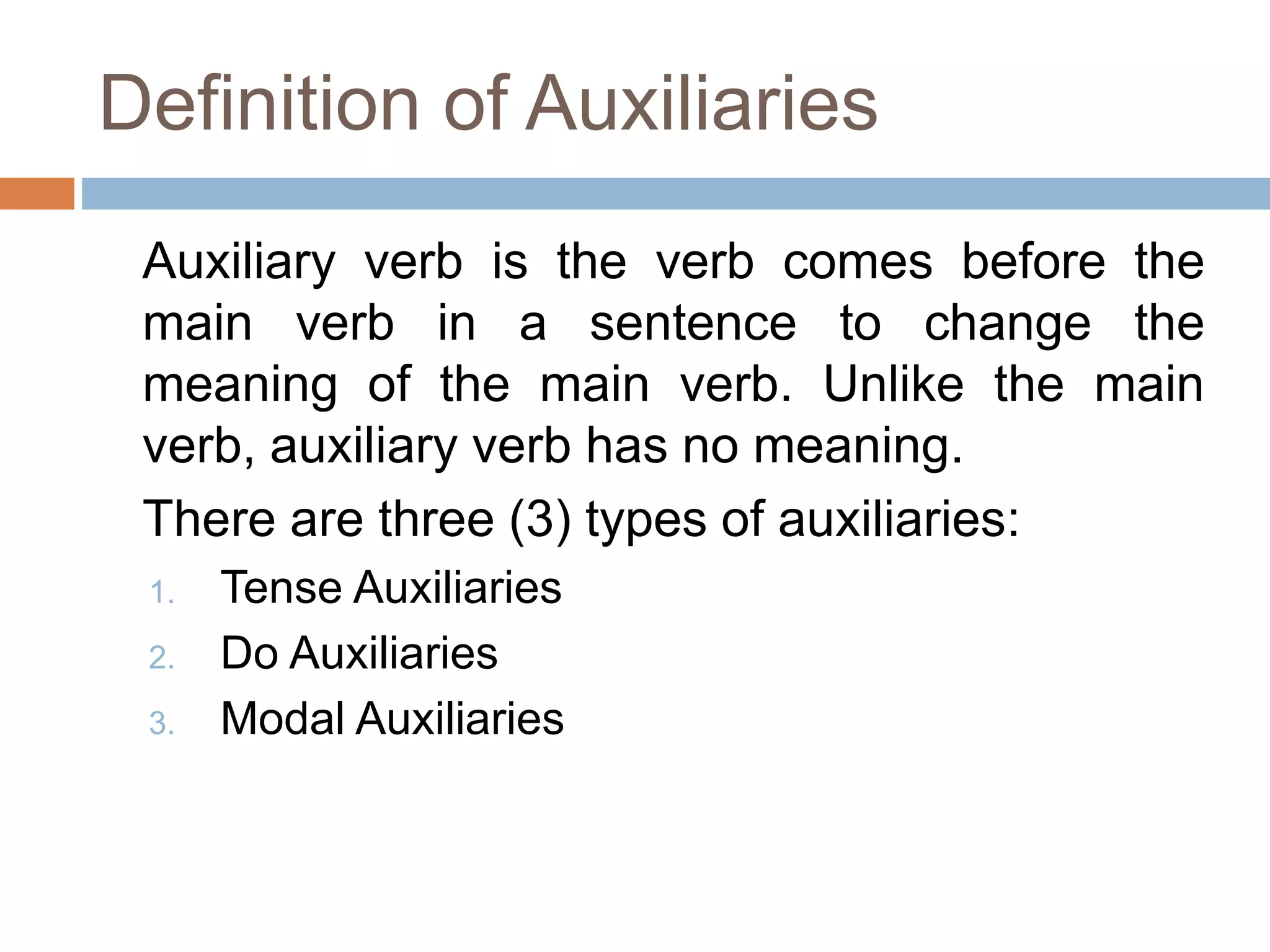
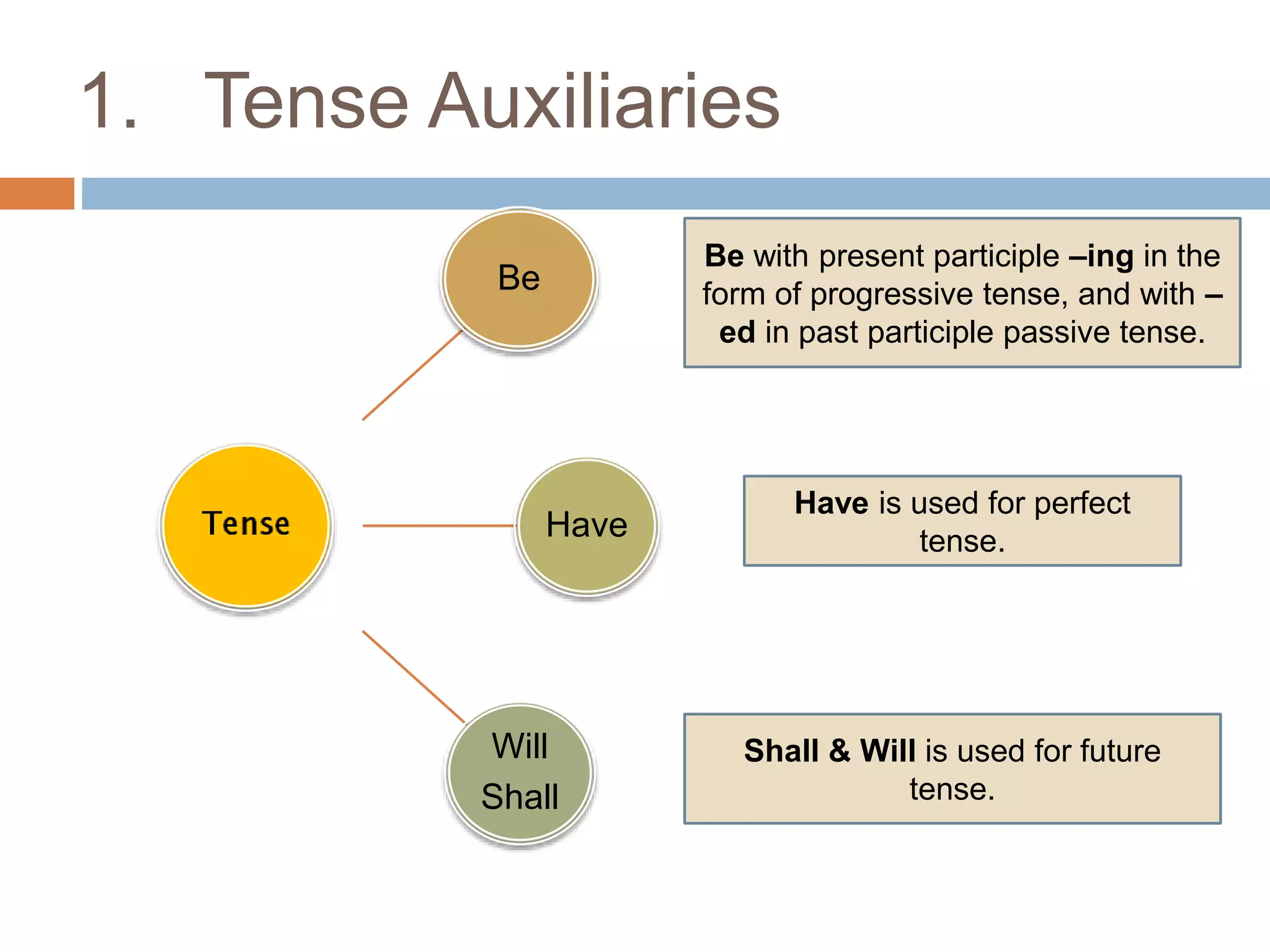
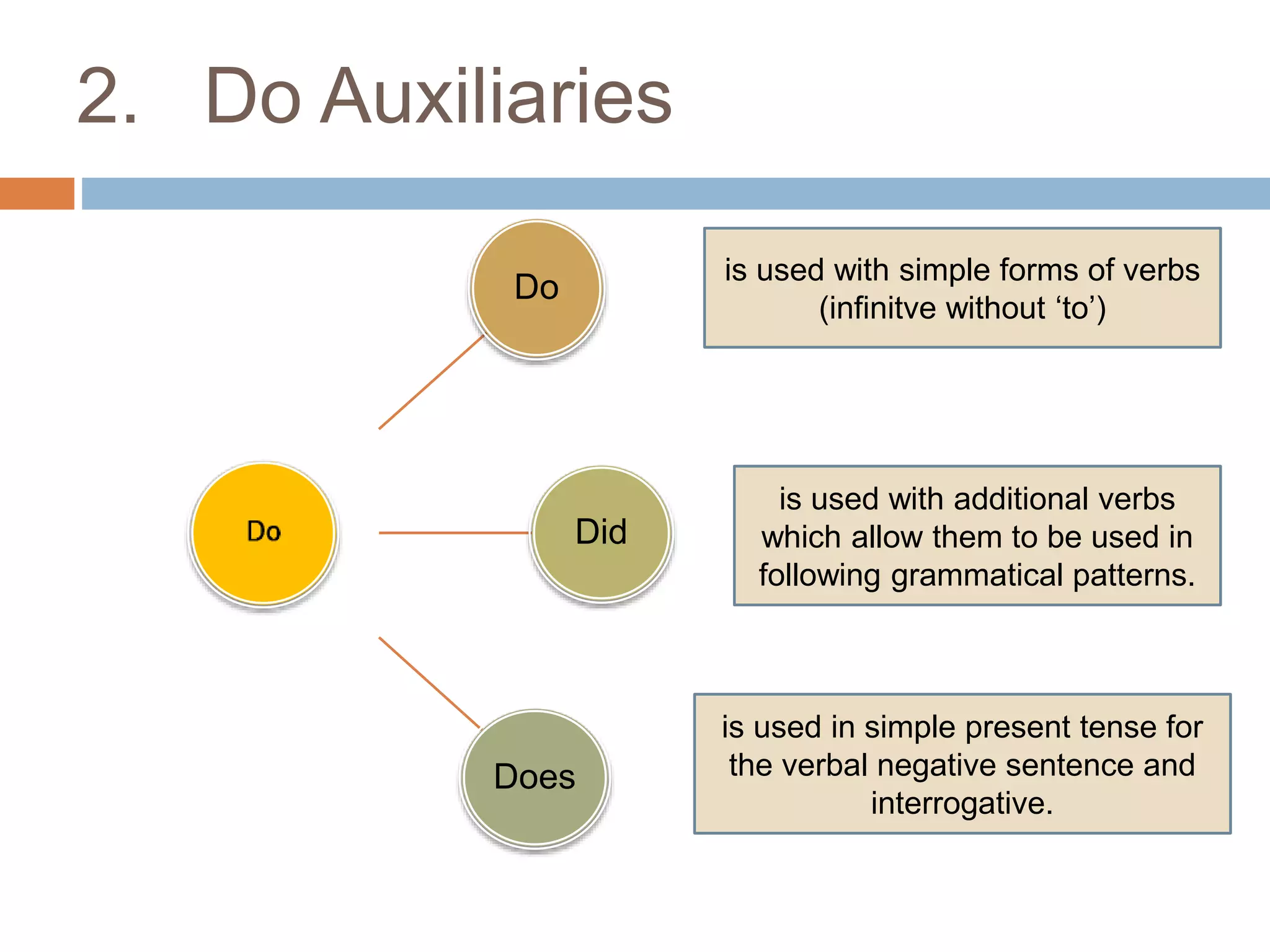


This document defines and describes different types of auxiliary verbs: tense auxiliaries like be, have, will, and shall which are used to change verb tenses; do auxiliaries like do, did, and does which are used with additional verbs; and modal auxiliaries like can, could, will, would, must, shall, should, may, and might which show ability, permission, willingness, obligation, necessity, and probability. Each modal auxiliary is explained in terms of its specific uses and meanings. Other auxiliaries like dare, need, and used to are also briefly defined.


