GCARD 2012
Partnerships to Achieve Food and
       Nutrition Security
        Sub-session P1:
     National Food Security

                               ISPC
                              CGIAR
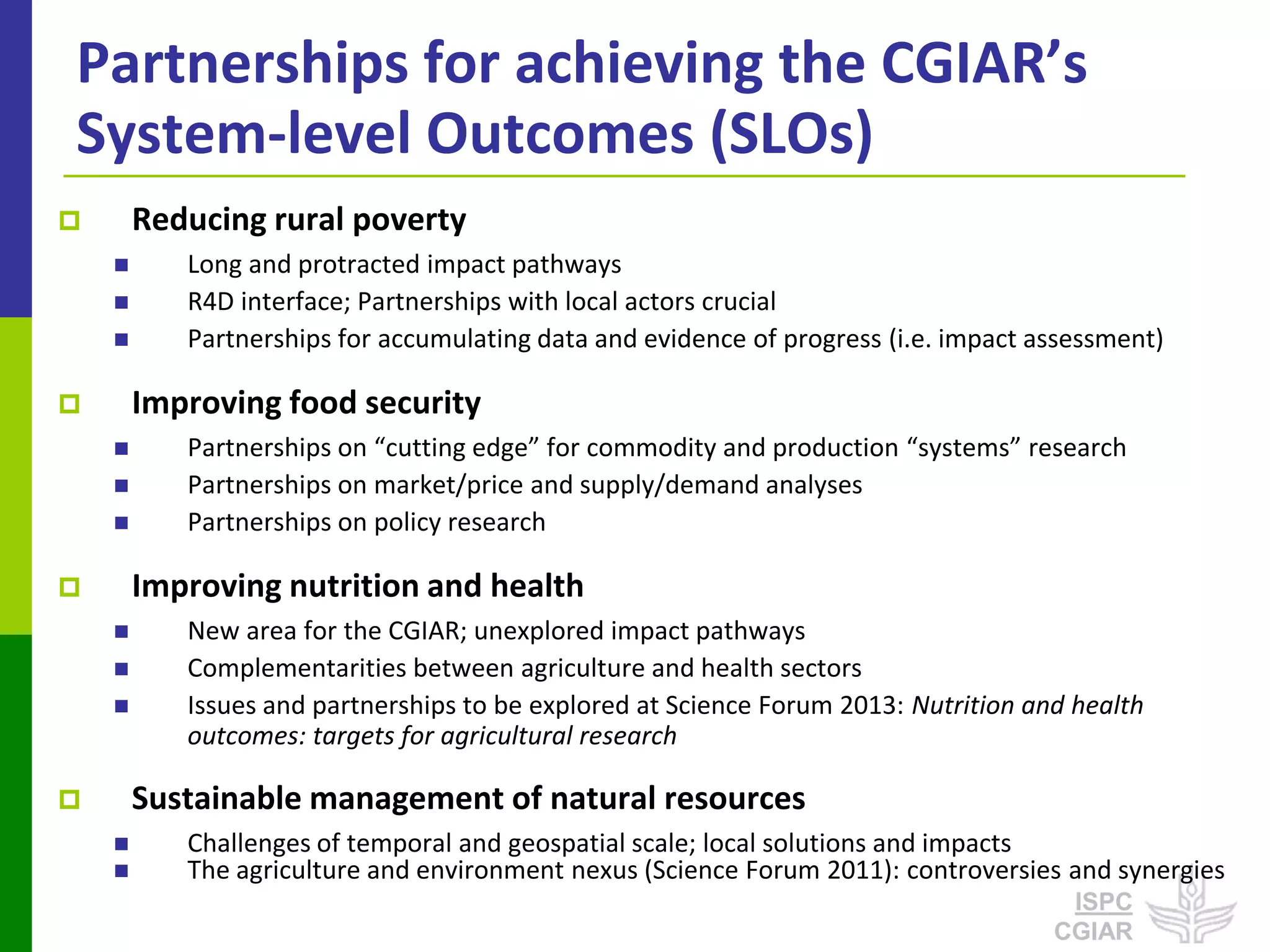
Partnerships for achieving the CGIAR’s
System-level Outcomes (SLOs)
       Reducing rural poverty
          Long and protracted impact pathways
          R4D interface; Partnerships with local actors crucial
          Partnerships for accumulating data and evidence of progress (i.e. impact assessment)

       Improving food security
          Partnerships on “cutting edge” for commodity and production “systems” research
          Partnerships on market/price and supply/demand analyses
          Partnerships on policy research

       Improving nutrition and health
          New area for the CGIAR; unexplored impact pathways
          Complementarities between agriculture and health sectors
          Issues and partnerships to be explored at Science Forum 2013: Nutrition and health
           outcomes: targets for agricultural research

       Sustainable management of natural resources
          Challenges of temporal and geospatial scale; local solutions and impacts
          The agriculture and environment nexus (Science Forum 2011): controversies and synergies
                                                                                      ISPC
                                                                                     CGIAR
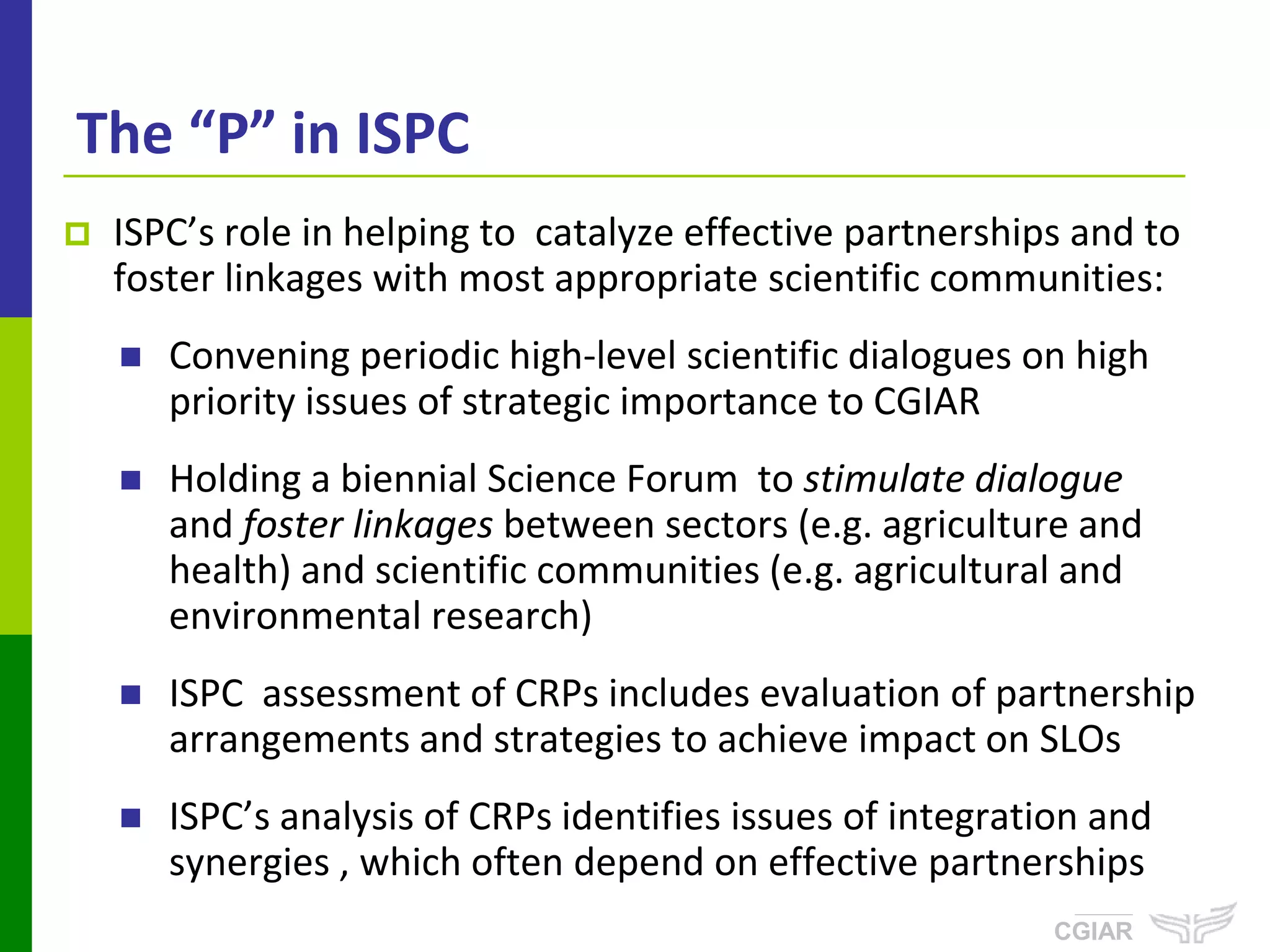
The “P” in ISPC
   ISPC’s role in helping to catalyze effective partnerships and to
    foster linkages with most appropriate scientific communities:
       Convening periodic high-level scientific dialogues on high
        priority issues of strategic importance to CGIAR
       Holding a biennial Science Forum to stimulate dialogue
        and foster linkages between sectors (e.g. agriculture and
        health) and scientific communities (e.g. agricultural and
        environmental research)
       ISPC assessment of CRPs includes evaluation of partnership
        arrangements and strategies to achieve impact on SLOs
       ISPC’s analysis of CRPs identifies issues of integration and
        synergies , which often depend on effective partnerships
                                                               ISPC
                                                              CGIAR
ISPC’s current thinking: Theory of
change, impact pathways, partnerships
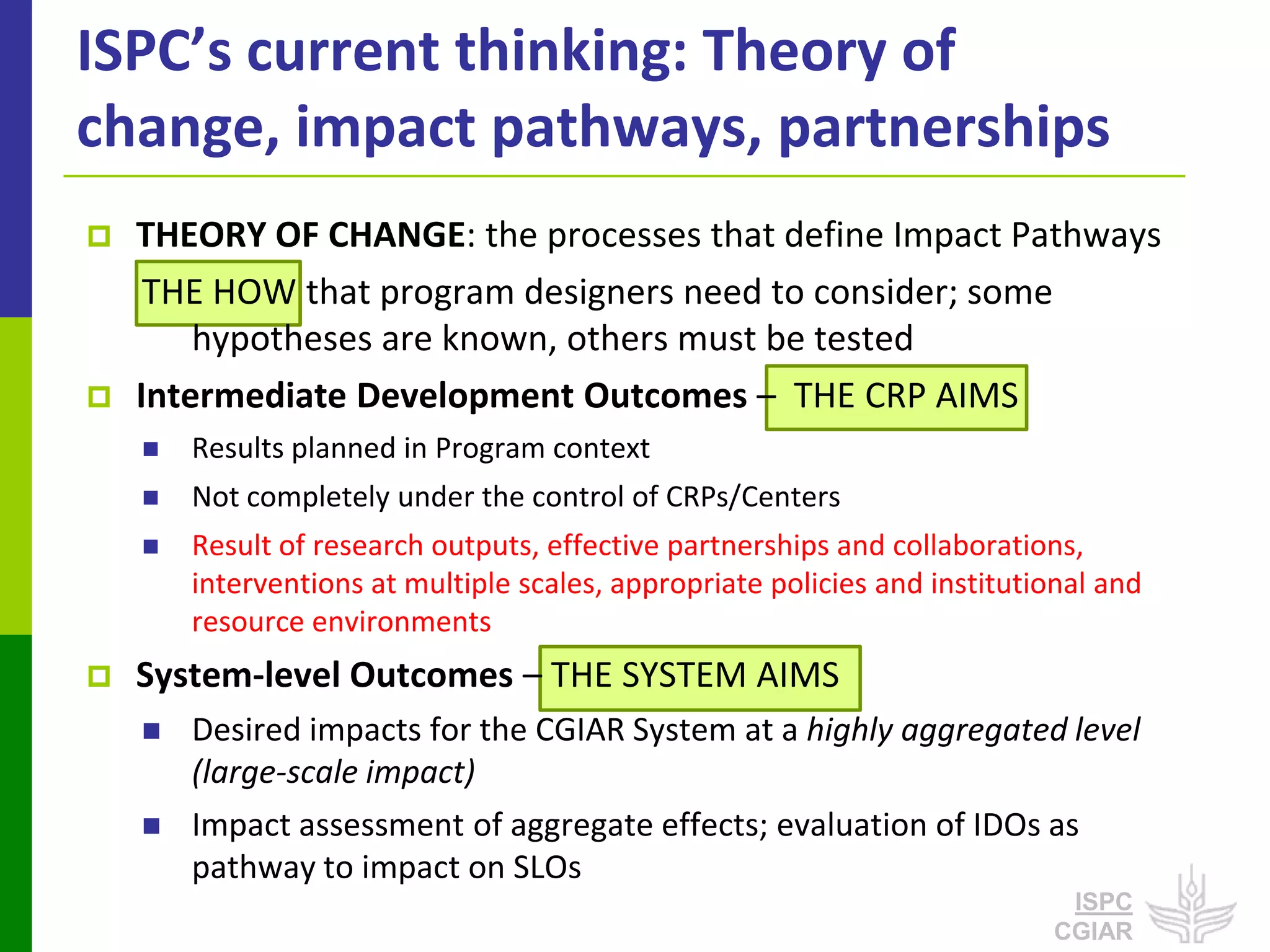
   THEORY OF CHANGE: the processes that define Impact Pathways
     THE HOW that program designers need to consider; some
        hypotheses are known, others must be tested
   Intermediate Development Outcomes – THE CRP AIMS
       Results planned in Program context
       Not completely under the control of CRPs/Centers
       Result of research outputs, effective partnerships and collaborations,
        interventions at multiple scales, appropriate policies and institutional and
        resource environments
   System-level Outcomes – THE SYSTEM AIMS
       Desired impacts for the CGIAR System at a highly aggregated level
        (large-scale impact)
       Impact assessment of aggregate effects; evaluation of IDOs as
        pathway to impact on SLOs
                                                                             ISPC
                                                                            CGIAR
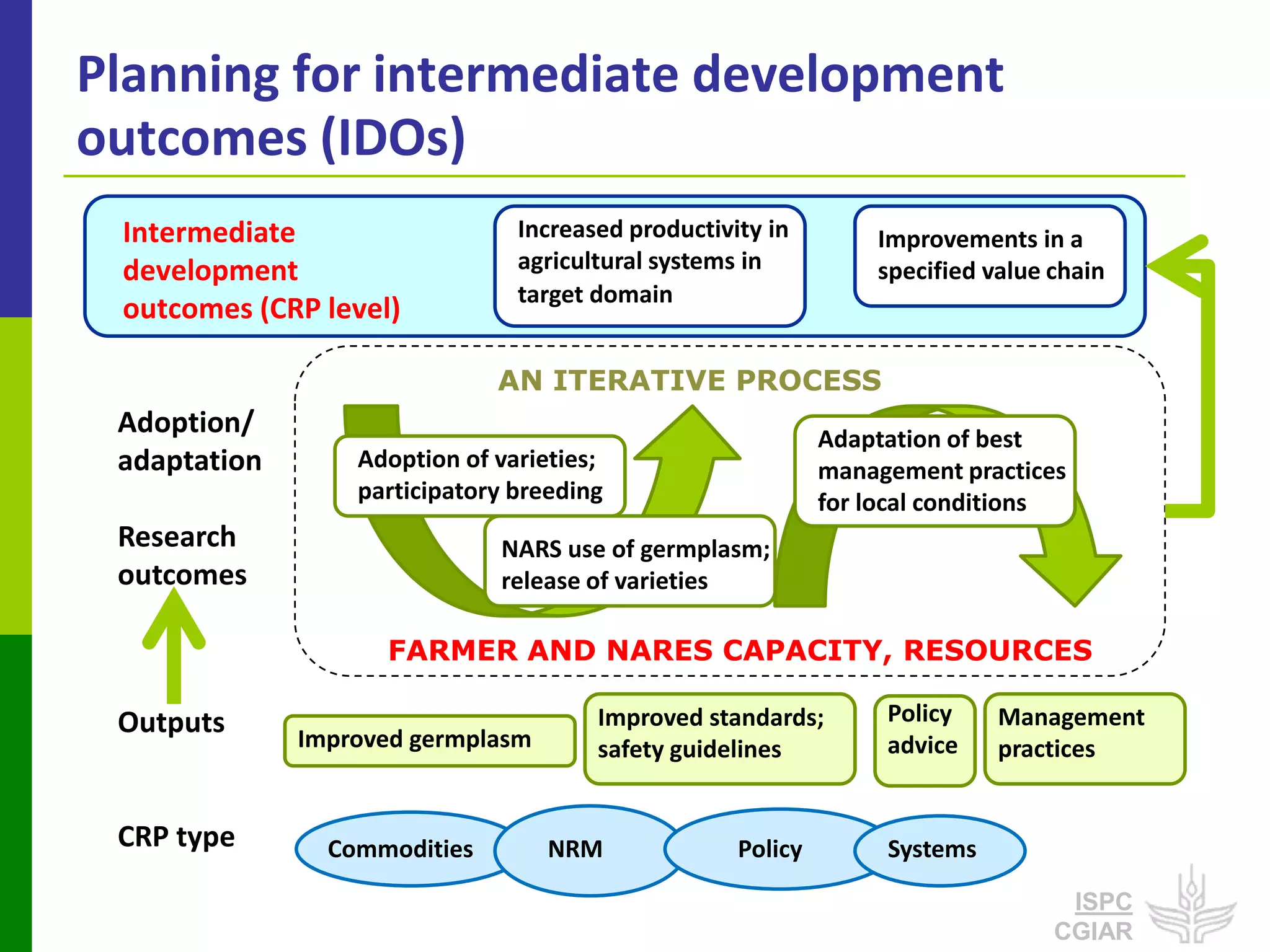
Planning for intermediate development
outcomes (IDOs)
 Intermediate                   Increased productivity in        Improvements in a
 development                    agricultural systems in          specified value chain
                                target domain
 outcomes (CRP level)

                              AN ITERATIVE PROCESS
 Adoption/                                                   Adaptation of best
 adaptation       Adoption of varieties;                     management practices
                  participatory breeding                     for local conditions
 Research                     NARS use of germplasm;
 outcomes                     release of varieties

                    FARMER AND NARES CAPACITY, RESOURCES

 Outputs                               Improved standards;        Policy    Management
              Improved germplasm       safety guidelines          advice    practices


 CRP type       Commodities        NRM              Policy        Systems

                                                                                  ISPC
                                                                                 CGIAR
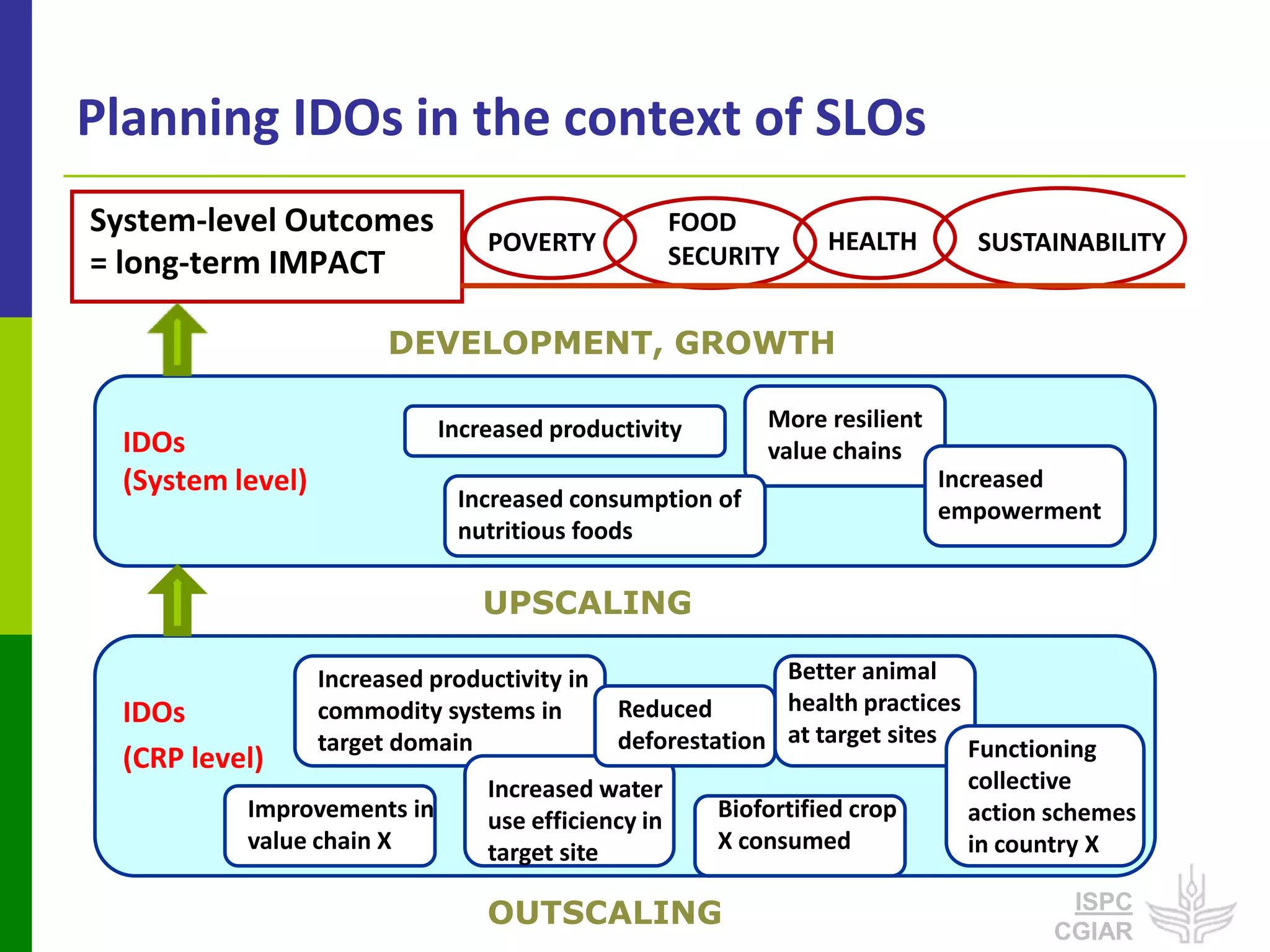
Planning IDOs in the context of SLOs
System-level Outcomes                             FOOD
                                  POVERTY                       HEALTH        SUSTAINABILITY
= long-term IMPACT                                SECURITY


                         DEVELOPMENT, GROWTH

                              Increased productivity       More resilient
  IDOs                                                     value chains
  (System level)                                                            Increased
                               Increased consumption of                     empowerment
                               nutritious foods

                                  UPSCALING

                   Increased productivity in                 Better animal
  IDOs             commodity systems in       Reduced        health practices
                   target domain              deforestation at target sites Functioning
  (CRP level)
                                  Increased water                             collective
           Improvements in        use efficiency in    Biofortified crop      action schemes
           value chain X          target site          X consumed             in country X

                                  OUTSCALING                                         ISPC
                                                                                    CGIAR
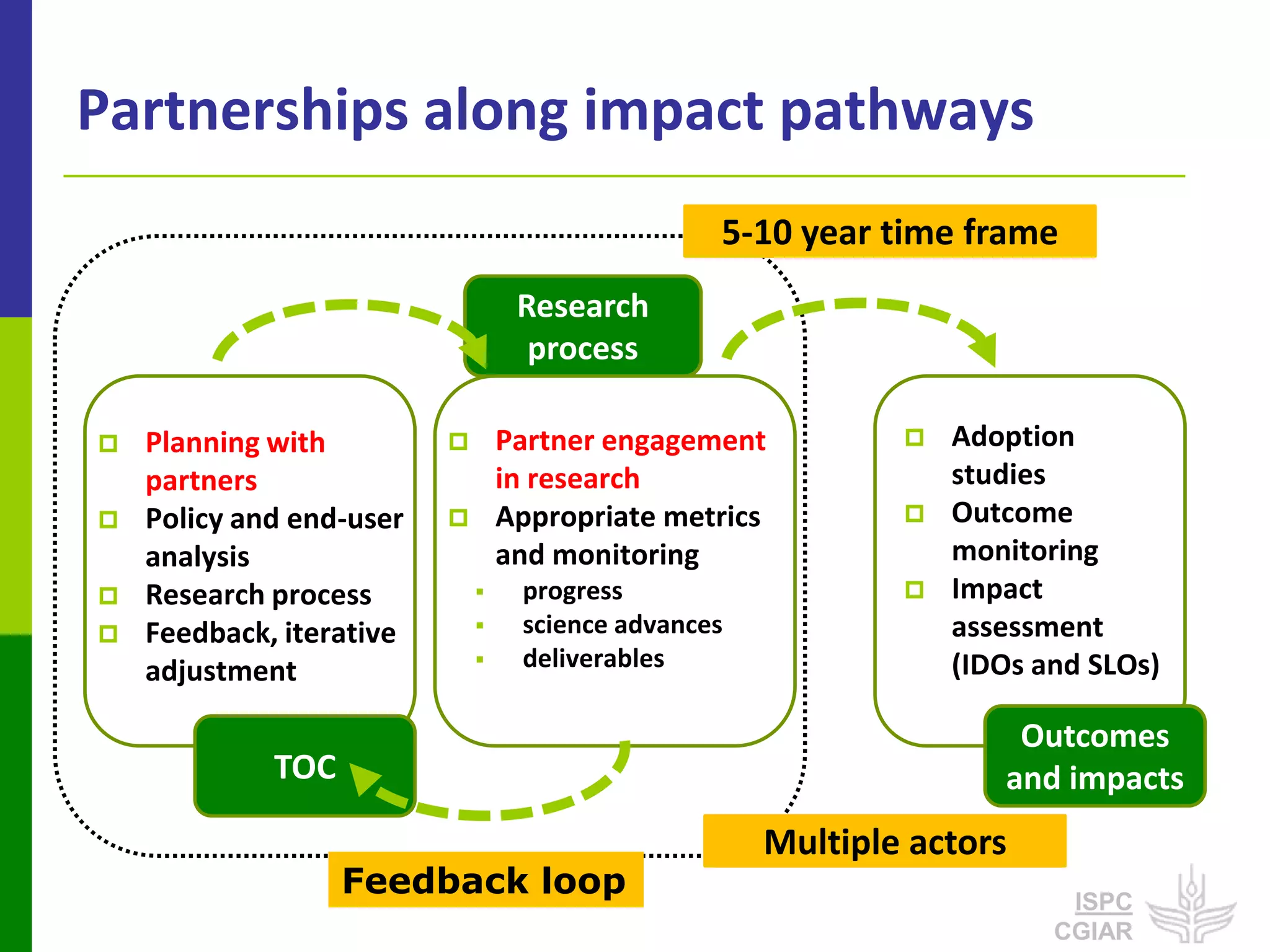
Partnerships along impact pathways
                                                  5-10 year time frame
                                   Research
                                    process

   Planning with                Partner engagement             Adoption
    partners                      in research                     studies
   Policy and end-user          Appropriate metrics            Outcome
    analysis                      and monitoring                  monitoring
   Research process              progress                      Impact
   Feedback, iterative           science advances               assessment
    adjustment                    deliverables                   (IDOs and SLOs)

                                                                      Outcomes
             TOC                                                     and impacts
                                                      Multiple actors
                   Feedback loop                                          ISPC
                                                                         CGIAR

P1.1. Partnerships to Achieve Food and Nutrition Security

  • 1.
    GCARD 2012 Partnerships toAchieve Food and Nutrition Security Sub-session P1: National Food Security ISPC CGIAR
  • 2.
    Partnerships for achievingthe CGIAR’s System-level Outcomes (SLOs)  Reducing rural poverty  Long and protracted impact pathways  R4D interface; Partnerships with local actors crucial  Partnerships for accumulating data and evidence of progress (i.e. impact assessment)  Improving food security  Partnerships on “cutting edge” for commodity and production “systems” research  Partnerships on market/price and supply/demand analyses  Partnerships on policy research  Improving nutrition and health  New area for the CGIAR; unexplored impact pathways  Complementarities between agriculture and health sectors  Issues and partnerships to be explored at Science Forum 2013: Nutrition and health outcomes: targets for agricultural research  Sustainable management of natural resources  Challenges of temporal and geospatial scale; local solutions and impacts  The agriculture and environment nexus (Science Forum 2011): controversies and synergies ISPC CGIAR
  • 3.
    The “P” inISPC  ISPC’s role in helping to catalyze effective partnerships and to foster linkages with most appropriate scientific communities:  Convening periodic high-level scientific dialogues on high priority issues of strategic importance to CGIAR  Holding a biennial Science Forum to stimulate dialogue and foster linkages between sectors (e.g. agriculture and health) and scientific communities (e.g. agricultural and environmental research)  ISPC assessment of CRPs includes evaluation of partnership arrangements and strategies to achieve impact on SLOs  ISPC’s analysis of CRPs identifies issues of integration and synergies , which often depend on effective partnerships ISPC CGIAR
  • 4.
    ISPC’s current thinking:Theory of change, impact pathways, partnerships  THEORY OF CHANGE: the processes that define Impact Pathways THE HOW that program designers need to consider; some hypotheses are known, others must be tested  Intermediate Development Outcomes – THE CRP AIMS  Results planned in Program context  Not completely under the control of CRPs/Centers  Result of research outputs, effective partnerships and collaborations, interventions at multiple scales, appropriate policies and institutional and resource environments  System-level Outcomes – THE SYSTEM AIMS  Desired impacts for the CGIAR System at a highly aggregated level (large-scale impact)  Impact assessment of aggregate effects; evaluation of IDOs as pathway to impact on SLOs ISPC CGIAR
  • 5.
    Planning for intermediatedevelopment outcomes (IDOs) Intermediate Increased productivity in Improvements in a development agricultural systems in specified value chain target domain outcomes (CRP level) AN ITERATIVE PROCESS Adoption/ Adaptation of best adaptation Adoption of varieties; management practices participatory breeding for local conditions Research NARS use of germplasm; outcomes release of varieties FARMER AND NARES CAPACITY, RESOURCES Outputs Improved standards; Policy Management Improved germplasm safety guidelines advice practices CRP type Commodities NRM Policy Systems ISPC CGIAR
  • 6.
    Planning IDOs inthe context of SLOs System-level Outcomes FOOD POVERTY HEALTH SUSTAINABILITY = long-term IMPACT SECURITY DEVELOPMENT, GROWTH Increased productivity More resilient IDOs value chains (System level) Increased Increased consumption of empowerment nutritious foods UPSCALING Increased productivity in Better animal IDOs commodity systems in Reduced health practices target domain deforestation at target sites Functioning (CRP level) Increased water collective Improvements in use efficiency in Biofortified crop action schemes value chain X target site X consumed in country X OUTSCALING ISPC CGIAR
  • 7.
    Partnerships along impactpathways 5-10 year time frame Research process  Planning with  Partner engagement  Adoption partners in research studies  Policy and end-user  Appropriate metrics  Outcome analysis and monitoring monitoring  Research process  progress  Impact  Feedback, iterative  science advances assessment adjustment  deliverables (IDOs and SLOs) Outcomes TOC and impacts Multiple actors Feedback loop ISPC CGIAR