INTRODUCTION TO GENERAL & METABOLIC
BIOCHEMISTRY
Musonda Machiko
TMed(KIHERS),Dip. Biomed( EHC), BSc. Biomed(UNZA)
MSc. Biomed(Buenos Aires), MSc. Biomed(Freiburg)
machikoveli@gmail.com
Rationale
• Cellular and tissue processes are biochemical by nature. This course is
intended to equip students with the concepts of metabolic processes, related
disorders, and their detection using biochemical analysis. As such the study of
Biochemistry in Biomedical Sciences is of great conceptual and application
importance.
OBJECTIVES:
By the end of the module, students should be able to:
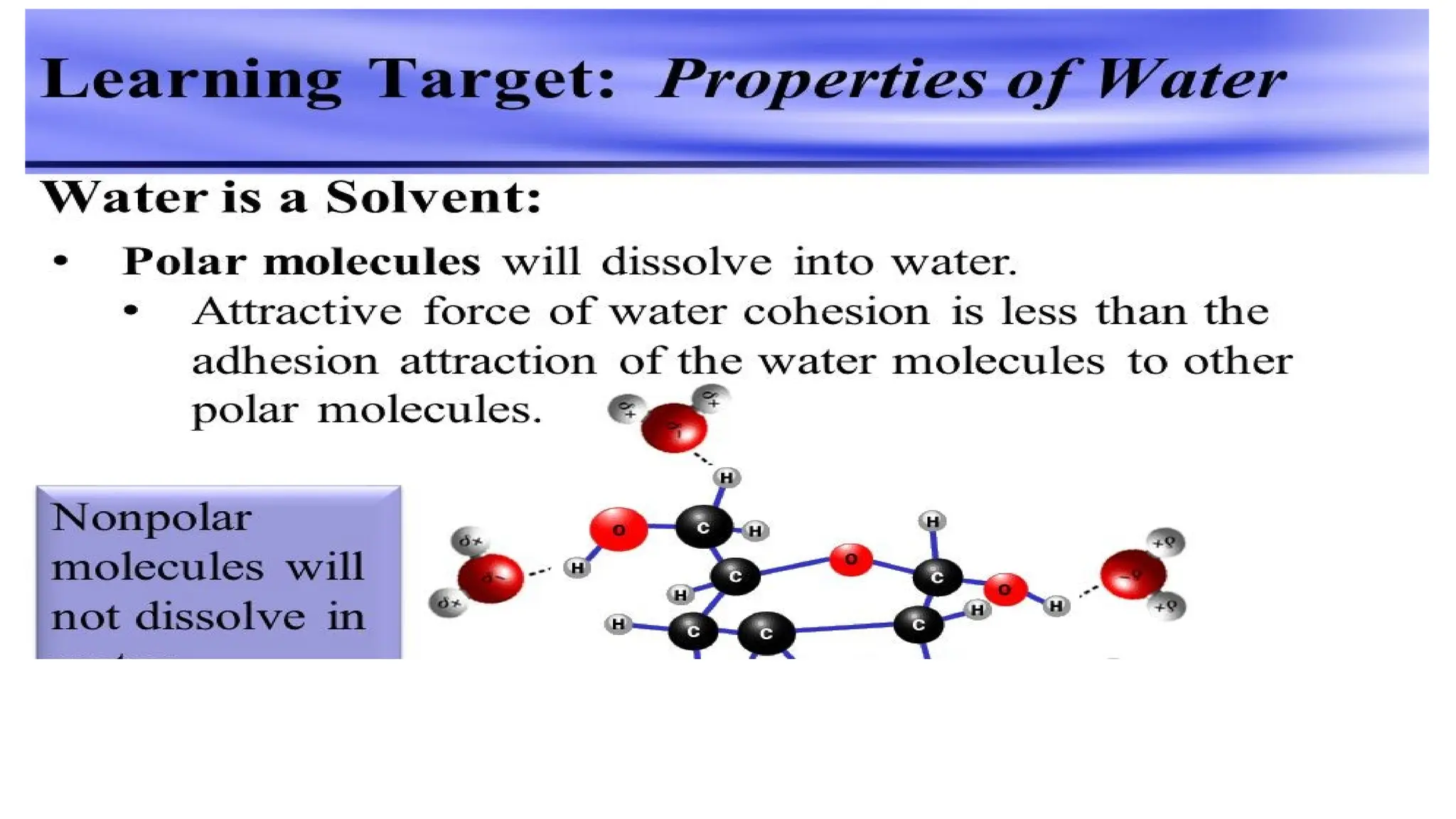
• Explain the properties of water and its interaction with
other molecules
• Describe classification, chemical structures, properties,
and functions of biomolecules
• Explain enzyme properties, kinetics, mechanisms,
inhibition, and regulation
• Explain cellular energy bioenergetics and synthesis of
energy
• Describe the metabolism of biomolecules and their regulation
• Describe the steps in nucleotide, nucleic acid and protein synthesis
• Describe nutritional requirements and associated pathophysiology
Biochemistry is the application of chemistry to the study
of biological processes at the cellular and molecular
level. It emerged as a distinct discipline around the
beginning of the 20th century when scientists combined
chemistry, physiology, and biology to investigate the
chemistry of living systems.

What is Biochemistry?
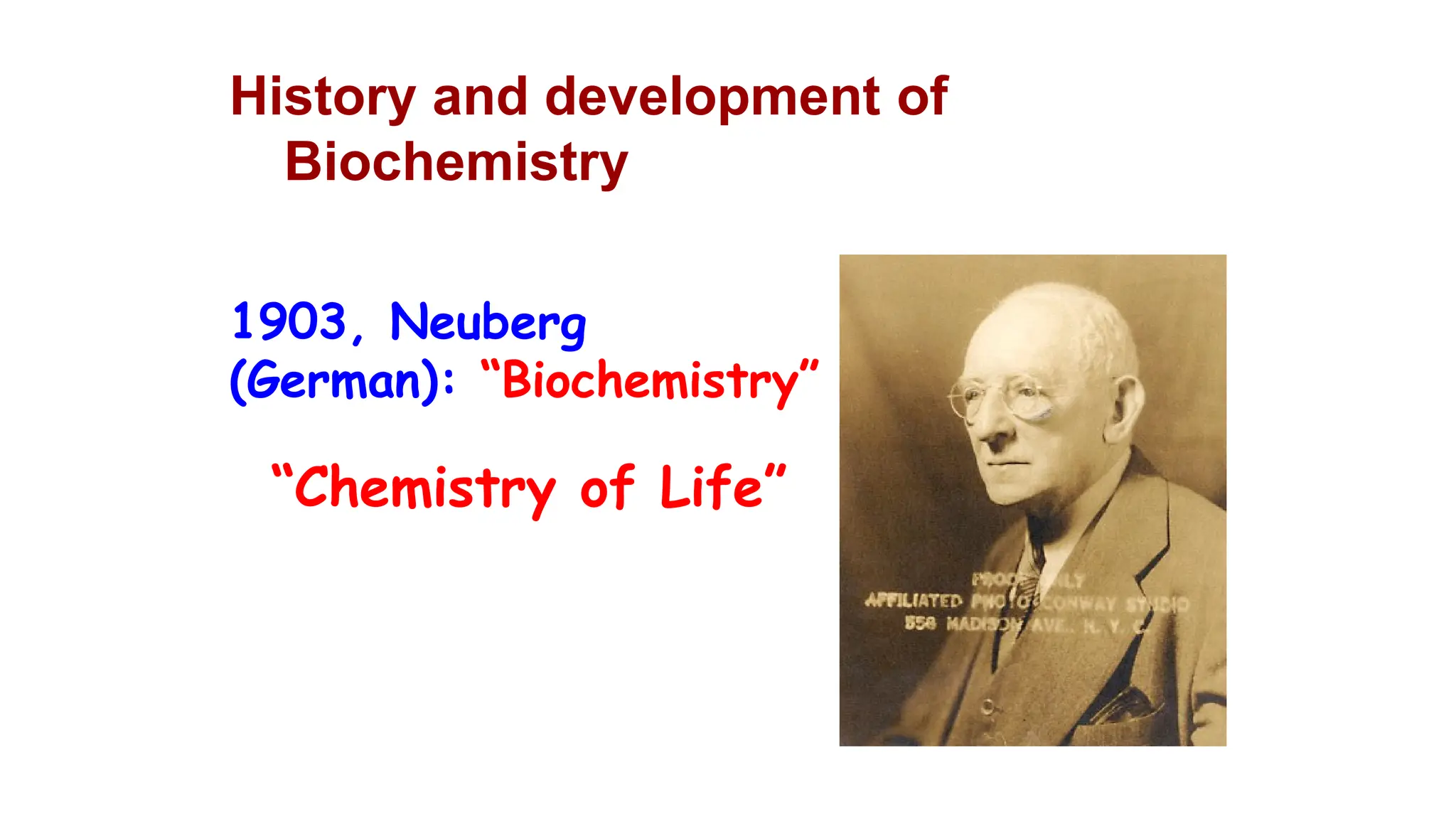
History and development of
Biochemistry
1903, Neuberg
(German): “Biochemistry”
“Chemistry of Life”
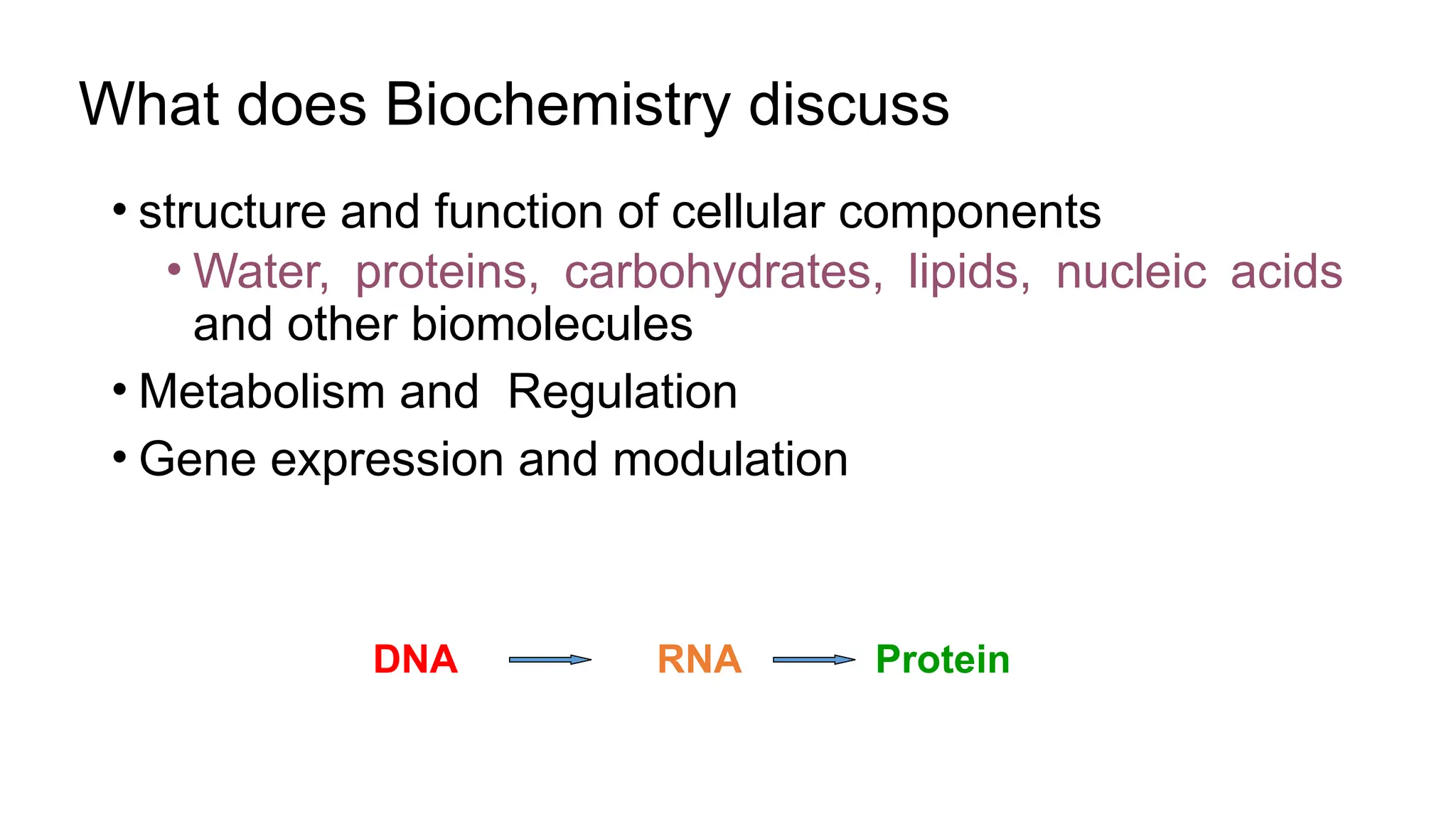
What does Biochemistry discuss
• structure and function of cellular components
• Water, proteins, carbohydrates, lipids, nucleic acids
and other biomolecules
• Metabolism and Regulation
• Gene expression and modulation
DNA RNA Protein
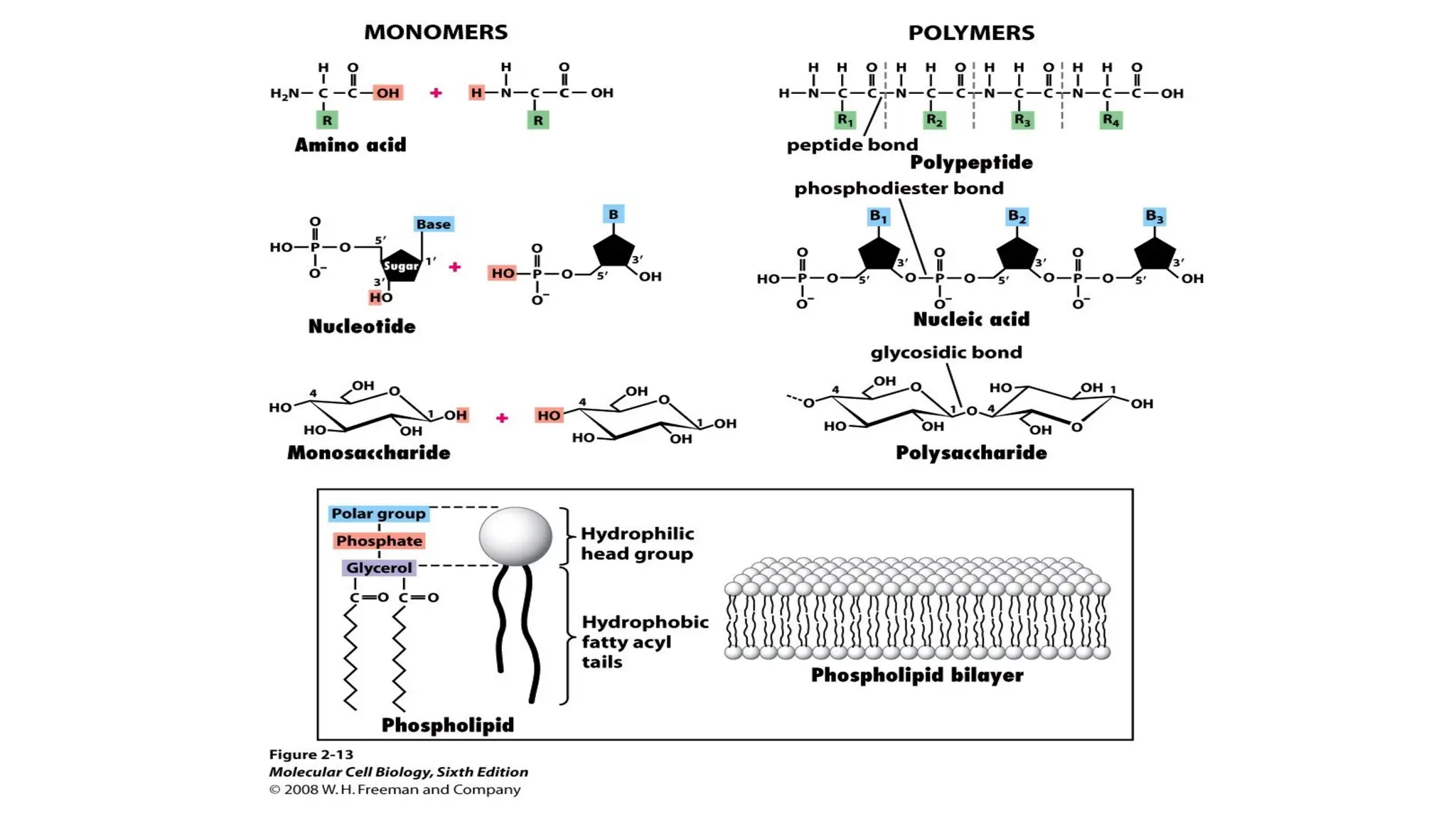
Polymers and Monomers
• Each of these types of molecules are polymers that are
assembled from single units called monomers.
• Each type of macromolecule is an assemblage of a
different type of monomer.
Polymers and Monomers
• Each of these types of molecules are polymers that are
assembled from single units called monomers.
• Each type of macromolecule is an assemblage of a
different type of monomer.
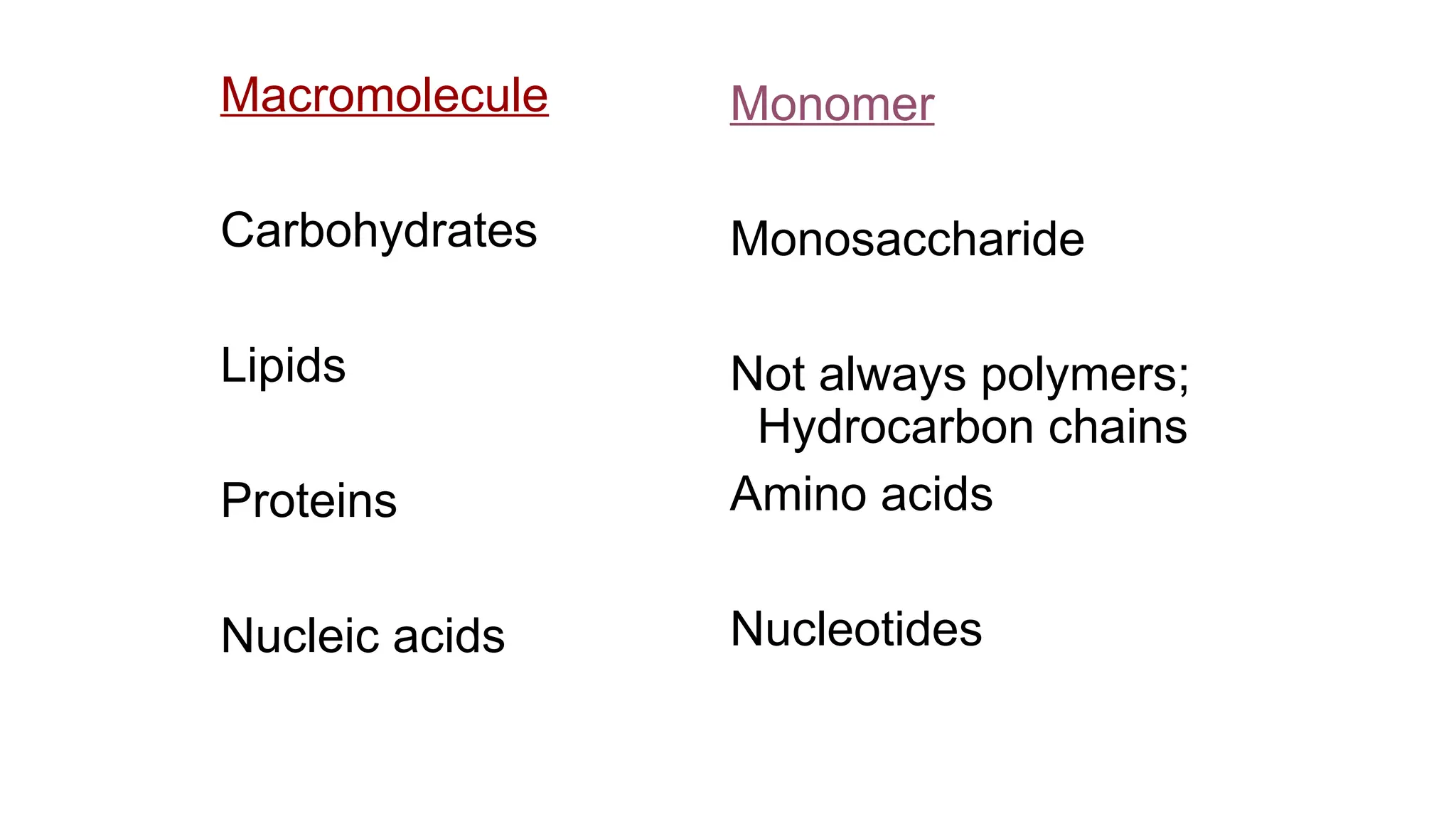
Macromolecule
Carbohydrates
Lipids
Proteins
Nucleic acids
Monomer
Monosaccharide
Not always polymers;
Hydrocarbon chains
Amino acids
Nucleotides
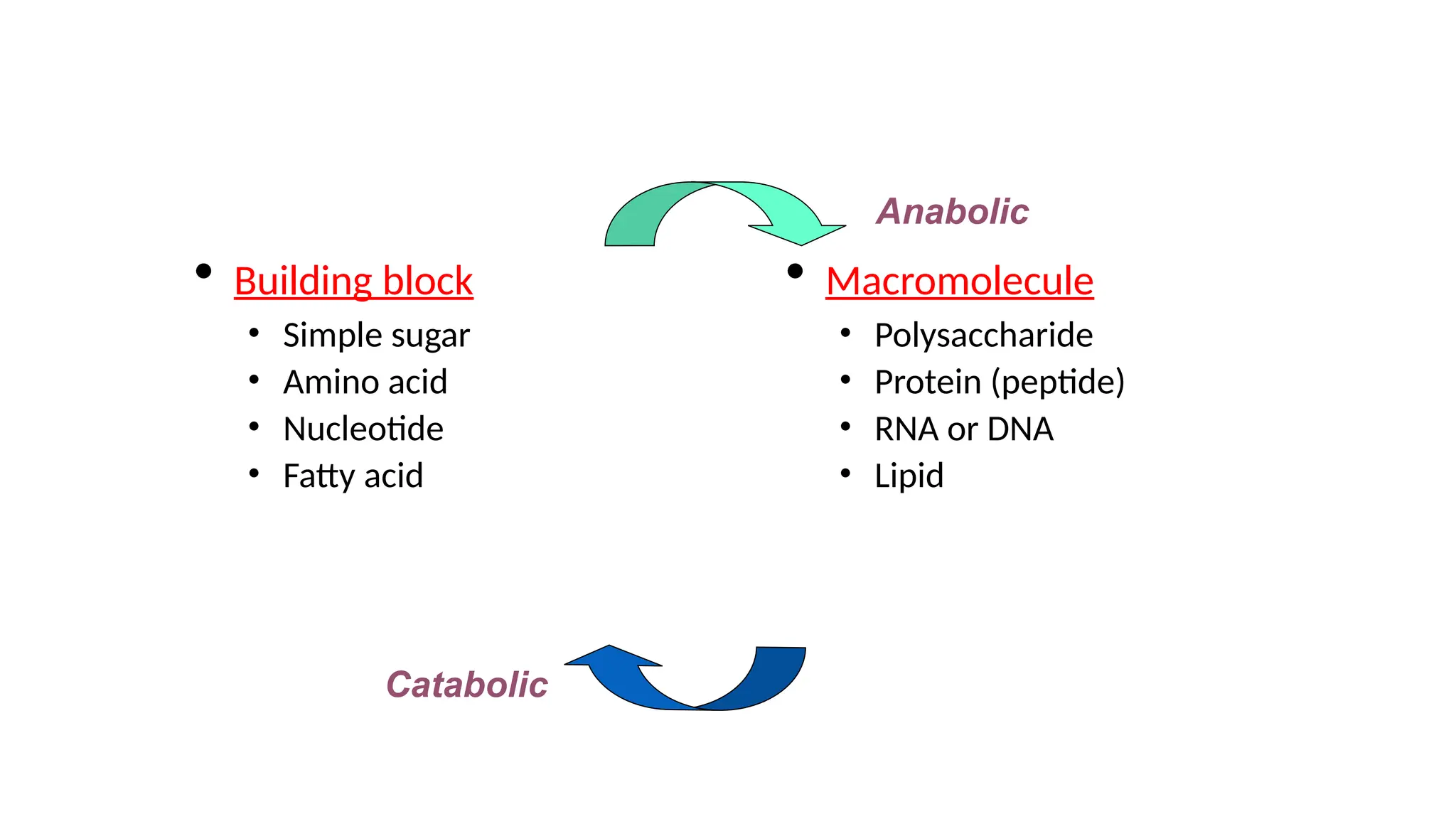
• Building block
• Simple sugar
• Amino acid
• Nucleotide
• Fatty acid
• Macromolecule
• Polysaccharide
• Protein (peptide)
• RNA or DNA
• Lipid
Anabolic
Catabolic
WATER
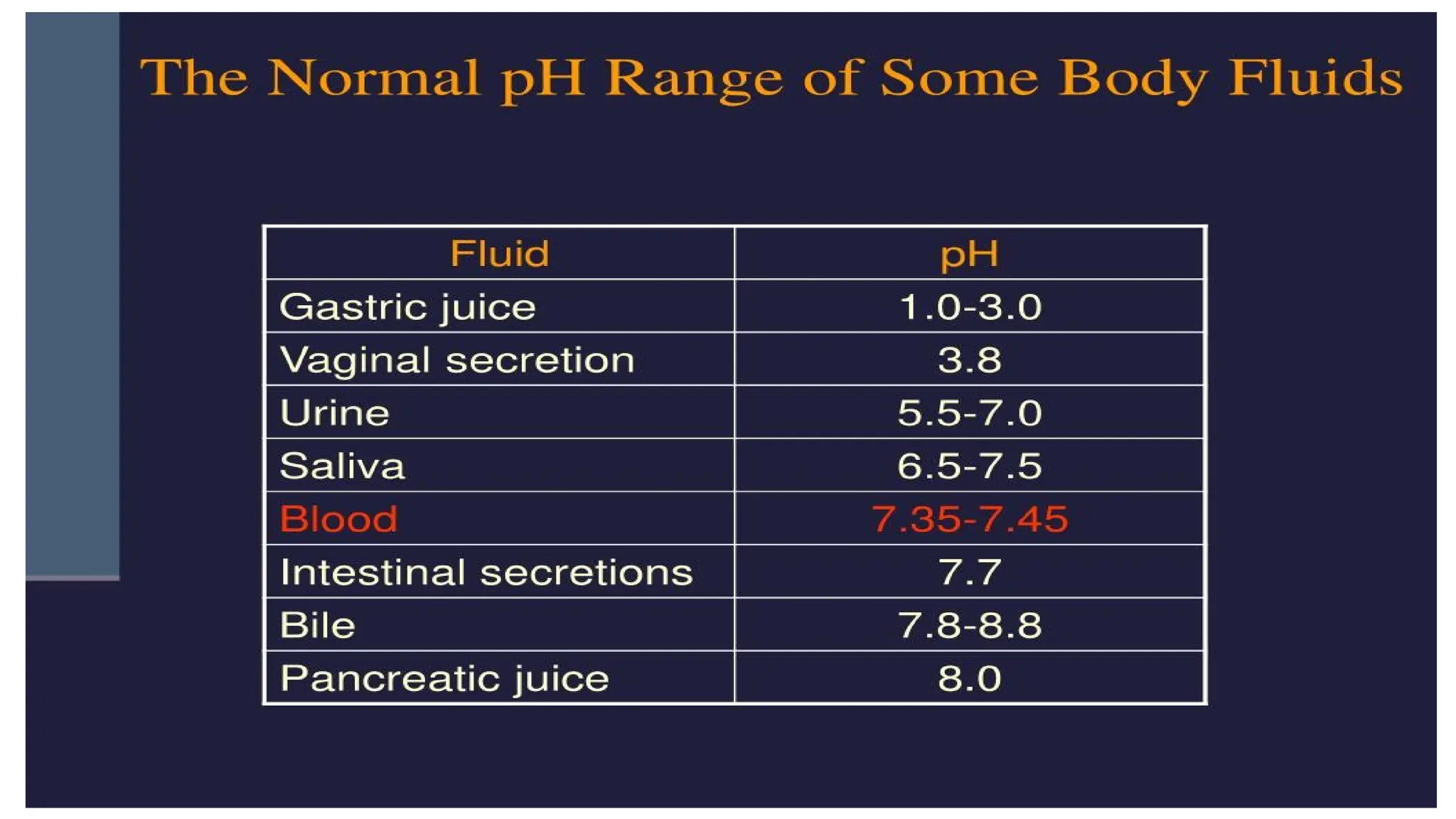
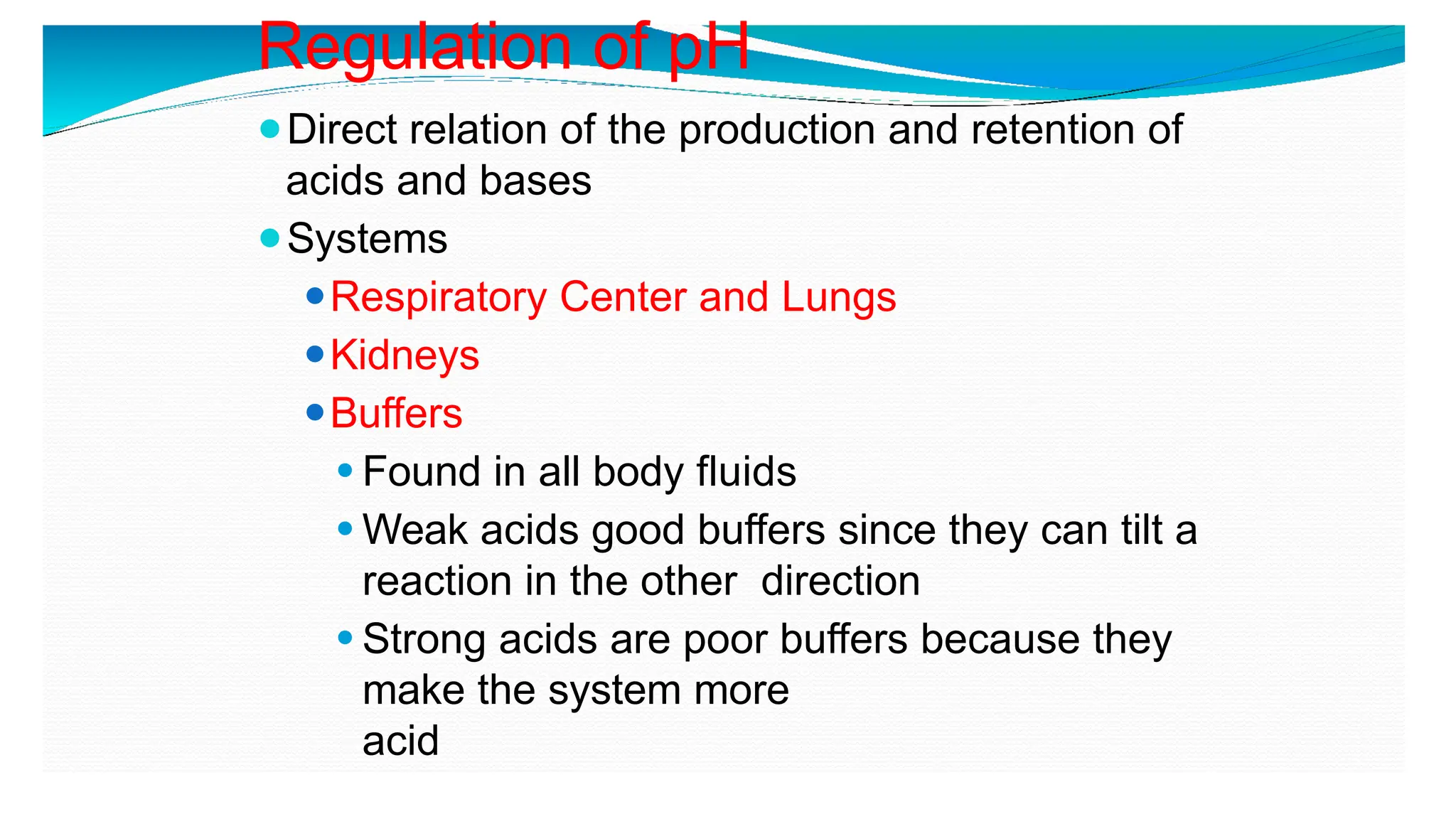
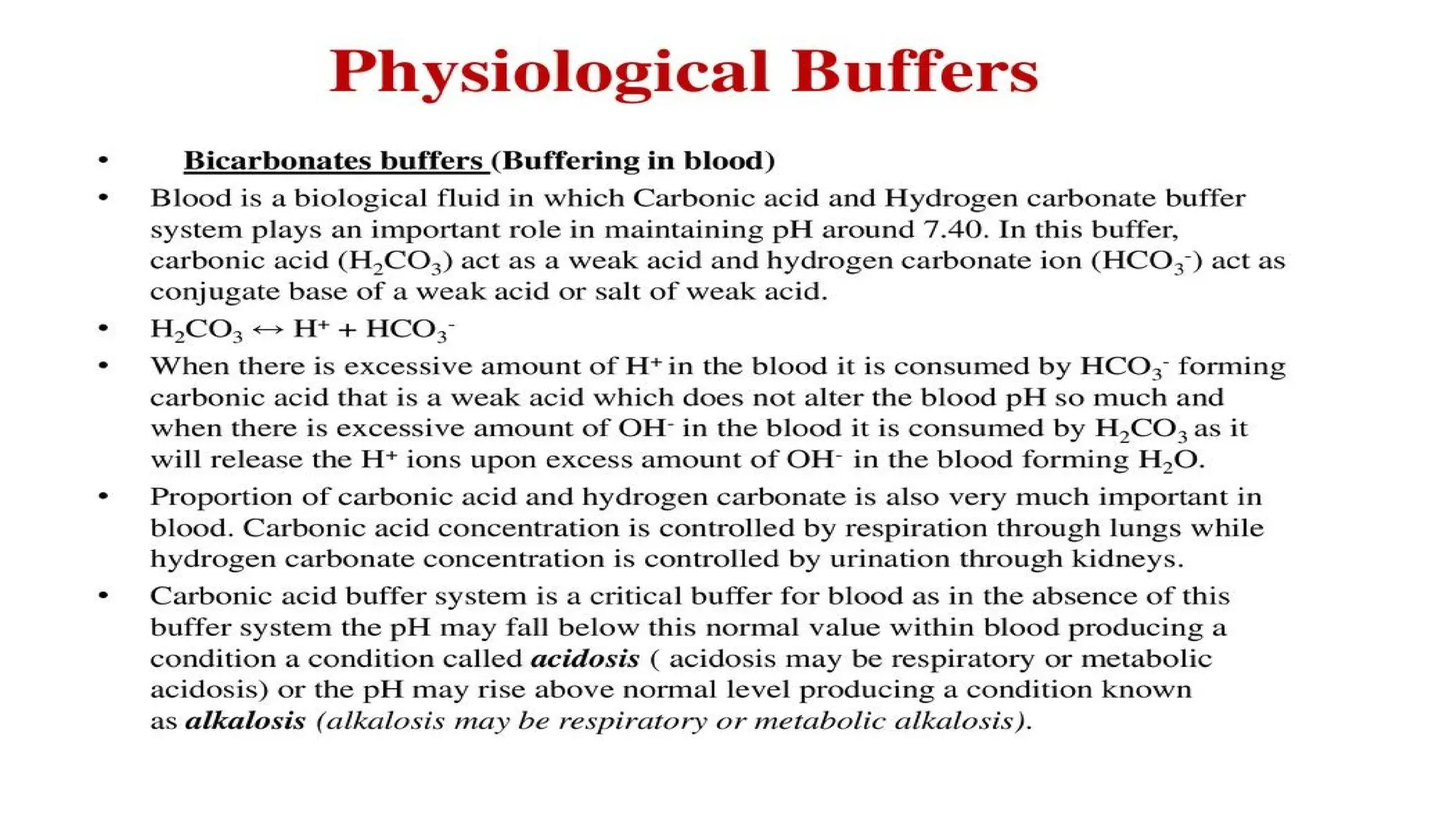
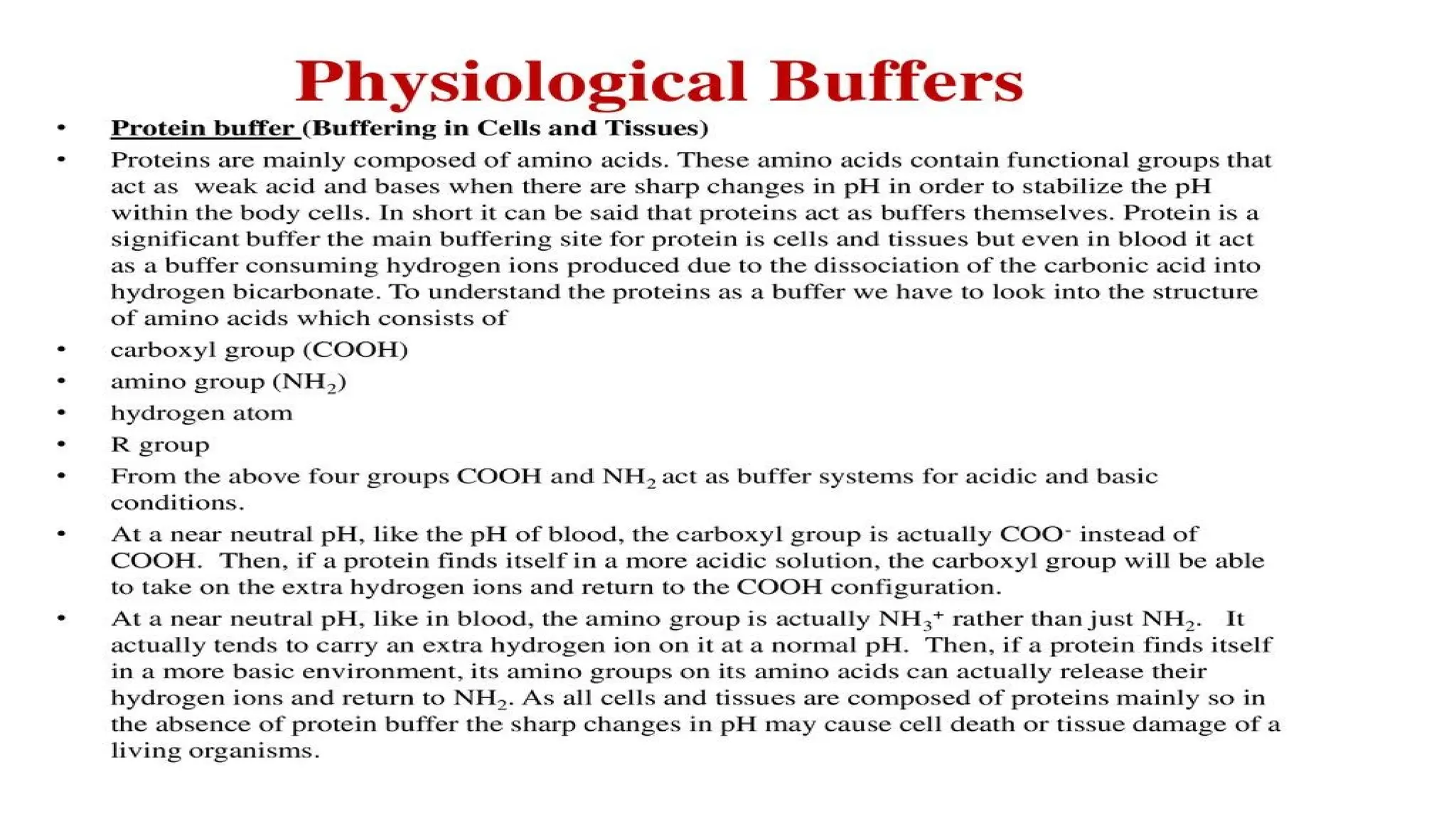
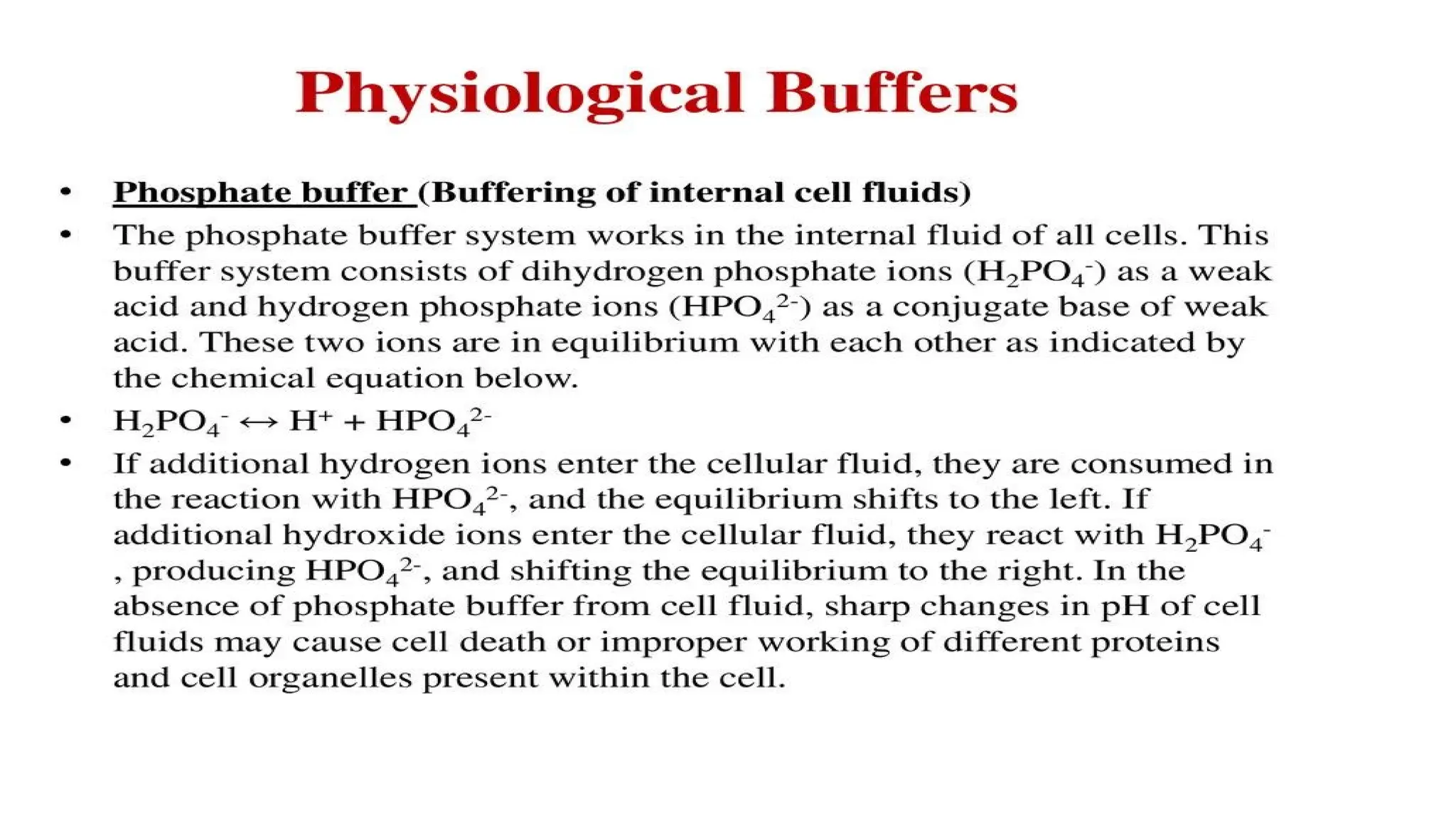
Regulation of pH
⚫Direct relation of the production and retention of
acids and bases
⚫Systems
⚫Respiratory Center and Lungs
⚫Kidneys
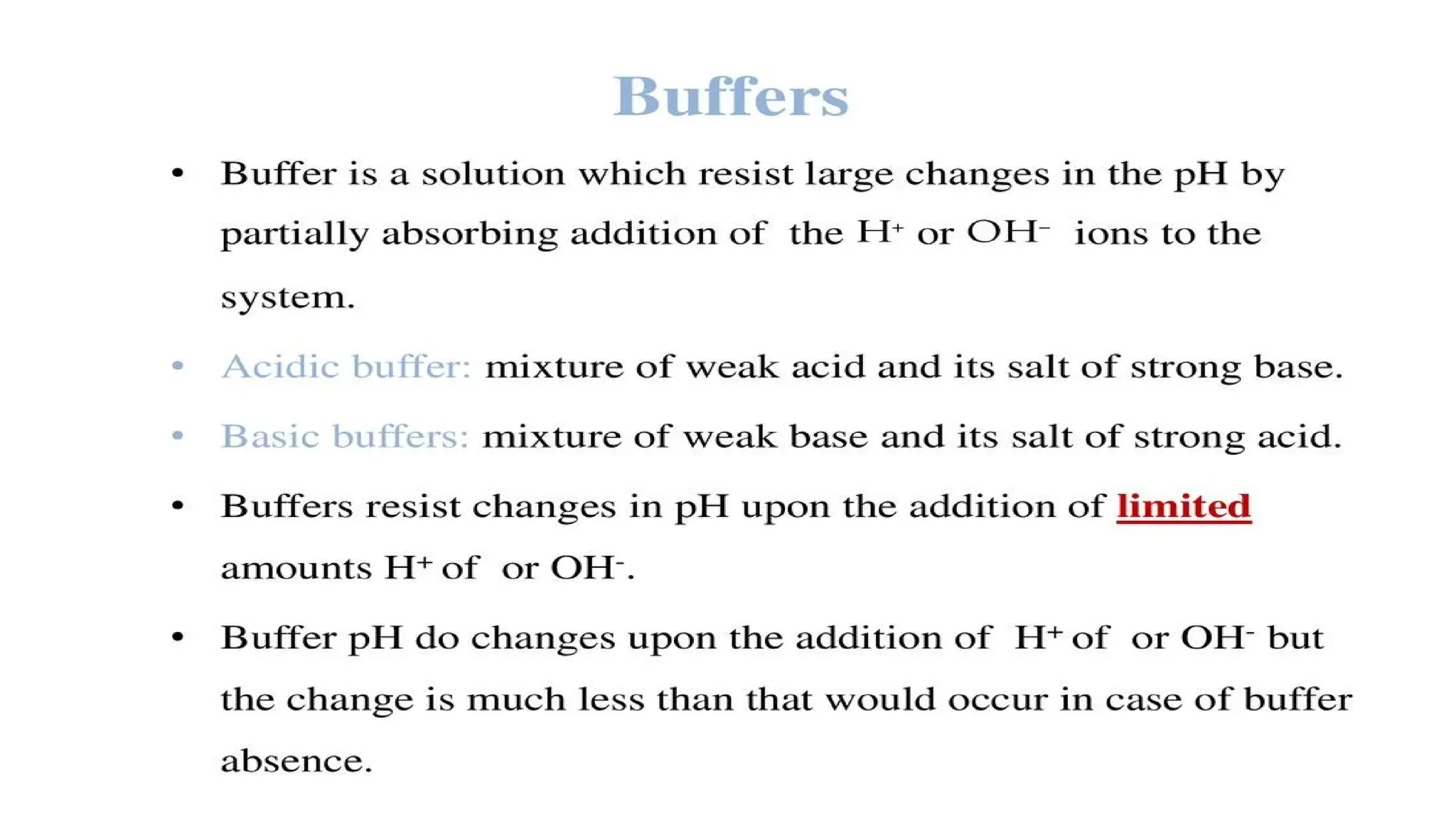
⚫Buffers
⚫ Found in all body fluids
⚫ Weak acids good buffers since they can tilt a
reaction in the other direction
⚫ Strong acids are poor buffers because they
make the system more
acid
8
1. Introduction  to Biochemistrybms.pptx

1. Introduction to Biochemistrybms.pptx

  • 1.
    INTRODUCTION TO GENERAL& METABOLIC BIOCHEMISTRY Musonda Machiko TMed(KIHERS),Dip. Biomed( EHC), BSc. Biomed(UNZA) MSc. Biomed(Buenos Aires), MSc. Biomed(Freiburg) machikoveli@gmail.com
  • 3.
    Rationale • Cellular andtissue processes are biochemical by nature. This course is intended to equip students with the concepts of metabolic processes, related disorders, and their detection using biochemical analysis. As such the study of Biochemistry in Biomedical Sciences is of great conceptual and application importance.
  • 4.
    OBJECTIVES: By the endof the module, students should be able to: • Explain the properties of water and its interaction with other molecules • Describe classification, chemical structures, properties, and functions of biomolecules • Explain enzyme properties, kinetics, mechanisms, inhibition, and regulation • Explain cellular energy bioenergetics and synthesis of energy
  • 5.
    • Describe themetabolism of biomolecules and their regulation • Describe the steps in nucleotide, nucleic acid and protein synthesis • Describe nutritional requirements and associated pathophysiology
  • 6.
    Biochemistry is theapplication of chemistry to the study of biological processes at the cellular and molecular level. It emerged as a distinct discipline around the beginning of the 20th century when scientists combined chemistry, physiology, and biology to investigate the chemistry of living systems. What is Biochemistry?
  • 7.
    History and developmentof Biochemistry 1903, Neuberg (German): “Biochemistry” “Chemistry of Life”
  • 8.
    What does Biochemistrydiscuss • structure and function of cellular components • Water, proteins, carbohydrates, lipids, nucleic acids and other biomolecules • Metabolism and Regulation • Gene expression and modulation DNA RNA Protein
  • 9.
    Polymers and Monomers •Each of these types of molecules are polymers that are assembled from single units called monomers. • Each type of macromolecule is an assemblage of a different type of monomer.
  • 10.
    Polymers and Monomers •Each of these types of molecules are polymers that are assembled from single units called monomers. • Each type of macromolecule is an assemblage of a different type of monomer.
  • 11.
  • 13.
    • Building block •Simple sugar • Amino acid • Nucleotide • Fatty acid • Macromolecule • Polysaccharide • Protein (peptide) • RNA or DNA • Lipid Anabolic Catabolic
  • 14.
  • 25.
    Regulation of pH ⚫Directrelation of the production and retention of acids and bases ⚫Systems ⚫Respiratory Center and Lungs ⚫Kidneys ⚫Buffers ⚫ Found in all body fluids ⚫ Weak acids good buffers since they can tilt a reaction in the other direction ⚫ Strong acids are poor buffers because they make the system more acid
  • 26.