Understanding Reform 
Through Political Economy 
September 9, 2014 
PRESENTED BY EDOUARD ALDAHDAH 
MENA Knowledge Sharing and 
How-To in Subsidy Reform: 
Regional Workshop
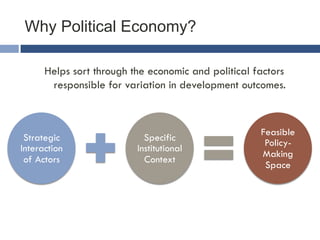
Why Political Economy? 
Helps sort through the economic and political factors 
responsible for variation in development outcomes. 
Strategic 
Interaction 
of Actors 
Specific 
Institutional 
Context 
Feasible 
Policy- 
Making 
Space
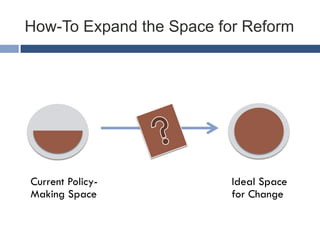
How-To Expand the Space for Reform 
Current Policy- 
Making Space 
Ideal Space 
for Change
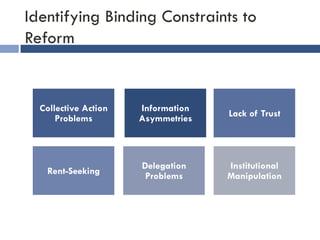
Identifying Binding Constraints to 
Reform 
Information 
Asymmetries 
Collective Action 
Problems Lack of Trust 
Rent-Seeking Delegation 
Problems 
Institutional 
Manipulation
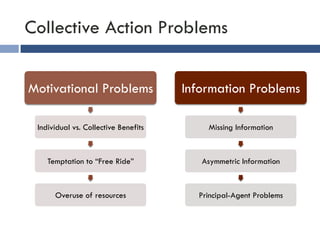
Collective Action Problems 
Motivational Problems 
Individual vs. Collective Benefits 
Temptation to “Free Ride” 
Overuse of resources 
Information Problems 
Missing Information 
Asymmetric Information 
Principal-Agent Problems
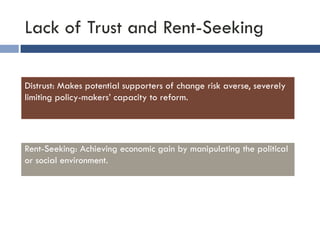
Lack of Trust and Rent-Seeking 
Distrust: Makes potential supporters of change risk averse, severely 
limiting policy-makers’ capacity to reform. 
Rent-Seeking: Achieving economic gain by manipulating the political 
or social environment.
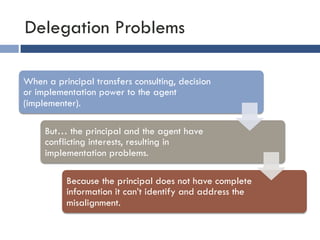
Delegation Problems 
When a principal transfers consulting, decision 
or implementation power to the agent 
(implementer). 
But… the principal and the agent have 
conflicting interests, resulting in 
implementation problems. 
Because the principal does not have complete 
information it can’t identify and address the 
misalignment.
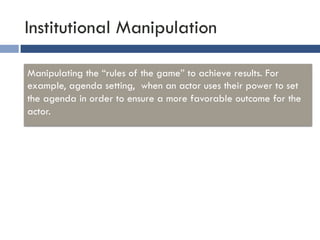
Institutional Manipulation 
Manipulating the “rules of the game” to achieve results. For 
example, agenda setting, when an actor uses their power to set 
the agenda in order to ensure a more favorable outcome for the 
actor.
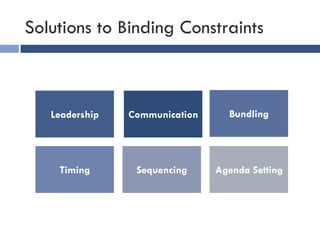
Solutions to Binding Constraints 
Leadership Communication Bundling 
Timing Sequencing Agenda Setting
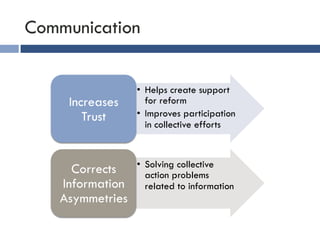
Communication 
• Helps create support 
for reform 
• Improves participation 
in collective efforts 
Increases 
Trust 
• Solving collective 
action problems 
related to information 
Corrects 
Information 
Asymmetries
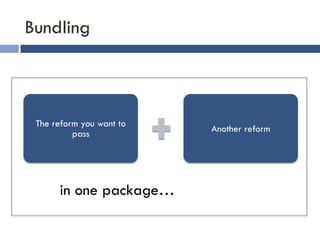
Bundling 
The reform you want to 
pass Another reform 
in one package…
Leadership 
¨ Helps coordinate coalitions 
¨ Disseminate information 
¨ Can jumpstart a process 
¨ Incentivize participation in the reform process
Timing 
Good Timing Can Help Reform Progress 
• Political Factors (election cycles, shifts in public 
opinion, changes in policy-making structures) 
• Economic Factors (growth, inflation, unemployment)
Sequencing 
Sequencing and Pacing can help build support and 
ownership of reform

Understanding Reform through Political Economy (EN)

  • 1.
    Understanding Reform ThroughPolitical Economy September 9, 2014 PRESENTED BY EDOUARD ALDAHDAH MENA Knowledge Sharing and How-To in Subsidy Reform: Regional Workshop
  • 2.
    Why Political Economy? Helps sort through the economic and political factors responsible for variation in development outcomes. Strategic Interaction of Actors Specific Institutional Context Feasible Policy- Making Space
  • 3.
    How-To Expand theSpace for Reform Current Policy- Making Space Ideal Space for Change
  • 4.
    Identifying Binding Constraintsto Reform Information Asymmetries Collective Action Problems Lack of Trust Rent-Seeking Delegation Problems Institutional Manipulation
  • 5.
    Collective Action Problems Motivational Problems Individual vs. Collective Benefits Temptation to “Free Ride” Overuse of resources Information Problems Missing Information Asymmetric Information Principal-Agent Problems
  • 6.
    Lack of Trustand Rent-Seeking Distrust: Makes potential supporters of change risk averse, severely limiting policy-makers’ capacity to reform. Rent-Seeking: Achieving economic gain by manipulating the political or social environment.
  • 7.
    Delegation Problems Whena principal transfers consulting, decision or implementation power to the agent (implementer). But… the principal and the agent have conflicting interests, resulting in implementation problems. Because the principal does not have complete information it can’t identify and address the misalignment.
  • 8.
    Institutional Manipulation Manipulatingthe “rules of the game” to achieve results. For example, agenda setting, when an actor uses their power to set the agenda in order to ensure a more favorable outcome for the actor.
  • 9.
    Solutions to BindingConstraints Leadership Communication Bundling Timing Sequencing Agenda Setting
  • 10.
    Communication • Helpscreate support for reform • Improves participation in collective efforts Increases Trust • Solving collective action problems related to information Corrects Information Asymmetries
  • 11.
    Bundling The reformyou want to pass Another reform in one package…
  • 12.
    Leadership ¨ Helpscoordinate coalitions ¨ Disseminate information ¨ Can jumpstart a process ¨ Incentivize participation in the reform process
  • 13.
    Timing Good TimingCan Help Reform Progress • Political Factors (election cycles, shifts in public opinion, changes in policy-making structures) • Economic Factors (growth, inflation, unemployment)
  • 14.
    Sequencing Sequencing andPacing can help build support and ownership of reform