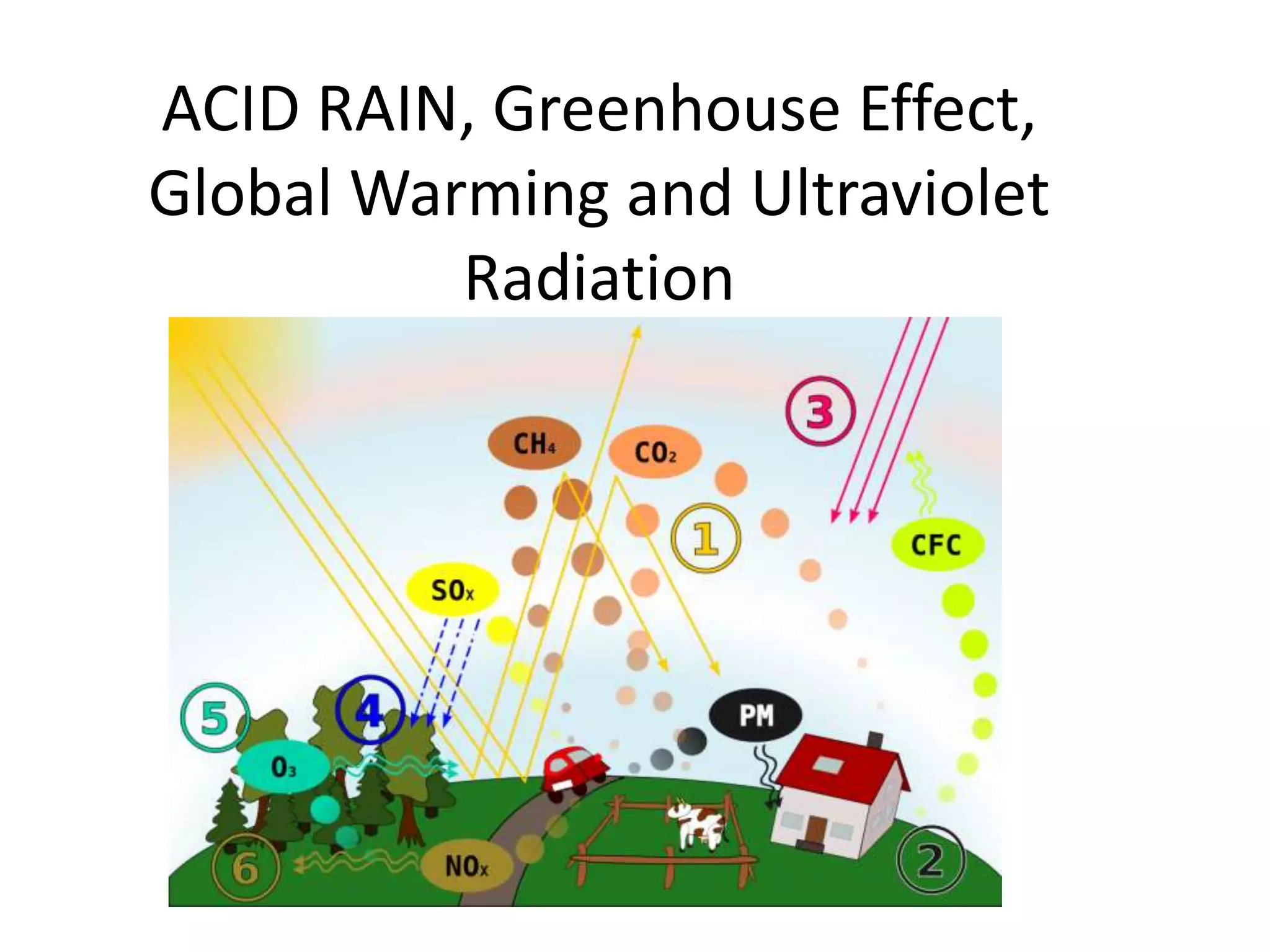
ACID RAIN, Greenhouse Effect, 
Global Warming and Ultraviolet 
Radiation
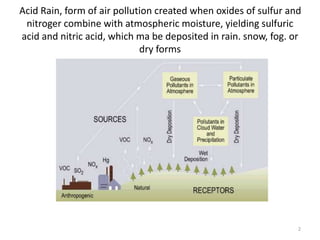
Acid Rain, form of air pollution created when oxides of sulfur and 
nitroger combine with atmospheric moisture, yielding sulfuric 
acid and nitric acid, which ma be deposited in rain. snow, fog. or 
2 
dry forms
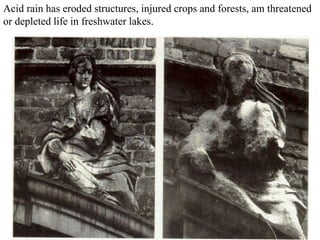
Acid rain has eroded structures, injured crops and forests, am threatened 
or depleted life in freshwater lakes. 
EGEE 102 - Pisupati 3
Visibility 
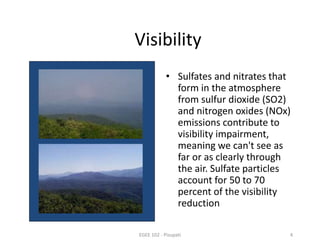
• Sulfates and nitrates that 
form in the atmosphere 
from sulfur dioxide (SO2) 
and nitrogen oxides (NOx) 
emissions contribute to 
visibility impairment, 
meaning we can't see as 
far or as clearly through 
the air. Sulfate particles 
account for 50 to 70 
percent of the visibility 
reduction 
EGEE 102 - Pisupati 4
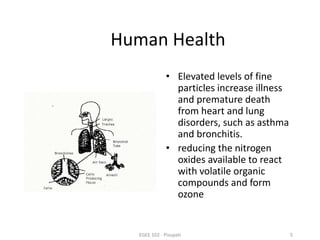
Human Health 
• Elevated levels of fine 
particles increase illness 
and premature death 
from heart and lung 
disorders, such as asthma 
and bronchitis. 
• reducing the nitrogen 
oxides available to react 
with volatile organic 
compounds and form 
ozone 
EGEE 102 - Pisupati 5
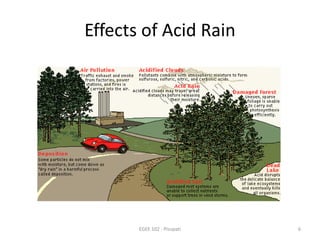
Effects of Acid Rain 
EGEE 102 - Pisupati 6
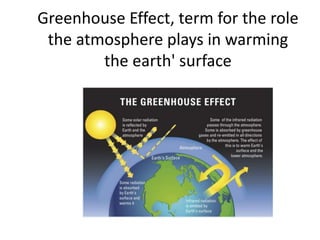
Greenhouse Effect, term for the role 
the atmosphere plays in warming 
the earth' surface
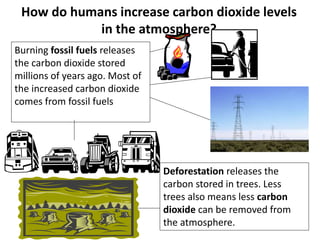
How do humans increase carbon dioxide levels 
in the atmosphere? 
Burning fossil fuels releases 
the carbon dioxide stored 
millions of years ago. Most of 
the increased carbon dioxide 
comes from fossil fuels 
Deforestation releases the 
carbon stored in trees. Less 
trees also means less carbon 
dioxide can be removed from 
the atmosphere.
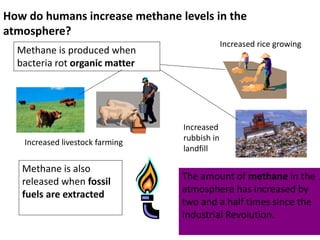
How do humans increase methane levels in the 
atmosphere? 
Increased 
rubbish in 
landfill 
The amount of methane in the 
atmosphere has increased by 
two and a half times since the 
Industrial Revolution. 
Methane is produced when 
bacteria rot organic matter 
Increased livestock farming 
Increased rice growing 
Methane is also 
released when fossil 
fuels are extracted
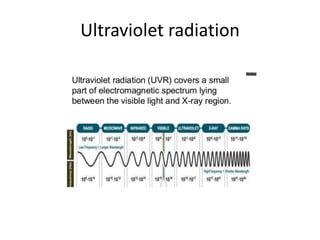
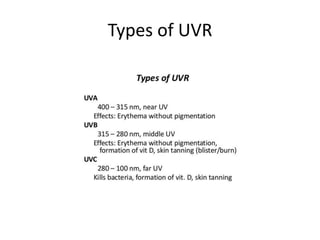
Ultraviolet radiation
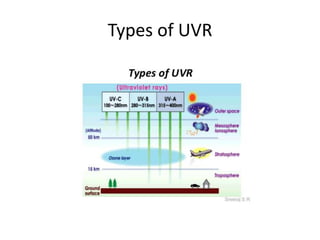
Types of UVR
Types of UVR
презентация1

презентация1

  • 1.
    ACID RAIN, GreenhouseEffect, Global Warming and Ultraviolet Radiation
  • 2.
    Acid Rain, formof air pollution created when oxides of sulfur and nitroger combine with atmospheric moisture, yielding sulfuric acid and nitric acid, which ma be deposited in rain. snow, fog. or 2 dry forms
  • 3.
    Acid rain haseroded structures, injured crops and forests, am threatened or depleted life in freshwater lakes. EGEE 102 - Pisupati 3
  • 4.
    Visibility • Sulfatesand nitrates that form in the atmosphere from sulfur dioxide (SO2) and nitrogen oxides (NOx) emissions contribute to visibility impairment, meaning we can't see as far or as clearly through the air. Sulfate particles account for 50 to 70 percent of the visibility reduction EGEE 102 - Pisupati 4
  • 5.
    Human Health •Elevated levels of fine particles increase illness and premature death from heart and lung disorders, such as asthma and bronchitis. • reducing the nitrogen oxides available to react with volatile organic compounds and form ozone EGEE 102 - Pisupati 5
  • 6.
    Effects of AcidRain EGEE 102 - Pisupati 6
  • 7.
    Greenhouse Effect, termfor the role the atmosphere plays in warming the earth' surface
  • 9.
    How do humansincrease carbon dioxide levels in the atmosphere? Burning fossil fuels releases the carbon dioxide stored millions of years ago. Most of the increased carbon dioxide comes from fossil fuels Deforestation releases the carbon stored in trees. Less trees also means less carbon dioxide can be removed from the atmosphere.
  • 10.
    How do humansincrease methane levels in the atmosphere? Increased rubbish in landfill The amount of methane in the atmosphere has increased by two and a half times since the Industrial Revolution. Methane is produced when bacteria rot organic matter Increased livestock farming Increased rice growing Methane is also released when fossil fuels are extracted
  • 11.
  • 12.
  • 13.