E x p e d i t i o n a r y E n g i n e e r i n g
USAF Civil Engineering
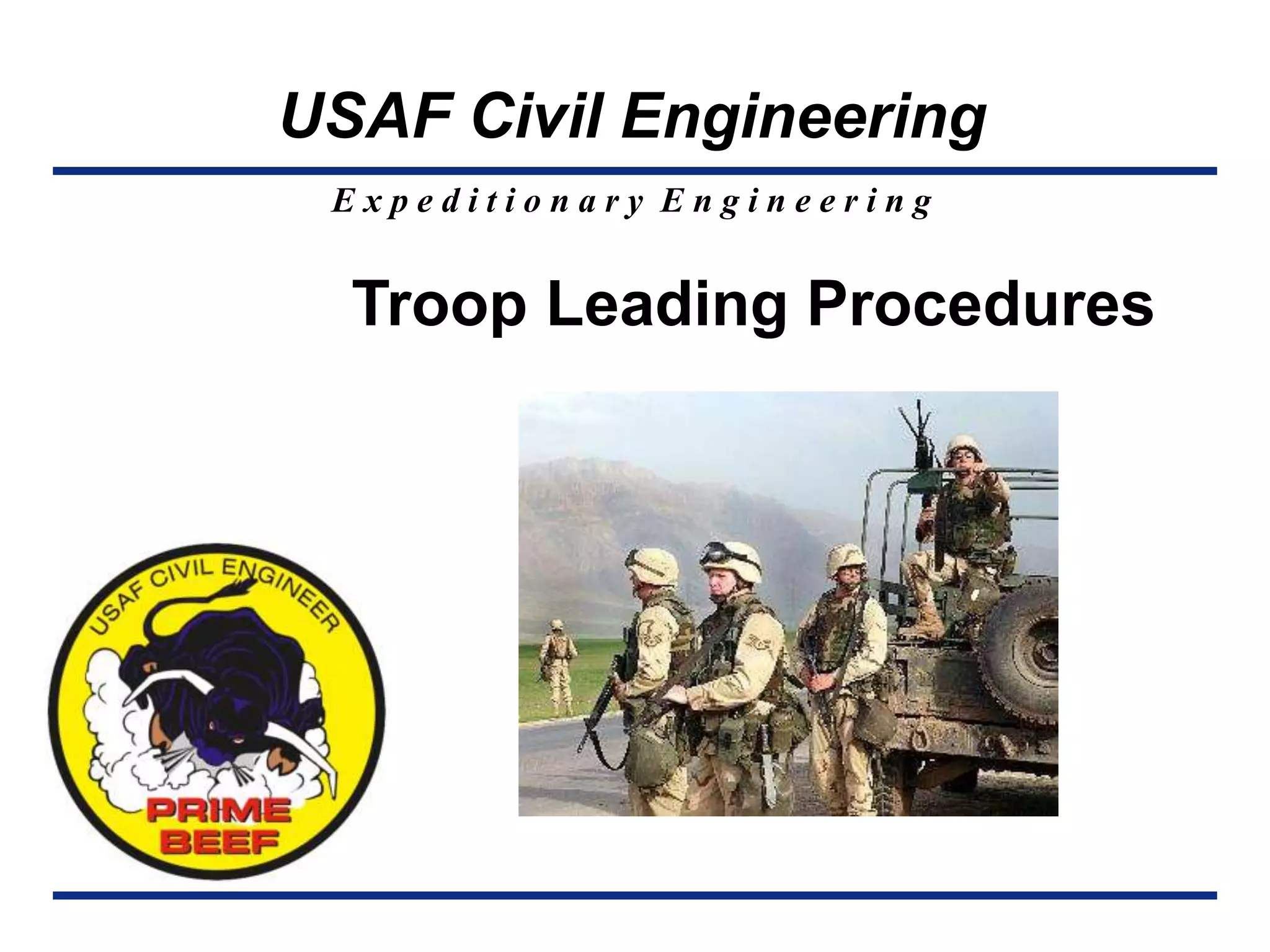
Troop Leading Procedures
E x p e d i t i o n a r y E n g i n e e r i n g 2
Overview
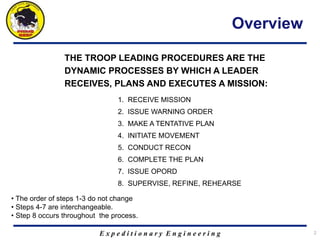
THE TROOP LEADING PROCEDURES ARE THE
DYNAMIC PROCESSES BY WHICH A LEADER
RECEIVES, PLANS AND EXECUTES A MISSION:
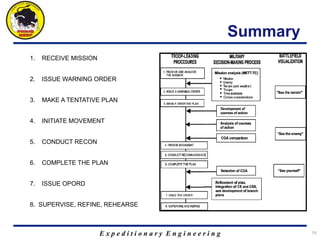
1. RECEIVE MISSION
2. ISSUE WARNING ORDER
3. MAKE A TENTATIVE PLAN
4. INITIATE MOVEMENT
5. CONDUCT RECON
6. COMPLETE THE PLAN
7. ISSUE OPORD
8. SUPERVISE, REFINE, REHEARSE
• The order of steps 1-3 do not change
• Steps 4-7 are interchangeable.
• Step 8 occurs throughout the process.
E x p e d i t i o n a r y E n g i n e e r i n g 3
Overview
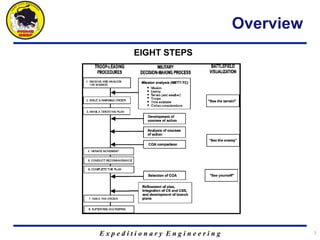
EIGHT STEPS
E x p e d i t i o n a r y E n g i n e e r i n g 4
TLP - STEP 1
 Conduct an initial *METT-TC analysis (* METT-TC to be explained)
 Determine the time available from mission receipt to execution
 Determine the useable time available to both you and your subordinates.
 Identify Critical Times such as:
 Start Point (SP)
 Rehearsals
 Reconnaissance
 Initiate Movement
 Anticipated Enemy Actions
 Quick Map Reconnaissance
 Backwards Planning
RECEIVE THE MISSION
E x p e d i t i o n a r y E n g i n e e r i n g 5
TLP – STEP 2
ISSUE THE WARNO
 Provides advanced notice to your unit of upcoming operation
 Provides as much information as possible to allow subordinates to begin parallel planning
and preparation
 Does not sacrifice time to gain more information
 Issued to subordinate and supporting units
 Use five-paragraph format (ref: FM 101-5 and example in student handout)
 Situation (General, Enemy, Friendly, Weather, Light Data)
 Mission Statement (Who, What, When, Where, Why)
 Execution (Commander’s Intent, Key Tasks, End State, Concept of Operations, Tasks to
Subordinate Units, and Coordinating Instructions)
 Service and Support (aka. Logisitics and Administration)
 Command and Control (aka. Command and Signal)
E x p e d i t i o n a r y E n g i n e e r i n g 6
TLP – STEP 3
MAKE A TENTATIVE PLAN
 Develop estimate of the situation
 Detailed mission / situation analysis
 Course of action development
 Analysis of each course of action
 Comparison of each course of action
 Decision (tentative plan)
 The leader updates the estimate continuously and refines the plan
accordingly.
E x p e d i t i o n a r y E n g i n e e r i n g 7
TLP – STEP 3
MAKE A TENTATIVE PLAN – METT-TC
 Mission. As given by the commander. Analyzes commander's intent two
command levels higher. Determines essential tasks the unit must perform in
order to accomplish the mission.
 Enemy. Type, size, organization, tactics, and equipment of the enemy
expected to be encountered. Identifies greatest threat to the mission.
Identifies greatest vulnerability to enemy.
 Terrain. The leader considers the effect of terrain and weather on enemy and
friendly forces using OCOKA:
 Observation and fields of fire
 Cover and concealment
 Obstacles
 Key terrain
 Avenues of approach
E x p e d i t i o n a r y E n g i n e e r i n g 8
TLP – STEP 3
MAKE A TENTATIVE PLAN – METT-TC
 Troops available. Consider strength of subordinate units, characteristics of
weapon systems, and capabilities of attached elements as tasks are
assigned to subordinate units.
 Time available. Refine allocation of time based on tentative plan and any
changes to the situation.
 Civilian Considerations. Consider displaced civilians that may be
encountered during operations. Leader must determine actions to take if
civilians are on the battlefield.
E x p e d i t i o n a r y E n g i n e e r i n g 9
TLP – STEP 4
INITIATE MOVEMENT
 May occur at any point in the Troop Leading Process
 Includes movement to positions closer to LD, initial inspections,
reconnaissance, battle drill rehearsals or SOP items
 If the reconnaissance reveals a change in the situation, the plan must be
adjusted accordingly
 The steps do not have to be accomplished in order
E x p e d i t i o n a r y E n g i n e e r i n g 10
TLP – STEP 5
RECONNITER
 Reconnaissance is used to confirm terrain and/or enemy analysis and
tactical options
 Situation and time available dictate the type and detail of reconnaissance
 Map, terrain model, aerial photo, ground
 Plan and conduct a leader’s reconnaissance for every mission
 Consider risk inherent in moving forward of friendly lines, or into
unoccupied area
E x p e d i t i o n a r y E n g i n e e r i n g 11
TLP – STEP 6
COMPLETE THE PLAN
 Develop OPORD
 Tentative plan
 Reconnaissance
 Additional guidance
 Review plan
 Satisfy Commander’s mission and intent
 Alter tentative plan if needed
 Reconnaissance
 Changes to current situation
 Use 5-paragraph format used in WARNO
 Content is key factor – KISS principle
 OPORD provides all details – expands on WARNO
– necessary for to complete mission IAW CC intent
E x p e d i t i o n a r y E n g i n e e r i n g 12
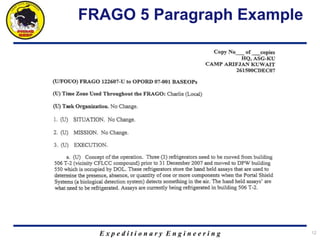
FRAGO 5 Paragraph Example
E x p e d i t i o n a r y E n g i n e e r i n g 13
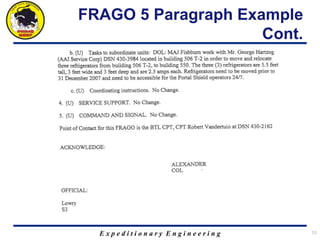
FRAGO 5 Paragraph Example
Cont.
E x p e d i t i o n a r y E n g i n e e r i n g 14
TLP – STEP 7
ISSUE OPERATIONS ORDER (OPORD)
 Issue face to face if physically possible
 Usually done as a briefing
 Can be in written format for larger units (Squadron
and above sized units)
 Issue while observing the combat area if possible
 Supplements to OPORDs
 Terrain models
 Sand Table
 Map boards/Overlays
 Sketches
 Fire Support Matrix
 All subordinates must understand the plan
 Use briefbacks
E x p e d i t i o n a r y E n g i n e e r i n g 15
TLP – STEP 8
SUPERVISE PLANNING AND PREPARATIONS
 Confirmation Briefs
 Check
 Inspect
 Rehearse
 Coordinate
 Refine
E x p e d i t i o n a r y E n g i n e e r i n g 16
TLP – STEP 8
SUPERVISE PLANNING AND PREPARATIONS
 Must be habitual during training in order to effectively employ units tactically
 Clarifies Commander’s intent
 Reinforces scheme of maneuver
 Ensures understanding and instills confidence in participants
 Provides feedback and exposes problems in the plan
E x p e d i t i o n a r y E n g i n e e r i n g 17
TLP – STEP 8
SUPERVISE PLANNING AND PREPARATIONS
 Pre-Combat Inspections (PCIs)
 Weapons and ammo: test fire
 Uniforms and equipment
 Mission Essential Equipment
 Troops understanding of mission and their specific responsibilities
 Communications: radios, frequencies, batteries
 Rations and water
 Camouflage; personnel and equipment
E x p e d i t i o n a r y E n g i n e e r i n g 18
Summary
1. RECEIVE MISSION
2. ISSUE WARNING ORDER
3. MAKE A TENTATIVE PLAN
4. INITIATE MOVEMENT
5. CONDUCT RECON
6. COMPLETE THE PLAN
7. ISSUE OPORD
8. SUPERVISE, REFINE, REHEARSE
E x p e d i t i o n a r y E n g i n e e r i n g 19
Questions?
“In preparing for battle I have always found that plans are
useless, but planning is indispensable.”
-- Gen Dwight D. Eisenhower
E x p e d i t i o n a r y E n g i n e e r i n g
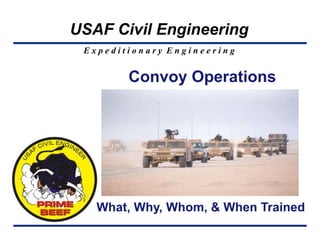
USAF Civil Engineering
Convoy Operations
What, Why, Whom, & When Trained
E x p e d i t i o n a r y E n g i n e e r i n g
What is a CONVOY and why is
it needed?
 A group of vehicles organized for the purpose of
control and orderly movement with or without escort
protection that moves over the same route at the
same time and under one commander
 The purpose of a convoy is a logistical movement of
assets from one point to another.
 This is a preferred method of movement when
accountability, protection, and/or timeliness must be
maintained
21
E x p e d i t i o n a r y E n g i n e e r i n g
Convoys and the AF
 In the current Afghanistan AOR, the AF does not own
any convoys with the exception of specialized units.
 AF personnel may be part of Convoys that are under the
control of the ARMY or other service.
 If AF personnel are to be used in Convoy they should
receive training from venues such as Power Projection
Platforms (PPP) or with in the AOR.
 As leaders we must ensure we do not expose troops to
dangers they are not trained for.
22
E x p e d i t i o n a r y E n g i n e e r i n g
Considerations for any Convoy
 Route/Accessibility/Timing/Fuel/Hazards
 Always consider road conditions and restrictions, fuel
consumption, time required to traverse
 Convoy Speeds dictated by:
 Vehicles, driver’s ability, weather, road conditions, law
 Vehicle Recovery
 Know how to recover and requirements for abandoning
 Communications
 Convoy CC, Vehicle CC, Driver, CC Centers, sectors of
response/support
23
E x p e d i t i o n a r y E n g i n e e r i n g
Considerations for Convoy
under Combat Conditions
 Still have same consideration as you would in Non-
combat but with the addition of:
 Enemy threat
 IEDs, VIEDs, IDF, DF, local population, ROEs,
 Defense
 Weapon systems, Armor, Safe havens, Cleared routes
 CAS, QRF, Sector support, INTEL
 Call in support and/or report threats, breaking contact
 Communications
 Convoy CC, Vehicle CC, Driver, CC Centers, sectors of
response/support
 YOU MUST BE TRAINED FOR COMBAT CONVOY
24
E x p e d i t i o n a r y E n g i n e e r i n g
Summary
 What is a convoy and why is it done
 AF does not own convoys in AOR
 Personnel must be trained prior to convoying (PPP)
 Considerations for convoying
 Considerations for convoying under Combat
conditions
25

08 -- TLP and Convoy Planning (SFC2).ppt

  • 1.
    E x pe d i t i o n a r y E n g i n e e r i n g USAF Civil Engineering Troop Leading Procedures
  • 2.
    E x pe d i t i o n a r y E n g i n e e r i n g 2 Overview THE TROOP LEADING PROCEDURES ARE THE DYNAMIC PROCESSES BY WHICH A LEADER RECEIVES, PLANS AND EXECUTES A MISSION: 1. RECEIVE MISSION 2. ISSUE WARNING ORDER 3. MAKE A TENTATIVE PLAN 4. INITIATE MOVEMENT 5. CONDUCT RECON 6. COMPLETE THE PLAN 7. ISSUE OPORD 8. SUPERVISE, REFINE, REHEARSE • The order of steps 1-3 do not change • Steps 4-7 are interchangeable. • Step 8 occurs throughout the process.
  • 3.
    E x pe d i t i o n a r y E n g i n e e r i n g 3 Overview EIGHT STEPS
  • 4.
    E x pe d i t i o n a r y E n g i n e e r i n g 4 TLP - STEP 1  Conduct an initial *METT-TC analysis (* METT-TC to be explained)  Determine the time available from mission receipt to execution  Determine the useable time available to both you and your subordinates.  Identify Critical Times such as:  Start Point (SP)  Rehearsals  Reconnaissance  Initiate Movement  Anticipated Enemy Actions  Quick Map Reconnaissance  Backwards Planning RECEIVE THE MISSION
  • 5.
    E x pe d i t i o n a r y E n g i n e e r i n g 5 TLP – STEP 2 ISSUE THE WARNO  Provides advanced notice to your unit of upcoming operation  Provides as much information as possible to allow subordinates to begin parallel planning and preparation  Does not sacrifice time to gain more information  Issued to subordinate and supporting units  Use five-paragraph format (ref: FM 101-5 and example in student handout)  Situation (General, Enemy, Friendly, Weather, Light Data)  Mission Statement (Who, What, When, Where, Why)  Execution (Commander’s Intent, Key Tasks, End State, Concept of Operations, Tasks to Subordinate Units, and Coordinating Instructions)  Service and Support (aka. Logisitics and Administration)  Command and Control (aka. Command and Signal)
  • 6.
    E x pe d i t i o n a r y E n g i n e e r i n g 6 TLP – STEP 3 MAKE A TENTATIVE PLAN  Develop estimate of the situation  Detailed mission / situation analysis  Course of action development  Analysis of each course of action  Comparison of each course of action  Decision (tentative plan)  The leader updates the estimate continuously and refines the plan accordingly.
  • 7.
    E x pe d i t i o n a r y E n g i n e e r i n g 7 TLP – STEP 3 MAKE A TENTATIVE PLAN – METT-TC  Mission. As given by the commander. Analyzes commander's intent two command levels higher. Determines essential tasks the unit must perform in order to accomplish the mission.  Enemy. Type, size, organization, tactics, and equipment of the enemy expected to be encountered. Identifies greatest threat to the mission. Identifies greatest vulnerability to enemy.  Terrain. The leader considers the effect of terrain and weather on enemy and friendly forces using OCOKA:  Observation and fields of fire  Cover and concealment  Obstacles  Key terrain  Avenues of approach
  • 8.
    E x pe d i t i o n a r y E n g i n e e r i n g 8 TLP – STEP 3 MAKE A TENTATIVE PLAN – METT-TC  Troops available. Consider strength of subordinate units, characteristics of weapon systems, and capabilities of attached elements as tasks are assigned to subordinate units.  Time available. Refine allocation of time based on tentative plan and any changes to the situation.  Civilian Considerations. Consider displaced civilians that may be encountered during operations. Leader must determine actions to take if civilians are on the battlefield.
  • 9.
    E x pe d i t i o n a r y E n g i n e e r i n g 9 TLP – STEP 4 INITIATE MOVEMENT  May occur at any point in the Troop Leading Process  Includes movement to positions closer to LD, initial inspections, reconnaissance, battle drill rehearsals or SOP items  If the reconnaissance reveals a change in the situation, the plan must be adjusted accordingly  The steps do not have to be accomplished in order
  • 10.
    E x pe d i t i o n a r y E n g i n e e r i n g 10 TLP – STEP 5 RECONNITER  Reconnaissance is used to confirm terrain and/or enemy analysis and tactical options  Situation and time available dictate the type and detail of reconnaissance  Map, terrain model, aerial photo, ground  Plan and conduct a leader’s reconnaissance for every mission  Consider risk inherent in moving forward of friendly lines, or into unoccupied area
  • 11.
    E x pe d i t i o n a r y E n g i n e e r i n g 11 TLP – STEP 6 COMPLETE THE PLAN  Develop OPORD  Tentative plan  Reconnaissance  Additional guidance  Review plan  Satisfy Commander’s mission and intent  Alter tentative plan if needed  Reconnaissance  Changes to current situation  Use 5-paragraph format used in WARNO  Content is key factor – KISS principle  OPORD provides all details – expands on WARNO – necessary for to complete mission IAW CC intent
  • 12.
    E x pe d i t i o n a r y E n g i n e e r i n g 12 FRAGO 5 Paragraph Example
  • 13.
    E x pe d i t i o n a r y E n g i n e e r i n g 13 FRAGO 5 Paragraph Example Cont.
  • 14.
    E x pe d i t i o n a r y E n g i n e e r i n g 14 TLP – STEP 7 ISSUE OPERATIONS ORDER (OPORD)  Issue face to face if physically possible  Usually done as a briefing  Can be in written format for larger units (Squadron and above sized units)  Issue while observing the combat area if possible  Supplements to OPORDs  Terrain models  Sand Table  Map boards/Overlays  Sketches  Fire Support Matrix  All subordinates must understand the plan  Use briefbacks
  • 15.
    E x pe d i t i o n a r y E n g i n e e r i n g 15 TLP – STEP 8 SUPERVISE PLANNING AND PREPARATIONS  Confirmation Briefs  Check  Inspect  Rehearse  Coordinate  Refine
  • 16.
    E x pe d i t i o n a r y E n g i n e e r i n g 16 TLP – STEP 8 SUPERVISE PLANNING AND PREPARATIONS  Must be habitual during training in order to effectively employ units tactically  Clarifies Commander’s intent  Reinforces scheme of maneuver  Ensures understanding and instills confidence in participants  Provides feedback and exposes problems in the plan
  • 17.
    E x pe d i t i o n a r y E n g i n e e r i n g 17 TLP – STEP 8 SUPERVISE PLANNING AND PREPARATIONS  Pre-Combat Inspections (PCIs)  Weapons and ammo: test fire  Uniforms and equipment  Mission Essential Equipment  Troops understanding of mission and their specific responsibilities  Communications: radios, frequencies, batteries  Rations and water  Camouflage; personnel and equipment
  • 18.
    E x pe d i t i o n a r y E n g i n e e r i n g 18 Summary 1. RECEIVE MISSION 2. ISSUE WARNING ORDER 3. MAKE A TENTATIVE PLAN 4. INITIATE MOVEMENT 5. CONDUCT RECON 6. COMPLETE THE PLAN 7. ISSUE OPORD 8. SUPERVISE, REFINE, REHEARSE
  • 19.
    E x pe d i t i o n a r y E n g i n e e r i n g 19 Questions? “In preparing for battle I have always found that plans are useless, but planning is indispensable.” -- Gen Dwight D. Eisenhower
  • 20.
    E x pe d i t i o n a r y E n g i n e e r i n g USAF Civil Engineering Convoy Operations What, Why, Whom, & When Trained
  • 21.
    E x pe d i t i o n a r y E n g i n e e r i n g What is a CONVOY and why is it needed?  A group of vehicles organized for the purpose of control and orderly movement with or without escort protection that moves over the same route at the same time and under one commander  The purpose of a convoy is a logistical movement of assets from one point to another.  This is a preferred method of movement when accountability, protection, and/or timeliness must be maintained 21
  • 22.
    E x pe d i t i o n a r y E n g i n e e r i n g Convoys and the AF  In the current Afghanistan AOR, the AF does not own any convoys with the exception of specialized units.  AF personnel may be part of Convoys that are under the control of the ARMY or other service.  If AF personnel are to be used in Convoy they should receive training from venues such as Power Projection Platforms (PPP) or with in the AOR.  As leaders we must ensure we do not expose troops to dangers they are not trained for. 22
  • 23.
    E x pe d i t i o n a r y E n g i n e e r i n g Considerations for any Convoy  Route/Accessibility/Timing/Fuel/Hazards  Always consider road conditions and restrictions, fuel consumption, time required to traverse  Convoy Speeds dictated by:  Vehicles, driver’s ability, weather, road conditions, law  Vehicle Recovery  Know how to recover and requirements for abandoning  Communications  Convoy CC, Vehicle CC, Driver, CC Centers, sectors of response/support 23
  • 24.
    E x pe d i t i o n a r y E n g i n e e r i n g Considerations for Convoy under Combat Conditions  Still have same consideration as you would in Non- combat but with the addition of:  Enemy threat  IEDs, VIEDs, IDF, DF, local population, ROEs,  Defense  Weapon systems, Armor, Safe havens, Cleared routes  CAS, QRF, Sector support, INTEL  Call in support and/or report threats, breaking contact  Communications  Convoy CC, Vehicle CC, Driver, CC Centers, sectors of response/support  YOU MUST BE TRAINED FOR COMBAT CONVOY 24
  • 25.
    E x pe d i t i o n a r y E n g i n e e r i n g Summary  What is a convoy and why is it done  AF does not own convoys in AOR  Personnel must be trained prior to convoying (PPP)  Considerations for convoying  Considerations for convoying under Combat conditions 25

Editor's Notes

  • #3 A simple 8 step process for planning. Used by Army under any condition. Not a primary process for AF but we need to be aware of this for several reasons: As we go purple we need to understand the planning process of other services we need to understand the verbiage/acronyms We need to know 5-paragraph structure
  • #4 The process can be applied to any mission planning such as a convoy, setting up a Bear base, or just taking the family on vacation Run through this chart using a scenario of your choice. Show how each step is used and considerations. Come up with COAs and walk through them. KISS.
  • #5 Slide 4-15 talk about each step and how you used it in your scenario
  • #19 Have each student take one step and talk about what it is, how to use it, what to considered, and why it is important in planning. Also stress the point of always providing your troops time to prepare and make their own detailed plans for their part of the mission.